Nearly 99 percent of banned ozone-depleting chemicals have now been phased out under a global treaty. That rare success shows what shared science, firm policy, and steady public action can achieve.
September 16 carries unusual weight. It marks an international day focused on atmospheric protection, while also recognizing a United Nations observance created through Resolution A/RES/78/259. Together, both themes link planetary health with fair access to knowledge.
Earth’s ozone shield absorbs much harmful ultraviolet radiation. Yet CFCs once used in refrigerators and aerosol cans helped create Antarctic ozone holes during southern-hemisphere winter and spring. That history makes environmental responsibility a practical public-health concern, including across Australia.
Science and technology can also support social progress. Higher-income economies still conduct much global research and development, leaving many communities with fewer tools to solve local challenges.
This article explores how treaty action, inclusive innovation, and Agenda 2030 goals can work together. Progress becomes stronger when clean air, digital skills, research funding, and community needs share one policy table; even bureaucracy occasionally discovers useful chemistry.
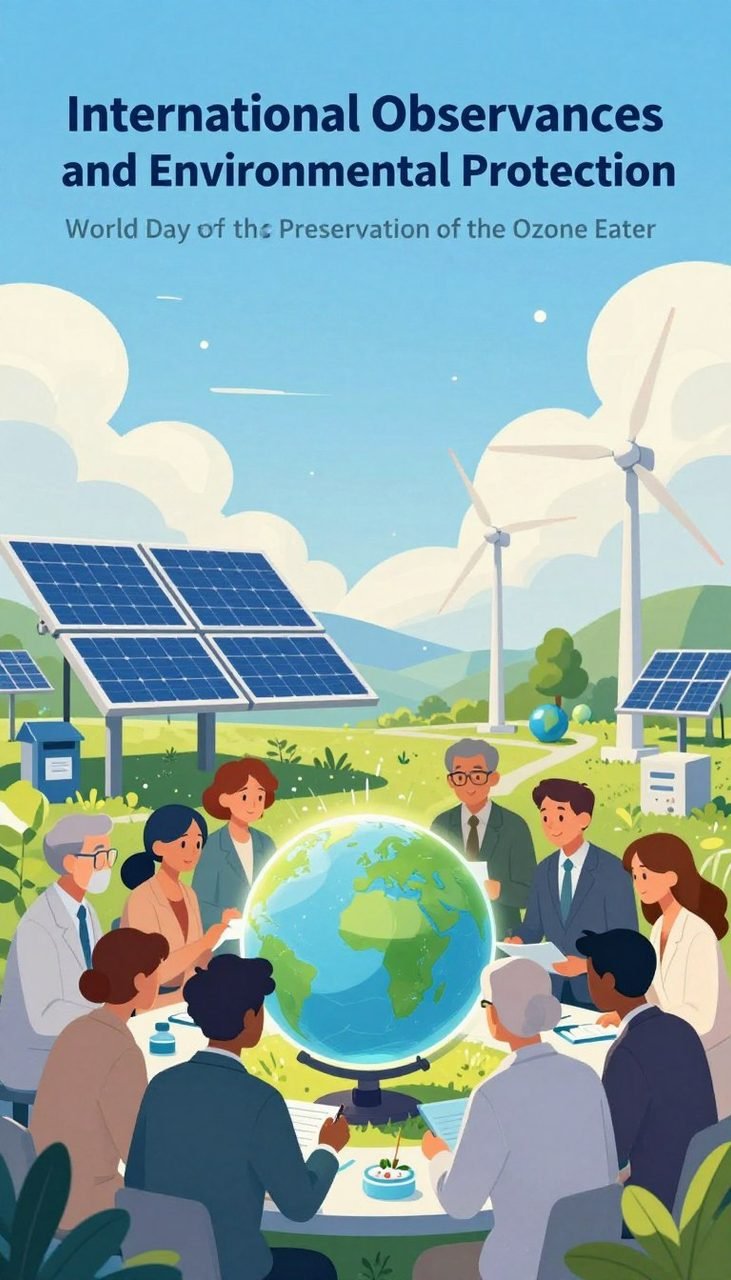
World Day of the Preservation of the Ozone Layer/STEM & Innovation for the South: Ozone Action and Shared Progress
September 16 links an international day with practical environmental action. In 1985, 28 countries signed the Vienna Convention. Two years later, they created the Montreal Protocol to control nearly 100 harmful chemicals, including CFCs, halons, methyl bromide, carbon tetrachloride, and HCFCs.
The United Nations General Assembly established this observance in 1994. Universal ratification arrived on September 16, 2009, marking a rare achievement in global cooperation. Science guided policy, while industry developed safer cooling systems.
“The Montreal Protocol is the single most successful international agreement in United Nations history.”
Kofi Annan
Cooling, Climate, and Community Benefits
HCFC removal ends in 2030 across developed countries and in 2040 across developing countries. The Kigali Amendment, agreed in Rwanda in 2016, also reduces HFCs, powerful greenhouse gases linked to climate change. Efficient cooling lowers bills, protects health, and strengthens sustainable development.
For Australia and nearby countries, daily data from Copernicus Atmosphere Monitoring Service supports sound decisions. Better equipment, trained workers, and shared resources help each sector move from policy to measurable change.
Milestone
Action
Benefit
1985
Vienna Convention signed
Research cooperation
1987
Montreal Protocol adopted
Chemical controls
2016
Kigali Amendment agreed
Lower climate risk
International Day of Science, Technology and Innovation for the South and the Rise of Agenda 2030
A new United Nations observance gives research equity a clear place in global policy. Resolution A/RES/78/259, adopted by the General Assembly, links September 16 with Agenda 2030 and the Addis Ababa Action Agenda. Its message is direct: shared knowledge can speed sustainable development.
Closing the Global STEM, Research, Technology, and Innovation Gap
High-income countries fund 77% of global research and development, while low-income countries provide only 0.3%. Global spending reached about $2.5 trillion in 2022, yet access remains uneven. Developing countries need laboratories, skilled teachers, reliable data, and affordable digital tools.
How United Nations Goals Support Inclusive Development
Better research systems can advance health, education, clean energy, climate action, and reduced inequality. United Nations partners—including UNDP, UNESCO, ITU, FAO, and the Technology Bank—help turn policy into local achievements.
Policy Alignment Across Key Institutions
The OECD offers evidence-based advice. The World Economic Forum, US EPA, and IEA connect industry, climate policy, energy, and innovation. Australia benefits when regional cooperation turns these ideas into practical projects.
Priority
Key action
Expected benefit
Research access
Fund local laboratories
Stronger health solutions
Digital skills
Expand technical training
Broader employment
Clean technology
Share proven systems
Lower emissions
Seventeen Global South Nations Linking STI, Ozone Protection, and the Sustainable Development Goals
National priorities shape how science, technology, and innovation support climate action. This group shows why a single policy formula rarely works; even a refrigerator cannot cool an entire city.
Argentina, Brazil, China, Egypt, India, Indonesia, Kenya, and Mexico
These nations span different economies, climates, and research systems. Their plans may focus on public health, digital access, clean energy, farming, or resilient industry. Such variety gives cooperation practical value for Australia and its regional partners.
Nigeria, Pakistan, South Africa, Thailand, Türkiye, Vietnam, Bangladesh, Ethiopia, and Rwanda
These countries also face distinct needs. Rwanda hosted the October 15, 2016, agreement on the Kigali Amendment. That event shows how shared science can support climate policy while strengthening local skills and resources.
Highlighting the 17 Global South Nations Driving Innovation
Additionally here are Seventeen nations that some overlap and are also recognized as leaders in innovation. They contributing significantly to advancements in renewable energy, agricultural technology, and digital infrastructure. These countries include:
Country
Key Contributions
Brazil
Leadership in biofuels and Amazon monitoring technologies.
India
Rapid expansion of solar energy capacity and the International Solar Alliance.
China
Dominance in photovoltaic manufacturing and electric vehicle production.
South Africa
Hub for renewable energy innovation, including independent power programs.
Mexico
Leveraging digital economies and climate-smart agricultural systems.
Indonesia
Building sustainable infrastructure and enhancing digital connectivity.
Nigeria
Innovating in agriculture and renewable energy sectors.
Egypt
Advancing solar energy projects and green technologies.
Argentina
Pioneering lithium extraction and green hydrogen initiatives.
Chile
Leading in biodiversity monitoring and sustainable practices.
Colombia
Innovating in agricultural technology and environmental conservation.
Malaysia
Advancing digital infrastructure and renewable energy projects.
Philippines
Enhancing climate resilience through innovative practices.
Vietnam
Driving sustainable agricultural practices and technology adoption.
Thailand
Investing in renewable energy and climate adaptation strategies.
Kenya
Innovating in mobile technology and renewable energy solutions.
Morocco
Leading in solar energy initiatives and sustainable practices.
The General Assembly resolution supports projects that expand research capacity in developing countries. It complements, rather than replaces, links with developed countries. Direct alignment includes SDG 3 health, SDG 4 education, SDG 7 energy, SDG 9 industry, and SDG 13 climate action. Adjacent priorities include cooling, digital inclusion, and resilient infrastructure.
Focus
SDG link
Practical result
Health and education
SDGs 3 and 4
Skilled, healthier communities
Energy and climate
SDGs 7 and 13
Cleaner cooling systems
Industry and cooperation
SDGs 9 and 17
Stronger regional capacity
Conclusion
September 16 carries a clear shared message: a healthy atmosphere and fair access to knowledge support human well-being. This international day joins environmental duty with science-led progress, giving Australia and partner countries a practical reason to act together.
The Montreal Protocol and Kigali Amendment show what cooperation can achieve. Firm targets, trusted data, skilled workers, and safer cooling can deliver measurable gains in climate protection and public health. Their record also proves that long-term policy can outlast short political cycles.
Agenda 2030 becomes more credible when research funding, digital infrastructure, finance, and technical training reach developing communities. Inclusive science and innovation can strengthen health, education, energy, industry, and environment outcomes across 17 nations. United Nations leadership works best when local expertise shapes each solution. That approach turns shared responsibility into sustainable development and gives every community a stronger stake in tomorrow.
FAQ
Why does ozone protection matter?
Ozone protection reduces harmful ultraviolet exposure, supports public health, and protects crops, oceans, and natural systems. It also shows how international cooperation can address climate change and environmental risks.
What role does the Montreal Protocol play?
The Montreal Protocol phases out ozone-depleting substances through binding targets, technical support, and financial resources. Its Kigali Amendment also targets hydrofluorocarbons, which contribute to global warming.
How can sustainable cooling support development?
Efficient cooling lowers energy demand, cuts emissions, and improves access to safe food, medicine, housing, and workplaces. This approach links environmental action with social and economic progress.
What is International Day for Science, Technology and Innovation for the South?
This international observance highlights research, technology, and innovation across developing countries. It promotes fair access to knowledge, funding, digital tools, and skills that support sustainable development.
How can nations close the STEM and research gap?
Countries can expand science education, strengthen universities, fund local research, and improve digital access. Partnerships between developed and developing countries can also support training, patents, laboratories, and practical technology transfer.
Which nations link science, climate action, and development?
Argentina, Brazil, China, Egypt, India, Indonesia, Kenya, Mexico, Nigeria, Pakistan, South Africa, Thailand, Türkiye, Vietnam, Bangladesh, Ethiopia, and Rwanda connect science policy with health, energy, industry, education, and climate priorities.
How do United Nations Sustainable Development Goals support inclusive development?
The goals provide a shared framework for reducing poverty, improving health, expanding education, protecting ecosystems, and building resilient infrastructure. A General Assembly resolution can help align national plans, finance, and international cooperation.
How do WEF, OECD, US EPA, and IEA efforts support progress?
These organizations contribute research, policy guidance, data, standards, and technical tools. Their work helps governments improve energy systems, reduce emissions, strengthen industry, and measure results across countries.
What practical actions can businesses and travelers take?
Businesses can select efficient cooling systems, reduce harmful refrigerants, and track environmental performance. Travelers can choose responsible operators, limit energy waste, and support local services that protect natural resources.
Why does cooperation matter for climate and technology policy?
Climate issues cross borders, while research capacity and finance remain uneven. Cooperation helps share expertise, improve access, and turn scientific achievements into reliable solutions for communities, industry, and the environment.
Key Takeaways
September 16 joins atmospheric care with inclusive research.
Ozone shields Earth from harmful ultraviolet radiation.
CFC controls offer a strong model for treaty action.
Research access supports fairer social development.
Agenda 2030 gains power through shared technical capacity.
Australia benefits from informed regional cooperation.
Responsible business now reaches far beyond a company’s annual report. This guide maps the 30 Sustainability frameworks & standards & ecological sound global policies shaping decisions across ESG consulting, cooperatives, investment firms, development NGOs, and grassroots groups.
In 2022, 96% of the largest 500 companies by market value published a sustainability report, up from 86% in 2018. That rise shows demand for clear information about climate risk, business goals, and social impacts. Yet more than 600 initiatives and guidelines now compete for attention. Choice can help; it can also create bureaucratic fog.
The guide separates sustainability reporting from daily operations. Data matters only when it changes investment, management, customer choices, or public accountability. Examples span the United States, the European Union, Africa, Asia, Pacific Island states, Caribbean nations, and South America. The result is a practical resource for professionals and communities seeking measurable impact rather than decorative claims.
30 Sustainability frameworks & standards & ecological sound global policies
Choosing a reporting model is less like picking a trophy and more like selecting a useful tool. About 10–15 internationally established standards sit beside more than 600 initiatives and guidelines. Each serves a different tier, sector, and stakeholder.
“Good reporting turns concern into decisions.”
How ESG frameworks differ by tier, sector, stakeholder, and reporting purpose
GRI explains a company’s wider impacts. ISSB gives investors decision-useful risk information, while SASB adds sector detail. CDP centers on climate data. B Corp uses certification, and the sustainability reporting directive creates mandatory European requirements.
A bank may track financed emissions and governance. A manufacturer may focus on energy, waste, and supplier conditions. Cities, cooperatives, and NGOs often need community outcomes, employee input, and public accountability. The best framework matches material issues, available management capacity, and the intended audience.
Choosing standards for companies, investors, governments, and communities
Professionals should build a manageable portfolio. Investors need comparable performance data; customers and employees want clear information. Amazon, Walmart, Nike, Disney, and Target survey vendors and suppliers, extending expectations beyond direct operations. Advocates and practitioners can then select adjacent low-impact practices that fit local needs.
Tier
Primary users
Typical focus
Global or regional
Companies and investors
Comparable disclosure
Sector or company
Finance and operations teams
Material risks and metrics
Community or city
Residents, NGOs, and governments
Local outcomes and accountability
Global Sustainability Reporting Frameworks and Corporate Disclosure Standards
Corporate reporting works best when each measure answers a real business question. The Global Reporting Initiative (GRI) began in 1997 as a third-party reporting initiative for economic, environmental, and social impacts. Its three source-described sets and 34 topic-specific standards help companies explain effects to a broad stakeholder group.
Global Reporting Initiative for economic, environmental, and social impacts
GRI supports impact-focused sustainability reporting. It helps management track labor conditions, resource use, community effects, and governance. That wider view gives customers, workers, and communities useful information—not just investors.
ISSB, IFRS S1, and IFRS S2 for investor-focused sustainability reporting
In June 2023, ISSB released IFRS S1 and IFRS S2. These standards connect climate and other risks with financial disclosures, helping investors compare company exposure and strategy.
SASB, integrated reporting, and sector-specific performance data
SASB adds sector detail, from bank lending to factory energy use. After its 2021 merger with IIRC, the Value Reporting Foundation moved toward ISSB integration. ESG consulting firms can link GRI data, ISSB information, SASB metrics, controls, and assurance evidence in one reporting system.
Mandatory Sustainability Reporting Directives and Corporate Accountability Policies
Regulators are turning sustainability reporting into a duty, not a public-relations option. The European sustainability reporting directive links corporate sustainability with governance, investor information, and stakeholder accountability.
CSRD, ESRS, double materiality, and European requirements
Under revised CSRD thresholds, covered companies have more than 1,000 employees and either over €50 million in turnover or more than €25 million in assets. ESRS disclosures use double materiality: a company reports how issues affect its finances and how its actions affect people and nature.
Wave 2 and Wave 3 dates moved by two years, with first reports expected in 2028 or 2029. The delay changes timing, not the need for reliable data.
CSDDD, SFDR, UK SRS, and supply-chain due diligence
CSDDD reaches EU companies with over 500 employees and €150 million in global turnover. Reviews now focus on direct Tier 1 suppliers, usually once every five years. SFDR began in March 2021; Level 2 rules followed in January 2023. UK SRS and SECR take a separate path.
California climate disclosure laws and the United States
SB 253 covers companies above $1 billion revenue and Scope 1, 2, and 3 emissions.
SB 261 covers firms above $500 million and requires climate-risk reports every two years from 2026.
ESG consulting firms can help companies map evidence, controls, and supplier risks. Regulatory changes may simplify disclosures, but credible governance remains essential.
Climate-Related Financial Disclosures, Carbon Data, and Environmental Reporting
Climate data now shapes lending, insurance, investment, and corporate planning. Clear records help decision-makers test whether a climate claim reflects operating change or polished storytelling.
Task Force on Climate-related Financial Disclosures and its transition to ISSB
The Task Force on Climate-related Financial Disclosures organized information around governance, strategy, risk management, and metrics and targets. Its recommendations helped investors, lenders, and multinational investment firms review physical hazards, transition risks, capital allocation, and long-term finance.
The task force ended its work at the close of 2023. In 2024, ISSB assumed monitoring duties. Companies can still use this framework when preparing climate-related financial disclosures and related financial disclosures.
CDP climate, forests, water, supply chain, and city disclosure programs
CDP’s system serves more than 23,000 companies and covers climate, forests, water security, cities, and governments. Its optional supply-chain module adds vendor information to annual reporting.
ESG consultants and carbon platforms can reconcile inventories, energy records, supplier data, and targets. Strong sustainability reporting depends on evidence; no dashboard can hide incomplete carbon data.
ISO Standards for Environmental Management, Social Responsibility, and Governance
ISO turns ESG goals into repeatable actions. Its practical systems help companies manage risk, improve performance, and connect sustainability reporting with daily business decisions. The paperwork may look serious; the results should be even more so.
ISO 14001, ISO 14064, ISO 50001, water footprints, and greenhouse gas management
Methodologically, the ISO 14001 organizes environmental management and continual improvement across sites. The ISO 14064 supports greenhouse gas inventories, carbon measurement, and emissions reporting. ISO 50001 guides energy management; some companies report energy-cost savings of as much as 30%. So while the ISO 14046 measures water footprints, while ISO 46001 supports water-efficiency systems.
“Operational discipline is where ESG earns trust.”
ISO 26000, ISO 45001, ISO 20400, and responsible workplace practices
Now more importantly, ISO 26000 covers human rights, fair work, community involvement, and social responsibility. ISO 45001 strengthens employee safety; certified firms have reported a 22% drop in workplace incidents over five years. ISO 20400 helps buyers assess suppliers through ethical procurement and clear social criteria.
Credible ESG governance of ISO 37301, ISO 27001, ISO 37001
It is true that the ISO 37301 supports compliance management, ISO 27001 protects information, and ISO 37001 addresses bribery risks. Together, these controls improve data quality, oversight, and governance. They give ESG claims a stronger evidence base and help companies meet changing requirements.
Ecological Policies and Adjacent Practices for Measurable Global Impact
Practical change begins where public goals meet daily choices. The Paris Agreement and United Nations Sustainable Development Goals guide climate action, adaptation, resilience, and community development. They give companies, advocates, and public agencies a shared direction.
Paris Agreement, United Nations Sustainable Development Goals, and climate action
Useful reporting connects emissions, energy use, and social impact to clear targets. ISO IWA 48:2024 offers ESG implementation principles, while ISO 53001 is being developed around the Sustainable Development Goals. ISO 14007 and ISO 14008 help assess environmental costs, benefits, and impacts in financial terms.
Circular economy, renewable energy, biodiversity protection, and nature-positive business
Business leaders can reduce waste through repair, reuse, remanufacturing, efficient design, and less reliance on virgin materials. Energy upgrades, electrification, clean-power purchasing, and community generation improve performance. Consumers and advocates can support ethical buying, habitat restoration, water stewardship, low-carbon travel, and conservation partnerships.
Companies: set measurable targets and publish reliable data.
Communities: expand shared energy and restoration projects.
Practitioners: use conservation results to strengthen sustainability reporting.
Practice
Primary action
Useful measure
Circularity
Repair and reuse products
Material saved
Clean energy
Electrify operations
Energy performance
Nature care
Protect and restore habitat
Land and water impact
Sustainable Finance, Investment Firms, and ESG Market Accountability
Capital markets increasingly test whether a company’s promises can survive closer inspection. Multinational investment firms use sustainability reporting, climate-related financial information, and corporate disclosures to compare risks, opportunity, and long-term value.
Multinational investment firms, green bonds, climate finance, and investor risk analysis
Green bonds should link borrowed funds to clear projects, use-of-proceeds records, and measured impact. ISO 14030 supports credibility in green bonds and loans. ISO 14097 helps investors assess climate-related investment decisions and financial risk, separating credible transition plans from attractive promises with little evidence.
That discipline also strengthens finance. Investors can review carbon trends, project results, and management controls before assigning value. In other words, a glossy claim is not a strategy; markets eventually ask for receipts.
ESG consulting firms, data systems, assurance, and corporate performance
ESG consulting firms build data systems, supplier surveys, assurance trails, and performance dashboards. Amazon, Walmart, Nike, Disney, and Target request supplier information, making corporate sustainability a shared stakeholder task.
B Corp, administered by B Lab, includes more than 4,000 participating companies. Patagonia and Ben & Jerry’s show how private certification can complement formal standards, while governance, evidence, and customer accountability still determine real impact.
Cooperative Business Models and Community-Centered Sustainability
Shared ownership can turn local priorities into daily business choices. Cooperatives give members a voice in how income, risk, and responsibility are managed. This model adds a practical layer to corporate sustainability.
Cooperative enterprises, worker ownership, community finance, and shared governance
Worker-owned firms connect fair pay, safety, local purchasing, and environmental performance through shared governance. Members vote on major decisions, while benefits stay closer to the people who create them. Community finance can then support housing, food systems, renewable power, and conservation.
Cooperative enterprise communities and grassroots support organizations
Grassroots support organizations bring local knowledge into planning. Their data can show impacts that a distant audit may miss, such as access to jobs, clean water, or affordable transport. Clear reporting helps members compare progress with chosen standards and frameworks.
International development NGOs and impactful nonprofits
International development NGOs and avant-garde nonprofits connect health, education, livelihoods, human rights, and climate resilience. Global development liaisons help translate broad goals into useful action. B Lab offers a related example: its nonprofit network supports people, communities, and the planet.
“Participation makes accountability practical.”
Model
Decision power
Community benefit
Worker cooperative
Employees vote
Fair pay and safer work
Community fund
Members guide lending
Local projects gain capital
Development nonprofit
Partners shape programs
Measured social impact
https://youtube.com/watch?v=UQ–oqftaZA%3Frel%3D0
Regional Sustainability Spotlights Across Cities, Islands, and Emerging Markets
Place matters: the same target can mean cleaner transit in one city and safer water in another. Regional examples show how sustainability choices reflect finance, infrastructure, culture, and climate risk. Cities and governments can also share environmental data through systems such as CDP.
Urban priorities across North America and Hawaii
Southeastern and northeastern United States cities, New York City, Vancouver, and Hawaii balance transport, energy, housing, and disaster readiness. Their reporting often links public investment with local air quality and resilience.
African, European, and Gulf development contexts
Nairobi, Lago, Frankfurt, Central Africa, North Africa, and the UAE reveal different needs. Water stress, roads, finance, and governance shape practical choices; imported templates rarely fit every neighborhood.
Asian growth and coastal exposure
Mumbai faces dense growth and air pollution, while New Delhi confronts severe air quality, water, waste, and transport pressures. Sri Lanka, Australia, Malaysia, Indonesia, and Southeast Asia add coastal, supply-chain, biodiversity, and energy concerns.
Islands, tourism, and South American resilience
Pacific Islands, Panama, Dominica, Trinidad and Tobago, and South America emphasize ocean care, tourism, disaster planning, and community leadership. The strongest frameworks pair local knowledge with usable standards.
Region
Priority
Useful measure
North American cities
Transit and energy
Emissions per resident
Africa and Gulf
Water and infrastructure
Reliable service access
Asia-Pacific
Coasts and supply chains
Risk-ready facilities
Islands and South America
Tourism and resilience
Recovery time after shocks
How Professionals, Consumers, Advocates, and Practitioners Can Apply These Standards
Effective action starts with choices that fit the organization, its mission, and its community. A materiality assessment ranks key topics through stakeholder interviews, surveys, sector review, geography, ESG maturity, and business priorities. It keeps teams from copying a checklist that was designed for someone else.
Building materiality assessments, emissions inventories, targets, and metrics
A healthcare company may track access, affordability, innovation, and supply chains. A technology company may focus on privacy, security, and STEM access. A bank may measure financial inclusion and climate finance. Practitioners should build an emissions inventory, set a baseline, document controls, and link results to management and governance. Some firms report energy cuts of up to 40% after ISO 14001 certification.
Using procurement, clean energy, conservation, and ethical consumption
Responsible procurement reviews suppliers, materials, labor conditions, and product life cycles. Low-carbon energy, repair, reuse, conservation, and community finance can reduce impact. Customers, employees, and advocates should request clear information and challenge unsupported claims.
Action
Practical step
Measure
Procurement
Screen suppliers
Verified labor data
Energy
Improve efficiency
Use per unit
Community
Support local projects
Documented outcomes
FAQ
What is the significance of sustainability reporting for businesses?
Sustainability reporting is crucial for businesses as it enhances transparency, meets stakeholder expectations, and demonstrates accountability in environmental, social, and governance (ESG) practices. It helps organizations identify risks and opportunities while aligning with global standards.
How do the Global Reporting Initiative (GRI) and the Sustainability Accounting Standards Board (SASB) differ?
The GRI focuses on comprehensive sustainability reporting across various sectors, emphasizing stakeholder inclusiveness and sustainable development goals. In contrast, SASB provides industry-specific standards that guide companies on ESG disclosures relevant to their financial performance.
Why are cooperative business models important in sustainability?
Cooperative business models promote inclusivity and democratic governance, allowing members to engage in sustainable practices collectively. They foster community involvement and ensure that business operations align with environmental and social objectives.
What role do multinational investment firms play in sustainable finance?
Multinational investment firms are pivotal in directing capital towards sustainable projects. They integrate ESG criteria into their investment strategies, driving positive change and encouraging companies to adopt sustainable practices.
How can grassroots movements contribute to sustainability?
Grassroots movements mobilize communities to advocate for eco-friendly practices and sustainable policies. They raise awareness, drive local initiatives, and influence broader systemic changes through collective action and community engagement.
What are the key challenges in implementing sustainability frameworks?
Key challenges include varying regulatory requirements, lack of standardization, and limited resources for smaller organizations. Additionally, there may be resistance to change within corporate cultures, making it difficult to adopt new practices effectively.
How do regional sustainability practices vary across different global cities?
Regional sustainability practices differ based on local regulations, cultural values, and environmental challenges. For instance, cities in the Americas may prioritize renewable energy, while those in Asia might focus on waste management and urban resilience.
What is the role of transparency in sustainability reporting?
Transparency in sustainability reporting builds trust among stakeholders, including investors, customers, and communities. It ensures that organizations are held accountable for their environmental and social impacts, fostering a culture of integrity and responsibility
Conclusion
Reliable sustainability reporting turns concern into evidence, but evidence needs a purpose. The Global Reporting Initiative, ISSB, ISO, CDP, and CSRD serve distinct audiences, sectors, and levels of accountability. Their standards guide useful comparisons; they do not replace judgment.
For companies, strong results begin with materiality, reliable data, clear governance, credible targets, and steady management improvement. Investors, governments, NGOs, cooperatives, and communities can use disclosures to compare performance, spot risk, direct finance, and strengthen public trust while meeting changing requirements.
Long-term sustainability pairs formal guidance with conservation, circular design, ethical procurement, renewable energy, biodiversity protection, and local action. This approach makes ESG measurable across finance, society, and place.
The finest reporting system still cannot recycle a single bottle. Real progress joins corporate responsibility with cooperative enterprise communities, grassroots groups, development NGOs, and place-based knowledge. Reports should illuminate action—and action should make the report worth reading.
Key Takeaways
Reporting helps stakeholders assess risk and progress.
More than 600 initiatives can confuse decision-makers.
Operational action gives reports real value.
The guide covers diverse regions and sectors.
Measurable results matter more than polished claims.
The federal landscape for philanthropic groups faced a seismic shift in May 2026. The 2026 U.S. OMB proposal (office management budget) released a plan that fundamentally alters how groups manage their resources.
One might call it a bureaucratic makeover with a sharp edge. It shifts from collaborative partnerships toward a centralized model.
This specific proposal aims to implement executive orders. It focuses on tighter federal grantmaking oversight.
New changes tie funding directly to administration priorities rather than independent ones. Many organizations now face intense scrutiny that could disrupt their daily missions.
These shifts threaten the core regarding cooperative growth plus grassroots support across the nation. This regulatory framework carries profound implications for social equity plus economic cooperation.
A federal grant may soon require navigating complex political gatekeeping to remain active. International networks fear disruption in growth cooperation as American policies evolve.
Understanding the OMB Uniform Grants Regulation Proposal
A significant transformation is coming to the world of federal financial assistance through a new proposal from the Office of Management and Budget. This change signals a shift from a collaborative partnership toward a more rigid, compliance-heavy environment for all recipients.
The proposal would consolidate requirements into a single set of binding rules. This move affects how every organization, from local cooperatives to international nonprofits, interacts with the federal government.
What Is the Office of Management and Budget Proposal
The office management budget plan seeks to reframe federal financial assistance under the new Uniform Grants Regulation. It creates a unified framework that all agencies must adopt without exception.
By centralizing authority, the office management team aims to standardize the entire federal grantmaking lifecycle. This includes everything from the initial program design to the final project delivery and audit phase.
Historical Context: From 2014 Uniform Guidance to 2026 Proposed Regulation
For over a decade, the 2014 uniform guidance (2 CFR Part 200) provided a flexible framework for awards. It allowed universities and nonprofits to balance federal oversight with their own institutional policies.
The uniform guidance era focused on administrative requirements and cost principles through a lens of cooperation. Now, this historical pivot moves the needle toward a much more restrictive and centralized control model.
Timeline and Implementation Schedule for Fiscal Year 2027
The law-making process for these revisions targets an effective date of October 1, 2026. This timeline aligns with the start of federal fiscal year 2027 awards.
Organizations have only a short window to adjust their internal terms and policies before the new rules take effect. Future amendments will then apply government-wide automatically, bypassing individual agency rulemaking entirely.
Transformation from Advisory Guidance to Binding Federal Regulation
The most profound change is the reclassification of guidance into a formal regulation with full legal effect. This shift increases the potential liability for noncompliance across all agencies involved.
Under this regulation, a simple mistake could lead to terminations or even litigation under the False Claims Act. While guidance offered some discretion, these new mandates demand strict adherence to every provision.
The irony is palpable: while officials claim to enhance efficiency, these new layers actually increase administrative complexity and cost.
Feature
2014 Framework
2026 Proposed Shift
Legal Status
Advisory Guidance
Binding Regulation
Control
Agency Discretion
Centralized OMB Authority
Liability Risk
Moderate Flexibility
High / Enforceable Law
Application
Collaborative Approach
Compliance-Focused
U.S. of OMB Proposal Impact on Nonprofits, Sustainable Development, and Co-Ops: Comprehensive Overview
The proposed revisions to federal grant-making represent a departure from mission-based funding toward a more politically filtered resource allocation model. This shift introduces a new era where technical merit might take a backseat to policy alignment. It essentially redefines the relationship between the government and the civic sector.
Executive Order 14332 and Administration Priorities
Executive Order 14332, titled “Improving Oversight of Federal Grantmaking,” acts as the foundational catalyst for this regulatory overhaul. It explicitly ties federal awards to the current administration and its specific policy priorities. This directive signals a transition from needs-based support to a more scrutinized oversight framework.
This policy moves away from traditional mission-aligned funding. It creates a filter that fundamentally alters which entities can secure support for their local communities. The goal appears to be a tighter alignment between federal spending and executive branch goals.
Which Organizations Face the Greatest Impact
The proposal would create a challenging environment for several distinct sectors. While all organizations receiving federal awards face increased scrutiny, those working on controversial social or environmental topics are most at risk. The uncertainty of these changes creates a looming shadow over long-term strategic planning.
Nonprofit Organizations Receiving Federal Awards
Traditional nonprofits often rely on stable, multi-year funding to maintain their daily operations and specialized staff. The proposed changes would likely introduce unpredictability that makes multi-year project management nearly impossible. These groups must now prepare for a landscape where financial stability is no longer guaranteed by performance alone.
Sustainability-Focused Institutions and Environmental Groups
Institutions focused on climate change and environmental justice are particularly vulnerable under these new rules. The proposal flags climate adaptation as a topic for enhanced review and potential disqualification. This specifically targets organizations whose core missions center on the renewable energy transition or ecological protection.
Cooperatives and Cooperative Development Organizations
Cooperatives promote democratic ownership and equitable community wealth. However, these alternative economic models may face skepticism under a regulatory framework that emphasizes narrowly defined national interests. Awards for cooperative development could be restricted if they are viewed as misaligned with current political objectives.
Grassroots Support Organizations and Community Outreach Centers
Community outreach centers often handle sensitive topics like immigration assistance and social equity. These agencies might find their grant eligibility threatened if their work clashes with the administration and its stated priorities. Their reliance on federal support makes them especially susceptible to sudden policy shifts.
Financial Instability and Operational Risks for Grant Recipients
The financial instability stemming from these changes would be significant for both service providers and their constituents. The proposal would allow for the sudden termination of funds without a clear appeal process or demonstrated cause. This creates a precarious environment where essential programs could vanish mid-performance.
Organization Type
Primary Concern
Operational Risk
Environmental NGOs
Climate scrutiny
Immediate disqualification
Community Co-ops
Economic model bias
Restricted awards
Grassroots Centers
Viewpoint alignment
Sudden funding loss
The proposal effectively enables a system where organizations can be disqualified based on political disfavor. This threatens the longevity of awards that have historically supported the most vulnerable populations. Such changes undermine the public-private partnership that has existed for decades.
“The proposal opens the door to government abuse and overreach, by allowing federal agencies to withhold, terminate, or suspend federal grants without cause, add new, onerous terms and conditions mid-performance, disqualify any grantee it disfavors, and threaten federal programs that address racial, social, and other inequities.”
— Diane Yentel, President and CEO of the National Council of Nonprofits
By undermining this partnership, the government jeopardizes essential services including housing, health, and disaster recovery. The operational risks extend beyond money, impacting staff stability and community trust. Organizations must now navigate a world where their mission is subject to the whims of shifting political tides.
Loss of multi-year staffing commitments.
Mid-project termination of critical community aid.
Increased administrative burden for small nonprofits.
Reputational damage from politically motivated disqualification.
How the Grant Application Process Will Change Under the New Rules
Navigating the shifting sands of federal funding requires more than just a solid project plan; it now demands a keen eye for political weather vanes. The proposal would transform the grant landscape from a merit-based evaluation into a politically filtered selection system.
Applicants must look beyond technical excellence to ensure their missions mirror the current executive vision. This shift introduces a new layer of oversight that challenges the traditional independence of administrative reviews.
Political Appointee Pre-Issuance Review Requirements
Under the new framework, senior political appointees would conduct mandatory pre-issuance reviews. This review process ensures that every federal grant aligns with the executive branch’s vision before any funds are released.
While programmatic peer review remains, it effectively becomes advisory. The final decisions rest with officials who prioritize ideological harmony over technical excellence or community impact.
Mandatory Alignment with Presidential Policies and National Interest
Program planning must now mirror the president’s policies rather than just an agency’s mission. Funding opportunities will require applicants to demonstrate how their work supports current administration goals.
This shift means that grants are no longer just about local community needs. Instead, they serve as tools to advance specific national priorities defined by the White House.
Expanded Risk Assessment Criteria and Affiliation Screening
The proposal broadens the risk assessment criteria used by federal agencies. An agency can now deny awards based on an applicant’s affiliation with organizations that supposedly threaten public safety.
These vague standards could be weaponized against advocacy groups or coalitions. Strategic dilemmas now face cooperatives that must decide if their partnerships trigger unwanted scrutiny.
Restrictions on Organizational Eligibility by Tax-Exempt Status
The Office of Management and Budget might categorically exclude certain tax-exempt groups from specific competitions. This includes 501(c)(3) and 501(c)(4) entities that were previously eligible for various grants. This proposal would narrow the field of potential partners based solely on their legal structure.
Topics Subject to Enhanced Scrutiny: Gender, Immigration, Climate Change, and DEI
Projects touching on sensitive cultural issues will face intense review. Any policy involving gender ideology or climate change could be flagged as inconsistent with the law or national interest.
Sensitive Topic
Scrutiny Level
Primary Risk Factor
Alignment Goal
Climate Change
Maximum
Policy Inconsistency
Economic Interests
Diversity (DEI)
Maximum
Ideological Conflict
Anti-American Characterization
Immigration
High
National Security
Enforcement Priorities
Faith-Based Organizations and Viewpoint Neutrality Provisions
Ironically, the new rules mandate that agencies do not discriminate against faith-based groups. They must apply viewpoint neutrality to religious entities while screening other groups for national priorities. This creates a complex environment where some viewpoints are explicitly protected while others are sidelined.
“Award decisions would hinge on alignment with administration priorities… including whether a proposed award involves topics identified as demonstrating anti-American values.”
This chilling effect may lead organizations to modify their mission statements. They might avoid certain language to escape being deemed inconsistent with the current proposal.
New Funding Restrictions on DEI, Gender Ideology, and Disparate Impact Activities
Beneath the surface of administrative updates lies a sharp turn in the regulation of identity-based programming. This proposal signals a new era where social values are closely monitored through financial strings. Organizations must now balance their mission with high-stakes compliance hurdles.
Prohibited Uses of Federal Award Funds
The proposal would prohibit the use of federal awards to “fund, promote, encourage, subsidize, or facilitate” certain social agendas. This includes diversity, equity, and inclusionpolicies that the administration deems in violation of anti-discrimination law. Specifically, it targets “gender ideology” and any assistance for the medical transition of individuals under 19.
This reach extends into systemic analysis as well. A new provision bars support for theories of disparate-impact liability, which addresses unintentional discrimination. These restrictions aim to align recipient behavior with current presidential priorities.
What Constitutes Promotion or Facilitation of Restricted Activities
These restrictions cast a wide net over organizational activities. Even internal equity analysis could face scrutiny if linked to an award. This broad language might encompass everything from cultural competency training to targeted recruitment efforts.
The rules create a compliance minefield for leadership. Promotion is an elastic term that could apply to simple program descriptions or advocacy. Organizations must be cautious about how they frame their social impact goals.
Material Breach Consequences and Enforcement Mechanisms
Violating these terms is not a minor slip; it is a material breach. Such a designation gives agencies the power to terminate a grant immediately. This shift moves disagreements from simple audits to severe legal threats.
Furthermore, these violations could trigger the False Claims Act. This means an organization might face massive financial penalties beyond just losing their funding. The government’s enforcement toolkit has become significantly sharper.
Required Separation Between Federally Funded and Non-Federal Activities
Organizations must keep their federal funds strictly separate from non-federal money. This creates a logistical hurdle for community centers that offer a mix of services. Maintaining these artificial walls requires robust accounting to prove that no prohibited ideology is supported by taxpayer dollars.
Integrated organizations face the hardest path. A cooperative using funds for rural development must ensure its governance principles do not overlap with restricted equity concepts. The administrative burden of this separation is substantial.
Legal Ambiguities and Court-Upheld Practices
Many of these restricted practices remain legal under current court rulings. This creates a profound disconnect between federal mandates and judicial precedents. Nonprofits are often left in the middle of this tug-of-war.
Activity Type
Proposal Status
Legal Context
Immigration Legal Aid
Highly Scrutinized
Upheld by Courts
Gender-Affirming Care
Prohibited
Varies by State
Disparate Impact Analysis
Restricted
Established Legal Doctrine
The proposal purports to bar any federal funding from being used to promote ‘unlawful’ diversity, equity, and inclusion (DEI) efforts or illegal immigration. However, many DEI-related practices and policies that the administration claims are unlawful have been upheld by courts as permissible under the law or can be administered lawfully.
National Council of Nonprofits
This legal grey area forces grantees to decide between their values and their survival. Without clearer definitions, many may avoid these activities entirely to stay safe. Strong legal counsel will be essential for those continuing their work.
Grant Termination and Suspension Powers: New Agency Discretion
Under the new OMB framework, the stability of federal funding becomes remarkably fragile as federal agencies gain the power to end projects at will. This shift transforms the grant relationship from a stable partnership into something far more precarious and unpredictable. Organizations must now navigate a landscape where their long-term survival depends on more than just meeting performance metrics.
Discretionary Termination for Convenience Without Cause
The proposal would grant the government the power to end an award whenever a project no longer fits “national interest” or “program goals.” This “termination for convenience” mimics corporate procurement contracts used in the defense sector. It allows the agency to walk away from grants mid-stream, even if the recipient remains in full compliance with all regulations.
Temporary Stop-Work Suspensions Up to 90 Days
Authorities could also freeze work for up to 90 days through temporary stop-work suspensions. While a defense contractor might easily pause a factory line, a nonprofit providing essential services cannot simply pause its care for a vulnerable community. Such interruptions create operational chaos and risk the safety of populations that rely on daily support.
Carved-Out Funding Categories: Entitlements, Disaster Recovery, and Infrastructure
Not all federal funding faces this constant threat of sudden cancellation. Certain awards remain protected, such as disaster recovery, CHIPS Act initiatives, and infrastructure programs. However, this leaves social services and environmental projects fully exposed to the whims of changing political priorities and administrative shifts.
Limited Appeal Rights and Court of Federal Claims Process
If a termination occurs, the recipient loses the right to a traditional administrative hearing or a standard appeal. Instead, entities must file money claims in the U.S. Court of Federal Claims. The court usually grants money for allowable costs rather than forcing the government to reinstate the program or honor the original timeline.
Funding Category
Termination Risk
Primary Recourse
Discretionary Grants
High / Discretionary
Court of Federal Claims
Disaster Recovery
Low / Carved Out
Administrative Appeal
Infrastructure Projects
Low / Protected
Contractual Remedies
Implications for Multi-Year Projects, Staffing, and Long-Term Commitments
Multi-year projects face an existential crisis under these new terms. Organizations often sign multi-year leases or hire permanent staff based on federal promises. A sudden termination leaves the organization legally bound to its creditors while its federal support simply vanishes into thin air.
Subrecipient and Vendor Contract Vulnerabilities
The impact trickles down through the entire nonprofit ecosystem, creating a domino effect of broken commitments. When a primary recipient loses an award, they must often terminate agreements with smaller local partners. This chain reaction disrupts community stability and can permanently damage the reputation of awards as a reliable source of public good.
Cost Restrictions and Administrative Requirements Affecting Daily Operations
The federal government’s new approach to financial oversight places a heavy emphasis on line-item detail. These changes would transform public service into a meticulous exercise in accounting and granular reporting. Managing a daily budget is now a far more complex task; it is a challenge only a dedicated auditor could truly love.
Elimination of Fixed-Amount Awards and Subawards
The federal proposal would eliminate the use of fixed-amount awards that once simplified documentation by focusing on results. Organizations must now record and justify every minor expense rather than hitting pre-set milestones. This shift moves the administrative focus from helping people to managing endless piles of receipts.
Newly Unallowable Costs: Advertising, Public Relations, and Media Campaigns
New rules list specific costs that are no longer allowed under federal funding. You cannot use these funds for advertising activities unless a specific law requires the outreach. This restriction makes it very difficult for organizations to tell the community about their programs or recruit participants.
Expense Type
New Requirement
Business Impact
Public Relations
Prohibited by default
Reduced community outreach
Staff Training
Prior written approval
Delayed professional growth
Research Papers
Advance permission needed
Barriers to open science
Conference Attendance and Professional Membership Fee Restrictions
Travel and training fees now require express prior approval from the federal agency in charge. Without written consent, staff may be unable to attend industry conferences or keep up their professional memberships. This oversight limits the professional growth needed to deliver high-quality services to the public.
Publication and Open-Access Fee Requirements
Publication fees also become impermissible without getting permission well in advance. This change creates significant hurdles for universities and policy groups that aim to share their research findings. It essentially turns the goal of open science into a long and difficult administrative negotiation.
E-Verify Enrollment for Contractors and Employees
Recipients must now enroll in E-Verify for all personnel performing work under a federal contract. This mandate adds extra layers to the hiring process and may complicate operations for diverse community groups. Compliance is no longer a choice; it is a mandatory prerequisite for participation.
Treasury Do Not Pay System Screening Requirements
Agencies must screen all recipients against the Treasury “Do Not Pay” system before releasing any funds. Such costs associated with vetting payees can delay essential cash flow for local programs and infrastructure projects. This process adds yet another gatekeeper to the already slow federal disbursement cycle.
Enhanced Pass-Through Entity Monitoring and Reporting Duties
Primary recipients, acting as pass-through entities, now face much higher reporting duties on SAM.gov. They must treat transfers to their own affiliates as formal subawards rather than simple internal transactions. Additionally, they must consult agencies before stopping any sub-recipient contract for reputational reasons.
Impact on Smaller Nonprofits with Limited Administrative Capacity
The cumulative costs of compliance often exceed the modest resources of grassroots groups. Without a large finance staff, a small grant or federal award feels like a burden instead of helpful assistance. High operational costs ensure that federal grants remain the domain of large organizations; meanwhile, smaller awards are slowly phased out.
International Ramifications and Perspectives from Global Institutions
As the world becomes more interconnected, the proposed federal regulations could ironically disconnect American researchers from the global knowledge economy. This shift signals a departure from the collaborative spirit that has long defined scientific leadership. The international community now watches as these internal policy changes threaten to ripple across borders.
Impact on International Research Collaborations and Scientific Partnerships
The proposed changes fundamentally disrupt how scientific research happens across national boundaries. Collaborative research efforts often rely on a seamless exchange of data and expertise. Under these new rules, the very act of sharing research findings with a foreign peer could face heavy scrutiny.
Covered Foreign Collaboration Prohibitions and Screening Requirements
The proposal would add a new provision prohibiting the use of federal funds for covered foreign collaborations. This restriction impacts travel, joint research, and technical assistance. Even benign research partnerships might now require extensive screening and prior approvals from federal agencies.
Expansion of Wolf Amendment Beyond NASA to All Federal Agencies
Previously, the Wolf Amendment only restricted NASA from partnering with specific foreign entities. This expansion applies that logic to all federal agencies that distribute research grants. It creates a massive hurdle for university research teams seeking to co-author papers with top global scientists.
Effects on Co-Publication and Joint Technical Assistance Programs
Joint technical assistance programs are vital for global progress but now face a murky future. The administrative burden on organizations could lead to a decline in international co-publications. AAU President Barbara R. Snyder highlights the gravity of this shift in the grantmaking landscape:
Taken together, the changes in the guidance have the potential to reshape the framework within which universities, federal agencies, and other stakeholders conduct and support America’s scientific research.
— Barbara R. Snyder, Association of American Universities
World Economic Forum Perspectives on Sustainability Funding
The World Economic Forum expresses concern that these restrictions undermine global sustainability efforts. Collaborative research is essential for circular economy transitions and green energy innovation. Isolating American research talent slows down the global response to shared ecological challenges.
United Nations and Subsidiary Organizations’ Concerns
United Nations agencies like UNESCO and the FAO rely on partnerships with American nonprofits. These organizations fear that federal funds will no longer support vital global initiatives. The loss of American research participation could weaken international development projects significantly.
Implications for UN Sustainable Development Goals Implementation
Progress on the Sustainable Development Goals (SDGs) requires intense cross-border cooperation. Specifically, Goal 13 on climate action depends on shared climate research data. New restrictions on international research activities could stall progress toward these 2030 targets.
Global Cooperative Networks and International Development Programs
Global cooperative networks thrive on the mutual exchange of governance models and support. When American partners are constrained, the entire international cooperative movement feels the impact. This isolation limits the transfer of knowledge that strengthens cooperative enterprises worldwide.
Local Community Services with International Supply Chains
Even local services with international ties face new compliance hurdles. A food cooperative sourcing fair-trade goods must now navigate complex proposal rules. These regulations impact any entity whose routine activities involve international partners or supply chains.
Impact Area
Institutional Concern
Affected Activity
Scientific Research
Reduced competitiveness and innovation
Co-authoring and joint research
Sustainability
Slowed progress on climate goals
Green technology development
Supply Chains
Increased administrative burdens
Fair-trade and international sourcing
Taking Action: How to Comment and Protect Your Organization
As the regulatory clock ticks toward the July deadline, the collective power of formal feedback remains the most potent tool for organizational survival. Nearly 16,000 stakeholders have already voiced their concerns, yet the Office of Management Budget requires more evidence of real-world disruption. Nonprofits and cooperatives must act now to ensure their missions survive these systemic changes.
Official Comment Submission Process and July 13 Deadline
Stakeholders must submit a comment directly through the federal rulemaking portal before July 13. These comments enter the permanent administrative record and force agencies to respond to specific concerns. Your comments should describe how the proposal would specifically hinder your ability to serve the local community. Agencies often ignore generic templates, so personalized comments carry the most weight.
National Council of Nonprofits Letter and Campaign Resources
Joining a sector-wide response can amplify your individual voice without exhausting your staff. Adding your name to the National Council of Nonprofits letter helps show the breadth of opposition across various organizations. This collective action ensures that even the smallest community groups have their perspectives heard at the highest levels of government.
Congressional Outreach and Legislative Advocacy Strategies
Direct communication with your representatives can trigger much-needed legislative oversight. Explain how shifts in federal funding will impact constituents in their specific districts. Members of Congress can request hearings or demand clarifications that effectively slow down the implementation of restrictive rules.
Documenting Specific Impact on Your Organization’s Programs and Constituents
Generic objections rarely survive a rigorous legal review. Instead, use concrete data, such as the exact number of jobs lost if a cooperative program vanishes. An effective comment provides a clear link between the new rules and a decline in public services.
Organizational Preparedness: Risk Management and Contingency Planning
Preparedness requires identifying alternative revenue streams before the new rules take effect. Organizations should start building cash reserves to handle potential mid-project terminations. Every individual comment submitted now helps build the case for those who manage federal awards under the new framework.
Evaluating your current grant management software is a vital step in staying compliant. New rules often demand better tracking of subrecipients and stricter E-Verify integration. Investing in robust digital tools today prevents costly administrative errors tomorrow.
Legal Resources and Anticipated Court Challenges
Many experts believe parts of this guidance exceed statutory authority and will face litigation. Stay connected with legal alliances to understand how a formal comment can support future lawsuits. Protecting your mission requires both administrative engagement and a readiness to defend your rights in court.
Conclusion
The proposed overhaul of grant rules signifies a departure from collaborative partnership toward a more rigid regulatory environment. This binding federal grant framework forces nonprofits and cooperatives to rethink their daily operations. Such changes would create significant hurdles for organizations that rely on federal grants to survive.
The impact also reaches across borders, potentially stalling global research and sustainable development initiatives. Securing future funding now depends on proactive advocacy and careful planning. Every organization must act before the July 13 deadline to protect its mission and long-term viability.
Protecting the integrity of the sector ensures that public resources serve genuine needs. By submitting comments, we can demand that federal support remains free from political litmus tests. Together, we can shape a future where sustainable development remains a shared priority for all partners.
Action Item
Importance
Key Deadline
Submit Public Comments
Directly influences final regulation language
July 13
Congressional Outreach
Encourages legislative oversight and checks
Ongoing
Internal Risk Assessment
Identifies specific operational vulnerabilities
Immediate
Coalition Building
Strengthens the collective voice of nonprofits
Ongoing
FAQ
What is the main goal regarding the new management budget rules?
The Office Management Budget (OMB) wants to change how federal grantmaking works. This regulation helps align federal awards with national priorities. It ensures funding goes to entities following specific policy goals; however, the law demands strict oversight.
How will these changes affect small organizations plus cooperatives?
Many organizations face high risk regarding financial assistance. The administration plans new criteria for grant eligibility. Smaller entities might struggle with high costs plus compliance. Strict rules will govern all funds distributed by each bureau.
What are the new restrictions regarding diversity plus inclusion?
The proposal would limit spending for diversity plus inclusion activities. New rules focus on preventing certain ideology from receiving federal grant money. Agencies like the Department Labor will review how funds support equity programs.
Can an agency terminate an award without a specific reason?
Yes, the uniform guidance gives an agency power to end a grant for convenience. This means work regarding sustainable development could stop suddenly. This change creates uncertainty for research teams plus global services.
How does this affect international research plus scientific programs?
The Wolf Amendment might expand to more agencies beyond NASA. This restricts work with certain foreign entities. International research projects may face higher fees plus stricter screening to protect national interests.
What should we know about the comment process?
Groups like the National Council Nonprofits urge everyone to submit a comment. The deadline is July 13. Sharing how these changes would affect your work helps the administration understand the real-world impact.
Will there be new requirements for hiring plus staff?
New office management rules require E-Verify for all employees. Agencies will also use the Treasury Do Not Pay System to screen entities. These policies aim to reduce fraud in federal awards.
Key Takeaways
The rule arrived May 29, 2026, to change grant management.
Executive Order 14332 drives these new oversight plus priority shifts.
Nearly 16,000 public comments reflect deep concern from various sectors.
Federal support will align more closely with specific administration goals.
International networks fear disruption in growth cooperation.
New regulations take effect starting October 1, 2026.
Navigating the complex landscape of international milestones requires more than just a calendar; it demands a strategic analytical framework. As we move through the current year, the pace of systemic change continues to accelerate compared to previous benchmarks.
Professionals must now synthesize data on environmental policy, geopolitical shifts, and humanitarian aid to remain relevant. This guide offers a precise roadmap for aligning corporate strategies with critical international priorities.
By examining these touchpoints, stakeholders can better anticipate the evolving needs of modern technology and ecological stewardship. We provide the necessary insight to transform these dates into actionable intelligence for your organization.
Global Sustainability Frameworks and Environmental Awareness
Navigating the complex landscape of global sustainability events requires a keen understanding of how local actions influence international outcomes. These frameworks provide the necessary structure to translate abstract environmental goals into tangible community progress. By bridging the gap between policy and practice, we create a more resilient future for all stakeholders.
The Intersection of Climate Action and Policy
Effective climate policy relies on the integration of diverse sectors, ranging from urban infrastructure to public health. For instance, the UN Global Road Safety initiative demonstrates how transportation planning directly impacts carbon emissions and urban livability. Strategic alignment between these international mandates and local municipal codes is essential for meaningful change.
Policy makers often overlook the fact that sustainable development is a multi-layered endeavor. When we synchronize national goals with global standards, we foster an environment where innovation thrives. This synergy ensures that climate action is not just a top-down directive but a shared responsibility.
World Migratory Bird Day and Ecological Connectivity
Ecological connectivity remains a vital component of biodiversity, particularly when observing events like World Migratory Bird Day. Protecting American Wetlands serves as a critical strategy for maintaining these migratory corridors. These habitats act as natural filters and buffers, proving that environmental health is intrinsically linked to our own survival.
Furthermore, the celebration of Asian American and Pacific Islander Heritage highlights the deep cultural connections to land stewardship and conservation. We must also remember the importance of the Be Kind to Animals movement, which encourages a compassionate approach to wildlife management. These diverse perspectives enrich our understanding of what it means to be a global citizen.
Clean Air and Water Saving Initiatives
Clean air and water are the fundamental pillars of a healthy society, requiring constant vigilance and community-led action. Initiatives such as National Public Gardens provide essential green spaces that improve air quality in densely populated urban centers. These areas serve as living laboratories for sustainable practices and public education.
Transportation and resource management also play a significant role in our environmental footprint. Promoting National Bike programs reduces reliance on fossil fuels, while the preservation of National Mills reminds us of historical water-powered efficiency. Additionally, the National Salvation Army often leads efforts in resource distribution, proving that social welfare and environmental sustainability are deeply intertwined.
Initiative Type
Primary Focus
Community Impact
Urban Green Spaces
Air Quality
High
Transportation Policy
Carbon Reduction
Moderate
Wetland Conservation
Biodiversity
High
Resource Efficiency
Water Saving
Moderate
May 2026 observances and holidays of world global affairs within Sustainability
The calendar of May 2026 offers a unique lens through which we can view the integration of community-led initiatives and international sustainability mandates. These sustainable development observances act as vital catalysts, transforming abstract global goals into tangible actions at the local level.
Aligning National Celebrations with Global Goals
Countries often utilize national holidays to reinforce broader international commitments. By integrating Building Safety standards into public infrastructure celebrations, governments demonstrate a commitment to long-term resilience. This alignment ensures that National Law remains responsive to the evolving needs of modern society.
Furthermore, the focus on Public Works during these periods highlights the necessity of robust infrastructure. When national celebrations prioritize these sectors, they create a cohesive framework for international cooperation. This strategy effectively turns routine holidays into opportunities for systemic improvement.
The Role of International Days in Shaping Sustainable Development
International days serve as essential markers for public awareness and policy advocacy. Initiatives focused on Clean Air remind citizens that environmental health is a shared responsibility that transcends borders. Similarly, promoting International Heritage Breeds encourages biodiversity, which is a cornerstone of ecological stability.
Public health also takes center stage through campaigns like National Safe Sun. These observances provide a platform for experts to disseminate critical information regarding climate-related health risks. By standardizing these messages, the global community fosters a more informed and proactive public.
Bridging the Gap Between Local Observances and Global Policy
The true power of these observances lies in their ability to inspire Community Action. Local events, such as the whimsical yet ecologically significant Be Nice to Nettles campaign, demonstrate how small-scale efforts contribute to broader conservation goals. These initiatives prove that local engagement is just as vital as high-level policy mandates.
Safety and sustainability often intersect in unexpected ways, such as the emphasis on Deck Safety during community gatherings. By maintaining safe, sustainable spaces, communities contribute to the overall health of the built environment. The following table illustrates how these diverse observances support global sustainability objectives.
Observance Category
Primary Focus
Global Impact
Infrastructure
Building Safety
Resilient Urban Development
Environmental
Clean Air
Climate Change Mitigation
Biodiversity
Heritage Breeds
Genetic Conservation
Public Health
National Safe Sun
Preventative Wellness
Geopolitical Tensions and International Relations
As we look toward May 2026, the intersection of state-level power struggles and humanitarian ethics demands a closer examination. Global stability is not merely a matter of treaties; it is deeply connected to world sustainability holidays and the social health of nations. When regional tensions rise, the ripple effects often disrupt the very systems designed to foster international cooperation.
Analyzing the Iran Conflict and Regional Stability
The situation in Iran remains a focal point for analysts monitoring regional stability in May 2026. Strategic shifts in this area influence everything from energy markets to the security of the Youth demographic, who are increasingly vocal about their future. Effective Water Saving policies are often the first to suffer when resources are diverted toward defense and security measures.
Regional stability requires more than just military posturing; it demands a commitment to long-term diplomatic engagement. Without such efforts, the potential for escalation threatens to undermine the progress made in sustainable development across the Middle East.
UN Peacekeepers and the Pursuit of Global Security
UN Peacekeepers continue to serve as the thin blue line between fragile ceasefires and renewed conflict. Their presence is essential for maintaining global security, yet their success depends heavily on the support of member states. Promoting National Volunteering initiatives can help build the public consensus needed to sustain these vital international missions.
Furthermore, organizations are increasingly prioritizing Global Employee Health and Fitness to ensure that personnel deployed in high-stress environments remain resilient. A healthy workforce is better equipped to handle the complexities of peacekeeping operations in volatile regions. This focus on wellness reflects a broader understanding that human capital is the most valuable asset in any international endeavor.
Conscientious Objectors and the Ethics of Modern Warfare
The ethics of modern warfare are being challenged by the evolving status of conscientious objectors. As technology changes the nature of combat, the moral burden on individuals to participate in state-sanctioned violence becomes more pronounced. Protecting the rights of those who refuse to bear arms is a cornerstone of a Family Wellness-oriented society that values individual conscience over blind obedience.
The following table outlines key areas where international policy intersects with domestic social initiatives, highlighting the need for a balanced approach to global governance.
Initiative
Primary Focus
Impact on Stability
National Vegetarian
Food Security
High
Gardening for Wildlife
Biodiversity
Moderate
Noise Action
Public Health
Low
Economic Shifts and Global Trade Dynamics
The global affairs calendar May 2026 reveals a fascinating intersection between labor rights, cultural heritage, and international trade. As markets evolve, understanding these connections becomes essential for professionals navigating the complexities of the modern economy.
Labor Day and the Evolution of Global Workforce Rights
Labor Day celebrations, such as those observed in the Philippines, serve as a poignant reminder of the ongoing struggle for equitable working conditions. These events highlight the evolution of workforce rights, which are increasingly influenced by international trade agreements and global labor standards.
Modern trade dynamics often force a re-evaluation of how nations protect their workers. By observing these historical milestones, policymakers can better align national labor laws with the demands of a competitive, interconnected global market.
Small Business Resilience in a Changing Economic Climate
Small businesses act as the backbone of the economy, yet they remain vulnerable to volatile shifts in trade policy. To maintain resilience, these enterprises must adopt adaptive strategies that prioritize flexibility and community engagement.
Several observances during this period offer opportunities for businesses to connect with their local communities:
National Patient Participation: Encouraging health-conscious business models.
National Physical Education and Sport Week: Promoting wellness in the workplace.
National Children’s Gardening and Garden Wildlife: Fostering sustainable, eco-friendly practices.
Samoan Language and Global Youth Traffic Safety: Enhancing cultural and social responsibility.
“True economic resilience is not merely about surviving a crisis; it is about the ability to innovate while staying rooted in the values that define our community.”
International Trade and the Impact of May Revolution Day
Historical events like Argentina’s May Revolution Day continue to influence regional trade dynamics by shaping national identity and economic policy. These milestones provide a framework for understanding how countries negotiate their positions within the global marketplace.
Cultural heritage months also play a vital role in shaping the social fabric of international trade. By celebrating Haitian Heritage, Indian Heritage, and Jewish American Heritage, as well as events like Indian Arrival Day in Guyana, businesses can foster inclusive environments that reflect the diversity of their global partners.
Integrating these cultural narratives into trade strategies allows for more meaningful collaboration. Authentic engagement with diverse histories helps companies build trust and long-term stability in an increasingly fragmented economic landscape.
Technological Frontiers: AI and Digital Infrastructure
As we navigate the complexities of the modern era, technological frontiers like AI are redefining the boundaries of innovation. This shift requires us to look back at Labor History to understand how automation has historically influenced the workforce. By balancing past lessons with future potential, we can better prepare for the digital changes ahead.
World Telecommunication and Information Society Day
This annual observance highlights the critical need for robust digital infrastructure in an interconnected world. While many enjoy high-speed access, we must acknowledge the International Week of Solidarity with the Peoples of Non-Self-Governing Territories to address the persistent digital divide. Equitable access remains a cornerstone of global development, ensuring that no region is left behind in the information age.
Artificial Intelligence and the Future of Sustainable Innovation
Artificial Intelligence serves as a powerful catalyst for sustainable growth, offering solutions that were once considered impossible. Organizations are now looking to the Leaders of Tomorrow to guide the ethical implementation of these complex systems. Much like the cultural depth found in Latino Books, the narrative of AI development must be inclusive and representative of diverse global perspectives.
Drone Technology and Modern Surveillance Ethics
The rise of drone technology presents a unique set of ethical challenges regarding privacy and modern surveillance. While drones can monitor crop health—even for delicate produce like lettuce—their use in public spaces demands strict regulatory oversight. We must also consider how these tools intersect with traditional practices, such as those celebrated during International Heritage Breeds Week, to ensure that technology supports rather than disrupts local ecological stewardship.
National Sovereignty and Independence Commemorations
While flags wave high during independence celebrations, the true fabric of a nation is woven through both legal frameworks and grassroots environmental stewardship. Understanding local and community history allows us to see how sovereignty is not just a top-down mandate, but a living experience shared by citizens. This dual perspective highlights the importance of balancing state-sanctioned events with the organic growth of community-led initiatives.
Founding of the Democratic Republic of Azerbaijan and Regional Identity
The founding of the Democratic Republic of Azerbaijan serves as a pivotal moment for regional identity and political autonomy. This historical milestone emphasizes the ongoing commitment to national preservation in a complex geopolitical landscape. By honoring these roots, the nation reinforces its unique cultural narrative while navigating modern global challenges.
Constitution Memorial Day and the Rule of Law
Constitutional milestones, such as those observed in the Marshall Islands and Micronesia, provide the essential framework for the rule of law. These days are often marked by family gatherings and community reflections that prioritize stability and justice. Many citizens use this time for quiet meditation on the rights and responsibilities that define their society. Furthermore, the dedication of professionals like midwives and public servants remains a cornerstone of these stable, law-abiding communities.
Independence Days: Jordan, Georgia, Guyana, Paraguay, East Timor, and Eritrea
Independence days across the globe, including those for Jordan, Georgia, Guyana, Paraguay, East Timor, and Eritrea, celebrate the hard-won freedom of diverse populations. These events often highlight the contributions of national inventors who have shaped the technological and social progress of their respective countries. In contrast to these formal state events, modern citizens are increasingly turning to grassroots movements to express their connection to the land.
Innovative practices like International Sunflower Guerrilla Gardening and permaculture demonstrate how individuals take ownership of their local environment. These activities often involve the use of a drone for mapping sustainable plots or protecting local wildlife, such as the wild koala. Whether through a symbolic walk in red sneakers or a community planting day, these actions prove that sovereignty is expressed in both grand gestures and small, meaningful deeds.
Jordan: May 25th
Georgia: May 26th
Guyana: May 26th
Paraguay: May 14th
East Timor: May 20th
Eritrea: May 24th
Cameroon: May 20th
Community, Heritage, and Cultural Diversity
Cultural diversity acts as the essential bedrock for sustainable development in an increasingly interconnected world. By fostering an environment where different traditions coexist, societies can leverage unique perspectives to solve complex global challenges. This synergy between heritage and progress ensures that no community is left behind in the pursuit of a more equitable future.
World Day for Cultural Diversity for Dialogue and Development
The World Day for Cultural Diversity for Dialogue and Development serves as a vital reminder that our differences are our greatest strength. Engaging in open dialogue allows us to bridge gaps that often lead to misunderstanding. Whether participating in a National Walking event to connect with neighbors or sharing a National Salad at a community potluck, these small acts build social cohesion.
“Diversity is not about how we differ. Diversity is about embracing one another’s uniqueness.”
— Ola Joseph
Celebrating Heritage: Haitian, Indian, and Jewish American Contributions
The American cultural landscape is profoundly enriched by the enduring legacies of diverse immigrant groups. Haitian, Indian, and Jewish American communities have contributed significantly to the arts, sciences, and economic vitality of the nation. These groups demonstrate how maintaining one’s heritage while integrating into a new society creates a more resilient and innovative culture.
Community Group
Primary Contribution
Impact Area
Haitian American
Cultural Arts & Resilience
Social Advocacy
Indian American
Technology & Education
Economic Growth
Jewish American
Philanthropy & Literature
Civic Engagement
Preserving Local History and Community Action
Preserving local history is not merely an academic exercise; it is a strategic necessity for community identity. Local Museum institutions play a critical role in documenting the stories of Older Americans and ensuring that their wisdom is passed down. Furthermore, initiatives like the Child Helpline provide essential support systems that protect the most vulnerable members of our society.
Community action often requires a REACT approach to address immediate needs, such as supporting a local Small Business or promoting Kangaroo Care Awareness in neonatal health. Whether it is a farmer raising a Heritage Breed of livestock or a family sharing a quiet moment over Tea, these traditions define our local character. Even the nurturing role of a Coco Mom contributes to the social fabric that sustains us all, proving that even Conscientious Objectors to rapid change can find common ground in shared community values.
Health, Wellness, and Humanitarian Efforts
True wellness in the modern era demands a holistic approach that integrates individual health with global humanitarian ethics. As we observe Global Employee Health and Fitness Month, professionals are encouraged to look beyond mere physical metrics. Achieving International Business Image Improvement often starts with the internal health of the workforce, proving that a thriving company culture is the ultimate professional asset.
Red Cross and Red Crescent: Humanitarian Responses
The Red Cross and Red Crescent remain the bedrock of global crisis management. Their work during May 2026 highlights the necessity of rapid, neutral intervention in conflict zones and disaster areas. Beyond emergency aid, these organizations foster a culture where we must Be Kind To Animals during evacuations, recognizing that our companions are part of the humanitarian equation.
“The strength of a society is measured not just by its wealth, but by the compassion it extends to the most vulnerable in times of crisis.”
International Humanitarian Council
This commitment to life extends to all living beings, including a growing movement for Respect for Chickens within agricultural humanitarian programs. By ensuring ethical treatment, we reinforce the dignity of all life forms. This perspective creates a more resilient and empathetic global community.
No-Tobacco Day and Global Public Health
Public health initiatives in May focus heavily on the global impact of tobacco consumption. No-Tobacco Day serves as a critical reminder that personal choices have profound systemic consequences. Access to clean Drinking Water remains a parallel priority, as hydration is the foundation of preventing chronic disease and maintaining metabolic health.
Furthermore, awareness campaigns now include Skin Pigmentation Day to educate the public on dermatological health and the risks of environmental exposure. The following table outlines key health indicators for the month:
Health Initiative
Primary Goal
Impact Level
No-Tobacco Day
Disease Prevention
High
Clean Water Access
Public Sanitation
Critical
Skin Health
Early Detection
Moderate
Mental Health: Meditation and Family Wellness
Mental health is no longer a private struggle but a public priority. Practices like meditation offer a proven path to reducing stress and increasing focus in a chaotic world. Incorporating a rhythmic drum circle or similar communal activities can foster social bonds and improve collective mood.
We must also embrace Civility Awareness to improve our daily interactions and reduce societal friction. Open conversations about Dying Matters help families navigate grief with grace and preparation. Ultimately, prioritizing family wellness ensures that the next generation is equipped with the emotional tools to thrive in an unpredictable future.
Wildlife, Agriculture, and Ecological Stewardship
From the depths of our oceans to the soil in our gardens, May 2026 highlights the urgent need for comprehensive ecological stewardship. This commitment to the environment aligns closely with broader societal goals, such as North American Occupational Safety and Health standards and the ongoing Action on Women’s Health. By recognizing Victorious Women Month, we acknowledge the essential role women play in leading conservation efforts and shaping sustainable policies across the globe.
World Tuna Day and Sustainable Fishing Practices
World Tuna Day serves as a critical reminder of the fragility of our marine ecosystems. Overfishing threatens not only the species itself but the entire food web that relies on these apex predators. Sustainable fishing practices are no longer optional; they are a requirement for maintaining the balance of our oceans.
Industry leaders must adopt transparent tracking methods to ensure that every catch meets international standards. By prioritizing long-term health over short-term gains, we protect the livelihoods of coastal communities that depend on these waters. Responsible consumption remains the most effective tool for driving change in the global seafood market.
Bee, Parrot, Turtle, and Otter Day: Biodiversity Protection
Biodiversity is the bedrock of a resilient planet, yet species like bees, parrots, turtles, and otters face unprecedented threats. These creatures act as indicators of environmental health, signaling when ecosystems are under stress. Protecting these habitats is essential for maintaining the natural services—such as pollination and water filtration—that we often take for granted.
Conservation initiatives must move beyond simple awareness to active intervention. Whether it is restoring nesting grounds for sea turtles or creating protected corridors for otters, local action creates a ripple effect. Collective stewardship ensures that these species continue to thrive in an increasingly fragmented world.
Permaculture and Gardening for Wildlife
Permaculture offers a transformative approach to agriculture by mimicking natural patterns to create self-sustaining systems. By integrating gardening for wildlife into our urban and rural landscapes, we provide vital sanctuaries for local fauna. This practice also highlights the importance of Plant Health, as healthy soil and native flora form the foundation of a robust food chain.
The International Day of Argania further illustrates how specific agricultural products can drive sustainable economic development while preserving unique ecosystems. As we look toward the future, we must also consider the intersection of these efforts with other global priorities. From Hurricane Preparedness and National Small Business support to the growth of National Tourism, our environmental choices influence every facet of society. Even the way we manage Light pollution in our cities impacts nocturnal wildlife, while the dedication of UN Peacekeepers reminds us that stability is required for any long-term ecological progress.
Conclusion
May 2026 serves as a vital reminder that our collective future relies on balancing complex systems. From the International Day for Biological Diversity to the International Women’s Day for Peace and Disarmament, these observances highlight the delicate interplay between human progress and ecological health. Whether you are a frequent flyer or a local advocate, your actions shape the global narrative.
National Small Business Day and the focus on Agriculture and Labor Day remind us that economic resilience starts at home. In Washington, policy makers must weigh the impact of technology against the need for human-centric growth. We see this tension in the push for Accessibility Awareness and the implementation of UN Global Road Safety Week. Even the pace of a snail offers a lesson in patience when considering the long-term goals of IEEE Global Engineering.
True progress requires loyalty to our shared values and a commitment to transparency, such as the need to Report Government Contractor Fraud. We must embrace the spirit of Amnesty International Day while fostering Global Love through community initiatives. From the quiet beauty of Public Gardens to the rigor of Wildfire Preparedness, every effort counts. Let the mantra of sustainability guide your path through the complexities of Underground America and beyond.
Whether observing Oak Apple Day in a historic village or testing a new National E-Bike in Utah, your engagement matters. We honor the White Lotus of peace and the dedication of Weather Observers who track our changing climate. As we celebrate Birth Mother’s Day and promote Youth Traffic Safety Month, we build a foundation for lasting change. Do not say sorry for demanding a better world; instead, embrace the spirit of Tourist Appreciation Day to welcome new perspectives into our shared journey.
Key Takeaways
Utilize a structured analytical framework to interpret shifting international priorities.
Compare current year data against previous benchmarks to measure the velocity of change.
Align organizational strategy with critical environmental and humanitarian milestones.
Leverage these dates as essential touchpoints for stakeholders in technology and policy.
Transform complex information into actionable intelligence for long-term development goals.
The evolution of conservation efforts has shaped our planet’s future through the International Day for Biodiversity and World Wildlife Fund. This guide delves into the significant role of each global organizations in protecting ecosystems. Established in Zurich, Switzerland, in 1961, the World Wildlife Fund has been at the forefront of these efforts. It has influenced modern environmental policies and fostered awareness about the need for sustainable practices.
In 2000, the UN General Assembly proclaimed a special day to highlight the importance of preserving biodiversity. This annual event serves as a vital reminder of our responsibility towards nature. It encourages reflection on the health of our planet’s biological diversity and promotes actions to protect it.
By examining the historical context of the International Day of Biodiversity and World Wildlife Fund initiatives, we bridge the gap between past milestones and current climate conversations. Understanding these connections is essential for addressing contemporary environmental challenges.
Introduction: The Evolution of Biodiversity and Global Conservation
The progression of environmental protection efforts has been pivotal in determining our planet’s ecological future. Understanding biodiversity is essential as it encompasses the variety of life on Earth, forming the foundation of our ecosystems.
In 1985, Walter G. Rosen coined the term biological diversity to describe this intricate web of life. The term highlights the importance of every species and its role within the ecosystem.
The Convention on Biological Diversity, effective since December 29, 1993, serves as a cornerstone for global initiatives aimed at safeguarding our environment. This agreement emphasizes that biodiversity is not merely a luxury; it is a necessity for the resilience of ecosystems worldwide.
Modern debates on climate change increasingly recognize the significance of biodiversity. A rich variety of species enhances ecosystem stability, making it crucial to address the rapid loss of biological diversity we currently face.
Historical Foundations: The Emergence of the World Wildlife Fund
The establishment of conservation organizations marked a significant turning point in ecological protection. One of the most notable is the World Wildlife Fund, founded in 1961. This organization arose after Sir Julian Huxley published impactful articles in The Observer about the alarming destruction of wildlife in Africa.
Sir Peter Scott, a prominent British conservationist, contributed significantly by designing the iconic giant panda logo for the organization. This symbol became synonymous with wildlife preservation efforts worldwide.
In 1962, the WWF hosted a major fundraising dinner at the Waldorf Astoria Hotel in New York. This event aimed to generate support within the United States, showcasing the organization’s commitment to conservation.
These early efforts were crucial for providing necessary funding to organizations dedicated to protecting endangered species and their habitats. The historical relevance of the World Wildlife Fund continues to influence climate science and ecological preservation, setting high standards for global environmental stewardship.
The Genesis and Impact of the International Day for Biodiversity
The introduction of a special day to honor biodiversity has reshaped the landscape of ecological advocacy. Officially proclaimed by the United Nations on May 22 in the year 2000, this observance celebrates the adoption of the Convention on Biological Diversity (CBD).
This annual event serves to raise global awareness about the ongoing loss of species and the urgent need for collective action to protect nature. With 196 Parties currently involved, the CBD provides a robust framework for nations to address environmental threats.
The establishment of this day highlights the importance of international cooperation in monitoring ecosystem health and promoting sustainable development. By focusing on this specific date, the global community reaffirms its commitment to reversing trends of habitat destruction and resource overharvesting.
Key Aspects
Description
Proclamation Year
2000
Global Awareness
Addressing species loss
Participating Parties
196
Framework
Convention on Biological Diversity
Focus
International cooperation and sustainable development
International Day for Biodiversity prominence World Wildlife Fund history
The intersection of International Day of Biodiversity and World Wildlife Fund is both prominence and historical. The global awareness it creates and dedicated conservation efforts illustrates a dynamic relationship in environmental advocacy. This relationship is evident when comparing the role of the UN-led observance with the action-oriented initiatives of a prominent wildlife organization.
While the wildlife fund emphasizes direct conservation and habitat protection, the awareness day provides a platform for policy alignment among nations. This distinction is crucial in understanding how both entities contribute to the broader conversation on climate change.
Contemporary prominence of the awareness day significantly impacts discussions around species extinction and environmental justice. These efforts are vital for shaping sustainable development agendas that consider the needs of local communities and indigenous peoples.
The juxtaposition highlights a shift towards integrated land and resource management.
Both entities play essential roles in raising awareness and driving conservation efforts.
Global collaboration is necessary to address the ongoing threats to biodiversity.
World Economic Forum and Global Policy Structuring
The World Economic Forum plays a pivotal role in aligning global policies with environmental sustainability. This organization acts as a bridge, integrating the goals of the wildlife fund into broader economic frameworks.
By leveraging the annual observance, the Forum encourages countries to prioritize the sustainable use of natural resources in their long-term development plans. This collaboration highlights the necessity of addressing the threats of habitat loss and species extinction.
Past performance shows that when organizations like the wildlife fund partner with global forums, significant strides can be made in conservation efforts. Future possibilities involve creating stronger ties between private sector activities and the protection of endangered species.
This strategic alignment ensures that the environment is treated as a fundamental part of global economic stability, not merely an afterthought.
Key Contributions
Description
Policy Integration
Aligning conservation goals with economic frameworks
Resource Management
Promoting sustainable use of natural resources
Collaboration
Partnerships with organizations like the wildlife fund
Future Strategies
Strengthening ties with the private sector
Environmental Stability
Ensuring the environment is part of economic planning
Contemporary Impact on Climate Conversations and Environmental Justice
Today’s climate conversations are increasingly acknowledging the critical link between biodiversity and environmental justice. The current prominence of this awareness has prompted a significant shift in how these issues are discussed globally. The International Day of Biodiversity and World Wildlife Fund together provide an outlet for conversion and action for habitat preservation.
Collective sustainable development agendas now integrate the work of the wildlife fund, ensuring that local communities actively participate in conservation efforts. This collaboration is essential, as it empowers communities to protect their natural resources.
By addressing the threats posed by climate change, these organizations play a vital role in safeguarding the land and resources necessary for the survival of diverse plants and animals. This proactive approach helps mitigate the loss of biological diversity.
Furthermore, the influence of these agendas is evident in how governments and organizations collaborate over time to tackle extinction challenges. This holistic strategy ensures that environmental needs are balanced with the development goals of nations worldwide.
Legacy of the WWF: Milestones in Climate Science and Conservation
The legacy of conservation organizations has profoundly influenced climate science and ecological efforts. The World Wildlife Fund has played a pivotal role in several historical achievements that continue to shape our understanding of biodiversity.
In 1973, the wildlife fund led the negotiations for the Convention on International Trade in Endangered Species (CITES). This landmark agreement was essential in protecting vulnerable species from the perils of international trade.
Fast forward to 2016, when a critical report revealed a staggering 58% decline in animal populations since 1970. This alarming statistic underscores the urgent need for conservation efforts and has become a cornerstone in climate science discussions.
Moreover, the launch of Earth Hour in 2007 in Sydney showcased the wildlife fund’s ability to mobilize global awareness. This initiative encourages millions to turn off their lights, symbolizing a commitment to protecting our planet.
These milestones not only highlight the wildlife fund’s dedication but also directly support the United Nations Sustainable Development Goals. By safeguarding critical habitats, the organization ensures that future generations can enjoy the rich diversity of life on Earth.
Biodiversity’s Role in Advancing the United Nations Sustainable Development Goals
Biodiversity serves as a cornerstone for effective global development strategies. The interdependence of nature and human progress is increasingly acknowledged in policy discussions. As countries strive to meet their development goals, integrating conservation into these frameworks is essential.
The 2022 Kunming-Montreal Global Biodiversity Framework outlines urgent objectives that align with the United Nations Sustainable Development Goals. This framework emphasizes the need to use natural resources sustainably, preventing further species extinction.
The World Wildlife Fund plays a crucial role by providing technical expertise to governments. This support is vital for protecting vulnerable habitats and ensuring that conservation efforts are part of national development plans.
Fostering a better relationship between human activities and nature is essential.
These efforts contribute to a sustainable plan that balances economic growth with environmental health.
Maintaining biodiversity is a core component of future development initiatives.
Past Performance and Future Possibilities in Policy Structuring
Examining the past achievements of conservation initiatives reveals a roadmap for future strategies. The success of the wildlife fund demonstrates that effective policy structuring relies on sustained commitment from both governments and private organizations. This collaboration is crucial for creating lasting change.
Looking ahead, the potential for global conservation strategies is promising. The annual observance dedicated to biodiversity can serve as a powerful tool to hold stakeholders accountable for their environmental impact. By emphasizing the need for responsible practices, it encourages nations to align their development plans with ecological preservation.
Moreover, the World Economic Forum can enhance these strategies by integrating species protection into national agendas. Learning from the past fifty years equips us to tackle climate change and habitat loss more effectively in the future.
Ultimately, a continued focus on the relationship between economic activities and biodiversity preservation is essential. This holistic approach will ensure that both nature and communities thrive together.
Key Insights
Description
Past Performance
Successful policies require long-term commitment
Future Strategies
Using observances to hold stakeholders accountable
Policy Integration
Incorporating species protection into development plans
Learning from History
Addressing climate change and habitat loss
Holistic Approach
Balancing economic activities with biodiversity
Global Partnerships Shaping Biodiversity and Conservation Efforts
Uniting various stakeholders is crucial for amplifying the impact of conservation efforts worldwide. Global partnerships between organizations, governments, and NGOs are essential for scaling up initiatives across different countries and regions.
These collaborations enable the sharing of best practices in the sustainable use of resources, which is vital for protecting endangered species and their habitats. By working together, these entities can better address the threats posed by climate change and ensure that biodiversity remains a priority in global discussions.
Such partnerships facilitate the exchange of knowledge and resources, enhancing conservation strategies.
They promote awareness of the importance of biodiversity in maintaining healthy ecosystems.
Over the years, the success of these alliances demonstrates that a unified approach is the most effective way to achieve shared environmental goals.
Looking to the future, these collaborations will continue to be a key part of the global strategy to protect the diversity of life on Earth.
Conclusion
The relationship between conservation awareness and actionable efforts is key to preserving our ecosystems. By leveraging the legacy of the wildlife fund and the policy framework of the United Nations, we can effectively combat the threats of species extinction.
Continued collaboration between the United States, other countries, and global organizations is essential to meet our ambitious sustainable development goals. Protecting our natural resources and habitat areas remains the most effective way to ensure the long-term survival of all life on Earth.
We must remain committed to these efforts, recognizing that the health of our environment is the foundation for a prosperous and equitable future for all.
FAQ
What is the significance of biodiversity?
Biodiversity is crucial for ecosystem stability, providing essential services such as pollination, climate regulation, and natural resource availability. It supports life on Earth and enhances resilience against environmental changes.
How does the World Wildlife Fund contribute to conservation?
The organization focuses on protecting endangered species and their habitats through advocacy, research, and partnerships with governments and local communities. Their efforts aim to mitigate threats to wildlife and promote sustainable practices.
What are some major threats to biodiversity today?
Key threats include habitat loss, climate change, pollution, overexploitation of resources, and invasive species. These factors contribute to the decline of various species and the overall degradation of ecosystems.
How can individuals support biodiversity conservation?
Individuals can support conservation by reducing waste, using sustainable products, participating in local conservation efforts, and advocating for policies that protect natural habitats and endangered species.
What role do governments play in biodiversity protection?
Governments establish policies and regulations that protect natural resources, enforce conservation laws, and collaborate with international organizations to address global biodiversity challenges.
Why is raising awareness about biodiversity important?
Awareness fosters understanding of the importance of biodiversity and encourages collective action to protect it. Increased public engagement can lead to more robust conservation initiatives and policy changes.
What is the relationship between biodiversity and climate change?
Biodiversity and climate change are interconnected; loss of biodiversity can exacerbate climate change effects, while climate change threatens species and ecosystems. Protecting biodiversity is essential for climate resilience.
How does biodiversity impact human health?
Biodiversity supports the provision of clean air, water, and food, all of which are vital for human health. Additionally, diverse ecosystems can help prevent the spread of diseases and provide medicinal resources.
The modern global trade system is a complex, interdependent network whose lifeblood flows through a small set of maritime arteries. According to UNCTAD and IMO data, over 80% of the world’s traded goods move by sea, and a disproportionate share of that volume transits a handful of narrow corridors.
These corridors are logistical bottlenecks that shape the rhythm, cost, and impact of international commerce. A single incident—war, severe weather, or a grounded mega-ship—can cascade into higher freight rates, delayed deliveries, and energy-market volatility.
This article combines history, geopolitics, and engineering to assess how straits and canals influence our economy and supply-chain resilience. We review the strategic profiles and vulnerabilities of key passages and then highlight practical measures for sustainable, robust logistics planning.
Below we examine the Strait of Hormuz, the Suez Canal, the Panama Canal, the Strait of Malacca, and the Bab-el-Mandeb, and explain what recent multilateral actions (OPEC, NATO, EU, AU, ASEAN, UNCTAD and UNECOSOC) mean for supply-chain risk and mitigation.
Straits vs Canals Impact: The Global Trade Chokepoints
Imagine the planet’s commercial flow constrained through a handful of narrow corridors. This is the practical reality of global maritime logistics: a small number of passages determine access between continents and concentrate enormous volumes of cargo.
These features are more than map markers. They act as systemic pressure points in the worldeconomy, affecting freight costs, delivery times, and the resilience of supply chains. A single blockage can cascade into higher insurance premiums, disrupted manufacturing schedules, and energy-market shocks.
What Are Maritime Chokepoints and Why Do They Matter?
A maritime chokepoint is a narrow geographic channel whose limited capacity concentrates and can constrict the flow of shipping. Think of it as a funnel for global trade—when flow slows, the whole system feels the effect.
Blockages do more than delay a vessel; they congest major trade lanes and force rerouting that wastes time and fuel. For example, the Strait of Malacca and adjacent Singapore approaches together carry an estimated share approaching 40% of some measures of Asia–world maritime trade and about one-third of seaborne oil flows (see UNCTAD/IMO data for current figures), illustrating how much traffic can be concentrated in a narrow corridor.
The daily traffic is immense: millions of barrels of crude and millions of containers transit the principal straits. When these corridors are impaired, the consequences ripple across commodity markets and manufacturing supply chains.
The Historical Context: From Ancient Routes to Modern Trade
These corridors have long shaped commerce. Monsoon routes guided dhows centuries ago along corridors that remain central today. Explorers and traders historically risked rounding the Cape of Good Hope to avoid hostile or controlled passages.
Over time, the dominant constraints shifted from wind and current to engineered shortcuts. The Suez Canal, for instance, reduced the Europe–Asia sea distance by roughly 7,000 kilometers, transforming routing economics and accelerating trade growth.
Likewise, the Panama Canal linked the Atlantic and Pacific, connecting some 1,900 ports across about 170 countries (Panama Canal Authority / UNCTAD figures). These canals expanded global trade capacity but also introduced single points of failure requiring active management.
Natural straits and artificial canals both generate strategic dependencies. Whereas ancient traders feared storms and piracy, modern logistics managers must guard against geopolitical brinkmanship, extreme weather, and accidents such as mega-ship groundings—events now measured in billions of dollars per hour of disruption.
The sections that follow profile key pressure points, their specific vulnerabilities, and the contemporary strategies—technical, diplomatic, and operational—that reduce systemic risk in the global supply network.
The Strait of Hormuz: Energy’s Most Sensitive Artery
The Strait of Hormuz is the single most consequential maritime chokepoint for global energy flows. It is the narrow sea outlet for the petroleum-rich states of the Persian Gulf, and any prolonged disruption there has immediate, measurable consequences for oil markets, shipping insurance, and downstream manufacturers.
Because of geography, transit options are limited: tankers leaving Gulf terminals must pass the Hormuz channel to reach open oceans, making the waterway strategically indispensable for seaborne energy trade.
Oil Traffic: 20 Million Barrels a Day and Global Dependence
Throughput figures vary with market conditions and data sources, but leading industry estimates (IEA/OPEC/UNCTAD aggregated) place daily seaborne oil and liquid hydrocarbons transiting the region on the order of tens of millions of barrels per day—commonly cited around 20 million barrels in peak-period assessments, roughly one-fifth of world consumption in those estimates. The strait also channels a significant share of global liquefied natural gas exports.
Navigation is constrained. Formal shipping lanes are narrow—measured in a few kilometers for the main inbound and outbound channels—and the internationally recognized minimum territorial corridor across the approaches is roughly in the order of a few dozen nautical miles, which concentrates traffic and elevates collision and interdiction risk.
Geopolitical Flashpoints: From the Tanker War to Modern Crises
Hormuz has been a recurrent flashpoint. During the 1980s “Tanker War” (Iran–Iraq conflict), commercial shipping became a direct target, prompting escorted transits and wide-area surveillance. More recently, incidents such as tanker seizures, attacks on commercial vessels, and near-misses with naval assets (2019–2023 period) have again highlighted the vulnerability of the corridor and its sensitivity to regional tensions.
Responses historically combine naval presence, diplomatic de-escalation and market measures. NATO and coalition maritime patrols, as well as national escort operations, have been used to reassure trade routes; oil market reactions to tensions are immediate and often visible in futures prices and spot freight rates.
Pipeline Alternatives: The SUMED and Saudi Aramco’s Deterrents
Engineered bypasses provide partial mitigation. Saudi Aramco’s Abqaiq–Yanbu pipeline system can move several million barrels per day to the Red Sea, and Egypt’s SUMED pipeline similarly offers a route that can reduce reliance on the Suez/Hormuz corridor for certain flows. These lines act as strategic “pressure-release valves” but cannot fully substitute maritime capacity or flexibility.
The existence of these pipelines underscores the scale of Hormuz’s role: they reduce but do not eliminate exposure. Maritime shipping remains the most scalable and flexible way to move crude and refined products globally, so the strait’s operational status continues to set a benchmark for global energy security.
What logistics managers should monitor: OPEC production statements and monthly reports (affect supply baselines), IEA market briefs (demand outlook), NATO and regional naval advisories (operational risk), and insurer/broker bulletins (security premiums and routing advisories).
The Suez Canal: The Shortcut That Shaped Centuries
Before 1869, a voyage from Europe to Asia required a long, hazardous journey around Africa. The Suez Canal turned that marathon into a dramatically shorter passage—an engineered corridor that materially reshaped global trade by offering a direct link between the Mediterranean and the Red Sea.
The engineering payoff is concrete: the canal reduces the sea route between much of Europe and Asia by roughly 7,000 kilometers, saving weeks of transit time and millions in fuel costs per voyage. That distance savings translated into a structural change in maritime routes and logistics economics, accelerating the volume and tempo of intercontinental shipping.
Economically, the canal is pivotal. Estimates from UNCTAD and industry monitors commonly place the Suez Canal among corridors handling around 12% of global trade by value—making the waterway a real-time indicator of the health of the international economy and a key artery for container and energy flows.
Engineering Marvel: Reducing Routes by 7,000 Kilometers
By connecting the Mediterranean Sea to the Red Sea, the canal created a continuous east–west maritime corridor that replaced the longer, weather-prone Cape of Good Hope route. The canal’s existence spurred an arms race in naval architecture: shipbuilders increased vessel size to capture per-voyage economies, and the canal authority responded with periodic widening, deepening, and operational innovations to preserve throughput.
Those changes have altered global port and hinterland investment patterns: terminals from Rotterdam to Shanghai and from the U.S. East Coast to ports in the Mediterranean optimized for Suez-transiting vessel classes, while logistics networks adapted to faster, more predictable schedules.
Trade Disruptions: Lessons from the 1967 War and 2021 Blockage
The canal’s strategic value becomes clearest in its absence. The 1967 Arab–Israeli war closed the canal for eight years, forcing oil and cargo shipments around the Cape of Good Hope and prompting the financing of the SUMED pipeline as an emergency overland alternative for crude traffic.
Similarly, the 2021 grounding of the Ever Given—a single large container vessel—blocked the canal for six days and exposed modern supply chains’ fragility. At the peak of the incident, hundreds of ships were queued; industry estimates put the daily value of delayed trade and the knock-on economic costs in the billions. The episode demonstrated that oversized vessel dependence can transform a local accident into a global disruption.
Both the prolonged geopolitical closure of the 1960s and the short, accidental 2021 blockage highlight the same policy point: whether a canal is closed for years or for a day, the systemic ripple effects are profound—impacting freight rates, energy markets (as some oil flows are rerouted), and manufacturing timelines worldwide.
Updated context: recent UNCTAD shipping reviews and Suez Canal Authority operational updates stress continued investments in channel maintenance and digital traffic-management systems. NATO and the EU periodically issue maritime-security assessments that affect insurers’ risk pricing; logistics managers should monitor these releases alongside Suez Authority notices and UNCTAD route analyses.
The Panama Canal: From Concept to Global Connector
Carving a shortcut across an isthmus, the Panama Canal redefined distance in maritime trade and became the preeminent artificial chokepoint: a purpose-built waterway that links the Atlantic Ocean and the Pacific Ocean and spares ships the long, hazardous journey around Cape Horn.
The canal turned two oceans into a continuous commercial highway and, in doing so, introduced a predictable cost for distance that global shippers accept because of the time and fuel savings it delivers.
The Expansion Project: Doubling Capacity with New Locks
The 2016 expansion addressed a straightforward problem: the original locks could not accommodate the new generation of ultra-large container ships. The new locks measure approximately 427 meters long, 55 meters wide, and 18 meters deep and established the Neopanamax class.
Neopanamax vessels can carry in excess of 12,600 containers—more than double the previous maximum—reshaping port investment decisions from Savannah to Shanghai as terminals upgraded to handle larger ships and greater drafts.
The expansion did more than increase capacity; it forced an entire supply-chain recalibration, as carriers optimized routing and hub calls to capture per-voyage economies while ports and hinterlands invested heavily to sustain the new traffic profile.
Economic Impact: Serving 1,900 Ports in 170 Countries
The canal’s network effect is striking. Official Panama Canal Authority and UNCTAD figures show that the corridor connects around 1,900 ports across roughly 170 countries and supports some 180 distinct maritime routes. Annually, over 14,000 vessels transit the canal, carrying goods valued in the hundreds of billions (often cited near $270 billion in aggregated traffic-value estimates).
This activity represents a meaningful share of global commerce—commonly estimated at roughly 5–6%—and provides a strategic routing option for U.S. East Coast–Asia trade that competes with West Coast gateways and overland alternatives.
However, the canal is not immune to non-accidental constraints. Operations depend on freshwater from Gatun Lake to operate lock gates, and recent climate variability and drought episodes have periodically prompted water-conservation measures that limit draft and throughput—introducing a new, climate-driven mode of potential blockage that differs from ship groundings or geopolitical closures.
That vulnerability reframes the risk calculus: instead of only worrying about collisions or conflict, operators and shippers must now plan around hydrological constraints and seasonal variability as part of route resilience planning.
Logistics managers should monitor Panama Canal Authority notices, UNCTAD shipping reviews, and World Bank/UNESCO climate-vulnerability assessments to anticipate restrictions and rerouting costs. Strategic responses include flexible scheduling, transient load adjustments, and investment in alternate routing capacity where commercially justified.
The Strait of Malacca: Asia’s Economic Lifeline
The Strait of Malacca and the adjacent Singapore approaches form a single, extremely busy corridor—so congested that its traffic density often rivals the world’s busiest urban thoroughfares. This natural channel is the primary connector between the indian ocean and the Pacific, and it remains central to Asia’s export-led growth and global supply chains.
Geography and history combine here: centuries-old spice routes evolved into modern container and energy lanes, concentrating enormous volumes of commerce into a narrow marine funnel that is critical to regional and global prosperity.
Trade Volumes: 40% of Global Trade and One-Third of Seaborne Oil
Estimates from UNCTAD and regional analysts show the Malacca–Singapore complex carries a very large share of Asia–world maritime traffic; some measures attribute nearly 40% of global trade flows between Asia and the rest of the world through this corridor, and it moves about one-third of seaborne oil destined for East Asian markets. These figures underscore how a narrow route can influence global energy and goods supply.
The navigable channel is constrained: at its tightest points the safe transit lanes can be well under two nautical miles wide, forcing mega-containerships and supertankers to navigate with extreme precision and coordinated traffic management.
Strategic Vulnerabilities: Narrow Passages and Security Concerns
The so-called “Malacca Dilemma” captures a strategic anxiety: a major economy’s energy and trade lifelines depend on a geographically precarious and politically complex passage. A significant closure—whether from accident, natural hazard, or conflict—would have immediate, severe consequences for energy imports and exports and for manufacturing supply chains across Asia.
Navigational hazards (shallow waters, shifting shoals) and heavy density increase accident risk. While piracy in the region has fallen thanks to coordinated patrols and information-sharing among ASEAN, China, Japan, India, and partner navies, the threat has not disappeared. A collision or grounding could close the strait for days or weeks.
Proposed alternatives have long been discussed but carry trade-offs. The Kra Canal (cutting across Thailand) appears periodically in feasibility debates, and overland pipeline networks could carry energy, but both options face prohibitive costs, environmental impacts, and limited flexibility compared with maritime shipping.
Strategic management of the strait malacca therefore requires continuous international cooperation—coordinated patrols, advanced navigation aids, port-state measures, and contingency planning—to preserve the corridor that remains Asia’s economic lifeline.
The Bab-el-Mandeb Strait: The Red Sea’s Guarded Gate
The southern access to one of the world’s most consequential shortcuts is controlled by a narrow, strategically exposed channel: the bab el-mandeb strait. Less famous than Hormuz, it is nonetheless indispensable because it feeds the Suez Canal corridor that links Europe and Asia.
As the guarded gate to the red sea, the el-mandeb strait is a two-way commercial thoroughfare—northbound tankers carry Persian Gulf crude to Europe and the Americas, while southbound container traffic carries Mediterranean goods toward Asian markets. This bidirectional flow magnifies its importance to intercontinental trade.
Dual-Direction Traffic: Pivotal for Europe, U.S., and Asian Markets
Industry estimates put the Bab-el-Mandeb’s share of global seaborne flows in the low double digits—commonly cited around 12% of certain measures of seaborne trade—covering both energy and containerized cargo destined for Europe, the U.S., and Asia. Because nearly every tanker bound for Suez must pass here, the corridor is a linchpin in the Europe–Asia supply chain.
The geography tightens the risk profile. The minimum navigable width across some approaches is on the order of a couple of dozen nautical miles, which funnels heavy traffic and concentrates exposure to accidents or hostile actions.
Geopolitical Fragility: Similarities with Hormuz and Security Measures
Bab-el-Mandeb shares core vulnerabilities with Hormuz: narrow channels, nearby unstable shorelines, and the potential for regional actors to disrupt transit. Recent incidents in the Red Sea region—from targeted attacks on commercial vessels to missile and drone strikes near shipping lanes—have repeatedly demonstrated how quickly insurers raise premiums and shipping firms reroute to avoid risk.
Multinational responses combine naval presence, intelligence-sharing, and escort protocols. NATO, the EU (including Operation Atalanta-style templates), Combined Maritime Forces, and regional partners have increased patrols in recent years; the African Union (AU) and coalition partners also engage on Horn-of-Africa security initiatives that affect the corridor.
For shippers, the key calculus is simple: transit Bab-el-Mandeb with attendant security premiums and route risk, or detour around the Cape of Good Hope—a route that adds roughly 7,000 kilometers and 10–14 days, burns significant extra fuel, and strains schedules. Many operators accept the managed risk as the cheaper option, but the balance shifts quickly when incidents spike.
Operational guidance from UNCTAD, BIMCO, and insurer bulletins recommends proactive risk monitoring, dynamic routing tools, and engagement with naval advisories. In short, Bab-el-Mandeb is less famous than other chokepoints but equally critical: its security is a test case for international maritime cooperation and a practical priority for anyone moving goods between Europe and Asia.
Sustainability and Security: Lessons from Past Trade Disruptions
The pursuit of resilient supply chains is a continual balancing act between innovation and exposure. Historic blockages have repeatedly forced new approaches to securing the world‘s most vital commercial corridors, producing a consistent two-pronged playbook: hard infrastructure investments plus soft security protocols.
That dual approach underpins modern risk management for the global economy. True sustainability in global trade means systems that are both efficient and robust to shocks—whether those shocks are geopolitical, climatic, or accidental.
Historical Lessons: Pipeline Investments and Escort Protocols
Two durable mitigation models recur in history. First, physical bypasses—overland pipelines and alternative sea routes—can sustain flows when maritime passages are constrained. After the 1967 Suez closure, the SUMED pipeline and later Saudi Aramco cross-country lines provided crucial redundancy, moving millions of barrels per day around chokepoints.
Second, militarized escorts and coordinated patrols protect commerce where geography makes bypass impractical. The 1980s “Tanker War” prompted convoy systems, naval escorts, and regional air surveillance—templates that reappear when tensions spike and insurers raise premiums.
The lesson is clear: when geography cannot be changed, presence and protocol must provide security.
Neither model is a panacea. Pipelines reduce but do not eliminate reliance on maritime capacity; escorts lower incident risk but raise operational costs and require sustained multilateral coordination.
Modern Strategies: Diversifying Routes and Enhancing Surveillance
Contemporary mitigation layers digital intelligence onto physical measures. Satellite AIS, AI-powered traffic analytics, and drone/sensor networks act as a digital nervous system for choke points, improving situational awareness and enabling proactive rerouting.
Route diversification remains essential: options include new canal projects (very high environmental and cost hurdles), overland “land-bridge” rail corridors, expanded pipeline networks for energy, and emerging Arctic passages. Each alternative carries trade-offs—environmental impact, infrastructure cost, seasonality, and political complexity.
Importantly, every innovation creates new vulnerabilities: larger containervessels increase blockage risk, and an Arctic lane depends on fragile climatic conditions. Thus resilience planning must be adaptive and multidisciplinary.
The Role of Engineering in Sustainable Maritime Highways
Engineering now must integrate climate resilience. Infrastructure—from lock systems to port terminals—should be designed for water efficiency, lower emissions, and ecological sensitivity. The Panama Canal’s water-level constraints at Gatun Lake illustrate how hydrology and climate become operational risk factors.
Energy efficiency measures—optimized lock hydraulics, improved pilotage and approach channels, and routing that minimizes fuel burn—directly reduce the carbon cost of shipping and the broader environmental impact of rerouting during incidents.
Reliable chokepoints are the foundation of sustainable supply chains: predictability reduces waste, lowers buffer inventory needs, and minimizes emergency emissions from detours. Engineering, diplomacy, and technology must operate in concert to produce green, resilient corridors.
Actionable Checklist for Practitioners
Diversify routing options where feasible—identify alternate ports and overland corridors.
Integrate AIS/AI forecasting into operations to anticipate congestion and incidents.
Maintain contingency fuel and inventory buffers scaled to chokepoint risk exposure.
Engage with insurers and follow UNCTAD/BIMCO guidance to price route risk into contracts.
Coordinate with regional security frameworks (ASEAN, AU, NATO/EU partnerships) for up-to-date advisories.
Multilateral actions matter: UNECOSOC/UNCTAD recommendations, NATO and EU maritime-security postures, AU initiatives around the Horn of Africa, ASEAN cooperative patrols in Malacca, and UNESCO considerations for coastal heritage all shape the operating environment. Regularly monitor UNCTAD shipping reviews, OPEC market statements (for energy flow context), and official naval advisories to keep plans current.
In short, sustainable maritime highways depend on predictable infrastructure, layered security, and real-time intelligence—implemented through cooperative international frameworks that balance trade efficiency with resilience.
Conclusion: Navigating Towards Resilient Supply Chains
Material globalization—even amid instant digital connectivity—still depends on a handful of ancient sea lanes. The global economy delivers efficiency atop a network of geographic and geopolitical pinch points; those narrow passages are not inescapable failures but manageable risks when addressed with coordinated strategy.
Key lessons are consistent: energy-critical chokepoints like Hormuz and Bab-el-Mandeb, accident vulnerabilities such as a grounded Suez vessel, and volume-driven pressures in Malacca and Panama demand a holistic blend of historical wisdom and modern innovation. Effective resilience combines pipeline investments, diplomatic and naval security measures, digital surveillance, and climate-aware engineering to create genuine green corridors.
Practical action steps for three audiences:
Policymakers: Prioritize multilateral coordination (NATO/EU security frameworks, AU cooperation for Horn-of-Africa stability, ASEAN for Malacca), fund redundancy projects where sensible, and harmonize legal frameworks with UNCLOS and UNCTAD guidance.
Port authorities & shippers: Invest in AIS/AI monitoring, port and pilot upgrades, draft-contingency planning (e.g., Panama water-level scenarios), and contractual clauses that price route risk and insurance impacts.
Investors & logistics managers: Stress-test supply chains against chokepoint closures, maintain diversified routing options and buffer inventories, and track insurer advisories and commodity-market indicators (OPEC and IEA reports).
Where to watch for updates: OPEC press releases (energy flows and quotas), UNCTAD shipping reviews and UNECOSOC policy notes (trade resilience), NATO and EU maritime briefings (security posture), ASEAN communiques on Malacca cooperation, AU Horn-of-Africa security updates, and UNESCO assessments that may affect coastal-port heritage and development.
It is ironic but true: the humble vessel remains the bedrock of material trade. Our lasting sustainability will depend on the practical, sage-like stewardship of these vital routes—balancing efficiency with redundancy, and innovation with steady multilateral cooperation. For up-to-date trackers and the next quarterly update of OPEC and UNCTAD metrics, subscribe to our briefings.
Key Takeaways
Maritime shipping is the dominant mover of international cargo; narrow chokepoints handle outsized traffic.
A small number of geographic passages control cost, speed, and security for entire trade lanes.
Disruptions at these points ripple through energy and manufacturing markets, affecting the global economy.
Historical responses—pipelines, escorted convoys, and infrastructure investment—offer proven templates for resilience.
Modern solutions layer engineering with digital surveillance and diplomatic coordination to reduce systemic risk.
Policy and operational updates from OPEC (energy flows), NATO/EU (maritime security), AU/ASEAN (regional cooperation), and UNCTAD/UNECOSOC (trade resilience) are critical inputs for logistics planners.
Building sustainable trade means diversifying routes, investing in climate-resilient infrastructure, and integrating real-time intelligence into planning.
Access to safe liquid resources is the most basic human need for health. While humanity celebrates reaching the stars, it is deeply ironic that billions still lack basic water sanitation. This reality remains a primary barrier to global stability and economic growth in the modern era.
The United Nations Sustainable Development Goals #6 Clean Water & Sanitation (UN SDG #6) framework provides a vital roadmap for change. This development priority uses eight specific targets to track progress across the globe. It represents an ambitious commitment to human rights and dignity for every person.
Recent data shows that we are making some positive steps forward. Between 2015 and 2024, access for the global population increased from 68 percent to 74 percent. While this growth is helpful, the current pace is not yet fast enough to hit our 2030 targets.
Meeting the demand for clean water sanitation requires a unified global effort. We must protect every source of water to ensure a healthy future (especially in remote regions). Infrastructure must evolve to keep up with the growing needs of our planet.
Efficient management of water is linked to poverty reduction and food security. Improving sanitation systems helps protect fragile ecosystems and promotes social peace. This guide will explore the innovations and policies driving these essential global changes.
As we analyze the distribution of water, we see a complex web of challenges. Universal sanitation remains a distant but achievable goal through smart technology and cooperation. We invite you to explore the data and stories behind this water crisis.
The Global Water Crisis: Understanding the Urgency
In an era of unprecedented technological growth, the irony remains that billions still live without safely managed drinking water. We often treat hydration as a given, yet the global infrastructure is failing to keep pace with our expanding population. This crisis is not merely a logistical hiccup but a fundamental threat to human dignity and economic stability.
Why Water and Sanitation Matter for Human Survival
Access to clean water is the literal baseline for human life. Without reliable drinking water services, communities face a constant barrage of waterborne diseases like cholera and typhoid. These preventable illnesses continue to claim millions of lives, especially among children under five.
Furthermore, the lack of sanitation creates a ripple effect throughout the economy. The World Bank estimates that poor water management results in $260 billion in annual economic losses. When people spend hours daily searching for a source, productivity plummets and education suffers.
Current State of Global Water Access in 2025
As we navigate 2025, the statistics remain sobering despite our collective scientific knowledge. Currently, 2.2 billion people still lack safely managed drinking water. Additionally, 3.4 billion live without safely managed facilities for sanitation.
Global Metric
Estimated Count
Social Impact
Lacking Drinking Water
2.2 Billion
High child mortality
Lacking Sanitation
3.4 Billion
$260B economic loss
Water Stress Level
18 Percent
Reduced agricultural output
The demand for this resource has consistently outpaced growth in the global population. By 2050, the number of urban dwellers suffering water scarcity is projected to double. This trajectory suggests that nearly 2.4 billion urban residents will struggle to meet their basic needs.
The Connection Between Water Scarcity and Climate Change
Climate change is the great multiplier of the global water crisis. Rising temperatures disrupt traditional precipitation patterns, making water availability increasingly erratic and unpredictable. This volatility turns once-fertile regions into dust bowls, forcing millions into precarious living conditions.
One in ten now lives in areas under high or critical water stress. As droughts intensify, the number of individuals suffering water scarcity will likely reach half the global population for part of the year. This shift demands a radical rethink of how we protect our most precious liquid asset and ensure access for all.
The Freshwater Reality: Availability and Distribution
Despite the vast oceans dominating our maps, the reservoir of accessible freshwater is a mere rounding error in the planetary total. While Earth looks like a “blue planet,” only 0.5 percent of its liquid is actually useable water for human survival.
Understanding Earth’s Water Distribution
Most of the planet’s supply, about 97.5 percent, is saline and rests in our oceans. The remaining 2.5 percent is freshwater, but even that information requires closer inspection for proper context. Glaciers and ice caps lock away more than two-thirds of that tiny portion, making it inaccessible for daily use.
Consequently, groundwater constitutes the largest component of the remaining supply and serves as the primary source of supply for many countries. Surface water remains a minuscule fraction, yet it is the most visible part of our global supply chain.
Water Type
Percentage of Total
Accessibility Status
Saline (Oceans)
97.5%
High salt content
Glaciers/Ice
~1.7%
Frozen and inaccessible
Groundwater
~0.75%
Main usable reservoir
The Color Spectrum of Water Types and What They Indicate
Experts use a color-coded system to track various water resources and their specific ecological roles. Blue water refers to surface and groundwater that we can readily pump for drinking or industrial cooling. Green water describes the moisture held in soil that plants consume to grow and release back into the atmosphere.
Finally, gray water identifies polluted supplies that require significant treatment before they can safely enter the environment again. These classifications help managers assess usability beyond simple volume metrics. Understanding these colors allows for a more nuanced view of how we manage our precious liquid assets.
Water Stress Levels Across Continents
Global water stress reached 18 percent in 2020, but these levels vary dramatically between different geographic basins. The Middle East and North Africa (MENA) region faces critical stress, withdrawing far more than their renewable resources can naturally provide. Pakistan recorded a stress level of 116 percent, highlighting a heavy reliance on non-renewable groundwater mining.
Even developed nations like Singapore experience high availability issues, with stress levels sitting at 83 percent. However, Singapore proves that limited water does not mean a lack of security. Through desalination and wastewater recycling, they manage their water with impressive technological efficiency.
Renewable Freshwater Resources and the Water Cycle
The water cycle acts as a planetary recycling machine, constantly moving moisture between the sea, air, and land. This natural process generates renewable water resources based on the unique geographical position of different countries. Rainfall and upstream river flow determine the basic availability of water for every community on Earth.
Effective management of these resources is the only way to bridge the gap between nature’s supply and human demand. While the cycle is constant, the human pressure on it has never been higher. We must respect the finite nature of this water to ensure a sustainable future for all.
United Nations Sustainable Development Goals #6 Clean Water & Sanitation: Targets and Progress
Navigating the complex landscape of global hydration requires a deep dive into the six primary pillars of UN SDG #6. These targets provide a technical roadmap to ensure that every human gains equitable access safe and sustainable resources. While the world moves toward these goals, the pace remains a point of analytical debate among experts.
Target 6.1: Universal Access to Safe and Affordable Drinking Water
Progress is visible but slow. Since 2015, the world saw an increase from 68 to 74 percent in managed drinking water services. Despite this, roughly 2.2 billion people still lack access safe affordable solutions, highlighting a significant gap in our global infrastructure.
Achieving equitable access requires more than just pipes; it requires affordable drinking water for the most vulnerable populations. Experts suggest that current rates of improvement must double to meet the 2030 deadline for safe affordable drinking resources. Without this acceleration, many will continue to rely on unprotected drinking water sources.
“The human right to water entitles everyone to sufficient, safe, acceptable, physically accessible and affordable water for personal and domestic uses.”
UN Committee on Economic, Social and Cultural Rights
Target 6.2: Adequate Sanitation, Hygiene, and Ending Open Defecation
Human dignity relies on sanitation hygiene standards that protect the most vulnerable, especially women and girls. Currently, 3.4 billion people live without managed sanitation services, which often leads to severe health crises. This target specifically aims to end open defecation by providing safely managed sanitation infrastructure in rural and urban areas.
Furthermore, 1.7 billion people still lack basic hygiene services at home. This gap compromises the overall success of clean water initiatives. Governments must prioritize safely managed solutions to ensure that equitable access safe facilities becomes a global reality.
Target 6.3: Improving Water Quality and Wastewater Treatment
Improving water quality remains a priority to reduce hazardous chemicals in our supply. We must address wastewater treatment globally to preserve clean water for future generations. Reducing pollution and eliminating the dumping of waste into rivers are critical steps toward this goal.
Target 6.4: Water-Use Efficiency and Addressing Water Scarcity
Climate change makes it vital to ensure sustainable withdrawals across all industrial and agricultural sectors. This target pushes for high water-use efficiency to mitigate the growing threat of scarcity. By optimizing how we use every drop, we can protect drinking water supplies for future urban centers.
Target 6.5: Integrated Water Resources Management
Successful water resources management often requires nations to work together across political borders. This integrated approach ensures that sustainable management water practices benefit entire regions rather than just single countries. Cooperation on transboundary water services is essential for regional peace and security.
Target 6.6: Protecting Water-Related Ecosystems
While the 2020 deadline for protecting ecosystems has passed, the urgency remains. Protecting wetlands and rivers is essential to ensure availability sustainable water cycles for the planet. Restoring these natural systems supports the management of all other drinking and sanitation goals.
Target Metric
2015 Status
2024 Progress
2030 Global Goal
Managed Drinking Water
68% Population
74% Population
100% Universal Access
Safely Managed Sanitation
Baseline Established
3.4 Billion Lack Access
100% Coverage
Water Resources Management
Fragmented Implementation
Increasing Cooperation
Fully Integrated
Wastewater Treatment
High Untreated Ratios
Improved Recycling
50% Reduction in Waste
Infrastructure Advancement and Technological Innovations
Humanity’s quest for sustainable liquid assets has moved from simple collection to sophisticated technological alchemy. To meet our 2030 targets, we must integrate smart infrastructure with bold engineering and cooperative business models.
Modern Sewage Process and Treatment Systems
Treatment systems have evolved from basic septic tanks to sophisticated multi-stage facilities. These facilities utilize secondary biological processes and chemical polishing to ensure safe sanitation for all communities. Advanced quaternary treatments even allow for potable reuse, effectively rendering wastewater safe for direct human consumption.
Wastewater Management Innovations for Urban Centers
Modern cities now face a 300 percent rise in domestic water use compared to the 1960s. New wastewatermanagement strategies include energy-positive plants that capture biogas to power their own operations. Smart sensors provide real-time information to operators, which helps prevent system failures and catastrophic leaks before they occur.
Hydroponics and Aquaponics: Water-Efficient Food Production
Agriculture currently claims 70 percent of global freshwater withdrawals, requiring a radical shift in farming. Hydroponic systems recirculate nutrients to use 90 percent less water than traditional soil-based farming methods. This form of sustainable development is essential for feeding a growing population while protecting our most precious liquid resource.
Desalination Technologies and Water Recycling Solutions
Reverse osmosis has made desalination more affordable for coastal regions in the Middle East and North Africa. Leading services in Singapore prioritize water recycling to maintain security despite high environmental stress levels. Reliable sanitation and wastewatermanagement are the pillars of these essential services in our increasingly arid global climate.
Environmental Impacts and Ecosystem Preservation
Environmental preservation remains an exercise in futility if we ignore the chemical and physical integrity of our global water resources. Water is essential for health, food security, and sustaining planetary biodiversity. However, many nations currently face mounting challenges from pollution and degraded water systems.
Target 6.6 of the Sustainable Development Goals specifically called for the restoration of mountains, forests, and wetlands by 2020. This deadline passed with mixed results, leaving many vital ecosystems vulnerable to human activity. We must recognize that healthy ecosystems are not obstacles to progress but the very foundation of it.
Coral Reef Degradation and Water Quality Connections
Terrestrial failures in sanitation often translate to ecological disasters in our oceans. Agricultural runoff and untreated waste flow downstream into coastal waters. This nutrient loading triggers massive algal blooms that effectively suffocate coral reefs.
These marine ecosystems protect shorelines and support global fisheries. When water quality declines, the extraordinary biodiversity of the reef vanishes. This connection demonstrates that freshwater and marine environments are part of a single, inextricably linked system.
Hydropower: Clean Energy Through Water Resources
Roughly 90 percent of global power generation is currently water-intensive. Hydropower serves as a critical source of clean energy for many developing nations. It provides renewable electricity without the direct carbon emissions associated with fossil fuels.
However, harnessing these resources creates a complex tension between climate goals and ecological health. Large dams often alter natural flow patterns and disrupt fish migration in major river basins. Finding a balance requires thoughtful infrastructure design and strict environmental flow requirements.
Protecting Water-Related Ecosystems: Wetlands, Rivers, and Aquifers
Protecting natural resources like wetlands and aquifers is vital for long-term economic development. These systems act as natural infrastructure by filtering pollutants and buffering against floods. They provide invaluable services that human-made systems struggle to replicate.
Ecosystem Type
Primary Service
Consequence of Loss
Wetlands
Natural Filtration
Higher Treatment Costs
Rivers
Nutrient Transport
Habitat Fragmentation
Aquifers
Groundwater Storage
Reduced Drought Resilience
Biodiversity Loss and Water Pollution
Biodiversity loss and water pollution form a destructive feedback loop. Contaminated water kills microorganisms and invertebrates that form the foundation of aquatic food webs. When these species decline, the ecosystem loses its natural capacity to purify itself.
Without better infrastructure management, we risk undermining the resilience of our entire planet. Inadequate sanitation continues to degrade habitats, leading to a silent crisis for freshwater species. Preserving the biological integrity of our planet requires us to value every drop of our liquid assets.
“Water is critical for electricity production and sustaining biodiversity and ecosystems.”
Achieving sustainable management water targets is the only way to ensure these ecosystems continue to provide for humanity. We must shift our perspective to view nature as essential infrastructure rather than an expendable resource.
Regional Challenges: Global South and Remote Islands
The quest for hydration takes on a different character in the Global South and isolated island chains, where “abundant water” doesn’t always mean “drinkable water.” While high-income regions often take a faucet for granted, developing nations grapple with a landscape where geography and infrastructure are often at odds. This creates a paradox where a country might be physically wet but functionally dry.
Sustainable development requires more than just finding a source; it requires the safely managed drinking water systems that protect public health. We must bridge the gap between resource availability and actual human consumption to ensure long-term stability. The following sections explore how various regions navigate these liquid logistics.
Water Access Challenges in the Global South
In the Global South, the struggle for access safe resources is often a matter of infrastructure rather than a lack of rain. For example, Uganda maintains a low water stress level of 5.8 percent, yet only 17 percent of its population can access managed drinking water. This highlights a clear disconnect between having water and being able to use it safely.
Agriculture further complicates this dynamic by consuming 90 percent of withdrawals in low-income countries. This heavy reliance on primary production leaves little for drinking water services and urban expansion. Without significant investment in management, these resources remain untapped or dangerously contaminated.
Remote Island Nations and Water Security
Remote islands face a unique set of vulnerabilities, including a high dependence on erratic rainfall and the constant threat of saltwater intrusion. These nations cannot rely on inter-basin transfers, making safely managed solutions incredibly difficult to implement. Rising sea levels further jeopardize the delicate aquifers that people rely on for survival.
Geography isolates these communities from technical expertise and the financing needed for clean water sanitation projects. Consequently, islanders often pay more for water services than those on the mainland. This isolation demands localized, resilient innovations to protect the existing population from climate volatility.
When centralized utilities fail, water cooperative organizations and community water management programs step in to fill the void. These models democratize clean water by giving local residents direct ownership and decision-making power over their systems. This ensures that sanitation hygiene practices align with local cultural norms and specific community needs.
In Latin America and India, these cooperatives operate small-scale treatment plants and enforce usage rules that prioritize sanitation for all. By involving the community in management water sanitation, these projects build lasting local capacity. Such bottom-up development transforms passive users into active stewards of their own health and hygiene.
Transboundary Water Cooperation: The Nile Basin Case Study
The Nile Basin presents one of the most complex water resources management challenges on the planet. Shared by eleven countries, this vital artery supports a population that grew from 143 million in 1971 to 564 million in 2021. With flows already fully allocated, the situation has become a zero-sum game for those seeking managed drinking options.
To prevent conflict, the Nile Basin Initiative facilitates access to shared data and cooperative planning. Ensuring safely managed sanitation and managed sanitation services across borders is essential for regional peace. This case study proves that sanitation and drinking security are not just technical issues, but diplomatic ones that require constant services and negotiation.
Conclusion
As the 2030 deadline approaches, the distance between our global aspirations for water sanitation and the physical reality on the ground remains starkly apparent. While safely managed drinking services reached 74 percent of the global population by 2024, billions still lack basic access. At our current speed, the world will not reach sustainable management of resources until 2049.
To ensure availability sustainable results, we must double our progress in schools and rural countries. This shift requires more than just pipes; it demands better availability of information, increased investment, and a holistic approach to achieve these levels of development. We must also prioritize safely managed sanitation and managed sanitation services.
By integrating sanitation hygiene into every policy, we can improve drinking quality for the population. Let’s move beyond rhetoric to provide reliable drinking water services and hygiene, finally securing clean water for all. Action is no longer optional; it is the only path to survival.Safely managed systems are the bedrock of a resilient future.
Key Takeaways
Access to safe drinking resources is a fundamental human right for all.
SDG 6 utilizes eight specific targets to measure global progress.
Global drinking coverage rose to 74 percent by the year 2024.
Sanitation is deeply interconnected with poverty reduction and ecosystem health.
Current progress must accelerate significantly to meet 2030 sustainability goals.
Technological innovation is essential for solving regional infrastructure challenges.
Global progress often mirrors the rhythm of our collective memory. By examining various sustainability events, we bridge the gap between historical awareness plus modern ecological goals.
Events like World Wetlands Day highlight the fragile beauty of our water systems. Simultaneously, World Pulses Day emphasizes how simple crops can transform our food security models; these efforts define our shared journey.
Cultural festivals also play a vital role. We honor the Philippine-American War Memorial plus the Day of Remembrance and Respect to Victim of the Communist Regime; such dates ground our search for a stable society.
Observing Mozambican Heroes Day reminds us that social equity is a core part of long-term survival. These diverse national days ensure our path toward a greener world remains inclusive plus deeply rooted.
Understanding Sustainability Through Global Celebrations in February 2026
February 2026 is filled with global celebrations that highlight the link between sustainability and fairness. These events show the importance of working together and adopting green practices.
The World Day of Social Justice on February 20 is a key event. It focuses on solving problems like poverty and joblessness. These issues are key to a sustainable future. By fighting for fairness, we help make the world more equal and support green growth.
The International Day of Human Fraternity on February 4 is also important. It encourages people from different faiths to talk and understand each other. This unity is vital for solving big problems like climate change.
February also celebrates indigenous cultures. For example, Waitangi Day on February 6 in New Zealand honors the Treaty of Waitangi. It shows the value of respecting indigenous rights and their role in caring for the land. Sami National Day on February 6 also celebrates the Sami people’s traditions in Scandinavia and Russia.
Lui-Ngai-Ni is another important event. It’s celebrated by the Naga people in India. It’s a time for the community to gather, showing the importance of unity and sustainable farming.
These celebrations in February 2026 remind us of the many ways to support sustainability. By learning about and celebrating these events, we can build a more inclusive and green world.
Environmental and Ecological Observances Promoting Planetary Health
February 2026 is filled with important environmental and ecological observances. These events remind us of the need for conservation and sustainability. They help keep our ecosystem in balance.
World Wetlands Day and Aquatic Ecosystem Protection
World Wetlands Day is on February 2. It shows how vital wetlands are for our planet. They help keep water clean, prevent floods, and home many species. This year’s theme calls for quick action to save these important places.
Key actions to protect wetlands include:
Restoring damaged wetlands
Using land in a sustainable way
Spreading the word about wetlands’ value
Wildlife Conservation Days: Arabian Leopards, Bonobos, and Pangolins
February is also home to several wildlife conservation days. These include the International Day of the Arabian Leopard, World Bonobo Day, and World Pangolin Day. They aim to raise awareness about these endangered animals and the need for conservation.
“The conservation of species like the Arabian leopard, bonobo, and pangolin requires not only national but international cooperation and commitment.”
Humpback Whale Awareness Month and Marine Sustainability
February is Humpback Whale Awareness Month. It’s a time to focus on keeping our oceans healthy. Humpback whales are key to the health of our seas, and saving them is essential.
Efforts to protect humpback whales include:
Lowering ship strikes with better rules
Stopping them from getting caught in fishing nets
Keeping their homes clean from pollution
National Bird Feeding Month and Backyard Biodiversity
National Bird Feeding Month in February encourages us to help birds in our backyards. Feeding birds can greatly help local ecosystems and support bird populations.
To make a big difference, you can:
Use different bird feeders to attract more species
Plant native plants that birds can eat
Keep feeding areas clean and safe
Agricultural Sustainability and Food Systems Innovation
February 2026 is a time to focus on solving climate change and ensuring everyone has enough food. Several important days in February highlight the need for sustainable farming and new food systems.
World Pulses Day and Sustainable Protein Sources
World Pulses Day is on February 10, 2026. It’s a big deal for finding better protein sources. Pulses, like beans and lentils, are full of protein and help keep soil healthy.
They’re also good for you, packed with fiber and vitamins. Plus, they’re better for the planet than meat, needing less water and land.
Canada’s Agriculture Day and Farmer’s Day
Canada’s Agriculture Day is on February 15, 2026. It celebrates the farmers who feed the country. It shows off their hard work and innovative farming.
This day also honors Farmer’s Day. It’s a chance to thank farmers for their hard work and support sustainable farming.
Observance
Date
Significance
World Pulses Day
February 10, 2026
Promotes sustainable protein sources and pulse production
Canada’s Agriculture Day
February 15, 2026
Recognizes the contributions of Canadian agriculture and farmers
National Hemp Day
February 4, 2026
Highlights the potential of hemp in industrial agriculture
Alternative Crops and Heritage Foods
National Hemp Day and Industrial Agriculture
National Hemp Day is on February 4, 2026. It celebrates hemp’s many uses and its role in sustainable farming. Hemp is great for making clothes and food, needing less water and pesticides.
Medjool Date Day and Desert Agriculture
Medjool Date Day is on February 18, 2026. It focuses on date palms, which grow well in deserts. They provide food and jobs for desert communities.
Vegan Cuisine Month and Plant-Based Food Systems
Vegan Cuisine Month in February 2026 encourages trying plant-based foods. It’s good for the planet and can make us healthier. It shows how diverse and nutritious plant-based foods can be.
Plant-based diets are good for the environment and our health. They can prevent diseases and make us feel better.
Cultural Heritage Preservation as Sustainable Development
Preserving cultural heritage is more than just looking back. It’s a smart move for a better future. It helps communities stay strong, protects the environment, and encourages new ways to live sustainably.
Indigenous Peoples’ Celebrations and Traditional Knowledge
Indigenous peoples’ celebrations show us how to live in harmony with nature. These events keep cultural traditions alive. They also teach us about living in a way that’s good for the planet.
Waitangi Day: Maori Culture and Environmental Stewardship
Waitangi Day is on February 6th. It marks the Treaty of Waitangi signing in 1840. It’s a time to think about New Zealand’s history, its culture, and the bond between the Maori and nature.
Sami National Day: Arctic Indigenous Rights
Sami National Day is on February 6th. It honors the Sami people’s culture and rights in the Arctic. It’s a day to remember the importance of saving indigenous cultures and knowledge as the climate changes.
Lui-Ngai-Ni: Naga Cultural Festival
Lui-Ngai-Ni is a big festival for the Naga people in Northeast India. It celebrates their rich culture with dances, music, and feasts. It’s a chance for the Naga to share and preserve their traditions.
African Heritage and Health Week
African Heritage and Health Week focuses on health in African communities. It shows how cultural heritage shapes health practices. It encourages a holistic approach to health that includes traditional knowledge.
Carnival Traditions Across Continents
Carnival is celebrated with excitement worldwide. Each place has its own twist and history. These celebrations bring people together and boost local economies.
Brazil Carnival and South American Celebrations
Brazil Carnival is famous for its colorful parades and street parties. Argentina, Uruguay, Venezuela, and Ecuador also have big carnivals. Each one shows off its unique culture.
European Carnival Observances: Fastelavn, Maslenitsa Week, Battle of the Oranges Ivrea
Europe has its own carnival traditions. Fastelavn is in Denmark and Norway, Maslenitsa Week in Eastern Europe, and the Battle of the Oranges in Italy. These events are full of cultural heritage and history.
Heritage Recognition Months and Weeks
There are months and weeks to honor cultural heritage. These times let communities reflect on their history and culture. They remind us of the importance of preserving heritage for the future.
African American Heritage Month and African American Read-In
African American Heritage Month/2026 Black History Month is in February in the U.S. It celebrates African American contributions and experiences. The African American Read-In promotes literacy and honors African American literature and culture.
Heritage Observance
Date
Significance
African American Heritage Month/2026 Black History Month
February
Celebrates African American contributions and experiences
From Africa to Virginia Month
February
Commemorates the arrival of Africans in Virginia
Nova Scotia Heritage Day
Third Monday in February
Celebrates Nova Scotia’s cultural heritage
National Secondhand Wardrobe Week
February
Promotes sustainable fashion practices
Social Justice and Human Rights: Foundations of Sustainable Communities
Sustainability is closely tied to social justice and human rights. This is shown by key days in February 2026. This month highlights the importance of sustainability, which goes beyond just protecting the environment. It also means creating fair societies.
International Human Rights Observances
February 2026 is filled with important days that show the role of human rights in building sustainable communities. These include:
World Day of Social Justice
The World Day of Social Justice is on February 20. It focuses on solving issues like poverty and unemployment. Social justice is key to sustainable development because it ensures everyone has a fair share.
International Day of Human Fraternity
This day, on February 4, celebrates unity and solidarity. It reminds us that human fraternity is essential for sustainable communities.
World Interfaith Harmony Week
World Interfaith Harmony Week is in the first week of February. It encourages dialogue among faiths, promoting peace. This is vital for creating harmonious, sustainable societies.
Ending Violence and Discrimination
February also has days focused on stopping violence and discrimination. These are crucial for making communities inclusive and sustainable.
International Day of Zero Tolerance to Female Genital Mutilation
On February 6, this day raises awareness about female genital mutilation. It fights for its end, pushing for gender equality and human rights.
Abolition of Slavery Day and Torture Abolition Day
February 23 and 26 are days against slavery and torture, respectively. They highlight the need to protect human dignity and stop human rights abuses.
“The struggle for human rights is a long and winding road, but it is one that we must continue to tread with courage and conviction.”
Historical Justice and Remembrance
February is also a time to remember and learn from history. It has observances focused on historical justice and remembrance.
Day of Remembrance and Respect to Victims of the Communist Regime
On February 25, some countries remember victims of communist regimes. It’s a day to reflect on the past and stand by democratic values and human rights.
Observance
Date
Significance
Day of Remembrance and Respect to Victims of the Communist Regime
February 25
Honors victims of communist regimes
Commemoration of the Batepa Massacre
February 27 (São Tomé and Principe)
Remembers the victims of the Batepa Massacre
National Apology Day
Varies by country
A day for nations to acknowledge past wrongdoings
Equity and Inclusion Initiatives
February also supports equity and inclusion through various initiatives and observances.
Ethnic Equality Month and North American Inclusion Month
These observances highlight the need for ethnic equality and inclusion. They remind us to address disparities and ensure equal opportunities for all.
Ethnic Equality Month promotes understanding and respect among ethnic groups.
North American Inclusion Month encourages inclusivity across the continent.
In conclusion, February 2026 is a significant month for social justice and human rights. It has many observances that show their importance in building sustainable communities. By recognizing and participating in these days, we can work towards a more just and equitable world.
National Liberation and Independence Days: Sovereignty for Sustainable Futures
February 2026 brings a chance to look at how sovereignty and sustainable futures are linked. These days celebrate big moments in history. They also show our ongoing fight for freedom and growth.
African Liberation and Independence Movements
Africa has many stories of freedom and independence. In February 2026, several African countries will celebrate.
Angola Liberation Day
Angola Liberation Day remembers the start of the fight for freedom in 1961. It’s a key part of Angola’s history.
Mozambican Heroes Day
Mozambican Heroes Day honors those who fought for Mozambique’s freedom. It’s a time to think about their sacrifices and the progress made.
Gambia Independence Day
The Gambia celebrates its freedom from British rule. This marks a big step towards self-rule and freedom.
Guyana Republic Day
Although in South America, Guyana is tied to the African diaspora. Its Republic Day is a key moment in its political journey.
Caribbean and Pacific Independence Celebrations
The Caribbean and Pacific also celebrate independence. These celebrations show the global fight for freedom.
Grenada Independence Day
Grenada’s independence day celebrates its freedom from colonial rule. It’s a significant moment in Grenada’s history.
Saint Lucia Independence Day
Saint Lucia’s independence day looks back on its journey to self-determination. It’s a day to reflect on progress and challenges.
Father Lini Day (Vanuatu)
Father Lini Day in Vanuatu honors a key figure in Vanuatu’s fight for freedom. It shows the role of leaders in achieving freedom.
Asian Sovereignty and Liberation Observances
Asia has many stories of freedom and independence. Each has its own history and significance.
Kashmir Day
Kashmir Day shows support for the Kashmiri people’s fight for rights. It’s a day to stand with those seeking freedom.
Liberation Day Afghanistan
Afghanistan’s Liberation Day remembers important moments in its history. It reflects on its journey to stability and freedom.
National Day Brunei
Brunei’s National Day celebrates its independence and sovereignty. It highlights Brunei’s unique culture and politics.
Mizoram State Day
Mizoram State Day in India is a celebration of regional identity. It shows the complexities of sovereignty within a larger nation.
Middle Eastern and North African Independence Days
The Middle East and North Africa have their own independence days. These days reflect the region’s complex history and politics.
February 17th Revolution (Libyan Revolution Day)
The February 17th Revolution in Libya is a key moment in its recent history. It marks a significant event in Libya’s fight for freedom.
European Statehood Restoration
Europe also celebrates statehood restoration days. These days highlight the continent’s complex history and the importance of freedom.
Estonia Independence Day
Estonia’s Independence Day celebrates its declaration of freedom. It’s a crucial moment in Estonia’s history.
Day of Restoration of the State of Lithuania
Lithuania’s Day of Restoration remembers when Lithuania became an independent state again. It reflects on its journey to freedom.
Liberation Day San Marino
San Marino’s Liberation Day is a unique celebration. It highlights the country’s historical importance and enduring freedom.
2026 February Holidays and Observances for Sustainability in Retrospect
Looking back at February 2026, we see a month filled with holidays and observances. These events celebrate cultural heritage and national identity. They also promote unity, solidarity, and environmental awareness.
Unity and Solidarity Celebrations
February 2026 is filled with unity and solidarity celebrations worldwide. Unity Day Burundi reminds us of the country’s journey to peace. It shows the nation’s commitment to unity among its people.
Union Day is celebrated in many places, marking the unity of states or territories. It shows the power of unity and cooperation among different groups.
Federal Territory Day (Malaysia) is also in February. It highlights Malaysia’s federal territories and promotes national unity.
Regional and Provincial Observances
February 2026 also has regional and provincial observances. These events show the diversity and richness of local cultures. For example, Northland Anniversary Day (New Zealand) and the Royal Hobart Regatta (Tasmania) celebrate regional heritage and community engagement.
The Royal Hobart Regatta is one of Australia’s oldest events. It attracts visitors worldwide. It celebrates Tasmanian culture and promotes maritime heritage.
Other regional observances include Islander Day (Prince Edward Island), Louis Riel Day (Manitoba), and Andalusia Day (Spain). Each highlights the unique history and cultural identity of its region.
National Identity and Patriotic Days
February 2026 also has national identity and patriotic days. National Flag of Canada Day celebrates Canadian identity and unity.
National Foundation Day (Japan) and Georgia Day reflect on the history and cultural heritage of their countries.
In the United States, days like Texas Day, Statehood Day in Arizona, National Iowa Day, and National California Day promote state pride. They acknowledge the unique contributions of each state to the nation’s history and identity.
February 2026 also has thematic awareness weeks for sustainability. National Green Week encourages environmentally friendly practices.
National FFA Week (Future Farmers of America) promotes agricultural education and sustainability. It highlights the importance of agriculture in achieving a sustainable future.
Philippine Industry and Made-in-the-Philippines Products Week celebrates the country’s industrial achievements. It promotes local products, supporting economic sustainability and development.
These observances help us understand sustainability better. They show the importance of unity, cultural heritage, and environmental awareness for a sustainable future.
Religious and Spiritual Observances Supporting Environmental Stewardship
In February 2026, many faiths highlight the link between spiritual practices and caring for the planet. These events show the diversity of traditions worldwide. They also show a shared goal to protect our environment.
Lunar New Year Celebrations and Renewal
The Lunar New Year is celebrated in many cultures. It’s a time for renewal and reflection. Families and communities come together to honor their heritage and look forward to the new year.
Korean New Year (Seollal)
Korean New Year, or Seollal, is a big holiday in Korea. It’s celebrated over three days with ancestral rituals and traditional foods. The festive atmosphere includes traditional games and folk performances.
Chinese New Year and Chinese Spring Festival
Chinese New Year, also known as the Spring Festival, is very important. It’s a time for family reunions and traditional foods. The celebration includes lion dances, fireworks, and giving red envelopes with money to children.
Chinese New Year is more than just festivities. It symbolizes renewal and hope for a prosperous year. It emphasizes family, community, and traditional practices.
Tet Holiday (Vietnam)
Tet, or the Lunar New Year, is Vietnam’s most important holiday. It’s a time for families to come together and celebrate the arrival of spring. Traditional foods, decorations, and festivities are key to the celebration.
Losar (Tibetan New Year) and Sonam Losar
Losar is the Tibetan New Year, starting the new year on the Tibetan calendar. It’s celebrated with traditional dances and feasting. Sonam Losar honors the farming community and the harvest season.
Tsagaan Sar (Mongolian New Year)
Tsagaan Sar is the traditional Mongolian New Year. It’s a time for families to gather and exchange gifts. The celebration is rich in cultural heritage and symbolic rituals.
Christian Observances and Seasonal Transitions
Christian observances in February 2026 include important events in the Christian calendar. These events symbolize spiritual renewal and the transition between seasons.
Candlemas Day and Imbolc
Candlemas Day, on February 2, marks the presentation of Jesus at the Temple. It’s also associated with the purification of the Virgin Mary. Imbolc, a Gaelic festival, is observed around the same time, signaling the midpoint between the winter solstice and the spring equinox.
Shrove Monday, Fat Thursday, and Mardi Gras
These celebrations precede the Christian season of Lent, a period of fasting and reflection. Shrove Monday and Fat Thursday are days of feasting before Lent. Mardi Gras, or Fat Tuesday, is a carnival celebration known for its vibrant parades and festivities.
Ash Wednesday and Beginning of Lent
Ash Wednesday marks the beginning of Lent, a 40-day period of fasting, reflection, and spiritual renewal. It’s a significant moment in the Christian calendar, encouraging believers to reflect on their faith and actions.
Observance
Date
Significance
Candlemas Day
February 2
Presentation of Jesus at the Temple
Ash Wednesday
Variable
Beginning of Lent
Mardi Gras
Variable
Carnival celebration before Lent
Islamic Observances
Islamic observances in February 2026 include significant events crucial to the Islamic calendar. These events emphasize spiritual growth, community, and reflection.
Ramadan Begins
Ramadan is the Islamic holy month of fasting. It’s a period of spiritual reflection and community. Muslims fast from dawn to sunset, abstaining from food and drink, to develop self-control and empathy for those in need.
Islamic Revolution Day (Iran)
Islamic Revolution Day commemorates the 1979 revolution in Iran. It’s a significant event in the country’s history. It’s observed with various events and reflections on the revolution’s impact.
Hindu and Buddhist Celebrations
Hindu and Buddhist celebrations in February 2026 include significant observances. These highlight the diversity and richness of these spiritual traditions.
Basant Panchami
Basant Panchami is a Hindu festival celebrating the arrival of spring. It’s dedicated to the goddess Saraswati, associated with knowledge, music, and arts. The festival is marked by wearing yellow attire, flying kites, and cultural performances.
Maghi Purnima
Maghi Purnima is a Buddhist observance on the full moon day of the month of Magha. It’s a day for spiritual practice, charity, and communal gatherings.
These religious and spiritual observances in February 2026 reflect the diversity of global cultures. They underscore a shared commitment to environmental stewardship and sustainability. By embracing their spiritual practices, individuals and communities can foster a deeper connection with the natural world.
Historical Commemorations and Modern Peace-Building
In February 2026, we see a mix of remembering the past and working towards a better future. This mix is key to understanding how to achieve global peace and sustainability.
War Remembrances and Lessons for Sustainable Peace
War remembrances remind us of the harm caused by conflict. They teach us the value of diplomacy and working together internationally.
Philippine-American War Memorial
The Philippine-American War Memorial is important. It shows the complex history between the Philippines and the United States. It reminds us of the war’s effects and the need to understand their shared past.
Anniversary of the Liberation of the Battle of Manila
The Anniversary of the Liberation of the Battle of Manila is key. It honors the sacrifices of World War II. It also shows the importance of keeping history alive to avoid future wars.
Remember the Maine Day
Remember the Maine Day remembers the USS Maine’s sinking, starting the Spanish-American War. It teaches us about the dangers of conflict and the need for diplomacy.
Treaties and Diplomatic Milestones
Treaties and diplomatic milestones are vital for international relations. They help countries work together and solve conflicts peacefully.
Treaty of Guadalupe Hidalgo
The Treaty of Guadalupe Hidalgo ended the Mexican-American War in 1848. It changed North America’s geography and politics. It shows how agreements can change history.
Revolutionary Movements and Social Change
Revolutionary movements have shaped our world. They fight for justice and rights. They show how social change and stability are connected.
EDSA People Power Commemoration Week
The EDSA People Power Commemoration Week celebrates the peaceful revolution in the Philippines in 1986. It marked a big step towards democracy.
The Day of Illustrious Puerto Ricans
The Day of Illustrious Puerto Ricans honors notable figures in Puerto Rico’s history. It celebrates their impact on the island’s culture and identity.
Peace and Understanding Initiation
Efforts to promote peace and understanding are vital. They help nations and communities work together and respect each other.
World Peace and Understanding Day (Rotary)
World Peace and Understanding Day, celebrated by Rotary International, stresses the need for peace and understanding. It aims for a more sustainable and fair world.
Global Tourism Resilience Day
Global Tourism Resilience Day focuses on sustainable tourism. It supports local communities and promotes cultural exchange. It helps build global understanding and peace.
Community Resilience and Sustainable Lifestyle Observances
February 2026 is packed with observances that boost community strength and green living. These events cover many areas, from green travel to personal health. They show how we can work together for a better future.
Transportation and Mobility Sustainability
February 2026 is all about green travel. Bike To Work Month encourages cycling to cut down on fossil fuel use and emissions.
Hula in the Coola Day and Qatar Sports Day push for more exercise. They help make our communities healthier and more active.
Event
Date
Focus Area
Bike To Work Month
Throughout February
Sustainable Transportation
Hula in the Coola Day
February 8
Active Living
Qatar Sports Day
February 12
Sports and Active Living
Seasonal and Environmental Awareness Days
February is also a time to focus on nature and the environment. Groundhog Day, Hedgehog Day, and Marmot Day are fun but also teach us about wildlife and nature.
Travel Africa Day supports eco-friendly travel. It helps local economies and protects nature.
Groundhog Day, Hedgehog Day, and Marmot Day
These days, on February 2, remind us of the value of certain animals in nature. They also highlight the need to protect them.
Innovation and Advancement for Sustainability
Innovation is crucial for a greener world. February 2026 celebrates new ideas in many fields. National Inventors’ Day on February 11 honors inventors who help us progress.
Be Electrific Day on February 8 and American Association for the Advancement of Science Week push for science to make our world better.
Creative and Cultural Sustainability
Cultural sustainability is a big focus in February 2026. National Arts Month shows how art enriches our lives. American Painters Day and National Haiku Writing Month celebrate specific art forms.
Preseren Day in Slovenia celebrates its cultural heritage. It reminds us of the importance of keeping our cultural roots alive.
Personal and Community Wellness
Days like National Get Up Day and Self Renewal Day boost personal health. Relationship Wellness Month helps us build strong bonds with others.
Optimist Day and Spiritual Teachers Month spread joy and spiritual growth. They help our communities thrive.
Solidarity and Service Organizations
Days like USO Day and Scout Sabbath honor groups that help our communities. They show the power of working together.
Symbolic Days and Awareness Initiatives
February 2026 also has special days to raise awareness. Day of Ashakalia, Reclaim Social Day, and Disaster Day focus on important issues. They unite us in solidarity.
Conclusion: Building Sustainable Futures Through Collective Remembrance and Action
February 2026 brings many holidays and observances. These events are more than just cultural celebrations. They are key to taking action for sustainability.
These celebrations highlight the connection between humans and the planet. They show how our actions affect the environment and society.
By joining in these events, we learn the value of living sustainably. World Wetlands Day and the Lunar New Year remind us of our duty to protect the planet. They also encourage fair development for all.
Let’s use these celebrations to inspire real change. We can live greener lives and support policies that care for the environment and people. Together, we can build a better future.
Creating a sustainable world is a team effort. It needs everyone’s help, from individuals to governments. By learning from our past, we can make a brighter future for all.
Key Takeaways
Linking historical remembrance with future environmental goals.
Protecting critical water ecosystems via wetland preservation.
Improving global nutrition through pulse crop awareness.
Recognizing social equity as a pillar of green development.
Promoting international unity via diverse cultural celebrations.
Honoring specific memorial dates to build societal resilience.
This website is saving the energy of your screen as it is not being used. It's part of a global effort to lower the planet's electrical consumption and CO2 emission level. Resume browsing