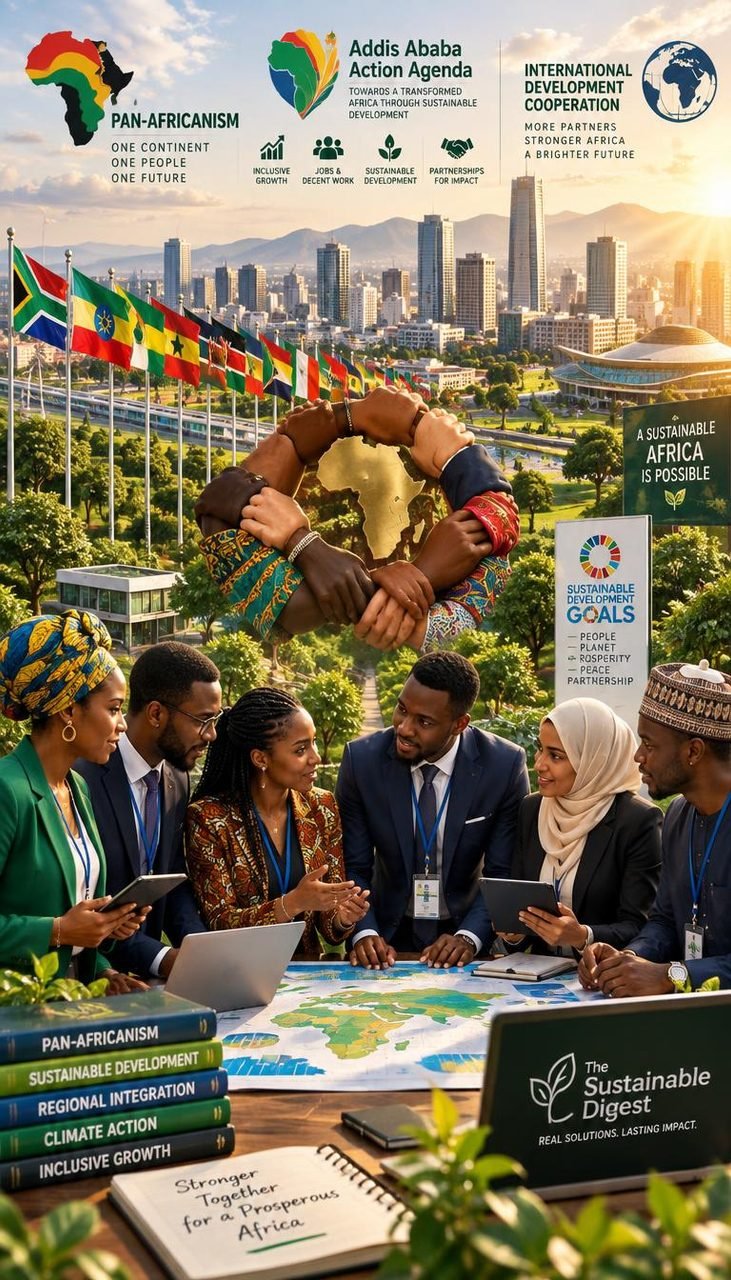
A global financing pact drew delegates from 174 United Nations member states, while 28 senior national leaders attended. That scale shows how much cooperation sustainable development can demand. The scope on the other hand, displays what international relations and global affairs can supply.
In 2015, the Third International Conference on Financing for Development took place in Addis Ababa, Ethiopia. On July 15, heads of state and government adopted the Addis Ababa Action Agenda. Its international conference financing framework set out how public resources, private investment, and global cooperation could support development.
The agreement followed the 2002 Monterrey Consensus and the 2008 Doha Declaration on Financing for Development. Those earlier commitments shaped a wider effort to turn financing development into practical results.
This article explores how funding choices affect communities, environmental justice, and inclusive, eco-friendly growth. For Singapore and other island economies, such choices can influence climate resilience as well as local needs. The agenda’s value rests not only in its goals, but in whether institutions put them to work. Money matters most when it reaches people and places facing real challenges.
How the Addis Ababa Action Agenda Connects Financing to Sustainable Development
The path began with the 2002 Monterrey Consensus, followed by the 2008 Doha Declaration. At the third international conference on financing development in 2015, countries built on those commitments. The Addis Ababa Action Agenda set out a connected system for funding progress, not a single source of cash.
Adopted three months before the 2030 Agenda, it linked development financing to the sustainable development goals. It also extended work beyond the millennium development goals. Its central insight was practical: public revenue, private investment, trade, debt, technology, and cooperation shape one another.
“We commit to a new global framework for financing sustainable development.”
From Earlier Pacts to a Shared Framework
The United Nations Department of Economic and Social Affairs supported follow-up through an inter-agency task force, with partners such as the World Bank. This structure helped track implementation and means of implementation.
Seven Connected Areas
The framework grouped choices into seven areas. Together, they offered countries a way to connect funding decisions with sustainable development targets.
Area
Focus
Contribution
Public resources; private business and finance
Domestic revenue; investment
Funding for public services and enterprise
Development cooperation; international trade
Partnerships; market access
Shared capacity and wider opportunity
Debt; systemic issues
Debt sustainability; financial rules
More stable financing conditions
Science, technology, innovation, capacity building
Knowledge; skills; tools
Practical means to deliver progress
Addis Ababa Action Agenda and 20 reasons why its important
Global financing promises matter when they fund clinics, schools, clean water, plus local climate plans. Reliable commitments help many countries plan around public needs instead of short-term gaps. For Singapore, this offers a useful lens: sound finance links national planning with shared resilience.
Financing Commitments for Communities
The Addis Ababa Action Agenda supports, complements, plus contextualizes the 2030 Agenda’s means of implementation. Through financing development, it links public revenue with community priorities. Funding choices can also advance environmental justice when they reach people facing greater risks.
Connecting Targets to Real Progress
The sustainable development goals set measurable targets, yet delivery lagged. In the 2024 Financing for Sustainable Development Report, only 15% of assessable targets were on track. Nearly 600 million people could still face extreme poverty in 2030; more than half may be women. This gap shows how development goals shape daily life.
Cooperation, Accountability, Shared Results
The 2030 Agenda links follow-up recommendations from the ECOSOC Forum on Financing for Development to the High-Level Political Forum. That reporting path can help developed countries, developing countries, the private sector, plus least developed countries align investment with inclusive growth. Past lessons from the millennium development goals also show that clear review can guide better choices.
Implementation Progress, Financing Gaps, and the Case for Reform
Implementation began in 2016, after the inter-agency task force formed in late 2015. The United Nations Department of Economic and Social Affairs coordinated its work with the World Bank Group, International Monetary Fund, World Trade Organization, UNCTAD, plus UNDP.
Reviewing Commitments Each Year
The ECOSOC Forum on Financing for Development reviewed the Addis Ababa Action Agenda each year. It tracked sustainable development goals, targets, plus means of implementation under the 2030 Agenda. Regular review helped turn conference financing into a public record of progress.
Debt, Climate Risk, and Investment Needs
The 2024 report estimated annual financing gaps had grown from about $2.5 trillion before COVID-19 to around $4 trillion. Poor countries paid twice as much interest on total debt as developed countries. From 2021 to 2025, developing countries averaged just over 4% annual GDP growth, below the roughly 6% rate before the 2009 crisis.
For least developed countries, median debt service rose from 3.1% of revenue in 2010 to 12% in 2023. Such pressure can crowd out climate plans. Green fiscal policy works best when it supports resilience, basic services, plus environmental justice.
Indicator
Earlier level
Later level
Annual financing gap
$2.5 trillion before COVID-19
About $4 trillion in 2024
Least developed countries’ debt service
3.1% of revenue in 2010
12% in 2023
Developing-country GDP growth
About 6% before the 2009 crisis
Just over 4% in 2021–2025
Cooperatives and Community Mobilization for Inclusive, Eco-Friendly Development
Cooperative enterprise gives residents a practical way to shape local priorities. Member-owned farms, shops, credit groups, or energy projects can pool skills, share risk, keep value nearby. Such work can support sustainable development when communities help set the course.
Cooperative Enterprise, Civil Society, and Local Self-Development
The 2015 conference brought governments, business leaders, civil society leaders, plus other stakeholders together. That broad mix showed how community mobilization can guide financing talks. Local groups can weigh domestic public resources against private investment, while international cooperation supports locally chosen goals.
Indigenous Peoples’ climate activism brings lived knowledge into environmental justice debates. Pan-Africanism links shared identity with cooperation among countries; humanitarian solidarity extends that spirit during hardship. For Singapore, the lesson is clear: local voices can guide green enterprise while strengthening regional ties. Cooperative work can build self-reliance without replacing public oversight.
Approach
Community role
Link to local priorities
Cooperative enterprise
Share skills, costs, and risk
Keep value close to residents
Community mobilization
Set goals and review choices
Guide public or private financing
Climate activism
Bring local knowledge to debate
Advance environmental justice
Green Fiscal Policy, Climate Action, and Decent Work and Leisure for a Just Transition
The 2015 framework called for financing flows to reflect economic, social, plus environmental needs. Green taxes, public spending, or incentives can support climate goals when they also protect people facing the greatest risks. This approach links environmental justice with practical development choices.
The 2024 Financing for Sustainable Development Report noted slow progress on climate action. It also described substantial financing needs for the Sustainable Development Goals plus climate work in developing countries. Public revenue, science, technology, innovation, plus skills can help meet those needs; sound plans must still weigh who benefits.
Aligning Public Finance with Environmental Justice
A just transition connects climate investment with decent work, fair access, plus community well-being. The International Labour Organization’s decent-work priorities can inform this discussion. The World Leisure Organization’s agenda and operations also offer a relevant lens on leisure as part of quality of life. This connection does not claim any specific program or policy.
Assess who gains from climate spending.
Include workers in transition planning.
Consider leisure alongside jobs, health, and resilience.
For Singapore, this lens supports a broader view of financing: climate progress should strengthen livelihoods, not treat them as a side issue.
Conclusion
In 2015, the Addis Ababa Action Agenda linked financing choices with economic, social, plus environmental needs. Its seven areas, aligned with the 2030 agenda, gave the United Nations a route to turn commitments into practical development. For Singapore, that model shows how global rules can support local resilience.
Annual ECOSOC reviews plus the Inter-agency Task Force tracked progress; still, wide funding gaps plus debt costs limited room for public investment. Reporting helped, but numbers alone could not ease pressure on households or climate plans.
Cooperatives, civil society, Indigenous activism, plus humanitarian solidarity bring local voices into policy. Lasting climate action depends on fair green taxes, decent work, environmental justice, plus community-led growth—not promises left on paper. Sustained cooperation makes shared goals more than well-worded text.
Key Takeaways
The agreement created a global financing framework in 2015.
Delegates from 174 member states took part.
Twenty-eight senior national leaders attended.
The framework built on earlier global commitments.
Financing choices can support climate resilience, environmental justice, and community needs.
Nearly 99 percent of banned ozone-depleting chemicals have now been phased out under a global treaty. That rare success shows what shared science, firm policy, and steady public action can achieve.
September 16 carries unusual weight. It marks an international day focused on atmospheric protection, while also recognizing a United Nations observance created through Resolution A/RES/78/259. Together, both themes link planetary health with fair access to knowledge.
Earth’s ozone shield absorbs much harmful ultraviolet radiation. Yet CFCs once used in refrigerators and aerosol cans helped create Antarctic ozone holes during southern-hemisphere winter and spring. That history makes environmental responsibility a practical public-health concern, including across Australia.
Science and technology can also support social progress. Higher-income economies still conduct much global research and development, leaving many communities with fewer tools to solve local challenges.
This article explores how treaty action, inclusive innovation, and Agenda 2030 goals can work together. Progress becomes stronger when clean air, digital skills, research funding, and community needs share one policy table; even bureaucracy occasionally discovers useful chemistry.
World Day of the Preservation of the Ozone Layer/STEM & Innovation for the South: Ozone Action and Shared Progress
September 16 links an international day with practical environmental action. In 1985, 28 countries signed the Vienna Convention. Two years later, they created the Montreal Protocol to control nearly 100 harmful chemicals, including CFCs, halons, methyl bromide, carbon tetrachloride, and HCFCs.
The United Nations General Assembly established this observance in 1994. Universal ratification arrived on September 16, 2009, marking a rare achievement in global cooperation. Science guided policy, while industry developed safer cooling systems.
“The Montreal Protocol is the single most successful international agreement in United Nations history.”
Kofi Annan
Cooling, Climate, and Community Benefits
HCFC removal ends in 2030 across developed countries and in 2040 across developing countries. The Kigali Amendment, agreed in Rwanda in 2016, also reduces HFCs, powerful greenhouse gases linked to climate change. Efficient cooling lowers bills, protects health, and strengthens sustainable development.
For Australia and nearby countries, daily data from Copernicus Atmosphere Monitoring Service supports sound decisions. Better equipment, trained workers, and shared resources help each sector move from policy to measurable change.
Milestone
Action
Benefit
1985
Vienna Convention signed
Research cooperation
1987
Montreal Protocol adopted
Chemical controls
2016
Kigali Amendment agreed
Lower climate risk
International Day of Science, Technology and Innovation for the South and the Rise of Agenda 2030
A new United Nations observance gives research equity a clear place in global policy. Resolution A/RES/78/259, adopted by the General Assembly, links September 16 with Agenda 2030 and the Addis Ababa Action Agenda. Its message is direct: shared knowledge can speed sustainable development.
Closing the Global STEM, Research, Technology, and Innovation Gap
High-income countries fund 77% of global research and development, while low-income countries provide only 0.3%. Global spending reached about $2.5 trillion in 2022, yet access remains uneven. Developing countries need laboratories, skilled teachers, reliable data, and affordable digital tools.
How United Nations Goals Support Inclusive Development
Better research systems can advance health, education, clean energy, climate action, and reduced inequality. United Nations partners—including UNDP, UNESCO, ITU, FAO, and the Technology Bank—help turn policy into local achievements.
Policy Alignment Across Key Institutions
The OECD offers evidence-based advice. The World Economic Forum, US EPA, and IEA connect industry, climate policy, energy, and innovation. Australia benefits when regional cooperation turns these ideas into practical projects.
Priority
Key action
Expected benefit
Research access
Fund local laboratories
Stronger health solutions
Digital skills
Expand technical training
Broader employment
Clean technology
Share proven systems
Lower emissions
Seventeen Global South Nations Linking STI, Ozone Protection, and the Sustainable Development Goals
National priorities shape how science, technology, and innovation support climate action. This group shows why a single policy formula rarely works; even a refrigerator cannot cool an entire city.
Argentina, Brazil, China, Egypt, India, Indonesia, Kenya, and Mexico
These nations span different economies, climates, and research systems. Their plans may focus on public health, digital access, clean energy, farming, or resilient industry. Such variety gives cooperation practical value for Australia and its regional partners.
Nigeria, Pakistan, South Africa, Thailand, Türkiye, Vietnam, Bangladesh, Ethiopia, and Rwanda
These countries also face distinct needs. Rwanda hosted the October 15, 2016, agreement on the Kigali Amendment. That event shows how shared science can support climate policy while strengthening local skills and resources.
Highlighting the 17 Global South Nations Driving Innovation
Additionally here are Seventeen nations that some overlap and are also recognized as leaders in innovation. They contributing significantly to advancements in renewable energy, agricultural technology, and digital infrastructure. These countries include:
Country
Key Contributions
Brazil
Leadership in biofuels and Amazon monitoring technologies.
India
Rapid expansion of solar energy capacity and the International Solar Alliance.
China
Dominance in photovoltaic manufacturing and electric vehicle production.
South Africa
Hub for renewable energy innovation, including independent power programs.
Mexico
Leveraging digital economies and climate-smart agricultural systems.
Indonesia
Building sustainable infrastructure and enhancing digital connectivity.
Nigeria
Innovating in agriculture and renewable energy sectors.
Egypt
Advancing solar energy projects and green technologies.
Argentina
Pioneering lithium extraction and green hydrogen initiatives.
Chile
Leading in biodiversity monitoring and sustainable practices.
Colombia
Innovating in agricultural technology and environmental conservation.
Malaysia
Advancing digital infrastructure and renewable energy projects.
Philippines
Enhancing climate resilience through innovative practices.
Vietnam
Driving sustainable agricultural practices and technology adoption.
Thailand
Investing in renewable energy and climate adaptation strategies.
Kenya
Innovating in mobile technology and renewable energy solutions.
Morocco
Leading in solar energy initiatives and sustainable practices.
The General Assembly resolution supports projects that expand research capacity in developing countries. It complements, rather than replaces, links with developed countries. Direct alignment includes SDG 3 health, SDG 4 education, SDG 7 energy, SDG 9 industry, and SDG 13 climate action. Adjacent priorities include cooling, digital inclusion, and resilient infrastructure.
Focus
SDG link
Practical result
Health and education
SDGs 3 and 4
Skilled, healthier communities
Energy and climate
SDGs 7 and 13
Cleaner cooling systems
Industry and cooperation
SDGs 9 and 17
Stronger regional capacity
Conclusion
September 16 carries a clear shared message: a healthy atmosphere and fair access to knowledge support human well-being. This international day joins environmental duty with science-led progress, giving Australia and partner countries a practical reason to act together.
The Montreal Protocol and Kigali Amendment show what cooperation can achieve. Firm targets, trusted data, skilled workers, and safer cooling can deliver measurable gains in climate protection and public health. Their record also proves that long-term policy can outlast short political cycles.
Agenda 2030 becomes more credible when research funding, digital infrastructure, finance, and technical training reach developing communities. Inclusive science and innovation can strengthen health, education, energy, industry, and environment outcomes across 17 nations. United Nations leadership works best when local expertise shapes each solution. That approach turns shared responsibility into sustainable development and gives every community a stronger stake in tomorrow.
FAQ
Why does ozone protection matter?
Ozone protection reduces harmful ultraviolet exposure, supports public health, and protects crops, oceans, and natural systems. It also shows how international cooperation can address climate change and environmental risks.
What role does the Montreal Protocol play?
The Montreal Protocol phases out ozone-depleting substances through binding targets, technical support, and financial resources. Its Kigali Amendment also targets hydrofluorocarbons, which contribute to global warming.
How can sustainable cooling support development?
Efficient cooling lowers energy demand, cuts emissions, and improves access to safe food, medicine, housing, and workplaces. This approach links environmental action with social and economic progress.
What is International Day for Science, Technology and Innovation for the South?
This international observance highlights research, technology, and innovation across developing countries. It promotes fair access to knowledge, funding, digital tools, and skills that support sustainable development.
How can nations close the STEM and research gap?
Countries can expand science education, strengthen universities, fund local research, and improve digital access. Partnerships between developed and developing countries can also support training, patents, laboratories, and practical technology transfer.
Which nations link science, climate action, and development?
Argentina, Brazil, China, Egypt, India, Indonesia, Kenya, Mexico, Nigeria, Pakistan, South Africa, Thailand, Türkiye, Vietnam, Bangladesh, Ethiopia, and Rwanda connect science policy with health, energy, industry, education, and climate priorities.
How do United Nations Sustainable Development Goals support inclusive development?
The goals provide a shared framework for reducing poverty, improving health, expanding education, protecting ecosystems, and building resilient infrastructure. A General Assembly resolution can help align national plans, finance, and international cooperation.
How do WEF, OECD, US EPA, and IEA efforts support progress?
These organizations contribute research, policy guidance, data, standards, and technical tools. Their work helps governments improve energy systems, reduce emissions, strengthen industry, and measure results across countries.
What practical actions can businesses and travelers take?
Businesses can select efficient cooling systems, reduce harmful refrigerants, and track environmental performance. Travelers can choose responsible operators, limit energy waste, and support local services that protect natural resources.
Why does cooperation matter for climate and technology policy?
Climate issues cross borders, while research capacity and finance remain uneven. Cooperation helps share expertise, improve access, and turn scientific achievements into reliable solutions for communities, industry, and the environment.
Key Takeaways
September 16 joins atmospheric care with inclusive research.
Ozone shields Earth from harmful ultraviolet radiation.
CFC controls offer a strong model for treaty action.
Research access supports fairer social development.
Agenda 2030 gains power through shared technical capacity.
Australia benefits from informed regional cooperation.
Looking ahead, we see a blend of cultural traditions and today’s environmental needs. This guide builds on our earlier work, “Week of Aug 9 to 16: Reflect on Sustainability and Holidays.” It covered Singapore’s independence and Indigenous Peoples’ Day.
We see these August 2026 events as a mix of independence days, remembrance, and cultural highlights. Our aim is to view these through a green lens. This supports local efforts rather than pushing a single environmental message.
Planning travel, education, or community projects? These sustainability initiatives August 2026 guide you. By honoring the unique nature of global observances sustainability August 2026, we can build stronger international ties.
August 2026 sustainability adjacent national holidays and global observances: context from the 2025 calendar
We’re looking at August 2026 with a new lens. Our previous review helped us understand how to mix cultural events with caring for the planet.
How the 2025 sustainability-and-holidays article informs the 2026 edition
Connect independence, remembrance, culture, and environmental stewardship without treating national holidays as interchangeable
Last year, we learned that national holidays August 2026 are more than just dates. Days like the National Day of Benin or Emancipation Day in Guyana have deep meanings. We should respect these days and not just use them for any message.
Independence days often talk about being self-sufficient and managing resources well. By understanding these celebrations, we connect better with global goals.
Using a green lens for a United States audience
Respect local meaning while highlighting community resilience, food systems, biodiversity, energy, water, mobility, and waste reduction
In the U.S., we need to make global events meaningful for our local lives. We focus on August 2026 calendar sustainability events that matter here. This way, we can live in a way that’s good for the planet.
When we talk about things like saving water or protecting nature, we aim to make it real. We want our readers to see how they can make a difference every day.
How to read the August 2026 calendar
Separate fixed dates, movable observances, national holidays, regional celebrations, awareness days, and month-long campaigns
To make the calendar useful, we sort events by type. We need to know the difference between official holidays and community efforts. This helps groups plan their August 2026 eco-friendly holidays well.
Event Category
Primary Focus
Sustainability Potential
National Holidays
Statehood & History
High (Policy & Civic)
Awareness Days
Specific Causes
Very High (Action)
Regional Celebrations
Local Heritage
Moderate (Community)
Month-long Campaigns
Broad Advocacy
High (Educational)
August 1–4: independence, emancipation, regional identity, and sustainable beginnings
As August starts, people around the world celebrate important days. These days remind us of the power of freedom and local traditions. They teach us to think deeply about our communities.
August 1 national and regional celebrations
National Day of Benin and Benin Independence Day
The National Day of Benin and Benin Independence are big moments for West Africa. They celebrate the country’s fight for freedom and its cultural pride.
Colorado Day and Emancipation Day in Guyana
In the U.S., Colorado celebrates becoming a state. Emancipation (Guyana) marks the end of slavery. Both days help us think about freedom and growth.
Guadalcanal Province Day, Switzerland National Day, and Yorkshire Day
Guadalcanal Province and Switzerland National Day focus on local and national unity. Yorkshire Day celebrates the unique culture of a historic English area.
Makira-Ulawa Province Day and Pidjiguiti Day
Makira-Ulawa Province Day is about pride in the Solomon Islands. Pidjiguiti Day is a serious reminder of the fight for freedom in Guinea-Bissau.
August 2–4 civic and cultural milestones
Republic Day in North Macedonia
Republic Day in North Macedonia is key for civic identity. It makes people think about their country’s democracy.
Cook Islands Constitution Day and Founder’s Day
Cook Islands Constitution Day and Founder’s Day worldwide highlight important laws and history. They shape our modern societies.
Matica Slovenska Day and National South Carolina Day
Matice Slovenska Day is about keeping Slovak culture alive. National South Carolina Day celebrates the Palmetto State’s history and beauty.
Making celebrations more sustainable
Support local producers, public transportation, reusable serviceware, cultural preservation, and community-led conservation
To make these holidays greener, we need to act on purpose. Choosing local products and public transport helps reduce waste. It also honors our cultural heritage.
Holiday
Primary Focus
Sustainability Action
Benin Independence
National Sovereignty
Support local artisans
Colorado Day
State Identity
Use public transit
Switzerland National
Cultural Unity
Reusable serviceware
South Carolina Day
Regional Heritage
Community conservation
August 5–8: national independence, landlocked development, and living landscapes
The start of August is a key time. It’s where history meets global teamwork. It makes us think about how our national identity helps us tackle big challenges.
August 5 observances and cultural continuity
Burkina Faso Independence Day
Burkina Faso celebrates its freedom. This day shows the nation’s fight for self-rule. It reminds us of the need for a strong future in the Sahel.
World Wide Web Day, Blogger Day, and International Clouded Leopard Day
We celebrate digital connections and wildlife. International Clouded Leopard Day shows how important it is to protect rare animals. It encourages us to use tech to help endangered species.
August 6 national days and development themes
Bolivia Independence Day and Jamaica Independence Day
The days of Bolivia & Uruguay Independence and Jamaica & Ukraine Independence show different paths to freedom. They help us see how freedom and economic stability connect.
International Day of Awareness of the Special Development Needs and Challenges of Landlocked Developing Countries
This day focuses on the special problems of countries without sea access. Solving these issues is key for strong supply chains and fair global markets.
Farmworker Appreciation Day and Celebrations of San Salvador
Farmworker Appreciation Day honors the people who grow our food. The Battle of Boyaca and San Salvador celebrations remember the struggles that shaped our regions.
August 7–8 remembrance and community observances
Côte d’Ivoire Independence Day and Peace Festival Augsburg
Ivory Coast/Côte d’Ivoire Independence is a time for national pride and looking back on progress. The Peace Festival Augsburg teaches us about solving conflicts and the power of community.
National Tarantula Appreciation Day and National Minority Donor Awareness Day
These days highlight the value of diversity and health. They teach us to appreciate the complex world around us, like the tarantula.
Made in the Philippines Product Week
Made in the Philippines Product Week celebrates local crafts and green production. Buying local goods helps the planet and supports local communities.
Green connections for food, biodiversity, and equitable development
Link farmworker recognition with soil health, fair labor, agroecology, and habitat protection
Real sustainability links farmworkers to the health of our soil. Supporting fair labor helps our soil and protects nature.
“The health of our soil is inextricably linked to the dignity of those who tend it; true progress is measured by how we treat both the land and the worker.”
Observance
Primary Focus
Sustainability Impact
International Clouded Leopard Day
Biodiversity
Habitat preservation
Landlocked Countries Day
Economic Development
Supply chain resilience
Farmworker Appreciation Day
Social Equity
Agroecology support
Made in the Philippines Week
Local Economy
Reduced carbon footprint
August 9–12: Indigenous knowledge, humanitarian action, and healthy ecosystems
Between August 9 and 12, we see a mix of global heritage, humanitarian efforts, and caring for our planet. This time invites us to think about how national and international events help us work towards a sustainable future.
August 9 national and international observances
Singapore National Day
Singapore National Day is a big moment for the country. It shows how a small nation can grow fast while taking care of the environment.
Nagasaki Memorial Day and International Day of the World’s Indigenous Peoples
The Nagasaki Memorial reminds us of the cost of war. The International Day of the World’s Indigenous Peoples focuses on keeping ancient wisdom alive. It’s key to listen to Indigenous leaders for a better environment.
Suriname Indigenous People’s Day
Suriname Indigenous People’s Day is important for recognizing local culture. It helps keep our world diverse and rich.
August 10 national celebrations and nature awareness
Ecuador Independence Day and Abai Day
Ecuador Independence Day celebrates freedom. Abai Day honors Abai Qunanbaiuly’s work. These days show how national pride and cultural history go hand in hand.
International Biodiesel Day and World Lion Day
International Biodiesel Day promotes cleaner energy. World Lion Day highlights the need to protect wildlife and their homes.
Celebrations of Santo Domingo begin
The start of Santo Domingo’s festivities adds color to the calendar. These events help bring communities together for a greener future.
August 11–12 youth, heritage, and humanitarian themes
Chad Independence Day and Steelpan Day
Chad Independence Day shows the nation’s strength. Steelpan Day celebrates Caribbean music. Both days show how culture strengthens communities.
International Youth Day and World Lizard Day
International Youth Day empowers young people to fight climate change. World Lizard Day reminds us to protect all life on Earth.
Hip Hop Day, World Elephant Day, and Mother’s Day in Thailand
Hip Hop Day shows the power of music. World Elephant Day and Mother’s Day in Thailand highlight the importance of caring for our planet and each other.
Glorious Twelfth and Woman Astronomers Day
The Glorious Twelfth starts the hunting season, sparking debates. Woman Astronomers Day celebrates women in science, inspiring the next generation.
Environmental applications for schools and communities
Center Indigenous leadership, youth participation, wildlife corridors, clean fuels, and creative climate communication
Schools can use these dates to teach about sustainability. By centering Indigenous leadership and youth participation, they can create better climate plans.
Communities should work on wildlife corridors and clean fuels. Using creative climate communication can make environmental issues easier to understand.
August 13–16: liberation, migration, food cultures, and shared memory
The middle of August is a time of deep reflection. It’s when we think about history, culture, and freedom. It’s a chance to see how big events and traditions shape our world.
August 13–14 milestones
Anniversary of the Recovery of Oued Ed-Dahab
The Anniversary of the Recovery of Oued Ed-Dahab is a big moment. It reminds us of the complex history of a region. It shows the power of coming together as a nation.
National Lizard Day, National Aviation Week, and Navajo Code Talkers Day
These days show our diverse interests. From National Lizard Day to Navajo Code Talkers Day, they teach us about the world. National Aviation Week makes us think about how we travel and its impact on the planet.
Pramuka Day and Pakistan Independence Day
Pramuka Day celebrates scouting and youth. Pakistan Independence Day honors a nation’s culture and freedom. Both days are about building community and getting involved.
National Aviation Day and National Zoo Awareness Day
National Aviation Day looks at aerospace progress, while National Zoo Awareness Day is about wildlife. These days help us talk about protecting our environment and animals.
August 15 national days and historic foundations
India Independence Day and Liechtenstein National Day
India Independence Day celebrates freedom and democracy. Liechtenstein National Day shows the country’s culture and history.
National Acadian Day and Malaita Province Day
National Acadian Day honors the Acadian people’s strength and heritage. Malaita Province Day celebrates the Solomon Islands’ pride and goals.
Foundation of Old Panama City and Founding of Asunción in Paraguay
The Foundation of Old Panama City and the Founding of Asunción in Paraguay highlight the history of cities in the Americas. They give us a chance to learn about city growth and preserving heritage.
National Liberation Day of Korea and the Parsi New Year
The National Liberation Day of Korea is a symbol of freedom. The Parsi New Year is about renewal, family, and keeping traditions alive.
August 16 cultural and religious observances
Women’s and Family Day
Women’s and Family Day celebrates the role of families in keeping communities strong. It’s a time to honor women’s contributions to our world.
Cook Islands, South Asian, and diaspora celebrations that emphasize food, family, and community ties
These celebrations focus on food and cultural exchange. They show how important it is to keep traditions alive, even when far from home.
Low-impact approaches to large public celebrations
Prioritize accessible transit, heritage conservation, plant-forward menus, water refill stations, and responsible tourism
Big events can be made greener by focusing on accessible transit and heritage conservation. Using plant-forward menus and water refill stations can also help. By encouraging responsible tourism, we protect local cultures and the environment.
Date
Observance
Primary Theme
August 13
Anniversary of the Recovery of Oued Ed-Dahab
National Unity
August 14
Pakistan Independence Day
Sovereignty
August 15
India Independence Day
Freedom
August 15
Parsi New Year
Cultural Renewal
August 16
Women’s and Family Day
Social Cohesion
August 17–20: constitutions, liberation anniversaries, learning, and planetary health
Between August 17 and 20, we see a mix of political freedom, learning, and caring for our planet. These days make us think about how we can balance our national identity with global responsibility in today’s fast-changing world.
August 17 national holidays
Gabon Independence Day and National Massachusetts Day
Gabon Independence Day reminds us of the nation’s path to freedom. National Massachusetts Day celebrates the roots of the United States. Both days teach us to value the systems that keep our societies strong.
Indonesia Independence Day and Slovenians in Prekmurje Incorporated into the Mother Nation Day
Indonesia Independence Day celebrates freedom and unity. Slovenians in Prekmurje Incorporated into the Mother Nation Day honors a people’s culture and land. It shows how shared heritage is key in today’s governance.
August 18–19 civic, cultural, and humanitarian observances
Indonesia Constitution Day and Made in the Philippines Product Week
Indonesia Constitution Day strengthens the laws that protect democracy. Made in the Philippines Product Week boosts local businesses and ethical shopping. Both are crucial for sustainable growth.
International Orangutan Day and National Aviation Day
International Orangutan Day focuses on saving endangered species. National Aviation Day celebrates technology but also talks about travel’s carbon footprint.
World Humanitarian Day and the environmental needs of displaced communities
World Humanitarian Day brings attention to displaced people. It’s important to meet their environmental needs, like safe water and energy.
August 20 environmental and public-health observances
Hungary National Day and World Mosquito Day
Hungary National Day honors the nation’s history. The World Mosquito Day reminds us of the need for disease prevention in a warmer world.
World Distance Learning Day and World Plant Milk Day
Genuially, World Distance Learning Day shows the power of online education. World Plant Milk Day encourages us to choose food that’s better for our planet.
National Zoo Awareness Day and International Biodiesel Day connections
National Zoo Awareness Day connects us with wildlife conservation. International Biodiesel Day promotes cleaner energy to replace fossil fuels.
Sustainability themes for institutions and households
Pair digital access with energy efficiency, responsible disease prevention, habitat protection, and lower-impact food choices
Institutions and homes can make these days part of their daily life for a greener future. By using digital tools wisely and saving energy, we can help the planet while reaching more people.
Observance
Primary Focus
Sustainability Impact
International Orangutan Day
Wildlife Conservation
Habitat Protection
World Plant Milk Day
Dietary Choices
Resource Conservation
International Biodiesel Day
Renewable Energy
Carbon Reduction
World Distance Learning Day
Education
Energy Efficiency
August 21–24: remembrance, religious freedom, flags, and national renewal
The time from August 21 to 24 is a bridge between looking back and moving forward. It’s a time to face global truths and celebrate the strength of countries.
August 21–22 observances
International Day of Remembrance and Tribute to the Victims of Terrorism
August 21 is the International Day of Remembrance and Tribute to the Victims of Terrorism. It’s a day to honor those hurt by violence and to stand together for peace.
Russian Flag Day and Liberian Flag Day
On August 22, we celebrate the Russian & Liberia Flag. These days are about national pride and the symbols of our shared history.
International Day Commemorating the Victims of Acts of Violence Based on Religion or Belief
August 22 also marks the International Day Commemorating the Victims of Acts of Violence Based on Religion or Belief. It reminds us of the fight for human rights and the importance of freedom of belief.
World Plant Milk Day and the Day of the National Flag
Amid serious days, August 22 also celebrates the Day of the National Flag. Plus, World Plant Milk Day encourages us to think about our food’s impact on the planet.
August 23 historical remembrance
International Day for the Remembrance of the Slave Trade and Its Abolition, recognized by UNESCO
August 23 is for the International Day for the Remembrance of the Slave Trade and Its Abolition [UNESCO]. It confronts us with the dark history of slavery and the ongoing fight for equality.
European Day of Remembrance for Victims of Stalinism and Nazism
The European Day of Remembrance for Victims of Stalinism and Nazism is also on this day. It warns us against the dangers of total control and the loss of freedom.
August 24 national and revolutionary milestones
Ukraine Independence Day and Revolution Commemoration
August 24 celebrates Ukraine Independence and Revolution Commemoration. These events show our desire for freedom and the bravery to fight for it.
Anniversary of the Revolution of the King and the People
This day also honors the Anniversary of the Revolution of the King and the People. It shows the bond between leaders and their people.
Turning remembrance into responsible action
Address environmental injustice, protect cultural sites, challenge exclusion, and support peacebuilding organizations
Real remembrance leads to action. By linking past lessons to today’s issues, we can build a fairer world.
Protect cultural sites threatened by war or neglect.
Address environmental injustice by helping communities harmed by pollution.
Challenge exclusion in laws to make sure everyone’s voice is heard.
Support peacebuilding organizations that aim to stop violence before it starts.
August 25–31: independence anniversaries, African heritage, and environmental responsibility
As August ends, we see a mix of national pride, human rights, and caring for our planet. This week, we think about how past events shape our future. We aim for a world that’s both sustainable and fair.
August 25–27 national and regional celebrations
Uruguay Independence Day
On August 25, we celebrate Uruguay Independence Day. It makes us think about the importance of democracy and nature. It shows how a nation’s identity is tied to its culture and environment.
National Zoo Awareness Day and community conservation initiatives
Then, National Zoo Awareness Day focuses on zoos and saving nature. These places are key for learning and research. They help us understand and protect our planet.
August 28–29 civic and international observances
Emirati Women’s Day
Emirati Women’s Day celebrates women’s roles in the UAE. It shows how important it is to include everyone in solving big problems like climate change.
International Day against Nuclear Tests
The International Day against Nuclear Tests looks at how safety and nature are connected. It reminds us of the lasting effects of nuclear tests on our planet and health.
National Diatomaceous Earth Day and science-based environmental education
National Diatomaceous Earth Day teaches us about natural ways to farm and control pests. It promotes learning about the environment. This helps us care for our soil and water.
August 30 remembrance and human rights
International Day of the Victims of Enforced Disappearances
The International Day of the Victims of Enforced Disappearances is a serious day. It highlights the need for human rights in any society. It calls for truth and justice, key for a sustainable future.
Falklands observances and the importance of place-based historical context
Falklands observances show why knowing a place’s history is important. It helps in building peace and a sustainable future, especially in disputed areas.
“True sustainability requires us to honor the past while building a future that respects both human dignity and the natural world.”
August 31 national celebrations
Malaysia Independence Day and Trinidad and Tobago Independence Day
The month ends with Malaysia Independence Day and Trinidad and Tobago Independence Day. These days are great for thinking about how these countries balance growth and protecting the environment.
International Day for People of African Descent
The International Day for People of African Descent celebrates African culture and strength. It’s a time to recognize the important role Africans play in saving our planet.
National Acadian, Caribbean, and Southeast Asian cultural connections
Looking at National Acadian, Caribbean, and Southeast Asian cultural connections shows how diverse traditions help us care for the planet. These cultures share knowledge that’s crucial for solving today’s environmental problems.
End-of-month sustainability actions
Use cultural programming to support environmental justice, ocean protection, biodiversity, and transparent civic participation
As we wrap up the month, think about how culture can lead to change. Here are some ways to make your community more sustainable:
Support environmental justice by talking about local issues in your events.
Promote ocean protection with workshops on marine life.
Encourage transparent civic participation by inviting leaders to talk about green policies.
August 2026 sustainability awareness days for nature, technology, and public health
In August 2026, we find a special mix of days that focus on the environment, health, and tech. These days are more than just dates. They help us live more mindfully and make big changes.
Wildlife and ecosystem observances
World Lion Day, International Clouded Leopard Day, World Elephant Day, International Orangutan Day, and World Lizard Day
These days remind us of the need to protect our planet’s animals and their homes. By focusing on animals like lions and elephants, we learn about the health of our ecosystems.
National Tarantula Appreciation Day, National Zoo Awareness Day, and National Diatomaceous Earth Day
Many people don’t think about the small creatures or the role of places like zoos. National Zoo Awareness Day and National Diatomaceous Earth Day help us understand the importance of conservation and managing pests.
International Lake Day, World Environment Day-related programming, and habitat restoration
Lakes are key to keeping our environment healthy. International Lake Day and World Environment Day help us work together on projects that protect our planet.
Health, food, and household sustainability observances
World Mosquito Day, World Breastfeeding Week, World Plant Milk Day, and International Biodiesel Day
What we eat and how we use energy affects many people. Days like World Plant Milk Day show us how to live in a way that’s better for the planet.
National Minority Donor Awareness Day and humanitarian health initiatives
Health fairness is crucial for a sustainable world. National Minority Donor Awareness Day shows us the need for healthcare that works for everyone.
Technology, learning, and communication
World Distance Learning Day, World Wide Web Day, Blogger Day, and Woman Astronomers Day
Technology can share knowledge widely, but it also uses a lot of energy. World Wide Web Day and Blogger Day teach us that our online actions affect the planet.
Use digital tools to expand environmental education while reducing misinformation and unnecessary energy use
We should use World Distance Learning Day to teach real knowledge, not just digital noise. Celebrating Woman Astronomers Day shows the value of science in fighting misinformation.
August 2026 cultural months, weeks, and community campaigns
August 2026 is filled with community-driven campaigns. They connect cultural heritage with sustainable living. These observances give us a chance to live more eco-friendly while celebrating different traditions.
Month-long observances
Black Business Month and support for environmentally responsible entrepreneurs
Black Business Month is a key time to support minority-owned businesses that focus on green innovation. By backing these companies, we help build a fair and green economy.
American Adventures Month and lower-impact domestic travel
American Adventures Month encourages us to explore our own country. It’s a great time to choose lower-impact domestic travel like trains or local hikes. This helps reduce the carbon footprint of travel.
Week-long observances
World Breastfeeding Week and family-friendly public infrastructure
World Breastfeeding Week stresses the need for public spaces that are family-friendly. Such spaces are key to social sustainability and community health.
National Aviation Week and cleaner aviation, rail, and regional mobility conversations
National Aviation Week is a chance to talk about cleaner travel options. We need to find ways to connect while reducing emissions.
Made in the Philippines Product Week and ethical, durable purchasing
Made in the Philippines Product Week highlights the importance of quality and ethics. Buying durable goods helps reduce waste and supports fair trade.
Clutter Awareness Week and repair, reuse, donation, and responsible disposal
Clutter Awareness Week urges us to think about our buying habits. It encourages us to repair, reuse, donate, and dispose of items responsibly.
Community celebrations with environmental value
Lughnasadh, Parsi New Year, San Salvador celebrations, Santo Domingo celebrations, and regional harvest traditions
Cultural events like Lughnasadh and the Parsi New Year are deeply connected to nature. They often focus on seasonal foods and the natural world’s rhythms.
Build programs around seasonal foods, cultural consent, waste prevention, and local ecological knowledge
When planning events, it’s important to respect cultural consent. Sustainability works best when it’s a community effort. By focusing on waste and traditional wisdom, we keep these celebrations meaningful and green.
U.S. planning guide for August 2026 eco-friendly holidays
Planning eco-friendly events for August 2026 needs careful planning and respect for cultures. By linking local events with global days, we can engage people and care for our planet.
Build a responsible observance calendar
Confirm official dates, distinguish federal holidays from awareness days, and identify local government or cultural authorities
Start by checking the exact dates for important days like International Youth Day or International Day of the World’s Indigenous Peoples. It’s important to know the difference between federal holidays and awareness days, like National Minority Donor Awareness Day or Woman Astronomers Day.
Talking to local government or cultural groups helps make sure your event is respectful. This is especially true for days like the Revolution Commemoration or National Acadian celebrations. Make sure to check the timing for Santo Domingo Celebrations Start to keep your efforts meaningful and respectful.
Choose practical sustainability initiatives
Organize park cleanups, tree care, habitat restoration, food drives, blood donation, climate education, and energy audits
Turn your calendar into action with initiatives that help the local environment. You could have a park cleanup during Clutter Awareness Week or tree care sessions on National Zoo Awareness Day.
Use National Diatomaceous Earth Day for educational workshops or energy audits when needed. These actions, along with food drives and blood donation, make a real difference in your community.
Make sure your events are open to everyone. Provide clear public-transit info and ADA-accessible paths. Use refill stations and composting to reduce waste.
Choose reusable over single-use plastics to show you care about the planet. Also, use multilingual signs to share the importance of days like the International Day for People of African Descent or the Remembrance of the Slave Trade and Its Abolition [UNESCO] with all attendees.
Measure impact without reducing culture to metrics
Track participation, waste avoided, meals donated, habitat improved, and community feedback while honoring cultural meaning
While numbers are important, they shouldn’t be the only focus. Days like the International Day against Nuclear Tests or the International Day of the Victims of Enforced Disappearances carry deep cultural significance. Mix qualitative feedback with numbers like waste reduction or meals given out.
When remembering the International Day of Remembrance and Tribute to the Victims of Terrorism or the International Day Commemorating the Victims of Acts of Violence Based on Religion or Belief, focus on the human stories. Balance Awareness of the Special Development Needs and Challenges of Landlocked Developing Countries with local traditions like National Connecticut events. This way, you leave a lasting, thoughtful mark.
How to connect national holidays with global sustainability goals
August is a mix of human history and caring for our planet. It marks the Foundation of Old Panama City and the Founding of Asuncion in Paraguay. These dates make us think about our common past. It’s important to respect cultures and care for the environment at the same time.
By honoring the past, we help protect the future. Celebrating the Nagasaki Memorial or Ukraine Independence Day shows us the importance of peace. Joining World Humanitarian Day or the International Day for People of African Descent helps fight for fairness worldwide.
Everyone can pick actions that match their values. You might support Black Business Month or help reduce waste with Clutter Awareness Week. Celebrating World Elephant Day or learning about National Diatomaceous Earth Day connects us to our planet.
Every holiday, from the Anniversary of the Revolution of the King and the People to the Parsi New Year, is a chance to grow. Being intentional helps keep cultural traditions alive. Let these events guide you toward a greener, more aware lifestyle this month.
FAQ
Q: How does the August 2026 calendar build upon the sustainability insights from the previous year?
A: The 2026 calendar builds on the 2025 framework, focusing on sustainability and holidays. It links national celebrations like Singapore National Day and India Independence Day with caring for the environment. The 2026 guide also includes more global observances.It shows that sustainability initiatives should fit local needs, not just follow a generic plan. This approach respects cultural differences while promoting environmental care.
Q: Why is it important to distinguish between national independence days and international awareness days?
A: It’s key to keep these days separate to avoid a shallow calendar. National holidays, like National Day of Benin or Bolivia Independence Day, hold deep political and sovereign importance. Awareness days, such as International Biodiesel Day or World Steelpan Day, focus on specific causes.This distinction helps cultural diplomats and global professionals honor historical milestones. It also lets them promote important causes like habitat restoration or clean energy.
Q: How can digital-themed observances like World Wide Web Day and Blogger Day support environmental goals?
A: Digital tools use energy, but World Wide Web Day and Blogger Day can help teach about the environment. In 2026, these days encourage using modern technology to share science-based environmental education.It’s important to also talk about the carbon footprint of data centers and the spread of climate misinformation.
Q: What is the significance of the International Day of Awareness of the Special Development Needs and Challenges of Landlocked Developing Countries?
A: This day highlights the unique challenges faced by countries without sea access. It focuses on market access and equitable development. This day shows how transport costs and infrastructure needs impact sustainability in 32 landlocked nations.It bridges the gap between international relations and environmental justice.
Q: How do wildlife-focused days like World Lion Day and International Clouded Leopard Day intersect with human development?
A: Days like World Lion Day and International Clouded Leopard Day stress the importance of habitat protection and biodiversity. They advocate for wildlife corridors and community-led conservation.These efforts show that healthy ecosystems are vital for the stability of the regions celebrating their national holidays.
Q: In what ways does World Humanitarian Day address environmental concerns in 2026?
A: World Humanitarian Day focuses on the environmental needs of displaced communities. It ensures safe water, sanitation, and energy access for refugees and those affected by conflict or climate disasters.This day reminds us that sustainability is linked to human rights and peacebuilding.
Q: How can households participate in sustainability through dates like World Plant Milk Day and Clutter Awareness Week?
A: These dates offer ways for conscious consumers to reduce waste and make lower-impact food choices. World Plant Milk Day encourages plant-forward menus. Clutter Awareness Week promotes the circular economy through repair, reuse, and responsible disposal.These efforts show that global observances can lead to immediate local action.
Q: Why are cultural milestones like Parsi New Year and Lughnasadh relevant to sustainability?
A: Festivals like Parsi New Year (Navroz) and the Celtic harvest festival Lughnasadh are rooted in local ecological knowledge and seasonal foods. By honoring these traditions, travelers and community planners can support cultural preservation.They also promote biodiversity education and responsible tourism.
Q: What role does public health play in the August 2026 eco-friendly calendar?
A: Days like World Breastfeeding Week and World Mosquito Day connect public health with sustainable infrastructure and responsible disease prevention. National Minority Donor Awareness Day highlights the need for equitable healthcare systems.This is a key part of the United Nations Sustainable Development Goals.
Q: How should U.S.-based organizations plan for niche observances like Woman Astronomers Day or National Diatomaceous Earth Day?
A: Organizers should use these days to build community resilience and science-based learning. Whether celebrating Woman Astronomers Day to promote STEM education or using National Diatomaceous Earth Day to discuss natural pest control, the goal is to have a real impact.It’s important to verify official dates and work with cultural authorities to ensure authenticity and measurable results.
Q: How can the Anniversary of the Revolution of the King and the People or Ukraine Independence Day be observed with a focus on sustainability?
A: These national revolutionary milestones can be honored by addressing environmental injustice and protecting cultural sites during times of change. In 2026, sovereignty is linked to managing natural resources and achieving energy independence.This makes climate resilience a modern form of national liberation.
Key Takeaways
Find a balance between cultural celebrations and caring for the environment.
Use this guide for travel, diplomacy, and community planning in August.
Remember, local needs should come first, not just green messages.
Expand on the insights from our 2025 research series.
Engage with different groups by respecting each celebration’s unique context.
This short guide maps key dates and events during the early summer period, showing how global days can shape local action. It frames the calendar as a chance to measure progress since last year and to turn celebrations into practical activities. This is the first week of July 2026 part 1 guide of 3.
For schools, services, and community groups in Canada, the note highlights creative ideas that reduce environmental impact while boosting awareness. Practical tips and clear guides make participation easy for friends, families, and professionals.
The piece examines festivals, awareness days, and holiday moments as parts of a broader strategy. Expect concise information on dates, small-scale events, and ideas that balance celebration with care for the world.
Understanding First Week of July 2026 part 1 Sustainability adjacent holidays and observances
This analysis compares how public rituals evolved from 2025 to 2026, revealing a shift from short-term fixes to planned, community-led approaches that show measurable gains this year.
Comparative review: municipal guidance and event organizers moved from reactive responses in 2025 to clearer mandates and toolkits in 2026. That change shaped how many holidays and local day events were run across Canada.
Family choices play a key role. More households treated the summer as an opportunity to blend celebration with low-impact methods—reusable supplies, local sourcing, and activity swaps that cut waste.
Looking at the month calendar shows which traditions adopted practical tips and which require more effort. The season now acts as a part of broader public outreach; organizers use events to teach, not just entertain.
“When celebration becomes practice, small acts aggregate into national outcomes.”
Contrast: 2025 relied on quick fixes; 2026 favors prevention and education.
Outcome: holidays function as catalysts for ongoing community action.
National Sovereignty and Environmental Stewardship
National days often mix ceremony with civic goals; they can highlight historic achievement while nudging public policy toward resource care.
This brief review ties three linked dates to social progress and ecological responsibility. The narrative treats each observance as a chance to align local action with global targets.
Burundi Independence Day and Rwanda Liberation Day
Burundi Independence Day (July 1, 1962) remains a marker of sovereignty and long-term development. Communities use the day to promote rural projects, reforestation, and local livelihoods.
Rwanda Liberation Day (July 4) highlights post-1994 social recovery; planners now pair remembrance with programs that address soil loss and forest health, responding to environmental strains documented in 2025.
Canada Day and Environmental Impact
Canada Day on July 1 is a major national holiday. Large-scale events face growing scrutiny for waste, noise, and emissions.
Planners in Canada increasingly set rules: greener supplies, transport hubs, and public messaging that link celebrations to conservation.
These dates are used to raise public awareness about resource limits.
Aligning the calendar with global goals helps protect natural assets while honoring history.
Global Cooperation and Social Development Initiatives
Cooperatives increasingly serve as practical bridges between community needs and international policy targets. This section examines how the International Day of Cooperatives has shaped a more measured approach to social and environmental goals.
International Day of Cooperatives
The International Day of Cooperatives (celebrated each July 4) highlights member-owned firms that build fairer local economies. The day spotlights how shared governance can reduce inequality while strengthening community ties.
Compared with 2025, 2026 shows clearer focus on social development and cutting carbon footprints in local supply chains. Planners now treat this holiday as part of a month-long push to align business events with the United Nations’ sustainable development goals.
Practical outcomes include pooled transport for market days, shared cold storage for producers, and co-op-led training on low-carbon practices. These measures reduce waste linked to individual consumption and make resource use more efficient.
Economic equity: cooperatives support jobs and stable incomes across diverse markets.
Environmental care: member networks promote stewardship through shared assets and longer-term planning.
Policy alignment: a month of coordinated activities helps local groups meet global targets.
Cultural Heritage and Community Identity
Variation A chosen: cultural heritage days anchor community identity while offering practical pathways to greener public life.
Communities now retool Ghana Republic Day, Hong Kong SAR Establishment Day, CPC Founding Day, Territory Day, Virgin Islands Day, Curaçao National Anthem and Flag Day, and Philippine Republic Day to link tradition with resource care.
Schools, family groups, and local organisers stage small events that teach preservation of cultural landscapes while reducing waste; examples include low-waste processions, local sourcing at markets, and native-plant displays.
Historic moments such as the Anniversary of the Coronation of King Mindaugas and Tynwald Day serve as platforms for ecological messaging. Saba Saba Day, Solomon Islands Independence Day, Unity Day Zambia, Heroes’ Day Zambia, Comoros National Day, Cape Verde/Algeria/Venezuela independence observances, Filipino‑American Friendship Day, Armenia Constitution Day, Foreign Slovaks Day, National Hawaii Day, and Mother’s Day South Sudan follow suit.
Adaptation: festivals now include conservation activities and community stewardship.
Engagement: schools host projects that link history with practical environmental skills.
Impact: these celebrations help communities compare past practice with a more sustainable month of action.
“When ritual meets responsibility, culture becomes a vehicle for lasting change.”
Promoting Sustainable Lifestyles and Awareness
Several linked campaigns during the season act as low-cost labs for sustainable living. They connect policy, markets, and daily choices so communities can test greener routines with measurable outcomes.
National Hemp Month
National Hemp Month highlights how resilient crops improve soil health and offer eco-friendly alternatives to synthetic fibres. In Canada, growers and researchers present hemp as a viable part of regional supply chains; the crop supports rural jobs while reducing demand for resource-intensive materials.
Plastic Free July
Plastic Free July has expanded since 2025, prompting millions to cut single-use plastics during the summer. The campaign supplies simple tips: swap disposables, join local refill networks, and plan low-waste picnics that prioritize local food.
World Nature Conservation Day
World Nature Conservation Day provides a formal day to assess biodiversity gains and gaps. These month-long efforts deliver practical activities that boost public health, reduce waste, and weave environmental awareness into the yearly calendar.
Practical benefit: better soil, healthier food systems, and less plastic pollution.
Social gain: local jobs, shared infrastructure, and stronger community networks.
Religious Observances and Ethical Reflection
Religious calendars create regular pauses for moral thinking about consumption, care, and community.
Faith communities often use sacred moments to teach moderation, mindful living, and shared responsibility. These practices link spiritual life with concrete, low-impact choices that benefit local environments in Canada.
Comparing 2026 practice with 2025 shows a clear trend: more congregations now include ecological stewardship in sermons and rituals. That shift turns reflection into action—trees planted after a service, community kitchens that cut food waste, or pooled transport for events.
Ethical reflection during this month helps people weigh the impact of their purchases and diets. The emphasis on compassion and duty supports broader social goals; it nudges households toward lower consumption and stronger neighbour networks.
Teach moderation: short liturgies can promote reuse and repair.
Model care: communal projects link belief with local ecology.
Measure impact: simple tracking turns intention into measurable change.
“Spiritual practice becomes civic practice when it asks what our choices cost the earth.”
Regional Celebrations and Historical Milestones
Celebratory rituals act as practical experiments where heritage meets modern practice; the Calgary Stampede is a clear example.
Calgary Stampede and Western Heritage
The Calgary Stampede (July 3 to 12, 2026) remains a major regional festival that showcases Western heritage while testing greener operations.
Compared with 2025, the 2026 edition improved waste management and shifted to energy-efficient site systems to cut the event’s footprint.
Families visiting the rodeo will find practical tips: use public transit to the grounds, bring reusable drinkware, and choose locally sourced food vendors to support agricultural resilience.
These dates and historical milestones sustain community identity while prompting new practices that respond to climate risks.
The Stampede sets new standards for large-scale events by mixing culture with environmental messaging.
Organizers pair entertainment with training for vendors on low-waste operations.
Local celebrations now appear in the civic calendar as moments for social and sustainable development.
“Big festivals can teach small, repeatable habits that reshape a region’s resource use.”
The Intersection of Independence and Sustainable Development
When countries mark sovereignty, many also announce plans that bind national pride to long-term ecological resilience. These moments now serve as policy stages where leaders link independence with the capacity to steward land, water, and energy for future generations.
This narrative shift reflects a wider recognition: true autonomy depends on natural systems that can support livelihoods and economic stability. Governments that embraced green infrastructure after 2025 now prioritize projects that supply water, protect soils, and expand low-carbon power.
Social equity is part of the equation. Planners report that durable gains require investments in housing, healthcare, and local jobs alongside environmental measures; otherwise, resilience remains fragile.
Independence ceremonies in 2026 highlighted new climate budgets, public transit commitments, and community forestry plans.
Public reporting—more common since 2025—let citizens compare promises with measurable targets.
“Sovereignty tested by resource limits must be answered with practical, equitable stewardship.”
Strategies for Eco-Friendly Holiday Participation
A clear event plan helps hosts focus on food, transport, and waste — the three levers that most affect environmental outcomes. This short guide offers practical steps for community groups, services, and friends who want low-impact celebrations during the summer month.
Sustainable Event Planning
Set standards early. Ask vendors to use reusable or compostable tableware and to source local food where possible. Reserve a central transit hub or suggest pooled rides to cut emissions.
Communicate clearly: add simple rules to the event listing in the calendar so attendees know what to bring and what to avoid.
Reducing Holiday Waste
Design trash stations with clear labels for compost, recycling, and landfill. Train volunteers to guide sorting during busy times.
Small swaps—cloth napkins, bulk condiments, refill stations—reduce single-use items and improve public health by lowering litter and pests.
Action
Why it helps
Expected benefit
Local food vendors
Shorter supply chains; less packaging
Lower emissions; supports regional farms
Transit pooling
Fewer cars; smaller carbon load
Reduced congestion; cleaner air
Reusable serviceware
Cuts single-use waste
Less landfill; cost savings over the year
“Small changes in planning produce outsized gains for communities and the world.”
Provide concise tips in event listings.
Offer curated ideas for low-waste activities that fit the season.
Note that modest shifts since last year can yield measurable improvements.
Conclusion
This is the first week of July 2026 part 1 of Sustainability adjacent observances. The early July period gathers national ceremonies, local festivals, and civic campaigns into a single moment for change.
Comparing 2026 with 2025 shows clearer commitment; planners moved from short fixes to planned measures that yield measurable gains. Small acts—pooled transport, reusable serviceware, local sourcing—scale when communities repeat them.
Readers are encouraged to use the calendar and tips here to make events more meaningful and lower impact. Whether through large festivals or personal routines, each choice helps build a fairer, more resilient future for Canada.
Key Takeaways
Use the calendar to plan low-impact events and community activities.
Blend education with celebration: practical guides for schools and services.
Simple tips help families and friends reduce footprint during festivals.
Compare progress from last year to set measurable goals for the season.
Local events can amplify global awareness with modest resources.
The latest edition of the 2026 SDSN Sustainable Development Report marks a significant moment in global efforts toward a more equitable future. It reflects a decade of data and progress since the adoption of the 2030 Agenda by all UN Member States. This document serves as a crucial tool for understanding the trajectory of development across nations.
In this year’s report, the SDSN Sustainable Development Solutions Network has identified eight key priorities aimed at accelerating progress through 2030 and beyond. This strategic shift emphasizes the importance of looking forward, rather than solely reflecting on past achievements.
Moreover, the report features insights from two innovative surveys that gauge both expert opinions and public perceptions regarding the barriers to implementing these vital goals. As nations navigate complex challenges, the findings serve as a guide for policymakers and stakeholders alike.
As we delve into the details, it becomes clear that the rankings of countries such as Finland, Sweden, and Denmark are not just a celebration of their achievements. They represent a commitment to long-term strategies that foster positive impacts both domestically and internationally.
1. Introduction to the SDSN and UN DESA Roles in Sustainable Development
At the forefront of global initiatives, the Sustainable Development Solutions Network and the United Nations Department of Economic and Social Affairs collaborate to advance significant goals. Their combined efforts have shaped the landscape of international development, particularly since the adoption of the 2030 Agenda in 2015.
1.1 Historical Background of the Sustainable Development Solutions Network
The Sustainable Development Solutions Network emerged as a brain trust under UN auspices. Since 2015, it has mobilized global academic and research expertise to tackle the most intractable challenges facing all 193 member states. This initiative emphasizes collaborative approaches to sustainable development.
1.2 Overview of the United Nations Department of Economic and Social Affairs
UN DESA’s long-term history as the Secretariat’s economic social arm stretches back decades. However, its role crystallized dramatically after 2015, when it became the backbone for the High-Level Political Forum. This forum serves as the custodian of the Voluntary National Review process across 193 member states.
1.3 Synergies between SDSN and UN DESA in Global SDG Efforts
The synergy between SDSN and UN DESA is evident in their complementary data collection efforts. SDSN leverages its global network of academics to track the evolving landscape of sustainable development. Meanwhile, UN DESA maintains the official SDG indicator framework that informs monitoring processes.
Since 2016, both organizations have strengthened governance systems through bilateral relationships with national and regional governments. This collaboration is crucial for effective implementation of the sustainable development goals.
Organization
Role
Key Contributions
Sustainable Development Solutions Network
Mobilizes research expertise
Addresses complex challenges in 193 member states
United Nations Department of Economic and Social Affairs
Serves as the Secretariat’s economic social arm
Custodian of Voluntary National Review process
Collaboration
Data collection and governance
Strengthens systems for sustainable development
Short-term progressions have seen both institutions grappling with the declining emphasis on sustainable development in high-level discussions. This trend underscores the urgency of their collaborative efforts in fostering a sustainable future.
2. Evolution and Annual Development of the 2026 SDSN Sustainable Development Report
The evolution of these reports mirrors the dynamic nature of global development efforts and the pressing need for accountability. Since 2015, the series has transformed from a basic scorecard into a comprehensive tool for assessing progress across nations.
2.1 The Report’s Genesis and Long-Term Development Since 2015
The sustainable development report series began its journey in 2015. It aimed to hold all 193 UN Member States accountable to the newly established SDGs. Over the years, it has evolved into a multidimensional analytical framework, as seen in the latest edition.
2.2 Annual Update Process and Collaborative Mechanisms (2016-2026)
Each annual update since 2016 has introduced methodological refinements. The early editions primarily focused on country rankings. However, later versions incorporated spillover indices and trend analyses. By the latest edition, comprehensive survey data from expert networks and the public have been included.
The collaborative mechanisms behind the annual updates involve a well-coordinated effort. SDSN’s secretariat collaborates with regional offices in Asia, Europe, and North America. An expanding network of local chairs and managers ensures the accuracy of data across all 193 countries.
2.3 Integration of Expert and Public Surveys in Report Refinement
The integration of expert and public surveys marks a significant methodological evolution. The latest edition includes the “2026 Expert Survey on Government Efforts for the SDGs,” covering 64 countries and the European Union. Additionally, it features the “2026 Survey on SDG Challenges and Means for Implementation,” which gathered insights from 1,098 respondents across 127 countries.
Annual decisions have been influenced by the shifting landscape of international development. For instance, the 2019 edition introduced the six SDG Transformations framework, while the 2020 edition addressed the impacts of the COVID-19 pandemic. The latest edition now pivots toward priorities beyond 2030 as the deadline approaches.
Initially affiliated with a university press, the report has matured into a globally recognized authority on SDG progress. Each edition builds on the previous year’s lessons, expanding the universe of data available for cross-country comparisons.
Importantly, all report materials—including the full PDF, Excel database with scores and ratings, codebook, and methodology documentation—are available for free. This commitment to democratizing data reflects the guiding principles that have shaped the report’s evolution since 2016.
3. Analysis of SDSN Expert and Large-Scale Surveys on SDG Implementation
The recent expert survey sheds light on the effectiveness of government initiatives related to the SDGs. It highlights how these efforts have been integrated into public management practices. This analysis draws on qualitative data collected from experts across various countries, providing a nuanced understanding of SDG implementation challenges.
3.1 The 2026 Expert Survey on Government Efforts
This year’s expert survey represents a methodological triumph in qualitative data collection. It mobilized 65 responses across 64 countries and the European Union. The survey assessed how deeply the SDG framework has penetrated national public management practices since 2018.
Countries like Canada, Denmark, Ghana, and Italy have made significant strides in incorporating the SDG framework into their governmental practices. In contrast, Australia, the United States, and Venezuela have not prioritized the SDGs in their public management frameworks.
3.2 Insights from the 2026 Large-Scale Survey on SDG Challenges
The large-scale survey, encompassing 1,098 respondents from 127 countries, provides a broader perspective on SDG outcomes. An overwhelming 78% of respondents believe that SDG outcomes in their countries have either improved or stagnated from 2015 to 2025.
However, the survey also identified significant barriers to SDG implementation. Notably, 89% of respondents pointed to the failure to implement approved strategies as a critical challenge. Additionally, 87% highlighted the shifting geopolitical landscape as another major hurdle.
3.3 Implications of Survey Findings on Policy and Implementation Practices
The findings from both surveys underscore the unique value of the SDSN in curating insights for the updated report. By triangulating expert assessments, public perceptions, and quantitative indicators, the network provides a multidimensional picture of government efforts.
This comprehensive approach informs the eight priorities for accelerating SDG progress through 2030 and beyond. It reveals that while bureaucratic structures remain in place, the political commitment at the highest levels is waning, as evidenced by the decline in heads of state referencing the SDGs in official speeches.
4. Role and Impact of Voluntary National and Local Reviews in Global SDG Monitoring
The mechanisms for Voluntary National and Local Reviews have emerged as pivotal tools in tracking global progress. Since 2016, 190 countries have participated in the Voluntary National Review (VNR) process. This achievement represents a remarkable feat of global accountability architecture, particularly in contrast to the three holdouts: Haiti, Myanmar, and the United States.
In 2026, 36 countries are scheduled to present updated reviews of their SDG action plans. Notably, there are no first-time presenters this year. Togo and Uruguay will present their fifth VNRs, showcasing their sustained engagement with this important mechanism. This evolution reflects how the VNR process has transformed from a one-off reporting exercise into an iterative policy learning cycle over the past decade.
The growth of Voluntary Local Reviews (VLRs) tells an equally compelling story. Subnational authorities in 48 countries have produced 386 VLRs from 2016 to 2026. Brazil, Malaysia, Mexico, and Argentina alone account for nearly half of these reviews. The number of VLR submissions surged by 69% from 62 in 2024 to 105 in 2025, indicating a robust local-level momentum for sustainable development.
4.5 Role and Impact of Voluntary National and Local Reviews in Global SDG Monitoring continuing..
UN DESA’s role as the institutional custodian of both VNRs and VLRs has expanded significantly. The Department maintains comprehensive databases tracking participation trends and provides technical support to governments preparing their reviews. This support ensures that these accountability mechanisms feed into the broader SDG implementation monitoring ecosystem.
The absence of the United States from the VNR process, alongside Haiti and Myanmar, highlights a significant gap in global SDG progress monitoring. This is particularly concerning given the country’s influence on international spillover effects, which the SDSN’s spillover index tracks across multiple indicators.
Ultimately, the VNR and VLR mechanisms embody the principle of country-led accountability that underpins the 2030 Agenda. UN DESA’s support infrastructure has evolved from basic reporting templates to sophisticated data platforms, enabling cross-country comparisons and peer learning among the 190 participating countries.
Country
VNR Presentations
VLR Count
Togo
5
15
Uruguay
5
10
Brazil
4
72
Malaysia
4
44
Mexico
4
35
Argentina
4
34
United States
0
0
5. 2026 SDSN Sustainable Development Report Annual Update Review Analysis: Key Findings and Priorities
In this edition, we explore the vital discoveries and strategic priorities emerging from the latest global development evaluations. The 2026 findings reaffirm the Nordic dominance in sustainable development, with Finland, Sweden, and Denmark topping the rankings. However, the sdg index dashboards reveal a more complex narrative.
The spillover index illustrates how the consumption patterns of wealthier nations can negatively impact progress towards achieving the sustainable development goals in the Global South. This nuance is crucial for understanding the interconnectedness of global development efforts.
5.1 Overview of 2026 SDSN Report Rankings and Trends
The rankings from the development report 2026 indicate that while some countries excel, there are underlying issues that need addressing. The interactive maps within the report showcase the performance of nations on each of the 17 goals, providing a clear picture of where efforts are succeeding and where they are lacking.
5.2 Priority Areas and Emerging Issues in the Post-2030 Sustainable Development Agenda
The report identifies eight key priorities for accelerating sdg progress through 2030 and beyond. A remarkable consensus among experts reveals that at least 75% agree on six critical priorities for the post -2030 agenda. These include:
Strengthening means for implementation, focusing on governance and data.
Developing international guidelines on SDG synergies and trade-offs.
Incorporating artificial intelligence into future frameworks.
Reforming the global financial architecture to address budgeting gaps.
Ensuring stability in the framework while maintaining continuity in goals.
Better reflecting and incorporating international spillovers.
5.3 SDSN and UN DESA’s Collaborative Role in Shaping International Development Policies
The collaborative dynamic between SDSN and UN DESA plays a pivotal role in shaping international development policies. Their joint efforts highlight the importance of aligning government strategies with budget allocations. The findings indicate a persistent gap between adopting strategies and allocating necessary resources, which must be addressed in future negotiations.
Dr. Guillaume Lafortune’s recent publication emphasizes the need for a credible framework to guide the post -2030 agenda. This intellectual groundwork will help bridge the gap between academic rigor and practical policy applications, ensuring that future efforts are both informed and effective.
As we look toward 2030 and beyond, the sdg index dashboards serve not just as a report card but as a strategic compass. They provide actionable insights on where government efforts have succeeded and where they have stalled, guiding priorities for the future.
6. Conclusion
The synthesis of findings highlights the intricate tapestry of global initiatives at play. This edition showcases how the collaborative efforts of key organizations have matured over time. The convergence of expertise from various countries and institutions illustrates a commitment to advancing meaningful progress.
Moreover, the eight identified priorities serve as a roadmap for future actions. They not only address past shortcomings but also pave the way for innovative solutions. The free availability of data further exemplifies a dedication to transparency and accessibility.
As we navigate the path toward a more equitable future, the development process between these organizations stands as a model. It demonstrates how ongoing collaboration can yield actionable insights, ensuring that the global dialogue on sustainable development remains vibrant and impactful.
Key Takeaways
This report synthesizes ten years of data since the 2015 adoption of the 2030 Agenda.
It identifies eight priorities to enhance progress toward global goals.
Insights from expert and public surveys inform actionable strategies.
Top-ranking countries showcase effective long-term commitments.
Interactive tools allow for exploration of historical data trends.
Navigating the complex landscape of international milestones requires more than just a calendar; it demands a strategic analytical framework. As we move through the current year, the pace of systemic change continues to accelerate compared to previous benchmarks.
Professionals must now synthesize data on environmental policy, geopolitical shifts, and humanitarian aid to remain relevant. This guide offers a precise roadmap for aligning corporate strategies with critical international priorities.
By examining these touchpoints, stakeholders can better anticipate the evolving needs of modern technology and ecological stewardship. We provide the necessary insight to transform these dates into actionable intelligence for your organization.
Global Sustainability Frameworks and Environmental Awareness
Navigating the complex landscape of global sustainability events requires a keen understanding of how local actions influence international outcomes. These frameworks provide the necessary structure to translate abstract environmental goals into tangible community progress. By bridging the gap between policy and practice, we create a more resilient future for all stakeholders.
The Intersection of Climate Action and Policy
Effective climate policy relies on the integration of diverse sectors, ranging from urban infrastructure to public health. For instance, the UN Global Road Safety initiative demonstrates how transportation planning directly impacts carbon emissions and urban livability. Strategic alignment between these international mandates and local municipal codes is essential for meaningful change.
Policy makers often overlook the fact that sustainable development is a multi-layered endeavor. When we synchronize national goals with global standards, we foster an environment where innovation thrives. This synergy ensures that climate action is not just a top-down directive but a shared responsibility.
World Migratory Bird Day and Ecological Connectivity
Ecological connectivity remains a vital component of biodiversity, particularly when observing events like World Migratory Bird Day. Protecting American Wetlands serves as a critical strategy for maintaining these migratory corridors. These habitats act as natural filters and buffers, proving that environmental health is intrinsically linked to our own survival.
Furthermore, the celebration of Asian American and Pacific Islander Heritage highlights the deep cultural connections to land stewardship and conservation. We must also remember the importance of the Be Kind to Animals movement, which encourages a compassionate approach to wildlife management. These diverse perspectives enrich our understanding of what it means to be a global citizen.
Clean Air and Water Saving Initiatives
Clean air and water are the fundamental pillars of a healthy society, requiring constant vigilance and community-led action. Initiatives such as National Public Gardens provide essential green spaces that improve air quality in densely populated urban centers. These areas serve as living laboratories for sustainable practices and public education.
Transportation and resource management also play a significant role in our environmental footprint. Promoting National Bike programs reduces reliance on fossil fuels, while the preservation of National Mills reminds us of historical water-powered efficiency. Additionally, the National Salvation Army often leads efforts in resource distribution, proving that social welfare and environmental sustainability are deeply intertwined.
Initiative Type
Primary Focus
Community Impact
Urban Green Spaces
Air Quality
High
Transportation Policy
Carbon Reduction
Moderate
Wetland Conservation
Biodiversity
High
Resource Efficiency
Water Saving
Moderate
May 2026 observances and holidays of world global affairs within Sustainability
The calendar of May 2026 offers a unique lens through which we can view the integration of community-led initiatives and international sustainability mandates. These sustainable development observances act as vital catalysts, transforming abstract global goals into tangible actions at the local level.
Aligning National Celebrations with Global Goals
Countries often utilize national holidays to reinforce broader international commitments. By integrating Building Safety standards into public infrastructure celebrations, governments demonstrate a commitment to long-term resilience. This alignment ensures that National Law remains responsive to the evolving needs of modern society.
Furthermore, the focus on Public Works during these periods highlights the necessity of robust infrastructure. When national celebrations prioritize these sectors, they create a cohesive framework for international cooperation. This strategy effectively turns routine holidays into opportunities for systemic improvement.
The Role of International Days in Shaping Sustainable Development
International days serve as essential markers for public awareness and policy advocacy. Initiatives focused on Clean Air remind citizens that environmental health is a shared responsibility that transcends borders. Similarly, promoting International Heritage Breeds encourages biodiversity, which is a cornerstone of ecological stability.
Public health also takes center stage through campaigns like National Safe Sun. These observances provide a platform for experts to disseminate critical information regarding climate-related health risks. By standardizing these messages, the global community fosters a more informed and proactive public.
Bridging the Gap Between Local Observances and Global Policy
The true power of these observances lies in their ability to inspire Community Action. Local events, such as the whimsical yet ecologically significant Be Nice to Nettles campaign, demonstrate how small-scale efforts contribute to broader conservation goals. These initiatives prove that local engagement is just as vital as high-level policy mandates.
Safety and sustainability often intersect in unexpected ways, such as the emphasis on Deck Safety during community gatherings. By maintaining safe, sustainable spaces, communities contribute to the overall health of the built environment. The following table illustrates how these diverse observances support global sustainability objectives.
Observance Category
Primary Focus
Global Impact
Infrastructure
Building Safety
Resilient Urban Development
Environmental
Clean Air
Climate Change Mitigation
Biodiversity
Heritage Breeds
Genetic Conservation
Public Health
National Safe Sun
Preventative Wellness
Geopolitical Tensions and International Relations
As we look toward May 2026, the intersection of state-level power struggles and humanitarian ethics demands a closer examination. Global stability is not merely a matter of treaties; it is deeply connected to world sustainability holidays and the social health of nations. When regional tensions rise, the ripple effects often disrupt the very systems designed to foster international cooperation.
Analyzing the Iran Conflict and Regional Stability
The situation in Iran remains a focal point for analysts monitoring regional stability in May 2026. Strategic shifts in this area influence everything from energy markets to the security of the Youth demographic, who are increasingly vocal about their future. Effective Water Saving policies are often the first to suffer when resources are diverted toward defense and security measures.
Regional stability requires more than just military posturing; it demands a commitment to long-term diplomatic engagement. Without such efforts, the potential for escalation threatens to undermine the progress made in sustainable development across the Middle East.
UN Peacekeepers and the Pursuit of Global Security
UN Peacekeepers continue to serve as the thin blue line between fragile ceasefires and renewed conflict. Their presence is essential for maintaining global security, yet their success depends heavily on the support of member states. Promoting National Volunteering initiatives can help build the public consensus needed to sustain these vital international missions.
Furthermore, organizations are increasingly prioritizing Global Employee Health and Fitness to ensure that personnel deployed in high-stress environments remain resilient. A healthy workforce is better equipped to handle the complexities of peacekeeping operations in volatile regions. This focus on wellness reflects a broader understanding that human capital is the most valuable asset in any international endeavor.
Conscientious Objectors and the Ethics of Modern Warfare
The ethics of modern warfare are being challenged by the evolving status of conscientious objectors. As technology changes the nature of combat, the moral burden on individuals to participate in state-sanctioned violence becomes more pronounced. Protecting the rights of those who refuse to bear arms is a cornerstone of a Family Wellness-oriented society that values individual conscience over blind obedience.
The following table outlines key areas where international policy intersects with domestic social initiatives, highlighting the need for a balanced approach to global governance.
Initiative
Primary Focus
Impact on Stability
National Vegetarian
Food Security
High
Gardening for Wildlife
Biodiversity
Moderate
Noise Action
Public Health
Low
Economic Shifts and Global Trade Dynamics
The global affairs calendar May 2026 reveals a fascinating intersection between labor rights, cultural heritage, and international trade. As markets evolve, understanding these connections becomes essential for professionals navigating the complexities of the modern economy.
Labor Day and the Evolution of Global Workforce Rights
Labor Day celebrations, such as those observed in the Philippines, serve as a poignant reminder of the ongoing struggle for equitable working conditions. These events highlight the evolution of workforce rights, which are increasingly influenced by international trade agreements and global labor standards.
Modern trade dynamics often force a re-evaluation of how nations protect their workers. By observing these historical milestones, policymakers can better align national labor laws with the demands of a competitive, interconnected global market.
Small Business Resilience in a Changing Economic Climate
Small businesses act as the backbone of the economy, yet they remain vulnerable to volatile shifts in trade policy. To maintain resilience, these enterprises must adopt adaptive strategies that prioritize flexibility and community engagement.
Several observances during this period offer opportunities for businesses to connect with their local communities:
National Patient Participation: Encouraging health-conscious business models.
National Physical Education and Sport Week: Promoting wellness in the workplace.
National Children’s Gardening and Garden Wildlife: Fostering sustainable, eco-friendly practices.
Samoan Language and Global Youth Traffic Safety: Enhancing cultural and social responsibility.
“True economic resilience is not merely about surviving a crisis; it is about the ability to innovate while staying rooted in the values that define our community.”
International Trade and the Impact of May Revolution Day
Historical events like Argentina’s May Revolution Day continue to influence regional trade dynamics by shaping national identity and economic policy. These milestones provide a framework for understanding how countries negotiate their positions within the global marketplace.
Cultural heritage months also play a vital role in shaping the social fabric of international trade. By celebrating Haitian Heritage, Indian Heritage, and Jewish American Heritage, as well as events like Indian Arrival Day in Guyana, businesses can foster inclusive environments that reflect the diversity of their global partners.
Integrating these cultural narratives into trade strategies allows for more meaningful collaboration. Authentic engagement with diverse histories helps companies build trust and long-term stability in an increasingly fragmented economic landscape.
Technological Frontiers: AI and Digital Infrastructure
As we navigate the complexities of the modern era, technological frontiers like AI are redefining the boundaries of innovation. This shift requires us to look back at Labor History to understand how automation has historically influenced the workforce. By balancing past lessons with future potential, we can better prepare for the digital changes ahead.
World Telecommunication and Information Society Day
This annual observance highlights the critical need for robust digital infrastructure in an interconnected world. While many enjoy high-speed access, we must acknowledge the International Week of Solidarity with the Peoples of Non-Self-Governing Territories to address the persistent digital divide. Equitable access remains a cornerstone of global development, ensuring that no region is left behind in the information age.
Artificial Intelligence and the Future of Sustainable Innovation
Artificial Intelligence serves as a powerful catalyst for sustainable growth, offering solutions that were once considered impossible. Organizations are now looking to the Leaders of Tomorrow to guide the ethical implementation of these complex systems. Much like the cultural depth found in Latino Books, the narrative of AI development must be inclusive and representative of diverse global perspectives.
Drone Technology and Modern Surveillance Ethics
The rise of drone technology presents a unique set of ethical challenges regarding privacy and modern surveillance. While drones can monitor crop health—even for delicate produce like lettuce—their use in public spaces demands strict regulatory oversight. We must also consider how these tools intersect with traditional practices, such as those celebrated during International Heritage Breeds Week, to ensure that technology supports rather than disrupts local ecological stewardship.
National Sovereignty and Independence Commemorations
While flags wave high during independence celebrations, the true fabric of a nation is woven through both legal frameworks and grassroots environmental stewardship. Understanding local and community history allows us to see how sovereignty is not just a top-down mandate, but a living experience shared by citizens. This dual perspective highlights the importance of balancing state-sanctioned events with the organic growth of community-led initiatives.
Founding of the Democratic Republic of Azerbaijan and Regional Identity
The founding of the Democratic Republic of Azerbaijan serves as a pivotal moment for regional identity and political autonomy. This historical milestone emphasizes the ongoing commitment to national preservation in a complex geopolitical landscape. By honoring these roots, the nation reinforces its unique cultural narrative while navigating modern global challenges.
Constitution Memorial Day and the Rule of Law
Constitutional milestones, such as those observed in the Marshall Islands and Micronesia, provide the essential framework for the rule of law. These days are often marked by family gatherings and community reflections that prioritize stability and justice. Many citizens use this time for quiet meditation on the rights and responsibilities that define their society. Furthermore, the dedication of professionals like midwives and public servants remains a cornerstone of these stable, law-abiding communities.
Independence Days: Jordan, Georgia, Guyana, Paraguay, East Timor, and Eritrea
Independence days across the globe, including those for Jordan, Georgia, Guyana, Paraguay, East Timor, and Eritrea, celebrate the hard-won freedom of diverse populations. These events often highlight the contributions of national inventors who have shaped the technological and social progress of their respective countries. In contrast to these formal state events, modern citizens are increasingly turning to grassroots movements to express their connection to the land.
Innovative practices like International Sunflower Guerrilla Gardening and permaculture demonstrate how individuals take ownership of their local environment. These activities often involve the use of a drone for mapping sustainable plots or protecting local wildlife, such as the wild koala. Whether through a symbolic walk in red sneakers or a community planting day, these actions prove that sovereignty is expressed in both grand gestures and small, meaningful deeds.
Jordan: May 25th
Georgia: May 26th
Guyana: May 26th
Paraguay: May 14th
East Timor: May 20th
Eritrea: May 24th
Cameroon: May 20th
Community, Heritage, and Cultural Diversity
Cultural diversity acts as the essential bedrock for sustainable development in an increasingly interconnected world. By fostering an environment where different traditions coexist, societies can leverage unique perspectives to solve complex global challenges. This synergy between heritage and progress ensures that no community is left behind in the pursuit of a more equitable future.
World Day for Cultural Diversity for Dialogue and Development
The World Day for Cultural Diversity for Dialogue and Development serves as a vital reminder that our differences are our greatest strength. Engaging in open dialogue allows us to bridge gaps that often lead to misunderstanding. Whether participating in a National Walking event to connect with neighbors or sharing a National Salad at a community potluck, these small acts build social cohesion.
“Diversity is not about how we differ. Diversity is about embracing one another’s uniqueness.”
— Ola Joseph
Celebrating Heritage: Haitian, Indian, and Jewish American Contributions
The American cultural landscape is profoundly enriched by the enduring legacies of diverse immigrant groups. Haitian, Indian, and Jewish American communities have contributed significantly to the arts, sciences, and economic vitality of the nation. These groups demonstrate how maintaining one’s heritage while integrating into a new society creates a more resilient and innovative culture.
Community Group
Primary Contribution
Impact Area
Haitian American
Cultural Arts & Resilience
Social Advocacy
Indian American
Technology & Education
Economic Growth
Jewish American
Philanthropy & Literature
Civic Engagement
Preserving Local History and Community Action
Preserving local history is not merely an academic exercise; it is a strategic necessity for community identity. Local Museum institutions play a critical role in documenting the stories of Older Americans and ensuring that their wisdom is passed down. Furthermore, initiatives like the Child Helpline provide essential support systems that protect the most vulnerable members of our society.
Community action often requires a REACT approach to address immediate needs, such as supporting a local Small Business or promoting Kangaroo Care Awareness in neonatal health. Whether it is a farmer raising a Heritage Breed of livestock or a family sharing a quiet moment over Tea, these traditions define our local character. Even the nurturing role of a Coco Mom contributes to the social fabric that sustains us all, proving that even Conscientious Objectors to rapid change can find common ground in shared community values.
Health, Wellness, and Humanitarian Efforts
True wellness in the modern era demands a holistic approach that integrates individual health with global humanitarian ethics. As we observe Global Employee Health and Fitness Month, professionals are encouraged to look beyond mere physical metrics. Achieving International Business Image Improvement often starts with the internal health of the workforce, proving that a thriving company culture is the ultimate professional asset.
Red Cross and Red Crescent: Humanitarian Responses
The Red Cross and Red Crescent remain the bedrock of global crisis management. Their work during May 2026 highlights the necessity of rapid, neutral intervention in conflict zones and disaster areas. Beyond emergency aid, these organizations foster a culture where we must Be Kind To Animals during evacuations, recognizing that our companions are part of the humanitarian equation.
“The strength of a society is measured not just by its wealth, but by the compassion it extends to the most vulnerable in times of crisis.”
International Humanitarian Council
This commitment to life extends to all living beings, including a growing movement for Respect for Chickens within agricultural humanitarian programs. By ensuring ethical treatment, we reinforce the dignity of all life forms. This perspective creates a more resilient and empathetic global community.
No-Tobacco Day and Global Public Health
Public health initiatives in May focus heavily on the global impact of tobacco consumption. No-Tobacco Day serves as a critical reminder that personal choices have profound systemic consequences. Access to clean Drinking Water remains a parallel priority, as hydration is the foundation of preventing chronic disease and maintaining metabolic health.
Furthermore, awareness campaigns now include Skin Pigmentation Day to educate the public on dermatological health and the risks of environmental exposure. The following table outlines key health indicators for the month:
Health Initiative
Primary Goal
Impact Level
No-Tobacco Day
Disease Prevention
High
Clean Water Access
Public Sanitation
Critical
Skin Health
Early Detection
Moderate
Mental Health: Meditation and Family Wellness
Mental health is no longer a private struggle but a public priority. Practices like meditation offer a proven path to reducing stress and increasing focus in a chaotic world. Incorporating a rhythmic drum circle or similar communal activities can foster social bonds and improve collective mood.
We must also embrace Civility Awareness to improve our daily interactions and reduce societal friction. Open conversations about Dying Matters help families navigate grief with grace and preparation. Ultimately, prioritizing family wellness ensures that the next generation is equipped with the emotional tools to thrive in an unpredictable future.
Wildlife, Agriculture, and Ecological Stewardship
From the depths of our oceans to the soil in our gardens, May 2026 highlights the urgent need for comprehensive ecological stewardship. This commitment to the environment aligns closely with broader societal goals, such as North American Occupational Safety and Health standards and the ongoing Action on Women’s Health. By recognizing Victorious Women Month, we acknowledge the essential role women play in leading conservation efforts and shaping sustainable policies across the globe.
World Tuna Day and Sustainable Fishing Practices
World Tuna Day serves as a critical reminder of the fragility of our marine ecosystems. Overfishing threatens not only the species itself but the entire food web that relies on these apex predators. Sustainable fishing practices are no longer optional; they are a requirement for maintaining the balance of our oceans.
Industry leaders must adopt transparent tracking methods to ensure that every catch meets international standards. By prioritizing long-term health over short-term gains, we protect the livelihoods of coastal communities that depend on these waters. Responsible consumption remains the most effective tool for driving change in the global seafood market.
Bee, Parrot, Turtle, and Otter Day: Biodiversity Protection
Biodiversity is the bedrock of a resilient planet, yet species like bees, parrots, turtles, and otters face unprecedented threats. These creatures act as indicators of environmental health, signaling when ecosystems are under stress. Protecting these habitats is essential for maintaining the natural services—such as pollination and water filtration—that we often take for granted.
Conservation initiatives must move beyond simple awareness to active intervention. Whether it is restoring nesting grounds for sea turtles or creating protected corridors for otters, local action creates a ripple effect. Collective stewardship ensures that these species continue to thrive in an increasingly fragmented world.
Permaculture and Gardening for Wildlife
Permaculture offers a transformative approach to agriculture by mimicking natural patterns to create self-sustaining systems. By integrating gardening for wildlife into our urban and rural landscapes, we provide vital sanctuaries for local fauna. This practice also highlights the importance of Plant Health, as healthy soil and native flora form the foundation of a robust food chain.
The International Day of Argania further illustrates how specific agricultural products can drive sustainable economic development while preserving unique ecosystems. As we look toward the future, we must also consider the intersection of these efforts with other global priorities. From Hurricane Preparedness and National Small Business support to the growth of National Tourism, our environmental choices influence every facet of society. Even the way we manage Light pollution in our cities impacts nocturnal wildlife, while the dedication of UN Peacekeepers reminds us that stability is required for any long-term ecological progress.
Conclusion
May 2026 serves as a vital reminder that our collective future relies on balancing complex systems. From the International Day for Biological Diversity to the International Women’s Day for Peace and Disarmament, these observances highlight the delicate interplay between human progress and ecological health. Whether you are a frequent flyer or a local advocate, your actions shape the global narrative.
National Small Business Day and the focus on Agriculture and Labor Day remind us that economic resilience starts at home. In Washington, policy makers must weigh the impact of technology against the need for human-centric growth. We see this tension in the push for Accessibility Awareness and the implementation of UN Global Road Safety Week. Even the pace of a snail offers a lesson in patience when considering the long-term goals of IEEE Global Engineering.
True progress requires loyalty to our shared values and a commitment to transparency, such as the need to Report Government Contractor Fraud. We must embrace the spirit of Amnesty International Day while fostering Global Love through community initiatives. From the quiet beauty of Public Gardens to the rigor of Wildfire Preparedness, every effort counts. Let the mantra of sustainability guide your path through the complexities of Underground America and beyond.
Whether observing Oak Apple Day in a historic village or testing a new National E-Bike in Utah, your engagement matters. We honor the White Lotus of peace and the dedication of Weather Observers who track our changing climate. As we celebrate Birth Mother’s Day and promote Youth Traffic Safety Month, we build a foundation for lasting change. Do not say sorry for demanding a better world; instead, embrace the spirit of Tourist Appreciation Day to welcome new perspectives into our shared journey.
Key Takeaways
Utilize a structured analytical framework to interpret shifting international priorities.
Compare current year data against previous benchmarks to measure the velocity of change.
Align organizational strategy with critical environmental and humanitarian milestones.
Leverage these dates as essential touchpoints for stakeholders in technology and policy.
Transform complex information into actionable intelligence for long-term development goals.
The evolution of conservation efforts has shaped our planet’s future through the International Day for Biodiversity and World Wildlife Fund. This guide delves into the significant role of each global organizations in protecting ecosystems. Established in Zurich, Switzerland, in 1961, the World Wildlife Fund has been at the forefront of these efforts. It has influenced modern environmental policies and fostered awareness about the need for sustainable practices.
In 2000, the UN General Assembly proclaimed a special day to highlight the importance of preserving biodiversity. This annual event serves as a vital reminder of our responsibility towards nature. It encourages reflection on the health of our planet’s biological diversity and promotes actions to protect it.
By examining the historical context of the International Day of Biodiversity and World Wildlife Fund initiatives, we bridge the gap between past milestones and current climate conversations. Understanding these connections is essential for addressing contemporary environmental challenges.
Introduction: The Evolution of Biodiversity and Global Conservation
The progression of environmental protection efforts has been pivotal in determining our planet’s ecological future. Understanding biodiversity is essential as it encompasses the variety of life on Earth, forming the foundation of our ecosystems.
In 1985, Walter G. Rosen coined the term biological diversity to describe this intricate web of life. The term highlights the importance of every species and its role within the ecosystem.
The Convention on Biological Diversity, effective since December 29, 1993, serves as a cornerstone for global initiatives aimed at safeguarding our environment. This agreement emphasizes that biodiversity is not merely a luxury; it is a necessity for the resilience of ecosystems worldwide.
Modern debates on climate change increasingly recognize the significance of biodiversity. A rich variety of species enhances ecosystem stability, making it crucial to address the rapid loss of biological diversity we currently face.
Historical Foundations: The Emergence of the World Wildlife Fund
The establishment of conservation organizations marked a significant turning point in ecological protection. One of the most notable is the World Wildlife Fund, founded in 1961. This organization arose after Sir Julian Huxley published impactful articles in The Observer about the alarming destruction of wildlife in Africa.
Sir Peter Scott, a prominent British conservationist, contributed significantly by designing the iconic giant panda logo for the organization. This symbol became synonymous with wildlife preservation efforts worldwide.
In 1962, the WWF hosted a major fundraising dinner at the Waldorf Astoria Hotel in New York. This event aimed to generate support within the United States, showcasing the organization’s commitment to conservation.
These early efforts were crucial for providing necessary funding to organizations dedicated to protecting endangered species and their habitats. The historical relevance of the World Wildlife Fund continues to influence climate science and ecological preservation, setting high standards for global environmental stewardship.
The Genesis and Impact of the International Day for Biodiversity
The introduction of a special day to honor biodiversity has reshaped the landscape of ecological advocacy. Officially proclaimed by the United Nations on May 22 in the year 2000, this observance celebrates the adoption of the Convention on Biological Diversity (CBD).
This annual event serves to raise global awareness about the ongoing loss of species and the urgent need for collective action to protect nature. With 196 Parties currently involved, the CBD provides a robust framework for nations to address environmental threats.
The establishment of this day highlights the importance of international cooperation in monitoring ecosystem health and promoting sustainable development. By focusing on this specific date, the global community reaffirms its commitment to reversing trends of habitat destruction and resource overharvesting.
Key Aspects
Description
Proclamation Year
2000
Global Awareness
Addressing species loss
Participating Parties
196
Framework
Convention on Biological Diversity
Focus
International cooperation and sustainable development
International Day for Biodiversity prominence World Wildlife Fund history
The intersection of International Day of Biodiversity and World Wildlife Fund is both prominence and historical. The global awareness it creates and dedicated conservation efforts illustrates a dynamic relationship in environmental advocacy. This relationship is evident when comparing the role of the UN-led observance with the action-oriented initiatives of a prominent wildlife organization.
While the wildlife fund emphasizes direct conservation and habitat protection, the awareness day provides a platform for policy alignment among nations. This distinction is crucial in understanding how both entities contribute to the broader conversation on climate change.
Contemporary prominence of the awareness day significantly impacts discussions around species extinction and environmental justice. These efforts are vital for shaping sustainable development agendas that consider the needs of local communities and indigenous peoples.
The juxtaposition highlights a shift towards integrated land and resource management.
Both entities play essential roles in raising awareness and driving conservation efforts.
Global collaboration is necessary to address the ongoing threats to biodiversity.
World Economic Forum and Global Policy Structuring
The World Economic Forum plays a pivotal role in aligning global policies with environmental sustainability. This organization acts as a bridge, integrating the goals of the wildlife fund into broader economic frameworks.
By leveraging the annual observance, the Forum encourages countries to prioritize the sustainable use of natural resources in their long-term development plans. This collaboration highlights the necessity of addressing the threats of habitat loss and species extinction.
Past performance shows that when organizations like the wildlife fund partner with global forums, significant strides can be made in conservation efforts. Future possibilities involve creating stronger ties between private sector activities and the protection of endangered species.
This strategic alignment ensures that the environment is treated as a fundamental part of global economic stability, not merely an afterthought.
Key Contributions
Description
Policy Integration
Aligning conservation goals with economic frameworks
Resource Management
Promoting sustainable use of natural resources
Collaboration
Partnerships with organizations like the wildlife fund
Future Strategies
Strengthening ties with the private sector
Environmental Stability
Ensuring the environment is part of economic planning
Contemporary Impact on Climate Conversations and Environmental Justice
Today’s climate conversations are increasingly acknowledging the critical link between biodiversity and environmental justice. The current prominence of this awareness has prompted a significant shift in how these issues are discussed globally. The International Day of Biodiversity and World Wildlife Fund together provide an outlet for conversion and action for habitat preservation.
Collective sustainable development agendas now integrate the work of the wildlife fund, ensuring that local communities actively participate in conservation efforts. This collaboration is essential, as it empowers communities to protect their natural resources.
By addressing the threats posed by climate change, these organizations play a vital role in safeguarding the land and resources necessary for the survival of diverse plants and animals. This proactive approach helps mitigate the loss of biological diversity.
Furthermore, the influence of these agendas is evident in how governments and organizations collaborate over time to tackle extinction challenges. This holistic strategy ensures that environmental needs are balanced with the development goals of nations worldwide.
Legacy of the WWF: Milestones in Climate Science and Conservation
The legacy of conservation organizations has profoundly influenced climate science and ecological efforts. The World Wildlife Fund has played a pivotal role in several historical achievements that continue to shape our understanding of biodiversity.
In 1973, the wildlife fund led the negotiations for the Convention on International Trade in Endangered Species (CITES). This landmark agreement was essential in protecting vulnerable species from the perils of international trade.
Fast forward to 2016, when a critical report revealed a staggering 58% decline in animal populations since 1970. This alarming statistic underscores the urgent need for conservation efforts and has become a cornerstone in climate science discussions.
Moreover, the launch of Earth Hour in 2007 in Sydney showcased the wildlife fund’s ability to mobilize global awareness. This initiative encourages millions to turn off their lights, symbolizing a commitment to protecting our planet.
These milestones not only highlight the wildlife fund’s dedication but also directly support the United Nations Sustainable Development Goals. By safeguarding critical habitats, the organization ensures that future generations can enjoy the rich diversity of life on Earth.
Biodiversity’s Role in Advancing the United Nations Sustainable Development Goals
Biodiversity serves as a cornerstone for effective global development strategies. The interdependence of nature and human progress is increasingly acknowledged in policy discussions. As countries strive to meet their development goals, integrating conservation into these frameworks is essential.
The 2022 Kunming-Montreal Global Biodiversity Framework outlines urgent objectives that align with the United Nations Sustainable Development Goals. This framework emphasizes the need to use natural resources sustainably, preventing further species extinction.
The World Wildlife Fund plays a crucial role by providing technical expertise to governments. This support is vital for protecting vulnerable habitats and ensuring that conservation efforts are part of national development plans.
Fostering a better relationship between human activities and nature is essential.
These efforts contribute to a sustainable plan that balances economic growth with environmental health.
Maintaining biodiversity is a core component of future development initiatives.
Past Performance and Future Possibilities in Policy Structuring
Examining the past achievements of conservation initiatives reveals a roadmap for future strategies. The success of the wildlife fund demonstrates that effective policy structuring relies on sustained commitment from both governments and private organizations. This collaboration is crucial for creating lasting change.
Looking ahead, the potential for global conservation strategies is promising. The annual observance dedicated to biodiversity can serve as a powerful tool to hold stakeholders accountable for their environmental impact. By emphasizing the need for responsible practices, it encourages nations to align their development plans with ecological preservation.
Moreover, the World Economic Forum can enhance these strategies by integrating species protection into national agendas. Learning from the past fifty years equips us to tackle climate change and habitat loss more effectively in the future.
Ultimately, a continued focus on the relationship between economic activities and biodiversity preservation is essential. This holistic approach will ensure that both nature and communities thrive together.
Key Insights
Description
Past Performance
Successful policies require long-term commitment
Future Strategies
Using observances to hold stakeholders accountable
Policy Integration
Incorporating species protection into development plans
Learning from History
Addressing climate change and habitat loss
Holistic Approach
Balancing economic activities with biodiversity
Global Partnerships Shaping Biodiversity and Conservation Efforts
Uniting various stakeholders is crucial for amplifying the impact of conservation efforts worldwide. Global partnerships between organizations, governments, and NGOs are essential for scaling up initiatives across different countries and regions.
These collaborations enable the sharing of best practices in the sustainable use of resources, which is vital for protecting endangered species and their habitats. By working together, these entities can better address the threats posed by climate change and ensure that biodiversity remains a priority in global discussions.
Such partnerships facilitate the exchange of knowledge and resources, enhancing conservation strategies.
They promote awareness of the importance of biodiversity in maintaining healthy ecosystems.
Over the years, the success of these alliances demonstrates that a unified approach is the most effective way to achieve shared environmental goals.
Looking to the future, these collaborations will continue to be a key part of the global strategy to protect the diversity of life on Earth.
Conclusion
The relationship between conservation awareness and actionable efforts is key to preserving our ecosystems. By leveraging the legacy of the wildlife fund and the policy framework of the United Nations, we can effectively combat the threats of species extinction.
Continued collaboration between the United States, other countries, and global organizations is essential to meet our ambitious sustainable development goals. Protecting our natural resources and habitat areas remains the most effective way to ensure the long-term survival of all life on Earth.
We must remain committed to these efforts, recognizing that the health of our environment is the foundation for a prosperous and equitable future for all.
FAQ
What is the significance of biodiversity?
Biodiversity is crucial for ecosystem stability, providing essential services such as pollination, climate regulation, and natural resource availability. It supports life on Earth and enhances resilience against environmental changes.
How does the World Wildlife Fund contribute to conservation?
The organization focuses on protecting endangered species and their habitats through advocacy, research, and partnerships with governments and local communities. Their efforts aim to mitigate threats to wildlife and promote sustainable practices.
What are some major threats to biodiversity today?
Key threats include habitat loss, climate change, pollution, overexploitation of resources, and invasive species. These factors contribute to the decline of various species and the overall degradation of ecosystems.
How can individuals support biodiversity conservation?
Individuals can support conservation by reducing waste, using sustainable products, participating in local conservation efforts, and advocating for policies that protect natural habitats and endangered species.
What role do governments play in biodiversity protection?
Governments establish policies and regulations that protect natural resources, enforce conservation laws, and collaborate with international organizations to address global biodiversity challenges.
Why is raising awareness about biodiversity important?
Awareness fosters understanding of the importance of biodiversity and encourages collective action to protect it. Increased public engagement can lead to more robust conservation initiatives and policy changes.
What is the relationship between biodiversity and climate change?
Biodiversity and climate change are interconnected; loss of biodiversity can exacerbate climate change effects, while climate change threatens species and ecosystems. Protecting biodiversity is essential for climate resilience.
How does biodiversity impact human health?
Biodiversity supports the provision of clean air, water, and food, all of which are vital for human health. Additionally, diverse ecosystems can help prevent the spread of diseases and provide medicinal resources.
The current focus on labor and the earth highlights how people interact with nature with peculiar perspective during Black History Month. It is also a great time to study Environmental Justice and social growth. We see that the fight for fair pay is much like the fight for clean air and water.
In the past, african americans helped build this nation with skill and care. They used smart ways to farm and manage the land from the very start. These ecological efforts were vital to survival and national growth.
Sadly, most school books leave out these vital stories of nature and work. They also gloss over details during Black History Month. Theses stories and the individuals of this narrative however, were the first to use many green methods we see today on modern farms. Their stewardship was born from necessity and a deep connection to the soil.
Now, black history month 2026 shows us that nature and equity go hand in hand. Leaders like A. Philip Randolph linked civil/labor/human rights to the struggle against industrial harm. This connection remains a cornerstone of modern advocacy.
Leaders saw that pollution often follows the color line with unfortunate accuracy. Getting true balance means that everyone should have a safe and green home for their families. Civil rights must include the right to a healthy, sustainable world.
The Legacy of Black Environmental Stewardship: Setting the Context
While mainstream narratives often celebrate figures like John Muir, the deep-rooted history of Black environmental stewardship remains an unsung pillar of conservation. For too long, the conventional story of environmentalism has focused on white, middle-class concerns. This perspective ignores the vital contributions of black people who have defended their land for centuries. This erasure suggests that protecting the planet is a recent interest for minority groups, but the reality is far more complex.
Long before “sustainability” became a popular corporate buzzword, African American families practiced resource conservation as a way of life. This stewardship was not just about loving nature; it was a strategy for survival and resilience. Indigenous African wisdom regarding agriculture and water management traveled across the Atlantic with enslaved peoples. These communities transformed scarcity into abundance through sheer ingenuity, even when they lacked legal rights to the soil they enriched.
The Legacy of Black Environmental Stewardship: Setting the ContextContinuing…
Mainstream movements often separated nature from people, yet Black stewardship recognized that human health and ecological health are the same. This black history shows that environmental action and social justice are inseparable priorities. Environmental justice emerged from a need to protect both the land and the people who depend on it most directly. This legacy proves that the fight for environmental justice is a fundamental part of black history, black history month, and American progress.
Focus Area
Mainstream Narrative
Black Stewardship Legacy
Primary Goal
Wilderness preservation for recreation
Cooperative land use and survival
View of Nature
Separate from human society
Inseparable from human dignity
Methodology
Exclusionary land management
Sustainable resource allocation
Understanding this historical context changes how we view modern climate challenges. It reveals that solutions for our planet already exist in ancestral practices and grassroots movements. Strong leaders have consistently demonstrated that we cannot fix the environment without also addressing racial inequity. The following points highlight how this stewardship took shape over time:
Agricultural Ingenuity: Enslaved people used African farming techniques to sustain themselves and build American wealth without receiving credit.
Resilient Gardens: During the Great Depression, victory gardens became essential tools for food security and community autonomy.
Protest as Protection: Civil Rights leaders targeted polluting industries long before modern regulations existed.
Interconnected Health: Grassroots activists proved that clean air and water are basic human rights for everyone, not just the elite.
The environment is not just where we go for a hike; it is where we live, work, play, and pray.
From Pre-Colonial Sustainability to Industrial Exploitation
The transition from sacred land stewardship in Africa to the brutal plantation systems of the Americas marks the genesis of environmental injustice. This shift reflects a move from ecological harmony to a system of extraction and discrimination. Understanding this era is crucial to black history and the origins of modern climate activism.
Indigenous African Environmental Wisdom and Sacred Land Practices
Pre-colonial African societies developed sophisticated environmental management systems. They recognized land as a sacred trust rather than an extractable commodity. These communities practiced crop rotation and managed water through collective governance to ensure long-term survival.
Modern permaculture is only now “rediscovering” these techniques with considerable fanfare and notably less humility. These practices embodied what we now define as sustainability. They integrated human life into the natural cycle rather than standing apart from it.
However, they understood it as a spiritual relationship with the Earth. This spiritual bond acknowledged human dependence on natural systems and ecological balance. Such values ensured high diversity across the landscape for future generations.
Wangari Maathai, founder of the Green Belt Movement, later revived these connections. By empowering women to plant millions of trees, she linked conservation to human dignity. Her work showed that protecting ecosystems is a powerful tool for poverty reduction.
Native American leaders also shared this view of the sacred Earth during the formation of the environmental justice movement. They helped early advocates see the planet as a living entity that requires protection. This cross-cultural wisdom remains a cornerstone of ecological resistance.
Slavery, Agricultural Labor, and the Foundation of Environmental Injustice
The transatlantic slave trade did not just extract human beings; it severed them from their environmental knowledge. It then exploited that very expertise to build agricultural wealth in the Americas. This forced labor transformed landscapes while denying enslaved peoples any agency over the land.
This era marks a painful chapter in black historymonth and black history in general. The plantation system created America’s original “sacrifice zones.” These were landscapes that lacked variety because they served monoculture cash crops for global trade.
Enslaved workers bore the brunt of this environmental degradation without seeing the profits. This established the template for modern environmental racism and industrial pollution. Post-emancipation systems like sharecropping continued this exploitation under new names.
Planners concentrated environmental hazards in Black communities through deliberate structural choices. Yet, despite these barriers, Black communities maintained their ecological wisdom and fought for progress. This resilience highlights the enduring contributions black ancestors made to the land.
Feature
Pre-Colonial African Societies
Industrial Plantation System
Land Perception
Sacred trust and community heritage
Extractable commodity and capital
Ecological Goal
Biodiversity and long-term balance
Monoculture and immediate profit
Human Relation
Spiritual stewardship and interdependence
Forced labor and exploitation
The Birth of Environmental Justice: Warren County’s Pivotal Protest
While many view conservation as a quest for pristine wilderness, the residents of Warren County redefined it as a struggle for survival. In 1981, North Carolina officials designated this predominantly Black and economically distressed county as a dump site for 60,000 tons of PCB-contaminated soil.
The state chose this location despite a shallow water table that posed a direct threat to the local groundwater. This decision suggested that officials believed poverty and race would equal a lack of resistance. They were profoundly mistaken.
This attempt to bypass safety standards in a marginalized area became a catalyst for change across the united states. It proved that the fight for a clean environment was inseparable from the fight for human dignity and equality.
1981-1982: When Civil Rights Met Environmental Action
The resistance in Warren County signaled a massive shift where the traditional environmental movement finally adopted the tactics of the streets. Local residents and activists organized six weeks of non-violent protests to block 6,000 trucks filled with carcinogenic soil.
People and individuals of kind literally laid their bodies on the road to stop the delivery of toxic waste. This courageous act of civil rights defiance led to over 500 arrests. It was the first time citizens were jailed for defending their right to a non-toxic neighborhood.
These demonstrations quickly captured national attention, forcing the broader public to look at the ugly reality of hazardous waste disposal. The protest proved that “green” issues were not just for the wealthy, but a matter of life and death for the disenfranchised, marginalized, and lower working class.
While the landfill was eventually built, the social cost was too high for the government to ignore. This specific moment in North Carolina history created the framework for what we now call environmental justice.
Rev. Benjamin Chavis and the Definition of Environmental Racism
While serving time in the Warren County Jail, civil rights leader Rev. Benjamin Chavis formulated a concept that changed the political landscape forever. He realized that the targeting of his community was not an accident of geography, but a symptom of systemic racism.
“Environmental racism is racial discrimination in environmental policy-making and the enforcement of regulations and laws, the deliberate targeting of communities of color for toxic waste facilities.”
Rev. Benjamin Chavis
This definition provided a necessary name for the racism embedded in land-use policy. It allowed other communities, from Cancer Alley in Louisiana to Flint, Michigan, to see that their local crises were part of a national pattern.
The struggle in Warren County lasted decades, as the toxic chemicals were not fully remediated until 2004. However, the movement it birthed remains a powerful force in modern civil rights advocacy. Environmental justice is no longer a niche concern; it is a central demand for a fair society.
Key Milestone
Historical Significance
Outcome/Impact
1981 Location Choice
Warren County selected for PCB dump.
Sparked the first major intersection of race and environment.
1982 Mass Protests
Over 500 arrests of non-violent activists.
Garnered global media coverage for the cause.
Chavis’s Definition
Coined the term environmental racism.
Provided a legal and social framework for future advocacy.
2004 Site Cleanup
Final detoxification of the Warren County site.
Proved the long-term cost of discriminatory waste policies.
Founding Figures: The Architects of Environmental Justice
Identifying systemic failures is one thing, but proving they are the result of deliberate policy requires a special kind of courage and academic precision. These visionary leaders did not merely observe the world; they deconstructed the hidden biases within our physical landscapes. By blending rigorous research with community heart, they forced the world to acknowledge that ecology and equity are inseparable.
Dr. Robert Bullard: Proving Systemic Environmental Racism
Dr. Robert Bullard is widely recognized as the father environmental justice. In the early 1980s, his pioneering research provided the first systematic evidence of environmental racism. Robert Bullard famously mapped toxic facility locations against demographic data in Houston to reveal shocking patterns.
He discovered that race, more than income, predicted where waste was dumped. Dr. Robert published his landmark book Dumping in Dixie in 1990, showing how black communities were unfairly targeted. His work proved that dr. robert bullard was right: environmental policy often protected some neighborhoods while sacrificing others.
By using data, robert bullard transformed community complaints into an undeniable academic discipline. Dr. Robert shifted the focus toward justice and public health. Today, the legacy of dr. robert bullard continues to guide urban planning. Finally, robert bullard remains a voice for the voiceless while dr. robert helped define a new era of civil rights.
Hazel M. Johnson: Grassroots Power in Chicago’s Altgeld Gardens
While scholars mapped data, Hazel M. Johnson organized the streets of Chicago. Known as the “Mother of Environmental Justice,” she founded People for Community Recovery in 1979. Her neighborhood, Altgeld Gardens, sat in a “toxic doughnut” of industrial facilities and waste sites.
Johnson didn’t wait for outside experts to validate her reality. She empowered residents to document their own health crises, from asthma to cancer clusters. Her work proved that lived experience is a powerful form of justice.
She brought national attention to the harms facing black communities, demanding that zip codes shouldn’t dictate lifespans. Johnson showed that grassroots leaders can force institutional accountability. She proved that community monitoring is just as vital as laboratory science.
Wangari Maathai: Connecting Conservation to Human Dignity
Across the ocean, Wangari Maathai expanded the movement’s scope to a global scale. As the first African woman to win the Nobel Peace Prize, she founded the Green Belt Movement in 1977. She recognized that planting trees was a tool for both ecological restoration and human rights.
Maathai empowered women to plant tens of millions of trees to combat soil erosion and climate change. She linked environmental conservation directly to sustainable livelihoods and political freedom. Her work demonstrated that you cannot protect the land without protecting the people who depend on it.
“The tree is a wonderful symbol for the peace and hope which can come from a sustainable management of our environment.”
— Wangari Maathai
Her legacy ensures that modern sustainability efforts remain rooted in community dignity and social empowerment. Maathai’s courage showed that environmentalism divorced from social equity is fundamentally incomplete.
Figure
Recognized As
Primary Method
Key Contribution
Robert Bullard
Father of Environmental Justice
Data Mapping & Research
Proved race as the primary predictor of waste siting.
Hazel Johnson
Mother of Environmental Justice
Grassroots Organizing
Led community monitoring in Chicago’s Altgeld Gardens.
Wangari Maathai
Nobel Peace Prize Laureate
The Green Belt Movement
Linked tree-planting with women’s rights and democracy.
2026 Black History Month, Environmental Justice, and Civil/Labor/Human Rights: The Contemporary Movement
As we observe 2026 black history month, the dialogue surrounding environmental justice has evolved into a sophisticated blend of activism and commerce. This era demands a profound reckoning with how racial justice and ecological health intersect. Modern movements for civil and labor rights now find their most potent expression in the intersection of climate action and socioeconomic equity.
The contemporary landscape of this history month reflects a dynamic shift toward systemic change and economic empowerment. We see a transition from reactive protests to proactive, sustainable industry building. This evolution honors the legacy of justice while forging new paths for the next generation of pioneers.
Leah Thomas and the Rise of Intersectional Environmentalism
Leah Thomas has fundamentally shifted the green narrative by coining the term “Intersectional Environmentalist.” Her framework acknowledges that environmental harm disproportionately impacts marginalized communities of color. Through her platform and book, she advocates for a brand of sustainability that is inclusive and inherently just.
Thomas argues that protecting the planet requires an unwavering commitment to social equity and the dismantling of systemic barriers. Her work demands that mainstream organizations move beyond superficial diversity initiatives. She insists on a fundamental restructuring that centers those bearing the heaviest environmental burdens.
“We cannot save the planet without uplifting the voices of those most impacted by its destruction, ensuring that our green future is accessible to everyone.”
Her approach articulates that environmentalism ignoring race or class merely perpetuates existing inequities. By focusing on environmental justice, Thomas ensures that conservation efforts do not ignore the plight of urban pollution hotspots. This intellectual shift has become a cornerstone of the movement during this history month.
The rise of Black-owned sustainable businesses proves that environmental leaders extend far beyond traditional activism. Every ceo in this space demonstrates that building a better economy requires integrating ethics into the very foundation of a company. They are proving that profitability and planetary health are not mutually exclusive goals.
Aurora James: Ethical Fashion and the 15 Percent Pledge
Aurora James, the ceo of Brother Vellies, has redefined luxury through the lens of traditional African craftsmanship. Her brand uses vegetable-tanned leathers and recycled tire materials to create high-end goods. This model enriches source communities rather than extracting from them in a predatory manner.
Beyond fashion, James launched the 15 Percent Pledge to address economic inequality in retail spaces. This initiative urges major retailers to dedicate shelf space proportional to the Black population. It recognizes that rights to economic participation are essential for long-term community sustainability.
Karen Young and SaVonne Anderson: Sustainable Consumer Products
Karen Young founded OUI the People to tackle the beauty industry’s massive plastic waste problem. Inspired by her upbringing in Guyana, she promotes refillable glass bottles and durable stainless steel razors. Her company challenges the “disposable” culture that often harms low-income neighborhoods and others through landfill overflow.
SaVonne Anderson’s Aya Paper Co. provides an eco-friendly alternative in the greeting card market. Her products use 100% recycled materials and plastic-free production methods right here in the U.S. By prioritizing diversity in supply chains, she shows how small consumer choices support a larger green future.
Linda Mabhena-Olagunju and Sinah Mojanko: African Energy and Recycling Leadership
In South Africa, Linda Mabhena-Olagunju leads DLO Energy Resources Group, a powerhouse in renewable energy. She develops large-scale wind and solar farms that combat climate change while closing energy gaps. Her leadership ensures that Black women are at the forefront of the continent’s green energy transition.
Sinah Mojanko’s Tiyamo Recycling transforms waste management into a vehicle for economic opportunity. Her model empowers unemployed individuals to become entrepreneurs within the recycling sector. This approach solves social and ecological challenges simultaneously, proving that justice can be found in the circular economy.
Leader
Organization
Key Innovation
Social Impact
Leah Thomas
Intersectional Environmentalist
Intersectional Framework
Centering marginalized voices
Aurora James
Brother Vellies / 15% Pledge
Recycled Tire Materials
Economic retail equity
Linda Mabhena-Olagunju
DLO Energy Resources
Wind and Solar Farms
Renewable energy access
Karen Young
OUI the People
Refillable Glass Systems
Plastic waste reduction
The Ongoing Struggle: Environmental Racism in Contemporary America
Forty years after the first major protests, the systems of environmental racism still work with a quiet efficiency. It remains vital for black communities to stay informed about these geography-based hazards. Today, the maps of risk often trace the same lines drawn by historical exclusion.
The Statistics Behind Environmental Inequality Today
Rev. Benjamin Chavis points to a hard truth about our modern era. Roughly 20% of all african americans are exposed environmental hazards today. In contrast, less than 2% of white families face these same risks.
This tenfold gap persists regardless of wealth or education levels in these communities. Experts often call this “policy violence” because it stems from choices made in high-level offices. Older african americans die three times more often from pollution-related illnesses than their white peers.
These numbers prove that racism exists in the very air some people breathe. In Flint, Michigan, the water crisis showed the lethal side of bad environmental policy. Corroded pipes poisoned a majority-Black city because officials prioritized costs over public health.
Similarly, “Cancer Alley” in Louisiana exposes communities to toxic air from chemical plants. Industrial waste and air toxins often target these specific areas. This leaves residents exposed environmental poisons that whiter areas successfully avoid.
Policy Rollbacks and the Dismantling of Environmental Justice Protections
National progress often depends on who sits in the Oval Office. The Biden administration used the Inflation Reduction Act to fund climate solutions and equity projects. These efforts gave hope to many who seek better environmental protection.
However, recent political changes often lead to a dismantling of these vital safety nets. Federal policy shifts have led to the removal of justice-focused language from many official records. Cutting budgets for these programs acts as a form of active discrimination.
Leaders often treat environmental protection for the vulnerable as a luxury rather than a right. This trend confirms that racial discrimination in the united states is not just a ghost of the past. It is an ongoing choice made by current lawmakers.
Even with these rollbacks, grassroots power remains a beacon of hope. People are organizing to fight for a cleaner climate and safer neighborhoods. They understand that a single policy change can harm their health for generations.
By building local strength, they resist the environmental racism and systemic racism that dictates where toxic waste is dumped. Their persistence proves that collective action is the best shield for black communities.
Community Group
Primary Environmental Hazard
Key Statistic or Impact
Puerto Rican Residents
Respiratory Irritants
Double the national asthma incidence
Hopi Nation
Heavy Metal Contamination
75% of water supply contains arsenic
Cancer Alley (LA)
Petrochemical Carcinogens
Cancer rates far above national average
Older Black Adults
Industrial Particulates
3x mortality rate from air pollution
Flint, Michigan
Lead-Tainted Water
State-wide denial of toxic pipe corrosion
Conclusion: From Labor Rights to Environmental Justice—Building Our Collective Future
The 2026 Black History Month theme, “African Americans and Labor,” reveals that environmental justice is essentially labor justice. Fighting for fair wages and breathable air are inseparable goals for communities seeking equity. Workers breathing fumes on factory floors and families in nearby homes face the same exploitative system.
History (through Black History Month) shows us this connection through the work of A. Philip Randolph and Addie Wyatt. They bridged labor rights with civil rights during the 1963 March on Washington. Even Frederick Douglass championed economic justice alongside abolition, proving that workplace dignity sustains life for everyone.
These early contributions paved the way for the 1991 People of Color Environmental Leadership Summit. This landmark event established 17 principles that the United Nations now recognizes. Analysis by the father of environmental justice, Dr. Robert Bullard, helped activists expose the patterns of racial discrimination.
Today, the modern environmental movement faces complex hurdles, including legislative rollbacks and the global climate crisis. We simply cannot address climate change while tolerating the survival of environmental justice gaps. A resilient future demands that we dismantle the siloed approach to social rights and ecological health.
Building collective progress depends on staying involved, as Reverend Benjamin Chavis often emphasizes to his followers. We must honor civil rights icons by pushing for justice in every zip code. True change occurs when people refuse to let their spirits be broken by the immense challenges ahead.
Celebrating the 2026 theme means transforming commemoration into a deep, lasting commitment to the earth and its people. Every step toward sustainability is a step toward progress for all of humanity. Strong action today ensures that the next generation inherits a planet defined by balance and fairness.
Key Takeaways
Sustainability requires addressing historical racial and economic gaps.
The current theme connects industrial work to land stewardship.
Environmental equity is a long-standing civil rights issue.
African American innovations in farming started centuries ago.
Protests against toxic waste helped shape modern green policy.
Clean air and water are fundamental to human dignity.
This website is saving the energy of your screen as it is not being used. It's part of a global effort to lower the planet's electrical consumption and CO2 emission level. Resume browsing