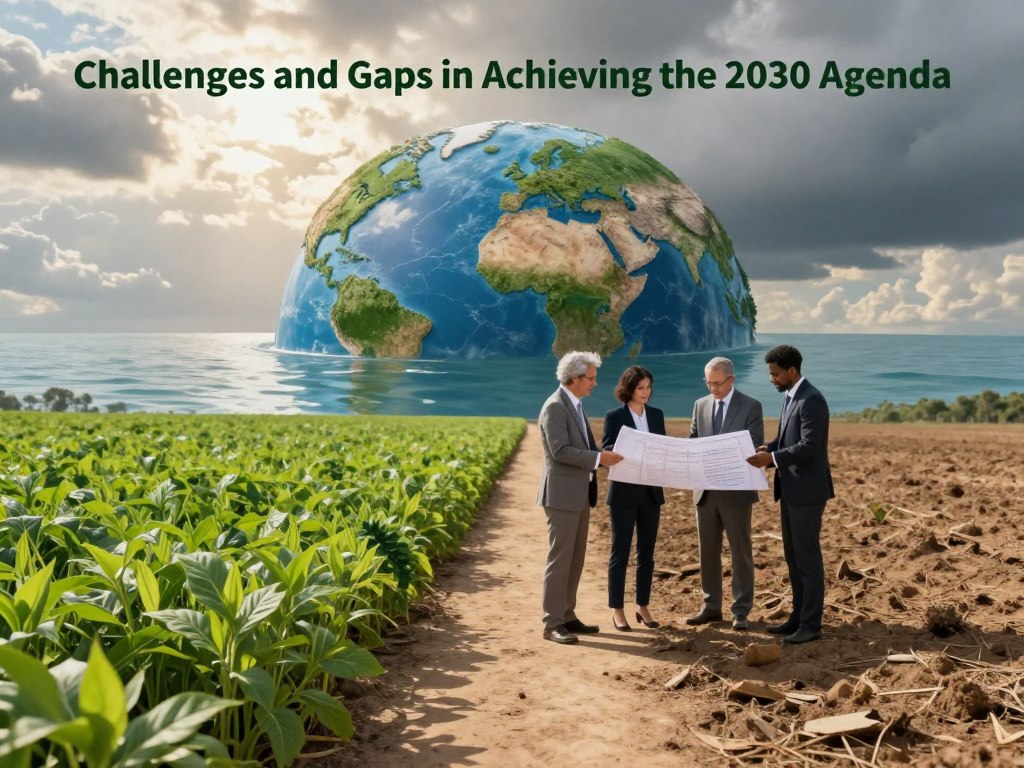
The latest edition of the 2026 SDSN Sustainable Development Report marks a significant moment in global efforts toward a more equitable future. It reflects a decade of data and progress since the adoption of the 2030 Agenda by all UN Member States. This document serves as a crucial tool for understanding the trajectory of development across nations.
In this year’s report, the SDSN Sustainable Development Solutions Network has identified eight key priorities aimed at accelerating progress through 2030 and beyond. This strategic shift emphasizes the importance of looking forward, rather than solely reflecting on past achievements.
Moreover, the report features insights from two innovative surveys that gauge both expert opinions and public perceptions regarding the barriers to implementing these vital goals. As nations navigate complex challenges, the findings serve as a guide for policymakers and stakeholders alike.
As we delve into the details, it becomes clear that the rankings of countries such as Finland, Sweden, and Denmark are not just a celebration of their achievements. They represent a commitment to long-term strategies that foster positive impacts both domestically and internationally.
1. Introduction to the SDSN and UN DESA Roles in Sustainable Development
At the forefront of global initiatives, the Sustainable Development Solutions Network and the United Nations Department of Economic and Social Affairs collaborate to advance significant goals. Their combined efforts have shaped the landscape of international development, particularly since the adoption of the 2030 Agenda in 2015.
1.1 Historical Background of the Sustainable Development Solutions Network
The Sustainable Development Solutions Network emerged as a brain trust under UN auspices. Since 2015, it has mobilized global academic and research expertise to tackle the most intractable challenges facing all 193 member states. This initiative emphasizes collaborative approaches to sustainable development.
1.2 Overview of the United Nations Department of Economic and Social Affairs
UN DESA’s long-term history as the Secretariat’s economic social arm stretches back decades. However, its role crystallized dramatically after 2015, when it became the backbone for the High-Level Political Forum. This forum serves as the custodian of the Voluntary National Review process across 193 member states.
1.3 Synergies between SDSN and UN DESA in Global SDG Efforts
The synergy between SDSN and UN DESA is evident in their complementary data collection efforts. SDSN leverages its global network of academics to track the evolving landscape of sustainable development. Meanwhile, UN DESA maintains the official SDG indicator framework that informs monitoring processes.
Since 2016, both organizations have strengthened governance systems through bilateral relationships with national and regional governments. This collaboration is crucial for effective implementation of the sustainable development goals.
Organization
Role
Key Contributions
Sustainable Development Solutions Network
Mobilizes research expertise
Addresses complex challenges in 193 member states
United Nations Department of Economic and Social Affairs
Serves as the Secretariat’s economic social arm
Custodian of Voluntary National Review process
Collaboration
Data collection and governance
Strengthens systems for sustainable development
Short-term progressions have seen both institutions grappling with the declining emphasis on sustainable development in high-level discussions. This trend underscores the urgency of their collaborative efforts in fostering a sustainable future.
2. Evolution and Annual Development of the 2026 SDSN Sustainable Development Report
The evolution of these reports mirrors the dynamic nature of global development efforts and the pressing need for accountability. Since 2015, the series has transformed from a basic scorecard into a comprehensive tool for assessing progress across nations.
2.1 The Report’s Genesis and Long-Term Development Since 2015
The sustainable development report series began its journey in 2015. It aimed to hold all 193 UN Member States accountable to the newly established SDGs. Over the years, it has evolved into a multidimensional analytical framework, as seen in the latest edition.
2.2 Annual Update Process and Collaborative Mechanisms (2016-2026)
Each annual update since 2016 has introduced methodological refinements. The early editions primarily focused on country rankings. However, later versions incorporated spillover indices and trend analyses. By the latest edition, comprehensive survey data from expert networks and the public have been included.
The collaborative mechanisms behind the annual updates involve a well-coordinated effort. SDSN’s secretariat collaborates with regional offices in Asia, Europe, and North America. An expanding network of local chairs and managers ensures the accuracy of data across all 193 countries.
2.3 Integration of Expert and Public Surveys in Report Refinement
The integration of expert and public surveys marks a significant methodological evolution. The latest edition includes the “2026 Expert Survey on Government Efforts for the SDGs,” covering 64 countries and the European Union. Additionally, it features the “2026 Survey on SDG Challenges and Means for Implementation,” which gathered insights from 1,098 respondents across 127 countries.
Annual decisions have been influenced by the shifting landscape of international development. For instance, the 2019 edition introduced the six SDG Transformations framework, while the 2020 edition addressed the impacts of the COVID-19 pandemic. The latest edition now pivots toward priorities beyond 2030 as the deadline approaches.
Initially affiliated with a university press, the report has matured into a globally recognized authority on SDG progress. Each edition builds on the previous year’s lessons, expanding the universe of data available for cross-country comparisons.
Importantly, all report materials—including the full PDF, Excel database with scores and ratings, codebook, and methodology documentation—are available for free. This commitment to democratizing data reflects the guiding principles that have shaped the report’s evolution since 2016.
3. Analysis of SDSN Expert and Large-Scale Surveys on SDG Implementation
The recent expert survey sheds light on the effectiveness of government initiatives related to the SDGs. It highlights how these efforts have been integrated into public management practices. This analysis draws on qualitative data collected from experts across various countries, providing a nuanced understanding of SDG implementation challenges.
3.1 The 2026 Expert Survey on Government Efforts
This year’s expert survey represents a methodological triumph in qualitative data collection. It mobilized 65 responses across 64 countries and the European Union. The survey assessed how deeply the SDG framework has penetrated national public management practices since 2018.
Countries like Canada, Denmark, Ghana, and Italy have made significant strides in incorporating the SDG framework into their governmental practices. In contrast, Australia, the United States, and Venezuela have not prioritized the SDGs in their public management frameworks.
3.2 Insights from the 2026 Large-Scale Survey on SDG Challenges
The large-scale survey, encompassing 1,098 respondents from 127 countries, provides a broader perspective on SDG outcomes. An overwhelming 78% of respondents believe that SDG outcomes in their countries have either improved or stagnated from 2015 to 2025.
However, the survey also identified significant barriers to SDG implementation. Notably, 89% of respondents pointed to the failure to implement approved strategies as a critical challenge. Additionally, 87% highlighted the shifting geopolitical landscape as another major hurdle.
3.3 Implications of Survey Findings on Policy and Implementation Practices
The findings from both surveys underscore the unique value of the SDSN in curating insights for the updated report. By triangulating expert assessments, public perceptions, and quantitative indicators, the network provides a multidimensional picture of government efforts.
This comprehensive approach informs the eight priorities for accelerating SDG progress through 2030 and beyond. It reveals that while bureaucratic structures remain in place, the political commitment at the highest levels is waning, as evidenced by the decline in heads of state referencing the SDGs in official speeches.
4. Role and Impact of Voluntary National and Local Reviews in Global SDG Monitoring
The mechanisms for Voluntary National and Local Reviews have emerged as pivotal tools in tracking global progress. Since 2016, 190 countries have participated in the Voluntary National Review (VNR) process. This achievement represents a remarkable feat of global accountability architecture, particularly in contrast to the three holdouts: Haiti, Myanmar, and the United States.
In 2026, 36 countries are scheduled to present updated reviews of their SDG action plans. Notably, there are no first-time presenters this year. Togo and Uruguay will present their fifth VNRs, showcasing their sustained engagement with this important mechanism. This evolution reflects how the VNR process has transformed from a one-off reporting exercise into an iterative policy learning cycle over the past decade.
The growth of Voluntary Local Reviews (VLRs) tells an equally compelling story. Subnational authorities in 48 countries have produced 386 VLRs from 2016 to 2026. Brazil, Malaysia, Mexico, and Argentina alone account for nearly half of these reviews. The number of VLR submissions surged by 69% from 62 in 2024 to 105 in 2025, indicating a robust local-level momentum for sustainable development.
4.5 Role and Impact of Voluntary National and Local Reviews in Global SDG Monitoring continuing..
UN DESA’s role as the institutional custodian of both VNRs and VLRs has expanded significantly. The Department maintains comprehensive databases tracking participation trends and provides technical support to governments preparing their reviews. This support ensures that these accountability mechanisms feed into the broader SDG implementation monitoring ecosystem.
The absence of the United States from the VNR process, alongside Haiti and Myanmar, highlights a significant gap in global SDG progress monitoring. This is particularly concerning given the country’s influence on international spillover effects, which the SDSN’s spillover index tracks across multiple indicators.
Ultimately, the VNR and VLR mechanisms embody the principle of country-led accountability that underpins the 2030 Agenda. UN DESA’s support infrastructure has evolved from basic reporting templates to sophisticated data platforms, enabling cross-country comparisons and peer learning among the 190 participating countries.
Country
VNR Presentations
VLR Count
Togo
5
15
Uruguay
5
10
Brazil
4
72
Malaysia
4
44
Mexico
4
35
Argentina
4
34
United States
0
0
5. 2026 SDSN Sustainable Development Report Annual Update Review Analysis: Key Findings and Priorities
In this edition, we explore the vital discoveries and strategic priorities emerging from the latest global development evaluations. The 2026 findings reaffirm the Nordic dominance in sustainable development, with Finland, Sweden, and Denmark topping the rankings. However, the sdg index dashboards reveal a more complex narrative.
The spillover index illustrates how the consumption patterns of wealthier nations can negatively impact progress towards achieving the sustainable development goals in the Global South. This nuance is crucial for understanding the interconnectedness of global development efforts.
5.1 Overview of 2026 SDSN Report Rankings and Trends
The rankings from the development report 2026 indicate that while some countries excel, there are underlying issues that need addressing. The interactive maps within the report showcase the performance of nations on each of the 17 goals, providing a clear picture of where efforts are succeeding and where they are lacking.
5.2 Priority Areas and Emerging Issues in the Post-2030 Sustainable Development Agenda
The report identifies eight key priorities for accelerating sdg progress through 2030 and beyond. A remarkable consensus among experts reveals that at least 75% agree on six critical priorities for the post -2030 agenda. These include:
Strengthening means for implementation, focusing on governance and data.
Developing international guidelines on SDG synergies and trade-offs.
Incorporating artificial intelligence into future frameworks.
Reforming the global financial architecture to address budgeting gaps.
Ensuring stability in the framework while maintaining continuity in goals.
Better reflecting and incorporating international spillovers.
5.3 SDSN and UN DESA’s Collaborative Role in Shaping International Development Policies
The collaborative dynamic between SDSN and UN DESA plays a pivotal role in shaping international development policies. Their joint efforts highlight the importance of aligning government strategies with budget allocations. The findings indicate a persistent gap between adopting strategies and allocating necessary resources, which must be addressed in future negotiations.
Dr. Guillaume Lafortune’s recent publication emphasizes the need for a credible framework to guide the post -2030 agenda. This intellectual groundwork will help bridge the gap between academic rigor and practical policy applications, ensuring that future efforts are both informed and effective.
As we look toward 2030 and beyond, the sdg index dashboards serve not just as a report card but as a strategic compass. They provide actionable insights on where government efforts have succeeded and where they have stalled, guiding priorities for the future.
6. Conclusion
The synthesis of findings highlights the intricate tapestry of global initiatives at play. This edition showcases how the collaborative efforts of key organizations have matured over time. The convergence of expertise from various countries and institutions illustrates a commitment to advancing meaningful progress.
Moreover, the eight identified priorities serve as a roadmap for future actions. They not only address past shortcomings but also pave the way for innovative solutions. The free availability of data further exemplifies a dedication to transparency and accessibility.
As we navigate the path toward a more equitable future, the development process between these organizations stands as a model. It demonstrates how ongoing collaboration can yield actionable insights, ensuring that the global dialogue on sustainable development remains vibrant and impactful.
Key Takeaways
This report synthesizes ten years of data since the 2015 adoption of the 2030 Agenda.
It identifies eight priorities to enhance progress toward global goals.
Insights from expert and public surveys inform actionable strategies.
Top-ranking countries showcase effective long-term commitments.
Interactive tools allow for exploration of historical data trends.
Navigating the complex landscape of international milestones requires more than just a calendar; it demands a strategic analytical framework. As we move through the current year, the pace of systemic change continues to accelerate compared to previous benchmarks.
Professionals must now synthesize data on environmental policy, geopolitical shifts, and humanitarian aid to remain relevant. This guide offers a precise roadmap for aligning corporate strategies with critical international priorities.
By examining these touchpoints, stakeholders can better anticipate the evolving needs of modern technology and ecological stewardship. We provide the necessary insight to transform these dates into actionable intelligence for your organization.
Global Sustainability Frameworks and Environmental Awareness
Navigating the complex landscape of global sustainability events requires a keen understanding of how local actions influence international outcomes. These frameworks provide the necessary structure to translate abstract environmental goals into tangible community progress. By bridging the gap between policy and practice, we create a more resilient future for all stakeholders.
The Intersection of Climate Action and Policy
Effective climate policy relies on the integration of diverse sectors, ranging from urban infrastructure to public health. For instance, the UN Global Road Safety initiative demonstrates how transportation planning directly impacts carbon emissions and urban livability. Strategic alignment between these international mandates and local municipal codes is essential for meaningful change.
Policy makers often overlook the fact that sustainable development is a multi-layered endeavor. When we synchronize national goals with global standards, we foster an environment where innovation thrives. This synergy ensures that climate action is not just a top-down directive but a shared responsibility.
World Migratory Bird Day and Ecological Connectivity
Ecological connectivity remains a vital component of biodiversity, particularly when observing events like World Migratory Bird Day. Protecting American Wetlands serves as a critical strategy for maintaining these migratory corridors. These habitats act as natural filters and buffers, proving that environmental health is intrinsically linked to our own survival.
Furthermore, the celebration of Asian American and Pacific Islander Heritage highlights the deep cultural connections to land stewardship and conservation. We must also remember the importance of the Be Kind to Animals movement, which encourages a compassionate approach to wildlife management. These diverse perspectives enrich our understanding of what it means to be a global citizen.
Clean Air and Water Saving Initiatives
Clean air and water are the fundamental pillars of a healthy society, requiring constant vigilance and community-led action. Initiatives such as National Public Gardens provide essential green spaces that improve air quality in densely populated urban centers. These areas serve as living laboratories for sustainable practices and public education.
Transportation and resource management also play a significant role in our environmental footprint. Promoting National Bike programs reduces reliance on fossil fuels, while the preservation of National Mills reminds us of historical water-powered efficiency. Additionally, the National Salvation Army often leads efforts in resource distribution, proving that social welfare and environmental sustainability are deeply intertwined.
Initiative Type
Primary Focus
Community Impact
Urban Green Spaces
Air Quality
High
Transportation Policy
Carbon Reduction
Moderate
Wetland Conservation
Biodiversity
High
Resource Efficiency
Water Saving
Moderate
May 2026 observances and holidays of world global affairs within Sustainability
The calendar of May 2026 offers a unique lens through which we can view the integration of community-led initiatives and international sustainability mandates. These sustainable development observances act as vital catalysts, transforming abstract global goals into tangible actions at the local level.
Aligning National Celebrations with Global Goals
Countries often utilize national holidays to reinforce broader international commitments. By integrating Building Safety standards into public infrastructure celebrations, governments demonstrate a commitment to long-term resilience. This alignment ensures that National Law remains responsive to the evolving needs of modern society.
Furthermore, the focus on Public Works during these periods highlights the necessity of robust infrastructure. When national celebrations prioritize these sectors, they create a cohesive framework for international cooperation. This strategy effectively turns routine holidays into opportunities for systemic improvement.
The Role of International Days in Shaping Sustainable Development
International days serve as essential markers for public awareness and policy advocacy. Initiatives focused on Clean Air remind citizens that environmental health is a shared responsibility that transcends borders. Similarly, promoting International Heritage Breeds encourages biodiversity, which is a cornerstone of ecological stability.
Public health also takes center stage through campaigns like National Safe Sun. These observances provide a platform for experts to disseminate critical information regarding climate-related health risks. By standardizing these messages, the global community fosters a more informed and proactive public.
Bridging the Gap Between Local Observances and Global Policy
The true power of these observances lies in their ability to inspire Community Action. Local events, such as the whimsical yet ecologically significant Be Nice to Nettles campaign, demonstrate how small-scale efforts contribute to broader conservation goals. These initiatives prove that local engagement is just as vital as high-level policy mandates.
Safety and sustainability often intersect in unexpected ways, such as the emphasis on Deck Safety during community gatherings. By maintaining safe, sustainable spaces, communities contribute to the overall health of the built environment. The following table illustrates how these diverse observances support global sustainability objectives.
Observance Category
Primary Focus
Global Impact
Infrastructure
Building Safety
Resilient Urban Development
Environmental
Clean Air
Climate Change Mitigation
Biodiversity
Heritage Breeds
Genetic Conservation
Public Health
National Safe Sun
Preventative Wellness
Geopolitical Tensions and International Relations
As we look toward May 2026, the intersection of state-level power struggles and humanitarian ethics demands a closer examination. Global stability is not merely a matter of treaties; it is deeply connected to world sustainability holidays and the social health of nations. When regional tensions rise, the ripple effects often disrupt the very systems designed to foster international cooperation.
Analyzing the Iran Conflict and Regional Stability
The situation in Iran remains a focal point for analysts monitoring regional stability in May 2026. Strategic shifts in this area influence everything from energy markets to the security of the Youth demographic, who are increasingly vocal about their future. Effective Water Saving policies are often the first to suffer when resources are diverted toward defense and security measures.
Regional stability requires more than just military posturing; it demands a commitment to long-term diplomatic engagement. Without such efforts, the potential for escalation threatens to undermine the progress made in sustainable development across the Middle East.
UN Peacekeepers and the Pursuit of Global Security
UN Peacekeepers continue to serve as the thin blue line between fragile ceasefires and renewed conflict. Their presence is essential for maintaining global security, yet their success depends heavily on the support of member states. Promoting National Volunteering initiatives can help build the public consensus needed to sustain these vital international missions.
Furthermore, organizations are increasingly prioritizing Global Employee Health and Fitness to ensure that personnel deployed in high-stress environments remain resilient. A healthy workforce is better equipped to handle the complexities of peacekeeping operations in volatile regions. This focus on wellness reflects a broader understanding that human capital is the most valuable asset in any international endeavor.
Conscientious Objectors and the Ethics of Modern Warfare
The ethics of modern warfare are being challenged by the evolving status of conscientious objectors. As technology changes the nature of combat, the moral burden on individuals to participate in state-sanctioned violence becomes more pronounced. Protecting the rights of those who refuse to bear arms is a cornerstone of a Family Wellness-oriented society that values individual conscience over blind obedience.
The following table outlines key areas where international policy intersects with domestic social initiatives, highlighting the need for a balanced approach to global governance.
Initiative
Primary Focus
Impact on Stability
National Vegetarian
Food Security
High
Gardening for Wildlife
Biodiversity
Moderate
Noise Action
Public Health
Low
Economic Shifts and Global Trade Dynamics
The global affairs calendar May 2026 reveals a fascinating intersection between labor rights, cultural heritage, and international trade. As markets evolve, understanding these connections becomes essential for professionals navigating the complexities of the modern economy.
Labor Day and the Evolution of Global Workforce Rights
Labor Day celebrations, such as those observed in the Philippines, serve as a poignant reminder of the ongoing struggle for equitable working conditions. These events highlight the evolution of workforce rights, which are increasingly influenced by international trade agreements and global labor standards.
Modern trade dynamics often force a re-evaluation of how nations protect their workers. By observing these historical milestones, policymakers can better align national labor laws with the demands of a competitive, interconnected global market.
Small Business Resilience in a Changing Economic Climate
Small businesses act as the backbone of the economy, yet they remain vulnerable to volatile shifts in trade policy. To maintain resilience, these enterprises must adopt adaptive strategies that prioritize flexibility and community engagement.
Several observances during this period offer opportunities for businesses to connect with their local communities:
National Patient Participation: Encouraging health-conscious business models.
National Physical Education and Sport Week: Promoting wellness in the workplace.
National Children’s Gardening and Garden Wildlife: Fostering sustainable, eco-friendly practices.
Samoan Language and Global Youth Traffic Safety: Enhancing cultural and social responsibility.
“True economic resilience is not merely about surviving a crisis; it is about the ability to innovate while staying rooted in the values that define our community.”
International Trade and the Impact of May Revolution Day
Historical events like Argentina’s May Revolution Day continue to influence regional trade dynamics by shaping national identity and economic policy. These milestones provide a framework for understanding how countries negotiate their positions within the global marketplace.
Cultural heritage months also play a vital role in shaping the social fabric of international trade. By celebrating Haitian Heritage, Indian Heritage, and Jewish American Heritage, as well as events like Indian Arrival Day in Guyana, businesses can foster inclusive environments that reflect the diversity of their global partners.
Integrating these cultural narratives into trade strategies allows for more meaningful collaboration. Authentic engagement with diverse histories helps companies build trust and long-term stability in an increasingly fragmented economic landscape.
Technological Frontiers: AI and Digital Infrastructure
As we navigate the complexities of the modern era, technological frontiers like AI are redefining the boundaries of innovation. This shift requires us to look back at Labor History to understand how automation has historically influenced the workforce. By balancing past lessons with future potential, we can better prepare for the digital changes ahead.
World Telecommunication and Information Society Day
This annual observance highlights the critical need for robust digital infrastructure in an interconnected world. While many enjoy high-speed access, we must acknowledge the International Week of Solidarity with the Peoples of Non-Self-Governing Territories to address the persistent digital divide. Equitable access remains a cornerstone of global development, ensuring that no region is left behind in the information age.
Artificial Intelligence and the Future of Sustainable Innovation
Artificial Intelligence serves as a powerful catalyst for sustainable growth, offering solutions that were once considered impossible. Organizations are now looking to the Leaders of Tomorrow to guide the ethical implementation of these complex systems. Much like the cultural depth found in Latino Books, the narrative of AI development must be inclusive and representative of diverse global perspectives.
Drone Technology and Modern Surveillance Ethics
The rise of drone technology presents a unique set of ethical challenges regarding privacy and modern surveillance. While drones can monitor crop health—even for delicate produce like lettuce—their use in public spaces demands strict regulatory oversight. We must also consider how these tools intersect with traditional practices, such as those celebrated during International Heritage Breeds Week, to ensure that technology supports rather than disrupts local ecological stewardship.
National Sovereignty and Independence Commemorations
While flags wave high during independence celebrations, the true fabric of a nation is woven through both legal frameworks and grassroots environmental stewardship. Understanding local and community history allows us to see how sovereignty is not just a top-down mandate, but a living experience shared by citizens. This dual perspective highlights the importance of balancing state-sanctioned events with the organic growth of community-led initiatives.
Founding of the Democratic Republic of Azerbaijan and Regional Identity
The founding of the Democratic Republic of Azerbaijan serves as a pivotal moment for regional identity and political autonomy. This historical milestone emphasizes the ongoing commitment to national preservation in a complex geopolitical landscape. By honoring these roots, the nation reinforces its unique cultural narrative while navigating modern global challenges.
Constitution Memorial Day and the Rule of Law
Constitutional milestones, such as those observed in the Marshall Islands and Micronesia, provide the essential framework for the rule of law. These days are often marked by family gatherings and community reflections that prioritize stability and justice. Many citizens use this time for quiet meditation on the rights and responsibilities that define their society. Furthermore, the dedication of professionals like midwives and public servants remains a cornerstone of these stable, law-abiding communities.
Independence Days: Jordan, Georgia, Guyana, Paraguay, East Timor, and Eritrea
Independence days across the globe, including those for Jordan, Georgia, Guyana, Paraguay, East Timor, and Eritrea, celebrate the hard-won freedom of diverse populations. These events often highlight the contributions of national inventors who have shaped the technological and social progress of their respective countries. In contrast to these formal state events, modern citizens are increasingly turning to grassroots movements to express their connection to the land.
Innovative practices like International Sunflower Guerrilla Gardening and permaculture demonstrate how individuals take ownership of their local environment. These activities often involve the use of a drone for mapping sustainable plots or protecting local wildlife, such as the wild koala. Whether through a symbolic walk in red sneakers or a community planting day, these actions prove that sovereignty is expressed in both grand gestures and small, meaningful deeds.
Jordan: May 25th
Georgia: May 26th
Guyana: May 26th
Paraguay: May 14th
East Timor: May 20th
Eritrea: May 24th
Cameroon: May 20th
Community, Heritage, and Cultural Diversity
Cultural diversity acts as the essential bedrock for sustainable development in an increasingly interconnected world. By fostering an environment where different traditions coexist, societies can leverage unique perspectives to solve complex global challenges. This synergy between heritage and progress ensures that no community is left behind in the pursuit of a more equitable future.
World Day for Cultural Diversity for Dialogue and Development
The World Day for Cultural Diversity for Dialogue and Development serves as a vital reminder that our differences are our greatest strength. Engaging in open dialogue allows us to bridge gaps that often lead to misunderstanding. Whether participating in a National Walking event to connect with neighbors or sharing a National Salad at a community potluck, these small acts build social cohesion.
“Diversity is not about how we differ. Diversity is about embracing one another’s uniqueness.”
— Ola Joseph
Celebrating Heritage: Haitian, Indian, and Jewish American Contributions
The American cultural landscape is profoundly enriched by the enduring legacies of diverse immigrant groups. Haitian, Indian, and Jewish American communities have contributed significantly to the arts, sciences, and economic vitality of the nation. These groups demonstrate how maintaining one’s heritage while integrating into a new society creates a more resilient and innovative culture.
Community Group
Primary Contribution
Impact Area
Haitian American
Cultural Arts & Resilience
Social Advocacy
Indian American
Technology & Education
Economic Growth
Jewish American
Philanthropy & Literature
Civic Engagement
Preserving Local History and Community Action
Preserving local history is not merely an academic exercise; it is a strategic necessity for community identity. Local Museum institutions play a critical role in documenting the stories of Older Americans and ensuring that their wisdom is passed down. Furthermore, initiatives like the Child Helpline provide essential support systems that protect the most vulnerable members of our society.
Community action often requires a REACT approach to address immediate needs, such as supporting a local Small Business or promoting Kangaroo Care Awareness in neonatal health. Whether it is a farmer raising a Heritage Breed of livestock or a family sharing a quiet moment over Tea, these traditions define our local character. Even the nurturing role of a Coco Mom contributes to the social fabric that sustains us all, proving that even Conscientious Objectors to rapid change can find common ground in shared community values.
Health, Wellness, and Humanitarian Efforts
True wellness in the modern era demands a holistic approach that integrates individual health with global humanitarian ethics. As we observe Global Employee Health and Fitness Month, professionals are encouraged to look beyond mere physical metrics. Achieving International Business Image Improvement often starts with the internal health of the workforce, proving that a thriving company culture is the ultimate professional asset.
Red Cross and Red Crescent: Humanitarian Responses
The Red Cross and Red Crescent remain the bedrock of global crisis management. Their work during May 2026 highlights the necessity of rapid, neutral intervention in conflict zones and disaster areas. Beyond emergency aid, these organizations foster a culture where we must Be Kind To Animals during evacuations, recognizing that our companions are part of the humanitarian equation.
“The strength of a society is measured not just by its wealth, but by the compassion it extends to the most vulnerable in times of crisis.”
International Humanitarian Council
This commitment to life extends to all living beings, including a growing movement for Respect for Chickens within agricultural humanitarian programs. By ensuring ethical treatment, we reinforce the dignity of all life forms. This perspective creates a more resilient and empathetic global community.
No-Tobacco Day and Global Public Health
Public health initiatives in May focus heavily on the global impact of tobacco consumption. No-Tobacco Day serves as a critical reminder that personal choices have profound systemic consequences. Access to clean Drinking Water remains a parallel priority, as hydration is the foundation of preventing chronic disease and maintaining metabolic health.
Furthermore, awareness campaigns now include Skin Pigmentation Day to educate the public on dermatological health and the risks of environmental exposure. The following table outlines key health indicators for the month:
Health Initiative
Primary Goal
Impact Level
No-Tobacco Day
Disease Prevention
High
Clean Water Access
Public Sanitation
Critical
Skin Health
Early Detection
Moderate
Mental Health: Meditation and Family Wellness
Mental health is no longer a private struggle but a public priority. Practices like meditation offer a proven path to reducing stress and increasing focus in a chaotic world. Incorporating a rhythmic drum circle or similar communal activities can foster social bonds and improve collective mood.
We must also embrace Civility Awareness to improve our daily interactions and reduce societal friction. Open conversations about Dying Matters help families navigate grief with grace and preparation. Ultimately, prioritizing family wellness ensures that the next generation is equipped with the emotional tools to thrive in an unpredictable future.
Wildlife, Agriculture, and Ecological Stewardship
From the depths of our oceans to the soil in our gardens, May 2026 highlights the urgent need for comprehensive ecological stewardship. This commitment to the environment aligns closely with broader societal goals, such as North American Occupational Safety and Health standards and the ongoing Action on Women’s Health. By recognizing Victorious Women Month, we acknowledge the essential role women play in leading conservation efforts and shaping sustainable policies across the globe.
World Tuna Day and Sustainable Fishing Practices
World Tuna Day serves as a critical reminder of the fragility of our marine ecosystems. Overfishing threatens not only the species itself but the entire food web that relies on these apex predators. Sustainable fishing practices are no longer optional; they are a requirement for maintaining the balance of our oceans.
Industry leaders must adopt transparent tracking methods to ensure that every catch meets international standards. By prioritizing long-term health over short-term gains, we protect the livelihoods of coastal communities that depend on these waters. Responsible consumption remains the most effective tool for driving change in the global seafood market.
Bee, Parrot, Turtle, and Otter Day: Biodiversity Protection
Biodiversity is the bedrock of a resilient planet, yet species like bees, parrots, turtles, and otters face unprecedented threats. These creatures act as indicators of environmental health, signaling when ecosystems are under stress. Protecting these habitats is essential for maintaining the natural services—such as pollination and water filtration—that we often take for granted.
Conservation initiatives must move beyond simple awareness to active intervention. Whether it is restoring nesting grounds for sea turtles or creating protected corridors for otters, local action creates a ripple effect. Collective stewardship ensures that these species continue to thrive in an increasingly fragmented world.
Permaculture and Gardening for Wildlife
Permaculture offers a transformative approach to agriculture by mimicking natural patterns to create self-sustaining systems. By integrating gardening for wildlife into our urban and rural landscapes, we provide vital sanctuaries for local fauna. This practice also highlights the importance of Plant Health, as healthy soil and native flora form the foundation of a robust food chain.
The International Day of Argania further illustrates how specific agricultural products can drive sustainable economic development while preserving unique ecosystems. As we look toward the future, we must also consider the intersection of these efforts with other global priorities. From Hurricane Preparedness and National Small Business support to the growth of National Tourism, our environmental choices influence every facet of society. Even the way we manage Light pollution in our cities impacts nocturnal wildlife, while the dedication of UN Peacekeepers reminds us that stability is required for any long-term ecological progress.
Conclusion
May 2026 serves as a vital reminder that our collective future relies on balancing complex systems. From the International Day for Biological Diversity to the International Women’s Day for Peace and Disarmament, these observances highlight the delicate interplay between human progress and ecological health. Whether you are a frequent flyer or a local advocate, your actions shape the global narrative.
National Small Business Day and the focus on Agriculture and Labor Day remind us that economic resilience starts at home. In Washington, policy makers must weigh the impact of technology against the need for human-centric growth. We see this tension in the push for Accessibility Awareness and the implementation of UN Global Road Safety Week. Even the pace of a snail offers a lesson in patience when considering the long-term goals of IEEE Global Engineering.
True progress requires loyalty to our shared values and a commitment to transparency, such as the need to Report Government Contractor Fraud. We must embrace the spirit of Amnesty International Day while fostering Global Love through community initiatives. From the quiet beauty of Public Gardens to the rigor of Wildfire Preparedness, every effort counts. Let the mantra of sustainability guide your path through the complexities of Underground America and beyond.
Whether observing Oak Apple Day in a historic village or testing a new National E-Bike in Utah, your engagement matters. We honor the White Lotus of peace and the dedication of Weather Observers who track our changing climate. As we celebrate Birth Mother’s Day and promote Youth Traffic Safety Month, we build a foundation for lasting change. Do not say sorry for demanding a better world; instead, embrace the spirit of Tourist Appreciation Day to welcome new perspectives into our shared journey.
Key Takeaways
Utilize a structured analytical framework to interpret shifting international priorities.
Compare current year data against previous benchmarks to measure the velocity of change.
Align organizational strategy with critical environmental and humanitarian milestones.
Leverage these dates as essential touchpoints for stakeholders in technology and policy.
Transform complex information into actionable intelligence for long-term development goals.
The evolution of conservation efforts has shaped our planet’s future through the International Day for Biodiversity and World Wildlife Fund. This guide delves into the significant role of each global organizations in protecting ecosystems. Established in Zurich, Switzerland, in 1961, the World Wildlife Fund has been at the forefront of these efforts. It has influenced modern environmental policies and fostered awareness about the need for sustainable practices.
In 2000, the UN General Assembly proclaimed a special day to highlight the importance of preserving biodiversity. This annual event serves as a vital reminder of our responsibility towards nature. It encourages reflection on the health of our planet’s biological diversity and promotes actions to protect it.
By examining the historical context of the International Day of Biodiversity and World Wildlife Fund initiatives, we bridge the gap between past milestones and current climate conversations. Understanding these connections is essential for addressing contemporary environmental challenges.
Introduction: The Evolution of Biodiversity and Global Conservation
The progression of environmental protection efforts has been pivotal in determining our planet’s ecological future. Understanding biodiversity is essential as it encompasses the variety of life on Earth, forming the foundation of our ecosystems.
In 1985, Walter G. Rosen coined the term biological diversity to describe this intricate web of life. The term highlights the importance of every species and its role within the ecosystem.
The Convention on Biological Diversity, effective since December 29, 1993, serves as a cornerstone for global initiatives aimed at safeguarding our environment. This agreement emphasizes that biodiversity is not merely a luxury; it is a necessity for the resilience of ecosystems worldwide.
Modern debates on climate change increasingly recognize the significance of biodiversity. A rich variety of species enhances ecosystem stability, making it crucial to address the rapid loss of biological diversity we currently face.
Historical Foundations: The Emergence of the World Wildlife Fund
The establishment of conservation organizations marked a significant turning point in ecological protection. One of the most notable is the World Wildlife Fund, founded in 1961. This organization arose after Sir Julian Huxley published impactful articles in The Observer about the alarming destruction of wildlife in Africa.
Sir Peter Scott, a prominent British conservationist, contributed significantly by designing the iconic giant panda logo for the organization. This symbol became synonymous with wildlife preservation efforts worldwide.
In 1962, the WWF hosted a major fundraising dinner at the Waldorf Astoria Hotel in New York. This event aimed to generate support within the United States, showcasing the organization’s commitment to conservation.
These early efforts were crucial for providing necessary funding to organizations dedicated to protecting endangered species and their habitats. The historical relevance of the World Wildlife Fund continues to influence climate science and ecological preservation, setting high standards for global environmental stewardship.
The Genesis and Impact of the International Day for Biodiversity
The introduction of a special day to honor biodiversity has reshaped the landscape of ecological advocacy. Officially proclaimed by the United Nations on May 22 in the year 2000, this observance celebrates the adoption of the Convention on Biological Diversity (CBD).
This annual event serves to raise global awareness about the ongoing loss of species and the urgent need for collective action to protect nature. With 196 Parties currently involved, the CBD provides a robust framework for nations to address environmental threats.
The establishment of this day highlights the importance of international cooperation in monitoring ecosystem health and promoting sustainable development. By focusing on this specific date, the global community reaffirms its commitment to reversing trends of habitat destruction and resource overharvesting.
Key Aspects
Description
Proclamation Year
2000
Global Awareness
Addressing species loss
Participating Parties
196
Framework
Convention on Biological Diversity
Focus
International cooperation and sustainable development
International Day for Biodiversity prominence World Wildlife Fund history
The intersection of International Day of Biodiversity and World Wildlife Fund is both prominence and historical. The global awareness it creates and dedicated conservation efforts illustrates a dynamic relationship in environmental advocacy. This relationship is evident when comparing the role of the UN-led observance with the action-oriented initiatives of a prominent wildlife organization.
While the wildlife fund emphasizes direct conservation and habitat protection, the awareness day provides a platform for policy alignment among nations. This distinction is crucial in understanding how both entities contribute to the broader conversation on climate change.
Contemporary prominence of the awareness day significantly impacts discussions around species extinction and environmental justice. These efforts are vital for shaping sustainable development agendas that consider the needs of local communities and indigenous peoples.
The juxtaposition highlights a shift towards integrated land and resource management.
Both entities play essential roles in raising awareness and driving conservation efforts.
Global collaboration is necessary to address the ongoing threats to biodiversity.
World Economic Forum and Global Policy Structuring
The World Economic Forum plays a pivotal role in aligning global policies with environmental sustainability. This organization acts as a bridge, integrating the goals of the wildlife fund into broader economic frameworks.
By leveraging the annual observance, the Forum encourages countries to prioritize the sustainable use of natural resources in their long-term development plans. This collaboration highlights the necessity of addressing the threats of habitat loss and species extinction.
Past performance shows that when organizations like the wildlife fund partner with global forums, significant strides can be made in conservation efforts. Future possibilities involve creating stronger ties between private sector activities and the protection of endangered species.
This strategic alignment ensures that the environment is treated as a fundamental part of global economic stability, not merely an afterthought.
Key Contributions
Description
Policy Integration
Aligning conservation goals with economic frameworks
Resource Management
Promoting sustainable use of natural resources
Collaboration
Partnerships with organizations like the wildlife fund
Future Strategies
Strengthening ties with the private sector
Environmental Stability
Ensuring the environment is part of economic planning
Contemporary Impact on Climate Conversations and Environmental Justice
Today’s climate conversations are increasingly acknowledging the critical link between biodiversity and environmental justice. The current prominence of this awareness has prompted a significant shift in how these issues are discussed globally. The International Day of Biodiversity and World Wildlife Fund together provide an outlet for conversion and action for habitat preservation.
Collective sustainable development agendas now integrate the work of the wildlife fund, ensuring that local communities actively participate in conservation efforts. This collaboration is essential, as it empowers communities to protect their natural resources.
By addressing the threats posed by climate change, these organizations play a vital role in safeguarding the land and resources necessary for the survival of diverse plants and animals. This proactive approach helps mitigate the loss of biological diversity.
Furthermore, the influence of these agendas is evident in how governments and organizations collaborate over time to tackle extinction challenges. This holistic strategy ensures that environmental needs are balanced with the development goals of nations worldwide.
Legacy of the WWF: Milestones in Climate Science and Conservation
The legacy of conservation organizations has profoundly influenced climate science and ecological efforts. The World Wildlife Fund has played a pivotal role in several historical achievements that continue to shape our understanding of biodiversity.
In 1973, the wildlife fund led the negotiations for the Convention on International Trade in Endangered Species (CITES). This landmark agreement was essential in protecting vulnerable species from the perils of international trade.
Fast forward to 2016, when a critical report revealed a staggering 58% decline in animal populations since 1970. This alarming statistic underscores the urgent need for conservation efforts and has become a cornerstone in climate science discussions.
Moreover, the launch of Earth Hour in 2007 in Sydney showcased the wildlife fund’s ability to mobilize global awareness. This initiative encourages millions to turn off their lights, symbolizing a commitment to protecting our planet.
These milestones not only highlight the wildlife fund’s dedication but also directly support the United Nations Sustainable Development Goals. By safeguarding critical habitats, the organization ensures that future generations can enjoy the rich diversity of life on Earth.
Biodiversity’s Role in Advancing the United Nations Sustainable Development Goals
Biodiversity serves as a cornerstone for effective global development strategies. The interdependence of nature and human progress is increasingly acknowledged in policy discussions. As countries strive to meet their development goals, integrating conservation into these frameworks is essential.
The 2022 Kunming-Montreal Global Biodiversity Framework outlines urgent objectives that align with the United Nations Sustainable Development Goals. This framework emphasizes the need to use natural resources sustainably, preventing further species extinction.
The World Wildlife Fund plays a crucial role by providing technical expertise to governments. This support is vital for protecting vulnerable habitats and ensuring that conservation efforts are part of national development plans.
Fostering a better relationship between human activities and nature is essential.
These efforts contribute to a sustainable plan that balances economic growth with environmental health.
Maintaining biodiversity is a core component of future development initiatives.
Past Performance and Future Possibilities in Policy Structuring
Examining the past achievements of conservation initiatives reveals a roadmap for future strategies. The success of the wildlife fund demonstrates that effective policy structuring relies on sustained commitment from both governments and private organizations. This collaboration is crucial for creating lasting change.
Looking ahead, the potential for global conservation strategies is promising. The annual observance dedicated to biodiversity can serve as a powerful tool to hold stakeholders accountable for their environmental impact. By emphasizing the need for responsible practices, it encourages nations to align their development plans with ecological preservation.
Moreover, the World Economic Forum can enhance these strategies by integrating species protection into national agendas. Learning from the past fifty years equips us to tackle climate change and habitat loss more effectively in the future.
Ultimately, a continued focus on the relationship between economic activities and biodiversity preservation is essential. This holistic approach will ensure that both nature and communities thrive together.
Key Insights
Description
Past Performance
Successful policies require long-term commitment
Future Strategies
Using observances to hold stakeholders accountable
Policy Integration
Incorporating species protection into development plans
Learning from History
Addressing climate change and habitat loss
Holistic Approach
Balancing economic activities with biodiversity
Global Partnerships Shaping Biodiversity and Conservation Efforts
Uniting various stakeholders is crucial for amplifying the impact of conservation efforts worldwide. Global partnerships between organizations, governments, and NGOs are essential for scaling up initiatives across different countries and regions.
These collaborations enable the sharing of best practices in the sustainable use of resources, which is vital for protecting endangered species and their habitats. By working together, these entities can better address the threats posed by climate change and ensure that biodiversity remains a priority in global discussions.
Such partnerships facilitate the exchange of knowledge and resources, enhancing conservation strategies.
They promote awareness of the importance of biodiversity in maintaining healthy ecosystems.
Over the years, the success of these alliances demonstrates that a unified approach is the most effective way to achieve shared environmental goals.
Looking to the future, these collaborations will continue to be a key part of the global strategy to protect the diversity of life on Earth.
Conclusion
The relationship between conservation awareness and actionable efforts is key to preserving our ecosystems. By leveraging the legacy of the wildlife fund and the policy framework of the United Nations, we can effectively combat the threats of species extinction.
Continued collaboration between the United States, other countries, and global organizations is essential to meet our ambitious sustainable development goals. Protecting our natural resources and habitat areas remains the most effective way to ensure the long-term survival of all life on Earth.
We must remain committed to these efforts, recognizing that the health of our environment is the foundation for a prosperous and equitable future for all.
FAQ
What is the significance of biodiversity?
Biodiversity is crucial for ecosystem stability, providing essential services such as pollination, climate regulation, and natural resource availability. It supports life on Earth and enhances resilience against environmental changes.
How does the World Wildlife Fund contribute to conservation?
The organization focuses on protecting endangered species and their habitats through advocacy, research, and partnerships with governments and local communities. Their efforts aim to mitigate threats to wildlife and promote sustainable practices.
What are some major threats to biodiversity today?
Key threats include habitat loss, climate change, pollution, overexploitation of resources, and invasive species. These factors contribute to the decline of various species and the overall degradation of ecosystems.
How can individuals support biodiversity conservation?
Individuals can support conservation by reducing waste, using sustainable products, participating in local conservation efforts, and advocating for policies that protect natural habitats and endangered species.
What role do governments play in biodiversity protection?
Governments establish policies and regulations that protect natural resources, enforce conservation laws, and collaborate with international organizations to address global biodiversity challenges.
Why is raising awareness about biodiversity important?
Awareness fosters understanding of the importance of biodiversity and encourages collective action to protect it. Increased public engagement can lead to more robust conservation initiatives and policy changes.
What is the relationship between biodiversity and climate change?
Biodiversity and climate change are interconnected; loss of biodiversity can exacerbate climate change effects, while climate change threatens species and ecosystems. Protecting biodiversity is essential for climate resilience.
How does biodiversity impact human health?
Biodiversity supports the provision of clean air, water, and food, all of which are vital for human health. Additionally, diverse ecosystems can help prevent the spread of diseases and provide medicinal resources.
The current focus on labor and the earth highlights how people interact with nature with peculiar perspective during Black History Month. It is also a great time to study Environmental Justice and social growth. We see that the fight for fair pay is much like the fight for clean air and water.
In the past, african americans helped build this nation with skill and care. They used smart ways to farm and manage the land from the very start. These ecological efforts were vital to survival and national growth.
Sadly, most school books leave out these vital stories of nature and work. They also gloss over details during Black History Month. Theses stories and the individuals of this narrative however, were the first to use many green methods we see today on modern farms. Their stewardship was born from necessity and a deep connection to the soil.
Now, black history month 2026 shows us that nature and equity go hand in hand. Leaders like A. Philip Randolph linked civil/labor/human rights to the struggle against industrial harm. This connection remains a cornerstone of modern advocacy.
Leaders saw that pollution often follows the color line with unfortunate accuracy. Getting true balance means that everyone should have a safe and green home for their families. Civil rights must include the right to a healthy, sustainable world.
The Legacy of Black Environmental Stewardship: Setting the Context
While mainstream narratives often celebrate figures like John Muir, the deep-rooted history of Black environmental stewardship remains an unsung pillar of conservation. For too long, the conventional story of environmentalism has focused on white, middle-class concerns. This perspective ignores the vital contributions of black people who have defended their land for centuries. This erasure suggests that protecting the planet is a recent interest for minority groups, but the reality is far more complex.
Long before “sustainability” became a popular corporate buzzword, African American families practiced resource conservation as a way of life. This stewardship was not just about loving nature; it was a strategy for survival and resilience. Indigenous African wisdom regarding agriculture and water management traveled across the Atlantic with enslaved peoples. These communities transformed scarcity into abundance through sheer ingenuity, even when they lacked legal rights to the soil they enriched.
The Legacy of Black Environmental Stewardship: Setting the ContextContinuing…
Mainstream movements often separated nature from people, yet Black stewardship recognized that human health and ecological health are the same. This black history shows that environmental action and social justice are inseparable priorities. Environmental justice emerged from a need to protect both the land and the people who depend on it most directly. This legacy proves that the fight for environmental justice is a fundamental part of black history, black history month, and American progress.
Focus Area
Mainstream Narrative
Black Stewardship Legacy
Primary Goal
Wilderness preservation for recreation
Cooperative land use and survival
View of Nature
Separate from human society
Inseparable from human dignity
Methodology
Exclusionary land management
Sustainable resource allocation
Understanding this historical context changes how we view modern climate challenges. It reveals that solutions for our planet already exist in ancestral practices and grassroots movements. Strong leaders have consistently demonstrated that we cannot fix the environment without also addressing racial inequity. The following points highlight how this stewardship took shape over time:
Agricultural Ingenuity: Enslaved people used African farming techniques to sustain themselves and build American wealth without receiving credit.
Resilient Gardens: During the Great Depression, victory gardens became essential tools for food security and community autonomy.
Protest as Protection: Civil Rights leaders targeted polluting industries long before modern regulations existed.
Interconnected Health: Grassroots activists proved that clean air and water are basic human rights for everyone, not just the elite.
The environment is not just where we go for a hike; it is where we live, work, play, and pray.
From Pre-Colonial Sustainability to Industrial Exploitation
The transition from sacred land stewardship in Africa to the brutal plantation systems of the Americas marks the genesis of environmental injustice. This shift reflects a move from ecological harmony to a system of extraction and discrimination. Understanding this era is crucial to black history and the origins of modern climate activism.
Indigenous African Environmental Wisdom and Sacred Land Practices
Pre-colonial African societies developed sophisticated environmental management systems. They recognized land as a sacred trust rather than an extractable commodity. These communities practiced crop rotation and managed water through collective governance to ensure long-term survival.
Modern permaculture is only now “rediscovering” these techniques with considerable fanfare and notably less humility. These practices embodied what we now define as sustainability. They integrated human life into the natural cycle rather than standing apart from it.
However, they understood it as a spiritual relationship with the Earth. This spiritual bond acknowledged human dependence on natural systems and ecological balance. Such values ensured high diversity across the landscape for future generations.
Wangari Maathai, founder of the Green Belt Movement, later revived these connections. By empowering women to plant millions of trees, she linked conservation to human dignity. Her work showed that protecting ecosystems is a powerful tool for poverty reduction.
Native American leaders also shared this view of the sacred Earth during the formation of the environmental justice movement. They helped early advocates see the planet as a living entity that requires protection. This cross-cultural wisdom remains a cornerstone of ecological resistance.
Slavery, Agricultural Labor, and the Foundation of Environmental Injustice
The transatlantic slave trade did not just extract human beings; it severed them from their environmental knowledge. It then exploited that very expertise to build agricultural wealth in the Americas. This forced labor transformed landscapes while denying enslaved peoples any agency over the land.
This era marks a painful chapter in black historymonth and black history in general. The plantation system created America’s original “sacrifice zones.” These were landscapes that lacked variety because they served monoculture cash crops for global trade.
Enslaved workers bore the brunt of this environmental degradation without seeing the profits. This established the template for modern environmental racism and industrial pollution. Post-emancipation systems like sharecropping continued this exploitation under new names.
Planners concentrated environmental hazards in Black communities through deliberate structural choices. Yet, despite these barriers, Black communities maintained their ecological wisdom and fought for progress. This resilience highlights the enduring contributions black ancestors made to the land.
Feature
Pre-Colonial African Societies
Industrial Plantation System
Land Perception
Sacred trust and community heritage
Extractable commodity and capital
Ecological Goal
Biodiversity and long-term balance
Monoculture and immediate profit
Human Relation
Spiritual stewardship and interdependence
Forced labor and exploitation
The Birth of Environmental Justice: Warren County’s Pivotal Protest
While many view conservation as a quest for pristine wilderness, the residents of Warren County redefined it as a struggle for survival. In 1981, North Carolina officials designated this predominantly Black and economically distressed county as a dump site for 60,000 tons of PCB-contaminated soil.
The state chose this location despite a shallow water table that posed a direct threat to the local groundwater. This decision suggested that officials believed poverty and race would equal a lack of resistance. They were profoundly mistaken.
This attempt to bypass safety standards in a marginalized area became a catalyst for change across the united states. It proved that the fight for a clean environment was inseparable from the fight for human dignity and equality.
1981-1982: When Civil Rights Met Environmental Action
The resistance in Warren County signaled a massive shift where the traditional environmental movement finally adopted the tactics of the streets. Local residents and activists organized six weeks of non-violent protests to block 6,000 trucks filled with carcinogenic soil.
People and individuals of kind literally laid their bodies on the road to stop the delivery of toxic waste. This courageous act of civil rights defiance led to over 500 arrests. It was the first time citizens were jailed for defending their right to a non-toxic neighborhood.
These demonstrations quickly captured national attention, forcing the broader public to look at the ugly reality of hazardous waste disposal. The protest proved that “green” issues were not just for the wealthy, but a matter of life and death for the disenfranchised, marginalized, and lower working class.
While the landfill was eventually built, the social cost was too high for the government to ignore. This specific moment in North Carolina history created the framework for what we now call environmental justice.
Rev. Benjamin Chavis and the Definition of Environmental Racism
While serving time in the Warren County Jail, civil rights leader Rev. Benjamin Chavis formulated a concept that changed the political landscape forever. He realized that the targeting of his community was not an accident of geography, but a symptom of systemic racism.
“Environmental racism is racial discrimination in environmental policy-making and the enforcement of regulations and laws, the deliberate targeting of communities of color for toxic waste facilities.”
Rev. Benjamin Chavis
This definition provided a necessary name for the racism embedded in land-use policy. It allowed other communities, from Cancer Alley in Louisiana to Flint, Michigan, to see that their local crises were part of a national pattern.
The struggle in Warren County lasted decades, as the toxic chemicals were not fully remediated until 2004. However, the movement it birthed remains a powerful force in modern civil rights advocacy. Environmental justice is no longer a niche concern; it is a central demand for a fair society.
Key Milestone
Historical Significance
Outcome/Impact
1981 Location Choice
Warren County selected for PCB dump.
Sparked the first major intersection of race and environment.
1982 Mass Protests
Over 500 arrests of non-violent activists.
Garnered global media coverage for the cause.
Chavis’s Definition
Coined the term environmental racism.
Provided a legal and social framework for future advocacy.
2004 Site Cleanup
Final detoxification of the Warren County site.
Proved the long-term cost of discriminatory waste policies.
Founding Figures: The Architects of Environmental Justice
Identifying systemic failures is one thing, but proving they are the result of deliberate policy requires a special kind of courage and academic precision. These visionary leaders did not merely observe the world; they deconstructed the hidden biases within our physical landscapes. By blending rigorous research with community heart, they forced the world to acknowledge that ecology and equity are inseparable.
Dr. Robert Bullard: Proving Systemic Environmental Racism
Dr. Robert Bullard is widely recognized as the father environmental justice. In the early 1980s, his pioneering research provided the first systematic evidence of environmental racism. Robert Bullard famously mapped toxic facility locations against demographic data in Houston to reveal shocking patterns.
He discovered that race, more than income, predicted where waste was dumped. Dr. Robert published his landmark book Dumping in Dixie in 1990, showing how black communities were unfairly targeted. His work proved that dr. robert bullard was right: environmental policy often protected some neighborhoods while sacrificing others.
By using data, robert bullard transformed community complaints into an undeniable academic discipline. Dr. Robert shifted the focus toward justice and public health. Today, the legacy of dr. robert bullard continues to guide urban planning. Finally, robert bullard remains a voice for the voiceless while dr. robert helped define a new era of civil rights.
Hazel M. Johnson: Grassroots Power in Chicago’s Altgeld Gardens
While scholars mapped data, Hazel M. Johnson organized the streets of Chicago. Known as the “Mother of Environmental Justice,” she founded People for Community Recovery in 1979. Her neighborhood, Altgeld Gardens, sat in a “toxic doughnut” of industrial facilities and waste sites.
Johnson didn’t wait for outside experts to validate her reality. She empowered residents to document their own health crises, from asthma to cancer clusters. Her work proved that lived experience is a powerful form of justice.
She brought national attention to the harms facing black communities, demanding that zip codes shouldn’t dictate lifespans. Johnson showed that grassroots leaders can force institutional accountability. She proved that community monitoring is just as vital as laboratory science.
Wangari Maathai: Connecting Conservation to Human Dignity
Across the ocean, Wangari Maathai expanded the movement’s scope to a global scale. As the first African woman to win the Nobel Peace Prize, she founded the Green Belt Movement in 1977. She recognized that planting trees was a tool for both ecological restoration and human rights.
Maathai empowered women to plant tens of millions of trees to combat soil erosion and climate change. She linked environmental conservation directly to sustainable livelihoods and political freedom. Her work demonstrated that you cannot protect the land without protecting the people who depend on it.
“The tree is a wonderful symbol for the peace and hope which can come from a sustainable management of our environment.”
— Wangari Maathai
Her legacy ensures that modern sustainability efforts remain rooted in community dignity and social empowerment. Maathai’s courage showed that environmentalism divorced from social equity is fundamentally incomplete.
Figure
Recognized As
Primary Method
Key Contribution
Robert Bullard
Father of Environmental Justice
Data Mapping & Research
Proved race as the primary predictor of waste siting.
Hazel Johnson
Mother of Environmental Justice
Grassroots Organizing
Led community monitoring in Chicago’s Altgeld Gardens.
Wangari Maathai
Nobel Peace Prize Laureate
The Green Belt Movement
Linked tree-planting with women’s rights and democracy.
2026 Black History Month, Environmental Justice, and Civil/Labor/Human Rights: The Contemporary Movement
As we observe 2026 black history month, the dialogue surrounding environmental justice has evolved into a sophisticated blend of activism and commerce. This era demands a profound reckoning with how racial justice and ecological health intersect. Modern movements for civil and labor rights now find their most potent expression in the intersection of climate action and socioeconomic equity.
The contemporary landscape of this history month reflects a dynamic shift toward systemic change and economic empowerment. We see a transition from reactive protests to proactive, sustainable industry building. This evolution honors the legacy of justice while forging new paths for the next generation of pioneers.
Leah Thomas and the Rise of Intersectional Environmentalism
Leah Thomas has fundamentally shifted the green narrative by coining the term “Intersectional Environmentalist.” Her framework acknowledges that environmental harm disproportionately impacts marginalized communities of color. Through her platform and book, she advocates for a brand of sustainability that is inclusive and inherently just.
Thomas argues that protecting the planet requires an unwavering commitment to social equity and the dismantling of systemic barriers. Her work demands that mainstream organizations move beyond superficial diversity initiatives. She insists on a fundamental restructuring that centers those bearing the heaviest environmental burdens.
“We cannot save the planet without uplifting the voices of those most impacted by its destruction, ensuring that our green future is accessible to everyone.”
Her approach articulates that environmentalism ignoring race or class merely perpetuates existing inequities. By focusing on environmental justice, Thomas ensures that conservation efforts do not ignore the plight of urban pollution hotspots. This intellectual shift has become a cornerstone of the movement during this history month.
The rise of Black-owned sustainable businesses proves that environmental leaders extend far beyond traditional activism. Every ceo in this space demonstrates that building a better economy requires integrating ethics into the very foundation of a company. They are proving that profitability and planetary health are not mutually exclusive goals.
Aurora James: Ethical Fashion and the 15 Percent Pledge
Aurora James, the ceo of Brother Vellies, has redefined luxury through the lens of traditional African craftsmanship. Her brand uses vegetable-tanned leathers and recycled tire materials to create high-end goods. This model enriches source communities rather than extracting from them in a predatory manner.
Beyond fashion, James launched the 15 Percent Pledge to address economic inequality in retail spaces. This initiative urges major retailers to dedicate shelf space proportional to the Black population. It recognizes that rights to economic participation are essential for long-term community sustainability.
Karen Young and SaVonne Anderson: Sustainable Consumer Products
Karen Young founded OUI the People to tackle the beauty industry’s massive plastic waste problem. Inspired by her upbringing in Guyana, she promotes refillable glass bottles and durable stainless steel razors. Her company challenges the “disposable” culture that often harms low-income neighborhoods and others through landfill overflow.
SaVonne Anderson’s Aya Paper Co. provides an eco-friendly alternative in the greeting card market. Her products use 100% recycled materials and plastic-free production methods right here in the U.S. By prioritizing diversity in supply chains, she shows how small consumer choices support a larger green future.
Linda Mabhena-Olagunju and Sinah Mojanko: African Energy and Recycling Leadership
In South Africa, Linda Mabhena-Olagunju leads DLO Energy Resources Group, a powerhouse in renewable energy. She develops large-scale wind and solar farms that combat climate change while closing energy gaps. Her leadership ensures that Black women are at the forefront of the continent’s green energy transition.
Sinah Mojanko’s Tiyamo Recycling transforms waste management into a vehicle for economic opportunity. Her model empowers unemployed individuals to become entrepreneurs within the recycling sector. This approach solves social and ecological challenges simultaneously, proving that justice can be found in the circular economy.
Leader
Organization
Key Innovation
Social Impact
Leah Thomas
Intersectional Environmentalist
Intersectional Framework
Centering marginalized voices
Aurora James
Brother Vellies / 15% Pledge
Recycled Tire Materials
Economic retail equity
Linda Mabhena-Olagunju
DLO Energy Resources
Wind and Solar Farms
Renewable energy access
Karen Young
OUI the People
Refillable Glass Systems
Plastic waste reduction
The Ongoing Struggle: Environmental Racism in Contemporary America
Forty years after the first major protests, the systems of environmental racism still work with a quiet efficiency. It remains vital for black communities to stay informed about these geography-based hazards. Today, the maps of risk often trace the same lines drawn by historical exclusion.
The Statistics Behind Environmental Inequality Today
Rev. Benjamin Chavis points to a hard truth about our modern era. Roughly 20% of all african americans are exposed environmental hazards today. In contrast, less than 2% of white families face these same risks.
This tenfold gap persists regardless of wealth or education levels in these communities. Experts often call this “policy violence” because it stems from choices made in high-level offices. Older african americans die three times more often from pollution-related illnesses than their white peers.
These numbers prove that racism exists in the very air some people breathe. In Flint, Michigan, the water crisis showed the lethal side of bad environmental policy. Corroded pipes poisoned a majority-Black city because officials prioritized costs over public health.
Similarly, “Cancer Alley” in Louisiana exposes communities to toxic air from chemical plants. Industrial waste and air toxins often target these specific areas. This leaves residents exposed environmental poisons that whiter areas successfully avoid.
Policy Rollbacks and the Dismantling of Environmental Justice Protections
National progress often depends on who sits in the Oval Office. The Biden administration used the Inflation Reduction Act to fund climate solutions and equity projects. These efforts gave hope to many who seek better environmental protection.
However, recent political changes often lead to a dismantling of these vital safety nets. Federal policy shifts have led to the removal of justice-focused language from many official records. Cutting budgets for these programs acts as a form of active discrimination.
Leaders often treat environmental protection for the vulnerable as a luxury rather than a right. This trend confirms that racial discrimination in the united states is not just a ghost of the past. It is an ongoing choice made by current lawmakers.
Even with these rollbacks, grassroots power remains a beacon of hope. People are organizing to fight for a cleaner climate and safer neighborhoods. They understand that a single policy change can harm their health for generations.
By building local strength, they resist the environmental racism and systemic racism that dictates where toxic waste is dumped. Their persistence proves that collective action is the best shield for black communities.
Community Group
Primary Environmental Hazard
Key Statistic or Impact
Puerto Rican Residents
Respiratory Irritants
Double the national asthma incidence
Hopi Nation
Heavy Metal Contamination
75% of water supply contains arsenic
Cancer Alley (LA)
Petrochemical Carcinogens
Cancer rates far above national average
Older Black Adults
Industrial Particulates
3x mortality rate from air pollution
Flint, Michigan
Lead-Tainted Water
State-wide denial of toxic pipe corrosion
Conclusion: From Labor Rights to Environmental Justice—Building Our Collective Future
The 2026 Black History Month theme, “African Americans and Labor,” reveals that environmental justice is essentially labor justice. Fighting for fair wages and breathable air are inseparable goals for communities seeking equity. Workers breathing fumes on factory floors and families in nearby homes face the same exploitative system.
History (through Black History Month) shows us this connection through the work of A. Philip Randolph and Addie Wyatt. They bridged labor rights with civil rights during the 1963 March on Washington. Even Frederick Douglass championed economic justice alongside abolition, proving that workplace dignity sustains life for everyone.
These early contributions paved the way for the 1991 People of Color Environmental Leadership Summit. This landmark event established 17 principles that the United Nations now recognizes. Analysis by the father of environmental justice, Dr. Robert Bullard, helped activists expose the patterns of racial discrimination.
Today, the modern environmental movement faces complex hurdles, including legislative rollbacks and the global climate crisis. We simply cannot address climate change while tolerating the survival of environmental justice gaps. A resilient future demands that we dismantle the siloed approach to social rights and ecological health.
Building collective progress depends on staying involved, as Reverend Benjamin Chavis often emphasizes to his followers. We must honor civil rights icons by pushing for justice in every zip code. True change occurs when people refuse to let their spirits be broken by the immense challenges ahead.
Celebrating the 2026 theme means transforming commemoration into a deep, lasting commitment to the earth and its people. Every step toward sustainability is a step toward progress for all of humanity. Strong action today ensures that the next generation inherits a planet defined by balance and fairness.
Key Takeaways
Sustainability requires addressing historical racial and economic gaps.
The current theme connects industrial work to land stewardship.
Environmental equity is a long-standing civil rights issue.
African American innovations in farming started centuries ago.
Protests against toxic waste helped shape modern green policy.
Clean air and water are fundamental to human dignity.
November 2025 is set to be a month of big environmental and cultural focus. Global Entrepreneurship Week and National Recycling Week will be key. Around the world, many holidays and observances will stress the need for sustainability.
From Antigua’s Independence Day to Cambodia’s, and All Saints’ Day, the month is packed with different traditions. These events not only celebrate rich cultures but also encourage us to think about sustainable practices.
As we mark these important days, there’s a push to make eco-friendly living a part of our daily lives. It’s a chance to reflect and make a positive change.
The Global Tapestry of November Celebrations
November is filled with celebrations from around the world. These events show the diversity of cultures and the connections between people. They highlight the richness of human experiences and our global unity.
Cultural Significance of November Observances
November is a month of great cultural importance. It is filled with celebrations that reflect the history and traditions of different societies.
Diversity of Global Celebrations
The variety of November celebrations shows our world’s multicultural nature. Events like Diwali in India and Thanksgiving in the United States each hold unique cultural meanings.
Historical Context of November Holidays
Many November holidays have deep historical roots. For example, All Saints’ Day and All Souls’ Day come from Christian traditions. Bonfire Night remembers a key event in the UK.
Sustainability as a Lens for Traditional Celebrations
As we focus more on the environment, we’re looking at old celebrations in a new way. This change helps reduce the environmental impact of our celebrations.
Evolving Practices for Environmental Consciousness
Celebrations are changing to be more eco-friendly. For instance, Diwali now uses eco-friendly materials, and Thanksgiving aims to reduce waste.
Balancing Tradition with Ecological Responsibility
It’s a challenge to keep traditions alive while being green. But, we can do it by using local materials, cutting down on energy, and choosing eco-friendly transport. This is especially true on World Sustainable Transport Day.
Celebration
Traditional Practice
Sustainable Alternative
Diwali
Using non-biodegradable decorations
Using biodegradable or recycled materials for decorations
Thanksgiving
Excessive food waste
Planning meals, using up leftovers, and composting food waste
Bonfire Night
Using traditional fireworks
Opting for eco-friendly fireworks or alternative celebrations
Independence Days Across Continents: Sustainable Commemorations
Countries around the world are now celebrating their independence in greener ways. As they mark their freedom, they’re also thinking about the planet. This shift shows a growing focus on eco-friendly celebrations.
Caribbean and Latin American Independence Celebrations
In the Caribbean and Latin America, independence days are filled with joy and pride. These events honor history and also encourage green practices.
Antigua, Dominican Republic, and Barbados Independence Days
Antigua, the Dominican Republic, and Barbados celebrate their freedom with great fanfare. Their November days highlight cultural traditions. By cutting down on plastic and supporting local crafts, these celebrations can be greener.
Revolution Day Mexico and Independence of Cuenca
Mexico’s Revolution Day and Ecuador’s Cuenca Independence on November 3rd are big deals. Adding eco-friendly touches like energy-saving lights and green decorations can make these events better for the environment.
African and Asian Nations’ Sovereignty Observances
African and Asian countries also celebrate their freedom with passion. These events are a chance to blend tradition with sustainability.
Angola, Mauritania, and Cambodia Independence Days
Angola, Mauritania, and Cambodia mark their freedom with cultural festivities. Using digital invites and local materials can help reduce waste and carbon emissions.
Lebanon Independence Day and Bosnia & Herzegovina National Day
Lebanon and Bosnia & Herzegovina celebrate their freedom with joy. By choosing eco-friendly fireworks and decorations, they can make their celebrations more sustainable.
Eco-Friendly National Celebrations
As countries celebrate their freedom, they’re making a conscious effort to be kinder to the planet. This includes cutting down on waste and finding green alternatives to old traditions.
Reducing Carbon Footprint of Public Events
Public events during independence celebrations can be made greener. Using energy-efficient tools and encouraging people to travel together or by bike can help.
Sustainable Alternatives to Fireworks and Decorations
There are many sustainable alternatives to fireworks and decorations. Drone shows and decorations made from biodegradable or recycled materials can make celebrations more eco-friendly.
Festival of Lights: Diwali and Sustainable Practices
Diwali, a festival deeply rooted in Hindu tradition, is being reimagined with eco-friendly practices. This is to reduce its environmental footprint. As we celebrate the triumph of light over darkness, it’s crucial to think about our impact on the planet.
Diwali Celebrations Around the World
Diwali is celebrated with great fervor across the globe. Different cultures add their unique twist to the traditional practices. It’s a time for family gatherings, feasting, and illuminating homes with diyas and lights.
Lakshmi Puja and Naraka Chaturdashi Traditions
Lakshmi Puja is a significant part of Diwali celebrations. It involves worshiping Goddess Lakshmi for prosperity and good fortune. Naraka Chaturdashi marks the victory of Lord Krishna over the demon Narakasura.
Kali Puja and Govardhan Puja Observances
In some regions, Diwali is associated with Kali Puja, honoring Goddess Kali. Govardhan Puja is celebrated to commemorate Lord Krishna’s lifting of the Govardhan Hill. This symbolizes the importance of nature and conservation.
Eco-Friendly Alternatives to Traditional Celebrations
As Diwali celebrations evolve, there’s a growing shift towards eco-friendly practices. Some of these include:
Using LED lights, which consume less energy and last longer than traditional bulbs.
Opting for sustainable decorations that can be reused or recycled.
LED Lights and Sustainable Decorations
LED lights are not only energy-efficient but also reduce carbon emissions. Sustainable decorations, such as those made from natural materials or recycled products, add to the festive ambiance while minimizing waste.
Non-Toxic Colors and Eco-Friendly Rangoli
The use of non-toxic colors and eco-friendly materials for Rangoli designs is becoming increasingly popular. This reduces the environmental impact of traditional Diwali celebrations.
Community Initiatives for Sustainable Diwali
Communities are playing a vital role in promoting sustainable Diwali practices through various initiatives.
Noise and Air Pollution Reduction Campaigns
Campaigns aimed at reducing noise and air pollution during Diwali are gaining momentum. They encourage the use of eco-friendly fireworks and limit firecracker usage.
Waste Management Strategies for Festivals
Effective waste management strategies are being implemented to handle the increased waste generated during Diwali. This includes recycling programs and proper disposal methods.
Indigenous and Cultural Heritage Observances
November is a time to remember the importance of keeping indigenous cultures alive. It’s a month filled with celebrations that honor the traditions and contributions of indigenous communities around the world.
National Native American Heritage Month
In the United States, November is National Native American Heritage Month. It’s a time to recognize the rich cultural diversity and historical significance of Native American communities. This month is key for promoting understanding and appreciation of indigenous cultures.
Honoring Indigenous Ecological Knowledge
Native American communities have traditional ecological knowledge that’s crucial for sustainable environmental practices. Their understanding of nature and conservation methods offer valuable insights into managing natural resources effectively.
Sustainable Practices from Native American Traditions
Many Native American traditions focus on living in harmony with nature. For example, “mitakuye oyasin,” or “we are all related,” shows the interconnectedness of all living beings. It encourages sustainable practices.
Regional Cultural Celebrations
Besides National Native American Heritage Month, November also hosts various regional cultural celebrations. These events showcase the unique cultural identities of different communities.
Kannada Rajyothsava and Karnataka Cultural Identity
In India, Karnataka celebrates Kannada Rajyothsava on November 1st. This day commemorates the formation of the state. It’s marked by cultural events that highlight the region’s rich heritage.
Kut Festival and Kamehameha I’s Birthday Observances
The Kut Festival, celebrated in some parts of India, and the observance of Kamehameha I’s birthday in Hawaii, are examples of regional cultural celebrations in November. These events honor historical figures and cultural traditions.
Preserving Heritage Through Sustainable Practices
It’s vital to preserve cultural heritage while adopting sustainable practices. This ensures the long-term conservation of indigenous cultures. Various means, like using sustainable materials in traditional crafts and promoting eco-friendly cultural tourism, can help achieve this.
Traditional Crafts and Sustainable Materials
Using sustainable materials in traditional crafts preserves cultural heritage and supports environmental conservation. Artisans are increasingly adopting eco-friendly materials and practices.
Cultural Tourism and Environmental Conservation
Cultural tourism, when managed sustainably, can support the conservation of cultural heritage sites and promote environmental stewardship. It’s essential to balance tourism with conservation efforts.
Cultural Celebration
Date
Significance
National Native American Heritage Month
November
Honors Native American cultures and contributions
Kannada Rajyothsava
November 1st
Celebrates the formation of Karnataka state
Kamehameha I’s Birthday
June 11th (sometimes observed in November in some contexts)
Honors the historical figure Kamehameha I
Religious Observances and Eco-Spirituality
The month of November is filled with religious events that show a deep link between faith and caring for the Earth. These events offer chances for spiritual growth and taking care of our planet.
All Saints Day and All Souls Day Traditions
All Saints Day and All Souls Day are important in many Christian traditions. They honor the dead and pray for their souls. Now, there’s a shift towards more eco-friendly ways to celebrate.
Day of the Dead Celebrations and Sustainability
The Day of the Dead is celebrated in some Latin American cultures. It blends indigenous and Catholic traditions. People use local materials and eco-friendly decorations to celebrate.
Eco-Friendly Memorial Practices
There’s a growing trend towards eco-friendly ways to remember loved ones. This includes biodegradable decorations and sustainable funeral services. It’s a way to honor them while being kind to the Earth.
Eastern Religious Celebrations
Eastern religions also highlight the importance of caring for the Earth. Celebrations like Sage Nanak Jayanti in Sikhism and Hindu festivals show the link between faith and the environment.
The Enlightened Sage Nanak Jayanti and Sustainable Langar
SageNanak Jayanti is celebrated with langar, community kitchens serving vegetarian meals. Many gurdwaras are now using sustainable practices, like reducing food waste and eco-friendly servingware.
Sigd Day and Chhath Puja Eco-Practices
Events like Sigd Day in Ethiopian Orthodox tradition and Chhath Puja in Hinduism encourage eco-friendly actions. For example, using natural materials and saving water during rituals.
Spiritual Connections to Environmental Stewardship
Many religions teach the importance of taking care of the Earth. Faith-based environmental projects are becoming more common. Religious groups are leading in sustainability and conservation efforts.
Faith-Based Environmental Initiatives
Faith-based environmental projects aim to reduce waste and conserve resources. They promote eco-friendly practices within religious communities. These efforts are driven by spiritual values and a sense of responsibility.
Religious Communities Leading Sustainability Efforts
Religious groups are now at the forefront of sustainability. They have green roofs and community gardens. These projects show the strong bond between faith and caring for the Earth.
November 2025 Holidays Observances in Retrospect of Sustainability: Global Impact
The global impact of November 2025 holidays on sustainability is complex. The world celebrates many cultural, religious, and national events. These celebrations have a big environmental footprint.
Carbon Footprint Analysis of Global Celebrations
An in-depth look at November’s global celebrations shows key concerns. Massive energy use and travel are major contributors to the carbon footprint.
Energy Consumption During Holiday Seasons
Energy use goes up during holidays with more lighting and heating. LED lights can cut energy use by up to 75% compared to old bulbs.
Travel and Transportation Environmental Impacts
Holiday travel and transport lead to more greenhouse gas emissions. Eco-friendly transportation options like electric or hybrid cars help reduce this.
Sustainable Transformation of Traditional Practices
Changing traditional practices to be more sustainable is key. This can happen through policy changes, government efforts, and global cooperation.
Policy Changes and Government Initiatives
Governments can support sustainable holiday practices. They can offer benefits for using renewable energy.
International Cooperation for Sustainable Celebrations
Working together internationally is crucial. It helps share best practices and set global standards for green celebrations.
Case Studies of Eco-Friendly Holiday Initiatives
Many places have started eco-friendly holiday projects. These examples show how to lessen environmental harm.
Success Stories from Different Regions
Scandinavia leads in eco-friendly Christmas markets. They use sustainable materials and energy-saving lights.
Measuring and Reporting Sustainability Improvements
It’s important to track and share how green initiatives are doing. Regular checks and clear reports help see progress.
Environmental Awareness Observances in November
November is a key month for environmental awareness. It’s filled with observances that focus on important environmental issues. These efforts aim to promote sustainability and encourage conservation worldwide.
Wildlife Conservation Awareness Events
November sees several events for wildlife conservation. These events highlight endangered species and their habitats. They are essential for educating people and boosting conservation efforts.
Manatee Awareness Month Initiatives
November is Manatee Awareness Month. It’s dedicated to protecting these gentle creatures and their homes. Educational programs, habitat restoration, and advocacy for manatee conservation are key initiatives.
Polar Bear Week and Climate Change Education
Polar Bear Week in November focuses on climate change’s impact on polar bears. Educational programs and campaigns aim to raise awareness about the need for climate action.
Sustainability-Focused Observances
November also features several sustainability observances. These events promote eco-friendly practices and sustainable living. They encourage individuals and organizations to adopt environmentally responsible behaviors.
National Recycling Week Programs
National Recycling Week in November encourages recycling and waste reduction. It includes community recycling drives, educational workshops, and campaigns to cut down on waste.
World Sustainable Transport Day Innovations
World Sustainable Transport Day highlights the need for green transport solutions. It showcases innovations in electric vehicles, public transport, and non-motorized transport. These efforts aim to create a greener future for travel.
Grassroots Movements and Corporate Sustainability
Grassroots movements and corporate entities are crucial for environmental sustainability. Their efforts and commitments are key to driving change.
Community-Led Environmental Campaigns
Community-led campaigns mobilize local communities to address environmental issues. They often focus on local concerns like pollution, deforestation, or wildlife conservation.
Business Sector Sustainability Commitments
The business sector is making significant sustainability commitments. They include reducing carbon footprints, implementing sustainable supply chains, and promoting eco-friendly products.
Food and Agricultural Celebrations: Sustainable Gastronomy
November is filled with food and agricultural celebrations that focus on eco-friendly eating. These events celebrate local food traditions and the need for sustainable food systems.
Beverage and Food Festivals
November sees many beverage and food festivals worldwide. These festivals celebrate local food and traditions while encouraging sustainable eating.
Beaujolais Nouveau Day and Sustainable Viticulture
Beaujolais Nouveau Day, on the third Thursday of November, is a wine festival that supports sustainable viticulture. Winemakers use eco-friendly methods like organic farming and lower carbon footprints.
National Louisiana Day and Mississippi Day Culinary Traditions
National Louisiana Day and Mississippi Day celebrate the rich food traditions of these areas. They promote using sustainable seafood and local ingredients in traditional dishes.
Agricultural Fairs and Sustainable Farming
Agricultural fairs in November showcase sustainable farming. These events highlight eco-friendly farming methods and new farming techniques.
Pushkar Camel Fair Eco-Initiatives
The Pushkar Camel Fair has started eco-initiatives like waste management and sustainable livestock care. These efforts aim to lessen the fair’s environmental impact.
Sustainable Livestock Management Practices
Sustainable livestock management is key in farming today. Practices like rotational grazing and less antibiotic use are being used to make farming more sustainable.
Celebration
Sustainable Practice
Impact
Beaujolais Nouveau Day
Organic viticulture
Reduced chemical use
Pushkar Camel Fair
Waste management
Reduced environmental impact
National Louisiana Day
Sustainable seafood
Promotes eco-friendly seafood practices
Plant-Based Traditions and Dietary Sustainability
November also celebrates plant-based traditions and dietary sustainability. Events like World Vegan Day encourage eating plant-based.
World Vegan Day Impact and Growth
World Vegan Day has grown a lot, with more people choosing veganism. This growth helps reduce greenhouse gas emissions and improves animal welfare.
Traditional Plant-Based Celebrations Across Cultures
Many cultures have traditional plant-based celebrations. These events show the variety of plant-based food and encourage sustainable eating.
Economic and Social Sustainability in November Observances
November is filled with celebrations that show us the importance of economic and social sustainability. The world comes together to support entrepreneurship, inclusivity, and community service. These efforts are key to creating a better future for all.
Entrepreneurship and Sustainable Business
Entrepreneurship drives economic growth, and November is a big month for it. Global Entrepreneurship Week happens then, focusing on green business and sustainable practices.
Global Entrepreneurship Week Green Initiatives
During Global Entrepreneurship Week, we see new eco-friendly startups and sustainable business ideas. It encourages entrepreneurs to be green, helping our planet and economy.
Social Enterprise Day and Triple Bottom Line
Social Enterprise Day, part of Global Entrepreneurship Week, talks about the triple bottom line: people, planet, and profit. It shows that businesses can make money while helping society and the environment.
Inclusive Economic Observances
November also celebrates inclusive economic practices. Women Entrepreneurship Day and Africa Industrialization Day highlight the need for diverse and fair economic growth.
Women Entrepreneurship Day and Sustainable Leadership
Ideally, Women Entrepreneurship Day honors women in business and promotes sustainable leadership. It helps make the economy more fair and sustainable by empowering women.
Africa Industrialization Day and Green Manufacturing
Africa Industrialization Day focuses on green manufacturing and sustainable practices in Africa. It shows the balance between economic growth and protecting our environment.
Community Service and Social Sustainability
November is also about community service and social sustainability. Uniquely, National Philanthropy Day and Family Volunteer Day encourage people to help others and give back.
National Philanthropy Day Impact
National Philanthropy Day celebrates the good work of giving and volunteering. It promotes a culture of helping others and community service.
Family Volunteer Day Environmental Projects
Family Volunteer Day is about family projects that help the environment. It teaches young people about taking care of our planet and helping others.
Observance
Date
Focus
Global Entrepreneurship Week
November 16-22
Sustainable Business Practices
Women Entrepreneurship Day
November 19
Women in Business
Africa Industrialization Day
November 20
Green Manufacturing
In conclusion, November’s events remind us of the importance of sustainability. By supporting entrepreneurship, inclusivity, and community service, we work towards a better world.
Conclusion: Embracing Sustainable Traditions for Future Generations
November holidays and observances are a chance to focus on the environment. Celebrations around the world show us the value of green traditions. They teach us to care for our planet.
By being eco-friendly, we cut down on waste and save resources. This makes our celebrations better for the Earth. It also keeps our cultural traditions alive.
Making our celebrations sustainable keeps them exciting for future generations. We can enjoy our cultural roots while protecting the environment. This way, we build a greener future together.
Thanks to our efforts, future generations will celebrate their heritage and care for the Earth. This is because we started using green practices in November’s holidays and observances.
Key Takeaways
Diverse cultural celebrations in November 2025 promote sustainability.
Global Entrepreneurship Week and National Recycling Week highlight eco-friendly practices.
Antigua and Cambodia’s Independence Days showcase cultural heritage.
All Saints’ Day encourages reflection on sustainable living.
Sustainability is increasingly integrated into global observances.
Welcome to our comprehensive exploration of sustainable solutions that transform environmental challenges into valuable assets. This article examines how innovative technologies are reshaping our approach to global development.
The modern world faces a curious paradox: what we once discarded as agricultural residue now holds remarkable potential. Through advanced conversion processes, these materials become powerful tools against climate change.
This analysis delves into the sophisticated relationship between ancient practices and modern science. We explore how controlled thermal decomposition creates permanent storage solutions while enhancing earth quality.
Our journey will reveal how integrated systems contribute to multiple global sustainability targets simultaneously. The transformation represents a paradigm shift in circular economy approaches to contemporary challenges.
Introduction to Sustainable Solutions: Green Energy and Waste Valorization
Modern environmental challenges present an ironic twist: the very materials causing problems also hold their solutions. This paradoxical relationship forms the foundation of contemporary sustainability approaches that transform liabilities into assets.
The current climate context demands more than incremental improvements. According to the Intergovernmental Panel on Climate Change, “the pace and scale of what has been done so far, and current plans, are insufficient to tackle climate change.” This assessment underscores the need for transformative rather than gradual solutions.
Defining the Circular Bioeconomy
A circular bioeconomy represents an economic system that eliminates discards through continuous biological resource utilization. This model fundamentally rethinks our relationship with organic materials, viewing them as perpetual value streams rather than temporary commodities.
Traditional linear models follow a take-make-dispose pattern that inevitably creates environmental burdens. The circular approach, by contrast, designs out waste through intelligent system thinking and technological innovation.
This framework understands discards not as problems but as undervalued resource opportunities. The sophisticated relationship between material valorization, nutrient cycling, and economic sustainability creates closed-loop systems that minimize environmental impact.
The Urgent Need for Integrated Climate and Waste Solutions
Current approaches often address climate and waste issues separately, missing crucial synergies. Integrated systems simultaneously tackle atmospheric carbon accumulation, resource depletion, and disposal challenges through unified strategies.
Biomass streams represent significant missed opportunities in conventional economic models. Proper management positions these materials as starting points for cascading environmental and economic benefits across multiple sectors.
The analytical framework presented here establishes how production processes epitomize circular economy principles in action. These systems demonstrate that what we once considered refuse actually contains the seeds of its own solution through clever valorization techniques.
This approach’s role in global development cannot be overstated. It offers a pathway where environmental responsibility and economic progress become mutually reinforcing rather than competing objectives.
What is Biomass? Understanding the Foundation of Biochar
Nature presents us with an elegant paradox: the very materials we once considered worthless now form the bedrock of transformative environmental solutions. This section examines the diverse organic substances that serve as the fundamental building blocks for advanced carbon conversion systems.
At its core, biomass represents organic matter derived from living or recently living organisms. These materials span agricultural, forestry, urban, and animal sources, each with unique characteristics that influence their conversion potential.
Agricultural Residues: From Crop Waste to Resource
The farming sector generates substantial residual materials that traditionally posed disposal challenges. Rice husks, corn stalks, and nut shells represent typical examples of these agricultural byproducts.
Through innovative processing, these residues transform from burdensome waste into valuable feedstock. This conversion exemplifies the circular economy principle where nothing goes to waste.
Forestry Waste: Utilizing Wood Byproducts
Timber operations produce significant amounts of unused woody materials. Sawdust, tree bark, and wood chips often accumulate as processing remnants with limited traditional use.
These forestry materials possess excellent properties for thermal conversion processes. Their consistent composition and carbon density make them ideal candidates for value creation.
Urban and Animal-Derived Biomass Streams
Municipal systems generate organic materials that typically end in landfills. Paper mill sludge, yard trimmings, and food scraps represent underutilized urban biomass sources.
Animal agriculture contributes manure and other agricultural byproducts that can be converted to stable carbon. These materials offer dual benefits of waste reduction and resource creation.
Biomass Category
Common Examples
Conversion Suitability
Annual Availability (US)
Agricultural Residues
Corn stalks, rice husks, nut shells
High carbon content, uniform composition
~400 million tons
Forestry Waste
Sawdust, bark, wood chips
Excellent thermal properties, consistent
~230 million tons
Urban Biomass
Yard trimmings, food waste, sludge
Variable composition, requires processing
~180 million tons
Animal-Derived
Manure, agricultural byproducts
High nutrient content, moisture management
~150 million tons
The selection of appropriate feedstock proves critical for both environmental integrity and economic viability. Different biomass types require tailored processing parameters for optimal results.
This diversity enables decentralized production models that can adapt to local availability. The sophisticated understanding of biomass characteristics forms the foundation for effective carbon management systems.
Biochar 101: The Powerful Waste-to-Carbon Technology
Industrial innovation has achieved a remarkable inversion: converting liabilities into assets. This section explores how thermal conversion transforms organic materials into stable carbon with multiple environmental benefits.
The production process represents a sophisticated approach to material valorization. Through controlled thermal decomposition, what was once considered refuse becomes a valuable resource for environmental applications.
Biochar vs. Charcoal: Key Differences in Purpose and Production
While superficially similar, these materials serve fundamentally different purposes. Charcoal targets combustion energy release, while biochar focuses on long-term environmental applications.
The manufacturing intent separates these carbon-rich materials completely. One seeks temporary heat generation; the other aims for permanent environmental enhancement through stable carbon integration.
The Science of Pyrolysis: Transforming Organic Matter
Pyrolysis operates through thermal decomposition without combustion. This oxygen-limited environment prevents complete material breakdown, creating stable carbon structures instead.
Temperature parameters critically influence the final product’s characteristics. Different heating ranges produce varying bio-oil, syngas, and solid carbon ratios from the same starting materials.
The process demonstrates elegant simplicity masking sophisticated environmental benefits. This thermal conversion simultaneously addresses waste reduction and carbon management challenges through integrated solutions.
Different biomass types respond uniquely to pyrolysis conditions. This variability requires careful process adjustment to optimize output quality and environmental performance.
The resulting material offers exceptional stability as a permanent carbon repository. Its molecular structure resists decomposition, making it ideal for long-term environmental applications.
This technology bridges disposal challenges with climate solution opportunities. It represents a practical approach where environmental responsibility meets technological innovation effectively.
The Production Process: From Waste Biomass to Stable Carbon
Manufacturing presents an intriguing dichotomy where technological sophistication meets grassroots ingenuity. This transformation journey spans from village workshops to industrial complexes, each with distinct advantages and limitations.
The conversion pathway demonstrates how simple thermal principles can yield complex environmental benefits. Different approaches serve diverse market segments while addressing common sustainability challenges.
Artisanal Production: Community-Scale Kilns and Benefits
Small-scale operations empower local communities through accessible technology. These systems typically utilize modified barrel designs or brick constructions.
Village-level manufacturing offers significant social advantages. It creates local employment opportunities while utilizing readily available feedstock materials.
Quality consistency remains the primary challenge for artisanal operations. Without sophisticated monitoring equipment, output characteristics may vary between batches.
Emission control represents another consideration for small-scale setups. Basic designs may not capture all process gases effectively.
Industrial Production: High-Tech Reactors for Scalability
Large facilities employ continuous-feed pyrolysis reactors for maximum throughput. These automated systems maintain precise temperature controls throughout operation.
Standardized output quality becomes the hallmark of industrial manufacturing. Sophisticated monitoring systems ensure consistent product specifications batch after batch.
Feedstock logistics present the greatest challenge at this scale. Sourcing sufficient organic materials requires extensive supply chain management.
The capital investment for industrial plants significantly exceeds artisanal setups. However, operational efficiency offsets initial costs through higher production volumes.
Critical Production Parameters: Temperature and Output
Thermal conditions fundamentally determine the final product’s characteristics. Temperature ranges between 400-700°C produce vastly different material properties.
Residence time and heating rate equally influence the conversion outcome. Faster heating typically yields more liquid byproducts versus solid carbon.
The relationship between input materials and output quality remains paramount. Different organic substances require tailored processing parameters for optimal results.
Production Scale
Typical Capacity
Capital Investment
Quality Consistency
Emission Control
Community Impact
Artisanal/Kiln
1-10 tons/month
$2,000-20,000
Variable
Basic
High
Medium-Scale
10-100 tons/month
$50,000-500,000
Moderate
Standard
Medium
Industrial
100+ tons/month
$1M+
High
Advanced
Low
Temperature thresholds above 550°C ensure maximum carbon stability in the final product. This thermal range promotes aromatic condensation reactions that create persistent molecular structures.
The manufacturing approach selection balances technical requirements with social considerations. Neither scale inherently outperforms the other—they serve different purposes within the broader sustainability landscape.
Process optimization requires understanding both technical parameters and practical constraints. The most effective systems combine scientific precision with operational practicality.
Why Biochar is a Superior and Permanent Carbon Sink
Elemental composition tells a compelling story of longevity that defies conventional decomposition timelines. This material’s exceptional durability positions it among nature’s most effective carbon management solutions.
The distinction between temporary and permanent storage separates superficial approaches from genuinely transformative climate solutions. Not all carbon capture methods offer equivalent environmental benefits or longevity.
The Science of Carbon Sequestration and Storage
Carbon removal technologies vary dramatically in their permanence and effectiveness. Some approaches temporarily store atmospheric carbon while others create near-permanent repositories.
Biochar represents the latter category through its unique molecular structure. The pyrolysis process creates aromatic carbon rings that resist microbial breakdown and chemical degradation.
This stability stems from the thermal conversion’s effect on organic materials. High temperatures rearrange molecular bonds into configurations that nature struggles to decompose.
Assessing Permanence: H/C and O/C Ratios
Laboratory analysis provides quantitative measures for predicting environmental persistence. Scientists use simple elemental ratios to forecast complex long-term behavior.
The hydrogen-to-carbon (H/C) and oxygen-to-carbon (O/C) ratios serve as reliable indicators. Materials meeting H/C ≤ 0.4 and O/C ≤ 0.2 demonstrate exceptional durability characteristics.
These thresholds represent critical boundaries for carbon permanence certification. Materials exceeding these values undergo more rapid decomposition in environmental conditions.
The irony lies in how elementary measurements predict sophisticated environmental performance. Simple laboratory tests can forecast whether carbon will persist for decades or millennia.
This analytical rigor forms the foundation of carbon credit certification standards. Projects must demonstrate these chemical characteristics to qualify as permanent removal solutions.
Long-Term Stability in Soil and Other Applications
Research confirms remarkable persistence across diverse environmental conditions. Studies document carbon remaining stable for over 1,000 years in various applications.
Soil incorporation represents the most common use case for this durable material. The carbon integrates with earth components while maintaining its structural integrity.
Beyond agricultural applications, researchers explore construction materials and filtration systems. These alternative uses leverage the same permanence characteristics for different environmental benefits.
The material’s persistence outperforms other nature-based carbon solutions significantly. Forest growth and soil organic matter provide valuable but less durable storage options.
This superior permanence meets the strictest requirements for climate accounting frameworks. It represents one of few solutions that genuinely qualify as permanent carbon removal.
Green Energy and Biomass: The Synergy of Carbon Removal and Renewable Heat
Thermal conversion achieves an elegant duality where environmental remediation generates valuable byproducts. This process transforms organic materials while capturing excess thermal output for practical applications.
The pyrolysis reaction liberates substantial thermal energy alongside solid carbon creation. This surplus represents an often-overlooked co-benefit that enhances overall system efficiency.
Harnessing Surplus Energy from Pyrolysis
Modern reactors capture and utilize thermal output that would otherwise dissipate. This recovered energy can power adjacent operations or supply external consumers.
The quantity and quality of energy output vary with feedstock characteristics. Denser materials typically yield higher thermal values per unit processed.
Sophisticated heat exchange systems maximize energy capture efficiency. These configurations transform what was once waste heat into valuable renewable resources.
Decarbonizing Industrial Heat and District Systems
Industrial thermal demands represent significant emission sources globally. Pyrolysis facilities can supply carbon-neutral heat to manufacturing operations through direct partnerships.
District heating networks benefit particularly from consistent thermal output. These community-scale systems require reliable baseload supply that matches well with continuous pyrolysis operations.
The Heat-as-a-Service model offers intriguing advantages for both producers and consumers. Long-term contracts provide price stability while guaranteeing renewable energy supply.
This approach demonstrates how integrated thinking creates multiple value streams. One process simultaneously addresses organic material management, carbon sequestration, and renewable energy generation.
The scalability of these integrated systems supports broader energy transition goals. From small community installations to industrial complexes, the model adapts to various contexts and requirements.
Financial models must account for both carbon credits and energy sales to accurately reflect total value. This dual-revenue structure enhances project economics while maximizing environmental benefits.
Certification and Standards: Ensuring Environmental Integrity
Environmental verification presents an ironic paradox: the very solutions designed to save our planet require extensive proof of their worth. This validation ecosystem ensures that climate technologies deliver measurable benefits rather than merely promising theoretical advantages.
The certification landscape has evolved into a sophisticated framework of independent assessment. These protocols guard against greenwashing while establishing credible benchmarks for environmental performance.
Leading Methodologies: Puro.earth, VCS-Verra, and EBC
Several prominent standards have emerged as industry benchmarks for carbon removal validation. Puro.earth focuses specifically on engineered carbon removal methods with rigorous permanence requirements.
VCS-Verra brings decades of carbon market experience to its methodology development. The European Biochar Certificate (EBC) and World Biochar Certificate (WBC) provide comprehensive frameworks covering production quality and environmental impact.
Each program addresses different aspects of project development and verification. Some emphasize carbon accounting while others focus on product quality and safety standards.
The selection of appropriate methodology depends on project scale and intended markets. International recognition often requires compliance with multiple certification frameworks.
The Role of Life-Cycle Assessment in Project Validation
Life-Cycle Assessment (LCA) provides the analytical foundation for credible carbon accounting. This systematic approach quantifies environmental impacts across a project’s entire lifespan.
ISO 14040/44 standards govern proper LCA implementation for carbon removal projects. The cradle-to-grave methodology accounts for all emissions from feedstock collection to final application.
Third-party verification of LCA results ensures methodological rigor and accuracy. This independent review prevents overestimation of net carbon benefits while identifying optimization opportunities.
The sophistication of LCA analysis has become increasingly important for market credibility. Comprehensive assessments now include social and economic impacts alongside environmental metrics.
Third-Party Verification for Credibility and Trust
Independent validation serves as the critical bridge between innovation and market acceptance. Third-party auditors bring objectivity and expertise that internal assessments cannot match.
The verification process examines every aspect of project implementation and documentation. Auditors assess feedstock sustainability, additionality, and monitoring protocols against methodology requirements.
This external scrutiny ultimately enhances project value and investor confidence. Verified credits command premium prices in carbon markets due to their demonstrated integrity.
The evolving standards landscape continues to adapt to new technological applications. Certification frameworks now address diverse use cases from agricultural enhancement to construction materials.
Quality assurance through rigorous verification represents essential protection for climate impact integrity. Rather than bureaucratic hurdles, these standards provide the foundation for scalable, trustworthy carbon markets.
Revitalizing the Earth: The Impact of Biochar on Soil Health
The relationship between stable carbon and earth vitality demonstrates how environmental solutions can address multiple challenges simultaneously. This integrated approach transforms carbon management into a comprehensive strategy for agricultural enhancement.
Research reveals that carbon-rich amendments deliver benefits extending far beyond atmospheric carbon reduction. These materials fundamentally alter soil characteristics in ways that support sustainable agricultural practices.
Enhancing Water Retention and Nutrient Availability
The porous nature of these carbon materials creates exceptional water-holding capacity. This sponge-like characteristic reduces irrigation requirements significantly during dry periods.
Farmers observe reduced water stress in crops treated with these amendments. The material captures moisture during rainfall and releases it gradually to plant roots.
Nutrient management undergoes similar improvement through cation exchange capacity enhancement. Fertilizers become more effective as nutrients remain available rather than leaching away.
This slow-release mechanism represents a sophisticated approach to nutrient cycling. Plants receive consistent nourishment while reducing fertilizer application frequency.
Improving Soil Microbiology and Structure
Microbial communities flourish in the presence of carbon amendments. The porous structure provides ideal habitat conditions for beneficial microorganisms.
Soil biology diversity increases dramatically following application. This microbial enhancement supports natural nutrient cycling and disease suppression.
Physical structure improvement represents another critical benefit. Heavy soils become more workable while sandy soils gain better cohesion and moisture retention.
The material’s stability ensures long-term structural benefits without frequent reapplication. This permanence distinguishes it from organic amendments that decompose rapidly.
Boosting Agricultural Productivity and Resilience
Crop yields demonstrate consistent improvement across diverse growing conditions. Studies show average yield increases of 10-25% following proper application.
Drought resistance improves significantly due to enhanced water retention capabilities. Plants withstand water stress more effectively, reducing crop failure risk.
The economic benefits for farmers become apparent through reduced input costs and improved output. Fertilizer requirements decrease while crop quality and quantity increase.
Long-term studies confirm sustained improvements years after initial application. This durability makes the investment economically viable for agricultural operations.
Contaminated land remediation represents another valuable application. Heavy metals and pollutants become immobilized, restoring land to productive use.
The multifaceted benefits position this approach as a comprehensive solution for modern agriculture. It addresses productivity, sustainability, and resilience simultaneously.
Transforming Waste Byproducts into Environmental Assets
Economic systems reveal an intriguing contradiction: materials once considered worthless now drive environmental innovation. This paradigm shift represents one of modern sustainability’s most compelling developments, where disposal challenges become value creation opportunities.
The transformation process fundamentally reimagines our relationship with organic discards. Rather than viewing these substances as problems requiring management, advanced systems recognize their inherent potential for environmental benefit.
Diverting Organic Waste from Landfills and Incineration
Current disposal methods create significant environmental burdens despite their widespread use. Landfills generate methane emissions while incineration releases atmospheric pollutants from otherwise valuable materials.
The scale of organic discards destined for conventional disposal methods remains staggering. Approximately 60% of municipal solid waste consists of compostable organic materials that could undergo valorization instead.
Methane emissions from landfills represent particularly concerning environmental impacts. This potent greenhouse gas possesses 28-36 times the warming potential of carbon dioxide over a century.
Analytical approaches calculate avoided emissions through diversion strategies. These methodologies account for both direct emission reductions and secondary environmental benefits from material repurposing.
Creating Value from what was Once a Liability
The economic transformation proves equally remarkable as the environmental benefits. Systems that previously consumed resources for waste management now generate revenue through clever material processing.
Different organic streams require tailored approaches for optimal valorization. Agricultural residues demand different handling than urban organic materials or industrial byproducts.
Integrated management systems prioritize highest-value utilization pathways for each material type. This sophisticated understanding maximizes both economic returns and environmental benefits.
The circular economy model fundamentally repositions organic discards within economic systems. Materials complete full cycles from production to consumption to reintegration rather than linear disposal.
Waste Stream
Current Disposal Method
Valorization Potential
Methane Reduction Potential
Economic Value Created
Agricultural Residues
Open burning/field decomposition
High carbon content
85-90% reduction
$50-150/ton
Food Waste
Landfilling
Medium nutrient value
95% reduction
$30-80/ton
Yard Trimmings
Composting/landfilling
High bulk density
75-85% reduction
$40-100/ton
Wood Processing Waste
Incineration/landfilling
Excellent thermal properties
80-90% reduction
$60-120/ton
Policy frameworks play crucial roles in incentivizing these transformations at scale. Regulatory structures must evolve to support rather than hinder waste-to-resource conversions.
The economic case becomes increasingly compelling as technology advances and markets develop. Viewing organic discards as resources rather than waste represents both environmental necessity and economic opportunity.
This approach simultaneously addresses waste reduction and climate objectives through integrated solutions. The sophisticated relationship between material management and environmental protection creates powerful synergies.
Biochar’s Pivotal Role in Achieving the UNSDGs
Global development frameworks present an interesting contradiction where single solutions can address multiple objectives simultaneously. This integrated approach represents a sophisticated departure from traditional single-issue interventions that dominated previous sustainability efforts.
The material’s unique characteristics position it as a rare multi-tool in the sustainability arsenal. Rather than addressing isolated challenges, it creates cascading benefits across diverse development domains through clever system integration.
SDG 2: Zero Hunger through Sustainable Agriculture
Agricultural productivity gains demonstrate the technology’s immediate practical value. Studies show consistent yield improvements of 10-25% across various crops and growing conditions.
This enhancement stems from multiple mechanisms working together. Improved water retention, nutrient availability, and soil structure create optimal growing environments.
The economic benefits for smallholder farmers prove particularly significant. Reduced input costs combined with increased output create sustainable livelihood improvements.
SDG 6: Clean Water and Sanitation via Pollution Filtration
Water purification applications leverage the material’s exceptional adsorption properties. Heavy metals, pesticides, and other contaminants bind effectively to its porous surface.
This filtration capability addresses both point-source and diffuse pollution challenges. Industrial wastewater and agricultural runoff both benefit from treatment applications.
Developing regions gain particular advantages from low-cost filtration options. Simple systems using locally produced materials provide accessible water quality solutions.
SDG 7: Affordable and Clean Energy from Pyrolysis
The thermal conversion process generates surplus energy alongside solid carbon production. This renewable heat can power adjacent operations or supply external consumers.
Decentralized energy generation supports community-level energy security. Smaller pyrolysis units can provide thermal energy for local industries or district heating systems.
This integrated approach demonstrates remarkable efficiency in resource utilization. One process simultaneously manages organic materials while creating valuable energy outputs.
SDG 13: Climate Action through Direct Carbon Removal
Carbon sequestration represents the most direct climate contribution. The stable carbon form persists for centuries, providing genuine permanent storage.
This permanence qualifies the approach under stringent carbon accounting frameworks. It meets criteria that many nature-based solutions cannot satisfy regarding durability.
The technology’s scalability supports broader climate mitigation targets. From small community projects to industrial operations, it adapts to various implementation contexts.
Additional sustainable development goals benefit indirectly from widespread adoption. Decent work creation, sustainable cities, and terrestrial ecosystem protection all receive support.
Measurement frameworks continue evolving to quantify these diverse contributions accurately. Standardized reporting protocols ensure credible claims regarding multiple objective advancement.
Policy makers increasingly recognize technologies that deliver across multiple sustainability domains simultaneously. This multi-benefit approach represents efficient resource allocation for development priorities.
The 2030 Agenda implementation benefits from practical solutions that bridge environmental and social objectives. Integrated approaches like this demonstrate how clever thinking can address complex challenges effectively.
Social and Economic Co-Benefits of a Biochar Economy
Economic development reveals an intriguing inversion where traditionally disadvantaged areas become hubs of environmental innovation. This transformation creates value chains that extend far beyond carbon management into community revitalization and job creation.
The social dimension of these systems demonstrates how environmental solutions can drive comprehensive regional development. Rather than focusing solely on technical outcomes, successful projects integrate human and economic factors.
Job Creation in Rural and Remote Communities
Employment opportunities emerge across the entire value chain from collection to application. These positions range from technical roles to logistical support and field implementation.
Remote regions with limited economic alternatives benefit particularly from decentralized production models. Companies like Novocarbo strategically locate Carbon Removal Parks in areas needing employment diversification.
Training programs develop local expertise in sustainable practices and technical operations. This knowledge transfer creates lasting capacity beyond individual project timelines.
The ironic development pattern positions marginalized regions as centers of climate innovation. Areas once overlooked now host cutting-edge environmental technology operations.
Economic Growth through Innovation and Local Sourcing
Local biomass sourcing creates circular economic models that retain value within communities. Farmers and landowners receive payments for materials previously considered waste products.
Innovative business models ensure benefits are shared across stakeholders rather than concentrated. This approach builds community support and enhances project sustainability.
Distribution networks for final products create additional entrepreneurial opportunities. The economic multiplier effect extends through transportation, retail, and application services.
Measurement frameworks now capture social return on investment alongside environmental metrics. This analytical approach quantifies community benefits that traditional accounting might overlook.
The sophisticated understanding of integrated value creation positions these initiatives as comprehensive development strategies. They address environmental challenges while building resilient local economies.
Community acceptance becomes essential for long-term project success and scaling. Projects designed with local input typically achieve better outcomes than externally imposed solutions.
Scaling Up: Implementation Strategies for Communities and Industry
Implementation paradoxically demands both expansion and localization simultaneously. This delicate balance represents the core challenge in transforming theoretical potential into practical impact across diverse contexts.
The scaling dilemma presents an interesting contradiction where success requires standardized processes and customized approaches. Effective implementation bridges this gap through sophisticated understanding of local conditions and technical requirements.
Project Development from Concept to Operation
Successful initiatives begin with comprehensive feasibility assessment. This analytical phase examines feedstock availability, market dynamics, and regulatory frameworks.
The development process progresses through detailed engineering design and financial modeling. Each stage requires careful validation against both technical specifications and community needs.
Commissioning represents the critical transition from planning to execution. This phase tests equipment performance and operational protocols under real-world conditions.
Ongoing operation demands continuous monitoring and optimization. Performance tracking ensures environmental integrity while maximizing economic returns.
Overcoming Logistical and Technical Barriers
Feedstock collection presents the first major logistical challenge. Efficient systems must balance collection radius with transportation costs and material quality.
Storage and handling require careful management to prevent degradation. Different organic materials demand specific conditions to maintain conversion suitability.
Technical barriers often involve equipment reliability and process consistency. These challenges vary significantly between artisanal and industrial operations.
Community engagement proves equally important as technical excellence. Local support facilitates smoother implementation and long-term sustainability.
The sophisticated approach to barrier resolution combines engineering solutions with social understanding. This dual perspective addresses both mechanical and human factors effectively.
Implementation excellence ultimately determines whether promising technologies achieve meaningful impact. The bridge between innovation and application requires both technical precision and contextual intelligence.
The Investment Landscape: Carbon Markets and Project Viability
Financial markets demonstrate an intriguing paradox where environmental protection becomes economically viable through clever market mechanisms. This sophisticated relationship between climate action and investment returns represents one of modern sustainability’s most fascinating developments.
The carbon credit ecosystem has evolved into a complex financial marketplace. Projects must navigate rigorous validation processes while demonstrating both environmental integrity and economic sustainability.
Understanding Additionality in Carbon Credit Projects
Additionality stands as the cornerstone of credible climate finance. This concept ensures that carbon credits represent genuine environmental benefits rather than business-as-usual activities.
Projects must satisfy three distinct additionality criteria to qualify for carbon markets. Environmental additionality requires proving that biomass would have emitted CO₂ if not processed through thermal conversion.
Financial additionality demonstrates that carbon credits are essential for project viability. Regulatory additionality confirms that no existing laws mandate the activity being undertaken.
The analytical rigor behind additionality verification prevents market distortions. This thorough examination separates legitimate climate contributions from opportunistic claims.
Financial Models and the Role of Carbon Finance
Successful initiatives combine multiple revenue streams for economic resilience. Carbon credit sales typically complement product revenue and energy value creation.
The investment case rests on carbon removal permanence and co-benefits valuation. Projects must demonstrate both immediate financial returns and long-term environmental impact.
Innovative financing structures help de-risk investment in emerging technologies. These models balance investor protection with project development needs.
The evolving regulatory landscape continues to shape carbon credit demand and pricing. Policy developments directly impact project viability and investment attractiveness.
Carbon markets serve as essential enabling mechanisms for scaling climate solutions. They bridge the gap between environmental necessity and economic practicality through sophisticated market design.
Project developers must navigate complex certification requirements while maintaining operational efficiency. This balancing act requires both technical expertise and financial acumen.
The future of climate finance depends on robust, transparent carbon markets. These systems transform environmental responsibility into economic opportunity through clever market architecture.
Future Trends and Innovations in Biochar Technology
Technological evolution demonstrates an interesting reversal where traditional materials find revolutionary applications. The innovation frontier constantly expands beyond conventional uses into unexpected sectors.
Research institutions and private companies collaborate to unlock new potential. These partnerships accelerate development across diverse industries.
Emerging Applications in Construction and Filtration
Building materials represent a promising new application area. Adding carbon-rich substances to concrete reduces embodied emissions significantly.
These composite materials demonstrate enhanced insulation properties. They also improve moisture regulation within structures.
Water treatment systems benefit from exceptional adsorption capabilities. Heavy metals and organic pollutants bind effectively to porous surfaces.
Municipal filtration installations show remarkable efficiency improvements. The material’s longevity ensures sustained performance without frequent replacement.
Industrial wastewater management adopts these filtration solutions. They offer cost-effective alternatives to conventional treatment methods.
Advances in Pyrolysis Technology and Efficiency
Modern reactors achieve unprecedented thermal efficiency. Advanced heat recovery systems capture more energy from each conversion cycle.
Automation improves consistency across production batches. Sophisticated sensors maintain optimal temperature parameters throughout operation.
Modular designs enable scalable deployment across different settings. Smaller units serve community needs while larger installations supply industrial demand.
Continuous-feed systems enhance operational productivity. They reduce downtime between processing cycles significantly.
Quality control mechanisms become increasingly sophisticated. Real-time monitoring ensures output meets strict specifications consistently.
The innovation pipeline extends from laboratory concepts to commercial applications. Research collaborations accelerate technology transfer across global markets.
Cost reduction remains essential for broader adoption. Efficiency improvements make these solutions more accessible to diverse users.
Integrated systems maximize value extraction through cascading utilization. Multiple applications ensure comprehensive resource optimization.
Getting Involved: How to Support and Integrate Biochar Solutions
Market participation reveals an elegant symmetry where diverse stakeholders converge around shared environmental objectives. This collaborative ecosystem demonstrates how individual actions collectively drive systemic change through coordinated engagement.
The pathway to involvement varies significantly across different participant categories. Each group contributes unique value while benefiting from distinct advantages.
Options for Farmers, Businesses, and Policymakers
Agricultural producers can implement these materials through straightforward application methods. Many operations begin with purchased amendments to test effectiveness before considering on-site production.
Farm-based manufacturing represents the next logical progression for larger operations. Small kilns enable growers to convert crop residues directly into valuable soil enhancements.
Commercial enterprises discover opportunities throughout the value chain. From biomass collection to final product distribution, numerous business models support economic viability.
Policy makers wield significant influence through regulatory frameworks and incentive structures. Strategic interventions can accelerate adoption while ensuring environmental integrity.
ClimateSeed supports building diversified carbon project portfolios that include high-quality initiatives. Their approach ensures projects meet rigorous standards while delivering tangible benefits for climate and communities.
Building a Diversified Carbon Project Portfolio
Investment strategies benefit from thoughtful diversification across project types and geographies. This analytical approach balances risk while maximizing environmental impact.
Different project scales serve distinct investment objectives effectively. Small community initiatives offer social co-benefits while large industrial operations provide scale efficiencies.
Partnership models connect stakeholders across the ecosystem strategically. These collaborations leverage complementary strengths for comprehensive solution development.
Implementation support services address critical development phases comprehensively. From certification to operational management, professional assistance enhances project success.
Stakeholder Group
Primary Engagement Options
Investment Range
Implementation Timeline
Support Services Needed
Farmers
Application only, On-farm production
$5,000-50,000
1-6 months
Technical training, Application guidance
Businesses
Value chain participation, Project development
$100,000-5M
6-24 months
Market analysis, Certification support
Policymakers
Incentive programs, Regulatory frameworks
Varies by jurisdiction
12-36 months
Impact assessment, Policy design
Investors
Project financing, Portfolio development
$500,000-10M
3-18 months
Due diligence, Risk management
The sophisticated understanding of engagement pathways creates resilient participation models. Stakeholder involvement proves essential for developing inclusive markets that serve diverse needs.
Practical implementation begins with assessment of local conditions and available resources. This foundation ensures appropriate solution selection matched to specific circumstances.
The integration journey typically progresses from simple adoption to comprehensive implementation. This gradual approach allows learning and adjustment throughout the process.
Successful engagement requires both technical knowledge and relationship building. The most effective initiatives combine scientific precision with community collaboration.
Conclusion: Integrating Biomass and Biochar for a Sustainable Future
Sustainable development presents a fascinating duality where challenges contain their own remedies. This integrated approach transforms liabilities into assets through clever technological applications.
The analysis demonstrates how organic materials become valuable resources. These solutions address multiple environmental objectives simultaneously.
Proper management creates cascading benefits across ecosystems. It supports global development while enhancing natural systems.
Future progress depends on scaling these integrated approaches. Stakeholders across sectors must embrace practical, permanent climate strategies.
Key Takeaways
Agricultural residues can be converted into valuable environmental resources
Modern technology combines ancient practices with contemporary science
Every December 10th marks a powerful global observance. It celebrates the adoption of the Universal Declaration of Human Rights in 1948. This document remains a cornerstone for freedom and justice worldwide.
This analysis looks ahead. It explores how this important day shapes upcoming events and global discussions. The focus is on policy shifts and diplomatic efforts linked to the Sustainable Development Goals.
The world faces complex challenges, from climate change to pandemic recovery. These issues test our collective commitment to fundamental freedoms. This report offers a forward-looking view on turning principles into tangible progress.
The Historical Foundation of Human Rights Day and Its Evolution
Out of history’s darkest chapter emerged humanity’s brightest promise. The devastation of global conflict created an unprecedented consensus: fundamental protections must transcend borders. This consensus gave birth to a document that would redefine global norms.
Origins in Post-WWII Trauma and the Universal Declaration
World War II’s staggering toll—approximately 80 million lives lost—created a profound moral imperative. Nations recognized that without universal standards, such atrocities could repeat. The international community embarked on an extraordinary drafting process.
Fifty-eight member states participated in 1,400 discussions spanning 1947-1948. Eleanor Roosevelt chaired the drafting committee, skillfully navigating diverse political and cultural perspectives. The resulting document represented humanity’s collective wisdom.
On December 10, 1948, the General Assembly adopted the Universal Declaration with 50 countries approving. Though non-binding, its moral authority proved immediate and enduring. It established that basic dignity belongs to every person, everywhere.
From Declaration to Global Observance: 75 Years of Progress
The declaration’s influence grew steadily through customary international law. Over seven decades, its principles permeated national constitutions and legal systems. This gradual integration transformed abstract ideals into tangible protections.
The document’s accessibility fueled its global impact. Translated into over 500 languages, it became the most rendered text in history. This linguistic diversity demonstrates its truly universal aspiration.
Annual observance began reinforcing these principles through global campaigns. The “Stand Up for Human Rights” initiative mobilized millions worldwide. These efforts turned philosophical concepts into living movements.
Period
Legal Development
Global Impact
1948-1960s
Foundation of international human rights law
Decolonization movements
1970s-1990s
Integration into national constitutions
Civil rights advancements
2000s-Present
SDG incorporation
Digital rights expansion
Thematic Evolution: How Human Rights Day Has Adapted to Global Challenges
The celebration’s themes mirror our evolving understanding of freedom. Early observances emphasized basic liberties like speech and assembly. Later years addressed more complex, interconnected challenges.
Recent themes demonstrate remarkable responsiveness to contemporary crises. The 2019 focus on youth engagement recognized new generations as change agents. COVID-19’s emergence prompted 2020’s “Recover Better” emphasis.
2021’s equality theme acknowledged persistent structural discrimination. This adaptability proves the framework’s enduring relevance. Each evolution addresses current threats to human dignity while honoring original principles.
The declaration’s journey from aspiration to action continues inspiring progress. Its foundational trauma informs modern advocacy for vulnerable populations. This historical context remains essential for understanding current efforts.
Current Global Context: Human Rights in a Post-Pandemic World
Pandemic responses worldwide inadvertently served as a stress test for fundamental freedoms. The crisis revealed both resilience and vulnerability in equal measure. This examination explores the complex landscape that emerged.
Global health measures created paradoxical situations. While intended to protect populations, some restrictions limited essential liberties. This tension between security and freedom defined the era.
COVID-19’s Disproportionate Impact on Vulnerable Populations
The virus exploited existing social fractures with surgical precision. Marginalized communities faced compounded risks from both disease and response measures. Frontline workers, particularly in healthcare and essential services, bore extraordinary burdens.
Economic disparities widened dramatically during lockdown periods. Low-income households experienced job losses at significantly higher rates. Many lacked access to adequate healthcare or social protection systems.
Older populations and people with pre-existing conditions faced heightened health risks. Simultaneously, isolation measures created mental health challenges. The digital divide excluded many from vital information and services.
Minority communities experienced both health and economic impacts more severely. Structural barriers limited their access to resources and support. This reality highlighted persistent inequities in protection systems.
Accelerated Inequalities and Structural Discrimination
Educational disruptions created a generational divide in learning opportunities. Students from disadvantaged backgrounds fell further behind peers. The shift to remote learning revealed stark technological inequalities.
Healthcare access became increasingly stratified during crisis periods. Wealthier communities maintained better care access throughout. Resource allocation decisions sometimes reinforced existing biases.
Women and girls faced particular challenges during lockdowns. Domestic responsibilities increased while economic opportunities decreased. Gender-based violence rates rose in many regions during restrictions.
The digital transformation accelerated but excluded many populations. Those without internet access or digital literacy faced isolation. This technological gap became a new frontier for inequality.
The pandemic thrived because of human rights failures.
UN Secretary-General António Guterres
The “Recover Better” Framework and Its Implementation Challenges
The 2020 theme emerged as a strategic response to crisis conditions. It advocated for rights-based approaches to recovery planning. This framework aimed to address root causes rather than symptoms.
Implementation faced significant political and economic obstacles. Short-term economic pressures often overshadowed long-term rights considerations. Many governments prioritized rapid recovery over equitable distribution.
Some nations used emergency powers to restrict civic freedoms indefinitely. Security concerns sometimes justified disproportionate limitations on assembly and speech. This created troubling precedents for future governance.
Climate change impacts compounded pandemic effects on vulnerable groups. Environmental justice emerged as intersecting concern. Recovery efforts now must address multiple overlapping crises simultaneously.
Digital engagement became crucial for rights advocacy during restrictions. Virtual events maintained global connectivity despite physical distancing. Online platforms enabled continued awareness campaigns and solidarity movements.
The experience demonstrated that fundamental freedoms form the foundation of resilient societies. Equitable systems proved more effective during crisis conditions. This lesson informs future strategic planning for sustainable development.
Looking ahead, these challenges shape evolving approaches to protection. The next section examines how forecasted initiatives address these complex realities.
UN Human Rights Day Forecast for Events, Policy, and Diplomacy via the UNSDGs
Strategic forecasting reveals how global commemorations translate into concrete action across international platforms. The coming years present particularly rich opportunities for integrating fundamental freedoms with sustainable development frameworks. This forward-looking examination explores specific mechanisms driving this convergence.
Projected 2024-2025 Event Calendar and Strategic Initiatives
Major multilateral gatherings will increasingly incorporate rights-based approaches into their agendas. The High-Level Political Forum in July 2024 will feature dedicated sessions on equitable implementation. These discussions will particularly address pandemic recovery disparities.
September’s General Assembly sessions will likely emphasize protection mechanisms for vulnerable populations. Member states are expected to announce new partnerships during these high-visibility events. The 2025 review of sustainable development goals progress will create additional momentum.
Ongoing campaigns like Stand Up for Human Rights will expand their digital footprint significantly. These initiatives cleverly blend awareness-raising with concrete policy advocacy. Their evolution demonstrates how symbolic gestures evolve into substantive engagement.
Policy Integration: Linking Human Rights Day Themes with SDG Implementation
The 2024 theme—Our Rights, Our Future, Right Now—creates powerful alignment opportunities. This framing directly connects intergenerational justice with immediate action requirements. Policy makers can leverage this thematic focus to advance gender equality targets.
Climate justice initiatives will increasingly incorporate rights-based language into their frameworks. This represents a significant evolution from purely environmental approaches. The integration acknowledges that ecological protection and human dignity are fundamentally interconnected.
National implementation plans will likely reflect this holistic perspective more prominently. Monitoring mechanisms are being developed to track rights integration across all sustainable development goals. This represents a maturation of the entire framework beyond siloed approaches.
Digital Diplomacy and Virtual Engagement Strategies
Virtual platforms have permanently transformed how international advocacy operates. The Office of the High Commissioner’s innovative digital events during crisis periods demonstrated new possibilities. These approaches will continue evolving even as in-person gatherings resume.
Social media campaigns achieve remarkable reach but face inclusion challenges. The digital divide remains a stubborn barrier to truly universal participation. This irony—using technology to promote inclusion while potentially excluding some—requires creative solutions.
Hybrid event models will likely become standard practice for major observances. This approach balances the efficiency of digital access with the resonance of physical gatherings. It represents pragmatic adaptation to our increasingly blended reality.
Youth-Led Movements and Civil Society Participation Trends
Young activists continue driving innovation in rights advocacy methodologies. Networks like Amnesty International’s youth programs demonstrate remarkable strategic sophistication. Their approaches often blend online mobilization with targeted local action.
Civil society organizations are developing more sophisticated monitoring capabilities. These groups can track policy implementation where official mechanisms face limitations. This creates valuable accountability through alternative channels.
The UN Youth Envoy’s initiatives successfully bridge institutional and grassroots perspectives. This balancing act demonstrates how formal structures can productively engage with organic movements. The resulting synergy often produces more resilient strategies.
Environmental rights advocacy particularly benefits from these cross-generational collaborations. Young activists bring urgency while established organizations provide institutional memory. Together they create powerful coalitions for climate justice.
Effective advocacy requires both speaking truth to power and building power with truth.
Youth Climate Activist
These forecasted developments suggest an increasingly sophisticated rights ecosystem. The integration of ceremonial observance with practical policy creates unique leverage points. This blending of symbolic and substantive approaches may define the next era of global progress.
Policy Implications: Integrating Human Rights into Sustainable Development
The marriage of fundamental freedoms with development frameworks represents perhaps the most sophisticated policy innovation of our era. This integration transforms abstract principles into measurable outcomes across multiple sectors. The approach acknowledges that true progress cannot exist without protecting basic dignity.
SDG Alignment: Cross-Cutting Human Rights Principles
Sustainable development goals embed protection mechanisms throughout their architecture. The “Leave No One Behind” principle serves as both moral compass and practical guideline. This philosophy ensures that advancement benefits all segments of society equally.
Gender equality initiatives demonstrate this integration perfectly. Programs targeting women and girls address both development gaps and historical discrimination. Education campaigns specifically focus on marginalized populations to break cycles of poverty.
Reduced inequalities form another critical intersection point. Policies here combat structural barriers that limit economic participation. The approach recognizes that discrimination undermines overall societal progress.
Peace and justice institutions provide essential protection frameworks. These systems ensure accountability for violations while promoting stability. Their effectiveness directly impacts sustainable development outcomes across all sectors.
National Implementation Frameworks and Accountability Mechanisms
Countries worldwide are developing sophisticated policy architectures. These frameworks translate global commitments into local action plans. Their design reflects unique cultural contexts while maintaining universal standards.
Civil society organizations play crucial monitoring roles. They track implementation where official mechanisms face limitations. This creates valuable accountability through alternative channels and independent verification.
Regular reviews assess progress against established benchmarks. These evaluations identify successful strategies and areas needing improvement. The process creates continuous feedback loops for policy refinement.
Effective policies must speak the language of local communities while upholding universal values.
Development Policy Expert
Technology enables unprecedented monitoring capabilities. Digital platforms track indicators in real-time across diverse regions. Data analytics reveal patterns that might otherwise remain invisible to policymakers.
Climate Justice and Environmental Rights as Emerging Priorities
Environmental protection increasingly frames itself as a fundamental freedom issue. Climate change disproportionately affects vulnerable populations worldwide. This reality demands rights-based approaches to ecological challenges.
Frontline communities experience environmental degradation most acutely. Their livelihoods and health face immediate threats from ecological crises. Policy responses must prioritize these groups while addressing broader systemic issues.
International agreements now explicitly connect sustainability with human dignity. The Paris Agreement acknowledges this interconnection in its implementation guidelines. This represents significant progress from earlier environmental frameworks.
Youth movements powerfully advocate for climate justice. Their campaigns blend environmental awareness with rights education effectively. This generational perspective brings fresh urgency to longstanding challenges.
Future policy must address the ironic tension between economic growth and protection. Some development models inadvertently undermine fundamental freedoms. Balancing these priorities requires sophisticated policy design and vigilant monitoring.
The path forward demands adaptive frameworks responsive to emerging crises. Pandemic recovery and climate adaptation require flexible yet principled approaches. This balancing act will define sustainable development for decades to come.
Successful integration requires coordinated action across all sectors. Governments, private entities, and civil society must collaborate effectively. Their partnership creates the ecosystem necessary for meaningful, lasting progress.
Diplomatic Forecast: Multilateral Efforts and International Cooperation
Global collaboration enters a transformative phase as multilateral institutions adapt to emerging challenges. The coming years will test traditional diplomatic frameworks while creating unprecedented opportunities for innovative partnerships. This evolution reflects our increasingly interconnected yet paradoxically fragmented world.
UN General Assembly and High-Level Political Forum Projections
September’s General Assembly sessions will showcase renewed commitment to fundamental freedoms. Member states are preparing ambitious joint declarations on climate justice and digital inclusion. These documents will likely reference the Universal Declaration’s enduring principles while addressing contemporary threats.
The High-Level Political Forum in July presents another critical opportunity. Expect focused discussions on implementation gaps affecting vulnerable populations. These conversations will emphasize practical solutions rather than theoretical commitments.
Both forums will feature increased youth representation through innovative formats. Young delegates will participate in main sessions rather than side events. This structural change acknowledges their crucial role in shaping sustainable futures.
Bilateral Partnerships for Human Rights Advancement
Country-to-country collaborations are evolving beyond traditional aid models. Nordic and African nations are developing reciprocal learning exchanges. These partnerships focus on sharing successful approaches to inclusion and justice.
Cross-regional initiatives address specific challenges like migration and environmental protection. European and South American countries are creating joint task forces. Their work combines legal expertise with grassroots implementation strategies.
These bilateral efforts often achieve what larger forums cannot: rapid, targeted action. Their flexibility allows for experimentation with innovative protection mechanisms. Successful models frequently scale to multilateral platforms.
The most effective partnerships are those where both parties learn equally.
International Relations Scholar
Monitoring and Evaluation Frameworks for Diplomatic Outcomes
New assessment tools are bringing unprecedented transparency to international commitments. Digital tracking systems monitor policy implementation across borders. These platforms provide real-time data on progress and setbacks.
Civil society organizations play crucial roles in these evaluation processes. Their independent verification complements official reporting mechanisms. This dual-track approach creates more comprehensive accountability.
The ironic challenge remains: those most needing scrutiny often resist monitoring strongest. Authoritarian regimes frequently obstruct evaluation efforts while participating in diplomatic forums. This tension highlights the ongoing struggle between principle and power.
Future frameworks must address this accountability gap through creative mechanisms. Peer review processes and public scoring systems show promise. Their effectiveness depends on genuine political will rather than technical design.
These monitoring systems ultimately serve the world’s population by ensuring commitments translate to tangible progress. Their evolution represents one of the most significant advancements in international cooperation. They transform abstract promises into measurable outcomes.
Conclusion: The Path Forward for Human Rights and Sustainable Development
Looking ahead reveals both promise and paradox in global progress. The Universal Declaration’s wisdom continues guiding our collective journey toward dignity for all people. Its principles form the bedrock of meaningful development.
Recent crises exposed vulnerabilities while sparking innovation. The recover better framework demonstrates how challenges can catalyze positive change. Frontline workers and vulnerable populations deserve particular attention in this process.
Youth engagement and digital campaigns drive contemporary awareness efforts. These approaches amplify voices that might otherwise remain unheard. They create spaces for inclusive participation across generations.
Climate change demands urgent action that respects our shared environment. Sustainable development goals provide the essential framework for this work. Their implementation requires cooperation from every sector of society.
The path forward combines ambition with practical action. It honors past achievements while addressing current realities. Together, we can build a more just world for future generations.
Key Takeaways
The day commemorates the historic 1948 Universal Declaration of Human Rights.
It serves as a catalyst for global policy discussions and diplomatic initiatives.
Recent themes highlight urgent action for our shared future and recovery.
Youth engagement and digital diplomacy are growing trends in this space.
The Sustainable Development Goals provide a crucial framework for integrating these principles.
Crises often disproportionately impact vulnerable populations and frontline workers.
This forecast is vital for policymakers and sustainability-focused professionals.
Ten years after the historic Paris Agreement, the world gathered for a monumental climate conference. This event marked a full cycle of implementation for global climate goals. Leaders from across the planet came together to assess progress and chart the path ahead.
The host nation played a crucial role in bridging different perspectives. Their unique position helped foster genuine dialogue between developed and developing nations. This created an environment where real climate action could flourish.
This gathering wasn’t just about looking back at past achievements. It served as a powerful platform for accelerating our response to climate change. The focus shifted from making promises to demonstrating tangible global progress.
The conference showcased humanity’s collective resilience in facing environmental challenges. It reinforced the commitment to keeping temperature goals within reach. Through enhanced cooperation and innovation, nations united for our common purpose.
Introduction: The Stakes for Global Climate Action in Belém
In the heart of the Amazon rainforest, nations united to confront humanity’s greatest challenge with renewed determination. This gathering represented more than just another climate conference—it symbolized our collective commitment to planetary survival. The choice of location spoke volumes about the intimate connection between forest conservation and meaningful climate action.
The stakes couldn’t have been higher. Scientific reports confirmed 2024 as the first year to surpass 1.5°C above pre-industrial levels. This sobering reality hung over every discussion, lending urgency to negotiations and commitments.
A Confluence of Anniversaries and Accountability
Multiple significant milestones converged to make this conference particularly momentous. These anniversaries created a powerful framework for assessing global accountability mechanisms. They provided both reflection points and springboards for ambitious new climate plans.
The gathering occurred amidst growing geopolitical fragmentation worldwide. Yet within the Amazon’s embrace, countries found common ground. This unique environment fostered genuine dialogue between developed and developing nations.
Brazil’s Moment on the Multilateral Stage
Brazil’s presidency represented a strategic advantage in global climate discussions. Fresh from leading both G20 and BRICS+ organizations, the nation brought considerable diplomatic experience. This multilateral momentum created an unprecedented opportunity for bridging perspectives.
The Brazilian presidency skillfully amplified voices often marginalized in climate talks. Indigenous communities and forest guardians found their concerns centered in discussions. This inclusive approach enriched the search for practical solutions.
Belém became a crucible where the most pressing climate challenges met renewed urgency. The inspirational atmosphere reflected both the gravity of the situation and hope for meaningful progress. As one participant noted, “We’re not just negotiating texts—we’re negotiating our future.”
This introduction set the stage for what many considered the most consequential climate gathering since Paris. The outcomes would shape implementation efforts for years to come, testing global resilience and commitment to real action.
The Legacy of Paris: A Foundation for COP30’s Ambition
A decade of climate diplomacy reached its pinnacle as world leaders gathered to honor a groundbreaking achievement. The 2015 Paris accord created the architecture for global cooperation against warming. This framework established clear temperature goals and implementation mechanisms.
Countries developed sophisticated national climate strategies under this system. The journey from initial pledges to comprehensive climate plans represents remarkable progress. Yet significant implementation gaps remained as the anniversary arrived.
The Paris Agreement’s Tenth Anniversary
World leaders celebrated ten years of unprecedented climate cooperation. The agreement transformed how nations approach environmental challenges. It created a flexible system that respected different national circumstances.
This framework enabled both top-down governance and bottom-up action. Non-state actors joined through initiatives like Race to Zero. Thousands of collaborative platforms emerged across all sectors.
The anniversary served as both celebration and sober reflection. Current policies still pointed toward potential 2.7°C warming. This reality underscored the need for dramatically accelerated action.
From Pledges to Implementation: The First Full Cycle
All signatories had submitted their nationally determined contributions by this point. The first complete implementation cycle revealed both strengths and weaknesses. Many countries made genuine progress toward their climate commitments.
The global stocktake process illuminated persistent challenges. Financing gaps and technical barriers slowed many national climate efforts. Developed and developing nations faced different implementation hurdles.
This gathering built upon Paris’s foundation to drive more ambitious action. The focus shifted from creating promises to delivering measurable results. Participants recognized this decade as both learning journey and urgent call.
The growing ambition gap between commitments and scientific demands became increasingly clear. As one climate envoy noted, “We’ve built the systems—now we must make them work at emergency speed.”
Setting the Stage: The Geopolitical and Environmental Context of COP30
Global cooperation faced unprecedented tests as nations prepared for the critical climate gathering. Political divisions created complex challenges for international dialogue. Yet the urgency of environmental crises demanded collective action despite these obstacles.
A World of Fragmentation and Rising Temperatures
The year 2024 shattered temperature records across the planet. Scientists confirmed it as the first year to breach the 1.5°C threshold. Extreme weather events devastated communities worldwide.
This environmental reality created immense pressure for meaningful climate action. Negotiators confronted uncomfortable truths about implementation pace. The scientific urgency forced honest discussions about acceleration needs.
Geopolitical fragmentation intensified due to election outcomes. The United States political landscape created uncertainty for multilateral cooperation. Other nations also faced internal pressures affecting their climate positions.
Trade tensions added complexity to climate discussions. The EU’s carbon border adjustment mechanism created negotiation challenges. Deforestation regulations further complicated international dialogue.
The Challenging Outcomes of COP29 in Baku
The previous climate conference left significant unresolved issues. Climate finance emerged as the most contentious topic. Developing nations expressed frustration over unmet commitments.
Implementation mechanisms remained incomplete from earlier discussions. The gap between developed and developing countries widened. Trust deficits threatened to undermine future cooperation.
Despite these challenges, the climate process demonstrated remarkable resilience. Nations showed determination to find common ground. The inspirational commitment to planetary survival remained strong.
The table below illustrates key challenges facing negotiators:
Challenge Category
Specific Issues
Impact on Negotiations
Political Landscape
Election uncertainties, multilateral tensions
Reduced trust and cooperation willingness
Financial Gaps
Unmet climate finance commitments
Developing nation frustration and skepticism
Environmental Urgency
Record temperatures, extreme weather
Increased pressure for immediate action
Trade Policies
Carbon border measures, deforestation rules
Additional negotiation complexities
Implementation Pace
Slow progress on existing commitments
Credibility challenges for new promises
This complex backdrop made the Belém gathering particularly significant. It represented a testament to what’s possible despite challenging circumstances. The world watched as nations worked to bridge differences for common purpose.
The determination to overcome these obstacles inspired participants throughout the process. As one delegate noted, “When the stakes are this high, we must find ways to work together.”
Brazil’s Triple Presidency: G20, BRICS+, and the Road to COP30
Brazil achieved an extraordinary diplomatic milestone by leading three major international forums consecutively. This unique positioning created powerful momentum for global climate leadership. The nation brought fresh perspectives and innovative approaches to the table.
These presidencies allowed Brazil to test new governance models before the major climate conference. They fostered synergy between different international processes. This approach demonstrated how complementary forums can accelerate climate ambition.
Innovations from the G20 Task Force on Climate
The G20 Task Force for Global Mobilization against Climate Change delivered groundbreaking results. It focused on scaling climate finance and improving access for developing nations. The task force created practical implementation mechanisms.
This initiative emphasized nature-based solutions and bioeconomy development. It strengthened social participation by bringing diverse voices into discussions. The outcomes provided valuable insights for future climate action.
The BRICS+ Dialogue on Climate Finance and Just Transitions
BRICS+ delivered a comprehensive declaration on climate finance during Brazil’s leadership. This dialogue advanced principles for just transitions across developing economies. It addressed the specific needs of emerging nations.
The forum created new pathways for financial cooperation and technology transfer. It emphasized equitable development while accelerating climate progress. These discussions enriched the global conversation about fair solutions.
The Belém Declaration as a Regional Blueprint
The Amazon Summit produced the influential Belém Declaration in 2023. This agreement focused on coordinated action against deforestation across tropical nations. It provided a regional blueprint for forest conservation and climate justice.
The declaration emphasized the connection between environmental protection and sustainable development. It showcased how regional cooperation can drive meaningful climate action. This framework inspired similar initiatives worldwide.
Presidency Forum
Key Climate Contributions
Impact on Global Process
G20 Leadership
Task Force for Climate Mobilization, Finance Access Improvements
Enhanced implementation mechanisms for developing countries
BRICS+ Dialogue
Climate Finance Declaration, Just Transition Principles
Advanced equitable solutions for emerging economies
Amazon Summit
Belém Declaration, Forest Conservation Framework
Created regional blueprint for nature-based solutions
Synergy Effect
Integrated Approaches Across Forums
Demonstrated complementary process acceleration
Brazil’s triple presidency created an inspirational model for climate leadership. It showed how consecutive international roles can build momentum for meaningful action. The nation brought tested ideas and fresh energy to the global stage.
This unique diplomatic achievement strengthened the voice of developing countries in climate discussions. It proved that innovative approaches can emerge from diverse international platforms. As one participant noted, “Brazil’s leadership created bridges where others saw walls.”
The Presidency’s Vision: The “Global Mutirão” for Implementation
Brazil brought a revolutionary concept to global climate governance through its powerful vision. The “Global Mutirão” represented a collective effort that transformed traditional conference approaches. This cultural framework inspired unprecedented collaboration across all participant groups.
The presidency aimed to make this gathering the true “COP of implementation.” They focused on turning promises into measurable climate action. Every discussion centered on practical solutions rather than theoretical debates.
This vision connected climate decisions directly to improving people’s daily lives. It showcased how environmental protection and sustainable development work together. The approach demonstrated that climate progress means better livelihoods for everyone.
Defining the Four Pillars: Leaders, Negotiations, Action, and Mobilization
The conference organized around four distinct but interconnected pillars. Each pillar addressed specific aspects of the climate challenge. Together they created a comprehensive framework for accelerated progress.
The Leaders Summit brought together heads of state for high-level commitments. The Negotiations Agenda focused on formal diplomatic discussions and agreements. The Action Agenda highlighted practical initiatives and voluntary pledges.
The Mobilization pillar engaged civil society and private sector participants. This structure ensured all voices contributed to the solutions. It created multiple pathways for meaningful climate cooperation.
Structural Innovations: Envoys and Thematic Advisory Groups
The Brazilian presidency introduced groundbreaking governance structures. Thematic envoys focused on specific challenge areas like energy and forests. Advisory groups provided expert input throughout the negotiation process.
These innovations drew inspiration from successful G20 organizational models. They made the conference more effective and inclusive than previous gatherings. Non-state actors gained unprecedented access to decision-making channels.
The structural changes created new momentum for implementation acceleration. As one organizer noted, “We’re building bridges between promises and real-world impact.”
This visionary approach reimagined what climate conferences could achieve. It demonstrated how better organization and inclusion drive tangible results. The Global Mutirão concept proved that collective effort creates powerful climate action.
Inside the Negotiations: The Belém Package Outcomes
After days of intense discussions, delegates emerged with a mixed package of climate achievements. The final agreement reflected both groundbreaking progress and difficult compromises. This complex outcome demonstrated what’s possible through determined international cooperation.
Vulnerable nations showed incredible resilience throughout the process. They pushed for stronger commitments despite facing significant resistance. Their inspirational efforts shaped the final agreement in meaningful ways.
The New Collective Quantified Goal: Mobilizing $1.3 Trillion
Countries achieved a major breakthrough in climate finance discussions. They agreed to mobilize $1.3 trillion annually by 2035. This landmark decision set a new benchmark for resource mobilization.
The package included specific targets for adaptation support. Nations committed to doubling adaptation finance by 2025. They also pledged to triple these resources by 2035.
This financial framework represented significant progress. It showed growing recognition of implementation needs. As one delegate noted, “This isn’t just about numbers—it’s about lives and livelihoods.”
Progress and Shortfalls on the Loss and Damage Fund
The gathering confirmed operationalization of the Loss and Damage Fund. This marked an important step forward for climate justice. However, significant challenges remained unresolved.
Delegates failed to agree on scaling mechanisms for the fund. The $400 billion needed for adequate response remained unaddressed. This gap disappointed many vulnerable communities.
The mixed outcomes reflected the complex nature of climate finance. While operationalization represented progress, scaling commitments fell short. This highlighted the ongoing struggle for adequate support.
The Notable Omission: The Fight Over Fossil Fuel Language
One of the most contentious debates centered on fossil fuel language. Earlier momentum suggested strong phase-out provisions might emerge. However, final negotiations saw this language omitted entirely.
This omission represented a significant setback for many participants. It demonstrated the powerful influence of certain interests. The outcome showed how difficult transitions remain politically.
Despite this disappointment, the conversation advanced important discussions. It set the stage for future progress on emission reduction. The fight itself revealed growing determination for meaningful action.
The table below summarizes key negotiation outcomes:
Negotiation Area
Achievements
Shortfalls
Climate Finance
$1.3 trillion annual goal by 2035, adaptation finance doubling/tripling
Insufficient detail on implementation mechanisms
Loss and Damage
Fund operationalization confirmed
No scaling guidance to $400 billion needed
Fossil Fuels
Maintained previous language from earlier agreements
Phase-out language omitted despite momentum
Implementation
Enhanced focus on delivery mechanisms
Limited binding requirements for accelerated action
Final negotiations stretched into overtime as delegates worked toward consensus. A temporary facility fire even disrupted proceedings at one point. These challenges demonstrated the intense pressure surrounding every decision.
The Belém Package moved the needle forward on finance while falling short on transition clarity. It served as both progress reminder and call for greater ambition. As one climate advocate observed, “We celebrate the steps forward while preparing for the longer journey ahead.”
Launching Pads for Action: Key Initiatives Born at COP30
Beyond the formal negotiations, powerful new platforms emerged to drive real-world change. These initiatives created dynamic pathways for accelerated climate progress. They represented innovative approaches to closing the implementation gap.
The conference became a launchpad for practical solutions that transcend political agreements. These mechanisms engaged diverse stakeholders in meaningful climate action. They demonstrated how collective effort can transform promises into tangible results.
The Global Implementation Accelerator
This groundbreaking initiative turbocharges country-level climate action. It provides technical support and resources for national climate plans. The accelerator focuses on turning commitments into measurable progress.
The platform connects governments with implementation partners worldwide. It creates customized solutions for different national circumstances. This approach ensures each country receives tailored support for their climate goals.
One climate expert described its potential: “This isn’t just another talking shop—it’s an action engine for real change.”
The Belém Mission to 1.5°C
This inspirational initiative mobilized renewed commitment to critical temperature goals. It created a framework for enhanced ambition and accelerated action. The mission brings together scientific expertise and political determination.
Participants developed concrete roadmaps for keeping 1.5°C within reach. The mission emphasizes both mitigation and adaptation strategies. It represents a collective pledge to uphold the Paris Agreement’s core objective.
Establishing the Just Transition Mechanism
This innovative framework ensures equity in the shift toward clean energy. It addresses the social and economic dimensions of climate action. The mechanism protects vulnerable communities during the transition away from fossil fuels.
The platform provides financial and technical support for affected workers and regions. It creates pathways for sustainable development while accelerating climate progress. This approach demonstrates that justice and action go hand in hand.
These initiatives directly address gaps identified in the first Global Stocktake. They engage multiple stakeholders beyond national governments. This inclusive design creates additional momentum for implementation.
Social protection, financial support, workforce development
Fair transition ensuring no communities are left behind
These launching pads demonstrate how climate conferences can create actionable pathways. They complement negotiated outcomes with practical implementation tools. The initiatives show tremendous potential for accelerating real-world progress in the coming decade.
As one participant observed: “We’re building bridges between promises and people’s daily lives.”
The Power of the Action Agenda: Voluntary Commitments Beyond the Text
While formal negotiations captured headlines, the real implementation power emerged through voluntary coalitions beyond the conference halls. These initiatives demonstrated how diverse actors can drive tangible climate progress through collective determination.
The action agenda created space for innovation that often surpassed what diplomatic processes could achieve. It showcased the growing role of non-state actors in accelerating real-world implementation.
The Tropical Forests Forever Fund’s $5.5 Billion Raise
An extraordinary coalition of 53 nations launched the Tropical Forests Forever Fund with $5.5 billion in committed resources. This groundbreaking initiative directly supports Indigenous communities as forest guardians.
The fund represents a massive step forward for nature-based climate solutions. It demonstrates how proper financing can transform conservation efforts into meaningful climate action.
The Belém Health Action Plan and Philanthropic Mobilization
Philanthropic organizations united behind the Belém Health Action Plan with $300 million in initial funding. This initiative addresses the crucial connection between climate change and public health.
The plan focuses on building health system resilience against climate impacts. It represents a innovative approach to climate adaptation that protects vulnerable communities.
The UNEZA Alliance’s Pledge for Renewable Energy
The UNEZA Alliance committed $66 billion annually for renewable energy development plus $82 billion for transmission and storage infrastructure. This massive investment could accelerate the global transition to clean energy.
These commitments demonstrate how voluntary action can complement government pledges. They show implementation momentum already building through diverse coalitions.
These initiatives prove that climate progress happens through multiple pathways simultaneously. As one participant observed, “The real work often happens outside the negotiation rooms—where commitments become action.”
The diversity of approaches—from forest conservation to health protection to energy transformation—shows the comprehensive nature of climate implementation. Voluntary commitments create inspirational models for what’s possible through collective effort.
A Deep Dive into the UN FCCC COP30 Brasil Review Retrospect Reflection Advancement
The world reached a critical milestone in environmental cooperation as nations gathered to assess ten years of climate action. This comprehensive evaluation revealed both remarkable achievements and sobering realities about our collective journey. The assessment provided essential insights for designing more effective policies in the coming decade.
Assessing a Decade of NDCs: The Ambition-Implementation Gap
Nationally determined contributions transformed how countries approach climate challenges. These pledges created a framework for global cooperation against warming. Each nation developed customized strategies based on their unique circumstances.
Assessment showed that even with full implementation, warming would reach at least 1.8°C. Current policies pointed toward potential 2.7°C warming. This reality underscored the need for dramatically accelerated action.
The gap between commitments and scientific demands became increasingly clear. Many countries made genuine progress toward their climate goals. Yet significant implementation challenges remained unresolved.
One climate expert reflected: “We’ve built the systems—now we must make them work at emergency speed.”
Reflecting on Finance: The $100 Billion Goal and Beyond
Climate finance emerged as both success story and ongoing challenge. The $100 billion goal was finally met in 2022 with $115.9 billion mobilized. This achievement represented important progress in resource commitment.
Adaptation finance reached $32.4 billion but remained below Glasgow’s doubling goal. Developing nations continued facing significant financial barriers. This gap affected implementation pace across many regions.
The mixed progress revealed both determination and limitations. Financial support improved but adaptation needs grew faster. This dynamic created constant pressure for increased commitment.
The Advancement of the Global Stocktake from Dialogue to Action
The first global stocktake process transformed assessment into actionable guidance. This mechanism evolved from theoretical discussion to practical implementation tool. It identified specific areas needing accelerated action.
The stocktake revealed significant implementation gaps across all sectors. It highlighted both strengths and weaknesses in current approaches. This honest assessment provided essential learning for future efforts.
Assessment mechanisms became more sophisticated in measuring real-world implementation. They now track concrete progress rather than just promises. This advancement represents crucial learning from a decade of climate policy experimentation.
The table below summarizes key findings from the decade assessment:
Assessment Area
Progress Achieved
Persistent Challenges
Temperature Implications
NDC Implementation
Framework established, customized national strategies
Ambition gap, varying implementation pace
1.8°C with full implementation
Climate Finance
$100 billion goal met ($115.9B in 2022)
Adaptation funding below targets ($32.4B)
Financial barriers slowing progress
Emissions Trajectory
Growing climate action and awareness
Emissions continue rising despite efforts
2.7°C with current policies
Assessment Mechanisms
More sophisticated measurement tools
Implementation gaps across sectors
Better data for future policies
This retrospective provided essential learning for the coming decade. It illuminated both inspirational progress and sobering realities. The assessment showed that while emissions continue rising, our understanding and tools have dramatically improved.
Economic understanding developed around feasibility of different climate scenarios. This knowledge will guide more effective policy design in the future. The decade review serves as both celebration of progress and urgent call for greater ambition.
As one delegate noted: “We now know what works—and what needs to work better.”
The Shadow Over the Summit: Lobbying and Absent Delegations
Behind the inspiring speeches and hopeful commitments, powerful forces worked to shape the conference’s direction. These influences created unexpected challenges for meaningful climate progress. The gathering faced both visible and hidden pressures that tested its resilience.
Two significant shadows fell across the negotiations in Belém. An unprecedented number of fossil fuel representatives outnumbered Indigenous voices nearly five to one. Meanwhile, a major geopolitical shift occurred with the absence of a key player.
Unprecedented Fossil Fuel Influence at an Amazon COP
The conference witnessed a staggering imbalance in representation. Over 1,600 fossil fuel lobbyists registered as participants. This contrasted sharply with just 360 Indigenous representatives from frontline communities.
This disproportionate presence created subtle pressure throughout negotiations. Industry representatives worked to dilute ambitious language on emission reductions. Their influence became particularly evident during fossil fuel discussions.
One climate advocate observed the dynamic: “We saw corporate interests outnumbering the voices of those most affected by climate impacts.”
The situation highlighted ongoing challenges in balancing participation. It revealed how economic interests can shape environmental outcomes. This power imbalance tested the integrity of the entire process.
The Impact of the U.S. Absence and the New Geopolitical Void
For the first time in conference history, the United States sent no official delegation. The absence created immediate geopolitical shifts throughout the negotiations. Other nations quickly moved to fill the leadership vacuum.
China stepped forward with increased engagement and financial commitments. Meanwhile, oil-producing countries faced reduced pressure for ambitious action. Saudi Arabia and others resisted stronger climate commitments.
Surprisingly, the absence also brought some positive effects. Negotiations proceeded without deliberate obstruction tactics that had characterized previous gatherings. This allowed more constructive dialogue between developed and developing countries.
The table below illustrates key geopolitical shifts:
Geopolitical Change
Immediate Impact
Long-term Implications
U.S. Absence
Leadership vacuum in negotiations
Reduced pressure on oil producers
Chinese Engagement
Increased financial commitments
Growing influence in climate governance
Oil Producer Position
Resistance to ambitious targets
Slower transition momentum
Negotiation Dynamics
Reduced obstruction tactics
More constructive dialogue
Despite these challenges, vulnerable nations demonstrated remarkable resilience. They formed stronger alliances and pushed for meaningful outcomes. Civil society organizations amplified their voices throughout the process.
These shadows revealed both vulnerabilities and unexpected strengths in global climate governance. They tested the system’s ability to deliver despite powerful opposing forces. The experience showed that multilateral cooperation can withstand significant pressure.
One delegate reflected: “The absence of one player revealed the depth of commitment from others. We discovered new forms of leadership when tested.”
The conference ultimately demonstrated that climate action can advance even under difficult circumstances. It proved the durability of international cooperation against environmental challenges. This resilience became one of the gathering’s most inspirational lessons.
Voices from the Frontlines: Inclusion and Protest at COP30
Amidst the formal negotiations, powerful grassroots movements brought raw authenticity to the climate discussions. Frontline communities transformed the conference with their lived experiences of environmental change. Their presence created a moral compass that guided technical debates toward human-centered solutions.
The Symbolism and Reality of Hosting in the Amazon
Choosing the Amazon as host location carried deep symbolic meaning. It represented recognition that forest guardians hold essential climate wisdom. The setting highlighted the intimate connection between nature protection and meaningful climate action.
Yet stark contrasts emerged between symbolism and on-the-ground reality. Luxury cruise ships housed international delegates along the riverfront. Meanwhile, local communities faced basic infrastructure challenges throughout the event.
This paradox revealed broader inequalities in global climate discussions. Those most affected by environmental changes often had least access to decision-making spaces. The location choice thus created both opportunity and obligation for greater inclusion.
Indigenous Presence vs. Participation in the Blue Zone
Over 5,000 Indigenous participants attended the gathering, representing unprecedented frontline engagement. Their traditional knowledge and climate experiences enriched every conversation. This massive presence brought moral authority to technical negotiations.
However, only 360 Indigenous representatives obtained access to the formal negotiation areas. This restriction limited their direct influence on decision-making processes. The imbalance revealed persistent barriers to meaningful participation.
One Elder shared the frustration: “We bring solutions from centuries of living with nature, but they won’t let us into the rooms where decisions are made.”
Despite these limitations, Indigenous voices powerfully shaped the conference’s ambition level. Their testimonies grounded abstract discussions in human experiences. This influence demonstrated that moral authority sometimes transcends formal access.
The “Great People’s March” and Its Resonating Impact
The largest protest in conference history became a defining moment for climate justice. Thousands marched through Belém demanding greater action and recognition. Their powerful demonstration created immediate pressure for tangible outcomes.
This grassroots mobilization achieved concrete results during the gathering. Brazil announced recognition of four new Indigenous territories directly responding to protest demands. This victory showed how people power can drive real policy change.
The march’s impact extended beyond immediate territorial gains. It reinforced the connection between environmental protection and human rights. This holistic approach influenced broader climate discussions throughout the event.
Protesters highlighted the urgent need for just transition frameworks that protect vulnerable communities. Their voices ensured that climate action remained inseparable from social justice considerations.
Aspect of Inclusion
Symbolic Importance
On-Ground Reality
Resulting Impact
Indigenous Participation
Recognition of traditional knowledge
Limited Blue Zone access (360 of 5,000)
Moral influence despite formal barriers
Host Location Choice
Amazon’s climate significance
Infrastructure inequalities
Highlighted inclusion challenges
Grassroots Mobilization
People-powered climate action
Largest protest in conference history
Concrete policy wins (4 new territories)
Voice Amplification
Frontline experiences centered
Limited negotiation access
Shaped moral compass of discussions
These dynamics revealed both the power and limitations of inclusion efforts. Frontline communities demonstrated extraordinary resilience in making their voices heard. Their persistence ensured that human experiences remained central to climate solutions.
The struggle for meaningful participation created important lessons for future gatherings. It highlighted the need to transform symbolic recognition into practical access. This challenge represents both unfinished business and opportunity for more representative climate governance.
As one organizer reflected: “Those who live the climate crisis daily must help design the solutions—their wisdom is our best guide forward.”
The Belém Roadmaps: Presidency-Led Pathways Forward
When formal negotiations reached their political limits, visionary leadership created new pathways for climate progress. President Corrêa do Lago introduced the groundbreaking Belém Roadmaps to accelerate global implementation efforts. These initiatives demonstrated how creative approaches can build momentum beyond negotiated texts.
The Forest and Climate Roadmap and Transitioning Away From Fossil Fuels Roadmap represented presidential leadership at its most inspirational. They provided concrete strategies for countries to accelerate their climate transitions. These complementary frameworks offered practical guidance for implementing Global Stocktake recommendations.
The Forest and Climate Roadmap
This innovative framework advanced integrated approaches to conservation and climate action. It recognized forests as essential allies in the fight against warming. The roadmap created clear pathways for protecting ecosystems while achieving climate goals.
It emphasized nature-based solutions that benefit both people and planet. Indigenous knowledge and scientific research combined to shape its strategies. This approach demonstrated how environmental protection and sustainable development work together.
The roadmap provided specific guidance for national climate planning. It helped countries design forest conservation strategies that support their climate ambitions. This practical tool showed how implementation can accelerate through better coordination.
The Transitioning Away From Fossil Fuels Roadmap
Despite omission from formal negotiation texts, this roadmap built significant momentum for energy transition. It offered concrete strategies for shifting toward cleaner energy systems. The framework addressed both technical and social dimensions of this complex challenge.
It provided guidance for ensuring equitable transitions that protect vulnerable communities. The roadmap highlighted innovative solutions for accelerating progress toward climate goals. It demonstrated that political challenges need not prevent practical action.
One energy expert observed: “This roadmap shows how we can maintain ambition between formal negotiation cycles. It keeps the conversation moving forward when politics create barriers.”
These presidential initiatives created inspirational models for climate leadership. They proved that creative approaches can drive implementation when negotiations face limitations. The roadmaps offered hope that progress can continue through multiple channels.
Practical tools for Global Stocktake implementation
Maintained ambition between formal conference cycles
The Belém Roadmaps represented Brazil’s inspirational contribution to global climate governance. They showed how presidential leadership can create momentum when negotiations reach difficult moments. These initiatives demonstrated that climate action can advance through multiple pathways simultaneously.
They provided valuable tools for countries developing their next national climate plans. The roadmaps offered concrete strategies for enhancing implementation and accelerating progress. Their influence will likely shape future climate ambition and resilience building.
As one delegate reflected: “Sometimes the most important progress happens outside the negotiation rooms. These roadmaps show what’s possible when leadership meets creativity.”
Science and Policy: Key Reports Informing the COP30 Dialogue
Scientific evidence formed the bedrock of every discussion at the climate gathering. Critical reports from leading organizations shaped negotiation priorities and urgency levels. These assessments provided the factual foundation for ambitious climate action.
Researchers delivered sobering data about our planetary situation. Their findings created unprecedented pressure for meaningful responses. This scientific backdrop transformed technical discussions into urgent calls for action.
IPCC Urgency and the 1.5°C Threshold Breach
The Intergovernmental Panel on Climate Change revealed alarming findings. Human activities have already caused 1.1°C of global warming. Between 3.3 and 3.6 billion people live in highly climate-vulnerable regions.
These numbers translated into real human suffering worldwide. Extreme weather events displaced communities and damaged livelihoods. The scientific community emphasized that every fraction of degree matters.
2024 marked a grim milestone as the first year to surpass 1.5°C warming. This breach changed the conversation from prevention to damage management. Negotiators faced the reality of operating in overshoot scenarios.
One climate scientist noted the significance: “We’re no longer talking about theoretical future risks—we’re documenting current impacts on human systems.”
OECD and IEA Assessments on Finance and Energy Transitions
The Organisation for Economic Co-operation and Development delivered crucial finance data. Developed nations finally met the $100 billion climate finance goal in 2022. This achievement came two years later than originally promised.
The International Energy Agency’s World Energy Outlook 2025 informed critical discussions. Their analysis showed both progress and persistent challenges in energy transitions. Clean energy deployment accelerated while fossil fuel use remained stubbornly high.
These reports revealed implementation gaps across multiple sectors. Financial flows still fell short of adaptation needs in vulnerable regions. Energy system transformations required much faster acceleration.
Economic analyses grew increasingly sophisticated in assessing transition feasibility. They demonstrated that ambitious climate action remains economically achievable. This evidence empowered negotiators to push for stronger commitments.
Specialized pavilions and events directly connected scientists with policymakers. This integration marked significant progress in science-policy collaboration. Yet many participants felt this connection still lagged behind the crisis urgency.
The determination to respond to scientific warnings inspired concrete policy proposals. Negotiators worked tirelessly to translate data into actionable plans. Their efforts demonstrated humanity’s capacity to confront difficult truths with courage and innovation.
Global Reactions: Measuring the Success of the Belém Package
The world watched closely as nations responded to the climate conference outcomes. Reactions revealed deep divisions between hope and frustration. Many saw progress while others demanded greater urgency.
Different groups measured success through their unique lenses. Some celebrated financial breakthroughs. Others lamented missed opportunities for stronger action.
These mixed assessments reflected the complex nature of international cooperation. They showed how diverse perspectives shape climate progress. Every voice contributed to the ongoing conversation.
Climate-Vulnerable Nations and the Push for Ambition
Small island states and developing countries expressed cautious appreciation. They welcomed the $1.3 trillion finance commitment as a significant step forward. This funding could support crucial adaptation projects.
Yet these nations voiced deep disappointment about fossil fuel language. The omission felt like a betrayal to communities facing existential threats. Their survival depends on rapid emission reductions.
One Pacific delegate captured the sentiment: “We celebrate the financial progress but mourn the lack of courage on fossil fuels. Our islands cannot eat money while underwater.”
These countries demonstrated remarkable resilience despite setbacks. They continued pushing for survival-level ambition throughout the event. Their determination inspired many participants.
Civil Society and Analyst Perspectives on Outcomes
Environmental groups offered mixed reviews of the conference results. They acknowledged substantive advances in climate finance architecture. The $1.3 trillion goal represented meaningful progress.
However, organizations criticized the overwhelming fossil fuel lobbyist presence. This influence affected negotiation dynamics and final outcomes. Many felt corporate interests overshadowed planetary needs.
Analysts described the package as incremental rather than transformational. One climate expert noted: “This moves the needle forward but not at the pace the science demands. We’re making progress while falling behind.”
These assessments highlighted the gap between political possibilities and scientific necessities. They served as essential accountability mechanisms for future action.
The table below summarizes key stakeholder reactions:
Stakeholder Group
Positive Assessments
Critical Concerns
Future Implications
Vulnerable Nations
Finance commitment progress, adaptation focus
Fossil fuel language omission, implementation pace
Continued pressure for survival-level ambition
Civil Society
Financial architecture improvements
Lobbyist influence, inadequate emission targets
Enhanced accountability demands
Policy Analysts
Incremental implementation progress
Speed gap versus scientific urgency
Refined measurement of real-world impact
Private Sector
Investment certainty from finance framework
Regulatory uncertainty from mixed signals
Accelerated clean technology deployment
These diverse reactions will influence national implementation efforts worldwide. They demonstrate that climate action requires continuous improvement. Every assessment contributes to better outcomes next year.
The conversation continues beyond conference halls. As one advocate reflected: “We measure success not by documents signed but by lives protected. This work continues every day in communities worldwide.”
Looking Ahead to COP31 in Antalya: The Presidencies Troika
The climate journey continues with renewed determination as the world prepares for its next gathering. Türkiye will host the 2026 conference in the beautiful coastal city of Antalya. This transition represents both continuity and fresh perspectives in global climate leadership.
The Presidencies Troika mechanism creates powerful momentum between hosting nations. UAE, Azerbaijan, and Brazil now guide Türkiye through this important handover. This collaborative approach ensures lessons learned translate into better outcomes.
Carrying the Torch: The Road from UAE to Azerbaijan to Brazil to Türkiye
Each presidency brings unique strengths to the global climate effort. The troika system amplifies this diversity while maintaining consistent ambition. It demonstrates how different regional perspectives enrich the search for solutions.
Pre-COP meetings will occur on a Pacific island before the main event. This location choice amplifies voices often marginalized in climate discussions. It ensures vulnerable nations help shape the agenda from the beginning.
The transition to Türkiye offers exciting opportunities for testing climate diplomacy. Different regional contexts bring fresh approaches to persistent challenges. This variety strengthens the global response through shared learning.
The Ongoing Mission to Keep 1.5°C Within Reach
Despite political changes, the scientific urgency remains unchanged. The mission to limit temperature rise continues driving ambition cycles worldwide. Every nation must enhance their climate plans before the next conference.
Clean energy deployment represents our most powerful tool for progress. The transition away from fossil fuels requires accelerated implementation across all sectors. Mitigation and adaptation efforts must work together for maximum impact.
The global stocktake process will inform better national strategies. Its findings help countries design more effective climate action. This continuous improvement cycle keeps ambition aligned with scientific reality.
Key focus areas for the coming year include:
Enhancing cooperation mechanisms between developed and developing nations
Accelerating the just transition to renewable energy systems
Implementing lessons from previous conferences for better outcomes
Maintaining momentum on finance commitments and adaptation support
Strengthening the connection between policy promises and real-world action
One climate diplomat expressed the collective determination: “We carry forward not just documents but hope—the belief that together we can still secure a livable future.”
The action agenda from previous gatherings provides a strong foundation. Its voluntary commitments show what’s possible beyond negotiated texts. This multifaceted approach creates multiple pathways for progress.
As nations prepare their next climate plans, the troika offers valuable guidance. Its continuity ensures institutional knowledge translates into better implementation. The determination to maintain momentum remains strong despite changing contexts.
This inspirational continuity demonstrates that climate action transcends individual presidencies. It represents humanity’s collective commitment to planetary stewardship. The journey continues with renewed purpose and shared responsibility.
Conclusion: COP30’s Legacy in the Arc of Global Climate Cooperation
The gathering in Belém leaves a complex legacy of both achievement and unfinished business. While financial breakthroughs showed real progress, the omission of stronger fossil fuel language revealed persistent challenges.
This conference demonstrated how implementation mechanisms can accelerate real-world action. The Global Implementation Accelerator and Belém Roadmaps offer practical pathways forward. These innovations show what’s possible beyond negotiated texts.
Frontline communities brought moral authority that shaped discussions profoundly. Their participation, though limited, highlighted the growing role of diverse voices in climate solutions.
The world continues its determined journey toward meaningful climate action. Nations now carry forward both inspiration and urgency from this gathering. Their collective effort demonstrates humanity’s resilience in facing environmental challenges together.
As countries prepare their next nationally determined contributions, this experience informs greater ambition. The arc of global climate cooperation bends toward implementation and impact. Every step forward, however small, builds momentum for the transformative change our world needs.
Key Takeaways
The conference marked ten years since the landmark Paris Agreement was established
It represented the first complete cycle of implementation mechanisms for climate goals
The host country successfully bridged perspectives between Global North and South
Focus shifted from pledges to demonstrating measurable global progress
The event reinforced the commitment to keeping temperature targets achievable
Enhanced cooperation and innovation emerged as critical success factors
The gathering demonstrated what’s possible when nations unite for common purpose
This website is saving the energy of your screen as it is not being used. It's part of a global effort to lower the planet's electrical consumption and CO2 emission level. Resume browsing