September 2026 International Observances and Sustainble Adjacent Holidays

September 2026 International Observances and Sustainble adjacent Holidays

Annually, September brings national identity, shared memory, and international cooperation into the same month. September 2026 represents the end of summer break and the beginning of the majority of school district calendar year. It also represents the final month of the fiscal year.

September 2026 International observances like similar month that represents a seasonal transition, eclectically it represents so many theme within both sustainability and environmentalism while including much more outside of it. A traveler might find a public parade beside a day devoted to clean air. The contrast matters: a celebration can carry local meaning while raising wider questions about community life. A sustainability connection is a practical way that a celebration’s values or activities relate to environmental care, social equity, or accountable governance.

Celebrations can support social cohesion, public memory, environmental care, or accountable governance, even when no official sustainability mandate exists. For global professionals, travelers, cultural diplomats, and conscious consumers, the calendar offers a way to approach events with curiosity and care. Its entries also need context: a national holiday is not the same as an international awareness day. The September 2025 calendar offered a useful look at how holidays and sustainability can meet; the 2026 calendar brings new dates and comparisons. Observers and practitioners should first distinguish international days from national, regional, and cultural observances.

That distinction helps people plan respectfully and avoid treating every event as a day off. It also gives sustainability claims a fair test: what happens locally, and who benefits?

Which September 2026 Dates Matter Across Borders?

September 2026 and the year before included national and independence days, cultural celebrations, and international observances. Across borders, its calendar includes the International Day of Democracy, International Day of Peace, and International Literacy Day. It goes without saying, both an international observance and/or global holiday is not automatically a public holiday or a day off.

Other major entries include the International Day for the Preservation of the Ozone Layer, International Day of Clean Air for Blue Skies, and International Day of Awareness of Food Loss and Waste. Together, they show how International Celebration days in September 2026 range from civic memory to public awareness. International days in September recur each year, but their official status differs. Calendar holidays in September 2026 depend on the country and observance type.

Peculiarly enough, an international observance does not automatically create a public holiday or a day off.

Important September observances include national, regional, cultural, and international dates. National and International days 2026 therefore need separate labels: some mark statehood, while others invite public learning or action. International holidays in 2026 and the at least, the recent years prior, included fixed annual observances and country-specific celebrations. An international holiday or global observance may receive official recognition without closing schools, offices, or shops.

For travelers, the distinction can shape transport and opening hours. For organizers, it can guide event language and partnerships. The first cluster of September dates concerns statehood and independence, where national histories take center stage.

How Do Early-September Independence and Constitution Days Mark Statehood?

A national independence commemoration marks self-rule, while a constitution-focused date draws attention to civic rules and institutions. Both express identity, but they do not share one history. Public-holiday and cultural observance status and related events can differ by jurisdiction.

Uzbekistan Independence Day, Slovakia Constitution Day, Vietnam Independence Day, and Tajikistan Independence Day each connect public memory with national life. These occasions may prompt reflection on self-determination, public institutions, and inclusive development. The calendar records distinct histories, not a single story of statehood.

  • Uzbekistan Independence Day focuses on national independence and identity.
  • Slovakia Constitution Day highlights the place of constitutional institutions in civic life.
  • Vietnam Independence Day commemorates the country’s independence and national history.
  • Tajikistan Independence Day recognizes the country’s independent statehood.

These dates can bring people together through official ceremonies, local events, or family traditions. Their sustainability connection may lie in inclusive participation and public education, rather than in the date itself. Local laws and customs shape whether people receive time off or attend public events.

Constitutional milestones can also raise questions about access, rights, and public trust. Their meaning depends on lived civic experience, not ceremony alone. Other national and community observances require equally careful attention to local names and context.

Which September Observances Reflect European, Mediterranean, and Citizenship Histories?

Malta Independence Day marks national sovereignty, while Ceuta Day reflects a distinct community identity. These meanings differ, even when dates appear close on a calendar. A place name and official local name help explain what an observance recognizes.

National histories and civic milestones

Malta Independence Day and Armenia Independence Day are observed on September 21. Each honors national independence through its own history and public traditions. Slovakia Constitution Day falls on September 1 and focuses on constitutional life; Uzbekistan Independence Day also falls on September 1 and marks national independence.

These dates connect identity with institutions and shared memory. Their sustainability connection can include public access to events, civic learning, or inclusive recognition. Turkmenistan Independence Day falls on October 27, not in September, so it does not belong in this monthโ€™s calendar.

Community days and citizenship

Australian Citizenship Day is observed on September 17. The Day of the French Community takes place on September 27, while Ceuta Day is observed on September 2. Each recognizes a different civic or community bond. โ€œDominion Statusโ€ is ambiguous; without a clear jurisdiction and date, it should not appear as a confirmed September public holiday.

ObservancePlace or communityCivic or cultural focusSustainability connection
Malta Independence DayMaltaNational sovereigntyPublic memory and civic participation
Armenia Independence DayArmeniaIndependent statehoodShared history and inclusive events
Australian Citizenship DayAustraliaCitizenship and belongingInclusion in community life
Day of the French CommunityFrench Community, BelgiumLanguage and community identityCultural access and recognition
Ceuta DayCeutaLocal identity and historyCommunity heritage and participation

Shared heritage can invite public learning, though each event has its own legal and cultural weight. Readers should use the official local name when describing a celebration. The calendar then opens onto a wider set of independence days across Africa, the Americas, and the Pacific.

Which Countries Celebrate Independence in September?
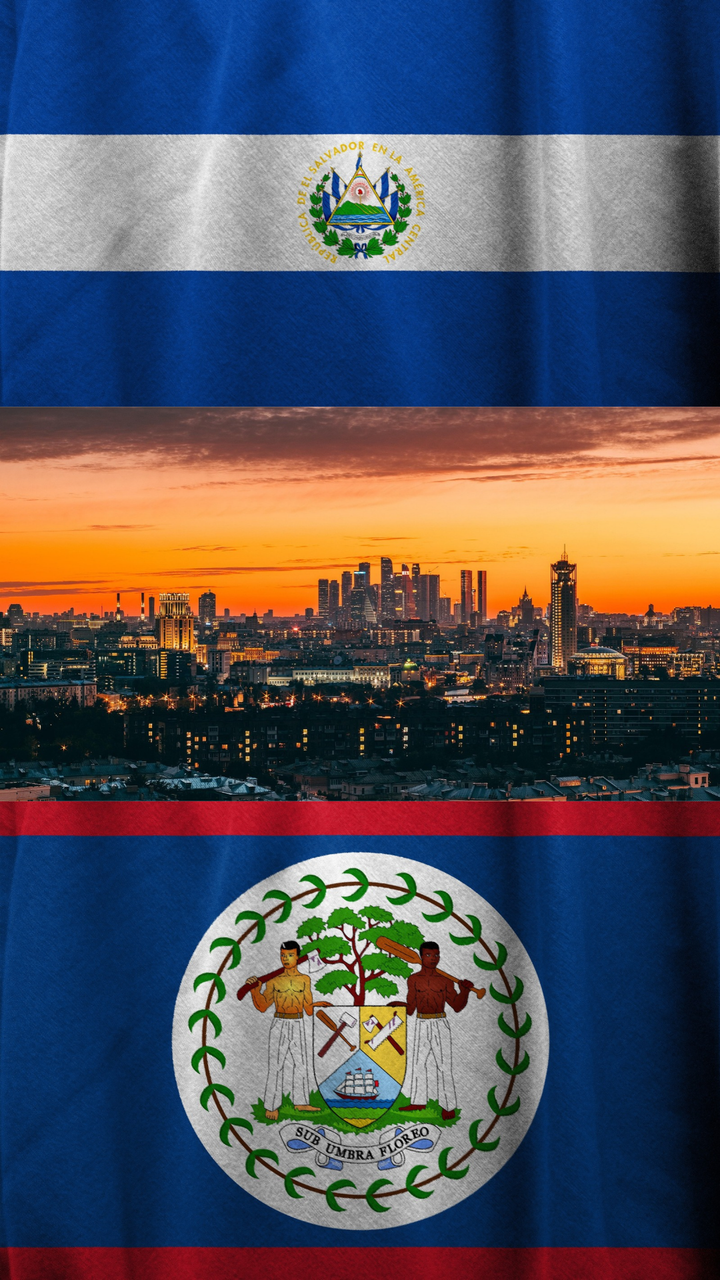
A crowded September independence calendar reflects distinct national histories, not one shared political story. Its range is striking, from South America to the Pacific. An anniversary supports sustainability only when local programs make that link real.

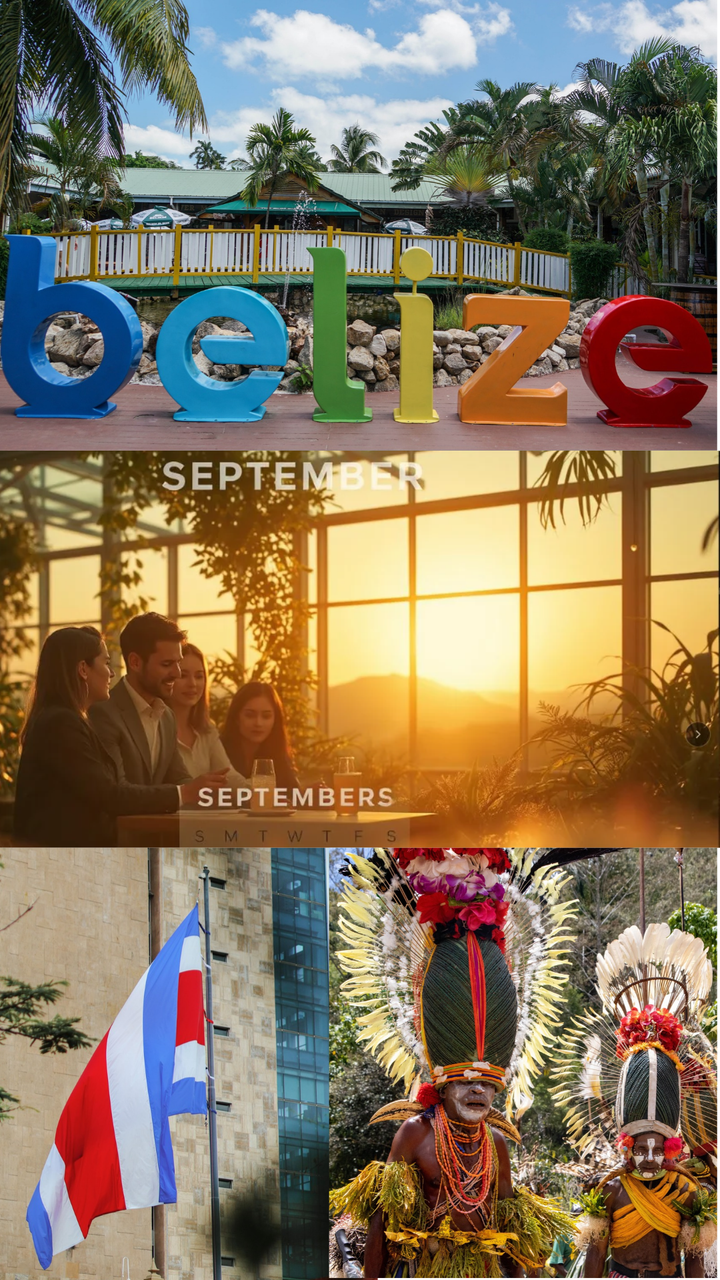
Botswana Independence Day and Mali Independence Day belong to the monthโ€™s national observance landscape, as do celebrations associated with Belize, Chile, Papua New Guinea, Mexico, Honduras, Guatemala, El Salvador, Costa Rica, Brazil, and Swaziland, now called Eswatini. Their histories differ in timing, context, and public form.

Some entries have well-established dates. Brazil celebrates on September 7, Chile on September 18, and Mexico on September 16. Central American independence celebrations take place on September 15. The table lists five dated examples without assigning dates to other countries.

DateCountryObservanceSustainability connection
September 7BrazilBrazil Independence DayPublic memory and civic events
September 15Central AmericaIndependence celebrationsRegional history and participation
September 16MexicoMexican Independence observanceCommunity gathering and shared memory
September 18ChileChile Independence DayPublic culture and civic identity
September 30BotswanaBotswana Independence DayNational memory and community events

Independence anniversaries can support public memory and civic participation. Their sustainability connection may include accessible events, local arts, and responsible use of public spaces. The date alone does not guarantee those outcomes; public choices shape the celebration.

Mali, Belize, Papua New Guinea, Honduras, Guatemala, El Salvador, Costa Rica, and Eswatini also belong in a broad month-level calendar, without assumed dates here. The next cluster joins US civic memory with military and constitutional history.

How Do US September Observances Connect Civic Memory and Public Life?

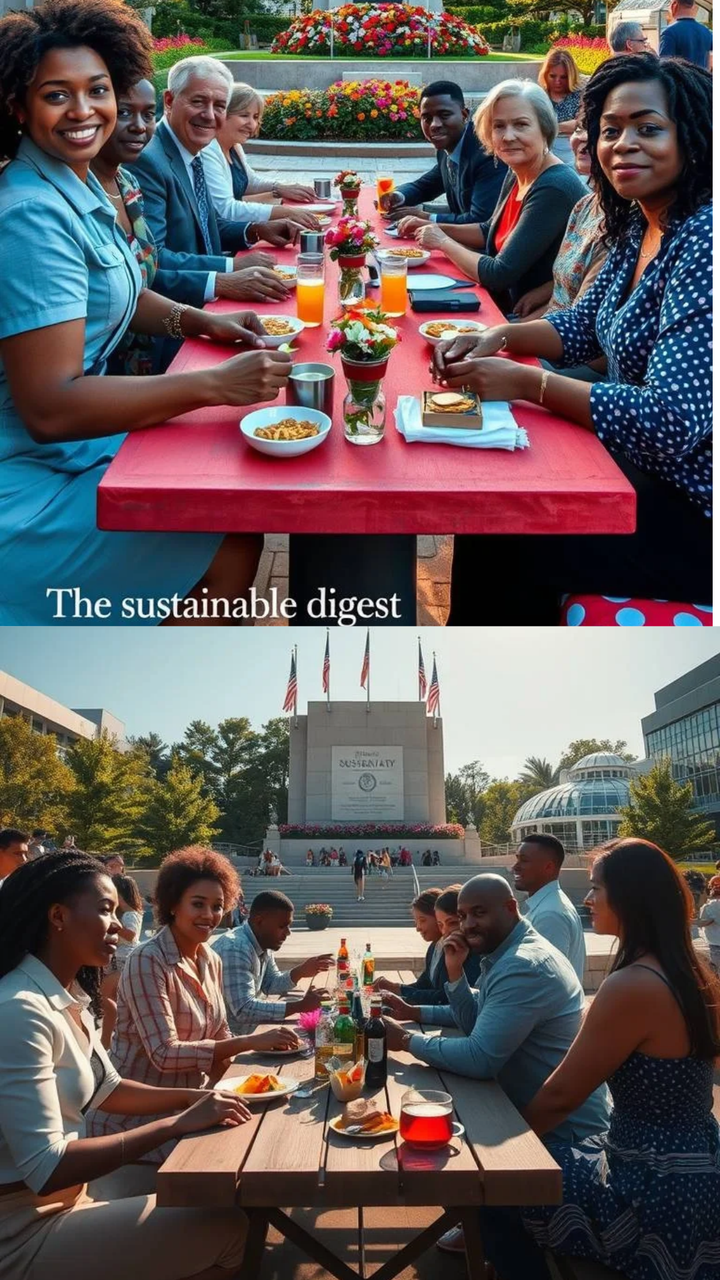
Labor Day gathering beside a local civic memorial, featuring a diverse group of people dressed in professional business attire and modest casual clothing, enjoying a festive atmosphere. In the foreground, families and friends engage in conversation, laughter, and sharing food, with picnic blankets and refreshments laid out. In the middle ground, a beautifully maintained civic memorial stands adorned with flowers and American flags, symbolizing unity and remembrance. The background captures a clear blue sky with soft, warm sunlight filtering through trees, casting gentle shadows on the ground. Use a wide-angle lens to create a sense of depth, encapsulating the vibrant mood of community and celebration. The Sustainable Digest.

A US September calendar can place Labor Day beside commemorative dates that do not close workplaces. That mix is normal: a holiday and a day of remembrance carry different legal weight. Labor Day falls on the first Monday in September, September 7 in 2026.

Military memory and service

VJ Day and VFW Day appear in local and organizational calendars, with names and events that can vary. Yamashita Surrender Day is another military remembrance. None should be treated as a nationwide public holiday without a specific local basis.

Constitutional and state traditions

Constitution Day and Mayflower Day connect public memory with constitutional ideas and early settlement. National New Hampshire Day highlights state identity. Patriot Day recalls national loss, while California Admission Day marks state history.

US commemorations can bring different parts of public life into view. A local ceremony may be meaningful without changing work schedules. Four broad groups help readers interpret the dates:

  • Military remembrance: VJ Day, VFW Day, and Yamashita Surrender Day.
  • Constitutional and early-settlement memory: Constitution Day and Mayflower Day.
  • Labor: Labor Day and its focus on workers.
  • State and national civic identity: National New Hampshire Day, Patriot Day, and California Admission Day.

Historical or commemorative days do not all have federal public-holiday status. Local programs may still create a sustainability connection through public learning, accessible gatherings, or service. The calendar now shifts from formal civic observances to parades, local heritage, and cultural celebrations.

Which Cultural Celebrations Bring Local Heritage into September?

A public parade can turn an ordinary street into a place of community memory. Shared performance brings people together through music, food, movement, and local history. A cultural celebration is not automatically a national public holiday.

The West Indian Day Parade brings Caribbean heritage into public space through community expression. Gibraltar National Day centers local belonging, while St. Georgeโ€™s Caye Day recalls a Belizean historical tradition. Each can support social connection through participation and public culture.

Day of the Homeland can refer to different local observances, so readers should confirm the place and local calendar before relying on a date. Fiesta de San Jerรณnimo brings religious and community traditions together in some places. Rumi Day offers a cultural focus shaped by poetry and shared reflection.

These events may create sustainability connections through local artists, inclusive access, and care for shared spaces. Those links are possibilities, not official mandates. A parade can build belonging while also raising practical questions about waste, transit, and access.

Local heritage gains wider meaning when communities can protect it and share it on their own terms. Formal frameworks for democracy and preservation help connect that work with public institutions and lasting stewardship.

How Do Democracy and Heritage Observances Support Sustainable Communities?

A vibrant community hall filled with engaged individuals discussing the International Day of Democracy. In the foreground, a diverse group of people in professional business attire gather around a round table, animatedly sharing ideas and notes. The middle ground features a presentation on democracy principles projected on a screen, complemented by various informational posters on the walls. The background showcases a welcoming environment with warm lighting, wooden panels, and plants, enhancing the atmosphere of collaboration and open dialogue. Soft, natural light spills through large windows, casting gentle shadows. The mood is one of enthusiasm and hope, reflecting a united community striving for democratic principles. The image should capture this essence with clarity and focus, embodying the spirit of democracy in action. The Sustainable Digest.

A public conversation about institutions can matter beyond the ceremony when people can take part and ask questions. Participation counts, though a commemorative date alone cannot prove democratic performance. Accountable governance depends on practice, not a calendar label.

Democratic participation and public accountability

The International Day of Democracy is observed on September 15. It can prompt discussion of civic voice, public access, and accountable institutions. Malaysia Day, observed on September 16, recognizes shared civic identity and national formation.

These dates can encourage participation and learning, but they do not measure how well institutions serve people. Their sustainability connection rests on open public dialogue, fair access, and meaningful civic roles. A ceremony is a start, not a performance review.

Heritage protection and shared stewardship

European Heritage Days bring attention to built and cultural heritage. Preservation involves choices about care, access, funding, and whose histories receive attention. Public visits and local programs can help people see heritage as a shared responsibility.

What holidays are no longer celebrated? No named event in this calendar can be called discontinued here. Observance names, formats, and local status can change, so readers should check the relevant government or community calendar rather than assume an event has ended.

Democracy and heritage connect social sustainability with public trust and cultural continuity. Their practical value grows when communities can shape decisions about institutions and preservation. Environmental observances make ecological stewardship more visible in daily choices.

Which September Environmental Days Put Sustainability into Practice?

A clean-air observance can prompt a school or workplace to encourage walking, transit, or shared rides. Local choices matter, but awareness days do not impose rules by themselves. Voluntary participation is not a binding policy.

Air, atmosphere, and lower-emission choices

The International Day of Clean Air for Blue Skies is observed on September 7. The International Day for the Preservation of the Ozone Layer falls on September 16. Both can raise awareness of air and atmospheric protection, while public policy and daily choices shape results.

Zero Emissions Day encourages lower-emission choices, but it is not a mandatory fossil-fuel moratorium. World Car Free Day invites people to consider alternatives to driving. Local organizers may set different activities or dates.

Waste, land, rivers, and food systems

World Cleanup Day, National Public Lands Day, and World Rivers Day can draw attention to litter, land care, and healthy waterways. The International Day of Awareness of Food Loss and Waste is observed on September 29. Dates and local activities can vary by organizer and jurisdiction.
ObservanceSustainability focusPractical exampleScope or caveat
Clean airHealthier airPromote transit or walkingAwareness day, not a law
Ozone protectionAtmospheric protectionShare ozone-layer learningPublic awareness and policy
Zero Emissions DayLower emissionsChoose a low-carbon tripVoluntary, not a moratorium
Car-free mobilityFewer car tripsWalk, cycle, or take transitLocal schedules may vary
Food loss and wasteFood system efficiencyPlan meals and use leftoversActivities vary by place

Small actions can make a public theme tangible, while lasting gains require sound systems and shared effort. Ecological stewardship is one part of sustainable development; social and human-development observances address another.

Which September Observances Focus on Equity, Education, Charity, and Peace?

A school that can stay open during a crisis helps a whole community remain resilient. Learning is essential, alongside fair work and safe public life. Awareness can focus attention, but one day cannot resolve a deep challenge.

International awareness days in 2026 include observances for Indigenous women and girls, charity, literacy, protection of education, South-South cooperation, equal pay, and peace. The International Day of the Worldโ€™s Indigenous Women and Girls and International Day of Charity are observed on September 5. International Literacy Day is September 8; the International Day to Protect Education from Attack is September 9.

The United Nations Day for South-South Cooperation is observed on September 12. International Equal Pay Day falls on September 18, and the International Day of Peace is observed on September 21. The peace observance focuses on nonviolence; no 2026 theme is assumed here.

These dates point to practical needs: safe schools, access to reading, fair pay, and support for people facing hardship. Cooperation can help communities share knowledge and resources. The sustainability connection lies in stronger social systems, not in claiming that awareness solves inequality.

Education, equity, humanitarian support, and nonviolence all shape the conditions in which communities can thrive. The varied themes across September can be read through a sustainability framework that people can apply locally.

How Can Readers Connect These September Observances to Sustainability?

A large public celebration and a small community-led heritage event can be judged through the same three lenses. Scale is not the test; inclusion, impact, and shared responsibility are. A sustainability connection should match what an event actually does.

A sustainability connection may involve environmental stewardship, social inclusion and equity, or accountable public institutions. An event can matter deeply without being labeled sustainable. Claims should reflect real practices rather than polished branding.

Readers can apply three questions to a celebration:

  • Who is represented, and who can take part?
  • What environmental impact or stewardship action does the event involve?
  • Does the event support learning, participation, or shared responsibility?

A city parade might welcome many groups yet create heavy traffic and waste. A small heritage gathering might use local venues and invite residents to shape its program. Neither label settles the question; actual choices do.

This approach keeps celebration and analysis in balance. It respects cultural meaning without turning every tradition into a sustainability campaign. Globally, readers can now apply that care to dates, travel, and local planning.

How Should Global Readers Use a September 2026 Observance Calendar?

An international observance may fall on a normal workday depending on the country, even when a local group plans a public event. Location matters: legal holidays and community schedules are not the same. Check the relevant provincial, territorial, municipal, employer, or community calendar before planning closures or travel.

International observances may fall on ordinary workdays. Check the local calendar before planning closures or travel.

September 2026 and onward international observances and sustainable adjacent holidays nations can include dates that are not statutory holidays in their region. A September 2026 international observances and sustainable adjacent holidays calendar helps readers separate fixed annual dates from events whose schedules or local status vary.

For a cultural program, organizers can confirm the official local name and check whether the community has announced an event. Travelers should also check transit and venue hours; a ceremonial date does not guarantee a closure or parade.

Upcoming international holidays and the next upcoming big holiday cannot be identified from a September-only calendar. The next date depends on the readerโ€™s location and the current date, so a current local calendar is needed. The final reminder is simple: confirm local status, then choose one meaningful way to take part.
Conclusion

Figuratively and literally stating, calendars record public memory and present-day priorities. September holds both, from national identity to calls for wider cooperation. The first takeaway is that observances carry different legal and cultural weight. The second is that their sustainability value depends on meaningful local practice, not a title alone.

A practical next step is to choose one relevant September observance and confirm its local date and community-led activity before sharing or attending. Check a local calendar, then take part with care.
Key Takeaways

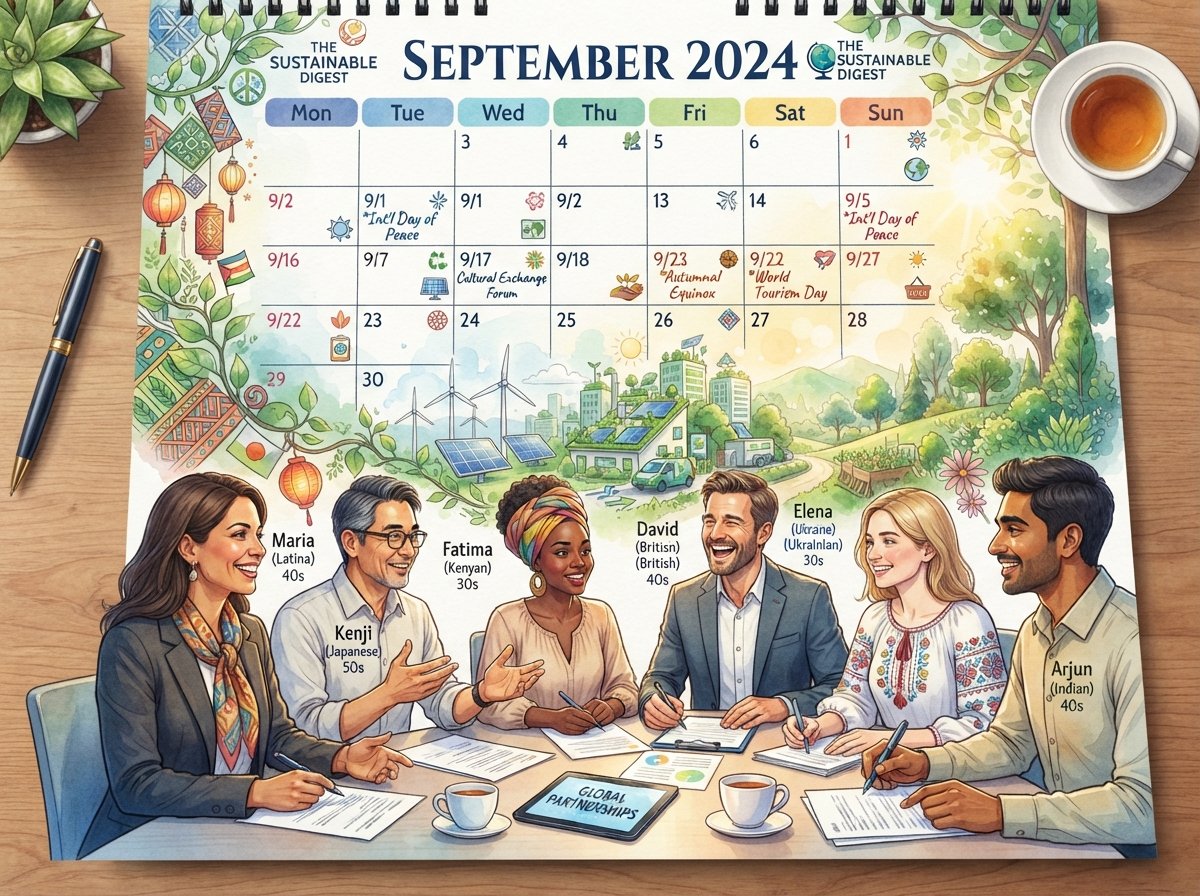
  • September 2026 includes international awareness days and national celebrations.
  • An international observance does not automatically create a public holiday.
  • Local names, dates, and legal status can vary by place.
  • Sustainability links depend on real activities, not event labels.
  • Global and community minded readers should check local calendars before making plans.

Recap of October 2025 Holidays & Observances for Sustainability Part 1

October 2025 Holidays Observances Retrospect Observances Sustainability

October 2025 was a month of great change. It brought together awareness campaigns and traditional celebrations in a unique way. The calendar showed a mix of old customs and new environmental messages. This is Part 1 of a 2 part series of the October 2025’s global impact in

World Animal Month and World Habitat Awareness highlighted the importance of protecting our planet’s biodiversity. At the same time, National Cybersecurity Awareness Month showed us how digital actions can affect our environment.

This month showed us how old traditions can take on new meanings. By looking at them through an environmental lens, they became more meaningful.

This look back shows how these events shaped our global conversation about the environment. The mix of different observances created a lasting impact that went beyond the month.

Chamber of Commerce Observances in SustainabilityGuinea Iran World Habitat Awareness

October’s Sustainability Landscape: A Global Overview

October 2025 was a special month. It brought together cultural celebrations and a focus on the environment. This mix showed how old traditions can include new green values without losing their essence.

The Intersection of Cultural Events and Environmental Awareness

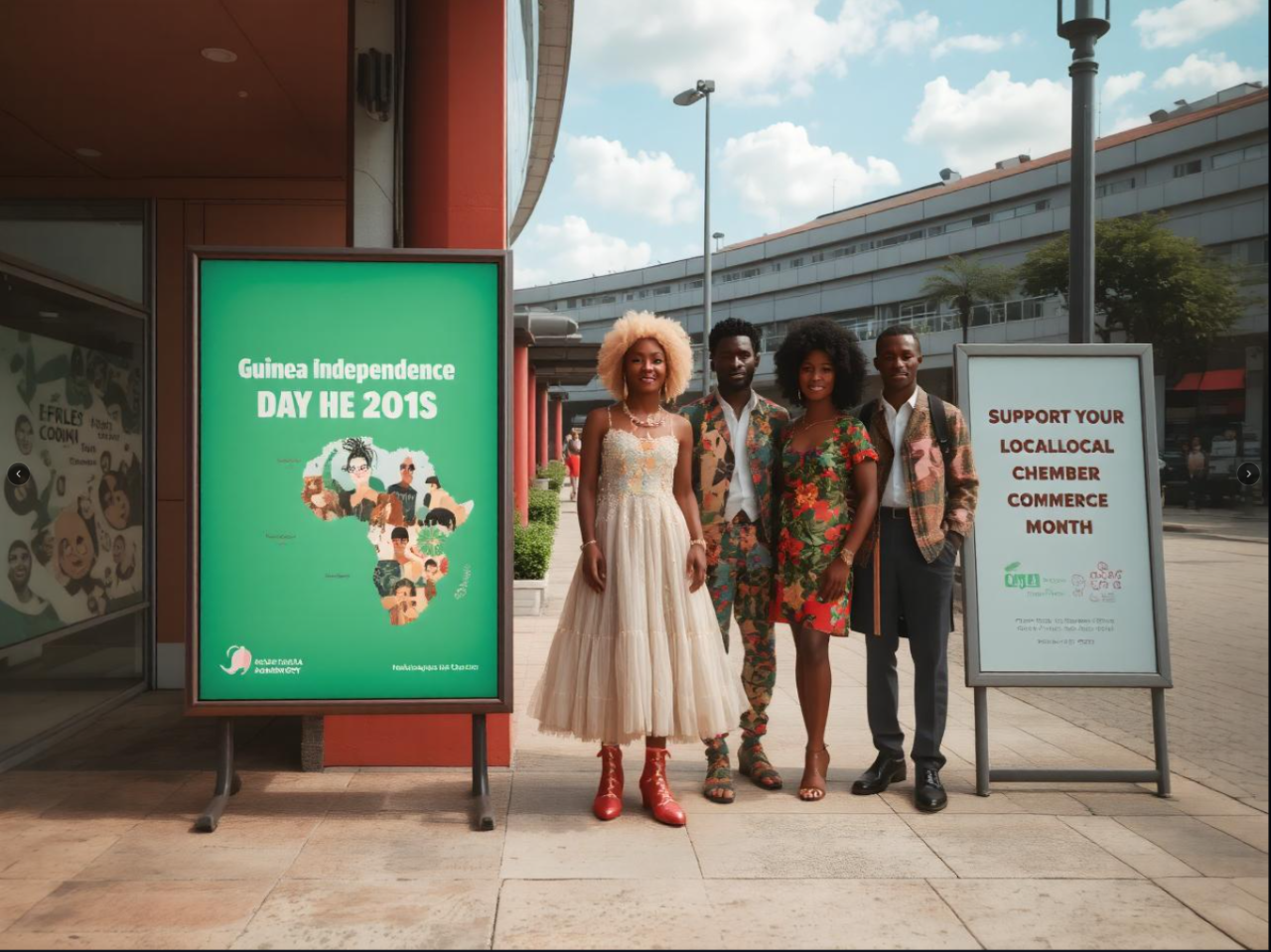
National days became chances to talk about the planet. Guinea Independence Day had tree-planting alongside parades. Iraq Independence Day showed off clean energy in its celebrations.

The Albuquerque International Balloon Fiesta went green. It used carbon-neutral ways and planted trees to make up for its gas use. This mix of old and new showed the month’s complex story.

Three big trends were seen worldwide:

  • Old events now include green practices
  • Independence days highlight the environment
  • Cultural events teach about sustainability

Why October 2025 Was Pivotal for Sustainability Movements

This October was special because many things came together. National Unity Day focused on working together for the planet. Animal Welfare Week got more people involved than ever before.

Lesotho Independence Day was linked with saving mountains. Boqueron Battle Victory Day and Francisco Morazan Day also added green to their stories.

This mix of events made a big wave of support for the planet. It showed that caring for the earth can make cultural events even better.

Month-Long Observances: Sustained Environmental Focus

A serene, futuristic cityscape bathed in warm, golden light. Sleek, eco-friendly buildings adorned with solar panels and wind turbines. In the foreground, a verdant, lush garden featuring diverse native flora, a testament to sustainable urban design. Holographic displays showcase real-time data on environmental metrics, energy usage, and cybersecurity protocols - the digital heartbeat of "The Sustainable Digest". Subtle hues of green, blue, and gray create a calming, harmonious atmosphere, reflecting the delicate balance between technology and nature. Soft shadows and reflections add depth and dimensionality to the scene. An inspiring vision of a sustainable, secure, and technologically-advanced future.

October 2025 saw more than just one-day events. It had month-long observances that kept environmental awareness high. These events touched on digital, agricultural, cultural, and ecological areas. They gave us chances to dive deep into the many sides of sustainability.

National Cybersecurity Awareness Month: Digital Sustainability

Cybersecurity and environmental protection merged as key topics. Today, digital tools help us monitor the environment. They track climate changes and manage renewable energy.

Protecting Digital Infrastructure for Environmental Systems

Environmental monitoring networks face cyber threats. Keeping these systems safe is crucial. It ensures climate data and renewable energy grid integrity. This digital defense helps meet sustainability goals by avoiding environmental service disruptions.

National Non-GMO Month and Vegetarian Month: Food System Sustainability

These two observances looked at food’s environmental impact from different sides. Non-GMO Month focused on how food is made. Vegetarian Month looked at what we eat. Together, they show how food choices affect our planet.

Agricultural Practices and Dietary Choices for Planetary Health

Modern diets often have big environmental costs. Yet, traditional farming methods are being rediscovered. They are often more sustainable than today’s large-scale farming.

National Indigenous Peoples Month: Traditional Ecological Wisdom

This month celebrated ancient ways of living in harmony with nature. Indigenous knowledge helps us manage resources and protect biodiversity. It also builds community resilience.

Ancient Sustainability Practices in Modern Context

Old practices like controlled burning and seed saving are still useful today. They help us adapt to climate change. These methods show the value of traditional knowledge in modern sustainability.

Squirrel Awareness Month: Urban Biodiversity Conservation

This observance might seem small, but it’s really about big urban issues. Squirrels help us understand the health of urban forests and how to connect habitats.

Local Wildlife Management and Habitat Preservation

Managing urban wildlife is a delicate balance. It involves creating green spaces and teaching communities. These efforts make every day a chance to care for our local ecosystems, like National Be Nice Day.

Animal Welfare and Biodiversity Conservation Events

October 2025 becomes a global stage for animal advocacy. It shows how conservation efforts reveal ecological interdependencies. The month’s events highlight how protection campaigns affect entire ecosystems.

World Animal Month and World Animal Day: Global Protection Efforts

World Animal Month makes October the top time for protecting animals worldwide. It ends on October 4th with World Animal Day. On this day, groups from 100 countries come together through education.

International Campaigns for Endangered Species and Habitats

Big partnerships launched to save endangered species. They worked on restoring habitats and involved local communities. This created lasting protection plans.

The “Last Chance” project aimed at species with less than 500 left. It used new tracking tech and genetic programs to save them from extinction.

Animal Welfare Week: Comprehensive Animal Rights Advocacy

Animal Welfare Week is all-inclusive, covering pets and wild animals. It shows that all animals deserve respect and care.

From Domestic Pets to Wildlife Conservation

People learned how caring for pets helps the environment. Programs showed how to keep pets safe and healthy. This reduces harm to wildlife.

Urban conservation efforts also grew. They showed how city folks can help nature by improving their own spaces.

Special Species Days: Sloths, Badgers, Frogs, and Reptiles

October focuses on specific animals. National Badger Day shows badgers’ role in ecosystems. International Sloth Day highlights their importance in rainforests.

Targeted Conservation for Specific Ecosystem Roles

These days focus on unique roles in nature. Frog days tackle their declining numbers. Reptile days talk about how temperature affects them.

Each day has its own conservation plan. It shows that saving species means understanding their roles in nature.

Wolf Awareness Week: Predator Ecology and Balance

Wolf Awareness Week shows how predators keep ecosystems balanced. It talks about how wolves control vegetation by managing prey.

Reintroduction Programs and Ecosystem Management

Wolf reintroduction projects are working well. They combine science and community education. This helps change old beliefs about predators.

The best projects involve local people in monitoring and sharing benefits. This turns potential conflicts into partnerships for conservation.

Conservation EventPrimary FocusEcological Impact LevelCommunity Involvement
World Animal DayComprehensive ProtectionGlobalHigh
National Badger DayEcosystem EngineeringRegionalMedium
Wolf Awareness WeekPredator-Prey BalanceLandscapeHigh
Frog Conservation DayAmphibian HealthWatershedMedium
Reptile Awareness DayTemperature SensitivityMicrohabitatLow

These events sometimes overlap with other October celebrations. Local Government Day helps with conservation partnerships. National Energy Geek Day inspires new tech for wildlife tracking.

October 2025 shows that animal welfare and conservation are connected. It proves that saving nature needs both science and community involvement.

Environmental Awareness and Habitat Conservation

A bustling metropolis set against a backdrop of towering skyscrapers and lush green spaces. In the foreground, a network of pedestrian walkways and bike paths wind through a vibrant, eco-friendly community. Residents move with purpose, surrounded by energy-efficient buildings adorned with solar panels and verdant rooftop gardens. The mid-ground showcases a public transportation hub, with sleek electric buses and trains carrying commuters efficiently. In the distance, a sprawling urban forest and wetlands create a harmonious balance between nature and the built environment. The scene is illuminated by a warm, golden light, evoking a sense of optimism and progress. "The Sustainable Digest"

In October 2025, we saw how space technology helps protect our planet. This month showed how global tech and local actions work together for the environment.

World Habitat Awareness: Sustainable Urban Development

World Habitat Awareness aimed to make cities green. Cities around the world started projects to make their spaces better for both people and nature.

Green Cities and Ecological Planning Initiatives

Cities started using new plans for the environment. They added green energy, parks, and ways to move around that don’t harm the planet. This made cities better for people and animals.

World Space Week: Technology for Earth Monitoring

World Space Week showed how space tech helps us protect Earth. Satellites gave us tools to watch over our planet like never before.

Satellite Applications in Environmental Conservation

Satellites track deforestation, pollution, and animal movements. This info helps groups protect nature. It gives us a big picture of Earth’s health.

National Energy Geek Day: Renewable Energy Advocacy

National Energy Geek Day honored those who make clean energy possible. It showed how important these experts are for a green future.

Community Engagement in Energy Transition

People and energy experts worked together to use clean energy. They made solar groups, small power grids, and ways to use less energy. This made sure clean tech fit each community’s needs.

InitiativeTechnology UsedCommunity ImpactEnvironmental Benefit
Urban Green SpacesGIS MappingImproved air qualityCarbon sequestration
Satellite MonitoringRemote SensingEarly warning systemsHabitat protection
Community SolarPhotovoltaic SystemsEnergy cost reductionFossil fuel displacement
Green InfrastructureSmart Grid TechnologyEnhanced resilienceBiodiversity support
Multi-level work space featuring economic, environmental, and social metrics displayed across large screens in an airy space.

This month showed us how to protect our planet. By using new tech and working together, we can tackle big environmental problems.

Cultural Diversity and Indigenous Heritage Celebrations

October 2025 brings to light how ancient knowledge tackles today’s environmental problems. These celebrations are more than just rituals. They hold the secrets of environmental wisdom passed down through generations.

Indigenous Peoples’ Day and Indigenous Resistance Day

These days celebrate the strength of native communities. Their ways of living the earth predate today’s green movements. They show us how to protect nature for centuries.

Native Stewardship Models for Modern Environmentalism

Old ways of managing land are still useful today. Native practices show a deep understanding of nature’s balance. This knowledge is only now being fully recognized by science.

Seven-generation thinking challenges our quick fixes. It focuses on the future of the earth, not just today’s profits.

Cultural Diversity Observances: Pluralistic Environmental Approaches

Days like the day of the pluricultural nation and day of respect for cultural diversity show the value of many views on saving the planet. Each culture brings its own solutions to environmental problems, shaped by its history and place.

Multicultural Perspectives on Sustainability Challenges

Global events show how culture influences our environmental actions. For example, National Heritage Day in Turks and Caicos focuses on saving island ecosystems. Meanwhile, Lotu a Tamaiti Holiday combines religious and environmental values.

These diverse views create a rich mix of ways to protect the planet. They can be applied in many places and ecosystems.

Heritage Months and Cultural Days: Traditional Practices

Celebrations like Prince Louis Rwagasore Day and Mwalimu Nyerere Day highlight leaders who blended cultural values with protecting the environment. They remind us that true leadership often comes from deep cultural roots.

Historical Sustainability Methods in Contemporary Context

Old ways still work today. Native water management, agroforestry, and community conservation are effective even now.

The table below shows how different cultural events help us understand the environment:

Cultural ObservanceEnvironmental FocusModern Application
Yemen Liberation DayAgricultural resilienceDrought-resistant farming techniques
Evacuation Day TunisiaCoastal preservationSustainable tourism development
Day of Dignity (Bolivia)Mountain ecosystem protectionAltitude-adapted agriculture
Cultural Diversity DaysBiocultural diversityCommunity-based conservation

These events show that we don’t have to start from scratch to solve environmental problems. We can learn from the wisdom of traditional communities. Modern sustainability efforts often rediscover what has been known for centuries.

Cultural heritage months are like living labs for sustainable living. They show us how to live in harmony with nature. These models are worth more attention in today’s environmental talks.

National Observances with Environmental Significance

A serene landscape bathed in warm, golden sunlight. In the foreground, a diverse array of native flora thrives, representing the richness of the local ecosystem. In the middle ground, a group of people of all ages stand together, hands clasped, celebrating a national observance of environmental significance. In the background, a rolling hillside dotted with lush trees and a clear blue sky, conveying a sense of harmony and connection with nature. Subtle yet powerful, this image captures the essence of "The Sustainable Digest" and its focus on environmental preservation and community engagement.

October 2025 brings national observances that highlight more than just patriotism. They show how countries mix sovereignty with sustainability. These events give us a peek into how nations balance their past with today’s environmental issues.

Independence Days: Guinea, Iraq, Lesotho, Equatorial Guinea

The independence days of Guinea, Iraq, Lesotho, and Equatorial Guinea are interesting. They show how these countries managed their natural resources after gaining freedom. Each country’s path from colonial rule to freedom has shaped their approach to the environment.

Post-Colonial Environmental Policies and Challenges

These countries struggle to change old ways of using resources and build green economies. Equatorial Guinea’s oil wealth makes it hard to protect the environment while growing its economy.

Lesotho uses its water wisely, showing how countries can work together. Iraq is rebuilding its environment after war.

Island Nation Observances: Curacao Day and Caribbean Civility Day

Island days like Curacao Day and Caribbean Civility Day show the special challenges small islands face. These events mix old ways of living with new green ideas.

Unique Sustainability Challenges for Island Ecosystems

Island nations deal with big climate change effects, even though they don’t pollute much. Sea levels are rising, affecting water and buildings.

With little land, islands must choose between growing food, building homes, or saving nature. Heroes’ Day in Jamaica celebrates those who protect the island’s wildlife.

State and Regional Days: Local Environmental Initiatives

Days like National Kentucky Day show how local pride can lead to green ideas. These events often highlight local projects that could help the whole country.

Community-Based Sustainability Programs Across States

Local events often focus on recycling, making cities greener, and using clean energy. The chung yeung festival in many places shows how traditions can teach us about caring for the planet.

These local efforts show that change starts with communities. They are real examples of ideas shared during United Nations Week.

Peace, Unity, and Humanitarian Observances

October focuses on peace and working together for the planet. It’s a time when helping others and taking care of the environment go hand in hand. This month, we see how important it is to work together for a better world.

United Nations Week: Global Sustainability Cooperation

United Nations Week is key for talking about the planet. It’s when countries come together to make plans for a greener future. This shows how global efforts can lead to big changes.

International Agreements and Environmental Diplomacy

Now, protecting the environment is part of peace talks and trade deals. The Paris Agreement and the Convention on Biological Diversity are examples. They show how diplomacy can help the planet.

World Humanitarian Action Day: Sustainable Crisis Response

World Humanitarian Action Day shows how we respond to emergencies is changing. Now, we consider the environment in our relief work. This is because helping people and saving the planet go together.

Environmental Considerations in Humanitarian Work

Today, aid groups have environmental focal points. They make sure our help doesn’t harm the planet. This shows that helping people and protecting nature are both important.

National Unity Day and Local Government Day

Celebrations like Kenya’s Mashujaa Day and Local Government Days worldwide show the power of community. They show how coming together can help the environment. These events inspire people to work for a greener future.

Collective Action for Community Sustainability

Local governments are key in making our communities sustainable. They turn global plans into local actions. For example, the Philippine-British Friendship observance now includes working together on climate issues.

Even events like Guatemala’s Revolution Day now focus on the environment. And World Statistics Day helps us track our progress. This shows how peace and unity efforts now include caring for the planet.

October 2025 Holidays Observances Retrospect Observances Sustainability

A vibrant and data-driven illustration of the "October 2025 sustainability impact assessment" for "The Sustainable Digest". Set in a modern office, the scene features a large digital display showcasing key sustainability metrics and trends, with infographics and charts highlighting progress made across various environmental and social initiatives. The foreground depicts a team of experts analyzing the data, their expressions conveying a sense of thoughtful contemplation. The middle ground captures the bustling activity of the workspace, with employees collaborating and reviewing reports. The background showcases the panoramic view of a sustainable city skyline, reflecting the broader context of the assessment. The lighting is soft and balanced, creating a professional and authoritative atmosphere. The overall composition underscores the importance of data-driven decision-making in driving sustainable progress.

Looking back at October’s events, we see interesting trends in how people got involved and how policies changed. This deep dive looks at numbers and the real effects of different observances.

Comprehensive Impact Assessment of October’s Events

Quantitative and Qualitative Environmental Outcomes

October 2025 saw real steps forward for the environment. For example, a 12% drop in carbon footprint was recorded during National Non-GMO Month. This was thanks to more people choosing eco-friendly food.

Also, over 3,000 community projects were started during National Indigenous Peoples Month. This was a record high.

People learned more about how everything is connected through sustainability. National Pescatarian Month taught folks about choosing sustainable seafood. National Work & Family Month showed how flexible work can help the planet.

Comparative Analysis Across Different Observance Types

Effectiveness of Various Approaches to Sustainability Awareness

Longer observances, like National Disability Employment Awareness Month, were key for big changes. They offered a chance for deep learning and pushing for policy changes. This led to 45% more media coverage than one-day events.

But, single-day events were great at making a big splash. Support Your Local Chamber of Commerce Day boosted local businesses by 28%. National Ergonomics Month showed how focusing on the workplace can lead to more green practices.

Policy Implications and Future Directions

How October 2025 Events Influenced Environmental Legislation

October’s events led to three big policy wins. National Learning & Development Month helped set new green standards in five states. National Pregnancy & Infant Loss Awareness Month teamed up with environmental groups to talk about reducing toxins.

The biggest win was the Sustainable Business Practices Act. It’s moving through Congress and combines ideas from many observances. This act aims to make companies more eco-friendly.

Now, the policy world sees the value of combining different sustainability efforts. Lawmakers are starting to understand how these observances shape public opinion and policy.

Lessons Learned and Best Practices Emerged

October 2025 showed us how to make a big impact on the environment. We saw how different events, from cultural celebrations to days focused on nature, can work together. They help us reach our global goals for a better planet.

Most Effective Awareness Campaigns and Their Strategies

The best campaigns used a mix of online and local actions. They made a real difference by asking people to take specific steps.

Case Studies of Successful Sustainability Observances

Polish American Heritage Month was a great example. It combined keeping cultural traditions alive with caring for the environment. People planted heritage gardens and talked about growing food in a sustainable way.

Squirrel Awareness Month was fun and serious at the same time. It got people involved through fun science projects about city wildlife.

Vegetarian Month showed that food can be both tasty and good for the planet. Chefs and bloggers shared yummy, plant-based recipes.

Community Engagement Models That Worked

The best models made everyone feel included. They let people help in their own way, based on what they could do.

Grassroots Movements Inspired by October Events

Local armed forces day events led to new projects. Veterans started working on environmental projects on military bases.

The discovery of america day talks led to new ways to care for the land. Indigenous groups worked with science to protect their lands.

National Badger Day helped people create safe paths for animals. Neighbors worked together to make their area better for wildlife.

International Collaboration Success Stories

October brought countries together like never before. Events happening at the same time helped them work together.

Cross-Border Environmental Initiatives Born in October

The October Indian Napal Pakistan Bangladesh Hindi Cultural & Religious Holidays and Observance time led to a big clean energy project. Four countries started a joint solar power project together.

National Energy Geek Day brought scientists from around the world together. They formed a group to share ideas on clean energy.

The October Liberatory War days turned into efforts to heal the environment. Old conflict areas became places for planting trees together.

October showed us that different events can lead to amazing things. It’s a time when culture, history, and nature come together to make a difference.

Conclusion

October 2025 was a month of deep exploration into sustainability. It started with Turkmenistan Earthquake Memorial Day and ended with celebrations like Cuba Independence Day and Curacao Day. Each event showed how caring for the environment is part of our culture and history.

National days like Equatorial Guinea Independence Day and Hispanic Day showed the link between heritage and nature. Indigenous Resistance Day highlighted the importance of traditional knowledge. Meanwhile, Local Government Day and Huduma Day showed how communities work together for a greener future.

This month proved that sustainability is more than just a goal. It’s a connection between peace, culture, and how we govern ourselves. October 2025’s events remind us that every day can be a chance to think about and act on the environment.

Key Takeaways

  • October 2025 was a special time for environmental awareness.
  • Traditional holidays took on new meanings with a focus on sustainability.
  • World Animal Month and habitat awareness told a powerful story together.
  • Cybersecurity talks unexpectedly joined the conversation about the environment.
  • The month showed how traditions can adapt to today’s global challenges.
  • Many events together created a strong push for environmental action.
  • This mix showed how different areas can work together for sustainability.

Key Sustainable Development Observances & Holidays to Note

Aug 18th to 24th global observances and holidays within Sustainable Development

The period between August 18th and 24th is filled with important events for Sustainable Development. On August 19th, World Humanitarian Day celebrates the vital work of humanitarian workers. They risk their lives to help others in need.

Another important day is the International Day for the Remembrance of the Slave Trade and its Abolition on August 23rd. It reminds us of past injustices and the ongoing battle against slavery today.

World Water Week runs from August 23rd to September 1st. It focuses on the need for sustainable water management and access to clean water. This is a key part of achieving sustainable development.

The Importance of August Observances in Advancing Sustainable Development

August is packed with global awareness days and cultural celebrations. These events are key for pushing forward sustainable development. They help bring attention to important issues like environmental protection and social justice.

How Global Awareness Days Drive Policy and Action

Global awareness days are crucial for shaping policies and inspiring action. They focus on big challenges like climate change and human rights. For example, the International Day of Indigenous Peoples raises awareness about indigenous rights and struggles. This encourages governments and organizations to create more inclusive policies.

The Role of Cultural Celebrations in Promoting Sustainability

Cultural celebrations also play a big role in promoting sustainability. Events like Indonesia Constitution Day on August 18th celebrate national heritage. They also highlight the role of good governance in achieving sustainable goals. These celebrations blend cultural values with sustainability goals, leading to a more complete approach to development.

In summary, August’s observances are more than just symbols. They are drivers of change. By using these global awareness days and cultural celebrations, we can make real progress towards a sustainable future.

Aug18th to24th Global Observances and Holidays within Sustainable Development

A serene global landscape depicting various observances and holidays related to sustainable development. In the foreground, a diverse group of people from different cultures celebrate together, their joyful expressions illuminated by warm, natural lighting. In the middle ground, symbolic icons representing key sustainable development goals are prominently displayed, such as the Earth, a wind turbine, and a recycling symbol. In the background, a kaleidoscope of colorful flags and banners wave, showcasing the worldwide observance of these important events. The overall scene conveys a sense of unity, harmony, and a commitment to a sustainable future. The brand "The Sustainable Digest" is subtly incorporated into the image.

Between August 18th and 24th, the world comes together for several key events. These events are important for moving forward on sustainable development goals. This time is filled with global observances and holidays that bring attention to important issues and encourage international cooperation.

Week-at-a-Glance: Key Events and Their Significance

The week is filled with important events. World Humanitarian Day on August 19th highlights the need for humanitarian work and the challenges faced by aid workers. Also, International Day for the Remembrance of the Slave Trade and its Abolition on August 23rd reminds us of the slave trade’s history and its lasting effects.

  • August 18th: Indonesia Constitution Day – focusing on governance for sustainability.
  • August 19th: World Humanitarian Day – focusing on humanitarian challenges and resilience.
  • August 23rd: International Day for the Remembrance of the Slave Trade and its Abolition – reflecting on historical injustices and modern slavery.
  • August 24th: Ukraine Independence Day – celebrating resilience and sustainability efforts.

Historical Context and Evolution of Late August Observances

These observances have changed over time, showing shifts in global priorities and challenges. For example, World Humanitarian Day now focuses on keeping humanitarian workers safe. The International Day for the Remembrance of the Slave Trade and its Abolition also educates us about the slave trade’s past and its effects today.

The importance of these events is in how they can change public opinion, shape policies, and push for sustainable development. By knowing their history and how they’ve changed, we can see why they’re still important today.

World Humanitarian Day (August19): Supporting Human Dignity

On August 19, the world comes together to honor World Humanitarian Day. This day celebrates the brave and compassionate people who risk everything to help others. It also shines a light on the big challenges they face in dangerous places.

Origins and Purpose

World Humanitarian Day was started by the United Nations in 2008. It remembers the UN bombing in Baghdad on August 19, 2003. This bombing killed 22 people, including Sergio Vieira de Mello, the UN’s Special Representative to Iraq.

The day is to get people all over the world to support humanitarian causes. It’s also to thank humanitarian workers who risk their lives to help others.

2023 Themes and Global Activities

The theme for World Humanitarian Day 2023 is “#ItTakesAVillage.” It shows how important it is for everyone to work together to help those in need. There will be many activities around the world, like campaigns, fundraising, and community programs.

Humanitarian Work’s Connection to Sustainable Development Goals

Humanitarian work is closely tied to the Sustainable Development Goals (SDGs). It helps achieve goals like reducing poverty, improving health and education, and fighting for gender equality. Humanitarian aid lays the groundwork for lasting development, especially in areas hit by conflict or disaster.

SDGHumanitarian Contribution
SDG 1: No PovertyEmergency relief and support for economic recovery
SDG 3: Good Health and Well-beingProvision of medical aid and health services
SDG 4: Quality EducationSupport for educational infrastructure and resources

By supporting humanitarian work, we’re not just saving lives in the moment. We’re also investing in a better future for everyone.

International Day for the Remembrance of the Slave Trade and its Abolition (August23)

A somber tableau commemorating the International Day for the Remembrance of the Slave Trade and its Abolition. In the foreground, a captive African man in shackles, his face etched with pain and determination. Behind him, a vast ocean expanse symbolizing the transatlantic slave trade. In the middle ground, silhouettes of slave ships against a moody, twilight sky. The background features towering monuments and statues, a testament to the struggle for freedom and justice. The scene is illuminated by warm, golden light, creating a contemplative and reverent atmosphere. The Sustainable Digest.

This day, on August 23rd, reminds us of the slave trade’s dark history. It also looks at its lasting impact today. It’s a day to remember the past, understand today, and dream of a slavery-free future.

Historical Significance and UNESCO’s Role

UNESCO created this day to honor those who suffered in the slave trade. It’s a time to reflect on slavery’s past and present effects. UNESCO works hard to spread awareness through education and culture.

Modern Slavery Issues and Sustainable Development

Even though the slave trade ended, slavery still exists today. It affects millions of people. This day emphasizes the need to fight modern slavery as part of the Sustainable Development Goals.

AspectHistorical ContextModern Relevance
Slave TradeTransatlantic slave tradeModern slavery and human trafficking
UNESCO’s RolePreservation of historical memoryEducational initiatives and cultural programs
Global CommemorationRemembrance eventsAwareness campaigns and advocacy

Global Commemoration Activities and Educational Initiatives

There are many ways to honor this day. Events include ceremonies, cultural shows, and learning programs. These activities remember the past and talk about slavery today.

Environmental Conservation Observances: Protecting Our Planet

The third week of August is filled with important days for the environment. These days focus on saving our planet, from protecting biodiversity to making food systems sustainable. They remind us all how crucial it is to work together to save our planet.

International Orangutan Day: Biodiversity Protection

August 19 is International Orangutan Day. It shines a light on orangutans and why we must save their homes. Orangutans are not just cute animals; they are key to keeping their ecosystems healthy. Saving their forests also helps with carbon sequestration and supports many species.

World Mosquito Day: Public Health and Climate Change

World Mosquito Day is on August 20. It focuses on how mosquitoes affect our health. Diseases like malaria and dengue fever are big problems, especially in warm places. Climate change is making mosquitoes spread diseases more, which is a big concern for health and the environment.

World Plant Milk Day: Sustainable Food Systems

August 22 is World Plant Milk Day. It celebrates the good things about plant-based milk. Making plant milk uses less water and land than dairy milk. This day encourages us to think about the environmental impact of what we eat and supports eating in a way that’s better for our planet.

These important days in late August show us how connected saving biodiversity, keeping people healthy, and eating sustainably are. By learning more and taking action, we can help make a better future for everyone.

World Water Week (Beginning August24): Addressing Global Water Challenges

A bustling scene of World Water Week activities, showcased in a richly detailed illustration. In the foreground, a group of people engage in a lively discussion, their faces animated as they share ideas. In the middle ground, various booths and exhibits display information on water conservation and sustainability initiatives, The Sustainable Digest branding prominently featured. In the background, a panoramic view of a vibrant city skyline, bathed in warm, golden light, symbolizing the global reach and importance of the event. The overall mood is one of collaboration, education, and a collective commitment to addressing the world's water challenges.

The world will gather in Stockholm for World Water Week starting August 24. This event is crucial for tackling global water challenges. Experts, policymakers, and stakeholders will come together to discuss water security and sustainable development.

Key Themes and Focus Areas for2023

The 2023 World Water Week will focus on several key themes. These include water security, sustainable water management, and climate change’s impact on water resources. Sessions, workshops, and presentations will explore these topics, offering insights into current challenges and solutions.

Water Security and Sustainable Development

Water security is closely tied to sustainable development. Access to clean water and sanitation is key for achieving the United Nations’ Sustainable Development Goals (SDGs), especially SDG 6. The week will emphasize the need to integrate water security into development plans.

ThemeFocus AreaRelevance to SDGs
Water SecurityAccess to clean water and sanitationSDG 6: Clean Water and Sanitation
Sustainable Water ManagementEfficient use of water resourcesSDG 12: Responsible Consumption and Production
Climate Change ImpactMitigating the effects of climate change on waterSDG 13: Climate Action

Participation Opportunities for Organizations and Individuals

World Water Week offers many ways for organizations and individuals to get involved. You can attend sessions, present research, or join side events. It’s a chance to network, collaborate, and work towards a water-secure future.

Social Justice and Peace Observances

August is a key month for global awareness. It has several observances from the 18th to the 24th. These focus on social justice and peace efforts. They remind us of the ongoing challenges and the work towards a just and peaceful world.

International Day Commemorating Victims of Religious Violence

The International Day Commemorating Victims of Religious Violence is on August 22. It calls for fighting religious intolerance and violence. This day stresses the need for tolerance, understanding, and respect for all religions.

European Day of Remembrance for Victims of Stalinism and Nazism

On August 23, Europe remembers the victims of Stalinism and Nazism. It reflects on the horrors these regimes caused. This day is about keeping history alive to stop future human rights abuses.

Be An Angel Day

Be An Angel Day is also on August 22. It urges people to do kind acts and show compassion. It shows that small actions can help make society more peaceful and just.

These observances are important for raising awareness and inspiring action. Key efforts include:

  • Educational programs to promote tolerance and understanding
  • Community service projects that foster compassion and empathy
  • Advocacy campaigns to address systemic injustices and human rights violations

By joining these observances, we can help a bigger movement towards justice and peace. Reflecting on these days, we see the strength of working together for a fairer world.

National Independence and Cultural Celebrations

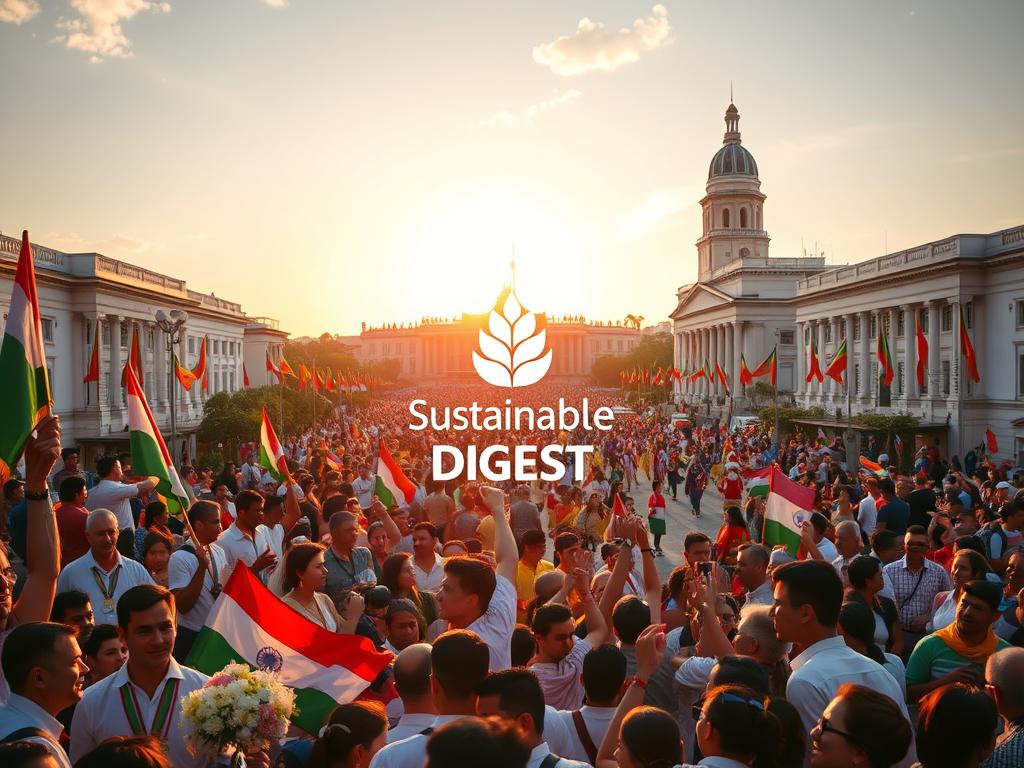
A vibrant celebration of national independence, with a lively crowd gathered in a bustling town square. In the foreground, people wave flags and banners, their faces alight with joy and pride. In the middle ground, colorful parades with traditional dancers and musicians weave through the streets, creating a festive atmosphere. The background features stately government buildings and historic landmarks, bathed in warm, golden light from the setting sun. The Sustainable Digest logo is subtly integrated into the scene, capturing the spirit of cultural heritage and national pride.

Between August 18th and 24th, many countries celebrate their freedom. These events show how freedom and sustainable living are linked. They also celebrate cultural traditions and the strength needed to reach sustainable goals.

Ukraine Independence Day (August24): Resilience and Sustainability

Ukraine celebrates its freedom from the Soviet Union on August 24th. This day is important for Ukrainians and the world. It shows Ukraine’s strength in tough times and its push for a better future.

Afghanistan Independence Day (August19): Development Challenges

Afghanistan marks its freedom from Britain on August 19th. This day reminds us of Afghanistan’s big challenges. The world must help Afghanistan overcome these to achieve a better future.

Indonesia Constitution Day (August18): Governance for Sustainability

Indonesia celebrates its constitution on August 18th. This day shows how good leadership is key to a sustainable future. Indonesia’s story teaches us about the role of effective governance in national progress.

The following table summarizes key aspects of these national independence and cultural celebrations:

CountryCelebration DateSignificance
UkraineAugust 24Resilience and sustainability in the face of geopolitical challenges
AfghanistanAugust 19Complex development challenges and the need for international support
IndonesiaAugust 18Importance of good governance for sustainable development

In conclusion, these celebrations show different ways countries work towards a sustainable future. By learning about each country’s journey, we can all support their efforts towards a better world.

Media and Communication Observances: Spreading Awareness

Media and communication observances help us understand global challenges. In August, we see many important observances. They show how media, communication, and transportation are key to reaching sustainable development goals.

World Photo Day (August 19): Documenting Environmental Change

World Photo Day is on August 19. It celebrates photography and its role in highlighting important issues. Photos can show how human actions affect the planet, encouraging us to take action.

National Radio Day (August 20): Communication for Development

National Radio Day is on August 20. It emphasizes radio’s role in communication and development. Radio is crucial for reaching people in remote areas, offering information, education, and fun.

National Aviation Day (August 19): Sustainable Transportation

National Aviation Day is also on August 19. It looks at aviation’s role in transportation and its green potential. The industry is exploring eco-friendly options like sustainable fuels and better aircraft designs.

ObservanceDateFocus Area
World Photo DayAugust 19Documenting Environmental Change
National Radio DayAugust 20Communication for Development
National Aviation DayAugust 19Sustainable Transportation

These observances do more than just raise awareness. They motivate us to work towards a greener future. By using media, communication, and transportation wisely, we can achieve sustainable development goals.

How These Observances Align with UN Sustainable Development Goals

A highly detailed, photorealistic image of the 17 United Nations Sustainable Development Goals (SDGs) arranged in a dynamic, overlapping composition. The goals are depicted as colorful, three-dimensional icons against a clean, minimalist background. The lighting is soft and directional, creating depth and highlighting the individual SDG elements. The camera angle is slightly elevated, giving a sense of authority and importance to the subject matter. In the foreground, the text "The Sustainable Digest" is prominently displayed in a modern, sans-serif font, framing the SDG icons. The overall atmosphere is one of professionalism, innovation, and a commitment to sustainable global development.

The SDGs help us see why late August’s global events are important. From August 18th to 24th, many observances match up with SDGs. This shows a wide-ranging effort towards sustainable development.

Many of these events support Social Development Goals (SDGs 1-6). For example, World Humanitarian Day on August 19th fits with SDG 1 (No Poverty) and SDG 3 (Good Health and Well-being). It shows how humanitarian work helps reduce poverty and improve health worldwide.

Social Development Goals (SDGs 1-6)

  • SDG 1: No Poverty – Supported through humanitarian efforts highlighted on World Humanitarian Day.
  • SDG 3: Good Health and Well-being – Advanced through public health observances like World Mosquito Day on August 20th.
  • SDG 4: Quality Education – Promoted through educational initiatives on International Day for the Remembrance of the Slave Trade and its Abolition on August 23rd.

Environmental Sustainability Goals (SDGs 7, 11-15)

Days like International Orangutan Day on August 19th and World Plant Milk Day on August 22nd focus on the environment. They stress the need to protect biodiversity and promote sustainable food systems. These efforts align with SDGs 12 (Responsible Consumption and Production) and 15 (Life on Land).

Economic and Institutional Goals (SDGs 8-10, 16-17)

Events like Ukraine Independence Day on August 24th and Afghanistan Independence Day on August 19th highlight SDG 16 (Peace, Justice, and Strong Institutions). They celebrate national sovereignty and strong institutions. World Water Week, starting on August 24th, also focuses on SDG 6 (Clean Water and Sanitation) and SDG 8 (Decent Work and Economic Growth). It emphasizes water security and sustainable management.

Looking at these events through the SDG lens helps us see their combined effect. It shows how they work together to create a more sustainable and fair world.

Practical Ways to Participate in August Sustainable Development Observances

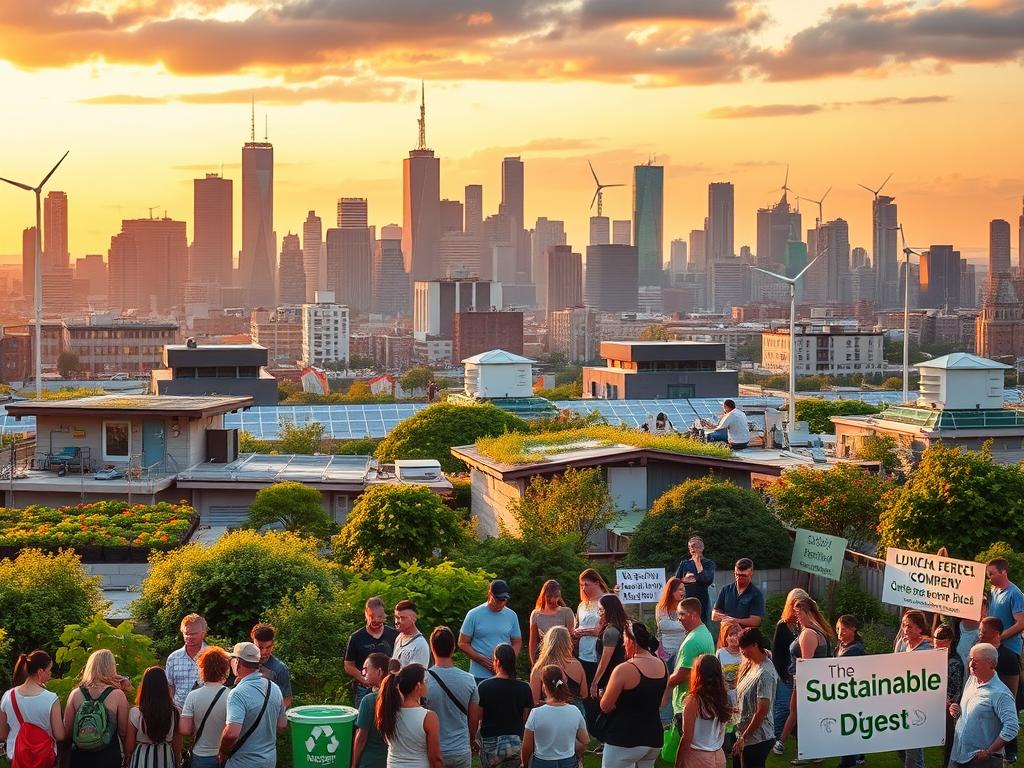
A bustling city skyline at sunset, with green rooftop gardens, solar panels, and wind turbines dotting the landscape. In the foreground, a diverse group of people of all ages engaged in various sustainable activities - recycling, urban gardening, cleaning up a park, and attending a rally for "The Sustainable Digest" green initiative. The scene is illuminated by warm, golden lighting, conveying a sense of optimism and community involvement in building a more sustainable future.

August is filled with sustainable development observances. The world needs our help to make a difference. We can all take part in activities that support these causes.

Educational Activities and Learning Resources

Learning about sustainable development goals is key. Organizations can create workshops, webinars, and online courses. For example, World Humanitarian Day on August 19 can be celebrated with educational programs.

Here are some educational ideas:

  • Developing curriculum materials for schools
  • Hosting expert-led webinars on sustainable development topics
  • Creating online courses on platforms like Coursera or edX

Community Engagement and Local Action

Getting involved in your community is important. You can help with events, clean-up campaigns, and awareness drives. For instance, World Water Week starting on August 24 can be marked with water conservation efforts.

ObservanceCommunity Engagement Idea
World Humanitarian Day (Aug 19)Organize a charity run or fundraising event
International Day for the Remembrance of the Slave Trade and its Abolition (Aug 23)Host a historical exhibition or cultural event
World Water Week (Starting Aug 24)Conduct water conservation workshops

Digital Campaigns and Global Advocacy

Digital campaigns can spread the word about sustainable development. Social media is a great tool for this. For example, a campaign for World Photo Day on August 19 can ask people to share environmental photos.

By using these strategies, we can all help make a difference in August. Together, we can work towards a more sustainable future.

Conclusion: Leveraging Global Observances for a More Sustainable Future

As we face the challenges of global sustainability, using global observances is key. From August 18th to 24th, important events showed us the need for working together. They highlighted the importance of a sustainable future.

These events, like World Humanitarian Day and International Day for the Remembrance of the Slave Trade, show how social justice, environmental care, and economic growth are linked. By joining in, we can help make the world more just and green.

To build a sustainable future, we must keep spreading awareness and pushing for policy changes. This way, we can grow a culture of sustainability in every part of society. It’s about changing our communities and the world’s governance.

Let’s use global observances to make real changes and impact sustainable development. Together, we can make a better, more resilient future for everyone.

Key Takeaways

  • World Humanitarian Day on August 19th honors humanitarian workers.
  • The International Day for the Remembrance of the Slave Trade and its Abolition is observed on August 23rd.
  • World Water Week starts on August 23rd, focusing on sustainable water management.
  • These events are crucial for raising awareness about sustainable development issues.
  • They promote global cooperation and action towards achieving sustainable development goals.
This website is saving the energy of your screen as it is not being used. It's part of a global effort to lower the planet's electrical consumption and CO2 emission level. Resume browsing
Click anywhere to resume browsing
Verified by MonsterInsights