
Cooperatives are key to empowering communities locally and internationally. They are businesses owned by their members, working for the good of all. Unlike traditional companies, co-ops put people first with purpose(including planet), not just profits.

Cooperatives tackle big issues like food systems, community necessities, and housing. They help communities grow stronger and more stable. This way, everyone has a say and a stake in any success and scale.
They also help local economies and care for the environment. Cooperative as a structure are intentional thus reflecting mindfulness of any local ecosystem its a part of. This makes co-ops a beacon of hope in tough times. They show us that together, we can make a big difference.
Understanding the Foundations of Cooperative Enterprises
Cooperative enterprises are key to sustainable community growth. They focus on democratic ownership, social governance, and collective action. This leads to fair sharing of resources and benefits.
Defining Cooperative Business Models
Cooperatives are owned by their members. They aim to help them as owner-members, not just make profits. This approach builds community and strengths supports long-term success.
Historical Evolution of Cooperatives
The cooperative movement started during the 1st Industrial Revolution. Workers came together for better lives and work. It has since spread across many fields, like farming, service industries, and housing.
Core Principles and Values
Cooperatives follow key principles. These ensure they focus on democratic ownership, efficient governance, justed labor practices, and fairness. The main principles are:
| Principle | Description |
|---|---|
| Voluntary Membership | Open to all without discrimination |
| Democratic Control | One member, one vote |
| Economic Participation | Members contribute equitably to capital |
| Autonomy | Independent organizations controlled by members |
| Education | Promoting cooperative principles |
These key principles help co-ops stay true to their mission and purpose. They serve owner-member needs and support sustainable community growth through fairness and collective action.
How Cooperatives Strengthen Communities and Promote Sustainability
Cooperatives are key in making communities stronger and more sustainable. They are owned by their members, who work together for common goals. This brings people together, encouraging collaboration, mobility, and support.
Many cooperatives focus on taking care of the environment. The use conservation and habitat preservation practice and, they also use eco-friendly practices and manage resources wisely. This helps reduce harm to the environment and keeps resources safe for the future.
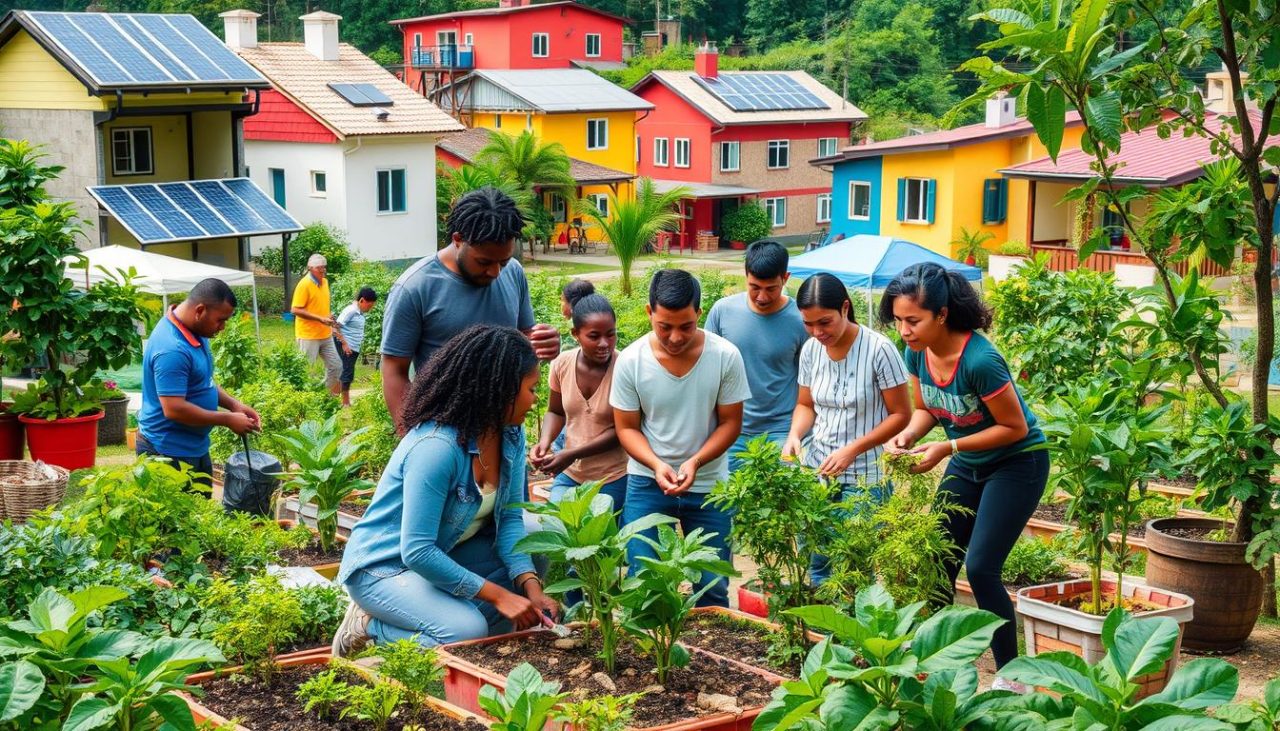
Cooperatives also help keep wealth in the community through exercising sound economics. They create jobs, support local businesses, collaborate in crowd sourcing, and invest profits locally. This strengthens the local economy and makes it more resilient.
“Cooperatives are not just businesses; they’re community builders. They create a framework for people to come together, solve problems, and improve their lives collectively.”
The positive effects of cooperatives are seen in many areas:
| Cooperative Type | Community Impact |
|---|---|
| Housing Cooperatives | Affordable housing, community-building |
| Agricultural Cooperatives | Food security, rural development |
| Credit Unions | Financial inclusion, economic stability |
| Worker Cooperatives | Fair wages, job security |
Again, cooperatives put people first, leading to sustainable community growth. They give members substaintial leverage over their economic future. This fosters a sense of belonging and unified purpose.
Democratic Ownership: The Power of Collective Decision-Making
Cooperative are social enterprises that show the power of democratic ownership. They grant power to their members. This way, they empower communities and work together for shared agendas and such.
Member Participation and Voting Rights
In cooperatives, every member gets to be heard. Voting rights mean everyone has an equal voice in major decisions. This makes the community stronger and encourages those stakeholders to help shape the cooperative’s future.
Transparent Governance Structures
Cooperatives are open and clear. Their democratically structured governance is easy to see for all owner-members. They have regular meetings, share financial reports, and have both appointed and servant-based leaders who are easy to reach. This builds trust and makes each and everyone accountable.
Equitable Distribution of Power
Cooperatives don’t let power fall into one person’s hands. Instead, they share it equally among members even in multi-tier cooperatives. This fair way of sharing power brings in different skills and concepts no matter how small. It leads to new ideas and growth that’s lasts due to sustainability.
“Democratic ownership in cooperatives isn’t just about voting; it’s about building a shared vision for our community’s future.”
Cooperatives show how democratic ownership can change and advance communities. They empower people to work together. This makes strong, lasting businesses that help and benefits everyone.
Economic Benefits of Cooperative Models
Cooperative models bring big economic wins. They help communities grow strong and rely on themselves. Cooperatives are curated on the foundation of being self-sufficient as a group. These benefits help everyone in the greater local community in addition to the cooperative.
Cooperatives focus on keeping workers happy and safe, not just making the bottom-line through fast money. This makes jobs more secure and fulfilling. When the economy is down, co-ops keep jobs, helping to stabilize the market. This make cooperatives sustainable.

Cooperatives share profits fairly among members. This is different from regular businesses, where profits often go to just a few. Cooperatives make sure everyone gets a fair share of the wealth.
“Cooperatives are not just businesses; they’re engines of economic democracy.”
Cooperatives also help the local economy by investing money back into the community. This money helps other local micro, small, and medium businesses and projects. It keeps wealth in the local region, helping the economy grow in a healthy thus sustainable way.
| Economic Benefit | Impact on Community |
|---|---|
| Job Stability | Reduced unemployment rates |
| Profit Sharing | Increased household income |
| Local Reinvestment | Improved community infrastructure |
Cooperatives make communities less dependent on outside money and external resources. This self-reliance helps communities face any economic challenges. It builds a firm and strong foundation for lasting success.
Environmental Stewardship Through Cooperative Action
Cooperatives are key in protecting our environment and promoting sustainable development as referenced earlier. They work together to use eco-friendly methods and push for green innovation in many areas within the various of industries and markets.
Sustainable Resource Management
Cooperatives are great at leveraging resources in a way that’s good for the planet. They use methods that save natural resources while still serving their owner-members. For example, farm cooperatives use crop rotation and preserve water to keep soil healthy and use less water.

Green Innovation Initiatives
Cooperatives are leaders and trend setters in green innovation. They spend on research to make products and processes better for the environment. Energy cooperatives, for example, focus on renewable and clean energy like solar and wind power.
Our cooperative’s commitment to green innovation has led to a 30% reduction in our carbon footprint over the past five years.
Reducing Environmental Impact
Cooperatives work hard to lessen their environmental footprint. They contribute to a more efficient logistical system due to being more local based. Cooperatives of various types, start waste reduction programs, use green packaging, and find better ways to transport goods to cut down on emissions. Some even aim to be carbon neutral and are working to be Net Zero and Net Positive.
| Environmental Initiative | Impact |
|---|---|
| Sustainable farming practices | 50% reduction in pesticide use |
| Renewable energy adoption | 40% decrease in fossil fuel dependence |
| Waste reduction program | 75% increase in recycling rates |
Cooperatives show that caring for the environment and doing well financially can go together. Their dedication to sustainability inspires businesses everywhere. They prove that working together can make a big difference in fighting climate change.
Building Social Capital and Community Resilience
Cooperatives are key in building strong communities. They help people trust and work together better. This creates a sense of unity and purpose among members.

At the core of cooperatives is working together. Members share their resources and skills to tackle challenges. This makes communities stronger and more able to handle problems.
Being part of a cooperative does more than just help the economy. It helps people grow as leaders and learn to make decisions together. This builds a more active and diverse community.
“Cooperatives are not just businesses; they are catalysts for social change and community development.”
Studies show that areas with cooperatives have more active citizens and trust. This leads to a better quality of life and helps communities face challenges together.
| Cooperative Impact | Community Benefit |
|---|---|
| Shared ownership | Increased stakeholder commitment |
| Democratic governance | Enhanced civic participation |
| Local focus | Stronger community ties |
| Collective problem-solving | Improved community resilience |
Local Economic Development and Self-Reliance
Cooperatives are key in building strong local economies. They help communities by creating jobs, keeping money local, and supporting local businesses. This way, they help in sustainable development.

Job Creation and Stability
Cooperatives are great at creating jobs. They offer jobs that are more stable and less likely to be sent overseas. Worker-owned cooperatives focus on keeping jobs safe, not just making quick money.
Wealth Retention in Communities
Cooperatives keep money in local pockets. Instead of sending profits to distant owners, they share it with members or invest it back into the community. This helps make local economies stronger and more stable.
Supporting Local Supply Chains
Cooperatives like to buy and make things locally. This helps build strong local supply chains. It saves money on shipping, cuts down on pollution, and makes communities more self-sufficient.
“Cooperatives are key drivers of sustainable local economies. They create jobs, keep wealth in communities, and support local businesses. This approach builds economic resilience from the ground up.”
Cooperatives help make communities strong and self-reliant. They make local economies more diverse and less dependent on outside help. This way, communities can do well even when faced with tough economic times.
Cooperative Education and Skill Development
Cooperatives are key in empowering communities through education and skill development. They invest in their members’ growth, creating a culture of learning and improvement. This benefits both individuals and the community as a whole.

Cooperatives offer many educational programs for their members. These include workshops on sustainable development and courses on financial management. By teaching valuable skills, cooperatives help members contribute more to the organization and community.
“Education is not just about learning facts, but training the mind to think.”
Cooperative education has a big impact beyond just individual growth. It spreads knowledge and skills across the community. This shared learning leads to innovation and adaptability, key for sustainable development in our fast-changing world.
| Skill Area | Benefits to Members | Community Impact |
|---|---|---|
| Financial Literacy | Better personal finance management | Increased economic stability |
| Sustainable Practices | Eco-friendly lifestyle adoption | Reduced environmental footprint |
| Leadership Training | Enhanced decision-making abilities | Stronger community leadership |
Cooperatives empower individuals and communities through education and skill development. Their investment in human capital leads to long-term growth and resilience. This shows the true spirit of collective action and sustainable development.
Types of Successful Community Cooperatives
Co-ops are diverse, each playing a key role in building strong local economies. They empower communities by promoting democratic ownership and shared goals.
Housing Cooperatives
Housing co-ops provide affordable homes. Members own and manage their buildings together. This approach ensures quality housing for many families.
Agricultural Cooperatives
Farmers work together in agricultural co-ops. They share resources and marketing efforts. This teamwork helps small farms compete, boosting local food systems.
Credit Unions
Credit unions are co-ops, which are owned by their members. They offer loans and savings accounts with better rates than banks. These institutions keep money in the community.
Worker Cooperatives
Worker co-ops are run by their employees. This structure ensures fair wages and job security. Businesses like Equal Exchange in Massachusetts thrive under this model.
Key Takeaways
- Cooperatives prioritize community and environmental needs over profit maximization
- Member ownership leads to increased economic resilience
- Democratic decision-making empowers community member-owners
- Cooperatives support sustainable local economic growth
- They foster social bonds and environmental responsibility
- Sustainable Cooperative models address various community and ecological challenges effectively