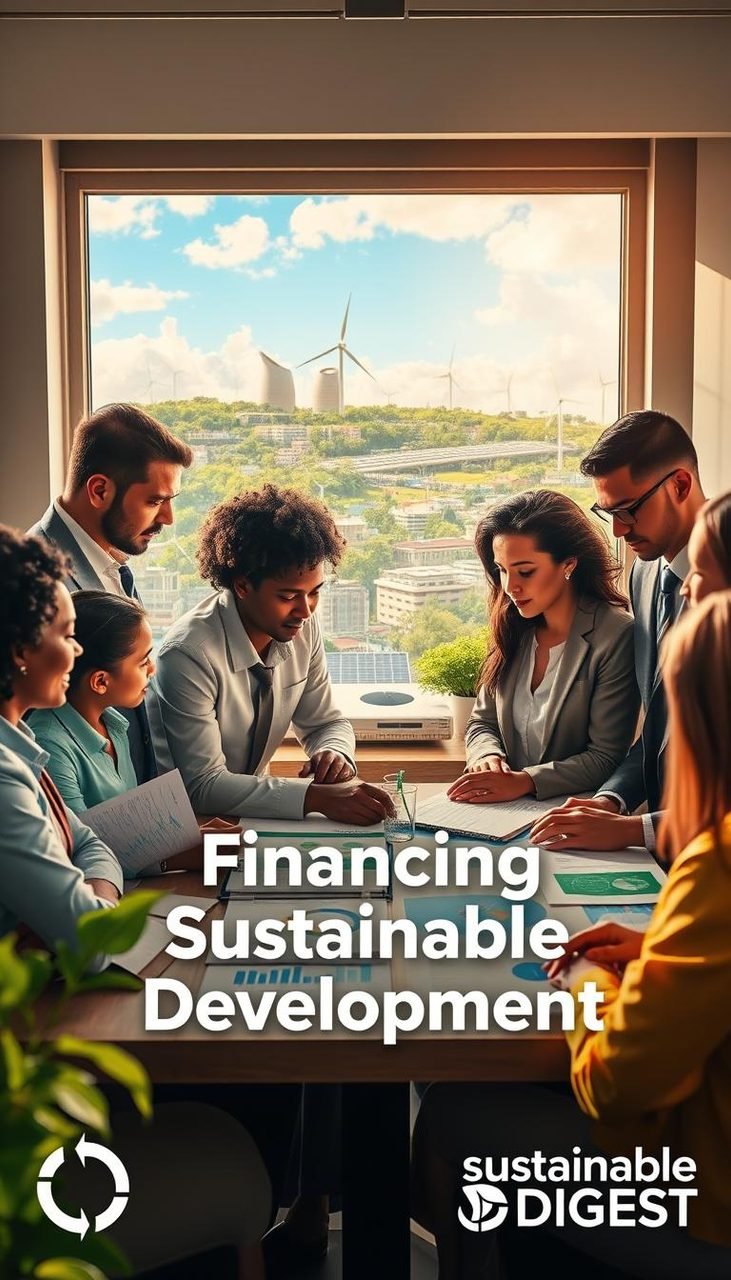
A global financing pact drew delegates from 174 United Nations member states, while 28 senior national leaders attended. That scale shows how much cooperation sustainable development can demand. The scope on the other hand, displays what international relations and global affairs can supply.
In 2015, the Third International Conference on Financing for Development took place in Addis Ababa, Ethiopia. On July 15, heads of state and government adopted the Addis Ababa Action Agenda. Its international conference financing framework set out how public resources, private investment, and global cooperation could support development.
The agreement followed the 2002 Monterrey Consensus and the 2008 Doha Declaration on Financing for Development. Those earlier commitments shaped a wider effort to turn financing development into practical results.
This article explores how funding choices affect communities, environmental justice, and inclusive, eco-friendly growth. For Singapore and other island economies, such choices can influence climate resilience as well as local needs. The agenda’s value rests not only in its goals, but in whether institutions put them to work. Money matters most when it reaches people and places facing real challenges.
How the Addis Ababa Action Agenda Connects Financing to Sustainable Development
The path began with the 2002 Monterrey Consensus, followed by the 2008 Doha Declaration. At the third international conference on financing development in 2015, countries built on those commitments. The Addis Ababa Action Agenda set out a connected system for funding progress, not a single source of cash.
Adopted three months before the 2030 Agenda, it linked development financing to the sustainable development goals. It also extended work beyond the millennium development goals. Its central insight was practical: public revenue, private investment, trade, debt, technology, and cooperation shape one another.
“We commit to a new global framework for financing sustainable development.”
From Earlier Pacts to a Shared Framework
The United Nations Department of Economic and Social Affairs supported follow-up through an inter-agency task force, with partners such as the World Bank. This structure helped track implementation and means of implementation.
Seven Connected Areas
The framework grouped choices into seven areas. Together, they offered countries a way to connect funding decisions with sustainable development targets.
Area
Focus
Contribution
Public resources; private business and finance
Domestic revenue; investment
Funding for public services and enterprise
Development cooperation; international trade
Partnerships; market access
Shared capacity and wider opportunity
Debt; systemic issues
Debt sustainability; financial rules
More stable financing conditions
Science, technology, innovation, capacity building
Knowledge; skills; tools
Practical means to deliver progress
Addis Ababa Action Agenda and 20 reasons why its important
Global financing promises matter when they fund clinics, schools, clean water, plus local climate plans. Reliable commitments help many countries plan around public needs instead of short-term gaps. For Singapore, this offers a useful lens: sound finance links national planning with shared resilience.
Financing Commitments for Communities
The Addis Ababa Action Agenda supports, complements, plus contextualizes the 2030 Agenda’s means of implementation. Through financing development, it links public revenue with community priorities. Funding choices can also advance environmental justice when they reach people facing greater risks.
Connecting Targets to Real Progress
The sustainable development goals set measurable targets, yet delivery lagged. In the 2024 Financing for Sustainable Development Report, only 15% of assessable targets were on track. Nearly 600 million people could still face extreme poverty in 2030; more than half may be women. This gap shows how development goals shape daily life.
Cooperation, Accountability, Shared Results
The 2030 Agenda links follow-up recommendations from the ECOSOC Forum on Financing for Development to the High-Level Political Forum. That reporting path can help developed countries, developing countries, the private sector, plus least developed countries align investment with inclusive growth. Past lessons from the millennium development goals also show that clear review can guide better choices.
Implementation Progress, Financing Gaps, and the Case for Reform
Implementation began in 2016, after the inter-agency task force formed in late 2015. The United Nations Department of Economic and Social Affairs coordinated its work with the World Bank Group, International Monetary Fund, World Trade Organization, UNCTAD, plus UNDP.
Reviewing Commitments Each Year
The ECOSOC Forum on Financing for Development reviewed the Addis Ababa Action Agenda each year. It tracked sustainable development goals, targets, plus means of implementation under the 2030 Agenda. Regular review helped turn conference financing into a public record of progress.
Debt, Climate Risk, and Investment Needs
The 2024 report estimated annual financing gaps had grown from about $2.5 trillion before COVID-19 to around $4 trillion. Poor countries paid twice as much interest on total debt as developed countries. From 2021 to 2025, developing countries averaged just over 4% annual GDP growth, below the roughly 6% rate before the 2009 crisis.
For least developed countries, median debt service rose from 3.1% of revenue in 2010 to 12% in 2023. Such pressure can crowd out climate plans. Green fiscal policy works best when it supports resilience, basic services, plus environmental justice.
Indicator
Earlier level
Later level
Annual financing gap
$2.5 trillion before COVID-19
About $4 trillion in 2024
Least developed countries’ debt service
3.1% of revenue in 2010
12% in 2023
Developing-country GDP growth
About 6% before the 2009 crisis
Just over 4% in 2021–2025
Cooperatives and Community Mobilization for Inclusive, Eco-Friendly Development
Cooperative enterprise gives residents a practical way to shape local priorities. Member-owned farms, shops, credit groups, or energy projects can pool skills, share risk, keep value nearby. Such work can support sustainable development when communities help set the course.
Cooperative Enterprise, Civil Society, and Local Self-Development
The 2015 conference brought governments, business leaders, civil society leaders, plus other stakeholders together. That broad mix showed how community mobilization can guide financing talks. Local groups can weigh domestic public resources against private investment, while international cooperation supports locally chosen goals.
Indigenous Peoples’ climate activism brings lived knowledge into environmental justice debates. Pan-Africanism links shared identity with cooperation among countries; humanitarian solidarity extends that spirit during hardship. For Singapore, the lesson is clear: local voices can guide green enterprise while strengthening regional ties. Cooperative work can build self-reliance without replacing public oversight.
Approach
Community role
Link to local priorities
Cooperative enterprise
Share skills, costs, and risk
Keep value close to residents
Community mobilization
Set goals and review choices
Guide public or private financing
Climate activism
Bring local knowledge to debate
Advance environmental justice
Green Fiscal Policy, Climate Action, and Decent Work and Leisure for a Just Transition
The 2015 framework called for financing flows to reflect economic, social, plus environmental needs. Green taxes, public spending, or incentives can support climate goals when they also protect people facing the greatest risks. This approach links environmental justice with practical development choices.
The 2024 Financing for Sustainable Development Report noted slow progress on climate action. It also described substantial financing needs for the Sustainable Development Goals plus climate work in developing countries. Public revenue, science, technology, innovation, plus skills can help meet those needs; sound plans must still weigh who benefits.
Aligning Public Finance with Environmental Justice
A just transition connects climate investment with decent work, fair access, plus community well-being. The International Labour Organization’s decent-work priorities can inform this discussion. The World Leisure Organization’s agenda and operations also offer a relevant lens on leisure as part of quality of life. This connection does not claim any specific program or policy.
Assess who gains from climate spending.
Include workers in transition planning.
Consider leisure alongside jobs, health, and resilience.
For Singapore, this lens supports a broader view of financing: climate progress should strengthen livelihoods, not treat them as a side issue.
Conclusion
In 2015, the Addis Ababa Action Agenda linked financing choices with economic, social, plus environmental needs. Its seven areas, aligned with the 2030 agenda, gave the United Nations a route to turn commitments into practical development. For Singapore, that model shows how global rules can support local resilience.
Annual ECOSOC reviews plus the Inter-agency Task Force tracked progress; still, wide funding gaps plus debt costs limited room for public investment. Reporting helped, but numbers alone could not ease pressure on households or climate plans.
Cooperatives, civil society, Indigenous activism, plus humanitarian solidarity bring local voices into policy. Lasting climate action depends on fair green taxes, decent work, environmental justice, plus community-led growth—not promises left on paper. Sustained cooperation makes shared goals more than well-worded text.
Key Takeaways
The agreement created a global financing framework in 2015.
Delegates from 174 member states took part.
Twenty-eight senior national leaders attended.
The framework built on earlier global commitments.
Financing choices can support climate resilience, environmental justice, and community needs.
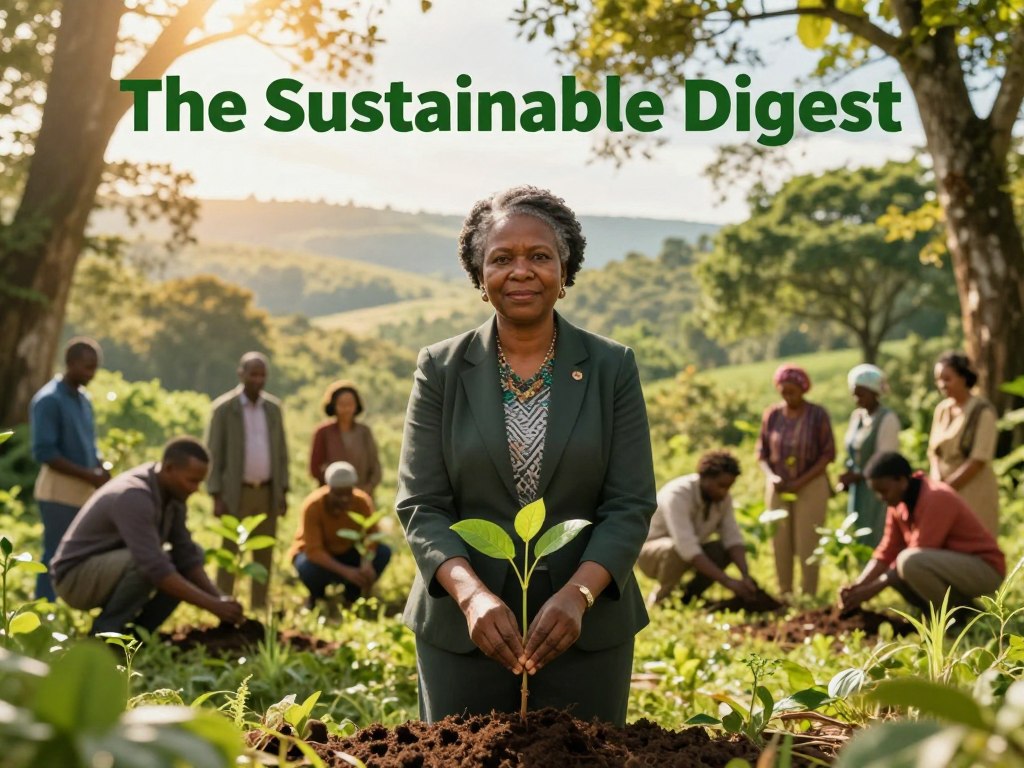
Women’s History Month often highlights familiar faces while overlooking the african woman. Wangarĩ Maathai emerged from colonial Kenya to challenge the heavy environmental costs of the machine age. Her pioneering activism successfully bridged the gap between local survival and international policy.
While the Western world celebrates industrial progress, her grassroots approach addressed poverty and gender inequality directly. This legendary figure became the first woman in her region to earn a doctorate before launching a massive movement. The positiveimpact of her work remains a cornerstone of humanitarianism across the Africa continent and far beyond.
She navigated the rise of globalism with a unique brand of eco-activism that empowered local communities. Today, global leaders look to her 2004 Nobel Peace Prize win as a turning point for sustainable development. It is high time we recognize how she reshaped the Global South through democratic governance and grit. Her legacy serves as a roadmap for modern sustainability and international cooperation.
The Making of a Revolutionary: Wangarĩ Maathai’s Journey Through Modernity and African Independence
To grasp the genius of wangari maathai, one must first explore the fertile soil of her early years, where tradition met the sudden gale of modernity. The machine age brought industrial expansion across the globe, yet it often ignored the delicate balance of African ecosystems.
During this era, Western development models promised progress but frequently exported ecological disruption to the Global South. Maathai navigated this shifting landscape, witnessing her nation transition from colonial rule to self-governance. Her journey reflects a unique blend of scientific rigor and deep-rooted cultural wisdom.
Birth in Colonial Kenya and the Dawn of African Independence Movements
wangari muta maathai entered the world in 1940 in Ihithe, a small village nestled in the Nyeri district of Kenya. At that time, the British colonial administration still held a firm grip on the land and its resources. However, the dawn of African independence movements began to stir across the continent during her childhood.
Growing up as a young woman in a colonial setting meant facing limited opportunities and social barriers. The transition from a colonial territory to an independent nation shaped her understanding of power and justice. This period of decolonization provided the backdrop for her later efforts to reclaim both the land and the rights of her people.
Education in the Age of Globalism and Internationalism
Her academic path started at St. Cecilia’s Intermediate Primary School and continued at Loreto High School. During these years, it was incredibly rare for female students to complete secondary education in Kenya. Her exceptional performance eventually caught the attention of international organizations seeking to foster global leadership.
In 1960, the Joseph P. Kennedy Jr. Foundation selected her for a prestigious scholarship to study in the United States. She traveled to Kansas to attend Mount St. Scholastica College, where she earned a biology degree in 1964. Shortly after, she moved to the University of Pittsburgh to complete a Master of Science degree in biological sciences by 1966.
Scholarship to America and the Machine Age Context
Maathai arrived in America during the peak of the Cold War and the civil rights movement. The United States was fully embracing the machine age, characterized by rapid industrial growth and urban expansion. This context allowed her to see how Western nations prioritized technological progress over environmental stability.
She witnessed how industrial development often came at a high cost to natural landscapes. These observations stayed with her as she analyzed how developing nations adopted similar, often destructive, models. This international perspective eventually fueled her desire to find more sustainable paths for her home country.
First East and Central African Woman to Earn a Doctorate
Upon returning to Kenya, she broke significant academic barriers at the university nairobi. In 1971, she made history as the first woman in East and Central Africa to receive a doctorate, specializing in veterinary anatomy. Her persistence in a male-dominated field proved her resilience and intellectual depth.
Her achievements did not stop with her PhD; she also became the first woman to serve as a professor in Kenya in 1976. These milestones allowed her to bridge the gap between high-level scientific research and the practical needs of local communities. She used her position to advocate for a more inclusive approach to science and education.
Women’s History Month: Recognizing Maathai Among Global Female Leaders
As we celebrate Women’s History Month, we must recognize wangari maathai as a pioneer who stood alongside the world’s most influential figures. She redefined leadership by centering the voices of rural women who were often excluded from the halls of power. Her approach showed that true progress requires listening to those who work the land every day.
Unlike other leaders who focused solely on policy, she emphasized the power of grassroots action. “The environment is very central to our lives,” she often reminded her peers. Her legacy continues to inspire millions to take responsibility for the health of their own neighborhoods.
The environment is very central to our lives. If you destroy the environment, you destroy the source of your life.
— Wangarĩ Maathai
From Academia to Activism: Understanding Environmental Degradation and Poverty
Her transition into activism began through her work with the Kenya Red Cross and the National Council of Women of Kenya. While working with these groups, wangari muta maathai noticed a troubling trend among rural families. She saw a clear link between environmental degradation and the increasing poverty in the countryside.
Rural women struggled to find clean water, firewood, and nutritious food because the forests were disappearing. She realized that she could not just teach science while the people’s primary resources were vanishing. As an activist, she decided to use her knowledge from the university nairobi to launch a movement that would heal both the land and the community.
Academic Milestone
Year
Institution
Historical Significance
Bachelor of Science
1964
Mt. St. Scholastica
Part of the “Kennedy Airlift” scholars
Master of Science
1966
University of Pittsburgh
Advanced biological research in the US
Doctorate (PhD)
1971
University of Nairobi
First woman PhD in East/Central Africa
Full Professorship
1976
University of Nairobi
First female professor in Kenyan history
The Green Belt Movement: Revolutionizing Environmental Conservation and Women’s Empowerment
In 1977, Wangarĩ Maathai transformed the act of planting a tree into a revolutionary tool for social change. Her vision proved that environmental conservation could directly empower the most vulnerable populations. By linking the health of the land to human dignity, she created a blueprint for global sustainability.
Founding the Movement: 1977 and the Birth of Grassroots Environmental Action
Maathai established the green belt movement to address Kenya’s rapid deforestation. Rural women struggled daily to find enough firewood and clean water for their families. This scarcity of resources often led to village conflicts and deeper poverty.
The belt movement offered a practical, earth-centered solution to these crises. Through the green belt, Maathai encouraged locals to plant trees to stabilize the environment. This movement soon grew from a small project into a massive national force.
Tree Planting as Political and Social Activism in Post-Modern Kenya
Planting a seedling became a bold act of resistance against state corruption. The green belt movement paid women kenya for every tree that survived past three months. This small income provided financial independence and improved access to firewood and water.
Beyond the soil, the belt movement taught leadership and nutrition to its members. The green belt initiative effectively turned ordinary citizens into active environmental conservation advocates. This movement demonstrated that ecological restoration and poverty relief go hand in hand while planting trees.
Confronting Government Opposition: Uhuru Park and Karura Forest Battles
The green belt movement faced heavy pressure from President Daniel Moi’s regime. In the late 1980s, Maathai successfully blocked a skyscraper project in Uhuru Park. Even when the government labeled the belt movement as “subversive,” she refused to back down.
Maathai later entered parliament after years of being targeted by the state. She also protected the Karura Forest through the green belt, despite physical attacks from guards. Her resilience showed that the movement could challenge powerful political interests and win.
From 30,000 Trained Women to 51 Million Trees: Quantifiable Impact
The green belt movement eventually facilitated the planting of over 51 million trees across Kenya. Over 30,000 women kenya received specialized training in conservation trades like beekeeping. These efforts secured food sources and restored local watersheds through the belt movement and the green belt.
Nobel Peace Prize 2004: Global Recognition of Environmental Humanitarianism
In 2004, Maathai made history by winning the nobel peace prize for her work. She was the first African woman to receive this specific peace prize. This nobel peace award validated her belief that a healthy environment is the foundation of democracy. Through the belt movement and the green belt, she changed the world.
“The planting of trees is the planting of ideas.”
— Wangarĩ Maathai
Achievement
Impact Metric
Key Focus
Green belt movement
51 million trees
Reforestation
Belt movement Training
30,000 Professionals
Female Empowerment
Green belt in Parliament
98% Vote Share
Policy Change
Nobel peace prize
2004 Peace Prize
Nobel peace Legacy
Wangarĩ Maathai Impact Kenya Africa Global South Eco-Activism Humanitarianism and the United Nations Sustainable Development Goals
Examining the vast reach of Maathai’s influence reveals a profound connection between grassroots activism and the united nations Sustainable Development Goals. Achim Steiner, the former Executive Director of UNEP, once famously described her as a “force of nature.” Her vision proved that local efforts could address a global change in how we manage natural resources.
Maathai understood that the health of the environment is inseparable from the stability of peace. Between 1990 and 2015, the world lost 129 million hectares of forest, an area roughly the size of South Africa. This massive degradation contributes heavily to carbon emissions, yet Maathai offered practical solutions through community-led reforestation.
Comprehensive Impact Across Africa’s 54 Nations
The Green Belt movement did not stop at the Kenyan border; it became a template for the entire continent. Maathai’s model of empowerment has since inspired environmental initiatives in over 30 countries, helping to combat rural hunger and water crises.
East African Region: Kenya, Tanzania, Uganda, Rwanda, Burundi, and Beyond
In East Africa, the model addressed regional deforestation and water scarcity directly. Collaborative work among these nations focused on protecting shared watersheds. This approach empowered communities to secure their own ecological futures through tree planting.
West African Nations: Nigeria, Ghana, Senegal, and Green Belt Adaptations
Programs in Nigeria and Senegal adapted her methods to fight desertification. These efforts focused on agricultural land degradation and climate adaptation. Women in these nations received leadership training to manage conservation-based livelihoods effectively.
Southern African Countries: South Africa, Zimbabwe, Botswana, and Conservation Movements
Maathai’s philosophy resonated in Southern Africa by linking protection of the environment to social justice. Activists in South Africa and Zimbabwe used her blueprints to advocate for land rights. They connected ecological health with post-apartheid empowerment agendas.
North African Nations: Environmental Awareness in Egypt, Morocco, and Tunisia
In North Africa, her model demonstrated how grassroots action could address severe climateissues. Organizations in Egypt and Tunisia used her strategies to challenge authoritarian governance. They focused on water security and sustainable resource management.
Transforming the Global South: Asia, Latin America, and Environmental Justice
The impact extended to Asia and Latin America, where communities faced similar environmental degradation. Her integrated approach helped these regions tackle poverty while restoring their landscapes. By centering the rights of the marginalized, she redefined the meaning of environmental justice for the Global South.
Influence on Western World Environmental Movements and Policy
Maathai challenged the narrative that environmentalism was a luxury for the Western world. She urged developed nations to look beyond top-down solutions. Her 10 trees per person philosophy became a global standard for offsetting carbon. This challenged the time-worn idea that only North American or European activists could lead the movement.
Bilateral Relationship with All 17 UN Sustainable Development Goals
Maathai’s work directly aligns with the united nations framework for a sustainable future. Her holistic vision addressed the root causes of poverty and climate change simultaneously. Below is how her legacy supports each specific goal.
“When resources are degraded, we start competing for them, whether at the local level in Kenya, where we had tribal clashes over land and water, or at the global level, where we are fighting over water, oil, and minerals. One way to promote peace is to promote sustainable management and equitable distribution of resources.”
Wangarĩ Maathai
SDG 1 No Poverty: Economic Empowerment Through Sustainable Livelihoods
She fought poverty by providing women with paid work in tree nurseries. This created sustainable income streams for rural families.
SDG 2 Zero Hunger: Food Security and Agricultural Advancement
Planting fruit trees improved food security and advanced local agriculture. Better soil fertility led to higher crop yields for small farmers.
SDG 3 Good Health and Well-Being: Clean Environment and Community Health
A cleaner environment reduced respiratory issues by providing better access to traditional firewood. Protected ecosystems ensured cleaner air for all.
SDG 4 Quality Education: Community Empowerment and Education Seminars
Maathai used education seminars to teach communities about their rights. These sessions provided vital knowledge on ecological preservation.
SDG 5 Gender Equality: Women’s Rights and Leadership Development
Her focus on women’s leadership directly advanced gender equality. She placed women at the center of ecological decision-making.
SDG 6 Clean Water and Sanitation: Watershed Protection and Water Sources
Reforestation protected vital watersheds, ensuring a steady supply of fresh water. This work prevented the drying up of local streams.
SDG 7 Affordable and Clean Energy: Firewood Solutions and Energy Access
She promoted sustainable firewood solutions to meet energy needs. This reduced the time spent by women searching for fuel.
SDG 8 Decent Work and Economic Growth: Green Jobs and Income Generation
The movement created green jobs for over 30,000 trained women. This fostered economic growth in marginalized rural areas.
SDG 10 Reduced Inequalities: Addressing Rural Poverty and Marginalization
By empowering the rural poor, she helped bridge the gap between urban and rural life. This addressed systemic poverty and social exclusion.
SDG 11 Sustainable Cities and Communities: Urban Green Spaces Protection
Her battles for Uhuru Park protected urban green spaces from development. This ensured cities remained livable for future generations.
SDG 12 Responsible Consumption and Production: Reduce, Reuse, Repair Philosophy
She championed a philosophy of reducing and reusing resources. This change in consumption patterns helped preserve natural wealth.
SDG 13 Climate Action: Reforestation and Carbon Sequestration
Planting 51 million trees directly addressed climate change through carbon sequestration. This remains a cornerstone of global climate action.
SDG 15 Life on Land: Biodiversity, Forests, and Desertification Combat
Her work restored forests and fought the degradation of land. This protected biodiversity across various African ecosystems.
SDG 16 Peace, Justice and Strong Institutions: Democracy and Political Accountability
She linked the environment to democratic rights. Her demands for accountability helped build stronger, more transparent institutions.
SDG 17 Partnerships for the Goals: International Collaboration and UN Engagement
Maathai led the Billion Tree Campaign, fostering global partnerships. This effort eventually grew into the Trillion Tree Campaign.
Indirect Connections: SDG 9 Industry, Innovation and Infrastructure
Her innovative grassroots organizing changed how conservation infrastructure is built. She proved that human capital is the best innovation.
Indirect Connections: SDG 14 Life Below Water Through Ecosystem Protection
Protecting upstream watersheds improved the health of downstream marine life. Healthy forests prevent siltation from reaching the oceans.
Impact Category
Primary Strategy
Key Global Result
Climate Change
Massive Reforestation
51 Million Trees Sequestering Carbon
Social Justice
Women’s Leadership
Empowerment of 30,000+ Rural Women
Global Policy
UN Collaboration
Billion Tree Campaign Evolution
Conflict Resolution
Resource Management
Reduction in Local Land and Water Clashes
The Living Legacy: Understudies, Successors, and Disciples Carrying the Torch Forward
While many historical figures leave behind only cold monuments, Maathai left a vibrant, self-sustaining ecosystem of dedicated leaders. Her departure in 2011 was not an end, but a transition to a distributed leadership model. This strategy ensures her mission thrives long after her lifetime.
The movement she started continues to grow through specific individuals and institutional structures. These successors apply her integrated approach to solve modern challenges like climate change and social inequality.
Wanjira Mathai: Continuing Her Mother’s Environmental Mission
Wanjira Mathai serves as the primary steward of her mother’s vision. As a member of the Goldman Prize Jury and a director at the World Resources Institute, she bridges grassroots efforts with global policy. She ensures the movement’s methodology remains central to modern climate discourse.
This family succession provides a unique continuity. Wanjira blends traditional wisdom with contemporary strategic insights to reach international audiences effectively. Her steadfast commitment keeps the original spark of the Green Belt Movement alive in the halls of global power.
Green Belt Movement Leadership and Trained Environmental Champions
The institutional weight of the Green Belt Movement remains a cornerstone of environmental work today. Having expanded to over 30 nations, the movement utilizes community seminars to foster democratic governance. Over 30,000 women have received training in conservation trades across Kenya.
These graduates act as environmental champions within their own communities. They adapt the model to local contexts, creating a multiplier effect. By teaching others about leadership and civic engagement, they prove that environmentalism is inseparable from social justice.
Entity
Scale of Influence
Primary Focus
Wanjira Mathai
Global Leadership
Policy and Resource Strategy
Green Belt Movement
30+ Nations
Community Empowerment
Trained Champions
30,000+ Individuals
Grassroots Conservation
Global Disciples: From Billion Tree Campaign to Trillion Tree Campaign
Maathai’s “Billion Tree Campaign” has evolved into the more ambitious “Trillion Tree Campaign.” This shift reflects a scaling of her original vision from local groves to a planetary necessity. International organizations now treat large-scale reforestation as a primary tool for climate mitigation. Any modern activist following this path owes a debt to her pioneering activists who first proved that small actions could lead to global shifts.
Contemporary African Women Environmental Activists Inspired by Maathai
Today, a new wave of defenders draws inspiration from Maathai’s courage. These individuals address water scarcity and deforestation in almost every country on the continent. They often face government opposition while advocating for human rights and sustainable development. Their resilience mirrors Maathai’s own battles for Uhuru Park and Karura Forest.
“Wangari Maathai’s death left a gaping hole among the ranks of women leaders.”
— Hillary Clinton
The Wangari Maathai Institute for Peace and Environmental Studies now institutionalizes her approach. It combines research with policy advocacy to resolve conflicts through sustainable resource management. This academic foundation ensures that her “distributed leadership” model will continue to train future generations of disciples.
Conclusion: Rising Up and Walking Forward in Maathai’s Footsteps
Though she passed away over a decade ago, Maathai’s call to “rise up and walk” resonates louder than ever. During her life, she proved that a single woman could transform a country by linking green spaces to human rights. In the years since 2011, her vision has become a global directive for those facing rapid change.
Wangarĩ Maathai insisted that humanity must reach a higher moral ground to survive. This shift in consciousness is a necessity for every community member today. Her peace-building efforts showed that environmental justice is the only way to ensure lasting stability for the Global South and beyond.
She spent her final years fighting for environmental conservation despite facing arrests and threats. She left us simple steps: plant ten trees, volunteer, and practice the philosophy of reduce, reuse, and repair. This commitment to life remains her greatest gift, proving that any member of society can protect our future.
We must continue to cherish the peace and life she worked so hard to build. Her legacy is not just a historical chapter; it is an active movement that requires our participation. By following her lead, we can challenge powerful institutions and restore our shared home.
Core Legacy Pillar
Individual Action
Global Outcome
Environmental Stewardship
Plant 10 trees to offset carbon
Climate change mitigation
Democratic Activism
Volunteer time to community
Stronger civic institutions
Sustainable Living
Reduce, reuse, and repair
Resource conservation
Key Takeaways
Wangarĩ Maathai founded the Green Belt Movement in 1977 to combat deforestation.
Became the first woman in Central and East Africa to earn a PhD.
Mobilized communities to plant over 51 million trees across the region.
Received the Nobel Peace Prize in 2004 for her contribution to sustainable development.
Linked environmental conservation directly with women’s rights and democracy.
Influenced global policy by proving that grassroots action drives international change.
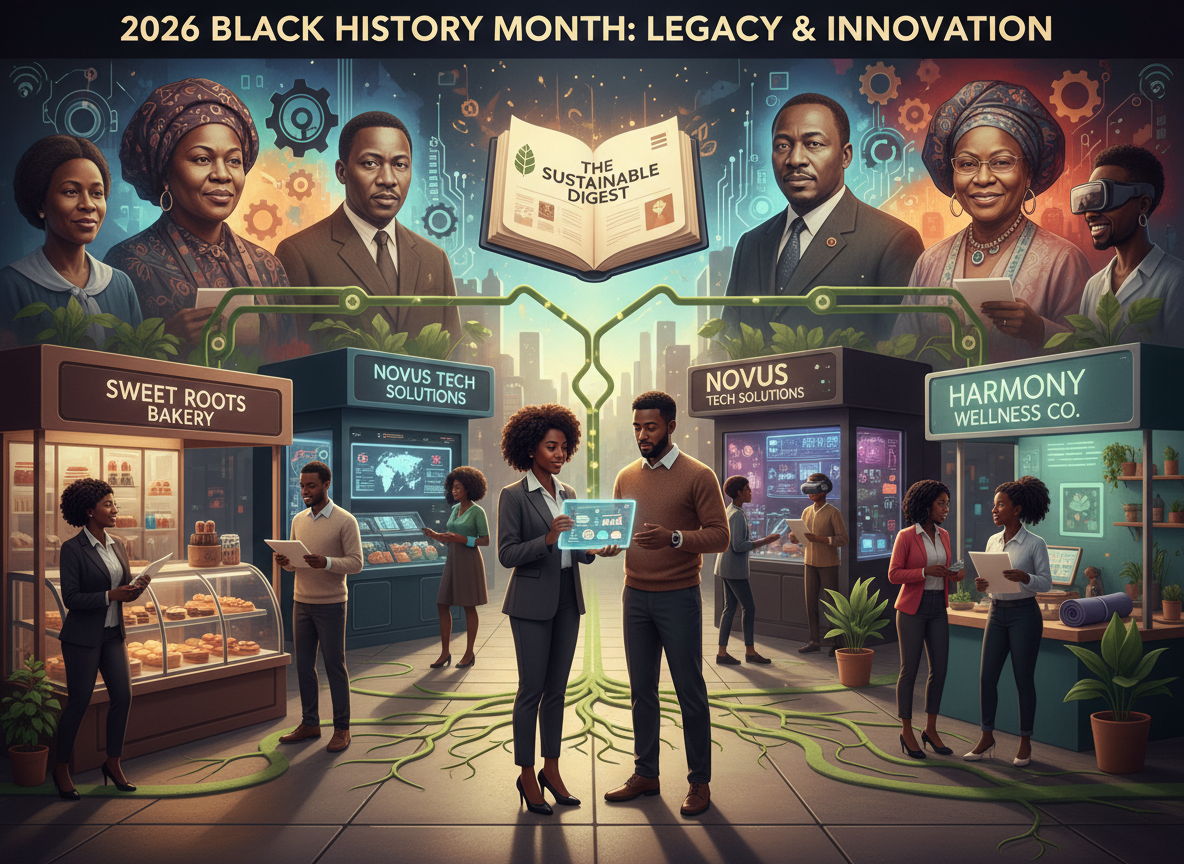
The 2026 Black History Month reveals a clear truth regarding our shared environmental future. Modern sustainability is not a new trend but a reclaimed legacy rooted in ancestral wisdom. This era marks a shift where mission-driven work aligns with long-standing traditions of community care.
In Illinois, the impact of this movement is clear, with over 180,000 firms currently operating today. These entities represent 13% of all state businesses and employ 54,000 people. This innovation reflects a deep commitment to both people and the planet (and perhaps a bit of savvy).
The world now recognizes that ecological health requires economic justice. By exploring Enterprise Development through a historical lens, we see how early systems inform today’s leaders. This analysis examines how these traditions continue to shape a more resilient society while building generational wealth.
The Historical Arc of Black Sustainability Leadership: Pre-Colonial to Contemporary Times
To appreciate modern green initiatives, one must trace the resilient thread of sustainability through the vast timeline of the African diaspora. This journey reveals that black history is deeply intertwined with ecological stewardship and communal care. From ancient agricultural methods to urban business cooperatives, the commitment to the environment remains a constant feature of the Black experience.
Pre-Colonial African Environmental Wisdom and Resource Management
Long before modern technology, African societies mastered intricate environmental management systems. They utilized communal land stewardship and complex crop rotation to preserve vital resources. These methods ensured that the earth remained fertile for future generations.
These systems supported people and ecosystems for centuries without causing ecological degradation. Their sophisticated biodiversity preservation techniques sustained life effectively. Modern sustainability experts are only now beginning to fully appreciate the depth of this ancestral knowledge.
Survival and Sustainability During the Industrial Revolution
Forced migration disrupted many traditional practices, yet the spirit of resilience ensured their survival in new environments. Enslaved communities adapted African agricultural knowledge to cultivate provision grounds. They also created herbal medicine systems using indigenous plants to maintain community health.
During the industrial era, Black Americans faced exclusion from mainstream economic opportunities. In response, pioneers like Anthony Overton and Jesse Binga created cooperative business models that prioritized community wealth. They proved that social entrepreneurship could thrive even under systemic oppression.
Leader
Key Achievement
Era/Year
Jesse Binga
Founded the first private Black-owned bank (Binga State Bank)
1921
John H. Johnson
First African American to appear on the Forbes 400
1982
Anthony Overton
Established Overton Hygienic Company and Chicago Bee
1898
Ida B. Wells
Challenged discriminatory practices for inclusive business
1893
Civil Rights Era to Modern Environmental Justice Movements
The struggle for equality evolved over many years to address the harsh reality of environmental racism. Advocacy highlighted how discriminatory policies left Black communities exposed to toxic waste and pollution. This realization galvanized a movement that connected civil rights to ecological health.
This era remains a pivotal chapter in black history, showing how activism secures a healthier future for all. Leaders fought for the right to clean air and safe water in marginalized neighborhoods. Their efforts paved the way for modern policies that link social equity with environmental protection.
Contemporary Black Innovation in Sustainable Business Practices
Today, a new wave of social entrepreneurship reflects a rich culture of learning and adaptation. Modern business leaders synthesize ancestral wisdom with cutting-edge technology to drive progress. They create enterprises that address climate change while building economic power.
During history month, we celebrate this continuous arc of innovation and leadership. By honoring black history, we recognize a legacy of stewardship that remains vital for global sustainability over time. This ongoing, time-tested commitment ensures that future generations will inherit both a thriving planet and a more equitable economy.
“The success of the community is built upon the sustainable management of our shared assets.”
Enterprise Development, 2026 Black History Month, Social Entrepreneurship: The Current Economic Landscape
Peering through the analytical lens of 2026, one finds that Black social entrepreneurs are no longer just filling gaps; they are constructing entire ecosystems of equity. This year’s black history month serves as a vital checkpoint for progress, highlighting how the community uses commerce to solve ancient problems. These leaders blend profit with purpose, ensuring that every dollar spent circulates back into local neighborhoods.
The shift toward sustainable models suggests a deep-seated desire to move beyond traditional retail. Entrepreneurs now prioritize long-term ecological health and social welfare over short-term financial gains. This analytical shift marks a new era in the American economic story.
By the Numbers: Black-Owned Business Impact in 2026
Current data from the state of Illinois reveals a robust landscape of entrepreneurial activity. Black-owned firms now make up 13% of all businesses in the region, totaling over 180,000 active units. These enterprises generate a significant impact by employing more than 54,000 residents across various sectors.
Longevity remains a cornerstone of this economic success. Nearly one-third of these firms have operated for over a decade, proving that resilience is a standard feature, not a fluke. When provided the right opportunity, these ventures act as anchors for generational wealth and local stability.
Black Women as Catalysts for Sustainable Enterprise Development
Black women currently stand at the vanguard of this movement. They represent 64% of Black business owners, leveraging unique perspectives to solve complex social issues. Their representation in the market signals a fundamental shift toward leadership that values empathy and sustainability.
Social entrepreneurship is not just about a product; it is about the courage to rewrite the social contract through the power of the marketplace.
These women often lead firms in education, social services, and professional consulting. Their focus on the collective good drives significant growth in the green economy. By centering community needs, they create a blueprint for future generations to follow.
Spotlighting Sustainable Black-Owned Businesses
Concrete examples of this philosophy abound in 2026. These businesses demonstrate how social entrepreneurship principles work in the real world. They show that ethical sourcing and community-driven missions are viable paths to success.
Southside Blooms: Youth Employment Through Sustainable Agriculture
Southside Blooms operates as a farm-to-vase nonprofit that tackles youth unemployment and urban blight. Their expansion into North Lawndale in early 2026 shows how a mission-rooted business can scale effectively. They transform vacant lots into productive flower farms, proving that environmental care can coexist with job creation.
Based in Peoria, this company represents the cutting edge of the plant-based revolution. As the city’s first 100% vegan bakery, Riley’s combines cultural innovation with environmental consciousness. They challenge conventional food industry norms while providing delicious, sustainable alternatives to their customers.
The Irie Cup: Sustainable Sourcing and Holistic Self-Care
The Irie Cup uses a family-owned model to promote ethical tea procurement. This home-based entrepreneurial tradition has evolved into a community wellness resource that educates the public on holistic health. They prioritize transparent supply chains, ensuring that their growth never comes at the expense of global farmers.
Business Name
Primary Focus
Social Impact Pillar
Southside Blooms
Sustainable Floriculture
Youth Employment
Riley’s Vegan Sweets
Plant-Based Food
Environmental Health
The Irie Cup
Ethical Tea Sourcing
Holistic Wellness
Illinois Tech Firms
Professional Services
Economic Equity
The 17 UN Sustainable Development Goals: Practical Applications in Black Social Entrepreneurship
Mapping the 17 UN Sustainable Development Goals onto the landscape of Black social enterprise reveals a sophisticated alignment between global targets and local activism. These goals are not just abstract ideals; they are active blueprints for impact within the African American business sector. By examining these connections, we see how entrepreneurs transform global mandates into neighborhood realities.
Goals 1-3: No Poverty, Zero Hunger, and Good Health
The initial cluster of UN goals addresses the most fundamental human needs. During black history month, it is vital to recognize how social enterprises serve as primary engines for these essential requirements. They bridge the gap between systemic neglect and community-driven abundance.
Community Employment Programs and Economic Opportunity
Enterprises like Southside Blooms create immediate economic opportunity by employing at-risk youth in the floral industry. This model provides more than a paycheck; it builds a stable community through meaningful work. By offering dignified jobs, these businesses directly combat poverty while fostering a sense of purpose.
Sustainable Food Systems and Nutrition Access
Riley’s Vegan Sweets & Eats serves as Peoria’s first 100% vegan bakery, proving that health-conscious options are a right, not a luxury. Such businesses improve access to nutritious food in areas often overlooked by traditional retailers. They demonstrate that healthy people are the foundation of a thriving, sustainable economy.
Goals 4-6: Quality Education, Gender Equality, and Clean Water
The pursuit of education and equality is a cornerstone of the Black entrepreneurial spirit. These goals ensure that the next generation of leaders has the tools and the equity required to succeed. By centering these values, businesses become more than commercial entities; they become institutions of social change.
Educational Programming and Leadership Development
Many Black-owned businesses integrate learning directly into their operational models through formal programs. Whether it is teaching sustainable farming or business management, these initiatives provide the resources needed for self-sufficiency. This focus on education ensures that knowledge remains a communal asset rather than a private privilege.
Women-Led Business Advancement
In Illinois, 64% of Black-owned businesses are led by women, highlighting a significant shift in leadership demographics. These enterprises provide vital support for gender equality by placing women at the helm of economic development. This leadership ensures that diverse perspectives guide the future of education and community health.
Business Name
Primary SDG Focus
Core Community Benefit
Southside Blooms
Goal 8: Decent Work
Youth employment and urban greening
Riley’s Vegan Sweets
Goal 3: Good Health
Plant-based nutrition in food deserts
The Irie Cup
Goal 12: Consumption
Sustainable sourcing and self-care
Goals 7-9: Affordable Energy, Decent Work, and Industry Innovation
Innovation in Black enterprises often involves reimagining how industries can serve the public good. These goals focus on building resilient infrastructure and fostering sustainable industrialization. This approach ensures that economic growth does not come at the expense of environmental or social well-being.
Green Business Practices and Job Creation
Sustainable flower growth and design businesses exemplify how green industries can revitalize urban spaces. These models prove that environmental opportunity and job creation can go hand-in-hand. By prioritizing planet-friendly methods, they set a new standard for responsible commercial operations.
Technological Innovation in Black Enterprises
Innovation is not always about high-tech gadgets; sometimes it is about the way a business interacts with its environment. Black entrepreneurs are leading the way by adopting clean energy and efficient production methods. This forward-thinking approach ensures long-term viability in a rapidly changing global market.
Goals 10-12: Reduced Inequalities, Sustainable Cities, and Responsible Consumption
Reducing inequality requires a deliberate effort to redistribute access to wealth and power. Black social entrepreneurs tackle this by demanding equitable access to capital for their ventures. They build businesses that serve as anchors for sustainable city development and ethical consumption.
Equitable Access to Capital and Resources
Despite historical barriers, nearly one-third of Black-owned businesses in Illinois have thrived for over a decade. This longevity depends on securing the financial resources necessary to scale and sustain operations. Providing a fair community investment landscape is essential for reaching these global equity targets.
Community-Centered Urban Development
Businesses that prioritize the local community transform urban landscapes into vibrant, sustainable hubs. By repurposing vacant lots for agriculture or retail, they create a sense of belonging and ownership. This way of developing cities ensures that growth benefits the residents who have lived there the longest.
Goals 13-15: Climate Action, Life Below Water, and Life on Land
Environmental stewardship is deeply rooted in the history of Black land ownership and agricultural wisdom. Many social enterprises use their programs to reconnect learning with the natural world. They treat climate action as a non-negotiable part of their business DNA.
Environmental Stewardship in Business Operations
Companies like The Irie Cup emphasize sustainable sourcing as a fundamental business principle. They recognize that protecting “Life on Land” is critical for the long-term health of their supply chains. This commitment shows that environmental care is a core part of modern Black social entrepreneurship.
Sustainable Sourcing and Conservation Practices
Conservation is not a secondary thought but a primary strategy for mission-driven Black businesses. By choosing ethically sourced ingredients and materials, they reduce their overall carbon footprint. This practice honors ancestral relationships with the earth while protecting future biodiversity.
Goals 16-17: Peace, Justice, and Partnerships for the Goals
The final UN goals emphasize that progress requires collective action and systemic justice. No business is an island, especially when the goal is widespread social change. During black history month, the focus on collaborative networks becomes even more pronounced.
Advocacy for Policy Change and Economic Justice
Black entrepreneurs often lead the charge for change in local and national policy. They advocate for laws that promote economic justice and fair market access for all people. This advocacy ensures that the legal framework supports, rather than hinders, sustainable development.
Collaborative Networks for Sustainable Development
Sustainable progress is only possible through strong partnerships between businesses, government, and citizens. Collaborative networks allow Black social entrepreneurs to amplify their impact and share best practices. By working together, these people ensure that the vision of a sustainable future becomes a shared reality.
Black-Led Organizations and Chambers Driving Sustainable Economic Equity
In the landscape of 2026, Black-led organizations serve as the essential scaffolding for equitable economic development across Illinois. These institutions provide the infrastructure that individual entrepreneurs need to scale their impact effectively. By offering coordinated support, they ensure that this history month is defined by progress rather than just reflection.
Illinois Black Chamber of Commerce and Statewide Networks
The Illinois Black Chamber of Commerce acts as a powerful engine for state level change. It provides advocacy that helps small firms navigate complex regulatory environments. Experienced leaders within the network offer mentorship to bridge the gap between startup ideas and sustainable growth.
Membership offers more than just a directory listing. It provides direct access to capital resources and procurement opportunities. This collective power allows business owners to compete for large-scale contracts that were previously out of reach.
Regional efforts through the Black Business Alliance—Peoria Chapter ensure that growth is not limited to the largest cities. These organizations recognize that economic equity matters across all geographic boundaries. They connect local talent with regional supply chains to boost resilience.
The Quad County African American Chamber expands these opportunities across Kane, Kendall, DuPage, and Will counties. This alliance fosters a collaborative business environment. It transforms isolated local efforts into a unified regional economic force.
Chicago Urban League and Community Economic Development
The Chicago Urban League represents the evolution of civil rights into modern economic empowerment. Their programs focus on community development as the foundation for entrepreneurship. They provide technical training that helps founders master financial literacy and digital transformation.
By connecting emerging leaders with established corporate partners, they create a pipeline for success. Their work proves that systemic equity requires intentional investment in human capital. This approach turns historical challenges into future economic opportunities.
Cultural Celebrations Amplifying Black Business Success
Cultural events serve a dual purpose by blending economic support with social culture. They turn public awareness into direct revenue for local creators and artisans. This engagement ensures that the spirit of the history month translates into tangible financial growth.
From February 8-22, 2026, this event focuses on uplifting the food and beverage sector. It is a time to celebrate black culinary excellence through direct consumer action. This recognition builds lasting relationships between owners and the neighborhoods they serve.
During black history month, this initiative transforms passive observation into active spending. It highlights the vital role that restaurants play in local economies. These celebrations create a cycle of visibility that supports long-term sustainability.
Leadership, Advocacy, and Mentorship: Building the Next Generation of Social Entrepreneurs
Building a sustainable future for Black social entrepreneurship relies on a triple threat: historical wisdom, contemporary leadership, and the relentless advocacy of mentors. These elements combine to form a robust framework where individual success fuels collective growth. When we look back, we see that the seeds of modern enterprise were sown by those who refused to accept the status quo.
Every moment spent studying these pioneers reveals a blueprint for resilience. Their stories teach us that social change and economic power are often two sides of the same coin. By integrating these lessons today, we ensure that the next generation of people in the industry has a solid foundation to stand on.
Pioneering Black Business Leaders: From Jesse Binga to Oprah Winfrey
Institutional legacy began with pioneers like Jesse Binga, who opened the first privately-owned African American bank in 1921. Others like Anthony Overton, who established his hygienic company in 1898, and Ida B. Wells challenged discriminatory practices through journalism. These leaders demonstrated Black economic capacity over many years of intense struggle.
These early successes provided the template for John H. Johnson, who became the first African American on the Forbes 400 in 1982. Oprah Winfrey later expanded what was believed possible by becoming the first Black woman billionaire. Her leadership through Harpo Productions showed how media content can drive both profit and social change.
Leader
Historical Milestone
Economic Impact
Jesse Binga
Binga State Bank (1921)
First private Black-owned bank
John H. Johnson
Forbes 400 List (1982)
Validated Black publishing power
Oprah Winfrey
Billionaire Status
Global media institution building
Today’s Corporate and Community Leaders Shaping Sustainable Futures
Modern leadership continues through figures like Nicholas Bruce and Sirmara Campbell, who use their access to shape sustainable futures. Today, leaders like Brandon Fair and Shalisa Humphrey occupy vital positions in finance and the industry. Their professional experience allows them to advocate for systemic equity in every company they serve.
Furthermore, Otto Nichols and Zaldwaynaka Scott bridge the gap between real estate, education, and economic development. They use their leadership roles to mentor emerging entrepreneurs who face unique questions in the current market. This experience is crucial for maintaining representation in high-level corporate programs.
The Power of Platforms: Entertainment and Social Change
The entertainment industry serves as more than just culture; it is a massive driver of economic growth. During a Howard University event, Renata Colbert noted that the film industry supports over 2,000,000 jobs in the world. Productions like “Superman” bringing $82 million to Georgia prove that creative content matters for local stability.
“Policy creates that avenue… even the most innovative business content can be constrained by regulatory frameworks.”
— Renata Colbert, Motion Picture Association
Economic impact extends to cities like D.C., where “House of Dynamite” infused $5 million into the local home economy. This part of the industry proves that culture and commerce are deeply intertwined. Such an event highlights how platforms can provide recognition for marginalized voices while creating jobs.
Mentorship as a Cornerstone of Sustainable Success
Effective mentorship requires more than sharing advice; it involves creating a support system for the next generation. During history month, it matters to recognize how intergenerational dialogue fosters deep learning. Experienced leaders help students navigate the way toward professional recognition and success.
Through years of experience, mentors provide the access that formal education often misses. They answer difficult questions about navigating corporate programs and staying true to one’s mission. This learning process is a vital part of sustaining leadership across decades.
Understanding Policy and Its Impact on Enterprise Development
Mentors must teach that advocacy for better policy creates the necessary avenues for success. Policy literacy ensures that social growth is not limited by legislative barriers. In every history month, we see that the most successful people were those who understood the rules of the game.
Creating Safe Spaces for Artists and Entrepreneurs
Monique Davis-Carey emphasized that our responsibility is creating a safe space for creators to thrive. This environment allows for authentic expression and protects the integrity of the artistic moment. Such a home for innovation ensures that representation remains a priority in the industry.
Authentic Networking and Resource Mobilization
Authentic networking, as modeled by the rapper Noochie, focuses on genuine connection rather than transactions. This way of building relationships reflects cultural values of community and shared access. It helps mobilize resources to ensure every moment contributes to the collective good in the space of social enterprise.
Conclusion
As history month 2026 begins, it becomes clear that the legacy of Black social entrepreneurship is the ultimate roadmap for global progress. This time allows us to celebrate black history by acknowledging that sustainability is a reclaimed legacy of resilience. Today, modern innovation draws directly from centuries of community-centered resource management that sustained people through every era.
Mission-driven organizations use the 17 UN Sustainable Development Goals to create a new way of doing business. These visionary leaders ensure that every individual has the opportunity to thrive while protecting our collective future. During this history month 2026, we recognize that mission-driven enterprises create comprehensive community impact rather than focusing on narrow profit generation.
Within our state, access to resources and mentorship helps new ventures flourish into sustainable landmarks. We celebrate black excellence and support local events like Restaurant Week to drive real economic change. This content reminds us that history month 2026 transforms a simple celebration into a powerful engine for long-term engagement.
When we celebrate black history during black history month, we invest in an equitable and inclusive future. Every history month reminds us that resilience requires both individual excellence and the strength of collective support. During this history month 2026, we honor the past by empowering the business leaders of today. As black history month concludes, this history month serves as a permanent reminder that prosperity and purpose are complementary goals for all.
Core Pillar
Business Application
Sustainable Goal
Heritage
Reclaiming ancestral wisdom
Climate Action
Economy
Mission-driven growth
Decent Work
Equity
Inclusive leadership
Reduced Inequality
Key Takeaways
Ecological care is a long-standing tradition within these communities.
Local firms in Illinois drive significant employment and regional growth.
Social Entrepreneurship mission-driven business models reclaim ancestral economic power.
Upcoming celebrations highlight the link between justice and ecology.
Progress is rooted in cultural memory and community resilience.
Impact-focused ventures act as vehicles for systemic change.
The coming year represents a pivotal moment for planetary climate action and international cooperation. Major gatherings will convene in strategic locations worldwide, bringing together diverse stakeholders to address our most pressing environmental challenges.
These events focus on practical solutions rather than mere pledges. From the Amazon rainforest to urban centers, leaders will tackle financing mechanisms, technology transfer, and indigenous knowledge integration.
The irony of flying thousands to remote locations for climate talks isn’t lost on observers. Yet these gatherings remain essential for multilateral progress and policy alignment across business sectors and civil society.
Introduction to the 2025 Sustainability Events Landscape
The calendar fills with gatherings that attempt to match urgency with action. These events create spaces where diplomacy meets practical implementation.
The Critical Role of Global Gatherings in Climate Action
Face-to-face negotiations remain irreplaceable despite digital alternatives. The chemistry of personal interaction drives breakthroughs that virtual meetings cannot achieve.
These assemblies function as diplomatic pressure valves. They allow for the nuanced conversations that build trust among nations and sectors.
The United Nations Ocean Conference exemplifies this approach. Scheduled for June in Nice, France, it focuses on mobilizing all actors for ocean conservation.
Similarly, the High-level Political Forum in July advances science-based solutions for the 2030 Agenda. Both events emphasize moving from talk to tangible progress.
Why This Period Represents a Pivotal Moment for Policy
Multiple convergence points create unprecedented momentum. The halfway mark to 2030 development goals demands honest assessment of what works.
Public pressure for measurable results has never been higher. Citizens and businesses alike demand accountability beyond mere pledges.
The geographic distribution of events signals important shifts. Host locations increasingly reflect climate justice principles rather than traditional Western hubs.
Conference Feature
Traditional Approach
2025 Evolution
Location Strategy
Western financial centers
Climate-vulnerable regions
Participation
Sector-specific silos
Cross-sector integration
Outcome Focus
Pledge creation
Implementation tracking
Accountability
Voluntary reporting
Built-in monitoring frameworks
This strategic sequencing creates a narrative arc from technical discussions to political decisions. Specialized meetings address implementation challenges that often hinder real-world impact.
The irony of discussing ecosystem collapse in air-conditioned centers isn’t lost on participants. Yet these necessary gatherings continue to drive the multilateral progress that piecemeal digital meetings cannot achieve.
Analysis reveals increasing cross-pollination between climate, development, and business sectors. While silos persist, the boundaries between these domains are becoming more permeable.
This period marks a clear shift from pledge-making to implementation monitoring. Most conferences now incorporate stocktake mechanisms and accountability frameworks that track real-world impact.
Flagship United Nations Climate and Development Conferences
The United Nations convenes several cornerstone gatherings that shape international environmental policy. These assemblies represent the formal machinery of multilateral cooperation, where diplomatic protocols meet urgent ecological realities.
Each event serves a distinct purpose within the broader ecosystem of global governance. From technical negotiations to high-level decision-making, they create the frameworks that guide national actions.
COP30: The Amazon Hosted Climate Summit in Brazil
Belém, Brazil hosts the thirtieth Conference of Parties in November. This location represents both poetic justice and logistical complexity.
Delegates will confront the Amazon’s ecological richness while negotiating its protection. The setting forces direct engagement with the ecosystems under discussion.
This gathering follows what many consider disappointing outcomes from previous meetings. The pressure for tangible results has never been higher.
UN Ocean Conference: Conserving Marine Ecosystems
Nice, France welcomes ocean advocates in June for this critical gathering. France and Costa Rica co-host the event focused on marine conservation.
The conference continues the tradition of discussing blue ecosystems in landlocked venues. However, the 2025 agenda emphasizes accelerating action over dialogue.
Participants will address pressing issues like overfishing and pollution. The focus remains on practical solutions rather than theoretical discussions.
UN Food Systems Summit +4 Stocktake: Assessing Progress
This evaluation occurs at a crucial juncture for global food security. It measures whether ambitious 2021 commitments translated into real agricultural changes.
The stocktake examines implementation across production, distribution, and consumption systems. It represents a honest assessment of what works and what doesn’t.
Food security remains one of our most pressing challenges. This meeting brings together diverse stakeholders to address systemic issues.
High-level Political Forum on Sustainable Development
This forum represents the UN’s mechanism for maintaining relevance amid criticism. It focuses particularly on Sustainable Development Goals 3, 5, 8, 14, and 17.
The gathering assesses progress toward the 2030 Agenda for Sustainable Development. It combines technical analysis with political decision-making.
Participants examine implementation gaps and financing mechanisms. The forum serves as a reality check for international commitments.
Bonn Climate Change Conference and AI for Good Global Summit
The Bonn conference in June serves as technical preparation for COP30. Negotiators work through detailed language that ultimately makes or breaks agreements.
Meanwhile, the AI for Good Summit in March explores technological applications for environmental protection. It examines how artificial intelligence can monitor deforestation and biodiversity loss.
These gatherings demonstrate the range of approaches needed for effective climate action. From technical details to innovative technologies, they collectively drive progress.
Regional and Specialized Sustainability Summits
Beyond the flagship United Nations gatherings, a diverse ecosystem of regional and specialized events addresses unique geographical and sectoral needs. These assemblies often produce more targeted outcomes than their global counterparts.
Africa Climate Summit: Continental Solutions in Ethiopia
Addis Ababa hosts the Africa Climate Summit from September 8-10. The event focuses on “Financing for Africa’s Resilient and Green Development.”
This gathering represents the continent’s assertive entry into climate leadership. It emphasizes practical solutions rather than victimhood narratives.
African leaders will address funding gaps and investment opportunities. The summit aims to position Africa as a hub for green innovation.
World Sustainable Development Summit: Asian Leadership
New Delhi welcomes participants from March 5-7 for this important gathering. The theme emphasizes “partnerships for accelerating sustainable development.”
India’s unique position as both major emitter and climate-vulnerable nation creates fascinating tensions. The summit attempts to position South Asia as an innovation hub for green technology.
This event brings together diverse stakeholders from across the region. It addresses specific challenges facing developing economies.
European assemblies continue their tradition of thorough documentation and incremental progress. While sometimes frustrating, this methodical approach yields consistent results.
These gatherings focus on policy implementation rather than grand declarations. European nations demonstrate how to translate climate commitments into actionable plans.
The careful balancing act between economic growth and environmental protection remains central. European events showcase both successes and ongoing struggles.
Sector-Specific Forums: Energy, Oceans, and Biodiversity
Specialized gatherings address the ironic reality that expertise often leads to fragmentation. Energy experts sometimes talk past biodiversity specialists despite obvious interconnections.
These forums attempt to bridge disciplinary divides through focused dialogue. They produce practical insights that larger conferences might overlook.
Key sector-specific events include:
World Bamboo Summit focusing on sustainable materials
Clean energy conferences addressing renewable transition
Circular economy workshops redesigning production systems
The Osaka World Expo 2025 attempts to rebrand world’s fairs as sustainability showcases. Its theme “Designing Future Society for Our Lives” faces scrutiny given the carbon footprint of such events.
Regional summits increasingly serve as testing grounds for innovative policies. They create what might be called “policy laboratories” for climate action.
The proliferation of specialized gatherings reflects both maturation and fragmentation. While expertise deepens, coordination challenges ironically require more events to solve.
Economic and Business-Focused Sustainability Gatherings
Corporate boardrooms and financial centers increasingly host discussions traditionally confined to environmental circles. These gatherings represent the business world’s growing engagement with ecological challenges.
They attempt to reconcile profit motives with planetary boundaries. The results often reveal fascinating tensions between economic growth and environmental protection.
World Economic Forum Annual Meeting: Corporate Leadership
The Davos gathering continues its delicate balancing act between genuine climate action and perceived greenwashing. Private jets ferry executives to discuss carbon reduction strategies.
This irony isn’t lost on observers yet the forum remains influential. It brings together corporate leaders who control significant resources for environmental projects.
The event focuses on practical solutions rather than theoretical debates. Discussions address supply chain sustainability and clean energy transitions.
Global Innovation and Technology Summits
Technology gatherings increasingly confront their own environmental footprint. They examine whether digital solutions genuinely reduce ecological impact.
These events explore fascinating paradoxes of modern environmentalism. Can we innovate our way out of problems created by previous innovations?
Key discussion topics include:
Artificial intelligence for monitoring deforestation
Blockchain for supply chain transparency
Energy-efficient data centers
Circular economy business models
Financial and Investment Conferences: Money 20/20 and Beyond
Financial gatherings finally acknowledge that climate risk equals financial risk. The conversion of this awareness into actual investment flows remains slow.
Money 20/20 represents this belated recognition within banking sectors. It addresses the growing divide between traditional and impact investors.
“Sustainable investing requires patience that conflicts with quarterly earnings expectations.”
These conferences reveal the financial sector’s struggle to align short-term profits with long-term planetary health. Financing mechanisms for green projects dominate discussions.
This gathering showcases companies addressing problems their business models helped create. Consumer goods firms profit from consumption while seeking to reduce its environmental impact.
The forum emphasizes supply chain transparency and waste reduction. Participants share strategies for sustainable packaging and responsible sourcing.
Key focus areas include:
Plastic reduction commitments
Carbon-neutral logistics
Water conservation techniques
Ethical labor practices
These efforts attempt to bridge the notorious “say-do gap” in corporate environmentalism. Measurable progress often lags behind ambitious announcements.
The World Green Economy Summit addresses the central paradox of sustainable economics. How can we maintain economic growth while reducing environmental impact?
Similarly, the Semafor World Economy Summit attempts to connect economic policymakers with ecological realities. Both events face challenges overcoming entrenched growth paradigms.
Business gatherings increasingly serve as laboratories for sustainable practices. They test whether environmental responsibility can coexist with profit generation.
Grassroots and Community-Led Initiatives
While high-level gatherings dominate headlines, the most authentic climate action often emerges from community roots. These gatherings represent the vital counterbalance to top-down approaches, bringing diverse voices into the conversation.
Youth Climate Action: Global Youth Climate Summit
Belo Horizonte hosts 500 young leaders from the Global South in April. This gathering embodies the poignant reality that those least responsible for environmental damage must lead the cleanup.
The summit focuses on practical solutions rather than symbolic protests. Participants develop strategies for local implementation of global goals.
Young delegates address climate change with remarkable optimism despite inheriting complex challenges. Their energy injects fresh perspectives into often-stagnant discussions.
Cooperatives Movement: International Day and Banking Summit
The International Cooperative Alliance demonstrates that alternative economic models already exist. These time-tested approaches align perfectly with modern sustainability principles.
Cooperative gatherings explore how member-owned businesses can drive progress. They showcase democratic control and equitable distribution of resources.
“Cooperatives prove that economic success needn’t come at environmental expense.”
The movement’s longevity offers valuable insights for contemporary development models. Its emphasis on community benefit contrasts sharply with extractive practices.
Social Development and Innovation Gatherings
These events confront the uncomfortable truth that environmental and social issues are inseparable. The Second World Summit for Social Development addresses this interconnection directly.
Innovation forums like SXSW and Web Summit represent technology’s awkward relationship with climate action. They attempt to position tech as solution-provider rather than problem-source.
Key gatherings include:
Social Innovation Summit addressing grassroots solutions
Creative Problem Solving Institute fostering new approaches
Local Solutions: Model Forest Network and Regional Forums
The International Model Forest Network Forum in Canada demonstrates place-based conservation. This approach recognizes that effective climate action must respect local contexts.
Regional forums emphasize that global challenges require localized responses. They bridge the gap between international policy and community implementation.
Initiative Type
Traditional Approach
Grassroots Evolution
Decision Making
Top-down directives
Community consultation
Resource Allocation
Centralized funding
Local control
Success Metrics
Economic indicators
Holistic well-being
Knowledge Sources
Expert opinions
Lived experience
These gatherings prove that small-scale action can create large-scale change. They often achieve more with limited funding than better-resourced initiatives.
The ICBA Conference in Poland represents growing recognition that financial systems must serve sustainability goals. It explores how banking can support rather than undermine ecological health.
Grassroots movements demonstrate that meaningful progress often begins at community level. Their success challenges assumptions about where real climate action originates.
Implementation and Financing: From Policy to Action
The transition from ambitious declarations to tangible outcomes represents the ultimate test of international environmental commitments. This critical phase separates rhetorical flourishes from measurable impact on the ground.
Effective implementation requires sophisticated financing structures and robust accountability mechanisms. The gap between pledged amounts and actual needs remains starkly evident across all sectors.
Climate Finance Mechanisms and Funding Strategies
Financial commitments continue to demonstrate ironic disparities between responsibility and contribution. Nations most responsible for historical emissions often prove least willing to fund solutions.
The $300 billion pledged at recent gatherings represents both progress and profound inadequacy. This amount falls dramatically short of the estimated $1.3 trillion actually required for meaningful climate action.
Fourth International Conference on Financing for Development in Seville assesses progress since 2002. This gathering examines whether financial promises have translated into actual resource allocation.
Technology and Innovation for Sustainable Development
Technological gatherings confront the patent paradox that could determine planetary future. Proprietary solutions remain locked behind intellectual property barriers despite their potential value.
Transfer mechanisms face dual challenges of Northern protectionism and Southern capacity limitations. This creates implementation gaps that hinder global progress toward sustainable development goals.
Clean energy innovations demonstrate particular promise for reducing emissions. However, scaling these technologies requires overcoming significant financial and logistical challenges.
Public-Private Partnerships and Multi-stakeholder Approaches
These collaborations represent uncomfortable marriages between profit motives and planetary survival. Results vary dramatically depending on regulatory frameworks and oversight mechanisms.
Multi-stakeholder approaches frequently degenerate into talking shops rather than decision-making bodies. Participants often express frustration with the slow pace of concrete action.
“Effective partnerships require balancing corporate interests with environmental imperatives.”
Successful models demonstrate that cross-sector collaboration can drive meaningful change. They combine business efficiency with ecological responsibility in innovative ways.
Monitoring and Accountability Frameworks
These systems suffer from the “what gets measured gets managed” problem in environmental governance. Easy-to-quantify metrics often overshadow more important but complex outcomes.
Modern frameworks increasingly incorporate artificial intelligence and satellite monitoring technologies. This creates unprecedented transparency while raising legitimate privacy concerns.
Key monitoring challenges include:
Balancing quantitative data with qualitative assessments
Ensuring independent verification of reported progress
Adapting global standards to local contexts
Protecting community privacy while ensuring accountability
Accountability mechanisms must evolve beyond mere reporting requirements. They need to demonstrate actual environmental improvement rather than procedural compliance.
The integration of these various elements—financing, technology, partnerships, and monitoring—creates the foundation for effective implementation. Their successful coordination separates symbolic gestures from genuine progress.
Conclusion: The Collective Path Forward for Global Sustainability
The year’s gatherings demonstrate both the promise and paradox of international cooperation. These events bring together diverse voices yet face implementation gaps between pledges and real-world action.
Success hinges on translating dialogue into measurable progress. The true test lies not in declarations but in emission reductions and conservation outcomes.
Moving forward requires blending high-level policy with grassroots innovation. Effective climate action demands both global frameworks and local implementation.
These gatherings provide crucial platforms for collaboration across sectors. They create space for unexpected partnerships that drive meaningful change.
The path ahead acknowledges conferences as necessary but insufficient. Lasting impact comes from combining diplomatic efforts with community engagement and private sector commitment.
Key Takeaways
2025 features critical gatherings for climate action and sustainable development goals
COP30 in Brazil’s Amazon represents a symbolic and practical milestone
Events increasingly focus on implementation rather than pledging
Climate finance mobilization emerges as a central theme across conferences
Geographic distribution shows deliberate emphasis on Global South leadership
November 2025 is set to be a month of big environmental and cultural focus. Global Entrepreneurship Week and National Recycling Week will be key. Around the world, many holidays and observances will stress the need for sustainability.
From Antigua’s Independence Day to Cambodia’s, and All Saints’ Day, the month is packed with different traditions. These events not only celebrate rich cultures but also encourage us to think about sustainable practices.
As we mark these important days, there’s a push to make eco-friendly living a part of our daily lives. It’s a chance to reflect and make a positive change.
The Global Tapestry of November Celebrations
November is filled with celebrations from around the world. These events show the diversity of cultures and the connections between people. They highlight the richness of human experiences and our global unity.
Cultural Significance of November Observances
November is a month of great cultural importance. It is filled with celebrations that reflect the history and traditions of different societies.
Diversity of Global Celebrations
The variety of November celebrations shows our world’s multicultural nature. Events like Diwali in India and Thanksgiving in the United States each hold unique cultural meanings.
Historical Context of November Holidays
Many November holidays have deep historical roots. For example, All Saints’ Day and All Souls’ Day come from Christian traditions. Bonfire Night remembers a key event in the UK.
Sustainability as a Lens for Traditional Celebrations
As we focus more on the environment, we’re looking at old celebrations in a new way. This change helps reduce the environmental impact of our celebrations.
Evolving Practices for Environmental Consciousness
Celebrations are changing to be more eco-friendly. For instance, Diwali now uses eco-friendly materials, and Thanksgiving aims to reduce waste.
Balancing Tradition with Ecological Responsibility
It’s a challenge to keep traditions alive while being green. But, we can do it by using local materials, cutting down on energy, and choosing eco-friendly transport. This is especially true on World Sustainable Transport Day.
Celebration
Traditional Practice
Sustainable Alternative
Diwali
Using non-biodegradable decorations
Using biodegradable or recycled materials for decorations
Thanksgiving
Excessive food waste
Planning meals, using up leftovers, and composting food waste
Bonfire Night
Using traditional fireworks
Opting for eco-friendly fireworks or alternative celebrations
Independence Days Across Continents: Sustainable Commemorations
Countries around the world are now celebrating their independence in greener ways. As they mark their freedom, they’re also thinking about the planet. This shift shows a growing focus on eco-friendly celebrations.
Caribbean and Latin American Independence Celebrations
In the Caribbean and Latin America, independence days are filled with joy and pride. These events honor history and also encourage green practices.
Antigua, Dominican Republic, and Barbados Independence Days
Antigua, the Dominican Republic, and Barbados celebrate their freedom with great fanfare. Their November days highlight cultural traditions. By cutting down on plastic and supporting local crafts, these celebrations can be greener.
Revolution Day Mexico and Independence of Cuenca
Mexico’s Revolution Day and Ecuador’s Cuenca Independence on November 3rd are big deals. Adding eco-friendly touches like energy-saving lights and green decorations can make these events better for the environment.
African and Asian Nations’ Sovereignty Observances
African and Asian countries also celebrate their freedom with passion. These events are a chance to blend tradition with sustainability.
Angola, Mauritania, and Cambodia Independence Days
Angola, Mauritania, and Cambodia mark their freedom with cultural festivities. Using digital invites and local materials can help reduce waste and carbon emissions.
Lebanon Independence Day and Bosnia & Herzegovina National Day
Lebanon and Bosnia & Herzegovina celebrate their freedom with joy. By choosing eco-friendly fireworks and decorations, they can make their celebrations more sustainable.
Eco-Friendly National Celebrations
As countries celebrate their freedom, they’re making a conscious effort to be kinder to the planet. This includes cutting down on waste and finding green alternatives to old traditions.
Reducing Carbon Footprint of Public Events
Public events during independence celebrations can be made greener. Using energy-efficient tools and encouraging people to travel together or by bike can help.
Sustainable Alternatives to Fireworks and Decorations
There are many sustainable alternatives to fireworks and decorations. Drone shows and decorations made from biodegradable or recycled materials can make celebrations more eco-friendly.
Festival of Lights: Diwali and Sustainable Practices
Diwali, a festival deeply rooted in Hindu tradition, is being reimagined with eco-friendly practices. This is to reduce its environmental footprint. As we celebrate the triumph of light over darkness, it’s crucial to think about our impact on the planet.
Diwali Celebrations Around the World
Diwali is celebrated with great fervor across the globe. Different cultures add their unique twist to the traditional practices. It’s a time for family gatherings, feasting, and illuminating homes with diyas and lights.
Lakshmi Puja and Naraka Chaturdashi Traditions
Lakshmi Puja is a significant part of Diwali celebrations. It involves worshiping Goddess Lakshmi for prosperity and good fortune. Naraka Chaturdashi marks the victory of Lord Krishna over the demon Narakasura.
Kali Puja and Govardhan Puja Observances
In some regions, Diwali is associated with Kali Puja, honoring Goddess Kali. Govardhan Puja is celebrated to commemorate Lord Krishna’s lifting of the Govardhan Hill. This symbolizes the importance of nature and conservation.
Eco-Friendly Alternatives to Traditional Celebrations
As Diwali celebrations evolve, there’s a growing shift towards eco-friendly practices. Some of these include:
Using LED lights, which consume less energy and last longer than traditional bulbs.
Opting for sustainable decorations that can be reused or recycled.
LED Lights and Sustainable Decorations
LED lights are not only energy-efficient but also reduce carbon emissions. Sustainable decorations, such as those made from natural materials or recycled products, add to the festive ambiance while minimizing waste.
Non-Toxic Colors and Eco-Friendly Rangoli
The use of non-toxic colors and eco-friendly materials for Rangoli designs is becoming increasingly popular. This reduces the environmental impact of traditional Diwali celebrations.
Community Initiatives for Sustainable Diwali
Communities are playing a vital role in promoting sustainable Diwali practices through various initiatives.
Noise and Air Pollution Reduction Campaigns
Campaigns aimed at reducing noise and air pollution during Diwali are gaining momentum. They encourage the use of eco-friendly fireworks and limit firecracker usage.
Waste Management Strategies for Festivals
Effective waste management strategies are being implemented to handle the increased waste generated during Diwali. This includes recycling programs and proper disposal methods.
Indigenous and Cultural Heritage Observances
November is a time to remember the importance of keeping indigenous cultures alive. It’s a month filled with celebrations that honor the traditions and contributions of indigenous communities around the world.
National Native American Heritage Month
In the United States, November is National Native American Heritage Month. It’s a time to recognize the rich cultural diversity and historical significance of Native American communities. This month is key for promoting understanding and appreciation of indigenous cultures.
Honoring Indigenous Ecological Knowledge
Native American communities have traditional ecological knowledge that’s crucial for sustainable environmental practices. Their understanding of nature and conservation methods offer valuable insights into managing natural resources effectively.
Sustainable Practices from Native American Traditions
Many Native American traditions focus on living in harmony with nature. For example, “mitakuye oyasin,” or “we are all related,” shows the interconnectedness of all living beings. It encourages sustainable practices.
Regional Cultural Celebrations
Besides National Native American Heritage Month, November also hosts various regional cultural celebrations. These events showcase the unique cultural identities of different communities.
Kannada Rajyothsava and Karnataka Cultural Identity
In India, Karnataka celebrates Kannada Rajyothsava on November 1st. This day commemorates the formation of the state. It’s marked by cultural events that highlight the region’s rich heritage.
Kut Festival and Kamehameha I’s Birthday Observances
The Kut Festival, celebrated in some parts of India, and the observance of Kamehameha I’s birthday in Hawaii, are examples of regional cultural celebrations in November. These events honor historical figures and cultural traditions.
Preserving Heritage Through Sustainable Practices
It’s vital to preserve cultural heritage while adopting sustainable practices. This ensures the long-term conservation of indigenous cultures. Various means, like using sustainable materials in traditional crafts and promoting eco-friendly cultural tourism, can help achieve this.
Traditional Crafts and Sustainable Materials
Using sustainable materials in traditional crafts preserves cultural heritage and supports environmental conservation. Artisans are increasingly adopting eco-friendly materials and practices.
Cultural Tourism and Environmental Conservation
Cultural tourism, when managed sustainably, can support the conservation of cultural heritage sites and promote environmental stewardship. It’s essential to balance tourism with conservation efforts.
Cultural Celebration
Date
Significance
National Native American Heritage Month
November
Honors Native American cultures and contributions
Kannada Rajyothsava
November 1st
Celebrates the formation of Karnataka state
Kamehameha I’s Birthday
June 11th (sometimes observed in November in some contexts)
Honors the historical figure Kamehameha I
Religious Observances and Eco-Spirituality
The month of November is filled with religious events that show a deep link between faith and caring for the Earth. These events offer chances for spiritual growth and taking care of our planet.
All Saints Day and All Souls Day Traditions
All Saints Day and All Souls Day are important in many Christian traditions. They honor the dead and pray for their souls. Now, there’s a shift towards more eco-friendly ways to celebrate.
Day of the Dead Celebrations and Sustainability
The Day of the Dead is celebrated in some Latin American cultures. It blends indigenous and Catholic traditions. People use local materials and eco-friendly decorations to celebrate.
Eco-Friendly Memorial Practices
There’s a growing trend towards eco-friendly ways to remember loved ones. This includes biodegradable decorations and sustainable funeral services. It’s a way to honor them while being kind to the Earth.
Eastern Religious Celebrations
Eastern religions also highlight the importance of caring for the Earth. Celebrations like Sage Nanak Jayanti in Sikhism and Hindu festivals show the link between faith and the environment.
The Enlightened Sage Nanak Jayanti and Sustainable Langar
SageNanak Jayanti is celebrated with langar, community kitchens serving vegetarian meals. Many gurdwaras are now using sustainable practices, like reducing food waste and eco-friendly servingware.
Sigd Day and Chhath Puja Eco-Practices
Events like Sigd Day in Ethiopian Orthodox tradition and Chhath Puja in Hinduism encourage eco-friendly actions. For example, using natural materials and saving water during rituals.
Spiritual Connections to Environmental Stewardship
Many religions teach the importance of taking care of the Earth. Faith-based environmental projects are becoming more common. Religious groups are leading in sustainability and conservation efforts.
Faith-Based Environmental Initiatives
Faith-based environmental projects aim to reduce waste and conserve resources. They promote eco-friendly practices within religious communities. These efforts are driven by spiritual values and a sense of responsibility.
Religious Communities Leading Sustainability Efforts
Religious groups are now at the forefront of sustainability. They have green roofs and community gardens. These projects show the strong bond between faith and caring for the Earth.
November 2025 Holidays Observances in Retrospect of Sustainability: Global Impact
The global impact of November 2025 holidays on sustainability is complex. The world celebrates many cultural, religious, and national events. These celebrations have a big environmental footprint.
Carbon Footprint Analysis of Global Celebrations
An in-depth look at November’s global celebrations shows key concerns. Massive energy use and travel are major contributors to the carbon footprint.
Energy Consumption During Holiday Seasons
Energy use goes up during holidays with more lighting and heating. LED lights can cut energy use by up to 75% compared to old bulbs.
Travel and Transportation Environmental Impacts
Holiday travel and transport lead to more greenhouse gas emissions. Eco-friendly transportation options like electric or hybrid cars help reduce this.
Sustainable Transformation of Traditional Practices
Changing traditional practices to be more sustainable is key. This can happen through policy changes, government efforts, and global cooperation.
Policy Changes and Government Initiatives
Governments can support sustainable holiday practices. They can offer benefits for using renewable energy.
International Cooperation for Sustainable Celebrations
Working together internationally is crucial. It helps share best practices and set global standards for green celebrations.
Case Studies of Eco-Friendly Holiday Initiatives
Many places have started eco-friendly holiday projects. These examples show how to lessen environmental harm.
Success Stories from Different Regions
Scandinavia leads in eco-friendly Christmas markets. They use sustainable materials and energy-saving lights.
Measuring and Reporting Sustainability Improvements
It’s important to track and share how green initiatives are doing. Regular checks and clear reports help see progress.
Environmental Awareness Observances in November
November is a key month for environmental awareness. It’s filled with observances that focus on important environmental issues. These efforts aim to promote sustainability and encourage conservation worldwide.
Wildlife Conservation Awareness Events
November sees several events for wildlife conservation. These events highlight endangered species and their habitats. They are essential for educating people and boosting conservation efforts.
Manatee Awareness Month Initiatives
November is Manatee Awareness Month. It’s dedicated to protecting these gentle creatures and their homes. Educational programs, habitat restoration, and advocacy for manatee conservation are key initiatives.
Polar Bear Week and Climate Change Education
Polar Bear Week in November focuses on climate change’s impact on polar bears. Educational programs and campaigns aim to raise awareness about the need for climate action.
Sustainability-Focused Observances
November also features several sustainability observances. These events promote eco-friendly practices and sustainable living. They encourage individuals and organizations to adopt environmentally responsible behaviors.
National Recycling Week Programs
National Recycling Week in November encourages recycling and waste reduction. It includes community recycling drives, educational workshops, and campaigns to cut down on waste.
World Sustainable Transport Day Innovations
World Sustainable Transport Day highlights the need for green transport solutions. It showcases innovations in electric vehicles, public transport, and non-motorized transport. These efforts aim to create a greener future for travel.
Grassroots Movements and Corporate Sustainability
Grassroots movements and corporate entities are crucial for environmental sustainability. Their efforts and commitments are key to driving change.
Community-Led Environmental Campaigns
Community-led campaigns mobilize local communities to address environmental issues. They often focus on local concerns like pollution, deforestation, or wildlife conservation.
Business Sector Sustainability Commitments
The business sector is making significant sustainability commitments. They include reducing carbon footprints, implementing sustainable supply chains, and promoting eco-friendly products.
Food and Agricultural Celebrations: Sustainable Gastronomy
November is filled with food and agricultural celebrations that focus on eco-friendly eating. These events celebrate local food traditions and the need for sustainable food systems.
Beverage and Food Festivals
November sees many beverage and food festivals worldwide. These festivals celebrate local food and traditions while encouraging sustainable eating.
Beaujolais Nouveau Day and Sustainable Viticulture
Beaujolais Nouveau Day, on the third Thursday of November, is a wine festival that supports sustainable viticulture. Winemakers use eco-friendly methods like organic farming and lower carbon footprints.
National Louisiana Day and Mississippi Day Culinary Traditions
National Louisiana Day and Mississippi Day celebrate the rich food traditions of these areas. They promote using sustainable seafood and local ingredients in traditional dishes.
Agricultural Fairs and Sustainable Farming
Agricultural fairs in November showcase sustainable farming. These events highlight eco-friendly farming methods and new farming techniques.
Pushkar Camel Fair Eco-Initiatives
The Pushkar Camel Fair has started eco-initiatives like waste management and sustainable livestock care. These efforts aim to lessen the fair’s environmental impact.
Sustainable Livestock Management Practices
Sustainable livestock management is key in farming today. Practices like rotational grazing and less antibiotic use are being used to make farming more sustainable.
Celebration
Sustainable Practice
Impact
Beaujolais Nouveau Day
Organic viticulture
Reduced chemical use
Pushkar Camel Fair
Waste management
Reduced environmental impact
National Louisiana Day
Sustainable seafood
Promotes eco-friendly seafood practices
Plant-Based Traditions and Dietary Sustainability
November also celebrates plant-based traditions and dietary sustainability. Events like World Vegan Day encourage eating plant-based.
World Vegan Day Impact and Growth
World Vegan Day has grown a lot, with more people choosing veganism. This growth helps reduce greenhouse gas emissions and improves animal welfare.
Traditional Plant-Based Celebrations Across Cultures
Many cultures have traditional plant-based celebrations. These events show the variety of plant-based food and encourage sustainable eating.
Economic and Social Sustainability in November Observances
November is filled with celebrations that show us the importance of economic and social sustainability. The world comes together to support entrepreneurship, inclusivity, and community service. These efforts are key to creating a better future for all.
Entrepreneurship and Sustainable Business
Entrepreneurship drives economic growth, and November is a big month for it. Global Entrepreneurship Week happens then, focusing on green business and sustainable practices.
Global Entrepreneurship Week Green Initiatives
During Global Entrepreneurship Week, we see new eco-friendly startups and sustainable business ideas. It encourages entrepreneurs to be green, helping our planet and economy.
Social Enterprise Day and Triple Bottom Line
Social Enterprise Day, part of Global Entrepreneurship Week, talks about the triple bottom line: people, planet, and profit. It shows that businesses can make money while helping society and the environment.
Inclusive Economic Observances
November also celebrates inclusive economic practices. Women Entrepreneurship Day and Africa Industrialization Day highlight the need for diverse and fair economic growth.
Women Entrepreneurship Day and Sustainable Leadership
Ideally, Women Entrepreneurship Day honors women in business and promotes sustainable leadership. It helps make the economy more fair and sustainable by empowering women.
Africa Industrialization Day and Green Manufacturing
Africa Industrialization Day focuses on green manufacturing and sustainable practices in Africa. It shows the balance between economic growth and protecting our environment.
Community Service and Social Sustainability
November is also about community service and social sustainability. Uniquely, National Philanthropy Day and Family Volunteer Day encourage people to help others and give back.
National Philanthropy Day Impact
National Philanthropy Day celebrates the good work of giving and volunteering. It promotes a culture of helping others and community service.
Family Volunteer Day Environmental Projects
Family Volunteer Day is about family projects that help the environment. It teaches young people about taking care of our planet and helping others.
Observance
Date
Focus
Global Entrepreneurship Week
November 16-22
Sustainable Business Practices
Women Entrepreneurship Day
November 19
Women in Business
Africa Industrialization Day
November 20
Green Manufacturing
In conclusion, November’s events remind us of the importance of sustainability. By supporting entrepreneurship, inclusivity, and community service, we work towards a better world.
Conclusion: Embracing Sustainable Traditions for Future Generations
November holidays and observances are a chance to focus on the environment. Celebrations around the world show us the value of green traditions. They teach us to care for our planet.
By being eco-friendly, we cut down on waste and save resources. This makes our celebrations better for the Earth. It also keeps our cultural traditions alive.
Making our celebrations sustainable keeps them exciting for future generations. We can enjoy our cultural roots while protecting the environment. This way, we build a greener future together.
Thanks to our efforts, future generations will celebrate their heritage and care for the Earth. This is because we started using green practices in November’s holidays and observances.
Key Takeaways
Diverse cultural celebrations in November 2025 promote sustainability.
Global Entrepreneurship Week and National Recycling Week highlight eco-friendly practices.
Antigua and Cambodia’s Independence Days showcase cultural heritage.
All Saints’ Day encourages reflection on sustainable living.
Sustainability is increasingly integrated into global observances.
Welcome to our comprehensive exploration of sustainable solutions that transform environmental challenges into valuable assets. This article examines how innovative technologies are reshaping our approach to global development.
The modern world faces a curious paradox: what we once discarded as agricultural residue now holds remarkable potential. Through advanced conversion processes, these materials become powerful tools against climate change.
This analysis delves into the sophisticated relationship between ancient practices and modern science. We explore how controlled thermal decomposition creates permanent storage solutions while enhancing earth quality.
Our journey will reveal how integrated systems contribute to multiple global sustainability targets simultaneously. The transformation represents a paradigm shift in circular economy approaches to contemporary challenges.
Introduction to Sustainable Solutions: Green Energy and Waste Valorization
Modern environmental challenges present an ironic twist: the very materials causing problems also hold their solutions. This paradoxical relationship forms the foundation of contemporary sustainability approaches that transform liabilities into assets.
The current climate context demands more than incremental improvements. According to the Intergovernmental Panel on Climate Change, “the pace and scale of what has been done so far, and current plans, are insufficient to tackle climate change.” This assessment underscores the need for transformative rather than gradual solutions.
Defining the Circular Bioeconomy
A circular bioeconomy represents an economic system that eliminates discards through continuous biological resource utilization. This model fundamentally rethinks our relationship with organic materials, viewing them as perpetual value streams rather than temporary commodities.
Traditional linear models follow a take-make-dispose pattern that inevitably creates environmental burdens. The circular approach, by contrast, designs out waste through intelligent system thinking and technological innovation.
This framework understands discards not as problems but as undervalued resource opportunities. The sophisticated relationship between material valorization, nutrient cycling, and economic sustainability creates closed-loop systems that minimize environmental impact.
The Urgent Need for Integrated Climate and Waste Solutions
Current approaches often address climate and waste issues separately, missing crucial synergies. Integrated systems simultaneously tackle atmospheric carbon accumulation, resource depletion, and disposal challenges through unified strategies.
Biomass streams represent significant missed opportunities in conventional economic models. Proper management positions these materials as starting points for cascading environmental and economic benefits across multiple sectors.
The analytical framework presented here establishes how production processes epitomize circular economy principles in action. These systems demonstrate that what we once considered refuse actually contains the seeds of its own solution through clever valorization techniques.
This approach’s role in global development cannot be overstated. It offers a pathway where environmental responsibility and economic progress become mutually reinforcing rather than competing objectives.
What is Biomass? Understanding the Foundation of Biochar
Nature presents us with an elegant paradox: the very materials we once considered worthless now form the bedrock of transformative environmental solutions. This section examines the diverse organic substances that serve as the fundamental building blocks for advanced carbon conversion systems.
At its core, biomass represents organic matter derived from living or recently living organisms. These materials span agricultural, forestry, urban, and animal sources, each with unique characteristics that influence their conversion potential.
Agricultural Residues: From Crop Waste to Resource
The farming sector generates substantial residual materials that traditionally posed disposal challenges. Rice husks, corn stalks, and nut shells represent typical examples of these agricultural byproducts.
Through innovative processing, these residues transform from burdensome waste into valuable feedstock. This conversion exemplifies the circular economy principle where nothing goes to waste.
Forestry Waste: Utilizing Wood Byproducts
Timber operations produce significant amounts of unused woody materials. Sawdust, tree bark, and wood chips often accumulate as processing remnants with limited traditional use.
These forestry materials possess excellent properties for thermal conversion processes. Their consistent composition and carbon density make them ideal candidates for value creation.
Urban and Animal-Derived Biomass Streams
Municipal systems generate organic materials that typically end in landfills. Paper mill sludge, yard trimmings, and food scraps represent underutilized urban biomass sources.
Animal agriculture contributes manure and other agricultural byproducts that can be converted to stable carbon. These materials offer dual benefits of waste reduction and resource creation.
Biomass Category
Common Examples
Conversion Suitability
Annual Availability (US)
Agricultural Residues
Corn stalks, rice husks, nut shells
High carbon content, uniform composition
~400 million tons
Forestry Waste
Sawdust, bark, wood chips
Excellent thermal properties, consistent
~230 million tons
Urban Biomass
Yard trimmings, food waste, sludge
Variable composition, requires processing
~180 million tons
Animal-Derived
Manure, agricultural byproducts
High nutrient content, moisture management
~150 million tons
The selection of appropriate feedstock proves critical for both environmental integrity and economic viability. Different biomass types require tailored processing parameters for optimal results.
This diversity enables decentralized production models that can adapt to local availability. The sophisticated understanding of biomass characteristics forms the foundation for effective carbon management systems.
Biochar 101: The Powerful Waste-to-Carbon Technology
Industrial innovation has achieved a remarkable inversion: converting liabilities into assets. This section explores how thermal conversion transforms organic materials into stable carbon with multiple environmental benefits.
The production process represents a sophisticated approach to material valorization. Through controlled thermal decomposition, what was once considered refuse becomes a valuable resource for environmental applications.
Biochar vs. Charcoal: Key Differences in Purpose and Production
While superficially similar, these materials serve fundamentally different purposes. Charcoal targets combustion energy release, while biochar focuses on long-term environmental applications.
The manufacturing intent separates these carbon-rich materials completely. One seeks temporary heat generation; the other aims for permanent environmental enhancement through stable carbon integration.
The Science of Pyrolysis: Transforming Organic Matter
Pyrolysis operates through thermal decomposition without combustion. This oxygen-limited environment prevents complete material breakdown, creating stable carbon structures instead.
Temperature parameters critically influence the final product’s characteristics. Different heating ranges produce varying bio-oil, syngas, and solid carbon ratios from the same starting materials.
The process demonstrates elegant simplicity masking sophisticated environmental benefits. This thermal conversion simultaneously addresses waste reduction and carbon management challenges through integrated solutions.
Different biomass types respond uniquely to pyrolysis conditions. This variability requires careful process adjustment to optimize output quality and environmental performance.
The resulting material offers exceptional stability as a permanent carbon repository. Its molecular structure resists decomposition, making it ideal for long-term environmental applications.
This technology bridges disposal challenges with climate solution opportunities. It represents a practical approach where environmental responsibility meets technological innovation effectively.
The Production Process: From Waste Biomass to Stable Carbon
Manufacturing presents an intriguing dichotomy where technological sophistication meets grassroots ingenuity. This transformation journey spans from village workshops to industrial complexes, each with distinct advantages and limitations.
The conversion pathway demonstrates how simple thermal principles can yield complex environmental benefits. Different approaches serve diverse market segments while addressing common sustainability challenges.
Artisanal Production: Community-Scale Kilns and Benefits
Small-scale operations empower local communities through accessible technology. These systems typically utilize modified barrel designs or brick constructions.
Village-level manufacturing offers significant social advantages. It creates local employment opportunities while utilizing readily available feedstock materials.
Quality consistency remains the primary challenge for artisanal operations. Without sophisticated monitoring equipment, output characteristics may vary between batches.
Emission control represents another consideration for small-scale setups. Basic designs may not capture all process gases effectively.
Industrial Production: High-Tech Reactors for Scalability
Large facilities employ continuous-feed pyrolysis reactors for maximum throughput. These automated systems maintain precise temperature controls throughout operation.
Standardized output quality becomes the hallmark of industrial manufacturing. Sophisticated monitoring systems ensure consistent product specifications batch after batch.
Feedstock logistics present the greatest challenge at this scale. Sourcing sufficient organic materials requires extensive supply chain management.
The capital investment for industrial plants significantly exceeds artisanal setups. However, operational efficiency offsets initial costs through higher production volumes.
Critical Production Parameters: Temperature and Output
Thermal conditions fundamentally determine the final product’s characteristics. Temperature ranges between 400-700°C produce vastly different material properties.
Residence time and heating rate equally influence the conversion outcome. Faster heating typically yields more liquid byproducts versus solid carbon.
The relationship between input materials and output quality remains paramount. Different organic substances require tailored processing parameters for optimal results.
Production Scale
Typical Capacity
Capital Investment
Quality Consistency
Emission Control
Community Impact
Artisanal/Kiln
1-10 tons/month
$2,000-20,000
Variable
Basic
High
Medium-Scale
10-100 tons/month
$50,000-500,000
Moderate
Standard
Medium
Industrial
100+ tons/month
$1M+
High
Advanced
Low
Temperature thresholds above 550°C ensure maximum carbon stability in the final product. This thermal range promotes aromatic condensation reactions that create persistent molecular structures.
The manufacturing approach selection balances technical requirements with social considerations. Neither scale inherently outperforms the other—they serve different purposes within the broader sustainability landscape.
Process optimization requires understanding both technical parameters and practical constraints. The most effective systems combine scientific precision with operational practicality.
Why Biochar is a Superior and Permanent Carbon Sink
Elemental composition tells a compelling story of longevity that defies conventional decomposition timelines. This material’s exceptional durability positions it among nature’s most effective carbon management solutions.
The distinction between temporary and permanent storage separates superficial approaches from genuinely transformative climate solutions. Not all carbon capture methods offer equivalent environmental benefits or longevity.
The Science of Carbon Sequestration and Storage
Carbon removal technologies vary dramatically in their permanence and effectiveness. Some approaches temporarily store atmospheric carbon while others create near-permanent repositories.
Biochar represents the latter category through its unique molecular structure. The pyrolysis process creates aromatic carbon rings that resist microbial breakdown and chemical degradation.
This stability stems from the thermal conversion’s effect on organic materials. High temperatures rearrange molecular bonds into configurations that nature struggles to decompose.
Assessing Permanence: H/C and O/C Ratios
Laboratory analysis provides quantitative measures for predicting environmental persistence. Scientists use simple elemental ratios to forecast complex long-term behavior.
The hydrogen-to-carbon (H/C) and oxygen-to-carbon (O/C) ratios serve as reliable indicators. Materials meeting H/C ≤ 0.4 and O/C ≤ 0.2 demonstrate exceptional durability characteristics.
These thresholds represent critical boundaries for carbon permanence certification. Materials exceeding these values undergo more rapid decomposition in environmental conditions.
The irony lies in how elementary measurements predict sophisticated environmental performance. Simple laboratory tests can forecast whether carbon will persist for decades or millennia.
This analytical rigor forms the foundation of carbon credit certification standards. Projects must demonstrate these chemical characteristics to qualify as permanent removal solutions.
Long-Term Stability in Soil and Other Applications
Research confirms remarkable persistence across diverse environmental conditions. Studies document carbon remaining stable for over 1,000 years in various applications.
Soil incorporation represents the most common use case for this durable material. The carbon integrates with earth components while maintaining its structural integrity.
Beyond agricultural applications, researchers explore construction materials and filtration systems. These alternative uses leverage the same permanence characteristics for different environmental benefits.
The material’s persistence outperforms other nature-based carbon solutions significantly. Forest growth and soil organic matter provide valuable but less durable storage options.
This superior permanence meets the strictest requirements for climate accounting frameworks. It represents one of few solutions that genuinely qualify as permanent carbon removal.
Green Energy and Biomass: The Synergy of Carbon Removal and Renewable Heat
Thermal conversion achieves an elegant duality where environmental remediation generates valuable byproducts. This process transforms organic materials while capturing excess thermal output for practical applications.
The pyrolysis reaction liberates substantial thermal energy alongside solid carbon creation. This surplus represents an often-overlooked co-benefit that enhances overall system efficiency.
Harnessing Surplus Energy from Pyrolysis
Modern reactors capture and utilize thermal output that would otherwise dissipate. This recovered energy can power adjacent operations or supply external consumers.
The quantity and quality of energy output vary with feedstock characteristics. Denser materials typically yield higher thermal values per unit processed.
Sophisticated heat exchange systems maximize energy capture efficiency. These configurations transform what was once waste heat into valuable renewable resources.
Decarbonizing Industrial Heat and District Systems
Industrial thermal demands represent significant emission sources globally. Pyrolysis facilities can supply carbon-neutral heat to manufacturing operations through direct partnerships.
District heating networks benefit particularly from consistent thermal output. These community-scale systems require reliable baseload supply that matches well with continuous pyrolysis operations.
The Heat-as-a-Service model offers intriguing advantages for both producers and consumers. Long-term contracts provide price stability while guaranteeing renewable energy supply.
This approach demonstrates how integrated thinking creates multiple value streams. One process simultaneously addresses organic material management, carbon sequestration, and renewable energy generation.
The scalability of these integrated systems supports broader energy transition goals. From small community installations to industrial complexes, the model adapts to various contexts and requirements.
Financial models must account for both carbon credits and energy sales to accurately reflect total value. This dual-revenue structure enhances project economics while maximizing environmental benefits.
Certification and Standards: Ensuring Environmental Integrity
Environmental verification presents an ironic paradox: the very solutions designed to save our planet require extensive proof of their worth. This validation ecosystem ensures that climate technologies deliver measurable benefits rather than merely promising theoretical advantages.
The certification landscape has evolved into a sophisticated framework of independent assessment. These protocols guard against greenwashing while establishing credible benchmarks for environmental performance.
Leading Methodologies: Puro.earth, VCS-Verra, and EBC
Several prominent standards have emerged as industry benchmarks for carbon removal validation. Puro.earth focuses specifically on engineered carbon removal methods with rigorous permanence requirements.
VCS-Verra brings decades of carbon market experience to its methodology development. The European Biochar Certificate (EBC) and World Biochar Certificate (WBC) provide comprehensive frameworks covering production quality and environmental impact.
Each program addresses different aspects of project development and verification. Some emphasize carbon accounting while others focus on product quality and safety standards.
The selection of appropriate methodology depends on project scale and intended markets. International recognition often requires compliance with multiple certification frameworks.
The Role of Life-Cycle Assessment in Project Validation
Life-Cycle Assessment (LCA) provides the analytical foundation for credible carbon accounting. This systematic approach quantifies environmental impacts across a project’s entire lifespan.
ISO 14040/44 standards govern proper LCA implementation for carbon removal projects. The cradle-to-grave methodology accounts for all emissions from feedstock collection to final application.
Third-party verification of LCA results ensures methodological rigor and accuracy. This independent review prevents overestimation of net carbon benefits while identifying optimization opportunities.
The sophistication of LCA analysis has become increasingly important for market credibility. Comprehensive assessments now include social and economic impacts alongside environmental metrics.
Third-Party Verification for Credibility and Trust
Independent validation serves as the critical bridge between innovation and market acceptance. Third-party auditors bring objectivity and expertise that internal assessments cannot match.
The verification process examines every aspect of project implementation and documentation. Auditors assess feedstock sustainability, additionality, and monitoring protocols against methodology requirements.
This external scrutiny ultimately enhances project value and investor confidence. Verified credits command premium prices in carbon markets due to their demonstrated integrity.
The evolving standards landscape continues to adapt to new technological applications. Certification frameworks now address diverse use cases from agricultural enhancement to construction materials.
Quality assurance through rigorous verification represents essential protection for climate impact integrity. Rather than bureaucratic hurdles, these standards provide the foundation for scalable, trustworthy carbon markets.
Revitalizing the Earth: The Impact of Biochar on Soil Health
The relationship between stable carbon and earth vitality demonstrates how environmental solutions can address multiple challenges simultaneously. This integrated approach transforms carbon management into a comprehensive strategy for agricultural enhancement.
Research reveals that carbon-rich amendments deliver benefits extending far beyond atmospheric carbon reduction. These materials fundamentally alter soil characteristics in ways that support sustainable agricultural practices.
Enhancing Water Retention and Nutrient Availability
The porous nature of these carbon materials creates exceptional water-holding capacity. This sponge-like characteristic reduces irrigation requirements significantly during dry periods.
Farmers observe reduced water stress in crops treated with these amendments. The material captures moisture during rainfall and releases it gradually to plant roots.
Nutrient management undergoes similar improvement through cation exchange capacity enhancement. Fertilizers become more effective as nutrients remain available rather than leaching away.
This slow-release mechanism represents a sophisticated approach to nutrient cycling. Plants receive consistent nourishment while reducing fertilizer application frequency.
Improving Soil Microbiology and Structure
Microbial communities flourish in the presence of carbon amendments. The porous structure provides ideal habitat conditions for beneficial microorganisms.
Soil biology diversity increases dramatically following application. This microbial enhancement supports natural nutrient cycling and disease suppression.
Physical structure improvement represents another critical benefit. Heavy soils become more workable while sandy soils gain better cohesion and moisture retention.
The material’s stability ensures long-term structural benefits without frequent reapplication. This permanence distinguishes it from organic amendments that decompose rapidly.
Boosting Agricultural Productivity and Resilience
Crop yields demonstrate consistent improvement across diverse growing conditions. Studies show average yield increases of 10-25% following proper application.
Drought resistance improves significantly due to enhanced water retention capabilities. Plants withstand water stress more effectively, reducing crop failure risk.
The economic benefits for farmers become apparent through reduced input costs and improved output. Fertilizer requirements decrease while crop quality and quantity increase.
Long-term studies confirm sustained improvements years after initial application. This durability makes the investment economically viable for agricultural operations.
Contaminated land remediation represents another valuable application. Heavy metals and pollutants become immobilized, restoring land to productive use.
The multifaceted benefits position this approach as a comprehensive solution for modern agriculture. It addresses productivity, sustainability, and resilience simultaneously.
Transforming Waste Byproducts into Environmental Assets
Economic systems reveal an intriguing contradiction: materials once considered worthless now drive environmental innovation. This paradigm shift represents one of modern sustainability’s most compelling developments, where disposal challenges become value creation opportunities.
The transformation process fundamentally reimagines our relationship with organic discards. Rather than viewing these substances as problems requiring management, advanced systems recognize their inherent potential for environmental benefit.
Diverting Organic Waste from Landfills and Incineration
Current disposal methods create significant environmental burdens despite their widespread use. Landfills generate methane emissions while incineration releases atmospheric pollutants from otherwise valuable materials.
The scale of organic discards destined for conventional disposal methods remains staggering. Approximately 60% of municipal solid waste consists of compostable organic materials that could undergo valorization instead.
Methane emissions from landfills represent particularly concerning environmental impacts. This potent greenhouse gas possesses 28-36 times the warming potential of carbon dioxide over a century.
Analytical approaches calculate avoided emissions through diversion strategies. These methodologies account for both direct emission reductions and secondary environmental benefits from material repurposing.
Creating Value from what was Once a Liability
The economic transformation proves equally remarkable as the environmental benefits. Systems that previously consumed resources for waste management now generate revenue through clever material processing.
Different organic streams require tailored approaches for optimal valorization. Agricultural residues demand different handling than urban organic materials or industrial byproducts.
Integrated management systems prioritize highest-value utilization pathways for each material type. This sophisticated understanding maximizes both economic returns and environmental benefits.
The circular economy model fundamentally repositions organic discards within economic systems. Materials complete full cycles from production to consumption to reintegration rather than linear disposal.
Waste Stream
Current Disposal Method
Valorization Potential
Methane Reduction Potential
Economic Value Created
Agricultural Residues
Open burning/field decomposition
High carbon content
85-90% reduction
$50-150/ton
Food Waste
Landfilling
Medium nutrient value
95% reduction
$30-80/ton
Yard Trimmings
Composting/landfilling
High bulk density
75-85% reduction
$40-100/ton
Wood Processing Waste
Incineration/landfilling
Excellent thermal properties
80-90% reduction
$60-120/ton
Policy frameworks play crucial roles in incentivizing these transformations at scale. Regulatory structures must evolve to support rather than hinder waste-to-resource conversions.
The economic case becomes increasingly compelling as technology advances and markets develop. Viewing organic discards as resources rather than waste represents both environmental necessity and economic opportunity.
This approach simultaneously addresses waste reduction and climate objectives through integrated solutions. The sophisticated relationship between material management and environmental protection creates powerful synergies.
Biochar’s Pivotal Role in Achieving the UNSDGs
Global development frameworks present an interesting contradiction where single solutions can address multiple objectives simultaneously. This integrated approach represents a sophisticated departure from traditional single-issue interventions that dominated previous sustainability efforts.
The material’s unique characteristics position it as a rare multi-tool in the sustainability arsenal. Rather than addressing isolated challenges, it creates cascading benefits across diverse development domains through clever system integration.
SDG 2: Zero Hunger through Sustainable Agriculture
Agricultural productivity gains demonstrate the technology’s immediate practical value. Studies show consistent yield improvements of 10-25% across various crops and growing conditions.
This enhancement stems from multiple mechanisms working together. Improved water retention, nutrient availability, and soil structure create optimal growing environments.
The economic benefits for smallholder farmers prove particularly significant. Reduced input costs combined with increased output create sustainable livelihood improvements.
SDG 6: Clean Water and Sanitation via Pollution Filtration
Water purification applications leverage the material’s exceptional adsorption properties. Heavy metals, pesticides, and other contaminants bind effectively to its porous surface.
This filtration capability addresses both point-source and diffuse pollution challenges. Industrial wastewater and agricultural runoff both benefit from treatment applications.
Developing regions gain particular advantages from low-cost filtration options. Simple systems using locally produced materials provide accessible water quality solutions.
SDG 7: Affordable and Clean Energy from Pyrolysis
The thermal conversion process generates surplus energy alongside solid carbon production. This renewable heat can power adjacent operations or supply external consumers.
Decentralized energy generation supports community-level energy security. Smaller pyrolysis units can provide thermal energy for local industries or district heating systems.
This integrated approach demonstrates remarkable efficiency in resource utilization. One process simultaneously manages organic materials while creating valuable energy outputs.
SDG 13: Climate Action through Direct Carbon Removal
Carbon sequestration represents the most direct climate contribution. The stable carbon form persists for centuries, providing genuine permanent storage.
This permanence qualifies the approach under stringent carbon accounting frameworks. It meets criteria that many nature-based solutions cannot satisfy regarding durability.
The technology’s scalability supports broader climate mitigation targets. From small community projects to industrial operations, it adapts to various implementation contexts.
Additional sustainable development goals benefit indirectly from widespread adoption. Decent work creation, sustainable cities, and terrestrial ecosystem protection all receive support.
Measurement frameworks continue evolving to quantify these diverse contributions accurately. Standardized reporting protocols ensure credible claims regarding multiple objective advancement.
Policy makers increasingly recognize technologies that deliver across multiple sustainability domains simultaneously. This multi-benefit approach represents efficient resource allocation for development priorities.
The 2030 Agenda implementation benefits from practical solutions that bridge environmental and social objectives. Integrated approaches like this demonstrate how clever thinking can address complex challenges effectively.
Social and Economic Co-Benefits of a Biochar Economy
Economic development reveals an intriguing inversion where traditionally disadvantaged areas become hubs of environmental innovation. This transformation creates value chains that extend far beyond carbon management into community revitalization and job creation.
The social dimension of these systems demonstrates how environmental solutions can drive comprehensive regional development. Rather than focusing solely on technical outcomes, successful projects integrate human and economic factors.
Job Creation in Rural and Remote Communities
Employment opportunities emerge across the entire value chain from collection to application. These positions range from technical roles to logistical support and field implementation.
Remote regions with limited economic alternatives benefit particularly from decentralized production models. Companies like Novocarbo strategically locate Carbon Removal Parks in areas needing employment diversification.
Training programs develop local expertise in sustainable practices and technical operations. This knowledge transfer creates lasting capacity beyond individual project timelines.
The ironic development pattern positions marginalized regions as centers of climate innovation. Areas once overlooked now host cutting-edge environmental technology operations.
Economic Growth through Innovation and Local Sourcing
Local biomass sourcing creates circular economic models that retain value within communities. Farmers and landowners receive payments for materials previously considered waste products.
Innovative business models ensure benefits are shared across stakeholders rather than concentrated. This approach builds community support and enhances project sustainability.
Distribution networks for final products create additional entrepreneurial opportunities. The economic multiplier effect extends through transportation, retail, and application services.
Measurement frameworks now capture social return on investment alongside environmental metrics. This analytical approach quantifies community benefits that traditional accounting might overlook.
The sophisticated understanding of integrated value creation positions these initiatives as comprehensive development strategies. They address environmental challenges while building resilient local economies.
Community acceptance becomes essential for long-term project success and scaling. Projects designed with local input typically achieve better outcomes than externally imposed solutions.
Scaling Up: Implementation Strategies for Communities and Industry
Implementation paradoxically demands both expansion and localization simultaneously. This delicate balance represents the core challenge in transforming theoretical potential into practical impact across diverse contexts.
The scaling dilemma presents an interesting contradiction where success requires standardized processes and customized approaches. Effective implementation bridges this gap through sophisticated understanding of local conditions and technical requirements.
Project Development from Concept to Operation
Successful initiatives begin with comprehensive feasibility assessment. This analytical phase examines feedstock availability, market dynamics, and regulatory frameworks.
The development process progresses through detailed engineering design and financial modeling. Each stage requires careful validation against both technical specifications and community needs.
Commissioning represents the critical transition from planning to execution. This phase tests equipment performance and operational protocols under real-world conditions.
Ongoing operation demands continuous monitoring and optimization. Performance tracking ensures environmental integrity while maximizing economic returns.
Overcoming Logistical and Technical Barriers
Feedstock collection presents the first major logistical challenge. Efficient systems must balance collection radius with transportation costs and material quality.
Storage and handling require careful management to prevent degradation. Different organic materials demand specific conditions to maintain conversion suitability.
Technical barriers often involve equipment reliability and process consistency. These challenges vary significantly between artisanal and industrial operations.
Community engagement proves equally important as technical excellence. Local support facilitates smoother implementation and long-term sustainability.
The sophisticated approach to barrier resolution combines engineering solutions with social understanding. This dual perspective addresses both mechanical and human factors effectively.
Implementation excellence ultimately determines whether promising technologies achieve meaningful impact. The bridge between innovation and application requires both technical precision and contextual intelligence.
The Investment Landscape: Carbon Markets and Project Viability
Financial markets demonstrate an intriguing paradox where environmental protection becomes economically viable through clever market mechanisms. This sophisticated relationship between climate action and investment returns represents one of modern sustainability’s most fascinating developments.
The carbon credit ecosystem has evolved into a complex financial marketplace. Projects must navigate rigorous validation processes while demonstrating both environmental integrity and economic sustainability.
Understanding Additionality in Carbon Credit Projects
Additionality stands as the cornerstone of credible climate finance. This concept ensures that carbon credits represent genuine environmental benefits rather than business-as-usual activities.
Projects must satisfy three distinct additionality criteria to qualify for carbon markets. Environmental additionality requires proving that biomass would have emitted CO₂ if not processed through thermal conversion.
Financial additionality demonstrates that carbon credits are essential for project viability. Regulatory additionality confirms that no existing laws mandate the activity being undertaken.
The analytical rigor behind additionality verification prevents market distortions. This thorough examination separates legitimate climate contributions from opportunistic claims.
Financial Models and the Role of Carbon Finance
Successful initiatives combine multiple revenue streams for economic resilience. Carbon credit sales typically complement product revenue and energy value creation.
The investment case rests on carbon removal permanence and co-benefits valuation. Projects must demonstrate both immediate financial returns and long-term environmental impact.
Innovative financing structures help de-risk investment in emerging technologies. These models balance investor protection with project development needs.
The evolving regulatory landscape continues to shape carbon credit demand and pricing. Policy developments directly impact project viability and investment attractiveness.
Carbon markets serve as essential enabling mechanisms for scaling climate solutions. They bridge the gap between environmental necessity and economic practicality through sophisticated market design.
Project developers must navigate complex certification requirements while maintaining operational efficiency. This balancing act requires both technical expertise and financial acumen.
The future of climate finance depends on robust, transparent carbon markets. These systems transform environmental responsibility into economic opportunity through clever market architecture.
Future Trends and Innovations in Biochar Technology
Technological evolution demonstrates an interesting reversal where traditional materials find revolutionary applications. The innovation frontier constantly expands beyond conventional uses into unexpected sectors.
Research institutions and private companies collaborate to unlock new potential. These partnerships accelerate development across diverse industries.
Emerging Applications in Construction and Filtration
Building materials represent a promising new application area. Adding carbon-rich substances to concrete reduces embodied emissions significantly.
These composite materials demonstrate enhanced insulation properties. They also improve moisture regulation within structures.
Water treatment systems benefit from exceptional adsorption capabilities. Heavy metals and organic pollutants bind effectively to porous surfaces.
Municipal filtration installations show remarkable efficiency improvements. The material’s longevity ensures sustained performance without frequent replacement.
Industrial wastewater management adopts these filtration solutions. They offer cost-effective alternatives to conventional treatment methods.
Advances in Pyrolysis Technology and Efficiency
Modern reactors achieve unprecedented thermal efficiency. Advanced heat recovery systems capture more energy from each conversion cycle.
Automation improves consistency across production batches. Sophisticated sensors maintain optimal temperature parameters throughout operation.
Modular designs enable scalable deployment across different settings. Smaller units serve community needs while larger installations supply industrial demand.
Continuous-feed systems enhance operational productivity. They reduce downtime between processing cycles significantly.
Quality control mechanisms become increasingly sophisticated. Real-time monitoring ensures output meets strict specifications consistently.
The innovation pipeline extends from laboratory concepts to commercial applications. Research collaborations accelerate technology transfer across global markets.
Cost reduction remains essential for broader adoption. Efficiency improvements make these solutions more accessible to diverse users.
Integrated systems maximize value extraction through cascading utilization. Multiple applications ensure comprehensive resource optimization.
Getting Involved: How to Support and Integrate Biochar Solutions
Market participation reveals an elegant symmetry where diverse stakeholders converge around shared environmental objectives. This collaborative ecosystem demonstrates how individual actions collectively drive systemic change through coordinated engagement.
The pathway to involvement varies significantly across different participant categories. Each group contributes unique value while benefiting from distinct advantages.
Options for Farmers, Businesses, and Policymakers
Agricultural producers can implement these materials through straightforward application methods. Many operations begin with purchased amendments to test effectiveness before considering on-site production.
Farm-based manufacturing represents the next logical progression for larger operations. Small kilns enable growers to convert crop residues directly into valuable soil enhancements.
Commercial enterprises discover opportunities throughout the value chain. From biomass collection to final product distribution, numerous business models support economic viability.
Policy makers wield significant influence through regulatory frameworks and incentive structures. Strategic interventions can accelerate adoption while ensuring environmental integrity.
ClimateSeed supports building diversified carbon project portfolios that include high-quality initiatives. Their approach ensures projects meet rigorous standards while delivering tangible benefits for climate and communities.
Building a Diversified Carbon Project Portfolio
Investment strategies benefit from thoughtful diversification across project types and geographies. This analytical approach balances risk while maximizing environmental impact.
Different project scales serve distinct investment objectives effectively. Small community initiatives offer social co-benefits while large industrial operations provide scale efficiencies.
Partnership models connect stakeholders across the ecosystem strategically. These collaborations leverage complementary strengths for comprehensive solution development.
Implementation support services address critical development phases comprehensively. From certification to operational management, professional assistance enhances project success.
Stakeholder Group
Primary Engagement Options
Investment Range
Implementation Timeline
Support Services Needed
Farmers
Application only, On-farm production
$5,000-50,000
1-6 months
Technical training, Application guidance
Businesses
Value chain participation, Project development
$100,000-5M
6-24 months
Market analysis, Certification support
Policymakers
Incentive programs, Regulatory frameworks
Varies by jurisdiction
12-36 months
Impact assessment, Policy design
Investors
Project financing, Portfolio development
$500,000-10M
3-18 months
Due diligence, Risk management
The sophisticated understanding of engagement pathways creates resilient participation models. Stakeholder involvement proves essential for developing inclusive markets that serve diverse needs.
Practical implementation begins with assessment of local conditions and available resources. This foundation ensures appropriate solution selection matched to specific circumstances.
The integration journey typically progresses from simple adoption to comprehensive implementation. This gradual approach allows learning and adjustment throughout the process.
Successful engagement requires both technical knowledge and relationship building. The most effective initiatives combine scientific precision with community collaboration.
Conclusion: Integrating Biomass and Biochar for a Sustainable Future
Sustainable development presents a fascinating duality where challenges contain their own remedies. This integrated approach transforms liabilities into assets through clever technological applications.
The analysis demonstrates how organic materials become valuable resources. These solutions address multiple environmental objectives simultaneously.
Proper management creates cascading benefits across ecosystems. It supports global development while enhancing natural systems.
Future progress depends on scaling these integrated approaches. Stakeholders across sectors must embrace practical, permanent climate strategies.
Key Takeaways
Agricultural residues can be converted into valuable environmental resources
Modern technology combines ancient practices with contemporary science
As stated in previous articles as a continuous series, The United Nations designates specific observances to focus global attention and unlock policy windows; these days are more than symbolism when tied to budgets, procurement, and reporting.
This introduction frames an evidence model that draws on UNEP, UNDP, UNESCO and ECOSOC for governance; the World Economic Forum for investment signals; CDC for health burden; and BLS for labor shifts.
When an international day is embedded in planning, it can seed multi-quarter programs that link clean air goals, democratic resilience, and local innovation ecosystems.
Practical constraints exist—short budget cycles and fragmented accountability—but well-designed observances can impose discipline on timelines and boost measurable outcomes.
Executive Brief: Why UN International Days Matter for Clean Air, Democracy, and Peace Today
Designated international days act as accelerators; they compress attention, align communications, and create predictable moments for funding and procurement. General Assembly resolutions (and agency-led declarations) set the date; the follow-up often depends on specialized agencies and ECOSOC review cycles.
The business case is simple: an observance turns diffuse interest into joint action. UNEP, UNDP, and UNESCO provide programmatic evidence; the WEF frames risks that make those calls to fund solutions persuasive.
Health and labor signals matter. CDC tracking shows reduced cardiopulmonary burden when air improves; BLS trends flag jobs shifting as economies decarbonize. These data create co-benefits that observances highlight.
Institutional cadence: pairing a day international with planning years creates RFP and budget milestones.
Governance dividends: hearings, audits, and public participation often cluster around observance dates.
Peace linkages: shared environmental data and protocols reduce cross-border friction.
For U.S. agencies and cities, aligning campaigns with an international day turns communications into policy sprints that deliver measurable community gains across years and issues.
How the United Nations Uses International Days and Decades to Drive Awareness and Action
Member states often start the clock on observances by drafting resolutions that channel attention into action. The General Assembly formalizes an international day; specialized bodies then convert that date into programs and deliverables.
From Member State Resolutions to Specialized Agency Roles
The institutional order is simple and efficient: proposals originate with capitals; the united nations General Assembly ratifies them; then sectoral agencies execute within mandates.
UNEP stewards environmental coherence; UNDP aligns finance and capacity building; UNESCO mobilizes education and research networks; ECOSOC coordinates review cycles and data follow-up.
Linking Observances to Measurable Outcomes
Single days matter less than what agencies deliver on those dates. Pair an international day with indicator drops—emissions inventories, waste audits, or health burden summaries—and the observance becomes a reporting milestone.
Decades extend that momentum, allowing pilots to scale and funding cycles to mature. Cross-agency choreography (policy briefs, dashboards, RFPs) turns attention into budgets and measurable policy adoption.
Map the pipeline: Member state proposal → GA resolution → agency rollout.
Pair communications with indicators to create auditable claims.
Pre-commit deliverables on observance dates to enforce discipline and visibility.
Ozone Layer Preservation: Policy Milestones, Clean Air Gains, and Remaining Risks
Treaties have a track record: negotiated limits spark industry transitions, regulatory scaffolds, and measurable health gains. UNEP and UNDP technical notes document steady declines in controlled substances and outline refrigerant transition plans aligned with Kigali timelines.
Phasing out harmful substances and aligning with climate goals
Diplomacy converted chemistry into compliance; the State Department cites agreements that phase out remaining compounds that harm the stratosphere. IPCC projections (temperature and sea-level ranges over coming years) frame why those controls matter beyond direct UV effects.
Data-driven messaging for the International Day for the Preservation of the Ozone Layer
Communications should quantify co-benefits: CDC-cited health reductions from better air and solvent controls; WEF framing on transition risks; BLS signals on green jobs and technician demand.
“Pair celebration with candid disclosure and next-step commitments.”
Milestones: treaty limits → Kigali refrigerant shifts → national inventories.
Practice: annual reporting, appliance labeling, and workforce training link policy to consumer action.
Peace, Democracy, and Environmental Security: A Governance Nexus
Environmental diplomacy now sits at the center of modern foreign policy, reshaping how embassies operate and how capitals prioritize risks. Five priorities dominate: climate change, toxic chemicals, species extinction, deforestation, and marine degradation.
Environmental diplomacy as mainstream foreign policy
U.S. missions have set up regional environmental hubs that work across years to coordinate science and policy. This reflects a shift toward core statecraft; policy choices now feed bilateral and multilateral order.
Linking institutions, health, and accountability
Transparent institutions reduce corruption in resource sectors; UNDP and UNESCO data show how capacity building improves enforcement. CDC metrics make the health-security link visible—degraded environments raise disease burdens and threaten jobs.
“Publish compliance reports and community feedback on the international day to build trust.”
Frame diplomacy as a tool for long-term risk reduction.
Use observances as governance rituals for audits and hearings.
Align embassy hubs with ECOSOC follow-up to sustain momentum.
World Cleanup and Waste Reduction: Systems Change Beyond a Single Day
Public attention can nudge budgets, but infrastructure and policy lock in durable waste reduction. Short-term volunteer efforts matter; durable change requires contracts, financing, and clear producer duties.
From awareness to infrastructure: waste, food loss, and circular economy priorities
UNEP circular economy guidance and UNDP local systems work recommend pairing audits with procurement milestones. Cities should publish city-level waste audits on an international day to link reports with budgets.
Reducing food loss cuts methane and household costs; audits turn a day into measurable policy steps.
Community mobilization and private sector coalitions under UN observances
Businesses can announce packaging redesigns and take-back targets on day international day moments. Coalitions that report targets avoid greenwashing by committing to finance and timelines.
Addressing toxic chemicals and marine degradation through multilateral agreements
U.S. diplomacy advanced phase-outs of PCBs and chlordane and helped launch POPs negotiations. Publish inventories of legacy contaminants, set time-bound remediation, and use fisheries data (70% fully to over-exploited) as a sobering prompt.
Recast volunteerism into municipal contracts and materials recovery financing.
Tie audits to procurement and certification for recycling jobs tracked by BLS.
Align hazardous-stream actions with multilateral bans and CDC exposure guidance.
Ozone Layer Peace Democracy World Cleanup Science Tech Innovation Global South
Affordable monitoring, distributed power, and nature-based projects offer concrete entry points for measurable change. Small sensors and open data make air and exposure management more democratic; communities can use timely readings to trigger enforcement and public health response.
Agencies should align the international day calendar with pilot grants and procurement windows so that announcements become scalable programs rather than one-off headlines.
Capacity building with UNESCO and UNDP for local innovation ecosystems
UNESCO science networks and UNDP accelerator labs can pre-align curricula, maker spaces, and apprenticeship slots to build a pipeline of green skills.
Prioritize equitable diffusion: affordable sensors, open data, and community monitoring tied to funding commitments.
Pair systems: solar mini-grids plus mangrove or watershed restoration to boost resilience and livelihoods over decades.
Use agency networks: UNEP guidance, UNESCO chairs, UNDP labs, and WEF financing should coordinate deliverables for real action.
Track outcomes with BLS-style metrics adapted for partner jurisdictions and use CDC exposure monitoring to validate health co-benefits. Celebrate (global) south-south exchanges and replicate proven models through united nations platforms to ensure that observances catalyze long-term change, not just press coverage.
Biodiversity and Forests: Protecting Natural Capital to Safeguard Livelihoods
Forests and reefs function as the economy’s hidden infrastructure, and their loss erodes livelihoods fast. UNEP and UNESCO biodiversity programs frame species protection as a public good; UNDP forest governance work links tenure and finance to better outcomes.
Data remain stark: recent estimates count forests the size of four times Switzerland lost each year, a scale that compounds over years.
These are not only environmental issues; they are supply-chain shocks. The WEF flags habitat decline as a material risk to food systems and commodity stability.
Public observances such as an international day offer a simple mechanism: annual checkpoints where governments publish deforestation-free sourcing, restoration targets, and enforcement progress.
Economic framing: forests support water, carbon, and food security—treat them as infrastructure.
Supply chains: disclose sourcing and back restoration promises to protect buyers and producers.
Enforcement: protected areas need budgets, rangers, and community pacts tracked yearly.
Integration: align coral, wetland, and forest plans for unified financing and monitoring.
Livelihoods: celebrate co-managed forest enterprises that raise income and cut clearance pressure.
“Conserve with clear accounts; accountability turns commitments into results.”
Finally, link biodiversity action to public health: CDC guidance underscores that intact habitats reduce zoonotic spillover risk. Use observance dates to publish measurable steps, not just speeches.
U.S. Policy, Labor, and Public Health Implications
Observance moments can do more than mark a date; they can sync federal planning, workforce investments, and public-health messaging to deliver measurable benefits.
Health protection and clean air co-benefits
CDC burden estimates show that tighter standards reduce respiratory illness and avoid premature deaths. Time-limited advisories and dashboards released on an international day can translate those epidemiological gains into action.
Jobs of the transition: skills, sectors, and regional opportunities
BLS data point to growth in environmental compliance, monitoring, recycling, and clean-technology roles; wage gains follow as demand rises. Policy briefs that announce apprenticeships and regional grants on a day international day broaden access and help communities shift from legacy industries.
Translate diplomacy to domestic value: lower healthcare costs and fewer sick days.
Quantify co-benefits with CDC metrics to make budget cases.
Map job creation using BLS categories and fund workforce pipelines.
Prioritize equity so transition grants reach hard-hit regions.
Frame competitiveness with WEF indicators to bolster investment.
Metric
Source
Policy use
Avoided respiratory hospitalizations
CDC
Health advisories timed to observances
Green job growth (yrs 1–5)
BLS
Apprenticeships and retraining funding
Competitiveness score
WEF
Investment case for sustainable industries
Program pilots funded
UNEP / UNDP
Model replication and scale-up
“Align observances with program starts; a public date focuses agencies, funds, and communities.”
Action Roadmap for Agencies, Cities, and Business in the United States
Aligning calendars and data pipelines makes the international day a trigger for procurement, reporting, and measurable results. This section gives a tight playbook U.S. actors can use to convert observances into sustained programs.
Aligning observances with annual planning, reporting, and investment
Schedule discipline matters: agencies should time RFPs, grant awards, and rulemaking notices to cluster around a day international cadence. That concentrates staff effort and raises the odds that announcements become funded programs rather than applause lines.
Standardize deliverables so each observance issues a data update, a progress report, and a community engagement plan. Make independent audits routine; publish KPIs with clear baselines and timelines.
Data partnerships with multilateral institutions for transparency and accountability
Formalize MOUs with UNEP, UNDP, and UNESCO-linked repositories and tie reporting to ECOSOC review cycles. Integrate WEF risk indicators with CDC health metrics and BLS job tracking so independent analysts can validate claims.
“Publish open data on observance dates; transparency is the neatest engine of trust.”
Operationalize city actions: link observances to municipal waste and food recovery targets; include enforcement milestones and dashboards.
Engage business: require supplier audits and third-party assurance around day international events to curb greenwashing.
Resource the work: align staffing, budgets, and communications toolkits to observance peaks to ensure execution.
Action
Lead
KPI
Observance-aligned RFP calendar
Federal agencies
% of grants awarded within 90 days of the day international
Standardized progress report
Cities + Agencies
Annual data update published with baseline metrics
Multilateral data MOU
USG / UNEP / UNDP
Open data feed operational within 12 months
Corporate disclosure push
Private sector
Third-party-verified supplier audits completed
Conclusion
A named day gains traction only when paired with contracts, audits, and verifiable data streams; that converts a date into an operational deadline and a public deliverable for agencies and partners.
The living framework should lean on WEF, CDC, BLS, UNEP, UNDP, UNESCO, and ECOSOC for metrics and verification and be updated annually as a public register of commitments. Use the international day calendar to schedule RFPs, audits, and open-data drops.
Observances are calendar anchors, not confetti. The ozone layer precedent shows how trade measures, finance, and multilateral enforcement solved a hard problem. Apply that template to refrigerant gaps and to reducing loss of biodiversity, food waste, and local livelihoods.
Measure outcomes across comparable years, publish corrections, and tie reports to real budgets and contracts. If a day international day can focus attention, then institutions must focus delivery; the rest is follow-through, data, and governance that earns public trust.
Key Takeaways
UN observances shape policy windows when tied to funding and procurement.
Evidence builds from UN system data, WEF signals, CDC health metrics, and BLS employment trends.
One day can catalyze quarter-to-year programs if embedded in budgets and plans.
Focus on co-creation with local ecosystems increases donor effectiveness.
Expect measurement gaps; design indicators up front to track operational outcomes.
The United Nations’ ambitious blueprint for global improvement represents humanity’s most extensive policy experiment. Spanning 193 nations, this initiative tracks progress through over 200,000 data points. The latest findings reveal both breakthroughs and persistent gaps.
Authored by Jeffrey Sachs and the SDSN team, the mid-term review offers a critical snapshot before the 2030 deadline. While advancements in health and education shine, economic disparities continue to widen. The report serves as both a scorecard and a wake-up call.
This analysis blends hard metrics with deeper systemic insights. It highlights where momentum thrives—and where urgent course corrections are needed. The stakes couldn’t be higher for governments, businesses, and communities worldwide.
Introduction to the Sustainable Development Goals Report 2025
Tracking global progress requires more than spreadsheets—it demands a revolution in data diplomacy. The sustainable development report serves as both compass and catalyst, blending hard metrics with policy blueprints. Since 2015, it has morphed from a technical exercise into a rallying cry for systemic change.
Purpose and Scope of the Report
Officially launched as a UN monitoring tool, the 2025 edition zeroes in on financing mechanisms. Its dual identity shines through: 60% progress tracker, 40% activist manifesto. The agenda sustainable development now includes 249 Voluntary Local Reviews—city-level data patches that national reports often miss.
“Without radical transparency in funding, we’re just rearranging deck chairs on a sinking ship.”
Jeffrey Sachs, SDSN
Key Stakeholders and Contributors
UN DESA orchestrates this effort alongside 50+ agencies, from the World Bank to grassroots NGOs. The development solutions network (SDSN) maintains the contentious SDG Index rankings—a leaderboard that sparks equal parts pride and protest.
Data Source
Coverage
Controversies
National Reports
193 member states
Overly optimistic self-assessments
Local Reviews
249 cities/regions
Limited comparability
SDG Index
Rankings
Methodology disputes
The report’s technocratic roots clash with its bold calls for wealth redistribution. Yet this tension fuels its relevance—a rare artifact where dry data meets urgent advocacy.
Global Progress on Sustainable Development Goals
The past decade has witnessed measurable strides in global well-being, though unevenly distributed. From rural clinics to urban classrooms, advancements reveal both momentum and missed opportunities. The data paints a mosaic of hard-won victories alongside persistent blind spots.
Notable Achievements Since 2015
Over 300 million children gained access to education—a leap forward for equity. Maternal mortality rates plunged by 35%, saving countless lives. Yet these gains mask quieter crises: 1 in 9 people still face chronic hunger despite bumper crop yields.
Forty-five nations achieved universal electricity access, while 54 eradicated neglected tropical diseases. Mobile broadband emerged as an unexpected equalizer, connecting remote communities to healthcare and markets. Progress, it seems, favors the adaptable.
Success Stories in Education and Health
Sub-Saharan Africa halved its out-of-school population since 2015. Bangladesh reduced child mortality faster than any country in history. These triumphs stem from targeted investments and community-led solutions.
However, nutrition remains a silent crisis. Vitamin deficiencies affect 2 billion globally—proof that health metrics need deeper scrutiny. The report cautions against celebrating averages when disparities linger.
Expansion of Renewable Energy
Solar and wind capacity grew by 260% this decade, even during economic downturns. This paradox highlights how green energy became cost-competitive. Yet 2.4 billion still rely on polluting cooking fuels—a stark reminder of uneven progress.
Energy Milestone
Progress
Gaps
Electricity Access
45 countries reached 100%
760M remain off-grid
Renewables
30% global power mix
Fossil fuels dominate heating
Clean Cooking
1.5B gained access
2.4B still use harmful fuels
The road ahead demands sharper focus. While some countries sprint, others stumble—proof that global goals require local solutions.
Fragile and Unequal Progress: Major Challenges
Behind the glossy headlines of global advancement lies a fractured reality—one where progress towards equity remains uneven and fragile. The 2025 data exposes gaps that aggregate statistics often obscure, from hunger hotspots to climate-ravaged communities.
Persistent Poverty and Hunger
Over 800 million people still live in extreme poverty, a figure stubbornly resistant to global efforts. Debt servicing now consumes 27% of low-income countries’ budgets—diverting funds from essential services like healthcare and education.
Climate shocks erased $300 billion in development gains last decade. Droughts and floods disproportionately hit regions already struggling with food insecurity. The math is cruel: one step forward, two steps back.
Systemic Disadvantages for Marginalized Groups
Gender parity backslid in 40% of nations surveyed, with informal workers—mostly women—bearing the brunt of pandemic fallout. The SDG framework’s lack of intersectional metrics hides compounded disadvantages for ethnic underserved and rural populations.
Consider this: a girl born in a conflict zone faces 5x higher maternal mortality risks than her urban counterpart. Systemic barriers aren’t just gaps—they’re chasms.
Climate Chaos and Rising Inequalities
While renewables surge, climate disasters amplify wealth divides. Coastal megacities invest in flood defenses; island nations sink into debt. The table below captures this dissonance:
Issue
Advancements
Setbacks
Poverty Reduction
100M lifted out (2015–2025)
800M still in extreme poverty
Climate Adaptation
$100B pledged annually
Only 20% reaches vulnerable nations
Gender Equity
35% more girls in schools
Women’s unpaid labor up 18%
The verdict? Progress towards global goals is real—but so is the fragility of these gains. Without addressing root causes, even hard-won victories may unravel.
Sustainable Development Goals Report 2025: Priority Areas for Action
Six critical fronts demand immediate attention to steer global efforts toward meaningful change. The 2025 review distills a sprawling agenda into six priorities, backed by a $4 trillion annual financing call. Yet critics argue this “kitchen sink” approach risks diluting focus—can the world truly tackle hunger, digital gaps, and climate collapse simultaneously?
Food Systems and Energy Access
Agricultural subsidies remain a paradox: they exacerbate hunger while being touted as solutions. Meanwhile, 760 million lack electricity, stalling economic mobility. The report urges redirecting $700 billion in harmful subsidies toward clean energy and resilient farms.
Digital Transformation and Education
Edtech bridges classrooms where teachers are scarce—but can apps replace mentors? Low-income nations saw 300% growth in digital learning, yet 60% of students lack devices. The education revolution remains half-built, favoring urban hubs over rural villages.
Climate and Biodiversity
Carbon markets often sacrifice biodiversity for quick offsets. The data reveals a stark trade-off: 40% of reforestation projects harm native ecosystems. True climate action requires protecting both carbon sinks and endangered species.
Priority
Progress
Roadblocks
Food Security
25% drop in stunting
800M still hungry
Digital Access
1B new internet users
3B offline by cost
Climate Finance
$100B pledged yearly
Only 35% delivered
The path forward demands ruthless prioritization. As one UN advisor quipped, “We can’t fix everything—but we must fix the right things first.”
Regional Disparities in SDG Progress
Geography dictates destiny in the global race for equitable advancement. The latest metrics reveal a world where postal codes predict outcomes more reliably than policy pledges. From tech-powered leaps in Asia to energy poverty in Africa, regional contrasts define this decade’s development story.
East and South Asia: Leading the Way
State-backed digital revolutions propelled countries like Vietnam and Bangladesh up the rankings. Their secret? Pairing authoritarian efficiency with mobile-first solutions. The region added 18 points to its SDG Index—the highest jump globally.
Yet shadows linger beneath the shine. East North Africa faces water scarcity crises that tech can’t solve. Coastal cities thrive while rural areas battle rising sea levels.
Latin America and the Caribbean: Mixed Results
The Latin America Caribbean bloc presents a paradox. Democratic backsliding coincides with governance gains in health and education. Brazil’s Bolsa Família reduced poverty, yet political instability threatens progress.
Tourism-dependent islands face climate double jeopardy: hurricanes erase infrastructure while debt blocks rebuilding. Regional cooperation remains more aspiration than reality.
Sub-Saharan Africa: Struggling with Poverty
Scoring just 47/100 on the SDG Index, the continent suffers an energy paradox. Solar potential abounds, yet 600 million lack electricity. Off-grid solutions grow—but not fast enough to match population booms.
Mobile money revolutionized banking, yet 40% of countries spend more on debt than healthcare. The data screams for debt relief frameworks.
Europe and Central Asia: Top Performers with Gaps
Europe Central Asia dominates rankings—until climate metrics enter the equation. Nordic nations lead in equality but trail in consumption-based emissions. The EU’s green farming policies? Mostly paperwork, say auditors.
Central Asian states excel in education but suppress civil society. Progress here wears handcuffs.
Region
Strength
Critical Gap
Asia
Digital inclusion (+32%)
Water stress (60% of population)
Latin America
Poverty reduction (-18%)
Political instability (75% of nations)
Africa
Mobile banking (48% adoption)
Energy access (47% deficit)
Europe
Gender equality (89/100)
Resource footprint (4.5x sustainable)
The takeaway? No region has a monopoly on solutions—or problems. The 2025 snapshot proves local context trumps global templates every time.
The Impact of COVID-19 on SDG Progress
COVID-19 didn’t just pause progress towards global goals—it rolled back decades of hard-won gains. The pandemic’s ripple effects disrupted every sector, from healthcare to education, with low-income nations bearing the brunt. Progress, it seems, is fragile when systems are stressed.
Direct and Indirect Effects on Key Goals
The World Health Organization tracked 7 million excess deaths in 2020–2023, diverting resources from routine vaccinations and NCD treatments. Meanwhile, 1.6 billion students faced disruptions—equivalent to losing years of learning. Remote work widened gender gaps; women’s unpaid labor surged 18% globally.
Economically, the pandemic levied a $10 trillion “shadow tax” on development. Debt crises erupted as 54 nations spent more on interest than healthcare. The irony? Digital tools thrived, yet 3 billion remained offline due to cost barriers.
Setbacks in Poverty Eradication and Education
SDG1 (progress towards poverty eradication) slid backward by 7 years. School closures created a “lost generation” in LMICs—only 30% of rural students accessed online classes. Health systems strained under dual burdens: COVID patients and neglected malaria cases.
Economic toll: $10T in lost GDP growth (2020–2025)
Education: 63% of low-income students fell behind grade level
Gender: Remote work helped 20% of women—but hurt 80% juggling caregiving
“Crisis collaboration showed we can move fast—but will we move together when the urgency fades?”
UNDP Policy Brief, 2025
The pandemic proved multilateralism works—until budgets tighten. Whether its lessons fuel reform or fade into memory remains the unanswered question.
Country-Specific Performance Highlights
National scorecards reveal stark contrasts in how countries translate global commitments into local action. The latest SDG index dashboards showcase policy laboratories from Helsinki to Hyderabad, each testing unique approaches to shared challenges.
Finland and European Leadership
Finland’s 85/100 score crowns it the United Nations’ favorite policy petri dish. Its secret? Treating welfare as infrastructure—free education doubles as economic stimulus. The Nordic model proves that equality fuels innovation.
Yet cracks appear in the facade. While leading in gender parity, Finland struggles with consumption-based emissions. Its high-tech forests can’t offset imported goods’ carbon footprints.
China and India: Rising in the Rankings
China cracked the top 50 through authoritarian efficiency—solar farms bloom where dissent withers. Contrast this with India’s messy federalism: 28 states produce 28 climate plans, yet renewables grew faster than China’s last year.
Both giants share a blind spot: air pollution offsets health gains. Beijing’s smog kills more than its poverty reduction saves.
The United States: A Controversial Position
Ranking last in multilateralism, the US treats voluntary local reviews as partisan battlegrounds. Blue cities adopt climate targets; red states sue to block them. This schism explains why America spends more on lawyers than wind farms.
Paradoxically, Silicon Valley drives clean tech while Washington dismantles global frameworks. The result? Private sector progress, public sector paralysis.
Country
Strength
Hypocrisy
Finland
Gender equality (94/100)
Consumption emissions (12t/capita)
China
Renewables (45% capacity)
Coal plants (1,058 operational)
India
Solar growth (300% since 2020)
Air quality (21/100 cities safe)
USA
Clean tech investment ($80B)
Multilateralism score (0/100)
Two outliers defy expectations. The UAE funds solar transitions with oil profits—a cynical yet effective gambit. Costa Rica monetizes ecosystems, proving biodiversity beats GDP. Together, they showcase the art of the possible.
The Role of International Cooperation
Global partnerships face a credibility test as voluntary pledges clash with hard accountability metrics. The 2025 data reveals a paradox: while 190 nations submitted progress reports, only 40% aligned with independent audits. This gap between rhetoric and reality fuels debates about the 2030 agenda’s enforcement mechanisms.
Voluntary National Reviews Under Scrutiny
Dubbed “SDG beauty pageants” by critics, VNRs often prioritize optics over outcomes. Small island states like Mauritius score higher than industrial powers—not from superior policies, but polished storytelling. The reports lack standardized metrics, allowing nations to cherry-pick success stories.
South-South cooperation emerges as an unexpected disruptor. India’s solar tech transfers to Africa bypass traditional donors’ red tape. Yet these alliances risk replicating old power imbalances—just with new players.
Multilateralism’s Trust Deficit
Vaccine hoarding during the pandemic shattered faith in collective health cooperation. High-income nations stockpiled doses while low-income countries waited—a breach of SDG3’s “leave no one behind” pledge. This “vaccine apartheid” lingers in climate finance talks.
Barbados leads UN reform, demanding weighted voting for climate-vulnerable states.
BRICS’ New Development Bank now funds more renewables than the World Bank—but lacks transparency safeguards.
“Multilateralism isn’t dying—it’s being reinvented by those tired of waiting for permission to survive.”
Mia Mottley, Prime Minister of Barbados
The path forward demands tougher love. Peer-review mechanisms for VNRs? Binding climate finance quotas? The sustainable development solutions exist—but require political courage to implement.
Financing the SDGs: Obstacles and Opportunities
Money talks—but in global development, it often speaks in riddles and contradictions. The sustainable development solutions network estimates a $4 trillion annual funding gap, yet 59 nations spend more on debt servicing than healthcare. This financial paradox demands radical transparency and smarter tools.
The Original Sin of Dollar-Dominated Debt
Zambia’s default exposed a cruel irony: nations borrow in dollars but earn in local currencies. When exchange rates fluctuate, debt balloons unpredictably. The African nation now spends 40% of revenue on interest—more than education and clean water combined.
Crypto solutions emerge as disruptive alternatives. El Salvador’s Bitcoin experiment failed, but blockchain-based bonds gain traction. The real innovation? Contracts tied to GDP growth rather than volatile currencies.
Rewriting the Rules at FfD4
The Fourth Financing for Development Conference targets $500B in Special Drawing Rights. Yet critics note these IMF reserves often sit idle in rich nations’ accounts. Proposed reforms include:
Debt-for-climate swaps (Barbados pilots this with blue bonds)
ESG investing quotas (BlackRock now mandates SDG-aligned portfolios)
UN Tax Convention to recoup $500B yearly from profit-shifting
“We’re fighting 21st-century crises with 1944 financial tools—it’s like using a typewriter to code an app.”
Mariana Mazzucato, UN Sustainable Development Solutions Network
Financing Model
Promise
Peril
Traditional Aid
Predictable flows
Strings attached (52% tied to donor contracts)
ESG Investing
$120T in assets
Greenwashing (60% funds fail audits)
Crypto Bonds
Faster settlements
Regulatory voids
The path forward requires acknowledging an uncomfortable truth: current systems protect creditors more than communities. Until risk-sharing replaces conditionality, development finance will remain half the solution—and half the problem.
Success Stories: Lessons from High-Performing Nations
Some nations rewrite development rulebooks while others struggle with basic needs. The past decade reveals pockets of extraordinary progress—blueprints for turning crises into opportunities. These pioneers prove that political will, when paired with smart innovation, can move mountains.
Universal Electricity Access in 45 Countries
Bangladesh’s 97% electrification rate defies its economic ranking. The secret? Microgrids powered by solar home systems—a access revolution bypassing traditional infrastructure. Indonesia’s geothermal leapfrogging shows similar ingenuity, using volcanic heat to power 12 million homes.
Morocco’s trachoma elimination demonstrates how focused efforts conquer ancient scourges. By training local health workers and distributing antibiotics, they achieved what wealthier nations haven’t. Rwanda’s cancer treatment network, built from scratch, now rivals European services at one-tenth the cost.
Elimination of Neglected Tropical Diseases
Brazil’s Bolsa Família 2.0 deserves scrutiny. This anti-poverty program now uses blockchain to cut corruption, delivering cash directly to mothers’ phones. The results? A 28% drop in child malnutrition since 2020.
Rwanda’s health system: Community health workers outnumber doctors 10:1
Indonesia’s energy shift: Geothermal supplies 23% of national power
Brazil’s digital welfare: 14 million families receive instant payments
“Isolated successes inspire—but systemic change requires stealing playbooks, not just applauding them.”
UNDP Innovation Lab
The challenge remains scaling these models. Bangladesh’s solar success relies on dense populations—what works in crowded deltas fails in sparse deserts. Yet each case study offers transferable insights for policymakers willing to adapt rather than adopt.
The Role of Technology and Innovation
The digital revolution promised inclusion—but delivered fragmentation first. Tools that could bridge gaps often widen them initially, creating new hierarchies even as they dismantle old ones. This paradox defines our era: unprecedented technological power coupled with stubborn inequity.
Digital Divide and Inclusive Growth
Kenya’s fintech boom showcases both promise and peril. Mobile money reached 82% of adults—yet 40% lack basic digital literacy to use it safely. AI collects poverty data efficiently but often encodes biases; one algorithm denied loans to entire neighborhoods based on outdated maps.
5G rollout patterns reveal deeper fractures. Urban towers prioritize affluent areas where ROI is higher. Rural clinics wait years for broadband that urban gamers enjoy today. The table below captures this dissonance:
Technology
Access Growth
Equity Gap
Mobile Money
+65% users (2015–2025)
40% lack usage skills
AI Analytics
90% faster surveys
52% bias incidents
5G Networks
120 cities covered
Rural latency 8x higher
“We’re training algorithms on broken systems—then acting surprised when they replicate our flaws.”
UNDP Digital Ethics Report
Renewable Energy Advancements
Solar panel costs dropped 89% since 2015—a victory undercut by storage gaps. Kenya’s microgrids power schools but can’t refrigerate vaccines overnight. Blockchain carbon markets promise transparency yet struggle with fraud; one platform counted the same trees three times.
Fusion hype distracts from boring-but-brilliant solutions. Distributed renewables now provide 34% of global capacity, outpacing nuclear investments 3:1. The real innovation? Business models that make clean energy profitable for slum landlords and rural co-ops alike.
Technology alone won’t fix development gaps—but paired with governance, it’s our most potent equalizer. The next decade demands tools designed for equity first, profit second.
Gender Equality and Social Inclusion
Women’s unpaid labor remains the invisible scaffolding of economies worldwide. The progress towards parity stalls where cultural norms outpace policy reforms. While 127 countries now implement gender budgeting, only 22% of parliamentary seats belong to women—a gap wider than some election margins.
The $11 Trillion Shadow Economy
Care work contributes more to GDP than manufacturing in most nations—yet rarely appears in growth metrics. The Nordic model treats parental leave as infrastructure, with Sweden offering 480 days per child. Meanwhile, 73% of Iranian women engage in feminist cyber-resistance, bypassing physical restrictions with digital activism.
Climate disasters amplify disparities. After hurricanes, women’s unpaid labor spikes 37% as services collapse. Floods in Bangladesh forced girls to abandon schools for water collection—a setback masked by national enrollment stats.
Measurement Blind Spots
SDG5 tracks paid work equality but ignores the care economy. Rwanda’s post-genocide quotas boosted female lawmakers to 61%, yet unpaid domestic hours barely budged. The table below reveals this dissonance:
Indicator
Progress
Reality Check
Political Representation
+15% since 2015
22% global average
Unpaid Care Work
3.2x male hours
0% GDP valuation
Climate Resilience
80% disaster plans gender-blind
Women 14x more likely to die
“We measure equality by who holds power—not who cleans up after it.”
UN Women Policy Brief
The path forward demands radical honesty. Parental leave policies that make American HR departments blush. Cyber-platforms for Afghan girls barred from classrooms. Until metrics capture reality, progress towards inclusion will remain half-measured.
Climate Action and Biodiversity: A Dual Crisis
The planet faces a paradox: record investments in green tech coincide with accelerating ecosystem collapse. While solar panels multiply, so do extinction rates—a disconnect revealing flawed metrics and conflicting priorities. The latest data shows 83% of national climate pledges fall short of limiting warming to 1.5°C.
Short-Term Gains vs. Long-Term Challenges
Guyana exemplifies this tension. Its oil boom funds climate resilience projects while doubling fossil fuel exports. The math is troubling: every dollar spent on seawalls comes from two dollars earned flooding the atmosphere. This “green growth” oxymoron dominates policy debates.
The EU’s Carbon Border Adjustment Mechanism (CBAM) sparks similar contradictions. Designed to curb emissions, it penalizes African manufacturers lacking clean infrastructure. Critics call it climate colonialism—solving Europe’s problems by outsourcing pollution.
Regional Responses to Environmental Goals
Brazil’s 42% drop in Amazon deforestation marks progress, yet illegal mining still poisons rivers. Meanwhile, small island nations pioneer bold moves:
Palau banned reef-toxic sunscreens, boosting marine health
Vanuatu taxes plastic imports at 200%
Maldives mandates solar rooftops for all resorts
Deep-sea mining threatens SDG14’s ocean targets. Companies promise “low-impact” extraction, but scientists warn of irreversible damage. The rush for battery metals could sacrifice entire deep-sea ecosystems.
Initiative
Progress
Trade-Offs
Amazon Protection
Deforestation -42%
Mining deaths +17%
EU CBAM
Carbon leakage down
African exports drop 30%
Deep-Sea Mining
0% operational
500+ species at risk
“We’re treating symptoms while ignoring the disease—our economic system’s addiction to endless extraction.”
UNEP Biodiversity Report
Degrowth enters mainstream discourse, challenging GDP dogma. The question remains: can humanity prosper without perpetual expansion? The dual crisis demands answers—before ecosystems decide for us.
Policy Recommendations for Accelerated Progress
Policy shifts require more than good intentions—they demand precision tools and accountability frameworks. The SDSN’s 10-point action plan targets systemic bottlenecks, from data gaps to financial mismatches. Three priorities emerge: smarter investments, transparent metrics, and antitrust safeguards for the development tech stack.
Real-time monitoring could revolutionize impact tracking. While 193 nations submit voluntary reports, only 12% use IoT sensors for live data streams. This “analog bottleneck” delays course corrections until crises erupt.
The solution? Treat policy like software—iterative, scalable, and open-source. When Rwanda piloted blockchain-based SDG bonds, it attracted 3x more funding than traditional instruments. Proof that innovation trumps inertia.
Scaling Up Investment in Critical Areas
Debt-for-climate swaps are gaining traction, with Barbados converting 30% of sovereign debt into marine conservation funds. The model works because it aligns creditor security with planetary survival—a rare win-win.
“SDG impact passports” could rewrite corporate tax codes. Imagine multinationals earning credits for upskilling suppliers or decarbonizing logistics. Panama already trials this with its maritime registry—lower fees for zero-emission ships.
Investment Tool
Adoption
ROI Multiplier
SDG Bonds
47 countries
2.4x traditional aid
Debt Swaps
9 nations
1.8x conservation funding
Impact Passports
3 pilots
Data pending
Strengthening Data Collection and Reporting
Conflict zones suffer a “data decency gap”—87% lack verified metrics. Citizen science fills this void: Syrian refugees now map water access via encrypted apps, creating alternate reports when official channels fail.
Standardization remains elusive. The table below shows how metrics diverge:
Data Source
Coverage
Accuracy Variance
National Reports
100% countries
±22%
Citizen Science
34% conflict zones
±9% (when verified)
IoT Sensors
8% indicators
±3%
“We’re hosting SDG beauty contests when we need forensic audits. Every dollar spent should pass a simple test: does it reach the furthest behind first?”
Guido Schmidt-Traub, SDSN
Tech giants dominate the development data ecosystem—a risky monopoly. Open-source alternatives like DHIS2 prove public solutions can outperform proprietary systems. The goals agenda needs its own “digital antitrust” framework.
Conclusion: Urgency and Collective Action for 2030
The clock ticks louder as 2030 approaches—will pledges turn into progress? The next five years demand more than polished reports; they require dismantling barriers between policy and people. Technocrats optimize metrics while activists hack systems; both are essential to the 2030 agenda.
Beware “SDG theater”—performative compliance that looks good on dashboards but fails villages. Real change means funding clinics, not just counting them. It’s about scaling Rwanda’s health networks and Brazil’s digital welfare, not just applauding them.
Humanity now charts unknown territories. Like explorers mapping new lands, we must adapt when data contradicts assumptions. The finish line is clear: a world where progress towards equity isn’t measured, but lived.
Key Takeaways
The UN’s framework tracks global improvements across 193 countries.
Latest data reveals progress in health and education sectors.
Economic inequalities remain a pressing challenge.
The 2025 review acts as a pivotal checkpoint before 2030.
Actionable insights target governments, businesses, and local leaders.
This website is saving the energy of your screen as it is not being used. It's part of a global effort to lower the planet's electrical consumption and CO2 emission level. Resume browsing