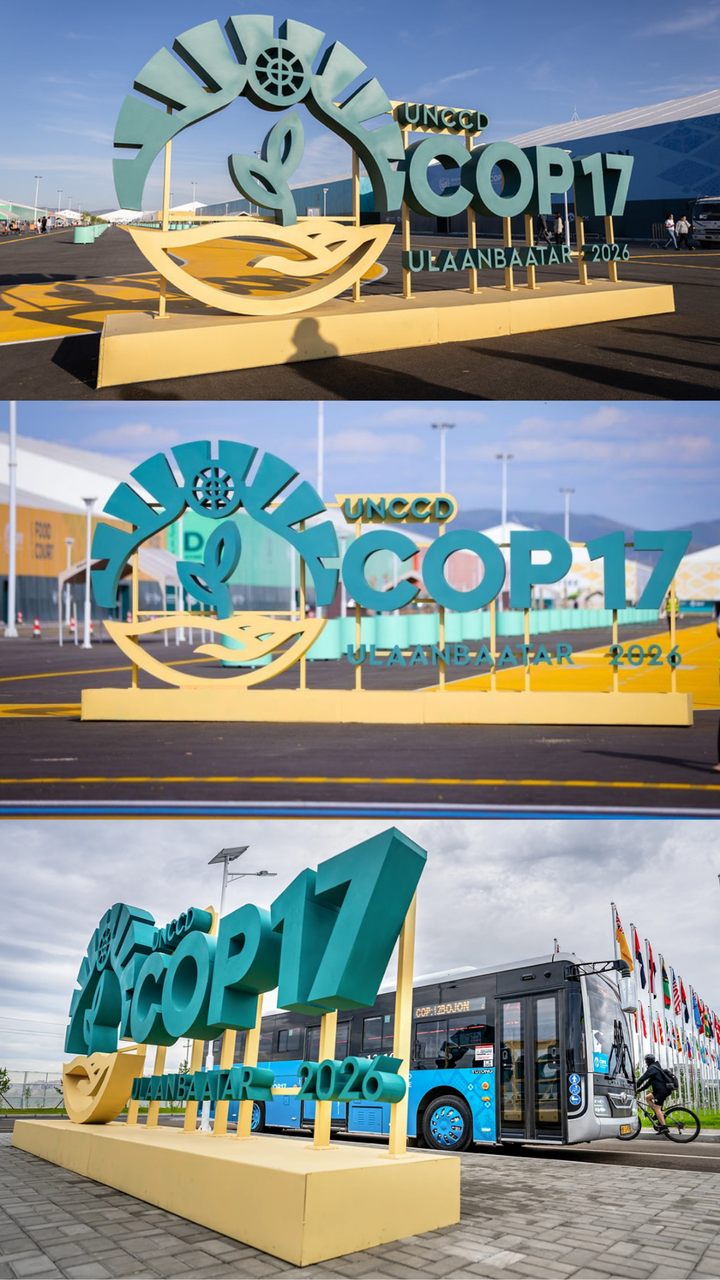
From August 17–22, 2026, the 17th session of the global land convention placed desertification also known as United Nations COP 17, drought, and land degradation at the center of international policy. Hosted in Ulaanbaatar, Mongolia, the conference connected environmental risk with development, trade, security, and climate finance.
Its theme, “Restoring Land. Restoring Hope.”, carried a practical message. Hope matters, but it must survive budgets, local planning, and measurable results. With nearly 40 percent of the world’s land affected by decline, solutions now require more than speeches. They require investment in water, food systems, rural jobs, and resilience.
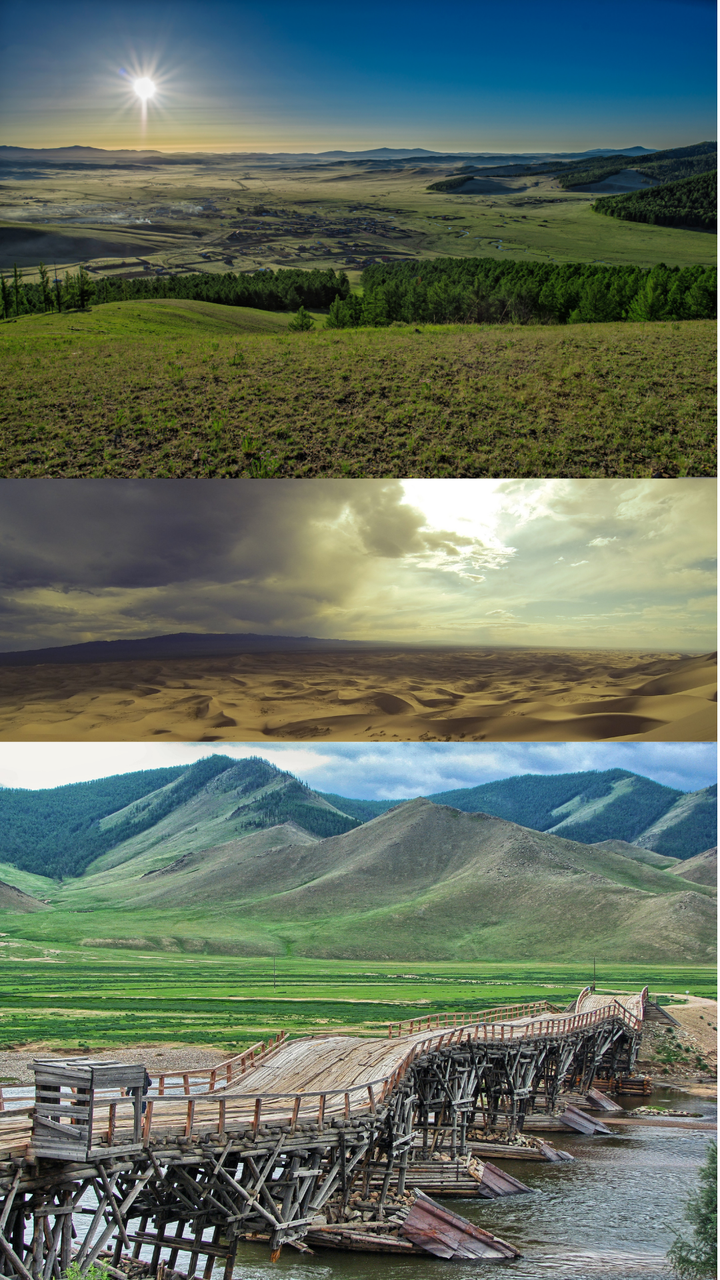
Mongolia offered an immediate national context. Its 1.56 million square kilometers face a degradation rate of almost 77 percent, making pastoral livelihoods and water access central concerns. Governments, scientists, youth, Indigenous Peoples, farmers, business leaders, and civil society brought different priorities to the table.
Executive Secretary Yasmine Fouad described land as vital infrastructure for livelihoods, stability, food security, and national security. The opening six days therefore revealed why restoration has become a global development issue, not a niche environmental topic.
United Nations CCD COP 17 ULAANBAATAR, MONGOLIA 1st week Aug 17-22 review
The opening day in August 2026 set a practical tone. Mongolia’s Prime Minister and UNCCD Executive Secretary Yasmine Fouad launched the Convention to Combat Desertification, while the Foreign Affairs Minister took the chair. The first six days focused on rules, evidence, and workable action—not just polished speeches.
“Restoring Land. Restoring Hope.”
The implementation committee and science committee examined land degradation, drought, migration, tenure, water security, and links with climate and biodiversity policy. Their work showed that soil health and food systems cannot sit in separate policy rooms.
Rangelands and Wider Participation
Rangelands cover more than half of Earth’s land, support about 500 million people, and provide one-sixth of global nutrition. Pastoralists, Indigenous Peoples, scientists, youth, farmers, cities, and civil society therefore joined governments and businesses in seeking resilience.
Youth4Land and business groups widened the debate.
The Riyadh-Ulaanbaatar Action Agenda linked finance, technology, water, and value chains.
The Mayors’ Forum connected local management with global goals.
Later thematic days on finance, water, people, food, and soil health were designed to turn this groundwork into investment and measurable restoration.
How COP17 Compares With the First Weeks of COP13, COP14, COP15, and COP16
Five conference cycles show a clear shift in global land policy. Earlier meetings focused on desertification rules, national plans, and formal commitments. The latest 17th session pushed the debate toward finance, technology, partnerships, and measurable results.
From Policy Statements to Practical Solutions
The United Nations Convention process now treats land degradation as an economic and security concern. Drought can affect migration, food prices, water access, and rural jobs. That wider view gives restoration a stronger case before finance ministers and private investors.
The Riyadh-Ulaanbaatar Action Agenda reflected this change. It connected science, value chains, business participation, rangelands, food systems, and soil health. Still, the first six days could not prove final delivery. Later ministerial talks and thematic days would determine whether promises became funded projects.
Meeting cycle
Early emphasis
Growing priority
Practical lesson
13th
Policy alignment
National planning
Rules need local ownership
14th
Drought response
Risk awareness
Preparedness limits losses
15th
Science and targets
Evidence-based action
Measures improve trust
16th
Finance and partnerships
Investment pathways
Capital needs clear returns
17th
Integrated delivery
Restoration value chains
Coalitions can scale solutions
Mongolia’s Geoeconomic and Cultural Role in Global Climate Action
Few places connect pastoral heritage, environmental risk, and diplomacy as clearly as Mongolia. Its 1.56 million square kilometers contain vast rangelands, while nearly 77 percent faces degradation. This vulnerability gives its climate action unusual policy credibility.
Nomadic traditions place stewardship at the heart of daily life. Seasonal movement, livestock care, water access, and local management offer lessons for resilient food systems. In 2026, the United Nations International Year of Rangelands and Pastoralists strengthened this message during the session conference.
The Billion Trees National Campaign, launched in 2021, aims to plant one billion trees by 2030. Its promise is bold, but sound monitoring must protect soil health and native habitats. Youth4Land, the Mongolia Business Council, Business4Land, and the Mayors’ Forum widened participation, with UN-Habitat and ICLEI linking cities and regions.
Cultural dialogues added depth. Michelangelo Pistoletto and Battogtokh Turbat created a land-art installation, while an Italian exhibition explored pastoralism and transhumance. The event showed that investment, trade, water, and rural resilience can share one platform.
Initiative
Primary focus
Strategic value
Billion Trees Campaign
Restoration
Long-term ecological investment
Youth4Land
Participation
New leadership
Mayors’ Forum
Urban management
Local delivery
Conclusion
The first six days formed a strong foundation by linking land recovery with security, livelihoods, food, water, and development. The conference mattered because it placed environmental stewardship inside global development and geoeconomic climate policy, where budgets and trade shape outcomes.
Hosting the event turned Mongolia’s exposure into diplomatic leadership. Its Billion Trees Campaign and the International Year of Rangelands and Pastoralists gave pastoral priorities a visible place in international affairs. Yet the real test followed the speeches: could finance, technology, partnerships, and clear measures turn negotiated language into accountable restoration?
Pastoralists, youth, Indigenous Peoples, cities, businesses, scientists, governments, and civil society all remained essential. Their shared solutions could strengthen resilience, reduce displacement risks, and support stability across vulnerable regions. For the United Nations, the message was direct: “Restoring Land. Restoring Hope.” became credible only through practical action that improved land and daily life.
FAQ
What is the purpose of the land convention’s seventeenth session?
The session will bring governments and partners together to address desertification, land degradation, and drought. Its focus is expected to include practical restoration, stronger resilience, and better land management.
When and where will the 2026 conference take place?
The conference is scheduled for August 17–22, 2026, in Ulaanbaatar, Mongolia. The location gives the event a strong connection to rangelands, pastoral livelihoods, and dryland systems.
What does “Restoring Land. Restoring Hope.” mean?
The theme links healthy land with food security, water security, rural incomes, and community resilience. It also presents restoration as a practical investment rather than a distant environmental ideal.
Which issues are likely to shape the negotiations?
Delegates are expected to discuss drought action, soil health, land degradation, water management, rangeland governance, and restoration finance. The negotiations may also address stronger information systems and measurable results.
Why are drought and water security central to the agenda?
Drought can reduce harvests, weaken livestock systems, increase migration pressure, and intensify competition for water. Coordinated planning can improve early warning, water efficiency, and resilience across regions.
Who is expected to participate?
Government representatives, scientists, youth groups, Indigenous Peoples, pastoralists, civil society, businesses, and development institutions are expected to take part. Their participation can connect formal policy with local knowledge and daily experience.
How will youth and Indigenous Peoples contribute?
Youth may bring new ideas on technology, climate communication, and social action. Indigenous Peoples can contribute long-standing knowledge of ecosystems, customary management, biodiversity, and community-led restoration.
How does this session differ from earlier global land conferences?
Earlier sessions helped establish shared policy on desertification and drought. The new session is expected to place greater emphasis on implementation, investment, measurable outcomes, and solutions that can work across regions.
What are investable land restoration solutions?
These are projects with clear goals, credible financing, and measurable benefits. Examples include soil restoration, sustainable grazing, watershed protection, drought-resilient agriculture, and responsible nature-based investment.
Why is Mongolia important to the conference?
Mongolia offers direct insight into dryland pressures, rangeland use, pastoral livelihoods, and climate risk. Its cultural and geoeconomic role can help connect local practice with global discussions on land stewardship.
What role can technology play in land restoration?
Satellite monitoring, climate information, digital mapping, and mobile advisory tools can help track land change and guide action. Technology is most useful when communities can access it and apply the information locally.
How could the conference affect food systems?
Better land and water management can support soil health, stable crop production, livestock resilience, and rural livelihoods. The strongest policies will link environmental protection with affordable, reliable food systems.
What outcomes should observers watch for?
Observers should look for clear commitments on drought action, restoration finance, rangeland management, community participation, and progress tracking. Strong dialogue matters, but practical delivery will be the real measure of success.
Key Takeaways
The opening six days linked land decline with economic and security risks.
Mongolia’s condition gave the talks a direct and urgent setting.
The central theme called for funded, measurable restoration.
Water, food systems, and rural livelihoods shaped the debate.
Broad participation strengthened the search for workable solutions.
Can Data Centers reduce environmental impact? Digital infrastructure now shapes daily life, public budgets, and regional power systems. Yet its physical footprint often remains hidden behind a polished cloud interface. The central question is simple: can technology expand without weakening community power?
On November 12, Dr. Ben Green presented local and electric-grid findings to the DEP Citizens Advisory Council and Environmental Justice Advisory Board. His work shows how AI facilities can affect water, energy costs, neighborhood health, and municipal planning.
OpenAI’s proposed 2.2-million-square-foot project near Saline, Michigan, reveals the remarkable scale behind online services. Meanwhile, a California study reviewed Santa Clara, Los Angeles, Sacramento, Gilroy, and Imperial County; it raised concerns about transparency and water access.
This article examines greenwashing, cultural exploitation, geopolitical conflict, and corporate greed. It also explores cooperative ownership, biomimicry, net-zero practices, renewable technology, accountable policy, and expanded urban open space. Progress need not copy the logic of extraction; communities can help design what comes next.
Data Centers Green Builings Smart Cities Environmental Justice Coop Development
Artificial intelligence is turning computing demand into a major building surge across the United States. Generative tools for images, summaries, and language need far more processing power than basic machine-learning tasks. That pressure is speeding up data center development and reshaping utility plans.
Why the AI Boom Is Accelerating Data Center Development
The U.S. Department of Energy estimates that facilities could use 12% of national electricity by 2028. Other forecasts reach 17% by 2030. For Data Centers, A 2023 market review also projected that power use could double from its 2022 level by 2030. These figures make unchecked growth a costly gamble.
How Connected Municipalities Can Align Digital Growth With Equity
Smart cities need one shared plan for power, housing, schools, transport, and public services. Environmental justice requires honest reporting and protection for neighborhoods with less political influence. Cooperative enterprises, public agencies, and local firms can guide data center development toward jobs, clean power, and community ownership of data centers.
“Digital growth must serve the public, not merely the server rack.”
The goal is not to stop innovation; it is to make its benefits broadly shared.
What Makes a Modern Data Center Hyperscale and Resource Intensive
A modern data center is less like an office and more like an industrial machine. Its scale depends on servers, storage, power systems, and cooling equipment working without pause. Size alone does not tell the full story; computing density matters just as much.
Hyperscale usually describes a facility larger than 10,000 square feet. OpenAI’s proposed project near Saline, Michigan, offers a striking comparison at 2.2 million square feet. Inside, processors, hard drives, CPUs, GPUs, switches, fiber networks, backup batteries, and cooling systems form one tightly linked operation.
Servers, GPUs, Networking Equipment, and Facility Infrastructure
Artificial intelligence raises rack density because GPUs handle demanding workloads at high speed. That design requires stronger electrical systems and faster heat removal. A building may look quiet from the road, yet its equipment runs with industrial intensity.
Rising Electricity Demand From Artificial Intelligence
One 100-word email created by ChatGPT uses roughly the electricity of an LED bulb running for 14 hours. That comparison makes a single request relatable, but millions of requests create a far larger burden. Each data center therefore belongs in a regional grid review, not in an isolated planning file.
The Environmental Impact of Data Center Energy, Water, and Land Use
Every new computing campus places pressure on power lines, local water supplies, and open land. Its benefits may reach far beyond the host town, while its costs remain close to nearby homes.
Electricity Consumption and Grid Capacity
High-power facilities can require new transmission lines, backup turbines, and fossil-fuel generation. In North Omaha, a coal plant stayed open beyond its planned 2023 closure because of rising demand. The decision extended pollution exposure in a predominantly Black neighborhood. In Memphis, xAI operated dozens of unpermitted methane turbines that released formaldehyde and smog-forming pollution.
Water Use for Cooling in Stressed Regions
Cooling systems also consume a major resource. Google reports roughly 6 billion gallons of water use worldwide each year. Gilroy, California, depends on a closed groundwater basin with little replenishment and no backup source. Imperial County relies fully on imported Colorado River water while mandatory cutbacks continue.
Construction Waste, Air Pollution, and Embodied Carbon
Land clearing removes habitat and increases runoff. Concrete, steel, wiring, and discarded equipment add embodied carbon and construction waste. Strong permits should track air emissions, material use, and water use from site preparation through operation; otherwise, “progress” becomes an expensive local experiment.
Greenwashing and the Transparency Gap in Data Center Sustainability
Sustainability claims can shine brightly while the facts remain in the shadows. A polished net-zero promise means little when residents cannot review current information about power use, water demand, emissions, or backup equipment. Credible performance requires facility-level proof, not corporate language alone.
Why Public Information About Energy and Water Use Is Often Limited
A May 2026 report from The Next 10 and Santa Clara University found that about 93% of Los Angeles County facilities had no publicly accessible environmental documents. This gap blocks meaningful review of local risks. Dr. Irina Raicu called the mix of limited information and California’s fragile water supplies a serious planning problem.
Distinguishing Net Zero Claims From Measurable Performance
Operators should publish electricity, water, emissions, generator use, and construction impacts in comparable formats. Independent audits should test each claim. Residents also need timely information before permits are approved, not after contracts are signed.
Net zero becomes credible only when communities can inspect results, question assumptions, and track progress. Otherwise, sustainability may become a label that carries more polish than proof.
Environmental Justice and the Unequal Burden of Data Center Siting
A server site may look efficient on paper, yet its costs can land unevenly across nearby neighborhoods. Location matters as much as technology. Water stress, social vulnerability, and weak air quality protections can turn a local project into a public health concern.
Social Vulnerability, Water Scarcity, and Local Air Quality
A California report examined Santa Clara, Los Angeles, Sacramento, Gilroy, and Imperial County. Imperial County and Sacramento showed the clearest overlap between scarce water and vulnerable residents. In such places, new facilities may compete with farms, homes, and essential services.
North Omaha offers another warning. A coal plant serving a predominantly Black neighborhood remained open as computing demand grew, despite some of the nation’s highest asthma rates. In Memphis, xAI’s unpermitted turbines released formaldehyde and smog-forming pollution linked to asthma, heart disease, and cancer risks.
Who Bears the Health Risk?
Black, Latino, Indigenous, and low-income residents should have equal power in siting decisions. Efficiency cannot excuse unequal exposure.
“A fair site protects health before it promises growth.”
Place
Primary concern
Equity lesson
Imperial County
Water scarcity
Protect basic supply
North Omaha
Coal pollution
Prioritize asthma prevention
Memphis
Turbine emissions
Enforce air permits
Misrepresentation of Marginalized Communities in Development Decisions
Public input loses value when officials invite residents only after key choices have been made. A packed meeting can create the appearance of consent while leaving affected families without technical support or real influence. Ethical participation must continue from early review through final approval.
Token Consultation Versus Meaningful Community Consent
Meaningful consent gives residents access to engineers, legal advisers, and clear project records. It also allows them to question water studies, grid forecasts, air permits, and tax agreements. Iris Stewart-Frey’s Climate Justice Lab at Santa Clara University links climate risk with community voice, offering a useful model for fair review.
Irina Raicu, who directs the university’s Internet Ethics Program, applies rights, justice, care, common-good, and virtue-ethics principles. These lenses help communities weigh competing public interests without treating residents as obstacles.
Building Local Capacity to Review Server Proposals
Local review teams can train residents to examine technical filings and explain them to neighbors. Community mobilizers, nonprofits, NGOs, and “grasstops” leaders can support this work. The people most affected should define their own priorities.
Weak process
Stronger practice
Community benefit
One public meeting
Ongoing consent process
Trust and influence
Complex filings
Local technical training
Informed review
Outside priorities
Resident-led goals
Ethical representation
Exploitation of Under-Represented Cultures, Heritage, and Community Knowledge
Land carries memory, identity, and practical knowledge. A server project can harm all three when planners treat a cultural landscape as empty space. Indigenous rights and local heritage must shape decisions before land is acquired, graded, or linked to new infrastructure.
Protecting Indigenous Rights and Cultural Landscapes
Tribal nations and local residents may understand groundwater, seasonal change, wildlife routes, and heritage sites better than a short survey can show. Their knowledge can improve site review, but only when contributors keep control over its use. Broad stakeholder participation, early consent, and paid cultural advisers create a stronger process.
Using Cultural Assets Through Reciprocity Rather Than Extraction
The California research supports care ethics and the common good. These approaches value relationships, shared resources, and long-term trust over quick approval. Developers can offer reciprocity through local ownership, consent-based research, heritage protection, and lasting community investment.
Cultural symbols should not become decorative branding for benefits that flow elsewhere.
Risk
Protective practice
Community result
Heritage loss
Early cultural review
Sites remain protected
Knowledge extraction
Consent and payment
Local agency grows
Unequal benefits
Shared ownership
Value stays local
Geopolitical Conflicts, Supply Chains, and the Race for Digital Infrastructure
Behind every server campus lies a global contest for chips, minerals, equipment, and electricity. International rivalry can turn local land into a strategic asset, while residents face decisions shaped by forces far beyond their county.
Virginia leads the U.S. market, followed by Texas and California. Reliable grids, fiber networks, land, and tax incentives draw major operators to these regions. As generative AI becomes a central business priority, hyperscalers are raising capital spending sharply. Municipalities may compete so hard for investment that their negotiating power weakens.
Critical Minerals, Equipment Manufacturing, and Energy Security
Chips, transformers, batteries, and rare minerals move through complex supply chains. Conflict, export limits, or labor abuses can delay projects and raise costs. Responsible procurement should test labor rights, human rights, mining practices, and supplier emissions—not just delivery times.
How Global Competition Shapes Local Expansion
Energy security adds another challenge. Some regions retain fossil-fuel plants when renewable capacity, transmission, or storage cannot grow quickly enough. Strong permits should link new campuses to cleaner power, firm deadlines, and public reporting.
Global pressure
Local effect
Responsible response
Mineral shortages
Higher equipment costs
Traceable sourcing
Rising AI investment
Faster land competition
Firm public terms
Grid constraints
Fossil plants remain online
Clean capacity targets
Slow Yet Reluctant Municipal Development and Infrastructure Planning
Local governments often face an awkward bargain: welcome investment quickly or pause to measure its lasting cost. A major server center can bring jobs and tax revenue, yet it may also strain water systems, roads, schools, housing, and public budgets. Careful planning protects residents before construction begins.
Planning Gaps, Confidential Agreements, and Public Accountability
Planning assumptions can change faster than a permit review. In Georgia, projected extra power needs for 2030 rose from about 2 gigawatts to 6 gigawatts as computing demand grew. California researchers mapped operating and proposed facilities across the state, giving officials a clearer view of cumulative pressure.
Private agreements can hide utility promises, public costs, land impacts, and emergency needs. Confidentiality should not become a substitute for accountability. Residents need hearings, accessible records, and enforceable deadlines.
Coordinating Utilities, Schools, Housing, Water, and Transportation
Agencies should review each project together. Gilroy’s closed groundwater basin has limited replenishment and no backup source, making water review urgent. Municipalities should require cumulative-impact studies and coordinate utilities, schools, housing, roads, and transit before approving major center development.
Corporate Greed, Tax Incentives, and the Unequal Economics of Data Centers
Public subsidies can make private expansion look like a public victory. Yet discounted power, generous tax incentives, and weak oversight may leave residents carrying hidden costs. Economic development is fair only when public returns match public support.
Utility Rate Increases and Costs Passed to Residents
Large server facilities often negotiate special utility terms. If a utility builds lines or plants for one customer, households, schools, and small firms may help pay the bill. Bloomberg reported that electricity prices more than doubled in over five years in some areas near these sites. Regulators should require clear cost-sharing rules and rate protection.
Questioning Job Creation and Lost Public Revenue
Construction can create many short-term jobs, but operations usually need far fewer permanent workers. Good Jobs First found that Texas raised its estimated tax breaks from $130 million to $1 billion in two years. Such incentives can drain funds from schools, transit, and public health unless officials measure lasting value.
Designing Community Benefit Agreements With Enforceable Terms
A strong agreement should require local hiring, procurement, tax recapture, air and water monitoring, rate safeguards, and penalties for missed promises. Economic development should build local wealth, not simply reduce corporate costs.
How Cooperative Enterprises Can Create Shared Ownership and Local Value
Ownership can shape whether a large computing project strengthens a region or simply extracts its resources. Member-led models offer a practical way to keep earnings, skills, and decision-making closer to residents. This way, local value becomes part of the plan rather than a late promise.
Energy Cooperatives and Community-Owned Renewable Power
Energy cooperatives can finance solar panels, wind turbines, battery storage, and efficiency upgrades. These assets can serve a facility and nearby households at the same time. Another way to reduce grid pressure is to pair renewable power with demand planning and shared storage.
Worker, Consumer, and Community Investment Models
Workers, consumers, and residents can purchase a financial share in local infrastructure. They can also elect board members and review spending. A second share can support schools, job training, cultural preservation, water resilience, or lower energy bills.
Virtualization offers a related lesson: shared computing resources improve equipment use and limit duplicate hardware. That approach creates a better way to manage capacity. It also shows the way cooperation can support reliable services without endless expansion.
Shared ownership turns public support into public participation.
Cooperation is a governance structure, not decorative branding.
What Policymakers Can Require for Equitable Data Center Growth
Public rules can turn rapid computing expansion into a fairer bargain. The U.S. Department of Energy projects that server facilities could consume 12% of national electricity by 2028. Utilities need clear goals before approving new loads, rather than treating each proposal as an isolated deal.
Standardized Reporting for Energy, Water, and Air Quality
Reporting should cover electricity, water, PUE, CUE, greenhouse gases, backup generators, air emissions, and local effects. The Green Grid metrics help utilities compare energy and carbon performance. Public records also let residents test corporate claims.
Permits, Renewable Rules, and Responsible Incentives
The 2023 German Energy Efficiency Act offers a useful model for binding goals. Utilities can use similar standards when reviewing projects. Permits should assess cumulative effects on water, grid capacity, traffic, housing, and air quality.
Memphis shows why regulators must reject unpermitted methane turbines and monitor formaldehyde and smog-forming emissions. Tax incentives should require renewable additions, local hiring, public revenue, ratepayer protection, and verified results. Utilities must meet renewable goals, while permit terms should include emissions controls and penalties.
“Public support should purchase public accountability, not private silence.”
How NGOs, MSMEs, Nonprofits, and Community Mobilizers Can Collaborate
Local partnerships can turn complex infrastructure debates into practical public action. NGOs, nonprofits, and grassroots support groups may work together, or act independently when urgent needs arise. Their shared goal is clear: help residents understand proposals for data centers before officials approve them.
Grassroots Monitoring, Legal Support, and Public Education
Community groups can translate technical filings, host public meetings, and provide legal services. They can also track water use, air quality, permits, and utility costs through accessible monitoring programs. The California report, co-authored by Santa Clara University students and researchers, urges communities to build local research capacity when information is missing.
Local Procurement, Workforce Training, and Small Business Participation
MSMEs can supply construction services, catering, landscaping, cybersecurity, transport, equipment repair, and renewable-energy services. Construction work also creates openings for electricians, HVAC workers, and other skilled trades.
Community mobilizers organize residents.
Tastemakers build public attention.
Grasstops leaders open institutional doors.
Workforce programs connect residents with lasting technical careers.
Strong collaboration makes public oversight a shared civic skill, not a specialist privilege.
Responsible Data Center Construction and Operations for Sustainable Communities
Responsible construction begins before the first server enters the building. A compact footprint, low-emission materials, and recycled construction inputs can reduce embodied carbon and limit land disturbance. Designers should also plan for repair, reuse, and safe recycling when equipment reaches the end of its service life.
Operations matter just as much. Virtualization lets several virtual servers run on one physical machine, which cuts idle hardware and energy use. Workload scheduling can shift flexible tasks to periods with cleaner power or lower demand. A DCIM platform can track power, lighting, assets, and cooling in real time.
Efficient Cooling, Waste Heat Recovery, and Water Stewardship
Liquid cooling can support dense AI workloads, but it needs skilled maintenance. Hot-aisle and cold-aisle containment also reduces wasted cooling. Combined heat and power may reuse waste heat for electricity or nearby heating. Water-efficient systems and closed-loop designs further protect local supplies.
PUE divides total facility energy by IT equipment energy. CUE compares carbon emissions with IT energy use. Together, these measures reveal whether efficiency claims match performance.
Practice
Primary benefit
Key safeguard
Virtualization
Fewer idle servers
Monitor workload demand
Liquid cooling
Better heat control
Maintain specialized systems
Heat recovery
Useful local energy
Connect to nearby users
Biomimicry, Net Zero Practices, and Renewable Technology in Data Centers
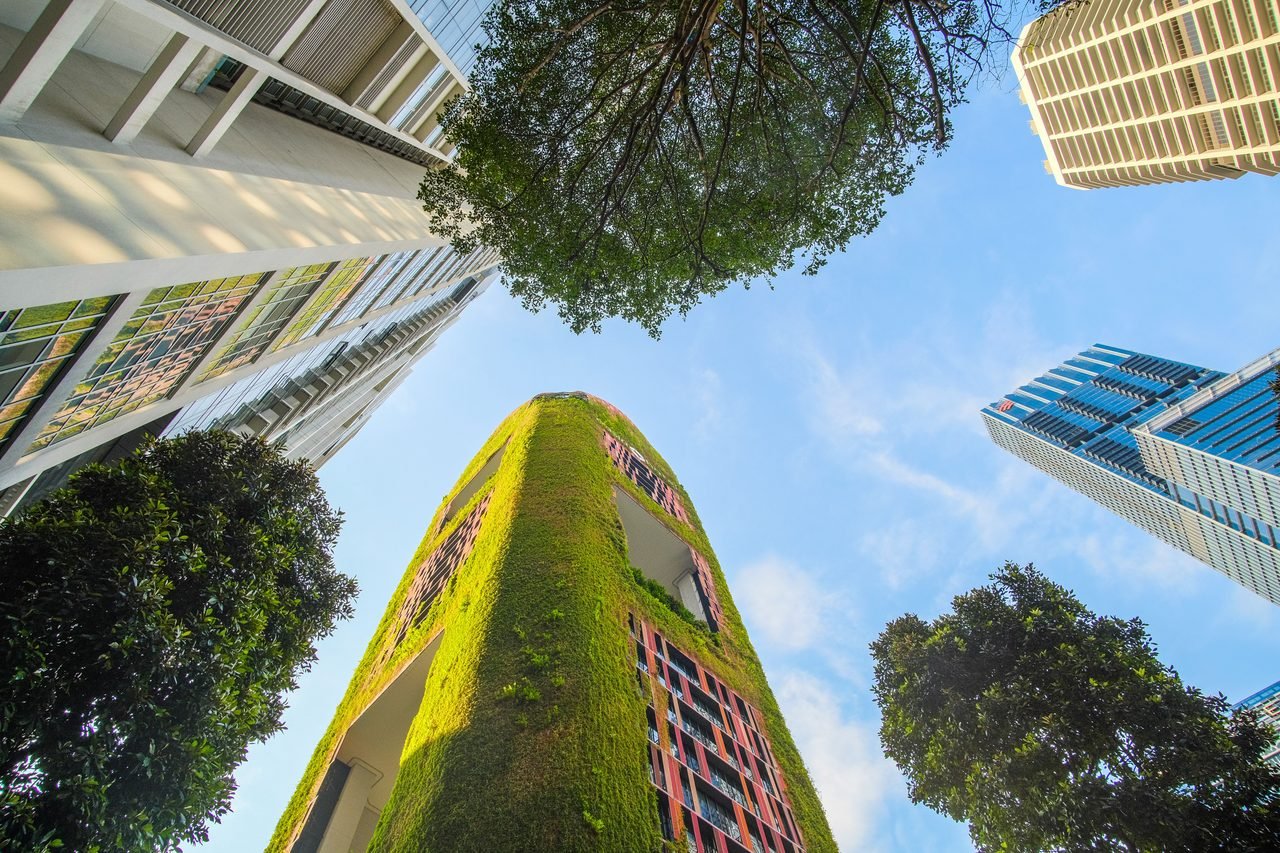
Nature offers useful lessons for climate-conscious computing. A facility can study termite mounds, human circulation, and natural ventilation to move heat with less mechanical effort. Adaptive controls can adjust airflow as temperatures and workloads change. This climate-aware approach treats efficiency as a design principle, not a marketing line.
Designing Cooling and Energy Systems Inspired by Nature
Direct-to-chip and liquid cooling support dense processors, though both require specialized infrastructure. Designers can pair these tools with heat recovery and passive airflow. Such measures reduce climate impact while improving equipment reliability.
Combining Solar, Wind, Storage, and Demand Flexibility
Solar, wind, and hydropower can supply clean energy. Batteries help preserve clean energy when weather shifts or grid supply tightens. Operators can also move nonurgent workloads to hours with lower emissions and stronger renewable output.
Net-zero plans should show absolute cuts, new renewable capacity, storage results, and limits on fossil-fuel backup. Rising hyperscaler emissions after the generative AI boom reveal why climate goals must survive changing business priorities. Transparent accounting keeps clean energy claims tied to real climate commitments.
Strategy
Practical value
Proof required
Biomimicry
Lower cooling demand
Measured efficiency gains
Storage
Firm renewable supply
Output and duration records
Flexible workloads
Less grid stress
Carbon-based scheduling logs
Enhancing Greenspaces, Public Health, and Community Resilience Around Facilities
Thoughtful site design can turn a large computing facility into a better neighbor. Native plants, shade, and public paths can soften its footprint while improving local health. Landscape planning should serve people and wildlife, not merely hide an industrial wall.
Native Landscapes, Stormwater Management, and Biodiversity Corridors
Native trees and grasses need less irrigation and support birds, insects, and pollinators. Wetlands, bioswales, permeable pavement, and tree cover can slow runoff during heavy rain. These features also connect habitat areas and reduce heat near homes.
Public plans should include walking routes, shaded seating, noise buffers, air-quality checks, and safe access. Such features can make facilities less disruptive and help residents manage heat exposure.
Measuring PUE, CUE, Water Performance, and Community Benefits
The Green Grid created PUE and CUE to assess energy and carbon performance. LEED reviews energy, water, materials, and wider site impacts. Energy Star, managed by the EPA and the Department of Energy, adds another verification tool. Yet public records should also track water use, health outcomes, habitat gains, and local investment.
Measure
What it shows
Public value
PUE and CUE
Energy and carbon efficiency
Comparable performance
Water metrics
Consumption and reuse
Resource protection
Community indicators
Health, access, and local benefits
Accountable results
Conclusion
Digital infrastructure can support modern life without becoming a license for unchecked expansion. Forecasts that facilities may use 12% of U.S. electricity by 2028 show why public rules must guide growth.
Water planning matters just as much. Google’s reported six billion gallons of annual use makes efficient cooling, reuse, and local supply reviews essential. The 93% documentation gap in Los Angeles County also proves that open records are a foundation of fair oversight, not a public-relations extra.
A stronger path joins operators with policymakers, NGOs, MSMEs, community groups, and cooperative enterprises. Enforceable benefits, local purchasing, shared ownership, and public monitoring can keep value near affected communities while respecting cultural knowledge.
Biomimicry, renewable power, efficient computing, repairable equipment, and larger public landscapes can improve resilience and health. Equitable growth does not reject technology; it gives communities information, consent, safeguards, ownership, and measurable benefits. That is how sustainable development earns trust—and lasts.
FAQ
Why is artificial intelligence accelerating server-campus growth?
Artificial intelligence requires large computing clusters, advanced GPUs, and constant processing power. This demand increases electricity use, equipment orders, facility construction, and pressure on utility grids.
What makes a modern server facility resource intensive?
A large facility combines servers, networking systems, backup power, cooling equipment, and security services. These systems consume substantial energy, water, land, and construction materials.
How does electricity demand affect local communities?
A major new load can require grid upgrades, new substations, or power-line expansion. If regulators approve projects too quickly, residents may face higher utility costs or weaker reliability.
Why is cooling a major concern?
Computing equipment produces intense heat. Many cooling systems use water, while others increase electricity demand. Regions facing drought must weigh industrial use against household, farm, and ecosystem needs.
What environmental effects can facility construction create?
Construction can generate waste, traffic, dust, noise, air pollution, and embodied carbon. Site selection should also consider wetlands, farmland, wildlife corridors, and nearby homes.
How can the public distinguish real sustainability from greenwashing?
Strong claims should include verified figures for electricity, water, emissions, air quality, and renewable power. A vague net-zero promise means little without a clear baseline, timeline, method, and public report.
What does environmental justice mean in facility siting?
It means no community should carry a disproportionate share of pollution, water stress, noise, or financial risk. Reviews should examine income, race, health, housing, and existing industrial burdens.
Why do Black, Latino, Indigenous, and low-income communities need a strong voice?
These communities have often experienced weaker political influence and higher exposure to pollution. Fair planning requires early notice, accessible information, legal support, and meaningful consent—not a meeting after the decision.
How can local governments prevent token consultation?
Officials can publish agreements, provide independent technical reviews, fund community experts, and allow time for public response. Binding conditions should cover water, jobs, pollution, traffic, and long-term monitoring.
How should Indigenous rights and cultural landscapes shape planning?
Governments and companies should respect tribal sovereignty, sacred places, traditional knowledge, and cultural heritage. Any use of community knowledge should involve reciprocity, permission, fair payment, and shared control.
How do global supply chains affect local facility projects?
Critical minerals, chips, transformers, batteries, and networking equipment come from complex international markets. Geopolitical conflict can raise costs, delay construction, and increase concerns about energy security.
Why do municipal planning gaps create risk?
Local plans may not keep pace with rapid computing growth. Confidential agreements can limit public oversight, while weak coordination can strain schools, housing, roads, water services, and emergency systems.
Do tax incentives always produce broad economic benefits?
Not always. Incentives may reduce public revenue while residents absorb utility upgrades and infrastructure costs. Policymakers should test job quality, local hiring, tax recovery, and the full public return.
What should a community benefit agreement include?
It should set enforceable goals for local procurement, workforce training, air monitoring, water protection, renewable power, public services, and neighborhood investment. Penalties should apply when the operator misses its commitments.
How can cooperative enterprises create shared value?
Energy cooperatives can help residents own renewable projects, storage assets, or efficiency services. Worker, consumer, and community investment models can keep part of the revenue in the region.
What reporting rules should policymakers require?
Operators should disclose electricity use, peak demand, water withdrawal, emissions, cooling methods, air quality, waste, and renewable energy claims. Reports should use common methods and cover the entire facility life cycle.
How can nonprofits and small businesses participate?
Community groups can support legal review, grassroots monitoring, public education, and health research. Small firms can gain opportunities through local procurement, maintenance, catering, construction, and technical services.
Which design choices reduce resource use?
Compact layouts, low-emission materials, repairable equipment, virtualization, workload optimization, and circular purchasing can lower impacts. Infrastructure management tools also help operators track performance and avoid waste.
How can renewable technology support responsible operations?
Solar, wind, batteries, and demand flexibility can reduce reliance on fossil-fuel generation. Nature-inspired design may improve airflow, shade, heat exchange, and resilience without treating technology as a magic wand.
What role do public landscapes play near industrial facilities?
Native plantings, stormwater systems, shade trees, and biodiversity corridors can reduce heat, flooding, and habitat loss. These features should serve nearby residents rather than function as decorative public relations.
Which performance measures matter most?
Power Usage Effectiveness, Carbon Usage Effectiveness, water performance, emissions, outage rates, and community benefits offer useful insight. Results should be measured over time and compared with local health and climate goals.
Key Takeaways
AI infrastructure can reshape local resources and electric grids.
Large facilities create major planning and public-health questions.
California research highlights transparency and water-access gaps.
Municipal hesitation often reflects real fiscal and social risks.
Cooperative ownership can strengthen community power.
Renewables, biomimicry, and open space offer practical alternatives.
With forethought, insight, with CSR and ESG coupled with an intentional sustainable agenda, Data Centers can provide social impact.
This website is saving the energy of your screen as it is not being used. It's part of a global effort to lower the planet's electrical consumption and CO2 emission level. Resume browsing