

Understanding the modern calendar is more than just tracking dates. It’s about having a practical framework for our global connections. By seeing July 2026 international holidays and observances sustainability as a whole, we go beyond just celebrating. We engage deeply.
This guide helps you understand global events that shape us. Whether you’re looking back at July 2025 or ahead to July 2026, these insights are key. They help us join in with purpose.
True global awareness is about understanding, not just hashtags. As we dive into the second part and the upcoming July 25–27, remember. Calendar dates are just the start. We must focus on caring for our planet, not just partying.
Using the July 2026 Sustainability Calendar Alongside Earlier Guides
Think of this calendar as a tool to connect your values with global actions. It builds on our past work, keeping you informed and engaged with global development.
By using these dates, you join a global movement. This movement focuses on long-term ecological health, not just trends.
How this calendar extends the July 2025 retrospective
This guide is a step forward from our July 2025 analysis. It offers practical steps for this year, building on the past.
We focus on continuity in international affairs. This ensures past lessons guide our current sustainable practices.

Connections to the first week of July 2026 guide and its second installment
For a full view of the month, check our first-week guide and its second part. They lay the groundwork for the entire month.
These articles set the stage for the month’s observances. They link national milestones with global conservation efforts in July’s second half.
Continuing the themes from the July 25–27 holidays and observances article
Our July 25–27 analysis is key to this calendar. It shows how biodiversity and climate justice meet.
See these days as the month’s peak. They remind us that green holidays aim for systemic change, not just personal choices.
How U.S. readers can use international observances for eco-friendly celebrations
In the U.S., international observances can change how we celebrate. Choose local food and public transit for your events.
True eco-friendly celebrations go beyond symbols. Use reusable items and support local initiatives to reduce waste.
Adopting these sustainable practices helps tell a story of global responsibility. It’s time for our celebrations to show our commitment to the planet.
July 1–3: Nationhood, Cultural Identity, and Sustainable Community Traditions

As July starts, people around the world celebrate their heritage. They also think about how to protect the environment. It’s a time to balance pride in our communities with caring for the planet.
Canada Day, Ghana Republic Day, and Hong Kong Special Administrative Region Establishment Day
These days show different ways to celebrate national identity. Yet, they all face a big challenge: reducing waste. Canada Day, Ghana Republic Day, and Hong Kong Special Administrative Region Establishment Day often lead to a lot of trash.
Low-waste public celebrations, public transit, and community-based environmental programs
Organizers are now focusing on low-impact programming. They encourage using public transit instead of cars. This helps cut down on pollution from these big events.
- Implementing zero-waste zones at public festivals.
- Encouraging the use of reusable service ware for food vendors.
- Integrating community-led cleanup initiatives immediately following the festivities.
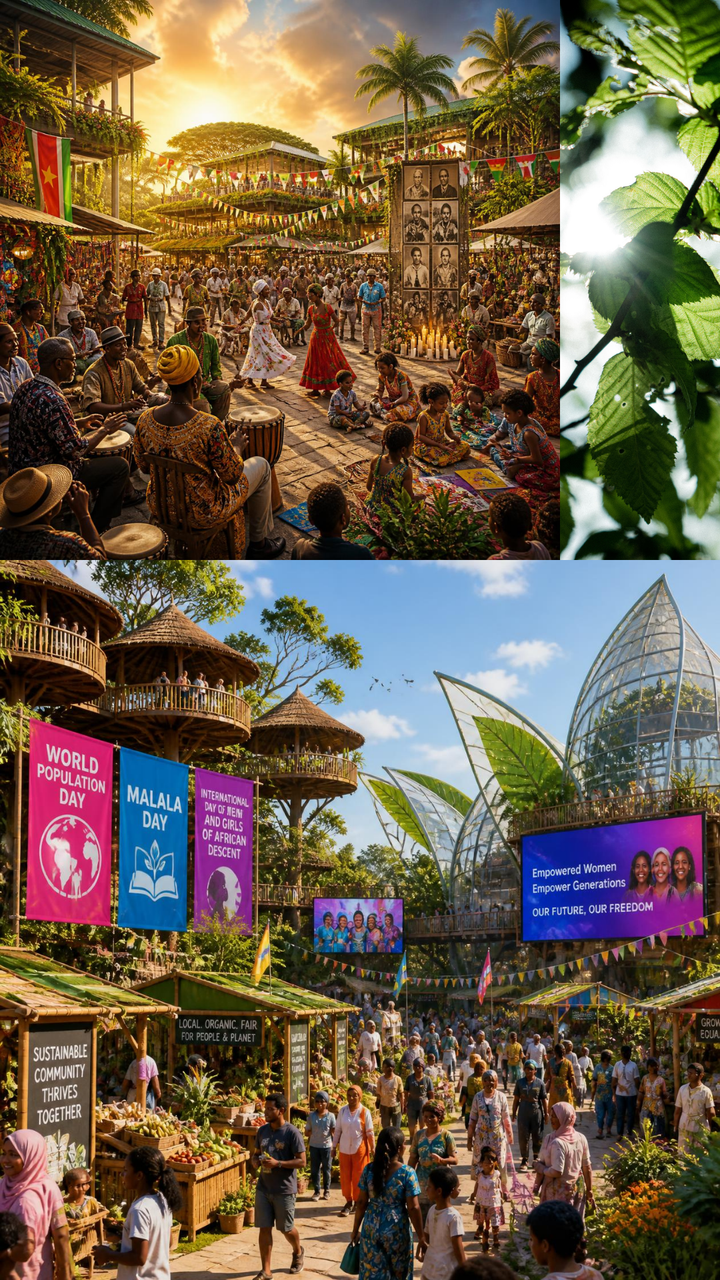
Keti Koti and the importance of cultural memory, freedom, and responsible consumption
Keti Koti marks the end of slavery in Suriname and the Dutch Caribbean. It’s a time for deep reflection, not just big parties. It’s about remembering our history and valuing human dignity.
Supporting educational programs that teach about our history is key. By choosing meaningful experiences over buying lots of stuff, we keep the spirit of freedom alive.
Madeira Day, Territory Day, and Sir Seretse Khama Day
The start of July also celebrates regional identity with Madeira Day, Territory Day, and Sir Seretse Khama Day. These days remind us that national pride goes hand in hand with protecting our local environments.
Protecting island ecosystems, landscapes, and cultural heritage during national observances
National celebrations can harm our environment if not done carefully. We must protect our island ecosystems and landscapes. This means supporting sustainable tourism and preserving our heritage.
When we care for our natural surroundings, we ensure our celebrations can continue for future generations. Conservation is not an obstacle to celebration; it is the foundation of it.
King’s Birthday in Lesotho and sustainable celebrations centered on local livelihoods
The King’s Birthday in Lesotho shows us how to celebrate sustainably. The focus is on local crafts and farming. This approach supports the local economy and encourages environmental care.
By choosing local products, we reduce waste and help the local economy. This way, we celebrate while taking care of our planet.

International Retainer Day and practical ways to reduce waste from personal-care products
International Retainer Day is a chance to tackle waste in our daily lives. Personal-care products often lead to plastic pollution. But, making small changes can make a big difference.
We should look for brands with biodegradable or refillable packaging. Making these small changes shows our commitment to a cleaner future.
July 4–10: Independence Days, Environmental Responsibility, and Shared Freedom
The first ten days of July are filled with history and urgent needs for our planet. Nations celebrate their freedom, and caring for the earth becomes crucial for everyone.
Fourth of July in the United States: safer, greener alternatives to fireworks and single-use celebrations
The Fourth of July often leads to big energy use and waste. Fireworks release harmful substances into the air, and single-use items add to landfill waste.
Communities can choose greener alternatives. Hosting potlucks with reusable items is a good start. Laser light shows or music festivals are better than fireworks for the environment.
Belarus, Algeria, Venezuela, Malawi, Solomon Islands, Argentina, and Bahamas Independence Days
This week is packed with global events. We celebrate Belarus Independence Day, Algeria Independence Day, and Venezuela Independence Day. We also mark Malawi Independence Day, Solomon Islands Independence Day, Argentina Independence Day, Bahamas Independence Day, and Kiribati Independence Day.
Comparing national celebrations through the lenses of energy use, water conservation, and waste prevention
Nations celebrate differently, but all focus on being resource-efficient. Big gatherings need a lot of water and energy. Sustainable planning is key for the health of nations.
| Observance | Primary Focus | Sustainability Impact |
|---|---|---|
| Argentina Independence Day | Cultural Heritage | Low-waste public events |
| Solomon Islands Independence Day | Island Resilience | Marine protection focus |
| Bahamas Independence Day | Tourism Management | Water conservation efforts |
Colombia, Belgium, Liberia, Maldives, Peru, Vanuatu, Burundi, and Virgin Islands Days
The calendar continues with Colombia Day, Belgium Day, Liberia Day, Maldives Day, Peru Day, Vanuatu Day, Burundi Day, and Virgin Islands Day. These days show how nations celebrate their freedom in unique ways.
Island resilience, biodiversity protection, and sustainable tourism connections
For island nations, these celebrations are about their ecosystems. Sustainable tourism helps keep their beauty for future visitors.

Filipino-American Friendship Day and George Town Heritage Day in Penang
Filipino-American Friendship Day and George Town Heritage Day in Penang highlight international bonds. They show that shared history can lead to future cooperation.
Cross-cultural exchange, historic preservation, and respectful heritage tourism
Keeping historic sites safe is a challenge. Respectful tourism helps preserve these places for future admirers.
Harela and the environmental meaning of tree planting and seasonal renewal
Harela celebrates the monsoon season with tree planting. It reminds us of our duty to restore nature.
Don’t Step on a Bee Day, Paper Bag Day, National Be Nice to Bugs Day, and National Rock Day
We end the week with Don’t Step On A Bee Day, Paper Bag Day, National Be Nice to Bugs Day, and National Rock Day. These days encourage us to appreciate the small parts of our environment.
Pollinator protection, reusable shopping habits, and responsible interaction with geological environments
Protecting pollinators is key for food. Using paper bags reduces plastic waste. By caring for the earth, we ensure a sustainable future.
July 11–17: Global Awareness, Nature Conservation, and Community Well-Being

Mid-July is a key time for global reflection. It’s where history meets the need to protect our planet. We’re challenged to make sure our progress is fair and remembers our shared past.
International Day of Reflection and Commemoration of the 1995 Genocide in Srebrenica
The International Day of Reflection and Commemoration of the 1995 Genocide in Srebrenica teaches us that peace is more than just no war. It’s about justice. Remembering past traumas helps us build a future where everyone’s rights are respected.
World Population Day, International Day of Women and Girls of African Descent, and MALALA DAY
These days show how people and the planet are connected. By celebrating World Population Day, International Day of Women and Girls of African Descent, and MALALA DAY, we see that growth must be for everyone.
Linking education, gender equity, demographic change, and sustainable development
Education is key to moving up in society. When we value gender equality, we build stronger communities and stable growth.
International Day of Cooperatives and Rural Development Day
The International Day of Cooperatives and Rural Development Day show the power of working together. They prove that when communities own and share, everyone benefits.
How cooperatives support fair food systems, local employment, and resilient communities
Cooperatives help communities by keeping resources local. They focus on fair food and jobs, not just quick profits.
World Nature Conservation Day, International Ranger Day, and National Tree Day
Then, we celebrate World Nature Conservation Day, International Ranger Day, and National Tree Day. These days honor the heroes who protect our planet’s vital resources.
Forest stewardship, protected areas, restoration work, and responsible volunteering
Good forest care is more than planting trees. It’s about long-term protection and respect for nature and culture.
International Day of Hope, Nelson Mandela International Day, and World Day for International Justice
The International Day of Hope, International Nelson Mandela Day, and World Day for International Justice call for action. They inspire us to do more than just watch; we must participate.
Service projects, restorative justice, and inclusive community action
“It is in your hands to make of our world a better one for all.”
Nelson Mandela
Projects focused on justice help heal our society. By working together, we create a place where everyone’s voice is heard.
International Day of Combating Sand and Dust Storms and Rain Day
The International Day of Combating Sand and Dust Storms and Rain Day show our vulnerability to extreme weather. Understanding our environment is key to managing these challenges.
Soil conservation, drought resilience, stormwater management, and climate adaptation
Protecting soil is crucial to prevent desertification. By managing stormwater wisely, we can adapt to climate change.
Smart Irrigation Month, National Hemp Month, and Hemp History Week
Smart Irrigation Month, National Hemp Month, and Hemp History Week highlight the link between tech and farming. They encourage us to use resources more wisely.
Efficient water use, regenerative agriculture, and evidence-based material choices
Using water wisely is essential in a changing world. By choosing sustainable farming and materials like hemp, we reduce our environmental impact.
National Culture Consciousness Day, First Day of NAIDOC, and New Conversations Day
Finally, National Culture Consciousness Day, the First Day of NAIDOC, and New Conversations Day remind us that sustainability is cultural. We must respect the wisdom of those who have cared for the land for generations.
Centering Indigenous knowledge, cultural continuity, and respectful dialogue in sustainability work
Indigenous knowledge is vital for our future. By valuing cultural continuity and respectful dialogue, we make sure our efforts are truly inclusive.
| Observance | Primary Focus | Sustainability Impact |
|---|---|---|
| International Day of Cooperatives | Economic Equity | High (Local Resilience) |
| World Nature Conservation Day | Biodiversity | High (Ecosystem Health) |
| Smart Irrigation Month | Water Efficiency | Medium (Resource Management) |
July 18–24: Peace, Science, Energy, and Sustainable Human Development
The third week of July is a time of global awareness. It focuses on human rights, technology, and preserving our heritage. Peace, science, and energy are key to a sustainable future.
International Nelson Mandela Day, International Retainer Day, and International Day of Judicial Well-being
Building fair institutions, healthy workplaces, and community-centered systems
International Nelson Mandela Day shows us how one person can change the world. It’s linked with International Retainer Day and International Day of Judicial Well-being. These days focus on the health of our legal and work systems.
Fair institutions are crucial for a stable society. They help achieve long-term environmental and social balance.
International Moon Day, World Listening Day, and Global Energy Independence Day
Space science, attentive environmental monitoring, renewable energy, and energy resilience
International Moon Day inspires us to explore and dream. It drives space science and exploration. This curiosity is also reflected in World Listening Day, which encourages us to listen to nature.
Global Energy Independence Day calls for renewable energy. It aims to build energy resilience for the future.
International Chess Day, International Day of Friendship, and Peace & Love Day
Using play, cultural exchange, and nonviolent cooperation to strengthen sustainable communities
International Chess Day celebrates strategic thinking for solving global problems. International Day of Friendship and Peace & Love Day show the power of cooperation. Cultural exchange builds trust among diverse groups.

World Brain Day and International Tofu Day
Brain health, plant-forward diets, food-system emissions, and affordable nutrition
World Brain Day stresses the importance of brain health in today’s world. International Tofu Day promotes plant-based diets. These diets help reduce emissions and ensure everyone can eat affordably.
International Day of Women and Girls of African Descent and International Youth Skills Day
Expanding access to green careers, technical training, and equitable leadership
The International Day of Women and Girls of African Descent honors their contributions. International Youth Skills Day focuses on the future workforce. Equitable leadership and training are needed for green careers for all.
National Disability Independence Day and Bank Employee Day in Guatemala
Accessible public spaces, inclusive employment, and responsible financial participation
National Disability Independence Day emphasizes inclusivity in sustainability. Bank Employee Day (Guatemala) highlights the role of finance in supporting local economies. Responsible financial participation creates accessible spaces and jobs.
Festival of British Archaeology and Captive Nations Week
Protecting archaeological sites, reducing visitor impacts, and learning from historic resource management
The Festival of British Archaeology teaches us to manage resources wisely. Captive Nations Week reminds us of the importance of human rights and civic memory. These observances show that respecting history and future is key to sustainability.
July 25–31: Oceans, Biodiversity, Justice, and Climate Limits

As we end the month, we focus on caring for our planet and its people. This week is key for thinking about how we affect the earth and its ecosystems. It’s also about the social structures that support us all.
World Drowning Prevention Day, International Day for the Conservation of the Mangrove Ecosystem, and International Day of Friendship
Water safety, mangrove restoration, coastal protection, and community preparedness
World Drowning Prevention Day teaches us about keeping our communities safe near water. The International Day for the Conservation of the Mangrove Ecosystem shows us how mangroves protect us from storms. By celebrating International Day of Friendship, we build a global community to protect these vital areas.
International Day of the World’s Indigenous Peoples’ cultural connections and Kiswahili Language Day
Language preservation, traditional ecological knowledge, and inclusive conservation partnerships
Kiswahili Language Day highlights the power of language in connecting cultures. Using traditional knowledge is crucial for saving our planet. We need to work together, respecting ancient wisdom, to protect our lands.
International Day against Trafficking in Persons and International Justice Day
Human rights, ethical supply chains, and the social foundations of sustainability
Human rights are essential for a sustainable world. The International Day against Trafficking in Persons and International Justice Day remind us of the need for fair trade. We must ensure our green efforts don’t harm human dignity.
International Tiger Day, International Snake Day, International Horse Day, and World Ranger Day
Wildlife protection, habitat connectivity, humane treatment, and anti-trafficking enforcement
Biodiversity is vital for a healthy planet. Days like International Tiger Day, International Snake Day, and International Horse Day focus on protecting habitats and treating animals with kindness. World Ranger Day honors those fighting to save wildlife and protect our planet.
International Day for the Conservation of the Mangrove Ecosystem and World Nature Conservation Day
Blue-carbon ecosystems, coastal livelihoods, and restoration actions for U.S. communities
Nature provides services we can’t replace. World Nature Conservation Day encourages us to take action to restore our planet, especially in U.S. coastal areas. Saving mangroves is crucial for our economy and the future.

International Plastic Bag Free Day, Clean Beaches Day, Coral Reef Awareness Week, and National Marine Week
Plastic prevention, shoreline cleanups, reef-safe recreation, and marine habitat protection
Oceans face huge pollution challenges. By joining International Plastic Bag Free Day and Clean Beaches Day, we can make a big difference. Events like Coral Reef Awareness Week and National Marine Week help protect our oceans and marine life.
“The health of our oceans is the health of our future; we must act with urgency to protect the blue heart of our planet.”
— Global Conservation Initiative
National Parks and Recreation Month, Love Parks Week, Shark Week, and National Hop-A-Park Day
Low-impact recreation, wildlife-respectful tourism, and park stewardship
The outdoors are a sanctuary for humans and animals. During National Parks and Recreation Month and Love Parks Week, we’re encouraged to enjoy nature responsibly. Events like Shark Week and National Hop-A-Park Day help us respect our natural spaces.
Earth Overshoot Day and the July 2026 sustainability footprint discussion
Consumption limits, circular economy choices, food waste reduction, and household emissions
Earth Overshoot Day warns us about our planet’s limits. It urges us to make sustainable choices and reduce waste. By cutting down on food waste, we can live more sustainably.
Martyrs’ Day in South Sudan
Remembering sacrifice while emphasizing peacebuilding, resilience, and sustainable development
We end the month with Martyrs’ Day in South Sudan. It’s a time to honor sacrifices and focus on peace and sustainability. Sustainable development thrives in communities built on peace and respect.
- Prioritize local, sustainable food sources to reduce your carbon footprint.
- Support organizations that protect endangered species and their habitats.
- Advocate for policies that promote ethical supply chains and human rights.
July’s Additional Awareness Days for Everyday Green Living
Changing your daily life to be more sustainable is easier than you think. Days like World House Day and Reggae Day show us new ways to live and celebrate. By adding these days to your calendar, you make every day a chance to grow and help the planet.
Every small action counts when it comes to taking care of our planet. Joining in International Jump Day for exercise or National Moth Week for nature is important. Days like Be Nice to Jersey Day and National Roanoke Community Beautification Day teach us to care for our surroundings and community.
Health and inclusivity are key to a sustainable lifestyle. Celebrating National Childhood Obesity Month and Cultural Communities Month keeps your efforts balanced. Remember, Global Energy Independence Day encourages us to find green solutions in our daily lives.
Real change comes from consistent, small steps. By living in line with these sustainability goals, you help create a better world. Every choice you make shows your dedication to a greener, more aware future.
Key Takeaways
- See the calendar as a tool for fighting for the environment.
- Value deep cultural understanding over social media trends.
- Link past events to today’s climate talks.
- Use our guides to follow global stories as they unfold.
- Balance work with doing good for society.