

Cameroon marks its national day on May 20, yet French-administered Cameroon gained independence on January 1, 1960. The date now celebrated came more than 12 years later. That gap points to a bigger story: May 20 recalls the 1972 referendum that formed a unitary state, not the start of independence.
For Cameroon national identity, this history connects unity with questions of representation and inclusive growth. The country is often called “Africa in miniature” for its varied landscapes, languages, and cultures. That mix can shape conservation, tourism, sustainable infrastructure, and development planning; it also makes community participation vital.
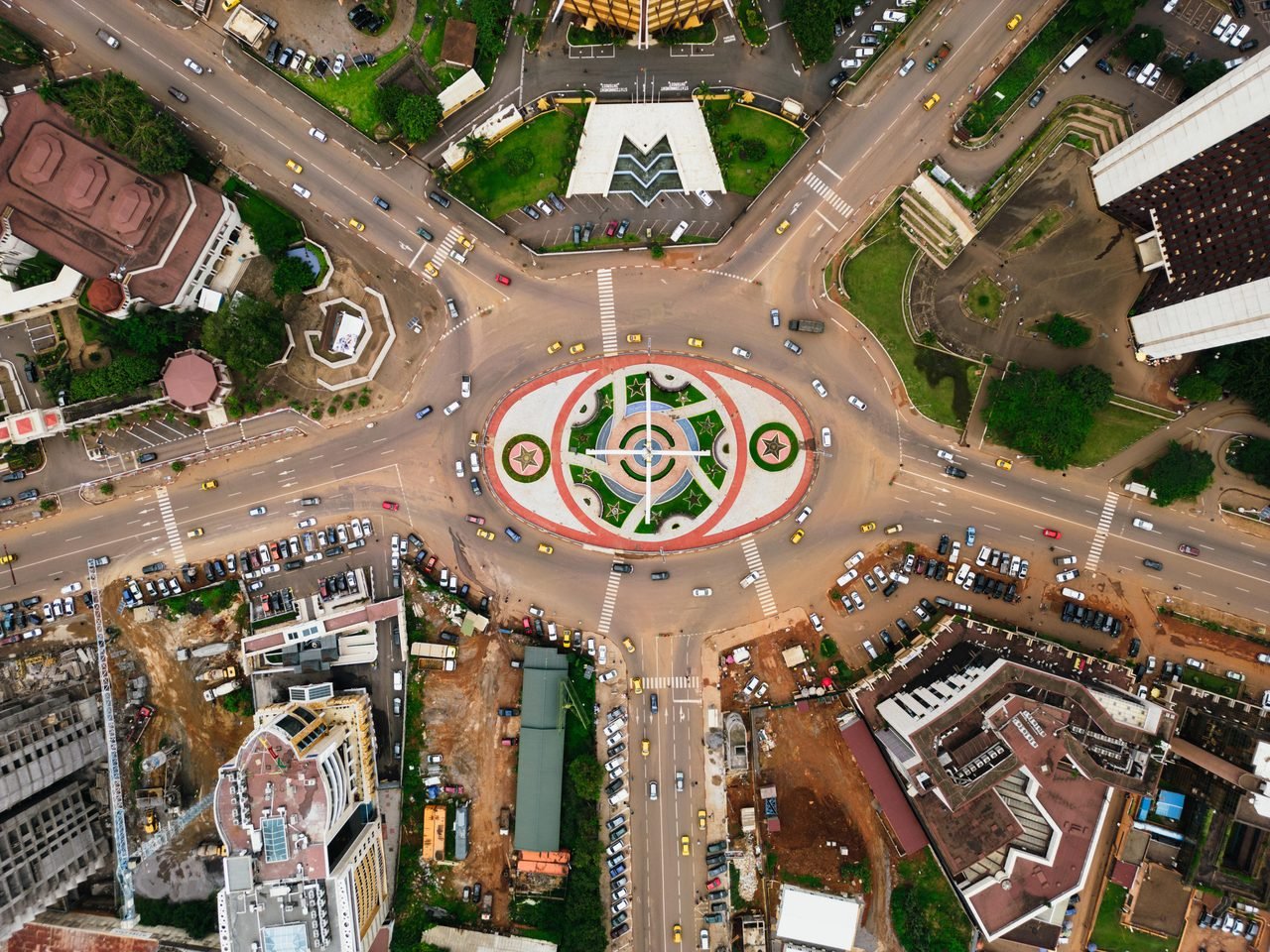
This beginner-friendly guide explores how a national holiday can carry meaning beyond ceremony. It links environmental stewardship with social impact, cultural identity, and international cooperation. Readers in the United States will gain context on the nation’s history, diaspora ties, and role in global discussions. The aim is to show how local priorities can inform practical, sustainable development—while keeping people and their home at the center.
Cameroon Independence Day observance, Environmentalism and Global Development
For beginners, the Cameroon national day marks a change in constitutional structure, not the country’s first independence milestone. A referendum on May 20, 1972 replaced the federal system with a unitary state. The annual national day falls on May 20; in 2026, it arrives on Wednesday.
How public celebrations connect history with sustainability
Schools, government offices, plus most businesses typically close for this public holiday. Ceremonies, public events, traditional music, and media coverage can open space for conversation about sustainability. Still, a celebration is not a development program; it can prompt reflection on public services, inclusion, and the needs of citizens.
What beginners should know about national holidays
The nation includes more than 200 ethnic groups plus over 230 spoken languages, including French and English. This cultural diversity helps explain the phrase “Africa in miniature.” Its traditions enrich national identity, while unity remains an ongoing goal. The guide considers social, cultural, and environmental questions at a practical level.
| Topic | Key detail | Why it matters |
|---|---|---|
| History | 1972 referendum | Changed the state structure |
| Calendar | May 20 each year | 2026 falls on Wednesday |
| Culture | Many languages, communities | Shapes identity, public life |
From French Cameroun and British Cameroons to a United Republic

A colonial map shaped the republic long before its residents could choose its political future. Germany colonized Kamerun in 1884. After World War I, France governed the larger eastern area; Britain administered the western territory beside Nigeria.
German Kamerun, World War I, and the division under French and British rule
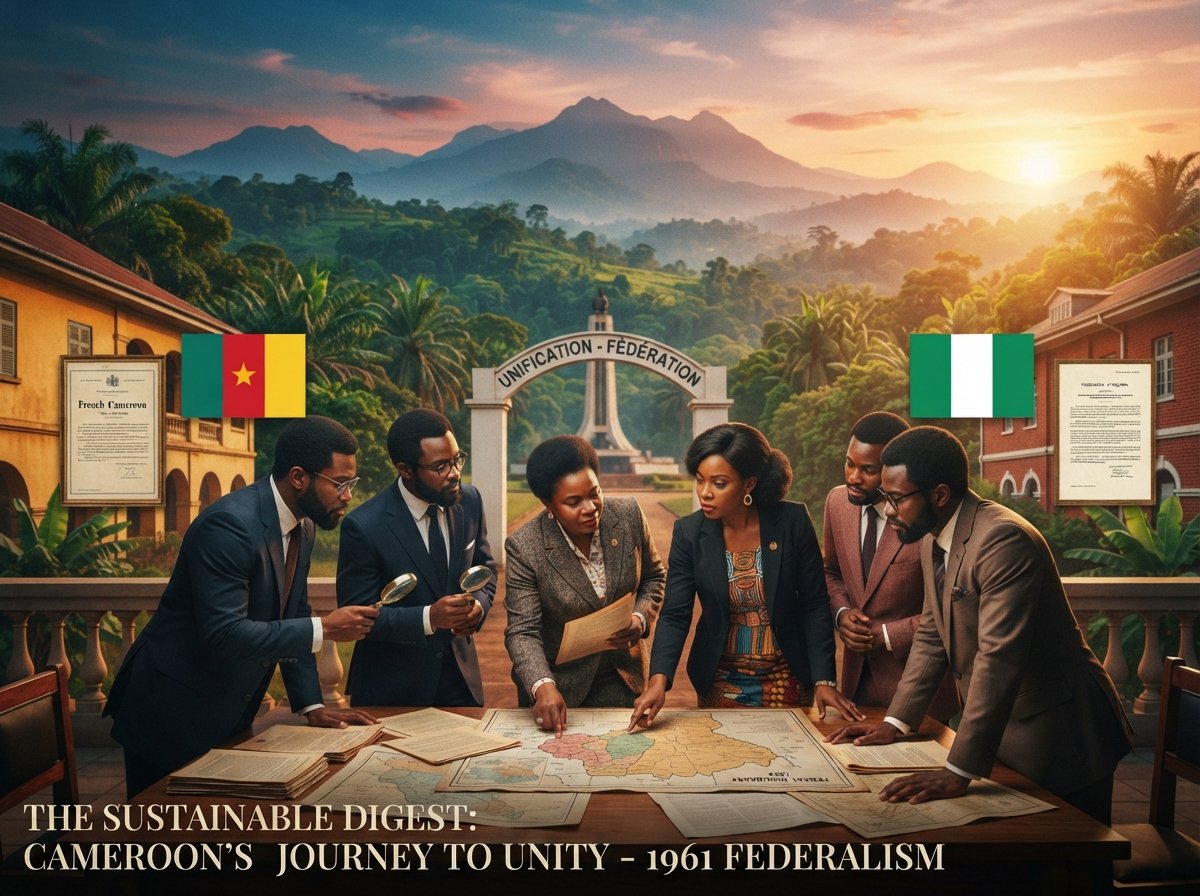
French Cameroun became independent on January 1, 1960. Ahmadou Ahidjo became its first president. In February 1961, a UN-supervised vote led Southern Cameroons to join the republic; Northern Cameroons chose Nigeria. The union formed the Federal Republic of Cameroon.
Independence in 1960 and the Southern Cameroons plebiscite
The 1961 union created a federal system. It joined two territories, but it was not the 1960 independence milestone. Ahmadou Ahidjo served as president from 1960 to 1982.
Why May 20 marks the move from a federal system to a unitary state
On May 20, 1972, a second vote replaced the federation with a unitary state. The national day marks that constitutional shift, not the earlier independence date or union. The change reshaped the state structure in the name of unity.
- 1960: French Cameroun gained independence.
- 1961: Southern Cameroons joined the republic.
- 1972: The vote established a unitary state.
Essential Facts About Cameroon National Day and Sustainable Development

Ten quick facts show how a public celebration can reflect culture, civic life, plus future choices. The ceremony has clear customs; its wider meaning depends on what people build afterward.
Parades, traditional music, and cultural identity across the regions
- The May 20 vote of 1972 created a unitary state; independence came in 1960, followed by union in 1961.
- The President leads the main parade at Yaoundé’s 20th of May Boulevard.
- Regional capitals, towns, schools, police, youth groups, soldiers, plus political groups hold events.
- Regional dances, the balafon, local drums, Bamenda’s Toghu, ndolé, achu, and eru showcase cultural heritage.
- Cameroon National Day can spotlight cultural diversity; ecotourism and green aviation remain development aims, not parade customs.
Unity, political inclusion, and the continuing Anglophone question
- The Anglophone crisis intensified in 2016, affecting the anglophone regions.
- A 2019 national dialogue set special status for both English-speaking regions.
- More than 270,000 people faced displacement by the 2018 election period.
- Human rights, inclusion, and peace matter to lasting unity; a holiday alone cannot resolve conflict.
- Cooperatives, regional cooperation, plus community-led projects can turn civic hopes into practical gains.
For citizens, the national day honors shared history while leaving room for honest debate. The Cameroonian people’s traditions enrich the nation; lasting progress also calls for inclusive choices by government, businesses, and communities.
How Sustainable Infrastructure Differs Across Cameroon’s Industries

The national day can prompt reflection on what durable progress looks like. Since 1960, the country has expanded hydroelectric capacity plus transport facilities. Yet access, reliability, and resilience remain separate tests. Local needs shape the best choice.
Hydropower, energy access, and resilient electricity systems
Hydropower can provide low-carbon electricity, but dams alone cannot ensure steady service. The government can pair generation with grid links, maintenance, and backup options. A resilient system matters most when homes, clinics, and firms can rely on it.
Transport, roads, ports, and greener aviation connections
Roads connect farms with markets; ports support trade; aviation links distant communities. Greener aviation is a useful planning lens, not a documented national project. Each investment should fit the needs of its region.
Agriculture, forestry, and infrastructure designed for local needs
The 1973 Green Revolution aimed for food self-sufficiency plus sales to neighboring markets. Petroleum became the country’s most valuable export in the 1970s, while local agribusinesses and small firms also grew. Storage, farm roads, and careful forest access can support livelihoods across regions without treating every place alike.
| Sector | Infrastructure priority | Community benefit |
|---|---|---|
| Energy | Reliable grids, resilient supply | Steadier power for homes, services |
| Transport | Roads, ports, lower-impact links | Better access to jobs, markets |
| Agriculture and forestry | Storage, local roads, managed access | Stronger producers, protected livelihoods |
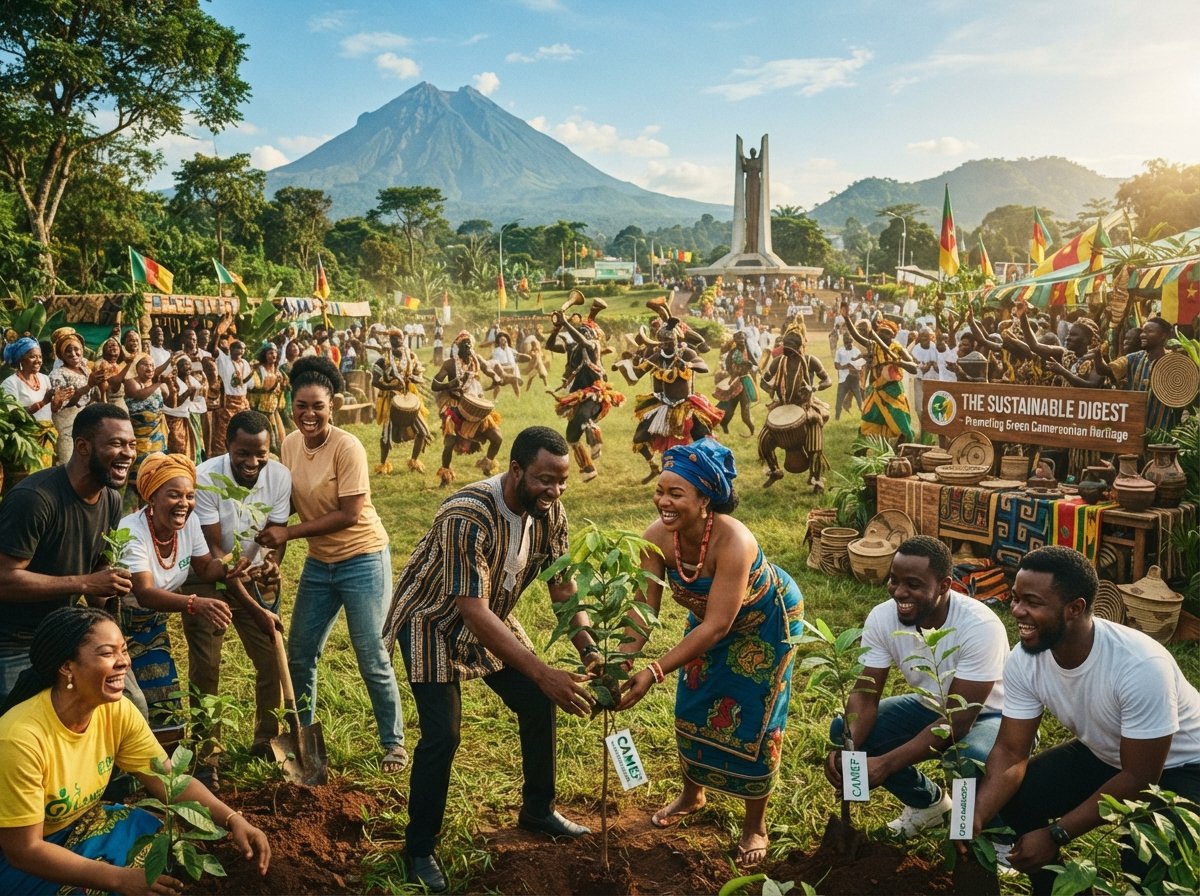
Environmental Stewardship, Ecotourism, and Climate Resilience
Healthy forests store carbon, protect water, shelter wildlife, plus support livelihoods. The “Africa miniature” label reflects the country’s varied landscapes; conservation connects regions through shared natural systems.
Protecting forests, biodiversity, and the Korup landscape
Korup National Park Forest is described as 60 million years old. This long history gives forest protection real weight. Its biodiversity supports ecological balance, while local care can ease pressure on habitats.
Connecting community livelihoods with responsible ecotourism
Debundscha reportedly receives 405.5 inches of rain each year, making it one of Earth’s wettest places. Such exposure calls for local drainage plans, safer routes, plus early warnings. Climate resilience starts with each region’s needs.
Responsible ecotourism can support guides, food producers, plus craft makers. The community should help set visitor limits, share revenue fairly, protect traditions. These choices can strengthen unity without turning living culture into a show.
National day events may raise awareness, but conservation takes steady work over time. Lasting benefits depend on local choices beyond a single celebration.
| Priority | Practical action | Local benefit |
|---|---|---|
| Forest protection | Support habitat care | Safeguard biodiversity |
| Climate resilience | Plan for heavy rain | Improve safety |
| Responsible tourism | Share decisions and income | Support livelihoods |
United Nations SDGs With the Greatest Potential Impact in Cameroon

For Cameroon, the UN Sustainable Development Goals offer a framework for setting priorities, not proof of results. Ten goals merit close attention as the nation plans for fair, lasting progress.
Priorities for health, education, clean water, and reduced inequalities
- No Poverty; Zero Hunger
- Good Health, Well-Being; Quality Education
- Gender Equality; Clean Water, Sanitation
- Affordable, Clean Energy; Decent Work, Economic Growth
- Climate Action; Peace, Justice, Strong Institutions
Education grew after 1960, offering useful context for SDG 4. That history does not measure current access or teaching quality. Health care, safe water, plus reduced inequality also depend on services reaching each community.
Paths to clean energy, decent work, climate action, and strong institutions
Hydroelectric capacity can support cleaner power, while local enterprise can create jobs. Yet reliable services, fair work, climate planning, strong institutions matter more than resources alone. Human rights should guide public choices; the national assembly can help shape oversight.
In 1987, the government recognized the need for an IMF structural adjustment program with budget cuts. In 2006, Paris Club relief canceled most debt owed to that creditor group. These events inform debate on fiscal space, not a simple measure of outcomes.
| Focus | Related goals | Practical measure |
|---|---|---|
| Public services | Health, education, water | Track access across regions |
| Work, energy | Clean power, decent jobs | Assess reliability, job quality |
| Climate, institutions | Climate action, justice | Review plans, public accountability |
Cameroon as a Regional Nexus Between West and Central Africa
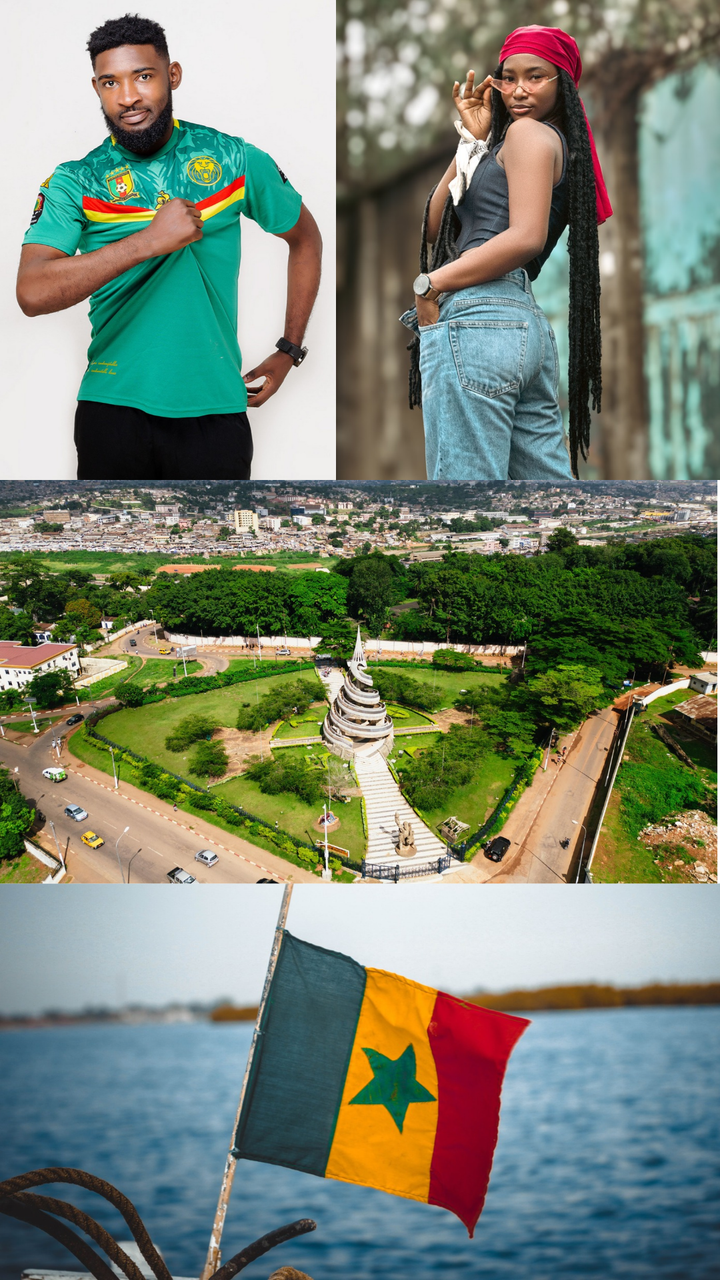
Cameroon became a union in 1961, after Southern Cameroons voted to join the Republic of Cameroon. Its location links coastal trade routes with inland markets. The national day can prompt reflection on how cross-border ties shape unity across varied regions.
Comparing ties with Equatorial Guinea, Gabon, Chad, and the Central African Republic
Equatorial Guinea, Gabon, Chad, plus the Central African Republic each bring distinct borders, institutions, resources, and trade needs. These neighbors are not one political bloc. Their links with the country reflect local geography, shared infrastructure, commerce, migration, plus diplomacy.
Regional connections with Nigeria and the Republics of Congo
- Nigeria shares a key border with Cameroon. The ICJ awarded the Bakassi Peninsula to Cameroon in October 2002. Its transfer was largely complete by August 2006; leaders marked completion on August 14, 2008.
- The Democratic Republic of the Congo is separate from the Republic of the Congo; each has its own political context.
- In 2015, Cameroon joined an African Union-approved multinational force with nearby countries to coordinate action against Boko Haram. Cooperation also matters to the anglophone regions, where diplomacy can support stability across the wider region.
Legal agreements plus regional coordination can turn shared borders into practical ties.
Green Fiscal Policies That Can Keep Cameroon Competitive

Fiscal policy can help local firms compete in African markets, the global South, plus export trade. The proposals here are analysis, not confirmed programs. Predictable rules matter to investors; public value matters too.
Public investment, taxes, and incentives
Public investment in power, roads, storage, clean transport can cut costs. The government could use clear tax rules plus time-limited incentives for efficient equipment. These proposals need national assembly review; they do not describe verified current measures.
Balancing resource income with productive sectors
Petroleum became the country’s top export in the 1970s. Revenue raised prices paid to farmers, funded imports of materials plus technology, then built reserves. Poorly planned, costly projects also lost capital. The lesson: test projects, publish budgets, track returns.
Financing resilience for communities, firms
Balanced rules should support farms, managed forestry, conservation, agribusinesses, local makers. Climate finance could shield each region’s roads, homes, shops from floods, heat, supply shocks. Reliable standards can help local products reach international buyers.
| Fiscal choice | Potential benefit | Key safeguard |
|---|---|---|
| Clean infrastructure | Lower costs | Track project results |
| Farm, forest support | Protect livelihoods | Set clear standards |
| Climate finance | Stronger local services | Report spending openly |
Community Development, Cooperative Economics, and Social Impact
Durable services work better when residents help set priorities, shape plans, review costs, and track results. In this country, traditional chiefs and fons may help settle disputes when their authority aligns with national law. Their local knowledge can guide projects, while citizens retain a voice in public decisions.
How local participation can shape durable projects and services
The legal system combines civil law, common law, and customary law. Service teams that understand these systems can work with local institutions instead of overlooking them. Clear roles also help the government respond to concerns before they grow.
Supporting small businesses, cooperatives, and fair access to opportunity
Cooperatives can pool purchases, share production tools, and reach wider markets. These gains depend on fair rules, open accounts, and real demand. Reports of growing agribusinesses and small firms making goods for local use show how enterprise can create opportunity.
“Durable services begin with local knowledge, clear roles, and public trust.”
For the Cameroonian people, local enterprise can strengthen livelihoods. Cameroon people in each region benefit when support reaches small producers, not only major firms. Strong community ties, transparent choices, and peaceful dispute resolution can help progress last.
| Approach | Practical value | Key safeguard |
|---|---|---|
| Local consultation | Plans reflect lived needs | Include varied voices |
| Cooperatives | Shared buying, production, market access | Use clear accounts |
| Small businesses | Local jobs, useful goods | Keep opportunity fair |
Cameroonian Diaspora, Cultural Heritage, and Global Partnerships

Across France, the United States, plus Canada, diaspora networks keep close ties with home while building civic links. The Cameroonian diaspora can turn cultural exchange into practical partnerships, not just warm memories. On the national day, embassies and community groups may welcome wider audiences through local programs.
Connecting communities through culture and trade
Embassies and diaspora associations may host cultural events, educational forums, and gatherings. These can share history, traditions, and the story of French Cameroun’s path toward unity. Online media, including documentaries, can help younger generations explore these stories from abroad.
Strong ties can also bring direct value to communities. Support for Cameroonian-owned businesses and cultural groups links heritage with economic participation. The best partnerships give people in host countries and those in the country a voice in shared priorities.
- Share cultural heritage through public programs and digital resources.
- Build business links that respond to local needs.
- Keep exchange reciprocal, with learning flowing both ways.
A holiday can open the door; lasting ties depend on steady work after the gathering ends.
| Connection | Practical role | Shared value |
|---|---|---|
| Associations | Host forums, gatherings | Stronger community ties |
| Digital media | Share historical resources | Younger audiences engage |
| Business networks | Link firms with partners | Heritage meets commerce |
How to Read Cameroon’s Progress Through a Beginner’s Lens

Readers in the United States can assess a country by separating its history, public events, policy promises, and measured results. The May 20, 1972 referendum replaced the federal arrangement with a unitary state. The national day recalls that constitutional shift; it does not prove that every public goal has been met.
Political context matters. The Anglophone crisis intensified in 2016, followed by a national dialogue in 2019. By the 2018 election period, insecurity had displaced more than 270,000 people. A holiday can honor shared symbols, yet it cannot resolve every dispute.
At each review, compare government statements with visible change over time. Are local services reliable? Can roads and power systems withstand shocks? Are livelihoods improving? Do women, youth, and language communities shape decisions? These questions turn broad claims into checks readers can track.
Use the day as a starting point, not a final score. Look for evidence across several areas before judging progress.
| What to assess | Evidence to check | Useful question |
|---|---|---|
| Essential services | Access to health care, schools, clean water | Are services reaching local communities? |
| Resilience | Reliable power, safer roads, climate plans | Can systems withstand disruption? |
| Inclusion | Public input, fair access to livelihoods | Who helps shape decisions? |

Conclusion
History gives the Cameroon national day its deeper meaning: May 20 recalls the 1972 referendum, while independence came in 1960, followed by union in 1961. That timeline helps readers in the United States see unity as an ongoing civic task, shaped by cultural diversity, political inclusion, plus continuing challenges in the Anglophone regions.
Looking ahead, resilient infrastructure, habitat care, and community-led projects can turn national aims into gains people feel in daily life. Regional partnerships link local priorities with neighboring states; the Cameroonian diaspora extends those ties to wider networks.
Ultimately, this holiday offers a moment to reflect, not a measure of success. The nation’s future depends on accountable choices, reliable services, protected ecosystems, and fair opportunities. A meaningful holiday rests on action, not ceremony alone.
FAQ
Q: Why does May 20 hold national significance?
A: Cameroon marks its National Day on May 20. In 1972, voters approved a change from a federal republic to a unitary state. The date highlights national unity, though debates about inclusion remain.
Q: Did the country gain independence in 1960?
A: French Cameroun became independent on January 1, 1960. In 1961, voters in Southern Cameroons chose to join the new republic as a federated state. Ahmadou Ahidjo led the country during its early years.
Q: What changed when the federal system ended?
A: A 1972 vote replaced the federal structure with a unitary state. The change reshaped regional governance. The national assembly, public institutions, plus citizens continue to shape discussion about representation.
Q: What do national ceremonies usually include?
A: Events may feature parades, speeches, traditional music, local dress, plus school or community groups. These traditions express cultural heritage across the regions; they can also prompt discussion of human rights, peace, political inclusion.
Q: How does environmental care support local livelihoods?
A: Forest protection can preserve biodiversity, support clean water, help communities maintain livelihoods. Korup National Park is known for rich tropical ecosystems. Responsible ecotourism can create income while limiting harm to habitats.
Q: Which infrastructure projects can support sustainable progress?
A: Reliable hydropower, stronger electricity networks, safer roads, efficient ports, plus climate-resilient farms can improve access to jobs, services, markets. Good planning should reflect local needs, not just large project goals.
Q: How can the United Nations goals guide public priorities?
A: The SDGs offer a framework for health, schooling, clean water, fair opportunity, decent work, clean energy, climate action, strong institutions. Clear measures help residents track results over time.
Q: Why does the country matter to nearby states?
A: Its position links West Africa with Central Africa. Trade ties connect it with Nigeria, Chad, Equatorial Guinea, Gabon, the Central African Republic, plus the Republic of the Congo. Diaspora networks also support cultural exchange, investment, skills sharing.
Q: What role can cooperatives play in community progress?
A: Cooperatives can help small businesses pool resources, reach markets, share skills. Local participation can make projects more useful; fair access can help more people benefit from services, finance, training.
Key Takeaways
- May 20 marks a 1972 constitutional shift, not the start of independence.
- The 1972 referendum placed national unity at the center of public debate.
- Cameroon’s varied regions offer lessons for conservation, tourism, and planning.
- Community participation helps make infrastructure more inclusive and sustainable.
- The date links cultural identity with diaspora ties and international cooperation.