

Did you know that the Global South, comprising 134 countries, is home to about 80 percent of the world’s population? Despite generating over 40 percent of global economic output, a staggering 3.4 billion people live in nations where debt payments exceed combined spending on health and education. This stark reality highlights the pressing need for innovative solutions to tackle inequality.
As we delve into the complexities of reducing disparities, it’s crucial to recognize the unique position of South-South partnerships. Unlike traditional aid models, these collaborations are rooted in mutual benefit and respect for national sovereignty. They offer a fresh approach to addressing the persistent challenges faced by developing nations.
Moreover, the emergence of advanced technologies like artificial intelligence and blockchain presents unprecedented opportunities. These tools can empower countries historically sidelined in previous industrial revolutions, enabling them to leapfrog into a more equitable future.
In this article, we will explore how the principles of cooperation and innovation can forge pathways to a more inclusive world, ultimately addressing the elusive goal of reducing inequalities.

Understanding SDG #10 and the United Nations Day of South-South Cooperation
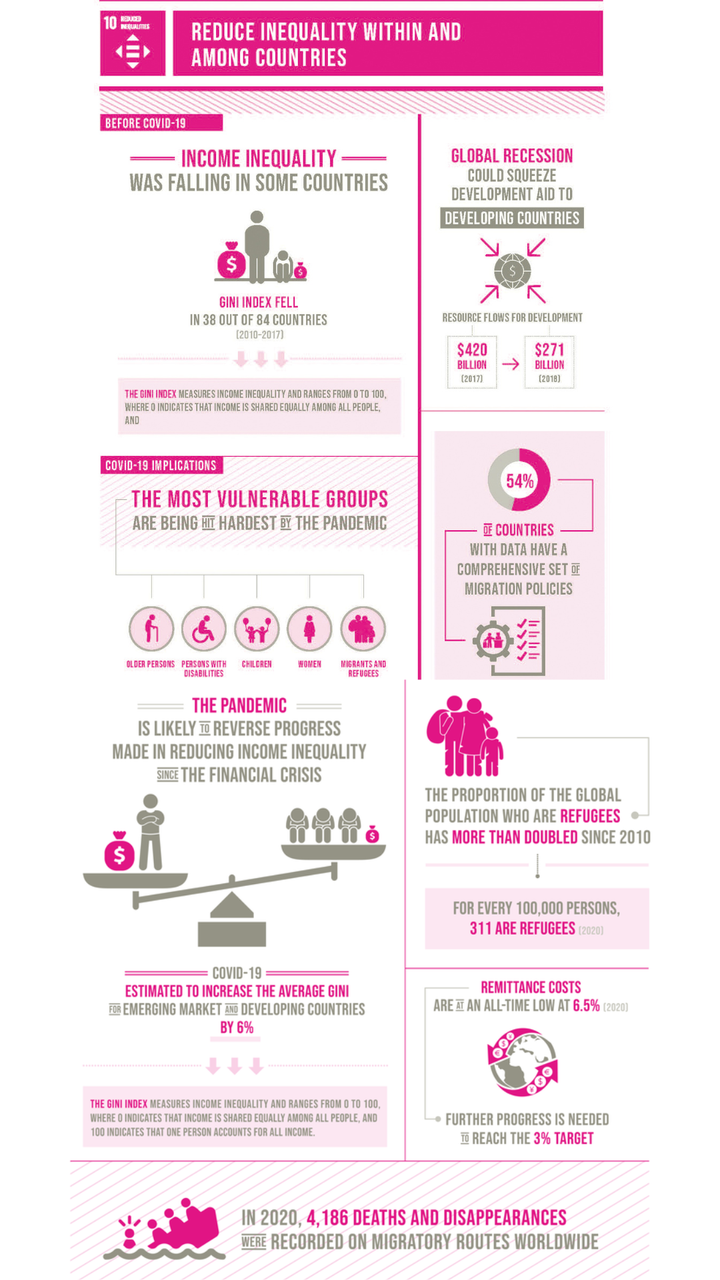
The Global South is a vibrant tapestry of 134 nations, representing about 80% of the world’s population. This region faces significant challenges, particularly regarding inequality. The Sustainable Development Goal of reduced inequalities also known as SDG #10 focuses on reducing inequalities both within and among countries. It emphasizes the need to address income disparities, social exclusion, and unequal representation in global governance.
This goal serves as a crucial link between various sustainable development objectives. Unlike goals that target specific sectors like health or education, SDG #10 confronts the very structure of inequality. It aligns seamlessly with the foundational principles of South-South partnerships, which advocate for equitable knowledge and resource sharing among developing nations.
Overview of SDG #10: Reducing Inequalities
SDG #10 is not merely a standalone target; it is the connective tissue linking all other sustainable development goals. It seeks to address:
- Income disparities across nations.
- Social exclusion affecting marginalized communities.
- Discriminatory policies that perpetuate inequality.
- Unequal representation in global governance structures.

The Significance of the United Nations Day for South-South Cooperation
The United Nations Day for South-South Cooperation is pivotal in recognizing the importance of collaborative efforts among developing countries. This day highlights how South-South partnerships can effectively tackle global challenges. The Buenos Aires Plan of Action, established in 1978, laid the groundwork for these cooperative initiatives. It promotes mutual support and knowledge exchange among nations, fostering a spirit of solidarity.
Role of South-South and Triangular Cooperation in Sustainable and International Development
South-South and triangular cooperation play vital roles in implementing the 2030 Agenda. These forms of collaboration are not just supplementary mechanisms; they are strategic means of achieving sustainable development goals. The recent engagement of over 130 countries at the 22nd Session of the High-level Committee on South-South Cooperation illustrates the growing recognition of these partnerships. Member states increasingly view these collaborations as essential to navigating the complexities of global challenges.
Triangular cooperation, which involves partnerships between developing countries supported by developed nations, emphasizes respect for national sovereignty and mutual benefit. This approach complements traditional North-South cooperation by fostering a more inclusive development landscape.
In conclusion, the emphasis on reducing inequalities found in SDG #10 finds its most natural expression in South-South cooperation. This model recognizes that every country is both a provider and a recipient of knowledge, creating a more equitable global community.
The Nexus of 4th Industrial Technologies and Sustainable Development in the Global South

In the rapidly evolving landscape of the Global South, innovative technologies are emerging as key drivers of sustainable development. The convergence of artificial intelligence, machine learning, blockchain, the metaverse, and Web 3.0 presents unique opportunities for developing countries. These technologies are not only reshaping traditional sectors but also offering new solutions to long-standing challenges.
Emerging Technologies: AI, Machine Learning, Blockchain, Metaverse, and Web 3.0
The fourth industrial revolution can be a great equalizer. Unlike past revolutions that concentrated wealth and technology in the Global North, these emerging technologies are inherently distributed. Countries in the Global South can adopt and adapt these innovations without needing extensive legacy infrastructure.
For instance, AI and machine learning applications are transforming agriculture and permaculture. Predictive crop modeling and soil health monitoring are being shared among developing nations through south-south triangular cooperation. This reduces reliance on proprietary technologies from the North.
Integration of Technology with Key Sectors: Data Centers, Ecotourism, and Agriculture
Blockchain technology is enhancing supply chain transparency in ecotourism. Immutable ledgers allow small island developing states to verify sustainable practices and ensure that tourism revenue benefits local communities. This shift is crucial for maintaining the integrity of ecotourism and fostering economic growth.
Data centers are becoming critical infrastructure in the Global South. With foreign direct investment flows quadrupling since the 1990s, countries are increasingly directing resources toward digital infrastructure. This enables them to host their own data, addressing sovereignty issues related to data exportation.
Addressing Challenges in Small Island Developing States and Remote Rural Communities
Small island developing states face unique challenges such as rising sea levels and limited land mass. However, these nations are also motivated to adopt renewable energy microgrids and AI-driven disaster preparedness systems. Such initiatives are often facilitated through south-south triangular cooperation, enabling shared knowledge and resources.
Remote rural communities are leveraging satellite-enabled connectivity and drone-based logistics to bridge infrastructure gaps. These advancements allow isolated populations to engage in digital economies without waiting for traditional infrastructure development.
| Technology | Sector Impacted | Key Benefits |
|---|---|---|
| AI & Machine Learning | Agriculture | Improved crop yields, climate resilience |
| Blockchain | Ecotourism | Transparency, local revenue retention |
| Data Centers | Digital Infrastructure | Data sovereignty, economic growth |
| Renewable Energy | Energy | Reduced dependence on imports, sustainability |
| Remote Sensing | Forestry | Deforestation monitoring, conservation |

These technological integrations are not just theoretical. The surge in south-south trade, projected to reach US$6.8 trillion by 2025, demonstrates that developing countries are exchanging goods, services, and digital solutions at an unprecedented scale. This evolution transforms south-south cooperation from a mere knowledge-sharing exercise into a vibrant ecosystem of technology transfer and co-innovation.
Environmental and Social Impacts on Inequalities (SDG #10): Challenges and Opportunities
Environmental factors have become critical players in the growing inequalities faced by developing nations. The countries least responsible for historical carbon emissions are suffering the most severe consequences of climate change. This creates a feedback loop where environmental degradation deepens economic and social disparities.
Climate change operates as an inequality multiplier. Droughts destroy agricultural livelihoods in remote rural communities, while floods displace populations in Small Island Developing States. Extreme weather events strain public health systems that are already weakened by debt service obligations exceeding health and education spending for 3.4 billion people.
Forestry presents a dual-edged sword. Deforestation driven by global commodity demand strips developing countries of natural capital. However, reforestation and permaculture initiatives—often shared through south-south cooperation—offer pathways to carbon sequestration, biodiversity restoration, and sustainable livelihoods.

Environmental and Social Impacts on Inequalities (SDG #10): Challenges and Opportunities continuing…
Permaculture is a specifically Southern innovation. Regenerative agricultural practices that mimic natural ecosystems are being exchanged among developing countries through south-south triangular cooperation. This reduces dependence on expensive synthetic inputs and builds climate resilience from the ground up.
Shifting to social dimensions, responsible travel and aviation are not neutral industries. They carry embedded inequalities in who travels, who benefits from tourism revenue, and whose carbon footprint is externalized onto communities that never board a plane.
Community-based ecotourism models can positively affect inequalities. Verified through blockchain-based certification, these models ensure that tourism revenue circulates within local economies rather than leaking to foreign-owned resorts and international tour operators.
Aviation plays a crucial role in global relations. Direct south-south air routes reduce the time and cost of cooperation among developing countries. Sustainable aviation fuel initiatives and carbon offset programs, if designed equitably, can channel resources from high-emitting travelers to conservation projects in the Global South.
…Continuing of Environmental and Social Impacts on Inequalities (SDG #10): Challenges and Opportunities
The Dushanbe Water Conference highlighted that water security is no longer solely an environmental issue but a major socio-economic, peace, and security priority. This illustrates how environmental and social impacts are inseparable in the inequality equation.
At the World Urban Forum in Baku, rapid urbanization in the Global South was discussed. This creates new inequalities related to housing, infrastructure, and services that require south-south triangular cooperation approaches to address effectively.
Social impact can affect inequalities in both directions. Exclusionary policies, discriminatory practices, and unequal access to technology widen gaps. Conversely, inclusive governance, participatory design, and equitable technology deployment can narrow them.
Finally, leveraging technology offers concrete mechanisms to mitigate the environmental and social impacts driving inequality. AI for climate modeling, blockchain for transparent climate finance, renewable energy microgrids for energy access, and telemedicine for public health are all solutions that can be deployed through south-south cooperation frameworks prioritizing equity over extraction.
Conclusion: Advancing SDG #10 through South-South Cooperation and Emerging Technologies
As we navigate the complexities of global development, the role of collaborative frameworks becomes increasingly vital. The Global Alliance for South-South and Triangular Cooperation embodies a structural response to the pressing challenges identified throughout this article. This initiative, launched on the 2026 observance, connects countries with the expertise and resources needed to foster real-world solutions.
By leveraging emerging technologies like AI and blockchain, nations can address inequalities more effectively. The Global Alliance facilitates partnerships that scale proven innovations and supports implementation through knowledge sharing and technical exchanges.
Ultimately, the future of inclusive sustainable development hinges on abandoning outdated models. The collective action emphasized in the 2026 theme, “Solidarity Rising,” reflects the necessity for cooperation across all sectors. The solutions and innovations required to advance these goals already exist within the Global South; the challenge lies in connecting them.
Countries that have contributed least to global inequality are leading the way in pioneering solutions. Through collaboration, there is much to learn from their experiences, paving the path toward a more equitable future.

Key Takeaways
- The Global South generates over 40% of global economic output.
- 3.4 billion people live in countries prioritizing debt service over health and education.
- South-South cooperation emphasizes mutual benefit and respect for sovereignty.
- Advanced technologies can democratize opportunities for developing nations.
- Innovative solutions are essential for addressing persistent inequalities.