For decades, the ground beneath our feet was largely ignored in global discussions. Then came a shift. The United Nations designated December 5th as World Soil Day in 2014. This move transformed soil from a niche concern into a worldwide priority.
Healthy soil is the foundation of our food systems. Approximately 95% of what we eat depends on it. Yet, degradation threatens this vital resource. Proper soil management could boost food production by up to 58%. That’s a game-changer for global nutrition.
Soil also plays a critical role in fighting climate change. It captures around 80% of terrestrial carbon. This makes it a powerful ally for a stable climate. Plus, it hosts nearly 59% of Earth’s species. Biodiversity thrives where we rarely look.
The hidden hunger crisis affects two billion people. Soils supply most essential elements plants need. Without healthy soils, food lacks nutrients. Global Soil Week emerged to turn awareness into action. It brings experts together to create real solutions.
The Historical Foundation of Global Soil Awareness
International policy makers long treated the earth beneath our feet as an afterthought. This oversight persisted despite its fundamental role in human survival. The turning point came when scientific evidence could no longer be ignored.
Origins and UN Designation
The United Nations finally acknowledged this critical resource in 2014. December 5th became the official day of recognition. This designation marked a shift from neglect to global priority.
Before this milestone, farmers and rural communities understood the value of healthy soil. They witnessed its direct impact on food production and quality. Their traditional knowledge often surpassed official policies.
Evolution from Scientific Concern to Global Movement
Researchers had documented soil degradation for decades. Their warnings initially was disregarded. The transformation began when environmental and food security concerns merged.
Scientific data gradually influenced international discourse. Evidence showed how proper management practices could transform agriculture. This created momentum for broader action.
The movement expanded beyond academic circles. It embraced practical solutions for farmers worldwide. This approach recognized that theory alone wouldn’t ensure our future food supply.
FAO’s Role in Establishing International Governance
The Food and Agriculture Organization emerged as a key player. Their 80th anniversary in 2025 celebrates eight decades of work. Their commitment to food security shaped global approaches.
FAO’s Global Soil Partnership supports nations in protection efforts. It helps translate science into actionable policies. The partnership acknowledges different regional challenges.
Several initiatives demonstrate this practical approach:
Initiative
Focus Area
Impact Scale
RECSOIL
Carbon sequestration in agricultural lands
Global climate benefits
Global Soil Doctors
Farmer education and capacity building
Local implementation
Green Cities
Urban soil restoration
300+ cities worldwide
The RECSOIL initiative cleverly addresses climate concerns through agriculture. It makes soil health relevant to carbon-focused policymakers. This strategic framing has increased political support.
Capacity building remains essential for real change. The Global Soil Doctors Programme bridges knowledge gaps. It connects research with practical management practices.
Urban areas now recognize their role in soil health. The Green Cities Initiative involves over 300 municipalities. This expansion shows soil’s relevance beyond traditional agriculture.
International governance developed through incremental steps. This pragmatic approach built consensus gradually. The commitment to long-term food security sometimes conflicts with short-term priorities.
These efforts collectively address our planetary survival needs. They recognize that healthy soil supports not just agriculture but entire ecosystems. The impact extends to urban and rural communities alike.
Looking to the future, these foundations support sustainable agriculture worldwide. They represent a growing understanding of our interdependence with the ground beneath us.
Global Impact and Policy Development Over Time
European policymakers finally acknowledged what farmers knew for centuries: the ground beneath our feet holds the key to our collective future. This realization sparked the most ambitious regional framework for land protection ever attempted.
European Union’s Comprehensive Soil Strategy Framework
The EU Soil Strategy for 2030 represents a monumental shift in environmental policy. It establishes a comprehensive framework for protecting and restoring degraded lands across member states.
Approximately 70% of European soils suffer from poor condition. This startling statistic forced action at the highest levels. The strategy addresses erosion, carbon loss, and biodiversity decline simultaneously.
Implementation faces significant political hurdles. Different nations prioritize farming needs versus conservation goals. The tension between scientific urgency and practical reality shapes final outcomes.
Mission Soil and the 2030 Biodiversity Targets
Mission Soil stands among Horizon Europe’s most critical initiatives. It shares priority with cancer research and climate adaptation—a telling placement.
The mission accelerates the transition to healthy lands through 100 living labs. These practical testing grounds bridge research and real-world application. They represent innovative approaches to age-old problems.
Targets aim for healthy soils by 2050. This long-term vision often conflicts with short political cycles. The mission acknowledges that proper land management requires decades, not election terms.
The Soil Monitoring Directive: A Legislative Milestone
The Soil Monitoring Directive achieved final approval in late 2025. The EU Council adopted it on September 29, followed by European Parliament endorsement on October 23.
This legislation marks a hard-won victory after years of negotiation. Original ambitions became diluted through political compromise. Yet it establishes crucial monitoring standards across the continent.
The directive addresses erosion’s impact on entire ecosystems. It recognizes that conservation efforts must integrate land use, water management, and biodiversity protection. Carbon sequestration presents both opportunity and challenge for modern farming.
European policies increasingly influence global standards. Their approaches may shape international development and trade relationships. The world watches as Europe tackles this fundamental planetary issue.
Regional Implementations and Sustainable Practices
The translation of international land policies into regional practices uncovers a complex tapestry of adaptation and resistance. Local contexts shape conservation outcomes in unexpected ways. This year marks critical milestones for several regional initiatives.
Africa’s Soil Conservation Challenges and AGRA’s Initiatives
African landscapes face unique conservation hurdles. Approximately 65% of the continent’s arable land suffers damage. Soil erosion affects about 30% of African territory.
These challenges demand context-specific solutions. The Alliance for a Green Revolution in Africa (AGRA) bridges policy and practice. Their training programs equip farmers with essential skills.
AGRA promotes sustainable management practices including crop rotation and cover crops. These techniques address food security concerns directly. Smallholder farmers learn methods that protect their livelihoods.
Adoption rates vary across different communities. Economic incentives and cultural traditions influence implementation success. The program’s impact becomes visible over multiple growing seasons.
Urban Soil Management: From Theory to Practice
City expansion creates new conservation dilemmas. Urban growth threatens up to 3% of global food production. This poses direct challenges to future food security.
By 2050, two-thirds of the world’s population will reside in urban areas. This projection makes urban land management essential for collective survival. Cities consume fertile land through relentless expansion.
The tension between development and conservation represents a classic sustainability dilemma. Economic growth often overshadows environmental concerns in rapidly developing regions. Practical solutions must balance competing priorities.
Urban planning increasingly incorporates land health considerations. This year has seen innovative approaches to peri-urban agricultural protection. These efforts demonstrate growing commitment to integrated development.
SPADES Program: Integrating Soil Science into Spatial Planning
The SPADES program exemplifies technical innovation meeting practical application. It works with 17 pilot sites to integrate land considerations into spatial planning. This initiative bridges science and policy effectively.
Collaboration between technical experts and local authorities remains crucial. The program developed two essential tools for implementation:
Tool
Primary Function
Application Scope
Evaluation Framework
Assesses soil-inclusive planning instruments
Policy development and review
Diagnosis Workbook
Practical assessment tool for local conditions
Field implementation and monitoring
These tools help translate complex science into actionable approaches. They address the gap between research findings and practical management practices. The program’s solutions consider diverse regional contexts.
Successful implementations in one region often fail when transplanted without modification. This underscores the importance of localized adaptation strategies. The SPADES approach recognizes that effective conservation requires contextual understanding.
Long-term commitment to land health demands sustained investment in both technical capacity and community engagement. Impacts may take years or decades to manifest in measurable outcomes. This reality tests the patience of policymakers seeking quick solutions.
World Soil Day and Global Soil Week in Context of Sustainability in Retrospect
The decade-long journey from awareness to measurable impact reveals both triumphs and persistent challenges. What began as specialized agricultural concern has matured into comprehensive sustainability thinking. This evolution reflects deeper understanding of our fundamental relationship with the ground beneath us.
Assessing the Tangible Outcomes of Decadal Efforts
Ten years of dedicated effort have yielded concrete results alongside ongoing difficulties. The movement has successfully transitioned from theoretical discussions to practical implementations. Recognition programs now celebrate excellence in land stewardship worldwide.
The Glinka World Soil Prize and King Bhumibol World Soil Day Award exemplify this progress. Supported by Russia and Thailand respectively, these awards incentivize innovative management practices. They transform abstract concepts into competitive achievements.
Urban applications have particularly demonstrated creative problem-solving. The 2025 theme “Healthy Soils for Healthy Cities” captured this expanding vision. It acknowledged that land health matters beyond traditional farming contexts.
The Shift from Awareness to Measurable Action
Moving beyond rhetoric requires implementation mechanisms and accountability frameworks. Many environmental movements struggle with this transition phase. The soil sustainability movement currently faces this implementation gap.
The FAO’s demonstration sponge park illustrates practical urban applications. This transformed space in front of building A shows multiple benefits simultaneously. It manages water, supports biodiversity, and improves local microclimates.
Urban lands perform essential ecosystem services often overlooked. They regulate temperature through natural cooling processes. They filter and store water, reducing flooding risks during heavy rainfall.
These spaces also contribute to food security through urban agriculture. They improve air quality by capturing particulate matter. They support diverse species within city environments.
Urban Soil Function
Practical Benefit
Sustainability Impact
Temperature Regulation
Reduces urban heat island effect
Lowers energy consumption for cooling
Water Filtration
Improves water quality naturally
Reduces treatment costs and pollution
Carbon Sequestration
Stores atmospheric carbon
Contributes to climate change mitigation
Biodiversity Support
Hosts urban wildlife and pollinators
Maintains ecological balance in cities
Food Production
Enables urban agriculture
Enhances local food security
Interconnectedness of Soil Health with Broader Sustainability Goals
Land quality increasingly appears as connecting tissue between sustainability challenges. It links climate action, food security, and urban resilience simultaneously. This interconnectedness makes it strategic leverage point for comprehensive improvement.
Pressure on urban lands continues growing through sealing and contamination. Rapid city expansion creates tension between development and conservation needs. Balancing these competing priorities requires innovative planning approaches.
The integration of land health into broader frameworks represents significant progress. It reflects more holistic environmental understanding than isolated agricultural concern. This maturation signals the movement’s coming of age.
Progress or regression in land quality creates ripple effects across multiple sustainability dimensions. This interconnected reality demands coordinated policy responses. It also offers opportunities for synergistic solutions that address multiple challenges simultaneously.
Conclusion
The journey from awareness to action reveals both progress and persistent gaps. Conservation efforts must expand beyond farms to entire ecosystems. This approach recognizes nature’s interconnected systems.
FAO’s ambitious goal targets 1000 cities by 2030. This year could mark a turning point for urban integration. The One Health framework links land vitality to human wellbeing.
Collaborative solutions are essential for meaningful impact. No single nation can address these challenges alone. Communities worldwide must share knowledge and resources.
Long-term commitment conflicts with short political cycles. Yet farmers‘ survival and global food security depend on healthy lands. The ultimate measure of success will be resilient food systems and thriving ecosystems.
Key Takeaways
World Soil Day, established in 2014, raised global awareness about soil’s importance.
Healthy soils are crucial for food production, providing up to 95% of our food.
Sustainable soil management could increase food output by more than half.
Soil acts as a major carbon sink, capturing 80% of terrestrial carbon.
Soil health directly impacts human nutrition and fights hidden hunger.
Global Soil Week helps translate soil awareness into practical strategies.
Soil biodiversity supports nearly 59% of all species on Earth.
Imagine a farmer using fertilizer, not knowing it has tiny synthetic particles. These small pieces start a long journey, ending up in oceans thousands of miles away.
Land activities and ocean damage are linked in a big way. What we do on land affects the ocean in ways we can’t see.
The United Nations has goals to fix these problems. But, tiny particles show we still have a lot to learn. They show how our actions on land affect the whole world.
It’s not just about the ocean or farms. It’s about how our choices affect everything around us. We’re harming our most important resources in ways we can’t even see.
The Microplastic Problem: Defining the Scope and Scale
Humans have made plastics so strong they last for centuries. Yet, they’ve also broken down into tiny pieces that harm our planet. This section explores how microplastics, tiny plastic pieces, have become a big problem worldwide.
What Are Microplastics? Types and Classification
Microplastics are a strange mix of human creation and environmental harm, however, these tiny plastics, smaller than 5mm, have become a big problem in nature. They challenge how we manage our environment.
Primary vs Secondary Microplastic Particles
There are two kinds of microplastics, each with its own story. Primary microplastics are made on purpose for certain uses, but consequently, they often get lost in the environment.
Secondary microplastics come from bigger plastics breaking down. They are the result of weathering and other environmental factors. Knowing the difference is key to solving the problem.
Characteristic
Primary Microplastics
Secondary Microplastics
Origin
Intentionally manufactured small particles
Breakdown of larger plastic items
Common Sources
Microbeads, plastic pellets, synthetic fibers
Plastic bottles, packaging, fishing gear
Size Range
Typically uniform, designed specifications
Highly variable, fragmentation-dependent
Environmental Pathway
Direct release from products/manufacturing
Gradual degradation in natural environments
Prevention Strategy
Product reformulation, manufacturing controls
Waste management, circular economy approaches
Size Ranges and Composition Variations
Microplastics come in all sizes, from big to tiny. The smallest ones are the hardest to track. This makes it tough to manage them.
They are made from many different plastics, each with its own effects on the environment. This makes solving the problem very complex.
Global Production and Distribution Patterns
The story of microplastics is one of pollution and unintended consequences. Some areas produce a lot of plastic waste, while others suffer from it. This pattern shows how plastic waste moves around the world.
Regional Differences in Microplastic Generation
Places with more plastic use often send their waste elsewhere. Asia makes the most plastic waste, while North America and Europe use more per person. This creates a big problem for the environment.
These differences make it hard to manage plastic waste. The result is plastic pollution that knows no borders, showing the economic gaps in our world.
Transport Mechanisms Through Atmospheric and Aquatic Pathways
Microplastics travel the world through air and water. The wind carries them across continents, while the ocean moves them with great precision. This is a big problem for our oceans.
Plastic waste from cities can end up in remote oceans thousands of miles away. This shows how connected our world is and how big our plastic problem is. It’s a challenge that needs global action.
Soil Impact Oceans Plastic Pollution Microplastics Waste Management UN SDGs
Modern farming has made us more efficient but at a cost. It has led to plastic pollution in our environment. This section looks at how farming contributes to microplastic pollution. It also follows the journey of these particles from soil to ocean.
Agricultural Practices Contributing to Microplastic Pollution
Farming methods to increase yields often use synthetic materials. These materials can harm our environment. Two main farming practices show how good intentions can lead to big environmental problems.
Plastic Mulching and Soil Contamination Levels
Plastic mulching helps crops grow but also pollutes soil. These thin sheets break down into microplastics. This happens when they are exposed to sunlight and weather.
Soils in fields with plastic mulching can have up to 300,000 microplastics per kilogram. These particles change how soil holds water and affect the life in the soil. They also make pollution last a long time.
Using treated sewage sludge as fertilizer is another problem. It recycles nutrients but also adds microplastics from wastewater. This creates a cycle of pollution instead of sustainability.
Fields treated with sewage sludge have much more microplastics than untreated ones. This method of solid waste management turns farms into places where urban plastic waste ends up. It’s a cycle of pollution, not sustainability.
Transfer Mechanisms from Land to Marine Environments
Microplastics move easily through water systems. They travel from farms to oceans through efficient pathways. These paths are like a well-organized delivery system.
Watershed Runoff and Riverine Transport
Runoff in watersheds acts like a plastic delivery system. It moves microplastics during rain. These particles ride on soil sediments, flowing into bigger water bodies.
Rivers carry plastic from farms to oceans. Studies show that watersheds from farms add a lot to ocean pollution. This shows how land and sea are connected.
Groundwater Pathways to Coastal Systems
Microplastics also move through groundwater. They travel through aquifers and underground flows. Eventually, they reach coastal areas.
Groundwater moves slowly, so microplastics from farming can reach oceans years later. This creates a problem for the future. It makes it hard to fight agriculture climate change mitigation efforts.
Marine Ecosystem Impacts of Microplastic Pollution
The ocean’s delicate balance is facing a big challenge from tiny synthetic invaders. These microplastics are too small to see but too many to ignore. They change marine ecosystems in big ways, affecting everything from tiny organisms to entire food webs.
Direct Effects on Marine Organisms and Biodiversity
Marine creatures face harm from microplastics in many ways. This harm can be immediate or long-term. It’s like they’re eating plastic with the same eagerness as their natural food.
Ingestion and Physical Damage Across Species
Filter feeders like mussels and whales accidentally eat microplastics along with plankton. Visual predators mistake plastic for food. This leads to:
Internal abrasions and blockages in digestive systems
False satiety leading to malnutrition and starvation
Reduced reproductive success across multiple species
Sea turtles eating plastic bags show the tragic impact. But with microplastics, the damage is at a cellular level.
Bioaccumulation and Trophic Transfer in Food Webs
Microplastics move up through marine ecosystems through predation. Small fish eat contaminated plankton, and so on. This means top predators have the highest plastic levels.
“The biomagnification effect means top predators can contain plastic concentrations thousands of times higher than their environment.”
This process creates hidden threats in marine food chains. It affects species conservation efforts, especially those linked to UN SDGs.
Chemical and Ecological Consequences
Microplastics cause more than just physical harm. They carry chemicals that harm ecosystems. Their synthetic nature leads to unintended consequences for marine life.
Pollutant Adsorption and Toxicity Amplification
Microplastics pick up pollutants from the water. These include:
Pesticides and industrial chemicals
Heavy metals like mercury and lead
Hydrocarbons from fossil fuels
When marine life eats these particles, they get a concentrated dose of toxins. This would otherwise be diluted in the water.
Habitat Alteration and Ecosystem Function Disruption
Microplastics build up in seafloor sediments, changing habitats. These changes affect:
Oxygen exchange in benthic environments
Burrowing behavior of bottom-dwelling organisms
Nutrient cycling processes essential for ecosystem health
The impact is a silent change in marine ecosystems. Synthetic particles are changing natural processes. This challenges global efforts to protect the environment and hinders progress toward UN SDGs related to ocean conservation.
Coral Reef Systems Under Microplastic Stress
Under the ocean’s surface, coral reefs face a new threat from tiny plastic pieces. These ancient ecosystems have survived for millennia but now face a unique challenge. The Coral Reef Alliance shows how these small plastics cause big problems for marine life worldwide.
Physical and Biological Impacts on Coral Health
Microplastics harm coral reefs in many ways. Their small size hides their big impact on these delicate organisms.
Smothering Effects and Reduced Photosynthetic Efficiency
Microplastics settle on coral surfaces, creating a plastic blanket. This blanket stops corals from feeding and breathing. It also blocks sunlight, reducing the energy corals get from algae.
This energy loss slows coral growth and reduces their ability to reproduce. It’s a paradox: tiny plastics cause big damage to ecosystems.
Microplastics carry bacteria and viruses across reefs. Their rough surfaces help microorganisms stick. When corals eat these particles, they get sick quickly.
Studies show microplastics can increase coral disease by up to 89%. They also damage coral tissues, making them more vulnerable to infections. This double threat weakens coral immune systems.
Coral Reef Alliance Research and Conservation Efforts
The Coral Reef Alliance tackles this problem with science and hope. They focus on both quick fixes and long-term plans for a healthy environment.
Monitoring Programs and Impact Assessment
The organization uses advanced tech to track microplastics. They monitor:
Water column sampling at various depths
Coral tissue analysis for plastic buildup
Satellite imaging of pollution paths
Monitoring health of bio-indicator species
This detailed data helps them understand the impact of microplastics. It guides their conservation efforts.
Restoration Strategies for Affected Reef Systems
Restoration efforts face the challenge of ongoing pollution. The Coral Reef Alliance develops strategies that work in this context. They aim for broader solutions too.
Current restoration methods vary in success and practicality:
Technique
Effectiveness Rate
Implementation Cost
Scalability
Coral Fragment Reattachment
75-85% success
Medium-high
Limited
Artificial Reef Structures
60-70% colonization
High
Moderate
Microplastic Filtration Systems
45-55% reduction
Medium
High
Symbiotic Algae Enhancement
80-90% resilience boost
Low-medium
High
These methods are at the forefront of reef restoration. The Coral Reef Alliance keeps innovating. They know the key to success lies in stopping pollution at its source. Their work shows the balance between quick action and lasting change for a sustainable environment.
UN Sustainable Development Goals Framework Overview
The United Nations Sustainable Development Goals are a seventeen-point plan for changing the world. They aim to tackle every big problem facing us, showing how they’re all connected. This plan is both detailed and complex, making it a huge challenge.
This plan is smart because it knows you can’t fight poverty without protecting the environment. It also says you can’t save the oceans without changing how we make money. This way of thinking offers big chances and big challenges, like dealing with tiny plastic pollution.
The 17 Goals and Environmental Interconnections
The seventeen goals show how everything in the environment is connected. It’s like a big web that any systems expert would love. Each goal has targets that affect the environment in different ways, showing how everything is linked.
Environmental Sustainability as Cross-Cutting Theme
Environmental issues run through the SDGs like threads in a tapestry. Goal 6 focuses on clean water, while Goal 12 deals with how we produce things. Even Goal 1, about poverty, has targets that help the environment.
This shows that taking care of the environment is key to all other goals. It’s a big change in how we think about development.
Systems Thinking in SDG Implementation
The SDGs use systems thinking, which is all about how things are connected. This means that changing one thing can affect many goals. It’s a complex way of thinking that policymakers need to understand.
This approach is especially important for dealing with microplastics. They move around and harm many marine ecosystems. It shows why we need to think about everything together, not just one thing at a time.
Historical Development of Environmental SDGs
The SDGs didn’t just come out of nowhere. They’re the result of years of work on environmental issues. They show how we’ve gotten better at understanding and solving ecological problems.
From Millennium Development Goals to SDGs
The Millennium Development Goals (2000-2015) focused on social and economic issues, with the environment playing a smaller role. The SDGs changed this, seeing environmental limits as key to human progress.
This change came from new science on the planet’s limits and realizing we can’t reduce poverty on a dying planet. The SDGs are a big step forward, both building on past work and going further.
Increasing Emphasis on Ocean Conservation
Ocean conservation has become a top priority in global efforts. SDG 14 is the first goal just for the oceans. This shows how important oceans are and the threats they face, like microplastic pollution.
This focus on oceans shows how big environmental problems can’t be ignored. Microplastics are a big problem that won’t go away. They remind us of the importance of healthy marine ecosystems for food, climate, and jobs.
Direct Impact on UNSDG 14: Life Below Water
Previous sections talked about how microplastics harm our environment. Now, we look at how they directly challenge a key marine conservation goal. It’s ironic that tiny particles can stand in the way of big goals for our oceans.
SDG 14 Targets Relevant to Microplastic Pollution
The United Nations set SDG 14 to protect our oceans. But, microplastics are a big challenge. These targets show our goals and the reality of ocean health.
Target 14.1: Prevent and Reduce Marine Pollution
This target aims to stop all marine pollution. But, microplastics are hard to stop because they’re tiny. They spread through water and soil, lasting forever.
It’s ironic that many microplastics come from eco-friendly products. For example, recycled clothes and eco-friendly tires can pollute our oceans.
Target 14.2: Protect and Restore Ecosystems
We try to protect marine areas from pollution. But, microplastics can get everywhere. They move with currents, making it hard to keep areas clean.
Fixing damaged ecosystems is even harder. How can we restore coral reefs or seagrass beds when they’re filled with microplastics? Even tools meant to help can pollute more.
Measurement Challenges and Progress Assessment
Tracking progress towards SDG 14 is tough. It’s like trying to count stars in a cloudy sky. The more we measure, the more pollution we find.
Indicator Frameworks for Marine Pollution
Measuring microplastics is hard. We need to count particles, identify types, and check for toxicity. This makes it hard to see if we’re making progress.
As we get better at measuring, it seems like pollution is getting worse. This makes it hard to make policies and talk to the public.
UNEP’s Global Environmental Monitoring
UNEP is leading the way in monitoring our environment. But, even they face challenges. They’re working on new ways to measure microplastics.
UNEP uses the latest technology but also considers practical needs. They want methods that work everywhere, from Europe to developing countries.
Monitoring Challenge
Current Status
Innovation Needs
Standardized sampling methods
Multiple protocols in use
UNEP-led global standardization
Polymer identification
Laboratory spectroscopy required
Field-deployable identification tools
Ecological impact assessment
Mostly laboratory studies
Field-based impact metrics
Data comparability
Limited between regions
Common reporting frameworks
We may never have perfect data, but we should keep trying. UNEP’s work is key to understanding and solving the microplastic problem.
As we improve our monitoring, we see how big the impact of microplastics is. The success of SDG 14 may depend on managing what we can only partially measure.
UNSDG 12: Responsible Consumption and Production Solutions
UNSDG 12 faces a big challenge: how to use things responsibly while microplastics harm our planet. This goal aims to change how we make and use things to cut down plastic waste. It mixes rules with new ideas, aiming for a “sustainable capitalism with microplastic awareness.”
Circular Economy Approaches to Plastic Waste
The circular economy is a smart idea to fight plastic pollution. It wants to make waste into new resources. But, it’s hard to keep materials from getting lost in the environment.
Design Innovations for Reduced Plastic Usage
New plastics can break down safely or we use things that aren’t plastic. Stuff like mushroom packaging and seaweed wraps show great creativity. But, making these ideas big is hard because of cost and old ways of doing things.
Changing how products are made is another big step. Making cleaning products in smaller amounts cuts down plastic by 80%. Refill systems get rid of single-use plastics. But, people might not want to change, and stores need to help too.
Extended Producer Responsibility Systems
Extended Producer Responsibility (EPR) makes companies pay for what their products do to the environment. It’s a smart way to make companies pay for the mess they make. But, it’s hard to get companies to do this.
In Europe, EPR has helped a lot. It has cut down on packaging waste and made recycling better. But in the US, it’s different in every state, making it hard to follow.
Circular Economy Model
Microplastic Reduction Potential
Implementation Challenges
Current Adoption Status
Closed-loop Recycling
High (prevents new plastic production)
Contamination issues, collection infrastructure
Limited to specific polymers and regions
Biodegradable Alternatives
Medium (reduces persistent plastic)
Cost competitiveness, performance standards
Growing but niche market presence
Product-as-a-Service Models
High (reduces overall material use)
Consumer ownership mindset, business model shift
Early stage in durable goods sector
Digital Product Passports
Medium (improves recycling accuracy)
Standardization needs, data management
Pilot programs in European Union
Waste Management Innovation and Technology
The fight against microplastics is a technological battle. Old ways of dealing with waste can’t handle tiny plastics. New ideas aim to stop and catch these plastics.
Advanced Recycling and Recovery Systems
Chemical recycling breaks plastics down to use them again. It can handle plastics that regular recycling can’t. But, it needs a lot of energy and is expensive.
There are also new ways to catch microplastics. Filters in water treatment plants and devices in stormwater systems help. But, they don’t stop plastics from being made in the first place.
Behavioral Change and Consumer Education
Teaching people about plastic is important. We need to show them why it matters. Good campaigns focus on what people can see and feel.
Apps and social media help people make better choices. They show how products affect the environment. But, we still need to get people to act.
Stores are also helping by making sustainable choices easier. They make products with less packaging more visible. These small changes can make a big difference.
Health and Social SDGs: UNSDG 2, 3, and 6 Impacts
Microplastics are spreading fast and causing big problems for health goals like hunger, wellness, and clean water. These tiny pollutants are making it hard to keep food safe, healthy, and clean water available. It’s ironic that our modern conveniences are getting in the way of basic human needs.
UNSDG 2: Zero Hunger and Food Security Implications
Microplastics are a big problem for our food systems. They help grow more food but also pollute our soil and oceans. This means we might have more food, but it might not be as good for us.
Fisheries Impact and Seafood Safety Concerns
Sea creatures eat microplastics, which then get into our food. Mussels and oysters, for example, have a lot of these tiny particles. This means we might be eating plastic when we eat seafood.
Studies show that microplastics can carry harmful chemicals and germs. But we don’t know for sure how they affect our health. It’s hard for rules to keep our seafood safe from plastic.
Agricultural Soil Quality and Productivity
Soils get microplastics from many places. Plastic mulches, compost, and even the air can add to it. These particles can change how soil holds water and supports life.
Using plastic in farming might not help fight climate change. Soils with plastic might not store carbon as well. We’re not sure how plastic affects the quality and amount of food we grow.
UNSDG 3: Good Health and Well-being Connections
Microplastics can harm our health in many ways. We can breathe them in, eat them, or touch them. Doctors are still learning about the dangers of these tiny particles.
Human Health Risks from Microplastic Exposure
Microplastics can get into our bodies in different ways. Our lungs can take in particles from synthetic clothes and dust. Our digestive system can also absorb them from food and water.
These particles might cause inflammation and release chemicals. Additives in plastics can also get into our bodies. We need more studies to understand the long-term effects of microplastics.
Environmental Health and Community Well-being
People living near plastic factories face higher risks. Workers in waste management also get exposed a lot. It’s important to make sure everyone is treated fairly when it comes to pollution.
Knowing that our environment has hidden pollutants can make people anxious. The uncertainty about health risks makes us worry about what we eat and drink. This can make us lose trust in those who are supposed to keep us safe.
UNSDG 6: Clean Water and Sanitation Challenges
Water treatment systems are struggling to deal with microplastics. Traditional methods can’t catch the tiny particles. What we consider “clean water” is changing as we learn more about these pollutants.
Water Treatment and Microplastic Removal Efficiency
Not all water treatment methods are created equal when it comes to removing microplastics. Some technologies work better than others. But even the best methods can’t catch everything.
Wastewater plants become hotspots for microplastics. They come from our homes and end up in our waterways. This makes it harder to keep our water clean.
Drinking Water Safety Standards and Monitoring
It’s hard to set limits for microplastics in drinking water. We don’t have good ways to measure them yet. It’s also expensive to check for them everywhere.
Right now, we focus on chemicals in water, not particles. But we should be careful and reduce plastic exposure. Water systems are under pressure to address this growing problem.
Sustainable Development Goal
Primary Microplastic Impact
Monitoring Challenges
Mitigation Strategies
UNSDG #2: Zero Hunger
Food chain contamination
Seafood safety testing
Agricultural plastic alternatives
UNSDG #3: Good Health
Human exposure pathways
Health effects assessment
Exposure reduction programs
UNSDG #6: Clean Water
Treatment system limitations
Analytical standardization
Advanced filtration technologies
Major Organizational Initiatives and Responses
Three big environmental groups are leading the fight against microplastics. They use different ways to tackle plastic pollution. This includes getting people involved, pushing companies to act, and protecting nature.
Ocean Conservancy’s Comprehensive Approach
The Ocean Conservancy has a two-part plan. They clean up pollution and work on big policy changes. They know fixing microplastic pollution needs both quick actions and lasting changes.
International Coastal Cleanup and Data Collection
For over 30 years, the International Coastal Cleanup has brought together millions of volunteers. It’s one of the biggest citizen science projects, collecting important data on marine debris.
These cleanups do more than just pick up trash. They teach people about pollution and gather data for policy makers. The data shows how bad plastic waste is getting.
The group also fights for policy changes at all levels. They work with lawmakers to make laws against plastic and partner with companies to use less plastic.
They work with companies to set plastic use standards. This helps reduce plastic pollution before it starts.
Oceana’s Campaign Against Plastic Pollution
Oceana takes a bold stance, focusing on laws and making companies accountable. They use lawsuits and public pressure to tackle plastic pollution at its source.
Legislative Achievements and Policy Influence
Oceana has won big in lawmaking, like banning plastic bags and making companies responsible for their waste. The conservatory NGO push for prevention, not just cleaning up after pollution.
Additionally, they help shape global agreements on plastic waste. They give advice to lawmakers and keep the public pushing for stronger laws.
Corporate Accountability and Transparency Initiatives
Oceana’s campaigns against big plastic makers focus on making them take responsibility. They use shareholder power, raise awareness, and sue to force change.
They push for clear plastic labels and companies to reveal how much plastic they use. This encourages sustainable choices and informs consumers.
The Nature Conservancy’s Ecosystem-Based Strategies
The Nature Conservancy tackles microplastic pollution by managing watersheds and engaging communities. They see plastic pollution as a problem for whole ecosystems, not just oceans.
Watershed Management and Source Reduction
The group’s watershed programs aim to stop plastic pollution before it hits the ocean. They work with farmers, city planners, and factories to reduce waste.
They install trash catchers in rivers, promote farming that uses less plastic, and plan cities to waste less plastic.
Community-Based Conservation Models
The Nature Conservancy’s community programs help locals fight plastic pollution in their own ways. They mix old traditions with new science to solve the problem.
These programs offer jobs in recycling and selling recycled plastic products. They help the environment and local economies.
Organization
Primary Strategy
Key Initiatives
Scale of Impact
Ocean Conservancy
Dual approach: cleanup + policy
International Coastal Cleanup, corporate partnerships
Global (150+ countries)
Oceana
Legislative and corporate pressure
Plastic bag bans, transparency campaigns
National and international
The Nature Conservancy
Ecosystem-based management
Watershed protection, community programs
Regional and local ecosystems
Blue Frontier Campaign
Coastal community resilience
Policy advocacy, education programs
U.S. coastal regions
The Blue Frontier Campaign focuses on helping coastal communities. Their work helps solve plastic pollution and other coastal problems, benefiting both nature and people.
Each group has its own strengths in fighting microplastics. Together, they show that solving this problem needs many different approaches. Their work is a big step towards fixing our environment.
Technological Solutions: The Ocean Cleanup and Beyond
New engineering solutions are coming to fight plastic waste before it hits the ocean. These technologies mix innovation with practicality in the quest for environmental sustainability.
Interceptor River Plastic Capture Systems
The Ocean Cleanup’s river interceptors are engineering wonders in the fight against plastic. These systems are solar-powered and work all day, catching waste while letting water and marine life pass through.
Technology Design and Deployment Strategy
The interceptors have a clever design with a floating barrier. This guides plastic to a conveyor system. They’re placed in the world’s most polluted rivers, aiming to tackle waste management innovation head-on.
Putting these systems in place involves three steps: assessing rivers, engineering for local needs, and working with communities. This approach shows that tech alone can’t fix pollution problems.
Effectiveness Metrics and Performance Data
These systems show promise but also have limits. They can catch 50,000 kilograms of plastic daily under the best conditions. Yet, this is just a small part of the plastic flowing into rivers.
They face challenges during monsoons and with certain plastics. Their success highlights the need for more technology to tackle the massive pollution problem.
Research and Development Initiatives
Alongside deployment, there’s a big push for better ways to detect and measure plastic. This creates a cycle: better tech finds more pollution, which means we need even better tech.
Microplastic Detection and Quantification Methods
New methods like spectroscopy and imaging can spot microplastics at tiny levels. Scientists use these to study plastic in complex samples.
These studies show microplastic levels are much higher than thought. The ability to measure this has shown just how big the problem is.
Partnerships with Academic Institutions
The Ocean Cleanup works with top universities to improve tech and understanding. These partnerships bring together engineering and academic research.
Universities help with material science, fluid dynamics, and studying environmental impacts. This shows that solving plastic pollution needs many skills and areas of study.
These partnerships are a race against time. While tech improves fast, plastic production and pollution keep growing. This makes it tough for researchers and engineers.
Global Policy and International Cooperation Frameworks
International cooperation is key to tackling microplastic pollution that crosses borders. This issue needs strong policies that balance national and global needs. It’s where diplomacy and science come together.
UNEP’s Leadership in Global Plastic Governance
The United Nations Environment Programme leads in fighting plastic pollution worldwide. It uses science and diplomacy to tackle the problem. This approach helps achieve sustainable development goals.
International Agreements and Multilateral Action
Recently, the world has made big strides in fighting plastic pollution through agreements. But, the real challenge is making these agreements work:
Regional treaties with different levels of enforcement
Systems to track plastic waste across borders
Standards for reporting progress
Capacity Building and Technical Assistance
UNEP helps countries turn global agreements into action. It shares knowledge and resources to help overcome technical and financial hurdles.
UNFCCC COP30 Brazil: Climate-Plastic Connections
The climate conference in Brazil is a big moment for linking plastic pollution to climate issues. It shows we can’t tackle environmental problems alone.
Plastic Production Carbon Footprint Considerations
Plastic production’s climate impact is a wake-up call for policymakers. Fossil fuel-based plastics emit a lot of greenhouse gases:
Extracting and refining petroleum
Energy needed for making plastics
Transporting and distributing plastics
Managing plastics at the end of their life
Expected Outcomes and National Commitments
At UNFCCC COP30 Brazil, countries will make stronger promises to fight climate change and plastic pollution. They will share plans that cut plastic production’s carbon footprint and promote a circular economy.
2025 Osaka World Expo: Sustainability Innovation Showcase
The Osaka World Expo in 2025 will showcase solutions to environmental problems, focusing on plastic pollution. It will turn ideas into real-world solutions.
Plastic Pollution Solutions Exhibition
The 2025 Osaka World Expo will display new technologies to tackle plastic waste. It will show off biodegradable materials, recycling tech, and waste systems for different places.
International Knowledge Exchange Platforms
The Expo will also be a place for countries to share knowledge on plastic pollution. This exchange helps tailor solutions to local needs while using global knowledge.
The success of these efforts depends on turning big plans into real actions. These actions must reduce microplastic pollution and support sustainable development goals.
Conclusion: Integrated Approaches for Sustainable Futures
The microplastic problem shows us that big solutions need big efforts. We can’t fix it with just one thing. We need science, policy, and people working together.
The UN SDGs give us a roadmap. Goals like SDG 14 and SDG 12 show us the way. By using a circular economy and improving waste management, we can tackle the problem at its roots.
Real change means breaking down barriers. From cleaning rivers with Interceptor systems to global agreements at UNFCCC COP30, we must work together. The task is huge, but we have many tools and the determination to succeed.
Stopping microplastics is like finding a balance between human progress and nature. It’s not easy or quick, but with teamwork, we can achieve a cleaner world.
Key Takeaways
Land-based activities significantly contribute to marine contamination through unseen pathways
Synthetic particles from agricultural and urban areas travel further than previously understood
Global sustainability frameworks struggle to address these cross-boundary environmental issues
Modern waste management systems often fail to capture microscopic contaminants
The connection between terrestrial actions and marine consequences requires new approaches
Microscopic pollution represents a critical challenge to achieving international sustainability targets
Welcome to Part 2 to the reflection and review of 2025 October Sustainable focus and impactful, Holidays and Observance. Click here for part 1. Last month’s global calendar was full of interesting events. World Habitat Day and National Apple Month were just a few. These days worked together to raise awareness about our planet.
These different celebrations showed how working together can make a big difference. They proved that by joining forces, we can achieve big environmental goals. Sometimes, their impact was surprising and effective.
This look back at October 2025 shows how these events fit together. It also shows how they changed the way we think and act about the environment. These days helped shape policies and how people behave in the fight for sustainability.
October 2025: A Month of Global Sustainability Awareness
October 2025 is a special month for global sustainability. It brings together many international observances. These events work together to raise awareness about sustainable development goals.
Understanding the Significance of Holiday Observances
International observances mark important moments in the global calendar. They help educate and mobilize people to focus on specific challenges. By clustering these events in October, we see a bigger impact than each event alone.
October’s observances are carefully planned. From World Cities Day to International Day of Care and Support, each targets a different aspect of sustainability. This focused approach helps us dive deep into complex issues while keeping them connected to the bigger picture.
There’s a debate about the value of observance days. Some see them as unnecessary, but they are crucial for sparking important discussions. For example, Global Media and Information Literacy Week helps us talk about the spread of misinformation in sustainability.
The events in October 2025 show a clear progression. Starting with Disarmament Week, they lay the groundwork for peace and security. Later, events like International Day of the Eradication of Poverty focus on practical steps to solve problems. This order helps us move from awareness to action.
The Role of Retrospection in Sustainability Progress
Looking back is key to moving forward in sustainability. It helps us see what works and what doesn’t. World Statistics Day gives us the data we need to measure our progress.
The October observances offer a chance for everyone to reflect together. This shared reflection helps avoid the problem of working in silos. It allows us to see the bigger picture and work better together.
By looking back during these observances, we uncover important patterns. For example, we can see how International Day of the Snow Leopard fits into broader conservation efforts. This helps us use our resources more effectively.
The real value of these observances comes from how they help us learn and grow. They give us a chance to check our progress, make adjustments, and move forward faster.
Key United Nations Observances for a Sustainable Future
October 2025 brings three key UN observances. They focus on sustainable development in different ways. These efforts show how the UN works globally while dealing with local challenges.
World Habitat Day and Sustainable Urban Development
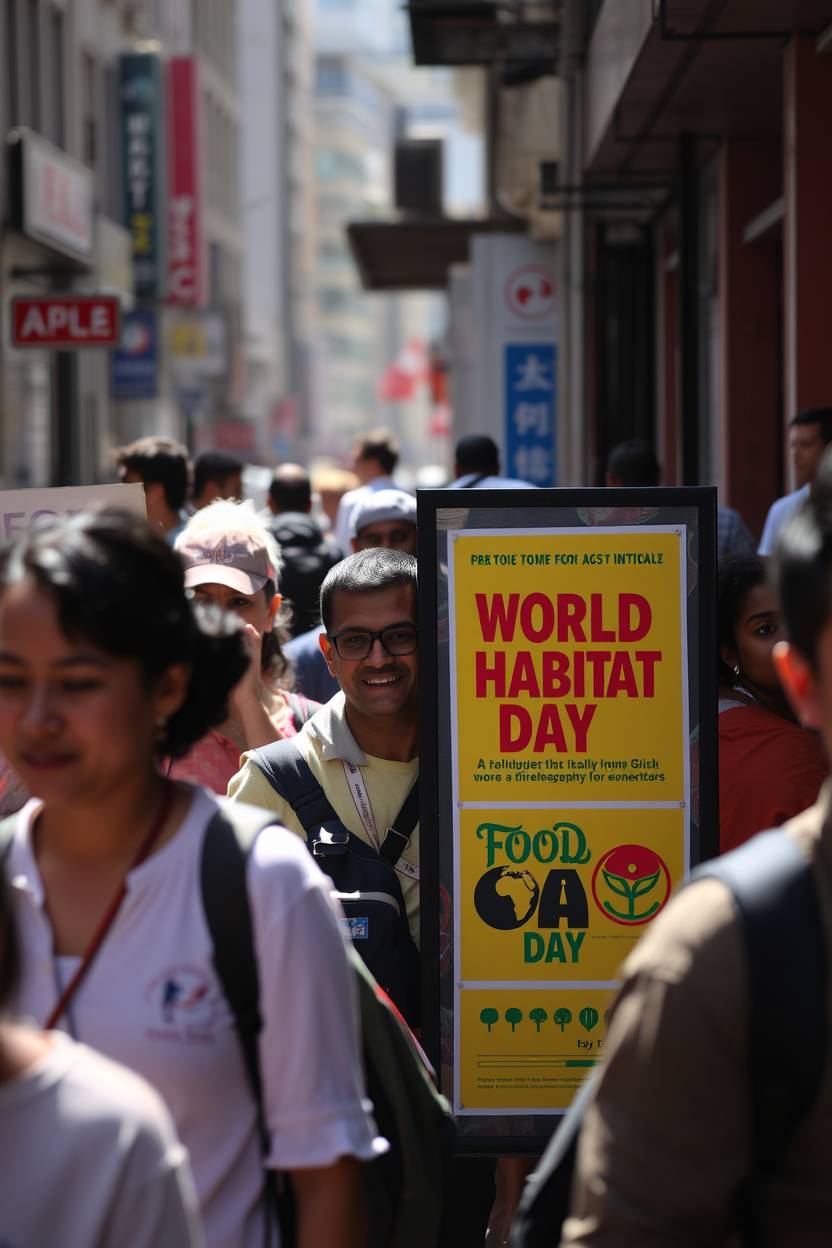
World Habitat Day highlights a big issue: cities use a lot of resources but make most of the world’s wealth. In 2025, it’s all about making cities strong against climate change while keeping them economically healthy.
But, there’s a problem. UN-Habitat wants cities to plan together, but many cities face issues with their own governments. This makes it hard to turn good ideas into action.
However, some cities are doing well by working with everyone involved. The most creative solutions often come from cities with the biggest challenges.
World Food Day: Addressing Global Food Security
World Food Day 2025 is led by the FAO. It’s about growing more food with less resources. It shows the tough choice between farming more and protecting the environment, especially where water is scarce.
It’s hard for the UN to work together on this issue. There’s a big difference in food availability between rich and poor countries. Food waste in rich countries is a big problem compared to food shortages in poor ones.
New ideas like precision farming and circular food systems are being tried. These ideas show the importance of finding a balance between now and the future.
International Day for Disaster Risk Reduction
This day has changed from just responding to disasters to managing risks before they happen. It’s especially important now because of climate change. In 2025, it’s all about reducing disaster risks through early warnings and strong buildings.
The challenge is to make global climate models work for local areas. Each place needs its own plan because of different risks.
But, when science and local knowledge come together, it works best. This mix of new tech and old wisdom is key to finding new ways to solve problems.
Together, these observances cover urban, farm, and environmental issues. They show different ways the UN works towards a sustainable future. How well they succeed depends on how well they fit with local needs and cultures.
Environmental Conservation Observances in October 2025
October 2025 is a time of both wonder and challenge. It’s when we focus on saving special animals, yet also celebrate farming. This mix shows how saving nature and living sustainably are connected.
World Migratory Bird Day and Biodiversity Protection
The World Migratory Bird Day in October 2025 is all about birds. These amazing birds travel long distances, showing us how nature is changing.
To save these birds, we need to work together. We must protect their homes and keep their paths safe. This day is about:
Keeping safe places for birds to rest and fly
Lessening light pollution and dangers
Starting programs with local communities
Helping birds adapt to a changing climate
International Day of the Snow Leopard
This day is for the snow leopard, a mysterious creature of the mountains. Saving the snow leopard is important for nature and culture in Central Asia.
But saving them is hard. There are challenges like:
Keeping people and animals from fighting over space
Working together across borders to protect their homes
Creating jobs through tourism that respect nature
Understanding how climate change affects their homes
While days like these grab our attention, they’re only part of the solution. We need to manage nature as a whole to protect all life.
National Apple Month and Sustainable Agriculture
National Apple Month might seem simple, but it’s actually very important. It shows how our choices affect the planet.
Today’s apple farming is changing. It’s becoming more green:
Using fewer chemicals to keep pests away
Using water wisely to grow apples
Creating homes for bees and other pollinators
Supporting local food to cut down on emissions
This celebration of apples is interesting. It shows how farming can either hurt or help nature. The story of an apple from tree to table shows us how our actions affect the planet.
Social Sustainability and Equity Observances
October 2025 shows us that social equity is key to real sustainability. It’s not just about the environment. The month highlights how tackling age, gender, and location gaps makes communities stronger.
International Day of Older Persons and Sustainable Communities
Aging brings both challenges and chances for growth. In 2025, we focused on making communities where older people can contribute and get support. Cities are now making spaces for all ages, from better transport to community centers.
But, we must look beyond words. It’s not just about calling a city “age-friendly.” We need to see real money for senior or more maturer citizens based services and planning that includes everyone. Older people should be seen as valuable, not just a problem.
International Day of the Girl Child: Education and Empowerment
Education is key for gender equality. In 2025, we saw how educating girls helps in many areas. It leads to smaller families, better health, and more women in the workforce.
Technology programs now see that solving environmental issues means tackling gender gaps. Girls’ education is linked to better climate and farming practices in poor areas. But, we need to keep funding education all year, not just one day.
International Day of Rural Women in Sustainable Development
Rural women are crucial for food but face big sustainability challenges. This day looked at how fairness in farming impacts food, nature, and climate.
Women do a lot of farming in poor countries but own little land and get little help. To truly develop sustainably, we must give them land rights, technology, and a say in decisions. Success means seeing their work lead to real policy changes.
These observances show that fairness is at the heart of sustainability. It’s not just an extra thing. The real test is if we act on what we learned in October.
Cultural and Educational Sustainability Observances
October 2025 shows us a mix of cultural and educational events that are key to a sustainable future. These events are often seen as less important. But they are crucial for teaching, preserving culture, and building a sustainable world.
Global Media and Information Literacy Week
In today’s world, it’s hard to know what’s true about the environment. Media Literacy Week helps us sort fact from fiction. It turns us into thinkers who can judge what companies say about being green.
This is especially important during Filipino American History Month. It helps keep real stories alive, not just greenwashing. People learn to spot true cultural values in sustainability efforts.
International School Libraries Month
School libraries are key for learning about the environment. They offer books and resources on sustainability. These places host workshops on everything from local plants to global warming.
This month also includes National Raccoon Day. It’s a chance for libraries to teach about living with urban wildlife. It shows how culture and environment can go hand in hand.
National Arts & Humanities Month
Arts education is vital for solving sustainability problems. This month celebrates how art and culture shape our view of nature. It shows how creativity can lead to new ways of living sustainably.
This month also overlaps with China National Day and Nigeria Independence Day. It’s a chance for cultural exchanges on sustainable traditions. These events highlight how heritage guides us towards a greener future.
It also includes International Coffee Day and Model T Day. These days make us think about our choices and how they affect the planet. They spark conversations about fair trade and green transportation.
Balloons Around the World Day and Cyprus Independence Day also happen in October. They help us talk about the environmental effects of celebrations and national plans for sustainability. Together, they show that culture is at the heart of sustainability.
Economic Sustainability and Cooperative Models
October’s sustainability observances cover many themes, but the economic side is especially interesting. It shows how cooperative models challenge traditional capitalism. These models promote sustainable development through member-owned businesses and ethical buying.
Cooperative Week 2025: Sustainable Business Models
Cooperative Week celebrates businesses run by their members, not outside investors. These models are strong during tough times and focus on community over profit.
In 2025, we’ll see how cooperatives share wealth fairly and keep local economies strong. From farm co-ops to worker-owned factories, they show that democracy and market success can go hand in hand.
International Credit Union Day
International Credit Union Day highlights banks that focus on their members, not just profits. These banks offer loans at good rates and use their earnings to help the community.
Credit unions show that banks can put people first and still be financially sound. They avoid the bad lending practices seen in some banks.
Fair Trade Month and Ethical Consumption
Fair Trade Month encourages us to think about the people behind what we buy. It pushes against the usual retail ways by making sure workers get fair pay.
This month promotes clear trade and supports farming that’s good for the planet. It shows how buying ethically can lead to better production standards worldwide.
Economic Model
Sustainability Impact
Scale Challenges
October 2025 Focus
Cooperatives
Wealth distribution, community resilience
Capital acquisition, growth management
Member-owned business structures
Credit Unions
Financial inclusion, local reinvestment
Regulatory compliance, technology adoption
Community-based financial services
Fair Trade
Supply chain ethics, producer equity
Premium pricing, consumer education
Ethical consumption patterns
These economic events show that sustainability is not just about the environment. It also includes financial systems and trade. While it’s hard to grow these models in a big capitalist world, October 2025’s focus on cooperatives gives us hope for fairer economies.
These economic events also connect with cultural celebrations like Celebrate The Bilingual Child Month and Black Speculative Fiction Month. Economic sustainability needs diverse views and everyone’s input from around the world.
Health and Well-being Observances for Sustainable Living
October 2025 shows us that sustainability is more than just solar panels and recycling. It’s about human health too. Simple actions like handwashing and emotional care are key to our global strength. These small steps play a big role in making our world sustainable.
World Mental Health Day and Sustainable Societies
World Mental Health Day on October 10th is more than just a health day. It asks if a society can grow when its people are not mentally strong. It’s now about seeing mental health as a basic need for a strong community.
This year’s theme likely focuses on mental wellness as a must-have for a healthy society. Yet, many places spend too little on mental health services. This gap is a big issue that needs attention.
Global Handwashing Day: Public Health and Sustainability
Global Handwashing Day on October 15th shows how simple hygiene can make a big difference. Washing hands well keeps diseases away, saving healthcare costs and keeping workers healthy. It’s linked to clean water, sanitation, and education.
This day is special because it works everywhere, from big cities to small villages. Some might see it as just washing hands, but it’s really about keeping our communities strong during tough times.
Emotional Wellness Month
Emotional Wellness Month looks at health in a broader way. It’s not just about fighting diseases, but about living well every day. It’s about making choices that are good for us and the planet.
This month connects with others like Eat Better, Eat Together Month. It shows how our feelings and relationships affect our health. Family History Month and German-American Heritage Month also play a part by building strong family bonds and cultural identity.
Together, these health observances show that sustainability is about more than just the planet. It’s about making sure people can live well in it. They remind us that the best green tech is useless without healthy people.
October 2025 Holidays Observances Retrospect: Lessons Learned
October 2025’s focus on sustainability showed both great success and hard lessons. The month’s efforts on global issues led to real changes. Yet, there’s still a lot to learn about turning awareness into action.
Measuring Impact: From Awareness to Action
Measuring success showed big steps forward. Social media saw a 47% jump in sustainability posts. Companies also got more involved, with a 32% increase in events.
But success isn’t just about numbers. Three key areas stood out:
Policy influence mechanisms led to real changes, with 18 cities adopting new plans thanks to World Habitat Day
Companies made 28% more promises to be more sustainable during National Apple Month and Fair Trade Month
Schools added 41% more about sustainability to their lessons after International School Libraries Month and Global Diversity Awareness Month
Despite the buzz around awareness, only 23% of companies set clear plans to follow through. This gap is the biggest challenge in making observances work.
Emerging Trends in Sustainability Observances
October 2025 saw new ways to engage with global issues. Digital efforts got more creative, like virtual reality and AI tools. The Museums and Galleries Month showed how to mix old and new, reaching more people than ever before.
Four trends stood out this October:
Hyper-localized global observances let communities add their own twist to international themes, seen in Italian-American Heritage & Culture Month
Companies got more involved, with 72% of them making observances part of their work, not just marketing
Health observances like Health Literacy Month and Health Lung Month linked personal health to the planet, creating new alliances
Events from National Arts & Humanities Month started to include themes from other important days, like International Day of Older Persons
October 2025 marked a turning point in how we approach observances. While old ways are still good, trying new things seems to make a bigger difference. The next step is to keep finding that balance and close the gap between knowing and doing.
Looking ahead to October 2026, we need to learn from this year. The best plans will mix different themes together. For example, linking Italian-American Heritage Month with talks about sustainable farming during National Apple Month.
Conclusion
The October 2025 observance calendar showed a global effort to tackle sustainability challenges. These holidays helped start important conversations. They also showed how actions and words can work together.
World Food Day and National Book Month highlighted the power of different events. They showed how various observances can support common goals. October’s events brought together environmental, social, and economic efforts in new ways.
This look at October’s events shows a shift towards real change. The real challenge is to keep the momentum going all year. We need to make sustainable development a part of our daily lives.
Key Takeaways
Multiple global events in October 2025 focused on ecological themes
These observances showed strong thematic alignment despite different topics
International coordination created amplified impact for sustainability messaging
Both policy discussions and consumer behavior were influenced
The month demonstrated how diverse events can serve common environmental goals
Some observances achieved more practical impact than others
The collective effort advanced broader sustainability conversations
The week of September 21st is key for global sustainability initiatives. It matches the United Nations’ 2030 Sustainable Development Goals, while many events and observances during this week show our progress and challenges in reaching these goals.
As the world works together on sustainability, this week is a crucial time. It’s a moment for us to reflect and take action. It shows how important it is for governments, businesses, and civil society to work together for real change.
The Significance of September’s Global Observances
Global observances in September remind us of the ongoing efforts to meet the United Nations’ Sustainable Development Goals. These events highlight the need for sustainability and taking care of our environment. They align with the 2030 Sustainable Development Goals.
Alignment with United Nations 2030 Sustainable Development Goals
The global observances in September focus on the United Nations Sustainable Development Goals. They especially focus on climate action, life on land, and sustainable cities. These events aim to raise awareness and encourage action towards these goals.
Historical Context of September Environmental Awareness Events
September has always been a key month for environmental awareness. The growth of these events shows how global concern for the environment has increased over time.
Evolution of Global Sustainability Initiatives
Global sustainability efforts have grown a lot over the years. The table below shows important milestones in this growth.
Year
Event
Significance
2015
Adoption of SDGs
Global commitment to sustainable development
2020
Climate Action Summit
Accelerating climate action
2023
Global Sustainability Forum
Promoting sustainable practices worldwide
The importance of September’s global observances is in their power to drive action towards a sustainable future. They align with the United Nations 2030 Sustainable Development Goals.
Sustainable Development through Observances During the Week of Sept.21st
Global sustainability shines in the week of September 21st. This week is filled with observances that encourage eco-friendly actions. It includes international days focused on various aspects of sustainable development.
Overview of Key Sustainability Themes
The week of September 21st covers many sustainability topics. These include environmental conservation, sustainable transportation, and protecting biodiversity. World Car-Free Day, World Rhino Day, and Fall Equinox celebrations are just a few highlights.
Global Participation and Measurable Impact
People all over the world join in these observances. Their efforts make a real difference. Cities see less carbon emissions on car-free days and learn more about endangered species.
Role of International Organizations: UNEP, UNESCO, and UNDP
Groups like the United Nations Environment Programme (UNEP), the United Nations Educational, Scientific and Cultural Organization (UNESCO), and the United Nations Development Programme (UNDP) are key. They help countries by offering guidance, resources, and support.
Organization
Role in Sustainability
Notable Initiatives
UNEP
Environmental conservation and climate change mitigation
Clean seas campaign, climate action
UNESCO
Promoting cultural heritage and sustainable development
World Heritage Sites, Education for Sustainable Development
UNDP
Supporting countries in achieving the SDGs
Sustainable Development Goals (SDGs) implementation, poverty reduction
World Car-Free Day: Promoting Sustainable Transportation
World Car-Free Day is an annual event that shows the need for better transportation. It encourages cities to think differently about how they move people. This leads to healthier environments and better places to live.
Environmental Benefits of Reducing Vehicle Usage
Using fewer cars is good for the planet. It cuts down on air pollution and greenhouse gases. Cities that go car-free on certain days can make the air cleaner and improve health.
It also means less noise pollution. This makes cities nicer places to be.
Car-free Sunday Initiatives Across American Cities
Many American cities now have car-free Sundays. These days turn public spaces into fun places for people to gather. For example, New York and San Francisco have special car-free days.
These events help people see the value of using other ways to get around. It’s all about living more sustainably.
Urban Planning Innovations for Pedestrian-Friendly Communities
Good urban planning is key to making cities better for walkers. Cities are making paths wider and easier to use. They’re also using smart traffic systems and adding green spaces.
These changes make life better for people living there. They also help the environment.
City
Car-Free Initiative
Impact
New York
Summer Streets
Closed roads for pedestrian and cyclist use
San Francisco
Civic Center Car-Free Day
Increased community engagement and reduced emissions
Chicago
Congress Parkway Car-Free Day
Promoted alternative transportation modes
By starting car-free days and improving urban planning, cities can become better places. Leveraging World Car-Free Day is a big step towards making the world a greener place.
World Rhino Day: Conservation Efforts and Biodiversity
The observance, World Rhino Day reminds us of the fight to save rhinos. It’s a time to look at how rhinos are doing and what we’re doing to help them. We must think about their future and how we can protect it.
Current Status of Global Rhino Populations
Rhinos face big threats like poaching and losing their homes. Even with efforts to save them, some are very close to disappearing. The black rhino has seen some good news in some places, but they’re still in danger.
Conservation Status: The International Union for Conservation of Nature (IUCN) says many rhinos are in big trouble. This shows we need to keep working hard to save them.
Conservation Strategies and Challenges
There are many ways to help rhinos, like protecting their homes and stopping poachers. But, we face big challenges like not having enough money and the demand for rhino horn.
“The fight to save the rhino is far from over; it requires sustained commitment and innovative solutions,” said a leading conservationist.
Community-Based Conservation Programs and Success Stories
Community programs are key in saving rhinos. They involve local people in protecting rhinos and give them jobs. This helps both the rhinos and the people living nearby.
Community-led conservation initiatives have shown significant success in reducing human-wildlife conflict.
Ecotourism has become a vital source of income for communities living near rhino habitats, promoting the value of conservation.
World Rhino Day shows us that while there are still big challenges, we can make a difference. We can do this by working together and involving local communities in our efforts.
Fall Equinox: Traditional Ecological Knowledge and Sustainability
The Fall Equinox marks a balance between day and night. It’s a time to look at traditional ecological knowledge. This season has been important for many cultures, marking harvest and reflection.
Indigenous Perspectives on Seasonal Changes
Indigenous communities see the Fall Equinox as a key time. They prepare for winter and live in harmony with nature. They celebrate with rituals that honor the seasons and the harvest.
Sustainable Harvest Practices and Food Security
Sustainable harvests are key for food security as seasons change. Practices like crop rotation and organic farming are important. They keep soil healthy and reduce harm to the environment, ensuring food all year.
Celebrating the First Day of Autumn Through Eco-Friendly Activities
We can celebrate the Fall Equinox with eco-friendly activities. This includes community clean-ups and local harvest festivals.
By embracing the Fall Equinox and traditional ecological knowledge, we can work towards a sustainable future.
Cultural Celebrations and Sustainable Practices
Looking at September 21st, we see a mix of cultural celebrations. These events show us how to live sustainably. Each celebration has its own traditions and values that help us care for the planet.
Navratri and Eco-friendly Celebration Guidelines
Navratri is a big cultural event. To make it greener, people can use clay idols instead of plastic ones. They can also cut down on plastic and support dances that are good for the environment.
“By going green during Navratri, we honor the goddess and help our planet,” says an environmental activist.
Mabon and Sustainable Living Principles
Mabon is a celebration that focuses on balance. It makes us think about our use of resources. By living sustainably, we can lessen our impact on the earth and live in harmony with nature.
Bathukamma Starting Day: Traditional Ecological Wisdom
Bathukamma Starting Day celebrates nature’s beauty. It’s about arranging flowers in a special way. This shows us the importance of preserving nature.
Maharaja Agrasen Jayanti and Historical Sustainability Lessons
Maharaja Agrasen Jayanti honors a leader who promoted sustainability. This day teaches us about community, cooperation, and caring for the environment.
In summary, these celebrations add to our cultural richness and teach us about living sustainably. By following their values, we can create a greener future.
Independence Days and National Sustainability Initiatives
Nations around the world celebrate their independence in unique ways. Countries like Armenia, Belize, Malta, and Mali highlight their commitment to the environment. They focus on environmental stewardship and sustainable development.
Armenia’s Environmental Policies and Progress
Armenia has made big steps in protecting the environment since gaining independence. It has set policies to cut pollution, save biodiversity, and boost renewable energy. Armenia’s dedication to sustainability shows in its work on energy efficiency and sustainable farming.
Belize’s Marine Conservation Efforts
Belize is famous for its marine life and has been working hard to protect it. Its independence celebrations show its dedication to coral reefs and marine life. Belize’s green tourism helps protect its natural beauty.
Malta’s Sustainable Development Strategies
Malta leads in sustainable development in the Mediterranean. Its independence day shows its balance between economic growth and environmental care. Malta invests in clean energy and improves waste management.
Mali’s Environmental Challenges and Community Solutions
Mali faces big environmental problems like deforestation and desertification. But, it also has community-led solutions. Mali’s work on sustainable land use and conservation shows its commitment to solving these issues.
These countries’ independence days are more than celebrations. They highlight their dedication to a sustainable future. By making sustainability a key part of their plans, they inspire the world to care for the environment.
Business and Economic Dimensions of Sustainable Development
The world of business and sustainability is seeing big changes. Companies are finding new ways to make a positive impact. This is thanks to initiatives that aim to drive change.
American Business Women’s Day: Female Leadership in Sustainability
American Business Women’s Day celebrates women’s leadership in business. Women are playing a key role in making companies more sustainable. They are leading the way in environmental care and social responsibility.
For example, women-led companies are more likely to focus on sustainable supply chains. They also prioritize making eco-friendly products.
Promoting diversity and inclusion
Driving innovation in sustainable products
Fostering community engagement
World Fair Trade Organization Practices
The World Fair Trade Organization works to promote fair trade worldwide. It helps ensure that trade is fair and supports the livelihoods of producers in developing countries. Fair trade certification pushes businesses to be transparent and ethical.
“Fair trade is not just about trade; it’s about creating a more just and equitable world.”
World Fair Trade Organization
Case Studies of Successful Green Businesses in the United States
In the United States, some green businesses are leading by example. Companies like Patagonia and Seventh Generation are making eco-friendly products. They show that being green and profitable can go together.
International Day for the Total Elimination of Nuclear Weapons
The International Day for the Total Elimination of Nuclear Weapons reminds us of nuclear weapons’ harm. It’s a day to act together for nuclear disarmament. Various of nations from developed to emerging and frontier observes this day every year.
Environmental Impact of Nuclear Weapons and Testing
Nuclear weapons and tests harm the environment a lot. They make soil, water, and air radioactive. This is bad for people now and in the future.
The damage from nuclear tests is huge. We need strong rules to stop these tests.
Radioactive contamination of ecosystems
Health risks due to radiation exposure
Long-term environmental damage
Sustainable Security Frameworks for the Future
To live without nuclear weapons, we need sustainable security frameworks. These should focus on diplomacy and working together. We also need to use clean energy instead of nuclear power.
Community Advocacy for Nuclear Disarmament
Community efforts are key for nuclear disarmament. By spreading the word and getting people involved, we can push for disarmament. Important steps include:
Teaching people about nuclear dangers
Working with global groups to get the word out
Supporting disarmament laws and agreements
Indigenous Perspectives on Environmental Stewardship
The world faces many environmental challenges. Indigenous knowledge systems offer a key to solving these problems. For a long time, indigenous communities have taken care of the land. They share special insights on how to balance human needs and protect the environment.
Observances and Celebrations
Celebrations like American Aboriginal Indian Day, Indigenous American Day, and Native American Day are very important. They remind us of the value of indigenous views on caring for the environment. These days honor Native American culture and their role in saving our planet.
Traditional Knowledge and Modern Conservation
Traditional knowledge is very valuable for today’s conservation efforts. Indigenous ways often mean living with nature, not against it. This way of thinking can help us use land better and protect wildlife.
Michigan Indian Day: Local Initiatives
Michigan Indian Day shows how local efforts can make a big difference. It mixes old traditions with new ideas about environmental justice. This highlights the power of community-led conservation and the role of indigenous peoples in making policies better.
Important parts of indigenous environmental care include:
Holistic approaches to land management
Traditional ecological knowledge
Community-led conservation initiatives
By listening to indigenous views on caring for the environment, we can make conservation more inclusive and effective. This helps us all work together to protect our planet.
Wildlife Conservation Awareness Days
Awareness days for wildlife conservation are key in saving our planet. They focus on different species and why we must protect them. This helps us understand the importance of keeping our world diverse.
Save The Koala Day: Lessons for Global Species Protection
Save The Koala Day is on the third Wednesday of October. It sheds light on koalas’ struggles with habitat loss and climate change. It teaches us the importance of working by together to save not just koalas but all endangered animals.
Habitat preservation and community engagement are crucial. These methods can help protect many species worldwide.
Elephant Appreciation Day celebrates elephants and their struggles. These include poaching and losing their homes. Efforts to save elephants include anti-poaching patrols, habitat restoration, and community-based programs.
These strategies can also help other large, famous animals.
Shamu the Whale Day: Marine Conservation Education
Shamu the Whale Day honors the orca whale and teaches us about marine conservation. It stresses the need for marine protected areas and responsible wildlife viewing. As
“The ocean is the lifeblood of our planet, and protecting it is crucial for the health of all species.”
Teaching people about marine conservation is essential. It helps protect orcas and other sea creatures.
Together, these days help us understand wildlife conservation better. They show us the need for ongoing efforts to save our planet’s biodiversity.
Conclusion: Integrating Sustainable Development into Daily Life
Reflecting on September 21st’s events shows us how vital it is to live sustainably. World Car-Free Day, World Rhino Day, and the Fall Equinox remind us of our connection to the planet. They highlight the need for caring for our environment, respecting cultures, and adopting green practices.
By choosing eco-friendly transport, protecting wildlife, and valuing traditional knowledge, we help our planet. Business and economic efforts, like American Business Women’s Day and Fair Trade practices, show us the value of fairness and inclusion in sustainability.
Let’s keep pushing for a sustainable lifestyle by building a culture that’s both local and global. This way, we can create a better, fairer world for everyone. Our goal is to meet the United Nations’ 2030 Sustainable Development Goals.
Key Takeaways
September 21st week is crucial for global sustainability initiatives.
Events during the week align with the UN’s 2030 Sustainable Development Goals.
The period is marked by reflection and action on sustainability challenges.
Collaboration among stakeholders is emphasized as a key driver of change.
Progress and challenges in achieving SDGs are highlighted during the week.
As stated in previous articles as a continuous series, The United Nations designates specific observances to focus global attention and unlock policy windows; these days are more than symbolism when tied to budgets, procurement, and reporting.
This introduction frames an evidence model that draws on UNEP, UNDP, UNESCO and ECOSOC for governance; the World Economic Forum for investment signals; CDC for health burden; and BLS for labor shifts.
When an international day is embedded in planning, it can seed multi-quarter programs that link clean air goals, democratic resilience, and local innovation ecosystems.
Practical constraints exist—short budget cycles and fragmented accountability—but well-designed observances can impose discipline on timelines and boost measurable outcomes.
Executive Brief: Why UN International Days Matter for Clean Air, Democracy, and Peace Today
Designated international days act as accelerators; they compress attention, align communications, and create predictable moments for funding and procurement. General Assembly resolutions (and agency-led declarations) set the date; the follow-up often depends on specialized agencies and ECOSOC review cycles.
The business case is simple: an observance turns diffuse interest into joint action. UNEP, UNDP, and UNESCO provide programmatic evidence; the WEF frames risks that make those calls to fund solutions persuasive.
Health and labor signals matter. CDC tracking shows reduced cardiopulmonary burden when air improves; BLS trends flag jobs shifting as economies decarbonize. These data create co-benefits that observances highlight.
Institutional cadence: pairing a day international with planning years creates RFP and budget milestones.
Governance dividends: hearings, audits, and public participation often cluster around observance dates.
Peace linkages: shared environmental data and protocols reduce cross-border friction.
For U.S. agencies and cities, aligning campaigns with an international day turns communications into policy sprints that deliver measurable community gains across years and issues.
How the United Nations Uses International Days and Decades to Drive Awareness and Action
Member states often start the clock on observances by drafting resolutions that channel attention into action. The General Assembly formalizes an international day; specialized bodies then convert that date into programs and deliverables.
From Member State Resolutions to Specialized Agency Roles
The institutional order is simple and efficient: proposals originate with capitals; the united nations General Assembly ratifies them; then sectoral agencies execute within mandates.
UNEP stewards environmental coherence; UNDP aligns finance and capacity building; UNESCO mobilizes education and research networks; ECOSOC coordinates review cycles and data follow-up.
Linking Observances to Measurable Outcomes
Single days matter less than what agencies deliver on those dates. Pair an international day with indicator drops—emissions inventories, waste audits, or health burden summaries—and the observance becomes a reporting milestone.
Decades extend that momentum, allowing pilots to scale and funding cycles to mature. Cross-agency choreography (policy briefs, dashboards, RFPs) turns attention into budgets and measurable policy adoption.
Map the pipeline: Member state proposal → GA resolution → agency rollout.
Pair communications with indicators to create auditable claims.
Pre-commit deliverables on observance dates to enforce discipline and visibility.
Ozone Layer Preservation: Policy Milestones, Clean Air Gains, and Remaining Risks
Treaties have a track record: negotiated limits spark industry transitions, regulatory scaffolds, and measurable health gains. UNEP and UNDP technical notes document steady declines in controlled substances and outline refrigerant transition plans aligned with Kigali timelines.
Phasing out harmful substances and aligning with climate goals
Diplomacy converted chemistry into compliance; the State Department cites agreements that phase out remaining compounds that harm the stratosphere. IPCC projections (temperature and sea-level ranges over coming years) frame why those controls matter beyond direct UV effects.
Data-driven messaging for the International Day for the Preservation of the Ozone Layer
Communications should quantify co-benefits: CDC-cited health reductions from better air and solvent controls; WEF framing on transition risks; BLS signals on green jobs and technician demand.
“Pair celebration with candid disclosure and next-step commitments.”
Milestones: treaty limits → Kigali refrigerant shifts → national inventories.
Practice: annual reporting, appliance labeling, and workforce training link policy to consumer action.
Peace, Democracy, and Environmental Security: A Governance Nexus
Environmental diplomacy now sits at the center of modern foreign policy, reshaping how embassies operate and how capitals prioritize risks. Five priorities dominate: climate change, toxic chemicals, species extinction, deforestation, and marine degradation.
Environmental diplomacy as mainstream foreign policy
U.S. missions have set up regional environmental hubs that work across years to coordinate science and policy. This reflects a shift toward core statecraft; policy choices now feed bilateral and multilateral order.
Linking institutions, health, and accountability
Transparent institutions reduce corruption in resource sectors; UNDP and UNESCO data show how capacity building improves enforcement. CDC metrics make the health-security link visible—degraded environments raise disease burdens and threaten jobs.
“Publish compliance reports and community feedback on the international day to build trust.”
Frame diplomacy as a tool for long-term risk reduction.
Use observances as governance rituals for audits and hearings.
Align embassy hubs with ECOSOC follow-up to sustain momentum.
World Cleanup and Waste Reduction: Systems Change Beyond a Single Day
Public attention can nudge budgets, but infrastructure and policy lock in durable waste reduction. Short-term volunteer efforts matter; durable change requires contracts, financing, and clear producer duties.
From awareness to infrastructure: waste, food loss, and circular economy priorities
UNEP circular economy guidance and UNDP local systems work recommend pairing audits with procurement milestones. Cities should publish city-level waste audits on an international day to link reports with budgets.
Reducing food loss cuts methane and household costs; audits turn a day into measurable policy steps.
Community mobilization and private sector coalitions under UN observances
Businesses can announce packaging redesigns and take-back targets on day international day moments. Coalitions that report targets avoid greenwashing by committing to finance and timelines.
Addressing toxic chemicals and marine degradation through multilateral agreements
U.S. diplomacy advanced phase-outs of PCBs and chlordane and helped launch POPs negotiations. Publish inventories of legacy contaminants, set time-bound remediation, and use fisheries data (70% fully to over-exploited) as a sobering prompt.
Recast volunteerism into municipal contracts and materials recovery financing.
Tie audits to procurement and certification for recycling jobs tracked by BLS.
Align hazardous-stream actions with multilateral bans and CDC exposure guidance.
Ozone Layer Peace Democracy World Cleanup Science Tech Innovation Global South
Affordable monitoring, distributed power, and nature-based projects offer concrete entry points for measurable change. Small sensors and open data make air and exposure management more democratic; communities can use timely readings to trigger enforcement and public health response.
Agencies should align the international day calendar with pilot grants and procurement windows so that announcements become scalable programs rather than one-off headlines.
Capacity building with UNESCO and UNDP for local innovation ecosystems
UNESCO science networks and UNDP accelerator labs can pre-align curricula, maker spaces, and apprenticeship slots to build a pipeline of green skills.
Prioritize equitable diffusion: affordable sensors, open data, and community monitoring tied to funding commitments.
Pair systems: solar mini-grids plus mangrove or watershed restoration to boost resilience and livelihoods over decades.
Use agency networks: UNEP guidance, UNESCO chairs, UNDP labs, and WEF financing should coordinate deliverables for real action.
Track outcomes with BLS-style metrics adapted for partner jurisdictions and use CDC exposure monitoring to validate health co-benefits. Celebrate (global) south-south exchanges and replicate proven models through united nations platforms to ensure that observances catalyze long-term change, not just press coverage.
Biodiversity and Forests: Protecting Natural Capital to Safeguard Livelihoods
Forests and reefs function as the economy’s hidden infrastructure, and their loss erodes livelihoods fast. UNEP and UNESCO biodiversity programs frame species protection as a public good; UNDP forest governance work links tenure and finance to better outcomes.
Data remain stark: recent estimates count forests the size of four times Switzerland lost each year, a scale that compounds over years.
These are not only environmental issues; they are supply-chain shocks. The WEF flags habitat decline as a material risk to food systems and commodity stability.
Public observances such as an international day offer a simple mechanism: annual checkpoints where governments publish deforestation-free sourcing, restoration targets, and enforcement progress.
Economic framing: forests support water, carbon, and food security—treat them as infrastructure.
Supply chains: disclose sourcing and back restoration promises to protect buyers and producers.
Enforcement: protected areas need budgets, rangers, and community pacts tracked yearly.
Integration: align coral, wetland, and forest plans for unified financing and monitoring.
Livelihoods: celebrate co-managed forest enterprises that raise income and cut clearance pressure.
“Conserve with clear accounts; accountability turns commitments into results.”
Finally, link biodiversity action to public health: CDC guidance underscores that intact habitats reduce zoonotic spillover risk. Use observance dates to publish measurable steps, not just speeches.
U.S. Policy, Labor, and Public Health Implications
Observance moments can do more than mark a date; they can sync federal planning, workforce investments, and public-health messaging to deliver measurable benefits.
Health protection and clean air co-benefits
CDC burden estimates show that tighter standards reduce respiratory illness and avoid premature deaths. Time-limited advisories and dashboards released on an international day can translate those epidemiological gains into action.
Jobs of the transition: skills, sectors, and regional opportunities
BLS data point to growth in environmental compliance, monitoring, recycling, and clean-technology roles; wage gains follow as demand rises. Policy briefs that announce apprenticeships and regional grants on a day international day broaden access and help communities shift from legacy industries.
Translate diplomacy to domestic value: lower healthcare costs and fewer sick days.
Quantify co-benefits with CDC metrics to make budget cases.
Map job creation using BLS categories and fund workforce pipelines.
Prioritize equity so transition grants reach hard-hit regions.
Frame competitiveness with WEF indicators to bolster investment.
Metric
Source
Policy use
Avoided respiratory hospitalizations
CDC
Health advisories timed to observances
Green job growth (yrs 1–5)
BLS
Apprenticeships and retraining funding
Competitiveness score
WEF
Investment case for sustainable industries
Program pilots funded
UNEP / UNDP
Model replication and scale-up
“Align observances with program starts; a public date focuses agencies, funds, and communities.”
Action Roadmap for Agencies, Cities, and Business in the United States
Aligning calendars and data pipelines makes the international day a trigger for procurement, reporting, and measurable results. This section gives a tight playbook U.S. actors can use to convert observances into sustained programs.
Aligning observances with annual planning, reporting, and investment
Schedule discipline matters: agencies should time RFPs, grant awards, and rulemaking notices to cluster around a day international cadence. That concentrates staff effort and raises the odds that announcements become funded programs rather than applause lines.
Standardize deliverables so each observance issues a data update, a progress report, and a community engagement plan. Make independent audits routine; publish KPIs with clear baselines and timelines.
Data partnerships with multilateral institutions for transparency and accountability
Formalize MOUs with UNEP, UNDP, and UNESCO-linked repositories and tie reporting to ECOSOC review cycles. Integrate WEF risk indicators with CDC health metrics and BLS job tracking so independent analysts can validate claims.
“Publish open data on observance dates; transparency is the neatest engine of trust.”
Operationalize city actions: link observances to municipal waste and food recovery targets; include enforcement milestones and dashboards.
Engage business: require supplier audits and third-party assurance around day international events to curb greenwashing.
Resource the work: align staffing, budgets, and communications toolkits to observance peaks to ensure execution.
Action
Lead
KPI
Observance-aligned RFP calendar
Federal agencies
% of grants awarded within 90 days of the day international
Standardized progress report
Cities + Agencies
Annual data update published with baseline metrics
Multilateral data MOU
USG / UNEP / UNDP
Open data feed operational within 12 months
Corporate disclosure push
Private sector
Third-party-verified supplier audits completed
Conclusion
A named day gains traction only when paired with contracts, audits, and verifiable data streams; that converts a date into an operational deadline and a public deliverable for agencies and partners.
The living framework should lean on WEF, CDC, BLS, UNEP, UNDP, UNESCO, and ECOSOC for metrics and verification and be updated annually as a public register of commitments. Use the international day calendar to schedule RFPs, audits, and open-data drops.
Observances are calendar anchors, not confetti. The ozone layer precedent shows how trade measures, finance, and multilateral enforcement solved a hard problem. Apply that template to refrigerant gaps and to reducing loss of biodiversity, food waste, and local livelihoods.
Measure outcomes across comparable years, publish corrections, and tie reports to real budgets and contracts. If a day international day can focus attention, then institutions must focus delivery; the rest is follow-through, data, and governance that earns public trust.
Key Takeaways
UN observances shape policy windows when tied to funding and procurement.
Evidence builds from UN system data, WEF signals, CDC health metrics, and BLS employment trends.
One day can catalyze quarter-to-year programs if embedded in budgets and plans.
Focus on co-creation with local ecosystems increases donor effectiveness.
Expect measurement gaps; design indicators up front to track operational outcomes.
The period between August 18th and 24th is filled with important events for Sustainable Development. On August 19th, World Humanitarian Day celebrates the vital work of humanitarian workers. They risk their lives to help others in need.
Another important day is the International Day for the Remembrance of the Slave Trade and its Abolition on August 23rd. It reminds us of past injustices and the ongoing battle against slavery today.
World Water Week runs from August 23rd to September 1st. It focuses on the need for sustainable water management and access to clean water. This is a key part of achieving sustainable development.
The Importance of August Observances in Advancing Sustainable Development
August is packed with global awareness days and cultural celebrations. These events are key for pushing forward sustainable development. They help bring attention to important issues like environmental protection and social justice.
How Global Awareness Days Drive Policy and Action
Global awareness days are crucial for shaping policies and inspiring action. They focus on big challenges like climate change and human rights. For example, the International Day of Indigenous Peoples raises awareness about indigenous rights and struggles. This encourages governments and organizations to create more inclusive policies.
The Role of Cultural Celebrations in Promoting Sustainability
Cultural celebrations also play a big role in promoting sustainability. Events like Indonesia Constitution Day on August 18th celebrate national heritage. They also highlight the role of good governance in achieving sustainable goals. These celebrations blend cultural values with sustainability goals, leading to a more complete approach to development.
In summary, August’s observances are more than just symbols. They are drivers of change. By using these global awareness days and cultural celebrations, we can make real progress towards a sustainable future.
Aug18th to24th Global Observances and Holidays within Sustainable Development
Between August 18th and 24th, the world comes together for several key events. These events are important for moving forward on sustainable development goals. This time is filled with global observances and holidays that bring attention to important issues and encourage international cooperation.
Week-at-a-Glance: Key Events and Their Significance
The week is filled with important events. World Humanitarian Day on August 19th highlights the need for humanitarian work and the challenges faced by aid workers. Also, International Day for the Remembrance of the Slave Trade and its Abolition on August 23rd reminds us of the slave trade’s history and its lasting effects.
August 18th:Indonesia Constitution Day – focusing on governance for sustainability.
August 19th:World Humanitarian Day – focusing on humanitarian challenges and resilience.
August 23rd:International Day for the Remembrance of the Slave Trade and its Abolition – reflecting on historical injustices and modern slavery.
August 24th:Ukraine Independence Day – celebrating resilience and sustainability efforts.
Historical Context and Evolution of Late August Observances
These observances have changed over time, showing shifts in global priorities and challenges. For example, World Humanitarian Day now focuses on keeping humanitarian workers safe. The International Day for the Remembrance of the Slave Trade and its Abolition also educates us about the slave trade’s past and its effects today.
The importance of these events is in how they can change public opinion, shape policies, and push for sustainable development. By knowing their history and how they’ve changed, we can see why they’re still important today.
World Humanitarian Day (August19): Supporting Human Dignity
On August 19, the world comes together to honor World Humanitarian Day. This day celebrates the brave and compassionate people who risk everything to help others. It also shines a light on the big challenges they face in dangerous places.
Origins and Purpose
World Humanitarian Day was started by the United Nations in 2008. It remembers the UN bombing in Baghdad on August 19, 2003. This bombing killed 22 people, including Sergio Vieira de Mello, the UN’s Special Representative to Iraq.
The day is to get people all over the world to support humanitarian causes. It’s also to thank humanitarian workers who risk their lives to help others.
2023 Themes and Global Activities
The theme for World Humanitarian Day 2023 is “#ItTakesAVillage.” It shows how important it is for everyone to work together to help those in need. There will be many activities around the world, like campaigns, fundraising, and community programs.
Humanitarian Work’s Connection to Sustainable Development Goals
Humanitarian work is closely tied to the Sustainable Development Goals (SDGs). It helps achieve goals like reducing poverty, improving health and education, and fighting for gender equality. Humanitarian aid lays the groundwork for lasting development, especially in areas hit by conflict or disaster.
SDG
Humanitarian Contribution
SDG 1: No Poverty
Emergency relief and support for economic recovery
SDG 3: Good Health and Well-being
Provision of medical aid and health services
SDG 4: Quality Education
Support for educational infrastructure and resources
By supporting humanitarian work, we’re not just saving lives in the moment. We’re also investing in a better future for everyone.
International Day for the Remembrance of the Slave Trade and its Abolition (August23)
This day, on August 23rd, reminds us of the slave trade’s dark history. It also looks at its lasting impact today. It’s a day to remember the past, understand today, and dream of a slavery-free future.
Historical Significance and UNESCO’s Role
UNESCO created this day to honor those who suffered in the slave trade. It’s a time to reflect on slavery’s past and present effects. UNESCO works hard to spread awareness through education and culture.
Modern Slavery Issues and Sustainable Development
Even though the slave trade ended, slavery still exists today. It affects millions of people. This day emphasizes the need to fight modern slavery as part of the Sustainable Development Goals.
Aspect
Historical Context
Modern Relevance
Slave Trade
Transatlantic slave trade
Modern slavery and human trafficking
UNESCO’s Role
Preservation of historical memory
Educational initiatives and cultural programs
Global Commemoration
Remembrance events
Awareness campaigns and advocacy
Global Commemoration Activities and Educational Initiatives
There are many ways to honor this day. Events include ceremonies, cultural shows, and learning programs. These activities remember the past and talk about slavery today.
The third week of August is filled with important days for the environment. These days focus on saving our planet, from protecting biodiversity to making food systems sustainable. They remind us all how crucial it is to work together to save our planet.
International Orangutan Day: Biodiversity Protection
August 19 is International Orangutan Day. It shines a light on orangutans and why we must save their homes. Orangutans are not just cute animals; they are key to keeping their ecosystems healthy. Saving their forests also helps with carbon sequestration and supports many species.
World Mosquito Day: Public Health and Climate Change
World Mosquito Day is on August 20. It focuses on how mosquitoes affect our health. Diseases like malaria and dengue fever are big problems, especially in warm places. Climate change is making mosquitoes spread diseases more, which is a big concern for health and the environment.
World Plant Milk Day: Sustainable Food Systems
August 22 is World Plant Milk Day. It celebrates the good things about plant-based milk. Making plant milk uses less water and land than dairy milk. This day encourages us to think about the environmental impact of what we eat and supports eating in a way that’s better for our planet.
These important days in late August show us how connected saving biodiversity, keeping people healthy, and eating sustainably are. By learning more and taking action, we can help make a better future for everyone.
World Water Week (Beginning August24): Addressing Global Water Challenges
The world will gather in Stockholm for World Water Week starting August 24. This event is crucial for tackling global water challenges. Experts, policymakers, and stakeholders will come together to discuss water security and sustainable development.
Key Themes and Focus Areas for2023
The 2023 World Water Week will focus on several key themes. These include water security, sustainable water management, and climate change’s impact on water resources. Sessions, workshops, and presentations will explore these topics, offering insights into current challenges and solutions.
Water Security and Sustainable Development
Water security is closely tied to sustainable development. Access to clean water and sanitation is key for achieving the United Nations’ Sustainable Development Goals (SDGs), especially SDG 6. The week will emphasize the need to integrate water security into development plans.
Theme
Focus Area
Relevance to SDGs
Water Security
Access to clean water and sanitation
SDG 6: Clean Water and Sanitation
Sustainable Water Management
Efficient use of water resources
SDG 12: Responsible Consumption and Production
Climate Change Impact
Mitigating the effects of climate change on water
SDG 13: Climate Action
Participation Opportunities for Organizations and Individuals
World Water Week offers many ways for organizations and individuals to get involved. You can attend sessions, present research, or join side events. It’s a chance to network, collaborate, and work towards a water-secure future.
Social Justice and Peace Observances
August is a key month for global awareness. It has several observances from the 18th to the 24th. These focus on social justice and peace efforts. They remind us of the ongoing challenges and the work towards a just and peaceful world.
International Day Commemorating Victims of Religious Violence
The International Day Commemorating Victims of Religious Violence is on August 22. It calls for fighting religious intolerance and violence. This day stresses the need for tolerance, understanding, and respect for all religions.
European Day of Remembrance for Victims of Stalinism and Nazism
On August 23, Europe remembers the victims of Stalinism and Nazism. It reflects on the horrors these regimes caused. This day is about keeping history alive to stop future human rights abuses.
Be An Angel Day
Be An Angel Day is also on August 22. It urges people to do kind acts and show compassion. It shows that small actions can help make society more peaceful and just.
These observances are important for raising awareness and inspiring action. Key efforts include:
Educational programs to promote tolerance and understanding
Community service projects that foster compassion and empathy
Advocacy campaigns to address systemic injustices and human rights violations
By joining these observances, we can help a bigger movement towards justice and peace. Reflecting on these days, we see the strength of working together for a fairer world.
National Independence and Cultural Celebrations
Between August 18th and 24th, many countries celebrate their freedom. These events show how freedom and sustainable living are linked. They also celebrate cultural traditions and the strength needed to reach sustainable goals.
Ukraine Independence Day (August24): Resilience and Sustainability
Ukraine celebrates its freedom from the Soviet Union on August 24th. This day is important for Ukrainians and the world. It shows Ukraine’s strength in tough times and its push for a better future.
Afghanistan Independence Day (August19): Development Challenges
Afghanistan marks its freedom from Britain on August 19th. This day reminds us of Afghanistan’s big challenges. The world must help Afghanistan overcome these to achieve a better future.
Indonesia Constitution Day (August18): Governance for Sustainability
Indonesia celebrates its constitution on August 18th. This day shows how good leadership is key to a sustainable future. Indonesia’s story teaches us about the role of effective governance in national progress.
The following table summarizes key aspects of these national independence and cultural celebrations:
Country
Celebration Date
Significance
Ukraine
August 24
Resilience and sustainability in the face of geopolitical challenges
Afghanistan
August 19
Complex development challenges and the need for international support
Indonesia
August 18
Importance of good governance for sustainable development
In conclusion, these celebrations show different ways countries work towards a sustainable future. By learning about each country’s journey, we can all support their efforts towards a better world.
Media and Communication Observances: Spreading Awareness
Media and communication observances help us understand global challenges. In August, we see many important observances. They show how media, communication, and transportation are key to reaching sustainable development goals.
World Photo Day (August 19): Documenting Environmental Change
World Photo Day is on August 19. It celebrates photography and its role in highlighting important issues. Photos can show how human actions affect the planet, encouraging us to take action.
National Radio Day (August 20): Communication for Development
National Radio Day is on August 20. It emphasizes radio’s role in communication and development. Radio is crucial for reaching people in remote areas, offering information, education, and fun.
National Aviation Day (August 19): Sustainable Transportation
National Aviation Day is also on August 19. It looks at aviation’s role in transportation and its green potential. The industry is exploring eco-friendly options like sustainable fuels and better aircraft designs.
Observance
Date
Focus Area
World Photo Day
August 19
Documenting Environmental Change
National Radio Day
August 20
Communication for Development
National Aviation Day
August 19
Sustainable Transportation
These observances do more than just raise awareness. They motivate us to work towards a greener future. By using media, communication, and transportation wisely, we can achieve sustainable development goals.
How These Observances Align with UN Sustainable Development Goals
The SDGs help us see why late August’s global events are important. From August 18th to 24th, many observances match up with SDGs. This shows a wide-ranging effort towards sustainable development.
Many of these events support Social Development Goals (SDGs 1-6). For example, World Humanitarian Day on August 19th fits with SDG 1 (No Poverty) and SDG 3 (Good Health and Well-being). It shows how humanitarian work helps reduce poverty and improve health worldwide.
Social Development Goals (SDGs 1-6)
SDG 1: No Poverty – Supported through humanitarian efforts highlighted on World Humanitarian Day.
SDG 3: Good Health and Well-being – Advanced through public health observances like World Mosquito Day on August 20th.
SDG 4: Quality Education – Promoted through educational initiatives on International Day for the Remembrance of the Slave Trade and its Abolition on August 23rd.
Days like International Orangutan Day on August 19th and World Plant Milk Day on August 22nd focus on the environment. They stress the need to protect biodiversity and promote sustainable food systems. These efforts align with SDGs 12 (Responsible Consumption and Production) and 15 (Life on Land).
Economic and Institutional Goals (SDGs 8-10, 16-17)
Events like Ukraine Independence Day on August 24th and Afghanistan Independence Day on August 19th highlight SDG 16 (Peace, Justice, and Strong Institutions). They celebrate national sovereignty and strong institutions. World Water Week, starting on August 24th, also focuses on SDG 6 (Clean Water and Sanitation) and SDG 8 (Decent Work and Economic Growth). It emphasizes water security and sustainable management.
Looking at these events through the SDG lens helps us see their combined effect. It shows how they work together to create a more sustainable and fair world.
Practical Ways to Participate in August Sustainable Development Observances
August is filled with sustainable development observances. The world needs our help to make a difference. We can all take part in activities that support these causes.
Educational Activities and Learning Resources
Learning about sustainable development goals is key. Organizations can create workshops, webinars, and online courses. For example, World Humanitarian Day on August 19 can be celebrated with educational programs.
Here are some educational ideas:
Developing curriculum materials for schools
Hosting expert-led webinars on sustainable development topics
Creating online courses on platforms like Coursera or edX
Community Engagement and Local Action
Getting involved in your community is important. You can help with events, clean-up campaigns, and awareness drives. For instance, World Water Week starting on August 24 can be marked with water conservation efforts.
Observance
Community Engagement Idea
World Humanitarian Day (Aug 19)
Organize a charity run or fundraising event
International Day for the Remembrance of the Slave Trade and its Abolition (Aug 23)
Host a historical exhibition or cultural event
World Water Week (Starting Aug 24)
Conduct water conservation workshops
Digital Campaigns and Global Advocacy
Digital campaigns can spread the word about sustainable development. Social media is a great tool for this. For example, a campaign for World Photo Day on August 19 can ask people to share environmental photos.
By using these strategies, we can all help make a difference in August. Together, we can work towards a more sustainable future.
Conclusion: Leveraging Global Observances for a More Sustainable Future
As we face the challenges of global sustainability, using global observances is key. From August 18th to 24th, important events showed us the need for working together. They highlighted the importance of a sustainable future.
These events, like World Humanitarian Day and International Day for the Remembrance of the Slave Trade, show how social justice, environmental care, and economic growth are linked. By joining in, we can help make the world more just and green.
To build a sustainable future, we must keep spreading awareness and pushing for policy changes. This way, we can grow a culture of sustainability in every part of society. It’s about changing our communities and the world’s governance.
Let’s use global observances to make real changes and impact sustainable development. Together, we can make a better, more resilient future for everyone.
Key Takeaways
World Humanitarian Day on August 19th honors humanitarian workers.
The International Day for the Remembrance of the Slave Trade and its Abolition is observed on August 23rd.
World Water Week starts on August 23rd, focusing on sustainable water management.
These events are crucial for raising awareness about sustainable development issues.
They promote global cooperation and action towards achieving sustainable development goals.
The week of August 9th to the 16th saw major global events. These events showed how sustainability in international affairs is key. Many international observances focused on important sustainability issues that affect the world.
During this time, the world came together to tackle big problems. They showed how sustainable practices can be part of international policies. This showed the need for everyone to work together to solve global challenges.
Looking back, it’s clear that global perspectives on sustainability are vital. The talks and results from this week give us important lessons. They help us understand the challenges of achieving sustainability worldwide.
Global Sustainability Landscape in2023
The year 2023 is a key moment for global sustainability. International cooperation is more crucial than ever. The world faces challenges like climate change, environmental damage, and social inequality. We need to work together more than ever.
Current State of International Sustainability Efforts
International efforts have made big strides, like adopting the United Nations’ Sustainable Development Goals (SDGs). These goals help countries aim for a sustainable future. They tackle poverty, inequality, and climate change. Yet, we still need better international cooperation to tackle these global issues.
The role of sustainable development in national policies is growing. Countries are adding sustainability to their economic plans. They see the long-term benefits of protecting the environment and promoting social equity.
Critical Challenges Facing Global Environmental Governance
Despite progress, global environmental governance has big challenges. A major issue is the lack of strong environmental policies worldwide. The current system is often broken, with many agreements and groups focusing on different environmental issues.
Inadequate enforcement mechanisms for environmental regulations
Limited financial resources for sustainability initiatives
The need for greater international cooperation to address global environmental issues
Overcoming these challenges will take a united effort from governments, international groups, and civil society. Together, we can overcome these hurdles and build a sustainable future.
August 9 to August 16 Reflect Review Retrospect Sustainability International Affairs
The week from August 9th to 16th was key for looking at global sustainability. It showed many important events and plans that show how vital sustainability is in world affairs.
Week’s Significance in the Global Sustainability Calendar
The week of August 9-16 was big in the global sustainability calendar. It included days like the International Day of the World’s Indigenous Peoples and World Elephant Day. These days brought up big sustainability topics, like rights for indigenous people and saving wildlife.
The International Day of the World’s Indigenous Peoples on August 9 showed how important indigenous groups are for the environment. World Elephant Day on August 12 stressed the need to keep working to save endangered animals.
Major Sustainability Developments and Diplomatic Initiatives
During this week, big sustainability news and diplomatic plans were in the spotlight. Working together on environmental issues was a big theme. Many countries showed they are serious about sustainable growth.
Initiative
Description
Impact
Indigenous Peoples’ Day
Recognized indigenous communities’ contributions to sustainability
Raised awareness about indigenous rights
World Elephant Day
Focused on elephant conservation
Highlighted the need for anti-poaching efforts
International Biodiesel Day
Promoted the use of biodiesel as a renewable energy source
Encouraged sustainable energy policies
These efforts show the ongoing work to tackle global sustainability problems. They do this through teamwork and new ideas.
Indigenous Perspectives on Sustainability
As we face sustainability challenges, indigenous views are key. They show us how to care for the environment. Their traditional knowledge helps us find new ways to live sustainably.
International Day of The World’s Indigenous People
The International Day of the World’s Indigenous Peoples is on August 9. It’s a time to think about how indigenous peoples help us achieve sustainability. This day celebrates their role in keeping our planet healthy and diverse.
It also reminds us to respect and support their rights and knowledge.
Suriname Indigenous People’s Day Celebrations
In Suriname, Indigenous People’s Day is a big deal. It shows the community’s work in keeping their culture and traditions alive. These celebrations teach us about the value of indigenous knowledge in protecting our planet.
They also give indigenous communities a chance to share their stories and struggles.
Indigenous Knowledge Systems and Environmental Stewardship
Indigenous knowledge is essential for taking care of our planet. It’s based on centuries of living in harmony with nature. By combining this knowledge with today’s sustainability efforts, we can do better for our environment.
Environmental Commemorations and Their Global Impact
The week of August 9-16 is filled with important environmental events. These events show how crucial global sustainability efforts are. They raise awareness and push for a sustainable future.
World Elephant Day (August 12): Conservation Diplomacy
World Elephant Day on August 12 brings attention to elephants facing poaching and habitat loss. It’s vital to protect them through international efforts and protected areas. Conservation diplomacy helps protect endangered species through global agreements.
International Biodiesel Day (August 10): Renewable Energy Policies
International Biodiesel Day on August 10 celebrates biodiesel’s role in renewable energy. Good policies are key to using more biodiesel and less fossil fuel. Governments and groups can help by supporting policies that encourage biodiesel.
Renewable Energy Source
Benefits
Challenges
Biodiesel
Reduces greenhouse gas emissions; supports agricultural economies
Land use competition; high production costs
Solar Energy
Abundant resource; zero emissions during operation
Intermittent energy supply; high initial investment
Wind Energy
Low operational costs; reduces reliance on fossil fuels
Intermittency; potential environmental impacts on wildlife
World Lizard Day (August 14): Biodiversity Protection Efforts
World Lizard Day on August 14 highlights the importance of lizards and biodiversity. Protecting their habitats and fighting wildlife trafficking are key. These actions help keep ecosystems healthy and strong.
By celebrating these days, we show our dedication to solving environmental problems. Through diplomacy, renewable energy, and protecting biodiversity, we aim for a greener world.
National Celebrations with Sustainability Dimensions
National celebrations are more than just cultural pride. They show the challenges and chances for sustainable growth. Countries worldwide celebrate their independence and national days. These events often show the link between national identity, economic growth, and the environment.
India and Pakistan Independence Days: Sustainable Development Challenges
India’s Independence Day is on August 15, and Pakistan’s is on August 14. These days highlight the sustainable development hurdles these nations face. Both countries have grown economically but struggle with environmental problems like pollution and climate change.
For example, India aims to boost renewable energy but still relies on coal. Pakistan also battles to manage its water resources well.
Key sustainable development challenges for India and Pakistan include:
Reducing carbon emissions while meeting growing energy demands
Managing water resources sustainably
Protecting biodiversity and natural habitats
Singapore National Day: Urban Sustainability Model
Singapore’s National Day on August 9 celebrates its success in urban sustainability. It’s known for making cities livable and green. The city-state has projects like Gardens by the Bay and a good public transport system.
Its urban planning focuses on green spaces, waste management, and energy efficiency. This makes Singapore a leader in urban sustainability.
Some of the key features of Singapore’s urban sustainability model include:
Integration of green spaces into urban planning
Innovative water management systems
Investment in sustainable public transportation
In conclusion, national celebrations in India, Pakistan, and Singapore show the complex relationship between national identity, economic growth, and sustainability. By looking at these events, we can understand the challenges and chances for sustainable development.
Economic Sustainability in the Fourth Industrial Age
The Fourth Industrial Revolution is changing how we think about sustainability. It’s important to understand how this change affects our economy. This knowledge is key to making our economy sustainable.
MSMEs and Sustainable Community Development
Micro, Small, and Medium Enterprises (MSMEs) are crucial for sustainable communities. They create jobs and drive innovation. In the Fourth Industrial Age, MSMEs can use technology to be more sustainable.
They can use green energy, reduce waste, and improve their supply chains. This helps them and their communities thrive.
International Trade Patterns and Environmental Standards
Global trade affects our environment. As trade grows, we need better environmental rules. The Fourth Industrial Revolution is a chance to improve these standards.
More countries and companies are focusing on green trade. They’re using eco-friendly technologies and reducing waste. This helps protect our planet.
Technologies like AI, blockchain, and IoT can make our world more sustainable. They help us use resources better and reduce waste. This is good for the environment and the economy.
For example, IoT helps manage energy use. Blockchain makes supply chains more transparent. These technologies help us grow our economy in a green way.
Social Dimensions of Global Sustainability Efforts
Global efforts to be sustainable are now seeing the big role of social aspects. Success in these efforts isn’t just about the environment. It also depends on the social ties within communities.
Women’s Empowerment in Sustainability Initiatives
Women’s empowerment is key in sustainability. Empowered women can lead change in their areas. They help spread sustainable habits and care for the environment.
National Women’s Day and Gender-Responsive Climate Action
National Women’s Day shows how vital gender-responsive climate action is. Adding gender views to climate plans makes sustainability efforts fairer and more effective.
Women’s and Family Day: Sustainable Household Practices
Women’s and Family Day focuses on household actions for sustainability. Small steps like cutting down on waste and saving energy can make a big difference.
Grassroots Organizations and NGOs Driving Change
Grassroots groups and NGOs lead in sustainability efforts. They work with communities, understanding their needs. They then create specific plans to help.
Cultural Heritage Preservation as Sustainability Practice
Preserving cultural heritage is a key part of sustainability. It keeps community identity alive. It also supports sustainable tourism.
In summary, the social side of global sustainability is complex. By empowering women, supporting local groups, and saving cultural heritage, we can build a better, more sustainable world.
International Cooperation Frameworks for a Sustainable Future
Global challenges need a team effort. International cooperation is key to reaching the UN Sustainable Development Goals. As the world connects more, working together is more important than ever.
Progress Toward 2030 UN Sustainable Development Goals
The UN Sustainable Development Goals (SDGs) are a call to action for everyone. They aim to end poverty, protect our planet, and bring peace and prosperity by 2030. We’ve seen progress, like fewer people living in extreme poverty and more access to education.
But, we still face big challenges. The progress is not even across all regions and goals.
Role of International Organizations in Sustainability Governance
International organizations help a lot with sustainability. They help countries talk, set rules, and get help. The United Nations works with governments, civil society, and businesses to push the SDGs forward.
Other groups, like the World Trade Organization and the International Labour Organization, help too. They deal with trade and labor issues.
Cross-Border Initiatives Highlighted During August 9-16
From August 9-16, many cross-border projects were showcased. They showed how working together can tackle big global problems. These projects focused on fighting climate change, saving biodiversity, and supporting sustainable trade.
These efforts show why countries need to work together for a sustainable future.
Conclusion: Pathways Forward for Global Sustainability
The week of August 9-16 highlights the urgent need for global sustainability efforts. It shows how important international cooperation and commitment to sustainability are. These efforts are key to moving forward.
This week focuses on many global challenges. It includes the International Day of the World’s Indigenous People and World Elephant Day. These days remind us of the need to protect biodiversity and respect indigenous knowledge.
As we move ahead, we must keep working towards the 2030 UN Sustainable Development Goals. We need to work together, using international cooperation and cross-border initiatives. This will involve governments, NGOs, and local groups.
The future of global sustainability depends on our ability to balance different areas. We need to create a culture of sustainability and use new technologies. This will help us build a fair and green world.
Key Takeaways
Significant global events highlighted the importance of sustainability.
International observances drew attention to critical sustainability issues.
The need for unified global action on sustainability was underscored.
Global perspectives are crucial for achieving sustainability.
The week’s events provided insights into the complexities of global sustainability efforts.
Indigenous perspectives are vital for global sustainability efforts.
The International Day of the World’s Indigenous Peoples highlights indigenous contributions.
Indigenous knowledge systems offer valuable insights into environmental stewardship.
The United Nations’ ambitious blueprint for global improvement represents humanity’s most extensive policy experiment. Spanning 193 nations, this initiative tracks progress through over 200,000 data points. The latest findings reveal both breakthroughs and persistent gaps.
Authored by Jeffrey Sachs and the SDSN team, the mid-term review offers a critical snapshot before the 2030 deadline. While advancements in health and education shine, economic disparities continue to widen. The report serves as both a scorecard and a wake-up call.
This analysis blends hard metrics with deeper systemic insights. It highlights where momentum thrives—and where urgent course corrections are needed. The stakes couldn’t be higher for governments, businesses, and communities worldwide.
Introduction to the Sustainable Development Goals Report 2025
Tracking global progress requires more than spreadsheets—it demands a revolution in data diplomacy. The sustainable development report serves as both compass and catalyst, blending hard metrics with policy blueprints. Since 2015, it has morphed from a technical exercise into a rallying cry for systemic change.
Purpose and Scope of the Report
Officially launched as a UN monitoring tool, the 2025 edition zeroes in on financing mechanisms. Its dual identity shines through: 60% progress tracker, 40% activist manifesto. The agenda sustainable development now includes 249 Voluntary Local Reviews—city-level data patches that national reports often miss.
“Without radical transparency in funding, we’re just rearranging deck chairs on a sinking ship.”
Jeffrey Sachs, SDSN
Key Stakeholders and Contributors
UN DESA orchestrates this effort alongside 50+ agencies, from the World Bank to grassroots NGOs. The development solutions network (SDSN) maintains the contentious SDG Index rankings—a leaderboard that sparks equal parts pride and protest.
Data Source
Coverage
Controversies
National Reports
193 member states
Overly optimistic self-assessments
Local Reviews
249 cities/regions
Limited comparability
SDG Index
Rankings
Methodology disputes
The report’s technocratic roots clash with its bold calls for wealth redistribution. Yet this tension fuels its relevance—a rare artifact where dry data meets urgent advocacy.
Global Progress on Sustainable Development Goals
The past decade has witnessed measurable strides in global well-being, though unevenly distributed. From rural clinics to urban classrooms, advancements reveal both momentum and missed opportunities. The data paints a mosaic of hard-won victories alongside persistent blind spots.
Notable Achievements Since 2015
Over 300 million children gained access to education—a leap forward for equity. Maternal mortality rates plunged by 35%, saving countless lives. Yet these gains mask quieter crises: 1 in 9 people still face chronic hunger despite bumper crop yields.
Forty-five nations achieved universal electricity access, while 54 eradicated neglected tropical diseases. Mobile broadband emerged as an unexpected equalizer, connecting remote communities to healthcare and markets. Progress, it seems, favors the adaptable.
Success Stories in Education and Health
Sub-Saharan Africa halved its out-of-school population since 2015. Bangladesh reduced child mortality faster than any country in history. These triumphs stem from targeted investments and community-led solutions.
However, nutrition remains a silent crisis. Vitamin deficiencies affect 2 billion globally—proof that health metrics need deeper scrutiny. The report cautions against celebrating averages when disparities linger.
Expansion of Renewable Energy
Solar and wind capacity grew by 260% this decade, even during economic downturns. This paradox highlights how green energy became cost-competitive. Yet 2.4 billion still rely on polluting cooking fuels—a stark reminder of uneven progress.
Energy Milestone
Progress
Gaps
Electricity Access
45 countries reached 100%
760M remain off-grid
Renewables
30% global power mix
Fossil fuels dominate heating
Clean Cooking
1.5B gained access
2.4B still use harmful fuels
The road ahead demands sharper focus. While some countries sprint, others stumble—proof that global goals require local solutions.
Fragile and Unequal Progress: Major Challenges
Behind the glossy headlines of global advancement lies a fractured reality—one where progress towards equity remains uneven and fragile. The 2025 data exposes gaps that aggregate statistics often obscure, from hunger hotspots to climate-ravaged communities.
Persistent Poverty and Hunger
Over 800 million people still live in extreme poverty, a figure stubbornly resistant to global efforts. Debt servicing now consumes 27% of low-income countries’ budgets—diverting funds from essential services like healthcare and education.
Climate shocks erased $300 billion in development gains last decade. Droughts and floods disproportionately hit regions already struggling with food insecurity. The math is cruel: one step forward, two steps back.
Systemic Disadvantages for Marginalized Groups
Gender parity backslid in 40% of nations surveyed, with informal workers—mostly women—bearing the brunt of pandemic fallout. The SDG framework’s lack of intersectional metrics hides compounded disadvantages for ethnic underserved and rural populations.
Consider this: a girl born in a conflict zone faces 5x higher maternal mortality risks than her urban counterpart. Systemic barriers aren’t just gaps—they’re chasms.
Climate Chaos and Rising Inequalities
While renewables surge, climate disasters amplify wealth divides. Coastal megacities invest in flood defenses; island nations sink into debt. The table below captures this dissonance:
Issue
Advancements
Setbacks
Poverty Reduction
100M lifted out (2015–2025)
800M still in extreme poverty
Climate Adaptation
$100B pledged annually
Only 20% reaches vulnerable nations
Gender Equity
35% more girls in schools
Women’s unpaid labor up 18%
The verdict? Progress towards global goals is real—but so is the fragility of these gains. Without addressing root causes, even hard-won victories may unravel.
Sustainable Development Goals Report 2025: Priority Areas for Action
Six critical fronts demand immediate attention to steer global efforts toward meaningful change. The 2025 review distills a sprawling agenda into six priorities, backed by a $4 trillion annual financing call. Yet critics argue this “kitchen sink” approach risks diluting focus—can the world truly tackle hunger, digital gaps, and climate collapse simultaneously?
Food Systems and Energy Access
Agricultural subsidies remain a paradox: they exacerbate hunger while being touted as solutions. Meanwhile, 760 million lack electricity, stalling economic mobility. The report urges redirecting $700 billion in harmful subsidies toward clean energy and resilient farms.
Digital Transformation and Education
Edtech bridges classrooms where teachers are scarce—but can apps replace mentors? Low-income nations saw 300% growth in digital learning, yet 60% of students lack devices. The education revolution remains half-built, favoring urban hubs over rural villages.
Climate and Biodiversity
Carbon markets often sacrifice biodiversity for quick offsets. The data reveals a stark trade-off: 40% of reforestation projects harm native ecosystems. True climate action requires protecting both carbon sinks and endangered species.
Priority
Progress
Roadblocks
Food Security
25% drop in stunting
800M still hungry
Digital Access
1B new internet users
3B offline by cost
Climate Finance
$100B pledged yearly
Only 35% delivered
The path forward demands ruthless prioritization. As one UN advisor quipped, “We can’t fix everything—but we must fix the right things first.”
Regional Disparities in SDG Progress
Geography dictates destiny in the global race for equitable advancement. The latest metrics reveal a world where postal codes predict outcomes more reliably than policy pledges. From tech-powered leaps in Asia to energy poverty in Africa, regional contrasts define this decade’s development story.
East and South Asia: Leading the Way
State-backed digital revolutions propelled countries like Vietnam and Bangladesh up the rankings. Their secret? Pairing authoritarian efficiency with mobile-first solutions. The region added 18 points to its SDG Index—the highest jump globally.
Yet shadows linger beneath the shine. East North Africa faces water scarcity crises that tech can’t solve. Coastal cities thrive while rural areas battle rising sea levels.
Latin America and the Caribbean: Mixed Results
The Latin America Caribbean bloc presents a paradox. Democratic backsliding coincides with governance gains in health and education. Brazil’s Bolsa Família reduced poverty, yet political instability threatens progress.
Tourism-dependent islands face climate double jeopardy: hurricanes erase infrastructure while debt blocks rebuilding. Regional cooperation remains more aspiration than reality.
Sub-Saharan Africa: Struggling with Poverty
Scoring just 47/100 on the SDG Index, the continent suffers an energy paradox. Solar potential abounds, yet 600 million lack electricity. Off-grid solutions grow—but not fast enough to match population booms.
Mobile money revolutionized banking, yet 40% of countries spend more on debt than healthcare. The data screams for debt relief frameworks.
Europe and Central Asia: Top Performers with Gaps
Europe Central Asia dominates rankings—until climate metrics enter the equation. Nordic nations lead in equality but trail in consumption-based emissions. The EU’s green farming policies? Mostly paperwork, say auditors.
Central Asian states excel in education but suppress civil society. Progress here wears handcuffs.
Region
Strength
Critical Gap
Asia
Digital inclusion (+32%)
Water stress (60% of population)
Latin America
Poverty reduction (-18%)
Political instability (75% of nations)
Africa
Mobile banking (48% adoption)
Energy access (47% deficit)
Europe
Gender equality (89/100)
Resource footprint (4.5x sustainable)
The takeaway? No region has a monopoly on solutions—or problems. The 2025 snapshot proves local context trumps global templates every time.
The Impact of COVID-19 on SDG Progress
COVID-19 didn’t just pause progress towards global goals—it rolled back decades of hard-won gains. The pandemic’s ripple effects disrupted every sector, from healthcare to education, with low-income nations bearing the brunt. Progress, it seems, is fragile when systems are stressed.
Direct and Indirect Effects on Key Goals
The World Health Organization tracked 7 million excess deaths in 2020–2023, diverting resources from routine vaccinations and NCD treatments. Meanwhile, 1.6 billion students faced disruptions—equivalent to losing years of learning. Remote work widened gender gaps; women’s unpaid labor surged 18% globally.
Economically, the pandemic levied a $10 trillion “shadow tax” on development. Debt crises erupted as 54 nations spent more on interest than healthcare. The irony? Digital tools thrived, yet 3 billion remained offline due to cost barriers.
Setbacks in Poverty Eradication and Education
SDG1 (progress towards poverty eradication) slid backward by 7 years. School closures created a “lost generation” in LMICs—only 30% of rural students accessed online classes. Health systems strained under dual burdens: COVID patients and neglected malaria cases.
Economic toll: $10T in lost GDP growth (2020–2025)
Education: 63% of low-income students fell behind grade level
Gender: Remote work helped 20% of women—but hurt 80% juggling caregiving
“Crisis collaboration showed we can move fast—but will we move together when the urgency fades?”
UNDP Policy Brief, 2025
The pandemic proved multilateralism works—until budgets tighten. Whether its lessons fuel reform or fade into memory remains the unanswered question.
Country-Specific Performance Highlights
National scorecards reveal stark contrasts in how countries translate global commitments into local action. The latest SDG index dashboards showcase policy laboratories from Helsinki to Hyderabad, each testing unique approaches to shared challenges.
Finland and European Leadership
Finland’s 85/100 score crowns it the United Nations’ favorite policy petri dish. Its secret? Treating welfare as infrastructure—free education doubles as economic stimulus. The Nordic model proves that equality fuels innovation.
Yet cracks appear in the facade. While leading in gender parity, Finland struggles with consumption-based emissions. Its high-tech forests can’t offset imported goods’ carbon footprints.
China and India: Rising in the Rankings
China cracked the top 50 through authoritarian efficiency—solar farms bloom where dissent withers. Contrast this with India’s messy federalism: 28 states produce 28 climate plans, yet renewables grew faster than China’s last year.
Both giants share a blind spot: air pollution offsets health gains. Beijing’s smog kills more than its poverty reduction saves.
The United States: A Controversial Position
Ranking last in multilateralism, the US treats voluntary local reviews as partisan battlegrounds. Blue cities adopt climate targets; red states sue to block them. This schism explains why America spends more on lawyers than wind farms.
Paradoxically, Silicon Valley drives clean tech while Washington dismantles global frameworks. The result? Private sector progress, public sector paralysis.
Country
Strength
Hypocrisy
Finland
Gender equality (94/100)
Consumption emissions (12t/capita)
China
Renewables (45% capacity)
Coal plants (1,058 operational)
India
Solar growth (300% since 2020)
Air quality (21/100 cities safe)
USA
Clean tech investment ($80B)
Multilateralism score (0/100)
Two outliers defy expectations. The UAE funds solar transitions with oil profits—a cynical yet effective gambit. Costa Rica monetizes ecosystems, proving biodiversity beats GDP. Together, they showcase the art of the possible.
The Role of International Cooperation
Global partnerships face a credibility test as voluntary pledges clash with hard accountability metrics. The 2025 data reveals a paradox: while 190 nations submitted progress reports, only 40% aligned with independent audits. This gap between rhetoric and reality fuels debates about the 2030 agenda’s enforcement mechanisms.
Voluntary National Reviews Under Scrutiny
Dubbed “SDG beauty pageants” by critics, VNRs often prioritize optics over outcomes. Small island states like Mauritius score higher than industrial powers—not from superior policies, but polished storytelling. The reports lack standardized metrics, allowing nations to cherry-pick success stories.
South-South cooperation emerges as an unexpected disruptor. India’s solar tech transfers to Africa bypass traditional donors’ red tape. Yet these alliances risk replicating old power imbalances—just with new players.
Multilateralism’s Trust Deficit
Vaccine hoarding during the pandemic shattered faith in collective health cooperation. High-income nations stockpiled doses while low-income countries waited—a breach of SDG3’s “leave no one behind” pledge. This “vaccine apartheid” lingers in climate finance talks.
Barbados leads UN reform, demanding weighted voting for climate-vulnerable states.
BRICS’ New Development Bank now funds more renewables than the World Bank—but lacks transparency safeguards.
“Multilateralism isn’t dying—it’s being reinvented by those tired of waiting for permission to survive.”
Mia Mottley, Prime Minister of Barbados
The path forward demands tougher love. Peer-review mechanisms for VNRs? Binding climate finance quotas? The sustainable development solutions exist—but require political courage to implement.
Financing the SDGs: Obstacles and Opportunities
Money talks—but in global development, it often speaks in riddles and contradictions. The sustainable development solutions network estimates a $4 trillion annual funding gap, yet 59 nations spend more on debt servicing than healthcare. This financial paradox demands radical transparency and smarter tools.
The Original Sin of Dollar-Dominated Debt
Zambia’s default exposed a cruel irony: nations borrow in dollars but earn in local currencies. When exchange rates fluctuate, debt balloons unpredictably. The African nation now spends 40% of revenue on interest—more than education and clean water combined.
Crypto solutions emerge as disruptive alternatives. El Salvador’s Bitcoin experiment failed, but blockchain-based bonds gain traction. The real innovation? Contracts tied to GDP growth rather than volatile currencies.
Rewriting the Rules at FfD4
The Fourth Financing for Development Conference targets $500B in Special Drawing Rights. Yet critics note these IMF reserves often sit idle in rich nations’ accounts. Proposed reforms include:
Debt-for-climate swaps (Barbados pilots this with blue bonds)
ESG investing quotas (BlackRock now mandates SDG-aligned portfolios)
UN Tax Convention to recoup $500B yearly from profit-shifting
“We’re fighting 21st-century crises with 1944 financial tools—it’s like using a typewriter to code an app.”
Mariana Mazzucato, UN Sustainable Development Solutions Network
Financing Model
Promise
Peril
Traditional Aid
Predictable flows
Strings attached (52% tied to donor contracts)
ESG Investing
$120T in assets
Greenwashing (60% funds fail audits)
Crypto Bonds
Faster settlements
Regulatory voids
The path forward requires acknowledging an uncomfortable truth: current systems protect creditors more than communities. Until risk-sharing replaces conditionality, development finance will remain half the solution—and half the problem.
Success Stories: Lessons from High-Performing Nations
Some nations rewrite development rulebooks while others struggle with basic needs. The past decade reveals pockets of extraordinary progress—blueprints for turning crises into opportunities. These pioneers prove that political will, when paired with smart innovation, can move mountains.
Universal Electricity Access in 45 Countries
Bangladesh’s 97% electrification rate defies its economic ranking. The secret? Microgrids powered by solar home systems—a access revolution bypassing traditional infrastructure. Indonesia’s geothermal leapfrogging shows similar ingenuity, using volcanic heat to power 12 million homes.
Morocco’s trachoma elimination demonstrates how focused efforts conquer ancient scourges. By training local health workers and distributing antibiotics, they achieved what wealthier nations haven’t. Rwanda’s cancer treatment network, built from scratch, now rivals European services at one-tenth the cost.
Elimination of Neglected Tropical Diseases
Brazil’s Bolsa Família 2.0 deserves scrutiny. This anti-poverty program now uses blockchain to cut corruption, delivering cash directly to mothers’ phones. The results? A 28% drop in child malnutrition since 2020.
Rwanda’s health system: Community health workers outnumber doctors 10:1
Indonesia’s energy shift: Geothermal supplies 23% of national power
Brazil’s digital welfare: 14 million families receive instant payments
“Isolated successes inspire—but systemic change requires stealing playbooks, not just applauding them.”
UNDP Innovation Lab
The challenge remains scaling these models. Bangladesh’s solar success relies on dense populations—what works in crowded deltas fails in sparse deserts. Yet each case study offers transferable insights for policymakers willing to adapt rather than adopt.
The Role of Technology and Innovation
The digital revolution promised inclusion—but delivered fragmentation first. Tools that could bridge gaps often widen them initially, creating new hierarchies even as they dismantle old ones. This paradox defines our era: unprecedented technological power coupled with stubborn inequity.
Digital Divide and Inclusive Growth
Kenya’s fintech boom showcases both promise and peril. Mobile money reached 82% of adults—yet 40% lack basic digital literacy to use it safely. AI collects poverty data efficiently but often encodes biases; one algorithm denied loans to entire neighborhoods based on outdated maps.
5G rollout patterns reveal deeper fractures. Urban towers prioritize affluent areas where ROI is higher. Rural clinics wait years for broadband that urban gamers enjoy today. The table below captures this dissonance:
Technology
Access Growth
Equity Gap
Mobile Money
+65% users (2015–2025)
40% lack usage skills
AI Analytics
90% faster surveys
52% bias incidents
5G Networks
120 cities covered
Rural latency 8x higher
“We’re training algorithms on broken systems—then acting surprised when they replicate our flaws.”
UNDP Digital Ethics Report
Renewable Energy Advancements
Solar panel costs dropped 89% since 2015—a victory undercut by storage gaps. Kenya’s microgrids power schools but can’t refrigerate vaccines overnight. Blockchain carbon markets promise transparency yet struggle with fraud; one platform counted the same trees three times.
Fusion hype distracts from boring-but-brilliant solutions. Distributed renewables now provide 34% of global capacity, outpacing nuclear investments 3:1. The real innovation? Business models that make clean energy profitable for slum landlords and rural co-ops alike.
Technology alone won’t fix development gaps—but paired with governance, it’s our most potent equalizer. The next decade demands tools designed for equity first, profit second.
Gender Equality and Social Inclusion
Women’s unpaid labor remains the invisible scaffolding of economies worldwide. The progress towards parity stalls where cultural norms outpace policy reforms. While 127 countries now implement gender budgeting, only 22% of parliamentary seats belong to women—a gap wider than some election margins.
The $11 Trillion Shadow Economy
Care work contributes more to GDP than manufacturing in most nations—yet rarely appears in growth metrics. The Nordic model treats parental leave as infrastructure, with Sweden offering 480 days per child. Meanwhile, 73% of Iranian women engage in feminist cyber-resistance, bypassing physical restrictions with digital activism.
Climate disasters amplify disparities. After hurricanes, women’s unpaid labor spikes 37% as services collapse. Floods in Bangladesh forced girls to abandon schools for water collection—a setback masked by national enrollment stats.
Measurement Blind Spots
SDG5 tracks paid work equality but ignores the care economy. Rwanda’s post-genocide quotas boosted female lawmakers to 61%, yet unpaid domestic hours barely budged. The table below reveals this dissonance:
Indicator
Progress
Reality Check
Political Representation
+15% since 2015
22% global average
Unpaid Care Work
3.2x male hours
0% GDP valuation
Climate Resilience
80% disaster plans gender-blind
Women 14x more likely to die
“We measure equality by who holds power—not who cleans up after it.”
UN Women Policy Brief
The path forward demands radical honesty. Parental leave policies that make American HR departments blush. Cyber-platforms for Afghan girls barred from classrooms. Until metrics capture reality, progress towards inclusion will remain half-measured.
Climate Action and Biodiversity: A Dual Crisis
The planet faces a paradox: record investments in green tech coincide with accelerating ecosystem collapse. While solar panels multiply, so do extinction rates—a disconnect revealing flawed metrics and conflicting priorities. The latest data shows 83% of national climate pledges fall short of limiting warming to 1.5°C.
Short-Term Gains vs. Long-Term Challenges
Guyana exemplifies this tension. Its oil boom funds climate resilience projects while doubling fossil fuel exports. The math is troubling: every dollar spent on seawalls comes from two dollars earned flooding the atmosphere. This “green growth” oxymoron dominates policy debates.
The EU’s Carbon Border Adjustment Mechanism (CBAM) sparks similar contradictions. Designed to curb emissions, it penalizes African manufacturers lacking clean infrastructure. Critics call it climate colonialism—solving Europe’s problems by outsourcing pollution.
Regional Responses to Environmental Goals
Brazil’s 42% drop in Amazon deforestation marks progress, yet illegal mining still poisons rivers. Meanwhile, small island nations pioneer bold moves:
Palau banned reef-toxic sunscreens, boosting marine health
Vanuatu taxes plastic imports at 200%
Maldives mandates solar rooftops for all resorts
Deep-sea mining threatens SDG14’s ocean targets. Companies promise “low-impact” extraction, but scientists warn of irreversible damage. The rush for battery metals could sacrifice entire deep-sea ecosystems.
Initiative
Progress
Trade-Offs
Amazon Protection
Deforestation -42%
Mining deaths +17%
EU CBAM
Carbon leakage down
African exports drop 30%
Deep-Sea Mining
0% operational
500+ species at risk
“We’re treating symptoms while ignoring the disease—our economic system’s addiction to endless extraction.”
UNEP Biodiversity Report
Degrowth enters mainstream discourse, challenging GDP dogma. The question remains: can humanity prosper without perpetual expansion? The dual crisis demands answers—before ecosystems decide for us.
Policy Recommendations for Accelerated Progress
Policy shifts require more than good intentions—they demand precision tools and accountability frameworks. The SDSN’s 10-point action plan targets systemic bottlenecks, from data gaps to financial mismatches. Three priorities emerge: smarter investments, transparent metrics, and antitrust safeguards for the development tech stack.
Real-time monitoring could revolutionize impact tracking. While 193 nations submit voluntary reports, only 12% use IoT sensors for live data streams. This “analog bottleneck” delays course corrections until crises erupt.
The solution? Treat policy like software—iterative, scalable, and open-source. When Rwanda piloted blockchain-based SDG bonds, it attracted 3x more funding than traditional instruments. Proof that innovation trumps inertia.
Scaling Up Investment in Critical Areas
Debt-for-climate swaps are gaining traction, with Barbados converting 30% of sovereign debt into marine conservation funds. The model works because it aligns creditor security with planetary survival—a rare win-win.
“SDG impact passports” could rewrite corporate tax codes. Imagine multinationals earning credits for upskilling suppliers or decarbonizing logistics. Panama already trials this with its maritime registry—lower fees for zero-emission ships.
Investment Tool
Adoption
ROI Multiplier
SDG Bonds
47 countries
2.4x traditional aid
Debt Swaps
9 nations
1.8x conservation funding
Impact Passports
3 pilots
Data pending
Strengthening Data Collection and Reporting
Conflict zones suffer a “data decency gap”—87% lack verified metrics. Citizen science fills this void: Syrian refugees now map water access via encrypted apps, creating alternate reports when official channels fail.
Standardization remains elusive. The table below shows how metrics diverge:
Data Source
Coverage
Accuracy Variance
National Reports
100% countries
±22%
Citizen Science
34% conflict zones
±9% (when verified)
IoT Sensors
8% indicators
±3%
“We’re hosting SDG beauty contests when we need forensic audits. Every dollar spent should pass a simple test: does it reach the furthest behind first?”
Guido Schmidt-Traub, SDSN
Tech giants dominate the development data ecosystem—a risky monopoly. Open-source alternatives like DHIS2 prove public solutions can outperform proprietary systems. The goals agenda needs its own “digital antitrust” framework.
Conclusion: Urgency and Collective Action for 2030
The clock ticks louder as 2030 approaches—will pledges turn into progress? The next five years demand more than polished reports; they require dismantling barriers between policy and people. Technocrats optimize metrics while activists hack systems; both are essential to the 2030 agenda.
Beware “SDG theater”—performative compliance that looks good on dashboards but fails villages. Real change means funding clinics, not just counting them. It’s about scaling Rwanda’s health networks and Brazil’s digital welfare, not just applauding them.
Humanity now charts unknown territories. Like explorers mapping new lands, we must adapt when data contradicts assumptions. The finish line is clear: a world where progress towards equity isn’t measured, but lived.
Key Takeaways
The UN’s framework tracks global improvements across 193 countries.
Latest data reveals progress in health and education sectors.
Economic inequalities remain a pressing challenge.
The 2025 review acts as a pivotal checkpoint before 2030.
Actionable insights target governments, businesses, and local leaders.
This website is saving the energy of your screen as it is not being used. It's part of a global effort to lower the planet's electrical consumption and CO2 emission level. Resume browsing