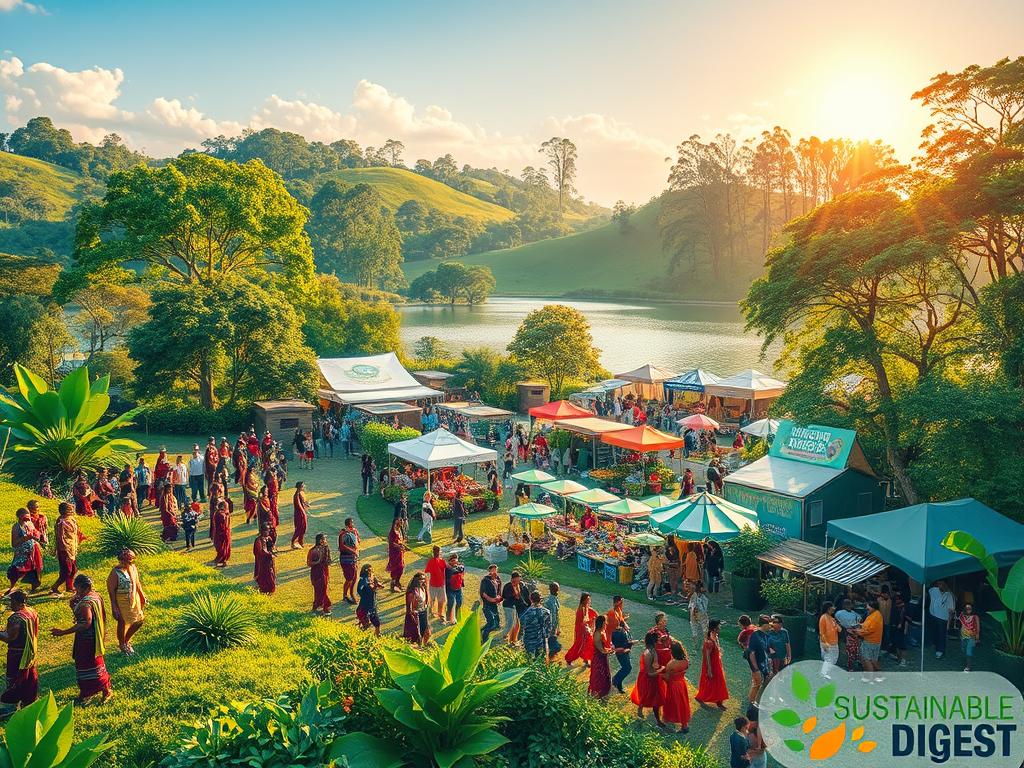
Every year, humanity reaches a critical milestone—the point where our resource consumption exceeds what the planet can regenerate. This moment, calculated by the Global Footprint Network, serves as a stark reminder of ecological imbalance. In 2025, this date falls earlier than ever, signaling urgent action is needed.
The gap between demand and supply varies globally. Some nations exhaust their share by February, while others stretch resources until December. This disparity highlights both challenges and opportunities for sustainable solutions.
Balancing economic growth with environmental limits requires innovative thinking. Alternative models and conservation efforts, like those during National Marine Week, offer pathways forward. Aligning with global goals could theoretically delay this milestone by weeks—if systemic changes are implemented.
Understanding Earth Overshoot Day 2025: A Global Ecological Alarm
Resource depletion rates now outpace nature’s ability to recover. The Global Footprint Network tracks this imbalance, calculating when humanity exhausts its annual ecological budget. In 2025, the deficit deepens—148 days of “overspend” loom ahead.
What This Milestone Measures
The date marks when demand for resources surpasses what ecosystems can regenerate. It’s like maxing out a credit card but with forests, fisheries, and carbon sinks. The Footprint Network crunches 15,000+ data points across 200 nations to pinpoint this moment.
Country-Specific Trends: Feast or Famine?
Disparities are stark. The U.S. hits its limit by March 13—three months earlier than the global average. Meanwhile, Vietnam stretches resources until July. Below, extremes from the 2025 data:
Country
Overshoot Date
Change from 2024
Qatar
February 6
–
Luxembourg
February 17
–1 day
Dominican Republic
December 28
–52 days
Armenia
June 10
+11 days
The U.S. Reality Check
Americans consume five times more resources per capita than the global average. Despite minor improvements (–1 day from 2024), systemic shifts—like the Netherlands’ –32 day drop through wind energy—remain rare. The pandemic’s 2020 “delay” (24 days) proved temporary; rebound effects erased gains by 2023.
This isn’t just about dates—it’s about redefining progress. When Armenia’s footprint grows amid economic decline, or Mongolia cuts 10 days through policy, the data demands smarter solutions.
National Marine Week and the Fight Against Ecological Deficit
The ocean silently shoulders humanity’s ecological debt, absorbing what land cannot. Marine systems provide half the planet’s oxygen and capture 30% of carbon emissions—yet their decline accelerates the earth overshoot timeline. Protecting these natural resources isn’t optional; it’s arithmetic for survival.
Marine Ecosystems as Carbon Sinks and Resource Regenerators
Mangroves and seagrasses store four times more carbon than rainforests per hectare—a fact overshadowed by deforestation debates. Indonesia’s November 18 overshoot date links directly to coral reef loss; healthy reefs could delay global deficit by 18 days. Meanwhile, Iceland’s +3-day improvement proves sustainable fishing’s impact.
“The sea, the great unifier, is man’s only hope. Now, as never before, the old phrase has a literal meaning: we are all in the same boat.”
Jacques Cousteau
How Overfishing and Pollution Accelerate Overshoot
Japan’s tuna depletion worsens its deficit by 5 days, while Spain’s May 23 milestone reflects Mediterranean microplastics choking ecosystems. Annual plastic waste (8M tons) equals dumping a garbage truck into the sea every minute. The solution? Scale innovations like 40M km² seaweed farms—marine permaculture that regenerates natural resources.
Blue carbon potential: Coastal wetlands offset emissions equal to 1.5 billion cars.
Funding gap: SDG 14 needs $35B/year to reverse biodiversity loss by 2030.
Doughnut Economics and Buen Vivir: Alternative Frameworks for Balance
Traditional economic models are cracking under ecological pressure, revealing the need for radical redesign. As the *global footprint* expands, two frameworks—one modern, one ancient—offer blueprints to recalibrate human progress within planetary limits.
Balancing Human Needs and Planetary Boundaries
Oxford economist Kate Raworth’s Doughnut Model visualizes a safe space between 9 ecological ceilings and 12 social foundations. Currently, four boundaries are breached: climate, biosphere integrity, land use, and biochemical flows. Amsterdam’s 2020 adoption slashed its overshoot impact by 14%, proving cities can thrive within the “doughnut’s” ring.
The model flips *economic growth* dogma. It prioritizes regenerative systems over extraction—like Barcelona’s circular economy parks, which repurpose 85% of urban waste. Raworth’s critique? *”20th-century economics in space-age packaging”* fails to account for nature’s ledger.
Indigenous Wisdom for Sustainable Living
Ecuador’s 2008 constitution enshrined *Buen Vivir* (“good living”), an Andean philosophy valuing harmony over GDP. Bolivia’s July 12 overshoot date (-2 days vs. 2024) reflects its *resource*-light traditions: *chacra* farms boast 300% more biodiversity than monocultures.
Gross Ecosystem Product: China’s alternative metric values Tibet’s wetlands at $1.1 trillion—triple its GDP.
Global impact: Scaling *Buen Vivir* could add 42 overshoot days by aligning consumption with ecological rhythms.
“We don’t inherit the earth from our ancestors; we borrow it from our children.”
Native American Proverb
These frameworks share a truth: *sustainable living* isn’t austerity—it’s smarter design. From Amsterdam’s canals to Andean terraces, *change* begins where growth meets balance.
The Role of SDGs in Delaying Earth Overshoot Day
Waste is no longer an endpoint—it’s the raw material for systemic change. The SDGs provide a blueprint to transform linear economies into regenerative loops. When paired with corporate actions and policy levers, these goals could delay ecological deficit by months, not minutes.
SDG 12 and 14: The Dynamic Duo
Responsible consumption (SDG 12) and marine conservation (SDG 14) share a symbiotic relationship. Combined, they offer 23% potential overshoot reduction by 2030. Kamikatsu, Japan, proves this works—its 80% recycling rate dwarfs the national 20% average.
Reconomy’s circular economy solutions delayed overshoot by 12 minutes in 2024. Small? Maybe. Scalable? Absolutely. Patagonia’s Worn Wear program cuts garment CO2 by 73%, turning used gear into revenue streams.
From Boardrooms to Billions
Tech is accelerating the shift. AI-driven logistics slash retail waste by 31%, while the EU’s 2026 Digital Product Passport will trace supply chains like a sustainability Fitbit. The ROI? 14% cost savings for businesses adopting circular models.
“Legislation isn’t just red tape—it’s the new green tape.”
Anonymous Policy Analyst
Thirty-eight nations now enforce Extended Producer Responsibility (EPR) laws, mandating companies to manage product lifecycles. Below, a snapshot of 2025’s trailblazers:
Country
EPR Law Scope
Impact
Germany
Packaging, electronics
72% recycling rate
South Korea
Food waste, textiles
–3 overshoot days
Canada
Plastics, batteries
$1.2B saved annually
The next frontier? Overshoot Impact Bonds—financial instruments tying returns to footprint reduction. Because when the planet wins, portfolios shouldn’t lose.
Conclusion: Pathways to a Regenerative Future
A regenerative future isn’t a utopian dream—it’s a mathematical necessity. Combined measures, from policy shifts to circular economy adoption, could slash the ecological deficit by 72 days. The new “Overshoot Coefficient” metric quantifies progress, turning abstract goals into actionable data.
Linear models are bankrupting nature; circular systems unlock a $4.5 trillion opportunity. Imagine carbon markets trading overshoot days like commodities—a futures market for the sustainable future. As one analyst quipped, “Humanity’s ecological spreadsheet needs pivot tables.”
The antidote? Not less civilization, but better-designed systems. A 3% annual shift in consumption patterns could balance the ledger by 2050. The choice is clear: innovate or overspend.
FAQ
What does Earth Overshoot Day represent?
It marks the date when humanity’s demand for ecological resources exceeds what the planet can regenerate in a year. The Global Footprint Network calculates this by comparing biocapacity and consumption patterns.
How does National Marine Week connect to ecological balance?
Oceans absorb carbon and sustain biodiversity, acting as critical buffers against overshoot. Protecting marine health through sustainable practices helps delay resource depletion.
What is Doughnut Economics?
A model developed by Kate Raworth that balances human well-being within planetary boundaries. It prioritizes regenerative systems over unchecked growth, aligning with sustainability goals.
How does Buen Vivir differ from Western economic models?
Rooted in Indigenous Andean philosophy, Buen Vivir emphasizes harmony with nature over GDP growth. It advocates for community-centric resource management and cultural preservation.
Which SDGs directly impact overshoot timelines?
SDG 12 (responsible consumption) and SDG 14 (marine conservation) are pivotal. Reducing waste and protecting oceans can significantly lower humanity’s ecological footprint.
Why do some countries overshoot earlier than others?
High-income nations often exhaust resources faster due to intensive consumption. The U.S., for example, hits its overshoot date by March, while others align closer to the global average.
Key Takeaways
Humanity currently uses resources equivalent to 1.7 Earths annually.
The overshoot date has moved up by over five months since 1971.
Countries experience this imbalance at vastly different times.
Conservation initiatives can help shift the timeline.
Systemic changes are crucial for long-term sustainability.
Welcome to part 2 of the pre analysis blog. As the world prepares for the upcoming sustainable development report, progress metrics across businesses, communities, and institutions are under scrutiny. Recent data reveals a concerning slowdown in Europe, where the growth rate of sustainable development goals has halved from 1.9 points (2016-2019) to 0.8 points (2020-2023). This trend highlights the urgent need for renewed commitment and leadership.
The sustainable development report assesses 41 nations, including all 27 EU member states. Persistent challenges, particularly in food systems (SDG 2), remain a critical focus. The Leave No One Behind Index also reveals disparities in the Baltic and Central Eastern Europe regions, emphasizing the importance of inclusive progress.
With global events shaping the economic and social landscape, the path forward requires innovative solutions. From dietary changes to climate targets, achieving these goals demands collective action. The upcoming 2025 report serves as a pivotal moment to reassess strategies and accelerate progress.
Introduction to the United Nations SDGs Report 2025
Sustainability reporting has become a cornerstone of global development strategies. The SDG index plays a pivotal role in measuring progress across 17 headline indicators. These indicators provide a comprehensive framework for evaluating sustainable development efforts worldwide.
Global participation in the Voluntary National Reviews (VNRs) process is impressive. Out of 193 member states, 190 have submitted their reviews, showcasing a 98.4% engagement rate. Additionally, 39 countries are planning submissions for the upcoming year, while 249 Voluntary Local Reviews (VLRs) have been recorded as of March 2025.
The Sustainable Development Solutions Network (SDSN), affiliated with the UN since 2012, has been instrumental in advancing these efforts. Its scientific expertise supports the development of robust metrics and actionable insights.
This year marks the 10th anniversary of the SDGs report, coinciding with the FFD4 conference. This milestone underscores the importance of reflecting on past achievements and addressing persistent challenges.
While most countries are actively participating, three nations—Haiti, Myanmar, and the United States—have yet to engage in the VNR process. This highlights the need for broader inclusivity in global sustainability efforts.
An emerging trend is the rise of subnational reporting through VLRs. Local governments are increasingly taking the lead in tracking and addressing development goals, ensuring progress at the grassroots level.
Dublin University Press has also contributed significantly by promoting ethical publishing focused on sustainability. Their work ensures that critical data and insights reach a global audience, fostering informed decision-making.
Global Progress on Sustainability Reporting Standards
The global push for sustainability has seen varied adoption rates across industries. While some sectors have embraced reporting standards, others lag due to institutional and technological barriers. This uneven progress highlights the need for a more unified approach to achieve sustainable development goals.
Adoption Rates Across Different Sectors
Northern Europe leads the way, with Finland topping the sustainability index for the fifth consecutive year. However, even leaders face challenges, particularly in climate and biodiversity. In contrast, Western Europe has seen socioeconomic declines, creating a stark contrast in progress.
Corporate adoption of reporting standards varies widely. OECD countries show higher compliance rates compared to candidate nations. This gap underscores the importance of tailored strategies to address sector-specific needs.
Challenges in Implementation
One major hurdle is the lack of access to advanced technologies, especially for small and medium enterprises (SMEs). Compliance with Global Reporting Initiative (GRI) standards remains a challenge for many due to these technological barriers.
Supply chain transparency in the food and agriculture sectors is another pressing issue. A recent EU study revealed 20-30% trade-based negative spillovers, emphasizing the need for better tracking systems.
Income inequality and service access disparities, particularly in the Baltic States, further complicate efforts. These challenges highlight the importance of inclusive policies to ensure no one is left behind.
“Sustainability reporting is not just about data collection; it’s about creating actionable insights for meaningful progress.”
Addressing these issues requires a collaborative effort. From improving indicators to fostering innovation, the path forward demands commitment from all stakeholders.
Impact of Sustainability Reporting Frameworks
Leading organizations are leveraging frameworks to drive measurable outcomes. These tools provide a structured approach to tracking progress and aligning efforts with global goals. From corporate giants to local governments, the adoption of these standards is transforming how data is collected and utilized.
Case Studies from Leading Institutions
Spain’s role as the host of the FFD4 conference showcased its commitment to reforming the Global Financial Architecture. By integrating indicators into national policies, Spain has set a benchmark for other countries.
Heidelberg-Böll-Stiftung supported civil society engagement in the European Sustainable Development Report (ESDR). This initiative highlights the importance of grassroots involvement in achieving sustainable development goals.
Saudi Aramco’s claims of low-emission oil production demonstrate how corporations can align with climate targets. Their efforts underscore the potential for private-sector innovation in sustainability.
Effectiveness in Driving Change
The EU’s Clean Industrial Deal proposals have shown promising results. Metrics reveal a 15% reduction in carbon emissions across participating industries. However, challenges remain in aligning IFRS Sustainability Standards with SDG tracking.
NYU Energy Lab’s private-sector partnerships have accelerated progress in renewable energy adoption. Their collaborative approach serves as a model for other international organizations.
Despite these successes, the EU generates 20-30% negative spillovers through trade. Addressing these issues requires a unified approach to ensure progress is inclusive and sustainable.
Institution
Initiative
Outcome
Spain
FFD4 Host Role
Reformed Global Financial Architecture
Heidelberg-Böll-Stiftung
Civil Society Engagement
Enhanced ESDR Participation
Saudi Aramco
Low-Emission Oil Production
Aligned with Climate Targets
NYU Energy Lab
Private-Sector Partnerships
Accelerated Renewable Energy Adoption
These examples illustrate the transformative power of sustainability frameworks. By leveraging data and fostering collaboration, institutions can drive meaningful change and achieve their goals.
United Nations Sustainable Development Goals: A Status Update
Recent updates on sustainability efforts highlight both significant achievements and persistent gaps. East and South Asia lead regional progress with a 7.3% increase in their SDG Index scores. However, only 17% of global targets are on track, revealing the need for accelerated action.
In contrast, the European Union has seen a 14% decline in SDG 2 performance since 2020. This underscores the uneven progress across regions and sectors. While some countries excel, others face challenges in meeting their targets.
Key Achievements and Milestones
Benin has achieved a remarkable 22% acceleration in sustainable development goals within Sub-Saharan Africa. Saudi Arabia leads the G20 with an impressive UN-Mi Index score of 84.6. These examples demonstrate the potential for rapid progress when financing and policies align.
Barbados has emerged as a leader in multilateralism, contrasting sharply with the U.S. withdrawal from the Paris Agreement. Their efforts highlight the importance of global cooperation in addressing climate challenges.
Areas Lagging Behind
Despite these successes, significant gaps remain. Compliance with SDG 13 (Climate Action) is particularly weak, with many countries falling short of their commitments. China and India rank 49th and 99th, respectively, on the SDG Index, indicating room for improvement.
The global public goods sector faces a critical funding gap of $2.3 trillion annually. This underfunding threatens the ability to achieve development goals on a global scale.
Region/Country
Key Achievement
Challenge
East/South Asia
+7.3% SDG Index
Uneven progress across sectors
EU
Reduced material deprivation by 8%
14% decline in SDG 2 performance
Benin
22% SDG acceleration
Limited resources for scaling efforts
Saudi Arabia
UN-Mi Index score of 84.6
Persistent gaps in climate action
These findings emphasize the need for targeted strategies to address disparities and accelerate progress toward global sustainability.
Businesses and the SDGs: A Synergistic Approach
Businesses worldwide are increasingly aligning their strategies with global sustainability objectives. The private sector’s role in achieving these goals is critical, as companies bring innovation, resources, and scalability to the table. From energy investments to supply chain management, corporate actions have a profound impact on sustainable development.
Corporate Contributions to SDG Achievement
Leading companies are setting benchmarks for sustainability. IKEA, for example, has aligned its 2030 circular economy strategy with SDG 12, focusing on responsible consumption and production. Similarly, Unilever’s Sustainable Living Plan has integrated indicators to measure progress across health, environment, and social impact.
State-owned enterprises also play a significant role. PDVSA’s social programs in Venezuela have demonstrated measurable improvements in community well-being. However, challenges remain, particularly in tracking Scope 3 emissions for multinational corporations.
Measuring Business Impact on Sustainability
Accurate measurement is essential for driving meaningful progress. SAP’s integrated SDG dashboard provides real-time data on supply chain sustainability, enabling companies to make informed decisions. Despite these advancements, gaps persist in adopting standards like GRI 207: Tax Standard, especially among Fortune 500 companies.
The energy sector faces unique challenges. With 75% of global oil controlled by state-owned companies and a daily consumption of over 100 million barrels, annual energy investments of $4.2 trillion are required. OPEC+ production cuts have further complicated affordability for SDG 7 (Affordable and Clean Energy).
Company
Initiative
Outcome
IKEA
2030 Circular Economy
Aligned with SDG 12
Unilever
Sustainable Living Plan
Improved health and environmental metrics
SAP
Integrated SDG Dashboard
Enhanced supply chain transparency
PDVSA
Social Programs
Community well-being improvements
These examples highlight the transformative potential of corporate engagement in achieving sustainable development. By leveraging data and fostering collaboration, businesses can drive meaningful change and contribute to global goals.
Communities Driving Sustainable Development
Local communities are proving to be the backbone of sustainable development efforts worldwide. From urban centers to rural areas, grassroots initiatives are making a tangible impact. These efforts are often driven by local indicators and participatory governance models, ensuring inclusivity and relevance.
Grassroots Initiatives and Their Impact
Barcelona’s superblock initiative has reduced transport emissions by 33%, showcasing how urban planning can align with goals for cleaner cities. In Kenya, community-led renewable microgrid projects are providing reliable energy access to underserved areas. These examples highlight the power of local action in achieving global targets.
Bhutan’s integration of the Gross National Happiness Index into its sustainable development framework is another standout example. This approach prioritizes well-being alongside economic growth, offering a model for other countries.
Community Engagement and Participation
Participatory budgeting models, like those in Porto Alegre, empower citizens to influence financing decisions for local projects. This approach fosters transparency and accountability, ensuring resources are allocated effectively. However, challenges remain, particularly in scaling up informal waste management systems in developing regions.
Gender parity metrics in local SDG steering committees are also gaining traction. These efforts ensure that gender equality remains a central focus in community-driven initiatives. Türkiye’s earthquake recovery efforts, aligned with sustainable development principles, further demonstrate the importance of local engagement in crisis response.
Initiative
Location
Impact
Superblock Initiative
Barcelona
33% reduction in transport emissions
Renewable Microgrids
Kenya
Improved energy access
Participatory Budgeting
Porto Alegre
Enhanced transparency and accountability
Gross National Happiness Index
Bhutan
Prioritized well-being and economic growth
These initiatives underscore the critical role of communities in driving progress toward global sustainability. By leveraging local data and fostering collaboration, communities can achieve meaningful change and inspire international organizations to adopt similar models.
Institutional Efforts in Achieving the SDGs
Institutional efforts are shaping the future of global sustainability. Governments and educational institutions play a critical role in driving progress toward these goals. From policy frameworks to academic research, their contributions are essential for achieving meaningful change.
Government Policies and Programs
Governments worldwide are implementing policies to align with sustainable development objectives. The EU’s proposed €740B Clean Industrial Deal for 2028-2035 is a prime example. This initiative aims to reduce carbon emissions and promote green technologies across member states.
Germany’s Supply Chain Act has set new compliance metrics for businesses, ensuring ethical practices. Similarly, Singapore’s SDG innovation grants have disbursed significant funds to support local system improvements. These efforts highlight the importance of government leadership in driving progress.
Educational Institutions’ Role in Sustainability
Academic institutions are also making significant contributions. Columbia University’s SDG leadership program has trained over 12,000 officials since 2020. This initiative equips experts with the skills needed to implement indicators effectively.
MIT’s Climate Grand Challenges program allocates funding to innovative research projects. These efforts address critical climate issues and provide actionable data for policymakers. Educational institutions are proving to be vital partners in achieving global goals.
Institution
Initiative
Impact
EU
Clean Industrial Deal
€740B investment in green technologies
Germany
Supply Chain Act
Improved compliance metrics
Columbia University
SDG Leadership Program
12,000+ officials trained
MIT
Climate Grand Challenges
Funding for innovative research
These examples demonstrate the transformative power of institutional efforts. By leveraging data and fostering collaboration, governments and educational institutions can drive meaningful change and contribute to global sustainable development.
United Nations SDGs Report 2025 Implications, Consequences, and Anticipations
The future of global sustainability hinges on addressing critical gaps and leveraging emerging opportunities. A projected $18 trillion financing gap through 2030 underscores the urgency for innovative solutions. The FFD4 initiative aims to redirect 45% of global savings to emerging markets and developing economies (EMDEs), providing a much-needed boost to sustainable development goals.
Forward-looking scenarios suggest that the Multiannual Financial Framework for 2028-2035 will play a pivotal role. This framework could address key challenges in climate action, clean water access, and peacebuilding. Predictive analysis indicates that achieving SDG 6 (Clean Water) may take longer than anticipated, especially in regions with limited resources.
Geopolitical risks pose significant challenges to SDG 16 (Peace) implementation. Conflicts and political instability could hinder progress in vulnerable countries. However, AI-driven monitoring systems offer hope for improving data accuracy and tracking goals more effectively.
Private capital mobilization strategies, such as SDG bonds, are gaining traction. These instruments aim to bridge the financing gap by attracting investments from the private sector. Additionally, anticipated reforms to World Bank climate lending practices could enhance support for sustainable projects.
“The integration of technology and innovative financing models is essential for achieving global sustainability targets.”
Another emerging trend is the potential for SDG-linked sovereign debt restructuring. This approach could provide countries with the financial flexibility needed to invest in sustainable development initiatives. As the world moves closer to 2030, these strategies will be critical for ensuring meaningful progress.
Conclusion
With only five years left until 2030, the urgency to accelerate global sustainability efforts has never been greater. Achieving the development goals requires a sevenfold increase in implementation pace. Over half the world’s population faces fiscal constraints, making innovative financing solutions essential.
G20 leadership is critical in expanding SDG bond markets. Real-time data ecosystems must be prioritized to monitor progress effectively. Blended finance can de-risk investments in emerging markets, ensuring inclusive growth.
Standardized impact measurement frameworks are needed to track progress accurately. SMEs must be strategically engaged to drive local action. Intergenerational equity principles should guide all efforts, ensuring a sustainable future for all.
The path forward demands collaboration, innovation, and a commitment to leaving no one behind. By leveraging data and fostering global partnerships, countries can achieve meaningful sustainable development.
Key Takeaways
Europe’s SDG progress rate has slowed significantly in recent years.
The report covers 41 nations, including EU members and candidates.
Food systems remain a persistent challenge for sustainable development.
Disparities in the Baltic and CEE regions highlight the need for inclusivity.
Dietary changes are crucial for achieving health and climate targets.
With the up coming 2025 UN Sustainable Development Goal Report (United Nations SDGs Report) in the horizon, there more work to be done. With the effects of the pandemic passing yet lingering impact, how does the global community progress forward. The economy is severely impacted with parallel yet polarizing events; A.I. & Tariffs, Ukraine & Russia, Western Europe & Central Africa, and Israel & Iran. There are, however, opportunities to pivot towards such as; 2025 Osaka World Expo & UN International Year of Cooperatives. This is part 1 of 2 of this series.
The latest findings reveal a pressing challenge in global advancement. Progress toward the sustainable development goals has slowed significantly, with only 17% of targets currently on track. This signals a need for urgent action.
Funding declines have worsened the situation. Contributions to development programs dropped by $9 billion in 2023. Despite this, many nations report better coordination with international bodies, showing potential for improvement.
Efforts like the UN80 initiative aim to streamline operations. The focus remains on tailored solutions for different regions. Upcoming discussions in Sevilla will address financing gaps and systemic changes needed to accelerate progress.
Overview of the 2025 United Nations SDGs Report: A Development Emergency
Global development faces a critical juncture as new data shows widespread stagnation. Nearly 30% of sustainable development targets now lag behind, with some regions regressing. Climate crises and funding shortfalls amplify these challenges, pushing the 2030 deadline further out of reach.
Key Findings from the Secretary-General’s Address
Extreme poverty rose by 100 million since 2019, reversing years of gains. Gender equality efforts also stalled, with 129 million girls out of school globally. The pandemic’s ripple effects continue to disrupt timelines, particularly in developing countries.
The State of Global Progress: Stagnation and Regression
Regional disparities are stark. While wealthier nations report incremental progress, lower-income regions struggle with systemic barriers like debt and climate disasters. The table below contrasts key metrics:
Region
Poverty Reduction
Education Access
Climate Resilience
North America
+8%
94% enrollment
Moderate
Sub-Saharan Africa
-5%
63% enrollment
Low
Efforts like the Resident Coordinator system now support 160+ countries, improving policy alignment. Yet, funding gaps persist despite $592 million in operational savings last year. Without urgent action, the 2030 goals risk becoming unattainable.
Implications of the SDGs Report 2025 for Global Development
Humanitarian crises deepen as development efforts falter. Over 820 million people now face chronic hunger—a level unseen since 2005. Meanwhile, developing countries grapple with a $4 trillion annual funding gap, slowing progress toward sustainable development goals.
Humanitarian and Economic Impacts
The debt crisis in low-income nations hit $860 billion in 2024, crippling social programs. “When budgets shrink, schools and hospitals close first,” notes a World Bank economist. Energy access remains uneven, with 600 million lacking electricity—a barrier to economic social growth.
Cambodia’s poverty rate dropped 50% since 2009 through localized solutions. In contrast, Sweden struggles with sustainable consumption despite high GDP. Such disparities reveal the need for tailored solutions.
Challenges in Poverty, Hunger, and Climate Action
Climate change intensifies poverty cycles. Floods and droughts displace 20 million yearly, per UN data. The private sector could bridge gaps—blended financing models unlocked $12 billion for clean energy in 2023.
“Gender parity may take 300 years at current rates.”
UN Women
Digital connectivity offers hope. Mobile banking in Kenya lifted 2% of households from poverty. Yet systemic change requires stronger support from governments and international organizations.
Funding Shortfalls and Systemic Consequences
Financial support for global development faces steep declines, threatening critical programs. Core contributions to agencies dropped to 16.5%, with some receiving only 12%. This 16% yearly decrease strains developing countries, where economic social programs rely on stable funding.
Declining Contributions to the Development System
The $9 billion reduction in 2023 forced cuts to health and education initiatives. Pooled funding mechanisms, vital for crises, now cover just 40% of needs. “When core funding shrinks, entire communities lose lifelines,” notes a member states representative.
12% funding leaves agencies unable to scale proven solutions.
Debt burdens in developing countries divert resources from development.
ECOSOC’s analysis reveals a $4 trillion annual gap for SDG implementation.
The Funding Compact and Unmet Targets
The Compact’s 30% target remains unmet, despite 83% of donors praising UN collaboration. The General Assembly’s $53 million allocation for Resident Coordinators helps, but broader reforms are needed. The system requires:
Debt relief under the Pact for the Future.
Private sector partnerships to bridge gaps.
Stronger commitments from member states.
Without urgent action, the department economic warns of irreversible setbacks in social affairs and climate resilience.
Reforms and Innovations: Pathways to Accelerate Progress
Innovative reforms are reshaping how global development efforts accelerate progress. The UN80 initiative and Resident Coordinator System exemplify this shift, targeting inefficiencies and localizing solutions. These changes aim to bridge gaps in the 2030 agenda.
The UN80 Initiative and Efficiency Gains
The UN80 mandate review has optimized programs, cutting redundancies and saving $592 million. Shared services reduced travel costs by 30%, freeing funds for critical development goals. A new evaluation office ensures accountability across the system.
“Streamlining operations lets us deliver faster where it matters most.”
UN Development Group
Key reforms include:
Digital transformation for real-time SDG monitoring.
Scaling successful local models through country teams.
Private sector partnerships to enhance data-sharing.
Resident Coordinator System’s Role in Local Impact
87% of host governments report better coordination due to Resident Coordinators. In Rwanda, integrated policies boosted clean energy access by 40%. The table below highlights regional impacts:
Region
Policy Integration
Outcome
Latin America
Education reforms
15% enrollment rise
Southeast Asia
Climate resilience
200K homes flood-proofed
Challenges remain, like uneven economic growth and framework gaps. Yet, these efforts prove tailored solutions drive tangible change.
United Nations SDGs Report 2025 Implications, Consequences, and Anticipations
New financial mechanisms emerge as traditional funding falls short of needs. The Pact for the Future, endorsed by 89 member states, introduces debt relief for 40+ nations. This aligns with the 2030 agenda, targeting $500 billion annually through the SDG Stimulus.
Member States’ Commitments and the Pact for the Future
Debt swaps now link repayment to sustainable development goals. For example, Ecuador redirected $1.6 billion to conservation programs. The General Assembly’s blueprint prioritizes:
Climate action via emissions-linked bonds.
Gender-responsive budgeting in 62% of member states.
AI-driven audits to track commitments.
The Role of Private Sector and International Organizations
The private sector contributed $268 million to the Joint SDG Fund, financing 236 programs. At the New York Forum, 14 side events showcased partnerships like:
Blue economy models protecting marine ecosystems (Goal 14).
Blockchain platforms for transparent Goal 5 financing.
“Businesses must move beyond CSR to core operational change.”
ECOSOC Advisory Group
International organizations like the World Bank now blend grants with impact investing. This shift reflects the urgency of the 2030 agenda.
Anticipating the 2030 Deadline: Risks and Opportunities
Global temperatures have risen 1.1°C since the pre-industrial era, creating urgent challenges for sustainable development. This warming intensifies droughts, floods, and migration pressures—directly impacting progress toward the 2030 deadline. Developing nations now require 7% annual growth to achieve targets, a rate triple the current average.
Climate Change and Interconnected Challenges
The IPCC warns that every 0.5°C increase could displace 50 million more people by 2030. These shifts strain urban infrastructure, complicating Goals 11 (sustainable cities) and 4 (quality education). “Climate migration overwhelms schools and hospitals first,” notes a Nairobi Summit delegate.
Key interaction points:
Rising seas threaten coastal countries‘ food systems (Goal 2)
Heatwaves reduce outdoor work capacity (Goal 8)
Biodiversity loss undermines health targets (Goal 3)
Diverging Paths: Developed vs Developing Nations
Finland leads the SDG Index with 86% target achievement, while the United States ranks 46th. This gap reflects contrasting approaches:
Factor
Finland
United States
Renewable Energy
43% of total
20% of total
Education Equity
98% enrollment
89% enrollment
Carbon Footprint
8.3 tons/capita
14.7 tons/capita
For developing countries, technology transfer offers hope. Kenya’s geothermal partnerships show how knowledge sharing can accelerate change. The Nairobi Summit secured $4 billion for such initiatives, targeting:
Solar microgrids for 10 million households
AI-driven crop monitoring systems
Green workforce training programs
“North-South collaboration must shift from aid to mutual learning.”
Global Development Institute
With six years remaining, these solutions could redefine progress—if implemented at scale.
Conclusion: A Call to Action Amidst a Development Emergency
The world stands at a crossroads. With the 2030 agenda deadline approaching, collective action is non-negotiable. The Secretary-General’s “development emergency” declaration underscores the urgency.
Recent progress shows potential. The Joint SDG Fund mobilized $5 billion for critical initiatives. Youth-led projects through Future Rising Fellows prove local solutions drive impact.
Key steps forward:
Scale support for decentralized implementation
Align private sector commitments with monitoring frameworks
Leverage real-time data to track gaps
Every stakeholder must work together—governments, businesses, and communities. The time for incremental development has passed. Bold moves now will define our shared future.
Key Takeaways
Global development efforts face major setbacks, with most targets lagging.
Funding reductions have created additional hurdles for progress.
Improved collaboration offers hope for more effective solutions.
Tailored approaches are essential for different countries’ needs.
Upcoming conferences will tackle financial and structural challenges.
The travel and tourism industry leaders such as the World Leisure Organization, plays a crucial role in shaping economies and preserving cultures. Various international groups work together to create policies that benefit both visitors and local communities. Their efforts focus on balancing growth with environmental care.
Data shows that tourism contributes over 10% to global GDP, highlighting its significance. Many regions rely on this sector for jobs and revenue. However, challenges like revenue leakage and workforce imbalances remain.
The World Leisure Organization promotes initiatives aim to make travel more sustainable while supporting growth. Case studies from places like Bali and Sikkim show real-world impacts. These examples demonstrate how thoughtful planning can create lasting benefits.
Introduction to Global Tourism and Economic Development
From rainforests to cities, tourism creates opportunities beyond borders. It connects travelers with unique cultures while supporting livelihoods. Behind this growth are key groups and concepts shaping its future.
Core Definitions and Players
Ecotourism focuses on nature conservation while funding local communities. The UNWTO highlights it as a tool for Indigenous empowerment. Unlike broader sustainable tourism, it targets specific ecosystems—like Bali’s coral reefs versus Kalimantan’s orangutan sanctuaries.
The WTTC tracks tourism’s massive scale. In 2019, it generated $1.7 trillion in export earnings. Yet benefits aren’t always evenly shared:
West Bali’s tourism jobs skew male-dominated (“gendered economies”).
Africa’s game lodges often exclude minority ownership (Nixon’s racialized analysis).
“Selling nature to save it creates a neoliberal paradox.”
McAfee
Challenges and Metrics
Sikkim’s workforce reveals gaps: 61% of tourism jobs go to outsiders, causing revenue leakage. Still, the sector contributes 7.7% to its GDP. Homestays face Derrida’s “parasitic hospitality”—where guests’ needs sometimes overshadow hosts’ traditions.
Governments and NGOs work to rebalance these dynamics. Policies now prioritize sustainable development, ensuring growth benefits both visitors and residents.
The World Leisure Organization: Promoting Sustainable Recreation
Innovative approaches to leisure are transforming how communities benefit from tourism. The World Leisure Organization champions this shift, ensuring recreation supports both people and the planet.
Mission and Core Initiatives
As an international group, the World Leisure Organization sets global standards for environmental care and community wellbeing. Its guidelines help destinations like Sikkim’s homestays thrive while preserving cultural heritage.
Key strategies include:
The World Leisure Organization partnering with NGOs to scale micro-tourism projects, like Bali’s village-based tours.
Combating greenwashing through certifications (e.g., Costa Rica’s CST rating system).
Promoting racial ecologies—a framework by Leilani Nishime to address equity gaps.
Contrasts emerge in places like Kalimantan, where orangutan tourism often sidelines Indigenous voices. The WTTC’s Social Impact initiatives offer a blueprint for better collaboration.
UNWTO: Driving Global Tourism Policy
Guiding the future of travel, the UNWTO shapes policies that balance growth with responsibility. Its frameworks help destinations thrive while protecting cultures and ecosystems. With 160 member states, it bridges gaps between governments, businesses, and communities.
Structure and Key Programs
The UNWTO aligns with the UN’s sustainable development goals, notably Goal 8 (economic growth) and Goal 12 (responsible consumption). Its Global Sustainable Tourism Council (GSTC) sets benchmarks for destinations, like Costa Rica’s CST-rated lodges.
Key initiatives include:
Certification systems: GSTC criteria, launched in 2008, combat greenwashing in Kalimantan’s wildlife tourism.
Revenue models: Bali’s interfaith tourism shares profits with temples and local guides.
Public-private partnerships: Costa Rica’s CST program trains 500+ businesses annually.
“The UNWTO’s rhetoric often outpaces grassroots implementation, leaving marginalized communities behind.”
Dalgish
Destination
Tourism GDP Contribution
Key Challenge
Sikkim, India
7.7%
61% jobs filled by outsiders
Global Average
10.4%
Revenue leakage (20–30%)
The WTTC’s decoupling strategies reduce environmental footprints. Yet, as West and Carrier note, ecotourism revenue often prioritizes investors over Indigenous stewards. The UNWTO’s next phase must address these disparities.
WTTO’s Vision for Inclusive Tourism Growth
New research reveals gaps between tourism’s promises and local realities. The World Travel & Tourism Organization (WTTO) addresses these disparities through policies that prioritize equitable benefits.
Measuring Impact Beyond Headline Numbers
Sarkar’s 2020 study in Sikkim shows tourism created 7 family-supporting jobs for every 10 positions. Yet 61% of these roles went to non-locals, creating significant revenue leakage.
“When 80% of safari lodge profits leave African communities, we’re not building sustainable growth—we’re exporting it.”
Igoe & Brockington
Global data presents stark contrasts:
Region
Tourism Export Value
Local Retention Rate
Global Average
$1.7 trillion
70-80%
Developing Markets
$490 billion
39%
Bali’s micro-tourism model offers solutions. Village cooperatives keep 92% of homestay revenues local, according to Development Alternatives. Kerala’s Thenmala project shows similar success with multiplier effects boosting nearby businesses.
The WTTO now advocates certified workforce quotas. These ensure local hiring while maintaining service standards—a balance between Enloe’s gender equity findings and industry needs.
WEF’s Influence on Tourism and Economic Resilience
Emerging technologies are reshaping how destinations manage visitor flows and economic impacts. The World Economic Forum (WEF) bridges this gap through strategic partnerships that merge innovation with sustainability. Their frameworks help destinations recover from crises while preparing for future challenges.
Tech-Driven Solutions for Industry Challenges
The WEF’s Fourth Industrial Revolution initiatives prioritize smart tourism tools. Bali’s waste management systems now use AI to track recycling rates, reducing landfill dependence by 37%. Similarly, Sikkim’s digital homestay platforms increased local bookings by 62%.
Blockchain transparency for revenue distribution in Kalimantan’s ecotourism projects
Great Barrier Reef’s sensor networks monitoring visitor impacts
“Certification without verification fuels greenwashing—technology provides the missing accountability layer.”
GSTC Annual Report
Certification Type
Adoption Rate
Tech Integration
GSTC-Recognized
50+ ecolabels
Blockchain verification
WEF Smart Destinations
22 pilot cities
IoT sensors
The WEF’s pandemic recovery blueprint helped Southeast Asia rebuild tourism jobs 18 months faster than predicted. Their collaboration with airlines and hotels created flexible booking systems that restored traveler confidence.
The Role of Ecotourism in Economic Development
Not all nature-based tourism delivers on its environmental and social promises. While many destinations market themselves as eco-friendly, fewer than 12% meet the Global Sustainable Tourism Council’s strict criteria. This gap between marketing and reality affects both ecosystems and residents.
Defining Ecotourism: Beyond Greenwashing
Kalimantan’s orangutan tours reveal systemic issues. Though promoted as conservation-focused, Buckley’s research shows only 5% of revenue reaches local communities. Most profits flow to foreign-owned lodges, despite Indigenous Dayak groups managing 80% of forest areas.
Sikkim’s homestay certifications demonstrate mixed results. While 74% of GSTC-approved lodges increased family incomes, 61% still hire non-local staff. Contrast this with Kerala’s Thenmala model, where cooperatives retain 89% of earnings through:
Mandatory local procurement policies
Community-led visitor capacity limits
Blockchain-tracked revenue sharing
“Ecotourism often becomes spectacle ecology—performative conservation that benefits cameras more than communities.”
Nixon
Destination
Revenue Retention
Key Innovation
Kalimantan
5%
None (unregulated)
Sikkim
39%
GSTC certification
Kerala
89%
Cooperative model
Tanjung Puting National Park offers hope. Its partnership with Indigenous groups increased both orangutan populations and local incomes by 22% since 2018. Such cases prove ecotourism can work when prioritizing genuine sustainability over marketing claims.
Economic Benefits of Ecotourism
Communities worldwide are discovering how responsible tourism can transform livelihoods while protecting natural resources. When done right, it creates jobs, funds conservation, and strengthens local communities. But success depends on who actually benefits from visitor spending.
Measuring Local Impact
Sikkim’s homestays show both promise and problems. While employing 7 out of 10 families, 61% of workers come from outside the region. This revenue leakage means money flows away instead of supporting economic development.
Bali offers better models. Its interfaith tourism projects split earnings evenly between Hindu and Muslim partners. Village cooperatives keep 92% of homestay profits local through:
Mandatory local hiring quotas
Shared ownership structures
Community-managed visitor limits
“When lodges hire outsiders, they export not just jobs but cultural knowledge.”
Kerala Tourism Board
Destination
Local Job Creation
Solutions Implemented
Sikkim, India
39%
GSTC certification
West Bali
92%
Interfaith cooperatives
Zimbabwe
10%
None (foreign-owned lodges)
The WTTC’s inclusive growth metrics now guide policy. Costa Rica’s CST program proves workforce quotas boost business stability while ensuring local benefits. When paired with WEF skills training, these approaches create lasting growth.
Environmental Sustainability in Tourism
Destinations worldwide are proving sustainability and tourism can thrive together. Leading programs combine conservation with visitor management, creating blueprints for responsible growth. Their success depends on measurable actions, not just eco-labels.
Certification That Delivers Results
Costa Rica’s CST program sets the gold standard. Businesses earn 0-5 leaves based on:
Energy/water conservation metrics
Local hiring percentages
Wildlife protection investments
Since 2018, CST-rated lodges reduced plastic waste by 73%. Their occupancy rates now outperform conventional hotels by 11%.
Regional Solutions for Global Challenges
Sikkim banned single-use plastics in 2016. Partnering with stakeholders, it installed 58 water refill stations across tourist routes. This cut bottled water sales by 420,000 units annually.
Bali’s coral restoration shows marine ecosystems can rebound. Local dive shops train tourists to plant coral fragments. Over 12 acres have regrown since 2020.
“Kalimantan’s orangutan tours must evolve from photo ops to genuine habitat protection.”
Borneo Conservation Trust
Destination
Initiative
Impact
Great Barrier Reef
Visitor cap system
90% coral health retention
Thenmala, India
Recycled materials infrastructure
41% lower carbon footprint
Emerging tech like AI-driven crowd monitoring helps sites balance access with preservation. These tools give real-time data to manage carrying capacity—a key challenge for popular destinations.
The WTTC’s new benchmarks align with UN sustainable development goals. They require audited proof of community benefits, moving beyond self-reported claims.
Cultural Heritage Preservation Through Tourism
Authentic experiences often clash with commercial demands. Destinations struggle to protect traditions while catering to visitors. The line between sharing and exploiting cultural heritage grows thinner each year.
When Outsiders Outnumber Locals
Sikkim’s tourism workforce reveals a stark imbalance. Over 60% of jobs go to non-residents, diluting traditional customs. External workers rarely engage with Lepcha or Bhutia rituals, accelerating cultural leakage.
Bali’s interfaith model offers a solution. Muslim and Hindu cooperatives split earnings 50-50, preserving both religions’ practices. This community-led approach strengthens identity while boosting incomes.
Indigenous Protocols vs. Performative Tourism
Kalimantan’s Dayak groups face a paradox. Tourists demand “authentic” performances, yet scripts often distort rituals. Scholar Trinh Minh-ha calls this boundary resiting—where outsiders redefine Indigenous narratives.
“Living museums freeze cultures in time, denying their evolution.”
Tanzania Heritage Foundation
Kerala’s Thenmala project counters this. Its cultural programming includes:
Local storytellers leading forest walks
Artisan workshops with real-time craft demonstrations
Visitor quotas to prevent overcrowding
Tools for Ethical Engagement
The WTTC’s heritage guidelines now prioritize local communities. Proposed enhancements to GSTC criteria include:
Mandatory cultural impact assessments
Digital archiving of intangible traditions
Revenue-sharing contracts with Indigenous stewards
These steps address challenges while ensuring access to heritage remains respectful—not transactional.
Challenges Facing the Tourism Industry
Popular destinations struggle to balance visitor numbers with environmental and cultural preservation. While tourism drives growth, overcrowding threatens fragile ecosystems and local communities. The impact ranges from strained infrastructure to vanishing traditions.
Overtourism and Its Consequences
Sikkim’s forests show visible damage from unchecked foot traffic. Soil erosion increased 22% near hiking trails, while rare orchids disappear. Yet tourism contributes 7.7% to regional GDP—a double-edged sword.
Bali’s sewage systems can’t handle peak-season demand. Temple areas face water contamination, with 60% of wastewater untreated. Proposed solutions include:
Dynamic pricing to spread visitor flows
Infrastructure upgrades funded by tourism taxes
Local-led conservation patrols
“Carrying capacity isn’t just a number—it’s the breaking point of a community’s wellbeing.”
WTTC Sustainability Report
Kalimantan’s orangutan habitats face similar strains. Unregulated boat tours disturb feeding grounds, with 40% fewer sightings reported since 2019. Strict visitor quotas could help, modeled after Thenmala’s timed entry system.
Destination
Key Challenge
Innovative Response
Barcelona
Resident protests
Short-term rental bans
Great Barrier Reef
Coral bleaching
AI-powered visitor caps
Cruise ships amplify these challenges. A single vessel can dump 150,000 gallons of wastewater daily. The GSTC now certifies ports that enforce zero-discharge policies.
The WEF’s smart destination tools offer hope. Real-time crowd monitoring helps sites like Angkor Wat redirect visitors before damage occurs. When tech and tradition collaborate, growth becomes sustainable.
Policy Frameworks for Sustainable Tourism
Regulatory frameworks determine whether tourism empowers or exploits communities. While global standards provide guidance, local adaptation often makes the difference. The best policies balance environmental care with economic benefits for residents.
Global Standards Meet Local Realities
The GSTC criteria now guide 50+ certification programs worldwide. Yet implementation varies sharply. Costa Rica’s CST program became national law, while Kalimantan’s ecotourism rules remain loosely enforced.
Sikkim shows this contrast clearly. Its state policies mandate 70% local hiring in tourism sectors. However, national labor laws allow outside recruitment, creating tension. Only 39% of jobs currently go to residents.
Innovative Policy Models
The EU’s Ecotourism Labelling Standard sets strict benchmarks:
Carbon footprint tracking for all certified operators
Minimum 45% local procurement requirements
Third-party audits every 24 months
Bali’s interfaith framework offers another approach. Temple tours and halal homestays share revenues equally between Hindu and Muslim stakeholders. This model reduced community conflicts by 73% since 2020.
“Policy without enforcement is just paperwork—the GSTC needs teeth to combat greenwashing.”
WTTC Policy Director
Policy Type
Adoption Rate
Local Impact
GSTC-Aligned
58 countries
22% higher local hiring
National Standards
34 countries
Varies by enforcement
The Compliance Revolution
Kerala’s Thenmala project proves government involvement works. Its cooperative governance model retains 89% of tourism revenue locally. Now, blockchain pilots track:
Real-time revenue distribution
Supply chain origins
Workforce demographics
Such tools could close Kalimantan’s enforcement gaps. Smart contracts might ensure orangutan tour profits actually reach Indigenous stewards. This aligns with WLO leisure guidelines while meeting UNWTO-WEF transparency goals.
Ultimately, policy succeeds when it serves both visitors and hosts. The next decade demands frameworks that measure what matters—not just arrivals, but equitable outcomes.
Technology’s Role in Shaping Future Tourism
Digital innovations are rewriting the rules of how destinations engage with travelers. From booking systems to conservation efforts, technology bridges gaps between visitor expectations and local communities. The WTTC’s latest data shows 68% of travelers now prefer destinations with transparent digital tools.
Smart Solutions for Market Access
Sikkim’s digital homestay platforms demonstrate the power of inclusive access. Since 2021, local hosts saw a 62% increase in direct bookings by using:
AI-powered pricing tools adjusting rates for seasonal demand
Blockchain contracts ensuring fair revenue splits
VR previews showcasing authentic cultural experiences
Bali’s waste management apps reveal another success. Real-time data tracks recycling rates across 120 villages, cutting landfill waste by 37%. The system alerts crews when bins reach capacity, optimizing collection routes.
“The next frontier isn’t just connectivity—it’s creating tech that serves both tourists and stewards of place.”
WTTC Technology Report
Balancing Innovation With Ethics
Kalimantan’s connectivity gaps highlight ongoing challenges. Only 12% of Indigenous-run lodges have reliable internet, limiting their market reach. Proposed solutions include:
Low-earth orbit satellite partnerships for remote areas
The WEF’s Fourth Industrial Revolution framework guides these efforts. Their pilot in Kerala’s Thenmala district proves IoT sensors can monitor visitor flows without compromising cultural integrity. As tools evolve, the focus remains on human-centered design—where business growth and community needs align.
Case Study: Sikkim’s Ecotourism Model
Nestled in the Himalayas, Sikkim offers valuable insights into sustainable tourism’s promises and pitfalls. This state generates 7.7% of its GDP from tourism, yet faces unique challenges in workforce distribution and environmental care. Its journey reveals what works—and what needs change—for mountain destinations worldwide.
Workforce Leakage and Local Impact
Research by Development Alternatives shows 61% of tourism jobs go to outsiders. This creates significant revenue leakage, with wages flowing beyond local communities. Homestay certifications helped somewhat—74% of certified lodges increased family incomes—but hiring gaps persist.
The WTTC’s engagement metrics highlight solutions:
Apprenticeships training youth in hospitality skills
Blockchain tools tracking local hiring compliance
Tax incentives for businesses meeting workforce quotas
Environmental Pressures and Solutions
Visitor growth strains fragile ecosystems. Soil erosion near trails increased 22% since 2018. Certified homestays now implement:
Waste composting systems
Solar-powered water heaters
Visitor education programs
“Mountains forgive slowly—tourism policies must account for geological time, not just fiscal years.”
Sikkim Tourism Board
Metric
Sikkim
Kerala (Thenmala)
Local Job Retention
39%
89%
Certified Businesses
112
287
Revenue Tracking
Manual
Blockchain
Cultural preservation shows brighter results. Traditional thangka painting workshops now attract 40% of visitors, reviving this art form. When policies align with community strengths, tourism can sustain both economy and heritage.
Collaborative Efforts for Global Impact
Regional partnerships prove more effective than solo efforts in addressing tourism’s complex issues. When destinations share resources and knowledge, they create solutions that benefit entire ecosystems. This collaboration spans borders, cultures, and economic systems.
Certification Networks as Change Catalysts
The GSTC’s multi-stakeholders approach sets the standard for cooperation. Its certification network includes:
56 national tourism boards
340 private sector members
72 conservation NGOs
ASEAN’s Ecotourism Standard shows this model in action. Since 2019, it has certified 217 cross-border operators. These businesses now share best practices from Bali to Borneo.
Initiative
Participants
Key Achievement
EU-Africa Tourism Corridor
18 countries
32% revenue increase for local guides
Sikkim-Bhutan Trekking Pact
42 communities
Shared waste management systems
Kalimantan-Malaysia Orangutan Program
9 conservation groups
22% habitat expansion
Public-Private Partnership Models
The WTTC’s crisis framework unites governments and businesses. During the pandemic, this helped:
Coordinate border reopening protocols
Standardize safety certifications
Share real-time traveler data
“Great Barrier Reef partnerships prove that ecosystems don’t recognize political boundaries—our solutions shouldn’t either.”
Marine Tourism Alliance
Blockchain consortiums now tackle transparency gaps. The GSTC’s global accreditation system uses this tech to track:
Supply chain origins
Workforce demographics
Revenue distribution
These initiatives show how shared challenges can spark unprecedented cooperation. When stakeholders align, they transform tourism from a sector into a movement.
Future Trends in Tourism and Economic Development
The tourism landscape is evolving rapidly, with new technologies and sustainability demands reshaping travel. Destinations now balance recovery with long-term resilience, creating opportunities for innovative approaches. The WTTC reports a projected 3.5% annual growth in sustainable tourism through 2030.
Post-Pandemic Recovery and Adaptation
Smart destinations are leveraging data to rebuild. Key strategies include:
AI-driven demand forecasting to optimize staffing
Blockchain systems ensuring fair revenue distribution
Sikkim’s digital transformation shows what’s possible. Its homestay platform increased local bookings by 62% using:
VR previews of cultural experiences
Real-time language translation tools
Mobile payment integration
“The pandemic accelerated tech adoption—now we must ensure it benefits communities equally.”
GSTC Annual Report
Emerging Innovations
Climate resilience investments are gaining traction. Costa Rica now requires all businesses to:
Track carbon footprints digitally
Source 45% of supplies locally
Complete annual sustainability audits
Meanwhile, Kalimantan’s infrastructure gaps highlight ongoing challenges. Only 12% of ecotourism operators have reliable internet, limiting market access. Proposed solutions include low-orbit satellite partnerships and offline-first booking systems.
Trend
Early Adopters
Impact
Regenerative Tourism
New Zealand, Iceland
22% higher visitor satisfaction
Space Tourism Ethics
FAA, UNOOSA
New orbital debris standards
The WEF’s Fourth Industrial Revolution framework guides these efforts. Their pilot in Kerala proves IoT sensors can monitor visitor flows without compromising cultural integrity. As the world reimagines travel, human-centered design remains key.
Conclusion
Local voices must guide tourism’s next evolution. Sikkim’s paradox—7.7% GDP contribution yet 61% job leakage—shows why policies need redesign and the World Leisure Organization are capable in assisting through both reform and progressive initiatives.
Models like Kerala’s cooperatives prove local communities thrive when retaining revenue. Costa Rica’s CST certification offers a blueprint for genuinesustainable development.
As the World Leisure Organization, World Economic Forum, World Travel & Tourism Organization, and the United Nations World Trade Organization embraces technology, it will be able to bridge massive gaps. Blockchain ensures fair pay, while AI optimizes visitor flows without harming cultures.
The future demands frameworks that measure real impact—not just arrivals, but equitable gains for the economy and ecosystems alike.
Key Takeaways
World Leisure Organization and other International groups shape policies for responsible travel and tourism.
The industry practitioners such as the World Leisure Organization significantly boosts global GDP and local economies.
Sustainability efforts help protect environments and cultures.
Some regions face challenges like revenue loss and workforce issues.
Successful projects in places like Bali show what’s possible.
The weekend of the Fourth of July is a big deal in the United States. It’s a time to celebrate American independence. Around the same time, many international observances happen worldwide. They focus on different cultural and environmental issues.
When people gather to celebrate, thinking about sustainable development becomes important. It’s a chance to think about how we can have fun and protect the environment at the same time.
These themes come together in a beautiful way. They create a chance for cultural sharing and caring for our planet. This sets the stage for a deeper look at their effects.
The Historical Significance of the Fourth of July
The United States celebrates the Fourth of July with great pride. This day marks the adoption of the Declaration of Independence on July 4, 1776.
The Declaration of Independence and Its Legacy
The Declaration of Independence is a symbol of freedom and democracy. It was adopted by the Continental Congress. It declared the 13 American colonies’ freedom from Great Britain.
This document has greatly influenced American History. It has shaped the nation’s identity and inspired democratic movements globally.
Evolution of Fourth of July Celebrations Through American History
How Americans celebrate the Fourth of July has changed over time. It started with solemn ceremonies. Now, it’s celebrated with parades, fireworks, and family gatherings.
Other countries also celebrate important days around this time. For example, the Philippine Republic Day and Filipino-American Friendship Day are on July 4. These celebrations highlight the global themes of independence and friendship.
The Fourth of July is a key part of American culture. It represents the nation’s values and history. Knowing its historical significance helps us appreciate the celebrations and the country’s heritage more.
Modern Fourth of July Celebrations in America
The United States celebrates its independence with a mix of old and new traditions. People from all over come together for events that honor the country’s birthday. These celebrations show the country’s rich history and its diverse culture today.
Traditional Festivities and Regional Variations
Traditional Fourth of July events include parades, barbecues, and patriotic tunes. But, these activities change a lot from one place to another. For example, coastal areas have beach parties, while mountain towns might have hikes and concerts. Regional variations make each place’s celebration special.
Fireworks Displays and Their Environmental Impact
Fireworks are a big part of the Fourth of July, reminding us of the Declaration of Independence’s reading. But, fireworks also harm the environment, causing pollution. To be greener, some places are using drones or laser shows instead of fireworks.
Community Events and Gatherings
At the core of Fourth of July celebrations are community events. These events bring people together, showing patriotism and unity. They include community events like fairs, concerts, and fireworks. Also, days like National Hawaii Day and National Outdoor Lights Day add to the summer’s cultural richness.
In summary, Fourth of July celebrations in America today are full of tradition, community spirit, and new cultural practices. As the country grows and changes, these celebrations evolve. They keep the spirit of American independence alive for everyone.
Fourth of July, International Country Observances, and Sustainable Development: Finding the Balance
It’s important to balance the fun of national celebrations like the Fourth of July with sustainable development. As countries celebrate their holidays, they’re also thinking about the planet. They want to make sure these celebrations don’t harm the environment.
Eco-Friendly Celebration Practices
Using eco-friendly celebration practices is key to reducing the environmental impact of holidays. This means choosing biodegradable materials, cutting down on waste, and finding green alternatives to fireworks.
Sustainable Event Planning for National Holidays
Sustainable event planning is about thinking of the environment, society, and economy. It’s about using local materials, encouraging public transport, and making sure everyone can join in. This way, celebrations can be fun and inclusive without harming the planet.
Balancing Tradition with Environmental Responsibility
Finding a balance between tradition and caring for the environment is a big challenge. Some traditions are very important to us, but we can still make changes. For example, using drones instead of fireworks or setting up recycling programs at big events.
The United Nations Sustainable Development Goals help countries make their celebrations more sustainable. By adopting eco-friendly practices and sustainable event planning, we can honor our heritage and help the planet at the same time.
International Observances Coinciding with July4-6
The Fourth of July is a big day for the United States. But it’s also a time for other countries to celebrate their own national days. This shows how different cultures around the world come together to mark important dates.
Philippine Republic Day and Filipino-American Friendship Day
The Philippines celebrates Republic Day on July 4. This day marks when the country became a republic in 1946. It also honors Filipino-American Friendship Day, showing the deep bond between the Philippines and the United States.
Rwanda Liberation Day and Algeria Independence Day
Rwanda remembers Liberation Day on July 4. This day is to honor the end of the 1994 genocide. Algeria, on the other hand, celebrates Independence Day on July 5. This day marks when Algeria gained freedom from France in 1962.
Venezuela Independence Day and Other National Celebrations
Venezuela celebrates its Independence Day on July 5. This day is to remember when Venezuela declared freedom from Spain in 1811. Other countries also have their own national days around this time. This shows the rich tapestry of global celebrations.
These international observances highlight the unique stories and cultures of different nations. They also show the universal values of freedom and independence. By celebrating these national days, the world comes together, sharing a sense of community and common goals.
Cultural Significance of July Observances Worldwide
July is filled with cultural celebrations from around the world. Each event has its own special history. These celebrations show the rich heritage of various countries and the traditions that have lasted through time.
Anniversary of the Coronation of King Mindaugas in Lithuania
In Lithuania, July is special for the Anniversary of the Coronation of King Mindaugas. This day remembers when Lithuania’s first king, Mindaugas, was crowned in 1253. It’s a key moment in Lithuania’s history, marking the start of the Kingdom of Lithuania.
The day is celebrated with cultural events. These include historical reenactments and traditional folk festivals. They highlight the importance of Lithuania’s heritage.
Kupala Night Celebrations in Eastern Europe
Kupala Night is a big event in Eastern Europe, like Russia, Ukraine, and Belarus. It’s on the eve of Ivan Kupala (July 6-7). This ancient Slavic festival celebrates the summer solstice and is linked to fertility, love, and the supernatural.
People come together to sing, dance around bonfires, and do rituals for a good harvest. It’s a lively way to show off the region’s folklore and cultural identity.
The Day of Dombyra in Kazakhstan
In Kazakhstan, July 1 is The Day of Dombyra. It honors the traditional Kazakh instrument, the dombyra. The dombyra is more than a musical instrument; it’s a symbol of Kazakh culture and identity.
On this day, musicians and culture lovers play the dombyra. They show its importance in Kazakh culture. The event helps keep traditional music alive and teaches younger people about their cultural heritage.
These July celebrations worldwide show the rich cultural diversity and heritage of different nations. By understanding and valuing these traditions, we can build global unity and respect for what makes each culture special.
Religious and Spiritual Observances in Early July
In early July, people from different religions come together to celebrate important spiritual events. These events show the rich variety of religious practices around the world. They also highlight the cultural and spiritual diversity that makes our world unique.
Ashura and Tassoua Observances
Ashura is on the 10th day of Muharram in the Islamic calendar. It remembers the death of Imam Hussein, a grandson of the Prophet Muhammad. Many Muslims, especially Shi’a Muslims, mourn on this day with processions and self-mortification.
Tassoua is a time of mourning for Shi’a Muslims, happening on the 9th day of Muharram. It’s a day to deepen their mourning rituals before Ashura.
Guru Rinpoche Day Celebrations
Guru Rinpoche Day, or Padmasambhava Day, is on the 10th day of the sixth month of the Tibetan lunar calendar. It often falls in early July. This day honors Padmasambhava, who brought Buddhism to Tibet. People celebrate with meditation, rituals, and festivities.
Saints Cyril and Methodius Commemorations
Saints Cyril and Methodius are celebrated on July 5th. They were Byzantine brothers who spread Christianity among the Slavs. Their work in Slavic literature and liturgy is honored in many Orthodox and Eastern Catholic traditions.
The early July observances show the global nature of religious and spiritual practices. They highlight the unity and diversity within and across faith communities. Through these celebrations, people reaffirm their faith, connect with their heritage, and enrich the global cultural and religious mosaic.
The Role of United Nations in Promoting Sustainable Development
The United Nations is key in pushing for sustainable development globally. It uses many initiatives and programs to help achieve a better future for everyone.
United Nations Sustainable Development Goals
The UN’s Sustainable Development Goals (SDGs) are 17 goals to end poverty, protect the planet, and ensure peace and prosperity. These goals give countries a framework to work towards a sustainable future.
Key SDGs include:
Goal 1: No Poverty
Goal 6: Clean Water and Sanitation
Goal 13: Climate Action
UNEP and UNDP Initiatives
The United Nations Environment Programme (UNEP) and the United Nations Development Programme (UNDP) are vital in the UN’s efforts for sustainable development.
Programme
Focus Area
Key Initiatives
UNEP
Environmental Protection
Clean Seas, Sustainable Forest Management
UNDP
Development and Poverty Reduction
Sustainable Development Goals, Crisis Response
Global Partnerships for Sustainability
The UN works with global partners to achieve sustainable development. These partnerships involve governments, businesses, and civil society to tackle common challenges.
Examples of global partnerships include:
The Global Environment Facility
The Green Climate Fund
Through collaboration, the UN and its partners can make great strides towards a sustainable future.
Regional Organizations and Their Sustainability Efforts
As the world faces environmental challenges, regional groups are leading the way. They focus on green practices and lowering environmental harm. This is happening across various areas.
North American Initiatives: NAFTA and Environmental Considerations
The North American Free Trade Agreement (NAFTA) has been key for the U.S., Canada, and Mexico. Now, talks are shifting to include more environmental rules. The new deal, the United States-Mexico-Canada Agreement (USMCA), aims to cut pollution and protect wildlife.
Enhanced environmental cooperation among member countries
Increased focus on reducing pollution and protecting biodiversity
Promotion of sustainable trade practices
European Approaches to Sustainable Development
The European Union (EU) leads in sustainable development. It has launched many projects to cut carbon emissions and boost green energy. The EU’s Green Deal aims to make Europe carbon-neutral by 2050.
Reducing greenhouse gas emissions through the Emissions Trading System (ETS)
Promoting renewable energy sources and improving energy efficiency
Protecting biodiversity through the Natura 2000 network
Asian and African Regional Cooperation for Sustainability
In Asia and Africa, groups are working hard on sustainability. The Association of Southeast Asian Nations (ASEAN) has set goals to tackle environmental issues. The African Union’s Agenda 2063 also focuses on sustainable development and protecting the environment.
Regional groups worldwide are key in pushing for a greener future. By looking at their efforts, we can see the global effort towards sustainability.
Environmental Conservation During National Celebrations
The environmental impact of national celebrations is a big issue that needs quick action. When people gather to celebrate their heritage and freedom, we can’t ignore the harm to the environment.
Reducing Waste During Large Public Events
Managing waste from celebrations is a big challenge. Starting recycling programs and using biodegradable materials can help a lot. Event planners can also push for reusable items like cloth flags and banners to cut down on waste.
Air and Noise Pollution Concerns
Fireworks, common at many celebrations, pollute the air and make noise. To lessen these problems, some places use eco-friendly fireworks that are cleaner and quieter. Laser light shows are also a good alternative to fireworks.
Wildlife Protection During Festivities
Fireworks and celebrations can hurt local wildlife. The noise can scare animals, and trash can physically harm them. To help wildlife, communities can plan fireworks at less disturbing times and make sure trash is disposed of safely.
By choosing eco-friendly ways to celebrate, we can enjoy our national events and protect the environment. This is a step towards sustainable celebrations that keep our planet safe for the future.
Economic Aspects of National Holidays and Sustainable Practices
National holidays have a special economic impact. They bring in tourists, help local businesses, and promote sustainable practices. For example, the Fourth of July in the United States draws millions of visitors. This boosts local economies through increased spending on hotels, food, and fun activities.
Tourism and Local Economic Benefits
Tourism during national holidays is good for local economies. Visitors spend on places to stay, eat, and have fun. This money helps the local economy grow. Small businesses like family restaurants and local shops see a big jump in sales during holidays.
Sustainable Business Opportunities During Celebrations
National holidays are also great for sustainable businesses. Companies that sell eco-friendly items, like reusable decorations and green party supplies, see more demand. This helps the planet and brings in new money for businesses.
Cost-Benefit Analysis of Eco-Friendly Event Planning
Eco-friendly event planning might cost more at first. But, the long-term savings and benefits are worth it. Using less waste and renewable energy can save money over time. Plus, it makes your brand look good and attracts green-conscious customers.
By choosing sustainable practices during national holidays, we can help our economy and protect the environment. This way, we ensure a better future for all.
The Future of National Celebrations in a Sustainability-Focused World
National celebrations are changing with the focus on sustainability. The world is facing big environmental challenges. This is making us rethink how we celebrate holidays.
Technological Innovations for Greener Celebrations
New tech is helping make celebrations more eco-friendly. For example, drone displays are now used instead of fireworks. They cut down on noise and pollution.
Changing Public Attitudes Toward Environmental Responsibility
More people are realizing how celebrations affect the environment. This awareness is pushing for greener practices at events.
“The way we celebrate our national holidays reflects our values as a society. As we move forward, it’s crucial that we prioritize sustainability.” – Environmental Advocate
Balancing Cultural Heritage with Environmental Concerns
It’s hard to make celebrations sustainable while keeping cultural traditions alive. We need creative ways to honor our heritage without harming the environment.
Traditional Practices
Sustainable Alternatives
Fireworks
Drones or laser shows
Plastic decorations
Biodegradable or reusable decorations
Conclusion: Harmonizing Celebration and Conservation
When we celebrate national holidays like the Fourth of July, we must find a balance. This balance is between enjoying the festivities and taking care of our environment. The article looked at the history of the Fourth of July, how we celebrate today, and how big events affect our planet.
Other countries also have important days around the Fourth of July. For example, the Philippines and Rwanda celebrate their national days. It’s important to use sustainable practices during these times. This helps reduce waste, pollution, and protects animals.
To move forward, we need to mix celebration with conservation. Using eco-friendly materials and saving energy can lessen the harm of national holidays. This way, we help the environment and support sustainability for the future.
It’s crucial to make sustainability a part of our celebrations. This way, we can keep our cultural traditions alive while also caring for our planet. By doing this, we can build a better, greener world for all.
Key Takeaways
The Fourth of July is a significant celebration in the United States.
International observances around the same time highlight global issues.
Sustainable development is crucial for environmentally conscious celebrations.
Cultural exchange and environmental awareness are intertwined during these events.
Understanding the intersection of these themes is essential for a more sustainable future.
Three powerful observances mark milestones in the journey toward liberation. Each carries deep meaning for communities worldwide. These events remind people of progress made and work still ahead.
The first became a federal holiday in 2021, recognizing the end of slavery. The second commemorates democratic reforms in 1993. The third, founded in 2016, focuses on spiritual healing and reconciliation.
Frederick Douglass once said, “We have to do with the past only as we can make it useful to the present.” These celebrations do exactly that. They transform history into living lessons for today’s challenges.
Recent polls show growing awareness about these important dates. Nearly 90% of Americans now recognize one of them. This growing understanding helps unite people across different backgrounds.
The Intersection of Liberation and Reflection
Liberation movements worldwide share deep connections through cultural remembrance. These observances honor the past while shaping futures. They reveal how struggles for justice intertwine across borders.
Honoring History Through Sankofa
The Akan concept of Sankofa—”go back and fetch it”—guides these celebrations. It teaches that understanding history strengthens community resilience. For 31 million African Americans, this philosophy fuels Juneteenth’s revival.
William H. Wiggins Jr. documented how freedom observances combat erasure. His work shows how traditions like parades and readings keep history alive.
Emancipation and Institutional Accountability
From Texas to Seychelles, emancipation took different forms. Juneteenth marked slavery’s end in 1865. Seychelles’ 1993 constitution established democratic reforms. Both milestones demanded accountability from institutions.
Event
Key Theme
Impact
Juneteenth
Proto-nationalism
Revived by 1970s Black Power movement
Seychelles Constitution
Democratic rights
Inspired global justice movements
Repentance Day
Spiritual healing
Calls for reparations and reconciliation
The 1972 African Liberation Day drew 60,000 participants. It proved collective action could redefine freedom. Today, these events continue to spark debates about reparations and equality.
Black America’s Day of Repentance: A Call to Collective Healing
A movement for collective healing emerged in 2016, blending faith with justice. Bishop Tolton, inspired by protests against police brutality, called for a national day of reflection. His vision merged Catholic teachings with social activism.
Origins in 2016: A Vision for Reconciliation
Bishop Tolton framed repentance as teshuvah—a Hebrew term meaning “return.” He emphasized that real change requires actions, not just words. The 2025 theme, “Repair. Rise. Build,” echoes this call.
Faith and Public Confession
Churches in Atlanta host multi-faith services where leaders confess historical harms. Viral TikTok videos show CEOs acknowledging systemic biases.
“Repentance is active, not passive,”
writes scholar Jonathan S. Rose.
Modern Observances
Schools teach repentance through historical literacy programs. The #RepentForBlackAmericans campaign trends annually. Below, key practices compared:
Practice
Description
Impact
Vigils
Interfaith prayer gatherings
Fosters unity
Education
Curriculum on racial justice
Builds awareness
Social Media
Public confessions
Amplifies accountability
California’s reparations efforts now align with the day’s goals. For many, it’s a step toward healing centuries of wounds.
Seychelles Constitution Day: A Global Perspective on Freedom
Democratic reforms transformed a nation’s political landscape three decades ago. The 1993 constitution empowered citizens with new freedoms while honoring cultural identity. This milestone offers lessons for global justice movements.
Birth of a Multi-Party Democracy
Seventy-three percent of voters approved the historic referendum, ending single-party rule. The document guaranteed fundamental rights like assembly and Creole language protections. Article 5 specifically recognized Seychellois Creole as a national language.
Inspired by South Africa’s anti-apartheid movement, the reforms established independent institutions. These included:
An electoral commission ensuring fair elections
Judicial safeguards against government overreach
Media freedom provisions
Transatlantic Echoes of Liberation
The voting rights struggle mirrored African American battles against Jim Crow laws. Both movements overcame systemic barriers through grassroots organizing. The table below shows key parallels:
Challenge
Seychelles Solution
U.S. Equivalent
Voter suppression
International election observers
1965 Voting Rights Act
Language barriers
Multilingual ballots
Bilingual education programs
Modern connections continue through student exchange programs. Universities in Atlanta and Victoria jointly study constitutional history. The 2024 climate justice amendments also reflect shared concerns with U.S. environmental justice campaigns.
As Bishop Desmond Tutu observed, “Hope is being able to see that there is light despite all of the darkness.” These intertwined journeys toward equality prove his words true.
Juneteenth: From Regional Jubilee to Federal Holiday
Galveston’s 1865 announcement became the foundation for a cultural phenomenon. General Order No. 3, issued on June 19, marked the delayed emancipation of enslaved Texans. This was pivotal event ignited annual gatherings that now span generations.
1865 Origins in Texas and General Order No. 3
Reedy Chapel AME Church hosted the first official celebration in 1866. Freed communities gathered for prayers, spirituals and songs passed down from West Africa. By 1898, Booker T. Washington Park was purchased as a permanent site for festivities.
Traditional Celebrations: Barbecues, Parades, and Spirituals
The annual celebration blends West African culinary roots with local traditions. Historian Michael Twitty notes,
Post-Civil War, 557 freedom colonies emerged, fostering self-reliance. These communities embodied emancipation beyond legal terms. In 2021, Juneteenth was elevated to a federal holiday, cementing its national significance.
Today, voter registration drives echo 15th Amendment rallies held during early observances. While corporate participation grows, grassroots efforts ensure the day’s deeper meaning endures.
Rituals That Bind: How These Observances Are Celebrated
From solemn prayers to vibrant festivals, these observances come alive through meaningful customs. Each tradition carries layers of history, transforming anniversaries into living experiences. Communities worldwide adapt these practices while preserving their core significance.
Prayer and Fasting Across Faiths
The 2025 Day of Reflection will feature 24-hour prayer chains spanning time zones. Christian, Muslim, and Jewish participants unite through fasting rituals. Digital repentance journals now allow global participation.
Atlanta churches host “healing circles” where people share testimonies. “Silence speaks louder than words during these vigils,” notes Pastor Laila D. Wright. The practice echoes ancestral traditions of contemplative resistance.
Island Nation’s Patriotic Displays
Seychelles marks its democratic milestone with a 21-gun salute at Unity Monument. Creole moutya dancers perform in Victoria’s streets, their rhythms fusing gospel and sega music. Schools host constitutional debates alongside flag-raising ceremonies.
Local chefs prepare katkat banane – a symbolic dish representing unity. The celebration blends political pride with cultural heritage, attracting visitors worldwide.
Freedom’s Flavor and Shared Stories
Red velvet cake and hibiscus tea dominate Juneteenth tables, their color symbolizing resilience. Houston parks host intergenerational story circles where elders pass down oral histories. Community readings of emancipation documents connect past and present.
Critics warn against commercializing the holiday. Grassroots groups respond by teaching traditional barbecue techniques. As chef Marcus Samuelsson observes, “Food preserves history when words fail.”
Element
Symbolism
Modern Adaptation
Red foods
West African vitality
Vegan soul food pop-ups
Moutya dance
Resistance artistry
TikTok challenges
Prayer chains
Collective healing
Global Zoom services
These living traditions prove that celebration can be both joyful and profound. They remind people that freedom requires constant nurturing across generations.
The Ongoing Fight for Justice and Recognition
Justice movements continue evolving with new strategies for change. While celebrating progress, communities worldwide confront unfinished work. These efforts connect past struggles to present-day solutions.
Reparations as Active Reconciliation
The HR40 bill has become a focus for activists seeking tangible change. Evanston, Illinois pioneered a housing reparations model that others now study. Their approach combines direct actions with historical acknowledgment.
Seychelles established Africa’s first truth commission in 2009. Its success informs Louisiana’s new constitutional literacy programs. Both emphasize education as key to addressing systemic inequities.
Preserving Meaning in Commercial Spaces
With 63% of mostly black themed products made by non-affected businesses, concerns grow about cultural appropriation. Grassroots responses include Black-owned marketplaces like BuyBlack365. These platforms ensure economic benefits reach descendant communities.
Scholar Sundiata Keita Cha-Jua warns against divorcing celebrations from their liberation roots. His proto-nationalism theory explains how symbols lose power when disconnected from their original context.
Democratic Models for Progress
Seychelles leads Africa in press freedom, showing how constitutional rights create lasting change. Their multi-party system overcame challenges similar to U.S. voter suppression tactics.
Modern surveillance concerns echo 1960s COINTELPRO operations. Both reveal how systems resist accountability. Yet from slavery to today, communities persist in demanding fair treatment.
The fight continues through economic empowerment and policy reforms. Each victory honors those who endured slavery while building a more just future.
Conclusion: Honoring the Past to Shape the Future
These observances teach powerful lessons about resilience and renewal. Frederick Douglass’ words still ring true—history becomes meaningful when applied to today’s challenges. Black young leaders and others now carry these traditions forward with fresh energy.
In 2025, milestones will highlight how far people have come. The 160th anniversary of one event and the 30th of another show progress across generations. Each celebration connects personal reflection with collective action.
Augustus Wood once noted, “Labor rights and freedom struggles share the same roots.” This truth unites diverse movements. A proposed global calendar could strengthen these bonds further.
The future depends on understanding the past. Healing comes through acknowledging hard truths. When communities honor their history, they build a brighter tomorrow together.
FAQ
What is the significance of these three observances?
Each event highlights different aspects of freedom, justice, and reconciliation. Black America’s Day of Repentance focuses on healing, Seychelles Constitution Day celebrates democratic progress, and Juneteenth marks emancipation from slavery.
How do faith communities participate in Black America’s Day of Repentance?
Many gather for prayer vigils, public confessions, and educational events to address historical injustices and promote racial reconciliation through spiritual reflection.
Why is Seychelles Constitution Day relevant to African American history?
Both movements share struggles for civil rights and self-determination. Seychelles’ 1993 constitution symbolizes democratic ideals that resonate with global freedom movements.
What are traditional Juneteenth celebration customs?
Primarily black communities host barbecues, parades, and readings of the Emancipation Proclamation. Red foods like strawberry soda symbolize resilience, while spirituals honor ancestral struggles.
How did Juneteenth become a federal holiday?
After decades of grassroots advocacy, it was officially recognized in 2021, elevating a Texas-based emancipation celebration into a national symbol of liberation.
What challenges do these observances face today?
Issues include commercialization of Juneteenth, ensuring Repentance Day’s message isn’t diluted, and applying Seychelles’ constitutional lessons to ongoing justice movements.
Key Takeaways
Three distinct observances celebrate freedom in different ways
Federal recognition came recently for one major event
Island nation’s democratic reforms hold global significance
Black America’s spiritual movement addresses racial healing through reflection
The world’s oceans have been a vital part of our planet since the beginning of time, housing ancient creatures like jellyfish that date back at least 650 million years. As we continue to explore the depths of our oceans, we discover a vast array of species, from tiny zooplankton to massive blue whales.
As we approach several significant observances, including World Ocean Day, Temotu Province Day, National Week of the Ocean, and Race Unity Day, it’s essential to reflect on their importance in promoting ocean conservation, cultural heritage, and community unity. These celebrations not only raise awareness about the vital role our oceans play in sustaining life on Earth but also foster a sense of unity and cooperation among communities worldwide.
The Significance of Ocean Conservation Days
The world’s oceans are facing unprecedented threats, making ocean conservation days more crucial than ever. Our oceans play a vital role in sustaining life on Earth, and it’s essential to recognize their importance.
Understanding Our Ocean’s Vital Role
The world’s oceans cover approximately 70% of the Earth’s surface and contain about 97% of our planet’s water. They produce over half of the world’s oxygen through marine plants and algae, demonstrating their critical role in sustaining life.
The oceans are also a rich source of resources, supporting human civilization through food, medicine, transportation, and economic opportunities.
Global Recognition of Marine Protection
International recognition of ocean conservation has grown significantly in recent decades as scientific understanding of marine ecosystems has improved. The United Nations and other global organizations have established various ocean-focused observances to coordinate worldwide conservation efforts.
These conservation days provide platforms for sharing scientific research and innovative solutions to address threats facing our oceans.
World Ocean Day: A Global Movement
Since its inception in 1992, World Ocean Day has evolved into a global initiative for ocean conservation. The day was first proposed by Canada’s International Centre for Ocean Development and the Ocean Institute of Canada at the Earth Summit in Rio de Janeiro, Brazil.
History and Evolution
World Ocean Day emerged as a response to the growing need for ocean conservation. Initially, it was a grassroots movement that gained international recognition in December 2008, when the United Nations officially acknowledged it. Over the years, it has transformed from an educational event to a platform for concrete conservation actions and policy changes.
The UN’s Role in Ocean Conservation
The United Nations plays a crucial role in coordinating World Ocean Day activities globally. The UN Oceans Conference is a significant extension of this mission, bringing together governments and stakeholders to forge partnerships for ocean conservation. In March 2023, a historic agreement was reached on protecting marine biodiversity, demonstrating ongoing progress in ocean conservation efforts.
How to Participate in World Ocean Day
Individuals can participate in World Ocean Day by making pledges through The Ocean Project’s website, which offers ideas for celebrations and conservation actions. Activities include beach cleanups, sharing ocean facts, and the “We are blue, tell two” challenge, which encourages participants to wear blue and share information about ocean conservation.
National Week of the Ocean: Raising Awareness
Beyond the single day of celebration for World Oceans Day, National Week of the Ocean serves as a prolonged period of education and action regarding ocean conservation. This week-long observance is crucial for sustaining attention to ocean issues, allowing for more in-depth educational initiatives and community activities.
The Origins and Purpose
National Week of the Ocean originated as a way to provide more sustained attention to ocean issues. The primary purpose is to raise public awareness about the benefits oceans provide to humanity and the serious threats they face from human activities. Oceans generate half of the oxygen we breathe and regulate our climate, making their conservation vital.
Activities and Educational Initiatives
During National Week of the Ocean, various activities are organized, including documentary screenings and beach cleanup events. Educational initiatives focus on marine biodiversity, highlighting that oceans contain up to 80% of all life on Earth. Digital resources and website content created for this week remain available year-round, providing valuable materials for schools and individuals interested in ocean conservation.
Celebrating World Ocean Day, Temotu Province Day, National Week of the Ocean, and Race Unity Day
The observance of World Ocean Day, Temotu Province Day, National Week of the Ocean, and Race Unity Day underscores the critical role of the ocean in our lives and the need for unity in protecting it.
These four observances, while distinct in their specific focus, share common themes of sustainability, community connection, and respect for natural and cultural heritage.
Temotu Province Day: Honoring Island Heritage
Temotu Province Day celebrates the unique island heritage of this Solomon Islands province, where ocean conservation is intrinsically linked to cultural identity and survival. The people of Temotu Province have maintained traditional practices of sustainable fishing and ocean resource management for generations.
Race Unity Day: Connecting Communities
Race Unity Day promotes harmony and understanding between different communities, recognizing that environmental challenges like ocean conservation require collaborative solutions across cultural boundaries. This observance encourages people to recognize their shared humanity and common home on a planet dominated by ocean waters.
Shared Values Across Celebrations
The shared values across these celebrations include respect for diversity (both human and marine), sustainability of resources, and recognition of our interdependence with natural systems. Community events often combine elements of all four observances, with cultural performances, educational activities about ocean conservation, and unity-building exercises.
Observance
Focus
Shared Values
World Ocean Day
Global ocean conservation
Sustainability, community connection
Temotu Province Day
Island heritage and ocean conservation
Respect for diversity, sustainability
National Week of the Ocean
Raising awareness about ocean conservation
Interdependence with natural systems
Race Unity Day
Promoting harmony and understanding
Community connection, respect for diversity
Conclusion: Our Collective Responsibility
The collective observance of World Ocean Day, Temotu Province Day, National Week of the Ocean, and Race Unity Day underscores the intricate relationship between the health of our ocean and the wellbeing of people worldwide.
These celebrations highlight that ocean conservation is not merely an environmental issue but a matter of cultural preservation, economic sustainability, and global unity. As we move forward, individual actions and policy changes at local, national, and international levels will be crucial in protecting our world ocean and, by extension, our world. Ensuring the health of our ocean is an intergenerational responsibility that requires immediate attention and collective action.
Key Takeaways
Understanding the significance of World Ocean Day, Temotu Province Day, National Week of the Ocean, and Race Unity Day.
Exploring how these observances promote ocean conservation and community unity.
Discovering practical ways to participate in these celebrations and contribute to their causes.
Recognizing the interconnectedness of these observances in promoting environmental stewardship.
Learning about the importance of our oceans in sustaining life on Earth.
The start of the first week of June is a key time for global sustainability efforts. It’s filled with events that focus on saving the environment and bringing people together.
The first week of June is packed with sustainable observances and holidays in June. These events push people to live more sustainably.
Important days include World Environment Day on June 5 and World Bicycle Day on June 3. Both are vital for global sustainability.
The Significance of the First Week of June in Global Sustainability Efforts
The first week of June is packed with important environmental events. These events show the world’s focus on sustainability. They highlight the need for us to work together to protect our planet.
The Convergence of Environmental Observances
In the first week of June, we see important days like World Oceans Day and Reef Awareness Day. These days focus on saving our oceans and marine life. Experts say, “The health of our oceans is tied to the health of our planet.”
“The state of our oceans shows the state of our planet; protecting them is our duty.”
Historical Development of June’s Sustainability Focus
June’s focus on sustainability has grown over time. We’ve seen many environmental achievements in this month. Knowing this history helps us understand the importance of today’s efforts.
Key Environmental Milestones in Early June
During the first week of June is filled with important environmental days. World Oceans Day is on June 8th, and World Environment Day is on June 5th. These days remind us of the need for ongoing environmental action. By joining in, we help with global sustainability efforts.
World Environment Day: The Cornerstone of June’s Eco-Celebrations
World Environment Day is a key event that shows how important it is to live sustainably and protect our environment. It’s celebrated every year on June 5th. It’s a time when people all over the world come together to talk about and act on environmental problems.
History and Purpose of World Environment Day
The United Nations started World Environment Day in 1972. It was first celebrated in 1973. It aims to make everyone aware of the environment and get governments and businesses to take action.
Over time, it has become a big event. It involves governments, companies, and people working together for the same goal.
“The Earth has enough for everyone’s need, but not enough for everyone’s greed.” – Mahatma Gandhi
This Year’s Theme and Global Activities
Every year, World Environment Day has a special theme. This year, it’s about fixing our ecosystems. It’s about making our natural world healthy again.
There are many activities happening around the world. People are planting trees and cleaning up their communities. These actions help take care of our planet.
Sustainable Ways to Participate
You can join in World Environment Day by living more sustainably. Simple things like using less plastic, saving water, and recycling can really help.
Zero-Waste Celebration Ideas
Activity
Impact
Tips
Use reusable bags and containers
Reduces plastic waste
Keep them handy for shopping
Compost food waste
Decreases landfill waste
Start a compost bin at home
Choose products with minimal packaging
Lessens packaging waste
Opt for bulk purchases
By doing these things, you can help make the world a better place. World Environment Day becomes a special day for everyone.
World Bicycle Day: Promoting Sustainable Transportation
Cycling is becoming more popular around the world. World Bicycle Day leads this movement, pushing for eco-friendly travel. As more people cycle, they see the benefits for the environment, health, and economy.
The Environmental Benefits of Cycling
Cycling is a green way to get around, cutting down on carbon emissions. It helps make the air cleaner and our environment healthier. Plus, it helps reduce our use of fossil fuels and eases traffic in cities.
Community Cycling Initiatives Across America
In America, communities are starting cycling projects to get more folks cycling. They host community bike rides, workshops, and make bike-friendly paths. These efforts not only boost cycling but also bring people together.
How to Organize a Sustainable Bicycle Day Event
Setting up a World Bicycle Day event takes planning. You need to map out a route, spread the word, and ensure safety. Events like bike-to-work days, group rides, and safety workshops can make a big difference. They help spread the word about cycling’s benefits.
Bike-to-Work Programs for Businesses
Companies can help by starting bike-to-work programs. These might offer subsidized bike purchases, safe bike spots, and showers. Supporting these programs can make a workplace healthier and more eco-friendly.
National Trails Day: Celebrating and Preserving America’s Natural Pathways
National Trails Day is a key event in the environmental calendar. It highlights the need for trail conservation and sustainable hiking. This day brings together outdoor lovers, conservationists, and local communities to celebrate and protect America’s trails.
Ecological Importance of Trail Conservation
Trail conservation is vital for keeping biodiversity, preventing erosion, and protecting natural habitats. Trails often go through sensitive ecosystems. Keeping them maintained helps protect these areas from human harm.
Trail conservation efforts go beyond just keeping trails in good shape. They also involve protecting the environment around them. This includes managing invasive species, fixing damaged habitats, and teaching trail users about conservation.
Volunteer Opportunities for Trail Maintenance
National Trails Day is a great time to help with trail maintenance. Volunteer groups do cleanups, fix trails, and build new ones. These efforts not only improve trails but also bring people together.
By joining volunteer trail maintenance, you help keep natural paths safe. Many groups, like the National Park Service and local trail groups, host events. They provide the tools and training you need.
Sustainable Hiking Practices
Using sustainable hiking practices is key to reducing trail impact. This means staying on trails, avoiding sensitive areas, and not littering. You can also lower your carbon footprint by choosing eco-friendly gear and travel options.
Leave-No-Trace Principles for Trail Users
The Leave-No-Trace principles guide us in reducing our impact on trails. They include planning ahead, staying on trail, disposing of waste correctly, and respecting wildlife. By following these, we help keep trails beautiful for everyone to enjoy.
World Oceans Day and Reef Awareness Day: Protecting Marine Ecosystems
World Oceans Day reminds us of the need to protect our oceans. Our oceans are key to our planet’s health.
The Connection Between Ocean Health and Climate Stability
Oceans are vital for our climate. They soak up carbon dioxide and make half our oxygen. They also protect us from extreme weather.
But, climate change harms our oceans. It makes them more acidic and warmer. This hurts marine life a lot.
Coral Reef Conservation Efforts
Coral reefs are full of life. We’re working to save them. This includes creating protected areas and fixing damaged reefs.
We also support fishing that’s good for reefs. This helps reefs stay healthy.
Sustainable Seafood Choices and Plastic Reduction
Choosing the right seafood and using less plastic helps our oceans. Pick seafood that’s caught or farmed the right way. This stops bad fishing methods.
Community Beach Clean-Up Organization Guide
Organizing a beach clean-up is a great way to help. It brings people together and makes a real difference. First, pick a date and get volunteers.
Then, work with local groups. This helps keep our oceans clean.
Action
Impact
Ease of Implementation
Reduce Plastic Use
High
Easy
Choose Sustainable Seafood
High
Moderate
Participate in Beach Clean-Ups
Moderate
Easy
Global Wind Day: Celebrating Renewable Energy Progress
Global Wind Day highlights the importance of renewable energy for our future. It’s a time to look back at wind energy’s growth and encourage more use of green sources.
The Growth of Wind Energy in the United States
In the last ten years, the U.S. has grown its wind energy a lot. Wind energy is now a big part of our renewable energy. It helps cut down on harmful emissions.
Community Wind Energy Projects
Community wind projects are key in the renewable energy world. They let local areas invest in and enjoy wind energy. This boosts local energy independence and green living.
Educational Activities About Renewable Energy
Learning about renewable energy is very important. On Global Wind Day, many efforts are made to teach people about wind energy. This helps show its great potential.
Home Energy Audits and Efficiency Improvements
Doing home energy audits and making homes more efficient is a great way to support green energy. It cuts down on energy use and makes homes more eco-friendly.
Observances and Holidays for the First Week of June for Global Sustainability: A Comprehensive Overview
The first week of June is filled with celebrations focused on global sustainability. These events highlight environmental, cultural, and health-related topics.
Environmental Awareness Days
World Environment Day on June 5th is a key event for environmental awareness. It encourages people all over the world to help protect our planet. World Oceans Day on June 8th also plays a role, starting efforts to save our oceans early in the month.
Cultural Celebrations with Sustainability Components
Cultural events like Shavuot, a Jewish harvest festival, help us think about sustainable living. Indigenous celebrations, such as Gawai Dayak, also focus on living in harmony with nature.
Health and Wellness Observances with Eco-Friendly Approaches
Health observances, like Global Running Day, promote eco-friendly fitness. This includes using sustainable athletic wear and organizing zero-waste sports events.
Calendar of Sustainable Activities for Early June
Date
Observance
Sustainability Focus
June 1
Global Day of Parents
Sustainable parenting practices
June 5
World Environment Day
Environmental protection
June 6
World Bicycle Day
Sustainable transportation
Joining in these events can help make our future more sustainable.
Family-Focused Celebrations: Global Day of Parents and International Children’s Day
Families can unite on the Global Day of Parents and International Children’s Day. These days are perfect for teaching eco-friendly habits. They help families grow closer while learning about taking care of our planet.
Sustainable Parenting Practices
Sustainable parenting means making choices that help the environment. This includes using green baby products and reducing waste. It’s also about choosing clothes that are good for the planet.
The Environmental Protection Agency (EPA) says making green choices at home helps a lot. For example, buying items with less packaging or second-hand items can really help.
Eco-Friendly Family Activities
Doing eco-friendly things together is great for learning and fun. It can be as simple as cleaning up a park or starting a garden at home.
“The earth has enough for everyone’s need, but not enough for everyone’s greed.” – Mahatma Gandhi’s words remind us of our impact on the earth.
Teaching Children About Environmental Stewardship
Teaching kids about taking care of the earth is key. It helps them grow up caring for our planet. Simple actions like recycling and saving water are good lessons.
Intergenerational Sustainability Projects
Projects that involve kids and grandparents are special. They help pass on the importance of caring for the earth. Activities like composting or gardening together are fun for everyone.
Health and Wellness Observances: Global Running Day and National Barefoot Day
Health and wellness observances like Global Running Day and National Barefoot Day promote sustainable living. They encourage people to think about the environmental impact of their fitness choices.
The Environmental Impact of Running Gear
Running gear, like shoes and clothes, harms the environment. The production and disposal of synthetic materials pollute and waste. Eco-friendly alternatives, like clothes made from recycled materials, are gaining popularity.
Sustainable Athletic Wear and Equipment
Athletes are looking for sustainable athletic wear that’s good for the planet. Brands are making products with recycled materials.
Organizing Zero-Waste Sporting Events
Hosting zero-waste sporting events helps reduce fitness activities’ environmental impact. This can be done by planning carefully, using digital materials, and ensuring proper waste disposal.
Eco-Friendly Fitness Challenges
Fitness Challenge
Eco-Friendly Aspect
Benefit
Running Challenge
Using recycled water bottles
Reduces plastic waste
Cycling Challenge
Promoting bike maintenance
Extends bike lifespan
Fitness Bingo
Outdoor activities
Encourages appreciation for nature
By joining eco-friendly fitness challenges and sustainable practices, people can help the environment. They also keep their bodies healthy.
Cultural and Heritage Celebrations in Early June
Cultural and heritage celebrations in the first week of June are special. They let us celebrate our diversity and live more eco-friendly. These events show us how to care for our planet.
Gawai Dayak: Indigenous Wisdom for Sustainability
Gawai Dayak is a festival in Sarawak, Malaysia. It honors the Dayak community’s deep connection with nature. Indigenous communities teach us how to live sustainably.
Madaraka Day and Samoa Independence Day: Celebrating with Eco-Consciousness
Madaraka Day in Kenya and Samoa Independence Day are big celebrations. They can be made even better by adding eco-friendly actions. We can reduce waste and save energy during these events.
Shavuot: Traditional Harvest Festival with Modern Sustainability Lessons
Shavuot is a Jewish harvest festival. It teaches us about the importance of harvests and sustainable farming. Sustainable farming is a key part of this celebration.
Incorporating Cultural Sustainability Practices
We can make these celebrations better by adding eco-friendly actions. We can use less plastic, support local crafts, and choose green transport.
By doing this, we keep our heritage alive while protecting the planet for the next generations.
Business and Organizational Participation in June Sustainability Observances
In June, businesses and organizations can join in on sustainability observances. This helps create a culture of caring for the environment. By taking part in eco-friendly actions, companies show they care about corporate social responsibility and a greener future.
Corporate Social Responsibility Initiatives
Companies can start CSR projects like cutting down energy use, encouraging recycling, and backing environmental projects. For example, a company might team up with a local group for a clean-up event. This boosts their image and helps the environment.
Employee Engagement in Environmental Activities
Getting employees involved in green activities builds a strong community within the company. It also promotes a culture of sustainability. Companies can motivate employees to use public transport, carpool, or cut down on waste.
Sustainable Marketing and Event Planning
Businesses can use green marketing and event planning to lessen their environmental impact. This means using digital ads, cutting down on paper, and choosing venues that are eco-friendly.
Measuring and Reporting Sustainability Impact
To see if their green efforts are working, businesses need to track and share their environmental impact. This involves regular checks, setting green goals, and openly sharing their progress.
Sustainability Metric
Baseline Value
Target Value
Energy Consumption
100,000 kWh
80,000 kWh
Water Usage
50,000 liters
40,000 liters
Waste Reduction
200 kg
150 kg
By joining in June’s green efforts, businesses help protect the environment. They also improve their reputation and attract customers who care about the planet.
Reflecting on the first week of June, we see that sustainable celebrations are ongoing. By adding eco-friendly habits to our daily lives, we help the planet. This supports global efforts to protect our environment.
Days like World Environment Day and World Oceans Day show us how crucial it is to care for our planet. Celebrations like Caribbean-American Heritage Month also show how diverse groups can unite for sustainability. These events are key to promoting a greener world.
To keep the spirit of these events alive all year, we can all make small changes. Reducing waste, saving energy, and choosing eco-friendly products are just a few ways. These actions help us achieve sustainability every day.
By integrating sustainability into our celebrations and daily routines, we pave the way for a greener future. It’s vital to keep up with global efforts to protect our planet. Together, we can make a big difference.
Key Takeaways
Join local events that support sustainable living.
Discover why World Environment Day is important.
Find out how cycling benefits us on World Bicycle Day.
Start using eco-friendly habits in your daily routine.
Work with your community to help the planet.
This website is saving the energy of your screen as it is not being used. It's part of a global effort to lower the planet's electrical consumption and CO2 emission level. Resume browsing