United Nations CCD COP17 MONGOLIA 2nd week review

United Nations CCD COP 17 ULAANBAATAR, MONGOLIA 2nd week Aug 23-28 review

The final six days of United Nations CCD COP17 marked the decisive phase of the August 17โ€“28, 2026, gathering in Ulaanbaatar. This MONGOLIA 2nd week Aug 23-28 review moves beyond the opening discussions to examine how delegates shaped practical decisions on land, drought, finance, and long-term planning.

Under the theme โ€œRestoring Land, Restoring Hope,โ€ the convention combat desertification linked healthy soil with food security, water access, livelihoods, and global stability. That connection gave the conference a wider reach than environmental policy alone; it placed land restoration within global development and international affairs.

The scale of the challenge was clear. Up to 40 percent of the worldโ€™s land faced degradation, while nearly 77 percent of the host countryโ€™s 1.56 million square kilometers had suffered damage. Representatives from 197 Parties therefore faced more than technical language and careful diplomacy.

Hosting the nations convention combat meeting also carried cultural weight. Pastoral mobility and dryland life gave the host a direct stake in the outcome. The final phase showed whether the conference parties could turn shared concern into durable action.

United Nations CCD COP17 ULAANBAATAR, MONGOLIA 2nd week Aug 23-28 review

By August 23, the conference had moved from broad discussions to tested proposals. The convention combat desertification agenda focused on drought, desertification, land degradation, and practical restoration. Compared with the first week, delegates faced fewer opening statements and more pressure to define results.

What happened during the final six days in Ulaanbaatar

The nations convention combat process brought governments, civil society, pastoralists, and technical experts into difficult negotiations. The conference parties adopted decisions on the Future Strategic Framework and a policy framework on drought. They also continued work on planning beyond 2030.

Key negotiations, decisions, and implementation priorities

  • Improved procedures strengthened the conference and its subsidiary bodies.
  • Rangelands, finance, restoration, and international cooperation stayed on the agenda.
  • The plenary thanked Mongolia for hosting the meeting.
  • The next two years will test implementation and measurable solutions.

This was a useful moment for the united nations convention combat effort. Success now depends on whether decisions guide funding, national action, and stronger land managementโ€”not simply produce another polished document.

How the Second Week Built on the First Week of United Nations CCD COP17

A panoramic view of a sustainable rangeland landscape, showcasing a harmonious blend of grazing livestock and vibrant flora, symbolizing resilience in land policy. In the foreground, a diverse group of professionals in business attire discusses land strategies, using maps and digital devices, exuding collaboration and innovation. The middle ground features rolling green hills with a healthy balance of pasture and wildflowers, while a clear blue sky bathes the scene in natural light. In the background, a distant mountain range adds depth. The atmosphere is optimistic and forward-looking, reflecting the progress made during COP17. The image conveys a sense of unity and commitment to sustainable development, branded with "The Sustainable Digest."

The opening phase of the August 17โ€“28 conference set the political direction. Delegates explored science-policy integration, innovation, digital tools, technology, and financing. Those discussions gave Parties a shared map, but not yet a route to action.

From early ideas to final consensus

In the closing phase, negotiators turned broad priorities into practical language. The agenda shifted toward duties, timelines, funding, and national delivery. Host-country diplomacy helped maintain trust, while Parties retained authority over the final text.

โ€œOpening debate creates options; consensus gives them a duty to act.โ€

Land, drought, and pastoral resilience

The growing focus on rangelands linked soil health, water security, biodiversity, and pastoral livelihoods. A stronger rangeland policy could also support drought adaptation and resilient food systems.

This approach connected environmental efforts with the needs of society. It showed why implementation takes time: science must inform policy, finance must reach communities, and national plans must produce measurable results. Otherwise, diplomacy becomes an expensive conversation with excellent stationery.
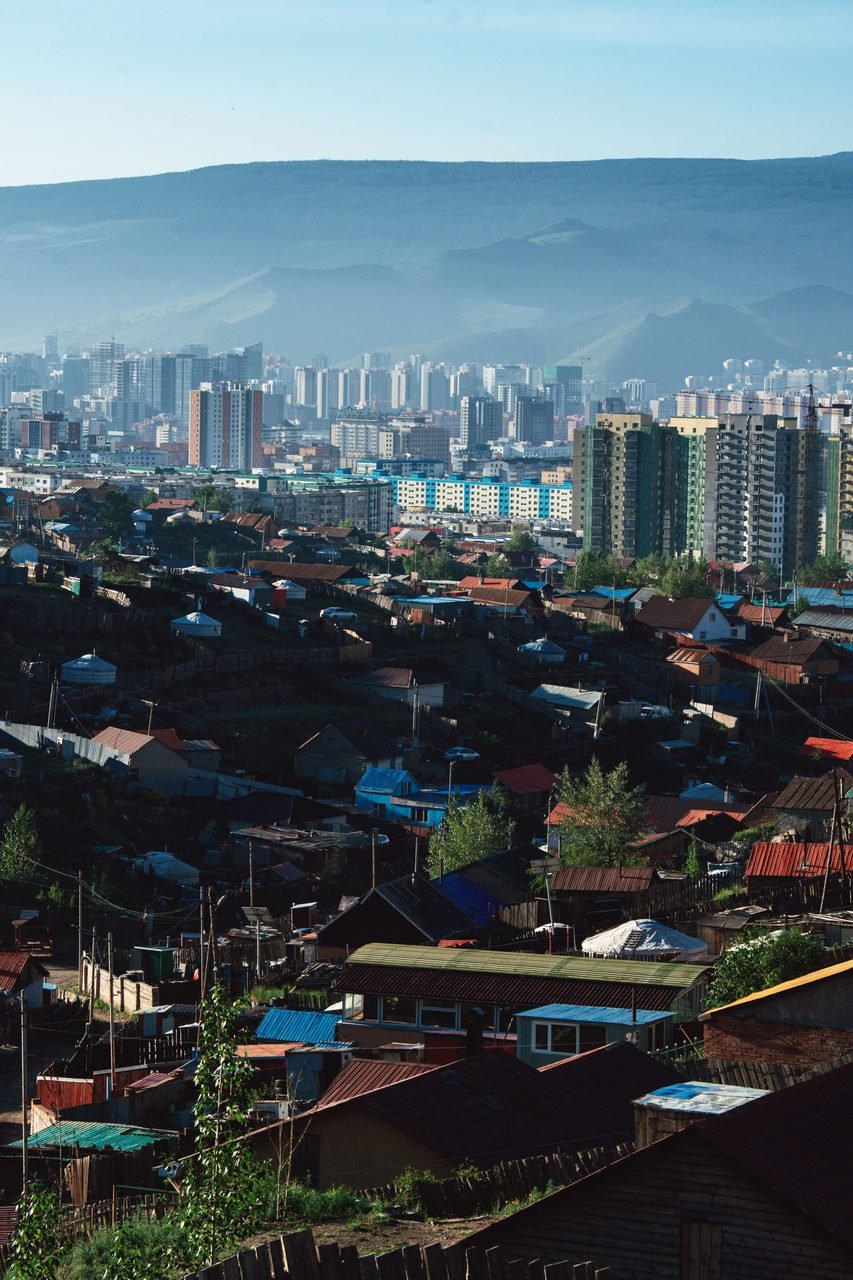
Mongoliaโ€™s Culture, Land, and Leadership at the United Nations CCD COP17

Mongoliaโ€™s mobile herding culture gave the conference a living example of land stewardship. Pastoralists used seasonal routes and local knowledge of grass, weather, water, and animal movement. This practical experience placed pastoralists at the center of the agenda, not at its margins.

Pastoralism and the International Year

The United Nations General Assembly declared 2026 the International Year of Rangelands and Pastoralists. Rangelands covered more than half of Earthโ€™s land and supported about 500 million people. They supplied one-sixth of global nutrition, while pastoralists protected culture, food systems, and rural livelihoods.

The Ulaanbaatar Declaration

About 300 pastoralists joined Mongoliaโ€™s Global Gathering of Pastoralists. On August 20, Anders Oskal presented the Ulaanbaatar Declaration, calling for recognition of pastoralists as knowledge-holders, rights-holders, and land custodians. Its importance reached beyond one nation.

From Trees to Living Landscapes

The Billion Trees Campaign, launched in 2021, targeted one billion trees by 2030. Alongside Youth4Land, it linked restoration with biodiversity and healthy ecosystems. Yet trees work best when matched with resilient rangeland planning; pastoralists must help shape those decisions.

InitiativeKey detailWhy it matters
Rangeland yearGlobal focus in 2026Elevates pastoralists
Ulaanbaatar DeclarationPresented August 20Supports rights and knowledge
Billion Trees CampaignOne billion by 2030Advances restoration

United Nations CCD COP17 Outcomes for Desertification, Land Degradation, and Drought

A panoramic view of a barren landscape affected by drought in the foreground, featuring cracked earth and sparse vegetation. In the middle ground, a group of diverse professionals in business attire, gathered around a table, analyzing land restoration finance strategies, with charts and graphs highlighting positive outcomes. The background displays a distant sun setting behind arid hills, casting warm golden light across the scene, creating a hopeful atmosphere. Lush green flora is emerging in specific areas, symbolizing successful land restoration efforts. Soft, natural lighting emphasizes the seriousness of the discussion and the urgency of the drought policy. This scene reflects the collaborative outcomes of the UNCCD COP17 and aims to inspire sustainable solutions. The Sustainable Digest.

The strongest test of unccd cop17 will come after the meeting ends. Its decisions must connect the convention combat desertification agenda with funding, local rights, and measurable results. That bridge can keep land policy relevant to sustainability, development, and international affairs.

A strategic path beyond the current decade

The future strategic framework should guide parties beyond 2030. It needs clear indicators for land degradation, transparent reporting, science-based monitoring, and support for national implementation. With up to 40 percent of global land affected by degradation, broad promises will not be enough.

Finance for resilient rangelands

The adopted drought policy offered a useful base, but finance must reach pastoralists, farmers, and vulnerable regions. Sustainable rangelands can protect water, food supplies, biodiversity, and livelihoods. They support about 500 million people and provide one-sixth of global nutrition.

Mongoliaโ€™s Billion Trees Campaign, which aimed to plant one billion trees by 2030, showed national ambition. Yet restoration requires ecological planning, not tree-counting alone. Future efforts should fund locally suitable solutions, protect rights, and track whether each rangeland becomes healthier over time.

Evaluating COP17 Against the Closing Weeks of COP13, COP14, COP15, and COP16

The closing record of the latest land summit gains meaning when viewed across four earlier sessions. Each stage refined global policy, yet the real test remained national delivery. Past decisions often set strong goals; results depended on funding, data, and local leadership after delegates returned home.

How previous conferences shaped global land policy

Sessions 13 through 16 expanded attention from desertification control to drought resilience, land restoration, science, and community rights. This history helped the convention combat agenda mature. It also showed why broad language can lose force without clear measures.

Where the latest session improved delivery

The conference parties adopted decisions on strategic planning, drought, subsidiary bodies, and implementation. That package linked policy design with oversight and reporting. It also gave wider space to local knowledge and vulnerable land users.

The 197 parties now face a practical question: can governments finance restoration and report measurable gains? The united nations convention process will gain credibility only if the answer improves.

Mongoliaโ€™s two-year coordination role creates an accountability window. Through the nations convention combat effort, partners can track progress rather than celebrate vocabulary. That is useful work, even if paperwork remains the least glamorous form of environmental action.

United Nations CCD COP17 in the Geo-Economic Climate and Sustainable Development Landscape

A panoramic landscape depicting data-driven land management and innovative drought solutions. In the foreground, a diverse team of professionals in business attire collaborates around a digital table displaying interactive maps and analytics. In the middle ground, sustainable agricultural practices are illustrated with thriving crops and efficient irrigation systems. A backdrop of rolling hills and a vibrant sunset highlights the blend of technology and nature, creating a warm, hopeful atmosphere. The sky features hues of orange and purple, casting soft light over the scene. The image captures the dynamic intersection of geo-economics and sustainable development, symbolizing progress and cooperation. The Sustainable Digest logo prominently displayed within the composition.

The closing phase placed land at the center of economic security. Yasmine Fouad called it vital infrastructure for food, water, stability, and livelihoods. With up to 40% of the world facing land degradation, the issue reached far beyond environmental policy.

Food security, migration, and national security

Soil loss and drought can raise food prices, deepen water stress, and push families to migrate. In this setting, desertification becomes an economic and security risk, not a distant ecological concern. Nearly 77% of Mongoliaโ€™s 1.56 million square kilometers faced degradation, making the local stakes plain.

Investment and resilient development

OECD analysis and World Economic Forum priorities both favor risk planning, blended finance, and public-private action. Business4Land, promoted through the Mongolia Business Council, showed how capital could support restoration when safeguards protect communities and ecosystems.

Innovation for a changing economy

The Fourth Industrial Revolution added practical tools to the agenda: satellites, artificial intelligence, sensors, geospatial data, and predictive systems. These solutions can guide restoration, but local governance must shape every decision. That balance marked a useful moment for sustainable development.

  • Priority: connect finance with measurable results.
  • Safeguard: protect pastoral rights and local knowledge.
  • Goal: turn data into resilient action.
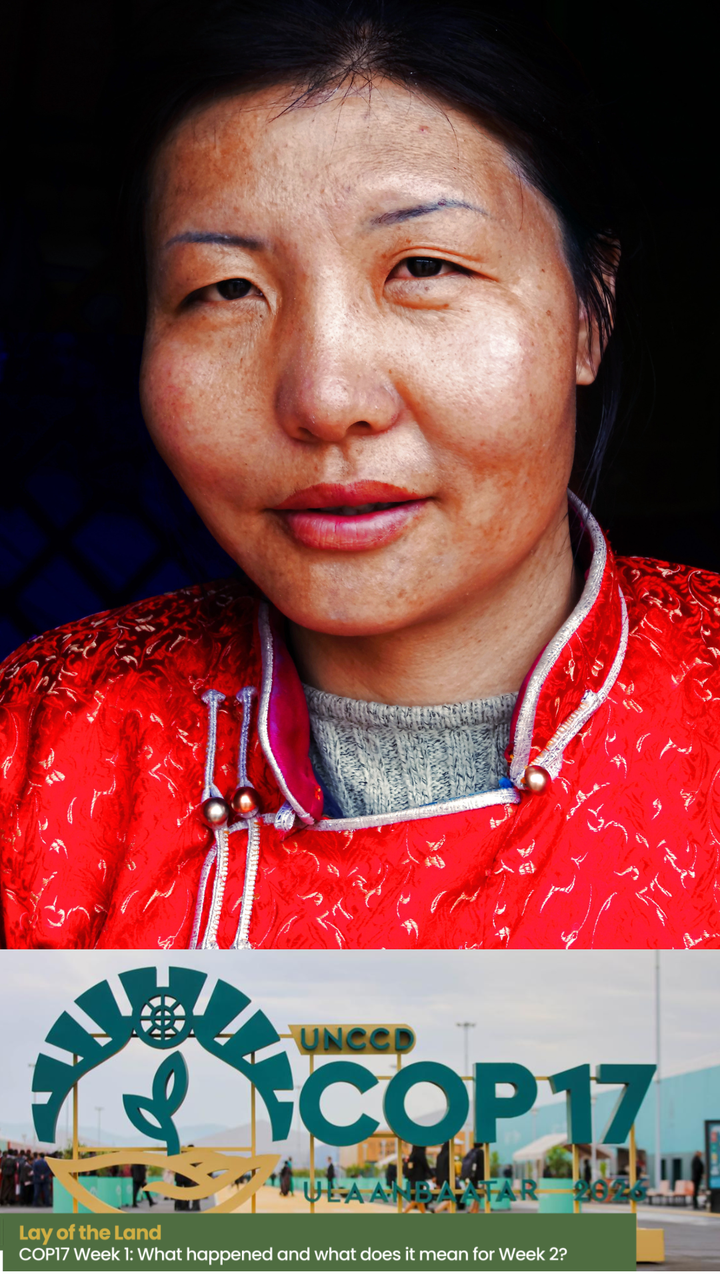
New Global Players and the Future of Sustainability Cooperation

Land restoration gained strength when policy opened its doors to wider voices. The gathering connected governments, business, scientists, youth, and local communities around one shared agenda. This broader model made sustainability cooperation more practical and less dependent on official speeches.

Pastoralists, Indigenous Peoples, youth, civil society, and smallholder farmers

About 300 pastoralists joined the Global Gathering of Pastoralists. Their declaration presented local communities as rights-holders and knowledge-holders. It also showed how regional networks can influence formal united nations negotiations.

Youth4Land, Indigenous Peoples, scientists, smallholder farmers, and civil society added public oversight. These groups can test promises, report local results, and challenge slow delivery. Their experience keeps policy connected to daily life.

Private capital, Business4Land, and the World Expo Organization

Business4Land and the Mongolia Business Council brought private investment into the discussion. Capital can support restoration when projects protect community rights, water access, and biodiversity. The World Expo Organization can extend that work through cultural diplomacy, innovation exchange, and public storytelling.

Why cooperation matters

Rangelands support about 500 million people. Cooperation across society is therefore essential, not decorative. Shared action can protect livelihoods, strengthen food systems, and give restoration efforts enough time to mature.

ActorContributionPractical value
PastoralistsLocal land knowledgeBetter restoration choices
Youth and civil societyPublic accountabilityFaster implementation
Business4LandPrivate-sector financeScalable land projects

Conclusion

A conference earns its legacy only when decisions survive beyond the closing room. For the United Nations CCD COP 17, the final phase showed that combat desertification needs lasting finance, clear measures, and cooperation that reaches communities. Restoration must improve land health, while drought planning protects food, water, and livelihoods.

Mongoliaโ€™s leadership linked pastoral knowledge with the International Year of Rangelands and Pastoralists and the Billion Trees Campaignโ€™s 2030 goal. That model gives future meetings a practical base: fund local action, track results, and respect community rights.

Its importance will depend on broad participation. Pastoralists, Indigenous Peoples, youth, civil society, scientists, businesses, and small farmers should help shape delivery.

Future gatherings should pair accountability with workable solutions. Only then can โ€œRestoring Land, Restoring Hopeโ€ become measurable progress rather than ceremonial optimism.

FAQ

Q: What was the focus of the final six days in Ulaanbaatar?

A: The closing period focused on negotiations, policy decisions, and practical measures to address desertification, land degradation, and drought. Delegates also examined funding, implementation, pastoralist livelihoods, and cooperation across regions.

Q: How did the second week advance the conference agenda?

A: The second week moved from technical discussions toward decisions and implementation priorities. Governments, civil society, scientists, and land users worked to turn early proposals into a clearer framework for action.

Q: Why were land, drought, and rangeland policy central topics?

A: Healthy land supports food production, water security, biodiversity, and rural livelihoods. Drought and poor rangeland management can increase displacement and economic risk, making coordinated policy essential.

Q: Why was Mongolia an important setting for the conference?

A: Mongoliaโ€™s pastoral culture offered a direct connection to rangelands, herder knowledge, and climate resilience. Its landscape also showed why sustainable grazing, ecosystem protection, and local experience matter in global policy.

Q: What role did pastoralists and herder knowledge play?

A: Pastoralists contributed practical knowledge about mobility, grazing cycles, water access, and ecosystem care. Their participation strengthened calls for inclusive decisions that reflect the needs of land-dependent communities.

Q: What is the significance of the Ulaanbaatar Declaration?

A: The declaration provided a platform for stronger global recognition of pastoralists and rangelands. It linked local stewardship with international efforts on biodiversity, climate adaptation, food security, and sustainable development.

Q: How does the Billion Trees Campaign connect with land restoration?

A: The campaign highlights Mongoliaโ€™s effort to restore landscapes, improve watershed protection, and strengthen ecological resilience. Its value depends on suitable species, long-term care, local participation, and protection of native ecosystems.

Q: What outcomes were expected for desertification and land degradation?

A: The conference placed greater attention on restoration targets, drought resilience, finance, and measurable implementation. It also encouraged countries to connect national plans with wider environmental and development goals.

Q: Why is drought resilience a major priority?

A: Drought can damage crops, reduce livestock health, weaken water supplies, and increase pressure on migration routes. Resilience measures include early warning systems, better planning, water conservation, and investment in sustainable rangelands.

Q: How did the conference build on earlier global land meetings?

A: Earlier meetings established principles for land neutrality, drought policy, restoration, and public participation. The latest conference placed stronger emphasis on delivery, accountability, finance, and cooperation among national and local actors.

Q: How does land degradation affect global security?

A: Declining land quality can reduce food supplies, intensify competition for water, and increase economic instability. These pressures may contribute to migration and social tension, giving land policy a clear national security dimension.

Q: What role do the OECD and World Economic Forum play in this policy area?

A: Their research and forums help connect land stewardship with investment, economic planning, and resilient development. This approach encourages decision-makers to treat restoration as a productive asset rather than a narrow environmental cost.

Q: How can technology improve land management?

A: Satellite mapping, field sensors, artificial intelligence, and open data can track vegetation, soil health, water stress, and restoration progress. Technology works best when communities can access the findings and apply them locally.

Q: Which groups are gaining influence in sustainability cooperation?

A: Pastoralists, Indigenous Peoples, youth, civil society, smallholder farmers, researchers, and local authorities are receiving greater attention. Their experience can improve policy quality because they often see environmental change before institutions do.

Q: What is Business4Land, and why does it matter?

A: Business4Land represents efforts to involve companies and investors in responsible land use. Its success depends on transparent standards, safeguards for communities, credible impact measures, and finance that supports long-term restoration.

Q: Why is private capital important for land restoration?

A: Public budgets alone may not meet the scale of restoration needs. Private capital can support resilient agriculture, water systems, and nature-based solutions when projects offer clear safeguards and reliable evidence of results.

Q: How can the World Expo Organization support sustainability cooperation?

A: Expo platforms can present restoration projects, responsible technologies, and community-led solutions to a broad international audience. They can also connect governments, businesses, educators, and civil society around practical work.

Q: Why does wider participation matter for future decisions?

A: Inclusive participation improves trust and helps policies reflect different ecological, cultural, and economic conditions. It also makes implementation more realistic; communities are more likely to support measures they helped shape.

Q: What should readers watch after the conference?

A: The most important signals will be new funding, national action plans, drought monitoring, restoration results, and stronger support for pastoralist communities. The real test will come through sustained work after the political moment has passed.

Key Takeaways

  • The final six days of the United Nations CCD COP17 focused on decisions, not only discussion.
  • Land restoration supported food security, water access, and livelihoods.
  • Dryland conditions made the host country a meaningful setting for the meeting.
  • Delegates addressed drought policy, finance, rangelands, and strategic planning.
  • The outcome mattered to sustainability, development, and international stability.

July 2026 Sustainability adjacent International Holidays and Observances

July 2026 international holidays and observances sustainability

Understanding the modern calendar is more than just tracking dates. It’s about having a practical framework for our global connections. By seeing July 2026 international holidays and observances sustainability as a whole, we go beyond just celebrating. We engage deeply.

This guide helps you understand global events that shape us. Whether you’re looking back at July 2025 or ahead to July 2026, these insights are key. They help us join in with purpose.

True global awareness is about understanding, not just hashtags. As we dive into the second part and the upcoming July 25โ€“27, remember. Calendar dates are just the start. We must focus on caring for our planet, not just partying.

Using the July 2026 Sustainability Calendar Alongside Earlier Guides

Think of this calendar as a tool to connect your values with global actions. It builds on our past work, keeping you informed and engaged with global development.

By using these dates, you join a global movement. This movement focuses on long-term ecological health, not just trends.

How this calendar extends the July 2025 retrospective

This guide is a step forward from our July 2025 analysis. It offers practical steps for this year, building on the past.

We focus on continuity in international affairs. This ensures past lessons guide our current sustainable practices.

Connections to the first week of July 2026 guide and its second installment

For a full view of the month, check our first-week guide and its second part. They lay the groundwork for the entire month.

These articles set the stage for the month’s observances. They link national milestones with global conservation efforts in July’s second half.

Continuing the themes from the July 25โ€“27 holidays and observances article

Our July 25โ€“27 analysis is key to this calendar. It shows how biodiversity and climate justice meet.

See these days as the month’s peak. They remind us that green holidays aim for systemic change, not just personal choices.

How U.S. readers can use international observances for eco-friendly celebrations

In the U.S., international observances can change how we celebrate. Choose local food and public transit for your events.

True eco-friendly celebrations go beyond symbols. Use reusable items and support local initiatives to reduce waste.

Adopting these sustainable practices helps tell a story of global responsibility. It’s time for our celebrations to show our commitment to the planet.

July 1โ€“3: Nationhood, Cultural Identity, and Sustainable Community Traditions

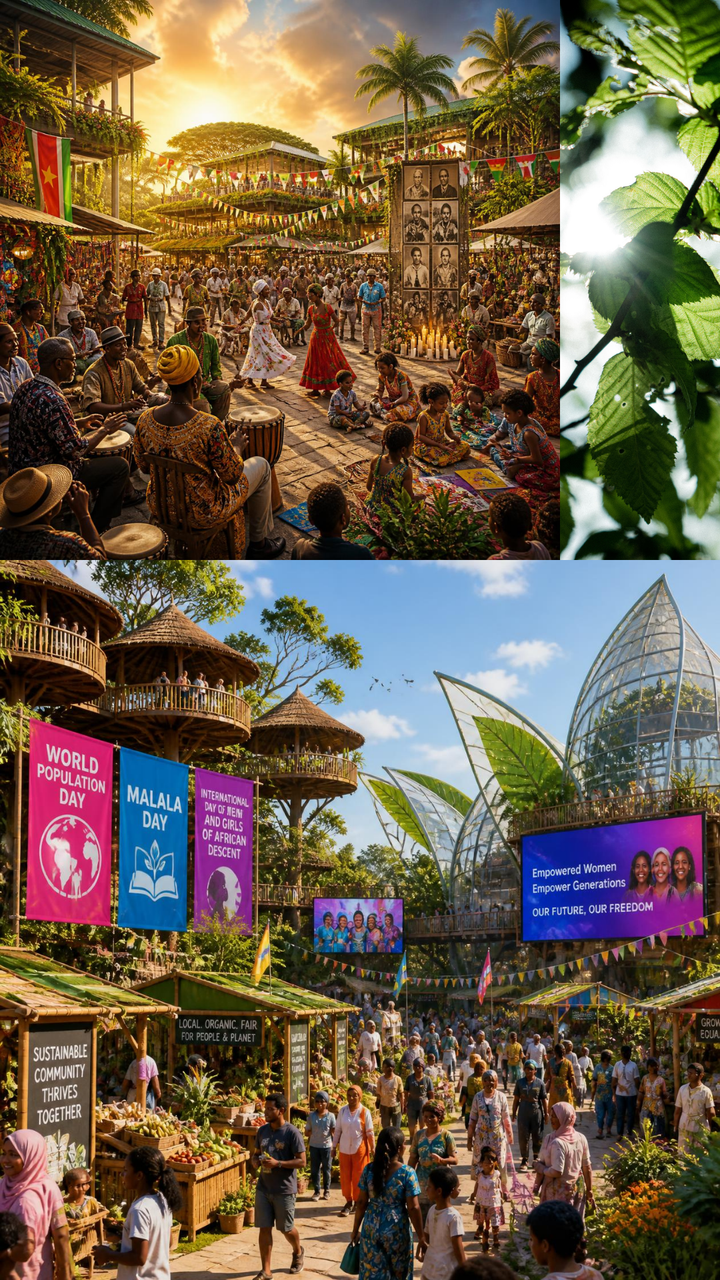
A vibrant scene depicting celebrations of Canada Day, Ghana Republic Day, and Hong Kong Special Administrative Region Establishment Day from July 1-3, 2026. In the foreground, diverse groups of people in modest casual clothing joyfully wave flags and engage in traditional dances. The middle layer shows decorated festival booths featuring cultural food, crafts, and artworks, surrounded by colorful balloons and banners. The background paints a picturesque skyline with hints of patriotic colors: red and white for Canada, green, yellow, and red for Ghana, and blue, white, and red for Hong Kong. The atmosphere is festive, filled with laughter, music, and community spirit. Soft, warm lighting captures the joy of these celebrations. This image represents cultural identity and sustainable community traditions. The Sustainable Digest.

As July starts, people around the world celebrate their heritage. They also think about how to protect the environment. It’s a time to balance pride in our communities with caring for the planet.

Canada Day, Ghana Republic Day, and Hong Kong Special Administrative Region Establishment Day

These days show different ways to celebrate national identity. Yet, they all face a big challenge: reducing waste. Canada Day, Ghana Republic Day, and Hong Kong Special Administrative Region Establishment Day often lead to a lot of trash.

Low-waste public celebrations, public transit, and community-based environmental programs

Organizers are now focusing on low-impact programming. They encourage using public transit instead of cars. This helps cut down on pollution from these big events.

  • Implementing zero-waste zones at public festivals.
  • Encouraging the use of reusable service ware for food vendors.
  • Integrating community-led cleanup initiatives immediately following the festivities.

Keti Koti and the importance of cultural memory, freedom, and responsible consumption

Keti Koti marks the end of slavery in Suriname and the Dutch Caribbean. It’s a time for deep reflection, not just big parties. It’s about remembering our history and valuing human dignity.

Supporting educational programs that teach about our history is key. By choosing meaningful experiences over buying lots of stuff, we keep the spirit of freedom alive.

Madeira Day, Territory Day, and Sir Seretse Khama Day

The start of July also celebrates regional identity with Madeira Day, Territory Day, and Sir Seretse Khama Day. These days remind us that national pride goes hand in hand with protecting our local environments.

Protecting island ecosystems, landscapes, and cultural heritage during national observances

National celebrations can harm our environment if not done carefully. We must protect our island ecosystems and landscapes. This means supporting sustainable tourism and preserving our heritage.

When we care for our natural surroundings, we ensure our celebrations can continue for future generations. Conservation is not an obstacle to celebration; it is the foundation of it.

Kingโ€™s Birthday in Lesotho and sustainable celebrations centered on local livelihoods

The Kingโ€™s Birthday in Lesotho shows us how to celebrate sustainably. The focus is on local crafts and farming. This approach supports the local economy and encourages environmental care.

By choosing local products, we reduce waste and help the local economy. This way, we celebrate while taking care of our planet.

International Retainer Day and practical ways to reduce waste from personal-care products

International Retainer Day is a chance to tackle waste in our daily lives. Personal-care products often lead to plastic pollution. But, making small changes can make a big difference.

We should look for brands with biodegradable or refillable packaging. Making these small changes shows our commitment to a cleaner future.

July 4โ€“10: Independence Days, Environmental Responsibility, and Shared Freedom

The first ten days of July are filled with history and urgent needs for our planet. Nations celebrate their freedom, and caring for the earth becomes crucial for everyone.

Fourth of July in the United States: safer, greener alternatives to fireworks and single-use celebrations

The Fourth of July often leads to big energy use and waste. Fireworks release harmful substances into the air, and single-use items add to landfill waste.

Communities can choose greener alternatives. Hosting potlucks with reusable items is a good start. Laser light shows or music festivals are better than fireworks for the environment.

Belarus, Algeria, Venezuela, Malawi, Solomon Islands, Argentina, and Bahamas Independence Days

This week is packed with global events. We celebrate Belarus Independence Day, Algeria Independence Day, and Venezuela Independence Day. We also mark Malawi Independence Day, Solomon Islands Independence Day, Argentina Independence Day, Bahamas Independence Day, and Kiribati Independence Day.

Comparing national celebrations through the lenses of energy use, water conservation, and waste prevention

Nations celebrate differently, but all focus on being resource-efficient. Big gatherings need a lot of water and energy. Sustainable planning is key for the health of nations.

ObservancePrimary FocusSustainability Impact
Argentina Independence DayCultural HeritageLow-waste public events
Solomon Islands Independence DayIsland ResilienceMarine protection focus
Bahamas Independence DayTourism ManagementWater conservation efforts

Colombia, Belgium, Liberia, Maldives, Peru, Vanuatu, Burundi, and Virgin Islands Days

The calendar continues with Colombia Day, Belgium Day, Liberia Day, Maldives Day, Peru Day, Vanuatu Day, Burundi Day, and Virgin Islands Day. These days show how nations celebrate their freedom in unique ways.

Island resilience, biodiversity protection, and sustainable tourism connections

For island nations, these celebrations are about their ecosystems. Sustainable tourism helps keep their beauty for future visitors.

Filipino-American Friendship Day and George Town Heritage Day in Penang

Filipino-American Friendship Day and George Town Heritage Day in Penang highlight international bonds. They show that shared history can lead to future cooperation.

Cross-cultural exchange, historic preservation, and respectful heritage tourism

Keeping historic sites safe is a challenge. Respectful tourism helps preserve these places for future admirers.

Harela and the environmental meaning of tree planting and seasonal renewal

Harela celebrates the monsoon season with tree planting. It reminds us of our duty to restore nature.

Donโ€™t Step on a Bee Day, Paper Bag Day, National Be Nice to Bugs Day, and National Rock Day

We end the week with Donโ€™t Step On A Bee Day, Paper Bag Day, National Be Nice to Bugs Day, and National Rock Day. These days encourage us to appreciate the small parts of our environment.

Pollinator protection, reusable shopping habits, and responsible interaction with geological environments

Protecting pollinators is key for food. Using paper bags reduces plastic waste. By caring for the earth, we ensure a sustainable future.

July 11โ€“17: Global Awareness, Nature Conservation, and Community Well-Being

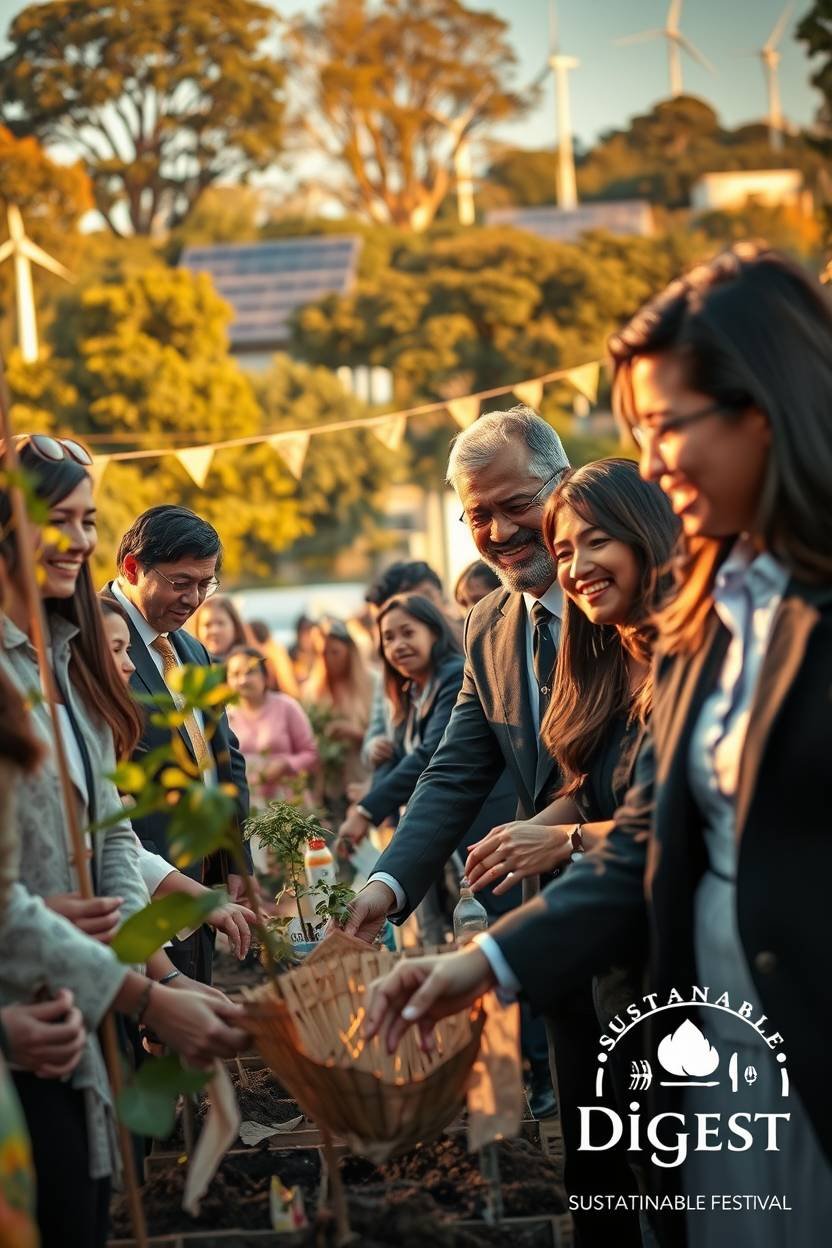
A vibrant community gathering on World Nature Conservation Day, celebrating environmental stewardship, set in a lush green park. In the foreground, a diverse group of individuals, dressed in modest casual clothing, kneels together to plant trees and native flowers, symbolizing their commitment to sustainability. The middle ground features colorful banners promoting conservation, alongside volunteers engaged in clean-up efforts, showcasing harmony with nature. In the background, a serene landscape of rolling hills and a clear blue sky evokes a sense of peace and hope. The lighting is warm and inviting, casting gentle shadows that enhance a feeling of camaraderie. The overall mood is uplifting, emphasizing collective action for a healthier planet. The image encapsulates the spirit of The Sustainable Digest, reflecting community engagement in conservation efforts.

Mid-July is a key time for global reflection. It’s where history meets the need to protect our planet. We’re challenged to make sure our progress is fair and remembers our shared past.

International Day of Reflection and Commemoration of the 1995 Genocide in Srebrenica

The International Day of Reflection and Commemoration of the 1995 Genocide in Srebrenica teaches us that peace is more than just no war. It’s about justice. Remembering past traumas helps us build a future where everyone’s rights are respected.

World Population Day, International Day of Women and Girls of African Descent, and MALALA DAY

These days show how people and the planet are connected. By celebrating World Population Day, International Day of Women and Girls of African Descent, and MALALA DAY, we see that growth must be for everyone.

Linking education, gender equity, demographic change, and sustainable development

Education is key to moving up in society. When we value gender equality, we build stronger communities and stable growth.

International Day of Cooperatives and Rural Development Day

The International Day of Cooperatives and Rural Development Day show the power of working together. They prove that when communities own and share, everyone benefits.

How cooperatives support fair food systems, local employment, and resilient communities

Cooperatives help communities by keeping resources local. They focus on fair food and jobs, not just quick profits.

World Nature Conservation Day, International Ranger Day, and National Tree Day

Then, we celebrate World Nature Conservation Day, International Ranger Day, and National Tree Day. These days honor the heroes who protect our planet’s vital resources.

Forest stewardship, protected areas, restoration work, and responsible volunteering

Good forest care is more than planting trees. It’s about long-term protection and respect for nature and culture.

International Day of Hope, Nelson Mandela International Day, and World Day for International Justice

The International Day of Hope, International Nelson Mandela Day, and World Day for International Justice call for action. They inspire us to do more than just watch; we must participate.

Service projects, restorative justice, and inclusive community action

“It is in your hands to make of our world a better one for all.”

Nelson Mandela

Projects focused on justice help heal our society. By working together, we create a place where everyone’s voice is heard.

International Day of Combating Sand and Dust Storms and Rain Day

The International Day of Combating Sand and Dust Storms and Rain Day show our vulnerability to extreme weather. Understanding our environment is key to managing these challenges.

Soil conservation, drought resilience, stormwater management, and climate adaptation

Protecting soil is crucial to prevent desertification. By managing stormwater wisely, we can adapt to climate change.

Smart Irrigation Month, National Hemp Month, and Hemp History Week

Smart Irrigation Month, National Hemp Month, and Hemp History Week highlight the link between tech and farming. They encourage us to use resources more wisely.

Efficient water use, regenerative agriculture, and evidence-based material choices

Using water wisely is essential in a changing world. By choosing sustainable farming and materials like hemp, we reduce our environmental impact.

National Culture Consciousness Day, First Day of NAIDOC, and New Conversations Day

Finally, National Culture Consciousness Day, the First Day of NAIDOC, and New Conversations Day remind us that sustainability is cultural. We must respect the wisdom of those who have cared for the land for generations.

Centering Indigenous knowledge, cultural continuity, and respectful dialogue in sustainability work

Indigenous knowledge is vital for our future. By valuing cultural continuity and respectful dialogue, we make sure our efforts are truly inclusive.

ObservancePrimary FocusSustainability Impact
International Day of CooperativesEconomic EquityHigh (Local Resilience)
World Nature Conservation DayBiodiversityHigh (Ecosystem Health)
Smart Irrigation MonthWater EfficiencyMedium (Resource Management)

July 18โ€“24: Peace, Science, Energy, and Sustainable Human Development

The third week of July is a time of global awareness. It focuses on human rights, technology, and preserving our heritage. Peace, science, and energy are key to a sustainable future.

International Nelson Mandela Day, International Retainer Day, and International Day of Judicial Well-being

Building fair institutions, healthy workplaces, and community-centered systems

International Nelson Mandela Day shows us how one person can change the world. It’s linked with International Retainer Day and International Day of Judicial Well-being. These days focus on the health of our legal and work systems.

Fair institutions are crucial for a stable society. They help achieve long-term environmental and social balance.

International Moon Day, World Listening Day, and Global Energy Independence Day

Space science, attentive environmental monitoring, renewable energy, and energy resilience

International Moon Day inspires us to explore and dream. It drives space science and exploration. This curiosity is also reflected in World Listening Day, which encourages us to listen to nature.

Global Energy Independence Day calls for renewable energy. It aims to build energy resilience for the future.

International Chess Day, International Day of Friendship, and Peace & Love Day

Using play, cultural exchange, and nonviolent cooperation to strengthen sustainable communities

International Chess Day celebrates strategic thinking for solving global problems. International Day of Friendship and Peace & Love Day show the power of cooperation. Cultural exchange builds trust among diverse groups.

World Brain Day and International Tofu Day

Brain health, plant-forward diets, food-system emissions, and affordable nutrition

World Brain Day stresses the importance of brain health in today’s world. International Tofu Day promotes plant-based diets. These diets help reduce emissions and ensure everyone can eat affordably.

International Day of Women and Girls of African Descent and International Youth Skills Day

Expanding access to green careers, technical training, and equitable leadership

The International Day of Women and Girls of African Descent honors their contributions. International Youth Skills Day focuses on the future workforce. Equitable leadership and training are needed for green careers for all.

National Disability Independence Day and Bank Employee Day in Guatemala

Accessible public spaces, inclusive employment, and responsible financial participation

National Disability Independence Day emphasizes inclusivity in sustainability. Bank Employee Day (Guatemala) highlights the role of finance in supporting local economies. Responsible financial participation creates accessible spaces and jobs.

Festival of British Archaeology and Captive Nations Week

Protecting archaeological sites, reducing visitor impacts, and learning from historic resource management

The Festival of British Archaeology teaches us to manage resources wisely. Captive Nations Week reminds us of the importance of human rights and civic memory. These observances show that respecting history and future is key to sustainability.

July 25โ€“31: Oceans, Biodiversity, Justice, and Climate Limits

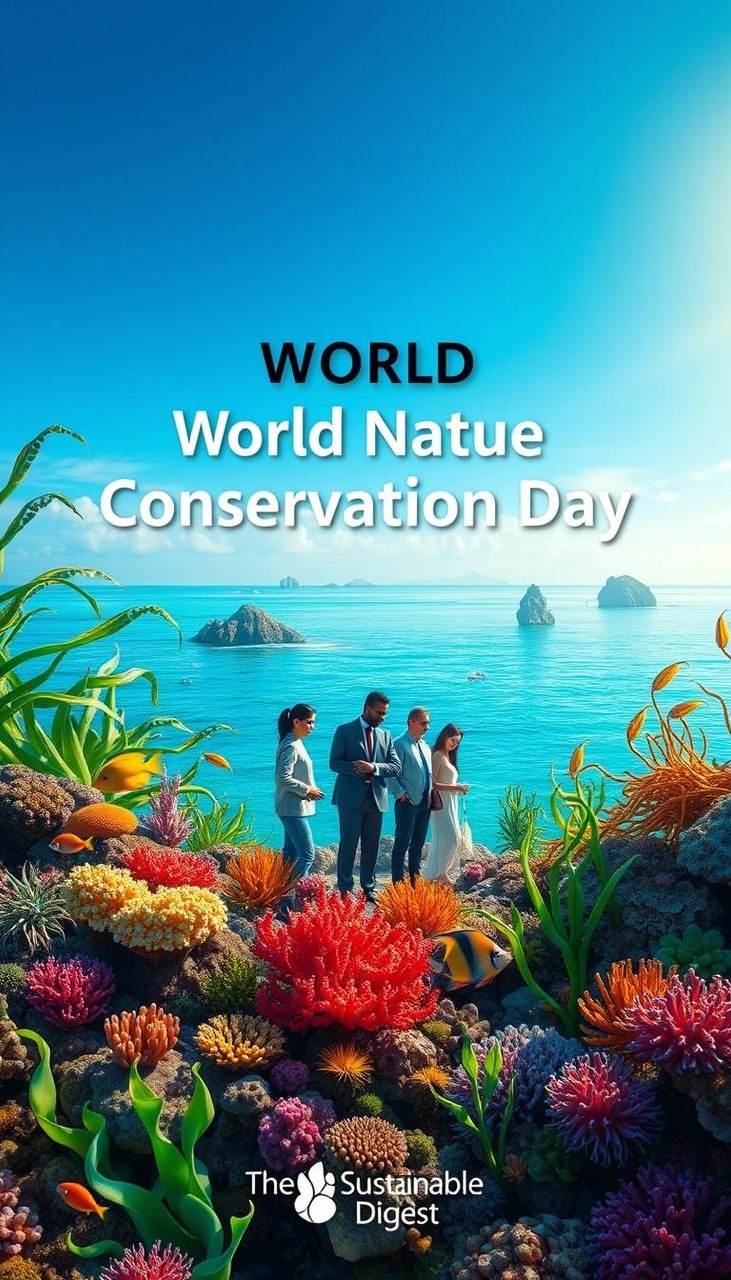
A stunning representation of World Nature Conservation Day, showcasing vibrant biodiversity in a lush ocean environment. In the foreground, depict diverse marine life, including colorful coral reefs, tropical fish, and flowing seaweed. In the middle ground, illustrate a group of diverse individuals in modest casual clothing, actively engaging in conservation activities, such as planting sea grass or cleaning up the beach. In the background, feature a serene seascape with distant islands and a bright, azure sky, softly illuminated by warm sunlight. The angle should capture a panoramic view with a sense of depth, inviting the viewer to appreciate the beauty of our oceans. The overall mood is hopeful and inspiring, emphasizing the importance of protecting our planet's biodiversity. Image branded with "The Sustainable Digest" subtly integrated into the natural elements.

As we end the month, we focus on caring for our planet and its people. This week is key for thinking about how we affect the earth and its ecosystems. It’s also about the social structures that support us all.

World Drowning Prevention Day, International Day for the Conservation of the Mangrove Ecosystem, and International Day of Friendship

Water safety, mangrove restoration, coastal protection, and community preparedness

World Drowning Prevention Day teaches us about keeping our communities safe near water. The International Day for the Conservation of the Mangrove Ecosystem shows us how mangroves protect us from storms. By celebrating International Day of Friendship, we build a global community to protect these vital areas.

International Day of the Worldโ€™s Indigenous Peoplesโ€™ cultural connections and Kiswahili Language Day

Language preservation, traditional ecological knowledge, and inclusive conservation partnerships

Kiswahili Language Day highlights the power of language in connecting cultures. Using traditional knowledge is crucial for saving our planet. We need to work together, respecting ancient wisdom, to protect our lands.

International Day against Trafficking in Persons and International Justice Day

Human rights, ethical supply chains, and the social foundations of sustainability

Human rights are essential for a sustainable world. The International Day against Trafficking in Persons and International Justice Day remind us of the need for fair trade. We must ensure our green efforts don’t harm human dignity.

International Tiger Day, International Snake Day, International Horse Day, and World Ranger Day

Wildlife protection, habitat connectivity, humane treatment, and anti-trafficking enforcement

Biodiversity is vital for a healthy planet. Days like International Tiger Day, International Snake Day, and International Horse Day focus on protecting habitats and treating animals with kindness. World Ranger Day honors those fighting to save wildlife and protect our planet.

International Day for the Conservation of the Mangrove Ecosystem and World Nature Conservation Day

Blue-carbon ecosystems, coastal livelihoods, and restoration actions for U.S. communities

Nature provides services we can’t replace. World Nature Conservation Day encourages us to take action to restore our planet, especially in U.S. coastal areas. Saving mangroves is crucial for our economy and the future.

International Plastic Bag Free Day, Clean Beaches Day, Coral Reef Awareness Week, and National Marine Week

Plastic prevention, shoreline cleanups, reef-safe recreation, and marine habitat protection

Oceans face huge pollution challenges. By joining International Plastic Bag Free Day and Clean Beaches Day, we can make a big difference. Events like Coral Reef Awareness Week and National Marine Week help protect our oceans and marine life.

“The health of our oceans is the health of our future; we must act with urgency to protect the blue heart of our planet.”

โ€” Global Conservation Initiative

National Parks and Recreation Month, Love Parks Week, Shark Week, and National Hop-A-Park Day

Low-impact recreation, wildlife-respectful tourism, and park stewardship

The outdoors are a sanctuary for humans and animals. During National Parks and Recreation Month and Love Parks Week, we’re encouraged to enjoy nature responsibly. Events like Shark Week and National Hop-A-Park Day help us respect our natural spaces.

Earth Overshoot Day and the July 2026 sustainability footprint discussion

Consumption limits, circular economy choices, food waste reduction, and household emissions

Earth Overshoot Day warns us about our planet’s limits. It urges us to make sustainable choices and reduce waste. By cutting down on food waste, we can live more sustainably.

Martyrsโ€™ Day in South Sudan

Remembering sacrifice while emphasizing peacebuilding, resilience, and sustainable development

We end the month with Martyrsโ€™ Day in South Sudan. It’s a time to honor sacrifices and focus on peace and sustainability. Sustainable development thrives in communities built on peace and respect.

  • Prioritize local, sustainable food sources to reduce your carbon footprint.
  • Support organizations that protect endangered species and their habitats.
  • Advocate for policies that promote ethical supply chains and human rights.

Julyโ€™s Additional Awareness Days for Everyday Green Living

Changing your daily life to be more sustainable is easier than you think. Days like World House Day and Reggae Day show us new ways to live and celebrate. By adding these days to your calendar, you make every day a chance to grow and help the planet.

Every small action counts when it comes to taking care of our planet. Joining in International Jump Day for exercise or National Moth Week for nature is important. Days like Be Nice to Jersey Day and National Roanoke Community Beautification Day teach us to care for our surroundings and community.

Health and inclusivity are key to a sustainable lifestyle. Celebrating National Childhood Obesity Month and Cultural Communities Month keeps your efforts balanced. Remember, Global Energy Independence Day encourages us to find green solutions in our daily lives.

Real change comes from consistent, small steps. By living in line with these sustainability goals, you help create a better world. Every choice you make shows your dedication to a greener, more aware future.

Key Takeaways

  • See the calendar as a tool for fighting for the environment.
  • Value deep cultural understanding over social media trends.
  • Link past events to today’s climate talks.
  • Use our guides to follow global stories as they unfold.
  • Balance work with doing good for society.

Small Island Developing States partnership with ESGs for Coral Reef Algae

Small Island Developing States ESG partnership Coral Reef Algae preservation

For many regions across the globe, particularly in regions that have Small Island Developing States, the pressing effects of climate change present a unique paradox. These areas contribute less than 1% of global greenhouse gas emissions yet bear the brunt of environmental degradation. This makes their commitment to sustainability not just aspirational but crucial for survival.

Coral reef ecosystems play a vital role in supporting marine biodiversity, providing habitat for around 25% of all known marine species. The preservation of these ecosystems has emerged as a significant focus within sustainability frameworks. As tourism thrives in these areas, understanding how to balance economic needs with environmental protection becomes essential.

However, the implementation of sustainability strategies varies widely. Factors such as governance capacities and cultural contexts influence how effectively these frameworks can be mobilized. Recent findings indicate that coral loss is accelerating, particularly in regions already facing economic challenges.

In this article, we will delve into the complexities of environmental governance, exploring how various regions can learn from one another. By bridging global sustainability knowledge with practical insights, we aim to provide a comprehensive overview for professionals and conscious consumers alike.

The Role of Small Island Developing States ESG Partnership in Coral Reef Algae Preservation

Across the globe, climate change presents a paradox for regions that contribute minimally to global emissions. The delicate balance of marine ecosystems hinges on the health of coral reefs, which rely heavily on microscopic algae known as zooxanthellae. These algae are not just colorful companions; they are the primary energy source for coral, making their preservation vital for reef health.

Understanding the Importance of Coral Reef Algae in Marine Ecosystems

Coral reefs, teeming with life, serve as essential habitats for a myriad of marine species. The vibrant colors we admire are due to the symbiotic relationship between coral polyps and zooxanthellae. When temperatures rise, corals expel these algae, leading to a phenomenon known as coral bleaching. This expulsion is a critical survival mechanism, but prolonged high temperatures can result in coral death.

Since the catastrophic bleaching events of 1998 and 2010, which devastated reefs worldwide, the need for effective conservation has never been more urgent. For instance, the Joint SDG Fund’s commitment of $10 million in Fiji aims to protect over $1 billion in annual tourism revenue by 2030. Such initiatives illustrate how structured conservation efforts can attract international funding and support.

ESG Principles Guiding SIDS’ Conservation Partnerships

Environmental, Social, and Governance (ESG) principles provide a robust framework for guiding conservation partnerships in vulnerable regions. The Environmental pillar focuses on metrics related to reef health; the Social pillar addresses the livelihoods of communities dependent on reef fisheries and tourism; and the Governance pillar ensures transparent management of marine protected areas.

For example, Cabo Verde’s innovative Blu-X sustainable finance platform has raised millions through green bonds, directing funds into women and youth-led businesses that bolster ocean conservation. This initiative exemplifies how the Social aspect of ESG can foster economic resilience while promoting environmental protection.

Current Initiatives and Progress in Coral Reef Algae Preservation

Despite these advancements, challenges remain. Many small island nations struggle with limited institutional capacity, hindering their ability to meet complex international reporting standards. This paradox often leaves those most in need of ESG-linked finance facing the highest barriers to access.

Moreover, the International Coral Reef Initiative (ICRI) plays a pivotal role in bridging these gaps by offering technical assistance for monitoring and conservation planning. The Coral Reef Alliance’s community-based model demonstrates that integrating local knowledge systems into ESG frameworks enhances their effectiveness.

In conclusion, while significant resources have been mobilized for coral reef algae preservation, the geographical realities of these regionsโ€”dispersed archipelagos and vulnerability to external economic shocksโ€”mean that the practicality of ESG initiatives varies greatly. Sustained international cooperation is essential for equitable and effective conservation efforts.

Blue Carbon vs. Green Carbon: Environmental Impacts and Practical Implications for SIDS

A serene underwater scene showcasing the idea of blue carbon strategies in marine ecosystems. In the foreground, vibrant coral reefs teeming with diverse marine life, colorful fish, and flourishing algae carpets. In the middle ground, lush seagrass beds swaying gently with the current, symbolizing carbon capture. The background features a tranquil ocean surface illuminated by soft, dappled sunlight filtering through the water, casting playful patterns on the sandy ocean floor. The mood is calming yet vibrant, reflecting the harmony of marine ecosystems. Capture the image with a wide-angle lens for depth and clarity, focusing on the rich textures of coral and seagrass. This image should encapsulate the essence of sustainable marine practices for "The Sustainable Digest".

The intricate dynamics of carbon capture reveal significant differences between marine and terrestrial ecosystems. Understanding these differences is crucial for developing effective sustainability strategies. In particular, the roles of blue carbon and green carbon offer unique insights into how small island nations can optimize their environmental governance.

Defining Blue Carbon and Its Advantages over Green Carbon

Blue carbon refers to the carbon captured and stored by coastal and marine ecosystems, such as coral reef algae, mangrove forests, and seagrass meadows. In contrast, green carbon is stored in terrestrial forests and agricultural lands. For small island nations, the vast Exclusive Economic Zones make blue carbon strategies especially relevant to their environmental governance frameworks.

One of the key advantages of blue carbon is its ability to sequester carbon at rates up to ten times higher per unit area than terrestrial forests. Additionally, marine ecosystems provide essential services, including habitat for fisheries and coastal protection. These benefits align naturally with the maritime geography of island nations, which often have limited land for large-scale reforestation efforts.

Comparative Environmental and Economic Impacts

While blue carbon has its advantages, green carbon projects also present significant benefits. Terrestrial carbon initiatives typically enjoy more mature carbon credit markets and established verification methodologies. Furthermore, they are generally less complex to monitor and measure, making them easier to implement.

For instance, ancient Brazilian Amazonian biochar technologies enhance soil fertility while sequestering carbon. This dual benefit demonstrates how green carbon strategies can integrate with agricultural productivity improvements, creating a more resilient approach to sustainability.

Application of Blue Carbon Strategies in Small Island Contexts

Geological evidence from Discovery Bay, Jamaica, shows an ancient sea level notch dating back 125,000 years, sitting 7 meters above modern sea levels. This stark reminder underscores why experts argue that the safe CO2 target for small island nations is approximately 270 ppm, significantly lower than current atmospheric concentrations.

In Mauritius, innovative biofertilizers derived from seaweed exemplify a hybrid blue-green carbon approach. By processing marine algae into agricultural inputs, these solutions reduce the carbon footprint of farming while promoting healthy coastal ecosystems.

However, implementing blue carbon strategies in small island contexts is not without challenges. Establishing clear property rights over marine carbon sinks can be difficult, and measuring carbon sequestration in dynamic ocean environments presents technical complexities. Additionally, these ecosystems are vulnerable to climate impacts that can reverse sequestration gains.

Nonetheless, initiatives like Cabo Verde’s Blue Bond issuance showcase the financial innovation possible when blue carbon strategies are embedded within governance frameworks. This approach channels capital toward marine conservation while generating returns through sustainable tourism and fisheries enterprises.

Ultimately, the debate between blue carbon and green carbon is not binary for small island nations. The most effective environmental governance integrates both strategies, leveraging the natural advantages of blue carbon while incorporating green carbon methodologies where applicable. This holistic approach ensures that carbon benefits are accurately measured and equitably distributed.

Global Governance and Policy Dynamics Influencing SIDS’ ESG Efforts

The interplay of global policies shapes the trajectory of sustainability efforts in regions most affected by climate change. Understanding these dynamics is crucial for developing effective strategies that address both local and international challenges.

Insights from the World Economic Forum (WEF) highlight a top-down, private-sector-driven approach to environmental governance. This model emphasizes market mechanisms and standardized metrics. However, it often overlooks the unique needs of vulnerable regions. In contrast, the World Social Forum (WSF) advocates for a grassroots, civil-society-centered approach. This perspective prioritizes community sovereignty and participatory governance.

  • The WEF’s standardized ESG reporting frameworks can unlock access to global capital markets.
  • However, they impose compliance costs that overwhelm the limited administrative capacities of small governments.
  • The WSF argues that genuine sustainable development requires decolonizing conservation finance.
  • It emphasizes respecting local governance structures and recognizing cultural dimensions in resource use.

United Nations subsidies, particularly through the Joint SDG Fund, provide essential funding for sustainability projects. Led by UN Resident Coordinators, this fund receives contributions from various donor governments. While these subsidies are vital, they often come with complex reporting requirements and short funding cycles. This can undermine long-term conservation planning.

โ€œSIDS have been pressured into accepting CO2 targets that are a ‘suicide pact’ because they guarantee extinction of natural resources.โ€ – Dr. Tom Goreau

Dr. Goreau’s critique underscores the tension between political feasibility and ecological reality. The agreed-upon warming limits still threaten coral ecosystems, which require atmospheric CO2 concentrations around 270 ppm to survive.

Interestingly, innovative technologies developed in regions like Jamaica, the Maldives, and the Marshall Islands for coral restoration remain underutilized due to policy failures and funding gaps. In contrast, similar approaches in Indonesia have received international recognition, such as the 2012 UNDP Equator Award.

International partnerships, like the Global Fund for Coral Reefs, blend public and private capital to finance reef conservation. These funds represent a significant evolution in ESG finance. However, they raise questions about whether the priorities of distant investors align with the immediate needs of local communities facing challenges like sea level rise and fisheries decline.

In conclusion, the global governance landscape for SIDS’ sustainability efforts reveals a fundamental asymmetry. The nations most vulnerable to climate impacts often have the least influence over the policies and funding mechanisms designed to assist them. Thus, fostering genuine partnershipsโ€”rather than traditional donor-recipient dynamicsโ€”becomes an urgent priority for effective governance.

Diversity in Regional ESG Approaches: From Small Island Developing States to Latin America and Asia Pacific

A vibrant and harmonious scene depicting the diversity in regional ESG approaches, focusing on Small Island Developing States, Latin America, and Asia Pacific. In the foreground, a group of diverse professionals in business attire engage in a collaborative discussion, holding charts and models related to coral reef conservation and sustainable practices. In the middle ground, lush coastal landscapes featuring coral reefs and tropical vegetation represent Small Island Developing States, while dynamic cityscapes of Latin America and Asia Pacific showcase modern sustainability initiatives. The background transitions into serene ocean waters under a soft golden sunset, symbolizing hope and progress. The image should have a bright, optimistic atmosphere, with soft natural lighting highlighting the collaboration and celebration of diversity. Capture a wide-angle view to include all elements seamlessly. The Sustainable Digest.

The diversity of approaches to environmental governance reveals how unique regional contexts shape sustainability efforts. This section will explore the different perspectives on sustainable development among various regions, focusing on the challenges and opportunities faced by Small Island Developing States (SIDS), Caribbean and Latin American nations, as well as those in the Asia Pacific and Oceania.

SIDS vs. Caribbean and Latin Nations: Sustainable Development Perspectives

Small Island Developing States often confront existential threats from rising sea levels. This reality fundamentally alters their sustainability calculus. For these nations, the preservation of coral ecosystems is not merely an environmental preference; it is a matter of territorial survival.

In contrast, larger Caribbean and Latin American nations can frame their environmental, social, and governance (ESG) priorities more flexibly. They can focus on economic diversification and green industrialization, allowing for a broader range of sustainable development strategies.

For example, in Suriname, investments in eco-friendly agriculture are linking organic food production to the tourism industry. This connection ensures that visitors experience authentic, locally sourced cuisine while supporting small farmers.

Asia Pacific and Oceania: Complexity in International Relations and Global Affairs

The Asia Pacific and Oceania region showcases extraordinary diversity in international relations and sustainable development. Indonesia, the world’s largest archipelagic state, possesses significant diplomatic weight and technological capacity. In contrast, Palau, a small island nation, suffered devastating coral bleaching in 1998, leading to reduced fisheries catches and highlighting the acute vulnerability of microstates to ecological shocks.

The Maldives exemplifies how SIDS can integrate social equity into ESG frameworks. Their gender-responsive climate finance strategy empowers women to shape the future of sustainable tourism, ensuring they are not just passive recipients of externally designed interventions.

Integrating Regional Approaches for Global ESG Impact

Integrating diverse regional approaches can amplify global ESG impact. The case of technology transfer is particularly intriguing. Coral reef restoration technologies developed in Jamaica, the Maldives, and the Marshall Islands were successfully implemented in Indonesia, earning the 2012 UNDP Equator Award. However, these technologies remain underutilized in their countries of origin due to policy and funding failures.

Moreover, the geopolitical complexity of the Asia Pacific region creates both opportunities and risks. Major powers compete for influence over small island states through infrastructure investment and development assistance. This dynamic complicates genuine sustainable development partnerships.

Ultimately, recognizing that no single framework fits all contexts is crucial. The Caribbean’s proximity to North American markets shapes its tourism-dependent ESG strategies differently from the Pacific’s reliance on distant partners. Effective global ESG impact depends on respecting these geographical and geopolitical specificities.

In conclusion, the diversity of regional ESG approaches should be viewed as a strength rather than fragmentation. This variety generates a portfolio of experiments in sustainable development from which all regions can learn, provided that knowledge-sharing mechanisms are strengthened and power asymmetries between large and small states are explicitly addressed.

Collaborative Solutions for Citizens, MSMEs, NGOs, and Public Municipalities

Building resilient communities involves integrating the efforts of individuals, MSMEs, NGOs, and public municipalities in sustainability initiatives. The fight against climate change is not solely the responsibility of governments; it requires active participation from all sectors of society. Here are some actionable solutions for diverse stakeholders.

Empowering Communities and Private Sector in Implementation

Citizens can take meaningful steps to combat coral bleaching and protect marine ecosystems. Simple actions like driving less, conserving energy at home, and reducing meat consumption can significantly lower carbon footprints. Additionally, individuals should avoid sunscreens containing harmful chemicals like oxybenzone and octinoxate, which directly harm coral reef algae. Supporting sustainable tourism by choosing certified tour operators can also make a difference.

Micro, Small, and Medium Enterprises (MSMEs) in the private sector can integrate environmental and social governance (ESG) principles without the administrative burden faced by larger corporations. For instance, tourism operators can adopt reef-safe protocols, while fisheries can participate in co-management of marine protected areas. Agricultural enterprises can follow Mauritius’s example by producing biofertilizers from seaweed, which reduces environmental footprints and creates new revenue streams.

Role of Non-profits and NGOs in Sustainable Development

Established non-profits like the Coral Reef Alliance employ community-based conservation approaches that effectively reduce local threats such as overfishing and pollution. By bridging local knowledge with international scientific expertise, these organizations enhance resilience to global climate stressors.

The NOAA Coral Reef Conservation Program serves as a model for government-supported research and monitoring. It provides essential data infrastructure necessary for evidence-based ESG decision-making, which municipalities can access through international partnerships.

Organizations like The Nature Conservancy adopt a multi-stakeholder approach, collaborating with local communities, governments, and private entities to develop and implement conservation strategies. This demonstrates how NGOs can facilitate trust and cooperation among sectors, which is vital for effective governance.

Municipal Strategies for Enhancing Environmental and Social Governance

Municipalities can adopt various strategies to enhance their environmental and social governance. Establishing locally managed marine areas empowers communities to set and enforce fishing rules, promoting sustainable practices. Integrating climate resilience criteria into public procurement and infrastructure planning ensures that local projects consider long-term environmental impacts.

Participatory budgeting processes can also allocate resources to ESG priorities identified by residents, fostering community engagement in governance. For example, the Maldives’ gender-responsive climate finance strategy empowers women to shape sustainable tourism, serving as a replicable model for integrating social equity into environmental governance.

In conclusion, collaborative solutions require moving beyond siloed interventions. Citizens, MSMEs, NGOs, and municipalities must operate within aligned incentive structures. When individual actions, business practices, civil society advocacy, and public policy reinforce one another, we can achieve coherence in sustainability efforts. This alignment is where effective governance frameworks can truly thrive.

Conclusion

The urgency of addressing climate impacts is becoming increasingly evident for vulnerable regions worldwide. The practical application of environmental frameworks presents both opportunities and challenges. While these frameworks unlock vital international finance, geographical isolation and limited capacities often hinder effective implementation.

In the ongoing debate between Blue and Green Carbon, the former offers unique advantages for regions with vast ocean territories. Yet, terrestrial opportunities also play a significant role in comprehensive strategies. This dual approach allows for a more nuanced integration of resources and methodologies.

As Dr. Tom Goreau poignantly noted, the loss of coral ecosystems has become a stark reality. However, existing technologies and innovative partnerships offer pathways for restoration and conservation. Successful examples from Fiji, Cabo Verde, and Mauritius highlight the potential for effective governance models.

Ultimately, the diversity of regional approaches should be seen as a global portfolio of sustainable development experiments. Stakeholders must work collaboratively, respecting the agency of local communities. The preservation of coral ecosystems is not just an environmental goal; it is a litmus test for global governance in addressing the existential threats faced by the world’s most vulnerable populations.

Key Takeaways

  • Climate change impacts small regions disproportionately despite their minimal emissions.
  • Coral ecosystems are essential for marine biodiversity and local economies.
  • Effective sustainability strategies depend on regional governance and cultural factors.
  • Recent studies show alarming rates of coral loss, necessitating urgent action.
  • Understanding these dynamics is vital for sustainable development in vulnerable regions.

UN SDG#8 global economic peculiarity

UN SDG#8 multi-layered paradigm shift pecuilar adaptation economic development

The world’s nations agreed on a set of ambitious targets to steer collective progress. Known as the Sustainable Development Goals, this framework aims for a more sustainable and equitable planet by 2030. Among these, the eighth goal, holds a distinct position. The focus on the UN SDG#8 global economy theme is rather important for the aggregation of multi-regional and continental events all at once.

It champions sustained, inclusive, and sustainable economic growth. More importantly, it pushes for full, productive employment and decent work for every person. This focus makes it a cornerstone of the entire global agenda.

Yet, the path to this ideal is fraught with modern challenges. A volatile international landscape, marked by rapid technological change and geopolitical tensions, tests traditional models. Achieving true prosperity now requires a fundamental rethink of how we define growth.

The real test lies in moving from lofty policy to ground-level action. It’s about bridging the gap between international boardrooms and local realities. Major institutions and evolving tech are powerful forces reshaping labor markets.

This analysis digs into that complex transformation. It explores how the unique demands of our era shape the pursuit of dignified work and resilient development.

Overview of UN SDG#8 Global Economy through Volatility

Economic headlines often celebrate falling unemployment, but the deeper story of job quality tells a different tale. Pursuing decent work for all now unfolds against a backdrop of stark recovery and lingering fragility.

Examining the Global Economic Landscape

The global unemployment rate hit a record low of 5.0% in 2024. Yet, this statistic masks a less celebrated reality. Agencies like the International Labour Organization and UNCTAD highlight that over half of all workersโ€”57.8%โ€”remain in informal employment.

This vast informal sector lacks basic social security. It represents a critical gap in achieving true employment decent work.

Indicator2015 BenchmarkPost-Pandemic Peak (2021)Recent Trend (2023-2024)
Global Real GDP per Capita GrowthModerate5.5%Slowed to 1.9%
Global Unemployment Rate6.0%Improving5.0% (Record Low)
Workforce in Informal EmploymentHighPersistent57.8%

Post-Pandemic Economic Recovery Trends

The powerful GDP rebound of 2021 proved fleeting. Growth slowed markedly by 2023. Analyses from the UNDP and UNEP point to persistent trade tensions and soaring debt as brakes on sustainable economic growth.

“Recovery must be measured not just in output, but in the security and dignity of jobs created.”

UN Agency Synthesis

Institutions like the WTO and UN Economic and Social Council stress that lasting progress requires fixing structural gaps widened by the crisis. The goal is economic growth that lifts the most vulnerable.

Bodies such as UNIDO and the World Tourism Organization now focus on aligning national policies with this broader vision of decent work.

Decent Work and Economic Growth in Uncertain Times

A contemplative scene illustrating "Decent Work and Economic Growth in Uncertain Times" features a diverse group of professionals in a modern office setting. In the foreground, a middle-aged woman in a smart blazer reviews reports on a digital tablet, while a young man in a neat button-up shirt discusses strategies with her. In the middle ground, a large window reveals a city skyline under a cloudy sky, symbolizing uncertainty. The background shows distant figures engaged in brainstorming, with graphs and charts projected on screens, indicating economic growth. Soft, natural lighting filters through the window, creating a thoughtful, optimistic atmosphere. The composition captures the essence of professional collaboration against the backdrop of a fluctuating economy. The Sustainable Digest.

Social justice in the workplace has become a litmus test for true economic progress. In an era of volatility, the quality of jobs defines resilience more than their quantity.

Worker Protections and Social Justice

Advocacy groups like the Board of Peace argue that protecting labor rights is foundational to social justice. Global compliance with these rights has, ironically, fallen by 7 percent since 2015.

This decline exposes a gap between policy and practice. The stark figure of 160 million children in child labor underscores the urgent need for stronger enforcement.

Linking Productivity to Sustainable Development

True productivity is not just about output. It requires a shift toward productive employment decent models that value people’s well-being.

Consider the 21.7 percent of young people classified as NEET in 2023. Providing them with meaningful decent work is a top priority for lasting economic growth.

Integrating social justice into employment decent work strategies is no longer optional. It is the core of building a workforce that can withstand uncertainty.

Influence of Global Institutions on SDG8 Policies

Policy doesn’t emerge from a vacuum. It’s forged in the meetings of influential global bodies. These institutions set the tone for national labor and growth policies worldwide.

UN Agencies and World Economic Forum Initiatives

The World Economic Forum facilitates high-level dialogues on technology’s role in the future of working. It pushes for digital integration into global frameworks.

UN agencies often collaborate with this forum. Their joint aim is to ensure economic growth doesn’t undermine human rights. The goal is to anchor decent work in tech-driven progress.

InstitutionPrimary FocusKey StakeholdersPolicy Influence
World Economic ForumTech integration & elite consensusCorporate leaders, governmentsShapes high-level agenda
World Social ForumEquity & grassroots advocacyCivil society, unionsChallenges market-centric models

The Role of the World Social Forum and Regional Alliances

The World Social Forum provides a loud counterpoint. It champions the informal sector and marginalized communities. This platform challenges top-down economic models.

Regional alliances, like ASEAN or the African Union, increasingly adopt international guidelines. They harmonize labor standards to promote sustainable development. Aligning these varied efforts is key to achieving broad decent work targets.

UN SDG#8 global economy’s peculiar adaptation to a multi-layered paradigm shift

A vibrant cityscape at dawn reflecting a multi-layered paradigm shift in economic development, symbolizing UN SDG#8. In the foreground, diverse professionals in business attire collaborate around a transparent digital interface, showcasing innovative solutions. The middle ground features modern buildings integrated with greenery, representing sustainable practices. Background skyscrapers symbolize growth and stability against a soft pastel sky. Warm, golden lighting bathes the scene, enhancing the optimistic and forward-looking atmosphere. Use a slightly elevated angle to capture the bustling streets below and the interaction among people. This composition conveys a sense of progress and collaboration within todayโ€™s global economy, inspired by โ€œThe Sustainable Digest.โ€

Measuring a nation’s health by GDP alone is like judging a book by its cover. The real story of progress is found in the quality of life for its people. This represents a fundamental paradigm shift in how success is defined.

The new approach values unpaid labor, care work, and community support systems. It recognizes the massive, often invisible, informal economy. These elements form the bedrock of social stability, especially in emerging nations.

Fostering decent work is central to this new vision. Jobs must offer security, fair pay, and dignity to build resilient labor markets. This focus on quality, not just quantity, is essential for sustainable growth.

Old Metrics FocusNew Metrics Focus
Gross Domestic Product (GDP) growth rateSocial reproduction & environmental health
Formal employment numbersQuality of all work, including informal sectors
Short-term financial outputLong-term community & ecosystem resilience

Ultimately, this shift ensures that the pursuit of economic advancement strengthens, rather than depletes, our social and natural foundations. It is the only path to genuine, lasting development.

Geopolitical Impacts on Economic Policy

Recent years have provided stark, real-world lessons on how geopolitics can unravel decades of economic planning. National strategies for prosperity are now rigorously tested by external shocks far beyond any single government’s control.

Sri Lanka vs. Venezuela: A Comparative Analysis

Sri Lanka’s collapse showcased the dangers of unsustainable debt. It damaged and comprised essential public services and shattered job security for millions.

Venezuela’s trajectory highlights a different peril. Deep political instability has systematically corroded labor rights and the state’s ability to foster productive employment. Both cases devastated their national economies.

Consequences of the Ukraine and Iran Wars

The war in Ukraine triggered massive volatility in global energy and food markets. This directly hampered stable economic growth in many developing countries.

Ongoing tensions related to Iran further complicate international trade routes. They create an environment where securing and maintaining decent work becomes a formidable challenge.

These conflicts prove that true development is inextricably linked to global peace. Policymakers must now design national strategies that can withstand such turmoil to protect the pursuit of decent work.

Technological Disruption and the 4th Industrial Revolution

A futuristic cityscape representing technological disruption and the 4th Industrial Revolution. In the foreground, diverse professionals in business attire collaborate around advanced holographic displays, showcasing graphs and data. In the middle, autonomous vehicles navigate smart streets lined with solar-powered buildings and drone corridors. The background features towering skyscrapers intertwined with greenery, symbolizing sustainability and innovation. Bright, dynamic lighting conveys a sense of optimism and progress, casting colorful reflections on glass surfaces. The lens angle captures both the bustling street level and the impressive skyline, creating depth. The atmosphere radiates energy and transformation, demonstrating the intersection of technology and urban life. The image is intended for "The Sustainable Digest," emphasizing the impact of technology on todayโ€™s global economy.

Automation and AI are rewriting the rulebook for what constitutes valuable labour in the 21st century. This era, often called the Fourth Industrial Revolution, merges digital, physical, and biological systems.

Global labour productivity growth rebounded to 1.5 percent in 2024. This signals a shift from the near stagnation of the previous two years.

AI’s Influence on Global Productivity

Artificial intelligence is the central force in this transformation. It drives efficiency in manufacturing and service sectors alike.

This boost in output, however, carries a significant caveat. While AI enhances productivity, it simultaneously threatens traditional job security for millions.

Ensuring decent work in this automated age demands proactive strategy. Policies must prioritize reskilling workforces to meet new technological demands.

Managed carefully, this integration can prevent widened inequality. The benefits of development must be shared broadly to sustain progress.

By leveraging this revolution, nations can unlock new avenues for economic growth. The goal remains a future where the human element of working is not lost but elevated.

Emerging Economic Models and Cooperative Business Approaches

When a major airline teeters on the brink, it reveals more than financial distressโ€”it exposes the fragility of traditional corporate structures. This vulnerability is sparking interest in more resilient alternatives. Cooperative business models, where employees hold ownership stakes, are gaining serious traction.

These approaches fundamentally rewire a company’s priorities. They place the security and dignity of the workforce at the center of operations. This shift is particularly relevant in volatile sectors like aviation.

Case Study: Spirit Airlines and the Cooperative Model

Spirit Airlines’ well-publicized financial struggles led to a radical proposal. Discussions emerged about restructuring not through another merger, but as an airline cooperative. This model would give workers a direct stake in the company’s success.

Such a transition could transform unstable work into more secure, decent work. Employees would gain a voice in decisions affecting their livelihoods. This fosters a sense of ownership that often boosts productivity and service quality.

The cooperative path aligns with broader goals of inclusive economic growth. It ensures the benefits of development are shared more fairly. For industries in flux, it offers a viable blueprint for preserving essential services while creating better opportunities.

The Role of Subsidies and Financial Reforms in Stimulating Growth

A dynamic scene illustrating the concept of subsidies and financial reforms driving economic growth. In the foreground, a diverse group of professionals in business attire collaborates around a table, surrounded by digital screens displaying upward-trending graphs and economic data. In the middle ground, vibrant icons of industries such as renewable energy, agriculture, and technology symbolize the sectors benefiting from subsidies. The background features a skyline of modern buildings, representing a thriving urban economy. Soft, warm lighting enhances the optimistic atmosphere, creating a sense of innovation and collaboration. The image conveys a message of progress and sustainability, reflecting the importance of financial strategies in achieving economic growth. The Sustainable Digest logo subtly framed in the corner, without any text or watermarks.

Subsidies and financial overhauls are not just economic levers; they’re strategic bets on a nation’s future stability. The right mix can unlock stalled progress, while the wrong one deepens fiscal holes.

Targeted financial support for small businesses is a prime example. It helps informal ventures join the formal economy, creating more decent work opportunities. This direct injection is crucial for local economic growth.

Broader financial reforms are equally vital. They tackle crippling debt burdens that strangle ambition in many regions. Clearing this red tape allows capital to flow toward sustainable development projects.

The goal is a system where businesses thrive and workers gain formal protections. This transition from precarious gigs to secure, decent work is the bedrock of a resilient labor market.

Smart policies must balance support with responsibility. Strategic subsidies for key affiliates, like green tech firms, should avoid long-term debt traps. The fiscal discipline ensures today’s stimulus doesn’t become tomorrow’s crisis.

Subsidy FocusPrimary TargetIntended Outcome
Small Business GrantsInformal Sector SMEsFormalization & Job Creation
Training & ReskillingExisting WorkforceHigher Productivity & Security
Green TechnologySustainable EnterprisesLong-term Ecological Resilience

Regional Alliances Shaping Economic Policies

The chessboard of international economics is increasingly dominated by powerful regional blocs. These alliances move beyond mere trade agreements to craft shared rules for prosperity.

Their collective influence now rivals that of traditional global institutions. They coordinate strategies that directly impact labor markets and investment flows.

BRICS, ASEAN, African Union, and the European Union

The BRICS coalition promotes South-South cooperation, challenging older financial architectures. It offers member countries a platform to advocate for alternative models of development.

ASEAN and the European Union are standard-setters. They export stringent labor and environmental regulations through their vast trade networks.

In Africa, the African Union and the newer Alliance of Sahel States (AES) prioritize market integration. Their goal is to boost regional stability and economic growth by reducing internal barriers.

These blocs provide crucial forums for sharing best practices on worker rights. Harmonizing standards is a key step toward ensuring decent work across diverse economies.

Ultimately, their collaboration amplifies voices in global governance. It ensures policies better reflect local needs, fostering more inclusive progress and decent work opportunities.

Integrating Environmental Sustainability into Economic Policies

A vibrant, futuristic cityscape showcasing resource-efficient green technology initiatives. In the foreground, diverse professionals in business attire collaborate over a digital tablet, analyzing sustainability data, surrounded by greenery and eco-friendly elements like solar panels and wind turbines. The middle ground features sleek, modern buildings with vertical gardens and green roofs, harmonizing with nature. The background reveals a clear blue sky and gently curving pathways lined with automated electric vehicles and lush foliage. Utilize soft, natural lighting to create an optimistic and inspiring atmosphere. The perspective is slightly elevated, providing a panoramic view of this innovative urban environment, emphasizing the integration of sustainability in economic policies. This image reflects the theme of "The Sustainable Digest."

True resilience in any economy now depends on its ability to harmonize industrial output with ecological limits. This integration is no longer optional; it’s the foundation for long-term growth environmental stability.
Consider tourism, which contributed 3.1 percent to global GDP in 2022. Its future relies on adopting sustainable practices. More broadly, improving global resource efficiency consumption production is critical. It decouples economic growth from environmental harm.

Resource Efficiency and Green Technology Initiatives

Green technology is the practical engine of this shift. Initiatives help industries boost their resource efficiency consumption. This reduces waste and lowers operational costs.

The 10-year framework on sustainable consumption and production provides a vital roadmap. It guides nations in enhancing global resource efficiency while pursuing development.

Prioritizing resource efficiency does more than protect the planet. It sparks innovation and creates new avenues for decent work. Jobs in renewable energy and circular economies offer security and purpose.

Ultimately, smart efficiency consumption strategies build economies that thrive within planetary boundaries. They ensure that progress today doesn’t compromise tomorrow’s decent work opportunities.

Challenges in Formalizing Informal Employment Globally

A bustling urban scene illustrating the challenges of formalizing informal employment globally. In the foreground, a diverse group of individuals dressed in professional business attire are engaging in a discussion, showcasing determination and the complexities of transitioning from informal to formal employment. The middle ground features a busy marketplace with informal workers, such as street vendors, highlighting the contrast between informal and formal sectors. In the background, tall office buildings symbolize the formal economy, under a cloudy sky that suggests both opportunity and uncertainty. Utilize soft, natural lighting to create a realistic atmosphere while capturing the mood of ambition and struggle. The image should be rich in detail, depicting various elements like paperwork, business tools, and the vibrant energy of city life. The Sustainable Digest prominently reflected through subtle branding in the environment.

Formalizing the world’s informal jobs is like trying to map a shadowโ€”the task is enormous and progress is painfully slow. Over two billion workers operated informally in 2023, representing a staggering 58% of the global workforce.

This vast informal sector is the primary barrier to achieving universal decent work. People in these roles typically lack legal contracts, social security, and basic safety protections.

The informality rate has declined by less than one percentage point since 2015. This glacial pace highlights the deep structural roots of the problem.

Governments need targeted development strategies that incentivize formalization. Simplifying business registration and offering tax benefits can encourage the transition.

Key ChallengeImpact on LabourPotential Policy Lever
Lack of Legal RecognitionNo access to justice or minimum wageStreamlined formalization pathways
Absence of Social SecurityHigh vulnerability to economic shocksPortable benefit schemes
Limited Access to FinanceInability to grow or investMicro-credit and grant programs

Addressing these root causes is essential. It transforms precarious labour into secure, decent work, fueling more stable and inclusive economic growth.

Bridging the Gender Gap in Decent Work Environments

A vibrant and inspiring office scene depicting a diverse group of professionals collaborating to bridge the gender gap in decent work environments. In the foreground, two women of different ethnicities, one Asian and one Black, are engaging in a focused discussion over a laptop at a sleek conference table, both dressed in smart business attire. In the middle ground, a mixed-gender team is brainstorming ideas on a whiteboard, showcasing a harmonious workplace atmosphere. The background features large windows with natural light streaming in, highlighting a bright and open office space adorned with plants and motivational posters. The overall mood is positive and forward-thinking, emphasizing equality and collaboration. Capture this scene with a warm color palette and a slightly blurred depth of field to focus on the subjects. The Sustainable Digest.

A 14 percent pay differential might seem like a statistic, but it represents a systemic leak in the global economy’s productivity pipeline. Achieving true decent work for all is impossible while this gap persists.

Promoting Equal Pay and Career Advancement

The median gender pay gap across 102 countries sits at about 14 percent. This isn’t just unfair; it’s inefficient. Equal pay for communities and cultures doing comparable work is a fundamental correction to a flawed market.

Furthermore, women are twice as likely as men to be classified as NEETโ€”not in employment, education, or training. This represents a massive waste of talent and ambition.

DisparityImpactPolicy Focus
14% Pay GapReduced lifetime earnings & consumptionTransparent salary ranges & audits
2x NEET RateLost productivity & social exclusionTargeted re-entry programs & childcare
Underrepresentation in LeadershipNarrowed decision-making perspectiveMentorship & inclusive promotion pathways

Bridging these divides is essential for inclusive economic growth. When women advance, economies diversify and strengthen. Smart development strategy must actively dismantle the barriers holding half the workforce back.

This creates more robust and equitable decent work environments for all genders and ethnicities alike.

The Intersection of AI and Economic Development

A futuristic financial hub showcasing the intersection of artificial intelligence and economic development. In the foreground, a diverse group of professionals in business attire engages in a collaborative discussion around holographic data displays. The middle ground features a sleek, modern office filled with digital interfaces illustrating economic growth metrics, AI algorithms, and sustainability models. In the background, a vibrant city skyline represents progress and innovation, with green spaces intertwined among towering skyscrapers. The lighting is bright and optimistic, emanating from the holographic displays and large windows that let in natural light. The mood conveys a sense of collaboration, forward-thinking, and ambition, encapsulating the essence of AI-driven financial services in today's global economy. The Sustainable Digest.

The quiet revolution in banking isn’t happening on Wall Street; it’s unfolding on smartphones across the developing world. This digital shift is a foundational layer for modern progress.

Access to formal financial services is a powerful catalyst. It moves people from the economic sidelines into the active marketplace.

Digital Transformation of Financial Services

Global account ownership tells a clear story of rapid inclusion. In just seven years, access to banks or regulated institutions jumped significantly.

YearAdults with an AccountNotable Change
201462%Baseline
202176%+14 percentage points

This isn’t just about storing money. Digital tools are transforming how individuals secure loans and insurance, building personal resilience.

Innovative Strategies for Enhanced Productivity

Artificial intelligence drives the next wave. It powers sophisticated credit assessments, reaching those previously deemed ‘unbankable’.

These AI-driven innovations do more than streamline processes. They create entirely new categories of decent work in the digital economy.

Roles in fintech support, data analysis, and cybersecurity emerge. This expands opportunities for secure, productive work.

Continued investment in digital infrastructure is non-negotiable. It ensures the benefits of this technological leap are shared widely, fueling broader economic growth and more decent work opportunities.

Policy Implications for a Sustainable Future

A professional business meeting set in a modern office environment, focused on policy discussions for a sustainable future. In the foreground, a diverse group of three individuals in professional attire is engaged in animated conversation around a sleek conference table, with digital devices displaying data visualizations. The middle layer features a large window with greenery and solar panels visible outside, symbolizing environmental integration. In the background, a city skyline with sustainable architecture provides a visionary outlook. Soft, natural lighting filters through the window, creating a warm and hopeful atmosphere, while a sense of collaboration is emphasized. This image reflects the essence of "policy implications for a sustainable future." The Sustainable Digest.

Effective national reforms are the missing link between ambitious global targets and the lived reality of workers. Moving from paper promises to tangible progress requires a clear-eyed look at what actually works.

Recommendations for National Economic Reforms

Many nations have launched youth employment strategies, but proof of their success remains thin. The next step is rigorous, evidence-based implementation that creates genuine decent work opportunities for young people.

A wholesale reform of the financial system is non-negotiable. It must tackle crippling national debts and ensure equitable pay for the next generation. This fiscal overhaul is the bedrock for sustainable economic growth.

Governments should implement policies that foster innovation and support formalizing the economy. This protects the rights of all working people. Strengthening social safety nets and investing in education are also critical.

These reforms prepare people for the modern labor market. By aligning national policies with broader goals, countries build a more resilient framework. It benefits all people.

A sustainable future hinges on executing these policies effectively. The goal is inclusive development where growth lifts everyone. This is how nations translate high ideals into better lives for their people.

Conclusion

True prosperity is not a statistic; it is the experience of secure and meaningful employment. Reaching this goal demands a concerted global effort to tackle deep structural challenges.

Policies must actively protect worker rights and share the benefits of development widely. Integrating technology and formalizing informal sectors are critical steps.

These actions build a more inclusive and resilient economy. International bodies, regional alliances, and national governments must collaborate.

Their shared commitment can forge a future where work is a universal source of dignity. This is the foundation for sustained economic growth and genuine decent work for all.

Key Takeaways

  • The Sustainable Development Goals provide a shared blueprint for global progress toward a 2030 deadline.
  • Goal 8 uniquely ties broad economic advancement to the concrete reality of decent work for all.
  • Current global volatility necessitates new models for sustainable and inclusive growth.
  • Successful implementation is as critical as the policy design itself.
  • International organizations and technological innovation are key drivers changing the future of work.
  • Building economic systems that are both inclusive and resilient is a modern imperative.

UN International Days Observance April 24-30 via Sustainability

UN International Days Observance April 24th-30th Sustainability Global affairs

Each year, a specific week on the calendar becomes a focal point for the planet’s most pressing challenges. From late April’s Earth Day through World Malaria Day and beyond, a series of formally recognized events unfolds.

This cluster is not random. These observances are established tools of global diplomacy and public engagement. Member states propose them, and the General Assembly adopts each through an official resolution.

This process lends institutional weight, transforming abstract issues into annual moments for collective focus. The late April lineup offers a telling snapshot. It connects environmental stewardship, human health, safe labor practices, intellectual innovation, and cultural harmony.

The narrative woven through these days reflects a holistic view of progress. It balances the ecological, social, and economic pillars of modern development. The stated goal is twofold: to raise worldwide public awareness and to spur concrete action.

There’s a subtle irony, of course. The gap between aspirational declarations and on-the-ground reality is often vast. Yet, these designated moments persist as critical waypoints. They shape policy debates and focus the global consciousness on interconnected goals.

Introduction: A Week of Global Reflection and Action

Beyond mere symbols, these annual observances serve as strategic tools in the international community’s arsenal. They are instruments of soft power, designed to shape narratives and mobilize consensus on complex issues. This framework turns abstract principles into focal points for advocacy and education.

The practice of marking a specific day for a cause predates the modern diplomatic system. Historical precedents include early labor movements and health campaigns. The current formal system evolved to structure this impulse within multilateral governance.

Mechanically, the process is a product of diplomacy. One or more member states draft a proposal for a new observance. The General Assembly then debates and adopts it through a formal resolution.

This official stamp transforms an idea into a sanctioned international day. The resolution typically outlines the theme, objectives, and suggested activities. It focuses the world’s attention on a particular issue for a defined period.

The intended outcome is twofold: to raise public awareness and to spur tangible action. These are not meant to be empty gestures. They are calendar-based catalysts for dialogue, policy review, and concerted effort across borders.

A Week of Global Reflection and Action Continuing..

The final week of April presents a fascinating case study. It contains a dense cluster of these designated moments. This concentration reflects multiple priorities of the global body within a short span.

For this analysis, selection criteria emphasize observances intersecting key pillars. These include planetary health, human well-being, fair labor, intellectual innovation, and cultural cohesion. Each theme represents a thread in the broader tapestry of modern development.

An ironic tension exists here. The proliferation of such days can lead to “calendar clutter,” potentially diluting focus. The real challenge lies in moving from annual symbolism to sustained, substantive policy change.

Nevertheless, this week offers an annual opportunity. It is a moment for global reflection and assessment of progress. Stakeholders from governments to civil society use it to recommit to shared goals.

These individual observances connect to longer-term campaigns. They often nest within dedicated decades or years proclaimed by the same institution. This creates a layered timeline of advocacy, from a single week to a ten-year plan.

The following exploration balances respect for institutional intent with analytical scrutiny. It examines how these late April events aim to translate aspiration into impact. The journey from resolution to reality is the true test of their legacy.

International Mother Earth Day: The Foundation of Global Sustainability

A serene and vibrant representation of the International Mother Earth Day foundation, showcasing a lush green landscape in the foreground with diverse plants and flowers symbolizing global biodiversity. In the middle ground, a diverse group of people from different cultures dressed in professional business attire, united in a circle, holding hands to symbolize unity and collaboration for sustainability. The background features a bright blue sky with fluffy clouds, and a stylized globe partly visible amidst trees, conveying hope and connection to the planet. The lighting is warm and inviting, suggesting a sense of optimism and purpose, with a slight lens flare effect to enhance the atmosphere of harmony and sustainability. This image should reflect the spirit of environmental consciousness and global unity for "The Sustainable Digest".

The concept of honoring ‘Mother Earth’ found formal diplomatic expression in 2009, but its philosophical roots run decades deeper. This international day provides a moment to raise public awareness of the planet’s well-being challenges. It underscores a collective duty to promote harmony with nature.

This duty was first codified in a landmark 1992 document. The day acts as an annual checkpoint for a simple, profound idea. The health of our world is the bedrock for all other progress.

The 1992 Rio Declaration and the Birth of a Modern Observance

While formally established by a General Assembly resolution in 2009, the day’s soul was born at the Rio Earth Summit. That 1992 conference produced a defining statement. The Rio Declaration on Environment and Development outlined 27 principles.

Principle 1 states that human beings are at the center of concerns for sustainable development. They are entitled to a healthy and productive life. This life must be in harmony with nature.

The phrase “harmony with nature” is more than poetic. It represents a philosophical shift from domination to coexistence. It implies that economic and social gains cannot come at the environment’s ultimate expense.

The declaration called for a “just balance” among needs. This balance is between the economic, social, and environmental demands of current and future generations. It is a recognition of intergenerational equity.

This holistic vision made the 2009 designation almost inevitable. The day became a tool to institutionalize that Rio ideal. It turns an abstract principle into a recurring calendar event for global reflection.

From Harmony with Nature to the Sustainable Development Goals (SDGs)

The journey from Rio’s holistic ideal to today’s policy landscape is telling. The 2015 Sustainable Development Goals represent a more structured, target-driven approach. They attempt to quantify the balance Rio envisioned.

For instance, SDG 13 (Climate Action) and SDG 15 (Life on Land) directly operationalize environmental care. Yet, the day reminds us these goals are interconnected. True progress requires systems thinking.

There’s an undeniable irony here. Each year, speeches highlight harmony and balance. Meanwhile, metrics on climate change, biodiversity loss, and pollution show a stark disconnect. The rhetoric often outpaces reality.

Harmony with Nature to the Sustainable Development Goals (SDGs) continuing…

This observance connects to a broader calendar of advocacy. World Environment Day on June 5th offers another platform. Together, they create sustained pressure for ecological action.

The theme of balance remains central to global governance. It is also persistently elusive. Economic pressures frequently short-circuit long-term environmental planning.

Environmental justice is a critical subtext. Ecological health is tied to social factors like food security and public health. Pollution and resource depletion disproportionately affect marginalized people.

Interestingly, this day falls near other April events like Chinese Language Day and English Language Day. This proximity is a subtle nod. How we communicate about nature shapes the fight to protect it.

From RIO to SDG targets

The table below illustrates how core Rio principles evolved into specific SDG targets.

Rio Declaration Principle (1992)Core ConceptRelated Sustainable Development Goal (SDG)Specific Target Example
Principle 1: Harmony with NatureHumans must coexist with the natural world.SDG 15: Life on LandBy 2020, promote the implementation of sustainable management of all types of forests.
Principle 3: Right to DevelopmentDevelopment needs of present and future generations must be met.SDG 8: Decent Work and Economic GrowthSustain per capita economic growth in accordance with national circumstances.
Principle 10: Public ParticipationEnvironmental issues are best handled with citizen involvement.SDG 16: Peace, Justice and Strong InstitutionsEnsure responsive, inclusive, participatory and representative decision-making.
Principle 15: Precautionary ApproachLack of full scientific certainty shall not postpone cost-effective measures to prevent environmental degradation.SDG 13: Climate ActionImprove education, awareness-raising and human and institutional capacity on climate change mitigation.
Principle 17: Environmental Impact AssessmentAssessment of proposed activities likely to have adverse environmental impacts.SDG 9: Industry, Innovation and InfrastructureUpgrade infrastructure and retrofit industries to make them sustainable.

As a foundational pillar, International Mother Earth Day’s effectiveness is multifaceted. It successfully frames planetary health as a universal concern. It provides a crucial ethical anchor for the week’s more specific themes.

However, its true test lies in translating annual symbolism into daily policy. The day sets the stage. The ongoing work for a clean environment, diversity of life, and equity for all people continues every other day of the year.

World Malaria Day and World Day for Safety and Health: Protecting Human Capital

Two late April observances pivot from planetary health to human well-being, framing a critical question: how effectively does the world protect its people? This segment of the calendar examines two pillars of societal stability. It focuses on population health and workplace security.

These days are not random. They represent deliberate campaigns against specific, preventable threats. One targets a parasitic disease, the other systemic workplace hazards.

The thematic synergy is profound. Both are fundamentally about safeguarding human capital. This is the health and productive capacity of populations and workers.

World Malaria Day: A Decades-Long Fight for Global Health Equity

Established by the World Health Organization, this international day on April 25th encapsulates a persistent struggle. It highlights the fight for health equity against a preventable disease. The campaign has stretched across decades.

Progress reveals a stark map of inequality. Significant reductions in cases and deaths mark a public health success story. Yet, the burden remains heavily concentrated in sub-Saharan Africa and among young children.

This disparity makes malaria eradication a telling test case. It measures international cooperation and resource allocation. The gap between technical capability and political will is often wide.

Mobilizing action happens at multiple levels. Community-level distribution of insecticide-treated bed nets is a proven tactic. Research into vaccines and new treatments continues.

This day fits within a broader advocacy calendar. It follows World Health Day in early April. This positions late April as a peak period for health-related awareness.

World Day for Safety and Health at Work: Linking Labor Rights to Sustainable Economies

Marked on April 28th, this safety day originates in the advocacy of the International Labour Organization. Its core mission is to promote decent work. This includes freedom, equity, security, and dignity.

The connection to sustainable economies is direct and economic. Safe workplaces reduce costly accidents, injuries, and occupational diseases. They form the foundation of a productive, resilient workforce.

An analytical irony persists. Evidence clearly shows that investing in prevention saves money and lives. Yet, occupational health often remains a secondary concern in development agendas.

Why does this gap exist? Short-term cost pressures frequently override long-term safety planning. In some contexts, labor protections are weak or poorly enforced.

The language of this day connects to other causes. The concept of “elimination” is key. It aims for the day elimination of workplace hazards.

This parallels the fight against social ills. It shares rhetorical ground with the International Day for the Elimination of Racial Discrimination. Both seek to remove systemic barriers to dignity.

Member states and employers use this occasion to review protocols. Corporate safety reforms and policy dialogues are common activities. The goal is to translate annual focus into year-round practice.

The two international days analyzed here form a coherent unit. They underscore that protecting human capital is a dual imperative. It is both a moral duty and an economic prerequisite.

Healthy people and safe workers are the engine of progress. Without them, achieving the broader Sustainable Development Goals is impossible. These late April weeks remind the world of this foundational truth.

The observance cycle continues. It moves from the health of the planet to the health of its inhabitants. This logical progression defines the global agenda’s attempt at holistic sustainability.

Commemoration and Innovation: Chernobyl, Intellectual Property, and Lessons Learned

A somber tribute scene for "Chernobyl Disaster Remembrance Day," featuring a group of three individuals in professional business attire standing in the foreground, solemnly looking at a memorial monument resembling the Chernobyl nuclear reactor. In the middle ground, lush greenery juxtaposes with remnants of the abandoned Pripyat city, symbolizing resilience and innovation. The background shows a clear blue sky, hinting at renewal, while soft, diffused lighting evokes a reflective mood. A delicate breeze rustles through the trees, enhancing the atmosphere of remembrance and hope. The image captures an essence of sustainability and learning from the past, aligning with the values of The Sustainable Digest, embodying both past tragedies and future possibilities.

Two observances sharing a date, April 26th, present a stark dialectic. One looks back at a catastrophic failure, the other forward to engineered solutions. This pairing captures a core tension in modern development.

How does society balance the memory of past mistakes with the promise of future fixes? The late April week provides a structured moment to confront this question. It links sober reflection with strategic optimism.

International Chernobyl Disaster Remembrance Day: Environmental Policy in the Shadow of Disaster

This international day honors the victims of the 1986 nuclear catastrophe. More importantly, it reinforces hard-won lessons. The disaster was a brutal catalyst for change.

It exposed systemic failures in safety culture and transparency. In response, it spurred unprecedented transnational cooperation. New frameworks for radiation safety and disaster preparedness emerged.

The ironic legacy is profound. A tragedy that revealed profound vulnerability also triggered global policy evolution. Scientific collaboration across borders intensified in the decades that followed.

This day serves as an annual checkpoint. It asks if the world has truly internalized those lessons. Are communities better protected from technological and environmental risks?

The remembrance connects to broader issues of planetary health. It echoes concerns raised by other late April observances. The fight for a safe environment is multi-fronted.

World Intellectual Property Day: Fostering Green Innovation for a Sustainable Future

Managed by the World Intellectual Property Organization (WIPO), this day often champions green themes. Its premise is straightforward. Patents, copyrights, and trademarks can incentivize the breakthroughs needed for a cleaner future.

The forward-looking optimism here contrasts sharply with Chernobyl’s somber tone. Yet, common ground exists. Both days believe human ingenuity must be harnessed responsibly.

Can intellectual property (IP) laws truly drive the necessary action? Proponents argue they protect investment in risky research. Critics note IP can create monopolies that hinder open collaboration.

This tension is critical for climate solutions. The urgency demands rapid, widespread sharing of knowledge and technology. The current IP system is not always aligned with this need.

World Intellectual Property Day: Fostering Green Innovation for a Sustainable Future Continuing…

Other April events reinforce this focus on applied knowledge. World Immunization Week (April 24-30) highlights using science to protect public health. It’s about turning research into real-world awareness and action.

The interconnected web of issues is vast. Concepts like “day zero” for water scarcity remind us of resource limits. Events for migratory bird conservation (bird day) and food security highlight ecological and social dependencies.

ObservancePrimary FocusCore MechanismKey Irony / TensionDesired Outcome
International Chernobyl Disaster Remembrance DayLearning from a past technological & environmental failure.Memorialization, policy reinforcement, and international regulatory cooperation.A catastrophic failure became the catalyst for stronger global safety frameworks.Improved disaster preparedness and a culture of safety to prevent future crises.
World Intellectual Property DayIncentivizing future technological solutions for sustainability.Legal protection (patents, copyrights) to reward and spur innovation.The system designed to spur innovation may also restrict the open collaboration needed to solve global challenges.A surge in green technologies driven by protected, marketable inventions.

This dual observance encapsulates a key narrative. It is about learning from past failures while strategically fostering the innovation needed to avoid future ones. The path forward requires both memory and imagination.

The challenge lies in the execution. Memorials must inform policy, not just emotion. Innovation incentives must serve the common good, not just private gain. The late April calendar provides the prompt. The real work continues all year.

International Jazz Day: The Soft Power of Cultural Diplomacy

The week’s narrative arc reaches its logical climax not with another warning, but with a global celebration of intercultural dialogue set to music. International Jazz Day, spearheaded by UNESCO every April 30th, represents a different kind of diplomatic instrument. It leverages culture as a tool for building bridges where formal politics may stall.

This international day operates on a premise of soft power. It aims to attract and persuade through shared artistic experience rather than coercive policy. The goal is to foster the mutual understanding necessary for tackling harder issues.

It provides a moment of unity after a sequence of sobering themes. The placement is intentional. Following reflections on disaster, disease, and labor rights, the day offers a crescendo of human creativity and connection.

Jazz as a Tool for Peace, Dialogue, and Mutual Understanding

Jazz was not chosen at random. Its historical DNA is one of fusion, freedom, and dialogue. Born from a confluence of African rhythms, European harmonies, and American blues, it is a music built on improvisation within a structure.

This makes it an ideal metaphor for effective diplomacy. Musicians listen and respond in real time, building something new together. The art form has long been associated with social movements and the fight for equality.

There is a subtle irony in its adoption by the united nations. The spontaneous, rebellious spirit of jazz seems at odds with the body’s highly structured, consensus-driven processes. Yet, this very tension highlights the institution’s need for humanizing elements.

UNESCO’s leadership underscores the point. The agency’s mandate includes preserving cultural heritage and promoting diversity. Celebrating jazz directly serves that mission by honoring a living, evolving art form that belongs to the world.

The day fosters people-to-people connections that underpin political cooperation. Concerts, workshops, and educational programs occur globally. They create shared experiences that can transcend divisions.

How Cultural Observances Strengthen Global Social Fabric

Cultural days like this one function differently from issue-based observances. They are less about driving specific policy action and more about nurturing the shared identity and social cohesion required for long-term cooperation.

They build the “software” of trust and empathy. This is essential for running the “hardware” of treaties and development goals. A strong social fabric makes collective action on other fronts more feasible.

This focus on diversity connects to other late April events. Language day celebrations for English, Spanish, and Chinese also occur this month. They highlight linguistic heritage as a pillar of cultural identity.

Themes of movement and harmony echo here as well. Concepts behind migratory bird day or a bird dayโ€”noting nature’s rhythms and migrationsโ€”find a parallel in jazz’s flowing, migratory history across continents.

Similarly, the urgency of a day zero water crisis contrasts with the abundant creativity celebrated here. Both remind us of essential human needs: physical survival and cultural expression.

Issue to Cultural to Commemorative

The table below contrasts the operational logic of cultural observances with their issue-based counterparts featured earlier in the week.

Observance TypePrimary ObjectiveKey MechanismMeasurable OutputExample from Late April
Issue-Based ObservanceDrive concrete policy change, resource mobilization, or behavioral shift on a specific problem.Advocacy campaigns, policy reviews, fundraising drives, public service announcements.Funds raised, policies adopted, vaccination rates increased, safety protocols implemented.World Malaria Day (health action), World Day for Safety and Health at Work (day elimination of hazards).
Cultural ObservanceStrengthen social cohesion, mutual understanding, and shared identity across diverse groups.Shared artistic experiences, educational programs, cultural exchanges, celebratory events.Audience reach, participation levels, media coverage, qualitative reports on cross-cultural dialogue.International Jazz Day, UN language day events (Spanish Language Day, etc.).
Commemorative ObservancePreserve historical memory, honor victims, and reinforce lessons from past failures.Memorial ceremonies, academic conferences, documentary screenings, educational curricula.Number of commemorative events, educational materials distributed, policy references to lessons learned.International Chernobyl Disaster Remembrance Day, International Day for the Elimination of Racial Discrimination.

The impact of cultural diplomacy is inherently difficult to quantify. Can a jazz concert in Istanbul or Nairobi directly lower political tensions? The causal chain is long and complex.

Yet, its value is widely acknowledged. These days humanize large institutions. They translate abstract ideals of “unity in diversity” into a tangible, enjoyable experience.

Member states and civil society participate not out of obligation, but often out of genuine passion. This organic engagement is a key strength. It builds bridges that formal dialogues alone cannot.

As the culminating event of a packed week, International Jazz Day delivers a crucial message. Progress in global affairs is not solely about treaties and targets. It is also about the shared human experience, the spontaneous collaboration, and the joy found in common rhythm.

Conclusion: The Enduring Legacy of Late April’s UN Observances

The true test of these formal moments lies not in their proclamation, but in their power to catalyze year-round change. This late April sequence sketches a holistic blueprint, binding planetary care to human dignity.

It reveals the interdependent pillars of modern development. Past milestones, from the Rio Earth Summit to Chernobyl, continue to shape our world. Each international day adds a thread to this ongoing policy narrative.

For professionals, the move from annual awareness to daily action is the critical leap. The formal resolutions provide a framework, but impact requires integrating these principles into corporate strategy and community advocacy.

There is a subtle irony in our collective endeavor to name and commemorate our struggles. Yet, this very act is a testament to persistent hope. It is a shared commitment to building a safer, more just environment for all.

Key Takeaways

  • The late April period hosts a unique concentration of formally adopted global observances.
  • Each event is established via a resolution by the General Assembly, following proposals from member countries.
  • The week’s themes collectively address environmental, health, labor, innovation, and cultural issues.
  • These days serve a dual purpose: raising international awareness and motivating tangible action.
  • The sequence acts as a microcosm of broader efforts to balance sustainability’s different pillars.
  • While aspirational, these observances provide structured moments for policy review and public engagement.
  • Their continued relevance lies in focusing disparate stakeholders on shared, interconnected challenges.

2026 February Holidays & Observances for Sustainability

2026 Februray holidays and observances for Sustainability in retrospect

Global progress often mirrors the rhythm of our collective memory. By examining various sustainability events, we bridge the gap between historical awareness plus modern ecological goals.

Events like World Wetlands Day highlight the fragile beauty of our water systems. Simultaneously, World Pulses Day emphasizes how simple crops can transform our food security models; these efforts define our shared journey.

Cultural festivals also play a vital role. We honor the Philippine-American War Memorial plus the Day of Remembrance and Respect to Victim of the Communist Regime; such dates ground our search for a stable society.

Observing Mozambican Heroes Day reminds us that social equity is a core part of long-term survival. These diverse national days ensure our path toward a greener world remains inclusive plus deeply rooted.

Understanding Sustainability Through Global Celebrations in February 2026

February 2026 is filled with global celebrations that highlight the link between sustainability and fairness. These events show the importance of working together and adopting green practices.

The World Day of Social Justice on February 20 is a key event. It focuses on solving problems like poverty and joblessness. These issues are key to a sustainable future. By fighting for fairness, we help make the world more equal and support green growth.

The International Day of Human Fraternity on February 4 is also important. It encourages people from different faiths to talk and understand each other. This unity is vital for solving big problems like climate change.

February also celebrates indigenous cultures. For example, Waitangi Day on February 6 in New Zealand honors the Treaty of Waitangi. It shows the value of respecting indigenous rights and their role in caring for the land. Sami National Day on February 6 also celebrates the Sami people’s traditions in Scandinavia and Russia.

Lui-Ngai-Ni is another important event. It’s celebrated by the Naga people in India. It’s a time for the community to gather, showing the importance of unity and sustainable farming.

These celebrations in February 2026 remind us of the many ways to support sustainability. By learning about and celebrating these events, we can build a more inclusive and green world.

Environmental and Ecological Observances Promoting Planetary Health

A serene landscape showcasing a vibrant community event dedicated to environmental observances. In the foreground, a diverse group of individuals in professional business attire enthusiastically engage in activities like planting trees and distributing seeds, demonstrating hands-on participation. The middle ground features colorful banners highlighting sustainability themes, surrounded by lush greenery and blooming flowers, promoting a sense of harmony with nature. In the background, a clear blue sky is visible, illuminated by soft, warm sunlight filtering through the trees, casting gentle shadows. The mood is uplifting and hopeful, symbolizing collective efforts for planetary health. This image captures the essence of "The Sustainable Digest" in advocating for ecological observances, instilling a sense of community and purpose.

February 2026 is filled with important environmental and ecological observances. These events remind us of the need for conservation and sustainability. They help keep our ecosystem in balance.

World Wetlands Day and Aquatic Ecosystem Protection

World Wetlands Day is on February 2. It shows how vital wetlands are for our planet. They help keep water clean, prevent floods, and home many species. This year’s theme calls for quick action to save these important places.

Key actions to protect wetlands include:

  • Restoring damaged wetlands
  • Using land in a sustainable way
  • Spreading the word about wetlands’ value

Wildlife Conservation Days: Arabian Leopards, Bonobos, and Pangolins

February is also home to several wildlife conservation days. These include the International Day of the Arabian Leopard, World Bonobo Day, and World Pangolin Day. They aim to raise awareness about these endangered animals and the need for conservation.

“The conservation of species like the Arabian leopard, bonobo, and pangolin requires not only national but international cooperation and commitment.”

Humpback Whale Awareness Month and Marine Sustainability

February is Humpback Whale Awareness Month. It’s a time to focus on keeping our oceans healthy. Humpback whales are key to the health of our seas, and saving them is essential.

Efforts to protect humpback whales include:

  1. Lowering ship strikes with better rules
  2. Stopping them from getting caught in fishing nets
  3. Keeping their homes clean from pollution

National Bird Feeding Month and Backyard Biodiversity

National Bird Feeding Month in February encourages us to help birds in our backyards. Feeding birds can greatly help local ecosystems and support bird populations.

To make a big difference, you can:

  • Use different bird feeders to attract more species
  • Plant native plants that birds can eat
  • Keep feeding areas clean and safe

Agricultural Sustainability and Food Systems Innovation

February 2026 is a time to focus on solving climate change and ensuring everyone has enough food. Several important days in February highlight the need for sustainable farming and new food systems.

World Pulses Day and Sustainable Protein Sources

World Pulses Day is on February 10, 2026. It’s a big deal for finding better protein sources. Pulses, like beans and lentils, are full of protein and help keep soil healthy.

They’re also good for you, packed with fiber and vitamins. Plus, they’re better for the planet than meat, needing less water and land.

Canada’s Agriculture Day and Farmer’s Day

Canada’s Agriculture Day is on February 15, 2026. It celebrates the farmers who feed the country. It shows off their hard work and innovative farming.

This day also honors Farmer’s Day. It’s a chance to thank farmers for their hard work and support sustainable farming.

ObservanceDateSignificance
World Pulses DayFebruary 10, 2026Promotes sustainable protein sources and pulse production
Canada’s Agriculture DayFebruary 15, 2026Recognizes the contributions of Canadian agriculture and farmers
National Hemp DayFebruary 4, 2026Highlights the potential of hemp in industrial agriculture
France, Toulon, Quiet image.https://pixabay.com/photos/france-toulon-quiet-urban-landscape-4556565/

Alternative Crops and Heritage Foods

National Hemp Day and Industrial Agriculture

National Hemp Day is on February 4, 2026. It celebrates hemp’s many uses and its role in sustainable farming. Hemp is great for making clothes and food, needing less water and pesticides.

Medjool Date Day and Desert Agriculture

Medjool Date Day is on February 18, 2026. It focuses on date palms, which grow well in deserts. They provide food and jobs for desert communities.

Vegan Cuisine Month and Plant-Based Food Systems

Vegan Cuisine Month in February 2026 encourages trying plant-based foods. It’s good for the planet and can make us healthier. It shows how diverse and nutritious plant-based foods can be.

Plant-based diets are good for the environment and our health. They can prevent diseases and make us feel better.

Cultural Heritage Preservation as Sustainable Development

Lui-Ngai-Ni Naga Cultural Festival, vibrantly showcasing local tribal culture and traditions, held in a lush green landscape. In the foreground, colorful traditional attire adorned by participants dancing joyfully, adorned with intricate patterns and bright accessories. The middle ground features a gathering of people engaging in cultural performances, with decorative bamboo structures and handicrafts beautifully displayed. In the background, picturesque mountains under a clear blue sky, with soft, golden sunlight casting a warm glow over the scene. The atmosphere is lively and festive, emphasizing cultural heritage and community pride. Shot with a wide-angle lens to capture a panoramic view, enhancing the sense of celebration and togetherness. Illustrative of sustainability through cultural preservation. The Sustainable Digest.

Preserving cultural heritage is more than just looking back. It’s a smart move for a better future. It helps communities stay strong, protects the environment, and encourages new ways to live sustainably.

Indigenous Peoples’ Celebrations and Traditional Knowledge

Indigenous peoples’ celebrations show us how to live in harmony with nature. These events keep cultural traditions alive. They also teach us about living in a way that’s good for the planet.

Waitangi Day: Maori Culture and Environmental Stewardship

Waitangi Day is on February 6th. It marks the Treaty of Waitangi signing in 1840. It’s a time to think about New Zealand’s history, its culture, and the bond between the Maori and nature.

Sami National Day: Arctic Indigenous Rights

Sami National Day is on February 6th. It honors the Sami people’s culture and rights in the Arctic. It’s a day to remember the importance of saving indigenous cultures and knowledge as the climate changes.

Lui-Ngai-Ni: Naga Cultural Festival

Lui-Ngai-Ni is a big festival for the Naga people in Northeast India. It celebrates their rich culture with dances, music, and feasts. It’s a chance for the Naga to share and preserve their traditions.

African Heritage and Health Week

African Heritage and Health Week focuses on health in African communities. It shows how cultural heritage shapes health practices. It encourages a holistic approach to health that includes traditional knowledge.

Carnival Traditions Across Continents

Carnival is celebrated with excitement worldwide. Each place has its own twist and history. These celebrations bring people together and boost local economies.

Brazil Carnival and South American Celebrations

Brazil Carnival is famous for its colorful parades and street parties. Argentina, Uruguay, Venezuela, and Ecuador also have big carnivals. Each one shows off its unique culture.

European Carnival Observances: Fastelavn, Maslenitsa Week, Battle of the Oranges Ivrea

Europe has its own carnival traditions. Fastelavn is in Denmark and Norway, Maslenitsa Week in Eastern Europe, and the Battle of the Oranges in Italy. These events are full of cultural heritage and history.

Heritage Recognition Months and Weeks

There are months and weeks to honor cultural heritage. These times let communities reflect on their history and culture. They remind us of the importance of preserving heritage for the future.

African American Heritage Month and African American Read-In

African American Heritage Month/2026 Black History Month is in February in the U.S. It celebrates African American contributions and experiences. The African American Read-In promotes literacy and honors African American literature and culture.

Heritage ObservanceDateSignificance
African American Heritage Month/2026 Black History MonthFebruaryCelebrates African American contributions and experiences
From Africa to Virginia MonthFebruaryCommemorates the arrival of Africans in Virginia
Nova Scotia Heritage DayThird Monday in FebruaryCelebrates Nova Scotia’s cultural heritage
National Secondhand Wardrobe WeekFebruaryPromotes sustainable fashion practices
Lamp, Green, Bulb image. https://pixabay.com/photos/lamp-green-bulb-lantern-ivy-4594088/

Social Justice and Human Rights: Foundations of Sustainable Communities

Sustainability is closely tied to social justice and human rights. This is shown by key days in February 2026. This month highlights the importance of sustainability, which goes beyond just protecting the environment. It also means creating fair societies.

International Human Rights Observances

February 2026 is filled with important days that show the role of human rights in building sustainable communities. These include:

World Day of Social Justice

The World Day of Social Justice is on February 20. It focuses on solving issues like poverty and unemployment. Social justice is key to sustainable development because it ensures everyone has a fair share.

International Day of Human Fraternity

This day, on February 4, celebrates unity and solidarity. It reminds us that human fraternity is essential for sustainable communities.

World Interfaith Harmony Week

World Interfaith Harmony Week is in the first week of February. It encourages dialogue among faiths, promoting peace. This is vital for creating harmonious, sustainable societies.

Ending Violence and Discrimination

February also has days focused on stopping violence and discrimination. These are crucial for making communities inclusive and sustainable.

International Day of Zero Tolerance to Female Genital Mutilation

On February 6, this day raises awareness about female genital mutilation. It fights for its end, pushing for gender equality and human rights.

Abolition of Slavery Day and Torture Abolition Day

February 23 and 26 are days against slavery and torture, respectively. They highlight the need to protect human dignity and stop human rights abuses.

“The struggle for human rights is a long and winding road, but it is one that we must continue to tread with courage and conviction.”

Historical Justice and Remembrance

February is also a time to remember and learn from history. It has observances focused on historical justice and remembrance.

Day of Remembrance and Respect to Victims of the Communist Regime

On February 25, some countries remember victims of communist regimes. It’s a day to reflect on the past and stand by democratic values and human rights.

ObservanceDateSignificance
Day of Remembrance and Respect to Victims of the Communist RegimeFebruary 25Honors victims of communist regimes
Commemoration of the Batepa MassacreFebruary 27 (Sรฃo Tomรฉ and Principe)Remembers the victims of the Batepa Massacre
National Apology DayVaries by countryA day for nations to acknowledge past wrongdoings

Equity and Inclusion Initiatives

February also supports equity and inclusion through various initiatives and observances.

Ethnic Equality Month and North American Inclusion Month

These observances highlight the need for ethnic equality and inclusion. They remind us to address disparities and ensure equal opportunities for all.

  • Ethnic Equality Month promotes understanding and respect among ethnic groups.
  • North American Inclusion Month encourages inclusivity across the continent.

In conclusion, February 2026 is a significant month for social justice and human rights. It has many observances that show their importance in building sustainable communities. By recognizing and participating in these days, we can work towards a more just and equitable world.

National Liberation and Independence Days: Sovereignty for Sustainable Futures

A vibrant scene celebrating National Liberation and Independence Days, illustrating sovereignty and sustainability. Foreground features a diverse group of people in professional business attire, joyfully raising flags symbolizing unity and independence. Middle ground includes a grassy park with children playing and families enjoying a picnic, surrounded by decorative elements like banners and flowers symbolizing peace and hope. Background shows a city skyline with modern green buildings, solar panels on rooftops, and wind turbines gently spinning under a clear blue sky. The lighting is warm and inviting, with soft sunlight filtering through trees, creating a cheerful atmosphere. Capture this image with a slight perspective from a low angle to emphasize the celebration, showcasing a sense of community and optimism for sustainable futures. The Sustainable Digest.

February 2026 brings a chance to look at how sovereignty and sustainable futures are linked. These days celebrate big moments in history. They also show our ongoing fight for freedom and growth.

African Liberation and Independence Movements

Africa has many stories of freedom and independence. In February 2026, several African countries will celebrate.

Angola Liberation Day

Angola Liberation Day remembers the start of the fight for freedom in 1961. It’s a key part of Angola’s history.

Mozambican Heroes Day

Mozambican Heroes Day honors those who fought for Mozambique’s freedom. It’s a time to think about their sacrifices and the progress made.

Gambia Independence Day

The Gambia celebrates its freedom from British rule. This marks a big step towards self-rule and freedom.

Guyana Republic Day

Although in South America, Guyana is tied to the African diaspora. Its Republic Day is a key moment in its political journey.

Caribbean and Pacific Independence Celebrations

The Caribbean and Pacific also celebrate independence. These celebrations show the global fight for freedom.

Grenada Independence Day

Grenada’s independence day celebrates its freedom from colonial rule. It’s a significant moment in Grenada’s history.

Saint Lucia Independence Day

Saint Lucia’s independence day looks back on its journey to self-determination. It’s a day to reflect on progress and challenges.

Father Lini Day (Vanuatu)

Father Lini Day in Vanuatu honors a key figure in Vanuatu’s fight for freedom. It shows the role of leaders in achieving freedom.

Asian Sovereignty and Liberation Observances

Asia has many stories of freedom and independence. Each has its own history and significance.

Kashmir Day

Kashmir Day shows support for the Kashmiri people’s fight for rights. It’s a day to stand with those seeking freedom.

Liberation Day Afghanistan

Afghanistan’s Liberation Day remembers important moments in its history. It reflects on its journey to stability and freedom.

National Day Brunei

Brunei’s National Day celebrates its independence and sovereignty. It highlights Brunei’s unique culture and politics.

Mizoram State Day

Mizoram State Day in India is a celebration of regional identity. It shows the complexities of sovereignty within a larger nation.

Middle Eastern and North African Independence Days

The Middle East and North Africa have their own independence days. These days reflect the region’s complex history and politics.

February 17th Revolution (Libyan Revolution Day)

The February 17th Revolution in Libya is a key moment in its recent history. It marks a significant event in Libya’s fight for freedom.

European Statehood Restoration

Europe also celebrates statehood restoration days. These days highlight the continent’s complex history and the importance of freedom.

Estonia Independence Day

Estonia’s Independence Day celebrates its declaration of freedom. It’s a crucial moment in Estonia’s history.

Day of Restoration of the State of Lithuania

Lithuania’s Day of Restoration remembers when Lithuania became an independent state again. It reflects on its journey to freedom.

Liberation Day San Marino

San Marino’s Liberation Day is a unique celebration. It highlights the country’s historical importance and enduring freedom.

2026 February Holidays and Observances for Sustainability in Retrospect

Looking back at February 2026, we see a month filled with holidays and observances. These events celebrate cultural heritage and national identity. They also promote unity, solidarity, and environmental awareness.

Unity and Solidarity Celebrations

February 2026 is filled with unity and solidarity celebrations worldwide. Unity Day Burundi reminds us of the country’s journey to peace. It shows the nation’s commitment to unity among its people.

Union Day is celebrated in many places, marking the unity of states or territories. It shows the power of unity and cooperation among different groups.

Federal Territory Day (Malaysia) is also in February. It highlights Malaysia’s federal territories and promotes national unity.

Regional and Provincial Observances

February 2026 also has regional and provincial observances. These events show the diversity and richness of local cultures. For example, Northland Anniversary Day (New Zealand) and the Royal Hobart Regatta (Tasmania) celebrate regional heritage and community engagement.

The Royal Hobart Regatta is one of Australia’s oldest events. It attracts visitors worldwide. It celebrates Tasmanian culture and promotes maritime heritage.

Other regional observances include Islander Day (Prince Edward Island), Louis Riel Day (Manitoba), and Andalusia Day (Spain). Each highlights the unique history and cultural identity of its region.

National Identity and Patriotic Days

February 2026 also has national identity and patriotic days. National Flag of Canada Day celebrates Canadian identity and unity.

National Foundation Day (Japan) and Georgia Day reflect on the history and cultural heritage of their countries.

In the United States, days like Texas Day, Statehood Day in Arizona, National Iowa Day, and National California Day promote state pride. They acknowledge the unique contributions of each state to the nation’s history and identity.

Thematic Awareness Weeks Supporting Sustainability

February 2026 also has thematic awareness weeks for sustainability. National Green Week encourages environmentally friendly practices.

National FFA Week (Future Farmers of America) promotes agricultural education and sustainability. It highlights the importance of agriculture in achieving a sustainable future.
Philippine Industry and Made-in-the-Philippines Products Week celebrates the country’s industrial achievements. It promotes local products, supporting economic sustainability and development.

These observances help us understand sustainability better. They show the importance of unity, cultural heritage, and environmental awareness for a sustainable future.

Religious and Spiritual Observances Supporting Environmental Stewardship

A vibrant Chinese New Year celebration set in a beautifully adorned outdoor park during the day. In the foreground, a diverse group of people of various ethnicities is dressed in colorful, modest traditional attire, joyfully participating in a lion dance, showcasing rich details of the lion costumes. The middle ground features festive decorations, including red lanterns and banners symbolizing prosperity, alongside a table filled with sustainable, plant-based foods and traditional dishes. In the background, lush greenery and blooming cherry blossoms are visible, symbolizing renewal and environmental stewardship. Soft, warm sunlight filters through the trees, creating a cheerful and inviting atmosphere. The composition captures a sense of community and connection to nature, in alignment with the themes of sustainability and stewardship. The Sustainable Digest logo subtly integrated into the festive scene.

In February 2026, many faiths highlight the link between spiritual practices and caring for the planet. These events show the diversity of traditions worldwide. They also show a shared goal to protect our environment.

Lunar New Year Celebrations and Renewal

The Lunar New Year is celebrated in many cultures. It’s a time for renewal and reflection. Families and communities come together to honor their heritage and look forward to the new year.

Korean New Year (Seollal)

Korean New Year, or Seollal, is a big holiday in Korea. It’s celebrated over three days with ancestral rituals and traditional foods. The festive atmosphere includes traditional games and folk performances.

Chinese New Year and Chinese Spring Festival

Chinese New Year, also known as the Spring Festival, is very important. It’s a time for family reunions and traditional foods. The celebration includes lion dances, fireworks, and giving red envelopes with money to children.

Chinese New Year is more than just festivities. It symbolizes renewal and hope for a prosperous year. It emphasizes family, community, and traditional practices.

Tet Holiday (Vietnam)

Tet, or the Lunar New Year, is Vietnam’s most important holiday. It’s a time for families to come together and celebrate the arrival of spring. Traditional foods, decorations, and festivities are key to the celebration.

Losar (Tibetan New Year) and Sonam Losar

Losar is the Tibetan New Year, starting the new year on the Tibetan calendar. It’s celebrated with traditional dances and feasting. Sonam Losar honors the farming community and the harvest season.

Tsagaan Sar (Mongolian New Year)

Tsagaan Sar is the traditional Mongolian New Year. It’s a time for families to gather and exchange gifts. The celebration is rich in cultural heritage and symbolic rituals.

Christian Observances and Seasonal Transitions

Christian observances in February 2026 include important events in the Christian calendar. These events symbolize spiritual renewal and the transition between seasons.

Candlemas Day and Imbolc

Candlemas Day, on February 2, marks the presentation of Jesus at the Temple. It’s also associated with the purification of the Virgin Mary. Imbolc, a Gaelic festival, is observed around the same time, signaling the midpoint between the winter solstice and the spring equinox.

Shrove Monday, Fat Thursday, and Mardi Gras

These celebrations precede the Christian season of Lent, a period of fasting and reflection. Shrove Monday and Fat Thursday are days of feasting before Lent. Mardi Gras, or Fat Tuesday, is a carnival celebration known for its vibrant parades and festivities.

Ash Wednesday and Beginning of Lent

Ash Wednesday marks the beginning of Lent, a 40-day period of fasting, reflection, and spiritual renewal. It’s a significant moment in the Christian calendar, encouraging believers to reflect on their faith and actions.

ObservanceDateSignificance
Candlemas DayFebruary 2Presentation of Jesus at the Temple
Ash WednesdayVariableBeginning of Lent
Mardi GrasVariableCarnival celebration before Lent
Wind power, Wind energy, Environment image. https://pixabay.com/photos/wind-power-wind-energy-environment-6806604/

Islamic Observances

Islamic observances in February 2026 include significant events crucial to the Islamic calendar. These events emphasize spiritual growth, community, and reflection.

Ramadan Begins

Ramadan is the Islamic holy month of fasting. It’s a period of spiritual reflection and community. Muslims fast from dawn to sunset, abstaining from food and drink, to develop self-control and empathy for those in need.

Islamic Revolution Day (Iran)

Islamic Revolution Day commemorates the 1979 revolution in Iran. It’s a significant event in the country’s history. It’s observed with various events and reflections on the revolution’s impact.

Hindu and Buddhist Celebrations

Hindu and Buddhist celebrations in February 2026 include significant observances. These highlight the diversity and richness of these spiritual traditions.

Basant Panchami

Basant Panchami is a Hindu festival celebrating the arrival of spring. It’s dedicated to the goddess Saraswati, associated with knowledge, music, and arts. The festival is marked by wearing yellow attire, flying kites, and cultural performances.

Maghi Purnima

Maghi Purnima is a Buddhist observance on the full moon day of the month of Magha. It’s a day for spiritual practice, charity, and communal gatherings.

These religious and spiritual observances in February 2026 reflect the diversity of global cultures. They underscore a shared commitment to environmental stewardship and sustainability. By embracing their spiritual practices, individuals and communities can foster a deeper connection with the natural world.

Historical Commemorations and Modern Peace-Building

In February 2026, we see a mix of remembering the past and working towards a better future. This mix is key to understanding how to achieve global peace and sustainability.
War Remembrances and Lessons for Sustainable Peace

War remembrances remind us of the harm caused by conflict. They teach us the value of diplomacy and working together internationally.

Philippine-American War Memorial

The Philippine-American War Memorial is important. It shows the complex history between the Philippines and the United States. It reminds us of the war’s effects and the need to understand their shared past.

Anniversary of the Liberation of the Battle of Manila

The Anniversary of the Liberation of the Battle of Manila is key. It honors the sacrifices of World War II. It also shows the importance of keeping history alive to avoid future wars.

Remember the Maine Day

Remember the Maine Day remembers the USS Maine’s sinking, starting the Spanish-American War. It teaches us about the dangers of conflict and the need for diplomacy.

Treaties and Diplomatic Milestones

Treaties and diplomatic milestones are vital for international relations. They help countries work together and solve conflicts peacefully.

Treaty of Guadalupe Hidalgo

The Treaty of Guadalupe Hidalgo ended the Mexican-American War in 1848. It changed North America’s geography and politics. It shows how agreements can change history.

Revolutionary Movements and Social Change

Revolutionary movements have shaped our world. They fight for justice and rights. They show how social change and stability are connected.

EDSA People Power Commemoration Week

The EDSA People Power Commemoration Week celebrates the peaceful revolution in the Philippines in 1986. It marked a big step towards democracy.

The Day of Illustrious Puerto Ricans

The Day of Illustrious Puerto Ricans honors notable figures in Puerto Rico’s history. It celebrates their impact on the island’s culture and identity.

Peace and Understanding Initiation

Efforts to promote peace and understanding are vital. They help nations and communities work together and respect each other.

World Peace and Understanding Day (Rotary)

World Peace and Understanding Day, celebrated by Rotary International, stresses the need for peace and understanding. It aims for a more sustainable and fair world.

Global Tourism Resilience Day

Global Tourism Resilience Day focuses on sustainable tourism. It supports local communities and promotes cultural exchange. It helps build global understanding and peace.

Community Resilience and Sustainable Lifestyle Observances

A vibrant scene celebrating National Liberation and Independence Days, illustrating sovereignty and sustainability. Foreground features a diverse group of people in professional business attire, joyfully raising flags symbolizing unity and independence. Middle ground includes a grassy park with children playing and families enjoying a picnic, surrounded by decorative elements like banners and flowers symbolizing peace and hope. Background shows a city skyline with modern green buildings, solar panels on rooftops, and wind turbines gently spinning under a clear blue sky. The lighting is warm and inviting, with soft sunlight filtering through trees, creating a cheerful atmosphere. Capture this image with a slight perspective from a low angle to emphasize the celebration, showcasing a sense of community and optimism for sustainable futures. The Sustainable Digest.

February 2026 is packed with observances that boost community strength and green living. These events cover many areas, from green travel to personal health. They show how we can work together for a better future.

Transportation and Mobility Sustainability

February 2026 is all about green travel. Bike To Work Month encourages cycling to cut down on fossil fuel use and emissions.

Hula in the Coola Day and Qatar Sports Day push for more exercise. They help make our communities healthier and more active.

EventDateFocus Area
Bike To Work MonthThroughout FebruarySustainable Transportation
Hula in the Coola DayFebruary 8Active Living
Qatar Sports DayFebruary 12Sports and Active Living

Seasonal and Environmental Awareness Days

February is also a time to focus on nature and the environment. Groundhog Day, Hedgehog Day, and Marmot Day are fun but also teach us about wildlife and nature.

Travel Africa Day supports eco-friendly travel. It helps local economies and protects nature.

Groundhog Day, Hedgehog Day, and Marmot Day

These days, on February 2, remind us of the value of certain animals in nature. They also highlight the need to protect them.

Innovation and Advancement for Sustainability

Innovation is crucial for a greener world. February 2026 celebrates new ideas in many fields. National Inventors’ Day on February 11 honors inventors who help us progress.

Be Electrific Day on February 8 and American Association for the Advancement of Science Week push for science to make our world better.

Creative and Cultural Sustainability

Cultural sustainability is a big focus in February 2026. National Arts Month shows how art enriches our lives. American Painters Day and National Haiku Writing Month celebrate specific art forms.

Preseren Day in Slovenia celebrates its cultural heritage. It reminds us of the importance of keeping our cultural roots alive.

Personal and Community Wellness

Days like National Get Up Day and Self Renewal Day boost personal health. Relationship Wellness Month helps us build strong bonds with others.

Optimist Day and Spiritual Teachers Month spread joy and spiritual growth. They help our communities thrive.

Solidarity and Service Organizations

Days like USO Day and Scout Sabbath honor groups that help our communities. They show the power of working together.

Symbolic Days and Awareness Initiatives

February 2026 also has special days to raise awareness. Day of Ashakalia, Reclaim Social Day, and Disaster Day focus on important issues. They unite us in solidarity.

Conclusion: Building Sustainable Futures Through Collective Remembrance and Action

February 2026 brings many holidays and observances. These events are more than just cultural celebrations. They are key to taking action for sustainability.

These celebrations highlight the connection between humans and the planet. They show how our actions affect the environment and society.

By joining in these events, we learn the value of living sustainably. World Wetlands Day and the Lunar New Year remind us of our duty to protect the planet. They also encourage fair development for all.

Let’s use these celebrations to inspire real change. We can live greener lives and support policies that care for the environment and people. Together, we can build a better future.

Creating a sustainable world is a team effort. It needs everyone’s help, from individuals to governments. By learning from our past, we can make a brighter future for all.

Key Takeaways

  • Linking historical remembrance with future environmental goals.
  • Protecting critical water ecosystems via wetland preservation.
  • Improving global nutrition through pulse crop awareness.
  • Recognizing social equity as a pillar of green development.
  • Promoting international unity via diverse cultural celebrations.
  • Honoring specific memorial dates to build societal resilience.
This website is saving the energy of your screen as it is not being used. It's part of a global effort to lower the planet's electrical consumption and CO2 emission level. Resume browsing
Click anywhere to resume browsing
Verified by MonsterInsights