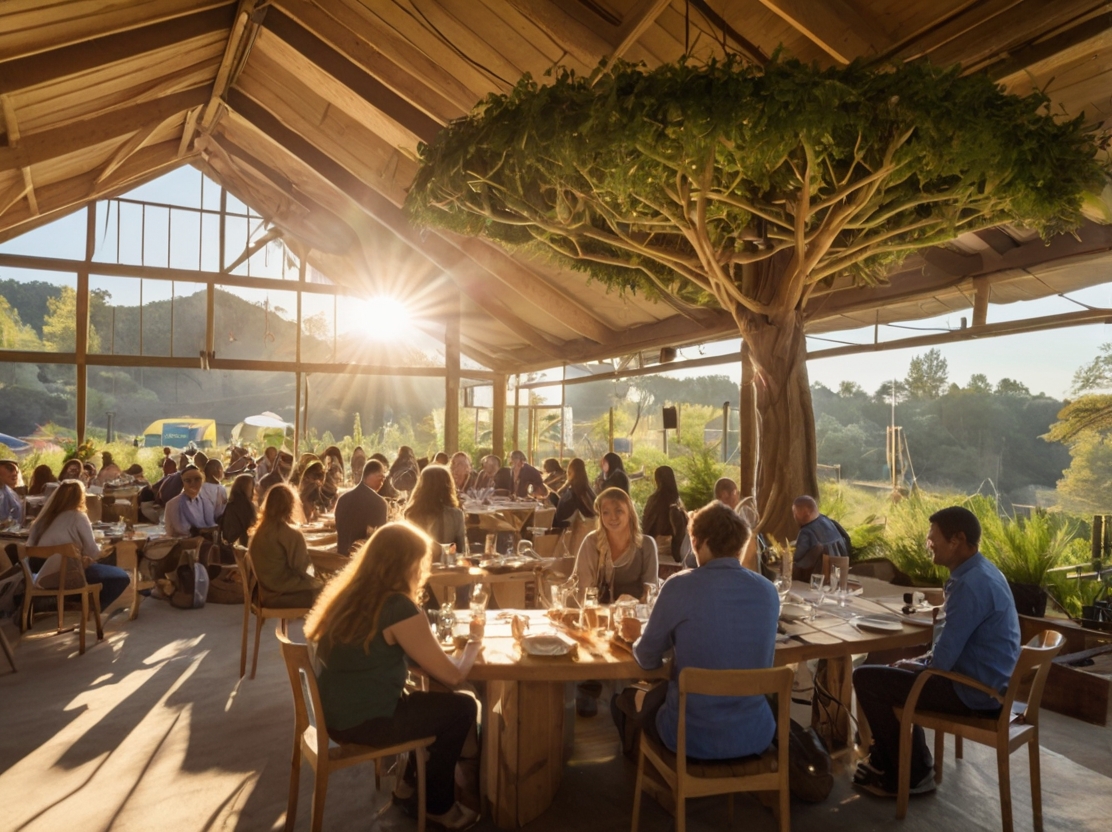
The coming year represents a pivotal moment for planetary climate action and international cooperation. Major gatherings will convene in strategic locations worldwide, bringing together diverse stakeholders to address our most pressing environmental challenges.
These events focus on practical solutions rather than mere pledges. From the Amazon rainforest to urban centers, leaders will tackle financing mechanisms, technology transfer, and indigenous knowledge integration.
The irony of flying thousands to remote locations for climate talks isn’t lost on observers. Yet these gatherings remain essential for multilateral progress and policy alignment across business sectors and civil society.
Introduction to the 2025 Sustainability Events Landscape
The calendar fills with gatherings that attempt to match urgency with action. These events create spaces where diplomacy meets practical implementation.
The Critical Role of Global Gatherings in Climate Action
Face-to-face negotiations remain irreplaceable despite digital alternatives. The chemistry of personal interaction drives breakthroughs that virtual meetings cannot achieve.
These assemblies function as diplomatic pressure valves. They allow for the nuanced conversations that build trust among nations and sectors.
The United Nations Ocean Conference exemplifies this approach. Scheduled for June in Nice, France, it focuses on mobilizing all actors for ocean conservation.
Similarly, the High-level Political Forum in July advances science-based solutions for the 2030 Agenda. Both events emphasize moving from talk to tangible progress.
Why This Period Represents a Pivotal Moment for Policy
Multiple convergence points create unprecedented momentum. The halfway mark to 2030 development goals demands honest assessment of what works.
Public pressure for measurable results has never been higher. Citizens and businesses alike demand accountability beyond mere pledges.
The geographic distribution of events signals important shifts. Host locations increasingly reflect climate justice principles rather than traditional Western hubs.
Conference Feature
Traditional Approach
2025 Evolution
Location Strategy
Western financial centers
Climate-vulnerable regions
Participation
Sector-specific silos
Cross-sector integration
Outcome Focus
Pledge creation
Implementation tracking
Accountability
Voluntary reporting
Built-in monitoring frameworks
This strategic sequencing creates a narrative arc from technical discussions to political decisions. Specialized meetings address implementation challenges that often hinder real-world impact.
The irony of discussing ecosystem collapse in air-conditioned centers isn’t lost on participants. Yet these necessary gatherings continue to drive the multilateral progress that piecemeal digital meetings cannot achieve.
Analysis reveals increasing cross-pollination between climate, development, and business sectors. While silos persist, the boundaries between these domains are becoming more permeable.
This period marks a clear shift from pledge-making to implementation monitoring. Most conferences now incorporate stocktake mechanisms and accountability frameworks that track real-world impact.
Flagship United Nations Climate and Development Conferences
The United Nations convenes several cornerstone gatherings that shape international environmental policy. These assemblies represent the formal machinery of multilateral cooperation, where diplomatic protocols meet urgent ecological realities.
Each event serves a distinct purpose within the broader ecosystem of global governance. From technical negotiations to high-level decision-making, they create the frameworks that guide national actions.
COP30: The Amazon Hosted Climate Summit in Brazil
Belém, Brazil hosts the thirtieth Conference of Parties in November. This location represents both poetic justice and logistical complexity.
Delegates will confront the Amazon’s ecological richness while negotiating its protection. The setting forces direct engagement with the ecosystems under discussion.
This gathering follows what many consider disappointing outcomes from previous meetings. The pressure for tangible results has never been higher.
UN Ocean Conference: Conserving Marine Ecosystems
Nice, France welcomes ocean advocates in June for this critical gathering. France and Costa Rica co-host the event focused on marine conservation.
The conference continues the tradition of discussing blue ecosystems in landlocked venues. However, the 2025 agenda emphasizes accelerating action over dialogue.
Participants will address pressing issues like overfishing and pollution. The focus remains on practical solutions rather than theoretical discussions.
UN Food Systems Summit +4 Stocktake: Assessing Progress
This evaluation occurs at a crucial juncture for global food security. It measures whether ambitious 2021 commitments translated into real agricultural changes.
The stocktake examines implementation across production, distribution, and consumption systems. It represents a honest assessment of what works and what doesn’t.
Food security remains one of our most pressing challenges. This meeting brings together diverse stakeholders to address systemic issues.
High-level Political Forum on Sustainable Development
This forum represents the UN’s mechanism for maintaining relevance amid criticism. It focuses particularly on Sustainable Development Goals 3, 5, 8, 14, and 17.
The gathering assesses progress toward the 2030 Agenda for Sustainable Development. It combines technical analysis with political decision-making.
Participants examine implementation gaps and financing mechanisms. The forum serves as a reality check for international commitments.
Bonn Climate Change Conference and AI for Good Global Summit
The Bonn conference in June serves as technical preparation for COP30. Negotiators work through detailed language that ultimately makes or breaks agreements.
Meanwhile, the AI for Good Summit in March explores technological applications for environmental protection. It examines how artificial intelligence can monitor deforestation and biodiversity loss.
These gatherings demonstrate the range of approaches needed for effective climate action. From technical details to innovative technologies, they collectively drive progress.
Regional and Specialized Sustainability Summits
Beyond the flagship United Nations gatherings, a diverse ecosystem of regional and specialized events addresses unique geographical and sectoral needs. These assemblies often produce more targeted outcomes than their global counterparts.
Africa Climate Summit: Continental Solutions in Ethiopia
Addis Ababa hosts the Africa Climate Summit from September 8-10. The event focuses on “Financing for Africa’s Resilient and Green Development.”
This gathering represents the continent’s assertive entry into climate leadership. It emphasizes practical solutions rather than victimhood narratives.
African leaders will address funding gaps and investment opportunities. The summit aims to position Africa as a hub for green innovation.
World Sustainable Development Summit: Asian Leadership
New Delhi welcomes participants from March 5-7 for this important gathering. The theme emphasizes “partnerships for accelerating sustainable development.”
India’s unique position as both major emitter and climate-vulnerable nation creates fascinating tensions. The summit attempts to position South Asia as an innovation hub for green technology.
This event brings together diverse stakeholders from across the region. It addresses specific challenges facing developing economies.
European assemblies continue their tradition of thorough documentation and incremental progress. While sometimes frustrating, this methodical approach yields consistent results.
These gatherings focus on policy implementation rather than grand declarations. European nations demonstrate how to translate climate commitments into actionable plans.
The careful balancing act between economic growth and environmental protection remains central. European events showcase both successes and ongoing struggles.
Sector-Specific Forums: Energy, Oceans, and Biodiversity
Specialized gatherings address the ironic reality that expertise often leads to fragmentation. Energy experts sometimes talk past biodiversity specialists despite obvious interconnections.
These forums attempt to bridge disciplinary divides through focused dialogue. They produce practical insights that larger conferences might overlook.
Key sector-specific events include:
World Bamboo Summit focusing on sustainable materials
Clean energy conferences addressing renewable transition
Circular economy workshops redesigning production systems
The Osaka World Expo 2025 attempts to rebrand world’s fairs as sustainability showcases. Its theme “Designing Future Society for Our Lives” faces scrutiny given the carbon footprint of such events.
Regional summits increasingly serve as testing grounds for innovative policies. They create what might be called “policy laboratories” for climate action.
The proliferation of specialized gatherings reflects both maturation and fragmentation. While expertise deepens, coordination challenges ironically require more events to solve.
Economic and Business-Focused Sustainability Gatherings
Corporate boardrooms and financial centers increasingly host discussions traditionally confined to environmental circles. These gatherings represent the business world’s growing engagement with ecological challenges.
They attempt to reconcile profit motives with planetary boundaries. The results often reveal fascinating tensions between economic growth and environmental protection.
World Economic Forum Annual Meeting: Corporate Leadership
The Davos gathering continues its delicate balancing act between genuine climate action and perceived greenwashing. Private jets ferry executives to discuss carbon reduction strategies.
This irony isn’t lost on observers yet the forum remains influential. It brings together corporate leaders who control significant resources for environmental projects.
The event focuses on practical solutions rather than theoretical debates. Discussions address supply chain sustainability and clean energy transitions.
Global Innovation and Technology Summits
Technology gatherings increasingly confront their own environmental footprint. They examine whether digital solutions genuinely reduce ecological impact.
These events explore fascinating paradoxes of modern environmentalism. Can we innovate our way out of problems created by previous innovations?
Key discussion topics include:
Artificial intelligence for monitoring deforestation
Blockchain for supply chain transparency
Energy-efficient data centers
Circular economy business models
Financial and Investment Conferences: Money 20/20 and Beyond
Financial gatherings finally acknowledge that climate risk equals financial risk. The conversion of this awareness into actual investment flows remains slow.
Money 20/20 represents this belated recognition within banking sectors. It addresses the growing divide between traditional and impact investors.
“Sustainable investing requires patience that conflicts with quarterly earnings expectations.”
These conferences reveal the financial sector’s struggle to align short-term profits with long-term planetary health. Financing mechanisms for green projects dominate discussions.
This gathering showcases companies addressing problems their business models helped create. Consumer goods firms profit from consumption while seeking to reduce its environmental impact.
The forum emphasizes supply chain transparency and waste reduction. Participants share strategies for sustainable packaging and responsible sourcing.
Key focus areas include:
Plastic reduction commitments
Carbon-neutral logistics
Water conservation techniques
Ethical labor practices
These efforts attempt to bridge the notorious “say-do gap” in corporate environmentalism. Measurable progress often lags behind ambitious announcements.
The World Green Economy Summit addresses the central paradox of sustainable economics. How can we maintain economic growth while reducing environmental impact?
Similarly, the Semafor World Economy Summit attempts to connect economic policymakers with ecological realities. Both events face challenges overcoming entrenched growth paradigms.
Business gatherings increasingly serve as laboratories for sustainable practices. They test whether environmental responsibility can coexist with profit generation.
Grassroots and Community-Led Initiatives
While high-level gatherings dominate headlines, the most authentic climate action often emerges from community roots. These gatherings represent the vital counterbalance to top-down approaches, bringing diverse voices into the conversation.
Youth Climate Action: Global Youth Climate Summit
Belo Horizonte hosts 500 young leaders from the Global South in April. This gathering embodies the poignant reality that those least responsible for environmental damage must lead the cleanup.
The summit focuses on practical solutions rather than symbolic protests. Participants develop strategies for local implementation of global goals.
Young delegates address climate change with remarkable optimism despite inheriting complex challenges. Their energy injects fresh perspectives into often-stagnant discussions.
Cooperatives Movement: International Day and Banking Summit
The International Cooperative Alliance demonstrates that alternative economic models already exist. These time-tested approaches align perfectly with modern sustainability principles.
Cooperative gatherings explore how member-owned businesses can drive progress. They showcase democratic control and equitable distribution of resources.
“Cooperatives prove that economic success needn’t come at environmental expense.”
The movement’s longevity offers valuable insights for contemporary development models. Its emphasis on community benefit contrasts sharply with extractive practices.
Social Development and Innovation Gatherings
These events confront the uncomfortable truth that environmental and social issues are inseparable. The Second World Summit for Social Development addresses this interconnection directly.
Innovation forums like SXSW and Web Summit represent technology’s awkward relationship with climate action. They attempt to position tech as solution-provider rather than problem-source.
Key gatherings include:
Social Innovation Summit addressing grassroots solutions
Creative Problem Solving Institute fostering new approaches
Local Solutions: Model Forest Network and Regional Forums
The International Model Forest Network Forum in Canada demonstrates place-based conservation. This approach recognizes that effective climate action must respect local contexts.
Regional forums emphasize that global challenges require localized responses. They bridge the gap between international policy and community implementation.
Initiative Type
Traditional Approach
Grassroots Evolution
Decision Making
Top-down directives
Community consultation
Resource Allocation
Centralized funding
Local control
Success Metrics
Economic indicators
Holistic well-being
Knowledge Sources
Expert opinions
Lived experience
These gatherings prove that small-scale action can create large-scale change. They often achieve more with limited funding than better-resourced initiatives.
The ICBA Conference in Poland represents growing recognition that financial systems must serve sustainability goals. It explores how banking can support rather than undermine ecological health.
Grassroots movements demonstrate that meaningful progress often begins at community level. Their success challenges assumptions about where real climate action originates.
Implementation and Financing: From Policy to Action
The transition from ambitious declarations to tangible outcomes represents the ultimate test of international environmental commitments. This critical phase separates rhetorical flourishes from measurable impact on the ground.
Effective implementation requires sophisticated financing structures and robust accountability mechanisms. The gap between pledged amounts and actual needs remains starkly evident across all sectors.
Climate Finance Mechanisms and Funding Strategies
Financial commitments continue to demonstrate ironic disparities between responsibility and contribution. Nations most responsible for historical emissions often prove least willing to fund solutions.
The $300 billion pledged at recent gatherings represents both progress and profound inadequacy. This amount falls dramatically short of the estimated $1.3 trillion actually required for meaningful climate action.
Fourth International Conference on Financing for Development in Seville assesses progress since 2002. This gathering examines whether financial promises have translated into actual resource allocation.
Technology and Innovation for Sustainable Development
Technological gatherings confront the patent paradox that could determine planetary future. Proprietary solutions remain locked behind intellectual property barriers despite their potential value.
Transfer mechanisms face dual challenges of Northern protectionism and Southern capacity limitations. This creates implementation gaps that hinder global progress toward sustainable development goals.
Clean energy innovations demonstrate particular promise for reducing emissions. However, scaling these technologies requires overcoming significant financial and logistical challenges.
Public-Private Partnerships and Multi-stakeholder Approaches
These collaborations represent uncomfortable marriages between profit motives and planetary survival. Results vary dramatically depending on regulatory frameworks and oversight mechanisms.
Multi-stakeholder approaches frequently degenerate into talking shops rather than decision-making bodies. Participants often express frustration with the slow pace of concrete action.
“Effective partnerships require balancing corporate interests with environmental imperatives.”
Successful models demonstrate that cross-sector collaboration can drive meaningful change. They combine business efficiency with ecological responsibility in innovative ways.
Monitoring and Accountability Frameworks
These systems suffer from the “what gets measured gets managed” problem in environmental governance. Easy-to-quantify metrics often overshadow more important but complex outcomes.
Modern frameworks increasingly incorporate artificial intelligence and satellite monitoring technologies. This creates unprecedented transparency while raising legitimate privacy concerns.
Key monitoring challenges include:
Balancing quantitative data with qualitative assessments
Ensuring independent verification of reported progress
Adapting global standards to local contexts
Protecting community privacy while ensuring accountability
Accountability mechanisms must evolve beyond mere reporting requirements. They need to demonstrate actual environmental improvement rather than procedural compliance.
The integration of these various elements—financing, technology, partnerships, and monitoring—creates the foundation for effective implementation. Their successful coordination separates symbolic gestures from genuine progress.
Conclusion: The Collective Path Forward for Global Sustainability
The year’s gatherings demonstrate both the promise and paradox of international cooperation. These events bring together diverse voices yet face implementation gaps between pledges and real-world action.
Success hinges on translating dialogue into measurable progress. The true test lies not in declarations but in emission reductions and conservation outcomes.
Moving forward requires blending high-level policy with grassroots innovation. Effective climate action demands both global frameworks and local implementation.
These gatherings provide crucial platforms for collaboration across sectors. They create space for unexpected partnerships that drive meaningful change.
The path ahead acknowledges conferences as necessary but insufficient. Lasting impact comes from combining diplomatic efforts with community engagement and private sector commitment.
Key Takeaways
2025 features critical gatherings for climate action and sustainable development goals
COP30 in Brazil’s Amazon represents a symbolic and practical milestone
Events increasingly focus on implementation rather than pledging
Climate finance mobilization emerges as a central theme across conferences
Geographic distribution shows deliberate emphasis on Global South leadership
Welcome to our comprehensive exploration of sustainable solutions that transform environmental challenges into valuable assets. This article examines how innovative technologies are reshaping our approach to global development.
The modern world faces a curious paradox: what we once discarded as agricultural residue now holds remarkable potential. Through advanced conversion processes, these materials become powerful tools against climate change.
This analysis delves into the sophisticated relationship between ancient practices and modern science. We explore how controlled thermal decomposition creates permanent storage solutions while enhancing earth quality.
Our journey will reveal how integrated systems contribute to multiple global sustainability targets simultaneously. The transformation represents a paradigm shift in circular economy approaches to contemporary challenges.
Introduction to Sustainable Solutions: Green Energy and Waste Valorization
Modern environmental challenges present an ironic twist: the very materials causing problems also hold their solutions. This paradoxical relationship forms the foundation of contemporary sustainability approaches that transform liabilities into assets.
The current climate context demands more than incremental improvements. According to the Intergovernmental Panel on Climate Change, “the pace and scale of what has been done so far, and current plans, are insufficient to tackle climate change.” This assessment underscores the need for transformative rather than gradual solutions.
Defining the Circular Bioeconomy
A circular bioeconomy represents an economic system that eliminates discards through continuous biological resource utilization. This model fundamentally rethinks our relationship with organic materials, viewing them as perpetual value streams rather than temporary commodities.
Traditional linear models follow a take-make-dispose pattern that inevitably creates environmental burdens. The circular approach, by contrast, designs out waste through intelligent system thinking and technological innovation.
This framework understands discards not as problems but as undervalued resource opportunities. The sophisticated relationship between material valorization, nutrient cycling, and economic sustainability creates closed-loop systems that minimize environmental impact.
The Urgent Need for Integrated Climate and Waste Solutions
Current approaches often address climate and waste issues separately, missing crucial synergies. Integrated systems simultaneously tackle atmospheric carbon accumulation, resource depletion, and disposal challenges through unified strategies.
Biomass streams represent significant missed opportunities in conventional economic models. Proper management positions these materials as starting points for cascading environmental and economic benefits across multiple sectors.
The analytical framework presented here establishes how production processes epitomize circular economy principles in action. These systems demonstrate that what we once considered refuse actually contains the seeds of its own solution through clever valorization techniques.
This approach’s role in global development cannot be overstated. It offers a pathway where environmental responsibility and economic progress become mutually reinforcing rather than competing objectives.
What is Biomass? Understanding the Foundation of Biochar
Nature presents us with an elegant paradox: the very materials we once considered worthless now form the bedrock of transformative environmental solutions. This section examines the diverse organic substances that serve as the fundamental building blocks for advanced carbon conversion systems.
At its core, biomass represents organic matter derived from living or recently living organisms. These materials span agricultural, forestry, urban, and animal sources, each with unique characteristics that influence their conversion potential.
Agricultural Residues: From Crop Waste to Resource
The farming sector generates substantial residual materials that traditionally posed disposal challenges. Rice husks, corn stalks, and nut shells represent typical examples of these agricultural byproducts.
Through innovative processing, these residues transform from burdensome waste into valuable feedstock. This conversion exemplifies the circular economy principle where nothing goes to waste.
Forestry Waste: Utilizing Wood Byproducts
Timber operations produce significant amounts of unused woody materials. Sawdust, tree bark, and wood chips often accumulate as processing remnants with limited traditional use.
These forestry materials possess excellent properties for thermal conversion processes. Their consistent composition and carbon density make them ideal candidates for value creation.
Urban and Animal-Derived Biomass Streams
Municipal systems generate organic materials that typically end in landfills. Paper mill sludge, yard trimmings, and food scraps represent underutilized urban biomass sources.
Animal agriculture contributes manure and other agricultural byproducts that can be converted to stable carbon. These materials offer dual benefits of waste reduction and resource creation.
Biomass Category
Common Examples
Conversion Suitability
Annual Availability (US)
Agricultural Residues
Corn stalks, rice husks, nut shells
High carbon content, uniform composition
~400 million tons
Forestry Waste
Sawdust, bark, wood chips
Excellent thermal properties, consistent
~230 million tons
Urban Biomass
Yard trimmings, food waste, sludge
Variable composition, requires processing
~180 million tons
Animal-Derived
Manure, agricultural byproducts
High nutrient content, moisture management
~150 million tons
The selection of appropriate feedstock proves critical for both environmental integrity and economic viability. Different biomass types require tailored processing parameters for optimal results.
This diversity enables decentralized production models that can adapt to local availability. The sophisticated understanding of biomass characteristics forms the foundation for effective carbon management systems.
Biochar 101: The Powerful Waste-to-Carbon Technology
Industrial innovation has achieved a remarkable inversion: converting liabilities into assets. This section explores how thermal conversion transforms organic materials into stable carbon with multiple environmental benefits.
The production process represents a sophisticated approach to material valorization. Through controlled thermal decomposition, what was once considered refuse becomes a valuable resource for environmental applications.
Biochar vs. Charcoal: Key Differences in Purpose and Production
While superficially similar, these materials serve fundamentally different purposes. Charcoal targets combustion energy release, while biochar focuses on long-term environmental applications.
The manufacturing intent separates these carbon-rich materials completely. One seeks temporary heat generation; the other aims for permanent environmental enhancement through stable carbon integration.
The Science of Pyrolysis: Transforming Organic Matter
Pyrolysis operates through thermal decomposition without combustion. This oxygen-limited environment prevents complete material breakdown, creating stable carbon structures instead.
Temperature parameters critically influence the final product’s characteristics. Different heating ranges produce varying bio-oil, syngas, and solid carbon ratios from the same starting materials.
The process demonstrates elegant simplicity masking sophisticated environmental benefits. This thermal conversion simultaneously addresses waste reduction and carbon management challenges through integrated solutions.
Different biomass types respond uniquely to pyrolysis conditions. This variability requires careful process adjustment to optimize output quality and environmental performance.
The resulting material offers exceptional stability as a permanent carbon repository. Its molecular structure resists decomposition, making it ideal for long-term environmental applications.
This technology bridges disposal challenges with climate solution opportunities. It represents a practical approach where environmental responsibility meets technological innovation effectively.
The Production Process: From Waste Biomass to Stable Carbon
Manufacturing presents an intriguing dichotomy where technological sophistication meets grassroots ingenuity. This transformation journey spans from village workshops to industrial complexes, each with distinct advantages and limitations.
The conversion pathway demonstrates how simple thermal principles can yield complex environmental benefits. Different approaches serve diverse market segments while addressing common sustainability challenges.
Artisanal Production: Community-Scale Kilns and Benefits
Small-scale operations empower local communities through accessible technology. These systems typically utilize modified barrel designs or brick constructions.
Village-level manufacturing offers significant social advantages. It creates local employment opportunities while utilizing readily available feedstock materials.
Quality consistency remains the primary challenge for artisanal operations. Without sophisticated monitoring equipment, output characteristics may vary between batches.
Emission control represents another consideration for small-scale setups. Basic designs may not capture all process gases effectively.
Industrial Production: High-Tech Reactors for Scalability
Large facilities employ continuous-feed pyrolysis reactors for maximum throughput. These automated systems maintain precise temperature controls throughout operation.
Standardized output quality becomes the hallmark of industrial manufacturing. Sophisticated monitoring systems ensure consistent product specifications batch after batch.
Feedstock logistics present the greatest challenge at this scale. Sourcing sufficient organic materials requires extensive supply chain management.
The capital investment for industrial plants significantly exceeds artisanal setups. However, operational efficiency offsets initial costs through higher production volumes.
Critical Production Parameters: Temperature and Output
Thermal conditions fundamentally determine the final product’s characteristics. Temperature ranges between 400-700°C produce vastly different material properties.
Residence time and heating rate equally influence the conversion outcome. Faster heating typically yields more liquid byproducts versus solid carbon.
The relationship between input materials and output quality remains paramount. Different organic substances require tailored processing parameters for optimal results.
Production Scale
Typical Capacity
Capital Investment
Quality Consistency
Emission Control
Community Impact
Artisanal/Kiln
1-10 tons/month
$2,000-20,000
Variable
Basic
High
Medium-Scale
10-100 tons/month
$50,000-500,000
Moderate
Standard
Medium
Industrial
100+ tons/month
$1M+
High
Advanced
Low
Temperature thresholds above 550°C ensure maximum carbon stability in the final product. This thermal range promotes aromatic condensation reactions that create persistent molecular structures.
The manufacturing approach selection balances technical requirements with social considerations. Neither scale inherently outperforms the other—they serve different purposes within the broader sustainability landscape.
Process optimization requires understanding both technical parameters and practical constraints. The most effective systems combine scientific precision with operational practicality.

Why Biochar is a Superior and Permanent Carbon Sink
Elemental composition tells a compelling story of longevity that defies conventional decomposition timelines. This material’s exceptional durability positions it among nature’s most effective carbon management solutions.
The distinction between temporary and permanent storage separates superficial approaches from genuinely transformative climate solutions. Not all carbon capture methods offer equivalent environmental benefits or longevity.
The Science of Carbon Sequestration and Storage
Carbon removal technologies vary dramatically in their permanence and effectiveness. Some approaches temporarily store atmospheric carbon while others create near-permanent repositories.
Biochar represents the latter category through its unique molecular structure. The pyrolysis process creates aromatic carbon rings that resist microbial breakdown and chemical degradation.
This stability stems from the thermal conversion’s effect on organic materials. High temperatures rearrange molecular bonds into configurations that nature struggles to decompose.
Assessing Permanence: H/C and O/C Ratios
Laboratory analysis provides quantitative measures for predicting environmental persistence. Scientists use simple elemental ratios to forecast complex long-term behavior.
The hydrogen-to-carbon (H/C) and oxygen-to-carbon (O/C) ratios serve as reliable indicators. Materials meeting H/C ≤ 0.4 and O/C ≤ 0.2 demonstrate exceptional durability characteristics.
These thresholds represent critical boundaries for carbon permanence certification. Materials exceeding these values undergo more rapid decomposition in environmental conditions.
The irony lies in how elementary measurements predict sophisticated environmental performance. Simple laboratory tests can forecast whether carbon will persist for decades or millennia.
This analytical rigor forms the foundation of carbon credit certification standards. Projects must demonstrate these chemical characteristics to qualify as permanent removal solutions.
Long-Term Stability in Soil and Other Applications
Research confirms remarkable persistence across diverse environmental conditions. Studies document carbon remaining stable for over 1,000 years in various applications.
Soil incorporation represents the most common use case for this durable material. The carbon integrates with earth components while maintaining its structural integrity.
Beyond agricultural applications, researchers explore construction materials and filtration systems. These alternative uses leverage the same permanence characteristics for different environmental benefits.
The material’s persistence outperforms other nature-based carbon solutions significantly. Forest growth and soil organic matter provide valuable but less durable storage options.
This superior permanence meets the strictest requirements for climate accounting frameworks. It represents one of few solutions that genuinely qualify as permanent carbon removal.
Green Energy and Biomass: The Synergy of Carbon Removal and Renewable Heat
Thermal conversion achieves an elegant duality where environmental remediation generates valuable byproducts. This process transforms organic materials while capturing excess thermal output for practical applications.
The pyrolysis reaction liberates substantial thermal energy alongside solid carbon creation. This surplus represents an often-overlooked co-benefit that enhances overall system efficiency.
Harnessing Surplus Energy from Pyrolysis
Modern reactors capture and utilize thermal output that would otherwise dissipate. This recovered energy can power adjacent operations or supply external consumers.
The quantity and quality of energy output vary with feedstock characteristics. Denser materials typically yield higher thermal values per unit processed.
Sophisticated heat exchange systems maximize energy capture efficiency. These configurations transform what was once waste heat into valuable renewable resources.
Decarbonizing Industrial Heat and District Systems
Industrial thermal demands represent significant emission sources globally. Pyrolysis facilities can supply carbon-neutral heat to manufacturing operations through direct partnerships.
District heating networks benefit particularly from consistent thermal output. These community-scale systems require reliable baseload supply that matches well with continuous pyrolysis operations.
The Heat-as-a-Service model offers intriguing advantages for both producers and consumers. Long-term contracts provide price stability while guaranteeing renewable energy supply.
This approach demonstrates how integrated thinking creates multiple value streams. One process simultaneously addresses organic material management, carbon sequestration, and renewable energy generation.
The scalability of these integrated systems supports broader energy transition goals. From small community installations to industrial complexes, the model adapts to various contexts and requirements.
Financial models must account for both carbon credits and energy sales to accurately reflect total value. This dual-revenue structure enhances project economics while maximizing environmental benefits.

Certification and Standards: Ensuring Environmental Integrity
Environmental verification presents an ironic paradox: the very solutions designed to save our planet require extensive proof of their worth. This validation ecosystem ensures that climate technologies deliver measurable benefits rather than merely promising theoretical advantages.
The certification landscape has evolved into a sophisticated framework of independent assessment. These protocols guard against greenwashing while establishing credible benchmarks for environmental performance.
Leading Methodologies: Puro.earth, VCS-Verra, and EBC
Several prominent standards have emerged as industry benchmarks for carbon removal validation. Puro.earth focuses specifically on engineered carbon removal methods with rigorous permanence requirements.
VCS-Verra brings decades of carbon market experience to its methodology development. The European Biochar Certificate (EBC) and World Biochar Certificate (WBC) provide comprehensive frameworks covering production quality and environmental impact.
Each program addresses different aspects of project development and verification. Some emphasize carbon accounting while others focus on product quality and safety standards.
The selection of appropriate methodology depends on project scale and intended markets. International recognition often requires compliance with multiple certification frameworks.
The Role of Life-Cycle Assessment in Project Validation
Life-Cycle Assessment (LCA) provides the analytical foundation for credible carbon accounting. This systematic approach quantifies environmental impacts across a project’s entire lifespan.
ISO 14040/44 standards govern proper LCA implementation for carbon removal projects. The cradle-to-grave methodology accounts for all emissions from feedstock collection to final application.
Third-party verification of LCA results ensures methodological rigor and accuracy. This independent review prevents overestimation of net carbon benefits while identifying optimization opportunities.
The sophistication of LCA analysis has become increasingly important for market credibility. Comprehensive assessments now include social and economic impacts alongside environmental metrics.
Third-Party Verification for Credibility and Trust
Independent validation serves as the critical bridge between innovation and market acceptance. Third-party auditors bring objectivity and expertise that internal assessments cannot match.
The verification process examines every aspect of project implementation and documentation. Auditors assess feedstock sustainability, additionality, and monitoring protocols against methodology requirements.
This external scrutiny ultimately enhances project value and investor confidence. Verified credits command premium prices in carbon markets due to their demonstrated integrity.
The evolving standards landscape continues to adapt to new technological applications. Certification frameworks now address diverse use cases from agricultural enhancement to construction materials.
Quality assurance through rigorous verification represents essential protection for climate impact integrity. Rather than bureaucratic hurdles, these standards provide the foundation for scalable, trustworthy carbon markets.
Revitalizing the Earth: The Impact of Biochar on Soil Health
The relationship between stable carbon and earth vitality demonstrates how environmental solutions can address multiple challenges simultaneously. This integrated approach transforms carbon management into a comprehensive strategy for agricultural enhancement.
Research reveals that carbon-rich amendments deliver benefits extending far beyond atmospheric carbon reduction. These materials fundamentally alter soil characteristics in ways that support sustainable agricultural practices.
Enhancing Water Retention and Nutrient Availability
The porous nature of these carbon materials creates exceptional water-holding capacity. This sponge-like characteristic reduces irrigation requirements significantly during dry periods.
Farmers observe reduced water stress in crops treated with these amendments. The material captures moisture during rainfall and releases it gradually to plant roots.
Nutrient management undergoes similar improvement through cation exchange capacity enhancement. Fertilizers become more effective as nutrients remain available rather than leaching away.
This slow-release mechanism represents a sophisticated approach to nutrient cycling. Plants receive consistent nourishment while reducing fertilizer application frequency.
Improving Soil Microbiology and Structure
Microbial communities flourish in the presence of carbon amendments. The porous structure provides ideal habitat conditions for beneficial microorganisms.
Soil biology diversity increases dramatically following application. This microbial enhancement supports natural nutrient cycling and disease suppression.
Physical structure improvement represents another critical benefit. Heavy soils become more workable while sandy soils gain better cohesion and moisture retention.
The material’s stability ensures long-term structural benefits without frequent reapplication. This permanence distinguishes it from organic amendments that decompose rapidly.
Boosting Agricultural Productivity and Resilience
Crop yields demonstrate consistent improvement across diverse growing conditions. Studies show average yield increases of 10-25% following proper application.
Drought resistance improves significantly due to enhanced water retention capabilities. Plants withstand water stress more effectively, reducing crop failure risk.
The economic benefits for farmers become apparent through reduced input costs and improved output. Fertilizer requirements decrease while crop quality and quantity increase.
Long-term studies confirm sustained improvements years after initial application. This durability makes the investment economically viable for agricultural operations.
Contaminated land remediation represents another valuable application. Heavy metals and pollutants become immobilized, restoring land to productive use.
The multifaceted benefits position this approach as a comprehensive solution for modern agriculture. It addresses productivity, sustainability, and resilience simultaneously.
Transforming Waste Byproducts into Environmental Assets
Economic systems reveal an intriguing contradiction: materials once considered worthless now drive environmental innovation. This paradigm shift represents one of modern sustainability’s most compelling developments, where disposal challenges become value creation opportunities.
The transformation process fundamentally reimagines our relationship with organic discards. Rather than viewing these substances as problems requiring management, advanced systems recognize their inherent potential for environmental benefit.
Diverting Organic Waste from Landfills and Incineration
Current disposal methods create significant environmental burdens despite their widespread use. Landfills generate methane emissions while incineration releases atmospheric pollutants from otherwise valuable materials.
The scale of organic discards destined for conventional disposal methods remains staggering. Approximately 60% of municipal solid waste consists of compostable organic materials that could undergo valorization instead.
Methane emissions from landfills represent particularly concerning environmental impacts. This potent greenhouse gas possesses 28-36 times the warming potential of carbon dioxide over a century.
Analytical approaches calculate avoided emissions through diversion strategies. These methodologies account for both direct emission reductions and secondary environmental benefits from material repurposing.
Creating Value from what was Once a Liability
The economic transformation proves equally remarkable as the environmental benefits. Systems that previously consumed resources for waste management now generate revenue through clever material processing.
Different organic streams require tailored approaches for optimal valorization. Agricultural residues demand different handling than urban organic materials or industrial byproducts.
Integrated management systems prioritize highest-value utilization pathways for each material type. This sophisticated understanding maximizes both economic returns and environmental benefits.
The circular economy model fundamentally repositions organic discards within economic systems. Materials complete full cycles from production to consumption to reintegration rather than linear disposal.
Waste Stream
Current Disposal Method
Valorization Potential
Methane Reduction Potential
Economic Value Created
Agricultural Residues
Open burning/field decomposition
High carbon content
85-90% reduction
$50-150/ton
Food Waste
Landfilling
Medium nutrient value
95% reduction
$30-80/ton
Yard Trimmings
Composting/landfilling
High bulk density
75-85% reduction
$40-100/ton
Wood Processing Waste
Incineration/landfilling
Excellent thermal properties
80-90% reduction
$60-120/ton
Policy frameworks play crucial roles in incentivizing these transformations at scale. Regulatory structures must evolve to support rather than hinder waste-to-resource conversions.
The economic case becomes increasingly compelling as technology advances and markets develop. Viewing organic discards as resources rather than waste represents both environmental necessity and economic opportunity.
This approach simultaneously addresses waste reduction and climate objectives through integrated solutions. The sophisticated relationship between material management and environmental protection creates powerful synergies.
Biochar’s Pivotal Role in Achieving the UNSDGs
Global development frameworks present an interesting contradiction where single solutions can address multiple objectives simultaneously. This integrated approach represents a sophisticated departure from traditional single-issue interventions that dominated previous sustainability efforts.
The material’s unique characteristics position it as a rare multi-tool in the sustainability arsenal. Rather than addressing isolated challenges, it creates cascading benefits across diverse development domains through clever system integration.
SDG 2: Zero Hunger through Sustainable Agriculture
Agricultural productivity gains demonstrate the technology’s immediate practical value. Studies show consistent yield improvements of 10-25% across various crops and growing conditions.
This enhancement stems from multiple mechanisms working together. Improved water retention, nutrient availability, and soil structure create optimal growing environments.
The economic benefits for smallholder farmers prove particularly significant. Reduced input costs combined with increased output create sustainable livelihood improvements.
SDG 6: Clean Water and Sanitation via Pollution Filtration
Water purification applications leverage the material’s exceptional adsorption properties. Heavy metals, pesticides, and other contaminants bind effectively to its porous surface.
This filtration capability addresses both point-source and diffuse pollution challenges. Industrial wastewater and agricultural runoff both benefit from treatment applications.
Developing regions gain particular advantages from low-cost filtration options. Simple systems using locally produced materials provide accessible water quality solutions.
SDG 7: Affordable and Clean Energy from Pyrolysis
The thermal conversion process generates surplus energy alongside solid carbon production. This renewable heat can power adjacent operations or supply external consumers.
Decentralized energy generation supports community-level energy security. Smaller pyrolysis units can provide thermal energy for local industries or district heating systems.
This integrated approach demonstrates remarkable efficiency in resource utilization. One process simultaneously manages organic materials while creating valuable energy outputs.
SDG 13: Climate Action through Direct Carbon Removal
Carbon sequestration represents the most direct climate contribution. The stable carbon form persists for centuries, providing genuine permanent storage.
This permanence qualifies the approach under stringent carbon accounting frameworks. It meets criteria that many nature-based solutions cannot satisfy regarding durability.
The technology’s scalability supports broader climate mitigation targets. From small community projects to industrial operations, it adapts to various implementation contexts.
Additional sustainable development goals benefit indirectly from widespread adoption. Decent work creation, sustainable cities, and terrestrial ecosystem protection all receive support.
Measurement frameworks continue evolving to quantify these diverse contributions accurately. Standardized reporting protocols ensure credible claims regarding multiple objective advancement.
Policy makers increasingly recognize technologies that deliver across multiple sustainability domains simultaneously. This multi-benefit approach represents efficient resource allocation for development priorities.
The 2030 Agenda implementation benefits from practical solutions that bridge environmental and social objectives. Integrated approaches like this demonstrate how clever thinking can address complex challenges effectively.
Social and Economic Co-Benefits of a Biochar Economy
Economic development reveals an intriguing inversion where traditionally disadvantaged areas become hubs of environmental innovation. This transformation creates value chains that extend far beyond carbon management into community revitalization and job creation.
The social dimension of these systems demonstrates how environmental solutions can drive comprehensive regional development. Rather than focusing solely on technical outcomes, successful projects integrate human and economic factors.
Job Creation in Rural and Remote Communities
Employment opportunities emerge across the entire value chain from collection to application. These positions range from technical roles to logistical support and field implementation.
Remote regions with limited economic alternatives benefit particularly from decentralized production models. Companies like Novocarbo strategically locate Carbon Removal Parks in areas needing employment diversification.
Training programs develop local expertise in sustainable practices and technical operations. This knowledge transfer creates lasting capacity beyond individual project timelines.
The ironic development pattern positions marginalized regions as centers of climate innovation. Areas once overlooked now host cutting-edge environmental technology operations.
Economic Growth through Innovation and Local Sourcing
Local biomass sourcing creates circular economic models that retain value within communities. Farmers and landowners receive payments for materials previously considered waste products.
Innovative business models ensure benefits are shared across stakeholders rather than concentrated. This approach builds community support and enhances project sustainability.
Distribution networks for final products create additional entrepreneurial opportunities. The economic multiplier effect extends through transportation, retail, and application services.
Measurement frameworks now capture social return on investment alongside environmental metrics. This analytical approach quantifies community benefits that traditional accounting might overlook.
The sophisticated understanding of integrated value creation positions these initiatives as comprehensive development strategies. They address environmental challenges while building resilient local economies.
Community acceptance becomes essential for long-term project success and scaling. Projects designed with local input typically achieve better outcomes than externally imposed solutions.
Scaling Up: Implementation Strategies for Communities and Industry
Implementation paradoxically demands both expansion and localization simultaneously. This delicate balance represents the core challenge in transforming theoretical potential into practical impact across diverse contexts.
The scaling dilemma presents an interesting contradiction where success requires standardized processes and customized approaches. Effective implementation bridges this gap through sophisticated understanding of local conditions and technical requirements.
Project Development from Concept to Operation
Successful initiatives begin with comprehensive feasibility assessment. This analytical phase examines feedstock availability, market dynamics, and regulatory frameworks.
The development process progresses through detailed engineering design and financial modeling. Each stage requires careful validation against both technical specifications and community needs.
Commissioning represents the critical transition from planning to execution. This phase tests equipment performance and operational protocols under real-world conditions.
Ongoing operation demands continuous monitoring and optimization. Performance tracking ensures environmental integrity while maximizing economic returns.
Overcoming Logistical and Technical Barriers
Feedstock collection presents the first major logistical challenge. Efficient systems must balance collection radius with transportation costs and material quality.
Storage and handling require careful management to prevent degradation. Different organic materials demand specific conditions to maintain conversion suitability.
Technical barriers often involve equipment reliability and process consistency. These challenges vary significantly between artisanal and industrial operations.
Community engagement proves equally important as technical excellence. Local support facilitates smoother implementation and long-term sustainability.
The sophisticated approach to barrier resolution combines engineering solutions with social understanding. This dual perspective addresses both mechanical and human factors effectively.
Implementation excellence ultimately determines whether promising technologies achieve meaningful impact. The bridge between innovation and application requires both technical precision and contextual intelligence.
The Investment Landscape: Carbon Markets and Project Viability
Financial markets demonstrate an intriguing paradox where environmental protection becomes economically viable through clever market mechanisms. This sophisticated relationship between climate action and investment returns represents one of modern sustainability’s most fascinating developments.
The carbon credit ecosystem has evolved into a complex financial marketplace. Projects must navigate rigorous validation processes while demonstrating both environmental integrity and economic sustainability.
Understanding Additionality in Carbon Credit Projects
Additionality stands as the cornerstone of credible climate finance. This concept ensures that carbon credits represent genuine environmental benefits rather than business-as-usual activities.
Projects must satisfy three distinct additionality criteria to qualify for carbon markets. Environmental additionality requires proving that biomass would have emitted CO₂ if not processed through thermal conversion.
Financial additionality demonstrates that carbon credits are essential for project viability. Regulatory additionality confirms that no existing laws mandate the activity being undertaken.
The analytical rigor behind additionality verification prevents market distortions. This thorough examination separates legitimate climate contributions from opportunistic claims.
Financial Models and the Role of Carbon Finance
Successful initiatives combine multiple revenue streams for economic resilience. Carbon credit sales typically complement product revenue and energy value creation.
The investment case rests on carbon removal permanence and co-benefits valuation. Projects must demonstrate both immediate financial returns and long-term environmental impact.
Innovative financing structures help de-risk investment in emerging technologies. These models balance investor protection with project development needs.
The evolving regulatory landscape continues to shape carbon credit demand and pricing. Policy developments directly impact project viability and investment attractiveness.
Carbon markets serve as essential enabling mechanisms for scaling climate solutions. They bridge the gap between environmental necessity and economic practicality through sophisticated market design.
Project developers must navigate complex certification requirements while maintaining operational efficiency. This balancing act requires both technical expertise and financial acumen.
The future of climate finance depends on robust, transparent carbon markets. These systems transform environmental responsibility into economic opportunity through clever market architecture.
Future Trends and Innovations in Biochar Technology
Technological evolution demonstrates an interesting reversal where traditional materials find revolutionary applications. The innovation frontier constantly expands beyond conventional uses into unexpected sectors.
Research institutions and private companies collaborate to unlock new potential. These partnerships accelerate development across diverse industries.
Emerging Applications in Construction and Filtration
Building materials represent a promising new application area. Adding carbon-rich substances to concrete reduces embodied emissions significantly.
These composite materials demonstrate enhanced insulation properties. They also improve moisture regulation within structures.
Water treatment systems benefit from exceptional adsorption capabilities. Heavy metals and organic pollutants bind effectively to porous surfaces.
Municipal filtration installations show remarkable efficiency improvements. The material’s longevity ensures sustained performance without frequent replacement.
Industrial wastewater management adopts these filtration solutions. They offer cost-effective alternatives to conventional treatment methods.
Advances in Pyrolysis Technology and Efficiency
Modern reactors achieve unprecedented thermal efficiency. Advanced heat recovery systems capture more energy from each conversion cycle.
Automation improves consistency across production batches. Sophisticated sensors maintain optimal temperature parameters throughout operation.
Modular designs enable scalable deployment across different settings. Smaller units serve community needs while larger installations supply industrial demand.
Continuous-feed systems enhance operational productivity. They reduce downtime between processing cycles significantly.
Quality control mechanisms become increasingly sophisticated. Real-time monitoring ensures output meets strict specifications consistently.
The innovation pipeline extends from laboratory concepts to commercial applications. Research collaborations accelerate technology transfer across global markets.
Cost reduction remains essential for broader adoption. Efficiency improvements make these solutions more accessible to diverse users.
Integrated systems maximize value extraction through cascading utilization. Multiple applications ensure comprehensive resource optimization.
Getting Involved: How to Support and Integrate Biochar Solutions
Market participation reveals an elegant symmetry where diverse stakeholders converge around shared environmental objectives. This collaborative ecosystem demonstrates how individual actions collectively drive systemic change through coordinated engagement.
The pathway to involvement varies significantly across different participant categories. Each group contributes unique value while benefiting from distinct advantages.
Options for Farmers, Businesses, and Policymakers
Agricultural producers can implement these materials through straightforward application methods. Many operations begin with purchased amendments to test effectiveness before considering on-site production.
Farm-based manufacturing represents the next logical progression for larger operations. Small kilns enable growers to convert crop residues directly into valuable soil enhancements.
Commercial enterprises discover opportunities throughout the value chain. From biomass collection to final product distribution, numerous business models support economic viability.
Policy makers wield significant influence through regulatory frameworks and incentive structures. Strategic interventions can accelerate adoption while ensuring environmental integrity.
ClimateSeed supports building diversified carbon project portfolios that include high-quality initiatives. Their approach ensures projects meet rigorous standards while delivering tangible benefits for climate and communities.
Building a Diversified Carbon Project Portfolio
Investment strategies benefit from thoughtful diversification across project types and geographies. This analytical approach balances risk while maximizing environmental impact.
Different project scales serve distinct investment objectives effectively. Small community initiatives offer social co-benefits while large industrial operations provide scale efficiencies.
Partnership models connect stakeholders across the ecosystem strategically. These collaborations leverage complementary strengths for comprehensive solution development.
Implementation support services address critical development phases comprehensively. From certification to operational management, professional assistance enhances project success.
Stakeholder Group
Primary Engagement Options
Investment Range
Implementation Timeline
Support Services Needed
Farmers
Application only, On-farm production
$5,000-50,000
1-6 months
Technical training, Application guidance
Businesses
Value chain participation, Project development
$100,000-5M
6-24 months
Market analysis, Certification support
Policymakers
Incentive programs, Regulatory frameworks
Varies by jurisdiction
12-36 months
Impact assessment, Policy design
Investors
Project financing, Portfolio development
$500,000-10M
3-18 months
Due diligence, Risk management
The sophisticated understanding of engagement pathways creates resilient participation models. Stakeholder involvement proves essential for developing inclusive markets that serve diverse needs.
Practical implementation begins with assessment of local conditions and available resources. This foundation ensures appropriate solution selection matched to specific circumstances.
The integration journey typically progresses from simple adoption to comprehensive implementation. This gradual approach allows learning and adjustment throughout the process.
Successful engagement requires both technical knowledge and relationship building. The most effective initiatives combine scientific precision with community collaboration.
Conclusion: Integrating Biomass and Biochar for a Sustainable Future
Sustainable development presents a fascinating duality where challenges contain their own remedies. This integrated approach transforms liabilities into assets through clever technological applications.
The analysis demonstrates how organic materials become valuable resources. These solutions address multiple environmental objectives simultaneously.
Proper management creates cascading benefits across ecosystems. It supports global development while enhancing natural systems.
Future progress depends on scaling these integrated approaches. Stakeholders across sectors must embrace practical, permanent climate strategies.
Key Takeaways
Agricultural residues can be converted into valuable environmental resources
Modern technology combines ancient practices with contemporary science
For decades, the ground beneath our feet was largely ignored in global discussions. Then came a shift. The United Nations designated December 5th as World Soil Day in 2014. This move transformed soil from a niche concern into a worldwide priority.
Healthy soil is the foundation of our food systems. Approximately 95% of what we eat depends on it. Yet, degradation threatens this vital resource. Proper soil management could boost food production by up to 58%. That’s a game-changer for global nutrition.
Soil also plays a critical role in fighting climate change. It captures around 80% of terrestrial carbon. This makes it a powerful ally for a stable climate. Plus, it hosts nearly 59% of Earth’s species. Biodiversity thrives where we rarely look.
The hidden hunger crisis affects two billion people. Soils supply most essential elements plants need. Without healthy soils, food lacks nutrients. Global Soil Week emerged to turn awareness into action. It brings experts together to create real solutions.
The Historical Foundation of Global Soil Awareness
International policy makers long treated the earth beneath our feet as an afterthought. This oversight persisted despite its fundamental role in human survival. The turning point came when scientific evidence could no longer be ignored.
Origins and UN Designation
The United Nations finally acknowledged this critical resource in 2014. December 5th became the official day of recognition. This designation marked a shift from neglect to global priority.
Before this milestone, farmers and rural communities understood the value of healthy soil. They witnessed its direct impact on food production and quality. Their traditional knowledge often surpassed official policies.
Evolution from Scientific Concern to Global Movement
Researchers had documented soil degradation for decades. Their warnings initially was disregarded. The transformation began when environmental and food security concerns merged.
Scientific data gradually influenced international discourse. Evidence showed how proper management practices could transform agriculture. This created momentum for broader action.
The movement expanded beyond academic circles. It embraced practical solutions for farmers worldwide. This approach recognized that theory alone wouldn’t ensure our future food supply.
FAO’s Role in Establishing International Governance
The Food and Agriculture Organization emerged as a key player. Their 80th anniversary in 2025 celebrates eight decades of work. Their commitment to food security shaped global approaches.
FAO’s Global Soil Partnership supports nations in protection efforts. It helps translate science into actionable policies. The partnership acknowledges different regional challenges.
Several initiatives demonstrate this practical approach:
Initiative
Focus Area
Impact Scale
RECSOIL
Carbon sequestration in agricultural lands
Global climate benefits
Global Soil Doctors
Farmer education and capacity building
Local implementation
Green Cities
Urban soil restoration
300+ cities worldwide
The RECSOIL initiative cleverly addresses climate concerns through agriculture. It makes soil health relevant to carbon-focused policymakers. This strategic framing has increased political support.
Capacity building remains essential for real change. The Global Soil Doctors Programme bridges knowledge gaps. It connects research with practical management practices.
Urban areas now recognize their role in soil health. The Green Cities Initiative involves over 300 municipalities. This expansion shows soil’s relevance beyond traditional agriculture.
International governance developed through incremental steps. This pragmatic approach built consensus gradually. The commitment to long-term food security sometimes conflicts with short-term priorities.
These efforts collectively address our planetary survival needs. They recognize that healthy soil supports not just agriculture but entire ecosystems. The impact extends to urban and rural communities alike.
Looking to the future, these foundations support sustainable agriculture worldwide. They represent a growing understanding of our interdependence with the ground beneath us.
Global Impact and Policy Development Over Time
European policymakers finally acknowledged what farmers knew for centuries: the ground beneath our feet holds the key to our collective future. This realization sparked the most ambitious regional framework for land protection ever attempted.
European Union’s Comprehensive Soil Strategy Framework
The EU Soil Strategy for 2030 represents a monumental shift in environmental policy. It establishes a comprehensive framework for protecting and restoring degraded lands across member states.
Approximately 70% of European soils suffer from poor condition. This startling statistic forced action at the highest levels. The strategy addresses erosion, carbon loss, and biodiversity decline simultaneously.
Implementation faces significant political hurdles. Different nations prioritize farming needs versus conservation goals. The tension between scientific urgency and practical reality shapes final outcomes.
Mission Soil and the 2030 Biodiversity Targets
Mission Soil stands among Horizon Europe’s most critical initiatives. It shares priority with cancer research and climate adaptation—a telling placement.
The mission accelerates the transition to healthy lands through 100 living labs. These practical testing grounds bridge research and real-world application. They represent innovative approaches to age-old problems.
Targets aim for healthy soils by 2050. This long-term vision often conflicts with short political cycles. The mission acknowledges that proper land management requires decades, not election terms.
The Soil Monitoring Directive: A Legislative Milestone
The Soil Monitoring Directive achieved final approval in late 2025. The EU Council adopted it on September 29, followed by European Parliament endorsement on October 23.
This legislation marks a hard-won victory after years of negotiation. Original ambitions became diluted through political compromise. Yet it establishes crucial monitoring standards across the continent.
The directive addresses erosion’s impact on entire ecosystems. It recognizes that conservation efforts must integrate land use, water management, and biodiversity protection. Carbon sequestration presents both opportunity and challenge for modern farming.
European policies increasingly influence global standards. Their approaches may shape international development and trade relationships. The world watches as Europe tackles this fundamental planetary issue.
Regional Implementations and Sustainable Practices
The translation of international land policies into regional practices uncovers a complex tapestry of adaptation and resistance. Local contexts shape conservation outcomes in unexpected ways. This year marks critical milestones for several regional initiatives.
Africa’s Soil Conservation Challenges and AGRA’s Initiatives
African landscapes face unique conservation hurdles. Approximately 65% of the continent’s arable land suffers damage. Soil erosion affects about 30% of African territory.
These challenges demand context-specific solutions. The Alliance for a Green Revolution in Africa (AGRA) bridges policy and practice. Their training programs equip farmers with essential skills.
AGRA promotes sustainable management practices including crop rotation and cover crops. These techniques address food security concerns directly. Smallholder farmers learn methods that protect their livelihoods.
Adoption rates vary across different communities. Economic incentives and cultural traditions influence implementation success. The program’s impact becomes visible over multiple growing seasons.
Urban Soil Management: From Theory to Practice
City expansion creates new conservation dilemmas. Urban growth threatens up to 3% of global food production. This poses direct challenges to future food security.
By 2050, two-thirds of the world’s population will reside in urban areas. This projection makes urban land management essential for collective survival. Cities consume fertile land through relentless expansion.
The tension between development and conservation represents a classic sustainability dilemma. Economic growth often overshadows environmental concerns in rapidly developing regions. Practical solutions must balance competing priorities.
Urban planning increasingly incorporates land health considerations. This year has seen innovative approaches to peri-urban agricultural protection. These efforts demonstrate growing commitment to integrated development.
SPADES Program: Integrating Soil Science into Spatial Planning
The SPADES program exemplifies technical innovation meeting practical application. It works with 17 pilot sites to integrate land considerations into spatial planning. This initiative bridges science and policy effectively.
Collaboration between technical experts and local authorities remains crucial. The program developed two essential tools for implementation:
Tool
Primary Function
Application Scope
Evaluation Framework
Assesses soil-inclusive planning instruments
Policy development and review
Diagnosis Workbook
Practical assessment tool for local conditions
Field implementation and monitoring
These tools help translate complex science into actionable approaches. They address the gap between research findings and practical management practices. The program’s solutions consider diverse regional contexts.
Successful implementations in one region often fail when transplanted without modification. This underscores the importance of localized adaptation strategies. The SPADES approach recognizes that effective conservation requires contextual understanding.
Long-term commitment to land health demands sustained investment in both technical capacity and community engagement. Impacts may take years or decades to manifest in measurable outcomes. This reality tests the patience of policymakers seeking quick solutions.
World Soil Day and Global Soil Week in Context of Sustainability in Retrospect
The decade-long journey from awareness to measurable impact reveals both triumphs and persistent challenges. What began as specialized agricultural concern has matured into comprehensive sustainability thinking. This evolution reflects deeper understanding of our fundamental relationship with the ground beneath us.
Assessing the Tangible Outcomes of Decadal Efforts
Ten years of dedicated effort have yielded concrete results alongside ongoing difficulties. The movement has successfully transitioned from theoretical discussions to practical implementations. Recognition programs now celebrate excellence in land stewardship worldwide.
The Glinka World Soil Prize and King Bhumibol World Soil Day Award exemplify this progress. Supported by Russia and Thailand respectively, these awards incentivize innovative management practices. They transform abstract concepts into competitive achievements.
Urban applications have particularly demonstrated creative problem-solving. The 2025 theme “Healthy Soils for Healthy Cities” captured this expanding vision. It acknowledged that land health matters beyond traditional farming contexts.
The Shift from Awareness to Measurable Action
Moving beyond rhetoric requires implementation mechanisms and accountability frameworks. Many environmental movements struggle with this transition phase. The soil sustainability movement currently faces this implementation gap.
The FAO’s demonstration sponge park illustrates practical urban applications. This transformed space in front of building A shows multiple benefits simultaneously. It manages water, supports biodiversity, and improves local microclimates.
Urban lands perform essential ecosystem services often overlooked. They regulate temperature through natural cooling processes. They filter and store water, reducing flooding risks during heavy rainfall.
These spaces also contribute to food security through urban agriculture. They improve air quality by capturing particulate matter. They support diverse species within city environments.
Urban Soil Function
Practical Benefit
Sustainability Impact
Temperature Regulation
Reduces urban heat island effect
Lowers energy consumption for cooling
Water Filtration
Improves water quality naturally
Reduces treatment costs and pollution
Carbon Sequestration
Stores atmospheric carbon
Contributes to climate change mitigation
Biodiversity Support
Hosts urban wildlife and pollinators
Maintains ecological balance in cities
Food Production
Enables urban agriculture
Enhances local food security
Interconnectedness of Soil Health with Broader Sustainability Goals
Land quality increasingly appears as connecting tissue between sustainability challenges. It links climate action, food security, and urban resilience simultaneously. This interconnectedness makes it strategic leverage point for comprehensive improvement.
Pressure on urban lands continues growing through sealing and contamination. Rapid city expansion creates tension between development and conservation needs. Balancing these competing priorities requires innovative planning approaches.
The integration of land health into broader frameworks represents significant progress. It reflects more holistic environmental understanding than isolated agricultural concern. This maturation signals the movement’s coming of age.
Progress or regression in land quality creates ripple effects across multiple sustainability dimensions. This interconnected reality demands coordinated policy responses. It also offers opportunities for synergistic solutions that address multiple challenges simultaneously.
Conclusion
The journey from awareness to action reveals both progress and persistent gaps. Conservation efforts must expand beyond farms to entire ecosystems. This approach recognizes nature’s interconnected systems.
FAO’s ambitious goal targets 1000 cities by 2030. This year could mark a turning point for urban integration. The One Health framework links land vitality to human wellbeing.
Collaborative solutions are essential for meaningful impact. No single nation can address these challenges alone. Communities worldwide must share knowledge and resources.
Long-term commitment conflicts with short political cycles. Yet farmers‘ survival and global food security depend on healthy lands. The ultimate measure of success will be resilient food systems and thriving ecosystems.
Key Takeaways
World Soil Day, established in 2014, raised global awareness about soil’s importance.
Healthy soils are crucial for food production, providing up to 95% of our food.
Sustainable soil management could increase food output by more than half.
Soil acts as a major carbon sink, capturing 80% of terrestrial carbon.
Soil health directly impacts human nutrition and fights hidden hunger.
Global Soil Week helps translate soil awareness into practical strategies.
Soil biodiversity supports nearly 59% of all species on Earth.
Many Americans know a simple story about this special day. It involves a feast shared long ago. But the real history runs much deeper than that tale.
This holiday is really about gratitude and survival. It connects to ancient wisdom about the land and its bounty. The full narrative honors the role of native cultures and their knowledge.
Today, we can reflect on the true meaning of this time. It is a moment for community, respect, and learning from the past. The celebration is a chance to appreciate family, friends, and the food we share.
Understanding the origins helps us build a more mindful future. It teaches us about interconnectedness with nature and each other. This day carries great significance for conservation and sustainable living.
Unveiling the True History of Thanksgiving
Behind the familiar tale lies a complex tapestry of events that shaped this national observance. The common narrative often overlooks crucial perspectives that complete the picture.
The Myth Versus Reality of the First Thanksgiving
Many believe the first feast was a peaceful gathering between settlers and native communities. In truth, the popular story emerged centuries later during a period of national expansion.
President Lincoln established the holiday during the Civil War era. This timing helped create a unifying national story. The romanticized version served specific political purposes of that time.
Actual historical accounts describe a harvest celebration in 1621. It was not called Thanksgiving then. The event was more practical than ceremonial.
Indigenous Perspectives and the National Day of Mourning
For many native cultures, this day represents something entirely different. Since the 1970s, groups have organized the National Day of Mourning.
This observance honors ancestors lost to colonization. It also protests ongoing challenges facing native people today. The event provides a powerful counter-narrative to traditional celebrations.
“We are not celebrating. We are mourning our ancestors and the destruction of our way of life.”
This perspective reminds us that history contains multiple truths. Listening to these voices deepens our understanding of this complex holiday.
The Role of the Wampanoag in Pilgrim Survival
The Wampanoag people possessed extensive knowledge of the land and its resources. They had already encountered Europeans before the Pilgrims arrived.
Their assistance was based on political strategy rather than simple friendship. The Wampanoag shared crucial survival skills with the newcomers.
They taught farming techniques that worked with local ecosystems. Their wisdom about local wildlife and food sources proved vital. This knowledge exchange allowed the settlers to survive their first years.
Peace between the groups was unfortunately short-lived. Within decades, conflict replaced cooperation. The full story reveals the delicate nature of these early relationships.
Understanding this history helps us appreciate the true origins of this annual observance. It invites us to reflect on the complex relationships that shaped our nation’s story.
The Legacy of Native American Democracy and Governance
While modern political systems claim innovation, many foundational principles trace back to sophisticated indigenous governance models. These systems demonstrate remarkable foresight in balancing individual rights with collective responsibility.
Long before European philosophers debated democracy, native communities practiced complex representative systems. Their approaches integrated ecological wisdom with social organization in ways that still inspire contemporary governance.
The Iroquois Confederacy’s Influence
The Haudenosaunee Confederacy established its Great Law of Peace around 1142 AD. This written constitution created a sophisticated democratic framework that united six distinct nations.
Mohawk, Oneida, Onondaga, Cayuga, Seneca, and later Tuscarora tribal-groups formed this remarkable political union. Their system maintained peace through carefully balanced representation and consensus-based decision-making.
Benjamin Franklin openly admired the Confederacy’s political achievements. He noted how “six Nations of Ignorant Savages” achieved unity that English colonies might emulate.
This governance model challenged colonial assumptions about societal development. It demonstrated political sophistication that directly informed American constitutional principles.
“The framers of the Constitution drew inspiration from the Iroquois model of federalism and balanced power.”
The Confederacy’s structure featured separate branches with checks and balances. Clan mothers held significant authority in selecting and removing leaders.
This system represented one of history’s oldest continuous democracies. It maintained functional governance for centuries before European contact.
Seventh Generation Principle
Perhaps the most profound governance concept involves intergenerational responsibility. The Seventh Generation Principle mandates considering impacts on descendants seven generations future.
This philosophy transforms decision-making from short-term gains to long-term sustainability. It creates accountability systems that prioritize future wellbeing over immediate convenience.
The principle centers relationships between humans, animals, and environments. These connections determine life quality for current and future communities.
Traditional Governance Element
Modern Equivalent
Sustainability Impact
Seventh Generation thinking
Long-term environmental planning
Climate change mitigation strategies
Consensus decision-making
Stakeholder engagement processes
Community-supported sustainability
Clan mother oversight
Independent regulatory bodies
Accountability in resource management
Confederacy structure
Federal systems of government
Balanced regional development
Representative councils
Democratic legislative bodies
Policy development for common good
This governance approach naturally aligns with environmental stewardship. Decisions must account for their effects on the natural world across multiple generations.
Modern sustainability frameworks increasingly adopt this long-term perspective. It offers solutions for addressing complex climate change challenges.
The principle encourages genuine reflection when we give thanks for resources. It reminds us that our actions today shape tomorrow’s sustainable future.
These democratic traditions demonstrate the sophistication of native american political thought. They continue influencing how societies approach governance and environmental responsibility.
The legacy of indigenous peoples‘ governance systems remains relevant today. Their wisdom offers pathways toward more equitable and sustainable societies.
Indigenous Wisdom: Proto-Sustainability Practices
Long before modern agriculture, native communities developed sophisticated methods for living in harmony with nature. These ancient approaches offer powerful lessons for our current environmental challenges.
Their systems demonstrated deep understanding of ecological balance. They maximized food production while preserving the land for future generations. This wisdom remains relevant for creating a sustainable future.
The Three Sisters Planting System
This brilliant agricultural method combines corn, beans, and squash in one growing space. Each plant supports the others in a perfect natural partnership.
Corn stalks provide structure for bean vines to climb. Beans add nitrogen to the soil through their roots. Squash leaves spread across the ground, keeping moisture in and weeds out.
The system produces more food than growing each crop separately. It also maintains soil health year after year. This approach shows incredible understanding of plant relationships.
Plant
Role in System
Benefit to Garden
Corn
Provides structure
Creates support for beans
Beans
Adds nitrogen
Fertilizes soil naturally
Squash
Covers ground
Retains moisture, suppresses weeds
Sacred Reciprocity and Land Stewardship
Native cultures viewed the land as a relative rather than a resource. This relationship required care and respect in exchange for life’s gifts.
They practiced giving back to the earth through ceremonies and sustainable harvesting. This mindset of reciprocity ensured continued abundance for all beings. It stood in sharp contrast to exploitation approaches.
Research shows these communities left minimal ecological footprints before colonization. They managed landscapes without major modifications or deforestation. Their methods preserved ecosystems for countless generations.
Sustainable Foraging, Fishing, and Hunting Techniques
Native groups developed careful rules for gathering wild foods. They took only what they needed and ensured resources could renew themselves.
Hunting followed seasonal patterns and respected animal populations. Fishing methods allowed species to reproduce and thrive. These practices maintained balance within local ecosystems.
Their knowledge of plants and animals was incredibly detailed. They understood migration patterns, growth cycles, and interconnections. This wisdom allowed them to live abundantly without depletion.
These ancient methods offer inspiration for modern conservation efforts. They show how humans can thrive while respecting nature’s limits. The principles remain valuable guides for today’s environmental challenges.
Thanksgiving, Pilgrims, and Indigenous Peoples: A Complex Legacy
The arrival of European settlers marked a turning point in North American history. This period brought dramatic changes to the land and its original inhabitants. The full story reveals a legacy of both conflict and resilience.
Understanding this history helps us appreciate the true meaning of this annual observance. It invites reflection on relationships that shaped our nation’s story.
Ecological Imperialism and Environmental Conquest
Historian Alfred Crosby introduced the term “Ecological Imperialism.” This concept describes how Europeans altered native environments. Their actions helped secure colonial dominance.
They brought diseases that devastated local populations. New animals and plants disrupted established ecosystems. Widespread deforestation changed landscapes forever.
These environmental changes made colonization easier. They weakened native communities through ecological disruption. The land itself became a tool of conquest.
The Impact of Colonization on Indigenous Food Systems
European settlers deliberately targeted native food sources. They burned crops and destroyed food stores. This strategy aimed to subdue resistant communities.
The mass killing of bison had devastating effects. These animals were central to many cultures and economies. Their near-extinction caused widespread hunger and displacement.
Generational knowledge about local foods was lost. Traditional harvesting practices became difficult to maintain. Food sovereignty was dramatically undermined.
Colonial Action
Impact on Food Systems
Long-Term Consequences
Crop Destruction
Immediate food shortages
Loss of agricultural knowledge
Bison Slaughter
Protein source elimination
Cultural and economic collapse
Land Seizure
Access restriction
Forced dietary changes
Seed Replacement
Biodiversity reduction
Dependence on foreign crops
Reclaiming Indigenous Food Systems and Cuisine
The renaissance of native cuisine represents more than culinary innovation—it’s an act of cultural reclamation and environmental healing. This movement challenges colonial food systems while honoring ancestral wisdom about the natural world.
Modern chefs and food activists are rediscovering what colonization systematically suppressed. They’re rebuilding culinary traditions that sustained communities for millennia before European contact.
Decolonizing Diets and Ingredients
Decolonization begins at the plate, rejecting ingredients that arrived with colonization. This means eliminating cane sugar, white flour, dairy, beef, pork, and chicken from traditional recipes.
Sean Sherman, founder of The Sioux Chef and James Beard Award winner, emphasizes this approach. He notes how native americans controlled their destiny through food self-sufficiency before colonial disruption.
The philosophy frames indigenous food as medicine rather than mere sustenance. Mindful connection to ancestral foods nourishes both bodies and souls through cultural reconnection.
Native-Led Food Initiatives Today
NāTIFS (North American Traditional Indigenous Food Systems) leads this culinary revolution. The nonprofit promotes indigenous foodways education and facilitates access to traditional ingredients.
Executive Director Dana Thompson envisions a new North American food system. This system would generate wealth while improving health in Native communities through food-related enterprises.
These initiatives support what Thompson calls “re-identification, reclamation, and revitalization.” They address knowledge gaps created by centuries of colonial disruption.
The movement connects food sovereignty with broader environmental concerns. Traditional food systems offer solutions for climate change and contribute to a more sustainable future.
Colonized Ingredients
Traditional Alternatives
Environmental Impact
Cane sugar
Maple syrup, honey
Local sourcing reduces transport emissions
White flour
Corn, acorn, amaranth flour
Supports biodiversity and soil health
Dairy products
Nut milks, traditional fats
Lower methane production than cattle
Beef, pork, chicken
Bison, venison, traditional game
Regenerative grazing practices
Processed foods
Wild harvested plants
Minimal packaging, seasonal availability
This culinary reclamation occurs year-round, not just during seasonal observances. However, it holds particular significance around the national day often associated with harvest celebrations.
The work of these indigenous peoples represents both cultural preservation and environmental innovation. They’re creating food systems that honor the past while nourishing future generations.
Modern Applications of Indigenous Sustainability
Across the globe, ancient wisdom is finding new purpose in modern environmental protection. Traditional knowledge systems are proving essential for addressing today’s ecological challenges. These time-tested approaches offer powerful solutions for a sustainable future.
Indigenous-Led Conservation Efforts Today
Native communities protect an incredible amount of the world’s biodiversity. They safeguard over 80% of global wildlife despite being less than 5% of the population. Their conservation efforts achieve remarkable results through deep cultural connection to the land.
Programs like Australia’s Indigenous Ranger Program demonstrate this success. Rangers combine traditional knowledge with modern training to manage protected areas. They monitor species, control wildfires, and preserve cultural sites.
Canada’s Indigenous Leadership Initiative (ILI) shows similar innovation. This program integrates millennia of native science with contemporary techniques. The approach creates positive impacts across entire ecosystems.
These initiatives prove that ancestral wisdom remains vitally relevant. They show how traditional stewardship can guide modern conservation. The results often surpass Western methods alone.
Learning from Traditional Land Management
Traditional land management focuses on ecosystem relationships rather than isolated resources. This holistic approach considers how all elements interact and support each other. It emphasizes care for complexity rather than simplification.
Native sciences concentrate on connections and interactions within natural systems. They understand that everything exists in relationship with everything else. This perspective offers complementary approaches to Western scientific methods.
The focus remains on stewardship rather than ownership or exploitation. Land is viewed as a relative to care for, not a resource to consume. This mindset creates sustainable systems that endure for generations.
Modern forestry and conservation efforts are increasingly adopting these principles. They recognize that complexity often indicates health and resilience. This shift represents important progress toward environmental reconciliation.
Integrating Ancient Wisdom into Modern Practices
Guardian programs beautifully reconcile traditional knowledge with contemporary conservation. These initiatives train community members to protect their traditional territories. They blend ancient wisdom with modern monitoring technology.
The integration addresses pressing challenges like climate change and species loss. It applies principles of interconnectedness and reciprocity to current problems. This combination creates innovative solutions that honor both past and future.
These models demonstrate practical benefits and meaningful innovations. They show how different knowledge systems can work together harmoniously. The collaboration produces better outcomes for people and planet.
Everyone can learn from these successful integrations. Supporting these efforts helps build a more sustainable world. It acknowledges the importance of traditional ecological knowledge in modern conservation.
These applications inspire greater respect for native leadership in sustainability movements. They motivate people to engage with and support these vital efforts. This knowledge helps create meaningful change for our shared future.
Decolonizing Your Thanksgiving Celebration
Transforming this annual gathering into a meaningful experience requires conscious choices. It involves rethinking traditional approaches to create deeper connections. This shift honors the true spirit of the occasion while supporting important values.
Incorporating Pre-Colonial Foods and Recipes
Traditional native ingredients create authentic and nutritious meals. The Three Sisters combination remains a brilliant foundation. Corn, beans, and squash work together beautifully in many dishes.
Maple syrup and sumac offer natural sweetness and flavor. They replace refined sugar in recipes. These ingredients connect meals to local ecosystems.
Wild rice and native grains add texture and nutrition. They have deep cultural significance across many regions. These foods support biodiversity and local agriculture.
Simple substitutions make recipes both delicious and meaningful:
Use nut milk instead of dairy products
Choose heritage turkey breeds when including meat
Season with native herbs like sweetgrass and cedar
Feature seasonal squash varieties in multiple courses
Honoring Local Indigenous Tribal-group and Histories
Learning about original inhabitants brings depth to the celebration. The Native Land Map helps identify traditional territories. This knowledge acknowledges the true history of the land.
Supporting native-owned businesses makes a real difference. It contributes to economic sovereignty and cultural preservation. Many organizations offer directories of authentic products.
“When we support native artists and food producers, we help keep traditions alive for future generations.”
Educational resources provide accurate information about local cultures. Museums and cultural centers often share authentic perspectives. These sources offer guidance for respectful recognition.
Promoting Sustainable and Mindful Feasting
Environmental consciousness aligns with traditional values of respect. Reducing waste demonstrates care for natural resources. Thoughtful planning makes feasts both abundant and responsible.
Local sourcing reduces transportation impacts significantly. It also supports regional farmers and food producers. Seasonal ingredients taste better and require less energy to grow.
Plant-based options lower the meal’s environmental footprint. They use less water and produce fewer emissions. Even small changes create meaningful positive impacts.
Practical steps for sustainable celebrations include:
Planning portions carefully to minimize leftovers
Using reusable dishes and natural decorations
Composting food scraps rather than sending to landfill
Donating excess food to community organizations
These approaches transform the meal into an act of gratitude. They honor the interconnectedness of all life. This mindfulness creates celebrations that nourish both people and planet.
Conclusion
The journey through this holiday’s complex past reveals powerful lessons for building a more conscious tomorrow. Understanding the full history transforms how we approach this special time of year.
Honoring native wisdom in our celebrations shows deep respect for the land and its original caretakers. Their sustainable approaches offer vital guidance for today’s environmental challenges.
This knowledge invites us to carry gratitude and mindfulness beyond the annual feast. We can support local communities while preserving precious ecosystems.
Every thoughtful choice contributes to a healthier, more equitable future. The true spirit of this day lives in our ongoing commitment to learning and positive action.
Key Takeaways
The holiday’s history is richer and more complex than common myths suggest.
Native American contributions and wisdom are central to the true story.
Gratitude and community are at the heart of the celebration.
The traditions connect deeply to respect for land and ecosystems.
Learning the full narrative encourages more meaningful observances today.
This time of year highlights themes of heritage and sustainable practices.
Modern celebrations can honor both history and future conservation efforts.
The 2023 Supreme Court decision on affirmative action sent shockwaves through boardrooms nationwide. While headlines focused on program reductions, savvy organizations quietly reengineered their approaches to social impact. This strategic evolution reveals a critical truth: surface-level changes often mask deeper transformations in how businesses create value.
Three frameworks drive modern corporate citizenship: internal workforce development, environmental stewardship, and community engagement. Though frequently conflated, each serves distinct purposes while contributing to organizational resilience. The Minneapolis-St. Paul region offers compelling examples, where tech firms partner with local colleges to cultivate talent pipelines that simultaneously address equity gaps and staffing needs.
Critics dismissing these efforts as fleeting trends overlook decades of strategic development. Forward-thinking enterprises recognize that authentic social initiatives strengthen brand loyalty, attract top talent, and future-proof operations. The challenge lies in balancing stakeholder expectations with measurable outcomes – a tightrope walk requiring both principle and pragmatism.
Overview of DEI, ESG, and CSR in Today’s Corporate Landscape
Modern corporations navigate a complex web of social responsibility frameworks that shape both internal operations and external perceptions. Three distinct approaches dominate boardroom discussions: workforce equity strategies, environmental accountability systems, and community partnership models.
Defining Key Concepts and Their Distinctions
Workforce equity strategies focus on cultivating inclusive environments through talent development and supplier diversity. Community partnership models prioritize external investments in education and disaster relief. Environmental accountability systems, meanwhile, track carbon footprints and governance transparency.
The critical distinction lies in operational focus: internal culture-building versus external relationship management versus measurable compliance reporting. As Harvard researchers noted, “True impact occurs when community benefit becomes business strategy” – a principle driving modern social investment.
Historical Evolution of Practices
Corporate citizenship evolved from 20th-century charity galas to 21st-century strategic imperatives. Early community efforts often involved sporadic philanthropic check-writing. Today’s programs integrate with core business objectives like talent recruitment and market expansion.
The 1990s saw companies formalize inclusion initiatives alongside quality management systems. Recent decades brought investor demands for standardized environmental metrics. This progression reflects a fundamental shift: social responsibility transformed from reputation management to value creation engine.
Successful organizations now balance these frameworks like precision instruments – aligning workforce development with community partnerships while meeting regulatory benchmarks. The challenge lies in maintaining authenticity amid shifting political winds.
Impact of Political and Legal Shifts on Corporate DEI Initiatives
Recent legal developments have reshaped corporate approaches to workforce diversity. Organizations now navigate a landscape where judicial rulings and legislative actions collide with social expectations. The resulting tension forces companies to balance compliance with cultural commitments.
Supreme Court Decisions and Their Ripple Effects
The 2023 affirmative action ruling created a domino effect across industries. Corporate legal teams scrambled to audit hiring practices, while HR departments revised training materials. Retail giants like Walmart and automotive leaders such as Ford quietly reduced public diversity commitments within months.
Social media campaigns amplified pressure on companies to retreat from structured initiatives. Influencer-led movements demonstrated how digital activism could sway corporate policy faster than traditional shareholder advocacy. This new reality forces leaders to weigh operational continuity against public perception.
Legislative Bans and Institutional Reforms
Eight states now restrict diversity requirements in public institutions, with more considering similar measures. These policies extend beyond academia into contractor relationships and government partnerships. As one corporate counsel noted: “Compliance now requires three separate policy frameworks across state lines.”
The proposed Dismantle DEI Act illustrates how political action can outpace corporate adaptation cycles. Multinational firms face particular challenges, needing to reconcile conflicting regulations across jurisdictions. Efforts to maintain inclusive practices increasingly occur behind closed doors rather than in annual reports.
This evolving landscape reveals a critical insight: sustainable diversity strategies require legal agility as much as cultural commitment. Companies succeeding in this environment integrate compliance into core operations rather than treating it as separate programming.
Insights on DEI vs. ESG vs. CSR , DEI fallout meltdown restructuring, and DEI winners & catastrophe
Corporate strategies reveal stark contrasts between organizations thriving through change and those struggling to adapt. Two distinct patterns emerge: companies achieving sustainable growth through integrated approaches, and others facing operational challenges from superficial implementations.
Case Studies on Winners and Losers Amid Restructuring
Leading tech firms demonstrate how aligning diversity goals with performance metrics drives success. One Fortune 500 company increased innovation output 37% after expanding talent pipelines through community college partnerships. Conversely, a major airline faced operational setbacks when hiring practices prioritized demographic quotas over skill assessments.
The difference lies in execution: Effective programs focus on removing systemic barriers rather than chasing representation targets. As environmental engineer Karthik observes: “True equity means giving everyone the tools to excel, not lowering standards.”
Data Trends and Industry Reactions
Recent studies confirm strategic advantages for companies embracing comprehensive approaches. Workforce diversity initiatives correlate with 19% higher profit margins according to multinational research. Younger generations particularly value these efforts – 70% of students view campus programs positively, including 55% of conservative-leaning respondents.
Industry responses vary dramatically. Financial institutions now invest in AI-driven hiring tools to reduce unconscious bias, while traditional manufacturers often revert to legacy practices under political pressure. This divergence suggests lasting competitive implications for workforce development strategies.
Corporate Responses and Strategic Adjustments Amid Backlash
Corporate strategies are undergoing silent revolutions as organizations refine their approaches to social responsibility. While media narratives suggest retreat, 90% of surveyed companies maintain or expand their commitments to inclusive practices. This strategic evolution reveals how businesses adapt language and tactics without abandoning core principles.
Evolving Narratives and Rebranding Efforts in Diversity Programs
Language itself becomes strategic armor in modern corporate citizenship. Nearly half of organizations now reframe initiatives as “inclusion ecosystems” or “cultural infrastructure projects.” One Fortune 100 leader explains: “We’re telling the same story through different lenses – operational excellence rather than social engineering.”
The table below illustrates how traditional and modern approaches differ:
Approach
Traditional Model
Modern Adaptation
Program Naming
Diversity Training
Talent Optimization
Success Metrics
Demographic Ratios
Innovation Output
Legal Integration
Compliance Checklists
Risk-Weighted Decision Trees
High-profile leaders exemplify this balancing act. JPMorgan Chase’s CEO declared himself an “unwoke capitalist” while maintaining diversity investments. Tech investor Mark Cuban champions inclusive hiring as
“the ultimate market differentiator – you either see all talent or lose to those who do.”
These adjustments reflect deeper strategic calculations. Companies increasingly separate program substance from political symbolism, embedding inclusion into operational workflows rather than standalone initiatives. As legal teams review every policy, the focus shifts to creating self-sustaining systems that survive leadership changes and cultural shifts.
Conclusion
The true test of corporate responsibility lies beyond mission statements and press releases. As Nika White observes, resistance to equitable practices often masks deeper biases cloaked in meritocratic language. Companies navigating this landscape face a critical choice: defend meaningful commitments or yield to polarized debates.
Fatimah Gilliam’s call for courageous action underscores a growing divide. While some organizations retreat from public diversity efforts, others embed inclusion into operational DNA. The most resilient strategies align workforce development with business outcomes – training programs that address skill gaps while expanding talent pools, for instance.
This moment demands nuanced leadership. Blanket policies crumble under scrutiny, but tailored initiatives that connect community impact to core operations thrive. The future belongs to businesses that treat equity as growth infrastructure rather than PR exercise. Progress now requires balancing legal compliance with moral conviction – and recognizing that lasting change rarely follows the path of least resistance.
Key Takeaways
Recent policy shifts accelerated corporate responsibility evolution rather than halted progress
Workforce development and community engagement remain interconnected yet distinct strategies
Successful initiatives align social impact with core business imperatives
Public discourse of DEI often conflates internal culture efforts with external partnerships
Regional collaborations demonstrate how shared value creation transcends political cycles
Long-term brand trust increasingly depends on authentic, metrics-driven social investments
As presented through ongoing media, Africa is at a pivotal moment in its journey toward sustainable development. The continent has great potential and faces unique challenges. By adopting sustainable practices, African nations are working toward the 2030 United Nations Sustainable Development Goals. This sets the stage for lasting progress.
International business is key to Africa’s growth, from big cities to small villages. It involves 54 countries working together. By building partnerships and attracting investments, countries are setting the stage for strong economic growth. This not only boosts local economies but also helps the global economy.
The journey to sustainable development in Africa needs a balanced approach. It’s about using natural resources wisely, investing in renewable energy, and ensuring everyone benefits. By focusing on these areas, African nations can create a successful blueprint that meets both environmental and economic needs.
Understanding Africa’s Development Landscape
Africa’s path to sustainable development is influenced by its rich history and culture. The continent faces unique challenges but also has powerful principles guiding its progress.
Historical Context and Development Challenges
Africa’s development has been shaped by colonialism, resource exploitation, and political instability. These issues have hindered economic growth and social progress. Yet, many African nations are now using new approaches to overcome these barriers.
Ubuntu: Community-Centered Development Models
Ubuntu teaches us that “I am because we are.” It promotes Sustainable Community Development through teamwork. In Rwanda, shared farming cooperatives apply this idea to increase crop yields and reduce inequality.
These networks make sure resources help the whole village, not just a few.
Sankofa: Learning from Traditional Practices
Sankofa’s “return and retrieve” philosophy encourages us to learn from our ancestors. In Ghana, mangrove restoration projects use ancient wisdom and modern science to fight coastal erosion.
Integrating Indigenous Knowledge with Modern Approaches
Cultural Diplomacy connects these traditions with global sustainability efforts. A table below shows how these philosophies are used today:
Concept
Origin
Core Idea
Modern Application
Ubuntu
South African Bantu traditions
Interdependence of individuals
Community-led renewable energy grids
Sankofa
Akan peoples of West Africa
Wisdom from the past
Traditional water harvesting systems
“Ubuntu and Sankofa are not relics of the past—they are blueprints for tomorrow.”
– African Union Sustainable Development Report 2023
By blending these philosophies with global goals, Africa creates solutions that honor its heritage. This approach ensures development is both culturally and ecologically responsible.
Cultural Foundations: Sankofa and Ubuntu Principles
Two crucial cultural concepts drive Africa’s development: Sankofa and Ubuntu. Sankofa, from Ghana, teaches learning from the past to build a better future. Ubuntu, from South Africa, focuses on collective well-being and interconnectedness.
Sankofa and Ubuntu work together. Sankofa encourages looking back for wisdom, while Ubuntu promotes working together for growth. These principles are a strong base for sustainable development across Africa.
Regional Economic Communities and Their Role
African coalitions, consortia, and federations are key in fostering regional cooperation. They boost trade, share resources, and coordinate development efforts. Through cooperative enterprise development, they create chances for economic and social growth.
These communities act as platforms for implementing continent-wide strategies. They help share knowledge, develop infrastructure, and harmonize policies. By using their collective strengths, they push Africa toward a sustainable and prosperous future.
Sustainable Development among all 54 African countries, regions, and islands
Africa’s diverse nations are embracing sustainable development in their own ways. From the bustling cities of Kenya and Tanzania to the landlocked nations of Uganda, Rwanda, and Burundi, each country faces unique challenges and opportunities.
In East Africa, Kenya and Tanzania are leading with renewable energy. Kenya has the largest wind farm in Africa, while Tanzania is focusing on solar power. Uganda, Rwanda, and Burundi are working together to protect the Virunga Mountains, home to endangered mountain gorillas.
Southern African nations like Lesotho and Swaziland are focusing on water resource management. Namibia, Angola, and Zambia are teaming up to protect the Okavango Delta, a UNESCO World Heritage site.
Country
Key Sustainable Initiative
Cape Verde
100% Renewable Energy Goal by 2025
Sao Tome & Principe
Sustainable Cocoa Production
Seychelles
Blue Economy Strategy
Comoros
Coral Reef Restoration
Mauritius
Smart Cities Development
Madagascar
Biodiversity Conservation
Island nations like Cape Verde and Sao Tome & Principe are focusing on sustainable tourism and agriculture. Seychelles is pioneering the blue economy concept. Comoros is investing in coral reef protection. Mauritius is developing smart cities, and Madagascar is prioritizing biodiversity conservation.
“Africa’s sustainable development journey reflects the continent’s rich diversity and shared commitment to a greener future.”
These varied approaches show Africa’s adaptability and determination in pursuing sustainable development across its 54 nations.
Environmental Conservation and Climate Action Initiatives
Africa is tackling its environmental challenges with new sustainable and innovative ideas. It’s turning to renewable energy, protecting wildlife, and building green spaces to fight climate change.
Renewable Energy Implementation
African countries are quickly moving to renewable energy. Morocco’s solar farms and Kenya’s wind projects show their dedication. These efforts cut down on carbon emissions and bring clean energy to many people.
Biodiversity Protection Measures
Keeping Africa’s ecosystems safe is key. Tanzania and Botswana are leading in this area. They’ve set up protected areas and work with local people to save endangered animals.
Green Infrastructure Development
Green building is becoming more common in Africa. Cities like Nairobi and Cape Town are using nature’s designs in their planning. These designs make buildings that are good for the environment and last long.
Climate Change Adaptation Strategies
African countries are taking steps to adapt to climate change. Ethiopia’s Great Green Wall is fighting desertification. Coastal areas are building defenses against floods. These actions help protect people and nature from climate change.
Initiative
Country
Impact
Solar Power Plant
Morocco
Provides clean energy to 2 million homes
Wildlife Corridor
Tanzania
Protects elephant migration routes
Green Building Code
South Africa
Reduces urban energy consumption by 30%
Mangrove Restoration
Senegal
Enhances coastal protection against sea-level rise
Economic Growth and Social Equity
Africa is working to grow its economy and make society fairer. This plan aims to help communities and support sustainable growth across the continent.
Empowering MSMEs and Social Enterprises
Micro, Small, and Medium Enterprises (MSMEs) are crucial for Africa’s economy. They create jobs and spark new ideas. Social enterprises help by solving social problems through business.
Together, they push for economic growth that includes everyone and makes a positive impact.
Entity Type
Economic Impact
Social Impact
MSMEs
Job creation, local economic stimulation
Income generation for families
Social Enterprises
Sustainable business models
Direct solutions to community challenges
Tackling Poverty Through Targeted Programs
Poverty programs in Africa focus on building skills and creating lasting jobs. They offer training, small loans, and support to help people and communities overcome poverty.
Advancing Sustainable Agriculture
Good farming practices are vital for food security and economic stability in rural areas. Projects in sustainable horticulture, permaculture, and farming help farmers grow more while saving the environment. These efforts increase food production and protect the planet for the future.
Regional Cooperation and Integration
Africa is moving towards sustainable development through regional cooperation. Countries are working together to face common challenges and find new opportunities. This teamwork is changing how development happens within the continent.
The Democratic Republic of the Congo and the Republic of Congo are a great example. They have different economies but are working together on projects and trade. This shows how countries can find common ground despite their differences.
Cameroon, Central African Republic, and Gabon are also working together. They are fighting deforestation and protecting the Congo Basin rainforest. Their efforts show how cooperation can help the environment across borders.
In the Sahel region, Mali, Republic of the Niger, Chad, and Burkina Faso are facing challenges together. They are working on security and economic growth. Their goal is to bring stability and prosperity to a tough area.
Regional Group
Key Focus Areas
Notable Achievements
DRC & Republic of Congo
Infrastructure, Trade
Joint road network expansion
Cameroon, CAR, Gabon
Environmental Conservation
Congo Basin Forest Partnership
Mali, Niger, Chad, Burkina Faso
Security, Economic Development
G5 Sahel Joint Force
These partnerships are driving development across Africa. By sharing resources and markets, countries are making the continent stronger. The future of Africa depends on strengthening these ties and working together towards a common goal.
Technology and Innovation in African Development
Africa is moving forward with new technology and creative ideas. It’s using Green IT Infrastructure and Digital Transformation to make progress and work better.
Green IT Infrastructure
African countries are building eco-friendly Data Centers. These centers use less energy and cut down on pollution. They help grow digital services without harming the environment.
Digital Transformation Initiatives
Both governments and businesses are starting Digital Transformation projects. They want to make services better, connect people more, and grow the economy. Digital tools like mobile banking and e-governance are changing African life.
Sustainable Supply Chain Solutions
African companies are focusing on Sustainable Supply Chains. They use Green logistics to cut down on emissions. And they adopt Green and Responsible Manufacturing to reduce waste and pollution. These steps help make the African economy stronger and greener.
Technology Area
Impact on Sustainability
Green IT Infrastructure
Reduced energy consumption, lower carbon emissions
By using these new technologies, Africa is growing its economy and securing a green future for all.
International Partnerships and Global Alignment
Africa’s path to sustainable development depends on global partnerships. These alliances bring in resources, expertise, and support. They help the continent grow.
UN Sustainable Development Goals Implementation
The United Nations Development Programme (UNDP) and United Nations Environment Programme (UNEP) are key players. They help Africa reach the Sustainable Development Goals. They offer funding, technical help, and policy advice to African countries.
Cultural Diplomacy and Cross-Border Collaboration
Cultural Diplomacy helps African nations understand and work together. Countries like Algeria, Tunisia, Libya, Morocco, and Mauritania share cultures. This builds peace, trade, and development goals across borders.
Global Economic Integration
Africa’s role in the World Economic Forum (WEF) shows its commitment to global markets. Countries like Egypt and Sudan use these platforms to attract investors. They aim to align with international markets and standards.
Country
Key Economic Focus
Global Partnership Initiative
Egypt
Renewable Energy
Green Investment Partnerships
Morocco
Digital Economy
Tech Startup Collaborations
Tunisia
Sustainable Tourism
Eco-Tourism Alliances
These partnerships and alignments are crucial for Africa’s sustainable growth. They create a future of shared prosperity and care for the environment.
Sustainable Resource Management
Africa’s future depends on managing resources wisely. Countries across the continent are using new ways to keep their natural wealth safe. They also want to grow their economies.
Zero Waste Initiatives
African nations are working hard on waste management. Benin and Togo are leading with zero waste programs. They focus on eco-friendly products and cut down on landfills.
Water Conservation Efforts
Water is very important in Africa’s dry areas. Sierra Leone, Liberia, and Cote d’Ivoire are finding new ways to save water. They use rainwater harvesting and efficient irrigation.
This ensures everyone has access to clean water.
Responsible Mining Practices
Countries with lots of minerals are mining in a better way. Guinea Bissau and Equatorial Guinea have set strict rules for mining. These rules protect the environment and local people while helping the economy.
Country
Sustainable Resource Initiative
Impact
Benin
Plastic recycling program
50% reduction in plastic waste
Sierra Leone
Community-based water management
Improved access to clean water for 1 million people
Guinea Bissau
Eco-friendly bauxite mining
30% decrease in environmental damage
These efforts show Africa’s dedication to protecting the environment while growing. By focusing on zero waste, saving water, and mining responsibly, African countries are working towards a greener future.
Conclusion
Africa is on a path to sustainable development, facing both hurdles and chances. The continent’s varied countries are using new methods to grow while keeping their natural resources safe. From South Africa to Botswana, and Gambia to Senegal, they’re working on economic growth and protecting the environment.
The 2025 International Year of Cooperatives is a big opportunity for African nations to work together more. This event matches the continent’s growing focus on good governance and sustainable community development. Countries like Mozambique, Zimbabwe, and Malawi are improving their governance and empowering local communities.
In the Horn of Africa, countries like South Sudan, Somalia, Djibouti, and Somaliland have big challenges. Ethiopia and Eritrea are trying to solve old conflicts and start sustainable growth. These efforts show how important regional cooperation is for solving common problems and promoting long-term development.
As Africa moves ahead, it’s key to keep focusing on sustainable practices, innovation, and working together across borders. By using their rich cultural heritage and new technologies, African nations can create a prosperous and sustainable future.
Key Takeaways
Africa’s sustainable development aligns with UN 2030 goals
International business drives continental growth
Balanced approach needed for long-term progress
Responsible resource management is crucial
Renewable energy investments support sustainability
The United Nations Sustainable Development Goals (SDGs) aim to make the world better while keeping it safe. Sadly, only 15% of SDG targets are on track halfway to the 2030 deadline1. These goals are about ending poverty and growing the economy, while also protecting the environment.
They say we must fight climate change and protect our planet. The work on UNSDGs 13-14-15 is key to reaching these goals. It’s about making sure our actions help the environment and support sustainable development.
Greenhouse gas emissions keep going up, making the climate crisis worse1. We’re seeing more extreme weather like heatwaves, droughts, and wildfires1. Yet, many businesses are working on plans to help the planet, showing they care about the environment and society2.
The United Nations set 17 global goals for 2015–2030. These goals are a blueprint for companies to tackle big issues like poverty and pollution worldwide2.
CSR efforts help companies and their stakeholders, showing a positive impact2. Working together is essential to meet the SDGs. Shareholders are important in pushing companies to do more for the planet and society2.
Understanding the Trilogy of Environmental SDGs
The United Nations Environment Programme (UNEP) stresses the need to tackle climate change and protect our oceans and forests. They focus on climate action, marine conservation, and biodiversity protection. This helps keep our planet healthy.
These goals are linked and need each other. For example, saving ecosystems is key to a healthy planet. This can be done through teamwork between governments, groups, and people. The UNEP says we must work together to solve environmental problems.
The Foundation of Environmental Sustainability Goals
The base of environmental goals is climate action, marine conservation, and biodiversity protection. These are vital for a healthy planet and a sustainable future. As points out, tackling environmental issues is crucial.
Interconnected Nature of Climate, Marine, and Terrestrial Goals
Climate, marine, and terrestrial goals are all connected. Climate change affects our oceans and biodiversity. So, we need a complete approach to solve these problems.
Global Implementation Challenges and Opportunities
There are challenges but also chances to achieve these goals worldwide. Through teamwork and action, we can tackle environmental issues. As notes, global cooperation is vital.
Some key strategies include:
Promoting climate action and cutting down on greenhouse gases
Starting marine conservation efforts and protecting marine life
Supporting biodiversity protection and keeping ecosystem services safe
Building collaborative partnerships and working together globally
Together, we can overcome environmental challenges and secure a sustainable future for everyone.
Climate Action (SDG 13): The Catalyst for Environmental Change
Climate action is key to reaching the Sustainable Development Goals (SDGs). It means changing how we make, use, and consume energy3. Renewable energy and clean tech are vital for cutting down on harmful emissions and supporting green growth. The United Nations says fighting climate change is essential. It impacts our environment, health, economy, and fairness3.
We need to make climate action a part of our national plans and global efforts. This means using more renewable energy, being more energy-efficient, and using land wisely4. Education and environmental checks can also help us make better choices3.
Some important steps for tackling climate change include:
Using more solar and wind power
Improving energy use in buildings and factories
Practicing sustainable land use, like planting trees and farming together with forests
Building climate-ready cities and buildings
Acting fast to fight climate change can lower the dangers it poses, like more extreme weather, rising seas, and less water4. It’s not just the right thing to do; it also opens doors for growth, jobs, and fairness3.
The ocean is key to making Earth livable for humans. Managing it well is vital for a sustainable future5. Marine conservation helps keep marine ecosystems balanced and protects biodiversity. It also supports the health of our oceans and sustainable fishing.
Threats like overfishing, pollution, and climate change harm marine life. To fight these, we need sustainable fishing and marine protected areas. Saving coral reefs is also crucial, as they support many marine species and people’s livelihoods6.
The World Health Organization says clean water and sanitation are key for human health. Without them, marine ecosystems suffer5. Climate change also affects water, making it harder to find, clean, and share, leading to food shortages6.
Threats to Marine Biodiversity
Consequences
Overfishing
Depletion of fish populations, damage to marine ecosystems
Pollution
Harm to marine life, contamination of the food chain
Life on Land (SDG 15): Safeguarding Terrestrial Ecosystems
The health of our planet is key to preventing zoonotic diseases. Human actions like deforestation harm millions of people’s lives and livelihoods2. It’s vital to use land sustainably and protect forests for biodiversity and ecosystem health. The Sustainable Development Goals (SDGs) from 2015 to 2030 aim to meet today’s needs without harming future generations7.
Some key strategies for safeguarding terrestrial ecosystems include:
Promoting sustainable land use practices
Implementing forest conservation initiatives
Addressing the root causes of deforestation and desertification
These efforts help preserve biodiversity, protect ecosystems, and support human and planetary well-being2.
The United Nations supports countries in achieving the SDGs, focusing on environmental, transport, statistics, and more7. By working together, we can create a healthier, more sustainable future for everyone.
Safeguarding terrestrial ecosystems needs a collective effort. We must prioritize biodiversity, ecosystem preservation, and sustainable land use. Together, we can ensure a healthier, more sustainable future for all2.
SDG
Goal
Target
SDG 15
Life on Land
Sustainably manage forests, combat desertification, halt biodiversity loss
Cross-sectional and Inter-operational Influence for UNSDGs 13-14-15
The goals of UNSDGs 13-14-15 are key to a sustainable future. They work together to help the environment. For example, cutting down on greenhouse gases (SDG 13) can protect oceans (SDG 14) and land biodiversity (SDG 15)8.
These goals are connected in many ways. Chapter 4 of the Cooperation Framework shows how important it is to understand the financial side9. This helps find ways to invest in sustainable growth, jobs, and protecting the environment.
Measuring the impact of these goals together is crucial. We can use indicators and frameworks like the UN Common Country Analysis (UN CCA)9. Here’s a table showing how SDGs 13, 14, and 15 (UNSDGs 13-14-15) are connected:
SDG
Goal
Inter-connectedness
13
Climate Action
Influences SDG 14 (Marine Ecosystems) and SDG 15 (Terrestrial Ecosystems)
14
Marine Ecosystem Protection
Influenced by SDG 13 (Climate Action) and influences SDG 15 (Terrestrial Ecosystems)
15
Life on Land
Influenced by SDG 13 (Climate Action) and SDG 14 (Marine Ecosystems)
Carbon Management Strategies Across Ecosystems
Managing carbon is key to fighting climate change. It requires different approaches in various ecosystems. Forests and oceans are crucial in soaking up carbon dioxide from the air10. The United Nations says 2019 saw record levels of greenhouse gases in the atmosphere. Climate change is now affecting every country and continent10.
New ways to price carbon are being tried to cut down emissions. Programs for trading carbon credits help countries work together to lower emissions. These efforts are vital for meeting the Sustainable Development Goals (SDGs) and fighting climate change11.
Some important parts of managing carbon include:
Carbon sequestration in forests and oceans
Innovative carbon pricing mechanisms
International carbon trading programs
These methods can decrease greenhouse gas emissions and support sustainable growth10.
By using effective carbon management, we can lessen climate change risks. This leads to a more sustainable future11.
Collaborative Partnerships for Environmental Success
Collaborative partnerships are key to environmental success, especially in cross-sectoral approach and ecotourism efforts. They help us work together more effectively towards the SDGs12. For example, teams of governments, international groups, businesses, and civil society can fill policy gaps and make development fair12.
In small island states, partnerships are vital for green growth and conservation. They help get the resources needed, like money and tech, and support ecotourism13. The Joint SDG Fund says 188 million people got new or better social services thanks to these partnerships13.
The table below shows why partnerships are crucial for environmental wins:
Partnership Type
Benefits
Government-Business Partnerships
Improved policy design, increased investment in sustainable initiatives
Enhanced community engagement, better access to international expertise and resources
By using a cross-sectoral approach and teaming up, we can speed up SDG achievements and protect the environment in small island states and more14. It takes a united effort from governments, businesses, civil society, and global groups to reach environmental success12.
Technology and Innovation in Environmental Protection
The United Nations highlights the role of technology and innovation in reaching the SDGs15. This led to the creation of the UN Inter-Agency Task Team on STI for the SDGs in 201515. The world has seen progress towards the SDGs, with a 0.5 point increase each year from 2015 to 2019, as noted by Sachs et al16.
Technology and innovation are key in protecting our environment. Digital solutions help with monitoring, blockchain aids in conservation, and AI supports climate action7. These technologies are making a big difference in several areas:
Digital solutions for environmental monitoring, such as satellite imaging and sensor technologies
Blockchain in environmental conservation, such as tracking sustainable supply chains and verifying eco-friendly products
AI-powered climate action, such as predicting climate-related disasters and optimizing renewable energy systems
Having good statistics is crucial for tracking progress towards the SDGs7. The use of technology and innovation in environmental protection is set to grow. It has the potential to help achieve the SDGs and create a more sustainable future16.
Economic Implications of Integrated Environmental Action
The economic effects of acting together for the environment are complex. They balance growth, social progress, and protecting nature17. As we aim for the Sustainable Development Goals (SDGs), we must weigh the good and bad sides of a green economy. The SDGs say we need to fight poverty while growing the economy and improving health and education17.
Some key points about the economic effects of environmental action are:
More people can get financial help through green practices, helping industries grow18
New jobs and economic growth come from green tech and sustainable industries16
Health and happiness improve as pollution and damage to nature go down17
We become more ready to face climate change and natural disasters16
But, there are also hurdles like higher costs and less competition in some fields18. To beat these, we need a complete plan for sustainable growth. This plan must think about the economy, society, and nature together17. This way, we can build a better, fairer world and still grow the economy16.
Switching to a green economy means changing how we see growth and protecting the environment16. We must use green methods, invest in new tech, and support eco-friendly laws17. Together, we can make a greener, wealthier future for everyone and keep our planet healthy18.
Conclusion: Forging a Sustainable Future Through Integrated Action
The United Nations’ Sustainable Development Goals (SDGs) offer a detailed plan for a better future for everyone19. Looking at our progress and the hurdles we face, it’s clear that working together is key20. By joining forces across different areas, we can make a bigger difference in protecting our planet.
The goals of SDGs 13, 14, and 15 (UNSDGs 13-14-15) are deeply connected20. Tackling climate change, saving marine life, and preserving land are all linked19. Using new ways to manage carbon, technology, and aligning money with green goals are essential for change.
Our dedication to teamwork and action must stay strong20. By coming together, we can gather the needed help, skills, and support to fight environmental harm19. It’s time to act, and together, we can make a lasting impact for future generations.
Key Takeaways
The SDGs are a call for action by all countries to promote prosperity while protecting the planet.
Only 15% of SDG targets are on track halfway to the deadline for the 2030 Agenda1.
The cross-sectional and inter-operational influence for UNSDG# 13, 14, and 15 (UNSDGs 13-14-15) is crucial for achieving sustainability goals.
Greenhouse gas emissions continue to rise, worsening the climate crisis1.
The percentage of businesses that have invested in socially responsible plans is substantial, contributing to the CSR landscape in the industry2.
Achieving the SDGs requires a collaborative approach, focusing on sustainable development and environmental impact assessment.
This website is saving the energy of your screen as it is not being used. It's part of a global effort to lower the planet's electrical consumption and CO2 emission level. Resume browsing