This article treats deep Earth history as a working laboratory. It traces the record from the Hadean to a debated Anthropocene to show how oxygenation, icehouse episodes, and mass extinctions rewired global cycles and habitats.
The narrative links geology, palaeobiology, and human evidence so readers gain a long-run perspective on how systems adapt and fail. Field data and stratigraphy form the core evidence; artifacts and settlement patterns act as behavioral logs across years and millennia.
The aim is practical: to turn deep-time knowledge into clearer models for today’s managers and designers. Readers will see a four-part arc—Precambrian baselines, Phanerozoic pivots, Quaternary shifts and a Holocene case—each offering lessons about feedbacks, resilience, and trade-offs.
Deep-Time Baselines: Precambrian foundations for Earth’s environmental and ecological systems
From core formation to the first oceans, Earth’s early chapters fixed many long-term boundary conditions. These foundational events shaped how atmosphere, hydrosphere, and lithosphere interacted across vast years.
Hadean and Eoarchean: planet assembly and an emerging hydrosphere
Accretion and core differentiation produced a stabilizing crust. Volatile delivery and early outgassing seeded surface waters. Those nascent environments set the stage for later biological experiments.
Archean: first biospheres and continental growth
Microbial mats and stromatolites began biologically mediated carbon cycling. Emergent continental fragments changed weathering, which moderated greenhouse gases and altered ocean redox conditions.
Paleoproterozoic Great Oxidation Event
Rising oxygen rewired surface chemistry: oxidative weathering, methane drawdown, and cooling tendencies followed. These changes restructured nutrient delivery and ecological conditions.
Mesoproterozoic: relative calm and nutrient limits
Tectonic quiescence and low phosphorus in oceans enforced long-lived steady states. Limited oxygen gradients constrained complexity and damped variability in ecosystems over long years.
Neoproterozoic: extremes to multicellularity
Near-global glaciations alternated with greenhouse recoveries, amplifying climate variability. Post-glacial oxygen and micronutrient pulses opened ecological niches and supported multicellular innovations.
Methodological note: Isotopic records (C, S, Sr), sedimentology, and paleobiology together reveal patterns linking tectonics, atmosphere-ocean chemistry, and ecosystems—precursors to later systems and modern interpretations of environmental changes and their impacts.
Phanerozoic pivots: Biodiversity booms, mass extinctions, and ecosystem restructuring
Across the Phanerozoic, bursts of innovation and sudden collapses repeatedly reconfigured habitats and resource flows. That long-run record shows how biological novelty and external stressors combine to alter ecosystems, from shallow seas to ancient floodplains.
Cambrian: Novel body plans and trophic intensification
The Cambrian Explosion introduced diverse body plans and new predators. Food webs grew more complex and nutrient cycling sped up.
These changes altered marine environments and set new baselines for ecological stability over geologic years.
Ordovician–Silurian: Marine diversification and the first plants ashore
Marine life diversified further while simple plants colonized land. Weathering increased, drawing down CO2 and triggering early cooling.
Glaciations during this interval illustrate how biological feedbacks can amplify natural variability.
Devonian–Carboniferous: Forests, coal, and oxygen shifts
Expanding forests buried vast carbon in coal seams. Oxygen rose and temperatures trended downward.
Terrestrial landscapes matured, creating new habitats and changing how populations accessed resource and nutrients.
Permian to Mesozoic: Crisis and greenhouse recovery
Siberian Traps volcanism ushered in aridity, ocean anoxia, and the greatest extinction; ecosystems simplified and food webs collapsed.
The Mesozoic greenhouse favored reptilian radiations until a bolide at the end of the Cretaceous reset available niches and landscapes.
Cenozoic cooling: From Paleogene warmth to Neogene preconditioning
Early Paleogene warmth gave way to Oligocene ice initiation and Neogene oscillations. Long-term cooling preconditioned later ice ages.
This perspective emphasizes that carbon burial and mass die-offs are tightly coupled to environmental forcing; rapid change can produce outsized effects on recovery pathways.
Quaternary variability to Holocene stability: Human settlement patterns amid climate change
Quaternary rhythms set the stage for shifting coastlines, retreating ice, and new human routes across northern landscapes.
Pleistocene context: The Gelasian, Calabrian, Chibanian, and Late Pleistocene mark repeated glacial-interglacial swings. Ice sheets carved corridors and shorelines, shaping where groups could move and forage.
Pleistocene (Gelasian–Late)
By 15,000 years ago melting ice sheets warmed North America; rivers reorganized and wetlands formed. A short stasis led to the Younger Dryas reversal near 12,900 years ago, returning near-ice age conditions for centuries.
15,000–11,500 years ago
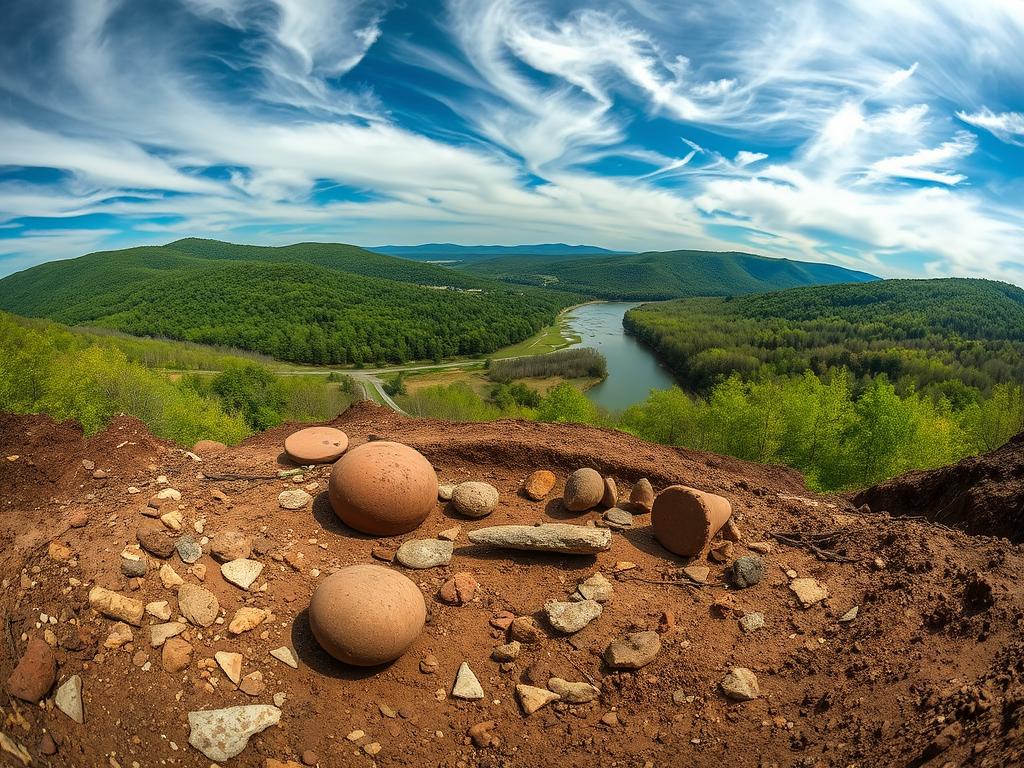
Temperatures rebounded to near-modern by 11,500 years ago, stabilizing habitability. Excavations in the Roanoke River Valley reveal repeated site use, stone tool manufacture, and charcoal suitable for radiocarbon dating.
“River terraces preserve campsites and sediment records that link local landform change to wider regional signals.”
Interval
Key effect
Human response
Pleistocene
Glacial-interglacial shifts
Mobility, corridor use
15,000–11,500 years ago
Rapid warming + Younger Dryas
Site reuse, opportunistic camps
Holocene (Greenlandian–Meghalayan)
Reduced variability, stable rivers
Denser settlement, early agriculture
Anthropocene frames how human land-use and greenhouse forcing now rival natural drivers, tightening expectations for water, flood risk, and resource planning.
Archaeology in action: Roanoke River Valley evidence for climate-landscape-people dynamics
Fieldwork along the Roanoke River reveals how river corridors guided human choices across millennia; terraces and camps tell a story of repeated occupation and strategic location selection.
Repeated occupations over millennia
River terraces preserve campsites used seasonally or yearly for roughly 5,000 years, with key occupations dated about 10,000–13,000 years ago. Stone tool flakes, hearth charcoal, and refitting debris form a robust chain of evidence that these sites were revisited as resources fluctuated.
Data and methods
Excavations by teams from NC State, the Smithsonian, and National Geographic combined radiocarbon dating of charcoal with sediment cores and particle-size analyses. This methodological triangulation lets archaeologists link human layers to episodes of terrace formation or incision.
River dynamics and risk
The pattern shows how groups optimized mobility and resource use; transported lithics indicate regional networks. Comparative work in other valleys clarifies when local river behavior drove site choice versus wider regional shifts.
Practical takeaway: Where terrace evidence shows instability, development should respect geomorphic warnings; stable surfaces merit conservation and cultural protection.
Integrating site finds and landscape signals reveals how people adjusted subsistence and settlement when conditions shifted.
Integrating evidence: Combine artifact and feature-level data with geomorphic maps and proxies (charcoal, particle-size, geochemistry) to reconstruct coupled human–environment systems over long years.
Modeling adaptation: Parameterize settlement patterns and subsistence choices using past variability. Sensitivity tests show small hydrologic or temperature changes can cascade through resource networks and occupations.
Population dynamics and decision-making: Demographic pulses align with stable landscapes; contractions follow channel migration or drought. Comparative, journal anthropological reviews synthesize convergent ways societies reorganize under stress.
Evidence type
Signal
Management cue
Site artifacts & hearths
Occupation intensity, subsistence shifts
Protect cultural sites; integrate into zoning
Geomorphology (terraces, floodplains)
Surface stability, channel migration
Map buffers; avoid high-risk development
Environmental proxies
Fire, drought, temperature trends
Trigger early-warning and scenario planning
Policy relevance: Align hazard mapping with community rights and land stewardship. Practical tools —multi-criteria analysis and early indicators—translate past knowledge into equitable land-use decisions today.
Conclusion
Deep records from oceans and rocks show repeated environmental turns that shape living systems and human choices. From Precambrian oxygenation through Phanerozoic extinctions and Quaternary ice age cycles, the long view shows that change is recurrent and often abrupt.
The rapid swings 15,000–11,500 years ago remind planners that systems can reorganize within decades; those years ago are a cautionary baseline for today’s accelerated forcing.
Archaeologists and earth scientists together link settlement, grain-size signals, and river behavior to reveal how populations use land and adapt location choices.
Policy must protect adaptive capacity: flexible land use, iterative monitoring, and cultural refugia. Cross-disciplinary groups produce better hazard maps and more equitable outcomes for communities across years to come.
Key Takeaways
Deep-time records provide a baseline for understanding long-run system behavior.
Oxygenation events and tectonics reshaped carbon and nutrient cycles.
Human decisions are recorded in artifacts that bridge environment and policy.
This Ultimate Guide frames how price signals, compliance schemes, voluntary credits, and renewables fit for U.S. decision-makers and international planners.
The landscape hit a record in 2022: revenues neared USD 100 billion and EU allowances reached €100. Yet most emissions still trade at modest levels; fewer than 5% face prices near the $50–$100/tCO2 range suggested for 2030.
Readers will get clear, practical steps on procurement choices—unbundled renewables, PPAs, and green tariffs—and guidance on integrity standards such as Core Carbon Principles and CORSIA. The piece contrasts direct instruments (tax and ETS) with hybrid standards and voluntary instruments that complement compliance systems.
Expect concise analysis of supply trends: renewables drove most credit issuance, nature-based registrations rose, and removals technology is growing under stricter quality screens. U.S.-specific notes touch on RGGI, SREC differences by state, and the federal solar ITC through 2032.
Carbon pricing at present: where markets, taxes, and credits stand now
Today’s price signals mix steady market gains with glaring coverage gaps that shape near-term decisions.
What a “price on carbon” means today for climate and energy decisions
A price on carbon is a monetary signal embedded in consumption and production choices; it nudges investment toward low-emitting assets and away from legacy polluters.
The tool works by raising the cost of emissions and making abatement economically visible. In 2022 revenues approached nearly USD 100 billion, while the EU ETS breached a symbolic €100 level — proof that robust signals can persist despite shocks.
Coverage versus price: why both matter for impact
Impact requires two levers: sufficient price levels to change marginal decisions, and broad coverage so a large share of emissions respond.
About 23% of global emissions were under ETS or levy systems by April 2023.
Fewer than 5% of ghg emissions faced direct prices in the $50–$100/tCO2 band, so many sectors remain exposed.
Markets and credits (compliance vs voluntary) both influence cost curves; only direct pricing enforces statutory abatement. Corporates should set internal price signals, align procurement, and rely on quality offsets to bridge near-term gaps. Solid data tracking is essential to forecast exposure and hedge procurement risks.
The pillars of pricing: carbon taxes, ETS, and hybrid systems
The policy toolkit breaks into three practical choices: a per‑unit levy, a capped allowance market, and hybrids that mix benchmarks with trading. Each design shapes incentives and risk differently for firms and regulators.
Carbon tax fundamentals and current ranges in practice
A tax sets a transparent per‑ton price on emissions (or fuel). It is easy to administer and makes revenue predictable; governments can return funds as dividends or cut other levies.
Examples include Singapore’s planned rise to about USD 38–60 from 2026 and Canada’s pathway toward roughly USD 127 by 2030. Higher‑income jurisdictions often reach prices above $50 per tonne; middle‑income ones pilot lower levels while building measurement systems.
Emissions Trading Systems: caps, allowances, and trading
ETS create a cap on total emissions; regulators issue allowances (EUAs, UKAs, NZUs, KAU) that firms buy, sell, or bank. The cap delivers quantity certainty while markets reveal marginal abatement costs.
Hybrid models: OBPS, EPS, and regional cap-and-trade like RGGI
Hybrids try to shield trade‑exposed sectors. Output‑based performance standards (OBPS) and emissions performance standards (EPS) set benchmarks instead of pure per‑unit charges.
RGGI auctions allowances and directs proceeds to regional programs.
Hybrids reduce leakage but add design complexity and reliance on strong MRV for compliance.
Global price signals and coverage by region, based on World Bank 2023
Regional price bands reveal as much about institutional capacity as they do about political will. As of April 2023, 73 instruments covered roughly 23% of emissions worldwide. Yet less than 5% of ghg emissions faced a high‑level signal in the $50–$100/tCO2 range.
High-income versus middle-income bands
High‑income jurisdictions often cluster above $50 per ton; the european union’s ETS even hit €100, reinforcing strong market responses and revenue recycling.
Middle‑income systems mostly price under $10. Exceptions—Beijing and Guangdong pilots, Mexico’s subnational measures, and Latvia’s tax—show how pilots build MRV and administrative muscle.
Why coverage matters as much as price
A high signal on a sliver of emissions is not the same as modest signals applied broadly. A $75/t signal on 5% of emissions underperforms a $25/t signal covering half the economy when the goal is near‑term structural change.
Constraints: fossil fuel subsidies and energy volatility can blunt signals.
Capacity: MRV and admin readiness are gating factors for expansion.
Implication: closing the
Revenues from carbon pricing: record highs and how funds are used
Governments saw nearly USD 100 billion arrive from emissions-related instruments in 2022, shifting the budget conversation.
Most of that cash came from traded allowances rather than direct levies. About 69% of receipts were generated by ETS mechanisms, while roughly 31% came from tax-based schemes. The EU’s system alone produced about $42 billion in 2022 — nearly seven times its 2017 level — as auctioning replaced free allocation.
How countries recycle proceeds
Use of funds varies but trends are clear: roughly 46% of revenue is earmarked for targeted programs, 29% flows to general budgets, 10% serves as direct transfers (social cushioning), and 9% offsets other taxes.
Revenue Source
Share (2022)
Main Uses
ETS (auctioning)
69%
Clean energy, innovation, adaptation
Tax-based levies
31%
Budget support, rebates, targeted transfers
EU auctioning
$42B
Market tightening, transition aid, R&D
Policy implications
Predictable recycling improves public support and compliance. In the U.S., RGGI shows how reinvestment in efficiency and community programs builds durability.
Yet revenues remain price‑sensitive: allowance downturns or tax adjustments can cut fiscal inflows and weaken program credibility. Sound data tracking and transparent use of proceeds help stabilize expectations for investors and households alike.
Compliance markets around the world: EU ETS, China ETS, UK, K-ETS, NZ, Australia
Compliance markets now form the backbone of many national climate strategies; each system creates unique signals for firms and regulators.
EU ETS and UK ETS: alignment, divergence, and EUA pricing dynamics
The european union’s ETS remains the largest by value and a global price benchmark. Its auction cadence and market design drive allowance liquidity and long-term expectations.
The UK launched an independent ETS in 2021. Designs share DNA, but governance differences have produced divergent EUA and UKA prices paths and trading patterns.
China’s power-sector ETS and expected sectoral expansion
China’s system started in 2021 and covers roughly 40% of national emissions through the power sector. Authorities plan phased expansion to steel, cement, and other heavy industries.
That expansion will reshape regional supply-demand dynamics and create larger cross-border hedging needs for firms exposed to Asian markets.
K-ETS, NZ ETS, and Australia’s ACCUs: coverage and policy evolution
South Korea’s K-ETS (2015) now covers about 75% of S1+S2 emissions and is in a liquidity-building phase.
New Zealand’s scheme covers more than half the national total; agricultural treatment remains an open policy frontier under review.
Australia relies on ACCUs as domestic offset-like units, with a cost-containment cap rising to AUD $75/tonne (CPI+2). These rules influence corporate hedging, procurement timing, and exposure across both allowances and offsets.
Voluntary carbon market and standardized contracts
A new set of futures—segmented by supply type and verification—lets buyers hedge quality risk ahead of delivery.
N-GEO: nature-based baskets
N-GEO packs verified AFOLU credits (Verra) into a tradable instrument. It aggregates forest and land‑use supply to smooth price swings and capture co‑benefits; buyers get bundled nature exposure with predictable forward quantities.
GEO: CORSIA-aligned aviation units
GEO mirrors ICAO CORSIA rules and draws from Verra, ACR, and CAR. That alignment tightens eligibility and raises baselines for aviation-grade integrity; it helps airlines meet offsets for international emissions while improving market trust.
C-GEO and Core Carbon Principles
C-GEO focuses on tech-based, non-AFOLU units that meet the Integrity Council’s CCPs. The CCPs set a quality floor—MRV rigor, permanence, governance—and narrow seller pools; the result is clearer pricing for high-integrity credits.
Contract
Supply Type
Key Benefit
N-GEO
Nature-based (Verra)
Co-benefits; cheaper forward supply
GEO
CORSIA-eligible (Verra/ACR/CAR)
Aviation-grade acceptance; tighter eligibility
C-GEO
Tech removals (CCP-aligned)
Higher integrity; lower permanence risk
Practical advice: blend N-GEO, GEO, and C-GEO to balance cost, quality, and forward certainty; use futures for trading and hedging. Note that some compliance regimes may recognize limited voluntary units under strict rules.
Projects and supply: renewable energy, nature-based solutions, and REDD+
Patterns of supply now show dominant renewable energy output alongside a surging nature-based pipeline.
Renewable energy projects accounted for roughly 55% of issued units in 2022 and about 52% of retirements; wind and solar led issuance while falling technology costs reduced additionality concerns for large installations.
That decline in cost suggests issuance from new renewable energy schemes may taper as grid parity widens; buyers should expect shifting supply mixes over multi-year horizons.
Nature-based supply and REDD+
Nature-based solutions made up about 54% of new registrations in 2022, driven by biodiversity and livelihoods co-benefits; avoided deforestation (REDD+) and improved forest management remain core AFOLU sources.
REDD+ design focuses on avoided loss, leakage controls, and permanence buffers to manage long-term risk.
Latin America—Brazil, Colombia, Chile—updated forestry rules in 2023, expanding pipelines and governance.
Risks persist: baseline integrity, permanence, and social safeguards determine investability and unit performance over time.
Buyer advice: match geography and methodology to claimed outcomes (avoided emissions vs removals); prefer blended portfolios and multi-year contracts to hedge supply and quality risk.
Renewable Energy Credits (RECs) and SRECs: how they work and how to buy
Renewable energy certificates certify one megawatt-hour of clean generation; they capture the attribute of green power, not the physical electron. Think of a serial-numbered proof of production.
The issuance process includes a unique registry serial, a generation timestamp, and a formal retirement step to prevent double counting. These tracked credits let buyers claim renewable energy use while grids mix electrons.
Procurement pathways
Unbundled certificates deliver speed and flexibility; they are lowest-friction for offsetting consumption.
PPAs provide additionality and long-term price certainty for a larger renewable energy project.
Utility green tariffs and green pricing are simple on-ramps for organizations that prefer a managed offering.
On-site self-generation produces SRECs or surplus certificates that can offset local loads or be sold into the market.
Prices and policy basics
SRECs—solar-specific certificates—vary widely by state, often ranging from about $10 to $400; some wind certificates trade as low as $1–$8. The U.S. federal solar investment tax credit (ITC) is 30% for systems installed through 2032, which affects payback and overall cost.
Practical buyer advice
Match vintage and geography to program rules and distribute purchases across sites for proportional coverage. For compliance users, ensure certificate attributes meet local requirements and that retirement is verifiable to avoid claims that conflict with emissions accounting.
RECs vs carbon credits: different instruments, different impacts
RECs and carbon credits play distinct roles in corporate climate strategy. One documents renewable electricity attributes in kWh; the other represents a tonne of avoided or removed CO2e.
Offsetting electricity (kWh) versus GHG mitigation (tCO2e)
Market-based Scope 2 accounting recognizes renewable energy certificates for electricity use. That helps firms claim green energy consumption without changing grid flows.
By contrast, a carbon credit quantifies a reduction or removal of carbon emissions. Those units address Scope 1 or Scope 3 exposures where allowed.
Accounting: use market-based certificates for electricity; apply high-quality offsets for residual emissions.
Integrity: disclose boundaries, vintage, and methodology to avoid double claims.
Combine efficiency, on-site renewable energy, and then select verified credits for remaining emissions. Over-reliance on unbundled certificates can look cosmetic and risk reputation. A balanced portfolio gives both energy claims and real emissions results.
ESC and performance-based approaches: EPS, OBPS, and sector benchmarks
Where full economy-wide charges stall, performance approaches offer a pragmatic path for hard-to-abate industries. Canada’s OBPS taxes emissions above output-based benchmarks; the UK operates an EPS model; several U.S. states use similar standards.
How they work: intensity targets tie allowable pollution to production output. Facilities that beat the benchmark can earn tradable compliance units; those that lag must pay or purchase units to meet obligations.
Policy position: hybrids fill gaps where full caps or levies face political or administrative hurdles; they also reduce leakage risk for trade-exposed firms. Benchmarks often sit alongside an ets or free allocation, shaping who gets credits and who pays.
Design note: benchmarks reward intensity improvements rather than absolute cuts.
Market interaction: over-performance creates supply of compliance units that trade in secondary markets.
Industry advice: audit baselines, plan capital upgrades, and register performance early to monetize gains where allowed.
For companies, the practical step is simple: measure ghg and output carefully, test upgrades against benchmarks, and treat these systems as another compliance channel in carbon risk planning.
Carbon storage and removals in markets: from nature to tech
Not all removals are created equal; the market is learning to pay a premium for permanence. Nature-based options (afforestation, reforestation, improved forest management) supply broad volumes, while engineered solutions (DACCS, mineralization) deliver durability at higher cost.
Nature-based versus tech-based crediting
Removals remove CO2 from the atmosphere; avoided emissions prevent further releases. Markets now price that difference—true removals command higher rates because they reduce legacy concentration.
Permanence and risk differ sharply. Tech-based removals tend to offer stronger durability; nature-based supply needs buffers, monitoring, and active stewardship to manage reversal risk.
Procurement tip: match a carbon offset type to your claim—removal vs reduction—and budget limits.
Standards matter: CCPs and CORSIA-style rules push clearer disclosure and better MRV.
Buyers should blend units: use nature for volume and tech removals to meet permanence needs and reputation goals.
Measuring your carbon footprint and using credits/RECs credibly
Accurate measurement and clear rules turn good intentions into credible climate claims. Start by defining boundaries for Scope 1, Scope 2 (location vs market-based), and Scope 3 so inventories reflect actual operational exposure.
Scopes, market-based accounting, and avoiding double counting
Market-based Scope 2 accounting recognizes renewable certificates; standardized registries use serial numbers and retirements to prevent duplicate claims. Voluntary retirement reached roughly 196 million units in 2022, showing market maturation.
Document contracts, attestations, and registry retirements clearly; auditors expect traceable records. This practice reduces reputational risk and improves compliance readiness.
Integrating efficiency, renewables, and high-quality offsets
Follow a hierarchy: improve efficiency first, then buy renewables through PPAs or on-site systems (the U.S. solar ITC offers a 30% incentive through 2032), and use high-quality credits only for truly residual emissions.
Practical tip: set an internal carbon price to steer capital and align procurement with expected external signals. Transparent reporting, registry exclusivity, and strong data governance keep claims defensible.
Global Carbon: pricing, taxes, crediting, projects, footprint, REC, ESC, storage
This section ties price signals, coverage regimes, and procurement tools into a compact playbook for decision-makers. It links major program examples—EU ETS at the €100 milestone, the UK ETS after Brexit, China’s power-sector ETS (~40% coverage), K-ETS (~75% of S1+S2), New Zealand’s economy-wide scheme, and Australia’s ACCUs cap (AUD 75, CPI+2)—to practical buying choices.
Key connections to remember:
Compliance and voluntary domains interact; standards like CORSIA and CCPs raise the quality floor for credits.
Procurement playbook: unbundled certificates, SRECs/on-site solar, long-term PPAs, green tariffs, and verified offsets or removals.
VCM instruments (N-GEO, GEO, C-GEO) provide nature, aviation, and tech pathways for forward coverage.
Practical note: U.S. buyers should watch EU, UK, and China price signals as strategic indicators. A blended approach—using renewables for immediate claims and high-integrity credits for residual co2—keeps plans defensible and aligned with evolving market dynamics.
What U.S. buyers should know now: RGGI pathways, PPAs, and procurement strategy
For U.S. procurement teams, the key decision is balancing speed, certainty, and reputation when buying renewable energy and complementary credits. This choice affects exposure to allowance costs, wholesale prices, and compliance risk.
Choosing between unbundled certificates, on-site solar, and long-term PPAs
Unbundled certificates are fast and flexible; they suit near-term claims and short windows (21 months for some programs). On-site solar gives operational value and pairs with the 30% federal solar tax credit through 2032.
Long-term PPAs (10–20 years) add additionality and hedge against volatile wholesale prices; they also help finance large energy projects.
Option
Speed
Additionality / Hedge
Typical Tenor
Unbundled certificates
Fast
Low additionality
Short (0–3 yrs)
On-site solar
Medium
Operational value; ITC benefit
Asset life (20+ yrs)
Long-term PPA
Slow
High; price hedge
10–20 yrs
Applying CORSIA-grade and nature-based credits in U.S. portfolios
Use GEO (CORSIA-grade) and N-GEO/C-GEO blends to cover residual emissions. Carbon credits that meet CCP standards improve quality signals and reduce reputational risk.
Note RGGI auctions can push allowance costs into retail rates; buyers should model that exposure and consider incentive programs, SREC variability by state, and PPA tenor when planning trade-offs.
Outlook to 2030: scaling prices, coverage, and integrity
Expect stronger financial nudges over the next decade as regulators tighten limits and extend coverage into new sectors.
World Bank scenarios point to a $50–$100/tCO2 band by 2030 to align with temperature goals. Today, fewer than 5% of global emissions face that signal; roughly 73 instruments cover about 23% of emissions.
That gap means policy design will determine whether prices actually climb or merely ping regional markets. Key levers include tighter caps, reduced free allocation, escalator fees, and sector expansion into heavy industry and transport.
Implications for markets and supply
Expect three shifts: wider systems coverage, higher per‑ton values, and stronger integrity rules. The EU ETS milestones show how rapid tightening can lift market signals.
Coverage: more jurisdictions will add or link trading systems and hybrid benchmarks.
Integrity: CCPs and CORSIA-style norms will raise baselines, permanence, and transparency.
Supply: AFOLU pipelines will mature while tech removals win a price premium for durability.
For U.S. buyers the practical steps are clear: set an internal price, lock long-term PPAs where possible, and pre-position for higher-quality offset supply to manage exposure and reputational risk.
Conclusion
Totalconclusionof carbon and climate context
Policy signals, rising receipts, and stronger standards have nudged the market toward maturity; 2022 revenues neared USD 100 billion while voluntary retirements reached roughly 196 million units.
Coverage remains uneven: about 73 instruments now touch ~23% of global emissions, and fewer than 5% of emissions face the $50–$100 per‑ton band. Nature-based registrations supplied roughly 54% of new supply in recent years.
The practical playbook is unchanged: cut energy use first; deploy renewables and long-term contracts; then buy high-quality credits for residual emissions. Internal pricing, clear governance, and transparent claims will matter as signals tighten.
Integrity and scale must advance together; only that tandem will deliver durable change across the world in the coming years.
Key Takeaways
2022 revenues reached record levels while price exposure remains uneven across regions.
Direct pricing (tax/ETS), performance standards, and voluntary credits play different roles.
Renewable credits dominate supply; nature-based and tech removals are expanding.
U.S. options include RGGI pathways, SREC variability, and the 30% solar ITC.
Only a small share of emissions face near-$50–$100 prices today; scale and integrity are urgent for 2030.
The period between August 18th and 24th is filled with important events for Sustainable Development. On August 19th, World Humanitarian Day celebrates the vital work of humanitarian workers. They risk their lives to help others in need.
Another important day is the International Day for the Remembrance of the Slave Trade and its Abolition on August 23rd. It reminds us of past injustices and the ongoing battle against slavery today.
World Water Week runs from August 23rd to September 1st. It focuses on the need for sustainable water management and access to clean water. This is a key part of achieving sustainable development.
The Importance of August Observances in Advancing Sustainable Development
August is packed with global awareness days and cultural celebrations. These events are key for pushing forward sustainable development. They help bring attention to important issues like environmental protection and social justice.
How Global Awareness Days Drive Policy and Action
Global awareness days are crucial for shaping policies and inspiring action. They focus on big challenges like climate change and human rights. For example, the International Day of Indigenous Peoples raises awareness about indigenous rights and struggles. This encourages governments and organizations to create more inclusive policies.
The Role of Cultural Celebrations in Promoting Sustainability
Cultural celebrations also play a big role in promoting sustainability. Events like Indonesia Constitution Day on August 18th celebrate national heritage. They also highlight the role of good governance in achieving sustainable goals. These celebrations blend cultural values with sustainability goals, leading to a more complete approach to development.
In summary, August’s observances are more than just symbols. They are drivers of change. By using these global awareness days and cultural celebrations, we can make real progress towards a sustainable future.
Aug18th to24th Global Observances and Holidays within Sustainable Development
Between August 18th and 24th, the world comes together for several key events. These events are important for moving forward on sustainable development goals. This time is filled with global observances and holidays that bring attention to important issues and encourage international cooperation.
Week-at-a-Glance: Key Events and Their Significance
The week is filled with important events. World Humanitarian Day on August 19th highlights the need for humanitarian work and the challenges faced by aid workers. Also, International Day for the Remembrance of the Slave Trade and its Abolition on August 23rd reminds us of the slave trade’s history and its lasting effects.
August 18th:Indonesia Constitution Day – focusing on governance for sustainability.
August 19th:World Humanitarian Day – focusing on humanitarian challenges and resilience.
August 23rd:International Day for the Remembrance of the Slave Trade and its Abolition – reflecting on historical injustices and modern slavery.
August 24th:Ukraine Independence Day – celebrating resilience and sustainability efforts.
Historical Context and Evolution of Late August Observances
These observances have changed over time, showing shifts in global priorities and challenges. For example, World Humanitarian Day now focuses on keeping humanitarian workers safe. The International Day for the Remembrance of the Slave Trade and its Abolition also educates us about the slave trade’s past and its effects today.
The importance of these events is in how they can change public opinion, shape policies, and push for sustainable development. By knowing their history and how they’ve changed, we can see why they’re still important today.
World Humanitarian Day (August19): Supporting Human Dignity
On August 19, the world comes together to honor World Humanitarian Day. This day celebrates the brave and compassionate people who risk everything to help others. It also shines a light on the big challenges they face in dangerous places.
Origins and Purpose
World Humanitarian Day was started by the United Nations in 2008. It remembers the UN bombing in Baghdad on August 19, 2003. This bombing killed 22 people, including Sergio Vieira de Mello, the UN’s Special Representative to Iraq.
The day is to get people all over the world to support humanitarian causes. It’s also to thank humanitarian workers who risk their lives to help others.
2023 Themes and Global Activities
The theme for World Humanitarian Day 2023 is “#ItTakesAVillage.” It shows how important it is for everyone to work together to help those in need. There will be many activities around the world, like campaigns, fundraising, and community programs.
Humanitarian Work’s Connection to Sustainable Development Goals
Humanitarian work is closely tied to the Sustainable Development Goals (SDGs). It helps achieve goals like reducing poverty, improving health and education, and fighting for gender equality. Humanitarian aid lays the groundwork for lasting development, especially in areas hit by conflict or disaster.
SDG
Humanitarian Contribution
SDG 1: No Poverty
Emergency relief and support for economic recovery
SDG 3: Good Health and Well-being
Provision of medical aid and health services
SDG 4: Quality Education
Support for educational infrastructure and resources
By supporting humanitarian work, we’re not just saving lives in the moment. We’re also investing in a better future for everyone.
International Day for the Remembrance of the Slave Trade and its Abolition (August23)
This day, on August 23rd, reminds us of the slave trade’s dark history. It also looks at its lasting impact today. It’s a day to remember the past, understand today, and dream of a slavery-free future.
Historical Significance and UNESCO’s Role
UNESCO created this day to honor those who suffered in the slave trade. It’s a time to reflect on slavery’s past and present effects. UNESCO works hard to spread awareness through education and culture.
Modern Slavery Issues and Sustainable Development
Even though the slave trade ended, slavery still exists today. It affects millions of people. This day emphasizes the need to fight modern slavery as part of the Sustainable Development Goals.
Aspect
Historical Context
Modern Relevance
Slave Trade
Transatlantic slave trade
Modern slavery and human trafficking
UNESCO’s Role
Preservation of historical memory
Educational initiatives and cultural programs
Global Commemoration
Remembrance events
Awareness campaigns and advocacy
Global Commemoration Activities and Educational Initiatives
There are many ways to honor this day. Events include ceremonies, cultural shows, and learning programs. These activities remember the past and talk about slavery today.
The third week of August is filled with important days for the environment. These days focus on saving our planet, from protecting biodiversity to making food systems sustainable. They remind us all how crucial it is to work together to save our planet.
International Orangutan Day: Biodiversity Protection
August 19 is International Orangutan Day. It shines a light on orangutans and why we must save their homes. Orangutans are not just cute animals; they are key to keeping their ecosystems healthy. Saving their forests also helps with carbon sequestration and supports many species.
World Mosquito Day: Public Health and Climate Change
World Mosquito Day is on August 20. It focuses on how mosquitoes affect our health. Diseases like malaria and dengue fever are big problems, especially in warm places. Climate change is making mosquitoes spread diseases more, which is a big concern for health and the environment.
World Plant Milk Day: Sustainable Food Systems
August 22 is World Plant Milk Day. It celebrates the good things about plant-based milk. Making plant milk uses less water and land than dairy milk. This day encourages us to think about the environmental impact of what we eat and supports eating in a way that’s better for our planet.
These important days in late August show us how connected saving biodiversity, keeping people healthy, and eating sustainably are. By learning more and taking action, we can help make a better future for everyone.
World Water Week (Beginning August24): Addressing Global Water Challenges
The world will gather in Stockholm for World Water Week starting August 24. This event is crucial for tackling global water challenges. Experts, policymakers, and stakeholders will come together to discuss water security and sustainable development.
Key Themes and Focus Areas for2023
The 2023 World Water Week will focus on several key themes. These include water security, sustainable water management, and climate change’s impact on water resources. Sessions, workshops, and presentations will explore these topics, offering insights into current challenges and solutions.
Water Security and Sustainable Development
Water security is closely tied to sustainable development. Access to clean water and sanitation is key for achieving the United Nations’ Sustainable Development Goals (SDGs), especially SDG 6. The week will emphasize the need to integrate water security into development plans.
Theme
Focus Area
Relevance to SDGs
Water Security
Access to clean water and sanitation
SDG 6: Clean Water and Sanitation
Sustainable Water Management
Efficient use of water resources
SDG 12: Responsible Consumption and Production
Climate Change Impact
Mitigating the effects of climate change on water
SDG 13: Climate Action
Participation Opportunities for Organizations and Individuals
World Water Week offers many ways for organizations and individuals to get involved. You can attend sessions, present research, or join side events. It’s a chance to network, collaborate, and work towards a water-secure future.
Social Justice and Peace Observances
August is a key month for global awareness. It has several observances from the 18th to the 24th. These focus on social justice and peace efforts. They remind us of the ongoing challenges and the work towards a just and peaceful world.
International Day Commemorating Victims of Religious Violence
The International Day Commemorating Victims of Religious Violence is on August 22. It calls for fighting religious intolerance and violence. This day stresses the need for tolerance, understanding, and respect for all religions.
European Day of Remembrance for Victims of Stalinism and Nazism
On August 23, Europe remembers the victims of Stalinism and Nazism. It reflects on the horrors these regimes caused. This day is about keeping history alive to stop future human rights abuses.
Be An Angel Day
Be An Angel Day is also on August 22. It urges people to do kind acts and show compassion. It shows that small actions can help make society more peaceful and just.
These observances are important for raising awareness and inspiring action. Key efforts include:
Educational programs to promote tolerance and understanding
Community service projects that foster compassion and empathy
Advocacy campaigns to address systemic injustices and human rights violations
By joining these observances, we can help a bigger movement towards justice and peace. Reflecting on these days, we see the strength of working together for a fairer world.
National Independence and Cultural Celebrations
Between August 18th and 24th, many countries celebrate their freedom. These events show how freedom and sustainable living are linked. They also celebrate cultural traditions and the strength needed to reach sustainable goals.
Ukraine Independence Day (August24): Resilience and Sustainability
Ukraine celebrates its freedom from the Soviet Union on August 24th. This day is important for Ukrainians and the world. It shows Ukraine’s strength in tough times and its push for a better future.
Afghanistan Independence Day (August19): Development Challenges
Afghanistan marks its freedom from Britain on August 19th. This day reminds us of Afghanistan’s big challenges. The world must help Afghanistan overcome these to achieve a better future.
Indonesia Constitution Day (August18): Governance for Sustainability
Indonesia celebrates its constitution on August 18th. This day shows how good leadership is key to a sustainable future. Indonesia’s story teaches us about the role of effective governance in national progress.
The following table summarizes key aspects of these national independence and cultural celebrations:
Country
Celebration Date
Significance
Ukraine
August 24
Resilience and sustainability in the face of geopolitical challenges
Afghanistan
August 19
Complex development challenges and the need for international support
Indonesia
August 18
Importance of good governance for sustainable development
In conclusion, these celebrations show different ways countries work towards a sustainable future. By learning about each country’s journey, we can all support their efforts towards a better world.
Media and Communication Observances: Spreading Awareness
Media and communication observances help us understand global challenges. In August, we see many important observances. They show how media, communication, and transportation are key to reaching sustainable development goals.
World Photo Day (August 19): Documenting Environmental Change
World Photo Day is on August 19. It celebrates photography and its role in highlighting important issues. Photos can show how human actions affect the planet, encouraging us to take action.
National Radio Day (August 20): Communication for Development
National Radio Day is on August 20. It emphasizes radio’s role in communication and development. Radio is crucial for reaching people in remote areas, offering information, education, and fun.
National Aviation Day (August 19): Sustainable Transportation
National Aviation Day is also on August 19. It looks at aviation’s role in transportation and its green potential. The industry is exploring eco-friendly options like sustainable fuels and better aircraft designs.
Observance
Date
Focus Area
World Photo Day
August 19
Documenting Environmental Change
National Radio Day
August 20
Communication for Development
National Aviation Day
August 19
Sustainable Transportation
These observances do more than just raise awareness. They motivate us to work towards a greener future. By using media, communication, and transportation wisely, we can achieve sustainable development goals.
How These Observances Align with UN Sustainable Development Goals
The SDGs help us see why late August’s global events are important. From August 18th to 24th, many observances match up with SDGs. This shows a wide-ranging effort towards sustainable development.
Many of these events support Social Development Goals (SDGs 1-6). For example, World Humanitarian Day on August 19th fits with SDG 1 (No Poverty) and SDG 3 (Good Health and Well-being). It shows how humanitarian work helps reduce poverty and improve health worldwide.
Social Development Goals (SDGs 1-6)
SDG 1: No Poverty – Supported through humanitarian efforts highlighted on World Humanitarian Day.
SDG 3: Good Health and Well-being – Advanced through public health observances like World Mosquito Day on August 20th.
SDG 4: Quality Education – Promoted through educational initiatives on International Day for the Remembrance of the Slave Trade and its Abolition on August 23rd.
Days like International Orangutan Day on August 19th and World Plant Milk Day on August 22nd focus on the environment. They stress the need to protect biodiversity and promote sustainable food systems. These efforts align with SDGs 12 (Responsible Consumption and Production) and 15 (Life on Land).
Economic and Institutional Goals (SDGs 8-10, 16-17)
Events like Ukraine Independence Day on August 24th and Afghanistan Independence Day on August 19th highlight SDG 16 (Peace, Justice, and Strong Institutions). They celebrate national sovereignty and strong institutions. World Water Week, starting on August 24th, also focuses on SDG 6 (Clean Water and Sanitation) and SDG 8 (Decent Work and Economic Growth). It emphasizes water security and sustainable management.
Looking at these events through the SDG lens helps us see their combined effect. It shows how they work together to create a more sustainable and fair world.
Practical Ways to Participate in August Sustainable Development Observances
August is filled with sustainable development observances. The world needs our help to make a difference. We can all take part in activities that support these causes.
Educational Activities and Learning Resources
Learning about sustainable development goals is key. Organizations can create workshops, webinars, and online courses. For example, World Humanitarian Day on August 19 can be celebrated with educational programs.
Here are some educational ideas:
Developing curriculum materials for schools
Hosting expert-led webinars on sustainable development topics
Creating online courses on platforms like Coursera or edX
Community Engagement and Local Action
Getting involved in your community is important. You can help with events, clean-up campaigns, and awareness drives. For instance, World Water Week starting on August 24 can be marked with water conservation efforts.
Observance
Community Engagement Idea
World Humanitarian Day (Aug 19)
Organize a charity run or fundraising event
International Day for the Remembrance of the Slave Trade and its Abolition (Aug 23)
Host a historical exhibition or cultural event
World Water Week (Starting Aug 24)
Conduct water conservation workshops
Digital Campaigns and Global Advocacy
Digital campaigns can spread the word about sustainable development. Social media is a great tool for this. For example, a campaign for World Photo Day on August 19 can ask people to share environmental photos.
By using these strategies, we can all help make a difference in August. Together, we can work towards a more sustainable future.
Conclusion: Leveraging Global Observances for a More Sustainable Future
As we face the challenges of global sustainability, using global observances is key. From August 18th to 24th, important events showed us the need for working together. They highlighted the importance of a sustainable future.
These events, like World Humanitarian Day and International Day for the Remembrance of the Slave Trade, show how social justice, environmental care, and economic growth are linked. By joining in, we can help make the world more just and green.
To build a sustainable future, we must keep spreading awareness and pushing for policy changes. This way, we can grow a culture of sustainability in every part of society. It’s about changing our communities and the world’s governance.
Let’s use global observances to make real changes and impact sustainable development. Together, we can make a better, more resilient future for everyone.
Key Takeaways
World Humanitarian Day on August 19th honors humanitarian workers.
The International Day for the Remembrance of the Slave Trade and its Abolition is observed on August 23rd.
World Water Week starts on August 23rd, focusing on sustainable water management.
These events are crucial for raising awareness about sustainable development issues.
They promote global cooperation and action towards achieving sustainable development goals.
The week of August 9th to the 16th saw major global events. These events showed how sustainability in international affairs is key. Many international observances focused on important sustainability issues that affect the world.
During this time, the world came together to tackle big problems. They showed how sustainable practices can be part of international policies. This showed the need for everyone to work together to solve global challenges.
Looking back, it’s clear that global perspectives on sustainability are vital. The talks and results from this week give us important lessons. They help us understand the challenges of achieving sustainability worldwide.
Global Sustainability Landscape in2023
The year 2023 is a key moment for global sustainability. International cooperation is more crucial than ever. The world faces challenges like climate change, environmental damage, and social inequality. We need to work together more than ever.
Current State of International Sustainability Efforts
International efforts have made big strides, like adopting the United Nations’ Sustainable Development Goals (SDGs). These goals help countries aim for a sustainable future. They tackle poverty, inequality, and climate change. Yet, we still need better international cooperation to tackle these global issues.
The role of sustainable development in national policies is growing. Countries are adding sustainability to their economic plans. They see the long-term benefits of protecting the environment and promoting social equity.
Critical Challenges Facing Global Environmental Governance
Despite progress, global environmental governance has big challenges. A major issue is the lack of strong environmental policies worldwide. The current system is often broken, with many agreements and groups focusing on different environmental issues.
Inadequate enforcement mechanisms for environmental regulations
Limited financial resources for sustainability initiatives
The need for greater international cooperation to address global environmental issues
Overcoming these challenges will take a united effort from governments, international groups, and civil society. Together, we can overcome these hurdles and build a sustainable future.
August 9 to August 16 Reflect Review Retrospect Sustainability International Affairs
The week from August 9th to 16th was key for looking at global sustainability. It showed many important events and plans that show how vital sustainability is in world affairs.
Week’s Significance in the Global Sustainability Calendar
The week of August 9-16 was big in the global sustainability calendar. It included days like the International Day of the World’s Indigenous Peoples and World Elephant Day. These days brought up big sustainability topics, like rights for indigenous people and saving wildlife.
The International Day of the World’s Indigenous Peoples on August 9 showed how important indigenous groups are for the environment. World Elephant Day on August 12 stressed the need to keep working to save endangered animals.
Major Sustainability Developments and Diplomatic Initiatives
During this week, big sustainability news and diplomatic plans were in the spotlight. Working together on environmental issues was a big theme. Many countries showed they are serious about sustainable growth.
Initiative
Description
Impact
Indigenous Peoples’ Day
Recognized indigenous communities’ contributions to sustainability
Raised awareness about indigenous rights
World Elephant Day
Focused on elephant conservation
Highlighted the need for anti-poaching efforts
International Biodiesel Day
Promoted the use of biodiesel as a renewable energy source
Encouraged sustainable energy policies
These efforts show the ongoing work to tackle global sustainability problems. They do this through teamwork and new ideas.
Indigenous Perspectives on Sustainability
As we face sustainability challenges, indigenous views are key. They show us how to care for the environment. Their traditional knowledge helps us find new ways to live sustainably.
International Day of The World’s Indigenous People
The International Day of the World’s Indigenous Peoples is on August 9. It’s a time to think about how indigenous peoples help us achieve sustainability. This day celebrates their role in keeping our planet healthy and diverse.
It also reminds us to respect and support their rights and knowledge.
Suriname Indigenous People’s Day Celebrations
In Suriname, Indigenous People’s Day is a big deal. It shows the community’s work in keeping their culture and traditions alive. These celebrations teach us about the value of indigenous knowledge in protecting our planet.
They also give indigenous communities a chance to share their stories and struggles.
Indigenous Knowledge Systems and Environmental Stewardship
Indigenous knowledge is essential for taking care of our planet. It’s based on centuries of living in harmony with nature. By combining this knowledge with today’s sustainability efforts, we can do better for our environment.
Environmental Commemorations and Their Global Impact
The week of August 9-16 is filled with important environmental events. These events show how crucial global sustainability efforts are. They raise awareness and push for a sustainable future.
World Elephant Day (August 12): Conservation Diplomacy
World Elephant Day on August 12 brings attention to elephants facing poaching and habitat loss. It’s vital to protect them through international efforts and protected areas. Conservation diplomacy helps protect endangered species through global agreements.
International Biodiesel Day (August 10): Renewable Energy Policies
International Biodiesel Day on August 10 celebrates biodiesel’s role in renewable energy. Good policies are key to using more biodiesel and less fossil fuel. Governments and groups can help by supporting policies that encourage biodiesel.
Renewable Energy Source
Benefits
Challenges
Biodiesel
Reduces greenhouse gas emissions; supports agricultural economies
Land use competition; high production costs
Solar Energy
Abundant resource; zero emissions during operation
Intermittent energy supply; high initial investment
Wind Energy
Low operational costs; reduces reliance on fossil fuels
Intermittency; potential environmental impacts on wildlife
World Lizard Day (August 14): Biodiversity Protection Efforts
World Lizard Day on August 14 highlights the importance of lizards and biodiversity. Protecting their habitats and fighting wildlife trafficking are key. These actions help keep ecosystems healthy and strong.
By celebrating these days, we show our dedication to solving environmental problems. Through diplomacy, renewable energy, and protecting biodiversity, we aim for a greener world.
National Celebrations with Sustainability Dimensions
National celebrations are more than just cultural pride. They show the challenges and chances for sustainable growth. Countries worldwide celebrate their independence and national days. These events often show the link between national identity, economic growth, and the environment.
India and Pakistan Independence Days: Sustainable Development Challenges
India’s Independence Day is on August 15, and Pakistan’s is on August 14. These days highlight the sustainable development hurdles these nations face. Both countries have grown economically but struggle with environmental problems like pollution and climate change.
For example, India aims to boost renewable energy but still relies on coal. Pakistan also battles to manage its water resources well.
Key sustainable development challenges for India and Pakistan include:
Reducing carbon emissions while meeting growing energy demands
Managing water resources sustainably
Protecting biodiversity and natural habitats
Singapore National Day: Urban Sustainability Model
Singapore’s National Day on August 9 celebrates its success in urban sustainability. It’s known for making cities livable and green. The city-state has projects like Gardens by the Bay and a good public transport system.
Its urban planning focuses on green spaces, waste management, and energy efficiency. This makes Singapore a leader in urban sustainability.
Some of the key features of Singapore’s urban sustainability model include:
Integration of green spaces into urban planning
Innovative water management systems
Investment in sustainable public transportation
In conclusion, national celebrations in India, Pakistan, and Singapore show the complex relationship between national identity, economic growth, and sustainability. By looking at these events, we can understand the challenges and chances for sustainable development.
Economic Sustainability in the Fourth Industrial Age
The Fourth Industrial Revolution is changing how we think about sustainability. It’s important to understand how this change affects our economy. This knowledge is key to making our economy sustainable.
MSMEs and Sustainable Community Development
Micro, Small, and Medium Enterprises (MSMEs) are crucial for sustainable communities. They create jobs and drive innovation. In the Fourth Industrial Age, MSMEs can use technology to be more sustainable.
They can use green energy, reduce waste, and improve their supply chains. This helps them and their communities thrive.
International Trade Patterns and Environmental Standards
Global trade affects our environment. As trade grows, we need better environmental rules. The Fourth Industrial Revolution is a chance to improve these standards.
More countries and companies are focusing on green trade. They’re using eco-friendly technologies and reducing waste. This helps protect our planet.
Technologies like AI, blockchain, and IoT can make our world more sustainable. They help us use resources better and reduce waste. This is good for the environment and the economy.
For example, IoT helps manage energy use. Blockchain makes supply chains more transparent. These technologies help us grow our economy in a green way.
Social Dimensions of Global Sustainability Efforts
Global efforts to be sustainable are now seeing the big role of social aspects. Success in these efforts isn’t just about the environment. It also depends on the social ties within communities.
Women’s Empowerment in Sustainability Initiatives
Women’s empowerment is key in sustainability. Empowered women can lead change in their areas. They help spread sustainable habits and care for the environment.
National Women’s Day and Gender-Responsive Climate Action
National Women’s Day shows how vital gender-responsive climate action is. Adding gender views to climate plans makes sustainability efforts fairer and more effective.
Women’s and Family Day: Sustainable Household Practices
Women’s and Family Day focuses on household actions for sustainability. Small steps like cutting down on waste and saving energy can make a big difference.
Grassroots Organizations and NGOs Driving Change
Grassroots groups and NGOs lead in sustainability efforts. They work with communities, understanding their needs. They then create specific plans to help.
Cultural Heritage Preservation as Sustainability Practice
Preserving cultural heritage is a key part of sustainability. It keeps community identity alive. It also supports sustainable tourism.
In summary, the social side of global sustainability is complex. By empowering women, supporting local groups, and saving cultural heritage, we can build a better, more sustainable world.
International Cooperation Frameworks for a Sustainable Future
Global challenges need a team effort. International cooperation is key to reaching the UN Sustainable Development Goals. As the world connects more, working together is more important than ever.
Progress Toward 2030 UN Sustainable Development Goals
The UN Sustainable Development Goals (SDGs) are a call to action for everyone. They aim to end poverty, protect our planet, and bring peace and prosperity by 2030. We’ve seen progress, like fewer people living in extreme poverty and more access to education.
But, we still face big challenges. The progress is not even across all regions and goals.
Role of International Organizations in Sustainability Governance
International organizations help a lot with sustainability. They help countries talk, set rules, and get help. The United Nations works with governments, civil society, and businesses to push the SDGs forward.
Other groups, like the World Trade Organization and the International Labour Organization, help too. They deal with trade and labor issues.
Cross-Border Initiatives Highlighted During August 9-16
From August 9-16, many cross-border projects were showcased. They showed how working together can tackle big global problems. These projects focused on fighting climate change, saving biodiversity, and supporting sustainable trade.
These efforts show why countries need to work together for a sustainable future.
Conclusion: Pathways Forward for Global Sustainability
The week of August 9-16 highlights the urgent need for global sustainability efforts. It shows how important international cooperation and commitment to sustainability are. These efforts are key to moving forward.
This week focuses on many global challenges. It includes the International Day of the World’s Indigenous People and World Elephant Day. These days remind us of the need to protect biodiversity and respect indigenous knowledge.
As we move ahead, we must keep working towards the 2030 UN Sustainable Development Goals. We need to work together, using international cooperation and cross-border initiatives. This will involve governments, NGOs, and local groups.
The future of global sustainability depends on our ability to balance different areas. We need to create a culture of sustainability and use new technologies. This will help us build a fair and green world.
Key Takeaways
Significant global events highlighted the importance of sustainability.
International observances drew attention to critical sustainability issues.
The need for unified global action on sustainability was underscored.
Global perspectives are crucial for achieving sustainability.
The week’s events provided insights into the complexities of global sustainability efforts.
Indigenous perspectives are vital for global sustainability efforts.
The International Day of the World’s Indigenous Peoples highlights indigenous contributions.
Indigenous knowledge systems offer valuable insights into environmental stewardship.
The United Nations’ ambitious blueprint for global improvement represents humanity’s most extensive policy experiment. Spanning 193 nations, this initiative tracks progress through over 200,000 data points. The latest findings reveal both breakthroughs and persistent gaps.
Authored by Jeffrey Sachs and the SDSN team, the mid-term review offers a critical snapshot before the 2030 deadline. While advancements in health and education shine, economic disparities continue to widen. The report serves as both a scorecard and a wake-up call.
This analysis blends hard metrics with deeper systemic insights. It highlights where momentum thrives—and where urgent course corrections are needed. The stakes couldn’t be higher for governments, businesses, and communities worldwide.
Introduction to the Sustainable Development Goals Report 2025
Tracking global progress requires more than spreadsheets—it demands a revolution in data diplomacy. The sustainable development report serves as both compass and catalyst, blending hard metrics with policy blueprints. Since 2015, it has morphed from a technical exercise into a rallying cry for systemic change.
Purpose and Scope of the Report
Officially launched as a UN monitoring tool, the 2025 edition zeroes in on financing mechanisms. Its dual identity shines through: 60% progress tracker, 40% activist manifesto. The agenda sustainable development now includes 249 Voluntary Local Reviews—city-level data patches that national reports often miss.
“Without radical transparency in funding, we’re just rearranging deck chairs on a sinking ship.”
Jeffrey Sachs, SDSN
Key Stakeholders and Contributors
UN DESA orchestrates this effort alongside 50+ agencies, from the World Bank to grassroots NGOs. The development solutions network (SDSN) maintains the contentious SDG Index rankings—a leaderboard that sparks equal parts pride and protest.
Data Source
Coverage
Controversies
National Reports
193 member states
Overly optimistic self-assessments
Local Reviews
249 cities/regions
Limited comparability
SDG Index
Rankings
Methodology disputes
The report’s technocratic roots clash with its bold calls for wealth redistribution. Yet this tension fuels its relevance—a rare artifact where dry data meets urgent advocacy.
Global Progress on Sustainable Development Goals
The past decade has witnessed measurable strides in global well-being, though unevenly distributed. From rural clinics to urban classrooms, advancements reveal both momentum and missed opportunities. The data paints a mosaic of hard-won victories alongside persistent blind spots.
Notable Achievements Since 2015
Over 300 million children gained access to education—a leap forward for equity. Maternal mortality rates plunged by 35%, saving countless lives. Yet these gains mask quieter crises: 1 in 9 people still face chronic hunger despite bumper crop yields.
Forty-five nations achieved universal electricity access, while 54 eradicated neglected tropical diseases. Mobile broadband emerged as an unexpected equalizer, connecting remote communities to healthcare and markets. Progress, it seems, favors the adaptable.
Success Stories in Education and Health
Sub-Saharan Africa halved its out-of-school population since 2015. Bangladesh reduced child mortality faster than any country in history. These triumphs stem from targeted investments and community-led solutions.
However, nutrition remains a silent crisis. Vitamin deficiencies affect 2 billion globally—proof that health metrics need deeper scrutiny. The report cautions against celebrating averages when disparities linger.
Expansion of Renewable Energy
Solar and wind capacity grew by 260% this decade, even during economic downturns. This paradox highlights how green energy became cost-competitive. Yet 2.4 billion still rely on polluting cooking fuels—a stark reminder of uneven progress.
Energy Milestone
Progress
Gaps
Electricity Access
45 countries reached 100%
760M remain off-grid
Renewables
30% global power mix
Fossil fuels dominate heating
Clean Cooking
1.5B gained access
2.4B still use harmful fuels
The road ahead demands sharper focus. While some countries sprint, others stumble—proof that global goals require local solutions.
Fragile and Unequal Progress: Major Challenges
Behind the glossy headlines of global advancement lies a fractured reality—one where progress towards equity remains uneven and fragile. The 2025 data exposes gaps that aggregate statistics often obscure, from hunger hotspots to climate-ravaged communities.
Persistent Poverty and Hunger
Over 800 million people still live in extreme poverty, a figure stubbornly resistant to global efforts. Debt servicing now consumes 27% of low-income countries’ budgets—diverting funds from essential services like healthcare and education.
Climate shocks erased $300 billion in development gains last decade. Droughts and floods disproportionately hit regions already struggling with food insecurity. The math is cruel: one step forward, two steps back.
Systemic Disadvantages for Marginalized Groups
Gender parity backslid in 40% of nations surveyed, with informal workers—mostly women—bearing the brunt of pandemic fallout. The SDG framework’s lack of intersectional metrics hides compounded disadvantages for ethnic underserved and rural populations.
Consider this: a girl born in a conflict zone faces 5x higher maternal mortality risks than her urban counterpart. Systemic barriers aren’t just gaps—they’re chasms.
Climate Chaos and Rising Inequalities
While renewables surge, climate disasters amplify wealth divides. Coastal megacities invest in flood defenses; island nations sink into debt. The table below captures this dissonance:
Issue
Advancements
Setbacks
Poverty Reduction
100M lifted out (2015–2025)
800M still in extreme poverty
Climate Adaptation
$100B pledged annually
Only 20% reaches vulnerable nations
Gender Equity
35% more girls in schools
Women’s unpaid labor up 18%
The verdict? Progress towards global goals is real—but so is the fragility of these gains. Without addressing root causes, even hard-won victories may unravel.
Sustainable Development Goals Report 2025: Priority Areas for Action
Six critical fronts demand immediate attention to steer global efforts toward meaningful change. The 2025 review distills a sprawling agenda into six priorities, backed by a $4 trillion annual financing call. Yet critics argue this “kitchen sink” approach risks diluting focus—can the world truly tackle hunger, digital gaps, and climate collapse simultaneously?
Food Systems and Energy Access
Agricultural subsidies remain a paradox: they exacerbate hunger while being touted as solutions. Meanwhile, 760 million lack electricity, stalling economic mobility. The report urges redirecting $700 billion in harmful subsidies toward clean energy and resilient farms.
Digital Transformation and Education
Edtech bridges classrooms where teachers are scarce—but can apps replace mentors? Low-income nations saw 300% growth in digital learning, yet 60% of students lack devices. The education revolution remains half-built, favoring urban hubs over rural villages.
Climate and Biodiversity
Carbon markets often sacrifice biodiversity for quick offsets. The data reveals a stark trade-off: 40% of reforestation projects harm native ecosystems. True climate action requires protecting both carbon sinks and endangered species.
Priority
Progress
Roadblocks
Food Security
25% drop in stunting
800M still hungry
Digital Access
1B new internet users
3B offline by cost
Climate Finance
$100B pledged yearly
Only 35% delivered
The path forward demands ruthless prioritization. As one UN advisor quipped, “We can’t fix everything—but we must fix the right things first.”
Regional Disparities in SDG Progress
Geography dictates destiny in the global race for equitable advancement. The latest metrics reveal a world where postal codes predict outcomes more reliably than policy pledges. From tech-powered leaps in Asia to energy poverty in Africa, regional contrasts define this decade’s development story.
East and South Asia: Leading the Way
State-backed digital revolutions propelled countries like Vietnam and Bangladesh up the rankings. Their secret? Pairing authoritarian efficiency with mobile-first solutions. The region added 18 points to its SDG Index—the highest jump globally.
Yet shadows linger beneath the shine. East North Africa faces water scarcity crises that tech can’t solve. Coastal cities thrive while rural areas battle rising sea levels.
Latin America and the Caribbean: Mixed Results
The Latin America Caribbean bloc presents a paradox. Democratic backsliding coincides with governance gains in health and education. Brazil’s Bolsa Família reduced poverty, yet political instability threatens progress.
Tourism-dependent islands face climate double jeopardy: hurricanes erase infrastructure while debt blocks rebuilding. Regional cooperation remains more aspiration than reality.
Sub-Saharan Africa: Struggling with Poverty
Scoring just 47/100 on the SDG Index, the continent suffers an energy paradox. Solar potential abounds, yet 600 million lack electricity. Off-grid solutions grow—but not fast enough to match population booms.
Mobile money revolutionized banking, yet 40% of countries spend more on debt than healthcare. The data screams for debt relief frameworks.
Europe and Central Asia: Top Performers with Gaps
Europe Central Asia dominates rankings—until climate metrics enter the equation. Nordic nations lead in equality but trail in consumption-based emissions. The EU’s green farming policies? Mostly paperwork, say auditors.
Central Asian states excel in education but suppress civil society. Progress here wears handcuffs.
Region
Strength
Critical Gap
Asia
Digital inclusion (+32%)
Water stress (60% of population)
Latin America
Poverty reduction (-18%)
Political instability (75% of nations)
Africa
Mobile banking (48% adoption)
Energy access (47% deficit)
Europe
Gender equality (89/100)
Resource footprint (4.5x sustainable)
The takeaway? No region has a monopoly on solutions—or problems. The 2025 snapshot proves local context trumps global templates every time.
The Impact of COVID-19 on SDG Progress
COVID-19 didn’t just pause progress towards global goals—it rolled back decades of hard-won gains. The pandemic’s ripple effects disrupted every sector, from healthcare to education, with low-income nations bearing the brunt. Progress, it seems, is fragile when systems are stressed.
Direct and Indirect Effects on Key Goals
The World Health Organization tracked 7 million excess deaths in 2020–2023, diverting resources from routine vaccinations and NCD treatments. Meanwhile, 1.6 billion students faced disruptions—equivalent to losing years of learning. Remote work widened gender gaps; women’s unpaid labor surged 18% globally.
Economically, the pandemic levied a $10 trillion “shadow tax” on development. Debt crises erupted as 54 nations spent more on interest than healthcare. The irony? Digital tools thrived, yet 3 billion remained offline due to cost barriers.
Setbacks in Poverty Eradication and Education
SDG1 (progress towards poverty eradication) slid backward by 7 years. School closures created a “lost generation” in LMICs—only 30% of rural students accessed online classes. Health systems strained under dual burdens: COVID patients and neglected malaria cases.
Economic toll: $10T in lost GDP growth (2020–2025)
Education: 63% of low-income students fell behind grade level
Gender: Remote work helped 20% of women—but hurt 80% juggling caregiving
“Crisis collaboration showed we can move fast—but will we move together when the urgency fades?”
UNDP Policy Brief, 2025
The pandemic proved multilateralism works—until budgets tighten. Whether its lessons fuel reform or fade into memory remains the unanswered question.
Country-Specific Performance Highlights
National scorecards reveal stark contrasts in how countries translate global commitments into local action. The latest SDG index dashboards showcase policy laboratories from Helsinki to Hyderabad, each testing unique approaches to shared challenges.
Finland and European Leadership
Finland’s 85/100 score crowns it the United Nations’ favorite policy petri dish. Its secret? Treating welfare as infrastructure—free education doubles as economic stimulus. The Nordic model proves that equality fuels innovation.
Yet cracks appear in the facade. While leading in gender parity, Finland struggles with consumption-based emissions. Its high-tech forests can’t offset imported goods’ carbon footprints.
China and India: Rising in the Rankings
China cracked the top 50 through authoritarian efficiency—solar farms bloom where dissent withers. Contrast this with India’s messy federalism: 28 states produce 28 climate plans, yet renewables grew faster than China’s last year.
Both giants share a blind spot: air pollution offsets health gains. Beijing’s smog kills more than its poverty reduction saves.
The United States: A Controversial Position
Ranking last in multilateralism, the US treats voluntary local reviews as partisan battlegrounds. Blue cities adopt climate targets; red states sue to block them. This schism explains why America spends more on lawyers than wind farms.
Paradoxically, Silicon Valley drives clean tech while Washington dismantles global frameworks. The result? Private sector progress, public sector paralysis.
Country
Strength
Hypocrisy
Finland
Gender equality (94/100)
Consumption emissions (12t/capita)
China
Renewables (45% capacity)
Coal plants (1,058 operational)
India
Solar growth (300% since 2020)
Air quality (21/100 cities safe)
USA
Clean tech investment ($80B)
Multilateralism score (0/100)
Two outliers defy expectations. The UAE funds solar transitions with oil profits—a cynical yet effective gambit. Costa Rica monetizes ecosystems, proving biodiversity beats GDP. Together, they showcase the art of the possible.
The Role of International Cooperation
Global partnerships face a credibility test as voluntary pledges clash with hard accountability metrics. The 2025 data reveals a paradox: while 190 nations submitted progress reports, only 40% aligned with independent audits. This gap between rhetoric and reality fuels debates about the 2030 agenda’s enforcement mechanisms.
Voluntary National Reviews Under Scrutiny
Dubbed “SDG beauty pageants” by critics, VNRs often prioritize optics over outcomes. Small island states like Mauritius score higher than industrial powers—not from superior policies, but polished storytelling. The reports lack standardized metrics, allowing nations to cherry-pick success stories.
South-South cooperation emerges as an unexpected disruptor. India’s solar tech transfers to Africa bypass traditional donors’ red tape. Yet these alliances risk replicating old power imbalances—just with new players.
Multilateralism’s Trust Deficit
Vaccine hoarding during the pandemic shattered faith in collective health cooperation. High-income nations stockpiled doses while low-income countries waited—a breach of SDG3’s “leave no one behind” pledge. This “vaccine apartheid” lingers in climate finance talks.
Barbados leads UN reform, demanding weighted voting for climate-vulnerable states.
BRICS’ New Development Bank now funds more renewables than the World Bank—but lacks transparency safeguards.
“Multilateralism isn’t dying—it’s being reinvented by those tired of waiting for permission to survive.”
Mia Mottley, Prime Minister of Barbados
The path forward demands tougher love. Peer-review mechanisms for VNRs? Binding climate finance quotas? The sustainable development solutions exist—but require political courage to implement.
Financing the SDGs: Obstacles and Opportunities
Money talks—but in global development, it often speaks in riddles and contradictions. The sustainable development solutions network estimates a $4 trillion annual funding gap, yet 59 nations spend more on debt servicing than healthcare. This financial paradox demands radical transparency and smarter tools.
The Original Sin of Dollar-Dominated Debt
Zambia’s default exposed a cruel irony: nations borrow in dollars but earn in local currencies. When exchange rates fluctuate, debt balloons unpredictably. The African nation now spends 40% of revenue on interest—more than education and clean water combined.
Crypto solutions emerge as disruptive alternatives. El Salvador’s Bitcoin experiment failed, but blockchain-based bonds gain traction. The real innovation? Contracts tied to GDP growth rather than volatile currencies.
Rewriting the Rules at FfD4
The Fourth Financing for Development Conference targets $500B in Special Drawing Rights. Yet critics note these IMF reserves often sit idle in rich nations’ accounts. Proposed reforms include:
Debt-for-climate swaps (Barbados pilots this with blue bonds)
ESG investing quotas (BlackRock now mandates SDG-aligned portfolios)
UN Tax Convention to recoup $500B yearly from profit-shifting
“We’re fighting 21st-century crises with 1944 financial tools—it’s like using a typewriter to code an app.”
Mariana Mazzucato, UN Sustainable Development Solutions Network
Financing Model
Promise
Peril
Traditional Aid
Predictable flows
Strings attached (52% tied to donor contracts)
ESG Investing
$120T in assets
Greenwashing (60% funds fail audits)
Crypto Bonds
Faster settlements
Regulatory voids
The path forward requires acknowledging an uncomfortable truth: current systems protect creditors more than communities. Until risk-sharing replaces conditionality, development finance will remain half the solution—and half the problem.
Success Stories: Lessons from High-Performing Nations
Some nations rewrite development rulebooks while others struggle with basic needs. The past decade reveals pockets of extraordinary progress—blueprints for turning crises into opportunities. These pioneers prove that political will, when paired with smart innovation, can move mountains.
Universal Electricity Access in 45 Countries
Bangladesh’s 97% electrification rate defies its economic ranking. The secret? Microgrids powered by solar home systems—a access revolution bypassing traditional infrastructure. Indonesia’s geothermal leapfrogging shows similar ingenuity, using volcanic heat to power 12 million homes.
Morocco’s trachoma elimination demonstrates how focused efforts conquer ancient scourges. By training local health workers and distributing antibiotics, they achieved what wealthier nations haven’t. Rwanda’s cancer treatment network, built from scratch, now rivals European services at one-tenth the cost.
Elimination of Neglected Tropical Diseases
Brazil’s Bolsa Família 2.0 deserves scrutiny. This anti-poverty program now uses blockchain to cut corruption, delivering cash directly to mothers’ phones. The results? A 28% drop in child malnutrition since 2020.
Rwanda’s health system: Community health workers outnumber doctors 10:1
Indonesia’s energy shift: Geothermal supplies 23% of national power
Brazil’s digital welfare: 14 million families receive instant payments
“Isolated successes inspire—but systemic change requires stealing playbooks, not just applauding them.”
UNDP Innovation Lab
The challenge remains scaling these models. Bangladesh’s solar success relies on dense populations—what works in crowded deltas fails in sparse deserts. Yet each case study offers transferable insights for policymakers willing to adapt rather than adopt.
The Role of Technology and Innovation
The digital revolution promised inclusion—but delivered fragmentation first. Tools that could bridge gaps often widen them initially, creating new hierarchies even as they dismantle old ones. This paradox defines our era: unprecedented technological power coupled with stubborn inequity.
Digital Divide and Inclusive Growth
Kenya’s fintech boom showcases both promise and peril. Mobile money reached 82% of adults—yet 40% lack basic digital literacy to use it safely. AI collects poverty data efficiently but often encodes biases; one algorithm denied loans to entire neighborhoods based on outdated maps.
5G rollout patterns reveal deeper fractures. Urban towers prioritize affluent areas where ROI is higher. Rural clinics wait years for broadband that urban gamers enjoy today. The table below captures this dissonance:
Technology
Access Growth
Equity Gap
Mobile Money
+65% users (2015–2025)
40% lack usage skills
AI Analytics
90% faster surveys
52% bias incidents
5G Networks
120 cities covered
Rural latency 8x higher
“We’re training algorithms on broken systems—then acting surprised when they replicate our flaws.”
UNDP Digital Ethics Report
Renewable Energy Advancements
Solar panel costs dropped 89% since 2015—a victory undercut by storage gaps. Kenya’s microgrids power schools but can’t refrigerate vaccines overnight. Blockchain carbon markets promise transparency yet struggle with fraud; one platform counted the same trees three times.
Fusion hype distracts from boring-but-brilliant solutions. Distributed renewables now provide 34% of global capacity, outpacing nuclear investments 3:1. The real innovation? Business models that make clean energy profitable for slum landlords and rural co-ops alike.
Technology alone won’t fix development gaps—but paired with governance, it’s our most potent equalizer. The next decade demands tools designed for equity first, profit second.
Gender Equality and Social Inclusion
Women’s unpaid labor remains the invisible scaffolding of economies worldwide. The progress towards parity stalls where cultural norms outpace policy reforms. While 127 countries now implement gender budgeting, only 22% of parliamentary seats belong to women—a gap wider than some election margins.
The $11 Trillion Shadow Economy
Care work contributes more to GDP than manufacturing in most nations—yet rarely appears in growth metrics. The Nordic model treats parental leave as infrastructure, with Sweden offering 480 days per child. Meanwhile, 73% of Iranian women engage in feminist cyber-resistance, bypassing physical restrictions with digital activism.
Climate disasters amplify disparities. After hurricanes, women’s unpaid labor spikes 37% as services collapse. Floods in Bangladesh forced girls to abandon schools for water collection—a setback masked by national enrollment stats.
Measurement Blind Spots
SDG5 tracks paid work equality but ignores the care economy. Rwanda’s post-genocide quotas boosted female lawmakers to 61%, yet unpaid domestic hours barely budged. The table below reveals this dissonance:
Indicator
Progress
Reality Check
Political Representation
+15% since 2015
22% global average
Unpaid Care Work
3.2x male hours
0% GDP valuation
Climate Resilience
80% disaster plans gender-blind
Women 14x more likely to die
“We measure equality by who holds power—not who cleans up after it.”
UN Women Policy Brief
The path forward demands radical honesty. Parental leave policies that make American HR departments blush. Cyber-platforms for Afghan girls barred from classrooms. Until metrics capture reality, progress towards inclusion will remain half-measured.
Climate Action and Biodiversity: A Dual Crisis
The planet faces a paradox: record investments in green tech coincide with accelerating ecosystem collapse. While solar panels multiply, so do extinction rates—a disconnect revealing flawed metrics and conflicting priorities. The latest data shows 83% of national climate pledges fall short of limiting warming to 1.5°C.
Short-Term Gains vs. Long-Term Challenges
Guyana exemplifies this tension. Its oil boom funds climate resilience projects while doubling fossil fuel exports. The math is troubling: every dollar spent on seawalls comes from two dollars earned flooding the atmosphere. This “green growth” oxymoron dominates policy debates.
The EU’s Carbon Border Adjustment Mechanism (CBAM) sparks similar contradictions. Designed to curb emissions, it penalizes African manufacturers lacking clean infrastructure. Critics call it climate colonialism—solving Europe’s problems by outsourcing pollution.
Regional Responses to Environmental Goals
Brazil’s 42% drop in Amazon deforestation marks progress, yet illegal mining still poisons rivers. Meanwhile, small island nations pioneer bold moves:
Palau banned reef-toxic sunscreens, boosting marine health
Vanuatu taxes plastic imports at 200%
Maldives mandates solar rooftops for all resorts
Deep-sea mining threatens SDG14’s ocean targets. Companies promise “low-impact” extraction, but scientists warn of irreversible damage. The rush for battery metals could sacrifice entire deep-sea ecosystems.
Initiative
Progress
Trade-Offs
Amazon Protection
Deforestation -42%
Mining deaths +17%
EU CBAM
Carbon leakage down
African exports drop 30%
Deep-Sea Mining
0% operational
500+ species at risk
“We’re treating symptoms while ignoring the disease—our economic system’s addiction to endless extraction.”
UNEP Biodiversity Report
Degrowth enters mainstream discourse, challenging GDP dogma. The question remains: can humanity prosper without perpetual expansion? The dual crisis demands answers—before ecosystems decide for us.
Policy Recommendations for Accelerated Progress
Policy shifts require more than good intentions—they demand precision tools and accountability frameworks. The SDSN’s 10-point action plan targets systemic bottlenecks, from data gaps to financial mismatches. Three priorities emerge: smarter investments, transparent metrics, and antitrust safeguards for the development tech stack.
Real-time monitoring could revolutionize impact tracking. While 193 nations submit voluntary reports, only 12% use IoT sensors for live data streams. This “analog bottleneck” delays course corrections until crises erupt.
The solution? Treat policy like software—iterative, scalable, and open-source. When Rwanda piloted blockchain-based SDG bonds, it attracted 3x more funding than traditional instruments. Proof that innovation trumps inertia.
Scaling Up Investment in Critical Areas
Debt-for-climate swaps are gaining traction, with Barbados converting 30% of sovereign debt into marine conservation funds. The model works because it aligns creditor security with planetary survival—a rare win-win.
“SDG impact passports” could rewrite corporate tax codes. Imagine multinationals earning credits for upskilling suppliers or decarbonizing logistics. Panama already trials this with its maritime registry—lower fees for zero-emission ships.
Investment Tool
Adoption
ROI Multiplier
SDG Bonds
47 countries
2.4x traditional aid
Debt Swaps
9 nations
1.8x conservation funding
Impact Passports
3 pilots
Data pending
Strengthening Data Collection and Reporting
Conflict zones suffer a “data decency gap”—87% lack verified metrics. Citizen science fills this void: Syrian refugees now map water access via encrypted apps, creating alternate reports when official channels fail.
Standardization remains elusive. The table below shows how metrics diverge:
Data Source
Coverage
Accuracy Variance
National Reports
100% countries
±22%
Citizen Science
34% conflict zones
±9% (when verified)
IoT Sensors
8% indicators
±3%
“We’re hosting SDG beauty contests when we need forensic audits. Every dollar spent should pass a simple test: does it reach the furthest behind first?”
Guido Schmidt-Traub, SDSN
Tech giants dominate the development data ecosystem—a risky monopoly. Open-source alternatives like DHIS2 prove public solutions can outperform proprietary systems. The goals agenda needs its own “digital antitrust” framework.
Conclusion: Urgency and Collective Action for 2030
The clock ticks louder as 2030 approaches—will pledges turn into progress? The next five years demand more than polished reports; they require dismantling barriers between policy and people. Technocrats optimize metrics while activists hack systems; both are essential to the 2030 agenda.
Beware “SDG theater”—performative compliance that looks good on dashboards but fails villages. Real change means funding clinics, not just counting them. It’s about scaling Rwanda’s health networks and Brazil’s digital welfare, not just applauding them.
Humanity now charts unknown territories. Like explorers mapping new lands, we must adapt when data contradicts assumptions. The finish line is clear: a world where progress towards equity isn’t measured, but lived.
Key Takeaways
The UN’s framework tracks global improvements across 193 countries.
Latest data reveals progress in health and education sectors.
Economic inequalities remain a pressing challenge.
The 2025 review acts as a pivotal checkpoint before 2030.
Actionable insights target governments, businesses, and local leaders.
Global efforts to combat climate change involve both mandatory policies and voluntary standards in which, the Paris Agreement Crediting Mechanism was designed for. While international agreements set binding targets, corporate initiatives often follow flexible guidelines. This creates an interesting dynamic in sustainability efforts.
The push for sustainable development has led to new ways of measuring progress. Organizations now balance compliance with strict regulations while adopting best practices from industry benchmarks. The challenge lies in aligning these approaches effectively.
Recent discussions highlight the need for harmonization between different systems. As climate action accelerates, understanding how these frameworks interact becomes crucial. This analysis explores their roles in shaping a greener future.
Understanding the Frameworks: Definitions and Core Objectives
Two distinct approaches shape modern climate strategies: one for nations, another for businesses. While international accords set binding targets, voluntary standards offer corporations a playbook for action. Bridging these systems could unlock faster progress toward shared goals.
A Tool for Global Climate Commitments
The first framework transforms national pledges into measurable outcomes. It’s a geopolitical ledger where countries trade progress toward emissions cuts. Recent updates, like NDCs 3.0, now explicitly link climate targets to broader sustainable development milestones.
Denmark’s 2025 conference will spotlight this integration, decoding how bureaucratic processes translate pledges into tangible SDG gains. The irony? Even standardized carbon math faces wild variations in UN verification rooms.
Standardizing Carbon Neutrality Claims
Contrast this with the corporate world’s new rulebook. Here, companies navigate carbon neutrality with guidelines designed for boardrooms, not treaty negotiations. The standard simplifies complex emissions data into auditable claims—though skeptics note its “flexible” math.
When WEF’s 2025 risk report reframed both frameworks as financial safeguards, it revealed a shared truth: climate action is now risk management.
Alignment with Broader Priorities
These systems aren’t rivals but complementary tools. The climate sdg synergies discussed in Copenhagen highlight how policy and corporate action can amplify each other. For instance, a nation’s renewable investments might align with a company’s supply-chain decarbonization.
The real comedy? Watching rigid UNCC validators grapple with Fortune 500 carbon reports. Yet beneath the friction lies genuine progress—proof that development and climate goals can co-evolve.
Key Differences Between the Paris Agreement Crediting Mechanism and ISO 14068
Through the rise of the Paris Agreement sans the United States, nations and corporations navigate climate commitments through fundamentally different rulebooks. One operates under diplomatic scrutiny, the other in boardrooms where voluntary approaches often clash with regulatory realities. The gap between these systems reveals why climate sdg synergies remain elusive.
Scope and Applicability: National vs. Organizational Levels
The treaty framework binds governments to territorial emissions cuts verified by UN technical committees. Meanwhile, corporate standards let multinationals cherry-pick operational boundaries—a flexibility that sparks debates about development equity.
Regulatory vs. Voluntary Approaches
One system threatens sanctions for missed targets; the other offers marketing benefits for participation. WEF data shows 73% of carbon offsets under voluntary schemes lack third-party audits—a statistic that would give UNCC validators migraines.
The irony? Both frameworks cite the same IPCC science but interpret it through opposing lenses: compliance versus opportunity.
Measurement and Reporting Methodologies
National inventories track economy-wide flows down to landfill methane. Corporate reports often exclude Scope 3 emissions—the elephant in every ESG report. This methodological minefield explains why two entities claiming carbon neutrality might have radically different footprints.
At the Fourth International Conference on FFD, experts noted how these disparities skew climate financing. A ton of sequestered CO₂ isn’t always just a ton when crossing bureaucratic borders.
Synergies and Collaborative Potential: Paris Agreement Crediting Mechanism vs ISO 14068 UNCC, UNSDGs, WEF Comparison
The intersection of policy and corporate action creates unexpected opportunities for climate progress. Roundtables at the *6th Global Conference* revealed how blending rigid frameworks with flexible standards accelerates development. Coastal megacities, for instance, now use both systems to fund resilience projects.
Leveraging SDG Synergies for Integrated Climate Action
Water, food, and energy form a critical nexus for climate sdg synergies. Denmark’s 2025 agenda highlights how solar-powered desalination plants address SDG 6 (water) while cutting emissions. The irony? Corporate ESG teams often outpace national planners in deploying these solutions.
Case Studies from the 6th Global Conference
Jakarta’s public-private flood barriers—funded through carbon credits—show how approaches merge. The project reduced disaster risks (SDG 13) while creating jobs (SDG 8). Similar initiatives in Lagos turned mangrove restoration into a corporate offset goldmine.
Initiative
Policy Framework
Corporate Standard
SDGs Addressed
Jakarta Flood Barriers
National Adaptation Plan
ISO 14068
6, 8, 13
Lagos Mangroves
NDC Targets
Voluntary Carbon Market
13, 14, 15
Financing Climate and Development
World Bank data shows 40% of climate funds misalign with local development needs. The *6th Global Conference* proposed a “Rosetta Stone” method to redirect capital. For example, renewable microgrids now bundle SDG 7 (energy) with emissions trading.
Key recommendations from May 2025 sessions:
Harmonize corporate carbon accounting with national inventories
Scale blended finance for coastal resilience
Adopt nexus-based metrics for SDG progress
Conclusion: Pathways to Unified Climate and Sustainable Development Strategies
The journey toward sustainable development demands smarter alignment between policy and practice. A proposed Synergy Index could bridge gaps, turning regulatory targets into actionable corporate steps. Copenhagen’s latest findings suggest this fusion accelerates progress.
Watch for greenwashing traps where frameworks overlap—transparency remains key. The evolution of national climate plans may soon incorporate voluntary standards, creating clearer climate action roadmaps.
Final recommendations? Treat these systems as compasses, not rigid maps. Their true power lies in adapting to local needs while driving global change. The future belongs to those who harness their synergies wisely.
Key Takeaways
Global climate efforts combine binding rules and optional standards.
Sustainability requires balancing compliance with innovation.
Different frameworks serve complementary purposes in development.
Alignment between the Paris Agreement and systems drives more effective climate action.
Progress depends on both policy and practical implementation.
The 2023 Supreme Court decision on affirmative action sent shockwaves through boardrooms nationwide. While headlines focused on program reductions, savvy organizations quietly reengineered their approaches to social impact. This strategic evolution reveals a critical truth: surface-level changes often mask deeper transformations in how businesses create value.
Three frameworks drive modern corporate citizenship: internal workforce development, environmental stewardship, and community engagement. Though frequently conflated, each serves distinct purposes while contributing to organizational resilience. The Minneapolis-St. Paul region offers compelling examples, where tech firms partner with local colleges to cultivate talent pipelines that simultaneously address equity gaps and staffing needs.
Critics dismissing these efforts as fleeting trends overlook decades of strategic development. Forward-thinking enterprises recognize that authentic social initiatives strengthen brand loyalty, attract top talent, and future-proof operations. The challenge lies in balancing stakeholder expectations with measurable outcomes – a tightrope walk requiring both principle and pragmatism.
Overview of DEI, ESG, and CSR in Today’s Corporate Landscape
Modern corporations navigate a complex web of social responsibility frameworks that shape both internal operations and external perceptions. Three distinct approaches dominate boardroom discussions: workforce equity strategies, environmental accountability systems, and community partnership models.
Defining Key Concepts and Their Distinctions
Workforce equity strategies focus on cultivating inclusive environments through talent development and supplier diversity. Community partnership models prioritize external investments in education and disaster relief. Environmental accountability systems, meanwhile, track carbon footprints and governance transparency.
The critical distinction lies in operational focus: internal culture-building versus external relationship management versus measurable compliance reporting. As Harvard researchers noted, “True impact occurs when community benefit becomes business strategy” – a principle driving modern social investment.
Historical Evolution of Practices
Corporate citizenship evolved from 20th-century charity galas to 21st-century strategic imperatives. Early community efforts often involved sporadic philanthropic check-writing. Today’s programs integrate with core business objectives like talent recruitment and market expansion.
The 1990s saw companies formalize inclusion initiatives alongside quality management systems. Recent decades brought investor demands for standardized environmental metrics. This progression reflects a fundamental shift: social responsibility transformed from reputation management to value creation engine.
Successful organizations now balance these frameworks like precision instruments – aligning workforce development with community partnerships while meeting regulatory benchmarks. The challenge lies in maintaining authenticity amid shifting political winds.
Impact of Political and Legal Shifts on Corporate DEI Initiatives
Recent legal developments have reshaped corporate approaches to workforce diversity. Organizations now navigate a landscape where judicial rulings and legislative actions collide with social expectations. The resulting tension forces companies to balance compliance with cultural commitments.
Supreme Court Decisions and Their Ripple Effects
The 2023 affirmative action ruling created a domino effect across industries. Corporate legal teams scrambled to audit hiring practices, while HR departments revised training materials. Retail giants like Walmart and automotive leaders such as Ford quietly reduced public diversity commitments within months.
Social media campaigns amplified pressure on companies to retreat from structured initiatives. Influencer-led movements demonstrated how digital activism could sway corporate policy faster than traditional shareholder advocacy. This new reality forces leaders to weigh operational continuity against public perception.
Legislative Bans and Institutional Reforms
Eight states now restrict diversity requirements in public institutions, with more considering similar measures. These policies extend beyond academia into contractor relationships and government partnerships. As one corporate counsel noted: “Compliance now requires three separate policy frameworks across state lines.”
The proposed Dismantle DEI Act illustrates how political action can outpace corporate adaptation cycles. Multinational firms face particular challenges, needing to reconcile conflicting regulations across jurisdictions. Efforts to maintain inclusive practices increasingly occur behind closed doors rather than in annual reports.
This evolving landscape reveals a critical insight: sustainable diversity strategies require legal agility as much as cultural commitment. Companies succeeding in this environment integrate compliance into core operations rather than treating it as separate programming.
Insights on DEI vs. ESG vs. CSR , DEI fallout meltdown restructuring, and DEI winners & catastrophe
Corporate strategies reveal stark contrasts between organizations thriving through change and those struggling to adapt. Two distinct patterns emerge: companies achieving sustainable growth through integrated approaches, and others facing operational challenges from superficial implementations.
Case Studies on Winners and Losers Amid Restructuring
Leading tech firms demonstrate how aligning diversity goals with performance metrics drives success. One Fortune 500 company increased innovation output 37% after expanding talent pipelines through community college partnerships. Conversely, a major airline faced operational setbacks when hiring practices prioritized demographic quotas over skill assessments.
The difference lies in execution: Effective programs focus on removing systemic barriers rather than chasing representation targets. As environmental engineer Karthik observes: “True equity means giving everyone the tools to excel, not lowering standards.”
Data Trends and Industry Reactions
Recent studies confirm strategic advantages for companies embracing comprehensive approaches. Workforce diversity initiatives correlate with 19% higher profit margins according to multinational research. Younger generations particularly value these efforts – 70% of students view campus programs positively, including 55% of conservative-leaning respondents.
Industry responses vary dramatically. Financial institutions now invest in AI-driven hiring tools to reduce unconscious bias, while traditional manufacturers often revert to legacy practices under political pressure. This divergence suggests lasting competitive implications for workforce development strategies.
Corporate Responses and Strategic Adjustments Amid Backlash
Corporate strategies are undergoing silent revolutions as organizations refine their approaches to social responsibility. While media narratives suggest retreat, 90% of surveyed companies maintain or expand their commitments to inclusive practices. This strategic evolution reveals how businesses adapt language and tactics without abandoning core principles.
Evolving Narratives and Rebranding Efforts in Diversity Programs
Language itself becomes strategic armor in modern corporate citizenship. Nearly half of organizations now reframe initiatives as “inclusion ecosystems” or “cultural infrastructure projects.” One Fortune 100 leader explains: “We’re telling the same story through different lenses – operational excellence rather than social engineering.”
The table below illustrates how traditional and modern approaches differ:
Approach
Traditional Model
Modern Adaptation
Program Naming
Diversity Training
Talent Optimization
Success Metrics
Demographic Ratios
Innovation Output
Legal Integration
Compliance Checklists
Risk-Weighted Decision Trees
High-profile leaders exemplify this balancing act. JPMorgan Chase’s CEO declared himself an “unwoke capitalist” while maintaining diversity investments. Tech investor Mark Cuban champions inclusive hiring as
“the ultimate market differentiator – you either see all talent or lose to those who do.”
These adjustments reflect deeper strategic calculations. Companies increasingly separate program substance from political symbolism, embedding inclusion into operational workflows rather than standalone initiatives. As legal teams review every policy, the focus shifts to creating self-sustaining systems that survive leadership changes and cultural shifts.
Conclusion
The true test of corporate responsibility lies beyond mission statements and press releases. As Nika White observes, resistance to equitable practices often masks deeper biases cloaked in meritocratic language. Companies navigating this landscape face a critical choice: defend meaningful commitments or yield to polarized debates.
Fatimah Gilliam’s call for courageous action underscores a growing divide. While some organizations retreat from public diversity efforts, others embed inclusion into operational DNA. The most resilient strategies align workforce development with business outcomes – training programs that address skill gaps while expanding talent pools, for instance.
This moment demands nuanced leadership. Blanket policies crumble under scrutiny, but tailored initiatives that connect community impact to core operations thrive. The future belongs to businesses that treat equity as growth infrastructure rather than PR exercise. Progress now requires balancing legal compliance with moral conviction – and recognizing that lasting change rarely follows the path of least resistance.
Key Takeaways
Recent policy shifts accelerated corporate responsibility evolution rather than halted progress
Workforce development and community engagement remain interconnected yet distinct strategies
Successful initiatives align social impact with core business imperatives
Public discourse of DEI often conflates internal culture efforts with external partnerships
Regional collaborations demonstrate how shared value creation transcends political cycles
Long-term brand trust increasingly depends on authentic, metrics-driven social investments
The seventh month of the year was a remarkable convergence point for the environment and culture. Traditional celebrations met modern sustainability goals. This mix led to new chances for community involvement and policy changes.
From Smart Irrigation Month to National Culture Consciousness Week, many events showed our growing care for the planet. Ceremonies like Shark Week drew attention and helped marine conservation. This shows how celebrations can lead to real environmental actions.
World Snake Day and Celebration of the Horse Day showed this trend well. These simple events started important talks on saving habitats and protecting species. The Rath Yatra festival also showed how traditions can boost conservation messages.
This detailed look at July 2025 shows how mixing celebrations with sustainability efforts worked well. It shows the power of working together on awareness campaigns.
Environmental Conservation and Climate Action Through July 2025 Observances
In July 2025, the world came together for environmental celebrations. These events showed how strategic alignment of cultural festivities with environmental objectives boosts conservation messages. At the same time, they kept the spirit of celebration alive.
Canada Day led the way with carbon-neutral celebrations. This innovation brought environmental awareness into patriotic events. Ghana Republic Day focused on renewable energy, showing it’s key to national growth.
World Nature Conservation Day and Global Environmental Initiatives
World Nature Conservation Day saw a big push for nature protection. Urban biodiversity targets set during Hong Kong Special Administrative Region Establishment Day showed big goals. These efforts led to real policy changes and community actions.
World Mangrove Day Ecosystem Protection Results
World Mangrove Day helped coastal areas improve carbon sequestration. Marine life in mangrove areas showed big improvements. These results proved that community efforts can make a big difference.
Global Energy Independence Day Renewable Energy Progress
Global Energy Independence Day showed off new solar and wind energy ideas. Many places made big steps towards using renewable energy. This marked a big change towards sustainable energy worldwide.
National Marine Week Conservation Achievements
National Marine Week saw huge success in coral restoration. Efforts to reduce plastic pollution worked well too. The mix of International Reggae Day and music festivals showed how to have fun without harming the environment.
CPC Founding Day brought new environmental policies. These policies supported grassroots efforts with strong backing.
Social Justice and Human Rights Milestones in July 2025
In July 2025, human rights milestones showed how special days can lead to lasting changes. These days brought together old traditions and new fights for justice. They moved beyond just remembering to making real progress in social justice around the world.
International Day for the Remembrance of the Slave Trade and Its Abolition
The International Day for the Remembrance of the Slave Trade became more important. It was linked to Keti Koti and Suriname Emancipation Day. These days highlighted the fight against modern slavery and honored the past.
Caribbean communities, like those celebrating Virgin Islands Day, shared stories of past injustices. They connected these stories to today’s human trafficking issues.
Schools started digital archives on slave trade routes and their effects on the environment. Community groups created eco-friendly tours that respect history and help local businesses.
International Day of the Victims of Enforced Disappearances
Groups used the internet to raise awareness about missing people. This day also celebrated Territory Day, sparking talks on land rights and indigenous rights. Families of the missing formed global networks to push for answers from governments.
New laws protected environmental defenders and climate activists. Tech solutions were found to track people in danger zones in real-time.
Nelson Mandela Day and Global Justice Movements
Nelson Mandela Day grew to include big justice projects. Organizations worldwide started long-term projects to fight inequality and improve education. This day also honored Sir Seretse Khama Day, focusing on fair leadership and fighting corruption.
Restorative justice became more common in schools and workplaces. Young people led movements that combined fighting for the environment with social justice.
Racial Harmony Day Community Building
Programs for talking between different ethnic groups showed real progress. Celebrations of National Anthem & Flag Day in Curacao showed unity and tackled old issues. New policies were made to include everyone in many places.
Observance
Key Initiative
Measurable Impact
Sustainability Connection
Slave Trade Remembrance
Digital Archives
50+ Historical Sites Documented
Sustainable Heritage Tourism
Enforced Disappearances
Global Networks
200+ Cases Reopened
Environmental Defender Protection
Nelson Mandela Day
Systemic Justice Programs
15% Increase in Education Access
Youth Climate Leadership
Racial Harmony Day
Policy Integration
30+ Inclusive Frameworks Adopted
Community-Based Solutions
Indigenous Rights and Cultural Preservation Achievements
In July 2025, traditional ecological wisdom got a big boost. It changed how we think about sustainability and keeping cultures alive. The month showed how old knowledge and new solutions can work together.
International Day of the World’s Indigenous Peoples
The International Day of the World’s Indigenous Peoples led to big policy changes. Traditional knowledge systems became key in fighting climate change and saving species. Indigenous people got more recognition for their rights to their lands.
Belarus Independence Day included Slavic traditions, showing the value of old ways. These events showed how ancient wisdom helps us today. They also helped push for more rights for indigenous people.
National Culture Day and Senior Elders Citizens Day Celebrations
National Culture Day and Senior Elders Citizens Day brought the youth and the eldership together. Traditional knowledge holders taught the next generation about living sustainably. This helped keep important environmental wisdom alive.
Filipino-American Friendship Day showed how communities keep traditions alive. V.I. Emancipation Day linked indigenous rights to freedom movements. Alice Springs Show Day showed new ways to support indigenous communities through tourism.
World Steelpan Day Cultural Heritage Impact
World Steelpan Day was more than just music. It talked about protecting cultural rights. Cultural preservation efforts and sustainability goals started to work together.
Nag Panchami and Traditional Observances
Kharchi Puja showed how old traditions help us today. These events proved that ancient wisdom is still useful. They also helped fight for environmental justice.
“Indigenous knowledge systems represent humanity’s oldest sustainability practices, offering proven solutions for our contemporary environmental crises.”
Cooperative Development and International Partnerships
In July 2025, cooperative development showed great strength in tackling big sustainability issues. It did this through new partnership ways. These ways mixed community ownership with global cooperation.
Throughout the month, countries celebrated these cooperative values. Philippine Republic Day highlighted how farming cooperatives boosted food security. Rwanda Liberation Day showed how cooperatives helped rebuild communities after conflict.
Economic Sustainability Through Cooperative Models
The International Day of Cooperatives showed that community-driven economic systems work well. They protect the environment and are financially stable. Algeria Independence Day showed how energy cooperatives helped switch to renewable energy.
Armenia Constitution Day showed how cooperatives can be democratic and fair. These efforts were key in solving big sustainability problems.
Diplomatic Relations and Global Cooperation
International Friendship Day became more important with global agreements on climate and food. Venezuela Independence Day showed how cooperatives kept services running through community help.
Comoros National Day celebrated marine conservation cooperatives. They protected coral reefs and helped fishing communities.
Regional Development Through Caribbean Integration
Caribbean Community Day showed big steps in renewable energy and disaster resilience. Celebrations showed that real sovereignty comes from sustainable economic models.
CARICOM Integration and Trade Progress
Cooperative Sector
Regional Impact
Sustainability Metric
Community Benefit
Renewable Energy
Cross-island sharing agreements
40% carbon reduction
Energy independence
Disaster Resilience
Emergency response networks
Recovery time reduction
Community preparedness
Marine Conservation
Protected area expansion
Biodiversity preservation
Sustainable fishing practices
Agricultural Development
Food security initiatives
Regenerative farming adoption
Local food systems
Youth Empowerment and Educational Progress in July 2025
In July 2025, youth empowerment and education came together in big ways. Young people around the world showed they could lead change. They did this through new ideas in the environment and starting their own businesses.
These efforts helped change education for the better. They focused on teaching about sustainability and leadership.
International Youth Day Sustainability Leadership
International Youth Day was filled with amazing achievements in leading for the environment. Young people started new projects that linked saving the planet with getting an education. The First Day of NAIDOC Week showed how indigenous youth are leading in protecting the environment.
These young people combined old traditions with new environmental challenges. They showed how keeping culture alive can also help protect the planet.
Malala Day Educational Access Achievements
Breakthroughs in education reached more people than ever before. Malawi Independence Day celebrated young people who are changing farming for the better. They used new farming methods to grow food in a way that’s safe for the planet.
Kupala Night brought youth together with the changing seasons. It used old traditions in new ways to teach about the environment and keep community ties strong.
Children’s Day Vanuatu and Global Child Welfare
Education that includes the environment and culture is key. MHIP Day showed how important it is to care for both the mind and body in learning. This approach to education is essential for a sustainable future.
The Day of Dombyra showed how arts can help solve problems. It connected old traditions with new ways of thinking.
Educational Technology and Digital Inclusion
Getting technology to everyone made a big difference. Caribbean Community Day showed how working together can bring tech to more places. Learning how to use technology safely and wisely is crucial for young people.
“Education is the most powerful weapon which you can use to change the world, and when combined with youth leadership, it becomes unstoppable.”
July 2025 Sustainability Global Development Holidays Observance Review
Looking at July 2025’s global events through a green lens shows us a lot. It shows how we’re doing and what we need to work on. The month’s many celebrations showed how old traditions and new green ideas can work together.
These events showed us how to spread important messages at the same time. It’s all about picking the right time to talk about different things.
Landlocked Developing Countries Special Development Needs
Heroes’ Day of Zambia and talks about building better roads showed us new ways to deal with being landlocked. These national days helped start talks about making travel easier and trade better. Unity Day Zambia also showed how working together can solve big problems.
Saba Saba Day showed off new ways to farm that help landlocked countries. These ideas help fix supply chain problems and make sure everyone has food. It showed how fun celebrations can lead to serious talks about policy.
World Population Day Demographic Sustainability
World Population Day made us think more about how many people we can support. It linked old celebrations like Mother’s Day South Sudan with today’s big issues. We started to see how to make communities strong for now and the future.
Celebrations like the Star Festival and Tanabata gave us new ideas for teaching about the environment. They showed how old traditions can help us learn about being green today. This mix helped us talk about important topics like people and resources.
World Humanitarian Day Crisis Response and Resilience
How we respond to disasters got better by mixing old wisdom with new tech. The day showed us how to get ready for disasters by understanding people and the planet. Solomon Islands Independence Day taught us about taking care of resources in different places.
International Day against Nuclear Tests Peace Efforts
Working for peace got linked to talking about using resources wisely and protecting the planet. This showed how peace helps us reach our green goals. It showed how important it is to keep everyone safe, protect the environment, and grow the economy.
Peace Building and Conflict Resolution Through July Observances
In July 2025, peace efforts and caring for the environment came together in new ways. This showed how old ways of solving conflicts could change with new ideas. The month’s events showed us how to tackle big global problems together.
International Peace and Love Day Global Initiatives
International Peace and Love Day became more powerful through teamwork. Argentina Independence Day showed how democracy helps keep the peace. It showed that having your own country can help work together better.
Nunavut Day showed how native communities can govern themselves. They mixed old ways of solving problems with new laws. This helped find ways to make peace in communities all over the world.
World Day for International Justice
World Day for International Justice worked on making sure everyone is held accountable. Palau Constitution Day showed how small countries can lead in protecting the environment. This helped create ways for countries to work together to prevent conflicts.
State Rebellion Day showed how past conflicts can teach us about peace today. Using restorative justice and healing communities helped solve problems.
Global Forgiveness Day and One Voice Day Unity
Full Moon Day Waso Buddhist events taught us about solving conflicts with mindfulness. These methods worked well in many cultures, not just Buddhist ones. They helped communities talk through old issues and work together.
Bahamas Independence Day showed how a country can work with others. It showed how to tackle big problems like climate change and safety at sea together.
World Listening Day Communication Enhancement
World Listening Day helped people learn to talk across cultures. These skills worked in many different places. It showed how to calm conflicts and build strong communities.
Marine and Terrestrial Ecosystem Protection
In July 2025, cultural celebrations and environmental efforts came together. This led to big wins for protecting our planet. Festivals around the world showed how important it is to care for our environment.
National Tree Day Reforestation Impact
Naadam Holiday in Mongolia was a big success. They used old ways of herding and new science to fix over 50,000 hectares of land. This mix of old and new was very effective.
In Ireland, Battle of the Boyne events helped rivers. People worked together to protect rivers, linking past and present. This showed a new way to care for our waters.
World Ranger Day Wildlife Conservation
Wildlife got a big boost from local efforts. New tech helped fight poaching, and jobs helped communities. This showed that caring for nature and people can go hand in hand.
Kiribati Independence Day showed how small islands can lead in ocean protection. They fixed coral reefs and taught others about fishing right. This was a big lesson for the Pacific.
Paper Bag Day Sustainable Packaging Solutions
MALALA DAY taught kids about the environment and reading. This mix helped build strong, green communities. Companies also started using better packaging during this time.
Sovereignty Day of Montenegro was about growing national parks. It showed how love for a country can help nature. Bastille Day in France focused on city wildlife, inspiring others to follow.
Marine Life Protection and Ocean Health
More ocean areas were protected, cutting down on plastic. The ocean started to heal, with coral reefs and sea life getting better.
Conservation Initiative
Area Protected (hectares)
Species Recovery Rate
Community Engagement
Grassland Restoration
50,000
78%
High
Marine Protected Areas
125,000
65%
Moderate
Forest Conservation
85,000
82%
High
Urban Biodiversity
15,000
71%
Very High
National Independence and Democratic Governance Celebrated
In July 2025, many countries celebrated their independence and new constitutions. These events showed how they are working towards a better future. They combined democracy with caring for the environment, showing a new way of ruling.
Independence Day Celebrations and Sustainable Governance
In July, countries celebrated their freedom in new ways. They focused on taking care of the planet and being democratic. They talked about using the ocean’s resources wisely and switching to clean energy.
Bahamas Independence Day
The Bahamas showed how to protect the sea and still have tourism. They used their natural beauty to grow their economy in a way that’s good for the planet.
Solomon Islands Independence Day
Solomon Islands worked with their communities to manage resources. They mixed old ways of ruling with new rules to protect the environment. This made a strong plan for saving nature.
Algeria Independence Day
Algeria worked on using clean energy. This helped them not rely so much on oil. It also created jobs and helped the environment.
Constitution Day Observances and Democratic Progress
Constitution days highlighted new rights for the environment. These ideas spread to other places, showing how laws can help the planet. They showed how to make democracy better for the environment.
Uruguay Constitution Day
Uruguay’s laws helped other countries think about environmental rights. Their ideas showed how laws can support justice for the environment.
Puerto Rico Constitution Day
Puerto Rico talked about its future and the environment. They planned for a sustainable future and better government together.
Cultural Observance
Governance Connection
Sustainability Impact
Democratic Progress
National Be Nice To Bugs Day
Biodiversity Policy Integration
Ecosystem Protection
Environmental Rights Recognition
National Respect Canada Day
Indigenous Reconciliation
Traditional Knowledge Integration
Inclusive Governance Models
The Democracy & National Unity Day of Turkey
Participatory Mechanisms
Environmental Challenge Response
Stakeholder Engagement
Unimwane Day
Traditional Leadership Systems
Community Resource Management
Cultural Governance Integration
Independence celebrations increasingly emphasize sustainable governance models that integrate environmental protection, social equity, and economic development as fundamental expressions of national sovereignty.
Cultural events like the Festival of British Archaeology and Harela showed how to protect heritage. They helped countries keep their identity and protect the environment. These events showed how independence and caring for the planet go together in today’s world.
Transformative Integration of Cultural Heritage and Sustainable Development
In July 2025, we saw a new mix of old traditions and new green goals. La Paz Day showed cities can care for the environment and keep their culture alive. Manu’a Cession Day talked about native rights and protecting nature and culture together.
Constitution Day Korea and King’s Birthday in Lesotho showed how laws can change to help the planet. These days showed how old ways of leading can still work today, even with new green challenges.
Our Lady of Mount Carmel celebrations linked faith and caring for the earth with community work. Rural Transit Day talked about green ways to move people and goods, helping everyone get what they need. Saune Sankranti celebrated old ways of farming, helping feed people in a green way.
This month showed a big change towards a whole new way of thinking. It’s about connecting culture, nature, and money in a good way. The key is to use what we already have, not to start over.
Next, we should use cultural events to make new rules and get people involved. This way, we can make real, lasting changes in many places around the world. It’s about using what we know and love to protect our planet.
Key Takeaways
Traditional celebrations successfully integrated with environmental conservation messaging during the month
Smart Irrigation Month drove significant water conservation awareness and policy discussions nationwide
National Culture Consciousness Week bridged cultural heritage with modern sustainability practices
Marine-focused observances like Shark Week generated measurable increases in ocean conservation support
Religious and cultural festivals demonstrated effective platforms for habitat preservation advocacy
Coordinated awareness campaigns proved more impactful than isolated environmental initiatives
This website is saving the energy of your screen as it is not being used. It's part of a global effort to lower the planet's electrical consumption and CO2 emission level. Resume browsing