Data Centers for Environmental Justice?

Data Centers Green Builings Smart Cities Environmental Justice Coop Development

Can Data Centers reduce environmental impact? Digital infrastructure now shapes daily life, public budgets, and regional power systems. Yet its physical footprint often remains hidden behind a polished cloud interface. The central question is simple: can technology expand without weakening community power?

On November 12, Dr. Ben Green presented local and electric-grid findings to the DEP Citizens Advisory Council and Environmental Justice Advisory Board. His work shows how AI facilities can affect water, energy costs, neighborhood health, and municipal planning.

OpenAIโ€™s proposed 2.2-million-square-foot project near Saline, Michigan, reveals the remarkable scale behind online services. Meanwhile, a California study reviewed Santa Clara, Los Angeles, Sacramento, Gilroy, and Imperial County; it raised concerns about transparency and water access.

This article examines greenwashing, cultural exploitation, geopolitical conflict, and corporate greed. It also explores cooperative ownership, biomimicry, net-zero practices, renewable technology, accountable policy, and expanded urban open space. Progress need not copy the logic of extraction; communities can help design what comes next.

Data Centers Green Builings Smart Cities Environmental Justice Coop Development

Artificial intelligence is turning computing demand into a major building surge across the United States. Generative tools for images, summaries, and language need far more processing power than basic machine-learning tasks. That pressure is speeding up data center development and reshaping utility plans.

Why the AI Boom Is Accelerating Data Center Development

The U.S. Department of Energy estimates that facilities could use 12% of national electricity by 2028. Other forecasts reach 17% by 2030. For Data Centers, A 2023 market review also projected that power use could double from its 2022 level by 2030. These figures make unchecked growth a costly gamble.

How Connected Municipalities Can Align Digital Growth With Equity

Smart cities need one shared plan for power, housing, schools, transport, and public services. Environmental justice requires honest reporting and protection for neighborhoods with less political influence. Cooperative enterprises, public agencies, and local firms can guide data center development toward jobs, clean power, and community ownership of data centers.

โ€œDigital growth must serve the public, not merely the server rack.โ€

The goal is not to stop innovation; it is to make its benefits broadly shared.

What Makes a Modern Data Center Hyperscale and Resource Intensive

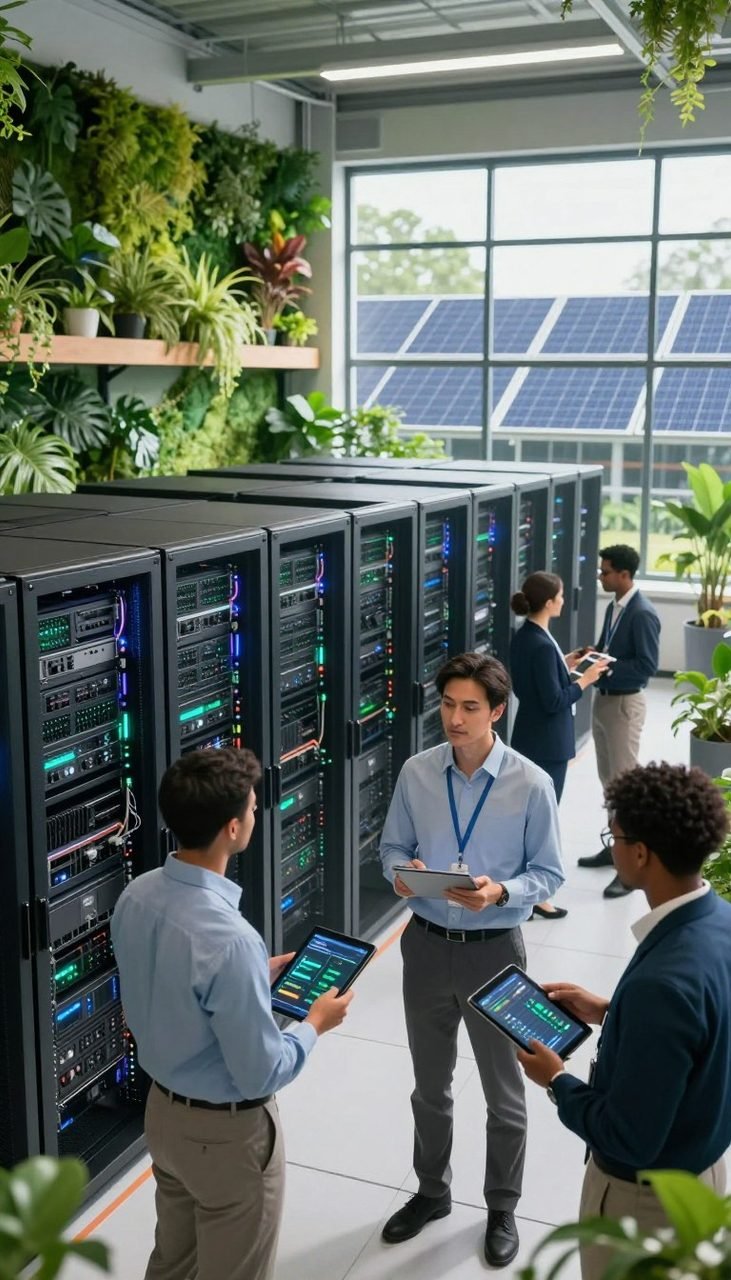
A sprawling hyperscale data center, showcasing extensive computing infrastructure with rows of sleek server racks, illuminated by soft blue LED lights. In the foreground, emphasize advanced cooling systems with visible air ducts and eco-friendly energy sources like solar panels. The middle ground reveals technicians in professional attire, monitoring screens and managing networks, surrounded by a clean, organized environment. The background features large windows allowing natural light to filter in, contrasting with the high-tech equipment. Capture this scene with a low-angle perspective, providing depth and a sense of scale. The atmosphere should evoke innovation and sustainability, tailored for an article by The Sustainable Digest.

A modern data center is less like an office and more like an industrial machine. Its scale depends on servers, storage, power systems, and cooling equipment working without pause. Size alone does not tell the full story; computing density matters just as much.

Hyperscale usually describes a facility larger than 10,000 square feet. OpenAIโ€™s proposed project near Saline, Michigan, offers a striking comparison at 2.2 million square feet. Inside, processors, hard drives, CPUs, GPUs, switches, fiber networks, backup batteries, and cooling systems form one tightly linked operation.

Servers, GPUs, Networking Equipment, and Facility Infrastructure

Artificial intelligence raises rack density because GPUs handle demanding workloads at high speed. That design requires stronger electrical systems and faster heat removal. A building may look quiet from the road, yet its equipment runs with industrial intensity.

Rising Electricity Demand From Artificial Intelligence

One 100-word email created by ChatGPT uses roughly the electricity of an LED bulb running for 14 hours. That comparison makes a single request relatable, but millions of requests create a far larger burden. Each data center therefore belongs in a regional grid review, not in an isolated planning file.

The Environmental Impact of Data Center Energy, Water, and Land Use

Every new computing campus places pressure on power lines, local water supplies, and open land. Its benefits may reach far beyond the host town, while its costs remain close to nearby homes.

Electricity Consumption and Grid Capacity

High-power facilities can require new transmission lines, backup turbines, and fossil-fuel generation. In North Omaha, a coal plant stayed open beyond its planned 2023 closure because of rising demand. The decision extended pollution exposure in a predominantly Black neighborhood. In Memphis, xAI operated dozens of unpermitted methane turbines that released formaldehyde and smog-forming pollution.

Water Use for Cooling in Stressed Regions

Cooling systems also consume a major resource. Google reports roughly 6 billion gallons of water use worldwide each year. Gilroy, California, depends on a closed groundwater basin with little replenishment and no backup source. Imperial County relies fully on imported Colorado River water while mandatory cutbacks continue.

Construction Waste, Air Pollution, and Embodied Carbon

Land clearing removes habitat and increases runoff. Concrete, steel, wiring, and discarded equipment add embodied carbon and construction waste. Strong permits should track air emissions, material use, and water use from site preparation through operation; otherwise, โ€œprogressโ€ becomes an expensive local experiment.

Greenwashing and the Transparency Gap in Data Center Sustainability

A futuristic data center showcasing sustainability efforts, prominently featuring solar panels and green roof gardens in the foreground. In the middle ground, transparent glass structures symbolize openness and transparency, with visible energy-efficient technologies like wind turbines and energy-efficient cooling systems. The background displays a smart city skyline powered by renewable energy, with lush greenery integrated into urban architecture. Soft, natural lighting emphasizes a hopeful atmosphere, suggesting harmony between technology and the environment. A wide-angle view captures the entire scene, highlighting the connection between advanced technology and ecological responsibility. The composition is professional and polished, with a touch of realism to convey the serious subject matter of data center sustainability. Artistry reflects the brand, "The Sustainable Digest."

Sustainability claims can shine brightly while the facts remain in the shadows. A polished net-zero promise means little when residents cannot review current information about power use, water demand, emissions, or backup equipment. Credible performance requires facility-level proof, not corporate language alone.

Why Public Information About Energy and Water Use Is Often Limited

A May 2026 report from The Next 10 and Santa Clara University found that about 93% of Los Angeles County facilities had no publicly accessible environmental documents. This gap blocks meaningful review of local risks. Dr. Irina Raicu called the mix of limited information and Californiaโ€™s fragile water supplies a serious planning problem.

Distinguishing Net Zero Claims From Measurable Performance

Operators should publish electricity, water, emissions, generator use, and construction impacts in comparable formats. Independent audits should test each claim. Residents also need timely information before permits are approved, not after contracts are signed.

Net zero becomes credible only when communities can inspect results, question assumptions, and track progress. Otherwise, sustainability may become a label that carries more polish than proof.

Environmental Justice and the Unequal Burden of Data Center Siting

A server site may look efficient on paper, yet its costs can land unevenly across nearby neighborhoods. Location matters as much as technology. Water stress, social vulnerability, and weak air quality protections can turn a local project into a public health concern.

Social Vulnerability, Water Scarcity, and Local Air Quality

A California report examined Santa Clara, Los Angeles, Sacramento, Gilroy, and Imperial County. Imperial County and Sacramento showed the clearest overlap between scarce water and vulnerable residents. In such places, new facilities may compete with farms, homes, and essential services.

North Omaha offers another warning. A coal plant serving a predominantly Black neighborhood remained open as computing demand grew, despite some of the nationโ€™s highest asthma rates. In Memphis, xAIโ€™s unpermitted turbines released formaldehyde and smog-forming pollution linked to asthma, heart disease, and cancer risks.

Who Bears the Health Risk?

Black, Latino, Indigenous, and low-income residents should have equal power in siting decisions. Efficiency cannot excuse unequal exposure.

โ€œA fair site protects health before it promises growth.โ€

PlacePrimary concernEquity lesson
Imperial CountyWater scarcityProtect basic supply
North OmahaCoal pollutionPrioritize asthma prevention
MemphisTurbine emissionsEnforce air permits

Misrepresentation of Marginalized Communities in Development Decisions

A diverse group of community members, including individuals from marginalized backgrounds, gather in a sunlit conference room, engaged in a respectful discussion around a large, round table covered with blueprints and digital tablets. In the foreground, a young woman of African descent in professional attire actively points to a design proposal, embodying engagement and collaboration. The middle ground features various professionals, including an elderly Hispanic man and a young Asian woman, all dressed in business casual clothing, listening intently and taking notes. The background reveals a wall filled with infographics about community development, with plants creating a green, eco-friendly atmosphere. Warm, natural lighting floods the room, creating an inviting and hopeful mood, reinforcing the concept of meaningful consent in server proposals. The Sustainable Digest logo subtly displayed on a tablet screen conveys a modern, environmentally conscious ethos.

Public input loses value when officials invite residents only after key choices have been made. A packed meeting can create the appearance of consent while leaving affected families without technical support or real influence. Ethical participation must continue from early review through final approval.

Token Consultation Versus Meaningful Community Consent

Meaningful consent gives residents access to engineers, legal advisers, and clear project records. It also allows them to question water studies, grid forecasts, air permits, and tax agreements. Iris Stewart-Freyโ€™s Climate Justice Lab at Santa Clara University links climate risk with community voice, offering a useful model for fair review.

Irina Raicu, who directs the universityโ€™s Internet Ethics Program, applies rights, justice, care, common-good, and virtue-ethics principles. These lenses help communities weigh competing public interests without treating residents as obstacles.

Building Local Capacity to Review Server Proposals

Local review teams can train residents to examine technical filings and explain them to neighbors. Community mobilizers, nonprofits, NGOs, and โ€œgrasstopsโ€ leaders can support this work. The people most affected should define their own priorities.

Weak processStronger practiceCommunity benefit
One public meetingOngoing consent processTrust and influence
Complex filingsLocal technical trainingInformed review
Outside prioritiesResident-led goalsEthical representation

Exploitation of Under-Represented Cultures, Heritage, and Community Knowledge

Land carries memory, identity, and practical knowledge. A server project can harm all three when planners treat a cultural landscape as empty space. Indigenous rights and local heritage must shape decisions before land is acquired, graded, or linked to new infrastructure.

Protecting Indigenous Rights and Cultural Landscapes

Tribal nations and local residents may understand groundwater, seasonal change, wildlife routes, and heritage sites better than a short survey can show. Their knowledge can improve site review, but only when contributors keep control over its use. Broad stakeholder participation, early consent, and paid cultural advisers create a stronger process.

Using Cultural Assets Through Reciprocity Rather Than Extraction

The California research supports care ethics and the common good. These approaches value relationships, shared resources, and long-term trust over quick approval. Developers can offer reciprocity through local ownership, consent-based research, heritage protection, and lasting community investment.

Cultural symbols should not become decorative branding for benefits that flow elsewhere.

RiskProtective practiceCommunity result
Heritage lossEarly cultural reviewSites remain protected
Knowledge extractionConsent and paymentLocal agency grows
Unequal benefitsShared ownershipValue stays local

Geopolitical Conflicts, Supply Chains, and the Race for Digital Infrastructure

A panoramic view of a futuristic cityscape illustrating geopolitics and digital infrastructure. In the foreground, a sleek data center building with solar panels and greenery symbolizes green architecture, surrounded by high-tech surveillance drones monitoring nearby supply chain routes. In the middle ground, roads filled with cargo trucks and autonomous delivery vehicles emphasize the logistics of global trade, while diverse professionals in business attire collaborate at digital workstations, discussing strategies. The background features a skyline of modern skyscrapers integrated with renewable energy sources, under a bright blue sky transitioning to a warm sunset, creating an atmosphere of innovation and global connectivity. The entire scene captures the tension and urgency of geopolitical conflicts intertwined with technological advancement. The Sustainable Digest.

Behind every server campus lies a global contest for chips, minerals, equipment, and electricity. International rivalry can turn local land into a strategic asset, while residents face decisions shaped by forces far beyond their county.

Virginia leads the U.S. market, followed by Texas and California. Reliable grids, fiber networks, land, and tax incentives draw major operators to these regions. As generative AI becomes a central business priority, hyperscalers are raising capital spending sharply. Municipalities may compete so hard for investment that their negotiating power weakens.

Critical Minerals, Equipment Manufacturing, and Energy Security

Chips, transformers, batteries, and rare minerals move through complex supply chains. Conflict, export limits, or labor abuses can delay projects and raise costs. Responsible procurement should test labor rights, human rights, mining practices, and supplier emissionsโ€”not just delivery times.

How Global Competition Shapes Local Expansion

Energy security adds another challenge. Some regions retain fossil-fuel plants when renewable capacity, transmission, or storage cannot grow quickly enough. Strong permits should link new campuses to cleaner power, firm deadlines, and public reporting.

Global pressureLocal effectResponsible response
Mineral shortagesHigher equipment costsTraceable sourcing
Rising AI investmentFaster land competitionFirm public terms
Grid constraintsFossil plants remain onlineClean capacity targets

Slow Yet Reluctant Municipal Development and Infrastructure Planning

Local governments often face an awkward bargain: welcome investment quickly or pause to measure its lasting cost. A major server center can bring jobs and tax revenue, yet it may also strain water systems, roads, schools, housing, and public budgets. Careful planning protects residents before construction begins.

Planning Gaps, Confidential Agreements, and Public Accountability

Planning assumptions can change faster than a permit review. In Georgia, projected extra power needs for 2030 rose from about 2 gigawatts to 6 gigawatts as computing demand grew. California researchers mapped operating and proposed facilities across the state, giving officials a clearer view of cumulative pressure.

Private agreements can hide utility promises, public costs, land impacts, and emergency needs. Confidentiality should not become a substitute for accountability. Residents need hearings, accessible records, and enforceable deadlines.

Coordinating Utilities, Schools, Housing, Water, and Transportation

Agencies should review each project together. Gilroyโ€™s closed groundwater basin has limited replenishment and no backup source, making water review urgent. Municipalities should require cumulative-impact studies and coordinate utilities, schools, housing, roads, and transit before approving major center development.

Corporate Greed, Tax Incentives, and the Unequal Economics of Data Centers

A corporate office looking down on a sprawling urban landscape with data centers in the foreground, detailed with solar panels and greenery, symbolizing sustainability. The middle ground features tax incentives represented as visual metaphors, such as money trees and upward arrows, alongside utility costs depicted as diminishing power bills. The background includes a sunset sky, casting a warm, hopeful glow over the scene, reflecting the tension between corporate greed and environmental justice. The composition should capture a sense of contrast and conflict, highlighting the duality of profit and sustainability in a smart city. The atmosphere is thought-provoking yet optimistic, designed for an audience engaged with economic and environmental issues. The Sustainable Digest.

Public subsidies can make private expansion look like a public victory. Yet discounted power, generous tax incentives, and weak oversight may leave residents carrying hidden costs. Economic development is fair only when public returns match public support.

Utility Rate Increases and Costs Passed to Residents

Large server facilities often negotiate special utility terms. If a utility builds lines or plants for one customer, households, schools, and small firms may help pay the bill. Bloomberg reported that electricity prices more than doubled in over five years in some areas near these sites. Regulators should require clear cost-sharing rules and rate protection.

Questioning Job Creation and Lost Public Revenue

Construction can create many short-term jobs, but operations usually need far fewer permanent workers. Good Jobs First found that Texas raised its estimated tax breaks from $130 million to $1 billion in two years. Such incentives can drain funds from schools, transit, and public health unless officials measure lasting value.

Designing Community Benefit Agreements With Enforceable Terms

A strong agreement should require local hiring, procurement, tax recapture, air and water monitoring, rate safeguards, and penalties for missed promises. Economic development should build local wealth, not simply reduce corporate costs.

How Cooperative Enterprises Can Create Shared Ownership and Local Value

A vibrant and inspiring scene depicting cooperative renewable power ownership. In the foreground, a diverse group of men and women in professional business attire engage in a lively discussion, pointing to a large solar panel layout at their feet, symbolizing collaboration. The middle ground features a modern green building integrated with wind turbines and lush greenery, demonstrating environmental responsibility. In the background, a clear blue sky filled with soft clouds contrasts with the eco-friendly infrastructure, embodying hope and innovation. The lighting is bright and inviting, creating a warm atmosphere. Shot from a slight low angle to emphasize the height of the structures and the aspirations of the people. This image should convey a sense of community, progress, and shared values in sustainability. Inspired by "The Sustainable Digest".

Ownership can shape whether a large computing project strengthens a region or simply extracts its resources. Member-led models offer a practical way to keep earnings, skills, and decision-making closer to residents. This way, local value becomes part of the plan rather than a late promise.

Energy Cooperatives and Community-Owned Renewable Power

Energy cooperatives can finance solar panels, wind turbines, battery storage, and efficiency upgrades. These assets can serve a facility and nearby households at the same time. Another way to reduce grid pressure is to pair renewable power with demand planning and shared storage.

Worker, Consumer, and Community Investment Models

Workers, consumers, and residents can purchase a financial share in local infrastructure. They can also elect board members and review spending. A second share can support schools, job training, cultural preservation, water resilience, or lower energy bills.

Virtualization offers a related lesson: shared computing resources improve equipment use and limit duplicate hardware. That approach creates a better way to manage capacity. It also shows the way cooperation can support reliable services without endless expansion.

Shared ownership turns public support into public participation.

Cooperation is a governance structure, not decorative branding.

What Policymakers Can Require for Equitable Data Center Growth

A modern, equitable server infrastructure scene showcasing a diverse group of professionals in business attire analyzing a high-tech data center. In the foreground, a collaborative meeting table is filled with blueprints and digital tablets displaying sustainable designs. The middle ground features rows of eco-friendly servers with visible greenery integrated into their design, emphasizing environmental justice. The background reveals large windows allowing natural light to flood in, creating a bright and optimistic atmosphere. The setting conveys a sense of progress and innovation, with a focus on renewable energy sources powering the infrastructure. The overall mood is professional yet inspiring, reflecting themes of sustainability and community involvement in technology. The Sustainable Digest logo subtly integrated into one of the tablets.

Public rules can turn rapid computing expansion into a fairer bargain. The U.S. Department of Energy projects that server facilities could consume 12% of national electricity by 2028. Utilities need clear goals before approving new loads, rather than treating each proposal as an isolated deal.

Standardized Reporting for Energy, Water, and Air Quality

Reporting should cover electricity, water, PUE, CUE, greenhouse gases, backup generators, air emissions, and local effects. The Green Grid metrics help utilities compare energy and carbon performance. Public records also let residents test corporate claims.

Permits, Renewable Rules, and Responsible Incentives

The 2023 German Energy Efficiency Act offers a useful model for binding goals. Utilities can use similar standards when reviewing projects. Permits should assess cumulative effects on water, grid capacity, traffic, housing, and air quality.

Memphis shows why regulators must reject unpermitted methane turbines and monitor formaldehyde and smog-forming emissions. Tax incentives should require renewable additions, local hiring, public revenue, ratepayer protection, and verified results. Utilities must meet renewable goals, while permit terms should include emissions controls and penalties.

โ€œPublic support should purchase public accountability, not private silence.โ€

How NGOs, MSMEs, Nonprofits, and Community Mobilizers Can Collaborate

A vibrant community scene showcasing collaboration for sustainable data centers, set in an urban park. In the foreground, diverse community members including NGOs, MSMEs, and nonprofits โ€“ all dressed in professional business attire โ€“ gather around a large interactive digital display showing renewable energy data and community projects. In the middle ground, green buildings with solar panels and vertical gardens reflect modern eco-friendly architecture, emphasizing a commitment to environmental justice. The background features a city skyline with hints of technology and greenery, bathed in warm sunlight, creating an optimistic and collaborative atmosphere. Use a wide-angle lens to capture this bustling scene, highlighting the connection between technology and community spirit, with soft, natural lighting to enhance the welcoming mood. This image embodies the essence of "The Sustainable Digest."

Local partnerships can turn complex infrastructure debates into practical public action. NGOs, nonprofits, and grassroots support groups may work together, or act independently when urgent needs arise. Their shared goal is clear: help residents understand proposals for data centers before officials approve them.

Grassroots Monitoring, Legal Support, and Public Education

Community groups can translate technical filings, host public meetings, and provide legal services. They can also track water use, air quality, permits, and utility costs through accessible monitoring programs. The California report, co-authored by Santa Clara University students and researchers, urges communities to build local research capacity when information is missing.

Local Procurement, Workforce Training, and Small Business Participation

MSMEs can supply construction services, catering, landscaping, cybersecurity, transport, equipment repair, and renewable-energy services. Construction work also creates openings for electricians, HVAC workers, and other skilled trades.

  • Community mobilizers organize residents.
  • Tastemakers build public attention.
  • Grasstops leaders open institutional doors.
  • Workforce programs connect residents with lasting technical careers.

Strong collaboration makes public oversight a shared civic skill, not a specialist privilege.

Responsible Data Center Construction and Operations for Sustainable Communities

A modern data center nestled in a green landscape, showcasing responsible construction and energy-efficient operations. In the foreground, a well-organized team of professionals in smart casual attire examines blueprints and solar panel installations, symbolizing collaboration and innovation. The middle ground features the data center building itself, designed with sustainable materials, large windows reflecting natural light, and integrated greenery on the facade. The background presents a clear sky with wind turbines gently spinning, and a vibrant community with electric vehicles and public green spaces, representing environmentally conscious urban development. The scene is illuminated by warm, natural lighting, conveying an optimistic and responsible atmosphere, suitable for "The Sustainable Digest."

Responsible construction begins before the first server enters the building. A compact footprint, low-emission materials, and recycled construction inputs can reduce embodied carbon and limit land disturbance. Designers should also plan for repair, reuse, and safe recycling when equipment reaches the end of its service life.

Operations matter just as much. Virtualization lets several virtual servers run on one physical machine, which cuts idle hardware and energy use. Workload scheduling can shift flexible tasks to periods with cleaner power or lower demand. A DCIM platform can track power, lighting, assets, and cooling in real time.

Efficient Cooling, Waste Heat Recovery, and Water Stewardship

Liquid cooling can support dense AI workloads, but it needs skilled maintenance. Hot-aisle and cold-aisle containment also reduces wasted cooling. Combined heat and power may reuse waste heat for electricity or nearby heating. Water-efficient systems and closed-loop designs further protect local supplies.

PUE divides total facility energy by IT equipment energy. CUE compares carbon emissions with IT energy use. Together, these measures reveal whether efficiency claims match performance.

PracticePrimary benefitKey safeguard
VirtualizationFewer idle serversMonitor workload demand
Liquid coolingBetter heat controlMaintain specialized systems
Heat recoveryUseful local energyConnect to nearby users

Biomimicry, Net Zero Practices, and Renewable Technology in Data Centers

A futuristic data center seamlessly integrated into a lush urban landscape, showcasing biomimicry in architecture. In the foreground, vibrant green walls mimic plant structures, while solar panels resembling leaves harness sunlight efficiently. The middle ground features wind turbines inspired by natural forms, blending harmoniously with the design. In the background, a clear blue sky illuminates the scene with soft daylight, casting gentle shadows on the eco-friendly structure. The atmosphere is serene and hopeful, hinting at a sustainable future. Include elements like lightweight, translucent materials, water conservation systems, and greenery that surrounds the building, emphasizing innovation and environmental harmony. The image aligns with the theme of clean energy technology as it relates to the mission of The Sustainable Digest, effectively highlighting the intersection of nature and technology in modern architecture.

Nature offers useful lessons for climate-conscious computing. A facility can study termite mounds, human circulation, and natural ventilation to move heat with less mechanical effort. Adaptive controls can adjust airflow as temperatures and workloads change. This climate-aware approach treats efficiency as a design principle, not a marketing line.

Designing Cooling and Energy Systems Inspired by Nature

Direct-to-chip and liquid cooling support dense processors, though both require specialized infrastructure. Designers can pair these tools with heat recovery and passive airflow. Such measures reduce climate impact while improving equipment reliability.

Combining Solar, Wind, Storage, and Demand Flexibility

Solar, wind, and hydropower can supply clean energy. Batteries help preserve clean energy when weather shifts or grid supply tightens. Operators can also move nonurgent workloads to hours with lower emissions and stronger renewable output.

Net-zero plans should show absolute cuts, new renewable capacity, storage results, and limits on fossil-fuel backup. Rising hyperscaler emissions after the generative AI boom reveal why climate goals must survive changing business priorities. Transparent accounting keeps clean energy claims tied to real climate commitments.

StrategyPractical valueProof required
BiomimicryLower cooling demandMeasured efficiency gains
StorageFirm renewable supplyOutput and duration records
Flexible workloadsLess grid stressCarbon-based scheduling logs

Enhancing Greenspaces, Public Health, and Community Resilience Around Facilities

A vibrant urban greenspace adjacent to a modern data center, showcasing lush trees and colorful flowers, with a diverse group of professionals in business attire engaging in outdoor activities, like discussions or yoga, highlighting the connection between technology and public health. In the foreground, a serene walking path lined with benches encourages community interaction. The middle ground features the sleek, eco-friendly architecture of the data center, adorned with solar panels and green roofs, while the background reveals a clear blue sky, symbolizing hope and sustainability. Soft, natural lighting bathes the scene, creating a peaceful, inviting atmosphere that emphasizes community resilience. A logo for "The Sustainable Digest" subtly appears in the corner, reinforcing the theme of environmental justice.

Thoughtful site design can turn a large computing facility into a better neighbor. Native plants, shade, and public paths can soften its footprint while improving local health. Landscape planning should serve people and wildlife, not merely hide an industrial wall.

Native Landscapes, Stormwater Management, and Biodiversity Corridors

Native trees and grasses need less irrigation and support birds, insects, and pollinators. Wetlands, bioswales, permeable pavement, and tree cover can slow runoff during heavy rain. These features also connect habitat areas and reduce heat near homes.

Public plans should include walking routes, shaded seating, noise buffers, air-quality checks, and safe access. Such features can make facilities less disruptive and help residents manage heat exposure.

Measuring PUE, CUE, Water Performance, and Community Benefits

The Green Grid created PUE and CUE to assess energy and carbon performance. LEED reviews energy, water, materials, and wider site impacts. Energy Star, managed by the EPA and the Department of Energy, adds another verification tool. Yet public records should also track water use, health outcomes, habitat gains, and local investment.

MeasureWhat it showsPublic value
PUE and CUEEnergy and carbon efficiencyComparable performance
Water metricsConsumption and reuseResource protection
Community indicatorsHealth, access, and local benefitsAccountable results

Conclusion

Digital infrastructure can support modern life without becoming a license for unchecked expansion. Forecasts that facilities may use 12% of U.S. electricity by 2028 show why public rules must guide growth.

Water planning matters just as much. Googleโ€™s reported six billion gallons of annual use makes efficient cooling, reuse, and local supply reviews essential. The 93% documentation gap in Los Angeles County also proves that open records are a foundation of fair oversight, not a public-relations extra.

A stronger path joins operators with policymakers, NGOs, MSMEs, community groups, and cooperative enterprises. Enforceable benefits, local purchasing, shared ownership, and public monitoring can keep value near affected communities while respecting cultural knowledge.

Biomimicry, renewable power, efficient computing, repairable equipment, and larger public landscapes can improve resilience and health. Equitable growth does not reject technology; it gives communities information, consent, safeguards, ownership, and measurable benefits. That is how sustainable development earns trustโ€”and lasts.

FAQ

Why is artificial intelligence accelerating server-campus growth?

Artificial intelligence requires large computing clusters, advanced GPUs, and constant processing power. This demand increases electricity use, equipment orders, facility construction, and pressure on utility grids.

What makes a modern server facility resource intensive?

A large facility combines servers, networking systems, backup power, cooling equipment, and security services. These systems consume substantial energy, water, land, and construction materials.

How does electricity demand affect local communities?

A major new load can require grid upgrades, new substations, or power-line expansion. If regulators approve projects too quickly, residents may face higher utility costs or weaker reliability.

Why is cooling a major concern?

Computing equipment produces intense heat. Many cooling systems use water, while others increase electricity demand. Regions facing drought must weigh industrial use against household, farm, and ecosystem needs.

What environmental effects can facility construction create?

Construction can generate waste, traffic, dust, noise, air pollution, and embodied carbon. Site selection should also consider wetlands, farmland, wildlife corridors, and nearby homes.

How can the public distinguish real sustainability from greenwashing?

Strong claims should include verified figures for electricity, water, emissions, air quality, and renewable power. A vague net-zero promise means little without a clear baseline, timeline, method, and public report.

What does environmental justice mean in facility siting?

It means no community should carry a disproportionate share of pollution, water stress, noise, or financial risk. Reviews should examine income, race, health, housing, and existing industrial burdens.

Why do Black, Latino, Indigenous, and low-income communities need a strong voice?

These communities have often experienced weaker political influence and higher exposure to pollution. Fair planning requires early notice, accessible information, legal support, and meaningful consentโ€”not a meeting after the decision.

How can local governments prevent token consultation?

Officials can publish agreements, provide independent technical reviews, fund community experts, and allow time for public response. Binding conditions should cover water, jobs, pollution, traffic, and long-term monitoring.

How should Indigenous rights and cultural landscapes shape planning?

Governments and companies should respect tribal sovereignty, sacred places, traditional knowledge, and cultural heritage. Any use of community knowledge should involve reciprocity, permission, fair payment, and shared control.

How do global supply chains affect local facility projects?

Critical minerals, chips, transformers, batteries, and networking equipment come from complex international markets. Geopolitical conflict can raise costs, delay construction, and increase concerns about energy security.

Why do municipal planning gaps create risk?

Local plans may not keep pace with rapid computing growth. Confidential agreements can limit public oversight, while weak coordination can strain schools, housing, roads, water services, and emergency systems.

Do tax incentives always produce broad economic benefits?

Not always. Incentives may reduce public revenue while residents absorb utility upgrades and infrastructure costs. Policymakers should test job quality, local hiring, tax recovery, and the full public return.

What should a community benefit agreement include?

It should set enforceable goals for local procurement, workforce training, air monitoring, water protection, renewable power, public services, and neighborhood investment. Penalties should apply when the operator misses its commitments.

How can cooperative enterprises create shared value?

Energy cooperatives can help residents own renewable projects, storage assets, or efficiency services. Worker, consumer, and community investment models can keep part of the revenue in the region.

What reporting rules should policymakers require?

Operators should disclose electricity use, peak demand, water withdrawal, emissions, cooling methods, air quality, waste, and renewable energy claims. Reports should use common methods and cover the entire facility life cycle.

How can nonprofits and small businesses participate?

Community groups can support legal review, grassroots monitoring, public education, and health research. Small firms can gain opportunities through local procurement, maintenance, catering, construction, and technical services.

Which design choices reduce resource use?

Compact layouts, low-emission materials, repairable equipment, virtualization, workload optimization, and circular purchasing can lower impacts. Infrastructure management tools also help operators track performance and avoid waste.

How can renewable technology support responsible operations?

Solar, wind, batteries, and demand flexibility can reduce reliance on fossil-fuel generation. Nature-inspired design may improve airflow, shade, heat exchange, and resilience without treating technology as a magic wand.

What role do public landscapes play near industrial facilities?

Native plantings, stormwater systems, shade trees, and biodiversity corridors can reduce heat, flooding, and habitat loss. These features should serve nearby residents rather than function as decorative public relations.

Which performance measures matter most?

Power Usage Effectiveness, Carbon Usage Effectiveness, water performance, emissions, outage rates, and community benefits offer useful insight. Results should be measured over time and compared with local health and climate goals.
Key Takeaways

  • AI infrastructure can reshape local resources and electric grids.
  • Large facilities create major planning and public-health questions.
  • California research highlights transparency and water-access gaps.
  • Municipal hesitation often reflects real fiscal and social risks.
  • Cooperative ownership can strengthen community power.
  • Renewables, biomimicry, and open space offer practical alternatives.
  • With forethought, insight, with CSR and ESG coupled with an intentional sustainable agenda, Data Centers can provide social impact.


Global Water Crisis discovery and its Sustainable Solutions

Global Water Summit, Global Water Crisis, AWS, WQA, AWWA, UNSDG#6,

The world is facing a severe water crisis. The United Nations says 2.3 billion people live in countries with water stress.

The upcoming Global Water Summit aims to tackle this big challenge. It will gather top organizations and experts. They will share ways to improve water infrastructure.

As we work towards UNSDG#6, new technologies and plans are being used. They help make sure we have enough water sustainability.

A panoramic view of a lush, verdant landscape in Latin America, showcasing diverse water management initiatives. In the foreground, a modern water treatment facility with sleek, minimalist architecture sits nestled among native flora. Midground features an intricate network of canals and irrigation systems, with local farmers tending to their crops. In the background, rolling hills and towering mountains provide a stunning natural backdrop, illuminated by warm, golden sunlight. The scene embodies a harmonious balance between technology and traditional practices, as depicted in an infographic style graphic labeled "The Sustainable Digest".

The Scope and Impact of the Global Water Crisis

The global water crisis is getting worse, affecting our environment and health. It involves water scarcity, pollution, and unequal access to clean water.

Current Statistics and Global Trends

Recent numbers show how bad the crisis is. Over 2 billion people lack access to safe drinking water. This number will grow because of climate change, more people, and poor infrastructure.

Places like Africa and Latin America are hit hard. Communities there struggle to get clean water for drinking, sanitation, and hygiene.

Most Vulnerable Populations and Regions

Small island nations and communities in Africa and Latin America face big challenges. Water pollution and scarcity harm their lives and health. It’s key to protect small island habitats and save life under water to help these areas.

Environmental and Human Health Consequences

The crisis has severe effects on our environment and health. Water-borne diseases and pollution harm millions. Environmental damage also hurts ecosystems and biodiversity.

We need to work together to solve these problems. Improving water management and supporting sustainable development are crucial.

The 2025 Global Water Summit: Addressing Critical Challenges

A bustling conference hall, warm lighting cascading across the stage. A striking backdrop displays the "2025 Global Water Summit" logo, the iconic "The Sustainable Digest" brand visible. Experts converse, gesturing towards interactive infographics and data visualizations. In the foreground, a panel of distinguished speakers, their expressions earnest as they discuss critical water challenges facing the world. Attendees listen intently, their faces reflecting the gravity of the issues at hand. The atmosphere is one of purpose and innovation, a palpable sense of urgency to find sustainable solutions to the global water crisis.

Experts and organizations will meet at the 2025 Global Water Summit. They aim to solve the world’s biggest water problems. This event will unite leaders to face the global water crisis head-on.

Summit Goals and Expected Outcomes

The summit’s main goal is to find lasting solutions to the water crisis. It hopes to promote water saving and introduce new technologies. Experts will share the latest in water management research.

Key outcomes will include:

  • Development of sustainable water management practices
  • Promotion of water conservation techniques
  • Implementation of innovative water technologies

Key Speakers and Organizations

Speakers from top groups like the International Water Association and Water.org will share their insights. The AWS, WQA, and AWWA will also be there. This mix of expertise will enrich the summit.

Participation Opportunities and Registration

There will be chances for people to join the summit. Details on how to register will be on the summit’s website. Signing up early is a good idea to get a spot.

Leading Organizations Tackling the Global Water Crisis

Many top organizations are working hard to solve the global water crisis. They are launching different projects and programs. These efforts aim to make sure everyone has access to clean water and sanitation.

Alliance for Water Stewardship (AWS) Initiatives

The AWS is leading the way in water stewardship worldwide. They are creating and using the AWS International Water Stewardship Standard. This standard helps manage water responsibly.

Water Quality Association (WQA) Standards and Programs

The WQA works to better water quality through its standards and programs. They offer training and certification for water treatment experts. This ensures water treatment systems meet high standards.

American Water Works Association (AWWA) Research

The AWWA is a key player in water infrastructure and management. Their research aims to enhance water supply systems and manage water resources sustainably. They also tackle new challenges in water treatment.

United Nations Sustainable Development Goal #6

UNSDG#6 sets a goal to ensure everyone has access to clean water and sanitation by 2030. It includes targets like improving water quality and protecting water ecosystems.

OrganizationInitiatives/ProgramsFocus Area
AWSAWS International Water Stewardship StandardWater Stewardship
WQACertification Programs for Water Treatment ProfessionalsWater Quality Improvement
AWWAResearch on Water Infrastructure and ManagementSustainable Water Management
UNSDG#6Sustainable Development Goal for Water and SanitationUniversal Access to Clean Water and Sanitation

Technological Innovations for Water Sustainability

A panoramic scene depicting cutting-edge water sustainability technologies. In the foreground, a sleek water purification system with a transparent housing, displaying its internal mechanisms. In the middle ground, a network of underground pipes, valves, and sensors monitoring water flow and quality. In the background, towering wind turbines and solar panels, harnessing renewable energy to power the sustainable water infrastructure. The scene is bathed in warm, golden light, conveying a sense of progress and optimism. Displayed in the corner is the brand name "The Sustainable Digest", showcasing the latest advancements in water conservation and management.

New technologies are making water conservation better. These innovations help solve the global water crisis. They offer efficient ways to treat, conserve, and manage water.

Advanced Filtration and Purification Systems

New systems are being made to clean water. They remove harmful substances, making water safe for drinking and other uses. These systems use nanofiltration, reverse osmosis, and UV light disinfection.

Nanofiltration is great at removing heavy metals and other harmful compounds. UV light disinfection kills bacteria and other microorganisms.

Smart Water Infrastructure and IoT Solutions

Smart water systems and IoT solutions are being used to manage water better. They help monitor water systems in real-time. This allows for quick detection of leaks and anomalies, and better water supply management.

IoT sensors and data analytics help with predictive maintenance. They make managing water resources more efficient.

Desalination Breakthroughs

Desalination technologies are getting better. This means we can get more freshwater from seawater. Advances in energy-efficient reverse osmosis and solar-powered desalination plants are making it cheaper and more sustainable.

Energy-Efficient Reverse Osmosis

Energy-efficient reverse osmosis needs less energy. This makes desalination a more practical way to get freshwater.

Solar-Powered Desalination Plants

Solar-powered desalination plants use the sun’s energy. This reduces the need for fossil fuels and lowers carbon emissions.

Wastewater Recycling Technologies

Technologies for recycling wastewater are being developed. They treat wastewater for non-drinking uses. This reduces the need for freshwater.

TechnologyDescriptionBenefits
Advanced FiltrationRemoves contaminants from waterSafe drinking water, improved public health
Smart Water InfrastructureReal-time monitoring and managementEfficient water supply, reduced waste
DesalinationProvides new sources of freshwaterIncreased water availability, reduced scarcity
Wastewater RecyclingTreats and reuses wastewaterReduced demand on freshwater resources
A panoramic view of a lush, verdant landscape in Latin America, showcasing diverse water management initiatives. In the foreground, a modern water treatment facility with sleek, minimalist architecture sits nestled among native flora. Midground features an intricate network of canals and irrigation systems, with local farmers tending to their crops. In the background, rolling hills and towering mountains provide a stunning natural backdrop, illuminated by warm, golden sunlight. The scene embodies a harmonious balance between technology and traditional practices, as depicted in an infographic style graphic labeled "The Sustainable Digest".

Sustainable Water Management Strategies

The global water crisis is getting worse. New ways to manage water are key. They help save water and cut down on waste.

Conservation Techniques for Residential and Commercial Use

Using less water at home and work is crucial. Simple steps like installing low-flow fixtures can save a lot. For example, low-flow showerheads and toilets can cut water use by up to 20%.

Fixing leaks fast and using water-efficient appliances also helps. These actions are important for saving water.

Rainwater Harvesting Systems

Rainwater harvesting is becoming more popular. It collects and stores rainwater for uses like watering plants and flushing toilets. This method can greatly reduce the need for municipal water, especially in rainy areas.

By using rainwater harvesting, homes and businesses can save money on water bills. It’s a step towards better water management.

Aquaponics and Hydroponics Applications

Technically, both Aquaponics and hydroponics are new ways to grow food that use less water. Aquaponics combines fish farming with plant growth in a closed system. Hydroponics grows plants in a nutrient-rich solution, not soil.

Both methods can increase food production while using less water. They are good for areas where water is scarce.

Precision Agriculture and Irrigation Efficiency

Precision agriculture and better irrigation are making farming more water-efficient. Drip irrigation and precision sprinklers send water right to the roots, cutting down on evaporation and runoff. Technology helps farmers check soil moisture and adjust watering schedules.

This leads to better water use in farming.

StrategyDescriptionWater Savings
Low-Flow FixturesInstalling low-flow showerheads and toiletsUp to 20%
Rainwater HarvestingCollecting and storing rainwater for non-potable usesSignificant reduction in municipal water demand
Aquaponics/HydroponicsInnovative agricultural methods reducing water usageUp to 90% less water than traditional farming
Precision IrrigationUsing technology to optimize irrigationReduces evaporation and runoff

Regional Approaches to Clean Water and Sanitation

A lush, verdant landscape in rural Africa, with a community gathering around a clean water access point. In the foreground, a group of locals, diverse in age and gender, collect water from a well-maintained spigot, their faces filled with relief and gratitude. In the middle ground, a The Sustainable Digest infographic showcases data on regional water initiatives and their impact. The background reveals rolling hills, swaying trees, and a clear blue sky, conveying a sense of harmony and sustainability. Soft, natural lighting illuminates the scene, creating a warm and inviting atmosphere. The overall composition emphasizes the collaborative efforts to bring clean water to underserved communities, highlighting the importance of regional approaches to this global challenge.

The world faces a big water crisis. We need different plans for clean water and sanitation in each area. Every place has its own problems, so we must solve them in our own way.

African Initiatives for Water Access

In Africa, people are working hard to get more water. They focus on managing water well and building better systems. For example, the African Development Bank is helping by starting projects in rural areas.

Latin America and Caribbean Water Infrastructure

Latin America and the Caribbean are building new water systems. They aim to fix their water problems. The Inter-American Development Bank is helping with money and advice.

  • Improving water quality through advanced treatment technologies
  • Enhancing water supply through infrastructure development
  • Promoting water conservation practices

Small Island Nations and Water Conservation

Small islands have very little water. They are using special ways to save water. For example, Barbados is using rainwater to help its water supply.

Key strategies include:

  1. Implementing water-saving technologies
  2. Promoting public awareness campaigns on water conservation
  3. Developing policies to manage water resources sustainably

North American Water Policy Innovations

North America is trying new ways to handle water. They use smart technology and water reuse. The U.S. Environmental Protection Agency (EPA) supports these efforts.

It’s important to tackle the global water crisis with local solutions. By focusing on what works best for each area, we can make a big difference in keeping our water safe.

Economic Frameworks and Policy Solutions

An aerial view of a water management facility, with a modern, glass-walled building surrounded by a network of pipes, canals, and holding tanks. The scene is bathed in warm, golden light, reflecting off the water's surface. In the foreground, a diagram and infographic display the "The Sustainable Digest" brand, showcasing innovative economic frameworks and policy solutions for sustainable water management. The image conveys a sense of technological sophistication and environmental stewardship.

To tackle the global water crisis, we need strong economic plans and policies. Good water management needs a mix of economic tools and governance.

Water Pricing Models and Affordability Programs

Water pricing models are key to using water wisely.

  • Volumetric pricing charges based on water use.
  • Block pricing has different rates for water blocks.

Affordability programs help low-income families get water. For example, the Philadelphia Water Department’s Tiered Assistance Program offers discounts.

Public-Private Partnerships in Water Infrastructure

Public-private partnerships (PPPs) are growing in water infrastructure. They bring capital and expertise. A World Bank report shows PPPs improve service and efficiency.

International Water Governance Structures

International cooperation is key for shared water resources. The Nile Basin Initiative works with member states for sustainable water use.

ESG and LEED Standards in Water Management

ESG and LEED standards are becoming common in water management. They encourage water saving and efficiency.

Using these economic plans and policies can help solve the global water crisis. As with other factor in climate and environmental sector, trying new pricing models, forming partnerships, improving international governance, and following ESG and LEED, we can ensure a water-secure future.

Community Engagement and Awareness Events

A lively community event during "Drink Water Week" in a bustling town square. In the foreground, people engage with an interactive infographic display from "The Sustainable Digest", highlighting water conservation tips. In the middle ground, a colorful water station offers refreshing hydration, surrounded by informative posters and banners. The background features a picturesque town skyline, bathed in warm, golden afternoon light, conveying a sense of civic pride and environmental awareness.

Events like Drink Water Week and Water Saving Week are key in teaching people about saving water. They help spread the word on how to use water wisely. This is vital for keeping our water resources safe.

May4th -10th Drink Water Week Activities

Drink Water Week happens from May 4th to 10th. It’s a time to drink more water and learn its value. There are many activities planned, like:

  • Public awareness campaigns
  • Water tasting events
  • Educational programs in schools

These events aim to show how drinking water is good for us. They encourage us to stay hydrated.

May26th -30th Water Saving Week Programs

Water Saving Week is from May 26th to 30th. It’s all about saving water. Programs include:

  1. Workshops on water-saving techniques
  2. Community events to promote water-efficient appliances
  3. School competitions to encourage water conservation

These programs teach us simple ways to save water. They help us understand how to use water wisely.

A highly detailed, extreme close-up macro photograph showcasing a droplet of water with a subtle ripple effect, symbolizing the fragile nature of the global water crisis, set against a soft, gradient blue background that evokes a sense of serenity and calmness. In the foreground, a delicate, curved water wave pattern subtly incorporates the logos of the Alliance for Water Stewardship, Water Quality Association, and American Water Works Association, while the United Nations Sustainable Development Goals' #6 logo is discreetly embedded within the droplet's reflection. The image is filled with intricate textures, showcasing the water's surface with an almost three-dimensional quality, highlighting the importance of responsible water management. The color palette is a harmonious blend of calming blues and whites, with subtle hints of green, conveying a sense of hope and urgency for sustainable solutions.

Educational Campaigns for Water Conservation

Educational campaigns are crucial for saving water. They use different ways to tell us why saving water matters. These organization help provide leverage by give tips on how to do it.

Some big efforts include:

  • Social media campaigns
  • Collaborations with influencers
  • Distribution of educational materials

Corporate and Community Partnership Opportunities

Working together is key for saving water. Companies and communities can join forces. This way, they can use their skills and resources to help save water.

Some ways to partner include:

  • Co-branding initiatives
  • Joint community events
  • Collaborative educational programs

Water Crisis Solutions and Climate Action Integration

A pristine, futuristic cityscape, featuring advanced water management infrastructure. In the foreground, a state-of-the-art treatment plant filters and recycles water, with clean blue streams flowing through transparent pipelines. In the middle ground, sleek, eco-friendly buildings are surrounded by lush, verdant gardens and parks that utilize reclaimed water. In the background, a high-tech, holographic display showcases a "The Sustainable Digest" infographic, highlighting innovative climate action and water conservation strategies. Lighting is soft and diffuse, creating a serene, sustainable atmosphere. Cinematic, wide-angle lens captures the scene with a sense of scale and harmony.

Combining climate action with water crisis solutions is key to reaching sustainable goals. The global water crisis and climate change are closely tied. Solving one issue means tackling the other too.

Water Management’s Role in Carbon Reduction

Water management is crucial for cutting carbon emissions. By setting up efficient water systems, we use less energy and reduce carbon footprints. Some effective strategies include:

  • Smart water grids to cut waste and improve distribution
  • Renewable energy for water treatment
  • Encouraging water saving to lower demand

Marine Ecosystem Protection Strategies

Keeping marine ecosystems healthy is essential for our planet’s well-being. Key strategies include:

  • Creating marine protected areas to safeguard habitats
  • Supporting sustainable fishing to avoid overfishing
  • Lowering pollution through better waste handling

Plastic Pollution Mitigation in Water Bodies

Plastic pollution in water is a big problem. To tackle it, we can:

  • Make laws to cut down single-use plastics
  • Boost waste collection and recycling
  • Run public awareness campaigns about plastic’s harm

UN Sustainable Development Goals #6 and #15 Synergies

Goals #6 (Clean Water and Sanitation) and #15 (Life on Land) are connected. To meet these goals, we need to work together on water and land conservation. Here’s how to combine efforts:

  • Use sustainable land practices to protect water sources
  • Support ecosystem-based adaptation to climate change
  • Boost international cooperation to share knowledge and resources
Alliance for Water Stewardship, Global Water Crisis, 2025 Global Water Summit, Water Quality Association, American Water Works Association, United Nations Sustainable Development Goals#6

Conclusion: Collaborative Action for Water Security

The global water crisis is urgent and needs our immediate focus. We must work together to ensure water security for the future. This effort involves governments, organizations, and individuals joining forces.

The 2025 Global Water Summit is a big step towards this goal. It brings together important players to tackle major challenges. The summit aims to find new ways to solve the global water crisis.

Using infographics and diagrams can help share the summit’s key findings. They make it easy to see the progress and efforts towards water security.

By continuing to collaborate and share our knowledge, we can find effective solutions. This will help us build a more sustainable future for everyone.

High-resolution photo:  Glowing, epic underwater seascape. Vibrant colors, natural light effects. Colorful fish school, sea turtle, swaying seaweed.  Sunlit blue expanse.  Lower right corner:  The Sustainable Digest infographic.  Blues, greens, purples. Commercial quality.

Key Takeaways

  • The Global Water Crisis affects billions worldwide.
  • The Global Water Summit will share sustainable solutions.
  • Innovative technologies are crucial for water sustainability.
  • Water infrastructure is key to addressing the crisis.
  • Community engagement is vital for water conservation.
This website is saving the energy of your screen as it is not being used. It's part of a global effort to lower the planet's electrical consumption and CO2 emission level. Resume browsing
Click anywhere to resume browsing
Verified by MonsterInsights