

In May 2020, a viral event in Central Park shook the nation. A Black birder in New York faced a confrontation that revealed hidden tensions within natural spaces. This specific moment in Central Park highlighted how race and social power often collide in the great outdoors.
One pioneering academic has spent thirty years exposing these invisible barriers. Her research fundamentally changed how we view conservation and equity. Even with a Yale degree, she often faces bias from those who question her authority in the classroom.
This expert’s journey through New York proves that environmental justice requires more than just planting trees. It demands a fight for true justice across all public lands. Her history in Central Park and beyond serves as a vital lesson for modern society.
The Pioneering Journey of Dr. Dorceta Taylor
Long before she challenged the ivory towers of American academia, Dorceta Taylor navigated the environmental realities of life in 1950s Jamaica. Her path was not a typical academic climb. Instead, it was a profound transformation that bridged the gap between the Global South and Western conservation circles.
This journey allowed her to see environmentalism through a lens that many of her peers lacked. She did not just study the environment; she lived within its shifting dynamics from a young age. Her immigration to the United States later added a layer of complexity to her analytical perspective.
From Rural Jamaica to Global Environmental Leadership
Born in 1957 in rural Jamaica, Dorceta Taylor grew up with a direct connection to the land. This upbringing provided her with a firsthand understanding of the environmental challenges facing communities outside the Western world. She saw how people relied on natural resources for their daily survival and well-being.
When she transitioned to American academic institutions, the contrast was immediately striking. She observed that Western conservation narratives often ignored the voices of those in the Global South. These stories were predominantly white and focused on preserving wilderness rather than supporting human communities.
Her Jamaican background gave her a critical distance from American assumptions. She began to question the supposed neutrality of environmental movements. This unique vantage point allowed her to reshape how scholars understand the intersection of social class and nature access.
Defining Environmental Justice Through Lived Experience
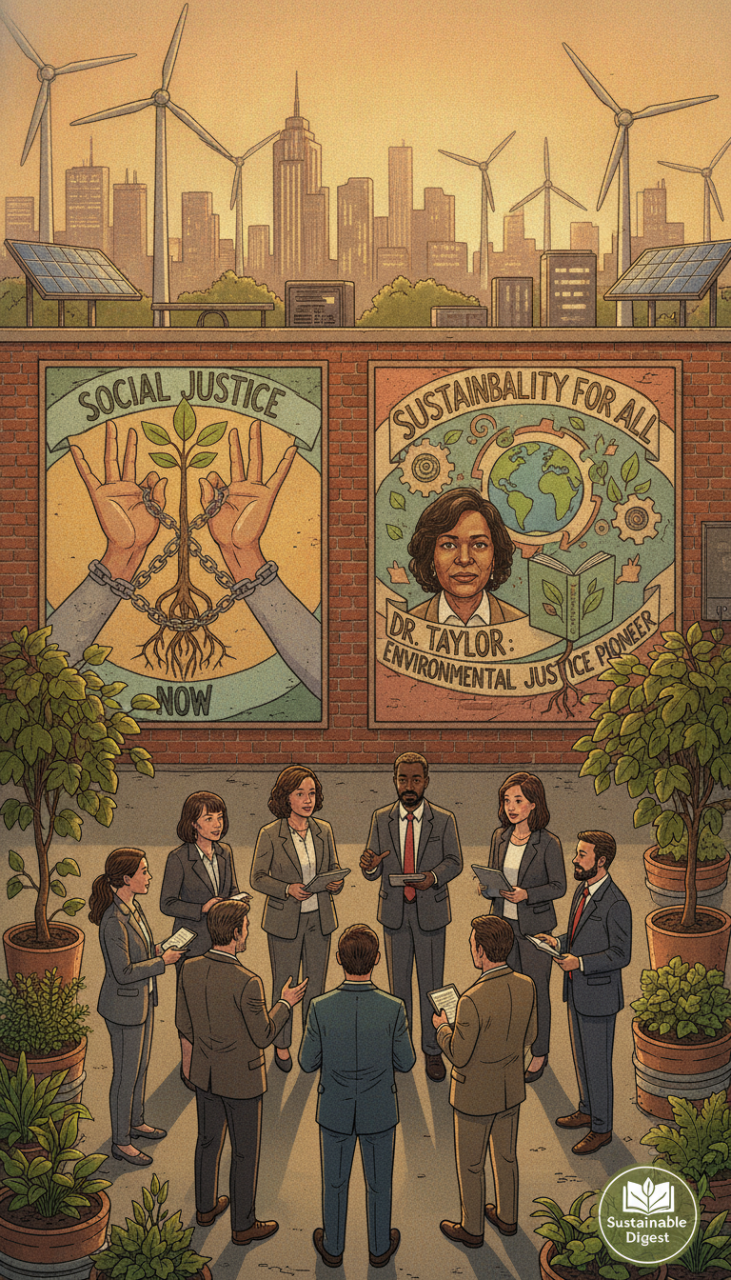
Taylor’s work became inseparable from her identity as an immigrant woman of color. Navigating white-dominated environmental spaces required a specific kind of resilience. She used these experiences to fuel her academic inquiry into systemic exclusion and institutional race dynamics.
Her scholarly work on environmental justice draws its power from this blend of research and reality. She noticed that different racial groups in American cities experienced nature in vastly different ways. While some enjoyed lush parks, others faced industrial pollution and limited green space.
“One cannot separate the health of the environment from the social conditions of the people who inhabit it.”
By examining history through this lens, she challenged established conservation myths. She proved that personal history is a vital part of professional scholarship. Her life story reminds us that true environmental justice requires looking beyond the surface of traditional activism.
| Context | Key Influence | Impact on Scholarship |
|---|---|---|
| Rural Jamaica | Global South Perspectives | Critique of Western-centric conservation |
| US Immigration | Systemic Exclusion | Authenticity in academic analysis |
| Academic Life | Racial & Class Dynamics | Development of the Justice Paradigm |
Educational Foundation and Academic Credentials

To understand Dr. Taylor’s impact, one must first examine the collegiate crucibles that forged her unique analytical perspective. Her path was not merely a pursuit of degrees but a calculated journey through specialized disciplines that rarely communicated with each other.
She meticulously gathered the tools of both the natural scientist and the sociologist. This dual expertise allowed her to see the “why” behind the data, moving beyond simple observation to deep structural critique. Her academic credentials reflect a relentless intellectual rigor that prepared her to challenge established norms.
Northeastern Illinois University: Environmental Studies and Biology
Dr. Taylor began her higher education in Chicago at Northeastern Illinois University. In 1983, she earned her Bachelor of Arts in Environmental studies and Biology, graduating with honors. This early focus provided an interdisciplinary foundation that would define her entire career.
By combining biology with social analysis, she refused to look at nature in a vacuum. She understood early on that the environment is not just a collection of trees and water, but a space where human politics and biology collide. This perspective was radical for its time, especially in a field that often ignored urban social dynamics.
Northeastern Illinois served as the launching point for her scholarship. Here, she developed the analytical tools necessary to question why certain communities were left out of conservation conversations. Her work at this institution proved that academic excellence could coexist with a critical view of social inequality.
Yale University: First African American Woman PhD Graduate
Transitioning to Yale University marked a significant milestone in Dr. Taylor’s career. She entered one of the nation’s most prestigious programs, ready to confront the historical exclusion inherent in Ivy League spaces. Her progress through the graduate ranks was both rapid and record-breaking.
In 1985, she obtained a Master of Forest Science. She followed this with a Master of Arts and a Master of Philosophy in 1988. These degrees were not just symbols of status; they were evidence of her sustained commitment to understanding complex environmental issues through multiple lenses.
| Year | Degree Earned | Field of Study |
|---|---|---|
| 1983 | Bachelor of Arts (Honors) | Biology and Environmental Research |
| 1985 | Master of Forest Science | Forestry & Natural Resources |
| 1991 | Joint Doctoral Degree | Sociology & Environmental Forestry |
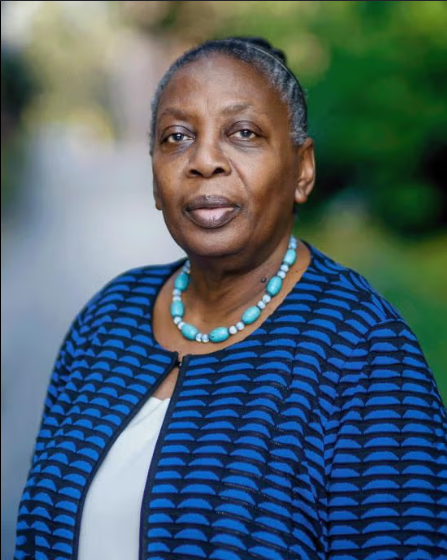
The pinnacle of her academic preparation arrived in 1991. She received a joint doctoral degree in sociology and forestry and environmental studies from Yale. This achievement made her the first african american woman to earn a doctoral degree from the Yale School of Forestry & Environmental Studies.
This historic milestone foreshadowed her career-long dedication to diversifying the environment sector. By excelling in predominantly white academic spaces, she gained the credibility needed to dismantle systemic barriers from the inside. Her presence at Yale was a quietly revolutionary act that opened doors for many who followed.
- Interdisciplinary Mastery: Taylor combined sociology with forestry to analyze social inequalities.
- Institutional Pioneer: She navigated elite spaces while maintaining a critical perspective on their limitations.
- Historic Achievement: As an african american leader, she shattered a glass ceiling that had existed for over a century.
Early Academic Career and International Research
Transitioning from student to scholar, Dr. Taylor utilized prestigious fellowships to examine environmental justice through a comparative, global lens. Her early career path reflected a deep desire to see if environmental exclusion was a universal phenomenon. By looking past local borders, she began to uncover systemic patterns that define how diverse communities interact with nature.
National Science Foundation Post-Doctoral Fellowship in Britain
In 1991, Dr. Taylor received a National Science Foundation Minority Post-doctoral Fellowship to study ethnic minority environmental activism. This prestigious award allowed her to conduct groundbreaking research across the Atlantic. She affiliated with the University College of London’s Department of Geography during this intensive period.
This international work revealed that racial dynamics in the environment transcended the united states. Her time in London exposed how colonial histories shaped access to green spaces and environmental movements. She observed that the ethnically marginalized in Europe faced barriers remarkably similar to those in American cities.
Her research in Britain illuminated how comparative dimensions of environmental racism manifested across different national contexts. By broadening her analytical framework, she moved beyond American-specific dynamics to identify global trends. This experience proved that environmental movements everywhere struggled with significant diversity failures.
| Year | Fellowship Type | Institution | Research Focus |
|---|---|---|---|
| 1991 | NSF Post-doctoral | University College London | Ethnic Minority Activism |
| 1992 | Ford/Rockefeller | University of Michigan | Poverty and Policy |
Ford Foundation and Rockefeller Foundation Research at University of Michigan
In 1992, Dr. Taylor returned to the united states to accept a combined fellowship from the Ford and Rockefeller Foundations. This position focused on poverty and the underclass at the University of Michigan. She held joint appointments between the Ford School of Public Policy and the School of Social Work.
This interdisciplinary approach allowed her to connect environmental concerns with social welfare science. By linking public policy with poverty research, she identified how systemic inequality persists in urban planning. Her work at Michigan was enriched by the international perspectives she gained just a year prior.
“The early career experiences of Dr. Taylor established a reputation for rigorous comparative research that identifies systemic patterns rather than isolated incidents.”
These early roles established her as a leader capable of navigating complex institutional landscapes. She successfully bridged the gap between social justice and environmental protection. This foundation prepared her for future leadership roles and global policy contributions.
- International Scope: Her research proved environmental exclusion is a global issue.
- Interdisciplinary Roots: She successfully merged public policy with social work.
- Systemic Analysis: Her findings highlighted patterns of racism across different colonial histories.
- Global Readiness: This period prepared her for later work with the United Nations.
Groundbreaking Scholarship on Environmental Racism

The landscape of environmental sociology shifted forever when Dr. Taylor began investigating the racial dynamics of ecological activism. Her early academic work did more than just provide data; it offered a new lens to view civil rights within the context of nature. By analyzing environmental justice through an analytical framework, she challenged the long-held myths of the mainstream movement.
Dr. Taylor’s research highlighted that systemic exclusion was the primary driver of low participation rates among marginalized groups. She moved the conversation away from individual blame and toward institutional accountability. This shift helped scholars understand that environmentalism was never a “white-only” concern but rather a space with high entry barriers.
Blacks and the Environment: Toward Explanation Concern and Action Gap
In 1989, Dr. Taylor published her landmark article regarding racial differences in environmental engagement. She looked toward explanation concern to understand why there was a perceived lack of involvement in green causes. Her findings suggested that the explanation concern action model required a deeper look at social structures rather than cultural values.
Her data revealed that the action gap blacks experienced was not due to a lack of interest in the earth. Instead, it was the result of a self-reinforcing cycle of exclusion within major conservation groups. This concern action gap occurred because many organizations failed to address the specific needs and safety of people of color.
By focusing on the toward explanation concern approach, Taylor dismantled the stereotype that the underrepresented were indifferent to pollution. She showed that the explanation concern action disconnect was a product of limited access to resources. This research documented that the action gap blacks faced was a direct consequence of historical racism in policy and planning.
Ultimately, her work on the concern action gap forced a total rethink of how environmentalism is marketed and managed. She successfully argued that everyone has a stake in the environment, even if they lack a seat at the table. This foundational study paved the way for more inclusive policies in the decades that followed.
The Environmental Justice Paradigm Framework
Dr. Taylor developed the environmental justice paradigm to bridge the gap between social equity and ecological health. This framework transformed environmental problems into human rights issues that could not be ignored. It provided the necessary action steps for activists to demand cleaner air and water based on civil rights laws.
Through this environmental justice framework, she argued that race and class determine who bears the burden of pollution. Her scholarship proved that conservation priorities often ignored urban centers where marginalized people lived. This new action-oriented perspective allowed for a broader coalition of researchers and community leaders to join forces.
| Framework Aspect | Traditional Conservation | Environmental Justice Paradigm |
|---|---|---|
| Primary Focus | Wildlife and Wilderness | Human Health and Equity |
| Social View | Often Exclusive | Radically Inclusive |
| Core Goal | Protection of Nature | Ending Environmental Racism |
The environmental justice paradigm is now a standard tool for analyzing how power and privilege shape our world. It moved the scholarly focus from simple preservation to the complex reality of industrial impact. Dr. Taylor’s pioneering vision remains the cornerstone of modern efforts to create a fair and sustainable future for all.
The State of Diversity in Environmental Organizations Report
Dr. Taylor decided to replace anecdotal evidence with hard facts when she investigated the racial composition of leading green groups. She observed a persistent gap between the rhetoric of environmental leaders and the reality of their staff rooms. Many leaders claimed a lack of data prevented them from making systemic changes. She chose to dismantle this excuse through a landmark 2014 report that focused on diversity in the sector.
2014 Report Findings: 14.6 Percent Minority Representation
Commissioned by the Green 2.0 initiative, this study sent shockwaves through the entire conservation movement. It revealed that a minority presence in these organizations stood at only 14.6 percent. This figure was a striking contrast to the general population, where people of color made up 38 percent. The findings suggested that the “green ceiling” was very real and incredibly thick.
The report further exposed a hierarchy that limited where BIPOC employees could work. Most occupied entry-level or mid-level roles in human resources and accounting. Others worked in community organizing, which often kept them away from the central hubs of power. These employees rarely advanced to senior leadership positions where they could influence strategic decisions.
Dr. Taylor’s research highlighted a massive underrepresentation that could no longer be ignored. Environmental leaders had long demanded proof of low inclusivity levels before taking action. By providing this evidence, she forced the industry to look in the mirror. The era of claiming ignorance regarding racial disparities had finally come to an end.
Accountability Transparency and Institutional Resistance
Instead of owning these failures, many groups deflected responsibility. They blamed a perceived lack of qualified applicants or limited job openings. Some cited the absence of specialized managers as the reason for their static demographics. Dr. Taylor’s work showed these were often institutional barriers rather than a lack of available talent.
“The report aroused a firestorm of controversy, establishing essential evidence for advocates demanding concrete steps toward inclusive representation.”
Institutional resistance became even more visible in the years following the first study. The proportion of groups reporting their race and gender data actually declined. In 2014, only 6 percent of groups were transparent about their demographics. By 2018, this figure dropped to a dismal 3 percent, suggesting a retreat from public accountability.
Dr. Taylor responded with an updated 2018 report examining over 2,000 nonprofits via GuideStar. Her findings confirmed that many organizations remained predominantly white despite making public pledges for change. They continued to avoid revealing internal metrics while the American population moved toward a majority-minority future. Key challenges included:
- Decreasing Transparency: Fewer groups shared demographic details over time.
- Leadership Stagnation: Senior roles remained largely inaccessible to people of color.
- Defensive Rhetoric: Groups prioritized excuses over active recruitment strategies.
| Metric Category | 2014 Key Finding | 2018 Progress / Status |
|---|---|---|
| Staff Representation | 14.6% BIPOC/non-white staff | Persistent “Green Ceiling” |
| Transparency Data | 6% of groups reported | Dropped to 3% reporting |
| US Population Context | 38% people of color | Moving toward majority-minority |
| Primary Report Focus | Mainstream organizations | Over 2,000 nonprofits analyzed |
Major Scholarly Works and Historical Analysis

Dr. Taylor’s prolific literary career has fundamentally altered how we interpret the intersection of social power and the natural world. Her books serve as a rigorous archive of systemic exclusion and resistance. By merging sociology with ecological study, she has exposed the deep-seated roots of inequality in the United States.
The Environment and the People in American Cities 1600s to 1900s
In 2009, Taylor published The Environment and the People in American Cities: 1600s-1900s. This work stands as the first comprehensive history of environmental injustice in America. It meticulously documents five centuries of urban challenges, focusing on how race, class, and gender shaped the urban landscape.
The book earned the 2010 Allan Schnaiberg Outstanding Publication Award for its intersectional analysis. Taylor argues that inequalities were not accidental. Instead, they were built into the fabric of American cities through both deliberate and unintentional mechanisms. This text forces readers to look past simple “progress” narratives to see the struggle of marginalized groups.
Dr. Taylor’s scholarship demands a total re-evaluation of how we view urban development. Her research highlights that the struggle for clean air and water is as old as the nation itself. She bridges the gap between historical data and modern sociology, establishing a new standard for academic inquiry.
Toxic Communities: Environmental Racism Industrial Pollution and Residential Mobility
Published in 2014, Toxic Communities: Environmental Racism, Industrial Pollution, and Residential Mobility became a “standard-bearer” for the field. In this volume, Taylor examines seven distinct theories to explain why racially underrepresented live near hazardous sites. She tackles the complex relationship between environmental racism and industrial pollution.
One major contribution is her challenge to the “mobility” assumption. Many scholars previously assumed that communities could simply move away from danger. Taylor proves that racially discriminatory housing policies often trapped people in high-risk zones. This structural confinement ensures that poor populations bear a disproportionate burden of waste.
She reveals how power and privilege dictate who breathes clean air. Her analysis incorporates urban development studies that many environmental historians previously ignored. This book provides an essential framework for understanding why toxic facilities are often located in specific neighborhoods.
| Book Title | Main Theme | Key Contribution |
|---|---|---|
| The Environment and the People | Urban Inequality | First multi-century analysis |
| Toxic Communities | Industrial pollution | Mobility theory critique |
| Rise of Conservation Movement | Power and Privilege | Social history of parks |
The Rise of the American Conservation Movement: Power Privilege and Environmental Protection
In 2016, Taylor released The Rise of the American Conservation Movement: Power, Privilege, and Environmental Protection. This sweeping social history examines the era from the mid-1800s to the early 1900s. It uncovers how elite agendas influenced park establishment and outdoor recreation across the country.
The book demonstrates that race, class, and gender were central to the movement’s formation. Taylor’s history reveals that early conservationists often ignored the needs of diverse communities. This work inspires readers to reconsider everything they thought they knew about protected wilderness and the “founding fathers” of the green movement.
“The trilogy of books represents a systematic effort to rewrite environmental history by centering previously marginalized perspectives.”
These major works have reshaped the academic landscape by centering the voices of those who bore the costs of industrialization. Her systematic effort documents how toxic communities grew out of the direct consequences of environmental racism. Today, her books are standard references for anyone studying the intersection of society and the environment.
University of Michigan: Institutional Leadership and Change
While many scholars study inequality, Dr. Dorceta Taylor used her time at the University of Michigan to actively dismantle it through administrative and academic roles. Her work at this institution proved that academic excellence requires more than just publishing papers. It demands a deep commitment to reshaping the academic environment itself to be truly inclusive and welcoming for everyone.
Through her various positions, she showed that a single faculty member could catalyze massive shifts in institutional culture. She did not just teach about justice; she built the systems that made it possible. This period of her career was marked by a series of high-level honors and the creation of lasting pathways for future scholars of color.
James E. Crowfoot Collegiate Professor of Environmental Justice
In 2015, Dr. Taylor’s appointment to this prestigious professorship marked a historic shift for the university. This role gave environmental justice the legitimacy it deserved as a core academic field. It signaled to the world that the study of social harm and nature was an essential part of a top-tier science education.
She used this platform to bridge the gap between heavy academic research and real-world practice. Her studies on the lack of institutional diversity in green groups informed how she handled her own department. She wanted to ensure that the school did not repeat the mistakes of the past. Her leadership validated the idea that a scholar’s social impact is just as important as their data sets.
Her teaching also prepared many students to enter the workforce with a focus on systemic change. She mentored them to see beyond the surface of conservation issues. In 2018, she received the Distinguished Faculty Achievement Award. This prize proved that work within the environment and sustainability fields is most effective when it includes a social lens.
This professorship was not just a title but a tool for transformation. It allowed her to advocate for more resources and attention toward marginalized communities. By doing so, she helped the university move toward a more modern and equitable academic model.
Director of Diversity Equity and Inclusion at School for Environment and Sustainability
As the Director of Diversity, Equity, and Inclusion (DEI), Dr. Taylor faced the challenge of institutional resistance head-on. She worked hard to transform the recruitment methods used by the school. She also updated the curriculum to reflect a wider range of human experiences and cultural histories.
These changes helped the school better serve students from underrepresented backgrounds who had often felt ignored. She wanted everyone to have a fair chance to thrive in high-level programs. Her 2012 Harold R. Johnson Diversity Service Award honored this long-term dedication to building a better campus even before her official director role began.
Under her guidance, the school adopted new ways to track its progress in equity. She pushed for transparency in how the institution hired its staff and faculty. This effort was not just about reaching quotas; it was about changing the very soul of the institution to promote environmental equity for all people.
| Award Name | Organization | Year |
|---|---|---|
| Harold R. Johnson Diversity Service Award | University of Michigan | 2012 |
| Burton V. Barnes Award for Academic Excellence | Sierra Club Michigan Chapter | 2017 |
| Distinguished Faculty Achievement Award | University of Michigan | 2018 |
Her work reached far outside the university walls. In 2017, she earned the Burton V. Barnes Award for Academic Excellence from the Sierra Club Michigan Chapter. This award highlighted her ability to link academic theory with activism. By pushing for equity, she changed how the next generation of leaders approaches diversity and leadership.
Yale School of the Environment: Senior Leadership Role

Transforming institutional structures requires a blend of academic rigor and administrative power, a combination Dr. Taylor brought to Yale in July 2020. This appointment represented a poetic return to the very institution where she broke barriers nearly three decades earlier. As a full professor, she now occupies a space where she once made history as the first African American woman to earn a doctoral degree.
Her presence at the Yale School of Forestry and Environmental Studies marks a new chapter for the university. She uses her position to bridge the gap between historical scholarship and modern institutional policy. This role allows her to mentor a new generation of scholars while reshaping the school’s legacy from the inside out.
Senior Associate Dean of Diversity Equity and Inclusion
In 2021, Dr. Taylor stepped into a newly created role that signaled a massive shift in institutional priorities. She became the first Senior Associate Dean of Diversity, Equity, and Inclusion at the Yale School of the Environment. This senior leadership position serves as a mandate for structural transformation rather than just a symbolic title.
She focuses on embedding equity into the core curriculum and recruitment strategies of the university. Her work ensures that the institutional culture reflects the diversity of the global communities it seeks to protect. By holding this authority, she influences how academic leaders approach diversity within elite scientific circles.
Her leadership helps students understand that leaders cannot solve environmental issues in a social vacuum. She works to dismantle institutional resistance while fostering a sense of belonging for scholars from all backgrounds. This role allows her to build a bridge between theoretical concepts and actual systemic change.
Justice Equity Diversity and Sustainability Initiative JEDSI
Dr. Taylor launched the Justice, Equity, Diversity, and Sustainability Initiative (JEDSI) in 2021 to redefine environmental research. This initiative examines the deep relationships between social inequalities and environmental outcomes. It provides a framework that integrates lived experiences into the scientific and policy-making process.
JEDSI moves beyond simple buzzwords to address the root causes of environmental injustice. By focusing on equity, the program reshapes how future leaders approach the concept of sustainability. It creates a space where students can investigate the ties between history, race, and the natural world.
The initiative covers eight primary areas, including food sovereignty and workforce dynamics. This holistic approach ensures the school views diversity as a vital component of environmental resilience. Through JEDSI, Dr. Taylor has built the necessary infrastructure to keep these issues at the forefront of the academic experience.
She emphasizes that effective sustainability work requires addressing systemic inequalities and centering marginalized voices. This combination of teaching and leadership demonstrates how one scholar can create lasting change. Her vision ensures that equity remains a central pillar of the Yale School of the Environment.
| JEDSI Focus Area | Strategic Goal | Core Focus |
|---|---|---|
| Environmental History | Analyzing Past Inequities | Historical context and power patterns |
| Food and Farming | Sovereignty and Access | Food justice and urban agriculture |
| Workforce Dynamics | Institutional Transparency | Professional pathways for people of color |
| Outdoor Experiences | Perception and Attitudes | Inclusion in nature and conservation |
Multicultural Environmental Leadership Development Initiative
Dr. Taylor’s practical diversity initiatives, such as MELDI, provided the necessary infrastructure to challenge systemic exclusion in the green workforce. She recognized that scholarly papers alone would not dismantle the “green ceiling” found in many environmental organizations. To move the needle, she transitioned from analyzing exclusion to building the very pipelines that could end it.
Her work emphasizes that representation is not a passive outcome but a result of deliberate institutional design. By creating formal programs, she ensured that marginalized voices moved from the periphery of environmentalism to the center of decision-making. These initiatives transformed the way foundations and nonprofits view their own recruitment and retention strategies.
MELDI Foundation and National Conference Organization
In 2003, Dr. Taylor founded the Multicultural Environmental Leadership Development Initiative (MELDI) using critical funding from the Joyce Foundation. This initiative served as a vital hub for assessing the actual state of diversity within the sector. It provided the first real infrastructure to move beyond anecdotal evidence of exclusion toward data-driven strategies for inclusion.
To foster dialogue, she organized a national conference in 2005 and an international gathering in 2007. These events allowed various groups to assess current barriers and plan collective interventions. These were not just talk shops; they were tactical summits where researchers and practitioners mapped out the future of a more equitable movement.
The academic impact of these gatherings was significant and long-lasting. Papers from the 2007 international conference were compiled and published in “Environment and Social Justice: An International Perspective.” This publication disseminated strategic recommendations to a global audience hungry for reform. It ensured that the lessons learned from these conferences influenced both scholars and policymakers alike.
Furthermore, Dr. Taylor led four major diversity studies supported by the Joyce, Ford, and National Science Foundations. These studies created an undeniable evidence base regarding the exclusionary practices of many environmental groups. With hard data in hand, these institutions could no longer pretend that their lack of representation was an accident of geography or interest.
Environmental Fellows Program with Environmental Grantmakers Association
In 2015, Dr. Taylor launched the Environmental Fellows Program (EFP) through a strategic collaboration with the Environmental Grantmakers Association. This national program targets graduate students from underrepresented backgrounds, offering them 12-week paid summer internships. It moves past the “entry-level” trap by preparing professionals for mid-level and senior-level roles in environmental organizations.
The EFP focuses on philanthropy and nonprofit leadership, areas where minority representation has historically been the lowest. By placing fellows in influential positions at partner foundations, the program demystifies the world of environmental funding. This hands-on experience provides the mentorship and social capital necessary for long-term career success in a competitive field.
Success of the program relies on the continued collaboration of major funders who recognize the value of a diverse workforce. This collective investment proves that addressing systemic barriers requires more than just good intentions. It demands a sustained financial commitment to professional development and career placement.
| Funding Partner | Contribution Type | Program Goal |
|---|---|---|
| C.S. Mott Foundation | Financial Support | Reduce career entry barriers |
| Island Foundation | Placement Partner | Mentorship and professional experience |
| New York Community Trust | Strategic Funding | Support mid-level leadership growth |
| Pisces Foundation | Operational Support | Enhance diversity in philanthropy |
Through the Environmental Fellows Program, Dr. Taylor has demonstrated that the “pipeline problem” is often an “access problem.” By providing paid opportunities and high-level networking, she has effectively lowered the hurdles for professionals of color. Her work continues to challenge the environmental movement to evolve into a truly inclusive and representative force for change.
Doris Duke Conservation Scholars Program

Dr. Taylor has long understood that changing the face of the environmental movement requires more than just rhetoric; it requires a paved road for the next generation. She recognized that talent exists in every community, but access to elite networks remains unevenly distributed. By partnering with the Doris Duke Charitable Foundation, she turned this vision into a tangible reality for hundreds of emerging leaders.
Two-Summer Diversification Pipeline at Yale
Dr. Taylor launched the Yale School of the Environment branch of the Doris Duke Conservation Scholars Program in 2015. This initiative creates a unique two-summer internship experience designed to bolster diversity within the environmental sector. When she moved to Yale in 2020, the program followed her, proving how a scholar’s personal mission can transform an entire institution.
The program provides approximately 20 undergraduates each year with a structured path toward professional success. These students spend their first summer engaged in intensive laboratory research to build their technical scientific skills. This foundation ensures they possess the academic rigor required for high-level environmental careers.
The second summer shifts focus toward real-world application through internships with various environmental groups. This dual approach helps participants build professional networks while applying their research to pressing conservation challenges. It effectively bridges the gap between classroom theory and the practical demands of the workforce.
New Horizons in Conservation Conference Annual Gatherings
The New Horizons in Conservation Conference emerged in 2018 as a vital space to celebrate and assess diversity progress. The inaugural gathering in Washington, DC, drew over 200 professionals and scholars, the majority of whom were people of color. Dr. Taylor described these attendees as “multi-faceted and talented” individuals poised for leadership roles.
This event quickly evolved into an annual tradition that attracts a global audience. The 2021 virtual conference, hosted by Yale, saw over 800 participants from multiple countries join the conversation. These gatherings provide a supportive ecosystem where students can find mentors and peers who share their lived experiences.
The conference programming includes extensive speaker series, hands-on workshops, and local field trips. These activities strengthen the critical pipelines built by conservation pathway programs across the United States. By fostering community, the initiative ensures that new professionals do not just enter the field but thrive within it.
| Year | Event or Milestone | Primary Impact |
|---|---|---|
| 2015 | DDCSP Branch Launch | Established a 2-summer pipeline for underrepresented undergraduates. |
| 2018 | Inaugural New Horizons | Gathered 200+ professionals of color to assess sector diversity. |
| 2021 | Virtual Global Forum | Expanded reach to 800+ participants during the global pandemic. |
| 2022 | New Haven Gathering | Solidified the conference as a permanent annual professional hub. |
Dr. Dorceta Taylor Environmental Justice Scholarship Activism Systemic Issues in Historical Context

Peeling back the layers of pristine wilderness myths, Dr. Taylor exposes the exclusionary foundations of early American environmentalism. Her research acts as a historical mirror, reflecting the often-ignored prejudices that shaped the early days of nature preservation. She meticulously documents how racism, discrimination, sexism, and classism were not just incidental but rampant within the early environmental movement.
By challenging sanitized historical narratives, she forces a confrontation with the ugly truths of the past. Dr. Taylor’s work provides essential context for understanding why contemporary diversity efforts often face institutional resistance. This resistance is frequently rooted in foundational ideologies that historically prioritized race-based privilege over inclusive protection.
Her scholarship bridge the gap between historical analysis and modern activism. It demands a complete reimagining of what it means to protect the earth for everyone, not just a select few. The following sections detail the specific figures and organizations that Dr. Taylor has scrutinized to reveal these systemic issues.
Theodore Roosevelt John James Audubon and Environmental Movement Racism
Dr. Taylor’s research highlights the stark contradictions found in the lives of early conservation icons. Theodore Roosevelt is celebrated for creating national parks, yet his writings reveal a deep-seated animus toward indigenous peoples. In his 1893 book, “The Wilderness Hunter,” he promoted a racial hierarchy that justified the displacement of Native Americans.
The land and resources belonged to white settlers who were tillers of the soil, not mere wilderness wanderers.
— Theodore Roosevelt, 1893
This ideology suggests that the conservation movement was built on the active exclusion of those who had lived on the land for millennia. Dr. Taylor notes that such rhetoric framed white settlers as the only legitimate stewards of nature. This perspective effectively erased the environmental contributions and rights of BIPOC populations.
Similarly, John James Audubon presents a troubling dual legacy that Dr. Taylor illuminates for modern readers. While he documented the decimation of bird species with unmatched detail, he also participated in the buying and selling of human beings. Her analysis shows how racism and environmental concern often coexisted without friction in the 19th century. We cannot ignore his status as a slaveholder when assessing his contributions to the environmental movement today. Recognizing this complexity is vital for a truthful history of race and nature in America.
Sierra Club Save the Redwoods League and Eugenics Legacy
The institutional roots of modern environmentalism are equally complex and often exclusionary. Dr. Taylor’s work exposes that several founders of the Sierra Club and the Save the Redwoods League were prominent eugenicists. These individuals used their platforms to promote ideologies of racial superiority while advocating for forest preservation. This racism was baked into the very structures of these organizations for decades.
- Exclusionary Policies: People of color and working-class whites were often barred from membership well into the 20th century.
- Ideological Bias: Early leaders viewed nature as a playground for the elite, rather than a common good for all.
- Persistent Resistance: Institutional change was slow, even after the heights of the civil rights era.
A pivotal moment in this history occurred in 1972 when Sierra Club members voted on a critical internal issue. They were asked if the Club should concern itself with the environmental problems of the urban poor and ethnically marginalized. Most members voted no, showing how the conservation movement remained detached from social justice. However, Dr. Taylor points out that younger members were more likely to support these urban concerns, hinting at a coming generational shift.
| Organization | Foundational Ideology | Demographic Impact on Race |
|---|---|---|
| Sierra Club | Elite Preservationism | Excluded BIPOC/non-white members until late 20th century. |
| Save the Redwoods | Eugenics & Heritage | Promoted racial hierarchies within the conservation movement. |
| National Parks | Wilderness Myth | Led to the displacement of Native American ethnotribes. |
Dr. Taylor’s scholarship has accelerated this generational shift by demanding transparency and accountability. By documenting the race-based barriers of the past, she provides the tools to dismantle them in the present. Her work ensures that the legacy of the environmental movement is no longer sanitized for comfort.
International Work and Global Sustainability Frameworks

While many associate her work with domestic issues, Taylor’s analytical frameworks have significantly altered international sustainability policy. Her research reaches far beyond the borders of the united states to influence how global organizations approach development. Academia notes that her justice-centered insights provide universal tools for identifying exclusionary practices in any nation.
By examining the roots of environmental racism, she has provided a blueprint for international affairs scholars. These experts now use her work to challenge governance structures that replicate colonial patterns. Her influence ensures that global sustainability is not just about ecology, but also about human dignity and equity.
United Nations 2030 Sustainable Development Goals Contributions

Dr. Taylor’s scholarly contributions inform international frameworks like the United Nations 2030 Sustainable Development Goals. Her research demonstrates that effective climate action requires addressing systemic inequalities rather than treating them as separate concerns. This perspective has pushed a change in how international bodies integrate equity with environmental targets.
Academia has embraced her findings to argue that “green” goals are unattainable without social justice. By incorporating her insights on environmental policy, global leaders can better understand the needs of marginalized populations. Her work highlights that sustainability must empower the Global South to be truly successful.
The transition to a sustainable future must be inclusive, ensuring that the most vulnerable populations are not left behind in the pursuit of ecological balance.
— Analysis of Global Equity Trends
Nature-Based Solutions Science-Based Targets and Green Infrastructure
Her work on nature-based solutions has influenced how the international science community approaches ecosystem restoration. She emphasizes that these interventions must benefit local residents rather than causing their displacement. This research informs science-based targets by adding much-needed accountability mechanisms to corporate and governmental commitments.
The green infrastructure movement also reflects Taylor’s scholarship on urban environmental improvements. She demonstrates that new parks or transit can either reduce or exacerbate inequalities based on policy priorities. Her analysis shows that these issues are just as prevalent in Europe and Asia as they are in the united states.
Ultimately, her research catalyzes a change in how global institutions distribute the costs and benefits of conservation. Scholars frequently cite her when examining how urban agriculture and green jobs can revitalize neglected neighborhoods. Her legacy is a world where “green” means fair for every community member.
| Framework / Initiative | Dr. Taylor’s Core Influence | Impact on Global Practice |
|---|---|---|
| UN 2030 SDGs | Integration of racial equity into climate goals | Prioritizes marginalized voices in development |
| Nature-Based Solutions | Community-centered restoration models | Prevents displacement during conservation |
| Science-Based Targets | Social accountability for corporate actors | Ensures equitable distribution of costs |
| Green Infrastructure | Anti-gentrification urban planning | Protects residents during city improvements |
Food Insecurity Research and Community-Based Work

Dr. Dorceta Taylor’s intellectual reach extends beyond broad environmental theory into the tangible, daily realities of food justice in urban settings. Her scholarship proves that environmental justice is not just about pollution; it is about the resources necessary for survival. She bridges the gap between urban planning and public health through a lens of equity.
This focus on food security highlights how systemic inequalities manifest in the most basic human need: nutrition. Her work in this field reveals that where a person lives often determines what they can eat. By engaging directly with residents, she connects historical land-use policies to modern health outcomes.
Food Access in Michigan FAIM Project 2012 to 2018
From 2012 to 2018, Dr. Taylor led a major effort to understand why many households struggle to find healthy food. She acted as the principal investigator for the Food Access in Michigan (FAIM) project. This study received a five-year grant from the United States Department of Agriculture to explore racial and class disparities.
The project brought together many experts from different schools. Collaborators included Grand Valley State University and Michigan State University. Other partners came from the University of Michigan-Flint, Lake Superior State University, and the University of Wisconsin-Madison.
This team effort showed the work required to tackle complex social issues across multiple institutions. The researchers wanted to see how environmental justice relates to the food systems in urban communities. They investigated how demographic traits influence the placement of grocery stores and farmers’ markets.
The FAIM website launched in August 2018 to share these findings with the public. It provided a platform for looking at how location and income affect local food initiatives. The team also studied nutrition interventions to see which methods actually improved resident health. They aimed to move the conversation from individual blame to structural solutions.
Race Class Disparities in 18 Michigan Cities Analysis
The study focused on 18 small and medium-sized cities across the state of Michigan. Researchers looked at places like Flint, Saginaw, and Grand Rapids. They also visited Upper Peninsula towns like Sault Ste. Marie and St. Ignace to ensure a broad geographic scope. These areas have large populations of people of color, including Blacks, Hispanics, Native Americans, Asians, and Arabs.
The data showed a clear link between race and the quality of food outlets available to residents. Predominantly white neighborhoods often had much better access to fresh produce and full-service supermarkets. In contrast, vulnerable communities faced structural barriers that limited their healthy choices to expensive convenience stores.
| Region | Key Cities Studied | Primary Research Focus |
|---|---|---|
| Southeast | Ypsilanti, Taylor, Dearborn | Racial Disparities |
| Central | Flint, Lansing, Kalamazoo | Class & Access |
| West | Benton Harbor, Holland | Food Outlet Density |
Her research proved that race and class are the main drivers of food insecurity in these urban centers. The study examined how behavioral interventions fail when people lack the physical means to buy healthy goods. This analysis showed that individual-focused solutions cannot overcome deep-seated systemic inequalities. By documenting these patterns, Dr. Taylor helped communities of color advocate for better resources and fairer food distribution.
Predecessors Contemporaries and the Environmental Justice Movement

While many celebrate the history of conservation, the environmental justice movement actually grew from the cracks where mainstream activism failed marginalized communities. It emerged from an urgent necessity to bridge the gaps between racism, discrimination, and ecological health. Dr. Taylor navigated this complex terrain by synthesizing these once-separate fields into a cohesive narrative of survival and equity.
Robert Bullard Paul Mohai and Foundational Environmental Justice Scholarship
Dr. Robert Bullard and Dr. Paul Mohai stand as Taylor’s most significant contemporaries in the academic world. Together, they established the rigorous analytical frameworks that now anchor the modern justice movement. Their collaborative research demonstrated how environmental racism operates through deliberate institutional policies and spatial arrangements.
These scholars did not limit their efforts to the safe confines of the ivory tower. They actively bridged the gap between university research and grassroots organizing to build a resilient movement. This synergy allowed them to challenge the historical exclusion of vulnerable groups by mainstream environmental organizations.
By documenting how toxic facilities were consistently placed near marginalized homes, they proved that geography is often destiny. Their work provided the empirical evidence needed to fight for social justice within the legal system. This foundational scholarship ensured that people of color could finally see their lived experiences reflected in academic data.
Their collective impact created a paradigm shift that redefined what it means to be an environmentalist. They moved the conversation from simply protecting “the wild” to protecting the “human environment.” This transition was essential for making the field relevant to urban populations and industrial workers alike.
Rachel Carson Silent Spring and United Farm Workers Organizing Gap
Rachel Carson’s Silent Spring, published in 1962, remains a brilliant milestone for the environmental justice movement. It exposed the terrifying dangers of pesticides and helped launch the modern era of ecological awareness. However, her work focused primarily on wildlife and general human health, overlooking specific labor disparities.
This oversight became clear when the United Farm Workers (UFW) began their fight against indiscriminate organophosphate use. These chemicals posed a direct threat to worker safety, particularly for seasonal-immigrant laborers of color. Unfortunately, the contemporary justice movement found itself at a crossroads regarding whose safety mattered most.
Mainstream groups like the Audubon Society and the Sierra Club famously declined to support the UFW’s cause. They preferred organophosphates because these chemicals caused less harm to wildlife than the notorious DDT. This massive organizing gap in the movement illustrated a preference for nature protection over the lives of marginalized human communities.
Dr. Dorceta Taylor intersecting environmental and social justice
Dr. Taylor’s scholarship addresses these historical blindspots by connecting the environmental justice movement with broader social justice advocacy. She acknowledges Carson’s groundbreaking contributions while critiquing the failure to center the experiences of the farmworker. This evolution ensures that the fight for a clean planet does not leave the most vulnerable workers behind.
The historical failure to support the UFW revealed why a dedicated justice movement had to exist. It exposed a world where mainstream environmentalism prioritized scenic landscapes over the health of people of color. Dr. Taylor’s work systematically dismantles these old hierarchies to create a more inclusive future.
Ultimately, the growth of the justice movement reflects a shift toward holistic equity where no community is a “sacrifice zone.” By learning from the limitations of predecessors, modern activists can build stronger coalitions. This progress ensures that environmental protection and civil rights are no longer treated as competing interests.
| Key Figure or Group | Primary Focus | Movement Contribution |
|---|---|---|
| Rachel Carson | Wildlife and Pesticide Toxicity | Launched modern environmental awareness but missed labor equity. |
| United Farm Workers | Occupational Safety and Health | Exposed the gap between conservation groups and human rights. |
| Bullard & Mohai | Environmental Racism Frameworks | Established data-driven links between race and toxic exposure. |
| Dr. Dorceta Taylor | Institutional Diversity and Equity | Analyzes systemic barriers within environmental organizations and history. |
Awards Recognition and Academia’s Response to Impact

Academia’s reaction to Dr. Taylor’s transformative scholarship is best measured by the prestigious awards that have validated her lifelong mission. These honors reflect a significant shift in how institutional leaders view systemic environmental issues. Organizations that once ignored these problems now recognize her trailblazing contributions to the field.
The sheer variety of these accolades demonstrates her influence across many different sectors. From sociological associations to national conservation groups, the recognition has been both broad and deep. This institutional response marks the transition of environmental justice from a niche concern to a central pillar of academic study.
National Science Foundation Presidential Award for Excellence in Mentoring
In 2018, Dr. Taylor received the National Science Foundation Presidential Award for Excellence in Science, Mathematics & Engineering Mentoring. This honor highlighted her extensive work in supporting students from underrepresented backgrounds throughout their academic careers. It validated the idea that mentoring is a core academic responsibility rather than a secondary task.
By fostering diversity in STEM, she changed the professional pipeline for future environmental leaders. This award proves that her impact goes far beyond her own research publications. It acknowledges the human capital she has built within the scientific community over decades.
Her efforts ensure that the next generation of scientists reflects the communities they serve. This presidential recognition remains one of the highest honors for any American educator. It serves as a testament to her dedication to building a more inclusive scientific future.
| Award Name | Year | Awarding Institution |
|---|---|---|
| Allan Schnaiberg Outstanding Publication Award | 2010 | American Sociological Association |
| Harold R. Johnson Diversity Service Award | 2012 | University of Michigan |
| Wilbur Cross Medal | 2020 | Yale Graduate School Alumni Association |
| Bouchet Leadership Medal | 2025 | Yale University |
National Audubon Society Women in Conservation Rachel Carson Award
The 2018 Women in Conservation Rachel Carson Award from the National Audubon Society carries unique historical weight in her career. Dr. Taylor’s scholarship previously exposed how groups like Audubon often excluded people of color and ignored farmworker safety concerns. Receiving this award signals a meaningful shift in the conservation movement’s internal priorities.
It acknowledges her role in pushing these large organizations toward more inclusive and ethical practices. This recognition bridges the gap between her past sharp criticisms and future institutional change. Her voice has turned from a critique on the outside to a guiding light from within.
It highlights a new era where environmentalism must account for social justice and racial parity. This award remains a symbol of reconciliation between old institutions and modern scholarship. It proves that even established organizations can evolve when confronted with rigorous data and persistent activism.
Freudenburg Lifetime Achievement Award and University of Michigan Distinguished Faculty Achievement
Her disciplinary impact is further confirmed by the 2018 Freudenburg Lifetime Achievement Award from the Association of Environmental Science and Studies. This followed the 2015 Fred Buttel Distinguished Contribution Award from the American Sociological Association. These honors show that both sociology and environmental studies value her unique analytical lens.
At the University of Michigan, her work earned her the Distinguished Faculty Achievement Award in 2018. She consistently fought for equity within the faculty ranks and the broader student body. Her efforts helped rewrite the rules for institutional success in the modern era.
Academia’s response to Dr. Taylor’s impact is reflected in the extraordinary range and prestige of awards she has received, from disciplinary organizations recognizing scholarly contributions to conservation groups acknowledging work they historically marginalized.
These awards reflect a lifetime of challenging status quo thinking in major research universities. She has successfully moved from being a participant to a shaper of academic culture. Her legacy is now firmly embedded in the institutions she once sought to reform.
Wilbur Cross Medal and American College of Environmental Lawyers Fellow
Yale University recognized its first African American woman PhD graduate with the 2020 Wilbur Cross Medal. This award is one of the highest honors a Yale alumnus can receive for exceptional professional achievement. It marks a full-circle moment for a scholar who once challenged the university’s own historical narratives and environmental frameworks.
In 2021, she was inducted as a Fellow in the American College of Environmental Lawyers. This membership shows how her research influences legal frameworks and promotes equity in environmental law. It bridges the gap between theoretical academic research and the practical legal structures governing our world.
Her 2025 Bouchet Leadership Medal further cements her status as a global authority in diversity and social justice leadership. These accolades demonstrate that the legal and academic worlds now treat environmental justice as a cornerstone of the field. Her influence continues to grow as she inspires new scholars to pursue systemic change.
Conclusion
The intersection of race, power, and ecology has found its most rigorous examiner in the work of Dr. Dorceta Taylor. For three decades, her scholarship has fundamentally altered how academia and policy institutions understand the link between race and ecological protection. She has moved the professional needle from simple conservation toward a more rigorous environmental justice framework.
Her body of work spans from deep historical analysis to modern food systems. This comprehensive approach proves that effective action requires facing hard truths about inequality. We cannot achieve lasting change by simply ignoring the historical roots of exclusion.
Despite her many prestigious awards, the path forward remains difficult for many environmental organizations. Transparency regarding internal demographics is actually declining in some sectors. Research shows that reporting on diversity fell from 6 percent to a mere 3 percent in recent years.
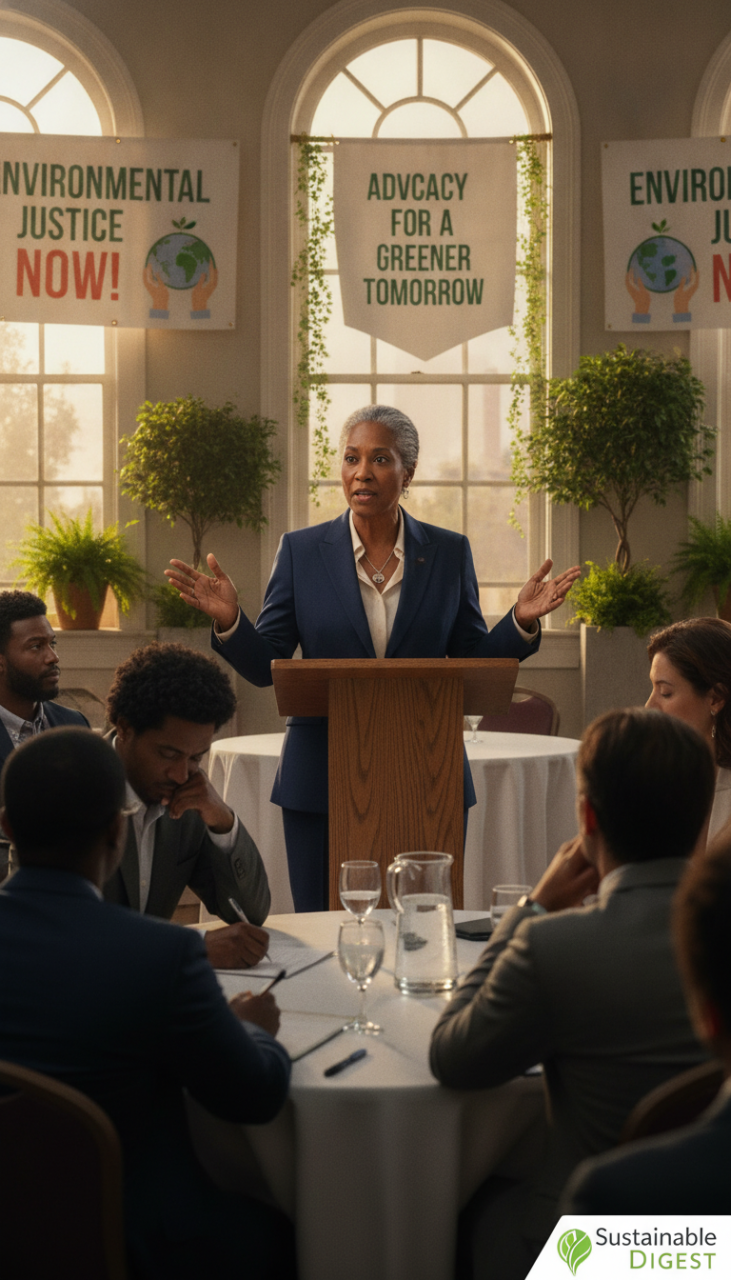
Advocates today demand more than just performative statements or polished social media posts. They seek full accountability for past harms and clear, measurable metrics for the future. Genuine justice requires a permanent shift in how power is shared within these legacy groups.
Dr. Taylor’s initiatives, like MELDI and JEDSI, have built vital pathways for a new generation of leaders. These programs ensure that people color are not just participants but primary decision-makers in their communities. The goal is to finally realize the movement’s core adage: “We speak for ourselves.”
Conclusion Continuing…
In a world of intensifying climate crises, the United States is rapidly becoming more diverse. Dr. Taylor insists that sustainability cannot exist without social equity. Her scholarship provides the necessary tools to build a movement that honors both nature and people color.
The future of environmental justice is one where authority is presumed rather than constantly questioned. It is a world where lived experiences carry the same weight as technical scientific data. This is the lasting legacy of a career dedicated to justice and institutional reform.
By ensuring environmental organizations embrace radical transparency, we honor her life’s work. Her insistence on inseparable priorities offers a clear roadmap for future scholars. We must continue to bridge the gap between ecological health and social equity for all.
Dr. Taylor’s tireless activism has created a blueprint for modern advocacy. She has documented exclusions while simultaneously opening doors for those once left outside. Her work serves as a reminder that the environment belongs to everyone, regardless of their background.
As we look toward the future, her influence remains a guiding light for global sustainability. Institutional resistance may remain, but the evidence she has compiled is undeniable. The movement continues to grow, fueled by her analytical depth and unwavering vision.

FAQ
Q: Where did the roots of this green equity mission begin?
A: The journey started in rural Jamaica, where lived experience shaped a unique view on sustainability. This path eventually led to leadership roles within the United States to address socialproblems and change.
Q: What landmark achievement did the researcher reach at Yale University?
A: She became the first African American woman to earn a PhD from that institution. Her studies in biology provided a firm foundation for her later scientificwork analyzing racism and population trends.
Q: What does the toward explanation concern and action gap reveal?
A: This justice paradigm explores why people of color and blacks might show high concern but face a concern action gap. The data helps bridge the explanation concern actionscience within environment socialstudies.
Q: What were the findings regarding diversity in green organizations?
A: A major 2014 report showed that minority representation was only 14.6 percent. This highlighted institutional resistance and a lack of transparency in the conservationmovement.
Q: How does her historical analysis critique early conservation?
A: The professor examines how power and privilege influenced the history of Central Park in New York. She exposes the racism of certain groups within the early environmental movement.
Q: What did the FAIM project discover about food access in Michigan?
A: Research in 18 cities showed race and classdisparities in nutrition. It analyzed how industrial pollution affects the population and their residential mobility patterns.
Q: How do programs like JEDSI create institutional change?
A: These organizations build a pipeline for students to enter policy roles. By fostering collaboration, they ensure equity remains a priority in globalsustainability and the justice movementaction.
Key Takeaways
- The 2020 Central Park incident highlighted racial exclusion in nature.
- Systemic bias persists even for highly credentialed Ivy League professors.
- Environmental advocacy must bridge the gap between research and reality.
- Diverse voices have historically been excluded from mainstream conservation.
- Scholarly work is necessary to confront uncomfortable institutional truths.
- True sustainability requires addressing long-standing social inequities.