

A city’s housing plan can reshape access to work, services, and civic life long before it changes the skyline. A family may gain a new home nearby, or lose a familiar route to school and work. Renewal looks different from each front door.
This week we take structurally how the observance of World Cities Day 2026 cross pollinate various sustainability adjacent movements and institutions. Utilize this week’s blog as both a framework and perspective the ongoing value of sustainable development. As the month of international cooperatives came to a conclusion, World Cities Day provides the ideal dialog for infrastructure scaling and advancing community scope.
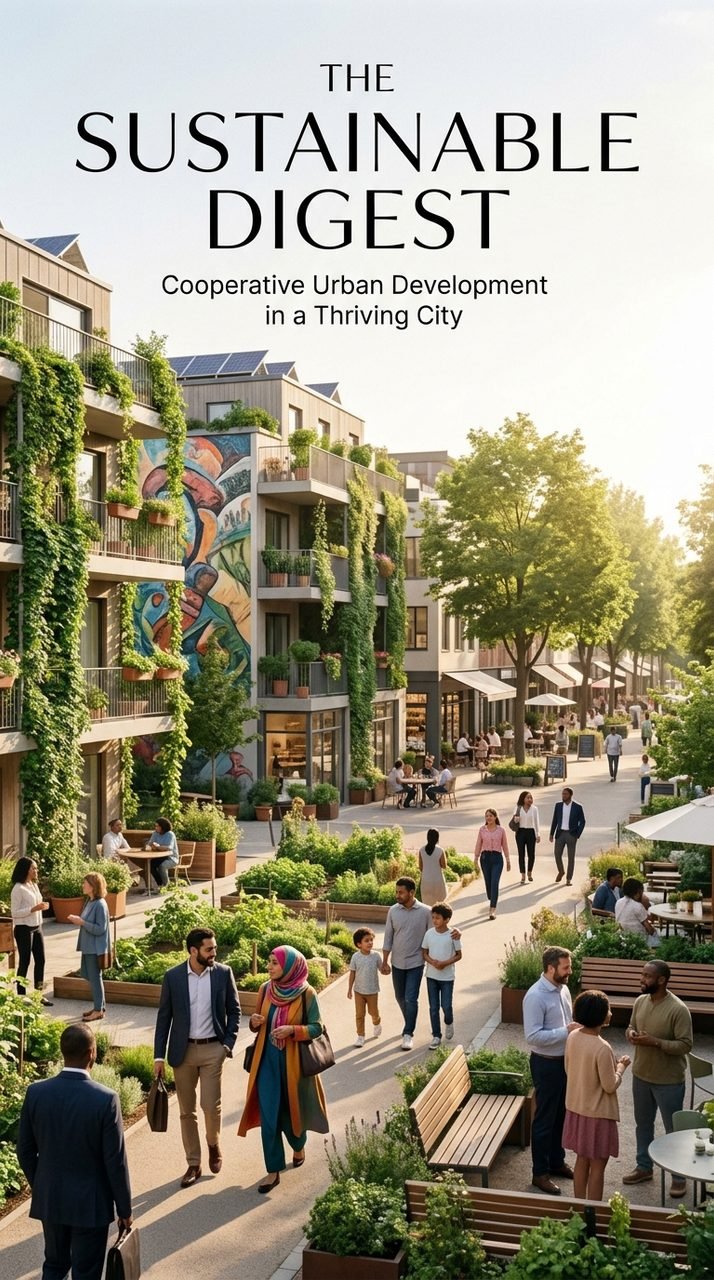
The 2026 observance puts housing, diplomacy, cooperatives, and digital governance into one urban debate. It asks how global development can support better homes without making residents pay for progress through displacement. That question matters across the Global South, where cities and communities face varied needs.
The fourth industrial revolution, or 4IR, integrates digital, physical, and data technologies into production, infrastructure, and services. Those tools can guide housing choices, but they cannot decide whose needs count. The practical test is whether residents can gain a secure home and better services without being pushed out by the renewal meant to help.
What Is World Cities Day 2026 for Cooperatives, Global Sustainability Development?
World Cities Day is the United Nations’ annual urban observance, held on October 31. It began in 2014, and its 2026 theme is “Regenerating the City: Adequate Housing for All.” The housing challenge reaches up to 3.4 billion people who lack adequate homes, secure tenure, basic services, or affordable living conditions.
The observance puts housing access at the center of urban development. CoopsDay is a separate international day for cooperatives, not a second name or date for this event.
The date, origin, and 2026 focus
The United Nations designated October 31 through General Assembly resolution 68/239. The first observance took place in 2014. In 2026, the program framework runs October 31-November 2, with adequate housing as its central concern.
World Cities Day and CoopsDay are separate observances, with different dates and agendas.
Ten facts that frame the observance
- 1. The United Nations designated October 31. 2. The first observance took place in 2014.
- 3. The 2026 theme is “Regenerating the City: Adequate Housing for All.” 4. Up to 3.4 billion people lack adequate housing or related essentials.
- 5. The program framework runs October 31-November 2. 6. World Cities Day concludes Urban October, which begins with World Habitat Day.
- 7. SDG 11 calls for inclusive, safe, resilient, and sustainable cities. 8. November 1 forums cover housing delivery, New Urban Agenda reporting, and inclusive housing finance.
- 9. The opening ceremony will present the fourth-cycle Shanghai Award for Sustainable Development in Cities. 10. CoopsDay 2026 falls on July 4, the first Saturday of July.
CoopsDay has its own history and calendar; the international day cooperatives observe is not part of the October urban program. The November 1 discussions connect local housing plans with wider policy and funding choices.
For event planning, label a local activity as part of the official global program only when its organizer confirms that status.
How Can Cities Connect All 17 SDGs to Housing and Regeneration?

A housing decision can connect several global goals at once, from health and water access to climate resilience. Policy choices shape those links, but no single project delivers all 17 goals by itself.
More than half the world’s population lives in cities, and that share may reach two-thirds by 2050. The international day cooperatives discuss can bring urban needs into a wider sustainable development debate.
Map the goals to everyday urban needs
- SDGs 1-3 link housing to poverty reduction, food access, and health.
- SDGs 4-6 connect safe homes with education, gender equality, and clean water.
- SDGs 7-9 involve energy, decent work, and resilient infrastructure.
- SDGs 10-12 address inequality, inclusive cities, and responsible consumption.
- SDGs 13-17 connect climate action, oceans, ecosystems, strong institutions, and partnerships.
These are possible policy links, not a claim that every urban project affects every goal equally. A home near transit may support work access; a poorly planned renewal may weaken existing ties.

Turn global goals into accountable local decisions
UN-Habitat’s 2026 SDG 11 Global Report runs 108 pages and finds that SDG 11 remains off track overall. It includes an experimental AI-assisted review of Voluntary National Reviews, offering a supplementary view of how countries frame SDG 11 priorities.
Public bodies can turn those broad aims into decisions with named duties and clear checks:
| Governance level | Typical lever | Housing or regeneration decision | Accountability route |
|---|---|---|---|
| Local or municipal | Zoning and permits | Set affordable housing terms | Public hearings and council votes |
| State, provincial, or regional | Land rules and grants | Fund repairs across districts | Legislative review and audits |
| National or federal | Housing law and budgets | Set tenure protections | Parliamentary review and reporting |
| International or multilateral | Shared goals and finance | Guide inclusive regeneration funding | Country reports and public review |
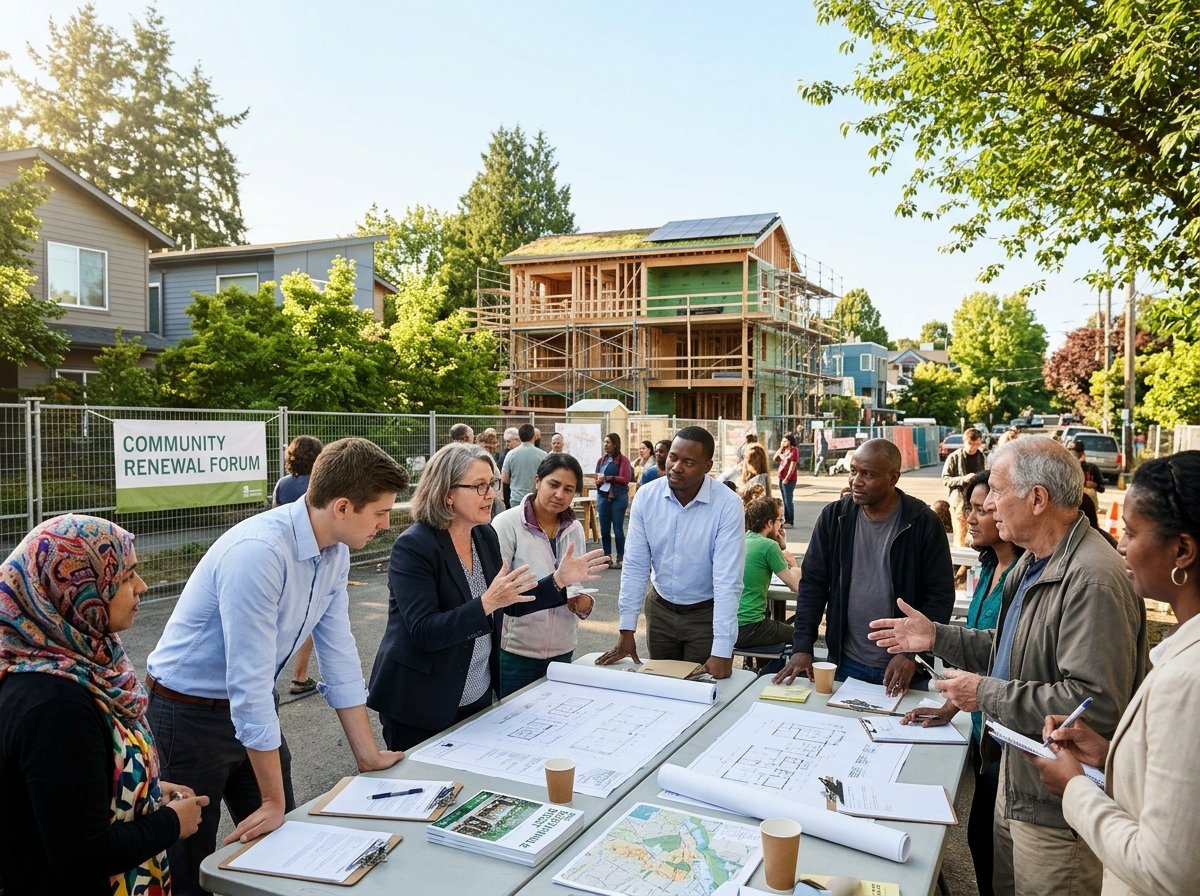
A regeneration proposal is stronger when each mapped goal has an accountable public body and a measurable local outcome.
What Roles Do Cooperatives, Diplomacy, and the 4IR Play?
A housing cooperative can make residents participants in local decisions, not only recipients of services. Shared control can support housing, local services, and social cohesion, while grassroots groups bring neighborhood needs into public debate.
CoopsDay has been celebrated since 1923; the United Nations proclaimed the International Day of Cooperatives in 1995. Its 2026 theme, “Cooperatives for a Peaceful World,” aligns with SDG 16. The International Cooperative Alliance, or ICA, works on CoopsDay through COPAC, the Committee for the Promotion and Advancement of Cooperatives. COPAC includes UN DESA, the International Labour Organization, FAO, ITC, UNRISD, and ICA.
Those documented cooperative links do not make every civic group an event organizer. Sister Cities International, the World Affairs Council of America, and the World Leisure Organization offer useful civic or international-affairs lenses. The UN sets agreed development goals; the World Economic Forum convenes public and private leaders. They are not inherently opposed, but priority-setting and accountability still matter.
NATO offers a security-policy lens, not an organizing role. Global South cities have varied priorities, from housing access to climate risk. Dubai shows how an AI-enabled digital city model can test housing policy before spending is committed or families are displaced. A model informs choices; it cannot replace public participation.
A digital model is a tool for testing choices, not a substitute for public consent.
The ICA Global Conference 2026 theme is “Building Bridges: Cooperative Contributions to a Peaceful World.” Before endorsing digital regeneration, residents should be able to see the model’s assumptions and know who can challenge them.
Conclusion
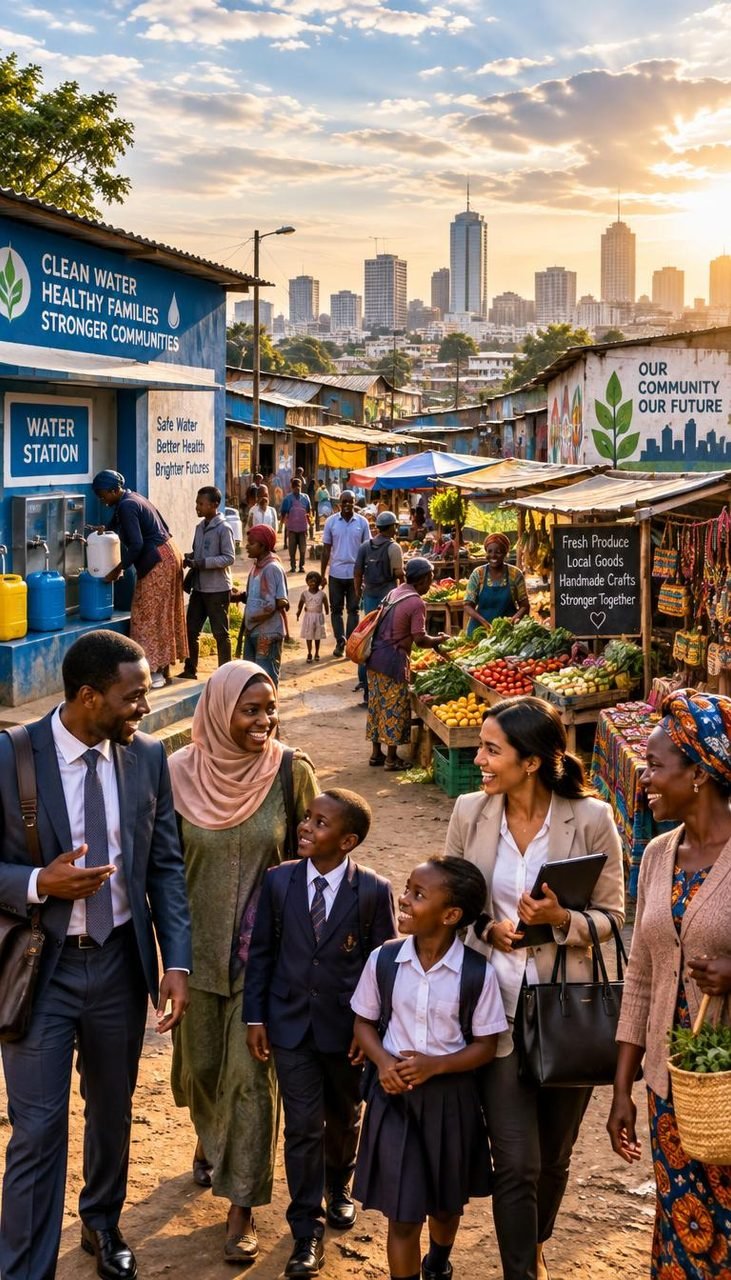
Urban renewal is most credible when residents gain security and opportunity, not just a redesigned skyline. New tools matter only when they support affordable homes, reliable services, and meaningful resident participation.
A cooperative or neighborhood group can compare a local plan against four tests: secure tenure, affordability, service access, and participation. That check can make a public consultation more useful than a polished rendering alone.
A cooperative or neighborhood group can begin by checking one local plan against those four tests before the next public consultation.

FAQ
What does adequate housing mean in the World Cities Day theme?
Adequate housing means more than building enough homes. It includes secure tenure, affordability, basic services, and living conditions fit for people. A home may exist on paper yet remain inadequate if residents face unsafe conditions or lack water and essential services. The theme looks at whether housing supports daily life, not only the number of units built.
Is World Cities Day the same as CoopsDay?
No, World Cities Day and CoopsDay are separate observances. World Cities Day takes place on October 31 and focuses on urban issues. CoopsDay 2026 is July 4, the first Saturday of July, and highlights cooperatives. Their dates, themes, and organizing links differ, even when both observances touch on housing and community needs.

What is the New Urban Agenda?
The New Urban Agenda is the United Nations’ global framework for sustainable urban development, adopted in 2016. It sets broad guidance for how countries and cities can plan inclusive, safe, resilient, and sustainable communities. Its focus is wider than housing alone, but housing policy can shape how well cities meet those aims.
Can a housing cooperative contribute to SDG 11?
Yes, a housing cooperative can contribute to SDG 11 when it supports inclusive, safe, resilient, and sustainable communities. Secure, affordable housing can help residents stay connected to local services and one another. Resident participation also gives people a role in shaping decisions that affect their homes and neighborhoods.
Can an AI-enabled city model guarantee that regeneration will not displace residents?
No, an AI-enabled city model cannot guarantee that regeneration will avoid displacement. It can test policy scenarios before spending or relocation begins, helping decision-makers compare possible effects. Outcomes still depend on public choices and safeguards. A model can show risks, but it cannot enforce protections or replace residents’ voices.
Does NATO organize World Cities Day?
No, NATO does not organize World Cities Day. The observance is a United Nations urban event, while NATO may offer a security-policy lens on city issues. That lens is distinct from the observance’s housing agenda. Treating NATO as an organizer would confuse a possible analytical connection with a formal event role.

Key Takeaways
- World Cities Day 2026 focuses on adequate housing and urban regeneration.
- Cooperatives can support housing, services, and resident participation.
- Housing policy can connect to several Sustainable Development Goals.
- Digital city models can test policy choices before major spending.
- Residents need a real role in plans that may reshape their neighborhoods.
