COP 31 Recap Challenges in Global Sustainable Development

COP31 in Antalya delivered a sobering paradox for global diplomacy: two weeks of fractious negotiations produced no headline political pact, yet technical mandates and commercial clean energy continued their inexorable advance. The summit ended on November 22, 2026, after two full days of overtime. A cover decision is a formal overarching political declaration negotiated at a climate summit that captures collective political consensus beyond routine technical mandates. This gathering marked the first time since Copenhagen in 2009 that formal talks failed to produce such a text.

COP31 recap challenges opportunities in global sustainable development

The machinery of international governance met rising diplomatic deadlock inside the halls. Real progress occurred outside the plenary floor through business deals and practical programs. As multilateral climate talks grapple with deepening geopolitical fractures, the boundary between political posturing and real-world implementation has never been more conspicuous.

The Antalya Summit Breakdown and COP31 Recap Challenges Opportunities in Global Sustainable Development

The marathon summit in Antalya concluded as the longest climate conference in United Nations history, running two full days beyond its scheduled deadline before collapsing without an agreed cover decision. Türkiye hosted the summit under COP31 President Murat Kurum. Australia served as co-host, with Chris Bowen acting as President of Negotiations.

The proposed Antalya pact failed when the European Union, the United Kingdom, and several climate-vulnerable nations rejected the draft pact in the final hours. The dispute centered on weak mitigation wording and an absence of clear financial roadmaps. Several island delegates walked out when draft texts omitted firm language on moving away from fossil fuels.

Diplomatic walkouts proved that vulnerable nations will no longer accept hollow declarations that ignore fossil fuel phase-outs.

Negotiators still preserved basic operations through routine committee decisions. Close to two hundred nations adopted technical texts listed in the official UNFCCC advance unedited decisions before leaving Antalya. These procedural choices kept core workstreams alive across mitigation, finance, and technology transfer.

  • Extended the UAE Just Transition Work Programme for three additional years with enhanced guidelines.
  • Agreed to launch the global just transition mechanism in distinct stages, targeting formal adoption at COP32.
  • Passed procedural rules for the Warsaw International Mechanism to accelerate local disaster support.
  • Started procedural work for the second global stocktake across all technical committees.

These smaller steps offered modest relief to negotiators after days of round-the-clock talks. They helped developing countries protect administrative support for urgent adaptation programs. When the gavel finally fell, delegates settled for unglamorous technical survival over a hollow political consensus.

The Fossil Fuel Deadlock and the Strained Machinery of the Paris Agreement

Diplomatic consensus on phasing out hydrocarbons proved remarkably ephemeral in Antalya, where petrostates systematically purged references to moving away from fossil fuels. Negotiators refused to repeat the Dubai language on moving away from fossil energy. That retreat created intense anger among vulnerable states facing direct damage from the climate crisis.

A projection screen displays graphs of rising temperatures, CO2 levels, Paris Agreement emissions cuts, and reduction targets. Environmentalists and policymakers discuss the charts and take notes in a conference room with large windows overlooking a city skyline; The Sustainable Digest logo appears nearby.

The 2026 synthesis report confirmed that national targets submitted by 154 parties remain dangerously inadequate. The analysis evaluated 127 new NDCs representing 71% of global greenhouse emissions from 2019. Unconditional pledges lower 2035 emissions by only 6% compared to 2019 levels. Conditional plans offer a 9% cut, lowering greenhouse output by an extra 3.5 gigatonnes.

Framework MetricReported AmbitionProjected 2035 ImpactTemperature Path by 2100
Paris TargetKeep warming within 1.5°C45% cut below 2010 levels1.5°C limit
Unconditional PledgesIndependent national plans0% to 12% cut below 20192.1°C to 2.8°C warming
Conditional ElementsPlans backed by climate finance9% average cut below 20191.7°C to 2.3°C warming
Adaptation Floor$120 billion annual proposalNo collective agreementHigh adaptation gap

Major economies also refused to establish a dedicated $120 billion annual adaptation funding floor. Developing states argued that voluntary pledges without money leave poor communities defenseless. Parties formally opened the second global stocktake, which will assess collective progress at COP33 in 2028. A treaty structure that depends entirely on peer pressure and national voluntary plans reveals severe strain when major emitters retreat behind procedural shields.

Action Agenda Breakthroughs Across Global Energy and Nature Finance

Outside the deadlocked negotiating chambers, commercial momentum and regional coalitions demonstrated that market forces are decoupling from ministerial stalemate. Private investors, cities, and regional coalitions launched powerful projects without waiting for global cover text consensus. These independent programs proved that clean energy expansion continues through pure economic merit.

Around eighty nations joined a historic pact to lift electricity to 35% of total final energy consumption by 2035. The International Energy Agency calculates that hitting this target will cut global emissions by at least eight gigatonnes. This reduction occurs even if nations replace fossil power generation at a moderate speed.

The 35 by 35 Electrification Drive and Grid Upgrades

The electrification drive focuses on heavy transport, home heating, and light industry. Participating governments agreed to upgrade high-voltage transmission grids and back rapid battery storage rollout. Grid modernization helps developing countries bypass dirty fuel systems while cutting local air pollution.

Regional development banks promised fresh loans to support interconnector cables between partner states. These direct wires balance power loads across different borders during peak demand hours. Modern power lines turn clean electricity into a reliable backbone for emerging markets.
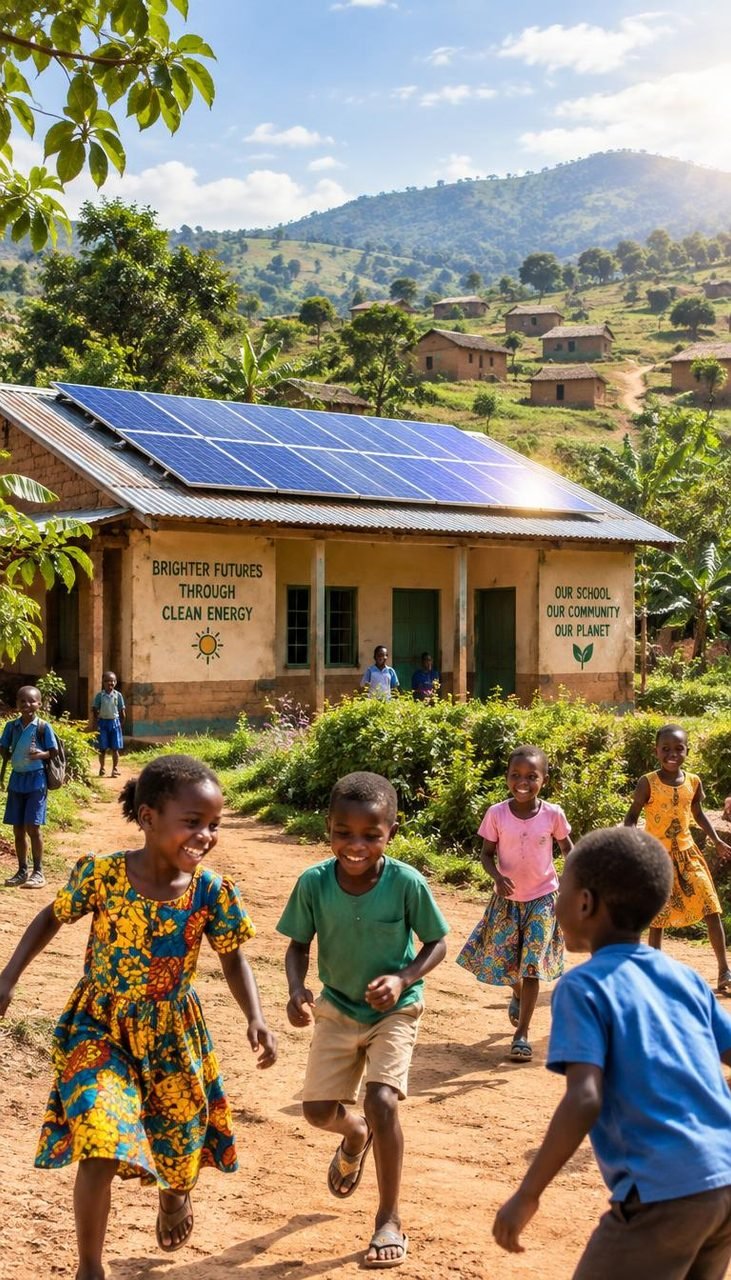
Tropical Forest Forever Facility and Adaptation Roadmaps

Forest protection advanced when sponsor contributions for the nature facility jumped to $8.3 billion. The Tropical Forest Forever Facility rewards developing nations for keeping tropical forest standing through direct yearly payments. Sovereign wealth funds and national treasuries supplied initial equity to guarantee stable returns.

  • Secured $8.3 billion in sponsor pledges for the Tropical Forest Forever Facility to reward standing forest conservation.
  • Adopted the 59 Belém Adaptation Indicators through a voluntary testing program and expert advisory group.
  • Advanced the Baku Adaptation Road Map to speed up infrastructure funding between 2026 and 2028.
  • Expanded direct loss and damage grants to ensure fast cash reaches vulnerable island communities.

These voluntary initiatives deliver practical help where official diplomacy falters. They show how targeted finance builds resilience against floods, storms, and rising sea levels. Capital flows increasingly disregard diplomatic squabbling when clean technology offers superior returns and strategic security.

Türkiye’s Domestic Green Transition Between Fossil Dependency and Clean Ambition

Hosting COP31 cast an unforgiving spotlight on Türkiye’s contradictory energy landscape, where ambitious clean technology development clashes with rising fossil fuel consumption. The country raised wind and solar output from 12% in 2020 to 22% by 2025. Yet fossil fuels still generated 56% of total electricity in 2025.

White wind turbines stand on gently rolling green hills in Turkey, with high-voltage transmission lines crossing the landscape behind them. Wildflowers dot the foreground beneath a clear blue sky.

The latest Climate Action Tracker assessment rates Türkiye’s overall climate action as “Critically insufficient” and its domestic policies as “Highly insufficient.” Official forecasts indicate 2035 emissions will rise 7% to 25% above 2018 levels. Reaching a true 1.5°C path demands national cuts of 31% by 2030 and 48% by 2035.

Energy Sector MetricCurrent Turkish StatusOfficial 2035 Target1.5°C Aligned Pathway
Wind and Solar Share22% in 2025120 GW capacity150 GW minimum capacity
Fossil Power Share56% of electricity in 2025No formal coal exit dateRapid phase-out by 2035
Electrification Share21.8% in 202024.9% of final energyOver 35% of final energy
ETS Compliance PenaltyPilot starts in late 2026Double allowance priceStrict declining carbon cap

The Turkish parliament enacted its first Climate Law on July 2, 2025, to build an emissions trading system. Regulated power plants and factories must submit verified carbon credits or face administrative fines equal to twice the market allowance price. The statute channels up to 10% of carbon revenues into community transition funds. Establishing statutory emissions trading provides Türkiye with an institutional foundation, but meaningful decarbonization requires halting the expansion of fossil power.

Bridging NATO Alignment and Global South Climate Diplomacy

Operating at the physical and diplomatic crossroads of East and West, Türkiye pursued a delicate balancing act at COP31 that mirrored its broader foreign policy. The republic joined NATO in 1952 and maintains close military ties with Western governments. Ankara also expands trade and political ties across Africa, the Middle East, and Central Asia.

This dual posture allowed Turkish summit leaders to mediate between wealthy donor states and emerging economies. Developing countries demanded outright grant money rather than loans that increase sovereign debt burdens. Western nations insisted that middle-income economies should also pay into multilateral climate funds.

Turkish diplomats pushed compromise drafts that combined private green bonds with state guarantees. Many developing delegates welcomed Ankara’s willingness to challenge rigid Western positions on climate finance. Others observed that Türkiye hesitated to support swift fossil fuel phase-outs because of its own industrial goals.

Middle powers often find their geopolitical leverage tested when economic interests clash with climate targets. Ankara sought to project regional authority without alienating vital trade partners. Serving as a bridge between competing global blocs carries distinct value, yet middle powers discover that diplomatic goodwill cannot substitute for financial capital.

Geopolitical Fractures and Adjacent Pressures on Global Sustainability

Multilateral climate diplomacy no longer operates in a diplomatic vacuum, as regional conflicts and volatile commodity markets dictated the negotiating atmosphere in Antalya. Shipping disruptions in the Strait of Hormuz created sharp shocks across international oil and gas markets. These energy scares forced many finance ministries to hoard short-term fuel reserves rather than fund international projects.

Large energy ships dock at a busy container port as workers in practical clothing coordinate the unloading of cargo. Stacked containers fill the foreground, with a coastal city skyline beyond the harbor.

Clean energy investment reached $2.2 trillion in 2026, which was roughly double the money entering oil, gas, and coal. Economic interest drove this spending rather than United Nations treaties. Cheap solar panels, heat pumps, and batteries offered lower power costs and shield countries from wild market swings.

High-level political interest was noticeably weak throughout the Antalya summit halls. UK Prime Minister Andy Burnham arrived as the only registered head of government from the G7 group. Most major world leaders chose to stay home to manage domestic inflation and regional security disputes.

Trade barriers also cast a long shadow over clean technology supply chains. Disputes over solar manufacturing and minerals caused friction between industrial powerhouses and importing nations. When sovereign energy security aligns with cost-effective electrification, national industrial policies accelerate far faster than treaties can mandate.

Assessing the 2030 Sustainable Development Goals, Green Buildings, and Ecological Initiatives

With only four years remaining before the 2030 deadline for the United Nations Sustainable Development Goals, the international scorecard displays an unmistakable divergence between techno-economic goals and social equity mandates. Clean power deployment broke historical records across major markets. Social programs and poverty reduction measures fell badly behind their stated targets.

Renewables overtook coal as the world’s largest electricity source in 2025, marking an undeniable bright spot for global progress. That milestone proves industrial capacity can shift quickly when prices drop. Progress on ending poverty and reducing wealth inequality remains far too slow.

Clean power broke historical records in 2025, but social equity programs face severe financing deficits across emerging markets.
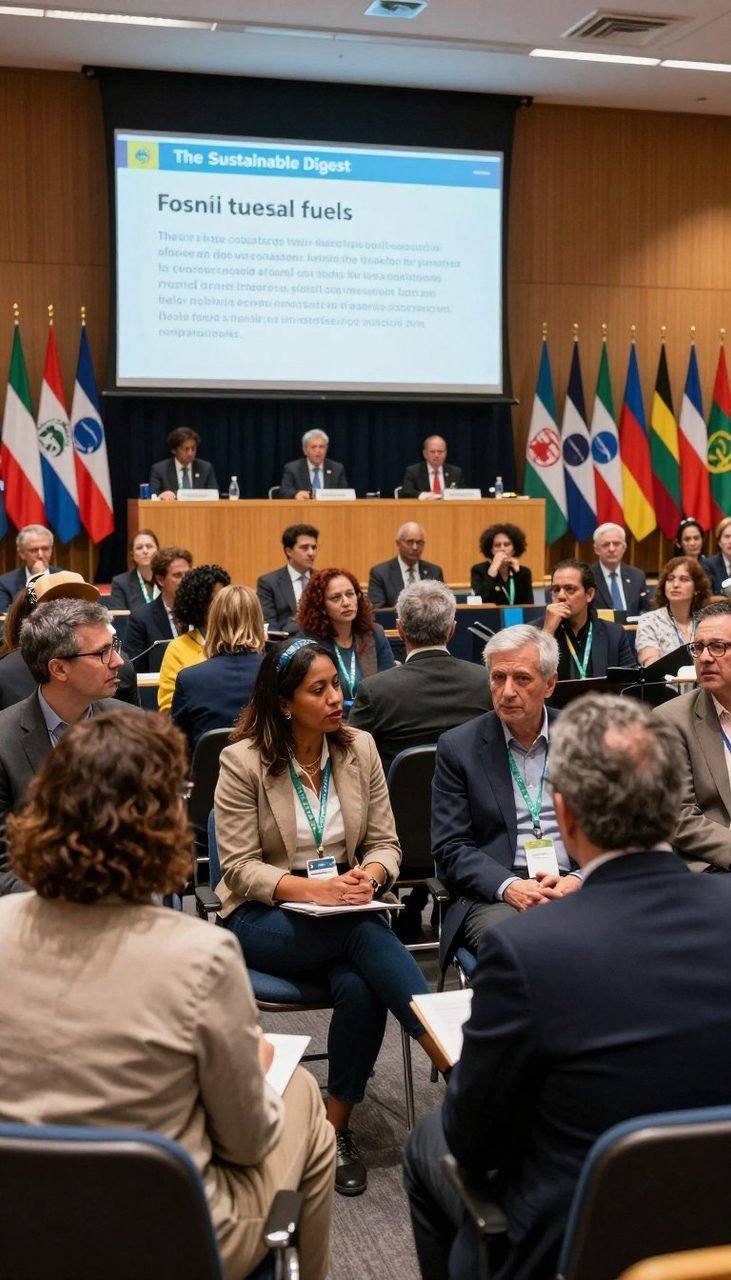
Evaluating SDG Progress and Targets

The United Nations agenda divides into clear winners and lagging mandates as 2030 draws near. Market-driven programs attract massive private capital while public assistance initiatives languish without resources. Governments must confront these uneven results before setting future global priorities.

  • SDG 7 Clean Energy advances rapidly as wind, solar, and batteries become the cheapest power options.
  • SDG 9 Industry and Innovation expands through electric vehicle manufacturing and battery gigafactories.
  • SDG 1 No Poverty lags severely due to debt distress and high food prices across low-income states.
  • SDG 10 Reduced Inequalities stalls as clean investment concentrates in North America, Europe, and China.
  • SDG 13 Climate Action suffers from weak national targets that leave the planet on a 2°C trajectory.

Green Buildings and Practical Environmental Standards

The built environment produces roughly 37% of worldwide operational and embodied carbon emissions. Slashing energy use in buildings offers quick savings through smart heating, cooling, and heat pumps. Cutting embodied carbon in steel, cement, and glass remains an uphill battle.

Developing nations face severe administrative backlogs when trying to enforce modern green building codes. Municipalities often lack trained inspectors to check thermal insulation and energy efficiency rules. Retrofitting the built environment and enforcing stringent green building codes remains the quiet linchpin that will determine whether sustainable development goals succeed or stagnate.
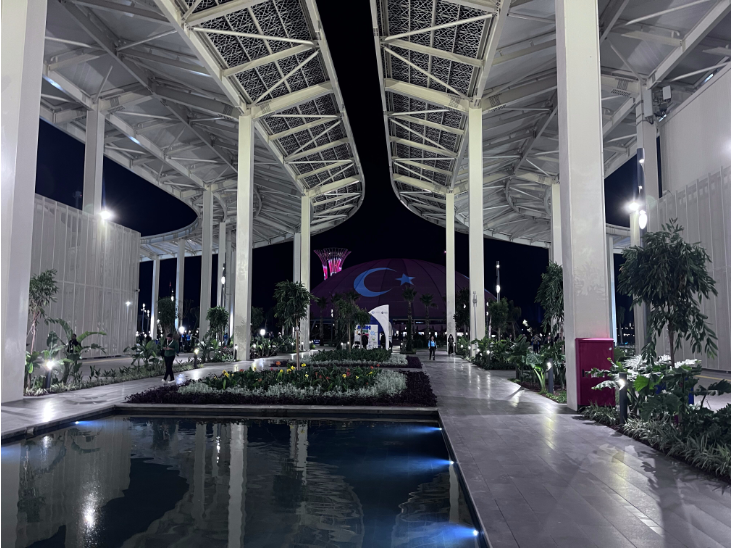
Conclusion

COP31 demonstrated conclusively that while international climate diplomacy remains bogged down in semantic disputes, the economic foundations of the global energy transition are advancing under their own momentum. Market forces now drive clean energy faster than ministerial consensus, as shown by record global investments in solar power, batteries, and industrial electrification. The failure in Antalya shows that international negotiations cannot force fossil fuel reductions without genuine political will from major producers.

International attention now turns to Addis Ababa for COP32, where developing nations and multilateral institutions must resolve the adaptation financing deficit before political trust evaporates entirely.
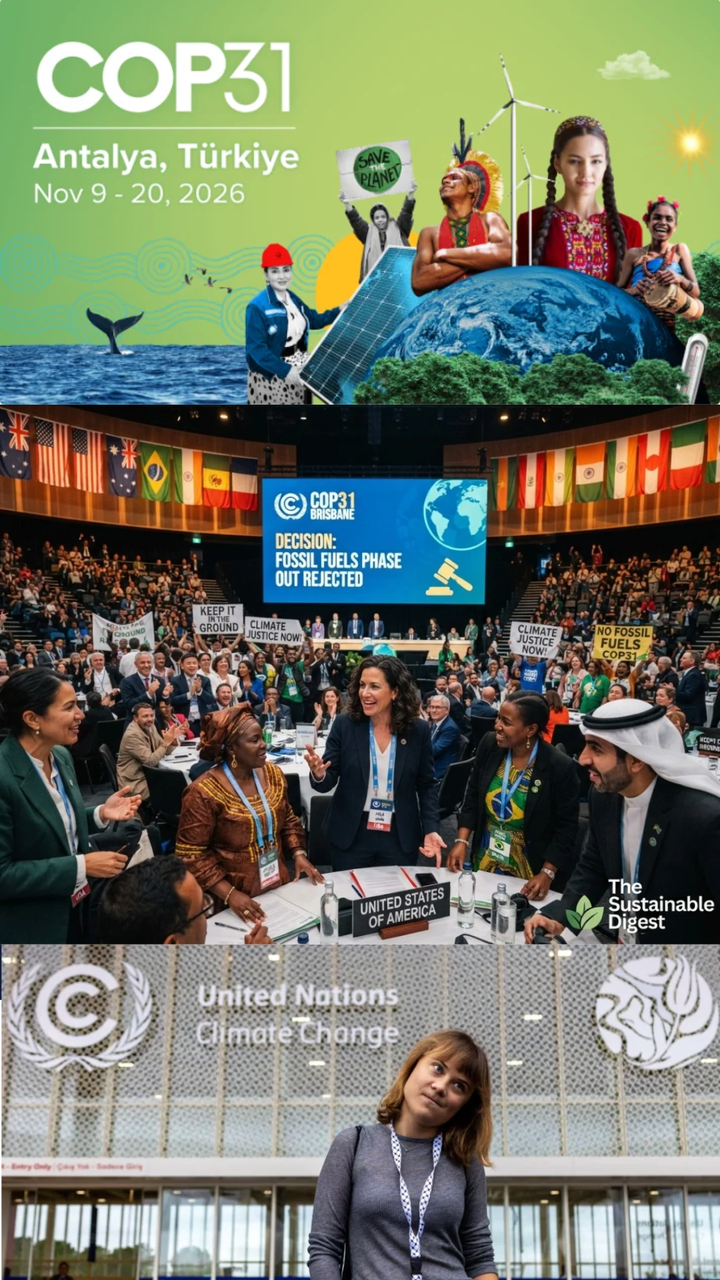
FAQ

Why did COP31 conclude without an official cover decision?

Parties could not agree on omitting language about moving away from fossil fuels and setting adaptation finance targets. The European Union, the United Kingdom, and several climate-vulnerable island nations rejected the draft text during the final hours. Negotiators chose to let the overarching political text collapse rather than accept an agreement that ignored the phase-out of hydrocarbons and lacked firm money commitments.

What was the main energy agreement achieved under the Action Agenda in Antalya?

Around eighty nations signed the 35 by 35 electrification pledge outside the formal treaty negotiations. This coalition committed to securing 35% of final energy consumption from electricity by 2035. The International Energy Agency estimated that hitting this electrification target can cut worldwide carbon emissions by eight gigatonnes, even if nations retire fossil power plants at a modest pace over the coming decade.

How does Türkiye’s domestic climate performance compare to its summit leadership?

Türkiye holds a Critically Insufficient rating from Climate Action Tracker despite hosting the conference. Wind and solar power supplied 22% of Turkish electricity in 2025, but fossil fuels generated 56% of power. National policies point to emissions rising up to 25% above 2018 levels by 2035, which conflicts directly with the cuts needed to match the 1.5°C Paris Agreement warming threshold.

What key progress was made on nature finance during COP31?

The Tropical Forest Forever Facility saw its sponsor commitments rise to $8.3 billion in initial capital pledges. This nature facility rewards tropical nations with annual payments for keeping standing forests intact. It blends sovereign funds and private capital to create predictable income streams for conservation, offering practical protection for ecosystems while political talks on broader finance remain deadlocked.

When will the second global stocktake under the Paris Agreement finish?

The second global stocktake was formally launched at COP31 in Antalya and will conclude at COP33 in November 2028. This multi-year process reviews collective progress toward Paris Agreement goals across mitigation, adaptation, and finance. It will examine updated national targets and tell governments whether their policies are enough to keep global warming from passing dangerous thresholds.

How does Türkiye’s 2025 Climate Law enforce its emissions trading system?

The Climate Law passed in July 2025 sets up an emissions trading system run by a Carbon Market Board. Industrial installations and power plants must surrender verified emissions allowances each year to cover their carbon footprint. Operators that fail to surrender adequate allowances face mandatory administrative fines set at twice the prevailing market allowance price under the statute.

Key Takeaways

  • Antalya closed without a Presidency-led cover decision after talks broke down over fossil fuel language.
  • Nations approved practical mandates on adaptation metrics, carbon market accounting, and disaster response.
  • The 35 by 35 energy target gathered eighty nations pledging 35% electricity in final energy by 2035.
  • Sponsor funding for the Tropical Forest Forever Facility climbed to $8.3 billion in capital pledges.
  • Türkiye enacted its first Climate Law while facing high reliance on coal and gas power.
  • The second global stocktake began its official cycle, aiming to finish at COP33 in 2028.

COP31 Turkiye Forecast Strategic Agenda Sustainable Development Global Affairs: Key Issues

adminsustainabilityrepositorygroup@gmail.comEdit Profile

COP31 Turkiye forecast strategic agenda Sustainable Development global affairs

COP31 is a test of whether countries can turn climate commitments into funded action without ignoring development needs, economic pressures or vulnerable communities. In Antalya, the central question is whether international cooperation can make policy practical without treating development as a single, settled priority. A city preparing for a climate conference offers a familiar scene: visitors arrive, local businesses adjust, and the global debate meets daily life. The stakes reach far beyond the venue. Finance, energy, community resilience, technology and trade will shape whether the summit’s plans can work in practice. This COP31 forecast gives global professionals, travelers, cultural diplomats and conscious consumers a clear way to assess the choices ahead. The summit’s real measure will be whether cooperation produces projects and policy changes that can be tracked beyond the conference.

How do Türkiye and Australia divide COP31’s roles?

Türkiye hosts COP31 in Antalya, while Australia’s Chris Bowen leads negotiations and Murat Kurum is nominated as conference President. Their roles differ: Türkiye hosts and steers the Presidency, while Australia leads formal negotiating work.

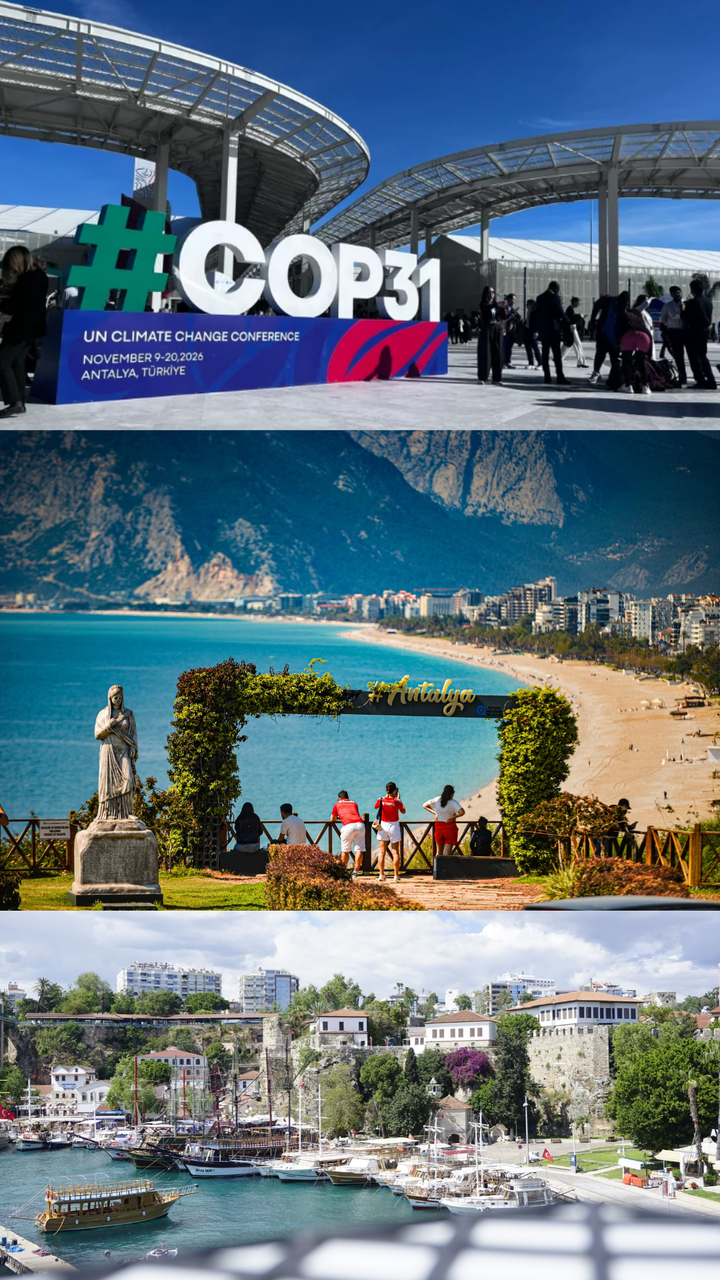
The United Nations Framework Convention on Climate Change (UNFCCC) is the treaty framework for international climate talks. COP31 is its thirty-first Conference of the Parties, alongside the twenty-first meeting under the Kyoto Protocol and the eighth under the Paris Agreement. The conference runs from 9 to 20 November 2026 in Antalya.

Türkiye and Australia work in close partnership under the Türkiye-Australia Partnership Modalities. That arrangement supports shared planning; it does not transfer one country’s authority to the other. The Paris Agreement entered into force on 4 November 2016, so COP31 falls in its tenth anniversary year. An anniversary can mark time, though it cannot certify progress.

UNFCCC’s COP31 preparations describe the partnership and the Antalya dates. The institutional calendar also includes meetings linked to two earlier climate agreements, each with its own rules and history.

Türkiye hosts and leads the conference Presidency; Australia leads negotiations through a partnership, not a transfer of authority.

For delegates, the division matters because hosting, agenda-setting and negotiating are related but distinct tasks. The Presidency helps guide the process and convene parties, while negotiators seek agreement on the formal text. Keeping those roles clear helps readers interpret announcements and disagreements. The split places diplomatic coordination and formal negotiating work in two national hands, making partnership essential to the conference’s process.

What Does the COP31 Turkiye Forecast Strategic Agenda Sustainable Development Global Affairs Mean for Delivery?

Delegates in business attire sit around an oval conference table covered with maps and documents, discussing climate commitments and implementation measures. A screen displays climate graphs and statistics beside a digital clock in a modern conference room with large windows.

COP31’s implementation test is whether countries can show progress on existing commitments while negotiating over who pays and how results are measured. Delivery means evidence, not just new language: plans need funds, owners and progress checks.

The Global Stocktake is the UNFCCC’s five-year process for assessing collective progress under the Paris Agreement. Its second round begins at COP31. The stocktake matters because national climate plans and real-world action can diverge. An inventory can reveal where commitments stand, even when it cannot make countries meet them.

The formal negotiating agenda is not the same as the Presidency’s complementary Action Agenda. On 9 November 2026, Türkiye and Australia adopted the agenda after parties sought to add climate-related unilateral trade measures and a proposal to triple adaptation finance. Both issues were left off. Consensus can keep talks moving, but exclusions show where agreement remains difficult.

The formal process must test delivery on three practical points:

  • Whether commitments have a reliable source of financing.
  • Whether delivery plans name accountable institutions and clear steps.
  • Whether progress can be measured and reported over time.

These checks help distinguish a climate action pledge from a funded programme. They also make policy easier to compare across countries, though national conditions differ. The Paris Agreement sets a shared direction, while each country chooses its own NDCs and measures. Strong implementation depends on climate plans that can be examined, not simply announced.

That distinction matters for international cooperation. Countries may agree on the need to act while disputing the costs, rules or measures used to judge success. The agenda’s omissions make clear that a focus on delivery does not remove disagreement over the rules of delivery.

Electricity and trade pressures meet at the industrial transition

The COP31 electrification target makes electricity demand a strategic issue, while carbon rules increasingly influence where high-emissions industries can compete. Power supply matters because factories, transport and buildings cannot switch energy sources by declaration alone.

On 9 June 2026, the incoming Presidency set a target to raise electricity’s share of final energy demand from just over 20% to 35% by 2035. Electrification is not the same as phasing out fossil fuels. The climate gains depend on how electricity is generated and whether grids can meet added demand.

Electrification puts power demand at the center

A larger electric share can shift energy use away from direct fuel burning. It can also raise demand for reliable power, new grid links and storage. The target is a direction for climate action, not proof that clean electricity will reach every user.

Investors will watch whether power systems can support industrial change at a workable cost. A factory that replaces a fuel-fired process still needs a stable supply. The energy transition can falter when new demand arrives before infrastructure.

Carbon border rules reshape regional trade

The EU’s Carbon Border Adjustment Mechanism (CBAM) applies a carbon cost to some imports. It can change trade incentives, but its effects will vary by product, company and market conditions.

In the third quarter of 2026, Western Balkan electricity exports to the EU fell 17% year on year as CBAM costs exceeded coal-fired power’s price advantage. That change shows a price signal, not a guarantee of industrial transformation. Carbon rules may shift costs across borders without funding cleaner plants or protecting every producer.

China was projected to face more than €1.3 billion in annual EU CBAM fees at full ramp-up. Low-carbon technology could bring net financial benefits for Chinese steel producers. The contrast shows why the same rule can create costs for some firms and an incentive for others.

Steel decarbonization tests the investment case

Türkiye’s steel sector would need around €30 billion over the next two decades. Carbon pricing could generate up to €1.5 billion annually for decarbonization, a potential contribution rather than a complete financing plan.

On 9 November 2026, the EU and UK agreed draft carbon-market linkage provisions. They cover emissions caps, allowance-supply controls and a British Market Stability Reserve. The draft points to closer market rules, but does not settle every trade effect.

Place or marketQuantified signalTime or conditionTransition implication
TürkiyeUp to €1.5 billion yearly; about €30 billion neededRevenue potential; next two decadesPricing could help, but leaves a large investment need
ChinaMore than €1.3 billion yearly in EU feesAt full CBAM ramp-upLow-carbon steel could improve net returns
Western BalkansElectricity exports fell 17%Third quarter of 2026, year on yearCBAM costs outweighed coal power’s price edge

For investors and policymakers, the key check is whether clean power, industrial upgrades and trade rules advance together rather than pulling in different directions.

Can climate finance reach adaptation needs?

A woman in a blazer and a man in a suit point to a local map on a table as they discuss adaptation projects. Behind them, community members plant crops near solar panels and wind turbines, with hills in the distance.

The adaptation-finance challenge is not only the size of the gap, but also the lack of agreed rules for measuring whether support arrives. Clear rules matter because a pledge without a baseline or delivery plan is hard to assess.

The COP30 agreement to triple adaptation finance by 2035 still had no agreed exact target, baseline year, delivery roadmap or accountability roadmap by COP31. Without these details, countries cannot easily judge whether the promise is on track. Adaptation finance supports measures that help people and systems cope with climate impacts.

Adaptation commitments still need delivery rules

International public adaptation finance to developing countries was estimated at approximately $26 billion annually. Projected annual needs by 2035 range from $310 billion to $365 billion. The figures describe different sides of a large financing challenge.

Finance measureAmountTime or scope
International public adaptation financeApproximately $26 billion yearlyDeveloping countries
Projected adaptation needs, low end$310 billion yearlyBy 2035
Projected adaptation needs, high end$365 billion yearlyBy 2035

A baseline helps show what counts as new support. A delivery plan explains when funds should arrive and how they will reach countries. Accountability measures make it possible to compare promises with results, rather than treating every announcement as a completed transfer.

Loss and damage demand exceeds start-up funding

Adaptation finance is distinct from funding for loss and damage. Adaptation seeks to reduce harm before or as impacts occur; loss and damage support responds to climate-related harm that cannot be avoided or fully adapted to.

By June 2026, the Fund for Responding to Loss and Damage had received 176 requests from 119 countries, totalling $2.8 billion. Its start-up phase had a total allocation of $342 million. Requests and allocated start-up funds measure different things. The request total reflects demand; the allocation describes the fund’s initial resources.

Finance access is part of the justice question

Countries with limited fiscal space may struggle to borrow for recovery or resilience without increasing debt pressure. Access rules can shape whether support reaches places facing high risk, not only those with strong project teams.

Finance must also arrive in a form countries can use. Grants, loans and other support carry different costs for public budgets. A credible finance pathway needs clear amounts, predictable delivery and a way to track who receives support.

Turning national commitments into investable projects

An NDC becomes investable only when a national priority is translated into a defined project that finance institutions can assess. Project detail is the hinge between a climate promise and a decision to commit capital.

By mid-2026, 147 Parties had submitted updated Nationally Determined Contributions (NDCs), the national climate plans under the Paris Agreement. The Climate Implementation Bridge is intended to help turn those plans into investable project portfolios and help climate finance reach the ground faster. It supports project preparation and coordination; it is not a new source of money.

A practical project pipeline can follow four stages:

  1. Identify a national priority linked to climate and development needs.
  2. Prepare a project with clear costs, aims and delivery steps.
  3. Coordinate public and private finance around the project.
  4. Track delivery and report progress against agreed measures.

These steps require public agencies, lenders and private investors to work from a shared project plan. If costs, ownership or expected results remain vague, finance teams cannot judge risk with confidence. The bridge is meant to shorten that distance, not remove the need for sound project design.

Several scheduled meetings show how finance work can cross institutional lines. On 13 November 2026, Türkiye’s Treasury and Finance Minister Mehmet Şimşek and the Presidency are scheduled to host a ministerial meeting on cross-government action for economic transformation.

The Asian Development Bank and the Coalition of Finance Ministers for Climate Action are scheduled to introduce a proposed Fiscal Resilience Platform for Central and West Asia. The event is set for the Tajikistan Pavilion from 14:00 to 15:00.

The UK Pavilion is scheduled to host a 13 November event on scaling transition finance through investor frameworks and sector planning. These sessions connect finance policy, regional planning and investment practice. Investors should test whether a proposed portfolio has project detail, institutional ownership and a credible route to implementation.

Action Agenda targets connect waste, buildings, farms and health

Professionals in business attire review digital screens with waste and renewable energy metrics. Behind them, green-roofed buildings with solar panels and vertical gardens line a river, with wind turbines in the distance.

COP31’s Action Agenda makes resource efficiency tangible through separate targets for waste growth, building energy intensity and circular materials. Separate measures matter: a waste-growth limit is not a promise to halve all waste.

The agenda aims to halve the growth in global waste by 2035. It also seeks lower energy use in buildings and greater use of circular materials. These are distinct goals, each with its own measure and route to action.

Waste and circular materials put resource use on the scorecard

Halving projected growth means slowing the increase in waste, not cutting total waste in half. The Action Agenda also targets a global circular material use rate of at least 15%. Reuse and recycling can help keep materials in use, though the measure is not the same as total waste generation.

Türkiye generates approximately 36 million tons of solid waste annually. Its Zero Waste Project has a recovery-rate goal of 35%. Those national figures differ from the global COP31 targets: one tracks waste generated and recovered in Türkiye, while the other sets global aims for waste growth and material use.

Building efficiency links cities to lower energy demand

The agenda targets at least a 25% reduction in building-sector energy consumption intensity by 2035. The measure focuses on energy used relative to a building-sector baseline, rather than a simple count of buildings or city size.

Cities can make the target real through building upgrades, better design and lower energy demand. Progress will depend on choices by owners, builders and local authorities. A global percentage cannot repair a drafty home by itself, although it can help set a common direction.

Agriculture and health broaden resilience

The Action Agenda aims to train all young farmers in climate-resilient agricultural practices. Training can help farmers plan for changing conditions and protect livelihoods, while local needs shape which methods prove useful.

The Food, Agriculture and Health thematic day is scheduled for 9 November 2026. The Antalya Initiative for Health Resilience is also scheduled to launch that day. Their pairing reflects how climate change can affect food systems and health together.

Action areaTarget or initiativeDeadline or date
WasteHalve growth in global wasteBy 2035
BuildingsCut energy consumption intensity by at least 25%By 2035
Circular material useReach at least 15%Global target
Young farmersTrain all young farmers in climate-resilient practicesAction Agenda target

The targets will matter most when cities, farmers and institutions can translate them into local practice and report results.

Indigenous and local knowledge must reach policy

Indigenous and local knowledge has a route into UN climate work through the Local Communities and Indigenous Peoples Platform (LCIPP), although observer participation is not the same as a Party’s decision-making authority. Access matters, but the formal roles remain distinct.

The LCIPP was established in 2015 to strengthen knowledge and engagement in climate policy. Its Facilitative Working Group has equal representation between Indigenous Peoples and Parties. Indigenous Peoples take part under the UNFCCC as observers, not decision-making Parties.

The platform creates routes for knowledge and engagement

The platform has three functions:

  • Support knowledge exchange among Indigenous Peoples, local communities and other participants.
  • Build capacity for engagement in climate processes.
  • Bring diverse ways of knowing into climate policies and actions.

The International Indigenous Peoples’ Forum on Climate Change organizes the Indigenous constituency in the UNFCCC process. The equal make-up of the Facilitative Working Group gives Indigenous Peoples and Parties equal representation in that body. It does not give Indigenous observers the same formal vote as Parties.

COP31 gatherings bring knowledge holders into the process

The Annual Gathering of Knowledge Holders is scheduled for 9-10 November 2026. The Seventh-Generation Round Table is scheduled for 10 November, from 15:00 to 18:00 UTC+03.

The Annual Dialogue is scheduled for 12 November, from 13:00 to 15:00 UTC+03. These gatherings offer routes for sharing knowledge and engaging with climate work. Participation and formal authority are not interchangeable.

That distinction matters when assessing how policy reflects community knowledge. An invitation can create space for input, but the decision structure determines who can shape negotiated outcomes. Readers can assess inclusion by checking both who is invited to contribute and who holds formal authority in the process.

AI tools bring climate risk down to district level

Aerial view of a modern city divided into districts, with colorful climate-risk maps and charts layered over satellite imagery. Professionals examine tablets showing data, while homes, green spaces, warning symbols, skyscrapers, and high-tech infrastructure fill the scene.

CLIMAID illustrates how AI can combine satellite and household data to map climate risks at district level. Its value is practical: the platform is designed to help local teams see risks that broad national maps can miss.

The COP31 Presidency’s 2026 AI for Climate Action Award went to CLIMAID, an open-source platform. It combines artificial intelligence, satellite observations, geospatial information and household vulnerability assessments. That mix supports district-level planning, not automatic protection from climate impacts.

CLIMAID supports district-level risk mapping, drought prediction and early warning. It can also support adaptation planning and assessments of climate-related loss and damage. These uses connect climate data to decisions about where preparation or response may be needed.

The award was organized by the UN Climate Change Technology Executive Committee, the Climate Technology Centre and Network, KOICA and the Royal Government of Cambodia. Their role shows that climate technology work can involve several institutions, not just software developers.

AI can sort data and flag patterns, but its outputs depend on the quality and reach of the data. Household vulnerability assessments may add local detail, while satellite observations can show changes over wide areas. Neither replaces the judgment of people who know a district’s conditions.

A warning also helps only if local institutions can respond. They need clear roles, plans and ways to reach residents before hazards grow. Any digital risk tool still needs reliable data, local knowledge and institutions able to act on its warnings.

Regional partnerships shape the summit’s diplomatic leverage

Türkiye’s diplomatic leverage will depend on whether regional partnerships can connect climate goals to the development and economic priorities of different countries. That bridge is possible, but geography alone does not build trust or shared policy.

Türkiye ratified the Paris Agreement in 2021 and adopted a climate-neutrality goal for 2053. It sits near Europe, the Middle East, Central Asia and Africa, which may give it room to connect discussions across regions. That role depends on cooperation that produces shared action, not location alone.

Germany and Türkiye have jointly chaired the Climate Club since 2026; the club was established in 2022. Their cooperation offers a channel for discussion on industrial transition and climate policy. It does not mean that all members share identical economic needs.

The EU and Türkiye have common interests in industrial decarbonization, sustainable finance and modernizing value chains. Those interests can support cooperation on investment and production. The hard work lies in aligning rules and benefits across firms and communities.

The tension between international development and global development is best read as a debate over priorities. Who sets them, who pays, and how local needs shape global policy are open questions, not fixed camps. Countries may support shared climate goals while disagreeing on the route and cost.

Türkiye could help connect those views across regions, while also pursuing its own economic aims. A bridge-building claim is strongest when it produces cooperation that can be seen in shared policy or investment.

Key dates turn the agenda into a working programme

Delegates in business attire review a colorful calendar of COP31 themed climate days in a conference hall decorated with greenery. Nearby groups discuss sustainable development, with a Turkish city skyline visible through large windows and The Sustainable Digest branding in the decor.

COP31’s programme moves from food, agriculture and health on 9 November to final negotiations on 20 November, with themed days in between. The dates matter because each theme gives practitioners a focused point of entry.

The Leaders’ Summit is scheduled for 11-12 November 2026. The resumed High-Level Segment for heads of state and government is scheduled for 17-18 November. Final negotiations are scheduled for 20 November.

Five anchor moments can help delegates and remote observers plan their attention:

  • 11-12 November: Leaders’ Summit.
  • 13 November: Finance and Trade thematic day.
  • 16 November: Science, Industry and Technology thematic day.
  • 17-18 November: Resumed High-Level Segment.
  • 20 November: Final negotiations.

The programme opens with Food, Agriculture and Health on 9 November. The other themed days are Energy and Transport on 10 November, Zero Waste on 11 November, and Resilient Cities and Built Environment on 12 November.

Finance and Trade follows on 13 November, then Children, Youth, Education and Skills on 14 November. Science, Industry and Technology is set for 16 November. Ocean, Seas, Nature and Land Use follows on 17 November.

Human and Social Development is scheduled for 18 November, while 19 November is İmece: Enhancing Implementation. These themes give policymakers, researchers, civil society and practitioners different ways into the wider process. The schedule does not ensure that a theme will produce agreement, but it can help people find the relevant discussion.

A themed day offers a useful route into the programme, but the date alone cannot show whether negotiations will produce agreement.

Remote followers should use the date and theme together to identify the sessions most relevant to their work.

Conclusion

COP31’s strategic value will rest less on declarations than on whether commitments produce visible changes in policy, finance and resilience. Follow-through is the test, and it depends on clear accountability and meaningful participation as well as money.

Professionals and observers can track whether national commitments lead to funded projects and measurable progress. The practical next step is to compare announced commitments with the projects, budgets and progress reports that follow Antalya.

Key Takeaways

  • Antalya hosts COP31 from 9 to 20 November 2026.
  • Türkiye hosts the summit, while Australia leads formal negotiations.
  • Delivery depends on finance, clear plans and measurable progress.
  • Energy and trade policy can shift costs across borders.
  • Local knowledge and reliable data matter for effective climate action.
  • Follow-through after the summit will matter more than declarations alone.

Guinea Independence Day observance and its Global Sustainable Development

Guinea Independence Day observance and its Global Sustainable Development

Did you know that in 1958, a pivotal moment occurred when a West African nation became the first French-speaking country to break free from colonial rule? This event marked a turning point in the quest for sovereignty and self-determination. The date, October 2, is not merely a ceremonial occasion; it symbolizes a profound rejection of limited autonomy and a commitment to full national independence.

This anniversary serves as a platform to explore pressing issues surrounding resource management, environmental policy, and cultural identity. The connection between political sovereignty and effective governance is crucial. As this nation continues to navigate the complexities of its identity, it remains a focal point for discussions about economic self-determination and social progress.

Moreover, the capital city plays a vital role in shaping the political and cultural landscape. Observances of this anniversary, such as the recent celebration at a military college, emphasize unity and dignity among the people. These events highlight the ongoing journey towards sustainable development and responsible resource management.

Historical and Environmental Significance of Guinea’s Independence on Guinea Independence Day

In 1958, a transformative event reshaped the landscape of West Africa, marking the first significant step towards autonomy for a French-speaking nation. This pivotal moment laid the groundwork for national responsibility over vital resources, such as forests and biodiversity. The implications of this independence resonate deeply, connecting political sovereignty with environmental stewardship.

Top 10 Facts Linking Independence to Environmental Policy and Forestry for Guinea Independence Day

Understanding the connection between independence and environmental policy is essential. Here are ten key facts:

  • Political Foundation: Independence serves as the cornerstone for national responsibility over forests and protected areas.
  • Mount Nimba: The Mount Nimba Strict Nature Reserve symbolizes ecological wealth and the need for balanced economic development.
  • Forest Protection: Safeguarding forests is vital for rural livelihoods, as communities depend on land and water for sustenance.
  • Sustainable Agriculture: This approach can enhance food security through soil conservation and climate-resilient crops.
  • Beyond Expansion: Sustainable farming must prioritize soil and forest protection to maintain economic stability.
  • Cultural Identity: Landscapes and local traditions enrich environmental stewardship, giving it a human dimension.
  • Ecotourism Potential: Responsible tourism can provide income and conservation funding, benefiting local communities.
  • Regional Cooperation: Shared environmental challenges unite nations in West Africa, promoting collaboration.
  • Educational Exchanges: Partnerships with countries like Rwanda foster professional skills and diplomatic ties.
  • Durable Sovereignty: A nation’s ability to protect its natural assets is crucial for improving the lives of its people.

Role of Sustainable Agriculture since Sovereignty

Sustainable agriculture has emerged as a critical component of national development. By prioritizing eco-friendly practices, communities can secure food sources while reducing pressure on forests. This dual approach not only enhances food security but also fosters rural livelihoods, showcasing the interdependence of agriculture and environmental health.

The Role of International Observances in Advancing SDGs

UN observances act as communication tools that simplify complex development targets. They create accessible public conversations in schools, communities, and civil society. By linking national celebrations with measurable SDG commitments, such as tree-planting survival rates and school attendance, awareness can be transformed into action.

However, it is essential to distinguish public awareness from actual progress. While campaigns can spark conversations, only budgets, institutions, and data can drive meaningful change.

SDGDescriptionRelevance to Guinea
SDG 1No PovertyFocus on reducing poverty levels through economic growth.
SDG 2Zero HungerEnsuring food security and improved nutrition.
SDG 3Good Health and Well-BeingPromoting health and well-being for all ages.
SDG 4Quality EducationProviding inclusive and equitable quality education.
SDG 5Gender EqualityAchieving gender equality and empowering women.
SDG 6Clean Water and SanitationEnsuring availability and sustainable management of water.
SDG 7Affordable and Clean EnergyEnsuring access to affordable, reliable energy.
SDG 8Decent Work and Economic GrowthPromoting sustained economic growth and full employment.
SDG 9Industry, Innovation and InfrastructureBuilding resilient infrastructure and fostering innovation.
SDG 13Climate ActionTaking urgent action to combat climate change.

Cultural Identity and Ecotourism Rooted in Independence

The landscapes and heritage of the nation are intertwined with its cultural identity. Historic sites, music, and community traditions enrich the understanding of environmental stewardship. Ecotourism offers a promising avenue for economic growth, provided it is managed responsibly and includes local participation.

Regional Cooperation Shaping Environmental and Political Landscape

Collaboration across West Africa is vital for addressing shared challenges such as climate stress and biodiversity loss. The partnerships formed through educational and defense exchanges enhance diplomatic relations and promote unity among nations. Such cooperation underscores the importance of collective efforts in achieving sustainable development goals.

Guinea Independence Day observance and its Global Sustainable Development: The Role of UN SDGs

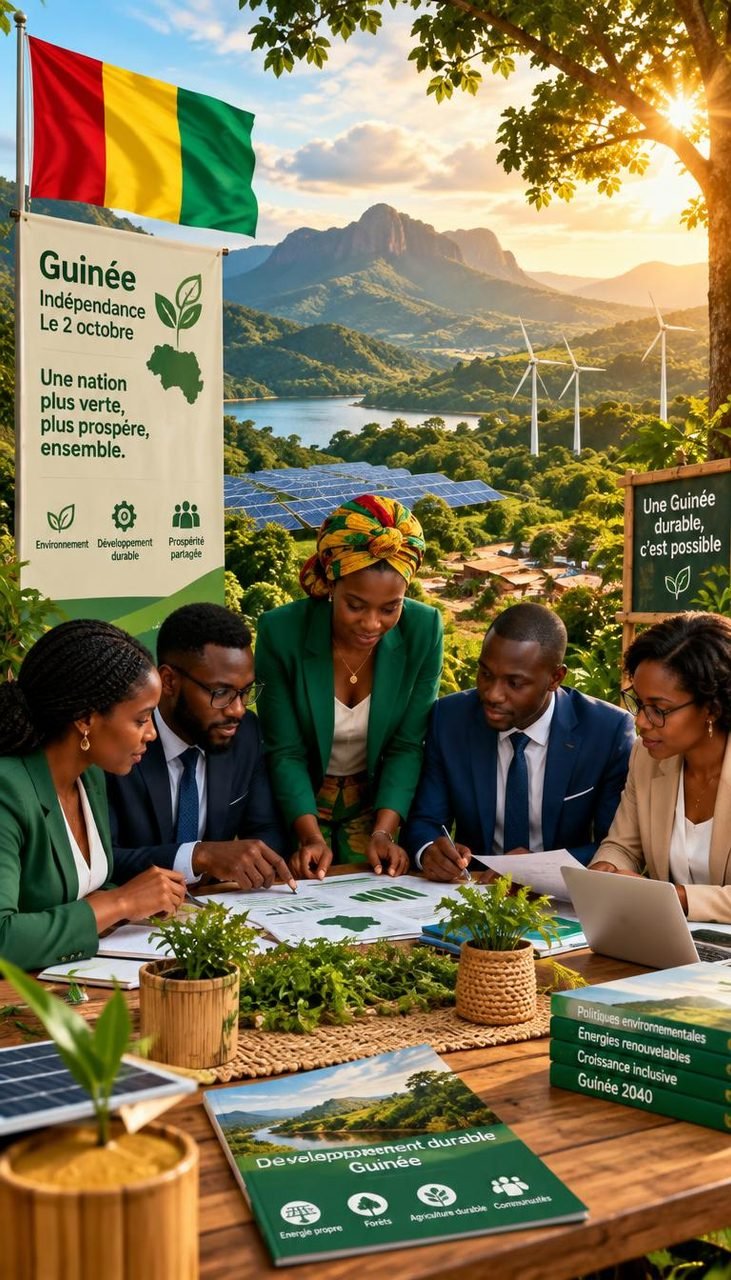
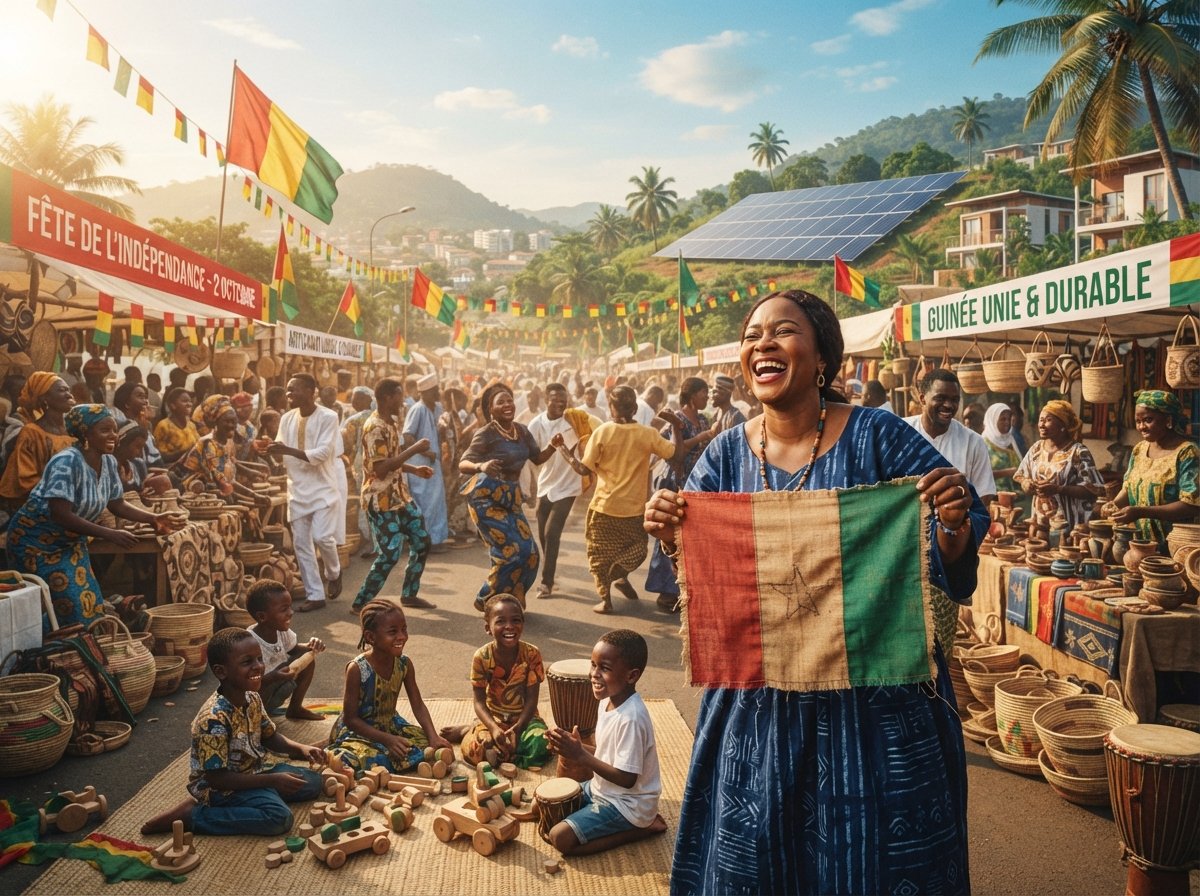
A vibrant scene capturing Guinea Independence Day observance, showcasing a diverse group of people in professional attire, joyfully celebrating in an outdoor setting. In the foreground, men and women hold traditional Guinean flags and engage in community activities, all smiles and unity. The middle ground features decorations like colorful banners symbolizing the United Nations Sustainable Development Goals (SDGs), blending seamlessly with local cultural elements. In the background, a historic Guinean monument stands tall, bathed in warm golden light of late afternoon sun. The atmosphere conveys festivity and hope for sustainable development, with lush greenery framing the composition. The image is well-lit with a soft focus that draws attention to the joyful expressions, encapsulating the spirit of celebration and progress. The Sustainable Digest.

The journey towards sustainable development in West Africa has gained momentum, particularly following the significant strides made in the years since the nation achieved sovereignty. This progress aligns closely with the United Nations Sustainable Development Goals (SDGs), which serve as a framework for addressing critical national priorities.

Understanding the ten most impactful SDGs for the nation is essential. These goals not only reflect global aspirations but also resonate with local needs. Here are the key SDGs relevant to the nation:

Impactful Top 10 United Nations Sustainable Development Goals in Guinea

  • SDG 1: Focus on poverty reduction and improving rural livelihoods.
  • SDG 2: Address food security and promote sustainable agriculture to enhance access beyond the capital.
  • SDG 3: Prioritize healthcare improvements, ensuring access to trained professionals and resilient clinics.
  • SDG 4: Enhance education opportunities, emphasizing vocational programs for students.
  • SDG 5: Promote gender equality as a means to strengthen household resilience and community engagement.
  • SDG 6: Ensure water security and sanitation for public health protection.
  • SDG 7: Expand access to reliable electricity and renewable energy sources.
  • SDG 8: Create decent work opportunities and foster responsible industrialization.
  • SDG 13: Focus on climate action, addressing environmental risks and promoting forest protection.
  • SDG 16: Strengthen accountable institutions and transparent resource management.

These goals illustrate a comprehensive approach to development, directly impacting the lives of the people. President Mamadi Doumbouya’s announcement in 2025 of achieving a B+ sovereign credit rating highlights the nation’s growing economic stature in Francophone West Africa. This achievement, along with the establishment of a Guinea Sovereign Fund, reflects a commitment to intergenerational resource management.

Advancements in education and healthcare are crucial post-independence. While progress has been made, gaps still exist in public services and economic opportunities. The emphasis on training professionals and building resilient infrastructures remains vital for future growth.

Advancements in Education, Healthcare, and Economic Growth Post-Independence

Education and healthcare systems have seen notable improvements, yet challenges persist. Expanding access to quality education and healthcare services is essential for empowering the youth and ensuring their contributions to the economy.

Integration of SDGs with National Development Programs like Simandou 2040

The Simandou 2040 national development program aims to bridge mineral wealth with inclusive growth. By aligning resource development with human capital and transparent revenue management, this initiative seeks to foster long-term social value. The president emphasizes that economic sovereignty should support unity, fairness, and sustainable development.

Contemporary Sustainable Projects and Green Fiscal Policies in Guinea

Today, the focus on sustainable initiatives is reshaping the landscape of development in West Africa. These projects are crucial for ensuring long-term resilience and economic stability. The government is actively pursuing a range of sustainable infrastructure projects that aim to enhance the quality of life for its people.

President Mamadi Doumbouya’s vision for the future includes a comprehensive approach to infrastructure and community development. The Simandou 2040 initiative stands out as a transformative program. It aims to link infrastructure investments with human capital development, ensuring that the benefits reach local communities.

Initiatives in Sustainable Infrastructure and Resiliency

Infrastructure projects encompass transport corridors, ports, and energy systems. These systems are essential for economic growth and connectivity. However, resilience planning goes beyond mere infrastructure. It prepares communities for climate, economic, and social shocks, ensuring they can withstand various challenges.

Community Development Programs Empowering Local Populations

Community development programs play a vital role in enhancing local participation. These initiatives focus on employment, health, education, and women’s economic inclusion. By empowering local populations, the government fosters unity and shared prosperity.

Diverse Green Fiscal Policies Supporting Competitiveness in Global South and Diaspora

Green fiscal policies are essential for maintaining competitiveness in the Global South. They include responsible resource revenue management and transparent public procurement. These policies not only attract investment but also ensure that economic transformation improves the lives of ordinary people.

Project TypeDescriptionImpact
Sustainable InfrastructureTransport corridors and energy systemsEnhances connectivity and economic growth
Community DevelopmentPrograms focusing on health and educationEmpowers local populations and fosters unity
Green Fiscal PoliciesResponsible resource managementAttracts investment and improves lives

Conclusion

The anniversary of Guinea independence Day is not just a moment of reflection; it serves as a vital opportunity to assess how sovereignty translates into meaningful progress. This nation’s rich environmental assets—forests, biodiversity, and mineral resources—are crucial for sustainable prosperity. Careful governance is essential to protect these treasures from unchecked exploitation.

Implementing the ten priority SDGs can align national strategies with global standards for poverty reduction, health, and education. Initiatives like Simandou 2040 and the proposed sovereign fund aim to foster long-term transformation, but their success hinges on transparency and community involvement.

As this nation celebrates its journey, it must remember that true independence means enhancing livelihoods, education, and healthcare. Green fiscal policies can attract responsible investment and strengthen regional partnerships, ensuring that the benefits of sovereignty are felt by all. The commitment to political freedom must be matched by ecological stewardship and social dignity, marking this Guinea Independence day as a continuing pledge to progress.

FAQ

Q: What is the significance of Guinea’s national observance?

A: The observance serves as a celebration of national identity, cultural diversity, and historical milestones, fostering unity among the people.

Q: What is the significance of Guinea’s independence in relation to sustainable development?

A: Guinea’s independence marks a pivotal moment in its journey towards sustainable development, emphasizing sovereignty and self-determination. It has led to initiatives that focus on economic growth, environmental stewardship, and social equity.

Q: How has the observance of independence influenced the nation’s infrastructure?

A: The observance of independence has spurred investments in infrastructure, fostering connectivity and access to essential services. This development enhances the quality of life for citizens and supports economic activities.

Q: What are some key Sustainable Development Goals impacting Guinea?

A: Key SDGs include those focused on poverty alleviation, quality education, and environmental sustainability, which are essential for the country’s development trajectory.

Q: How does the observance inspire commitment to these goals?

A: The celebration of independence reinforces the collective responsibility to achieve these goals, motivating citizens and leaders alike to take action.

Q: What role does education play in Guinea’s post-independence development?

A: Education is crucial for Guinea’s development, as it empowers students with knowledge and skills. This investment in human capital is vital for fostering innovation and sustainable economic growth.

Q: How does Guinea’s independence relate to healthcare advancements?

A: Since gaining independence, Guinea has made strides in healthcare, focusing on improving access and quality of services. This commitment is essential for enhancing the dignity and well-being of its people.

Q: What are some key initiatives supporting community development in Guinea?

A: Various community development programs aim to empower local populations through sustainable practices. These initiatives focus on improving livelihoods and fostering unity among diverse groups.

Q: How does Guinea’s independence impact its cultural identity?

A: Independence has played a significant role in shaping Guinea’s cultural identity, promoting pride and unity among its people. This cultural richness is also a foundation for ecotourism, attracting global visitors.

Q: How do green fiscal policies impact Guinea’s competitiveness?

A: Green fiscal policies aim to balance economic growth with environmental responsibility, enhancing Guinea’s global standing and fostering relationships with the diaspora.

Key Takeaways

  • October 2 marks a significant rejection of colonial rule.
  • The anniversary connects to contemporary issues of resource control.
  • Political sovereignty is central to national identity and development.
  • The capital serves as a hub for cultural and political activities.
  • Recent celebrations highlight themes of unity and dignity.
This website is saving the energy of your screen as it is not being used. It's part of a global effort to lower the planet's electrical consumption and CO2 emission level. Resume browsing
Click anywhere to resume browsing
Verified by MonsterInsights