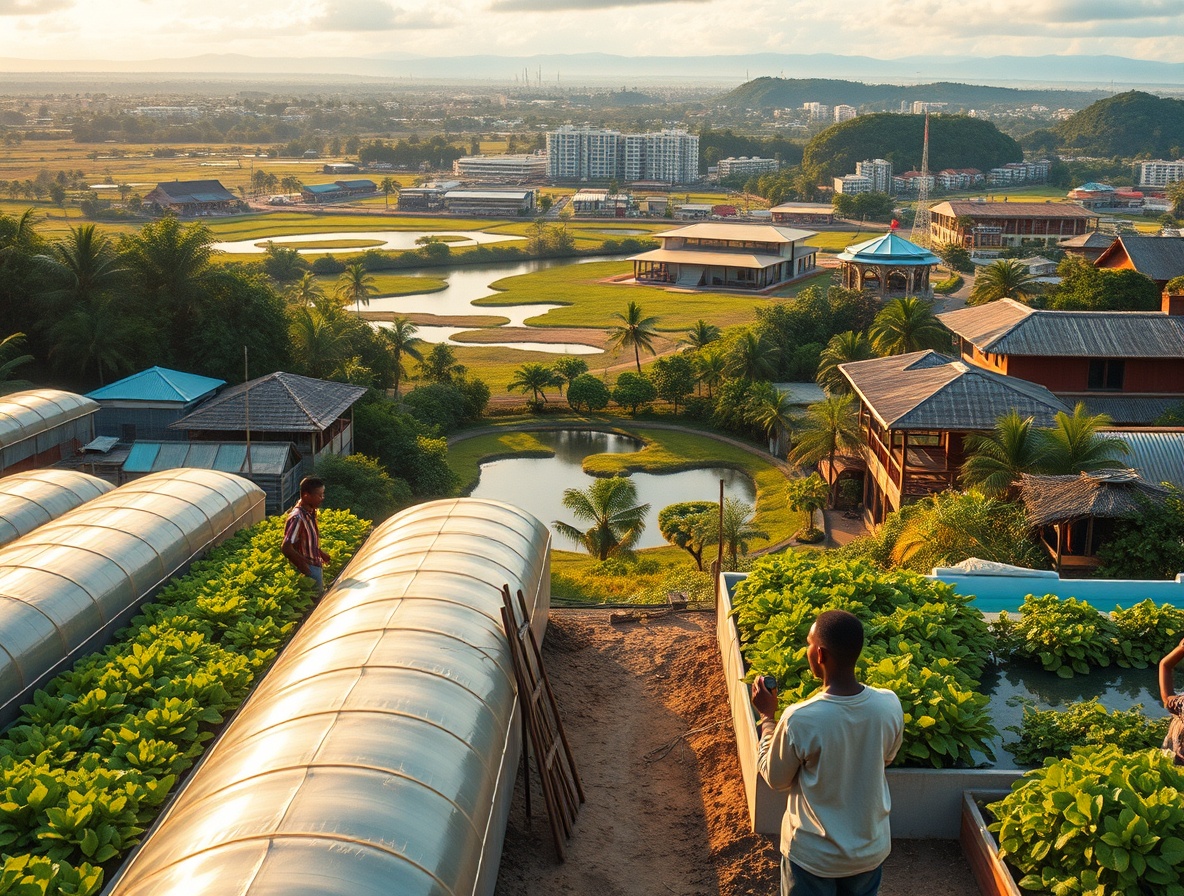
Data Centers for Environmental Justice?

Data Centers Green Builings Smart Cities Environmental Justice Coop Development

Can Data Centers reduce environmental impact? Digital infrastructure now shapes daily life, public budgets, and regional power systems. Yet its physical footprint often remains hidden behind a polished cloud interface. The central question is simple: can technology expand without weakening community power?

On November 12, Dr. Ben Green presented local and electric-grid findings to the DEP Citizens Advisory Council and Environmental Justice Advisory Board. His work shows how AI facilities can affect water, energy costs, neighborhood health, and municipal planning.

OpenAIโ€™s proposed 2.2-million-square-foot project near Saline, Michigan, reveals the remarkable scale behind online services. Meanwhile, a California study reviewed Santa Clara, Los Angeles, Sacramento, Gilroy, and Imperial County; it raised concerns about transparency and water access.

This article examines greenwashing, cultural exploitation, geopolitical conflict, and corporate greed. It also explores cooperative ownership, biomimicry, net-zero practices, renewable technology, accountable policy, and expanded urban open space. Progress need not copy the logic of extraction; communities can help design what comes next.

Data Centers Green Builings Smart Cities Environmental Justice Coop Development

Artificial intelligence is turning computing demand into a major building surge across the United States. Generative tools for images, summaries, and language need far more processing power than basic machine-learning tasks. That pressure is speeding up data center development and reshaping utility plans.

Why the AI Boom Is Accelerating Data Center Development

The U.S. Department of Energy estimates that facilities could use 12% of national electricity by 2028. Other forecasts reach 17% by 2030. For Data Centers, A 2023 market review also projected that power use could double from its 2022 level by 2030. These figures make unchecked growth a costly gamble.

How Connected Municipalities Can Align Digital Growth With Equity

Smart cities need one shared plan for power, housing, schools, transport, and public services. Environmental justice requires honest reporting and protection for neighborhoods with less political influence. Cooperative enterprises, public agencies, and local firms can guide data center development toward jobs, clean power, and community ownership of data centers.

โ€œDigital growth must serve the public, not merely the server rack.โ€

The goal is not to stop innovation; it is to make its benefits broadly shared.

What Makes a Modern Data Center Hyperscale and Resource Intensive

A sprawling hyperscale data center, showcasing extensive computing infrastructure with rows of sleek server racks, illuminated by soft blue LED lights. In the foreground, emphasize advanced cooling systems with visible air ducts and eco-friendly energy sources like solar panels. The middle ground reveals technicians in professional attire, monitoring screens and managing networks, surrounded by a clean, organized environment. The background features large windows allowing natural light to filter in, contrasting with the high-tech equipment. Capture this scene with a low-angle perspective, providing depth and a sense of scale. The atmosphere should evoke innovation and sustainability, tailored for an article by The Sustainable Digest.

A modern data center is less like an office and more like an industrial machine. Its scale depends on servers, storage, power systems, and cooling equipment working without pause. Size alone does not tell the full story; computing density matters just as much.

Hyperscale usually describes a facility larger than 10,000 square feet. OpenAIโ€™s proposed project near Saline, Michigan, offers a striking comparison at 2.2 million square feet. Inside, processors, hard drives, CPUs, GPUs, switches, fiber networks, backup batteries, and cooling systems form one tightly linked operation.

Servers, GPUs, Networking Equipment, and Facility Infrastructure

Artificial intelligence raises rack density because GPUs handle demanding workloads at high speed. That design requires stronger electrical systems and faster heat removal. A building may look quiet from the road, yet its equipment runs with industrial intensity.

Rising Electricity Demand From Artificial Intelligence

One 100-word email created by ChatGPT uses roughly the electricity of an LED bulb running for 14 hours. That comparison makes a single request relatable, but millions of requests create a far larger burden. Each data center therefore belongs in a regional grid review, not in an isolated planning file.

The Environmental Impact of Data Center Energy, Water, and Land Use

Every new computing campus places pressure on power lines, local water supplies, and open land. Its benefits may reach far beyond the host town, while its costs remain close to nearby homes.

Electricity Consumption and Grid Capacity

High-power facilities can require new transmission lines, backup turbines, and fossil-fuel generation. In North Omaha, a coal plant stayed open beyond its planned 2023 closure because of rising demand. The decision extended pollution exposure in a predominantly Black neighborhood. In Memphis, xAI operated dozens of unpermitted methane turbines that released formaldehyde and smog-forming pollution.

Water Use for Cooling in Stressed Regions

Cooling systems also consume a major resource. Google reports roughly 6 billion gallons of water use worldwide each year. Gilroy, California, depends on a closed groundwater basin with little replenishment and no backup source. Imperial County relies fully on imported Colorado River water while mandatory cutbacks continue.

Construction Waste, Air Pollution, and Embodied Carbon

Land clearing removes habitat and increases runoff. Concrete, steel, wiring, and discarded equipment add embodied carbon and construction waste. Strong permits should track air emissions, material use, and water use from site preparation through operation; otherwise, โ€œprogressโ€ becomes an expensive local experiment.

Greenwashing and the Transparency Gap in Data Center Sustainability

A futuristic data center showcasing sustainability efforts, prominently featuring solar panels and green roof gardens in the foreground. In the middle ground, transparent glass structures symbolize openness and transparency, with visible energy-efficient technologies like wind turbines and energy-efficient cooling systems. The background displays a smart city skyline powered by renewable energy, with lush greenery integrated into urban architecture. Soft, natural lighting emphasizes a hopeful atmosphere, suggesting harmony between technology and the environment. A wide-angle view captures the entire scene, highlighting the connection between advanced technology and ecological responsibility. The composition is professional and polished, with a touch of realism to convey the serious subject matter of data center sustainability. Artistry reflects the brand, "The Sustainable Digest."

Sustainability claims can shine brightly while the facts remain in the shadows. A polished net-zero promise means little when residents cannot review current information about power use, water demand, emissions, or backup equipment. Credible performance requires facility-level proof, not corporate language alone.

Why Public Information About Energy and Water Use Is Often Limited

A May 2026 report from The Next 10 and Santa Clara University found that about 93% of Los Angeles County facilities had no publicly accessible environmental documents. This gap blocks meaningful review of local risks. Dr. Irina Raicu called the mix of limited information and Californiaโ€™s fragile water supplies a serious planning problem.

Distinguishing Net Zero Claims From Measurable Performance

Operators should publish electricity, water, emissions, generator use, and construction impacts in comparable formats. Independent audits should test each claim. Residents also need timely information before permits are approved, not after contracts are signed.

Net zero becomes credible only when communities can inspect results, question assumptions, and track progress. Otherwise, sustainability may become a label that carries more polish than proof.

Environmental Justice and the Unequal Burden of Data Center Siting

A server site may look efficient on paper, yet its costs can land unevenly across nearby neighborhoods. Location matters as much as technology. Water stress, social vulnerability, and weak air quality protections can turn a local project into a public health concern.

Social Vulnerability, Water Scarcity, and Local Air Quality

A California report examined Santa Clara, Los Angeles, Sacramento, Gilroy, and Imperial County. Imperial County and Sacramento showed the clearest overlap between scarce water and vulnerable residents. In such places, new facilities may compete with farms, homes, and essential services.

North Omaha offers another warning. A coal plant serving a predominantly Black neighborhood remained open as computing demand grew, despite some of the nationโ€™s highest asthma rates. In Memphis, xAIโ€™s unpermitted turbines released formaldehyde and smog-forming pollution linked to asthma, heart disease, and cancer risks.

Who Bears the Health Risk?

Black, Latino, Indigenous, and low-income residents should have equal power in siting decisions. Efficiency cannot excuse unequal exposure.

โ€œA fair site protects health before it promises growth.โ€

PlacePrimary concernEquity lesson
Imperial CountyWater scarcityProtect basic supply
North OmahaCoal pollutionPrioritize asthma prevention
MemphisTurbine emissionsEnforce air permits

Misrepresentation of Marginalized Communities in Development Decisions

A diverse group of community members, including individuals from marginalized backgrounds, gather in a sunlit conference room, engaged in a respectful discussion around a large, round table covered with blueprints and digital tablets. In the foreground, a young woman of African descent in professional attire actively points to a design proposal, embodying engagement and collaboration. The middle ground features various professionals, including an elderly Hispanic man and a young Asian woman, all dressed in business casual clothing, listening intently and taking notes. The background reveals a wall filled with infographics about community development, with plants creating a green, eco-friendly atmosphere. Warm, natural lighting floods the room, creating an inviting and hopeful mood, reinforcing the concept of meaningful consent in server proposals. The Sustainable Digest logo subtly displayed on a tablet screen conveys a modern, environmentally conscious ethos.

Public input loses value when officials invite residents only after key choices have been made. A packed meeting can create the appearance of consent while leaving affected families without technical support or real influence. Ethical participation must continue from early review through final approval.

Token Consultation Versus Meaningful Community Consent

Meaningful consent gives residents access to engineers, legal advisers, and clear project records. It also allows them to question water studies, grid forecasts, air permits, and tax agreements. Iris Stewart-Freyโ€™s Climate Justice Lab at Santa Clara University links climate risk with community voice, offering a useful model for fair review.

Irina Raicu, who directs the universityโ€™s Internet Ethics Program, applies rights, justice, care, common-good, and virtue-ethics principles. These lenses help communities weigh competing public interests without treating residents as obstacles.

Building Local Capacity to Review Server Proposals

Local review teams can train residents to examine technical filings and explain them to neighbors. Community mobilizers, nonprofits, NGOs, and โ€œgrasstopsโ€ leaders can support this work. The people most affected should define their own priorities.

Weak processStronger practiceCommunity benefit
One public meetingOngoing consent processTrust and influence
Complex filingsLocal technical trainingInformed review
Outside prioritiesResident-led goalsEthical representation

Exploitation of Under-Represented Cultures, Heritage, and Community Knowledge

Land carries memory, identity, and practical knowledge. A server project can harm all three when planners treat a cultural landscape as empty space. Indigenous rights and local heritage must shape decisions before land is acquired, graded, or linked to new infrastructure.

Protecting Indigenous Rights and Cultural Landscapes

Tribal nations and local residents may understand groundwater, seasonal change, wildlife routes, and heritage sites better than a short survey can show. Their knowledge can improve site review, but only when contributors keep control over its use. Broad stakeholder participation, early consent, and paid cultural advisers create a stronger process.

Using Cultural Assets Through Reciprocity Rather Than Extraction

The California research supports care ethics and the common good. These approaches value relationships, shared resources, and long-term trust over quick approval. Developers can offer reciprocity through local ownership, consent-based research, heritage protection, and lasting community investment.

Cultural symbols should not become decorative branding for benefits that flow elsewhere.

RiskProtective practiceCommunity result
Heritage lossEarly cultural reviewSites remain protected
Knowledge extractionConsent and paymentLocal agency grows
Unequal benefitsShared ownershipValue stays local

Geopolitical Conflicts, Supply Chains, and the Race for Digital Infrastructure

A panoramic view of a futuristic cityscape illustrating geopolitics and digital infrastructure. In the foreground, a sleek data center building with solar panels and greenery symbolizes green architecture, surrounded by high-tech surveillance drones monitoring nearby supply chain routes. In the middle ground, roads filled with cargo trucks and autonomous delivery vehicles emphasize the logistics of global trade, while diverse professionals in business attire collaborate at digital workstations, discussing strategies. The background features a skyline of modern skyscrapers integrated with renewable energy sources, under a bright blue sky transitioning to a warm sunset, creating an atmosphere of innovation and global connectivity. The entire scene captures the tension and urgency of geopolitical conflicts intertwined with technological advancement. The Sustainable Digest.

Behind every server campus lies a global contest for chips, minerals, equipment, and electricity. International rivalry can turn local land into a strategic asset, while residents face decisions shaped by forces far beyond their county.

Virginia leads the U.S. market, followed by Texas and California. Reliable grids, fiber networks, land, and tax incentives draw major operators to these regions. As generative AI becomes a central business priority, hyperscalers are raising capital spending sharply. Municipalities may compete so hard for investment that their negotiating power weakens.

Critical Minerals, Equipment Manufacturing, and Energy Security

Chips, transformers, batteries, and rare minerals move through complex supply chains. Conflict, export limits, or labor abuses can delay projects and raise costs. Responsible procurement should test labor rights, human rights, mining practices, and supplier emissionsโ€”not just delivery times.

How Global Competition Shapes Local Expansion

Energy security adds another challenge. Some regions retain fossil-fuel plants when renewable capacity, transmission, or storage cannot grow quickly enough. Strong permits should link new campuses to cleaner power, firm deadlines, and public reporting.

Global pressureLocal effectResponsible response
Mineral shortagesHigher equipment costsTraceable sourcing
Rising AI investmentFaster land competitionFirm public terms
Grid constraintsFossil plants remain onlineClean capacity targets

Slow Yet Reluctant Municipal Development and Infrastructure Planning

Local governments often face an awkward bargain: welcome investment quickly or pause to measure its lasting cost. A major server center can bring jobs and tax revenue, yet it may also strain water systems, roads, schools, housing, and public budgets. Careful planning protects residents before construction begins.

Planning Gaps, Confidential Agreements, and Public Accountability

Planning assumptions can change faster than a permit review. In Georgia, projected extra power needs for 2030 rose from about 2 gigawatts to 6 gigawatts as computing demand grew. California researchers mapped operating and proposed facilities across the state, giving officials a clearer view of cumulative pressure.

Private agreements can hide utility promises, public costs, land impacts, and emergency needs. Confidentiality should not become a substitute for accountability. Residents need hearings, accessible records, and enforceable deadlines.

Coordinating Utilities, Schools, Housing, Water, and Transportation

Agencies should review each project together. Gilroyโ€™s closed groundwater basin has limited replenishment and no backup source, making water review urgent. Municipalities should require cumulative-impact studies and coordinate utilities, schools, housing, roads, and transit before approving major center development.

Corporate Greed, Tax Incentives, and the Unequal Economics of Data Centers

A corporate office looking down on a sprawling urban landscape with data centers in the foreground, detailed with solar panels and greenery, symbolizing sustainability. The middle ground features tax incentives represented as visual metaphors, such as money trees and upward arrows, alongside utility costs depicted as diminishing power bills. The background includes a sunset sky, casting a warm, hopeful glow over the scene, reflecting the tension between corporate greed and environmental justice. The composition should capture a sense of contrast and conflict, highlighting the duality of profit and sustainability in a smart city. The atmosphere is thought-provoking yet optimistic, designed for an audience engaged with economic and environmental issues. The Sustainable Digest.

Public subsidies can make private expansion look like a public victory. Yet discounted power, generous tax incentives, and weak oversight may leave residents carrying hidden costs. Economic development is fair only when public returns match public support.

Utility Rate Increases and Costs Passed to Residents

Large server facilities often negotiate special utility terms. If a utility builds lines or plants for one customer, households, schools, and small firms may help pay the bill. Bloomberg reported that electricity prices more than doubled in over five years in some areas near these sites. Regulators should require clear cost-sharing rules and rate protection.

Questioning Job Creation and Lost Public Revenue

Construction can create many short-term jobs, but operations usually need far fewer permanent workers. Good Jobs First found that Texas raised its estimated tax breaks from $130 million to $1 billion in two years. Such incentives can drain funds from schools, transit, and public health unless officials measure lasting value.

Designing Community Benefit Agreements With Enforceable Terms

A strong agreement should require local hiring, procurement, tax recapture, air and water monitoring, rate safeguards, and penalties for missed promises. Economic development should build local wealth, not simply reduce corporate costs.

How Cooperative Enterprises Can Create Shared Ownership and Local Value

A vibrant and inspiring scene depicting cooperative renewable power ownership. In the foreground, a diverse group of men and women in professional business attire engage in a lively discussion, pointing to a large solar panel layout at their feet, symbolizing collaboration. The middle ground features a modern green building integrated with wind turbines and lush greenery, demonstrating environmental responsibility. In the background, a clear blue sky filled with soft clouds contrasts with the eco-friendly infrastructure, embodying hope and innovation. The lighting is bright and inviting, creating a warm atmosphere. Shot from a slight low angle to emphasize the height of the structures and the aspirations of the people. This image should convey a sense of community, progress, and shared values in sustainability. Inspired by "The Sustainable Digest".

Ownership can shape whether a large computing project strengthens a region or simply extracts its resources. Member-led models offer a practical way to keep earnings, skills, and decision-making closer to residents. This way, local value becomes part of the plan rather than a late promise.

Energy Cooperatives and Community-Owned Renewable Power

Energy cooperatives can finance solar panels, wind turbines, battery storage, and efficiency upgrades. These assets can serve a facility and nearby households at the same time. Another way to reduce grid pressure is to pair renewable power with demand planning and shared storage.

Worker, Consumer, and Community Investment Models

Workers, consumers, and residents can purchase a financial share in local infrastructure. They can also elect board members and review spending. A second share can support schools, job training, cultural preservation, water resilience, or lower energy bills.

Virtualization offers a related lesson: shared computing resources improve equipment use and limit duplicate hardware. That approach creates a better way to manage capacity. It also shows the way cooperation can support reliable services without endless expansion.

Shared ownership turns public support into public participation.

Cooperation is a governance structure, not decorative branding.

What Policymakers Can Require for Equitable Data Center Growth

A modern, equitable server infrastructure scene showcasing a diverse group of professionals in business attire analyzing a high-tech data center. In the foreground, a collaborative meeting table is filled with blueprints and digital tablets displaying sustainable designs. The middle ground features rows of eco-friendly servers with visible greenery integrated into their design, emphasizing environmental justice. The background reveals large windows allowing natural light to flood in, creating a bright and optimistic atmosphere. The setting conveys a sense of progress and innovation, with a focus on renewable energy sources powering the infrastructure. The overall mood is professional yet inspiring, reflecting themes of sustainability and community involvement in technology. The Sustainable Digest logo subtly integrated into one of the tablets.

Public rules can turn rapid computing expansion into a fairer bargain. The U.S. Department of Energy projects that server facilities could consume 12% of national electricity by 2028. Utilities need clear goals before approving new loads, rather than treating each proposal as an isolated deal.

Standardized Reporting for Energy, Water, and Air Quality

Reporting should cover electricity, water, PUE, CUE, greenhouse gases, backup generators, air emissions, and local effects. The Green Grid metrics help utilities compare energy and carbon performance. Public records also let residents test corporate claims.

Permits, Renewable Rules, and Responsible Incentives

The 2023 German Energy Efficiency Act offers a useful model for binding goals. Utilities can use similar standards when reviewing projects. Permits should assess cumulative effects on water, grid capacity, traffic, housing, and air quality.

Memphis shows why regulators must reject unpermitted methane turbines and monitor formaldehyde and smog-forming emissions. Tax incentives should require renewable additions, local hiring, public revenue, ratepayer protection, and verified results. Utilities must meet renewable goals, while permit terms should include emissions controls and penalties.

โ€œPublic support should purchase public accountability, not private silence.โ€

How NGOs, MSMEs, Nonprofits, and Community Mobilizers Can Collaborate

A vibrant community scene showcasing collaboration for sustainable data centers, set in an urban park. In the foreground, diverse community members including NGOs, MSMEs, and nonprofits โ€“ all dressed in professional business attire โ€“ gather around a large interactive digital display showing renewable energy data and community projects. In the middle ground, green buildings with solar panels and vertical gardens reflect modern eco-friendly architecture, emphasizing a commitment to environmental justice. The background features a city skyline with hints of technology and greenery, bathed in warm sunlight, creating an optimistic and collaborative atmosphere. Use a wide-angle lens to capture this bustling scene, highlighting the connection between technology and community spirit, with soft, natural lighting to enhance the welcoming mood. This image embodies the essence of "The Sustainable Digest."

Local partnerships can turn complex infrastructure debates into practical public action. NGOs, nonprofits, and grassroots support groups may work together, or act independently when urgent needs arise. Their shared goal is clear: help residents understand proposals for data centers before officials approve them.

Grassroots Monitoring, Legal Support, and Public Education

Community groups can translate technical filings, host public meetings, and provide legal services. They can also track water use, air quality, permits, and utility costs through accessible monitoring programs. The California report, co-authored by Santa Clara University students and researchers, urges communities to build local research capacity when information is missing.

Local Procurement, Workforce Training, and Small Business Participation

MSMEs can supply construction services, catering, landscaping, cybersecurity, transport, equipment repair, and renewable-energy services. Construction work also creates openings for electricians, HVAC workers, and other skilled trades.

  • Community mobilizers organize residents.
  • Tastemakers build public attention.
  • Grasstops leaders open institutional doors.
  • Workforce programs connect residents with lasting technical careers.

Strong collaboration makes public oversight a shared civic skill, not a specialist privilege.

Responsible Data Center Construction and Operations for Sustainable Communities

A modern data center nestled in a green landscape, showcasing responsible construction and energy-efficient operations. In the foreground, a well-organized team of professionals in smart casual attire examines blueprints and solar panel installations, symbolizing collaboration and innovation. The middle ground features the data center building itself, designed with sustainable materials, large windows reflecting natural light, and integrated greenery on the facade. The background presents a clear sky with wind turbines gently spinning, and a vibrant community with electric vehicles and public green spaces, representing environmentally conscious urban development. The scene is illuminated by warm, natural lighting, conveying an optimistic and responsible atmosphere, suitable for "The Sustainable Digest."

Responsible construction begins before the first server enters the building. A compact footprint, low-emission materials, and recycled construction inputs can reduce embodied carbon and limit land disturbance. Designers should also plan for repair, reuse, and safe recycling when equipment reaches the end of its service life.

Operations matter just as much. Virtualization lets several virtual servers run on one physical machine, which cuts idle hardware and energy use. Workload scheduling can shift flexible tasks to periods with cleaner power or lower demand. A DCIM platform can track power, lighting, assets, and cooling in real time.

Efficient Cooling, Waste Heat Recovery, and Water Stewardship

Liquid cooling can support dense AI workloads, but it needs skilled maintenance. Hot-aisle and cold-aisle containment also reduces wasted cooling. Combined heat and power may reuse waste heat for electricity or nearby heating. Water-efficient systems and closed-loop designs further protect local supplies.

PUE divides total facility energy by IT equipment energy. CUE compares carbon emissions with IT energy use. Together, these measures reveal whether efficiency claims match performance.

PracticePrimary benefitKey safeguard
VirtualizationFewer idle serversMonitor workload demand
Liquid coolingBetter heat controlMaintain specialized systems
Heat recoveryUseful local energyConnect to nearby users

Biomimicry, Net Zero Practices, and Renewable Technology in Data Centers

A futuristic data center seamlessly integrated into a lush urban landscape, showcasing biomimicry in architecture. In the foreground, vibrant green walls mimic plant structures, while solar panels resembling leaves harness sunlight efficiently. The middle ground features wind turbines inspired by natural forms, blending harmoniously with the design. In the background, a clear blue sky illuminates the scene with soft daylight, casting gentle shadows on the eco-friendly structure. The atmosphere is serene and hopeful, hinting at a sustainable future. Include elements like lightweight, translucent materials, water conservation systems, and greenery that surrounds the building, emphasizing innovation and environmental harmony. The image aligns with the theme of clean energy technology as it relates to the mission of The Sustainable Digest, effectively highlighting the intersection of nature and technology in modern architecture.

Nature offers useful lessons for climate-conscious computing. A facility can study termite mounds, human circulation, and natural ventilation to move heat with less mechanical effort. Adaptive controls can adjust airflow as temperatures and workloads change. This climate-aware approach treats efficiency as a design principle, not a marketing line.

Designing Cooling and Energy Systems Inspired by Nature

Direct-to-chip and liquid cooling support dense processors, though both require specialized infrastructure. Designers can pair these tools with heat recovery and passive airflow. Such measures reduce climate impact while improving equipment reliability.

Combining Solar, Wind, Storage, and Demand Flexibility

Solar, wind, and hydropower can supply clean energy. Batteries help preserve clean energy when weather shifts or grid supply tightens. Operators can also move nonurgent workloads to hours with lower emissions and stronger renewable output.

Net-zero plans should show absolute cuts, new renewable capacity, storage results, and limits on fossil-fuel backup. Rising hyperscaler emissions after the generative AI boom reveal why climate goals must survive changing business priorities. Transparent accounting keeps clean energy claims tied to real climate commitments.

StrategyPractical valueProof required
BiomimicryLower cooling demandMeasured efficiency gains
StorageFirm renewable supplyOutput and duration records
Flexible workloadsLess grid stressCarbon-based scheduling logs

Enhancing Greenspaces, Public Health, and Community Resilience Around Facilities

A vibrant urban greenspace adjacent to a modern data center, showcasing lush trees and colorful flowers, with a diverse group of professionals in business attire engaging in outdoor activities, like discussions or yoga, highlighting the connection between technology and public health. In the foreground, a serene walking path lined with benches encourages community interaction. The middle ground features the sleek, eco-friendly architecture of the data center, adorned with solar panels and green roofs, while the background reveals a clear blue sky, symbolizing hope and sustainability. Soft, natural lighting bathes the scene, creating a peaceful, inviting atmosphere that emphasizes community resilience. A logo for "The Sustainable Digest" subtly appears in the corner, reinforcing the theme of environmental justice.

Thoughtful site design can turn a large computing facility into a better neighbor. Native plants, shade, and public paths can soften its footprint while improving local health. Landscape planning should serve people and wildlife, not merely hide an industrial wall.

Native Landscapes, Stormwater Management, and Biodiversity Corridors

Native trees and grasses need less irrigation and support birds, insects, and pollinators. Wetlands, bioswales, permeable pavement, and tree cover can slow runoff during heavy rain. These features also connect habitat areas and reduce heat near homes.

Public plans should include walking routes, shaded seating, noise buffers, air-quality checks, and safe access. Such features can make facilities less disruptive and help residents manage heat exposure.

Measuring PUE, CUE, Water Performance, and Community Benefits

The Green Grid created PUE and CUE to assess energy and carbon performance. LEED reviews energy, water, materials, and wider site impacts. Energy Star, managed by the EPA and the Department of Energy, adds another verification tool. Yet public records should also track water use, health outcomes, habitat gains, and local investment.

MeasureWhat it showsPublic value
PUE and CUEEnergy and carbon efficiencyComparable performance
Water metricsConsumption and reuseResource protection
Community indicatorsHealth, access, and local benefitsAccountable results

Conclusion

Digital infrastructure can support modern life without becoming a license for unchecked expansion. Forecasts that facilities may use 12% of U.S. electricity by 2028 show why public rules must guide growth.

Water planning matters just as much. Googleโ€™s reported six billion gallons of annual use makes efficient cooling, reuse, and local supply reviews essential. The 93% documentation gap in Los Angeles County also proves that open records are a foundation of fair oversight, not a public-relations extra.

A stronger path joins operators with policymakers, NGOs, MSMEs, community groups, and cooperative enterprises. Enforceable benefits, local purchasing, shared ownership, and public monitoring can keep value near affected communities while respecting cultural knowledge.

Biomimicry, renewable power, efficient computing, repairable equipment, and larger public landscapes can improve resilience and health. Equitable growth does not reject technology; it gives communities information, consent, safeguards, ownership, and measurable benefits. That is how sustainable development earns trustโ€”and lasts.

FAQ

Why is artificial intelligence accelerating server-campus growth?

Artificial intelligence requires large computing clusters, advanced GPUs, and constant processing power. This demand increases electricity use, equipment orders, facility construction, and pressure on utility grids.

What makes a modern server facility resource intensive?

A large facility combines servers, networking systems, backup power, cooling equipment, and security services. These systems consume substantial energy, water, land, and construction materials.

How does electricity demand affect local communities?

A major new load can require grid upgrades, new substations, or power-line expansion. If regulators approve projects too quickly, residents may face higher utility costs or weaker reliability.

Why is cooling a major concern?

Computing equipment produces intense heat. Many cooling systems use water, while others increase electricity demand. Regions facing drought must weigh industrial use against household, farm, and ecosystem needs.

What environmental effects can facility construction create?

Construction can generate waste, traffic, dust, noise, air pollution, and embodied carbon. Site selection should also consider wetlands, farmland, wildlife corridors, and nearby homes.

How can the public distinguish real sustainability from greenwashing?

Strong claims should include verified figures for electricity, water, emissions, air quality, and renewable power. A vague net-zero promise means little without a clear baseline, timeline, method, and public report.

What does environmental justice mean in facility siting?

It means no community should carry a disproportionate share of pollution, water stress, noise, or financial risk. Reviews should examine income, race, health, housing, and existing industrial burdens.

Why do Black, Latino, Indigenous, and low-income communities need a strong voice?

These communities have often experienced weaker political influence and higher exposure to pollution. Fair planning requires early notice, accessible information, legal support, and meaningful consentโ€”not a meeting after the decision.

How can local governments prevent token consultation?

Officials can publish agreements, provide independent technical reviews, fund community experts, and allow time for public response. Binding conditions should cover water, jobs, pollution, traffic, and long-term monitoring.

How should Indigenous rights and cultural landscapes shape planning?

Governments and companies should respect tribal sovereignty, sacred places, traditional knowledge, and cultural heritage. Any use of community knowledge should involve reciprocity, permission, fair payment, and shared control.

How do global supply chains affect local facility projects?

Critical minerals, chips, transformers, batteries, and networking equipment come from complex international markets. Geopolitical conflict can raise costs, delay construction, and increase concerns about energy security.

Why do municipal planning gaps create risk?

Local plans may not keep pace with rapid computing growth. Confidential agreements can limit public oversight, while weak coordination can strain schools, housing, roads, water services, and emergency systems.

Do tax incentives always produce broad economic benefits?

Not always. Incentives may reduce public revenue while residents absorb utility upgrades and infrastructure costs. Policymakers should test job quality, local hiring, tax recovery, and the full public return.

What should a community benefit agreement include?

It should set enforceable goals for local procurement, workforce training, air monitoring, water protection, renewable power, public services, and neighborhood investment. Penalties should apply when the operator misses its commitments.

How can cooperative enterprises create shared value?

Energy cooperatives can help residents own renewable projects, storage assets, or efficiency services. Worker, consumer, and community investment models can keep part of the revenue in the region.

What reporting rules should policymakers require?

Operators should disclose electricity use, peak demand, water withdrawal, emissions, cooling methods, air quality, waste, and renewable energy claims. Reports should use common methods and cover the entire facility life cycle.

How can nonprofits and small businesses participate?

Community groups can support legal review, grassroots monitoring, public education, and health research. Small firms can gain opportunities through local procurement, maintenance, catering, construction, and technical services.

Which design choices reduce resource use?

Compact layouts, low-emission materials, repairable equipment, virtualization, workload optimization, and circular purchasing can lower impacts. Infrastructure management tools also help operators track performance and avoid waste.

How can renewable technology support responsible operations?

Solar, wind, batteries, and demand flexibility can reduce reliance on fossil-fuel generation. Nature-inspired design may improve airflow, shade, heat exchange, and resilience without treating technology as a magic wand.

What role do public landscapes play near industrial facilities?

Native plantings, stormwater systems, shade trees, and biodiversity corridors can reduce heat, flooding, and habitat loss. These features should serve nearby residents rather than function as decorative public relations.

Which performance measures matter most?

Power Usage Effectiveness, Carbon Usage Effectiveness, water performance, emissions, outage rates, and community benefits offer useful insight. Results should be measured over time and compared with local health and climate goals.

Key Takeaways

  • AI infrastructure can reshape local resources and electric grids.
  • Large facilities create major planning and public-health questions.
  • California research highlights transparency and water-access gaps.
  • Municipal hesitation often reflects real fiscal and social risks.
  • Cooperative ownership can strengthen community power.
  • Renewables, biomimicry, and open space offer practical alternatives.
  • With forethought, insight, with CSR and ESG coupled with an intentional sustainable agenda, Data Centers can provide social impact.

The U.S. of OMB proposal impact on Nonprofits, Sustainable Development, and Co-Ops

U.S. of OMB proposal impact on Nonprofits, Sustainable Development, and Co-Ops

The federal landscape for philanthropic groups faced a seismic shift in May 2026. The 2026 U.S. OMB proposal (office management budget) released a plan that fundamentally alters how groups manage their resources.

One might call it a bureaucratic makeover with a sharp edge. It shifts from collaborative partnerships toward a centralized model.

This specific proposal aims to implement executive orders. It focuses on tighter federal grantmaking oversight.

New changes tie funding directly to administration priorities rather than independent ones. Many organizations now face intense scrutiny that could disrupt their daily missions.

These shifts threaten the core regarding cooperative growth plus grassroots support across the nation. This regulatory framework carries profound implications for social equity plus economic cooperation.

A federal grant may soon require navigating complex political gatekeeping to remain active. International networks fear disruption in growth cooperation as American policies evolve.

Understanding the OMB Uniform Grants Regulation Proposal

A significant transformation is coming to the world of federal financial assistance through a new proposal from the Office of Management and Budget. This change signals a shift from a collaborative partnership toward a more rigid, compliance-heavy environment for all recipients.

The proposal would consolidate requirements into a single set of binding rules. This move affects how every organization, from local cooperatives to international nonprofits, interacts with the federal government.

What Is the Office of Management and Budget Proposal

The office management budget plan seeks to reframe federal financial assistance under the new Uniform Grants Regulation. It creates a unified framework that all agencies must adopt without exception.

By centralizing authority, the office management team aims to standardize the entire federal grantmaking lifecycle. This includes everything from the initial program design to the final project delivery and audit phase.

Historical Context: From 2014 Uniform Guidance to 2026 Proposed Regulation

For over a decade, the 2014 uniform guidance (2 CFR Part 200) provided a flexible framework for awards. It allowed universities and nonprofits to balance federal oversight with their own institutional policies.

The uniform guidance era focused on administrative requirements and cost principles through a lens of cooperation. Now, this historical pivot moves the needle toward a much more restrictive and centralized control model.

Timeline and Implementation Schedule for Fiscal Year 2027

The law-making process for these revisions targets an effective date of October 1, 2026. This timeline aligns with the start of federal fiscal year 2027 awards.

Organizations have only a short window to adjust their internal terms and policies before the new rules take effect. Future amendments will then apply government-wide automatically, bypassing individual agency rulemaking entirely.

Transformation from Advisory Guidance to Binding Federal Regulation

The most profound change is the reclassification of guidance into a formal regulation with full legal effect. This shift increases the potential liability for noncompliance across all agencies involved.

Under this regulation, a simple mistake could lead to terminations or even litigation under the False Claims Act. While guidance offered some discretion, these new mandates demand strict adherence to every provision.

The irony is palpable: while officials claim to enhance efficiency, these new layers actually increase administrative complexity and cost.

Feature2014 Framework2026 Proposed Shift
Legal StatusAdvisory GuidanceBinding Regulation
ControlAgency DiscretionCentralized OMB Authority
Liability RiskModerate FlexibilityHigh / Enforceable Law
ApplicationCollaborative ApproachCompliance-Focused

U.S. of OMB Proposal Impact on Nonprofits, Sustainable Development, and Co-Ops: Comprehensive Overview

A diverse group of professionals in business attire engaged in a collaborative discussion around a modern conference table. The foreground features a woman of Asian descent and a man of African descent actively pointing at a report titled "Sustainable Development and Nonprofits." In the middle ground, a screen displays diagrams illustrating the impact of policies on organizations, while a window allows soft natural light to filter into the room. The background shows lush greenery outside, symbolizing sustainability and growth. The atmosphere is focused and optimistic, with a sense of urgency to address important issues. This image is associated with "The Sustainable Digest."

The proposed revisions to federal grant-making represent a departure from mission-based funding toward a more politically filtered resource allocation model. This shift introduces a new era where technical merit might take a backseat to policy alignment. It essentially redefines the relationship between the government and the civic sector.

Executive Order 14332 and Administration Priorities

Executive Order 14332, titled “Improving Oversight of Federal Grantmaking,” acts as the foundational catalyst for this regulatory overhaul. It explicitly ties federal awards to the current administration and its specific policy priorities. This directive signals a transition from needs-based support to a more scrutinized oversight framework.

This policy moves away from traditional mission-aligned funding. It creates a filter that fundamentally alters which entities can secure support for their local communities. The goal appears to be a tighter alignment between federal spending and executive branch goals.

Which Organizations Face the Greatest Impact

The proposal would create a challenging environment for several distinct sectors. While all organizations receiving federal awards face increased scrutiny, those working on controversial social or environmental topics are most at risk. The uncertainty of these changes creates a looming shadow over long-term strategic planning.

Nonprofit Organizations Receiving Federal Awards

Traditional nonprofits often rely on stable, multi-year funding to maintain their daily operations and specialized staff. The proposed changes would likely introduce unpredictability that makes multi-year project management nearly impossible. These groups must now prepare for a landscape where financial stability is no longer guaranteed by performance alone.

Sustainability-Focused Institutions and Environmental Groups

Institutions focused on climate change and environmental justice are particularly vulnerable under these new rules. The proposal flags climate adaptation as a topic for enhanced review and potential disqualification. This specifically targets organizations whose core missions center on the renewable energy transition or ecological protection.

Cooperatives and Cooperative Development Organizations

Cooperatives promote democratic ownership and equitable community wealth. However, these alternative economic models may face skepticism under a regulatory framework that emphasizes narrowly defined national interests. Awards for cooperative development could be restricted if they are viewed as misaligned with current political objectives.

Grassroots Support Organizations and Community Outreach Centers

Community outreach centers often handle sensitive topics like immigration assistance and social equity. These agencies might find their grant eligibility threatened if their work clashes with the administration and its stated priorities. Their reliance on federal support makes them especially susceptible to sudden policy shifts.

Financial Instability and Operational Risks for Grant Recipients

The financial instability stemming from these changes would be significant for both service providers and their constituents. The proposal would allow for the sudden termination of funds without a clear appeal process or demonstrated cause. This creates a precarious environment where essential programs could vanish mid-performance.

Organization TypePrimary ConcernOperational Risk
Environmental NGOsClimate scrutinyImmediate disqualification
Community Co-opsEconomic model biasRestricted awards
Grassroots CentersViewpoint alignmentSudden funding loss

The proposal effectively enables a system where organizations can be disqualified based on political disfavor. This threatens the longevity of awards that have historically supported the most vulnerable populations. Such changes undermine the public-private partnership that has existed for decades.

“The proposal opens the door to government abuse and overreach, by allowing federal agencies to withhold, terminate, or suspend federal grants without cause, add new, onerous terms and conditions mid-performance, disqualify any grantee it disfavors, and threaten federal programs that address racial, social, and other inequities.”

โ€” Diane Yentel, President and CEO of the National Council of Nonprofits

By undermining this partnership, the government jeopardizes essential services including housing, health, and disaster recovery. The operational risks extend beyond money, impacting staff stability and community trust. Organizations must now navigate a world where their mission is subject to the whims of shifting political tides.

  • Loss of multi-year staffing commitments.
  • Mid-project termination of critical community aid.
  • Increased administrative burden for small nonprofits.
  • Reputational damage from politically motivated disqualification.

How the Grant Application Process Will Change Under the New Rules

Navigating the shifting sands of federal funding requires more than just a solid project plan; it now demands a keen eye for political weather vanes. The proposal would transform the grant landscape from a merit-based evaluation into a politically filtered selection system.

Applicants must look beyond technical excellence to ensure their missions mirror the current executive vision. This shift introduces a new layer of oversight that challenges the traditional independence of administrative reviews.

Political Appointee Pre-Issuance Review Requirements

Under the new framework, senior political appointees would conduct mandatory pre-issuance reviews. This review process ensures that every federal grant aligns with the executive branch’s vision before any funds are released.

While programmatic peer review remains, it effectively becomes advisory. The final decisions rest with officials who prioritize ideological harmony over technical excellence or community impact.

Mandatory Alignment with Presidential Policies and National Interest

Program planning must now mirror the presidentโ€™s policies rather than just an agency’s mission. Funding opportunities will require applicants to demonstrate how their work supports current administration goals.

This shift means that grants are no longer just about local community needs. Instead, they serve as tools to advance specific national priorities defined by the White House.

Expanded Risk Assessment Criteria and Affiliation Screening

The proposal broadens the risk assessment criteria used by federal agencies. An agency can now deny awards based on an applicant’s affiliation with organizations that supposedly threaten public safety.

These vague standards could be weaponized against advocacy groups or coalitions. Strategic dilemmas now face cooperatives that must decide if their partnerships trigger unwanted scrutiny.

Restrictions on Organizational Eligibility by Tax-Exempt Status

The Office of Management and Budget might categorically exclude certain tax-exempt groups from specific competitions. This includes 501(c)(3) and 501(c)(4) entities that were previously eligible for various grants. This proposal would narrow the field of potential partners based solely on their legal structure.

Topics Subject to Enhanced Scrutiny: Gender, Immigration, Climate Change, and DEI

Projects touching on sensitive cultural issues will face intense review. Any policy involving gender ideology or climate change could be flagged as inconsistent with the law or national interest.

Sensitive TopicScrutiny LevelPrimary Risk FactorAlignment Goal
Climate ChangeMaximumPolicy InconsistencyEconomic Interests
Diversity (DEI)MaximumIdeological ConflictAnti-American Characterization
ImmigrationHighNational SecurityEnforcement Priorities

Faith-Based Organizations and Viewpoint Neutrality Provisions

Ironically, the new rules mandate that agencies do not discriminate against faith-based groups. They must apply viewpoint neutrality to religious entities while screening other groups for national priorities. This creates a complex environment where some viewpoints are explicitly protected while others are sidelined.

“Award decisions would hinge on alignment with administration priorities… including whether a proposed award involves topics identified as demonstrating anti-American values.”

This chilling effect may lead organizations to modify their mission statements. They might avoid certain language to escape being deemed inconsistent with the current proposal.

New Funding Restrictions on DEI, Gender Ideology, and Disparate Impact Activities

A visually striking scene depicting a collection of federal awards on a polished wooden table in a well-lit office environment. In the foreground, several golden plaques and certificates shine, reflecting soft natural light, symbolizing achievement and recognition. In the middle ground, an open briefcase with papers related to nonprofit funding proposals sits beside a laptop displaying data on sustainable development initiatives. The background features a large window with a cityscape view, bathed in warm afternoon sunlight, conveying a sense of opportunity and growth. The atmosphere is professional yet inviting, suitable for an article by "The Sustainable Digest," focusing on the impact of funding restrictions on nonprofits and DEI.

Beneath the surface of administrative updates lies a sharp turn in the regulation of identity-based programming. This proposal signals a new era where social values are closely monitored through financial strings. Organizations must now balance their mission with high-stakes compliance hurdles.

Prohibited Uses of Federal Award Funds

The proposal would prohibit the use of federal awards to “fund, promote, encourage, subsidize, or facilitate” certain social agendas. This includes diversity, equity, and inclusion policies that the administration deems in violation of anti-discrimination law. Specifically, it targets “gender ideology” and any assistance for the medical transition of individuals under 19.

This reach extends into systemic analysis as well. A new provision bars support for theories of disparate-impact liability, which addresses unintentional discrimination. These restrictions aim to align recipient behavior with current presidential priorities.

What Constitutes Promotion or Facilitation of Restricted Activities

These restrictions cast a wide net over organizational activities. Even internal equity analysis could face scrutiny if linked to an award. This broad language might encompass everything from cultural competency training to targeted recruitment efforts.

The rules create a compliance minefield for leadership. Promotion is an elastic term that could apply to simple program descriptions or advocacy. Organizations must be cautious about how they frame their social impact goals.

Material Breach Consequences and Enforcement Mechanisms

Violating these terms is not a minor slip; it is a material breach. Such a designation gives agencies the power to terminate a grant immediately. This shift moves disagreements from simple audits to severe legal threats.

Furthermore, these violations could trigger the False Claims Act. This means an organization might face massive financial penalties beyond just losing their funding. The government’s enforcement toolkit has become significantly sharper.

Required Separation Between Federally Funded and Non-Federal Activities

Organizations must keep their federal funds strictly separate from non-federal money. This creates a logistical hurdle for community centers that offer a mix of services. Maintaining these artificial walls requires robust accounting to prove that no prohibited ideology is supported by taxpayer dollars.

Integrated organizations face the hardest path. A cooperative using funds for rural development must ensure its governance principles do not overlap with restricted equity concepts. The administrative burden of this separation is substantial.

Legal Ambiguities and Court-Upheld Practices

Many of these restricted practices remain legal under current court rulings. This creates a profound disconnect between federal mandates and judicial precedents. Nonprofits are often left in the middle of this tug-of-war.

Activity TypeProposal StatusLegal Context
Immigration Legal AidHighly ScrutinizedUpheld by Courts
Gender-Affirming CareProhibitedVaries by State
Disparate Impact AnalysisRestrictedEstablished Legal Doctrine

The proposal purports to bar any federal funding from being used to promote ‘unlawful’ diversity, equity, and inclusion (DEI) efforts or illegal immigration. However, many DEI-related practices and policies that the administration claims are unlawful have been upheld by courts as permissible under the law or can be administered lawfully.

National Council of Nonprofits

This legal grey area forces grantees to decide between their values and their survival. Without clearer definitions, many may avoid these activities entirely to stay safe. Strong legal counsel will be essential for those continuing their work.

Grant Termination and Suspension Powers: New Agency Discretion

Under the new OMB framework, the stability of federal funding becomes remarkably fragile as federal agencies gain the power to end projects at will. This shift transforms the grant relationship from a stable partnership into something far more precarious and unpredictable. Organizations must now navigate a landscape where their long-term survival depends on more than just meeting performance metrics.

Discretionary Termination for Convenience Without Cause

The proposal would grant the government the power to end an award whenever a project no longer fits “national interest” or “program goals.” This “termination for convenience” mimics corporate procurement contracts used in the defense sector. It allows the agency to walk away from grants mid-stream, even if the recipient remains in full compliance with all regulations.

Temporary Stop-Work Suspensions Up to 90 Days

Authorities could also freeze work for up to 90 days through temporary stop-work suspensions. While a defense contractor might easily pause a factory line, a nonprofit providing essential services cannot simply pause its care for a vulnerable community. Such interruptions create operational chaos and risk the safety of populations that rely on daily support.

Carved-Out Funding Categories: Entitlements, Disaster Recovery, and Infrastructure

Not all federal funding faces this constant threat of sudden cancellation. Certain awards remain protected, such as disaster recovery, CHIPS Act initiatives, and infrastructure programs. However, this leaves social services and environmental projects fully exposed to the whims of changing political priorities and administrative shifts.

Limited Appeal Rights and Court of Federal Claims Process

If a termination occurs, the recipient loses the right to a traditional administrative hearing or a standard appeal. Instead, entities must file money claims in the U.S. Court of Federal Claims. The court usually grants money for allowable costs rather than forcing the government to reinstate the program or honor the original timeline.

Funding CategoryTermination RiskPrimary Recourse
Discretionary GrantsHigh / DiscretionaryCourt of Federal Claims
Disaster RecoveryLow / Carved OutAdministrative Appeal
Infrastructure ProjectsLow / ProtectedContractual Remedies

Implications for Multi-Year Projects, Staffing, and Long-Term Commitments

Multi-year projects face an existential crisis under these new terms. Organizations often sign multi-year leases or hire permanent staff based on federal promises. A sudden termination leaves the organization legally bound to its creditors while its federal support simply vanishes into thin air.

Subrecipient and Vendor Contract Vulnerabilities

The impact trickles down through the entire nonprofit ecosystem, creating a domino effect of broken commitments. When a primary recipient loses an award, they must often terminate agreements with smaller local partners. This chain reaction disrupts community stability and can permanently damage the reputation of awards as a reliable source of public good.

Cost Restrictions and Administrative Requirements Affecting Daily Operations

A detailed office environment illustrating nonprofit administrative costs, featuring a diverse group of individuals in professional business attire engaged in discussion around a large conference table. Foreground: a laptop open with spreadsheets showcasing budget allocations, piles of paperwork, and colored financial charts. Middle: a whiteboard covered in brainstorming notes about cost-cutting strategies and sustainability initiatives. Background: large windows letting in soft natural light, plants adding a touch of green, and cityscape visible outside, conveying a sense of community impact. The mood is collaborative and focused, highlighting the daily operations and challenges faced by nonprofits. Ensure the logo of "The Sustainable Digest" is subtly integrated into the scene without being the focal point.

The federal government’s new approach to financial oversight places a heavy emphasis on line-item detail. These changes would transform public service into a meticulous exercise in accounting and granular reporting. Managing a daily budget is now a far more complex task; it is a challenge only a dedicated auditor could truly love.

Elimination of Fixed-Amount Awards and Subawards

The federal proposal would eliminate the use of fixed-amount awards that once simplified documentation by focusing on results. Organizations must now record and justify every minor expense rather than hitting pre-set milestones. This shift moves the administrative focus from helping people to managing endless piles of receipts.

Newly Unallowable Costs: Advertising, Public Relations, and Media Campaigns

New rules list specific costs that are no longer allowed under federal funding. You cannot use these funds for advertising activities unless a specific law requires the outreach. This restriction makes it very difficult for organizations to tell the community about their programs or recruit participants.

Expense TypeNew RequirementBusiness Impact
Public RelationsProhibited by defaultReduced community outreach
Staff TrainingPrior written approvalDelayed professional growth
Research PapersAdvance permission neededBarriers to open science

Conference Attendance and Professional Membership Fee Restrictions

Travel and training fees now require express prior approval from the federal agency in charge. Without written consent, staff may be unable to attend industry conferences or keep up their professional memberships. This oversight limits the professional growth needed to deliver high-quality services to the public.

Publication and Open-Access Fee Requirements

Publication fees also become impermissible without getting permission well in advance. This change creates significant hurdles for universities and policy groups that aim to share their research findings. It essentially turns the goal of open science into a long and difficult administrative negotiation.

E-Verify Enrollment for Contractors and Employees

Recipients must now enroll in E-Verify for all personnel performing work under a federal contract. This mandate adds extra layers to the hiring process and may complicate operations for diverse community groups. Compliance is no longer a choice; it is a mandatory prerequisite for participation.

Treasury Do Not Pay System Screening Requirements

Agencies must screen all recipients against the Treasury “Do Not Pay” system before releasing any funds. Such costs associated with vetting payees can delay essential cash flow for local programs and infrastructure projects. This process adds yet another gatekeeper to the already slow federal disbursement cycle.

Enhanced Pass-Through Entity Monitoring and Reporting Duties

Primary recipients, acting as pass-through entities, now face much higher reporting duties on SAM.gov. They must treat transfers to their own affiliates as formal subawards rather than simple internal transactions. Additionally, they must consult agencies before stopping any sub-recipient contract for reputational reasons.

Impact on Smaller Nonprofits with Limited Administrative Capacity

The cumulative costs of compliance often exceed the modest resources of grassroots groups. Without a large finance staff, a small grant or federal award feels like a burden instead of helpful assistance. High operational costs ensure that federal grants remain the domain of large organizations; meanwhile, smaller awards are slowly phased out.

International Ramifications and Perspectives from Global Institutions

As the world becomes more interconnected, the proposed federal regulations could ironically disconnect American researchers from the global knowledge economy. This shift signals a departure from the collaborative spirit that has long defined scientific leadership. The international community now watches as these internal policy changes threaten to ripple across borders.

Impact on International Research Collaborations and Scientific Partnerships

The proposed changes fundamentally disrupt how scientific research happens across national boundaries. Collaborative research efforts often rely on a seamless exchange of data and expertise. Under these new rules, the very act of sharing research findings with a foreign peer could face heavy scrutiny.

Covered Foreign Collaboration Prohibitions and Screening Requirements

The proposal would add a new provision prohibiting the use of federal funds for covered foreign collaborations. This restriction impacts travel, joint research, and technical assistance. Even benign research partnerships might now require extensive screening and prior approvals from federal agencies.

Expansion of Wolf Amendment Beyond NASA to All Federal Agencies

Previously, the Wolf Amendment only restricted NASA from partnering with specific foreign entities. This expansion applies that logic to all federal agencies that distribute research grants. It creates a massive hurdle for university research teams seeking to co-author papers with top global scientists.

Effects on Co-Publication and Joint Technical Assistance Programs

Joint technical assistance programs are vital for global progress but now face a murky future. The administrative burden on organizations could lead to a decline in international co-publications. AAU President Barbara R. Snyder highlights the gravity of this shift in the grantmaking landscape:

Taken together, the changes in the guidance have the potential to reshape the framework within which universities, federal agencies, and other stakeholders conduct and support America’s scientific research.

โ€” Barbara R. Snyder, Association of American Universities

World Economic Forum Perspectives on Sustainability Funding

The World Economic Forum expresses concern that these restrictions undermine global sustainability efforts. Collaborative research is essential for circular economy transitions and green energy innovation. Isolating American research talent slows down the global response to shared ecological challenges.

United Nations and Subsidiary Organizations’ Concerns

United Nations agencies like UNESCO and the FAO rely on partnerships with American nonprofits. These organizations fear that federal funds will no longer support vital global initiatives. The loss of American research participation could weaken international development projects significantly.

Implications for UN Sustainable Development Goals Implementation

Progress on the Sustainable Development Goals (SDGs) requires intense cross-border cooperation. Specifically, Goal 13 on climate action depends on shared climate research data. New restrictions on international research activities could stall progress toward these 2030 targets.

Global Cooperative Networks and International Development Programs

Global cooperative networks thrive on the mutual exchange of governance models and support. When American partners are constrained, the entire international cooperative movement feels the impact. This isolation limits the transfer of knowledge that strengthens cooperative enterprises worldwide.

Local Community Services with International Supply Chains

Even local services with international ties face new compliance hurdles. A food cooperative sourcing fair-trade goods must now navigate complex proposal rules. These regulations impact any entity whose routine activities involve international partners or supply chains.

Impact AreaInstitutional ConcernAffected Activity
Scientific ResearchReduced competitiveness and innovationCo-authoring and joint research
SustainabilitySlowed progress on climate goalsGreen technology development
Supply ChainsIncreased administrative burdensFair-trade and international sourcing

Taking Action: How to Comment and Protect Your Organization

As the regulatory clock ticks toward the July deadline, the collective power of formal feedback remains the most potent tool for organizational survival. Nearly 16,000 stakeholders have already voiced their concerns, yet the Office of Management Budget requires more evidence of real-world disruption. Nonprofits and cooperatives must act now to ensure their missions survive these systemic changes.

Official Comment Submission Process and July 13 Deadline

A high-resolution close-up of a digital laptop screen displaying the Regulations.gov "Submit a Comment" page, professional desk setting with a morning coffee, soft natural lighting, photorealistic style.

Learn More

Stakeholders must submit a comment directly through the federal rulemaking portal before July 13. These comments enter the permanent administrative record and force agencies to respond to specific concerns. Your comments should describe how the proposal would specifically hinder your ability to serve the local community. Agencies often ignore generic templates, so personalized comments carry the most weight.

National Council of Nonprofits Letter and Campaign Resources

An elegant, professional advocacy letter with the National Council of Nonprofits logo resting on a dark wood table, a fountain pen nearby, cinematic depth of field, 4k resolution.

Learn More

Joining a sector-wide response can amplify your individual voice without exhausting your staff. Adding your name to the National Council of Nonprofits letter helps show the breadth of opposition across various organizations. This collective action ensures that even the smallest community groups have their perspectives heard at the highest levels of government.

Congressional Outreach and Legislative Advocacy Strategies

Direct communication with your representatives can trigger much-needed legislative oversight. Explain how shifts in federal funding will impact constituents in their specific districts. Members of Congress can request hearings or demand clarifications that effectively slow down the implementation of restrictive rules.

Documenting Specific Impact on Your Organization’s Programs and Constituents

Generic objections rarely survive a rigorous legal review. Instead, use concrete data, such as the exact number of jobs lost if a cooperative program vanishes. An effective comment provides a clear link between the new rules and a decline in public services.

Organizational Preparedness: Risk Management and Contingency Planning

Preparedness requires identifying alternative revenue streams before the new rules take effect. Organizations should start building cash reserves to handle potential mid-project terminations. Every individual comment submitted now helps build the case for those who manage federal awards under the new framework.

Grant Management Software and Compliance Tools

A sleek, modern tablet showing a data-rich grant management dashboard with compliance alerts and financial charts, clean UI/UX design, professional office background, isolated on table.

Learn More

Evaluating your current grant management software is a vital step in staying compliant. New rules often demand better tracking of subrecipients and stricter E-Verify integration. Investing in robust digital tools today prevents costly administrative errors tomorrow.

Legal Resources and Anticipated Court Challenges

Many experts believe parts of this guidance exceed statutory authority and will face litigation. Stay connected with legal alliances to understand how a formal comment can support future lawsuits. Protecting your mission requires both administrative engagement and a readiness to defend your rights in court.

Conclusion

The proposed overhaul of grant rules signifies a departure from collaborative partnership toward a more rigid regulatory environment. This binding federal grant framework forces nonprofits and cooperatives to rethink their daily operations. Such changes would create significant hurdles for organizations that rely on federal grants to survive.

The impact also reaches across borders, potentially stalling global research and sustainable development initiatives. Securing future funding now depends on proactive advocacy and careful planning. Every organization must act before the July 13 deadline to protect its mission and long-term viability.

Protecting the integrity of the sector ensures that public resources serve genuine needs. By submitting comments, we can demand that federal support remains free from political litmus tests. Together, we can shape a future where sustainable development remains a shared priority for all partners.

Action ItemImportanceKey Deadline
Submit Public CommentsDirectly influences final regulation languageJuly 13
Congressional OutreachEncourages legislative oversight and checksOngoing
Internal Risk AssessmentIdentifies specific operational vulnerabilitiesImmediate
Coalition BuildingStrengthens the collective voice of nonprofitsOngoing

FAQ

What is the main goal regarding the new management budget rules?

The Office Management Budget (OMB) wants to change how federal grantmaking works. This regulation helps align federal awards with national priorities. It ensures funding goes to entities following specific policy goals; however, the law demands strict oversight.

How will these changes affect small organizations plus cooperatives?

Many organizations face high risk regarding financial assistance. The administration plans new criteria for grant eligibility. Smaller entities might struggle with high costs plus compliance. Strict rules will govern all funds distributed by each bureau.

What are the new restrictions regarding diversity plus inclusion?

The proposal would limit spending for diversity plus inclusion activities. New rules focus on preventing certain ideology from receiving federal grant money. Agencies like the Department Labor will review how funds support equity programs.

Can an agency terminate an award without a specific reason?

Yes, the uniform guidance gives an agency power to end a grant for convenience. This means work regarding sustainable development could stop suddenly. This change creates uncertainty for research teams plus global services.

How does this affect international research plus scientific programs?

The Wolf Amendment might expand to more agencies beyond NASA. This restricts work with certain foreign entities. International research projects may face higher fees plus stricter screening to protect national interests.

What should we know about the comment process?

Groups like the National Council Nonprofits urge everyone to submit a comment. The deadline is July 13. Sharing how these changes would affect your work helps the administration understand the real-world impact.

Will there be new requirements for hiring plus staff?

New office management rules require E-Verify for all employees. Agencies will also use the Treasury Do Not Pay System to screen entities. These policies aim to reduce fraud in federal awards.

Key Takeaways

  • The rule arrived May 29, 2026, to change grant management.
  • Executive Order 14332 drives these new oversight plus priority shifts.
  • Nearly 16,000 public comments reflect deep concern from various sectors.
  • Federal support will align more closely with specific administration goals.
  • International networks fear disruption in growth cooperation.
  • New regulations take effect starting October 1, 2026.

UN SDG#8 global economic peculiarity

UN SDG#8 multi-layered paradigm shift pecuilar adaptation economic development

The world’s nations agreed on a set of ambitious targets to steer collective progress. Known as the Sustainable Development Goals, this framework aims for a more sustainable and equitable planet by 2030. Among these, the eighth goal, holds a distinct position. The focus on the UN SDG#8 global economy theme is rather important for the aggregation of multi-regional and continental events all at once.

It champions sustained, inclusive, and sustainable economic growth. More importantly, it pushes for full, productive employment and decent work for every person. This focus makes it a cornerstone of the entire global agenda.

Yet, the path to this ideal is fraught with modern challenges. A volatile international landscape, marked by rapid technological change and geopolitical tensions, tests traditional models. Achieving true prosperity now requires a fundamental rethink of how we define growth.

The real test lies in moving from lofty policy to ground-level action. It’s about bridging the gap between international boardrooms and local realities. Major institutions and evolving tech are powerful forces reshaping labor markets.

This analysis digs into that complex transformation. It explores how the unique demands of our era shape the pursuit of dignified work and resilient development.

Overview of UN SDG#8 Global Economy through Volatility

Economic headlines often celebrate falling unemployment, but the deeper story of job quality tells a different tale. Pursuing decent work for all now unfolds against a backdrop of stark recovery and lingering fragility.

Examining the Global Economic Landscape

The global unemployment rate hit a record low of 5.0% in 2024. Yet, this statistic masks a less celebrated reality. Agencies like the International Labour Organization and UNCTAD highlight that over half of all workersโ€”57.8%โ€”remain in informal employment.

This vast informal sector lacks basic social security. It represents a critical gap in achieving true employment decent work.

Indicator2015 BenchmarkPost-Pandemic Peak (2021)Recent Trend (2023-2024)
Global Real GDP per Capita GrowthModerate5.5%Slowed to 1.9%
Global Unemployment Rate6.0%Improving5.0% (Record Low)
Workforce in Informal EmploymentHighPersistent57.8%

Post-Pandemic Economic Recovery Trends

The powerful GDP rebound of 2021 proved fleeting. Growth slowed markedly by 2023. Analyses from the UNDP and UNEP point to persistent trade tensions and soaring debt as brakes on sustainable economic growth.

“Recovery must be measured not just in output, but in the security and dignity of jobs created.”

UN Agency Synthesis

Institutions like the WTO and UN Economic and Social Council stress that lasting progress requires fixing structural gaps widened by the crisis. The goal is economic growth that lifts the most vulnerable.

Bodies such as UNIDO and the World Tourism Organization now focus on aligning national policies with this broader vision of decent work.

Decent Work and Economic Growth in Uncertain Times

A contemplative scene illustrating "Decent Work and Economic Growth in Uncertain Times" features a diverse group of professionals in a modern office setting. In the foreground, a middle-aged woman in a smart blazer reviews reports on a digital tablet, while a young man in a neat button-up shirt discusses strategies with her. In the middle ground, a large window reveals a city skyline under a cloudy sky, symbolizing uncertainty. The background shows distant figures engaged in brainstorming, with graphs and charts projected on screens, indicating economic growth. Soft, natural lighting filters through the window, creating a thoughtful, optimistic atmosphere. The composition captures the essence of professional collaboration against the backdrop of a fluctuating economy. The Sustainable Digest.

Social justice in the workplace has become a litmus test for true economic progress. In an era of volatility, the quality of jobs defines resilience more than their quantity.

Worker Protections and Social Justice

Advocacy groups like the Board of Peace argue that protecting labor rights is foundational to social justice. Global compliance with these rights has, ironically, fallen by 7 percent since 2015.

This decline exposes a gap between policy and practice. The stark figure of 160 million children in child labor underscores the urgent need for stronger enforcement.

Linking Productivity to Sustainable Development

True productivity is not just about output. It requires a shift toward productive employment decent models that value people’s well-being.

Consider the 21.7 percent of young people classified as NEET in 2023. Providing them with meaningful decent work is a top priority for lasting economic growth.

Integrating social justice into employment decent work strategies is no longer optional. It is the core of building a workforce that can withstand uncertainty.

Influence of Global Institutions on SDG8 Policies

Policy doesn’t emerge from a vacuum. It’s forged in the meetings of influential global bodies. These institutions set the tone for national labor and growth policies worldwide.

UN Agencies and World Economic Forum Initiatives

The World Economic Forum facilitates high-level dialogues on technology’s role in the future of working. It pushes for digital integration into global frameworks.

UN agencies often collaborate with this forum. Their joint aim is to ensure economic growth doesn’t undermine human rights. The goal is to anchor decent work in tech-driven progress.

InstitutionPrimary FocusKey StakeholdersPolicy Influence
World Economic ForumTech integration & elite consensusCorporate leaders, governmentsShapes high-level agenda
World Social ForumEquity & grassroots advocacyCivil society, unionsChallenges market-centric models

The Role of the World Social Forum and Regional Alliances

The World Social Forum provides a loud counterpoint. It champions the informal sector and marginalized communities. This platform challenges top-down economic models.

Regional alliances, like ASEAN or the African Union, increasingly adopt international guidelines. They harmonize labor standards to promote sustainable development. Aligning these varied efforts is key to achieving broad decent work targets.

UN SDG#8 global economy’s peculiar adaptation to a multi-layered paradigm shift

A vibrant cityscape at dawn reflecting a multi-layered paradigm shift in economic development, symbolizing UN SDG#8. In the foreground, diverse professionals in business attire collaborate around a transparent digital interface, showcasing innovative solutions. The middle ground features modern buildings integrated with greenery, representing sustainable practices. Background skyscrapers symbolize growth and stability against a soft pastel sky. Warm, golden lighting bathes the scene, enhancing the optimistic and forward-looking atmosphere. Use a slightly elevated angle to capture the bustling streets below and the interaction among people. This composition conveys a sense of progress and collaboration within todayโ€™s global economy, inspired by โ€œThe Sustainable Digest.โ€

Measuring a nation’s health by GDP alone is like judging a book by its cover. The real story of progress is found in the quality of life for its people. This represents a fundamental paradigm shift in how success is defined.

The new approach values unpaid labor, care work, and community support systems. It recognizes the massive, often invisible, informal economy. These elements form the bedrock of social stability, especially in emerging nations.

Fostering decent work is central to this new vision. Jobs must offer security, fair pay, and dignity to build resilient labor markets. This focus on quality, not just quantity, is essential for sustainable growth.

Old Metrics FocusNew Metrics Focus
Gross Domestic Product (GDP) growth rateSocial reproduction & environmental health
Formal employment numbersQuality of all work, including informal sectors
Short-term financial outputLong-term community & ecosystem resilience

Ultimately, this shift ensures that the pursuit of economic advancement strengthens, rather than depletes, our social and natural foundations. It is the only path to genuine, lasting development.

Geopolitical Impacts on Economic Policy

Recent years have provided stark, real-world lessons on how geopolitics can unravel decades of economic planning. National strategies for prosperity are now rigorously tested by external shocks far beyond any single government’s control.

Sri Lanka vs. Venezuela: A Comparative Analysis

Sri Lanka’s collapse showcased the dangers of unsustainable debt. It damaged and comprised essential public services and shattered job security for millions.

Venezuela’s trajectory highlights a different peril. Deep political instability has systematically corroded labor rights and the state’s ability to foster productive employment. Both cases devastated their national economies.

Consequences of the Ukraine and Iran Wars

The war in Ukraine triggered massive volatility in global energy and food markets. This directly hampered stable economic growth in many developing countries.

Ongoing tensions related to Iran further complicate international trade routes. They create an environment where securing and maintaining decent work becomes a formidable challenge.

These conflicts prove that true development is inextricably linked to global peace. Policymakers must now design national strategies that can withstand such turmoil to protect the pursuit of decent work.

Technological Disruption and the 4th Industrial Revolution

A futuristic cityscape representing technological disruption and the 4th Industrial Revolution. In the foreground, diverse professionals in business attire collaborate around advanced holographic displays, showcasing graphs and data. In the middle, autonomous vehicles navigate smart streets lined with solar-powered buildings and drone corridors. The background features towering skyscrapers intertwined with greenery, symbolizing sustainability and innovation. Bright, dynamic lighting conveys a sense of optimism and progress, casting colorful reflections on glass surfaces. The lens angle captures both the bustling street level and the impressive skyline, creating depth. The atmosphere radiates energy and transformation, demonstrating the intersection of technology and urban life. The image is intended for "The Sustainable Digest," emphasizing the impact of technology on todayโ€™s global economy.

Automation and AI are rewriting the rulebook for what constitutes valuable labour in the 21st century. This era, often called the Fourth Industrial Revolution, merges digital, physical, and biological systems.

Global labour productivity growth rebounded to 1.5 percent in 2024. This signals a shift from the near stagnation of the previous two years.

AI’s Influence on Global Productivity

Artificial intelligence is the central force in this transformation. It drives efficiency in manufacturing and service sectors alike.

This boost in output, however, carries a significant caveat. While AI enhances productivity, it simultaneously threatens traditional job security for millions.

Ensuring decent work in this automated age demands proactive strategy. Policies must prioritize reskilling workforces to meet new technological demands.

Managed carefully, this integration can prevent widened inequality. The benefits of development must be shared broadly to sustain progress.

By leveraging this revolution, nations can unlock new avenues for economic growth. The goal remains a future where the human element of working is not lost but elevated.

Emerging Economic Models and Cooperative Business Approaches

When a major airline teeters on the brink, it reveals more than financial distressโ€”it exposes the fragility of traditional corporate structures. This vulnerability is sparking interest in more resilient alternatives. Cooperative business models, where employees hold ownership stakes, are gaining serious traction.

These approaches fundamentally rewire a company’s priorities. They place the security and dignity of the workforce at the center of operations. This shift is particularly relevant in volatile sectors like aviation.

Case Study: Spirit Airlines and the Cooperative Model

Spirit Airlines’ well-publicized financial struggles led to a radical proposal. Discussions emerged about restructuring not through another merger, but as an airline cooperative. This model would give workers a direct stake in the company’s success.

Such a transition could transform unstable work into more secure, decent work. Employees would gain a voice in decisions affecting their livelihoods. This fosters a sense of ownership that often boosts productivity and service quality.

The cooperative path aligns with broader goals of inclusive economic growth. It ensures the benefits of development are shared more fairly. For industries in flux, it offers a viable blueprint for preserving essential services while creating better opportunities.

The Role of Subsidies and Financial Reforms in Stimulating Growth

A dynamic scene illustrating the concept of subsidies and financial reforms driving economic growth. In the foreground, a diverse group of professionals in business attire collaborates around a table, surrounded by digital screens displaying upward-trending graphs and economic data. In the middle ground, vibrant icons of industries such as renewable energy, agriculture, and technology symbolize the sectors benefiting from subsidies. The background features a skyline of modern buildings, representing a thriving urban economy. Soft, warm lighting enhances the optimistic atmosphere, creating a sense of innovation and collaboration. The image conveys a message of progress and sustainability, reflecting the importance of financial strategies in achieving economic growth. The Sustainable Digest logo subtly framed in the corner, without any text or watermarks.

Subsidies and financial overhauls are not just economic levers; they’re strategic bets on a nation’s future stability. The right mix can unlock stalled progress, while the wrong one deepens fiscal holes.

Targeted financial support for small businesses is a prime example. It helps informal ventures join the formal economy, creating more decent work opportunities. This direct injection is crucial for local economic growth.

Broader financial reforms are equally vital. They tackle crippling debt burdens that strangle ambition in many regions. Clearing this red tape allows capital to flow toward sustainable development projects.

The goal is a system where businesses thrive and workers gain formal protections. This transition from precarious gigs to secure, decent work is the bedrock of a resilient labor market.

Smart policies must balance support with responsibility. Strategic subsidies for key affiliates, like green tech firms, should avoid long-term debt traps. The fiscal discipline ensures today’s stimulus doesn’t become tomorrow’s crisis.

Subsidy FocusPrimary TargetIntended Outcome
Small Business GrantsInformal Sector SMEsFormalization & Job Creation
Training & ReskillingExisting WorkforceHigher Productivity & Security
Green TechnologySustainable EnterprisesLong-term Ecological Resilience

Regional Alliances Shaping Economic Policies

The chessboard of international economics is increasingly dominated by powerful regional blocs. These alliances move beyond mere trade agreements to craft shared rules for prosperity.

Their collective influence now rivals that of traditional global institutions. They coordinate strategies that directly impact labor markets and investment flows.

BRICS, ASEAN, African Union, and the European Union

The BRICS coalition promotes South-South cooperation, challenging older financial architectures. It offers member countries a platform to advocate for alternative models of development.

ASEAN and the European Union are standard-setters. They export stringent labor and environmental regulations through their vast trade networks.

In Africa, the African Union and the newer Alliance of Sahel States (AES) prioritize market integration. Their goal is to boost regional stability and economic growth by reducing internal barriers.

These blocs provide crucial forums for sharing best practices on worker rights. Harmonizing standards is a key step toward ensuring decent work across diverse economies.

Ultimately, their collaboration amplifies voices in global governance. It ensures policies better reflect local needs, fostering more inclusive progress and decent work opportunities.

Integrating Environmental Sustainability into Economic Policies

A vibrant, futuristic cityscape showcasing resource-efficient green technology initiatives. In the foreground, diverse professionals in business attire collaborate over a digital tablet, analyzing sustainability data, surrounded by greenery and eco-friendly elements like solar panels and wind turbines. The middle ground features sleek, modern buildings with vertical gardens and green roofs, harmonizing with nature. The background reveals a clear blue sky and gently curving pathways lined with automated electric vehicles and lush foliage. Utilize soft, natural lighting to create an optimistic and inspiring atmosphere. The perspective is slightly elevated, providing a panoramic view of this innovative urban environment, emphasizing the integration of sustainability in economic policies. This image reflects the theme of "The Sustainable Digest."

True resilience in any economy now depends on its ability to harmonize industrial output with ecological limits. This integration is no longer optional; it’s the foundation for long-term growth environmental stability.

Consider tourism, which contributed 3.1 percent to global GDP in 2022. Its future relies on adopting sustainable practices. More broadly, improving global resource efficiency consumption production is critical. It decouples economic growth from environmental harm.

Resource Efficiency and Green Technology Initiatives

Green technology is the practical engine of this shift. Initiatives help industries boost their resource efficiency consumption. This reduces waste and lowers operational costs.

The 10-year framework on sustainable consumption and production provides a vital roadmap. It guides nations in enhancing global resource efficiency while pursuing development.

Prioritizing resource efficiency does more than protect the planet. It sparks innovation and creates new avenues for decent work. Jobs in renewable energy and circular economies offer security and purpose.

Ultimately, smart efficiency consumption strategies build economies that thrive within planetary boundaries. They ensure that progress today doesn’t compromise tomorrow’s decent work opportunities.

Challenges in Formalizing Informal Employment Globally

A bustling urban scene illustrating the challenges of formalizing informal employment globally. In the foreground, a diverse group of individuals dressed in professional business attire are engaging in a discussion, showcasing determination and the complexities of transitioning from informal to formal employment. The middle ground features a busy marketplace with informal workers, such as street vendors, highlighting the contrast between informal and formal sectors. In the background, tall office buildings symbolize the formal economy, under a cloudy sky that suggests both opportunity and uncertainty. Utilize soft, natural lighting to create a realistic atmosphere while capturing the mood of ambition and struggle. The image should be rich in detail, depicting various elements like paperwork, business tools, and the vibrant energy of city life. The Sustainable Digest prominently reflected through subtle branding in the environment.

Formalizing the world’s informal jobs is like trying to map a shadowโ€”the task is enormous and progress is painfully slow. Over two billion workers operated informally in 2023, representing a staggering 58% of the global workforce.

This vast informal sector is the primary barrier to achieving universal decent work. People in these roles typically lack legal contracts, social security, and basic safety protections.

The informality rate has declined by less than one percentage point since 2015. This glacial pace highlights the deep structural roots of the problem.

Governments need targeted development strategies that incentivize formalization. Simplifying business registration and offering tax benefits can encourage the transition.

Key ChallengeImpact on LabourPotential Policy Lever
Lack of Legal RecognitionNo access to justice or minimum wageStreamlined formalization pathways
Absence of Social SecurityHigh vulnerability to economic shocksPortable benefit schemes
Limited Access to FinanceInability to grow or investMicro-credit and grant programs

Addressing these root causes is essential. It transforms precarious labour into secure, decent work, fueling more stable and inclusive economic growth.

Bridging the Gender Gap in Decent Work Environments

A vibrant and inspiring office scene depicting a diverse group of professionals collaborating to bridge the gender gap in decent work environments. In the foreground, two women of different ethnicities, one Asian and one Black, are engaging in a focused discussion over a laptop at a sleek conference table, both dressed in smart business attire. In the middle ground, a mixed-gender team is brainstorming ideas on a whiteboard, showcasing a harmonious workplace atmosphere. The background features large windows with natural light streaming in, highlighting a bright and open office space adorned with plants and motivational posters. The overall mood is positive and forward-thinking, emphasizing equality and collaboration. Capture this scene with a warm color palette and a slightly blurred depth of field to focus on the subjects. The Sustainable Digest.

A 14 percent pay differential might seem like a statistic, but it represents a systemic leak in the global economy’s productivity pipeline. Achieving true decent work for all is impossible while this gap persists.

Promoting Equal Pay and Career Advancement

The median gender pay gap across 102 countries sits at about 14 percent. This isn’t just unfair; it’s inefficient. Equal pay for communities and cultures doing comparable work is a fundamental correction to a flawed market.

Furthermore, women are twice as likely as men to be classified as NEETโ€”not in employment, education, or training. This represents a massive waste of talent and ambition.

DisparityImpactPolicy Focus
14% Pay GapReduced lifetime earnings & consumptionTransparent salary ranges & audits
2x NEET RateLost productivity & social exclusionTargeted re-entry programs & childcare
Underrepresentation in LeadershipNarrowed decision-making perspectiveMentorship & inclusive promotion pathways

Bridging these divides is essential for inclusive economic growth. When women advance, economies diversify and strengthen. Smart development strategy must actively dismantle the barriers holding half the workforce back.

This creates more robust and equitable decent work environments for all genders and ethnicities alike.

The Intersection of AI and Economic Development

A futuristic financial hub showcasing the intersection of artificial intelligence and economic development. In the foreground, a diverse group of professionals in business attire engages in a collaborative discussion around holographic data displays. The middle ground features a sleek, modern office filled with digital interfaces illustrating economic growth metrics, AI algorithms, and sustainability models. In the background, a vibrant city skyline represents progress and innovation, with green spaces intertwined among towering skyscrapers. The lighting is bright and optimistic, emanating from the holographic displays and large windows that let in natural light. The mood conveys a sense of collaboration, forward-thinking, and ambition, encapsulating the essence of AI-driven financial services in today's global economy. The Sustainable Digest.

The quiet revolution in banking isn’t happening on Wall Street; it’s unfolding on smartphones across the developing world. This digital shift is a foundational layer for modern progress.

Access to formal financial services is a powerful catalyst. It moves people from the economic sidelines into the active marketplace.

Digital Transformation of Financial Services

Global account ownership tells a clear story of rapid inclusion. In just seven years, access to banks or regulated institutions jumped significantly.

YearAdults with an AccountNotable Change
201462%Baseline
202176%+14 percentage points

This isn’t just about storing money. Digital tools are transforming how individuals secure loans and insurance, building personal resilience.

Innovative Strategies for Enhanced Productivity

Artificial intelligence drives the next wave. It powers sophisticated credit assessments, reaching those previously deemed ‘unbankable’.

These AI-driven innovations do more than streamline processes. They create entirely new categories of decent work in the digital economy.

Roles in fintech support, data analysis, and cybersecurity emerge. This expands opportunities for secure, productive work.

Continued investment in digital infrastructure is non-negotiable. It ensures the benefits of this technological leap are shared widely, fueling broader economic growth and more decent work opportunities.

Policy Implications for a Sustainable Future

A professional business meeting set in a modern office environment, focused on policy discussions for a sustainable future. In the foreground, a diverse group of three individuals in professional attire is engaged in animated conversation around a sleek conference table, with digital devices displaying data visualizations. The middle layer features a large window with greenery and solar panels visible outside, symbolizing environmental integration. In the background, a city skyline with sustainable architecture provides a visionary outlook. Soft, natural lighting filters through the window, creating a warm and hopeful atmosphere, while a sense of collaboration is emphasized. This image reflects the essence of "policy implications for a sustainable future." The Sustainable Digest.

Effective national reforms are the missing link between ambitious global targets and the lived reality of workers. Moving from paper promises to tangible progress requires a clear-eyed look at what actually works.

Recommendations for National Economic Reforms

Many nations have launched youth employment strategies, but proof of their success remains thin. The next step is rigorous, evidence-based implementation that creates genuine decent work opportunities for young people.

A wholesale reform of the financial system is non-negotiable. It must tackle crippling national debts and ensure equitable pay for the next generation. This fiscal overhaul is the bedrock for sustainable economic growth.

Governments should implement policies that foster innovation and support formalizing the economy. This protects the rights of all working people. Strengthening social safety nets and investing in education are also critical.

These reforms prepare people for the modern labor market. By aligning national policies with broader goals, countries build a more resilient framework. It benefits all people.

A sustainable future hinges on executing these policies effectively. The goal is inclusive development where growth lifts everyone. This is how nations translate high ideals into better lives for their people.

Conclusion

True prosperity is not a statistic; it is the experience of secure and meaningful employment. Reaching this goal demands a concerted global effort to tackle deep structural challenges.

Policies must actively protect worker rights and share the benefits of development widely. Integrating technology and formalizing informal sectors are critical steps.

These actions build a more inclusive and resilient economy. International bodies, regional alliances, and national governments must collaborate.

Their shared commitment can forge a future where work is a universal source of dignity. This is the foundation for sustained economic growth and genuine decent work for all.

Key Takeaways

  • The Sustainable Development Goals provide a shared blueprint for global progress toward a 2030 deadline.
  • Goal 8 uniquely ties broad economic advancement to the concrete reality of decent work for all.
  • Current global volatility necessitates new models for sustainable and inclusive growth.
  • Successful implementation is as critical as the policy design itself.
  • International organizations and technological innovation are key drivers changing the future of work.
  • Building economic systems that are both inclusive and resilient is a modern imperative.

Jane Goodall’s Enduring Influence: Global Sustainable Impact

One woman’s effort to learn and understand primates within a biodiverse rich ecology could change science forever. In conjunction with efforts of Rachel Carson’s epiphany of dire environmental impacts of both the 1st and 2nd industrial revolution, post-World War development expansion, Jane Goodall’s concentration on initial observation, can be misinterpreted as overly idiosyncratic microcosmic. Furthermore, the progression of her study and growth of these relationships within the total ecosystem in this case, South Eastern to Southern Africa would span across generations.

Jane Goodall global impact envirommental stewardship habitat perservation

Dr. Jane Goodall ventured into the Gombe forests of Western Tanzania in 1960 with little more than a notebook and binoculars. This research redefined the arbitrary boundary we once drew between home sapien sapiens and our primal primate cousins. Her childhood curiosity in London blossomed into a lifelong callingโ€”one that eventually forced humanity to rethink its rather inflated sense of self.

The conservation movement owes its modern soul to her integrated vision. She recognized that biodiversity loss and human inequity are not separate tragedies but a single, tangled tapestry. By insisting that we all thrive only when nature does, she brought much-needed empathy to a field historically allergic to emotion.

Her life mission creates a direct bridge to the 17 UN Sustainable Development Goals. This framework empowers communities to protect the world and its ecosystems; it effectively translates high-level policy into local action. Today, her impact remains an actionable template for habitat preservation and evidence-based climate priorities.

Jane Goodall’s Revolutionary Approach to Conservation

In 1960, a young woman without a degree stepped into the forests of Tanzania and changed science forever. She arrived at Gombe Stream National Park with little more than a pair of binoculars and a notebook. This unconventional start allowed her to bypass rigid academic biases that often limited other scientists.

From Gombe to Global Movement

Her early work involved sitting quietly for months to gain the trust of the local chimpanzees. She watched their daily lives with a level of patience that few trained professionals possessed at the time. This slow approach eventually revealed the complex social structures of our closest relatives.

Decades later, an aerial view of the region revealed a startling truth about habitat loss. She saw that the vast national park had become a tiny island in a sea of deforestation. The sight shocked her and shifted her focus from pure observation to active conservation.

She realized that protecting animals required supporting the human communities living nearby. This moment crystallized her understanding that wildlife survival and human welfare are permanently linked. It marked the transition from a local study to a worldwide environmental crusade.

Redefining Human-Nature Relationships Through Empathy

Dr. Jane famously gave names like David Greybeard and Flo to her subjects rather than numbers. Many academics criticized this choice as being unscientific or overly emotional. However, she proved that empathy could actually enhance the quality of scientific research.

By acknowledging the emotional lives of these animals, she expanded the moral framework of ethology. Her research demonstrated that humans are not as separate from the natural world as we once dared to believe. It turned a cold discipline into one fueled by respect and connection.

FeatureTraditional EthologyGoodallโ€™s Methodology
Subject NamingAssigned numbers onlyPersonal names (e.g., Goliath)
Data CollectionDetached observationEmpathy-driven immersion
Subject ViewBiological objectsSocial chimpanzees with personalities

The Discovery That Changed Conservation Forever

The most famous discovery involved chimpanzees using grass stems to fish for termites. This proved they could make and use tools, a trait previously thought to be uniquely human. It forced the scientific community to fundamentally rethink humanity’s place in the animal kingdom.

Such insights expanded ethical considerations for how we relate to all habitats. Modern conservation now relies on this interconnected view where humans and chimpanzees share a common biological heritage. This legacy ensures that science remains both rigorous and deeply compassionate.

“Now we must redefine tool, redefine Man, or accept chimpanzees as human.”

โ€” Louis Leakey

Understanding Jane Goodall Day and Its Significance

A serene landscape showcasing Jane Goodall's conservation efforts and global legacy. In the foreground, a determined woman in professional attire resembling Jane Goodall kneels beside a thriving grove of trees, gently tending to young saplings, symbolizing her commitment to reforestation. The middle ground features a diverse group of enthusiastic volunteers, planting trees and engaging in wildlife conservation, all showcasing cultural diversity. In the background, a lush rainforest teems with life, with silhouettes of chimpanzees in the trees symbolizing their endangered habitats. Soft, natural lighting filters through the canopy, casting gentle shadows, emphasizing a hopeful atmosphere for sustainability. The scene embodies a spirit of unity and purpose toward a better planet, reflective of Jane Goodall's enduring influence. The brand name "The Sustainable Digest" can subtly relate to the atmosphere of connection and conservation.

The establishment of Jane Goodall Day marks a transition from admiring a scientist to adopting her rigorous methodology. It serves as a structured opportunity for people to align their daily choices with the health of the environment. This annual observance transcends simple commemoration by offering a pragmatic framework for modern action.

The Origin and Purpose of Jane Goodall Day

This event emerged from decades of grassroots activism and steady institutional growth. It evolved from recognizing one scientist’s achievements into a global platform for coordinated action spanning many years. During Climate Week NYC 2025, dr. jane goodall highlighted our shared responsibility to protect the Earth.

Her recent appearance with the Planetary Guardians emphasized that current stewardship shapes the world for future generations. This day functions as a vital checkpoint for evaluating our collective progress toward sustainability goals. It encourages a shift from passive observation to active, value-driven conservation advocacy.

Celebrating a Legacy of Compassionate Activism

The legacy of jane goodall challenges the false choice between scientific rigor and emotional engagement. She famously reframed hope as a “tool, not a feeling,” requiring active maintenance rather than passive optimism. This philosophical stance has a profound impact on how we view environmental civic infrastructure today.

“So if we all care, as we do, about the future of this beautiful planet and life on it, then we need to work to help our children to make the world a better place for them.”

Dr. Jane Goodall

By replicating her persistent methodology, individuals can honor jane goodall through meaningful, community-centered problem-solving. This approach ensures that her vision remains a living, breathing guide for global development. Pragmatic hope remains the primary engine for incremental progress in a changing climate.

Jane Goodall Global Impact Environmental Stewardship Habitat Preservation

Jane Goodall global impact environmental stewardship habitat preservation began when she realized that protecting chimpanzees required more than just observing them from a distance. In 1977, she founded the Jane Goodall Institute to combine rigorous scientific study with deep community engagement. This shift moved conservation away from the old model of “fortress” protection that frequently excluded or displaced local people.

Dr. Goodall understood that the survival of wildlife is inseparable from the well-being of the humans who share the land. By focusing on the human-wildlife bond, her work turned environmental protection into a shared mission rather than an outside imposition. This holistic view ensures that both nature and people can thrive in a balanced, sustainable way.

The Tapestry of Life: Interconnected Ecosystems and Communities

Scientific data reveals that roughly 80% of the planet’s remaining biodiversity exists within indigenous territories. This reality makes it a scientific necessity to engage with local communities as the primary guardians of the Earth. The goodall institute prioritizes these partnerships to ensure that indigenous knowledge leads the way in protecting vital resources.

By treating communities as equals, the Institute empowers them to manage their own ancestral lands effectively. These communities help restore natural areas that have faced degradation from climate change or over-exploitation. This collaborative strategy ensures that the tapestry of life remains intact for future generations.

The TACARE Model: Community-Centered Conservation

The Take Care (TACARE) program serves as the signature methodology for the Jane Goodall Institute. It operates on the simple but powerful logic that when people thrive, the surrounding forest and wildlife also benefit. This community-centered approach improves soil health and provides sustainable ways for families to earn a living.

Through TACARE, residents establish forest reserves that act as protective buffers for their villages. These green zones help prevent devastating landslides and manage soil erosion during heavy rains. When the local community sees the direct benefits of conservation, they become the strongest advocates for protecting the land.

Technology-Enhanced Habitat Protection and Monitoring

Modern efforts led by jane goodall now use advanced digital tools to monitor vast landscapes in real-time. Village forest monitors use smartphones and satellite data to track changes across critical habitat zones. These partners collect standardized information that allows for transparent and accountable land management.

This data is shared with government partners and the goodall institute to manage over 6 million hectares of land in Africa. High-tech monitoring ensures that remote areas receive the attention they need to stay healthy and vibrant. It bridges the gap between local field work and global habitat protection strategies.

Conservation FeatureTraditional ApproachTACARE Model
Primary FocusExclusionary ProtectionCommunity Well-being
Data CollectionExternal ScientistsLocal Village Monitors
Land UseRestricted AccessParticipatory Planning
Environmental GoalSpecies IsolationEcosystem Restoration

Connecting Jane Goodall’s Legacy to the 17 UN Sustainable Development Goals

A serene landscape showcasing a vibrant wildlife habitat influenced by Jane Goodall's legacy. In the foreground, a diverse group of professionals in business attire are planting trees and collaborating on sustainable practices, symbolizing community engagement. The middle layer features a variety of jungle fauna, such as chimpanzees, elephants, and tropical birds, coexisting harmoniously within the lush greenery. In the background, a distant view of a village exemplifies sustainable development, with eco-friendly buildings amidst nature. Soft morning light illuminates the scene, casting gentle shadows and creating an uplifting atmosphere. The overall mood is one of hope, collaboration, and respect for nature, reflecting the mission of "The Sustainable Digest."

While some see the 17 UN Sustainable Development Goals as a checklist, Jane Goodall has spent decades treating them as a living, breathing reality. Her holistic philosophy suggests that we cannot protect nature without also supporting the humans who live alongside it. By linking ecological health with human dignity, her work bridges the gap between environmental activism and global development.

“You cannot get through a single day without having an impact on the world around you. What you do makes a change, and you have to decide what kind of change you want to make.”

โ€” Jane Goodall

The Jane Goodall Institute (JGI) applies this wisdom by treating the planet as a single, woven tapestry. Their work proves that civic resilience is the first step toward environmental resilience. When people gain control over their resources, they naturally become the best guardians of the future.

Environmental Sustainability: Climate Action, Life Below Water, and Life on Land (SDGs 13, 14, 15)

Jane Goodallโ€™s efforts directly tackle the most pressing ecological threats by restoring forests and sequestering carbon. These reforestation projects serve as a powerful tool for climate change mitigation. By expanding green corridors, JGI protects habitats and prevents wildlife loss on a massive scale.

The protection of watersheds ensures high water quality, which supports life below water and terrestrial ecosystems alike. Preserving these habitats is vital for the survival of chimpanzees and other endangered species. These actions demonstrate that climate stability depends on healthy, vibrant biological systems.

Social Equity and Human Development: Poverty, Hunger, Health, Education, Gender Equality, Clean Water, and Reduced Inequalities (SDGs 1, 2, 3, 4, 5, 6, 10)

The TACARE model addresses social equity by empowering communities through microcredit and health education. This method helps reduce poverty and improves soil health for better food security. By providing clean water projects, JGI ensures that basic human needs are met before asking locals to prioritize conservation.

  • Education programs build local capacity and create new environmental leaders.
  • Womenโ€™s empowerment initiatives advance gender equality and improve community wellness.
  • Participatory planning reduces the gap between external authorities and local humans.

Economic Growth and Sustainable Communities: Decent Work, Innovation, Sustainable Cities, and Responsible Consumption (SDGs 8, 9, 11, 12)

Goodallโ€™s programs create work opportunities that align with nature rather than destroying it. Innovation plays a key role, as JGI uses modern mapping tools to monitor wildlife and forest health. These technology partnerships allow humans to coexist with chimpanzees more effectively.

SDG CategoryAction AreaKey Impact
Economic GrowthSustainable LivelihoodsProvides work that preserves natural resources.
InnovationSatellite MappingEnhances habitat protection and monitoring accuracy.
CommunitiesVillage ReservesPromotes responsible consumption and local governance.

Enabling Systems: Affordable Energy, Peace and Justice, and Partnerships for the Goals (SDGs 7, 16, 17)

Sustainable development requires strong systems, such as affordable energy and peaceful governance. Reducing the pressure on forests helps communities transition to cleaner energy sources. Collaborative partnerships between JGI and global networks show how we can fight climate change together.

Goodallโ€™s focus on education and food security builds a foundation for lasting peace. Her legacy reminds us that the 17 SDGs are mutually reinforcing systems. By protecting the world today, we ensure a stable climate for the generations to come.

Taking Action on Jane Goodall Day in the Modern Climate Context

Translating Jane Goodallโ€™s legacy into modern practice requires a sophisticated blend of scientific literacy and grassroots action. Dr. Goodall famously emphasizes that you cannot get through a single day without having an impact on the world around you. What you do makes a difference, and you must decide what kind of difference you want to make.

In the face of climate change, her example calls for repairing ecosystems and the human capacity to believe in repair itself. This persistent engagement bridges the gap between scientific data and civic practice. We must move beyond admiration and scale the “think globally, act locally” method into a shared planetary fabric.

Individual Actions That Create Collective Impact

Moving beyond symbolic gestures involves coordinating daily consumption choices across global networks of engaged people. These individual efforts create a measurable collective impact when viewed through the lens of modern environmental science. Change occurs when we view environmental work as essential maintenance rather than a distant utopian dream.

By participating in habitat restoration, individuals contribute to building resilience for our entire planet. Reassessing how we use resources at home acts as a reset point for our personal environmental footprints. These small acts of care link together to form a robust defense against biodiversity loss.

Integrating Climate Science with Daily Environmental Choices

Modern climate change research reveals how energy use and dietary patterns directly influence habitat preservation. Scientific literacy allows individuals to understand how their home energy decisions affect distant forests and wildlife. Making informed solutions part of your routine turns abstract data into tangible environmental benefits.

Choosing sustainable resource allocation reduces carbon emissions and protects the climate for future generations. This pragmatic framework helps overcome climate fatigue by focusing on achievable, cumulative goals. Every informed change in purchasing behavior supports the broader systems that sustain life on land.

Supporting the Jane Goodall Institute’s Conservation Programs

A high-quality portrait of a chimpanzee in a lush, green African canopy, focusing on expressive eyes and natural textures, 8k resolution.

Learn More

Supporting the Jane Goodall Institute means investing in community-centered solutions that address the root causes of environmental decay. Programs like TACARE demonstrate that effective conservation requires tackling poverty and education access simultaneously. These efforts ensure that local communities maintain natural systems long after external funding ends.

Direct support for the goodall institute aids in the protection of chimpanzees and their vital forest corridors. You can amplify these solutions by advocating for policies that protect wildlife or by joining a Roots & Shoots chapter. Financial contributions provide the resources needed to safeguard chimpanzees and restore the habitat they need to thrive.

Roots & Shoots and Youth Empowerment for Environmental Change

A cinematic wide shot of diverse young leaders from different continents standing together in a lush green valley, holding saplings, symbolizing the global expansion of the Roots & Shoots program.

Learn More

Empowering the next generation is the fundamental engine of the global roots shoots movement. Jane Goodall founded this initiative in 1991 with only twelve students in Tanzania. Today, it operates as a massive, decentralized network across 100 countries. Young people design locally relevant solutions through this program. It represents her most scalable contribution to conservation. This effort fosters a deep, lifelong responsibility for the world.

Youth Leadership in Post-Modern Environmental Stewardship

Modern conservation requires more than traditional education; it demands active participation. Dr. Jane views youth not as passive recipients but as innovative leaders with high digital fluency. These young people utilize their creativity to drive conservation innovation across diverse communities. By providing a platform for their ideas, the program reframes youth as the primary agents of planetary health.

Local Action with Global Reach: 10,000 Groups Across 100 Countries

The roots shoots framework encourages empathy for all living things through practical, place-based tasks. Whether restoring a degraded forest or building wildlife corridors, young people learn that local actions have a global impact. This model provides the hope needed to face complex challenges in nature.

Through over 10,000 groups, youth translate their environmental concern into measurable success for their communities. They bridge the gap between scientific knowledge and civic action. The roots shoots program ensures that the legacy of jane goodall flourishes in every corner of the world.

Conclusion

The legacy of dr. jane goodall proves that hope is not a passive emotion but the work of a lifetime. Her pioneering research on chimpanzees redefined the relationship between humans and animals. By protecting forests and critical habitats, we preserve the health of our shared planet and every form of life.

Jane Goodall emphasizes that community involvement is essential for lasting solutions to habitat loss. Through years of active conservation efforts, she has shown that when nature thrives, people thrive too. Small individual actions create the change needed to secure a sustainable future for everyone.

Investing in our home means addressing climate shifts and protecting diverse areas from destruction. This integrated work ensures that every life on this world has a place to grow. We must recognize that we are not separate from the environment, but strong threads within its vital fabric.

Strategic DimensionActionable PathwayPlanetary Outcome
Individual LevelConscious Daily ConsumptionClimate Resilience
Community LevelLocal Habitat ProtectionBiodiversity Restoration
Global LevelYouth EmpowermentSustainable Development

Key Takeaways

  • Her research at Gombe shifted primatology toward an integrated, empathetic science.
  • The philosophy links biological health directly with social equity and community well-being.
  • Her institute provides a replicable model for addressing climate crises through programs like TACARE.
  • The work supports the 17 UN Sustainable Development Goals, specifically targeting biodiversity.
  • Youth empowerment via Roots & Shoots translates individual admiration into collective action.
  • The commemorative day serves as a framework for local ecological restoration and climate science.

UN SDG #6: Unlocking Clean Water & Sanitation exploration

United Nations Sustainable Development Goals #6 Clean Water & Sanitation

Access to safe liquid resources is the most basic human need for health. While humanity celebrates reaching the stars, it is deeply ironic that billions still lack basic water sanitation. This reality remains a primary barrier to global stability and economic growth in the modern era.

The United Nations Sustainable Development Goals #6 Clean Water & Sanitation (UN SDG #6) framework provides a vital roadmap for change. This development priority uses eight specific targets to track progress across the globe. It represents an ambitious commitment to human rights and dignity for every person.

Recent data shows that we are making some positive steps forward. Between 2015 and 2024, access for the global population increased from 68 percent to 74 percent. While this growth is helpful, the current pace is not yet fast enough to hit our 2030 targets.

Meeting the demand for clean water sanitation requires a unified global effort. We must protect every source of water to ensure a healthy future (especially in remote regions). Infrastructure must evolve to keep up with the growing needs of our planet.

Efficient management of water is linked to poverty reduction and food security. Improving sanitation systems helps protect fragile ecosystems and promotes social peace. This guide will explore the innovations and policies driving these essential global changes.

As we analyze the distribution of water, we see a complex web of challenges. Universal sanitation remains a distant but achievable goal through smart technology and cooperation. We invite you to explore the data and stories behind this water crisis.

The Global Water Crisis: Understanding the Urgency

In an era of unprecedented technological growth, the irony remains that billions still live without safely managed drinking water. We often treat hydration as a given, yet the global infrastructure is failing to keep pace with our expanding population. This crisis is not merely a logistical hiccup but a fundamental threat to human dignity and economic stability.

Why Water and Sanitation Matter for Human Survival

Access to clean water is the literal baseline for human life. Without reliable drinking water services, communities face a constant barrage of waterborne diseases like cholera and typhoid. These preventable illnesses continue to claim millions of lives, especially among children under five.

Furthermore, the lack of sanitation creates a ripple effect throughout the economy. The World Bank estimates that poor water management results in $260 billion in annual economic losses. When people spend hours daily searching for a source, productivity plummets and education suffers.

Current State of Global Water Access in 2025

As we navigate 2025, the statistics remain sobering despite our collective scientific knowledge. Currently, 2.2 billion people still lack safely managed drinking water. Additionally, 3.4 billion live without safely managed facilities for sanitation.

Waterfall, Victoria falls, Spray image. https://pixabay.com/photos/waterfall-victoria-falls-spray-2227010/
Global MetricEstimated CountSocial Impact
Lacking Drinking Water2.2 BillionHigh child mortality
Lacking Sanitation3.4 Billion$260B economic loss
Water Stress Level18 PercentReduced agricultural output
Faucet, Sink, https://pixabay.com/photos/faucet-sink-tap-tap-water-flow-3240211/

The demand for this resource has consistently outpaced growth in the global population. By 2050, the number of urban dwellers suffering water scarcity is projected to double. This trajectory suggests that nearly 2.4 billion urban residents will struggle to meet their basic needs.

The Connection Between Water Scarcity and Climate Change

Climate change is the great multiplier of the global water crisis. Rising temperatures disrupt traditional precipitation patterns, making water availability increasingly erratic and unpredictable. This volatility turns once-fertile regions into dust bowls, forcing millions into precarious living conditions.

One in ten now lives in areas under high or critical water stress. As droughts intensify, the number of individuals suffering water scarcity will likely reach half the global population for part of the year. This shift demands a radical rethink of how we protect our most precious liquid asset and ensure access for all.

The Freshwater Reality: Availability and Distribution

A detailed map illustrating the global distribution of freshwater resources, showcasing various types of water bodies, including rivers, lakes, and aquifers. In the foreground, highlight vibrant blue rivers snaking through green landscapes, with labels indicating major freshwater sources. The middle ground features diverse ecosystems, such as wetlands and forests, illustrating biodiversity and water conservation. The background depicts a globe with water scarcity areas highlighted, emphasizing the unequal distribution of freshwater. Soft, natural lighting casts a hopeful atmosphere over the scene, suggesting future improvements and sustainability. The image should be vivid and educational, designed to attract attention and inform the viewer about the critical state of global freshwater resources. The Sustainable Digest.

Despite the vast oceans dominating our maps, the reservoir of accessible freshwater is a mere rounding error in the planetary total. While Earth looks like a “blue planet,” only 0.5 percent of its liquid is actually useable water for human survival.

Understanding Earth’s Water Distribution

Most of the planet’s supply, about 97.5 percent, is saline and rests in our oceans. The remaining 2.5 percent is freshwater, but even that information requires closer inspection for proper context. Glaciers and ice caps lock away more than two-thirds of that tiny portion, making it inaccessible for daily use.

Consequently, groundwater constitutes the largest component of the remaining supply and serves as the primary source of supply for many countries. Surface water remains a minuscule fraction, yet it is the most visible part of our global supply chain.

Water TypePercentage of TotalAccessibility Status
Saline (Oceans)97.5%High salt content
Glaciers/Ice~1.7%Frozen and inaccessible
Groundwater~0.75%Main usable reservoir

The Color Spectrum of Water Types and What They Indicate

Experts use a color-coded system to track various water resources and their specific ecological roles. Blue water refers to surface and groundwater that we can readily pump for drinking or industrial cooling. Green water describes the moisture held in soil that plants consume to grow and release back into the atmosphere.

Finally, gray water identifies polluted supplies that require significant treatment before they can safely enter the environment again. These classifications help managers assess usability beyond simple volume metrics. Understanding these colors allows for a more nuanced view of how we manage our precious liquid assets.

Water Stress Levels Across Continents

Global water stress reached 18 percent in 2020, but these levels vary dramatically between different geographic basins. The Middle East and North Africa (MENA) region faces critical stress, withdrawing far more than their renewable resources can naturally provide. Pakistan recorded a stress level of 116 percent, highlighting a heavy reliance on non-renewable groundwater mining.

Even developed nations like Singapore experience high availability issues, with stress levels sitting at 83 percent. However, Singapore proves that limited water does not mean a lack of security. Through desalination and wastewater recycling, they manage their water with impressive technological efficiency.

Renewable Freshwater Resources and the Water Cycle

The water cycle acts as a planetary recycling machine, constantly moving moisture between the sea, air, and land. This natural process generates renewable water resources based on the unique geographical position of different countries. Rainfall and upstream river flow determine the basic availability of water for every community on Earth.

Effective management of these resources is the only way to bridge the gap between nature’s supply and human demand. While the cycle is constant, the human pressure on it has never been higher. We must respect the finite nature of this water to ensure a sustainable future for all.

United Nations Sustainable Development Goals #6 Clean Water & Sanitation: Targets and Progress

Navigating the complex landscape of global hydration requires a deep dive into the six primary pillars of UN SDG #6. These targets provide a technical roadmap to ensure that every human gains equitable access safe and sustainable resources. While the world moves toward these goals, the pace remains a point of analytical debate among experts.

Target 6.1: Universal Access to Safe and Affordable Drinking Water

Progress is visible but slow. Since 2015, the world saw an increase from 68 to 74 percent in managed drinking water services. Despite this, roughly 2.2 billion people still lack access safe affordable solutions, highlighting a significant gap in our global infrastructure.

Achieving equitable access requires more than just pipes; it requires affordable drinking water for the most vulnerable populations. Experts suggest that current rates of improvement must double to meet the 2030 deadline for safe affordable drinking resources. Without this acceleration, many will continue to rely on unprotected drinking water sources.

“The human right to water entitles everyone to sufficient, safe, acceptable, physically accessible and affordable water for personal and domestic uses.”

UN Committee on Economic, Social and Cultural Rights

Target 6.2: Adequate Sanitation, Hygiene, and Ending Open Defecation

Human dignity relies on sanitation hygiene standards that protect the most vulnerable, especially women and girls. Currently, 3.4 billion people live without managed sanitation services, which often leads to severe health crises. This target specifically aims to end open defecation by providing safely managed sanitation infrastructure in rural and urban areas.

Furthermore, 1.7 billion people still lack basic hygiene services at home. This gap compromises the overall success of clean water initiatives. Governments must prioritize safely managed solutions to ensure that equitable access safe facilities becomes a global reality.

Target 6.3: Improving Water Quality and Wastewater Treatment

Improving water quality remains a priority to reduce hazardous chemicals in our supply. We must address wastewater treatment globally to preserve clean water for future generations. Reducing pollution and eliminating the dumping of waste into rivers are critical steps toward this goal.

Target 6.4: Water-Use Efficiency and Addressing Water Scarcity

Climate change makes it vital to ensure sustainable withdrawals across all industrial and agricultural sectors. This target pushes for high water-use efficiency to mitigate the growing threat of scarcity. By optimizing how we use every drop, we can protect drinking water supplies for future urban centers.

Target 6.5: Integrated Water Resources Management

Successful water resources management often requires nations to work together across political borders. This integrated approach ensures that sustainable management water practices benefit entire regions rather than just single countries. Cooperation on transboundary water services is essential for regional peace and security.

Target 6.6: Protecting Water-Related Ecosystems

While the 2020 deadline for protecting ecosystems has passed, the urgency remains. Protecting wetlands and rivers is essential to ensure availability sustainable water cycles for the planet. Restoring these natural systems supports the management of all other drinking and sanitation goals.

Target Metric2015 Status2024 Progress2030 Global Goal
Managed Drinking Water68% Population74% Population100% Universal Access
Safely Managed SanitationBaseline Established3.4 Billion Lack Access100% Coverage
Water Resources ManagementFragmented ImplementationIncreasing CooperationFully Integrated
Wastewater TreatmentHigh Untreated RatiosImproved Recycling50% Reduction in Waste

Infrastructure Advancement and Technological Innovations

Humanity’s quest for sustainable liquid assets has moved from simple collection to sophisticated technological alchemy. To meet our 2030 targets, we must integrate smart infrastructure with bold engineering and cooperative business models.

Modern Sewage Process and Treatment Systems

Treatment systems have evolved from basic septic tanks to sophisticated multi-stage facilities. These facilities utilize secondary biological processes and chemical polishing to ensure safe sanitation for all communities. Advanced quaternary treatments even allow for potable reuse, effectively rendering wastewater safe for direct human consumption.

Wastewater Management Innovations for Urban Centers

Modern cities now face a 300 percent rise in domestic water use compared to the 1960s. New wastewater management strategies include energy-positive plants that capture biogas to power their own operations. Smart sensors provide real-time information to operators, which helps prevent system failures and catastrophic leaks before they occur.

Hydroponics and Aquaponics: Water-Efficient Food Production

Indoor hydroponic and aquaponic farm with lush green lettuce and clean fish tanks, futuristic sustainable agriculture, high-resolution.

Learn More

Agriculture currently claims 70 percent of global freshwater withdrawals, requiring a radical shift in farming. Hydroponic systems recirculate nutrients to use 90 percent less water than traditional soil-based farming methods. This form of sustainable development is essential for feeding a growing population while protecting our most precious liquid resource.

Desalination Technologies and Water Recycling Solutions

Large-scale desalination plant on a coastline with reverse osmosis membranes and solar panels, industrial 8k.

Learn More

Reverse osmosis has made desalination more affordable for coastal regions in the Middle East and North Africa. Leading services in Singapore prioritize water recycling to maintain security despite high environmental stress levels. Reliable sanitation and wastewater management are the pillars of these essential services in our increasingly arid global climate.

Environmental Impacts and Ecosystem Preservation

A serene landscape illustrating water resources management and ecosystem preservation for "The Sustainable Digest." In the foreground, a diverse group of professionals in business attire collaborate around a sustainable water purification system, ensuring clean water access. The middle ground features a lush wetland with thriving plants and wildlife, symbolizing ecosystem health. In the background, a clear blue sky and gentle sunlight create a hopeful atmosphere, with mountains reflecting the importance of conservation. Soft, natural light enhances the vibrant colors of the vegetation, while a wide-angle perspective captures the harmonious relationship between human efforts and nature. The image embodies unity in sustainability and the importance of preserving our water resources.

Environmental preservation remains an exercise in futility if we ignore the chemical and physical integrity of our global water resources. Water is essential for health, food security, and sustaining planetary biodiversity. However, many nations currently face mounting challenges from pollution and degraded water systems.

Target 6.6 of the Sustainable Development Goals specifically called for the restoration of mountains, forests, and wetlands by 2020. This deadline passed with mixed results, leaving many vital ecosystems vulnerable to human activity. We must recognize that healthy ecosystems are not obstacles to progress but the very foundation of it.

Coral Reef Degradation and Water Quality Connections

Terrestrial failures in sanitation often translate to ecological disasters in our oceans. Agricultural runoff and untreated waste flow downstream into coastal waters. This nutrient loading triggers massive algal blooms that effectively suffocate coral reefs.

These marine ecosystems protect shorelines and support global fisheries. When water quality declines, the extraordinary biodiversity of the reef vanishes. This connection demonstrates that freshwater and marine environments are part of a single, inextricably linked system.

Hydropower: Clean Energy Through Water Resources

Roughly 90 percent of global power generation is currently water-intensive. Hydropower serves as a critical source of clean energy for many developing nations. It provides renewable electricity without the direct carbon emissions associated with fossil fuels.

However, harnessing these resources creates a complex tension between climate goals and ecological health. Large dams often alter natural flow patterns and disrupt fish migration in major river basins. Finding a balance requires thoughtful infrastructure design and strict environmental flow requirements.

Protecting Water-Related Ecosystems: Wetlands, Rivers, and Aquifers

Protecting natural resources like wetlands and aquifers is vital for long-term economic development. These systems act as natural infrastructure by filtering pollutants and buffering against floods. They provide invaluable services that human-made systems struggle to replicate.

Ecosystem TypePrimary ServiceConsequence of Loss
WetlandsNatural FiltrationHigher Treatment Costs
RiversNutrient TransportHabitat Fragmentation
AquifersGroundwater StorageReduced Drought Resilience

Biodiversity Loss and Water Pollution

Biodiversity loss and water pollution form a destructive feedback loop. Contaminated water kills microorganisms and invertebrates that form the foundation of aquatic food webs. When these species decline, the ecosystem loses its natural capacity to purify itself.

Without better infrastructure management, we risk undermining the resilience of our entire planet. Inadequate sanitation continues to degrade habitats, leading to a silent crisis for freshwater species. Preserving the biological integrity of our planet requires us to value every drop of our liquid assets.

“Water is critical for electricity production and sustaining biodiversity and ecosystems.”

Achieving sustainable management water targets is the only way to ensure these ecosystems continue to provide for humanity. We must shift our perspective to view nature as essential infrastructure rather than an expendable resource.

Regional Challenges: Global South and Remote Islands

The quest for hydration takes on a different character in the Global South and isolated island chains, where “abundant water” doesn’t always mean “drinkable water.” While high-income regions often take a faucet for granted, developing nations grapple with a landscape where geography and infrastructure are often at odds. This creates a paradox where a country might be physically wet but functionally dry.

Sustainable development requires more than just finding a source; it requires the safely managed drinking water systems that protect public health. We must bridge the gap between resource availability and actual human consumption to ensure long-term stability. The following sections explore how various regions navigate these liquid logistics.

Water Access Challenges in the Global South

In the Global South, the struggle for access safe resources is often a matter of infrastructure rather than a lack of rain. For example, Uganda maintains a low water stress level of 5.8 percent, yet only 17 percent of its population can access managed drinking water. This highlights a clear disconnect between having water and being able to use it safely.

Agriculture further complicates this dynamic by consuming 90 percent of withdrawals in low-income countries. This heavy reliance on primary production leaves little for drinking water services and urban expansion. Without significant investment in management, these resources remain untapped or dangerously contaminated.

Remote Island Nations and Water Security

Remote islands face a unique set of vulnerabilities, including a high dependence on erratic rainfall and the constant threat of saltwater intrusion. These nations cannot rely on inter-basin transfers, making safely managed solutions incredibly difficult to implement. Rising sea levels further jeopardize the delicate aquifers that people rely on for survival.

Geography isolates these communities from technical expertise and the financing needed for clean water sanitation projects. Consequently, islanders often pay more for water services than those on the mainland. This isolation demands localized, resilient innovations to protect the existing population from climate volatility.

Water Cooperatives and Community-Based Solutions

An engaging photograph of a diverse community board meeting in Latin America, where local leaders are pointing at a map of a new community-managed well system.

Learn More

When centralized utilities fail, water cooperative organizations and community water management programs step in to fill the void. These models democratize clean water by giving local residents direct ownership and decision-making power over their systems. This ensures that sanitation hygiene practices align with local cultural norms and specific community needs.

In Latin America and India, these cooperatives operate small-scale treatment plants and enforce usage rules that prioritize sanitation for all. By involving the community in management water sanitation, these projects build lasting local capacity. Such bottom-up development transforms passive users into active stewards of their own health and hygiene.

Transboundary Water Cooperation: The Nile Basin Case Study

The Nile Basin presents one of the most complex water resources management challenges on the planet. Shared by eleven countries, this vital artery supports a population that grew from 143 million in 1971 to 564 million in 2021. With flows already fully allocated, the situation has become a zero-sum game for those seeking managed drinking options.

To prevent conflict, the Nile Basin Initiative facilitates access to shared data and cooperative planning. Ensuring safely managed sanitation and managed sanitation services across borders is essential for regional peace. This case study proves that sanitation and drinking security are not just technical issues, but diplomatic ones that require constant services and negotiation.

Conclusion

As the 2030 deadline approaches, the distance between our global aspirations for water sanitation and the physical reality on the ground remains starkly apparent. While safely managed drinking services reached 74 percent of the global population by 2024, billions still lack basic access. At our current speed, the world will not reach sustainable management of resources until 2049.

To ensure availability sustainable results, we must double our progress in schools and rural countries. This shift requires more than just pipes; it demands better availability of information, increased investment, and a holistic approach to achieve these levels of development. We must also prioritize safely managed sanitation and managed sanitation services.

By integrating sanitation hygiene into every policy, we can improve drinking quality for the population. Let’s move beyond rhetoric to provide reliable drinking water services and hygiene, finally securing clean water for all. Action is no longer optional; it is the only path to survival. Safely managed systems are the bedrock of a resilient future.

Woman, Bathing, Water image.https://pixabay.com/photos/woman-bathing-water-asia-flow-1807499/IImage by <a href="https://pixabay.com/users/sasint-3639875/?utm_source=link-attribution&utm_medium=referral&utm_campaign=image&utm_content=1807499">Sasin Tipchai</a> from <a href="https://pixabay.com//?utm_source=link-attribution&utm_medium=referral&utm_campaign=image&utm_content=1807499">Pixabay</a>

Key Takeaways

  • Access to safe drinking resources is a fundamental human right for all.
  • SDG 6 utilizes eight specific targets to measure global progress.
  • Global drinking coverage rose to 74 percent by the year 2024.
  • Sanitation is deeply interconnected with poverty reduction and ecosystem health.
  • Current progress must accelerate significantly to meet 2030 sustainability goals.
  • Technological innovation is essential for solving regional infrastructure challenges.
This website is saving the energy of your screen as it is not being used. It's part of a global effort to lower the planet's electrical consumption and CO2 emission level. Resume browsing
Click anywhere to resume browsing
Verified by MonsterInsights