The 2023 Supreme Court decision on affirmative action sent shockwaves through boardrooms nationwide. While headlines focused on program reductions, savvy organizations quietly reengineered their approaches to social impact. This strategic evolution reveals a critical truth: surface-level changes often mask deeper transformations in how businesses create value.
Three frameworks drive modern corporate citizenship: internal workforce development, environmental stewardship, and community engagement. Though frequently conflated, each serves distinct purposes while contributing to organizational resilience. The Minneapolis-St. Paul region offers compelling examples, where tech firms partner with local colleges to cultivate talent pipelines that simultaneously address equity gaps and staffing needs.
Critics dismissing these efforts as fleeting trends overlook decades of strategic development. Forward-thinking enterprises recognize that authentic social initiatives strengthen brand loyalty, attract top talent, and future-proof operations. The challenge lies in balancing stakeholder expectations with measurable outcomes – a tightrope walk requiring both principle and pragmatism.
Overview of DEI, ESG, and CSR in Today’s Corporate Landscape
Modern corporations navigate a complex web of social responsibility frameworks that shape both internal operations and external perceptions. Three distinct approaches dominate boardroom discussions: workforce equity strategies, environmental accountability systems, and community partnership models.
Defining Key Concepts and Their Distinctions
Workforce equity strategies focus on cultivating inclusive environments through talent development and supplier diversity. Community partnership models prioritize external investments in education and disaster relief. Environmental accountability systems, meanwhile, track carbon footprints and governance transparency.
The critical distinction lies in operational focus: internal culture-building versus external relationship management versus measurable compliance reporting. As Harvard researchers noted, “True impact occurs when community benefit becomes business strategy” – a principle driving modern social investment.
Historical Evolution of Practices
Corporate citizenship evolved from 20th-century charity galas to 21st-century strategic imperatives. Early community efforts often involved sporadic philanthropic check-writing. Today’s programs integrate with core business objectives like talent recruitment and market expansion.
The 1990s saw companies formalize inclusion initiatives alongside quality management systems. Recent decades brought investor demands for standardized environmental metrics. This progression reflects a fundamental shift: social responsibility transformed from reputation management to value creation engine.
Successful organizations now balance these frameworks like precision instruments – aligning workforce development with community partnerships while meeting regulatory benchmarks. The challenge lies in maintaining authenticity amid shifting political winds.
Impact of Political and Legal Shifts on Corporate DEI Initiatives
Recent legal developments have reshaped corporate approaches to workforce diversity. Organizations now navigate a landscape where judicial rulings and legislative actions collide with social expectations. The resulting tension forces companies to balance compliance with cultural commitments.
Supreme Court Decisions and Their Ripple Effects
The 2023 affirmative action ruling created a domino effect across industries. Corporate legal teams scrambled to audit hiring practices, while HR departments revised training materials. Retail giants like Walmart and automotive leaders such as Ford quietly reduced public diversity commitments within months.
Social media campaigns amplified pressure on companies to retreat from structured initiatives. Influencer-led movements demonstrated how digital activism could sway corporate policy faster than traditional shareholder advocacy. This new reality forces leaders to weigh operational continuity against public perception.
Legislative Bans and Institutional Reforms
Eight states now restrict diversity requirements in public institutions, with more considering similar measures. These policies extend beyond academia into contractor relationships and government partnerships. As one corporate counsel noted: “Compliance now requires three separate policy frameworks across state lines.”
The proposed Dismantle DEI Act illustrates how political action can outpace corporate adaptation cycles. Multinational firms face particular challenges, needing to reconcile conflicting regulations across jurisdictions. Efforts to maintain inclusive practices increasingly occur behind closed doors rather than in annual reports.
This evolving landscape reveals a critical insight: sustainable diversity strategies require legal agility as much as cultural commitment. Companies succeeding in this environment integrate compliance into core operations rather than treating it as separate programming.
Insights on DEI vs. ESG vs. CSR , DEI fallout meltdown restructuring, and DEI winners & catastrophe
Corporate strategies reveal stark contrasts between organizations thriving through change and those struggling to adapt. Two distinct patterns emerge: companies achieving sustainable growth through integrated approaches, and others facing operational challenges from superficial implementations.
Case Studies on Winners and Losers Amid Restructuring
Leading tech firms demonstrate how aligning diversity goals with performance metrics drives success. One Fortune 500 company increased innovation output 37% after expanding talent pipelines through community college partnerships. Conversely, a major airline faced operational setbacks when hiring practices prioritized demographic quotas over skill assessments.
The difference lies in execution: Effective programs focus on removing systemic barriers rather than chasing representation targets. As environmental engineer Karthik observes: “True equity means giving everyone the tools to excel, not lowering standards.”
Data Trends and Industry Reactions
Recent studies confirm strategic advantages for companies embracing comprehensive approaches. Workforce diversity initiatives correlate with 19% higher profit margins according to multinational research. Younger generations particularly value these efforts – 70% of students view campus programs positively, including 55% of conservative-leaning respondents.
Industry responses vary dramatically. Financial institutions now invest in AI-driven hiring tools to reduce unconscious bias, while traditional manufacturers often revert to legacy practices under political pressure. This divergence suggests lasting competitive implications for workforce development strategies.
Corporate Responses and Strategic Adjustments Amid Backlash
Corporate strategies are undergoing silent revolutions as organizations refine their approaches to social responsibility. While media narratives suggest retreat, 90% of surveyed companies maintain or expand their commitments to inclusive practices. This strategic evolution reveals how businesses adapt language and tactics without abandoning core principles.
Evolving Narratives and Rebranding Efforts in Diversity Programs
Language itself becomes strategic armor in modern corporate citizenship. Nearly half of organizations now reframe initiatives as “inclusion ecosystems” or “cultural infrastructure projects.” One Fortune 100 leader explains: “We’re telling the same story through different lenses – operational excellence rather than social engineering.”
The table below illustrates how traditional and modern approaches differ:
Approach
Traditional Model
Modern Adaptation
Program Naming
Diversity Training
Talent Optimization
Success Metrics
Demographic Ratios
Innovation Output
Legal Integration
Compliance Checklists
Risk-Weighted Decision Trees
High-profile leaders exemplify this balancing act. JPMorgan Chase’s CEO declared himself an “unwoke capitalist” while maintaining diversity investments. Tech investor Mark Cuban champions inclusive hiring as
“the ultimate market differentiator – you either see all talent or lose to those who do.”
These adjustments reflect deeper strategic calculations. Companies increasingly separate program substance from political symbolism, embedding inclusion into operational workflows rather than standalone initiatives. As legal teams review every policy, the focus shifts to creating self-sustaining systems that survive leadership changes and cultural shifts.
Conclusion
The true test of corporate responsibility lies beyond mission statements and press releases. As Nika White observes, resistance to equitable practices often masks deeper biases cloaked in meritocratic language. Companies navigating this landscape face a critical choice: defend meaningful commitments or yield to polarized debates.
Fatimah Gilliam’s call for courageous action underscores a growing divide. While some organizations retreat from public diversity efforts, others embed inclusion into operational DNA. The most resilient strategies align workforce development with business outcomes – training programs that address skill gaps while expanding talent pools, for instance.
This moment demands nuanced leadership. Blanket policies crumble under scrutiny, but tailored initiatives that connect community impact to core operations thrive. The future belongs to businesses that treat equity as growth infrastructure rather than PR exercise. Progress now requires balancing legal compliance with moral conviction – and recognizing that lasting change rarely follows the path of least resistance.
Key Takeaways
Recent policy shifts accelerated corporate responsibility evolution rather than halted progress
Workforce development and community engagement remain interconnected yet distinct strategies
Successful initiatives align social impact with core business imperatives
Public discourse of DEI often conflates internal culture efforts with external partnerships
Regional collaborations demonstrate how shared value creation transcends political cycles
Long-term brand trust increasingly depends on authentic, metrics-driven social investments
The time between July 25th and 27th is key for sustainable development efforts around the world. Many environmental and social impact celebrations happen then. They show how important environmental conservation is.
Global sustainability is more important than ever. The July 25-27 weekend is a big push for eco-friendly actions and less environmental harm. It’s filled with events and observances that stress the need for sustainable practices.
The Significance of July25-27 Weekend for Global Sustainability
Between July 25-27, the world focuses on sustainability. Many events highlight the need to protect our environment. This time is key for global efforts to save our planet.
Historical Context of Late July Observances
July’s end is filled with important dates for many cultures and countries. These dates hold deep meaning.
Evolution of Environmental Awareness in Summer Celebrations
Summer events now focus more on the environment. This change shows our growing worry about climate change and saving our planet.
Cultural Significance Across Different Regions
July 25-27 is celebrated differently around the world. Each place adds its own twist, showing off local traditions and care for the environment.
Connection to Sustainable Development Initiatives
These holidays are linked to efforts for a sustainable future. They encourage us to live greener and take care of our planet.
Emergence of Eco-Conscious Commemorations
There’s a growing number of celebrations focused on the environment. These events remind us of the need for sustainability.
Alignment with Seasonal Environmental Cycles
These holidays match up with nature’s rhythms. For example, World Mangrove Day helps protect coastal areas during the right time.
Observance
Date
Focus Area
World Mangrove Day
July 26
Coastal Ecosystem Conservation
One Voice Day
July 25
Global Harmony and Unity
July25th to27th Weekend Holidays & Observances Global Sustainable Development
The July 25-27 weekend is key for global sustainability efforts. It’s filled with observances and celebrations around the world. These events highlight our commitment to the environment and sustainable development.
Overview of Sustainability-Focused Events
Worldwide, many events focus on sustainability during this weekend. They show how important it is to protect our environment and adopt sustainable practices. These events include awareness campaigns and community projects.
Calendar of Key Environmental Observances
Important environmental events happen during this time. National Tree Day and Love Parks Week are among them. They help us understand the value of trees and parks in our cities.
Date
Observance
Focus Area
July 25
National Tree Day
Reforestation
July 26-31
Love Parks Week
Community Spaces
Thematic Connections Between Diverse Celebrations
The celebrations from July 25-27 share common themes. They focus on protecting the environment and engaging communities. Together, they tell a story about living sustainably.
Impact on Global Environmental Awareness
The July 25-27 weekend’s events greatly impact global environmental awareness. They increase public awareness and shape policy and institutional actions to tackle environmental issues.
Media Coverage and Public Engagement Metrics
These events get a lot of media attention, boosting public engagement on social media and in communities. The numbers show a big jump in environmental awareness and participation.
Policy Influences and Institutional Responses
These observances also lead to policy changes and actions from institutions. Governments and organizations take steps to address environmental concerns in response to the growing awareness.
Environmental Conservation Days: World Mangrove Day and National Tree Day
World Mangrove Day and National Tree Day are very important today. They remind us of the need to protect our natural world. These days help us remember to care for our ecosystems.
World Mangrove Day: Protecting Coastal Ecosystems
World Mangrove Day shows us how vital mangroves are. They help keep coastlines safe and support many species. Mangroves also help people make a living.
Scientific Importance of Mangrove Preservation
Mangroves are key for fighting climate change. They store a lot of carbon and help marine life thrive. Saving mangroves is essential for our planet.
Global Initiatives and Success Stories
There are many success stories in mangrove restoration worldwide. For example, local efforts have brought back habitats and helped people’s lives improve.
Initiative
Location
Impact
Community-led Mangrove Restoration
South Asia
Restored 1000 hectares of mangrove forests
Mangrove Conservation Project
East Africa
Protected 500 hectares of mangroves
National Tree Day: Reforestation Initiatives Worldwide
National Tree Day is all about planting trees. Trees are crucial for keeping our environment balanced. They help fight climate change and support many species.
Community Participation Models
Getting people involved is key to tree planting success. When local communities help plant and care for trees, projects do better.
Long-term Impact on Carbon Sequestration
Planting trees has a big impact on our planet. Trees take in CO2 as they grow. This makes tree planting a vital way to fight climate change.
Social Impact Celebrations: One Voice Day and Love Parks Week
The spirit of community shines bright on the July 25-27 weekend. Events like One Voice Day and Love Parks Week are at the forefront. They unite people, promote global harmony, and encourage sustainable living.
One Voice Day: Uniting for Global Harmony
One Voice Day is a big event that brings people together worldwide. It’s a chance for individuals to help create a more harmonious world.
Origins and Evolution of the Observance
One Voice Day started as a small movement for peace and unity. Now, it’s a global event with people from all walks of life joining in.
Contemporary Participation Methods
Today, you can join One Voice Day in many ways. You can use social media, attend community events, or reflect on your own. These options make it easy for everyone to get involved.
Love Parks Week: Community Spaces for Sustainable Living
Love Parks Week celebrates the importance of urban green spaces. These areas help us live sustainably and improve our health.
Urban Green Space Preservation Efforts
During Love Parks Week, communities work together to keep their parks beautiful. These efforts make our environment healthier and more vibrant.
Health and Social Benefits of Park Engagement
Being in parks has many benefits. It lowers stress, boosts physical activity, and strengthens community ties. By joining Love Parks Week, you can enjoy these benefits and live more sustainably.
National Independence Celebrations and Their Sustainability Initiatives
National independence celebrations in the July 25-27 weekend are a chance for countries to show their green commitment. These events include environmental and sustainable development themes. It’s a time for countries to celebrate and focus on saving the planet.
Liberia Independence Day (July 26)
Liberia celebrates its freedom on July 26. This day also shines a light on the country’s green efforts. Liberia’s celebrations now highlight protecting the environment and promoting sustainable growth.
Environmental Protection in Post-Conflict Development
After the conflict, Liberia has put a big focus on saving the environment. This includes planting trees and keeping natural resources safe.
Sustainable Resource Management Programs
The country has started programs to manage resources in a way that’s good for the future. This helps keep ecosystems and natural resources healthy for a long time.
Maldives Independence Day (July 26)
The Maldives also celebrates its freedom on July 26. But, it faces big environmental challenges because of its low-lying islands and climate change risks.
Climate Change Adaptation Strategies
The Maldives is leading in fighting climate change. It’s building climate-resistant buildings and promoting eco-friendly tourism.
Marine Conservation Efforts
Protecting the sea is a big part of the Maldives’ green plans. They work hard to save coral reefs and marine life.
Tunisia Republic Day (July 25)
Tunisia marks its Republic Day on July 25. The day is filled with events that show the country’s dedication to being green.
Renewable Energy Transitions
Tunisia is moving towards using more renewable energy. This is to cut down on fossil fuels and fight climate change.
Water Conservation Initiatives
The country also focuses on saving water. They know how crucial water is for growth and keeping the planet healthy.
These countries show how independence celebrations can boost green efforts. They set a good example for the world in sustainable development.
Regional Celebrations with Environmental Focus
In late July, places like Costa Rica, Australia, and Puerto Rico celebrate with a focus on the environment. These events celebrate culture and highlight local efforts to protect the planet.
Annexation of Guanacaste Day and Guanacaste Day (Costa Rica, July 25)
Costa Rica marks the Annexation of Guanacaste Day on July 25. It remembers when Guanacaste joined Costa Rica in 1824. This day also honors Guanacaste’s culture and nature.
Biodiversity Protection in Celebration Practices
These celebrations include efforts to protect nature. Activities like planting trees and saving wildlife are part of the festivities. They aim to keep Guanacaste’s unique ecosystems safe.
Eco-Tourism Development
Eco-tourism is a big part of Guanacaste Day. It supports local people and helps protect the environment. This way, the area’s beauty and wildlife can be enjoyed for years to come.
Darwin Show Day (Australia, July 26)
Australia’s Darwin Show Day honors the country’s rural roots and farming achievements. It showcases how to farm in a way that’s good for the planet and supports local communities.
Sustainable Agriculture Showcases
The Darwin Show highlights new farming methods that are kind to the environment. These methods help farmers grow food without harming the planet.
Indigenous Land Management Practices
The Darwin Show also celebrates how indigenous people manage the land. Their traditional ways help keep the land healthy and productive for future generations.
Puerto Rico Constitution Day and Fiesta de Santiago (July 25)
Puerto Rico celebrates its Constitution Day on July 25. In some towns, this day is also part of the Fiesta de Santiago. These events mix cultural traditions with a focus on the environment.
Cultural Heritage Preservation
These celebrations aim to keep Puerto Rico’s culture alive. They highlight traditions that are also good for the planet.
Sustainable Festival Practices
The Fiesta de Santiago and other celebrations use eco-friendly practices. They reduce waste and use energy-saving lights. This sets a good example for green festivals everywhere.
Historical Commemorations and Their Modern Sustainability Context
Important historical dates like July 25-27 help us see today’s environmental and social issues. These days honor the past and make us think about today’s problems.
Commemoration of the Assault on Moncada and National Rebellion Day
Cuba remembers the Assault on Moncada and National Rebellion Day on July 26. This day started the Cuban Revolution. Now, it also focuses on modern green efforts.
Evolution of Cuba’s Environmental Policies
Cuba has grown in protecting the environment. They focus on green farming and clean energy. Key policies include:
Organic farming practices
Renewable energy investments
Ecotourism development
Sustainable Agriculture Models
Cuba uses permaculture and agroecology in farming. These methods help feed people and protect the planet. They are especially good at making food more secure and green.
National Korean War Veterans Armistice Day
The U.S. honors National Korean War Veterans Armistice Day on July 27. It remembers the Korean War’s end. It also highlights the need to fix the environment after wars.
Post-Conflict Environmental Restoration
Places after wars face big environmental problems. To fix these, efforts include initiatives such as:
Demining and land rehabilitation
Ecological restoration projects
Community-led conservation
Veterans’ Engagement in Conservation Efforts
Veterans are now helping with environmental projects. They use their skills to protect nature. Their work is very important for a greener future.
United Nations Sustainable Development Goals in Action
In July, the world comes together to support the United Nations Sustainable Development Goals (UNSDGs). These goals aim to solve global problems. Many July celebrations focus on these goals.
How July Observances Align with UNSDGs
July events show a strong link to the UNSDGs. Many celebrations directly tie to specific goals.
Goal-Specific Celebrations and Initiatives
For example, World Mangrove Day on July 26th supports Goal 14: Life Below Water. It highlights the need for marine ecosystems. National Tree Day, celebrated on July 28th, helps Goal 15: Life on Land by encouraging tree planting and forest care.
Cross-Cutting Themes and Integrated Approaches
July events also focus on themes that touch on several goals. Love Parks Week, celebrated in July, supports Goal 11: Sustainable Cities and Communities. It also improves Goal 3: Good Health and Well-being by creating green spaces.
Measuring Progress Through Annual Celebrations
July events help track progress toward UNSDGs. They raise awareness and serve as milestones for improvement.
Quantitative Indicators and Reporting Mechanisms
Numbers are key in measuring success. For example, World Mangrove Day tracks progress toward Goal 14 by counting mangrove protection. National Tree Day measures Goal 15 progress by counting trees planted.
The Shared Socioeconomic Pathways (SSP) framework helps understand long-term effects. It shows how July events might shape future sustainable development.
The International Year of Cooperatives: Economic Sustainability
The International Year of Cooperatives highlighted the key role of cooperatives in economic sustainability. They are known for boosting economic growth, fighting for social justice, and building strong communities.
Cooperative Development Models
Cooperative development models have grown to tackle economic and social issues. These models aim to be inclusive, sustainable, and meet the needs of their members.
Agricultural Cooperatives and Food Security
Agricultural cooperatives are vital for food security. They give farmers access to markets, resources, and expertise. In the U.S., cooperatives have boosted crop yields and farmer earnings.
Energy Cooperatives and Renewable Transitions
Energy cooperatives lead the way to renewable energy. They help communities cut carbon emissions and gain energy independence. Examples include community-owned wind farms and solar cooperatives.
Success Stories from Around the Globe
Cooperatives have shown great success worldwide, proving they are a strong economic model. Success stories are found in both North America and the Global South.
North American Cooperative Initiatives
In North America, cooperatives have greatly contributed to economic growth. Credit unions have served millions, and consumer cooperatives have made goods and services affordable.
Global South Cooperative Innovations
In the Global South, cooperatives have found creative solutions to local problems. African agricultural cooperatives have enhanced food security, and Latin American housing cooperatives have made housing affordable.
Region
Cooperative Type
Impact
North America
Credit Unions
Financial Inclusion
Global South
Agricultural Cooperatives
Food Security
Europe
Energy Cooperatives
Renewable Energy
Looking Forward: Osaka World Expo2025 and Sustainable Future
The Osaka World Expo 2025 is a big step towards a sustainable future. It will bring the world to Osaka to show off new technologies and solutions. These are aimed at solving big environmental problems.
Planned Initiatives and Global Participation
The Expo has a big plan to help the planet. It will have many initiatives for sustainable development. Countries from all over will share their ideas and solutions.
Technological Innovations for Sustainability
The Expo will highlight technological innovations for a greener future. You’ll see the latest in renewable energy and water management. It’s a chance to see the future of sustainability.
Cultural Exchange and Knowledge Sharing
The Expo will also focus on cultural exchange and knowledge sharing. It’s a chance for everyone to learn from each other. This way, we can all get better at being sustainable.
Expected Impact on Sustainable Development Goals
The Osaka World Expo 2025 will help a lot with the United Nations’ Sustainable Development Goals (SDGs). It will push for sustainable practices and tech. This will help us reach these important goals.
Long-term Legacy Planning
Planning for the Expo’s future is key. They want to make sure the good work done at the Expo keeps going. This will help the world for years to come.
Integration with Shared Socioeconomic Pathways
The Expo’s plans also fit with Shared Socioeconomic Pathways (SSPs). These paths help us understand and tackle future sustainability challenges. This will lead to a better, fairer world.
How to Participate in July25-27 Sustainability Observances
During the July 25-27 weekend, people can join local and digital efforts for a greener future. This time is perfect for coming together to help our planet.
Local Community Engagement Opportunities
Getting involved in your community is key to sustainability. You can take part in:
Community clean-up events
Environmental education workshops
Local tree planting initiatives
Family-Friendly Activities and Educational Events
Engaging kids in green efforts is important. Many groups offer:
Interactive workshops on sustainable living
Nature walks and conservation activities
Environmental fairs with educational resources
Volunteer Initiatives and Civic Participation
Volunteering and getting involved in civic actions are crucial. You can:
Join local environmental organizations
Participate in citizen science projects
Advocate for sustainable policies in your communities
Digital Participation and Global Awareness Campaigns
Digital actions are also important for spreading awareness worldwide. You can:
Share sustainability-related content on social media
Participate in online webinars and workshops
Join global sustainability initiatives and forums
Social Media Advocacy Strategies
Using social media wisely can help spread the word about sustainability. This includes:
Using hashtags to raise awareness
Sharing personal stories of sustainability efforts
Engaging with influencers and sustainability advocates
Virtual Events and International Collaboration Platforms
Virtual events and global platforms offer chances for worldwide connection. You can:
Attend virtual conferences on sustainability
Participate in online hackathons for environmental challenges
Collaborate with international teams on sustainability projects
By taking part in both local and digital activities, you can make a big difference. As “The future depends on what we do today.” Let’s work together for a better tomorrow.
Conclusion: The Collective Impact of July25-27 Observances on Global Sustainability
The July25-27 weekend is key for global sustainability. Many observances and celebrations happen then. They focus on saving the environment, making a social impact, and promoting sustainable development.
These events together have a big effect on helping the planet. They show how we can all work together for a better world.
Days like World Mangrove Day and National Tree Day are important. They help us learn and take action on big global problems. These days bring people together, showing the power of working as one.
Looking ahead, events like the Osaka World Expo 2025 will keep pushing for a better future. By joining in, we can help make the world more sustainable and fair for everyone.
Key Takeaways
The July 25-27 period is crucial for global sustainability initiatives.
Multiple environmental and social impact celebrations occur during this time.
Sustainable development is a key focus of the events and observances.
Eco-friendly practices are promoted during this period.
The events serve as a catalyst for reducing environmental footprint.
The world comes together to observe various significant days that promote awareness and action towards critical issues. Two such observances, the International Day of Action for Elephants in Zoos and National Flag Week, hold importance in the context of animal welfare and national identity.
These days are connected to the broader goals outlined in the UN Sustainable Development Goals (UNSDGs) framework, which aims at protecting the environment and promoting nature conservation. By understanding the link between these observances and the UNSDGs, we can foster a more comprehensive approach to addressing the challenges faced by animals and the planet.
The Significance of International Day of Action for Elephants in Zoos
The International Day of Action for Elephants in Zoos serves as a crucial reminder of the plight faced by these majestic creatures in captivity. As we observe this day, it is essential to delve into the purpose and origins of this international day of action.
Understanding the Purpose and Origins
The International Day of Action for Elephants in Zoos was established to raise awareness about the challenges faced by elephants in captive environments. It aims to bring together conservationists, animal welfare organizations, and the general public to advocate for better treatment and living conditions for elephants in zoos.
Current Challenges Facing Captive Elephants
Captive elephants face numerous challenges, including inadequate living spaces, poor management practices, and the psychological impacts of captivity. Research has shown that elephants in zoos often suffer from reduced lifespans and deteriorating brain function due to the constraints of their environments.
Key Statistics on Elephant Welfare in Zoos
Studies have revealed stark statistics regarding the welfare of elephants in zoos. For instance, a study analyzing data from over 4,500 elephants found that those in European zoos live approximately half as long as their counterparts in protected wild populations. Additionally, captive elephants are often confined to spaces that are a fraction of the size of their natural habitats, with some having access to as little as 1.6 to 10 acres compared to the minimum 2,470 acres enjoyed by their wild counterparts.
These statistics underscore the need for continued advocacy and action to improve the lives of elephants in captivity. By understanding the challenges they face and the statistics that highlight their plight, we can work towards creating better futures for these incredible animals.
Elephant Conservation Efforts and Awareness Initiatives
In response to the growing threats faced by elephant populations, conservationists are adopting a multi-faceted approach to protection and awareness. This involves a range of strategies aimed at protecting both wild and captive elephants.
The Contrast Between Wild and Captive Elephant Lives
Wild elephants roam freely in their natural habitats, whereas captive elephants are often confined to zoos or sanctuaries. The lives of wild elephants are marked by complex social structures and diverse habitats. This contrast with the more controlled environments of captivity.
Major Threats to Elephant Populations
Elephant populations face numerous threats, including habitat loss, poaching, and human-wildlife conflict. Countries such as Thailand, India, Vietnam, and Myanmar have implemented legislation to curb these threats. In which including bans on the capture of elephants for trade and entertainment.
Conservation Programs and Sanctuary Alternatives
Conservation programs are focusing on protecting wild elephant habitats and mitigating human-wildlife conflict. Elephant sanctuaries offer alternative models for conservation, prioritizing welfare while providing public education. These sanctuaries incorporate environmental enrichment techniques, such as varied terrain and sensory stimulation, to promote natural behaviors.
By adopting a combination of these strategies, conservation efforts can effectively protect elephant populations. This also raises awareness about the importance of conservation.
Celebrating National Flag Week and Its Importance
During National Flag Week, communities come together to honor the national flag and its symbolism. This week-long celebration is not just about patriotism; it also presents an opportunity to connect national pride with environmental awareness.
History and Significance of National Flag Week in the United States
National Flag Week has its roots in American history. It is also celebrated to commemorate the adoption of the United States flag. It is observed during the week of June 14th, which is Flag Day. The significance of this week lies in its ability to bring communities together, fostering a sense of unity and patriotism. Educational programs during this week often highlight the historical development of environmental protection in America. This includes legislation that has helped preserve habitats for native wildlife.
Events and Observances During National Flag Week
National Flag Week features numerous public ceremonies and flag-raising events at government buildings, schools, and community centers across the United States. Many communities combine Flag Week celebrations with environmental awareness activities, recognizing that the protection of natural resources is an important aspect of national heritage and future security. Veterans’ organizations often participate in Flag Week events, sharing perspectives on how the protection of national interests includes safeguarding environmental resources and addressing climate issues that affect national security.
Furthermore, digital and social media campaigns during National Flag Week increasingly incorporate messages about environmental stewardship, connecting patriotic values with the protection of biodiversity and endangered animals both domestically and globally. This integration of patriotism and environmental awareness serves to educate the public on the importance of conservation efforts.
Connecting Conservation to United Nations Sustainable Development Goals
The United Nations SDGs provide a comprehensive framework that connects elephant conservation to broader environmental, social, and economic objectives.
Elephant conservation efforts contribute to multiple SDGs, including SDG13 (Climate Action) and SDG15 (Life on Land). These efforts not only protect elephant habitats but also address threats such as habitat loss and climate change.
The plight of elephants highlights the interconnectedness of SDG12 (Responsible Consumption and Production) and the need for action to raise awareness about the impact of consumer choices on elephant populations.
International cooperation on elephant conservation exemplifies SDG17 (Partnerships for the Goals), emphasizing the need for coordinated action across all SDGs to address biodiversity loss and promote a healthy environment.
Key Takeaways
Raising awareness about elephant welfare in zoos is crucial for their conservation.
National Flag Week is an opportunity to reflect on national heritage and shared values.
The UNSDGs provide a framework for addressing environmental and conservation challenges.
Connecting these observances to the UNSDGs promotes a holistic approach to sustainability.
Education and action are key to protecting animals and the environment.
As Earth Day marks its 55th anniversary in 2024, organizations worldwide continue to prioritize eco-friendly initiatives. UC San Diego Extended Studies plays a key role in advancing environmental education, aligning with the 2025 theme: “Our Power, Our Planet.” This focus underscores the shift toward renewable energy and responsible corporate actions.
Many companies now integrate green strategies to meet growing consumer expectations. UC San Diego’s programs provide professionals with tools to drive meaningful change. From reducing carbon footprints to adopting clean energy, the push for a sustainable future gains momentum.
This article explores Earth Day’s historical impact, corporate responsibility, and actionable steps for organizations. Discover how businesses contribute to a healthier planet while staying competitive.
The History and Significance of Earth Day
Senator Gaylord Nelson’s vision ignited a global movement for environmental protection in 1970. His call to action mobilized 20 million Americans—10% of the U.S. population—to demand cleaner air, water, and land. This unprecedented rally laid the groundwork for the environmental movement we know today.
From Grassroots to Global Impact
The first Earth Day led to landmark policies, including the Clean Air Act and OSHA. By 1990, the event went global, uniting 200 million people across 141 countries. Climate change became a central focus as disasters like Hurricane Idalia and Hawaii wildfires intensified.
Year
Milestone
1970
First Earth Day; EPA established
1990
Event expands to 141 nations
2020
Virtual events amid pandemic
2025
“Our Power, Our Planet” theme launch
Our Power, Our Planet
The 2025 theme underscores renewable energy as a solution to climate threats. Solar and wind infrastructure investments reflect the environmental movement‘s shift from protest to innovation. Companies now align with these goals to meet consumer and regulatory demands.
Why Sustainable Business Practices Matter
Corporate leaders now recognize that eco-conscious operations directly affect their bottom line. From energy use to supply chains, daily choices influence both environmental impact and long-term profitability.
The Environmental Impact of Business Operations
U.S. restaurants waste $162 billion in food annually, while manufacturing consumes 25% of global energy. These inefficiencies strain resources and escalate costs. McKinsey found ESG-focused products grow 8% faster than competitors.
Consumer Demand for Sustainability
78% of Americans prioritize green lifestyles. Gen Z leads this shift—80% pay premiums for ethical brands. Companies ignoring consumer demand risk losing market share.
Stakeholder
Priority
Action Gap
Executives
90% support green goals
60% lack implementation plans
Consumers
78% prefer eco-brands
35% trust corporate claims
Regulatory and Economic Benefits
Federal tax credits cover 30% of solar installation costs. Waste reduction programs save airlines $1.4 million annually per plane. Proactive climate strategies turn compliance into competitive edges.
Key Sustainable Business Practices Highlighted During Earth Day Events
Companies are shifting toward eco-friendly strategies as global demand for green solutions rises. From solar-powered offices to zero-waste policies, these efforts reflect a broader commitment to planetary health. Below are three critical areas where progress shines.
Renewable Energy Adoption
Clover’s net-zero energy headquarters demonstrates how firms harness renewable energy. Solar panels and wind turbines cut operational costs by 40% in some cases. A 2023 study found that centralized solar farms outperform distributed models in scalability.
“Businesses using solar power report 30% faster ROI than traditional energy users.”
Energy Model
Advantages
Challenges
Centralized Solar
High output
Land-intensive
Distributed Wind
Local resilience
Intermittent supply
Waste Reduction and Recycling
Republic Services’ annual reports reveal a 70% consumer preference for sustainable packaging. Restaurants using USDA tactics slash food waste by 50%. Key strategies include:
Composting organic waste
Swapping plastics for biodegradable materials
Donating excess inventory
Sustainable Supply Chain Management
Platforms like Local Harvest connect farms directly to retailers, reducing transport emissions. Circular economy principles—reusing materials rather than discarding them—cut costs by 25% for early adopters.
These sustainable practices prove that environmental responsibility and profitability go hand in hand.
Renewable Energy: A Cornerstone of Sustainability
The shift to solar and wind power is no longer optional for forward-thinking organizations. With U.S. electricity rates rising 27% in a decade, companies like Hampton Inn Bakersfield prove clean energy cuts costs by 35–45%.
Solar and Wind Power Solutions
Utility-scale solar farms now outperform rooftop installations in scalability. Wind projects in the Midwest harness consistent gusts, while battery storage tackles intermittency. Climeworks’ direct air capture technology complements these efforts by offsetting residual emissions.
Tax Incentives and Financial Benefits
The Inflation Reduction Act boosts adoption with two key tax incentives: the Production Tax Credit (PTC) for wind and the Investment Tax Credit (ITC) for solar. Commercial solar installations typically break even in 5–7 years, faster than traditional energy ROI.
Case Studies of Successful Implementations
Clover’s net-zero headquarters runs entirely on renewables, saving $2 million annually. Similarly, a Texas data center slashed bills by 40% with wind contracts. These examples highlight how strategic investments yield long-term gains.
Reducing Carbon Footprints in Business Operations
From factories to offices, reducing carbon footprints is now a strategic imperative. Companies leverage technology, infrastructure upgrades, and team collaboration to minimize emissions. Below are three proven approaches making a measurable difference.
Carbon Capture and Storage Technologies
Innovations like CCUS (Carbon Capture, Utilization, and Storage) are transforming industries. Beverage companies reuse CO2 for carbonation, while firms like Carbon Craft Design repurpose black carbon into building materials. A startling fact: N2O emissions are 264x more potent than CO2.
“CCUS systems can cut industrial emissions by 50% when paired with renewable energy.”
Energy-Efficient Infrastructure
Smart sensors and IoT devices optimize energy use in real time. A Midwest manufacturing plant slashed its energy consumption by 22% after installing motion-activated lighting. EV fleets face challenges like charging logistics but reduce Scope 1 emissions by 80% over time.
Employee Engagement in Carbon Reduction
Gamification works: Salesforce’s bike-to-work program boosted participation by 40% with reward tiers. Teams tracking their carbon footprints via apps (like JouleBug) often achieve 15% faster reductions. Simple swaps—video calls over flights, reusable utensils—add up.
Scope 1-3 Emissions: Direct (vehicles), indirect (electricity), and value-chain (suppliers).
Offset Standards: Gold Standard and Verra ensure credible carbon credits.
Top Perk: 60% of staff prefer eco-conscious employers over higher pay.
Sustainable Packaging and Product Design
The U.S. generates more plastic waste per capita than any nation, sparking packaging revolutions. Brands now prioritize eco-friendly materials and minimalist designs to meet consumer preferences and regulatory demands. From mushroom-based alternatives to luxury sector innovations, solutions are scaling rapidly.
Eco-Friendly Materials
Traditional plastic takes 450+ years to decompose, while alternatives like PLA (cornstarch-based) break down in 3–6 months. Mycelium packaging, used by Dell and IKEA, fully degrades in 30 days. The FDA strictly regulates food-contact materials, ensuring safety for compostable options.
Material
Decomposition Time
Cost Premium
PET Plastic
450+ years
0%
PLA Bioplastic
3–6 months
20%
Mycelium
30 days
35%
Innovative Packaging Solutions
Lush’s naked shampoo bars eliminate bottles entirely, saving 450,000 lbs of waste annually. Gucci’s compostable dust bags showcase how luxury brands align with consumer preferences for premium sustainability. Key principles driving change:
Lightweighting: Reducing material use without compromising durability.
Circular design: Packaging doubles as planters or storage containers.
Digital printing: Cuts ink waste by 60% vs. traditional methods.
Consumer Preferences and Market Trends
73% of shoppers pay up to 10% more for brands with green packaging. Patagonia’s 1% sales donation model strengthens trust, proving ethics drive purchases. The challenge? Balancing cost—biodegradable options average 25% pricier—with demand.
“Brands that reduce packaging waste see 12% higher repeat purchase rates.”
Water Conservation Strategies for Businesses
U.S. businesses waste billions of gallons annually, but smart strategies can reverse this trend. With 120 billion pounds of food waste contaminating water supplies, industries must act. From farms to breweries, efficient water use cuts costs and preserves resources.
Efficient Water Use in Operations
Drip irrigation systems save 30–50% more water than traditional methods. ROI calculations show payback within 2 years for agricultural firms. Corporate campuses adopt xeriscaping—landscaping with drought-resistant plants—reducing outdoor water use by 60%.
Reducing Water Waste in Food Industries
Breweries like New Belgium recapture 90% of process water through closed-loop systems. Food processors combat nanoparticle contamination by upgrading filtration. Key tactics include:
Donating surplus produce to cut disposal costs
Installing low-flow pre-rinse spray valves
Auditing water footprints annually
Technologies for Water Recycling
Advanced technologies like greywater systems reuse water from sinks for irrigation. Rainwater harvesting faces legal hurdles in 12 states but slashes municipal water bills by 40%. A Texas data center saved 1.2 million gallons yearly with on-site treatment.
“Every dollar invested in water efficiency yields $4 in operational savings.”
Strategy
Savings
Implementation Time
Drip Irrigation
50% less water
3–6 months
Greywater Systems
30% reuse rate
1 year
Food Waste Management and Sustainability
Food waste isn’t just an environmental crisis; it’s a $218 billion economic drain for American companies. Restaurants, grocery stores, and farms discard 40% of edible food annually—enough to feed every hungry person in the U.S. twice over. Innovative strategies are turning this challenge into opportunity.
The Scale of Food Waste in the U.S.
The food waste scale is staggering: 120 billion pounds yearly, with commercial sectors contributing 39%. Hotels and restaurants lose $25 billion to spoiled inventory, while supermarkets trash 43 billion pounds of imperfect produce. Key drivers include:
FIFO vs. LIFO: Misapplied inventory methods spike spoilage rates by 15%.
Overproduction: Buffets and bakeries discard 55% of unsold items daily.
Strategies for Restaurants and Retailers
Dynamic menu engineering cuts waste by 28%, like Panera’s “You Pick Two” combos. Tech tools like LeanPath track trash patterns, while Too Good To Go resells surplus meals at 70% discounts. Case studies show:
“RTS commercial composting solutions divert 80% of waste from landfills, saving clients $50K annually.”
Composting and Donation Programs
Donation programs thrive under the Bill Emerson Act, which shields donors from liability. Anaerobic digestion outperforms traditional composting, converting waste to energy 3x faster. Partnerships like Food Rescue US streamline logistics, while apps like Olio connect donors to local food banks.
Solution
Impact
Adoption Rate
Composting
30% waste reduction
42% of grocers
Food rescue
Meals for 10M/year
28% of restaurants
Paperless Operations and Digital Transformation
Modern offices are ditching filing cabinets for cloud-based systems with measurable results. Clover POS reports that digital receipts reduce paper use by 90%, while ECM platforms cut document storage costs dramatically. This shift isn’t just about saving trees—it’s a strategic upgrade.
Benefits of Going Paperless
Eliminating paper reduces errors and speeds up workflows. A single misplaced invoice can delay payments by weeks. Digital systems offer:
Instant searchability (saving 4+ hours weekly)
Version control to prevent duplicate files
GDPR compliance via automated retention policies
Tools for Digital Documentation
Blockchain-based authentication ensures tamper-proof contracts. Top ECM solutions compared:
Software
Key Feature
Pricing
DocuSign
eSignatures + audit trails
$25/user/month
M-Files
AI metadata tagging
$30/user/month
Box
Enterprise security
$20/user/month
Cost Savings and Environmental Impact
Hybrid transitions yield quick cost savings. A mid-sized law firm saved $18,000 annually by scanning old case files. Energy use drops too—data centers storing digital files consume 73% less power than paper mills.
“Every ton of paper eliminated saves 7,000 gallons of water and 17 trees.”
Community Engagement and Corporate Responsibility
Forward-thinking companies are strengthening ties with local groups to drive meaningful change. These collaborations address environmental and social challenges while boosting brand credibility. Google’s 2030 carbon-free energy plan, for instance, partners with municipalities to scale renewables.
Partnering with Local Organizations
Unilever’s Partner with Purpose program connects employees with nonprofits needing specialized skills. Such alliances often yield triple wins: solving community issues, upskilling staff, and enhancing corporate reputation. B Corp certification requires similar commitments, auditing partnerships for measurable impact.
Employee Volunteer Programs
Skills-based volunteer programs outperform traditional models. A Deloitte study found 76% of professionals prefer roles leveraging their expertise. Examples include:
Tech firms offering coding workshops at schools
Accountants assisting small businesses with bookkeeping
Publicizing Sustainability Efforts
Transparency matters. ESG frameworks like GRI and SASB standardize reporting on community initiatives. Patagonia’s “1% for the Planet” campaign showcases how cause marketing builds loyalty. Board-level oversight ensures these efforts align with long-term goals.
“Companies publishing annual impact reports see 23% higher investor confidence.”
Framework
Focus Area
Adoption Rate
GRI
Comprehensive metrics
68% Fortune 500
SASB
Financial materiality
42% S&P 500
The Business Case for Sustainability
The LOHAS consumer segment now drives $290 billion in annual spending, forcing market adaptation. Gen X shows a 42% higher willingness to pay premiums for eco-friendly goods versus five years ago. This shift makes environmental responsibility a profit center, not just compliance.
Financial Benefits and ROI
Solar installations deliver 30% faster payback than traditional energy upgrades. Unilever’s Sustainable Living Brands grow 69% faster than other divisions. Key metrics prove the ROI:
Energy-efficient buildings have 7% higher occupancy rates
ESG-focused stocks outperform by 4.8% annually
Waste reduction programs average 18-month payback periods
Brand Loyalty and Customer Trust
71% of consumers research company ethics before purchasing. Patagonia’s Worn Wear program increased repeat buyers by 23%. Trust builders include:
“Transparent sustainability reporting boosts purchase intent by 34% among millennials.”
Green Financing Option
Interest Rate Benefit
Eligibility Criteria
Green Bonds
0.5–1.5% lower
Third-party ESG certification
Sustainability-Linked Loans
Rate reductions
Annual KPIs improvement
Competitive Advantage in the Market
B Corps attract talent at 2x the industry average. Tesla’s carbon credits generated $1.78 billion in 2022 alone. Differentiation strategies:
ESG disclosures satisfy 83% of institutional investors
Conclusion: Committing to a Sustainable Future
The path toward a cleaner planet requires consistent action beyond annual events. UC San Diego’s 24/7 carbon-free energy goal exemplifies this commitment, proving that systemic change is achievable.
Organizations must adopt continuous improvement frameworks. Professional training, like UCSD’s courses, equips teams to drive progress. Auditing energy use and waste streams identifies quick wins.
Every step counts—whether switching to renewables or supporting initiatives like the Earth Day Network’s Billion Acts. Together, these actions build a sustainable future for generations to come.
FAQ
What is the main focus of Earth Day events for businesses?
Earth Day events emphasize adopting eco-friendly strategies, such as renewable energy and waste reduction, to minimize environmental harm while improving efficiency.
How does renewable energy benefit companies financially?
Switching to solar or wind power can lower energy costs, qualify businesses for tax incentives, and enhance brand reputation among eco-conscious consumers.
Why is sustainable packaging gaining popularity?
Consumers increasingly prefer brands that use biodegradable or recyclable materials, driving demand for innovative, low-impact packaging solutions.
What role do employees play in reducing carbon footprints?
Workers contribute by embracing energy-saving habits, participating in recycling programs, and supporting company-wide green initiatives.
How can businesses reduce water waste effectively?
Installing low-flow fixtures, recycling wastewater, and optimizing industrial processes help conserve resources while cutting operational expenses.
What are the advantages of going paperless?
Digital transformation reduces deforestation, lowers storage costs, and streamlines workflows through cloud-based documentation tools.
How does community engagement strengthen sustainability efforts?
Partnering with local groups and organizing volunteer programs builds trust, fosters goodwill, and amplifies the impact of environmental actions.
Key Takeaways
Earth Day 2024 celebrates 55 years of environmental advocacy.
UC San Diego Extended Studies supports sustainability education.
The 2025 theme emphasizes renewable energy transitions.
The ideas drafted from the terms of sustain, sustainable, and sustainability are essential to understanding why and how its relevance across all spectrums of society.
The slight Sustainability Paradox
It is important that we continuously present context when exchanging symathics in ever expanding world of sustainability. These frameworks use terms that help apply solutions in achieving compliance within businesses and institutions. At the Sustainable Digest, our goal is provide informal perspectives within Environmental, Structural, and Social perspectives that can leave a lasting impact.
What we discovered is often with both customers and businesses is that, they express uncertainty of the origin sustainability or sometime if the word even exist. Placeholders or derivatives are put in place such as; eco-friendly, ‘green’, and ‘environmentalism’. This method is often effective, but it caps out when attempt scale to great products and services. Let alone when company or institution is seeking to scale to establish a new and updated mission or purposes that aligns with sustainable principles.
Words matter, and the word sustainability has a vast history and purpose. As with the discovery that the origin of this word is rooted in Europe, however, history will recall otherwise. What is found is that, its practices from pre-history to traditionalism/pre-modernity is from across the world with indigenous communities both Eastern and the Global South.
Sustain, Sustainable, Sustainability
As the world face environmental, social, and financial issues, it is beneficial to advise all to understand its linguistic evolution and historical context of these terms is vital. Before anyone could talk about “going green,” society needed the right words. The word origin of our modern environmental cry comes from ancient Latin. There, “sustenare” meant to “hold up” or “support from below.”
These three syllables—sus-tain-able—have changed over centuries. Starting in 14th-century French forestry, it grew into a global plan for responsible growth.
The story of these concepts, from their etymological roots to today, is intriguing. By looking into their beginnings and historical use cases, we can better understand their importance.
The Ancient Roots of Sustainability
Ancient societies started the journey to modern sustainability. They knew how to keep resources and environments in balance. Learning about the history of “sustain” and related words helps us see how old cultures managed their resources. Long before companies talked about “sustainability,” ancient societies faced their own environmental battles. They knew how to balance using resources and keeping them safe.
Etymology of “Sustain”: From Latin “Sustinere” to Modern Usage
The word “sustain” comes from the Latin “sustinere,” which means to hold up or keep going. This history shows how ancient Roman ways and words shaped our modern view of sustainability.
The Concept of “Sustentare” in Roman Civilization
In Roman times, “sustentare” meant to support or keep going. This idea was key in their farming and caring for the environment. It shows they understood the importance of managing resources early on.
From “Sub” and “Tenere” to “Sustain”
The word sustinere is made from two parts. “Sub” means “from below” and “tenere” means “to hold.” Together, they mean “to hold up from below.” This idea is at the heart of sustainability—keeping something up for a long time.
Ancient Words for Preservation: “Abad” and “Shamar”
Ancient people used “abad” and “shamar” to talk about keeping things safe. These words mean to keep and protect, showing humans have always cared about sustainability.
Term
Language/Culture
Meaning
Sustinere
Latin
To hold up or maintain
Sustentare
Roman Civilization
To support or maintain
Abad
Ancient Culture
Preservation/Conservation
Shamar
Ancient Culture
To keep or guard
Related Concepts: Sustentatio, Conservatio, and Providentia
Conservatio was about keeping resources safe from being used up. Providentia was about planning for the future. With sustentatio and cooperatio, they had a framework very like our modern sustainability ideas.
Latin Term
Literal Meaning
Modern Parallel
Application Example
Conservatio
Preservation
Conservation biology
Forest management in ancient Rome
Providentia
Foresight
Future planning
Roman aqueduct systems designed for generations
Sustentatio
Support/ maintenance
Infrastructure maintenance
Ongoing care of public buildings and roads
Cooperatio
Working together
Collaborative governance
Community water management systems
Etymology and Historical Use Cases of the Words Sustainable and Sustainability
The words “sustainable” and “sustainability” have a long history. They come from different languages and cultures. To really get them, we need to look at their past use and how they’ve changed.
“Sustainable” comes from “sustain,” which means to keep something going. Over time, “sustainable” came to mean keeping something going without using up resources.
As Latin turned into local languages in Europe, sustinere changed a lot. Monks were not just copying manuscripts and making beer. They were also creating new words to talk about their connection with the land.
These new words were not just for learning. They showed how monks managed farms, forests, and water. They wanted to take care of these things for a long time.
In the 12th and 13th centuries, sustentamento started to show up in religious texts. This Italian word came from Latin and meant to feed and keep up. It was about both physical and spiritual needs.
Monastic records show early green practices. Benedictine monks followed a rule to pray and work. They used smart farming methods to keep soil good for many years. This was a form of sustainability long before we had the word.
Linguistic Evolution Across Languages and Cultures
The words “sustainable” and “sustainability” have changed a lot in different languages and cultures. This shows how flexible and strong human language is.
From “Soudure” to “Ngekh”: Global Linguistic Variations
Across the world, different words mean sustainability. Other cultures also had their own ways to talk about sustainable development. For example, “soudure” in French means soldering, which is like holding things together. In some African cultures, “ngekh” means strength or lasting power, which is also about sustainability. West African farmers used ngekh to talk about keeping land good for many years. In Arabic, abad (to keep going) It talked about irrigation systems that could last forever. In Hebrew, shamar translates to keep or preserve.
“Soudure” shows the French focus on the technical side of sustainability.
“Ngekh” in African cultures points to the value of lasting strength in sustainable practices.
“Abad” in Arabic means to keep going was used in farming texts.
“Shamar” meant taking care of things responsibly.
The Semantic Journey from “Sustenance” to “Sustainability”
The move from “sustenance” to “sustainability” is key. “Sustenance” was about feeding or supporting people. “Sustainability” looks at the bigger picture of the environment and economy. This change shows we now see the need to care for the planet and economy together.
First, “sustenance” focused on basic survival needs.
Then, “sustainability” added the long-term view of the environment and economy.
The history of “sustainable” and “sustainability” is rich and varied. Knowing this history helps us understand the complex world of sustainability today.
Early Conceptual Appearances in Ancient Civilizations
Ancient China had texts from 500 BCE that showed how to keep soil healthy. These ideas were not just for farming; they were a way of life that balanced human needs with nature.
In Mesopotamia, they managed irrigation systems for the long term. They had rules to make sure water was used wisely, so everyone had enough. Some ancient ideas even thought of the earth as a living being that needed care.
In the Alps, people from the Copper Age were careful with their forests 5,300 years ago. They chose trees wisely, thinking about their growth. It seems that the idea of sustainability was around long before we thought of it.
The Linguistic Trinity: Sustain, Sustainable, and Sustainability
“Sustain,” “sustainable,” and “sustainability” are like siblings in our language. They have their own unique roles in how we talk about taking care of the environment. Let’s explore how these three words can mean different things.
Grammatical Distinctions and Semantic Nuances
“Sustain” is a verb that means someone or something is doing the work. Saying “sustain the ecosystem” means there’s a person or group keeping it going.
“Sustainable” is an adjective that asks if something can keep going without running out. It’s not about doing the work now, but if it can keep going forever.
“Sustainability” is a noun that turns it into a big idea. It’s not just doing something, but a way of thinking that guides us. This shows how our ideas have grown from simple actions to big ideas.
These small differences in meaning are big in how we tackle environmental issues. Moving from “We must sustain this forest” to “We need sustainability” is a big change.
Contextual Applications Across Disciplines
These words are used in many fields, each giving them a special meaning. In economics, “sustainable growth” means growing without hurting the future. In farming, “sustainable harvest” means taking only what can grow back.
Engineers talk about “sustainable design” which means using materials wisely. Psychologists look at “sustainable behaviors” that people can keep up without getting tired. Each field uses these words in its own way.
This flexibility is both good and bad. It helps different areas work together, but it also makes the words less clear. When “sustainable” can mean so many things, it’s hard to know what it really means.
The idea of resilience often goes hand in hand with sustainability. It adds a layer of meaning about being able to bounce back from challenges. Together, they help us talk about how we can live within the limits of our planet.
Medieval and Renaissance Visions of Sustaining Nature
The medieval and Renaissance periods had unique views on nature. These views were shaped by religious and philosophical beliefs. Even though sustainability wasn’t a clear concept back then, the roots of today’s thinking were planted.
People’s connection with nature was a big deal during these times. Religious texts and conservation principles were key in how they saw and treated their environment.
Religious Texts and Conservation Principles
Old religious texts often talked about the need to protect nature. The idea of “Mater Terra” or “Mother Earth” was common. It showed the earth’s caring role.
Latin phrases like “Alit Atque Sustentat” and “Sustentare and Conservare” were used in writings. They stressed the need to care for and protect nature.
The Concepts of “Mater Terra” and “Alit Atque Sustentat”
The idea of “Mater Terra” saw the earth as a caring, life-giving force. The phrase “Alit Atque Sustentat” (nourishes and sustains) showed how humans and nature are connected.
“Sustentare” and “Conservare” in Theological Writings
In old writings, “sustentare” (to sustain) and “conservare” (to conserve) were used. They showed the importance of keeping nature safe. These ideas helped start the sustainability movement.
Concept
Description
Significance
Mater Terra
Nurturing role of the earth
Emphasizes earth’s life-giving role
Alit Atque Sustentat
Nourishes and sustains
Highlights interconnectedness
Sustentare & Conservare
To sustain and conserve
Laid groundwork for sustainability
Philosophical Foundations That Shaped Sustainability Thinking
Looking into the roots of sustainability shows a rich mix of ideas from centuries past. This concept has grown, shaped by thoughts on nature and how to keep it safe.
Baruch Spinoza, a 17th-century thinker, greatly influenced today’s views on sustainability. His work helps us understand how humans relate to the natural world. From Amsterdam, he wrote about the importance of preserving oneself. His idea, suum esse conservare, says that all living things want to keep existing. This idea is key to understanding sustainability.
Spinoza’s Revolutionary Ideas on Nature and Preservation
Spinoza believed in a single substance, God/Nature (Deus sive Natura), which is key to his views on saving the planet. His ideas went against the common belief of his time that humans were the center of everything.
“Conatus” and “Suum Esse Conservare”: The Drive to Persist
Spinoza came up with “conatus,” or the urge of all things to keep being themselves (suum esse conservare). This idea shows the importance of keeping one’s existence, for both living things and ecosystems.
“Deus Sive Natura” and “Natura Naturata”: Viewing Nature as Divine
Spinoza’s idea of “Deus sive Natura” sees God and Nature as the same, showing a complete view where humans are a part of Nature. “Natura naturata” means the natural world is shaped by Nature itself, showing how everything in Nature is connected.
“The more we understand particular things, the more we understand God.” – Baruch Spinoza
Spinoza’s ideas have shaped today’s thinking on sustainability. They push for a more complete and less human-centered way to protect the environment.
Philosophical Concept
Description
Relevance to Sustainability
Conatus
The drive to persist in one’s being
Intrinsic value of preservation
Deus Sive Natura
Equating God with Nature
Holistic view of humans and Nature
Natura Naturata
Nature as a product of its own activity
Interconnectedness of natural phenomena
The Eternal Perspective: “Sub aeternitatis specie”
Spinoza also looked at things from an eternal point of view. He encouraged thinking about the long term, not just what’s immediate. This is very relevant today.
Imagine if leaders thought about the future more than profits. Spinoza’s ideas could help us avoid short-term thinking in sustainability.
He also believed in the power of many working together. This idea, potentia multitudinis, is about collective action. It’s a forward-thinking idea.
Leibniz and Descartes: Competing Visions of Sustenance
While Spinoza was thinking about our place in nature, others had different ideas. These ideas would shape our views on sustainability for a long time.
René Descartes believed in a world where mind and matter are separate. This view made humans seem above nature. It’s not great for sustainability.
Gottfried Wilhelm Leibniz had a different view. He thought humans and nature are connected through a divine plan. He believed in understanding the universe, not changing it.
Philosopher
Key Concept
View of Nature
Relevance to Sustainability
Spinoza
Conatus & Deus sive natura
Self-sustaining system humans are part of
Systems thinking, long-term perspective
Descartes
Mechanistic dualism
Machine to be understood and controlled
Resource exploitation, technological solutions
Leibniz
Pre-established harmony
Divinely ordered system with inherent logic
Balance and integration with natural systems
These different views created a debate that still affects us today. They show how old ideas can still influence us. It’s amazing how 17th-century thoughts can help us now.
The Birth of Modern Sustainability in European Forestry
The history of modern sustainability is closely tied to European forestry. The continent faced many environmental challenges, making sustainable practices crucial. In 17th-century France, forestry was transformed through laws and reforms.
French “Ordinances of the Waters and Forests”
The French “Ordinances of the Waters and Forests” were key in shaping modern sustainability. Introduced in 1669 by Jean-Baptiste Colbert, they created a detailed plan for forest management. They stressed the need to keep forests for future generations, starting a shift towards sustainable forestry.
National Security and Jean-Baptiste Colbert’s Warning: “La France Perira Faute de Bois”
Jean-Baptiste Colbert warned, “La France perira faute de bois” (“France will perish for lack of wood”). This showed the vital role of forest conservation. Colbert’s vision has influenced forestry policies in France and Europe for centuries.
This view changed how forests were managed. It made it a strategic issue, not just a local problem. It showed that limits can lead to new ideas in policy.
The “Grands Maîtres des Eaux et Forêts” and Forest Management: Institutionalizing Sustainability
The “Grands Maîtres des Eaux et Forêts” played a big role in enforcing the ordinances. They were also Europe’s first sustainability team. They managed forests and made sure practices were sustainable. Their efforts set the stage for modern forestry, balancing human needs with environmental protection.
The impact of these early efforts is still seen in today’s forestry. As we face environmental challenges, learning from European forestry’s history is crucial. It teaches us about the value of long-term thinking and conservation.
Industrial Revolution to 20th Century: Sustainability in a Changing World
The Industrial Revolution was a big change in human history. It changed how we interact with the environment. As industries grew, so did the need for natural resources, raising concerns about sustainability.
This time saw new technologies and environmental damage.
Response to Resource Depletion and Environmental Degradation
Fast industrial growth caused big resource depletion and environmental degradation. To fix this, people started new ways and rules to save resources and lessen harm from industry.
The Great Fire of 1666 and Its Impact on Resource Thinking
The Great Fire of 1666 in London was a key event. It changed how we manage resources. It showed early steps towards sustainability.
Free Trade, Colonialism, and Resource Exploitation
The time of free trade and colonialism led to global resource use. Colonized areas faced unsustainable practices, causing lasting environmental harm.
Today, we see the effects of these actions. It shows we need sustainable ways that balance growth with protecting the environment. Looking back, we see the importance of understanding how industry and nature work together.
The Brundtland Report: The Definition That Changed the World
In 1987, the Brundtland Report introduced a groundbreaking definition. This definition would change the world’s approach to sustainability. The Brundtland Report brought “sustainable” and “development” together.
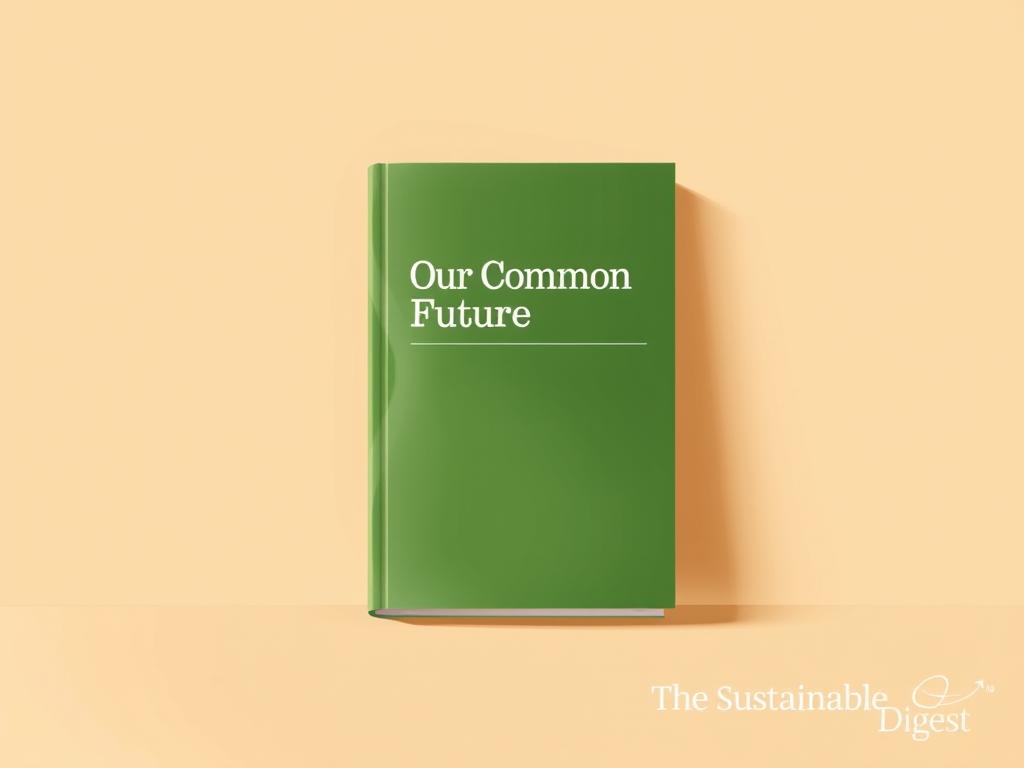
The report, officially titled “Our Common Future,” was published by the World Commission on Environment and Development (WCED). It addressed the growing concern about the environment and development. It provided a crucial link between the two.
The 1987 Definition and Its Revolutionary Impact
The Brundtland Report’s definition of sustainable development was a game-changer. It said that “meeting the needs of the present without compromising the ability of future generations to meet their own needs” became a landmark in the history of sustainability.
Meeting Present Needs Without Compromising Future Generations
This definition emphasized the intergenerational equity aspect. It highlighted the need for a balanced approach to economic, social, and environmental development.
From Technical Term to Global Movement
As
“sustainable development is not a fixed state of harmony, but rather a process of change in which the exploitation of resources, the direction of investments, the orientation of technological development, and institutional change are made consistent with future as well as present needs.”
The Brundtland Report’s definition transformed sustainability. It went from a technical term used by environmentalists and policymakers to a global movement.
The Triangle of Sustainability: Balancing People, Planet, and Prosperity or Economic, Environmental, and Social
The Brundtland Report introduced the triangle of sustainability. It’s like a three-legged stool for the planet. If one leg is off, the whole thing wobbles.
This idea made sustainability more than just about the environment. It’s now about economic, environmental, and social aspects. This approach shows how complex human development is.
But, this approach also brings challenges. Can we keep growing economically without harming the planet? The Brundtland Report says we must think about all three sides.
Sustainability Pillar
Core Principle
Key Challenges
Success Indicators
Prosperity
Maintaining profitable operations without depleting resources
Reduced emissions, biodiversity preservation, ecosystem health
People
Ensuring equitable access to resources and opportunities
Inequality, poverty, social exclusion
Community wellbeing, social justice, cultural preservation
Defining the Modern Framework
The report defined sustainable development as meeting today’s needs without harming tomorrow’s. This balance was both clear and open to interpretation. It helped the idea spread widely.
This idea wasn’t new. The International Union for Conservation of Nature (IUCN) had been working on it since the 1980s. But the Brundtland Report made it political, appealing to everyone.
The report’s magic is in what it doesn’t say. It avoids giving exact answers. This lets people from different sides agree on sustainability.
The world faces major challenges like climate change via global warm and green house gases. A new idea called the sustainability triangle helps find a balance. It connects human well-being, protecting the environment, and growing the economy.
This triangle shows that these three parts are linked. A balance between them is key for lasting sustainability.
The triangle’s core idea is that economic, social, and environmental parts are connected. Economic growth is vital for the other two. Economic sustainability means making value that lasts, not just for now. This can happen through new business models that focus on long-term success.
From Earth Summit to Corporate Boardrooms
The 1992 Earth Summit in Rio was like a rock band’s big break. It was a moment when sustainability went from being a niche topic to a global concern. The summit made environmental issues mainstream, involving everyone, not just scientists and activists.
The 1992 Rio Declaration: Sustainability Goes Global
The Rio Earth Summit was a turning point for sustainability. It brought together 172 governments and got a lot of media attention. World leaders, celebrities, and journalists came together for the biggest environmental conference ever.
The summit’s key achievement was the Rio Declaration. It outlined 27 principles that broadened sustainability’s scope. These principles covered everything from poverty to indigenous rights, creating a comprehensive framework for global governance.
The Rio Declaration was groundbreaking because of its signatories. Nations from all over agreed on these principles. This made sustainability a key policy area. The summit also led to Agenda 21, a plan for sustainability at the local level.
Economic Sustainability: Creating Lasting Value Beyond Profits
Economic sustainability is a big part of the triangle. It helps businesses and groups make lasting value for everyone while being kind to the planet. One way to do this is by using a circular economy approach. This means designing things that can be fixed and reused.
The Rise of “Triple Bottom Line” and Corporate Sustainability
In 1994, John Elkington introduced the “triple bottom line.” This made sustainability appealing to businesses. Companies now measured their impact on people, planet, and profit.
Corporate adoption of sustainability grew fast. Companies saw benefits in reducing waste and going green. By the early 2000s, sustainability reports were common.
Corporate sustainability brought both benefits and challenges. It led to innovation in renewable energy but also faced criticism. Some said it was just greenwashing, hiding business-as-usual practices.
Aspect
Pre-Corporate Sustainability
Post-Corporate Sustainability
Impact
Primary Focus
Environmental protection
Triple bottom line
Broader but potentially diluted
Key Actors
Governments, NGOs, scientists
Corporations, investors, consumers
More resources, different priorities
Measurement
Scientific indicators
Corporate metrics and ESG ratings
Increased quantification
Language
Ecological and ethical
Economic and strategic
More accessible, less radical
Implementation
Regulation and treaties
Voluntary initiatives and market forces
Faster adoption, inconsistent results
From “Fruges Consumeri Nati” to Circular Economy
The circular economy idea comes from knowing our natural resources are limited. The phrase “fruges consumeri nati” means we should live in harmony with nature. By using circular economy methods, businesses can lessen their harm to the environment and find new ways to grow.
Technical Innovation as a Sustainability Driver
Technical innovation is a big help for sustainability. It lets businesses make new, better products and services. By investing in research, companies can find new ways to be sustainable and cut down on harm to the environment.
In short, the sustainability triangle is a strong tool for finding balance. By focusing on economic growth, using circular economy ideas, and pushing for new tech, businesses can make a positive impact. They can create value that lasts and protect our planet.
Sustainability in the 21st Century: From Concept to Global Movement
In the 21st century, sustainability has grown from a simple idea to a global movement. People now understand the importance of balancing economic, social, and environmental needs for a better future.
Concerns about climate change, resource use, and social fairness has fueled the shift towards sustainability. Corporate sustainability is now key in business plans. Companies are adopting green practices to reduce risks and find new opportunities.
Corporate Sustainability and ESG Frameworks
Corporate sustainability is tied to ESG (Environmental, Social, and Governance) frameworks. These frameworks help companies measure and report their green efforts. They are crucial for investors, stakeholders, and companies to check their sustainability and ethics.
“Omnia Explorate, Meliora Retinete”: Examining All, Keeping the Best
The Latin phrase “Omnia Explorate, Meliora Retinete” or “Examine all, keep the best” fits today’s sustainability approach. It highlights the need to review different practices and keep the ones that help our future.
The European Dream of Sustainable Business
The European dream for sustainable business focuses on the circular economy, innovation, and social duty. It dreams of a world where businesses grow and help society and the planet. This dream is coming true through green initiatives and policies across Europe.
Conclusion: The Enduring Legacy and Future of Sustainability
Sustainability has a long history, from ancient times to today. It shapes how we live with the environment and each other. Its legacy is not just about saving resources but also about living in harmony with the planet.
Our journey from ancient times to today shows how humans have adapted. The Latin words sustentare and conservare started a long journey. This journey shows how our relationship with Earth has changed over time.
In Venice, the provveditori sopra boschi managed forests well. They didn’t use the word “sustainability,” but their work was all about it. They balanced today’s needs with tomorrow’s.
Cicero said nature “alit atque sustentat” (nourishes and sustains) a long time ago. Today, we understand our role in this relationship better. Sustainable thinking has grown from managing forests to caring for the whole planet.
The idea of concursus – combining different things – is key in sustainability today. It brings together environmental, social, and economic aspects. This mix didn’t happen overnight but through centuries of thought and action.
The future of sustainability looks bright. It can change how we see the environment and make a better world for all. By innovating and working together, we can keep sustainability’s legacy alive. This will guide us toward a greener future.
Key Takeaways
Knowing where sustain, sustainable, and sustainability come from is essential.
The etymology of these terms gives us a peek into their past.
Looking at historical use cases helps us see how they apply today.
The terms trace back to Latin “sustenare,” meaning “to hold up” or “support”
Early applications appeared in 14th-century forestry management
Modern definitions gained prominence through the 1987 Brundtland Commission
The linguistic evolution reflects changing human-nature relationships and society’s values
Vocabulary development preceded environmental awareness movements
The concept expanded from resource management to social and economic dimensions
Hunger is a big problem worldwide that needs quick and united action. The United Nations’ Sustainable Development Goal #2 (UNSDG#2), Zero Hunger, is key to solving this issue. NGOs, local governments, and small businesses are essential in creating change through advocacy.
Working together, international groups, local governments, and smaller scale businesses form strong teams. They focus on making food systems better. Their efforts use cultural exchange and new ideas to fight hunger everywhere.
To tackle hunger, we need an eclectic approach to take action. This includes using technology, getting communities involved, and improving policies for better outcomes. By linking global help with local plans and vice versa, we can make food security a reality.
Understanding UNSDG#2 Zero Hunger Initiative and Global Impact
The UNSDG#2 (United Nations Sustainable Development Goal #2) is an important mission to end hunger and advance food systems globally. It aims to ensure food security, improve nutrition, and support overall sustainable development worldwide.
Global hunger is one of the major problems in society that needs new solutions and ongoing teamwork. The Zero Hunger initiative tackles hunger by improving agriculture practices, helping people financially, and using ethical logistics.
Current Global Hunger Statistics and Trends
Recent data shows how massive the problem of global food insecurity is. About 690 million people struggle with hunger, with the biggest issues in developing areas.
Region
Hunger Rate
Population Affected
Africa
19.1%
250 million
Asia
8.3%
381 million
Latin America
7.4%
48 million
Key Objectives of UNSDG#2 Zero Hunger
The primary goals include doubling farm output, ensuring food is produced sustainably, and maintaining crop diversity. Quality foods and fair sharing are essential to these aims.
Critical Challenges in Food Security
“Transforming our food systems is not just about producing more—it’s about producing smarter and more efficiently.” – UN Development Expert
The hurdles that stand in the way of global food security can appear very daunting, are often so for various reasons. These include climate change, poor farming infrastructure, and uneven economic growth. Using ethical logistics and sustainable methods is vital to overcome these issues.
To solve food security, we need to combine new tech, policy changes, and community efforts. This will help create strong and flexible food systems.
How NGO, municipals, and MSMEs thru advocacy for UNSDG#2 Zero Hunger programs
Global hunger needs a team effort from NGOs, local governments, and small businesses. They work together to make food systems better. This helps communities in the Global South.
NGOs are vital in making plans work together. They use local knowledge to help communities. This way, they fight hunger more effectively.
“Sustainable food security begins with understanding local challenges and empowering community-driven solutions.” – Global Food Policy Research Institute
Local governments help by making policies for food. They support small farms and help farmers with money. This helps food get to people better.
Advocacy Strategy
Key Impact
Target Group
Community Garden Programs
Local Food Production
Urban Communities
Microfinance Agricultural Support
Economic Empowerment
Small-Scale Farmers
Technology Transfer Programs
Agricultural Innovation
Rural Entrepreneurs
Small businesses play a big role in food systems. They bring new ideas to old ways of farming. This makes food systems stronger and more ready for change.
Role of NGO Consortiums in Fighting Global Hunger
Global hunger is an ongoing major challenge that needs collaborative effords to solve. NGO consortiums are key in fighting hunger by working together and finding new ways to help. They join forces to make a bigger difference and use their resources better to fight hunger everywhere.
Grassroots Support Organizations (GSOs) are important in stopping hunger before it starts. They know their communities well and can reach people that others can’t. This makes their help more effective than big, general plans.
Successful NGO Partnership Models
Some partnerships have really made a difference in food security. They use everyone’s skills, resources, and ideas to solve hunger problems in different places. This way, they can tackle big challenges together.
“Collaboration is the cornerstone of sustainable hunger solutions” – Global Food Security Alliance
Resource Mobilization Strategies
NGO consortiums are good at finding new ways to get resources. They combine money, skills, and connections to make food security programs better and last longer.
Cross-Border Collaboration Frameworks
Working together across borders is important for fighting hunger. NGO consortiums help by bringing different places and cultures together. This way, they can fight hunger on a global level.
Collaboration Type
Key Impact
Geographic Reach
Regional GSO Network
Community-level interventions
Multi-country regions
Global NGO Partnership
Large-scale resource mobilization
International
By working together, NGO consortiums keep finding new ways to tackle global hunger. They bring hope and lasting change to communities all over the world.
Municipal Government Initiatives for Food Security
Municipals are finding new ways to tackle food insecurity. They use urban gardens and community food drives to help people get healthy food. These efforts make a big difference in local communities.
“Local governments play a critical role in creating sustainable food systems that support community resilience” – Food Security Alliance
Cities all over the U.S. are working on food security plans. They aim to support local food, grow urban gardens, and run strong community food drives. These efforts help fight hunger.
Municipal Initiative
Key Impact
Community Benefit
Urban Community Gardens
Increased Local Food Production
Fresh Produce Access
Food Distribution Programs
Reduced Food Insecurity
Nutritional Support
Local Food Network Partnerships
Economic Development
Small Business Growth
Working together, municipals, farmers, and groups are solving food security problems. Urban gardens turn empty city spots into food sources. Community food drives help those who need it most get the food they need.
These efforts show how local governments can make a real difference. They use community resources and new farming ideas to improve food security.
MSMEs’ Contribution to Sustainable Food Systems
Micro, Small, and Medium Enterprises (MSMEs) play a big role in changing local food systems. They fill important gaps in sustainable farming. They connect farmers with buyers through new ways.
Rural and urban MSMEs are changing food systems. They build local production networks. This helps small farmers and makes food more secure for communities.
Local Food Production Networks
Smaller scaled businesses use tech and partnerships to build strong local food networks. These networks cut down on transport costs. They also reduce carbon emissions and give fresher food to local markets.
Innovation in Food Distribution
MSMEs are coming up with new ways to distribute food. They use digital platforms, community-supported agriculture, and direct-to-consumer sales. This makes food systems more efficient and green.
MSME Strategy
Impact on Food System
Digital Marketplace
Reduces intermediary costs
Community Supported Agriculture
Ensures farmer income stability
Local Food Aggregation
Increases market access
Small-Scale Agricultural Technologies
New farming tech helps MSMEs improve their work. Precision farming tools, mobile apps, and affordable irrigation systems boost yields. They also keep the environment in balance.
“Small businesses are the backbone of sustainable food systems, driving innovation from the ground up.” – Global Agriculture Innovation Forum
Urban Agriculture and Community Gardens
Urban gardens have been and are continuing to changing city views into lively food spots. They solve local food issues in crowded cities. By using rooftops, balconies, and empty spaces, people can get more food.
“Urban agriculture isn’t just about growing food—it’s about growing communities” – City Farmer Magazine
Rooftop gardens are an emerging and important part of urban farming. They grow fresh food and help the environment. They cool cities, clean the air, and make buildings more energy-efficient. Indoor gardens also help, letting people grow food all year in small spaces.
Urban Garden Type
Food Production Potential
Community Impact
Rooftop Gardens
High vegetable yield
Neighborhood engagement
Community Gardens
Diverse crop production
Social connection
Indoor Vertical Gardens
Consistent harvest
Education opportunities
Community gardens help local communities by offering familiar food. They also bring people together. They let people grow their own food, keep traditions alive, and build community through gardening.
Urban farming shows cities can be food hubs. By using rooftops, indoor gardens, and community areas, cities can grow food sustainably. This feeds both people and communities.
Farmer and Rancher Cooperatives: Building Sustainable Food Networks
Farmer cooperatives has always been around relatively and thus are a vital component in making food systems sustainable. They help farmers work together and grow their income. These groups let small farmers share resources, knowledge, and find markets they couldn’t alone.
Rancher cooperatives are changing how we farm. They give farmers a strong voice to get better prices and cut costs. They also try new farming ways.
Cooperative Management Structures
Good farmer cooperatives aggregate decisions together. Members choose leaders who speak for all farmers. This way, everyone has their voice heard and actions are executed fairly.
Market Access Strategies
“Collaboration is the cornerstone of agricultural resilience” – Agricultural Economist, Dr. Sarah Martinez
Farmer cooperatives find new ways to sell their products. They use online platforms, sell directly to consumers, and partner with distributors. This builds strong food chains for local and global needs.
Technology Integration in Farming
Modern rancher cooperatives use the latest tech to farm better, ironically more so than actual farmer cooperatives. They use precision farming, satellite images, and data to farm smarter. This makes farming more efficient and productive.
Farmer and rancher cooperatives are changing the food world. They build strong, sustainable farming networks. These networks help local communities and feed the world.
Sustainable Supply Chain Management in Food Security
Sustainable supply chain management is solving global food security issues which is key. It involves a network of ethical logistics that helps deliver quality foods to people everywhere. Companies are working hard to build food systems that are good for the planet and make sure everyone gets the nutrients they need.
Air travel and aviation in general are playing a big role in getting food to where it’s needed fast. It helps bring local foods to distant places. Now, we can track food quality in real-time, keeping it fresh and nutritious.
“Sustainable supply chains are not just about transportation, but about creating holistic food ecosystems that support both producers and consumers.” – Global Food Security Expert
New technology is changing how we move food. It lets us check food temperature in real-time, cut down on waste, and find the best routes for food delivery.
Supply Chain Component
Sustainability Impact
Technology Used
Local Food Production
Reduced Carbon Footprint
IoT Tracking Systems
Transportation
Efficient Route Planning
AI Logistics Optimization
Storage
Minimal Food Waste
Advanced Refrigeration
Small and medium businesses are also joining the sustainable supply chain movement. They focus on ethical logistics and local food systems. This helps make food distribution more reliable and responsive.
International Partnership and Regional Collaboration Models
Global food security challenges need new ways to solve them. Intra-national partnerships are key to fighting hunger and malnutrition worldwide.
Good regional collaboration needs sound plans. These plans connect different communities and farming systems. Countries see the value of working together through cross-cultural food security programs.
Bridging Cultural Divides in Food Security
Great international and secure intra-continental partnerships use cultural knowledge to make a difference. They understand local farming and community needs. This helps them create better food security plans.
“Cultural understanding is the foundation of meaningful global cooperation in addressing hunger.” – World Food Program Expert
Knowledge Sharing Platforms
Now, digital platforms help share knowledge fast. They connect researchers, policymakers, and farming experts. This sharing spreads best practices, new tech, and research findings everywhere.
Partnership Type
Key Characteristics
Impact Potential
Bilateral Cooperation
Direct country-to-country engagement
Targeted resource sharing
Multi-Regional Networks
Broader collaborative frameworks
Comprehensive problem-solving
Academic-Government Partnerships
Research-driven interventions
Innovative solution development
By working together, countries can build stronger food security plans. These plans tackle the tough global challenges we face.
Local Food Initiatives and Community Engagement
Local food initiatives have changed how we connect and access food. Urban gardens such as roof and vertical gar and farmer markets are key in building strong food systems. They help neighborhoods and support local businesses.
“Community food drives are not just about feeding people, but building resilient local food networks.”
Community food drives are now a big help in fighting hunger and supporting local farming. They link farmers, residents, and food networks. This ensures fresh, healthy food gets to those who need it most.
Initiative Type
Community Impact
Food Security Contribution
Urban Gardens
Neighborhood Empowerment
Direct Fresh Produce Access
Farmer Markets
Local Economic Support
Small Farm Sustainability
Community Food Drives
Social Connectivity
Hunger Reduction
Urban gardens have changed city views, turning empty spots into farms. These green areas give us fresh food and teach us about growing food the right way.
Cultural exchange through food initiatives represents a unique approach to building community resilience and understanding.
Supporting local foods and farming helps cities grow better food systems. This benefits farmers and city folks who want healthy, affordable food.
Implementing Food Security Programs: Best Practices
To achieve sustainable food security, we need strong strategies. These strategies must go beyond old ways. Organizations tackling global hunger must create detailed plans that show real results.
International factors greatly affect agriculture programs. Global trade rules such as tariffs, private/public policies, export, and import can be monumental for pivoting on Nations strategy. Additionally, both economic shifts and diplomatic ties all play a part. It’s crucial to plan carefully, considering these complex links.
Monitoring and Evaluation Methods
Good food security programs need solid monitoring. Key signs of success help us see how we’re doing. We should focus on:
Regular data collection
Quantitative and qualitative assessment
Community feedback mechanisms
Impact Assessment Frameworks
Understanding the success of food distribution needs detailed frameworks. These frameworks show the actual effects of our work.
Assessment Dimension
Key Metrics
Evaluation Frequency
Nutritional Outcomes
Dietary diversity, child malnutrition rates
Quarterly
Economic Impact
Household income, agricultural productivity
Bi-annually
Community Resilience
Food security index, local adaptation strategies
Annually
“Successful food security programs are not just about providing food, but creating sustainable systems that empower communities.” – World Food Programme Expert
Utilizing these best practices means constant collaboration, being flexible or adaptable, and knowing both the local and, in some scalable instances, the international scene well. Organizations must be ready to adjust to new global issues.
Conclusion
The UNSDG#2Zero Hunger programs are the main way to solving global food problems. NGOs, local governments, and smaller scale businesses are working together. They show how teamwork can make a big difference in fighting hunger.
Working together across borders is crucial. It helps bridge economic and cultural divides. By joining forces, we can build robust systems for growing, sharing, and getting food by leveraging the UNSDG#2 framework.
Technology, community involvement, and sharing knowledge are vital. Every effort, from urban gardens to better supply chains, helps. Together with the UNSDG#2, we can make a real difference in ending hunger and ensuring food for all.
Our fight against hunger needs ongoing learning and action. By focusing on sustainable growth and staying committed, we can achieve the UNSDG#2 goal. This and other United Nations SDGs, will bring real change to millions of people worldwide.
Key Takeaways
UNSDG#2 Zero Hunger requires comprehensive global collaboration
MSMEs play crucial roles in sustainable food networks
Advocacy drives systemic change in food distribution
Cultural diplomacy enhances international hunger initiatives
Greenwashing is when companies make false claims about their products being good for the environment and the great ecosystem. This is a major problem in the world of green and eco-friendly marketing and advertising. It tricks people into thinking products and supply chain are better for the planet than they really are.
Companies use greenwashing to make more money and sometimes peer approval. They want to sell and generate revenue by making their products seem eco-friendly. This can harm both consumers, stakeholders, and the environment.
In green marketing, greenwashing can be very subtle and manipulative. Companies might say in advertising production or state in their marketing materials that their products are much better for the environment than they actually are. It’s important to know how companies lie to the but the public and private customers and how to spot these lies.
By learning and understanding about greenwashing, we can make better choices. We can support companies and institutions that truly care about the environment. This helps to promote real ethical green marketing.
Understanding the Green Deception: What is Greenwashing?
To reinerate, Greenwashing is when companies make false claims about their goods or services being good for sustainability and sustainable principles. They might say they’re eco-friendly but falsely use labeling or catch phrases to draw in the consumer and/or the customer. Or they might talk and promote via labels and press material about corporate social responsibility, but it’s just for show. As people care more about the planet, companies use green marketing strategies to seem better or often superior to other products, but neither of those practices is true.
Studies show greenwashing hurts trust with customers and ultimately the end users. If a company not matter how large or small, is caught and exposed to lying, people lose faith and buy less. It is important to note, companies that really care about the planet gain loyal customers and other stakeholders, thus accessing more money.
Misleading labeling: Using labels or certifications that are not recognized by reputable third-party organizations.
Hidden trade-offs: Focusing on one environmental benefit while ignoring other negative environmental impacts.
Vagueness: Making general claims about environmental benefits without providing specific details or evidence.
As consumers, we need to know about these tricks. We should support companies that are truly eco-friendly and care about corporate social responsibility. This way, we help make marketing that’s real and helps our planet.
Company
Greenwashing Practice
Impact on Consumer Trust
Company A
Misleading labeling
Loss of credibility
Company B
Hidden trade-offs
Decrease in sales
Company C
Vagueness
Loss of customer loyalty
The Major Players Behind Greenwashing Practices
Many companies have been accused of greenwashing. This is when they make false claims about their products or services being good for the environment. This environmental deception hurts both consumers and the planet, making people doubt sustainable marketing.
ExxonMobil, Chevron, and BP are some big names accused of greenwashing. They’ve faced criticism for lying about their products’ environmental benefits.
Unsubstantiated claims about environmental benefits
Lack of transparency about production processes
Use of misleading or false labeling
Knowing these signs helps you choose better. You can support companies that really care about the planet and are honest in their marketing.
Companies must be transparent and honest in their marketing efforts, and avoid engaging in greenwashing practices that can damage consumer trust and harm the environment.
Company
Accusation
ExxonMobil
False claims about climate change
Chevron
Misleading labeling of products
BP
Lack of transparency about production processes
The Psychology of Green Marketing Manipulation
Green marketing is a big deal for companies today. It helps them look good to people who care about the planet. But, some companies use it to trick people into buying things they don’t really need.
They play on our feelings and make us feel guilty or nostalgic. This makes us more likely to buy their products. For instance, they might show pictures of nature to make us feel good about buying their stuff.
Consumer Vulnerability Points
Some companies take advantage of people who don’t know much about the environment. They use hard-to-understand language to make their products seem better than they are. It’s important for us to learn about eco-friendly practices so we can spot these tricks.
The Power of Eco-Friendly Imagery
Images of recycling or green energy are very powerful in marketing. Companies use them to make their brand look good. By doing good for the planet and using these images, companies can win our trust and build a strong reputation.
Essential Greenwashing Identifying Tactics, Greenwashing Avoidance Strategies and Methods
To spot and dodge greenwashing, you need to think critically and understand media well. This means checking if companies’ claims are true or just tricks. Greenwashing can be sneaky, but you can spot it by looking for vague or unproven claims about being green.
Here are some ways to avoid greenwashing:
Research companies and their environmental records
Look for third-party checks on their green claims
Be cautious of claims that seem too good to be true
By doing these things, you can choose better and avoid supporting greenwashing. Remember, greenwashing hurts the environment too. It makes people doubt real green efforts and slows down our move towards a greener future. Environmental deception is serious, and we all must watch out and demand truth from companies.
In short, fighting greenwashing needs critical thinking, media smarts, and research. By knowing how companies greenwash and checking their claims, we can help the planet. We can also support real green marketing.
Company
Greenwashing Claim
Reality
Example Company
“Eco-friendly packaging”
Packaging is not biodegradable and contributes to waste
Another Company
“Sustainable sourcing practices”
Sources materials from suppliers with poor environmental track records
The Seven Sins of Greenwashing
Companies often try to look good by doing eco-friendly things. But, some might lie to make their brand seem better. The seven sins of greenwashing help spot when they do this.
These sins include hidden trade-offs. This means a product might be good in one way but bad in another. For instance, a product might say it’s biodegradable, but it only breaks down under certain conditions. These conditions are not always clear.
Other sins are no proof and vagueness. Companies might say their products are eco-friendly without showing any proof. Or, they might use terms like “eco-friendly” without explaining what they mean. False labels are also a problem, where companies make up labels to look green.
Hidden trade-offs
No proof
Vagueness
False labels
Knowing these seven sins helps us make better choices. We can choose to support companies that really care about the environment. This way, we help them use honest green marketing.
FAQ
Q: What is greenwashing and why is it important?
A: Greenwashing is when companies make their products seem more eco-friendly than they really are. It’s a big deal because it breaks trust with customers. It also stops real efforts to be green and causes more harm to the environment.
Q: What are some common greenwashing tactics?
A: Companies use tricks like making vague claims or picking only the good parts of their impact. They might also use fake labels or certifications. This way, they hide their true environmental harm.
Q: How can consumers spot greenwashing?
A: To spot greenwashing, look for vague or unverifiable claims. Also, watch for a big gap between what a company says and what it does. Checking for real certifications and doing your homework can help too.
Q: What are the consequences of greenwashing?
A: Greenwashing can hurt trust in companies. It also makes it harder for real green efforts to succeed. Plus, it makes the environment worse by making it seem like companies are doing good when they’re not.
Q: How can companies avoid being accused of greenwashing?
A: Companies can stay clear of greenwashing by being open about their environmental impact. They should set clear goals and get third-party checks to prove their claims. Being honest and authentic is key to earning trust.
Q: What are the “seven sins of greenwashing”?
A: The “seven sins of greenwashing” are: hiding the bad, no proof, being vague, using fake labels, being irrelevant, choosing the lesser evil, and lying. These tricks make it hard to believe a company’s green claims.
Q: What resources are available to help identify and combat greenwashing?
A: To fight greenwashing, use online tools, check for real certifications, and talk to environmental groups. You can also report greenwashing and support real green efforts. These steps help keep companies honest.
Real-World Examples of Corporate Greenwashing
Companies often use sustainable marketing to look green but are actually greenwashing. This trick can be found in many fields, like energy and consumer goods.
Some examples include:
Volkswagen’s emission scandal, where they said their diesel cars were green but they were really polluting.
ExxonMobil’s claims of investing in green energy, but they only spent a tiny part of their budget on it.
Procter & Gamble’s false claims about eco-friendly packaging, which turned out to be greenwashing.
These cases show how crucial it is to hold companies accountable in sustainable marketing. They also highlight the need for consumers to spot environmental deception.
Learning from these greenwashing examples helps consumers make better choices. It encourages them to support companies that really care about the planet.
Tools and Resources for Spotting Green Marketing Deception
To spot greenwashing, you need the right tools and resources. Today, eco-friendly practices are key, not just a trend. Companies must show corporate social responsibility and use green marketing strategies that are clear and reliable.
Digital Verification Tools
There are many digital tools to help find greenwashing. These tools include online platforms that share info on companies’ green efforts and certifications. Some top ones are:
Environmental Defense Fund’s Scorecard
Greenpeace’s Guide to Greener Electronics
ClimateWorks Foundation’s Climate Scorecard
Certification Standards
Certification standards are key to proving eco-friendly practices are real. Some well-known ones are:
Certification
Description
ISO 14001
International standard for environmental management systems
LEED
Leadership in Energy and Environmental Design certification for buildings
Energy Star
Certification for energy-efficient products
Environmental Watch Groups
Environmental watch groups keep an eye on companies’ green actions. They offer useful info and resources for smart choices. Some notable groups are:
Sierra Club
World Wildlife Fund
Friends of the Earth
Taking Action Against Greenwashing
To fight greenwashing and support sustainable marketing, we can all do something. It’s key to report any false environmental claims. You can tell the Federal Trade Commission (FTC) or your local consumer protection agency about any ads that seem off.
It’s also important to back real green initiatives. Look for products with the EPA’s Safer Choice label. This shows the company cares about the environment. Supporting groups that uncover environmental deception helps too.
Here are some ways to fight greenwashing:
Check if companies’ green claims are backed by third-party certifications.
Support laws that make marketing more honest and accountable.
Help your loved ones make smart choices about what they buy.
Together, we can make a better future and stop greenwashing. As more people spot environmental deception, companies will have to be more open and green in their marketing.
Conclusion: Building a Greener Future Through Informed Choices
The world of green marketing and corporate social responsibility is complex. It’s often clouded by greenwashing. But, a greener future is possible with informed consumers who seek truth and hold companies to their promises.
Knowing how greenwashing works helps us make better choices. We can support real green initiatives by using digital tools and checking for certifications. This way, we can spot false claims and back up the real deal.
It’s a team effort between businesses and consumers to create a better world. When companies are open and focus on the environment, and we choose to buy from them, we’re all moving forward. Together, we can make a brighter, greener future.
Key Takeaways
Greenwashing is a form of environmental deception used to manipulate the end user/customer’s perception.
It can have serious consequences for long term revenue generation, consumers and the planet.
Understanding and identifying greenwashing tactics is essential for making informed choices.
Sustainable marketing practices can be promoted and advertised by avoiding greenwashing.
Ongoing education is key to recognizing and preventing greenwashing.
Greenwashing can take many forms, including exaggerated or lofty claims, and outright lies.
The world faces epic environmental challenges, but sustainability offers hope. It helps us live in harmony with nature. Sustainability means we can meet our needs today without harming tomorrow’s people.
This approach changes how we live, from civics to energy to resources. It’s a big deal for our planet.
Sustainability is key to saving our environment and its ecosystem. It helps reduce harm from human actions. By using green solutions, we can protect our planet for everyone’s future.
Understanding the Foundations of Environmental Sustainability
In today’s world, environmental sustainability is key to solving big problems. It’s about using natural resources wisely and keeping our planet healthy for now and later. This ensures a bright future for all of us.
Defining Sustainability in Modern Context
Sustainability means we can live today without harming tomorrow. It’s about seeing the world and its inhabitants holistically. It connects our environment, society, and economy, asking us to think long-term and balance everything.
Key Components of Environmental Conservation
Environmental conservation is at the core of sustainability. It includes:
Resource Conservation: Using resources like water and energy smartly, recycling, and managing them well.
Pollution Reduction: Cutting down on harmful substances and emissions to keep our air, water, and soil clean.
Habitat Preservation: Saving and fixing natural places to protect life and keep our world healthy.
Historical Evolution of Sustainable Practices
The journey of sustainability started in the 1960s and 1970s. We discuss previously about how pre-sustainable measures or proto-sustainability from the 19th on back to pre-history may have developed. Back then, from post WWII to the global gasoline crisis, people began to take notice how our actions affect the planet. Since then, we’ve learned more about caring for our environment, like environmental stewardship, resource conservation, and climate change mitigation.
Now, sustainability is a worldwide effort. Governments, NGOs, public institutions, companies, non-profit organizations, and people are working together. They’re finding new ways to tackle the global environmental challenges we face.
Impact of Sustainability on Environmental Conservation
Once again, sustainability is key to our planet’s future. It helps us protect the environment through conservation as mentioned, wildlife habitat preservation, and more. This is crucial for our planet’s health and society.
Sustainability helps protect wildlife homes. It does this by using land wisely and in many ways, both renewable energy. This keeps animals and plants safe, helping them survive.
Sustainable Initiative
Environmental Impact
Wetland restoration
Provides critical habitat for migratory birds and aquatic life
Urban green spaces
Supports urban wildlife and enhances biodiversity
Zero-deforestation policies
Preserves vital rainforest ecosystems and carbon sinks
Also, eco-friendly initiatives help the environment a lot. They include clean energy, green transport, and recycling. These actions cut down pollution and help our planet.
“Sustainability is not about doing less harm, but about doing more good.”
In short, sustainability is very important for our planet. It helps us protect wildlife and the environment. Together, we can make a better future for all.
Global Ecosystem Changes Through Sustainable Practices
The world is now more aware of the need to protect our environment. Sustainable practices have made major and influential changes in our ecosystems. From the ocean depths to vast lands, we see the good work of preserving wildlife and biodiversity.
Marine Ecosystem Preservation
Good fishing, coastal care, and marine parks have helped our oceans. These steps have given marine life a safe place. Coral reefs, once in danger, are now recovering thanks to the citizens, collective community organizations, and institutions that care for the environment.
Terrestrial Habitat Protection
On land, we’ve used smart forestry and protected areas to save numerous of species’ homes. By stopping deforestation and planting more trees, we’ve kept vital habitats safe. This has helped many plants and animals in biosphere thrive again.
Biodiversity Conservation Efforts
These changes prioritize the preservation of biodiversity. Programs that mix science, economics, community work, and global teamwork have shown significant results. They’ve helped bring back threatened species and fixed food chains, keeping our planet’s life rich and diverse.
Ecosystem Change
Sustainable Practices
Notable Outcomes
Marine Ecosystem Preservation
Sustainable fishing, coastal management, marine protected areas
Recovery of coral reefs, revived marine species populations
Terrestrial Habitat Protection
Sustainable forestry, expansion of protected wildlife sanctuaries
Preservation of diverse ecosystems, resurgence of endangered species
Biodiversity Conservation Efforts
Scientific research, community engagement, international collaboration
Reintroduction of threatened species, restoration of food webs
Sustainable practices have brought enormous improvements to our ecosystems. By focusing on wildlife, environment care, and saving biodiversity, we’ve seen our planet’s strength. As we keep using these methods, our planet’s future looks bright.
Renewable Energy’s Role in Environmental Protection
The world is facing some of its biggest challenges with climate change. Clean, green, and renewable energy are key to solving this problem. It offers an environmental-friendly thus more sustainable future.
Renewable energy sources like solar, wind, hydroelectric, and geothermal are eco-friendly. They have a much lower carbon footprint than the finite fossil fuels. Switching to these sources helps reduce greenhouse gas emissions and protects the environment.
Using renewable energy has substantial benefits for the environment. Solar panels use the sun’s energy without harming the air. Wind turbines and hydroelectric power plants also help without harming the ecosystem.
Renewable Energy Source
Carbon Footprint Reduction Potential
Environmental Benefits
Solar
High
Reduces greenhouse gas emissions, preserves natural habitats
Wind
High
Generates clean energy without disrupting the ecosystem
Hydroelectric
Moderate
Utilizes a renewable resource while minimizing environmental impact
Geothermal
High
Taps into the Earth’s natural heat without depleting resources
As renewable energy gets better and more available, we can protect the environment more. By using these clean energy sources, we can all help. This way, we can make the planet safer for the future.
“Renewable energy is not only a solution to climate change but also a pathway to a more sustainable and equitable future.”
Carbon Footprint Reduction Strategies and Environmental Benefits
The world is working hard to fight climate change. Reducing carbon footprints is key. In many areas, new ways to lessen harm to the environment are being tried. These efforts aim to make our future more sustainable.
Industrial Emission Control Methods
In the industrial world, cutting down carbon footprints is a big deal. New methods to control emissions are being used. These include using less energy, renewable energy, and systems to capture and store carbon.
By using these methods, industries can reduce their emissions monumentally. This helps make the industrial world cleaner and greener.
Transportation Sector Solutions
The transportation sector is an enormous source of carbon emissions. But, there are many new, green solutions. Electric cars, hybrid vehicles, and encouraging people to use public transport are becoming more common.
These changes not only cut down on carbon emissions. They also make the air cleaner and cities nicer places to live.
Residential Carbon Reduction Techniques
Upgrading homes with energy-saving features like solar panels and better insulation can lower emissions.
Living more sustainably, like recycling and choosing green energy, also makes a big difference.
Choosing eco-friendly ways to get around, like electric cars or public transport, helps too.
By using these strategies in homes, industries, and transport, we can make a very big difference. These efforts help fight climate change and make our future greener and more sustainable.
Resource Management and Conservation Techniques
Managing and conserving resources is key to environmental sustainability. We can do this by using water wisely and switching to renewable energy. These actions help us make a positive impact and lessen our ecological footprint.
Sustainable Water Management
Water is very important and limited. We must save it. We can do this by using less water, recycling it, and using smart irrigation. These steps help keep water clean for us and nature.
Renewable Energy Integration
Switching to renewable energy is vital for sustainability. Options like solar, wind, geothermal, and hydroelectric power reduce our carbon footprint. Choosing these clean energies helps protect our environment.
Land Use and Habitat Preservation
Managing land well is crucial for keeping habitats and biodiversity alive. This means using sustainable farming, planning cities with green spaces, and protecting special areas. These actions help our land stay healthy and strong.
Sustainable Technique
Environmental Impact
Key Benefits
Water-efficient technologies
Reduced water consumption and wastewater generation
Decreased greenhouse gas emissions and fossil fuel dependency
Mitigate climate change, promote clean energy transition
Sustainable land management
Habitat preservation and biodiversity conservation
Maintain healthy ecosystems, support wildlife and natural resources
By focusing on resource conservation, sustainable practices, and environmental stewardship, we can protect our planet for future generations. This approach ensures the balance of our world preserves natural order.
Sustainable Urban Development and Environmental Impact
Cities are now focusing on being more both smart and eco-friendly. This means planning and designing cities in ways that protect nature. The main areas of focus are green buildings, smart city planning, and saving wildlife habitats.
Green Building Practices
Green building is key to sustainable cities. It uses materials that are good for the planet, saves energy, and uses renewable energy. This helps cities cut down on pollution and makes living healthier for everyone.
Smart City Planning
Smart city planning is changing how cities are developed, built, and run. It uses technology and data to make cities more efficient. This improves how people move around and makes cities better for the environment and people.
Urban Wildlife Conservation
Keeping wildlife in cities is also important. Cities are adding green spaces and forests to support different species. This makes cities better for both people and animals, helping to preserve nature.
Together, these efforts are making cities better for the planet. By adopting sustainable practices, cities are becoming greener and more livable. This helps protect our planet for the future.
Economic Benefits of Environmental Stewardship
Environmental stewardship is good for the planet and the economy. It creates jobs in green fields like renewable energy and waste management. This boosts innovation and economic growth.
Protecting the environment can also help countries compete globally. Those who lead in green technologies and practices get ahead. This opens up new job chances for people of all skills and backgrounds.
Economic Benefit
Description
Job Creation
The shift towards sustainable practices has led to the creation of millions of new jobs in industries like renewable energy, green construction, and waste management.
Innovation and Competitiveness
Countries that invest in environmental stewardship often gain a competitive advantage in the global market, as they become leaders in sustainable technologies and practices.
Cost Savings
Implementing energy-efficient measures and reducing waste can lead to significant cost savings for businesses and households, improving overall economic resilience.
By embracing environmental stewardship, people from all walks of life can find new job chances and save money. They also get to enjoy the global benefits of living sustainably.
“Sustainable development is not only about the environment, it’s also about economic development and social development. It’s a holistic approach to ensuring a better quality of life for everyone, now and in the future.”
Social Implications of Sustainable Environmental Practices
Choosing green living and caring for the environment affects many people and networks. It reaches across social classes. As more communities join in, education helps change how we understand the world.
Community Engagement in Conservation
Local efforts lead the way in making a difference. People from all walks of life are cleaning beaches, growing gardens, and protecting wildlife. This teamwork breaks down barriers, bringing together people from different social classes and networks.
Educational Initiatives
Schools now teach environmental stewardship to prepare the next generation. They learn how to live sustainably.
Public campaigns and workshops teach everyone how to live greener. They help people from all backgrounds make a change.
Training programs help professionals in various fields. They learn how to apply green living in their work.
Cultural Shifts in Environmental Awareness
A big change is happening as we focus more on sustainability. People from all social classes and networks are valuing nature more. They want to protect it.
This change shows in how we shop, support green projects, and care for the planet. It’s a move towards better environmental stewardship.
“Sustainable development is the pathway to the future we want for all. It offers a framework to generate economic growth, achieve social justice, exercise environmental stewardship and strengthen governance.”
– Ban Ki-moon, Former United Nations Secretary-General
Conclusion
The impact of sustainability on the environment is huge. We’ve looked at the basics of environmental sustainability. We’ve seen how conservation and sustainable practices have evolved over time.
By adopting sustainable actions, we can make big changes in our ecosystem. This includes protecting marine life, preserving habitats, and saving biodiversity.
Renewable energy is key to protecting the environment. Reducing carbon footprints in different areas is also crucial. Techniques for managing resources and conserving them show our dedication to the planet.
Sustainable urban development shows we can grow and protect the environment at the same time. This balance is important for our future.
Looking ahead, the benefits of environmental sustainability are clear. It’s not just about saving the planet. It also brings economic and social gains to our communities.
Our future looks bright if we keep working on sustainability. By adopting green practices and raising awareness, we can build a better world for all.
Key Takeaways
Sustainability is the practice of meeting present needs without compromising the ability of future generations to meet their own.
Sustainable practices have a profound impact on environmental conservation, habitat preservation, mitigating the negative consequences of human activity.
Adopting eco-friendly initiatives and innovative solutions can help preserve the delicate balance of our environment.
Sustainability is a holistic approach that addresses various aspects of environmental challenges, from energy generation to resource management to human engagement in the environment.
The growing importance of sustainability underscores the collective responsibility of safeguarding the planet for generations to come.
This website is saving the energy of your screen as it is not being used. It's part of a global effort to lower the planet's electrical consumption and CO2 emission level. Resume browsing