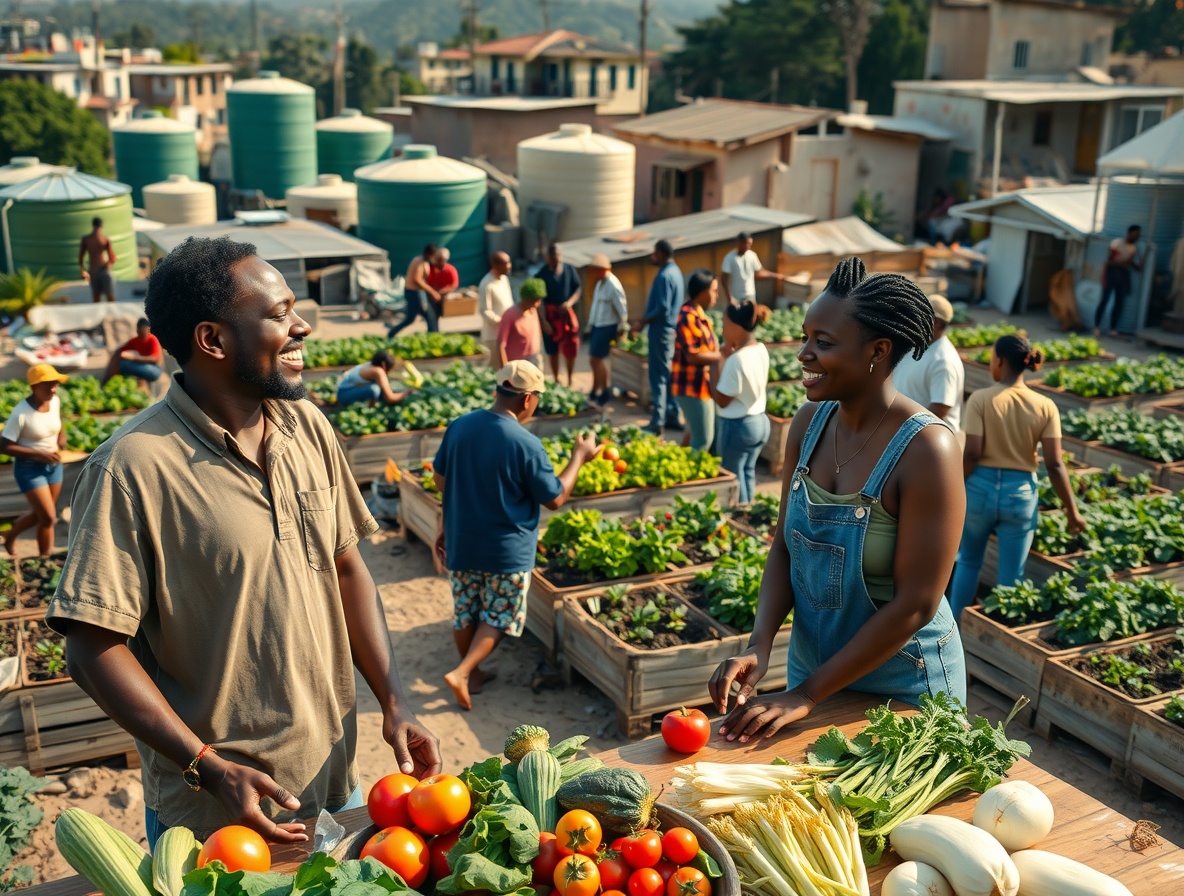
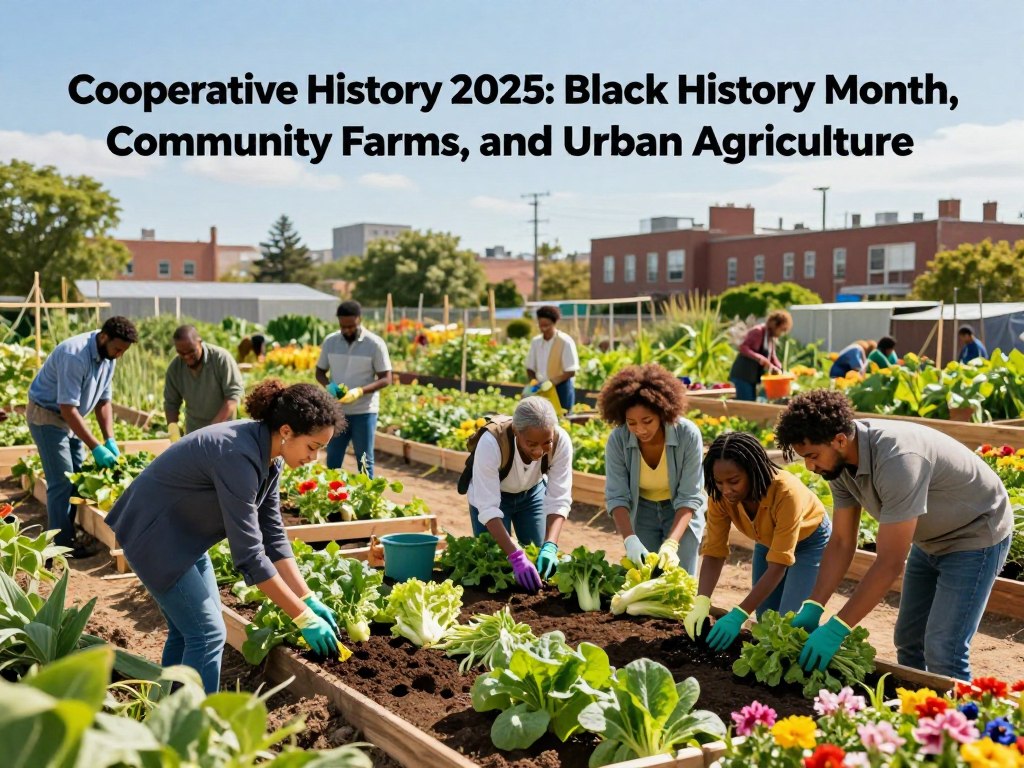
Observing black history month involves more than simple nostalgia for a bygone era. It shows a deep dive into how people used agriculture for collective survival. These traditions date back to pre-colonial times, proving that shared labor is an ancient tool for strength.
During this history month, we analyze how shared work countered violence through the day-to-day pursuit of liberty. From mutual aid groups to modern community farms, the movement has always been about self-rule. This legacy ensures that green living remains a core part of social justice.
Exploring urban agriculture shows how modern neighborhoods change scarcity into plenty. Access to healthy food is not just a luxury; it is a basic right. Today’s leaders build upon a both a long black history and an engaging cooperative history of new ideas to secure a better future for all.
These plans prove that collective deals can fix structural gaps in the market. By providing fresh food, these projects help the body and the spirit of the local community. Economic self-determination remains the ultimate goal for these visionary activists.
From Pre-Colonial Traditions to Economic Self-Determination: The Roots of Black Cooperative Agriculture
Long before formal contracts existed, collective workpractices shaped the social fabric of pre-colonial African societies. These traditions of communal land management traveled across the Atlantic, surviving as vital cultural memories during the era of bondage. They provided a necessary blueprint for resilience as the world moved toward the industrial revolution.
Collective Work Traditions and Early Responses to Marginalization
Enslaved and later freed communities transformed these ancestral habits into formal structures during the Reconstruction era. When white-controlled banks shut their doors, Black farmers turned to each other to survive. This role of mutual aid allowed them to manage resources and build systems of support without outside help.
The transition from informal sharing to organized cooperation was a direct response to systemic exclusion. These groups created their own markets and insurance pools to protect their families. By pooling small amounts of capital, they challenged the racial capitalism of the time.
Cooperative Economics as a Tool for Survival and Prosperity
Dr. Jessica Gordon-Nembhard’s research shows how economics functioned as a powerful shield against neglect. Cooperative economics evolved from meeting basic survival needs into a deliberate strategy for long-term prosperity. These early co-ops provided essential services that mainstream institutions refused to offer.
“At the beginning, the co-ops were a response to marginality and crisis. Often it was because they weren’t provided with the kind of burial they wanted for their families, or they couldn’t get access to quality food, healthcare or banking. So they created their own businesses. That connection between surviving oppression and marginality through cooperative economics was very powerful.”
Dr. Jessica Gordon-Nembhard, “Collective Courage”
The Intersection of Civil Rights and the Black Cooperative Development Movement
This economic strategy eventually fueled the broader pursuit of justice and liberation. The movement reached a critical turning point 57 years ago in the 1960s. At that time, 22 founding cooperatives came together to form the Federation of Southern Cooperatives.
This development proved that collective ownership is essential for achieving social justice and land retention. Today, these efforts remain a vital pillar of black history. They continue to provide a sustainable path forward for modern farmers across the country.
Era
Core Focus
Economic Impact
Pre-Colonial
Communal Land
Sustainable resource sharing
Reconstruction
Survival Co-ops
Access to banking and burials
Civil Rights
Federation Era
Land retention and political power
Trailblazers Who Shaped Black Cooperative History and Cooperative Agricultural History
Sustainability for Black communities was never an abstract luxury; it was a daily requirement for economic survival. These pioneers moved beyond mere theory to build lasting institutional realities during the industrial era. They understood that collective ownership could protect families from the harsh cycles of systemic exclusion.
Nannie Burroughs: Building the First Multi-Stakeholder Cooperative for Black Women
Nannie Burroughs was a strategic visionary who recognized that education and economic power were permanently linked. In 1909, she opened a famous vocational school for girls in the United States. She aimed to provide young women with the tools needed to navigate a segregated economy.
Students learned practical skills such as sewing, canning, and handicraft production to ensure they could find meaningful work. By July 1934, she launched a cooperative that grew from 50 to 400 members in just two years. This growth occurred during the height of the Great Depression, proving the model’s resilience.
“Burroughs saw herself as a movement builder.”
— Dr. Gordon Nembhard
Her project eventually transformed into a multi-stakeholder cooperative. It successfully combined a farm, worker ownership, and consumer services into one unified enterprise. Scholars now recognize this as one of the most advanced cooperative models of its time.
Thomas Monroe Campbell: Pioneering Extension Services for African American Farmers
Thomas Monroe Campbell became the first African American Extension agent officially hired in 1914. He dedicated five decades to helping black farmers improve their land management and crop yields. His work bridged the gap between scientific advancement and rural reality.
Campbell operated the innovative “Movable School of Agriculture” using the Jesup Wagon. This mobile unit allowed him to bring modern tools and agricultural education directly to remote families. He circumvented the exclusionary barriers of formal institutions by meeting people where they lived.
His efforts ensured that farmers received the latest knowledge to sustain their families. He even launched a radio program to share technical advice on growing food efficiently. By 1919, he was supervising hundreds of programs across seven different states.
The Southern Tenant Farmers’ Union and the Fight for Economic Justice
During the 1930s, many African American sharecroppers faced extreme poverty and exploitation. Activists formed the Southern Tenant Farmers’ Union (STFU) to give these vulnerable workers a collective voice. They transformed isolated laborers into a negotiating force with real agency.
The STFU provided essential credit access and marketing support to its diverse membership. This organized effort helped farmers secure better prices for their food while resisting unfair debt cycles. It proved that cooperative structures could successfully challenge exploitative systems.
These leaders demonstrated that collective action could build wealth and institutional capacity. By developing vital skills, members of the African American community created a blueprint for modern agricultural justice. Their legacy remains a cornerstone of the contemporary cooperative movement.
Trailblazer / Organization
Primary Focus
Key Impact
Nannie Burroughs
Vocational Training & Worker Co-ops
Created the first multi-stakeholder cooperative for women.
Thomas Monroe Campbell
Agricultural Extension Services
Launched the Movable School to reach rural communities.
Southern Tenant Farmers’ Union
Sharecropper Collective Bargaining
Secured credit access and marketing power for workers.
Cooperative History 2026 Black History Month, Community Farms, Urban Agriculture: Contemporary Movements and Sustainable Impact
Modern movements in the united states are currently bridging the gap between ancestral knowledge and high-tech urban agriculture. These farmingpractices prove that sustainability is not a new trend but a survival strategy refined over centuries. By securing land and access to fresh produce, today‘s collectives continue a legacy of economic self-determination.
The journey from pre-colonial collective labor to the modern farm reflects a resilient spirit. Contemporary initiatives prioritize health and security through innovative ownership models. These efforts ensure that local communities can thrive independently of volatile global markets.
The Federation of Southern Cooperatives: 57 Years of Supporting Black Farmers, Land Retention, and Cooperative History
The Federation of Southern Cooperatives has championed black farmers for 57 years. Founded by 22 cooperatives during the Civil Rights era, it emerged from the development of grassroots activism. Today, it provides critical services such as legal mediation, disaster relief, and advocacy for land retention.
This organization helps families share knowledge to prevent the loss of ancestral property. Their work ensures that black farmers remain a permanent fixture in the American landscape. They transform historical struggle into institutional power by providing the technical resources needed for modern success.
Urban Agriculture Innovation in Nevada and Access to Healthy Food Systems
In Nevada, farming takes a high-tech turn within Clark and Washoe counties. The Southern Nevada Urban Agricultural Assistance Program secured nearly $900,000 to improve foodsecurity. These farms use hydroponics to provide access to nutritious greens in desert environments.
Organizations like the Obodo Collective Urban farm provide education to over 720 households. By partnering with local extensions, they share sustainable techniques with the historic Westside neighborhood. This focus on health directly counters the “food desert” conditions that often plague urban centers.
The Neighboring Food Co-op Association and Regional Food System Transformation
The Neighboring Food Co-op Association centers social justice to transform the regional food system. They believe that operational excellence must include an anti-racist framework to be truly effective. This approach helps farmers from marginalized backgrounds find a stable market for their goods.
By dismantling systemic barriers, they ensure that food and resources are distributed equitably. Their commitment to the community involves more than just selling groceries; it involves building a more inclusive economy. This system prioritizes people over profit, honoring the cooperative principles of the past.
Black Solidarity Economy Fund: Redistributing Resources for Community Power
The Black Solidarity Economy Fund recently redistributed $300,000 to 51 different projects. This initiative moves beyond traditional charity by focusing on reparative investment. It empowers black farmers and organizers to lead their own agriculturework without outside interference.
Organization
Primary Mission
Key Impact
Federation of Southern Co-ops
Land Retention
57 Years of Advocacy
Obodo Collective
Urban Farms
Education for 720 Homes
Solidarity Economy Fund
Resource Share
$300,000 Distributed
This fund recognizes that communitysecurity depends on controlled resources. By investing in local leadership, they foster a food system that is both resilient and just. Their work serves as a blueprint for how modern technology and funding can amplify traditional cooperative values.
Conclusion: Honoring Legacy While Building Sustainable Futures
Honoring the legacy of cooperative movements means recognizing that sustainable futures are built on the foundations of ancestral wisdom. From pre-colonial traditions to the industrial age, black communities have used cooperative agriculture as a vital tool for self-determination. This type of cooperative history reveals that black history is not just a month of reflection but a strategic blueprint for economic justice.
The New Economy Coalition reminds us that these practices allowed people to resist systemic exclusion for centuries. Modern farmers continue this work, proving that sustainable farming is far from a recent discovery. Every day, this movement makes new worlds possible by reclaiming community power while supporting black communities during this month and beyond.
Today, we must expand access to land and education to bolster foodsecurity and public health. Ongoing research should share these models to support marginalized people within various black communities. True sustainability requires a central role for those who pioneered the farming and agriculture models we rely on for food and health.
FAQ
What is the significance of the 2026 Black History Month focus on collective efforts?
This observance highlights the social justice legacy of African American farmers. By analyzing history, we see how farming became a tool for self-reliance; essentially, the soil served as a ledger for economic liberation. It showcases how people utilized shared resources to build a resilient food system in the United States.
How did Thomas Monroe Campbell impact agricultural education?
He pioneered extension services to help diverse groups improve their skills and production practices. His work focused on land management and economic development. This role ensured that rural neighborhoods had access to modern research and technical security.
Why is the urban agriculture movement gaining traction today?
City-based farms provide fresh food and nutritional security to areas (often overlooked by traditional markets). These projects share vital skills to improve life every day. By utilizing vacant land, these farms improve public health and foster local economics.
What is the role of the Federation of Southern Cooperatives?
For 57 years, this Cooperative has assisted black farmers with land retention. They offer legal services and development research to protect generational wealth. Their work ensures that various black communities maintain access to vital farm resources thus contributing to cooperative history.
How does a community benefit from a shared food system?
A local system ensures security by providing access to healthy food. Pioneers like Nannie Burroughs proved that a school could cultivate both technical skills and economic power. This work builds collective economics and promotes long-term health across all collectives.
Key Takeaways
Cooperative history includes models originated in pre-colonial African societies long before modern economic theory.
Shared labor serves as a sophisticated response to historical land dispossession and market exclusion.
Community-led farming initiatives transform modern food deserts into productive green spaces.
Economic self-determination is fundamentally linked to the right to access healthy nutrition.
Sustainability movements gain legitimacy by acknowledging the pioneering work of diverse agriculturalists.
Modern farming bridges the gap between historical resistance and contemporary social resilience.
January 2026 Sustainability Events & Summits USA is a guide for those with big goals in the U.S. It helps plan domestic flights and explain emissions. It also offers a plan to reduce emissions that can pass a budget meeting.
This guide maps sustainable events across the country. It includes conferences and community days that focus on environmentalism.
The United States sustainability calendar focuses on three areas: learning, influencing, and community action. It lists events from multi-day summits to one-day trainings and eco-friendly observances.
In 2026, sustainability focuses on real actions like decarbonization and climate risk. It’s not just about slogans. This guide looks for venues that use 100% renewables without bragging about it.
To find valuable events, this guide checks credibility. It looks at who organizes the event, the agenda, speakers, and outcomes. The goal is to attend fewer events but get more value and partnerships.
Eco-friendly travel and planning are key. This guide helps find ROI by focusing on networking and clean follow-ups. It’s a practical guide for those who want action, not just tote bags.
January 2026 events observances summits holidays conferences in Sustainability
In the U.S., January is a big month for sustainability. It’s when we start planning, making lists, and setting goals. It’s the time to get serious about making a difference.
For teams, January sets the stage for the first quarter. The best events are those that turn words into action.
What to expect
Summits are for big decisions and announcements. They focus on strategy and partnerships. Conferences offer more variety, with many topics and vendors.
Workshops and trainings are all about getting things done. They teach you how to use tools and follow best practices. Holidays and observances are for connecting with people and building community.
This guide helps you plan for green conferences in January 2026. Start by setting a goal, like learning or making deals. Then, find events that match your goals and audience.
Check the credibility of event organizers. Look at their past events, sponsors, and speakers. Plan your travel to reduce carbon emissions. Use virtual passes or shared rides when possible.
Pick the win: define one outcome that can be measured within 30 days.
Filter by theme: match sessions to your 2026 roadmap and reporting cycle.
Validate the host: confirm track depth, not just big logos.
Plan low-carbon: choose routes, lodging, and attendance modes that reduce emissions.
Capture and share: turn notes into action items, not a forgotten folder.
Key themes
January focuses on three main themes. Sustainable development includes planning and adapting to climate change. Environmentalism is about protecting nature and biodiversity.
Eco-friendly innovation is all about clean energy and sustainable technology. These themes are everywhere in January’s events, helping us stay focused and motivated.
Top environmental conferences January 2026 across the USA
In the U.S. calendar, environmental conferences in January 2026 often seem the same. They have big venues, big claims, and a tote bag that lasts longer than the keynote. To find the best, look for substance over style.
Good agendas dive deep into technical topics. They offer useful takeaways and feature real people on stage, not just presentations. The best events also show results, like working groups and pilots, that last beyond the event.
Climate, clean energy, and decarbonization tracks to prioritize
For climate action, focus on clean energy systems. Look for talks on grid modernization, renewable energy, storage, demand response, and building electrification. These sessions should highlight challenges, not just achievements.
Industrial decarbonization is also key. Look for discussions on industrial heat, process efficiency, and hydrogen. It’s important to check lifecycle emissions too.
Carbon management should go beyond slogans. It should cover Scope 1–3 emissions, supplier engagement, and reductions versus offsets. Real examples should include baselines, timeframes, and what didn’t work the first time.
Corporate sustainability and ESG leadership sessions to look for
Corporate sustainability sessions are worth attending if they focus on governance. Look for clear board oversight, accountability, and plans for when targets are missed. ESG talks should include ways to prevent greenwashing and ensure data accuracy.
Reporting that works for everyone is crucial. Look for practical solutions to meet investor, customer, and regulator demands without overwhelming reports.
Primary data plans; incentives; contract language examples
ESG assurance
Controls, audit trails, materiality, governance
Audit-ready workflows; system boundaries; accountability owners
Research, policy, and cross-sector collaboration opportunities
The best sustainable development events in January 2026 bring together different sectors. Look for university-government-industry partnerships, pilots, and standards work. In the U.S., funding and regional climate alliances are key to turning ideas into action.
For evaluation, check what gets published after the event. Look for proceedings, policy briefs, working groups, and post-event deliverables. When clean energy and decarbonization are treated as operational programs, the next steps are clear, owned, and measurable.
Sustainability summits January 2026 focused on policy, diplomacy, and global affairs
At the sustainability summits in January 2026, sustainability is seen as a way to govern, secure, and develop. It’s not just about adding a green touch to products. The discussions are more like policy talks, with a focus on global issues and carbon limits. For those in the U.S., these meetings are about turning climate goals into real rules and actions.
In U.S.-based events, diplomacy and international relations are very real. The talks often focus on climate promises, energy safety, and finding new resources. They also cover how to deal with climate-related migration, international funding, and trade rules.
These events are important for more than just governments. Companies look for clues on new rules that could affect their business. Non-profits seek chances to work together, and researchers follow the money and the topics that get attention. Cities and states look for ideas to use in their own policies.
To understand the impact, it’s key to know who’s making decisions. Big meetings set the tone, while secret talks shape the policies. Getting ready means having clear, short briefs and solid evidence that can stand up to questions.
Overall Sustainability focused global affairs impact
Stakeholder blocs: federal, state, and local agencies; multilateral institutions; business councils; civil society networks
Where leverage shows up: working groups, ministerial side meetings, draft communiqués, procurement and standards discussions
What to bring: data that travels, a one-page summary, and a realistic timeline for implementation
At these events in January 2026, the main goal is to translate big climate ideas into real policies. It’s about turning climate goals into rules for markets and public systems. This way, diplomacy is not just about talking but about designing systems that make promises real.
Eco-friendly events January 2026 for communities, campuses, and families
In the United States, eco-friendly events in January 2026 are more like neighborhood experiments than lectures. Libraries host repair cafés, and campuses have swap spots. City halls run campaigns that make the bus look cool. The goal is to make low-carbon choices seem normal, not special.
Many events focus on everyday things like food, energy, and materials. This is where we can really make a difference. For example, cooking demos can reduce food waste and improve grocery shopping. Home energy clinics can help you save money by making small changes.
Circular-economy pop-ups also appear in January. They help us think about our spending and what we really need.
Local sustainable living events January 2026 and citywide eco-initiatives
Local events often have practical programs that work well indoors and on a budget. The best events are clear about what to do, how much it costs, and how to measure success.
Low-waste challenges run by campuses or neighborhood groups; tracking is usually weekly, not daily, to keep participation realistic.
Buy-nothing swaps and reuse fairs that keep textiles and small appliances circulating; donation rules matter for safety and sorting.
Transit and commute drives that pair route planning with incentives; behavior change is easier when the schedule is clear.
Home efficiency clinics that cover insulation basics, smart thermostats, and rebate navigation; fewer surprises, fewer abandoned projects.
Nature, conservation, and wildlife observances to spotlight
Wildlife-themed dates anchor community programs without making conservation a fleeting trend. National Bird Day sparks talks about bird-safe buildings. Simple steps like reducing nighttime lighting and adding window markers can help.
SAVE THE EAGLES DAY connects with watershed health and responsible recreation. Eagles help track fish populations and water quality. Monitoring efforts and funding keep these connections real.
SQUIRREL APPRECIATION DAY and NATIONAL HOUSEPLANT APPRECIATION DAY make learning about biodiversity fun. Urban ecology lessons cover native trees and invasive plants. Indoor plant talks focus on care basics and improving air quality.
Volunteer-friendly cleanups, restoration days, and citizen science events
January offers many volunteer opportunities, but they vary by region and weather. Park and beach cleanups, invasive plant removal, and habitat restoration days happen even in cold weather. Tree planting is seasonal and location-dependent. Winter wildlife counts and community science projects also occur, focusing on quality data.
Activity type
Typical January setup
Partners that often host
Impact to track (beyond optics)
Key safety and quality notes
Park or beach cleanup
2–3 hours; check-in, route map, sorting station
City parks departments; watershed groups; Surfrider Foundation chapters
Item counts by category; repeat hotspot trends; disposal method
Gloves, sharps protocol, and disposal coordination; bags collected is not the same as waste prevented
Invasive removal
Small crews; tool briefing; bag-and-haul plan
County conservation districts; local land trusts; campus sustainability offices
Area cleared; regrowth checks; native replant survival rate
Species ID training; permits on protected land; avoid spreading seeds on boots and tools
Habitat restoration
Staged tasks; erosion control; planting where conditions allow
State parks; The Nature Conservancy programs; community nonprofits
Weather plan, PPE, and site boundaries; document methods for continuity
Citizen science (winter counts)
Short survey windows; defined protocols; shared reporting
Nature centers; universities; local conservation nonprofits
Complete checklists; observation effort; data verification rate
Stay on protocol; record conditions; use consistent timing to reduce bias
For organizers, the best collaborations involve parks departments, campus sustainability offices, and watershed groups. They handle permits, access, and data standards. For participants, the key is to show up prepared, follow the protocol, and measure progress seriously. Real progress is not accidental, even at eco-friendly events in January 2026.
Sustainability workshops January 2026 for professionals and teams
The most useful sustainability work is often not glamorous. Workshops in January 2026 focus on the basics: creating routines, cleaning up data, and aligning teams. It’s where good intentions meet the reality of spreadsheets.
In the U.S., these workshops lead to better decision-making and clearer roles. They help teams avoid last-minute scrambles before reports are due. When done right, they create a common language among finance, operations, legal, and sourcing teams, starting the momentum.
Practical trainings: reporting, lifecycle thinking, and sustainable procurement
Good programs treat ESG reporting as a workflow, not just a presentation. They cover data management, internal controls, and audit-ready documents. They also teach how to collect supplier data without it falling apart.
Teams also need to understand lifecycle assessments to make informed choices. A good module explains how to set boundaries, choose units, and interpret results. It helps avoid turning uncertainty into marketing.
For sourcing, training focuses on creating sustainable procurement plans. It teaches how to design policies, score bids, and write contracts that encourage sustainable purchasing. The best sessions use terms buyers understand, like lead time and total cost.
Operations workshops: waste reduction, water stewardship, and energy management
Operations workshops are direct and to the point. Waste reduction starts with audits and tracking contamination. They focus on how sites actually operate, including shifts and vendor constraints.
Water stewardship training begins with risk mapping. It looks at where facilities are, water basin stress, and demand from processes. Teams then create stewardship plans with clear goals and supplier connections.
Energy management workshops focus on systems and practices. They cover metering, baselines, and commissioning. Many also include building performance and fleet electrification planning to go beyond simple posters.
Career-building: certificates, continuing education, and leadership development
Certificates and CEUs are valuable if they lead to real influence. Leadership development helps managers handle challenges like budget tradeoffs and pushback. It teaches how to answer the question: “Is this required, or just nice?”
When picking a program, look for instructor expertise, real-world projects, and a strong peer group. Avoid programs that promise too much, like net-zero in a weekend. It’s best to keep your credit card safe.
Workshop focus
What participants practice
Artifacts to bring back to the job
Signals of a credible program
ESG reporting workflows
Data ownership maps, control checks, supplier data requests
RACI chart, reporting calendar, sample evidence log
Real datasets, scenario drills, review of internal controls
Lifecycle assessment
System boundaries, functional units, interpreting sensitivity
Energy roadmap, measurement plan, project pipeline with payback bands
Operations-friendly playbooks, verified savings methods, toolkits for teams
Prioritize trainings that include templates, datasets, scenario exercises, and outcomes that can be measured within a quarter.
Look for applied capstones that connect reporting, sourcing, and operations instead of treating each team as a separate planet.
Choose formats that fit the work: short sprints for busy teams, or multi-week cohorts when change management is the real constraint.
January 2026 sustainability observances and holidays to include in your content calendar
January observances are great as a content operations tool, not just for fun. They help teams, NGOs, universities, and creators share important messages. These messages should focus on making real changes in our daily lives.
When used right, these dates can make sustainability a part of our daily plans. But, if not, they can just be forgotten by the end of the day.
Clean energy and education
The International Day of Clean Energy is a chance to talk about important issues in the U.S. We can discuss grid reliability, high energy rates, and the slow process of getting permits.
This day also supports topics like training workers for clean energy jobs, managing the grid, and making sure everyone has access to clean energy upgrades.
The International Day of Education is a great time to share how we can make sustainability happen. We can talk about teaching people about sustainability, creating career paths, and quickly training people to adapt to climate change.
Wellness and community
Wellness content is more impactful when it talks about environmental issues like air quality, extreme heat, and safe water. It’s also important to focus on how communities come together during disasters.
World Religion Day and the International Day of Peaceful Coexistence can help us talk about climate action in a way that feels like a shared value. Sustainability is a social project, so it’s important to involve the community in taking care of our planet.
Nature and wildlife
National Bird Day and other animal appreciation days can help us talk about biodiversity. We can discuss creating habitats, monitoring urban wildlife, and planting native plants.
These days also give us a chance to talk about responsible pet and plant care. Even a post about houseplants can mention the importance of not introducing invasive species and using sustainable potting mixes.
Civic, tech, and ethics
DATA PRIVACY DAY is a great time to talk about the tech side of sustainability. We can discuss how smart meters, mobility data, and climate-risk platforms can help us save energy. But we also need to make sure we’re using data ethically, so we don’t turn “green” into surveillance.
National Technology Day and NATIONAL SECURITY TECHNICIAN DAY can help us talk about the impact of digital infrastructure. We can discuss the energy use of data centers, the lifecycle of devices, and the importance of responsible recycling.
NATIONAL HUMAN TRAFFICKING AWARENESS DAY is a chance to talk about the importance of responsible sourcing in our supply chains. We need to make sure we’re protecting workers and being transparent about where our products come from.
Additional January observances
National Green Juice Day is a chance to talk about food systems and packaging waste. It’s also a reminder that “green” doesn’t always mean sustainable.
NATIONAL CUT YOUR ENERGY COSTS DAY is all about sharing tips to save energy and money. We can talk about weatherizing homes, using smart thermostats, and managing energy demand.
National Imagination Day and National Thesaurus Day can help us improve our innovation and communication. When we use clear language and avoid jargon, sustainability can sound like a real plan, not just a buzzword.
Observance
Best content angle
Strong U.S. proof points to include
Simple activation format
International Day of Clean Energy
Reliability, affordability, permitting, and equitable access
Peak demand planning; interconnection timelines; weatherization and electrification tradeoffs
Short explainer series with one metric per post
International Day of Education
Skills-to-jobs bridge for clean tech and adaptation
Apprenticeships; community college programs; employer-led upskilling
Profile a training pathway and its outcomes
DATA PRIVACY DAY
Ethical data governance in sustainability tech
Smart meter protections; mobility data minimization; retention policies
One-page “data trust” checklist in plain language
National Technology Day
Digital sustainability and lifecycle impact
Data center efficiency; device reuse; responsible recycling
Before/after inventory snapshot with reduction targets
NATIONAL HUMAN TRAFFICKING AWARENESS DAY
Supply-chain due diligence and worker protection
Supplier codes of conduct; audits with remediation; traceability controls
Policy explainer with clear commitments and timelines
NATIONAL CUT YOUR ENERGY COSTS DAY
Household and workplace savings with verified actions
“Do three things this week” micro-campaign with tracking
State and heritage observances that can anchor regional sustainability storytelling
State and heritage observances are great for region-specific narrative anchors. They give local groups a timely topic that feels connected. For example, on NATIONAL MISSOURI DAY and NATIONAL ARKANSAS DAY, stories can focus on watershed health and soil resilience.
National Michigan Day and National Florida Day offer different views. Michigan highlights Great Lakes protection and cleaner manufacturing. Florida focuses on coastal resilience and hurricane readiness, which tourists notice.
Use simple, repeatable, and measurable formats. This means tracking water use, grid mix, and waste diversion. Highlighting innovations in utilities, universities, or small manufacturers is also effective.
State and heritage observances continuing
Observance
Regional sustainability angle
Story formats that travel well
Metrics that keep it credible
NATIONAL MISSOURI DAY
Watershed health and floodplain planning along major rivers; cleaner logistics and industrial efficiency
Policy update; community event roundup; place-based climate risk explainer
Nutrient runoff trends; flood loss estimates; facility energy intensity (kWh per unit output)
NATIONAL ARKANSAS DAY
Agriculture and soil resilience; forest stewardship and rural energy upgrades
Local innovation profile; “state of the state” snapshot; farm-to-market decarbonization brief
Coastal resilience; hurricane preparedness; biodiversity conservation and heat adaptation
Destination guide with low-impact options; resilience project roundup; insurance-and-risk explainer
Sea level rise projections; urban tree canopy; resilient building retrofits completed
Heritage and civics observances add depth without being too showy. KOREAN AMERICAN DAY is a chance to talk about diaspora entrepreneurship and clean-tech collaboration. Focus on real programs and outcomes, not just symbols.
RATIFICATION DAY and NATIONAL RELIGIOUS FREEDOM DAY offer a civic view on climate policy. They highlight public participation, community benefits, and fair decision-making.
Lifestyle events can still share important info. NATIONAL SHOP FOR TRAVEL DAY is a good time to discuss low-carbon travel. This includes sustainable hospitality and emissions-aware itineraries.
NATIONAL BALLOON ASCENSION DAY can also share important messages. Celebrations might seem light, but they can focus on waste prevention and sustainability standards.
How to choose the right green conferences January 2026 for your goals
Finding the right green conferences in January 2026 can feel overwhelming. It’s like trying to drink from a firehose while getting calendar invites. A better way is to focus on what fits your role, the total cost, and what you can bring back to work. This way, sustainability summits in January 2026 won’t just be expensive trips with a badge.
Audience fit: practitioners, executives, researchers, students, and advocates
Choosing the right audience is key. Many environmental conferences in January 2026 have different tracks. It’s important to check which tracks are most important and who will be there.
Practitioners benefit most from implementation clinics, vendor demos with hard specs, and peer problem-solving.
Executives should look for governance, risk, and benchmarking sessions that compare real operating models.
Researchers need methods-heavy panels, poster time, and cross-disciplinary critique that holds up under review.
Students gain from career fairs, mentorship hours, and applied case competitions.
Advocates should prioritize coalition spaces, policy access, and community-led programming.
Budgeting and logistics: registration, travel emissions, and eco-friendly lodging
When budgeting, consider the total cost of attending, not just the registration fee. Add travel, lodging, meals, and time away from work. Suddenly, what seemed like a good deal might not be.
Travel emissions should be part of your budget. For sustainability summits in January 2026, reduce emissions by choosing rail or public transit. Also, pick venues with good operations, like energy management and waste diversion.
Finding eco-friendly lodging is easier than you think. Look for venues with clear sustainability policies, efficient buildings, and refill options. These signs show they’re serious about being green.
Networking strategy: speaker outreach, side events, and partnerships
Networking is about making connections, not just collecting business cards. For environmental conferences in January 2026, send a brief note to speakers or organizers. This can lead to side events where real deals and research plans are made.
Request 15-minute meetings tied to a clear purpose (pilot scope, data sharing, procurement fit).
Use attendee lists with care; opt-in norms and respectful follow-ups beat spam every time.
Prioritize partnerships with mutual value, such as field trials, joint grant concepts, or supplier introductions.
Content strategy: how to turn sessions into blog posts, newsletters, and social clips
Planning your content is key to making green conferences in January 2026 useful after they’re over. The best attendees turn sessions into assets. This includes recap posts, executive memos, internal lunch-and-learns, newsletter briefs, and short social clips.
Good governance makes your content credible. Always attribute ideas, confirm permission before quoting, and avoid passing off marketing as analysis. This shortcut rarely ages well.
Decision lens
What to check before registering
Best-fit outcome
Common pitfall
Role alignment
Track depth, speaker mix, workshop vs. keynote balance
Skills, benchmarks, or research feedback matched to the attendee’s job
Choosing by hype instead of agenda density
Total cost
Registration, meals, local transit, time out of office
Blog posts, newsletters, and clips that support ongoing strategy
Publishing quotes without approval or context
Conclusion
This guide sees January as a starting point, not just a feel-good moment. It shows the key events in Sustainability across the U.S. These events include learning, networking, and local actions that make plans real.
It’s wise to pick fewer events with clear goals. For January 2026, aim to make one new partner, learn one new skill, fund one pilot, and close one reporting gap. Track progress in emissions, community hours, and decisions made.
Community actions should be just as serious as attending events. Eco-friendly activities in January help operations and reduce waste. They make a real difference in how we work and live.
Progress may not be dramatic, but it’s steady and team-based. January offers a chance to start fresh and set goals that can be measured. Use Sustainability events in January to create a rhythm that shows in results, not just words.
Key Takeaways
This guide sets January 2026 Sustainability Events & Summits USA as a long-form, U.S.-based planning resource.
The United States sustainability calendar is grouped by learning, influence, and community activation opportunities.
Expect a mix of multi-day conferences, one-day workshops, and eco-friendly observances with strong content value.
Credibility matters; organizers, agendas, speaker mix, and published outcomes help validate events.
The core 2026 focus areas include decarbonization, ESG disclosure, circularity, biodiversity, water stewardship, and tech ethics.
Planning is framed to support networking, partnerships, and content repurposing from sustainable development events January 2026.
The 56th Annual Meeting convened in the Swiss Alps during January 2026 with ambitious promises. Its theme, “A Spirit of Dialogue,” suggested a renewed commitment to global cooperation. Yet the gathering quickly revealed a stark contrast between aspiration and reality.
This retrospective examines how the forum’s environmental agenda fared against a fractured geopolitical landscape. The official focus on building “prosperity within planetary boundaries” represented familiar rhetoric. However, the actual discussions exposed deep cracks in multilateral collaboration.
With over 1,300 leaders surveyed for the Global Risks Report, environmental threats were paradoxically downgraded as immediate concerns. They remained the most severe long-term dangers. The central question—how to achieve growth without breaching ecological limits—faced its toughest test yet.
The irony of pursuing dialogue amidst palpable division defined the event’s legacy. As one observer noted, it highlighted both the potential and the profound limitations of such gatherings in an era of global rupture.
1. The “Spirit of Dialogue” in a World of Division
Davos 2026 opened with the ambitious theme ‘A Spirit of Dialogue’ just as international cooperation reached a critical low point. The annual meeting promised to serve as an impartial platform for exchanging views. This occurred during significant geopolitical and societal shifts.
The World Economic Forum positioned itself as a neutral convening space. Impartiality had become a scarce commodity in global relations. The forum’s stated goal was to engage diverse voices and broaden perspectives.
It aimed to connect insights across global challenges. The gathering sought to catalyze problem-solving with actionable insight. Yet the reality of January 2026 presented a stark contrast.
The Global Risks Report that year identified “geoeconomic confrontation” as the top immediate threat. This context made the call for dialogue either prescient or profoundly ironic. The theme arrived at a moment when multilateral institutions faced unprecedented strain.
1. The “Spirit of Dialogue” continuing
True dialogue presupposes willing participants speaking in good faith. Several developments suggested otherwise. The Iranian Foreign Minister’s invitation was revoked before the meeting.
Israeli Prime Minister Benjamin Netanyahu stayed away over International Criminal Court warrant fears. These absences created palpable gaps in the conversation. Key voices were missing from critical discussions.
“The forum’s convening power was tested not by who attended, but by who did not—and why.”
The ambition to “connect the dots” across issues like climate and conflict faced immediate obstacles. Connecting basic diplomatic dots between major powers proved difficult. This challenged the very premise of the gathering.
The WEF promised a focus on frontier innovation and future-oriented policy. However, the most evident innovation at Davos 2026 was in diplomatic disruption. Technological breakthroughs took a backseat to political maneuvering.
Certain world leaders commanded attention through monologue rather than conversation. The spirit dialogue ideal represented a hopeful anachronism. It belonged to an era of smoother international collaboration.
This examination considers whether the forum’s structure fostered genuine exchange. Did it provide a stage for pre-scripted performances instead? The global audience watched closely for signs of substantive progress.
The economic forum sought to remain decisively future-oriented. Yet present tensions repeatedly pulled focus backward. The world economic landscape in 2026 demanded immediate action on multiple fronts.
Davos 2026 thus became a laboratory for testing dialogue’s limits. It revealed both the enduring need for such spaces and their structural vulnerabilities. The gathering highlighted the difficult work of building bridges when foundations are shaking.
2. The Blueprint: Sustainability on the Official Agenda
Beneath the main stage’s geopolitical drama, a parallel universe of sustainability discussions unfolded according to a packed schedule. The official program for January 2026 presented a detailed blueprint for addressing environmental challenges. It promised serious engagement with the most pressing ecological issues of our time.
This agenda existed in curious tension with the gathering’s broader context. While diplomats negotiated crises elsewhere, session rooms filled with talk of decarbonization and nature-positive models. The contrast between planned progress and unfolding reality would define the week.
2.1. The Core Environmental Challenge: “Prosperity Within Planetary Boundaries”
The central question framing the environmental track was deceptively simple. “How can we build prosperity within planetary boundaries?” asked the official theme. This query attempted to reconcile economic growth with ecological preservation.
Supporting data gave the theme urgency. Nature loss already impacted 75% of Earth’s land surface. Yet transitioning to nature-positive business models promised enormous reward.
Such models could unlock $10 trillion annually by 2030, according to forum materials. This created a compelling financial argument for environmental action. The challenge lay in transforming theoretical value into practical investment.
The phrase “planetary boundaries” suggested hard limits to growth. Yet the accompanying rhetoric emphasized opportunity rather than constraint. This delicate balance would be tested throughout the week’s discussions.
2.2. A Packed Schedule: Key Sessions on Climate, Energy, and Nature
The calendar for January 2026 was dense with sustainability events. Each day featured multiple sessions addressing specific facets of the environmental crisis. The schedule reflected both breadth of concern and specialization of solutions.
On January 20th, “How Can We Build Prosperity within Planetary Boundaries?” set the stage. “Business Case for Nature” followed, exploring corporate engagement with biodiversity. These sessions established the fundamental premise of the week’s environmental dialogue.
January 21st brought sharper focus to climate and energy concerns. “How Can We Avert a Climate Recession?” financialized the climate debate. “Unstoppable March of Renewables?” examined the pace of the energy transition.
The title’s question mark hinted at underlying uncertainty. Even supposedly unstoppable forces faced political and technical hurdles. This session would likely reveal both optimism and caution.
Final days addressed implementation mechanisms. “Will We Ever Have a Global Plastics Treaty?” on January 22nd questioned multilateral collaboration. “How to Finance Decarbonization?” tackled the practicalities of funding climate action.
Each topic represented a critical piece of the sustainability puzzle. Together, they formed what appeared to be a comprehensive roadmap. The question remained whether discussion would translate into tangible progress.
2.3. The Climate Hub and Side Events: A Parallel Sustainability Track
Beyond the main conference center, a vibrant ecosystem of side events operated. The Climate Hub Davos, organized by GreenUp, hosted its own series of conversations. Positioned somewhat ironically behind food trucks, it became a hub for specialized dialogue.
Its programming addressed gaps in the official agenda. “The Missing Middle: Driving the Just Transition Within Supply Chains” on January 19th focused on implementation equity. “Business Opportunities with Nature – How Do We Unlock Them?” the next day continued the theme of monetizing conservation.
“The Climate Hub represented where rubber met road—or perhaps where idealism met the food trucks.”
Meanwhile, the House of Switzerland hosted particularly poignant discussions. “Redefining Energy Security” on January 21st gained unexpected relevance amid geopolitical tensions. “Building Resilient Infrastructure for a Changing World” that same day addressed physical resilience against climate impacts.
These side conversations suggested a thriving subculture of sustainability innovation. They explored fungal solutions, regenerative agriculture, and circular economy models. This parallel track demonstrated both specialization and fragmentation within the environmental movement.
The proliferation of events revealed a community determined to advance its agenda. Whether this determination could influence the broader gathering remained uncertain. The sustainability blueprint was comprehensive, but its implementation faced the ultimate test of political will.
3. The Geopolitical Earthquake That Shook Davos
A dispute over a remote Arctic territory became the uninvited guest that dominated corridors and closed-door meetings throughout the week. The gathering’s carefully curated sustainability agenda found itself competing with a real-time diplomatic rupture.
This seismic shift in focus revealed the fragility of multilateral institutions during this contentious era. What began as a routine policy conference transformed into a geopolitical thriller.
The theme “How can we cooperate in a more contested world?” proved painfully prescient. Cooperation appeared more elusive than ever during those tense days in January 2026.
3.1. The Greenland Crisis and Transatlantic Tensions
The Greenland crisis served as the gathering’s unexpected plot device. A “big, beautiful block of ice” in one leader’s phrasing came to dominate discussions.
It revealed fractures in the post-war international order. No amount of Alpine diplomacy could easily mend these tensions.
Transatlantic relations faced unprecedented strain over sovereignty claims. Decades-old alliances showed vulnerability to unilateral actions.
Rhetorical escalation made trust appear as fragile as Alpine ice in January 2026. The crisis influenced bilateral meetings and colored public speeches.
It overshadowed planned sustainability dialogues throughout the week. The aftershocks of this geopolitical earthquake would be felt in every session.
Critical discussions on trade, investment, and infrastructure were reframed through this security lens. Global supply chains were analyzed for vulnerability.
The crisis presented immediate challenges to international cooperation frameworks. It tested whether the gathering served as a pressure valve or an accelerant for discord.
3.2. Absent Voices: The Revoked and Reluctant Leaders
The absence of key figures spoke volumes about the state of global diplomacy. Missing voices created palpable gaps in critical conversations.
Iranian Foreign Minister Abbas Araghchi’s invitation was revoked before the meeting. This followed Iran’s violent crackdown on domestic protests.
Israeli Prime Minister Benjamin Netanyahu skipped the gathering entirely. Fears of arrest under International Criminal Court warrants kept him away.
President Isaac Herzog attended instead, delivering pointed criticism. He characterized the ICC warrants as “politically motivated” and “a reward for terror.”
“The forum’s convening power was measured not by who attended, but by who did not—and why their absence mattered.”
These absences demonstrated how international justice mechanisms now directly impacted participation. The gathering became a stage for diplomatic grievance airing.
Herzog’s comments highlighted the forum’s role in this era of contested legitimacy. They revealed how multilateral institutions faced credibility challenges.
The revoked invitation and reluctant attendance patterns signaled deeper shifts. They reflected a world where traditional diplomatic norms were undergoing rapid change.
This year‘s participation patterns might establish precedents for future years. The January 2026 gathering thus became a case study in diplomatic exclusion.
It raised questions about which leaders could safely participate in global dialogues. The very structure of international cooperation faced scrutiny.
These absent voices left conversations incomplete during critical January 2026 discussions. Their missing perspectives shaped the gathering’s outcomes in subtle but significant ways.
4. A Tale of Two Speeches: Trump’s Monologue vs. Carney’s Warning
While the official theme promoted dialogue, the most memorable moments came from dueling monologues that revealed deeper fractures. Two competing visions for global governance played out in real time during that pivotal week. The rhetorical contrast could not have been starker.
One address celebrated unilateral power and questioned environmental consensus. The other warned of systemic rupture and called for middle power solidarity. Together, they framed the central challenge of the january 2026 gathering.
This section examines how these speeches became the event’s defining intellectual showdown. They transformed abstract debates about order into vivid political theater.
4.1. Donald Trump’s “America First” Revival and Greenland Gambit
The former U.S. president returned to the international stage with familiar bravado. He declared America “the economic engine on the planet” while dismissing climate policy as “perhaps the greatest hoax in history.” His speech revived the “America First” doctrine with renewed intensity.
Trump treated the forum as both platform and geopolitical prop. He used the global audience to advance unilateral territorial claims. The address blended economic boosterism with calculated brinkmanship.
His extended meditation on Greenland became the speech’s centerpiece. “All the United States is asking for is a place called Greenland,” he stated plainly. The comment transformed a remote territorial dispute into a metaphor for shifting power dynamics.
Trump pledged not to use force but added a significant caveat. “You need the ownership to defend it,” he explained. This logic framed sovereignty as prerequisite for security in the new geopolitical landscape.
The speech revealed a particular approach to international dialogue. It treated multilateral spaces as venues for assertion rather than negotiation. This reflected a broader change in how some leaders engaged with global institutions.
4.2. Mark Carney’s “Rupture in World Order” and Call to Action
The Canadian Prime Minister offered a starkly different diagnosis hours later. Mark Carney warned of “a rupture in world order” where “geopolitics is submitted to no limits.” His speech presented a counter-narrative requiring collective action.
Carney did not mention Trump directly. Yet his analysis directly addressed the unilateralism displayed earlier. He called for middle powers to unite against great power coercion.
“Great powers have begun using economic integration as weapons,” he observed. “Tariffs as leverage, financial infrastructure as coercion, [and] supply chains as vulnerabilities to be exploited.” This cataloged the new tools of geopolitical competition.
His most resonant line became a guiding principle for many attendees. “If we’re not at the table, we’re on the menu,” Carney cautioned. This framed strategic positioning as essential survival in an era of contested trade.
“The rupture is not just in diplomacy but in the very frameworks we assumed were permanent. Economic tools have become geopolitical weapons, and middle powers must recognize this new reality.”
— Analysis of Carney’s Davos 2026 address
Carney’s speech represented a different kind of statesmanship. It combined analytical depth with urgent prescription. The address reframed the entire topic of international cooperation for the coming years.
4.3. Media and Diplomatic Reception: Contrasting Statesmanship
Audience reactions highlighted the speeches’ divergent impacts. CNN reported that attendees during Trump’s address “grew more restless and uncomfortable.” The network noted “only tepid applause at the end.”
Contrast this with the reception for Carney’s warning. Australian Treasurer Jim Chalmers called the speech “stunning” in its clarity and urgency. Many diplomats described it as the week’s most substantive contribution.
Media analysis crystallized the contrast perfectly. Foreign Policy magazine characterized the conference as “a tale of two speeches.” It contrasted Trump’s “rambling and bullying” with Carney’s “eloquent exposition.”
This reception revealed deeper judgments about political style and substance. One speech was seen as performance, the other as serious statecraft. The dichotomy extended beyond content to perceived purpose.
The speeches’ afterlife in diplomatic circles demonstrated their lasting impact. Carney’s framing proved particularly influential among nations reassessing their positions. Many middle powers began discussing coordinated responses.
Trump’s Greenland comments immediately entered geopolitical negotiations. They became a reference point in transatlantic discussions for months. Both addresses showed how rhetoric at such gatherings could shape real policy.
The competing visions presented that week continued to define international debates. They represented fundamentally different approaches to growth, security, and global challenges. The january 2026 speeches became case studies in how leaders use international platforms.
Ultimately, the tale of two speeches captured the gathering’s central tension. It pitted unilateral assertion against collective problem-solving. This conflict would define the global economy and political innovation in the years following the event.
5. Beyond the Main Stage: The Board of Peace and Other Initiatives
Beyond the spotlight of keynote addresses, a complex ecosystem of side events defined the gathering’s substantive outcomes. While speeches captured headlines, the real progress often emerged from charter signings, protests, and award ceremonies.
This parallel universe operated throughout the week. It revealed how the forum functioned as an aggregation point for global advocacy. Diverse causes competed for attention beyond the official agenda.
The Board of Peace: Diplomatic Entrepreneurship
The inaugural meeting of the Board of Peace represented ambitious diplomatic innovation. Its charter announcement on January 22, 2026 featured former President Donald Trump center stage.
This illustrated the gathering’s utility as a convening platform. Controversial figures could launch initiatives alongside geopolitical escalation. The paradox was striking.
Peace boards emerged while tensions dominated main stage discussions. This raised questions about their genuine conflict resolution potential. Were they substantive mechanisms or diplomatic theater?
“The Board of Peace charter signing demonstrated how Davos serves entrepreneurial diplomacy—where even the most polarizing figures can launch initiatives that may outlast the week’s headlines.”
The initiative’s timing during the Greenland crisis added layers of irony. It suggested the enduring appeal of peace as a business proposition. Yet its practical action plan remained unclear to many observers.
Diaspora Advocacy: Kurdish Protests at Switzerland’s Doorstep
Hundreds of Kurdish protesters arrived in Davos with a different agenda. They raised awareness about Syrian military offensives against Kurdish regions. Their presence highlighted how global conflicts literally arrived at Switzerland’s doorstep.
The forum served as a magnet for diaspora advocacy throughout that week. Marginalized groups sought international attention through direct action. This created visible tension with the gathering’s polished image.
Protests represented raw, unfiltered political action. They contrasted sharply with the controlled environment of conference rooms. Yet both sought similar outcomes: influencing global opinion and policy.
Celebrating Philanthropic Innovation: The GAEA Awards
The GAEA (Giving to Amplify Earth Action) Awards honored climate and nature initiatives. This continued the tradition of celebrating philanthropic innovation within the forum‘s ecosystem.
Award ceremonies provided recognition for concrete solutions. They highlighted successful models for environmental finance and action. Yet the broader context made such celebrations seem increasingly aspirational.
While geopolitical earthquakes shook main halls, GAEA celebrated incremental progress. This dichotomy revealed the gathering’s fragmented nature. Multiple realities coexisted without necessarily connecting.
The Hotel Suite Diplomacy: Where Real Deals Were Discussed
Beyond all programming, the real “work” occurred in hotel suites and private dinners. Bilateral deals were discussed away from public view. Alliances were tested in these exclusive spaces.
This shadow diplomacy operated parallel to official events. It represented the traditional power brokerage that the forum has always facilitated. Business leaders and politicians negotiated directly.
These discussions focused on practical collaboration and finance arrangements. They often addressed the very technology and infrastructure projects mentioned publicly. Implementation details were hammered out privately.
Comparing Parallel Initiatives: Complementarity or Distraction?
The proliferation of side initiatives demonstrated both depth and fragmentation. Each track pursued its agenda with varying degrees of connection to the main program. The table below analyzes key parallel events from January 2026.
Initiative
Type
Key Participants
Date
Primary Focus
Nature
Board of Peace Charter
Diplomatic Launch
Donald Trump, Various Diplomats
January 22
Conflict Resolution Framework
Public Ceremony
Kurdish Protests
Diaspora Advocacy
Hundreds of Kurdish Activists
Throughout Week
Syrian Conflict Awareness
Public Demonstration
GAEA Awards
Philanthropic Recognition
Climate Funders, NGO Leaders
January 21
Environmental Finance
Formal Ceremony
Hotel Suite Meetings
Bilateral Diplomacy
Business Leaders, Government Officials
Various Evenings
Deal Negotiation
Private Discussions
Climate Hub Davos
Specialized Forum
Environmental Experts, Entrepreneurs
Daily Sessions
Technical Solutions
Semi-Public Programming
This constellation of activities created a rich but disjointed experience. Some initiatives complemented the main agenda by addressing its gaps. Others seemed to operate in entirely separate universes.
The Board of Peace responded to the week’s geopolitical tensions. Kurdish protests highlighted conflicts absent from official discussions. GAEA Awards celebrated environmental solutions overshadowed by security concerns.
Hotel suite diplomacy conducted the practical business that public panels only theorized about. Each parallel track served different stakeholders with varying definitions of progress.
Ultimately, these side events revealed the gathering’s true complexity. They demonstrated how multilateral spaces host competing narratives simultaneously. The forum became a microcosm of global fragmentation itself.
Whether this represented meaningful complementarity or mere distraction depended on one’s position. For diaspora groups, it offered rare access. As for dealmakers, it provided essential privacy. For philanthropists, it granted valuable recognition.
The January 2026 experience suggested that the main stage no longer dominated outcomes. Power and influence had diffused throughout the entire ecosystem. This may represent the most significant innovation of modern global gatherings.
6. Assessing the Outcomes for Sustainable Development
A balanced examination of the forum’s impact on environmental goals shows a landscape of partial victories and significant omissions. The gathering’s outcomes for ecological priorities were neither uniformly positive nor entirely negative.
Instead, they reflected the broader tension between programmed ambition and participant preoccupation. This analysis separates ceremonial dialogue from substantive progress.
It measures what was actually achieved for planetary health during those tense days. The results reveal an enduring gap between international rhetoric and implementation.
Any honest assessment must acknowledge both tangible achievements and glaring omissions. The sustainability agenda advanced in some corridors while receding dramatically in others.
Three distinct dimensions emerged from the post-event analysis. First, specific professional networks maintained their momentum despite geopolitical headwinds.
Second, the “urgent versus important” dilemma plagued nearly every discussion. Third, silent issues spoke volumes about selective attention spans.
This section examines each dimension to determine whether the gathering moved the needle. Did it create meaningful change, or merely maintain existing trajectories?
6.1. Achievements: Dialogue, Networking, and Specific Proposals
Despite the geopolitical turbulence, certain sustainability channels remained open and productive. The most concrete achievement was the maintenance of professional networks dedicated to environmental solutions.
Specialists in nature-positive finance continued their conversations from previous years. They developed specific proposals for blending conservation with commercial investment.
These discussions occurred in dedicated spaces like the Climate Hub. While geographically marginalized, they maintained technical depth.
Several working groups produced actionable frameworks for corporate engagement with biodiversity. These frameworks addressed how business models could integrate ecological metrics.
They focused on practical implementation rather than theoretical aspiration. The innovation lay in connecting conservation science with capital allocation decisions.
Dialogue channels between policymakers and private sector leaders also remained intact. These connections proved resilient to the week’s diplomatic disruptions.
They facilitated discussions about regulatory policy for the energy transition. Specific technology partnerships were explored for renewable infrastructure.
“The real work happened in the side rooms where specialists spoke the same language. While the main stage debated Greenland, these groups were designing the financial architecture for nature-positive growth.”
— Sustainability consultant attending Davos 2026
The GAEA Awards ceremony provided recognition for proven environmental action. It celebrated philanthropic models that had demonstrated measurable impact.
This maintained momentum for climate finance initiatives. It created visibility for successful approaches that could be scaled.
Perhaps the most significant achievement was simply keeping certain conversations alive. In a world increasingly focused on security concerns, maintaining ecological dialogue represented progress.
6.2. Challenges: Overshadowed Agenda and the “Urgent vs. Important” Dilemma
The packed sustainability schedule existed in curious isolation from the gathering’s dominant conversations. While session rooms discussed decarbonization, corridors buzzed with geopolitical speculation.
This disconnect highlighted the forum’s central challenge. Immediate crises consistently overshadowed longer-term environmental challenges.
The “urgent versus important” dilemma plagued every day of programming. Fast-breaking political dramas captured attention that slow-moving ecological crises could not.
Climate change’s relative demotion symbolized this broader shift. From main stage prominence to a hub behind food trucks, its positioning spoke volumes.
One observer captured this tension with particular clarity. “Davos is struggling, like so many others, to reconcile the important with the urgent,” they noted.
This struggle manifested in attendance patterns at sustainability sessions. While technically well-programmed, they competed with more sensational diplomatic developments.
The Greenland crisis served as the ultimate attention magnet. It reframed discussions about trade, infrastructure, and supply chains through a security lens.
Economic growth conversations became subordinated to sovereignty concerns. Environmental action appeared less pressing than territorial disputes.
This prioritization reflected a broader global governance change. Multilateral institutions increasingly addressed immediate crises at the expense of systemic solutions.
The forum became a microcosm of this international pattern. Its struggle mirrored challenges facing United Nations bodies and other diplomatic platforms.
Ultimately, the gathering demonstrated how easily environmental agendas can be sidelined. Even with meticulous programming, they require political oxygen to survive.
In January 2026, that oxygen was consumed by more combustible diplomatic material. The sustainability blueprint faced implementation challenges beyond its designers’ control.
6.3. The Silent Issues: What Davos 2026 Failed to Address
The most revealing outcomes were not what was discussed, but what was conspicuously absent. Several critical global issues received scant attention throughout the week.
These silent issues spoke volumes about the gathering’s selective focus. They revealed organizer priorities and participant preoccupations in equal measure.
One observer provided a damning catalog of omissions. “Forget the issues of Davos past: sustainable development goals, global health, ESG,” they began.
“It’s hard not to be struck by what was left undiscussed. What about current geopolitics? Ukraine, Gaza, Iran, Venezuela, and Sudan received scant attention. The U.S.-China relationship…was largely absent from the agenda, as were the major trade and fiscal imbalances.”
This selective attention reflected several underlying dynamics. First, certain conflicts had become diplomatically “stale” despite ongoing human suffering.
6.3.5 Silent Issues Continuing
Second, major power relationships were perhaps too sensitive for open discussion. Third, fiscal imbalances lacked the dramatic appeal of territorial disputes.
The U.S.-China relationship’s absence was particularly noteworthy. As the defining geopolitical tension of the era, its omission suggested deliberate avoidance.
Major trade imbalances and currency issues also went underdiscussed. These economic fundamentals received less attention than sensational sovereignty claims.
The observer extended their critique to environmental priorities. “Climate change used to be front and center,” they noted. “This year, the one climate hub that I saw was located ignominiously behind the food trucks.”
This geographical marginalization symbolized a broader demotion. Ecological crises were losing ground to political dramas in the competition for global attention.
The silent issues revealed a forum struggling with its own identity. Was it a platform for addressing all global challenges, or only those deemed “discussable”?
This selectivity risked making the gathering increasingly irrelevant to pressing human concerns. If it avoided the most difficult conversations, what value did it provide?
The omissions during January 2026 suggested a retreat to safer, more manageable topics. Complex conflicts and entrenched geopolitical tensions were sidelined.
This created a distorted representation of global priorities. The agenda reflected what elites wanted to discuss, not necessarily what demanded attention.
Ultimately, these silent issues may represent the gathering’s most significant legacy. They demonstrated the limitations of elite diplomacy in an era of multiple crises.
The forum’s struggle to “reconcile the important with the urgent” left many important issues unaddressed. This failure would have consequences in the coming years.
7. Conclusion: The Legacy of Davos 2026
The gathering’s ultimate legacy may be its stark illumination of multilateralism’s contemporary crisis. It demonstrated undeniable convening power while questioning the utility of mere dialogue.
The contrast between sustainability aspirations and geopolitical realities created instructive dissonance. Environmental challenges were contextualized within fractured political economies rather than addressed directly.
As one observer concluded, “The WEF has put to bed any concerns about its convening power.” The challenge ahead is to forge action that improves our global state. Another noted, “Nostalgia is not a strategy; nor is hope.”
This meeting will be remembered as multilateralism’s crisis became undeniable. The forum witnessed one era’s passing without birthing its successor.
Key Takeaways
The January 2026 meeting promised dialogue but often delivered dissonance on sustainability goals.
Environmental risks were reprioritized in the short term despite their severe long-term nature.
The gap between aspirational rhetoric and actionable policy remained conspicuously wide.
Geopolitical tensions frequently overshadowed planned discussions on ecological limits.
The forum’s structure around five key challenges tested the viability of “green growth.”
Multilateral cooperation faced significant stress from competing national interests.
The event’s legacy underscores the difficulty of aligning economic and environmental priorities.
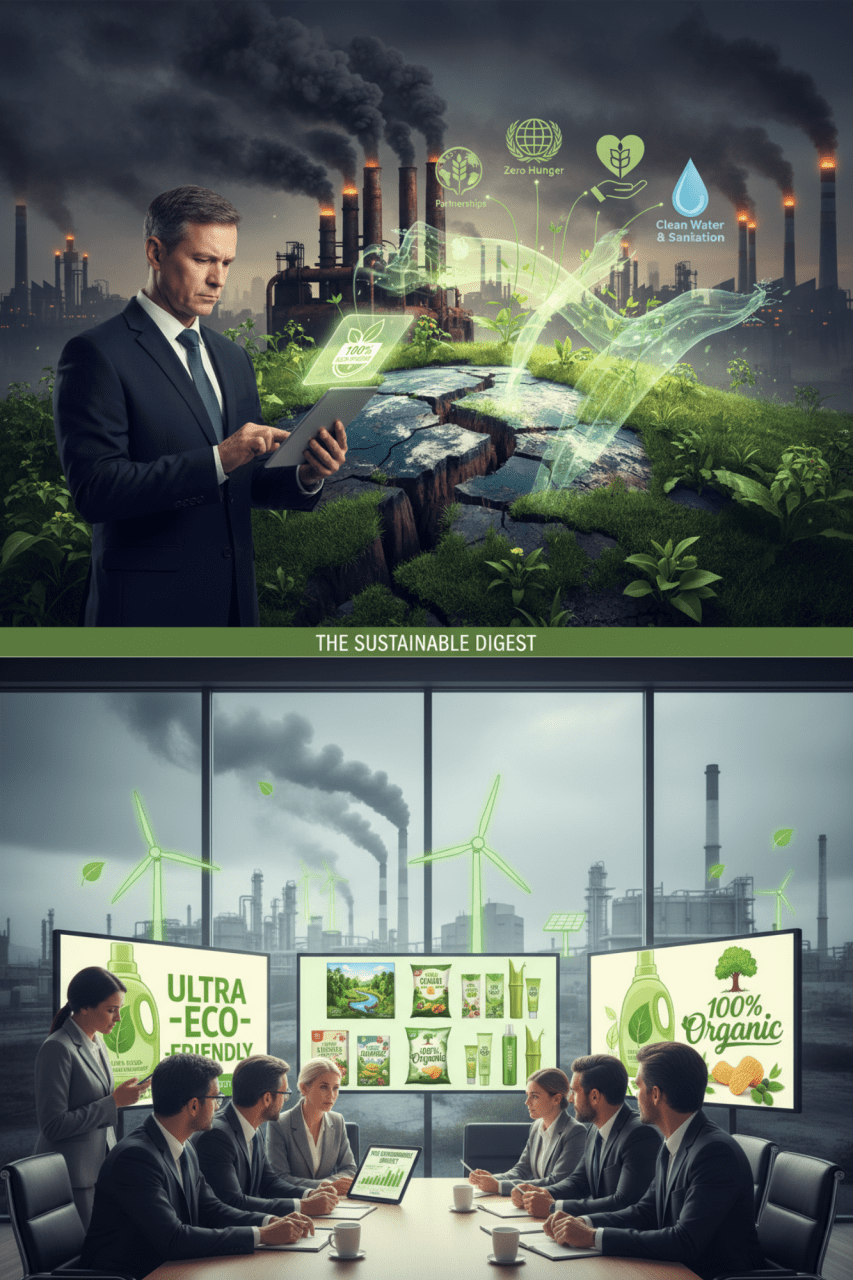
Over 40% of corporate environmental claims might be misleading or not backed up. It’s not just about lies versus truth. It’s a complex world where fake green claims hide many wrongdoings.
For global professionals and eco-aware consumers, it’s not enough to just be skeptical. You need a clear guide. Knowing the variants of greenwashing is key to avoiding them. This detailed breakdown shows us that greenwashing is not one thing, but many, each affecting society in different ways.
Understanding these types helps us move from vague worries to real actions. It lets us tell real progress from fake green promises. This knowledge is crucial for a market where true green efforts, not fake ones, lead the way.
What Is Greenwashing? Defining Modern Environmental Deception
Greenwashing is more than just false advertising. It’s a big problem that makes a huge gap between what companies say they do and what they really do. It uses tricks like unclear information and feelings to make people think companies are doing more for the environment than they are.
The Core Definition of Greenwashing in Today’s Market
The term greenwashing originally meant making false claims about being good for the environment. Now, it’s a complex strategy. It’s when companies make it seem like their products or actions are better for the planet than they actually are.
Greenwashing is the “disinformation disseminated by an organization so as to present an environmentally responsible public image.”
Source: Oxford Languages
This trickery isn’t always a clear lie. Often, it’s about picking and choosing what to say, using vague words, or doing small gestures that don’t really help. The goal is to look good without actually changing much.
Why Greenwashing Has Become Pervasive in Consumer Industries
There are many reasons greenwashing is everywhere. First, people want to buy things that are good for the planet, making companies want to look like they care. Sometimes, companies try to keep up with what people want without really changing.
Second, the rules for being green are not clear everywhere. This lets companies play by different rules in different places. Third, it’s hard to know what’s really going on in complex supply chains. A company might focus on one green thing while ignoring the rest.
Lastly, things meant to help like eco-labels and reports can be used to trick people. If not checked, they can help greenwashing instead of stopping it.
Distinguishing Between Authentic Sustainability and Greenwashing
It’s hard to tell the real deal from just a show. Real sustainability means making big changes and showing how they help. It’s honest and says what it’s going to do to get better.
Here’s how to tell the difference:
Specificity vs. Vagueness: Real claims are clear, like “cut carbon emissions by 40% by 2023”. Greenwashing uses vague terms like “eco-friendly” without explaining what it means.
Substance vs. Symbolism: True sustainability means changing how things are done and using clean technology. Greenwashing is about looking good with marketing or one-off projects that don’t really help.
Lifecycle vs. Highlight Reel: Real efforts look at and improve a product’s whole life, from start to end. Greenwashing picks one good thing to hide the bad.
Knowing the difference is key to spotting greenwashing. It’s about what a company does, not just what it says. And especially, what it proves.
The Evolution and Devolution of Greenwashing Strategies
Greenwashing has evolved, becoming more sophisticated while ethical standards have declined. This shows how technology and ethics have moved in opposite directions. It’s important to understand this to spot hidden environmental harm.
Early greenwashing was obvious. Now, it’s designed to trick people’s minds. This change shows companies are adapting to consumer awareness and rules.
Historical Perspective: How Greenwashing Tactics Have Changed
In the 1970s and 1980s, greenwashing was simple. Companies made big claims without proof. There were no strict rules, making it a free-for-all in environmental marketing.
From Blatant False Claims to Subtle Psychological Manipulation
Old greenwashing was based on false claims. A product might be called “100% eco-friendly” without proof. These claims were easy to spot.
Now, companies use tricks like the halo effect. They link products to nature to seem green. They also use vague terms like “green” to confuse people.
Companies use psychology to sell more. They make offers seem limited to create a sense of urgency. They also make more expensive products seem better for the planet.
Regulatory Attempts and Corporate Counter-Strategies
Regulators have tried to stop greenwashing. The U.S. Federal Trade Commission’s Green Guides aim to stop false claims. They cover topics like biodegradability and carbon offsets.
Companies have found ways to avoid being honest. They make claims that are technically true but misleading. This is called “claim splitting.”
“The most dangerous greenwashing isn’t the lie you can spot, but the half-truth you believe because it contains a fragment of reality.”
Companies also use “regulation arbitrage.” They follow the weakest environmental rules in different places. This makes them seem green in some markets while polluting in others.
The Increasing Sophistication of Greenwashing Techniques
Digital technology has made greenwashing better and accountability worse. Big data and social media let companies target their lies more effectively. They can tell different stories to different people.
Data-Driven Greenwashing in the Digital Age
Companies use data to tailor their green messages. They look at what you buy and what you like on social media. This way, they can make messages that seem personal.
They test different messages to see what works best. This makes it seem like they care about what you want, when really they just want to sell more.
They even predict what green issues will be big. They use machines to find out before everyone else does. This way, they can seem ahead of the curve.
How Social Media Has Transformed Greenwashing Approaches
Social media has changed greenwashing a lot. Companies use real people to promote their green messages. These people seem genuine, making it hard to tell what’s real.
Platforms like Instagram focus on looks over real change. They show off green products to make it seem like companies care. But, the reality is often different.
Algorithms on social media make certain content more popular. This means small actions get more attention than big changes. It’s all about making a good impression, not really helping the planet.
Historical Greenwashing (Pre-2000)
Contemporary Greenwashing (Post-2010)
Psychological Mechanism
Blatant false claims (“100% biodegradable”)
Technically true but misleading statements
Exploits trust in factual accuracy
Generic nature imagery
Personalized environmental narratives
Creates false personal connection
One-size-fits-all messaging
Demographically targeted content
Confirms existing biases
Regulatory avoidance
Regulatory loophole exploitation
Creates illusion of compliance
Static printed materials
Algorithmically optimized social content
Exploits engagement psychology
The table shows how greenwashing has changed. It’s moved from being obvious to being very subtle. The best lies are those that seem true.
This is a big problem. It shows companies are more interested in tricks than being honest. The battle against greenwashing is getting harder.
Greenwashing Types with Variants: A Complete Framework
To understand greenwashing better, we need a clear framework. Saying a company is “faking it” isn’t enough anymore. This section shows a detailed way to sort out greenwashing into three main types. Knowing this helps us check things more closely and make better choices.
Organizing Greenwashing by Method and Mechanism
Greenwashing isn’t all the same. It changes a lot based on how it’s done. By sorting it by method, we can find it more easily. This way, we go from just guessing to really looking into it.
Communication and Messaging-Based Variants
This type uses words and stories to trick us. It changes how we see environmental info. It uses vague words, feelings, and stories to make us think something is green when it’s not. The goal is to change what we think through what we hear.
Labeling, Certification and Claim Manipulation
This type plays on trust in labels and special terms. It uses fake eco-labels, wrong uses of certifications, and confusing terms. Companies might make their own labels or stretch the meaning of a certification. It tricks us by using trust symbols in the market.
The sneakiest types change how companies act and how we see them. They’re not just about one claim. They hide bad actions, blend in with the crowd, or use small green steps to hide big problems. We need to look at what companies do, not just what they say.
“A taxonomy of greenwashing is not academic; it’s a diagnostic tool. You need to know if you’re dealing with a surface-level marketing lie or a deep, strategic diversion to prescribe the right remedy.”
– Sustainability Governance Analyst
The Importance of Recognizing These Specific Variants
Why is it important to know the different types of greenwashing? A simple approach can’t catch all the tricks. Knowing the greenwashing types helps us become more careful. It lets us match our checks to what companies are doing.
How Different Variants Target Different Consumer Vulnerabilities
Each type uses different ways to trick us. Messaging tricks use stories and pictures. Labeling tricks use symbols of trust and knowledge to make choices easier.
Behavioral tricks, like blaming others, play on our sense of doing the right thing. Knowing what trick is being used helps us defend ourselves better.
Why a One-Size-Fits-All Approach to Detection Fails
Being skeptical of all green claims is not smart. A simple check might miss some tricks. For example, a fake label check won’t catch a company that’s just trying to look good by comparison.
Companies might use many tricks at once. They might use green talk to hide label tricks. To really spot these, we need to look closely. We must figure out if it’s a simple mistake, a fake label, or a big trick. The answer tells us what to do next. Real greenwashing is often a mix of these, and our framework helps sort it out.
Communication Manipulation: Greenhushing, Greenspinning and Greenlighting
Companies are getting better at hiding their true environmental impact. They use greenwashing tactics like greenhushing, greenspinning, and greenlighting. These methods distort the truth without making obvious lies. They work by using silence, strategic framing, and selective highlighting.
Unlike old-fashioned greenwashing, these new tactics control what information gets out. They are tricky to spot and challenge. Knowing about these tactics helps us see through fake green claims.
Greenhushing: The Strategic Withholding of Information
Greenhushing means companies hide environmental info to avoid being criticized. This is the opposite of making big green claims but serves the same goal: to fool people about their real impact. Companies fear that being too open would show they’re not doing enough.
How Companies Use Silence to Avoid Scrutiny
Greenhushing uses selective sharing and hiding. Companies might publish reports that just meet the minimum but leave out key details. They might not talk about big climate goals because they’re worried they can’t reach them.
This trick is popular in industries with big carbon footprints or complex supply chains. By saying less, they avoid harsh criticism and activist pressure. The silence is often more helpful than making bold claims that might backfire.
Some common greenhushing tricks include:
Leaving out Scope 3 emissions from carbon counts
Only sharing positive environmental news while ignoring the bad
Not talking about long-term climate risks in talks with investors
Using vague language that doesn’t make clear, measurable promises
Real Examples of Greenhushing in Major Corporations
Big tech companies are known for greenhushing. They only report direct emissions from their operations, ignoring the huge carbon footprint of their supply chains and products. This is a common practice.
The car industry also uses greenhushing. Some car makers focus on electric cars but quietly scale back plans to stop using gas engines. They talk about future plans but downplay current actions.
Banks have been accused of greenhushing too. They promote green investments but don’t share how much they still fund fossil fuels. This selective sharing gives a misleading view of their environmental impact.
Greenspinning: Repackaging Environmental Failures as Successes
Greenspinning turns environmental failures into wins. It’s like PR magic that changes how we see things. Unlike outright lies, greenspinning changes how we think by how things are framed.
The Art of Environmental Public Relations Manipulation
Greenspinning uses smart communication tricks. Companies might highlight small wins as big deals. They compare current performance to a worse past, making it seem like they’re doing great.
Language plays a big role in this trick. Words like “transition,” “journey,” and “evolution” make progress seem real, even if it’s not. Vague promises to go “net-zero by 2050” look ambitious but delay real action for decades.
Effective greenspinning often involves:
Calling small pollution cuts “environmental achievements” instead of just meeting rules
Showing delayed phase-outs of harmful practices as “responsible transitions”
Calling small changes “transformational breakthroughs”
Using future language (“we aim to,” “we plan to”) to seem committed without doing much
Case Studies: Greenspinning in Oil and Fashion Industries
The energy sector is great at greenspinning. Big oil companies now call themselves “energy companies” or “energy solutions providers.” They highlight small green investments while still growing fossil fuel use. One big oil company talks about going “net-zero” but keeps finding new oil fields.
Fast fashion is another example of greenspinning. Brands might launch a small “sustainable” line but market it a lot. This makes it seem like they’ve changed their whole business, even though they haven’t.
These examples show how greenspinning lets companies keep doing harm while looking good. It confuses consumers who see mixed messages about green responsibility.
Greenlighting: Emphasizing Minor Green Initiatives
Greenlighting shines a light on small green actions to hide bigger problems. It’s like theater lighting that focuses on some actors while others are in the dark. This tactic uses small steps as distractions from bigger issues.
How Small Actions Are Used to Divert Attention from Larger Issues
The psychology behind greenlighting is based on the “spotlight effect.” By focusing on a small, appealing action, companies draw attention away from bigger problems. This makes them seem more green than they really are.
Airlines are a perfect example of greenlighting. They promote carbon offset programs to make flying seem green. But they keep growing their fleets and routes, increasing emissions.
The food and drink industry uses similar tricks. A big food company might push paper straws or lightweight bottles a lot. These small changes get a lot of attention, hiding bigger environmental issues.
Greenlighting works because it offers clear, appealing actions that match what people want. Removing plastic straws or starting recycling programs are real improvements. But they get all the attention, hiding bigger environmental problems.
This tactic is especially useful in industries that can’t change their whole business model. By focusing on small green steps, companies can look like they’re making progress without really changing.
Labeling Deception: Greenrinsing, Greenlabeling and Greenclaim Inflation
When companies play with words, they also play with symbols. This leads to confusing labels and stats that we all have to deal with. Seals, badges, and promises are often used to trick us.
These tricks target our trust in different ways. Greenrinsing messes with long-term plans, greenlabeling confuses us right away, and greenclaim inflation distorts what we can measure. Together, they make it hard to make smart choices.
Greenrinsing: The Cycle of Changing Sustainability Goals
Imagine running on a treadmill where the finish line keeps moving back. That’s what greenrinsing is like. Companies set big goals but then change them before they have to do anything.
This makes it seem like they’re always making progress, even if they’re not. A goal to be carbon neutral by 2030 becomes 2040. Or, a plan to reduce plastic is replaced by something else. It never ends.
How Companies Repeatedly Reset Targets to Avoid Accountability
Corporate reports often start with big promises. These promises get a lot of attention and approval. But when the deadline comes, they find excuses to change their goals.
They say things like “market changes” or “new science” to justify the changes. This way, they look like they’re making responsible choices, even if they’re not.
Three common ways companies change their goals include:
Scope redefinition: Making the goal smaller
Timeline extension: Pushing the deadline back
Metric substitution: Changing the goal to something easier
Documented Cases of Greenrinsing in Corporate Sustainability Reports
Many big companies have been caught in greenrinsing. For example, a global drink company pushed back its goal to use 100% recycled packaging from 2025 to 2030. This change came after they didn’t make much progress on the original goal.
A fast-fashion brand kept lowering its goal for organic cotton. Each time, they set a new, less ambitious target. This made them less accountable.
“Sustainability targets should be milestones, not moving finish lines. When goals consistently shift further away, we must question whether the commitment is to improvement or merely to the appearance of improvement.”
Sustainability Reporting Analyst
The car industry shows clear examples too. Many car makers have delayed their plans for electric cars while making more SUVs. This shows they’re not really committed to change.
Greenlabeling: Misuse of Environmental Terminology and Certifications
Every supermarket aisle is filled with green promises. Greenlabeling uses confusing terms and fake certifications to trick us. It’s all about looking good without actually doing anything.
This works because we don’t have time to check everything. A quick look at the packaging decides if we buy it. Greenlabeling uses words and symbols to trick us into thinking it’s better than it is.
Common Misleading Labels: “Eco-Friendly,” “Natural,” “Green”
These terms sound good but mean nothing. “Natural” might mean a product has 1% plant stuff and 99% synthetic stuff. “Eco-friendly” could mean they used a little less packaging, but it’s still toxic.
The problem goes beyond just words. Some companies make their own “green” seals without anyone checking them. These fake badges look real but don’t mean much.
Consider these misleading claims:
“Contains natural ingredients” (which could be petroleum-derived)
“Green technology” (without lifecycle assessment)
“Environmentally conscious” (based on undefined criteria)
How to Verify Authentic Environmental Certifications
Real certifications are clear and checked by others. They need regular checks and follow strict rules. The best ones look at the whole life of a product, not just one part.
Certification
Governing Body
Key Focus Areas
Verification Process
Cradle to Cradle Certified®
Cradle to Cradle Products Innovation Institute
Material health, renewable energy, water stewardship, social fairness
Third-party assessment, multiple achievement levels (Basic to Platinum)
TRUE Certification
Green Business Certification Inc.
Zero waste, diversion from landfills, circular economy
Laboratory testing, manufacturer verification, random sampling
Look for certifications with clear standards. Make sure the group giving the certification isn’t just friends with the company. Real programs show their numbers and codes online.
If greenlabeling tricks us with words, greenclaim inflation tricks us with numbers. It makes big claims about how green a product or company is. A small change is called a “game-changer.”
This trick works because we want to believe our choices help the planet. Companies make these big claims to make us feel good about buying from them.
The Psychology Behind Overstated Sustainability Claims
Research shows these tricks work by playing on our minds. The halo effect makes us think a product is better just because it has one good thing. Saying a product is “30% recycled” might make us think it’s much greener.
Proportional distortion is another trick. Saying a product is “dramatically reduced” might sound big, but it might not be. The language makes it seem like a big change, even if it’s not.
Three ways these tricks work include:
Optimism bias: We want to believe in a greener world
Numerical innumeracy: We struggle to understand numbers and percentages
Trust in authority: We assume companies wouldn’t lie
Quantifying the Gap Between Claims and Reality
There’s a big difference between what companies say and what they actually do. A study found that “carbon neutral” shipping claims only covered 15-40% of emissions. This gap is because of mistakes or on purpose.
Another study looked at “water-saving” appliances. Marketing said they saved 30%, but real use showed only 8-12% savings. This difference is because of ideal lab tests versus real use.
Here’s a comparison of common exaggerated claims:
Claim Made
Typical Reality
Inflation Factor
Common Justification
“Carbon neutral” product
Partially offset emissions
2-3x
“Based on lifecycle assessment” (using favorable boundaries)
“Significantly reduced waste”
5-10% reduction
3-4x
“Compared to previous version” (without industry context)
“Renewable energy powered”
Partial renewable mix
1.5-2x
“Matching renewable certificates” (not direct procurement)
To spot greenclaim inflation, look for real numbers and context. Don’t trust vague claims like “greener” or “more sustainable.” Look for specific, detailed information.
The tricks of greenrinsing, greenlabeling, and greenclaim inflation are a big problem. They make us trust companies more than we should. But if we know these tricks, we can demand better.
Behavioral Greenwashing: Greenshifting, Greencrowding and Greenmasking
Greenwashing has evolved from simple tricks to complex social engineering. It now manipulates behavior and perception at a deep level. This shift targets the psychological and social sides of sustainability.
These tactics include shifting blame to consumers, hiding in a sea of mediocrity, and using charity to hide wrongdoings. It’s key to spot when these tactics are used to hinder progress.
Greenshifting: Transferring Environmental Responsibility to Consumers
Greenshifting is a trick where companies make you think you’re responsible for the environment. It makes big problems seem like they can be solved by changing your own habits.
The “Your Carbon Footprint” Narrative and Its Flaws
The idea of carbon footprints started with BP in 2004. It made people think climate change is all about personal choices. This idea has spread, distracting from the real problem of corporate emissions.
Studies show that just 100 companies cause 71% of global emissions. This makes it clear that greenshifting shifts blame away from big polluters.
“The greatest trick the fossil fuel industry ever pulled was convincing the world that climate change was about your choices, not theirs.”
Environmental Sociologist Dr. Rebecca Jones
How Greenshifting Appears in Advertising and Corporate Messaging
Greenshifting uses certain words and images in ads and messages:
Imperative language: “You can make a difference,” “Your choice matters,” “Be part of the solution”
Visual framing: Images focusing on consumer actions rather than production processes
Product positioning: “Eco-friendly” options that require premium prices from consumers
Educational campaigns: Teaching consumers about recycling while opposing extended producer responsibility laws
Fast food companies are a good example. They promote reusable cups and plant-based options but keep unsustainable practices. This makes consumers feel guilty and responsible for environmental issues.
Greencrowding: Hiding Within Industry-Wide Mediocrity
Greencrowding happens when companies all agree on low environmental standards. This way, no one feels pressured to do better. It’s a collective problem where everyone stays stuck in place.
The Collective Action Problem in Environmental Standards
Industries often set their own environmental standards. These standards are usually the lowest common denominator. This way, everyone can meet them easily.
The greencrowding pattern is clear:
Industry leaders resist strict rules by proposing weak standards
These standards are set at levels that even the least progressive members can meet
Companies celebrate “industry-wide progress” while secretly opposing stricter rules
The mediocre standard becomes the new goal, slowing down real progress
This approach turns environmental progress into a collective shield. When everyone moves slowly together, no one gets left behind—and no one gets ahead.
Examples of Greencrowding in Fast Fashion and Plastics Industries
The fashion and plastics industries show classic greencrowding. Major brands set modest goals like 30% recycled content by 2030. Critics say these goals are too easy to achieve.
Industry
Collective Initiative
Actual Impact
Greenwashing Mechanism
Fast Fashion
Fashion Pact (2019)
Vague commitments with no enforcement
Safety in numbers against regulation
Plastics
Alliance to End Plastic Waste
Focuses on waste management, not production reduction
Redirects attention from source problem
Automotive
Voluntary fuel efficiency standards
Slower progress than regulatory mandates would achieve
Industry-controlled timeline
The plastics industry is a clear example. Big producers promote recycling while increasing virgin plastic production. This greencrowding strategy has delayed bans on single-use plastics and extended producer responsibility laws in many places.
Greenmasking: Using CSR to Conceal Harmful Practices
Greenmasking uses Corporate Social Responsibility (CSR) to hide environmental harm. It’s the philanthropic side of greenwashing, where good deeds cover up ongoing damage.
Corporate Social Responsibility as a Smokescreen
CSR can be good, but it’s used to hide wrongdoings. Companies might fund reforestation while clear-cutting forests elsewhere. They might support environmental education while fighting climate laws.
Greenmasking works because of several psychological factors:
The halo effect: Good deeds in one area make the whole company seem better
Attention diversion: Media focuses on charity efforts, not on the company’s wrongdoings
Moral licensing: People think they can do wrong because they’ve done something good
Complexity overwhelm: Many initiatives make it hard to see the real picture
This creates the CSR paradox. The biggest environmental offenders often have the most visible sustainability efforts.
How to Identify When CSR Is Being Used for Greenmasking
To spot greenmasking, look for these signs:
Strategic alignment: Do CSR efforts really address the company’s environmental impacts?
Proportionality: Is the charity spending meaningful compared to the harm caused?
Transparency: Are both good and bad impacts reported fairly?
Policy consistency: Does the company support environmental laws that match its CSR claims?
Long-term commitment: Are the CSR efforts sustained beyond just publicity?
The fossil fuel industry is a prime example. Big oil companies have renewable divisions and climate funds but still grow their fossil fuel business. Their reports highlight these efforts while downplaying their emissions—a classic greenmasking tactic that slows down the energy shift.
Greenshifting, greencrowding, and greenmasking are the most advanced greenwashing tactics. They don’t just lie; they change how we see and act. Spotting these tricks is the first step to taking back environmental responsibility.
Additional Greenwashing Variants: Greenwishing and Green Botching
There’s a gray area where good intentions go wrong. Greenwishing and green botching are terms for when plans fail. They can hurt trust as much as lies, needing careful thought to tell them apart.
Greenwishing: Hopeful But Empty Sustainability Promises
Greenwishing is when companies make big environmental promises without a solid plan. They say things like they’ll be carbon-neutral by 2050 or use 100% recyclable packaging. But they don’t show how they’ll get there.
The difference between a good goal and greenwashing is clear. A good goal has steps to follow, money to spend, and progress to report. Greenwashing just promises without showing how it will happen.
The Difference Between Aspiration and Deception
Good goals push us forward. They need clear steps, regular updates, and someone to be accountable. Greenwashing, on the other hand, just promises without showing how it will happen.
“A pledge without a plan is merely a PR statement. It asks for credit today for work that may never be done.”
It’s about claiming to lead in sustainability without doing the hard work. It’s about getting credit now for something that might never happen.
How Greenwishing Manifests in Corporate Planning
Greenwishing shows up in business plans and talks to investors. A company might say they’re going green without actually doing it. They might promise to be carbon-neutral but keep using fossil fuels.
This way, they can keep doing things as usual. They just pretend to be thinking about the future.
Green Botching: Incompetent Implementation of Green Initiatives
Green botching is when good ideas go wrong. It happens when a plan is so poorly done that it hurts the environment. It’s ironic: something meant to help ends up causing harm.
When Poor Execution Becomes a Form of Greenwashing
When does a mistake become greenwashing? It happens when a company chooses to highlight the good idea instead of fixing the problem. They market the failed project as a green success, misleading everyone.
Case Examples of Well-Intentioned But Poorly Executed Sustainability
There are many examples of green botching:
Biodegradable Plastics Contaminating Streams: Some plastics are marketed as biodegradable but need special facilities to break down. When thrown away normally, they ruin recyclables.
Carbon-Offset Reforestation Failures: Projects that plant trees to capture carbon often harm local ecosystems. They use non-native species that damage soil and biodiversity.
Inefficient Green Products: Some energy-saving appliances use more power than they save. Eco-products can also create more waste than regular ones.
These examples show that results matter, not just good intentions. The Explorer looks for new solutions, but the Sage makes sure they work. This way, good ideas don’t turn into failures.
The Greenwashing Effect on Sustainability and UNSDGs
Greenwashing is more than just misleading consumers. It harms the global effort for sustainability, affecting the United Nations Sustainable Development Goals. This damage is what we call the greenwashing effect of sustainability overall. It confuses people and diverts resources away from real progress.
Companies that greenwash are not just bending marketing rules. They are part of a bigger problem that threatens the 2030 Agenda for Sustainable Development. This section looks at how these tricks damage trust, slow down innovation, and hurt key UNSDGs.
Long-Term Consequences of Greenwashing for Sustainable Development
The greenwashing variants’ long term effect in sustainable development goes beyond just tricking consumers. It creates lasting barriers to progress, changing markets and policies in negative ways.
Erosion of Public Trust in Environmental Science and Policy
When people see exaggerated green claims that don’t match reality, they start to doubt everything. This doubt affects both real environmental science and corporate spin. It leads to “claim fatigue,” where even true sustainability information is questioned.
This erosion has real effects. Support for tough environmental policies drops. People are less willing to pay more for sustainable products. As one sustainability analyst said,
“Greenwashing doesn’t just sell a false product; it sells a false narrative about what’s possible, making real solutions seem either insufficient or unnecessarily extreme.”
How Greenwashing Slows Genuine Technological and Social Innovation
Greenwashing creates bad incentives in the market. When companies make superficial changes or make vague “carbon neutral” claims, they don’t have to invest in real innovation. Money goes to marketing instead of research and development.
This hurts breakthrough technologies that need a lot of investment. Why spend on real circular production when just adding a recycling symbol works? The greenwashing effect of sustainability overall acts like a tax on innovation, slowing down the development and use of real solutions.
Greenwashing’s Impact on Specific United Nations Sustainable Development Goals
Greenwashing harms the UNSDGs in specific ways. Each goal has a target that greenwashing can undermine through different means.
UNSDG 12: Responsible Consumption and Production
Goal 12 aims for sustainable consumption and production. Greenwashing tricks like greenlabeling and greenclaim inflation directly harm this goal. They distort the information needed for consumers to make good choices.
When products have misleading environmental certifications or exaggerated claims, the market signals are wrong. Consumers trying to follow UNSDG 12 principles find themselves lost in a sea of false claims.
UNSDG 13: Climate Action
Goal 13 calls for urgent action on climate change. The greenwashing trick greenshifting is a big threat to this goal. It shifts the responsibility for carbon reduction from companies to consumers, letting companies avoid making real changes.
This creates “responsibility diffusion,” where everyone is supposed to be responsible but big polluters don’t change. The greenwashing variants’ long term effect in sustainable development here is especially bad: it keeps emissions high while making it seem like everyone is doing something about climate change.
UNSDG 14: Life Below Water and UNSDG 15: Life on Land
Goals 14 and 15, about aquatic and terrestrial ecosystems, face threats from greenmasking. Companies doing harm to biodiversity often do big conservation projects. They plant trees while cutting down forests elsewhere, or fund coral research while polluting waterways.
These CSR projects create “offset mythology,” the idea that environmental harm in one place can be balanced by benefits in another. This misunderstands ecosystem specifics and undermines the holistic approach needed by UNSDGs 14 and 15.
Greenwashing Variant
Primary UNSDG Undermined
Mechanism of Undermining
Greenlabeling
UNSDG 12 (Responsible Consumption)
Corrupts consumer information needed for sustainable choices
Greenshifting
UNSDG 13 (Climate Action)
Transfers corporate responsibility to individuals, avoiding systemic change
Greencrowding
UNSDG 14/15 (Life Below Water/On Land)
Allows industry-wide mediocre standards that collectively harm ecosystems
Greenmasking
Multiple UNSDGs
Uses superficial CSR projects to conceal ongoing harmful practices
Using UNSDGs to Elude Greenwashing Tactics
The UNSDGs can be a powerful tool against greenwashing. Their comprehensive and interconnected nature helps cut through false claims and find real sustainability.
How UNSDG Frameworks Help Identify Authentic vs. Deceptive Efforts
The UNSDGs work as a system—progress in one goal often depends on progress in others. This interconnectedness shows the narrow, siloed claims of greenwashing. A company claiming sustainability progress should show positive impacts across multiple goals, not just one.
For example, a fashion brand might highlight water reduction (touching UNSDG 6) while ignoring poor labor conditions (contradicting UNSDG 8). The UNSDG framework forces a holistic assessment that reveals such selective reporting. This approach is a strong way to UNSDGs in eluding greenwashing—using the goals’ comprehensive nature as a verification tool.
UNSDGs as Tools to Counter Greencrowding and Greenmasking Specifically
Two variants are especially vulnerable to UNSDG-based analysis. Greencrowding—hiding in industry-wide mediocrity—falls apart when measured against specific UNSDG targets. While a whole sector might claim “industry average” sustainability, UNSDG metrics demand real progress toward concrete targets like specific emission reductions or conservation areas.
Similarly, UNSDGs for eluding greenmasking work by requiring a real connection between CSR initiatives and core business impacts. A mining company’s tree-planting program doesn’t offset habitat destruction if measured against UNSDG 15’s specific biodiversity indicators. The goals provide the detailed metrics needed to tell real integration from superficial decoration.
Investors and regulators are using UNSDG alignment as a due diligence filter. Funds focused on UNSDGs to elude greencrowding check if companies do better than sector benchmarks. This creates market pressure for real leadership, not just average performance.
The irony is clear: the framework that greenwashing threatens may become its most effective constraint. As UNSDG reporting standards get better, they create “claim accountability”—where environmental claims must show real progress toward global targets, not just sound good.
Conclusion
Greenwashing is a complex issue, not just one trick. It includes many strategies like greenhushing and greenspinning. Knowing these tactics is key to holding companies accountable.
This framework helps us check if companies are really doing what they say. It lets us look beyond their marketing to see if they’re taking real action. The United Nations Sustainable Development Goals are a good way to measure if they’re making progress.
True sustainability means being open and showing real results, not just talking about it. The real impact on the environment is more important than any greenwashing campaign. By carefully checking these claims, we can push for real change.
Key Takeaways
Corporate sustainability claims are often misleading, creating a complex landscape of environmental deception.
Understanding the specific variants of greenwashing is essential for effective navigation and critical assessment.
This knowledge acts as a taxonomy, mapping a diverse ecosystem of deceptive practices beyond a single definition.
Recognizing these types empowers professionals and consumers to make informed, responsible choices.
The ultimate goal is to advance genuine sustainability progress in line with global frameworks like the UNSDGs.
The global pursuit of a better future is framed by an ambitious blueprint. This blueprint, the 2030 Agenda from the United Nations, seeks to balance economic, social, and environmental health.
It sets 17 interconnected goals for planetary and human well-being. Two major bodies operate within this complex landscape. Their mandates appear, at first glance, to be opposites.
One champions the vital role of recreation, tourism, and community joy. The other is the global authority on labor rights and decent work. This analysis explores their paradoxical dance.
Can the drive for meaningful work and the pursuit of fulfilling leisure truly synergize? The current state of sustainable development suggests an urgent need for such fusion. Progress on key targets, like those under Goal 8, is lagging.
This examination will map how these institutions navigate subsidies, frameworks, and global partnerships. It questions if their combined force is the missing key to unlocking the agenda’s full potential.
Introducing the Architects: WLO and ILO in the Global Arena
At the heart of the sustainable development conversation stand two pivotal institutions with seemingly opposing mandates. One advocates for the intrinsic value of free time and joy. The other defends the fundamental rights of the working hour.
Their interplay is critical to the sustainable development puzzle. This section details their core functions and surprising alignment.
The World Leisure Organization (WLO): Championing Recreation, Community, and Tourism
The World Leisure Organization operates from a delightfully simple premise. It posits that access to recreation and cultural expression is a cornerstone of human dignity.
Its work, however, extends far beyond mere pleasure. It actively fuels community cohesion and local economic growth.
Key initiatives focus on sustainable tourism and smart urban planning. The organization promotes ecotourism models that preserve natural habitats.
It forges partnerships with bodies like the UNWTO and fair trade networks. These alliances help transform local community ventures into viable enterprises.
From cooperative farms to urban green spaces, the WLO’s domain proves leisure is an economic catalyst. It supports initiatives that blend tourism, agriculture, and environmental stewardship.
The International Labor Organization (ILO): The Standard-Bearer for Decent Work and Social Justice
In contrast, the International Leisure Organization wields the formidable tools of international law and policy. As a united nations agency, its mandate is binding and tripartite.
It champions decent work as a non-negotiable foundation for development. This includes fair wages, safe conditions, and social dialogue.
The organization sets global labor standards and conventions. It also advocates for robust social protection floors for all people.
Recent data underscores the scale of its challenge. In 2024, 57.8% of the global workforce remained in informal employment.
Labor rights compliance has declined since 2015. Persistent gender pay gaps further illustrate the need for its work.
The ILO’s Global Accelerator on Jobs and Social Protection for Just Transitions aims to create 400 million decent jobs. It seeks to extend protection to 4 billion individuals.
This quantifiable mission highlights its role as custodian for SDG 8 indicators. Its analysis reveals progress is uneven across the goal’s dimensions.
Convergence on the 2030 Agenda: A Shared Destination, Different Paths
Despite disparate starting points, both entities converge on the 2030 agenda. They recognize that true well-being requires integrated policies.
The World Leisure Organization’s path emphasizes grassroots vitality and local cooperative models. It highlights sectors like tourism, which contributed 3.1% to global GDP in 2022.
The International Leisure Organization’s path focuses on national labor market reform and binding standards. It stresses macroeconomic stability and formal employment creation.
Their convergence is operational, not just philosophical. Consider the promotion of green jobs within the tourism sector.
Or ensuring that community development initiatives provide decent work. Here, the line between leisure and labour productively blurs.
The irony is rich but instructive. An institution dedicated to free time and another governing work time find common cause. They meet in the united nations framework demanding balance for sustainable development.
World Leisure Organization vs International Labor Organization 2030 UNSDG: Complementary Forces for Sustainable Development
Economic vitality and human well-being in the 21st century demand an integrated approach. This approach curiously bridges play and pay.
The mandates of these two entities are not a zero-sum game. Instead, they function as a synergistic engine for holistic progress.
Their collaboration addresses the core pillars of the global agenda. It turns potential conflict into a powerful, complementary force.
Driving Inclusive Economic Growth: From Tourism GDP to Productive Employment
The complementary dynamic is clearest in economic terms. One promotes sectors like tourism for sustainable economic growth.
The other ensures this growth creates full productive employment. Data reveals both progress and persistent gaps.
Tourism’s contribution to global GDP recovered to 3.1% in 2022. This signals a rebound in a vital sector for many economies.
Yet, broader inclusive sustainable economic progress is sluggish. Global GDP per capita growth has slowed considerably.
More critically, a vast portion of global work remains informal. This is where the International Labor Organization’s focus on productive employment decent work becomes essential.
Without this labor lens, economic recovery can simply perpetuate precarious jobs. The following table highlights key tensions and targets.
SDG 8 Progress Snapshot Using 2022-2025 UN Data
A compact, data-driven analysis shows mixed progress across SDG 8 targets from 2022 to 2025. This snapshot highlights measurable trends and policy implications for jobs, tourism, and community resilience.
SDG 8 Indicator
Recent Data (2024 est.)
Core Challenge
Target 8.1: GDP per capita growth
2.0%
Stagnant productivity
Target 8.3: Informal employment
57.8% of workforce
Lack of decent work & protections
Target 8.5: Unemployment rate
5.0% (record low)
High youth employment disparities
Target 8.9: Tourism direct GDP
3.1% (2022)
Ensuring growth translates to quality jobs
Target 8.1 — GDP per capita
Real GDP per capita plunged about 3.8–4.4% in 2020, rebounded 5.0–5.5% in 2021, then slowed to 1.0–1.9% in 2023. Estimates put growth near 1.8–2.0% in 2024 and 1.5% in 2025.
Target 8.2 — Productivity
Labor productivity stalled below 0.5% in 2022–2023 and rose to ~1.5% in 2024. Low productivity constrains wage gains and locks many economies into low‑wage service trajectories.
Target 8.3 — Informal employment
Informality remains high at ~57.8% in 2024, adding an estimated 34 million informal workers. Slow formalization limits social protection and enforcement.
Targets 8.5 & 8.6 — Unemployment, youth, and gender
Headline unemployment hovered near 5.0–5.2% (2023–2024). Youth remain roughly three times more likely to be unemployed. About 1 in 5 young people are NEET; young women face the highest risk.
Target 8.8 — Labour rights
Compliance with labour rights fell 7% from 2015 to 2023, with sharp drops in least developed economies and notable erosion in developed ones. This weakens collective bargaining and supply chain protections.
Target 8.9 — Tourism recovery
Tourism reached about 82% of 2019 levels in 2022 and added 3.1% to global GDP, but recovery is uneven; small island states lag at ~43% of pre‑pandemic activity.
Target
Key metric
2024 snapshot
Policy implication
8.1
GDP per capita growth
~1.8–2.0%
Limited fiscal space for public investment
8.2
Productivity growth
~1.5% (rebound)
Need for skills, tech adoption
8.3
Informal share of employment
~57.8%
Accelerate formalization, extend protection
8.9
Tourism recovery
82% of 2019 (uneven)
Measure job quality and local value capture
The International Labor Organization’s (ILO) Global Accelerator initiative directly confronts these gaps. It aims to create millions of new positions with proper employment decent work standards.
This ensures the economic activity championed by the WLO results in dignified livelihoods. It is the difference between growth and equitable development.
Building Resilient Communities: Social Protection, Skills, and Local Initiatives
Resilience is forged where systemic safety nets meet grassroots action. ILO’s work on social protection provides a critical buffer against shocks.
WLO’s community development models foster local ownership and skills. Together, they support cooperative enterprises and fair trade tourism networks.
These partnerships ensure tourism revenues benefit local workers directly. They align with frameworks that prioritize community equity over extraction.
Leisure education programs can also teach transferable skills. This prepares individuals for a changing economy while strengthening community bonds.
The result is a virtuous cycle. Protected workers engage in vibrant local economies. Thriving communities, in turn, create more stable decent work environments.
Safeguarding the Environment: Ecotourism, Green Jobs, and Carbon Neutrality
The environmental imperative demands the most explicit synergy. World Leisure Organization’s promotion of ecotourism and sustainable travel models preserves natural capital.
International Labor Organization’s mandate for a just transition ensures this shift creates green jobs. It prevents workers from being stranded in declining, polluting industries.
Both entities implicitly endorse management standards like those from ISO. These provide a framework for measuring and improving sustainability performance.
Their aligned efforts contribute to the overarching mission of carbon neutrality. The pursuit of 2050 Net Zero goals finds unlikely allies.
Tourism operators seek market differentiation through sustainability. Labor unions demand safe and sustainable workplaces for their members.
This convergence is operationalized at global events. Climate summits and tourism expos now share a common language.
It is a language of change that links healthy ecosystems with healthy, dignified livelihoods. The complementary force is now a practical necessity.
Contrasting Approaches: Policy Tools, Scale, and Organizational Networks
The path from principle to practice diverges sharply when comparing their tools, scale, and alliances. Their synergy on the 2030 agenda is genuine, yet their operational forms could not be more different.
This analysis dissects the fundamental contrasts. It reveals how voluntary persuasion and binding law, local agility and national machinery, create a complex but complementary ecosystem for agenda sustainable progress.
Mandate & Policy Instruments: Voluntary Frameworks vs. International Labor Standards
The core contrast lies in authority. One entity functions through the soft power of advocacy and best practice. The other wields the hard power of international law.
The ILO’s unique tripartite governance allows it to set binding conventions. These define decent work, safety, and protection. Enforcement, however, remains a persistent challenge.
A reported 7% global decline in labour rights compliance from 2015 to 2023 highlights this struggle. In response, its policy briefs call for increased multilateral action.
The ILO advocates integrating policy responses through initiatives like the Global Coalition for Social Justice, directly addressing systemic constraints.
In stark contrast, the WLO’s influence flows from voluntary sustainability charters and certification schemes. Its success is measured by adoption rates, not legal compliance.
Tourism’s recovery, linked to Target 8.9, is often propelled by such sector-led initiatives. This creates a nimble, market-responsive model for change.
Operational Scale: Grassroots Community Development vs. National Labor Market Reform
Their operational theaters are equally distinct. One engages in the slow, complex machinery of state-level reform. The other thrives in the agile space of local initiative.
The ILO’s work necessitates navigating national labor markets and social protection systems. It deals with macroeconomic policies and debt burdens that constrain many countries.
This focus is essential for creating employment at scale and tackling issues like youth employment disparities. It is a top-down, systemic endeavor.
Conversely, the WLO catalyzes grassroots community development. It partners with local cooperatives on tourism or cultural projects that are culturally embedded.
The irony is instructive. While one battles unsustainable debt at the national level, the other might be launching a community tourism venture in the same indebted nation. This illustrates the multi-level complexity of modern development.
Partner Ecosystems: Fair Trade, UNWTO, and Coops vs. Governments, UN Agencies, and Worker Unions
Their alliance networks paint the clearest picture of their strategic identities. One builds a coalition focused on ethical niches. The other operates in the halls of sovereign power.
The World Leisure Organization’s constellation includes the World Fair Trade Organization (WFTO), Fairtrade International, and the United Nations World Tourism Organization (UNWTO). This network prioritizes ethical consumption and sustainable niche markets.
It is a partnership model designed for innovation and market transformation within specific sectors of economies.
The ILO’s ecosystem is fundamentally different. It partners with governments, core agenda sustainable development agencies, and global federations of worker and employer unions.
This is a network built for social dialogue and universal systemic change. It aims to reshape labor indicators across all dimensions and countries, not just specific industries.
This divergence is visible at major global summits. The ILO is typically in policy negotiation rooms. Its counterpart is often showcasing transformative case studies in innovation pavilions.
Dimension of Contrast
WLO Approach
ILO Approach
Primary Policy Tools
Voluntary frameworks, certifications, advocacy
Binding international labour standards, conventions
Operational Scale
Grassroots, community-focused, agile
National/global, labor market reform, systemic
Core Partner Network
Fair Trade bodies, UNWTO, local cooperatives
Governments, UN agencies, worker/employer unions
Key Measure of Success
Adoption of best practices, market growth in niche sectors
Compliance with standards, formal employment creation, rights protection
These contrasting forms create a spectrum of strengths and vulnerabilities. The binding approach struggles with universal enforcement. The voluntary model may lack transformative scale.
Yet, within the 2030 agenda‘s complex landscape, this very dichotomy is a source of resilience. It allows for action at every level, from the international treaty to the village cooperative.
Conclusion: Synergizing Leisure and Labor for a Sustainable 2050
Sustaining progress to mid-century will depend on a synergistic policy framework championed by distinct global actors. The World Leisure Organization’s vision for community vitality and the International Leisure Organization’s imperative for decent work must fuse to inform public policy. This integration moves beyond siloed thinking, creating plans where economic growth and human well-being are jointly measured.
The path to 2050, particularly for Net Zero targets, is a potent test. Success requires the International Leisure Organization’s just transition for workers and the World Leisure Organization’s sustainable tourism models. This ensures ecological change does not sacrifice justice for people.
Current data reveals a paradox. Record low unemployment masks profound deficits in social protection and job quality in many countries. True sustainable development requires this qualitative shift. The future may see the line between a green job and a leisure activity delightfully blurred. Stakeholders must support this synergy for the entire 2030 agenda to succeed.
Key Takeaways
The 2030 Agenda provides a comprehensive framework for global progress across three core dimensions.
The World Leisure Organization and the International Labor Organization have distinct but potentially complementary missions.
Sustainable development requires integrating economic, social, and environmental policies.
Decent work (SDG 8) is a central pillar of the United Nations’ development goals, yet progress is challenging.
The relationship between labor and leisure is more synergistic than contradictory in building resilient societies.
Globalism creates a complex operational environment for international bodies with overlapping goals.
Future collaboration between diverse sectors may be crucial for achieving long-term sustainability targets.
The coming year represents a pivotal moment for planetary climate action and international cooperation. Major gatherings will convene in strategic locations worldwide, bringing together diverse stakeholders to address our most pressing environmental challenges.
These events focus on practical solutions rather than mere pledges. From the Amazon rainforest to urban centers, leaders will tackle financing mechanisms, technology transfer, and indigenous knowledge integration.
The irony of flying thousands to remote locations for climate talks isn’t lost on observers. Yet these gatherings remain essential for multilateral progress and policy alignment across business sectors and civil society.
Introduction to the 2025 Sustainability Events Landscape
The calendar fills with gatherings that attempt to match urgency with action. These events create spaces where diplomacy meets practical implementation.
The Critical Role of Global Gatherings in Climate Action
Face-to-face negotiations remain irreplaceable despite digital alternatives. The chemistry of personal interaction drives breakthroughs that virtual meetings cannot achieve.
These assemblies function as diplomatic pressure valves. They allow for the nuanced conversations that build trust among nations and sectors.
The United Nations Ocean Conference exemplifies this approach. Scheduled for June in Nice, France, it focuses on mobilizing all actors for ocean conservation.
Similarly, the High-level Political Forum in July advances science-based solutions for the 2030 Agenda. Both events emphasize moving from talk to tangible progress.
Why This Period Represents a Pivotal Moment for Policy
Multiple convergence points create unprecedented momentum. The halfway mark to 2030 development goals demands honest assessment of what works.
Public pressure for measurable results has never been higher. Citizens and businesses alike demand accountability beyond mere pledges.
The geographic distribution of events signals important shifts. Host locations increasingly reflect climate justice principles rather than traditional Western hubs.
Conference Feature
Traditional Approach
2025 Evolution
Location Strategy
Western financial centers
Climate-vulnerable regions
Participation
Sector-specific silos
Cross-sector integration
Outcome Focus
Pledge creation
Implementation tracking
Accountability
Voluntary reporting
Built-in monitoring frameworks
This strategic sequencing creates a narrative arc from technical discussions to political decisions. Specialized meetings address implementation challenges that often hinder real-world impact.
The irony of discussing ecosystem collapse in air-conditioned centers isn’t lost on participants. Yet these necessary gatherings continue to drive the multilateral progress that piecemeal digital meetings cannot achieve.
Analysis reveals increasing cross-pollination between climate, development, and business sectors. While silos persist, the boundaries between these domains are becoming more permeable.
This period marks a clear shift from pledge-making to implementation monitoring. Most conferences now incorporate stocktake mechanisms and accountability frameworks that track real-world impact.
Flagship United Nations Climate and Development Conferences
The United Nations convenes several cornerstone gatherings that shape international environmental policy. These assemblies represent the formal machinery of multilateral cooperation, where diplomatic protocols meet urgent ecological realities.
Each event serves a distinct purpose within the broader ecosystem of global governance. From technical negotiations to high-level decision-making, they create the frameworks that guide national actions.
COP30: The Amazon Hosted Climate Summit in Brazil
Belém, Brazil hosts the thirtieth Conference of Parties in November. This location represents both poetic justice and logistical complexity.
Delegates will confront the Amazon’s ecological richness while negotiating its protection. The setting forces direct engagement with the ecosystems under discussion.
This gathering follows what many consider disappointing outcomes from previous meetings. The pressure for tangible results has never been higher.
UN Ocean Conference: Conserving Marine Ecosystems
Nice, France welcomes ocean advocates in June for this critical gathering. France and Costa Rica co-host the event focused on marine conservation.
The conference continues the tradition of discussing blue ecosystems in landlocked venues. However, the 2025 agenda emphasizes accelerating action over dialogue.
Participants will address pressing issues like overfishing and pollution. The focus remains on practical solutions rather than theoretical discussions.
UN Food Systems Summit +4 Stocktake: Assessing Progress
This evaluation occurs at a crucial juncture for global food security. It measures whether ambitious 2021 commitments translated into real agricultural changes.
The stocktake examines implementation across production, distribution, and consumption systems. It represents a honest assessment of what works and what doesn’t.
Food security remains one of our most pressing challenges. This meeting brings together diverse stakeholders to address systemic issues.
High-level Political Forum on Sustainable Development
This forum represents the UN’s mechanism for maintaining relevance amid criticism. It focuses particularly on Sustainable Development Goals 3, 5, 8, 14, and 17.
The gathering assesses progress toward the 2030 Agenda for Sustainable Development. It combines technical analysis with political decision-making.
Participants examine implementation gaps and financing mechanisms. The forum serves as a reality check for international commitments.
Bonn Climate Change Conference and AI for Good Global Summit
The Bonn conference in June serves as technical preparation for COP30. Negotiators work through detailed language that ultimately makes or breaks agreements.
Meanwhile, the AI for Good Summit in March explores technological applications for environmental protection. It examines how artificial intelligence can monitor deforestation and biodiversity loss.
These gatherings demonstrate the range of approaches needed for effective climate action. From technical details to innovative technologies, they collectively drive progress.
Regional and Specialized Sustainability Summits
Beyond the flagship United Nations gatherings, a diverse ecosystem of regional and specialized events addresses unique geographical and sectoral needs. These assemblies often produce more targeted outcomes than their global counterparts.
Africa Climate Summit: Continental Solutions in Ethiopia
Addis Ababa hosts the Africa Climate Summit from September 8-10. The event focuses on “Financing for Africa’s Resilient and Green Development.”
This gathering represents the continent’s assertive entry into climate leadership. It emphasizes practical solutions rather than victimhood narratives.
African leaders will address funding gaps and investment opportunities. The summit aims to position Africa as a hub for green innovation.
World Sustainable Development Summit: Asian Leadership
New Delhi welcomes participants from March 5-7 for this important gathering. The theme emphasizes “partnerships for accelerating sustainable development.”
India’s unique position as both major emitter and climate-vulnerable nation creates fascinating tensions. The summit attempts to position South Asia as an innovation hub for green technology.
This event brings together diverse stakeholders from across the region. It addresses specific challenges facing developing economies.
European assemblies continue their tradition of thorough documentation and incremental progress. While sometimes frustrating, this methodical approach yields consistent results.
These gatherings focus on policy implementation rather than grand declarations. European nations demonstrate how to translate climate commitments into actionable plans.
The careful balancing act between economic growth and environmental protection remains central. European events showcase both successes and ongoing struggles.
Sector-Specific Forums: Energy, Oceans, and Biodiversity
Specialized gatherings address the ironic reality that expertise often leads to fragmentation. Energy experts sometimes talk past biodiversity specialists despite obvious interconnections.
These forums attempt to bridge disciplinary divides through focused dialogue. They produce practical insights that larger conferences might overlook.
Key sector-specific events include:
World Bamboo Summit focusing on sustainable materials
Clean energy conferences addressing renewable transition
Circular economy workshops redesigning production systems
The Osaka World Expo 2025 attempts to rebrand world’s fairs as sustainability showcases. Its theme “Designing Future Society for Our Lives” faces scrutiny given the carbon footprint of such events.
Regional summits increasingly serve as testing grounds for innovative policies. They create what might be called “policy laboratories” for climate action.
The proliferation of specialized gatherings reflects both maturation and fragmentation. While expertise deepens, coordination challenges ironically require more events to solve.
Economic and Business-Focused Sustainability Gatherings
Corporate boardrooms and financial centers increasingly host discussions traditionally confined to environmental circles. These gatherings represent the business world’s growing engagement with ecological challenges.
They attempt to reconcile profit motives with planetary boundaries. The results often reveal fascinating tensions between economic growth and environmental protection.
World Economic Forum Annual Meeting: Corporate Leadership
The Davos gathering continues its delicate balancing act between genuine climate action and perceived greenwashing. Private jets ferry executives to discuss carbon reduction strategies.
This irony isn’t lost on observers yet the forum remains influential. It brings together corporate leaders who control significant resources for environmental projects.
The event focuses on practical solutions rather than theoretical debates. Discussions address supply chain sustainability and clean energy transitions.
Global Innovation and Technology Summits
Technology gatherings increasingly confront their own environmental footprint. They examine whether digital solutions genuinely reduce ecological impact.
These events explore fascinating paradoxes of modern environmentalism. Can we innovate our way out of problems created by previous innovations?
Key discussion topics include:
Artificial intelligence for monitoring deforestation
Blockchain for supply chain transparency
Energy-efficient data centers
Circular economy business models
Financial and Investment Conferences: Money 20/20 and Beyond
Financial gatherings finally acknowledge that climate risk equals financial risk. The conversion of this awareness into actual investment flows remains slow.
Money 20/20 represents this belated recognition within banking sectors. It addresses the growing divide between traditional and impact investors.
“Sustainable investing requires patience that conflicts with quarterly earnings expectations.”
These conferences reveal the financial sector’s struggle to align short-term profits with long-term planetary health. Financing mechanisms for green projects dominate discussions.
This gathering showcases companies addressing problems their business models helped create. Consumer goods firms profit from consumption while seeking to reduce its environmental impact.
The forum emphasizes supply chain transparency and waste reduction. Participants share strategies for sustainable packaging and responsible sourcing.
Key focus areas include:
Plastic reduction commitments
Carbon-neutral logistics
Water conservation techniques
Ethical labor practices
These efforts attempt to bridge the notorious “say-do gap” in corporate environmentalism. Measurable progress often lags behind ambitious announcements.
The World Green Economy Summit addresses the central paradox of sustainable economics. How can we maintain economic growth while reducing environmental impact?
Similarly, the Semafor World Economy Summit attempts to connect economic policymakers with ecological realities. Both events face challenges overcoming entrenched growth paradigms.
Business gatherings increasingly serve as laboratories for sustainable practices. They test whether environmental responsibility can coexist with profit generation.
Grassroots and Community-Led Initiatives
While high-level gatherings dominate headlines, the most authentic climate action often emerges from community roots. These gatherings represent the vital counterbalance to top-down approaches, bringing diverse voices into the conversation.
Youth Climate Action: Global Youth Climate Summit
Belo Horizonte hosts 500 young leaders from the Global South in April. This gathering embodies the poignant reality that those least responsible for environmental damage must lead the cleanup.
The summit focuses on practical solutions rather than symbolic protests. Participants develop strategies for local implementation of global goals.
Young delegates address climate change with remarkable optimism despite inheriting complex challenges. Their energy injects fresh perspectives into often-stagnant discussions.
Cooperatives Movement: International Day and Banking Summit
The International Cooperative Alliance demonstrates that alternative economic models already exist. These time-tested approaches align perfectly with modern sustainability principles.
Cooperative gatherings explore how member-owned businesses can drive progress. They showcase democratic control and equitable distribution of resources.
“Cooperatives prove that economic success needn’t come at environmental expense.”
The movement’s longevity offers valuable insights for contemporary development models. Its emphasis on community benefit contrasts sharply with extractive practices.
Social Development and Innovation Gatherings
These events confront the uncomfortable truth that environmental and social issues are inseparable. The Second World Summit for Social Development addresses this interconnection directly.
Innovation forums like SXSW and Web Summit represent technology’s awkward relationship with climate action. They attempt to position tech as solution-provider rather than problem-source.
Key gatherings include:
Social Innovation Summit addressing grassroots solutions
Creative Problem Solving Institute fostering new approaches
Local Solutions: Model Forest Network and Regional Forums
The International Model Forest Network Forum in Canada demonstrates place-based conservation. This approach recognizes that effective climate action must respect local contexts.
Regional forums emphasize that global challenges require localized responses. They bridge the gap between international policy and community implementation.
Initiative Type
Traditional Approach
Grassroots Evolution
Decision Making
Top-down directives
Community consultation
Resource Allocation
Centralized funding
Local control
Success Metrics
Economic indicators
Holistic well-being
Knowledge Sources
Expert opinions
Lived experience
These gatherings prove that small-scale action can create large-scale change. They often achieve more with limited funding than better-resourced initiatives.
The ICBA Conference in Poland represents growing recognition that financial systems must serve sustainability goals. It explores how banking can support rather than undermine ecological health.
Grassroots movements demonstrate that meaningful progress often begins at community level. Their success challenges assumptions about where real climate action originates.
Implementation and Financing: From Policy to Action
The transition from ambitious declarations to tangible outcomes represents the ultimate test of international environmental commitments. This critical phase separates rhetorical flourishes from measurable impact on the ground.
Effective implementation requires sophisticated financing structures and robust accountability mechanisms. The gap between pledged amounts and actual needs remains starkly evident across all sectors.
Climate Finance Mechanisms and Funding Strategies
Financial commitments continue to demonstrate ironic disparities between responsibility and contribution. Nations most responsible for historical emissions often prove least willing to fund solutions.
The $300 billion pledged at recent gatherings represents both progress and profound inadequacy. This amount falls dramatically short of the estimated $1.3 trillion actually required for meaningful climate action.
Fourth International Conference on Financing for Development in Seville assesses progress since 2002. This gathering examines whether financial promises have translated into actual resource allocation.
Technology and Innovation for Sustainable Development
Technological gatherings confront the patent paradox that could determine planetary future. Proprietary solutions remain locked behind intellectual property barriers despite their potential value.
Transfer mechanisms face dual challenges of Northern protectionism and Southern capacity limitations. This creates implementation gaps that hinder global progress toward sustainable development goals.
Clean energy innovations demonstrate particular promise for reducing emissions. However, scaling these technologies requires overcoming significant financial and logistical challenges.
Public-Private Partnerships and Multi-stakeholder Approaches
These collaborations represent uncomfortable marriages between profit motives and planetary survival. Results vary dramatically depending on regulatory frameworks and oversight mechanisms.
Multi-stakeholder approaches frequently degenerate into talking shops rather than decision-making bodies. Participants often express frustration with the slow pace of concrete action.
“Effective partnerships require balancing corporate interests with environmental imperatives.”
Successful models demonstrate that cross-sector collaboration can drive meaningful change. They combine business efficiency with ecological responsibility in innovative ways.
Monitoring and Accountability Frameworks
These systems suffer from the “what gets measured gets managed” problem in environmental governance. Easy-to-quantify metrics often overshadow more important but complex outcomes.
Modern frameworks increasingly incorporate artificial intelligence and satellite monitoring technologies. This creates unprecedented transparency while raising legitimate privacy concerns.
Key monitoring challenges include:
Balancing quantitative data with qualitative assessments
Ensuring independent verification of reported progress
Adapting global standards to local contexts
Protecting community privacy while ensuring accountability
Accountability mechanisms must evolve beyond mere reporting requirements. They need to demonstrate actual environmental improvement rather than procedural compliance.
The integration of these various elements—financing, technology, partnerships, and monitoring—creates the foundation for effective implementation. Their successful coordination separates symbolic gestures from genuine progress.
Conclusion: The Collective Path Forward for Global Sustainability
The year’s gatherings demonstrate both the promise and paradox of international cooperation. These events bring together diverse voices yet face implementation gaps between pledges and real-world action.
Success hinges on translating dialogue into measurable progress. The true test lies not in declarations but in emission reductions and conservation outcomes.
Moving forward requires blending high-level policy with grassroots innovation. Effective climate action demands both global frameworks and local implementation.
These gatherings provide crucial platforms for collaboration across sectors. They create space for unexpected partnerships that drive meaningful change.
The path ahead acknowledges conferences as necessary but insufficient. Lasting impact comes from combining diplomatic efforts with community engagement and private sector commitment.
Key Takeaways
2025 features critical gatherings for climate action and sustainable development goals
COP30 in Brazil’s Amazon represents a symbolic and practical milestone
Events increasingly focus on implementation rather than pledging
Climate finance mobilization emerges as a central theme across conferences
Geographic distribution shows deliberate emphasis on Global South leadership
November 2025 is set to be a month of big environmental and cultural focus. Global Entrepreneurship Week and National Recycling Week will be key. Around the world, many holidays and observances will stress the need for sustainability.
From Antigua’s Independence Day to Cambodia’s, and All Saints’ Day, the month is packed with different traditions. These events not only celebrate rich cultures but also encourage us to think about sustainable practices.
As we mark these important days, there’s a push to make eco-friendly living a part of our daily lives. It’s a chance to reflect and make a positive change.
The Global Tapestry of November Celebrations
November is filled with celebrations from around the world. These events show the diversity of cultures and the connections between people. They highlight the richness of human experiences and our global unity.
Cultural Significance of November Observances
November is a month of great cultural importance. It is filled with celebrations that reflect the history and traditions of different societies.
Diversity of Global Celebrations
The variety of November celebrations shows our world’s multicultural nature. Events like Diwali in India and Thanksgiving in the United States each hold unique cultural meanings.
Historical Context of November Holidays
Many November holidays have deep historical roots. For example, All Saints’ Day and All Souls’ Day come from Christian traditions. Bonfire Night remembers a key event in the UK.
Sustainability as a Lens for Traditional Celebrations
As we focus more on the environment, we’re looking at old celebrations in a new way. This change helps reduce the environmental impact of our celebrations.
Evolving Practices for Environmental Consciousness
Celebrations are changing to be more eco-friendly. For instance, Diwali now uses eco-friendly materials, and Thanksgiving aims to reduce waste.
Balancing Tradition with Ecological Responsibility
It’s a challenge to keep traditions alive while being green. But, we can do it by using local materials, cutting down on energy, and choosing eco-friendly transport. This is especially true on World Sustainable Transport Day.
Celebration
Traditional Practice
Sustainable Alternative
Diwali
Using non-biodegradable decorations
Using biodegradable or recycled materials for decorations
Thanksgiving
Excessive food waste
Planning meals, using up leftovers, and composting food waste
Bonfire Night
Using traditional fireworks
Opting for eco-friendly fireworks or alternative celebrations
Independence Days Across Continents: Sustainable Commemorations
Countries around the world are now celebrating their independence in greener ways. As they mark their freedom, they’re also thinking about the planet. This shift shows a growing focus on eco-friendly celebrations.
Caribbean and Latin American Independence Celebrations
In the Caribbean and Latin America, independence days are filled with joy and pride. These events honor history and also encourage green practices.
Antigua, Dominican Republic, and Barbados Independence Days
Antigua, the Dominican Republic, and Barbados celebrate their freedom with great fanfare. Their November days highlight cultural traditions. By cutting down on plastic and supporting local crafts, these celebrations can be greener.
Revolution Day Mexico and Independence of Cuenca
Mexico’s Revolution Day and Ecuador’s Cuenca Independence on November 3rd are big deals. Adding eco-friendly touches like energy-saving lights and green decorations can make these events better for the environment.
African and Asian Nations’ Sovereignty Observances
African and Asian countries also celebrate their freedom with passion. These events are a chance to blend tradition with sustainability.
Angola, Mauritania, and Cambodia Independence Days
Angola, Mauritania, and Cambodia mark their freedom with cultural festivities. Using digital invites and local materials can help reduce waste and carbon emissions.
Lebanon Independence Day and Bosnia & Herzegovina National Day
Lebanon and Bosnia & Herzegovina celebrate their freedom with joy. By choosing eco-friendly fireworks and decorations, they can make their celebrations more sustainable.
Eco-Friendly National Celebrations
As countries celebrate their freedom, they’re making a conscious effort to be kinder to the planet. This includes cutting down on waste and finding green alternatives to old traditions.
Reducing Carbon Footprint of Public Events
Public events during independence celebrations can be made greener. Using energy-efficient tools and encouraging people to travel together or by bike can help.
Sustainable Alternatives to Fireworks and Decorations
There are many sustainable alternatives to fireworks and decorations. Drone shows and decorations made from biodegradable or recycled materials can make celebrations more eco-friendly.
Festival of Lights: Diwali and Sustainable Practices
Diwali, a festival deeply rooted in Hindu tradition, is being reimagined with eco-friendly practices. This is to reduce its environmental footprint. As we celebrate the triumph of light over darkness, it’s crucial to think about our impact on the planet.
Diwali Celebrations Around the World
Diwali is celebrated with great fervor across the globe. Different cultures add their unique twist to the traditional practices. It’s a time for family gatherings, feasting, and illuminating homes with diyas and lights.
Lakshmi Puja and Naraka Chaturdashi Traditions
Lakshmi Puja is a significant part of Diwali celebrations. It involves worshiping Goddess Lakshmi for prosperity and good fortune. Naraka Chaturdashi marks the victory of Lord Krishna over the demon Narakasura.
Kali Puja and Govardhan Puja Observances
In some regions, Diwali is associated with Kali Puja, honoring Goddess Kali. Govardhan Puja is celebrated to commemorate Lord Krishna’s lifting of the Govardhan Hill. This symbolizes the importance of nature and conservation.
Eco-Friendly Alternatives to Traditional Celebrations
As Diwali celebrations evolve, there’s a growing shift towards eco-friendly practices. Some of these include:
Using LED lights, which consume less energy and last longer than traditional bulbs.
Opting for sustainable decorations that can be reused or recycled.
LED Lights and Sustainable Decorations
LED lights are not only energy-efficient but also reduce carbon emissions. Sustainable decorations, such as those made from natural materials or recycled products, add to the festive ambiance while minimizing waste.
Non-Toxic Colors and Eco-Friendly Rangoli
The use of non-toxic colors and eco-friendly materials for Rangoli designs is becoming increasingly popular. This reduces the environmental impact of traditional Diwali celebrations.
Community Initiatives for Sustainable Diwali
Communities are playing a vital role in promoting sustainable Diwali practices through various initiatives.
Noise and Air Pollution Reduction Campaigns
Campaigns aimed at reducing noise and air pollution during Diwali are gaining momentum. They encourage the use of eco-friendly fireworks and limit firecracker usage.
Waste Management Strategies for Festivals
Effective waste management strategies are being implemented to handle the increased waste generated during Diwali. This includes recycling programs and proper disposal methods.
Indigenous and Cultural Heritage Observances
November is a time to remember the importance of keeping indigenous cultures alive. It’s a month filled with celebrations that honor the traditions and contributions of indigenous communities around the world.
National Native American Heritage Month
In the United States, November is National Native American Heritage Month. It’s a time to recognize the rich cultural diversity and historical significance of Native American communities. This month is key for promoting understanding and appreciation of indigenous cultures.
Honoring Indigenous Ecological Knowledge
Native American communities have traditional ecological knowledge that’s crucial for sustainable environmental practices. Their understanding of nature and conservation methods offer valuable insights into managing natural resources effectively.
Sustainable Practices from Native American Traditions
Many Native American traditions focus on living in harmony with nature. For example, “mitakuye oyasin,” or “we are all related,” shows the interconnectedness of all living beings. It encourages sustainable practices.
Regional Cultural Celebrations
Besides National Native American Heritage Month, November also hosts various regional cultural celebrations. These events showcase the unique cultural identities of different communities.
Kannada Rajyothsava and Karnataka Cultural Identity
In India, Karnataka celebrates Kannada Rajyothsava on November 1st. This day commemorates the formation of the state. It’s marked by cultural events that highlight the region’s rich heritage.
Kut Festival and Kamehameha I’s Birthday Observances
The Kut Festival, celebrated in some parts of India, and the observance of Kamehameha I’s birthday in Hawaii, are examples of regional cultural celebrations in November. These events honor historical figures and cultural traditions.
Preserving Heritage Through Sustainable Practices
It’s vital to preserve cultural heritage while adopting sustainable practices. This ensures the long-term conservation of indigenous cultures. Various means, like using sustainable materials in traditional crafts and promoting eco-friendly cultural tourism, can help achieve this.
Traditional Crafts and Sustainable Materials
Using sustainable materials in traditional crafts preserves cultural heritage and supports environmental conservation. Artisans are increasingly adopting eco-friendly materials and practices.
Cultural Tourism and Environmental Conservation
Cultural tourism, when managed sustainably, can support the conservation of cultural heritage sites and promote environmental stewardship. It’s essential to balance tourism with conservation efforts.
Cultural Celebration
Date
Significance
National Native American Heritage Month
November
Honors Native American cultures and contributions
Kannada Rajyothsava
November 1st
Celebrates the formation of Karnataka state
Kamehameha I’s Birthday
June 11th (sometimes observed in November in some contexts)
Honors the historical figure Kamehameha I
Religious Observances and Eco-Spirituality
The month of November is filled with religious events that show a deep link between faith and caring for the Earth. These events offer chances for spiritual growth and taking care of our planet.
All Saints Day and All Souls Day Traditions
All Saints Day and All Souls Day are important in many Christian traditions. They honor the dead and pray for their souls. Now, there’s a shift towards more eco-friendly ways to celebrate.
Day of the Dead Celebrations and Sustainability
The Day of the Dead is celebrated in some Latin American cultures. It blends indigenous and Catholic traditions. People use local materials and eco-friendly decorations to celebrate.
Eco-Friendly Memorial Practices
There’s a growing trend towards eco-friendly ways to remember loved ones. This includes biodegradable decorations and sustainable funeral services. It’s a way to honor them while being kind to the Earth.
Eastern Religious Celebrations
Eastern religions also highlight the importance of caring for the Earth. Celebrations like Sage Nanak Jayanti in Sikhism and Hindu festivals show the link between faith and the environment.
The Enlightened Sage Nanak Jayanti and Sustainable Langar
SageNanak Jayanti is celebrated with langar, community kitchens serving vegetarian meals. Many gurdwaras are now using sustainable practices, like reducing food waste and eco-friendly servingware.
Sigd Day and Chhath Puja Eco-Practices
Events like Sigd Day in Ethiopian Orthodox tradition and Chhath Puja in Hinduism encourage eco-friendly actions. For example, using natural materials and saving water during rituals.
Spiritual Connections to Environmental Stewardship
Many religions teach the importance of taking care of the Earth. Faith-based environmental projects are becoming more common. Religious groups are leading in sustainability and conservation efforts.
Faith-Based Environmental Initiatives
Faith-based environmental projects aim to reduce waste and conserve resources. They promote eco-friendly practices within religious communities. These efforts are driven by spiritual values and a sense of responsibility.
Religious Communities Leading Sustainability Efforts
Religious groups are now at the forefront of sustainability. They have green roofs and community gardens. These projects show the strong bond between faith and caring for the Earth.
November 2025 Holidays Observances in Retrospect of Sustainability: Global Impact
The global impact of November 2025 holidays on sustainability is complex. The world celebrates many cultural, religious, and national events. These celebrations have a big environmental footprint.
Carbon Footprint Analysis of Global Celebrations
An in-depth look at November’s global celebrations shows key concerns. Massive energy use and travel are major contributors to the carbon footprint.
Energy Consumption During Holiday Seasons
Energy use goes up during holidays with more lighting and heating. LED lights can cut energy use by up to 75% compared to old bulbs.
Travel and Transportation Environmental Impacts
Holiday travel and transport lead to more greenhouse gas emissions. Eco-friendly transportation options like electric or hybrid cars help reduce this.
Sustainable Transformation of Traditional Practices
Changing traditional practices to be more sustainable is key. This can happen through policy changes, government efforts, and global cooperation.
Policy Changes and Government Initiatives
Governments can support sustainable holiday practices. They can offer benefits for using renewable energy.
International Cooperation for Sustainable Celebrations
Working together internationally is crucial. It helps share best practices and set global standards for green celebrations.
Case Studies of Eco-Friendly Holiday Initiatives
Many places have started eco-friendly holiday projects. These examples show how to lessen environmental harm.
Success Stories from Different Regions
Scandinavia leads in eco-friendly Christmas markets. They use sustainable materials and energy-saving lights.
Measuring and Reporting Sustainability Improvements
It’s important to track and share how green initiatives are doing. Regular checks and clear reports help see progress.
Environmental Awareness Observances in November
November is a key month for environmental awareness. It’s filled with observances that focus on important environmental issues. These efforts aim to promote sustainability and encourage conservation worldwide.
Wildlife Conservation Awareness Events
November sees several events for wildlife conservation. These events highlight endangered species and their habitats. They are essential for educating people and boosting conservation efforts.
Manatee Awareness Month Initiatives
November is Manatee Awareness Month. It’s dedicated to protecting these gentle creatures and their homes. Educational programs, habitat restoration, and advocacy for manatee conservation are key initiatives.
Polar Bear Week and Climate Change Education
Polar Bear Week in November focuses on climate change’s impact on polar bears. Educational programs and campaigns aim to raise awareness about the need for climate action.
Sustainability-Focused Observances
November also features several sustainability observances. These events promote eco-friendly practices and sustainable living. They encourage individuals and organizations to adopt environmentally responsible behaviors.
National Recycling Week Programs
National Recycling Week in November encourages recycling and waste reduction. It includes community recycling drives, educational workshops, and campaigns to cut down on waste.
World Sustainable Transport Day Innovations
World Sustainable Transport Day highlights the need for green transport solutions. It showcases innovations in electric vehicles, public transport, and non-motorized transport. These efforts aim to create a greener future for travel.
Grassroots Movements and Corporate Sustainability
Grassroots movements and corporate entities are crucial for environmental sustainability. Their efforts and commitments are key to driving change.
Community-Led Environmental Campaigns
Community-led campaigns mobilize local communities to address environmental issues. They often focus on local concerns like pollution, deforestation, or wildlife conservation.
Business Sector Sustainability Commitments
The business sector is making significant sustainability commitments. They include reducing carbon footprints, implementing sustainable supply chains, and promoting eco-friendly products.
Food and Agricultural Celebrations: Sustainable Gastronomy
November is filled with food and agricultural celebrations that focus on eco-friendly eating. These events celebrate local food traditions and the need for sustainable food systems.
Beverage and Food Festivals
November sees many beverage and food festivals worldwide. These festivals celebrate local food and traditions while encouraging sustainable eating.
Beaujolais Nouveau Day and Sustainable Viticulture
Beaujolais Nouveau Day, on the third Thursday of November, is a wine festival that supports sustainable viticulture. Winemakers use eco-friendly methods like organic farming and lower carbon footprints.
National Louisiana Day and Mississippi Day Culinary Traditions
National Louisiana Day and Mississippi Day celebrate the rich food traditions of these areas. They promote using sustainable seafood and local ingredients in traditional dishes.
Agricultural Fairs and Sustainable Farming
Agricultural fairs in November showcase sustainable farming. These events highlight eco-friendly farming methods and new farming techniques.
Pushkar Camel Fair Eco-Initiatives
The Pushkar Camel Fair has started eco-initiatives like waste management and sustainable livestock care. These efforts aim to lessen the fair’s environmental impact.
Sustainable Livestock Management Practices
Sustainable livestock management is key in farming today. Practices like rotational grazing and less antibiotic use are being used to make farming more sustainable.
Celebration
Sustainable Practice
Impact
Beaujolais Nouveau Day
Organic viticulture
Reduced chemical use
Pushkar Camel Fair
Waste management
Reduced environmental impact
National Louisiana Day
Sustainable seafood
Promotes eco-friendly seafood practices
Plant-Based Traditions and Dietary Sustainability
November also celebrates plant-based traditions and dietary sustainability. Events like World Vegan Day encourage eating plant-based.
World Vegan Day Impact and Growth
World Vegan Day has grown a lot, with more people choosing veganism. This growth helps reduce greenhouse gas emissions and improves animal welfare.
Traditional Plant-Based Celebrations Across Cultures
Many cultures have traditional plant-based celebrations. These events show the variety of plant-based food and encourage sustainable eating.
Economic and Social Sustainability in November Observances
November is filled with celebrations that show us the importance of economic and social sustainability. The world comes together to support entrepreneurship, inclusivity, and community service. These efforts are key to creating a better future for all.
Entrepreneurship and Sustainable Business
Entrepreneurship drives economic growth, and November is a big month for it. Global Entrepreneurship Week happens then, focusing on green business and sustainable practices.
Global Entrepreneurship Week Green Initiatives
During Global Entrepreneurship Week, we see new eco-friendly startups and sustainable business ideas. It encourages entrepreneurs to be green, helping our planet and economy.
Social Enterprise Day and Triple Bottom Line
Social Enterprise Day, part of Global Entrepreneurship Week, talks about the triple bottom line: people, planet, and profit. It shows that businesses can make money while helping society and the environment.
Inclusive Economic Observances
November also celebrates inclusive economic practices. Women Entrepreneurship Day and Africa Industrialization Day highlight the need for diverse and fair economic growth.
Women Entrepreneurship Day and Sustainable Leadership
Ideally, Women Entrepreneurship Day honors women in business and promotes sustainable leadership. It helps make the economy more fair and sustainable by empowering women.
Africa Industrialization Day and Green Manufacturing
Africa Industrialization Day focuses on green manufacturing and sustainable practices in Africa. It shows the balance between economic growth and protecting our environment.
Community Service and Social Sustainability
November is also about community service and social sustainability. Uniquely, National Philanthropy Day and Family Volunteer Day encourage people to help others and give back.
National Philanthropy Day Impact
National Philanthropy Day celebrates the good work of giving and volunteering. It promotes a culture of helping others and community service.
Family Volunteer Day Environmental Projects
Family Volunteer Day is about family projects that help the environment. It teaches young people about taking care of our planet and helping others.
Observance
Date
Focus
Global Entrepreneurship Week
November 16-22
Sustainable Business Practices
Women Entrepreneurship Day
November 19
Women in Business
Africa Industrialization Day
November 20
Green Manufacturing
In conclusion, November’s events remind us of the importance of sustainability. By supporting entrepreneurship, inclusivity, and community service, we work towards a better world.
Conclusion: Embracing Sustainable Traditions for Future Generations
November holidays and observances are a chance to focus on the environment. Celebrations around the world show us the value of green traditions. They teach us to care for our planet.
By being eco-friendly, we cut down on waste and save resources. This makes our celebrations better for the Earth. It also keeps our cultural traditions alive.
Making our celebrations sustainable keeps them exciting for future generations. We can enjoy our cultural roots while protecting the environment. This way, we build a greener future together.
Thanks to our efforts, future generations will celebrate their heritage and care for the Earth. This is because we started using green practices in November’s holidays and observances.
Key Takeaways
Diverse cultural celebrations in November 2025 promote sustainability.
Global Entrepreneurship Week and National Recycling Week highlight eco-friendly practices.
Antigua and Cambodia’s Independence Days showcase cultural heritage.
All Saints’ Day encourages reflection on sustainable living.
Sustainability is increasingly integrated into global observances.
For decades, the ground beneath our feet was largely ignored in global discussions. Then came a shift. The United Nations designated December 5th as World Soil Day in 2014. This move transformed soil from a niche concern into a worldwide priority.
Healthy soil is the foundation of our food systems. Approximately 95% of what we eat depends on it. Yet, degradation threatens this vital resource. Proper soil management could boost food production by up to 58%. That’s a game-changer for global nutrition.
Soil also plays a critical role in fighting climate change. It captures around 80% of terrestrial carbon. This makes it a powerful ally for a stable climate. Plus, it hosts nearly 59% of Earth’s species. Biodiversity thrives where we rarely look.
The hidden hunger crisis affects two billion people. Soils supply most essential elements plants need. Without healthy soils, food lacks nutrients. Global Soil Week emerged to turn awareness into action. It brings experts together to create real solutions.
The Historical Foundation of Global Soil Awareness
International policy makers long treated the earth beneath our feet as an afterthought. This oversight persisted despite its fundamental role in human survival. The turning point came when scientific evidence could no longer be ignored.
Origins and UN Designation
The United Nations finally acknowledged this critical resource in 2014. December 5th became the official day of recognition. This designation marked a shift from neglect to global priority.
Before this milestone, farmers and rural communities understood the value of healthy soil. They witnessed its direct impact on food production and quality. Their traditional knowledge often surpassed official policies.
Evolution from Scientific Concern to Global Movement
Researchers had documented soil degradation for decades. Their warnings initially was disregarded. The transformation began when environmental and food security concerns merged.
Scientific data gradually influenced international discourse. Evidence showed how proper management practices could transform agriculture. This created momentum for broader action.
The movement expanded beyond academic circles. It embraced practical solutions for farmers worldwide. This approach recognized that theory alone wouldn’t ensure our future food supply.
FAO’s Role in Establishing International Governance
The Food and Agriculture Organization emerged as a key player. Their 80th anniversary in 2025 celebrates eight decades of work. Their commitment to food security shaped global approaches.
FAO’s Global Soil Partnership supports nations in protection efforts. It helps translate science into actionable policies. The partnership acknowledges different regional challenges.
Several initiatives demonstrate this practical approach:
Initiative
Focus Area
Impact Scale
RECSOIL
Carbon sequestration in agricultural lands
Global climate benefits
Global Soil Doctors
Farmer education and capacity building
Local implementation
Green Cities
Urban soil restoration
300+ cities worldwide
The RECSOIL initiative cleverly addresses climate concerns through agriculture. It makes soil health relevant to carbon-focused policymakers. This strategic framing has increased political support.
Capacity building remains essential for real change. The Global Soil Doctors Programme bridges knowledge gaps. It connects research with practical management practices.
Urban areas now recognize their role in soil health. The Green Cities Initiative involves over 300 municipalities. This expansion shows soil’s relevance beyond traditional agriculture.
International governance developed through incremental steps. This pragmatic approach built consensus gradually. The commitment to long-term food security sometimes conflicts with short-term priorities.
These efforts collectively address our planetary survival needs. They recognize that healthy soil supports not just agriculture but entire ecosystems. The impact extends to urban and rural communities alike.
Looking to the future, these foundations support sustainable agriculture worldwide. They represent a growing understanding of our interdependence with the ground beneath us.
Global Impact and Policy Development Over Time
European policymakers finally acknowledged what farmers knew for centuries: the ground beneath our feet holds the key to our collective future. This realization sparked the most ambitious regional framework for land protection ever attempted.
European Union’s Comprehensive Soil Strategy Framework
The EU Soil Strategy for 2030 represents a monumental shift in environmental policy. It establishes a comprehensive framework for protecting and restoring degraded lands across member states.
Approximately 70% of European soils suffer from poor condition. This startling statistic forced action at the highest levels. The strategy addresses erosion, carbon loss, and biodiversity decline simultaneously.
Implementation faces significant political hurdles. Different nations prioritize farming needs versus conservation goals. The tension between scientific urgency and practical reality shapes final outcomes.
Mission Soil and the 2030 Biodiversity Targets
Mission Soil stands among Horizon Europe’s most critical initiatives. It shares priority with cancer research and climate adaptation—a telling placement.
The mission accelerates the transition to healthy lands through 100 living labs. These practical testing grounds bridge research and real-world application. They represent innovative approaches to age-old problems.
Targets aim for healthy soils by 2050. This long-term vision often conflicts with short political cycles. The mission acknowledges that proper land management requires decades, not election terms.
The Soil Monitoring Directive: A Legislative Milestone
The Soil Monitoring Directive achieved final approval in late 2025. The EU Council adopted it on September 29, followed by European Parliament endorsement on October 23.
This legislation marks a hard-won victory after years of negotiation. Original ambitions became diluted through political compromise. Yet it establishes crucial monitoring standards across the continent.
The directive addresses erosion’s impact on entire ecosystems. It recognizes that conservation efforts must integrate land use, water management, and biodiversity protection. Carbon sequestration presents both opportunity and challenge for modern farming.
European policies increasingly influence global standards. Their approaches may shape international development and trade relationships. The world watches as Europe tackles this fundamental planetary issue.
Regional Implementations and Sustainable Practices
The translation of international land policies into regional practices uncovers a complex tapestry of adaptation and resistance. Local contexts shape conservation outcomes in unexpected ways. This year marks critical milestones for several regional initiatives.
Africa’s Soil Conservation Challenges and AGRA’s Initiatives
African landscapes face unique conservation hurdles. Approximately 65% of the continent’s arable land suffers damage. Soil erosion affects about 30% of African territory.
These challenges demand context-specific solutions. The Alliance for a Green Revolution in Africa (AGRA) bridges policy and practice. Their training programs equip farmers with essential skills.
AGRA promotes sustainable management practices including crop rotation and cover crops. These techniques address food security concerns directly. Smallholder farmers learn methods that protect their livelihoods.
Adoption rates vary across different communities. Economic incentives and cultural traditions influence implementation success. The program’s impact becomes visible over multiple growing seasons.
Urban Soil Management: From Theory to Practice
City expansion creates new conservation dilemmas. Urban growth threatens up to 3% of global food production. This poses direct challenges to future food security.
By 2050, two-thirds of the world’s population will reside in urban areas. This projection makes urban land management essential for collective survival. Cities consume fertile land through relentless expansion.
The tension between development and conservation represents a classic sustainability dilemma. Economic growth often overshadows environmental concerns in rapidly developing regions. Practical solutions must balance competing priorities.
Urban planning increasingly incorporates land health considerations. This year has seen innovative approaches to peri-urban agricultural protection. These efforts demonstrate growing commitment to integrated development.
SPADES Program: Integrating Soil Science into Spatial Planning
The SPADES program exemplifies technical innovation meeting practical application. It works with 17 pilot sites to integrate land considerations into spatial planning. This initiative bridges science and policy effectively.
Collaboration between technical experts and local authorities remains crucial. The program developed two essential tools for implementation:
Tool
Primary Function
Application Scope
Evaluation Framework
Assesses soil-inclusive planning instruments
Policy development and review
Diagnosis Workbook
Practical assessment tool for local conditions
Field implementation and monitoring
These tools help translate complex science into actionable approaches. They address the gap between research findings and practical management practices. The program’s solutions consider diverse regional contexts.
Successful implementations in one region often fail when transplanted without modification. This underscores the importance of localized adaptation strategies. The SPADES approach recognizes that effective conservation requires contextual understanding.
Long-term commitment to land health demands sustained investment in both technical capacity and community engagement. Impacts may take years or decades to manifest in measurable outcomes. This reality tests the patience of policymakers seeking quick solutions.
World Soil Day and Global Soil Week in Context of Sustainability in Retrospect
The decade-long journey from awareness to measurable impact reveals both triumphs and persistent challenges. What began as specialized agricultural concern has matured into comprehensive sustainability thinking. This evolution reflects deeper understanding of our fundamental relationship with the ground beneath us.
Assessing the Tangible Outcomes of Decadal Efforts
Ten years of dedicated effort have yielded concrete results alongside ongoing difficulties. The movement has successfully transitioned from theoretical discussions to practical implementations. Recognition programs now celebrate excellence in land stewardship worldwide.
The Glinka World Soil Prize and King Bhumibol World Soil Day Award exemplify this progress. Supported by Russia and Thailand respectively, these awards incentivize innovative management practices. They transform abstract concepts into competitive achievements.
Urban applications have particularly demonstrated creative problem-solving. The 2025 theme “Healthy Soils for Healthy Cities” captured this expanding vision. It acknowledged that land health matters beyond traditional farming contexts.
The Shift from Awareness to Measurable Action
Moving beyond rhetoric requires implementation mechanisms and accountability frameworks. Many environmental movements struggle with this transition phase. The soil sustainability movement currently faces this implementation gap.
The FAO’s demonstration sponge park illustrates practical urban applications. This transformed space in front of building A shows multiple benefits simultaneously. It manages water, supports biodiversity, and improves local microclimates.
Urban lands perform essential ecosystem services often overlooked. They regulate temperature through natural cooling processes. They filter and store water, reducing flooding risks during heavy rainfall.
These spaces also contribute to food security through urban agriculture. They improve air quality by capturing particulate matter. They support diverse species within city environments.
Urban Soil Function
Practical Benefit
Sustainability Impact
Temperature Regulation
Reduces urban heat island effect
Lowers energy consumption for cooling
Water Filtration
Improves water quality naturally
Reduces treatment costs and pollution
Carbon Sequestration
Stores atmospheric carbon
Contributes to climate change mitigation
Biodiversity Support
Hosts urban wildlife and pollinators
Maintains ecological balance in cities
Food Production
Enables urban agriculture
Enhances local food security
Interconnectedness of Soil Health with Broader Sustainability Goals
Land quality increasingly appears as connecting tissue between sustainability challenges. It links climate action, food security, and urban resilience simultaneously. This interconnectedness makes it strategic leverage point for comprehensive improvement.
Pressure on urban lands continues growing through sealing and contamination. Rapid city expansion creates tension between development and conservation needs. Balancing these competing priorities requires innovative planning approaches.
The integration of land health into broader frameworks represents significant progress. It reflects more holistic environmental understanding than isolated agricultural concern. This maturation signals the movement’s coming of age.
Progress or regression in land quality creates ripple effects across multiple sustainability dimensions. This interconnected reality demands coordinated policy responses. It also offers opportunities for synergistic solutions that address multiple challenges simultaneously.
Conclusion
The journey from awareness to action reveals both progress and persistent gaps. Conservation efforts must expand beyond farms to entire ecosystems. This approach recognizes nature’s interconnected systems.
FAO’s ambitious goal targets 1000 cities by 2030. This year could mark a turning point for urban integration. The One Health framework links land vitality to human wellbeing.
Collaborative solutions are essential for meaningful impact. No single nation can address these challenges alone. Communities worldwide must share knowledge and resources.
Long-term commitment conflicts with short political cycles. Yet farmers‘ survival and global food security depend on healthy lands. The ultimate measure of success will be resilient food systems and thriving ecosystems.
Key Takeaways
World Soil Day, established in 2014, raised global awareness about soil’s importance.
Healthy soils are crucial for food production, providing up to 95% of our food.
Sustainable soil management could increase food output by more than half.
Soil acts as a major carbon sink, capturing 80% of terrestrial carbon.
Soil health directly impacts human nutrition and fights hidden hunger.
Global Soil Week helps translate soil awareness into practical strategies.
Soil biodiversity supports nearly 59% of all species on Earth.
This website is saving the energy of your screen as it is not being used. It's part of a global effort to lower the planet's electrical consumption and CO2 emission level. Resume browsing