Nigeria Independence Day observance and its Global Sustainable Development

Nigeria Independence Day observance and its Global Sustainable Development

Nigeria Independence Day is not merely a date on the calendar; it serves as a powerful reminder of a nation’s journey toward self-determination. Each year, on October 1, citizens reflect on the progress made since breaking free from colonial rule in 1960. This day embodies a unique blend of celebration and introspection.

As the green-white-green flag rises, it symbolizes more than just sovereignty; it calls for an examination of how that independence has shaped economic opportunities, social inclusion, and environmental stewardship. It is a moment for both pride and honest discussion about the challenges that remain.

This article will delve into the milestones of history, the importance of community resilience, and the role of the diaspora in shaping the future. The focus will be on how the principles of sustainable development are intertwined with national identity, as the nation seeks to forge a path that leaves no community behind.

1. Historical Significance of Nigeria Independence Day

The journey toward self-governance in this nation is a tale woven with struggle, resilience, and determination. The path to autonomy was paved with significant milestones, beginning with the amalgamation of the Northern and Southern Protectorates along with the Lagos Colony in 1914. This unification set the stage for increased political participation through subsequent constitutional reforms.

Political engagement expanded with the Richards Constitution of 1946, followed by the Macpherson Constitution in 1951, and the Lyttleton Constitution of 1954. These reforms gradually introduced a federal structure, allowing the Western and Eastern regions to achieve self-government in 1957, with the Northern Region following in 1959.

Prominent figures such as Nnamdi Azikiwe, Obafemi Awolowo, Herbert Macaulay, Ahmadu Bello, and Abubakar Tafawa Balewa played crucial roles in this national narrative. Their contributions were instrumental in shaping the countryโ€™s political landscape, leading to independence on October 1, 1960. This momentous occasion was marked by a ceremony in Lagos, where Princess Alexandra of Kent represented Queen Elizabeth II.

During the handover, the Union Jack was lowered, and the Nigerian flag was raised, symbolizing the end of British colonial rule. The presentation of constitutional instruments marked the formal assumption of authority by the new federal government.

The inaugural ceremonies were a blend of official pageantry and public culture. They featured military displays, highlife music, exhibitions, fireworks, sporting events, and traditional performances, showcasing the rich cultural heritage of the nation. These celebrations not only honored the past but also laid the groundwork for future observances.

Historical Significance of Nigeria Independence Day continuing…

Independence Day has always had a global dimension. Delegations from the Commonwealth, the United Nations, and newly independent African and Asian states attended the inaugural events, highlighting the international significance of this achievement.

Today, celebrations extend beyond borders. In the United Kingdom, cities like London, Manchester, and Birmingham host church services, cultural festivals, food events, and music programs. These gatherings connect Nigerian communities across generations, fostering a sense of belonging and cultural continuity.

Worldwide observances in places like New York City, Canada, Europe, and neighboring West African countries demonstrate how the story of independence continues to resonate with the diaspora. These events not only commemorate the past but also inspire future generations to uphold the values of resilience and unity.

2. Top Facts About Nigeriaโ€™s Independence and Sustainability Progress

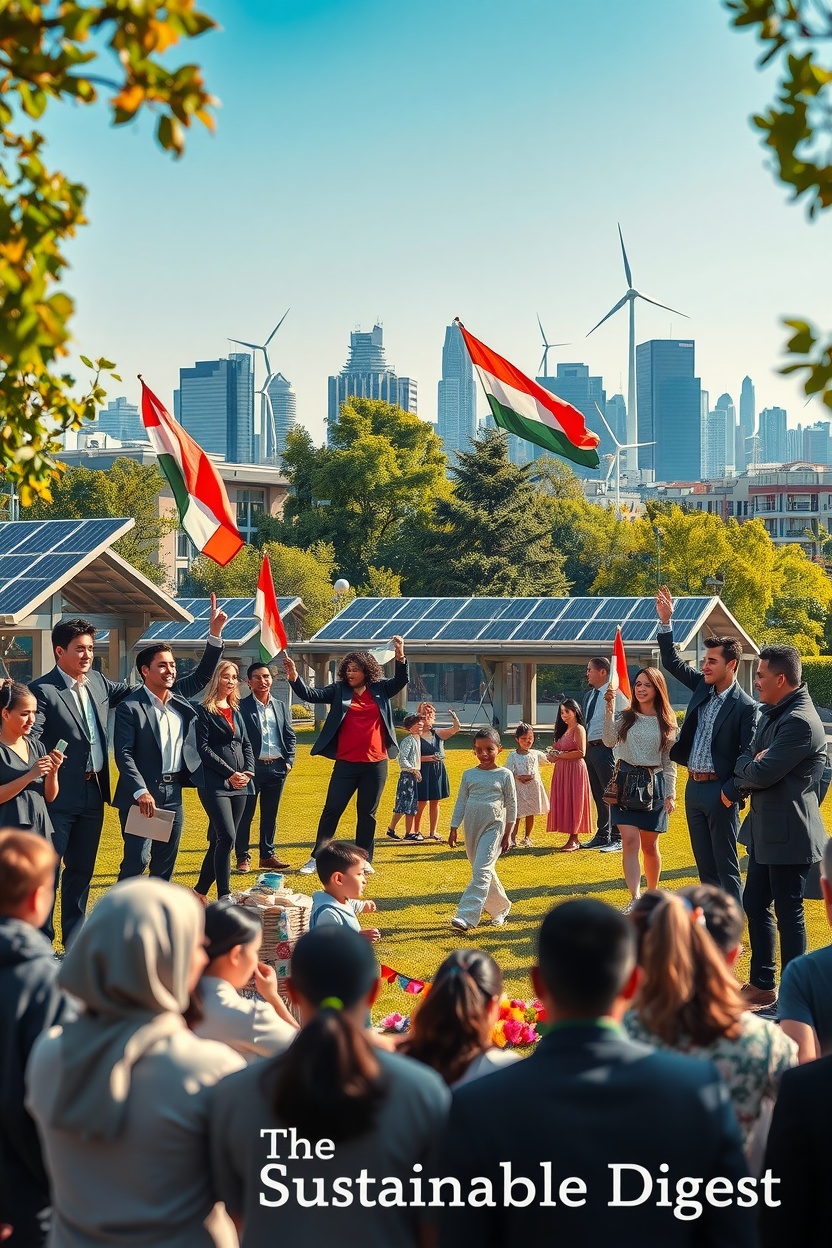
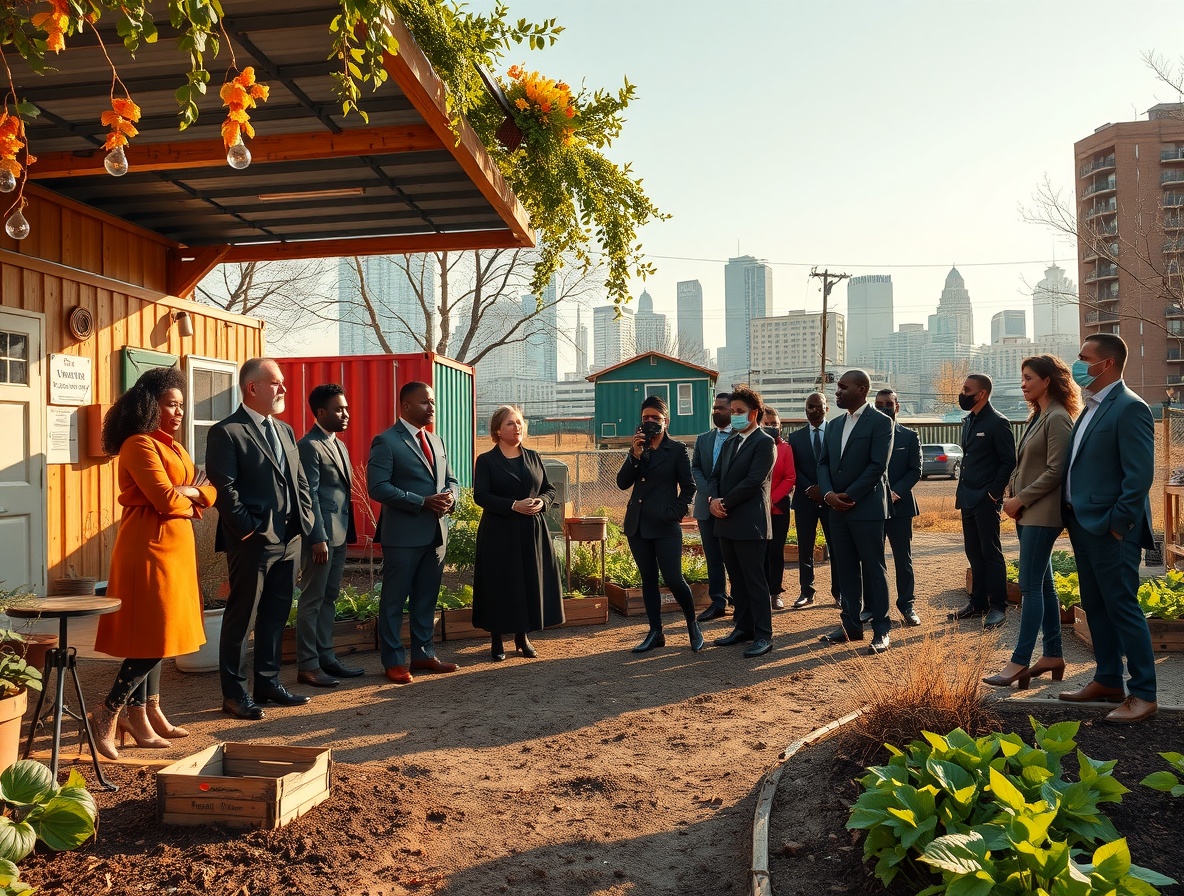
A vibrant scene celebrating Nigeria's Independence Day and its commitment to sustainability. In the foreground, a diverse group of professionally dressed individuals, representing various ethnicities and ages, joyfully raising the Nigerian flag. They stand on a lush, green landscape dotted with local flora, symbolizing sustainable practices. The middle ground features traditional Nigerian architecture, seamlessly integrated with modern eco-friendly structures, showcasing progress in sustainability. In the background, a bright blue sky with cotton-like clouds, casting warm sunlight over the scene, creating an inviting atmosphere. The lens captures the essence of hope and progress, emphasizing unity and a brighter future for Nigeria. This image will represent โ€˜The Sustainable Digest,โ€™ reflecting both independence and sustainability.

The evolution of this nation showcases a unique interplay between independence and sustainability, shaping its present and future. Since achieving political autonomy on October 1, 1960, the country has made significant strides in various sectors. These advancements highlight the connection between freedom and sustainable development.

Independence Day serves as a public holiday that allows citizens to reflect on these milestones. Celebrations often include parades, cultural events, and public addresses, emphasizing the importance of community engagement.

Major environmental and social sustainability milestones since 1960

Here are some key facts linking independence to sustainability and community development:

  • Fact 1: Political autonomy enabled the establishment of domestic development priorities and public institutions.
  • Fact 2: The first independence celebrations showcased Nigerian products through exhibitions and cultural events.
  • Fact 3: Highlife music and traditional dances made early celebrations accessible to all citizens.
  • Fact 4: The federal structure has allowed diverse approaches to agriculture, education, and community development.
  • Fact 5: Environmental sustainability has gained importance, addressing issues like coastal erosion and pollution.
  • Fact 6: Renewable energy initiatives are expanding access to electricity for underserved communities.
  • Fact 7: Sustainable agriculture programs focus on climate-smart practices and food security.
  • Fact 8: Public health and education initiatives underscore the importance of community well-being.
  • Fact 9: Community-led organizations often fill service gaps where formal institutions are lacking.
  • Fact 10: Independence Day allows for assessing whether development benefits all segments of society.
  • Fact 11: Nigerian communities abroad contribute through remittances and cultural exchange.
  • Fact 12: Diaspora celebrations support local designers and small businesses, promoting sustainable consumption.
  • Fact 13: Progress remains uneven, with challenges such as energy shortages and infrastructure deficits.
  • Fact 14: A credible sustainability agenda must combine environmental action with governance and community participation.
  • Fact 15: Independence ideals are most meaningful when they inspire practical action in communities.
Integration of sustainability principles in Nigeriaโ€™s post-independence development

As the nation continues to grow, integrating sustainability into development strategies is essential. This involves creating policies that support environmental protection, energy efficiency, and community engagement.

Community-led initiatives stemming from independence ideals

Community-led initiatives have emerged as vital components of sustainable development. These grassroots movements often reflect the values of independence, emphasizing self-reliance and local solutions.

SectorKey InitiativesImpact
EnergyDecentralized solar systemsImproved electricity access
AgricultureClimate-smart farmingEnhanced food security
HealthCommunity health programsBetter health outcomes
EducationLiteracy initiativesIncreased literacy rates

3. Nigeria Independence Day Observance and its Global Sustainable Development

This annual event transcends mere festivities, becoming a pivotal moment for addressing sustainability challenges. The celebrations on October 1 serve as a public education platform for the Sustainable Development Goals (SDGs). They highlight the importance of aligning national identity with measurable commitments, particularly in areas like poverty reduction, health, and education.

Nigeriaโ€™s president traditionally delivers a national address on this significant public holiday. This speech often discusses the current conditions of the country and outlines government priorities. Such addresses can effectively connect the themes of independence with sustainable development policies.

Engagement of diaspora communities plays a crucial role in promoting sustainability. Observances in the United Kingdom and beyond include church services, parades, cultural exhibitions, and professional gatherings. These events foster connections among Nigerian communities and emphasize the importance of responsible investment and knowledge transfer.

In cities like London, Manchester, and Birmingham, cultural events allow Nigerians abroad to celebrate their heritage while promoting sustainability. The Organization for the Advancement of Nigerians has organized annual parades in New York City since 1991, showcasing the global reach of these celebrations.

Nigeria Independence Day Observance and its Global Sustainable Development continuing…

Independence Day ceremonies can incorporate accessible information about the SDGs. Local project showcases and youth innovation exhibitions during these events can inspire community participation. Schools and universities can also leverage this holiday to teach the relationship between political autonomy, environmental stewardship, and global citizenship.

National and state governments can utilize this occasion to report on progress while acknowledging unfinished work. Sustainability reporting gains credibility when it includes transparent updates on development indicators. Additionally, events can focus on reducing waste through the use of reusable materials and local procurement.

Nigerian communities in the United Kingdom can further support sustainability through professional mentoring and social entrepreneurship. Diaspora groups serve as knowledge bridges, connecting Nigerian innovators with British universities and investors. Encouraging cultural associations to include climate discussions and food-security workshops can enhance the impact of these celebrations.

Ultimately, global sustainable development is strengthened when the narrative of independence is treated as an ongoing responsibility. This perspective ensures that the ideals of autonomy continue to inspire practical action within communities.

4. Impactful United Nations Sustainable Development Goals in Nigeria

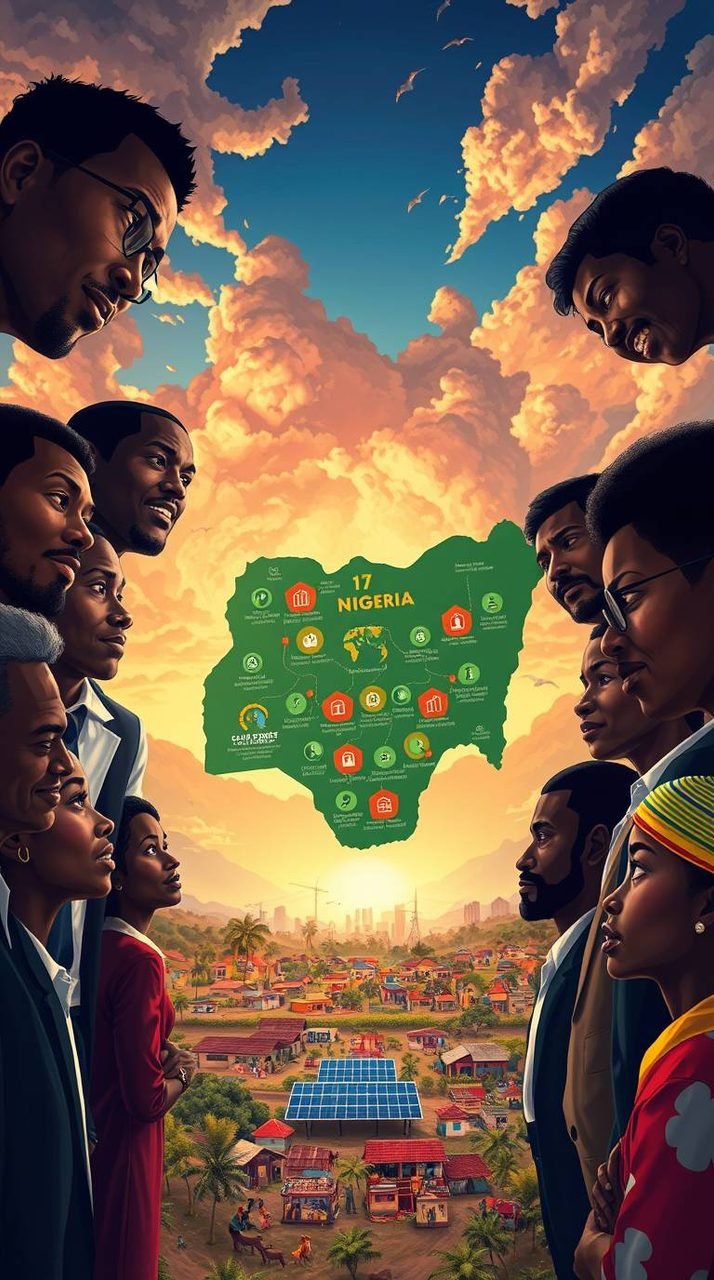
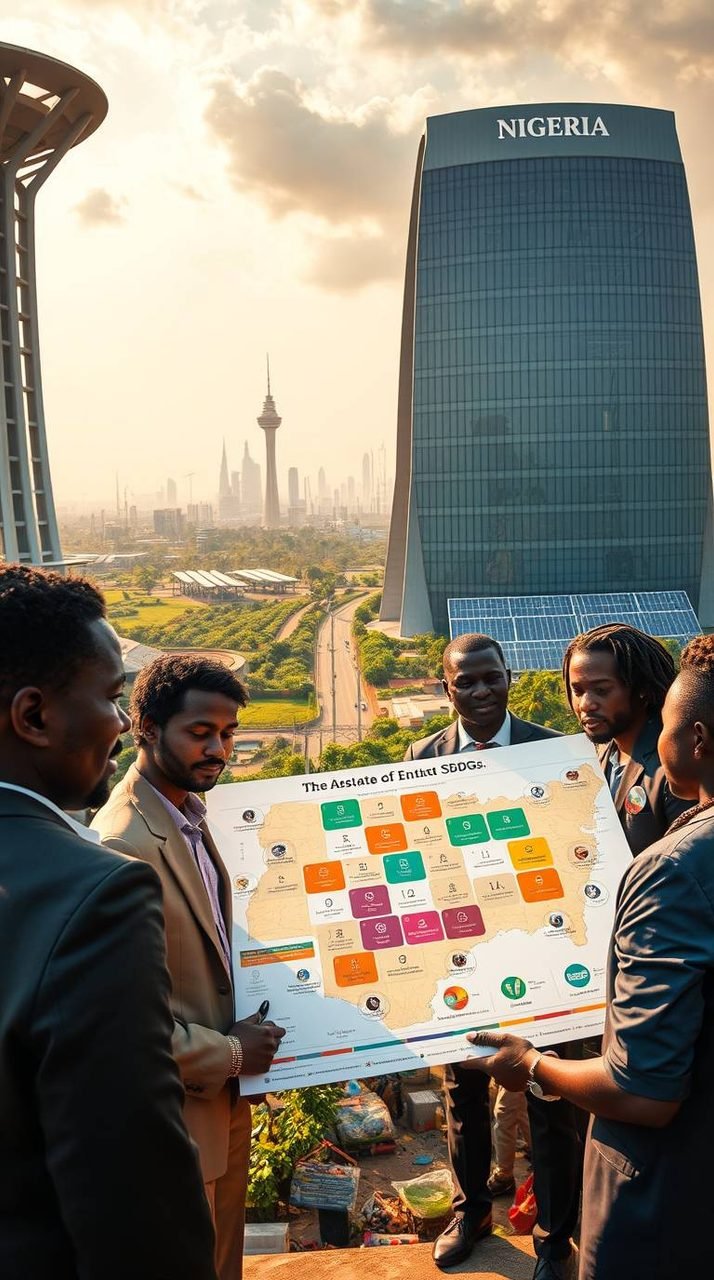
A vibrant, engaging scene showcasing the impactful United Nations Sustainable Development Goals (SDGs) in Nigeria. In the foreground, a diverse group of Nigerian professionals in business attire collaborate around a large map depicting the 17 SDGs, focusing on clean energy and education. In the middle ground, lush green landscapes and solar panels illustrate sustainable development, flanked by a traditional Nigerian market representing economic growth. The background features the iconic skyline of Lagos juxtaposed with rural communities, symbolizing urban and rural development. Golden hour lighting casts a warm glow, enhancing the optimistic atmosphere conveying progress and unity. The Sustainable Digest branding subtly integrated in the design elements, without text overlay or logos.

The principles of the United Nations Sustainable Development Goals serve as a guiding framework for addressing critical issues within the nation. These goals provide a structured approach to tackling pressing challenges such as poverty, healthcare, education, and environmental sustainability.

Each goal connects to practical national needs and measurable policy concerns. This alignment is essential for community outcomes, especially during celebrations like the independence day, when citizens reflect on progress and future aspirations.

SDG 1: No Poverty – Progress and Challenges

Reducing poverty requires a focus on decent work, social protection, and financial inclusion. Itโ€™s not just about immediate relief; itโ€™s about building resilient local economies. This goal is crucial for enhancing the quality of life for all citizens.

SDG 3: Good Health and Well-being – Healthcare Access and Innovations

Access to primary healthcare, maternal and child health, and disease prevention are vital components of this goal. Innovations like digital health tools and community health workers are essential for reducing geographic inequality in healthcare access.

SDG 4: Quality Education – Literacy and Education Reforms

Quality education is foundational for empowering young people. It includes literacy programs, teacher training, and vocational education. These initiatives help young Nigerians participate in a rapidly changing labor market.

SDG 6: Clean Water and Sanitation – Infrastructural Improvements

Reliable water treatment and distribution networks are crucial for public health. Community ownership of sanitation infrastructure fosters responsibility and ensures better hygiene practices.

SDG 7: Affordable and Clean Energy – Renewable Energy Initiatives

Renewable energy projects, such as solar mini-grids and clean cooking solutions, are vital for providing reliable electricity. This energy access is essential for healthcare, education, and economic growth.

SDG 11: Sustainable Cities and Communities – Urban Development Examples

Urban planning must focus on public transport, affordable housing, and resilient infrastructure. Initiatives in cities like Lagos and Abuja highlight the importance of sustainable urban development.

SDG 13: Climate Action – Nigeriaโ€™s Climate Resilience Efforts

Climate action includes flood defenses, reforestation, and climate-smart agriculture. These efforts are crucial for adapting to environmental challenges and ensuring community resilience.

These goals are interconnected; for instance, poor electricity access can limit education and healthcare. Celebrations like independence day can use exhibitions and community events to make these goals practical and relatable.

Moreover, the nigerian diaspora in the united kingdom and the united states can play a significant role. By investing in health, education, and climate initiatives, they can help drive progress and innovation.

Ultimately, national progress should be measured by lived outcomesโ€”safer water, better schools, reliable electricity, healthier families, and more resilient communitiesโ€”not merely by policy announcements.

5. Sustainable Infrastructure and Community Development Projects Across Industries in Nigeria

In the quest for a more resilient future, the interplay of infrastructure and community development emerges as a critical factor. Various sectors are collaborating to address the pressing needs of both urban and rural communities. This collaborative approach ensures that projects are not only built but are also sustainable and beneficial to all.

Renewable energy projects and green technology adoption

Renewable energy initiatives are pivotal in reducing electricity gaps. The nation is investing in:

  • Utility-scale solar: Large solar farms generating power for the grid.
  • Solar mini-grids: Providing localized energy solutions.
  • Household solar systems: Enabling families to harness solar power directly.
  • Clean cooking technologies: Reducing reliance on harmful fuels.
  • Battery storage: Enhancing energy management.
  • Energy-efficient appliances: Promoting sustainable consumption.

These decentralized energy solutions support essential services like clinics and schools while minimizing dependence on diesel generators.

Sustainable agriculture and rural development programs

In agriculture, sustainable practices are vital for food security and rural livelihoods. Key interventions include:

  • Climate-smart seeds: Enhancing crop resilience.
  • Irrigation systems: Ensuring consistent water supply.
  • Agroforestry: Combining trees with crops for better yields.
  • Soil restoration techniques: Improving land health.
  • Farmer cooperatives: Empowering local producers.

These initiatives not only improve household income but also foster environmental resilience.

Water management and sanitation infrastructure advancements

Water and sanitation projects are crucial for public health. Distinctions in these systems include:

  • Boreholes: Providing direct access to groundwater.
  • Piped networks: Ensuring consistent water supply.
  • Water treatment facilities: Safeguarding water quality.
  • Drainage systems: Reducing flooding risks.
  • Solid-waste collection: Promoting hygiene.

Each of these elements addresses different stages of public health and environmental sustainability.

Transportation and urban planning focused on sustainability

Transportation initiatives are designed to reduce congestion and emissions. Key projects include:

  • Bus rapid transit systems: Improving public transport efficiency.
  • Rail development: Enhancing connectivity.
  • Nonmotorized transport options: Encouraging walking and cycling.
  • Integrated land-use planning: Promoting compact urban growth.
  • Flood-control systems: Protecting urban areas from climate impacts.

These efforts are essential for sustainable urban development.

Community empowerment and social inclusion initiatives

Empowering communities is vital for sustainable development. Initiatives include:

  • Women-led cooperatives: Promoting gender equality.
  • Youth innovation hubs: Fostering creativity and entrepreneurship.
  • Vocational training programs: Enhancing employability.
  • Social enterprises: Addressing community needs.
  • Participatory budgeting: Ensuring community voices are heard.

When residents participate in planning, projects become more sustainable and aligned with local needs.

Funding models for these projects vary, incorporating public budgets, development finance, and diaspora contributions. This collaboration ensures that infrastructure is not only newly built but also maintained, affordable, and environmentally sound.

6. Green Fiscal Policies Enhancing Nigeria’s Competitiveness in Diaspora and the Global South

A vibrant scene showcasing a diverse group of professionals, dressed in smart business attire, engaged in a lively discussion about green fiscal policies. In the foreground, a well-groomed woman points at a digital tablet displaying graphs and growth metrics, symbolizing Nigeria's economic potential. In the middle ground, a backdrop of green energy innovations, such as wind turbines and solar panels, represents sustainable development. The background features a skyline of Lagos, blending modernity with traditional architecture, under a bright blue sky that conveys optimism. Soft, natural lighting enhances the atmosphere, creating a sense of collaboration and forward-thinking, reflecting Nigeria's competitiveness in the global South. This image is designed for The Sustainable Digest.

Green fiscal policies are essential for fostering economic growth while addressing environmental challenges. These policies not only support sustainability but also enhance Nigeria’s competitiveness in the diaspora and the Global South.

To achieve these goals, the government can implement various environmental taxation and incentives. These measures can make pollution and resource damage visible in economic decision-making. Moreover, they can protect low-income households from disproportionate costs.

Overview of environmental taxation and incentives

Possible fiscal tools include:

  • Pollution charges: Fees imposed on emissions to discourage harmful practices.
  • Landfill levies: Charges for waste disposal that encourage recycling.
  • Plastic-related measures: Taxes on single-use plastics to reduce waste.
  • Carbon-pricing mechanisms: Financial incentives for reducing carbon footprints.
  • Environmental compliance fees: Costs associated with meeting environmental regulations.
  • Tax treatment: Rewards for verified emissions reductions.

Fiscal measures supporting clean energy investments

Fiscal measures can significantly support clean energy investments. Incentives should be:

  • Transparent: Clear criteria for eligibility.
  • Time-bound: Limited duration to encourage timely investments.
  • Technology-neutral: Applicable to various clean technologies.
  • Linked to measurable outcomes: Ensuring effectiveness and accountability.

Examples of clean-energy incentives include:

  • Accelerated depreciation: Allowing faster write-offs for renewable energy equipment.
  • Import-duty relief: Reducing taxes on qualifying clean technology.
  • Investment tax credits: Encouraging investments in renewable energy projects.
  • Concessional finance: Lower interest rates for green projects.
  • Support for solar mini-grids: Enhancing energy access in rural areas.
  • Clean cooking initiatives: Promoting sustainable cooking methods.

Policies to encourage sustainable business practices and green innovation

Green public procurement can create demand for:

  • Energy-efficient buildings
  • Low-emission transport
  • Recycled materials
  • Sustainable construction
  • Locally manufactured clean technologies

Additionally, mechanisms like green bonds, sustainability-linked loans, and blended finance can reduce the cost of capital for infrastructure and small businesses.

Impact of these policies on Nigerian diaspora investment and global partnerships

Predictable policies can attract Nigerian diaspora investors seeking both financial returns and measurable social or environmental impact. Networks in cities like London and New York can connect Nigerian businesses with:

  • International buyers
  • Engineering expertise
  • Venture capital
  • Development banks
  • Research institutions

Responsible green taxation must be paired with public transparency, anti-corruption safeguards, and clear reporting standards. This approach will ensure that the benefits of these policies are broadly shared.

Ultimately, Nigeria’s competitiveness in the Global South will depend on whether green policies can reduce business risk, improve infrastructure, create jobs, and deliver visible benefits to communities.

Moreover, the role of remittances and responsible financial transfers is crucial. Diaspora members often send money for household needs, education, healthcare, and community projects. Investment channels should provide clear information and consumer protection.

In conclusion, green fiscal policy can transform sustainability from a compliance obligation into an economic advantage. Implementation must be credible, ensuring that benefits are shared across all sectors of society.

Policy AreaKey MeasuresExpected Impact
Environmental TaxationPollution charges, landfill leviesReduced pollution levels
Clean EnergyInvestment tax credits, import-duty reliefIncreased renewable energy adoption
Sustainable BusinessGreen public procurementEnhanced demand for sustainable products
Innovation SupportGrants, research incentivesBoosted local innovation

7. Conclusion

The significance of this day extends beyond mere celebration; it invites an evaluation of national progress and aspirations. Each October 1, citizens reflect on their journey toward freedom from colonial rule while assessing the inclusiveness of development efforts.

This occasion highlights that true independence is intertwined with access to clean energy, safe water, quality education, and healthcare. The Sustainable Development Goals offer a practical framework to connect national pride with measurable outcomes.

Moreover, sustainable infrastructure must be affordable and community-driven, ensuring local participation in development projects. Green fiscal policies can attract investment and foster innovation, positioning the nation as a leader in sustainability.

Recognizing the role of diaspora communities in the United States, New York, and beyond is crucial. These individuals act as cultural ambassadors and partners in sustainable initiatives.

As we celebrate, let us strive to make events more sustainable and inclusive. The legacy of independence will be measured not just by annual ceremonies but by the opportunities and dignity experienced by people across communities.

FAQ

Q: What is the significance of Nigeria’s independence celebrations?

A: The celebrations mark the end of British colonial rule and the beginning of self-governance, reflecting national pride and unity.

Q: How do Nigerian communities abroad celebrate independence?

A: Diaspora communities often organize parades, cultural events, and gatherings to honor their heritage and promote awareness of their home country’s progress.

Q: What role do sustainability initiatives play in Nigeria’s development?

A: Sustainability initiatives are integral to Nigeria’s development strategy, focusing on environmental conservation, social equity, and economic growth.

Q: How has Nigeria progressed in terms of sustainability since independence?

A: Significant strides have been made in areas such as renewable energy, sustainable agriculture, and community-led development projects.

Q: What are the key Sustainable Development Goals (SDGs) impacting Nigeria?

A: Goals such as No Poverty, Good Health and Well-being, and Clean Water and Sanitation are particularly relevant, guiding national policies and initiatives.

Q: How does Nigeria’s independence relate to global sustainability efforts?

A: The observance of independence fosters awareness of global sustainability challenges and encourages participation in international efforts to address them.

Q: What fiscal policies support sustainability in Nigeria?

A: Policies include environmental taxation, incentives for clean energy investments, and measures promoting sustainable business practices.

Q: How do Nigerian diaspora communities contribute to sustainability?

A: They engage in investments, knowledge sharing, and advocacy, helping to promote sustainable practices and policies in Nigeria and abroad.

Key Takeaways

  • The significance of Nigeria Independence Day extends beyond celebration; it invites reflection on national progress.
  • October 1 is a fixed public holiday, offering a unique opportunity for community engagement.
  • Sovereignty has allowed for the establishment of development priorities, yet challenges persist.
  • The national flag symbolizes a commitment to sustainability and responsible resource management.
  • This article explores historical milestones and the role of the diaspora in sustainable initiatives.


2026 SDSN Sustainable Development Report annual review analysis

2026 SDSN Sustainable Development Report annual update review analysis

The latest edition of the 2026 SDSN Sustainable Development Report marks a significant moment in global efforts toward a more equitable future. It reflects a decade of data and progress since the adoption of the 2030 Agenda by all UN Member States. This document serves as a crucial tool for understanding the trajectory of development across nations.

In this year’s report, the SDSN Sustainable Development Solutions Network has identified eight key priorities aimed at accelerating progress through 2030 and beyond. This strategic shift emphasizes the importance of looking forward, rather than solely reflecting on past achievements.

Moreover, the report features insights from two innovative surveys that gauge both expert opinions and public perceptions regarding the barriers to implementing these vital goals. As nations navigate complex challenges, the findings serve as a guide for policymakers and stakeholders alike.

As we delve into the details, it becomes clear that the rankings of countries such as Finland, Sweden, and Denmark are not just a celebration of their achievements. They represent a commitment to long-term strategies that foster positive impacts both domestically and internationally.

1. Introduction to the SDSN and UN DESA Roles in Sustainable Development

At the forefront of global initiatives, the Sustainable Development Solutions Network and the United Nations Department of Economic and Social Affairs collaborate to advance significant goals. Their combined efforts have shaped the landscape of international development, particularly since the adoption of the 2030 Agenda in 2015.

1.1 Historical Background of the Sustainable Development Solutions Network

The Sustainable Development Solutions Network emerged as a brain trust under UN auspices. Since 2015, it has mobilized global academic and research expertise to tackle the most intractable challenges facing all 193 member states. This initiative emphasizes collaborative approaches to sustainable development.

1.2 Overview of the United Nations Department of Economic and Social Affairs

UN DESA’s long-term history as the Secretariat’s economic social arm stretches back decades. However, its role crystallized dramatically after 2015, when it became the backbone for the High-Level Political Forum. This forum serves as the custodian of the Voluntary National Review process across 193 member states.

1.3 Synergies between SDSN and UN DESA in Global SDG Efforts

The synergy between SDSN and UN DESA is evident in their complementary data collection efforts. SDSN leverages its global network of academics to track the evolving landscape of sustainable development. Meanwhile, UN DESA maintains the official SDG indicator framework that informs monitoring processes.

Since 2016, both organizations have strengthened governance systems through bilateral relationships with national and regional governments. This collaboration is crucial for effective implementation of the sustainable development goals.

OrganizationRoleKey Contributions
Sustainable Development Solutions NetworkMobilizes research expertiseAddresses complex challenges in 193 member states
United Nations Department of Economic and Social AffairsServes as the Secretariat’s economic social armCustodian of Voluntary National Review process
CollaborationData collection and governanceStrengthens systems for sustainable development

Short-term progressions have seen both institutions grappling with the declining emphasis on sustainable development in high-level discussions. This trend underscores the urgency of their collaborative efforts in fostering a sustainable future.

2. Evolution and Annual Development of the 2026 SDSN Sustainable Development Report

A dramatic visualization of the evolution of the Sustainable Development Report, featuring a timeline that showcases key milestones with symbolic iconsโ€”like renewable energy, education, and community growthโ€”interwoven through a vibrant landscape. In the foreground, diverse professionals in business attire discuss and analyze reports, radiating a sense of collaboration. The middle ground is filled with visuals representing data visualization elements, such as graphs and charts, seamlessly merging with lush greenery and cityscapes, symbolizing progress. In the background, a warm golden sunset casts dramatic lighting, creating an optimistic atmosphere. The overall mood is one of hope and collective advancement toward sustainability. The image embodies the essence of "The Sustainable Digest" and reflects the themes of evolution and development.

The evolution of these reports mirrors the dynamic nature of global development efforts and the pressing need for accountability. Since 2015, the series has transformed from a basic scorecard into a comprehensive tool for assessing progress across nations.

2.1 The Report’s Genesis and Long-Term Development Since 2015

The sustainable development report series began its journey in 2015. It aimed to hold all 193 UN Member States accountable to the newly established SDGs. Over the years, it has evolved into a multidimensional analytical framework, as seen in the latest edition.

2.2 Annual Update Process and Collaborative Mechanisms (2016-2026)

Each annual update since 2016 has introduced methodological refinements. The early editions primarily focused on country rankings. However, later versions incorporated spillover indices and trend analyses. By the latest edition, comprehensive survey data from expert networks and the public have been included.

The collaborative mechanisms behind the annual updates involve a well-coordinated effort. SDSN’s secretariat collaborates with regional offices in Asia, Europe, and North America. An expanding network of local chairs and managers ensures the accuracy of data across all 193 countries.

2.3 Integration of Expert and Public Surveys in Report Refinement

The integration of expert and public surveys marks a significant methodological evolution. The latest edition includes the “2026 Expert Survey on Government Efforts for the SDGs,” covering 64 countries and the European Union. Additionally, it features the “2026 Survey on SDG Challenges and Means for Implementation,” which gathered insights from 1,098 respondents across 127 countries.

Annual decisions have been influenced by the shifting landscape of international development. For instance, the 2019 edition introduced the six SDG Transformations framework, while the 2020 edition addressed the impacts of the COVID-19 pandemic. The latest edition now pivots toward priorities beyond 2030 as the deadline approaches.

Initially affiliated with a university press, the report has matured into a globally recognized authority on SDG progress. Each edition builds on the previous year’s lessons, expanding the universe of data available for cross-country comparisons.

Importantly, all report materialsโ€”including the full PDF, Excel database with scores and ratings, codebook, and methodology documentationโ€”are available for free. This commitment to democratizing data reflects the guiding principles that have shaped the report’s evolution since 2016.

3. Analysis of SDSN Expert and Large-Scale Surveys on SDG Implementation

The recent expert survey sheds light on the effectiveness of government initiatives related to the SDGs. It highlights how these efforts have been integrated into public management practices. This analysis draws on qualitative data collected from experts across various countries, providing a nuanced understanding of SDG implementation challenges.

3.1 The 2026 Expert Survey on Government Efforts

This year’s expert survey represents a methodological triumph in qualitative data collection. It mobilized 65 responses across 64 countries and the European Union. The survey assessed how deeply the SDG framework has penetrated national public management practices since 2018.

Countries like Canada, Denmark, Ghana, and Italy have made significant strides in incorporating the SDG framework into their governmental practices. In contrast, Australia, the United States, and Venezuela have not prioritized the SDGs in their public management frameworks.

3.2 Insights from the 2026 Large-Scale Survey on SDG Challenges

The large-scale survey, encompassing 1,098 respondents from 127 countries, provides a broader perspective on SDG outcomes. An overwhelming 78% of respondents believe that SDG outcomes in their countries have either improved or stagnated from 2015 to 2025.

However, the survey also identified significant barriers to SDG implementation. Notably, 89% of respondents pointed to the failure to implement approved strategies as a critical challenge. Additionally, 87% highlighted the shifting geopolitical landscape as another major hurdle.

3.3 Implications of Survey Findings on Policy and Implementation Practices

The findings from both surveys underscore the unique value of the SDSN in curating insights for the updated report. By triangulating expert assessments, public perceptions, and quantitative indicators, the network provides a multidimensional picture of government efforts.

This comprehensive approach informs the eight priorities for accelerating SDG progress through 2030 and beyond. It reveals that while bureaucratic structures remain in place, the political commitment at the highest levels is waning, as evidenced by the decline in heads of state referencing the SDGs in official speeches.

4. Role and Impact of Voluntary National and Local Reviews in Global SDG Monitoring

A modern conference room bustling with activity, showcasing a diverse group of professionals engaged in a dynamic discussion about Voluntary National and Local Reviews for Sustainable Development Goals (SDGs). In the foreground, a confident woman in business attire gestures toward a digital presentation displaying colorful charts and maps illustrating global progress. In the middle ground, colleagues (all in professional business attire) collaborate, surrounded by documents and laptops, creating a sense of teamwork and innovation. The background features large windows with a city skyline view, bathed in natural light, symbolizing transparency and hope. The mood is energetic and optimistic, reflecting the importance of collective efforts in global monitoring. The overall atmosphere is professional yet inspiring, encapsulated in a clean, contemporary design, embodying the essence of "The Sustainable Digest."

The mechanisms for Voluntary National and Local Reviews have emerged as pivotal tools in tracking global progress. Since 2016, 190 countries have participated in the Voluntary National Review (VNR) process. This achievement represents a remarkable feat of global accountability architecture, particularly in contrast to the three holdouts: Haiti, Myanmar, and the United States.

In 2026, 36 countries are scheduled to present updated reviews of their SDG action plans. Notably, there are no first-time presenters this year. Togo and Uruguay will present their fifth VNRs, showcasing their sustained engagement with this important mechanism. This evolution reflects how the VNR process has transformed from a one-off reporting exercise into an iterative policy learning cycle over the past decade.

The growth of Voluntary Local Reviews (VLRs) tells an equally compelling story. Subnational authorities in 48 countries have produced 386 VLRs from 2016 to 2026. Brazil, Malaysia, Mexico, and Argentina alone account for nearly half of these reviews. The number of VLR submissions surged by 69% from 62 in 2024 to 105 in 2025, indicating a robust local-level momentum for sustainable development.

4.5 Role and Impact of Voluntary National and Local Reviews in Global SDG Monitoring continuing..

UN DESA’s role as the institutional custodian of both VNRs and VLRs has expanded significantly. The Department maintains comprehensive databases tracking participation trends and provides technical support to governments preparing their reviews. This support ensures that these accountability mechanisms feed into the broader SDG implementation monitoring ecosystem.

The absence of the United States from the VNR process, alongside Haiti and Myanmar, highlights a significant gap in global SDG progress monitoring. This is particularly concerning given the country’s influence on international spillover effects, which the SDSN’s spillover index tracks across multiple indicators.

Ultimately, the VNR and VLR mechanisms embody the principle of country-led accountability that underpins the 2030 Agenda. UN DESA’s support infrastructure has evolved from basic reporting templates to sophisticated data platforms, enabling cross-country comparisons and peer learning among the 190 participating countries.

CountryVNR PresentationsVLR Count
Togo515
Uruguay510
Brazil472
Malaysia444
Mexico435
Argentina434
United States00

5. 2026 SDSN Sustainable Development Report Annual Update Review Analysis: Key Findings and Priorities

In this edition, we explore the vital discoveries and strategic priorities emerging from the latest global development evaluations. The 2026 findings reaffirm the Nordic dominance in sustainable development, with Finland, Sweden, and Denmark topping the rankings. However, the sdg index dashboards reveal a more complex narrative.

The spillover index illustrates how the consumption patterns of wealthier nations can negatively impact progress towards achieving the sustainable development goals in the Global South. This nuance is crucial for understanding the interconnectedness of global development efforts.

5.1 Overview of 2026 SDSN Report Rankings and Trends

The rankings from the development report 2026 indicate that while some countries excel, there are underlying issues that need addressing. The interactive maps within the report showcase the performance of nations on each of the 17 goals, providing a clear picture of where efforts are succeeding and where they are lacking.

5.2 Priority Areas and Emerging Issues in the Post-2030 Sustainable Development Agenda

The report identifies eight key priorities for accelerating sdg progress through 2030 and beyond. A remarkable consensus among experts reveals that at least 75% agree on six critical priorities for the post -2030 agenda. These include:

  • Strengthening means for implementation, focusing on governance and data.
  • Developing international guidelines on SDG synergies and trade-offs.
  • Incorporating artificial intelligence into future frameworks.
  • Reforming the global financial architecture to address budgeting gaps.
  • Ensuring stability in the framework while maintaining continuity in goals.
  • Better reflecting and incorporating international spillovers.

5.3 SDSN and UN DESA’s Collaborative Role in Shaping International Development Policies

The collaborative dynamic between SDSN and UN DESA plays a pivotal role in shaping international development policies. Their joint efforts highlight the importance of aligning government strategies with budget allocations. The findings indicate a persistent gap between adopting strategies and allocating necessary resources, which must be addressed in future negotiations.

Dr. Guillaume Lafortune’s recent publication emphasizes the need for a credible framework to guide the post -2030 agenda. This intellectual groundwork will help bridge the gap between academic rigor and practical policy applications, ensuring that future efforts are both informed and effective.

As we look toward 2030 and beyond, the sdg index dashboards serve not just as a report card but as a strategic compass. They provide actionable insights on where government efforts have succeeded and where they have stalled, guiding priorities for the future.

6. Conclusion

The synthesis of findings highlights the intricate tapestry of global initiatives at play. This edition showcases how the collaborative efforts of key organizations have matured over time. The convergence of expertise from various countries and institutions illustrates a commitment to advancing meaningful progress.

Moreover, the eight identified priorities serve as a roadmap for future actions. They not only address past shortcomings but also pave the way for innovative solutions. The free availability of data further exemplifies a dedication to transparency and accessibility.

As we navigate the path toward a more equitable future, the development process between these organizations stands as a model. It demonstrates how ongoing collaboration can yield actionable insights, ensuring that the global dialogue on sustainable development remains vibrant and impactful.

Key Takeaways

  • This report synthesizes ten years of data since the 2015 adoption of the 2030 Agenda.
  • It identifies eight priorities to enhance progress toward global goals.
  • Insights from expert and public surveys inform actionable strategies.
  • Top-ranking countries showcase effective long-term commitments.
  • Interactive tools allow for exploration of historical data trends.

2026 February Holidays & Observances for Sustainability

2026 Februray holidays and observances for Sustainability in retrospect

Global progress often mirrors the rhythm of our collective memory. By examining various sustainability events, we bridge the gap between historical awareness plus modern ecological goals.

Events like World Wetlands Day highlight the fragile beauty of our water systems. Simultaneously, World Pulses Day emphasizes how simple crops can transform our food security models; these efforts define our shared journey.

Cultural festivals also play a vital role. We honor the Philippine-American War Memorial plus the Day of Remembrance and Respect to Victim of the Communist Regime; such dates ground our search for a stable society.

Observing Mozambican Heroes Day reminds us that social equity is a core part of long-term survival. These diverse national days ensure our path toward a greener world remains inclusive plus deeply rooted.

Understanding Sustainability Through Global Celebrations in February 2026

February 2026 is filled with global celebrations that highlight the link between sustainability and fairness. These events show the importance of working together and adopting green practices.

The World Day of Social Justice on February 20 is a key event. It focuses on solving problems like poverty and joblessness. These issues are key to a sustainable future. By fighting for fairness, we help make the world more equal and support green growth.

The International Day of Human Fraternity on February 4 is also important. It encourages people from different faiths to talk and understand each other. This unity is vital for solving big problems like climate change.

February also celebrates indigenous cultures. For example, Waitangi Day on February 6 in New Zealand honors the Treaty of Waitangi. It shows the value of respecting indigenous rights and their role in caring for the land. Sami National Day on February 6 also celebrates the Sami people’s traditions in Scandinavia and Russia.

Lui-Ngai-Ni is another important event. It’s celebrated by the Naga people in India. It’s a time for the community to gather, showing the importance of unity and sustainable farming.

These celebrations in February 2026 remind us of the many ways to support sustainability. By learning about and celebrating these events, we can build a more inclusive and green world.

Environmental and Ecological Observances Promoting Planetary Health

A serene landscape showcasing a vibrant community event dedicated to environmental observances. In the foreground, a diverse group of individuals in professional business attire enthusiastically engage in activities like planting trees and distributing seeds, demonstrating hands-on participation. The middle ground features colorful banners highlighting sustainability themes, surrounded by lush greenery and blooming flowers, promoting a sense of harmony with nature. In the background, a clear blue sky is visible, illuminated by soft, warm sunlight filtering through the trees, casting gentle shadows. The mood is uplifting and hopeful, symbolizing collective efforts for planetary health. This image captures the essence of "The Sustainable Digest" in advocating for ecological observances, instilling a sense of community and purpose.

February 2026 is filled with important environmental and ecological observances. These events remind us of the need for conservation and sustainability. They help keep our ecosystem in balance.

World Wetlands Day and Aquatic Ecosystem Protection

World Wetlands Day is on February 2. It shows how vital wetlands are for our planet. They help keep water clean, prevent floods, and home many species. This year’s theme calls for quick action to save these important places.

Key actions to protect wetlands include:

  • Restoring damaged wetlands
  • Using land in a sustainable way
  • Spreading the word about wetlands’ value

Wildlife Conservation Days: Arabian Leopards, Bonobos, and Pangolins

February is also home to several wildlife conservation days. These include the International Day of the Arabian Leopard, World Bonobo Day, and World Pangolin Day. They aim to raise awareness about these endangered animals and the need for conservation.

“The conservation of species like the Arabian leopard, bonobo, and pangolin requires not only national but international cooperation and commitment.”

Humpback Whale Awareness Month and Marine Sustainability

February is Humpback Whale Awareness Month. It’s a time to focus on keeping our oceans healthy. Humpback whales are key to the health of our seas, and saving them is essential.

Efforts to protect humpback whales include:

  1. Lowering ship strikes with better rules
  2. Stopping them from getting caught in fishing nets
  3. Keeping their homes clean from pollution

National Bird Feeding Month and Backyard Biodiversity

National Bird Feeding Month in February encourages us to help birds in our backyards. Feeding birds can greatly help local ecosystems and support bird populations.

To make a big difference, you can:

  • Use different bird feeders to attract more species
  • Plant native plants that birds can eat
  • Keep feeding areas clean and safe

Agricultural Sustainability and Food Systems Innovation

February 2026 is a time to focus on solving climate change and ensuring everyone has enough food. Several important days in February highlight the need for sustainable farming and new food systems.

World Pulses Day and Sustainable Protein Sources

World Pulses Day is on February 10, 2026. It’s a big deal for finding better protein sources. Pulses, like beans and lentils, are full of protein and help keep soil healthy.

They’re also good for you, packed with fiber and vitamins. Plus, they’re better for the planet than meat, needing less water and land.

Canada’s Agriculture Day and Farmer’s Day

Canada’s Agriculture Day is on February 15, 2026. It celebrates the farmers who feed the country. It shows off their hard work and innovative farming.

This day also honors Farmer’s Day. It’s a chance to thank farmers for their hard work and support sustainable farming.

ObservanceDateSignificance
World Pulses DayFebruary 10, 2026Promotes sustainable protein sources and pulse production
Canada’s Agriculture DayFebruary 15, 2026Recognizes the contributions of Canadian agriculture and farmers
National Hemp DayFebruary 4, 2026Highlights the potential of hemp in industrial agriculture
France, Toulon, Quiet image.https://pixabay.com/photos/france-toulon-quiet-urban-landscape-4556565/

Alternative Crops and Heritage Foods

National Hemp Day and Industrial Agriculture

National Hemp Day is on February 4, 2026. It celebrates hemp’s many uses and its role in sustainable farming. Hemp is great for making clothes and food, needing less water and pesticides.

Medjool Date Day and Desert Agriculture

Medjool Date Day is on February 18, 2026. It focuses on date palms, which grow well in deserts. They provide food and jobs for desert communities.

Vegan Cuisine Month and Plant-Based Food Systems

Vegan Cuisine Month in February 2026 encourages trying plant-based foods. It’s good for the planet and can make us healthier. It shows how diverse and nutritious plant-based foods can be.

Plant-based diets are good for the environment and our health. They can prevent diseases and make us feel better.

Cultural Heritage Preservation as Sustainable Development

Lui-Ngai-Ni Naga Cultural Festival, vibrantly showcasing local tribal culture and traditions, held in a lush green landscape. In the foreground, colorful traditional attire adorned by participants dancing joyfully, adorned with intricate patterns and bright accessories. The middle ground features a gathering of people engaging in cultural performances, with decorative bamboo structures and handicrafts beautifully displayed. In the background, picturesque mountains under a clear blue sky, with soft, golden sunlight casting a warm glow over the scene. The atmosphere is lively and festive, emphasizing cultural heritage and community pride. Shot with a wide-angle lens to capture a panoramic view, enhancing the sense of celebration and togetherness. Illustrative of sustainability through cultural preservation. The Sustainable Digest.

Preserving cultural heritage is more than just looking back. It’s a smart move for a better future. It helps communities stay strong, protects the environment, and encourages new ways to live sustainably.

Indigenous Peoples’ Celebrations and Traditional Knowledge

Indigenous peoples’ celebrations show us how to live in harmony with nature. These events keep cultural traditions alive. They also teach us about living in a way that’s good for the planet.

Waitangi Day: Maori Culture and Environmental Stewardship

Waitangi Day is on February 6th. It marks the Treaty of Waitangi signing in 1840. It’s a time to think about New Zealand’s history, its culture, and the bond between the Maori and nature.

Sami National Day: Arctic Indigenous Rights

Sami National Day is on February 6th. It honors the Sami people’s culture and rights in the Arctic. It’s a day to remember the importance of saving indigenous cultures and knowledge as the climate changes.

Lui-Ngai-Ni: Naga Cultural Festival

Lui-Ngai-Ni is a big festival for the Naga people in Northeast India. It celebrates their rich culture with dances, music, and feasts. It’s a chance for the Naga to share and preserve their traditions.

African Heritage and Health Week

African Heritage and Health Week focuses on health in African communities. It shows how cultural heritage shapes health practices. It encourages a holistic approach to health that includes traditional knowledge.

Carnival Traditions Across Continents

Carnival is celebrated with excitement worldwide. Each place has its own twist and history. These celebrations bring people together and boost local economies.

Brazil Carnival and South American Celebrations

Brazil Carnival is famous for its colorful parades and street parties. Argentina, Uruguay, Venezuela, and Ecuador also have big carnivals. Each one shows off its unique culture.

European Carnival Observances: Fastelavn, Maslenitsa Week, Battle of the Oranges Ivrea

Europe has its own carnival traditions. Fastelavn is in Denmark and Norway, Maslenitsa Week in Eastern Europe, and the Battle of the Oranges in Italy. These events are full of cultural heritage and history.

Heritage Recognition Months and Weeks

There are months and weeks to honor cultural heritage. These times let communities reflect on their history and culture. They remind us of the importance of preserving heritage for the future.

African American Heritage Month and African American Read-In

African American Heritage Month/2026 Black History Month is in February in the U.S. It celebrates African American contributions and experiences. The African American Read-In promotes literacy and honors African American literature and culture.

Heritage ObservanceDateSignificance
African American Heritage Month/2026 Black History MonthFebruaryCelebrates African American contributions and experiences
From Africa to Virginia MonthFebruaryCommemorates the arrival of Africans in Virginia
Nova Scotia Heritage DayThird Monday in FebruaryCelebrates Nova Scotia’s cultural heritage
National Secondhand Wardrobe WeekFebruaryPromotes sustainable fashion practices
Lamp, Green, Bulb image. https://pixabay.com/photos/lamp-green-bulb-lantern-ivy-4594088/

Social Justice and Human Rights: Foundations of Sustainable Communities

Sustainability is closely tied to social justice and human rights. This is shown by key days in February 2026. This month highlights the importance of sustainability, which goes beyond just protecting the environment. It also means creating fair societies.

International Human Rights Observances

February 2026 is filled with important days that show the role of human rights in building sustainable communities. These include:

World Day of Social Justice

The World Day of Social Justice is on February 20. It focuses on solving issues like poverty and unemployment. Social justice is key to sustainable development because it ensures everyone has a fair share.

International Day of Human Fraternity

This day, on February 4, celebrates unity and solidarity. It reminds us that human fraternity is essential for sustainable communities.

World Interfaith Harmony Week

World Interfaith Harmony Week is in the first week of February. It encourages dialogue among faiths, promoting peace. This is vital for creating harmonious, sustainable societies.

Ending Violence and Discrimination

February also has days focused on stopping violence and discrimination. These are crucial for making communities inclusive and sustainable.

International Day of Zero Tolerance to Female Genital Mutilation

On February 6, this day raises awareness about female genital mutilation. It fights for its end, pushing for gender equality and human rights.

Abolition of Slavery Day and Torture Abolition Day

February 23 and 26 are days against slavery and torture, respectively. They highlight the need to protect human dignity and stop human rights abuses.

“The struggle for human rights is a long and winding road, but it is one that we must continue to tread with courage and conviction.”

Historical Justice and Remembrance

February is also a time to remember and learn from history. It has observances focused on historical justice and remembrance.

Day of Remembrance and Respect to Victims of the Communist Regime

On February 25, some countries remember victims of communist regimes. It’s a day to reflect on the past and stand by democratic values and human rights.

ObservanceDateSignificance
Day of Remembrance and Respect to Victims of the Communist RegimeFebruary 25Honors victims of communist regimes
Commemoration of the Batepa MassacreFebruary 27 (Sรฃo Tomรฉ and Principe)Remembers the victims of the Batepa Massacre
National Apology DayVaries by countryA day for nations to acknowledge past wrongdoings

Equity and Inclusion Initiatives

February also supports equity and inclusion through various initiatives and observances.

Ethnic Equality Month and North American Inclusion Month

These observances highlight the need for ethnic equality and inclusion. They remind us to address disparities and ensure equal opportunities for all.

  • Ethnic Equality Month promotes understanding and respect among ethnic groups.
  • North American Inclusion Month encourages inclusivity across the continent.

In conclusion, February 2026 is a significant month for social justice and human rights. It has many observances that show their importance in building sustainable communities. By recognizing and participating in these days, we can work towards a more just and equitable world.

National Liberation and Independence Days: Sovereignty for Sustainable Futures

A vibrant scene celebrating National Liberation and Independence Days, illustrating sovereignty and sustainability. Foreground features a diverse group of people in professional business attire, joyfully raising flags symbolizing unity and independence. Middle ground includes a grassy park with children playing and families enjoying a picnic, surrounded by decorative elements like banners and flowers symbolizing peace and hope. Background shows a city skyline with modern green buildings, solar panels on rooftops, and wind turbines gently spinning under a clear blue sky. The lighting is warm and inviting, with soft sunlight filtering through trees, creating a cheerful atmosphere. Capture this image with a slight perspective from a low angle to emphasize the celebration, showcasing a sense of community and optimism for sustainable futures. The Sustainable Digest.

February 2026 brings a chance to look at how sovereignty and sustainable futures are linked. These days celebrate big moments in history. They also show our ongoing fight for freedom and growth.

African Liberation and Independence Movements

Africa has many stories of freedom and independence. In February 2026, several African countries will celebrate.

Angola Liberation Day

Angola Liberation Day remembers the start of the fight for freedom in 1961. It’s a key part of Angola’s history.

Mozambican Heroes Day

Mozambican Heroes Day honors those who fought for Mozambique’s freedom. It’s a time to think about their sacrifices and the progress made.

Gambia Independence Day

The Gambia celebrates its freedom from British rule. This marks a big step towards self-rule and freedom.

Guyana Republic Day

Although in South America, Guyana is tied to the African diaspora. Its Republic Day is a key moment in its political journey.

Caribbean and Pacific Independence Celebrations

The Caribbean and Pacific also celebrate independence. These celebrations show the global fight for freedom.

Grenada Independence Day

Grenada’s independence day celebrates its freedom from colonial rule. It’s a significant moment in Grenada’s history.

Saint Lucia Independence Day

Saint Lucia’s independence day looks back on its journey to self-determination. It’s a day to reflect on progress and challenges.

Father Lini Day (Vanuatu)

Father Lini Day in Vanuatu honors a key figure in Vanuatu’s fight for freedom. It shows the role of leaders in achieving freedom.

Asian Sovereignty and Liberation Observances

Asia has many stories of freedom and independence. Each has its own history and significance.

Kashmir Day

Kashmir Day shows support for the Kashmiri people’s fight for rights. It’s a day to stand with those seeking freedom.

Liberation Day Afghanistan

Afghanistan’s Liberation Day remembers important moments in its history. It reflects on its journey to stability and freedom.

National Day Brunei

Brunei’s National Day celebrates its independence and sovereignty. It highlights Brunei’s unique culture and politics.

Mizoram State Day

Mizoram State Day in India is a celebration of regional identity. It shows the complexities of sovereignty within a larger nation.

Middle Eastern and North African Independence Days

The Middle East and North Africa have their own independence days. These days reflect the region’s complex history and politics.

February 17th Revolution (Libyan Revolution Day)

The February 17th Revolution in Libya is a key moment in its recent history. It marks a significant event in Libya’s fight for freedom.

European Statehood Restoration

Europe also celebrates statehood restoration days. These days highlight the continent’s complex history and the importance of freedom.

Estonia Independence Day

Estonia’s Independence Day celebrates its declaration of freedom. It’s a crucial moment in Estonia’s history.

Day of Restoration of the State of Lithuania

Lithuania’s Day of Restoration remembers when Lithuania became an independent state again. It reflects on its journey to freedom.

Liberation Day San Marino

San Marino’s Liberation Day is a unique celebration. It highlights the country’s historical importance and enduring freedom.

2026 February Holidays and Observances for Sustainability in Retrospect

Looking back at February 2026, we see a month filled with holidays and observances. These events celebrate cultural heritage and national identity. They also promote unity, solidarity, and environmental awareness.

Unity and Solidarity Celebrations

February 2026 is filled with unity and solidarity celebrations worldwide. Unity Day Burundi reminds us of the country’s journey to peace. It shows the nation’s commitment to unity among its people.

Union Day is celebrated in many places, marking the unity of states or territories. It shows the power of unity and cooperation among different groups.

Federal Territory Day (Malaysia) is also in February. It highlights Malaysia’s federal territories and promotes national unity.

Regional and Provincial Observances

February 2026 also has regional and provincial observances. These events show the diversity and richness of local cultures. For example, Northland Anniversary Day (New Zealand) and the Royal Hobart Regatta (Tasmania) celebrate regional heritage and community engagement.

The Royal Hobart Regatta is one of Australia’s oldest events. It attracts visitors worldwide. It celebrates Tasmanian culture and promotes maritime heritage.

Other regional observances include Islander Day (Prince Edward Island), Louis Riel Day (Manitoba), and Andalusia Day (Spain). Each highlights the unique history and cultural identity of its region.

National Identity and Patriotic Days

February 2026 also has national identity and patriotic days. National Flag of Canada Day celebrates Canadian identity and unity.

National Foundation Day (Japan) and Georgia Day reflect on the history and cultural heritage of their countries.

In the United States, days like Texas Day, Statehood Day in Arizona, National Iowa Day, and National California Day promote state pride. They acknowledge the unique contributions of each state to the nation’s history and identity.

Thematic Awareness Weeks Supporting Sustainability

February 2026 also has thematic awareness weeks for sustainability. National Green Week encourages environmentally friendly practices.

National FFA Week (Future Farmers of America) promotes agricultural education and sustainability. It highlights the importance of agriculture in achieving a sustainable future.

Philippine Industry and Made-in-the-Philippines Products Week celebrates the country’s industrial achievements. It promotes local products, supporting economic sustainability and development.

These observances help us understand sustainability better. They show the importance of unity, cultural heritage, and environmental awareness for a sustainable future.

Religious and Spiritual Observances Supporting Environmental Stewardship

A vibrant Chinese New Year celebration set in a beautifully adorned outdoor park during the day. In the foreground, a diverse group of people of various ethnicities is dressed in colorful, modest traditional attire, joyfully participating in a lion dance, showcasing rich details of the lion costumes. The middle ground features festive decorations, including red lanterns and banners symbolizing prosperity, alongside a table filled with sustainable, plant-based foods and traditional dishes. In the background, lush greenery and blooming cherry blossoms are visible, symbolizing renewal and environmental stewardship. Soft, warm sunlight filters through the trees, creating a cheerful and inviting atmosphere. The composition captures a sense of community and connection to nature, in alignment with the themes of sustainability and stewardship. The Sustainable Digest logo subtly integrated into the festive scene.

In February 2026, many faiths highlight the link between spiritual practices and caring for the planet. These events show the diversity of traditions worldwide. They also show a shared goal to protect our environment.

Lunar New Year Celebrations and Renewal

The Lunar New Year is celebrated in many cultures. It’s a time for renewal and reflection. Families and communities come together to honor their heritage and look forward to the new year.

Korean New Year (Seollal)

Korean New Year, or Seollal, is a big holiday in Korea. It’s celebrated over three days with ancestral rituals and traditional foods. The festive atmosphere includes traditional games and folk performances.

Chinese New Year and Chinese Spring Festival

Chinese New Year, also known as the Spring Festival, is very important. It’s a time for family reunions and traditional foods. The celebration includes lion dances, fireworks, and giving red envelopes with money to children.

Chinese New Year is more than just festivities. It symbolizes renewal and hope for a prosperous year. It emphasizes family, community, and traditional practices.

Tet Holiday (Vietnam)

Tet, or the Lunar New Year, is Vietnam’s most important holiday. It’s a time for families to come together and celebrate the arrival of spring. Traditional foods, decorations, and festivities are key to the celebration.

Losar (Tibetan New Year) and Sonam Losar

Losar is the Tibetan New Year, starting the new year on the Tibetan calendar. It’s celebrated with traditional dances and feasting. Sonam Losar honors the farming community and the harvest season.

Tsagaan Sar (Mongolian New Year)

Tsagaan Sar is the traditional Mongolian New Year. It’s a time for families to gather and exchange gifts. The celebration is rich in cultural heritage and symbolic rituals.

Christian Observances and Seasonal Transitions

Christian observances in February 2026 include important events in the Christian calendar. These events symbolize spiritual renewal and the transition between seasons.

Candlemas Day and Imbolc

Candlemas Day, on February 2, marks the presentation of Jesus at the Temple. It’s also associated with the purification of the Virgin Mary. Imbolc, a Gaelic festival, is observed around the same time, signaling the midpoint between the winter solstice and the spring equinox.

Shrove Monday, Fat Thursday, and Mardi Gras

These celebrations precede the Christian season of Lent, a period of fasting and reflection. Shrove Monday and Fat Thursday are days of feasting before Lent. Mardi Gras, or Fat Tuesday, is a carnival celebration known for its vibrant parades and festivities.

Ash Wednesday and Beginning of Lent

Ash Wednesday marks the beginning of Lent, a 40-day period of fasting, reflection, and spiritual renewal. It’s a significant moment in the Christian calendar, encouraging believers to reflect on their faith and actions.

ObservanceDateSignificance
Candlemas DayFebruary 2Presentation of Jesus at the Temple
Ash WednesdayVariableBeginning of Lent
Mardi GrasVariableCarnival celebration before Lent
Wind power, Wind energy, Environment image. https://pixabay.com/photos/wind-power-wind-energy-environment-6806604/

Islamic Observances

Islamic observances in February 2026 include significant events crucial to the Islamic calendar. These events emphasize spiritual growth, community, and reflection.

Ramadan Begins

Ramadan is the Islamic holy month of fasting. It’s a period of spiritual reflection and community. Muslims fast from dawn to sunset, abstaining from food and drink, to develop self-control and empathy for those in need.

Islamic Revolution Day (Iran)

Islamic Revolution Day commemorates the 1979 revolution in Iran. It’s a significant event in the country’s history. It’s observed with various events and reflections on the revolution’s impact.

Hindu and Buddhist Celebrations

Hindu and Buddhist celebrations in February 2026 include significant observances. These highlight the diversity and richness of these spiritual traditions.

Basant Panchami

Basant Panchami is a Hindu festival celebrating the arrival of spring. It’s dedicated to the goddess Saraswati, associated with knowledge, music, and arts. The festival is marked by wearing yellow attire, flying kites, and cultural performances.

Maghi Purnima

Maghi Purnima is a Buddhist observance on the full moon day of the month of Magha. It’s a day for spiritual practice, charity, and communal gatherings.

These religious and spiritual observances in February 2026 reflect the diversity of global cultures. They underscore a shared commitment to environmental stewardship and sustainability. By embracing their spiritual practices, individuals and communities can foster a deeper connection with the natural world.

Historical Commemorations and Modern Peace-Building

In February 2026, we see a mix of remembering the past and working towards a better future. This mix is key to understanding how to achieve global peace and sustainability.

War Remembrances and Lessons for Sustainable Peace

War remembrances remind us of the harm caused by conflict. They teach us the value of diplomacy and working together internationally.

Philippine-American War Memorial

The Philippine-American War Memorial is important. It shows the complex history between the Philippines and the United States. It reminds us of the war’s effects and the need to understand their shared past.

Anniversary of the Liberation of the Battle of Manila

The Anniversary of the Liberation of the Battle of Manila is key. It honors the sacrifices of World War II. It also shows the importance of keeping history alive to avoid future wars.

Remember the Maine Day

Remember the Maine Day remembers the USS Maine’s sinking, starting the Spanish-American War. It teaches us about the dangers of conflict and the need for diplomacy.

Treaties and Diplomatic Milestones

Treaties and diplomatic milestones are vital for international relations. They help countries work together and solve conflicts peacefully.

Treaty of Guadalupe Hidalgo

The Treaty of Guadalupe Hidalgo ended the Mexican-American War in 1848. It changed North America’s geography and politics. It shows how agreements can change history.

Revolutionary Movements and Social Change

Revolutionary movements have shaped our world. They fight for justice and rights. They show how social change and stability are connected.

EDSA People Power Commemoration Week

The EDSA People Power Commemoration Week celebrates the peaceful revolution in the Philippines in 1986. It marked a big step towards democracy.

The Day of Illustrious Puerto Ricans

The Day of Illustrious Puerto Ricans honors notable figures in Puerto Rico’s history. It celebrates their impact on the island’s culture and identity.

Peace and Understanding Initiation

Efforts to promote peace and understanding are vital. They help nations and communities work together and respect each other.

World Peace and Understanding Day (Rotary)

World Peace and Understanding Day, celebrated by Rotary International, stresses the need for peace and understanding. It aims for a more sustainable and fair world.

Global Tourism Resilience Day

Global Tourism Resilience Day focuses on sustainable tourism. It supports local communities and promotes cultural exchange. It helps build global understanding and peace.

Community Resilience and Sustainable Lifestyle Observances

A vibrant scene celebrating National Liberation and Independence Days, illustrating sovereignty and sustainability. Foreground features a diverse group of people in professional business attire, joyfully raising flags symbolizing unity and independence. Middle ground includes a grassy park with children playing and families enjoying a picnic, surrounded by decorative elements like banners and flowers symbolizing peace and hope. Background shows a city skyline with modern green buildings, solar panels on rooftops, and wind turbines gently spinning under a clear blue sky. The lighting is warm and inviting, with soft sunlight filtering through trees, creating a cheerful atmosphere. Capture this image with a slight perspective from a low angle to emphasize the celebration, showcasing a sense of community and optimism for sustainable futures. The Sustainable Digest.

February 2026 is packed with observances that boost community strength and green living. These events cover many areas, from green travel to personal health. They show how we can work together for a better future.

Transportation and Mobility Sustainability

February 2026 is all about green travel. Bike To Work Month encourages cycling to cut down on fossil fuel use and emissions.

Hula in the Coola Day and Qatar Sports Day push for more exercise. They help make our communities healthier and more active.

EventDateFocus Area
Bike To Work MonthThroughout FebruarySustainable Transportation
Hula in the Coola DayFebruary 8Active Living
Qatar Sports DayFebruary 12Sports and Active Living

Seasonal and Environmental Awareness Days

February is also a time to focus on nature and the environment. Groundhog Day, Hedgehog Day, and Marmot Day are fun but also teach us about wildlife and nature.

Travel Africa Day supports eco-friendly travel. It helps local economies and protects nature.

Groundhog Day, Hedgehog Day, and Marmot Day

These days, on February 2, remind us of the value of certain animals in nature. They also highlight the need to protect them.

Innovation and Advancement for Sustainability

Innovation is crucial for a greener world. February 2026 celebrates new ideas in many fields. National Inventors’ Day on February 11 honors inventors who help us progress.

Be Electrific Day on February 8 and American Association for the Advancement of Science Week push for science to make our world better.

Creative and Cultural Sustainability

Cultural sustainability is a big focus in February 2026. National Arts Month shows how art enriches our lives. American Painters Day and National Haiku Writing Month celebrate specific art forms.

Preseren Day in Slovenia celebrates its cultural heritage. It reminds us of the importance of keeping our cultural roots alive.

Personal and Community Wellness

Days like National Get Up Day and Self Renewal Day boost personal health. Relationship Wellness Month helps us build strong bonds with others.

Optimist Day and Spiritual Teachers Month spread joy and spiritual growth. They help our communities thrive.

Solidarity and Service Organizations

Days like USO Day and Scout Sabbath honor groups that help our communities. They show the power of working together.

Symbolic Days and Awareness Initiatives

February 2026 also has special days to raise awareness. Day of Ashakalia, Reclaim Social Day, and Disaster Day focus on important issues. They unite us in solidarity.

Conclusion: Building Sustainable Futures Through Collective Remembrance and Action

February 2026 brings many holidays and observances. These events are more than just cultural celebrations. They are key to taking action for sustainability.

These celebrations highlight the connection between humans and the planet. They show how our actions affect the environment and society.

By joining in these events, we learn the value of living sustainably. World Wetlands Day and the Lunar New Year remind us of our duty to protect the planet. They also encourage fair development for all.

Let’s use these celebrations to inspire real change. We can live greener lives and support policies that care for the environment and people. Together, we can build a better future.

Creating a sustainable world is a team effort. It needs everyone’s help, from individuals to governments. By learning from our past, we can make a brighter future for all.

Key Takeaways

  • Linking historical remembrance with future environmental goals.
  • Protecting critical water ecosystems via wetland preservation.
  • Improving global nutrition through pulse crop awareness.
  • Recognizing social equity as a pillar of green development.
  • Promoting international unity via diverse cultural celebrations.
  • Honoring specific memorial dates to build societal resilience.

Black History Month 2026: Advancing Environmental Justice and Civil Rights

2025 Black History Month, Environmental Justice, civil/labor/human rights.

The current focus on labor and the earth highlights how people interact with nature with peculiar perspective during Black History Month. It is also a great time to study Environmental Justice and social growth. We see that the fight for fair pay is much like the fight for clean air and water.

In the past, african americans helped build this nation with skill and care. They used smart ways to farm and manage the land from the very start. These ecological efforts were vital to survival and national growth.

Sadly, most school books leave out these vital stories of nature and work. They also gloss over details during Black History Month. Theses stories and the individuals of this narrative however, were the first to use many green methods we see today on modern farms. Their stewardship was born from necessity and a deep connection to the soil.

An interpretation representing Black environmental wisdom throughout history, highlighting the contrast from ancient history resilience to pre-colonial sustainability to the impact of industrial exploitation.

Now, black history month 2026 shows us that nature and equity go hand in hand. Leaders like A. Philip Randolph linked civil/labor/human rights to the struggle against industrial harm. This connection remains a cornerstone of modern advocacy.

Leaders saw that pollution often follows the color line with unfortunate accuracy. Getting true balance means that everyone should have a safe and green home for their families. Civil rights must include the right to a healthy, sustainable world.

The Legacy of Black Environmental Stewardship: Setting the Context

While mainstream narratives often celebrate figures like John Muir, the deep-rooted history of Black environmental stewardship remains an unsung pillar of conservation. For too long, the conventional story of environmentalism has focused on white, middle-class concerns. This perspective ignores the vital contributions of black people who have defended their land for centuries. This erasure suggests that protecting the planet is a recent interest for minority groups, but the reality is far more complex.

Long before “sustainability” became a popular corporate buzzword, African American families practiced resource conservation as a way of life. This stewardship was not just about loving nature; it was a strategy for survival and resilience. Indigenous African wisdom regarding agriculture and water management traveled across the Atlantic with enslaved peoples. These communities transformed scarcity into abundance through sheer ingenuity, even when they lacked legal rights to the soil they enriched.

The Legacy of Black Environmental Stewardship: Setting the Context Continuing…

Mainstream movements often separated nature from people, yet Black stewardship recognized that human health and ecological health are the same. This black history shows that environmental action and social justice are inseparable priorities. Environmental justice emerged from a need to protect both the land and the people who depend on it most directly. This legacy proves that the fight for environmental justice is a fundamental part of black history, black history month, and American progress.

Focus AreaMainstream NarrativeBlack Stewardship Legacy
Primary GoalWilderness preservation for recreationCooperative land use and survival
View of NatureSeparate from human societyInseparable from human dignity
MethodologyExclusionary land managementSustainable resource allocation

Understanding this historical context changes how we view modern climate challenges. It reveals that solutions for our planet already exist in ancestral practices and grassroots movements. Strong leaders have consistently demonstrated that we cannot fix the environment without also addressing racial inequity. The following points highlight how this stewardship took shape over time:

  • Agricultural Ingenuity: Enslaved people used African farming techniques to sustain themselves and build American wealth without receiving credit.
  • Resilient Gardens: During the Great Depression, victory gardens became essential tools for food security and community autonomy.
  • Protest as Protection: Civil Rights leaders targeted polluting industries long before modern regulations existed.
  • Interconnected Health: Grassroots activists proved that clean air and water are basic human rights for everyone, not just the elite.

The environment is not just where we go for a hike; it is where we live, work, play, and pray.

From Pre-Colonial Sustainability to Industrial Exploitation

A vibrant illustration representing Black environmental wisdom throughout history, highlighting the contrast from pre-colonial sustainability to the impact of industrial exploitation. In the foreground, a diverse group of three Black individuals in professional business attire stands confidently, sharing knowledge. In the middle, lush green landscapes with traditional farming practices blend with signs of industrial machinery, symbolizing the shift in environmental practices. In the background, a sunset casts warm, golden light, creating a serene atmosphere, while silhouettes of ancient trees and modern factories hint at the ongoing struggle for environmental justice. The composition should evoke a sense of hope and resilience. Inspired by "The Sustainable Digest".

The transition from sacred land stewardship in Africa to the brutal plantation systems of the Americas marks the genesis of environmental injustice. This shift reflects a move from ecological harmony to a system of extraction and discrimination. Understanding this era is crucial to black history and the origins of modern climate activism.

Indigenous African Environmental Wisdom and Sacred Land Practices

Pre-colonial African societies developed sophisticated environmental management systems. They recognized land as a sacred trust rather than an extractable commodity. These communities practiced crop rotation and managed water through collective governance to ensure long-term survival.

Modern permaculture is only now “rediscovering” these techniques with considerable fanfare and notably less humility. These practices embodied what we now define as sustainability. They integrated human life into the natural cycle rather than standing apart from it.

However, they understood it as a spiritual relationship with the Earth. This spiritual bond acknowledged human dependence on natural systems and ecological balance. Such values ensured high diversity across the landscape for future generations.

Wangari Maathai, founder of the Green Belt Movement, later revived these connections. By empowering women to plant millions of trees, she linked conservation to human dignity. Her work showed that protecting ecosystems is a powerful tool for poverty reduction.

Native American leaders also shared this view of the sacred Earth during the formation of the environmental justice movement. They helped early advocates see the planet as a living entity that requires protection. This cross-cultural wisdom remains a cornerstone of ecological resistance.

Slavery, Agricultural Labor, and the Foundation of Environmental Injustice

The transatlantic slave trade did not just extract human beings; it severed them from their environmental knowledge. It then exploited that very expertise to build agricultural wealth in the Americas. This forced labor transformed landscapes while denying enslaved peoples any agency over the land.

This era marks a painful chapter in black history month and black history in general. The plantation system created Americaโ€™s original “sacrifice zones.” These were landscapes that lacked variety because they served monoculture cash crops for global trade.

Enslaved workers bore the brunt of this environmental degradation without seeing the profits. This established the template for modern environmental racism and industrial pollution. Post-emancipation systems like sharecropping continued this exploitation under new names.

Planners concentrated environmental hazards in Black communities through deliberate structural choices. Yet, despite these barriers, Black communities maintained their ecological wisdom and fought for progress. This resilience highlights the enduring contributions black ancestors made to the land.

Woman, Creative, Black lives matter image. https://pixabay.com/photos/woman-creative-black-lives-matter-6394977/
FeaturePre-Colonial African SocietiesIndustrial Plantation System
Land PerceptionSacred trust and community heritageExtractable commodity and capital
Ecological GoalBiodiversity and long-term balanceMonoculture and immediate profit
Human RelationSpiritual stewardship and interdependenceForced labor and exploitation

The Birth of Environmental Justice: Warren County’s Pivotal Protest

While many view conservation as a quest for pristine wilderness, the residents of Warren County redefined it as a struggle for survival. In 1981, North Carolina officials designated this predominantly Black and economically distressed county as a dump site for 60,000 tons of PCB-contaminated soil.

The state chose this location despite a shallow water table that posed a direct threat to the local groundwater. This decision suggested that officials believed poverty and race would equal a lack of resistance. They were profoundly mistaken.

This attempt to bypass safety standards in a marginalized area became a catalyst for change across the united states. It proved that the fight for a clean environment was inseparable from the fight for human dignity and equality.

1981-1982: When Civil Rights Met Environmental Action

The resistance in Warren County signaled a massive shift where the traditional environmental movement finally adopted the tactics of the streets. Local residents and activists organized six weeks of non-violent protests to block 6,000 trucks filled with carcinogenic soil.

People and individuals of kind literally laid their bodies on the road to stop the delivery of toxic waste. This courageous act of civil rights defiance led to over 500 arrests. It was the first time citizens were jailed for defending their right to a non-toxic neighborhood.

These demonstrations quickly captured national attention, forcing the broader public to look at the ugly reality of hazardous waste disposal. The protest proved that “green” issues were not just for the wealthy, but a matter of life and death for the disenfranchised, marginalized, and lower working class.

While the landfill was eventually built, the social cost was too high for the government to ignore. This specific moment in North Carolina history created the framework for what we now call environmental justice.

Rev. Benjamin Chavis and the Definition of Environmental Racism

While serving time in the Warren County Jail, civil rights leader Rev. Benjamin Chavis formulated a concept that changed the political landscape forever. He realized that the targeting of his community was not an accident of geography, but a symptom of systemic racism.

“Environmental racism is racial discrimination in environmental policy-making and the enforcement of regulations and laws, the deliberate targeting of communities of color for toxic waste facilities.”

Rev. Benjamin Chavis

This definition provided a necessary name for the racism embedded in land-use policy. It allowed other communities, from Cancer Alley in Louisiana to Flint, Michigan, to see that their local crises were part of a national pattern.

The struggle in Warren County lasted decades, as the toxic chemicals were not fully remediated until 2004. However, the movement it birthed remains a powerful force in modern civil rights advocacy. Environmental justice is no longer a niche concern; it is a central demand for a fair society.

Key MilestoneHistorical SignificanceOutcome/Impact
1981 Location ChoiceWarren County selected for PCB dump.Sparked the first major intersection of race and environment.
1982 Mass ProtestsOver 500 arrests of non-violent activists.Garnered global media coverage for the cause.
Chavis’s DefinitionCoined the term environmental racism.Provided a legal and social framework for future advocacy.
2004 Site CleanupFinal detoxification of the Warren County site.Proved the long-term cost of discriminatory waste policies.

Founding Figures: The Architects of Environmental Justice

Dr. Robert Bullard, the father of environmental justice, stands confidently in a spacious office overlooking a vibrant urban landscape. In the foreground, he is wearing a professional business suit, hands crossed in front of him, exuding authority and wisdom. The middle ground features shelves filled with books and awards related to environmental activism, symbolizing his extensive contributions to the field. In the background, large windows reveal a clean, green cityscape that reflects progress and sustainability. Soft, natural light filters through, creating an inviting atmosphere. The image captures a contemplative yet hopeful mood, emphasizing the importance of leadership in advancing social justice. This illustration is for "The Sustainable Digest," visually representing the theme of progress in environmental justice and civil rights during Black History Month.

Identifying systemic failures is one thing, but proving they are the result of deliberate policy requires a special kind of courage and academic precision. These visionary leaders did not merely observe the world; they deconstructed the hidden biases within our physical landscapes. By blending rigorous research with community heart, they forced the world to acknowledge that ecology and equity are inseparable.

Dr. Robert Bullard: Proving Systemic Environmental Racism

Dr. Robert Bullard is widely recognized as the father environmental justice. In the early 1980s, his pioneering research provided the first systematic evidence of environmental racism. Robert Bullard famously mapped toxic facility locations against demographic data in Houston to reveal shocking patterns.

He discovered that race, more than income, predicted where waste was dumped. Dr. Robert published his landmark book Dumping in Dixie in 1990, showing how black communities were unfairly targeted. His work proved that dr. robert bullard was right: environmental policy often protected some neighborhoods while sacrificing others.

By using data, robert bullard transformed community complaints into an undeniable academic discipline. Dr. Robert shifted the focus toward justice and public health. Today, the legacy of dr. robert bullard continues to guide urban planning. Finally, robert bullard remains a voice for the voiceless while dr. robert helped define a new era of civil rights.

Hazel M. Johnson: Grassroots Power in Chicago’s Altgeld Gardens

While scholars mapped data, Hazel M. Johnson organized the streets of Chicago. Known as the “Mother of Environmental Justice,” she founded People for Community Recovery in 1979. Her neighborhood, Altgeld Gardens, sat in a “toxic doughnut” of industrial facilities and waste sites.

Johnson didn’t wait for outside experts to validate her reality. She empowered residents to document their own health crises, from asthma to cancer clusters. Her work proved that lived experience is a powerful form of justice.

She brought national attention to the harms facing black communities, demanding that zip codes shouldn’t dictate lifespans. Johnson showed that grassroots leaders can force institutional accountability. She proved that community monitoring is just as vital as laboratory science.

Wangari Maathai: Connecting Conservation to Human Dignity

Across the ocean, Wangari Maathai expanded the movement’s scope to a global scale. As the first African woman to win the Nobel Peace Prize, she founded the Green Belt Movement in 1977. She recognized that planting trees was a tool for both ecological restoration and human rights.

Maathai empowered women to plant tens of millions of trees to combat soil erosion and climate change. She linked environmental conservation directly to sustainable livelihoods and political freedom. Her work demonstrated that you cannot protect the land without protecting the people who depend on it.

“The tree is a wonderful symbol for the peace and hope which can come from a sustainable management of our environment.”

โ€” Wangari Maathai

Her legacy ensures that modern sustainability efforts remain rooted in community dignity and social empowerment. Maathaiโ€™s courage showed that environmentalism divorced from social equity is fundamentally incomplete.

Black lives matter, Protest, Demonstration image.https://pixabay.com/photos/black-lives-matter-protester-black-5251388/
FigureRecognized AsPrimary MethodKey Contribution
Robert BullardFather of Environmental JusticeData Mapping & ResearchProved race as the primary predictor of waste siting.
Hazel JohnsonMother of Environmental JusticeGrassroots OrganizingLed community monitoring in Chicago’s Altgeld Gardens.
Wangari MaathaiNobel Peace Prize LaureateThe Green Belt MovementLinked tree-planting with women’s rights and democracy.

2026 Black History Month, Environmental Justice, and Civil/Labor/Human Rights: The Contemporary Movement

As we observe 2026 black history month, the dialogue surrounding environmental justice has evolved into a sophisticated blend of activism and commerce. This era demands a profound reckoning with how racial justice and ecological health intersect. Modern movements for civil and labor rights now find their most potent expression in the intersection of climate action and socioeconomic equity.

The contemporary landscape of this history month reflects a dynamic shift toward systemic change and economic empowerment. We see a transition from reactive protests to proactive, sustainable industry building. This evolution honors the legacy of justice while forging new paths for the next generation of pioneers.

Leah Thomas and the Rise of Intersectional Environmentalism

Leah Thomas has fundamentally shifted the green narrative by coining the term “Intersectional Environmentalist.” Her framework acknowledges that environmental harm disproportionately impacts marginalized communities of color. Through her platform and book, she advocates for a brand of sustainability that is inclusive and inherently just.

Thomas argues that protecting the planet requires an unwavering commitment to social equity and the dismantling of systemic barriers. Her work demands that mainstream organizations move beyond superficial diversity initiatives. She insists on a fundamental restructuring that centers those bearing the heaviest environmental burdens.

“We cannot save the planet without uplifting the voices of those most impacted by its destruction, ensuring that our green future is accessible to everyone.”

Her approach articulates that environmentalism ignoring race or class merely perpetuates existing inequities. By focusing on environmental justice, Thomas ensures that conservation efforts do not ignore the plight of urban pollution hotspots. This intellectual shift has become a cornerstone of the movement during this history month.


Black-Owned Sustainable Businesses Transforming Industries

The rise of Black-owned sustainable businesses proves that environmental leaders extend far beyond traditional activism. Every ceo in this space demonstrates that building a better economy requires integrating ethics into the very foundation of a company. They are proving that profitability and planetary health are not mutually exclusive goals.

Aurora James: Ethical Fashion and the 15 Percent Pledge

Aurora James, the ceo of Brother Vellies, has redefined luxury through the lens of traditional African craftsmanship. Her brand uses vegetable-tanned leathers and recycled tire materials to create high-end goods. This model enriches source communities rather than extracting from them in a predatory manner.

Beyond fashion, James launched the 15 Percent Pledge to address economic inequality in retail spaces. This initiative urges major retailers to dedicate shelf space proportional to the Black population. It recognizes that rights to economic participation are essential for long-term community sustainability.

Karen Young and SaVonne Anderson: Sustainable Consumer Products

Karen Young founded OUI the People to tackle the beauty industryโ€™s massive plastic waste problem. Inspired by her upbringing in Guyana, she promotes refillable glass bottles and durable stainless steel razors. Her company challenges the “disposable” culture that often harms low-income neighborhoods and others through landfill overflow.

SaVonne Andersonโ€™s Aya Paper Co. provides an eco-friendly alternative in the greeting card market. Her products use 100% recycled materials and plastic-free production methods right here in the U.S. By prioritizing diversity in supply chains, she shows how small consumer choices support a larger green future.

Linda Mabhena-Olagunju and Sinah Mojanko: African Energy and Recycling Leadership

In South Africa, Linda Mabhena-Olagunju leads DLO Energy Resources Group, a powerhouse in renewable energy. She develops large-scale wind and solar farms that combat climate change while closing energy gaps. Her leadership ensures that Black women are at the forefront of the continentโ€™s green energy transition.

Sinah Mojankoโ€™s Tiyamo Recycling transforms waste management into a vehicle for economic opportunity. Her model empowers unemployed individuals to become entrepreneurs within the recycling sector. This approach solves social and ecological challenges simultaneously, proving that justice can be found in the circular economy.

LeaderOrganizationKey InnovationSocial Impact
Leah ThomasIntersectional EnvironmentalistIntersectional FrameworkCentering marginalized voices
Aurora JamesBrother Vellies / 15% PledgeRecycled Tire MaterialsEconomic retail equity
Linda Mabhena-OlagunjuDLO Energy ResourcesWind and Solar FarmsRenewable energy access
Karen YoungOUI the PeopleRefillable Glass SystemsPlastic waste reduction

The Ongoing Struggle: Environmental Racism in Contemporary America

A powerful scene illustrating environmental racism in contemporary America, focusing on a marginalized community neighborhood surrounded by industrial pollution. In the foreground, a diverse group of community activists in professional business attire, holding banners advocating for environmental justice. In the middle ground, a stark contrast between their efforts and the backdrop of an old factory emitting smoke and waste. The background features crumbling infrastructure and overgrown lots, symbolizing neglect. The lighting is dramatic, with a somber, overcast sky to reflect the serious mood, emphasizing the urgency of their struggle. Capture the image at a slightly low angle to give the activists a sense of empowerment against the oppressive environment. The Sustainable Digest should be subtly referenced through elements like an eco-friendly banner.

Forty years after the first major protests, the systems of environmental racism still work with a quiet efficiency. It remains vital for black communities to stay informed about these geography-based hazards. Today, the maps of risk often trace the same lines drawn by historical exclusion.

The Statistics Behind Environmental Inequality Today

Rev. Benjamin Chavis points to a hard truth about our modern era. Roughly 20% of all african americans are exposed environmental hazards today. In contrast, less than 2% of white families face these same risks.

This tenfold gap persists regardless of wealth or education levels in these communities. Experts often call this “policy violence” because it stems from choices made in high-level offices. Older african americans die three times more often from pollution-related illnesses than their white peers.

These numbers prove that racism exists in the very air some people breathe. In Flint, Michigan, the water crisis showed the lethal side of bad environmental policy. Corroded pipes poisoned a majority-Black city because officials prioritized costs over public health.

Similarly, “Cancer Alley” in Louisiana exposes communities to toxic air from chemical plants. Industrial waste and air toxins often target these specific areas. This leaves residents exposed environmental poisons that whiter areas successfully avoid.

Policy Rollbacks and the Dismantling of Environmental Justice Protections

National progress often depends on who sits in the Oval Office. The Biden administration used the Inflation Reduction Act to fund climate solutions and equity projects. These efforts gave hope to many who seek better environmental protection.

However, recent political changes often lead to a dismantling of these vital safety nets. Federal policy shifts have led to the removal of justice-focused language from many official records. Cutting budgets for these programs acts as a form of active discrimination.

Leaders often treat environmental protection for the vulnerable as a luxury rather than a right. This trend confirms that racial discrimination in the united states is not just a ghost of the past. It is an ongoing choice made by current lawmakers.

Even with these rollbacks, grassroots power remains a beacon of hope. People are organizing to fight for a cleaner climate and safer neighborhoods. They understand that a single policy change can harm their health for generations.

By building local strength, they resist the environmental racism and systemic racism that dictates where toxic waste is dumped. Their persistence proves that collective action is the best shield for black communities.

Community GroupPrimary Environmental HazardKey Statistic or Impact
Puerto Rican ResidentsRespiratory IrritantsDouble the national asthma incidence
Hopi NationHeavy Metal Contamination75% of water supply contains arsenic
Cancer Alley (LA)Petrochemical CarcinogensCancer rates far above national average
Older Black AdultsIndustrial Particulates3x mortality rate from air pollution
Flint, MichiganLead-Tainted WaterState-wide denial of toxic pipe corrosion

Conclusion: From Labor Rights to Environmental Justiceโ€”Building Our Collective Future

The 2026 Black History Month theme, “African Americans and Labor,” reveals that environmental justice is essentially labor justice. Fighting for fair wages and breathable air are inseparable goals for communities seeking equity. Workers breathing fumes on factory floors and families in nearby homes face the same exploitative system.

History (through Black History Month) shows us this connection through the work of A. Philip Randolph and Addie Wyatt. They bridged labor rights with civil rights during the 1963 March on Washington. Even Frederick Douglass championed economic justice alongside abolition, proving that workplace dignity sustains life for everyone.

These early contributions paved the way for the 1991 People of Color Environmental Leadership Summit. This landmark event established 17 principles that the United Nations now recognizes. Analysis by the father of environmental justice, Dr. Robert Bullard, helped activists expose the patterns of racial discrimination.

Today, the modern environmental movement faces complex hurdles, including legislative rollbacks and the global climate crisis. We simply cannot address climate change while tolerating the survival of environmental justice gaps. A resilient future demands that we dismantle the siloed approach to social rights and ecological health.

Building collective progress depends on staying involved, as Reverend Benjamin Chavis often emphasizes to his followers. We must honor civil rights icons by pushing for justice in every zip code. True change occurs when people refuse to let their spirits be broken by the immense challenges ahead.

Celebrating the 2026 theme means transforming commemoration into a deep, lasting commitment to the earth and its people. Every step toward sustainability is a step toward progress for all of humanity. Strong action today ensures that the next generation inherits a planet defined by balance and fairness.

Keyย Takeaways

  • Sustainabilityย requiresย addressingย historicalย racialย andย economicย gaps.
  • Theย currentย themeย connectsย industrialย workย toย landย stewardship.
  • Environmentalย equityย isย aย long-standingย civilย rightsย issue.
  • Africanย Americanย innovationsย inย farmingย startedย centuriesย ago.
  • Protestsย againstย toxicย wasteย helpedย shapeย modernย greenย policy.
  • Clean air and water are fundamental to human dignity.

This website is saving the energy of your screen as it is not being used. It's part of a global effort to lower the planet's electrical consumption and CO2 emission level. Resume browsing
Click anywhere to resume browsing
Verified by MonsterInsights