The latest edition of the 2026 SDSN Sustainable Development Report marks a significant moment in global efforts toward a more equitable future. It reflects a decade of data and progress since the adoption of the 2030 Agenda by all UN Member States. This document serves as a crucial tool for understanding the trajectory of development across nations.
In this year’s report, the SDSN Sustainable Development Solutions Network has identified eight key priorities aimed at accelerating progress through 2030 and beyond. This strategic shift emphasizes the importance of looking forward, rather than solely reflecting on past achievements.
Moreover, the report features insights from two innovative surveys that gauge both expert opinions and public perceptions regarding the barriers to implementing these vital goals. As nations navigate complex challenges, the findings serve as a guide for policymakers and stakeholders alike.
As we delve into the details, it becomes clear that the rankings of countries such as Finland, Sweden, and Denmark are not just a celebration of their achievements. They represent a commitment to long-term strategies that foster positive impacts both domestically and internationally.
1. Introduction to the SDSN and UN DESA Roles in Sustainable Development
At the forefront of global initiatives, the Sustainable Development Solutions Network and the United Nations Department of Economic and Social Affairs collaborate to advance significant goals. Their combined efforts have shaped the landscape of international development, particularly since the adoption of the 2030 Agenda in 2015.
1.1 Historical Background of the Sustainable Development Solutions Network
The Sustainable Development Solutions Network emerged as a brain trust under UN auspices. Since 2015, it has mobilized global academic and research expertise to tackle the most intractable challenges facing all 193 member states. This initiative emphasizes collaborative approaches to sustainable development.
1.2 Overview of the United Nations Department of Economic and Social Affairs
UN DESA’s long-term history as the Secretariat’s economic social arm stretches back decades. However, its role crystallized dramatically after 2015, when it became the backbone for the High-Level Political Forum. This forum serves as the custodian of the Voluntary National Review process across 193 member states.
1.3 Synergies between SDSN and UN DESA in Global SDG Efforts
The synergy between SDSN and UN DESA is evident in their complementary data collection efforts. SDSN leverages its global network of academics to track the evolving landscape of sustainable development. Meanwhile, UN DESA maintains the official SDG indicator framework that informs monitoring processes.
Since 2016, both organizations have strengthened governance systems through bilateral relationships with national and regional governments. This collaboration is crucial for effective implementation of the sustainable development goals.
Organization
Role
Key Contributions
Sustainable Development Solutions Network
Mobilizes research expertise
Addresses complex challenges in 193 member states
United Nations Department of Economic and Social Affairs
Serves as the Secretariat’s economic social arm
Custodian of Voluntary National Review process
Collaboration
Data collection and governance
Strengthens systems for sustainable development
Short-term progressions have seen both institutions grappling with the declining emphasis on sustainable development in high-level discussions. This trend underscores the urgency of their collaborative efforts in fostering a sustainable future.
2. Evolution and Annual Development of the 2026 SDSN Sustainable Development Report
The evolution of these reports mirrors the dynamic nature of global development efforts and the pressing need for accountability. Since 2015, the series has transformed from a basic scorecard into a comprehensive tool for assessing progress across nations.
2.1 The Report’s Genesis and Long-Term Development Since 2015
The sustainable development report series began its journey in 2015. It aimed to hold all 193 UN Member States accountable to the newly established SDGs. Over the years, it has evolved into a multidimensional analytical framework, as seen in the latest edition.
2.2 Annual Update Process and Collaborative Mechanisms (2016-2026)
Each annual update since 2016 has introduced methodological refinements. The early editions primarily focused on country rankings. However, later versions incorporated spillover indices and trend analyses. By the latest edition, comprehensive survey data from expert networks and the public have been included.
The collaborative mechanisms behind the annual updates involve a well-coordinated effort. SDSN’s secretariat collaborates with regional offices in Asia, Europe, and North America. An expanding network of local chairs and managers ensures the accuracy of data across all 193 countries.
2.3 Integration of Expert and Public Surveys in Report Refinement
The integration of expert and public surveys marks a significant methodological evolution. The latest edition includes the “2026 Expert Survey on Government Efforts for the SDGs,” covering 64 countries and the European Union. Additionally, it features the “2026 Survey on SDG Challenges and Means for Implementation,” which gathered insights from 1,098 respondents across 127 countries.
Annual decisions have been influenced by the shifting landscape of international development. For instance, the 2019 edition introduced the six SDG Transformations framework, while the 2020 edition addressed the impacts of the COVID-19 pandemic. The latest edition now pivots toward priorities beyond 2030 as the deadline approaches.
Initially affiliated with a university press, the report has matured into a globally recognized authority on SDG progress. Each edition builds on the previous year’s lessons, expanding the universe of data available for cross-country comparisons.
Importantly, all report materials—including the full PDF, Excel database with scores and ratings, codebook, and methodology documentation—are available for free. This commitment to democratizing data reflects the guiding principles that have shaped the report’s evolution since 2016.
3. Analysis of SDSN Expert and Large-Scale Surveys on SDG Implementation
The recent expert survey sheds light on the effectiveness of government initiatives related to the SDGs. It highlights how these efforts have been integrated into public management practices. This analysis draws on qualitative data collected from experts across various countries, providing a nuanced understanding of SDG implementation challenges.
3.1 The 2026 Expert Survey on Government Efforts
This year’s expert survey represents a methodological triumph in qualitative data collection. It mobilized 65 responses across 64 countries and the European Union. The survey assessed how deeply the SDG framework has penetrated national public management practices since 2018.
Countries like Canada, Denmark, Ghana, and Italy have made significant strides in incorporating the SDG framework into their governmental practices. In contrast, Australia, the United States, and Venezuela have not prioritized the SDGs in their public management frameworks.
3.2 Insights from the 2026 Large-Scale Survey on SDG Challenges
The large-scale survey, encompassing 1,098 respondents from 127 countries, provides a broader perspective on SDG outcomes. An overwhelming 78% of respondents believe that SDG outcomes in their countries have either improved or stagnated from 2015 to 2025.
However, the survey also identified significant barriers to SDG implementation. Notably, 89% of respondents pointed to the failure to implement approved strategies as a critical challenge. Additionally, 87% highlighted the shifting geopolitical landscape as another major hurdle.
3.3 Implications of Survey Findings on Policy and Implementation Practices
The findings from both surveys underscore the unique value of the SDSN in curating insights for the updated report. By triangulating expert assessments, public perceptions, and quantitative indicators, the network provides a multidimensional picture of government efforts.
This comprehensive approach informs the eight priorities for accelerating SDG progress through 2030 and beyond. It reveals that while bureaucratic structures remain in place, the political commitment at the highest levels is waning, as evidenced by the decline in heads of state referencing the SDGs in official speeches.
4. Role and Impact of Voluntary National and Local Reviews in Global SDG Monitoring
The mechanisms for Voluntary National and Local Reviews have emerged as pivotal tools in tracking global progress. Since 2016, 190 countries have participated in the Voluntary National Review (VNR) process. This achievement represents a remarkable feat of global accountability architecture, particularly in contrast to the three holdouts: Haiti, Myanmar, and the United States.
In 2026, 36 countries are scheduled to present updated reviews of their SDG action plans. Notably, there are no first-time presenters this year. Togo and Uruguay will present their fifth VNRs, showcasing their sustained engagement with this important mechanism. This evolution reflects how the VNR process has transformed from a one-off reporting exercise into an iterative policy learning cycle over the past decade.
The growth of Voluntary Local Reviews (VLRs) tells an equally compelling story. Subnational authorities in 48 countries have produced 386 VLRs from 2016 to 2026. Brazil, Malaysia, Mexico, and Argentina alone account for nearly half of these reviews. The number of VLR submissions surged by 69% from 62 in 2024 to 105 in 2025, indicating a robust local-level momentum for sustainable development.
4.5 Role and Impact of Voluntary National and Local Reviews in Global SDG Monitoring continuing..
UN DESA’s role as the institutional custodian of both VNRs and VLRs has expanded significantly. The Department maintains comprehensive databases tracking participation trends and provides technical support to governments preparing their reviews. This support ensures that these accountability mechanisms feed into the broader SDG implementation monitoring ecosystem.
The absence of the United States from the VNR process, alongside Haiti and Myanmar, highlights a significant gap in global SDG progress monitoring. This is particularly concerning given the country’s influence on international spillover effects, which the SDSN’s spillover index tracks across multiple indicators.
Ultimately, the VNR and VLR mechanisms embody the principle of country-led accountability that underpins the 2030 Agenda. UN DESA’s support infrastructure has evolved from basic reporting templates to sophisticated data platforms, enabling cross-country comparisons and peer learning among the 190 participating countries.
Country
VNR Presentations
VLR Count
Togo
5
15
Uruguay
5
10
Brazil
4
72
Malaysia
4
44
Mexico
4
35
Argentina
4
34
United States
0
0
5. 2026 SDSN Sustainable Development Report Annual Update Review Analysis: Key Findings and Priorities
In this edition, we explore the vital discoveries and strategic priorities emerging from the latest global development evaluations. The 2026 findings reaffirm the Nordic dominance in sustainable development, with Finland, Sweden, and Denmark topping the rankings. However, the sdg index dashboards reveal a more complex narrative.
The spillover index illustrates how the consumption patterns of wealthier nations can negatively impact progress towards achieving the sustainable development goals in the Global South. This nuance is crucial for understanding the interconnectedness of global development efforts.
5.1 Overview of 2026 SDSN Report Rankings and Trends
The rankings from the development report 2026 indicate that while some countries excel, there are underlying issues that need addressing. The interactive maps within the report showcase the performance of nations on each of the 17 goals, providing a clear picture of where efforts are succeeding and where they are lacking.
5.2 Priority Areas and Emerging Issues in the Post-2030 Sustainable Development Agenda
The report identifies eight key priorities for accelerating sdg progress through 2030 and beyond. A remarkable consensus among experts reveals that at least 75% agree on six critical priorities for the post -2030 agenda. These include:
Strengthening means for implementation, focusing on governance and data.
Developing international guidelines on SDG synergies and trade-offs.
Incorporating artificial intelligence into future frameworks.
Reforming the global financial architecture to address budgeting gaps.
Ensuring stability in the framework while maintaining continuity in goals.
Better reflecting and incorporating international spillovers.
5.3 SDSN and UN DESA’s Collaborative Role in Shaping International Development Policies
The collaborative dynamic between SDSN and UN DESA plays a pivotal role in shaping international development policies. Their joint efforts highlight the importance of aligning government strategies with budget allocations. The findings indicate a persistent gap between adopting strategies and allocating necessary resources, which must be addressed in future negotiations.
Dr. Guillaume Lafortune’s recent publication emphasizes the need for a credible framework to guide the post -2030 agenda. This intellectual groundwork will help bridge the gap between academic rigor and practical policy applications, ensuring that future efforts are both informed and effective.
As we look toward 2030 and beyond, the sdg index dashboards serve not just as a report card but as a strategic compass. They provide actionable insights on where government efforts have succeeded and where they have stalled, guiding priorities for the future.
6. Conclusion
The synthesis of findings highlights the intricate tapestry of global initiatives at play. This edition showcases how the collaborative efforts of key organizations have matured over time. The convergence of expertise from various countries and institutions illustrates a commitment to advancing meaningful progress.
Moreover, the eight identified priorities serve as a roadmap for future actions. They not only address past shortcomings but also pave the way for innovative solutions. The free availability of data further exemplifies a dedication to transparency and accessibility.
As we navigate the path toward a more equitable future, the development process between these organizations stands as a model. It demonstrates how ongoing collaboration can yield actionable insights, ensuring that the global dialogue on sustainable development remains vibrant and impactful.
Key Takeaways
This report synthesizes ten years of data since the 2015 adoption of the 2030 Agenda.
It identifies eight priorities to enhance progress toward global goals.
Insights from expert and public surveys inform actionable strategies.
Top-ranking countries showcase effective long-term commitments.
Interactive tools allow for exploration of historical data trends.
Each year, a specific week on the calendar becomes a focal point for the planet’s most pressing challenges. From late April’s Earth Day through World Malaria Day and beyond, a series of formally recognized events unfolds.
This cluster is not random. These observances are established tools of global diplomacy and public engagement. Member states propose them, and the General Assembly adopts each through an official resolution.
This process lends institutional weight, transforming abstract issues into annual moments for collective focus. The late April lineup offers a telling snapshot. It connects environmental stewardship, human health, safe labor practices, intellectual innovation, and cultural harmony.
The narrative woven through these days reflects a holistic view of progress. It balances the ecological, social, and economic pillars of modern development. The stated goal is twofold: to raise worldwide public awareness and to spur concrete action.
There’s a subtle irony, of course. The gap between aspirational declarations and on-the-ground reality is often vast. Yet, these designated moments persist as critical waypoints. They shape policy debates and focus the global consciousness on interconnected goals.
Introduction: A Week of Global Reflection and Action
Beyond mere symbols, these annual observances serve as strategic tools in the international community’s arsenal. They are instruments of soft power, designed to shape narratives and mobilize consensus on complex issues. This framework turns abstract principles into focal points for advocacy and education.
The practice of marking a specific day for a cause predates the modern diplomatic system. Historical precedents include early labor movements and health campaigns. The current formal system evolved to structure this impulse within multilateral governance.
Mechanically, the process is a product of diplomacy. One or more member states draft a proposal for a new observance. The General Assembly then debates and adopts it through a formal resolution.
This official stamp transforms an idea into a sanctioned international day. The resolution typically outlines the theme, objectives, and suggested activities. It focuses the world’s attention on a particular issue for a defined period.
The intended outcome is twofold: to raise public awareness and to spur tangible action. These are not meant to be empty gestures. They are calendar-based catalysts for dialogue, policy review, and concerted effort across borders.
A Week of Global Reflection and Action Continuing..
The final week of April presents a fascinating case study. It contains a dense cluster of these designated moments. This concentration reflects multiple priorities of the global body within a short span.
For this analysis, selection criteria emphasize observances intersecting key pillars. These include planetary health, human well-being, fair labor, intellectual innovation, and cultural cohesion. Each theme represents a thread in the broader tapestry of modern development.
An ironic tension exists here. The proliferation of such days can lead to “calendar clutter,” potentially diluting focus. The real challenge lies in moving from annual symbolism to sustained, substantive policy change.
Nevertheless, this week offers an annual opportunity. It is a moment for global reflection and assessment of progress. Stakeholders from governments to civil society use it to recommit to shared goals.
These individual observances connect to longer-term campaigns. They often nest within dedicated decades or years proclaimed by the same institution. This creates a layered timeline of advocacy, from a single week to a ten-year plan.
The following exploration balances respect for institutional intent with analytical scrutiny. It examines how these late April events aim to translate aspiration into impact. The journey from resolution to reality is the true test of their legacy.
International Mother Earth Day: The Foundation of Global Sustainability
The concept of honoring ‘Mother Earth’ found formal diplomatic expression in 2009, but its philosophical roots run decades deeper. This international day provides a moment to raise public awareness of the planet’s well-being challenges. It underscores a collective duty to promote harmony with nature.
This duty was first codified in a landmark 1992 document. The day acts as an annual checkpoint for a simple, profound idea. The health of our world is the bedrock for all other progress.
The 1992 Rio Declaration and the Birth of a Modern Observance
While formally established by a General Assembly resolution in 2009, the day’s soul was born at the Rio Earth Summit. That 1992 conference produced a defining statement. The Rio Declaration on Environment and Development outlined 27 principles.
Principle 1 states that human beings are at the center of concerns for sustainable development. They are entitled to a healthy and productive life. This life must be in harmony with nature.
The phrase “harmony with nature” is more than poetic. It represents a philosophical shift from domination to coexistence. It implies that economic and social gains cannot come at the environment’s ultimate expense.
The declaration called for a “just balance” among needs. This balance is between the economic, social, and environmental demands of current and future generations. It is a recognition of intergenerational equity.
This holistic vision made the 2009 designation almost inevitable. The day became a tool to institutionalize that Rio ideal. It turns an abstract principle into a recurring calendar event for global reflection.
From Harmony with Nature to the Sustainable Development Goals (SDGs)
The journey from Rio’s holistic ideal to today’s policy landscape is telling. The 2015 Sustainable Development Goals represent a more structured, target-driven approach. They attempt to quantify the balance Rio envisioned.
For instance, SDG 13 (Climate Action) and SDG 15 (Life on Land) directly operationalize environmental care. Yet, the day reminds us these goals are interconnected. True progress requires systems thinking.
There’s an undeniable irony here. Each year, speeches highlight harmony and balance. Meanwhile, metrics on climate change, biodiversity loss, and pollution show a stark disconnect. The rhetoric often outpaces reality.
Harmony with Nature to the Sustainable Development Goals (SDGs)continuing…
This observance connects to a broader calendar of advocacy. World Environment Day on June 5th offers another platform. Together, they create sustained pressure for ecological action.
The theme of balance remains central to global governance. It is also persistently elusive. Economic pressures frequently short-circuit long-term environmental planning.
Environmental justice is a critical subtext. Ecological health is tied to social factors like food security and public health. Pollution and resource depletion disproportionately affect marginalized people.
Interestingly, this day falls near other April events like Chinese Language Day and English Language Day. This proximity is a subtle nod. How we communicate about nature shapes the fight to protect it.
From RIO to SDG targets
The table below illustrates how core Rio principles evolved into specific SDG targets.
Rio Declaration Principle (1992)
Core Concept
Related Sustainable Development Goal (SDG)
Specific Target Example
Principle 1: Harmony with Nature
Humans must coexist with the natural world.
SDG 15: Life on Land
By 2020, promote the implementation of sustainable management of all types of forests.
Principle 3: Right to Development
Development needs of present and future generations must be met.
SDG 8: Decent Work and Economic Growth
Sustain per capita economic growth in accordance with national circumstances.
Principle 10: Public Participation
Environmental issues are best handled with citizen involvement.
SDG 16: Peace, Justice and Strong Institutions
Ensure responsive, inclusive, participatory and representative decision-making.
Principle 15: Precautionary Approach
Lack of full scientific certainty shall not postpone cost-effective measures to prevent environmental degradation.
SDG 13: Climate Action
Improve education, awareness-raising and human and institutional capacity on climate change mitigation.
Principle 17: Environmental Impact Assessment
Assessment of proposed activities likely to have adverse environmental impacts.
SDG 9: Industry, Innovation and Infrastructure
Upgrade infrastructure and retrofit industries to make them sustainable.
As a foundational pillar, International Mother Earth Day’s effectiveness is multifaceted. It successfully frames planetary health as a universal concern. It provides a crucial ethical anchor for the week’s more specific themes.
However, its true test lies in translating annual symbolism into daily policy. The day sets the stage. The ongoing work for a clean environment, diversity of life, and equity for all people continues every other day of the year.
World Malaria Day and World Day for Safety and Health: Protecting Human Capital
Two late April observances pivot from planetary health to human well-being, framing a critical question: how effectively does the world protect its people? This segment of the calendar examines two pillars of societal stability. It focuses on population health and workplace security.
These days are not random. They represent deliberate campaigns against specific, preventable threats. One targets a parasitic disease, the other systemic workplace hazards.
The thematic synergy is profound. Both are fundamentally about safeguarding human capital. This is the health and productive capacity of populations and workers.
World Malaria Day: A Decades-Long Fight for Global Health Equity
Established by the World Health Organization, this international day on April 25th encapsulates a persistent struggle. It highlights the fight for health equity against a preventable disease. The campaign has stretched across decades.
Progress reveals a stark map of inequality. Significant reductions in cases and deaths mark a public health success story. Yet, the burden remains heavily concentrated in sub-Saharan Africa and among young children.
This disparity makes malaria eradication a telling test case. It measures international cooperation and resource allocation. The gap between technical capability and political will is often wide.
Mobilizing action happens at multiple levels. Community-level distribution of insecticide-treated bed nets is a proven tactic. Research into vaccines and new treatments continues.
This day fits within a broader advocacy calendar. It follows World Health Day in early April. This positions late April as a peak period for health-related awareness.
World Day for Safety and Health at Work: Linking Labor Rights to Sustainable Economies
Marked on April 28th, this safety day originates in the advocacy of the International Labour Organization. Its core mission is to promote decent work. This includes freedom, equity, security, and dignity.
The connection to sustainable economies is direct and economic. Safe workplaces reduce costly accidents, injuries, and occupational diseases. They form the foundation of a productive, resilient workforce.
An analytical irony persists. Evidence clearly shows that investing in prevention saves money and lives. Yet, occupational health often remains a secondary concern in development agendas.
Why does this gap exist? Short-term cost pressures frequently override long-term safety planning. In some contexts, labor protections are weak or poorly enforced.
The language of this day connects to other causes. The concept of “elimination” is key. It aims for the day elimination of workplace hazards.
This parallels the fight against social ills. It shares rhetorical ground with the International Day for the Elimination of Racial Discrimination. Both seek to remove systemic barriers to dignity.
Member states and employers use this occasion to review protocols. Corporate safety reforms and policy dialogues are common activities. The goal is to translate annual focus into year-round practice.
The two international days analyzed here form a coherent unit. They underscore that protecting human capital is a dual imperative. It is both a moral duty and an economic prerequisite.
Healthy people and safe workers are the engine of progress. Without them, achieving the broader Sustainable Development Goals is impossible. These late April weeks remind the world of this foundational truth.
The observance cycle continues. It moves from the health of the planet to the health of its inhabitants. This logical progression defines the global agenda’s attempt at holistic sustainability.
Commemoration and Innovation: Chernobyl, Intellectual Property, and Lessons Learned
Two observances sharing a date, April 26th, present a stark dialectic. One looks back at a catastrophic failure, the other forward to engineered solutions. This pairing captures a core tension in modern development.
How does society balance the memory of past mistakes with the promise of future fixes? The late April week provides a structured moment to confront this question. It links sober reflection with strategic optimism.
International Chernobyl Disaster Remembrance Day: Environmental Policy in the Shadow of Disaster
This international day honors the victims of the 1986 nuclear catastrophe. More importantly, it reinforces hard-won lessons. The disaster was a brutal catalyst for change.
It exposed systemic failures in safety culture and transparency. In response, it spurred unprecedented transnational cooperation. New frameworks for radiation safety and disaster preparedness emerged.
The ironic legacy is profound. A tragedy that revealed profound vulnerability also triggered global policy evolution. Scientific collaboration across borders intensified in the decades that followed.
This day serves as an annual checkpoint. It asks if the world has truly internalized those lessons. Are communities better protected from technological and environmental risks?
The remembrance connects to broader issues of planetary health. It echoes concerns raised by other late April observances. The fight for a safe environment is multi-fronted.
World Intellectual Property Day: Fostering Green Innovation for a Sustainable Future
Managed by the World Intellectual Property Organization (WIPO), this day often champions green themes. Its premise is straightforward. Patents, copyrights, and trademarks can incentivize the breakthroughs needed for a cleaner future.
The forward-looking optimism here contrasts sharply with Chernobyl’s somber tone. Yet, common ground exists. Both days believe human ingenuity must be harnessed responsibly.
Can intellectual property (IP) laws truly drive the necessary action? Proponents argue they protect investment in risky research. Critics note IP can create monopolies that hinder open collaboration.
This tension is critical for climate solutions. The urgency demands rapid, widespread sharing of knowledge and technology. The current IP system is not always aligned with this need.
World Intellectual Property Day: Fostering Green Innovation for a Sustainable FutureContinuing…
Other April events reinforce this focus on applied knowledge. World Immunization Week (April 24-30) highlights using science to protect public health. It’s about turning research into real-world awareness and action.
The interconnected web of issues is vast. Concepts like “day zero” for water scarcity remind us of resource limits. Events for migratory bird conservation (bird day) and food security highlight ecological and social dependencies.
Observance
Primary Focus
Core Mechanism
Key Irony / Tension
Desired Outcome
International Chernobyl Disaster Remembrance Day
Learning from a past technological & environmental failure.
Memorialization, policy reinforcement, and international regulatory cooperation.
A catastrophic failure became the catalyst for stronger global safety frameworks.
Improved disaster preparedness and a culture of safety to prevent future crises.
World Intellectual Property Day
Incentivizing future technological solutions for sustainability.
Legal protection (patents, copyrights) to reward and spur innovation.
The system designed to spur innovation may also restrict the open collaboration needed to solve global challenges.
A surge in green technologies driven by protected, marketable inventions.
This dual observance encapsulates a key narrative. It is about learning from past failures while strategically fostering the innovation needed to avoid future ones. The path forward requires both memory and imagination.
The challenge lies in the execution. Memorials must inform policy, not just emotion. Innovation incentives must serve the common good, not just private gain. The late April calendar provides the prompt. The real work continues all year.
International Jazz Day: The Soft Power of Cultural Diplomacy
The week’s narrative arc reaches its logical climax not with another warning, but with a global celebration of intercultural dialogue set to music. International Jazz Day, spearheaded by UNESCO every April 30th, represents a different kind of diplomatic instrument. It leverages culture as a tool for building bridges where formal politics may stall.
This international day operates on a premise of soft power. It aims to attract and persuade through shared artistic experience rather than coercive policy. The goal is to foster the mutual understanding necessary for tackling harder issues.
It provides a moment of unity after a sequence of sobering themes. The placement is intentional. Following reflections on disaster, disease, and labor rights, the day offers a crescendo of human creativity and connection.
Jazz as a Tool for Peace, Dialogue, and Mutual Understanding
Jazz was not chosen at random. Its historical DNA is one of fusion, freedom, and dialogue. Born from a confluence of African rhythms, European harmonies, and American blues, it is a music built on improvisation within a structure.
This makes it an ideal metaphor for effective diplomacy. Musicians listen and respond in real time, building something new together. The art form has long been associated with social movements and the fight for equality.
There is a subtle irony in its adoption by the united nations. The spontaneous, rebellious spirit of jazz seems at odds with the body’s highly structured, consensus-driven processes. Yet, this very tension highlights the institution’s need for humanizing elements.
UNESCO’s leadership underscores the point. The agency’s mandate includes preserving cultural heritage and promoting diversity. Celebrating jazz directly serves that mission by honoring a living, evolving art form that belongs to the world.
The day fosters people-to-people connections that underpin political cooperation. Concerts, workshops, and educational programs occur globally. They create shared experiences that can transcend divisions.
How Cultural Observances Strengthen Global Social Fabric
Cultural days like this one function differently from issue-based observances. They are less about driving specific policy action and more about nurturing the shared identity and social cohesion required for long-term cooperation.
They build the “software” of trust and empathy. This is essential for running the “hardware” of treaties and development goals. A strong social fabric makes collective action on other fronts more feasible.
This focus on diversity connects to other late April events. Language day celebrations for English, Spanish, and Chinese also occur this month. They highlight linguistic heritage as a pillar of cultural identity.
Themes of movement and harmony echo here as well. Concepts behind migratory bird day or a bird day—noting nature’s rhythms and migrations—find a parallel in jazz’s flowing, migratory history across continents.
Similarly, the urgency of a day zero water crisis contrasts with the abundant creativity celebrated here. Both remind us of essential human needs: physical survival and cultural expression.
Issue to Cultural to Commemorative
The table below contrasts the operational logic of cultural observances with their issue-based counterparts featured earlier in the week.
Observance Type
Primary Objective
Key Mechanism
Measurable Output
Example from Late April
Issue-Based Observance
Drive concrete policy change, resource mobilization, or behavioral shift on a specific problem.
Advocacy campaigns, policy reviews, fundraising drives, public service announcements.
World Malaria Day (health action), World Day for Safety and Health at Work (day elimination of hazards).
Cultural Observance
Strengthen social cohesion, mutual understanding, and shared identity across diverse groups.
Shared artistic experiences, educational programs, cultural exchanges, celebratory events.
Audience reach, participation levels, media coverage, qualitative reports on cross-cultural dialogue.
International Jazz Day, UN language day events (Spanish Language Day, etc.).
Commemorative Observance
Preserve historical memory, honor victims, and reinforce lessons from past failures.
Memorial ceremonies, academic conferences, documentary screenings, educational curricula.
Number of commemorative events, educational materials distributed, policy references to lessons learned.
International Chernobyl Disaster Remembrance Day, International Day for the Elimination of Racial Discrimination.
The impact of cultural diplomacy is inherently difficult to quantify. Can a jazz concert in Istanbul or Nairobi directly lower political tensions? The causal chain is long and complex.
Yet, its value is widely acknowledged. These days humanize large institutions. They translate abstract ideals of “unity in diversity” into a tangible, enjoyable experience.
Member states and civil society participate not out of obligation, but often out of genuine passion. This organic engagement is a key strength. It builds bridges that formal dialogues alone cannot.
As the culminating event of a packed week, International Jazz Day delivers a crucial message. Progress in globalaffairs is not solely about treaties and targets. It is also about the shared human experience, the spontaneous collaboration, and the joy found in common rhythm.
Conclusion: The Enduring Legacy of Late April’s UN Observances
The true test of these formal moments lies not in their proclamation, but in their power to catalyze year-round change. This late April sequence sketches a holistic blueprint, binding planetary care to human dignity.
It reveals the interdependent pillars of modern development. Past milestones, from the Rio Earth Summit to Chernobyl, continue to shape our world. Each international day adds a thread to this ongoing policy narrative.
For professionals, the move from annual awareness to daily action is the critical leap. The formal resolutions provide a framework, but impact requires integrating these principles into corporate strategy and community advocacy.
There is a subtle irony in our collective endeavor to name and commemorate our struggles. Yet, this very act is a testament to persistent hope. It is a shared commitment to building a safer, more just environment for all.
Key Takeaways
The late April period hosts a unique concentration of formally adopted global observances.
Each event is established via a resolution by the General Assembly, following proposals from member countries.
The week’s themes collectively address environmental, health, labor, innovation, and cultural issues.
These days serve a dual purpose: raising international awareness and motivating tangible action.
The sequence acts as a microcosm of broader efforts to balance sustainability’s different pillars.
While aspirational, these observances provide structured moments for policy review and public engagement.
Their continued relevance lies in focusing disparate stakeholders on shared, interconnected challenges.
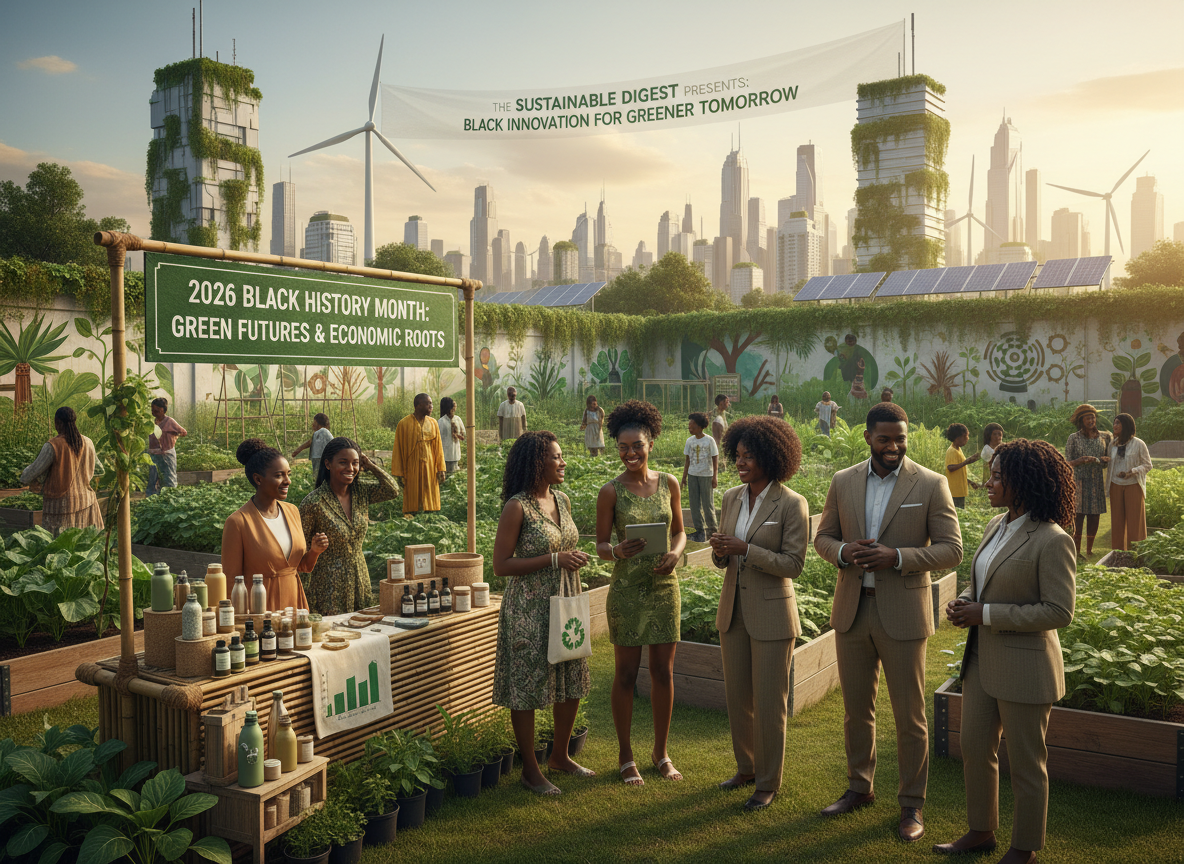
The 2026 Black History Month reveals a clear truth regarding our shared environmental future. Modern sustainability is not a new trend but a reclaimed legacy rooted in ancestral wisdom. This era marks a shift where mission-driven work aligns with long-standing traditions of community care.
In Illinois, the impact of this movement is clear, with over 180,000 firms currently operating today. These entities represent 13% of all state businesses and employ 54,000 people. This innovation reflects a deep commitment to both people and the planet (and perhaps a bit of savvy).
The world now recognizes that ecological health requires economic justice. By exploring Enterprise Development through a historical lens, we see how early systems inform today’s leaders. This analysis examines how these traditions continue to shape a more resilient society while building generational wealth.
The Historical Arc of Black Sustainability Leadership: Pre-Colonial to Contemporary Times
To appreciate modern green initiatives, one must trace the resilient thread of sustainability through the vast timeline of the African diaspora. This journey reveals that black history is deeply intertwined with ecological stewardship and communal care. From ancient agricultural methods to urban business cooperatives, the commitment to the environment remains a constant feature of the Black experience.
Pre-Colonial African Environmental Wisdom and Resource Management
Long before modern technology, African societies mastered intricate environmental management systems. They utilized communal land stewardship and complex crop rotation to preserve vital resources. These methods ensured that the earth remained fertile for future generations.
These systems supported people and ecosystems for centuries without causing ecological degradation. Their sophisticated biodiversity preservation techniques sustained life effectively. Modern sustainability experts are only now beginning to fully appreciate the depth of this ancestral knowledge.
Survival and Sustainability During the Industrial Revolution
Forced migration disrupted many traditional practices, yet the spirit of resilience ensured their survival in new environments. Enslaved communities adapted African agricultural knowledge to cultivate provision grounds. They also created herbal medicine systems using indigenous plants to maintain community health.
During the industrial era, Black Americans faced exclusion from mainstream economic opportunities. In response, pioneers like Anthony Overton and Jesse Binga created cooperative business models that prioritized community wealth. They proved that social entrepreneurship could thrive even under systemic oppression.
Leader
Key Achievement
Era/Year
Jesse Binga
Founded the first private Black-owned bank (Binga State Bank)
1921
John H. Johnson
First African American to appear on the Forbes 400
1982
Anthony Overton
Established Overton Hygienic Company and Chicago Bee
1898
Ida B. Wells
Challenged discriminatory practices for inclusive business
1893
Civil Rights Era to Modern Environmental Justice Movements
The struggle for equality evolved over many years to address the harsh reality of environmental racism. Advocacy highlighted how discriminatory policies left Black communities exposed to toxic waste and pollution. This realization galvanized a movement that connected civil rights to ecological health.
This era remains a pivotal chapter in black history, showing how activism secures a healthier future for all. Leaders fought for the right to clean air and safe water in marginalized neighborhoods. Their efforts paved the way for modern policies that link social equity with environmental protection.
Contemporary Black Innovation in Sustainable Business Practices
Today, a new wave of social entrepreneurship reflects a rich culture of learning and adaptation. Modern business leaders synthesize ancestral wisdom with cutting-edge technology to drive progress. They create enterprises that address climate change while building economic power.
During history month, we celebrate this continuous arc of innovation and leadership. By honoring black history, we recognize a legacy of stewardship that remains vital for global sustainability over time. This ongoing, time-tested commitment ensures that future generations will inherit both a thriving planet and a more equitable economy.
“The success of the community is built upon the sustainable management of our shared assets.”
Enterprise Development, 2026 Black History Month, Social Entrepreneurship: The Current Economic Landscape
Peering through the analytical lens of 2026, one finds that Black social entrepreneurs are no longer just filling gaps; they are constructing entire ecosystems of equity. This year’s black history month serves as a vital checkpoint for progress, highlighting how the community uses commerce to solve ancient problems. These leaders blend profit with purpose, ensuring that every dollar spent circulates back into local neighborhoods.
The shift toward sustainable models suggests a deep-seated desire to move beyond traditional retail. Entrepreneurs now prioritize long-term ecological health and social welfare over short-term financial gains. This analytical shift marks a new era in the American economic story.
By the Numbers: Black-Owned Business Impact in 2026
Current data from the state of Illinois reveals a robust landscape of entrepreneurial activity. Black-owned firms now make up 13% of all businesses in the region, totaling over 180,000 active units. These enterprises generate a significant impact by employing more than 54,000 residents across various sectors.
Longevity remains a cornerstone of this economic success. Nearly one-third of these firms have operated for over a decade, proving that resilience is a standard feature, not a fluke. When provided the right opportunity, these ventures act as anchors for generational wealth and local stability.
Black Women as Catalysts for Sustainable Enterprise Development
Black women currently stand at the vanguard of this movement. They represent 64% of Black business owners, leveraging unique perspectives to solve complex social issues. Their representation in the market signals a fundamental shift toward leadership that values empathy and sustainability.
Social entrepreneurship is not just about a product; it is about the courage to rewrite the social contract through the power of the marketplace.
These women often lead firms in education, social services, and professional consulting. Their focus on the collective good drives significant growth in the green economy. By centering community needs, they create a blueprint for future generations to follow.
Spotlighting Sustainable Black-Owned Businesses
Concrete examples of this philosophy abound in 2026. These businesses demonstrate how social entrepreneurship principles work in the real world. They show that ethical sourcing and community-driven missions are viable paths to success.
Southside Blooms: Youth Employment Through Sustainable Agriculture
Southside Blooms operates as a farm-to-vase nonprofit that tackles youth unemployment and urban blight. Their expansion into North Lawndale in early 2026 shows how a mission-rooted business can scale effectively. They transform vacant lots into productive flower farms, proving that environmental care can coexist with job creation.
Based in Peoria, this company represents the cutting edge of the plant-based revolution. As the city’s first 100% vegan bakery, Riley’s combines cultural innovation with environmental consciousness. They challenge conventional food industry norms while providing delicious, sustainable alternatives to their customers.
The Irie Cup: Sustainable Sourcing and Holistic Self-Care
The Irie Cup uses a family-owned model to promote ethical tea procurement. This home-based entrepreneurial tradition has evolved into a community wellness resource that educates the public on holistic health. They prioritize transparent supply chains, ensuring that their growth never comes at the expense of global farmers.
Business Name
Primary Focus
Social Impact Pillar
Southside Blooms
Sustainable Floriculture
Youth Employment
Riley’s Vegan Sweets
Plant-Based Food
Environmental Health
The Irie Cup
Ethical Tea Sourcing
Holistic Wellness
Illinois Tech Firms
Professional Services
Economic Equity
The 17 UN Sustainable Development Goals: Practical Applications in Black Social Entrepreneurship
Mapping the 17 UN Sustainable Development Goals onto the landscape of Black social enterprise reveals a sophisticated alignment between global targets and local activism. These goals are not just abstract ideals; they are active blueprints for impact within the African American business sector. By examining these connections, we see how entrepreneurs transform global mandates into neighborhood realities.
Goals 1-3: No Poverty, Zero Hunger, and Good Health
The initial cluster of UN goals addresses the most fundamental human needs. During black history month, it is vital to recognize how social enterprises serve as primary engines for these essential requirements. They bridge the gap between systemic neglect and community-driven abundance.
Community Employment Programs and Economic Opportunity
Enterprises like Southside Blooms create immediate economic opportunity by employing at-risk youth in the floral industry. This model provides more than a paycheck; it builds a stable community through meaningful work. By offering dignified jobs, these businesses directly combat poverty while fostering a sense of purpose.
Sustainable Food Systems and Nutrition Access
Riley’s Vegan Sweets & Eats serves as Peoria’s first 100% vegan bakery, proving that health-conscious options are a right, not a luxury. Such businesses improve access to nutritious food in areas often overlooked by traditional retailers. They demonstrate that healthy people are the foundation of a thriving, sustainable economy.
Goals 4-6: Quality Education, Gender Equality, and Clean Water
The pursuit of education and equality is a cornerstone of the Black entrepreneurial spirit. These goals ensure that the next generation of leaders has the tools and the equity required to succeed. By centering these values, businesses become more than commercial entities; they become institutions of social change.
Educational Programming and Leadership Development
Many Black-owned businesses integrate learning directly into their operational models through formal programs. Whether it is teaching sustainable farming or business management, these initiatives provide the resources needed for self-sufficiency. This focus on education ensures that knowledge remains a communal asset rather than a private privilege.
Women-Led Business Advancement
In Illinois, 64% of Black-owned businesses are led by women, highlighting a significant shift in leadership demographics. These enterprises provide vital support for gender equality by placing women at the helm of economic development. This leadership ensures that diverse perspectives guide the future of education and community health.
Business Name
Primary SDG Focus
Core Community Benefit
Southside Blooms
Goal 8: Decent Work
Youth employment and urban greening
Riley’s Vegan Sweets
Goal 3: Good Health
Plant-based nutrition in food deserts
The Irie Cup
Goal 12: Consumption
Sustainable sourcing and self-care
Goals 7-9: Affordable Energy, Decent Work, and Industry Innovation
Innovation in Black enterprises often involves reimagining how industries can serve the public good. These goals focus on building resilient infrastructure and fostering sustainable industrialization. This approach ensures that economic growth does not come at the expense of environmental or social well-being.
Green Business Practices and Job Creation
Sustainable flower growth and design businesses exemplify how green industries can revitalize urban spaces. These models prove that environmental opportunity and job creation can go hand-in-hand. By prioritizing planet-friendly methods, they set a new standard for responsible commercial operations.
Technological Innovation in Black Enterprises
Innovation is not always about high-tech gadgets; sometimes it is about the way a business interacts with its environment. Black entrepreneurs are leading the way by adopting clean energy and efficient production methods. This forward-thinking approach ensures long-term viability in a rapidly changing global market.
Goals 10-12: Reduced Inequalities, Sustainable Cities, and Responsible Consumption
Reducing inequality requires a deliberate effort to redistribute access to wealth and power. Black social entrepreneurs tackle this by demanding equitable access to capital for their ventures. They build businesses that serve as anchors for sustainable city development and ethical consumption.
Equitable Access to Capital and Resources
Despite historical barriers, nearly one-third of Black-owned businesses in Illinois have thrived for over a decade. This longevity depends on securing the financial resources necessary to scale and sustain operations. Providing a fair community investment landscape is essential for reaching these global equity targets.
Community-Centered Urban Development
Businesses that prioritize the local community transform urban landscapes into vibrant, sustainable hubs. By repurposing vacant lots for agriculture or retail, they create a sense of belonging and ownership. This way of developing cities ensures that growth benefits the residents who have lived there the longest.
Goals 13-15: Climate Action, Life Below Water, and Life on Land
Environmental stewardship is deeply rooted in the history of Black land ownership and agricultural wisdom. Many social enterprises use their programs to reconnect learning with the natural world. They treat climate action as a non-negotiable part of their business DNA.
Environmental Stewardship in Business Operations
Companies like The Irie Cup emphasize sustainable sourcing as a fundamental business principle. They recognize that protecting “Life on Land” is critical for the long-term health of their supply chains. This commitment shows that environmental care is a core part of modern Black social entrepreneurship.
Sustainable Sourcing and Conservation Practices
Conservation is not a secondary thought but a primary strategy for mission-driven Black businesses. By choosing ethically sourced ingredients and materials, they reduce their overall carbon footprint. This practice honors ancestral relationships with the earth while protecting future biodiversity.
Goals 16-17: Peace, Justice, and Partnerships for the Goals
The final UN goals emphasize that progress requires collective action and systemic justice. No business is an island, especially when the goal is widespread social change. During black history month, the focus on collaborative networks becomes even more pronounced.
Advocacy for Policy Change and Economic Justice
Black entrepreneurs often lead the charge for change in local and national policy. They advocate for laws that promote economic justice and fair market access for all people. This advocacy ensures that the legal framework supports, rather than hinders, sustainable development.
Collaborative Networks for Sustainable Development
Sustainable progress is only possible through strong partnerships between businesses, government, and citizens. Collaborative networks allow Black social entrepreneurs to amplify their impact and share best practices. By working together, these people ensure that the vision of a sustainable future becomes a shared reality.
Black-Led Organizations and Chambers Driving Sustainable Economic Equity
In the landscape of 2026, Black-led organizations serve as the essential scaffolding for equitable economic development across Illinois. These institutions provide the infrastructure that individual entrepreneurs need to scale their impact effectively. By offering coordinated support, they ensure that this history month is defined by progress rather than just reflection.
Illinois Black Chamber of Commerce and Statewide Networks
The Illinois Black Chamber of Commerce acts as a powerful engine for state level change. It provides advocacy that helps small firms navigate complex regulatory environments. Experienced leaders within the network offer mentorship to bridge the gap between startup ideas and sustainable growth.
Membership offers more than just a directory listing. It provides direct access to capital resources and procurement opportunities. This collective power allows business owners to compete for large-scale contracts that were previously out of reach.
Regional efforts through the Black Business Alliance—Peoria Chapter ensure that growth is not limited to the largest cities. These organizations recognize that economic equity matters across all geographic boundaries. They connect local talent with regional supply chains to boost resilience.
The Quad County African American Chamber expands these opportunities across Kane, Kendall, DuPage, and Will counties. This alliance fosters a collaborative business environment. It transforms isolated local efforts into a unified regional economic force.
Chicago Urban League and Community Economic Development
The Chicago Urban League represents the evolution of civil rights into modern economic empowerment. Their programs focus on community development as the foundation for entrepreneurship. They provide technical training that helps founders master financial literacy and digital transformation.
By connecting emerging leaders with established corporate partners, they create a pipeline for success. Their work proves that systemic equity requires intentional investment in human capital. This approach turns historical challenges into future economic opportunities.
Cultural Celebrations Amplifying Black Business Success
Cultural events serve a dual purpose by blending economic support with social culture. They turn public awareness into direct revenue for local creators and artisans. This engagement ensures that the spirit of the history month translates into tangible financial growth.
From February 8-22, 2026, this event focuses on uplifting the food and beverage sector. It is a time to celebrate black culinary excellence through direct consumer action. This recognition builds lasting relationships between owners and the neighborhoods they serve.
During black history month, this initiative transforms passive observation into active spending. It highlights the vital role that restaurants play in local economies. These celebrations create a cycle of visibility that supports long-term sustainability.
Leadership, Advocacy, and Mentorship: Building the Next Generation of Social Entrepreneurs
Building a sustainable future for Black social entrepreneurship relies on a triple threat: historical wisdom, contemporary leadership, and the relentless advocacy of mentors. These elements combine to form a robust framework where individual success fuels collective growth. When we look back, we see that the seeds of modern enterprise were sown by those who refused to accept the status quo.
Every moment spent studying these pioneers reveals a blueprint for resilience. Their stories teach us that social change and economic power are often two sides of the same coin. By integrating these lessons today, we ensure that the next generation of people in the industry has a solid foundation to stand on.
Pioneering Black Business Leaders: From Jesse Binga to Oprah Winfrey
Institutional legacy began with pioneers like Jesse Binga, who opened the first privately-owned African American bank in 1921. Others like Anthony Overton, who established his hygienic company in 1898, and Ida B. Wells challenged discriminatory practices through journalism. These leaders demonstrated Black economic capacity over many years of intense struggle.
These early successes provided the template for John H. Johnson, who became the first African American on the Forbes 400 in 1982. Oprah Winfrey later expanded what was believed possible by becoming the first Black woman billionaire. Her leadership through Harpo Productions showed how media content can drive both profit and social change.
Leader
Historical Milestone
Economic Impact
Jesse Binga
Binga State Bank (1921)
First private Black-owned bank
John H. Johnson
Forbes 400 List (1982)
Validated Black publishing power
Oprah Winfrey
Billionaire Status
Global media institution building
Today’s Corporate and Community Leaders Shaping Sustainable Futures
Modern leadership continues through figures like Nicholas Bruce and Sirmara Campbell, who use their access to shape sustainable futures. Today, leaders like Brandon Fair and Shalisa Humphrey occupy vital positions in finance and the industry. Their professional experience allows them to advocate for systemic equity in every company they serve.
Furthermore, Otto Nichols and Zaldwaynaka Scott bridge the gap between real estate, education, and economic development. They use their leadership roles to mentor emerging entrepreneurs who face unique questions in the current market. This experience is crucial for maintaining representation in high-level corporate programs.
The Power of Platforms: Entertainment and Social Change
The entertainment industry serves as more than just culture; it is a massive driver of economic growth. During a Howard University event, Renata Colbert noted that the film industry supports over 2,000,000 jobs in the world. Productions like “Superman” bringing $82 million to Georgia prove that creative content matters for local stability.
“Policy creates that avenue… even the most innovative business content can be constrained by regulatory frameworks.”
— Renata Colbert, Motion Picture Association
Economic impact extends to cities like D.C., where “House of Dynamite” infused $5 million into the local home economy. This part of the industry proves that culture and commerce are deeply intertwined. Such an event highlights how platforms can provide recognition for marginalized voices while creating jobs.
Mentorship as a Cornerstone of Sustainable Success
Effective mentorship requires more than sharing advice; it involves creating a support system for the next generation. During history month, it matters to recognize how intergenerational dialogue fosters deep learning. Experienced leaders help students navigate the way toward professional recognition and success.
Through years of experience, mentors provide the access that formal education often misses. They answer difficult questions about navigating corporate programs and staying true to one’s mission. This learning process is a vital part of sustaining leadership across decades.
Understanding Policy and Its Impact on Enterprise Development
Mentors must teach that advocacy for better policy creates the necessary avenues for success. Policy literacy ensures that social growth is not limited by legislative barriers. In every history month, we see that the most successful people were those who understood the rules of the game.
Creating Safe Spaces for Artists and Entrepreneurs
Monique Davis-Carey emphasized that our responsibility is creating a safe space for creators to thrive. This environment allows for authentic expression and protects the integrity of the artistic moment. Such a home for innovation ensures that representation remains a priority in the industry.
Authentic Networking and Resource Mobilization
Authentic networking, as modeled by the rapper Noochie, focuses on genuine connection rather than transactions. This way of building relationships reflects cultural values of community and shared access. It helps mobilize resources to ensure every moment contributes to the collective good in the space of social enterprise.
Conclusion
As history month 2026 begins, it becomes clear that the legacy of Black social entrepreneurship is the ultimate roadmap for global progress. This time allows us to celebrate black history by acknowledging that sustainability is a reclaimed legacy of resilience. Today, modern innovation draws directly from centuries of community-centered resource management that sustained people through every era.
Mission-driven organizations use the 17 UN Sustainable Development Goals to create a new way of doing business. These visionary leaders ensure that every individual has the opportunity to thrive while protecting our collective future. During this history month 2026, we recognize that mission-driven enterprises create comprehensive community impact rather than focusing on narrow profit generation.
Within our state, access to resources and mentorship helps new ventures flourish into sustainable landmarks. We celebrate black excellence and support local events like Restaurant Week to drive real economic change. This content reminds us that history month 2026 transforms a simple celebration into a powerful engine for long-term engagement.
When we celebrate black history during black history month, we invest in an equitable and inclusive future. Every history month reminds us that resilience requires both individual excellence and the strength of collective support. During this history month 2026, we honor the past by empowering the business leaders of today. As black history month concludes, this history month serves as a permanent reminder that prosperity and purpose are complementary goals for all.
Core Pillar
Business Application
Sustainable Goal
Heritage
Reclaiming ancestral wisdom
Climate Action
Economy
Mission-driven growth
Decent Work
Equity
Inclusive leadership
Reduced Inequality
Key Takeaways
Ecological care is a long-standing tradition within these communities.
Local firms in Illinois drive significant employment and regional growth.
Social Entrepreneurship mission-driven business models reclaim ancestral economic power.
Upcoming celebrations highlight the link between justice and ecology.
Progress is rooted in cultural memory and community resilience.
Impact-focused ventures act as vehicles for systemic change.
In the United States, December can be peak goodwill—or peak waste, depending on the choices behind the wrapping paper.
This guide treats the final month of 2025 December observances and sustainability as more than a feel-good slogan. It maps December 2025 events to practical moves that cut emissions, shrink trash, and protect budgets (a rare holiday miracle).
Across UN observances, cultural holidays, tech and education weeks, and national days, the goal is simple: turn attention into impact. That means sustainable practices like lower-carbon travel, cleaner energy use, and smarter gifting; it also means procurement that respects labor and human rights.
Because December is a high-consumption month, small shifts scale fast. Think circular economy habits, climate resilience planning, and greener operations that still feel festive—eco-friendly December activities can be joyful without becoming a landfill audition.
Next, the guide defines key terms, then moves through major observances and ends with measurable outcomes tied to the UN Sustainable Development Goals. The throughline stays consistent: green initiatives for December should work for households, workplaces, schools, and community groups—without requiring a PhD in composting.
December 2025 Events Overview for a Greener Holiday Season in the United States
In the United States, December is a busy time. People travel more, deliveries pile up, and homes get warmer. This all adds up to more emissions, waste, and higher bills.
This guide helps you plan for December 2025. It shows how to make holiday celebrations more efficient. You can buy less, ship smarter, and waste less.
What makes December observances a high-impact time for sustainable practices
December is a time for quick decisions. Small changes can make a big difference. For example, choosing reusable items at a party can save waste and money.
It’s also a time to think about the environment. We see the waste, food scraps, and extra energy use. This season rewards those who think about the bigger picture.
Quick definitions: sustainable December events, eco-friendly December activities, and green initiatives for December
Sustainable December events aim to reduce harm to the planet. They choose efficient venues, use low-carbon travel, and encourage reuse.
Eco-friendly December activities focus on using less at home and in the community. This includes fixing things, sharing meals, and low-waste gatherings.
Green initiatives for December are big efforts with clear goals. They include ethical giving, sustainable finance, and community programs that last all year.
How to use this guide: choosing meaningful observances and reducing environmental footprint
Match your values with actions. Pick one important observance and cut down on extras. Choose swaps that make a big difference, like reusable items and fewer flights.
Pick one observance that matters, then limit the “extras” that inflate waste.
Choose high-leverage swaps: reusable serviceware, certified products, fewer flights, consolidated shipping, and local giving.
Apply sustainable living tips to the calendar: set deadlines for ordering, confirm quantities, and build a reuse plan before buying anything new.
U.S. December setting
Operational move
What to measure
Why it works in holiday schedules
Workplace holiday celebrations
Rent dishware; default to water stations; pre-sort recycling and compost
Choose rail or bus where feasible; pack light; group rides; avoid rush shipping by ordering earlier
Miles flown reduced; car occupancy; expedited shipments avoided
Travel decisions dominate footprints during December 2025 events
By using this guide, you can make December more sustainable. It helps you make better choices, not just add more to your list. The goal is to keep the holiday spirit alive while reducing waste.
Final month of 2025 December observances and sustainability
In the United States, December 2025 feels like a rush with a shopping cart. Yet, it’s also a chance to make smart choices. With budgets, travel, and gift lists all in play, green initiatives for December shine.
December should be a cleanout, not a free-for-all. Teams and households can track waste, travel, and gifts. This way, they can see their impact clearly.
Key themes for December: climate, community, human rights, and ethical consumption
Climate observances in December offer practical tips. Eat for soil health, reduce trips, and protect winter habitats. Community themes focus on volunteering and mutual aid, beating novelty gifts in value and longevity.
Human rights dates highlight dignity in supply chains, especially during peak buying. Ethical consumption is the quiet filter behind every deal. It shows up in fair labor, traceable ingredients, and safer materials.
Planning calendar: aligning observances with low-waste holiday celebrations
A workable calendar groups observances into action weeks. This cuts duplication and the urge to print flyers. Bundling reduces last-minute shipping, saving dollars and emissions.
Food week: plant-forward menus, leftovers planning, and composting that survives the party.
Giving week: one vetted donation plan, one volunteer shift, and clear receipts for tax and trust.
Travel week: rail or carpool when possible; if flying is required, fewer trips and longer stays.
Gifting week: experiences, repairs, and resale-first shopping before anything new.
Action week focus
Typical December trigger
Low-waste move
Operational metric to track
Food and hosting
Office potlucks and family dinners
Reusable dishware, batch cooking, and a leftovers plan
Pounds of food wasted; % composted or donated
Gifts and décor
Flash sales and “stocking stuffer” culture
Secondhand gifts, repair services, and minimal packaging
% spend on resale/repair; packaging volume per event
Service and solidarity
Seasonal giving drives
One coordinated drive with clear needs and distribution plans
Volunteer hours; items delivered that match requested lists
Travel and gatherings
Multiple short trips across the month
Trip consolidation, carpooling, and virtual attendance when suitable
Trips avoided; estimated miles reduced
ESG and personal choices: Environmental Social Governance with December holidays and observances
Environmental Social Governance in December is more than boardroom talk. Spending acts like a vote in December. Environmental choices include energy use, shipping speed, and travel patterns.
Social choices are seen in inclusive gatherings and fair labor signals. Governance is the less festive part, but it’s crucial. Transparent donations, anti-fraud habits, and clear vendor standards keep money aligned with mission.
UN Observances in December and How to Celebrate Them Sustainably
December UN dates can turn good intentions into real actions. The key is to keep the impact high and waste low. In the United States, this means choosing local actions, buying cleaner, and reporting clearly.
International Volunteer Day for Economic and Social Development with low-carbon service ideas
International Volunteer Day rewards service that doesn’t harm the planet. It’s about local volunteering that cuts emissions and strengthens neighborhoods.
Smart volunteering includes food recovery, community fridges, park cleanups, and repair cafés. These actions save resources and reduce waste. Virtual support, like resume help or tutoring, also helps without harming the environment.
Track it: hours volunteered, meals rescued, items repaired, or bags of litter collected.
Pack light: bring a refillable bottle, durable gloves, and a reusable container for snacks.
Choose proximity: prioritize locations reachable by walking, biking, or transit.
World Soil Day and International Mountain Day: regenerative choices for food and travel
World Soil Day shines a light on every meal. Healthy soil, cleaner water, and steady yields are key. Seasonal menus, less meat, and avoiding food waste help soil health.
Composting is important, but it works best with smarter shopping and storage. Buying regenerative and regionally grown products supports better land management and reduces spoilage risk.
International Mountain Day is perfect for winter, when travel demand is high. Responsible recreation means carpooling, using rail when possible, renting gear, and avoiding single-use items.
Human Rights Day, International Migrants Day, and International Human Solidarity Day with ethical giving
Human Rights Day asks if a gift solves a problem or just decorates it. Ethical giving focuses on transparent organizations, worker protections, and community-led services. This is especially important when news cycles tempt rushed donations.
International Migrants Day supports practical help like legal aid, worker centers, and local services. International Human Solidarity Day emphasizes mutual aid and long-term capacity. Unrestricted gifts often help more than branded items.
Verify financial accountability through audited reporting and clear program metrics.
Prefer durable, needed supplies over novelty drives that create disposal costs.
Use ethical procurement for holiday purchases; labor standards are part of sustainability.
These themes also align with the International Day for the Abolition of Slavery. Learning about supply chains and forced labor sharpens buying decisions. The International Day of Commemoration and Dignity of the Victims of the Crime of Genocide and of the Prevention of this Crime shows why documentation, education, and prevention deserve steady funding.
International Day of Banks and International Anti-Corruption Day: sustainable finance and transparency actions
International Day of Banks encourages reviewing where money is invested. Climate risk policies, community reinvestment, and fee structures shape real-world infrastructure and household budgets.
International Anti-Corruption Day promotes fraud-aware giving, clean procurement rules, and readable annual reports. These actions reduce waste that doesn’t show up in recycling bins.
For a broader policy lens, the International Day Against Unilateral Coercive Measures and the International Day of Neutrality can be used as learning prompts about finance, trade, and stability. The International Day against Colonialism in All its Forms and Manifestations also fits here; ethical sourcing and supplier transparency are modern tools for reducing harm.
UN observance
Sustainable way to participate (U.S.-ready)
Low-waste metric to track
Common pitfall to avoid
International Day of Banks
Review bank climate policies, fees, and community lending; switch statements to paperless
Monthly fees reduced; paper avoided; funds moved to lower-fee options
High-fee “green” products with vague impact claims
International Anti-Corruption Day
Add basic verification steps for donations and vendor invoices; keep a receipt trail
Percent of spend with documented review; chargebacks prevented
Impulse giving to look-alike organizations and bait campaigns
World Soil Day
Plan a seasonal menu, reduce food waste, start composting, and store produce correctly
Pounds of food waste avoided; compost volume; meals planned vs. tossed
Buying “eco” food that spoils due to poor planning
International Mountain Day
Carpool to winter recreation, rent gear, and choose reuse before upgrades
Miles not driven alone; items rented or repaired; single-use avoided
Buying new gear for a one-off trip
International Day of Epidemic Preparedness and International Universal Health Coverage Day: community health with less waste
International Day of Epidemic Preparedness is about readiness, not panic shopping. A durable kit with refillable hygiene supplies and a plan for prescriptions reduces risk and clutter.
International Universal Health Coverage Day highlights access and continuity of care. This includes waste-aware operations. Community clinics and health outreach events can cut trash by using refill stations and right-sized supplies.
Medication take-back programs and safe disposal practices lower contamination risk in water systems. Preparedness looks less dramatic than stockpiles, but it tends to work better—and it does not require another cart full of plastic.
Eco-Friendly Holiday Celebrations and Cultural Observances in December
December in the United States is often a rush of waste. Yet, a low-waste holiday season can still be festive. It focuses on meaning over volume, with shared meals, repair days, and stories that don’t need extra packaging.
For those who love to learn and act, there are civic observances like Pearl Harbor Remembrance Day and Nobel Prize Day. These fit well into a low-material plan. Digital tools, community spaces, and donations do more than disposable items ever could.
Chanukah, Kwanzaa, Saturnalia, Bodhi Day, and Halcyon Days with mindful consumption
Chanukah and Kwanzaa already focus on consistency and care. Sustainability just highlights this core idea. Using reusable decorations, durable dishes, and planning gifts carefully reduces waste without losing the joy.
Saturnalia, Bodhi Day, and Halcyon Days offer a chance to break from the buy-more cycle. Sharing skills, cleaning neighborhoods, and re-gifting make celebrations look intentional, not overstuffed.
Plan portions to cut food waste; freeze extras before they become “mystery leftovers.”
Choose reusables for plates, napkins, and storage; borrow when possible.
Trade experiences (classes, museum days, transit passes) for impulse items.
St Nicholas Day, Krampusnacht, and Worldwide Candle Lighting Day with safer, cleaner materials
St Nicholas Day and Krampusnacht can stay fun while reducing plastics and clutter. Small surprises are better when they are useful, refillable, or edible. And they should not come wrapped in lots of glossy film.
Worldwide Candle Lighting Day is a time when materials really matter. Using lower-tox candles, refill systems, and sturdy vessels reduces pollution and packaging. Basic fire safety keeps the celebration safe and meaningful.
Custom
Lower-impact material choice
Why it helps
Simple safety check
Worldwide Candle Lighting Day
Beeswax or soy wax in refillable glass
Less petroleum use; less single-use packaging
Trim wick; keep away from drafts and curtains
St Nicholas Day
Reusable stockings; paper wrap or none
Cuts plastic waste; supports repeat use
Keep small items age-appropriate
Krampusnacht
Costume swaps; durable masks
Reduces one-time outfits; saves money
Check visibility and ventilation
Feast of Our Lady of Guadalupe and Day of Goodwill: community-centered, low-waste gatherings
Feast of Our Lady of Guadalupe gatherings focus on community, not shopping. A potluck, compost plan, and water stations make hosting practical and welcoming.
Day of Goodwill is a chance to connect with neighbors. Using public transit, carpooling, and bringing your own mug keeps the event budget-friendly and eco-friendly. It’s all about community, not lecturing.
Coordinate dishes to avoid five identical desserts and a trash can full of trays.
Set up sorting: trash, recycling, and compost with clear labels.
Use community spaces to cut travel and avoid disposable décor.
International Tea Day: sustainable sourcing, packaging, and fair labor
International Tea Day encourages a closer look at supply chains. Opting for loose-leaf tea, refill tins, and minimal shipping reduces waste. Fair labor standards ensure the tea is enjoyed by all.
In the U.S., this theme aligns with Rosa Parks Day and others. A small teach-in, digital reading list, or donation drive adds depth without clutter.
Favor loose-leaf over single-serve packaging when possible.
Look for disclosures on sourcing, labor practices, and transport footprint.
Choose durable gear (strainers, teapots) that replaces repeat disposables.
Environmental Awareness in December via Wildlife, Oceans, and PolarObservance
December is busy for many Americans, but we can still focus on the environment. We just need to make choices that really help, not just look good. Let’s aim for actions that make a real difference, not just gestures.
Wildlife conservation day and International Cheetah Day teach us to think clearly. Avoid the hype of “selfie safaris” and support real conservation efforts. In the U.S., this means backing land restoration, joining science projects, or helping local groups.
International Cheetah Day also reminds us to choose responsible travel. Skip places that harm animals for photos. Instead, support sanctuaries that care for animals and teach about conservation.
Antarctica Day is about reducing emissions. Antarctica helps control the Earth’s climate. So, making choices that lower carbon emissions in the U.S. helps the ice, even if it’s far away.
Environmental Awareness continuing
Antarctica Day also encourages learning about climate policies. Small actions add up: choose durable items, reduce waste, and treat efficiency as a strategy. This way, we can make a difference locally and globally.
International Civil Aviation Day and Pan American Aviation Day are chances to talk about travel wisely. Smarter flying means combining trips, avoiding unnecessary flights, and choosing nonstop routes. Lighter luggage also helps, as it reduces fuel use.
For holiday shipping, think twice about expedited services. They often mean more emissions. Instead, choose rail or bus for short trips, fly less, and stay longer. Tools can help manage carbon, but offsets are not always reliable.
Observance focus
Common December habit
Lower-impact alternative (U.S. friendly)
What to look for
Wildlife conservation day
Impulse donations after viral posts
Recurring giving to verified habitat restoration and local biodiversity projects
Transparent budgets, clear metrics (acres restored, species monitoring), and ethics policies
International Cheetah Day
Animal handling experiences framed as “education”
Wildlife viewing with distance rules and support for welfare-first facilities
No cub petting, no breeding for display, documented animal care standards
Antarctica Day
High-emission convenience buys and rushed shipping
Fewer, longer-lasting purchases; slower shipping; home energy efficiency steps
Durability, repairability, and realistic energy savings claims
International Civil Aviation Day
Multiple short flights and tight itineraries
Trip consolidation; nonstop flights; pack light; stay longer per flight
Itinerary emissions awareness, baggage discipline, and fewer segments
Pan American Aviation Day
Last-minute holiday travel with high churn
Advance planning; rail/bus for regional trips; avoid overnight rush shipping
Mode choice, calendar planning, and fewer “urgent” deliveries
Technology, Education, and Safer Digital Life for Greener Living Tips
December is filled with new gadgets and fast upgrades. But a greener approach is quieter. It focuses on saving power, extending device life, and reducing waste. These tips are perfect for U.S. homes and workplaces looking to save more.
Digital choices affect our world. They impact electricity use, shipping, and e-waste. This month, we can learn to treat tech as a valuable asset, not something to throw away.
Computer Science Education Week and World Techno Day are great together. They teach us to use tech wisely. Simple changes like sleep timers and dark mode can save a lot of energy without slowing us down.
In offices, small changes can make a big difference. Using standard power plans and updating devices based on performance can save energy. Shared printers and default duplex printing also help.
Continuing
International Anti-Cybercrime Day is also about sustainability. When devices get hacked, we often replace them too soon. Basic security steps like updates and backups can make devices last longer.
It also promotes reuse. A clean laptop is easier to donate or reuse. An infected one is often thrown away, wasting resources.
International Project Menagement Day helps us stick to our green goals. We can plan our sustainable activities like projects. This way, we avoid last-minute waste and pollution.
At home, the same approach works. One checklist, clear roles, and a review after gatherings help. This habit is key to improving next year.
Observance focus
Action in plain language
Tools and settings (examples)
Sustainability upside
Computer Science Education Week
Set devices to save power by default
Sleep after 5–10 minutes; hibernate for laptops; disable always-on Bluetooth when not needed
Lower electricity use and less heat stress on batteries
World Techno Day
Stream smarter, not louder
Turn off auto-play; choose standard HD on phones; download playlists once instead of replaying streams
Reduced data center demand; fewer peak-time energy spikes
Fewer early replacements; better resale and donation readiness
International Project Menagement Day
Run holiday sustainability like a project
Simple metrics (trash bags, leftover volume, miles traveled); owner for recycling; procurement list for reusables
More predictable results; less overbuying and less contamination in recycling
Procurement and IT circularity
Buy less new; repair and refurbish more
Battery replacements; certified refurbished devices; trade-in and take-back programs; asset tags for tracking
Lower e-waste; longer equipment life cycles; reduced material extraction
Continuing
A tech-forward December doesn’t need more waste. By linking Computer Science Education Week, World Techno Day, International Anti-Cybercrime Day, and International Project Menagement Day to our daily lives, we can live more sustainably. This way, we support eco-friendly activities without sacrificing convenience.
2025 Retrospective Analysis of Country and Regional Observances in Early December
Early December observances might seem like just dates on a global calendar, but for U.S. readers, they also signal important governance, resilience, and sustainability issues. These moments influence funding, regulations, and protection efforts.
Resilience, sovereignty, and development context
Days like Central African Republic Republic Day and Freedom and Democracy Day in Chad focus on sovereignty and stability. These themes are key to resilience. The real work is in ensuring basic services like water, education, healthcare, and reliable energy.
For U.S. teams, it’s about risk and impact. Ethical sourcing, supporting local programs, and media literacy are crucial. This approach is about real development, not just giving out souvenirs.
Civic identity with sustainability lenses
Portugal Restoration of Independence Day highlights the importance of long-term planning for energy and infrastructure. Romania’s Independence and National Days focus on energy security and grid upgrades, however, these are not just debates but urgent needs for massive change.
Commemoration Day reminds us of the power of memory in policy-making. Civic identity can turn climate action into innovation and resilience. This changes how we approach procurement, travel, and building efficiency.
Governance milestones and environmental priorities
Chatham Islands Anniversary Day shows how climate risk affects island logistics and coastal areas. Supply chains are short, and shocks are immediate. Planning must adapt to these challenges.
Kazakhstan’s First President’s Day raises questions about resource economies and transparency. For ESG teams, it’s about enforcement and data credibility, not just promises.
Cultural continuity and stewardship insights
Days like Indigenous Faith Day in Arunachal Pradesh and State Inauguration Day in Nagaland focus on stewardship. Indigenous knowledge emphasizes biodiversity, seasonal limits, and community accountability. These are early sustainability frameworks.
U.S. organizations can act with respect by supporting Indigenous-led work and using credible cultural education. Stewardship fits well in DEI and sustainability programs when seen as governance, not just decoration.
Peacebuilding and climate/resource security
Prisoners for Peace Day links environmental stress to conflict risk through scarcity and displacement. Peacebuilding is a form of climate adaptation with high stakes.
For practitioners, this means conflict-sensitive procurement and support for human rights. Stability and sustainability rely on trust, transparency, and basic services.
Observance lens
What it signals in sustainability terms
Practical U.S.-based application
Central African Republic Republic Day; Freedom and Democracy Day in Chad
Resilience needs tied to services (health, education, water, energy access) and institutional stability
Conflict-aware supply chains, support for reputable humanitarian work, and preference for locally led solutions
Portugal Restoration of Independence Day; Romania Independence Day; Romania National Day; Commemoration Day
Civic identity can accelerate adoption of efficiency, cleaner transport, and long-term infrastructure planning
Align messaging with responsible procurement and energy management for U.S. firms operating in Europe
Chatham Islands Anniversary Day; Kazakhstan’s First President’s Day
Islands act as climate “early warnings”; resource economies face governance and transparency pressure
Integrate physical risk into logistics plans; pair ESG review with enforcement capacity and data quality checks
Indigenous Faith Day in Arunachal Pradesh; State Inauguration Day in Nagaland
Stewardship norms that support biodiversity, land care, and community governance as resilience infrastructure
Support Indigenous-led initiatives, avoid commodification, and embed stewardship principles into programs
Prisoners for Peace Day
Climate stressors can raise conflict and displacement risks, affecting markets and communities
Apply conflict-sensitive due diligence, protect transparency norms, and strengthen human rights screening
Cooperative Development and Community Green Initiatives for December
December can be a time for shopping or for smarter choices. Cooperative Development initiatives offer a middle path. They include shared buying, tools, and accountability.
In the U.S., co-ops and groups help keep waste low during the holidays. Buying in bulk and fixing things instead of replacing them saves resources. Sharing delivery routes also cuts down on trips.
Inclusive Schools Week: sustainable campuses and equitable access
Inclusive Schools Week promotes campus sustainability. Access and efficiency go hand in hand. When schools work for everyone, they waste less.
Good programs mix operations and culture. They have safe paths, clean air, and fair buying. Students learn to reuse and repair, keeping things out of landfills.
National Women Support Women Day: local, values-based purchasing and mutual aid
National Women Support Women Day encourages buying local. Supporting women-owned businesses shortens supply chains. This keeps money in the community and reduces emissions.
Service gifts, like childcare swaps, are meaningful without adding to waste. Mutual aid funds also help quickly. When buying, choose clear, transparent products over fancy packaging.
Month of Overseas Filipino, Spiritual Literacy Month, and Volunteerism Month (Philippines): diaspora giving with low-impact logistics
These months highlight giving across borders. But, it’s better to buy locally to avoid shipping waste. Cash donations are also preferred for their flexibility.
Transparency is key to avoid clutter. Publish impact summaries and verify partners. Funding community needs like education and clean water is often more effective than sending goods.
UN SDGs for December holidays and observances: mapping actions to SDG targets
UN SDGs for December holidays make goodwill measurable. Use a scorecard to track progress. Aim for repeatable improvements, not perfection.
December action focus
SDG connection
Practical December metric
What it can change in daily life
Low-waste purchasing and reuse (repair, refill, secondhand)
SDG 12 Responsible Consumption and Production
Pounds of waste diverted; number of items repaired or reused
Fewer single-use purchases; longer product life
Travel and delivery reductions (shared routes, fewer car trips)
SDG 13 Climate Action
Miles avoided; estimated emissions reduced from fewer trips
Accessibility fixes completed; participation rates in reuse programs
Better access with fewer resource workarounds
Support for migrants and diaspora-aligned aid
SDG 10 Reduced Inequalities
Dollars directed to local services; volunteer hours logged
More stable support networks during high-need months
Conclusion
In the United States, December 2025 is a time of peak shopping, travel, and public focus. The focus on sustainability in December is not just a nice gesture. It’s a crucial test of what we will do when it really matters.
This guide emphasizes choosing observances with purpose and linking them to actions. Sustainable events in December should aim to reduce waste, lower energy use, and cut emissions. They should also protect workers and communities.
Green initiatives in December don’t need to be flashy to be effective. Simple actions like using reusable items, ethical giving, and low-carbon volunteering can make a big difference. These actions are more than just gestures; they are lasting changes.
By the end of December, we should reflect on our progress. What did we achieve in reducing waste, improving how we buy things, and building trust? Let’s carry these successes into 2026. Our goal is to make sustainability a part of our daily lives, not just a December tradition.
Key Takeaways
December 2025 events can be paired with real actions that reduce waste & emissions.
The final month of 2025 December observances and sustainability is high-impact because spending & travel spike.
Sustainable practices in December often start with energy, transport, and purchasing choices.
Eco-friendly December activities can support a circular economy through reuse, repair, & low-packaging gifting.
Green initiatives for December can align with climate mitigation, adaptation, & community resilience goals.
This guide connects global observances to U.S.-based planning that works for families & organizations.
The coming year represents a pivotal moment for planetary climate action and international cooperation. Major gatherings will convene in strategic locations worldwide, bringing together diverse stakeholders to address our most pressing environmental challenges.
These events focus on practical solutions rather than mere pledges. From the Amazon rainforest to urban centers, leaders will tackle financing mechanisms, technology transfer, and indigenous knowledge integration.
The irony of flying thousands to remote locations for climate talks isn’t lost on observers. Yet these gatherings remain essential for multilateral progress and policy alignment across business sectors and civil society.
Introduction to the 2025 Sustainability Events Landscape
The calendar fills with gatherings that attempt to match urgency with action. These events create spaces where diplomacy meets practical implementation.
The Critical Role of Global Gatherings in Climate Action
Face-to-face negotiations remain irreplaceable despite digital alternatives. The chemistry of personal interaction drives breakthroughs that virtual meetings cannot achieve.
These assemblies function as diplomatic pressure valves. They allow for the nuanced conversations that build trust among nations and sectors.
The United Nations Ocean Conference exemplifies this approach. Scheduled for June in Nice, France, it focuses on mobilizing all actors for ocean conservation.
Similarly, the High-level Political Forum in July advances science-based solutions for the 2030 Agenda. Both events emphasize moving from talk to tangible progress.
Why This Period Represents a Pivotal Moment for Policy
Multiple convergence points create unprecedented momentum. The halfway mark to 2030 development goals demands honest assessment of what works.
Public pressure for measurable results has never been higher. Citizens and businesses alike demand accountability beyond mere pledges.
The geographic distribution of events signals important shifts. Host locations increasingly reflect climate justice principles rather than traditional Western hubs.
Conference Feature
Traditional Approach
2025 Evolution
Location Strategy
Western financial centers
Climate-vulnerable regions
Participation
Sector-specific silos
Cross-sector integration
Outcome Focus
Pledge creation
Implementation tracking
Accountability
Voluntary reporting
Built-in monitoring frameworks
This strategic sequencing creates a narrative arc from technical discussions to political decisions. Specialized meetings address implementation challenges that often hinder real-world impact.
The irony of discussing ecosystem collapse in air-conditioned centers isn’t lost on participants. Yet these necessary gatherings continue to drive the multilateral progress that piecemeal digital meetings cannot achieve.
Analysis reveals increasing cross-pollination between climate, development, and business sectors. While silos persist, the boundaries between these domains are becoming more permeable.
This period marks a clear shift from pledge-making to implementation monitoring. Most conferences now incorporate stocktake mechanisms and accountability frameworks that track real-world impact.
Flagship United Nations Climate and Development Conferences
The United Nations convenes several cornerstone gatherings that shape international environmental policy. These assemblies represent the formal machinery of multilateral cooperation, where diplomatic protocols meet urgent ecological realities.
Each event serves a distinct purpose within the broader ecosystem of global governance. From technical negotiations to high-level decision-making, they create the frameworks that guide national actions.
COP30: The Amazon Hosted Climate Summit in Brazil
Belém, Brazil hosts the thirtieth Conference of Parties in November. This location represents both poetic justice and logistical complexity.
Delegates will confront the Amazon’s ecological richness while negotiating its protection. The setting forces direct engagement with the ecosystems under discussion.
This gathering follows what many consider disappointing outcomes from previous meetings. The pressure for tangible results has never been higher.
UN Ocean Conference: Conserving Marine Ecosystems
Nice, France welcomes ocean advocates in June for this critical gathering. France and Costa Rica co-host the event focused on marine conservation.
The conference continues the tradition of discussing blue ecosystems in landlocked venues. However, the 2025 agenda emphasizes accelerating action over dialogue.
Participants will address pressing issues like overfishing and pollution. The focus remains on practical solutions rather than theoretical discussions.
UN Food Systems Summit +4 Stocktake: Assessing Progress
This evaluation occurs at a crucial juncture for global food security. It measures whether ambitious 2021 commitments translated into real agricultural changes.
The stocktake examines implementation across production, distribution, and consumption systems. It represents a honest assessment of what works and what doesn’t.
Food security remains one of our most pressing challenges. This meeting brings together diverse stakeholders to address systemic issues.
High-level Political Forum on Sustainable Development
This forum represents the UN’s mechanism for maintaining relevance amid criticism. It focuses particularly on Sustainable Development Goals 3, 5, 8, 14, and 17.
The gathering assesses progress toward the 2030 Agenda for Sustainable Development. It combines technical analysis with political decision-making.
Participants examine implementation gaps and financing mechanisms. The forum serves as a reality check for international commitments.
Bonn Climate Change Conference and AI for Good Global Summit
The Bonn conference in June serves as technical preparation for COP30. Negotiators work through detailed language that ultimately makes or breaks agreements.
Meanwhile, the AI for Good Summit in March explores technological applications for environmental protection. It examines how artificial intelligence can monitor deforestation and biodiversity loss.
These gatherings demonstrate the range of approaches needed for effective climate action. From technical details to innovative technologies, they collectively drive progress.
Regional and Specialized Sustainability Summits
Beyond the flagship United Nations gatherings, a diverse ecosystem of regional and specialized events addresses unique geographical and sectoral needs. These assemblies often produce more targeted outcomes than their global counterparts.
Africa Climate Summit: Continental Solutions in Ethiopia
Addis Ababa hosts the Africa Climate Summit from September 8-10. The event focuses on “Financing for Africa’s Resilient and Green Development.”
This gathering represents the continent’s assertive entry into climate leadership. It emphasizes practical solutions rather than victimhood narratives.
African leaders will address funding gaps and investment opportunities. The summit aims to position Africa as a hub for green innovation.
World Sustainable Development Summit: Asian Leadership
New Delhi welcomes participants from March 5-7 for this important gathering. The theme emphasizes “partnerships for accelerating sustainable development.”
India’s unique position as both major emitter and climate-vulnerable nation creates fascinating tensions. The summit attempts to position South Asia as an innovation hub for green technology.
This event brings together diverse stakeholders from across the region. It addresses specific challenges facing developing economies.
European assemblies continue their tradition of thorough documentation and incremental progress. While sometimes frustrating, this methodical approach yields consistent results.
These gatherings focus on policy implementation rather than grand declarations. European nations demonstrate how to translate climate commitments into actionable plans.
The careful balancing act between economic growth and environmental protection remains central. European events showcase both successes and ongoing struggles.
Sector-Specific Forums: Energy, Oceans, and Biodiversity
Specialized gatherings address the ironic reality that expertise often leads to fragmentation. Energy experts sometimes talk past biodiversity specialists despite obvious interconnections.
These forums attempt to bridge disciplinary divides through focused dialogue. They produce practical insights that larger conferences might overlook.
Key sector-specific events include:
World Bamboo Summit focusing on sustainable materials
Clean energy conferences addressing renewable transition
Circular economy workshops redesigning production systems
The Osaka World Expo 2025 attempts to rebrand world’s fairs as sustainability showcases. Its theme “Designing Future Society for Our Lives” faces scrutiny given the carbon footprint of such events.
Regional summits increasingly serve as testing grounds for innovative policies. They create what might be called “policy laboratories” for climate action.
The proliferation of specialized gatherings reflects both maturation and fragmentation. While expertise deepens, coordination challenges ironically require more events to solve.
Economic and Business-Focused Sustainability Gatherings
Corporate boardrooms and financial centers increasingly host discussions traditionally confined to environmental circles. These gatherings represent the business world’s growing engagement with ecological challenges.
They attempt to reconcile profit motives with planetary boundaries. The results often reveal fascinating tensions between economic growth and environmental protection.
World Economic Forum Annual Meeting: Corporate Leadership
The Davos gathering continues its delicate balancing act between genuine climate action and perceived greenwashing. Private jets ferry executives to discuss carbon reduction strategies.
This irony isn’t lost on observers yet the forum remains influential. It brings together corporate leaders who control significant resources for environmental projects.
The event focuses on practical solutions rather than theoretical debates. Discussions address supply chain sustainability and clean energy transitions.
Global Innovation and Technology Summits
Technology gatherings increasingly confront their own environmental footprint. They examine whether digital solutions genuinely reduce ecological impact.
These events explore fascinating paradoxes of modern environmentalism. Can we innovate our way out of problems created by previous innovations?
Key discussion topics include:
Artificial intelligence for monitoring deforestation
Blockchain for supply chain transparency
Energy-efficient data centers
Circular economy business models
Financial and Investment Conferences: Money 20/20 and Beyond
Financial gatherings finally acknowledge that climate risk equals financial risk. The conversion of this awareness into actual investment flows remains slow.
Money 20/20 represents this belated recognition within banking sectors. It addresses the growing divide between traditional and impact investors.
“Sustainable investing requires patience that conflicts with quarterly earnings expectations.”
These conferences reveal the financial sector’s struggle to align short-term profits with long-term planetary health. Financing mechanisms for green projects dominate discussions.
This gathering showcases companies addressing problems their business models helped create. Consumer goods firms profit from consumption while seeking to reduce its environmental impact.
The forum emphasizes supply chain transparency and waste reduction. Participants share strategies for sustainable packaging and responsible sourcing.
Key focus areas include:
Plastic reduction commitments
Carbon-neutral logistics
Water conservation techniques
Ethical labor practices
These efforts attempt to bridge the notorious “say-do gap” in corporate environmentalism. Measurable progress often lags behind ambitious announcements.
The World Green Economy Summit addresses the central paradox of sustainable economics. How can we maintain economic growth while reducing environmental impact?
Similarly, the Semafor World Economy Summit attempts to connect economic policymakers with ecological realities. Both events face challenges overcoming entrenched growth paradigms.
Business gatherings increasingly serve as laboratories for sustainable practices. They test whether environmental responsibility can coexist with profit generation.
Grassroots and Community-Led Initiatives
While high-level gatherings dominate headlines, the most authentic climate action often emerges from community roots. These gatherings represent the vital counterbalance to top-down approaches, bringing diverse voices into the conversation.
Youth Climate Action: Global Youth Climate Summit
Belo Horizonte hosts 500 young leaders from the Global South in April. This gathering embodies the poignant reality that those least responsible for environmental damage must lead the cleanup.
The summit focuses on practical solutions rather than symbolic protests. Participants develop strategies for local implementation of global goals.
Young delegates address climate change with remarkable optimism despite inheriting complex challenges. Their energy injects fresh perspectives into often-stagnant discussions.
Cooperatives Movement: International Day and Banking Summit
The International Cooperative Alliance demonstrates that alternative economic models already exist. These time-tested approaches align perfectly with modern sustainability principles.
Cooperative gatherings explore how member-owned businesses can drive progress. They showcase democratic control and equitable distribution of resources.
“Cooperatives prove that economic success needn’t come at environmental expense.”
The movement’s longevity offers valuable insights for contemporary development models. Its emphasis on community benefit contrasts sharply with extractive practices.
Social Development and Innovation Gatherings
These events confront the uncomfortable truth that environmental and social issues are inseparable. The Second World Summit for Social Development addresses this interconnection directly.
Innovation forums like SXSW and Web Summit represent technology’s awkward relationship with climate action. They attempt to position tech as solution-provider rather than problem-source.
Key gatherings include:
Social Innovation Summit addressing grassroots solutions
Creative Problem Solving Institute fostering new approaches
Local Solutions: Model Forest Network and Regional Forums
The International Model Forest Network Forum in Canada demonstrates place-based conservation. This approach recognizes that effective climate action must respect local contexts.
Regional forums emphasize that global challenges require localized responses. They bridge the gap between international policy and community implementation.
Initiative Type
Traditional Approach
Grassroots Evolution
Decision Making
Top-down directives
Community consultation
Resource Allocation
Centralized funding
Local control
Success Metrics
Economic indicators
Holistic well-being
Knowledge Sources
Expert opinions
Lived experience
These gatherings prove that small-scale action can create large-scale change. They often achieve more with limited funding than better-resourced initiatives.
The ICBA Conference in Poland represents growing recognition that financial systems must serve sustainability goals. It explores how banking can support rather than undermine ecological health.
Grassroots movements demonstrate that meaningful progress often begins at community level. Their success challenges assumptions about where real climate action originates.
Implementation and Financing: From Policy to Action
The transition from ambitious declarations to tangible outcomes represents the ultimate test of international environmental commitments. This critical phase separates rhetorical flourishes from measurable impact on the ground.
Effective implementation requires sophisticated financing structures and robust accountability mechanisms. The gap between pledged amounts and actual needs remains starkly evident across all sectors.
Climate Finance Mechanisms and Funding Strategies
Financial commitments continue to demonstrate ironic disparities between responsibility and contribution. Nations most responsible for historical emissions often prove least willing to fund solutions.
The $300 billion pledged at recent gatherings represents both progress and profound inadequacy. This amount falls dramatically short of the estimated $1.3 trillion actually required for meaningful climate action.
Fourth International Conference on Financing for Development in Seville assesses progress since 2002. This gathering examines whether financial promises have translated into actual resource allocation.
Technology and Innovation for Sustainable Development
Technological gatherings confront the patent paradox that could determine planetary future. Proprietary solutions remain locked behind intellectual property barriers despite their potential value.
Transfer mechanisms face dual challenges of Northern protectionism and Southern capacity limitations. This creates implementation gaps that hinder global progress toward sustainable development goals.
Clean energy innovations demonstrate particular promise for reducing emissions. However, scaling these technologies requires overcoming significant financial and logistical challenges.
Public-Private Partnerships and Multi-stakeholder Approaches
These collaborations represent uncomfortable marriages between profit motives and planetary survival. Results vary dramatically depending on regulatory frameworks and oversight mechanisms.
Multi-stakeholder approaches frequently degenerate into talking shops rather than decision-making bodies. Participants often express frustration with the slow pace of concrete action.
“Effective partnerships require balancing corporate interests with environmental imperatives.”
Successful models demonstrate that cross-sector collaboration can drive meaningful change. They combine business efficiency with ecological responsibility in innovative ways.
Monitoring and Accountability Frameworks
These systems suffer from the “what gets measured gets managed” problem in environmental governance. Easy-to-quantify metrics often overshadow more important but complex outcomes.
Modern frameworks increasingly incorporate artificial intelligence and satellite monitoring technologies. This creates unprecedented transparency while raising legitimate privacy concerns.
Key monitoring challenges include:
Balancing quantitative data with qualitative assessments
Ensuring independent verification of reported progress
Adapting global standards to local contexts
Protecting community privacy while ensuring accountability
Accountability mechanisms must evolve beyond mere reporting requirements. They need to demonstrate actual environmental improvement rather than procedural compliance.
The integration of these various elements—financing, technology, partnerships, and monitoring—creates the foundation for effective implementation. Their successful coordination separates symbolic gestures from genuine progress.
Conclusion: The Collective Path Forward for Global Sustainability
The year’s gatherings demonstrate both the promise and paradox of international cooperation. These events bring together diverse voices yet face implementation gaps between pledges and real-world action.
Success hinges on translating dialogue into measurable progress. The true test lies not in declarations but in emission reductions and conservation outcomes.
Moving forward requires blending high-level policy with grassroots innovation. Effective climate action demands both global frameworks and local implementation.
These gatherings provide crucial platforms for collaboration across sectors. They create space for unexpected partnerships that drive meaningful change.
The path ahead acknowledges conferences as necessary but insufficient. Lasting impact comes from combining diplomatic efforts with community engagement and private sector commitment.
Key Takeaways
2025 features critical gatherings for climate action and sustainable development goals
COP30 in Brazil’s Amazon represents a symbolic and practical milestone
Events increasingly focus on implementation rather than pledging
Climate finance mobilization emerges as a central theme across conferences
Geographic distribution shows deliberate emphasis on Global South leadership
Month of September 2025 in retrospect holiday observance and Sustainability
Looking back at September 2025, we see a time filled with big global events. These events focused on environmental awareness. Many international holidays and observances happened, bringing people together and pushing for sustainability.
Important events like Mera Chaoren Houba and Mexican Independence Day took place. So did global observances like World Clean and Green Week and International Day of Peace. These events showed us how crucial sustainability is. They also showed us the power of working together for a greener future.
The Global Significance of September2025
September 2025 is a month filled with international celebrations and observances. It’s a time to think about how we celebrate and take care of our planet. Understanding this connection is key in today’s world.
Key Themes and Global Events
September 2025 brings a variety of global events. These include independence days, cultural celebrations, and efforts to raise environmental awareness. For example, Mexico celebrates its independence on September 16, marking a key moment in their history.
The Evolving Relationship Between Celebrations and Sustainability
Our celebrations have a big impact on the environment. There’s a growing push for sustainable practices in holiday observances. This effort aims to lessen the environmental harm caused by our celebrations.
Sustainable Practices in Holiday Observances
Countries are now choosing eco-friendly ways to celebrate. They use local materials, cut down on waste, and encourage green behaviors. Some common practices include:
Using biodegradable decorations
Reducing energy use
Supporting recycling and composting
The Rise of Eco-Conscious Celebrations
The move towards eco-friendly celebrations is essential, not just a trend. As environmental awareness grows, so does the use of sustainable practices in our celebrations.
Events like World Clean and Green Week and International Coastal Cleanup Day are helping. They raise awareness and encourage people to help protect the environment.
By making our celebrations more sustainable, we help our planet. Looking at September 2025, it’s clear we must balance our cultural traditions with caring for the environment.
Independence and National Days Around the World
A panoramic view of vibrant celebrations for independence days around the world. In the foreground, crowds wave flags and gather for parades, the energy palpable. In the middle ground, fireworks burst into colorful displays against a backdrop of iconic landmarks – the Statue of Liberty, Big Ben, the Eiffel Tower. The sky glows with warm, golden light, casting a festive atmosphere. Captured with a wide-angle lens to showcase the global scale of these proud national celebrations. The Sustainable Digest.
As September 2025 starts, many countries are getting ready to celebrate their independence and national days. These events are big for the countries and show off their rich culture and history.
Americas: Mexico, Chile, Brazil, and Belize Independence Days
The Americas have a lot of independence celebrations in September. Mexican Independence Day on September 16th is a big deal. It’s celebrated with parades, traditional food, and fireworks.
Mexican Independence Day Celebrations
Mexico’s independence day is full of fun. It includes the Grito de Dolores, a historic cry for freedom. The celebrations mix cultural pride with community bonding.
Chile and Brazil’s Sustainable National Festivities
Chile and Brazil also celebrate their independence in September. Chile’s is on September 18th, and Brazil’s is on September 7th. They focus on being eco-friendly, like reducing waste and using green products.
Asia: Vietnam, Tajikistan, Turkmenistan, and Uzbekistan
In Asia, Vietnam, Tajikistan, Turkmenistan, and Uzbekistan celebrate their national days with excitement. Vietnam’s National Day on September 2nd is a big event, celebrating the country’s independence.
Country
National Day
Celebration Highlights
Vietnam
September 2nd
Parades, fireworks, cultural performances
Tajikistan
September 24th
Traditional dances, music, state ceremonies
Turkmenistan
September 27th (Independence Day)
Military parades, cultural events
Uzbekistan
September 1st (Independence Day)
Festive concerts, traditional food
Africa: Botswana Day and Swaziland Independence
In Africa, Botswana and Swaziland (now Eswatini) celebrate their national days. Botswana Day is on September 30th, marking the country’s move to a republic.
European Nations: Malta, San Marino, and Slovakia Constitution Day
European countries like Malta, San Marino, and Slovakia also celebrate big. Slovakia’s Constitution Day on September 1st is a key event, honoring the adoption of their constitution.
Cultural Heritage and Traditional Observances
September 2025 was a month filled with cultural celebrations from around the world. Communities came together to share their unique traditions. They also worked to keep these traditions alive for future generations.
Indigenous Celebrations: Maori Language Week and Aboriginal–American Day
Indigenous celebrations were a big part of September 2025. Maori Language Week in New Zealand was a time to celebrate and learn the Maori language. Aboriginal–American Day honored the heritage and contributions of Native American communities.
“The revitalization of indigenous languages is crucial for the cultural identity and heritage of native communities.” –
A UNESCO report
Religious and Spiritual Observances
Religious and spiritual events were also important in September 2025. These events brought people together, creating a sense of unity and shared values.
Janmashtami and Mahalaya Celebrations
Janmashtami celebrated the birth of Lord Krishna with great enthusiasm. Mahalaya marked the start of Durga Puja, honoring the goddess Durga.
Pitru Paksha and Michaelmas Traditions
Pitru Paksha was a time to honor ancestors with traditional rituals. Michaelmas was celebrated in some Western Christian traditions, honoring Saint Michael.
Heritage Preservation: European Heritage Day and Smithsonian Day
Heritage preservation was a major focus in September 2025. Events like European Heritage Day and Smithsonian Day highlighted the importance of cultural sites and institutions.
Regional Celebrations: Fiesta de San Jerónimo and Umhlanga Reed Dance
Regional celebrations added to the cultural richness of September 2025. The Fiesta de San Jerónimo and the Umhlanga Reed Dance showcased unique cultural practices and traditions.
In conclusion, September 2025 celebrated the diversity and richness of cultural heritage and traditional observances worldwide. These events preserved cultural identities and promoted cross-cultural understanding and appreciation.
Environmental Conservation and Awareness Initiatives
An aerial view of a lush, verdant landscape, dotted with vibrant hues of green foliage and blooming flowers. In the foreground, a community garden thrives, with people tending to their crops and composting bins. In the middle ground, a solar-powered research facility stands, its sleek, modern design blending seamlessly with the natural environment. Create the background as a sprawling urban center is visible, but its skyline is dominated by towering wind turbines, harnessing the power of the elements. Overhead, a flock of birds soar, a symbol of the harmonious coexistence between nature and human ingenuity. The scene is bathed in warm, golden light, capturing the sense of hope and progress that “The Sustainable Digest” aims to convey.
In September 2025, people around the world came together to protect our planet. They showed how important it is to care for our environment. They also showed how awareness can make a big difference.
World Clean and Green Week Achievements
World Clean and Green Week was a huge success. It got people and groups to work together for a cleaner planet. They did things to help the environment and cut down on waste.
Key Highlights:
Over 1 million participants across 50 countries
Collection of over 100,000 tons of waste
Implementation of sustainable practices in local communities
International Coastal Cleanup Day Impact
International Coastal Cleanup Day had a big effect on our oceans. It brought people together to clean up beaches and teach about ocean pollution.
Community Participation Statistics
The event was a huge hit, with:
Over 500,000 volunteers worldwide
Cleanup efforts in over 100 countries
A total of 20,000 tons of marine debris collected
Marine Debris Reduction Results
This effort helped clean up our oceans. It included:
Removing plastic and other harmful stuff
Teaching people about ocean pollution
Working with local groups and governments
World Rivers Day and Water Monitoring Programs
World Rivers Day focused on saving our rivers. It showed how important it is to keep an eye on our water. Activities included:
“Rivers are the lifeblood of our planet, providing water, food, and habitats for countless species. Protecting them is crucial for a sustainable future.” – Environmental Conservationist
They worked on checking water quality, fixing habitats, and teaching about water use.
International Day of Clean Air for Blue Skies Initiatives
The International Day of Clean Air for Blue Skies was all about clean air. They worked on:
Using clean energy
Lowering emissions
Telling people about air pollution’s health effects
These actions helped make the air cleaner and healthier for everyone.
Month of September2025 in Retrospect: Holiday Observance and Sustainability
Looking back at September 2025, we see a big change in how we plan events and celebrate holidays. New ideas and trends are making our celebrations better for the planet.
Sustainable Event Planning Transformations
In September 2025, event planning got a green makeover. Organizers started using local materials, cutting down on waste, and saving energy. This change is good for the planet and makes events better for everyone.
Big events like music festivals and cultural celebrations also got greener. They used new tech and creative ideas to lower their carbon footprint.
Zero-Waste Celebration Trends
September 2025 was all about celebrating without waste. People and groups worked hard to use less plastic and reuse things. This effort made our environment cleaner and healthier.
Communities came together to share tips on going zero-waste. This teamwork not only cut down waste but also brought people closer together.
Carbon-Neutral Holiday Observances
In September 2025, making holidays carbon-neutral was a big goal. By planting trees and using clean energy, we could celebrate big days without harming the planet. This forward-thinking approach set a new standard for holidays.
Corporate Sustainability Commitments
Companies were key in September 2025’s push for sustainability. They vowed to use less energy and support green suppliers. These steps not only helped the planet but also made companies more appealing to eco-friendly customers.
Government-Led Green Initiatives
Governments also played a big part in September 2025. They launched campaigns, invested in green projects, and changed laws to support the environment. These actions had a big impact, changing how we all live and work.
Here’s a quick look at some key sustainability efforts and their results in September 2025:
Initiative
Description
Outcome
Sustainable Event Planning
Adoption of eco-friendly practices in event organization
Significant reduction in environmental impact
Zero-Waste Celebrations
Elimination of waste through compostable materials and reuse
Reduced waste and promoted community engagement
Carbon-Neutral Observances
Offsetting carbon emissions through reforestation and renewable energy
Minimized carbon footprint of holiday celebrations
In conclusion, September 2025 was a game-changer for sustainability. We made big strides in planning events, celebrating without waste, and making holidays carbon-neutral. Our combined efforts are paving the way for a greener future.
Wildlife Conservation and Biodiversity Awareness
A vibrant and lush forest, bathed in soft, golden sunlight, serves as the backdrop for a captivating scene of wildlife conservation. In the foreground, a majestic tiger prowls, its piercing gaze a testament to the delicate balance of nature. Surrounding the tiger, a diverse array of flora and fauna thrive, showcasing the richness of biodiversity. A group of dedicated conservationists, wearing The Sustainable Digest-branded uniforms, work tirelessly to monitor and protect the precious ecosystem in the middle ground. Their actions are highlighted by a warm, inviting atmosphere, conveying a sense of hope and purpose. The overall scene captures the essence of wildlife conservation, inspiring a deeper appreciation for the natural world and the importance of safeguarding its delicate equilibrium.
As September 2025 ends, we look back at big steps in wildlife protection and awareness. The month was filled with efforts to save endangered species. While teaching the value of conservation.
World Rhino Day and International Red Panda Day Outcomes
World Rhino Day and International Red Panda Day were key in September 2025. They brought attention to endangered animals. World Rhino Day got many groups and governments working together to stop poaching and save habitats. International Red Panda Day focused on the red panda’s decline, This stresses the need for safe habitats and community help.
Key outcomes included increased funding for conservation projects
Enhanced community engagement in conservation efforts
Collaboration between governments and NGOs on anti-poaching initiatives
Sea Otter Awareness Week and National Save a Tiger Month
Sea Otter Awareness Week and National Save a Tiger Month were also important. The Sea Otter Awareness Week highlighted sea otters’ role in the ocean. National Save a Tiger Month stressed the need to save tiger populations. Both events showed how vital it is to understand and protect biodiversity.
Elephant Appreciation Day Conservation Efforts
Elephant Appreciation Day focused on elephant conservation challenges. It promoted eco-friendly tourism and supported anti-poaching efforts. The day reminded us of the ongoing need to protect these amazing animals.
National Wildlife Day and Fish Amnesty Day Initiatives
National Wildlife Day and Fish Amnesty Day highlighted the need to protect wildlife. Projects included restoring habitats and educating people to reduce conflicts with wildlife.
In summary, September 2025 was a crucial month for wildlife and biodiversity. Many events and efforts helped us understand the importance of protecting our planet’s wildlife.
Food Security and Agricultural Sustainability
In September 2025, the need for strong food systems and sustainable farming was clear. With the world’s population growing, making sure everyone has food and farming is done right is key.
National Food Is Medicine Day Developments
National Food Is Medicine Day showed how food and health are connected. Around the world, efforts were made to give people healthy food, especially those who need it most. The idea that “food is medicine” was big, pushing for policies that help people eat well.
On this day, there were programs to give out fresh food, nutrition workshops, and pushes for health policies that support nutrition.
Farmers’ Consumer Awareness Day Innovations
Farmers’ Consumer Awareness Day showed the value of farmers and consumers connecting. New ways to buy food directly from farmers were introduced. This helped people get fresh, local food and supported local businesses.
Some big changes were:
Mobile apps that linked consumers with local farmers
CSA programs that grew
Efforts to teach about the good of buying local food
International Day of Awareness of Food Loss and Waste
The International Day of Awareness of Food Loss and Waste brought attention to food waste worldwide. It stressed the need for better practices from farm to table.
Food Waste Reduction Technologies
Technologies to cut down food waste were shown, like:
Advanced ways to keep food fresh longer
Apps for tracking and reducing food waste
Processes that turn waste into useful products
Community Composting Programs
Community composting was a big focus, turning waste into soil. These programs reduce waste and helped local gardens grow.
Farm Animal Awareness Week Advancements
Farm Animal Awareness Week saw big steps forward for farm animal welfare. There were pushes for better farming, improved dwelling for animals, and stronger animal rights laws.
These efforts will help make our food system better and fairer. By keeping up the good work, we can ensure everyone has food in the future.
Climate Action and Sustainable Mobility
A bustling city skyline at dusk, bathed in warm, golden light. In the foreground, a network of electric vehicles and bicycles weave through the streets, their sleek, aerodynamic forms powered by clean, renewable energy. Towering skyscrapers in the background, their glass facades reflecting the vibrant city life. Amidst the urban landscape, lush, verdant parks and gardens provide pockets of tranquility, with pedestrians and cyclists enjoying the green, sustainable spaces. The Sustainable Digest logo proudly displayed, a symbol of the city’s commitment to eco-friendly transportation and a greener future.
In September 2025, the world focused on climate action and sustainable mobility. Many global events and campaigns were held aimed to promote green practices and cut down on carbon emissions.
World Car-Free Day and European Mobility Week
World Car–Free Day was on September 22, 2025. It urged cities to use less gasolinel by choosing other ways to travel.
European Mobility Week, from September 16 to 22, also pushed for better urban travel.
Urban Transportation Transformations
Cities started using new ways to move people. For example, they made public transit better and streets safer for walkers and bikers. Places like Copenhagen and Vienna grew their bike paths.
Cycling Infrastructure Improvements
Big money was spent on bike paths. Cities like Barcelona and Paris added new bike lanes. This made biking safer and popular.
World Ozone Day Commemorations
On September 16, 2025, World Ozone Day was celebrated. It showed how vital it is to protect the ozone layer. Many events were held around the world to teach about ozone safety.
Recycle Awareness Week Innovations
Recycle Awareness Week was from September 21 to 27. It was all about recycling and reducing on trash. New recycling tech and community projects were shown to inspire more recycling.
Initiative
Description
Impact
World Car-Free Day
Promoted alternative transportation methods
Reduced carbon emissions
European Mobility Week
Encouraged sustainable urban mobility
Enhanced public transit and cycling infrastructure
Recycle Awareness Week
Promoted recycling practices
Reduced waste and encouraged sustainable practices
Texas Energy Savings Day and Sustainable Energy Transitions
Texas Energy Savings Day was on September 25, 2025. It stressed the need for saving energy. Many efforts were started to move towards cleaner affordable energy.
These efforts were a big step towards better climate action and mobility. They set a good example for the future.
Conclusion: The Lasting Impact of September2025’s Observances
Looking back at September2025, we see how it changed our view on sustainability and environmentalism. The unity shown worldwide during this time helped make our planet more aware of its needs.
Events like World Clean and Green Week, International Coastal Cleanup Day, and World Rivers Day makes a difference. They didn’t just raise awareness; they also got people to take action. This showed us that we can work together to solve environmental problems.
Remembering September2025 shows us how crucial it is to keep caring for our planet. The efforts made during this month will keep making a difference, even after it’s over. Communities and individuals will keep striving for a greener future.
Key Takeaways
September 2025 featured various global holidays and sustainability initiatives.
Events like Mera Chaoren Houba and Mexican Independence Day promoted cultural awareness.
World Clean and Green Week and International Day of Peace emphasized environmental awareness.
These observances encouraged global unity and collective action towards sustainability.
The month served as a reminder of the importance of environmental conservation.
The United Nations’ ambitious blueprint for global improvement represents humanity’s most extensive policy experiment. Spanning 193 nations, this initiative tracks progress through over 200,000 data points. The latest findings reveal both breakthroughs and persistent gaps.
Authored by Jeffrey Sachs and the SDSN team, the mid-term review offers a critical snapshot before the 2030 deadline. While advancements in health and education shine, economic disparities continue to widen. The report serves as both a scorecard and a wake-up call.
This analysis blends hard metrics with deeper systemic insights. It highlights where momentum thrives—and where urgent course corrections are needed. The stakes couldn’t be higher for governments, businesses, and communities worldwide.
Introduction to the Sustainable Development Goals Report 2025
Tracking global progress requires more than spreadsheets—it demands a revolution in data diplomacy. The sustainable development report serves as both compass and catalyst, blending hard metrics with policy blueprints. Since 2015, it has morphed from a technical exercise into a rallying cry for systemic change.
Purpose and Scope of the Report
Officially launched as a UN monitoring tool, the 2025 edition zeroes in on financing mechanisms. Its dual identity shines through: 60% progress tracker, 40% activist manifesto. The agenda sustainable development now includes 249 Voluntary Local Reviews—city-level data patches that national reports often miss.
“Without radical transparency in funding, we’re just rearranging deck chairs on a sinking ship.”
Jeffrey Sachs, SDSN
Key Stakeholders and Contributors
UN DESA orchestrates this effort alongside 50+ agencies, from the World Bank to grassroots NGOs. The development solutions network (SDSN) maintains the contentious SDG Index rankings—a leaderboard that sparks equal parts pride and protest.
Data Source
Coverage
Controversies
National Reports
193 member states
Overly optimistic self-assessments
Local Reviews
249 cities/regions
Limited comparability
SDG Index
Rankings
Methodology disputes
The report’s technocratic roots clash with its bold calls for wealth redistribution. Yet this tension fuels its relevance—a rare artifact where dry data meets urgent advocacy.
Global Progress on Sustainable Development Goals
The past decade has witnessed measurable strides in global well-being, though unevenly distributed. From rural clinics to urban classrooms, advancements reveal both momentum and missed opportunities. The data paints a mosaic of hard-won victories alongside persistent blind spots.
Notable Achievements Since 2015
Over 300 million children gained access to education—a leap forward for equity. Maternal mortality rates plunged by 35%, saving countless lives. Yet these gains mask quieter crises: 1 in 9 people still face chronic hunger despite bumper crop yields.
Forty-five nations achieved universal electricity access, while 54 eradicated neglected tropical diseases. Mobile broadband emerged as an unexpected equalizer, connecting remote communities to healthcare and markets. Progress, it seems, favors the adaptable.
Success Stories in Education and Health
Sub-Saharan Africa halved its out-of-school population since 2015. Bangladesh reduced child mortality faster than any country in history. These triumphs stem from targeted investments and community-led solutions.
However, nutrition remains a silent crisis. Vitamin deficiencies affect 2 billion globally—proof that health metrics need deeper scrutiny. The report cautions against celebrating averages when disparities linger.
Expansion of Renewable Energy
Solar and wind capacity grew by 260% this decade, even during economic downturns. This paradox highlights how green energy became cost-competitive. Yet 2.4 billion still rely on polluting cooking fuels—a stark reminder of uneven progress.
Energy Milestone
Progress
Gaps
Electricity Access
45 countries reached 100%
760M remain off-grid
Renewables
30% global power mix
Fossil fuels dominate heating
Clean Cooking
1.5B gained access
2.4B still use harmful fuels
The road ahead demands sharper focus. While some countries sprint, others stumble—proof that global goals require local solutions.
Fragile and Unequal Progress: Major Challenges
Behind the glossy headlines of global advancement lies a fractured reality—one where progress towards equity remains uneven and fragile. The 2025 data exposes gaps that aggregate statistics often obscure, from hunger hotspots to climate-ravaged communities.
Persistent Poverty and Hunger
Over 800 million people still live in extreme poverty, a figure stubbornly resistant to global efforts. Debt servicing now consumes 27% of low-income countries’ budgets—diverting funds from essential services like healthcare and education.
Climate shocks erased $300 billion in development gains last decade. Droughts and floods disproportionately hit regions already struggling with food insecurity. The math is cruel: one step forward, two steps back.
Systemic Disadvantages for Marginalized Groups
Gender parity backslid in 40% of nations surveyed, with informal workers—mostly women—bearing the brunt of pandemic fallout. The SDG framework’s lack of intersectional metrics hides compounded disadvantages for ethnic underserved and rural populations.
Consider this: a girl born in a conflict zone faces 5x higher maternal mortality risks than her urban counterpart. Systemic barriers aren’t just gaps—they’re chasms.
Climate Chaos and Rising Inequalities
While renewables surge, climate disasters amplify wealth divides. Coastal megacities invest in flood defenses; island nations sink into debt. The table below captures this dissonance:
Issue
Advancements
Setbacks
Poverty Reduction
100M lifted out (2015–2025)
800M still in extreme poverty
Climate Adaptation
$100B pledged annually
Only 20% reaches vulnerable nations
Gender Equity
35% more girls in schools
Women’s unpaid labor up 18%
The verdict? Progress towards global goals is real—but so is the fragility of these gains. Without addressing root causes, even hard-won victories may unravel.
Sustainable Development Goals Report 2025: Priority Areas for Action
Six critical fronts demand immediate attention to steer global efforts toward meaningful change. The 2025 review distills a sprawling agenda into six priorities, backed by a $4 trillion annual financing call. Yet critics argue this “kitchen sink” approach risks diluting focus—can the world truly tackle hunger, digital gaps, and climate collapse simultaneously?
Food Systems and Energy Access
Agricultural subsidies remain a paradox: they exacerbate hunger while being touted as solutions. Meanwhile, 760 million lack electricity, stalling economic mobility. The report urges redirecting $700 billion in harmful subsidies toward clean energy and resilient farms.
Digital Transformation and Education
Edtech bridges classrooms where teachers are scarce—but can apps replace mentors? Low-income nations saw 300% growth in digital learning, yet 60% of students lack devices. The education revolution remains half-built, favoring urban hubs over rural villages.
Climate and Biodiversity
Carbon markets often sacrifice biodiversity for quick offsets. The data reveals a stark trade-off: 40% of reforestation projects harm native ecosystems. True climate action requires protecting both carbon sinks and endangered species.
Priority
Progress
Roadblocks
Food Security
25% drop in stunting
800M still hungry
Digital Access
1B new internet users
3B offline by cost
Climate Finance
$100B pledged yearly
Only 35% delivered
The path forward demands ruthless prioritization. As one UN advisor quipped, “We can’t fix everything—but we must fix the right things first.”
Regional Disparities in SDG Progress
Geography dictates destiny in the global race for equitable advancement. The latest metrics reveal a world where postal codes predict outcomes more reliably than policy pledges. From tech-powered leaps in Asia to energy poverty in Africa, regional contrasts define this decade’s development story.
East and South Asia: Leading the Way
State-backed digital revolutions propelled countries like Vietnam and Bangladesh up the rankings. Their secret? Pairing authoritarian efficiency with mobile-first solutions. The region added 18 points to its SDG Index—the highest jump globally.
Yet shadows linger beneath the shine. East North Africa faces water scarcity crises that tech can’t solve. Coastal cities thrive while rural areas battle rising sea levels.
Latin America and the Caribbean: Mixed Results
The Latin America Caribbean bloc presents a paradox. Democratic backsliding coincides with governance gains in health and education. Brazil’s Bolsa Família reduced poverty, yet political instability threatens progress.
Tourism-dependent islands face climate double jeopardy: hurricanes erase infrastructure while debt blocks rebuilding. Regional cooperation remains more aspiration than reality.
Sub-Saharan Africa: Struggling with Poverty
Scoring just 47/100 on the SDG Index, the continent suffers an energy paradox. Solar potential abounds, yet 600 million lack electricity. Off-grid solutions grow—but not fast enough to match population booms.
Mobile money revolutionized banking, yet 40% of countries spend more on debt than healthcare. The data screams for debt relief frameworks.
Europe and Central Asia: Top Performers with Gaps
Europe Central Asia dominates rankings—until climate metrics enter the equation. Nordic nations lead in equality but trail in consumption-based emissions. The EU’s green farming policies? Mostly paperwork, say auditors.
Central Asian states excel in education but suppress civil society. Progress here wears handcuffs.
Region
Strength
Critical Gap
Asia
Digital inclusion (+32%)
Water stress (60% of population)
Latin America
Poverty reduction (-18%)
Political instability (75% of nations)
Africa
Mobile banking (48% adoption)
Energy access (47% deficit)
Europe
Gender equality (89/100)
Resource footprint (4.5x sustainable)
The takeaway? No region has a monopoly on solutions—or problems. The 2025 snapshot proves local context trumps global templates every time.
The Impact of COVID-19 on SDG Progress
COVID-19 didn’t just pause progress towards global goals—it rolled back decades of hard-won gains. The pandemic’s ripple effects disrupted every sector, from healthcare to education, with low-income nations bearing the brunt. Progress, it seems, is fragile when systems are stressed.
Direct and Indirect Effects on Key Goals
The World Health Organization tracked 7 million excess deaths in 2020–2023, diverting resources from routine vaccinations and NCD treatments. Meanwhile, 1.6 billion students faced disruptions—equivalent to losing years of learning. Remote work widened gender gaps; women’s unpaid labor surged 18% globally.
Economically, the pandemic levied a $10 trillion “shadow tax” on development. Debt crises erupted as 54 nations spent more on interest than healthcare. The irony? Digital tools thrived, yet 3 billion remained offline due to cost barriers.
Setbacks in Poverty Eradication and Education
SDG1 (progress towards poverty eradication) slid backward by 7 years. School closures created a “lost generation” in LMICs—only 30% of rural students accessed online classes. Health systems strained under dual burdens: COVID patients and neglected malaria cases.
Economic toll: $10T in lost GDP growth (2020–2025)
Education: 63% of low-income students fell behind grade level
Gender: Remote work helped 20% of women—but hurt 80% juggling caregiving
“Crisis collaboration showed we can move fast—but will we move together when the urgency fades?”
UNDP Policy Brief, 2025
The pandemic proved multilateralism works—until budgets tighten. Whether its lessons fuel reform or fade into memory remains the unanswered question.
Country-Specific Performance Highlights
National scorecards reveal stark contrasts in how countries translate global commitments into local action. The latest SDG index dashboards showcase policy laboratories from Helsinki to Hyderabad, each testing unique approaches to shared challenges.
Finland and European Leadership
Finland’s 85/100 score crowns it the United Nations’ favorite policy petri dish. Its secret? Treating welfare as infrastructure—free education doubles as economic stimulus. The Nordic model proves that equality fuels innovation.
Yet cracks appear in the facade. While leading in gender parity, Finland struggles with consumption-based emissions. Its high-tech forests can’t offset imported goods’ carbon footprints.
China and India: Rising in the Rankings
China cracked the top 50 through authoritarian efficiency—solar farms bloom where dissent withers. Contrast this with India’s messy federalism: 28 states produce 28 climate plans, yet renewables grew faster than China’s last year.
Both giants share a blind spot: air pollution offsets health gains. Beijing’s smog kills more than its poverty reduction saves.
The United States: A Controversial Position
Ranking last in multilateralism, the US treats voluntary local reviews as partisan battlegrounds. Blue cities adopt climate targets; red states sue to block them. This schism explains why America spends more on lawyers than wind farms.
Paradoxically, Silicon Valley drives clean tech while Washington dismantles global frameworks. The result? Private sector progress, public sector paralysis.
Country
Strength
Hypocrisy
Finland
Gender equality (94/100)
Consumption emissions (12t/capita)
China
Renewables (45% capacity)
Coal plants (1,058 operational)
India
Solar growth (300% since 2020)
Air quality (21/100 cities safe)
USA
Clean tech investment ($80B)
Multilateralism score (0/100)
Two outliers defy expectations. The UAE funds solar transitions with oil profits—a cynical yet effective gambit. Costa Rica monetizes ecosystems, proving biodiversity beats GDP. Together, they showcase the art of the possible.
The Role of International Cooperation
Global partnerships face a credibility test as voluntary pledges clash with hard accountability metrics. The 2025 data reveals a paradox: while 190 nations submitted progress reports, only 40% aligned with independent audits. This gap between rhetoric and reality fuels debates about the 2030 agenda’s enforcement mechanisms.
Voluntary National Reviews Under Scrutiny
Dubbed “SDG beauty pageants” by critics, VNRs often prioritize optics over outcomes. Small island states like Mauritius score higher than industrial powers—not from superior policies, but polished storytelling. The reports lack standardized metrics, allowing nations to cherry-pick success stories.
South-South cooperation emerges as an unexpected disruptor. India’s solar tech transfers to Africa bypass traditional donors’ red tape. Yet these alliances risk replicating old power imbalances—just with new players.
Multilateralism’s Trust Deficit
Vaccine hoarding during the pandemic shattered faith in collective health cooperation. High-income nations stockpiled doses while low-income countries waited—a breach of SDG3’s “leave no one behind” pledge. This “vaccine apartheid” lingers in climate finance talks.
Barbados leads UN reform, demanding weighted voting for climate-vulnerable states.
BRICS’ New Development Bank now funds more renewables than the World Bank—but lacks transparency safeguards.
“Multilateralism isn’t dying—it’s being reinvented by those tired of waiting for permission to survive.”
Mia Mottley, Prime Minister of Barbados
The path forward demands tougher love. Peer-review mechanisms for VNRs? Binding climate finance quotas? The sustainable development solutions exist—but require political courage to implement.
Financing the SDGs: Obstacles and Opportunities
Money talks—but in global development, it often speaks in riddles and contradictions. The sustainable development solutions network estimates a $4 trillion annual funding gap, yet 59 nations spend more on debt servicing than healthcare. This financial paradox demands radical transparency and smarter tools.
The Original Sin of Dollar-Dominated Debt
Zambia’s default exposed a cruel irony: nations borrow in dollars but earn in local currencies. When exchange rates fluctuate, debt balloons unpredictably. The African nation now spends 40% of revenue on interest—more than education and clean water combined.
Crypto solutions emerge as disruptive alternatives. El Salvador’s Bitcoin experiment failed, but blockchain-based bonds gain traction. The real innovation? Contracts tied to GDP growth rather than volatile currencies.
Rewriting the Rules at FfD4
The Fourth Financing for Development Conference targets $500B in Special Drawing Rights. Yet critics note these IMF reserves often sit idle in rich nations’ accounts. Proposed reforms include:
Debt-for-climate swaps (Barbados pilots this with blue bonds)
ESG investing quotas (BlackRock now mandates SDG-aligned portfolios)
UN Tax Convention to recoup $500B yearly from profit-shifting
“We’re fighting 21st-century crises with 1944 financial tools—it’s like using a typewriter to code an app.”
Mariana Mazzucato, UN Sustainable Development Solutions Network
Financing Model
Promise
Peril
Traditional Aid
Predictable flows
Strings attached (52% tied to donor contracts)
ESG Investing
$120T in assets
Greenwashing (60% funds fail audits)
Crypto Bonds
Faster settlements
Regulatory voids
The path forward requires acknowledging an uncomfortable truth: current systems protect creditors more than communities. Until risk-sharing replaces conditionality, development finance will remain half the solution—and half the problem.
Success Stories: Lessons from High-Performing Nations
Some nations rewrite development rulebooks while others struggle with basic needs. The past decade reveals pockets of extraordinary progress—blueprints for turning crises into opportunities. These pioneers prove that political will, when paired with smart innovation, can move mountains.
Universal Electricity Access in 45 Countries
Bangladesh’s 97% electrification rate defies its economic ranking. The secret? Microgrids powered by solar home systems—a access revolution bypassing traditional infrastructure. Indonesia’s geothermal leapfrogging shows similar ingenuity, using volcanic heat to power 12 million homes.
Morocco’s trachoma elimination demonstrates how focused efforts conquer ancient scourges. By training local health workers and distributing antibiotics, they achieved what wealthier nations haven’t. Rwanda’s cancer treatment network, built from scratch, now rivals European services at one-tenth the cost.
Elimination of Neglected Tropical Diseases
Brazil’s Bolsa Família 2.0 deserves scrutiny. This anti-poverty program now uses blockchain to cut corruption, delivering cash directly to mothers’ phones. The results? A 28% drop in child malnutrition since 2020.
Rwanda’s health system: Community health workers outnumber doctors 10:1
Indonesia’s energy shift: Geothermal supplies 23% of national power
Brazil’s digital welfare: 14 million families receive instant payments
“Isolated successes inspire—but systemic change requires stealing playbooks, not just applauding them.”
UNDP Innovation Lab
The challenge remains scaling these models. Bangladesh’s solar success relies on dense populations—what works in crowded deltas fails in sparse deserts. Yet each case study offers transferable insights for policymakers willing to adapt rather than adopt.
The Role of Technology and Innovation
The digital revolution promised inclusion—but delivered fragmentation first. Tools that could bridge gaps often widen them initially, creating new hierarchies even as they dismantle old ones. This paradox defines our era: unprecedented technological power coupled with stubborn inequity.
Digital Divide and Inclusive Growth
Kenya’s fintech boom showcases both promise and peril. Mobile money reached 82% of adults—yet 40% lack basic digital literacy to use it safely. AI collects poverty data efficiently but often encodes biases; one algorithm denied loans to entire neighborhoods based on outdated maps.
5G rollout patterns reveal deeper fractures. Urban towers prioritize affluent areas where ROI is higher. Rural clinics wait years for broadband that urban gamers enjoy today. The table below captures this dissonance:
Technology
Access Growth
Equity Gap
Mobile Money
+65% users (2015–2025)
40% lack usage skills
AI Analytics
90% faster surveys
52% bias incidents
5G Networks
120 cities covered
Rural latency 8x higher
“We’re training algorithms on broken systems—then acting surprised when they replicate our flaws.”
UNDP Digital Ethics Report
Renewable Energy Advancements
Solar panel costs dropped 89% since 2015—a victory undercut by storage gaps. Kenya’s microgrids power schools but can’t refrigerate vaccines overnight. Blockchain carbon markets promise transparency yet struggle with fraud; one platform counted the same trees three times.
Fusion hype distracts from boring-but-brilliant solutions. Distributed renewables now provide 34% of global capacity, outpacing nuclear investments 3:1. The real innovation? Business models that make clean energy profitable for slum landlords and rural co-ops alike.
Technology alone won’t fix development gaps—but paired with governance, it’s our most potent equalizer. The next decade demands tools designed for equity first, profit second.
Gender Equality and Social Inclusion
Women’s unpaid labor remains the invisible scaffolding of economies worldwide. The progress towards parity stalls where cultural norms outpace policy reforms. While 127 countries now implement gender budgeting, only 22% of parliamentary seats belong to women—a gap wider than some election margins.
The $11 Trillion Shadow Economy
Care work contributes more to GDP than manufacturing in most nations—yet rarely appears in growth metrics. The Nordic model treats parental leave as infrastructure, with Sweden offering 480 days per child. Meanwhile, 73% of Iranian women engage in feminist cyber-resistance, bypassing physical restrictions with digital activism.
Climate disasters amplify disparities. After hurricanes, women’s unpaid labor spikes 37% as services collapse. Floods in Bangladesh forced girls to abandon schools for water collection—a setback masked by national enrollment stats.
Measurement Blind Spots
SDG5 tracks paid work equality but ignores the care economy. Rwanda’s post-genocide quotas boosted female lawmakers to 61%, yet unpaid domestic hours barely budged. The table below reveals this dissonance:
Indicator
Progress
Reality Check
Political Representation
+15% since 2015
22% global average
Unpaid Care Work
3.2x male hours
0% GDP valuation
Climate Resilience
80% disaster plans gender-blind
Women 14x more likely to die
“We measure equality by who holds power—not who cleans up after it.”
UN Women Policy Brief
The path forward demands radical honesty. Parental leave policies that make American HR departments blush. Cyber-platforms for Afghan girls barred from classrooms. Until metrics capture reality, progress towards inclusion will remain half-measured.
Climate Action and Biodiversity: A Dual Crisis
The planet faces a paradox: record investments in green tech coincide with accelerating ecosystem collapse. While solar panels multiply, so do extinction rates—a disconnect revealing flawed metrics and conflicting priorities. The latest data shows 83% of national climate pledges fall short of limiting warming to 1.5°C.
Short-Term Gains vs. Long-Term Challenges
Guyana exemplifies this tension. Its oil boom funds climate resilience projects while doubling fossil fuel exports. The math is troubling: every dollar spent on seawalls comes from two dollars earned flooding the atmosphere. This “green growth” oxymoron dominates policy debates.
The EU’s Carbon Border Adjustment Mechanism (CBAM) sparks similar contradictions. Designed to curb emissions, it penalizes African manufacturers lacking clean infrastructure. Critics call it climate colonialism—solving Europe’s problems by outsourcing pollution.
Regional Responses to Environmental Goals
Brazil’s 42% drop in Amazon deforestation marks progress, yet illegal mining still poisons rivers. Meanwhile, small island nations pioneer bold moves:
Palau banned reef-toxic sunscreens, boosting marine health
Vanuatu taxes plastic imports at 200%
Maldives mandates solar rooftops for all resorts
Deep-sea mining threatens SDG14’s ocean targets. Companies promise “low-impact” extraction, but scientists warn of irreversible damage. The rush for battery metals could sacrifice entire deep-sea ecosystems.
Initiative
Progress
Trade-Offs
Amazon Protection
Deforestation -42%
Mining deaths +17%
EU CBAM
Carbon leakage down
African exports drop 30%
Deep-Sea Mining
0% operational
500+ species at risk
“We’re treating symptoms while ignoring the disease—our economic system’s addiction to endless extraction.”
UNEP Biodiversity Report
Degrowth enters mainstream discourse, challenging GDP dogma. The question remains: can humanity prosper without perpetual expansion? The dual crisis demands answers—before ecosystems decide for us.
Policy Recommendations for Accelerated Progress
Policy shifts require more than good intentions—they demand precision tools and accountability frameworks. The SDSN’s 10-point action plan targets systemic bottlenecks, from data gaps to financial mismatches. Three priorities emerge: smarter investments, transparent metrics, and antitrust safeguards for the development tech stack.
Real-time monitoring could revolutionize impact tracking. While 193 nations submit voluntary reports, only 12% use IoT sensors for live data streams. This “analog bottleneck” delays course corrections until crises erupt.
The solution? Treat policy like software—iterative, scalable, and open-source. When Rwanda piloted blockchain-based SDG bonds, it attracted 3x more funding than traditional instruments. Proof that innovation trumps inertia.
Scaling Up Investment in Critical Areas
Debt-for-climate swaps are gaining traction, with Barbados converting 30% of sovereign debt into marine conservation funds. The model works because it aligns creditor security with planetary survival—a rare win-win.
“SDG impact passports” could rewrite corporate tax codes. Imagine multinationals earning credits for upskilling suppliers or decarbonizing logistics. Panama already trials this with its maritime registry—lower fees for zero-emission ships.
Investment Tool
Adoption
ROI Multiplier
SDG Bonds
47 countries
2.4x traditional aid
Debt Swaps
9 nations
1.8x conservation funding
Impact Passports
3 pilots
Data pending
Strengthening Data Collection and Reporting
Conflict zones suffer a “data decency gap”—87% lack verified metrics. Citizen science fills this void: Syrian refugees now map water access via encrypted apps, creating alternate reports when official channels fail.
Standardization remains elusive. The table below shows how metrics diverge:
Data Source
Coverage
Accuracy Variance
National Reports
100% countries
±22%
Citizen Science
34% conflict zones
±9% (when verified)
IoT Sensors
8% indicators
±3%
“We’re hosting SDG beauty contests when we need forensic audits. Every dollar spent should pass a simple test: does it reach the furthest behind first?”
Guido Schmidt-Traub, SDSN
Tech giants dominate the development data ecosystem—a risky monopoly. Open-source alternatives like DHIS2 prove public solutions can outperform proprietary systems. The goals agenda needs its own “digital antitrust” framework.
Conclusion: Urgency and Collective Action for 2030
The clock ticks louder as 2030 approaches—will pledges turn into progress? The next five years demand more than polished reports; they require dismantling barriers between policy and people. Technocrats optimize metrics while activists hack systems; both are essential to the 2030 agenda.
Beware “SDG theater”—performative compliance that looks good on dashboards but fails villages. Real change means funding clinics, not just counting them. It’s about scaling Rwanda’s health networks and Brazil’s digital welfare, not just applauding them.
Humanity now charts unknown territories. Like explorers mapping new lands, we must adapt when data contradicts assumptions. The finish line is clear: a world where progress towards equity isn’t measured, but lived.
Key Takeaways
The UN’s framework tracks global improvements across 193 countries.
Latest data reveals progress in health and education sectors.
Economic inequalities remain a pressing challenge.
The 2025 review acts as a pivotal checkpoint before 2030.
Actionable insights target governments, businesses, and local leaders.
Global efforts to combat climate change involve both mandatory policies and voluntary standards in which, the Paris Agreement Crediting Mechanism was designed for. While international agreements set binding targets, corporate initiatives often follow flexible guidelines. This creates an interesting dynamic in sustainability efforts.
The push for sustainable development has led to new ways of measuring progress. Organizations now balance compliance with strict regulations while adopting best practices from industry benchmarks. The challenge lies in aligning these approaches effectively.
Recent discussions highlight the need for harmonization between different systems. As climate action accelerates, understanding how these frameworks interact becomes crucial. This analysis explores their roles in shaping a greener future.
Understanding the Frameworks: Definitions and Core Objectives
Two distinct approaches shape modern climate strategies: one for nations, another for businesses. While international accords set binding targets, voluntary standards offer corporations a playbook for action. Bridging these systems could unlock faster progress toward shared goals.
A Tool for Global Climate Commitments
The first framework transforms national pledges into measurable outcomes. It’s a geopolitical ledger where countries trade progress toward emissions cuts. Recent updates, like NDCs 3.0, now explicitly link climate targets to broader sustainable development milestones.
Denmark’s 2025 conference will spotlight this integration, decoding how bureaucratic processes translate pledges into tangible SDG gains. The irony? Even standardized carbon math faces wild variations in UN verification rooms.
Standardizing Carbon Neutrality Claims
Contrast this with the corporate world’s new rulebook. Here, companies navigate carbon neutrality with guidelines designed for boardrooms, not treaty negotiations. The standard simplifies complex emissions data into auditable claims—though skeptics note its “flexible” math.
When WEF’s 2025 risk report reframed both frameworks as financial safeguards, it revealed a shared truth: climate action is now risk management.
Alignment with Broader Priorities
These systems aren’t rivals but complementary tools. The climate sdg synergies discussed in Copenhagen highlight how policy and corporate action can amplify each other. For instance, a nation’s renewable investments might align with a company’s supply-chain decarbonization.
The real comedy? Watching rigid UNCC validators grapple with Fortune 500 carbon reports. Yet beneath the friction lies genuine progress—proof that development and climate goals can co-evolve.
Key Differences Between the Paris Agreement Crediting Mechanism and ISO 14068
Through the rise of the Paris Agreement sans the United States, nations and corporations navigate climate commitments through fundamentally different rulebooks. One operates under diplomatic scrutiny, the other in boardrooms where voluntary approaches often clash with regulatory realities. The gap between these systems reveals why climate sdg synergies remain elusive.
Scope and Applicability: National vs. Organizational Levels
The treaty framework binds governments to territorial emissions cuts verified by UN technical committees. Meanwhile, corporate standards let multinationals cherry-pick operational boundaries—a flexibility that sparks debates about development equity.
Regulatory vs. Voluntary Approaches
One system threatens sanctions for missed targets; the other offers marketing benefits for participation. WEF data shows 73% of carbon offsets under voluntary schemes lack third-party audits—a statistic that would give UNCC validators migraines.
The irony? Both frameworks cite the same IPCC science but interpret it through opposing lenses: compliance versus opportunity.
Measurement and Reporting Methodologies
National inventories track economy-wide flows down to landfill methane. Corporate reports often exclude Scope 3 emissions—the elephant in every ESG report. This methodological minefield explains why two entities claiming carbon neutrality might have radically different footprints.
At the Fourth International Conference on FFD, experts noted how these disparities skew climate financing. A ton of sequestered CO₂ isn’t always just a ton when crossing bureaucratic borders.
Synergies and Collaborative Potential: Paris Agreement Crediting Mechanism vs ISO 14068 UNCC, UNSDGs, WEF Comparison
The intersection of policy and corporate action creates unexpected opportunities for climate progress. Roundtables at the *6th Global Conference* revealed how blending rigid frameworks with flexible standards accelerates development. Coastal megacities, for instance, now use both systems to fund resilience projects.
Leveraging SDG Synergies for Integrated Climate Action
Water, food, and energy form a critical nexus for climate sdg synergies. Denmark’s 2025 agenda highlights how solar-powered desalination plants address SDG 6 (water) while cutting emissions. The irony? Corporate ESG teams often outpace national planners in deploying these solutions.
Case Studies from the 6th Global Conference
Jakarta’s public-private flood barriers—funded through carbon credits—show how approaches merge. The project reduced disaster risks (SDG 13) while creating jobs (SDG 8). Similar initiatives in Lagos turned mangrove restoration into a corporate offset goldmine.
Initiative
Policy Framework
Corporate Standard
SDGs Addressed
Jakarta Flood Barriers
National Adaptation Plan
ISO 14068
6, 8, 13
Lagos Mangroves
NDC Targets
Voluntary Carbon Market
13, 14, 15
Financing Climate and Development
World Bank data shows 40% of climate funds misalign with local development needs. The *6th Global Conference* proposed a “Rosetta Stone” method to redirect capital. For example, renewable microgrids now bundle SDG 7 (energy) with emissions trading.
Key recommendations from May 2025 sessions:
Harmonize corporate carbon accounting with national inventories
Scale blended finance for coastal resilience
Adopt nexus-based metrics for SDG progress
Conclusion: Pathways to Unified Climate and Sustainable Development Strategies
The journey toward sustainable development demands smarter alignment between policy and practice. A proposed Synergy Index could bridge gaps, turning regulatory targets into actionable corporate steps. Copenhagen’s latest findings suggest this fusion accelerates progress.
Watch for greenwashing traps where frameworks overlap—transparency remains key. The evolution of national climate plans may soon incorporate voluntary standards, creating clearer climate action roadmaps.
Final recommendations? Treat these systems as compasses, not rigid maps. Their true power lies in adapting to local needs while driving global change. The future belongs to those who harness their synergies wisely.
Key Takeaways
Global climate efforts combine binding rules and optional standards.
Sustainability requires balancing compliance with innovation.
Different frameworks serve complementary purposes in development.
Alignment between the Paris Agreement and systems drives more effective climate action.
Progress depends on both policy and practical implementation.
This website is saving the energy of your screen as it is not being used. It's part of a global effort to lower the planet's electrical consumption and CO2 emission level. Resume browsing