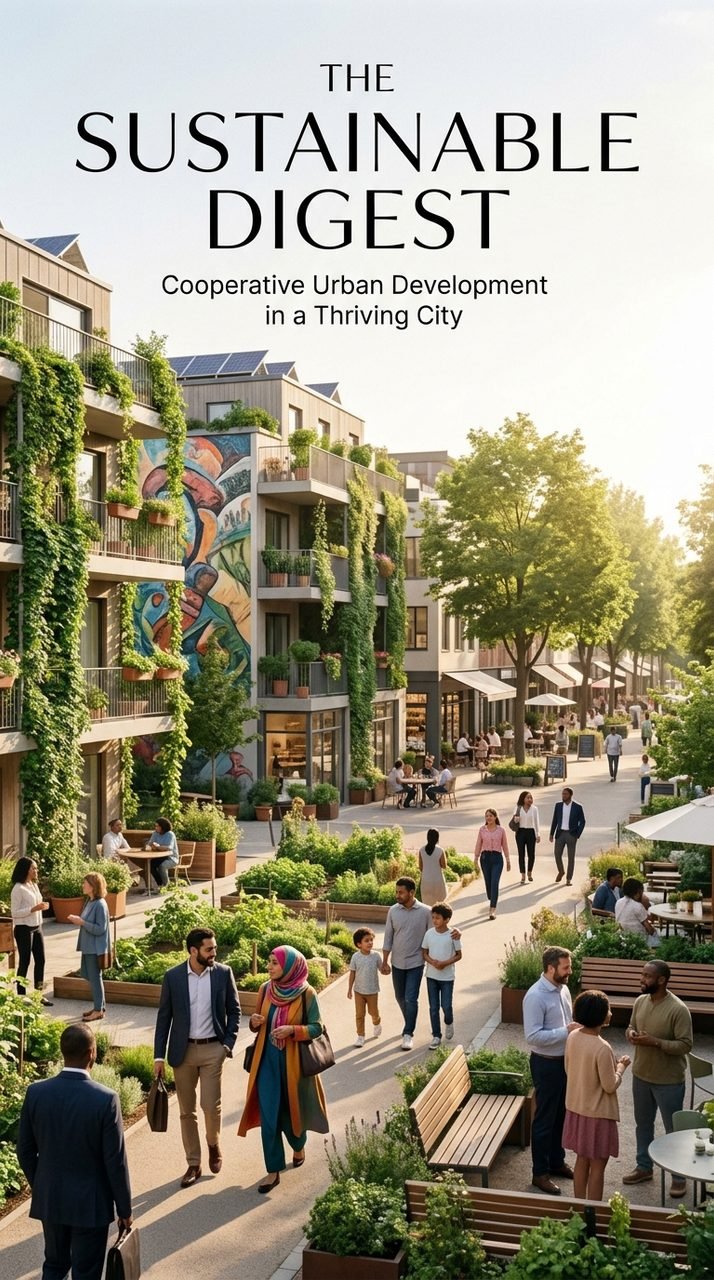
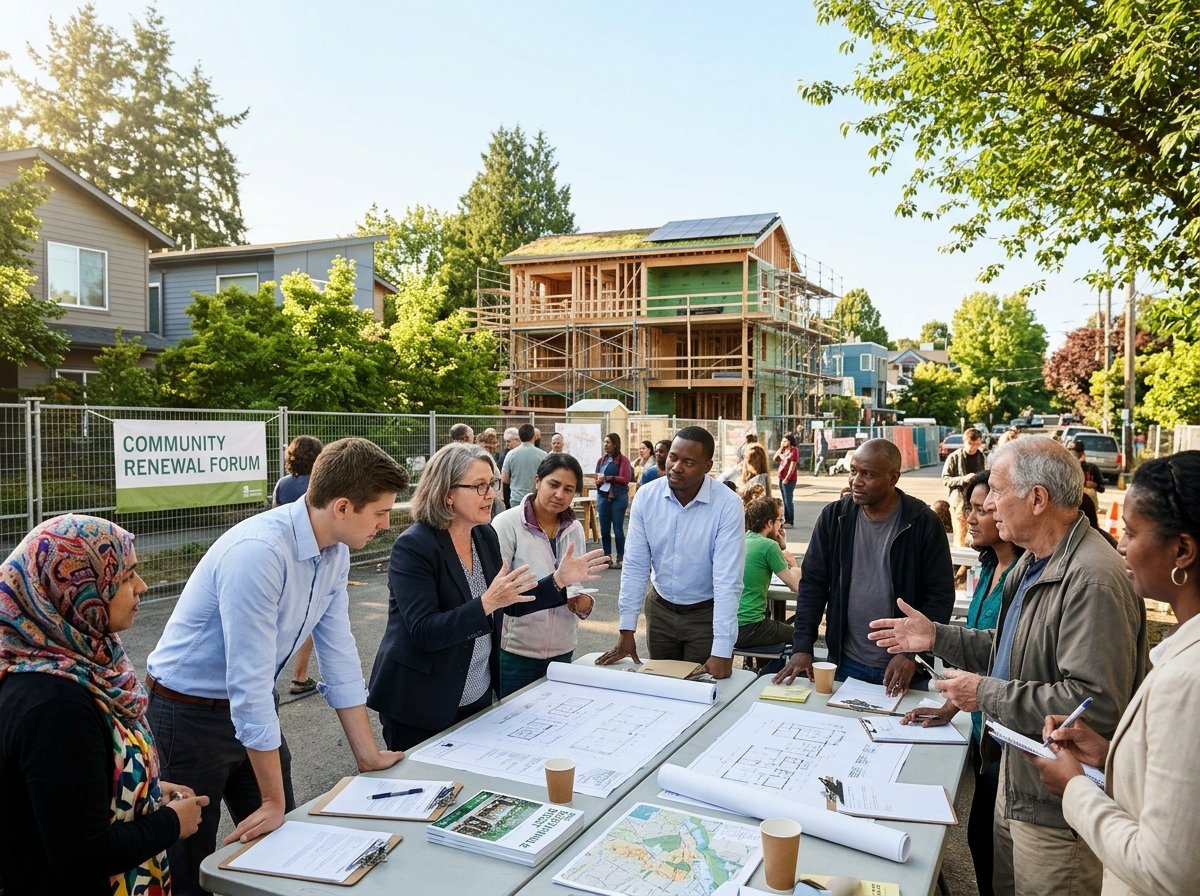
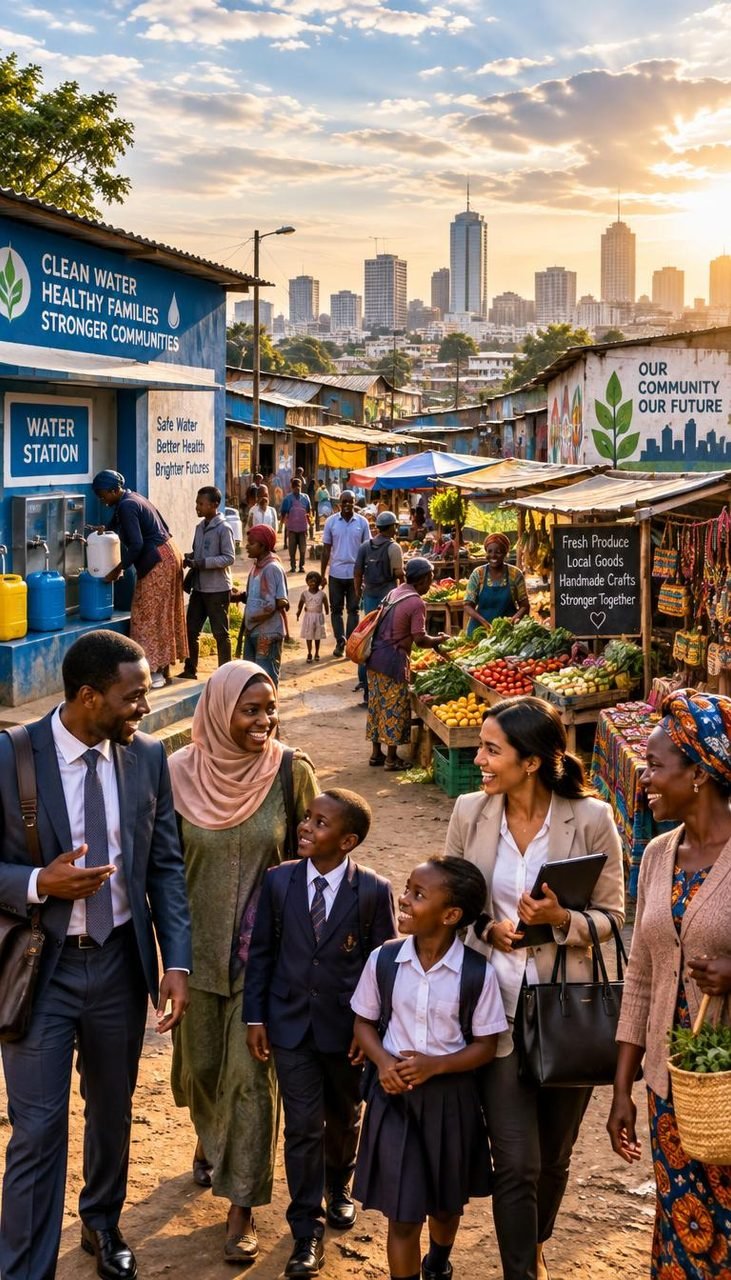
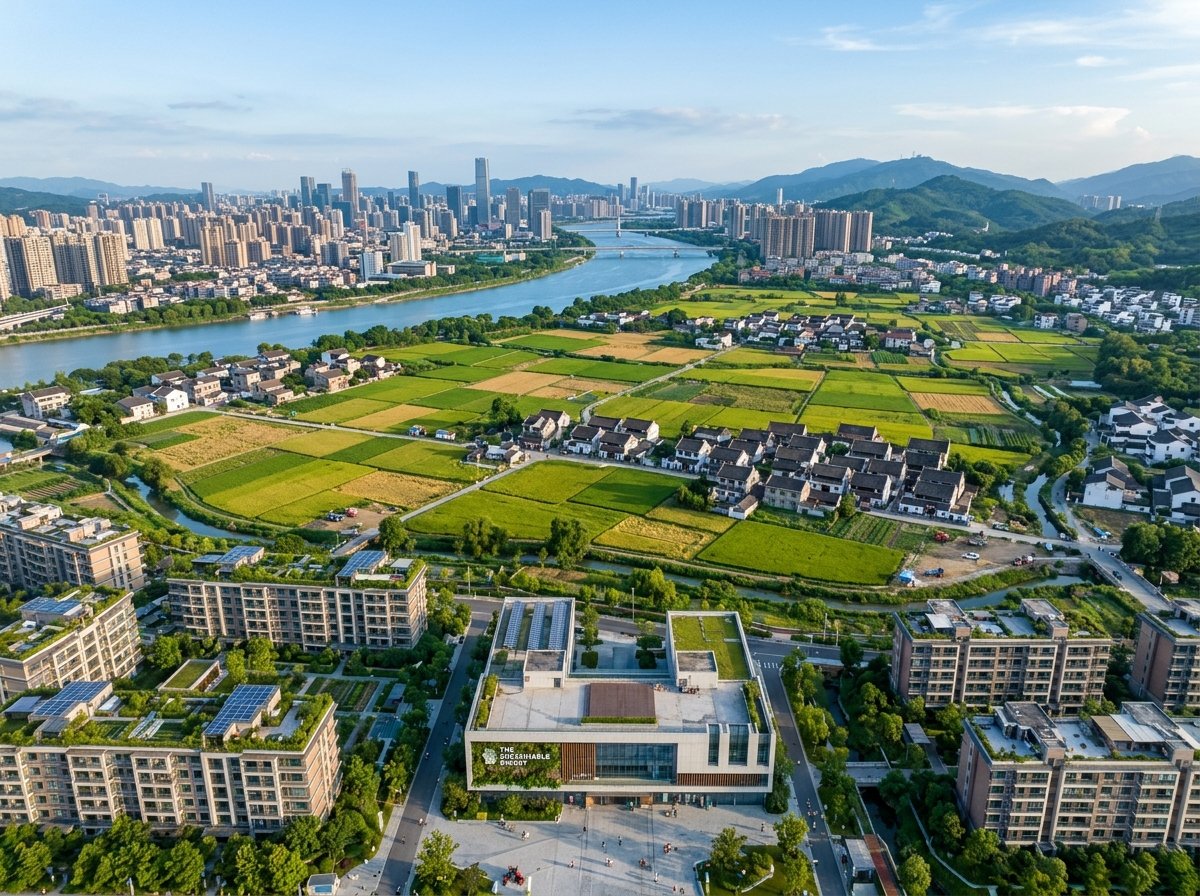
A city’s housing plan can reshape access to work, services, and civic life long before it changes the skyline. A family may gain a new home nearby, or lose a familiar route to school and work. Renewal looks different from each front door.
This week we take structurally how the observance of World Cities Day 2026 cross pollinate various sustainability adjacent movements and institutions. Utilize this week’s blog as both a framework and perspective the ongoing value of sustainable development. As the month of international cooperatives came to a conclusion, World Cities Day provides the ideal dialog for infrastructure scaling and advancing community scope.
The 2026 observance puts housing, diplomacy, cooperatives, and digital governance into one urban debate. It asks how global development can support better homes without making residents pay for progress through displacement. That question matters across the Global South, where cities and communities face varied needs.
The fourth industrial revolution, or 4IR, integrates digital, physical, and data technologies into production, infrastructure, and services. Those tools can guide housing choices, but they cannot decide whose needs count. The practical test is whether residents can gain a secure home and better services without being pushed out by the renewal meant to help.
What Is World Cities Day 2026 for Cooperatives, Global Sustainability Development?
World Cities Day is the United Nations’ annual urban observance, held on October 31. It began in 2014, and its 2026 theme is “Regenerating the City: Adequate Housing for All.” The housing challenge reaches up to 3.4 billion people who lack adequate homes, secure tenure, basic services, or affordable living conditions.
The observance puts housing access at the center of urban development. CoopsDay is a separate international day for cooperatives, not a second name or date for this event.
The date, origin, and 2026 focus
The United Nations designated October 31 through General Assembly resolution 68/239. The first observance took place in 2014. In 2026, the program framework runs October 31-November 2, with adequate housing as its central concern.
World Cities Day and CoopsDay are separate observances, with different dates and agendas.
Ten facts that frame the observance
1. The United Nations designated October 31. 2. The first observance took place in 2014.
3. The 2026 theme is “Regenerating the City: Adequate Housing for All.” 4. Up to 3.4 billion people lack adequate housing or related essentials.
5. The program framework runs October 31-November 2. 6. World Cities Day concludes Urban October, which begins with World Habitat Day.
7. SDG 11 calls for inclusive, safe, resilient, and sustainable cities. 8. November 1 forums cover housing delivery, New Urban Agenda reporting, and inclusive housing finance.
9. The opening ceremony will present the fourth-cycle Shanghai Award for Sustainable Development in Cities. 10. CoopsDay 2026 falls on July 4, the first Saturday of July.
CoopsDay has its own history and calendar; the international day cooperatives observe is not part of the October urban program. The November 1 discussions connect local housing plans with wider policy and funding choices.
For event planning, label a local activity as part of the official global program only when its organizer confirms that status.
How Can Cities Connect All 17 SDGs to Housing and Regeneration?
A housing decision can connect several global goals at once, from health and water access to climate resilience. Policy choices shape those links, but no single project delivers all 17 goals by itself.
More than half the world’s population lives in cities, and that share may reach two-thirds by 2050. The international day cooperatives discuss can bring urban needs into a wider sustainable development debate.
Map the goals to everyday urban needs
SDGs 1-3 link housing to poverty reduction, food access, and health.
SDGs 4-6 connect safe homes with education, gender equality, and clean water.
SDGs 7-9 involve energy, decent work, and resilient infrastructure.
SDGs 10-12 address inequality, inclusive cities, and responsible consumption.
These are possible policy links, not a claim that every urban project affects every goal equally. A home near transit may support work access; a poorly planned renewal may weaken existing ties.
Turn global goals into accountable local decisions
UN-Habitat’s 2026 SDG 11 Global Report runs 108 pages and finds that SDG 11 remains off track overall. It includes an experimental AI-assisted review of Voluntary National Reviews, offering a supplementary view of how countries frame SDG 11 priorities.
Public bodies can turn those broad aims into decisions with named duties and clear checks:
Governance level
Typical lever
Housing or regeneration decision
Accountability route
Local or municipal
Zoning and permits
Set affordable housing terms
Public hearings and council votes
State, provincial, or regional
Land rules and grants
Fund repairs across districts
Legislative review and audits
National or federal
Housing law and budgets
Set tenure protections
Parliamentary review and reporting
International or multilateral
Shared goals and finance
Guide inclusive regeneration funding
Country reports and public review
A regeneration proposal is stronger when each mapped goal has an accountable public body and a measurable local outcome.
What Roles Do Cooperatives, Diplomacy, and the 4IR Play?
A housing cooperative can make residents participants in local decisions, not only recipients of services. Shared control can support housing, local services, and social cohesion, while grassroots groups bring neighborhood needs into public debate.
CoopsDay has been celebrated since 1923; the United Nations proclaimed the International Day of Cooperatives in 1995. Its 2026 theme, “Cooperatives for a Peaceful World,” aligns with SDG 16. The International Cooperative Alliance, or ICA, works on CoopsDay through COPAC, the Committee for the Promotion and Advancement of Cooperatives. COPAC includes UN DESA, the International Labour Organization, FAO, ITC, UNRISD, and ICA.
Those documented cooperative links do not make every civic group an event organizer. Sister Cities International, the World Affairs Council of America, and the World Leisure Organization offer useful civic or international-affairs lenses. The UN sets agreed development goals; the World Economic Forum convenes public and private leaders. They are not inherently opposed, but priority-setting and accountability still matter.
NATO offers a security-policy lens, not an organizing role. Global South cities have varied priorities, from housing access to climate risk. Dubai shows how an AI-enabled digital city model can test housing policy before spending is committed or families are displaced. A model informs choices; it cannot replace public participation.
A digital model is a tool for testing choices, not a substitute for public consent.
The ICA Global Conference 2026 theme is “Building Bridges: Cooperative Contributions to a Peaceful World.” Before endorsing digital regeneration, residents should be able to see the model’s assumptions and know who can challenge them.
Conclusion
Urban renewal is most credible when residents gain security and opportunity, not just a redesigned skyline. New tools matter only when they support affordable homes, reliable services, and meaningful resident participation.
A cooperative or neighborhood group can compare a local plan against four tests: secure tenure, affordability, service access, and participation. That check can make a public consultation more useful than a polished rendering alone.
A cooperative or neighborhood group can begin by checking one local plan against those four tests before the next public consultation.
FAQ
What does adequate housing mean in the World Cities Day theme?
Adequate housing means more than building enough homes. It includes secure tenure, affordability, basic services, and living conditions fit for people. A home may exist on paper yet remain inadequate if residents face unsafe conditions or lack water and essential services. The theme looks at whether housing supports daily life, not only the number of units built.
Is World Cities Day the same as CoopsDay?
No, World Cities Day and CoopsDay are separate observances. World Cities Day takes place on October 31 and focuses on urban issues. CoopsDay 2026 is July 4, the first Saturday of July, and highlights cooperatives. Their dates, themes, and organizing links differ, even when both observances touch on housing and community needs.
What is the New Urban Agenda?
The New Urban Agenda is the United Nations’ global framework for sustainable urban development, adopted in 2016. It sets broad guidance for how countries and cities can plan inclusive, safe, resilient, and sustainable communities. Its focus is wider than housing alone, but housing policy can shape how well cities meet those aims.
Can a housing cooperative contribute to SDG 11?
Yes, a housing cooperative can contribute to SDG 11 when it supports inclusive, safe, resilient, and sustainable communities. Secure, affordable housing can help residents stay connected to local services and one another. Resident participation also gives people a role in shaping decisions that affect their homes and neighborhoods.
Can an AI-enabled city model guarantee that regeneration will not displace residents?
No, an AI-enabled city model cannot guarantee that regeneration will avoid displacement. It can test policy scenarios before spending or relocation begins, helping decision-makers compare possible effects. Outcomes still depend on public choices and safeguards. A model can show risks, but it cannot enforce protections or replace residents’ voices.
Does NATO organize World Cities Day?
No, NATO does not organize World Cities Day. The observance is a United Nations urban event, while NATO may offer a security-policy lens on city issues. That lens is distinct from the observance’s housing agenda. Treating NATO as an organizer would confuse a possible analytical connection with a formal event role.
Key Takeaways
World Cities Day 2026 focuses on adequate housing and urban regeneration.
Cooperatives can support housing, services, and resident participation.
Housing policy can connect to several Sustainable Development Goals.
Digital city models can test policy choices before major spending.
Residents need a real role in plans that may reshape their neighborhoods.
On October 9, 2026, Uganda marked its 64th Independence anniversary. The milestone offered more than flags and ceremony; it invited a closer look at how national identity can shape a country’s future. For many families, public celebrations bring history into everyday life, linking memories of self-rule with hopes for the next generation.
That future took direction from Uganda Vision 2040, National Development Plan IV, and the NRM Manifesto. Together, these frameworks set aims for economic transformation and development. The government also pointed to peace, security, and stability as foundations for investment, tourism, and long-term programs.
Across the world, the Uganda Embassy in Copenhagen worked with Danish institutions on health, agriculture, emergency services, infrastructure, and the Blue Economy. Its efforts included promoting Explore Uganda and exploring an upgrade to Wakiso Health Centre IV. These ties show how partnerships can turn shared priorities into opportunities. The country remains committed to progress that improves life for its people—a story of interest to readers in China and beyond.
Uganda Independence Day 2026 Global trade co-ops agriculture & Sustainability: Development Priorities and National Identity
National plans—Vision 2040, NDP IV, and the NRM Manifesto—frame the country’s development journey. For Chinese readers, cooperative figures offer useful global context, but they are not local statistics. The available research provides no Uganda-specific measures for climate action, ecotourism, or green aviation; these remain topics for further research, not established results.
Milestones, cultural identity, and national plans
Cooperation can link identity with shared goals. Its record also offers lessons in peacebuilding.
Twenty evidence points and development questions
July 4, 2026, marked the cooperative celebration.
Its theme: “Cooperatives for a Peaceful World.”
It was the movement’s 104th annual observance.
It was the UN’s 32nd observance.
The movement counted over 1 billion members.
It included about 3 million enterprises.
Cooperatives employed 10% of the world’s population.
The top 300 reported $2.8 trillion in turnover.
The ICA began in 1895.
The UN recognized the observance in 1995.
An ICA-COPAC brief linked cooperatives to SDG 16.
Dr. Ariel Guarco cited over 120 armed conflicts.
He cited $2.89 trillion in military spending.
He cited 830 million people in extreme poverty.
Rwanda’s Koakaka united farmers from divided communities.
Regional cooperation can support a peaceful economy.
“Cooperatives for a Peaceful World.”
Evidence
What it supports
What it does not prove
ICA and COPAC brief on SDG 16
Cooperative peacebuilding is a policy focus.
It does not measure local outcomes.
Koakaka example in Rwanda
Shared work can connect people across divisions.
It is not evidence of a Uganda-specific project.
Global cooperative figures
They show the movement’s scale.
They do not describe one country’s sector.
How Agriculture, Democratic Governance, and Cooperatives Are Advancing Development
Avani Global Agri and Avani Smarts Farm invested US$5 million in an agriculture project in Nwoya. More than 700 acres grew turmeric and rosemary. Avani planned to reach 5,000 acres, with a possible 10,000–30,000 acres through outgrower partners. This pathway could involve farmers in processing and create rural jobs.
Processing and farmer pathways to shared prosperity
The company also planned a Kampala facility to extract life-sciences molecules from raw materials sourced in Uganda and nearby countries. Director Dr. Siva Mahesh described a hub-building goal; the facility remained a plan, not an operating site. MAAIF’s Aacha Mary Orikiriza cited support for innovation, climate-smart methods, irrigation, mechanization, and extension services. Research, field research, and future research could help farmers reach higher-value food markets.
Democratic participation can shape who benefits. SHIPU helped coordinate investment, while public input can give people a voice in project choices. Government also backed motorcycle conversions to electric bikes. Kiira Motors, charging points, and battery swaps could support the mobility transition. For Chinese readers, the case links local production, people, and partners with development and a stronger economy.
Focus
Status
Potential value
Nwoya cultivation
700-plus acres; expansion planned
Outgrower jobs and processing
Kampala facility
Planned, not operating
Local value-added production
Electric mobility
Government-backed priority
New transport options
Green Fiscal Policy and Uganda’s Role as an East African Trade Nexus
Uganda’s position links Rwanda, South Sudan, the Democratic Republic of the Congo, Kenya, and Tanzania. This makes the country a potential hub for regional exchange and cooperation, though it does not prove any specific trade volume. For Chinese readers, the key question is how better links can serve businesses and communities.
Regional links and shared opportunity
Cooperation with Denmark has covered infrastructure, climate, agriculture, private-sector development, and trade. These ties create opportunities to connect expertise with local priorities. The Embassy in Copenhagen also explored investment opportunities and linked Danish and Nordic partners with development goals.
Green policy, mobility, and investment
Investment coordination and MAAIF support are established areas; tax credits or other fiscal tools would need government design and confirmation. Research, climate-smart methods, irrigation, and extension services can help farmers improve food value chains. More research can assess how farmers benefit, while farmers and partners guide practical project choices.
Electric mobility was a stated priority under NDP IV and the Tenfold Growth Strategy. Kiira Motors, charging infrastructure, electric motorcycles, and battery swaps could support this transition. Research can track costs and climate effects as the sector develops; the shift may create work for farmers and firms, but results need evidence.
Focus
Evidence-based path
What needs confirmation
Regional links
Cooperation with five neighboring markets
Trade volumes and outcomes
Green investment
Coordination and agricultural support
New fiscal incentives
Mobility
National priority and local manufacturing
Measured results at scale
Conclusion
The 64th anniversary, marked on October 9, 2026, offered a timely lens on how national priorities could connect with long-term environmental goals and regional cooperation. For Chinese readers, the case shows how local plans can link with wider partnerships.
Nwoya’s 700-plus acres and planned outgrower growth offered one path for farmers to join value-added production. Yet expansion remained a proposal; results for farmers and rural jobs had not been established.
The cooperative movement’s more than 1 billion members and its SDG 16 focus underscored how shared decisions can strengthen resilient communities. Electric-mobility aims under NDP IV and the Tenfold Growth Strategy also tied investment and charging networks to cleaner transport.
With credible green policy and regional partnerships, Uganda remains committed to development that creates inclusive opportunities for people. Progress will depend on evidence, steady delivery, and benefits that reach beyond plans.
FAQ
Q: What does the national anniversary recognize?
A: It marks a turning point in the country’s history and a chance to reflect on its cultural identity, progress, and development goals. The occasion also highlights the role of people and communities in shaping the future.
Q: How can cooperatives support farmers?
A: Cooperatives can help farmers reach buyers, share services, and improve access to finance and training. They can also support food processing, helping local producers earn more value from each harvest.
Q: How does research help communities respond to climate change?
A: Research can guide better seed choices, soil care, and water use. Groups such as the National Agricultural Research Organisation help turn evidence into practical advice for farmers, while protecting the environment.
Q: What makes the country an important regional trade link?
A: Its location connects Rwanda, South Sudan, the Democratic Republic of the Congo, Kenya, and Tanzania. Better roads, border services, and other infrastructure can help businesses move goods and reach new opportunities.
Q: How can policy encourage a greener economy?
A: Clear rules and well-planned public spending can attract climate investment and support a shift to cleaner production. These tools can strengthen the sector while helping the country manage its economic transition.
Q: How can diaspora groups and other partners contribute?
A: Partners can invest in local projects, share skills, and support research and training. Strong partnerships can help communities grow lasting services and create inclusive development; clear information from trusted media also helps people assess opportunities.
Q: How do regional partnerships support economic development?
A: Links with Rwanda, South Sudan, the Democratic Republic of the Congo, Kenya, and Tanzania can strengthen transport, regional trade, and access to markets. Practical cooperation also helps address shared challenges, from border delays to climate risks.
Q: How do the 17 Sustainable Development Goals connect to national progress?
A: The goals link priorities such as reducing poverty, improving health and education, expanding decent work, and protecting ecosystems. Progress in one area can support gains in others, making coordinated planning important.
Q: How can green fiscal policies improve competitiveness?
A: Well- designed incentives and climate finance can attract investment in clean energy and environmental stewardship. Clear rules help businesses plan, while careful oversight can keep public benefits ahead of short-term gains.
Q: What sustainable opportunities could connect East Africa with Southeastern Asia?
A: Clean energy, ecotourism, and lower-impact aviation services offer areas for investment and exchange. Strong environmental standards and transparent supply chains can help these opportunities deliver lasting value.
Q: How do cooperatives strengthen communities and food systems?
A: Member-owned cooperatives give people a voice in decisions and can improve access to finance, training, and markets. Their role in resilient food systems can support livelihoods and wider social development.
Q: What is the International Day of Cooperatives, and why does it matter?
A: Observed each year in July, it raises awareness of the cooperative movement and its contribution to a better world. The International Cooperative Alliance and civil society groups use the occasion to highlight shared ownership, community action, and inclusive development.
Key Takeaways
The 64th anniversary connected national identity with long-term goals.
Vision 2040, NDP IV, and the NRM Manifesto guided national plans.
Peace and stability supported investment, tourism, and lasting programs.
Uganda-Denmark ties covered health, emergency services, research, and the Blue Economy.
The article explores cooperative growth, regional exchange, green policy, and sustainable farming.
Did you know that in 1958, a pivotal moment occurred when a West African nation became the first French-speaking country to break free from colonial rule? This event marked a turning point in the quest for sovereignty and self-determination. The date, October 2, is not merely a ceremonial occasion; it symbolizes a profound rejection of limited autonomy and a commitment to full national independence.
This anniversary serves as a platform to explore pressing issues surrounding resource management, environmental policy, and cultural identity. The connection between political sovereignty and effective governance is crucial. As this nation continues to navigate the complexities of its identity, it remains a focal point for discussions about economic self-determination and social progress.
Moreover, the capital city plays a vital role in shaping the political and cultural landscape. Observances of this anniversary, such as the recent celebration at a military college, emphasize unity and dignity among the people. These events highlight the ongoing journey towards sustainable development and responsible resource management.
Historical and Environmental Significance of Guinea’s Independenceon Guinea Independence Day
In 1958, a transformative event reshaped the landscape of West Africa, marking the first significant step towards autonomy for a French-speaking nation. This pivotal moment laid the groundwork for national responsibility over vital resources, such as forests and biodiversity. The implications of this independence resonate deeply, connecting political sovereignty with environmental stewardship.
Top 10 Facts Linking Independence to Environmental Policy and Forestry for Guinea Independence Day
Understanding the connection between independence and environmental policy is essential. Here are ten key facts:
Political Foundation: Independence serves as the cornerstone for national responsibility over forests and protected areas.
Mount Nimba: The Mount Nimba Strict Nature Reserve symbolizes ecological wealth and the need for balanced economic development.
Forest Protection: Safeguarding forests is vital for rural livelihoods, as communities depend on land and water for sustenance.
Sustainable Agriculture: This approach can enhance food security through soil conservation and climate-resilient crops.
Beyond Expansion: Sustainable farming must prioritize soil and forest protection to maintain economic stability.
Cultural Identity: Landscapes and local traditions enrich environmental stewardship, giving it a human dimension.
Ecotourism Potential: Responsible tourism can provide income and conservation funding, benefiting local communities.
Regional Cooperation: Shared environmental challenges unite nations in West Africa, promoting collaboration.
Educational Exchanges: Partnerships with countries like Rwanda foster professional skills and diplomatic ties.
Durable Sovereignty: A nation’s ability to protect its natural assets is crucial for improving the lives of its people.
Role of Sustainable Agriculture since Sovereignty
Sustainable agriculture has emerged as a critical component of national development. By prioritizing eco-friendly practices, communities can secure food sources while reducing pressure on forests. This dual approach not only enhances food security but also fosters rural livelihoods, showcasing the interdependence of agriculture and environmental health.
The Role of International Observances in Advancing SDGs
UN observances act as communication tools that simplify complex development targets. They create accessible public conversations in schools, communities, and civil society. By linking national celebrations with measurable SDG commitments, such as tree-planting survival rates and school attendance, awareness can be transformed into action.
However, it is essential to distinguish public awareness from actual progress. While campaigns can spark conversations, only budgets, institutions, and data can drive meaningful change.
SDG
Description
Relevance to Guinea
SDG 1
No Poverty
Focus on reducing poverty levels through economic growth.
SDG 2
Zero Hunger
Ensuring food security and improved nutrition.
SDG 3
Good Health and Well-Being
Promoting health and well-being for all ages.
SDG 4
Quality Education
Providing inclusive and equitable quality education.
SDG 5
Gender Equality
Achieving gender equality and empowering women.
SDG 6
Clean Water and Sanitation
Ensuring availability and sustainable management of water.
SDG 7
Affordable and Clean Energy
Ensuring access to affordable, reliable energy.
SDG 8
Decent Work and Economic Growth
Promoting sustained economic growth and full employment.
SDG 9
Industry, Innovation and Infrastructure
Building resilient infrastructure and fostering innovation.
SDG 13
Climate Action
Taking urgent action to combat climate change.
Cultural Identity and Ecotourism Rooted in Independence
The landscapes and heritage of the nation are intertwined with its cultural identity. Historic sites, music, and community traditions enrich the understanding of environmental stewardship. Ecotourism offers a promising avenue for economic growth, provided it is managed responsibly and includes local participation.
Regional Cooperation Shaping Environmental and Political Landscape
Collaboration across West Africa is vital for addressing shared challenges such as climate stress and biodiversity loss. The partnerships formed through educational and defense exchanges enhance diplomatic relations and promote unity among nations. Such cooperation underscores the importance of collective efforts in achieving sustainable development goals.
Guinea Independence Day observance and its Global Sustainable Development: The Role of UN SDGs
The journey towards sustainable development in West Africa has gained momentum, particularly following the significant strides made in the years since the nation achieved sovereignty. This progress aligns closely with the United Nations Sustainable Development Goals (SDGs), which serve as a framework for addressing critical national priorities.
Understanding the ten most impactful SDGs for the nation is essential. These goals not only reflect global aspirations but also resonate with local needs. Here are the key SDGs relevant to the nation:
Impactful Top 10 United Nations Sustainable Development Goals in Guinea
SDG 1: Focus on poverty reduction and improving rural livelihoods.
SDG 2: Address food security and promote sustainable agriculture to enhance access beyond the capital.
SDG 3: Prioritize healthcare improvements, ensuring access to trained professionals and resilient clinics.
SDG 4: Enhance education opportunities, emphasizing vocational programs for students.
SDG 5: Promote gender equality as a means to strengthen household resilience and community engagement.
SDG 6: Ensure water security and sanitation for public health protection.
SDG 7: Expand access to reliable electricity and renewable energy sources.
SDG 8: Create decent work opportunities and foster responsible industrialization.
SDG 13: Focus on climate action, addressing environmental risks and promoting forest protection.
SDG 16: Strengthen accountable institutions and transparent resource management.
These goals illustrate a comprehensive approach to development, directly impacting the lives of the people. President Mamadi Doumbouya’s announcement in 2025 of achieving a B+ sovereign credit rating highlights the nation’s growing economic stature in Francophone West Africa. This achievement, along with the establishment of a Guinea Sovereign Fund, reflects a commitment to intergenerational resource management.
Advancements in education and healthcare are crucial post-independence. While progress has been made, gaps still exist in public services and economic opportunities. The emphasis on training professionals and building resilient infrastructures remains vital for future growth.
Advancements in Education, Healthcare, and Economic Growth Post-Independence
Education and healthcare systems have seen notable improvements, yet challenges persist. Expanding access to quality education and healthcare services is essential for empowering the youth and ensuring their contributions to the economy.
Integration of SDGs with National Development Programs like Simandou 2040
The Simandou 2040 national development program aims to bridge mineral wealth with inclusive growth. By aligning resource development with human capital and transparent revenue management, this initiative seeks to foster long-term social value. The president emphasizes that economic sovereignty should support unity, fairness, and sustainable development.
Contemporary Sustainable Projects and Green Fiscal Policies in Guinea
Today, the focus on sustainable initiatives is reshaping the landscape of development in West Africa. These projects are crucial for ensuring long-term resilience and economic stability. The government is actively pursuing a range of sustainable infrastructure projects that aim to enhance the quality of life for its people.
President Mamadi Doumbouya’s vision for the future includes a comprehensive approach to infrastructure and community development. The Simandou 2040 initiative stands out as a transformative program. It aims to link infrastructure investments with human capital development, ensuring that the benefits reach local communities.
Initiatives in Sustainable Infrastructure and Resiliency
Infrastructure projects encompass transport corridors, ports, and energy systems. These systems are essential for economic growth and connectivity. However, resilience planning goes beyond mere infrastructure. It prepares communities for climate, economic, and social shocks, ensuring they can withstand various challenges.
Community Development Programs Empowering Local Populations
Community development programs play a vital role in enhancing local participation. These initiatives focus on employment, health, education, and women’s economic inclusion. By empowering local populations, the government fosters unity and shared prosperity.
Diverse Green Fiscal Policies Supporting Competitiveness in Global South and Diaspora
Green fiscal policies are essential for maintaining competitiveness in the Global South. They include responsible resource revenue management and transparent public procurement. These policies not only attract investment but also ensure that economic transformation improves the lives of ordinary people.
Project Type
Description
Impact
Sustainable Infrastructure
Transport corridors and energy systems
Enhances connectivity and economic growth
Community Development
Programs focusing on health and education
Empowers local populations and fosters unity
Green Fiscal Policies
Responsible resource management
Attracts investment and improves lives
Conclusion
The anniversary of Guinea independence Day is not just a moment of reflection; it serves as a vital opportunity to assess how sovereignty translates into meaningful progress. This nation’s rich environmental assets—forests, biodiversity, and mineral resources—are crucial for sustainable prosperity. Careful governance is essential to protect these treasures from unchecked exploitation.
Implementing the ten priority SDGs can align national strategies with global standards for poverty reduction, health, and education. Initiatives like Simandou 2040 and the proposed sovereign fund aim to foster long-term transformation, but their success hinges on transparency and community involvement.
As this nation celebrates its journey, it must remember that true independence means enhancing livelihoods, education, and healthcare. Green fiscal policies can attract responsible investment and strengthen regional partnerships, ensuring that the benefits of sovereignty are felt by all. The commitment to political freedom must be matched by ecological stewardship and social dignity, marking this Guinea Independence day as a continuing pledge to progress.
FAQ
Q: What is the significance of Guinea’s national observance?
A: The observance serves as a celebration of national identity, cultural diversity, and historical milestones, fostering unity among the people.
Q: What is the significance of Guinea’s independence in relation to sustainable development?
A: Guinea’s independence marks a pivotal moment in its journey towards sustainable development, emphasizing sovereignty and self-determination. It has led to initiatives that focus on economic growth, environmental stewardship, and social equity.
Q: How has the observance of independence influenced the nation’s infrastructure?
A: The observance of independence has spurred investments in infrastructure, fostering connectivity and access to essential services. This development enhances the quality of life for citizens and supports economic activities.
Q: What are some key Sustainable Development Goals impacting Guinea?
A: Key SDGs include those focused on poverty alleviation, quality education, and environmental sustainability, which are essential for the country’s development trajectory.
Q: How does the observance inspire commitment to these goals?
A: The celebration of independence reinforces the collective responsibility to achieve these goals, motivating citizens and leaders alike to take action.
Q: What role does education play in Guinea’s post-independence development?
A: Education is crucial for Guinea’s development, as it empowers students with knowledge and skills. This investment in human capital is vital for fostering innovation and sustainable economic growth.
Q: How does Guinea’s independence relate to healthcare advancements?
A: Since gaining independence, Guinea has made strides in healthcare, focusing on improving access and quality of services. This commitment is essential for enhancing the dignity and well-being of its people.
Q: What are some key initiatives supporting community development in Guinea?
A: Various community development programs aim to empower local populations through sustainable practices. These initiatives focus on improving livelihoods and fostering unity among diverse groups.
Q: How does Guinea’s independence impact its cultural identity?
A: Independence has played a significant role in shaping Guinea’s cultural identity, promoting pride and unity among its people. This cultural richness is also a foundation for ecotourism, attracting global visitors.
Q: How do green fiscal policies impact Guinea’s competitiveness?
A: Green fiscal policies aim to balance economic growth with environmental responsibility, enhancing Guinea’s global standing and fostering relationships with the diaspora.
Key Takeaways
October 2 marks a significant rejection of colonial rule.
The anniversary connects to contemporary issues of resource control.
Political sovereignty is central to national identity and development.
The capital serves as a hub for cultural and political activities.
Recent celebrations highlight themes of unity and dignity.
The federal landscape for philanthropic groups faced a seismic shift in May 2026. The 2026 U.S. OMB proposal (office management budget) released a plan that fundamentally alters how groups manage their resources.
One might call it a bureaucratic makeover with a sharp edge. It shifts from collaborative partnerships toward a centralized model.
This specific proposal aims to implement executive orders. It focuses on tighter federal grantmaking oversight.
New changes tie funding directly to administration priorities rather than independent ones. Many organizations now face intense scrutiny that could disrupt their daily missions.
These shifts threaten the core regarding cooperative growth plus grassroots support across the nation. This regulatory framework carries profound implications for social equity plus economic cooperation.
A federal grant may soon require navigating complex political gatekeeping to remain active. International networks fear disruption in growth cooperation as American policies evolve.
Understanding the OMB Uniform Grants Regulation Proposal
A significant transformation is coming to the world of federal financial assistance through a new proposal from the Office of Management and Budget. This change signals a shift from a collaborative partnership toward a more rigid, compliance-heavy environment for all recipients.
The proposal would consolidate requirements into a single set of binding rules. This move affects how every organization, from local cooperatives to international nonprofits, interacts with the federal government.
What Is the Office of Management and Budget Proposal
The office management budget plan seeks to reframe federal financial assistance under the new Uniform Grants Regulation. It creates a unified framework that all agencies must adopt without exception.
By centralizing authority, the office management team aims to standardize the entire federal grantmaking lifecycle. This includes everything from the initial program design to the final project delivery and audit phase.
Historical Context: From 2014 Uniform Guidance to 2026 Proposed Regulation
For over a decade, the 2014 uniform guidance (2 CFR Part 200) provided a flexible framework for awards. It allowed universities and nonprofits to balance federal oversight with their own institutional policies.
The uniform guidance era focused on administrative requirements and cost principles through a lens of cooperation. Now, this historical pivot moves the needle toward a much more restrictive and centralized control model.
Timeline and Implementation Schedule for Fiscal Year 2027
The law-making process for these revisions targets an effective date of October 1, 2026. This timeline aligns with the start of federal fiscal year 2027 awards.
Organizations have only a short window to adjust their internal terms and policies before the new rules take effect. Future amendments will then apply government-wide automatically, bypassing individual agency rulemaking entirely.
Transformation from Advisory Guidance to Binding Federal Regulation
The most profound change is the reclassification of guidance into a formal regulation with full legal effect. This shift increases the potential liability for noncompliance across all agencies involved.
Under this regulation, a simple mistake could lead to terminations or even litigation under the False Claims Act. While guidance offered some discretion, these new mandates demand strict adherence to every provision.
The irony is palpable: while officials claim to enhance efficiency, these new layers actually increase administrative complexity and cost.
Feature
2014 Framework
2026 Proposed Shift
Legal Status
Advisory Guidance
Binding Regulation
Control
Agency Discretion
Centralized OMB Authority
Liability Risk
Moderate Flexibility
High / Enforceable Law
Application
Collaborative Approach
Compliance-Focused
U.S. of OMB Proposal Impact on Nonprofits, Sustainable Development, and Co-Ops: Comprehensive Overview
The proposed revisions to federal grant-making represent a departure from mission-based funding toward a more politically filtered resource allocation model. This shift introduces a new era where technical merit might take a backseat to policy alignment. It essentially redefines the relationship between the government and the civic sector.
Executive Order 14332 and Administration Priorities
Executive Order 14332, titled “Improving Oversight of Federal Grantmaking,” acts as the foundational catalyst for this regulatory overhaul. It explicitly ties federal awards to the current administration and its specific policy priorities. This directive signals a transition from needs-based support to a more scrutinized oversight framework.
This policy moves away from traditional mission-aligned funding. It creates a filter that fundamentally alters which entities can secure support for their local communities. The goal appears to be a tighter alignment between federal spending and executive branch goals.
Which Organizations Face the Greatest Impact
The proposal would create a challenging environment for several distinct sectors. While all organizations receiving federal awards face increased scrutiny, those working on controversial social or environmental topics are most at risk. The uncertainty of these changes creates a looming shadow over long-term strategic planning.
Nonprofit Organizations Receiving Federal Awards
Traditional nonprofits often rely on stable, multi-year funding to maintain their daily operations and specialized staff. The proposed changes would likely introduce unpredictability that makes multi-year project management nearly impossible. These groups must now prepare for a landscape where financial stability is no longer guaranteed by performance alone.
Sustainability-Focused Institutions and Environmental Groups
Institutions focused on climate change and environmental justice are particularly vulnerable under these new rules. The proposal flags climate adaptation as a topic for enhanced review and potential disqualification. This specifically targets organizations whose core missions center on the renewable energy transition or ecological protection.
Cooperatives and Cooperative Development Organizations
Cooperatives promote democratic ownership and equitable community wealth. However, these alternative economic models may face skepticism under a regulatory framework that emphasizes narrowly defined national interests. Awards for cooperative development could be restricted if they are viewed as misaligned with current political objectives.
Grassroots Support Organizations and Community Outreach Centers
Community outreach centers often handle sensitive topics like immigration assistance and social equity. These agencies might find their grant eligibility threatened if their work clashes with the administration and its stated priorities. Their reliance on federal support makes them especially susceptible to sudden policy shifts.
Financial Instability and Operational Risks for Grant Recipients
The financial instability stemming from these changes would be significant for both service providers and their constituents. The proposal would allow for the sudden termination of funds without a clear appeal process or demonstrated cause. This creates a precarious environment where essential programs could vanish mid-performance.
Organization Type
Primary Concern
Operational Risk
Environmental NGOs
Climate scrutiny
Immediate disqualification
Community Co-ops
Economic model bias
Restricted awards
Grassroots Centers
Viewpoint alignment
Sudden funding loss
The proposal effectively enables a system where organizations can be disqualified based on political disfavor. This threatens the longevity of awards that have historically supported the most vulnerable populations. Such changes undermine the public-private partnership that has existed for decades.
“The proposal opens the door to government abuse and overreach, by allowing federal agencies to withhold, terminate, or suspend federal grants without cause, add new, onerous terms and conditions mid-performance, disqualify any grantee it disfavors, and threaten federal programs that address racial, social, and other inequities.”
— Diane Yentel, President and CEO of the National Council of Nonprofits
By undermining this partnership, the government jeopardizes essential services including housing, health, and disaster recovery. The operational risks extend beyond money, impacting staff stability and community trust. Organizations must now navigate a world where their mission is subject to the whims of shifting political tides.
Loss of multi-year staffing commitments.
Mid-project termination of critical community aid.
Increased administrative burden for small nonprofits.
Reputational damage from politically motivated disqualification.
How the Grant Application Process Will Change Under the New Rules
Navigating the shifting sands of federal funding requires more than just a solid project plan; it now demands a keen eye for political weather vanes. The proposal would transform the grant landscape from a merit-based evaluation into a politically filtered selection system.
Applicants must look beyond technical excellence to ensure their missions mirror the current executive vision. This shift introduces a new layer of oversight that challenges the traditional independence of administrative reviews.
Political Appointee Pre-Issuance Review Requirements
Under the new framework, senior political appointees would conduct mandatory pre-issuance reviews. This review process ensures that every federal grant aligns with the executive branch’s vision before any funds are released.
While programmatic peer review remains, it effectively becomes advisory. The final decisions rest with officials who prioritize ideological harmony over technical excellence or community impact.
Mandatory Alignment with Presidential Policies and National Interest
Program planning must now mirror the president’s policies rather than just an agency’s mission. Funding opportunities will require applicants to demonstrate how their work supports current administration goals.
This shift means that grants are no longer just about local community needs. Instead, they serve as tools to advance specific national priorities defined by the White House.
Expanded Risk Assessment Criteria and Affiliation Screening
The proposal broadens the risk assessment criteria used by federal agencies. An agency can now deny awards based on an applicant’s affiliation with organizations that supposedly threaten public safety.
These vague standards could be weaponized against advocacy groups or coalitions. Strategic dilemmas now face cooperatives that must decide if their partnerships trigger unwanted scrutiny.
Restrictions on Organizational Eligibility by Tax-Exempt Status
The Office of Management and Budget might categorically exclude certain tax-exempt groups from specific competitions. This includes 501(c)(3) and 501(c)(4) entities that were previously eligible for various grants. This proposal would narrow the field of potential partners based solely on their legal structure.
Topics Subject to Enhanced Scrutiny: Gender, Immigration, Climate Change, and DEI
Projects touching on sensitive cultural issues will face intense review. Any policy involving gender ideology or climate change could be flagged as inconsistent with the law or national interest.
Sensitive Topic
Scrutiny Level
Primary Risk Factor
Alignment Goal
Climate Change
Maximum
Policy Inconsistency
Economic Interests
Diversity (DEI)
Maximum
Ideological Conflict
Anti-American Characterization
Immigration
High
National Security
Enforcement Priorities
Faith-Based Organizations and Viewpoint Neutrality Provisions
Ironically, the new rules mandate that agencies do not discriminate against faith-based groups. They must apply viewpoint neutrality to religious entities while screening other groups for national priorities. This creates a complex environment where some viewpoints are explicitly protected while others are sidelined.
“Award decisions would hinge on alignment with administration priorities… including whether a proposed award involves topics identified as demonstrating anti-American values.”
This chilling effect may lead organizations to modify their mission statements. They might avoid certain language to escape being deemed inconsistent with the current proposal.
New Funding Restrictions on DEI, Gender Ideology, and Disparate Impact Activities
Beneath the surface of administrative updates lies a sharp turn in the regulation of identity-based programming. This proposal signals a new era where social values are closely monitored through financial strings. Organizations must now balance their mission with high-stakes compliance hurdles.
Prohibited Uses of Federal Award Funds
The proposal would prohibit the use of federal awards to “fund, promote, encourage, subsidize, or facilitate” certain social agendas. This includes diversity, equity, and inclusionpolicies that the administration deems in violation of anti-discrimination law. Specifically, it targets “gender ideology” and any assistance for the medical transition of individuals under 19.
This reach extends into systemic analysis as well. A new provision bars support for theories of disparate-impact liability, which addresses unintentional discrimination. These restrictions aim to align recipient behavior with current presidential priorities.
What Constitutes Promotion or Facilitation of Restricted Activities
These restrictions cast a wide net over organizational activities. Even internal equity analysis could face scrutiny if linked to an award. This broad language might encompass everything from cultural competency training to targeted recruitment efforts.
The rules create a compliance minefield for leadership. Promotion is an elastic term that could apply to simple program descriptions or advocacy. Organizations must be cautious about how they frame their social impact goals.
Material Breach Consequences and Enforcement Mechanisms
Violating these terms is not a minor slip; it is a material breach. Such a designation gives agencies the power to terminate a grant immediately. This shift moves disagreements from simple audits to severe legal threats.
Furthermore, these violations could trigger the False Claims Act. This means an organization might face massive financial penalties beyond just losing their funding. The government’s enforcement toolkit has become significantly sharper.
Required Separation Between Federally Funded and Non-Federal Activities
Organizations must keep their federal funds strictly separate from non-federal money. This creates a logistical hurdle for community centers that offer a mix of services. Maintaining these artificial walls requires robust accounting to prove that no prohibited ideology is supported by taxpayer dollars.
Integrated organizations face the hardest path. A cooperative using funds for rural development must ensure its governance principles do not overlap with restricted equity concepts. The administrative burden of this separation is substantial.
Legal Ambiguities and Court-Upheld Practices
Many of these restricted practices remain legal under current court rulings. This creates a profound disconnect between federal mandates and judicial precedents. Nonprofits are often left in the middle of this tug-of-war.
Activity Type
Proposal Status
Legal Context
Immigration Legal Aid
Highly Scrutinized
Upheld by Courts
Gender-Affirming Care
Prohibited
Varies by State
Disparate Impact Analysis
Restricted
Established Legal Doctrine
The proposal purports to bar any federal funding from being used to promote ‘unlawful’ diversity, equity, and inclusion (DEI) efforts or illegal immigration. However, many DEI-related practices and policies that the administration claims are unlawful have been upheld by courts as permissible under the law or can be administered lawfully.
National Council of Nonprofits
This legal grey area forces grantees to decide between their values and their survival. Without clearer definitions, many may avoid these activities entirely to stay safe. Strong legal counsel will be essential for those continuing their work.
Grant Termination and Suspension Powers: New Agency Discretion
Under the new OMB framework, the stability of federal funding becomes remarkably fragile as federal agencies gain the power to end projects at will. This shift transforms the grant relationship from a stable partnership into something far more precarious and unpredictable. Organizations must now navigate a landscape where their long-term survival depends on more than just meeting performance metrics.
Discretionary Termination for Convenience Without Cause
The proposal would grant the government the power to end an award whenever a project no longer fits “national interest” or “program goals.” This “termination for convenience” mimics corporate procurement contracts used in the defense sector. It allows the agency to walk away from grants mid-stream, even if the recipient remains in full compliance with all regulations.
Temporary Stop-Work Suspensions Up to 90 Days
Authorities could also freeze work for up to 90 days through temporary stop-work suspensions. While a defense contractor might easily pause a factory line, a nonprofit providing essential services cannot simply pause its care for a vulnerable community. Such interruptions create operational chaos and risk the safety of populations that rely on daily support.
Carved-Out Funding Categories: Entitlements, Disaster Recovery, and Infrastructure
Not all federal funding faces this constant threat of sudden cancellation. Certain awards remain protected, such as disaster recovery, CHIPS Act initiatives, and infrastructure programs. However, this leaves social services and environmental projects fully exposed to the whims of changing political priorities and administrative shifts.
Limited Appeal Rights and Court of Federal Claims Process
If a termination occurs, the recipient loses the right to a traditional administrative hearing or a standard appeal. Instead, entities must file money claims in the U.S. Court of Federal Claims. The court usually grants money for allowable costs rather than forcing the government to reinstate the program or honor the original timeline.
Funding Category
Termination Risk
Primary Recourse
Discretionary Grants
High / Discretionary
Court of Federal Claims
Disaster Recovery
Low / Carved Out
Administrative Appeal
Infrastructure Projects
Low / Protected
Contractual Remedies
Implications for Multi-Year Projects, Staffing, and Long-Term Commitments
Multi-year projects face an existential crisis under these new terms. Organizations often sign multi-year leases or hire permanent staff based on federal promises. A sudden termination leaves the organization legally bound to its creditors while its federal support simply vanishes into thin air.
Subrecipient and Vendor Contract Vulnerabilities
The impact trickles down through the entire nonprofit ecosystem, creating a domino effect of broken commitments. When a primary recipient loses an award, they must often terminate agreements with smaller local partners. This chain reaction disrupts community stability and can permanently damage the reputation of awards as a reliable source of public good.
Cost Restrictions and Administrative Requirements Affecting Daily Operations
The federal government’s new approach to financial oversight places a heavy emphasis on line-item detail. These changes would transform public service into a meticulous exercise in accounting and granular reporting. Managing a daily budget is now a far more complex task; it is a challenge only a dedicated auditor could truly love.
Elimination of Fixed-Amount Awards and Subawards
The federal proposal would eliminate the use of fixed-amount awards that once simplified documentation by focusing on results. Organizations must now record and justify every minor expense rather than hitting pre-set milestones. This shift moves the administrative focus from helping people to managing endless piles of receipts.
Newly Unallowable Costs: Advertising, Public Relations, and Media Campaigns
New rules list specific costs that are no longer allowed under federal funding. You cannot use these funds for advertising activities unless a specific law requires the outreach. This restriction makes it very difficult for organizations to tell the community about their programs or recruit participants.
Expense Type
New Requirement
Business Impact
Public Relations
Prohibited by default
Reduced community outreach
Staff Training
Prior written approval
Delayed professional growth
Research Papers
Advance permission needed
Barriers to open science
Conference Attendance and Professional Membership Fee Restrictions
Travel and training fees now require express prior approval from the federal agency in charge. Without written consent, staff may be unable to attend industry conferences or keep up their professional memberships. This oversight limits the professional growth needed to deliver high-quality services to the public.
Publication and Open-Access Fee Requirements
Publication fees also become impermissible without getting permission well in advance. This change creates significant hurdles for universities and policy groups that aim to share their research findings. It essentially turns the goal of open science into a long and difficult administrative negotiation.
E-Verify Enrollment for Contractors and Employees
Recipients must now enroll in E-Verify for all personnel performing work under a federal contract. This mandate adds extra layers to the hiring process and may complicate operations for diverse community groups. Compliance is no longer a choice; it is a mandatory prerequisite for participation.
Treasury Do Not Pay System Screening Requirements
Agencies must screen all recipients against the Treasury “Do Not Pay” system before releasing any funds. Such costs associated with vetting payees can delay essential cash flow for local programs and infrastructure projects. This process adds yet another gatekeeper to the already slow federal disbursement cycle.
Enhanced Pass-Through Entity Monitoring and Reporting Duties
Primary recipients, acting as pass-through entities, now face much higher reporting duties on SAM.gov. They must treat transfers to their own affiliates as formal subawards rather than simple internal transactions. Additionally, they must consult agencies before stopping any sub-recipient contract for reputational reasons.
Impact on Smaller Nonprofits with Limited Administrative Capacity
The cumulative costs of compliance often exceed the modest resources of grassroots groups. Without a large finance staff, a small grant or federal award feels like a burden instead of helpful assistance. High operational costs ensure that federal grants remain the domain of large organizations; meanwhile, smaller awards are slowly phased out.
International Ramifications and Perspectives from Global Institutions
As the world becomes more interconnected, the proposed federal regulations could ironically disconnect American researchers from the global knowledge economy. This shift signals a departure from the collaborative spirit that has long defined scientific leadership. The international community now watches as these internal policy changes threaten to ripple across borders.
Impact on International Research Collaborations and Scientific Partnerships
The proposed changes fundamentally disrupt how scientific research happens across national boundaries. Collaborative research efforts often rely on a seamless exchange of data and expertise. Under these new rules, the very act of sharing research findings with a foreign peer could face heavy scrutiny.
Covered Foreign Collaboration Prohibitions and Screening Requirements
The proposal would add a new provision prohibiting the use of federal funds for covered foreign collaborations. This restriction impacts travel, joint research, and technical assistance. Even benign research partnerships might now require extensive screening and prior approvals from federal agencies.
Expansion of Wolf Amendment Beyond NASA to All Federal Agencies
Previously, the Wolf Amendment only restricted NASA from partnering with specific foreign entities. This expansion applies that logic to all federal agencies that distribute research grants. It creates a massive hurdle for university research teams seeking to co-author papers with top global scientists.
Effects on Co-Publication and Joint Technical Assistance Programs
Joint technical assistance programs are vital for global progress but now face a murky future. The administrative burden on organizations could lead to a decline in international co-publications. AAU President Barbara R. Snyder highlights the gravity of this shift in the grantmaking landscape:
Taken together, the changes in the guidance have the potential to reshape the framework within which universities, federal agencies, and other stakeholders conduct and support America’s scientific research.
— Barbara R. Snyder, Association of American Universities
World Economic Forum Perspectives on Sustainability Funding
The World Economic Forum expresses concern that these restrictions undermine global sustainability efforts. Collaborative research is essential for circular economy transitions and green energy innovation. Isolating American research talent slows down the global response to shared ecological challenges.
United Nations and Subsidiary Organizations’ Concerns
United Nations agencies like UNESCO and the FAO rely on partnerships with American nonprofits. These organizations fear that federal funds will no longer support vital global initiatives. The loss of American research participation could weaken international development projects significantly.
Implications for UN Sustainable Development Goals Implementation
Progress on the Sustainable Development Goals (SDGs) requires intense cross-border cooperation. Specifically, Goal 13 on climate action depends on shared climate research data. New restrictions on international research activities could stall progress toward these 2030 targets.
Global Cooperative Networks and International Development Programs
Global cooperative networks thrive on the mutual exchange of governance models and support. When American partners are constrained, the entire international cooperative movement feels the impact. This isolation limits the transfer of knowledge that strengthens cooperative enterprises worldwide.
Local Community Services with International Supply Chains
Even local services with international ties face new compliance hurdles. A food cooperative sourcing fair-trade goods must now navigate complex proposal rules. These regulations impact any entity whose routine activities involve international partners or supply chains.
Impact Area
Institutional Concern
Affected Activity
Scientific Research
Reduced competitiveness and innovation
Co-authoring and joint research
Sustainability
Slowed progress on climate goals
Green technology development
Supply Chains
Increased administrative burdens
Fair-trade and international sourcing
Taking Action: How to Comment and Protect Your Organization
As the regulatory clock ticks toward the July deadline, the collective power of formal feedback remains the most potent tool for organizational survival. Nearly 16,000 stakeholders have already voiced their concerns, yet the Office of Management Budget requires more evidence of real-world disruption. Nonprofits and cooperatives must act now to ensure their missions survive these systemic changes.
Official Comment Submission Process and July 13 Deadline
Stakeholders must submit a comment directly through the federal rulemaking portal before July 13. These comments enter the permanent administrative record and force agencies to respond to specific concerns. Your comments should describe how the proposal would specifically hinder your ability to serve the local community. Agencies often ignore generic templates, so personalized comments carry the most weight.
National Council of Nonprofits Letter and Campaign Resources
Joining a sector-wide response can amplify your individual voice without exhausting your staff. Adding your name to the National Council of Nonprofits letter helps show the breadth of opposition across various organizations. This collective action ensures that even the smallest community groups have their perspectives heard at the highest levels of government.
Congressional Outreach and Legislative Advocacy Strategies
Direct communication with your representatives can trigger much-needed legislative oversight. Explain how shifts in federal funding will impact constituents in their specific districts. Members of Congress can request hearings or demand clarifications that effectively slow down the implementation of restrictive rules.
Documenting Specific Impact on Your Organization’s Programs and Constituents
Generic objections rarely survive a rigorous legal review. Instead, use concrete data, such as the exact number of jobs lost if a cooperative program vanishes. An effective comment provides a clear link between the new rules and a decline in public services.
Organizational Preparedness: Risk Management and Contingency Planning
Preparedness requires identifying alternative revenue streams before the new rules take effect. Organizations should start building cash reserves to handle potential mid-project terminations. Every individual comment submitted now helps build the case for those who manage federal awards under the new framework.
Evaluating your current grant management software is a vital step in staying compliant. New rules often demand better tracking of subrecipients and stricter E-Verify integration. Investing in robust digital tools today prevents costly administrative errors tomorrow.
Legal Resources and Anticipated Court Challenges
Many experts believe parts of this guidance exceed statutory authority and will face litigation. Stay connected with legal alliances to understand how a formal comment can support future lawsuits. Protecting your mission requires both administrative engagement and a readiness to defend your rights in court.
Conclusion
The proposed overhaul of grant rules signifies a departure from collaborative partnership toward a more rigid regulatory environment. This binding federal grant framework forces nonprofits and cooperatives to rethink their daily operations. Such changes would create significant hurdles for organizations that rely on federal grants to survive.
The impact also reaches across borders, potentially stalling global research and sustainable development initiatives. Securing future funding now depends on proactive advocacy and careful planning. Every organization must act before the July 13 deadline to protect its mission and long-term viability.
Protecting the integrity of the sector ensures that public resources serve genuine needs. By submitting comments, we can demand that federal support remains free from political litmus tests. Together, we can shape a future where sustainable development remains a shared priority for all partners.
Action Item
Importance
Key Deadline
Submit Public Comments
Directly influences final regulation language
July 13
Congressional Outreach
Encourages legislative oversight and checks
Ongoing
Internal Risk Assessment
Identifies specific operational vulnerabilities
Immediate
Coalition Building
Strengthens the collective voice of nonprofits
Ongoing
FAQ
What is the main goal regarding the new management budget rules?
The Office Management Budget (OMB) wants to change how federal grantmaking works. This regulation helps align federal awards with national priorities. It ensures funding goes to entities following specific policy goals; however, the law demands strict oversight.
How will these changes affect small organizations plus cooperatives?
Many organizations face high risk regarding financial assistance. The administration plans new criteria for grant eligibility. Smaller entities might struggle with high costs plus compliance. Strict rules will govern all funds distributed by each bureau.
What are the new restrictions regarding diversity plus inclusion?
The proposal would limit spending for diversity plus inclusion activities. New rules focus on preventing certain ideology from receiving federal grant money. Agencies like the Department Labor will review how funds support equity programs.
Can an agency terminate an award without a specific reason?
Yes, the uniform guidance gives an agency power to end a grant for convenience. This means work regarding sustainable development could stop suddenly. This change creates uncertainty for research teams plus global services.
How does this affect international research plus scientific programs?
The Wolf Amendment might expand to more agencies beyond NASA. This restricts work with certain foreign entities. International research projects may face higher fees plus stricter screening to protect national interests.
What should we know about the comment process?
Groups like the National Council Nonprofits urge everyone to submit a comment. The deadline is July 13. Sharing how these changes would affect your work helps the administration understand the real-world impact.
Will there be new requirements for hiring plus staff?
New office management rules require E-Verify for all employees. Agencies will also use the Treasury Do Not Pay System to screen entities. These policies aim to reduce fraud in federal awards.
Key Takeaways
The rule arrived May 29, 2026, to change grant management.
Executive Order 14332 drives these new oversight plus priority shifts.
Nearly 16,000 public comments reflect deep concern from various sectors.
Federal support will align more closely with specific administration goals.
International networks fear disruption in growth cooperation.
New regulations take effect starting October 1, 2026.
The convergence of significant observances on May 25, 2026, presents a unique moment for reflection and action. This day marks the intersection of Global African, African Liberation, and Memorial Day, creating a profound opportunity for millions worldwide. Each observance carries its own weight, but together, they symbolize a collective journey toward justice and remembrance.
Historically, this date is rich with meaning. It commemorates the first Congress of Independent African States. In which, it was held in 1958 in Accra, Ghana. A half a decade later, the founding of the Organization of African Unity in 1963 took place. These milestones laid the groundwork for a modern understanding of identity and liberation.
As we approach this pivotal day, the solemnity of Memorial Day aligns with the revolutionary spirit of African Liberation. Observers note that this year’s events will resonate deeply. In particularly in light of ongoing discussions about historical justice and systemic reform. By exploring the significance of this Liberation Day, we can appreciate how these movements progressed. Thus having shaped political identities across the diaspora.
Introduction to Global Celebrations on May 25, 2026
On May 25, 2026, a unique convergence of celebrations offers a profound opportunity for communities to engage and reflect. This date will not only mark the observance of Africa Day and African Liberation but also highlight the ongoing journey toward justice and equity.
The significance of this day is amplified by recent events. In 2026, the United Nations General Assembly recognized the transatlantic slave trade as a crime against humanity. This pivotal acknowledgment transforms every Africa Day celebration, urging communities to reflect on historical injustices.
Moreover, the African Union has launched a Decade of Reparations, which will span from 2026 to 2036. This initiative emphasizes that the struggle for sovereignty is an ongoing process. As people around the world prepare for this event, it serves as a reminder that the fight for justice continues today.
Key Points to Consider
The UN’s recognition of the slave trade reshapes the narrative of Africa Day.
Communities in the United States and the diaspora reflect on reparations.
The African Union’s focus on liberation highlights ongoing struggles.
Events in Accra, Ghana, will showcase how the diaspora organizes for change.
This celebration reinforces that justice is a current and active pursuit.
Historical Origins and Unique Significance
A closer look at the historical context of African unity uncovers a rich tapestry of struggle and triumph. The transition from the 1958 African Freedom Day to the 1963 formation of the Organization of African Unity marked a pivotal shift in continental strategy. This evolution demonstrates how African countries moved from fragmented resistance to a unified front against colonial exploitation.
In 1963, 31 independent African heads of state met in Addis Ababa to solidify the foundation for what we now recognize as the African Union. This gathering aimed to support freedom fighters and diminish military access for colonial nations across the continent. By renaming the event to African Liberation Day, the founders ensured that the focus remained on the ongoing struggle for total sovereignty.
Today, the world recognizes that the charter signed by these representatives in 1963 was intended to improve living standards for all member states. This legacy of unity and liberation continues to inspire movements across the globe.
Year
Event
Significance
1958
African Freedom Day Established
Symbolized the determination to end foreign domination
1963
Formation of OAU
Foundation for African unity and cooperation
2002
Establishment of AU
Continued commitment to sovereignty and development
2026 Global African Day 2026 African Liberation Day 2026 Memorial Day: A Convergence of Legacy and Modern Impact
On this pivotal date, various observances converge, creating a rich tapestry of remembrance and activism. The proximity of Memorial Day to Juneteenth sparks essential discussions about the United States’ role in both historical and contemporary oppression.
In 1833, the UK government paid £20 million in compensation to enslavers after abolishing slavery. This act underscores the ongoing economic ramifications of slavery that resonate today.
The close timing of these observances compels a dialogue on historical injustices.
The UK’s abstention from the 2026 UN reparations vote highlights enduring anti-Blackness in institutional frameworks.
For the African diaspora, this year symbolizes a defiance against the narrative that slavery’s end brought immediate equality.
The fight for liberation day recognition addresses not only the past but also the current practices of global governments.
Linking Memorial Day’s tribute to the broader fight for freedom day calls for a more truthful recounting of history.
Awareness is growing that the wealth transferred in 1833 remains central to modern reparations discussions.
Social Impact and Community Mobilization: Ubuntu, Sakofa, and Global Unity
The celebration of liberation serves as a reminder of the strength found in collective action and shared histories. This year’s observance emphasizes the power of community mobilization through the metaphors of Ubuntu and Sakofa.
The summit in Accra, Ghana, under the theme of sustainable peace, illustrates how nationalism and socialism can be harmonized for the collective good. Local initiatives, such as those in Philadelphia, showcase the work of leaders like Dr. Molefi K. Asante, bridging theory and grassroots action.
Moreover, the African Union’s support for the Africans Rising movement aligns with the goal of integrating globalism and internationalism to uplift the diaspora. This event is not just a celebration; it is a platform for cultural empowerment, urging collaboration between government and civil society.
Ubuntu and Sankofa as Cultural Foundations for Global African and Liberation Days
Ubuntu, a Southern African philosophy encapsulated in the phrase “I am because we are,” emphasizes that the liberation of African peoples is a collective endeavor. This principle resonates profoundly during the celebrations, as the freedom of one is intertwined with the freedom of all. The coordinated global mobilization on this day illustrates the collective spirit that Ubuntu embodies.
Sankofa, represented by a bird looking backward while moving forward, serves as a metaphor for the need to learn from the past. This philosophy is particularly relevant in 2026, as it aligns with the UN’s reparations resolution and the African Union’s Decade of Reparations. The insistence on historical accountability is crucial for building a meaningful future.
Intersecting Globalism, Internationalism, Nationalism, and Socialism in the Context of African Unity
The interplay between globalism and African liberation on this day reveals complex dynamics. The Pan-African movement navigates the universal aspirations of global solidarity while addressing the specific demands of African self-determination. This tension highlights the need to resist global power structures that often undermine the very liberation efforts they claim to support.
Nationalism presents another layer of complexity. The Casablanca Group’s vision of immediate continental federation contrasts sharply with the Monrovia Group’s preference for gradual economic cooperation. This ongoing debate shapes the African Union’s Agenda 2063 and the Decade of Reparations, as leaders strive to balance national sovereignty with the quest for unity.
Symbolic and Dynamic Interpretations in Contemporary Diaspora Movements
Contemporary diaspora movements embody these philosophies through what can be termed “Sankofa internationalism.” This practice involves looking back to the organizational models of the Pan-African Congress while building transnational networks. For instance, Africans Rising’s African Liberation Week 2026 connects organizations across the UK, US, Canada, and the Caribbean with groups on the continent.
The symbolic interpretation of the convergence reveals that the presence of Memorial Day alongside African Liberation Day expands the meaning of both observances. Ubuntu challenges us to extend our remembrance beyond national boundaries, recognizing that the sacrifices honored on both days are part of a single, interconnected human struggle for dignity.
As we approach this pivotal moment, the ideological foundations of Ubuntu, Sankofa, globalism, and socialism guide real-world mobilization. From leadership forums in Nairobi to reparations advocacy in Accra, the events of May 25 demand global attention and action.
Sustainability, Environmentalism, and Cooperative Development for the Future
The observances surrounding liberation highlight the urgent need for sustainable practices in our communities. Events such as the African Liberation Walk in Kenya serve as a call to action, emphasizing the necessity for sustainable infrastructure. This walk from KICC to Uhuru Park symbolizes a commitment to environmental stewardship.
Moreover, the Accra summit’s theme of “Assuring Sustainable Water, Technology, Peace & Security for Agenda 2063” directly addresses critical institutional improvements. By focusing on water and technology, leaders aim to ensure that African countries can thrive independently, without the burden of external debt.
As the diaspora in the United States and beyond contributes to funding local environmental initiatives, we must recognize that the legacy of the Organization of African Unity is incomplete without a modern commitment to sustainability. This time of reflection reminds us that the realization of true freedom depends on our ability to build systems that endure beyond any single event.
Conclusion
The intersection of historic observances invites people worldwide to engage in a renewed commitment to liberation. This unique moment offers a chance to integrate lessons from the past with future aspirations, enabling communities to foster resilience and equity.
Africa Day remains a vital institution for promoting unity; however, it must be paired with the radical action inherent in the African Liberation tradition. As we advance, the diaspora must lead the charge in advocating for reparations and sustainable development for all nations.
This liberation day serves as a final call to action, reminding us that our collective destiny is shaped by the work we do today. Together, we can forge a path toward a more just and equitable world.
Key Takeaways
The convergence of these observances creates a unique moment for reflection.
May 25 holds historical significance tied to African independence movements.
This day unites solemn remembrance with a call for liberation.
Ongoing global discourse enhances the relevance of these events.
Understanding this day can illuminate the political identity of the diaspora.
Every third Thursday of February, global professionals recognize the rich diversity of our species. This event, formally launched in 2015, promotes a discipline that examines human social systems across time. It serves as a reminder that humanity is both deeply rooted in history and focused on our shared future.
The integration of World Anthropology Day Sustainability Archaeology Internationalism highlights a shift toward practical global action. Experts now use these combined insights to address resource scarcity and social inequality within Sustainable Reporting Frameworks. Ironically, ancient survival strategies are becoming the most advanced tools for modern environmental stewardship.
Adopting a holistic lens allows us to bridge grassroots efforts with the United Nations goals. By valuing traditional wisdom, we can better navigate the complexities of global cooperation. This perspective ensures that future development remains grounded in actual human experience rather than just abstract data.
What World Anthropology Day Represents in Today’s Global Context
Beyond the dusty shelves of university libraries, world anthropology acts as a lens through which we can examine the mechanics of modern society. This discipline offers more than just historical facts; it provides a roadmap for navigating a complex, interconnected world. By studying the human field of experience, we gain the tools to address cultural friction and environmental decay with precision.
The Origins and Mission of World Anthropology Day
The American Anthropological Association introduced Anthropology Day in 2015 to bridge the gap between academic research and public awareness. What began as a domestic initiative quickly evolved into an international movement involving various institutions. Today, the anthropological association encourages groups to showcase how their work impacts real-world policies and local communities.
Every February, scholars from the United Kingdom to Australia organize forums to celebrate world anthropology and its diverse applications. This american anthropological effort transformed a private academic discourse into a public dialogue about our shared future. By democratizing knowledge, the anthropological association ensures that human insights are accessible to everyone, not just those in ivory towers.
The Four Branches: Cultural, Biological, Archaeological, and Linguistic Anthropology
The study of humanity is traditionally split into four primary branches that function as complementary tools. These branches allow us to reconstruct past civilizations while simultaneously analyzing how modern language shapes our current identity. Each subfield contributes a unique piece to the puzzle of human evolution and social development.
Cultural Anthropology: Examines social practices, traditions, and how communities organize their belief systems.
Biological Anthropology: Investigates human evolution, genetics, and our physical adaptation to different environments.
Archaeology: Uncovers the material remains of past cultures to understand their resource management.
Linguistic Anthropology: Explores how communication styles reflect and build social structures.
Why Anthropology Matters for Contemporary Global Challenges
Modern anthropology is uniquely positioned to solve the riddle of sustainability. While climatologists provide the data on rising tides, the american anthropological perspective provides the cultural context needed for community-led adaptation. World Anthropology Day highlights this shift from mere observation to active participation in solving resource conflicts.
By using the american anthropological association framework, experts can translate global sustainability goals into local actions that respect cultural autonomy. This annual anthropology day reminds us that a sustainable future requires a deep understanding of our biological and cultural past. It is through this holistic view that world anthropology day proves its immense value in an era of rapid environmental change.
Anthropology Branch
Primary Focus
Contribution to Sustainability
Archaeological
Material Remains
Analyzing past climate resilience and resource failures.
Cultural
Social Dynamics
Documenting traditional ecological knowledge and practices.
Biological
Human Adaptation
Studying physiological responses to environmental stress.
Linguistic
Communication
Understanding how cultures conceptualize nature and conservation.
Archaeology as a Window into Human Sustainability Practices
Modern sustainability often looks like a new idea, but archaeology proves it is a long-standing human tradition. As a core branch of anthropology, archaeology uncovers material evidence of past civilizations through careful excavations. These findings reshape our history and reveal how we have always interacted with the planet.
Archaeological Evidence of Ancient Environmental Management
Recent research shows that sustainability is less of a modern invention and more of a vital rediscovery. From Mesopotamian irrigation to Polynesian aquaculture, ancient societies developed sophisticated resource management systems. They spent generations observing their environments to create solutions that lasted for centuries.
Indigenous terracing in the Andes prevented soil erosion more effectively than many modern agricultural tools. Such anthropology highlights that ancient knowledge often rivals our contemporary technical understanding. These systems were built on necessity, proving that necessity is indeed the mother of green innovation.
Material Culture Studies and Resource Conservation Patterns
Studying material culture gives us tangible proof of how past people conserved their limited resources. Long before “circular economy” became a popular term, various cultures used pottery and building designs that minimized waste. These patterns of repair and reuse offer a sharp contrast to our modern habits of disposability.
Archaeologists examine tool assemblages to find evidence of adaptive experimentation. This research uncovers how humans modified their behavior to fit environmental constraints. It reminds us that our anthropology is defined by our ability to adjust our footprints.
Lessons from Past Civilizations: Collapse and Resilience
Scholars analyze the history of the Maya and Easter Island to find cautionary tales regarding ecological limits. These societies provide clear warnings about what happens when we exceed the earth’s carrying capacity. However, resilient communities also provide a clear blueprint for long-term survival.
Understanding our origins helps humans maintain the evolution of social organization needed to thrive. By looking at these traditions, we can build more resilient policies for today’s climate challenges. The past is not just a record; it is a living lesson in endurance.
“Archaeology provides the long-term perspective necessary to understand the human impact on the environment over millennia.”
Ancient Practice
Sustainable Benefit
Modern Insight for People
Andean Terracing
Prevents soil erosion
High-altitude farming efficiency
Mesopotamian Irrigation
Controlled water flow
Drought-resistant infrastructure
Polynesian Aquaculture
Renewable food sources
Circular marine management
World Anthropology Day Sustainability Archaeology Internationalism: The Convergence
The intersection of world anthropology day sustainability archaeology internationalism represents a clear plan for tackling our planet’s hardest tasks. This meeting of ideas shows how anthropology acts as a bridge between the past and our future.
By blending ancient findings with modern data, we can better understand how humans survive change. It is not just about bones; it is about building a lasting world for everyone.
Integrating Anthropological Disciplines for Holistic Understanding
A holistic study requires more than just one perspective to be effective. When biological scholars examine physical adaptation and archaeologists analyze ancient societies, we gain a complete picture of human strength.
This integrated approach ensures that modern research reflects the complexity of our global systems. We can see how environment and culture work together over long periods.
Discipline
Contribution
Focus
Archaeology
Historical Data
Long-term resilience
Biological
Physical Evidence
Human adaptation
Cultural
Social Patterns
Resource management
Cross-Cultural Environmental Knowledge and Global Solutions
Indigenous cultures have managed ecosystems for thousands of years through direct experience. By celebrating anthropology day, we acknowledge that traditional knowledge often provides the best answers to modern environmental issues.
These time-tested systems offer viable alternatives to industrial models that often fail. Learning from the land is a lesson we cannot afford to ignore any longer.
International Collaboration in Anthropological Research Networks
Global challenges like climate change do not stop at national borders. This anthropology day reminds us that research networks allow people from different regions to share their best survival strategies.
Strong ties between societies help us develop shared solutions while keeping local identities alive. Global anthropology thrives when we work across borders to solve common problems.
Bridging Local Practices with Global Sustainability Goals
Effective development must respect the local context to succeed over the long term. This world anthropology day, we focus on how anthropology ensures global goals align with actual community needs.
A careful study of human behavior leads to sustainable development that truly benefits everyone. It avoids the mistakes of top-down rules that ignore the reality of daily life.
Anthropology’s Critical Role in Advancing Environmental Sustainability
While engineers design massive sea walls, anthropologists study the human communities living behind them to ensure sustainability actually functions. This specialized field moves beyond cold data points to reveal the human heartbeat of environmental resilience. By examining the complex relationship between societies and their surroundings, anthropology provides the cultural context necessary for survival in a changing world.
Modern anthropology proves that human behavior is just as important as biological data when protecting our planet. Understanding how people perceive their surroundings allows for more effective conservation strategies that residents will actually support.
Climate Change Adaptation Through Traditional Ecological Knowledge
Indigenous groups have observed their environments for generations, developing a deep understanding of natural cycles. This traditional ecological knowledge is a vital, yet often ignored, resource for modern climate strategies. By documenting these systems, anthropologists help integrate local wisdom into global frameworks that often rely solely on Western science.
Cultural Anthropology and Modern Environmentalism
The study of human culture reveals that “nature” is often a social construct. Many Western conservation models attempt to create “pristine” zones by removing local inhabitants. However, this work shows that collaborative stewardship usually yields better results than displacement.
Ethnographic Research Informing Environmental Policy
Long-term research provides a ground-level view of how policies impact daily life. For instance, understanding climate-induced migration requires looking at political issues and social inequality rather than just rising tides. This perspective ensures that regulations are fair and effective for the people they affect most.
Moreover, experts in public health explore how environmental degradation affects community health. By working with various institutions, these professionals ensure that policies address real-world challenges rather than theoretical models. Their work bridges the gap between high-level governance and the practical needs of local populations.
United Nations Sustainable Development Goals and Anthropological Practice
The 17 United Nations Sustainable Development Goals (SDGs) serve as a complex blueprint for humanity. While these objectives address global crises, their success depends on more than just technical data. Achieving these targets by 2030 requires the deep cultural insight that anthropology provides to bridge the gap between policy and practice.
How Anthropology Supports Achievement of the 17 UN SDGs
Professional anthropologists translate high-level global aspirations into locally appropriate actions. They advocate for progress that respects cultural diversity rather than imposing a single Western model of development. By analyzing how different societies organize themselves, researchers ensure that international aid remains relevant and effective.
Poverty, Health, and Education Goals Through Cultural Lens
Goal 1 seeks to end poverty, yet the definition of “well-being” varies across the globe. Some cultures prioritize communal wealth over individual material gain. In the realm of public health (SDG 3), initiatives thrive when they integrate biomedical science with local healing traditions and health beliefs.
Environmental SDGs and Anthropological Insights
Goals focused on climate action and clean water benefit from studying traditional ecological knowledge. This work highlights how indigenous communities have managed resources sustainably for centuries. These ancient patterns offer modern solutions for responsible consumption and land conservation.
Cultural Sensitivity in Implementing Global Development Initiatives
Cultural sensitivity involves restructuring the traditional power dynamics found in international development. Instead of viewing local people as passive recipients, anthropologically-informed models treat them as the primary experts of their own lives. This shift prevents the “one-size-fits-all” failures that often plague top-down interventions.
Participatory Development and Community-Based Approaches
On the third thursday february, the academic and professional community celebrates World Anthropology Day. This annual day serves as a platform where students host events to share research with the general public. These showcases prove that participatory methods lead to more equitable and lasting global solutions.
Participatory Design: Ensuring communities lead the planning of local infrastructure.
Ethical Engagement: Prioritizing research reciprocity and long-term community autonomy.
Critical Evaluation: Questioning if “growth” must always follow Western economic patterns.
Anthropology is the only discipline that can provide the human-centric data needed to turn the SDGs from a wish list into a reality.
Sustainable Reporting Frameworks, Standards, and Anthropological Perspectives
Sustainable reporting standards frequently quantify nature while accidentally overlooking the complexity of human societies. Standardized systems like the Global Reporting Initiative (GRI) provide the skeleton of sustainability, but anthropology provides the essential muscle. By examining how corporations impact traditions, experts ensure that reports reflect more than just financial data.
These frameworks often ignore the qualitative dimensions of social impact and community wellbeing. Meaningful assessment must capture the disruption of local life that numbers cannot show. Anthropologists provide the necessary lens to see these hidden human costs.
Understanding Corporate Sustainability Reporting Through Human Context
Corporate reports usually focus on measurable outputs like carbon emissions or water saved. However, these metrics often neglect the culture and the lived experience of the people involved. They fail to ask if resource extraction disrupts the daily life of the community.
Experts ask whether new economic opportunities disrupt existing social systems or support them. They look at how employment affects local power dynamics and family life. This approach ensures that corporate growth does not come at the expense of local stability.
GRI Standards and Social Impact Assessment
GRI Standards remain the most popular framework for reporting social impact today. While these studies track compliance with universal norms, they may fail to assess actual community wellbeing. They often record that a meeting happened without asking if it was culturally appropriate.
Standardized metrics often miss the difference between documenting a consultation and evaluating its genuine influence on the community.
A deep study explores whether a company truly respects humanity beyond just checking boxes for the media. It looks at human rights and labor practices through a local lens. This prevents corporations from imposing foreign models on local populations.
Anthropological Methods for Measuring Cultural and Social Sustainability
Measuring sustainability requires more than brief surveys; it demands rigorous research and participant observation. These qualitative studies capture the nuance and history that numerical data often ignores. This long-term engagement reveals the contradictions that simple surveys miss.
Reporting Element
Traditional Metric
Anthropological View
Social Impact
Number of Jobs Created
Impact on Social Status
Engagement
Quantity of Meetings
Quality of Communication
Sustainability
Resource Efficiency
Preservation of Heritage
By using ethnographic methods, researchers identify unintended social consequences of business. They help develop strategies that respect cultural autonomy and long-term resilience. This level of detail is rare in traditional reports but is increasingly necessary.
Stakeholder Engagement and Community Voice in Reporting
The language used in sustainability reports often carries cultural assumptions that lead to misunderstandings. Terms like “development” or “progress” may not translate well across different cultural contexts. Students attending World Anthropology Day events learn how to bridge these gaps between corporate and local interests.
Graduates now find diverse paths in international development, public health, and corporate consulting. They use their skills to ensure diversity is respected while following modern reporting systems. By including community voices, reporting becomes a tool for genuine empowerment for all humans.
Applied studies show that communities have their own criteria for success. They might value spiritual connections to land over economic gain. Respecting these diverse viewpoints is the only way to achieve true global sustainability.
Conclusion
Far from being a dusty academic pursuit, world anthropology day reveals how our shared origins guide us toward international cooperation and resilience. It is a vibrant celebration of humanity and the incredible diversity of our shared story. This discipline provides a vital framework to understand our world through multiple scientific and cultural lenses.
We look at the deep history of human evolution within the field of biology. We also study the complex nuances found in linguistic anthropology. Practitioners of linguistic anthropology help bridge communication gaps in global development. Observed on the third thursday february, this day fosters global awareness of how anthropologists tackle modern crises.
By merging world anthropology with the UN Sustainable Development Goals, we connect ancient archaeology with modern environmental resilience. Anthropology ensures that international reporting frameworks respect local traditions. This approach helps us pursue collective sustainability goals with expert precision and cultural sensitivity.
As we move forward, world anthropology will use technology to see how globalization reshapes identity. It is a special day for reflection on our collective future. Celebrating anthropology day reminds us that our past is the ultimate key to our survival in a changing climate.
Focus Area
Anthropological Integration
Global Impact
Sustainability
Linking ancient resource management to modern conservation patterns.
Enhanced environmental resilience and policy justice.
Internationalism
Applying ethnographic research to the 17 UN Sustainable Development Goals.
Increased cultural sensitivity in global development initiatives.
Social Reporting
Utilizing social impact assessments to measure community well-being.
More transparent and human-centric corporate reporting standards.
Key Takeaways
Integrating ancient human history with modern ecological goals for better results.
Moving beyond academic theory into practical global policy and development.
Recognizing the third Thursday of February as a vital annual milestone.
Using cultural insights to address current resource depletion and scarcity.
Linking local practices to international sustainability reporting and frameworks.
Enhancing social equity through holistic and historical research methods.
The coming year represents a pivotal moment for planetary climate action and international cooperation. Major gatherings will convene in strategic locations worldwide, bringing together diverse stakeholders to address our most pressing environmental challenges.
These events focus on practical solutions rather than mere pledges. From the Amazon rainforest to urban centers, leaders will tackle financing mechanisms, technology transfer, and indigenous knowledge integration.
The irony of flying thousands to remote locations for climate talks isn’t lost on observers. Yet these gatherings remain essential for multilateral progress and policy alignment across business sectors and civil society.
Introduction to the 2025 Sustainability Events Landscape
The calendar fills with gatherings that attempt to match urgency with action. These events create spaces where diplomacy meets practical implementation.
The Critical Role of Global Gatherings in Climate Action
Face-to-face negotiations remain irreplaceable despite digital alternatives. The chemistry of personal interaction drives breakthroughs that virtual meetings cannot achieve.
These assemblies function as diplomatic pressure valves. They allow for the nuanced conversations that build trust among nations and sectors.
The United Nations Ocean Conference exemplifies this approach. Scheduled for June in Nice, France, it focuses on mobilizing all actors for ocean conservation.
Similarly, the High-level Political Forum in July advances science-based solutions for the 2030 Agenda. Both events emphasize moving from talk to tangible progress.
Why This Period Represents a Pivotal Moment for Policy
Multiple convergence points create unprecedented momentum. The halfway mark to 2030 development goals demands honest assessment of what works.
Public pressure for measurable results has never been higher. Citizens and businesses alike demand accountability beyond mere pledges.
The geographic distribution of events signals important shifts. Host locations increasingly reflect climate justice principles rather than traditional Western hubs.
Conference Feature
Traditional Approach
2025 Evolution
Location Strategy
Western financial centers
Climate-vulnerable regions
Participation
Sector-specific silos
Cross-sector integration
Outcome Focus
Pledge creation
Implementation tracking
Accountability
Voluntary reporting
Built-in monitoring frameworks
This strategic sequencing creates a narrative arc from technical discussions to political decisions. Specialized meetings address implementation challenges that often hinder real-world impact.
The irony of discussing ecosystem collapse in air-conditioned centers isn’t lost on participants. Yet these necessary gatherings continue to drive the multilateral progress that piecemeal digital meetings cannot achieve.
Analysis reveals increasing cross-pollination between climate, development, and business sectors. While silos persist, the boundaries between these domains are becoming more permeable.
This period marks a clear shift from pledge-making to implementation monitoring. Most conferences now incorporate stocktake mechanisms and accountability frameworks that track real-world impact.
Flagship United Nations Climate and Development Conferences
The United Nations convenes several cornerstone gatherings that shape international environmental policy. These assemblies represent the formal machinery of multilateral cooperation, where diplomatic protocols meet urgent ecological realities.
Each event serves a distinct purpose within the broader ecosystem of global governance. From technical negotiations to high-level decision-making, they create the frameworks that guide national actions.
COP30: The Amazon Hosted Climate Summit in Brazil
Belém, Brazil hosts the thirtieth Conference of Parties in November. This location represents both poetic justice and logistical complexity.
Delegates will confront the Amazon’s ecological richness while negotiating its protection. The setting forces direct engagement with the ecosystems under discussion.
This gathering follows what many consider disappointing outcomes from previous meetings. The pressure for tangible results has never been higher.
UN Ocean Conference: Conserving Marine Ecosystems
Nice, France welcomes ocean advocates in June for this critical gathering. France and Costa Rica co-host the event focused on marine conservation.
The conference continues the tradition of discussing blue ecosystems in landlocked venues. However, the 2025 agenda emphasizes accelerating action over dialogue.
Participants will address pressing issues like overfishing and pollution. The focus remains on practical solutions rather than theoretical discussions.
UN Food Systems Summit +4 Stocktake: Assessing Progress
This evaluation occurs at a crucial juncture for global food security. It measures whether ambitious 2021 commitments translated into real agricultural changes.
The stocktake examines implementation across production, distribution, and consumption systems. It represents a honest assessment of what works and what doesn’t.
Food security remains one of our most pressing challenges. This meeting brings together diverse stakeholders to address systemic issues.
High-level Political Forum on Sustainable Development
This forum represents the UN’s mechanism for maintaining relevance amid criticism. It focuses particularly on Sustainable Development Goals 3, 5, 8, 14, and 17.
The gathering assesses progress toward the 2030 Agenda for Sustainable Development. It combines technical analysis with political decision-making.
Participants examine implementation gaps and financing mechanisms. The forum serves as a reality check for international commitments.
Bonn Climate Change Conference and AI for Good Global Summit
The Bonn conference in June serves as technical preparation for COP30. Negotiators work through detailed language that ultimately makes or breaks agreements.
Meanwhile, the AI for Good Summit in March explores technological applications for environmental protection. It examines how artificial intelligence can monitor deforestation and biodiversity loss.
These gatherings demonstrate the range of approaches needed for effective climate action. From technical details to innovative technologies, they collectively drive progress.
Regional and Specialized Sustainability Summits
Beyond the flagship United Nations gatherings, a diverse ecosystem of regional and specialized events addresses unique geographical and sectoral needs. These assemblies often produce more targeted outcomes than their global counterparts.
Africa Climate Summit: Continental Solutions in Ethiopia
Addis Ababa hosts the Africa Climate Summit from September 8-10. The event focuses on “Financing for Africa’s Resilient and Green Development.”
This gathering represents the continent’s assertive entry into climate leadership. It emphasizes practical solutions rather than victimhood narratives.
African leaders will address funding gaps and investment opportunities. The summit aims to position Africa as a hub for green innovation.
World Sustainable Development Summit: Asian Leadership
New Delhi welcomes participants from March 5-7 for this important gathering. The theme emphasizes “partnerships for accelerating sustainable development.”
India’s unique position as both major emitter and climate-vulnerable nation creates fascinating tensions. The summit attempts to position South Asia as an innovation hub for green technology.
This event brings together diverse stakeholders from across the region. It addresses specific challenges facing developing economies.
European assemblies continue their tradition of thorough documentation and incremental progress. While sometimes frustrating, this methodical approach yields consistent results.
These gatherings focus on policy implementation rather than grand declarations. European nations demonstrate how to translate climate commitments into actionable plans.
The careful balancing act between economic growth and environmental protection remains central. European events showcase both successes and ongoing struggles.
Sector-Specific Forums: Energy, Oceans, and Biodiversity
Specialized gatherings address the ironic reality that expertise often leads to fragmentation. Energy experts sometimes talk past biodiversity specialists despite obvious interconnections.
These forums attempt to bridge disciplinary divides through focused dialogue. They produce practical insights that larger conferences might overlook.
Key sector-specific events include:
World Bamboo Summit focusing on sustainable materials
Clean energy conferences addressing renewable transition
Circular economy workshops redesigning production systems
The Osaka World Expo 2025 attempts to rebrand world’s fairs as sustainability showcases. Its theme “Designing Future Society for Our Lives” faces scrutiny given the carbon footprint of such events.
Regional summits increasingly serve as testing grounds for innovative policies. They create what might be called “policy laboratories” for climate action.
The proliferation of specialized gatherings reflects both maturation and fragmentation. While expertise deepens, coordination challenges ironically require more events to solve.
Economic and Business-Focused Sustainability Gatherings
Corporate boardrooms and financial centers increasingly host discussions traditionally confined to environmental circles. These gatherings represent the business world’s growing engagement with ecological challenges.
They attempt to reconcile profit motives with planetary boundaries. The results often reveal fascinating tensions between economic growth and environmental protection.
World Economic Forum Annual Meeting: Corporate Leadership
The Davos gathering continues its delicate balancing act between genuine climate action and perceived greenwashing. Private jets ferry executives to discuss carbon reduction strategies.
This irony isn’t lost on observers yet the forum remains influential. It brings together corporate leaders who control significant resources for environmental projects.
The event focuses on practical solutions rather than theoretical debates. Discussions address supply chain sustainability and clean energy transitions.
Global Innovation and Technology Summits
Technology gatherings increasingly confront their own environmental footprint. They examine whether digital solutions genuinely reduce ecological impact.
These events explore fascinating paradoxes of modern environmentalism. Can we innovate our way out of problems created by previous innovations?
Key discussion topics include:
Artificial intelligence for monitoring deforestation
Blockchain for supply chain transparency
Energy-efficient data centers
Circular economy business models
Financial and Investment Conferences: Money 20/20 and Beyond
Financial gatherings finally acknowledge that climate risk equals financial risk. The conversion of this awareness into actual investment flows remains slow.
Money 20/20 represents this belated recognition within banking sectors. It addresses the growing divide between traditional and impact investors.
“Sustainable investing requires patience that conflicts with quarterly earnings expectations.”
These conferences reveal the financial sector’s struggle to align short-term profits with long-term planetary health. Financing mechanisms for green projects dominate discussions.
This gathering showcases companies addressing problems their business models helped create. Consumer goods firms profit from consumption while seeking to reduce its environmental impact.
The forum emphasizes supply chain transparency and waste reduction. Participants share strategies for sustainable packaging and responsible sourcing.
Key focus areas include:
Plastic reduction commitments
Carbon-neutral logistics
Water conservation techniques
Ethical labor practices
These efforts attempt to bridge the notorious “say-do gap” in corporate environmentalism. Measurable progress often lags behind ambitious announcements.
The World Green Economy Summit addresses the central paradox of sustainable economics. How can we maintain economic growth while reducing environmental impact?
Similarly, the Semafor World Economy Summit attempts to connect economic policymakers with ecological realities. Both events face challenges overcoming entrenched growth paradigms.
Business gatherings increasingly serve as laboratories for sustainable practices. They test whether environmental responsibility can coexist with profit generation.
Grassroots and Community-Led Initiatives
While high-level gatherings dominate headlines, the most authentic climate action often emerges from community roots. These gatherings represent the vital counterbalance to top-down approaches, bringing diverse voices into the conversation.
Youth Climate Action: Global Youth Climate Summit
Belo Horizonte hosts 500 young leaders from the Global South in April. This gathering embodies the poignant reality that those least responsible for environmental damage must lead the cleanup.
The summit focuses on practical solutions rather than symbolic protests. Participants develop strategies for local implementation of global goals.
Young delegates address climate change with remarkable optimism despite inheriting complex challenges. Their energy injects fresh perspectives into often-stagnant discussions.
Cooperatives Movement: International Day and Banking Summit
The International Cooperative Alliance demonstrates that alternative economic models already exist. These time-tested approaches align perfectly with modern sustainability principles.
Cooperative gatherings explore how member-owned businesses can drive progress. They showcase democratic control and equitable distribution of resources.
“Cooperatives prove that economic success needn’t come at environmental expense.”
The movement’s longevity offers valuable insights for contemporary development models. Its emphasis on community benefit contrasts sharply with extractive practices.
Social Development and Innovation Gatherings
These events confront the uncomfortable truth that environmental and social issues are inseparable. The Second World Summit for Social Development addresses this interconnection directly.
Innovation forums like SXSW and Web Summit represent technology’s awkward relationship with climate action. They attempt to position tech as solution-provider rather than problem-source.
Key gatherings include:
Social Innovation Summit addressing grassroots solutions
Creative Problem Solving Institute fostering new approaches
Local Solutions: Model Forest Network and Regional Forums
The International Model Forest Network Forum in Canada demonstrates place-based conservation. This approach recognizes that effective climate action must respect local contexts.
Regional forums emphasize that global challenges require localized responses. They bridge the gap between international policy and community implementation.
Initiative Type
Traditional Approach
Grassroots Evolution
Decision Making
Top-down directives
Community consultation
Resource Allocation
Centralized funding
Local control
Success Metrics
Economic indicators
Holistic well-being
Knowledge Sources
Expert opinions
Lived experience
These gatherings prove that small-scale action can create large-scale change. They often achieve more with limited funding than better-resourced initiatives.
The ICBA Conference in Poland represents growing recognition that financial systems must serve sustainability goals. It explores how banking can support rather than undermine ecological health.
Grassroots movements demonstrate that meaningful progress often begins at community level. Their success challenges assumptions about where real climate action originates.
Implementation and Financing: From Policy to Action
The transition from ambitious declarations to tangible outcomes represents the ultimate test of international environmental commitments. This critical phase separates rhetorical flourishes from measurable impact on the ground.
Effective implementation requires sophisticated financing structures and robust accountability mechanisms. The gap between pledged amounts and actual needs remains starkly evident across all sectors.
Climate Finance Mechanisms and Funding Strategies
Financial commitments continue to demonstrate ironic disparities between responsibility and contribution. Nations most responsible for historical emissions often prove least willing to fund solutions.
The $300 billion pledged at recent gatherings represents both progress and profound inadequacy. This amount falls dramatically short of the estimated $1.3 trillion actually required for meaningful climate action.
Fourth International Conference on Financing for Development in Seville assesses progress since 2002. This gathering examines whether financial promises have translated into actual resource allocation.
Technology and Innovation for Sustainable Development
Technological gatherings confront the patent paradox that could determine planetary future. Proprietary solutions remain locked behind intellectual property barriers despite their potential value.
Transfer mechanisms face dual challenges of Northern protectionism and Southern capacity limitations. This creates implementation gaps that hinder global progress toward sustainable development goals.
Clean energy innovations demonstrate particular promise for reducing emissions. However, scaling these technologies requires overcoming significant financial and logistical challenges.
Public-Private Partnerships and Multi-stakeholder Approaches
These collaborations represent uncomfortable marriages between profit motives and planetary survival. Results vary dramatically depending on regulatory frameworks and oversight mechanisms.
Multi-stakeholder approaches frequently degenerate into talking shops rather than decision-making bodies. Participants often express frustration with the slow pace of concrete action.
“Effective partnerships require balancing corporate interests with environmental imperatives.”
Successful models demonstrate that cross-sector collaboration can drive meaningful change. They combine business efficiency with ecological responsibility in innovative ways.
Monitoring and Accountability Frameworks
These systems suffer from the “what gets measured gets managed” problem in environmental governance. Easy-to-quantify metrics often overshadow more important but complex outcomes.
Modern frameworks increasingly incorporate artificial intelligence and satellite monitoring technologies. This creates unprecedented transparency while raising legitimate privacy concerns.
Key monitoring challenges include:
Balancing quantitative data with qualitative assessments
Ensuring independent verification of reported progress
Adapting global standards to local contexts
Protecting community privacy while ensuring accountability
Accountability mechanisms must evolve beyond mere reporting requirements. They need to demonstrate actual environmental improvement rather than procedural compliance.
The integration of these various elements—financing, technology, partnerships, and monitoring—creates the foundation for effective implementation. Their successful coordination separates symbolic gestures from genuine progress.
Conclusion: The Collective Path Forward for Global Sustainability
The year’s gatherings demonstrate both the promise and paradox of international cooperation. These events bring together diverse voices yet face implementation gaps between pledges and real-world action.
Success hinges on translating dialogue into measurable progress. The true test lies not in declarations but in emission reductions and conservation outcomes.
Moving forward requires blending high-level policy with grassroots innovation. Effective climate action demands both global frameworks and local implementation.
These gatherings provide crucial platforms for collaboration across sectors. They create space for unexpected partnerships that drive meaningful change.
The path ahead acknowledges conferences as necessary but insufficient. Lasting impact comes from combining diplomatic efforts with community engagement and private sector commitment.
Key Takeaways
2025 features critical gatherings for climate action and sustainable development goals
COP30 in Brazil’s Amazon represents a symbolic and practical milestone
Events increasingly focus on implementation rather than pledging
Climate finance mobilization emerges as a central theme across conferences
Geographic distribution shows deliberate emphasis on Global South leadership
Torres Vedras recently hosted a remarkable gathering of cooperative minds. Around 350 participants from 24 countries came together to explore new solutions. They focused on how cooperatives can tackle today’s biggest challenges.
The event highlighted three powerful phases of cooperative action. First, empowering individuals and communities to drive meaningful change. Second, building trust through complete transparency and accountability. Finally, co-creating inclusive systemic solutions that last.
This convergence demonstrated that cooperatives are far from outdated models. They represent sophisticated social innovation with strong ethical foundations. The gathering ironically blended traditional values with cutting-edge technological solutions.
Cooperatives emerged not as niche enterprises but as structural answers to global inequality. They address climate change and institutional distrust through practical innovation. This approach bridges business success with sustainable development goals.
Event Overview: Global Innovation Coop Summit in Portugal
A diverse assembly of cooperative professionals converged in Torres Vedras for pivotal discussions on October 27-28. This gathering brought together leaders, academics, and practitioners from across the cooperative spectrum.
Summit Attendance and International Participation
The event attracted 350 participants representing 24 different countries. This international composition created a microcosm of worldwide cooperative diversity.
Attendees shared a common purpose despite their geographic differences. The professional mix included cooperative executives, researchers, and field practitioners.
Torres Vedras served as a symbolic setting where traditional Portuguese culture met forward-thinking approaches. The location beautifully balanced historical charm with contemporary cooperative innovation.
Keynote Addresses by Dignitaries and Leaders
Paulo Rangel, Portugal’s Minister of Foreign Affairs, delivered the opening address. He provocatively declared cooperatives as “the most sophisticated form of social innovation.”
International Cooperative Alliance president Ariel Guarco contributed via video message. His remote presentation positioned cooperatives as modern innovation leaders rather than historical artifacts.
Climate expert Yuill Herbert presented on cooperative responses to environmental challenges. He argued that cooperative models offer structural solutions without requiring radical upheaval.
The professional depth of plenary sessions blended academic theory with practical applications. Workshops provided hands-on learning opportunities for all attendees.
Participant Category
Number of Attendees
Primary Focus Areas
Cooperative Leaders
120
Governance & Strategy
Academic Researchers
85
Theory & Development
Field Practitioners
95
Implementation & Operations
Government Representatives
50
Policy & Regulation
The summit’s international scope reflected growing recognition of cooperative solutions. Local models demonstrated clear relevance for global challenges facing modern societies.
There was noticeable irony in government officials praising cooperative structures. These models often challenge conventional economic frameworks yet received official endorsement.
Key Takeaways from the Global Innovation Coop Summit Portugal Review Retrospect Reflection UNSDGs
The assembly’s framework revealed a sophisticated three-part progression. This structure served as both practical roadmap and philosophical statement about cooperative evolution.
Each phase built upon the previous, creating a comprehensive approach to modern challenges. The framework demonstrated how traditional values adapt to contemporary realities.
Empowering Individuals and Communities to Act
Workshops focused on leveraging human capital—because apparently machines haven’t completely replaced people yet. Sessions explored creating cultures of accountability and integrating ESG principles.
Artificial intelligence emerged as a surprising ally in decision-making processes. The technology supported rather than replaced human judgment in cooperative governance.
This phase emphasized that empowerment begins with recognizing individual potential. It then scales this recognition to community-wide impact through structured cooperation.
Building Trust Through Transparency and Accountability
In an era where institutions face widespread distrust, cooperation requires genuine trust. The gathering explored this paradoxical challenge with remarkable candor.
Digital transformation presented both opportunities and obstacles for trust-building. Technology often erodes trust yet offers unprecedented transparency tools.
International partnerships and global knowledge networks emerged as trust amplifiers. These connections demonstrated how shared purpose transcends geographic and cultural boundaries.
“Innovation means promoting human progress,” observed Cooperatives Europe president Giuseppe Guerini. “Cooperatives know how to create real trust among people while meeting regulatory requirements—no small feat.”
Co-Creating Inclusive and Lasting Systemic Change
This final phase moved beyond incremental improvements to transformative redesign. Participants debated integrating ecological solutions and circular economy principles.
Artificial intelligence’s role in energy transition sparked particularly lively discussions. The technology offered pathways to climate solutions without sacrificing cooperative values.
The gathering positioned cooperatives as “schools of democracy” building accountability. This approach addresses misinformation while creating sustainable business models.
European models demonstrated how innovation coexists with regulatory compliance. Their success offers valuable news for organizations navigating complex governance landscapes.
Innovative Cooperative Models Highlighted at the Summit
The summit showcased remarkable cooperative innovations that challenge conventional business paradigms. These models demonstrated how traditional cooperative principles adapt to modern economic realities while maintaining ethical foundations.
Participants examined multi-stakeholder cooperatives that expand mutuality beyond single-stakeholder limitations. This approach creates more inclusive decision-making structures while addressing complex capital requirements.
Renewable Energy and Platform Cooperatives
Renewable energy cooperatives emerged as powerful responses to climate challenges. These organizations democratize energy ownership—because apparently sunlight and wind shouldn’t be corporate monopolies.
Platform cooperatives like Smart Belgium provide social security for independent workers. This innovation actually lives up to its name by prioritizing worker security over investor returns.
These models represent significant advances in how cooperatives approach contemporary energy and employment challenges. They blend social mission with financial sustainability through innovative capital structures.
Case Studies: SOCAPS, Coopernico, and Acodea
Three organizations stood out as living laboratories of cooperative innovation. SOCAPS in France demonstrates how multi-stakeholder models create enlarged mutuality.
Coopernico in Portugal showcases renewable energy democratization in action. This cooperative proves that community-owned energy solutions can compete with traditional utilities.
Acodea in France illustrates innovative approaches to capital management while maintaining cooperative values. These case studies offer practical blueprints for organizations facing similar challenges.
Role of Artificial Intelligence in Cooperative Innovation
Artificial intelligence applications sparked particularly insightful discussions. Workshops explored using AI for optimizing renewable energy solutions and supporting energy transition.
Manuel José Guerreiro, Chair of host Caixa Agricola, argued that digital technology can humanize rather than dehumanize when guided by cooperative principles. His perspective highlighted how artificial intelligence becomes an ally rather than threat.
The technology supports data-driven decision making without compromising cooperative transparency. It promotes regenerative approaches while maintaining community benefits—a delicate balance that many conventional businesses struggle to achieve.
These innovations demonstrate how cooperatives can leverage artificial intelligence while preserving their core values. The approach turns technological challenges into opportunities for strengthened cooperation.
Conclusion
The final plenary transformed insights into commitments. Participants translated cooperative values into actionable pledges extending beyond the event.
Manuel José Guerreiro’s closing remark framed cooperativism as both humane and intelligent. His bridge metaphor resonated deeply with a movement built on connection rather than division.
This gathering demonstrated that local solutions thrive through global networks. The news here isn’t just what was discussed, but what will be implemented.
Cooperatives continue proving business can succeed without destruction. Sometimes the most sophisticated solution is simply human cooperation scaled effectively.
Key Takeaways
Cooperatives from 24 countries demonstrated global relevance in addressing modern challenges
The event highlighted three core phases: empowerment, trust-building, and co-creation of lasting change
Traditional cooperative values effectively combine with contemporary technological solutions
Cooperatives represent structural solutions to inequality, climate issues, and institutional distrust
The summit successfully connected cooperative principles with sustainable development frameworks
Cooperatives offer a business model that creates value without destruction
Community-focused innovation maintains ethical foundations while adapting to new economic realities
This website is saving the energy of your screen as it is not being used. It's part of a global effort to lower the planet's electrical consumption and CO2 emission level. Resume browsing