Global African and African Liberation Day in 2026 amidst Memorial Day

2026 Global African Day 2026 African Liberation Day 2026 Memorial Day

The convergence of significant observances on May 25, 2026, presents a unique moment for reflection and action. This day marks the intersection of Global African, African Liberation, and Memorial Day, creating a profound opportunity for millions worldwide. Each observance carries its own weight, but together, they symbolize a collective journey toward justice and remembrance.

Historically, this date is rich with meaning. It commemorates the first Congress of Independent African States. In which, it was held in 1958 in Accra, Ghana. A half a decade later, the founding of the Organization of African Unity in 1963 took place. These milestones laid the groundwork for a modern understanding of identity and liberation.

As we approach this pivotal day, the solemnity of Memorial Day aligns with the revolutionary spirit of African Liberation. Observers note that this year’s events will resonate deeply. In particularly in light of ongoing discussions about historical justice and systemic reform. By exploring the significance of this Liberation Day, we can appreciate how these movements progressed. Thus having shaped political identities across the diaspora.

Introduction to Global Celebrations on May 25, 2026

On May 25, 2026, a unique convergence of celebrations offers a profound opportunity for communities to engage and reflect. This date will not only mark the observance of Africa Day and African Liberation but also highlight the ongoing journey toward justice and equity.

The significance of this day is amplified by recent events. In 2026, the United Nations General Assembly recognized the transatlantic slave trade as a crime against humanity. This pivotal acknowledgment transforms every Africa Day celebration, urging communities to reflect on historical injustices.

Moreover, the African Union has launched a Decade of Reparations, which will span from 2026 to 2036. This initiative emphasizes that the struggle for sovereignty is an ongoing process. As people around the world prepare for this event, it serves as a reminder that the fight for justice continues today.

Key Points to Consider

  • The UN’s recognition of the slave trade reshapes the narrative of Africa Day.
  • Communities in the United States and the diaspora reflect on reparations.
  • The African Union’s focus on liberation highlights ongoing struggles.
  • Events in Accra, Ghana, will showcase how the diaspora organizes for change.
  • This celebration reinforces that justice is a current and active pursuit.

Historical Origins and Unique Significance

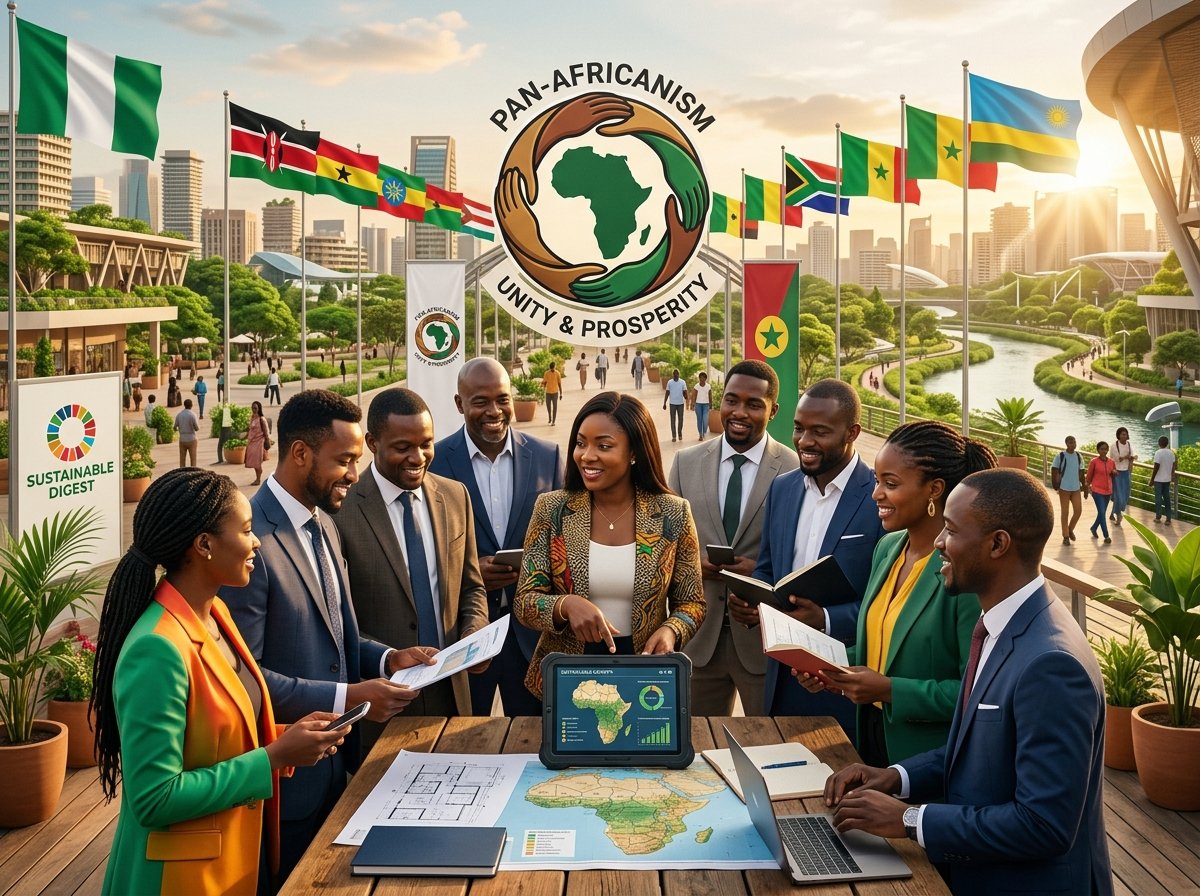
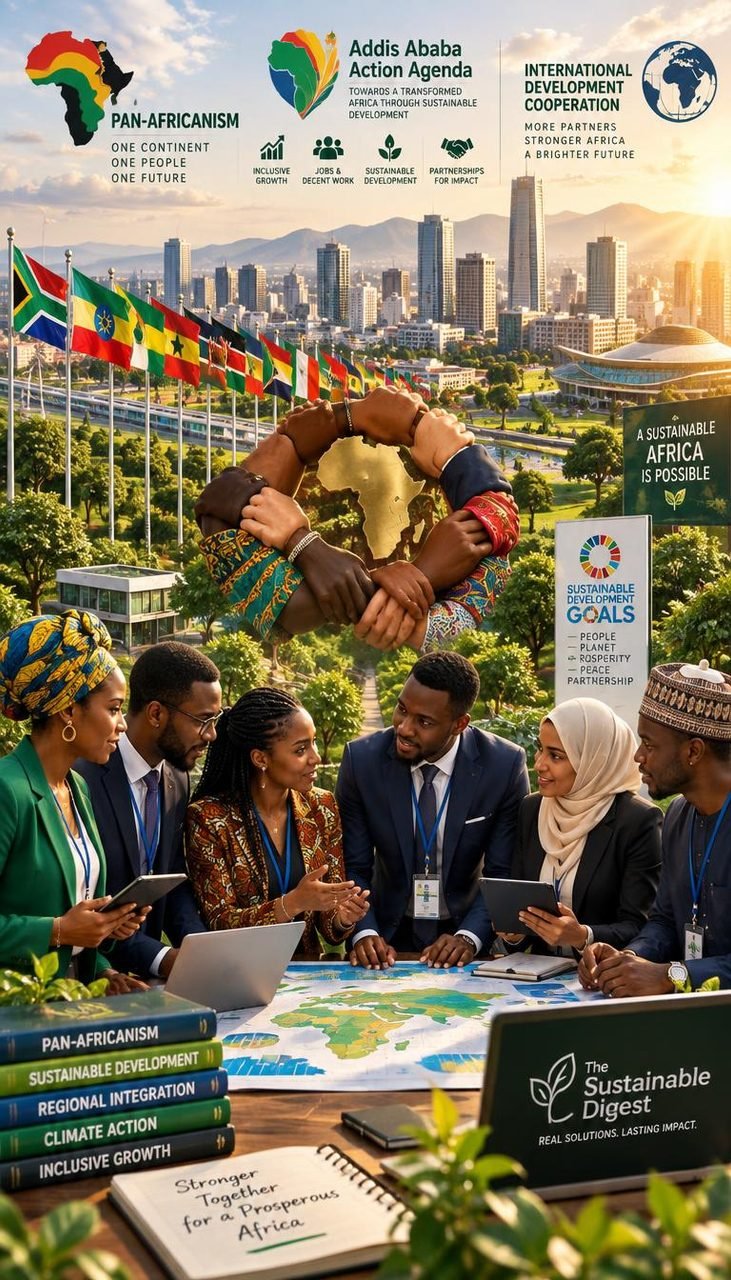
A vibrant depiction of African unity and liberation, showcasing diverse individuals dressed in professional business attire gathered in an open serene landscape that symbolizes strength and progress. In the foreground, a group of men and women of various African ethnicities engage in a discussion, their expressions reflecting hope and determination. The middle ground features traditional African symbols of unity—such as intertwined hands and colorful fabrics—representing cultural heritage. The background transitions into a sunset skyline of an African city, where silhouettes of palm trees and iconic architecture emerge against an orange and purple sky. The lighting is warm and inviting, evoking feelings of camaraderie and resilience, encapsulating the essence of unity and liberation. This image will resonate with the themes explored in "The Sustainable Digest."

A closer look at the historical context of African unity uncovers a rich tapestry of struggle and triumph. The transition from the 1958 African Freedom Day to the 1963 formation of the Organization of African Unity marked a pivotal shift in continental strategy. This evolution demonstrates how African countries moved from fragmented resistance to a unified front against colonial exploitation.

In 1963, 31 independent African heads of state met in Addis Ababa to solidify the foundation for what we now recognize as the African Union. This gathering aimed to support freedom fighters and diminish military access for colonial nations across the continent. By renaming the event to African Liberation Day, the founders ensured that the focus remained on the ongoing struggle for total sovereignty.

Today, the world recognizes that the charter signed by these representatives in 1963 was intended to improve living standards for all member states. This legacy of unity and liberation continues to inspire movements across the globe.

YearEventSignificance
1958African Freedom Day EstablishedSymbolized the determination to end foreign domination
1963Formation of OAUFoundation for African unity and cooperation
2002Establishment of AUContinued commitment to sovereignty and development

2026 Global African Day 2026 African Liberation Day 2026 Memorial Day: A Convergence of Legacy and Modern Impact

On this pivotal date, various observances converge, creating a rich tapestry of remembrance and activism. The proximity of Memorial Day to Juneteenth sparks essential discussions about the United States’ role in both historical and contemporary oppression.

In 1833, the UK government paid £20 million in compensation to enslavers after abolishing slavery. This act underscores the ongoing economic ramifications of slavery that resonate today.

  • The close timing of these observances compels a dialogue on historical injustices.
  • The UK’s abstention from the 2026 UN reparations vote highlights enduring anti-Blackness in institutional frameworks.
  • For the African diaspora, this year symbolizes a defiance against the narrative that slavery’s end brought immediate equality.
  • The fight for liberation day recognition addresses not only the past but also the current practices of global governments.
  • Linking Memorial Day’s tribute to the broader fight for freedom day calls for a more truthful recounting of history.
  • Awareness is growing that the wealth transferred in 1833 remains central to modern reparations discussions.

Social Impact and Community Mobilization: Ubuntu, Sakofa, and Global Unity

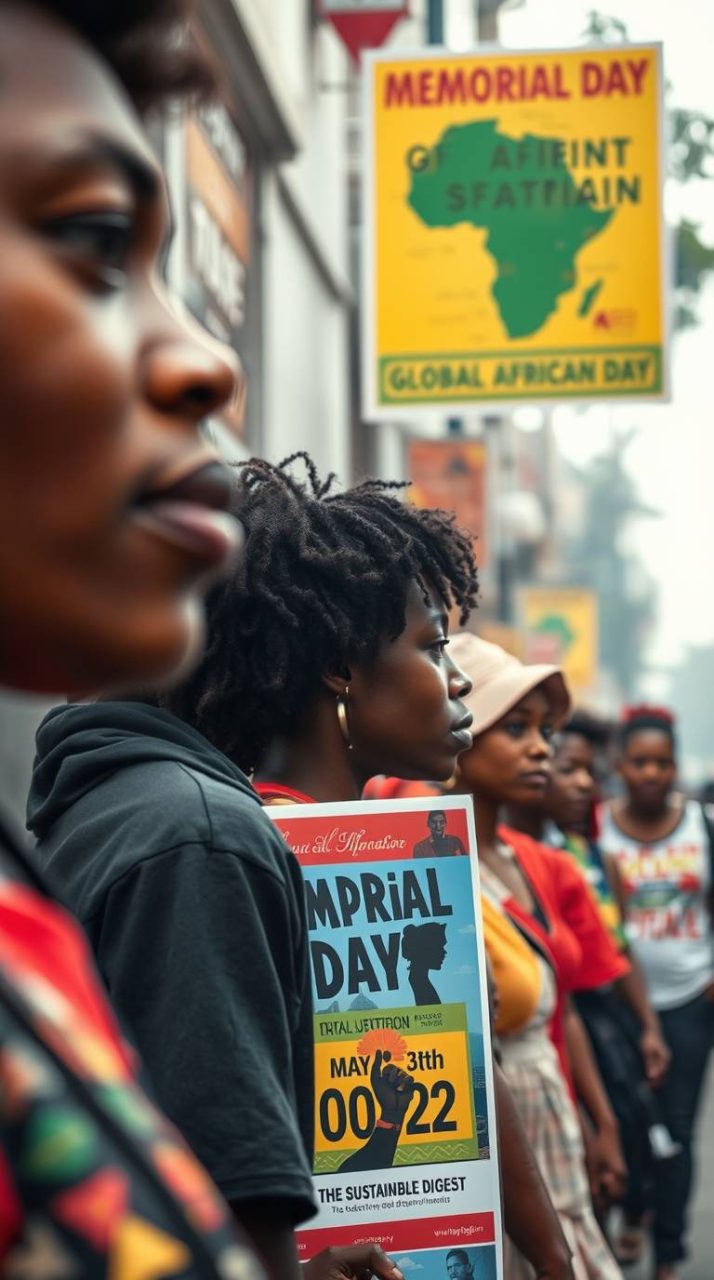
A vibrant community gathering scene showcasing the theme of social impact and mobilization. In the foreground, diverse individuals of various African descent wear professional business attire, engaging in lively discussions while holding hands in a circle, symbolizing unity and collaboration. The middle ground features a colorful array of banners and flags representing different African nations, illustrating the concepts of Ubuntu and Sankofa. In the background, a cityscape is visible under a bright, hopeful sky, with soft sunlight filtering through clouds, casting warm highlights on the scene, creating an atmosphere of celebration and solidarity. The image embodies a sense of global unity and commitment to social justice, perfectly aligning with the essence of "The Sustainable Digest."

The celebration of liberation serves as a reminder of the strength found in collective action and shared histories. This year’s observance emphasizes the power of community mobilization through the metaphors of Ubuntu and Sakofa.

The summit in Accra, Ghana, under the theme of sustainable peace, illustrates how nationalism and socialism can be harmonized for the collective good. Local initiatives, such as those in Philadelphia, showcase the work of leaders like Dr. Molefi K. Asante, bridging theory and grassroots action.

Moreover, the African Union’s support for the Africans Rising movement aligns with the goal of integrating globalism and internationalism to uplift the diaspora. This event is not just a celebration; it is a platform for cultural empowerment, urging collaboration between government and civil society.

Ubuntu and Sankofa as Cultural Foundations for Global African and Liberation  Days

Ubuntu, a Southern African philosophy encapsulated in the phrase “I am because we are,” emphasizes that the liberation of African peoples is a collective endeavor. This principle resonates profoundly during the celebrations, as the freedom of one is intertwined with the freedom of all. The coordinated global mobilization on this day illustrates the collective spirit that Ubuntu embodies.

Sankofa, represented by a bird looking backward while moving forward, serves as a metaphor for the need to learn from the past. This philosophy is particularly relevant in 2026, as it aligns with the UN’s reparations resolution and the African Union’s Decade of Reparations. The insistence on historical accountability is crucial for building a meaningful future.

Intersecting Globalism, Internationalism, Nationalism, and Socialism in the  Context of African Unity

The interplay between globalism and African liberation on this day reveals complex  dynamics. The Pan-African movement navigates the universal aspirations of global  solidarity while  addressing the specific demands of African self-determination. This tension highlights the need to resist global power structures that often undermine the very liberation efforts they claim to support.

Nationalism presents another layer of complexity. The Casablanca Group’s vision of immediate continental federation contrasts sharply with the Monrovia Group’s preference for gradual economic cooperation. This ongoing debate shapes the African Union’s Agenda 2063 and the Decade of Reparations, as leaders strive to balance national sovereignty with the quest for unity.

Symbolic and Dynamic Interpretations in Contemporary Diaspora Movements

Contemporary diaspora movements embody these philosophies through what can be termed “Sankofa internationalism.” This practice involves looking back to the organizational models of the Pan-African Congress while building transnational networks. For instance, Africans Rising’s African Liberation Week 2026 connects organizations across the UK, US, Canada, and the Caribbean with groups on the continent.

The symbolic interpretation of the convergence reveals that the presence of Memorial Day alongside African Liberation Day expands the meaning of both observances. Ubuntu challenges us to extend our remembrance beyond national boundaries, recognizing that the sacrifices honored on both days are part of a single, interconnected human struggle for dignity.

As we approach this pivotal moment, the ideological foundations of Ubuntu, Sankofa, globalism, and socialism guide real-world mobilization. From leadership forums in Nairobi to reparations advocacy in Accra, the events of May 25 demand global attention and action.

Sustainability, Environmentalism, and Cooperative Development for the Future

The observances surrounding liberation highlight the urgent need for sustainable practices in our communities. Events such as the African Liberation Walk in Kenya serve as a call to action, emphasizing the necessity for sustainable infrastructure. This walk from KICC to Uhuru Park symbolizes a commitment to environmental stewardship.

Moreover, the Accra summit’s theme of “Assuring Sustainable Water, Technology, Peace & Security for Agenda 2063” directly addresses critical institutional improvements. By focusing on water and technology, leaders aim to ensure that African countries can thrive independently, without the burden of external debt.

As the diaspora in the United States and beyond contributes to funding local environmental initiatives, we must recognize that the legacy of the Organization of African Unity is incomplete without a modern commitment to sustainability. This time of reflection reminds us that the realization of true freedom depends on our ability to build systems that endure beyond any single event.

Conclusion

The intersection of historic observances invites people worldwide to engage in a renewed commitment to liberation. This unique moment offers a chance to integrate lessons from the past with future aspirations, enabling communities to foster resilience and equity.

Africa Day remains a vital institution for promoting unity; however, it must be paired with the radical action inherent in the African Liberation tradition. As we advance, the diaspora must lead the charge in advocating for reparations and sustainable development for all nations.

This liberation day serves as a final call to action, reminding us that our collective destiny is shaped by the work we do today. Together, we can forge a path toward a more just and equitable world.

Key Takeaways

  • The convergence of these observances creates a unique moment for reflection.
  • May 25 holds historical significance tied to African independence movements.
  • This day unites solemn remembrance with a call for liberation.
  • Ongoing global discourse enhances the relevance of these events.
  • Understanding this day can illuminate the political identity of the diaspora.

Africa’s Path to Sustainable Development & Growth

As presented through ongoing media, Africa is at a pivotal moment in its journey toward sustainable development. The continent has great potential and faces unique challenges. By adopting sustainable practices, African nations are working toward the 2030 United Nations Sustainable Development Goals. This sets the stage for lasting progress.

International business is key to Africa’s growth, from big cities to small villages. It involves 54 countries working together. By building partnerships and attracting investments, countries are setting the stage for strong economic growth. This not only boosts local economies but also helps the global economy.

The journey to sustainable development in Africa needs a balanced approach. It’s about using natural resources wisely, investing in renewable energy, and ensuring everyone benefits. By focusing on these areas, African nations can create a successful blueprint that meets both environmental and economic needs.
Understanding Africa’s Development Landscape

Africa’s path to sustainable development is influenced by its rich history and culture. The continent faces unique challenges but also has powerful principles guiding its progress.

Historical Context and Development Challenges

Africa’s development has been shaped by colonialism, resource exploitation, and political instability. These issues have hindered economic growth and social progress. Yet, many African nations are now using new approaches to overcome these barriers.

Ubuntu: Community-Centered Development Models

Ubuntu teaches us that “I am because we are.” It promotes Sustainable Community Development through teamwork. In Rwanda, shared farming cooperatives apply this idea to increase crop yields and reduce inequality.

These networks make sure resources help the whole village, not just a few.

Sankofa: Learning from Traditional Practices

Sankofa’s “return and retrieve” philosophy encourages us to learn from our ancestors. In Ghana, mangrove restoration projects use ancient wisdom and modern science to fight coastal erosion.

Integrating Indigenous Knowledge with Modern Approaches

Cultural Diplomacy connects these traditions with global sustainability efforts. A table below shows how these philosophies are used today:

ConceptOriginCore IdeaModern Application
UbuntuSouth African Bantu traditionsInterdependence of individualsCommunity-led renewable energy grids
SankofaAkan peoples of West AfricaWisdom from the pastTraditional water harvesting systems

“Ubuntu and Sankofa are not relics of the past—they are blueprints for tomorrow.”

– African Union Sustainable Development Report 2023

By blending these philosophies with global goals, Africa creates solutions that honor its heritage. This approach ensures development is both culturally and ecologically responsible.

Cultural Foundations: Sankofa and Ubuntu Principles

Two crucial cultural concepts drive Africa’s development: Sankofa and Ubuntu. Sankofa, from Ghana, teaches learning from the past to build a better future. Ubuntu, from South Africa, focuses on collective well-being and interconnectedness.

Sankofa and Ubuntu work together. Sankofa encourages looking back for wisdom, while Ubuntu promotes working together for growth. These principles are a strong base for sustainable development across Africa.

Regional Economic Communities and Their Role

African coalitions, consortia, and federations are key in fostering regional cooperation. They boost trade, share resources, and coordinate development efforts. Through cooperative enterprise development, they create chances for economic and social growth.

These communities act as platforms for implementing continent-wide strategies. They help share knowledge, develop infrastructure, and harmonize policies. By using their collective strengths, they push Africa toward a sustainable and prosperous future.

Sustainable Development among all 54 African countries, regions, and islands

Africa’s diverse nations are embracing sustainable development in their own ways. From the bustling cities of Kenya and Tanzania to the landlocked nations of Uganda, Rwanda, and Burundi, each country faces unique challenges and opportunities.

In East Africa, Kenya and Tanzania are leading with renewable energy. Kenya has the largest wind farm in Africa, while Tanzania is focusing on solar power. Uganda, Rwanda, and Burundi are working together to protect the Virunga Mountains, home to endangered mountain gorillas.

Southern African nations like Lesotho and Swaziland are focusing on water resource management. Namibia, Angola, and Zambia are teaming up to protect the Okavango Delta, a UNESCO World Heritage site.

CountryKey Sustainable Initiative
Cape Verde100% Renewable Energy Goal by 2025
Sao Tome & PrincipeSustainable Cocoa Production
SeychellesBlue Economy Strategy
ComorosCoral Reef Restoration
MauritiusSmart Cities Development
MadagascarBiodiversity Conservation

Island nations like Cape Verde and Sao Tome & Principe are focusing on sustainable tourism and agriculture. Seychelles is pioneering the blue economy concept. Comoros is investing in coral reef protection. Mauritius is developing smart cities, and Madagascar is prioritizing biodiversity conservation.

“Africa’s sustainable development journey reflects the continent’s rich diversity and shared commitment to a greener future.”

These varied approaches show Africa’s adaptability and determination in pursuing sustainable development across its 54 nations.

Environmental Conservation and Climate Action Initiatives

Africa is tackling its environmental challenges with new sustainable and innovative ideas. It’s turning to renewable energy, protecting wildlife, and building green spaces to fight climate change.

Renewable Energy Implementation

African countries are quickly moving to renewable energy. Morocco’s solar farms and Kenya’s wind projects show their dedication. These efforts cut down on carbon emissions and bring clean energy to many people.

Biodiversity Protection Measures

Keeping Africa’s ecosystems safe is key. Tanzania and Botswana are leading in this area. They’ve set up protected areas and work with local people to save endangered animals.

Green Infrastructure Development

Green building is becoming more common in Africa. Cities like Nairobi and Cape Town are using nature’s designs in their planning. These designs make buildings that are good for the environment and last long.

Climate Change Adaptation Strategies

African countries are taking steps to adapt to climate change. Ethiopia’s Great Green Wall is fighting desertification. Coastal areas are building defenses against floods. These actions help protect people and nature from climate change.

InitiativeCountryImpact
Solar Power PlantMoroccoProvides clean energy to 2 million homes
Wildlife CorridorTanzaniaProtects elephant migration routes
Green Building CodeSouth AfricaReduces urban energy consumption by 30%
Mangrove RestorationSenegalEnhances coastal protection against sea-level rise

Economic Growth and Social Equity

Africa is working to grow its economy and make society fairer. This plan aims to help communities and support sustainable growth across the continent.

Empowering MSMEs and Social Enterprises

Micro, Small, and Medium Enterprises (MSMEs) are crucial for Africa’s economy. They create jobs and spark new ideas. Social enterprises help by solving social problems through business.

Together, they push for economic growth that includes everyone and makes a positive impact.

Entity TypeEconomic ImpactSocial Impact
MSMEsJob creation, local economic stimulationIncome generation for families
Social EnterprisesSustainable business modelsDirect solutions to community challenges

Tackling Poverty Through Targeted Programs

Poverty programs in Africa focus on building skills and creating lasting jobs. They offer training, small loans, and support to help people and communities overcome poverty.

Sustainable Agriculture in Africa

Advancing Sustainable Agriculture

Good farming practices are vital for food security and economic stability in rural areas. Projects in sustainable horticulture, permaculture, and farming help farmers grow more while saving the environment. These efforts increase food production and protect the planet for the future.

Regional Cooperation and Integration

Africa is moving towards sustainable development through regional cooperation. Countries are working together to face common challenges and find new opportunities. This teamwork is changing how development happens within the continent.

The Democratic Republic of the Congo and the Republic of Congo are a great example. They have different economies but are working together on projects and trade. This shows how countries can find common ground despite their differences.

Cameroon, Central African Republic, and Gabon are also working together. They are fighting deforestation and protecting the Congo Basin rainforest. Their efforts show how cooperation can help the environment across borders.

In the Sahel region, Mali, Republic of the Niger, Chad, and Burkina Faso are facing challenges together. They are working on security and economic growth. Their goal is to bring stability and prosperity to a tough area.

Regional GroupKey Focus AreasNotable Achievements
DRC & Republic of CongoInfrastructure, TradeJoint road network expansion
Cameroon, CAR, GabonEnvironmental ConservationCongo Basin Forest Partnership
Mali, Niger, Chad, Burkina FasoSecurity, Economic DevelopmentG5 Sahel Joint Force

These partnerships are driving development across Africa. By sharing resources and markets, countries are making the continent stronger. The future of Africa depends on strengthening these ties and working together towards a common goal.

Technology and Innovation in African Development

Africa is moving forward with new technology and creative ideas. It’s using Green IT Infrastructure and Digital Transformation to make progress and work better.

Green IT Infrastructure

African countries are building eco-friendly Data Centers. These centers use less energy and cut down on pollution. They help grow digital services without harming the environment.

Digital Transformation Initiatives

Both governments and businesses are starting Digital Transformation projects. They want to make services better, connect people more, and grow the economy. Digital tools like mobile banking and e-governance are changing African life.

Sustainable Supply Chain Solutions

African companies are focusing on Sustainable Supply Chains. They use Green logistics to cut down on emissions. And they adopt Green and Responsible Manufacturing to reduce waste and pollution. These steps help make the African economy stronger and greener.

Technology AreaImpact on Sustainability
Green IT InfrastructureReduced energy consumption, lower carbon emissions
Digital TransformationImproved efficiency, enhanced service delivery
Sustainable Supply ChainsResponsible resource use, reduced environmental impact

By using these new technologies, Africa is growing its economy and securing a green future for all.

International Partnerships and Global Alignment

Africa’s path to sustainable development depends on global partnerships. These alliances bring in resources, expertise, and support. They help the continent grow.

UN Sustainable Development Goals Implementation

The United Nations Development Programme (UNDP) and United Nations Environment Programme (UNEP) are key players. They help Africa reach the Sustainable Development Goals. They offer funding, technical help, and policy advice to African countries.

Cultural Diplomacy and Cross-Border Collaboration

Cultural Diplomacy helps African nations understand and work together. Countries like Algeria, Tunisia, Libya, Morocco, and Mauritania share cultures. This builds peace, trade, and development goals across borders.

Global Economic Integration

Africa’s role in the World Economic Forum (WEF) shows its commitment to global markets. Countries like Egypt and Sudan use these platforms to attract investors. They aim to align with international markets and standards.

CountryKey Economic FocusGlobal Partnership Initiative
EgyptRenewable EnergyGreen Investment Partnerships
MoroccoDigital EconomyTech Startup Collaborations
TunisiaSustainable TourismEco-Tourism Alliances

These partnerships and alignments are crucial for Africa’s sustainable growth. They create a future of shared prosperity and care for the environment.

Sustainable Resource Management

Africa’s future depends on managing resources wisely. Countries across the continent are using new ways to keep their natural wealth safe. They also want to grow their economies.

Zero Waste Initiatives

African nations are working hard on waste management. Benin and Togo are leading with zero waste programs. They focus on eco-friendly products and cut down on landfills.

Water Conservation Efforts

Water is very important in Africa’s dry areas. Sierra Leone, Liberia, and Cote d’Ivoire are finding new ways to save water. They use rainwater harvesting and efficient irrigation.

This ensures everyone has access to clean water.

Responsible Mining Practices

Countries with lots of minerals are mining in a better way. Guinea Bissau and Equatorial Guinea have set strict rules for mining. These rules protect the environment and local people while helping the economy.

CountrySustainable Resource InitiativeImpact
BeninPlastic recycling program50% reduction in plastic waste
Sierra LeoneCommunity-based water managementImproved access to clean water for 1 million people
Guinea BissauEco-friendly bauxite mining30% decrease in environmental damage

These efforts show Africa’s dedication to protecting the environment while growing. By focusing on zero waste, saving water, and mining responsibly, African countries are working towards a greener future.

Conclusion

Africa is on a path to sustainable development, facing both hurdles and chances. The continent’s varied countries are using new methods to grow while keeping their natural resources safe. From South Africa to Botswana, and Gambia to Senegal, they’re working on economic growth and protecting the environment.

The 2025 International Year of Cooperatives is a big opportunity for African nations to work together more. This event matches the continent’s growing focus on good governance and sustainable community development. Countries like Mozambique, Zimbabwe, and Malawi are improving their governance and empowering local communities.

In the Horn of Africa, countries like South Sudan, Somalia, Djibouti, and Somaliland have big challenges. Ethiopia and Eritrea are trying to solve old conflicts and start sustainable growth. These efforts show how important regional cooperation is for solving common problems and promoting long-term development.

As Africa moves ahead, it’s key to keep focusing on sustainable practices, innovation, and working together across borders. By using their rich cultural heritage and new technologies, African nations can create a prosperous and sustainable future.

Key Takeaways

  • Africa’s sustainable development aligns with UN 2030 goals
  • International business drives continental growth
  • Balanced approach needed for long-term progress
  • Responsible resource management is crucial
  • Renewable energy investments support sustainability
  • Inclusive growth promotes economic stability

UNSDG#5, Women’s History & Cooperatives: Achieving Gender Equality

The Sustainable Development Goals of the UN, has provided a robust platform. This includes for policy/taste makers, sustainable framework advisory, and CSR/ESG leadership board. Through UNSDG#5, gender equality remains a cornerstone for building a sustainable future. Across the globe, cooperative movements are driving empowerment and fostering inclusive economic growth. Achievable, sustainable goals are accessible while ushering in and advocating for ecological imperatives. For both donors and community members, gender equality brings communities closure together. With over 3 million cooperatives worldwide, these organizations employ 10% of the global workforce, spanning agriculture, finance, and healthcare sectors.

The UNSDG#5 via Women's history month & 2025 international year of cooperatives

The UNSDG#5 via Women’s history month and 2025 international year of cooperatives

In June 2024, the UN General Assembly declared 2025 as the International Year of Cooperatives. What’s important is, previous articles expressed the social impact possibilities. This recognition highlights their role in advancing 60 – 80% of sustainable development goals. Cooperatives provide an additional platform for women to lead, innovate, and thrive. This helps in making them essential for achieving both equality and equity while fostering collective action.

As the time moves to 2030, gender equality is not just a goal but a necessity. It underpins all 17 sustainable development goals, ensuring a brighter, more equitable future for each everyone.

The UNSDG#5 via Women’s History Month & 2025 International Year of Cooperatives

2025 is a landmark year for gender equality. It marks the 30th anniversary of the Beijing Declaration and the 50th International Women’s Day. These milestones highlight decades of progress and the ongoing fight for women’s rights.

Cooperatives are playing a pivotal role in this journey. The COPAC partnership is driving initiatives to position them as accelerators for sustainable development. Their multi-agency strategy focuses on empowering women through leadership roles and economic opportunities.

In developing nations, women hold 63% of cooperative leadership roles. This statistic showcases the transformative power of collective action. It also underscores the importance of cooperatives in achieving gender parity.

Major events in 2025, such as CSW69 and the ECOSOC Development Cooperation Forum, will further amplify these efforts. These platforms will foster dialogue, share success stories, and inspire new initiatives.

MilestoneSignificance
30th Anniversary of Beijing DeclarationReflects on progress since the 1995 Platform for Action
50th International Women’s DayCelebrates global achievements in gender equality
COPAC InitiativesDrives cooperative development as SDG accelerators

These efforts are not just about celebrating milestones. They are about creating a future where every woman has the opportunity to lead, innovate, and thrive.

Why Gender Equality Matters for Sustainable Development

Empowering women and girls unlocks untapped potential for sustainable growth. When equality is prioritized, communities thrive, economies expand, and innovation flourishes. Gender parity is not just a moral imperative but an economic necessity.

The Stark Reality of Gender Inequality Today

Despite progress, disparities remain stark. Women spend 2.5 times more hours on unpaid care work than men. Globally, only 26.9% of parliamentary seats are held by women. At current rates, achieving management parity could take 176 years.

In corporate leadership, the gap is glaring. Fewer women lead Fortune 500 companies than men named John. These challenges highlight the urgent need for systemic change.

How UNSDG#5 Fits into the Global Agenda

This goal targets ending harmful practices like female genital mutilation and ensuring digital inclusion. It also aims to boost economic participation. McKinsey estimates that closing the gender gap could add $28 trillion to global GDP by 2025.

Climate change disproportionately affects women farmers, making intersectional approaches vital. UN Women’s theme, “Rights. Equality. Empowerment,” underscores the importance of collective action.

“Equality is not just a goal; it’s the foundation for a sustainable future.”

By addressing these challenges, we can create a world where every woman and girl has the opportunity to thrive.

Cooperatives: A Catalyst for Women’s Empowerment

Cooperatives are transforming lives by empowering women across the globe. These organizations foster growth and create opportunities for women to lead and innovate. By addressing systemic barriers, they play a vital role in achieving development goals and building resilient communities.

The Global Reach of Cooperatives

From Kenya to Costa Rica, cooperatives are making a difference. In Kenya, women-led cooperatives manage 65% of agricultural activities. In the EU, 22% of renewable energy projects are cooperative-driven. These examples highlight their global impact.

Bangladesh showcases another success story. Over 1.5 million women work in cooperative healthcare services, improving access to medical care. Such initiatives demonstrate how cooperatives empower women while addressing critical needs.

Sectors Where Cooperatives Drive Change

Cooperatives operate in nine key sectors, including energy, housing, and education. They provide women with leadership roles and economic opportunities. For instance, women-led cooperatives have restored over 800,000 hectares of farmland, boosting climate resilience.

In Costa Rica, cooperative-friendly policies have created a model for others to follow. These efforts ensure that women are at the forefront of sustainable development. By fostering collaboration, cooperatives are shaping a more equitable future.

“When women lead, communities thrive. Cooperatives are the bridge to this transformation.”

Women’s History Month: Celebrating Progress, Demanding More

Celebrating progress while demanding more, women history month highlights strides toward equality. This annual observance honors the achievements of leaders and underscores the need for systemic change.

Women’s history month

Since 2015, there’s been a 200% increase in women-led cooperatives globally. These organizations play a vital role in promoting gender equality and economic inclusion. From Ghana’s cocoa cooperatives to Iceland’s energy collectives, women are driving transformative initiatives.

Despite progress, gaps persist. In 39 nations, daughters still face restrictions on inheritance rights. The UN Secretary-General has warned about regression in women’s rights, emphasizing the urgency of collective action.

  • Six countries now have over 50% female parliamentary representation, setting a benchmark for others.
  • The 2025 theme, “For ALL Women and Girls: Rights. Equality. Empowerment,” reflects a commitment to inclusivity.
  • Landmark events like CSW69 will focus on accelerating progress in the coming years.

Women’s History Month is not just a recognition through celebration but a call to action. It reminds us that while much has been achieved, there is still work to be done to ensure equal rights for all.

How to Take Action for Gender Equality – UNSDG#5

Taking meaningful steps toward equality starts with individual and collective action. Everyone can contribute to creating a more inclusive world. This can be supported through initiatives and advocating for systemic change. Whether through local efforts or global campaigns, small actions can lead to significant impact.

Supporting Cooperatives in Your Community

Cooperatives are powerful vehicles for driving horizontal growth and empowering women. Start by identifying ethical cooperatives in your area. Look for organizations that prioritize fair wages, transparent governance, and inclusive leadership.

Here’s a quick guide to vetting cooperatives:

  • Check for fair wage policies and equal opportunities.
  • Review governance structures for transparency.
  • Ensure they provide access to resources and education.
  • Look for success metrics, such as community impact.
  • Engage with members to understand their experiences.

Investing in cooperatives not only supports local communities but also fosters sustainable growth. For example, gender-lens investing in cooperative ventures has shown a 1:8 return on investment, proving their economic and social value.

Advocating for Policy Changes

Systemic change requires advocacy and policy reform. Focus on legislative priorities like paid family leave and digital access initiatives. These policies can significantly improve women’s economic participation and overall well-being.

Here are actionable steps to advocate for change:

  1. Join UN Women’s advocacy networks to amplify your voice.
  2. Support local campaigns for paid family leave and childcare services.
  3. Promote digital inclusion programs to bridge the gender gap in technology.
  4. Engage with policymakers to prioritize gender equality in legislation.
  5. Encourage youth participation through UN’s Youth2030 strategy.

“When we invest in women, we invest in the future of our communities and the world.”

By taking these steps, individuals can contribute to a more equitable and sustainable future. Together, we can drive meaningful change and ensure equality for all.

Conclusion

Building a future rooted in equality (UNSDG#5 and #10) requires collective effort. Despite progresschallenges persist, demanding urgent action. Cross-sector collaboration is key to driving meaningful change and ensuring empowerment for all.

By 2025, a 15% increase in women’s leadership roles within co-ops is achievable. This growth will foster economic justice and amplify voices globally. Development thrives when women lead, innovate, and shape policies.

To contribute, focus on 3 steps: education, investment, and amplification. Support initiatives that prioritize gender equality and advocate for inclusive policies. Together, we can create a world where everyone thrives.

Looking ahead to 2030, a vision of a gender-equal society is within reach. Let’s unite to turn this vision into reality, ensuring a brighter, more equitable future for all.

Key Takeaways

  • Cooperatives employ 10% of the global workforce, driving economic inclusion.
  • the UN has declared 2025 the International Year of Cooperatives.
  • UNSDG#5(#10) for gender equality and omni-demographic equity are foundational for achieving all sustainable development goals.
  • Cooperatives empower women to lead and innovate in various sectors.
  • Over 3 million cooperatives operate worldwide, socially impacting 1.2 billion members.

Proto-Sustainability globally from 5000 b.c.e.to 1499 c.e.

During pre-history, indigenous communities have always sustain itself through survival, resource aggregation, and resilience within the ever changing environment. Africa and the America’s gradual innovation to civilization offered longevity through resiliency while the introduction of agriculture extended its resiliency to what later would be call sustainability. The external environment often provided challenges to milder forms of climate change or climate adaptation via natural section across the biosphere and vast marine ecosystem.

Indigenous cultures across the globe have shown impressive ways of using resources sustainably long before modern thought. In which later be adapted to sustainability and habitat conservations. These ancient societies developed practices that balanced their needs with the environment, ensuring their survival and the health of their ecosystems. From the Americas to Africa and Asia, these groups shared common themes in their approaches to land, water, and community well-being.

Indigenous cultures across the globe have shown impressive ways of using resources sustainably long before modern thought. These ancient societies developed practices that balanced their needs with the environment, ensuring their survival and the health of their ecosystems. From the Americas to Africa and Asia, these groups shared common themes in their approaches to land, water, and community well-being.

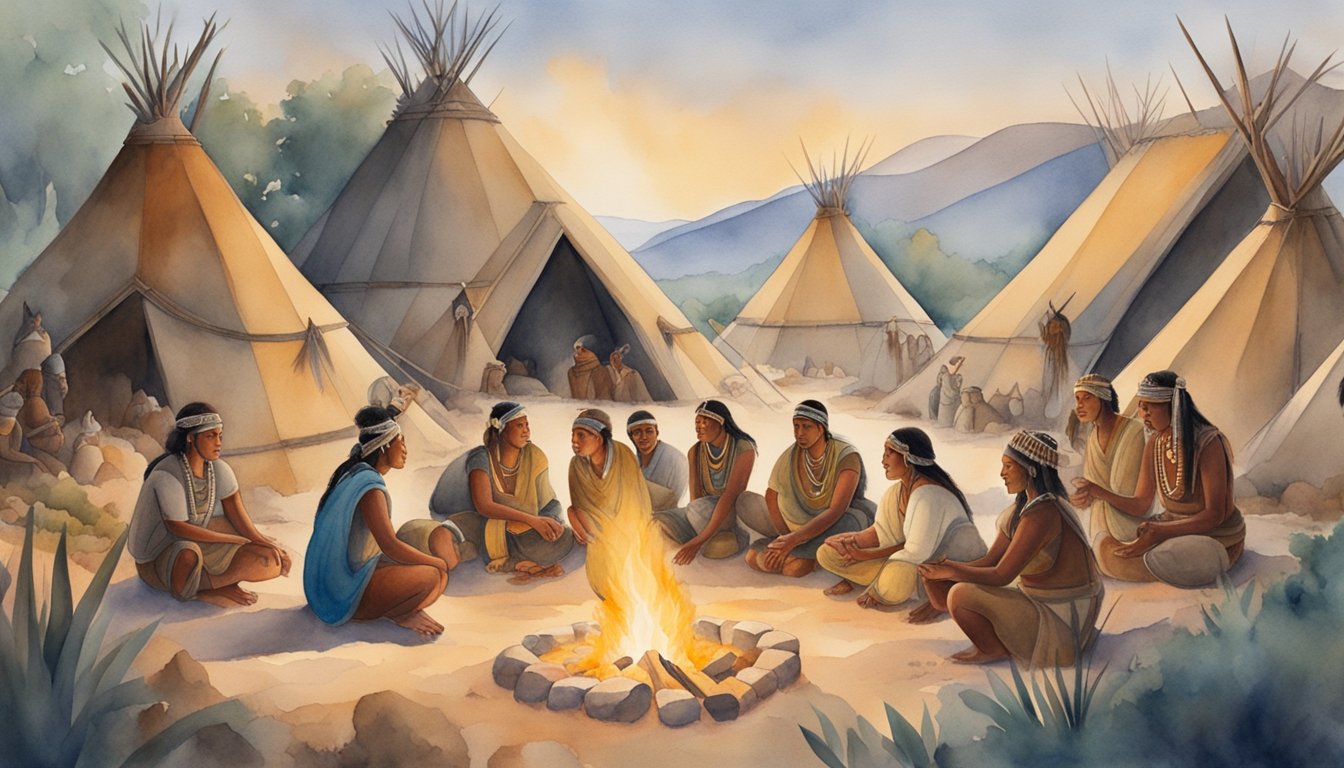
Ancient Indigenous cultures and tribes gather around a communal fire, surrounded by traditional dwellings and natural landscapes

These cultures created a deep connection with nature, often viewing the environment as a source of life rather than just a resource. They utilized unique methods of agriculture, hunting, and gathering that fostered long-term sustainability. The rich traditions of storytelling and artistry handed down through generations reflect their values of respect for the Earth and its resources.

As the world became more connected, the legacies of these societies faced challenges but also opened up opportunities for sharing knowledge. Their insights into sustainability continue to resonate today and highlight the importance of learning from the past to shape a better future.

Emergence of Indigenous Cultures

The development of ancient Indigenous cultures involved vital migration and settlement patterns. These were shaped by various societal structures that helped communities thrive in diverse environments.

Migration and Settlement Patterns

Indigenous peoples, such as the Paleo-Indians, migrated to the Americas via the Bering Land Bridge. This land bridge connected Asia and North America during the last Ice Age. As they moved southward, they adapted to unique landscapes and unfamiliar climate conditions.

The Clovis culture is one of the earliest known groups in North America. They were skilled hunter-gatherers who developed unique stone tools. Their population spread throughout the continent, leading to various settlements. Each group evolved to meet local resources, such as game animals and edible plants.

A serene landscape with ancient ruins, lush vegetation, and wildlife, representing the emergence of Indigenous cultures in ancient America and pre-historic Africa

Early Societal Structures

As communities settled, they formed early societal structures. These structures varied based on location and resource availability. Some groups established complex societies with leadership roles and communal decision-making.

In the Americas, many ethno-groups relied on kinship ties for social organization. This system created strong bonds and supported cooperation within the community. Other regions, like ancient Africa and Asia, also developed distinct social hierarchies.

These structures allowed for trade, cultural exchange, and the formation of lasting communities. They laid the groundwork for future generations to develop their own sustainable practices.

Pre-Columbian Civilizations in the Americas

A gathering of ancient Indigenous people, surrounded by intricate stone structures and lush vegetation, with a clear view of the vast American landscape

Pre-Columbian civilizations in the Americas were diverse and rich in culture. They made significant advances in agriculture, architecture, and society. The following sections highlight the major influences and achievements of these ancient cultures.

Olmec Influence on Mesoamerica

The Olmec civilization is often regarded as the “mother culture” of Mesoamerica. They flourished from around 1200 to 400 BCE in present-day Mexico. Known for their colossal stone heads, they laid the groundwork for future civilizations.

The Olmecs developed early forms of writing and a calendar system. They also practiced agriculture, growing crops like maize, beans, and squash. The social structure included leaders and skilled artisans. Their influence can be seen in later cultures, such as the Maya and Aztec, shaping religion, art, and trade.

Maya and the Height of Astronomical Achievements

The Maya civilization reached its peak between 250 and 900 CE. This society thrived in what is now Mexico, Guatemala, and Belize. The Maya are best known for their impressive pyramid cities, intricate calendar systems, and knowledge of astronomy.

They created a sophisticated calendar based on the movements of the sun, moon, and planets. The Maya built observatories to track celestial events, showing advanced mathematical skills. Their achievements in writing and art remain influential. They established trade networks and developed agricultural techniques that supported large populations.

Aztec Dominance in Central Mexico

The Aztec civilization emerged in the 14th century and expanded rapidly through conquest and alliances. Centered in Tenochtitlan (now Mexico City), they created a powerful empire known for its military strength and rich culture.

The Aztecs established a complex society with a hierarchy that included nobles, priests, and commoners. They built impressive temples and engaged in elaborate religious ceremonies. Their economy relied on agriculture, particularly the use of chinampas, or floating gardens. This innovation made farming more productive in swampy areas.

Inca Innovations in the Andean Region

The Inca Empire, which thrived from the 15th to the early 16th century, was the largest empire in pre-Columbian America. It covered a vast area along the Andes mountains in South America. The Incas are noted for their sophisticated road systems and architectural feats like Machu Picchu.

The Incas practiced advanced agricultural techniques such as terrace farming, which maximized arable land. They developed a system of record-keeping using quipus, a series of knotted strings. The centralized government helped maintain order and distribute resources throughout the empire, showcasing their organizational skills.

Traditional Practices in Resource Use & Sustainability

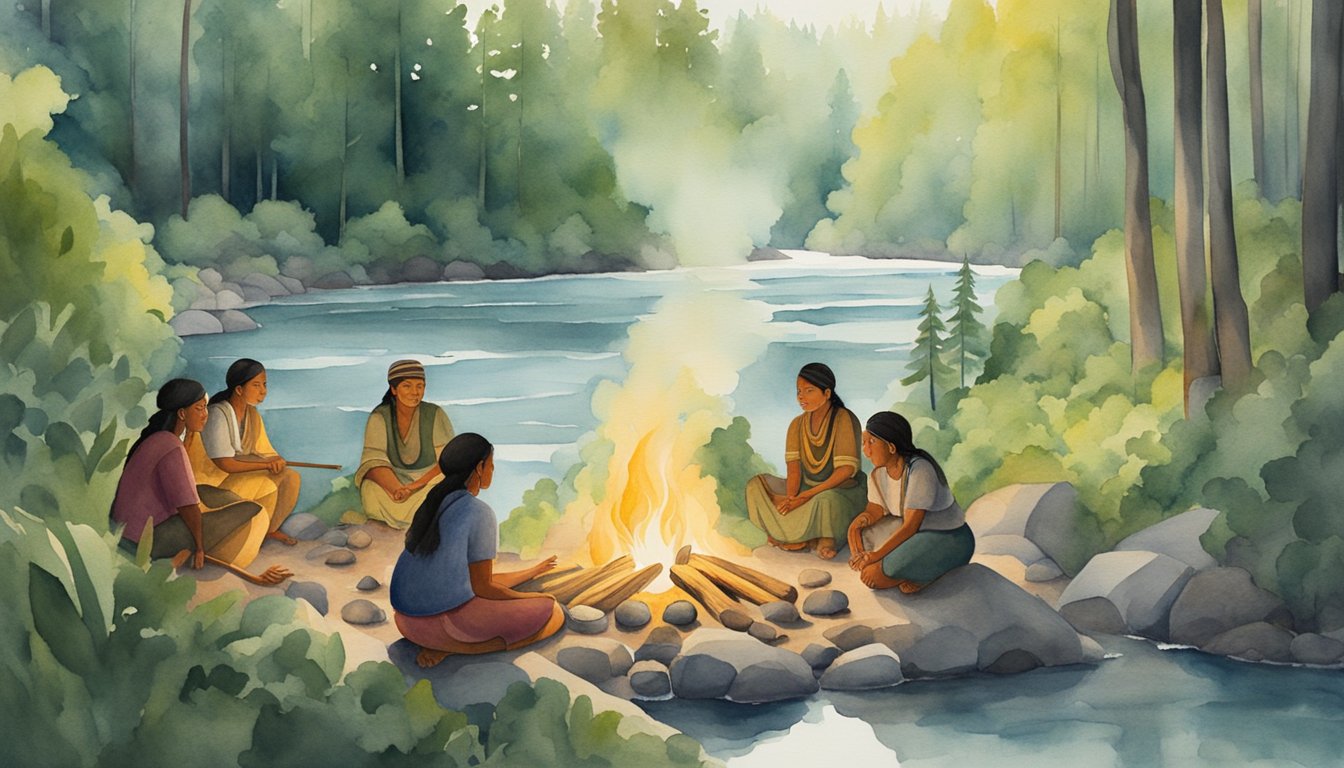
A group of Indigenous people gather around a fire, surrounded by lush forests and flowing rivers, as they engage in traditional practices of resource use and sustainability

Ancient cultures across various regions developed practices that promoted sustainability. They managed resources wisely, maintained balance with their environment, and established trade systems that supported their societies without depleting resources.

Agricultural Techniques and Food Production

Many Indigenous cultures used advanced techniques to enhance food production. For example, the Inca cultivated potatoes in the highlands of South America, leveraging diverse climates to grow multiple crops.

They practiced terracing to reduce soil erosion and conserve water. Similarly, in ancient Mesoamerica, the Milpa system allowed farmers to rotate crops. This technique enriched the soil and increased yield.

In Africa, people used shifting cultivation to maintain soil fertility. Such methods ensured a steady food supply and sustainable land use. As a result, these societies developed complex architecture and community structures around food security.

Symbiosis with the Environment

Many ancient cultures viewed themselves as part of nature. In Polynesia, societies understood local ecosystems. They used fish traps designed to catch fish without over-harvesting the population.

Plants like taro and coconut were cultivated in ways that respected natural habitats. Native Americans employed controlled burns to manage landscapes, which promoted healthy growth of plants and helped in hunting.

In ancient Arabia, communities recognized the importance of oases and practiced sustainable water use. They built systems to collect and store rainwater, nurturing both crops and livestock. Their relationship with the environment showed deep respect and consideration.

Systems of Trade and Commerce

Trade systems varied widely but shared common goals of sustainability. Many cultures developed barter systems that connected different regions. These exchanges allowed for resource sharing, ensuring that communities had access to necessary goods without depleting local supplies.

For instance, cotton from ancient Egypt was traded for food products and other resources across regions. Similarly, coastal ethno-groups from the Pacific exchanged fish for agricultural products inland.

These practices encouraged cooperation among societies and helped maintain the balance of resources. They understood that sustainability was essential for the survival of their complex societies and civilizations over generations.

Spirituality and Societal Organization

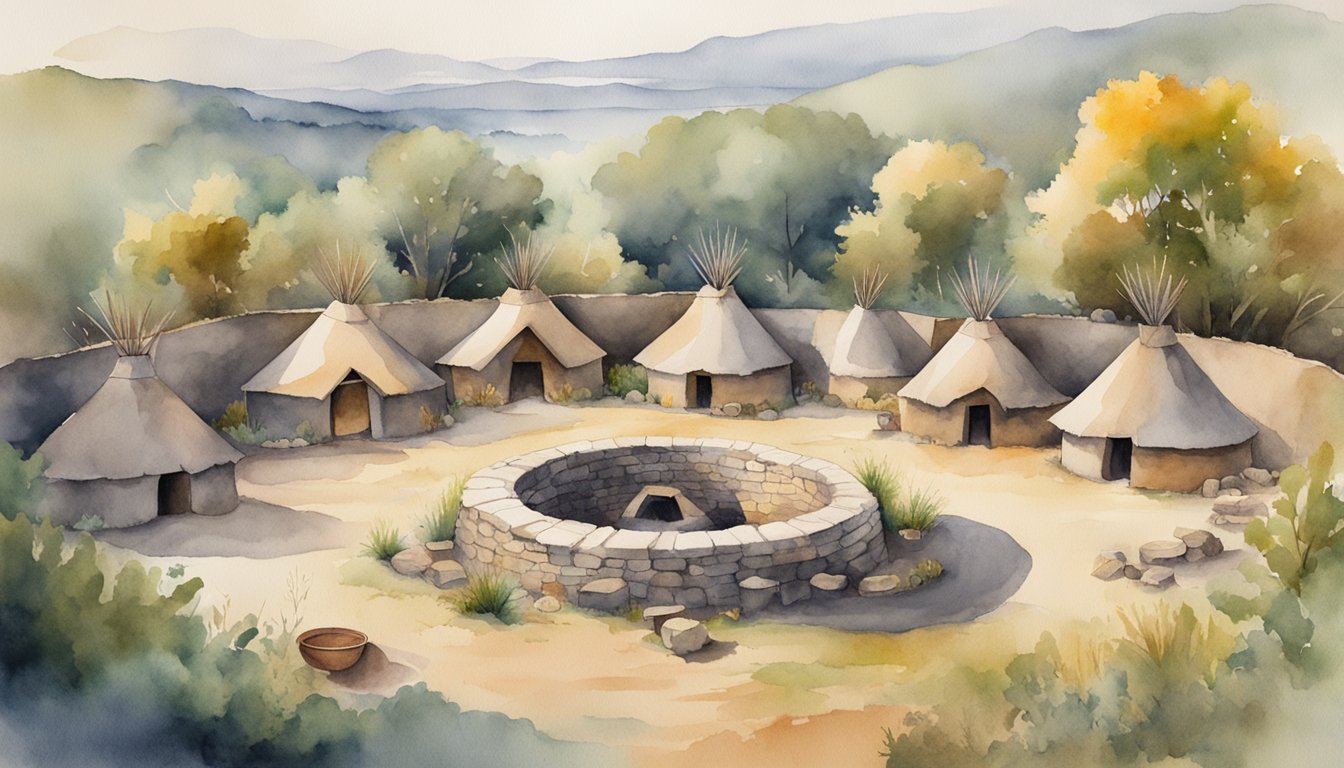
A circle of ancient indigenous dwellings surrounded by nature, with a central fire pit and ceremonial objects

Ancient cultures developed complex systems of spirituality and societal organization. Their beliefs influenced art, governance, and conflicts. Many groups had structured hierarchies that shaped their daily lives and interactions with the world.

Religious Beliefs and Gods

Many ancient cultures had rich spiritual lives tied to nature and daily life. The Aztecs, for instance, worshipped gods like Quetzalcoatl and Huitzilopochtli, representing fertility and war. Their rituals often included offerings and ceremonies to ensure good harvests and victories in battle.

The Mayan civilization practiced a polytheistic religion with gods associated with the sun, moon, and maize. They built temples for worship and believed in the importance of appeasing the gods for balance and prosperity. Similarly, the Inca revered the sun god Inti, believing their rulers were descendants of this deity, which strengthened the societal hierarchy.

Religion often influenced art and architecture. Intricate carvings and frescoes depicted religious narratives, embodying myths and prayers to the gods.

Kingdoms, Empires, and Warfare

Powerful kingdoms and empires rose from these spiritual beliefs. The Aztec Empire, known for its military prowess, engaged in conquests to capture territory and resources. They used warfare as a way to honor their gods, believing that warfare was essential for maintaining cosmic order.

The Inca Empire had a centralized government, with the Sapa Inca as the supreme ruler, seen as a divine representative. This governance structure allowed for vast control over resources and people.

Warfare played a crucial role in building and expanding these empires. Kingdoms often clashed to assert dominance or gather tribute. The military success of these societies reflected their strength and the support of their religious beliefs.

Artistic Expression and Cultural Legacies

A serene landscape with ancient ruins nestled among lush greenery, under a vibrant sunset sky

Artistic expression in ancient cultures reveals their identities, beliefs, and histories. Various civilizations used art and architecture to communicate their values and adapt to their environments. This section explores the significance of Pre-Columbian artwork and the resilience of cultures after colonial impacts.

Pre-Columbian Artwork and Symbolism

Pre-Columbian civilizations, like the Aztecs and Maya, created intricate art that reflected their societies. They used materials such as stone, clay, and textiles, producing sculptures, pottery, and murals.

Symbolism played a crucial role in their artwork. For example, the Aztecs utilized symbols like the eagle, representing strength and sacrifice. The Maya expressed their beliefs through carvings that conveyed stories of gods and rulers.

Architecture also showcased artistic expression. The step pyramids of the Maya and the impressive temples of Tiwanaku demonstrated their advanced construction techniques and spiritual beliefs. This art continues to influence modern culture and showcases the rich heritage of these civilizations.

Cultural Resilience and Post-Colonial Influence

After colonization, many indigenous cultures faced challenges in preserving their artistic traditions. Despite this, they adapted and transformed their cultural expressions. For instance, vibrant textiles and crafts emerged as symbols of identity and resistance.

In regions like South America, indigenous artists revived ancient practices while incorporating new influences. This blend of styles highlighted their resilience and ability to adapt.

Today, art remains a vital part of cultural legacy. It serves as a reminder of the rich histories of ancient civilizations and their ongoing influence in contemporary societies. Artists honor their heritage while addressing modern issues, ensuring that their cultural legacies endure through time.

Contacts and Conflicts with Europeans

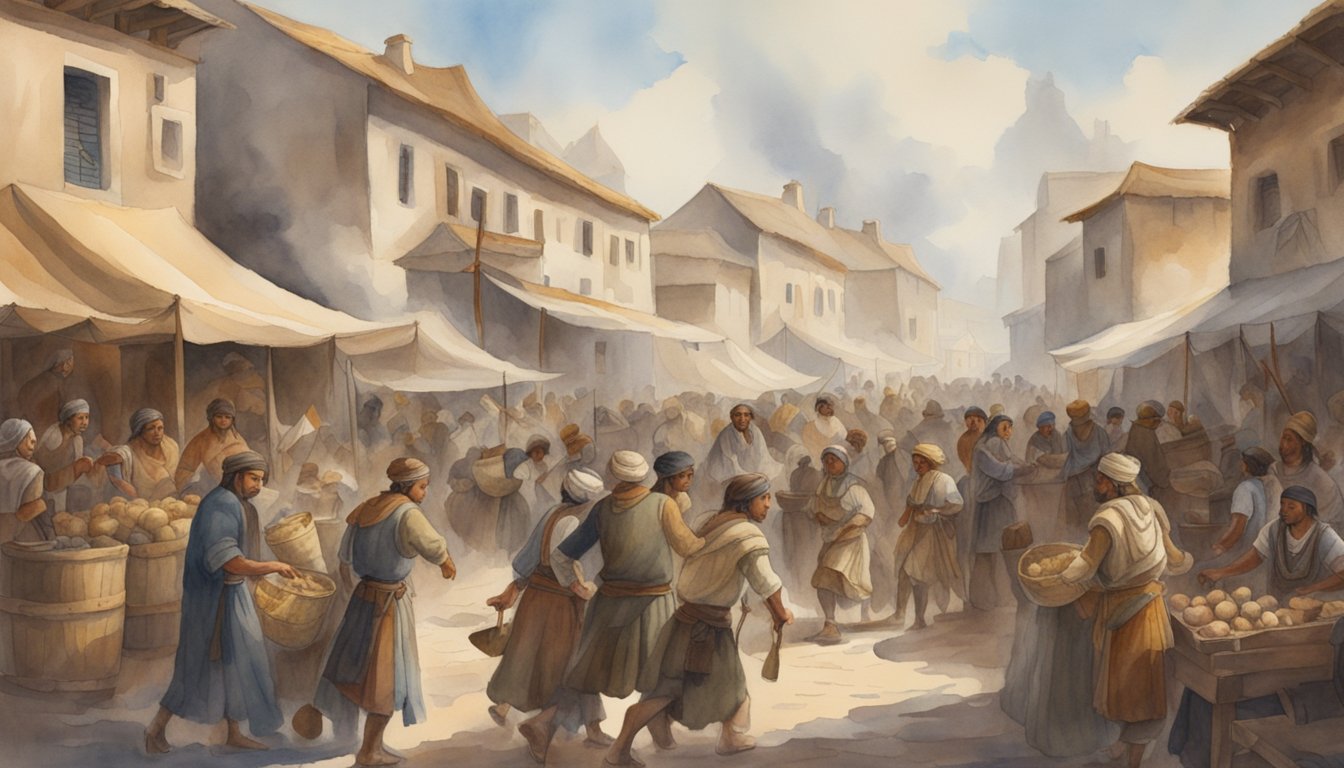
Ancient Indigenous people trading and clashing with European explorers in a bustling marketplace

European contact brought significant changes for Indigenous cultures. The arrival of explorers and colonizers led to conflicts and profound impacts on populations, traditions, and land.

Effects of Colonization and Disease

Colonization had dire effects on Indigenous peoples across the Americas and beyond. Hernán Cortés’s conquest of the Aztecs in Central America showcased the violence of colonization. As European powers expanded, they brought diseases like smallpox, which devastated communities that had no prior exposure.

In South America and the Caribbean, the loss of life due to disease reached catastrophic levels. Enslavement of Indigenous peoples also became widespread. Cultures faced challenges as their populations dwindled, and their social structures were disrupted.

Resistance and Adaptation

Indigenous peoples employed various strategies to resist European colonization. The Araucanians in South America fought back against Spanish forces, using guerrilla tactics to protect their land.

Other groups adapted their customs to survive in the face of change. Some ethno-groups formed alliances with Europeans for trade or to resist other Indigenous groups. This adaptation helped them maintain aspects of their identity despite significant pressure from colonial powers.

Ancient Indigenous Presence in Other Regions

Ancient Indigenous cultures flourished in various regions around the world. Their practices included advanced knowledge in agriculture, navigation, architecture, and technology. This section highlights key aspects of these civilizations and their contributions.

African Tribal Traditions and Knowledge

In ancient Africa, ethno-groups maintained deep connections to their land. These communities had rich traditions that emphasized sustainability. They practiced crop rotation and mixed farming to maintain soil health.

For example, the Nile in Egypt supported yearly floods, allowing farmers to plant and harvest rice and other crops efficiently. Many African ethno-groups also used herbal medicines, which reflected their understanding of local biodiversity. They relied on natural resources, ensuring that the land could provide for generations.

Oceanic Navigational Skills and Settlement

Polynesian navigators were pioneers of oceanic travel. They used the stars, ocean currents, and bird patterns to find their way across vast distances. This knowledge allowed them to settle on isolated islands, including those in Hawaii and New Zealand.

Their double-hulled canoes were innovative, enabling them to transport goods and people safely. Polynesians also practiced sustainable fishing methods. They ensured that fish populations remained healthy, showcasing their understanding of ecological balance.

Asian Contributions to Early Agriculture

In ancient Asia, particularly in regions like China, Indigenous peoples developed sophisticated agricultural practices. They domesticated rice, millet, and later, potatoes. This led to stable food supplies and population growth.

Communities in the Indus Valley built extensive irrigation systems. They maximized water use for their crops, which demonstrated an advanced understanding of environmental management. Techniques such as terrace farming helped in mountainous areas, reflecting adaptability and foresight in agriculture.

Indigenous Technological Innovations

Indigenous cultures globally showed remarkable technological creativity. For instance, the Mississippi River region had advanced mound-building societies. These structures served various purposes, including burial sites and ceremonial centers.

In the Southeast Asian nations, early innovations like the windmill and intricate pottery were common. These technologies improved daily life and trade. Many civilizations developed efficient methods for crafting tools, vessels, and textiles. This creativity indicated a robust understanding of available resources and needs.

Exploration and Studies by the Modern Era

Modern exploration and studies have uncovered important insights into ancient indigenous cultures. Researchers have focused on archaeological sites and historical records to understand how these groups practiced sustainability. This work helps to reveal the lives of hunter-gatherers and settled communities through various regions.

Archaeological Discoveries and Research

Archaeological discoveries have played a key role in studying ancient cultures. Significant sites such as Clovis sites in North America provide evidence of early human life. These sites reveal how communities managed their resources, hunting techniques, and tool-making.

In the Arctic regions, studies of Inuit and Aleut cultures highlight their adaptation to harsh environments. Excavations in the Northeast and Plains regions show how different ethnogroups developed sustainable practices based on local resources. These findings illustrate the diversity of approaches among indigenous groups.

Smithsonian Institution and Historical Archives

The Smithsonian Institution holds vast collections of artifacts and documents relating to ancient cultures. Their resources include tools, pottery, and textiles that provide insights into daily life and sustainability practices.

The organization also conducts research on the impact of climate and geography on these communities. Historical archives offer valuable records of indigenous life, adding depth to the understanding of practices in regions like Zuni and Polynesia. This information helps to paint a clearer picture of how ancient societies operated sustainably.

Key Takeaways

  • Ancient societies practiced sustainable resource management long before modern ideas emerged.
  • Sustainability and its principles may have been force into existence via adaptation to colonial conflict and its environmental impact
  • Cultural traditions often included deep respect for nature and environmental balance.
  • The lessons of the past are crucial for addressing today’s environmental challenges.
  • Proto-Sustainability both directly and indirectly laid the blueprint for modernity and later advancements
This website is saving the energy of your screen as it is not being used. It's part of a global effort to lower the planet's electrical consumption and CO2 emission level. Resume browsing
Click anywhere to resume browsing
Verified by MonsterInsights