

The financial response to climate change gained force after the 2007 United Nations assessment tied global warming to human activity. Soon after, the World Bank and European Investment Bank shaped modern green bond issuance in 2007–2008. Their model helped turn environmental goals into a practical tool within global finance.
This article examines 20 NATO-aligned and Global South market examples. It shows which nations gain the most, how issuers direct capital, and how citizens may benefit through cleaner transport, stronger services, and resilient communities. Each case is judged by its purpose, issuer credibility, measurable results, public reporting, and risk of greenwashing.
By September 2022, global ESG issuance had passed US$3 trillion. That figure matters because the bond market is nearly twice the size of equities. Investors now expect real outcomes, not decorative labels. The review compares different structures and highlights practical solutions that connect capital with public needs.
How Green, Sustainability, Social Impact, and Sustainability-Linked Bonds Compare
Labelled finance now gives investors several ways to connect capital with public goals. Green bonds shaped this language first, while social and sustainability products widened its reach. ICMA’s voluntary principles encourage clear objectives, credible reporting, and estimated results. That structure helps international capital support projects that improve daily life.

Green Bonds and Their Influence Over the Sustainable Bond Market
A green bond directs proceeds to renewable power, efficient buildings, clean transport, wastewater systems, or climate adaptation. Social products support affordable housing, food security, essential services, and basic infrastructure. They may also serve people facing poverty, displacement, unemployment, or exclusion. Sustainability bonds combine eligible environmental and social projects under one issuance.
Use-of-Proceeds Bonds Versus Performance-Based Sustainability-Linked Bonds
Use-of-proceeds structures fund a defined project. By contrast, sustainability-linked bonds support broad corporate needs while tying financial terms to KPIs and targets. A missed target may adjust the coupon. This design measures issuer performance, not only project spending.
Common Benefits, Risks, and Investor Objectives Across Bond Types
Investors gain alignment, engagement, and risk insight, yet credit, liquidity, and concentration risks remain. Strong due diligence can expose weak reporting and greenwashing; a virtuous label never replaces financial analysis.
Top 20 cases for Green/Sustainabilit/Social Impact/Sustainability-linked Bonds: Scope and Comparison Framework
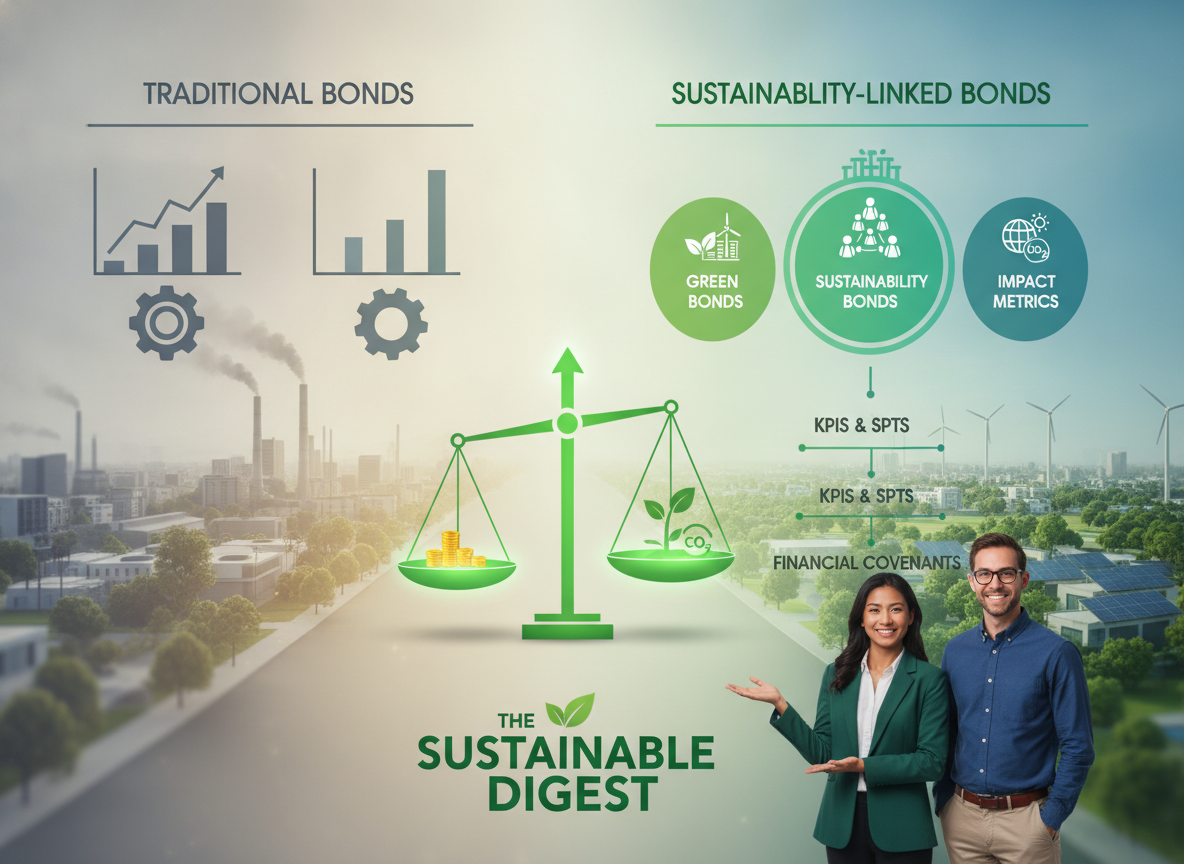
Each case is assessed through a clear framework rather than a polished label. The review considers UN Sustainable Development Goal alignment, project selection, issuer type, target groups, financing method, and country-level benefits. It also asks whether citizens gain cleaner energy, transport, housing, water, jobs, or stronger public services.
The analysis separates promised impact from proven performance. It checks proceeds tied to identifiable projects against targets built around key performance indicators (KPIs). Investor protection, reporting quality, verification, and financial structural characteristics also shape each score.
ENEL provides a useful benchmark. In September 2019, the issuer launched a US$1.5 billion, five-year sustainability-linked bond. Its target raised renewable capacity from 45.9% in early 2019 to 55% by 2021; failure would add 25 basis points to the coupon.
- ICMA tests KPI selection, target calibration, bond terms, reporting, and verification.
- The review weighs climate results, public value, and issuer commitment.
- Market context matters: outstanding instruments reached US$135 billion in 2021.
NATO-Aligned Market Cases Driving Sustainable Bond Innovation
Public finance is turning climate goals into roads, power systems, housing, and safer water. Across NATO-aligned markets, issuers use different routes, yet the test remains simple: does capital improve daily life? ICMA principles support clear allocation, reporting, and review.
United States Municipal Debt and ETF Access
Local authorities fund transit, buildings, wastewater, and energy upgrades. ETFs give smaller investors wider access, while residents can track project reports.
Canada’s Climate and Community Financing
Public agencies link proceeds with clean transport, housing, and resilient infrastructure.
United Kingdom Gilts and Transition Funding
Gilts connect national budgets with energy efficiency and emissions goals.
Germany’s Federal Issues
Germany emphasizes matching debt and transparent allocation.
France’s OAT Alignment
France links public spending with Paris Agreement priorities.
Italy, Spain, and the Netherlands
Italy backs renewable power; Spain joins climate work with social services; the Netherlands prioritizes flood defense and water projects. Citizens gain most when reports show affordable, measurable results.
| Market | Primary method | Citizen benefit |
|---|---|---|
| United States | Municipal issuance and ETFs | Visible local services |
| Canada and Europe | Sovereign allocation | Resilience and clean infrastructure |
Global South Cases Expanding Green and Sustainability-Linked Finance

Emerging markets are using varied debt tools to connect capital with cleaner growth and fairer access. Results depend on climate need, public oversight, and clear outcomes—not on a polished label.
Brazil: Land Use Targets
Brazil links issuer costs to land-use and emissions kpis, supporting forest protection.
India: Clean Power
India’s sovereign bond proceeds support renewable energy and modern transport.
Indonesia: Green Sukuk
Green sukuk finance resilient infrastructure through Sharia-compliant structures.
Mexico: SDG Finance
Mexico directs funds toward inclusive development and essential services.
Chile: Emissions Goals
Chile uses slbs to connect debt terms with measurable reductions.
Colombia: Inclusive Growth
Colombia supports housing, food security, and wider economic participation.
Regional Resilience
South Africa, Nigeria, Egypt, Fiji, Uruguay, and Morocco address clean power, water security, adaptation, and physical climate risk.
- Project-based bonds fund visible public assets.
- SLBs test issuer performance through verified targets.
- Citizens should review allocation reports and independent checks.
The SLB market reached US$135 billion in 2021, with US$46.6 billion added in early 2022. ENEL’s €2.5 billion 2019 deal drew €8.5 billion in orders; its 411-to-125 g/kWh target shows how ambition can shape emerging-market finance.

UN Sustainable Development Goals, ETFs, ETNs, and Development Impact
Capital markets increasingly read the UN agenda as a design map, not a decorative badge. The goals guide project choice, while allocation data shows which needs receive real funding.
How UN SDGs Shape Bond Design, KPIs, and Project Selection
Environmental, social, blended, and performance-linked bonds can support clean energy, housing, health, food security, and inclusion. In October 2019, ENEL tied tranches to affordable clean energy and climate action. Its slbs also aligned corporate targets with the Paris Agreement.
How ETFs and ETNs Shape Market Access
ETF and ETN strategies rely on index rules, eligible holdings, fees, liquidity, and tracking differences. Investors should review issuer concentration, impact reports, verification, and engagement policies. A label alone is hardly a magic wand.
World Economic Forum Insights From IFC and ICMA
WEF discussions link IFC development experience with ICMA standards. Regular reporting and independent checks help protect integrity. ENEL’s September 2019 deal was nearly three times oversubscribed; about 70% of buyers followed an ESG strategy.
| Structure | SDG focus | Investor check |
|---|---|---|
| Sustainable bonds | Energy and housing | Allocation report |
| slbs | Climate KPIs | External verification |
| ETF or ETN bond | Broad market access | Fees and tracking |
ICMA’s June and July 2026 Market Updates, Future Forecast, and Investor Conflicts

The source record confirms ICMA’s core principles from June 2020. It does not verify separate June or July 2026 bulletins. Therefore, the 2026 view below is an informed market analysis, not a claim about unpublished history.
Credibility Rules Behind the Next Market Cycle
ICMA’s framework covers KPI selection, SPT calibration, bond terms, reporting, and verification. Issuers should release updated performance information and assurance reports at least every year. Strong key performance indicators, ambitious targets, meaningful financial structural characteristics, and independent checks can attract international capital.
ENEL shows how terms can create accountability. Its 2019 bond added 25 basis points when a renewable-energy goal was missed. One 15-year tranche required emissions to fall from 411 g/kWh in 2017 to 125 g/kWh by December 31, 2030.
Flexibility Versus Investor Protection
Issuers value general-purpose proceeds; investors demand measurable impact, reliable information, and enforceable incentives. Weak KPIs, minor coupon penalties, business-as-usual targets, and loopholes invite greenwashing. The market reached US$135 billion in 2021 and added US$46.6 billion in early 2022. Future growth will depend on integrity, annual review, and financial structural characteristics—not clever labels.

Conclusion
Taken together, these examples show a practical way to direct capital toward cleaner systems and fairer public services. Green bonds offer the clearest project-finance route, while SLBs widen access by linking issuer conduct with measurable targets. The World Bank and European Investment Bank set this model in motion through landmark 2007–2008 transactions.
ENEL’s US$1.5 billion issue shows both the benefits and the discipline required by a 25-basis-point penalty. Strong country cases connect funding with open allocation, ambitious KPIs, independent checks, and visible daily gains. A sustainability-linked bond should meet those tests, not rely on attractive language.
Investors should review the issuer, use of proceeds, KPI method, reporting, liquidity, credit risk, and real-world evidence. They should apply the same care to ETFs and ETNs. Citizens can follow disclosures, join consultations, and support accountable projects. That habit turns finance into development; it also keeps every green bond honest.

Key Takeaways
- The 2007 climate assessment helped reshape finance.
- Early multilateral issuers set a lasting market model.
- Each example links funding with measurable outcomes.
- Reporting quality helps limit greenwashing.
- Citizens benefit when projects improve daily life.
