
Advantages of Joining a Cooperative in Sustainability Efforts and leverages that accompany it.

In today’s world, caring for the environment is more important than ever. Cooperative sustainability is a sound way for people, institutionsn and businesses to help. By working together, they can make a bigger difference.

Sustainability cooperatives unite people of all walks of life and diverse groups with the same goal: to help our planet. They use their collective resources, knowledge, and skills to face challenges that contribute to environmental impact.

Being part of these cooperatives has many upsides. Members, who are also the owners, get to use shared resources, learn from the newest contemporary practices, and connect with leading experts. This teamwork often leads to access to opportunities with more successful and lasting sustainability projects.

Understanding Cooperative Models in Environmental Initiatives

Cooperative models are key in driving environmental efforts forward. They bring both people and groups together with shared interest and common goals. This way, they share resources and skills to face sustainability challenges, rather its environmental, societal, or collateral.

Definition and Structure of Sustainability Cooperatives

Sustainability cooperatives are owned by their members, as previously stated. They focus on green practices, eco-friendly principles, and saving the environment. Each member has a say in how the group is both organized and operated.

These cooperatives do things like adopt renewable energy, grow food sustainably, and cut down on waste through lean practices.

Historical Success Stories in Cooperative Environmental Action

Cooperative models have shown they can solve problems caused by environmental impact. An excellent example is the Seikatsu Club Consumers’ Cooperative in Japan. Amazingly, since 1965, it has pushed for sustainable living.

This coop has made farming organic and reduced the use of plastic by buying in bulk.

Core Principles of Cooperative Sustainability

Sustainability cooperatives follow key principles for their green efforts and eco-friendly practices. These include:

PrincipleDescription
Environmental StewardshipThey focus on keeping the environment safe and reducing harm to it.
Democratic ParticipationThey make sure everyone has a say in what they do.
Education and AwarenessThey teach people about the environment and how to live sustainably.
CollaborationThey work with others to make a bigger difference.

By following these principles, sustainability cooperatives lay a firm base for real environmental change and lasting benefits for nature.

Resource Sharing and Cost Efficiency in Green Initiatives

Cooperatives are great at sharing resources and saving money on green projects. They work together to make sustainable practices affordable for everyone.

Shared Equipment and Infrastructure

Cooperatives let members share materials, expensive equipment, and facilities for green projects. This way, the coop reduces cost along with overhead while everyone saves money and gets more done. Thus, the cost of evenly distributed on things such as solar panels and recycling facilities becomes more affordable when costs.

Bulk Purchasing Power

Cooperatives use their totaled combined strength to buy eco-friendly goods at better prices. Buying in bulk, members get discounts on green products and services. This makes it easier for people leverage to select sustainable options to purchase.

Reduced Operational Costs

Cooperatives save money and time by sharing resources and being efficient. They use less energy and waste less, which lowers costs. These savings help fund more green projects, creating a cycle of sustainability.

“Our cooperative’s shared solar array cut energy costs by 40% while reducing our carbon footprint. It’s a win-win for our wallets and the planet.”

Cooperatives lead the way in green initiatives by sharing resources and saving money. This approach helps both individuals and the environment, making a big difference.

Collective Knowledge and Expertise Exchange

Building cooperatives on sharing knowledge gives member-owners share their skills, creating a place for growth and learning. This shared wisdom is vital to their sustainable practices.

In sustainability-based cooperatives or sustainable cooperatives, sharing expertise comes naturally. People from diverse backgrounds bring their unique knowledge. A gardener, ranger, or farmer might share organic farming tips, while an engineer, programmer, or electrical talks about energy-saving systems.

This mix of ideas leads to new solutions for environmental problems.

Regular meetings and workshops help share these ideas. Members talk about what works and what doesn’t. This open conversation helps everyone improve their sustainable practices.

“The strength of a cooperative lies in its ability to harness the collective knowledge of its members.”

Online platforms also boost knowledge sharing. Members can find lots of information at anytime. They learn about circular economics, minimizing carbon footprint, reducing waste and renewable energy, helping them make better choices.

This type of learning has a major impact beyond the cooperative. Members use what they learn to help the environment in their communities. This makes the cooperative’s positive effect even bigger.

Enhanced Market Access and Distribution Networks

Being part of a cooperative offers enormous benefits of selling sustainable products. Cooperatives leverage their combined strength to reach more people and improve unique goods distribution throughout the life cycle chain.. This helps all member-owners.

Expanded Customer Reach

Cooperatives help sustainable products get to more customers, including its complimentary service. Member-owners work together to attend trade shows, run joint ads, and share online spaces. This way, more people see and buy eco-friendly goods and services.

Stronger Market Position

When sustainable businesses, institutions, and/or social enterprises join a cooperative, they become stronger. They can talk better deals with suppliers, more representation for underserved organizations, and get better spots in stores. Through cooperating this way this makes them more competitive and well-known for their green products.

Improved Supply Chain Management

Cooperatives make delivery systems better and cheaper. They share storage, transport, and stock control. This makes sure goods arrive on time and stay fresh, which is key for things that spoil quickly.

BenefitImpact on Market AccessEffect on Distribution
Collective MarketingIncreased brand awarenessWider geographical reach
Shared ResourcesEnhanced market presenceImproved logistics efficiency
Unified NegotiationBetter trade termsOptimized supply chain

By working together in cooperatives, sustainable businesses, sustainability based businesses, and other social enterprises can do more than they could alone. They can sell to more people, access more markets, and have powerful delivery systems including distribution channels. This teamwork not only sells more eco-friendly product or general goods and service but also helps more people to buy green.

Community Impact and Social Responsibility

Sustainability cooperatives are key in boosting community involvement and social duty. They do more than just make money. They actively get locals involved in green efforts that help everyone.

Cooperatives lead in environmental projects, and they lead in federal and international ecological mandates that help local areas. They often host clean-ups, plant trees, start recycling, advocate for human rights, and take environmental justice initiatives. These actions not only clean up the environment but also bring awareness and unite people towards a common goal.

Learning and ongoing training are a big part of what cooperatives do. They run workshops and seminars on living green and operating eco-friendly organization. This teaches people how to lessen their impact on the planet. Schools also get involved, teaching kids about caring for the earth.

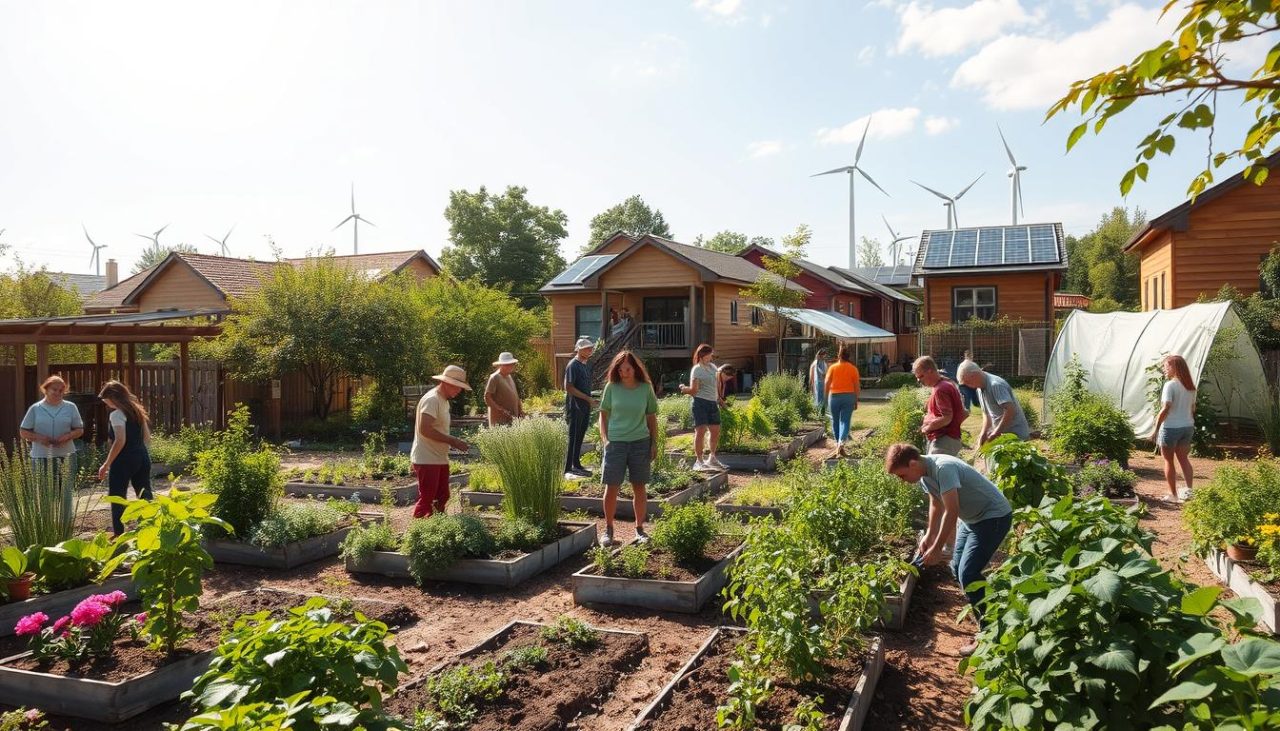
“Our cooperative’s community garden project has transformed an empty lot into a thriving green space. It’s amazing to see neighbors coming together, sharing gardening tips, and enjoying fresh, locally grown produce.”

The economic benefits of sustainability focused cooperatives and sustainable cooperative are huge and possibly unlimited. They create jobs that are good for the planet, boost the local economy, and support local businesses. This helps the community grow sustainably.

Community Impact AreaCooperative InitiativesOutcomes
EnvironmentalClean-up drives, Tree plantingImproved local ecosystems, Reduced pollution
EducationalWorkshops, School programsIncreased eco-awareness, Skill development
EconomicGreen job creation, Local partnershipsSustainable economic growth, Community prosperity

Innovation and Technology Adoption in Eco-friendly Practices

Cooperatives lead to eco-friendly innovation by sharing resources. This teamwork brings about sustainable technologies and environmental science across many fields.

Access to Sustainable Technologies

Cooperatives use their combined resources to invest in new green tech and smart tech. This shared access lets member-owners to use eco-friendly solutions they couldn’t afford alone. Examples include solar panels, electric cars, and smart energy systems.

Collaborative Research and Development

In cooperatives, innovation grows through teamwork. Members pool their knowledge to create new green solutions. This teamwork speeds up research and leads to new sustainable technologies. It’s how green packaging and waste reduction ideas are born.

Implementation of Sustainable Cooperative Practices

Cooperatives are great at sharing and using the best sustainable practices. Members learn from each other’s wins and setbacks. This sharing helps spread proven green technologies quickly.

“Cooperatives are incubators for sustainable innovation, turning collective wisdom into actionable eco-friendly practices.”

Innovation AreaCooperative AdvantageEnvironmental Impact
Energy EfficiencyShared investment in smart gridsReduced carbon footprint
Waste ManagementCollective recycling programsDecreased landfill usage
Sustainable AgricultureJoint research on organic methodsImproved soil health

Financial Benefits and Investment Opportunities

Joining a sustainability cooperative can lead to great financial gains and new investment chances, no matter the cooperative type or structure. These networks let you grow your wealth while helping the planet. Member-owners can access sustainable investments that might be hard to get alone.

Cooperatives save money by sharing resources and purchase goods and services in bulk. These savings help members save more. For instance, a renewable energy cooperative might get better deals on solar panels. This makes green energy more affordable for everyone.

Investment options in sustainability cooperatives cover many areas. You can invest in local farms or renewable energy projects. These investments can make money and help the environment at the same time.

“Investing in sustainability cooperatives allows us to align our financial goals with our environmental values.”

Being part of a cooperative for a long time can bring big financial rewards through social impactful economic gains. As sustainable practices become more common, early investors will benefit. Cooperatives often use their profits to fund new projects, offering more chances for achieving the triple bottom-line.

Investment TypePotential ReturnEnvironmental Impact
Renewable Energy7-10% annuallyReduced carbon emissions
Sustainable Agriculture5-8% annuallyImproved soil health
Green Technology10-15% annuallyInnovation in eco-solutions

By joining a sustainability focused cooperative, you’re making an intelligent financial choice. You’re also joining a movement towards a greener, socially impactful, and more prosperous future for everyone.

Conclusion

Joining a cooperative for sustainability efforts has numerous benefits. These intentional groups let like-minded people and organizations work together. They share resources and knowledge to make a big environmental and just difference.

Members get to access the latest eco-friendly technologies and green trends. They also save money by reducing overhead and reach more people. This helps them grow their social impact.

Being part of a cooperative is more than just economics or saving money. It’s about working together for the benefit of the planet. Members help create new, green practices. They make their communities stronger and more eco-friendly.

Cooperatives are key to solving major environmental and global problems. They use everyone’s skills and resources to create a better future. If you want to help the planet and humanity, think about joining a cooperative.

Key Takeaways

  • Cooperative sustainability amplifies individual social impact
  • Members share resources and knowledge for greater efficiency
  • Sustainable cooperatives provide platforms for reducing environmental impact
  • Collective action leads to more effective sustainability initiatives
  • Access to shared expertise enhances environmental efforts
  • Cooperatives provide a supportive network for sustainability goals

Cooperatives: Building Sustainable Communities

Cooperatives are key to empowering communities locally and internationally. They are businesses owned by their members, working for the good of all. Unlike traditional companies, co-ops put people first with purpose(including planet), not just profits.

Cooperatives tackle big issues like food systems, community necessities, and housing. They help communities grow stronger and more stable. This way, everyone has a say and a stake in any success and scale.

They also help local economies and care for the environment. Cooperative as a structure are intentional thus reflecting mindfulness of any local ecosystem its a part of. This makes co-ops a beacon of hope in tough times. They show us that together, we can make a big difference.

Understanding the Foundations of Cooperative Enterprises

Cooperative enterprises are key to sustainable community growth. They focus on democratic ownership, social governance, and collective action. This leads to fair sharing of resources and benefits.

Defining Cooperative Business Models

Cooperatives are owned by their members. They aim to help them as owner-members, not just make profits. This approach builds community and strengths supports long-term success.

Historical Evolution of Cooperatives

The cooperative movement started during the 1st Industrial Revolution. Workers came together for better lives and work. It has since spread across many fields, like farming, service industries, and housing.

Core Principles and Values

Cooperatives follow key principles. These ensure they focus on democratic ownership, efficient governance, justed labor practices, and fairness. The main principles are:

PrincipleDescription
Voluntary MembershipOpen to all without discrimination
Democratic ControlOne member, one vote
Economic ParticipationMembers contribute equitably to capital
AutonomyIndependent organizations controlled by members
EducationPromoting cooperative principles

These key principles help co-ops stay true to their mission and purpose. They serve owner-member needs and support sustainable community growth through fairness and collective action.

How Cooperatives Strengthen Communities and Promote Sustainability

Cooperatives are key in making communities stronger and more sustainable. They are owned by their members, who work together for common goals. This brings people together, encouraging collaboration, mobility, and support.

Many cooperatives focus on taking care of the environment. The use conservation and habitat preservation practice and, they also use eco-friendly practices and manage resources wisely. This helps reduce harm to the environment and keeps resources safe for the future.

Cooperatives also help keep wealth in the community through exercising sound economics. They create jobs, support local businesses, collaborate in crowd sourcing, and invest profits locally. This strengthens the local economy and makes it more resilient.

“Cooperatives are not just businesses; they’re community builders. They create a framework for people to come together, solve problems, and improve their lives collectively.”

The positive effects of cooperatives are seen in many areas:

Cooperative TypeCommunity Impact
Housing CooperativesAffordable housing, community-building
Agricultural CooperativesFood security, rural development
Credit UnionsFinancial inclusion, economic stability
Worker CooperativesFair wages, job security

Again, cooperatives put people first, leading to sustainable community growth. They give members substaintial leverage over their economic future. This fosters a sense of belonging and unified purpose.

Democratic Ownership: The Power of Collective Decision-Making

Cooperative are social enterprises that show the power of democratic ownership. They grant power to their members. This way, they empower communities and work together for shared agendas and such.

Member Participation and Voting Rights

In cooperatives, every member gets to be heard. Voting rights mean everyone has an equal voice in major decisions. This makes the community stronger and encourages those stakeholders to help shape the cooperative’s future.

Transparent Governance Structures

Cooperatives are open and clear. Their democratically structured governance is easy to see for all owner-members. They have regular meetings, share financial reports, and have both appointed and servant-based leaders who are easy to reach. This builds trust and makes each and everyone accountable.

Equitable Distribution of Power

Cooperatives don’t let power fall into one person’s hands. Instead, they share it equally among members even in multi-tier cooperatives. This fair way of sharing power brings in different skills and concepts no matter how small. It leads to new ideas and growth that’s lasts due to sustainability.

“Democratic ownership in cooperatives isn’t just about voting; it’s about building a shared vision for our community’s future.”

Cooperatives show how democratic ownership can change and advance communities. They empower people to work together. This makes strong, lasting businesses that help and benefits everyone.

Economic Benefits of Cooperative Models

Cooperative models bring big economic wins. They help communities grow strong and rely on themselves. Cooperatives are curated on the foundation of being self-sufficient as a group. These benefits help everyone in the greater local community in addition to the cooperative.

Cooperatives focus on keeping workers happy and safe, not just making the bottom-line through fast money. This makes jobs more secure and fulfilling. When the economy is down, co-ops keep jobs, helping to stabilize the market. This make cooperatives sustainable.

Cooperatives share profits fairly among members. This is different from regular businesses, where profits often go to just a few. Cooperatives make sure everyone gets a fair share of the wealth.

“Cooperatives are not just businesses; they’re engines of economic democracy.”

Cooperatives also help the local economy by investing money back into the community. This money helps other local micro, small, and medium businesses and projects. It keeps wealth in the local region, helping the economy grow in a healthy thus sustainable way.

Economic BenefitImpact on Community
Job StabilityReduced unemployment rates
Profit SharingIncreased household income
Local ReinvestmentImproved community infrastructure

Cooperatives make communities less dependent on outside money and external resources. This self-reliance helps communities face any economic challenges. It builds a firm and strong foundation for lasting success.

Environmental Stewardship Through Cooperative Action

Cooperatives are key in protecting our environment and promoting sustainable development as referenced earlier. They work together to use eco-friendly methods and push for green innovation in many areas within the various of industries and markets.

Sustainable Resource Management

Cooperatives are great at leveraging resources in a way that’s good for the planet. They use methods that save natural resources while still serving their owner-members. For example, farm cooperatives use crop rotation and preserve water to keep soil healthy and use less water.

Green Innovation Initiatives

Cooperatives are leaders and trend setters in green innovation. They spend on research to make products and processes better for the environment. Energy cooperatives, for example, focus on renewable and clean energy like solar and wind power.

Our cooperative’s commitment to green innovation has led to a 30% reduction in our carbon footprint over the past five years.

Reducing Environmental Impact

Cooperatives work hard to lessen their environmental footprint. They contribute to a more efficient logistical system due to being more local based. Cooperatives of various types, start waste reduction programs, use green packaging, and find better ways to transport goods to cut down on emissions. Some even aim to be carbon neutral and are working to be Net Zero and Net Positive.

Environmental InitiativeImpact
Sustainable farming practices50% reduction in pesticide use
Renewable energy adoption40% decrease in fossil fuel dependence
Waste reduction program75% increase in recycling rates

Cooperatives show that caring for the environment and doing well financially can go together. Their dedication to sustainability inspires businesses everywhere. They prove that working together can make a big difference in fighting climate change.

Building Social Capital and Community Resilience

Cooperatives are key in building strong communities. They help people trust and work together better. This creates a sense of unity and purpose among members.

At the core of cooperatives is working together. Members share their resources and skills to tackle challenges. This makes communities stronger and more able to handle problems.

Being part of a cooperative does more than just help the economy. It helps people grow as leaders and learn to make decisions together. This builds a more active and diverse community.

“Cooperatives are not just businesses; they are catalysts for social change and community development.”

Studies show that areas with cooperatives have more active citizens and trust. This leads to a better quality of life and helps communities face challenges together.

Cooperative ImpactCommunity Benefit
Shared ownershipIncreased stakeholder commitment
Democratic governanceEnhanced civic participation
Local focusStronger community ties
Collective problem-solvingImproved community resilience

Local Economic Development and Self-Reliance

Cooperatives are key in building strong local economies. They help communities by creating jobs, keeping money local, and supporting local businesses. This way, they help in sustainable development.

Job Creation and Stability

Cooperatives are great at creating jobs. They offer jobs that are more stable and less likely to be sent overseas. Worker-owned cooperatives focus on keeping jobs safe, not just making quick money.

Wealth Retention in Communities

Cooperatives keep money in local pockets. Instead of sending profits to distant owners, they share it with members or invest it back into the community. This helps make local economies stronger and more stable.

Supporting Local Supply Chains

Cooperatives like to buy and make things locally. This helps build strong local supply chains. It saves money on shipping, cuts down on pollution, and makes communities more self-sufficient.

“Cooperatives are key drivers of sustainable local economies. They create jobs, keep wealth in communities, and support local businesses. This approach builds economic resilience from the ground up.”

Cooperatives help make communities strong and self-reliant. They make local economies more diverse and less dependent on outside help. This way, communities can do well even when faced with tough economic times.

Cooperative Education and Skill Development

Cooperatives are key in empowering communities through education and skill development. They invest in their members’ growth, creating a culture of learning and improvement. This benefits both individuals and the community as a whole.

Cooperatives offer many educational programs for their members. These include workshops on sustainable development and courses on financial management. By teaching valuable skills, cooperatives help members contribute more to the organization and community.

“Education is not just about learning facts, but training the mind to think.”

Cooperative education has a big impact beyond just individual growth. It spreads knowledge and skills across the community. This shared learning leads to innovation and adaptability, key for sustainable development in our fast-changing world.

Skill AreaBenefits to MembersCommunity Impact
Financial LiteracyBetter personal finance managementIncreased economic stability
Sustainable PracticesEco-friendly lifestyle adoptionReduced environmental footprint
Leadership TrainingEnhanced decision-making abilitiesStronger community leadership

Cooperatives empower individuals and communities through education and skill development. Their investment in human capital leads to long-term growth and resilience. This shows the true spirit of collective action and sustainable development.

Types of Successful Community Cooperatives

Co-ops are diverse, each playing a key role in building strong local economies. They empower communities by promoting democratic ownership and shared goals.

Housing Cooperatives

Housing co-ops provide affordable homes. Members own and manage their buildings together. This approach ensures quality housing for many families.

Agricultural Cooperatives

Farmers work together in agricultural co-ops. They share resources and marketing efforts. This teamwork helps small farms compete, boosting local food systems.

Credit Unions

Credit unions are co-ops, which are owned by their members. They offer loans and savings accounts with better rates than banks. These institutions keep money in the community.

Worker Cooperatives

Worker co-ops are run by their employees. This structure ensures fair wages and job security. Businesses like Equal Exchange in Massachusetts thrive under this model.

Key Takeaways

  • Cooperatives prioritize community and environmental needs over profit maximization
  • Member ownership leads to increased economic resilience
  • Democratic decision-making empowers community member-owners
  • Cooperatives support sustainable local economic growth
  • They foster social bonds and environmental responsibility
  • Sustainable Cooperative models address various community and ecological challenges effectively

How has Sustainability Developed in the 20th Century Across Various Sectors?

The 20th century marked significant strides in sustainability across various sectors. The vast evolution of sustainability can be traced in areas such as ecology, labor laws, and energy, where advances were made to balance economic growth with ecological and social responsibility. In environmentalism, the rise of sustainability was driven by an increasing awareness of the need to manage resources responsibly, a movement spurred by visible pollution and the imperative to preserve natural ecosystems.

A lush forest with diverse plant and animal life, clean air and water, and renewable energy sources coexisting harmoniously

Technological innovations played a crucial role in shaping a more sustainable future. The drive towards sustainability saw significant advancements in manufacturing processes, with an emphasis on reducing waste and increasing efficiency. These shifts in manufacturing were paralleled by transformations in the energy sector, where the adoption of renewable energy sources aimed to reduce reliance on fossil fuels and mitigate environmental impact.

Internationally, sustainability transcended local initiatives and became a core aspect of diplomatic efforts and policy formulation. The focus was not only on environmental issues but also on advancing labor rights and human welfare in industries worldwide. These global efforts highlighted the interconnectedness of human rights with ecological sustainability, setting the stage for comprehensive and cohesive strategies moving forward.


Historical Progression of Sustainability

A lush forest transitions into a polluted landscape, then transforms into a sustainable city with renewable energy sources and green spaces

In the 20th century, sustainability evolved significantly across various domains. This transformation was marked by increasing ecological awareness and the rise of environmentalism, which together shaped policies and practices in technology, energy, and diplomacy.

Origins of Ecological Awareness

Ecological awareness began primarily as a reaction to industrial impacts on natural resources. By the late 1800s, European foresters developed principles to maintain forest productivity, which laid the groundwork for sustainability concepts.

20th-century advancements in ecology fostered a scientific understanding of ecosystems’ interconnectedness, stressing balance and resource management. Tools like the Environmental Kuznets Curve illustrated the resource consumption-environmental impact relationship, encouraging responsible practices.

The publication of Rachel Carson’s “Silent Spring” in 1962 was pivotal, alerting the public to chemical pollutants. This book catalyzed a broader ecological awareness, influencing public policy and increasing demands for conservation and sustainable development.

Emergence of Environmentalism

The environmentalism movement gained momentum in the mid-20th century, responding to industrial growth and resource exploitation. The formation of organizations like the World Wildlife Fund in 1961 signaled a concerted effort to address ecological degradation.

Key policy milestones included the United Nations Conference on the Human Environment in 1972, which reinforced sustainability as a global concern. Legislative measures followed, with acts centered on clean air, water, and endangered species protection, shaping more sustainable industrial practices.

Technological innovation was integral, with the rise of renewable energy sources such as solar and wind power, replacing fossil fuel reliance. The Brundtland Report of 1987 further entrenched sustainable development as a guiding framework, influencing international treaties and agreements.

Advancements in Environmental Policy

A lush forest with diverse wildlife, wind turbines, and solar panels coexisting harmoniously with clean air and water

Environmental policy in the 20th century evolved through national legislative efforts and international agreements. These developments aimed to address ecological challenges by regulating pollutants, preserving biodiversity, and promoting sustainable practices.

National Legislation and Regulations

Countries implemented laws to tackle air and water pollution, manage waste, and control emissions. The United States established the Environmental Protection Agency (EPA) in 1970, marking a significant shift towards structured environmental governance. The Clean Air Act and the Clean Water Act were pivotal in setting standards for pollutants.

In Europe, similar strides were made with the European Union enacting regulations that emphasized the importance of sustainable development. Initiatives like the Green Deal reflected the region’s commitment to reducing carbon footprints. National policies often intersected with social movements, reinforcing public demand for cleaner environments and stricter enforcement of environmental standards.

International Environmental Agreements

Global collaboration became essential to address transboundary environmental issues. The Montreal Protocol in 1987, which aimed to protect the ozone layer, highlighted the potential for successful international cooperation. Similarly, the Kyoto Protocol and later the Paris Agreement demonstrated concerted efforts to combat climate change by pursuing emission reductions worldwide.

International treaties also addressed biodiversity and endangered species, as seen with the establishment of the Convention on Biological Diversity. These agreements underscored the need for a harmonized approach to environmental challenges, balancing economic interests with ecological preservation. Despite varying levels of commitment among nations, these agreements marked significant progress in unifying global efforts towards environmental sustainability.

Evolution of Labor Laws and Human Rights

A lush, green landscape with factories in the background. Workers in protective gear and machinery that minimizes environmental impact

During the 20th century, labor laws and human rights evolved significantly, addressing critical issues such as worker protection, corporate accountability, and the advent of green jobs. These changes reflected growing awareness and a commitment to ensuring safe, equitable working environments.

Protest of environmental rights Protesting environmental rights. 1960s Activism 1960s era protesting anti-war, corporate transparency, civil rights, human rights, labor rights, and environmental rights 1960s era protesting anti-war, corporate transparency, civil rights, human rights, labor rights, and environmental rights

Worker Protection and Green Jobs

Worker protection in the 20th century focused on improving safety standards, fair wages, and limiting working hours. Landmark legislation, such as the Fair Labor Standards Act, established minimum wage and regulation of child labor among other labor laws. With environmental issues gaining momentum, green jobs emerged, integrating sustainability with worker rights. These jobs promote ecological integrity while ensuring fair labor practices, aiming to strike a balance between environmental stewardship and economic growth.

Corporate Responsibility and Accountability

Corporations were increasingly held accountable for their social and environmental impacts during the 20th century. Efforts to enhance corporate responsibility involved implementing policies that promote ethical behavior, environmental protection, and fair labor practices. Accountability mechanisms like corporate social responsibility (CSR) frameworks and transparency demands became essential. These tools aimed to protect human rights and promote workplace fairness, encouraging businesses to contribute positively to society while maintaining profitability.

International Affairs and Diplomatic Efforts

A lush forest with diverse wildlife, clean air, and renewable energy sources coexisting harmoniously

Sustainability in international affairs and diplomacy has evolved significantly, focusing on strengthening global environmental cooperation and leveraging the capabilities of intergovernmental organizations. Diplomatic efforts have centered on negotiating treaties and agreements that address global environmental challenges.

Environmental Diplomacy and Negotiations

Environmental diplomacy in the 20th century was characterized by efforts to address pressing ecological issues through international agreements. Key milestones included the 1972 Stockholm Conference, which raised global awareness about environmental challenges. Negotiations during this era aimed to create frameworks for cooperative problem-solving.

Treaties such as the Kyoto Protocol and the Paris Agreement emerged as significant commitments to reducing greenhouse gas emissions. These agreements demonstrated how collaborative diplomacy could mobilize nations to commit to sustainability goals. Successfully negotiating these treaties required understanding scientific evidence and aligning diverse national interests. Multilateral efforts became central to achieving these goals, underscoring diplomacy as a vital tool in environmental sustainability.

Role of Intergovernmental Organizations

Intergovernmental organizations (IGOs) played a crucial role in facilitating international cooperation for sustainability. The United Nations, with its specialized agencies like the United Nations Framework Convention on Climate Change (UNFCCC), provided a platform for dialogue and negotiation between countries.

IGOs coordinated efforts to implement agenda items, set targets, and monitor compliance with international agreements. These institutions also helped in capacity building and expansion by providing technical assistance and resources to emerging and frontier markets in developing nations, ensuring a more equitable approach to sustainability. Their multilateral forums, such as the Earth Summits and the Consultations on Resettlement and Complementary Pathways (CRCP), enabled collective action and policy development that prioritized global environmental needs. Through these efforts, IGOs have been instrumental in integrating sustainability into international affairs.

Technological Innovations and Sustainability

A lush green forest with solar panels and wind turbines scattered throughout, a river flowing with clean water, and wildlife thriving in their natural habitat

Technological advancements play a crucial role in driving sustainability by enhancing renewable energy systems and improving manufacturing efficiency. These innovations significantly reduce environmental impact and support sustainable practices.

Renewable Energy Technologies

Renewable energy technologies have transformed the energy landscape by offering sustainable alternatives to fossil fuels. Key advancements include solar and wind power, which have become increasingly efficient and cost-effective. Solar panels have achieved higher energy conversion rates due to improved materials and manufacturing processes. Wind turbines have seen innovations in blade design and size, enhancing their performance and energy output.

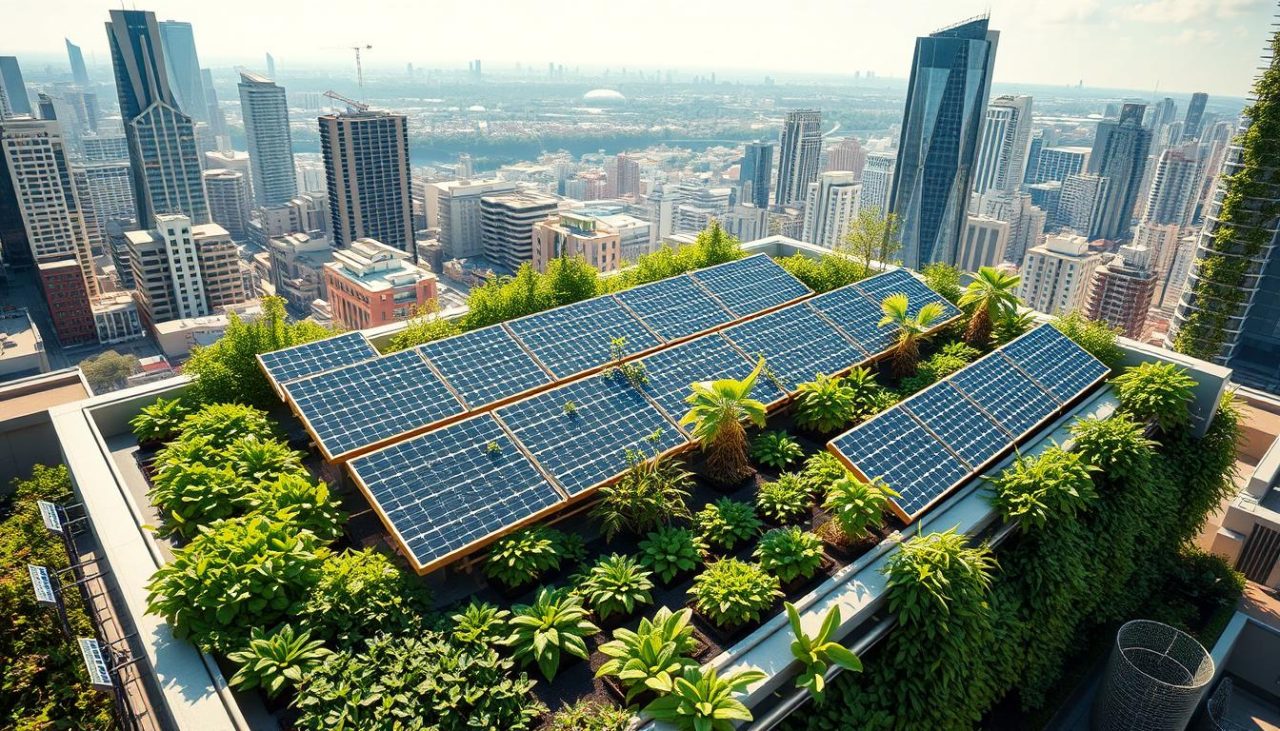
Efforts in storage technologies, like lithium-ion and emerging solid-state batteries, address the intermittent nature of renewable sources. Grid integration advancements ensure a more stable and reliable energy supply. The global push for electric vehicles also highlights the importance of renewable energy expansion.

Efficiency Improvements in Manufacturing

Manufacturing processes have seen significant improvements in energy and resource efficiency, contributing to sustainability. Techniques such as lean manufacturing minimize waste and optimize resource use. Advanced automation and digital tools, including the Internet of Things (IoT), allow for precise monitoring and control, reducing excess energy consumption and improving operational efficiency.

Additive manufacturing, like 3D printing, decreases waste by using materials more efficiently than traditional subtractive methods. Sustainable materials and eco-design principles are increasingly adopted, lessening the environmental impact of production. These innovations not only reduce costs but also support sustainable development by minimizing carbon footprints and conserving resources.

Manufacturing Paradigm Shifts

A lush green forest with a clear stream running through it, surrounded by diverse wildlife and a variety of plant life. The scene depicts a harmonious and sustainable ecosystem

The transition to sustainable manufacturing has involved redefining supply chains and assessing lifecycles. This shift prioritizes environmental responsibility and resource efficiency in production processes.

Sustainable Supply Chains

Sustainable supply chains aim to reduce environmental impact by optimizing resource use across all production stages. This involves integrating practices like eco-friendly sourcing and waste minimization to improve sustainability.

Key elements include collaboration with suppliers for environmentally preferable materials and evaluating transport methods to cut emissions. Manufacturers now emphasize transparency by sharing supply chain data to ensure ethical practices are observed. This approach not only reduces ecological footprints but also meets consumer demand for sustainable products. Enhanced supply chain management leads to increased resilience and adaptability in a rapidly changing market environment.

Lifecycle Assessment

Lifecycle assessment (LCA) examines the environmental effects of a product from raw material extraction to disposal. By analyzing each stage, manufacturers can identify and mitigate negative impacts.

LCA involves evaluating energy consumption, emissions, and waste production throughout the product’s life. This comprehensive assessment guides design and manufacturing decisions, promoting materials that are reusable or recyclable. Implementation of LCAs fosters innovation by encouraging alternative technologies and materials that enhance sustainability. The insights gained from lifecycle assessments enable companies to align their strategies with environmental goals, driving the industry towards more sustainable and efficient production methods.

Energy Sector Transformation

A wind turbine farm stretching across a vast, green landscape with clear blue skies and a flowing river in the background

The shift from fossil fuels to renewable energy sources and the implementation of supportive energy policies have had significant economic impacts. These changes are integral to the broader goal of achieving sustainable energy systems.

Fossil Fuels to Renewable Energy Transition

The 20th century marked a significant shift in the energy sector as the world began moving from reliance on fossil fuels, like coal and oil, to renewable energy sources, such as wind, solar, and hydroelectric power. This transition is driven by the need to reduce greenhouse gas emissions and combat climate change, which fossil fuels contribute to heavily.

Technological advancements have made renewable energy more accessible and cost-effective. Improvements in solar panel efficiency and wind turbine technology have played crucial roles. As a result, renewables have become a viable and attractive option for energy generation, contributing to decreased reliance on fossil fuels. This transition supports environmental sustainability and promotes energy security.

Energy Policy and Economic Impacts

Policies promoting renewable energy have been vital in transforming the energy sector. Governments worldwide have implemented regulations and incentives, such as tax breaks and subsidies, to encourage the adoption of clean energy technologies. These policies aim to stimulate investment in renewables and reduce carbon footprints.

Economic impacts include the creation of jobs in renewable energy industries, such as manufacturing and installation of solar panels and wind turbines. Greening strategies in the energy sector also lead to increased investments in sustainable technologies. While traditional fossil fuel industries face challenges, the growth of renewable energy sectors contributes positively to economies by generating new opportunities and fostering innovation.

Key Take-a-ways

  • The 20th century saw sustainability evolution in ecology, labor laws, and energy sectors.
  • Technological advances improved efficiency and reduced waste in manufacturing.
  • Global diplomatic efforts linked human rights with environmental conservation and ecological sustainability.

A brief chronicle of the who, what, when, were, how, and why within the 4 Eons time periods of; geological earth history, sustainability, and natural climate change.

To continue with Sustainability history, we will began during its prehistory, From the beginning of life to pre-industrial age. We will uncover that sustainable concepts always exist in different words across other languages, biological self correction, and in the practices of pre-colonial, indigenous, and first world peoples.

The Eons periods throughout time that are classified are:

Hadean Eon

Archean Eon

Proterozoic Eon

Phanerozoic Eon

Hadean Eon

The history of the planet Earth can be argued to be congruent with the big bang, which is arguably preceded by existence itself. According to the proclaimed scientific theory of the earth existing for 4,500 million years, the age of the planet is divided into 4 eons with 10 eras that proceed at least 22 periods of time, with a few containing very relevant epochs. The smaller or shortest periods of age are reserved for modern human social and anthropological development. Furthermore, ages are more fluid and subjective in time measurement.

Within the earth’s existence thus far we achieved to reach the Cenozoic era, in Phanerozoic, the four eon of time. In which we are in the very extremely early stages of the Holocene epoch. The Cenozoic era of the later third of this Eon was achieved only 65 million year ago in which is where we remain in the now as, a multi-tier sentient and non sentient life forms.

The Phanerozoic Eon is not only the fourth Eon of existence or at least the big bang, It signified the ending of the supereon or Super Eon, Precambrian. This supereon is made up of the previous eons before the Phanerozoic; Hadean, Archean, and the Proterozoic eons. As time continues forward the Phanerozoic Eon may be promoted or scale to be called the second supereon or appointed a natural title many millions later. One can assume that a title for the new supereon is redundant or just unnecessary given that enough time has not passed on this planet.

Archean

This era, in contemporary terms, is divided into two periods: the Tertiary and the Quaternary Glaciation. The former was the first and lasted for approximately 62 to 66 million years. There were several epoch periods lasting 10 to 20 million years on average. Previously, right before the Cenozoic era’s Tertiary period, the Paleocene epoch, the last age of the dinosaurs was called the Mesozoic era. In its final 80 million years, the Cretaceous Glaciation, the ongoing breakup of the mega-continent Pangaea, continued. This period also occurs at the halfway point of the Phanerozoic Eon. Our current period of existence in the Cenozoic era is the second period mentioned previously. The Quaternary Glaciation of the last 1.8 million years and its aforementioned Holocene epoch, which is just beginning within the last 10,000 years.

The Holocene epoch is again the current half of the Quaternary Glaciation. This period is also the ending of the fifth and last crucial Glacial period. This period ranges from 115,000 B.C. to 11,700 B.C. This was during the Pleistocene epoch.

Archean continuing

The next extensive glacial period that preceded was the Karoo Glaciation, which occurred approximately 360–260 million years ago. It overlapped both the later Proterozoic Era at the beginning of the Vendian period. In which it was from 650 to 543 million years ago. Then the very late Paleozoic Era during the Permian period from 290 to 248 million years ago. As part of the Karoo Glaciation, the period from the middle to the end experienced the world’s largest mass extinction. This extinction was primarily marine life yet it was primer into the age

The third great glacial period was called the Andean or Andean-Saharan Glaciation between 460 to 430 million years ago. It was also called the Paleozoic Era that a 100 million years later becomes the Paleozoic/Karoo Glaciation. This glacial period During the overlapping time ranges of both the Silurian (443.4 to 419.2 million years ago) and Ordovician (485.4 to 443.3 million years ago) periods. These periods were in the early half of this era. Within the beginning of the Phanerozoic Eon after the Cambrian period, which is the first 53.4 million years of the Eon. This ice age happens during the middle third of its first quarter (Ordovician period) and the final third of the stated quarter (Silurian period).

The preceding second critical glacial period, known as the Cryogenian Glaciation, occurred between 850 and 630 million years ago. This is during the majority and peak of the Neoproterozoic era between 1,000 and 538.8 million years ago of the greater Proterozoic eon of 2,500 to 543 million years ago. It overlapping the earlier portions of both the Vendian period from 650 to 543 million years ago. It also overlaps the most recently established by the IUGS (International Union of Geological Sciences), the Ediacaran period from 638 to 538.8 million years ago. This ice age is significant because it is similar to the Quaternary Glaciation in that it is the final glacial period in both the Proterozoic Eon and the Precambrian Supereon before transitioning to the current Phanerozoic Eon stage.

Phanerozoic Eon

The original extensive Huronian Glaciation period lasted 300 million years. At the start of the Precambrian supereon known as the Proterozoic. This lasted from 2,400 to 2,100 million years ago, and its first era. The first half of the Paleoproterozoic era, which included both the Siderian epoch from 2,500 to 2,300 million years ago. While the Rhyacian epoch from 2,300 to 2,050 million years ago.

Several mini-ice ages formed during this time period from the minerals rock, mudstone, sandstone, and clay. This period, as major as it was, was not a continuous glaciation. Between 2.8 and 2.1 billion years ago, the Huronian Glaciation. It was limited to what is now the Midwestern region of the North American continent. This was the section of both the Ur and Kenorland supercontinents. This glaciation also advanced in parallel with what is called the Great Oxygenation Event. That event happened during an increase in atmospheric oxygen and a decrease in atmospheric methane.

Phanerozoic Eon continuing

This led to the mass extinction of various anaerobic species due to the toxic oxygen, but it is not considered one of the great extinctions, which happened in the later eons from less than a billion to 500 million years ago.

During these specific points of time in pre-history, it is important to reflect on how sustainable the earth was in its early stages. As life came and went, land and sea formed through adaption of the totality of the geosphere and the development of its cosmic influence.

To sustain itself in a renewable continuum is a massive part of the planet’s narrative. Through the stages of humanity’s rapid advancement through, civilization presented challenges in agriculture, population growth, and demands in industrial commerce. There are, however, more intentional agendas in the age of enlightenment, colonial establishment, the three stages of the industrial revolution, post-WWII global economic development, and the cold war. We also will explore sustainable development that evolved initially through civil and political progress across civilizations, particularly in various stages of the pre-colonial periods.

How do we definite what does our planet’s eternal infancy mean for both environmentalism and conservation as well as preservation?

Why does the existence of life within the geosphere especially during the later stages of the different ice ages through out history?

What other factors can we learn from how sustainability advanced during both environmental, social, and market paradigm shifts throughout history?

Our impacts determines the outcomes of our existence on this planet if not entirely the Earth itself.

The who, what, when, where, why, and how of Sustainability

Sustainability is a word that holds many definitions that create a broad scope of its many concepts. Along with its many definitions and concepts, there are levels of denotation and connotation it presents as well. Sustainability is, however, not as fluid when applied to practical solutions and methodologies. For social impact, environmentalism or environmental preservation, and capital allocation strategies, sustainability is the ecosystem to draw from.

When one closes their eyes, how does the mind perceive what sustainability is? Can you imagine what colors come to mind? How about the textures or objects? Can we articulate what are the overall types of 5 senses that one would associate with sustainability, such as scent, taste, small, sound, and sight? What does it sound like, and what time of day is most associated with sustainability? How about the term sustainable? Does it seem more of a perceived focus? Does that term function as an enhancement to content that orbits sustainability? Are concepts of sustainability sustainable, or does the sustainable content belong within sustainability?

Understanding Sustainability is key

Welcome to our digest as we unpack how sustainability in scope expands through concepts. In addition to unpacking, we will explore what these concepts are and how we can relate to and apply them for a sustainable future. From a high-brow layman to the high-ranking delegate seeking to increase influence in a foreign administration, anyone can apply these tools. From the citizen climate lobbyist who advocates locally to Capital Hill to the at-home matriarch wife or patriarch uncle. Access to leveraging both nuclear and extended family duties on how a systematic approach to sustainable living can be beneficial.

The premiere definition of what sustainability is as a subject matter, application, and form of a multi-tier policy that synthesizes an eclectic set of disciplines. This understanding includes that earth and its ecosystem of lifeforms are included. By sustaining equilibrium from the plant’s origin billions of years to the establishment of the United States of America, sustainability is ensured by not comprising today at the expense of future generations.

We’ll continue to answer all these questions as we explore more how this concept materializes as a buzzword and an institutional ideology.

Sustainable Development History in Review

Within our discussion of this topic, we will feature a set of time periods that will also be featured. They will be referenced as milestones in the history of sustainability. Here are several listed here:

  • The pre-colonial years, when various indigenous cultures across the world practiced sustainable methods that were intrinsic for survival and adaptability.
  • The advent of proto-sustainability, both the 1st industrial revolution and the 1st machine age
  • Post-World War II and the effects of pre-civil rights/mid-cold war international economic development across developed, 2nd world, and 3rd world nations
  • Post-civil rights, in conjunction with both the U.S. relinquishment from the gold standard to the fiat platform and the environmental regulation standards
  • The modern interpretation of classical sustainability began with UN Conference on the Human Environment during both the cold war and the environmental regulation framework shaped fractionally to partially the gold to fiat U.S. dollar transition
  • The ‘term’sustainable development’ was established also a decade after the executive branch instituted the fiat standard.
  • During the final quarter of the Cold War era, various thought leaders from Gro Harlem Brundtland to Bill McDonough over the course of 15 years prior to the beginning of the Afghanistan war, the NATO expansion, the Canadian G8 summit, the scheduled Yucca Mountain nuclear waste repository, and the South African Earth Summit.

Sustainable Development History Continuing

What we can deduce is that sustainability evolved this way in regards to the passage of time for the long term. We can easily reason that this is because of the decades of accumulation of adverse environmental impact. Another factor is the inequalities and inequities of the human condition. This observation applies across all spectrums of human activity: education, entertainment, economics, law, politics, labor, religion, sex, and war.

Sustainability means to remain durable over periods of time. Durability is to sustainability what resilience is to adaptability in some respects. Another way of looking at defining it would be to state or understand that sustainability is to renew or be everlasting for generations to come. Regeneration within nature is a sustainable state in concept due to sustaining its essence.

The Sustainable triple bottom line broken down

In the context of modern, contemporary, and postmodern sustainability, it is defined by a trinity of social and institutional outcomes of the triple bottom line. Sustainability extends past the dynamic of achieving the bottom line to remain in the black by restructuring to be only 33.3% of the outcome. The other 66.6% are split into two unique channels that engage the human or social component that separates itself from the more capitalist-driven single bottom line. While the final 33.3% of the triple bottom line redirects to the living environment. The final bottom line, which is the living environment, includes the more non-sentient life and material via the science-based order of the planet.

This creates a synthesis of three subjective opposing constructs from one another that forms a cohesive system. Having these systems is beneficial for institutions, businesses, and communities to leverage. When working together as the triple bottom line, to remain functional, they work within a checks and balance framework. We’ll have a more real-world angle when we go into more detail and explain the progenitor of the triple bottom line and other platforms.

Rather, the term sustainable or sustainability is used; the greater understanding is how and why sustainable development is applied. The purposes of attracting better public and social engagement and environmental stewardship through both conservation and preservation. Positioning strategically in the free market in spreading prosperity. It is essential to development that’s sustainable for the long(er) term of any institution, organization, or MSME (micro, small, medium enterprise).

What does sustainability mean to you? How has sustainability served in a historical context? How can we educate and train to bring sustainable results? What comes to mind when you see and hear the word ‘sustainability’?

This website is saving energy by dimming the light when the browser is not in use. Resume browsing
Click anywhere to resume browsing
Verified by MonsterInsights