

Observing black history month involves more than simple nostalgia for a bygone era. It shows a deep dive into how people used agriculture for collective survival. These traditions date back to pre-colonial times, proving that shared labor is an ancient tool for strength.
During this history month, we analyze how shared work countered violence through the day-to-day pursuit of liberty. From mutual aid groups to modern community farms, the movement has always been about self-rule. This legacy ensures that green living remains a core part of social justice.
Exploring urban agriculture shows how modern neighborhoods change scarcity into plenty. Access to healthy food is not just a luxury; it is a basic right. Today’s leaders build upon a both a long black history and an engaging cooperative history of new ideas to secure a better future for all.
These plans prove that collective deals can fix structural gaps in the market. By providing fresh food, these projects help the body and the spirit of the local community. Economic self-determination remains the ultimate goal for these visionary activists.
From Pre-Colonial Traditions to Economic Self-Determination: The Roots of Black Cooperative Agriculture
Long before formal contracts existed, collective work practices shaped the social fabric of pre-colonial African societies. These traditions of communal land management traveled across the Atlantic, surviving as vital cultural memories during the era of bondage. They provided a necessary blueprint for resilience as the world moved toward the industrial revolution.

Collective Work Traditions and Early Responses to Marginalization
Enslaved and later freed communities transformed these ancestral habits into formal structures during the Reconstruction era. When white-controlled banks shut their doors, Black farmers turned to each other to survive. This role of mutual aid allowed them to manage resources and build systems of support without outside help.
The transition from informal sharing to organized cooperation was a direct response to systemic exclusion. These groups created their own markets and insurance pools to protect their families. By pooling small amounts of capital, they challenged the racial capitalism of the time.

Cooperative Economics as a Tool for Survival and Prosperity
Dr. Jessica Gordon-Nembhard’s research shows how economics functioned as a powerful shield against neglect. Cooperative economics evolved from meeting basic survival needs into a deliberate strategy for long-term prosperity. These early co-ops provided essential services that mainstream institutions refused to offer.
“At the beginning, the co-ops were a response to marginality and crisis. Often it was because they weren’t provided with the kind of burial they wanted for their families, or they couldn’t get access to quality food, healthcare or banking. So they created their own businesses. That connection between surviving oppression and marginality through cooperative economics was very powerful.”
Dr. Jessica Gordon-Nembhard, “Collective Courage”

The Intersection of Civil Rights and the Black Cooperative Development Movement
This economic strategy eventually fueled the broader pursuit of justice and liberation. The movement reached a critical turning point 57 years ago in the 1960s. At that time, 22 founding cooperatives came together to form the Federation of Southern Cooperatives.
This development proved that collective ownership is essential for achieving social justice and land retention. Today, these efforts remain a vital pillar of black history. They continue to provide a sustainable path forward for modern farmers across the country.
| Era | Core Focus | Economic Impact |
|---|---|---|
| Pre-Colonial | Communal Land | Sustainable resource sharing |
| Reconstruction | Survival Co-ops | Access to banking and burials |
| Civil Rights | Federation Era | Land retention and political power |
Trailblazers Who Shaped Black Cooperative History and Cooperative Agricultural History

Sustainability for Black communities was never an abstract luxury; it was a daily requirement for economic survival. These pioneers moved beyond mere theory to build lasting institutional realities during the industrial era. They understood that collective ownership could protect families from the harsh cycles of systemic exclusion.
Nannie Burroughs: Building the First Multi-Stakeholder Cooperative for Black Women
Nannie Burroughs was a strategic visionary who recognized that education and economic power were permanently linked. In 1909, she opened a famous vocational school for girls in the United States. She aimed to provide young women with the tools needed to navigate a segregated economy.
Students learned practical skills such as sewing, canning, and handicraft production to ensure they could find meaningful work. By July 1934, she launched a cooperative that grew from 50 to 400 members in just two years. This growth occurred during the height of the Great Depression, proving the model’s resilience.
“Burroughs saw herself as a movement builder.”
— Dr. Gordon Nembhard
Her project eventually transformed into a multi-stakeholder cooperative. It successfully combined a farm, worker ownership, and consumer services into one unified enterprise. Scholars now recognize this as one of the most advanced cooperative models of its time.
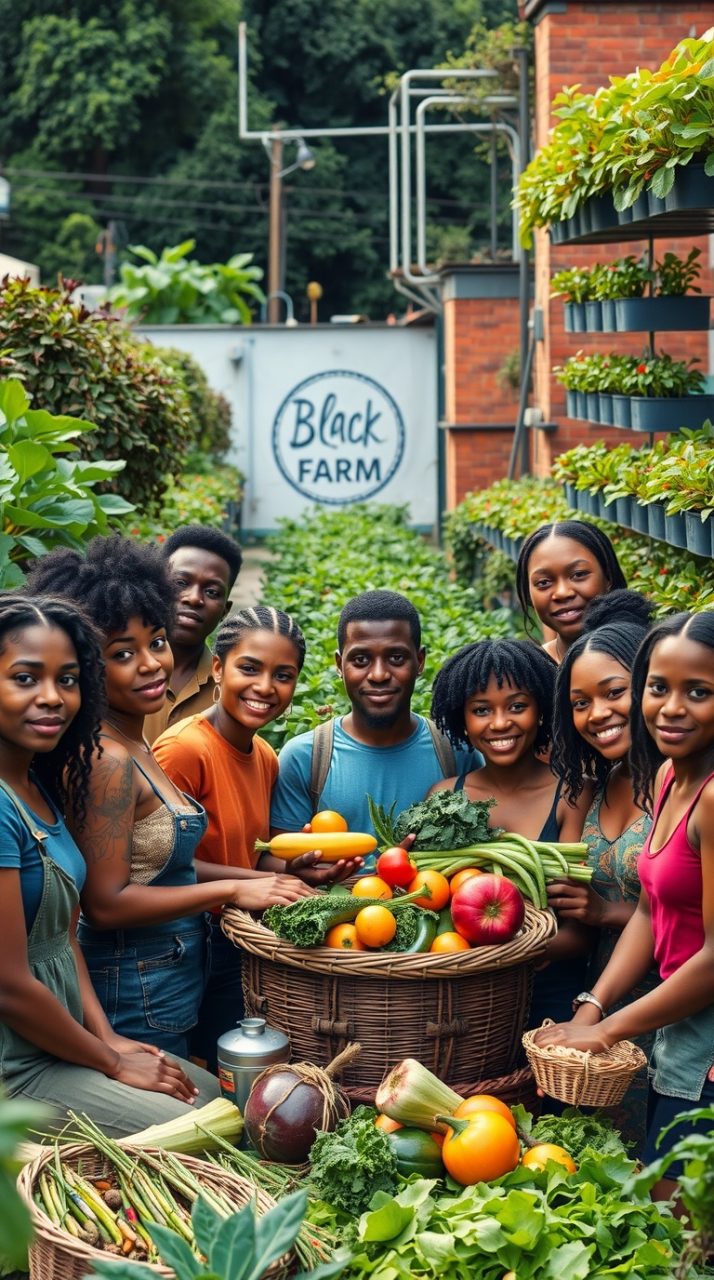
Thomas Monroe Campbell: Pioneering Extension Services for African American Farmers
Thomas Monroe Campbell became the first African American Extension agent officially hired in 1914. He dedicated five decades to helping black farmers improve their land management and crop yields. His work bridged the gap between scientific advancement and rural reality.
Campbell operated the innovative “Movable School of Agriculture” using the Jesup Wagon. This mobile unit allowed him to bring modern tools and agricultural education directly to remote families. He circumvented the exclusionary barriers of formal institutions by meeting people where they lived.
His efforts ensured that farmers received the latest knowledge to sustain their families. He even launched a radio program to share technical advice on growing food efficiently. By 1919, he was supervising hundreds of programs across seven different states.
The Southern Tenant Farmers’ Union and the Fight for Economic Justice
During the 1930s, many African American sharecroppers faced extreme poverty and exploitation. Activists formed the Southern Tenant Farmers’ Union (STFU) to give these vulnerable workers a collective voice. They transformed isolated laborers into a negotiating force with real agency.
The STFU provided essential credit access and marketing support to its diverse membership. This organized effort helped farmers secure better prices for their food while resisting unfair debt cycles. It proved that cooperative structures could successfully challenge exploitative systems.
These leaders demonstrated that collective action could build wealth and institutional capacity. By developing vital skills, members of the African American community created a blueprint for modern agricultural justice. Their legacy remains a cornerstone of the contemporary cooperative movement.

| Trailblazer / Organization | Primary Focus | Key Impact |
|---|---|---|
| Nannie Burroughs | Vocational Training & Worker Co-ops | Created the first multi-stakeholder cooperative for women. |
| Thomas Monroe Campbell | Agricultural Extension Services | Launched the Movable School to reach rural communities. |
| Southern Tenant Farmers’ Union | Sharecropper Collective Bargaining | Secured credit access and marketing power for workers. |
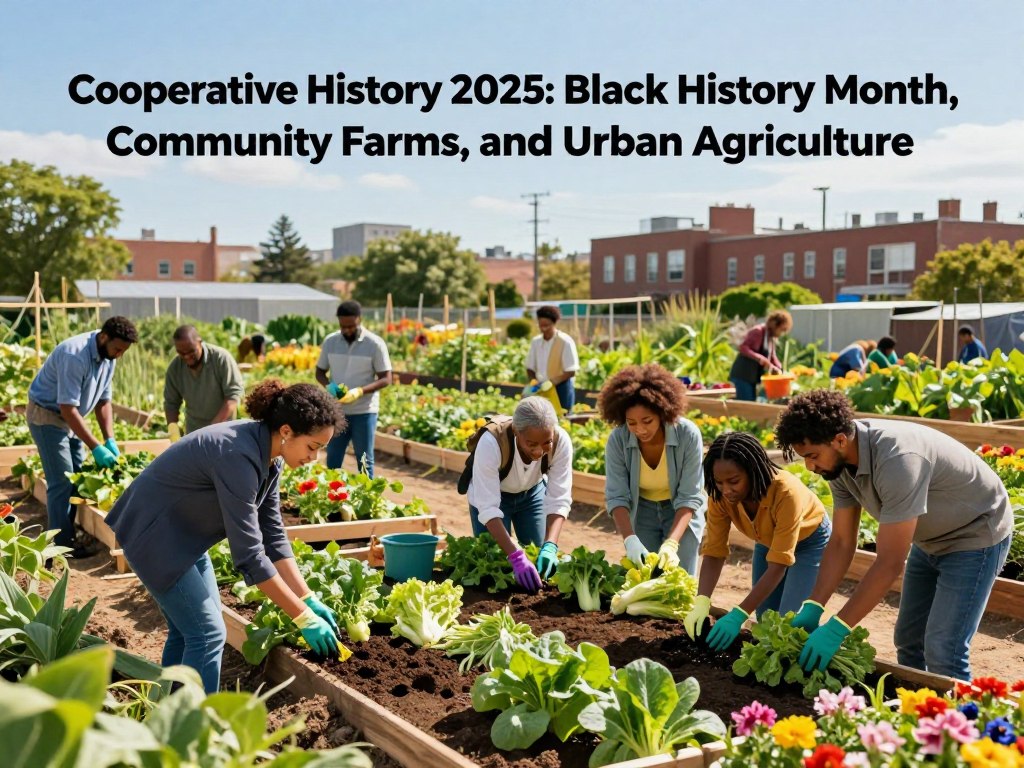
Cooperative History 2025 Black History Month, Community Farms, Urban Agriculture: Contemporary Movements and Sustainable Impact
Modern movements in the united states are currently bridging the gap between ancestral knowledge and high-tech urban agriculture. These farming practices prove that sustainability is not a new trend but a survival strategy refined over centuries. By securing land and access to fresh produce, today‘s collectives continue a legacy of economic self-determination.
The journey from pre-colonial collective labor to the modern farm reflects a resilient spirit. Contemporary initiatives prioritize health and security through innovative ownership models. These efforts ensure that local communities can thrive independently of volatile global markets.
The Federation of Southern Cooperatives: 57 Years of Supporting Black Farmers, Land Retention, and Cooperative History
The Federation of Southern Cooperatives has championed black farmers for 57 years. Founded by 22 cooperatives during the Civil Rights era, it emerged from the development of grassroots activism. Today, it provides critical services such as legal mediation, disaster relief, and advocacy for land retention.
This organization helps families share knowledge to prevent the loss of ancestral property. Their work ensures that black farmers remain a permanent fixture in the American landscape. They transform historical struggle into institutional power by providing the technical resources needed for modern success.
Urban Agriculture Innovation in Nevada and Access to Healthy Food Systems
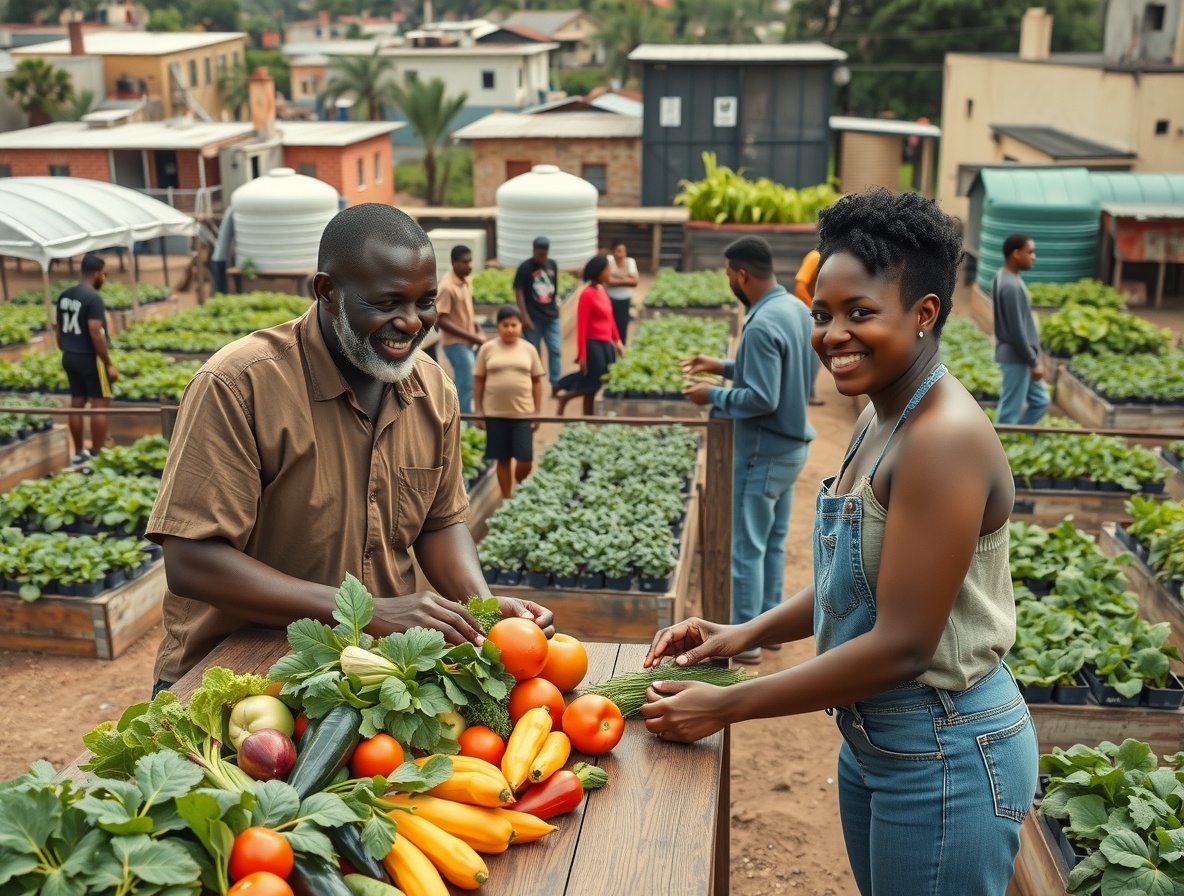
In Nevada, farming takes a high-tech turn within Clark and Washoe counties. The Southern Nevada Urban Agricultural Assistance Program secured nearly $900,000 to improve food security. These farms use hydroponics to provide access to nutritious greens in desert environments.
Organizations like the Obodo Collective Urban farm provide education to over 720 households. By partnering with local extensions, they share sustainable techniques with the historic Westside neighborhood. This focus on health directly counters the “food desert” conditions that often plague urban centers.
The Neighboring Food Co-op Association and Regional Food System Transformation
The Neighboring Food Co-op Association centers social justice to transform the regional food system. They believe that operational excellence must include an anti-racist framework to be truly effective. This approach helps farmers from marginalized backgrounds find a stable market for their goods.
By dismantling systemic barriers, they ensure that food and resources are distributed equitably. Their commitment to the community involves more than just selling groceries; it involves building a more inclusive economy. This system prioritizes people over profit, honoring the cooperative principles of the past.
Black Solidarity Economy Fund: Redistributing Resources for Community Power
The Black Solidarity Economy Fund recently redistributed $300,000 to 51 different projects. This initiative moves beyond traditional charity by focusing on reparative investment. It empowers black farmers and organizers to lead their own agriculture work without outside interference.
| Organization | Primary Mission | Key Impact |
|---|---|---|
| Federation of Southern Co-ops | Land Retention | 57 Years of Advocacy |
| Obodo Collective | Urban Farms | Education for 720 Homes |
| Solidarity Economy Fund | Resource Share | $300,000 Distributed |
This fund recognizes that community security depends on controlled resources. By investing in local leadership, they foster a food system that is both resilient and just. Their work serves as a blueprint for how modern technology and funding can amplify traditional cooperative values.

Conclusion: Honoring Legacy While Building Sustainable Futures
Honoring the legacy of cooperative movements means recognizing that sustainable futures are built on the foundations of ancestral wisdom. From pre-colonial traditions to the industrial age, black communities have used cooperative agriculture as a vital tool for self-determination. This type of cooperative history reveals that black history is not just a month of reflection but a strategic blueprint for economic justice.
The New Economy Coalition reminds us that these practices allowed people to resist systemic exclusion for centuries. Modern farmers continue this work, proving that sustainable farming is far from a recent discovery. Every day, this movement makes new worlds possible by reclaiming community power while supporting black communities during this month and beyond.
Today, we must expand access to land and education to bolster food security and public health. Ongoing research should share these models to support marginalized people within various black communities. True sustainability requires a central role for those who pioneered the farming and agriculture models we rely on for food and health.
FAQ
What is the significance of the 2025 Black History Month focus on collective efforts?
This observance highlights the social justice legacy of African American farmers. By analyzing history, we see how farming became a tool for self-reliance; essentially, the soil served as a ledger for economic liberation. It showcases how people utilized shared resources to build a resilient food system in the United States.
How did Thomas Monroe Campbell impact agricultural education?
He pioneered extension services to help diverse groups improve their skills and production practices. His work focused on land management and economic development. This role ensured that rural neighborhoods had access to modern research and technical security.
Why is the urban agriculture movement gaining traction today?
City-based farms provide fresh food and nutritional security to areas (often overlooked by traditional markets). These projects share vital skills to improve life every day. By utilizing vacant land, these farms improve public health and foster local economics.
What is the role of the Federation of Southern Cooperatives?
For 57 years, this Cooperative has assisted black farmers with land retention. They offer legal services and development research to protect generational wealth. Their work ensures that various black communities maintain access to vital farm resources thus contributing to cooperative history.
How does a community benefit from a shared food system?
A local system ensures security by providing access to healthy food. Pioneers like Nannie Burroughs proved that a school could cultivate both technical skills and economic power. This work builds collective economics and promotes long-term health across all collectives.

Key Takeaways
- Cooperative history includes models originated in pre-colonial African societies long before modern economic theory.
- Shared labor serves as a sophisticated response to historical land dispossession and market exclusion.
- Community-led farming initiatives transform modern food deserts into productive green spaces.
- Economic self-determination is fundamentally linked to the right to access healthy nutrition.
- Sustainability movements gain legitimacy by acknowledging the pioneering work of diverse agriculturalists.
- Modern farming bridges the gap between historical resistance and contemporary social resilience.