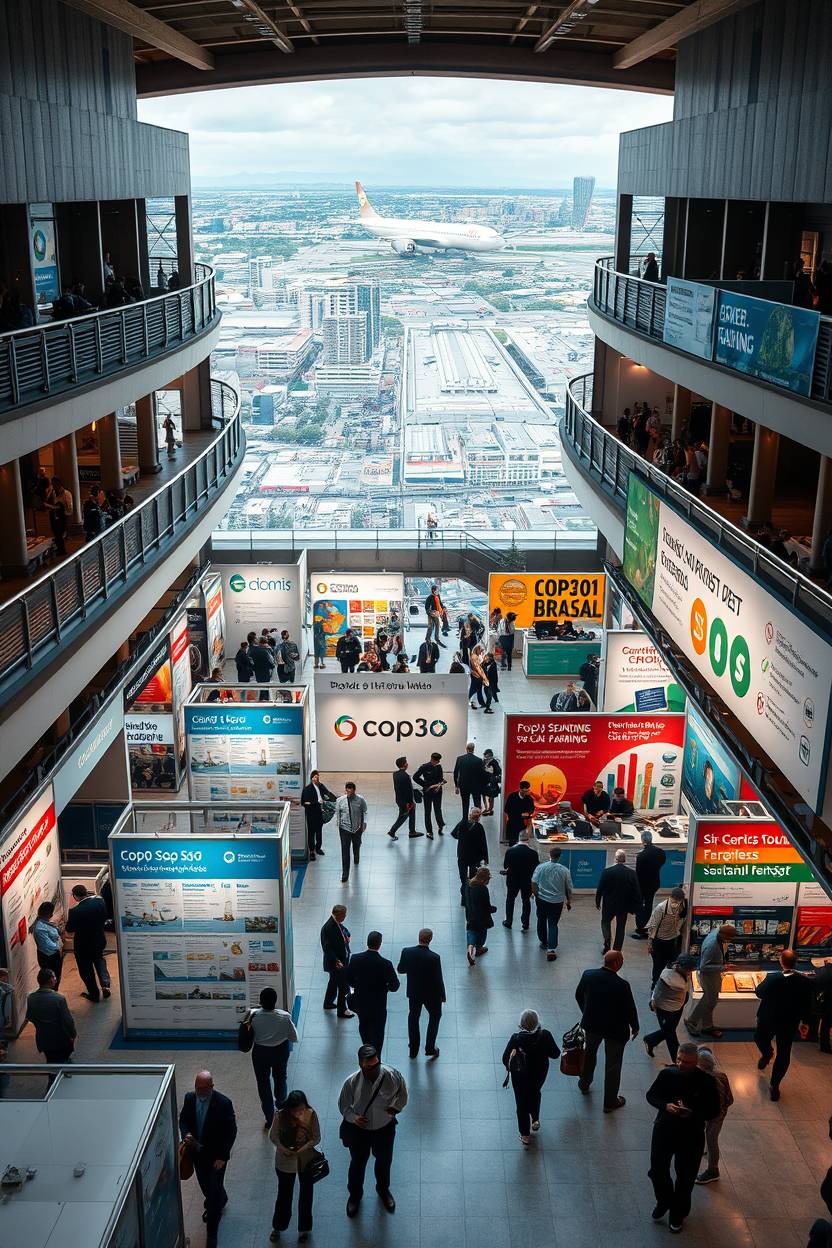

January 2026 Sustainability Events & Summits USA is a guide for those with big goals in the U.S. It helps plan domestic flights and explain emissions. It also offers a plan to reduce emissions that can pass a budget meeting.
This guide maps sustainable events across the country. It includes conferences and community days that focus on environmentalism.
The United States sustainability calendar focuses on three areas: learning, influencing, and community action. It lists events from multi-day summits to one-day trainings and eco-friendly observances.
In 2026, sustainability focuses on real actions like decarbonization and climate risk. It’s not just about slogans. This guide looks for venues that use 100% renewables without bragging about it.
To find valuable events, this guide checks credibility. It looks at who organizes the event, the agenda, speakers, and outcomes. The goal is to attend fewer events but get more value and partnerships.
Eco-friendly travel and planning are key. This guide helps find ROI by focusing on networking and clean follow-ups. It’s a practical guide for those who want action, not just tote bags.

January 2026 events observances summits holidays conferences in Sustainability
In the U.S., January is a big month for sustainability. It’s when we start planning, making lists, and setting goals. It’s the time to get serious about making a difference.
For teams, January sets the stage for the first quarter. The best events are those that turn words into action.
What to expect
Summits are for big decisions and announcements. They focus on strategy and partnerships. Conferences offer more variety, with many topics and vendors.
Workshops and trainings are all about getting things done. They teach you how to use tools and follow best practices. Holidays and observances are for connecting with people and building community.
| Format | Best for | Typical outputs | How it supports planning |
|---|---|---|---|
| Summits | Leadership alignment and external signaling | Policy takeaways, partner meetings, shared priorities | Locks in annual direction; reduces guesswork on what regulators and markets may reward |
| Conferences | Broad learning across roles and sectors | Track notes, product demos, peer benchmarks | Builds a shortlist of tools and practices for Q1 pilots and procurement |
| Workshops/trainings | Hands-on capability building | Playbooks, reporting checklists, draft methodologies | Moves teams from intent to execution; turns goals into repeatable workflows |
| Observances/holidays | Community and internal engagement | Campaigns, volunteering, micro-learning, social content | Keeps momentum high; gives sustainability a recurring rhythm beyond annual reports |

How to use this guide
This guide helps you plan for green conferences in January 2026. Start by setting a goal, like learning or making deals. Then, find events that match your goals and audience.
Check the credibility of event organizers. Look at their past events, sponsors, and speakers. Plan your travel to reduce carbon emissions. Use virtual passes or shared rides when possible.
- Pick the win: define one outcome that can be measured within 30 days.
- Filter by theme: match sessions to your 2026 roadmap and reporting cycle.
- Validate the host: confirm track depth, not just big logos.
- Plan low-carbon: choose routes, lodging, and attendance modes that reduce emissions.
- Capture and share: turn notes into action items, not a forgotten folder.
Key themes
January focuses on three main themes. Sustainable development includes planning and adapting to climate change. Environmentalism is about protecting nature and biodiversity.
Eco-friendly innovation is all about clean energy and sustainable technology. These themes are everywhere in January’s events, helping us stay focused and motivated.
Top environmental conferences January 2026 across the USA

In the U.S. calendar, environmental conferences in January 2026 often seem the same. They have big venues, big claims, and a tote bag that lasts longer than the keynote. To find the best, look for substance over style.
Good agendas dive deep into technical topics. They offer useful takeaways and feature real people on stage, not just presentations. The best events also show results, like working groups and pilots, that last beyond the event.
Climate, clean energy, and decarbonization tracks to prioritize
For climate action, focus on clean energy systems. Look for talks on grid modernization, renewable energy, storage, demand response, and building electrification. These sessions should highlight challenges, not just achievements.
Industrial decarbonization is also key. Look for discussions on industrial heat, process efficiency, and hydrogen. It’s important to check lifecycle emissions too.
Carbon management should go beyond slogans. It should cover Scope 1–3 emissions, supplier engagement, and reductions versus offsets. Real examples should include baselines, timeframes, and what didn’t work the first time.
Corporate sustainability and ESG leadership sessions to look for
Corporate sustainability sessions are worth attending if they focus on governance. Look for clear board oversight, accountability, and plans for when targets are missed. ESG talks should include ways to prevent greenwashing and ensure data accuracy.
Reporting that works for everyone is crucial. Look for practical solutions to meet investor, customer, and regulator demands without overwhelming reports.
| Agenda signal | What it usually covers | What to confirm in the session description |
|---|---|---|
| Grid and markets | Interconnection queues, flexibility, reliability, load growth | Utility operations detail; regional constraints; concrete timelines |
| Building electrification | Heat pumps, demand response, retrofits, commissioning | Measured savings; occupant impact; verification approach |
| Scope 3 execution | Supplier data, procurement levers, category strategies | Primary data plans; incentives; contract language examples |
| ESG assurance | Controls, audit trails, materiality, governance | Audit-ready workflows; system boundaries; accountability owners |

Research, policy, and cross-sector collaboration opportunities
The best sustainable development events in January 2026 bring together different sectors. Look for university-government-industry partnerships, pilots, and standards work. In the U.S., funding and regional climate alliances are key to turning ideas into action.
For evaluation, check what gets published after the event. Look for proceedings, policy briefs, working groups, and post-event deliverables. When clean energy and decarbonization are treated as operational programs, the next steps are clear, owned, and measurable.
Sustainability summits January 2026 focused on policy, diplomacy, and global affairs
At the sustainability summits in January 2026, sustainability is seen as a way to govern, secure, and develop. It’s not just about adding a green touch to products. The discussions are more like policy talks, with a focus on global issues and carbon limits. For those in the U.S., these meetings are about turning climate goals into real rules and actions.
In U.S.-based events, diplomacy and international relations are very real. The talks often focus on climate promises, energy safety, and finding new resources. They also cover how to deal with climate-related migration, international funding, and trade rules.
These events are important for more than just governments. Companies look for clues on new rules that could affect their business. Non-profits seek chances to work together, and researchers follow the money and the topics that get attention. Cities and states look for ideas to use in their own policies.
To understand the impact, it’s key to know who’s making decisions. Big meetings set the tone, while secret talks shape the policies. Getting ready means having clear, short briefs and solid evidence that can stand up to questions.
Overall Sustainability focused global affairs impact
- Stakeholder blocs: federal, state, and local agencies; multilateral institutions; business councils; civil society networks
- Where leverage shows up: working groups, ministerial side meetings, draft communiqués, procurement and standards discussions
- What to bring: data that travels, a one-page summary, and a realistic timeline for implementation
| Program focus in global affairs | What gets debated | Who tracks it closely | Useful prep for attendees |
|---|---|---|---|
| Climate commitments and implementation | Targets, accountability systems, reporting rules, enforcement pathways | Federal agencies, ESG leaders, standards bodies | Compare pledges to sector baselines; bring measurable milestones and cost ranges |
| Energy security and grid resilience | Reliability, storage, transmission siting, emergency coordination | Utilities, state energy offices, resilience planners | Identify bottlenecks; show project-ready options and permitting needs |
| Critical minerals and supply chains | Traceability, labor safeguards, domestic capacity, allied sourcing | Manufacturers, procurement teams, trade analysts | Map tiered suppliers; document due diligence and substitution scenarios |
| Climate migration and human security | Displacement risk, services strain, regional stability, legal definitions | Humanitarian groups, city managers, national security staff | Use scenario planning; bring local impact data and service capacity needs |
| International climate finance | Blended finance, loss and damage, risk sharing, measurement of impact | Development banks, foundations, project developers | Prepare bankable project briefs; clarify safeguards and expected outcomes |
| Trade measures and carbon border approaches | Embedded emissions, competitiveness, data rules, retaliation risk | Exporters, compliance officers, trade groups | Align product-level emissions data; rehearse defensible methodologies |
At these events in January 2026, the main goal is to translate big climate ideas into real policies. It’s about turning climate goals into rules for markets and public systems. This way, diplomacy is not just about talking but about designing systems that make promises real.
Eco-friendly events January 2026 for communities, campuses, and families

In the United States, eco-friendly events in January 2026 are more like neighborhood experiments than lectures. Libraries host repair cafés, and campuses have swap spots. City halls run campaigns that make the bus look cool. The goal is to make low-carbon choices seem normal, not special.
Many events focus on everyday things like food, energy, and materials. This is where we can really make a difference. For example, cooking demos can reduce food waste and improve grocery shopping. Home energy clinics can help you save money by making small changes.
Circular-economy pop-ups also appear in January. They help us think about our spending and what we really need.
Local sustainable living events January 2026 and citywide eco-initiatives
Local events often have practical programs that work well indoors and on a budget. The best events are clear about what to do, how much it costs, and how to measure success.
- Low-waste challenges run by campuses or neighborhood groups; tracking is usually weekly, not daily, to keep participation realistic.
- Buy-nothing swaps and reuse fairs that keep textiles and small appliances circulating; donation rules matter for safety and sorting.
- Transit and commute drives that pair route planning with incentives; behavior change is easier when the schedule is clear.
- Home efficiency clinics that cover insulation basics, smart thermostats, and rebate navigation; fewer surprises, fewer abandoned projects.
Nature, conservation, and wildlife observances to spotlight
Wildlife-themed dates anchor community programs without making conservation a fleeting trend. National Bird Day sparks talks about bird-safe buildings. Simple steps like reducing nighttime lighting and adding window markers can help.
SAVE THE EAGLES DAY connects with watershed health and responsible recreation. Eagles help track fish populations and water quality. Monitoring efforts and funding keep these connections real.
SQUIRREL APPRECIATION DAY and NATIONAL HOUSEPLANT APPRECIATION DAY make learning about biodiversity fun. Urban ecology lessons cover native trees and invasive plants. Indoor plant talks focus on care basics and improving air quality.
Volunteer-friendly cleanups, restoration days, and citizen science events
January offers many volunteer opportunities, but they vary by region and weather. Park and beach cleanups, invasive plant removal, and habitat restoration days happen even in cold weather. Tree planting is seasonal and location-dependent. Winter wildlife counts and community science projects also occur, focusing on quality data.
| Activity type | Typical January setup | Partners that often host | Impact to track (beyond optics) | Key safety and quality notes |
|---|---|---|---|---|
| Park or beach cleanup | 2–3 hours; check-in, route map, sorting station | City parks departments; watershed groups; Surfrider Foundation chapters | Item counts by category; repeat hotspot trends; disposal method | Gloves, sharps protocol, and disposal coordination; bags collected is not the same as waste prevented |
| Invasive removal | Small crews; tool briefing; bag-and-haul plan | County conservation districts; local land trusts; campus sustainability offices | Area cleared; regrowth checks; native replant survival rate | Species ID training; permits on protected land; avoid spreading seeds on boots and tools |
| Habitat restoration | Staged tasks; erosion control; planting where conditions allow | State parks; The Nature Conservancy programs; community nonprofits | Streambank stability indicators; plant survival; follow-up maintenance hours | Weather plan, PPE, and site boundaries; document methods for continuity |
| Citizen science (winter counts) | Short survey windows; defined protocols; shared reporting | Nature centers; universities; local conservation nonprofits | Complete checklists; observation effort; data verification rate | Stay on protocol; record conditions; use consistent timing to reduce bias |

For organizers, the best collaborations involve parks departments, campus sustainability offices, and watershed groups. They handle permits, access, and data standards. For participants, the key is to show up prepared, follow the protocol, and measure progress seriously. Real progress is not accidental, even at eco-friendly events in January 2026.
Sustainability workshops January 2026 for professionals and teams
The most useful sustainability work is often not glamorous. Workshops in January 2026 focus on the basics: creating routines, cleaning up data, and aligning teams. It’s where good intentions meet the reality of spreadsheets.
In the U.S., these workshops lead to better decision-making and clearer roles. They help teams avoid last-minute scrambles before reports are due. When done right, they create a common language among finance, operations, legal, and sourcing teams, starting the momentum.
Practical trainings: reporting, lifecycle thinking, and sustainable procurement
Good programs treat ESG reporting as a workflow, not just a presentation. They cover data management, internal controls, and audit-ready documents. They also teach how to collect supplier data without it falling apart.
Teams also need to understand lifecycle assessments to make informed choices. A good module explains how to set boundaries, choose units, and interpret results. It helps avoid turning uncertainty into marketing.
For sourcing, training focuses on creating sustainable procurement plans. It teaches how to design policies, score bids, and write contracts that encourage sustainable purchasing. The best sessions use terms buyers understand, like lead time and total cost.
Operations workshops: waste reduction, water stewardship, and energy management
Operations workshops are direct and to the point. Waste reduction starts with audits and tracking contamination. They focus on how sites actually operate, including shifts and vendor constraints.
Water stewardship training begins with risk mapping. It looks at where facilities are, water basin stress, and demand from processes. Teams then create stewardship plans with clear goals and supplier connections.
Energy management workshops focus on systems and practices. They cover metering, baselines, and commissioning. Many also include building performance and fleet electrification planning to go beyond simple posters.
Career-building: certificates, continuing education, and leadership development
Certificates and CEUs are valuable if they lead to real influence. Leadership development helps managers handle challenges like budget tradeoffs and pushback. It teaches how to answer the question: “Is this required, or just nice?”
When picking a program, look for instructor expertise, real-world projects, and a strong peer group. Avoid programs that promise too much, like net-zero in a weekend. It’s best to keep your credit card safe.

| Workshop focus | What participants practice | Artifacts to bring back to the job | Signals of a credible program |
|---|---|---|---|
| ESG reporting workflows | Data ownership maps, control checks, supplier data requests | RACI chart, reporting calendar, sample evidence log | Real datasets, scenario drills, review of internal controls |
| Lifecycle assessment | System boundaries, functional units, interpreting sensitivity | Boundary diagram, assumptions register, results narrative guardrails | Hands-on exercises, transparent uncertainty discussion, peer critique |
| Sustainable procurement | Bid scoring, spec rewrites, supplier engagement scripts | Contract clauses, scoring rubric, supplier questionnaire template | Legal review examples, purchasing behavior nudges, measurable outcomes |
| Waste reduction | Waste audits, diversion planning, contamination root-cause checks | Waste map, diversion dashboard, vendor action list | Site-realistic constraints, before/after metrics, materials flow logic |
| Water stewardship | Basin risk screening, process-level demand analysis, escalation rules | Water risk register, stewardship plan, facility KPIs | Local context methods, practical conservation measures, governance steps |
| Energy management | Baseline setting, metering strategy, commissioning priorities | Energy roadmap, measurement plan, project pipeline with payback bands | Operations-friendly playbooks, verified savings methods, toolkits for teams |
- Prioritize trainings that include templates, datasets, scenario exercises, and outcomes that can be measured within a quarter.
- Look for applied capstones that connect reporting, sourcing, and operations instead of treating each team as a separate planet.
- Choose formats that fit the work: short sprints for busy teams, or multi-week cohorts when change management is the real constraint.
January 2026 sustainability observances and holidays to include in your content calendar

January observances are great as a content operations tool, not just for fun. They help teams, NGOs, universities, and creators share important messages. These messages should focus on making real changes in our daily lives.
When used right, these dates can make sustainability a part of our daily plans. But, if not, they can just be forgotten by the end of the day.
Clean energy and education
The International Day of Clean Energy is a chance to talk about important issues in the U.S. We can discuss grid reliability, high energy rates, and the slow process of getting permits.
This day also supports topics like training workers for clean energy jobs, managing the grid, and making sure everyone has access to clean energy upgrades.
The International Day of Education is a great time to share how we can make sustainability happen. We can talk about teaching people about sustainability, creating career paths, and quickly training people to adapt to climate change.
Wellness and community
Wellness content is more impactful when it talks about environmental issues like air quality, extreme heat, and safe water. It’s also important to focus on how communities come together during disasters.
World Religion Day and the International Day of Peaceful Coexistence can help us talk about climate action in a way that feels like a shared value. Sustainability is a social project, so it’s important to involve the community in taking care of our planet.

Nature and wildlife
National Bird Day and other animal appreciation days can help us talk about biodiversity. We can discuss creating habitats, monitoring urban wildlife, and planting native plants.
These days also give us a chance to talk about responsible pet and plant care. Even a post about houseplants can mention the importance of not introducing invasive species and using sustainable potting mixes.
Civic, tech, and ethics
DATA PRIVACY DAY is a great time to talk about the tech side of sustainability. We can discuss how smart meters, mobility data, and climate-risk platforms can help us save energy. But we also need to make sure we’re using data ethically, so we don’t turn “green” into surveillance.
National Technology Day and NATIONAL SECURITY TECHNICIAN DAY can help us talk about the impact of digital infrastructure. We can discuss the energy use of data centers, the lifecycle of devices, and the importance of responsible recycling.
NATIONAL HUMAN TRAFFICKING AWARENESS DAY is a chance to talk about the importance of responsible sourcing in our supply chains. We need to make sure we’re protecting workers and being transparent about where our products come from.
Additional January observances
National Green Juice Day is a chance to talk about food systems and packaging waste. It’s also a reminder that “green” doesn’t always mean sustainable.
NATIONAL CUT YOUR ENERGY COSTS DAY is all about sharing tips to save energy and money. We can talk about weatherizing homes, using smart thermostats, and managing energy demand.
National Imagination Day and National Thesaurus Day can help us improve our innovation and communication. When we use clear language and avoid jargon, sustainability can sound like a real plan, not just a buzzword.
| Observance | Best content angle | Strong U.S. proof points to include | Simple activation format |
|---|---|---|---|
| International Day of Clean Energy | Reliability, affordability, permitting, and equitable access | Peak demand planning; interconnection timelines; weatherization and electrification tradeoffs | Short explainer series with one metric per post |
| International Day of Education | Skills-to-jobs bridge for clean tech and adaptation | Apprenticeships; community college programs; employer-led upskilling | Profile a training pathway and its outcomes |
| DATA PRIVACY DAY | Ethical data governance in sustainability tech | Smart meter protections; mobility data minimization; retention policies | One-page “data trust” checklist in plain language |
| National Technology Day | Digital sustainability and lifecycle impact | Data center efficiency; device reuse; responsible recycling | Before/after inventory snapshot with reduction targets |
| NATIONAL HUMAN TRAFFICKING AWARENESS DAY | Supply-chain due diligence and worker protection | Supplier codes of conduct; audits with remediation; traceability controls | Policy explainer with clear commitments and timelines |
| NATIONAL CUT YOUR ENERGY COSTS DAY | Household and workplace savings with verified actions | Insulation payback ranges; thermostat setpoints; peak-time shifts | “Do three things this week” micro-campaign with tracking |

State and heritage observances that can anchor regional sustainability storytelling
State and heritage observances are great for region-specific narrative anchors. They give local groups a timely topic that feels connected. For example, on NATIONAL MISSOURI DAY and NATIONAL ARKANSAS DAY, stories can focus on watershed health and soil resilience.
National Michigan Day and National Florida Day offer different views. Michigan highlights Great Lakes protection and cleaner manufacturing. Florida focuses on coastal resilience and hurricane readiness, which tourists notice.
Use simple, repeatable, and measurable formats. This means tracking water use, grid mix, and waste diversion. Highlighting innovations in utilities, universities, or small manufacturers is also effective.
State and heritage observances continuing
| Observance | Regional sustainability angle | Story formats that travel well | Metrics that keep it credible |
|---|---|---|---|
| NATIONAL MISSOURI DAY | Watershed health and floodplain planning along major rivers; cleaner logistics and industrial efficiency | Policy update; community event roundup; place-based climate risk explainer | Nutrient runoff trends; flood loss estimates; facility energy intensity (kWh per unit output) |
| NATIONAL ARKANSAS DAY | Agriculture and soil resilience; forest stewardship and rural energy upgrades | Local innovation profile; “state of the state” snapshot; farm-to-market decarbonization brief | Soil organic matter estimates; irrigation efficiency; forest cover and prescribed burn acres |
| National Michigan Day | Great Lakes protection; clean manufacturing transitions and circular supply chains | Research spotlight; corporate sustainability mini-audit; shoreline and stormwater explainer | Combined sewer overflow reductions; recycled content rates; plant emissions factors |
| National Florida Day | Coastal resilience; hurricane preparedness; biodiversity conservation and heat adaptation | Destination guide with low-impact options; resilience project roundup; insurance-and-risk explainer | Sea level rise projections; urban tree canopy; resilient building retrofits completed |
Heritage and civics observances add depth without being too showy. KOREAN AMERICAN DAY is a chance to talk about diaspora entrepreneurship and clean-tech collaboration. Focus on real programs and outcomes, not just symbols.
RATIFICATION DAY and NATIONAL RELIGIOUS FREEDOM DAY offer a civic view on climate policy. They highlight public participation, community benefits, and fair decision-making.
Lifestyle events can still share important info. NATIONAL SHOP FOR TRAVEL DAY is a good time to discuss low-carbon travel. This includes sustainable hospitality and emissions-aware itineraries.
NATIONAL BALLOON ASCENSION DAY can also share important messages. Celebrations might seem light, but they can focus on waste prevention and sustainability standards.
How to choose the right green conferences January 2026 for your goals

Finding the right green conferences in January 2026 can feel overwhelming. It’s like trying to drink from a firehose while getting calendar invites. A better way is to focus on what fits your role, the total cost, and what you can bring back to work. This way, sustainability summits in January 2026 won’t just be expensive trips with a badge.
Audience fit: practitioners, executives, researchers, students, and advocates
Choosing the right audience is key. Many environmental conferences in January 2026 have different tracks. It’s important to check which tracks are most important and who will be there.
- Practitioners benefit most from implementation clinics, vendor demos with hard specs, and peer problem-solving.
- Executives should look for governance, risk, and benchmarking sessions that compare real operating models.
- Researchers need methods-heavy panels, poster time, and cross-disciplinary critique that holds up under review.
- Students gain from career fairs, mentorship hours, and applied case competitions.
- Advocates should prioritize coalition spaces, policy access, and community-led programming.
Budgeting and logistics: registration, travel emissions, and eco-friendly lodging
When budgeting, consider the total cost of attending, not just the registration fee. Add travel, lodging, meals, and time away from work. Suddenly, what seemed like a good deal might not be.
Travel emissions should be part of your budget. For sustainability summits in January 2026, reduce emissions by choosing rail or public transit. Also, pick venues with good operations, like energy management and waste diversion.
Finding eco-friendly lodging is easier than you think. Look for venues with clear sustainability policies, efficient buildings, and refill options. These signs show they’re serious about being green.
Networking strategy: speaker outreach, side events, and partnerships
Networking is about making connections, not just collecting business cards. For environmental conferences in January 2026, send a brief note to speakers or organizers. This can lead to side events where real deals and research plans are made.
- Request 15-minute meetings tied to a clear purpose (pilot scope, data sharing, procurement fit).
- Use attendee lists with care; opt-in norms and respectful follow-ups beat spam every time.
- Prioritize partnerships with mutual value, such as field trials, joint grant concepts, or supplier introductions.
Content strategy: how to turn sessions into blog posts, newsletters, and social clips
Planning your content is key to making green conferences in January 2026 useful after they’re over. The best attendees turn sessions into assets. This includes recap posts, executive memos, internal lunch-and-learns, newsletter briefs, and short social clips.
Good governance makes your content credible. Always attribute ideas, confirm permission before quoting, and avoid passing off marketing as analysis. This shortcut rarely ages well.
| Decision lens | What to check before registering | Best-fit outcome | Common pitfall |
|---|---|---|---|
| Role alignment | Track depth, speaker mix, workshop vs. keynote balance | Skills, benchmarks, or research feedback matched to the attendee’s job | Choosing by hype instead of agenda density |
| Total cost | Registration, meals, local transit, time out of office | Clear ROI story for finance and leadership | Forgetting the hidden cost of “just one more day” |
| Travel emissions | Rail/public transit access, nonstop routes, venue operations | Lower-impact attendance without losing strategic value | Offset-only thinking with no reduction plan |
| Eco-friendly lodging | Published policies, energy efficiency, waste and refill systems | Fewer operational trade-offs during the trip | Confusing décor with performance |
| Networking design | Side events, office hours, attendee etiquette, partnership targets | Meetings that lead to pilots, collaborations, or procurement pathways | Random introductions with no next step |
| Content reuse | Session permissions, note-taking plan, internal audience needs | Blog posts, newsletters, and clips that support ongoing strategy | Publishing quotes without approval or context |

Conclusion
This guide sees January as a starting point, not just a feel-good moment. It shows the key events in Sustainability across the U.S. These events include learning, networking, and local actions that make plans real.
It’s wise to pick fewer events with clear goals. For January 2026, aim to make one new partner, learn one new skill, fund one pilot, and close one reporting gap. Track progress in emissions, community hours, and decisions made.
Community actions should be just as serious as attending events. Eco-friendly activities in January help operations and reduce waste. They make a real difference in how we work and live.
Progress may not be dramatic, but it’s steady and team-based. January offers a chance to start fresh and set goals that can be measured. Use Sustainability events in January to create a rhythm that shows in results, not just words.

Key Takeaways
- This guide sets January 2026 Sustainability Events & Summits USA as a long-form, U.S.-based planning resource.
- The United States sustainability calendar is grouped by learning, influence, and community activation opportunities.
- Expect a mix of multi-day conferences, one-day workshops, and eco-friendly observances with strong content value.
- Credibility matters; organizers, agendas, speaker mix, and published outcomes help validate events.
- The core 2026 focus areas include decarbonization, ESG disclosure, circularity, biodiversity, water stewardship, and tech ethics.
- Planning is framed to support networking, partnerships, and content repurposing from sustainable development events January 2026.