The History of Thanksgiving, Indigenous peoples, Pilgrims, proto-Sustainability practices

Thanksgiving, Indigenous peoples, Piligrims, proto-Sustainability practices

Many Americans know a simple story about this special day. It involves a feast shared long ago. But the real history runs much deeper than that tale.

This holiday is really about gratitude and survival. It connects to ancient wisdom about the land and its bounty. The full narrative honors the role of native cultures and their knowledge.

Today, we can reflect on the true meaning of this time. It is a moment for community, respect, and learning from the past. The celebration is a chance to appreciate family, friends, and the food we share.

Understanding the origins helps us build a more mindful future. It teaches us about interconnectedness with nature and each other. This day carries great significance for conservation and sustainable living.

Unveiling the True History of Thanksgiving

Behind the familiar tale lies a complex tapestry of events that shaped this national observance. The common narrative often overlooks crucial perspectives that complete the picture.

The Myth Versus Reality of the First Thanksgiving

Many believe the first feast was a peaceful gathering between settlers and native communities. In truth, the popular story emerged centuries later during a period of national expansion.

President Lincoln established the holiday during the Civil War era. This timing helped create a unifying national story. The romanticized version served specific political purposes of that time.

Actual historical accounts describe a harvest celebration in 1621. It was not called Thanksgiving then. The event was more practical than ceremonial.

Indigenous Perspectives and the National Day of Mourning

For many native cultures, this day represents something entirely different. Since the 1970s, groups have organized the National Day of Mourning.

This observance honors ancestors lost to colonization. It also protests ongoing challenges facing native people today. The event provides a powerful counter-narrative to traditional celebrations.

“We are not celebrating. We are mourning our ancestors and the destruction of our way of life.”

This perspective reminds us that history contains multiple truths. Listening to these voices deepens our understanding of this complex holiday.

The Role of the Wampanoag in Pilgrim Survival

The Wampanoag people possessed extensive knowledge of the land and its resources. They had already encountered Europeans before the Pilgrims arrived.

Their assistance was based on political strategy rather than simple friendship. The Wampanoag shared crucial survival skills with the newcomers.

They taught farming techniques that worked with local ecosystems. Their wisdom about local wildlife and food sources proved vital. This knowledge exchange allowed the settlers to survive their first years.

Peace between the groups was unfortunately short-lived. Within decades, conflict replaced cooperation. The full story reveals the delicate nature of these early relationships.

Understanding this history helps us appreciate the true origins of this annual observance. It invites us to reflect on the complex relationships that shaped our nation’s story.

The Legacy of Native American Democracy and Governance

Iroquois Confederacy governance system, depicted in a cinematic, impressionistic style. Majestic oaks and birch trees frame a council of Iroquois leaders, dressed in traditional garments, gathered in a grand hall. Warm, earthy tones suffuse the scene, with soft, expressionistic lighting casting gentle shadows. The leaders engage in animated discourse, their hands gesturing as they deliberate on matters of state. In the background, a mural depicting the Great Peacemaker and Hiawatha, the founders of the Iroquois Confederation. The Sustainable Digest.

While modern political systems claim innovation, many foundational principles trace back to sophisticated indigenous governance models. These systems demonstrate remarkable foresight in balancing individual rights with collective responsibility.

Long before European philosophers debated democracy, native communities practiced complex representative systems. Their approaches integrated ecological wisdom with social organization in ways that still inspire contemporary governance.

The Iroquois Confederacy’s Influence

The Haudenosaunee Confederacy established its Great Law of Peace around 1142 AD. This written constitution created a sophisticated democratic framework that united six distinct nations.

Mohawk, Oneida, Onondaga, Cayuga, Seneca, and later Tuscarora tribal-groups formed this remarkable political union. Their system maintained peace through carefully balanced representation and consensus-based decision-making.

Benjamin Franklin openly admired the Confederacy’s political achievements. He noted how “six Nations of Ignorant Savages” achieved unity that English colonies might emulate.

This governance model challenged colonial assumptions about societal development. It demonstrated political sophistication that directly informed American constitutional principles.

“The framers of the Constitution drew inspiration from the Iroquois model of federalism and balanced power.”

The Confederacy’s structure featured separate branches with checks and balances. Clan mothers held significant authority in selecting and removing leaders.

This system represented one of history’s oldest continuous democracies. It maintained functional governance for centuries before European contact.

Seventh Generation Principle

Perhaps the most profound governance concept involves intergenerational responsibility. The Seventh Generation Principle mandates considering impacts on descendants seven generations future.

This philosophy transforms decision-making from short-term gains to long-term sustainability. It creates accountability systems that prioritize future wellbeing over immediate convenience.

The principle centers relationships between humans, animals, and environments. These connections determine life quality for current and future communities.

Traditional Governance ElementModern EquivalentSustainability Impact
Seventh Generation thinkingLong-term environmental planningClimate change mitigation strategies
Consensus decision-makingStakeholder engagement processesCommunity-supported sustainability
Clan mother oversightIndependent regulatory bodiesAccountability in resource management
Confederacy structureFederal systems of governmentBalanced regional development
Representative councilsDemocratic legislative bodiesPolicy development for common good

This governance approach naturally aligns with environmental stewardship. Decisions must account for their effects on the natural world across multiple generations.

Modern sustainability frameworks increasingly adopt this long-term perspective. It offers solutions for addressing complex climate change challenges.

The principle encourages genuine reflection when we give thanks for resources. It reminds us that our actions today shape tomorrow’s sustainable future.

These democratic traditions demonstrate the sophistication of native american political thought. They continue influencing how societies approach governance and environmental responsibility.

The legacy of indigenous peoples‘ governance systems remains relevant today. Their wisdom offers pathways toward more equitable and sustainable societies.

Indigenous Wisdom: Proto-Sustainability Practices

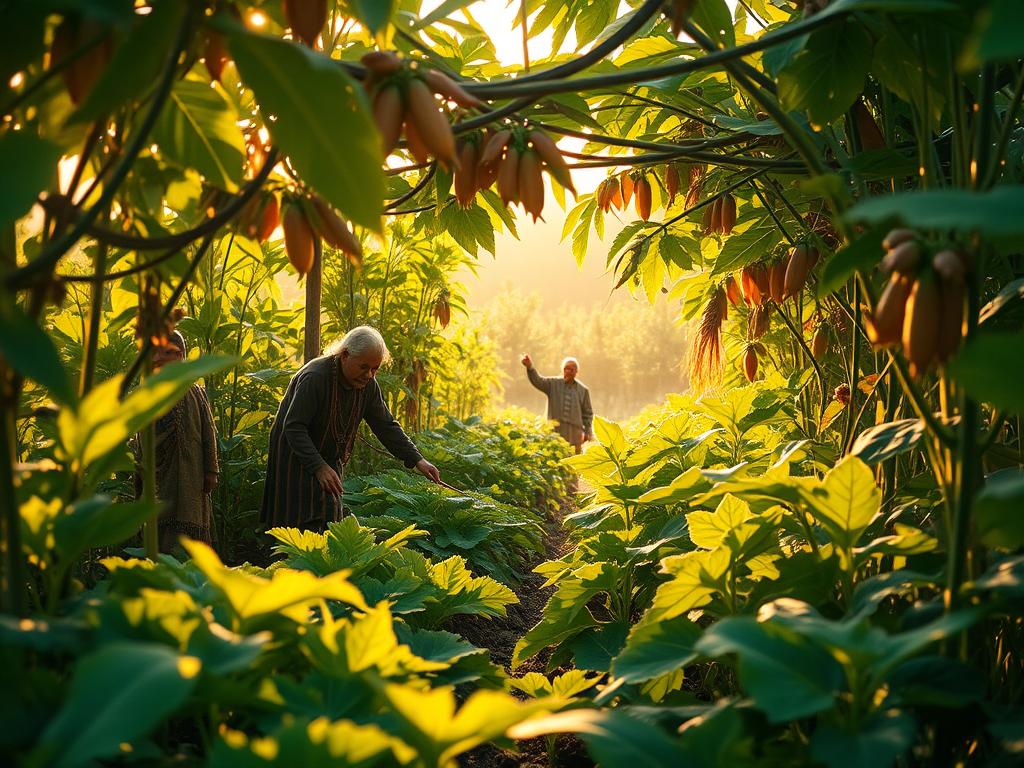
A stunning landscape depicting the ancient "Three Sisters" planting system, a sustainable agricultural practice of the Indigenous peoples. In the foreground, three distinct crops - corn, beans, and squash - grow harmoniously, their vibrant colors and textures blending together. The middle ground features a group of Indigenous people, their traditional garments and tools visible, tending to the plants with reverence. In the background, a hazy, impressionistic vista of rolling hills and a warm, golden sky, evoking a sense of timelessness and connection to the land. The scene is captured with a cinematic, dreamlike quality, as if through the lens of "The Sustainable Digest", a publication celebrating the wisdom of Indigenous practices.

Long before modern agriculture, native communities developed sophisticated methods for living in harmony with nature. These ancient approaches offer powerful lessons for our current environmental challenges.

Their systems demonstrated deep understanding of ecological balance. They maximized food production while preserving the land for future generations. This wisdom remains relevant for creating a sustainable future.

The Three Sisters Planting System

This brilliant agricultural method combines corn, beans, and squash in one growing space. Each plant supports the others in a perfect natural partnership.

Corn stalks provide structure for bean vines to climb. Beans add nitrogen to the soil through their roots. Squash leaves spread across the ground, keeping moisture in and weeds out.

The system produces more food than growing each crop separately. It also maintains soil health year after year. This approach shows incredible understanding of plant relationships.

PlantRole in SystemBenefit to Garden
CornProvides structureCreates support for beans
BeansAdds nitrogenFertilizes soil naturally
SquashCovers groundRetains moisture, suppresses weeds

Sacred Reciprocity and Land Stewardship

Native cultures viewed the land as a relative rather than a resource. This relationship required care and respect in exchange for life’s gifts.

They practiced giving back to the earth through ceremonies and sustainable harvesting. This mindset of reciprocity ensured continued abundance for all beings. It stood in sharp contrast to exploitation approaches.

Research shows these communities left minimal ecological footprints before colonization. They managed landscapes without major modifications or deforestation. Their methods preserved ecosystems for countless generations.

Sustainable Foraging, Fishing, and Hunting Techniques

Native groups developed careful rules for gathering wild foods. They took only what they needed and ensured resources could renew themselves.

Hunting followed seasonal patterns and respected animal populations. Fishing methods allowed species to reproduce and thrive. These practices maintained balance within local ecosystems.

Their knowledge of plants and animals was incredibly detailed. They understood migration patterns, growth cycles, and interconnections. This wisdom allowed them to live abundantly without depletion.

These ancient methods offer inspiration for modern conservation efforts. They show how humans can thrive while respecting nature’s limits. The principles remain valuable guides for today’s environmental challenges.

Thanksgiving, Pilgrims, and Indigenous Peoples: A Complex Legacy

The arrival of European settlers marked a turning point in North American history. This period brought dramatic changes to the land and its original inhabitants. The full story reveals a legacy of both conflict and resilience.

Understanding this history helps us appreciate the true meaning of this annual observance. It invites reflection on relationships that shaped our nation’s story.

Ecological Imperialism and Environmental Conquest

Historian Alfred Crosby introduced the term “Ecological Imperialism.” This concept describes how Europeans altered native environments. Their actions helped secure colonial dominance.

They brought diseases that devastated local populations. New animals and plants disrupted established ecosystems. Widespread deforestation changed landscapes forever.

These environmental changes made colonization easier. They weakened native communities through ecological disruption. The land itself became a tool of conquest.

The Impact of Colonization on Indigenous Food Systems

European settlers deliberately targeted native food sources. They burned crops and destroyed food stores. This strategy aimed to subdue resistant communities.

The mass killing of bison had devastating effects. These animals were central to many cultures and economies. Their near-extinction caused widespread hunger and displacement.

Generational knowledge about local foods was lost. Traditional harvesting practices became difficult to maintain. Food sovereignty was dramatically undermined.

Colonial ActionImpact on Food SystemsLong-Term Consequences
Crop DestructionImmediate food shortagesLoss of agricultural knowledge
Bison SlaughterProtein source eliminationCultural and economic collapse
Land SeizureAccess restrictionForced dietary changes
Seed ReplacementBiodiversity reductionDependence on foreign crops

Reclaiming Indigenous Food Systems and Cuisine

The renaissance of native cuisine represents more than culinary innovation—it’s an act of cultural reclamation and environmental healing. This movement challenges colonial food systems while honoring ancestral wisdom about the natural world.

Modern chefs and food activists are rediscovering what colonization systematically suppressed. They’re rebuilding culinary traditions that sustained communities for millennia before European contact.

Decolonizing Diets and Ingredients

Decolonization begins at the plate, rejecting ingredients that arrived with colonization. This means eliminating cane sugar, white flour, dairy, beef, pork, and chicken from traditional recipes.

Sean Sherman, founder of The Sioux Chef and James Beard Award winner, emphasizes this approach. He notes how native americans controlled their destiny through food self-sufficiency before colonial disruption.

The philosophy frames indigenous food as medicine rather than mere sustenance. Mindful connection to ancestral foods nourishes both bodies and souls through cultural reconnection.

Native-Led Food Initiatives Today

NāTIFS (North American Traditional Indigenous Food Systems) leads this culinary revolution. The nonprofit promotes indigenous foodways education and facilitates access to traditional ingredients.

Executive Director Dana Thompson envisions a new North American food system. This system would generate wealth while improving health in Native communities through food-related enterprises.

These initiatives support what Thompson calls “re-identification, reclamation, and revitalization.” They address knowledge gaps created by centuries of colonial disruption.

The movement connects food sovereignty with broader environmental concerns. Traditional food systems offer solutions for climate change and contribute to a more sustainable future.

Colonized IngredientsTraditional AlternativesEnvironmental Impact
Cane sugarMaple syrup, honeyLocal sourcing reduces transport emissions
White flourCorn, acorn, amaranth flourSupports biodiversity and soil health
Dairy productsNut milks, traditional fatsLower methane production than cattle
Beef, pork, chickenBison, venison, traditional gameRegenerative grazing practices
Processed foodsWild harvested plantsMinimal packaging, seasonal availability
A colonial farmstead nestled amid a lush, verdant landscape, where native food systems once flourished. In the foreground, a weathered wooden table laden with a bountiful harvest of autumnal produce, a testament to the land's fertility. Sunlight filters through the canopy of trees, casting a warm, golden glow over the scene. In the background, the silhouettes of indigenous elders gather, observing the shifting dynamics between their traditional practices and the encroaching colonial influence. The image captures the uneasy coexistence of two worlds, the clash of cultures, and the delicate balance of proto-sustainability practices. Blend of Photo, Cinema, Impressionism, and Expressionism style. "The Sustainable Digest"; expressionistic lighting casting gentle shadows. The leaders engage in animated discourse, their hands gesturing as they deliberate on matters of state. In the background, a mural depicting the Great Peacemaker and Hiawatha, the founders of the Iroquois Confederation.

This culinary reclamation occurs year-round, not just during seasonal observances. However, it holds particular significance around the national day often associated with harvest celebrations.

The work of these indigenous peoples represents both cultural preservation and environmental innovation. They’re creating food systems that honor the past while nourishing future generations.

Modern Applications of Indigenous Sustainability

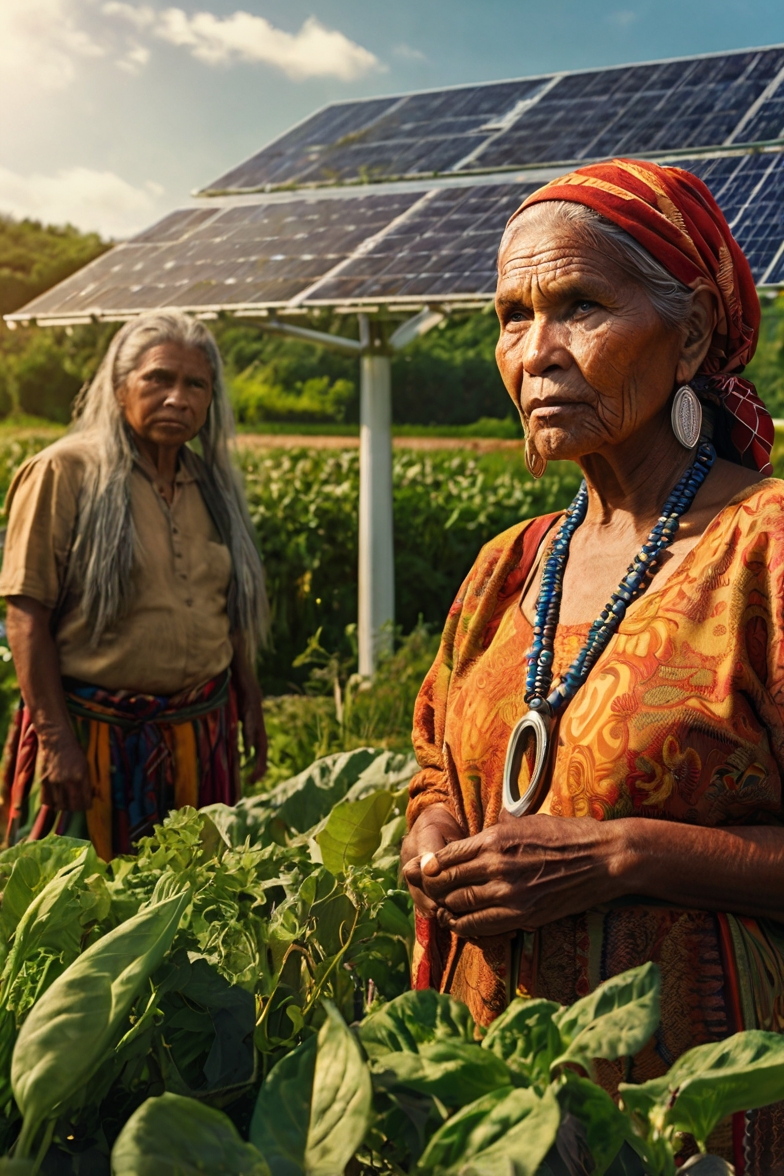
Vibrant landscape showcasing indigenous-led conservation efforts today. In the foreground, a group of indigenous people working together to preserve their local ecosystem, using traditional ecological knowledge. The middle ground features lush, verdant forests and wildlife thriving in their natural habitat. The background depicts majestic mountains and a warm, golden-hued sky, capturing the sense of harmony and balance. Cinematic lighting and an impressionistic, expressive style create an immersive, visually striking scene. The Sustainable Digest.

Across the globe, ancient wisdom is finding new purpose in modern environmental protection. Traditional knowledge systems are proving essential for addressing today’s ecological challenges. These time-tested approaches offer powerful solutions for a sustainable future.

Indigenous-Led Conservation Efforts Today

Native communities protect an incredible amount of the world’s biodiversity. They safeguard over 80% of global wildlife despite being less than 5% of the population. Their conservation efforts achieve remarkable results through deep cultural connection to the land.

Programs like Australia’s Indigenous Ranger Program demonstrate this success. Rangers combine traditional knowledge with modern training to manage protected areas. They monitor species, control wildfires, and preserve cultural sites.

Canada’s Indigenous Leadership Initiative (ILI) shows similar innovation. This program integrates millennia of native science with contemporary techniques. The approach creates positive impacts across entire ecosystems.

These initiatives prove that ancestral wisdom remains vitally relevant. They show how traditional stewardship can guide modern conservation. The results often surpass Western methods alone.

Learning from Traditional Land Management

Traditional land management focuses on ecosystem relationships rather than isolated resources. This holistic approach considers how all elements interact and support each other. It emphasizes care for complexity rather than simplification.

Native sciences concentrate on connections and interactions within natural systems. They understand that everything exists in relationship with everything else. This perspective offers complementary approaches to Western scientific methods.

The focus remains on stewardship rather than ownership or exploitation. Land is viewed as a relative to care for, not a resource to consume. This mindset creates sustainable systems that endure for generations.

Modern forestry and conservation efforts are increasingly adopting these principles. They recognize that complexity often indicates health and resilience. This shift represents important progress toward environmental reconciliation.

Integrating Ancient Wisdom into Modern Practices

Guardian programs beautifully reconcile traditional knowledge with contemporary conservation. These initiatives train community members to protect their traditional territories. They blend ancient wisdom with modern monitoring technology.

The integration addresses pressing challenges like climate change and species loss. It applies principles of interconnectedness and reciprocity to current problems. This combination creates innovative solutions that honor both past and future.

These models demonstrate practical benefits and meaningful innovations. They show how different knowledge systems can work together harmoniously. The collaboration produces better outcomes for people and planet.

Everyone can learn from these successful integrations. Supporting these efforts helps build a more sustainable world. It acknowledges the importance of traditional ecological knowledge in modern conservation.

These applications inspire greater respect for native leadership in sustainability movements. They motivate people to engage with and support these vital efforts. This knowledge helps create meaningful change for our shared future.

Decolonizing Your Thanksgiving Celebration

Transforming this annual gathering into a meaningful experience requires conscious choices. It involves rethinking traditional approaches to create deeper connections. This shift honors the true spirit of the occasion while supporting important values.

Incorporating Pre-Colonial Foods and Recipes

Traditional native ingredients create authentic and nutritious meals. The Three Sisters combination remains a brilliant foundation. Corn, beans, and squash work together beautifully in many dishes.

Maple syrup and sumac offer natural sweetness and flavor. They replace refined sugar in recipes. These ingredients connect meals to local ecosystems.

Wild rice and native grains add texture and nutrition. They have deep cultural significance across many regions. These foods support biodiversity and local agriculture.

Simple substitutions make recipes both delicious and meaningful:

  • Use nut milk instead of dairy products
  • Choose heritage turkey breeds when including meat
  • Season with native herbs like sweetgrass and cedar
  • Feature seasonal squash varieties in multiple courses

Honoring Local Indigenous Tribal-group and Histories

Learning about original inhabitants brings depth to the celebration. The Native Land Map helps identify traditional territories. This knowledge acknowledges the true history of the land.

Supporting native-owned businesses makes a real difference. It contributes to economic sovereignty and cultural preservation. Many organizations offer directories of authentic products.

“When we support native artists and food producers, we help keep traditions alive for future generations.”

Educational resources provide accurate information about local cultures. Museums and cultural centers often share authentic perspectives. These sources offer guidance for respectful recognition.

Promoting Sustainable and Mindful Feasting

Environmental consciousness aligns with traditional values of respect. Reducing waste demonstrates care for natural resources. Thoughtful planning makes feasts both abundant and responsible.

Local sourcing reduces transportation impacts significantly. It also supports regional farmers and food producers. Seasonal ingredients taste better and require less energy to grow.

Plant-based options lower the meal’s environmental footprint. They use less water and produce fewer emissions. Even small changes create meaningful positive impacts.

Practical steps for sustainable celebrations include:

  • Planning portions carefully to minimize leftovers
  • Using reusable dishes and natural decorations
  • Composting food scraps rather than sending to landfill
  • Donating excess food to community organizations

These approaches transform the meal into an act of gratitude. They honor the interconnectedness of all life. This mindfulness creates celebrations that nourish both people and planet.

Conclusion

The journey through this holiday’s complex past reveals powerful lessons for building a more conscious tomorrow. Understanding the full history transforms how we approach this special time of year.

Honoring native wisdom in our celebrations shows deep respect for the land and its original caretakers. Their sustainable approaches offer vital guidance for today’s environmental challenges.

This knowledge invites us to carry gratitude and mindfulness beyond the annual feast. We can support local communities while preserving precious ecosystems.

Every thoughtful choice contributes to a healthier, more equitable future. The true spirit of this day lives in our ongoing commitment to learning and positive action.

Key Takeaways

  • The holiday’s history is richer and more complex than common myths suggest.
  • Native American contributions and wisdom are central to the true story.
  • Gratitude and community are at the heart of the celebration.
  • The traditions connect deeply to respect for land and ecosystems.
  • Learning the full narrative encourages more meaningful observances today.
  • This time of year highlights themes of heritage and sustainable practices.
  • Modern celebrations can honor both history and future conservation efforts.

Africa’s Path to Sustainable Development & Growth

As presented through ongoing media, Africa is at a pivotal moment in its journey toward sustainable development. The continent has great potential and faces unique challenges. By adopting sustainable practices, African nations are working toward the 2030 United Nations Sustainable Development Goals. This sets the stage for lasting progress.

International business is key to Africa’s growth, from big cities to small villages. It involves 54 countries working together. By building partnerships and attracting investments, countries are setting the stage for strong economic growth. This not only boosts local economies but also helps the global economy.

The journey to sustainable development in Africa needs a balanced approach. It’s about using natural resources wisely, investing in renewable energy, and ensuring everyone benefits. By focusing on these areas, African nations can create a successful blueprint that meets both environmental and economic needs.

Understanding Africa’s Development Landscape

Africa’s path to sustainable development is influenced by its rich history and culture. The continent faces unique challenges but also has powerful principles guiding its progress.

Historical Context and Development Challenges

Africa’s development has been shaped by colonialism, resource exploitation, and political instability. These issues have hindered economic growth and social progress. Yet, many African nations are now using new approaches to overcome these barriers.

Ubuntu: Community-Centered Development Models

Ubuntu teaches us that “I am because we are.” It promotes Sustainable Community Development through teamwork. In Rwanda, shared farming cooperatives apply this idea to increase crop yields and reduce inequality.

These networks make sure resources help the whole village, not just a few.

Sankofa: Learning from Traditional Practices

Sankofa’s “return and retrieve” philosophy encourages us to learn from our ancestors. In Ghana, mangrove restoration projects use ancient wisdom and modern science to fight coastal erosion.

Integrating Indigenous Knowledge with Modern Approaches

Cultural Diplomacy connects these traditions with global sustainability efforts. A table below shows how these philosophies are used today:

ConceptOriginCore IdeaModern Application
UbuntuSouth African Bantu traditionsInterdependence of individualsCommunity-led renewable energy grids
SankofaAkan peoples of West AfricaWisdom from the pastTraditional water harvesting systems

“Ubuntu and Sankofa are not relics of the past—they are blueprints for tomorrow.”

– African Union Sustainable Development Report 2023

By blending these philosophies with global goals, Africa creates solutions that honor its heritage. This approach ensures development is both culturally and ecologically responsible.

Cultural Foundations: Sankofa and Ubuntu Principles

Two crucial cultural concepts drive Africa’s development: Sankofa and Ubuntu. Sankofa, from Ghana, teaches learning from the past to build a better future. Ubuntu, from South Africa, focuses on collective well-being and interconnectedness.

Sankofa and Ubuntu work together. Sankofa encourages looking back for wisdom, while Ubuntu promotes working together for growth. These principles are a strong base for sustainable development across Africa.

Regional Economic Communities and Their Role

African coalitions, consortia, and federations are key in fostering regional cooperation. They boost trade, share resources, and coordinate development efforts. Through cooperative enterprise development, they create chances for economic and social growth.

These communities act as platforms for implementing continent-wide strategies. They help share knowledge, develop infrastructure, and harmonize policies. By using their collective strengths, they push Africa toward a sustainable and prosperous future.

Sustainable Development among all 54 African countries, regions, and islands

Africa’s diverse nations are embracing sustainable development in their own ways. From the bustling cities of Kenya and Tanzania to the landlocked nations of Uganda, Rwanda, and Burundi, each country faces unique challenges and opportunities.

In East Africa, Kenya and Tanzania are leading with renewable energy. Kenya has the largest wind farm in Africa, while Tanzania is focusing on solar power. Uganda, Rwanda, and Burundi are working together to protect the Virunga Mountains, home to endangered mountain gorillas.

Southern African nations like Lesotho and Swaziland are focusing on water resource management. Namibia, Angola, and Zambia are teaming up to protect the Okavango Delta, a UNESCO World Heritage site.

CountryKey Sustainable Initiative
Cape Verde100% Renewable Energy Goal by 2025
Sao Tome & PrincipeSustainable Cocoa Production
SeychellesBlue Economy Strategy
ComorosCoral Reef Restoration
MauritiusSmart Cities Development
MadagascarBiodiversity Conservation

Island nations like Cape Verde and Sao Tome & Principe are focusing on sustainable tourism and agriculture. Seychelles is pioneering the blue economy concept. Comoros is investing in coral reef protection. Mauritius is developing smart cities, and Madagascar is prioritizing biodiversity conservation.

“Africa’s sustainable development journey reflects the continent’s rich diversity and shared commitment to a greener future.”

These varied approaches show Africa’s adaptability and determination in pursuing sustainable development across its 54 nations.

Environmental Conservation and Climate Action Initiatives

Africa is tackling its environmental challenges with new sustainable and innovative ideas. It’s turning to renewable energy, protecting wildlife, and building green spaces to fight climate change.

Renewable Energy Implementation

African countries are quickly moving to renewable energy. Morocco’s solar farms and Kenya’s wind projects show their dedication. These efforts cut down on carbon emissions and bring clean energy to many people.

Biodiversity Protection Measures

Keeping Africa’s ecosystems safe is key. Tanzania and Botswana are leading in this area. They’ve set up protected areas and work with local people to save endangered animals.

Green Infrastructure Development

Green building is becoming more common in Africa. Cities like Nairobi and Cape Town are using nature’s designs in their planning. These designs make buildings that are good for the environment and last long.

Climate Change Adaptation Strategies

African countries are taking steps to adapt to climate change. Ethiopia’s Great Green Wall is fighting desertification. Coastal areas are building defenses against floods. These actions help protect people and nature from climate change.

InitiativeCountryImpact
Solar Power PlantMoroccoProvides clean energy to 2 million homes
Wildlife CorridorTanzaniaProtects elephant migration routes
Green Building CodeSouth AfricaReduces urban energy consumption by 30%
Mangrove RestorationSenegalEnhances coastal protection against sea-level rise

Economic Growth and Social Equity

Africa is working to grow its economy and make society fairer. This plan aims to help communities and support sustainable growth across the continent.

Empowering MSMEs and Social Enterprises

Micro, Small, and Medium Enterprises (MSMEs) are crucial for Africa’s economy. They create jobs and spark new ideas. Social enterprises help by solving social problems through business.

Together, they push for economic growth that includes everyone and makes a positive impact.

Entity TypeEconomic ImpactSocial Impact
MSMEsJob creation, local economic stimulationIncome generation for families
Social EnterprisesSustainable business modelsDirect solutions to community challenges

Tackling Poverty Through Targeted Programs

Poverty programs in Africa focus on building skills and creating lasting jobs. They offer training, small loans, and support to help people and communities overcome poverty.

Sustainable Agriculture in Africa

Advancing Sustainable Agriculture

Good farming practices are vital for food security and economic stability in rural areas. Projects in sustainable horticulture, permaculture, and farming help farmers grow more while saving the environment. These efforts increase food production and protect the planet for the future.

Regional Cooperation and Integration

Africa is moving towards sustainable development through regional cooperation. Countries are working together to face common challenges and find new opportunities. This teamwork is changing how development happens within the continent.

The Democratic Republic of the Congo and the Republic of Congo are a great example. They have different economies but are working together on projects and trade. This shows how countries can find common ground despite their differences.

Cameroon, Central African Republic, and Gabon are also working together. They are fighting deforestation and protecting the Congo Basin rainforest. Their efforts show how cooperation can help the environment across borders.

In the Sahel region, Mali, Republic of the Niger, Chad, and Burkina Faso are facing challenges together. They are working on security and economic growth. Their goal is to bring stability and prosperity to a tough area.

Regional GroupKey Focus AreasNotable Achievements
DRC & Republic of CongoInfrastructure, TradeJoint road network expansion
Cameroon, CAR, GabonEnvironmental ConservationCongo Basin Forest Partnership
Mali, Niger, Chad, Burkina FasoSecurity, Economic DevelopmentG5 Sahel Joint Force

These partnerships are driving development across Africa. By sharing resources and markets, countries are making the continent stronger. The future of Africa depends on strengthening these ties and working together towards a common goal.

Technology and Innovation in African Development

Africa is moving forward with new technology and creative ideas. It’s using Green IT Infrastructure and Digital Transformation to make progress and work better.

Green IT Infrastructure

African countries are building eco-friendly Data Centers. These centers use less energy and cut down on pollution. They help grow digital services without harming the environment.

Digital Transformation Initiatives

Both governments and businesses are starting Digital Transformation projects. They want to make services better, connect people more, and grow the economy. Digital tools like mobile banking and e-governance are changing African life.

Sustainable Supply Chain Solutions

African companies are focusing on Sustainable Supply Chains. They use Green logistics to cut down on emissions. And they adopt Green and Responsible Manufacturing to reduce waste and pollution. These steps help make the African economy stronger and greener.

Technology AreaImpact on Sustainability
Green IT InfrastructureReduced energy consumption, lower carbon emissions
Digital TransformationImproved efficiency, enhanced service delivery
Sustainable Supply ChainsResponsible resource use, reduced environmental impact

By using these new technologies, Africa is growing its economy and securing a green future for all.

International Partnerships and Global Alignment

Africa’s path to sustainable development depends on global partnerships. These alliances bring in resources, expertise, and support. They help the continent grow.

UN Sustainable Development Goals Implementation

The United Nations Development Programme (UNDP) and United Nations Environment Programme (UNEP) are key players. They help Africa reach the Sustainable Development Goals. They offer funding, technical help, and policy advice to African countries.

Cultural Diplomacy and Cross-Border Collaboration

Cultural Diplomacy helps African nations understand and work together. Countries like Algeria, Tunisia, Libya, Morocco, and Mauritania share cultures. This builds peace, trade, and development goals across borders.

Global Economic Integration

Africa’s role in the World Economic Forum (WEF) shows its commitment to global markets. Countries like Egypt and Sudan use these platforms to attract investors. They aim to align with international markets and standards.

CountryKey Economic FocusGlobal Partnership Initiative
EgyptRenewable EnergyGreen Investment Partnerships
MoroccoDigital EconomyTech Startup Collaborations
TunisiaSustainable TourismEco-Tourism Alliances

These partnerships and alignments are crucial for Africa’s sustainable growth. They create a future of shared prosperity and care for the environment.

Sustainable Resource Management

Africa’s future depends on managing resources wisely. Countries across the continent are using new ways to keep their natural wealth safe. They also want to grow their economies.

Zero Waste Initiatives

African nations are working hard on waste management. Benin and Togo are leading with zero waste programs. They focus on eco-friendly products and cut down on landfills.

Water Conservation Efforts

Water is very important in Africa’s dry areas. Sierra Leone, Liberia, and Cote d’Ivoire are finding new ways to save water. They use rainwater harvesting and efficient irrigation.

This ensures everyone has access to clean water.

Responsible Mining Practices

Countries with lots of minerals are mining in a better way. Guinea Bissau and Equatorial Guinea have set strict rules for mining. These rules protect the environment and local people while helping the economy.

CountrySustainable Resource InitiativeImpact
BeninPlastic recycling program50% reduction in plastic waste
Sierra LeoneCommunity-based water managementImproved access to clean water for 1 million people
Guinea BissauEco-friendly bauxite mining30% decrease in environmental damage

These efforts show Africa’s dedication to protecting the environment while growing. By focusing on zero waste, saving water, and mining responsibly, African countries are working towards a greener future.

Conclusion

Africa is on a path to sustainable development, facing both hurdles and chances. The continent’s varied countries are using new methods to grow while keeping their natural resources safe. From South Africa to Botswana, and Gambia to Senegal, they’re working on economic growth and protecting the environment.

The 2025 International Year of Cooperatives is a big opportunity for African nations to work together more. This event matches the continent’s growing focus on good governance and sustainable community development. Countries like Mozambique, Zimbabwe, and Malawi are improving their governance and empowering local communities.

In the Horn of Africa, countries like South Sudan, Somalia, Djibouti, and Somaliland have big challenges. Ethiopia and Eritrea are trying to solve old conflicts and start sustainable growth. These efforts show how important regional cooperation is for solving common problems and promoting long-term development.

As Africa moves ahead, it’s key to keep focusing on sustainable practices, innovation, and working together across borders. By using their rich cultural heritage and new technologies, African nations can create a prosperous and sustainable future.

Key Takeaways

  • Africa’s sustainable development aligns with UN 2030 goals
  • International business drives continental growth
  • Balanced approach needed for long-term progress
  • Responsible resource management is crucial
  • Renewable energy investments support sustainability
  • Inclusive growth promotes economic stability

UNSDGs 13-14-15 Interconnecting Impact

Jellyfish, Animals, Underwater image. https://pixabay.com/photos/jellyfish-animals-underwater-381659/

The United Nations Sustainable Development Goals (SDGs) aim to make the world better while keeping it safe. Sadly, only 15% of SDG targets are on track halfway to the 2030 deadline1. These goals are about ending poverty and growing the economy, while also protecting the environment.

They say we must fight climate change and protect our planet. The work on UNSDGs 13-14-15 is key to reaching these goals. It’s about making sure our actions help the environment and support sustainable development.

Greenhouse gas emissions keep going up, making the climate crisis worse1. We’re seeing more extreme weather like heatwaves, droughts, and wildfires1. Yet, many businesses are working on plans to help the planet, showing they care about the environment and society2.

The United Nations set 17 global goals for 2015–2030. These goals are a blueprint for companies to tackle big issues like poverty and pollution worldwide2.

CSR efforts help companies and their stakeholders, showing a positive impact2. Working together is essential to meet the SDGs. Shareholders are important in pushing companies to do more for the planet and society2.

Understanding the Trilogy of Environmental SDGs

The United Nations Environment Programme (UNEP) stresses the need to tackle climate change and protect our oceans and forests. They focus on climate action, marine conservation, and biodiversity protection. This helps keep our planet healthy.

These goals are linked and need each other. For example, saving ecosystems is key to a healthy planet. This can be done through teamwork between governments, groups, and people. The UNEP says we must work together to solve environmental problems.

The Foundation of Environmental Sustainability Goals

The base of environmental goals is climate action, marine conservation, and biodiversity protection. These are vital for a healthy planet and a sustainable future. As points out, tackling environmental issues is crucial.

Interconnected Nature of Climate, Marine, and Terrestrial Goals

Climate, marine, and terrestrial goals are all connected. Climate change affects our oceans and biodiversity. So, we need a complete approach to solve these problems.

Global Implementation Challenges and Opportunities

There are challenges but also chances to achieve these goals worldwide. Through teamwork and action, we can tackle environmental issues. As notes, global cooperation is vital.

Some key strategies include:

  • Promoting climate action and cutting down on greenhouse gases
  • Starting marine conservation efforts and protecting marine life
  • Supporting biodiversity protection and keeping ecosystem services safe
  • Building collaborative partnerships and working together globally

Together, we can overcome environmental challenges and secure a sustainable future for everyone.

Climate Action (SDG 13): The Catalyst for Environmental Change

Climate action is key to reaching the Sustainable Development Goals (SDGs). It means changing how we make, use, and consume energy3. Renewable energy and clean tech are vital for cutting down on harmful emissions and supporting green growth. The United Nations says fighting climate change is essential. It impacts our environment, health, economy, and fairness3.

We need to make climate action a part of our national plans and global efforts. This means using more renewable energy, being more energy-efficient, and using land wisely4. Education and environmental checks can also help us make better choices3.

Some important steps for tackling climate change include:

  • Using more solar and wind power
  • Improving energy use in buildings and factories
  • Practicing sustainable land use, like planting trees and farming together with forests
  • Building climate-ready cities and buildings

Acting fast to fight climate change can lower the dangers it poses, like more extreme weather, rising seas, and less water4. It’s not just the right thing to do; it also opens doors for growth, jobs, and fairness3.

StrategyBenefits
Renameable energyLess pollution, cleaner air
Energy efficiencySave money, use less energy
Sustainable land useSave nature, better soil

Marine Ecosystem Protection (SDG 14): Preserving Our Oceans

The ocean is key to making Earth livable for humans. Managing it well is vital for a sustainable future5. Marine conservation helps keep marine ecosystems balanced and protects biodiversity. It also supports the health of our oceans and sustainable fishing.

Threats like overfishing, pollution, and climate change harm marine life. To fight these, we need sustainable fishing and marine protected areas. Saving coral reefs is also crucial, as they support many marine species and people’s livelihoods6.

The World Health Organization says clean water and sanitation are key for human health. Without them, marine ecosystems suffer5. Climate change also affects water, making it harder to find, clean, and share, leading to food shortages6.

Threats to Marine BiodiversityConsequences
OverfishingDepletion of fish populations, damage to marine ecosystems
PollutionHarm to marine life, contamination of the food chain
Climate ChangeRising sea temperatures, ocean acidification, coral bleaching

Life on Land (SDG 15): Safeguarding Terrestrial Ecosystems

The health of our planet is key to preventing zoonotic diseases. Human actions like deforestation harm millions of people’s lives and livelihoods2. It’s vital to use land sustainably and protect forests for biodiversity and ecosystem health. The Sustainable Development Goals (SDGs) from 2015 to 2030 aim to meet today’s needs without harming future generations7.

Some key strategies for safeguarding terrestrial ecosystems include:

  • Promoting sustainable land use practices
  • Implementing forest conservation initiatives
  • Addressing the root causes of deforestation and desertification

These efforts help preserve biodiversity, protect ecosystems, and support human and planetary well-being2.

The United Nations supports countries in achieving the SDGs, focusing on environmental, transport, statistics, and more7. By working together, we can create a healthier, more sustainable future for everyone.

Safeguarding terrestrial ecosystems needs a collective effort. We must prioritize biodiversity, ecosystem preservation, and sustainable land use. Together, we can ensure a healthier, more sustainable future for all2.

SDGGoalTarget
SDG 15Life on LandSustainably manage forests, combat desertification, halt biodiversity loss

Cross-sectional and Inter-operational Influence for UNSDGs 13-14-15

The goals of UNSDGs 13-14-15 are key to a sustainable future. They work together to help the environment. For example, cutting down on greenhouse gases (SDG 13) can protect oceans (SDG 14) and land biodiversity (SDG 15)8.

These goals are connected in many ways. Chapter 4 of the Cooperation Framework shows how important it is to understand the financial side9. This helps find ways to invest in sustainable growth, jobs, and protecting the environment.

Measuring the impact of these goals together is crucial. We can use indicators and frameworks like the UN Common Country Analysis (UN CCA)9. Here’s a table showing how SDGs 13, 14, and 15 (UNSDGs 13-14-15) are connected:

SDGGoalInter-connectedness
13Climate ActionInfluences SDG 14 (Marine Ecosystems) and SDG 15 (Terrestrial Ecosystems)
14Marine Ecosystem ProtectionInfluenced by SDG 13 (Climate Action) and influences SDG 15 (Terrestrial Ecosystems)
15Life on LandInfluenced by SDG 13 (Climate Action) and SDG 14 (Marine Ecosystems)

Carbon Management Strategies Across Ecosystems

Managing carbon is key to fighting climate change. It requires different approaches in various ecosystems. Forests and oceans are crucial in soaking up carbon dioxide from the air10. The United Nations says 2019 saw record levels of greenhouse gases in the atmosphere. Climate change is now affecting every country and continent10.

New ways to price carbon are being tried to cut down emissions. Programs for trading carbon credits help countries work together to lower emissions. These efforts are vital for meeting the Sustainable Development Goals (SDGs) and fighting climate change11.

Some important parts of managing carbon include:

  • Carbon sequestration in forests and oceans
  • Innovative carbon pricing mechanisms
  • International carbon trading programs

These methods can decrease greenhouse gas emissions and support sustainable growth10.

By using effective carbon management, we can lessen climate change risks. This leads to a more sustainable future11.

Collaborative Partnerships for Environmental Success

Collaborative partnerships are key to environmental success, especially in cross-sectoral approach and ecotourism efforts. They help us work together more effectively towards the SDGs12. For example, teams of governments, international groups, businesses, and civil society can fill policy gaps and make development fair12.

In small island states, partnerships are vital for green growth and conservation. They help get the resources needed, like money and tech, and support ecotourism13. The Joint SDG Fund says 188 million people got new or better social services thanks to these partnerships13.

The table below shows why partnerships are crucial for environmental wins:

Partnership TypeBenefits
Government-Business PartnershipsImproved policy design, increased investment in sustainable initiatives
Civil Society-International Organization PartnershipsEnhanced community engagement, better access to international expertise and resources

By using a cross-sectoral approach and teaming up, we can speed up SDG achievements and protect the environment in small island states and more14. It takes a united effort from governments, businesses, civil society, and global groups to reach environmental success12.

Technology and Innovation in Environmental Protection

The United Nations highlights the role of technology and innovation in reaching the SDGs15. This led to the creation of the UN Inter-Agency Task Team on STI for the SDGs in 201515. The world has seen progress towards the SDGs, with a 0.5 point increase each year from 2015 to 2019, as noted by Sachs et al16.

Technology and innovation are key in protecting our environment. Digital solutions help with monitoring, blockchain aids in conservation, and AI supports climate action7. These technologies are making a big difference in several areas:

  • Digital solutions for environmental monitoring, such as satellite imaging and sensor technologies
  • Blockchain in environmental conservation, such as tracking sustainable supply chains and verifying eco-friendly products
  • AI-powered climate action, such as predicting climate-related disasters and optimizing renewable energy systems

Having good statistics is crucial for tracking progress towards the SDGs7. The use of technology and innovation in environmental protection is set to grow. It has the potential to help achieve the SDGs and create a more sustainable future16.

Economic Implications of Integrated Environmental Action

The economic effects of acting together for the environment are complex. They balance growth, social progress, and protecting nature17. As we aim for the Sustainable Development Goals (SDGs), we must weigh the good and bad sides of a green economy. The SDGs say we need to fight poverty while growing the economy and improving health and education17.

Some key points about the economic effects of environmental action are:

  • More people can get financial help through green practices, helping industries grow18
  • New jobs and economic growth come from green tech and sustainable industries16
  • Health and happiness improve as pollution and damage to nature go down17
  • We become more ready to face climate change and natural disasters16

But, there are also hurdles like higher costs and less competition in some fields18. To beat these, we need a complete plan for sustainable growth. This plan must think about the economy, society, and nature together17. This way, we can build a better, fairer world and still grow the economy16.

Switching to a green economy means changing how we see growth and protecting the environment16. We must use green methods, invest in new tech, and support eco-friendly laws17. Together, we can make a greener, wealthier future for everyone and keep our planet healthy18.

Canna lily, Pattern, Botany image. https://pixabay.com/photos/canna-lily-pattern-botany-leaf-6474252/

Conclusion: Forging a Sustainable Future Through Integrated Action

The United Nations’ Sustainable Development Goals (SDGs) offer a detailed plan for a better future for everyone19. Looking at our progress and the hurdles we face, it’s clear that working together is key20. By joining forces across different areas, we can make a bigger difference in protecting our planet.

The goals of SDGs 13, 14, and 15 (UNSDGs 13-14-15) are deeply connected20. Tackling climate change, saving marine life, and preserving land are all linked19. Using new ways to manage carbon, technology, and aligning money with green goals are essential for change.

Our dedication to teamwork and action must stay strong20. By coming together, we can gather the needed help, skills, and support to fight environmental harm19. It’s time to act, and together, we can make a lasting impact for future generations.

School strike 4 climate, Demonstrations, Zagreb image. https://pixabay.com/photos/school-strike-4-climate-4059175/

Key Takeaways

  • The SDGs are a call for action by all countries to promote prosperity while protecting the planet.
  • Only 15% of SDG targets are on track halfway to the deadline for the 2030 Agenda1.
  • The cross-sectional and inter-operational influence for UNSDG# 13, 14, and 15 (UNSDGs 13-14-15) is crucial for achieving sustainability goals.
  • Greenhouse gas emissions continue to rise, worsening the climate crisis1.
  • The percentage of businesses that have invested in socially responsible plans is substantial, contributing to the CSR landscape in the industry2.
  • Achieving the SDGs requires a collaborative approach, focusing on sustainable development and environmental impact assessment.

Source Links

  1. PDF – https://sdgs.un.org/sites/default/files/2023-09/UN Climate SDG Synergies Report-091223B.pdf
  2. Sustainable Development Goals (SDGs) as a Framework for Corporate Social Responsibility (CSR) – https://www.mdpi.com/2071-1050/14/3/1222
  3. PDF – https://unece.org/sites/default/files/2021-06/Mainstreaming guidance 28.6.2021.pdf
  4. Risk management and decision making in relation to sustainable development — Special Report on Climate Change and Land – https://www.ipcc.ch/srccl/chapter/chapter-7/
  5. The system of radiological protection and the UN sustainable development goals – Radiation and Environmental Biophysics – https://link.springer.com/article/10.1007/s00411-024-01089-w
  6. Water and the Sustainable Development Goals of the United Nations 2030 Agenda – https://www.linkedin.com/pulse/water-sustainable-development-goals-united-nations-2030-sturniolo
  7. PDF – https://unece.org/sites/default/files/2021-04/2012761_E_web.pdf
  8. PDF – https://unsdg.un.org/sites/default/files/2021-07/Bangladesh_Cooperation_Framework_2022-2026.pdf
  9. PDF – https://unsdg.un.org/download/1512/687
  10. CL 170/4 – FAO Strategy on Climate Change 2022–2031 – https://openknowledge.fao.org/server/api/core/bitstreams/331de79f-cb7d-4550-85ff-f95f379c78e6/content
  11. PDF – https://unsceb.org/sites/default/files/2021-05/HLCP41-CRP.2-A common approach to integrating biodiversity and nature-based solutions.unedited[8].pdf
  12. A framework to harness effective partnerships for the sustainable development goals – Sustainability Science – https://link.springer.com/article/10.1007/s11625-021-01070-2
  13. 2022 – Global Context and SDG Impact – annualreport.jointsdgfund.org – https://annualreport.jointsdgfund.org/2022-global-context-and-sdg-impact/
  14. Achieving the UN Agenda 2030: Overall actions for the successful implementation of the Sustainable Development Goals before and after the 2030 deadline – https://www.europarl.europa.eu/RegData/etudes/IDAN/2022/702576/EXPO_IDA(2022)702576_EN.pdf
  15. PDF – https://sdgs.un.org/sites/default/files/2022-06/ONLINE_STI_SGDs_GUIDELINES_EN_v3_0.pdf
  16. The Impact of COVID-19 on the Sustainable Development Goals: Achievements and Expectations – https://pmc.ncbi.nlm.nih.gov/articles/PMC9739062/
  17. PDF – https://unsdg.un.org/download/24/557
  18. Microsoft Word – 1.1_Annexes_CF_V3.docx – https://www.undp.org/sites/g/files/zskgke326/files/2021-07/UNDP-UNCDF-TP-1-1-Annexes1-6-BigFintechs-and-Their-Impacts-on-Sustainable-Development-EN.pdf
  19. The Future We Want | Department of Economic and Social Affairs – https://sdgs.un.org/future-we-want
  20. Fast-tracking action on the Sustainable Development Goals by enhancing national institutional arrangements – https://pmc.ncbi.nlm.nih.gov/articles/PMC10954137/
This website is saving the energy of your screen as it is not being used. It's part of a global effort to lower the planet's electrical consumption and CO2 emission level. Resume browsing
Click anywhere to resume browsing
Verified by MonsterInsights