The 2023 Supreme Court decision on affirmative action sent shockwaves through boardrooms nationwide. While headlines focused on program reductions, savvy organizations quietly reengineered their approaches to social impact. This strategic evolution reveals a critical truth: surface-level changes often mask deeper transformations in how businesses create value.
Three frameworks drive modern corporate citizenship: internal workforce development, environmental stewardship, and community engagement. Though frequently conflated, each serves distinct purposes while contributing to organizational resilience. The Minneapolis-St. Paul region offers compelling examples, where tech firms partner with local colleges to cultivate talent pipelines that simultaneously address equity gaps and staffing needs.
Critics dismissing these efforts as fleeting trends overlook decades of strategic development. Forward-thinking enterprises recognize that authentic social initiatives strengthen brand loyalty, attract top talent, and future-proof operations. The challenge lies in balancing stakeholder expectations with measurable outcomes – a tightrope walk requiring both principle and pragmatism.
Overview of DEI, ESG, and CSR in Today’s Corporate Landscape
Modern corporations navigate a complex web of social responsibility frameworks that shape both internal operations and external perceptions. Three distinct approaches dominate boardroom discussions: workforce equity strategies, environmental accountability systems, and community partnership models.
Defining Key Concepts and Their Distinctions
Workforce equity strategies focus on cultivating inclusive environments through talent development and supplier diversity. Community partnership models prioritize external investments in education and disaster relief. Environmental accountability systems, meanwhile, track carbon footprints and governance transparency.
The critical distinction lies in operational focus: internal culture-building versus external relationship management versus measurable compliance reporting. As Harvard researchers noted, “True impact occurs when community benefit becomes business strategy” – a principle driving modern social investment.
Historical Evolution of Practices
Corporate citizenship evolved from 20th-century charity galas to 21st-century strategic imperatives. Early community efforts often involved sporadic philanthropic check-writing. Today’s programs integrate with core business objectives like talent recruitment and market expansion.
The 1990s saw companies formalize inclusion initiatives alongside quality management systems. Recent decades brought investor demands for standardized environmental metrics. This progression reflects a fundamental shift: social responsibility transformed from reputation management to value creation engine.
Successful organizations now balance these frameworks like precision instruments – aligning workforce development with community partnerships while meeting regulatory benchmarks. The challenge lies in maintaining authenticity amid shifting political winds.
Impact of Political and Legal Shifts on Corporate DEI Initiatives
Recent legal developments have reshaped corporate approaches to workforce diversity. Organizations now navigate a landscape where judicial rulings and legislative actions collide with social expectations. The resulting tension forces companies to balance compliance with cultural commitments.
Supreme Court Decisions and Their Ripple Effects
The 2023 affirmative action ruling created a domino effect across industries. Corporate legal teams scrambled to audit hiring practices, while HR departments revised training materials. Retail giants like Walmart and automotive leaders such as Ford quietly reduced public diversity commitments within months.
Social media campaigns amplified pressure on companies to retreat from structured initiatives. Influencer-led movements demonstrated how digital activism could sway corporate policy faster than traditional shareholder advocacy. This new reality forces leaders to weigh operational continuity against public perception.
Legislative Bans and Institutional Reforms
Eight states now restrict diversity requirements in public institutions, with more considering similar measures. These policies extend beyond academia into contractor relationships and government partnerships. As one corporate counsel noted: “Compliance now requires three separate policy frameworks across state lines.”
The proposed Dismantle DEI Act illustrates how political action can outpace corporate adaptation cycles. Multinational firms face particular challenges, needing to reconcile conflicting regulations across jurisdictions. Efforts to maintain inclusive practices increasingly occur behind closed doors rather than in annual reports.
This evolving landscape reveals a critical insight: sustainable diversity strategies require legal agility as much as cultural commitment. Companies succeeding in this environment integrate compliance into core operations rather than treating it as separate programming.
Insights on DEI vs. ESG vs. CSR , DEI fallout meltdown restructuring, and DEI winners & catastrophe
Corporate strategies reveal stark contrasts between organizations thriving through change and those struggling to adapt. Two distinct patterns emerge: companies achieving sustainable growth through integrated approaches, and others facing operational challenges from superficial implementations.
Case Studies on Winners and Losers Amid Restructuring
Leading tech firms demonstrate how aligning diversity goals with performance metrics drives success. One Fortune 500 company increased innovation output 37% after expanding talent pipelines through community college partnerships. Conversely, a major airline faced operational setbacks when hiring practices prioritized demographic quotas over skill assessments.
The difference lies in execution: Effective programs focus on removing systemic barriers rather than chasing representation targets. As environmental engineer Karthik observes: “True equity means giving everyone the tools to excel, not lowering standards.”
Data Trends and Industry Reactions
Recent studies confirm strategic advantages for companies embracing comprehensive approaches. Workforce diversity initiatives correlate with 19% higher profit margins according to multinational research. Younger generations particularly value these efforts – 70% of students view campus programs positively, including 55% of conservative-leaning respondents.
Industry responses vary dramatically. Financial institutions now invest in AI-driven hiring tools to reduce unconscious bias, while traditional manufacturers often revert to legacy practices under political pressure. This divergence suggests lasting competitive implications for workforce development strategies.
Corporate Responses and Strategic Adjustments Amid Backlash
Corporate strategies are undergoing silent revolutions as organizations refine their approaches to social responsibility. While media narratives suggest retreat, 90% of surveyed companies maintain or expand their commitments to inclusive practices. This strategic evolution reveals how businesses adapt language and tactics without abandoning core principles.
Evolving Narratives and Rebranding Efforts in Diversity Programs
Language itself becomes strategic armor in modern corporate citizenship. Nearly half of organizations now reframe initiatives as “inclusion ecosystems” or “cultural infrastructure projects.” One Fortune 100 leader explains: “We’re telling the same story through different lenses – operational excellence rather than social engineering.”
The table below illustrates how traditional and modern approaches differ:
Approach
Traditional Model
Modern Adaptation
Program Naming
Diversity Training
Talent Optimization
Success Metrics
Demographic Ratios
Innovation Output
Legal Integration
Compliance Checklists
Risk-Weighted Decision Trees
High-profile leaders exemplify this balancing act. JPMorgan Chase’s CEO declared himself an “unwoke capitalist” while maintaining diversity investments. Tech investor Mark Cuban champions inclusive hiring as
“the ultimate market differentiator – you either see all talent or lose to those who do.”
These adjustments reflect deeper strategic calculations. Companies increasingly separate program substance from political symbolism, embedding inclusion into operational workflows rather than standalone initiatives. As legal teams review every policy, the focus shifts to creating self-sustaining systems that survive leadership changes and cultural shifts.
Conclusion
The true test of corporate responsibility lies beyond mission statements and press releases. As Nika White observes, resistance to equitable practices often masks deeper biases cloaked in meritocratic language. Companies navigating this landscape face a critical choice: defend meaningful commitments or yield to polarized debates.
Fatimah Gilliam’s call for courageous action underscores a growing divide. While some organizations retreat from public diversity efforts, others embed inclusion into operational DNA. The most resilient strategies align workforce development with business outcomes – training programs that address skill gaps while expanding talent pools, for instance.
This moment demands nuanced leadership. Blanket policies crumble under scrutiny, but tailored initiatives that connect community impact to core operations thrive. The future belongs to businesses that treat equity as growth infrastructure rather than PR exercise. Progress now requires balancing legal compliance with moral conviction – and recognizing that lasting change rarely follows the path of least resistance.
Key Takeaways
Recent policy shifts accelerated corporate responsibility evolution rather than halted progress
Workforce development and community engagement remain interconnected yet distinct strategies
Successful initiatives align social impact with core business imperatives
Public discourse of DEI often conflates internal culture efforts with external partnerships
Regional collaborations demonstrate how shared value creation transcends political cycles
Long-term brand trust increasingly depends on authentic, metrics-driven social investments
Welcome to part 2 of the pre analysis blog. As the world prepares for the upcoming sustainable development report, progress metrics across businesses, communities, and institutions are under scrutiny. Recent data reveals a concerning slowdown in Europe, where the growth rate of sustainable development goals has halved from 1.9 points (2016-2019) to 0.8 points (2020-2023). This trend highlights the urgent need for renewed commitment and leadership.
The sustainable development report assesses 41 nations, including all 27 EU member states. Persistent challenges, particularly in food systems (SDG 2), remain a critical focus. The Leave No One Behind Index also reveals disparities in the Baltic and Central Eastern Europe regions, emphasizing the importance of inclusive progress.
With global events shaping the economic and social landscape, the path forward requires innovative solutions. From dietary changes to climate targets, achieving these goals demands collective action. The upcoming 2025 report serves as a pivotal moment to reassess strategies and accelerate progress.
Introduction to the United Nations SDGs Report 2025
Sustainability reporting has become a cornerstone of global development strategies. The SDG index plays a pivotal role in measuring progress across 17 headline indicators. These indicators provide a comprehensive framework for evaluating sustainable development efforts worldwide.
Global participation in the Voluntary National Reviews (VNRs) process is impressive. Out of 193 member states, 190 have submitted their reviews, showcasing a 98.4% engagement rate. Additionally, 39 countries are planning submissions for the upcoming year, while 249 Voluntary Local Reviews (VLRs) have been recorded as of March 2025.
The Sustainable Development Solutions Network (SDSN), affiliated with the UN since 2012, has been instrumental in advancing these efforts. Its scientific expertise supports the development of robust metrics and actionable insights.
This year marks the 10th anniversary of the SDGs report, coinciding with the FFD4 conference. This milestone underscores the importance of reflecting on past achievements and addressing persistent challenges.
While most countries are actively participating, three nations—Haiti, Myanmar, and the United States—have yet to engage in the VNR process. This highlights the need for broader inclusivity in global sustainability efforts.
An emerging trend is the rise of subnational reporting through VLRs. Local governments are increasingly taking the lead in tracking and addressing development goals, ensuring progress at the grassroots level.
Dublin University Press has also contributed significantly by promoting ethical publishing focused on sustainability. Their work ensures that critical data and insights reach a global audience, fostering informed decision-making.
Global Progress on Sustainability Reporting Standards
The global push for sustainability has seen varied adoption rates across industries. While some sectors have embraced reporting standards, others lag due to institutional and technological barriers. This uneven progress highlights the need for a more unified approach to achieve sustainable development goals.
Adoption Rates Across Different Sectors
Northern Europe leads the way, with Finland topping the sustainability index for the fifth consecutive year. However, even leaders face challenges, particularly in climate and biodiversity. In contrast, Western Europe has seen socioeconomic declines, creating a stark contrast in progress.
Corporate adoption of reporting standards varies widely. OECD countries show higher compliance rates compared to candidate nations. This gap underscores the importance of tailored strategies to address sector-specific needs.
Challenges in Implementation
One major hurdle is the lack of access to advanced technologies, especially for small and medium enterprises (SMEs). Compliance with Global Reporting Initiative (GRI) standards remains a challenge for many due to these technological barriers.
Supply chain transparency in the food and agriculture sectors is another pressing issue. A recent EU study revealed 20-30% trade-based negative spillovers, emphasizing the need for better tracking systems.
Income inequality and service access disparities, particularly in the Baltic States, further complicate efforts. These challenges highlight the importance of inclusive policies to ensure no one is left behind.
“Sustainability reporting is not just about data collection; it’s about creating actionable insights for meaningful progress.”
Addressing these issues requires a collaborative effort. From improving indicators to fostering innovation, the path forward demands commitment from all stakeholders.
Impact of Sustainability Reporting Frameworks
Leading organizations are leveraging frameworks to drive measurable outcomes. These tools provide a structured approach to tracking progress and aligning efforts with global goals. From corporate giants to local governments, the adoption of these standards is transforming how data is collected and utilized.
Case Studies from Leading Institutions
Spain’s role as the host of the FFD4 conference showcased its commitment to reforming the Global Financial Architecture. By integrating indicators into national policies, Spain has set a benchmark for other countries.
Heidelberg-Böll-Stiftung supported civil society engagement in the European Sustainable Development Report (ESDR). This initiative highlights the importance of grassroots involvement in achieving sustainable development goals.
Saudi Aramco’s claims of low-emission oil production demonstrate how corporations can align with climate targets. Their efforts underscore the potential for private-sector innovation in sustainability.
Effectiveness in Driving Change
The EU’s Clean Industrial Deal proposals have shown promising results. Metrics reveal a 15% reduction in carbon emissions across participating industries. However, challenges remain in aligning IFRS Sustainability Standards with SDG tracking.
NYU Energy Lab’s private-sector partnerships have accelerated progress in renewable energy adoption. Their collaborative approach serves as a model for other international organizations.
Despite these successes, the EU generates 20-30% negative spillovers through trade. Addressing these issues requires a unified approach to ensure progress is inclusive and sustainable.
Institution
Initiative
Outcome
Spain
FFD4 Host Role
Reformed Global Financial Architecture
Heidelberg-Böll-Stiftung
Civil Society Engagement
Enhanced ESDR Participation
Saudi Aramco
Low-Emission Oil Production
Aligned with Climate Targets
NYU Energy Lab
Private-Sector Partnerships
Accelerated Renewable Energy Adoption
These examples illustrate the transformative power of sustainability frameworks. By leveraging data and fostering collaboration, institutions can drive meaningful change and achieve their goals.
United Nations Sustainable Development Goals: A Status Update
Recent updates on sustainability efforts highlight both significant achievements and persistent gaps. East and South Asia lead regional progress with a 7.3% increase in their SDG Index scores. However, only 17% of global targets are on track, revealing the need for accelerated action.
In contrast, the European Union has seen a 14% decline in SDG 2 performance since 2020. This underscores the uneven progress across regions and sectors. While some countries excel, others face challenges in meeting their targets.
Key Achievements and Milestones
Benin has achieved a remarkable 22% acceleration in sustainable development goals within Sub-Saharan Africa. Saudi Arabia leads the G20 with an impressive UN-Mi Index score of 84.6. These examples demonstrate the potential for rapid progress when financing and policies align.
Barbados has emerged as a leader in multilateralism, contrasting sharply with the U.S. withdrawal from the Paris Agreement. Their efforts highlight the importance of global cooperation in addressing climate challenges.
Areas Lagging Behind
Despite these successes, significant gaps remain. Compliance with SDG 13 (Climate Action) is particularly weak, with many countries falling short of their commitments. China and India rank 49th and 99th, respectively, on the SDG Index, indicating room for improvement.
The global public goods sector faces a critical funding gap of $2.3 trillion annually. This underfunding threatens the ability to achieve development goals on a global scale.
Region/Country
Key Achievement
Challenge
East/South Asia
+7.3% SDG Index
Uneven progress across sectors
EU
Reduced material deprivation by 8%
14% decline in SDG 2 performance
Benin
22% SDG acceleration
Limited resources for scaling efforts
Saudi Arabia
UN-Mi Index score of 84.6
Persistent gaps in climate action
These findings emphasize the need for targeted strategies to address disparities and accelerate progress toward global sustainability.
Businesses and the SDGs: A Synergistic Approach
Businesses worldwide are increasingly aligning their strategies with global sustainability objectives. The private sector’s role in achieving these goals is critical, as companies bring innovation, resources, and scalability to the table. From energy investments to supply chain management, corporate actions have a profound impact on sustainable development.
Corporate Contributions to SDG Achievement
Leading companies are setting benchmarks for sustainability. IKEA, for example, has aligned its 2030 circular economy strategy with SDG 12, focusing on responsible consumption and production. Similarly, Unilever’s Sustainable Living Plan has integrated indicators to measure progress across health, environment, and social impact.
State-owned enterprises also play a significant role. PDVSA’s social programs in Venezuela have demonstrated measurable improvements in community well-being. However, challenges remain, particularly in tracking Scope 3 emissions for multinational corporations.
Measuring Business Impact on Sustainability
Accurate measurement is essential for driving meaningful progress. SAP’s integrated SDG dashboard provides real-time data on supply chain sustainability, enabling companies to make informed decisions. Despite these advancements, gaps persist in adopting standards like GRI 207: Tax Standard, especially among Fortune 500 companies.
The energy sector faces unique challenges. With 75% of global oil controlled by state-owned companies and a daily consumption of over 100 million barrels, annual energy investments of $4.2 trillion are required. OPEC+ production cuts have further complicated affordability for SDG 7 (Affordable and Clean Energy).
Company
Initiative
Outcome
IKEA
2030 Circular Economy
Aligned with SDG 12
Unilever
Sustainable Living Plan
Improved health and environmental metrics
SAP
Integrated SDG Dashboard
Enhanced supply chain transparency
PDVSA
Social Programs
Community well-being improvements
These examples highlight the transformative potential of corporate engagement in achieving sustainable development. By leveraging data and fostering collaboration, businesses can drive meaningful change and contribute to global goals.
Communities Driving Sustainable Development
Local communities are proving to be the backbone of sustainable development efforts worldwide. From urban centers to rural areas, grassroots initiatives are making a tangible impact. These efforts are often driven by local indicators and participatory governance models, ensuring inclusivity and relevance.
Grassroots Initiatives and Their Impact
Barcelona’s superblock initiative has reduced transport emissions by 33%, showcasing how urban planning can align with goals for cleaner cities. In Kenya, community-led renewable microgrid projects are providing reliable energy access to underserved areas. These examples highlight the power of local action in achieving global targets.
Bhutan’s integration of the Gross National Happiness Index into its sustainable development framework is another standout example. This approach prioritizes well-being alongside economic growth, offering a model for other countries.
Community Engagement and Participation
Participatory budgeting models, like those in Porto Alegre, empower citizens to influence financing decisions for local projects. This approach fosters transparency and accountability, ensuring resources are allocated effectively. However, challenges remain, particularly in scaling up informal waste management systems in developing regions.
Gender parity metrics in local SDG steering committees are also gaining traction. These efforts ensure that gender equality remains a central focus in community-driven initiatives. Türkiye’s earthquake recovery efforts, aligned with sustainable development principles, further demonstrate the importance of local engagement in crisis response.
Initiative
Location
Impact
Superblock Initiative
Barcelona
33% reduction in transport emissions
Renewable Microgrids
Kenya
Improved energy access
Participatory Budgeting
Porto Alegre
Enhanced transparency and accountability
Gross National Happiness Index
Bhutan
Prioritized well-being and economic growth
These initiatives underscore the critical role of communities in driving progress toward global sustainability. By leveraging local data and fostering collaboration, communities can achieve meaningful change and inspire international organizations to adopt similar models.
Institutional Efforts in Achieving the SDGs
Institutional efforts are shaping the future of global sustainability. Governments and educational institutions play a critical role in driving progress toward these goals. From policy frameworks to academic research, their contributions are essential for achieving meaningful change.
Government Policies and Programs
Governments worldwide are implementing policies to align with sustainable development objectives. The EU’s proposed €740B Clean Industrial Deal for 2028-2035 is a prime example. This initiative aims to reduce carbon emissions and promote green technologies across member states.
Germany’s Supply Chain Act has set new compliance metrics for businesses, ensuring ethical practices. Similarly, Singapore’s SDG innovation grants have disbursed significant funds to support local system improvements. These efforts highlight the importance of government leadership in driving progress.
Educational Institutions’ Role in Sustainability
Academic institutions are also making significant contributions. Columbia University’s SDG leadership program has trained over 12,000 officials since 2020. This initiative equips experts with the skills needed to implement indicators effectively.
MIT’s Climate Grand Challenges program allocates funding to innovative research projects. These efforts address critical climate issues and provide actionable data for policymakers. Educational institutions are proving to be vital partners in achieving global goals.
Institution
Initiative
Impact
EU
Clean Industrial Deal
€740B investment in green technologies
Germany
Supply Chain Act
Improved compliance metrics
Columbia University
SDG Leadership Program
12,000+ officials trained
MIT
Climate Grand Challenges
Funding for innovative research
These examples demonstrate the transformative power of institutional efforts. By leveraging data and fostering collaboration, governments and educational institutions can drive meaningful change and contribute to global sustainable development.
United Nations SDGs Report 2025 Implications, Consequences, and Anticipations
The future of global sustainability hinges on addressing critical gaps and leveraging emerging opportunities. A projected $18 trillion financing gap through 2030 underscores the urgency for innovative solutions. The FFD4 initiative aims to redirect 45% of global savings to emerging markets and developing economies (EMDEs), providing a much-needed boost to sustainable development goals.
Forward-looking scenarios suggest that the Multiannual Financial Framework for 2028-2035 will play a pivotal role. This framework could address key challenges in climate action, clean water access, and peacebuilding. Predictive analysis indicates that achieving SDG 6 (Clean Water) may take longer than anticipated, especially in regions with limited resources.
Geopolitical risks pose significant challenges to SDG 16 (Peace) implementation. Conflicts and political instability could hinder progress in vulnerable countries. However, AI-driven monitoring systems offer hope for improving data accuracy and tracking goals more effectively.
Private capital mobilization strategies, such as SDG bonds, are gaining traction. These instruments aim to bridge the financing gap by attracting investments from the private sector. Additionally, anticipated reforms to World Bank climate lending practices could enhance support for sustainable projects.
“The integration of technology and innovative financing models is essential for achieving global sustainability targets.”
Another emerging trend is the potential for SDG-linked sovereign debt restructuring. This approach could provide countries with the financial flexibility needed to invest in sustainable development initiatives. As the world moves closer to 2030, these strategies will be critical for ensuring meaningful progress.
Conclusion
With only five years left until 2030, the urgency to accelerate global sustainability efforts has never been greater. Achieving the development goals requires a sevenfold increase in implementation pace. Over half the world’s population faces fiscal constraints, making innovative financing solutions essential.
G20 leadership is critical in expanding SDG bond markets. Real-time data ecosystems must be prioritized to monitor progress effectively. Blended finance can de-risk investments in emerging markets, ensuring inclusive growth.
Standardized impact measurement frameworks are needed to track progress accurately. SMEs must be strategically engaged to drive local action. Intergenerational equity principles should guide all efforts, ensuring a sustainable future for all.
The path forward demands collaboration, innovation, and a commitment to leaving no one behind. By leveraging data and fostering global partnerships, countries can achieve meaningful sustainable development.
Key Takeaways
Europe’s SDG progress rate has slowed significantly in recent years.
The report covers 41 nations, including EU members and candidates.
Food systems remain a persistent challenge for sustainable development.
Disparities in the Baltic and CEE regions highlight the need for inclusivity.
Dietary changes are crucial for achieving health and climate targets.
Sustainability reporting standards are key for making the private sector more sustainable. They help companies share their environmental, social, and governance (ESG) impacts. This is important because traditional business models focus too much on profit.
More companies are now reporting on sustainability. In 2019, 90% of S&P 500 companies did this, up from 20% a decade before. This shows that businesses and investors see the value in sustainability for financial success and long-term growth.
But, there’s a problem. There are many different ways for companies to report on sustainability. This makes it hard for them to report fully and for investors to compare. We need a global standard for sustainability reporting. This would make it easier for companies to report and for investors to make informed decisions.
The Evolution and Importance of Corporate Sustainability Reporting
Sustainability reporting has become key for businesses over the last few decades. The Global Reporting Initiative (GRI) set global standards for sustainability reports in 2000. Around the same time, the Greenhouse Gas Protocol was created to help companies track their greenhouse gas emissions.
The UN Global Compact and CDP (formerly the Carbon Disclosure Project) pushed for more corporate transparency. After the 2008 financial crisis, new groups like the International Integrated Reporting Council (IIRC) and the Sustainability Accounting Standards Board (SASB) started. They helped companies understand and share the effects of sustainability.
Key Milestones in Sustainability Reporting
1990s: Sustainability reporting started to grow due to pressure from civil society and governments.
2000: The Global Reporting Initiative (GRI) released its first sustainability reporting guidelines.
2001: The Greenhouse Gas (GHG) Protocol was created as a global standard for greenhouse gas emissions.
2015: The United Nations Sustainable Development Goals (SDGs) were adopted, highlighting the importance of corporate sustainability reporting.
Present: Companies face a complex landscape of reporting frameworks, creating challenges in maintaining consistency and comparability.
Current State of Corporate Reporting
Today, companies worldwide are expected to report on their sustainability performance. But, the many reporting standards and frameworks have made the landscape complex and inconsistent. Companies must find their way through this changing world to give stakeholders clear and honest sustainability reports.
As the need for corporate sustainability information grows, the importance of standardized, high-quality reporting becomes more critical. The path to sustainable business practices needs a clear and consistent way to measure, manage, and share environmental, social, and governance impacts.
Understanding the Business Case for Sustainability Reporting
Sustainability reporting is a big win for businesses in many fields. It makes jobs more meaningful for 73% of EU employees who feel they’re helping society and the planet. It also helps companies stand out in the market, as most U.S. buyers now look at a product’s social and environmental impact.
Reporting on sustainability helps businesses attract and keep the best workers. It also helps them manage risks and find new chances for growth. Companies that report on sustainability meet their partners’ expectations and stay ahead of rivals with strong green plans.
“Sustainability reporting is no longer just a nice-to-have; it’s a business imperative. It empowers organizations to attract and retain the best talent, stay ahead of consumer preferences, and manage risks more effectively.”
The benefits of sustainability reporting are many. They include happier employees, a stronger brand, and better risk handling. They also open doors to new chances for growth. As the world keeps moving towards sustainability, companies that report on it will lead the way.
What are the Sustainability Reporting types
Corporate sustainability reporting has many forms to meet changing needs. It includes both mandatory and voluntary reports. These reports serve different purposes for companies, industries, and regulators.
Mandatory vs. Voluntary Reporting
The EU’s Corporate Sustainability Reporting Directive (CSRD) has changed the game for big companies in Europe. Starting in 2025, they must share detailed info on their environmental, social, and governance (ESG) actions. The CSRD will cover private companies too by 2026.
But, companies can also do voluntary reports. These show their commitment to being green and share more than what’s required. The Global Reporting Initiative (GRI) and Sustainability Accounting Standards Board (SASB) are examples of these frameworks.
Integrated Reporting Frameworks
Integrated reporting is becoming more popular. It combines financial and non-financial data in one report. The International Integrated Reporting Council (IIRC) created the Integrated Reporting (IR) Framework for this purpose.
Industry-Specific Standards
Industry-specific standards focus on the unique needs of each sector. The Sustainability Accounting Standards Board (SASB) has 77 standards for different industries. This helps companies and investors focus on what matters most for their field.
The European Sustainability Reporting Standards (ESRS) also use “double materiality.” They ask companies to look at their impact on sustainability and how sustainability issues affect their finances. This helps companies understand and share their sustainability performance and risks.
“Sustainability reporting is no longer a nice-to-have, but a must-have for businesses that want to remain competitive and relevant in today’s global market.”
Key Components of Effective Sustainability Reporting
Sustainability reporting is key for businesses wanting to show they care about the environment, society, and governance. At the core is a detailed materiality assessment. This step is about finding the big issues that affect the company and its stakeholders.
Quantitative metrics and qualitative indicators are also crucial. Metrics give numbers to compare progress over time. Indicators add context and stories about the company’s sustainability efforts.
Reports should cover how the company works and what it makes. This way, they show a full picture of sustainability performance.
Getting feedback from all stakeholders is important. This includes employees, customers, investors, and the community. It helps make sure the report meets their needs and concerns.
Transparency in the supply chain is also expected. Companies must share about their suppliers’ sustainability practices. This makes reports more credible and complete.
The European Sustainability Reporting Standards (ESRS) help guide companies. They outline what data to include for each topic. Following these standards shows a company’s dedication to clear and standard reporting.
“Sustainability reporting is not just about disclosing data – it’s about showcasing a company’s commitment to responsible business practices and its positive impact on the world.”
The Role of Stakeholder Engagement in Reporting
Stakeholder engagement is key to good sustainability reporting. It involves many groups like investors, the local community, employees, and suppliers. This helps organizations understand their sustainability strategies better.
Investor Requirements and Expectations
Investors now look at environmental, social, and governance (ESG) factors more than before. A study showed 85% of investors use ESG info when choosing investments. So, companies must report on ESG to help investors make smart choices.
Community and Employee Involvement
Listening to the local community and employees gives insights into social and environmental impacts. By talking to more groups, like NGOs and regulatory agencies, companies get a fuller picture of their sustainability. For example, a study on mining in South Africa showed how important stakeholder engagement is for success.
Supply Chain Considerations
Companies are now responsible for their supply chain’s sustainability. Working with suppliers to understand their practices is essential for honest reporting. This not only strengthens relationships but also reduces risks and finds new opportunities.
It’s hard to balance all stakeholders’ interests in reporting. Many use a materiality assessment to focus on what matters most. This method, based on solid data, is needed for rules like the CSRD and ESRS.
“Strong relationships with stakeholders, developed through engagement, can help organizations minimize risk, identify opportunities sooner, and adapt to operational changes over the long term.”
Financial Material Impact and ESG Integration
Sustainability issues are becoming more important in finance. Studies show that good sustainability performance leads to better financial results. More asset managers and owners are adding ESG factors to their investment strategies. They see how these factors can help create long-term value.
Dynamic materiality shows that sustainability issues can become financially important over time. This is because of changing laws and what society expects. Companies are now asked to report on the financial effects of their sustainability efforts now and in the future.
G7 finance ministers announced a commitment to mandate climate reporting in 2021.
ESG reporting is included in annual reports to showcase a company’s sustainability efforts, encompassing environmental, social, and governance data.
Third-party providers like Bloomberg ESG Data Services and Sustainalytics assign ESG scores to grade organizations on their ESG performance and risk exposure.
The European Union is a leader in sustainable finance with strict ESG rules. The EU taxonomy helps identify green activities to stop greenwashing. It encourages companies to focus on sustainability. The Sustainable Finance Disclosure Regulation (SFDR) makes companies reveal sustainability risks. The Corporate Sustainability Reporting Directive (CSRD) makes reporting rules stricter for companies.
Materiality concepts, such as single materiality, impact materiality, and double materiality, are also gaining traction. Double materiality, as incorporated in the European Sustainability Reporting Standards (ESRS), considers the impact of sustainability issues on a company’s financial performance as well as the broader economy and society.
“The EU supports setting a global baseline for sustainability reporting through the ISSB standards, recognizing the importance of standardized, high-quality ESG disclosures to drive long-term value creation.”
Data Collection and Quality Assurance in Reporting
Sustainability reporting needs strong data collection and quality checks. This ensures the info shared is trustworthy. Companies face challenges in getting the right data, especially for complex supply chains and Scope 3 emissions.
There are different ways to measure, making comparisons hard. This makes it tough to combine data from various sources.
Measurement Methodologies
Creating standard ways to measure is a big challenge. Companies deal with many frameworks, each with its own rules and metrics. This makes it hard to compare and track progress.
There’s a push to make these methods match financial auditing standards. This would help make comparisons easier and more consistent.
Verification and Assurance Processes
Third-party assurance is key for reliable sustainability info. Independent checks boost trust and credibility. They show a company’s data analytics and carbon footprint tracking efforts are solid.
Creating strong auditing standards for sustainability reporting is vital. It encourages more use of third-party assurance.
“Transparency and credibility are essential for effective sustainability reporting. Robust data collection and quality assurance processes are critical to building trust with stakeholders.”
As companies improve their sustainability reports, reliable data and quality control are crucial. Following industry standards and using third-party assurance shows a company’s dedication to openness and responsibility.
Global Standards and Regulatory Compliance
The world of sustainability reporting is changing fast. Global standards and national rules are key in this change. The International Financial Reporting Standards (IFRS) Sustainability Standards Board is leading the way. It aims to make sustainability reporting the same everywhere.
Many countries are stepping up to require companies to report on sustainability. For example, New Zealand and the United Kingdom now need big companies to follow the TCFD (Task Force on Climate-related Financial Disclosures) recommendations. Brazil also plans to make companies report on sustainability by 2026, following the ISSB (International Sustainability Standards Board) standards.
More and more companies and investors see the value in sustainability reporting. Governments are now setting clear rules for reporting. This ensures that companies are transparent and accountable.
The EU Directive (EU) 2022/2464 requires many companies to report on sustainability. This includes big EU businesses, listed SMEs, and some third-country companies.
Companies already reporting under the NFRD will start using the CSRD by 2025. Large companies not yet reporting will start in 2026.
The European Sustainability Reporting Standards (ESRS) started on 1 January 2024. They cover 12 areas, including environment, social, and governance.
As sustainability reporting evolves globally, companies must keep up. They need to follow the latest IFRS Sustainability Standards Board, TCFD recommendations, and national regulations. This ensures they meet their obligations and share important sustainability information with everyone.
“The widespread adoption of global sustainability reporting standards is crucial for promoting transparency, comparability, and accountability in corporate sustainability disclosures.”
Benefits of Standardized Sustainability Reporting
Standardized sustainability reporting brings many benefits to companies. It helps manage risks by showing how a business affects the environment, society, and economy. This understanding helps companies spot and fix problems, making them stronger and more stable over time.
Enhanced Risk Management
Frameworks like the Global Reporting Initiative (GRI) and the Task Force on Climate-related Financial Disclosures (TCFD) make companies share important ESG info. This detailed info helps them see and tackle risks better. It lets them plan ahead and stay ahead of challenges.
Improved Stakeholder Trust
Being open and accountable is crucial for good sustainability reporting. By following set standards, companies show they care about their impact. This builds trust with investors, customers, employees, and local communities. It can also boost a company’s reputation and help it get more funding.
Competitive Advantage
Companies that report on sustainability stand out in the market. Sharing their ESG performance shows they’re serious about being green. This can attract green-minded customers and investors, making them leaders in their field. Plus, the insights from reporting can lead to better operations and new ideas, giving them an edge.
Key Takeaways
Sustainability reporting standards provide transparency on companies’ environmental and social impacts, addressing the shortcomings of profit-focused business models.
The rise in sustainability reporting reflects growing recognition of its importance, with 90% of S&P 500 companies publishing reports in 2019 vs. 20% in 2011.
The current landscape of sustainability reporting is fragmented, with a need for a global set of standards to harmonize approaches and reduce the reporting burden on companies.
Standardized sustainability reporting can enhance stakeholder trust, improve risk management, and provide a competitive advantage for companies.
Effective sustainability reporting requires a focus on material issues, stakeholder engagement, data quality assurance, and alignment with financial performance.
The International Organization of Standardization (ISO) is a global benchmark and is vital in pushing for sustainable growth. It does this through its standards and guidelines, especially in ISO & sustainability. The ISO 9001 standard, for example, is all about quality management, a big part of sustainable growth. ISO 6222:1999 addresses the precise methods for counting microorganisms in water, ensuring the safety and quality of drinking water. Similarly, ISO 13053 utilizes Lean and Six Sigma methodologies to enhance process efficiency, tailoring solutions for different industry needs. As we move towards using more solar energy, ISO’s role in helping us grow sustainably is clearer than ever.
By using ISO standards, companies of all sizes can make sure they’re good for both the planet and people. This means they’re working towards a greener future. When ISO standards meet green practices, like solar energy and other renewables, it makes a big difference while helping cut down on carbon emissions and encourages being eco-friendly.
Introduction to ISO and Sustainability
ISO and sustainability go hand in hand. ISO gives guidelines and standards to help organizations become more sustainable. The ISO 9001 standard, for example, helps with quality management. This is key for companies wanting to lessen their environmental impact and boost their green efforts.
What is ISO for Sustainability?
There specific ISO standards that are a set of formal compliance instruments in promoting sustainability and sustainable development. They offer a framework for organizations to be guided by. This helps them reduce their environmental impact and improve their social impact and economic standing.
The ISO 10002 standard focuses on customer satisfaction. Meanwhile, the ISO 10018 standard is about quality management. These standards guide organizations on their sustainability journey.
Implementing ISO standards, like ISO 13053, can greatly benefit organizations. It uses Lean and Six Sigma to improve processes. This leads to reduced waste and increased efficiency.
Definition of ISO Standards
As mentioned previously ISO standards are guidelines for organizations to achieve specific goals in general. These goals include improving quality, reducing environmental impact, or enhancing customer satisfaction. The International Organization for Standardization (ISO) develops these standards.
Importance of Sustainability Standards
Sustainability standards, like those from ISO, are vital for organizations. They help reduce environmental impact and improve social and economic standing. By following these standards, organizations show their commitment to sustainability.
Overview of ISO Standards
More institutions and MSMEs are adapting ISO standards to promoting sustainability and environmental management. ISO 14000 series establishes comprehensive guidelines on implementing effective environmental management systems, encouraging businesses to minimize their ecological footprint. The ISO 14001 standard focuses on environmental management systems. It gives a framework for organizations to manage their environmental impacts. The ISO 14000 standard offers a broader framework for environmental management systems. It helps organizations develop and implement effective environmental management practices.
Industry-specific standards demonstrate ISO’s versatility. From the energy efficiency assessments of ISO 11011 to the management systems of ISO 14001:2015, these guidelines support a eclectic array of sectors. They offer tailored solutions for achieving operational excellence and environmental responsibility.
This portion of the overview will discuss standards related to water quality, solar energy, compressed air energy efficiency, process improvement, and environmental management.
ISO 6222:1999 – Water Quality Micro-organisms Enumeration
ISO 6222:1999 provides guidelines for assessing water quality by enumerating culturable micro-organisms. This process involves colony counting using inoculation in a nutrient agar culture medium. It is a vital standard for laboratories and organizations involved in water analysis, ensuring accurate results in the measurement of microbial content in water samples. This standard supports the safety and quality of water by providing a reliable method for monitoring micro-organisms.
ISO 9488:1999 – Solar Energy Vocabulary
ISO 9488:1999 is a vocabulary standard for solar energy technology. It outlines the terminology used within the solar energy industry to enhance communication and avoid misunderstandings. By establishing clear definitions, this standard ensures consistency in technical documentation and communication. It is particularly useful for manufacturers, engineers, and researchers working with solar energy systems, allowing them to collaborate effectively internationally.
ISO 11011:2013 – Compressed Air Energy Efficiency
ISO 11011:2013 focuses on assessing energy efficiency in compressed air systems. It provides a methodical approach to evaluate the performance of these systems, from examining energy input to observing potential output improvements. This standard is especially valuable for industries reliant on compressed air, helping them improve energy use and reduce costs. By following these guidelines, companies can achieve optimal performance and sustainability.
ISO 13053 Series – Quantitative Methods in Process Improvement
The ISO 13053 series addresses quantitative methods in process improvement, specifically Lean and Six Sigma methodologies. ISO 13053-1 explains the DMAIC process, while ISO 13053-2 focuses on the tools and techniques. This series is essential for organizations aiming to enhance their processes through data-driven strategies. It provides a structured framework for analyzing and improving processes, ensuring efficiency and effectiveness in achieving business goals.
ISO 13053-1:2011 – DMAIC Methodology
The ISO 13053-1:2011 outlines the DMAIC methodology, which stands for Define, Measure, Analyze, Improve, and Control. This approach is exploited for improving quality and efficiency in processes by identifying problems and implementing effective solutions.
Define: Identify the problem and set goals.
Measure: Collect data to understand the current process performance.
Analyze: Determine root causes of defects or issues.
Improve: Implement solutions to improve the process.
Control: Maintain improvements in control systems and monitoring.
Businesses rely on DMAIC to reduce variability and improve quality, leading to better customer satisfaction and operational efficiency.
ISO 13053-2:2011 – Tools and Techniques
ISO 13053-2:2011 provides a set of tools and techniques to support the DMAIC methodology. These tools assist in analyzing data, identifying root causes, and developing effective solutions.
Key tools include:
Cause and Effect Diagrams: Help identify potential reasons for process issues.
Flowcharts: Visualize process steps and identify inefficiencies.
Statistical Process Control (SPC): Monitor process behavior and stability.
Failure Mode and Effects Analysis (FMEA): Anticipate potential failure points.
These tools ensure a data-driven approach to process improvement, facilitating effective analysis and solution implementation.
ISO/TR 16705:2016 – Six Sigma Statistical Methods
The ISO/TR 16705:2016 offers statistical methods specific to Six Sigma implementation, focusing on contingency table analysis. This enhances process improvement efforts by providing a framework for examining relationships between variables, supporting informed decision-making.
Key statistical techniques include:
Contingency Tables: Used to analyze and compare categorical data.
Regression Analysis: Identifies relationships between dependent and independent variables.
Hypothesis Testing: Assesses the effects of changes and supports valid conclusions.
These statistical methods provide organizations with the analytical skills necessary to drive continuous improvement and achieve substantial quality gains in their processes.
ISO/TR 17098:2013 – Contingency Table Analysis
ISO/TR 17098:2013 offers insights into using contingency tables in Six Sigma projects, which are crucial for analyzing categorical data. This statistical method helps identify the relationship between variables and guides decision-making in quality improvement projects.
By employing contingency table analysis, project managers can understand patterns and identify potential issues in processes. This technique is particularly beneficial for improving accuracy in process optimization and ensuring data-driven decisions. Organizations can gain a clearer understanding of process variations and implement effective corrective actions for enhanced performance.
ISO 14000:2015 Series -Management of Waste Reduction
The ISO 14001:2015 standard outlines requirements for environmental management, providing guidance for better resource use and waste reduction.
ISO 14004, ISO 14004, & ISO 14006
Standards like ISO 14004 and ISO 14006 offer additional guidelines on implementation and eco-design. This series supports businesses in managing their environmental responsibilities systematically, promoting sustainability and regulatory compliance.
ISO 14004:2016 – General Implementation Guidelines
ISO 14004:2016 offers additional guidance for organizations seeking to design and implement an EMS. It complements ISO 14001 by providing more detailed techniques and examples to help businesses achieve their environmental goals. The standard emphasizes leadership involvement, employee participation, and effective communication of environmental policies. It aims to integrate environmental management practices into everyday operations. This guidance is useful for organizations of all sizes and sectors, ensuring that environmental management becomes a natural part of business processes. By following ISO 14004:2016, companies can create a more robust and comprehensive EMS.
ISO 14005:2010 – Phased Implementation
The ISO 14005:2010 standard presents a flexible approach to adopting an EMS, allowing for phased implementation. This method is particularly beneficial for small and medium-sized enterprises or organizations with limited resources. It provides guidelines to gradually establish an EMS while adapting to resource and capability constraints. The phased approach lets companies focus on critical areas first, progressively expanding the scope. This step-by-step progression helps minimize disruption and manage costs efficiently. As a result, organizations can build confidence in their environmental practices before undergoing full assessment.
ISO 14006:2011 – Incorporating Ecodesign
ISO 14006:2011 guides organizations in integrating eco-design principles into their EMS. Eco-design involves considering environmental impacts throughout the product lifecycle, from raw material extraction to end-of-life disposal. This standard aims to help businesses develop environmentally friendly products and services. It provides tools and techniques to incorporate sustainability into design processes. By using ISO 14006, companies can improve product sustainability, reduce environmental impacts, and potentially gain an industry advantage. This approach supports sustainable development by encouraging resource efficiency and innovation in design practices.
Types of ISO Standards Relevant to Sustainability
There are several ISO standards related to sustainability. These include:
ISO 14001: Environmental management systems
ISO14000: Environmental management systems – Principles, systems, and techniques
ISO 26000: Social responsibility
These standards give a framework for organizations to adopt sustainable practices. They help reduce environmental impacts and promote social responsibility.
Role of ISO in Global Sustainability Efforts
ISO is also crucial in global sustainability efforts. It partners with other organizations to support sustainable development. ISO standards help organizations develop and implement sustainable practices. This contributes to a more sustainable future.
The Process of ISO Certification
Getting ISO certification is a step-by-step journey. It prepares an organization’s management system for the ISO standard it chooses. For environmental management, ISO 14020, ISO 14030, 14031, and 14040 offer guidelines. These standards cover environmental labels, performance evaluation, and life cycle assessment.
Steps to Achieve ISO Certification
To get ISO certification, follow these steps:
Find the right ISO standard, like ISO 14020 for environmental labels and declarations.
Do a gap analysis to see how much you already meet the standard.
Create and use a management system that fits the standard’s needs.
Do internal audits and management reviews to check if the system works well.
Cost Factors in ISO Certification
The cost of ISO certification varies. It depends on the organization’s size, complexity, and the standard chosen. Standards like 14031 and 14040 might need more resources for life cycle assessment and environmental performance evaluation.
Benefits of ISO Standardization
ISO standards can greatly impact an organization’s operations and reputation. Adopting standards like ISO 14051 can enhance environmental management systems. This leads to a smaller environmental footprint. ISO 14064 GHG helps manage greenhouse gas emissions, and ISO 14046 offers a framework for water footprint assessment.
Some key benefits of ISO standardization include:
Enhanced operational efficiency, resulting in cost savings and improved productivity
Improved reputation and trust among customers, stakeholders, and the wider community
Enhanced Operational Efficiency
ISO standardization can streamline processes and boost efficiency. Standards like ISO 14051 help reduce waste and improve resource use. This leads to cost savings and better productivity.
Improved Reputation and Trust
Adopting ISO standards can also boost a company’s reputation and trust. Showing a commitment to environmental management and sustainability can enhance brand image. For example, ISO 14064 GHG helps show efforts to reduce greenhouse gas emissions and fight climate change.
Benchmarking for Sustainability
Organizations are now focusing on reducing their environmental impact. Benchmarking is key in this effort. It helps them compare their performance to industry leaders. This way, they can find areas to improve and lessen their ecological footprint.
The life cycle of products or services is important. It includes everything from raw material extraction to end-of-life disposal or recycling.
Benchmarking is continuously applied in projects and often with sustainable development standards in many areas, like energy consumption, water usage, and waste management. The ISO 14067 GHG standard helps measure and report greenhouse gas emissions. The ISO 14084 standard focuses on environmental management systems.
For tourist destinations, benchmarking is crucial. It helps reduce the environmental impact of tourism. By using sustainable practices and technologies, tourist spots can lessen their ecological footprint. This helps preserve their natural beauty.
The benefits of benchmarking for sustainability include:
Improved environmental performance
Enhanced reputation and brand image
Increased operational efficiency and cost savings
Better compliance with regulatory requirements
By using benchmarking, organizations can positively impact the environment. They can contribute to a more sustainable future. Whether through ISO standards or sustainable practices, benchmarking helps achieve sustainability goals and reduce environmental impact.
Standard
Description
ISO 14067 GHG
Greenhouse gas management
ISO 14084
Environmental management systems
ISO 14785:2014 – Tourist Information Office Requirements
ISO 14785:2014 specifies the service needs of tourist information offices. It highlights how these offices should manage visitor interactions, ensuring accurate information provision and customer satisfaction. The standard emphasizes the importance of staff training and the maintenance of a welcoming environment.
It covers the physical setup, including accessibility and signage, as well as the quality of promotional materials. This ensures visitors receive reliable guidance and support, enhancing their overall experience. Compliance with ISO 14785:2014 helps tourism offices enhance their operational standards and build trust with travellers, promoting sustainable tourism practices.
Frameworks for Sustainable Practices
Businesses aim to be sustainable and often use known frameworks outside of, or in conjunction with, sustainability to help. The six sigma methodology is a popular choice for improving processes. In the tourism and wellness spa world, these frameworks can lessen environmental harm while boosting customer satisfaction.
Key Elements of a Sustainability Framework
A good sustainability framework has parts like environmental care, social duty, and making money. These are vital for tourism businesses, where being green can set them apart. By using a framework, these businesses can cut down on environmental damage, enhance their image, and draw in eco-conscious customers.
Examples of Effective Frameworks
Effective frameworks include the Global Sustainable Tourism Council (GSTC) criteria and the ISO 26000 standard for social responsibility. These offer a straightforward way to tackle sustainability, helping businesses spot and fix issues. By embracing these frameworks, tourism and wellness spas can help the industry become greener.
Benefits of using these frameworks include:
Improved environmental management
Enhanced social responsibility
Economic viability
Increased customer loyalty
Environmental Performance and Sustainability
Various ISO standards enhance the relationship between environmental performance and sustainability. These standards guide businesses and organizations in assessing their environmental impact effects and improving their operations. Key areas include due diligence, labeling, performance evaluations, and footprints.
ISO 14015:2022 – Environmental Due Diligence
ISO 14015:2022 provides guidelines for conducting comprehensive environmental due diligence assessments. These evaluations help organizations identify potential environmental risks and liabilities. By following this standard, companies can systematically analyze their operations and supply chains to ensure compliance with environmental laws and regulations. Key factors include: assessing environmental impacts, identifying hazards, and evaluating sustainable practices. This process supports decision-making and enhances corporate accountability.
ISO 14020:2000 – Environmental Labels and Declarations
ISO 14020:2000 outlines the principles for environmental labels and declarations. These labels inform consumers about the environmental attributes of products. The standard promotes transparency by ensuring that claims are accurate, verifiable, and not misleading. Categories within this standard include eco-labels, environmental claims, and product declarations. Organizations benefit from fostering consumer trust and driving sustainable purchasing decisions.
ISO 14031 – Environmental Performance Evaluation
ISO 14031 provides guidelines for evaluating environmental performance. Companies use this standard to track and measure their environmental impacts. It involves key elements, such as setting performance metrics, monitoring changes, and reporting results. By implementing ISO 14031, organizations can improve resource efficiency, reduce waste, and support continuous environmental improvement. This aligns business activities with the United Nations SDG and other sustainability goals.
ISO 14045:2012 – Eco-efficiency Assessment for Product Systems
ISO 14045:2012 outlines the principles for eco-efficiency assessments, aiming to enhance product systems. It measures the balance between product value and its environmental impacts. Organizations can apply these guidelines to increase value while minimizing ecological footprints. Key components involve life cycle assessment, indicator selection, and performance measurement. This approach supports innovation and sustainable product development.
ISO 14046:2014 – Water Footprint
ISO 14046:2014 provides a framework for assessing water footprints. It focuses on understanding water usage, evaluating impacts, and identifying improvement opportunities. Organizations analyze their water consumption and its effect on ecosystems using this standard. By implementing water footprint assessments, businesses can improve water management practices, reduce consumption, and enhance sustainability efforts.
ISO/TR 14073:2017 – Water Footprint Examples
ISO/TR 14073:2017 offers practical examples to apply ISO 14046 concepts effectively. These examples guide organizations in real-world water footprint assessments. The focus includes illustrative calculations, methodology applications, and best practices. By providing detailed examples, this technical report aids companies in accurately assessing water usage and impacts, supporting improved decision-making and environmental stewardship.
ISO 14067 – Carbon Footprint of Products
ISO 14067 details requirements for quantifying the carbon footprint of products. Core elements involve assessing greenhouse gas emissions over a product’s life cycle. By following this standard, organizations can identify opportunities to reduce emissions and enhance energy efficiency. It promotes transparency and credibility in environmental impact reporting, supporting climate change mitigation goals and sustainable development.
Environmental Management – Additional Frameworks and Definitions
ISO standards provide detailed frameworks and definitions that support effective environmental management. These standards cover vocabulary, cost accounting for materials, and greenhouse gases management. They aim to help organizations improve sustainability and efficiency.
ISO 14050:2009 – Environmental Management Vocabulary
ISO 14050:2009 is crucial for understanding terms and definitions related to environmental management. This standard helps ensure clear communication by providing a common language for those involved in environmental practices.
It includes definitions for terms like “sustainability,” “biodiversity,” and “ecosystem services.” Consistent terminology helps improve collaboration and understanding among professionals. This standard plays a vital role in facilitating the consistent application of other ISO environmental management standards across industries.
ISO 14051 – Material Flow Cost Accounting
ISO 14051 focuses on material flow cost accounting (MFCA), a method that provides insights into the financial benefits of reducing waste and improving resource efficiency. MFCA tracks energy and material flows across processes to highlight areas with excessive resource use or waste.
The approach results in more informed decision-making. Companies can use MFCA to identify cost-saving opportunities by analyzing their processes. This can lead to enhanced performance while also supporting sustainability goals. Both financial and environmental benefits are achieved through this standard.
ISO 14064 – Greenhouse Gases
ISO 14064 offers guidelines for quantifying and reporting greenhouse gas emissions and removals. This standard assists organizations in measuring their carbon footprint and can be used to verify claims about emissions reduction.
This framework aids businesses in setting emission reduction targets by providing a structured method for tracking greenhouse gases. This helps organizations contribute to climate change mitigation. The standard also fosters consistency in reporting, promoting transparency and credibility in environmental efforts.
Integration of ISO Standards in Business
Businesses can make their operations more sustainable by using ISO standards. They can match their business plans with ISO standards like ISO 17772 Energy performance of buildings and ISO 20121 Event sustainability management systems. This helps them cut down on environmental harm and boost their image.
Aligning Business Strategy with ISO Standards
First, businesses need to check their current ways of working and find areas to get better. Then, they can plan to make changes, guided by ISO standards. For example, a company can use ISO 17772 to make its buildings use less energy, saving money and resources.
Case Studies of Successful Integration
Many companies have made ISO standards a part of their work. For example, a big event host can use ISO 20121 to make their events greener, cutting down on waste. By learning from these successes, other businesses can also become more eco-friendly.
Improved reputation and trust
Increased operational efficiency
Reduced environmental impact
Using ISO standards can make businesses more sustainable, save money, and improve their standing. Strategies applied by aligning business plans with ISO standards and studying successful examples.
ISO/IEC/IEEE 16326:2009 – Life Cycle Processes
ISO/IEC/IEEE 16326:2009 provides guidance on managing projects from start to finish, focusing on life cycle processes. It outlines the necessary steps for effective project management in systems and software engineering, integrating various disciplines to ensure a seamless process flow.
The standard emphasizes establishing clear project objectives, allocating resources efficiently, and managing risks. It also highlights the importance of stakeholder involvement throughout the project timeline. By following these structured guidelines, organizations can improve their project outcomes and meet expected quality standards.
Challenges in Implementing ISO Standards
Starting ISO standards can be tough. Companies might struggle to make ISO 20400 Sustainable Procurement fit their big plans. They need to really get the standard and how to mix it with what they already do.
Another big hurdle is making sure the company is safe and strong, like ISO 22395 says. This means checking risks and setting up good plans to handle them. Companies also need the right people and tools to keep up with the standard.
Not training employees well enough
Not having enough money or resources
Not talking well with everyone involved
To beat these problems, companies can try a few things:
Give regular training to employees
Make sure they have enough money and resources
Work on clear communication and getting everyone on board
Knowing the tough spots in ISO standards helps companies plan better. They can then successfully use ISO 20400 Sustainable procurement and ISO 22395 Security and Resilience standards.
The Future of ISO for Sustainability
The world is changing fast, making sustainability and social responsibility key for companies. ISO 26000 guides on social responsibility, while ISO 27001 deals with information security. These standards help companies act responsibly and sustainably.
Emerging Trends in Sustainability Standards
There’s a growing trend towards environmental sustainability and social responsibility. Companies must now reduce their environmental footprint and help society. ISO 26000 offers a way for companies to act responsibly.
The Role of Technology in ISO Compliance
Technology is key in following ISO standards, especially for information security. ISO 27001 outlines how to manage security risks. Technology helps in several ways:
Automating tasks to cut down on mistakes and boost efficiency
Setting up security to protect important data
Offering training to keep employees informed
By using technology and following ISO 26000 and ISO 27001, companies can be sustainable and responsible.
ISO and Global Regulation Compliance
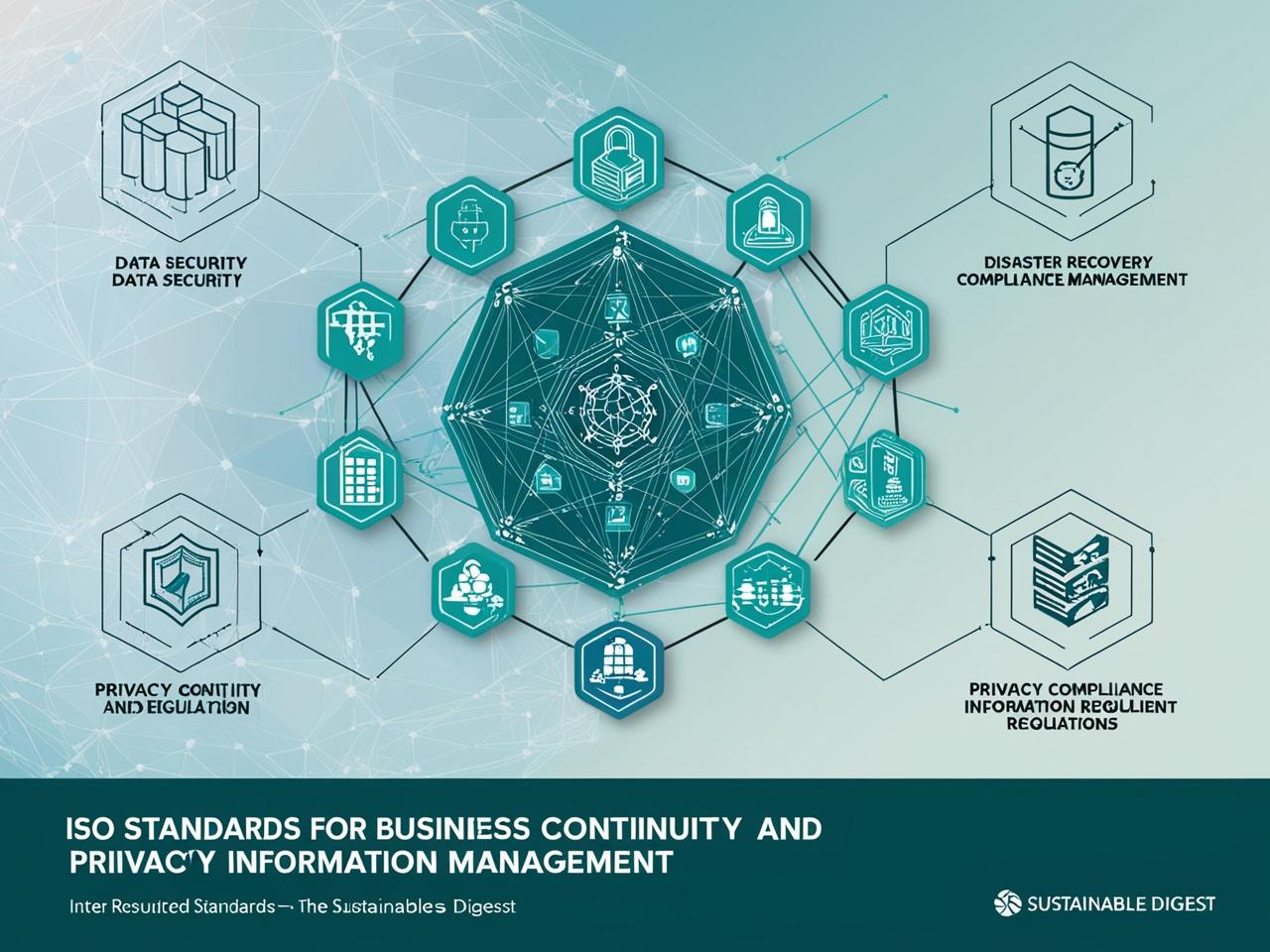
Businesses today face a world where following many rules is key to success. The International Organization for Standardization (ISO) helps a lot with this. ISO 2230 Business continuity management systems and ISO 27701 Privacy information management are two important standards. They show that companies care about following the rules.
Using these standards can help a lot. It makes businesses run better and look good. By following global standards, companies avoid big problems and fines.
Benefits of Harmonization
Reduced risk of non-compliance
Improved operational efficiency
Enhanced reputation and trust
By using ISO 2230 Business continuity management systems and ISO 27701 Privacy information management, companies show they care about rules. This brings many good things, like working better and being more trusted.
Engaging Stakeholders in Sustainability
Getting stakeholders involved is key to reaching sustainability goals. Working with stakeholders helps organizations get insights and support for their green plans. The ISO 17800 standard, which deals with building design, is a great guide for this.
Importance of Stakeholder Collaboration
Stakeholder teamwork is vital for green goals. It lets companies know what their stakeholders need and worry about. This includes customers, workers, and the community. Together, they can find ways to be green and profitable.
For instance, using textile machines and recycling materials can cut down on waste. This supports organic recycling.
Tools for Stakeholder Engagement
There are many ways to get stakeholders involved in green efforts. Here are a few:
Stakeholder surveys and feedback sessions
Sustainability committees and groups
Sustainability reports and updates
With these tools, companies can really get stakeholders on board with green efforts. This helps build a green culture in the company.
Resources for ISO Standards and Benchmarking
Finding your way through ISO standards and sustainability benchmarking can be tough. But, there are many resources to help. You can find guides, books, and websites for learning more. This section will show you where to find these tools and information.
Recommended Reading and Guides
The ISO’s official book, “ISO 14001:2015 Environmental management systems – Requirements with guidance for use,” is a great start. It’s full of useful info for those new to ISO standards. Also, the ISO’s guide on sustainability in buildings and civil engineering works is packed with insights. It covers hydrogen tech, event sustainability, tourism sustainability, and more.
Organizations and Websites for Further Learning
Groups like the International Organization for Standardization (ISO), the United Nations Sustainable Development Goals (UNSDGs), and the U.S. Green Building Council are full of knowledge. Their websites, ISO.org, UN Sustainable Development, and USGBC.org, have lots of excellent resources primarily because they offer case studies and best practices for any organization looking to be more sustainable.
Key Takeaways
ISO standards play a crucial role in promoting sustainable development
ISO 9001 standard focuses on quality management, a key aspect of sustainable development
Solar energy is a key aspect of sustainable development
Industry-specific guidelines address diverse operational needs.
Adopting ISO standards can ensure environmentally responsible operations
Integration of ISO standards with sustainable practices can reduce carbon footprint
ISO standards provide a framework for quality management and sustainability
ISO standards set vital frameworks for quality and efficiency
The relationship between science-based targets and nature-based solutions provides a rich area for exploration in sustainable reporting. Understanding how these frameworks differ and overlap is essential for organizations aiming to align their sustainability efforts with established standards. By examining these elements through SWOT analysis, one can unveil the strengths and weaknesses of each approach, as well as their opportunities for synergy and potential conflicts.
Science-based targets focus primarily on quantifiable climate goals that guide corporate sustainability strategies. In contrast, nature-based solutions emphasize the role of ecosystems and natural processes in achieving environmental objectives. Both frameworks are increasingly important in the context of sustainable reporting, yet they present unique challenges and advantages that organizations must navigate for effective implementation.
As businesses strive for transparency and accountability in their sustainability practices, a comparative analysis of these concepts can yield valuable insights. Recognizing the conflicts and synergies in sustainability reporting can help corporate leaders make informed decisions that advance their environmental goals while aligning with global standards.
Overview of Sustainable Reporting Standards and Frameworks
Sustainable reporting standards and frameworks provide guidelines for organizations to disclose their environmental, social, and governance (ESG) performance. They aim to enhance transparency and accountability.
Several key frameworks exist, including:
Global Reporting Initiative (GRI): Focuses on sustainability reporting across various sectors.
Sustainability Accounting Standards Board (SASB): Offers industry-specific guidance on financially material sustainability issues.
Task Force on Climate-related Financial Disclosures (TCFD): Emphasizes climate-related financial risks and opportunities.
These frameworks help companies communicate their sustainability efforts. They support organizations in setting measurable goals and assessing performance over time.
Standards and frameworks vary in their approaches. Some promote a stakeholder-inclusive model, while others prioritize financial metrics. This diversity allows organizations to choose a framework that aligns with their specific needs.
The integration of science-based targets and nature-based solutions falls under these frameworks. Both aim to address climate change, but they approach it differently. Science-based targets focus on precise emissions reductions, while nature-based solutions emphasize ecosystem preservation and restoration.
These frameworks play a crucial role in guiding businesses through the complexities of sustainability reporting. They also facilitate the comparison of sustainability performance across different organizations and sectors.
Fundamentals of Science-Based Targets
Science-based targets are essential for organizations aiming to reduce their environmental impacts. They provide a clear framework for setting goals aligned with climate science. This section explores the definition and purpose of science-based targets as well as guidelines for setting and implementing them effectively.
Definition and Purpose
Science-based targets are specific greenhouse gas emissions reductions that organizations commit to. These targets are based on the latest climate science, aiming to limit global warming to 1.5 or 2 degrees Celsius above pre-industrial levels.
The purpose of these targets is to ensure that companies take meaningful action to mitigate climate change. By aligning their goals with scientific recommendations, organizations demonstrate commitment to sustainability and guide their operations toward lower emissions.
Key aspects include:
Target Setting: Goals are determined based on a company’s emissions profile.
Transparency: Organizations must disclose their targets for accountability.
Setting and Implementation
Setting science-based targets involves several steps. First, an organization assesses its current greenhouse gas emissions. This assessment helps identify key areas for improvement.
Next, the company chooses an appropriate target. This could be a percentage reduction in emissions or a specific timeline for achieving sustainability goals.
Implementation involves integrating these targets into operational and strategic planning. Companies often engage stakeholders and employees to ensure broad commitment.
Monitoring Progress: Regular evaluations are crucial for staying on track.
Adjusting Targets: Companies may need to revise their targets based on new scientific findings or operational changes.
This structured approach ensures that organizations make progress toward their climate objectives effectively.
Nature-Based Solutions Explained
Nature-Based Solutions (NbS) refer to strategies that utilize natural processes and ecosystems to tackle societal challenges. These solutions aim to provide environmental benefits while also addressing issues like climate change and biodiversity loss.
Core Principles
Nature-Based Solutions are built on four core principles:
Sustainability: NbS should enhance and not degrade natural resources. Efforts must be made to ensure long-term viability.
Inclusivity: Engaging local communities in planning and decision-making is essential. Their knowledge and needs should shape solutions.
Adaptability: Solutions must be flexible to adapt to changing conditions. This helps ensure they remain effective over time.
Ecosystem Resilience: Strengthening ecosystem functions is critical. Healthy ecosystems are better at providing services like clean water and carbon storage.
Application in Sustainability
Nature-Based Solutions find application in various areas of sustainability. They can help mitigate climate change effects, enhance water management, and improve urban environments.
For instance, mangrove restoration serves dual purposes: it protects coastlines and absorbs carbon. Similarly, urban green spaces contribute to improved air quality and community well-being.
Implementing these solutions requires collaboration across sectors. Policymakers, businesses, and communities should work together to maximize impacts.
By aligning NbS with sustainable development goals, stakeholders can amplify the benefits, making their efforts more effective and far-reaching.
SWOT Analysis of Science-Based Targets
This section explores the strengths, opportunities, weaknesses, and threats associated with Science-Based Targets (SBTs). These aspects provide insights into how SBTs align with sustainable reporting standards.
Strengths and Opportunities
Science-Based Targets leverage scientific data to set realistic and measurable goals for reducing greenhouse gas emissions. This method enhances credibility and creates accountability among companies. Many organizations adopt SBTs to demonstrate their commitment to sustainability, which can improve their public image.
An important opportunity lies in collaboration. By aligning with global climate goals, SBTs encourage partnerships among businesses, governments, and non-profits. Companies utilizing SBTs can attract investors interested in sustainable practices. Additionally, frameworks such as the Science Based Targets Initiative (SBTi) provide guidance and resources, making it easier for organizations to establish and achieve these targets.
Weaknesses and Threats
Despite their benefits, SBTs face certain weaknesses. One issue is that some organizations may struggle to implement the required changes due to resource constraints or a lack of technical knowledge. This challenge can lead to incomplete or inaccurate reporting on emissions reductions.
Furthermore, there is a threat of greenwashing. Companies may adopt SBTs while failing to implement real change, which undermines the concept’s credibility. Regulatory pressures and evolving standards can also create challenges, as organizations must adapt to new requirements continuously. Lastly, competition among companies may lead to “race to the bottom” practices, where some focus on meeting minimum standards rather than striving for impactful change.
SWOT Analysis of Nature-Based Solutions
Nature-based solutions (NbS) offer various benefits for sustainable practices while also presenting some challenges. This analysis explores the strengths and opportunities of NbS, as well as their weaknesses and threats within the context of sustainable reporting standards.
Strengths and Opportunities
Nature-based solutions provide multiple advantages. They enhance biodiversity by restoring natural ecosystems. This leads to improved environmental health and can help mitigate climate change effects.
NbS often require less maintenance than traditional infrastructure. This reduces ongoing costs, making them attractive to policymakers.
Additionally, these approaches can promote community involvement. Engaging local communities fosters a sense of ownership and stewardship of natural resources.
There are significant opportunities as well. Increased global focus on sustainability means that funding for NbS is expanding. Policymakers increasingly recognize NbS as effective strategies for meeting international climate goals.
The potential for innovative partnerships and collaborations is strong, creating a united approach to sustainability challenges.
Weaknesses and Threats
Despite their advantages, nature-based solutions face notable weaknesses. Implementation can be inconsistent across regions due to varying local practices and governance.
Limited public awareness can hinder support for NbS projects. Without community buy-in, initiatives may struggle to succeed.
There are also threats from competing interests, such as traditional infrastructure solutions that promise quicker outcomes. These solutions might overshadow NbS due to their perceived immediate benefits.
Climate change itself poses a significant threat, as more extreme weather can undermine the long-term effectiveness of NbS.
These factors require careful consideration when integrating NbS into broader sustainability frameworks.
Comparative Analysis
The comparison between Science-Based Targets (SBTs) and Nature-Based Solutions (NBS) reveals important insights into their roles within sustainable reporting standards. Both approaches aim to enhance environmental outcomes, yet they approach sustainability through different lenses.
Similarities Between SBTs and NBS
SBTs and NBS both focus on addressing climate change and promoting sustainability. They align with global environmental goals, such as those outlined in the Paris Agreement.
Both frameworks emphasize measurable targets, encouraging organizations to set specific, science-backed objectives. This structured approach facilitates accountability and transparency in reporting.
Science-based Targets and Nature-based Solutions both promote collaboration among stakeholders. SBTs and NBS rely on partnerships between businesses, governments, and communities to achieve their goals. This collective action is essential for driving meaningful progress and tackling environmental challenges effectively.
Key Differences and Distinct Features
SBTs primarily focus on reducing greenhouse gas emissions in line with scientific guidance. These targets are quantitative and time-bound, directly aimed at mitigating climate risks.
In contrast, NBS center on leveraging natural ecosystems to address environmental issues. They involve practices like afforestation, wetland restoration, and sustainable land management. NBS aim for broader ecological benefits, including biodiversity enhancement and ecosystem resilience.
Moreover, while SBTs require compliance with specific metrics and thresholds, NBS offer more flexibility in implementation. This allows organizations to tailor their approaches based on local environmental contexts and stakeholder needs, fostering more holistic environmental strategies.
Conflict Points in Sustainable Reporting
Sustainable reporting faces various challenges, particularly when comparing Science-Based Targets (SBTs) and Nature-Based Solutions (NbS). While both aim for environmental improvements, they often have different approaches, leading to conflict points.
Science-Based Targets vs. Nature-Based Solutions
SBTs focus on measurable reductions in greenhouse gas emissions aligned with global climate goals. They use scientific data to set specific targets for companies. This approach emphasizes quantitative metrics, which supplement businesses track their progress.
In contrast, NbS keenly prioritizes ecosystem services and natural processes to address environmental issues. These solutions, such as reforestation, may not have standardized metrics for success. Their qualitative nature can lead to differences in evaluation methods.
The lack of a common framework for measuring NbS can result in discrepancies when comparing performance between SBTs and NbS in sustainability reports. Companies may struggle to reconcile these differing methodologies, leading to confusion for stakeholders.
Resolution Strategies
To address the conflicts between SBTs and NbS, companies can adopt integrated reporting frameworks. These frameworks can help align goals and metrics, offering a more comprehensive view of sustainability efforts.
Stakeholder engagement is crucial. Involving diverse groups in strategy discussions ensures that there are consideration of various perspectives. This can lead to improved understanding and acceptance of different approaches.
Lastly, developing standardized metrics for NbS can facilitate better comparisons with SBTs. This involves collaborating with industry leaders and scientists to create benchmarks. Clear guidelines could promote accountability and transparency across reporting practices. Implementing these strategies can enhance the effectiveness of sustainable reporting.
Synergy in Sustainability Reporting
Sustainability reporting is increasingly evolving to create a more integrated approach that highlights the importance of both Science-Based Targets (SBT) and Nature-Based Solutions (NbS). As organizations strive for greater accountability, collaborative opportunities and beneficial overlaps are crucial for effective sustainability outcomes.
Collaborative Opportunities
Organizations can enhance their sustainability reporting by embracing collaborative opportunities between SBT and NbS. Science-based targets set measurable goals for reducing greenhouse gas emissions, aligning corporate strategies with climate science. Meanwhile, nature-based solutions focus on leveraging ecosystems to address social and environmental challenges.
By integrating these two approaches, companies can create comprehensive sustainability strategies. For instance, corporations might set SBTs while implementing NbS, such as reforestation projects, that simultaneously reduce emissions and enhance biodiversity. Collaborating with non-profits or governmental organizations can also optimize resources and expertise. This yields not only environmental benefits but strengthens stakeholder trust through demonstrable and actionable commitments.
Beneficial Overlaps
There are significant, beneficial overlaps between SBT and NbS in sustainability reporting. Both frameworks aim for long-term impact, yet approach it from different angles. While SBT focuses on reducing emissions, NbS addresses how natural ecosystems can absorb and store carbon.
Organizations can report on synergistic initiatives where emissions reduction goals are met through ecosystem restoration or conservation efforts. For example, a company might restore wetlands as part of its NbS strategy, contributing to both climate mitigation and habitat preservation. This dual reporting approach allows for richer narratives and demonstrates holistic corporate responsibility. Clear metrics can be developed to assess progress in both areas, providing stakeholders with valuable insights.
Double Materiality Map Analysis
Double materiality mapping is essential for understanding the interactions between financial and non-financial factors. This analysis allows organizations to assess both their impacts on sustainability and how those sustainability issues affect their financial performance. It brings clarity to the complexities of integrating Science-Based Targets (SBTs) and Nature-Based Solutions (NBS) into sustainable reporting frameworks.
Financial vs Non-Financial Impacts
In the double materiality map, financial impacts refer to how sustainability issues affect a company’s economic performance. This includes risks like regulatory changes, resource scarcity, and potential reputational damage.
Examples of financial impacts:
Decreased revenue due to regulatory fines.
Increased costs from resource shortages.
Potential losses from negative consumer perception.
Non-financial impacts focus on environmental and social outcomes. These include the effects of a company’s operations on the climate, ecosystems, and local communities.
Examples of non-financial impacts:
Improvement in biodiversity through effective NBS.
Community health benefits from reduced emissions.
Enhanced public image due to sustainable practices.
Understanding both impact types is crucial for developing robust sustainability strategies.
Materiality in the Context of SBTs and NBS
When analyzing materiality for SBTs and NBS, it is vital to recognize the differences and overlaps. SBTs primarily focus on greenhouse gas emissions and their financial consequences. They set clear targets for companies to reduce emissions in line with climate science.
In contrast, NBS emphasize restoring ecosystems to address both climate change and biodiversity loss. They not only deliver environmental benefits but can also present financial opportunities, such as eco-tourism or carbon credits.
SBTs and NBS can complement each other. For instance, implementing NBS can help achieve SBTs by sequestering carbon while also providing community benefits. Companies should evaluate how both approaches can interact within their sustainable reporting frameworks, ensuring a comprehensive understanding of materiality.
Corporate Case Studies
Corporate case studies highlight both successful implementations and challenges faced by companies in adopting Science Based Targets (SBT) and Nature-Based Solutions (NbS). These examples provide insight into how organizations incorporate sustainability into their reporting standards.
Success Stories
Many companies have effectively used Science Based Targets to reduce their greenhouse gas emissions. For instance, H&M Group committed to cutting emissions by 36% by 2030 based on its climate science targets. They have implemented various strategies, including using sustainable materials and enhancing energy efficiency in production processes.
Similarly, Unilever shows how Nature-Based Solutions can complement SBT. The company has invested in restoring ecosystems for its sourcing, aiming to improve biodiversity alongside reducing its carbon footprint. Their initiatives on sustainable sourcing have led to a more resilient supply chain.
Challenges and Lessons Learned
Despite successes, companies often face obstacles in aligning SBT and NbS. Nestlé encountered difficulties with data collection for emissions reporting. Ensuring accurate metrics is crucial, but can be resource-intensive.
Additionally, Coca-Cola found integrating nature-based projects into existing strategies challenging. Conflicts between short-term financial goals and long-term sustainability targets often arose. Companies learned that strong leadership and clear communication are vital for overcoming these hurdles.
Future Trends in Sustainable Reporting
As the landscape of sustainability continues to strengthen, various trends are shaping the future of reporting. Key aspects include the development of new standards and frameworks, along with innovative approaches to target setting and solutions.
The ever-evolving Standards and Frameworks
Sustainable reporting is moving towards more standardized practices. New regulations, such as the Corporate Sustainability Reporting Directive (CSRD), demand clearer and more comprehensive disclosure from companies. This shift promotes transparency in both financial and non-financial reporting.
Additional to the CSRD, organizations are adopting the Global Reporting Initiative (GRI) and Sustainability Accounting Standards Board (SASB) frameworks. These frameworks help businesses align their reporting with global sustainability goals.
Companies are now focusing on double materiality, which considers the impact of sustainability efforts on both the business and broader societal goals. This approach allows for a more holistic view of a company’s sustainability performance.
Innovations in Target Setting and Solutions
Innovations in sustainability reporting are driven by advances in technology and data analysis. Organizations are increasingly setting science-based targets that are rooted in real-time data. This ensures that targets are not only ambitious but also achievable.
Nature-based solutions are also gaining attention, encouraging companies to incorporate environmental actions into their strategies. These solutions enhance biodiversity and combat climate change by restoring ecosystems.
Tools like carbon calculators and sustainability dashboards enable companies to track their progress effectively. As industries adopt these innovations, they foster greater accountability in sustainable practices and improve engagement with stakeholders.
Key Takeaways
Science-based targets and nature-based solutions provide different frameworks for sustainability alignment.
Both approaches reveal unique strengths and opportunities in corporate sustainability strategies.
Understanding their relationships can enhance effective reporting and accountability in environmental practices.
Organizations, enterprises, and communities can benefit by working together to achieve United Nations Sustainable Development Goals. These groups can share resources and exchange ideas to tackle issues like hunger, water access, education, labor, and clean energy. By cooperating, they can make bigger changes than they could alone.
Working together on these goals can create new opportunities for innovation and economic growth. Small (nano and micro sized enterprise included) businesses might team up with larger companies to develop eco-friendly products. Cities and townships could partner with tech firms to improve infrastructure while advancing innovation. These joint efforts can lead to better jobs, improve commerce, and more sustainable urban areas.
Teamwork is vital for responsible production and consumption. Companies and NGOs can learn from each other about reducing waste and using resources wisely. Communities can share tips on sustainable living. By joining forces, different diverse groups can make progress on multiple goals at once.
Understanding the United Nations Sustainable Development Goals
To reintiate what the United Nations Sustainable Development Goals (SDGs) are; they are a set of 17 global objectives aimed at creating a better world for all and beyond. They address high key issues like poverty, hunger, health, education, social enterprise, and environmental sustainability.
The Importance of SDGs for Global Prosperity
SDGs are crucial for global prosperity. They provide a shared vision for a sustainable future and guide efforts to improve lives worldwide. The goals focus on ending poverty, protecting the planet, and ensuring peace and prosperity for all people.
These goals cross-pollinate and work together to create lasting change. For example, improving education can lead to better job opportunities and economic growth. This can help reduce poverty and hunger.
SDGs also promote partnerships between governments, businesses, and communities. By working together, different groups can make a bigger impact and achieve more.
Key Targets of SDGs for Organizational Alignment
Organizations can align their activities with specific SDG targets to contribute to global progress. For Goal 2 (Zero Hunger), a key target is to end all forms of malnutrition by 2030.
Goal 6 (Clean Water and Sanitation) aims to achieve universal access to safe drinking water. Goal 9 (Industry, Innovation, and Infrastructure) focuses on building resilient infrastructure and promoting sustainable industrialization.
Sustainable cities and communities (Goal 11) target safe and affordable housing for all. Goal 12 (Responsible Consumption and Production) aims to reduce waste generation through prevention, reduction, recycling, and reuse.
By aligning with these targets, organizations can play a vital role in achieving the SDGs and creating positive change globally.
Strategies for Zero Hunger and Clean Water
Achieving zero hunger and clean water requires coordinated efforts across sectors. These strategies focus on building resilient food systems and ensuring safe water access for all.
Building Resilient Agricultural Systems
Zero Hunger efforts must prioritize sustainable farming practices. This includes crop diversification, localization via urban farming, and climate-smart agriculture techniques.
Improved irrigation systems such as aquaponics and hydroponics help farmers use water more efficiently. Drip irrigation and rainwater harvesting can boost crop yields while conserving resources.
Strengthening local food supply chains reduces waste and improves food security and quality. This involves better storage facilities and overall logistic networks, especially in rural areas.
Investing in agricultural research and technology is crucial. Drought-resistant crops and precision farming tools can increase productivity and resilience to climate shocks.
Ensuring Access to Safe Water Resources
Clean water access is vital for health and food production. Expanding water treatment facilities in both urban and rural areas is a key priority.
Water and sanitation improvements must focus on sustainable waste management. This includes protecting water sources from pollution and promoting water conservation practices.
Community-based water management programs empower local groups to maintain water systems especially for waste and sewage. Training on hygiene practices and system maintenance ensures long-term sustainability.
Innovative technologies like solar-powered water pumps and emerging wind turbine that produces hydrogen fuel can improve access in remote areas and frontier markets. These solutions are especially important in off-grid communities in Africa and Asia.
Integrating water management with agricultural practices is essential. This helps balance the needs of farmers with those of other water users.
Fostering Innovation and Infrastructure in MSMEs
MSMEs play an ongoing key role in driving innovation and improving infrastructure. They face unique challenges but also have opportunities to adopt new technologies, strengthen stakeholder’s leverage, and upgrade their facilities.
Promoting Technological Advancements
MSMEs can boost innovation by investing in new tech and current robust technologies. Digital tools help streamline operations and reach more customers. Cloud computing allows small firms to access powerful software at low cost.
3D printing and mobile data centers enables small-scale, customized manufacturing. This lets MSMEs compete with larger firms in niche markets.
To stay competitive in organizationally, MSMEs need to train staff on emerging technologies. Partnerships with tech companies and universities can provide valuable knowledge and resources.
Improving Industrial Infrastructure
Upgrading facilities and equipment is crucial for MSME growth. Modern machinery boosts productivity and product quality. Energy-efficient systems cut costs and reduce environmental impact.
Shared workspaces and maker spaces give MSMEs access to advanced tools without big investments. Industrial parks tailored for small businesses provide necessary utilities and services.
Digital infrastructure is vital. High-speed internet enables e-commerce and remote work. Secure data storage protects sensitive information.
MSMEs benefit from improved transportation networks. Better roads and ports make it easier to ship goods and reach new markets.
Enabling Affordable and Clean Energy Solutions
Affordable and clean energy is crucial for sustainable development and productivity. Organizations can take key actions to expand access to renewables and improve energy efficiency in production.
Expansion of Renewable Energy Access
Clean energy technologies like solar and wind power are becoming more cost-effective. Companies can install solar panels or wind turbines to generate their own renewable electricity.
Community solar projects allow multiple businesses to share clean energy. This makes renewables more accessible for smaller enterprises.
Partnerships with utilities can help fund renewable energy projects. Some power companies offer incentives for businesses that adopt clean energy.
Microgrids powered by renewables improve energy reliability. These local power systems can operate independently from the main grid if needed.
Energy Efficiency in Production Processes
Energy audits identify ways to reduce waste in manufacturing and operations. Common improvements include:
LED lighting upgrades
Smart thermostats and sensors
High-efficiency motors and equipment
Improved insulation
Employee training on energy-saving practices is critical. Simple behavior changes can lead to big efficiency gains.
Recycling waste heat from industrial processes saves energy. This “waste” heat can be used for other purposes like heating buildings.
Energy management systems track and optimize usage. These tools help businesses continuously improve efficiency over time.
Advancing Decent Work and Economic Growth
Decent work and economic growth are key to sustainable development. They create opportunities for people to earn a living and improve their quality of life. This section explores ways to boost employment and empower communities economically.
Creating Employment Opportunities
Job creation is vital for economic growth. Governments can help by:
• Investing in infrastructure projects • Supporting small businesses • Offering job training programs
The private sector plays a big role too. Companies can:
• Expand operations to create new positions • Partner with schools for internships • Hire locally when possible
Policies that support job creation are crucial. These might include tax breaks for businesses that hire new workers or grants for startups. Such measures can spark innovation and lead to more jobs.
Promoting Economic Empowerment Initiatives
Economic empowerment helps people gain control over their finances. Microfinance is one way to do this. It gives small loans to people who can’t get regular bank loans.
Other initiatives include:
• Financial literacy classes • Savings groups for women • Skills training workshops
Access to financial services is key. Mobile banking has made this easier in many places. It lets people save money and make payments using their phones.
Fair labor laws also matter. They protect workers’ rights and ensure decent working conditions. This helps create a stable workforce and boosts productivity.
Building Sustainable Cities and Communities
Creating livable urban spaces requires careful planning and community involvement. Cities face challenges like overcrowding and resource strain, but also offer opportunities for innovation and improved quality of life.
Urban Planning for Sustainable Development
Urban planners play a key role in building sustainable cities. They design layouts that reduce sprawl and promote efficient use of land and resources. This includes mixed-use zoning that puts homes near jobs and amenities to cut down on car use.
Green spaces are vital for wellbeing. Parks, urban gardens, and tree-lined streets make cities more livable. They also help manage stormwater and reduce the urban heat island effect.
Sustainable transport is another focus. Bike lanes, walkable streets, and good public transit cut pollution and traffic. Some cities are creating car-free zones in city centers.
Community-Driven Development Projects
Local input is crucial for creating truly sustainable communities. Many cities now use participatory budgeting, letting residents vote on how to spend part of the municipal budget. This leads to projects that meet real community needs.
Neighborhood associations and community groups often spearhead local improvements. They may organize cleanup days, start community gardens, or advocate for better services. These grassroots efforts build social bonds while improving the urban environment.
Some cities partner with nonprofits on larger projects. For example, groups may renovate abandoned buildings into affordable housing or community centers. These efforts breathe new life into neglected areas and provide needed services.
Practices for Responsible Consumption and Production
Responsible consumption and production focus on doing more with less. They aim to reduce resource use, waste, and pollution across the entire supply chain. Two key practices can help achieve these goals.
Boosting Efficient Use of Resources
Companies can boost resource efficiency by optimizing their processes. This includes using energy-saving equipment and embracing renewable energy sources. Water conservation methods like recycling and rainwater harvesting help preserve this vital resource.
Waste reduction is crucial. Businesses can implement recycling programs and find ways to reuse materials. Some firms are redesigning products to use fewer raw materials.
Supply chain optimization is another important step. This involves choosing suppliers with sustainable practices and reducing transportation emissions. Many organizations now track their carbon footprint to identify areas for improvement.
Encouraging Circular Economy Models
Circular economy models aim to eliminate waste and maximize resource use. This approach keeps products and materials in use for as long as possible.
Companies can design products for durability and easy repair. This extends product lifespans and reduces the need for new resources. Some businesses offer repair services or sell spare parts to support this goal.
Product-as-a-service models are gaining popularity. Instead of selling items outright, companies lease them and handle maintenance. This encourages better product care and more efficient use.
Recycling and upcycling initiatives play a key role in circular economies. These processes turn waste into new products, adding value and reducing landfill use.
Strengthening Global Partnerships
Global partnerships are key to achieving the UN Sustainable Development Goals. Strong teamwork between different groups helps solve colossal problems faster. Sharing knowledge and resources leads to better results for everyone.
Networks allow small businesses to work with larger companies and governments. This helps spread good ideas and practices quickly.
Collaboration creates chances for innovation. When people from different fields work together, they often make surprising breakthroughs.
Shared goals help keep partnerships focused. Groups can divide tasks based on their strengths, making the work more efficiently.
Role of Intergovernmental Support and Resources
Governments play a big part in making global teamwork happen. They can create rules and systems that make it easier for groups to work together across borders.
Access to finance is crucial for partnership projects. Governments and international bodies can set up special funds or loans to help.
Public-private partnerships show how government backing can boost results. These teams combine public goals with private sector skills and resources.
By offering resources and removing barriers, governments help turn good ideas into actual change.
Entrepreneurship and Value Creation
Entrepreneurs and small businesses play a key role in advancing the UN Sustainable Development Goals. They create value through innovative solutions and partnerships that address global challenges.
Empowering Entrepreneurs Through SDGs
The SDGs provide a framework for entrepreneurs to align their business models with sustainable development. Goal 8 on decent work and economic growth directly supports entrepreneurship and job creation.
Entrepreneurs can tap into new markets by developing products and services that meet basic needs. For example, affordable solar lamps address Goal 7 on clean energy access. Clean water solutions support Goal 6.
Cross-disciplinary approaches help entrepreneurs create value. Partnering with communities, NGOs and governments amplifies impact. This aligns with Goal 17 on partnerships.
Small Businesses as Catalysts for Innovation
Small businesses drive innovation to tackle sustainability challenges. Their agility allows quick pivoting to address emerging needs.
Many startups focus on circular economy models supporting Goal 12 on responsible production. Examples include upcycling waste into new products.
Multiple value creation is key. Social enterprises create economic, social and environmental benefits. A food startup may reduce hunger (Goal 2) while creating jobs.
Tech innovations help small businesses boost productivity and reach. Mobile apps connect rural farmers to markets. This advances Goals 8 and 9 on economic growth and innovation.
Digital Marketing and Sustainable Growth
Digital marketing is derived from the 4th industrial revolution, it is essential to drive sustainable growth for businesses. It offers new ways to reach customers and gain a competitive edge through technology.
Leveraging Technology for Competitive Advantage
Digital marketing helps companies of all types stand out in today’s fast-paced market and industries. It allows firms to use data to better understand customers and tailor products and services.
Online tools like social media and analytics give businesses insights into consumer needs. This helps companies create more sustainable offerings that align with market demands.
Digital platforms also enable companies to streamline operations and cut costs. Cloud services and automation free up resources for innovation and growth.
Online Presence and Customer Engagement
A strong online presence is vital for sustainable growth. Social networks let firms talk directly to customers and get quick feedback.
Digital channels help build brand loyalty through personalized content and offers. Companies can respond fast to trends and keep customers coming back.
E-commerce makes it easy for customers to buy anytime. Mobile apps and websites create smooth shopping experiences that boost sales and satisfaction.
Digital marketing also supports sustainability goals. Online campaigns can promote eco-friendly products and educate consumers about responsible choices.
Policy Recommendations and Future Directions
Effective policies and research are key to achieving the UN Sustainable Development Goals. These strategies can help organizations and communities make real progress on issues like hunger, clean water, and sustainable cities.
Optimizing Policy Frameworks for SDG Integration
Governments, lobbyist, grassroots support organization, and co-op consortiums should create policies that support SDG implementation across sectors. Tax incentives can encourage businesses to invest in clean energy, green tech, and sustainable infrastructure. Regulations on water use and food waste can push industries to adopt more responsible practices. Public-private partnerships should be formed to tackle complex issues like hunger and sanitation.
Small businesses need simplified regulations and financial support to adopt sustainable practices. Local governments can update building codes to promote green construction and energy efficiency. National policies should set clear and concise targets for renewable energy adoption and emissions reductions.
Policymakers must ensure new rules don’t unfairly burden smaller organizations. Regular policy reviews can help identify gaps and make timely updates as technologies develop.
Encouraging Empirical Research for SDGs
The need and demand for more data-driven studies on the United Nations’ SDG progress will increase. Researchers should examine which policies and programs are most effective at reducing hunger and improving sanitation. Studies can explore how innovations in areas like vertical, roof, and urban farming impact food security.
Funding factions should prioritize empirical SDG research. This includes long-term studies on the economic effects of clean energy adoption. Researchers need better monitor, participation, and evaluation tools to measure progress on goals like responsible consumption.
Academic institutions can create dedicated SDG research centers. These can bring together experts from different fields to tackle complex sustainability challenges. Open data initiatives can help share findings widely to inform better decision-making.
Key Takeaways
Collaboration between diverse organizations amplifies impact on sustainability goals
Partnerships foster innovation and create economic opportunities across sectors
Joint efforts enable more efficient use of resources and knowledge sharing
The world faces epic environmental challenges, but sustainability offers hope. It helps us live in harmony with nature. Sustainability means we can meet our needs today without harming tomorrow’s people.
This approach changes how we live, from civics to energy to resources. It’s a big deal for our planet.
Sustainability is key to saving our environment and its ecosystem. It helps reduce harm from human actions. By using green solutions, we can protect our planet for everyone’s future.
Understanding the Foundations of Environmental Sustainability
In today’s world, environmental sustainability is key to solving big problems. It’s about using natural resources wisely and keeping our planet healthy for now and later. This ensures a bright future for all of us.
Defining Sustainability in Modern Context
Sustainability means we can live today without harming tomorrow. It’s about seeing the world and its inhabitants holistically. It connects our environment, society, and economy, asking us to think long-term and balance everything.
Key Components of Environmental Conservation
Environmental conservation is at the core of sustainability. It includes:
Resource Conservation: Using resources like water and energy smartly, recycling, and managing them well.
Pollution Reduction: Cutting down on harmful substances and emissions to keep our air, water, and soil clean.
Habitat Preservation: Saving and fixing natural places to protect life and keep our world healthy.
Historical Evolution of Sustainable Practices
The journey of sustainability started in the 1960s and 1970s. We discuss previously about how pre-sustainable measures or proto-sustainability from the 19th on back to pre-history may have developed. Back then, from post WWII to the global gasoline crisis, people began to take notice how our actions affect the planet. Since then, we’ve learned more about caring for our environment, like environmental stewardship, resource conservation, and climate change mitigation.
Now, sustainability is a worldwide effort. Governments, NGOs, public institutions, companies, non-profit organizations, and people are working together. They’re finding new ways to tackle the global environmental challenges we face.
Impact of Sustainability on Environmental Conservation
Once again, sustainability is key to our planet’s future. It helps us protect the environment through conservation as mentioned, wildlife habitat preservation, and more. This is crucial for our planet’s health and society.
Sustainability helps protect wildlife homes. It does this by using land wisely and in many ways, both renewable energy. This keeps animals and plants safe, helping them survive.
Sustainable Initiative
Environmental Impact
Wetland restoration
Provides critical habitat for migratory birds and aquatic life
Urban green spaces
Supports urban wildlife and enhances biodiversity
Zero-deforestation policies
Preserves vital rainforest ecosystems and carbon sinks
Also, eco-friendly initiatives help the environment a lot. They include clean energy, green transport, and recycling. These actions cut down pollution and help our planet.
“Sustainability is not about doing less harm, but about doing more good.”
In short, sustainability is very important for our planet. It helps us protect wildlife and the environment. Together, we can make a better future for all.
Global Ecosystem Changes Through Sustainable Practices
The world is now more aware of the need to protect our environment. Sustainable practices have made major and influential changes in our ecosystems. From the ocean depths to vast lands, we see the good work of preserving wildlife and biodiversity.
Marine Ecosystem Preservation
Good fishing, coastal care, and marine parks have helped our oceans. These steps have given marine life a safe place. Coral reefs, once in danger, are now recovering thanks to the citizens, collective community organizations, and institutions that care for the environment.
Terrestrial Habitat Protection
On land, we’ve used smart forestry and protected areas to save numerous of species’ homes. By stopping deforestation and planting more trees, we’ve kept vital habitats safe. This has helped many plants and animals in biosphere thrive again.
Biodiversity Conservation Efforts
These changes prioritize the preservation of biodiversity. Programs that mix science, economics, community work, and global teamwork have shown significant results. They’ve helped bring back threatened species and fixed food chains, keeping our planet’s life rich and diverse.
Ecosystem Change
Sustainable Practices
Notable Outcomes
Marine Ecosystem Preservation
Sustainable fishing, coastal management, marine protected areas
Recovery of coral reefs, revived marine species populations
Terrestrial Habitat Protection
Sustainable forestry, expansion of protected wildlife sanctuaries
Preservation of diverse ecosystems, resurgence of endangered species
Biodiversity Conservation Efforts
Scientific research, community engagement, international collaboration
Reintroduction of threatened species, restoration of food webs
Sustainable practices have brought enormous improvements to our ecosystems. By focusing on wildlife, environment care, and saving biodiversity, we’ve seen our planet’s strength. As we keep using these methods, our planet’s future looks bright.
Renewable Energy’s Role in Environmental Protection
The world is facing some of its biggest challenges with climate change. Clean, green, and renewable energy are key to solving this problem. It offers an environmental-friendly thus more sustainable future.
Renewable energy sources like solar, wind, hydroelectric, and geothermal are eco-friendly. They have a much lower carbon footprint than the finite fossil fuels. Switching to these sources helps reduce greenhouse gas emissions and protects the environment.
Using renewable energy has substantial benefits for the environment. Solar panels use the sun’s energy without harming the air. Wind turbines and hydroelectric power plants also help without harming the ecosystem.
Renewable Energy Source
Carbon Footprint Reduction Potential
Environmental Benefits
Solar
High
Reduces greenhouse gas emissions, preserves natural habitats
Wind
High
Generates clean energy without disrupting the ecosystem
Hydroelectric
Moderate
Utilizes a renewable resource while minimizing environmental impact
Geothermal
High
Taps into the Earth’s natural heat without depleting resources
As renewable energy gets better and more available, we can protect the environment more. By using these clean energy sources, we can all help. This way, we can make the planet safer for the future.
“Renewable energy is not only a solution to climate change but also a pathway to a more sustainable and equitable future.”
Carbon Footprint Reduction Strategies and Environmental Benefits
The world is working hard to fight climate change. Reducing carbon footprints is key. In many areas, new ways to lessen harm to the environment are being tried. These efforts aim to make our future more sustainable.
Industrial Emission Control Methods
In the industrial world, cutting down carbon footprints is a big deal. New methods to control emissions are being used. These include using less energy, renewable energy, and systems to capture and store carbon.
By using these methods, industries can reduce their emissions monumentally. This helps make the industrial world cleaner and greener.
Transportation Sector Solutions
The transportation sector is an enormous source of carbon emissions. But, there are many new, green solutions. Electric cars, hybrid vehicles, and encouraging people to use public transport are becoming more common.
These changes not only cut down on carbon emissions. They also make the air cleaner and cities nicer places to live.
Residential Carbon Reduction Techniques
Upgrading homes with energy-saving features like solar panels and better insulation can lower emissions.
Living more sustainably, like recycling and choosing green energy, also makes a big difference.
Choosing eco-friendly ways to get around, like electric cars or public transport, helps too.
By using these strategies in homes, industries, and transport, we can make a very big difference. These efforts help fight climate change and make our future greener and more sustainable.
Resource Management and Conservation Techniques
Managing and conserving resources is key to environmental sustainability. We can do this by using water wisely and switching to renewable energy. These actions help us make a positive impact and lessen our ecological footprint.
Sustainable Water Management
Water is very important and limited. We must save it. We can do this by using less water, recycling it, and using smart irrigation. These steps help keep water clean for us and nature.
Renewable Energy Integration
Switching to renewable energy is vital for sustainability. Options like solar, wind, geothermal, and hydroelectric power reduce our carbon footprint. Choosing these clean energies helps protect our environment.
Land Use and Habitat Preservation
Managing land well is crucial for keeping habitats and biodiversity alive. This means using sustainable farming, planning cities with green spaces, and protecting special areas. These actions help our land stay healthy and strong.
Sustainable Technique
Environmental Impact
Key Benefits
Water-efficient technologies
Reduced water consumption and wastewater generation
Decreased greenhouse gas emissions and fossil fuel dependency
Mitigate climate change, promote clean energy transition
Sustainable land management
Habitat preservation and biodiversity conservation
Maintain healthy ecosystems, support wildlife and natural resources
By focusing on resource conservation, sustainable practices, and environmental stewardship, we can protect our planet for future generations. This approach ensures the balance of our world preserves natural order.
Sustainable Urban Development and Environmental Impact
Cities are now focusing on being more both smart and eco-friendly. This means planning and designing cities in ways that protect nature. The main areas of focus are green buildings, smart city planning, and saving wildlife habitats.
Green Building Practices
Green building is key to sustainable cities. It uses materials that are good for the planet, saves energy, and uses renewable energy. This helps cities cut down on pollution and makes living healthier for everyone.
Smart City Planning
Smart city planning is changing how cities are developed, built, and run. It uses technology and data to make cities more efficient. This improves how people move around and makes cities better for the environment and people.
Urban Wildlife Conservation
Keeping wildlife in cities is also important. Cities are adding green spaces and forests to support different species. This makes cities better for both people and animals, helping to preserve nature.
Together, these efforts are making cities better for the planet. By adopting sustainable practices, cities are becoming greener and more livable. This helps protect our planet for the future.
Economic Benefits of Environmental Stewardship
Environmental stewardship is good for the planet and the economy. It creates jobs in green fields like renewable energy and waste management. This boosts innovation and economic growth.
Protecting the environment can also help countries compete globally. Those who lead in green technologies and practices get ahead. This opens up new job chances for people of all skills and backgrounds.
Economic Benefit
Description
Job Creation
The shift towards sustainable practices has led to the creation of millions of new jobs in industries like renewable energy, green construction, and waste management.
Innovation and Competitiveness
Countries that invest in environmental stewardship often gain a competitive advantage in the global market, as they become leaders in sustainable technologies and practices.
Cost Savings
Implementing energy-efficient measures and reducing waste can lead to significant cost savings for businesses and households, improving overall economic resilience.
By embracing environmental stewardship, people from all walks of life can find new job chances and save money. They also get to enjoy the global benefits of living sustainably.
“Sustainable development is not only about the environment, it’s also about economic development and social development. It’s a holistic approach to ensuring a better quality of life for everyone, now and in the future.”
Social Implications of Sustainable Environmental Practices
Choosing green living and caring for the environment affects many people and networks. It reaches across social classes. As more communities join in, education helps change how we understand the world.
Community Engagement in Conservation
Local efforts lead the way in making a difference. People from all walks of life are cleaning beaches, growing gardens, and protecting wildlife. This teamwork breaks down barriers, bringing together people from different social classes and networks.
Educational Initiatives
Schools now teach environmental stewardship to prepare the next generation. They learn how to live sustainably.
Public campaigns and workshops teach everyone how to live greener. They help people from all backgrounds make a change.
Training programs help professionals in various fields. They learn how to apply green living in their work.
Cultural Shifts in Environmental Awareness
A big change is happening as we focus more on sustainability. People from all social classes and networks are valuing nature more. They want to protect it.
This change shows in how we shop, support green projects, and care for the planet. It’s a move towards better environmental stewardship.
“Sustainable development is the pathway to the future we want for all. It offers a framework to generate economic growth, achieve social justice, exercise environmental stewardship and strengthen governance.”
– Ban Ki-moon, Former United Nations Secretary-General
Conclusion
The impact of sustainability on the environment is huge. We’ve looked at the basics of environmental sustainability. We’ve seen how conservation and sustainable practices have evolved over time.
By adopting sustainable actions, we can make big changes in our ecosystem. This includes protecting marine life, preserving habitats, and saving biodiversity.
Renewable energy is key to protecting the environment. Reducing carbon footprints in different areas is also crucial. Techniques for managing resources and conserving them show our dedication to the planet.
Sustainable urban development shows we can grow and protect the environment at the same time. This balance is important for our future.
Looking ahead, the benefits of environmental sustainability are clear. It’s not just about saving the planet. It also brings economic and social gains to our communities.
Our future looks bright if we keep working on sustainability. By adopting green practices and raising awareness, we can build a better world for all.
Key Takeaways
Sustainability is the practice of meeting present needs without compromising the ability of future generations to meet their own.
Sustainable practices have a profound impact on environmental conservation, habitat preservation, mitigating the negative consequences of human activity.
Adopting eco-friendly initiatives and innovative solutions can help preserve the delicate balance of our environment.
Sustainability is a holistic approach that addresses various aspects of environmental challenges, from energy generation to resource management to human engagement in the environment.
The growing importance of sustainability underscores the collective responsibility of safeguarding the planet for generations to come.
Sustainability is a word that holds many definitions that create a broad scope of its many concepts. Along with its many definitions and concepts, there are levels of denotation and connotation it presents as well. Sustainability is, however, not as fluid when applied to practical solutions and methodologies. For social impact, environmentalism or environmental preservation, and capital allocation strategies, sustainability is the ecosystem to draw from.
When one closes their eyes, how does the mind perceive what sustainability is? Can you imagine what colors come to mind? How about the textures or objects? Can we articulate what are the overall types of 5 senses that one would associate with sustainability, such as scent, taste, small, sound, and sight? What does it sound like, and what time of day is most associated with sustainability? How about the term sustainable? Does it seem more of a perceived focus? Does that term function as an enhancement to content that orbits sustainability? Are concepts of sustainability sustainable, or does the sustainable content belong within sustainability?
Understanding Sustainability is key
Welcome to our digest as we unpack how sustainability in scope expands through concepts. In addition to unpacking, we will explore what these concepts are and how we can relate to and apply them for a sustainable future. From a high-brow layman to the high-ranking delegate seeking to increase influence in a foreign administration, anyone can apply these tools. From the citizen climate lobbyist who advocates locally to Capital Hill to the at-home matriarch wife or patriarch uncle. Access to leveraging both nuclear and extended family duties on how a systematic approach to sustainable living can be beneficial.
The premiere definition of what sustainability is as a subject matter, application, and form of a multi-tier policy that synthesizes an eclectic set of disciplines. This understanding includes that earth and its ecosystem of lifeforms are included. By sustaining equilibrium from the plant’s origin billions of years to the establishment of the United States of America, sustainability is ensured by not comprising today at the expense of future generations.
We’ll continue to answer all these questions as we explore more how this concept materializes as a buzzword and an institutional ideology.
Sustainable Development History in Review
Within our discussion of this topic, we will feature a set of time periods that will also be featured. They will be referenced as milestones in the history of sustainability. Here are several listed here:
The pre-colonial years, when various indigenous cultures across the world practiced sustainable methods that were intrinsic for survival and adaptability.
The advent of proto-sustainability, both the 1st industrial revolution and the 1st machine age
Post-World War II and the effects of pre-civil rights/mid-cold war international economic development across developed, 2nd world, and 3rd world nations
Post-civil rights, in conjunction with both the U.S. relinquishment from the gold standard to the fiat platform and the environmental regulation standards
The modern interpretation of classical sustainability began with UN Conference on the Human Environment during both the cold war and the environmental regulation framework shaped fractionally to partially the gold to fiat U.S. dollar transition
The ‘term’sustainable development’ was established also a decade after the executive branch instituted the fiat standard.
During the final quarter of the Cold War era, various thought leaders from Gro Harlem Brundtland to Bill McDonough over the course of 15 years prior to the beginning of the Afghanistan war, the NATO expansion, the Canadian G8 summit, the scheduled Yucca Mountain nuclear waste repository, and the South African Earth Summit.
Sustainable Development History Continuing
What we can deduce is that sustainability evolved this way in regards to the passage of time for the long term. We can easily reason that this is because of the decades of accumulation of adverse environmental impact. Another factor is the inequalities and inequities of the human condition. This observation applies across all spectrums of human activity: education, entertainment, economics, law, politics, labor, religion, sex, and war.
Sustainability means to remain durable over periods of time. Durability is to sustainability what resilience is to adaptability in some respects. Another way of looking at defining it would be to state or understand that sustainability is to renew or be everlasting for generations to come. Regeneration within nature is a sustainable state in concept due to sustaining its essence.
The Sustainable triple bottom line broken down
In the context of modern, contemporary, and postmodern sustainability, it is defined by a trinity of social and institutional outcomes of the triple bottom line. Sustainability extends past the dynamic of achieving the bottom line to remain in the black by restructuring to be only 33.3% of the outcome. The other 66.6% are split into two unique channels that engage the human or social component that separates itself from the more capitalist-driven single bottom line. While the final 33.3% of the triple bottom line redirects to the living environment. The final bottom line, which is the living environment, includes the more non-sentient life and material via the science-based order of the planet.
This creates a synthesis of three subjective opposing constructs from one another that forms a cohesive system. Having these systems is beneficial for institutions, businesses, and communities to leverage. When working together as the triple bottom line, to remain functional, they work within a checks and balance framework. We’ll have a more real-world angle when we go into more detail and explain the progenitor of the triple bottom line and other platforms.
Rather, the term sustainable or sustainability is used; the greater understanding is how and why sustainable development is applied. The purposes of attracting better public and social engagement and environmental stewardship through both conservation and preservation. Positioning strategically in the free market in spreading prosperity. It is essential to development that’s sustainable for the long(er) term of any institution, organization, or MSME (micro, small, medium enterprise).
What does sustainability mean to you? How has sustainability served in a historical context? How can we educate and train to bring sustainable results? What comes to mind when you see and hear the word ‘sustainability’?
This website is saving the energy of your screen as it is not being used. It's part of a global effort to lower the planet's electrical consumption and CO2 emission level. Resume browsing