Week of June 15-21: Global Events & Sustainability In Retrospect

Week of June 15 - 21 through global observances, UNSDGs, and sustainability

The Week of June 15 – 21 is key for global sustainability. It shows many international events that focus on the environment and working together. These events are linked to the United Nations Sustainable Development Goals (UNSDGs). They help communities around the world talk about our planet’s future.

During this week, groups, governments, and people come together to tackle big environmental issues. These global events offer chances to find new solutions, spread the word, and make real changes in different places.

Every event in this week ties into bigger goals for sustainability. It shows how small actions can make a big difference worldwide. From climate efforts to cultural celebrations, these events show how taking care of the environment and improving human lives are connected.

Understanding Global Observances and Their Impact on Sustainable Development

Global observances are key in raising environmental awareness and promoting sustainable development. These international days connect people, share knowledge, and inspire action to tackle global challenges.

International Days offer chances for Global Participation in various communities. They make complex United Nations Sustainable Development Goals easy to understand and act on.

The Role of International Days in Promoting Sustainability

Environmental awareness grows through global events that focus on key issues. These observances:

  • Raise public consciousness about environmental challenges
  • Promote collaborative problem-solving
  • Encourage grassroots engagement
  • Amplify marginalized voices in sustainability discussions

Linking Global Events to UN Sustainable Development Goals

Each international day links to specific United Nations Sustainable Development Goals. These events turn abstract concepts into real actions.

Measuring Impact Through Global Participation

Tracking global participation shows the power of international observances. Community engagement metrics show how individual actions help achieve sustainable development goals.

“Small actions, when multiplied by millions of people, can transform the world” – Environmental Advocacy Network

Environmental Awareness Through Cultural Celebrations

A vibrant scene of "Cultural Sustainability Celebrations" at The Sustainable Digest. In the foreground, a diverse group of people engage in traditional dances and rituals, their colorful costumes and joyful expressions radiating a sense of community and environmental stewardship. The middle ground features artisanal stalls displaying locally-sourced, sustainable goods, while in the background, a lush, verdant landscape with towering trees and a flowing river sets the stage for this celebration of cultural heritage and ecological harmony. The warm, golden lighting and wide-angle lens capture the celebratory atmosphere, inviting the viewer to immerse themselves in this captivating display of sustainable living.

Cultural celebrations are key to spreading environmental awareness worldwide. They turn traditional events into chances for learning about sustainability and working together.

Every culture has its own way of adding environmental messages to their celebrations. This mix of tradition and green thinking encourages people to care more about the planet.

“Culture is the most powerful tool for creating sustainable change in environmental consciousness.” – Environmental Anthropologist Dr. Elena Rodriguez

  • Traditional festivals highlighting local ecological practices
  • Community-driven sustainability workshops
  • Indigenous knowledge sharing about environmental preservation
  • Cultural performances emphasizing ecological connections

During June 15-21, global observances show how cultural events boost environmental awareness. Communities share creative ways to blend sustainability into their customs.

CultureEnvironmental Celebration PracticeSustainability Impact
JapaneseTanabata Festival Tree PlantingAnnual Reforestation
HawaiianOcean Conservation CeremoniesMarine Ecosystem Protection
Indigenous AmazonRainforest Preservation RitualsBiodiversity Conservation

These celebrations show that caring for the environment knows no borders. By embracing diverse traditions, we can work together towards a greener future.

Week of June 15 – 21 through global observances, UNSDGs, and sustainability

The Week of June 15-21 is key for the environment and global sustainability. It’s a time when many international events focus on the United Nations Sustainable Development Goals. These events inspire people all over the world to work together.

Environmental awareness shines brightly during this week. Many global initiatives link local efforts to big sustainability goals. This shows how important it is for everyone to join forces to tackle big environmental problems.

Key Environmental Dates and Their Significance

  • World Wind Day: Promoting renewable energy innovation
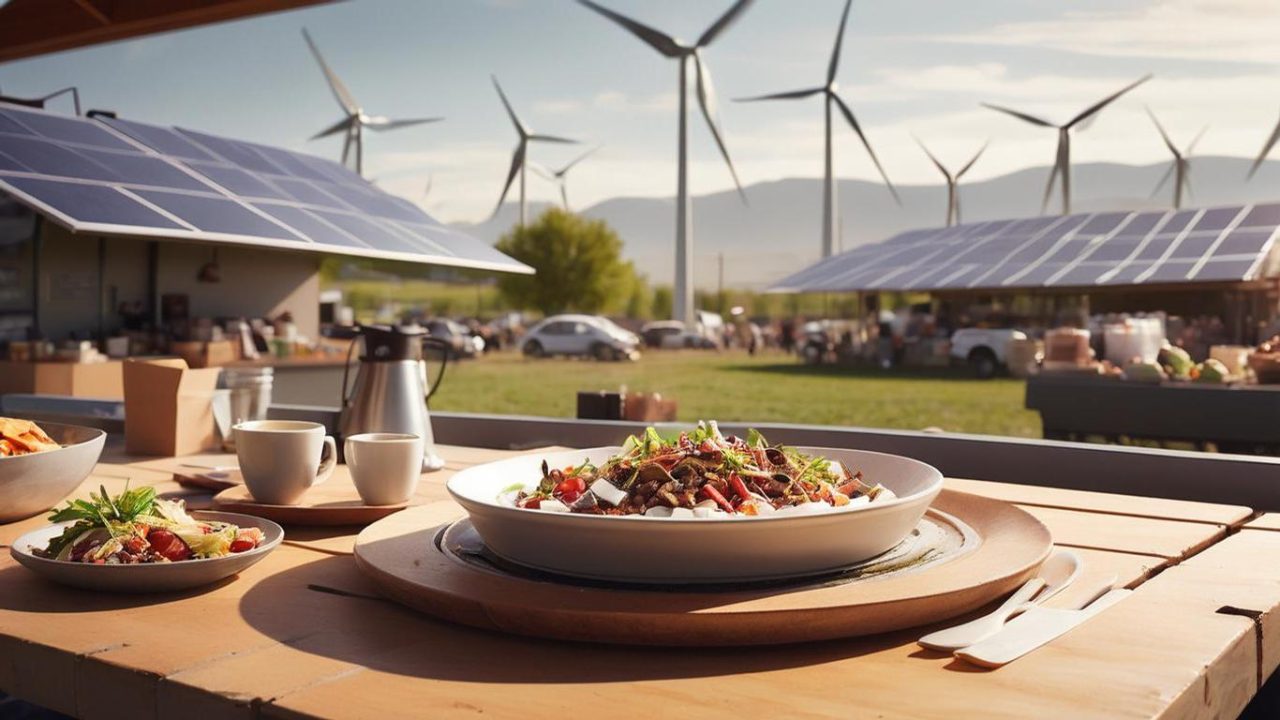
  • Sustainable Gastronomy Day: Exploring ecological food systems
  • Global initiatives focusing on climate action and environmental preservation

Global Participation and Local Action

Communities around the world turn these events into real actions for sustainability. Local environmental programs make global goals real and effective. They make a big difference, touching lives far and wide.

Sustainable Development Goals in Practice

The United Nations Sustainable Development Goals offer a plan to tackle environmental issues. During this week, groups, governments, and people show new ways to achieve these goals.

“Small actions create significant global change when communities unite with shared environmental goals.”

This week is all about raising environmental awareness. It’s a time for people to think about their impact on the planet. It encourages everyone to make choices that help protect our world.

World Refugee Day: Addressing Climate Migration and Social Justice

A vast, sprawling encampment of makeshift shelters stretches across a sun-drenched, arid landscape. In the foreground, a family of climate refugees - tired, weathered faces etched with hardship - trudge through the dusty, wind-swept terrain, their meager possessions bundled in their arms. In the middle ground, aid workers and volunteers rush to distribute supplies, offering a glimmer of hope amidst the desolation. The background is a hazy, scorched horizon, a vivid reminder of the environmental calamity that has uprooted these displaced people. Capture the human toll of climate migration and the urgent need for global action and social justice, as featured in "The Sustainable Digest".

World Refugee Day shines a light on climate migration. This is where environmental changes meet human rights. As the planet warms, millions must flee their homes. This is due to extreme weather, lack of resources, and environmental damage.

The United Nations Sustainable Development Goals stress the need to tackle climate migration. Communities at risk face new challenges. These go beyond what we usually think of as refugee issues.

  • Climate change hits developing areas hard
  • Rising seas threaten coastal communities everywhere
  • Changes in farming cause economic problems
  • Support for displaced people is a matter of social justice

Climate migration is a huge humanitarian issue. We need new, global solutions. Governments, groups, and communities must work together. They must protect human rights and support lasting change.

RegionEstimated Climate RefugeesPrimary Environmental Threat
Sub-Saharan Africa30-50 millionDrought and Desertification
South Asia40-70 millionSea Level Rise
Pacific Islands5-10 millionCoastal Erosion

Helping displaced communities through education and job skills can turn challenges into chances for growth.

Renewable Energy Initiatives and Global Wind Day Celebrations

Global Wind Day is a key moment for renewable energy awareness. It shows how important wind power is for a sustainable future. This day celebrates how wind energy can change our way of dealing with climate change and protecting the environment.

Wind power is changing the renewable energy scene. It keeps getting better, offering new ways to solve global energy problems. People all over the world are seeing big benefits from wind energy projects.

Wind Power’s Role in Sustainable Development

Renewable energy is changing how we make power. Wind energy is a clean, efficient choice instead of fossil fuels. It has many benefits:

  • Zero carbon emissions during use
  • Little harm to the environment
  • Less need for non-renewable resources
  • Potential for big energy production

Innovation and Technology in Renewable Energy

New tech is making wind power better. Engineers are making more efficient turbines for different places. New materials and designs are making wind energy more reliable and effective.

Community Impact and Economic Benefits

Wind energy projects bring big economic gains. Local areas see benefits like:

  1. Jobs in making and fixing turbines
  2. More money spent on local projects
  3. Stable prices for energy
  4. Less carbon emissions

“Wind power is a key way to a sustainable future and fighting climate change,” says Dr. Elena Rodriguez, a renewable energy expert.

Global Wind Day shows that renewable energy is more than just good for the planet. It’s a way to improve our economy and society too.

International Day for Countering Hate Speech: Building Inclusive Sustainable Communities

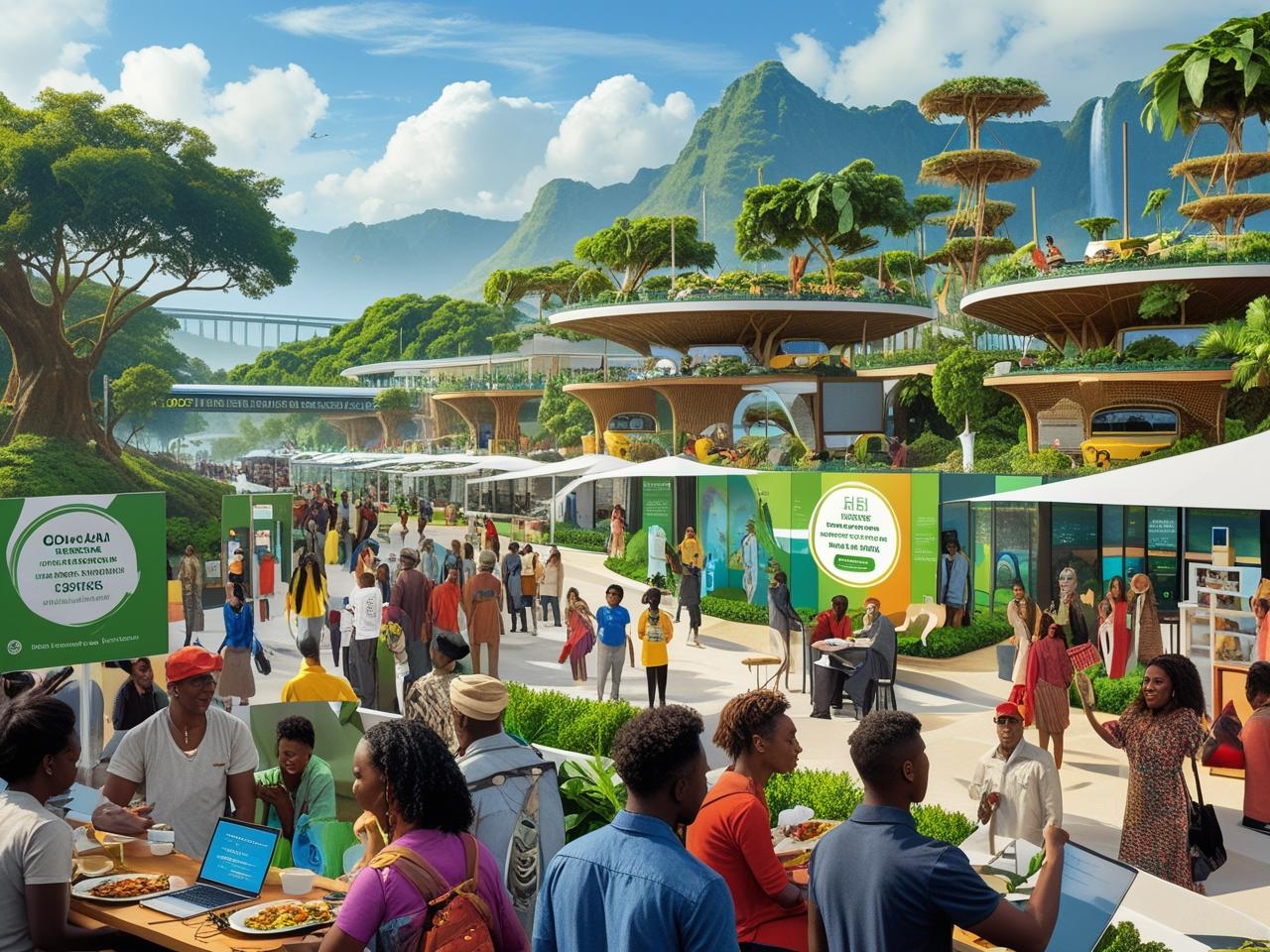
A diverse gathering of people in a vibrant, green community setting. In the foreground, people of all ages and backgrounds engage in various sustainable activities - gardening, recycling, renewable energy. The middle ground features a central plaza with modern, eco-friendly architecture and public art displays. In the background, rolling hills and lush forests create a peaceful, natural backdrop. Warm, golden lighting filters through, conveying a sense of inclusivity, progress and hope. A sign in the scene reads "The Sustainable Digest - Building Inclusive Sustainable Communities".

The International Day for Countering Hate Speech is a key moment for change worldwide. It shows how important social harmony and sustainable development are together. Inclusive communities are key to solving big global problems.

Hate speech harms social unity and progress. It makes it harder to face big issues like climate change and poverty. It also affects how we manage resources.

  • Promotes understanding between diverse groups
  • Supports peaceful dialogue and conflict resolution
  • Strengthens community resilience
  • Advances sustainable development goals

Sustainable development needs everyone’s help. When people feel respected, they join in to make a difference. Inclusivity turns conflict into useful talks.

“Unity is strength… when there is teamwork and collaboration, wonderful things can be achieved.” – Mattie Stepanek

Communities that value diversity and fight hate speech can solve big problems. They build strong networks across all kinds of boundaries. This way, they can find new solutions to environmental and social issues.

People can help fight hate speech by:

  1. Promoting respectful communication
  2. Challenging discriminatory language
  3. Supporting educational initiatives
  4. Amplifying marginalized voices

The way to sustainable development is through empathy and real connections. Every person is important in building communities that can tackle global issues.

Sustainable Gastronomy Day: Connecting Food Systems with Environmental Conservation

On June 18th, the world celebrates Sustainable Gastronomy Day. It shows how our food choices affect the environment and biodiversity. This day reminds us of the link between food and the planet.

“Every meal is an opportunity to support our planet’s health and protect its delicate ecosystems.” – Environmental Food Experts

Farm-to-Table Initiatives: Transforming Local Food Systems

Farm-to-table movements are changing how we think about food. They connect local farmers with those who eat their produce. This helps reduce carbon emissions and supports local farms.

  • Minimize transportation emissions
  • Support local agricultural economies
  • Promote biodiversity conservation
  • Enhance food system transparency

Reducing Food Waste: A Critical Environmental Strategy

Food waste is a big environmental problem. Sustainable eating encourages us to buy less, cook creatively, and eat responsibly. This helps cut down on waste.

Supporting Local Food Systems

Local food systems are key to saving the environment. By choosing local and sustainable food, we help the planet. We also keep our food traditions alive and support local businesses.

Sustainable Gastronomy Day is a chance to talk about the link between food, the environment, and saving biodiversity.

Summer Solstice: Traditional Celebrations and Environmental Awareness

A vibrant and lush summer landscape with a focus on environmental awareness. In the foreground, a group of diverse people gather around a large bonfire, their faces illuminated by the flickering flames. They are engaged in traditional solstice rituals and celebrations, dancing, and sharing a sense of community. In the middle ground, a pristine forest with towering trees and a meandering stream, symbolizing the natural world. In the background, a majestic mountain range bathed in warm, golden sunlight, reflecting the celebratory atmosphere. The overall scene conveys a sense of harmony between humanity and the environment, with a strong emphasis on sustainability and The Sustainable Digest.

The Summer Solstice is a special time when the sun shines the brightest. It happens on June 20th or 21st. This day is the longest in the Northern Hemisphere, making it perfect for learning about living sustainably.

“Nature’s rhythms teach us profound lessons about environmental harmony and human connection.” – Climate Ecology Research Institute

Indigenous cultures around the world see the Summer Solstice as very important. They have created amazing ways to live in harmony with nature, tied to this special day:

  • Ancient farmers planned when to plant and harvest based on the solstice.
  • Today, we use the sun’s power to create new energy solutions.
  • Old wisdom teaches us how to protect our planet.

Summer Solstice celebrations show us how to care for our planet. People everywhere use this day to:

  1. Teach about using renewable energy.
  2. Show how to save our environment.
  3. Work together on green projects.
Cultural RegionTraditional PracticeEnvironmental Impact
Scandinavian CountriesMidsummer FestivalsCommunity Sustainability Workshops
Native American NationsSun CeremoniesLand Conservation Programs
Chinese CultureSeasonal Harvest RitualsAgricultural Sustainability Training

By seeing the Summer Solstice as a chance to learn about the environment, we can make our celebrations better. We can teach others about living sustainably and caring for our planet.

Blue Economy Initiatives in Southern Asia: A Model for Sustainable Development

Southern Asia is leading the way in Blue Economy. It’s turning marine ecosystems into sustainable powerhouses. This approach links economic growth with protecting the environment, making it a model for marine conservation and empowering communities.

Coastal communities in Bangladesh, India, and Sri Lanka are leading the way. They use integrated marine management to balance economic benefits with protecting the environment.

Marine Conservation Efforts

Marine conservation in Southern Asia is all about protecting vital marine habitats and biodiversity. Key efforts include:

  • Creating marine protected areas
  • Restoring coral reefs
  • Setting up sustainable marine tourism

Sustainable Fishing Practices

New fishing methods are changing the maritime economy in the region. Small-scale fishers are using technology to reduce environmental harm while keeping their businesses afloat.

  • Using advanced tracking for responsible fishing
  • Managing marine reserves through community efforts
  • Monitoring catches with technology

Coastal Community Development

The Blue Economy model in Southern Asia focuses on local communities. It combines traditional knowledge with modern sustainable development. This creates strong, resilient economic systems.

Sustainable development is not just about conservation, but about creating meaningful economic opportunities for coastal communities.

The success of these Blue Economy projects shows how to balance economic growth with marine conservation. They offer a blueprint for sustainable development worldwide.

Global Waste Management: Innovative Solutions and Cultural Perspectives

A vibrant, hyper-realistic scene of innovative global waste management strategies. In the foreground, a cutting-edge recycling facility with advanced sorting and processing machinery, bathed in warm, directional lighting. In the middle ground, a bustling city skyline with efficient waste-to-energy plants and solar-powered waste collection vehicles. In the background, lush green landscapes and flourishing urban gardens, symbolizing a circular economy. The mood is one of progress, sustainability, and environmental harmony. Commissioned by "The Sustainable Digest" to illustrate an article on innovative waste solutions and cultural perspectives.

Managing waste globally is a big challenge for our planet. Small Island Development States have special problems with waste. They are finding new ways to use resources and reduce waste.

Across the world, new ideas are changing how we deal with waste. People are learning to reduce waste in their communities. This helps keep our planet’s ecosystems safe.

  • Circular economy models reducing waste generation
  • Community-driven recycling initiatives
  • Technological innovations in waste processing
  • Cultural adaptations to sustainable practices

Island nations are leading the way in waste management. Recycling programs and turning waste into energy are examples. These show how local efforts can make a big difference.

“Waste is not a problem, but a resource waiting to be reimagined” – Global Sustainability Expert

For global waste management to work, we need to work together. Communities around the world are finding creative ways to use waste. This helps both the economy and the environment.

RegionWaste Reduction StrategyImpact
Pacific IslandsCommunity Recycling Networks60% Waste Reduction
Caribbean StatesCircular Economy Programs45% Resource Recovery

We can all help by supporting local waste efforts. Choose products that are good for the planet. Also, push for new waste management policies in your area.

World Day of Music: Harmonizing Cultural Celebration with Environmental Consciousness

A vibrant outdoor celebration honoring World Day of Music, with a harmonious blend of cultural performances, musical instruments, and sustainability-focused elements. In the foreground, a diverse group of musicians play eco-friendly instruments against a backdrop of lush greenery and sustainable decorations. In the middle ground, attendees engage in joyful dancing and interactive workshops, surrounded by recycled art installations and renewable energy exhibits. The background features a stunning natural landscape, with rolling hills, a shimmering lake, and a clear blue sky, conveying a sense of environmental consciousness and connection. Warm, soft lighting and a lens that captures the energy and spirit of the event. The Sustainable Digest logo is subtly integrated into the scene.

Music connects us all, bringing people together and sparking change. The World Day of Music, celebrated on June 21st, is a key moment for both cultural joy and caring for our planet.

Music festivals are great for showing us how to live greener. Musicians and event planners are making shows that are good for the earth. They aim to inspire people everywhere.

Eco-Friendly Music Festivals: A Green Revolution

Today’s music festivals are leading the way in being green. They’re using smart ways to care for our planet:

  • They have big recycling programs
  • They use clean energy
  • They cut down on plastic waste
  • They encourage people to travel together

Music as an Environmental Advocacy Tool

Artists are now using their music to talk about the environment. Sustainable music events teach us about big ecological issues. They turn fun into a chance to learn and talk about saving our planet.

Sustainable Event Management Strategies

Organizers are working hard to reduce harm to the environment while keeping events fun. They’re using carbon offsetting, buying local, and making concerts waste-free.

The World Day of Music is more than just a party. It’s a worldwide effort showing how music can lead to caring for our planet. It encourages us all to work together for a greener future.

Conclusion

The week of June 15-21 shows how global events and sustainability are connected. Environmental action is more than just doing something on our own. It’s about working together to change our planet’s future. The United Nations Sustainable Development Goals help us see how our actions can make a big difference.

Global events wake us up to important environmental issues. They make people from all over the world come together. Celebrations of renewable energy and cultural events show how sustainability touches our lives.

Every one of us can help by joining in on sustainability efforts. We can help protect our oceans, reduce our carbon footprint, or push for better environmental policies. Our actions add up and help the planet.

Looking back at these important events, we learn a key lesson. Sustainable change comes from understanding, caring, and working together. We all have the power to make a difference, one choice at a time.

Key Takeaways

  • Global events during June 15-21 highlight critical sustainability challenges
  • United Nations Sustainable Development Goals drive international collaboration
  • Environmental awareness grows through targeted international observances
  • Local actions contribute to worldwide sustainability efforts
  • Cultural celebrations can promote ecological consciousness

World Environment Day and Earth Overshoot Day Observance for Sustainable Development

June 5th is a big day for the world. It’s when we celebrate World Environment Day and other important environmental events. It’s a time to think about how we affect the Earth and why we need to live sustainably.

The Sustainable Development Goals (SDGs) from the United Nations are key. They help us work towards a greener future. Earth Overshoot Day reminds us of the urgent need for living sustainably. It’s the day when we use more resources than the Earth can replace in a year.

Earth Overshoot Day, World Environment Day & June 5th observances for the UNSDGs

The Significance of Environmental Observances in Global Sustainability

The world faces many environmental challenges. Observances focused on sustainability are now crucial. They remind us of the need to live sustainably and lessen our impact on the planet.

How Environmental Days Drive Awareness and Action

Environmental days are more than just gestures. They spark change. By setting aside days for environmental causes, we bring attention to issues like climate change and pollution.

Measuring Impact of Environmental Campaigns

We can see how effective environmental campaigns are in different ways. For example, Earth Overshoot Day helps show how we use too many resources. It encourages people and governments to act on climate action.

Environmental ObservancePrimary FocusImpact
Earth Overshoot DayEcological footprintRaises awareness about resource depletion
World Environment DayEnvironmental conservationPromotes global action for environmental protection

Connecting Environmental Observances to the United Nations Sustainable Development Goals

The United Nations’ Sustainable Development Goals (SDGs) aim for a sustainable future. Environmental observances tie into many of these goals, especially those about climate action and environmental conservation.

The 17 SDGs and Their Environmental Components

Many SDGs focus on the environment. For instance, SDG 13 is about climate action. SDG 14 and SDG 15 deal with the ocean and land. By joining environmental observances, we help meet these goals.

World Environment Day: A Global Platform for Environmental Action

World Environment Day has grown into a big movement for protecting our planet. It’s a place where governments, businesses, and people join hands to tackle big environmental problems.

History and Evolution of World Environment Day

World Environment Day started in 1972 with the United Nations Environment Programme (UNEP). The first event was in 1973. Now, it’s an annual event.

UNEP’s Role in Establishing and Promoting WED

The UNEP is key in promoting World Environment Day. It picks a theme each year and organizes global events. “The future depends on what we do today,” is a message that matches the UNEP’s goal to encourage action on the environment.

World Environment Day

World Environment Day Themes Through the Years

World Environment Day has covered many themes over the years. From fighting climate change to promoting green living. For example, in 2022, the focus was on “Only One Earth,” pushing for sustainable living.

How Americans Participate in World Environment Day

In the US, people celebrate World Environment Day in many ways. They organize clean-up events, educational programs, and efforts to cut down carbon emissions.

Notable US-Based WED Initiatives

In the US, there are standout initiatives like the “Trash Free Seas” program by the Ocean Conservancy and the “Climate For Change” campaign by the Environmental Defense Fund. These show how Americans are getting involved with World Environment Day.

As

“We do not inherit the earth from our ancestors, we borrow it from our children.”

This Native American saying captures the essence of World Environment Day. It urges us to take care of the planet for future generations.

Understanding Earth Overshoot Day and Ecological Footprints

Earth Overshoot Day is when we use more resources than the Earth can replace. It’s found by dividing the Earth’s biocapacity by our ecological footprint. Then, we multiply by 365, the days in a year.

What Is Earth Overshoot Day and How Is It Calculated?

To find Earth Overshoot Day, we look at the Earth’s biocapacity and our ecological footprint. Ecological footprint is how much land we need for food, fibers, and to absorb waste, like carbon emissions.

The Science Behind Ecological Footprint Measurement

Measuring ecological footprint involves many factors. These include what we consume and how we use resources. Advanced methodologies help turn these into a clear metric.

Historical Trends in Earth Overshoot Day

YearEarth Overshoot Day
1970December 29
2000November 1
2020August 4

The United States’ Ecological Footprint and Overshoot Impact

The U.S. has a big ecological footprint due to high consumption and carbon emissions. Knowing this helps us make better sustainability plans.

State-by-State Sustainability Variations

Ecological footprints vary by state in the U.S. This depends on population, energy use, and land use. States with more people and industry have bigger footprints.

The International Day for the Fight Against Illegal, Unreported and Unregulated Fishing

Fighting against Illegal, Unreported and Unregulated (IUU) fishing is key to keeping our oceans healthy. IUU fishing harms fish populations, damages marine habitats, and puts the livelihoods of fishing communities at risk.

The Environmental Impact of Illegal Fishing

IUU fishing causes big environmental problems. It depletes fish stocks, destroys habitats, and harms endangered species. It also hinders conservation efforts and can collapse fisheries, harming biodiversity and ecosystem balance.

Illegal, Unreported and Unregulated fishing impact

Global Initiatives to Combat Illegal Fishing

There are global efforts to fight IUU fishing. These include setting up monitoring systems and making international agreements. The goal is to promote sustainable fishing and protect marine resources.

US Policies and International Cooperation

The United States has its own plans to tackle IUU fishing, like the Illegal, Unreported, and Unregulated Fishing Agreement Act. Working together with other countries and organizations is also key. This helps share knowledge and coordinate actions against IUU fishing.

Connection to SDG14: Life Below Water

The battle against IUU fishing is tied to SDG14: Life Below Water. This goal aims to protect and use the oceans, seas, and marine resources sustainably. Fighting IUU fishing is vital for achieving this and keeping marine ecosystems healthy for the long term.

Cultural and Religious Observances on June5th

June 5th is a day filled with cultural and religious celebrations worldwide. It’s known for environmental events, but it’s also important in many religious calendars.

Orthodox Ascension Day: Traditions and Practices

Orthodox Ascension Day is a big deal for Orthodox Christians. It honors the day Jesus Christ went to heaven. People usually go to church services and join in processions.

Environmental Themes in Orthodox Christian Teachings

Orthodox teachings stress the need to care for the earth. They talk about stewardship of the earth and its resources. These ideas match with global efforts to protect the environment.

Day of Arafah: Significance in Islamic Tradition

The Day of Arafah is a key day in Islam, right after the Hajj pilgrimage starts. It’s a time for reflection and prayer. Many Muslims fast on this day, hoping for forgiveness.

Islamic Perspectives on Environmental Stewardship

Islam also teaches about taking care of the environment. The Quran says it’s crucial to conserve natural resources and protect the earth. This is seen as a divine command.

National Celebrations on June5th Around the World

National celebrations on June 5th show a rich mix of cultural traditions and historical events. These events are special to their countries but unite them in promoting national identity and unity.

Khordad National Uprising in Iran: Historical Context

The Khordad National Uprising in Iran is on June 5th. It remembers a key moment in the country’s fight for democracy and freedom. This day reminds us of Iran’s ongoing push for political reform and social justice.

Constitution Day in Denmark: Celebrating Democracy

Denmark celebrates Constitution Day on June 5th. It marks the 1849 signing of the Danish constitution. This day honors Danish democracy and the principles of constitutional monarchy. It shows Denmark’s dedication to democratic values and the rule of law.

President’s Day in Equatorial Guinea

Equatorial Guinea honors its head of state on President’s Day, June 5th. This day is a chance to think about the country’s political leadership and its role in development. It emphasizes the role of effective governance in achieving national stability and prosperity.

How National Celebrations Can Promote Sustainability

National celebrations can help promote sustainability by bringing attention to environmental and social issues. By adding sustainability themes to these celebrations, countries can encourage a culture of environmental care and social responsibility.

CountryCelebrationSustainability Theme
IranKhordad National UprisingDemocracy and Freedom
DenmarkConstitution DayDemocratic Values
Equatorial GuineaPresident’s DayNational Leadership
National Celebrations

Earth Overshoot Day, World Environment Day & June5th Observances for the UNSDGs

Observing Earth Overshoot Day and World Environment Day on June 5th is more than a coincidence. It’s a call to action for the United Nations Sustainable Development Goals (UNSDDGs). These environmental observances highlight the critical need for sustainable practices. They show how ecological health and human well-being are connected.

How These Observances Support the 17 Sustainable Development Goals

The UNSDGs are a universal call to action. They aim to end poverty, protect the planet, and improve lives everywhere. Earth Overshoot Day and World Environment Day directly support several of these goals, especially those related to environmental sustainability.

SDGs 13, 14, and 15: Climate Action, Life Below Water, Life on Land

Climate Action (SDG 13) is crucial as it addresses the need to reduce greenhouse gas emissions. It aims to mitigate the impacts of climate change. Life Below Water (SDG 14) and Life on Land (SDG 15) are also directly supported through efforts to conserve marine and terrestrial ecosystems.

These goals are interconnected. For instance, reducing carbon emissions (SDG 13) helps protect marine ecosystems (SDG 14) and preserve biodiversity on land (SDG 15). Observances like Earth Overshoot Day and World Environment Day raise awareness about the urgency of these issues.

Case Studies of Successful SDG Implementation Through Environmental Awareness

Several organizations and initiatives have successfully implemented SDGs through environmental awareness campaigns. For example, initiatives focusing on reforestation and reducing plastic waste have made significant impacts.

American Organizations Leading the Way

American organizations are at the forefront of SDG implementation. For instance, The Nature Conservancy works on conservation efforts globally, including in the United States. They support SDGs 13, 14, and 15. The Environmental Protection Agency (EPA) also plays a crucial role in promoting environmental sustainability and supporting the achievement of the SDGs.

These organizations demonstrate how focused environmental initiatives can drive progress toward the UNSDGs. They serve as models for global action.

Philippine Eagle Week: Spotlight on Biodiversity Conservation

Philippine Eagle Week highlights the need to save the Philippine Eagle, a unique bird found only in the Philippines. It shows how vital biodiversity conservation is. We must keep working to protect endangered animals.

The Philippine Eagle: A Symbol of Conservation Challenges

The Philippine Eagle is one of the biggest and strongest eagles worldwide. It’s a symbol of the Philippines’ rich wildlife. But, it’s in danger because of lost habitats and hunting. It’s crucial to save it.

Conservation Efforts and Success Stories

Many programs aim to save the Philippine Eagle and its home. These include protecting habitats, doing research, and working with local communities. Help from other countries is also key.

International Cooperation in Species Protection

Working together is vital to protect birds like the Philippine Eagle. Governments, NGOs, and local groups have made big strides in conservation.

Conservation EffortDescriptionImpact
Habitat PreservationProtection of forests and natural habitatsReduced habitat loss
Research InitiativesStudies on species behavior and habitat needsInformed conservation strategies
Community EngagementEducation and involvement of local communitiesIncreased support for conservation

Lessons for Global Biodiversity Protection

Learning from the Philippine Eagle’s conservation is important for protecting wildlife worldwide. It shows the value of working together, involving communities, and keeping up conservation efforts.

Applications for US Conservation Programs

The lessons from saving the Philippine Eagle can help US conservation efforts. Working together and engaging communities are essential.

Taking Action: How Individuals and Communities Can Participate

As we celebrate environmental days, we focus on what we can do. We can all help make the world a better place. This includes reducing our impact on the planet and working together in our communities.

Personal Ecological Footprint Reduction Strategies

Reducing our ecological footprint is key to a sustainable future. Small changes in our daily lives can have a big impact. Eating less meat, using less energy, and throwing away less waste are good ways to start.

Practical Steps for American Households

American homes can make a difference too. Using less energy, saving water, and avoiding single-use plastics are good steps. These actions help our planet and keep us healthy.

Community-Based Environmental Initiatives

Community efforts are crucial for saving our environment. Events like clean-ups, planting trees, and teaching about nature are great ways to help. They show how we can all make a difference together.

Success Stories from US Communities

In the US, many communities have made big changes for the better. They’ve started gardens in cities and worked on renewable energy projects. These stories show the power of working together.

Digital Activism and Awareness Campaigns

In today’s world, using the internet to help the environment is very powerful. Social media lets us share important messages and get people involved in saving our planet.

Effective Social Media Strategies for Environmental Advocacy

Good social media plans include making interesting content and using hashtags. Working with influencers can also help spread the word. These strategies help us reach more people and encourage them to take action.

Conclusion: The Future of Environmental Observances in Advancing Sustainability

Environmental observances throughout the year are key to advancing sustainability. Events like Earth Overshoot Day and World Environment Day remind us of our planet’s importance. They urge us to protect our planet and its resources.

It’s vital to keep supporting and joining these observances. This helps build a culture of sustainability. It encourages everyone to work towards a greener future.

The success of these observances depends on our collective efforts. We need individuals, communities, and governments to work together. This way, we can ensure a sustainable future for everyone.

Key Takeaways

  • June 5th is a significant day for environmental awareness.
  • World Environment Day promotes global sustainability.
  • The United Nations SDGs guide efforts towards a sustainable future.
  • Earth Overshoot Day highlights the need for sustainable living.
  • Sustainable practices are crucial for the planet’s future.

Africa’s Path to Sustainable Development & Growth

As presented through ongoing media, Africa is at a pivotal moment in its journey toward sustainable development. The continent has great potential and faces unique challenges. By adopting sustainable practices, African nations are working toward the 2030 United Nations Sustainable Development Goals. This sets the stage for lasting progress.

International business is key to Africa’s growth, from big cities to small villages. It involves 54 countries working together. By building partnerships and attracting investments, countries are setting the stage for strong economic growth. This not only boosts local economies but also helps the global economy.

The journey to sustainable development in Africa needs a balanced approach. It’s about using natural resources wisely, investing in renewable energy, and ensuring everyone benefits. By focusing on these areas, African nations can create a successful blueprint that meets both environmental and economic needs.

Understanding Africa’s Development Landscape

Africa’s path to sustainable development is influenced by its rich history and culture. The continent faces unique challenges but also has powerful principles guiding its progress.

Historical Context and Development Challenges

Africa’s development has been shaped by colonialism, resource exploitation, and political instability. These issues have hindered economic growth and social progress. Yet, many African nations are now using new approaches to overcome these barriers.

Ubuntu: Community-Centered Development Models

Ubuntu teaches us that “I am because we are.” It promotes Sustainable Community Development through teamwork. In Rwanda, shared farming cooperatives apply this idea to increase crop yields and reduce inequality.

These networks make sure resources help the whole village, not just a few.

Sankofa: Learning from Traditional Practices

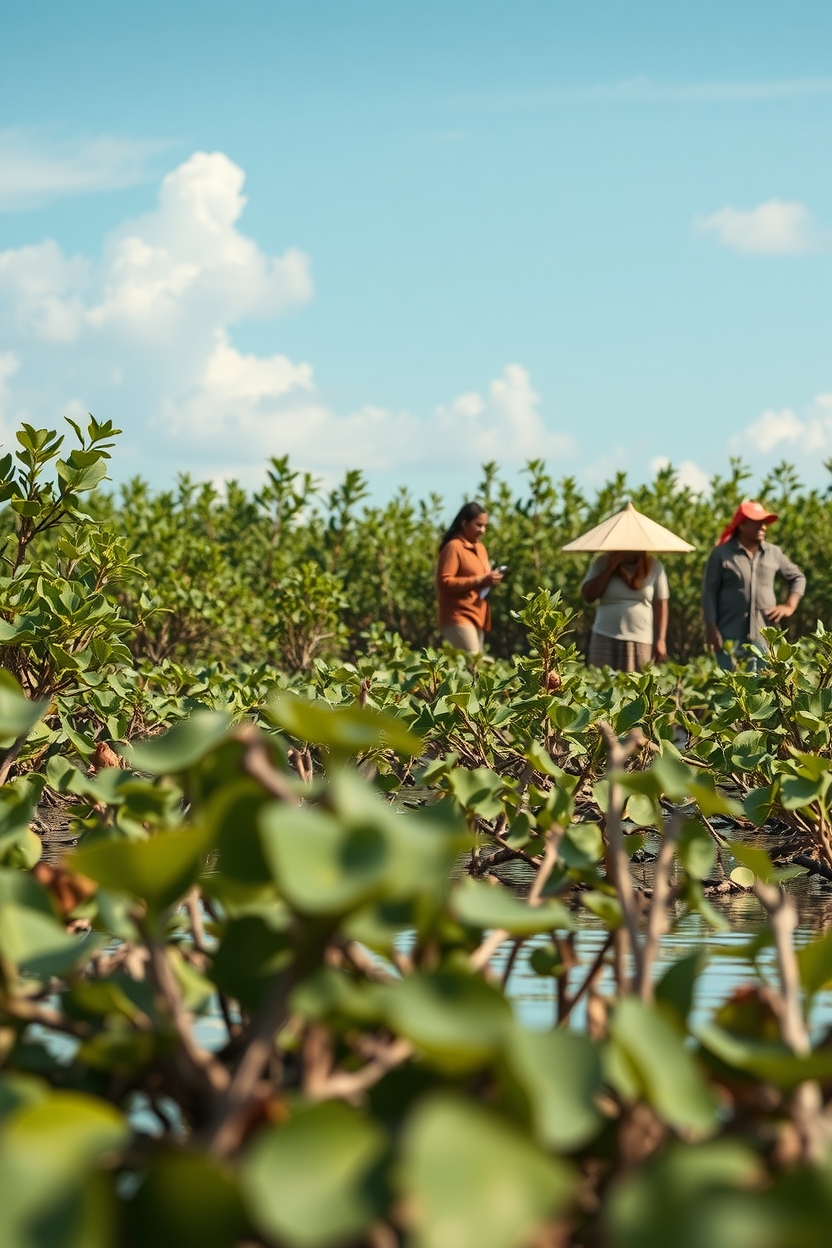
Sankofa’s “return and retrieve” philosophy encourages us to learn from our ancestors. In Ghana, mangrove restoration projects use ancient wisdom and modern science to fight coastal erosion.

Integrating Indigenous Knowledge with Modern Approaches

Cultural Diplomacy connects these traditions with global sustainability efforts. A table below shows how these philosophies are used today:

ConceptOriginCore IdeaModern Application
UbuntuSouth African Bantu traditionsInterdependence of individualsCommunity-led renewable energy grids
SankofaAkan peoples of West AfricaWisdom from the pastTraditional water harvesting systems

“Ubuntu and Sankofa are not relics of the past—they are blueprints for tomorrow.”

– African Union Sustainable Development Report 2023

By blending these philosophies with global goals, Africa creates solutions that honor its heritage. This approach ensures development is both culturally and ecologically responsible.

Cultural Foundations: Sankofa and Ubuntu Principles

Two crucial cultural concepts drive Africa’s development: Sankofa and Ubuntu. Sankofa, from Ghana, teaches learning from the past to build a better future. Ubuntu, from South Africa, focuses on collective well-being and interconnectedness.

Sankofa and Ubuntu work together. Sankofa encourages looking back for wisdom, while Ubuntu promotes working together for growth. These principles are a strong base for sustainable development across Africa.

Regional Economic Communities and Their Role

African coalitions, consortia, and federations are key in fostering regional cooperation. They boost trade, share resources, and coordinate development efforts. Through cooperative enterprise development, they create chances for economic and social growth.

These communities act as platforms for implementing continent-wide strategies. They help share knowledge, develop infrastructure, and harmonize policies. By using their collective strengths, they push Africa toward a sustainable and prosperous future.

Sustainable Development among all 54 African countries, regions, and islands

Africa’s diverse nations are embracing sustainable development in their own ways. From the bustling cities of Kenya and Tanzania to the landlocked nations of Uganda, Rwanda, and Burundi, each country faces unique challenges and opportunities.

In East Africa, Kenya and Tanzania are leading with renewable energy. Kenya has the largest wind farm in Africa, while Tanzania is focusing on solar power. Uganda, Rwanda, and Burundi are working together to protect the Virunga Mountains, home to endangered mountain gorillas.

Southern African nations like Lesotho and Swaziland are focusing on water resource management. Namibia, Angola, and Zambia are teaming up to protect the Okavango Delta, a UNESCO World Heritage site.

CountryKey Sustainable Initiative
Cape Verde100% Renewable Energy Goal by 2025
Sao Tome & PrincipeSustainable Cocoa Production
SeychellesBlue Economy Strategy
ComorosCoral Reef Restoration
MauritiusSmart Cities Development
MadagascarBiodiversity Conservation

Island nations like Cape Verde and Sao Tome & Principe are focusing on sustainable tourism and agriculture. Seychelles is pioneering the blue economy concept. Comoros is investing in coral reef protection. Mauritius is developing smart cities, and Madagascar is prioritizing biodiversity conservation.

“Africa’s sustainable development journey reflects the continent’s rich diversity and shared commitment to a greener future.”

These varied approaches show Africa’s adaptability and determination in pursuing sustainable development across its 54 nations.

Environmental Conservation and Climate Action Initiatives

Africa is tackling its environmental challenges with new sustainable and innovative ideas. It’s turning to renewable energy, protecting wildlife, and building green spaces to fight climate change.

Renewable Energy Implementation

African countries are quickly moving to renewable energy. Morocco’s solar farms and Kenya’s wind projects show their dedication. These efforts cut down on carbon emissions and bring clean energy to many people.

Biodiversity Protection Measures

Keeping Africa’s ecosystems safe is key. Tanzania and Botswana are leading in this area. They’ve set up protected areas and work with local people to save endangered animals.

Green Infrastructure Development

Green building is becoming more common in Africa. Cities like Nairobi and Cape Town are using nature’s designs in their planning. These designs make buildings that are good for the environment and last long.

Climate Change Adaptation Strategies

African countries are taking steps to adapt to climate change. Ethiopia’s Great Green Wall is fighting desertification. Coastal areas are building defenses against floods. These actions help protect people and nature from climate change.

InitiativeCountryImpact
Solar Power PlantMoroccoProvides clean energy to 2 million homes
Wildlife CorridorTanzaniaProtects elephant migration routes
Green Building CodeSouth AfricaReduces urban energy consumption by 30%
Mangrove RestorationSenegalEnhances coastal protection against sea-level rise

Economic Growth and Social Equity

Africa is working to grow its economy and make society fairer. This plan aims to help communities and support sustainable growth across the continent.

Empowering MSMEs and Social Enterprises

Micro, Small, and Medium Enterprises (MSMEs) are crucial for Africa’s economy. They create jobs and spark new ideas. Social enterprises help by solving social problems through business.

Together, they push for economic growth that includes everyone and makes a positive impact.

Entity TypeEconomic ImpactSocial Impact
MSMEsJob creation, local economic stimulationIncome generation for families
Social EnterprisesSustainable business modelsDirect solutions to community challenges

Tackling Poverty Through Targeted Programs

Poverty programs in Africa focus on building skills and creating lasting jobs. They offer training, small loans, and support to help people and communities overcome poverty.

Sustainable Agriculture in Africa

Advancing Sustainable Agriculture

Good farming practices are vital for food security and economic stability in rural areas. Projects in sustainable horticulture, permaculture, and farming help farmers grow more while saving the environment. These efforts increase food production and protect the planet for the future.

Regional Cooperation and Integration

Africa is moving towards sustainable development through regional cooperation. Countries are working together to face common challenges and find new opportunities. This teamwork is changing how development happens within the continent.

The Democratic Republic of the Congo and the Republic of Congo are a great example. They have different economies but are working together on projects and trade. This shows how countries can find common ground despite their differences.

Cameroon, Central African Republic, and Gabon are also working together. They are fighting deforestation and protecting the Congo Basin rainforest. Their efforts show how cooperation can help the environment across borders.

In the Sahel region, Mali, Republic of the Niger, Chad, and Burkina Faso are facing challenges together. They are working on security and economic growth. Their goal is to bring stability and prosperity to a tough area.

Regional GroupKey Focus AreasNotable Achievements
DRC & Republic of CongoInfrastructure, TradeJoint road network expansion
Cameroon, CAR, GabonEnvironmental ConservationCongo Basin Forest Partnership
Mali, Niger, Chad, Burkina FasoSecurity, Economic DevelopmentG5 Sahel Joint Force

These partnerships are driving development across Africa. By sharing resources and markets, countries are making the continent stronger. The future of Africa depends on strengthening these ties and working together towards a common goal.

Technology and Innovation in African Development

Africa is moving forward with new technology and creative ideas. It’s using Green IT Infrastructure and Digital Transformation to make progress and work better.

Green IT Infrastructure

African countries are building eco-friendly Data Centers. These centers use less energy and cut down on pollution. They help grow digital services without harming the environment.

Digital Transformation Initiatives

Both governments and businesses are starting Digital Transformation projects. They want to make services better, connect people more, and grow the economy. Digital tools like mobile banking and e-governance are changing African life.

Sustainable Supply Chain Solutions

African companies are focusing on Sustainable Supply Chains. They use Green logistics to cut down on emissions. And they adopt Green and Responsible Manufacturing to reduce waste and pollution. These steps help make the African economy stronger and greener.

Technology AreaImpact on Sustainability
Green IT InfrastructureReduced energy consumption, lower carbon emissions
Digital TransformationImproved efficiency, enhanced service delivery
Sustainable Supply ChainsResponsible resource use, reduced environmental impact

By using these new technologies, Africa is growing its economy and securing a green future for all.

International Partnerships and Global Alignment

Africa’s path to sustainable development depends on global partnerships. These alliances bring in resources, expertise, and support. They help the continent grow.

UN Sustainable Development Goals Implementation

The United Nations Development Programme (UNDP) and United Nations Environment Programme (UNEP) are key players. They help Africa reach the Sustainable Development Goals. They offer funding, technical help, and policy advice to African countries.

Cultural Diplomacy and Cross-Border Collaboration

Cultural Diplomacy helps African nations understand and work together. Countries like Algeria, Tunisia, Libya, Morocco, and Mauritania share cultures. This builds peace, trade, and development goals across borders.

Global Economic Integration

Africa’s role in the World Economic Forum (WEF) shows its commitment to global markets. Countries like Egypt and Sudan use these platforms to attract investors. They aim to align with international markets and standards.

CountryKey Economic FocusGlobal Partnership Initiative
EgyptRenewable EnergyGreen Investment Partnerships
MoroccoDigital EconomyTech Startup Collaborations
TunisiaSustainable TourismEco-Tourism Alliances

These partnerships and alignments are crucial for Africa’s sustainable growth. They create a future of shared prosperity and care for the environment.

Sustainable Resource Management

Africa’s future depends on managing resources wisely. Countries across the continent are using new ways to keep their natural wealth safe. They also want to grow their economies.

Zero Waste Initiatives

African nations are working hard on waste management. Benin and Togo are leading with zero waste programs. They focus on eco-friendly products and cut down on landfills.

Water Conservation Efforts

Water is very important in Africa’s dry areas. Sierra Leone, Liberia, and Cote d’Ivoire are finding new ways to save water. They use rainwater harvesting and efficient irrigation.

This ensures everyone has access to clean water.

Responsible Mining Practices

Countries with lots of minerals are mining in a better way. Guinea Bissau and Equatorial Guinea have set strict rules for mining. These rules protect the environment and local people while helping the economy.

CountrySustainable Resource InitiativeImpact
BeninPlastic recycling program50% reduction in plastic waste
Sierra LeoneCommunity-based water managementImproved access to clean water for 1 million people
Guinea BissauEco-friendly bauxite mining30% decrease in environmental damage

These efforts show Africa’s dedication to protecting the environment while growing. By focusing on zero waste, saving water, and mining responsibly, African countries are working towards a greener future.

Conclusion

Africa is on a path to sustainable development, facing both hurdles and chances. The continent’s varied countries are using new methods to grow while keeping their natural resources safe. From South Africa to Botswana, and Gambia to Senegal, they’re working on economic growth and protecting the environment.

The 2025 International Year of Cooperatives is a big opportunity for African nations to work together more. This event matches the continent’s growing focus on good governance and sustainable community development. Countries like Mozambique, Zimbabwe, and Malawi are improving their governance and empowering local communities.

In the Horn of Africa, countries like South Sudan, Somalia, Djibouti, and Somaliland have big challenges. Ethiopia and Eritrea are trying to solve old conflicts and start sustainable growth. These efforts show how important regional cooperation is for solving common problems and promoting long-term development.

As Africa moves ahead, it’s key to keep focusing on sustainable practices, innovation, and working together across borders. By using their rich cultural heritage and new technologies, African nations can create a prosperous and sustainable future.

Key Takeaways

  • Africa’s sustainable development aligns with UN 2030 goals
  • International business drives continental growth
  • Balanced approach needed for long-term progress
  • Responsible resource management is crucial
  • Renewable energy investments support sustainability
  • Inclusive growth promotes economic stability

Aviation, Tourism, and Travel and How its Future is Shaped by Sustainability

The interconnected worlds of air transport, hospitality, and exploration face unprecedented challenges. Rising consumer expectations and regulatory pressures demand eco-conscious strategies across these sectors. Recent data reveals 73% of travelers now prioritize low-carbon options when planning trips, signaling a fundamental shift in market dynamics.

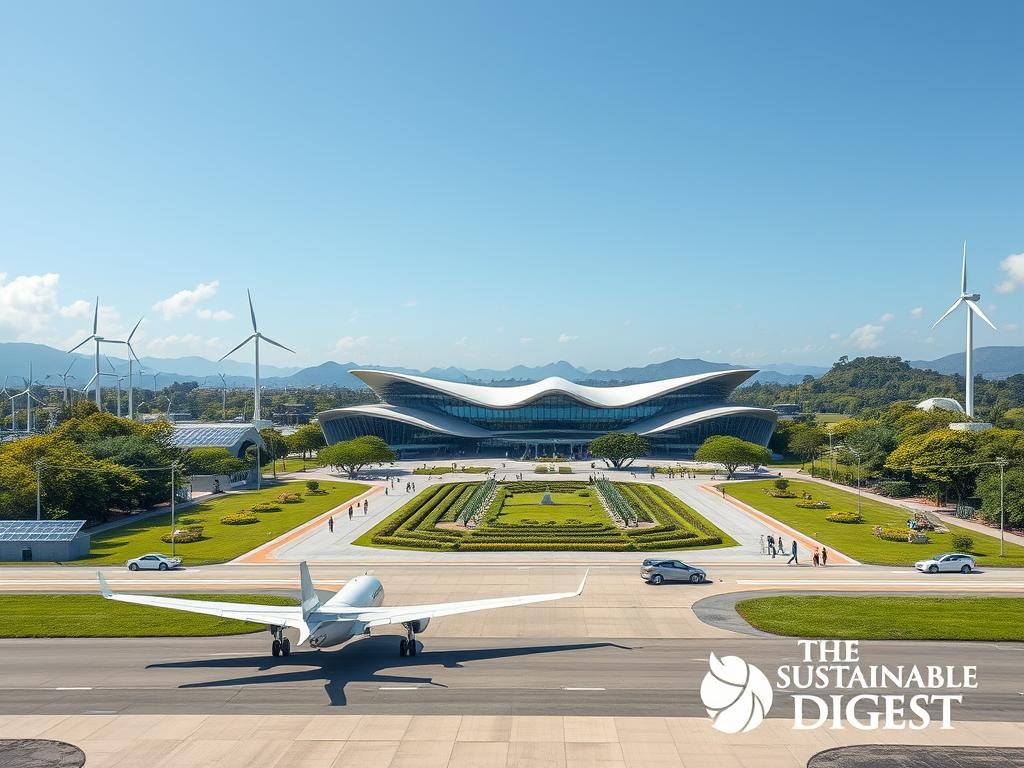
A tranquil scene of a sustainable aviation and tourism hub, set against a backdrop of lush greenery and a clear blue sky. In the foreground, a sleek, futuristic aircraft powered by clean energy technologies, gently touches down on a runway surrounded by solar panels and wind turbines. In the middle ground, a modern, eco-friendly airport terminal with a striking, organic architecture blends seamlessly with the surrounding landscape. Pedestrians and electric vehicles move about, while a central green space showcases sustainable landscaping and water management systems. The atmosphere is one of harmony, innovation, and a vision for a more sustainable future. Branding for "The Sustainable Digest" is subtly incorporated into the scene.

Corporate leaders are responding with measurable targets. Airlines invest billions in fuel-efficient fleets, while hotel chains adopt circular economy principles. These efforts align with international climate agreements, creating new frameworks for cross-border collaboration.

This analysis examines emerging technologies like sustainable aviation fuels and AI-driven route optimization. It also explores consumer behavior trends influencing corporate decarbonization roadmaps. From carbon offset programs to green infrastructure projects, stakeholders recognize environmental stewardship as both obligation and opportunity.

Introduction to Sustainability in Aviation, Tourism, and Travel

Global mobility industries are redefining their operations amid pressing ecological challenges. At its core, sustainability balances resource use with long-term environmental stability—a concept now central to international policymaking. The Lancet Countdown reports that 58% of nations now integrate ecological thresholds into economic strategies, reshaping transportation and hospitality frameworks.

Defining Sustainability in Global Affairs

Modern sustainability extends beyond conservation. It involves creating systems that support economic growth while protecting natural ecosystems. This approach drives initiatives like the Paris Agreement, which commits 196 countries to limit temperature rises through coordinated action.

Emerging Trends in the Industry

Three developments dominate current strategies:

  • Airlines testing biofuel blends to cut flight emissions by 20-30%
  • Hotel chains adopting solar energy to power 40% of operations by 2025
  • Travel platforms highlighting low-carbon itineraries using IATA’s emissions calculators

Extreme weather patterns—linked to atmospheric shifts—now influence 63% of destination choices according to industry surveys. Proactive adaptation includes redesigned coastal resorts and heat-resistant infrastructure. Collaborative efforts like CORSIA (Carbon Offsetting Scheme for International Aviation) demonstrate how policy and technology merge to address these challenges effectively.

Global Climate Trends and Policy Implications

Recent atmospheric data reveals transport and hospitality sectors contribute 10% of worldwide carbon output. The UNWTO reports tourism-related emissions surged 60% since 2005, outpacing broader economic growth rates. This trend forces rapid policy adjustments across borders.

Key Emission Statistics and Regulations

Commercial flights account for 2.4% of energy-related CO₂ releases annually. New mandates require 45% emission cuts from 2005 levels by 2035 for airlines. Hotel chains face binding targets to reduce energy use per room by 30% within six years.

Key regulatory tools now shaping operations:

  • Carbon pricing mechanisms in 46 national jurisdictions
  • Mandatory disclosure rules for Scope 3 emissions
  • Tax incentives for hybrid aircraft adoption

Role of International Agreements

The Paris Agreement’s Article 6 enables cross-border carbon trading, directly affecting flight route planning. Over 100 countries now participate in CORSIA, offsetting 80 million tonnes of airline emissions yearly.

Intergovernmental panels recently standardized jet fuel sustainability criteria. These frameworks help align corporate strategies with scientific climate models while maintaining economic viability.

How Sustainability impacts Aviation, Tourism, and Traveling in Global Affairs

Industry leaders across continents now confront dual pressures: reducing environmental footprints while meeting growing travel demand. A 2024 IATA study shows air transport contributes 3.5% of annual warming effects, with tourism adding another 5% through energy-intensive operations.

Analyzing the Current Global Impact

Three critical patterns emerge worldwide:

  • Flight delays due to extreme heat increased 28% since 2019
  • Coastal resorts invest $12B in flood barriers and elevation projects
  • 85% of corporate travel policies now mandate emission tracking

Advanced technologies prove vital in this transformation. Electric regional aircraft prototypes reduce per-flight emissions by 50%, while AI-powered logistics systems cut fuel waste. These innovations form part of broader strategies to meet Paris Agreement targets.

RegionEmission Reduction TargetKey Technology
North America40% by 2030Hydrogen propulsion
Europe55% by 2035Biofuel refineries
Asia-Pacific33% by 2030Carbon capture systems

Economic priorities increasingly align with ecological needs. Carbon pricing mechanisms now cover 23% of worldwide aviation activities, driving operational changes. Major carriers like Delta and Lufthansa report 18% emission drops after adopting hybrid ground vehicles and optimized flight paths.

Urgent action remains critical. Atmospheric CO₂ concentrations reached 424 ppm in 2023 – levels unseen in 3 million years. Collaborative efforts across borders demonstrate measurable progress, but accelerated adoption of clean technologies will determine long-term success.

Technological Innovations Shaping the Future of Air and Travel

Cutting-edge engineering breakthroughs are revolutionizing how we move through skies while addressing environmental concerns. Advanced materials and intelligent systems now drive measurable reductions in CO₂ emissions, offering tangible solutions for the aviation sector. Industry leaders recognize that innovation isn’t optional—it’s essential for survival in a climate-conscious market.

A sleek, futuristic aircraft with swept-back wings and a streamlined body hovers gracefully against a backdrop of wispy clouds. Glowing blue accents trace the edges of the airframe, hinting at advanced, eco-friendly propulsion systems. In the foreground, a team of engineers in protective suits examines the aircraft, analyzing data displays and making adjustments to minimize carbon emissions. The Sustainable Digest logo is subtly incorporated into the scene, conveying a sense of innovation and environmental responsibility. Dramatic lighting casts dramatic shadows, creating a sense of awe and technological prowess.

Innovative Aircraft Technologies

Boeing’s 787 Dreamliner demonstrates what modern engineering achieves. Its carbon-fiber composite structure weighs 20% less than traditional planes, slashing fuel use by 25%. Similarly, Airbus’ A350 employs curved wingtips and Rolls-Royce engines to cut CO₂ emissions per seat by 30% compared to older models.

New propulsion systems push boundaries further. United Airlines recently tested hydrogen-electric engines for regional jets, aiming for zero-emission flights by 2028. These advancements prove crucial as the aviation sector works toward net-zero targets.

AI and Data Analytics in Flight Optimization

Machine learning now reshapes route planning. American Airlines saved 1.7 million gallons of fuel in 2023 using AI-powered wind forecasts. Their system adjusts flight paths in real-time, trimming 8 minutes from transatlantic routes on average.

Delta’s collaboration with Google Cloud exemplifies data-driven progress. Their algorithms analyze weather, aircraft weight, and air traffic to minimize fuel burn. “Every saved gallon reduces our carbon footprint,” notes Delta’s Chief Sustainability Officer.

These innovations work best when paired with carbon offsetting initiatives. JetBlue offsets 3 billion pounds of CO₂ emissions annually through reforestation projects, complementing their tech upgrades.

Sustainable Aviation Fuels and Energy Solutions Driving Change

The transition to cleaner propulsion methods marks a pivotal shift in air transport operations. Sustainable aviation fuels (SAF) derived from waste oils and agricultural residues now power over 500,000 flights globally. These alternatives cut lifecycle CO₂ emissions by 80% compared to conventional jet fuel, creating new energy dynamics across the sector.

Investments in Alternative Fuels

Airlines worldwide committed $17 billion to SAF development since 2022. KLM leads with 14% SAF usage on Amsterdam routes, backed by partnerships with Neste and Shell. Lufthansa Group’s $250 million investment aims for 10% SAF integration by 2030, already reducing CO₂ output by 340,000 tonnes annually.

AirlineSAF InvestmentCO₂ ReductionKey Regions
United Airlines$5B2.1M tonnesNorth America
KLM$1.2B870K tonnesEurope
ANA$780M410K tonnesAsia-Pacific

Case Studies in SAF Implementation

Delta’s Los Angeles hub replaced 10% of traditional fuel with SAF, cutting 145,000 tonnes of CO₂ in 2023. Energy-efficient practices like optimized refueling procedures further reduced emissions by 12%. “Our Atlanta-Amsterdam route now uses 30% SAF blends,” notes a Delta operations manager.

Singapore Airlines achieved 18% lower energy consumption through SAF combined with aerodynamic enhancements. These projects demonstrate how strategic fuel choices and operational upgrades create measurable environmental benefits while maintaining profitability.

Transportation Strategies for Reducing Carbon Emissions

Operational breakthroughs are transforming how networks address environmental challenges. Airlines and rail operators now deploy advanced systems to minimize fuel use while maintaining service quality. Research shows optimized logistics could cut transport emissions by 19% before 2030.

A vibrant cityscape with a focus on sustainable transportation solutions for reducing carbon emissions. In the foreground, electric buses and bicyclists glide along clean, tree-lined streets. In the middle ground, high-speed rail and maglev trains zip past modern, energy-efficient buildings. In the background, wind turbines and solar panels dot the horizon, powering this eco-friendly metropolis. Warm, natural lighting illuminates the scene, conveying a sense of progress and optimism. Presented by The Sustainable Digest.

Optimized Flight Routes and Fuel Efficiency

Airlines reduce emissions through smarter navigation. Delta’s AI-powered system saved 8 million gallons of fuel in 2023 by adjusting routes based on weather patterns. Eurocontrol data reveals such strategies trim 12% of CO₂ per transatlantic flight.

Key advancements include:

  • Real-time wind analysis cutting flight times by 6 minutes on average
  • Weight reduction programs removing 1.2 tons per aircraft
  • Continuous descent approaches lowering noise and fuel burn

Integrating Rail and Multimodal Shifts

Air-rail partnerships demonstrate significant environmental benefits. Lufthansa’s codeshare with Deutsche Bahn replaced 45,000 short-haul flights annually, reducing 155,000 tonnes of CO₂. The EU’s “Flightpath 2050” initiative aims to shift 25% of flights under 500 km to rail.

RegionEmission CutStrategy
North America18%Hub-and-spoke rail links
Europe30%High-speed rail integration
Asia22%Urban transit partnerships

These shifts create business advantages. United’s Denver hub reported 14% cost savings after introducing electric shuttles for airport transfers. The transport sector proves environmental goals can align with operational efficiency when supported by data-driven planning.

The Carbon Footprint of Food and Hospitality in Tourism

Meal services and lodging operations generate 23% of tourism’s environmental impact globally. From farm-to-table logistics to hotel energy grids, every plate served and room cleaned leaves measurable ecological traces. The UN Environment Programme estimates food systems account for 8% of worldwide emissions tied to travel activities.

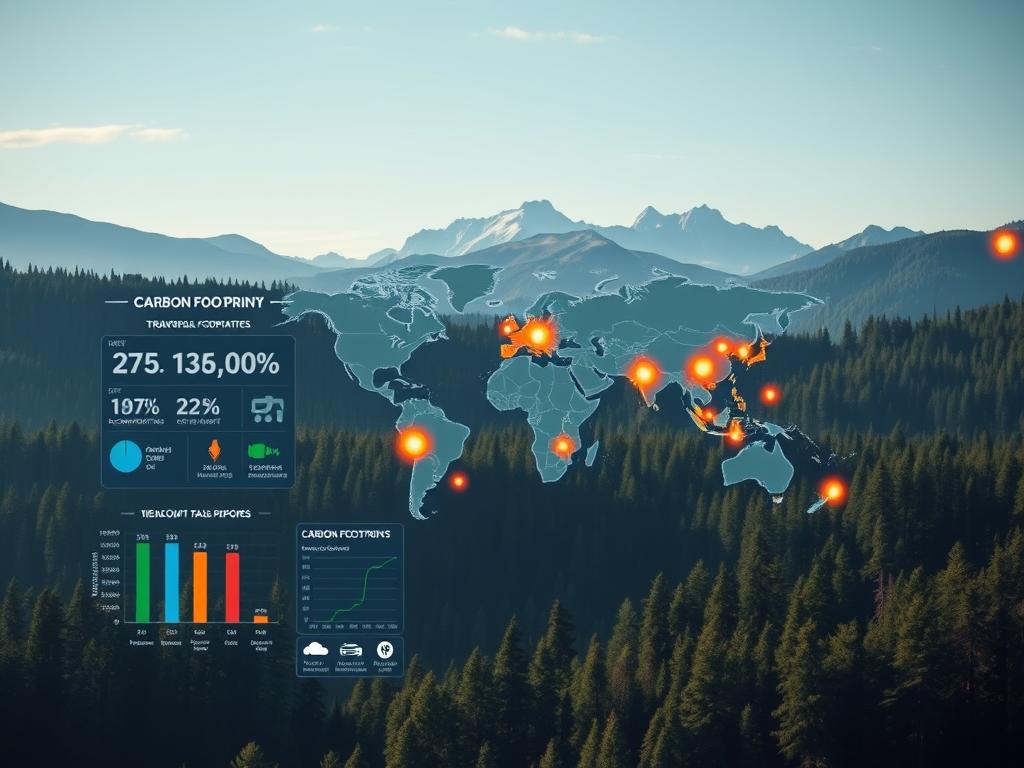
A detailed carbon footprint analysis of the hospitality industry in a tourism landscape. The foreground shows a comprehensive infographic with breakdown of emissions from various sectors like transportation, accommodations, food, and waste. The middle ground depicts a global map with highlighted hotspots of high tourism activity. The background features a serene natural landscape of forests, mountains, and a clear sky, symbolizing the environmental impact. Dramatic lighting creates depth and emphasizes the gravity of the situation. Rendered in a clean, modern style befitting "The Sustainable Digest" brand. Cinematic 4K resolution.

Impact of Food Production on Emissions

Supply chains stretch across continents, amplifying environmental costs. Key findings reveal:

  • Beef served in resorts produces 5x more emissions than plant-based alternatives
  • Hotels consume 21% of tourism’s total energy output annually
  • Annual food transport for cruise ships increased 14% since 2020
YearHospitality Energy UseFood Waste Generated
2022189 million MWh12.8 million tonnes
2023201 million MWh14.1 million tonnes
Futuristic interior design of a eco-friendly cafe in an airport for 2035, luxury, chic and elegant with a foreground view of ethnically, culturally, and geographically pedestrians from all walks of life dining, selecting food at a salad bar, shopping, reading, and working from computers. In the midground display large sleek, post-modern, biomimicry aircrafts behind tall airport glass, and the background display mountains, cosmopolitan city line and the greater airport at large

Addressing Food Waste in Tourism

Over 1.3 billion tons of edible items get discarded yearly across the sector. Major hotel chains now implement real-time tracking systems, reducing spoilage by 37% through predictive ordering. Circular solutions gain traction:

  • Composting programs repurpose 68% of organic waste in pilot projects
  • AI-powered portion control cuts buffet waste by 29%
  • Donation partnerships redirect surplus meals to local communities

Hyatt’s 2025 roadmap targets 50% waste reduction through supplier collaborations and guest education campaigns. These measures prove ecological responsibility can coexist with premium hospitality experiences.

Green Accommodation and Eco-Friendly Hospitality Strategies

Hospitality leaders are pioneering new approaches to minimize environmental footprints while enhancing guest experiences. Research from Cornell University reveals that 78% of travelers prefer properties with verified eco-certifications, driving rapid adoption of green technologies across the sector.

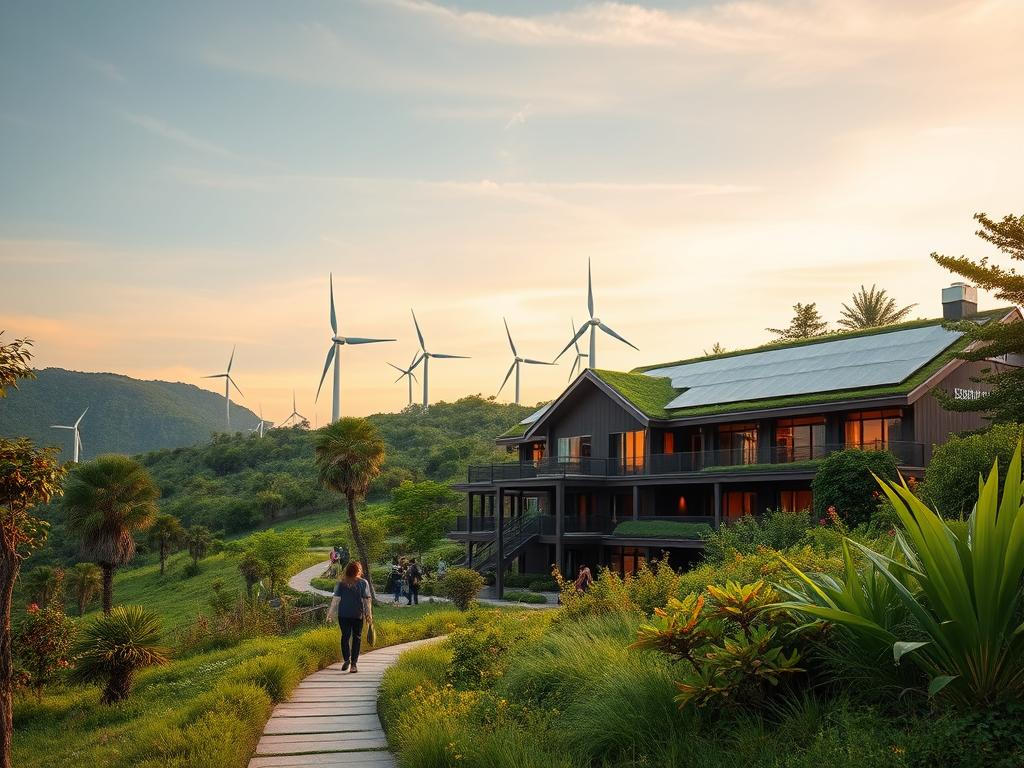
An eco-friendly hotel nestled in a lush, verdant landscape. In the foreground, a modern, energy-efficient structure with solar panels on the roof and wind turbines in the background, blending seamlessly with the surrounding nature. Guests stroll along a pathway lined with native plants and trees, enjoying the tranquil ambiance. The building's design incorporates sustainable materials, large windows for natural lighting, and a green roof that harmonizes with the natural environment. The Sustainable Digest logo is prominently displayed on the hotel's facade. Warm, diffused lighting casts a soft glow, creating a welcoming and environmentally conscious atmosphere.

Energy-Saving Infrastructure

Modern hotels achieve measurable results through smart design:

  • Marriott’s Phoenix properties cut energy use 22% using AI-driven HVAC systems
  • Hilton’s Las Vegas complex generates 40% of power from rooftop solar arrays
  • Six Senses resorts maintain 30% lower energy consumption than industry averages through geothermal heating

A 2023 study in Hotel Management found properties with smart thermostats reduced energy waste by 18% annually. These systems automatically adjust temperatures when rooms are unoccupied, complementing efforts to reduce emissions from flights through operational efficiency.

Innovative Hospitality Practices

Leading brands demonstrate creative solutions:

  • Hyatt’s keycard-activated lighting systems lowered electricity use by 27%
  • Accor’s linen reuse program saved 850 million liters of water globally in 2023
  • IHG properties eliminated single-use plastics in 89% of guest rooms

Recent analysis shows guest participation rates in green programs jumped from 42% to 68% when incentives like loyalty points are offered. Marriott’s Bali resort achieved 92% waste diversion through composting and upcycling initiatives, proving environmental stewardship enhances brand reputation.

As flight volumes rebound, hotels increasingly offset guest travel emissions through partnerships with verified carbon projects. This holistic approach addresses the full journey lifecycle while maintaining service quality.

Adapting Travel to Extreme Weather and Climate Change

Over 60% of travelers altered their plans in the past three years due to extreme weather events, according to a 2024 National Travel Survey. Rising temperatures and unpredictable storms force people to rethink vacation timing and destinations. Coastal hotspots now face shorter tourist seasons, while mountain regions report shifting snowfall patterns affecting winter sports.

A rugged, off-road vehicle navigates through a harsh, wintry landscape. Its large tires and all-terrain capabilities allow it to traverse snowdrifts and icy terrain. In the background, a towering snow-capped mountain range looms, hinting at the extreme conditions. The vehicle's occupants are bundled in thick, insulated clothing, their faces partially obscured by protective gear. A small, portable weather station is mounted on the vehicle, providing vital data about the environment. The overall scene conveys a sense of resilience and adaptation in the face of nature's formidable forces. The Sustainable Digest logo is prominently displayed on the vehicle's side.

Traveler Health and Safety Considerations

Heatwaves pose growing risks, with emergency hospital visits during peak travel months increasing 34% since 2020. People visiting cities like Phoenix or Dubai now face temperatures exceeding 110°F regularly. Dehydration and heat exhaustion incidents doubled in these areas over five years.

Smart strategies help mitigate risks:

  • Booking flexible itineraries allows last-minute changes when storms strike
  • Carrying portable air quality monitors alerts travelers to hazardous conditions
  • Choosing accommodations with backup power systems ensures safety during outages

Travel apps now integrate real-time climate data, offering rerouting suggestions during wildfires or floods. “The way we explore has transformed,” notes a TripAdvisor spokesperson. “People prioritize destinations with robust emergency response systems.”

Historical weather patterns reveal stark changes. Summer heatwaves in Europe now last 18 days longer than 20 years ago, while hurricane seasons start two weeks earlier. These shifts demand adaptive planning to protect both travelers and local communities.

Coastal Challenges: Sea Level Rise and Sustainable Tourist Destinations

Coastal cities face mounting threats as oceans encroach 3.7 millimeters yearly. Jakarta’s northern districts sank 2.5 meters since 2010, forcing $40 billion relocation plans. Rotterdam’s Maeslantkering storm barrier demonstrates how engineered solutions protect urban centers while maintaining tourism appeal.

Coastal resilience infrastructure, a majestic seaside scene. In the foreground, sturdy seawalls and breakwaters stand as guardians against the rising tides, their weathered surfaces reflecting the warm glow of the sun. Midground, lush dunes and native vegetation form a verdant buffer, their roots anchoring the land. In the distance, a modern sustainable resort, "The Sustainable Digest", blends seamlessly with the natural landscape, its architecture designed to withstand the elements. Overhead, wispy clouds drift across a brilliant azure sky, casting dynamic shadows upon the scene. Crisp, high-resolution photorealistic rendering, wide-angle lens, natural lighting.

Adapting Coastal Infrastructure

Elevated boardwalks and permeable pavements now replace concrete in vulnerable zones. Miami Beach’s $500 million pump system prevents 90% of tidal floods, improving urban efficiency during storms. Three proven approaches:

  • Artificial reefs reducing wave energy by 60% in the Maldives
  • Modular flood barriers deployed in 30 minutes across Venice
  • Singapore’s hybrid parks storing 12 million gallons during heavy rains

Mitigating Economic Impacts on Destination Cities

Resilient designs prevent $23 billion in annual global tourism losses. Charleston’s raised seawalls saved 8,000 hospitality jobs after Hurricane Ian. Funding sources include:

  • Green Climate Fund grants covering 40% of adaptation costs
  • Public-private partnerships like New Orleans’ Living Shorelines
  • Hotel tax allocations directing $2.8 billion to flood control

Rotterdam’s floating neighborhoods attract 18% more visitors than traditional districts, proving environmental innovation drives economic growth. Coastal destinations now balance preservation with progress through data-driven planning.

Economic, Social, and Health Impacts of Climate Change on Tourism

Climate shifts reshape vacation patterns while straining local economies. A 2024 WHO report links 23% of travel-related health emergencies to heat stress and air pollution. Coastal towns dependent on seasonal visitors face revenue drops as extreme weather disrupts peak travel months.

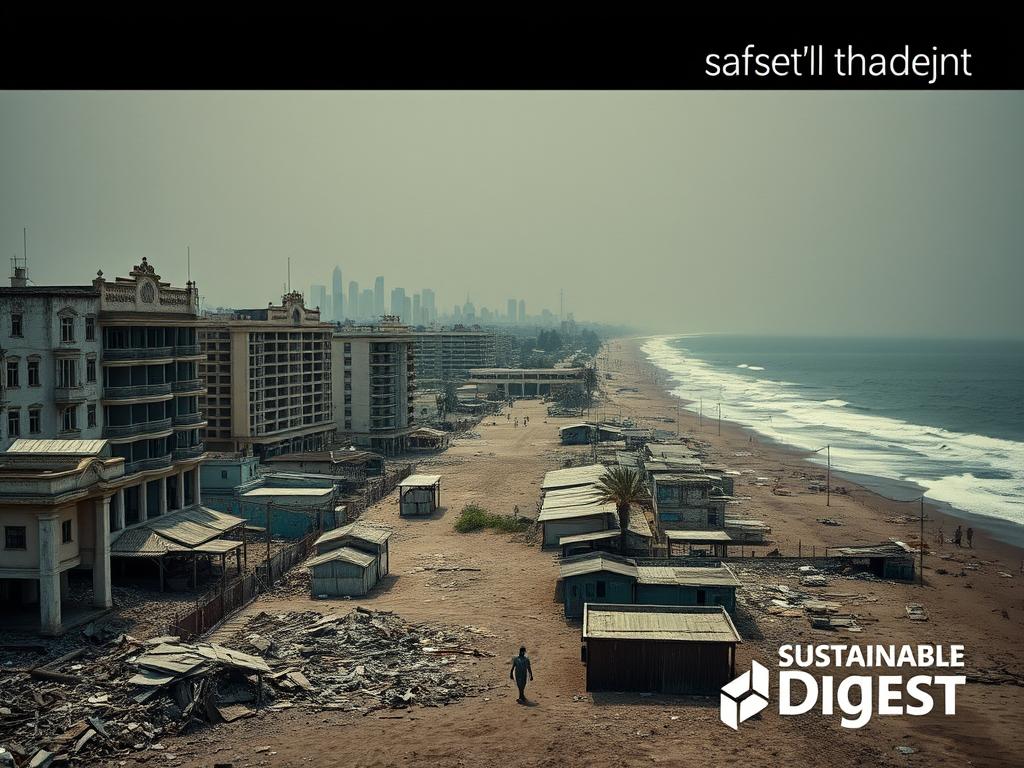
A desolate coastal town, once a thriving tourist hub, now ravaged by rising sea levels and extreme weather. In the foreground, crumbling infrastructure and abandoned beachfront hotels, their once-vibrant facades weathered and decaying. The middle ground reveals a stark contrast, with a few resilient locals attempting to adapt to the changing environment, their faces etched with concern. In the background, a hazy, dystopian skyline, tinged with the ominous hues of environmental degradation. The Sustainable Digest logo casts a subtle, but powerful, presence, a reminder of the urgent need to address the devastating impacts of climate change on tourism.

Assessing the Global Impact on Travel Behavior

Travelers increasingly avoid destinations with poor air quality or wildfire risks. Google Trends data shows searches for “climate-safe vacations” tripled since 2021. This behavioral shift pressures resorts to adopt eco-certifications while reducing bookings in vulnerable regions.

Implications for Local Communities

Island nations relying on tourism face dual threats: rising seas damage infrastructure while greenhouse gas emissions from visitors worsen environmental decline. Fiji’s coral reef degradation cost $12 million in lost fishing income last year alone.

Dependence on fossil fuels compounds these challenges. Diesel generators power 68% of remote lodges globally, contributing to respiratory illnesses in nearby villages. Transitioning to solar energy could prevent 4,000 premature deaths annually according to health studies.

The aviation industry plays a critical role through fuel innovations. Boeing’s partnership with Alaska Airlines cut per-flight greenhouse gas emissions by 18% using advanced biofuels. Such initiatives demonstrate practical ways to balance mobility needs with ecological responsibility.

Corporate Initiatives and Government Policies for Sustainable Travel

Corporate boards and legislative bodies now jointly address ecological pressures through coordinated action. Airlines and travel firms integrate environmental goals into core operations while governments craft supportive regulations. This alignment creates measurable progress in emission reduction across continents.

ESG Strategies in the Aviation Sector

Leading carriers implement robust environmental frameworks. KLM’s “Fly Responsibly” program invests $2.1 billion in sustainable fuel development through partnerships with Neste and SkyNRG. Lufthansa Group reduced greenhouse gas output by 28% since 2019 using three key tactics:

  • Fleet modernization with 47 fuel-efficient Airbus A350s
  • Real-time emission tracking across 700+ daily flights
  • Carbon offset partnerships covering 12 million passengers yearly

Regulatory Frameworks for Sustainable Growth

Governments accelerate change through targeted policies. The EU mandates 6% sustainable aviation fuel usage by 2030, backed by $4.3 billion in refinery subsidies. U.S. tax credits now cover 35% of costs for airlines adopting electric ground vehicles.

RegionPolicyImpact
EuropeBlending mandates18% lower aviation emissions by 2028
North AmericaTax incentives$9B SAF investments since 2022
Asia-PacificCarbon trading23% emission cuts projected

Public-private collaborations show particular promise. Delta’s partnership with the DOE developed hybrid engines cutting fuel use by 17%. These efforts demonstrate how policy guidance and corporate innovation can reduce carbon footprints while maintaining economic growth.

Conclusion

The path forward demands urgent collaboration across borders and industries. Recent advancements prove measurable reductions in gas emissions are achievable through fleet modernization, renewable energy adoption, and smarter resource management. From AI-optimized flight paths to circular hospitality models, innovation drives progress while maintaining economic viability.

The tourism industry plays a pivotal role in this transformation. Data shows properties with eco-certifications achieve 22% higher guest retention, proving environmental responsibility aligns with market success. Cutting carbon dioxide output requires continuous investment – airlines using sustainable fuels now prevent 4 million tonnes of annual emissions.

Three actions will accelerate change:

  • Scaling biofuel production to meet 10% global aviation demand by 2030
  • Implementing real-time emission tracking across travel value chains
  • Rewarding businesses that exceed decarbonization targets

Corporate strategies must align with international climate frameworks to maximize impact. When governments incentivize green infrastructure and travelers choose low-carbon options, collective efforts yield exponential results. The journey toward cleaner skies and resilient destinations isn’t optional – it’s the blueprint for enduring global mobility.

Key Takeaways

  • Consumer preferences drive rapid adoption of eco-friendly practices
  • Cross-industry collaboration accelerates green innovation
  • New technologies reduce operational emissions significantly
  • Regulatory frameworks shape global operational standards
  • Transparent reporting builds consumer trust and loyalty
This website is saving the energy of your screen as it is not being used. It's part of a global effort to lower the planet's electrical consumption and CO2 emission level. Resume browsing
Click anywhere to resume browsing
Verified by MonsterInsights