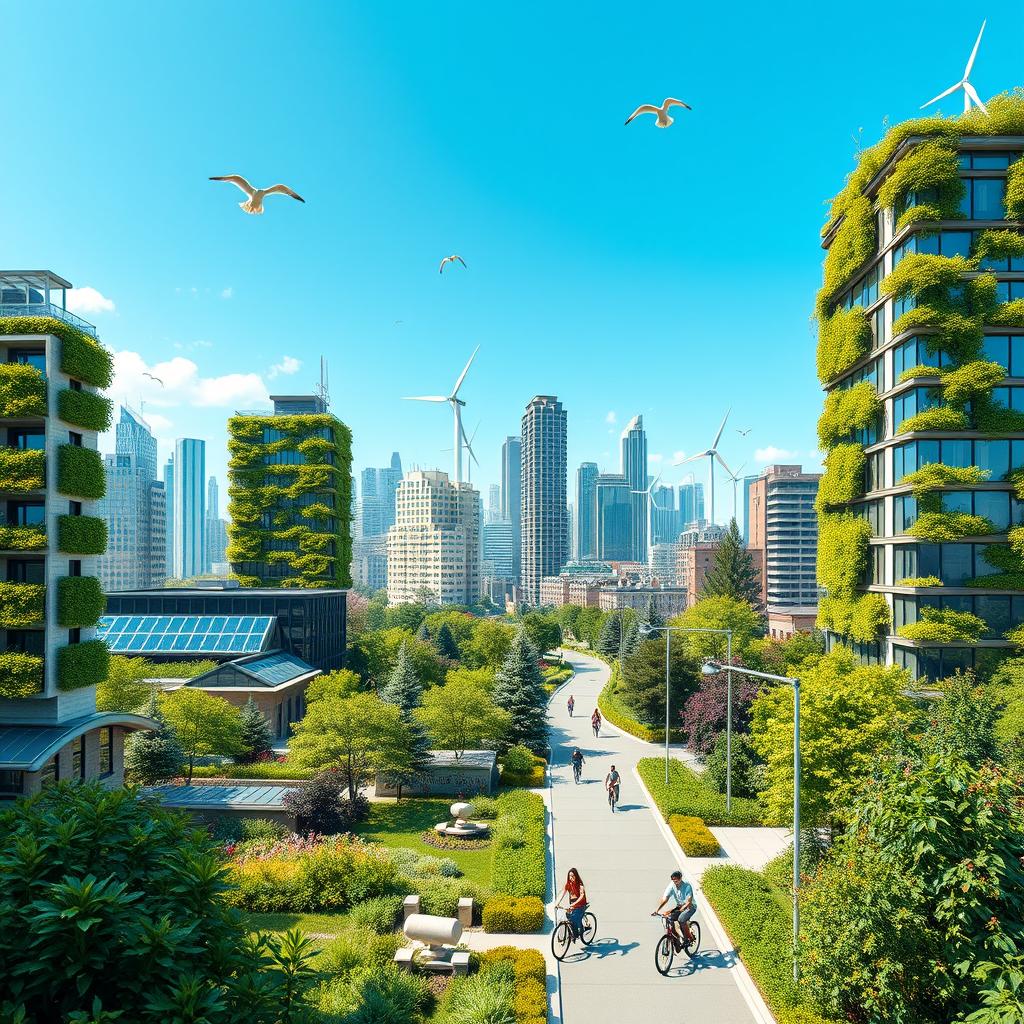
Eco-Friendly Building Materials for Rainwater Harvesting

Water conservation is key in sustainable construction. Rainwater harvesting systems are a smart way to tackle water scarcity. They use eco-friendly materials to be efficient and kind to the environment.

Modern rainwater collection focuses on low-impact development. It uses natural materials and processes to manage stormwater. This approach helps replenish groundwater and promotes harmony with nature.

As cities grow and weather changes, managing water becomes more critical. Sustainable construction with rainwater harvesting saves water and eases the load on city water systems. This makes eco-friendly rainwater collection vital for urban planning.

Understanding the Fundamentals of Sustainable Rainwater Collectio

Sustainable rainwater collection is key to saving water. It supports UNSDG# 6, which focuses on clean water and sanitation for everyone. By using stormwater management systems, we can cut down on water waste and help the environment.

The Science Behind Water Conservation Systems

Water conservation systems capture, filter, and store rainwater for later use. They use gravity and natural processes to gather water from rooftops and other areas. This water can be used for irrigation and other purposes.

Environmental Impact of Traditional vs. Eco-Friendly Materials

Traditional materials for rainwater collection harm the environment. Eco-friendly options, however, have many advantages:

  • They produce less carbon emissions during production.
  • They improve water quality.
  • They last longer and are more durable.
  • They have less impact on local ecosystems.

Key Components of Sustainable Harvesting Systems

Sustainable harvesting systems have important parts:

  1. Collection surfaces (e.g., roofs, pavements)
  2. Gutters and downspouts
  3. First-flush diverters
  4. Filtration systems
  5. Storage tanks
  6. Distribution systems for greywater reuse

These elements help capture, store, and distribute rainwater. This promotes sustainable water use and conservation.

Eco-Friendly Building Materials for Rainwater Harvesting Systems

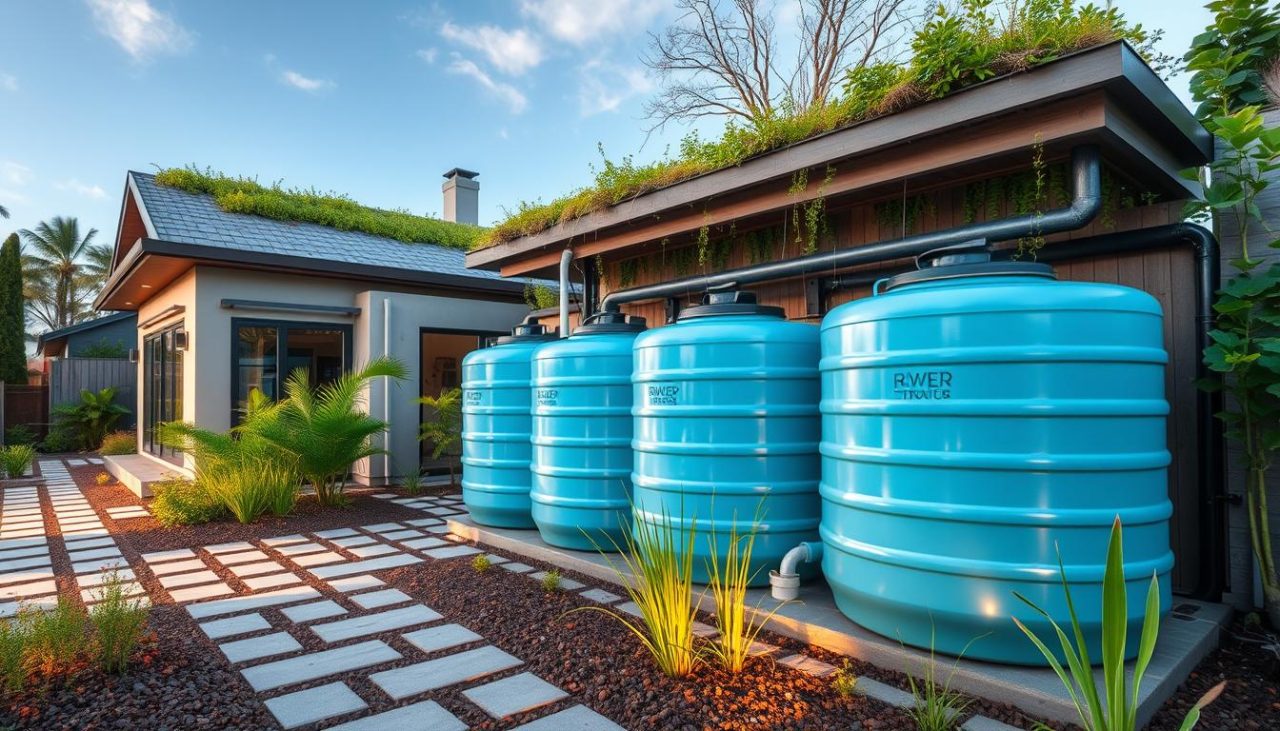
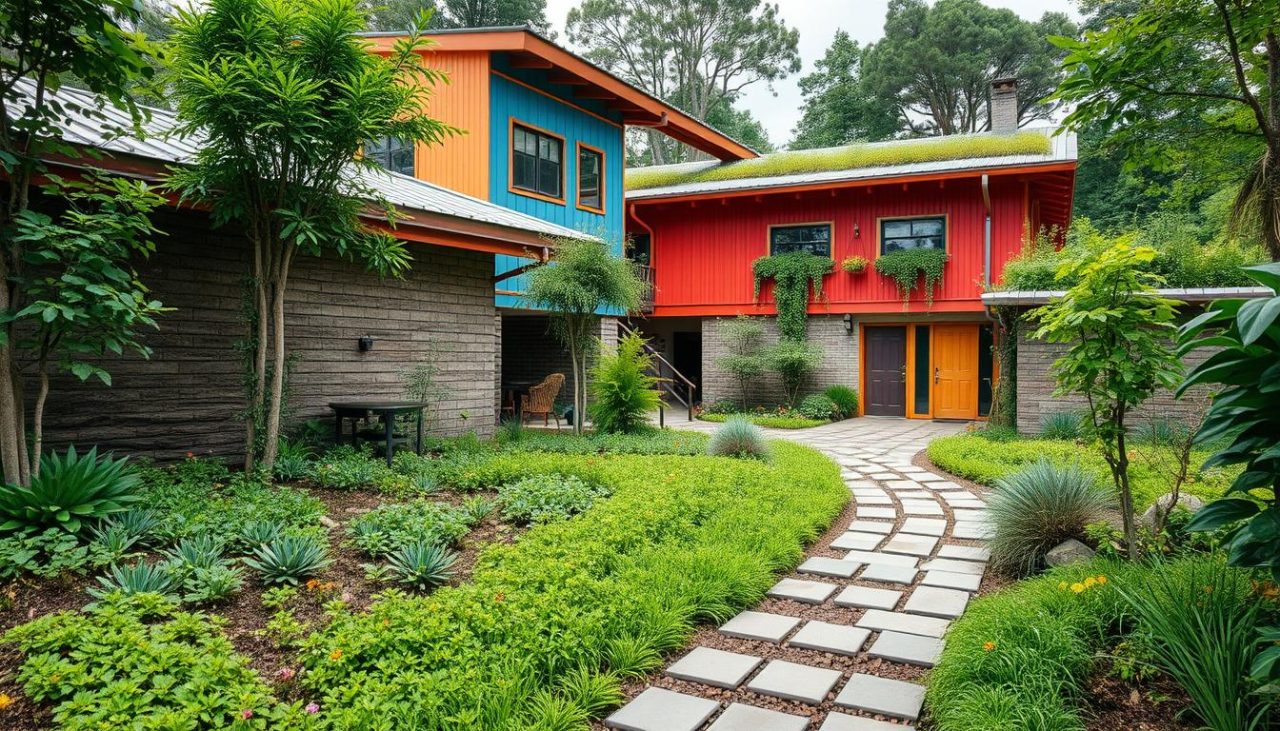
Rainwater harvesting systems are getting a green makeover. They now use materials that are good for the planet. Green roofing is a big part of this change. It collects rainwater and keeps buildings cool.

Construction is turning to recycled materials for rainwater systems. Think reclaimed wood, recycled plastic, and repurposed metal. These choices cut down on waste and help the environment.

Choosing the right materials is key. We look at how durable, safe, and green they are. This makes sure the water stays clean and safe to use.

  • Recycled plastic for pipes and storage tanks
  • Reclaimed wood for support structures
  • Repurposed metal for gutters and downspouts

Green roofing uses plants like sedum and moss. These plants clean the rainwater and add beauty. They also help local wildlife.

“Eco-friendly materials in rainwater harvesting not only conserve water but also promote sustainable living practices.”

These materials make rainwater systems work better and greener. They help the environment and save water. As technology grows, we’ll see even more green solutions.

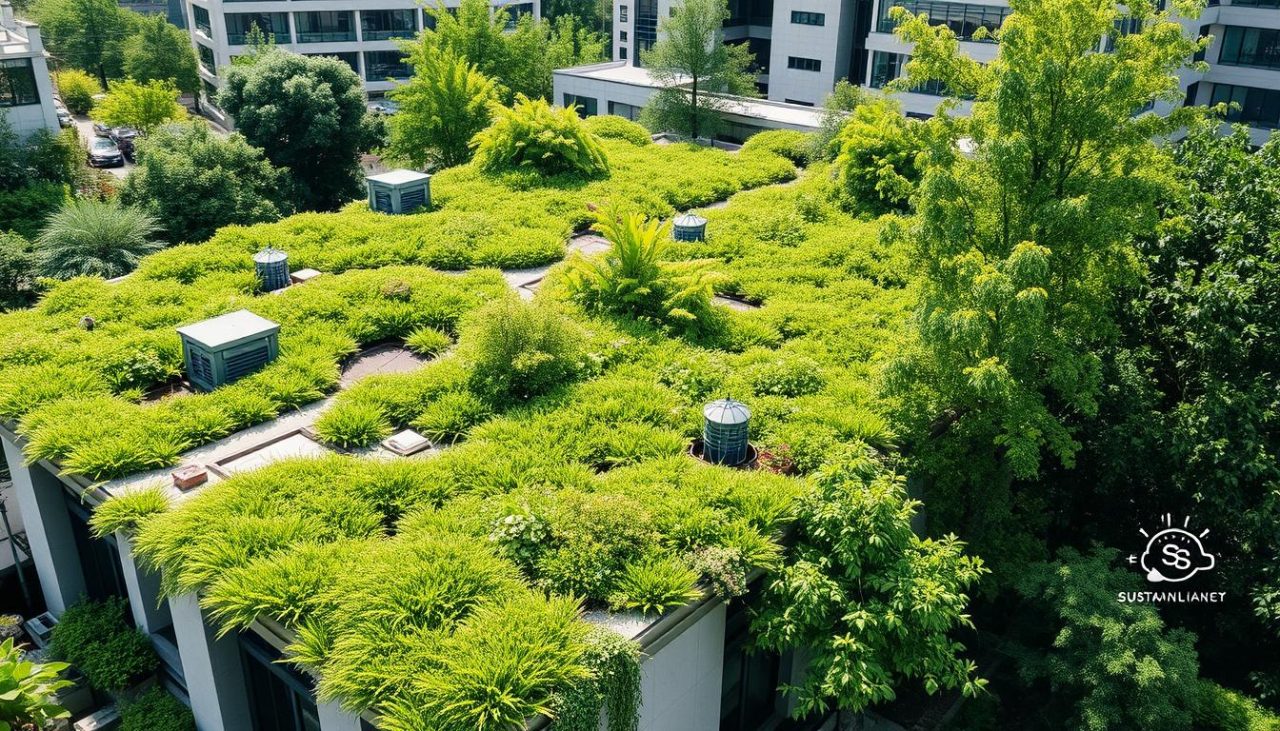
Green Roofing Solutions for Optimal Water Collection

Green roofs are a smart way to collect rainwater and make buildings look good. They work like nature, using plants to manage water. This helps meet UNSDG#14, which supports sustainable water use and protects marine life.

Living Roof Technologies and Materials

Living roofs have layers of plants and soil to soak up rain. This slows down water flow, cutting down on runoff and flood risks. They use waterproof membranes, drainage mats, and light soil to hold water.

Sustainable Drainage Layer Options

Drainage layers in green roofs are a vital component process for managing water. They can be made from recycled plastics or natural materials like gravel. These layers help water move away from roots, preventing waterlogging. Some designs even store water for dry times, keeping plants healthy all year.

Plant Selection for Green Roof Systems

Picking the right plants is essential for a green roof. Look for drought-resistant plants with shallow roots. Succulents like Sedum are popular for their toughness. Native plants are also good because they fit local climates. A mix of plants can create a diverse ecosystem, supporting local wildlife and biodiversity.

Plant TypeWater NeedsRoot DepthClimate Suitability
SedumLowShallowWide range
Native GrassesMediumMediumRegion-specific
WildflowersLow to MediumVariedRegion-specific

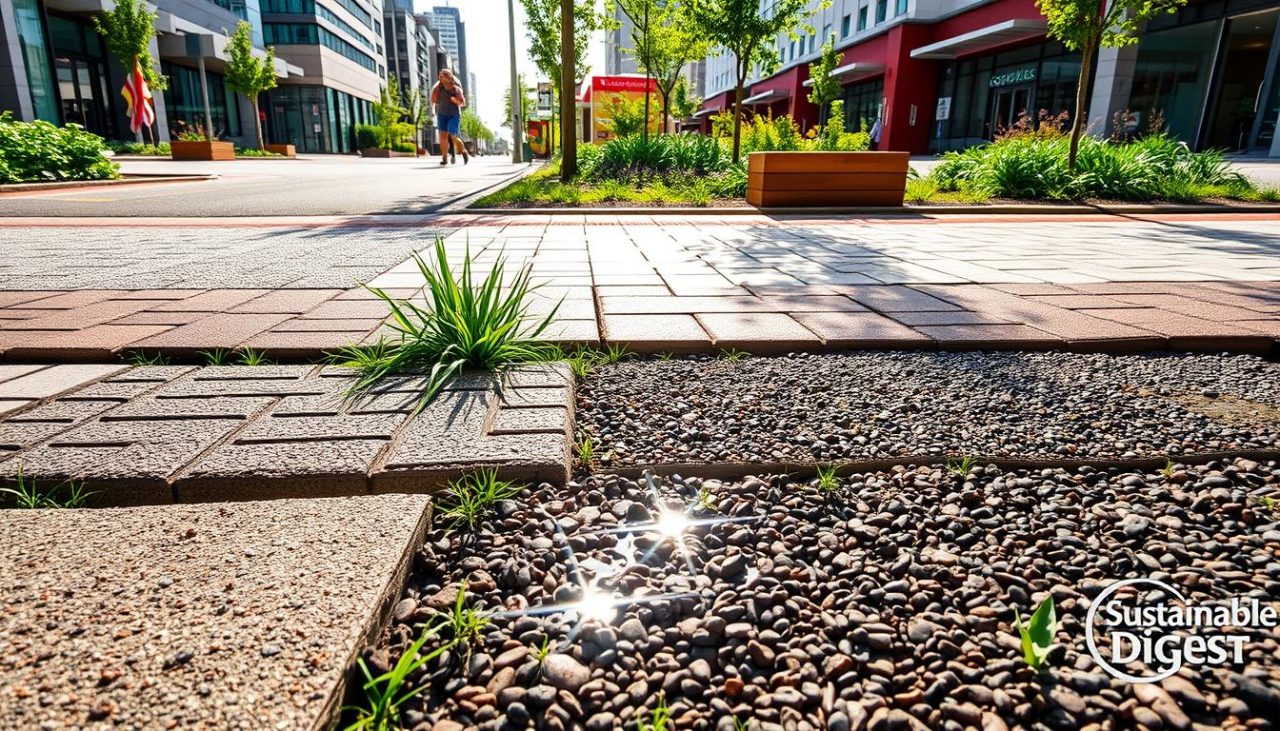
Permeable Pavement Technologies and Applications

Permeable pavement is a key part of modern stormwater management. It lets water through, cutting down on runoff and boosting groundwater. Let’s look at the types, how to install, and how to keep them up.

Types of Eco-Friendly Permeable Materials

There are many kinds of permeable pavement, each with its own benefits:

  • Porous asphalt
  • Pervious concrete
  • Interlocking pavers
  • Plastic grid systems

Installation Techniques for Maximum Efficiency

Getting permeable pavement right is key. The steps include:

  1. Site prep and grading
  2. Adding a base layer of crushed stone
  3. Putting in the chosen material
  4. Checking drainage connections

Material Mapping helps plan the layout for best water flow.

Maintenance Requirements and Longevity

To keep permeable pavement working well:

  • Regular sweeping to remove debris
  • Annual check-ups on drainage
  • Pressure washing every now and then
  • Fixing cracks or damage quickly

With the right care, permeable pavement can last 20-30 years. It’s a solid choice for managing stormwater.

Permeable MaterialLifespan (Years)Maintenance Frequency
Porous Asphalt15-20Annually
Pervious Concrete20-30Bi-annually
Interlocking Pavers25-35Quarterly
Plastic Grid Systems20-25Semi-annually

Recycled Materials in Modern Water Conservation

The push for sustainable construction has led to new uses of recycled materials in water conservation projects. These eco-friendly alternatives not only reduce waste but also make rainwater harvesting systems more efficient.

Recycled plastics, once headed for landfills, now help in rainwater collection systems. In a uniquely efficient fashion, they are converted into durable pipes, gutters, and tanks. This transformation massively reduces the carbon footprint of water conservation infrastructure.

Reclaimed wood is great for making rain barrels and decorative catchment systems. It naturally resists water damage, making it perfect for outdoor use. Builders often pick cedar or redwood for their durability and beauty.

Material assessment is key in choosing recycled components for water conservation projects. Engineers check the durability, chemical makeup, and potential for leaching contaminants before using recycled materials in designs.

  • Recycled rubber from tires forms permeable pavement
  • Crushed glass becomes a filtration medium
  • Repurposed metal forms sturdy support structures

By using these recycled materials, sustainable construction in water conservation saves natural resources. It also creates strong, affordable solutions for communities around the world.

Advanced Filtration Systems Using Natural Materials

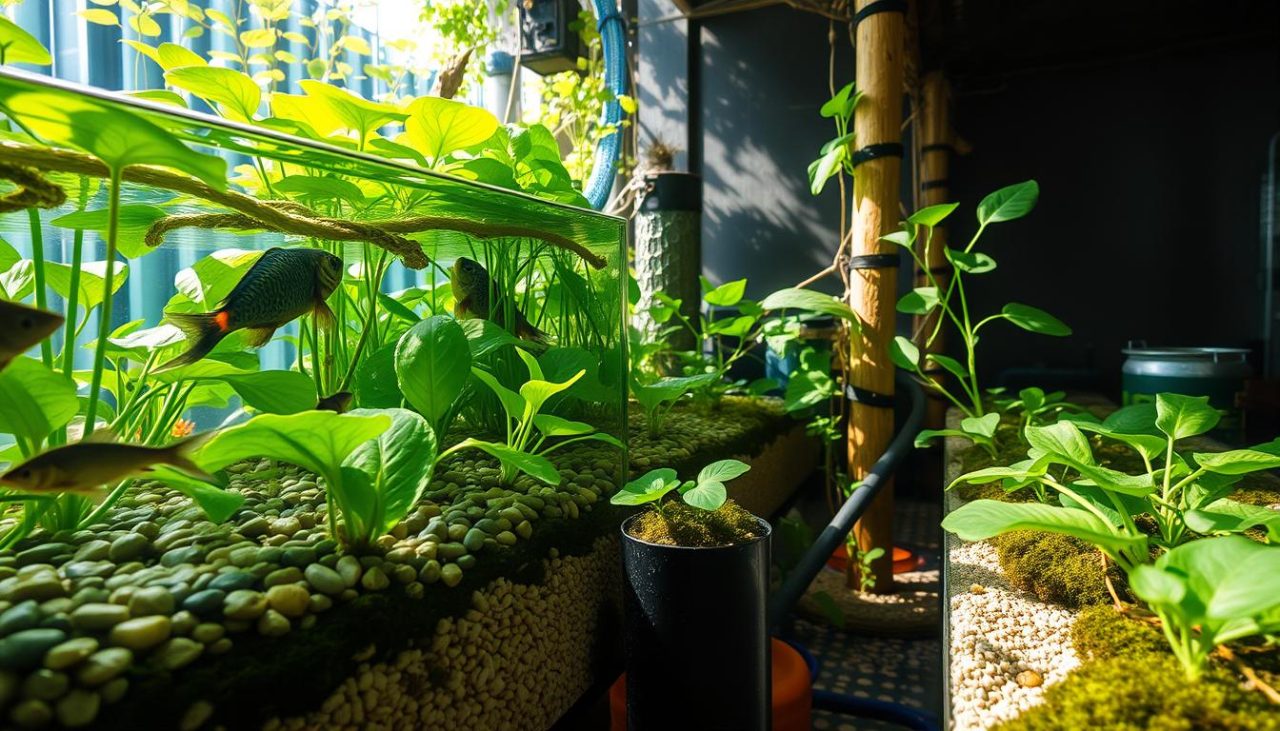
Natural filtration systems are a new way to harvest rainwater. They are good for the environment and provide clean water for things like hydroponics and aquaponics.

Biological Filtration Methods

Biological filtration uses nature to clean water. It uses living things to break down bad stuff. This method works well in aquaponics, where fish waste helps plants grow.

Sustainable Filter Media Options

There are eco-friendly ways to filter water. Materials like sand, gravel, and activated carbon are great at removing bad stuff. They are perfect for keeping water clean for hydroponics.

Filter MediaEffectivenessLifespan
SandHigh2-3 years
Activated CarbonVery High6-12 months
GravelMedium3-5 years

Integration with Existing Systems

Adding natural filtration to your setup makes it better. For hydroponics fans, it means cleaner water and healthier plants. In aquaponics, it helps create a balanced home for fish and plants.

“Natural filtration systems are not just eco-friendly; they’re the future of sustainable water management.”

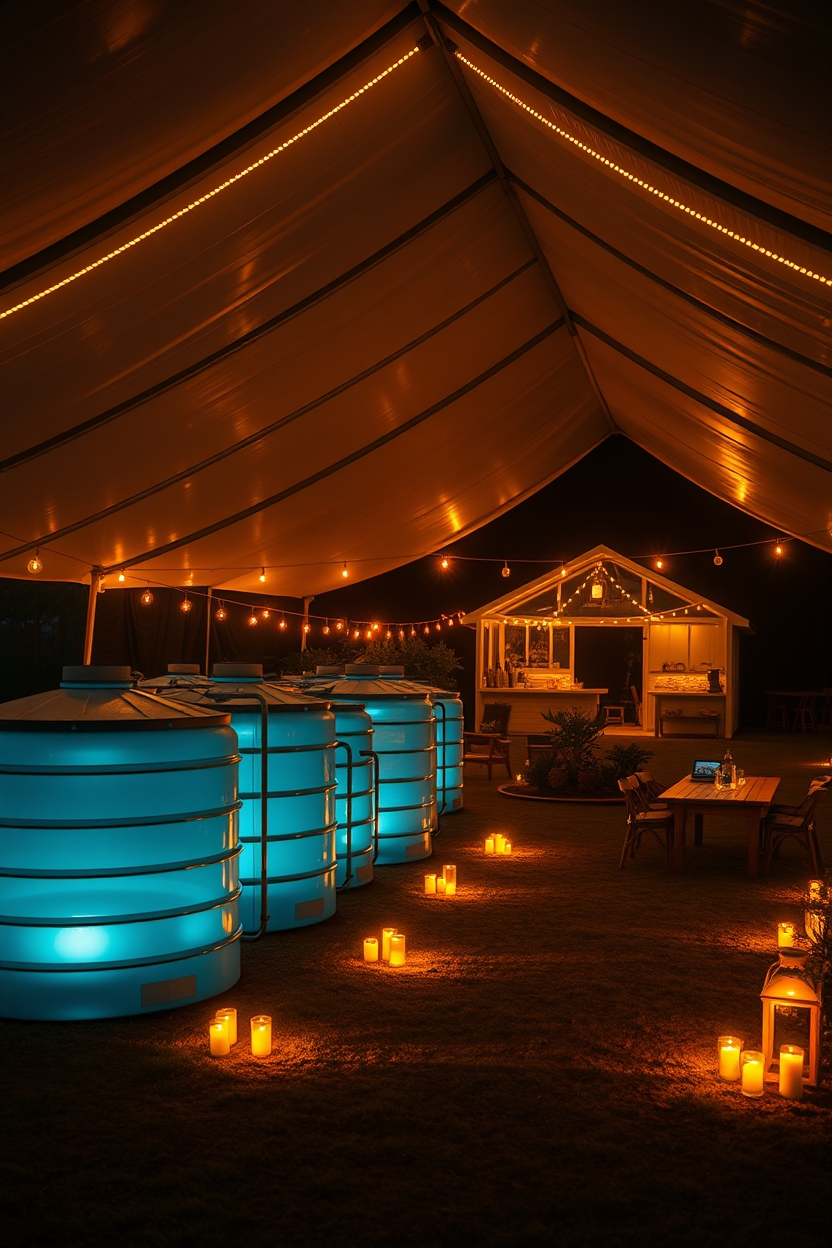
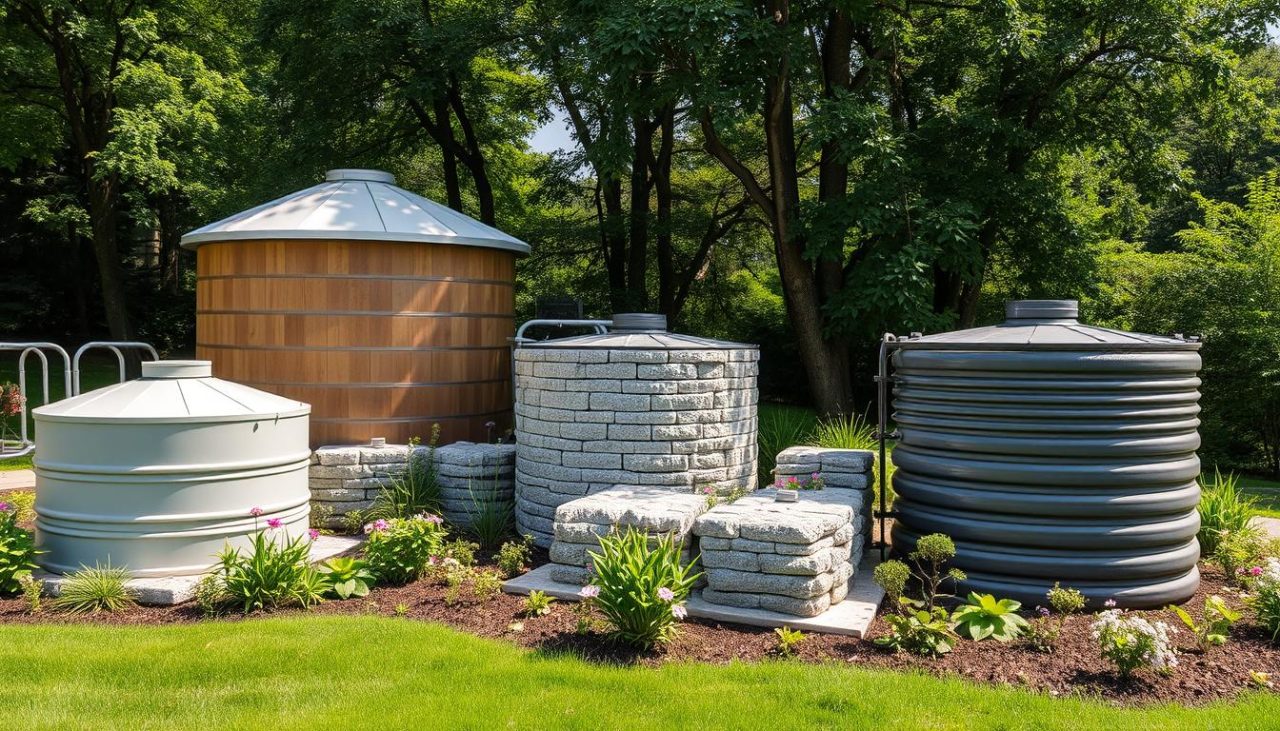
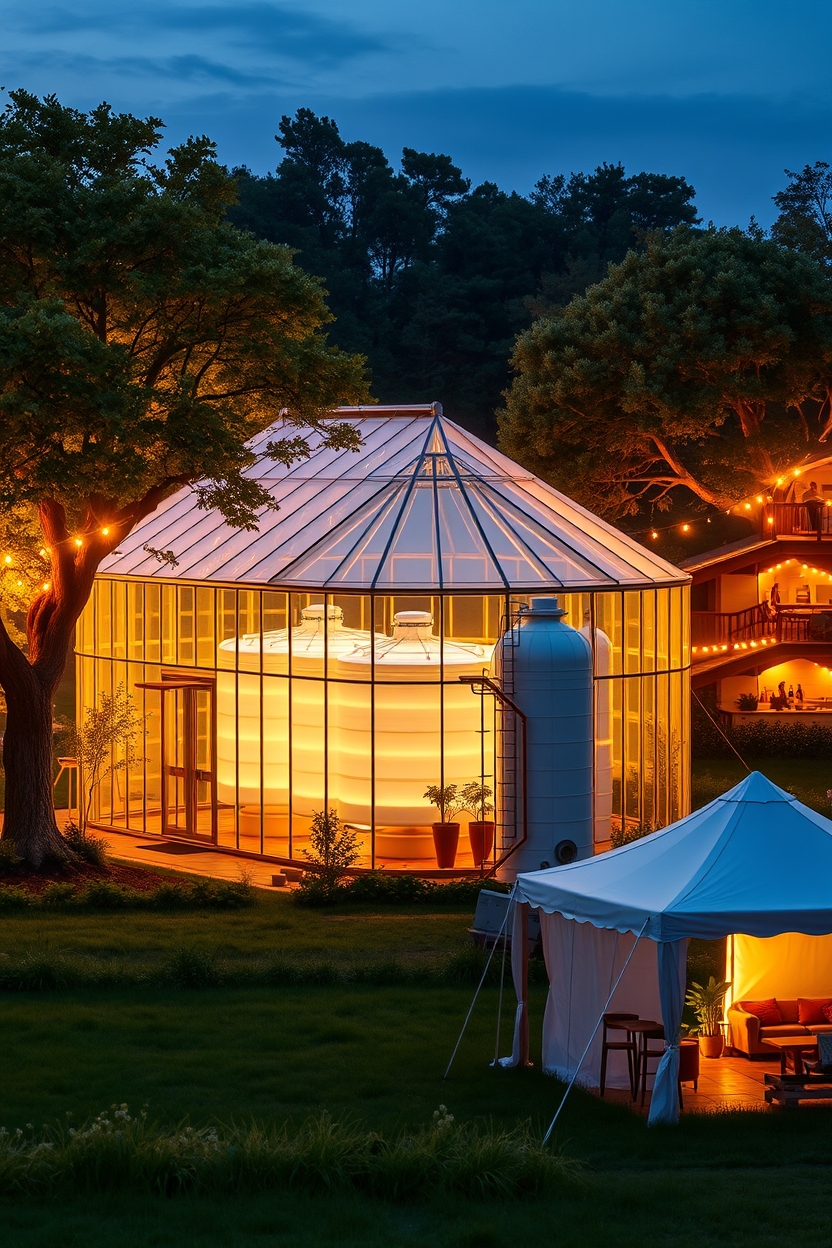
Storage Solutions: Sustainable Tank Materials

Choosing the right storage solution for rainwater harvesting is key. Sustainable tank materials help keep water quality high and systems working long-term. Think about the type of water you’re collecting, like greenwater or blackwater.

Greenwater, usually from rooftops, needs less treatment. It can be stored in many eco-friendly tanks. Some top picks include:

  • Recycled plastic tanks
  • Food-grade polyethylene containers
  • Concrete cisterns with non-toxic sealants
  • Fiberglass tanks with UV-resistant coatings

Blackwater, with higher contamination, needs stronger solutions. Stainless steel or treated concrete tanks are best for their strength and resistance to corrosion.

Doing a Material Assessment is vital when picking tank materials. This step looks at things like:

  • Chemical leaching potential
  • UV resistance
  • Structural integrity
  • Thermal properties
  • Environmental impact

With a detailed Material Assessment, you can pick a tank that meets your sustainability goals. The right tank material affects water storage and your system’s efficiency.

Low-Impact Development Strategies for Water Management

Low-impact development strategies are changing how we manage water in cities. They aim to copy nature’s water flow, reducing harm to the environment and encouraging water use that lasts.

Natural Water Flow Patterns

Knowing how water flows naturally is crucial for harvesting rainwater. Today, urban planners design systems that work with nature, not against it. This keeps water tables healthy and stops flooding.

Biomimicry in System Design

Biomimicry uses nature’s solutions for human problems. In water management, it leads to new, green, and efficient ideas. For instance, surfaces inspired by leaves can direct water better than old gutters.

Natural FeatureBiomimetic ApplicationBenefit
Tree rootsBranched drain pipesBetter water distribution
Lotus leafSelf-cleaning surfacesReduced maintenance
River meandersCurved water channelsSlowed water flow, less erosion

Integration with Local Ecosystems

Connecting rainwater harvesting with local ecosystems helps UNSDG#14, life below water. These systems cut down on runoff and pollution, protecting oceans. They also help local wildlife, making cities more diverse.

“Nature-based solutions are not just good for the environment; they’re smart economics. They save money, create jobs, and build resilience.”

Low-impact development strategies are a way to manage water sustainably. By learning from nature, we can build systems that help both people and the planet.

Implementation and Installation Guidelines

Planning and execution are key for green construction projects. This includes setting up eco-friendly rainwater harvesting systems. Here are the main steps for a successful installation.

Material Assessment Protocols

Start with a detailed material assessment in any green construction project. This step looks at the environmental impact, how long it lasts, and its cost. It helps find the best eco-friendly parts for your rainwater system.

System Integration Best Practices

Adding a rainwater system to buildings needs careful planning. Here are some tips:

  • Look at the site’s layout and how water flows
  • Make sure the system fits with the building’s design
  • Check if it works with the building’s plumbing and electricity
  • Add filters and purifiers for clean water

Maintenance Schedules

Keeping your rainwater system in good shape is crucial. Create a detailed maintenance plan. It should include:

  1. Check gutters and downspouts every month
  2. Clean filters and tanks every three months
  3. Check pumps and controls once a year
  4. Test water quality every six months

By following these steps, your rainwater system will work well. It will help manage water sustainably in your area.

Cost Analysis and Long-term Benefits

Investing in eco-friendly rainwater harvesting systems brings big long-term wins. They help meet UNSDG# 6 by ensuring clean water and sanitation. Plus, they save money over time.

The cost to start up these systems depends on size and complexity. Home systems cost between $5,000 and $15,000. Commercial setups can go up to $50,000 or more.

Benefits include lower water bills and less pressure on public water supplies. You might also save on energy with hydropower. Here’s a look at costs between old and new systems:

FactorTraditional SystemEco-Friendly System
Initial Cost$3,000 – $8,000$5,000 – $15,000
Annual Maintenance$200 – $500$100 – $300
Lifespan10-15 years20-30 years
Water Savings30-50%50-80%
Energy SavingsMinimalUp to 30% with hydropower

Eco-friendly systems cost more upfront but save more water and energy. Adding hydropower can cut costs even more. These systems are smart choices for the planet and your wallet.

Conclusion

Eco-friendly building materials are key to a sustainable future. They help save water and reduce construction’s environmental harm. Using green roofing, permeable pavements, and recycled materials makes water management systems efficient and natural.

Sustainable construction tackles water scarcity head-on. It includes living roofs and natural filtration systems. These methods benefit the environment and property owners over time. They also boost biodiversity and community health.

Water conservation will grow more critical in the future. Adopting eco-friendly materials and sustainable designs is essential. This approach makes rainwater harvesting systems effective and green. It saves water and supports a sustainable, resilient future.

Key Takeaways

  • Rainwater harvesting systems use eco-friendly materials for sustainability
  • Low-impact development integrates natural processes in water management
  • Sustainable construction practices are crucial for water conservation
  • Eco-friendly systems reduce dependence on municipal water supplies
  • Urban planning benefits from incorporating rainwater harvesting techniques

UNSDGs 13-14-15 Interconnecting Impact

Jellyfish, Animals, Underwater image. https://pixabay.com/photos/jellyfish-animals-underwater-381659/

The United Nations Sustainable Development Goals (SDGs) aim to make the world better while keeping it safe. Sadly, only 15% of SDG targets are on track halfway to the 2030 deadline1. These goals are about ending poverty and growing the economy, while also protecting the environment.

They say we must fight climate change and protect our planet. The work on UNSDGs 13-14-15 is key to reaching these goals. It’s about making sure our actions help the environment and support sustainable development.

Greenhouse gas emissions keep going up, making the climate crisis worse1. We’re seeing more extreme weather like heatwaves, droughts, and wildfires1. Yet, many businesses are working on plans to help the planet, showing they care about the environment and society2.

The United Nations set 17 global goals for 2015–2030. These goals are a blueprint for companies to tackle big issues like poverty and pollution worldwide2.

CSR efforts help companies and their stakeholders, showing a positive impact2. Working together is essential to meet the SDGs. Shareholders are important in pushing companies to do more for the planet and society2.

Understanding the Trilogy of Environmental SDGs

The United Nations Environment Programme (UNEP) stresses the need to tackle climate change and protect our oceans and forests. They focus on climate action, marine conservation, and biodiversity protection. This helps keep our planet healthy.

These goals are linked and need each other. For example, saving ecosystems is key to a healthy planet. This can be done through teamwork between governments, groups, and people. The UNEP says we must work together to solve environmental problems.

The Foundation of Environmental Sustainability Goals

The base of environmental goals is climate action, marine conservation, and biodiversity protection. These are vital for a healthy planet and a sustainable future. As points out, tackling environmental issues is crucial.

Interconnected Nature of Climate, Marine, and Terrestrial Goals

Climate, marine, and terrestrial goals are all connected. Climate change affects our oceans and biodiversity. So, we need a complete approach to solve these problems.

Global Implementation Challenges and Opportunities

There are challenges but also chances to achieve these goals worldwide. Through teamwork and action, we can tackle environmental issues. As notes, global cooperation is vital.

Some key strategies include:

  • Promoting climate action and cutting down on greenhouse gases
  • Starting marine conservation efforts and protecting marine life
  • Supporting biodiversity protection and keeping ecosystem services safe
  • Building collaborative partnerships and working together globally

Together, we can overcome environmental challenges and secure a sustainable future for everyone.

Climate Action (SDG 13): The Catalyst for Environmental Change

Climate action is key to reaching the Sustainable Development Goals (SDGs). It means changing how we make, use, and consume energy3. Renewable energy and clean tech are vital for cutting down on harmful emissions and supporting green growth. The United Nations says fighting climate change is essential. It impacts our environment, health, economy, and fairness3.

We need to make climate action a part of our national plans and global efforts. This means using more renewable energy, being more energy-efficient, and using land wisely4. Education and environmental checks can also help us make better choices3.

Some important steps for tackling climate change include:

  • Using more solar and wind power
  • Improving energy use in buildings and factories
  • Practicing sustainable land use, like planting trees and farming together with forests
  • Building climate-ready cities and buildings

Acting fast to fight climate change can lower the dangers it poses, like more extreme weather, rising seas, and less water4. It’s not just the right thing to do; it also opens doors for growth, jobs, and fairness3.

StrategyBenefits
Renameable energyLess pollution, cleaner air
Energy efficiencySave money, use less energy
Sustainable land useSave nature, better soil

Marine Ecosystem Protection (SDG 14): Preserving Our Oceans

The ocean is key to making Earth livable for humans. Managing it well is vital for a sustainable future5. Marine conservation helps keep marine ecosystems balanced and protects biodiversity. It also supports the health of our oceans and sustainable fishing.

Threats like overfishing, pollution, and climate change harm marine life. To fight these, we need sustainable fishing and marine protected areas. Saving coral reefs is also crucial, as they support many marine species and people’s livelihoods6.

The World Health Organization says clean water and sanitation are key for human health. Without them, marine ecosystems suffer5. Climate change also affects water, making it harder to find, clean, and share, leading to food shortages6.

Threats to Marine BiodiversityConsequences
OverfishingDepletion of fish populations, damage to marine ecosystems
PollutionHarm to marine life, contamination of the food chain
Climate ChangeRising sea temperatures, ocean acidification, coral bleaching

Life on Land (SDG 15): Safeguarding Terrestrial Ecosystems

The health of our planet is key to preventing zoonotic diseases. Human actions like deforestation harm millions of people’s lives and livelihoods2. It’s vital to use land sustainably and protect forests for biodiversity and ecosystem health. The Sustainable Development Goals (SDGs) from 2015 to 2030 aim to meet today’s needs without harming future generations7.

Some key strategies for safeguarding terrestrial ecosystems include:

  • Promoting sustainable land use practices
  • Implementing forest conservation initiatives
  • Addressing the root causes of deforestation and desertification

These efforts help preserve biodiversity, protect ecosystems, and support human and planetary well-being2.

The United Nations supports countries in achieving the SDGs, focusing on environmental, transport, statistics, and more7. By working together, we can create a healthier, more sustainable future for everyone.

Safeguarding terrestrial ecosystems needs a collective effort. We must prioritize biodiversity, ecosystem preservation, and sustainable land use. Together, we can ensure a healthier, more sustainable future for all2.

SDGGoalTarget
SDG 15Life on LandSustainably manage forests, combat desertification, halt biodiversity loss

Cross-sectional and Inter-operational Influence for UNSDGs 13-14-15

The goals of UNSDGs 13-14-15 are key to a sustainable future. They work together to help the environment. For example, cutting down on greenhouse gases (SDG 13) can protect oceans (SDG 14) and land biodiversity (SDG 15)8.

These goals are connected in many ways. Chapter 4 of the Cooperation Framework shows how important it is to understand the financial side9. This helps find ways to invest in sustainable growth, jobs, and protecting the environment.

Measuring the impact of these goals together is crucial. We can use indicators and frameworks like the UN Common Country Analysis (UN CCA)9. Here’s a table showing how SDGs 13, 14, and 15 (UNSDGs 13-14-15) are connected:

SDGGoalInter-connectedness
13Climate ActionInfluences SDG 14 (Marine Ecosystems) and SDG 15 (Terrestrial Ecosystems)
14Marine Ecosystem ProtectionInfluenced by SDG 13 (Climate Action) and influences SDG 15 (Terrestrial Ecosystems)
15Life on LandInfluenced by SDG 13 (Climate Action) and SDG 14 (Marine Ecosystems)

Carbon Management Strategies Across Ecosystems

Managing carbon is key to fighting climate change. It requires different approaches in various ecosystems. Forests and oceans are crucial in soaking up carbon dioxide from the air10. The United Nations says 2019 saw record levels of greenhouse gases in the atmosphere. Climate change is now affecting every country and continent10.

New ways to price carbon are being tried to cut down emissions. Programs for trading carbon credits help countries work together to lower emissions. These efforts are vital for meeting the Sustainable Development Goals (SDGs) and fighting climate change11.

Some important parts of managing carbon include:

  • Carbon sequestration in forests and oceans
  • Innovative carbon pricing mechanisms
  • International carbon trading programs

These methods can decrease greenhouse gas emissions and support sustainable growth10.

By using effective carbon management, we can lessen climate change risks. This leads to a more sustainable future11.

Collaborative Partnerships for Environmental Success

Collaborative partnerships are key to environmental success, especially in cross-sectoral approach and ecotourism efforts. They help us work together more effectively towards the SDGs12. For example, teams of governments, international groups, businesses, and civil society can fill policy gaps and make development fair12.

In small island states, partnerships are vital for green growth and conservation. They help get the resources needed, like money and tech, and support ecotourism13. The Joint SDG Fund says 188 million people got new or better social services thanks to these partnerships13.

The table below shows why partnerships are crucial for environmental wins:

Partnership TypeBenefits
Government-Business PartnershipsImproved policy design, increased investment in sustainable initiatives
Civil Society-International Organization PartnershipsEnhanced community engagement, better access to international expertise and resources

By using a cross-sectoral approach and teaming up, we can speed up SDG achievements and protect the environment in small island states and more14. It takes a united effort from governments, businesses, civil society, and global groups to reach environmental success12.

Technology and Innovation in Environmental Protection

The United Nations highlights the role of technology and innovation in reaching the SDGs15. This led to the creation of the UN Inter-Agency Task Team on STI for the SDGs in 201515. The world has seen progress towards the SDGs, with a 0.5 point increase each year from 2015 to 2019, as noted by Sachs et al16.

Technology and innovation are key in protecting our environment. Digital solutions help with monitoring, blockchain aids in conservation, and AI supports climate action7. These technologies are making a big difference in several areas:

  • Digital solutions for environmental monitoring, such as satellite imaging and sensor technologies
  • Blockchain in environmental conservation, such as tracking sustainable supply chains and verifying eco-friendly products
  • AI-powered climate action, such as predicting climate-related disasters and optimizing renewable energy systems

Having good statistics is crucial for tracking progress towards the SDGs7. The use of technology and innovation in environmental protection is set to grow. It has the potential to help achieve the SDGs and create a more sustainable future16.

Economic Implications of Integrated Environmental Action

The economic effects of acting together for the environment are complex. They balance growth, social progress, and protecting nature17. As we aim for the Sustainable Development Goals (SDGs), we must weigh the good and bad sides of a green economy. The SDGs say we need to fight poverty while growing the economy and improving health and education17.

Some key points about the economic effects of environmental action are:

  • More people can get financial help through green practices, helping industries grow18
  • New jobs and economic growth come from green tech and sustainable industries16
  • Health and happiness improve as pollution and damage to nature go down17
  • We become more ready to face climate change and natural disasters16

But, there are also hurdles like higher costs and less competition in some fields18. To beat these, we need a complete plan for sustainable growth. This plan must think about the economy, society, and nature together17. This way, we can build a better, fairer world and still grow the economy16.

Switching to a green economy means changing how we see growth and protecting the environment16. We must use green methods, invest in new tech, and support eco-friendly laws17. Together, we can make a greener, wealthier future for everyone and keep our planet healthy18.

Canna lily, Pattern, Botany image. https://pixabay.com/photos/canna-lily-pattern-botany-leaf-6474252/

Conclusion: Forging a Sustainable Future Through Integrated Action

The United Nations’ Sustainable Development Goals (SDGs) offer a detailed plan for a better future for everyone19. Looking at our progress and the hurdles we face, it’s clear that working together is key20. By joining forces across different areas, we can make a bigger difference in protecting our planet.

The goals of SDGs 13, 14, and 15 (UNSDGs 13-14-15) are deeply connected20. Tackling climate change, saving marine life, and preserving land are all linked19. Using new ways to manage carbon, technology, and aligning money with green goals are essential for change.

Our dedication to teamwork and action must stay strong20. By coming together, we can gather the needed help, skills, and support to fight environmental harm19. It’s time to act, and together, we can make a lasting impact for future generations.

School strike 4 climate, Demonstrations, Zagreb image. https://pixabay.com/photos/school-strike-4-climate-4059175/

Key Takeaways

  • The SDGs are a call for action by all countries to promote prosperity while protecting the planet.
  • Only 15% of SDG targets are on track halfway to the deadline for the 2030 Agenda1.
  • The cross-sectional and inter-operational influence for UNSDG# 13, 14, and 15 (UNSDGs 13-14-15) is crucial for achieving sustainability goals.
  • Greenhouse gas emissions continue to rise, worsening the climate crisis1.
  • The percentage of businesses that have invested in socially responsible plans is substantial, contributing to the CSR landscape in the industry2.
  • Achieving the SDGs requires a collaborative approach, focusing on sustainable development and environmental impact assessment.

Source Links

  1. PDF – https://sdgs.un.org/sites/default/files/2023-09/UN Climate SDG Synergies Report-091223B.pdf
  2. Sustainable Development Goals (SDGs) as a Framework for Corporate Social Responsibility (CSR) – https://www.mdpi.com/2071-1050/14/3/1222
  3. PDF – https://unece.org/sites/default/files/2021-06/Mainstreaming guidance 28.6.2021.pdf
  4. Risk management and decision making in relation to sustainable development — Special Report on Climate Change and Land – https://www.ipcc.ch/srccl/chapter/chapter-7/
  5. The system of radiological protection and the UN sustainable development goals – Radiation and Environmental Biophysics – https://link.springer.com/article/10.1007/s00411-024-01089-w
  6. Water and the Sustainable Development Goals of the United Nations 2030 Agenda – https://www.linkedin.com/pulse/water-sustainable-development-goals-united-nations-2030-sturniolo
  7. PDF – https://unece.org/sites/default/files/2021-04/2012761_E_web.pdf
  8. PDF – https://unsdg.un.org/sites/default/files/2021-07/Bangladesh_Cooperation_Framework_2022-2026.pdf
  9. PDF – https://unsdg.un.org/download/1512/687
  10. CL 170/4 – FAO Strategy on Climate Change 2022–2031 – https://openknowledge.fao.org/server/api/core/bitstreams/331de79f-cb7d-4550-85ff-f95f379c78e6/content
  11. PDF – https://unsceb.org/sites/default/files/2021-05/HLCP41-CRP.2-A common approach to integrating biodiversity and nature-based solutions.unedited[8].pdf
  12. A framework to harness effective partnerships for the sustainable development goals – Sustainability Science – https://link.springer.com/article/10.1007/s11625-021-01070-2
  13. 2022 – Global Context and SDG Impact – annualreport.jointsdgfund.org – https://annualreport.jointsdgfund.org/2022-global-context-and-sdg-impact/
  14. Achieving the UN Agenda 2030: Overall actions for the successful implementation of the Sustainable Development Goals before and after the 2030 deadline – https://www.europarl.europa.eu/RegData/etudes/IDAN/2022/702576/EXPO_IDA(2022)702576_EN.pdf
  15. PDF – https://sdgs.un.org/sites/default/files/2022-06/ONLINE_STI_SGDs_GUIDELINES_EN_v3_0.pdf
  16. The Impact of COVID-19 on the Sustainable Development Goals: Achievements and Expectations – https://pmc.ncbi.nlm.nih.gov/articles/PMC9739062/
  17. PDF – https://unsdg.un.org/download/24/557
  18. Microsoft Word – 1.1_Annexes_CF_V3.docx – https://www.undp.org/sites/g/files/zskgke326/files/2021-07/UNDP-UNCDF-TP-1-1-Annexes1-6-BigFintechs-and-Their-Impacts-on-Sustainable-Development-EN.pdf
  19. The Future We Want | Department of Economic and Social Affairs – https://sdgs.un.org/future-we-want
  20. Fast-tracking action on the Sustainable Development Goals by enhancing national institutional arrangements – https://pmc.ncbi.nlm.nih.gov/articles/PMC10954137/
This website is saving the energy of your screen as it is not being used. It's part of a global effort to lower the planet's electrical consumption and CO2 emission level. Resume browsing
Click anywhere to resume browsing
Verified by MonsterInsights