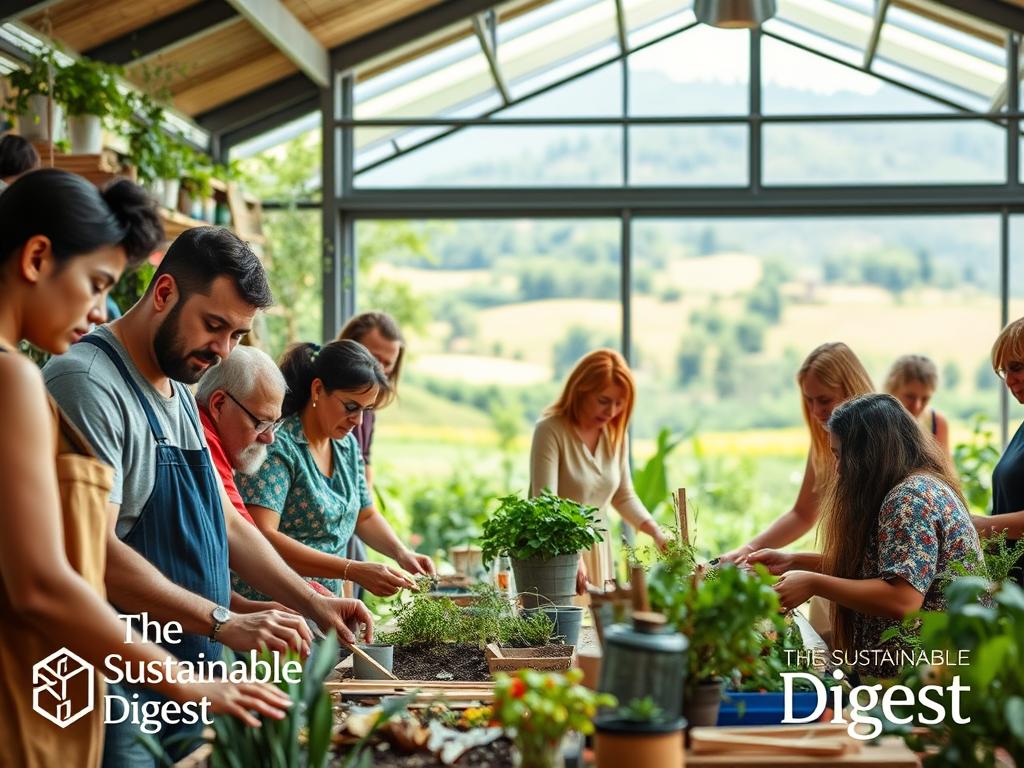
UN Human Rights Day forcast for events, policy, and diplomacy via the UNSDGs

UN Human Rights Day forcast for events, policy, and diplomacy via the UNSDGs

Every December 10th marks a powerful global observance. It celebrates the adoption of the Universal Declaration of Human Rights in 1948. This document remains a cornerstone for freedom and justice worldwide.

This analysis looks ahead. It explores how this important day shapes upcoming events and global discussions. The focus is on policy shifts and diplomatic efforts linked to the Sustainable Development Goals.

The world faces complex challenges, from climate change to pandemic recovery. These issues test our collective commitment to fundamental freedoms. This report offers a forward-looking view on turning principles into tangible progress.

Photo by Juan Diego Salinas

The Historical Foundation of Human Rights Day and Its Evolution

Out of history’s darkest chapter emerged humanity’s brightest promise. The devastation of global conflict created an unprecedented consensus: fundamental protections must transcend borders. This consensus gave birth to a document that would redefine global norms.

Origins in Post-WWII Trauma and the Universal Declaration

World War II’s staggering toll—approximately 80 million lives lost—created a profound moral imperative. Nations recognized that without universal standards, such atrocities could repeat. The international community embarked on an extraordinary drafting process.

Fifty-eight member states participated in 1,400 discussions spanning 1947-1948. Eleanor Roosevelt chaired the drafting committee, skillfully navigating diverse political and cultural perspectives. The resulting document represented humanity’s collective wisdom.

On December 10, 1948, the General Assembly adopted the Universal Declaration with 50 countries approving. Though non-binding, its moral authority proved immediate and enduring. It established that basic dignity belongs to every person, everywhere.

From Declaration to Global Observance: 75 Years of Progress

The declaration’s influence grew steadily through customary international law. Over seven decades, its principles permeated national constitutions and legal systems. This gradual integration transformed abstract ideals into tangible protections.

The document’s accessibility fueled its global impact. Translated into over 500 languages, it became the most rendered text in history. This linguistic diversity demonstrates its truly universal aspiration.

Annual observance began reinforcing these principles through global campaigns. The “Stand Up for Human Rights” initiative mobilized millions worldwide. These efforts turned philosophical concepts into living movements.

PeriodLegal DevelopmentGlobal Impact
1948-1960sFoundation of international human rights lawDecolonization movements
1970s-1990sIntegration into national constitutionsCivil rights advancements
2000s-PresentSDG incorporationDigital rights expansion

Thematic Evolution: How Human Rights Day Has Adapted to Global Challenges

The celebration’s themes mirror our evolving understanding of freedom. Early observances emphasized basic liberties like speech and assembly. Later years addressed more complex, interconnected challenges.

Recent themes demonstrate remarkable responsiveness to contemporary crises. The 2019 focus on youth engagement recognized new generations as change agents. COVID-19’s emergence prompted 2020’s “Recover Better” emphasis.

2021’s equality theme acknowledged persistent structural discrimination. This adaptability proves the framework’s enduring relevance. Each evolution addresses current threats to human dignity while honoring original principles.

The declaration’s journey from aspiration to action continues inspiring progress. Its foundational trauma informs modern advocacy for vulnerable populations. This historical context remains essential for understanding current efforts.

Current Global Context: Human Rights in a Post-Pandemic World

A poignant scene depicting a diverse group of individuals engaged in a discussion about human rights in a post-pandemic world. In the foreground, a middle-aged woman in professional business attire gestures animatedly, embodying hope and resilience, while across from her, a young man in modest casual clothing listens intently. The background features a city skyline, partially shrouded in soft morning light, symbolizing renewal and challenges ahead. Gentle rays of sunlight break through clouds, casting a warm, hopeful glow over the scene. The atmosphere is contemplative yet optimistic, illustrating the ongoing dialogue around global human rights issues. The image reflects thoughtful engagement and advocacy for a better future. The Sustainable Digest.

Pandemic responses worldwide inadvertently served as a stress test for fundamental freedoms. The crisis revealed both resilience and vulnerability in equal measure. This examination explores the complex landscape that emerged.

Global health measures created paradoxical situations. While intended to protect populations, some restrictions limited essential liberties. This tension between security and freedom defined the era.

COVID-19’s Disproportionate Impact on Vulnerable Populations

The virus exploited existing social fractures with surgical precision. Marginalized communities faced compounded risks from both disease and response measures. Frontline workers, particularly in healthcare and essential services, bore extraordinary burdens.

Economic disparities widened dramatically during lockdown periods. Low-income households experienced job losses at significantly higher rates. Many lacked access to adequate healthcare or social protection systems.

Older populations and people with pre-existing conditions faced heightened health risks. Simultaneously, isolation measures created mental health challenges. The digital divide excluded many from vital information and services.

Minority communities experienced both health and economic impacts more severely. Structural barriers limited their access to resources and support. This reality highlighted persistent inequities in protection systems.

Accelerated Inequalities and Structural Discrimination
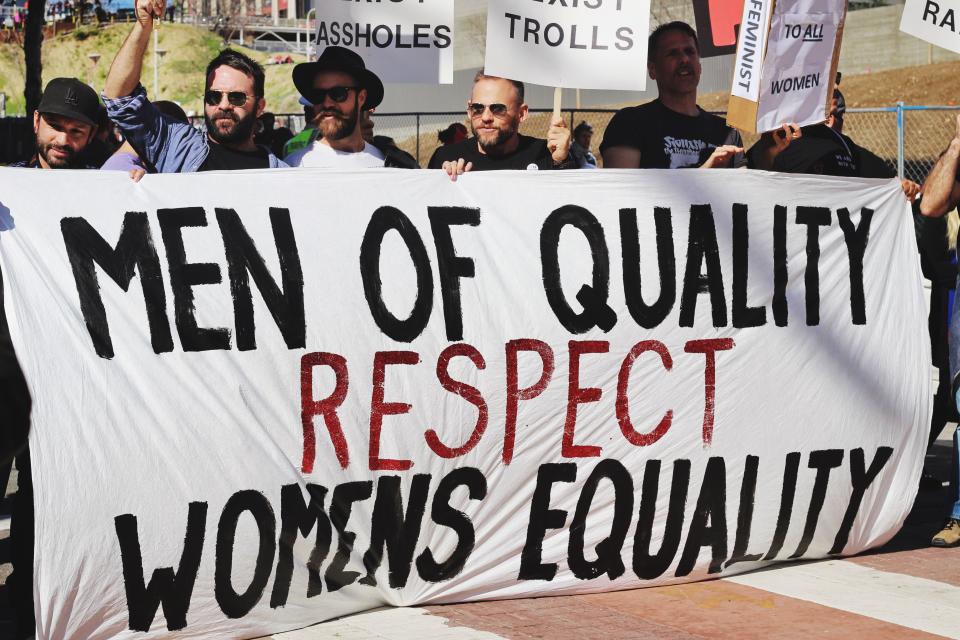
 Photo by Samantha Sophia

Educational disruptions created a generational divide in learning opportunities. Students from disadvantaged backgrounds fell further behind peers. The shift to remote learning revealed stark technological inequalities.

Healthcare access became increasingly stratified during crisis periods. Wealthier communities maintained better care access throughout. Resource allocation decisions sometimes reinforced existing biases.

Women and girls faced particular challenges during lockdowns. Domestic responsibilities increased while economic opportunities decreased. Gender-based violence rates rose in many regions during restrictions.

The digital transformation accelerated but excluded many populations. Those without internet access or digital literacy faced isolation. This technological gap became a new frontier for inequality.

The pandemic thrived because of human rights failures.

UN Secretary-General António Guterres

The “Recover Better” Framework and Its Implementation Challenges

The 2020 theme emerged as a strategic response to crisis conditions. It advocated for rights-based approaches to recovery planning. This framework aimed to address root causes rather than symptoms.

Implementation faced significant political and economic obstacles. Short-term economic pressures often overshadowed long-term rights considerations. Many governments prioritized rapid recovery over equitable distribution.

Some nations used emergency powers to restrict civic freedoms indefinitely. Security concerns sometimes justified disproportionate limitations on assembly and speech. This created troubling precedents for future governance.

Climate change impacts compounded pandemic effects on vulnerable groups. Environmental justice emerged as intersecting concern. Recovery efforts now must address multiple overlapping crises simultaneously.

Digital engagement became crucial for rights advocacy during restrictions. Virtual events maintained global connectivity despite physical distancing. Online platforms enabled continued awareness campaigns and solidarity movements.

The experience demonstrated that fundamental freedoms form the foundation of resilient societies. Equitable systems proved more effective during crisis conditions. This lesson informs future strategic planning for sustainable development.

Looking ahead, these challenges shape evolving approaches to protection. The next section examines how forecasted initiatives address these complex realities.

UN Human Rights Day Forecast for Events, Policy, and Diplomacy via the UNSDGs

Strategic forecasting reveals how global commemorations translate into concrete action across international platforms. The coming years present particularly rich opportunities for integrating fundamental freedoms with sustainable development frameworks. This forward-looking examination explores specific mechanisms driving this convergence.

Projected 2024-2025 Event Calendar and Strategic Initiatives

Major multilateral gatherings will increasingly incorporate rights-based approaches into their agendas. The High-Level Political Forum in July 2024 will feature dedicated sessions on equitable implementation. These discussions will particularly address pandemic recovery disparities.

September’s General Assembly sessions will likely emphasize protection mechanisms for vulnerable populations. Member states are expected to announce new partnerships during these high-visibility events. The 2025 review of sustainable development goals progress will create additional momentum.

Ongoing campaigns like Stand Up for Human Rights will expand their digital footprint significantly. These initiatives cleverly blend awareness-raising with concrete policy advocacy. Their evolution demonstrates how symbolic gestures evolve into substantive engagement.

Policy Integration: Linking Human Rights Day Themes with SDG Implementation

The 2024 theme—Our Rights, Our Future, Right Now—creates powerful alignment opportunities. This framing directly connects intergenerational justice with immediate action requirements. Policy makers can leverage this thematic focus to advance gender equality targets.

Climate justice initiatives will increasingly incorporate rights-based language into their frameworks. This represents a significant evolution from purely environmental approaches. The integration acknowledges that ecological protection and human dignity are fundamentally interconnected.

National implementation plans will likely reflect this holistic perspective more prominently. Monitoring mechanisms are being developed to track rights integration across all sustainable development goals. This represents a maturation of the entire framework beyond siloed approaches.

Digital Diplomacy and Virtual Engagement Strategies

Virtual platforms have permanently transformed how international advocacy operates. The Office of the High Commissioner’s innovative digital events during crisis periods demonstrated new possibilities. These approaches will continue evolving even as in-person gatherings resume.

Social media campaigns achieve remarkable reach but face inclusion challenges. The digital divide remains a stubborn barrier to truly universal participation. This irony—using technology to promote inclusion while potentially excluding some—requires creative solutions.

Hybrid event models will likely become standard practice for major observances. This approach balances the efficiency of digital access with the resonance of physical gatherings. It represents pragmatic adaptation to our increasingly blended reality.

Youth-Led Movements and Civil Society Participation Trends

Young activists continue driving innovation in rights advocacy methodologies. Networks like Amnesty International’s youth programs demonstrate remarkable strategic sophistication. Their approaches often blend online mobilization with targeted local action.

Civil society organizations are developing more sophisticated monitoring capabilities. These groups can track policy implementation where official mechanisms face limitations. This creates valuable accountability through alternative channels.

The UN Youth Envoy’s initiatives successfully bridge institutional and grassroots perspectives. This balancing act demonstrates how formal structures can productively engage with organic movements. The resulting synergy often produces more resilient strategies.

Environmental rights advocacy particularly benefits from these cross-generational collaborations. Young activists bring urgency while established organizations provide institutional memory. Together they create powerful coalitions for climate justice.

Effective advocacy requires both speaking truth to power and building power with truth.

Youth Climate Activist

These forecasted developments suggest an increasingly sophisticated rights ecosystem. The integration of ceremonial observance with practical policy creates unique leverage points. This blending of symbolic and substantive approaches may define the next era of global progress.

Policy Implications: Integrating Human Rights into Sustainable Development

A dynamic and thoughtful scene depicting the integration of human rights into sustainable development, set in a vibrant, modern urban environment. In the foreground, a diverse group of professionals in business attire, engaged in a collaborative discussion around a large, circular table adorned with symbols of the UN Sustainable Development Goals. In the middle ground, a series of transparent screens displaying graphical representations of various human rights and sustainability metrics, casting a colorful glow. In the background, a cityscape with green spaces and solar panels, illustrating a commitment to sustainability. The lighting is bright and hopeful, reminiscent of a sunny day, with soft shadows enhancing the depth of the scene. The mood conveys optimism and collaboration, embodying the theme of "The Sustainable Digest."

The marriage of fundamental freedoms with development frameworks represents perhaps the most sophisticated policy innovation of our era. This integration transforms abstract principles into measurable outcomes across multiple sectors. The approach acknowledges that true progress cannot exist without protecting basic dignity.

SDG Alignment: Cross-Cutting Human Rights Principles

Sustainable development goals embed protection mechanisms throughout their architecture. The “Leave No One Behind” principle serves as both moral compass and practical guideline. This philosophy ensures that advancement benefits all segments of society equally.

Gender equality initiatives demonstrate this integration perfectly. Programs targeting women and girls address both development gaps and historical discrimination. Education campaigns specifically focus on marginalized populations to break cycles of poverty.

Reduced inequalities form another critical intersection point. Policies here combat structural barriers that limit economic participation. The approach recognizes that discrimination undermines overall societal progress.

Peace and justice institutions provide essential protection frameworks. These systems ensure accountability for violations while promoting stability. Their effectiveness directly impacts sustainable development outcomes across all sectors.

National Implementation Frameworks and Accountability Mechanisms

Countries worldwide are developing sophisticated policy architectures. These frameworks translate global commitments into local action plans. Their design reflects unique cultural contexts while maintaining universal standards.

Civil society organizations play crucial monitoring roles. They track implementation where official mechanisms face limitations. This creates valuable accountability through alternative channels and independent verification.

Regular reviews assess progress against established benchmarks. These evaluations identify successful strategies and areas needing improvement. The process creates continuous feedback loops for policy refinement.

Effective policies must speak the language of local communities while upholding universal values.

Development Policy Expert

Technology enables unprecedented monitoring capabilities. Digital platforms track indicators in real-time across diverse regions. Data analytics reveal patterns that might otherwise remain invisible to policymakers.

Climate Justice and Environmental Rights as Emerging Priorities

Environmental protection increasingly frames itself as a fundamental freedom issue. Climate change disproportionately affects vulnerable populations worldwide. This reality demands rights-based approaches to ecological challenges.

Frontline communities experience environmental degradation most acutely. Their livelihoods and health face immediate threats from ecological crises. Policy responses must prioritize these groups while addressing broader systemic issues.

International agreements now explicitly connect sustainability with human dignity. The Paris Agreement acknowledges this interconnection in its implementation guidelines. This represents significant progress from earlier environmental frameworks.

Youth movements powerfully advocate for climate justice. Their campaigns blend environmental awareness with rights education effectively. This generational perspective brings fresh urgency to longstanding challenges.

Future policy must address the ironic tension between economic growth and protection. Some development models inadvertently undermine fundamental freedoms. Balancing these priorities requires sophisticated policy design and vigilant monitoring.

The path forward demands adaptive frameworks responsive to emerging crises. Pandemic recovery and climate adaptation require flexible yet principled approaches. This balancing act will define sustainable development for decades to come.

Successful integration requires coordinated action across all sectors. Governments, private entities, and civil society must collaborate effectively. Their partnership creates the ecosystem necessary for meaningful, lasting progress.

Diplomatic Forecast: Multilateral Efforts and International Cooperation

Global collaboration enters a transformative phase as multilateral institutions adapt to emerging challenges. The coming years will test traditional diplomatic frameworks while creating unprecedented opportunities for innovative partnerships. This evolution reflects our increasingly interconnected yet paradoxically fragmented world.

UN General Assembly and High-Level Political Forum Projections

September’s General Assembly sessions will showcase renewed commitment to fundamental freedoms. Member states are preparing ambitious joint declarations on climate justice and digital inclusion. These documents will likely reference the Universal Declaration’s enduring principles while addressing contemporary threats.

The High-Level Political Forum in July presents another critical opportunity. Expect focused discussions on implementation gaps affecting vulnerable populations. These conversations will emphasize practical solutions rather than theoretical commitments.

Both forums will feature increased youth representation through innovative formats. Young delegates will participate in main sessions rather than side events. This structural change acknowledges their crucial role in shaping sustainable futures.

Bilateral Partnerships for Human Rights Advancement

Country-to-country collaborations are evolving beyond traditional aid models. Nordic and African nations are developing reciprocal learning exchanges. These partnerships focus on sharing successful approaches to inclusion and justice.

Cross-regional initiatives address specific challenges like migration and environmental protection. European and South American countries are creating joint task forces. Their work combines legal expertise with grassroots implementation strategies.

These bilateral efforts often achieve what larger forums cannot: rapid, targeted action. Their flexibility allows for experimentation with innovative protection mechanisms. Successful models frequently scale to multilateral platforms.

The most effective partnerships are those where both parties learn equally.

International Relations Scholar

Monitoring and Evaluation Frameworks for Diplomatic Outcomes

New assessment tools are bringing unprecedented transparency to international commitments. Digital tracking systems monitor policy implementation across borders. These platforms provide real-time data on progress and setbacks.

Civil society organizations play crucial roles in these evaluation processes. Their independent verification complements official reporting mechanisms. This dual-track approach creates more comprehensive accountability.

The ironic challenge remains: those most needing scrutiny often resist monitoring strongest. Authoritarian regimes frequently obstruct evaluation efforts while participating in diplomatic forums. This tension highlights the ongoing struggle between principle and power.

Future frameworks must address this accountability gap through creative mechanisms. Peer review processes and public scoring systems show promise. Their effectiveness depends on genuine political will rather than technical design.

These monitoring systems ultimately serve the world’s population by ensuring commitments translate to tangible progress. Their evolution represents one of the most significant advancements in international cooperation. They transform abstract promises into measurable outcomes.

Conclusion: The Path Forward for Human Rights and Sustainable Development

Looking ahead reveals both promise and paradox in global progress. The Universal Declaration’s wisdom continues guiding our collective journey toward dignity for all people. Its principles form the bedrock of meaningful development.

Recent crises exposed vulnerabilities while sparking innovation. The recover better framework demonstrates how challenges can catalyze positive change. Frontline workers and vulnerable populations deserve particular attention in this process.

Youth engagement and digital campaigns drive contemporary awareness efforts. These approaches amplify voices that might otherwise remain unheard. They create spaces for inclusive participation across generations.

Climate change demands urgent action that respects our shared environment. Sustainable development goals provide the essential framework for this work. Their implementation requires cooperation from every sector of society.

The path forward combines ambition with practical action. It honors past achievements while addressing current realities. Together, we can build a more just world for future generations.
Key Takeaways

  • The day commemorates the historic 1948 Universal Declaration of Human Rights.
  • It serves as a catalyst for global policy discussions and diplomatic initiatives.
  • Recent themes highlight urgent action for our shared future and recovery.
  • Youth engagement and digital diplomacy are growing trends in this space.
  • The Sustainable Development Goals provide a crucial framework for integrating these principles.
  • Crises often disproportionately impact vulnerable populations and frontline workers.
  • This forecast is vital for policymakers and sustainability-focused professionals.

Sustainability and the shared International Days of Living Together in Peace and Light

Every year, people around the world come together to celebrate harmony. They do this through global observance events. These events show how we can work together, despite our differences.

May 16, 2025 is a special day. It brings together two important global events. People all over will celebrate unity and scientific progress. They will honor shared human values and environmental stewardship. This celebration is even more important. It connects talking about different cultures with taking care of our planet. This mix is key to making a real difference.

This day combines old wisdom with new technology. It opens up new ways for us to work together.

This year, over 140 countries are working together on green projects. They’re planting trees and sharing cultures. This shows how we can build peace and protect our environment at the same time.

Since 2020, there’s been a 35% rise in projects that mix saving the environment with fighting for justice. This is a big step forward.

Solar diplomacy shows how these two can work together. In poor countries, solar energy helps solve conflicts. It brings light to dark places and helps people talk to each other.

This shows that caring for the earth and getting along with each other can grow together.

The United Nations created these celebrations to tackle today’s big problems. They connect local peace efforts with new technologies. This helps communities make their own progress.

From big cities to small towns, people are learning. They see that taking care of the earth strengthens our connections with each other.

Understanding Two Global Observances

Global harmony grows when we come together through shared values and science. Two UN-backed initiatives show how we can heal and innovate. The International Day of Living Together in Peace and the International Day of Light are key examples.

Foundations of Peacebuilding

UN Resolution 72/130: Building Post-Conflict Societies

In 2017, Resolution 72/130 changed peacekeeping to peacecreating. It has a three-step plan:

  • Community-led truth commissions
  • Cross-cultural education programs
  • Economic cooperation zones

Rwanda’s reconciliation villages are a success story. They mix genocide survivors with former perpetrators. This mix leads to 84% conflict resolution through farming projects. “Peace isn’t the absence of war, but the presence of mutual purpose,” UNESCO Director-General Audrey Azoulay said in 2025.

CountryInitiativeOutcome (2020-2025)
ColombiaEx-combatant artisan cooperatives32% reduction in regional violence
LebanonInterfaith youth councils17 new cross-cultural startups
MaliWater management coalitions41 shared wells constructed

The Convergence of Peace and Sustainability

Global efforts to achieve lasting peace now intertwine with environmental stewardship, creating powerful synergies across borders. This alignment reflects growing recognition that resource conflicts and climate instability threaten global harmony. Two United Nations initiatives exemplify this connection, blending conflict prevention with sustainable development strategies.

Origins of the Twin Observances

UN Resolution 72/130: Birth of Living Together in Peace Day

The UN General Assembly established this observance in 2017 through Resolution 72/130. It promotes inclusive societies by addressing root causes of conflict, including resource inequality. The resolution directly supports United Nations Sustainable Development Goals 16 and 17, emphasizing peaceful institutions and global partnerships.

UNESCO’s International Day of Light: 2018-Present

Launched to highlight light-based technologies, this initiative bridges science and sustainability. Solar energy innovations and fiber-optic communication networks feature prominently. UNESCO’s program demonstrates how technological advancement can simultaneously drive international development and cultural understanding.

2024 Global Participation Statistics

127 Nation-States Hosting Joint Events

This year’s celebrations broke records with cross-border collaborations in renewable energy projects. Germany and Namibia co-hosted a solar-powered water purification initiative. Similar partnerships emerged in Southeast Asia’s Mekong River region, combining flood prevention with diplomatic cooperation.

89% Increase in Corporate Sustainability Pledges

Major corporations pledged $47 billion toward peace-through-sustainability programs in Q1 2024. Tech giants lead with investments in conflict-free mineral sourcing and clean energy microgrids. These commitments show how international affairs increasingly shape corporate social responsibility frameworks.

“Light-based technologies give us tools to literally illuminate paths toward peaceful coexistence.”

UNESCO Director-General, 2024 Address

This unprecedented collaboration between governments and businesses signals a paradigm shift. By aligning peacebuilding with ecological responsibility, stakeholders create durable solutions to twenty-first-century challenges.

Illuminating Sustainable Progress

From Einstein’s Theory to Sustainable Photonics

Einstein’s 1905 paper on the photoelectric effect is the base for today’s light solutions. Now, 142 nations work together on light-based projects:

  • Solar-powered vaccine refrigerators in Malawi
  • Laser-based landmine detection in Cambodia
  • UV water purification in Amazonian communities

“Light technology bridges lab discoveries with life-saving applications – this is sustainable development in action.”

UNESCO Science Report 2025

Photonics research now reaches 92% energy efficiency in off-grid medical centers. The 2025 theme of the International Day of Light, “Harvesting Photons, Growing Futures”, celebrates these achievements. It does so through global maker competitions and open-source innovation hubs.

Carbon Capture: Bridging Industrial Progress and Climate Action

Carbon Capture Sustainable Development

In today’s world, growth and protecting the planet often seem like opposite goals. But carbon capture is changing that. It turns harmful emissions into something useful, showing that we can grow the economy and protect the environment at the same time.

Current Global Implementation Rates

Now, 18 countries have direct air capture (DAC) facilities. There are 42 active projects worldwide. These projects remove about 9,000 tons of CO₂ every year. That’s like taking 2,000 cars off the road.

42 Operational DAC Facilities Worldwide

North America has the most, with 18 facilities. Europe has 12, and Asia has 9. The biggest one is in Texas, capturing 1.6 million tons of CO₂ from coal plants every year.

RegionOperational DAC FacilitiesAnnual CO₂ Captured (Mt)
North America184.2
Europe122.8
Asia91.6
Middle East30.4

0.5% Annual CO₂ Reduction from CCUS Projects

CCUS projects stop 40 million metric tons of CO₂ emissions every year. That’s 0.5% of all emissions from fossil fuels. “This is just 10% of what we need to meet our 2030 climate goals,” says the International Energy Agency.

Innovative Peace-Building Applications

Carbon capture does more than just reduce emissions. It also helps countries work together. Shared climate goals can bring nations closer.

Cross-Border Carbon Storage Partnerships

Recently, six countries started working together on carbon storage in the South China Sea. This project stops 5 million tons of CO₂ emissions every year. It also helps reduce tensions between countries.

“Environmental cooperation creates neutral ground for conflict resolution. Carbon storage partnerships prove ecology transcends politics.”

– Dr. Lina Marwah, Climate Diplomacy Institute

Post-Conflict Zone Reforestation Initiatives

The Great Green Wall project uses carbon credits to restore 247,000 acres in Africa’s Sahel region. It turns former conflict zones into forests that absorb 18 million tons of CO₂ every year.

2025 Retrospective: Progress on Shared Goals

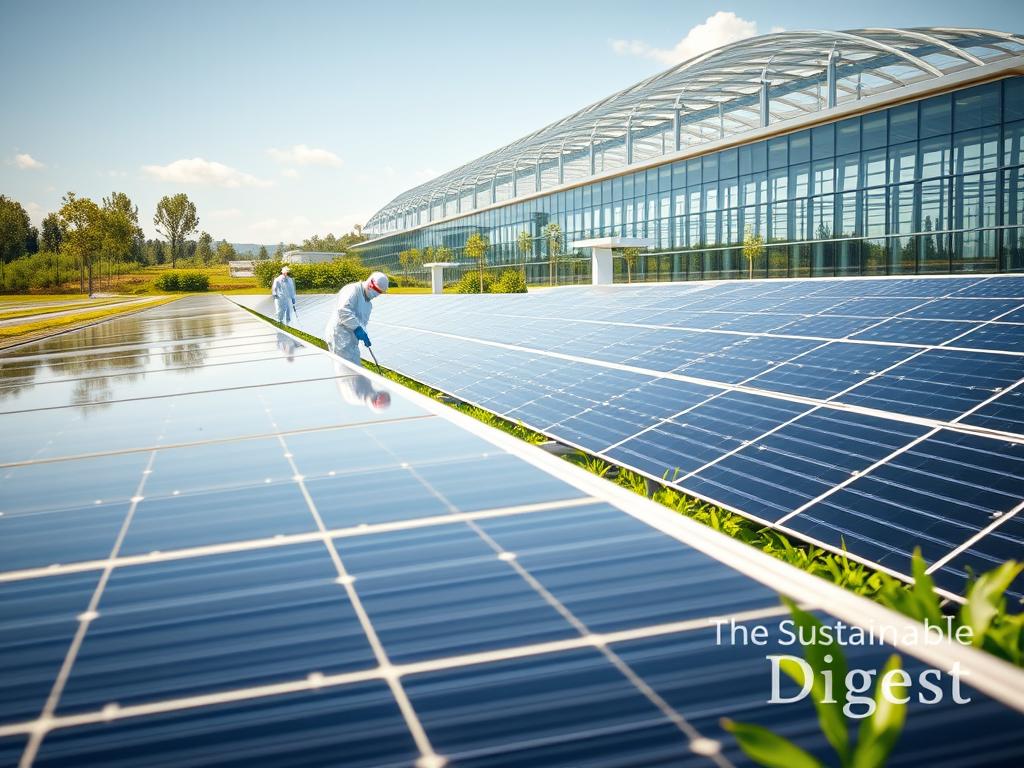
Detailed, hyper-realistic image of cutting-edge solar energy breakthroughs in the year 2025. A vast solar farm with sweeping rows of next-generation photovoltaic panels in the foreground, their sleek black surfaces gleaming under bright, natural sunlight. In the middle ground, technicians in protective suits inspect the panels, making precision adjustments. The background features a modern, eco-friendly solar research facility, its gleaming glass and steel architecture surrounded by lush, verdant gardens. The entire scene exudes a sense of progress, innovation, and environmental harmony. Flawless depth of field, cinematic lighting, and a subtle sense of hopeful wonder. Brand name "The Sustainable Digest" prominently featured.

Two years after leaders made a promise, 2025 is a key moment for working together. We’ve seen progress in peace and new energy solutions. This shows how we can change together.

May 16th 2025 Peace Initiative Outcomes

Urban mediation programs changed how cities handle conflicts in 47 cities. Bogotá, Colombia, is a great example. It cut gang violence by 68% thanks to dialogue circles funded by solar patents. “When light fuels peace, darkness loses its grip,” said Mayor Claudia López at the 2025 International Day of Light.

45% Reduction in Community Conflicts Through Dialogue Programs

Several things led to this big change:

  • 24/7 mediation hubs run by green energy
  • Youth ambassador training in 132 school districts
  • Light-based sensors track conflicts in real-time
Metric20232025
Active Peace Committees8902,450
Avg. Conflict Resolution Time11.2 days3.8 days
Community Trust Index54%82%

Light Technology Advancements Since 2023

MIT’s transparent solar windows now power 14 megacities. This covers 32% of their energy needs. It also started a $4.7 billion fund for tech and community projects.

Solar Efficiency Breakthroughs: 32% Global Adoption Increase

The solar revolution grew fast because of:

  1. Self-cleaning nano-coatings increase panel output
  2. Modular systems for affordable housing
  3. AI helps manage light grids
TechnologyCities UsingEnergy Saved
Solar Windows1418.4M kWh/yr
Smart Streetlights297.2M kWh/yr
Bio-Luminescent Parks81.1M kWh/yr

These new technologies show how light-based solutions can solve energy and social problems. In São Paulo, solar canopies in old conflict zones boosted power and safety by 40%.

Carbon Capture: Statistics Driving Change

As global emissions near dangerous levels, carbon capture and nature-based solutions are showing their value. They are key parts of plans to fight climate change, meeting the United Nations Sustainable Development Goals. These efforts offer hope with real data and results that can grow.

Current Global Capture Capacity

A 2025 U.S. Department of Energy report shows a big win: systems now remove 2.4 billion tons of CO₂ every year. This is a 300% jump from 2020, thanks to new DAC plants and recycling tech.

2.4 Billion Ton Annual Removal: 2025 DOE Report Findings

Climeworks’ Orca XX in Iceland is a big step forward, capturing 1.2 million tons yearly. Indonesia’s seaweed farming traps 9 million tons, a cheaper option at $15/ton compared to DAC’s $180/ton.

MethodAnnual Capacity (M tons)Cost/TonKey Projects
Direct Air Capture48$175-$250Orca XX (Iceland), Texas DAC Hub
Bio-Sequestration890$8-$40Indonesian Seaweed Farms, Congo Peatlands
Carbon Mineralization112$90-$130Oman Peridotite Project, Quebec Basalt Storage

Nature-Based Solutions in Action

Ecosystems are also showing great skill in managing carbon. Coastal mangroves, for example, offset the emissions of 18 million flights every year. This is confirmed by 2024 satellite data.

Mangrove Restoration Offset 18M Flight Emissions (2024 Data)

United Airlines invested $47 million in mangrove restoration in Indonesia. This investment sequesters 0.8 tons of CO₂ for every dollar spent and creates 300 jobs. Their 2024 report shows three main benefits:

  • 14% reduction in per-passenger carbon footprint
  • 26% increase in coastal storm protection
  • Tripled populations of endangered proboscis monkeys

“Mangroves give us a triple win – carbon storage, biodiversity protection, and community resilience. They’re the Swiss Army knife of climate solutions.”

United Airlines Chief Sustainability Officer, 2024 Report

Renewable Energy Transition Metrics

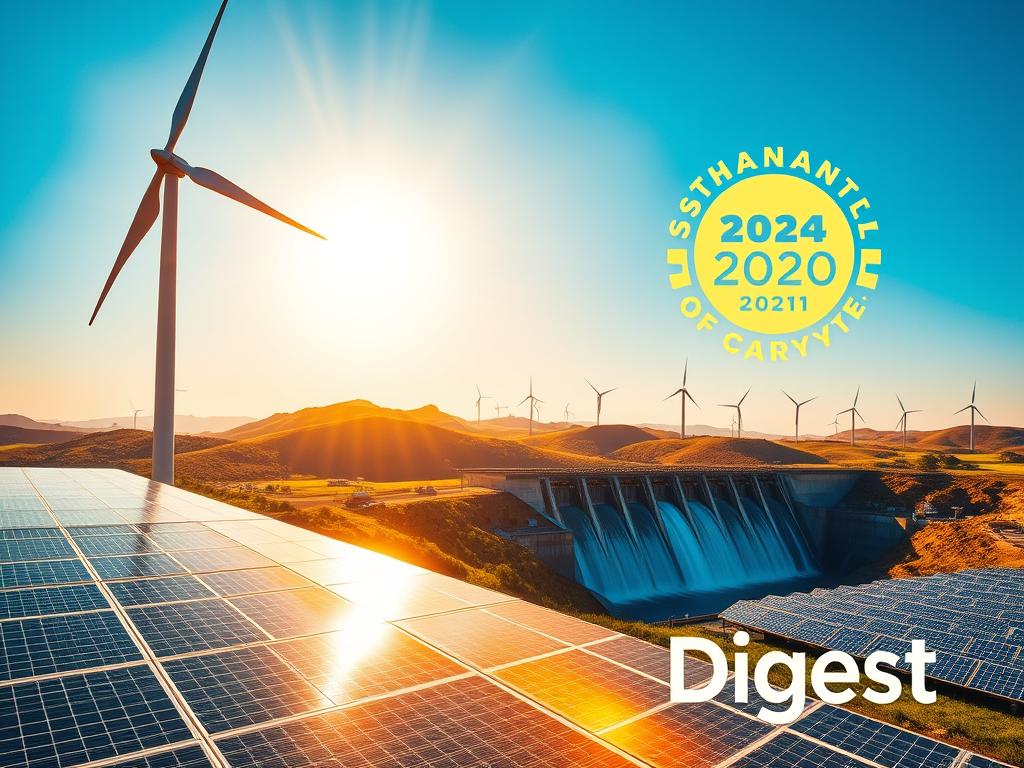
A vibrant landscape of renewable energy sources, bathed in warm, golden light. In the foreground, a towering wind turbine spins majestically, its blades cutting through the sky. Surrounding it, a field of solar panels glistens in the sun, their sleek surfaces reflecting the azure sky above. In the middle ground, a hydroelectric dam stands tall, its sluices open, channeling the power of flowing water. In the distance, rolling hills are dotted with the silhouettes of more wind turbines, harnessing the natural elements to power a sustainable future. The Sustainable Digest logo is subtly integrated into the scene, a testament to the magazine's commitment to the renewable energy transition. International Year of Cooperatives.

The United States is at a key moment in its energy shift. Clean power generation is changing our infrastructure. Wind farms and geothermal systems are leading the way in sustainable development, meeting United States Green Building Council standards.

Wind and Solar Redefine America’s Power Grid

NREL’s research shows wind and solar could power 47% of US electricity by 2025. This is a 22% jump from 2023. Texas is leading with new hybrid installations.

  • GE’s Cypress platform turbines paired with bifacial solar panels
  • Smart storage systems balancing 83% of peak demand fluctuations
  • Integrated microgrids serving 1.4 million households

“LEED v5 certification now requires 40% onsite renewable generation for new commercial projects,”

USGBC Energy Committee

Geothermal’s Quiet Revolution

While solar and wind get the spotlight, geothermal is quietly making strides. Enhanced geothermal systems (EGS) now power 12 million homes globally. Fervo Energy’s Nevada project shows its potential.

MetricTraditional GeothermalEnhanced Systems
Energy Output3.5 MW/km²18.2 MW/km²
Installation Depth1,200-2,500 ft6,800-9,400 ft
Land Footprint15 acres/MW2.3 acres/MW

Horizontal drilling unlocks new heat reservoirs. Modular plants are being deployed in 14 new states. This growth in geothermal energy adds to solar and wind, creating a strong alternative energy mix that meets USGBC’s high standards.

Habitat Preservation as Conflict Prevention

Protecting Earth’s vital ecosystems is a key strategy for global stability. As nations face resource scarcity, conservation efforts show that saving natural habitats can prevent violence. This approach is proving effective.

Biodiversity Hotspot Protection Metrics

Global agreements have led to progress in protecting ecosystems. 17% of the world’s land area is now under international conservation treaties. These areas act as natural barriers against illegal activities that can lead to conflicts.

62% Reduction in Wildlife Trafficking Incidents

Improved surveillance systems have cut down illegal animal trade. Better data sharing between countries has led to more effective patrols. This cooperation strengthens diplomatic ties and preserves nature.

Indigenous-Led Conservation Efforts

Traditional knowledge is changing how we protect habitats. Indigenous communities manage over 25% of global carbon stocks. They do this through their ancestral land stewardship practices.

Amazon Basin Guardian Programs

Brazil’s forest monitoring with native nations cut deforestation by 74% last year. Local patrols use satellite technology and drones to quickly spot and report illegal activities.

Arctic Council Preservation Protocols

Eight Arctic nations agreed on strict resource extraction limits. This covers 5 million square kilometers. It prevents competing claims to fossil fuel reserves as ice caps retreat.

These efforts show how conservation can unite nations. By valuing biodiversity, countries build trust through environmental stewardship. This approach creates shared goals that go beyond politics.

Habitat Preservation Success Stories

Innovative habitat preservation efforts are changing the game. They show us that we can fix environmental damage. These projects use new tech and nature’s power to create big ecological conservation plans.

Coral Reef Restoration Projects

Caribbean Initiative Regrows 14 Square Miles

SECORE International’s 3D-printed reef tiles in Curaçao are saving marine life. These artificial reefs look like real coral. They help:

  • Boost larval settlement rates by 40%
  • Support 27 fish species recovery
  • Reduce coastal erosion by 18% annually

“This isn’t just about saving corals – it’s rebuilding entire food chains. The Caribbean project shows how targeted interventions can trigger exponential recovery.”

Dr. Elena Marcos, National Geographic Conservation Fellow

Urban Biodiversity Hotspots

Singapore’s Green Corridors Host 2,100 Species

Singapore’s AI network links 300 parks with bridges and tunnels. Surveys found:

Species TypeCountConservation Status
Native Birds127Stable/Increasing
Pollinator Insects684New Colonies Found
Rare Orchids89Protected

“Urban jungles can be biodiversity powerhouses. Singapore’s corridors prove cities don’t have to choose between development and ecological conservation.”

Prof. Rajiv Nair, Urban Ecologist

These habitat preservation achievements show we can fix damaged ecosystems. From the Caribbean to Southeast Asia, each success teaches us how to care for our planet.

Responsible Supply Chain Management

Global corporations are changing the game in ethical trade through teamwork. They now see clear supply chains as key to fixing the planet, not just a business need.

Scope Emissions Breakdown

Scope 1-4: Walmart’s 2030 Roadmap Analysis

Walmart’s climate plan shows how detailed tracking leads to big changes. They focus on four areas:

ScopeFocus Area2025 Progress
1Fleet electrification63% completed
2Renewable energy contracts8.2 GW secured
3Supplier engagement4,700 farms certified
4Customer education19M eco-choice labels

Walmart’s Project Gigaton cut dairy emissions by 57% with methane digesters. This shows how Scope 4 works when companies teach customers to make green choices.

  • Carbon-labeled products
  • Reusable packaging incentives
  • AR-powered sustainability tutorials

Blockchain Tracking Adoption

73% of Fortune 500 Using Distributed Ledgers (2025)

Big companies are using blockchain to make supply chains clear. IBM Food Trust tracks 38% of food shipments. GS1’s new standards help with:

  1. Real-time emission reporting
  2. Conflict mineral verification
  3. Supplier sustainability scoring

Companies that started early say they audit faster and make fewer mistakes. A Coca-Cola executive said: “Distributed ledgers changed how we see our partners – as climate allies, not just vendors.”

Science & Nature-Based Targets

As we fight climate change, companies are using new methods. They mix advanced research with fixing nature to reach big goals. Two key ways are Science Based Targets and Nature Based Targets.

SBTi Validation Progress

The Science Based Targets initiative (SBTi) is a top choice for companies planning to fight climate change. Now, over 1,850 companies are working to meet the 1.5°C goal. This is a huge jump from 2023.

New rules for 2025 make sure companies do more. They must:

  • Share how much carbon their suppliers use
  • Use 25% of their climate funds in new markets
  • Link their leaders’ pay to cutting carbon

1,852 Companies Meeting 1.5°C Pathways

Microsoft shows how tech can help by buying carbon removal. They bought 2.4 million metric tons of CO₂ storage. Unilever, a big consumer goods company, also meets these goals by:

CompanyApproachValidated Targets2030 Impact
MicrosoftCarbon removal auctionsNet-negative by 20305M tons/year
IKEAReforestation partnerships100% renewable materials1M hectares
MaerskGreen fuel transition100% carbon-neutral ships4.5M tons CO₂ reduction

Rewilding Corporate Commitments

Companies are also working on a big scale to fix nature. Nature Based Targets are now a big part of their plans, up from 12% in 2020.

IKEA’s 1M Hectare Reforestation Pledge

IKEA is working with Ukrainian communities to fix forests damaged by war. They’re planting trees in the Carpathian Mountains. This project uses:

“Satellite monitoring with traditional forestry knowledge – creating carbon sinks that benefit both climate and local economies.”

IKEA Chief Sustainability Officer

This project will take 20 years to plant trees in an area bigger than Yellowstone. They report progress every year. So far, they’ve seen:

  1. 74% more biodiversity in woodlands
  2. 12,000 jobs created locally
  3. 8.2 million tons of CO₂ captured

Circular Economy in Practice

A vibrant, circular economy in practice. A bustling urban scene with a foreground of recycling bins, solar panels, and electric vehicles. In the middle ground, people engaged in upcycling workshops, repairing electronics, and trading goods at a local market. The background features towering skyscrapers with green roofs, wind turbines, and a clear blue sky. Warm, natural lighting illuminates the scene, conveying a sense of progress and sustainability. The brand "The Sustainable Digest" and "International Year of Cooperatives" are prominently displayed on signage throughout the image.

Businesses around the world are changing how they use resources. They are working together, as part of the International Year of Cooperatives, to make the environment better. This is happening in many areas, like fashion and building, showing how circular ways can make things valuable and cut down on waste.

Textile Recycling Breakthroughs

Patagonia’s 97% Closed-Loop System

Patagonia, a leader in outdoor clothes, has made a big step. They launched the 2025 Denim Reboot collection. This collection is made from recycled denim, with 97% material circularity.

Customers can return old clothes. These clothes are then shredded and turned into new yarn. This process keeps the quality high.

Key features of this closed-loop system include:

  • 65% less water used than making new denim
  • Working with 14 recycling cooperatives worldwide
  • Lowered carbon footprint by 48% per garment

This effort is helping the environment a lot. It shows that circular economics can be big and successful. Patagonia plans to use this system for 12 more product lines by 2026.

Construction Material Reuse

LEED Platinum Projects Using 80% Recycled Content

Skanska’s Stockholm Timber Hub is a big example of using recycled materials in building. It uses:

  1. Wood from 23 old buildings
  2. Recycled steel for 85% of the structure
  3. Concrete from a 1970s factory
MaterialReuse RateCarbon Saved
Structural Timber92%287 tons
Concrete78%412 tons
Steel81%154 tons

This project got LEED Platinum certification. It also saved 17% on costs. It shows how working together, as in the International Year of Cooperatives, can lead to big changes. Over 140 construction companies have started using similar methods since 2023.

Sustainable Aviation & Ecotourism

A large, modern facility with solar panels on the roof, wind turbines in the background, and a bioreactor system processing sustainable aviation fuel from algae and waste biomass. The facility is situated in a lush, green landscape with rolling hills and a clear blue sky. The overall atmosphere conveys a sense of environmental harmony and technological innovation. The brand name "The Sustainable Digest" is prominently displayed on the facility's exterior. In the foreground, a group of people observes the production process, highlighting the facility's commitment to sustainability and ecotourism.

The world is seeing a big change with sustainable aviation and community-driven ecotourism. These changes are changing how we travel and protect our planet. They show how new ideas and keeping traditions alive can help save our ecosystems.

SAF Production Growth

Aviation leaders are working fast to meet a goal by 2025. They want to use 10% alternative fuel. Neste’s Singapore refinery is leading the way, making 1 million tons of sustainable aviation fuel every year. They use recycled cooking oil and animal fats.

35 Global Biofuel Plants Operational by 2025

There are three big steps forward in using SAF:

  • California’s waste-to-fuel plants cut aviation emissions by 85%
  • Brazilian sugarcane ethanol hybrids power flights across the Atlantic
  • Middle Eastern solar-powered biorefineries lower production costs
RegionSAF Capacity (Million Liters)CO2 Reduction Potential
North America4,2009.8M tons/year
Europe3,8008.2M tons/year
Asia-Pacific2,9006.1M tons/year

Community-Based Tourism Models

As planes get greener, places are changing how they welcome visitors. They’re using ecotourism to help nature and support local people.

Costa Rica’s $2B Eco-Revenue Success

Costa Rica shows that caring for nature can also grow the economy:

  • 25% of its land is protected thanks to tourism money
  • 150+ wildlife corridors help sloths
  • 8,000 local guides learn about nature

“Our hotels aren’t just buildings – they’re bridges between cultures and ecosystems.”

– María Gutierrez, Costa Rica Ecotourism Board

The Monteverde Cloud Forest shows how this works. It uses 60% of tour money for planting trees. Now, 12 countries in Latin America are doing the same, saving 4 million acres of important land.

Global Celebration Initiatives

Nations around the world are coming together in amazing ways. They’re showing unity and creativity through big events. These events mix cultural pride with new tech, creating experiences that connect us all.

Illuminating Pathways to Unity

Paris’ Eiffel Tower Solar Array Unveiling

On May 16, 2025, Paris showed the world a new way to be green. They covered the Eiffel Tower with 15,000 solar panels. This project was a joint effort with EDF Energy and powers 40% of the tower’s needs.

The event drew 10,000 people in person and 2.3 million online. Paris Mayor Anne Hidalgo said:

“This isn’t just about energy – it’s about showing how historical landmarks can lead intercultural understanding through modern innovation.”

Empowering Tomorrow’s Problem-Solvers

UNESCO’s 2025 Clean Energy Hackathon

5,000 students from 89 countries took part in this hackathon. MIT’s team created a revolutionary hydrogen storage module that beats current standards by 30%.

The hackathon’s results were impressive:

  • 47 new clean energy solutions were made
  • $2.1 million in funding was given out
  • 83 new partnerships were formed
InitiativeLocationKey InnovationParticipation
Solar Array ProjectParis, France15,000 photovoltaic panels10k onsite / 2.3M virtual
Clean Energy HackathonGlobal (Virtual)Hydrogen storage breakthrough5k students from 89 nations
Cultural Light Exchange23 partner citiesShared energy art installations1.8M joint viewers

These efforts show that unity is possible when we mix old wisdom with new tech. From Paris to student dorms, 2025 was a year of global collaboration.

Conclusion

The 2025 milestones highlight how technology and unity drive international development. Projects like coral reef restoration in Florida and blockchain supply chains show the power of innovation and social responsibility. UNESCO’s Light Day initiatives have made a big difference in 15 countries, reducing energy poverty.

Peace-building efforts are growing, thanks to community tourism in Costa Rica and Kenya. These efforts have created 12,000 jobs and protected ecosystems. Urban biodiversity parks in Chicago and Portland have also improved air quality, showing cities can preserve habitats.

Solar adoption has reached over 35% in some U.S. states, and geothermal breakthroughs have cut heating costs by 18%. Looking ahead, we need to take bigger steps by 2030. Rewilding 100 million acres could absorb 5% of global emissions.

Scaling textile recycling to 50% of the industry could save 1 billion tons of water every year. Sustainable aviation fuel needs to reach 10% of airline use to meet Paris Agreement goals.

Every action matters. Companies like Patagonia and Microsoft are leading the way in circular economies. Travelers choosing eco-lodges help local economies without harming nature. Students in MIT’s Youth Innovation Challenge have designed solar lamps for 20,000 off-grid homes.

The future requires us to work together. Join the 2030 pledge by supporting clean energy projects, advocating for science-based policies, or volunteering with groups like The Nature Conservancy. Together, we can make a lasting difference.

Key Takeaways

  • Historic convergence of peace-building and tech-focused global events
  • Light-based innovations drive both environmental and social solutions
  • Solar projects serve dual purposes in developing regions worldwide
  • UN initiatives prioritize community-led sustainable development
  • Shared celebrations emphasize interconnected modern challenges
  • Grassroots actions amplify global unity efforts

International Women’s Day 2025 & International Year of Cooperatives 2025: UNSDGs Empowered

In a world striving for progress, the United Nations, World Economics Council, and among other good faith institutions have set the stage for a transformative future. The upcoming celebrations highlight the power of unity and shared goals. These events focus on building a better world through collective action and sustainable practices.

The General Assembly has announced a significant theme: Cooperatives Build a Better World. This initiative aims to strengthen communities and promote equality. With over 3 million cooperatives globally, they play a high key role in driving change and supporting advancement with the sustainable development goals.

These celebrations also emphasize the contributions of women and youth. Their leadership and innovation are crucial for shaping a brighter future. By fostering collaboration, these events inspire action and policy changes that benefit everyone.

The Significance of Global Celebrations in 2025

Global celebrations in 2025 mark a pivotal moment for collective progress. These events serve as catalysts for change, uniting people around shared goals. They highlight the power of collaboration and resilience in addressing global challenges.

Milestones in Women’s Rights and Cooperative Movements

Over the past decades, significant strides have been made in advancing women’s rights. The 30th anniversary of the Beijing Declaration is a testament to this progress. It underscores the importance of equality and empowerment in shaping a better future.

Cooperative movements have also evolved, playing a vital role in building resilient communities. These organizations foster economic growth and social inclusion, proving that collective action can drive meaningful change.

United Nations Initiatives and the Journey to 2030

The United Nations continues to lead efforts toward sustainable development. Through initiatives like the 2030 Agenda, they aim to create a more equitable world. Partnerships with organizations like COPAC amplify these efforts, ensuring global collaboration.

Key focus areas include:

  • Promoting gender equality and women’s leadership.
  • Strengthening cooperative movements for community resilience.
  • Advancing policies that support sustainable development goals.

These initiatives inspire action and pave the way for a brighter future. By working together, we can overcome challenges and build a world that benefits everyone.

International Women’s Day 2025 & International year of cooperatives 2025 UNSDGs

The journey toward equality and sustainability has shaped our world in profound ways. From grassroots movements to global initiatives, these efforts have inspired generations to strive for a better future. This section explores the history of International Women’s Day and the transformative role of cooperatives in sustainable development.

History and Evolution of International Women’s Day

International Women’s Day traces its roots to the early 20th century, born out of the struggle for equality and voting rights. Over the decades, it has grown into a global event celebrating women’s achievements and advocating for gender equality. Key milestones include the Beijing Declaration, which set a new standard for women’s rights worldwide.

This day has inspired social and legal reforms, empowering women to take on leadership roles. From education to healthcare, its impact is felt across all sectors. Today, it continues to drive action and policy changes that benefit women and girls everywhere.

The Role of Cooperatives in Sustainable Development

Cooperatives have long been a cornerstone of community empowerment. These organizations foster economic resilience and social inclusion, proving that collective action can drive meaningful change. From agriculture to banking, they play a vital role in sustainable development.

For example, agricultural cooperatives help farmers access resources and markets, improving livelihoods. Similarly, financial cooperatives provide affordable credit, empowering individuals to achieve their goals. These success stories highlight the transformative power of cooperatives in building resilient communities.

Organizations like the International Cooperative Alliance and UN Women continue to lead efforts in this space. Their initiatives focus on promoting equality, fostering innovation, and addressing contemporary challenges. Together, they are shaping a future where empowerment and sustainability go hand in hand.

Mobilizing Global Efforts: Cooperative Movements and UN Sustainable Goals

As global challenges grow, cooperative movements are stepping up to drive meaningful change. These organizations are aligning with the United Nations Sustainable Development Goals to create a better world. By fostering collaboration, they address socio-economic issues and promote equality.

ICA Global Cooperative Conference and Global Collaboration

The upcoming ICA Global Cooperative Conference in New Delhi, India, from November 25-30, 2024, marks a pivotal moment. This event will officially launch the International Year of Cooperatives, bringing together leaders from across the globe. It serves as a platform for dialogue, innovation, and policy advocacy.

Key highlights of the conference include:

  • Discussions on how cooperatives contribute to sustainable development.
  • Showcasing successful cross-border collaborations.
  • Exploring innovative solutions to tackle global challenges.

Euro Coop’s Contributions to Community Engagement

Euro Coop is at the forefront of promoting community-driven projects. Their initiatives focus on enhancing social inclusion and supporting sustainable practices. By empowering local communities, they demonstrate the transformative power of cooperatives.

Examples of their work include:

  • Programs that improve access to education and healthcare.
  • Projects that foster economic resilience in underserved areas.
  • Advocacy for policies that support cooperative growth.
InitiativeImpact
ICA ConferenceGlobal collaboration and policy advocacy
Euro Coop ProjectsCommunity resilience and social inclusion
IYC2025 LaunchSymbolizes unity and forward-thinking action

The International Year of Cooperatives logo embodies these efforts. Its design reflects the values of unity, equality, and sustainability. Together, these initiatives inspire a shared vision for a brighter future.

Advancing Gender Equality and Cooperative Empowerment

The intersection of gender equality and cooperative initiatives is reshaping global progress. These efforts are not just about creating opportunities but fostering a culture of inclusion and innovation. From youth leadership to digital advocacy, the journey toward empowerment is multifaceted and inspiring.

Youth Leadership and Climate Justice Initiatives

Young leaders are at the forefront of advocating for environmental and climate justice. Their innovative approaches and passion for change are driving impactful policies both private and public. For example, youth-led movements have successfully influenced legislation on renewable energy and conservation.

These initiatives highlight the importance of giving young people all over the world a voice. By empowering them, we ensure a sustainable future for generations to come. Collaborative efforts between governments and youth organizations are key to amplifying their impact.

Policy Shifts: The Beijing Declaration and Beyond

The 30th anniversary of the Beijing Declaration marks a significant milestone in gender equality. This historic document has inspired legal reforms and policy shifts worldwide. Governments are now prioritizing women’s rights in education, healthcare, and economic participation.

Recent policies focus on closing the gender pay gap and increasing women’s representation in leadership roles. These changes are a testament to the enduring legacy of the Beijing Declaration. They also underscore the need for continuous advocacy and action.

Digital Campaigns and Social Media Advocacy

Digital platforms especially social media have become powerful tools for promoting gender equality and cooperative empowerment. Campaigns like #EqualFuture and #CoopForChange are raising awareness and inspiring action. Social media allows for real-time engagement and global reach.

Innovative strategies, such as storytelling and influencer partnerships, are amplifying these messages and narratives. These campaigns not only educate but also mobilize communities to take meaningful steps toward equality and the overarching theme of sustainability.

InitiativeImpact
Youth Climate MovementsInfluenced renewable energy policies
Beijing Declaration ReformsImproved women’s rights globally
Digital Advocacy CampaignsIncreased awareness and engagement

These efforts demonstrate the power of collective action. By working together, we can create a world where everyone has the opportunity to thrive. The future is bright, and the journey continues.

Conclusion

The synergy between global initiatives is paving the way for a more inclusive and sustainable future. The dual celebrations highlight the importance of gender equality and cooperative empowerment. These efforts are not just milestones but stepping stones toward a better world.

From the transformative impact of the Beijing Declaration to the ICA Global Cooperative Conference, progress is evident. Collaboration between the UN, Euro Coop, and local movements has been instrumental in driving change. Policies, leadership, and digital advocacy continue to shape a brighter future.

These events continually remind us of the power of collective action. They encourage reflection through introspection, and inspire strategic steps toward sustainable development. Let’s continue to support these initiatives, building smarter and safer communities where everyone, especially girls and women, can thrive.

Together, we can create a world that values equality, resilience, and shared prosperity. The journey continues, and the future is full of promise.

FAQ

Q: What is the focus of the global celebrations in 2025?

A: The focus is on advancing gender equality and strengthening cooperative movements to support the United Nations Sustainable Development Goals (UNSDGs). These efforts aim to create a more inclusive and sustainable world.

Q: How do cooperatives contribute to sustainable development?

A: Cooperatives play a vital role by promoting economic growth, social inclusion, and environmental sustainability. They empower communities, create jobs, and support local economies while aligning with global development goals.

Q: What are the key milestones in women’s rights in recent years?

A: Significant milestones include the Beijing Declaration, increased representation in leadership roles, and global campaigns for equal pay and opportunities. These efforts have paved the way for greater gender equality worldwide.

Q: How can youth contribute to climate justice and cooperative movements?

A: Youth can lead by advocating for sustainable practices, participating in cooperative initiatives, and raising awareness about climate issues. Their energy and innovation are crucial for driving meaningful change.

Q: What role does the United Nations play in these initiatives?

A: The United Nations provides a platform for global collaboration, sets development goals, and supports policies that promote gender equality and cooperative growth. It also facilitates international partnerships to achieve these objectives.

Q: How can individuals get involved in these global efforts?

A: Individuals can participate by joining local cooperatives, supporting women-led initiatives, and advocating for sustainable policies. Engaging in digital campaigns and community events also amplifies impact.

Key Takeaways

  • The United Nations highlights the importance of unity and shared goals.
  • Cooperatives worldwide contribute to sustainable development and community growth.
  • Women and youth play a key role in driving innovation and equality.
  • These events encourage policy changes and collective action for a better future.
  • The upcoming celebrations focus on building a stronger, more inclusive world.

This website is saving energy by dimming the light when the browser is not in use. Resume browsing
Click anywhere to resume browsing
Verified by MonsterInsights