Biomimicry Solutions for Resilient, Circular Agriculture and UN SDGs

Biomimicry resiliency agriculture circularity for United Nations SDGs

Nature has been testing its systems for 3.8 billion years. It shows us how to stay productive under stress and recycle everything. Biomimicry in agriculture uses these lessons to improve farming.

In the United States, “resilient” farming means staying profitable through tough weather and rising costs. “Circular” farming aims to reduce waste by keeping nutrients and water on the farm. This approach uses nature’s wisdom while still meeting farming needs.

This article focuses on practical steps for farms to become more circular. It covers soil health, water use, biodiversity, and using data to reduce waste. It connects these ideas to the UN’s Sustainable Development Goals for agriculture, making them accessible to farmers.

The article looks at different farming types across the United States. It recognizes that what works in one place might not work elsewhere. The goal is to design better farming systems that fit real-world challenges.

What Biomimicry Means for Resilient, Circular Agriculture

In farm talk, “nature-inspired” can mean anything from cover crops to clever marketing. Biomimicry in agriculture is more precise. It’s a design method that starts with a function, like holding water or cycling nutrients. It then looks at how nature already solves these problems.

The Biomimicry Institute and Biomimicry 3.8 helped set this standard. They keep biomimicry focused on real research and development, not just a green feeling.

Biomimicry vs. regenerative agriculture vs. agroecology

When comparing regenerative agriculture, the real difference is the job each framework does. Regenerative agriculture focuses on healthier soil and more biodiversity. Biomimicry, on the other hand, offers a method to design practices and systems.

The debate between agroecology and regenerative agriculture adds another layer. Agroecology uses ecological science and social context to shape farming. Biomimicry is more about inventing tools and systems based on nature.
FrameworkMain focusWhat it tends to change on farmsHow success is discussed
BiomimicryDesign process inspired by biology (function first)System layout, materials, technologies, and management “rules” modeled on natural strategiesPerformance against a function: fewer losses, stronger feedback loops, and lower waste
Regenerative agricultureOutcomes for soil, water, carbon, and biodiversityCover crops, reduced disturbance, integrated grazing, and habitat supportField indicators: aggregate stability, infiltration, nutrient efficiency, and resilience to stress
AgroecologyEcological science plus social and economic realitiesDiversified rotations, local knowledge, and governance choices across landscapesSystem outcomes: productivity, equity, and ecological function at farm and community scale

Resilience and circularity principles found in ecosystems

Nature runs efficiently without waste. Ecosystems rely on simple principles: nutrients cycle, energy cascades, and waste becomes feedstock. This translates to tighter nutrient loops and smarter use of residues on farms.

Resilience is about structure, not just slogans. Ecosystems build redundancy and diversity to avoid disasters. They use feedback loops for quick adjustments, not surprises at the end of the year.

  • Redundancy to prevent single-point failure in crops, water, and income streams
  • Distributed storage (carbon in soil and biomass) instead of one big “tank” that can leak
  • Local adaptation that respects soil types, microclimates, and pest pressure
  • Cooperation and competition balanced through habitat, timing, and spatial design

Why nature-inspired design fits U.S. farming realities

U.S. farms operate within rules and constraints. Crop insurance, USDA programs, and irrigation schedules shape decisions. Resilient farm design in the U.S. must work within these rules.

Biomimicry is valuable because it views constraints as design inputs. Nature outperforms human systems in waste elimination and risk control. By applying nature’s logic to farms, we can redesign field edges, adjust rotations, and rethink water flow.

Biomimicry resiliency agriculture circularity for United Nations SDGs

A vibrant scene depicting biomimicry in agriculture, showcasing a circular farm designed for resiliency, inspired by nature’s ecosystems. In the foreground, diverse crops thrive symbiotically, illustrating natural pest control and nutrient cycling, featuring professional individuals in modest attire examining plants. The middle ground reveals innovative farming techniques, such as vertical gardens and aquaponics systems, integrating organic waste recycling. In the background, a picturesque landscape shows renewable energy sources like wind turbines and solar panels, symbolizing sustainability. Soft, golden lighting bathes the scene, creating a warm, inviting atmosphere. A sense of harmony and balance reflects the United Nations Sustainable Development Goals, promoting sustainable agriculture and environmental stewardship. The Sustainable Digest logo subtly integrated into the scene.

Biomimicry is like a strategy generator. Ecosystems test what works under stress. Farms aim for resilience and circularity, using the SDGs as a guide.

Farms face a big challenge. They must fight climate change, protect biodiversity, and keep costs low. Biomimicry helps by using nature’s designs to balance these needs.

How nature-based strategies map to SDG targets

Nature-based solutions align with SDG targets. They show clear results on the ground. For example, water-saving irrigation and healthier soils meet these targets.

Biomimicry-aligned moveFarm outcomeSDG targets agriculture alignmentTypical proof point
Landscape-style water routing (micro-catchments, contour thinking)Higher irrigation water productivity during heat and dry spellsSDG 6 (water use efficiency, watershed protection)Yield per acre-foot; pumping energy per acre
Soil as a “carbon bank” (aggregation, roots feeding microbes)Soil organic matter gains with better infiltrationSDG 13 (climate mitigation and adaptation)Soil organic carbon change; reduced runoff events
Habitat mosaics that mimic edge-rich ecosystemsMore natural enemies; steadier pollination servicesSDG 15 (life on land, biodiversity)Pollinator habitat acreage; pesticide risk reduction index
Nutrient cycling modeled on closed loopsLower losses of nitrogen and phosphorus; fewer waste costsSDG 12 (responsible consumption and production)Nitrogen use efficiency; manure methane capture rate
Diversity for stability (varied rotations, mixed cover species)Reduced yield swings; fewer “single point of failure” seasonsSDG 2 (productive, resilient food systems)Multi-year yield stability; erosion risk score
Agriculture, Land, Farm image.

From on-farm outcomes to measurable sustainability indicators

Procurement programs want verified performance, not just good intentions. Sustainability indicators help turn field changes into numbers. These numbers are useful for audits and dashboards.

Metrics like nitrogen use efficiency and soil organic carbon change are key. They help farms meet ESG reporting requirements without becoming paperwork factories.

Where farms, supply chains, and policy intersect

Supply chains are setting higher standards. Food companies want quantified outcomes, not just claims. Sourcing programs need verification across seasons.

Policy affects what’s possible. USDA NRCS standards and climate pilots can help or complicate things. Biomimicry offers a clear path through this complexity, focusing on performance and risk.

Nature-Inspired Soil Health and Carbon Sequestration Strategies

In forests and prairies, soil acts like a living system. It holds shape, moves water, and keeps nutrients in balance. biomimicry soil health treats the field as a system, not a factory. It uses familiar strategies like less disturbance, more living roots, steady organic inputs, and rotations.

These methods help with carbon sequestration farming. But, they don’t follow a set schedule. Nature stores carbon slowly, while people want quick results. That’s why tracking progress is key.

Building living soils with fungal networks and aggregation analogs

Fungal networks in agriculture use thin hyphae like rebar. They bind particles and feed microbes, making sticky exudates. This creates stable soil crumbs that hold water and reduce erosion.

Management aims to protect this structure. It uses strip-till or no-till, keeps residue cover, and plans fertility carefully. This keeps pores connected, allowing for better movement of oxygen, roots, and nutrients.

Soil and Carbon Strategies Continuing

Cover crop “ecosystems” for nutrient cycling and erosion control

Cover crop ecosystems are like designed communities. Legumes provide nitrogen, grasses build biomass, and brassicas push roots into tight zones. They slow erosion and keep roots trading sugars with soil life longer.

This diversity spreads risk. One species may stall in cold springs, while another keeps growing. How and when you terminate cover crops affects soil temperature, weed pressure, and nutrient cycling.

Biochar and natural carbon storage models

Biochar soil carbon mimics long-lived carbon pools in stable soils. The recipe matters: feedstock, pyrolysis conditions, and application rates. Many growers blend or co-compost biochar to reduce early nutrient tie-up.

Verifying carbon sequestration farming claims is complex. Soil carbon changes with landscape, depth, and past management. Reliable accounting uses repeatable protocols and good field data.

Flowers, Tulips, Flower background image.
Nature-inspired leverField practice examplesWhat it changes in soil functionVerification and expectations
Fungal-driven structure (fungal networks agriculture)Reduced disturbance; strip-till/no-till where appropriate; residue retention; biology-supportive fertilityImproves infiltration, aggregate stability, and drought buffering via mycorrhizae soil aggregationTrack infiltration, aggregate stability tests, and consistent SOC sampling depth over multiple seasons
Multi-species cover crop ecosystemsLegume–grass–brassica mixes; staggered seeding windows; termination matched to planting plansBoosts nutrient cycling, reduces nitrate leaching risk, and limits wind/water erosionMeasure biomass, ground cover days, nitrate tests where used, and repeatable management records
Stable carbon analogs (biochar soil carbon)Select verified feedstocks; match pyrolysis to goals; blend or co-compost; apply at agronomic ratesAdds persistent carbon forms and can improve nutrient retention depending on soil and blendDocument batch specs, application rate, and sampling design; expect gradual change, not instant miracles

Water Efficiency and Drought Resilience Through Biomimicry

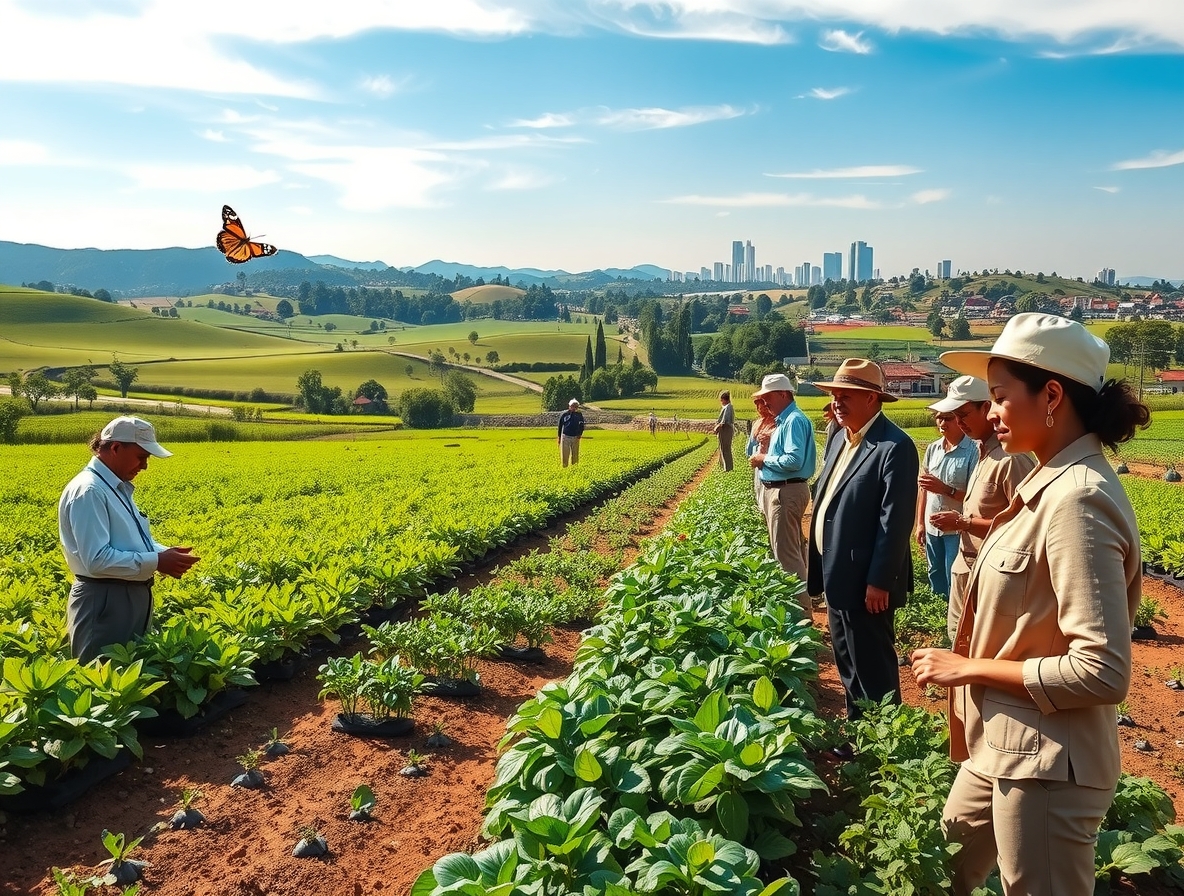
A lush agricultural landscape inspired by biomimicry, showcasing innovative water-efficient farming methods. In the foreground, a diverse group of farmers in professional attire engage with advanced irrigation systems mimicking natural water cycles, utilizing sustainable materials. The middle ground features crops thriving with minimal water, supported by innovative soil structures that enhance moisture retention, with plants resembling natural vegetation patterns. In the background, vibrant hills absorb sunlight under a clear blue sky, with gentle sunlight cast from a low angle, creating soft shadows that enhance the colors. The atmosphere conveys a sense of hope and resilience, reflecting sustainable practices that align with water efficiency and drought resilience. Image branded with "The Sustainable Digest".

In the U.S. West, water use is under scrutiny. The Ogallala Aquifer’s decline shows the need for careful water use. Biomimicry teaches us to use water like nature does—capture, slow, sink, store, and reuse it.

Effective drought farming focuses on small improvements. It’s not about finding a single solution. Instead, it’s about reducing waste and using water wisely.

Fog harvesting, dew capture, and micro-catchment concepts

Nature can pull water from the air. Fog harvesting uses this idea to collect water near coasts. It’s useful for crops, young trees, and water for livestock.

Micro-catchments mimic desert landscapes. They slow down water flow and help plants absorb it. This method keeps water in the soil, even when the weather is unpredictable.

Keyline design, contouring, and watershed thinking inspired by landscapes

Landforms manage water naturally. Farms can learn from this. Keyline design uses earthworks to slow and spread water.

Contour farming also helps manage water. It uses grassed waterways and buffers to keep soil in place. This approach is part of conservation planning and local rules.

Soil moisture retention lessons from arid ecosystems

Arid areas cover the ground to prevent evaporation. Using mulch and organic matter does the same. This keeps the soil moist during dry times.

Ecological design works well with technology. Drip irrigation and scheduling save water. The goal is to keep water in the soil, not let it evaporate.

Biomimicry-inspired tacticHow it saves waterBest-fit U.S. use caseKey constraint to watch
fog harvesting agriculture collectors and dew surfacesCaptures small, steady moisture inputs for on-site storageCoastal or high-humidity zones; nurseries; remote stock tanksLow yield in hot, dry interior air; needs cleaning and wind-safe anchoring
Micro-catchments and planted basinsSlows runoff; increases infiltration near rootsOrchard establishment; rangeland restoration; slope edgesSoil crusting or overflow on intense storms if sizing is off
keyline design farms earthworks and strategic rippingRedistributes water across ridges and valleys; reduces concentrated flowMixed operations with pasture-crop rotations; rolling terrainRequires skilled layout; mistakes can create gullies or wet spots
contour farming watershed management with buffers and waterwaysProtects infiltration areas; reduces sediment and nutrient lossRow crops on slopes; fields draining to creeks or ditchesEquipment passes and maintenance planning must match field operations
Soil cover, windbreaks, and organic matter buildingLowers evaporation; improves water holding capacity and infiltrationDryland grains; irrigated systems aiming to cut pumpingResidue can affect planting and pests; timing matters for soil temperature

Pollinator Support and Biodiversity-Driven Pest Management

In many U.S. farms, biodiversity is seen as just decoration. But it’s much more than that. It helps keep yields steady, protects against risks, and prevents one pest problem from ruining the whole season.

Pollinator habitat farms are built to attract and keep pollinators and predators. They offer food and shelter, helping these beneficial insects work well even when the weather is bad. It’s not just about beauty; it’s about managing risks.

“Ecosystem services” might sound like a fancy term, but the results are clear. Better pollination means more fruit and better quality. Natural enemies also help control pests, avoiding big problems after spraying.

In the world of beneficial insects, lady beetles, lacewings, and wasps are the heroes. They don’t replace scouting, but they help keep pest numbers low. This protects the quality and timing of crops.

Pest Management Continuing

Biomimicry pest control looks to nature’s edge-rich landscapes for inspiration. Features like hedgerows, prairie strips, and flowering borders offer shelter and food. They’re placed carefully to avoid disrupting farming activities.

Habitat corridors help connect these areas, making it easier for beneficial insects to move. The goal is a farm that works well, not just looks good.

Integrated pest management biodiversity is all about using nature’s help. First, you monitor and set thresholds. Then, you use diverse rotations, trap crops, and pheromone traps to control pests. Sprays are used only when necessary.

In the U.S., pollination is a big deal, especially in places like California almonds. But wild pollinators are also crucial, especially when honey bees can’t keep up with the demands of different crops and regions.

The cheapest pest control is often a balanced ecosystem; unfortunately, it doesn’t come in a jug with a label and an instant rebate.

Design moveWhat it mimics in natureOn-farm benefitFit with IPM decisions
Hedgerows prairie stripsEdge habitat with continuous bloom and shelterSteadier pollination and more predator habitat near crop rowsSupports prevention so thresholds are reached later
Beetle banks and grassy refugesGround cover that protects overwintering predatorsMore early-season predation on aphids and caterpillarsReduces “first flush” pressure that triggers early sprays
Flowering field bordersNectar corridors that fuel adult parasitoidsStronger parasitic wasp activity and fewer secondary pest spikesImproves biological control alongside scouting and trapping
Riparian buffersStable, moist microclimates with layered vegetationHabitat for diverse beneficials and better water-quality protectionHelps keep interventions targeted by limiting field-wide flare-ups
Habitat corridors farmlandConnected travel routes across mixed vegetationFaster recolonization after disturbance and better season-long stabilityPairs with selective products to preserve natural enemies

Circular Nutrient Systems and Waste-to-Value Farm Loops

A vibrant, circular nutrient systems agriculture scene depicting an innovative farm setup utilizing waste-to-value loops. In the foreground, diverse crops flourish in raised circular beds, interspersed with compost bins and nutrient recycling systems. In the middle ground, a group of professionals in modest casual clothing discusses sustainable practices, with digital tablets in hand, surrounded by lush greenery and small-scale aquaculture systems. The background features rolling hills with solar panels and wind turbines, symbolizing renewable energy integration. Soft, warm sunlight filters through clouds, casting a golden hue over the landscape, creating an atmosphere of hope and innovation. The overall mood is vibrant and dynamic, reflecting resilience and collaboration in farming practices. The image is for an article by The Sustainable Digest.

In circular nutrient systems, the aim is to keep nutrients moving with little loss. Ecosystems do this naturally. Farms must design and follow rules to achieve this.

The best loops treat waste as a valuable resource. They track nutrients and manage risks. This approach ensures nutrients are used efficiently.

Manure, composting, and anaerobic digestion in closed-loop models

Manure management through anaerobic digestion turns waste into biogas. The leftover digestate must be stored and applied carefully. The success depends on permits, distance, odor control, and nutrient matching.

Composting Strategies

Composting farm waste is a slower but steady method. It stabilizes organic matter and reduces pathogen risk. Proper management of moisture, aeration, and carbon-to-nitrogen ratio is key.

Loop optionPrimary outputKey management leversCommon watch-outs
Composting farm wasteStabilized compost for soil structure and biologyMoisture control, oxygen flow, C:N ratio, curing timeOff-odors if too wet; nutrient loss if piles run hot and unmanaged
Manure management anaerobic digestionBiogas/RNG plus digestate nutrientsFeedstock consistency, digester temperature, solids separation, storage planningPermitting timelines; nutrient over-application if digestate is treated as “free”
Direct manure use with safeguardsFast nutrient supply with organic matterApplication timing, incorporation method, setback distances, weather windowsRunoff risk during storms; volatilization losses when left on the surface

On-farm nutrient recapture and precision placement

Nutrient recapture starts with soil tests and ends with precise application. This ensures nutrients are used efficiently. Variable-rate application and controlled-release products help.

In irrigated systems, fertigation keeps nitrogen doses small. Edge-of-field practices like wetlands and buffers also help. They keep nutrients from leaving the farm.

Byproduct valorization across local supply chains

Waste-to-value agriculture uses materials beyond the farm. Brewery spent grain and cotton gin trash can be used. Rice hulls and food processing residuals also have value.

Local supply chain byproducts include green waste. It can boost compost volumes if managed well. Logistics and specifications are key to turning waste into valuable inputs.

Biomimicry in Farm Design, Materials, and Infrastructure

In agriculture, the biggest problem is often not the crop. It’s the buildings that get too hot in summer or flood in spring. Biomimicry makes barns, pack sheds, and storage work like systems, not just buildings. By managing heat, wind, and water, downtime and repairs decrease.

Passive design leads to smart solutions. Barns can use the design of termite mounds to stay cool. They have tall paths for hot air to leave and cool air to enter, without big fans.

Greenhouse design mimics nature by controlling light and humidity. The right colors and textures can reflect sun like desert plants. This reduces stress on plants and keeps workers safe.

Choosing materials is key because a building’s impact is tied to its supply chain. Nature-inspired materials use smart designs to be strong yet light. This approach is good for the planet and keeps buildings safe and clean.

Circular materials are also important. Designing for easy disassembly and repair helps keep materials in use. This is practical when parts are hard to find and budgets are tight.

Rice terraces, Rice paddies, Agriculture image.

Biomimicry adaptation continuing

Design moveNatural analogWhere it fits on U.S. farmsOperational value
Stack-driven ventilation pathsTermite mound airflow channelspassive cooling barns, commodity storage, milk roomsLower heat stress; steadier air quality with fewer moving parts
High-reflectance surfaces and timed shadeDesert species that reduce heat absorptiongreenhouse design biomimicry, shade structures, equipment sheltersReduced peak temperatures; less HVAC demand during heat waves
Geometry-led strengthBone lattices and honeycomb efficiencysustainable farm buildings, retrofitted trusses, modular partitionsMaterial savings; easier handling; fewer structural failures
Design for disassembly and reuseEcosystems that cycle nutrients without wasteWall panels, flooring, roofing, interior fit-outsFaster repairs; lower waste; supports circular materials planning

Energy is as important as walls and roofs. Solar power and small grids can support farm infrastructure. They help when fuel prices rise or the grid fails.

Most farms can’t start over, and no one has time for big changes. Small upgrades like better airflow and insulation make a big difference. These changes bring nature’s wisdom into everyday farm life.

Technology and Data: Biomimetic Innovation in AgTech

A futuristic agricultural landscape featuring precision agriculture AI at work. In the foreground, a diverse team of agricultural experts in professional attire examines high-tech drones and sensors that monitor crop health and soil conditions. The middle ground showcases lush, biomimetic farmland with crops aligned in perfect rows, thriving thanks to advanced AI technology. Smart irrigation systems are visible, using data to optimize water usage. In the background, rolling hills are dotted with renewable energy wind turbines under a bright, sunny sky. The scene is illuminated with warm, natural lighting that conveys a sense of hope and innovation, highlighting sustainable practices in agriculture. The overall mood is one of progress and harmony with nature, reflecting a vision for resilient, circular agriculture supported by technology. The brand logo "The Sustainable Digest" subtly integrated into the landscape.

In resilient, circular farming, technology is like a nervous system, not just a display of dashboards. biomimetic AgTech focuses on feedback, aiming to sense changes early and respond quickly. It also tries to waste less. Nature does this without needing weekly meetings, which seems like a missed chance for most software.

Swarm intelligence for robotics, scouting, and logistics

Swarm robotics agriculture takes cues from ants, bees, and birds. It uses many small agents with simple rules for steady coordination. In fields, this means multiple lightweight machines scouting, spot-spraying, or moving bins with less compaction than one heavy pass.

This approach often leads to timeliness. It catches weeds or pests early, before they become a big problem. Decentralized routing also helps when labor is tight and schedules slip. A swarm can split tasks across zones, then regroup as conditions change.

This flexibility supports adaptive management farming. Operations can shift without rewriting the whole playbook.

Sensor networks modeled on biological feedback systems

Organisms survive by sensing and responding; farms can do the same with sensor networks. Soil moisture probes, canopy temperature, sap flow, on-site weather stations, and nutrient sensors guide irrigation and fertility decisions. The goal is a tight loop: measure, interpret, adjust, and verify.

But data is not always truth. Calibration, placement, and interoperability matter. A drifted probe can “prove” a drought that is not there. Strong farm sensor networks treat maintenance like agronomy—routine, logged, and worth the time.

Signal capturedCommon field toolsOperational decision supportedCredibility check that prevents bad calls
Root-zone water statusSoil moisture probes; tensiometersIrrigation timing and depth by zoneSeasonal calibration; compare with shovel checks and ET estimates
Plant heat stressCanopy temperature sensors; thermal imageryTrigger cooling irrigation; adjust spray windowsAccount for wind and humidity; validate with leaf condition scouting
Plant water movementSap flow sensorsDetect stress before visible wiltBaseline each crop stage; flag outliers for field inspection
Microclimate riskOn-farm weather stationsFrost prep; disease pressure windowsSensor siting standards; cross-check with nearby station patterns
Nutrient dynamicsNitrate sensors; EC mapping; lab samplingSplit applications; prevent losses after rainPair sensors with lab tests; document sampling depth and timing

AI decision support for adaptive management and risk reduction

precision agriculture AI merges forecasts, soil readings, pest pressure, and equipment limits to suggest practical options. Used well, it supports scenario planning and early warnings. This is risk reduction agriculture technology at its best: fewer surprises, fewer rushed passes, and fewer expensive “fixes” later.

The fine print is governance. Data ownership terms, vendor lock-in, and algorithm transparency shape whether insights can be trusted, shared, or audited. For sustainability claims and SDG-aligned reporting, defensible data trails matter. Adaptive management farming depends on knowing what was measured, how it was modeled, and who can verify it.

UN SDGs Impact Pathways for U.S. Agriculture

Impact pathways make the SDGs feel less like a poster and more like a scorecard. In SDGs U.S. agriculture, the pathway usually starts on the field, then moves through the supply chain, and ends in the county budget (where reality keeps excellent records). Biomimicry fits here because it turns ecosystem logic into repeatable farm decisions; less hype, more feedback loops.

To track progress, it helps to watch three kinds of change at once: operations, markets, and community outcomes. When those signals move together, the SDGs stop being abstract and start acting like a shared language that lets USDA programs, state agencies, and corporate buyers briefly pretend they speak the same dialect.

Hoi an, Farm, Farmer image.

SDG 2, SDG 12, and SDG 13

For SDG 2 zero hunger farming, the pathway is resilient yields plus stable nutrition supply; that often depends on soil structure, root depth, and pest balance, not just a bigger input bill. Biomimicry nudges farms toward redundancy (diverse cover mixes, living roots, and habitat edges) so a bad week of weather does not become a bad year of production.

SDG 12 circular economy food systems shows up when farms and processors treat “waste” as a misplaced resource. Manure becomes energy or compost, crop residues become soil cover, and byproducts find feed or fiber markets; the system keeps value moving instead of paying to haul it away.

SDG 13 climate action agriculture is easier to track than it sounds: fuel use, nitrogen efficiency, methane management, and soil carbon trends. Biomimicry-aligned practices can support that pathway by cutting passes, tightening nutrient cycles, and building soils that hold more water and carbon at the same time.

SDG 6 and SDG 15

SDG 6 water stewardship is not only about irrigation tech; it is also about what leaves the field when rain hits bare ground. Micro-topography, residue cover, and aggregation reduce runoff and keep nutrients on-site, which matters for watershed protection and downstream treatment costs.

SDG 15 biodiversity agriculture can be measured on working lands without turning every acre into a museum. Habitat strips, flowering windows, and lower chemical pressure can support beneficial insects and birds; the trick is designing “land sharing” so it protects function (pollination, pest control, soil life) while staying operationally realistic.

Equity, livelihoods, and rural resilience

Rural livelihoods rise or fall on cash flow, labor, and time, not on slogans. Adoption often hinges on whether technical assistance is available, whether verification is sized for small and mid-sized farms, and whether lenders and buyers recognize the risk reduction that comes with healthier soils and tighter cycles.

Programs can also tilt toward larger operations if reporting costs too much or if incentives arrive late. A practical pathway keeps paperwork proportional, aligns with conservation cost-share, and leaves room for co-ops, local processors, and community colleges to support training that sticks.

UN Sustainable Development Goals adaptation to agriculture

Impact pathwayOn-farm changeSupply chain changeCommunity signal
SDG 2 zero hunger farmingDiverse rotations and cover crops to stabilize yields; improved soil tilth for root access during stressMore consistent volume and quality for mills, dairies, and produce buyers; fewer emergency substitutionsLower volatility in local food availability; steadier farm employment through the season
SDG 12 circular economy food systemsComposting, manure management, and residue retention; byproduct separation for higher-value useContracts for byproduct utilization (feed, fiber, energy); less disposal and shrink lossReduced landfill pressure; new service jobs in hauling, composting, and maintenance
SDG 13 climate action agricultureFewer field passes and tighter nitrogen timing; options to cut methane via digestion or improved storageLower embedded emissions per unit; clearer reporting for corporate sustainability commitmentsImproved air quality and energy resilience where on-farm generation is feasible
SDG 6 water stewardshipBetter infiltration from cover and aggregation; irrigation scheduling that matches crop demandMore reliable water allocation planning for processors; fewer disruptions from water restrictionsLower sediment and nutrient loads; reduced stress on shared wells and municipal treatment
SDG 15 biodiversity agricultureHabitat design (field borders, flowering strips); reduced broad-spectrum pesticide pressureFewer pest outbreaks and rejections tied to residue risk; more stable integrated pest management programsHealthier working landscapes that support recreation and ecosystem services without removing production
rural livelihoodsLower input dependency over time; management skills shift toward monitoring and adaptationFairer premiums when verification is right-sized; stronger local processing and aggregation optionsMore durable rural businesses; better odds that young operators can stay in the game

Implementation Roadmap: From Pilot Plots to Scaled Adoption

A vibrant agricultural landscape showcasing the implementation of biomimicry in sustainable farming practices. In the foreground, a diverse group of farmers in professional attire are engaged in collaborative activities, utilizing innovative tools inspired by nature, such as plant-adaptive irrigation systems and pest-repellent crops. The middle ground features lush, green fields interspersed with model plots displaying various multi-crop systems, replicating natural ecosystems. The background displays rolling hills under a bright blue sky with soft, diffused sunlight casting gentle shadows, creating an optimistic atmosphere. Include details of butterflies and bees to signify biodiversity, emphasizing the resilience and circular nature of these agricultural practices. The image should radiate hope, reflecting the transition from pilot projects to widespread adoption. The Sustainable Digest logo is subtly integrated, enhancing the focus on sustainable solutions without detracting from the core image.

In biomimicry implementation agriculture, starting small is key. A few acres can serve as a “test ecosystem.” Here, results are tracked before expanding to the whole operation. This approach avoids expensive surprises.

A regenerative transition roadmap starts with a baseline. This includes soil structure, infiltration, and nutrient losses. Goals are set using clear indicators like input intensity and biodiversity signals.

Pilot projects focus on one challenge at a time. For example, a cover-crop mix for nutrient cycling or a habitat strip for beneficial insects. Each intervention needs a monitoring plan with seasonal checks.

StepWhat gets doneWhat gets measuredRisk control
BaselineSample soil, review irrigation logs, map erosion and compaction zonesOrganic matter, infiltration, nutrient balance, fuel and input useUse existing records first; add tests only where decisions depend on them
DesignSelect biomimicry-inspired practices for soil, water, habitat, and nutrient loopsPractice cost, labor hours, equipment fit, timing windowsMatch changes to the least disruptive pass through the field
PilotRun side-by-side strips and keep operations consistent elsewhereStand counts, weed pressure, irrigation need, yield stabilityLimit acreage; keep a “reset” option for the next season
IterateAdjust mixes, rates, and placement; refine scouting and thresholdsTrend lines across seasons; variance by soil type and slopeChange one variable at a time to avoid false wins
ScaleExpand only what performs; standardize reporting and trainingWhole-farm input reduction, profit per acre, risk metricsPhase capital purchases; keep vendor contracts flexible

Implementation continuing

To scale circular agriculture practices, economics must be tracked with the same discipline as agronomy. ROI conservation practices often shows up as fewer passes, steadier yields, lower fertilizer losses, and less rework after heavy rain. Financing can mix NRCS cost-share, supply-chain incentives, and carbon or ecosystem service programs; permanence and verification still deserve a skeptical look.

Real change management farms plans for friction: equipment limits, narrow planting windows, a learning curve in scouting, and short-term yield swings. Tenant-landlord dynamics can also slow decisions, since the payback may land in a different pocket. Practical fixes include phased capital investments, custom operators, Extension support, and technical service providers who reduce the reporting burden.

Scaling also means coordinating beyond the fence line. Circularity rarely works if processors, livestock integrators, input suppliers, and municipalities are not aligned on byproducts, organic residuals, and hauling schedules. That coordination is less romantic than a meadow; it is still the part that makes the system hold together.

Conclusion

Farms do better when they work like ecosystems. Biomimicry solutions in agriculture use nature’s ways to improve farming. The UN SDGs help by making results clear to everyone.

In the United States, sustainable farming is about practical steps. Nature-based solutions help farms face drought, erosion, and unpredictable weather. They also make farming less dependent on expensive inputs and long supply chains.

The best strategy for sustainable farming starts small and is true to itself. Begin by tackling one problem, like soil compaction or pests. Then, test nature-inspired solutions and see what works. This way, farming becomes more resilient through learning and improvement.

Nature teaches us to keep trying and adapting. Biomimicry in agriculture follows this approach. It leads to better food systems and a stronger, more sustainable farming future in the United States.

Key Takeaways

  • Biomimicry in agriculture borrows operating principles from ecosystems without pretending farms are wilderness preserves.
  • Resilient farming systems in the United States focus on risk: climate volatility, inputs, water, labor, and market demands.
  • Circular agriculture solutions aim to keep nutrients, water, and carbon cycling on-farm to reduce losses and costs.
  • Nature-inspired innovation can complement agronomy through smarter soil, water, biodiversity, and infrastructure choices.
  • UN Sustainable Development Goals agriculture offers a shared framework for reporting that increasingly shapes buyers and capital.
  • The article connects biology-inspired ideas to measurable outcomes across sustainable food systems United States regions.

The History of Thanksgiving, Indigenous peoples, Pilgrims, proto-Sustainability practices

Thanksgiving, Indigenous peoples, Piligrims, proto-Sustainability practices

Many Americans know a simple story about this special day. It involves a feast shared long ago. But the real history runs much deeper than that tale.

This holiday is really about gratitude and survival. It connects to ancient wisdom about the land and its bounty. The full narrative honors the role of native cultures and their knowledge.

Today, we can reflect on the true meaning of this time. It is a moment for community, respect, and learning from the past. The celebration is a chance to appreciate family, friends, and the food we share.

Understanding the origins helps us build a more mindful future. It teaches us about interconnectedness with nature and each other. This day carries great significance for conservation and sustainable living.

Unveiling the True History of Thanksgiving

Behind the familiar tale lies a complex tapestry of events that shaped this national observance. The common narrative often overlooks crucial perspectives that complete the picture.

The Myth Versus Reality of the First Thanksgiving

Many believe the first feast was a peaceful gathering between settlers and native communities. In truth, the popular story emerged centuries later during a period of national expansion.

President Lincoln established the holiday during the Civil War era. This timing helped create a unifying national story. The romanticized version served specific political purposes of that time.

Actual historical accounts describe a harvest celebration in 1621. It was not called Thanksgiving then. The event was more practical than ceremonial.

Indigenous Perspectives and the National Day of Mourning

For many native cultures, this day represents something entirely different. Since the 1970s, groups have organized the National Day of Mourning.

This observance honors ancestors lost to colonization. It also protests ongoing challenges facing native people today. The event provides a powerful counter-narrative to traditional celebrations.

“We are not celebrating. We are mourning our ancestors and the destruction of our way of life.”

This perspective reminds us that history contains multiple truths. Listening to these voices deepens our understanding of this complex holiday.

The Role of the Wampanoag in Pilgrim Survival

The Wampanoag people possessed extensive knowledge of the land and its resources. They had already encountered Europeans before the Pilgrims arrived.

Their assistance was based on political strategy rather than simple friendship. The Wampanoag shared crucial survival skills with the newcomers.

They taught farming techniques that worked with local ecosystems. Their wisdom about local wildlife and food sources proved vital. This knowledge exchange allowed the settlers to survive their first years.

Peace between the groups was unfortunately short-lived. Within decades, conflict replaced cooperation. The full story reveals the delicate nature of these early relationships.

Understanding this history helps us appreciate the true origins of this annual observance. It invites us to reflect on the complex relationships that shaped our nation’s story.

The Legacy of Native American Democracy and Governance

Iroquois Confederacy governance system, depicted in a cinematic, impressionistic style. Majestic oaks and birch trees frame a council of Iroquois leaders, dressed in traditional garments, gathered in a grand hall. Warm, earthy tones suffuse the scene, with soft, expressionistic lighting casting gentle shadows. The leaders engage in animated discourse, their hands gesturing as they deliberate on matters of state. In the background, a mural depicting the Great Peacemaker and Hiawatha, the founders of the Iroquois Confederation. The Sustainable Digest.

While modern political systems claim innovation, many foundational principles trace back to sophisticated indigenous governance models. These systems demonstrate remarkable foresight in balancing individual rights with collective responsibility.

Long before European philosophers debated democracy, native communities practiced complex representative systems. Their approaches integrated ecological wisdom with social organization in ways that still inspire contemporary governance.

The Iroquois Confederacy’s Influence

The Haudenosaunee Confederacy established its Great Law of Peace around 1142 AD. This written constitution created a sophisticated democratic framework that united six distinct nations.

Mohawk, Oneida, Onondaga, Cayuga, Seneca, and later Tuscarora tribal-groups formed this remarkable political union. Their system maintained peace through carefully balanced representation and consensus-based decision-making.

Benjamin Franklin openly admired the Confederacy’s political achievements. He noted how “six Nations of Ignorant Savages” achieved unity that English colonies might emulate.

This governance model challenged colonial assumptions about societal development. It demonstrated political sophistication that directly informed American constitutional principles.

“The framers of the Constitution drew inspiration from the Iroquois model of federalism and balanced power.”

The Confederacy’s structure featured separate branches with checks and balances. Clan mothers held significant authority in selecting and removing leaders.

This system represented one of history’s oldest continuous democracies. It maintained functional governance for centuries before European contact.

Seventh Generation Principle

Perhaps the most profound governance concept involves intergenerational responsibility. The Seventh Generation Principle mandates considering impacts on descendants seven generations future.

This philosophy transforms decision-making from short-term gains to long-term sustainability. It creates accountability systems that prioritize future wellbeing over immediate convenience.

The principle centers relationships between humans, animals, and environments. These connections determine life quality for current and future communities.

Traditional Governance ElementModern EquivalentSustainability Impact
Seventh Generation thinkingLong-term environmental planningClimate change mitigation strategies
Consensus decision-makingStakeholder engagement processesCommunity-supported sustainability
Clan mother oversightIndependent regulatory bodiesAccountability in resource management
Confederacy structureFederal systems of governmentBalanced regional development
Representative councilsDemocratic legislative bodiesPolicy development for common good

This governance approach naturally aligns with environmental stewardship. Decisions must account for their effects on the natural world across multiple generations.

Modern sustainability frameworks increasingly adopt this long-term perspective. It offers solutions for addressing complex climate change challenges.

The principle encourages genuine reflection when we give thanks for resources. It reminds us that our actions today shape tomorrow’s sustainable future.

These democratic traditions demonstrate the sophistication of native american political thought. They continue influencing how societies approach governance and environmental responsibility.

The legacy of indigenous peoples‘ governance systems remains relevant today. Their wisdom offers pathways toward more equitable and sustainable societies.

Indigenous Wisdom: Proto-Sustainability Practices

A stunning landscape depicting the ancient "Three Sisters" planting system, a sustainable agricultural practice of the Indigenous peoples. In the foreground, three distinct crops - corn, beans, and squash - grow harmoniously, their vibrant colors and textures blending together. The middle ground features a group of Indigenous people, their traditional garments and tools visible, tending to the plants with reverence. In the background, a hazy, impressionistic vista of rolling hills and a warm, golden sky, evoking a sense of timelessness and connection to the land. The scene is captured with a cinematic, dreamlike quality, as if through the lens of "The Sustainable Digest", a publication celebrating the wisdom of Indigenous practices.

Long before modern agriculture, native communities developed sophisticated methods for living in harmony with nature. These ancient approaches offer powerful lessons for our current environmental challenges.

Their systems demonstrated deep understanding of ecological balance. They maximized food production while preserving the land for future generations. This wisdom remains relevant for creating a sustainable future.

The Three Sisters Planting System

This brilliant agricultural method combines corn, beans, and squash in one growing space. Each plant supports the others in a perfect natural partnership.

Corn stalks provide structure for bean vines to climb. Beans add nitrogen to the soil through their roots. Squash leaves spread across the ground, keeping moisture in and weeds out.

The system produces more food than growing each crop separately. It also maintains soil health year after year. This approach shows incredible understanding of plant relationships.

PlantRole in SystemBenefit to Garden
CornProvides structureCreates support for beans
BeansAdds nitrogenFertilizes soil naturally
SquashCovers groundRetains moisture, suppresses weeds

Sacred Reciprocity and Land Stewardship

Native cultures viewed the land as a relative rather than a resource. This relationship required care and respect in exchange for life’s gifts.

They practiced giving back to the earth through ceremonies and sustainable harvesting. This mindset of reciprocity ensured continued abundance for all beings. It stood in sharp contrast to exploitation approaches.

Research shows these communities left minimal ecological footprints before colonization. They managed landscapes without major modifications or deforestation. Their methods preserved ecosystems for countless generations.

Sustainable Foraging, Fishing, and Hunting Techniques

Native groups developed careful rules for gathering wild foods. They took only what they needed and ensured resources could renew themselves.

Hunting followed seasonal patterns and respected animal populations. Fishing methods allowed species to reproduce and thrive. These practices maintained balance within local ecosystems.

Their knowledge of plants and animals was incredibly detailed. They understood migration patterns, growth cycles, and interconnections. This wisdom allowed them to live abundantly without depletion.

These ancient methods offer inspiration for modern conservation efforts. They show how humans can thrive while respecting nature’s limits. The principles remain valuable guides for today’s environmental challenges.

Thanksgiving, Pilgrims, and Indigenous Peoples: A Complex Legacy

The arrival of European settlers marked a turning point in North American history. This period brought dramatic changes to the land and its original inhabitants. The full story reveals a legacy of both conflict and resilience.

Understanding this history helps us appreciate the true meaning of this annual observance. It invites reflection on relationships that shaped our nation’s story.

Ecological Imperialism and Environmental Conquest

Historian Alfred Crosby introduced the term “Ecological Imperialism.” This concept describes how Europeans altered native environments. Their actions helped secure colonial dominance.

They brought diseases that devastated local populations. New animals and plants disrupted established ecosystems. Widespread deforestation changed landscapes forever.

These environmental changes made colonization easier. They weakened native communities through ecological disruption. The land itself became a tool of conquest.

The Impact of Colonization on Indigenous Food Systems

European settlers deliberately targeted native food sources. They burned crops and destroyed food stores. This strategy aimed to subdue resistant communities.

The mass killing of bison had devastating effects. These animals were central to many cultures and economies. Their near-extinction caused widespread hunger and displacement.

Generational knowledge about local foods was lost. Traditional harvesting practices became difficult to maintain. Food sovereignty was dramatically undermined.

Colonial ActionImpact on Food SystemsLong-Term Consequences
Crop DestructionImmediate food shortagesLoss of agricultural knowledge
Bison SlaughterProtein source eliminationCultural and economic collapse
Land SeizureAccess restrictionForced dietary changes
Seed ReplacementBiodiversity reductionDependence on foreign crops

Reclaiming Indigenous Food Systems and Cuisine

The renaissance of native cuisine represents more than culinary innovation—it’s an act of cultural reclamation and environmental healing. This movement challenges colonial food systems while honoring ancestral wisdom about the natural world.

Modern chefs and food activists are rediscovering what colonization systematically suppressed. They’re rebuilding culinary traditions that sustained communities for millennia before European contact.

Decolonizing Diets and Ingredients

Decolonization begins at the plate, rejecting ingredients that arrived with colonization. This means eliminating cane sugar, white flour, dairy, beef, pork, and chicken from traditional recipes.

Sean Sherman, founder of The Sioux Chef and James Beard Award winner, emphasizes this approach. He notes how native americans controlled their destiny through food self-sufficiency before colonial disruption.

The philosophy frames indigenous food as medicine rather than mere sustenance. Mindful connection to ancestral foods nourishes both bodies and souls through cultural reconnection.

Native-Led Food Initiatives Today

NāTIFS (North American Traditional Indigenous Food Systems) leads this culinary revolution. The nonprofit promotes indigenous foodways education and facilitates access to traditional ingredients.

Executive Director Dana Thompson envisions a new North American food system. This system would generate wealth while improving health in Native communities through food-related enterprises.

These initiatives support what Thompson calls “re-identification, reclamation, and revitalization.” They address knowledge gaps created by centuries of colonial disruption.

The movement connects food sovereignty with broader environmental concerns. Traditional food systems offer solutions for climate change and contribute to a more sustainable future.

Colonized IngredientsTraditional AlternativesEnvironmental Impact
Cane sugarMaple syrup, honeyLocal sourcing reduces transport emissions
White flourCorn, acorn, amaranth flourSupports biodiversity and soil health
Dairy productsNut milks, traditional fatsLower methane production than cattle
Beef, pork, chickenBison, venison, traditional gameRegenerative grazing practices
Processed foodsWild harvested plantsMinimal packaging, seasonal availability
A colonial farmstead nestled amid a lush, verdant landscape, where native food systems once flourished. In the foreground, a weathered wooden table laden with a bountiful harvest of autumnal produce, a testament to the land's fertility. Sunlight filters through the canopy of trees, casting a warm, golden glow over the scene. In the background, the silhouettes of indigenous elders gather, observing the shifting dynamics between their traditional practices and the encroaching colonial influence. The image captures the uneasy coexistence of two worlds, the clash of cultures, and the delicate balance of proto-sustainability practices. Blend of Photo, Cinema, Impressionism, and Expressionism style. "The Sustainable Digest"; expressionistic lighting casting gentle shadows. The leaders engage in animated discourse, their hands gesturing as they deliberate on matters of state. In the background, a mural depicting the Great Peacemaker and Hiawatha, the founders of the Iroquois Confederation.

This culinary reclamation occurs year-round, not just during seasonal observances. However, it holds particular significance around the national day often associated with harvest celebrations.

The work of these indigenous peoples represents both cultural preservation and environmental innovation. They’re creating food systems that honor the past while nourishing future generations.

Modern Applications of Indigenous Sustainability

Vibrant landscape showcasing indigenous-led conservation efforts today. In the foreground, a group of indigenous people working together to preserve their local ecosystem, using traditional ecological knowledge. The middle ground features lush, verdant forests and wildlife thriving in their natural habitat. The background depicts majestic mountains and a warm, golden-hued sky, capturing the sense of harmony and balance. Cinematic lighting and an impressionistic, expressive style create an immersive, visually striking scene. The Sustainable Digest.

Across the globe, ancient wisdom is finding new purpose in modern environmental protection. Traditional knowledge systems are proving essential for addressing today’s ecological challenges. These time-tested approaches offer powerful solutions for a sustainable future.

Indigenous-Led Conservation Efforts Today

Native communities protect an incredible amount of the world’s biodiversity. They safeguard over 80% of global wildlife despite being less than 5% of the population. Their conservation efforts achieve remarkable results through deep cultural connection to the land.

Programs like Australia’s Indigenous Ranger Program demonstrate this success. Rangers combine traditional knowledge with modern training to manage protected areas. They monitor species, control wildfires, and preserve cultural sites.

Canada’s Indigenous Leadership Initiative (ILI) shows similar innovation. This program integrates millennia of native science with contemporary techniques. The approach creates positive impacts across entire ecosystems.

These initiatives prove that ancestral wisdom remains vitally relevant. They show how traditional stewardship can guide modern conservation. The results often surpass Western methods alone.

Learning from Traditional Land Management

Traditional land management focuses on ecosystem relationships rather than isolated resources. This holistic approach considers how all elements interact and support each other. It emphasizes care for complexity rather than simplification.

Native sciences concentrate on connections and interactions within natural systems. They understand that everything exists in relationship with everything else. This perspective offers complementary approaches to Western scientific methods.

The focus remains on stewardship rather than ownership or exploitation. Land is viewed as a relative to care for, not a resource to consume. This mindset creates sustainable systems that endure for generations.

Modern forestry and conservation efforts are increasingly adopting these principles. They recognize that complexity often indicates health and resilience. This shift represents important progress toward environmental reconciliation.

Integrating Ancient Wisdom into Modern Practices

Guardian programs beautifully reconcile traditional knowledge with contemporary conservation. These initiatives train community members to protect their traditional territories. They blend ancient wisdom with modern monitoring technology.

The integration addresses pressing challenges like climate change and species loss. It applies principles of interconnectedness and reciprocity to current problems. This combination creates innovative solutions that honor both past and future.

These models demonstrate practical benefits and meaningful innovations. They show how different knowledge systems can work together harmoniously. The collaboration produces better outcomes for people and planet.

Everyone can learn from these successful integrations. Supporting these efforts helps build a more sustainable world. It acknowledges the importance of traditional ecological knowledge in modern conservation.

These applications inspire greater respect for native leadership in sustainability movements. They motivate people to engage with and support these vital efforts. This knowledge helps create meaningful change for our shared future.

Decolonizing Your Thanksgiving Celebration

Transforming this annual gathering into a meaningful experience requires conscious choices. It involves rethinking traditional approaches to create deeper connections. This shift honors the true spirit of the occasion while supporting important values.

Incorporating Pre-Colonial Foods and Recipes

Traditional native ingredients create authentic and nutritious meals. The Three Sisters combination remains a brilliant foundation. Corn, beans, and squash work together beautifully in many dishes.

Maple syrup and sumac offer natural sweetness and flavor. They replace refined sugar in recipes. These ingredients connect meals to local ecosystems.

Wild rice and native grains add texture and nutrition. They have deep cultural significance across many regions. These foods support biodiversity and local agriculture.

Simple substitutions make recipes both delicious and meaningful:

  • Use nut milk instead of dairy products
  • Choose heritage turkey breeds when including meat
  • Season with native herbs like sweetgrass and cedar
  • Feature seasonal squash varieties in multiple courses

Honoring Local Indigenous Tribal-group and Histories

Learning about original inhabitants brings depth to the celebration. The Native Land Map helps identify traditional territories. This knowledge acknowledges the true history of the land.

Supporting native-owned businesses makes a real difference. It contributes to economic sovereignty and cultural preservation. Many organizations offer directories of authentic products.

“When we support native artists and food producers, we help keep traditions alive for future generations.”

Educational resources provide accurate information about local cultures. Museums and cultural centers often share authentic perspectives. These sources offer guidance for respectful recognition.

Promoting Sustainable and Mindful Feasting

Environmental consciousness aligns with traditional values of respect. Reducing waste demonstrates care for natural resources. Thoughtful planning makes feasts both abundant and responsible.

Local sourcing reduces transportation impacts significantly. It also supports regional farmers and food producers. Seasonal ingredients taste better and require less energy to grow.

Plant-based options lower the meal’s environmental footprint. They use less water and produce fewer emissions. Even small changes create meaningful positive impacts.

Practical steps for sustainable celebrations include:

  • Planning portions carefully to minimize leftovers
  • Using reusable dishes and natural decorations
  • Composting food scraps rather than sending to landfill
  • Donating excess food to community organizations

These approaches transform the meal into an act of gratitude. They honor the interconnectedness of all life. This mindfulness creates celebrations that nourish both people and planet.

Conclusion

The journey through this holiday’s complex past reveals powerful lessons for building a more conscious tomorrow. Understanding the full history transforms how we approach this special time of year.

Honoring native wisdom in our celebrations shows deep respect for the land and its original caretakers. Their sustainable approaches offer vital guidance for today’s environmental challenges.

This knowledge invites us to carry gratitude and mindfulness beyond the annual feast. We can support local communities while preserving precious ecosystems.

Every thoughtful choice contributes to a healthier, more equitable future. The true spirit of this day lives in our ongoing commitment to learning and positive action.

Key Takeaways

  • The holiday’s history is richer and more complex than common myths suggest.
  • Native American contributions and wisdom are central to the true story.
  • Gratitude and community are at the heart of the celebration.
  • The traditions connect deeply to respect for land and ecosystems.
  • Learning the full narrative encourages more meaningful observances today.
  • This time of year highlights themes of heritage and sustainable practices.
  • Modern celebrations can honor both history and future conservation efforts.

Sustainable Development Observances: Insights for Sept. 21st Week

Sustainable Development through observances during the week of Sept. 21st

The week of September 21st is key for global sustainability initiatives. It matches the United Nations’ 2030 Sustainable Development Goals, while many events and observances during this week show our progress and challenges in reaching these goals.

As the world works together on sustainability, this week is a crucial time. It’s a moment for us to reflect and take action. It shows how important it is for governments, businesses, and civil society to work together for real change.

The Significance of September’s Global Observances

Global observances in September remind us of the ongoing efforts to meet the United Nations’ Sustainable Development Goals. These events highlight the need for sustainability and taking care of our environment. They align with the 2030 Sustainable Development Goals.

Alignment with United Nations 2030 Sustainable Development Goals

The global observances in September focus on the United Nations Sustainable Development Goals. They especially focus on climate action, life on land, and sustainable cities. These events aim to raise awareness and encourage action towards these goals.

Historical Context of September Environmental Awareness Events

September has always been a key month for environmental awareness. The growth of these events shows how global concern for the environment has increased over time.

Evolution of Global Sustainability Initiatives

Global sustainability efforts have grown a lot over the years. The table below shows important milestones in this growth.

YearEventSignificance
2015Adoption of SDGsGlobal commitment to sustainable development
2020Climate Action SummitAccelerating climate action
2023Global Sustainability ForumPromoting sustainable practices worldwide

The importance of September’s global observances is in their power to drive action towards a sustainable future. They align with the United Nations 2030 Sustainable Development Goals.

Sustainable Development through Observances During the Week of Sept.21st

Global sustainability shines in the week of September 21st. This week is filled with observances that encourage eco-friendly actions. It includes international days focused on various aspects of sustainable development.

Overview of Key Sustainability Themes

The week of September 21st covers many sustainability topics. These include environmental conservation, sustainable transportation, and protecting biodiversity. World Car-Free Day, World Rhino Day, and Fall Equinox celebrations are just a few highlights.

Global Participation and Measurable Impact

People all over the world join in these observances. Their efforts make a real difference. Cities see less carbon emissions on car-free days and learn more about endangered species.

Role of International Organizations: UNEP, UNESCO, and UNDP

Groups like the United Nations Environment Programme (UNEP), the United Nations Educational, Scientific and Cultural Organization (UNESCO), and the United Nations Development Programme (UNDP) are key. They help countries by offering guidance, resources, and support.

OrganizationRole in SustainabilityNotable Initiatives
UNEPEnvironmental conservation and climate change mitigationClean seas campaign, climate action
UNESCOPromoting cultural heritage and sustainable developmentWorld Heritage Sites, Education for Sustainable Development
UNDPSupporting countries in achieving the SDGsSustainable Development Goals (SDGs) implementation, poverty reduction

World Car-Free Day: Promoting Sustainable Transportation

World Car-Free Day is an annual event that shows the need for better transportation. It encourages cities to think differently about how they move people. This leads to healthier environments and better places to live.

Environmental Benefits of Reducing Vehicle Usage

Using fewer cars is good for the planet. It cuts down on air pollution and greenhouse gases. Cities that go car-free on certain days can make the air cleaner and improve health.

It also means less noise pollution. This makes cities nicer places to be.

Car-free Sunday Initiatives Across American Cities

Many American cities now have car-free Sundays. These days turn public spaces into fun places for people to gather. For example, New York and San Francisco have special car-free days.

These events help people see the value of using other ways to get around. It’s all about living more sustainably.

Urban Planning Innovations for Pedestrian-Friendly Communities

Good urban planning is key to making cities better for walkers. Cities are making paths wider and easier to use. They’re also using smart traffic systems and adding green spaces.

These changes make life better for people living there. They also help the environment.

CityCar-Free InitiativeImpact
New YorkSummer StreetsClosed roads for pedestrian and cyclist use
San FranciscoCivic Center Car-Free DayIncreased community engagement and reduced emissions
ChicagoCongress Parkway Car-Free DayPromoted alternative transportation modes

By starting car-free days and improving urban planning, cities can become better places. Leveraging World Car-Free Day is a big step towards making the world a greener place.

World Rhino Day: Conservation Efforts and Biodiversity

A vibrant scene of World Rhino Day conservation efforts in a lush, sun-dappled African savanna. In the foreground, a dedicated ranger carefully monitors a majestic black rhinoceros, its horn proudly displayed. Conservationists in the middle ground work diligently to protect the endangered species, their faces resolved. In the background, a herd of zebras and antelopes graze peacefully, symbolizing the interconnected ecosystem. Warm, natural lighting casts a golden glow, creating an atmosphere of hope and determination. The Sustainable Digest.

The observance, World Rhino Day reminds us of the fight to save rhinos. It’s a time to look at how rhinos are doing and what we’re doing to help them. We must think about their future and how we can protect it.

Current Status of Global Rhino Populations

Rhinos face big threats like poaching and losing their homes. Even with efforts to save them, some are very close to disappearing. The black rhino has seen some good news in some places, but they’re still in danger.

Conservation Status: The International Union for Conservation of Nature (IUCN) says many rhinos are in big trouble. This shows we need to keep working hard to save them.

Conservation Strategies and Challenges

There are many ways to help rhinos, like protecting their homes and stopping poachers. But, we face big challenges like not having enough money and the demand for rhino horn.

“The fight to save the rhino is far from over; it requires sustained commitment and innovative solutions,” said a leading conservationist.

Community-Based Conservation Programs and Success Stories

Community programs are key in saving rhinos. They involve local people in protecting rhinos and give them jobs. This helps both the rhinos and the people living nearby.

  • Community-led conservation initiatives have shown significant success in reducing human-wildlife conflict.
  • Ecotourism has become a vital source of income for communities living near rhino habitats, promoting the value of conservation.

World Rhino Day shows us that while there are still big challenges, we can make a difference. We can do this by working together and involving local communities in our efforts.

Fall Equinox: Traditional Ecological Knowledge and Sustainability

The Fall Equinox marks a balance between day and night. It’s a time to look at traditional ecological knowledge. This season has been important for many cultures, marking harvest and reflection.

Indigenous Perspectives on Seasonal Changes

Indigenous communities see the Fall Equinox as a key time. They prepare for winter and live in harmony with nature. They celebrate with rituals that honor the seasons and the harvest.

Sustainable Harvest Practices and Food Security

Sustainable harvests are key for food security as seasons change. Practices like crop rotation and organic farming are important. They keep soil healthy and reduce harm to the environment, ensuring food all year.

Celebrating the First Day of Autumn Through Eco-Friendly Activities

We can celebrate the Fall Equinox with eco-friendly activities. This includes community clean-ups and local harvest festivals.

By embracing the Fall Equinox and traditional ecological knowledge, we can work towards a sustainable future.

Cultural Celebrations and Sustainable Practices

Navratri eco-friendly celebrations with vibrant displays of handmade paper lanterns, eco-friendly rangoli designs, and clay Ganesha idols. A joyous gathering of families and communities, bathed in warm golden light, amidst lush greenery and natural elements. The Sustainable Digest logo subtly visible in the corner.

Looking at September 21st, we see a mix of cultural celebrations. These events show us how to live sustainably. Each celebration has its own traditions and values that help us care for the planet.

Navratri and Eco-friendly Celebration Guidelines

Navratri is a big cultural event. To make it greener, people can use clay idols instead of plastic ones. They can also cut down on plastic and support dances that are good for the environment.

“By going green during Navratri, we honor the goddess and help our planet,” says an environmental activist.

Mabon and Sustainable Living Principles

Mabon is a celebration that focuses on balance. It makes us think about our use of resources. By living sustainably, we can lessen our impact on the earth and live in harmony with nature.

Bathukamma Starting Day: Traditional Ecological Wisdom

Bathukamma Starting Day celebrates nature’s beauty. It’s about arranging flowers in a special way. This shows us the importance of preserving nature.

Maharaja Agrasen Jayanti and Historical Sustainability Lessons

Maharaja Agrasen Jayanti honors a leader who promoted sustainability. This day teaches us about community, cooperation, and caring for the environment.

In summary, these celebrations add to our cultural richness and teach us about living sustainably. By following their values, we can create a greener future.

Independence Days and National Sustainability Initiatives

Nations around the world celebrate their independence in unique ways. Countries like Armenia, Belize, Malta, and Mali highlight their commitment to the environment. They focus on environmental stewardship and sustainable development.

Armenia’s Environmental Policies and Progress

Armenia has made big steps in protecting the environment since gaining independence. It has set policies to cut pollution, save biodiversity, and boost renewable energy. Armenia’s dedication to sustainability shows in its work on energy efficiency and sustainable farming.

Belize’s Marine Conservation Efforts

Belize is famous for its marine life and has been working hard to protect it. Its independence celebrations show its dedication to coral reefs and marine life. Belize’s green tourism helps protect its natural beauty.

Malta’s Sustainable Development Strategies

Malta leads in sustainable development in the Mediterranean. Its independence day shows its balance between economic growth and environmental care. Malta invests in clean energy and improves waste management.

Mali’s Environmental Challenges and Community Solutions

Mali faces big environmental problems like deforestation and desertification. But, it also has community-led solutions. Mali’s work on sustainable land use and conservation shows its commitment to solving these issues.

These countries’ independence days are more than celebrations. They highlight their dedication to a sustainable future. By making sustainability a key part of their plans, they inspire the world to care for the environment.

Business and Economic Dimensions of Sustainable Development

A bustling city skyline with towering glass skyscrapers, their facades gleaming in the warm afternoon sunlight. In the foreground, a thriving green business district featuring modern eco-friendly office buildings, solar panels adorning their rooftops. Lush, verdant trees and well-manicured gardens surround the structures, creating a sense of harmony between nature and technology. In the middle ground, electric vehicles and bicycles populate the streets, reflecting the sustainable transportation choices of the "The Sustainable Digest" organization. The overall scene conveys a progressive, forward-thinking vision of a green, eco-conscious urban landscape.

The world of business and sustainability is seeing big changes. Companies are finding new ways to make a positive impact. This is thanks to initiatives that aim to drive change.

American Business Women’s Day: Female Leadership in Sustainability

American Business Women’s Day celebrates women’s leadership in business. Women are playing a key role in making companies more sustainable. They are leading the way in environmental care and social responsibility.

For example, women-led companies are more likely to focus on sustainable supply chains. They also prioritize making eco-friendly products.

  • Promoting diversity and inclusion
  • Driving innovation in sustainable products
  • Fostering community engagement

World Fair Trade Organization Practices

The World Fair Trade Organization works to promote fair trade worldwide. It helps ensure that trade is fair and supports the livelihoods of producers in developing countries. Fair trade certification pushes businesses to be transparent and ethical.

“Fair trade is not just about trade; it’s about creating a more just and equitable world.”

World Fair Trade Organization

Case Studies of Successful Green Businesses in the United States

In the United States, some green businesses are leading by example. Companies like Patagonia and Seventh Generation are making eco-friendly products. They show that being green and profitable can go together.

International Day for the Total Elimination of Nuclear Weapons

The International Day for the Total Elimination of Nuclear Weapons reminds us of nuclear weapons’ harm. It’s a day to act together for nuclear disarmament. Various of nations from developed to emerging and frontier observes this day every year.

Environmental Impact of Nuclear Weapons and Testing

Nuclear weapons and tests harm the environment a lot. They make soil, water, and air radioactive. This is bad for people now and in the future.

The damage from nuclear tests is huge. We need strong rules to stop these tests.

  • Radioactive contamination of ecosystems
  • Health risks due to radiation exposure
  • Long-term environmental damage

Sustainable Security Frameworks for the Future

To live without nuclear weapons, we need sustainable security frameworks. These should focus on diplomacy and working together. We also need to use clean energy instead of nuclear power.

Community Advocacy for Nuclear Disarmament

Community efforts are key for nuclear disarmament. By spreading the word and getting people involved, we can push for disarmament. Important steps include:

  1. Teaching people about nuclear dangers
  2. Working with global groups to get the word out
  3. Supporting disarmament laws and agreements

Indigenous Perspectives on Environmental Stewardship

A serene forest landscape, sunlight filtering through the lush canopy, as indigenous elders guide a group of children on a path of environmental stewardship. In the foreground, the elders gesticulate, sharing ancient wisdom about the delicate balance of nature. The middle ground showcases native flora and fauna, a subtle nod to the interconnectedness of all living things. In the background, a distant vista of rolling hills and a clear sky, conveying a sense of harmony and tranquility. Captured with a wide-angle lens, this image from "The Sustainable Digest" celebrates the enduring legacy of indigenous environmental stewardship.

The world faces many environmental challenges. Indigenous knowledge systems offer a key to solving these problems. For a long time, indigenous communities have taken care of the land. They share special insights on how to balance human needs and protect the environment.

Observances and Celebrations

Celebrations like American Aboriginal Indian Day, Indigenous American Day, and Native American Day are very important. They remind us of the value of indigenous views on caring for the environment. These days honor Native American culture and their role in saving our planet.

Traditional Knowledge and Modern Conservation

Traditional knowledge is very valuable for today’s conservation efforts. Indigenous ways often mean living with nature, not against it. This way of thinking can help us use land better and protect wildlife.

Michigan Indian Day: Local Initiatives

Michigan Indian Day shows how local efforts can make a big difference. It mixes old traditions with new ideas about environmental justice. This highlights the power of community-led conservation and the role of indigenous peoples in making policies better.

Important parts of indigenous environmental care include:

  • Holistic approaches to land management
  • Traditional ecological knowledge
  • Community-led conservation initiatives

By listening to indigenous views on caring for the environment, we can make conservation more inclusive and effective. This helps us all work together to protect our planet.

Wildlife Conservation Awareness Days

A lush, verdant forest backdrop, with towering trees and a canopy of green foliage. In the foreground, a majestic deer stands alert, its eyes glistening with intelligence. Surrounding the deer, smaller animals such as rabbits, squirrels, and birds create a sense of harmony and balance in the natural ecosystem. Warm, diffused lighting filters through the leaves, casting a soft, ethereal glow over the scene. The overall atmosphere conveys a message of wildlife conservation awareness, underscoring the importance of preserving these precious habitats. In the bottom right corner, the text "The Sustainable Digest" is discreetly displayed.

Awareness days for wildlife conservation are key in saving our planet. They focus on different species and why we must protect them. This helps us understand the importance of keeping our world diverse.

Save The Koala Day: Lessons for Global Species Protection

Save The Koala Day is on the third Wednesday of October. It sheds light on koalas’ struggles with habitat loss and climate change. It teaches us the importance of working by together to save not just koalas but all endangered animals.

Habitat preservation and community engagement are crucial. These methods can help protect many species worldwide.

Elephant Appreciation Day: Conservation Challenges

Elephant Appreciation Day celebrates elephants and their struggles. These include poaching and losing their homes. Efforts to save elephants include anti-poaching patrols, habitat restoration, and community-based programs.

These strategies can also help other large, famous animals.

Shamu the Whale Day: Marine Conservation Education

Shamu the Whale Day honors the orca whale and teaches us about marine conservation. It stresses the need for marine protected areas and responsible wildlife viewing. As

“The ocean is the lifeblood of our planet, and protecting it is crucial for the health of all species.”

Teaching people about marine conservation is essential. It helps protect orcas and other sea creatures.

Together, these days help us understand wildlife conservation better. They show us the need for ongoing efforts to save our planet’s biodiversity.

Conclusion: Integrating Sustainable Development into Daily Life

Reflecting on September 21st’s events shows us how vital it is to live sustainably. World Car-Free Day, World Rhino Day, and the Fall Equinox remind us of our connection to the planet. They highlight the need for caring for our environment, respecting cultures, and adopting green practices.

By choosing eco-friendly transport, protecting wildlife, and valuing traditional knowledge, we help our planet. Business and economic efforts, like American Business Women’s Day and Fair Trade practices, show us the value of fairness and inclusion in sustainability.

Let’s keep pushing for a sustainable lifestyle by building a culture that’s both local and global. This way, we can create a better, fairer world for everyone. Our goal is to meet the United Nations’ 2030 Sustainable Development Goals.

Key Takeaways

  • September 21st week is crucial for global sustainability initiatives.
  • Events during the week align with the UN’s 2030 Sustainable Development Goals.
  • The period is marked by reflection and action on sustainability challenges.
  • Collaboration among stakeholders is emphasized as a key driver of change.
  • Progress and challenges in achieving SDGs are highlighted during the week.

World Leisure Organization, UNWTO, WTTO, WEF, Ecotourism, & economic development Explained

World Leisure Organization, UNWTO, WTTO, WEF, Ecotourism, & economic development

The travel and tourism industry plays a crucial role in shaping economies and preserving cultures. Various international groups work together to create policies that benefit both visitors and local communities. Their efforts focus on balancing growth with environmental care.

Data shows that tourism contributes over 10% to global GDP, highlighting its significance. Many regions rely on this sector for jobs and revenue. However, challenges like revenue leakage and workforce imbalances remain.

Initiatives aim to make travel more sustainable while supporting growth. Case studies from places like Bali and Sikkim show real-world impacts. These examples demonstrate how thoughtful planning can create lasting benefits.

Introduction to Global Tourism and Economic Development

From rainforests to cities, tourism creates opportunities beyond borders. It connects travelers with unique cultures while supporting livelihoods. Behind this growth are key groups and concepts shaping its future.

Core Definitions and Players

Ecotourism focuses on nature conservation while funding local communities. The UNWTO highlights it as a tool for Indigenous empowerment. Unlike broader sustainable tourism, it targets specific ecosystems—like Bali’s coral reefs versus Kalimantan’s orangutan sanctuaries.

The WTTC tracks tourism’s massive scale. In 2019, it generated $1.7 trillion in export earnings. Yet benefits aren’t always evenly shared:

  • West Bali’s tourism jobs skew male-dominated (“gendered economies”).
  • Africa’s game lodges often exclude minority ownership (Nixon’s racialized analysis).

“Selling nature to save it creates a neoliberal paradox.”

McAfee

Challenges and Metrics

Sikkim’s workforce reveals gaps: 61% of tourism jobs go to outsiders, causing revenue leakage. Still, the sector contributes 7.7% to its GDP. Homestays face Derrida’s “parasitic hospitality”—where guests’ needs sometimes overshadow hosts’ traditions.

Governments and NGOs work to rebalance these dynamics. Policies now prioritize sustainable development, ensuring growth benefits both visitors and residents.

The World Leisure Organization: Promoting Sustainable Recreation

A serene outdoor scene showcasing sustainable recreation initiatives. In the foreground, a group of hikers enjoys a scenic trail winding through lush, verdant forests, with The Sustainable Digest logo prominently displayed on their backpacks. The middle ground features a crystal-clear lake, its surface reflecting the surrounding mountains and trees. In the background, a modern, eco-friendly lodge blends seamlessly with the natural landscape, its solar panels and wind turbines harnessing renewable energy. Warm, golden sunlight filters through the canopy, casting a tranquil, inviting atmosphere. The image captures the essence of responsible, nature-focused recreation that the World Leisure Organization promotes.

Innovative approaches to leisure are transforming how communities benefit from tourism. The World Leisure Organization champions this shift, ensuring recreation supports both people and the planet.

Mission and Core Initiatives

The group sets global standards for environmental care and community wellbeing. Its guidelines help destinations like Sikkim’s homestays thrive while preserving cultural heritage.

Key strategies include:

  • Partnering with NGOs to scale micro-tourism projects, like Bali’s village-based tours.
  • Combating greenwashing through certifications (e.g., Costa Rica’s CST rating system).
  • Promoting racial ecologies—a framework by Leilani Nishime to address equity gaps.

“True sustainability requires dismantling colonial tourism models.”

Duke University Press

Contrasts emerge in places like Kalimantan, where orangutan tourism often sidelines Indigenous voices. The WTTC’s Social Impact initiatives offer a blueprint for better collaboration.

UNWTO: Driving Global Tourism Policy

Guiding the future of travel, the UNWTO shapes policies that balance growth with responsibility. Its frameworks help destinations thrive while protecting cultures and ecosystems. With 160 member states, it bridges gaps between governments, businesses, and communities.

Structure and Key Programs

The UNWTO aligns with the UN’s sustainable development goals, notably Goal 8 (economic growth) and Goal 12 (responsible consumption). Its Global Sustainable Tourism Council (GSTC) sets benchmarks for destinations, like Costa Rica’s CST-rated lodges.

Key initiatives include:

  • Certification systems: GSTC criteria, launched in 2008, combat greenwashing in Kalimantan’s wildlife tourism.
  • Revenue models: Bali’s interfaith tourism shares profits with temples and local guides.
  • Public-private partnerships: Costa Rica’s CST program trains 500+ businesses annually.

“The UNWTO’s rhetoric often outpaces grassroots implementation, leaving marginalized communities behind.”

Dalgish

DestinationTourism GDP ContributionKey Challenge
Sikkim, India7.7%61% jobs filled by outsiders
Global Average10.4%Revenue leakage (20–30%)

The WTTC’s decoupling strategies reduce environmental footprints. Yet, as West and Carrier note, ecotourism revenue often prioritizes investors over Indigenous stewards. The UNWTO’s next phase must address these disparities.

WTTO’s Vision for Inclusive Tourism Growth

A vibrant cityscape with modern skyscrapers, bustling streets, and thriving businesses. In the foreground, a group of diverse travelers explore the city, capturing moments on their cameras. The middle ground showcases a variety of transportation options, from sleek electric vehicles to a bustling public transit system. In the background, a majestic mountain range provides a serene backdrop, hinting at the natural wonders that draw visitors to this destination. The scene is bathed in warm, golden light, creating a sense of prosperity and opportunity. The text "The Sustainable Digest" appears discreetly in the lower corner, reflecting the publication's focus on responsible tourism and economic development.

New research reveals gaps between tourism’s promises and local realities. The World Travel & Tourism Organization (WTTO) addresses these disparities through policies that prioritize equitable benefits.

Measuring Impact Beyond Headline Numbers

Sarkar’s 2020 study in Sikkim shows tourism created 7 family-supporting jobs for every 10 positions. Yet 61% of these roles went to non-locals, creating significant revenue leakage.

“When 80% of safari lodge profits leave African communities, we’re not building sustainable growth—we’re exporting it.”

Igoe & Brockington

Global data presents stark contrasts:

RegionTourism Export ValueLocal Retention Rate
Global Average$1.7 trillion70-80%
Developing Markets$490 billion39%

Bali’s micro-tourism model offers solutions. Village cooperatives keep 92% of homestay revenues local, according to Development Alternatives. Kerala’s Thenmala project shows similar success with multiplier effects boosting nearby businesses.

The WTTO now advocates certified workforce quotas. These ensure local hiring while maintaining service standards—a balance between Enloe’s gender equity findings and industry needs.

WEF’s Influence on Tourism and Economic Resilience

Emerging technologies are reshaping how destinations manage visitor flows and economic impacts. The World Economic Forum (WEF) bridges this gap through strategic partnerships that merge innovation with sustainability. Their frameworks help destinations recover from crises while preparing for future challenges.

Tech-Driven Solutions for Industry Challenges

The WEF’s Fourth Industrial Revolution initiatives prioritize smart tourism tools. Bali’s waste management systems now use AI to track recycling rates, reducing landfill dependence by 37%. Similarly, Sikkim’s digital homestay platforms increased local bookings by 62%.

  • Blockchain transparency for revenue distribution in Kalimantan’s ecotourism projects
  • WTTC’s AI-powered personalized travel recommendations
  • Great Barrier Reef’s sensor networks monitoring visitor impacts

“Certification without verification fuels greenwashing—technology provides the missing accountability layer.”

GSTC Annual Report

Certification TypeAdoption RateTech Integration
GSTC-Recognized50+ ecolabelsBlockchain verification
WEF Smart Destinations22 pilot citiesIoT sensors

The WEF’s pandemic recovery blueprint helped Southeast Asia rebuild tourism jobs 18 months faster than predicted. Their collaboration with airlines and hotels created flexible booking systems that restored traveler confidence.

The Role of Ecotourism in Economic Development

A panoramic view of rolling green hills, a serene lake, and lush forests, illuminated by soft natural light. In the foreground, a large wooden sign displaying the text "The Sustainable Digest Ecotourism Certification Standards" stands prominently. The sign is surrounded by a diverse array of native flora and fauna, conveying a sense of harmony between nature and sustainable tourism. In the middle ground, a group of hikers explores the trails, capturing the essence of responsible ecotourism. The background features a distant mountain range, creating a picturesque and tranquil atmosphere. The overall scene embodies the principles of ecotourism, promoting environmental conservation and sustainable economic development.

Not all nature-based tourism delivers on its environmental and social promises. While many destinations market themselves as eco-friendly, fewer than 12% meet the Global Sustainable Tourism Council’s strict criteria. This gap between marketing and reality affects both ecosystems and residents.

Defining Ecotourism: Beyond Greenwashing

Kalimantan’s orangutan tours reveal systemic issues. Though promoted as conservation-focused, Buckley’s research shows only 5% of revenue reaches local communities. Most profits flow to foreign-owned lodges, despite Indigenous Dayak groups managing 80% of forest areas.

Sikkim’s homestay certifications demonstrate mixed results. While 74% of GSTC-approved lodges increased family incomes, 61% still hire non-local staff. Contrast this with Kerala’s Thenmala model, where cooperatives retain 89% of earnings through:

  • Mandatory local procurement policies
  • Community-led visitor capacity limits
  • Blockchain-tracked revenue sharing

“Ecotourism often becomes spectacle ecology—performative conservation that benefits cameras more than communities.”

Nixon

DestinationRevenue RetentionKey Innovation
Kalimantan5%None (unregulated)
Sikkim39%GSTC certification
Kerala89%Cooperative model

Tanjung Puting National Park offers hope. Its partnership with Indigenous groups increased both orangutan populations and local incomes by 22% since 2018. Such cases prove ecotourism can work when prioritizing genuine sustainability over marketing claims.

Economic Benefits of Ecotourism

Communities worldwide are discovering how responsible tourism can transform livelihoods while protecting natural resources. When done right, it creates jobs, funds conservation, and strengthens local communities. But success depends on who actually benefits from visitor spending.

Measuring Local Impact

Sikkim’s homestays show both promise and problems. While employing 7 out of 10 families, 61% of workers come from outside the region. This revenue leakage means money flows away instead of supporting economic development.

Bali offers better models. Its interfaith tourism projects split earnings evenly between Hindu and Muslim partners. Village cooperatives keep 92% of homestay profits local through:

  • Mandatory local hiring quotas
  • Shared ownership structures
  • Community-managed visitor limits

“When lodges hire outsiders, they export not just jobs but cultural knowledge.”

Kerala Tourism Board

DestinationLocal Job CreationSolutions Implemented
Sikkim, India39%GSTC certification
West Bali92%Interfaith cooperatives
Zimbabwe10%None (foreign-owned lodges)

The WTTC’s inclusive growth metrics now guide policy. Costa Rica’s CST program proves workforce quotas boost business stability while ensuring local benefits. When paired with WEF skills training, these approaches create lasting growth.

Environmental Sustainability in Tourism

A lush, verdant landscape with rolling hills and a serene lake in the distance. In the foreground, a group of eco-tourists exploring the natural wonders, guided by a knowledgeable local. Sustainable practices are evident, such as solar-powered lodges, electric vehicles, and waste management systems. The sky is bathed in a warm, golden glow, creating a sense of tranquility and harmony. In the background, "The Sustainable Digest" logo is discreetly displayed, highlighting the publication's commitment to environmental responsibility.

Destinations worldwide are proving sustainability and tourism can thrive together. Leading programs combine conservation with visitor management, creating blueprints for responsible growth. Their success depends on measurable actions, not just eco-labels.

Certification That Delivers Results

Costa Rica’s CST program sets the gold standard. Businesses earn 0-5 leaves based on:

  • Energy/water conservation metrics
  • Local hiring percentages
  • Wildlife protection investments

Since 2018, CST-rated lodges reduced plastic waste by 73%. Their occupancy rates now outperform conventional hotels by 11%.

Regional Solutions for Global Challenges

Sikkim banned single-use plastics in 2016. Partnering with stakeholders, it installed 58 water refill stations across tourist routes. This cut bottled water sales by 420,000 units annually.

Bali’s coral restoration shows marine ecosystems can rebound. Local dive shops train tourists to plant coral fragments. Over 12 acres have regrown since 2020.

“Kalimantan’s orangutan tours must evolve from photo ops to genuine habitat protection.”

Borneo Conservation Trust

DestinationInitiativeImpact
Great Barrier ReefVisitor cap system90% coral health retention
Thenmala, IndiaRecycled materials infrastructure41% lower carbon footprint

Emerging tech like AI-driven crowd monitoring helps sites balance access with preservation. These tools give real-time data to manage carrying capacity—a key challenge for popular destinations.

The WTTC’s new benchmarks align with UN sustainable development goals. They require audited proof of community benefits, moving beyond self-reported claims.

Cultural Heritage Preservation Through Tourism

Authentic experiences often clash with commercial demands. Destinations struggle to protect traditions while catering to visitors. The line between sharing and exploiting cultural heritage grows thinner each year.

When Outsiders Outnumber Locals

Sikkim’s tourism workforce reveals a stark imbalance. Over 60% of jobs go to non-residents, diluting traditional customs. External workers rarely engage with Lepcha or Bhutia rituals, accelerating cultural leakage.

Bali’s interfaith model offers a solution. Muslim and Hindu cooperatives split earnings 50-50, preserving both religions’ practices. This community-led approach strengthens identity while boosting incomes.

Indigenous Protocols vs. Performative Tourism

Kalimantan’s Dayak groups face a paradox. Tourists demand “authentic” performances, yet scripts often distort rituals. Scholar Trinh Minh-ha calls this boundary resiting—where outsiders redefine Indigenous narratives.

“Living museums freeze cultures in time, denying their evolution.”

Tanzania Heritage Foundation

Kerala’s Thenmala project counters this. Its cultural programming includes:

  • Local storytellers leading forest walks
  • Artisan workshops with real-time craft demonstrations
  • Visitor quotas to prevent overcrowding

Tools for Ethical Engagement

The WTTC’s heritage guidelines now prioritize local communities. Proposed enhancements to GSTC criteria include:

  1. Mandatory cultural impact assessments
  2. Digital archiving of intangible traditions
  3. Revenue-sharing contracts with Indigenous stewards

These steps address challenges while ensuring access to heritage remains respectful—not transactional.

Challenges Facing the Tourism Industry

A bustling city skyline with towering skyscrapers, reflecting the economic might of the tourism industry. In the foreground, a lone traveler navigates a maze of traffic, overwhelmed by the chaos. The middle ground showcases a crowded airport terminal, passengers rushing to catch their flights. In the background, a picturesque natural landscape, its serene beauty marred by the looming shadow of industrial development. The image is captured through a wide-angle lens, highlighting the contrast between the urban sprawl and the untamed wilderness. Dramatic lighting casts long shadows, conveying a sense of unease and the challenges facing the tourism industry. The Sustainable Digest.

Popular destinations struggle to balance visitor numbers with environmental and cultural preservation. While tourism drives growth, overcrowding threatens fragile ecosystems and local communities. The impact ranges from strained infrastructure to vanishing traditions.

Overtourism and Its Consequences

Sikkim’s forests show visible damage from unchecked foot traffic. Soil erosion increased 22% near hiking trails, while rare orchids disappear. Yet tourism contributes 7.7% to regional GDP—a double-edged sword.

Bali’s sewage systems can’t handle peak-season demand. Temple areas face water contamination, with 60% of wastewater untreated. Proposed solutions include:

  • Dynamic pricing to spread visitor flows
  • Infrastructure upgrades funded by tourism taxes
  • Local-led conservation patrols

“Carrying capacity isn’t just a number—it’s the breaking point of a community’s wellbeing.”

WTTC Sustainability Report

Kalimantan’s orangutan habitats face similar strains. Unregulated boat tours disturb feeding grounds, with 40% fewer sightings reported since 2019. Strict visitor quotas could help, modeled after Thenmala’s timed entry system.

DestinationKey ChallengeInnovative Response
BarcelonaResident protestsShort-term rental bans
Great Barrier ReefCoral bleachingAI-powered visitor caps

Cruise ships amplify these challenges. A single vessel can dump 150,000 gallons of wastewater daily. The GSTC now certifies ports that enforce zero-discharge policies.

The WEF’s smart destination tools offer hope. Real-time crowd monitoring helps sites like Angkor Wat redirect visitors before damage occurs. When tech and tradition collaborate, growth becomes sustainable.

Policy Frameworks for Sustainable Tourism

A serene, sun-dappled landscape of rolling hills and lush greenery, with a diverse array of sustainable tourism facilities nestled harmoniously within. In the foreground, a group of tourists explore an eco-lodge, surrounded by vibrant native flora. In the middle ground, a well-maintained hiking trail winds through a protected nature reserve, while in the distance, a state-of-the-art visitor center showcases educational exhibits on sustainable practices. The scene is illuminated by warm, diffused lighting, captured with a wide-angle lens to convey a sense of balance and integration between people and the natural environment. This image, commissioned by The Sustainable Digest, encapsulates the policy frameworks that enable and promote sustainable tourism development.

Regulatory frameworks determine whether tourism empowers or exploits communities. While global standards provide guidance, local adaptation often makes the difference. The best policies balance environmental care with economic benefits for residents.

Global Standards Meet Local Realities

The GSTC criteria now guide 50+ certification programs worldwide. Yet implementation varies sharply. Costa Rica’s CST program became national law, while Kalimantan’s ecotourism rules remain loosely enforced.

Sikkim shows this contrast clearly. Its state policies mandate 70% local hiring in tourism sectors. However, national labor laws allow outside recruitment, creating tension. Only 39% of jobs currently go to residents.

Innovative Policy Models

The EU’s Ecotourism Labelling Standard sets strict benchmarks:

  • Carbon footprint tracking for all certified operators
  • Minimum 45% local procurement requirements
  • Third-party audits every 24 months

Bali’s interfaith framework offers another approach. Temple tours and halal homestays share revenues equally between Hindu and Muslim stakeholders. This model reduced community conflicts by 73% since 2020.

“Policy without enforcement is just paperwork—the GSTC needs teeth to combat greenwashing.”

WTTC Policy Director

Policy TypeAdoption RateLocal Impact
GSTC-Aligned58 countries22% higher local hiring
National Standards34 countriesVaries by enforcement

The Compliance Revolution

Kerala’s Thenmala project proves government involvement works. Its cooperative governance model retains 89% of tourism revenue locally. Now, blockchain pilots track:

  1. Real-time revenue distribution
  2. Supply chain origins
  3. Workforce demographics

Such tools could close Kalimantan’s enforcement gaps. Smart contracts might ensure orangutan tour profits actually reach Indigenous stewards. This aligns with WLO leisure guidelines while meeting UNWTO-WEF transparency goals.

Ultimately, policy succeeds when it serves both visitors and hosts. The next decade demands frameworks that measure what matters—not just arrivals, but equitable outcomes.

Technology’s Role in Shaping Future Tourism

Digital innovations are rewriting the rules of how destinations engage with travelers. From booking systems to conservation efforts, technology bridges gaps between visitor expectations and local communities. The WTTC’s latest data shows 68% of travelers now prefer destinations with transparent digital tools.

Smart Solutions for Market Access

Sikkim’s digital homestay platforms demonstrate the power of inclusive access. Since 2021, local hosts saw a 62% increase in direct bookings by using:

  • AI-powered pricing tools adjusting rates for seasonal demand
  • Blockchain contracts ensuring fair revenue splits
  • VR previews showcasing authentic cultural experiences

Bali’s waste management apps reveal another success. Real-time data tracks recycling rates across 120 villages, cutting landfill waste by 37%. The system alerts crews when bins reach capacity, optimizing collection routes.

“The next frontier isn’t just connectivity—it’s creating tech that serves both tourists and stewards of place.”

WTTC Technology Report

Balancing Innovation With Ethics

Kalimantan’s connectivity gaps highlight ongoing challenges. Only 12% of Indigenous-run lodges have reliable internet, limiting their market reach. Proposed solutions include:

  1. Low-earth orbit satellite partnerships for remote areas
  2. Offline-first booking systems syncing when online
  3. GSTC tech certification prioritizing equitable access
TechnologyAdoption RateLocal Impact
AI Travel Assistants42% of major hotels27% higher guest satisfaction
Blockchain Payments18% of ecotourism sites89% revenue transparency

The WEF’s Fourth Industrial Revolution framework guides these efforts. Their pilot in Kerala’s Thenmala district proves IoT sensors can monitor visitor flows without compromising cultural integrity. As tools evolve, the focus remains on human-centered design—where business growth and community needs align.

Case Study: Sikkim’s Ecotourism Model

A scenic mountain landscape in Sikkim, India, showcasing the region's ecotourism model. In the foreground, a group of hikers traverse a winding trail, surrounded by lush, verdant foliage and vibrant wildflowers. The middle ground features traditional Tibetan-style buildings nestled among rolling hills, powered by renewable energy sources. In the background, the majestic Himalayas rise, their snow-capped peaks bathed in warm, golden light. The overall atmosphere exudes a sense of harmony between nature and sustainable human activity, capturing the essence of Sikkim's ecotourism approach. Photographed by The Sustainable Digest using a wide-angle lens to encompass the breathtaking scenery.

Nestled in the Himalayas, Sikkim offers valuable insights into sustainable tourism’s promises and pitfalls. This state generates 7.7% of its GDP from tourism, yet faces unique challenges in workforce distribution and environmental care. Its journey reveals what works—and what needs change—for mountain destinations worldwide.

Workforce Leakage and Local Impact

Research by Development Alternatives shows 61% of tourism jobs go to outsiders. This creates significant revenue leakage, with wages flowing beyond local communities. Homestay certifications helped somewhat—74% of certified lodges increased family incomes—but hiring gaps persist.

The WTTC’s engagement metrics highlight solutions:

  • Apprenticeships training youth in hospitality skills
  • Blockchain tools tracking local hiring compliance
  • Tax incentives for businesses meeting workforce quotas

Environmental Pressures and Solutions

Visitor growth strains fragile ecosystems. Soil erosion near trails increased 22% since 2018. Certified homestays now implement:

  1. Waste composting systems
  2. Solar-powered water heaters
  3. Visitor education programs

“Mountains forgive slowly—tourism policies must account for geological time, not just fiscal years.”

Sikkim Tourism Board

MetricSikkimKerala (Thenmala)
Local Job Retention39%89%
Certified Businesses112287
Revenue TrackingManualBlockchain

Cultural preservation shows brighter results. Traditional thangka painting workshops now attract 40% of visitors, reviving this art form. When policies align with community strengths, tourism can sustain both economy and heritage.

Collaborative Efforts for Global Impact

An aerial view of global leaders and delegates from major international tourism organizations such as the World Leisure Organization, UNWTO, WTTO, and WEF, gathered in a lush, natural setting. They are engaged in a collaborative discussion, with hands outstretched, maps and documents spread out on a long wooden table. Warm, directional lighting illuminates the scene, creating a sense of unity and purpose. In the background, a panoramic vista of diverse landscapes and cityscapes, representing the worldwide reach of their cooperative efforts. The image is branded with "The Sustainable Digest" in the lower right corner.

Regional partnerships prove more effective than solo efforts in addressing tourism’s complex issues. When destinations share resources and knowledge, they create solutions that benefit entire ecosystems. This collaboration spans borders, cultures, and economic systems.

Certification Networks as Change Catalysts

The GSTC’s multi-stakeholders approach sets the standard for cooperation. Its certification network includes:

  • 56 national tourism boards
  • 340 private sector members
  • 72 conservation NGOs

ASEAN’s Ecotourism Standard shows this model in action. Since 2019, it has certified 217 cross-border operators. These businesses now share best practices from Bali to Borneo.

InitiativeParticipantsKey Achievement
EU-Africa Tourism Corridor18 countries32% revenue increase for local guides
Sikkim-Bhutan Trekking Pact42 communitiesShared waste management systems
Kalimantan-Malaysia Orangutan Program9 conservation groups22% habitat expansion

Public-Private Partnership Models

The WTTC’s crisis framework unites governments and businesses. During the pandemic, this helped:

  1. Coordinate border reopening protocols
  2. Standardize safety certifications
  3. Share real-time traveler data

“Great Barrier Reef partnerships prove that ecosystems don’t recognize political boundaries—our solutions shouldn’t either.”

Marine Tourism Alliance

Blockchain consortiums now tackle transparency gaps. The GSTC’s global accreditation system uses this tech to track:

  • Supply chain origins
  • Workforce demographics
  • Revenue distribution

These initiatives show how shared challenges can spark unprecedented cooperation. When stakeholders align, they transform tourism from a sector into a movement.

Future Trends in Tourism and Economic Development

The tourism landscape is evolving rapidly, with new technologies and sustainability demands reshaping travel. Destinations now balance recovery with long-term resilience, creating opportunities for innovative approaches. The WTTC reports a projected 3.5% annual growth in sustainable tourism through 2030.

Post-Pandemic Recovery and Adaptation

Smart destinations are leveraging data to rebuild. Key strategies include:

  • AI-driven demand forecasting to optimize staffing
  • Blockchain systems ensuring fair revenue distribution
  • Dynamic pricing models smoothing seasonal fluctuations

Sikkim’s digital transformation shows what’s possible. Its homestay platform increased local bookings by 62% using:

  1. VR previews of cultural experiences
  2. Real-time language translation tools
  3. Mobile payment integration

“The pandemic accelerated tech adoption—now we must ensure it benefits communities equally.”

GSTC Annual Report

Emerging Innovations

Climate resilience investments are gaining traction. Costa Rica now requires all businesses to:

  • Track carbon footprints digitally
  • Source 45% of supplies locally
  • Complete annual sustainability audits

Meanwhile, Kalimantan’s infrastructure gaps highlight ongoing challenges. Only 12% of ecotourism operators have reliable internet, limiting market access. Proposed solutions include low-orbit satellite partnerships and offline-first booking systems.

TrendEarly AdoptersImpact
Regenerative TourismNew Zealand, Iceland22% higher visitor satisfaction
Space Tourism EthicsFAA, UNOOSANew orbital debris standards

The WEF’s Fourth Industrial Revolution framework guides these efforts. Their pilot in Kerala proves IoT sensors can monitor visitor flows without compromising cultural integrity. As the world reimagines travel, human-centered design remains key.

Conclusion

Local voices must guide tourism’s next evolution. Sikkim’s paradox—7.7% GDP contribution yet 61% job leakage—shows why policies need redesign.

Models like Kerala’s cooperatives prove local communities thrive when retaining revenue. Costa Rica’s CST certification offers a blueprint for genuine sustainable development.

Technology can bridge gaps. Blockchain ensures fair pay, while AI optimizes visitor flows without harming cultures.

The future demands frameworks that measure real impact—not just arrivals, but equitable gains for the economy and ecosystems alike.

Key Takeaways

  • International groups shape policies for responsible travel and tourism.
  • The industry significantly boosts global GDP and local economies.
  • Sustainability efforts help protect environments and cultures.
  • Some regions face challenges like revenue loss and workforce issues.
  • Successful projects in places like Bali show what’s possible.

Comprehensive Guide to UN SDG#7 Emissions Reporting

United Nations SDG#7 Scope 1,2,3,4 emissions GHG Reporting Carbon Climate

Global efforts to tackle environmental challenges need real action from businesses. The seventh Sustainable Development Goal focuses on making energy accessible and modern. It also aims to fight global warming. This makes a clear connection between a company’s energy choices and its environmental impact.

Companies using renewable energy face complex tracking needs. Showing how much energy they use helps others see if they’re being eco-friendly. Robust disclosure frameworks let companies show they’re cutting down on harmful outputs. This supports global goals for sustainability.

Switching to clean energy needs to follow set standards. These standards help measure how much pollution is being cut from operations and supply chains. Getting third-party verification makes these reports more believable. This builds trust with investors and regulators.

As industries move to sustainable practices, knowing how to report is key. This guide looks at ways to document energy-related environmental impacts. It also covers how to meet international standards. Later sections will offer strategies for different company sizes and types.

The Critical Role of SDG#7 in Global Climate Action

Global energy systems face a big challenge. They need to meet growing demand while cutting down on carbon emissions. United Nations Sustainable Development Goal 7 (SDG#7) offers a solution. It aims to make energy both affordable and clean, helping to reduce emissions.

This goal could change how we view energy and fight climate change worldwide.

UN Sustainable Development Goal 7 Explained

SDG#7 aims to get everyone access to modern energy by 2030. It also wants to increase the use of renewable energy. This goal is special because it connects solving energy poverty with protecting the environment.

It shows that we can meet human needs and protect the planet at the same time.

Affordable and Clean Energy Mandate

More than 700 million people still don’t have electricity. Most live in sub-Saharan Africa and South Asia. SDG#7 suggests using solar energy and hydropower energy to solve this problem.

These solutions don’t rely on old, polluting ways of making energy. They offer a chance for developing countries to jump straight to cleaner energy.

The International Energy Agency (IEA) says using more renewable energy could cut CO₂ emissions by 12 gigatons a year by 2030. That’s like removing all emissions from cars and trucks today. Clean energy is key to fighting climate change.

Energy Sector’s Emissions Impact

Fossil fuels are still the main source of energy, causing 73% of greenhouse gas emissions, according to 2023 IEA data. Switching to wind energy, solar, and other renewables is crucial to meet Paris Agreement goals.

Current Global Energy Emissions Statistics

Energy SourceGlobal Share (%)Annual CO₂ Emissions (Gt)
Coal2715.3
Oil3112.4
Natural Gas237.5
Renewables190.9

Transition Imperatives for 2030 Agenda

Developing countries have big challenges in updating their energy systems. While rich countries replace old infrastructure, countries like India and Nigeria need to build new, smart grids. These grids will handle decentralized sustainable energy solutions.

The World Bank says we need $1.7 trillion a year in investments until 2030 to meet SDG#7 goals.

To grow renewable energy faster, we need better policies and technology sharing. Solar and wind energy are growing, but not fast enough. We need more international help and new ideas from businesses to meet our climate goals.

Understanding Scope 1 Emissions in Energy Production

A vast industrial landscape, smoke billowing from towering chimneys. In the foreground, a team of technicians monitors a network of sensors, tracking Scope 1 emissions from the energy production facility. The scene is bathed in warm, golden light, casting long shadows across the scene. The Sustainable Digest logo prominently displayed, underscoring the importance of responsible energy practices. High-resolution, cinematic, photorealistic.

Operational emissions make up 60% of the energy sector’s carbon footprint. This is a big problem that needs quick solutions. These emissions come from sources the company owns or controls. This makes them key for following rules and understanding the environment’s impact.

Energy companies need to track these emissions well. They must do this to meet new environmental rules and keep their operations running smoothly.

Direct Emission Sources

Fossil fuel combustion processes are the main cause of Scope 1 emissions in the energy sector. Power plants burning coal, oil, or natural gas release CO₂. This happens through boilers, turbines, and flare stacks.

Using better combustion systems can cut these emissions by 12-18%. This can be done without losing energy output.

Fugitive Emissions From Operations

Methane leaks during extraction and transport are big contributors to climate change. Now, infrared cameras and drones can find leaks 40% faster than before. A 2023 Chevron study showed a big drop in fugitive emissions.

Upgrading compressor seals and vapor recovery units cut emissions by 63% in the Permian Basin. This is a big success.

Measurement and Reporting Standards

Rules make sure emissions reports are the same everywhere. The table below shows some key rules:

StandardEPA Subpart WISO 14064
Reporting FrequencyAnnualFlexible
VerificationThird-party auditInternal or external
CoverageOil & gas onlyAll industries

GHG Protocol Corporate Standards

This framework asks companies to report on all combustion sources. ExxonMobil found $17M in energy savings in 2022. They did this by using flare gas recovery systems.

Using carbon offsetting programs can be very helpful. Duke Energy worked with American Forests to create carbon credits. These credits offset 22% of their emissions from burning fuel.

Managing Scope 2 Emissions Through Energy Procurement

Companies are using energy buying strategies to fight Scope 2 emissions. These are indirect greenhouse gases from electricity, heat, or steam bought. They make up almost 40% of global energy-related CO2 emissions. So, how companies buy energy is key to fighting climate change.

Indirect Emissions From Purchased Energy

Scope 2 emissions change based on energy source. Tools like WattTime now track hourly carbon intensity. This lets companies use energy when it’s cleaner.

Electricity Generation Mix Analysis

It’s important to check the power grid’s energy mix. For example, a facility in the Midwest might have higher emissions than one in California. The EPA’s Power Profiler tool helps show these differences.

Location vs Market-Based Accounting

Companies can choose two ways to report emissions:

ApproachCalculationBest For
Location-BasedUses grid average emissionsBaseline reporting
Market-BasedAccounts for renewable contractsGreen power claims

Microsoft uses both methods. It shows its actual use of renewable energy through its 24/7 carbon-free energy program.

Renewable Energy Certificates (RECs)

RECs prove green power acquisition. Each one equals 1 MWh of clean energy. But, their impact depends on how they’re used:

Tracking Renewable Energy Purchases

VPPAs secure long-term prices and fund new clean energy projects. Physical RECs support existing projects but don’t grow new ones. A 2023 study by BloombergNEF found VPPAs cut emissions 63% faster than standard RECs.

RE100 Initiative Compliance

Microsoft aims to be 100% renewable. It uses solar VPPAs and battery storage RECs. Now, it matches 95% of its energy demand with zero-carbon sources worldwide.

“Our procurement model proves scalable decarbonization is achievable without sacrificing operational reliability.”

Microsoft Sustainability Report 2023

Addressing Scope 3 Emissions Across Value Chains

A vibrant cityscape with a focus on emissions monitoring and sustainability initiatives. In the foreground, a futuristic dashboard displays real-time data on Scope 3 emissions across the value chain, with various color-coded graphs and charts. In the middle ground, a bustling urban environment with modern skyscrapers and electric vehicles navigating the streets. In the background, a horizon filled with renewable energy infrastructure, such as wind turbines and solar panels, signifying a commitment to clean energy. The scene is illuminated by a warm, golden-hour lighting, conveying a sense of progress and optimism. The "The Sustainable Digest" brand logo is subtly integrated into the design, lending an air of authority and expertise.

Direct emissions get a lot of attention, but indirect emissions make up over 70% of a company’s carbon footprint. These emissions come from raw material extraction to product disposal. This means companies need to work closely with suppliers, logistics partners, and customers.

15 Categories of Indirect Emissions

The Greenhouse Gas Protocol breaks down Scope 3 emissions into 15 categories. This creates challenges and opportunities for measuring emissions. Two areas often missed are:

Upstream/Downstream Transportation

Transportation emissions make up 11% of global supply chain impacts. Companies like Walmart have cut freight emissions by 15% using route optimization software and hybrid vehicles. Key strategies include:

Transport PhaseEmission SourcesReduction Tactics
UpstreamSupplier deliveries to factoriesConsolidated shipments
DownstreamProduct distribution to retailersElectric fleet adoption

Employee Commuting and Business Travel

Microsoft’s 2022 report shows 8% of its Scope 3 emissions come from employee travel. Companies like Microsoft use carbon neutral solutions. They offer public transit passes and video conferencing for meetings.

Supply Chain Engagement Strategies

Amazon’s Climate Pledge Fellowship is a great example of how to engage suppliers. Since 2020, it has trained over 200 suppliers in emissions accounting. The program offers financial incentives and technical support for sustainable sourcing initiatives.

Vendor Sustainability Requirements

Now, leading manufacturers require environmental disclosures. They do this through:

  • Annual sustainability audits
  • Material traceability certifications
  • Energy efficiency benchmarks

Science-Based Targets Initiatives

Over 1,200 companies have set Scope 3 reduction plans based on SBTi. These environmental impact regulations push suppliers to use renewable energy and meet 1.5°C pathways.

TechnologyApplicationImpact
BlockchainRaw material tracking63% faster emissions data collection
AI AnalyticsSupplier performance monitoring28% reduction in non-compliant vendors

IBM’s blockchain platform verifies 40% of its semiconductor suppliers’ emissions in real time. This shows how digital tools help manage value chains transparently.

Emerging Focus on Scope 4 Avoided Emissions

Scope 4 emissions mark a big change in how we look at environmental impact. They show how clean energy solutions stop greenhouse gases compared to fossil fuels. This gives us key insights for fighting climate change.

Quantifying Climate Positive Impacts

Tesla’s 2023 Impact Report shows this shift by counting 20 million metric tons of CO₂ equivalents avoided. This is thanks to electric vehicles and solar energy systems. Their method fits with new ways to measure sustainable development.

Clean Energy Technology Deployment

Wind turbines and solar farms stop 2.6 billion tons of CO₂ every year. That’s like taking 550 million cars off the road. A World Resources Institute study says the impact is bigger than expected.

Grid Decarbonization Contributions

Big battery systems let us use renewable energy all day, every day. This cuts down on using dirty plants. In California, emissions fell by 38% during peak hours with these systems.

Reporting Methodological Challenges

The World Business Council for Sustainable Development says:

“Without standardized protocols, double counting risks could undermine Scope 4 credibility”

Double Counting Risks

WRI’s Additionality Guidance stops double counting in renewable energy certificates (RECs). For example, a wind farm’s energy can’t count for both corporate PPAs and national climate goals at the same time.

ISO 14064-1:2018 Standards

This international standard has three key rules for Scope 4 reporting:

  • Baseline scenario validation
  • Technology-specific emission factors
  • Third-party verification requirements

GHG Reporting Frameworks for Energy Sector

A high-resolution, detailed illustration of "GHG Reporting Frameworks" for the energy sector. The scene depicts a group of interconnected, colorful geometric shapes and icons representing various emissions reporting standards, guidelines, and frameworks such as the Greenhouse Gas Protocol, ISO 14064, TCFD, and others. These elements are arranged in a visually striking, well-balanced composition, set against a backdrop of clean, minimalist architecture in muted tones. The lighting is soft and diffused, creating depth and highlighting the detailed textures. The overall mood is professional, informative, and aligned with the brand "The Sustainable Digest".

Understanding greenhouse gas reporting is key. It involves both rules and voluntary steps. Energy companies must follow laws and show leadership in sustainability.

Mandatory Compliance Programs

Energy producers face strict rules on emissions reporting. Two main programs shape US rules:

EPA Greenhouse Gas Reporting Program

The EPA’s GHGRP requires yearly reports for big emitters. Companies must track emissions from fuel use and flaring. Now, they also report biogenic CO2 from biomass plants.

SEC Climate Disclosure Rules

New SEC rules will ask public companies to share:

  • How climate risks affect their business
  • Scope 1 and Scope 2 emissions
  • Financial impacts of climate over 1% of total items
FeatureSEC ProposalEU CSRD
Scope 3 ReportingRequired if materialMandatory for large companies
ImplementationPhased from 2024Effective 2024
AssuranceLimited initiallyFull audit required

Voluntary Reporting Initiatives

Some companies go beyond what’s required. They use extra frameworks to get green financing.

CDP Climate Change Questionnaire

Over 18,000 companies share data through CDP. Energy sector firms must report:

  • Goals for cutting emissions
  • How they use carbon credits
  • How they manage climate risks

TCFD Recommendations Implementation

Duke Energy shows how to do it right. Their reports include:

  • Plans for a 2°C and net-zero future
  • Linking executive pay to climate goals
  • Tracking investments in clean energy

Assessing what’s important is crucial. Top utilities use digital emissions tracking to cut errors by 38%, EY found.

Data Collection and Verification Best Practices

Detailed aerial view of a data collection and verification site, with multiple technicians in protective gear meticulously recording emissions data on digital tablets and instruments. The scene is bathed in warm, golden light from the setting sun, casting long shadows across the industrial equipment and machinery. In the background, The Sustainable Digest's logo is prominently displayed on a large banner, signifying the importance of this work towards sustainable development goals.

Accurate emissions management is key to meeting global climate goals. Companies need to use precise measurement and strict validation. This ensures transparency and helps in reducing carbon footprint.

Emissions Calculation Methodologies

Choosing the right calculation models is crucial for effective reporting. Tools like SAP’s system help by automating data collection. This reduces errors in environmental impact assessments.

Activity Data vs Emission Factors

Companies should know the difference between direct measurements and conversion rates:

Data TypeApplicationAccuracy
Activity DataFuel consumption recordsHigh precision
Emission FactorsGrid electricity analysisScenario-based

Continuous Monitoring Systems

IoT sensors offer detailed energy usage data for factories. This data is used in reporting software, helping in making quick changes to eco-friendly practices.

Third-Party Assurance Processes

Independent checks are vital for trustworthy reports. DNV’s program, used by 60% of Fortune 500 energy companies, checks three main areas:

  • Data collection protocols
  • Calculation methodology alignment
  • Uncertainty margin documentation

ISO 14065 Verification Requirements

This standard requires yearly checks of greenhouse gas reports. Validators look at technical skills and method consistency, especially for renewable energy claims.

Materiality Thresholds Determination

Companies must set error margins based on their size. A 5% margin is common for Scope 2 emissions. Scope 3 estimates might have wider ranges at first.

Renewable Energy Transition Strategies

A sprawling cityscape at dusk, bathed in warm hues as the sun dips below the horizon. In the foreground, a diverse array of renewable energy installations stand proud - sleek solar panels, towering wind turbines, and gleaming hydroelectric dams. The middle ground is dotted with electric vehicles silently navigating the streets, while in the background, skyscrapers and office buildings showcase the latest energy-efficient technologies. A sense of progress and optimism pervades the scene, as "The Sustainable Digest" logo hovers discreetly in the corner, signifying a vision for a sustainable future.

Companies around the world are finding new ways to meet sustainable development targets. They are doing this while keeping their finances and operations running smoothly. This section looks at two key ways to cut down on emissions: corporate energy deals and local power generation.

Corporate Power Purchase Agreements

Virtual PPAs let companies support green projects without needing to physically get the energy. These deals set a fixed price for the energy, giving companies budget stability. They also help clean up the grid faster. Google’s goal of using only carbon-free energy shows how this works.

Virtual PPA Financial Structures

These deals have a few main parts: fixed prices, how payments are made, and how long the deal lasts. For example, a 12-year deal might have a fixed price for 60% of the energy and a market-based price for the rest.

Additionality Requirements

Good PPAs must show that they create new green energy. The RE100 group makes sure projects are real and wouldn’t happen without corporate help. This ensures the deals actually cut down on emissions.

On-Site Generation Solutions

Local energy systems give companies control and make them more resilient. Big names like Walmart have put solar panels on 364 buildings. This makes 1.4 billion kWh of clean energy every year.

Solar PV System ROI Analysis

Businesses can get a good return on solar panels in 5-8 years. This is thanks to:

  • Federal Investment Tax Credit (30%)
  • State rebates
  • Lowering peak demand charges
FactorLeasing ModelCapital Purchase
Upfront Cost$0$1.2M (1MW system)
Long-Term Savings15-20%40-60%
MaintenanceProvider responsibilityOwner responsibility

Wind Energy Procurement Models

Community wind projects let different groups share the energy from one turbine. The Block Island Wind Farm sends 30MW to Rhode Island. This is thanks to deals between the company and the local government.

Now, 4,800 US facilities are powered by microgrids. These use solar panels and batteries to stay on during outages. California’s Blue Lake Rancheria microgrid kept services running during 15 PSPS events since 2019.

Accelerating Climate Action Through Transparent Reporting

Companies aiming to cut emissions need to use detailed reporting systems. This meets the growing needs of stakeholders. By sharing data on all emissions, they show they’re working on climate change and supporting UN SDG#7.

Investors want to see how companies are doing on the Paris Agreement. They look at how a company’s finances and environment are linked. Microsoft and Ørsted show how clear emissions reports help get green funding and improve operations. Getting checks from groups like SBTi makes these efforts believable.

Working together is key to fighting climate change. Tools like renewable energy certificates help track progress. Companies like Google and Apple show how working with suppliers can make a big difference.

We need to use the same numbers for both environmental and financial reports. The International Sustainability Standards Board is working on this. As rules get stricter, companies that report well will be ahead in the shift to zero-carbon economies.

FAQ

How does UN SDG#7 directly impact corporate emissions reporting frameworks?

UN Sustainable Development Goal #7 aims for clean energy and less carbon. Companies must report their emissions and use renewable energy. Big names like Microsoft and Google link their goals to the Paris Agreement.

What distinguishes Scope 4 emissions from traditional GHG reporting categories?

Scope 4 emissions count the good done by clean energy. This includes Tesla’s solar products and Vestas’ wind turbines. But, figuring out these numbers is still tricky.

How do RE100 Initiative requirements influence corporate energy procurement strategies?

RE100 members like Apple and Walmart aim for 100% renewable electricity. They use PPAs and RECs to meet this goal. Google shows how to keep energy carbon-free all the time.

What technologies enable accurate Scope 1 methane emissions tracking in oil/gas operations?

New tech like satellite monitoring and optical gas imaging helps track methane. Companies like Chevron use this to meet EPA rules. Baker Hughes and SAP help improve gas recovery rates.

How are SEC climate disclosure rules reshaping energy sector reporting practices?

The SEC now requires Scope 1-2 reports and Scope 3 details. This matches EU rules. Companies like Duke Energy must report more about climate risks. This change helps use ISO standards and third-party checks.

What supply chain strategies effectively reduce Scope 3 emissions in manufacturing?

Amazon’s Climate Pledge makes suppliers use renewable energy. Siemens tracks Scope 3 emissions with blockchain. Now, 73% of car part suppliers aim to cut emissions through AI.

How do corporate PPAs contribute to grid decarbonization beyond direct emissions reductions?

Virtual PPAs help build new wind farms. This makes grids cleaner. Every 100MW PPA can cut emissions by 12-18%, helping UN SDG#7 goals.

What verification standards ensure credibility in avoided emissions claims?

ISO 14064-1 and GHG Protocol standards check emissions claims. Companies like Schneider Electric get audited. This proves their clean energy work in off-grid areas.

Key Takeaways

  • Modern energy solutions directly influence corporate environmental accountability
  • Standardized tracking methods enable accurate progress measurement
  • Transparent reporting builds stakeholder confidence in sustainability claims
  • Energy consumption patterns reveal improvement opportunities
  • Verification processes strengthen data credibility
This website is saving energy by dimming the light when the browser is not in use. Resume browsing
Click anywhere to resume browsing
Verified by MonsterInsights