Global efforts to combat climate change involve both mandatory policies and voluntary standards in which, the Paris Agreement Crediting Mechanism was designed for. While international agreements set binding targets, corporate initiatives often follow flexible guidelines. This creates an interesting dynamic in sustainability efforts.
The push for sustainable development has led to new ways of measuring progress. Organizations now balance compliance with strict regulations while adopting best practices from industry benchmarks. The challenge lies in aligning these approaches effectively.
Recent discussions highlight the need for harmonization between different systems. As climate action accelerates, understanding how these frameworks interact becomes crucial. This analysis explores their roles in shaping a greener future.
Understanding the Frameworks: Definitions and Core Objectives
Two distinct approaches shape modern climate strategies: one for nations, another for businesses. While international accords set binding targets, voluntary standards offer corporations a playbook for action. Bridging these systems could unlock faster progress toward shared goals.
A Tool for Global Climate Commitments
The first framework transforms national pledges into measurable outcomes. It’s a geopolitical ledger where countries trade progress toward emissions cuts. Recent updates, like NDCs 3.0, now explicitly link climate targets to broader sustainable development milestones.
Denmark’s 2025 conference will spotlight this integration, decoding how bureaucratic processes translate pledges into tangible SDG gains. The irony? Even standardized carbon math faces wild variations in UN verification rooms.
Standardizing Carbon Neutrality Claims
Contrast this with the corporate world’s new rulebook. Here, companies navigate carbon neutrality with guidelines designed for boardrooms, not treaty negotiations. The standard simplifies complex emissions data into auditable claims—though skeptics note its “flexible” math.
When WEF’s 2025 risk report reframed both frameworks as financial safeguards, it revealed a shared truth: climate action is now risk management.
Alignment with Broader Priorities
These systems aren’t rivals but complementary tools. The climate sdg synergies discussed in Copenhagen highlight how policy and corporate action can amplify each other. For instance, a nation’s renewable investments might align with a company’s supply-chain decarbonization.
The real comedy? Watching rigid UNCC validators grapple with Fortune 500 carbon reports. Yet beneath the friction lies genuine progress—proof that development and climate goals can co-evolve.
Key Differences Between the Paris Agreement Crediting Mechanism and ISO 14068
Through the rise of the Paris Agreement sans the United States, nations and corporations navigate climate commitments through fundamentally different rulebooks. One operates under diplomatic scrutiny, the other in boardrooms where voluntary approaches often clash with regulatory realities. The gap between these systems reveals why climate sdg synergies remain elusive.
Scope and Applicability: National vs. Organizational Levels
The treaty framework binds governments to territorial emissions cuts verified by UN technical committees. Meanwhile, corporate standards let multinationals cherry-pick operational boundaries—a flexibility that sparks debates about development equity.
Regulatory vs. Voluntary Approaches
One system threatens sanctions for missed targets; the other offers marketing benefits for participation. WEF data shows 73% of carbon offsets under voluntary schemes lack third-party audits—a statistic that would give UNCC validators migraines.
The irony? Both frameworks cite the same IPCC science but interpret it through opposing lenses: compliance versus opportunity.
Measurement and Reporting Methodologies
National inventories track economy-wide flows down to landfill methane. Corporate reports often exclude Scope 3 emissions—the elephant in every ESG report. This methodological minefield explains why two entities claiming carbon neutrality might have radically different footprints.
At the Fourth International Conference on FFD, experts noted how these disparities skew climate financing. A ton of sequestered CO₂ isn’t always just a ton when crossing bureaucratic borders.
Synergies and Collaborative Potential: Paris Agreement Crediting Mechanism vs ISO 14068 UNCC, UNSDGs, WEF Comparison
The intersection of policy and corporate action creates unexpected opportunities for climate progress. Roundtables at the *6th Global Conference* revealed how blending rigid frameworks with flexible standards accelerates development. Coastal megacities, for instance, now use both systems to fund resilience projects.
Leveraging SDG Synergies for Integrated Climate Action
Water, food, and energy form a critical nexus for climate sdg synergies. Denmark’s 2025 agenda highlights how solar-powered desalination plants address SDG 6 (water) while cutting emissions. The irony? Corporate ESG teams often outpace national planners in deploying these solutions.
Case Studies from the 6th Global Conference
Jakarta’s public-private flood barriers—funded through carbon credits—show how approaches merge. The project reduced disaster risks (SDG 13) while creating jobs (SDG 8). Similar initiatives in Lagos turned mangrove restoration into a corporate offset goldmine.
Initiative
Policy Framework
Corporate Standard
SDGs Addressed
Jakarta Flood Barriers
National Adaptation Plan
ISO 14068
6, 8, 13
Lagos Mangroves
NDC Targets
Voluntary Carbon Market
13, 14, 15
Financing Climate and Development
World Bank data shows 40% of climate funds misalign with local development needs. The *6th Global Conference* proposed a “Rosetta Stone” method to redirect capital. For example, renewable microgrids now bundle SDG 7 (energy) with emissions trading.
Key recommendations from May 2025 sessions:
Harmonize corporate carbon accounting with national inventories
Scale blended finance for coastal resilience
Adopt nexus-based metrics for SDG progress
Conclusion: Pathways to Unified Climate and Sustainable Development Strategies
The journey toward sustainable development demands smarter alignment between policy and practice. A proposed Synergy Index could bridge gaps, turning regulatory targets into actionable corporate steps. Copenhagen’s latest findings suggest this fusion accelerates progress.
Watch for greenwashing traps where frameworks overlap—transparency remains key. The evolution of national climate plans may soon incorporate voluntary standards, creating clearer climate action roadmaps.
Final recommendations? Treat these systems as compasses, not rigid maps. Their true power lies in adapting to local needs while driving global change. The future belongs to those who harness their synergies wisely.
Key Takeaways
Global climate efforts combine binding rules and optional standards.
Sustainability requires balancing compliance with innovation.
Different frameworks serve complementary purposes in development.
Alignment between the Paris Agreement and systems drives more effective climate action.
Progress depends on both policy and practical implementation.
The time between July 25th and 27th is key for sustainable development efforts around the world. Many environmental and social impact celebrations happen then. They show how important environmental conservation is.
Global sustainability is more important than ever. The July 25-27 weekend is a big push for eco-friendly actions and less environmental harm. It’s filled with events and observances that stress the need for sustainable practices.
The Significance of July25-27 Weekend for Global Sustainability
Between July 25-27, the world focuses on sustainability. Many events highlight the need to protect our environment. This time is key for global efforts to save our planet.
Historical Context of Late July Observances
July’s end is filled with important dates for many cultures and countries. These dates hold deep meaning.
Evolution of Environmental Awareness in Summer Celebrations
Summer events now focus more on the environment. This change shows our growing worry about climate change and saving our planet.
Cultural Significance Across Different Regions
July 25-27 is celebrated differently around the world. Each place adds its own twist, showing off local traditions and care for the environment.
Connection to Sustainable Development Initiatives
These holidays are linked to efforts for a sustainable future. They encourage us to live greener and take care of our planet.
Emergence of Eco-Conscious Commemorations
There’s a growing number of celebrations focused on the environment. These events remind us of the need for sustainability.
Alignment with Seasonal Environmental Cycles
These holidays match up with nature’s rhythms. For example, World Mangrove Day helps protect coastal areas during the right time.
Observance
Date
Focus Area
World Mangrove Day
July 26
Coastal Ecosystem Conservation
One Voice Day
July 25
Global Harmony and Unity
July25th to27th Weekend Holidays & Observances Global Sustainable Development
The July 25-27 weekend is key for global sustainability efforts. It’s filled with observances and celebrations around the world. These events highlight our commitment to the environment and sustainable development.
Overview of Sustainability-Focused Events
Worldwide, many events focus on sustainability during this weekend. They show how important it is to protect our environment and adopt sustainable practices. These events include awareness campaigns and community projects.
Calendar of Key Environmental Observances
Important environmental events happen during this time. National Tree Day and Love Parks Week are among them. They help us understand the value of trees and parks in our cities.
Date
Observance
Focus Area
July 25
National Tree Day
Reforestation
July 26-31
Love Parks Week
Community Spaces
Thematic Connections Between Diverse Celebrations
The celebrations from July 25-27 share common themes. They focus on protecting the environment and engaging communities. Together, they tell a story about living sustainably.
Impact on Global Environmental Awareness
The July 25-27 weekend’s events greatly impact global environmental awareness. They increase public awareness and shape policy and institutional actions to tackle environmental issues.
Media Coverage and Public Engagement Metrics
These events get a lot of media attention, boosting public engagement on social media and in communities. The numbers show a big jump in environmental awareness and participation.
Policy Influences and Institutional Responses
These observances also lead to policy changes and actions from institutions. Governments and organizations take steps to address environmental concerns in response to the growing awareness.
Environmental Conservation Days: World Mangrove Day and National Tree Day
World Mangrove Day and National Tree Day are very important today. They remind us of the need to protect our natural world. These days help us remember to care for our ecosystems.
World Mangrove Day: Protecting Coastal Ecosystems
World Mangrove Day shows us how vital mangroves are. They help keep coastlines safe and support many species. Mangroves also help people make a living.
Scientific Importance of Mangrove Preservation
Mangroves are key for fighting climate change. They store a lot of carbon and help marine life thrive. Saving mangroves is essential for our planet.
Global Initiatives and Success Stories
There are many success stories in mangrove restoration worldwide. For example, local efforts have brought back habitats and helped people’s lives improve.
Initiative
Location
Impact
Community-led Mangrove Restoration
South Asia
Restored 1000 hectares of mangrove forests
Mangrove Conservation Project
East Africa
Protected 500 hectares of mangroves
National Tree Day: Reforestation Initiatives Worldwide
National Tree Day is all about planting trees. Trees are crucial for keeping our environment balanced. They help fight climate change and support many species.
Community Participation Models
Getting people involved is key to tree planting success. When local communities help plant and care for trees, projects do better.
Long-term Impact on Carbon Sequestration
Planting trees has a big impact on our planet. Trees take in CO2 as they grow. This makes tree planting a vital way to fight climate change.
Social Impact Celebrations: One Voice Day and Love Parks Week
The spirit of community shines bright on the July 25-27 weekend. Events like One Voice Day and Love Parks Week are at the forefront. They unite people, promote global harmony, and encourage sustainable living.
One Voice Day: Uniting for Global Harmony
One Voice Day is a big event that brings people together worldwide. It’s a chance for individuals to help create a more harmonious world.
Origins and Evolution of the Observance
One Voice Day started as a small movement for peace and unity. Now, it’s a global event with people from all walks of life joining in.
Contemporary Participation Methods
Today, you can join One Voice Day in many ways. You can use social media, attend community events, or reflect on your own. These options make it easy for everyone to get involved.
Love Parks Week: Community Spaces for Sustainable Living
Love Parks Week celebrates the importance of urban green spaces. These areas help us live sustainably and improve our health.
Urban Green Space Preservation Efforts
During Love Parks Week, communities work together to keep their parks beautiful. These efforts make our environment healthier and more vibrant.
Health and Social Benefits of Park Engagement
Being in parks has many benefits. It lowers stress, boosts physical activity, and strengthens community ties. By joining Love Parks Week, you can enjoy these benefits and live more sustainably.
National Independence Celebrations and Their Sustainability Initiatives
National independence celebrations in the July 25-27 weekend are a chance for countries to show their green commitment. These events include environmental and sustainable development themes. It’s a time for countries to celebrate and focus on saving the planet.
Liberia Independence Day (July 26)
Liberia celebrates its freedom on July 26. This day also shines a light on the country’s green efforts. Liberia’s celebrations now highlight protecting the environment and promoting sustainable growth.
Environmental Protection in Post-Conflict Development
After the conflict, Liberia has put a big focus on saving the environment. This includes planting trees and keeping natural resources safe.
Sustainable Resource Management Programs
The country has started programs to manage resources in a way that’s good for the future. This helps keep ecosystems and natural resources healthy for a long time.
Maldives Independence Day (July 26)
The Maldives also celebrates its freedom on July 26. But, it faces big environmental challenges because of its low-lying islands and climate change risks.
Climate Change Adaptation Strategies
The Maldives is leading in fighting climate change. It’s building climate-resistant buildings and promoting eco-friendly tourism.
Marine Conservation Efforts
Protecting the sea is a big part of the Maldives’ green plans. They work hard to save coral reefs and marine life.
Tunisia Republic Day (July 25)
Tunisia marks its Republic Day on July 25. The day is filled with events that show the country’s dedication to being green.
Renewable Energy Transitions
Tunisia is moving towards using more renewable energy. This is to cut down on fossil fuels and fight climate change.
Water Conservation Initiatives
The country also focuses on saving water. They know how crucial water is for growth and keeping the planet healthy.
These countries show how independence celebrations can boost green efforts. They set a good example for the world in sustainable development.
Regional Celebrations with Environmental Focus
In late July, places like Costa Rica, Australia, and Puerto Rico celebrate with a focus on the environment. These events celebrate culture and highlight local efforts to protect the planet.
Annexation of Guanacaste Day and Guanacaste Day (Costa Rica, July 25)
Costa Rica marks the Annexation of Guanacaste Day on July 25. It remembers when Guanacaste joined Costa Rica in 1824. This day also honors Guanacaste’s culture and nature.
Biodiversity Protection in Celebration Practices
These celebrations include efforts to protect nature. Activities like planting trees and saving wildlife are part of the festivities. They aim to keep Guanacaste’s unique ecosystems safe.
Eco-Tourism Development
Eco-tourism is a big part of Guanacaste Day. It supports local people and helps protect the environment. This way, the area’s beauty and wildlife can be enjoyed for years to come.
Darwin Show Day (Australia, July 26)
Australia’s Darwin Show Day honors the country’s rural roots and farming achievements. It showcases how to farm in a way that’s good for the planet and supports local communities.
Sustainable Agriculture Showcases
The Darwin Show highlights new farming methods that are kind to the environment. These methods help farmers grow food without harming the planet.
Indigenous Land Management Practices
The Darwin Show also celebrates how indigenous people manage the land. Their traditional ways help keep the land healthy and productive for future generations.
Puerto Rico Constitution Day and Fiesta de Santiago (July 25)
Puerto Rico celebrates its Constitution Day on July 25. In some towns, this day is also part of the Fiesta de Santiago. These events mix cultural traditions with a focus on the environment.
Cultural Heritage Preservation
These celebrations aim to keep Puerto Rico’s culture alive. They highlight traditions that are also good for the planet.
Sustainable Festival Practices
The Fiesta de Santiago and other celebrations use eco-friendly practices. They reduce waste and use energy-saving lights. This sets a good example for green festivals everywhere.
Historical Commemorations and Their Modern Sustainability Context
Important historical dates like July 25-27 help us see today’s environmental and social issues. These days honor the past and make us think about today’s problems.
Commemoration of the Assault on Moncada and National Rebellion Day
Cuba remembers the Assault on Moncada and National Rebellion Day on July 26. This day started the Cuban Revolution. Now, it also focuses on modern green efforts.
Evolution of Cuba’s Environmental Policies
Cuba has grown in protecting the environment. They focus on green farming and clean energy. Key policies include:
Organic farming practices
Renewable energy investments
Ecotourism development
Sustainable Agriculture Models
Cuba uses permaculture and agroecology in farming. These methods help feed people and protect the planet. They are especially good at making food more secure and green.
National Korean War Veterans Armistice Day
The U.S. honors National Korean War Veterans Armistice Day on July 27. It remembers the Korean War’s end. It also highlights the need to fix the environment after wars.
Post-Conflict Environmental Restoration
Places after wars face big environmental problems. To fix these, efforts include initiatives such as:
Demining and land rehabilitation
Ecological restoration projects
Community-led conservation
Veterans’ Engagement in Conservation Efforts
Veterans are now helping with environmental projects. They use their skills to protect nature. Their work is very important for a greener future.
United Nations Sustainable Development Goals in Action
In July, the world comes together to support the United Nations Sustainable Development Goals (UNSDGs). These goals aim to solve global problems. Many July celebrations focus on these goals.
How July Observances Align with UNSDGs
July events show a strong link to the UNSDGs. Many celebrations directly tie to specific goals.
Goal-Specific Celebrations and Initiatives
For example, World Mangrove Day on July 26th supports Goal 14: Life Below Water. It highlights the need for marine ecosystems. National Tree Day, celebrated on July 28th, helps Goal 15: Life on Land by encouraging tree planting and forest care.
Cross-Cutting Themes and Integrated Approaches
July events also focus on themes that touch on several goals. Love Parks Week, celebrated in July, supports Goal 11: Sustainable Cities and Communities. It also improves Goal 3: Good Health and Well-being by creating green spaces.
Measuring Progress Through Annual Celebrations
July events help track progress toward UNSDGs. They raise awareness and serve as milestones for improvement.
Quantitative Indicators and Reporting Mechanisms
Numbers are key in measuring success. For example, World Mangrove Day tracks progress toward Goal 14 by counting mangrove protection. National Tree Day measures Goal 15 progress by counting trees planted.
The Shared Socioeconomic Pathways (SSP) framework helps understand long-term effects. It shows how July events might shape future sustainable development.
The International Year of Cooperatives: Economic Sustainability
The International Year of Cooperatives highlighted the key role of cooperatives in economic sustainability. They are known for boosting economic growth, fighting for social justice, and building strong communities.
Cooperative Development Models
Cooperative development models have grown to tackle economic and social issues. These models aim to be inclusive, sustainable, and meet the needs of their members.
Agricultural Cooperatives and Food Security
Agricultural cooperatives are vital for food security. They give farmers access to markets, resources, and expertise. In the U.S., cooperatives have boosted crop yields and farmer earnings.
Energy Cooperatives and Renewable Transitions
Energy cooperatives lead the way to renewable energy. They help communities cut carbon emissions and gain energy independence. Examples include community-owned wind farms and solar cooperatives.
Success Stories from Around the Globe
Cooperatives have shown great success worldwide, proving they are a strong economic model. Success stories are found in both North America and the Global South.
North American Cooperative Initiatives
In North America, cooperatives have greatly contributed to economic growth. Credit unions have served millions, and consumer cooperatives have made goods and services affordable.
Global South Cooperative Innovations
In the Global South, cooperatives have found creative solutions to local problems. African agricultural cooperatives have enhanced food security, and Latin American housing cooperatives have made housing affordable.
Region
Cooperative Type
Impact
North America
Credit Unions
Financial Inclusion
Global South
Agricultural Cooperatives
Food Security
Europe
Energy Cooperatives
Renewable Energy
Looking Forward: Osaka World Expo2025 and Sustainable Future
The Osaka World Expo 2025 is a big step towards a sustainable future. It will bring the world to Osaka to show off new technologies and solutions. These are aimed at solving big environmental problems.
Planned Initiatives and Global Participation
The Expo has a big plan to help the planet. It will have many initiatives for sustainable development. Countries from all over will share their ideas and solutions.
Technological Innovations for Sustainability
The Expo will highlight technological innovations for a greener future. You’ll see the latest in renewable energy and water management. It’s a chance to see the future of sustainability.
Cultural Exchange and Knowledge Sharing
The Expo will also focus on cultural exchange and knowledge sharing. It’s a chance for everyone to learn from each other. This way, we can all get better at being sustainable.
Expected Impact on Sustainable Development Goals
The Osaka World Expo 2025 will help a lot with the United Nations’ Sustainable Development Goals (SDGs). It will push for sustainable practices and tech. This will help us reach these important goals.
Long-term Legacy Planning
Planning for the Expo’s future is key. They want to make sure the good work done at the Expo keeps going. This will help the world for years to come.
Integration with Shared Socioeconomic Pathways
The Expo’s plans also fit with Shared Socioeconomic Pathways (SSPs). These paths help us understand and tackle future sustainability challenges. This will lead to a better, fairer world.
How to Participate in July25-27 Sustainability Observances
During the July 25-27 weekend, people can join local and digital efforts for a greener future. This time is perfect for coming together to help our planet.
Local Community Engagement Opportunities
Getting involved in your community is key to sustainability. You can take part in:
Community clean-up events
Environmental education workshops
Local tree planting initiatives
Family-Friendly Activities and Educational Events
Engaging kids in green efforts is important. Many groups offer:
Interactive workshops on sustainable living
Nature walks and conservation activities
Environmental fairs with educational resources
Volunteer Initiatives and Civic Participation
Volunteering and getting involved in civic actions are crucial. You can:
Join local environmental organizations
Participate in citizen science projects
Advocate for sustainable policies in your communities
Digital Participation and Global Awareness Campaigns
Digital actions are also important for spreading awareness worldwide. You can:
Share sustainability-related content on social media
Participate in online webinars and workshops
Join global sustainability initiatives and forums
Social Media Advocacy Strategies
Using social media wisely can help spread the word about sustainability. This includes:
Using hashtags to raise awareness
Sharing personal stories of sustainability efforts
Engaging with influencers and sustainability advocates
Virtual Events and International Collaboration Platforms
Virtual events and global platforms offer chances for worldwide connection. You can:
Attend virtual conferences on sustainability
Participate in online hackathons for environmental challenges
Collaborate with international teams on sustainability projects
By taking part in both local and digital activities, you can make a big difference. As “The future depends on what we do today.” Let’s work together for a better tomorrow.
Conclusion: The Collective Impact of July25-27 Observances on Global Sustainability
The July25-27 weekend is key for global sustainability. Many observances and celebrations happen then. They focus on saving the environment, making a social impact, and promoting sustainable development.
These events together have a big effect on helping the planet. They show how we can all work together for a better world.
Days like World Mangrove Day and National Tree Day are important. They help us learn and take action on big global problems. These days bring people together, showing the power of working as one.
Looking ahead, events like the Osaka World Expo 2025 will keep pushing for a better future. By joining in, we can help make the world more sustainable and fair for everyone.
Key Takeaways
The July 25-27 period is crucial for global sustainability initiatives.
Multiple environmental and social impact celebrations occur during this time.
Sustainable development is a key focus of the events and observances.
Eco-friendly practices are promoted during this period.
The events serve as a catalyst for reducing environmental footprint.
The world comes together to observe various significant days that promote awareness and action towards critical issues. Two such observances, the International Day of Action for Elephants in Zoos and National Flag Week, hold importance in the context of animal welfare and national identity.
These days are connected to the broader goals outlined in the UN Sustainable Development Goals (UNSDGs) framework, which aims at protecting the environment and promoting nature conservation. By understanding the link between these observances and the UNSDGs, we can foster a more comprehensive approach to addressing the challenges faced by animals and the planet.
The Significance of International Day of Action for Elephants in Zoos
The International Day of Action for Elephants in Zoos serves as a crucial reminder of the plight faced by these majestic creatures in captivity. As we observe this day, it is essential to delve into the purpose and origins of this international day of action.
Understanding the Purpose and Origins
The International Day of Action for Elephants in Zoos was established to raise awareness about the challenges faced by elephants in captive environments. It aims to bring together conservationists, animal welfare organizations, and the general public to advocate for better treatment and living conditions for elephants in zoos.
Current Challenges Facing Captive Elephants
Captive elephants face numerous challenges, including inadequate living spaces, poor management practices, and the psychological impacts of captivity. Research has shown that elephants in zoos often suffer from reduced lifespans and deteriorating brain function due to the constraints of their environments.
Key Statistics on Elephant Welfare in Zoos
Studies have revealed stark statistics regarding the welfare of elephants in zoos. For instance, a study analyzing data from over 4,500 elephants found that those in European zoos live approximately half as long as their counterparts in protected wild populations. Additionally, captive elephants are often confined to spaces that are a fraction of the size of their natural habitats, with some having access to as little as 1.6 to 10 acres compared to the minimum 2,470 acres enjoyed by their wild counterparts.
These statistics underscore the need for continued advocacy and action to improve the lives of elephants in captivity. By understanding the challenges they face and the statistics that highlight their plight, we can work towards creating better futures for these incredible animals.
Elephant Conservation Efforts and Awareness Initiatives
In response to the growing threats faced by elephant populations, conservationists are adopting a multi-faceted approach to protection and awareness. This involves a range of strategies aimed at protecting both wild and captive elephants.
The Contrast Between Wild and Captive Elephant Lives
Wild elephants roam freely in their natural habitats, whereas captive elephants are often confined to zoos or sanctuaries. The lives of wild elephants are marked by complex social structures and diverse habitats. This contrast with the more controlled environments of captivity.
Major Threats to Elephant Populations
Elephant populations face numerous threats, including habitat loss, poaching, and human-wildlife conflict. Countries such as Thailand, India, Vietnam, and Myanmar have implemented legislation to curb these threats. In which including bans on the capture of elephants for trade and entertainment.
Conservation Programs and Sanctuary Alternatives
Conservation programs are focusing on protecting wild elephant habitats and mitigating human-wildlife conflict. Elephant sanctuaries offer alternative models for conservation, prioritizing welfare while providing public education. These sanctuaries incorporate environmental enrichment techniques, such as varied terrain and sensory stimulation, to promote natural behaviors.
By adopting a combination of these strategies, conservation efforts can effectively protect elephant populations. This also raises awareness about the importance of conservation.
Celebrating National Flag Week and Its Importance
During National Flag Week, communities come together to honor the national flag and its symbolism. This week-long celebration is not just about patriotism; it also presents an opportunity to connect national pride with environmental awareness.
History and Significance of National Flag Week in the United States
National Flag Week has its roots in American history. It is also celebrated to commemorate the adoption of the United States flag. It is observed during the week of June 14th, which is Flag Day. The significance of this week lies in its ability to bring communities together, fostering a sense of unity and patriotism. Educational programs during this week often highlight the historical development of environmental protection in America. This includes legislation that has helped preserve habitats for native wildlife.
Events and Observances During National Flag Week
National Flag Week features numerous public ceremonies and flag-raising events at government buildings, schools, and community centers across the United States. Many communities combine Flag Week celebrations with environmental awareness activities, recognizing that the protection of natural resources is an important aspect of national heritage and future security. Veterans’ organizations often participate in Flag Week events, sharing perspectives on how the protection of national interests includes safeguarding environmental resources and addressing climate issues that affect national security.
Furthermore, digital and social media campaigns during National Flag Week increasingly incorporate messages about environmental stewardship, connecting patriotic values with the protection of biodiversity and endangered animals both domestically and globally. This integration of patriotism and environmental awareness serves to educate the public on the importance of conservation efforts.
Connecting Conservation to United Nations Sustainable Development Goals
The United Nations SDGs provide a comprehensive framework that connects elephant conservation to broader environmental, social, and economic objectives.
Elephant conservation efforts contribute to multiple SDGs, including SDG13 (Climate Action) and SDG15 (Life on Land). These efforts not only protect elephant habitats but also address threats such as habitat loss and climate change.
The plight of elephants highlights the interconnectedness of SDG12 (Responsible Consumption and Production) and the need for action to raise awareness about the impact of consumer choices on elephant populations.
International cooperation on elephant conservation exemplifies SDG17 (Partnerships for the Goals), emphasizing the need for coordinated action across all SDGs to address biodiversity loss and promote a healthy environment.
Key Takeaways
Raising awareness about elephant welfare in zoos is crucial for their conservation.
National Flag Week is an opportunity to reflect on national heritage and shared values.
The UNSDGs provide a framework for addressing environmental and conservation challenges.
Connecting these observances to the UNSDGs promotes a holistic approach to sustainability.
Education and action are key to protecting animals and the environment.
As presented through ongoing media, Africa is at a pivotal moment in its journey toward sustainable development. The continent has great potential and faces unique challenges. By adopting sustainable practices, African nations are working toward the 2030 United Nations Sustainable Development Goals. This sets the stage for lasting progress.
International business is key to Africa’s growth, from big cities to small villages. It involves 54 countries working together. By building partnerships and attracting investments, countries are setting the stage for strong economic growth. This not only boosts local economies but also helps the global economy.
The journey to sustainable development in Africa needs a balanced approach. It’s about using natural resources wisely, investing in renewable energy, and ensuring everyone benefits. By focusing on these areas, African nations can create a successful blueprint that meets both environmental and economic needs.
Understanding Africa’s Development Landscape
Africa’s path to sustainable development is influenced by its rich history and culture. The continent faces unique challenges but also has powerful principles guiding its progress.
Historical Context and Development Challenges
Africa’s development has been shaped by colonialism, resource exploitation, and political instability. These issues have hindered economic growth and social progress. Yet, many African nations are now using new approaches to overcome these barriers.
Ubuntu: Community-Centered Development Models
Ubuntu teaches us that “I am because we are.” It promotes Sustainable Community Development through teamwork. In Rwanda, shared farming cooperatives apply this idea to increase crop yields and reduce inequality.
These networks make sure resources help the whole village, not just a few.
Sankofa: Learning from Traditional Practices
Sankofa’s “return and retrieve” philosophy encourages us to learn from our ancestors. In Ghana, mangrove restoration projects use ancient wisdom and modern science to fight coastal erosion.
Integrating Indigenous Knowledge with Modern Approaches
Cultural Diplomacy connects these traditions with global sustainability efforts. A table below shows how these philosophies are used today:
Concept
Origin
Core Idea
Modern Application
Ubuntu
South African Bantu traditions
Interdependence of individuals
Community-led renewable energy grids
Sankofa
Akan peoples of West Africa
Wisdom from the past
Traditional water harvesting systems
“Ubuntu and Sankofa are not relics of the past—they are blueprints for tomorrow.”
– African Union Sustainable Development Report 2023
By blending these philosophies with global goals, Africa creates solutions that honor its heritage. This approach ensures development is both culturally and ecologically responsible.
Cultural Foundations: Sankofa and Ubuntu Principles
Two crucial cultural concepts drive Africa’s development: Sankofa and Ubuntu. Sankofa, from Ghana, teaches learning from the past to build a better future. Ubuntu, from South Africa, focuses on collective well-being and interconnectedness.
Sankofa and Ubuntu work together. Sankofa encourages looking back for wisdom, while Ubuntu promotes working together for growth. These principles are a strong base for sustainable development across Africa.
Regional Economic Communities and Their Role
African coalitions, consortia, and federations are key in fostering regional cooperation. They boost trade, share resources, and coordinate development efforts. Through cooperative enterprise development, they create chances for economic and social growth.
These communities act as platforms for implementing continent-wide strategies. They help share knowledge, develop infrastructure, and harmonize policies. By using their collective strengths, they push Africa toward a sustainable and prosperous future.
Sustainable Development among all 54 African countries, regions, and islands
Africa’s diverse nations are embracing sustainable development in their own ways. From the bustling cities of Kenya and Tanzania to the landlocked nations of Uganda, Rwanda, and Burundi, each country faces unique challenges and opportunities.
In East Africa, Kenya and Tanzania are leading with renewable energy. Kenya has the largest wind farm in Africa, while Tanzania is focusing on solar power. Uganda, Rwanda, and Burundi are working together to protect the Virunga Mountains, home to endangered mountain gorillas.
Southern African nations like Lesotho and Swaziland are focusing on water resource management. Namibia, Angola, and Zambia are teaming up to protect the Okavango Delta, a UNESCO World Heritage site.
Country
Key Sustainable Initiative
Cape Verde
100% Renewable Energy Goal by 2025
Sao Tome & Principe
Sustainable Cocoa Production
Seychelles
Blue Economy Strategy
Comoros
Coral Reef Restoration
Mauritius
Smart Cities Development
Madagascar
Biodiversity Conservation
Island nations like Cape Verde and Sao Tome & Principe are focusing on sustainable tourism and agriculture. Seychelles is pioneering the blue economy concept. Comoros is investing in coral reef protection. Mauritius is developing smart cities, and Madagascar is prioritizing biodiversity conservation.
“Africa’s sustainable development journey reflects the continent’s rich diversity and shared commitment to a greener future.”
These varied approaches show Africa’s adaptability and determination in pursuing sustainable development across its 54 nations.
Environmental Conservation and Climate Action Initiatives
Africa is tackling its environmental challenges with new sustainable and innovative ideas. It’s turning to renewable energy, protecting wildlife, and building green spaces to fight climate change.
Renewable Energy Implementation
African countries are quickly moving to renewable energy. Morocco’s solar farms and Kenya’s wind projects show their dedication. These efforts cut down on carbon emissions and bring clean energy to many people.
Biodiversity Protection Measures
Keeping Africa’s ecosystems safe is key. Tanzania and Botswana are leading in this area. They’ve set up protected areas and work with local people to save endangered animals.
Green Infrastructure Development
Green building is becoming more common in Africa. Cities like Nairobi and Cape Town are using nature’s designs in their planning. These designs make buildings that are good for the environment and last long.
Climate Change Adaptation Strategies
African countries are taking steps to adapt to climate change. Ethiopia’s Great Green Wall is fighting desertification. Coastal areas are building defenses against floods. These actions help protect people and nature from climate change.
Initiative
Country
Impact
Solar Power Plant
Morocco
Provides clean energy to 2 million homes
Wildlife Corridor
Tanzania
Protects elephant migration routes
Green Building Code
South Africa
Reduces urban energy consumption by 30%
Mangrove Restoration
Senegal
Enhances coastal protection against sea-level rise
Economic Growth and Social Equity
Africa is working to grow its economy and make society fairer. This plan aims to help communities and support sustainable growth across the continent.
Empowering MSMEs and Social Enterprises
Micro, Small, and Medium Enterprises (MSMEs) are crucial for Africa’s economy. They create jobs and spark new ideas. Social enterprises help by solving social problems through business.
Together, they push for economic growth that includes everyone and makes a positive impact.
Entity Type
Economic Impact
Social Impact
MSMEs
Job creation, local economic stimulation
Income generation for families
Social Enterprises
Sustainable business models
Direct solutions to community challenges
Tackling Poverty Through Targeted Programs
Poverty programs in Africa focus on building skills and creating lasting jobs. They offer training, small loans, and support to help people and communities overcome poverty.
Advancing Sustainable Agriculture
Good farming practices are vital for food security and economic stability in rural areas. Projects in sustainable horticulture, permaculture, and farming help farmers grow more while saving the environment. These efforts increase food production and protect the planet for the future.
Regional Cooperation and Integration
Africa is moving towards sustainable development through regional cooperation. Countries are working together to face common challenges and find new opportunities. This teamwork is changing how development happens within the continent.
The Democratic Republic of the Congo and the Republic of Congo are a great example. They have different economies but are working together on projects and trade. This shows how countries can find common ground despite their differences.
Cameroon, Central African Republic, and Gabon are also working together. They are fighting deforestation and protecting the Congo Basin rainforest. Their efforts show how cooperation can help the environment across borders.
In the Sahel region, Mali, Republic of the Niger, Chad, and Burkina Faso are facing challenges together. They are working on security and economic growth. Their goal is to bring stability and prosperity to a tough area.
Regional Group
Key Focus Areas
Notable Achievements
DRC & Republic of Congo
Infrastructure, Trade
Joint road network expansion
Cameroon, CAR, Gabon
Environmental Conservation
Congo Basin Forest Partnership
Mali, Niger, Chad, Burkina Faso
Security, Economic Development
G5 Sahel Joint Force
These partnerships are driving development across Africa. By sharing resources and markets, countries are making the continent stronger. The future of Africa depends on strengthening these ties and working together towards a common goal.
Technology and Innovation in African Development
Africa is moving forward with new technology and creative ideas. It’s using Green IT Infrastructure and Digital Transformation to make progress and work better.
Green IT Infrastructure
African countries are building eco-friendly Data Centers. These centers use less energy and cut down on pollution. They help grow digital services without harming the environment.
Digital Transformation Initiatives
Both governments and businesses are starting Digital Transformation projects. They want to make services better, connect people more, and grow the economy. Digital tools like mobile banking and e-governance are changing African life.
Sustainable Supply Chain Solutions
African companies are focusing on Sustainable Supply Chains. They use Green logistics to cut down on emissions. And they adopt Green and Responsible Manufacturing to reduce waste and pollution. These steps help make the African economy stronger and greener.
Technology Area
Impact on Sustainability
Green IT Infrastructure
Reduced energy consumption, lower carbon emissions
By using these new technologies, Africa is growing its economy and securing a green future for all.
International Partnerships and Global Alignment
Africa’s path to sustainable development depends on global partnerships. These alliances bring in resources, expertise, and support. They help the continent grow.
UN Sustainable Development Goals Implementation
The United Nations Development Programme (UNDP) and United Nations Environment Programme (UNEP) are key players. They help Africa reach the Sustainable Development Goals. They offer funding, technical help, and policy advice to African countries.
Cultural Diplomacy and Cross-Border Collaboration
Cultural Diplomacy helps African nations understand and work together. Countries like Algeria, Tunisia, Libya, Morocco, and Mauritania share cultures. This builds peace, trade, and development goals across borders.
Global Economic Integration
Africa’s role in the World Economic Forum (WEF) shows its commitment to global markets. Countries like Egypt and Sudan use these platforms to attract investors. They aim to align with international markets and standards.
Country
Key Economic Focus
Global Partnership Initiative
Egypt
Renewable Energy
Green Investment Partnerships
Morocco
Digital Economy
Tech Startup Collaborations
Tunisia
Sustainable Tourism
Eco-Tourism Alliances
These partnerships and alignments are crucial for Africa’s sustainable growth. They create a future of shared prosperity and care for the environment.
Sustainable Resource Management
Africa’s future depends on managing resources wisely. Countries across the continent are using new ways to keep their natural wealth safe. They also want to grow their economies.
Zero Waste Initiatives
African nations are working hard on waste management. Benin and Togo are leading with zero waste programs. They focus on eco-friendly products and cut down on landfills.
Water Conservation Efforts
Water is very important in Africa’s dry areas. Sierra Leone, Liberia, and Cote d’Ivoire are finding new ways to save water. They use rainwater harvesting and efficient irrigation.
This ensures everyone has access to clean water.
Responsible Mining Practices
Countries with lots of minerals are mining in a better way. Guinea Bissau and Equatorial Guinea have set strict rules for mining. These rules protect the environment and local people while helping the economy.
Country
Sustainable Resource Initiative
Impact
Benin
Plastic recycling program
50% reduction in plastic waste
Sierra Leone
Community-based water management
Improved access to clean water for 1 million people
Guinea Bissau
Eco-friendly bauxite mining
30% decrease in environmental damage
These efforts show Africa’s dedication to protecting the environment while growing. By focusing on zero waste, saving water, and mining responsibly, African countries are working towards a greener future.
Conclusion
Africa is on a path to sustainable development, facing both hurdles and chances. The continent’s varied countries are using new methods to grow while keeping their natural resources safe. From South Africa to Botswana, and Gambia to Senegal, they’re working on economic growth and protecting the environment.
The 2025 International Year of Cooperatives is a big opportunity for African nations to work together more. This event matches the continent’s growing focus on good governance and sustainable community development. Countries like Mozambique, Zimbabwe, and Malawi are improving their governance and empowering local communities.
In the Horn of Africa, countries like South Sudan, Somalia, Djibouti, and Somaliland have big challenges. Ethiopia and Eritrea are trying to solve old conflicts and start sustainable growth. These efforts show how important regional cooperation is for solving common problems and promoting long-term development.
As Africa moves ahead, it’s key to keep focusing on sustainable practices, innovation, and working together across borders. By using their rich cultural heritage and new technologies, African nations can create a prosperous and sustainable future.
Key Takeaways
Africa’s sustainable development aligns with UN 2030 goals
International business drives continental growth
Balanced approach needed for long-term progress
Responsible resource management is crucial
Renewable energy investments support sustainability
The interconnected worlds of air transport, hospitality, and exploration face unprecedented challenges. Rising consumer expectations and regulatory pressures demand eco-conscious strategies across these sectors. Recent data reveals 73% of travelers now prioritize low-carbon options when planning trips, signaling a fundamental shift in market dynamics.
Corporate leaders are responding with measurable targets. Airlines invest billions in fuel-efficient fleets, while hotel chains adopt circular economy principles. These efforts align with international climate agreements, creating new frameworks for cross-border collaboration.
This analysis examines emerging technologies like sustainable aviation fuels and AI-driven route optimization. It also explores consumer behavior trends influencing corporate decarbonization roadmaps. From carbon offset programs to green infrastructure projects, stakeholders recognize environmental stewardship as both obligation and opportunity.
Introduction to Sustainability in Aviation, Tourism, and Travel
Global mobility industries are redefining their operations amid pressing ecological challenges. At its core, sustainability balances resource use with long-term environmental stability—a concept now central to international policymaking. The Lancet Countdown reports that 58% of nations now integrate ecological thresholds into economic strategies, reshaping transportation and hospitality frameworks.
Defining Sustainability in Global Affairs
Modern sustainability extends beyond conservation. It involves creating systems that support economic growth while protecting natural ecosystems. This approach drives initiatives like the Paris Agreement, which commits 196 countries to limit temperature rises through coordinated action.
Emerging Trends in the Industry
Three developments dominate current strategies:
Airlines testing biofuel blends to cut flight emissions by 20-30%
Hotel chains adopting solar energy to power 40% of operations by 2025
Travel platforms highlighting low-carbon itineraries using IATA’s emissions calculators
Extreme weather patterns—linked to atmospheric shifts—now influence 63% of destination choices according to industry surveys. Proactive adaptation includes redesigned coastal resorts and heat-resistant infrastructure. Collaborative efforts like CORSIA (Carbon Offsetting Scheme for International Aviation) demonstrate how policy and technology merge to address these challenges effectively.
Global Climate Trends and Policy Implications
Recent atmospheric data reveals transport and hospitality sectors contribute 10% of worldwide carbon output. The UNWTO reports tourism-related emissions surged 60% since 2005, outpacing broader economic growth rates. This trend forces rapid policy adjustments across borders.
Key Emission Statistics and Regulations
Commercial flights account for 2.4% of energy-related CO₂ releases annually. New mandates require 45% emission cuts from 2005 levels by 2035 for airlines. Hotel chains face binding targets to reduce energy use per room by 30% within six years.
Key regulatory tools now shaping operations:
Carbon pricing mechanisms in 46 national jurisdictions
Mandatory disclosure rules for Scope 3 emissions
Tax incentives for hybrid aircraft adoption
Role of International Agreements
The Paris Agreement’s Article 6 enables cross-border carbon trading, directly affecting flight route planning. Over 100 countries now participate in CORSIA, offsetting 80 million tonnes of airline emissions yearly.
Intergovernmental panels recently standardized jet fuel sustainability criteria. These frameworks help align corporate strategies with scientific climate models while maintaining economic viability.
How Sustainability impacts Aviation, Tourism, and Traveling in Global Affairs
Industry leaders across continents now confront dual pressures: reducing environmental footprints while meeting growing travel demand. A 2024 IATA study shows air transport contributes 3.5% of annual warming effects, with tourism adding another 5% through energy-intensive operations.
Analyzing the Current Global Impact
Three critical patterns emerge worldwide:
Flight delays due to extreme heat increased 28% since 2019
Coastal resorts invest $12B in flood barriers and elevation projects
85% of corporate travel policies now mandate emission tracking
Advanced technologies prove vital in this transformation. Electric regional aircraft prototypes reduce per-flight emissions by 50%, while AI-powered logistics systems cut fuel waste. These innovations form part of broader strategies to meet Paris Agreement targets.
Region
Emission Reduction Target
Key Technology
North America
40% by 2030
Hydrogen propulsion
Europe
55% by 2035
Biofuel refineries
Asia-Pacific
33% by 2030
Carbon capture systems
Economic priorities increasingly align with ecological needs. Carbon pricing mechanisms now cover 23% of worldwide aviation activities, driving operational changes. Major carriers like Delta and Lufthansa report 18% emission drops after adopting hybrid ground vehicles and optimized flight paths.
Urgent action remains critical. Atmospheric CO₂ concentrations reached 424 ppm in 2023 – levels unseen in 3 million years. Collaborative efforts across borders demonstrate measurable progress, but accelerated adoption of clean technologies will determine long-term success.
Technological Innovations Shaping the Future of Air and Travel
Cutting-edge engineering breakthroughs are revolutionizing how we move through skies while addressing environmental concerns. Advanced materials and intelligent systems now drive measurable reductions in CO₂ emissions, offering tangible solutions for the aviation sector. Industry leaders recognize that innovation isn’t optional—it’s essential for survival in a climate-conscious market.
Innovative Aircraft Technologies
Boeing’s 787 Dreamliner demonstrates what modern engineering achieves. Its carbon-fiber composite structure weighs 20% less than traditional planes, slashing fuel use by 25%. Similarly, Airbus’ A350 employs curved wingtips and Rolls-Royce engines to cut CO₂ emissions per seat by 30% compared to older models.
New propulsion systems push boundaries further. United Airlines recently tested hydrogen-electric engines for regional jets, aiming for zero-emission flights by 2028. These advancements prove crucial as the aviation sector works toward net-zero targets.
AI and Data Analytics in Flight Optimization
Machine learning now reshapes route planning. American Airlines saved 1.7 million gallons of fuel in 2023 using AI-powered wind forecasts. Their system adjusts flight paths in real-time, trimming 8 minutes from transatlantic routes on average.
Delta’s collaboration with Google Cloud exemplifies data-driven progress. Their algorithms analyze weather, aircraft weight, and air traffic to minimize fuel burn. “Every saved gallon reduces our carbon footprint,” notes Delta’s Chief Sustainability Officer.
These innovations work best when paired with carbon offsetting initiatives. JetBlue offsets 3 billion pounds of CO₂ emissions annually through reforestation projects, complementing their tech upgrades.
Sustainable Aviation Fuels and Energy Solutions Driving Change
The transition to cleaner propulsion methods marks a pivotal shift in air transport operations. Sustainable aviation fuels (SAF) derived from waste oils and agricultural residues now power over 500,000 flights globally. These alternatives cut lifecycle CO₂ emissions by 80% compared to conventional jet fuel, creating new energy dynamics across the sector.
Investments in Alternative Fuels
Airlines worldwide committed $17 billion to SAF development since 2022. KLM leads with 14% SAF usage on Amsterdam routes, backed by partnerships with Neste and Shell. Lufthansa Group’s $250 million investment aims for 10% SAF integration by 2030, already reducing CO₂ output by 340,000 tonnes annually.
Airline
SAF Investment
CO₂ Reduction
Key Regions
United Airlines
$5B
2.1M tonnes
North America
KLM
$1.2B
870K tonnes
Europe
ANA
$780M
410K tonnes
Asia-Pacific
Case Studies in SAF Implementation
Delta’s Los Angeles hub replaced 10% of traditional fuel with SAF, cutting 145,000 tonnes of CO₂ in 2023. Energy-efficient practices like optimized refueling procedures further reduced emissions by 12%. “Our Atlanta-Amsterdam route now uses 30% SAF blends,” notes a Delta operations manager.
Singapore Airlines achieved 18% lower energy consumption through SAF combined with aerodynamic enhancements. These projects demonstrate how strategic fuel choices and operational upgrades create measurable environmental benefits while maintaining profitability.
Transportation Strategies for Reducing Carbon Emissions
Operational breakthroughs are transforming how networks address environmental challenges. Airlines and rail operators now deploy advanced systems to minimize fuel use while maintaining service quality. Research shows optimized logistics could cut transport emissions by 19% before 2030.
Optimized Flight Routes and Fuel Efficiency
Airlines reduce emissions through smarter navigation. Delta’s AI-powered system saved 8 million gallons of fuel in 2023 by adjusting routes based on weather patterns. Eurocontrol data reveals such strategies trim 12% of CO₂ per transatlantic flight.
Key advancements include:
Real-time wind analysis cutting flight times by 6 minutes on average
Weight reduction programs removing 1.2 tons per aircraft
Continuous descent approaches lowering noise and fuel burn
Integrating Rail and Multimodal Shifts
Air-rail partnerships demonstrate significant environmental benefits. Lufthansa’s codeshare with Deutsche Bahn replaced 45,000 short-haul flights annually, reducing 155,000 tonnes of CO₂. The EU’s “Flightpath 2050” initiative aims to shift 25% of flights under 500 km to rail.
Region
Emission Cut
Strategy
North America
18%
Hub-and-spoke rail links
Europe
30%
High-speed rail integration
Asia
22%
Urban transit partnerships
These shifts create business advantages. United’s Denver hub reported 14% cost savings after introducing electric shuttles for airport transfers. The transport sector proves environmental goals can align with operational efficiency when supported by data-driven planning.
The Carbon Footprint of Food and Hospitality in Tourism
Meal services and lodging operations generate 23% of tourism’s environmental impact globally. From farm-to-table logistics to hotel energy grids, every plate served and room cleaned leaves measurable ecological traces. The UN Environment Programme estimates food systems account for 8% of worldwide emissions tied to travel activities.
Beef served in resorts produces 5x more emissions than plant-based alternatives
Hotels consume 21% of tourism’s total energy output annually
Annual food transport for cruise ships increased 14% since 2020
Year
Hospitality Energy Use
Food Waste Generated
2022
189 million MWh
12.8 million tonnes
2023
201 million MWh
14.1 million tonnes
Addressing Food Waste in Tourism
Over 1.3 billion tons of edible items get discarded yearly across the sector. Major hotel chains now implement real-time tracking systems, reducing spoilage by 37% through predictive ordering. Circular solutions gain traction:
Composting programs repurpose 68% of organic waste in pilot projects
AI-powered portion control cuts buffet waste by 29%
Donation partnerships redirect surplus meals to local communities
Hyatt’s 2025 roadmap targets 50% waste reduction through supplier collaborations and guest education campaigns. These measures prove ecological responsibility can coexist with premium hospitality experiences.
Green Accommodation and Eco-Friendly Hospitality Strategies
Hospitality leaders are pioneering new approaches to minimize environmental footprints while enhancing guest experiences. Research from Cornell University reveals that 78% of travelers prefer properties with verified eco-certifications, driving rapid adoption of green technologies across the sector.
Energy-Saving Infrastructure
Modern hotels achieve measurable results through smart design:
Marriott’s Phoenix properties cut energy use 22% using AI-driven HVAC systems
Hilton’s Las Vegas complex generates 40% of power from rooftop solar arrays
Six Senses resorts maintain 30% lower energy consumption than industry averages through geothermal heating
A 2023 study in Hotel Management found properties with smart thermostats reduced energy waste by 18% annually. These systems automatically adjust temperatures when rooms are unoccupied, complementing efforts to reduce emissions from flights through operational efficiency.
Innovative Hospitality Practices
Leading brands demonstrate creative solutions:
Hyatt’s keycard-activated lighting systems lowered electricity use by 27%
Accor’s linen reuse program saved 850 million liters of water globally in 2023
IHG properties eliminated single-use plastics in 89% of guest rooms
Recent analysis shows guest participation rates in green programs jumped from 42% to 68% when incentives like loyalty points are offered. Marriott’s Bali resort achieved 92% waste diversion through composting and upcycling initiatives, proving environmental stewardship enhances brand reputation.
As flight volumes rebound, hotels increasingly offset guest travel emissions through partnerships with verified carbon projects. This holistic approach addresses the full journey lifecycle while maintaining service quality.
Adapting Travel to Extreme Weather and Climate Change
Over 60% of travelers altered their plans in the past three years due to extreme weather events, according to a 2024 National Travel Survey. Rising temperatures and unpredictable storms force people to rethink vacation timing and destinations. Coastal hotspots now face shorter tourist seasons, while mountain regions report shifting snowfall patterns affecting winter sports.
Traveler Health and Safety Considerations
Heatwaves pose growing risks, with emergency hospital visits during peak travel months increasing 34% since 2020. People visiting cities like Phoenix or Dubai now face temperatures exceeding 110°F regularly. Dehydration and heat exhaustion incidents doubled in these areas over five years.
Smart strategies help mitigate risks:
Booking flexible itineraries allows last-minute changes when storms strike
Carrying portable air quality monitors alerts travelers to hazardous conditions
Choosing accommodations with backup power systems ensures safety during outages
Travel apps now integrate real-time climate data, offering rerouting suggestions during wildfires or floods. “The way we explore has transformed,” notes a TripAdvisor spokesperson. “People prioritize destinations with robust emergency response systems.”
Historical weather patterns reveal stark changes. Summer heatwaves in Europe now last 18 days longer than 20 years ago, while hurricane seasons start two weeks earlier. These shifts demand adaptive planning to protect both travelers and local communities.
Coastal Challenges: Sea Level Rise and Sustainable Tourist Destinations
Coastal cities face mounting threats as oceans encroach 3.7 millimeters yearly. Jakarta’s northern districts sank 2.5 meters since 2010, forcing $40 billion relocation plans. Rotterdam’s Maeslantkering storm barrier demonstrates how engineered solutions protect urban centers while maintaining tourism appeal.
Adapting Coastal Infrastructure
Elevated boardwalks and permeable pavements now replace concrete in vulnerable zones. Miami Beach’s $500 million pump system prevents 90% of tidal floods, improving urban efficiency during storms. Three proven approaches:
Artificial reefs reducing wave energy by 60% in the Maldives
Modular flood barriers deployed in 30 minutes across Venice
Singapore’s hybrid parks storing 12 million gallons during heavy rains
Mitigating Economic Impacts on Destination Cities
Resilient designs prevent $23 billion in annual global tourism losses. Charleston’s raised seawalls saved 8,000 hospitality jobs after Hurricane Ian. Funding sources include:
Green Climate Fund grants covering 40% of adaptation costs
Public-private partnerships like New Orleans’ Living Shorelines
Hotel tax allocations directing $2.8 billion to flood control
Rotterdam’s floating neighborhoods attract 18% more visitors than traditional districts, proving environmental innovation drives economic growth. Coastal destinations now balance preservation with progress through data-driven planning.
Economic, Social, and Health Impacts of Climate Change on Tourism
Climate shifts reshape vacation patterns while straining local economies. A 2024 WHO report links 23% of travel-related health emergencies to heat stress and air pollution. Coastal towns dependent on seasonal visitors face revenue drops as extreme weather disrupts peak travel months.
Assessing the Global Impact on Travel Behavior
Travelers increasingly avoid destinations with poor air quality or wildfire risks. Google Trends data shows searches for “climate-safe vacations” tripled since 2021. This behavioral shift pressures resorts to adopt eco-certifications while reducing bookings in vulnerable regions.
Implications for Local Communities
Island nations relying on tourism face dual threats: rising seas damage infrastructure while greenhouse gas emissions from visitors worsen environmental decline. Fiji’s coral reef degradation cost $12 million in lost fishing income last year alone.
Dependence on fossil fuels compounds these challenges. Diesel generators power 68% of remote lodges globally, contributing to respiratory illnesses in nearby villages. Transitioning to solar energy could prevent 4,000 premature deaths annually according to health studies.
The aviation industry plays a critical role through fuel innovations. Boeing’s partnership with Alaska Airlines cut per-flight greenhouse gas emissions by 18% using advanced biofuels. Such initiatives demonstrate practical ways to balance mobility needs with ecological responsibility.
Corporate Initiatives and Government Policies for Sustainable Travel
Corporate boards and legislative bodies now jointly address ecological pressures through coordinated action. Airlines and travel firms integrate environmental goals into core operations while governments craft supportive regulations. This alignment creates measurable progress in emission reduction across continents.
ESG Strategies in the Aviation Sector
Leading carriers implement robust environmental frameworks. KLM’s “Fly Responsibly” program invests $2.1 billion in sustainable fuel development through partnerships with Neste and SkyNRG. Lufthansa Group reduced greenhouse gas output by 28% since 2019 using three key tactics:
Fleet modernization with 47 fuel-efficient Airbus A350s
Real-time emission tracking across 700+ daily flights
Carbon offset partnerships covering 12 million passengers yearly
Regulatory Frameworks for Sustainable Growth
Governments accelerate change through targeted policies. The EU mandates 6% sustainable aviation fuel usage by 2030, backed by $4.3 billion in refinery subsidies. U.S. tax credits now cover 35% of costs for airlines adopting electric ground vehicles.
Region
Policy
Impact
Europe
Blending mandates
18% lower aviation emissions by 2028
North America
Tax incentives
$9B SAF investments since 2022
Asia-Pacific
Carbon trading
23% emission cuts projected
Public-private collaborations show particular promise. Delta’s partnership with the DOE developed hybrid engines cutting fuel use by 17%. These efforts demonstrate how policy guidance and corporate innovation can reduce carbon footprints while maintaining economic growth.
Conclusion
The path forward demands urgent collaboration across borders and industries. Recent advancements prove measurable reductions in gas emissions are achievable through fleet modernization, renewable energy adoption, and smarter resource management. From AI-optimized flight paths to circular hospitality models, innovation drives progress while maintaining economic viability.
The tourism industry plays a pivotal role in this transformation. Data shows properties with eco-certifications achieve 22% higher guest retention, proving environmental responsibility aligns with market success. Cutting carbon dioxide output requires continuous investment – airlines using sustainable fuels now prevent 4 million tonnes of annual emissions.
Three actions will accelerate change:
Scaling biofuel production to meet 10% global aviation demand by 2030
Implementing real-time emission tracking across travel value chains
Rewarding businesses that exceed decarbonization targets
Corporate strategies must align with international climate frameworks to maximize impact. When governments incentivize green infrastructure and travelers choose low-carbon options, collective efforts yield exponential results. The journey toward cleaner skies and resilient destinations isn’t optional – it’s the blueprint for enduring global mobility.
Key Takeaways
Consumer preferences drive rapid adoption of eco-friendly practices
Cross-industry collaboration accelerates green innovation
New technologies reduce operational emissions significantly
Regulatory frameworks shape global operational standards
Transparent reporting builds consumer trust and loyalty
In the United States and across the world, communities are coming together through cooperatives and collectives. As discussed in prior blogs here, these groups focus on shared goals, not just making money. They help everyone involved by working together and making decisions as a team.
Cooperatives and collectives tackle major issues like wealth gaps and environmental damage. They give people a chance to work together on solutions that big businesses often ignore. From small farms to big credit unions, these groups make communities stronger and fairer.
Understanding the Foundations of Cooperatives and Collectives
It is essential to know the value Cooperatives and collectives are to fair economic systems. They focus on shared goals, not just personal gain. This way, everyone has a say, like in community cooperatives. Let’s see how these models work and why they’re important.
Defining Cooperative Business Models
Cooperative business models are built around what members need. They’re different from regular companies because members own and run them together. Think of worker-owned restaurants or farmer groups. Each one fits local needs and keeps decisions democratic.
The Structure of Collective Ownership
Collective ownership means everyone has an equal share in assets, like a grocery store or housing. Decisions need everyone’s agreement to avoid one person controlling everything. Any profits go back to members as discounts or dividends, not to outside investors.
Key Differences Between Cooperatives and Traditional Businesses
Traditional businesses aim for shareholder profits, but cooperatives care more about member well-being. Here’s how they differ:
Control: Members decide big issues, not just executives.
Profits: Any extra money goes back to members or is used to improve services.
Purpose: They aim for goals like job security, not just making money.
Cooperatives put people before profit, ensuring decisions benefit everyone involved.
The Historical Evolution of the Cooperative Movement
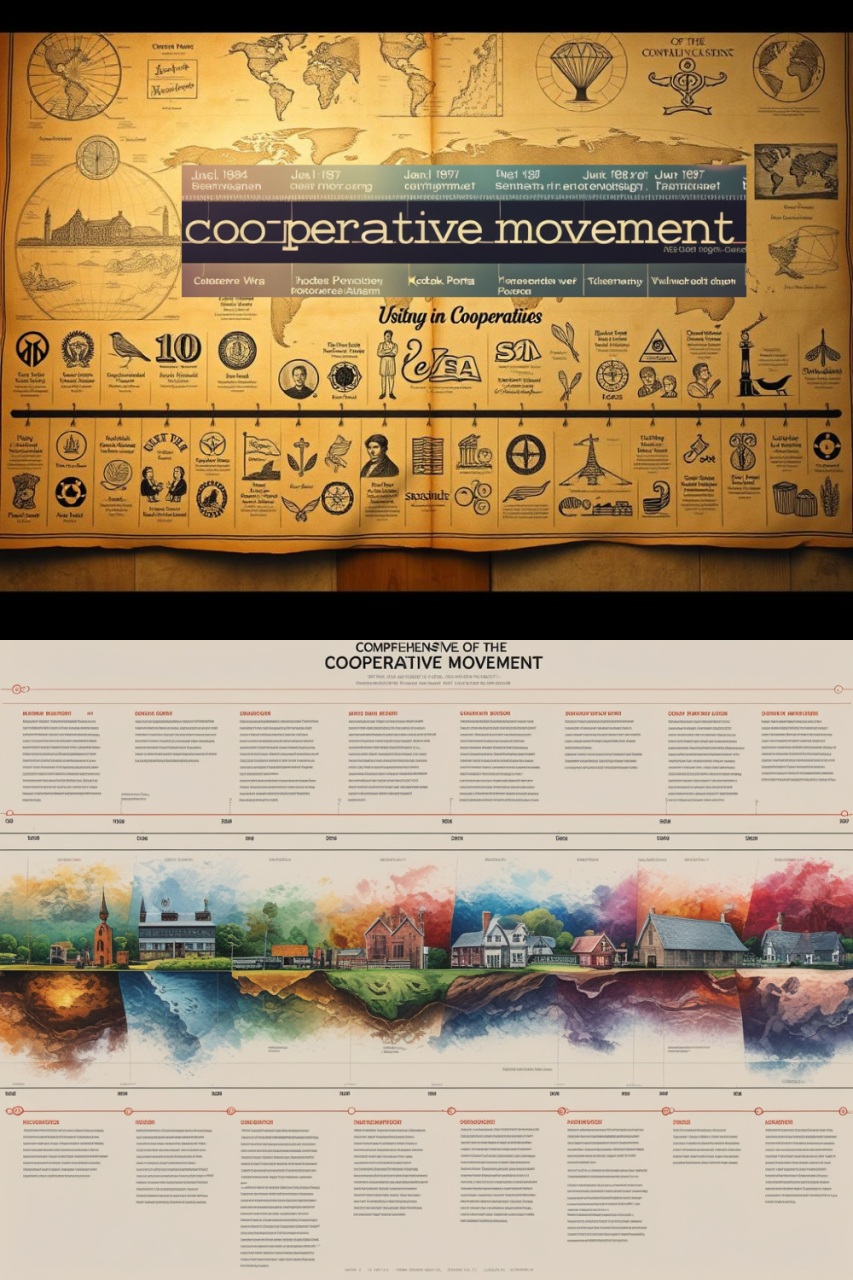
The cooperative movement started in 19th-century Europe as a response to industrialization’s unfairness. In 1844, the Rochdale Equitable Pioneers Society in England opened a store to fight high prices. Their ideas—like democratic control and benefits for members—became a model for cooperatives worldwide.
Rochdale Pioneers set values that still guide cooperatives today.
During the Great Depression, U.S. farmers created agricultural cooperatives. They fought against free market failures, keeping food prices stable.
In the 1960s and 1970s, worker cooperatives grew. They combined social justice with economic survival.
Now, modern social enterprises like Equal Exchange and Weaver Street Market mix profit with community goals.
These key moments show cooperatives adapt to tough times while keeping their social goals. They work in competitive markets but focus on fairness. From 19th-century England to today, their story is one of strength. It shows cooperatives are more than businesses—they’re tools for lasting change.
Seven Core Cooperative Principles That Drive Solidarity
The International Cooperative Alliance’s seven principles guide cooperatives worldwide. These cooperative principles make sure member voices and community needs are at the heart of every decision. This creates organizations that promote solidarity and serve the community.
“Cooperatives are autonomous associations where members act together to achieve their common economic, social, and cultural needs.” – International Cooperative Alliance
Voluntary and Open Membership
Members join freely without discrimination. The Weaver’s Cooperative in Vermont welcomes all residents. This ensures everyone can participate in local food systems.
Democratic Member Control
Each member has one vote in decisions. Equal Voice, a Minneapolis worker cooperative, holds quarterly votes. Here, all members shape policies together.
Member Economic Participation
Members contribute equitably. The Cooperative Home Care Associates in New York shares profits equally among its 2,000 worker-owners.
Autonomy and Independence
Cooperatives operate free from external control. The Mondragon Corporation in Spain remains member-controlled, even with 74,000 employees.
Education, Training, and Information
Regular training empowers members. The US Federation of Worker Cooperatives offers free leadership workshops for member education.
Cooperation Among Cooperatives
Cooperatives collaborate to strengthen the movement. The Ohio Employee Cooperatives Network connects 45+ groups to share resources.
Concern for Community
Environmental and social goals guide decisions. The Evergreen Cooperatives in Cleveland invest 10% of profits in local green energy projects.
Principle
Key Action
Impact
Voluntary Membership
Barrier-free entry
Expands inclusivity
Democratic Control
One member, one vote
Ensures equity
Economic Participation
Equitable profit-sharing
Reduces wealth gaps
Autonomy
Member-driven governance
Maintains mission focus
Education
Training programs
Builds leadership capacity
Cooperation Among Cooperatives
Network partnerships
Strengthens collective influence
Concern for Community
Socially responsible investments
Creates lasting social impact
These principles turn into actions that make a difference. From worker-owned businesses to housing collectives, they ensure cooperatives are forces for positive change. Cooperatives show that ethical business models can have lasting social impact and foster inclusive economies.
Types of Cooperatives Transforming American Communities
In the U.S., community cooperatives are changing local economies with new cooperative business models. These models focus on what members need and aim for economic fairness. From big cities to small towns, different types show how working together can bring about real change.
Worker-Owned Cooperatives
Worker-owned businesses, like Cooperative Home Care Associates in New York, give employees a say in how things are run. They vote on big decisions, share profits, and grow wealth together. This approach helps close income gaps and brings stability.
Consumer Cooperatives
Big names like REI are member-owned social enterprises. They put profits back into the community. Members get discounts and help decide what to buy. This model strengthens local bonds and supports ethical shopping.
Housing Cooperatives
Housing groups like Champlain Housing Trust in Vermont offer homes that are always affordable. People buy shares instead of houses, keeping costs down. These community cooperatives fight against homelessness and build welcoming communities.
Agricultural Cooperatives
Groups like Land O’Lakes and Organic Valley help farmers by sharing resources and market access. Small farmers can compete better by working together. These efforts keep rural areas strong and support green farming.
Credit Unions and Financial Cooperatives
Places like Navy Federal Credit Union focus on people over profits. They offer low-interest loans and no-fee accounts. This makes banking more accessible and helps people financially.
Worker co-ops cut income inequality by 20–40% compared to traditional firms
Consumer co-ops reinvest 30% of profits back into community programs
Housing co-ops preserve affordable units for generations
Promoting Solidarity Through Cooperatives and Collectives
The solidarity economy grows when communities focus on helping each other more than making money. Cooperatives show this by making decisions and sharing resources for everyone’s benefit. This way, members trust each other and gain strength together.
Emergency relief funds managed by members during crises
Knowledge-sharing networks for skill development
Resource pooling for shared infrastructure projects
“Solidarity isn’t a buzzword—it’s the engine driving our success,” said a member of the Weaver’s Cooperative in New York City. “When we support each other, we all thrive.”
These actions have a big social impact by first helping local needs. For example, cooperatives in rural Appalachia have helped towns by sharing land and tools. This shows that promoting solidarity through cooperatives and collectives makes both people and places stronger.
Decisions in cooperatives are about caring for each other, not just competing. By choosing to help each other, cooperatives make the solidarity economy real every day. This approach is not just a dream; it’s working and growing across the country.
How Grassroots Cooperatives Address Economic Justice
Grassroots cooperatives are changing the way we think about money and community. They focus on fairness and the well-being of everyone involved. These groups are owned by their members, not just for making money.
They share wealth and power, which is different from big businesses. This way, they fight against unfair distribution of resources.
“Cooperatives are not just businesses—they’re engines of economic justice that empower the marginalized to build lasting wealth.” – National Cooperative Business Association
Reducing Wealth Inequality
Worker-owned cooperatives help reduce income gaps. In Jackson, Mississippi, the Cooperation Jackson network has cut poverty by 15% in five years. They share profits fairly, keeping money in the community.
Creating Sustainable Livelihoods
These cooperatives offer good wages and protection. Twin Oaks Cooperative in the Twin Cities pays members 40% above minimum wage. They also provide health benefits and training. Over 85% of members say they are financially stable for the long term.
Building Resilient Local Economies
Cooperatives like Evergreen in Cleveland invest 90% of their money locally. This creates jobs and protects communities from economic ups and downs. Studies show co-op clusters can increase local GDP by 12% each year.
Grassroots cooperatives are more than just businesses. They are solutions to big problems. Their growth shows we can work together for economic justice.
Environmental Impact: Cooperatives Leading Ecological Preservation
Cooperatives are changing how we protect the environment. They make decisions that benefit the planet for the long run. This way, they help achieve environmental justice and support the UNSDGs.
The Missouri-based Solar Holler cooperative is a great example. They produce clean energy, reducing our need for fossil fuels. The Dr. Bronner’s Fair Trade co-op buys organic ingredients, helping farmers and protecting nature.
These examples show that caring for the environment and making money can go hand in hand.
Philadelphia’s Weaver’s Circle recycles textiles without waste.
Rural Electric Cooperatives invest in solar, cutting emissions and expanding energy access.
“Cooperatives bridge gaps in environmental justice by centering marginalized communities in sustainability efforts.” — UN Environment Programme, 2023
Cooperatives work to fix unfairness in how resources are shared. They focus on fair trade and green energy. This helps those who need it most and moves us closer to global sustainability goals.
Challenges and Solutions in Cooperative Development
Cooperative development faces many hurdles, but there are solutions. These social enterprises can overcome funding gaps and legal complexities. The answers lie in innovation and working together.
Access to Capital and Financing
Traditional lenders often ignore cooperatives. But, there are other ways to get funding. Many turn to:
Community-based crowdfunding platforms
Grants from organizations like the National Cooperative Business Association
Specialized loan programs through CDFIs (Community Development Financial Institutions)
These options help cooperatives get the money they need. They don’t have to rely only on the free market.
Legal and Regulatory Hurdles
Cooperatives face challenges in legal and tax rules. Legal clinics like the Democracy at Work Institute offer help. Some choose to form LLCs or B Corps to make things easier.
Education and Skill Development
“Education is the backbone of cooperative success.” – Cooperative Development Institute
Programs like the University of Wisconsin’s cooperative studies provide training. Workshops on governance and financial management help leaders. This way, cooperatives can keep running smoothly.
Scaling While Maintaining Values
Growing doesn’t have to mean losing values. Cooperatives work with other social enterprises. They use open decision-making and get advice from groups like the Twin Cities’ Cooperative Development Initiative.
These strategies show that cooperatives can succeed. They turn challenges into chances for growth and member focus.
Success Stories: Thriving Cooperatives and Collectives in the U.S.
Grassroots cooperatives across the U.S. show that community-driven models can succeed. They face local challenges and promote economic fairness. Here are three examples that stand out.
Urban Case Studies
In Cleveland, the Evergreen Cooperatives turned a food desert into an opportunity zone. They have community cooperatives that employ over 200 people in green businesses. This includes a solar-powered laundry and an urban farm.
Over 70% of workers live close by, keeping money and jobs local.
Rural and Agricultural Successes
Land O’Lakes is a century-old cooperative that helps 4,000 dairy farmers in 46 states. By working together, members get fair prices and sustainable practices. “We’re not just farmers—we’re a movement,” says CEO Beth Ford.
This cooperative makes $17 billion a year. It shows that grassroots cooperatives can grow while staying true to their mission.
Innovative Cooperative Models
Stocksy United is a photographer-owned agency that changes how creative work is done. It’s a platform cooperative that shares profits fairly among 50,000+ members. This model cuts out middlemen, letting creators earn 50% of sales.
Type
Name
Members
Annual Impact
Urban
Evergreen Cooperatives
200+ workers
$12M in local wages
Rural
Land O’Lakes
4,000 farmers
$17B revenue
Innovative
Stocksy United
50,000+ creators
50% artist profit share
How to Start or Join a Cooperative in Your Community
Ready to join the cooperative movement? Whether starting a cooperative or joining existing ones, your community can thrive through cooperative development. Explore community cooperatives and cooperative business models to create shared success.
Assess local needs: Identify gaps in services or goods your community lacks.
Build a planning team: Gather members passionate about the cause.
Choose a business model: Select from worker, consumer, or housing cooperative business models.
Legal structure: Register as a cooperative under state laws.
Raise funds: Seek grants, loans, or member investments.
Joining existing cooperatives? Start by:
Visiting NCBA CLUSA’s directory to find nearby community cooperatives.
Attend local meetings to learn membership requirements.
Volunteer to build relationships and understand operations.
“Every member makes a cooperative stronger. Start small, act together, and grow impact.” – National Cooperative Business Association
Resource
Focus
Contact
National Cooperative Business Association (NCBA CLUSA)
Education, Advocacy
ncba.co
USDA Rural Development
Grants, Technical Support
rurdev.usda.gov
Local Initiatives Support Corporation
Community Development
lisc.org
Begin today. Local cooperative development networks provide free guides and workshops. Your first step could be attending a webinar or meeting. Together, cooperatives turn ideas into thriving ventures.
Conclusion: Embracing Shared Prosperity Through Collective Action
The solidarity economy grows when communities support cooperative models. These models put people first, not just profit. Cooperatives and collectives show that working together can solve big problems like wealth gaps and harm to the environment.
By sharing resources and making decisions together, members create economies that help everyone. These structures also create jobs, protect nature, and promote growth for all. This way, people can build economies that reflect their values.
Starting or joining a cooperative is a step into a world of innovation. Groups like the National Cooperative Business Association help newcomers. Success stories from Equal Exchange and Mondragon show real progress.
Every step towards supporting cooperatives makes communities stronger. It’s a choice to build a future where everyone has a say in the economy. By choosing cooperatives, we invest in a world where profit and purpose go hand in hand. Together, we can make a difference and create a more just society.
Key Takeaways
Cooperatives and collectives reduce economic disparities by ensuring equitable profit sharing.
These structures align with the solidarity economy to address systemic inequities.
They create long-term social impact through democratic decision-making.
Examples like Mondragon Corporation and REI show their global success.
They foster local resilience against economic downturns and corporate dominance.
Looking back at 2025 Women’s History Month, we took numerous steps forward in gender equality. This month is a key time to celebrate women’s wins and push for equal rights. The UN International Days in March 2025 also boost these efforts, linking them to sustainable development goals.
The link between Women’s History Month and the 2030 UN Sustainable Development Goals is key. It brings a fresh focus toward women’s roles in creating a fairer, greener future. From local actions to global policies, these efforts are changing the world.
Women’s History Month 2025 is a essential moment in the fight for gender equality and overall awareness. It has grown from minor events to a global celebration. Now, it honors women’s achievements and supports women’s empowerment worldwide.
Historical Significance of Women’s History Month 2025
Evolution of Women’s History Month Celebrations
Women’s History Month is constantly evolving thus, its changed a lot since it started. It has grown from local events to global United Nations observances. In 2025, digital platforms will share the stories of famous women with people everywhere.
Key Milestones in Women’s Rights Movement
The women’s rights movement has made big steps forward. Women have gained the right to vote and fight for equality in the workplace. They have made important progress in many areas.
Year
Milestone
Impact
1920
Women’s Suffrage in USA
Political empowerment
1963
Equal Pay Act
Workplace equality
1972
Title IX
Educational opportunities
2021
First female US Vice President
Political leadership
Global Impact on Gender Equality Initiatives
Women’s History Month has sparked global efforts for gender equality. International groups now focus on empowering women. They see it as key to lasting development and social progress.
2025 Women’s History Month, March UN international Days, and SDGs in retrospect
The 2025 Women’s History Month is a key moment for gender equality worldwide. It ties in with March 2025 UN international Days. This creates a firm push for women’s rights and global sustainability.
Women’s History Month 2025 shows great strides in gender equality. It celebrates women’s roles in science, politics, and social justice. The month brings to light the voices often left out of history books.
March 2025 UN international Days add to Women’s History Month’s themes. These days focus on global issues that affect women. Key dates include International Women’s Day on March 8th and World Water Day on March 22nd.
The 2030 UNSDGs look back at Women’s History Month. We see progress in education and jobs for women. But, there’s still work to do in politics and economic equality.
SDG
Progress
Challenges
Gender Equality
Increased education access
Wage gap persistence
Clean Water
Improved sanitation
Water scarcity in rural areas
Climate Action
More women in green jobs
Unequal climate change impact
Global sustainability goals and women’s empowerment go hand in hand. Women are leading in climate solutions and sustainable projects. Their role is essential for lasting environmental and social change.
Notable Women Leaders Shaping Global Sustainability
Women across the world have been leading the way both toward and within global sustainability for a long time. They have made big steps in environmental leadership and sustainable development. Their work has helped push for gender equality and meet global sustainability goals.
Women in Environmental Leadership
Women in history have set the stage for future leaders. Wangari Maathai started the Green Belt Movement, encouraging millions to plant trees in Africa. Her efforts not only fought deforestation but also empowered women through green practices.
Female Pioneers in Sustainable Development
Christiana Figueres was key in the Paris Agreement, showing women’s impact on global sustainability. Jane Goodall’s research on chimpanzees has led to conservation efforts globally. Her work shows the connection between protecting the environment and sustainable development.
Gender-Responsive Climate Action
Women leaders are pushing for climate action that considers gender. Vandana Shiva fights for biodiversity and farmers’ rights in India. She stresses the need for women’s views in climate strategies.
Promoting women’s participation in decision-making processes
Addressing gender-specific impacts of climate change
Integrating gender equality into climate policies
These women continue to inspire and push for a better, more sustainable future. Their work shows how crucial gender equality is for achieving global sustainability goals.
March 2025 UN International Days Calendar
The United Nations has several important days in March 2025. These focus on global issues and human rights. They aim to raise awareness and take action on key topics worldwide.
Zero Discrimination Day
On March 1, Zero Discrimination Day (UNAIDS) works to end all discrimination. In 2025, there will be:
Social media campaigns with personal stories
Educational workshops in schools and workplaces
Community events celebrating diversity
International Women’s Day
March 8 was International Women’s Day. It celebrates women’s achievements and fights for gender equality. In 2025, there will be:
Virtual conferences with influential female leaders
Marches and rallies in major cities
Art exhibitions showcasing women artists
World Water Day
World Water Day was on March 22. It highlights the importance of freshwater. In 2025, there will be:
Beach and river cleanup projects
Water-saving technology demonstrations
Educational programs on sustainable water use
UN Day
Date
Key Focus
Zero Discrimination Day
March 1
Ending discrimination
International Women’s Day
March 8
Gender equality
World Water Day
March 22
Freshwater conservation
Gender Equality Progress in SDG Implementation
The 2030 UNSDGs show big steps forward in gender equality. As we near the halfway mark of the Sustainable Development Goals, it’s key to look at how far we’ve come. We’re focusing on achieving gender parity in the global sustainability goals.
SDG 5, which deals with gender equality, has made big strides. More women are in national parliaments worldwide. This number has gone up from 19% in 2010 to 26% in 2023. This shows a big push for more women in leadership roles.
Education has played a big role in this change. The gap in primary education has shrunk a lot. Now, 90% of countries have reached gender parity in primary education. This shows how important education is in empowering women and girls.
SDG Indicator
2010
2023
Progress
Women in national parliaments
19%
26%
+7%
Gender parity in primary education
75%
90%
+15%
Women in managerial positions
27%
31%
+4%
Even with these wins, there’s still work to do. Women’s economic empowerment is a big area for improvement. Women still earn about 20% less than men on average. Closing this gap is key for true gender equality and economic growth.
“Empowering women is not just the right thing to do – it’s the smart thing to do. Gender equality is a prerequisite for meeting our global sustainability goals,” stated UN Women Executive Director Sima Bahous.
Reflecting on Women’s History Month, we see progress but know we must keep going. Achieving gender equality in the SDG framework will take ongoing effort. We need to keep pushing forward with new ideas, policies, and teamwork across all parts of society.
Commemorative Events and Global Observances
Women’s History Month 2025 is filled with events celebrating women’s empowerment. These events are on both virtual platforms and in-person gatherings. They offer many ways to get involved and learn.
Virtual and In-Person Celebrations
Online forums host global talks on women’s rights. Across the U.S., cities plan marches and rallies. Museums also have special exhibits on women’s achievements.
Educational Programs and Workshops
Universities offer free online courses on gender studies. Local libraries host book clubs with women authors. STEM organizations run workshops to inspire girls in science and technology.
Community Engagement Activities
Volunteer programs support women-led businesses. The International Day of Happiness focuses on mental health for women. Communities also hold events for the International Day for the Elimination of Racial Discrimination, tackling women’s rights and intersectionality.
Event Type
Virtual
In-Person
Panel Discussions
Global webinars
Local town halls
Workshops
Online skill-sharing
Hands-on training
Cultural Celebrations
Virtual art exhibitions
Community festivals
Intersectionality of Women’s Rights and Environmental Justice
Women’s rights and environmental justice are closely linked. This is seen when we look at how climate change affects women. Also, how gender-responsive policies help meet global sustainability goals.
Climate Change Impact on Women
Climate change hits women harder than men. In many places, women grow food and collect water. As droughts and disasters rise, women struggle more to do these jobs.
The World Day for Glaciers shows how melting ice caps lead to water shortages. Women often have to find solutions to this problem.
Gender-Responsive Environmental Policies
Gender equality is key in making environmental policies better. The International Day of Forests celebrates women’s work in saving forests and managing resources. Including women in planning helps us fight climate change better.
Promote women’s leadership in environmental projects
Ensure equal access to resources and training
Incorporate women’s knowledge in conservation efforts
Seeing the connection between women’s rights, and environmental justice helps us reach our global goals. This way, we empower women and fight climate change together.
Progress Towards 2030 Sustainable Development Goals
As we look back at Women’s History Month, it’s important to see how far we’ve come. The world has made big steps towards gender equality and sustainable development. This progress is conducive to a better future.
Gender Equality Achievements
There have been huge wins in gender equality. More girls are going to school, and women are getting into politics. Workplace bias is also going down. These changes help us reach our global goals.
Area
Achievement
Impact
Education
91% of girls enrolled in primary education
Improved literacy and career opportunities
Politics
26% of national parliament seats held by women
Enhanced representation in decision-making
Economy
49% of women in the global workforce
Increased economic independence and growth
Remaining Challenges and Opportunities
Even with progress, we still face big hurdles. Women struggle to get into leadership, earn equal pay, and get good healthcare. These problems offer chances for new ideas and more effort towards our goals.
By tackling these issues, we can move faster towards equality. Working together, we can make the world more just by 2030.
International Year of Cooperatives Impact on Women’s Empowerment
The 2025 International Year of Cooperatives is a big deal for women’s empowerment and gender equality. It fits perfectly with the 2025 Women’s History Month. This year, we see how cooperatives help women gain rights and financial freedom.
Cooperatives are key for women’s empowerment. They offer chances for leadership, financial security, and community growth. In rural areas, women-led agricultural cooperatives boost local economies. They help female farmers get to markets, share resources, and negotiate better prices.
The effect of cooperatives on women’s empowerment is seen in many areas:
Financial cooperatives give women access to credit and savings
Consumer cooperatives offer affordable goods and services
Housing cooperatives provide safe and stable homes
These models empower women economically and build their leadership and decision-making skills. Celebrating the International Year of Cooperatives shows how important these groups are for gender equality and sustainable development.
The connection between cooperatives and women’s empowerment has a big impact. It encourages more women to control their economic futures. This shows why we should support and grow cooperative models to help achieve gender equality worldwide.
Conclusion
The 2025 Women’s History Month was a key moment in the fight for gender equality. It showed how far we’ve come in women’s rights, but also the work still to be done. The month tied in with UN goals and global sustainability, showing how important gender equality is for everyone.
In March 2025, we saw a big push for recognizing women’s roles in society. From local efforts to big policy changes, Women’s History Month made a big impact worldwide. It showed how vital women are in creating a fair and green future for us all.
Looking back, we see that achieving true gender equality is a long-term effort. The 2025 Women’s History Month reminded us that together, we can make progress. Now, we must keep this momentum going, making sure gender equality stays a top priority in our world.
Key Takeaways
2025 Women’s History Month highlights progress in gender equality
March 2025 UN International Days align with women’s rights initiatives
SDGs play a vital role in advancing global gender equality efforts
Intersection of women’s rights and sustainable development gains focus
Grassroots movements to international policies drive societal change
March 3 marks a global celebration dedicated to raising awareness about the importance of protecting our planet’s diverse species. This event, proclaimed by the United Nations General Assembly in 2013, highlights the need for collective action to safeguard ecosystems. In 2025, it coincides with the 50th anniversary of CITES, a pivotal agreement regulating international trade in endangered species.
The theme for 2025, “Wildlife Conservation Finance: Investing in People and Planet,” emphasizes innovative solutions to address biodiversity challenges. Current funding falls short of what’s needed to protect endangered species and their habitats. This year’s focus encourages resilience and sustainability, ensuring a brighter future for both nature and communities.
This article explores how innovative finance mechanisms can drive conservation efforts. It also examines strategies to strengthen ecosystems and support sustainable development. Join us as we delve into the importance of investing in our planet’s future.
World Wildlife Day 2025 and the UN Sustainable Development Goals
On December 20, 2013, the United Nations General Assembly declared March 3 as a day to honor wild fauna and flora. This decision aimed to raise awareness about the importance of protecting endangered species and their habitats. The event also commemorates the 1973 Convention on International Trade in Endangered Species (CITES), a landmark agreement that regulates global trade to prevent harm to vulnerable species.
Event Background and Historical Significance
The establishment of this day underscores the urgent need to address biodiversity loss. CITES, signed by 183 parties, has been instrumental in safeguarding over 38,000 species. Despite these efforts, wildlife populations continue to decline at an alarming rate. According to the World Wildlife Fund, global species populations have decreased by 68% since 1970.
This event serves as a reminder of the interconnectedness of ecosystems and human well-being. It highlights the critical role of governments and international organizations in driving conservation efforts. By fostering collaboration, it aims to inspire collective action to protect our planet’s natural heritage.
Global Targets and Biodiversity Impact
Meeting global biodiversity targets requires significant financial investment. Current funding falls short of the estimated $700 billion needed annually to address conservation challenges. Innovative solutions, such as conservation finance, are essential to bridge this gap and ensure sustainable development.
The integration of wildlife protection with the UN Sustainable Development Goals is crucial. It emphasizes the need to balance economic growth with environmental stewardship. Governments, private sectors, and individuals must work together to create a future where both people and nature thrive.
Key Statistics
Details
Species Decline
68% since 1970
Annual Funding Gap
$700 billion
CITES Parties
183 countries
By investing in conservation, we can safeguard ecosystems and ensure a sustainable future. This event encourages everyone to take part in protecting the planet’s biodiversity.
Innovative financial solutions are transforming how we fund biodiversity protection. These mechanisms address the critical funding gap, ensuring ecosystems thrive while supporting local communities. By leveraging creative funding models, stakeholders can drive meaningful progress in habitat preservation.
Exploring Debt-for-Nature Swaps and Conservation Bonds
Debt-for-Nature Swaps are a groundbreaking approach to conservation finance. Governments exchange national debt for funds dedicated to habitat preservation. This mechanism alleviates fiscal pressure while channeling resources into protecting endangered species and their ecosystems.
Wildlife Conservation Bonds are another powerful tool. These bonds attract private sector capital, funding large-scale conservation projects. Investors receive returns based on the success of these initiatives, creating a win-win for both nature and finance.
Leveraging Private Sector Investments and Payments for Ecosystem Services
Private sector investments play a pivotal role in scaling conservation efforts. Companies are increasingly recognizing the value of biodiversity, funding projects that align with their sustainability goals. These partnerships amplify the impact of conservation initiatives.
Payments for Ecosystem Services (PES) generate sustainable revenue for local communities. By compensating landowners for preserving ecosystems, PES ensures long-term biodiversity protection. This approach fosters a sense of ownership and responsibility among communities.
Financial Mechanism
Impact
Debt-for-Nature Swaps
Converts national debt into conservation funds
Conservation Bonds
Attracts private capital for large-scale projects
PES
Generates revenue for local biodiversity management
These innovative solutions are essential for meeting global biodiversity targets. By adopting these mechanisms, stakeholders can ensure a sustainable future for both people and the planet.
Integrating Financial Strategies with Sustainable Development
Strategic investments are essential to bridge the gap in biodiversity funding. Protecting ecosystems requires innovative financial mechanisms that align with long-term sustainability goals. By combining resources, stakeholders can create a lasting impact on both nature and communities.
Mobilizing Investments for Biodiversity Protection
Current funding falls short of the $824 billion needed annually to address conservation challenges. Only $143 billion is currently invested, leaving a significant gap. This shortfall highlights the urgent need for increased financial commitments from governments and private sectors.
UN Secretary-General António Guterres has called for enhanced investment in biodiversity. He emphasizes the importance of scaling up resources to meet global targets. Without adequate funding, efforts to protect endangered species and habitats will remain insufficient.
Collaboration among Governments, Institutions, and Communities
Effective conservation requires collaboration across sectors. Governments, financial institutions, and local communities must work together to drive impactful projects. Partnerships can amplify resources and ensure sustainable outcomes.
For example, the Kunming-Montreal Global Biodiversity Framework provides a roadmap for collective action. It encourages nations to integrate conservation into their development plans. By fostering cooperation, this framework aims to create a balance between economic growth and environmental protection.
Aligning Conservation Efforts with UN SDGs
Conservation initiatives must align with the United Nations Sustainable Development Goals. This alignment ensures that efforts contribute to broader global targets. It also promotes synergies between environmental sustainability and economic growth.
By integrating financial strategies with these goals, stakeholders can address multiple challenges simultaneously. This approach not only protects biodiversity but also supports community well-being and economic resilience.
Key Financial Gaps
Details
Annual Need
$824 billion
Current Investment
$143 billion
Funding Gap
$681 billion
Investing in biodiversity is not just a moral imperative but a practical necessity. By mobilizing resources and fostering collaboration, we can ensure a sustainable future for all.
Conclusion
Protecting biodiversity demands innovative financial strategies and global collaboration. The 2025 event highlights the urgent need for creative funding to address conservation challenges. With a $700 billion annual gap, solutions like conservation bonds and debt-for-nature swaps are essential.
This celebration underscores the historical significance of safeguarding ecosystems. It aligns with global goals, emphasizing the balance between economic growth and environmental stewardship. Governments, private sectors, and communities must work together to drive impactful projects.
Supporting these initiatives ensures a brighter future for all. By investing in biodiversity, we protect ecosystems and foster sustainable development. Let’s continue to advocate for conservation finance and inspire collective action.
FAQ
Q: What is the significance of World Wildlife Day 2025?
A: This global celebration highlights the importance of protecting wild fauna and flora, aligning with the UN Sustainable Development Goals to promote biodiversity and ecosystem health.
Q: How does conservation finance support biodiversity?
A: Innovative mechanisms like debt-for-nature swaps and conservation bonds mobilize resources to fund projects that safeguard endangered species and their habitats.
Q: What role does the private sector play in wildlife protection?
A: Businesses contribute through investments in ecosystem services, fostering partnerships that drive sustainable practices and support conservation efforts.
Q: How can communities get involved in wildlife conservation?
A: Local participation is key. Initiatives like youth art contests and community-led projects empower individuals to take action in preserving natural resources.
Q: What are debt-for-nature swaps?
A: These financial agreements allow countries to reduce their debt in exchange for commitments to invest in conservation and sustainable development projects.
Q: How do conservation bonds work?
A: Bonds raise funds from investors to finance projects that protect biodiversity, offering returns tied to the success of these initiatives.
Q: Why is collaboration essential for conservation?
A: Governments, institutions, and communities must work together to align efforts, share knowledge, and scale impact for long-term biodiversity protection.
Q: How does wildlife conservation align with the UN SDGs?
A: Protecting species and ecosystems directly supports goals like climate action, life on land, and partnerships for sustainable development.
Key Takeaways
March 3 is a global event celebrating biodiversity and conservation.
The 2025 theme focuses on innovative funding for wildlife protection.
CITES, established in 1973, plays a key role in safeguarding endangered species.
Current financial resources are insufficient to meet conservation needs.
2025 marks the 50th anniversary of the CITES agreement.
Investing in ecosystems ensures a sustainable future for all.
This website is saving the energy of your screen as it is not being used. It's part of a global effort to lower the planet's electrical consumption and CO2 emission level. Resume browsing