
As presented through ongoing media, Africa is at a pivotal moment in its journey toward sustainable development. The continent has great potential and faces unique challenges. By adopting sustainable practices, African nations are working toward the 2030 United Nations Sustainable Development Goals. This sets the stage for lasting progress.
International business is key to Africa’s growth, from big cities to small villages. It involves 54 countries working together. By building partnerships and attracting investments, countries are setting the stage for strong economic growth. This not only boosts local economies but also helps the global economy.

The journey to sustainable development in Africa needs a balanced approach. It’s about using natural resources wisely, investing in renewable energy, and ensuring everyone benefits. By focusing on these areas, African nations can create a successful blueprint that meets both environmental and economic needs.
Understanding Africa’s Development Landscape
Africa’s path to sustainable development is influenced by its rich history and culture. The continent faces unique challenges but also has powerful principles guiding its progress.
Historical Context and Development Challenges
Africa’s development has been shaped by colonialism, resource exploitation, and political instability. These issues have hindered economic growth and social progress. Yet, many African nations are now using new approaches to overcome these barriers.
Ubuntu: Community-Centered Development Models
Ubuntu teaches us that “I am because we are.” It promotes Sustainable Community Development through teamwork. In Rwanda, shared farming cooperatives apply this idea to increase crop yields and reduce inequality.
These networks make sure resources help the whole village, not just a few.
Sankofa: Learning from Traditional Practices
Sankofa’s “return and retrieve” philosophy encourages us to learn from our ancestors. In Ghana, mangrove restoration projects use ancient wisdom and modern science to fight coastal erosion.
Integrating Indigenous Knowledge with Modern Approaches
Cultural Diplomacy connects these traditions with global sustainability efforts. A table below shows how these philosophies are used today:
| Concept | Origin | Core Idea | Modern Application |
| Ubuntu | South African Bantu traditions | Interdependence of individuals | Community-led renewable energy grids |
| Sankofa | Akan peoples of West Africa | Wisdom from the past | Traditional water harvesting systems |
“Ubuntu and Sankofa are not relics of the past—they are blueprints for tomorrow.”
– African Union Sustainable Development Report 2023
By blending these philosophies with global goals, Africa creates solutions that honor its heritage. This approach ensures development is both culturally and ecologically responsible.
Cultural Foundations: Sankofa and Ubuntu Principles
Two crucial cultural concepts drive Africa’s development: Sankofa and Ubuntu. Sankofa, from Ghana, teaches learning from the past to build a better future. Ubuntu, from South Africa, focuses on collective well-being and interconnectedness.
Sankofa and Ubuntu work together. Sankofa encourages looking back for wisdom, while Ubuntu promotes working together for growth. These principles are a strong base for sustainable development across Africa.
Regional Economic Communities and Their Role
African coalitions, consortia, and federations are key in fostering regional cooperation. They boost trade, share resources, and coordinate development efforts. Through cooperative enterprise development, they create chances for economic and social growth.
These communities act as platforms for implementing continent-wide strategies. They help share knowledge, develop infrastructure, and harmonize policies. By using their collective strengths, they push Africa toward a sustainable and prosperous future.
Sustainable Development among all 54 African countries, regions, and islands
Africa’s diverse nations are embracing sustainable development in their own ways. From the bustling cities of Kenya and Tanzania to the landlocked nations of Uganda, Rwanda, and Burundi, each country faces unique challenges and opportunities.

In East Africa, Kenya and Tanzania are leading with renewable energy. Kenya has the largest wind farm in Africa, while Tanzania is focusing on solar power. Uganda, Rwanda, and Burundi are working together to protect the Virunga Mountains, home to endangered mountain gorillas.
Southern African nations like Lesotho and Swaziland are focusing on water resource management. Namibia, Angola, and Zambia are teaming up to protect the Okavango Delta, a UNESCO World Heritage site.
| Country | Key Sustainable Initiative |
|---|---|
| Cape Verde | 100% Renewable Energy Goal by 2025 |
| Sao Tome & Principe | Sustainable Cocoa Production |
| Seychelles | Blue Economy Strategy |
| Comoros | Coral Reef Restoration |
| Mauritius | Smart Cities Development |
| Madagascar | Biodiversity Conservation |
Island nations like Cape Verde and Sao Tome & Principe are focusing on sustainable tourism and agriculture. Seychelles is pioneering the blue economy concept. Comoros is investing in coral reef protection. Mauritius is developing smart cities, and Madagascar is prioritizing biodiversity conservation.
“Africa’s sustainable development journey reflects the continent’s rich diversity and shared commitment to a greener future.”
These varied approaches show Africa’s adaptability and determination in pursuing sustainable development across its 54 nations.
Environmental Conservation and Climate Action Initiatives
Africa is tackling its environmental challenges with new sustainable and innovative ideas. It’s turning to renewable energy, protecting wildlife, and building green spaces to fight climate change.
Renewable Energy Implementation
African countries are quickly moving to renewable energy. Morocco’s solar farms and Kenya’s wind projects show their dedication. These efforts cut down on carbon emissions and bring clean energy to many people.
Biodiversity Protection Measures
Keeping Africa’s ecosystems safe is key. Tanzania and Botswana are leading in this area. They’ve set up protected areas and work with local people to save endangered animals.
Green Infrastructure Development
Green building is becoming more common in Africa. Cities like Nairobi and Cape Town are using nature’s designs in their planning. These designs make buildings that are good for the environment and last long.
Climate Change Adaptation Strategies
African countries are taking steps to adapt to climate change. Ethiopia’s Great Green Wall is fighting desertification. Coastal areas are building defenses against floods. These actions help protect people and nature from climate change.
| Initiative | Country | Impact |
|---|---|---|
| Solar Power Plant | Morocco | Provides clean energy to 2 million homes |
| Wildlife Corridor | Tanzania | Protects elephant migration routes |
| Green Building Code | South Africa | Reduces urban energy consumption by 30% |
| Mangrove Restoration | Senegal | Enhances coastal protection against sea-level rise |
Economic Growth and Social Equity
Africa is working to grow its economy and make society fairer. This plan aims to help communities and support sustainable growth across the continent.
Empowering MSMEs and Social Enterprises
Micro, Small, and Medium Enterprises (MSMEs) are crucial for Africa’s economy. They create jobs and spark new ideas. Social enterprises help by solving social problems through business.
Together, they push for economic growth that includes everyone and makes a positive impact.
| Entity Type | Economic Impact | Social Impact |
|---|---|---|
| MSMEs | Job creation, local economic stimulation | Income generation for families |
| Social Enterprises | Sustainable business models | Direct solutions to community challenges |
Tackling Poverty Through Targeted Programs
Poverty programs in Africa focus on building skills and creating lasting jobs. They offer training, small loans, and support to help people and communities overcome poverty.
Advancing Sustainable Agriculture
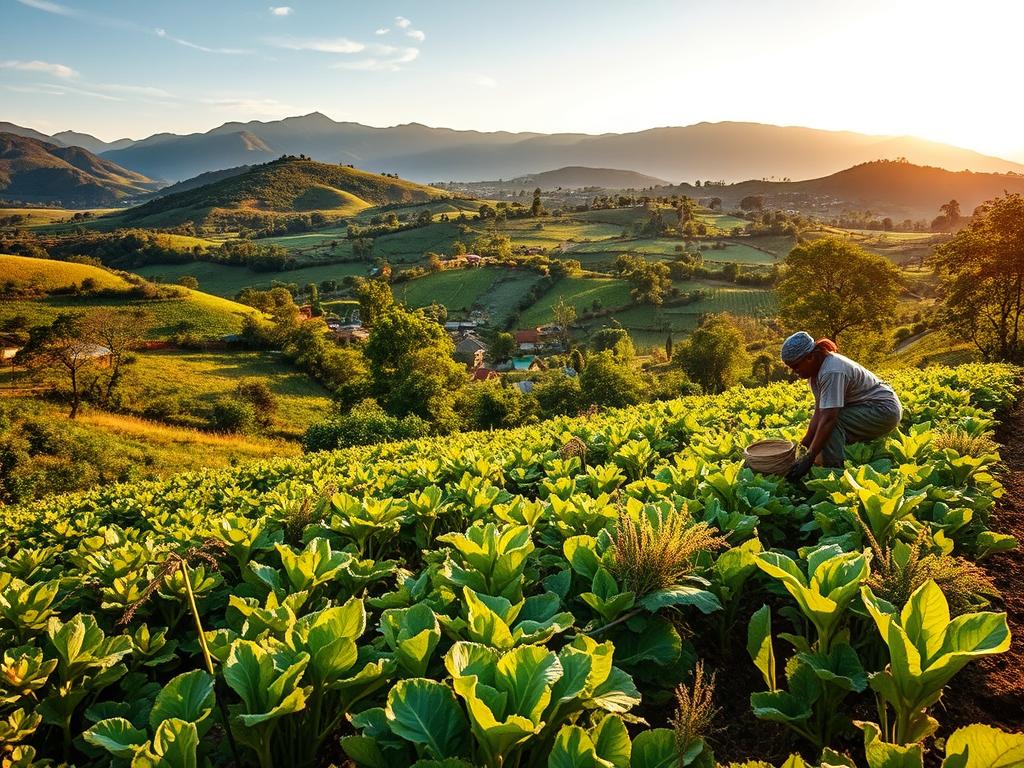
Good farming practices are vital for food security and economic stability in rural areas. Projects in sustainable horticulture, permaculture, and farming help farmers grow more while saving the environment. These efforts increase food production and protect the planet for the future.
Regional Cooperation and Integration
Africa is moving towards sustainable development through regional cooperation. Countries are working together to face common challenges and find new opportunities. This teamwork is changing how development happens within the continent.
The Democratic Republic of the Congo and the Republic of Congo are a great example. They have different economies but are working together on projects and trade. This shows how countries can find common ground despite their differences.
Cameroon, Central African Republic, and Gabon are also working together. They are fighting deforestation and protecting the Congo Basin rainforest. Their efforts show how cooperation can help the environment across borders.
In the Sahel region, Mali, Republic of the Niger, Chad, and Burkina Faso are facing challenges together. They are working on security and economic growth. Their goal is to bring stability and prosperity to a tough area.
| Regional Group | Key Focus Areas | Notable Achievements |
|---|---|---|
| DRC & Republic of Congo | Infrastructure, Trade | Joint road network expansion |
| Cameroon, CAR, Gabon | Environmental Conservation | Congo Basin Forest Partnership |
| Mali, Niger, Chad, Burkina Faso | Security, Economic Development | G5 Sahel Joint Force |
These partnerships are driving development across Africa. By sharing resources and markets, countries are making the continent stronger. The future of Africa depends on strengthening these ties and working together towards a common goal.
Technology and Innovation in African Development
Africa is moving forward with new technology and creative ideas. It’s using Green IT Infrastructure and Digital Transformation to make progress and work better.
Green IT Infrastructure
African countries are building eco-friendly Data Centers. These centers use less energy and cut down on pollution. They help grow digital services without harming the environment.

Digital Transformation Initiatives
Both governments and businesses are starting Digital Transformation projects. They want to make services better, connect people more, and grow the economy. Digital tools like mobile banking and e-governance are changing African life.
Sustainable Supply Chain Solutions
African companies are focusing on Sustainable Supply Chains. They use Green logistics to cut down on emissions. And they adopt Green and Responsible Manufacturing to reduce waste and pollution. These steps help make the African economy stronger and greener.
| Technology Area | Impact on Sustainability |
|---|---|
| Green IT Infrastructure | Reduced energy consumption, lower carbon emissions |
| Digital Transformation | Improved efficiency, enhanced service delivery |
| Sustainable Supply Chains | Responsible resource use, reduced environmental impact |
By using these new technologies, Africa is growing its economy and securing a green future for all.

International Partnerships and Global Alignment
Africa’s path to sustainable development depends on global partnerships. These alliances bring in resources, expertise, and support. They help the continent grow.
UN Sustainable Development Goals Implementation
The United Nations Development Programme (UNDP) and United Nations Environment Programme (UNEP) are key players. They help Africa reach the Sustainable Development Goals. They offer funding, technical help, and policy advice to African countries.
Cultural Diplomacy and Cross-Border Collaboration
Cultural Diplomacy helps African nations understand and work together. Countries like Algeria, Tunisia, Libya, Morocco, and Mauritania share cultures. This builds peace, trade, and development goals across borders.
Global Economic Integration
Africa’s role in the World Economic Forum (WEF) shows its commitment to global markets. Countries like Egypt and Sudan use these platforms to attract investors. They aim to align with international markets and standards.
| Country | Key Economic Focus | Global Partnership Initiative |
|---|---|---|
| Egypt | Renewable Energy | Green Investment Partnerships |
| Morocco | Digital Economy | Tech Startup Collaborations |
| Tunisia | Sustainable Tourism | Eco-Tourism Alliances |
These partnerships and alignments are crucial for Africa’s sustainable growth. They create a future of shared prosperity and care for the environment.
Sustainable Resource Management
Africa’s future depends on managing resources wisely. Countries across the continent are using new ways to keep their natural wealth safe. They also want to grow their economies.
Zero Waste Initiatives
African nations are working hard on waste management. Benin and Togo are leading with zero waste programs. They focus on eco-friendly products and cut down on landfills.
Water Conservation Efforts
Water is very important in Africa’s dry areas. Sierra Leone, Liberia, and Cote d’Ivoire are finding new ways to save water. They use rainwater harvesting and efficient irrigation.
This ensures everyone has access to clean water.
Responsible Mining Practices
Countries with lots of minerals are mining in a better way. Guinea Bissau and Equatorial Guinea have set strict rules for mining. These rules protect the environment and local people while helping the economy.
| Country | Sustainable Resource Initiative | Impact |
|---|---|---|
| Benin | Plastic recycling program | 50% reduction in plastic waste |
| Sierra Leone | Community-based water management | Improved access to clean water for 1 million people |
| Guinea Bissau | Eco-friendly bauxite mining | 30% decrease in environmental damage |
These efforts show Africa’s dedication to protecting the environment while growing. By focusing on zero waste, saving water, and mining responsibly, African countries are working towards a greener future.

Conclusion
Africa is on a path to sustainable development, facing both hurdles and chances. The continent’s varied countries are using new methods to grow while keeping their natural resources safe. From South Africa to Botswana, and Gambia to Senegal, they’re working on economic growth and protecting the environment.
The 2025 International Year of Cooperatives is a big opportunity for African nations to work together more. This event matches the continent’s growing focus on good governance and sustainable community development. Countries like Mozambique, Zimbabwe, and Malawi are improving their governance and empowering local communities.
In the Horn of Africa, countries like South Sudan, Somalia, Djibouti, and Somaliland have big challenges. Ethiopia and Eritrea are trying to solve old conflicts and start sustainable growth. These efforts show how important regional cooperation is for solving common problems and promoting long-term development.
As Africa moves ahead, it’s key to keep focusing on sustainable practices, innovation, and working together across borders. By using their rich cultural heritage and new technologies, African nations can create a prosperous and sustainable future.

Key Takeaways
- Africa’s sustainable development aligns with UN 2030 goals
- International business drives continental growth
- Balanced approach needed for long-term progress
- Responsible resource management is crucial
- Renewable energy investments support sustainability
- Inclusive growth promotes economic stability