UNSDG-7: Comprehensive Guide to Emissions Reporting

United Nations SDG#7 Scope 1,2,3,4 emissions GHG Reporting Carbon Climate

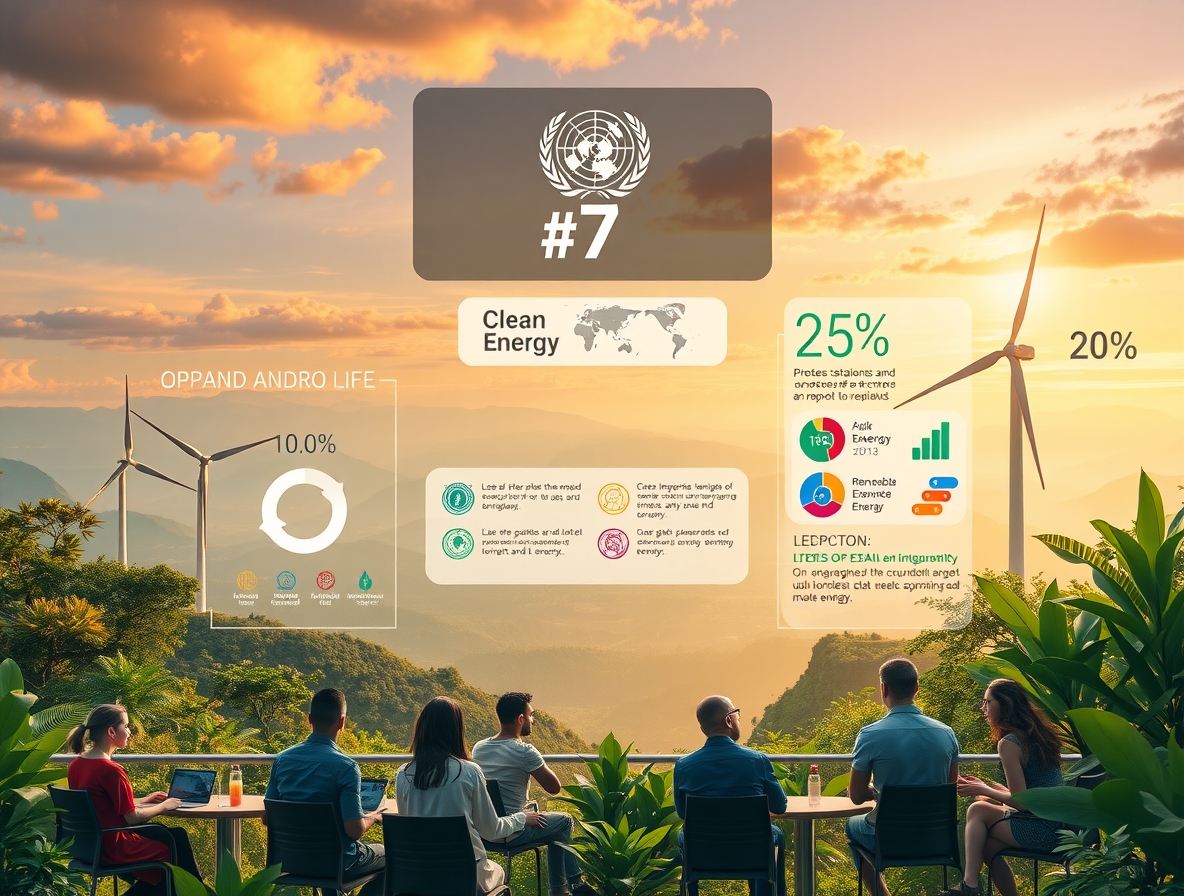
Global efforts to tackle environmental challenges need real action from businesses. The seventh Sustainable Development Goal focuses on making energy accessible and modern. It also aims to fight global warming. This makes a clear connection between a company’s energy choices and its environmental impact.

Companies using renewable energy face complex tracking needs. Showing how much energy they use helps others see if they’re being eco-friendly. Robust disclosure frameworks let companies show they’re cutting down on harmful outputs. This supports global goals for sustainability.

Switching to clean energy needs to follow set standards. These standards help measure how much pollution is being cut from operations and supply chains. Getting third-party verification makes these reports more believable. This builds trust with investors and regulators.

As industries move to sustainable practices, knowing how to report is key. This guide looks at ways to document energy-related environmental impacts. It also covers how to meet international standards. Later sections will offer strategies for different company sizes and types.
The Critical Role of UNSDG-7 in Global Climate Action

Global energy systems face a big challenge. They need to meet growing demand while cutting down on carbon emissions. United Nations Sustainable Development Goal #7 (UNSDG-7) offers a solution. It aims to make energy both affordable and clean, helping to reduce emissions.

This goal could change how we view energy and fight climate change worldwide.

UN Sustainable Development Goal 7 (UNSDG-7) Explained

UNSDG-7 aims to get everyone access to modern energy by 2030. It also wants to increase the use of renewable energy. This goal is special because it connects solving energy poverty with protecting the environment.

It shows that we can meet human needs and protect the planet at the same time.

Affordable and Clean Energy Mandate

More than 700 million people still don’t have electricity. Most live in sub-Saharan Africa and South Asia. UNSDG-7 suggests using solar energy and hydropower energy to solve this problem.

These solutions don’t rely on old, polluting ways of making energy. They offer a chance for developing countries to jump straight to cleaner energy.

The International Energy Agency (IEA) says using more renewable energy could cut CO₂ emissions by 12 gigatons a year by 2030. That’s like removing all emissions from cars and trucks today. Clean energy is key to fighting climate change.

Energy Sector’s Emissions Impact

Fossil fuels are still the main source of energy, causing 73% of greenhouse gas emissions, according to 2023 IEA data. Switching to wind energy, solar, and other renewables is crucial to meet Paris Agreement goals.

Current Global Energy Emissions Statistics

Energy SourceGlobal Share (%)Annual CO₂ Emissions (Gt)
Coal2715.3
Oil3112.4
Natural Gas237.5
Renewables190.9

Transition Imperatives for 2030 Agenda

Developing countries have big challenges in updating their energy systems. While rich countries replace old infrastructure, countries like India and Nigeria need to build new, smart grids. These grids will handle decentralized sustainable energy solutions.

The World Bank says we need $1.7 trillion a year in investments until 2030 to meet SDG#7 goals.

To grow renewable energy faster, we need better policies and technology sharing. Solar and wind energy are growing, but not fast enough. We need more international help and new ideas from businesses to meet our climate goals.

Understanding Scope 1 Emissions in Energy Production

Operational emissions make up 60% of the energy sector’s carbon footprint. This is a big problem that needs quick solutions. These emissions come from sources the company owns or controls. This makes them key for following rules and understanding the environment’s impact.

Energy companies need to track these emissions well. They must do this to meet new environmental rules and keep their operations running smoothly.

Direct Emission Sources

Fossil fuel combustion processes are the main cause of Scope 1 emissions in the energy sector. Power plants burning coal, oil, or natural gas release CO₂. This happens through boilers, turbines, and flare stacks.

Using better combustion systems can cut these emissions by 12-18%. This can be done without losing energy output.

Fugitive Emissions From Operations

Methane leaks during extraction and transport are big contributors to climate change. Now, infrared cameras and drones can find leaks 40% faster than before. A 2023 Chevron study showed a big drop in fugitive emissions.

Upgrading compressor seals and vapor recovery units cut emissions by 63% in the Permian Basin. This is a big success.

Measurement and Reporting Standards

Rules make sure emissions reports are the same everywhere. The table below shows some key rules:

StandardEPA Subpart WISO 14064
Reporting FrequencyAnnualFlexible
VerificationThird-party auditInternal or external
CoverageOil & gas onlyAll industries

GHG Protocol Corporate Standards

This framework asks companies to report on all combustion sources. ExxonMobil found $17M in energy savings in 2022. They did this by using flare gas recovery systems.

Using carbon offsetting programs can be very helpful. Duke Energy worked with American Forests to create carbon credits. These credits offset 22% of their emissions from burning fuel.

Managing Scope 2 Emissions Through Energy Procurement

Companies are using energy buying strategies to fight Scope 2 emissions. These are indirect greenhouse gases from electricity, heat, or steam bought. They make up almost 40% of global energy-related CO2 emissions. So, how companies buy energy is key to fighting climate change.

Indirect Emissions From Purchased Energy

Scope 2 emissions change based on energy source. Tools like WattTime now track hourly carbon intensity. This lets companies use energy when it’s cleaner.

Electricity Generation Mix Analysis

It’s important to check the power grid’s energy mix. For example, a facility in the Midwest might have higher emissions than one in California. The EPA’s Power Profiler tool helps show these differences.

Location vs Market-Based Accounting

Companies can choose two ways to report emissions:

ApproachCalculationBest For
Location-BasedUses grid average emissionsBaseline reporting
Market-BasedAccounts for renewable contractsGreen power claims

Microsoft uses both methods. It shows its actual use of renewable energy through its 24/7 carbon-free energy program.

Renewable Energy Certificates (RECs)

RECs prove green power acquisition. Each one equals 1 MWh of clean energy. But, their impact depends on how they’re used:

Tracking Renewable Energy Purchases

VPPAs secure long-term prices and fund new clean energy projects. Physical RECs support existing projects but don’t grow new ones. A 2023 study by BloombergNEF found VPPAs cut emissions 63% faster than standard RECs.

RE100 Initiative Compliance

Microsoft aims to be 100% renewable. It uses solar VPPAs and battery storage RECs. Now, it matches 95% of its energy demand with zero-carbon sources worldwide.

“Our procurement model proves scalable decarbonization is achievable without sacrificing operational reliability.”

Microsoft Sustainability Report 2023

Addressing Scope 3 Emissions Across Value Chains

Direct emissions get a lot of attention, but indirect emissions make up over 70% of a company’s carbon footprint. These emissions come from raw material extraction to product disposal. This means companies need to work closely with suppliers, logistics partners, and customers.

15 Categories of Indirect Emissions

The Greenhouse Gas Protocol breaks down Scope 3 emissions into 15 categories. This creates challenges and opportunities for measuring emissions. Two areas often missed are:

Upstream/Downstream Transportation

Transportation emissions make up 11% of global supply chain impacts. Companies like Walmart have cut freight emissions by 15% using route optimization software and hybrid vehicles. Key strategies include:

Transport PhaseEmission SourcesReduction Tactics
UpstreamSupplier deliveries to factoriesConsolidated shipments
DownstreamProduct distribution to retailersElectric fleet adoption

Employee Commuting and Business Travel

Microsoft’s 2022 report shows 8% of its Scope 3 emissions come from employee travel. Companies like Microsoft use carbon neutral solutions. They offer public transit passes and video conferencing for meetings.

Supply Chain Engagement Strategies

Amazon’s Climate Pledge Fellowship is a great example of how to engage suppliers. Since 2020, it has trained over 200 suppliers in emissions accounting. The program offers financial incentives and technical support for sustainable sourcing initiatives.

Vendor Sustainability Requirements

Now, leading manufacturers require environmental disclosures. They do this through:

  • Annual sustainability audits
  • Material traceability certifications
  • Energy efficiency benchmarks

Science-Based Targets Initiatives

Over 1,200 companies have set Scope 3 reduction plans based on SBTi. These environmental impact regulations push suppliers to use renewable energy and meet 1.5°C pathways.

TechnologyApplicationImpact
BlockchainRaw material tracking63% faster emissions data collection
AI AnalyticsSupplier performance monitoring28% reduction in non-compliant vendors

IBM’s blockchain platform verifies 40% of its semiconductor suppliers’ emissions in real time. This shows how digital tools help manage value chains transparently.

Emerging Focus on Scope 4 Avoided Emissions

Scope 4 emissions mark a big change in how we look at environmental impact. They show how clean energy solutions stop greenhouse gases compared to fossil fuels. This gives us key insights for fighting climate change.

Quantifying Climate Positive Impacts

Tesla’s 2023 Impact Report shows this shift by counting 20 million metric tons of CO₂ equivalents avoided. This is thanks to electric vehicles and solar energy systems. Their method fits with new ways to measure sustainable development.

Clean Energy Technology Deployment

Wind turbines and solar farms stop 2.6 billion tons of CO₂ every year. That’s like taking 550 million cars off the road. A World Resources Institute study says the impact is bigger than expected.

Grid Decarbonization Contributions

Big battery systems let us use renewable energy all day, every day. This cuts down on using dirty plants. In California, emissions fell by 38% during peak hours with these systems.

Reporting Methodological Challenges

The World Business Council for Sustainable Development says:

“Without standardized protocols, double counting risks could undermine Scope 4 credibility”

Double Counting Risks

WRI’s Additionality Guidance stops double counting in renewable energy certificates (RECs). For example, a wind farm’s energy can’t count for both corporate PPAs and national climate goals at the same time.

ISO 14064-1:2018 Standards

This international standard has three key rules for Scope 4 reporting:

  • Baseline scenario validation
  • Technology-specific emission factors
  • Third-party verification requirements

GHG Reporting Frameworks for Energy Sector

A high-resolution, detailed illustration of "GHG Reporting Frameworks" for the energy sector. The scene depicts a group of interconnected, colorful geometric shapes and icons representing various emissions reporting standards, guidelines, and frameworks such as the Greenhouse Gas Protocol, ISO 14064, TCFD, and others. These elements are arranged in a visually striking, well-balanced composition, set against a backdrop of clean, minimalist architecture in muted tones. The lighting is soft and diffused, creating depth and highlighting the detailed textures. The overall mood is professional, informative, and aligned with the brand "The Sustainable Digest".

Understanding greenhouse gas reporting is key. It involves both rules and voluntary steps. Energy companies must follow laws and show leadership in sustainability.

Mandatory Compliance Programs

Energy producers face strict rules on emissions reporting. Two main programs shape US rules:

EPA Greenhouse Gas Reporting Program

The EPA’s GHGRP requires yearly reports for big emitters. Companies must track emissions from fuel use and flaring. Now, they also report biogenic CO2 from biomass plants.

SEC Climate Disclosure Rules

New SEC rules will ask public companies to share:

  • How climate risks affect their business
  • Scope 1 and Scope 2 emissions
  • Financial impacts of climate over 1% of total items
FeatureSEC ProposalEU CSRD
Scope 3 ReportingRequired if materialMandatory for large companies
ImplementationPhased from 2024Effective 2024
AssuranceLimited initiallyFull audit required

Voluntary Reporting Initiatives

Some companies go beyond what’s required. They use extra frameworks to get green financing.

CDP Climate Change Questionnaire

Over 18,000 companies share data through CDP. Energy sector firms must report:

  • Goals for cutting emissions
  • How they use carbon credits
  • How they manage climate risks

TCFD Recommendations Implementation

Duke Energy shows how to do it right. Their reports include:

  • Plans for a 2°C and net-zero future
  • Linking executive pay to climate goals
  • Tracking investments in clean energy

Assessing what’s important is crucial. Top utilities use digital emissions tracking to cut errors by 38%, EY found.

Data Collection and Verification Best Practices

Detailed aerial view of a data collection and verification site, with multiple technicians in protective gear meticulously recording emissions data on digital tablets and instruments. The scene is bathed in warm, golden light from the setting sun, casting long shadows across the industrial equipment and machinery. In the background, The Sustainable Digest's logo is prominently displayed on a large banner, signifying the importance of this work towards sustainable development goals.

Accurate emissions management is key to meeting global climate goals. Companies need to use precise measurement and strict validation. This ensures transparency and helps in reducing carbon footprint.

Emissions Calculation Methodologies

Choosing the right calculation models is crucial for effective reporting. Tools like SAP’s system help by automating data collection. This reduces errors in environmental impact assessments.

Activity Data vs Emission Factors

Companies should know the difference between direct measurements and conversion rates:

Data TypeApplicationAccuracy
Activity DataFuel consumption recordsHigh precision
Emission FactorsGrid electricity analysisScenario-based

Continuous Monitoring Systems

IoT sensors offer detailed energy usage data for factories. This data is used in reporting software, helping in making quick changes to eco-friendly practices.

Third-Party Assurance Processes

Independent checks are vital for trustworthy reports. DNV’s program, used by 60% of Fortune 500 energy companies, checks three main areas:

  • Data collection protocols
  • Calculation methodology alignment
  • Uncertainty margin documentation

ISO 14065 Verification Requirements

This standard requires yearly checks of greenhouse gas reports. Validators look at technical skills and method consistency, especially for renewable energy claims.

Materiality Thresholds Determination

Companies must set error margins based on their size. A 5% margin is common for Scope 2 emissions. Scope 3 estimates might have wider ranges at first.

Renewable Energy Transition Strategies

A sprawling cityscape at dusk, bathed in warm hues as the sun dips below the horizon. In the foreground, a diverse array of renewable energy installations stand proud - sleek solar panels, towering wind turbines, and gleaming hydroelectric dams. The middle ground is dotted with electric vehicles silently navigating the streets, while in the background, skyscrapers and office buildings showcase the latest energy-efficient technologies. A sense of progress and optimism pervades the scene, as "The Sustainable Digest" logo hovers discreetly in the corner, signifying a vision for a sustainable future.

Companies around the world are finding new ways to meet sustainable development targets. They are doing this while keeping their finances and operations running smoothly. This section looks at two key ways to cut down on emissions: corporate energy deals and local power generation.

Corporate Power Purchase Agreements

Virtual PPAs let companies support green projects without needing to physically get the energy. These deals set a fixed price for the energy, giving companies budget stability. They also help clean up the grid faster. Google’s goal of using only carbon-free energy shows how this works.

Virtual PPA Financial Structures

These deals have a few main parts: fixed prices, how payments are made, and how long the deal lasts. For example, a 12-year deal might have a fixed price for 60% of the energy and a market-based price for the rest.

Additionality Requirements

Good PPAs must show that they create new green energy. The RE100 group makes sure projects are real and wouldn’t happen without corporate help. This ensures the deals actually cut down on emissions.

On-Site Generation Solutions

Local energy systems give companies control and make them more resilient. Big names like Walmart have put solar panels on 364 buildings. This makes 1.4 billion kWh of clean energy every year.

Solar PV System ROI Analysis

Businesses can get a good return on solar panels in 5-8 years. This is thanks to:

  • Federal Investment Tax Credit (30%)
  • State rebates
  • Lowering peak demand charges
FactorLeasing ModelCapital Purchase
Upfront Cost$0$1.2M (1MW system)
Long-Term Savings15-20%40-60%
MaintenanceProvider responsibilityOwner responsibility

Wind Energy Procurement Models

Community wind projects let different groups share the energy from one turbine. The Block Island Wind Farm sends 30MW to Rhode Island. This is thanks to deals between the company and the local government.

Now, 4,800 US facilities are powered by microgrids. These use solar panels and batteries to stay on during outages. California’s Blue Lake Rancheria microgrid kept services running during 15 PSPS events since 2019.

Accelerating Climate Action Through Transparent Reporting

Companies aiming to cut emissions need to use detailed reporting systems. This meets the growing needs of stakeholders. By sharing data on all emissions, they show they’re working on climate change and supporting UNSDG-7.

Investors want to see how companies are doing on the Paris Agreement. They look at how a company’s finances and environment are linked. Microsoft and Ørsted show how clear emissions reports help get green funding and improve operations. Getting checks from groups like SBTi makes these efforts believable.

Working together is key to fighting climate change. Tools like renewable energy certificates help track progress. Companies like Google and Apple show how working with suppliers can make a big difference.

We need to use the same numbers for both environmental and financial reports. The International Sustainability Standards Board is working on this. As rules get stricter, companies that report well will be ahead in the shift to zero-carbon economies.

FAQ

How does UN SDG-7 directly impact corporate emissions reporting frameworks?

UN Sustainable Development Goal #7 (UNSDG-7) aims for clean energy and less carbon. Companies must report their emissions and use renewable energy. Big names like Microsoft and Google link their goals to the Paris Agreement.

What distinguishes Scope 4 emissions from traditional GHG reporting categories?

Scope 4 emissions count the good done by clean energy. This includes Tesla’s solar products and Vestas’ wind turbines. But, figuring out these numbers is still tricky.

How do RE100 Initiative requirements influence corporate energy procurement strategies?

RE100 members like Apple and Walmart aim for 100% renewable electricity. They use PPAs and RECs to meet this goal. Google shows how to keep energy carbon-free all the time.

What technologies enable accurate Scope 1 methane emissions tracking in oil/gas operations?

New tech like satellite monitoring and optical gas imaging helps track methane. Companies like Chevron use this to meet EPA rules. Baker Hughes and SAP help improve gas recovery rates.

How are SEC climate disclosure rules reshaping energy sector reporting practices?

The SEC now requires Scope 1-2 reports and Scope 3 details. This matches EU rules. Companies like Duke Energy must report more about climate risks. This change helps use ISO standards and third-party checks.

What supply chain strategies effectively reduce Scope 3 emissions in manufacturing?

Amazon’s Climate Pledge makes suppliers use renewable energy. Siemens tracks Scope 3 emissions with blockchain. Now, 73% of car part suppliers aim to cut emissions through AI.

How do corporate PPAs contribute to grid decarbonization beyond direct emissions reductions?

Virtual PPAs help build new wind farms. This makes grids cleaner. Every 100MW PPA can cut emissions by 12-18%, helping UNSDG-7 goals.

What verification standards ensure credibility in avoided emissions claims?

ISO 14064-1 and GHG Protocol standards check emissions claims. Companies like Schneider Electric get audited. This proves their clean energy work in off-grid areas.

Key Takeaways

  • Modern energy solutions directly influence corporate environmental accountability
  • Standardized tracking methods enable accurate progress measurement
  • Transparent reporting builds stakeholder confidence in sustainability claims
  • Energy consumption patterns reveal improvement opportunities
  • Verification processes strengthen data credibility

Aviation, Tourism, and Travel and How its Future is Shaped by Sustainability

The interconnected worlds of air transport, hospitality, and exploration face unprecedented challenges. Rising consumer expectations and regulatory pressures demand eco-conscious strategies across these sectors. Recent data reveals 73% of travelers now prioritize low-carbon options when planning trips, signaling a fundamental shift in market dynamics.

A tranquil scene of a sustainable aviation and tourism hub, set against a backdrop of lush greenery and a clear blue sky. In the foreground, a sleek, futuristic aircraft powered by clean energy technologies, gently touches down on a runway surrounded by solar panels and wind turbines. In the middle ground, a modern, eco-friendly airport terminal with a striking, organic architecture blends seamlessly with the surrounding landscape. Pedestrians and electric vehicles move about, while a central green space showcases sustainable landscaping and water management systems. The atmosphere is one of harmony, innovation, and a vision for a more sustainable future. Branding for "The Sustainable Digest" is subtly incorporated into the scene.

Corporate leaders are responding with measurable targets. Airlines invest billions in fuel-efficient fleets, while hotel chains adopt circular economy principles. These efforts align with international climate agreements, creating new frameworks for cross-border collaboration.

This analysis examines emerging technologies like sustainable aviation fuels and AI-driven route optimization. It also explores consumer behavior trends influencing corporate decarbonization roadmaps. From carbon offset programs to green infrastructure projects, stakeholders recognize environmental stewardship as both obligation and opportunity.

Introduction to Sustainability in Aviation, Tourism, and Travel

Global mobility industries are redefining their operations amid pressing ecological challenges. At its core, sustainability balances resource use with long-term environmental stability—a concept now central to international policymaking. The Lancet Countdown reports that 58% of nations now integrate ecological thresholds into economic strategies, reshaping transportation and hospitality frameworks.

Defining Sustainability in Global Affairs

Modern sustainability extends beyond conservation. It involves creating systems that support economic growth while protecting natural ecosystems. This approach drives initiatives like the Paris Agreement, which commits 196 countries to limit temperature rises through coordinated action.

Emerging Trends in the Industry

Three developments dominate current strategies:

  • Airlines testing biofuel blends to cut flight emissions by 20-30%
  • Hotel chains adopting solar energy to power 40% of operations by 2025
  • Travel platforms highlighting low-carbon itineraries using IATA’s emissions calculators

Extreme weather patterns—linked to atmospheric shifts—now influence 63% of destination choices according to industry surveys. Proactive adaptation includes redesigned coastal resorts and heat-resistant infrastructure. Collaborative efforts like CORSIA (Carbon Offsetting Scheme for International Aviation) demonstrate how policy and technology merge to address these challenges effectively.

Global Climate Trends and Policy Implications

Recent atmospheric data reveals transport and hospitality sectors contribute 10% of worldwide carbon output. The UNWTO reports tourism-related emissions surged 60% since 2005, outpacing broader economic growth rates. This trend forces rapid policy adjustments across borders.

Key Emission Statistics and Regulations

Commercial flights account for 2.4% of energy-related CO₂ releases annually. New mandates require 45% emission cuts from 2005 levels by 2035 for airlines. Hotel chains face binding targets to reduce energy use per room by 30% within six years.

Key regulatory tools now shaping operations:

  • Carbon pricing mechanisms in 46 national jurisdictions
  • Mandatory disclosure rules for Scope 3 emissions
  • Tax incentives for hybrid aircraft adoption

Role of International Agreements

The Paris Agreement’s Article 6 enables cross-border carbon trading, directly affecting flight route planning. Over 100 countries now participate in CORSIA, offsetting 80 million tonnes of airline emissions yearly.

Intergovernmental panels recently standardized jet fuel sustainability criteria. These frameworks help align corporate strategies with scientific climate models while maintaining economic viability.

How Sustainability impacts Aviation, Tourism, and Traveling in Global Affairs

Industry leaders across continents now confront dual pressures: reducing environmental footprints while meeting growing travel demand. A 2024 IATA study shows air transport contributes 3.5% of annual warming effects, with tourism adding another 5% through energy-intensive operations.

Analyzing the Current Global Impact

Three critical patterns emerge worldwide:

  • Flight delays due to extreme heat increased 28% since 2019
  • Coastal resorts invest $12B in flood barriers and elevation projects
  • 85% of corporate travel policies now mandate emission tracking

Advanced technologies prove vital in this transformation. Electric regional aircraft prototypes reduce per-flight emissions by 50%, while AI-powered logistics systems cut fuel waste. These innovations form part of broader strategies to meet Paris Agreement targets.

RegionEmission Reduction TargetKey Technology
North America40% by 2030Hydrogen propulsion
Europe55% by 2035Biofuel refineries
Asia-Pacific33% by 2030Carbon capture systems

Economic priorities increasingly align with ecological needs. Carbon pricing mechanisms now cover 23% of worldwide aviation activities, driving operational changes. Major carriers like Delta and Lufthansa report 18% emission drops after adopting hybrid ground vehicles and optimized flight paths.

Urgent action remains critical. Atmospheric CO₂ concentrations reached 424 ppm in 2023 – levels unseen in 3 million years. Collaborative efforts across borders demonstrate measurable progress, but accelerated adoption of clean technologies will determine long-term success.

Technological Innovations Shaping the Future of Air and Travel

Cutting-edge engineering breakthroughs are revolutionizing how we move through skies while addressing environmental concerns. Advanced materials and intelligent systems now drive measurable reductions in CO₂ emissions, offering tangible solutions for the aviation sector. Industry leaders recognize that innovation isn’t optional—it’s essential for survival in a climate-conscious market.

A sleek, futuristic aircraft with swept-back wings and a streamlined body hovers gracefully against a backdrop of wispy clouds. Glowing blue accents trace the edges of the airframe, hinting at advanced, eco-friendly propulsion systems. In the foreground, a team of engineers in protective suits examines the aircraft, analyzing data displays and making adjustments to minimize carbon emissions. The Sustainable Digest logo is subtly incorporated into the scene, conveying a sense of innovation and environmental responsibility. Dramatic lighting casts dramatic shadows, creating a sense of awe and technological prowess.

Innovative Aircraft Technologies

Boeing’s 787 Dreamliner demonstrates what modern engineering achieves. Its carbon-fiber composite structure weighs 20% less than traditional planes, slashing fuel use by 25%. Similarly, Airbus’ A350 employs curved wingtips and Rolls-Royce engines to cut CO₂ emissions per seat by 30% compared to older models.

New propulsion systems push boundaries further. United Airlines recently tested hydrogen-electric engines for regional jets, aiming for zero-emission flights by 2028. These advancements prove crucial as the aviation sector works toward net-zero targets.

AI and Data Analytics in Flight Optimization

Machine learning now reshapes route planning. American Airlines saved 1.7 million gallons of fuel in 2023 using AI-powered wind forecasts. Their system adjusts flight paths in real-time, trimming 8 minutes from transatlantic routes on average.

Delta’s collaboration with Google Cloud exemplifies data-driven progress. Their algorithms analyze weather, aircraft weight, and air traffic to minimize fuel burn. “Every saved gallon reduces our carbon footprint,” notes Delta’s Chief Sustainability Officer.

These innovations work best when paired with carbon offsetting initiatives. JetBlue offsets 3 billion pounds of CO₂ emissions annually through reforestation projects, complementing their tech upgrades.

Sustainable Aviation Fuels and Energy Solutions Driving Change

The transition to cleaner propulsion methods marks a pivotal shift in air transport operations. Sustainable aviation fuels (SAF) derived from waste oils and agricultural residues now power over 500,000 flights globally. These alternatives cut lifecycle CO₂ emissions by 80% compared to conventional jet fuel, creating new energy dynamics across the sector.

Investments in Alternative Fuels

Airlines worldwide committed $17 billion to SAF development since 2022. KLM leads with 14% SAF usage on Amsterdam routes, backed by partnerships with Neste and Shell. Lufthansa Group’s $250 million investment aims for 10% SAF integration by 2030, already reducing CO₂ output by 340,000 tonnes annually.

AirlineSAF InvestmentCO₂ ReductionKey Regions
United Airlines$5B2.1M tonnesNorth America
KLM$1.2B870K tonnesEurope
ANA$780M410K tonnesAsia-Pacific

Case Studies in SAF Implementation

Delta’s Los Angeles hub replaced 10% of traditional fuel with SAF, cutting 145,000 tonnes of CO₂ in 2023. Energy-efficient practices like optimized refueling procedures further reduced emissions by 12%. “Our Atlanta-Amsterdam route now uses 30% SAF blends,” notes a Delta operations manager.

Singapore Airlines achieved 18% lower energy consumption through SAF combined with aerodynamic enhancements. These projects demonstrate how strategic fuel choices and operational upgrades create measurable environmental benefits while maintaining profitability.

Transportation Strategies for Reducing Carbon Emissions

Operational breakthroughs are transforming how networks address environmental challenges. Airlines and rail operators now deploy advanced systems to minimize fuel use while maintaining service quality. Research shows optimized logistics could cut transport emissions by 19% before 2030.

A vibrant cityscape with a focus on sustainable transportation solutions for reducing carbon emissions. In the foreground, electric buses and bicyclists glide along clean, tree-lined streets. In the middle ground, high-speed rail and maglev trains zip past modern, energy-efficient buildings. In the background, wind turbines and solar panels dot the horizon, powering this eco-friendly metropolis. Warm, natural lighting illuminates the scene, conveying a sense of progress and optimism. Presented by The Sustainable Digest.

Optimized Flight Routes and Fuel Efficiency

Airlines reduce emissions through smarter navigation. Delta’s AI-powered system saved 8 million gallons of fuel in 2023 by adjusting routes based on weather patterns. Eurocontrol data reveals such strategies trim 12% of CO₂ per transatlantic flight.

Key advancements include:

  • Real-time wind analysis cutting flight times by 6 minutes on average
  • Weight reduction programs removing 1.2 tons per aircraft
  • Continuous descent approaches lowering noise and fuel burn

Integrating Rail and Multimodal Shifts

Air-rail partnerships demonstrate significant environmental benefits. Lufthansa’s codeshare with Deutsche Bahn replaced 45,000 short-haul flights annually, reducing 155,000 tonnes of CO₂. The EU’s “Flightpath 2050” initiative aims to shift 25% of flights under 500 km to rail.

RegionEmission CutStrategy
North America18%Hub-and-spoke rail links
Europe30%High-speed rail integration
Asia22%Urban transit partnerships

These shifts create business advantages. United’s Denver hub reported 14% cost savings after introducing electric shuttles for airport transfers. The transport sector proves environmental goals can align with operational efficiency when supported by data-driven planning.

The Carbon Footprint of Food and Hospitality in Tourism

Meal services and lodging operations generate 23% of tourism’s environmental impact globally. From farm-to-table logistics to hotel energy grids, every plate served and room cleaned leaves measurable ecological traces. The UN Environment Programme estimates food systems account for 8% of worldwide emissions tied to travel activities.

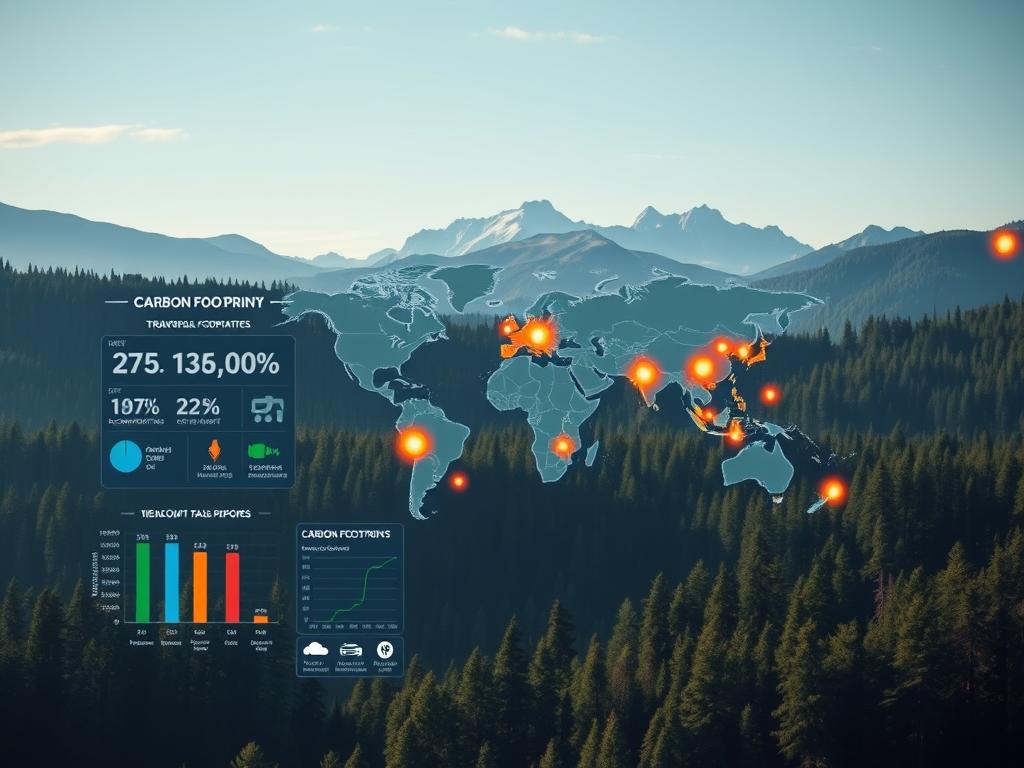
A detailed carbon footprint analysis of the hospitality industry in a tourism landscape. The foreground shows a comprehensive infographic with breakdown of emissions from various sectors like transportation, accommodations, food, and waste. The middle ground depicts a global map with highlighted hotspots of high tourism activity. The background features a serene natural landscape of forests, mountains, and a clear sky, symbolizing the environmental impact. Dramatic lighting creates depth and emphasizes the gravity of the situation. Rendered in a clean, modern style befitting "The Sustainable Digest" brand. Cinematic 4K resolution.

Impact of Food Production on Emissions

Supply chains stretch across continents, amplifying environmental costs. Key findings reveal:

  • Beef served in resorts produces 5x more emissions than plant-based alternatives
  • Hotels consume 21% of tourism’s total energy output annually
  • Annual food transport for cruise ships increased 14% since 2020
YearHospitality Energy UseFood Waste Generated
2022189 million MWh12.8 million tonnes
2023201 million MWh14.1 million tonnes
Futuristic interior design of a eco-friendly cafe in an airport for 2035, luxury, chic and elegant with a foreground view of ethnically, culturally, and geographically pedestrians from all walks of life dining, selecting food at a salad bar, shopping, reading, and working from computers. In the midground display large sleek, post-modern, biomimicry aircrafts behind tall airport glass, and the background display mountains, cosmopolitan city line and the greater airport at large

Addressing Food Waste in Tourism

Over 1.3 billion tons of edible items get discarded yearly across the sector. Major hotel chains now implement real-time tracking systems, reducing spoilage by 37% through predictive ordering. Circular solutions gain traction:

  • Composting programs repurpose 68% of organic waste in pilot projects
  • AI-powered portion control cuts buffet waste by 29%
  • Donation partnerships redirect surplus meals to local communities

Hyatt’s 2025 roadmap targets 50% waste reduction through supplier collaborations and guest education campaigns. These measures prove ecological responsibility can coexist with premium hospitality experiences.

Green Accommodation and Eco-Friendly Hospitality Strategies

Hospitality leaders are pioneering new approaches to minimize environmental footprints while enhancing guest experiences. Research from Cornell University reveals that 78% of travelers prefer properties with verified eco-certifications, driving rapid adoption of green technologies across the sector.

An eco-friendly hotel nestled in a lush, verdant landscape. In the foreground, a modern, energy-efficient structure with solar panels on the roof and wind turbines in the background, blending seamlessly with the surrounding nature. Guests stroll along a pathway lined with native plants and trees, enjoying the tranquil ambiance. The building's design incorporates sustainable materials, large windows for natural lighting, and a green roof that harmonizes with the natural environment. The Sustainable Digest logo is prominently displayed on the hotel's facade. Warm, diffused lighting casts a soft glow, creating a welcoming and environmentally conscious atmosphere.

Energy-Saving Infrastructure

Modern hotels achieve measurable results through smart design:

  • Marriott’s Phoenix properties cut energy use 22% using AI-driven HVAC systems
  • Hilton’s Las Vegas complex generates 40% of power from rooftop solar arrays
  • Six Senses resorts maintain 30% lower energy consumption than industry averages through geothermal heating

A 2023 study in Hotel Management found properties with smart thermostats reduced energy waste by 18% annually. These systems automatically adjust temperatures when rooms are unoccupied, complementing efforts to reduce emissions from flights through operational efficiency.

Innovative Hospitality Practices

Leading brands demonstrate creative solutions:

  • Hyatt’s keycard-activated lighting systems lowered electricity use by 27%
  • Accor’s linen reuse program saved 850 million liters of water globally in 2023
  • IHG properties eliminated single-use plastics in 89% of guest rooms

Recent analysis shows guest participation rates in green programs jumped from 42% to 68% when incentives like loyalty points are offered. Marriott’s Bali resort achieved 92% waste diversion through composting and upcycling initiatives, proving environmental stewardship enhances brand reputation.

As flight volumes rebound, hotels increasingly offset guest travel emissions through partnerships with verified carbon projects. This holistic approach addresses the full journey lifecycle while maintaining service quality.

Adapting Travel to Extreme Weather and Climate Change

Over 60% of travelers altered their plans in the past three years due to extreme weather events, according to a 2024 National Travel Survey. Rising temperatures and unpredictable storms force people to rethink vacation timing and destinations. Coastal hotspots now face shorter tourist seasons, while mountain regions report shifting snowfall patterns affecting winter sports.

A rugged, off-road vehicle navigates through a harsh, wintry landscape. Its large tires and all-terrain capabilities allow it to traverse snowdrifts and icy terrain. In the background, a towering snow-capped mountain range looms, hinting at the extreme conditions. The vehicle's occupants are bundled in thick, insulated clothing, their faces partially obscured by protective gear. A small, portable weather station is mounted on the vehicle, providing vital data about the environment. The overall scene conveys a sense of resilience and adaptation in the face of nature's formidable forces. The Sustainable Digest logo is prominently displayed on the vehicle's side.

Traveler Health and Safety Considerations

Heatwaves pose growing risks, with emergency hospital visits during peak travel months increasing 34% since 2020. People visiting cities like Phoenix or Dubai now face temperatures exceeding 110°F regularly. Dehydration and heat exhaustion incidents doubled in these areas over five years.

Smart strategies help mitigate risks:

  • Booking flexible itineraries allows last-minute changes when storms strike
  • Carrying portable air quality monitors alerts travelers to hazardous conditions
  • Choosing accommodations with backup power systems ensures safety during outages

Travel apps now integrate real-time climate data, offering rerouting suggestions during wildfires or floods. “The way we explore has transformed,” notes a TripAdvisor spokesperson. “People prioritize destinations with robust emergency response systems.”

Historical weather patterns reveal stark changes. Summer heatwaves in Europe now last 18 days longer than 20 years ago, while hurricane seasons start two weeks earlier. These shifts demand adaptive planning to protect both travelers and local communities.

Coastal Challenges: Sea Level Rise and Sustainable Tourist Destinations

Coastal cities face mounting threats as oceans encroach 3.7 millimeters yearly. Jakarta’s northern districts sank 2.5 meters since 2010, forcing $40 billion relocation plans. Rotterdam’s Maeslantkering storm barrier demonstrates how engineered solutions protect urban centers while maintaining tourism appeal.

Coastal resilience infrastructure, a majestic seaside scene. In the foreground, sturdy seawalls and breakwaters stand as guardians against the rising tides, their weathered surfaces reflecting the warm glow of the sun. Midground, lush dunes and native vegetation form a verdant buffer, their roots anchoring the land. In the distance, a modern sustainable resort, "The Sustainable Digest", blends seamlessly with the natural landscape, its architecture designed to withstand the elements. Overhead, wispy clouds drift across a brilliant azure sky, casting dynamic shadows upon the scene. Crisp, high-resolution photorealistic rendering, wide-angle lens, natural lighting.

Adapting Coastal Infrastructure

Elevated boardwalks and permeable pavements now replace concrete in vulnerable zones. Miami Beach’s $500 million pump system prevents 90% of tidal floods, improving urban efficiency during storms. Three proven approaches:

  • Artificial reefs reducing wave energy by 60% in the Maldives
  • Modular flood barriers deployed in 30 minutes across Venice
  • Singapore’s hybrid parks storing 12 million gallons during heavy rains

Mitigating Economic Impacts on Destination Cities

Resilient designs prevent $23 billion in annual global tourism losses. Charleston’s raised seawalls saved 8,000 hospitality jobs after Hurricane Ian. Funding sources include:

  • Green Climate Fund grants covering 40% of adaptation costs
  • Public-private partnerships like New Orleans’ Living Shorelines
  • Hotel tax allocations directing $2.8 billion to flood control

Rotterdam’s floating neighborhoods attract 18% more visitors than traditional districts, proving environmental innovation drives economic growth. Coastal destinations now balance preservation with progress through data-driven planning.

Economic, Social, and Health Impacts of Climate Change on Tourism

Climate shifts reshape vacation patterns while straining local economies. A 2024 WHO report links 23% of travel-related health emergencies to heat stress and air pollution. Coastal towns dependent on seasonal visitors face revenue drops as extreme weather disrupts peak travel months.

A desolate coastal town, once a thriving tourist hub, now ravaged by rising sea levels and extreme weather. In the foreground, crumbling infrastructure and abandoned beachfront hotels, their once-vibrant facades weathered and decaying. The middle ground reveals a stark contrast, with a few resilient locals attempting to adapt to the changing environment, their faces etched with concern. In the background, a hazy, dystopian skyline, tinged with the ominous hues of environmental degradation. The Sustainable Digest logo casts a subtle, but powerful, presence, a reminder of the urgent need to address the devastating impacts of climate change on tourism.

Assessing the Global Impact on Travel Behavior

Travelers increasingly avoid destinations with poor air quality or wildfire risks. Google Trends data shows searches for “climate-safe vacations” tripled since 2021. This behavioral shift pressures resorts to adopt eco-certifications while reducing bookings in vulnerable regions.

Implications for Local Communities

Island nations relying on tourism face dual threats: rising seas damage infrastructure while greenhouse gas emissions from visitors worsen environmental decline. Fiji’s coral reef degradation cost $12 million in lost fishing income last year alone.

Dependence on fossil fuels compounds these challenges. Diesel generators power 68% of remote lodges globally, contributing to respiratory illnesses in nearby villages. Transitioning to solar energy could prevent 4,000 premature deaths annually according to health studies.

The aviation industry plays a critical role through fuel innovations. Boeing’s partnership with Alaska Airlines cut per-flight greenhouse gas emissions by 18% using advanced biofuels. Such initiatives demonstrate practical ways to balance mobility needs with ecological responsibility.

Corporate Initiatives and Government Policies for Sustainable Travel

Corporate boards and legislative bodies now jointly address ecological pressures through coordinated action. Airlines and travel firms integrate environmental goals into core operations while governments craft supportive regulations. This alignment creates measurable progress in emission reduction across continents.

ESG Strategies in the Aviation Sector

Leading carriers implement robust environmental frameworks. KLM’s “Fly Responsibly” program invests $2.1 billion in sustainable fuel development through partnerships with Neste and SkyNRG. Lufthansa Group reduced greenhouse gas output by 28% since 2019 using three key tactics:

  • Fleet modernization with 47 fuel-efficient Airbus A350s
  • Real-time emission tracking across 700+ daily flights
  • Carbon offset partnerships covering 12 million passengers yearly

Regulatory Frameworks for Sustainable Growth

Governments accelerate change through targeted policies. The EU mandates 6% sustainable aviation fuel usage by 2030, backed by $4.3 billion in refinery subsidies. U.S. tax credits now cover 35% of costs for airlines adopting electric ground vehicles.

RegionPolicyImpact
EuropeBlending mandates18% lower aviation emissions by 2028
North AmericaTax incentives$9B SAF investments since 2022
Asia-PacificCarbon trading23% emission cuts projected

Public-private collaborations show particular promise. Delta’s partnership with the DOE developed hybrid engines cutting fuel use by 17%. These efforts demonstrate how policy guidance and corporate innovation can reduce carbon footprints while maintaining economic growth.

Conclusion

The path forward demands urgent collaboration across borders and industries. Recent advancements prove measurable reductions in gas emissions are achievable through fleet modernization, renewable energy adoption, and smarter resource management. From AI-optimized flight paths to circular hospitality models, innovation drives progress while maintaining economic viability.

The tourism industry plays a pivotal role in this transformation. Data shows properties with eco-certifications achieve 22% higher guest retention, proving environmental responsibility aligns with market success. Cutting carbon dioxide output requires continuous investment – airlines using sustainable fuels now prevent 4 million tonnes of annual emissions.

Three actions will accelerate change:

  • Scaling biofuel production to meet 10% global aviation demand by 2030
  • Implementing real-time emission tracking across travel value chains
  • Rewarding businesses that exceed decarbonization targets

Corporate strategies must align with international climate frameworks to maximize impact. When governments incentivize green infrastructure and travelers choose low-carbon options, collective efforts yield exponential results. The journey toward cleaner skies and resilient destinations isn’t optional – it’s the blueprint for enduring global mobility.

Key Takeaways

  • Consumer preferences drive rapid adoption of eco-friendly practices
  • Cross-industry collaboration accelerates green innovation
  • New technologies reduce operational emissions significantly
  • Regulatory frameworks shape global operational standards
  • Transparent reporting builds consumer trust and loyalty

Sustainable Living: Nature-Inspired Building Solutions

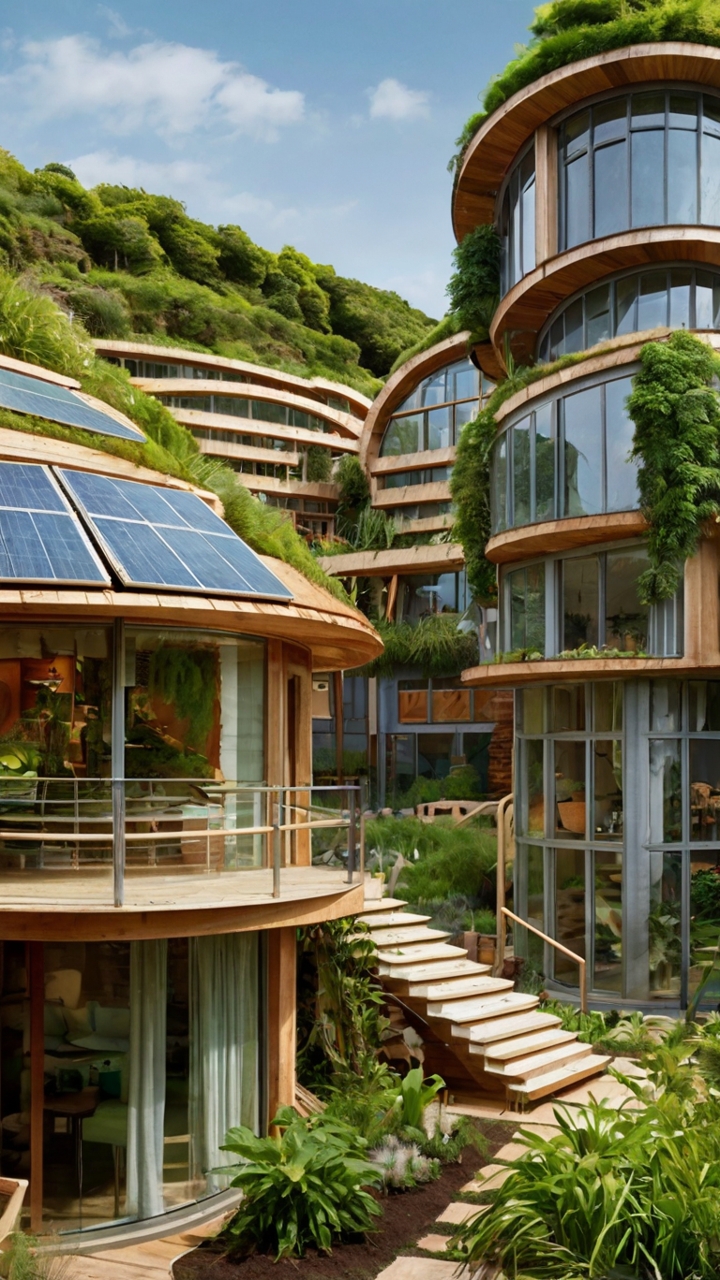
The world of sustainable living through sustainable architecture is quickly changing, thanks to nature’s smart designs. Newer ideas like biomimicry, earth ships, and cob houses are changing how we build and dwell. These ideas, based on the circular economy, help us make homes that are great for the planet and ecosystem.

Sustainable architecture is more than just using green materials and eco-friendly products. It learns from nature’s smart and adaptable ways. For example, termite and ant mounds use energy well, and desert beetles collect water. Nature has many solutions for our building problems.

Earth ships and cob houses showcase how to build with nature’s help. They utilize local materials and design that works with the sun and atmosphere. This way, we can make homes that are functional for us and the planet.

Understanding Biomimicry in Modern Architecture

Biomimicry in architecture uses nature’s wisdom to construct green buildings. It combines green building with nature’s adaptable yet commerically smart strategies. Architects learn by observing nature to create innovative, sustainable designs.

Nature’s Design Principles in Building

Architects use nature’s smart designs to build functionally efficient buildings. They study how all plants and animals adapt. This helps them create buildings that feel connected to the biology of nature and improve well-being.

Evolutionary Adaptations in Architecture

Buildings inspired by nature often work better than usual designs. For instance, termite mounds help with natural ventilation. This decrease the amount of energy use and improves air quality. Architects also use nature’s ways to manage water and climate temperature, making buildings stronger.

Benefits of Nature-Inspired Design

Nature-inspired design brings many benefits to sustainable architecture:

  • Improved energy efficiency
  • Enhanced occupant comfort and productivity
  • Reduced environmental impact
  • Increased building longevity

By using biomimicry, architects build structures that blend together with nature. These buildings are not just beautiful but also function better. As we tackle environmental issues, nature-inspired design leads the way to a sustainable future in architecture.

Circular Economy practices for biomimicry, earth ships, & cob houses

Circular economy practices are changing sustainable architecture. They focus on using zero waste, upcycling byproducts, and building eco-friendly. Biomimicry, earth ships, and cob houses show how to use sustainable materials in creative ways.

Biomimicry in architecture looks to nature for ideas. It makes buildings that use less waste and energy. For instance, termite mounds inspire ventilation systems, and lotus leaves help create self-cleaning surfaces.

Earth ships take sustainable living even further. They use recycled materials like tires and bottles. These homes also have systems for water, solar power, and waste treatment. This creates a closed-loop system that reduces environmental harm.

Cob houses are an ancient building method that’s gaining popularity again. Made from clay, sand, and straw, cob is a sustainable choice. It produces no waste during construction and keeps buildings warm.

  • Biomimicry: Nature-inspired designs for efficiency
  • Earth ships: Recycled materials and integrated systems
  • Cob houses: Ancient technique with modern applications

These new methods show how circular economy can change construction. By using zero waste and sustainable materials, we’re building a greener future.

“In nature, nothing is wasted. By applying this principle to our buildings, we create more sustainable and resilient communities.”

As we face environmental challenges, these practices offer hope. They show that with creativity and dedication, we can build homes that work with nature, not against it.

Indigenous Building Techniques for Modern Applications

Indigenous communities have always been experts in sustainable architecture. Their building methods, developed over centuries, are still valuable today. These techniques often use natural materials and blend with the environment.

Traditional Materials and Methods

Indigenous building practices focus on local, natural materials. In dry areas, they use adobe, a mix of clay and straw. In forests, they build with timber frames and bark shingles. These materials are renewable and gentle on the environment.

Aboriginal Construction Wisdom

Aboriginal societies have created unique building methods for their climates. The Inuit built igloos from snow blocks for warmth. In Australia, Aboriginals made dome-shaped shelters from bent saplings to fight heat and wind.

Adapting Ancient Practices for Today

Today, architects are using indigenous wisdom in new designs. Green roofs, inspired by sod houses, help with insulation and manage water. Rammed earth walls, an old technique, keep buildings cool by storing heat.

Indigenous TechniqueModern ApplicationSustainability Benefit
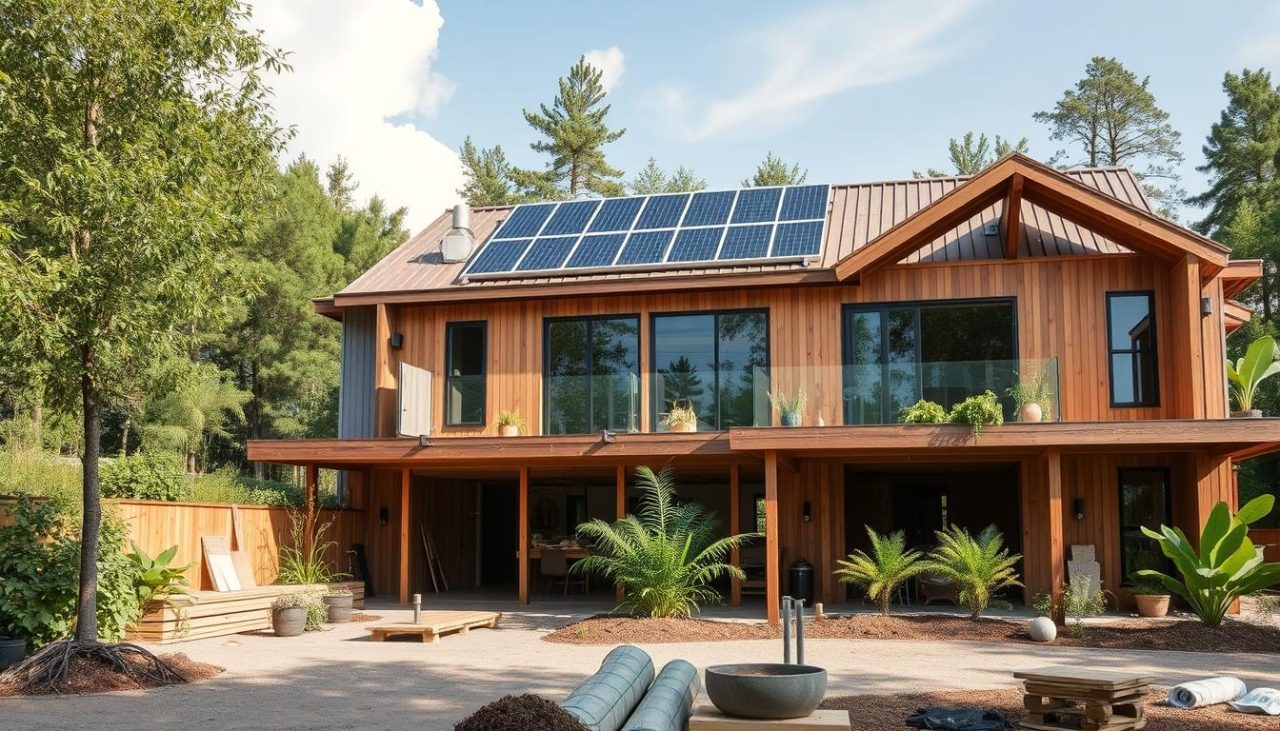
Adobe constructionEarth block homesLow carbon footprint
Passive solar designOrientation-optimized buildingsReduced energy consumption
Natural ventilationCross-ventilation systemsImproved air quality

Mixing old wisdom with new tech can make buildings that are culturally rich and green. This mix is a hopeful step toward truly sustainable architecture.

Biophilic Design: Connecting Buildings with Nature

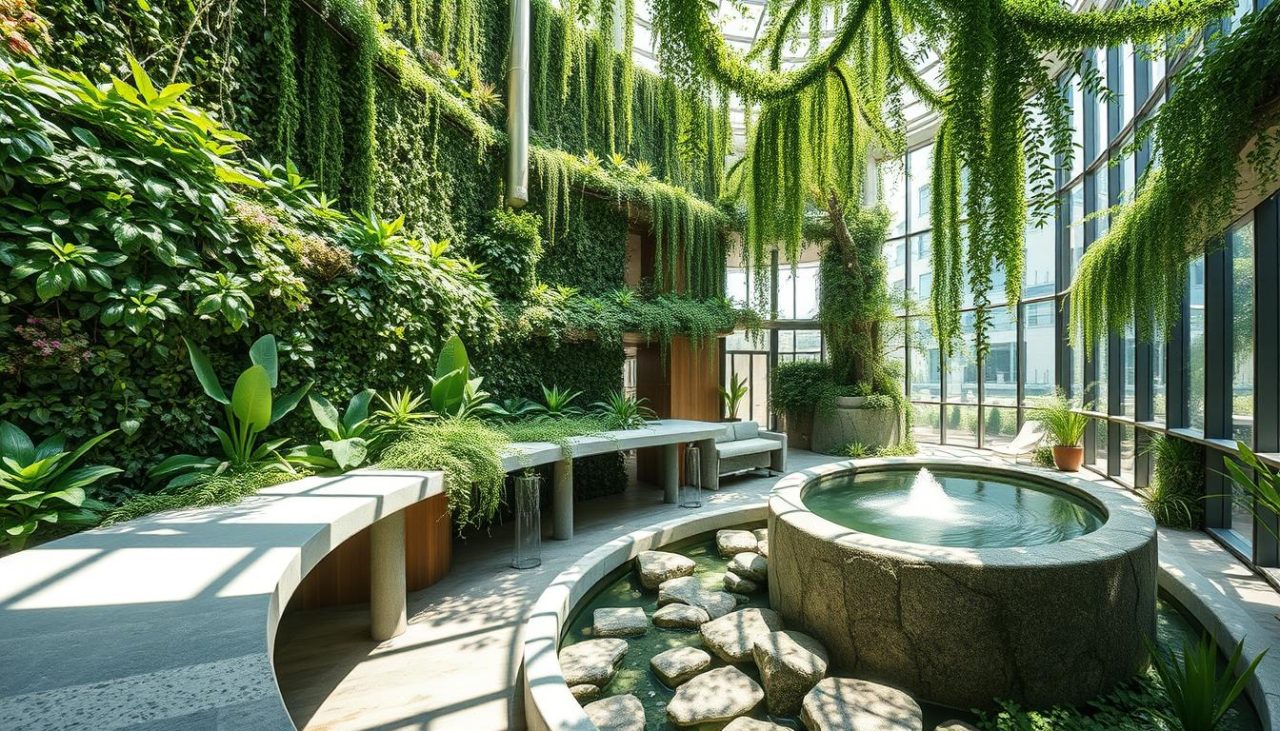
Biophilic design brings nature into our buildings, blending green building with human well-being. It uses natural materials and elements to create spaces that feel connected to nature.

In eco-friendly construction, biophilic design guides architects to merge nature with buildings. Features like living walls, natural lighting, and water bring the outdoors in. These elements improve air quality and reduce stress.

Using natural materials in biophilic design fits well with green building goals. Materials like wood, stone, and plants create warmth and a sense of connection. They also have lower environmental impacts than synthetic materials.

“Biophilic design is not just about adding plants to a space. It’s about creating an environment that nurtures our inherent bond with nature.”

Biophilic design in sustainable architecture offers many benefits:

  • Improved air quality
  • Enhanced cognitive function
  • Reduced stress levels
  • Increased productivity
  • Better overall well-being
Biophilic ElementBenefitImplementation
Natural LightImproved mood and sleep patternsLarge windows, skylights
Green WallsBetter air quality, reduced noiseVertical gardens, plant installations
Water FeaturesStress reduction, improved focusIndoor fountains, reflective pools
Natural MaterialsIncreased comfort, connection to natureWood flooring, stone accents

By using biophilic design, architects and builders make spaces that meet green building standards. These spaces also foster a deeper connection between people and their environment. This approach to sustainable architecture leads to healthier, more harmonious living and working spaces.

Sustainable Materials and Construction Methods

Eco-friendly construction is changing the building world. We’re using natural materials and zero waste to make buildings that fit with nature. Let’s look at the new ways we’re building green.

Natural Building Materials

Natural materials are key to green building. Bamboo, hemp, and straw bales are better than old building stuff. They’re good for the planet and make homes healthier.

Zero Waste Construction Practices

Zero waste building means less trash and more use of what we have. Builders use prefabrication and modular building to cut waste. Recycling helps old materials get used again.

Energy-Efficient Building Techniques

Building that saves energy is important for green buildings. Passive solar design, better insulation, and smart homes all help. They save money and reduce carbon emissions.

TechniqueEnergy SavingsEnvironmental Impact
Passive Solar DesignUp to 40%Reduced heating/cooling needs
Advanced Insulation20-30%Lower energy consumption
Smart Home Systems10-25%Optimized resource use

Using these green materials and methods, we’re building a better future. These ways help the planet and make buildings stronger, more comfy, and cheaper for all of us.

Off-Grid Living Solutions and Self-Sustainability

Off-grid living is a way to be energy independent and self-sufficient. It focuses on building homes that are good for the environment. Let’s look at the main parts of off-grid living.

Energy Independence Systems

Off-grid homes use renewable energy for power. Solar panels, wind turbines, and micro-hydro systems make electricity. Battery banks save extra energy for when it’s needed.

Water Management Solutions

Clean water is key for off-grid living. Rainwater harvesting systems collect and filter rainwater for homes. Greywater recycling treats wastewater for irrigation.

Waste Processing and Recycling

Good waste management is important for off-grid homes. Composting toilets turn waste into fertilizer. Anaerobic digesters turn organic waste into biogas for cooking and heating.

  • Composting toilets for sanitation
  • Anaerobic digesters for organic waste
  • Recycling systems for inorganic materials

By using these off-grid solutions, homes can be self-sufficient. They get energy from themselves, manage water well, and handle waste efficiently. These homes are good for the planet and help people live better, even with less resources.

Green Building Certifications and Standards

Green building certifications are key in promoting sustainable architecture and eco-friendly construction. They help lower the environmental impact of buildings. They also ensure buildings are high-quality and efficient.

The top green building certification systems are LEED, BREEAM, and WELL. Each system checks buildings on criteria like energy use, water saving, and air quality inside.

CertificationFocus AreasGlobal Reach
LEEDEnergy, water, materials, location160+ countries
BREEAMSustainability, resilience, value80+ countries
WELLHuman health, wellbeing60+ countries

Getting green building certifications has many benefits. They improve energy use, cut down on costs, and make buildings more attractive. Certified buildings often have higher rents and sale prices, making them good investments.

As more people want sustainable buildings, green building standards keep getting better. They now cover more areas like social equity and climate change resilience. This means certified buildings do more than just save the environment. They also help their communities.

“Green building certifications are powerful tools for driving innovation in sustainable design and construction.” – World Green Building Council

By following these standards, architects and builders make buildings that are good for the planet. They also make buildings healthier and more comfortable for people. As we face more environmental challenges, green building certifications will become even more crucial for sustainable architecture.

Environmental Impact and Future Sustainability

Nature-inspired building solutions are key to a greener future. They cut down on carbon footprints and offer lasting environmental benefits. Sustainable architecture is good for our planet and also saves money.

Carbon Footprint Reduction

Buildings that take cues from nature use less energy and resources. They work like natural systems to reduce waste and emissions. This results in a smaller carbon footprint over time.

Long-term Environmental Benefits

Sustainable buildings positively affect their surroundings. They improve air quality, support local ecosystems, and save water. These structures can even help fix damaged environments.

Economic Advantages

Green buildings save money in the long run. They use less energy, which lowers utility bills. Maintenance costs are also lower. Plus, they tend to sell for more.

AspectTraditional BuildingSustainable Building
Energy UseHighLow
Water ConsumptionHighLow
Waste ProductionHighLow
Maintenance CostsHighLow
Property ValueStandardIncreased

By choosing sustainable architecture, we can make a better world for the future. These buildings lessen our environmental impact and offer economic benefits. It’s a win-win for both people and the planet.

Conclusion

The future of living sustainably is tied to nature-inspired building. By using biomimicry and circular economy, we can build homes that work with nature. This approach helps us reduce our environmental impact and improve our lives.

Earthships and cob houses are examples of sustainable architecture. They use old wisdom and new science to create eco-friendly and strong structures. By using these ideas in building, we can change our environment for the better.

As environmental challenges grow, we need sustainable living solutions more than ever. Nature-inspired building is a promising way forward. It shows we can meet our housing needs without harming nature. By adopting these practices, we can build a better future for all.

Key Takeaways

  • Biomimicry in architecture adapts nature’s time-tested strategies
  • Earth ships and cob houses use local materials for sustainable building
  • Circular economy practices reduce waste in construction
  • Nature-inspired designs create energy-efficient living spaces
  • Sustainable architecture aims to harmonize with the environment
  • Sustainable living comes in many forms that reduces environmental impact and habitat preservation

Solar & Geothermal Strategies: Energy-Efficient Solutions

Grand prismatic spring, Thermal, Spring image. https://pixabay.com/photos/grand-prismatic-spring-thermal-3799785/

Looking for ways to live and thrive sustainably? Energy-efficient solar & geothermal strategies offer a direct pipeline to achieve these goals. Passive solar heating and geothermal cooling are key choices for premium eco-friendly homes. They keep your in house spaces cozy and often times, greatly reduce the utility bills.

Leveraging the sun’s warmth and the earth’s consistant yet variable temperatures, buildings save a lot of energy. Passive solar design spreads heat natural thus very seemlessly. Geothermal systems utilize the ground’s temperature for cooling and heating.

These green methods lower carbon footprints and save on cost, billing, and maintance in the long run. As energy costs increase rather internally or externally, these investments shine. Homeowners and businesses are choosing them to save cost and go green.

Understanding Solar and Geothermal Energy Integration

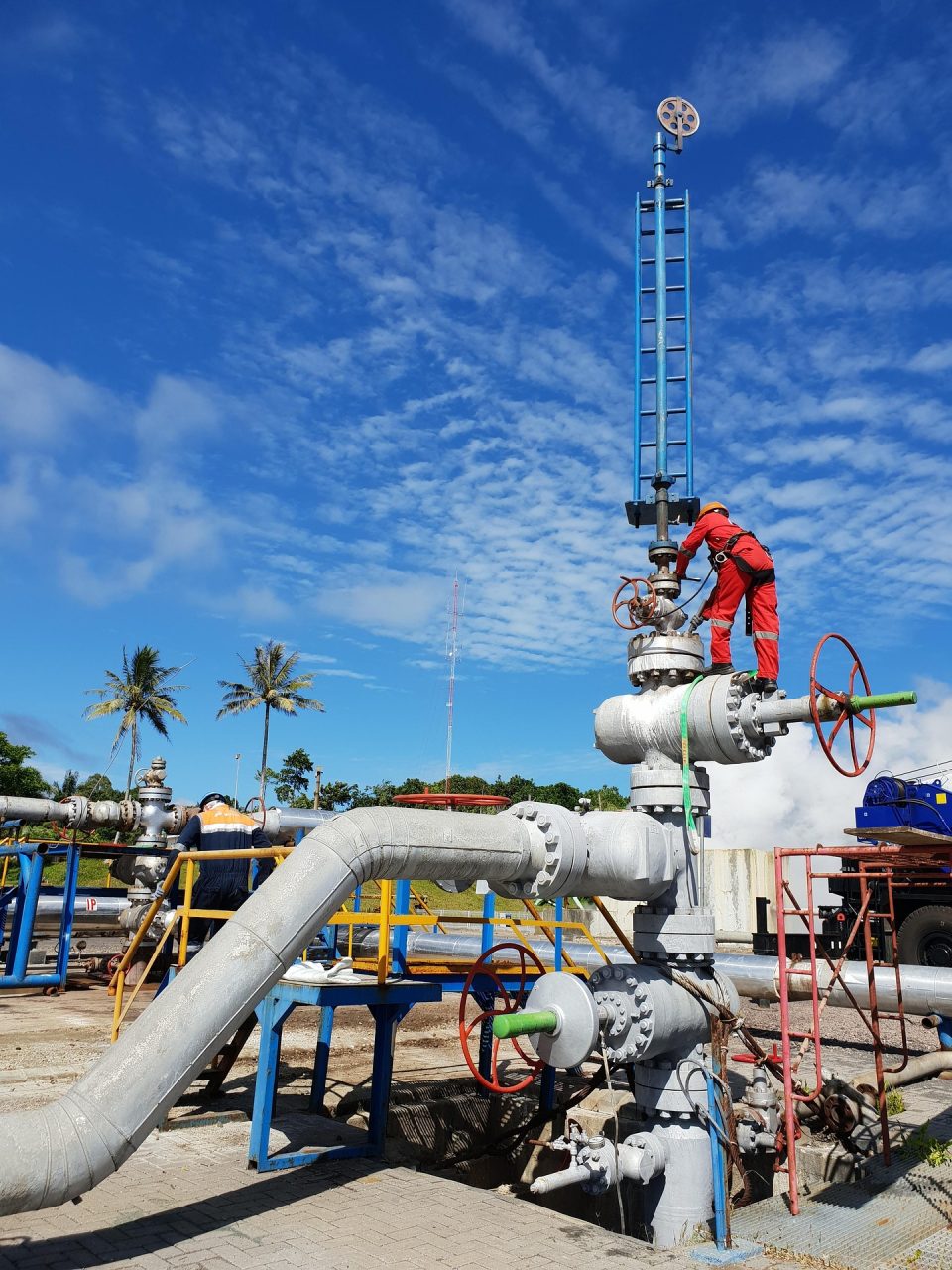
Geothermal, Geothermal well, Geothermal power plant image. https://pixabay.com/photos/geothermal-geothermal-well-3722840/

Solar energy harvesting and geothermal heat exchange are key technologies in overall sustainable development and in sustainability in general. They can positively influence our energy use for the better. Together, they present a green solution that’s also renewable while meeting UNSDG#7, aiming for clean and affordable energy for everyone.

Fundamentals of Solar Energy Harvesting

Solar energy harvesting uses the sun’s rays to make or generate electricity. It functions through photovoltaic panels that converts sunlight into direct current. Then, inverters change this current into alternating current for our homes and businesses.

Basics of Geothermal Heat Exchange

Geothermal heat exchange utilizes the Earth’s steady underground temperature. It has pipes filled with a unique fluid. During the winter season, it absorbs warmth from the ground. In summer, it relinquish heat, keeping our homes cozy yearly.

Synergistic Benefits of Combined Systems

Putting solar and geothermal together makes a synergize energy system. Solar panels channels electricity, while geothermal handles heating and cooling. This combo cuts down on fossil fuel use and saves cost on energy bills.

SystemPrimary FunctionEnergy SourceEnvironmental Impact
Solar Energy HarvestingElectricity GenerationSunlightLow Carbon Emissions
Geothermal Heat ExchangeHeating and CoolingEarth’s Thermal EnergyMinimal Environmental Disruption
Combined SystemsComprehensive Energy ManagementSun and EarthSignificant Reduction in Carbon Footprint

Energy-efficient strategies for passive solar heating & geothermal cooling

Passive solar heating and geothermal cooling are exemplary ways in helping buildings and houses be more energy-efficient. They use natural resources to keep buildings warm or cool, reducing on the need for traditional HVAC systems.

Passive solar heating uses the sun’s rays to warm buildings. By placing buildings to catch the most sunlight and using massive windows, they can get warm in winter. Materials like concrete floors or stone walls grasp onto heat during the day and release it at night, keeping the temperature steady.

Geothermal cooling uses the earth’s constant temperature. It involves a system of pipes that transfers fluid between the building and the ground. In summer, it cools the air coming from the building, conducting similar to a natural air conditioner.

As mentioned early, both methods together makes buildings even more energy-efficient. This approach also supports UNSDG#9, which aims for sustainable infrastructure and innovative building designs across various of industries.

  • Proper insulation and air sealing
  • Energy-efficient windows and doors
  • Smart thermostats and zoning systems
  • Natural ventilation techniques

These energy-saving strategies help lower carbon emissions and save money in the long run. As we aim for a greener future, using passive solar heating and geothermal cooling in buildings is key.

Optimizing Building Design for Solar Gain

Building design is key to using solar energy well. Architects focus on window placement, thermal mass, and natural light. This helps make spaces more energy-efficient and comfortable for people.

Window Placement and Orientation

Where you place windows is very important. Windows facing south get the most sunlight in the northern hemisphere, while windows facing north help keep heat in.

Windows facing east and west need careful thought. They must balance light and heat throughout the day.

Thermal Mass Implementation

Using materials like concrete, brick, or stone helps control indoor temperature. These materials soak up heat when it’s sunny and release it when it’s cold. This keeps the inside of buildings stable.

MaterialHeat Capacity (kJ/m³K)Thermal Conductivity (W/mK)
Concrete20601.28
Brick13600.72
Stone20002.07

Natural Light Management

Managing natural light well cuts down on the need for artificial light and heat. Using light shelves, clerestory windows, and skylights spreads sunlight inside buildings. This boosts energy efficiency and improves well-being.

By using these methods, architects can make buildings that use solar energy well. This reduces the need for artificial heating and cooling. It also makes spaces comfortable and well-lit for people.

Geothermal Heat Pump Systems

Geothermal heat pumps are a new way to heat and cool buildings. They use the earth’s stable temperature for efficient climate control all year. This helps meet UNSDG#12 by promoting responsible use and production.

These systems work by using underground pipes to move fluid. In winter, they pull heat from the earth and bring it inside. In summer, they move heat from the building to the cooler ground. This makes them great for both heating and cooling.

Geothermal heat pumps have many benefits. They save a lot of energy, cut down on greenhouse gases, and don’t need much upkeep. Here are some key advantages:

  • Energy savings up to 70% compared to traditional HVAC systems
  • Longer lifespan than conventional heating and cooling equipment
  • Quiet operation with no outdoor units
  • Consistent indoor comfort regardless of outdoor temperatures
System TypeEnergy EfficiencyEnvironmental ImpactMaintenance
Geothermal Heat PumpHighLowMinimal
Traditional HVACModerateHighRegular

Even though geothermal heat pumps cost more upfront, they save money and are good for the environment in the long run. As we aim to meet UNSDG#12, using these systems in our buildings is key.

Radiant Floor Heating Solutions

Radiant floor heating makes your home warm and cozy. It uses pipes or electric cables under your floors. This spreads heat evenly across your space.

Installation Requirements

Setting up radiant floor heating needs careful planning. You lay pipes or cables under your floor. It works well with tile, stone, or concrete, and most other floors too.

Energy Distribution Methods

Radiant floor heating uses two main ways to spread heat:

  • Hydronic systems: Circulate hot water through pipes
  • Electric systems: Use electric cables to heat up

Both methods are efficient, warming your home from the ground up.

Cost-Benefit Analysis

Though it costs more upfront, radiant floor heating saves money in the long run. Here’s a comparison:

FactorRadiant Floor HeatingTraditional Heating
Initial CostHigherLower
Energy EfficiencyHighModerate
Comfort LevelExcellentGood
MaintenanceLowModerate

Radiant floor heating supports UNSDG#11. It promotes sustainable cities and communities with energy-efficient heating.

Earth-Sheltered Design Principles

Earth-sheltered design is a unique way to build sustainably. It uses the earth’s natural insulation to make structures that save energy and are good for the environment.

Underground Building Techniques

There are different ways to build underground, depending on the site and design. Some use earth piled against walls, while others are fully buried. These methods help keep the inside temperature stable and cut down on energy use.

Thermal Stability Benefits

Earth-sheltered homes stay cool in summer and warm in winter. This is because the earth around them helps regulate the temperature. This natural cooling and heating saves a lot of money on energy bills, making these homes very efficient.

Environmental Impact Assessment

Earth-sheltered buildings are good for the environment. They don’t harm the view and can look like part of the landscape. They also need less space, which helps protect more natural areas.

AspectConventional BuildingEarth-Sheltered Design
Energy EfficiencyModerateHigh
Thermal StabilityVariableConsistent
Visual ImpactSignificantMinimal
Land UseMore surface area requiredLess surface area needed

Earth-sheltered designs are great for saving energy, keeping a stable temperature, and being kind to the environment. As we look for ways to build sustainably, these underground homes are a good choice.

Advanced Insulation and Air Sealing Technologies

New insulation and air sealing technologies are key for saving energy in buildings. They make homes more efficient and cozy, and cut down on energy bills.

Today’s insulation materials are way better than old ones. Stuff like aerogel, vacuum insulated panels, and phase change materials lead the pack. They offer great insulation with less thickness, perfect for updating old buildings.

Air sealing is also vital for saving energy. New methods like spray foam and advanced weatherstripping close up gaps and cracks. This keeps the air inside, making buildings more energy-efficient and keeping temperatures steady.

Material Mapping is a game-changer in where insulation goes. It looks at a building’s heat loss to find the best spots for insulation. This way, homeowners can save more energy and feel more comfortable.

TechnologyEnergy SavingsInstallation Complexity
Aerogel Insulation30-50%Moderate
Vacuum Insulated Panels40-60%High
Spray Foam Air Sealing20-40%Low

Using these cutting-edge insulation and air sealing methods can really boost a building’s energy use. By adding Material Mapping, homes can become super efficient, cozy, and green.

Natural Ventilation and Passive Cooling Strategies

Natural ventilation and passive cooling are green ways to keep buildings cool. They use smart design to cut down on air conditioning use.

Cross-Ventilation Techniques

Cross-ventilation uses wind to cool spaces. It works by placing windows on opposite sides of a room. This setup lets air flow through, pushing out warm air and bringing in cool breezes.

Stack Effect Utilization

The stack effect uses heat’s natural rise. In buildings, it drives air movement. Warm air rises and escapes through high openings, drawing cooler air in at lower levels. This creates a natural cooling cycle without mechanical help.

Night Cooling Methods

Night cooling uses cooler nighttime air. Opening windows after sunset lets cool air in. During the day, closing windows and shades keeps this coolness inside, reducing cooling needs.

StrategyKey BenefitBest Climate
Cross-VentilationImproves air qualityWindy areas
Stack EffectRemoves hot airMulti-story buildings
Night CoolingReduces daytime heat gainHot days, cool nights

By using these natural methods, buildings can stay cool all year while saving energy. These strategies show that smart design can work with nature, not against it, for sustainable living.

Sustainable Material Selection and Waste Management

Choosing the right materials and managing waste are key to green building. Sustainable materials help cut environmental impact and boost efficiency. Let’s explore smart choices for eco-friendly construction.

Biomass Integration

Biomass offers a renewable option for building. Wood, bamboo, and hemp create strong, earth-friendly structures. These materials store carbon and grow back fast, making them smart picks for green projects.

Recycled Material Applications

Recycled materials give new life to old products. Reclaimed wood, recycled steel, and plastic lumber reduce landfill waste. They also save energy and resources needed for new production. Using these materials shows commitment to sustainability.

Waste Reduction Strategies

Cutting waste is crucial in green building. Plan carefully to order just what you need. Use modular designs to minimize off-cuts. Set up on-site recycling to sort and reuse materials. These steps shrink your project’s footprint.

StrategyBenefitImplementation
Material AssessmentIdentifies sustainable optionsEvaluate lifecycle impacts
PrefabricationReduces on-site wasteAssemble components off-site
DeconstructionSalvages reusable materialsCarefully dismantle old structures

By focusing on sustainable materials, integrating biomass, using recycled products, and cutting waste, we build greener. These choices create buildings that last and protect our planet.

Implementation and Maintenance Guidelines

Setting up energy-efficient systems needs careful planning and following best practices. First, check how well your site can use solar and geothermal energy. This helps place and design your systems right.

Here are the main steps to follow:

  • Get advice from certified experts for your system design
  • Get all needed permits and approvals
  • Choose high-quality, long-lasting materials
  • Make sure your system is well-insulated and sealed

Keeping your system operations in good shape is essential for lasting efficiency. Regular checks keep everything running optiumally. Conduct inspections twice a year to spot problems early.

Using waste byproducts in your energy systems is key. This helps the greater ecosystem and can save money. For instance, recycled glass can be make into solar panels.

Maintenance TaskFrequencyBenefits
Clean solar panelsQuarterlyImproved efficiency
Check geothermal fluid levelsAnnuallyPrevent system failure
Inspect electrical connectionsBi-annuallyEnsure safety

By sticking to these guidelines, you’ll get to maxmize your energy systems. Remember, the right setup and upkeep are essential for short, mid, and long-term benefits including sustainability.

Solar, Panels, Solar energy image. https://pixabay.com/photos/solar-panels-solar-energy-8499874/

Conclusion

Solar & Geothermal strategies are key in today’s building world. Using passive solar heating and geothermal cooling is a smart move. These methods help keep buildings cool without using a lot of energy.

Passive solar heating works by using design tricks like where windows are placed and materials that hold heat. Geothermal cooling uses the earth’s steady temperature for cooling. Together, they make a system that works all year, cutting down on the need for old HVAC systems.

Choosing these energy-saving ways helps builders and homeowners lower their carbon footprint. They save money on bills, enjoy better indoor air, and help the planet. As we aim for a greener future, these methods will be essential for building energy-efficient solutions for green homes.

Renewable energy, Solar panels, Solar energy image. https://pixabay.com/photos/renewable-energy-solar-panels-8481165/

Key Takeaways

  • Passive solar heating and geothermal cooling are high key energy-efficient strategies
  • These methods both encourage and create a sustainable indoor environment
  • Integrating solar and geothermal solutions leads to significant energy and cost savings
  • Sustainable building practices reduce utility costs over the long term
  • Energy-efficient homes have a greatly reduced environmental impact
  • Solar and geothermal benefits expand beyond home and businesses from supply chain along with logistics to larger infrastructure and manufactoring practices

Types of Cooperatives: Leading Sustainable, Climate, & ESG Solutions

There a numerous set types of Cooperatives that, enterprises & democratic governed organizations are becoming key players in solving global environmental problems. They are owned by their members and lead in promoting green business practices and eco-friendly goods and services. These businesses are making big strides in creating a more sustainable future.

Multi-storey parking garage, Building, Modern image. https://pixabay.com/photos/multi-storey-parking-garage-building-7228120/

Cooperatives are changing how we tackle environmental justice and ecological stewardship issues, both locally and internationally. They focus on renewable and clean energy and sustainable farming. This shows that making money, community outreach, and protecting the planet can go hand in hand.

As we face climate change and use up resources, cooperatives are discovering new ways to help. They are more than just businesses and non-profits; they are communities working together for a greener world. Through their collective efforts, cooperatives are making a real difference in so many areas.

Understanding Modern Cooperative Models in Sustainability

The sustainable types of cooperatives are changing how we face environmental challenges. They bring diverse groups of people together to fight climate change and support green practices. Environmental, habitat preservation, produce, and sustainable agriculture cooperatives are leading this green movement.

Core Principles of Sustainable Cooperatives

Sustainability-focused cooperatives stand out with their key principles. They focus on stewarding the environment, fair labor practices, and community involvement. These groups aim to reduce carbon footprints and support clean energy.

By focusing on sustainability, they make a lasting positive impact on our planet.

Economic and Environmental Benefits

These types of cooperatives offer more than just environmental and social benefits. They create jobs, boost local economies, and provide affordable green goods and service. Environmental cooperatives save money through shared resources and bulk purchases.

Sustainable agriculture cooperatives help farmers and ranchers use eco-friendly methods. This leads to healthier food, minerals, and soils.

BenefitEnvironmental ImpactEconomic Impact
Renewable Energy UseReduced Carbon EmissionsLower Energy Costs
Sustainable FarmingImproved Soil HealthHigher Crop Yields
Resource SharingLess WasteIncreased Savings

Governance Structure and Member Participation

Cooperatives succeed because of owner-member involvement. Everyone has a say in decisions, ensuring objectives and actions meet community needs. This democratic structure encourages humanitarianism, innovation, and accountability.

Owner-members of environmental cooperatives often join eco-projects. Those in sustainable agriculture cooperatives share farming and ranching techniques.

“In a cooperative, every member’s voice counts. It’s not just about profit, but about creating a sustainable future for all.”

Different types of Cooperatives in Sustainability, ESG, Climate, and resiliency

Cooperatives are key in solving big sustainability, ESG, climate, carbon, and resiliency problems. They bring people together from all walks of life to work on big environmental issues. Let’s explore more about the three types of cooperatives that are making a big difference in sustainable development.

Worker-Owned Environmental Cooperatives

Worker-owned environmental cooperatives let employees take action for the eco-system of the planet. They focus on green practices, clean and renewable energy, and cutting down waste. This way, workers feel invested in the company’s success and work harder to meet environmental and social impact goals.

Consumer Green Cooperatives

Consumer green cooperatives serve those who care about the planet. They sell sustainable products like organic food and green household items. By working together, they can get better deals on these products, making green living easier for more people.

Multi-Stakeholder Climate Initiatives

Multi-stakeholder climate initiatives team up different groups to tackle big environmental issues. These cooperatives include local governments, businesses, and residents working together. They create new solutions that help the whole community.

Cooperative TypeKey FocusPrimary Stakeholders
Worker-Owned EnvironmentalSustainable practices, renewable energyEmployees
Consumer GreenEco-friendly products and servicesCustomers
Multi-Stakeholder ClimateCommunity-wide climate adaptationLocal government, businesses, residents

Renewable Energy Cooperative Solutions

Renewable, Roof, Energy image. https://pixabay.com/photos/renewable-roof-energy-solar-6811970/

Renewable Energy Cooperatives are changing the energy scene and causing a ripple effect across the monopolies and cooperative communities alike. They let locals who are owner-members control their energy future. Owner-members pool resources to fund clean and green energy projects, helping the planet and their pockets.

Solar Energy Cooperative Models

Solar cooperatives are becoming the most popular nationwide and globally. Owner-members split the cost of solar panels, making green energy affordable. Some networks even sell their surplus power, earning money for owner-members.

Wind Power Community Projects

Wind power cooperatives, like other clean energy coops, rely on community strength. They thrive in rural areas and in the flat plains with strong winds. Farmers get extra income by leasing land for turbines, helping produce renewable energy.

Energy Storage Initiatives

Energy storage is extremely key for Renewable Energy Cooperatives. Battery systems store extra energy for when it’s needed most during off-peak hours. This boosts grid reliability, durability, and cuts down fossil fuel use.

Cooperative TypeKey BenefitsChallenges
SolarLower installation costs, shared maintenanceSpace requirements, initial investment
WindHigh energy output, land lease incomeWind variability, noise concerns
Energy StorageIncreased reliability, peak shavingTechnology costs, regulatory hurdles

Renewable Energy Cooperatives pave a sustainable path. They help communities cut carbon emissions, lower energy bills, greenhouse gases, and fight climate change.

Sustainable Agriculture and Food Cooperatives

Sustainable Agriculture Cooperatives are invaluable in promoting green farming, ranching, and food making. They unite local farmers, creating a strong community effort in agriculture. This focus is on caring for the environment, preserving the local habitat, and ensuring everyone has food.

Environmental Cooperatives in farming use organic methods, cut down on chemicals, and save natural resources. By working together, members get access to new, green technologies and practices. These are often too expensive for one farmer to afford alone.

“Sustainable Agriculture Cooperatives empower farmers to produce food responsibly while protecting our planet for future generations.”

These groups often connect farms directly to tables, cutting down on transportation and emissions. They support a wide range of crops and protect natural habitats. Many also save and share seeds, keeping rare varieties alive and making crops stronger.

Benefits of Sustainable Agriculture CooperativesImpact
Reduced chemical useImproved soil and water quality
Increased biodiversityEnhanced ecosystem resilience
Shorter supply chainsLower carbon emissions
Knowledge sharingImproved farming practices

Environmental Cooperatives in farming also reach out beyond the fields. They teach people about sustainable food systems and encourage eco-friendly choices. This broad effort helps make the food chain more sustainable, from the farm to our plates.

Green Housing and Eco-Community Cooperatives

Green Housing Cooperatives are changing city living. They mix green living with cooperative ideas. People come together to build eco-friendly homes and lively areas.

Sustainable Building Practices

These cooperatives focus on green building. They use recycled stuff, solar panels, and smart designs. This lowers energy bills and helps the planet.

Community Garden Integration

Many have shared gardens or mini-gardens and hoop houses. These spots give fresh food and build community. People learn to farm sustainably and enjoy their harvest and investments.

Shared Resource Management

Cooperatives are great at sharing resources and exchanges. They have systems for preserving water, reducing waste, and managing energy. This teamwork makes the overall infrastructure more efficient and cuts down on waste.

“Our cooperative’s shared resource system has cut our utility costs by 40% while bringing neighbors closer together,” says a member of a thriving Green Housing Cooperative in Seattle.

Green Housing Cooperatives are at the forefront of green and smart city growth. They mix green living with community efforts. This creates strong, livable places for tomorrow.

Environmental Manufacturing and Production Cooperatives

Eco-friendly manufacturing cooperatives are changing the game in industrial production. They mix sustainable practices with a worker-owned model. This approach aims to cut waste, save resources, and make eco-friendly products.

Worker-owners in these cooperatives care about making money, productivity, and protecting the environment. This setup leads to new ways of production and output. For instance, many use closed-loop systems, where waste is converted into new inputs.

“Our cooperative model allows us to prioritize long-term sustainability over short-term gains. We’re not just employees; we’re stewards of our environment and our community.”

These cooperatives focus on making sustainable and/or eco-friendly versions of common products. They produce everything from biodegradable packaging to solar-powered gadgets. They’re leading the charge of green innovation and sustainable development.

Cooperative TypeKey Focus AreasEnvironmental Impact
Recycling CooperativesWaste reduction, Material recoveryLandfill diversion, Resource conservation
Green Tech CooperativesRenewable energy products, Energy-efficient devicesCarbon footprint reduction, Energy savings
Eco-textile CooperativesOrganic fabrics, Sustainable dyeing processesWater conservation, Chemical pollution reduction

The success of Eco-Friendly Manufacturing Cooperatives shows that generating capital and saving the planet can work together. As people become more eco-aware, these cooperatives are ready to lead in sustainable production and development.

Climate Action and Resilience Cooperative Networks

Climate Action Cooperatives and Community Resilience Cooperatives collaborate together for sustainability projects from human rights to conservation to fight climate change. They create robust systems for getting ready for disasters, adapting to climate change, and responding to emergencies.

Disaster Preparedness Programs

Climate Action Cooperatives make detailed plans for disaster readiness. They do risk checks, plan evacuations, and store important items. Owner-members learn first aid and emergency steps, so they can act fast during disasters.

Climate Adaptation Strategies

Community Resilience Cooperatives work on short-term and long-term climate solutions. They start habitat preservation and green projects like urban forests and rain gardens to fight flooding and heat. They also support farming and permaculture-facing agendas that’s good for the planet, to keep food safe in changing climates.

Community Emergency Response

When disasters hit, Climate Action Cooperatives act quickly. They work with local groups, manage shelters, and share resources. Their community focus means they respond fast and effectively, meeting local needs.

Cooperative TypeFocus AreaKey Activities
Climate Action CooperativesDisaster PreparednessRisk assessment, evacuation planning, emergency training
Community Resilience CooperativesClimate AdaptationGreen infrastructure, sustainable agriculture, resource management
BothEmergency ResponseShelter management, resource distribution, community coordination

“Our cooperative network turns climate challenges into opportunities for community growth and resilience,” says Emma Chen, leader of the Bay Area Climate Action Cooperative.

Together, these networks make communities stronger and more ready to face climate challenges.

ESG Integration in Cooperative Business Models

Those types of Cooperatives in general are, at the forefront of sustainability and economic development. They leverage Environmental, Social, and Governance (ESG) principles into their daily work. This approach helps them measure and enhance their positive impact.

Environmental Impact Measurement

Cooperative enterprise organization use advanced tools to measure their environmental impact. They track energy use, waste, water, and carbon emissions. Life cycle assessments and life cycle cost analysis both help them understand the full effect of their activities.

Social Responsibility Programs

Cooperatives focus on social responsibility through community efforts and engagement. They promote fair labor, diversity, international relations, and local economic growth. Some even offer education and training to empower members and encourage sustainable practices.

Governance Best Practices

Cooperatives are known for their transparent, scalable, and democratic governance. They ensure all owner-members have a say in decisions. Regular audits for checks and balances with open communication build trust and accountability.

“Cooperatives are not just businesses; they’re catalysts for positive change in sustainability and climate action.”

By embracing both CSR and ESG, cooperatives are raising the bar for sustainable business. Their structure allows them to succeed economically while protecting the environment and advancing society. This makes them key players in the battle against climate change/pollution/environmental impact and social inequality.

Conclusion

The various types of Cooperatives are a key factor in making our world more sustainable and resilient. They range from customer/producer/worker-owned groups to renewable energy projects. These efforts are crucial for a greener future for the next generations.

Cooperatives continue to tackle imposing global issues in unique ways. They focus on sustainable farming, green homes, and eco-friendly manufacturing. Their goal is to protect our planet and support communities.

In a world facing many challenges in labor, economic, politics, law, and education to name a few; cooperatives offer hope in something very attainable. They use democratic rules, share resources, foster innovation, and engage communities. By adopting these cooperative models, we can create a better world for all and for future generations to come.

Key Takeaways

  • Cooperatives play a crucial role in promoting sustainability, green production, and ESG practices
  • Member-owned structures enable democratic economics for decision-making in environmental initiatives
  • Various types of cooperatives address different aspects of labor, ecology, climate change and resiliency
  • Cooperatives combine economic success with ecological responsibility through social impact
  • Cooperative organizations as internal operations offer innovative solutions to global environmental challenges
This website is saving the energy of your screen as it is not being used. It's part of a global effort to lower the planet's electrical consumption and CO2 emission level. Resume browsing
Click anywhere to resume browsing
Verified by MonsterInsights