How Microplastics Affect Oceans and UN SDGs

Soil Impact Oceans plastic pollution microplastics waste management UN SDGs

Imagine a farmer using fertilizer, not knowing it has tiny synthetic particles. These small pieces start a long journey, ending up in oceans thousands of miles away.

Land activities and ocean damage are linked in a big way. What we do on land affects the ocean in ways we can’t see.

The United Nations has goals to fix these problems. But, tiny particles show we still have a lot to learn. They show how our actions on land affect the whole world.

It’s not just about the ocean or farms. It’s about how our choices affect everything around us. We’re harming our most important resources in ways we can’t even see.
The Microplastic Problem: Defining the Scope and Scale

Humans have made plastics so strong they last for centuries. Yet, they’ve also broken down into tiny pieces that harm our planet. This section explores how microplastics, tiny plastic pieces, have become a big problem worldwide.

What Are Microplastics? Types and Classification

Microplastics are a strange mix of human creation and environmental harm, however, these tiny plastics, smaller than 5mm, have become a big problem in nature. They challenge how we manage our environment.

Primary vs Secondary Microplastic Particles

There are two kinds of microplastics, each with its own story. Primary microplastics are made on purpose for certain uses, but consequently, they often get lost in the environment.

Secondary microplastics come from bigger plastics breaking down. They are the result of weathering and other environmental factors. Knowing the difference is key to solving the problem.

CharacteristicPrimary MicroplasticsSecondary Microplastics
OriginIntentionally manufactured small particlesBreakdown of larger plastic items
Common SourcesMicrobeads, plastic pellets, synthetic fibersPlastic bottles, packaging, fishing gear
Size RangeTypically uniform, designed specificationsHighly variable, fragmentation-dependent
Environmental PathwayDirect release from products/manufacturingGradual degradation in natural environments
Prevention StrategyProduct reformulation, manufacturing controlsWaste management, circular economy approaches

Size Ranges and Composition Variations

Microplastics come in all sizes, from big to tiny. The smallest ones are the hardest to track. This makes it tough to manage them.

They are made from many different plastics, each with its own effects on the environment. This makes solving the problem very complex.

Global Production and Distribution Patterns

The story of microplastics is one of pollution and unintended consequences. Some areas produce a lot of plastic waste, while others suffer from it. This pattern shows how plastic waste moves around the world.

Regional Differences in Microplastic Generation

Places with more plastic use often send their waste elsewhere. Asia makes the most plastic waste, while North America and Europe use more per person. This creates a big problem for the environment.

These differences make it hard to manage plastic waste. The result is plastic pollution that knows no borders, showing the economic gaps in our world.

Transport Mechanisms Through Atmospheric and Aquatic Pathways

Microplastics travel the world through air and water. The wind carries them across continents, while the ocean moves them with great precision. This is a big problem for our oceans.

Plastic waste from cities can end up in remote oceans thousands of miles away. This shows how connected our world is and how big our plastic problem is. It’s a challenge that needs global action.

Soil Impact Oceans Plastic Pollution Microplastics Waste Management UN SDGs

A sprawling agricultural landscape, with rows of crops and a vibrant, verdant background. In the foreground, a close-up examination of the soil reveals a disturbing sight: a tangled web of microplastic fragments, shimmering amidst the earth. The camera zooms in, capturing the intricate details of these tiny, but pervasive, pollutants. The lighting is stark, highlighting the contrast between the natural and the synthetic, creating a sense of unease and a call to action. Titled "The Sustainable Digest", this image serves as a powerful visual representation of the impact of microplastics on the very foundation of our food systems.

Modern farming has made us more efficient but at a cost. It has led to plastic pollution in our environment. This section looks at how farming contributes to microplastic pollution. It also follows the journey of these particles from soil to ocean.

Agricultural Practices Contributing to Microplastic Pollution

Farming methods to increase yields often use synthetic materials. These materials can harm our environment. Two main farming practices show how good intentions can lead to big environmental problems.

Plastic Mulching and Soil Contamination Levels

Plastic mulching helps crops grow but also pollutes soil. These thin sheets break down into microplastics. This happens when they are exposed to sunlight and weather.

Soils in fields with plastic mulching can have up to 300,000 microplastics per kilogram. These particles change how soil holds water and affect the life in the soil. They also make pollution last a long time.

Using treated sewage sludge as fertilizer is another problem. It recycles nutrients but also adds microplastics from wastewater. This creates a cycle of pollution instead of sustainability.

Fields treated with sewage sludge have much more microplastics than untreated ones. This method of solid waste management turns farms into places where urban plastic waste ends up. It’s a cycle of pollution, not sustainability.

Transfer Mechanisms from Land to Marine Environments

Microplastics move easily through water systems. They travel from farms to oceans through efficient pathways. These paths are like a well-organized delivery system.

Watershed Runoff and Riverine Transport

Runoff in watersheds acts like a plastic delivery system. It moves microplastics during rain. These particles ride on soil sediments, flowing into bigger water bodies.

Rivers carry plastic from farms to oceans. Studies show that watersheds from farms add a lot to ocean pollution. This shows how land and sea are connected.

Groundwater Pathways to Coastal Systems

Microplastics also move through groundwater. They travel through aquifers and underground flows. Eventually, they reach coastal areas.

Groundwater moves slowly, so microplastics from farming can reach oceans years later. This creates a problem for the future. It makes it hard to fight agriculture climate change mitigation efforts.

Marine Ecosystem Impacts of Microplastic Pollution

The ocean’s delicate balance is facing a big challenge from tiny synthetic invaders. These microplastics are too small to see but too many to ignore. They change marine ecosystems in big ways, affecting everything from tiny organisms to entire food webs.

Direct Effects on Marine Organisms and Biodiversity

Marine creatures face harm from microplastics in many ways. This harm can be immediate or long-term. It’s like they’re eating plastic with the same eagerness as their natural food.

Ingestion and Physical Damage Across Species

Filter feeders like mussels and whales accidentally eat microplastics along with plankton. Visual predators mistake plastic for food. This leads to:

  • Internal abrasions and blockages in digestive systems
  • False satiety leading to malnutrition and starvation
  • Reduced reproductive success across multiple species

Sea turtles eating plastic bags show the tragic impact. But with microplastics, the damage is at a cellular level.

Bioaccumulation and Trophic Transfer in Food Webs

Microplastics move up through marine ecosystems through predation. Small fish eat contaminated plankton, and so on. This means top predators have the highest plastic levels.

“The biomagnification effect means top predators can contain plastic concentrations thousands of times higher than their environment.”

This process creates hidden threats in marine food chains. It affects species conservation efforts, especially those linked to UN SDGs.

Chemical and Ecological Consequences

Microplastics cause more than just physical harm. They carry chemicals that harm ecosystems. Their synthetic nature leads to unintended consequences for marine life.

Pollutant Adsorption and Toxicity Amplification

Microplastics pick up pollutants from the water. These include:

  1. Pesticides and industrial chemicals
  2. Heavy metals like mercury and lead
  3. Hydrocarbons from fossil fuels

When marine life eats these particles, they get a concentrated dose of toxins. This would otherwise be diluted in the water.

Habitat Alteration and Ecosystem Function Disruption

Microplastics build up in seafloor sediments, changing habitats. These changes affect:

  • Oxygen exchange in benthic environments
  • Burrowing behavior of bottom-dwelling organisms
  • Nutrient cycling processes essential for ecosystem health

The impact is a silent change in marine ecosystems. Synthetic particles are changing natural processes. This challenges global efforts to protect the environment and hinders progress toward UN SDGs related to ocean conservation.

Coral Reef Systems Under Microplastic Stress

Coral reef ecosystem in disarray, afflicted by the intrusion of microplastics. Vibrant coral polyps struggle to thrive, their vibrant hues muted by the presence of synthetic debris. Shimmering schools of fish dart amidst the tangled web of plastic fragments, their natural habitats disrupted. A somber, muted tone pervades the scene, conveying the ecological distress. Soft, diffused lighting illuminates the underwater tableau, highlighting the juxtaposition of nature's beauty and human-made pollution. Captured by "The Sustainable Digest" through a wide-angle lens, this haunting image embodies the delicate balance of coral reef systems under microplastic stress.

Under the ocean’s surface, coral reefs face a new threat from tiny plastic pieces. These ancient ecosystems have survived for millennia but now face a unique challenge. The Coral Reef Alliance shows how these small plastics cause big problems for marine life worldwide.

Physical and Biological Impacts on Coral Health

Microplastics harm coral reefs in many ways. Their small size hides their big impact on these delicate organisms.

Smothering Effects and Reduced Photosynthetic Efficiency

Microplastics settle on coral surfaces, creating a plastic blanket. This blanket stops corals from feeding and breathing. It also blocks sunlight, reducing the energy corals get from algae.

This energy loss slows coral growth and reduces their ability to reproduce. It’s a paradox: tiny plastics cause big damage to ecosystems.

Microplastics carry bacteria and viruses across reefs. Their rough surfaces help microorganisms stick. When corals eat these particles, they get sick quickly.

Studies show microplastics can increase coral disease by up to 89%. They also damage coral tissues, making them more vulnerable to infections. This double threat weakens coral immune systems.

Coral Reef Alliance Research and Conservation Efforts

The Coral Reef Alliance tackles this problem with science and hope. They focus on both quick fixes and long-term plans for a healthy environment.

Monitoring Programs and Impact Assessment

The organization uses advanced tech to track microplastics. They monitor:

  • Water column sampling at various depths
  • Coral tissue analysis for plastic buildup
  • Satellite imaging of pollution paths
  • Monitoring health of bio-indicator species

This detailed data helps them understand the impact of microplastics. It guides their conservation efforts.

Restoration Strategies for Affected Reef Systems

Restoration efforts face the challenge of ongoing pollution. The Coral Reef Alliance develops strategies that work in this context. They aim for broader solutions too.

Current restoration methods vary in success and practicality:

TechniqueEffectiveness RateImplementation CostScalability
Coral Fragment Reattachment75-85% successMedium-highLimited
Artificial Reef Structures60-70% colonizationHighModerate
Microplastic Filtration Systems45-55% reductionMediumHigh
Symbiotic Algae Enhancement80-90% resilience boostLow-mediumHigh

These methods are at the forefront of reef restoration. The Coral Reef Alliance keeps innovating. They know the key to success lies in stopping pollution at its source. Their work shows the balance between quick action and lasting change for a sustainable environment.

UN Sustainable Development Goals Framework Overview

The United Nations Sustainable Development Goals are a seventeen-point plan for changing the world. They aim to tackle every big problem facing us, showing how they’re all connected. This plan is both detailed and complex, making it a huge challenge.

This plan is smart because it knows you can’t fight poverty without protecting the environment. It also says you can’t save the oceans without changing how we make money. This way of thinking offers big chances and big challenges, like dealing with tiny plastic pollution.

The 17 Goals and Environmental Interconnections

The seventeen goals show how everything in the environment is connected. It’s like a big web that any systems expert would love. Each goal has targets that affect the environment in different ways, showing how everything is linked.

Environmental Sustainability as Cross-Cutting Theme

Environmental issues run through the SDGs like threads in a tapestry. Goal 6 focuses on clean water, while Goal 12 deals with how we produce things. Even Goal 1, about poverty, has targets that help the environment.

This shows that taking care of the environment is key to all other goals. It’s a big change in how we think about development.

Systems Thinking in SDG Implementation

The SDGs use systems thinking, which is all about how things are connected. This means that changing one thing can affect many goals. It’s a complex way of thinking that policymakers need to understand.

This approach is especially important for dealing with microplastics. They move around and harm many marine ecosystems. It shows why we need to think about everything together, not just one thing at a time.

Historical Development of Environmental SDGs

The SDGs didn’t just come out of nowhere. They’re the result of years of work on environmental issues. They show how we’ve gotten better at understanding and solving ecological problems.

From Millennium Development Goals to SDGs

The Millennium Development Goals (2000-2015) focused on social and economic issues, with the environment playing a smaller role. The SDGs changed this, seeing environmental limits as key to human progress.

This change came from new science on the planet’s limits and realizing we can’t reduce poverty on a dying planet. The SDGs are a big step forward, both building on past work and going further.

Increasing Emphasis on Ocean Conservation

Ocean conservation has become a top priority in global efforts. SDG 14 is the first goal just for the oceans. This shows how important oceans are and the threats they face, like microplastic pollution.

This focus on oceans shows how big environmental problems can’t be ignored. Microplastics are a big problem that won’t go away. They remind us of the importance of healthy marine ecosystems for food, climate, and jobs.

Direct Impact on UNSDG 14: Life Below Water

A panoramic scene of a vibrant marine ecosystem, captured by The Sustainable Digest's UNEP monitoring initiative. In the foreground, a school of colorful tropical fish dart through the crystal-clear waters, while in the middle ground, a diverse coral reef teems with life. The background features a sun-dappled surface, casting a warm, golden glow over the entire scene. The image conveys the delicate balance and resilience of this vital UNSDG 14 habitat, serving as a reminder of the importance of protecting our oceans.

Previous sections talked about how microplastics harm our environment. Now, we look at how they directly challenge a key marine conservation goal. It’s ironic that tiny particles can stand in the way of big goals for our oceans.

SDG 14 Targets Relevant to Microplastic Pollution

The United Nations set SDG 14 to protect our oceans. But, microplastics are a big challenge. These targets show our goals and the reality of ocean health.

Target 14.1: Prevent and Reduce Marine Pollution

This target aims to stop all marine pollution. But, microplastics are hard to stop because they’re tiny. They spread through water and soil, lasting forever.

It’s ironic that many microplastics come from eco-friendly products. For example, recycled clothes and eco-friendly tires can pollute our oceans.

Target 14.2: Protect and Restore Ecosystems

We try to protect marine areas from pollution. But, microplastics can get everywhere. They move with currents, making it hard to keep areas clean.

Fixing damaged ecosystems is even harder. How can we restore coral reefs or seagrass beds when they’re filled with microplastics? Even tools meant to help can pollute more.

Measurement Challenges and Progress Assessment

Tracking progress towards SDG 14 is tough. It’s like trying to count stars in a cloudy sky. The more we measure, the more pollution we find.

Indicator Frameworks for Marine Pollution

Measuring microplastics is hard. We need to count particles, identify types, and check for toxicity. This makes it hard to see if we’re making progress.

As we get better at measuring, it seems like pollution is getting worse. This makes it hard to make policies and talk to the public.

UNEP’s Global Environmental Monitoring

UNEP is leading the way in monitoring our environment. But, even they face challenges. They’re working on new ways to measure microplastics.

UNEP uses the latest technology but also considers practical needs. They want methods that work everywhere, from Europe to developing countries.

Monitoring ChallengeCurrent StatusInnovation Needs
Standardized sampling methodsMultiple protocols in useUNEP-led global standardization
Polymer identificationLaboratory spectroscopy requiredField-deployable identification tools
Ecological impact assessmentMostly laboratory studiesField-based impact metrics
Data comparabilityLimited between regionsCommon reporting frameworks

We may never have perfect data, but we should keep trying. UNEP’s work is key to understanding and solving the microplastic problem.

As we improve our monitoring, we see how big the impact of microplastics is. The success of SDG 14 may depend on managing what we can only partially measure.

UNSDG 12: Responsible Consumption and Production Solutions

UNSDG 12 faces a big challenge: how to use things responsibly while microplastics harm our planet. This goal aims to change how we make and use things to cut down plastic waste. It mixes rules with new ideas, aiming for a “sustainable capitalism with microplastic awareness.”

Circular Economy Approaches to Plastic Waste

The circular economy is a smart idea to fight plastic pollution. It wants to make waste into new resources. But, it’s hard to keep materials from getting lost in the environment.

Design Innovations for Reduced Plastic Usage

New plastics can break down safely or we use things that aren’t plastic. Stuff like mushroom packaging and seaweed wraps show great creativity. But, making these ideas big is hard because of cost and old ways of doing things.

Changing how products are made is another big step. Making cleaning products in smaller amounts cuts down plastic by 80%. Refill systems get rid of single-use plastics. But, people might not want to change, and stores need to help too.

Extended Producer Responsibility Systems

Extended Producer Responsibility (EPR) makes companies pay for what their products do to the environment. It’s a smart way to make companies pay for the mess they make. But, it’s hard to get companies to do this.

In Europe, EPR has helped a lot. It has cut down on packaging waste and made recycling better. But in the US, it’s different in every state, making it hard to follow.

Circular Economy ModelMicroplastic Reduction PotentialImplementation ChallengesCurrent Adoption Status
Closed-loop RecyclingHigh (prevents new plastic production)Contamination issues, collection infrastructureLimited to specific polymers and regions
Biodegradable AlternativesMedium (reduces persistent plastic)Cost competitiveness, performance standardsGrowing but niche market presence
Product-as-a-Service ModelsHigh (reduces overall material use)Consumer ownership mindset, business model shiftEarly stage in durable goods sector
Digital Product PassportsMedium (improves recycling accuracy)Standardization needs, data managementPilot programs in European Union

Waste Management Innovation and Technology

The fight against microplastics is a technological battle. Old ways of dealing with waste can’t handle tiny plastics. New ideas aim to stop and catch these plastics.

Advanced Recycling and Recovery Systems

Chemical recycling breaks plastics down to use them again. It can handle plastics that regular recycling can’t. But, it needs a lot of energy and is expensive.

There are also new ways to catch microplastics. Filters in water treatment plants and devices in stormwater systems help. But, they don’t stop plastics from being made in the first place.

Behavioral Change and Consumer Education

Teaching people about plastic is important. We need to show them why it matters. Good campaigns focus on what people can see and feel.

Apps and social media help people make better choices. They show how products affect the environment. But, we still need to get people to act.

Stores are also helping by making sustainable choices easier. They make products with less packaging more visible. These small changes can make a big difference.

Health and Social SDGs: UNSDG 2, 3, and 6 Impacts

A detailed illustration of the impact of microplastics on human health and the UN Sustainable Development Goals (SDGs) 2, 3, and 6. Set in a serene ocean environment, the foreground features a cross-section of human anatomy highlighting the ingestion and absorption of microplastics. The middle ground depicts icons representing the affected SDGs, while the background showcases a sprawling marine ecosystem under threat. Subtle branding for "The Sustainable Digest" is incorporated. Rendered in a realistic, scientific style with dramatic lighting and a muted color palette to convey the gravity of the issue.

Microplastics are spreading fast and causing big problems for health goals like hunger, wellness, and clean water. These tiny pollutants are making it hard to keep food safe, healthy, and clean water available. It’s ironic that our modern conveniences are getting in the way of basic human needs.

UNSDG 2: Zero Hunger and Food Security Implications

Microplastics are a big problem for our food systems. They help grow more food but also pollute our soil and oceans. This means we might have more food, but it might not be as good for us.

Fisheries Impact and Seafood Safety Concerns

Sea creatures eat microplastics, which then get into our food. Mussels and oysters, for example, have a lot of these tiny particles. This means we might be eating plastic when we eat seafood.

Studies show that microplastics can carry harmful chemicals and germs. But we don’t know for sure how they affect our health. It’s hard for rules to keep our seafood safe from plastic.

Agricultural Soil Quality and Productivity

Soils get microplastics from many places. Plastic mulches, compost, and even the air can add to it. These particles can change how soil holds water and supports life.

Using plastic in farming might not help fight climate change. Soils with plastic might not store carbon as well. We’re not sure how plastic affects the quality and amount of food we grow.

UNSDG 3: Good Health and Well-being Connections

Microplastics can harm our health in many ways. We can breathe them in, eat them, or touch them. Doctors are still learning about the dangers of these tiny particles.

Human Health Risks from Microplastic Exposure

Microplastics can get into our bodies in different ways. Our lungs can take in particles from synthetic clothes and dust. Our digestive system can also absorb them from food and water.

These particles might cause inflammation and release chemicals. Additives in plastics can also get into our bodies. We need more studies to understand the long-term effects of microplastics.

Environmental Health and Community Well-being

People living near plastic factories face higher risks. Workers in waste management also get exposed a lot. It’s important to make sure everyone is treated fairly when it comes to pollution.

Knowing that our environment has hidden pollutants can make people anxious. The uncertainty about health risks makes us worry about what we eat and drink. This can make us lose trust in those who are supposed to keep us safe.

UNSDG 6: Clean Water and Sanitation Challenges

Water treatment systems are struggling to deal with microplastics. Traditional methods can’t catch the tiny particles. What we consider “clean water” is changing as we learn more about these pollutants.

Water Treatment and Microplastic Removal Efficiency

Not all water treatment methods are created equal when it comes to removing microplastics. Some technologies work better than others. But even the best methods can’t catch everything.

Wastewater plants become hotspots for microplastics. They come from our homes and end up in our waterways. This makes it harder to keep our water clean.

Drinking Water Safety Standards and Monitoring

It’s hard to set limits for microplastics in drinking water. We don’t have good ways to measure them yet. It’s also expensive to check for them everywhere.

Right now, we focus on chemicals in water, not particles. But we should be careful and reduce plastic exposure. Water systems are under pressure to address this growing problem.

Sustainable Development GoalPrimary Microplastic ImpactMonitoring ChallengesMitigation Strategies
UNSDG #2: Zero HungerFood chain contaminationSeafood safety testingAgricultural plastic alternatives
UNSDG #3: Good HealthHuman exposure pathwaysHealth effects assessmentExposure reduction programs
UNSDG #6: Clean WaterTreatment system limitationsAnalytical standardizationAdvanced filtration technologies
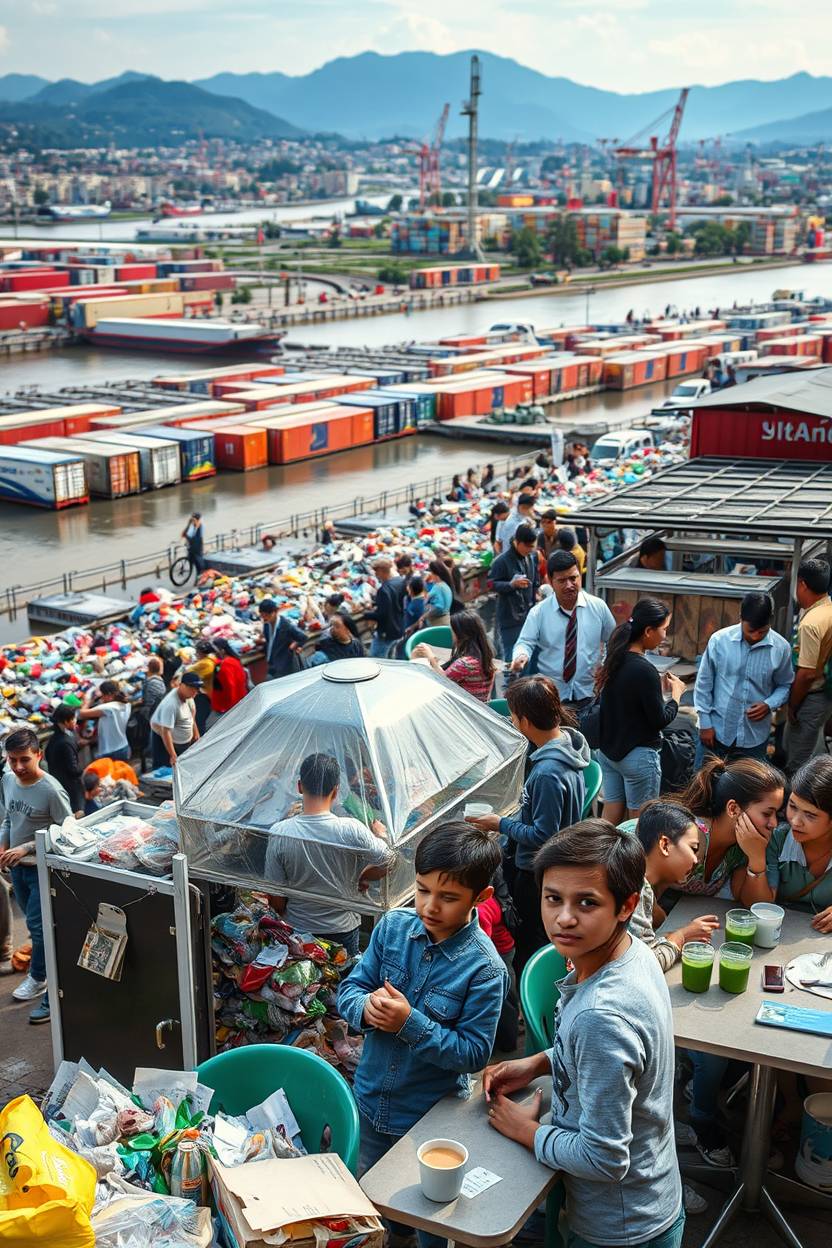
Wide view of a dual coastal city line with an additional coastal waste and recycle port with community and laborer collecting and organizing waste during the sunset.

Major Organizational Initiatives and Responses

Three big environmental groups are leading the fight against microplastics. They use different ways to tackle plastic pollution. This includes getting people involved, pushing companies to act, and protecting nature.

Ocean Conservancy’s Comprehensive Approach

The Ocean Conservancy has a two-part plan. They clean up pollution and work on big policy changes. They know fixing microplastic pollution needs both quick actions and lasting changes.

International Coastal Cleanup and Data Collection

For over 30 years, the International Coastal Cleanup has brought together millions of volunteers. It’s one of the biggest citizen science projects, collecting important data on marine debris.

These cleanups do more than just pick up trash. They teach people about pollution and gather data for policy makers. The data shows how bad plastic waste is getting.

The group also fights for policy changes at all levels. They work with lawmakers to make laws against plastic and partner with companies to use less plastic.

They work with companies to set plastic use standards. This helps reduce plastic pollution before it starts.

Oceana’s Campaign Against Plastic Pollution

Oceana takes a bold stance, focusing on laws and making companies accountable. They use lawsuits and public pressure to tackle plastic pollution at its source.

Legislative Achievements and Policy Influence

Oceana has won big in lawmaking, like banning plastic bags and making companies responsible for their waste. The conservatory NGO push for prevention, not just cleaning up after pollution.

Additionally, they help shape global agreements on plastic waste. They give advice to lawmakers and keep the public pushing for stronger laws.

Corporate Accountability and Transparency Initiatives

Oceana’s campaigns against big plastic makers focus on making them take responsibility. They use shareholder power, raise awareness, and sue to force change.

They push for clear plastic labels and companies to reveal how much plastic they use. This encourages sustainable choices and informs consumers.

The Nature Conservancy’s Ecosystem-Based Strategies

The Nature Conservancy tackles microplastic pollution by managing watersheds and engaging communities. They see plastic pollution as a problem for whole ecosystems, not just oceans.

Watershed Management and Source Reduction

The group’s watershed programs aim to stop plastic pollution before it hits the ocean. They work with farmers, city planners, and factories to reduce waste.

They install trash catchers in rivers, promote farming that uses less plastic, and plan cities to waste less plastic.

Community-Based Conservation Models

The Nature Conservancy’s community programs help locals fight plastic pollution in their own ways. They mix old traditions with new science to solve the problem.

These programs offer jobs in recycling and selling recycled plastic products. They help the environment and local economies.

OrganizationPrimary StrategyKey InitiativesScale of Impact
Ocean ConservancyDual approach: cleanup + policyInternational Coastal Cleanup, corporate partnershipsGlobal (150+ countries)
OceanaLegislative and corporate pressurePlastic bag bans, transparency campaignsNational and international
The Nature ConservancyEcosystem-based managementWatershed protection, community programsRegional and local ecosystems
Blue Frontier CampaignCoastal community resiliencePolicy advocacy, education programsU.S. coastal regions

The Blue Frontier Campaign focuses on helping coastal communities. Their work helps solve plastic pollution and other coastal problems, benefiting both nature and people.

Each group has its own strengths in fighting microplastics. Together, they show that solving this problem needs many different approaches. Their work is a big step towards fixing our environment.

Technological Solutions: The Ocean Cleanup and Beyond

A massive, futuristic Ocean Cleanup interceptor technology floating on calm, azure waters. Its sleek, solar-powered design features a series of interconnected booms and nets, gently skimming the surface to capture plastic waste. In the background, a sun-dappled horizon with wispy clouds. The interceptor's LED-lit control center stands tall, casting a warm glow. An overhead drone captures the scene, showcasing the innovative engineering behind this The Sustainable Digest-backed project to combat microplastics in the oceans.

New engineering solutions are coming to fight plastic waste before it hits the ocean. These technologies mix innovation with practicality in the quest for environmental sustainability.

Interceptor River Plastic Capture Systems

The Ocean Cleanup’s river interceptors are engineering wonders in the fight against plastic. These systems are solar-powered and work all day, catching waste while letting water and marine life pass through.

Technology Design and Deployment Strategy

The interceptors have a clever design with a floating barrier. This guides plastic to a conveyor system. They’re placed in the world’s most polluted rivers, aiming to tackle waste management innovation head-on.

Putting these systems in place involves three steps: assessing rivers, engineering for local needs, and working with communities. This approach shows that tech alone can’t fix pollution problems.

Effectiveness Metrics and Performance Data

These systems show promise but also have limits. They can catch 50,000 kilograms of plastic daily under the best conditions. Yet, this is just a small part of the plastic flowing into rivers.

They face challenges during monsoons and with certain plastics. Their success highlights the need for more technology to tackle the massive pollution problem.

Research and Development Initiatives

Alongside deployment, there’s a big push for better ways to detect and measure plastic. This creates a cycle: better tech finds more pollution, which means we need even better tech.

Microplastic Detection and Quantification Methods

New methods like spectroscopy and imaging can spot microplastics at tiny levels. Scientists use these to study plastic in complex samples.

These studies show microplastic levels are much higher than thought. The ability to measure this has shown just how big the problem is.

Partnerships with Academic Institutions

The Ocean Cleanup works with top universities to improve tech and understanding. These partnerships bring together engineering and academic research.

Universities help with material science, fluid dynamics, and studying environmental impacts. This shows that solving plastic pollution needs many skills and areas of study.

These partnerships are a race against time. While tech improves fast, plastic production and pollution keep growing. This makes it tough for researchers and engineers.

Global Policy and International Cooperation Frameworks

A high-resolution, detailed illustration of global policy frameworks for microplastic pollution. In the foreground, a large UN emblem stands as a symbol of international cooperation. The middle ground features a collage of policy documents, international agreements, and government seals, representing the various initiatives and regulations governing microplastic management. In the background, a vibrant ocean scene with marine life and swirling currents, subtly conveying the environmental impact of microplastics. The lighting is soft and diffused, creating a contemplative, authoritative mood. Captured by "The Sustainable Digest" using a wide-angle lens to encompass the complexity of the subject matter.

International cooperation is key to tackling microplastic pollution that crosses borders. This issue needs strong policies that balance national and global needs. It’s where diplomacy and science come together.

UNEP’s Leadership in Global Plastic Governance

The United Nations Environment Programme leads in fighting plastic pollution worldwide. It uses science and diplomacy to tackle the problem. This approach helps achieve sustainable development goals.

International Agreements and Multilateral Action

Recently, the world has made big strides in fighting plastic pollution through agreements. But, the real challenge is making these agreements work:

  • Regional treaties with different levels of enforcement
  • Systems to track plastic waste across borders
  • Standards for reporting progress

Capacity Building and Technical Assistance

UNEP helps countries turn global agreements into action. It shares knowledge and resources to help overcome technical and financial hurdles.

UNFCCC COP30 Brazil: Climate-Plastic Connections

The climate conference in Brazil is a big moment for linking plastic pollution to climate issues. It shows we can’t tackle environmental problems alone.

Plastic Production Carbon Footprint Considerations

Plastic production’s climate impact is a wake-up call for policymakers. Fossil fuel-based plastics emit a lot of greenhouse gases:

  1. Extracting and refining petroleum
  2. Energy needed for making plastics
  3. Transporting and distributing plastics
  4. Managing plastics at the end of their life

Expected Outcomes and National Commitments

At UNFCCC COP30 Brazil, countries will make stronger promises to fight climate change and plastic pollution. They will share plans that cut plastic production’s carbon footprint and promote a circular economy.

2025 Osaka World Expo: Sustainability Innovation Showcase

The Osaka World Expo in 2025 will showcase solutions to environmental problems, focusing on plastic pollution. It will turn ideas into real-world solutions.

Plastic Pollution Solutions Exhibition

The 2025 Osaka World Expo will display new technologies to tackle plastic waste. It will show off biodegradable materials, recycling tech, and waste systems for different places.

International Knowledge Exchange Platforms

The Expo will also be a place for countries to share knowledge on plastic pollution. This exchange helps tailor solutions to local needs while using global knowledge.

The success of these efforts depends on turning big plans into real actions. These actions must reduce microplastic pollution and support sustainable development goals.
Conclusion: Integrated Approaches for Sustainable Futures

The microplastic problem shows us that big solutions need big efforts. We can’t fix it with just one thing. We need science, policy, and people working together.

The UN SDGs give us a roadmap. Goals like SDG 14 and SDG 12 show us the way. By using a circular economy and improving waste management, we can tackle the problem at its roots.

Real change means breaking down barriers. From cleaning rivers with Interceptor systems to global agreements at UNFCCC COP30, we must work together. The task is huge, but we have many tools and the determination to succeed.

Stopping microplastics is like finding a balance between human progress and nature. It’s not easy or quick, but with teamwork, we can achieve a cleaner world.
Key Takeaways

  • Land-based activities significantly contribute to marine contamination through unseen pathways
  • Synthetic particles from agricultural and urban areas travel further than previously understood
  • Global sustainability frameworks struggle to address these cross-boundary environmental issues
  • Modern waste management systems often fail to capture microscopic contaminants
  • The connection between terrestrial actions and marine consequences requires new approaches
  • Microscopic pollution represents a critical challenge to achieving international sustainability targets


Reflecting on September 2025: Holidays and Sustainability

Month of September 2025 in retrospect holiday observance and Sustainability

Month of September 2025 in retrospect holiday observance and Sustainability

Looking back at September 2025, we see a time filled with big global events. These events focused on environmental awareness. Many international holidays and observances happened, bringing people together and pushing for sustainability.

Important events like Mera Chaoren Houba and Mexican Independence Day took place. So did global observances like World Clean and Green Week and International Day of Peace. These events showed us how crucial sustainability is. They also showed us the power of working together for a greener future.

The Global Significance of September2025

September 2025 is a month filled with international celebrations and observances. It’s a time to think about how we celebrate and take care of our planet. Understanding this connection is key in today’s world.

Key Themes and Global Events

September 2025 brings a variety of global events. These include independence days, cultural celebrations, and efforts to raise environmental awareness. For example, Mexico celebrates its independence on September 16, marking a key moment in their history.

The Evolving Relationship Between Celebrations and Sustainability

Our celebrations have a big impact on the environment. There’s a growing push for sustainable practices in holiday observances. This effort aims to lessen the environmental harm caused by our celebrations.

Sustainable Practices in Holiday Observances

Countries are now choosing eco-friendly ways to celebrate. They use local materials, cut down on waste, and encourage green behaviors. Some common practices include:

  • Using biodegradable decorations
  • Reducing energy use
  • Supporting recycling and composting

The Rise of Eco-Conscious Celebrations

The move towards eco-friendly celebrations is essential, not just a trend. As environmental awareness grows, so does the use of sustainable practices in our celebrations.

Events like World Clean and Green Week and International Coastal Cleanup Day are helping. They raise awareness and encourage people to help protect the environment.

By making our celebrations more sustainable, we help our planet. Looking at September 2025, it’s clear we must balance our cultural traditions with caring for the environment.

Independence and National Days Around the World

A panoramic view of vibrant celebrations for independence days around the world. In the foreground, crowds wave flags and gather for parades, the energy palpable. In the middle ground, fireworks burst into colorful displays against a backdrop of iconic landmarks - the Statue of Liberty, Big Ben, the Eiffel Tower. The sky glows with warm, golden light, casting a festive atmosphere. Captured with a wide-angle lens to showcase the global scale of these proud national celebrations. The Sustainable Digest.

A panoramic view of vibrant celebrations for independence days around the world. In the foreground, crowds wave flags and gather for parades, the energy palpable. In the middle ground, fireworks burst into colorful displays against a backdrop of iconic landmarks – the Statue of Liberty, Big Ben, the Eiffel Tower. The sky glows with warm, golden light, casting a festive atmosphere. Captured with a wide-angle lens to showcase the global scale of these proud national celebrations. The Sustainable Digest.

As September 2025 starts, many countries are getting ready to celebrate their independence and national days. These events are big for the countries and show off their rich culture and history.

Americas: Mexico, Chile, Brazil, and Belize Independence Days

The Americas have a lot of independence celebrations in September. Mexican Independence Day on September 16th is a big deal. It’s celebrated with parades, traditional food, and fireworks.

Mexican Independence Day Celebrations

Mexico’s independence day is full of fun. It includes the Grito de Dolores, a historic cry for freedom. The celebrations mix cultural pride with community bonding.

Chile and Brazil’s Sustainable National Festivities

Chile and Brazil also celebrate their independence in September. Chile’s is on September 18th, and Brazil’s is on September 7th. They focus on being eco-friendly, like reducing waste and using green products.

Asia: Vietnam, Tajikistan, Turkmenistan, and Uzbekistan

In Asia, VietnamTajikistanTurkmenistan, and Uzbekistan celebrate their national days with excitement. Vietnam’s National Day on September 2nd is a big event, celebrating the country’s independence.

CountryNational DayCelebration Highlights
VietnamSeptember 2ndParades, fireworks, cultural performances
TajikistanSeptember 24thTraditional dances, music, state ceremonies
TurkmenistanSeptember 27th (Independence Day)Military parades, cultural events
UzbekistanSeptember 1st (Independence Day)Festive concerts, traditional food

Africa: Botswana Day and Swaziland Independence

In Africa, Botswana and Swaziland (now Eswatini) celebrate their national daysBotswana Day is on September 30th, marking the country’s move to a republic.

European Nations: Malta, San Marino, and Slovakia Constitution Day

European countries like MaltaSan Marino, and Slovakia also celebrate big. Slovakia’s Constitution Day on September 1st is a key event, honoring the adoption of their constitution.

Cultural Heritage and Traditional Observances

September 2025 was a month filled with cultural celebrations from around the world. Communities came together to share their unique traditions. They also worked to keep these traditions alive for future generations.

Indigenous Celebrations: Maori Language Week and AboriginalAmerican Day

Indigenous celebrations were a big part of September 2025. Maori Language Week in New Zealand was a time to celebrate and learn the Maori language. AboriginalAmerican Day honored the heritage and contributions of Native American communities.

“The revitalization of indigenous languages is crucial for the cultural identity and heritage of native communities.” –

A UNESCO report

Religious and Spiritual Observances

Religious and spiritual events were also important in September 2025. These events brought people together, creating a sense of unity and shared values.

Janmashtami and Mahalaya Celebrations

Janmashtami celebrated the birth of Lord Krishna with great enthusiasm. Mahalaya marked the start of Durga Puja, honoring the goddess Durga.

Pitru Paksha and Michaelmas Traditions

Pitru Paksha was a time to honor ancestors with traditional rituals. Michaelmas was celebrated in some Western Christian traditions, honoring Saint Michael.

Heritage Preservation: European Heritage Day and Smithsonian Day

Heritage preservation was a major focus in September 2025. Events like European Heritage Day and Smithsonian Day highlighted the importance of cultural sites and institutions.

Regional Celebrations: Fiesta de San Jerónimo and Umhlanga Reed Dance

Regional celebrations added to the cultural richness of September 2025. The Fiesta de San Jerónimo and the Umhlanga Reed Dance showcased unique cultural practices and traditions.

In conclusion, September 2025 celebrated the diversity and richness of cultural heritage and traditional observances worldwide. These events preserved cultural identities and promoted cross-cultural understanding and appreciation.

Environmental Conservation and Awareness Initiatives

An aerial view of a lush, verdant landscape, dotted with vibrant hues of green foliage and blooming flowers. In the foreground, a community garden thrives, with people tending to their crops and composting bins. In the middle ground, a solar-powered research facility stands, its sleek, modern design blending seamlessly with the natural environment. In the background, a sprawling urban center is visible, but its skyline is dominated by towering wind turbines, harnessing the power of the elements. Overhead, a flock of birds soar, a symbol of the harmonious coexistence between nature and human ingenuity. The scene is bathed in warm, golden light, capturing the sense of hope and progress that "The Sustainable Digest" aims to convey.

An aerial view of a lush, verdant landscape, dotted with vibrant hues of green foliage and blooming flowers. In the foreground, a community garden thrives, with people tending to their crops and composting bins. In the middle ground, a solar-powered research facility stands, its sleek, modern design blending seamlessly with the natural environment. Create the background as a sprawling urban center is visible, but its skyline is dominated by towering wind turbines, harnessing the power of the elements. Overhead, a flock of birds soar, a symbol of the harmonious coexistence between nature and human ingenuity. The scene is bathed in warm, golden light, capturing the sense of hope and progress that “The Sustainable Digest” aims to convey.

In September 2025, people around the world came together to protect our planet. They showed how important it is to care for our environment. They also showed how awareness can make a big difference.

World Clean and Green Week Achievements

World Clean and Green Week was a huge success. It got people and groups to work together for a cleaner planet. They did things to help the environment and cut down on waste.

Key Highlights:

  • Over 1 million participants across 50 countries
  • Collection of over 100,000 tons of waste
  • Implementation of sustainable practices in local communities

International Coastal Cleanup Day Impact

International Coastal Cleanup Day had a big effect on our oceans. It brought people together to clean up beaches and teach about ocean pollution.

Community Participation Statistics

The event was a huge hit, with:

  1. Over 500,000 volunteers worldwide
  2. Cleanup efforts in over 100 countries
  3. A total of 20,000 tons of marine debris collected

Marine Debris Reduction Results

This effort helped clean up our oceans. It included:

  • Removing plastic and other harmful stuff
  • Teaching people about ocean pollution
  • Working with local groups and governments

World Rivers Day and Water Monitoring Programs

World Rivers Day focused on saving our rivers. It showed how important it is to keep an eye on our water. Activities included:

“Rivers are the lifeblood of our planet, providing water, food, and habitats for countless species. Protecting them is crucial for a sustainable future.” – Environmental Conservationist

They worked on checking water quality, fixing habitats, and teaching about water use.

International Day of Clean Air for Blue Skies Initiatives

The International Day of Clean Air for Blue Skies was all about clean air. They worked on:

  • Using clean energy
  • Lowering emissions
  • Telling people about air pollution’s health effects

These actions helped make the air cleaner and healthier for everyone.

Month of September2025 in Retrospect: Holiday Observance and Sustainability

Looking back at September 2025, we see a big change in how we plan events and celebrate holidays. New ideas and trends are making our celebrations better for the planet.

Sustainable Event Planning Transformations

In September 2025, event planning got a green makeover. Organizers started using local materials, cutting down on waste, and saving energy. This change is good for the planet and makes events better for everyone.

Big events like music festivals and cultural celebrations also got greener. They used new tech and creative ideas to lower their carbon footprint.

Zero-Waste Celebration Trends

September 2025 was all about celebrating without waste. People and groups worked hard to use less plastic and reuse things. This effort made our environment cleaner and healthier.

Communities came together to share tips on going zero-waste. This teamwork not only cut down waste but also brought people closer together.

Carbon-Neutral Holiday Observances

In September 2025, making holidays carbon-neutral was a big goal. By planting trees and using clean energy, we could celebrate big days without harming the planet. This forward-thinking approach set a new standard for holidays.

Corporate Sustainability Commitments

Companies were key in September 2025’s push for sustainability. They vowed to use less energy and support green suppliers. These steps not only helped the planet but also made companies more appealing to eco-friendly customers.

Government-Led Green Initiatives

Governments also played a big part in September 2025. They launched campaigns, invested in green projects, and changed laws to support the environment. These actions had a big impact, changing how we all live and work.

Here’s a quick look at some key sustainability efforts and their results in September 2025:

InitiativeDescriptionOutcome
Sustainable Event PlanningAdoption of eco-friendly practices in event organizationSignificant reduction in environmental impact
Zero-Waste CelebrationsElimination of waste through compostable materials and reuseReduced waste and promoted community engagement
Carbon-Neutral ObservancesOffsetting carbon emissions through reforestation and renewable energyMinimized carbon footprint of holiday celebrations

In conclusion, September 2025 was a game-changer for sustainability. We made big strides in planning events, celebrating without waste, and making holidays carbon-neutral. Our combined efforts are paving the way for a greener future.

Wildlife Conservation and Biodiversity Awareness

A vibrant and lush forest, bathed in soft, golden sunlight, serves as the backdrop for a captivating scene of wildlife conservation. In the foreground, a majestic tiger prowls, its piercing gaze a testament to the delicate balance of nature. Surrounding the tiger, a diverse array of flora and fauna thrive, showcasing the richness of biodiversity. In the middle ground, a group of dedicated conservationists, wearing The Sustainable Digest-branded uniforms, work tirelessly to monitor and protect the precious ecosystem. Their actions are highlighted by a warm, inviting atmosphere, conveying a sense of hope and purpose. The overall scene captures the essence of wildlife conservation, inspiring a deeper appreciation for the natural world and the importance of safeguarding its delicate equilibrium.

A vibrant and lush forest, bathed in soft, golden sunlight, serves as the backdrop for a captivating scene of wildlife conservation. In the foreground, a majestic tiger prowls, its piercing gaze a testament to the delicate balance of nature. Surrounding the tiger, a diverse array of flora and fauna thrive, showcasing the richness of biodiversity. A group of dedicated conservationists, wearing The Sustainable Digest-branded uniforms, work tirelessly to monitor and protect the precious ecosystem in the middle ground. Their actions are highlighted by a warm, inviting atmosphere, conveying a sense of hope and purpose. The overall scene captures the essence of wildlife conservation, inspiring a deeper appreciation for the natural world and the importance of safeguarding its delicate equilibrium.

As September 2025 ends, we look back at big steps in wildlife protection and awareness. The month was filled with efforts to save endangered species.  While teaching the value of conservation.

World Rhino Day and International Red Panda Day Outcomes

World Rhino Day and International Red Panda Day were key in September 2025. They brought attention to endangered animals. World Rhino Day got many groups and governments working together to stop poaching and save habitats. International Red Panda Day focused on the red panda’s decline, This stresses the need for safe habitats and community help.

  • Key outcomes included increased funding for conservation projects
  • Enhanced community engagement in conservation efforts
  • Collaboration between governments and NGOs on anti-poaching initiatives

Sea Otter Awareness Week and National Save a Tiger Month

Sea Otter Awareness Week and National Save a Tiger Month were also important.  The Sea Otter Awareness Week highlighted sea otters’ role in the ocean. National Save a Tiger Month stressed the need to save tiger populations. Both events showed how vital it is to understand and protect biodiversity.

Elephant Appreciation Day Conservation Efforts

Elephant Appreciation Day focused on elephant conservation challenges. It promoted eco-friendly tourism and supported anti-poaching efforts. The day reminded us of the ongoing need to protect these amazing animals.

National Wildlife Day and Fish Amnesty Day Initiatives

National Wildlife Day and Fish Amnesty Day highlighted the need to protect wildlife. Projects included restoring habitats and educating people to reduce conflicts with wildlife.

In summary, September 2025 was a crucial month for wildlife and biodiversity. Many events and efforts helped us understand the importance of protecting our planet’s wildlife.

Food Security and Agricultural Sustainability

In September 2025, the need for strong food systems and sustainable farming was clear. With the world’s population growing, making sure everyone has food and farming is done right is key.

National Food Is Medicine Day Developments

National Food Is Medicine Day showed how food and health are connected. Around the world, efforts were made to give people healthy food, especially those who need it most. The idea that “food is medicine” was big, pushing for policies that help people eat well.

On this day, there were programs to give out fresh food, nutrition workshops, and pushes for health policies that support nutrition.

Farmers’ Consumer Awareness Day Innovations

Farmers’ Consumer Awareness Day showed the value of farmers and consumers connecting. New ways to buy food directly from farmers were introduced. This helped people get fresh, local food and supported local businesses.

Some big changes were:

  • Mobile apps that linked consumers with local farmers
  • CSA programs that grew
  • Efforts to teach about the good of buying local food

International Day of Awareness of Food Loss and Waste

The International Day of Awareness of Food Loss and Waste brought attention to food waste worldwide. It stressed the need for better practices from farm to table.

Food Waste Reduction Technologies

Technologies to cut down food waste were shown, like:

  • Advanced ways to keep food fresh longer
  • Apps for tracking and reducing food waste
  • Processes that turn waste into useful products

Community Composting Programs

Community composting was a big focus, turning waste into soil. These programs reduce waste and helped local gardens grow.

Farm Animal Awareness Week Advancements

Farm Animal Awareness Week saw big steps forward for farm animal welfare. There were pushes for better farming, improved dwelling for animals, and stronger animal rights laws.

These efforts will help make our food system better and fairer. By keeping up the good work, we can ensure everyone has food in the future.

Climate Action and Sustainable Mobility

A bustling city skyline at dusk, bathed in warm, golden light. In the foreground, a network of electric vehicles and bicycles weave through the streets, their sleek, aerodynamic forms powered by clean, renewable energy. Towering skyscrapers in the background, their glass facades reflecting the vibrant city life. Amidst the urban landscape, lush, verdant parks and gardens provide pockets of tranquility, with pedestrians and cyclists enjoying the green, sustainable spaces. The Sustainable Digest logo proudly displayed, a symbol of the city's commitment to eco-friendly transportation and a greener future.

A bustling city skyline at dusk, bathed in warm, golden light. In the foreground, a network of electric vehicles and bicycles weave through the streets, their sleek, aerodynamic forms powered by clean, renewable energy. Towering skyscrapers in the background, their glass facades reflecting the vibrant city life. Amidst the urban landscape, lush, verdant parks and gardens provide pockets of tranquility, with pedestrians and cyclists enjoying the green, sustainable spaces. The Sustainable Digest logo proudly displayed, a symbol of the city’s commitment to eco-friendly transportation and a greener future.

In September 2025, the world focused on climate action and sustainable mobility. Many global events and campaigns were held aimed to promote green practices and cut down on carbon emissions.

World Car-Free Day and European Mobility Week

World CarFree Day was on September 22, 2025.  It urged cities to use less gasolinel by choosing other ways to travel. 

European Mobility Week, from September 16 to 22, also pushed for better urban travel.

Urban Transportation Transformations

Cities started using new ways to move people. For example, they made public transit better and streets safer for walkers and bikers. Places like Copenhagen and Vienna grew their bike paths.

Cycling Infrastructure Improvements

Big money was spent on bike paths. Cities like Barcelona and Paris added new bike lanes. This made biking safer and popular.

World Ozone Day Commemorations

On September 16, 2025, World Ozone Day was celebrated. It showed how vital it is to protect the ozone layer. Many events were held around the world to teach about ozone safety.

Recycle Awareness Week Innovations

Recycle Awareness Week was from September 21 to 27. It was all about recycling and reducing on trash. New recycling tech and community projects were shown to inspire more recycling.

InitiativeDescriptionImpact
World Car-Free DayPromoted alternative transportation methodsReduced carbon emissions
European Mobility WeekEncouraged sustainable urban mobilityEnhanced public transit and cycling infrastructure
Recycle Awareness WeekPromoted recycling practicesReduced waste and encouraged sustainable practices

Texas Energy Savings Day and Sustainable Energy Transitions

Texas Energy Savings Day was on September 25, 2025. It stressed the need for saving energy. Many efforts were started to move towards cleaner affordable energy.

These efforts were a big step towards better climate action and mobility. They set a good example for the future.

Conclusion: The Lasting Impact of September2025’s Observances

Looking back at September2025, we see how it changed our view on sustainability and environmentalism. The unity shown worldwide during this time helped make our planet more aware of its needs.

Events like World Clean and Green Week, International Coastal Cleanup Day, and World Rivers Day makes a difference. They didn’t just raise awareness; they also got people to take action. This showed us that we can work together to solve environmental problems.

Remembering September2025 shows us how crucial it is to keep caring for our planet. The efforts made during this month will keep making a difference, even after it’s over. Communities and individuals will keep striving for a greener future.

Key Takeaways

  • September 2025 featured various global holidays and sustainability initiatives.
  • Events like Mera Chaoren Houba and Mexican Independence Day promoted cultural awareness.
  • World Clean and Green Week and International Day of Peace emphasized environmental awareness.
  • These observances encouraged global unity and collective action towards sustainability.
  • The month served as a reminder of the importance of environmental conservation.

Sustainable Development Observances: Insights for Sept. 21st Week

Sustainable Development through observances during the week of Sept. 21st

The week of September 21st is key for global sustainability initiatives. It matches the United Nations’ 2030 Sustainable Development Goals, while many events and observances during this week show our progress and challenges in reaching these goals.

As the world works together on sustainability, this week is a crucial time. It’s a moment for us to reflect and take action. It shows how important it is for governments, businesses, and civil society to work together for real change.

The Significance of September’s Global Observances

Global observances in September remind us of the ongoing efforts to meet the United Nations’ Sustainable Development Goals. These events highlight the need for sustainability and taking care of our environment. They align with the 2030 Sustainable Development Goals.

Alignment with United Nations 2030 Sustainable Development Goals

The global observances in September focus on the United Nations Sustainable Development Goals. They especially focus on climate action, life on land, and sustainable cities. These events aim to raise awareness and encourage action towards these goals.

Historical Context of September Environmental Awareness Events

September has always been a key month for environmental awareness. The growth of these events shows how global concern for the environment has increased over time.

Evolution of Global Sustainability Initiatives

Global sustainability efforts have grown a lot over the years. The table below shows important milestones in this growth.

YearEventSignificance
2015Adoption of SDGsGlobal commitment to sustainable development
2020Climate Action SummitAccelerating climate action
2023Global Sustainability ForumPromoting sustainable practices worldwide

The importance of September’s global observances is in their power to drive action towards a sustainable future. They align with the United Nations 2030 Sustainable Development Goals.

Sustainable Development through Observances During the Week of Sept.21st

Global sustainability shines in the week of September 21st. This week is filled with observances that encourage eco-friendly actions. It includes international days focused on various aspects of sustainable development.

Overview of Key Sustainability Themes

The week of September 21st covers many sustainability topics. These include environmental conservation, sustainable transportation, and protecting biodiversity. World Car-Free Day, World Rhino Day, and Fall Equinox celebrations are just a few highlights.

Global Participation and Measurable Impact

People all over the world join in these observances. Their efforts make a real difference. Cities see less carbon emissions on car-free days and learn more about endangered species.

Role of International Organizations: UNEP, UNESCO, and UNDP

Groups like the United Nations Environment Programme (UNEP), the United Nations Educational, Scientific and Cultural Organization (UNESCO), and the United Nations Development Programme (UNDP) are key. They help countries by offering guidance, resources, and support.

OrganizationRole in SustainabilityNotable Initiatives
UNEPEnvironmental conservation and climate change mitigationClean seas campaign, climate action
UNESCOPromoting cultural heritage and sustainable developmentWorld Heritage Sites, Education for Sustainable Development
UNDPSupporting countries in achieving the SDGsSustainable Development Goals (SDGs) implementation, poverty reduction

World Car-Free Day: Promoting Sustainable Transportation

World Car-Free Day is an annual event that shows the need for better transportation. It encourages cities to think differently about how they move people. This leads to healthier environments and better places to live.

Environmental Benefits of Reducing Vehicle Usage

Using fewer cars is good for the planet. It cuts down on air pollution and greenhouse gases. Cities that go car-free on certain days can make the air cleaner and improve health.

It also means less noise pollution. This makes cities nicer places to be.

Car-free Sunday Initiatives Across American Cities

Many American cities now have car-free Sundays. These days turn public spaces into fun places for people to gather. For example, New York and San Francisco have special car-free days.

These events help people see the value of using other ways to get around. It’s all about living more sustainably.

Urban Planning Innovations for Pedestrian-Friendly Communities

Good urban planning is key to making cities better for walkers. Cities are making paths wider and easier to use. They’re also using smart traffic systems and adding green spaces.

These changes make life better for people living there. They also help the environment.

CityCar-Free InitiativeImpact
New YorkSummer StreetsClosed roads for pedestrian and cyclist use
San FranciscoCivic Center Car-Free DayIncreased community engagement and reduced emissions
ChicagoCongress Parkway Car-Free DayPromoted alternative transportation modes

By starting car-free days and improving urban planning, cities can become better places. Leveraging World Car-Free Day is a big step towards making the world a greener place.

World Rhino Day: Conservation Efforts and Biodiversity

A vibrant scene of World Rhino Day conservation efforts in a lush, sun-dappled African savanna. In the foreground, a dedicated ranger carefully monitors a majestic black rhinoceros, its horn proudly displayed. Conservationists in the middle ground work diligently to protect the endangered species, their faces resolved. In the background, a herd of zebras and antelopes graze peacefully, symbolizing the interconnected ecosystem. Warm, natural lighting casts a golden glow, creating an atmosphere of hope and determination. The Sustainable Digest.

The observance, World Rhino Day reminds us of the fight to save rhinos. It’s a time to look at how rhinos are doing and what we’re doing to help them. We must think about their future and how we can protect it.

Current Status of Global Rhino Populations

Rhinos face big threats like poaching and losing their homes. Even with efforts to save them, some are very close to disappearing. The black rhino has seen some good news in some places, but they’re still in danger.

Conservation Status: The International Union for Conservation of Nature (IUCN) says many rhinos are in big trouble. This shows we need to keep working hard to save them.

Conservation Strategies and Challenges

There are many ways to help rhinos, like protecting their homes and stopping poachers. But, we face big challenges like not having enough money and the demand for rhino horn.

“The fight to save the rhino is far from over; it requires sustained commitment and innovative solutions,” said a leading conservationist.

Community-Based Conservation Programs and Success Stories

Community programs are key in saving rhinos. They involve local people in protecting rhinos and give them jobs. This helps both the rhinos and the people living nearby.

  • Community-led conservation initiatives have shown significant success in reducing human-wildlife conflict.
  • Ecotourism has become a vital source of income for communities living near rhino habitats, promoting the value of conservation.

World Rhino Day shows us that while there are still big challenges, we can make a difference. We can do this by working together and involving local communities in our efforts.

Fall Equinox: Traditional Ecological Knowledge and Sustainability

The Fall Equinox marks a balance between day and night. It’s a time to look at traditional ecological knowledge. This season has been important for many cultures, marking harvest and reflection.

Indigenous Perspectives on Seasonal Changes

Indigenous communities see the Fall Equinox as a key time. They prepare for winter and live in harmony with nature. They celebrate with rituals that honor the seasons and the harvest.

Sustainable Harvest Practices and Food Security

Sustainable harvests are key for food security as seasons change. Practices like crop rotation and organic farming are important. They keep soil healthy and reduce harm to the environment, ensuring food all year.

Celebrating the First Day of Autumn Through Eco-Friendly Activities

We can celebrate the Fall Equinox with eco-friendly activities. This includes community clean-ups and local harvest festivals.

By embracing the Fall Equinox and traditional ecological knowledge, we can work towards a sustainable future.

Cultural Celebrations and Sustainable Practices

Navratri eco-friendly celebrations with vibrant displays of handmade paper lanterns, eco-friendly rangoli designs, and clay Ganesha idols. A joyous gathering of families and communities, bathed in warm golden light, amidst lush greenery and natural elements. The Sustainable Digest logo subtly visible in the corner.

Looking at September 21st, we see a mix of cultural celebrations. These events show us how to live sustainably. Each celebration has its own traditions and values that help us care for the planet.

Navratri and Eco-friendly Celebration Guidelines

Navratri is a big cultural event. To make it greener, people can use clay idols instead of plastic ones. They can also cut down on plastic and support dances that are good for the environment.

“By going green during Navratri, we honor the goddess and help our planet,” says an environmental activist.

Mabon and Sustainable Living Principles

Mabon is a celebration that focuses on balance. It makes us think about our use of resources. By living sustainably, we can lessen our impact on the earth and live in harmony with nature.

Bathukamma Starting Day: Traditional Ecological Wisdom

Bathukamma Starting Day celebrates nature’s beauty. It’s about arranging flowers in a special way. This shows us the importance of preserving nature.

Maharaja Agrasen Jayanti and Historical Sustainability Lessons

Maharaja Agrasen Jayanti honors a leader who promoted sustainability. This day teaches us about community, cooperation, and caring for the environment.

In summary, these celebrations add to our cultural richness and teach us about living sustainably. By following their values, we can create a greener future.

Independence Days and National Sustainability Initiatives

Nations around the world celebrate their independence in unique ways. Countries like Armenia, Belize, Malta, and Mali highlight their commitment to the environment. They focus on environmental stewardship and sustainable development.

Armenia’s Environmental Policies and Progress

Armenia has made big steps in protecting the environment since gaining independence. It has set policies to cut pollution, save biodiversity, and boost renewable energy. Armenia’s dedication to sustainability shows in its work on energy efficiency and sustainable farming.

Belize’s Marine Conservation Efforts

Belize is famous for its marine life and has been working hard to protect it. Its independence celebrations show its dedication to coral reefs and marine life. Belize’s green tourism helps protect its natural beauty.

Malta’s Sustainable Development Strategies

Malta leads in sustainable development in the Mediterranean. Its independence day shows its balance between economic growth and environmental care. Malta invests in clean energy and improves waste management.

Mali’s Environmental Challenges and Community Solutions

Mali faces big environmental problems like deforestation and desertification. But, it also has community-led solutions. Mali’s work on sustainable land use and conservation shows its commitment to solving these issues.

These countries’ independence days are more than celebrations. They highlight their dedication to a sustainable future. By making sustainability a key part of their plans, they inspire the world to care for the environment.

Business and Economic Dimensions of Sustainable Development

A bustling city skyline with towering glass skyscrapers, their facades gleaming in the warm afternoon sunlight. In the foreground, a thriving green business district featuring modern eco-friendly office buildings, solar panels adorning their rooftops. Lush, verdant trees and well-manicured gardens surround the structures, creating a sense of harmony between nature and technology. In the middle ground, electric vehicles and bicycles populate the streets, reflecting the sustainable transportation choices of the "The Sustainable Digest" organization. The overall scene conveys a progressive, forward-thinking vision of a green, eco-conscious urban landscape.

The world of business and sustainability is seeing big changes. Companies are finding new ways to make a positive impact. This is thanks to initiatives that aim to drive change.

American Business Women’s Day: Female Leadership in Sustainability

American Business Women’s Day celebrates women’s leadership in business. Women are playing a key role in making companies more sustainable. They are leading the way in environmental care and social responsibility.

For example, women-led companies are more likely to focus on sustainable supply chains. They also prioritize making eco-friendly products.

  • Promoting diversity and inclusion
  • Driving innovation in sustainable products
  • Fostering community engagement

World Fair Trade Organization Practices

The World Fair Trade Organization works to promote fair trade worldwide. It helps ensure that trade is fair and supports the livelihoods of producers in developing countries. Fair trade certification pushes businesses to be transparent and ethical.

“Fair trade is not just about trade; it’s about creating a more just and equitable world.”

World Fair Trade Organization

Case Studies of Successful Green Businesses in the United States

In the United States, some green businesses are leading by example. Companies like Patagonia and Seventh Generation are making eco-friendly products. They show that being green and profitable can go together.

International Day for the Total Elimination of Nuclear Weapons

The International Day for the Total Elimination of Nuclear Weapons reminds us of nuclear weapons’ harm. It’s a day to act together for nuclear disarmament. Various of nations from developed to emerging and frontier observes this day every year.

Environmental Impact of Nuclear Weapons and Testing

Nuclear weapons and tests harm the environment a lot. They make soil, water, and air radioactive. This is bad for people now and in the future.

The damage from nuclear tests is huge. We need strong rules to stop these tests.

  • Radioactive contamination of ecosystems
  • Health risks due to radiation exposure
  • Long-term environmental damage

Sustainable Security Frameworks for the Future

To live without nuclear weapons, we need sustainable security frameworks. These should focus on diplomacy and working together. We also need to use clean energy instead of nuclear power.

Community Advocacy for Nuclear Disarmament

Community efforts are key for nuclear disarmament. By spreading the word and getting people involved, we can push for disarmament. Important steps include:

  1. Teaching people about nuclear dangers
  2. Working with global groups to get the word out
  3. Supporting disarmament laws and agreements

Indigenous Perspectives on Environmental Stewardship

A serene forest landscape, sunlight filtering through the lush canopy, as indigenous elders guide a group of children on a path of environmental stewardship. In the foreground, the elders gesticulate, sharing ancient wisdom about the delicate balance of nature. The middle ground showcases native flora and fauna, a subtle nod to the interconnectedness of all living things. In the background, a distant vista of rolling hills and a clear sky, conveying a sense of harmony and tranquility. Captured with a wide-angle lens, this image from "The Sustainable Digest" celebrates the enduring legacy of indigenous environmental stewardship.

The world faces many environmental challenges. Indigenous knowledge systems offer a key to solving these problems. For a long time, indigenous communities have taken care of the land. They share special insights on how to balance human needs and protect the environment.

Observances and Celebrations

Celebrations like American Aboriginal Indian Day, Indigenous American Day, and Native American Day are very important. They remind us of the value of indigenous views on caring for the environment. These days honor Native American culture and their role in saving our planet.

Traditional Knowledge and Modern Conservation

Traditional knowledge is very valuable for today’s conservation efforts. Indigenous ways often mean living with nature, not against it. This way of thinking can help us use land better and protect wildlife.

Michigan Indian Day: Local Initiatives

Michigan Indian Day shows how local efforts can make a big difference. It mixes old traditions with new ideas about environmental justice. This highlights the power of community-led conservation and the role of indigenous peoples in making policies better.

Important parts of indigenous environmental care include:

  • Holistic approaches to land management
  • Traditional ecological knowledge
  • Community-led conservation initiatives

By listening to indigenous views on caring for the environment, we can make conservation more inclusive and effective. This helps us all work together to protect our planet.

Wildlife Conservation Awareness Days

A lush, verdant forest backdrop, with towering trees and a canopy of green foliage. In the foreground, a majestic deer stands alert, its eyes glistening with intelligence. Surrounding the deer, smaller animals such as rabbits, squirrels, and birds create a sense of harmony and balance in the natural ecosystem. Warm, diffused lighting filters through the leaves, casting a soft, ethereal glow over the scene. The overall atmosphere conveys a message of wildlife conservation awareness, underscoring the importance of preserving these precious habitats. In the bottom right corner, the text "The Sustainable Digest" is discreetly displayed.

Awareness days for wildlife conservation are key in saving our planet. They focus on different species and why we must protect them. This helps us understand the importance of keeping our world diverse.

Save The Koala Day: Lessons for Global Species Protection

Save The Koala Day is on the third Wednesday of October. It sheds light on koalas’ struggles with habitat loss and climate change. It teaches us the importance of working by together to save not just koalas but all endangered animals.

Habitat preservation and community engagement are crucial. These methods can help protect many species worldwide.

Elephant Appreciation Day: Conservation Challenges

Elephant Appreciation Day celebrates elephants and their struggles. These include poaching and losing their homes. Efforts to save elephants include anti-poaching patrols, habitat restoration, and community-based programs.

These strategies can also help other large, famous animals.

Shamu the Whale Day: Marine Conservation Education

Shamu the Whale Day honors the orca whale and teaches us about marine conservation. It stresses the need for marine protected areas and responsible wildlife viewing. As

“The ocean is the lifeblood of our planet, and protecting it is crucial for the health of all species.”

Teaching people about marine conservation is essential. It helps protect orcas and other sea creatures.

Together, these days help us understand wildlife conservation better. They show us the need for ongoing efforts to save our planet’s biodiversity.

Conclusion: Integrating Sustainable Development into Daily Life

Reflecting on September 21st’s events shows us how vital it is to live sustainably. World Car-Free Day, World Rhino Day, and the Fall Equinox remind us of our connection to the planet. They highlight the need for caring for our environment, respecting cultures, and adopting green practices.

By choosing eco-friendly transport, protecting wildlife, and valuing traditional knowledge, we help our planet. Business and economic efforts, like American Business Women’s Day and Fair Trade practices, show us the value of fairness and inclusion in sustainability.

Let’s keep pushing for a sustainable lifestyle by building a culture that’s both local and global. This way, we can create a better, fairer world for everyone. Our goal is to meet the United Nations’ 2030 Sustainable Development Goals.

Key Takeaways

  • September 21st week is crucial for global sustainability initiatives.
  • Events during the week align with the UN’s 2030 Sustainable Development Goals.
  • The period is marked by reflection and action on sustainability challenges.
  • Collaboration among stakeholders is emphasized as a key driver of change.
  • Progress and challenges in achieving SDGs are highlighted during the week.

Week of Aug 9-16 Reflect on Sustainability in International Affairs

The week of August 9th to the 16th saw major global events. These events showed how sustainability in international affairs is key. Many international observances focused on important sustainability issues that affect the world.

During this time, the world came together to tackle big problems. They showed how sustainable practices can be part of international policies. This showed the need for everyone to work together to solve global challenges.

Aug 9 to 16 reflect review retrospect Sustainability International Affairs

Looking back, it’s clear that global perspectives on sustainability are vital. The talks and results from this week give us important lessons. They help us understand the challenges of achieving sustainability worldwide.

Global Sustainability Landscape in2023

The year 2023 is a key moment for global sustainability. International cooperation is more crucial than ever. The world faces challenges like climate change, environmental damage, and social inequality. We need to work together more than ever.

Current State of International Sustainability Efforts

International efforts have made big strides, like adopting the United Nations’ Sustainable Development Goals (SDGs). These goals help countries aim for a sustainable future. They tackle poverty, inequality, and climate change. Yet, we still need better international cooperation to tackle these global issues.

The role of sustainable development in national policies is growing. Countries are adding sustainability to their economic plans. They see the long-term benefits of protecting the environment and promoting social equity.

Critical Challenges Facing Global Environmental Governance

Despite progress, global environmental governance has big challenges. A major issue is the lack of strong environmental policies worldwide. The current system is often broken, with many agreements and groups focusing on different environmental issues.

  • Inadequate enforcement mechanisms for environmental regulations
  • Limited financial resources for sustainability initiatives
  • The need for greater international cooperation to address global environmental issues

Overcoming these challenges will take a united effort from governments, international groups, and civil society. Together, we can overcome these hurdles and build a sustainable future.

August 9 to August 16 Reflect Review Retrospect Sustainability International Affairs

The week from August 9th to 16th was key for looking at global sustainability. It showed many important events and plans that show how vital sustainability is in world affairs.

Week’s Significance in the Global Sustainability Calendar

The week of August 9-16 was big in the global sustainability calendar. It included days like the International Day of the World’s Indigenous Peoples and World Elephant Day. These days brought up big sustainability topics, like rights for indigenous people and saving wildlife.

A thoughtfully and accurately designed map and calendar with the title "The Sustainable Digest"; covers the full frame. In the foreground, international flags and environmental icons suggest the global nature of sustainability. In the middle ground, images of nature, renewable energy, national independence, and sustainable practices illustrate the various aspects of sustainability. The background features a soft, blurred world map, reinforcing the global scope. The calendar is rendered in a warm, earthy color palette with gentle lighting, conveying a sense of reflection and responsibility. The overall composition is balanced, clean, and visually captivating, perfectly suited to illustrate the section on "August 9 to August 16 Reflect Review Retrospect Sustainability, Cooperatives, and International Affairs".

The International Day of the World’s Indigenous Peoples on August 9 showed how important indigenous groups are for the environment. World Elephant Day on August 12 stressed the need to keep working to save endangered animals.

Major Sustainability Developments and Diplomatic Initiatives

During this week, big sustainability news and diplomatic plans were in the spotlight. Working together on environmental issues was a big theme. Many countries showed they are serious about sustainable growth.

InitiativeDescriptionImpact
Indigenous Peoples’ DayRecognized indigenous communities’ contributions to sustainabilityRaised awareness about indigenous rights
World Elephant DayFocused on elephant conservationHighlighted the need for anti-poaching efforts
International Biodiesel DayPromoted the use of biodiesel as a renewable energy sourceEncouraged sustainable energy policies

These efforts show the ongoing work to tackle global sustainability problems. They do this through teamwork and new ideas.

Indigenous Perspectives on Sustainability

As we face sustainability challenges, indigenous views are key. They show us how to care for the environment. Their traditional knowledge helps us find new ways to live sustainably.

International Day of The World’s Indigenous People

The International Day of the World’s Indigenous Peoples is on August 9. It’s a time to think about how indigenous peoples help us achieve sustainability. This day celebrates their role in keeping our planet healthy and diverse.

It also reminds us to respect and support their rights and knowledge.

Suriname Indigenous People’s Day Celebrations

In Suriname, Indigenous People’s Day is a big deal. It shows the community’s work in keeping their culture and traditions alive. These celebrations teach us about the value of indigenous knowledge in protecting our planet.

They also give indigenous communities a chance to share their stories and struggles.

Indigenous Knowledge Systems and Environmental Stewardship

Indigenous knowledge is essential for taking care of our planet. It’s based on centuries of living in harmony with nature. By combining this knowledge with today’s sustainability efforts, we can do better for our environment.

Environmental Commemorations and Their Global Impact

The week of August 9-16 is filled with important environmental events. These events show how crucial global sustainability efforts are. They raise awareness and push for a sustainable future.

World Elephant Day (August 12): Conservation Diplomacy

World Elephant Day on August 12 brings attention to elephants facing poaching and habitat loss. It’s vital to protect them through international efforts and protected areas. Conservation diplomacy helps protect endangered species through global agreements.

A lush, vibrant landscape depicting the conservation efforts for World Elephant Day. In the foreground, a majestic African elephant stands tall, its trunk reaching towards a young sapling, symbolizing the delicate balance between nature and human intervention. The middle ground showcases a group of dedicated conservationists, their expressions radiating determination as they monitor the elephant's well-being. The background reveals a breathtaking vista of rolling hills, dotted with scattered trees and a clear, azure sky, conveying a sense of tranquility and harmony. Warm, golden lighting casts a gentle glow, creating a serene and hopeful atmosphere. Captured through a wide-angle lens, this image encapsulates the essence of World Elephant Day and The Sustainable Digest's commitment to environmental preservation.

International Biodiesel Day (August 10): Renewable Energy Policies

International Biodiesel Day on August 10 celebrates biodiesel’s role in renewable energy. Good policies are key to using more biodiesel and less fossil fuel. Governments and groups can help by supporting policies that encourage biodiesel.

Renewable Energy SourceBenefitsChallenges
BiodieselReduces greenhouse gas emissions; supports agricultural economiesLand use competition; high production costs
Solar EnergyAbundant resource; zero emissions during operationIntermittent energy supply; high initial investment
Wind EnergyLow operational costs; reduces reliance on fossil fuelsIntermittency; potential environmental impacts on wildlife

World Lizard Day (August 14): Biodiversity Protection Efforts

World Lizard Day on August 14 highlights the importance of lizards and biodiversity. Protecting their habitats and fighting wildlife trafficking are key. These actions help keep ecosystems healthy and strong.

By celebrating these days, we show our dedication to solving environmental problems. Through diplomacy, renewable energy, and protecting biodiversity, we aim for a greener world.

National Celebrations with Sustainability Dimensions

National celebrations are more than just cultural pride. They show the challenges and chances for sustainable growth. Countries worldwide celebrate their independence and national days. These events often show the link between national identity, economic growth, and the environment.

India and Pakistan Independence Days: Sustainable Development Challenges

India’s Independence Day is on August 15, and Pakistan’s is on August 14. These days highlight the sustainable development hurdles these nations face. Both countries have grown economically but struggle with environmental problems like pollution and climate change.

For example, India aims to boost renewable energy but still relies on coal. Pakistan also battles to manage its water resources well.

Key sustainable development challenges for India and Pakistan include:

  • Reducing carbon emissions while meeting growing energy demands
  • Managing water resources sustainably
  • Protecting biodiversity and natural habitats

Singapore National Day: Urban Sustainability Model

Singapore’s National Day on August 9 celebrates its success in urban sustainability. It’s known for making cities livable and green. The city-state has projects like Gardens by the Bay and a good public transport system.

Its urban planning focuses on green spaces, waste management, and energy efficiency. This makes Singapore a leader in urban sustainability.

Some of the key features of Singapore’s urban sustainability model include:

  1. Integration of green spaces into urban planning
  2. Innovative water management systems
  3. Investment in sustainable public transportation

In conclusion, national celebrations in India, Pakistan, and Singapore show the complex relationship between national identity, economic growth, and sustainability. By looking at these events, we can understand the challenges and chances for sustainable development.

Economic Sustainability in the Fourth Industrial Age

The Fourth Industrial Revolution is changing how we think about sustainability. It’s important to understand how this change affects our economy. This knowledge is key to making our economy sustainable.

MSMEs and Sustainable Community Development

Micro, Small, and Medium Enterprises (MSMEs) are crucial for sustainable communities. They create jobs and drive innovation. In the Fourth Industrial Age, MSMEs can use technology to be more sustainable.

They can use green energy, reduce waste, and improve their supply chains. This helps them and their communities thrive.

International Trade Patterns and Environmental Standards

Global trade affects our environment. As trade grows, we need better environmental rules. The Fourth Industrial Revolution is a chance to improve these standards.

More countries and companies are focusing on green trade. They’re using eco-friendly technologies and reducing waste. This helps protect our planet.

Fourth Industrial Revolution Technologies Advancing Sustainability

Technologies like AI, blockchain, and IoT can make our world more sustainable. They help us use resources better and reduce waste. This is good for the environment and the economy.

A panoramic view of cutting-edge Fourth Industrial Revolution technologies against a backdrop of a sustainable, eco-friendly cityscape. In the foreground, a holographic display showcases AI-powered robotic automation, blockchain-enabled smart contracts, and immersive VR/AR experiences. The middle ground features self-driving electric vehicles, renewable energy sources like solar panels and wind turbines, and a network of connected IoT devices. In the background, towering skyscrapers with green roofs and vertical gardens blend seamlessly with lush, verdant parks and waterways. Warm, diffused lighting casts a tone of innovation and environmental consciousness. The logo "The Sustainable Digest" is subtly integrated into the scene, capturing the synergy between technological progress and sustainability.

For example, IoT helps manage energy use. Blockchain makes supply chains more transparent. These technologies help us grow our economy in a green way.

Social Dimensions of Global Sustainability Efforts

Global efforts to be sustainable are now seeing the big role of social aspects. Success in these efforts isn’t just about the environment. It also depends on the social ties within communities.

Women’s Empowerment in Sustainability Initiatives

Women’s empowerment is key in sustainability. Empowered women can lead change in their areas. They help spread sustainable habits and care for the environment.

National Women’s Day and Gender-Responsive Climate Action

National Women’s Day shows how vital gender-responsive climate action is. Adding gender views to climate plans makes sustainability efforts fairer and more effective.

Women’s and Family Day: Sustainable Household Practices

Women’s and Family Day focuses on household actions for sustainability. Small steps like cutting down on waste and saving energy can make a big difference.

Grassroots Organizations and NGOs Driving Change

Grassroots groups and NGOs lead in sustainability efforts. They work with communities, understanding their needs. They then create specific plans to help.

Cultural Heritage Preservation as Sustainability Practice

Preserving cultural heritage is a key part of sustainability. It keeps community identity alive. It also supports sustainable tourism.

In summary, the social side of global sustainability is complex. By empowering women, supporting local groups, and saving cultural heritage, we can build a better, more sustainable world.

International Cooperation Frameworks for a Sustainable Future

Global challenges need a team effort. International cooperation is key to reaching the UN Sustainable Development Goals. As the world connects more, working together is more important than ever.

A bustling cityscape with towering skyscrapers of glass and steel, bathed in warm, golden light. In the foreground, representatives from diverse nations stand together, shaking hands and exchanging documents, symbolizing international cooperation. The middle ground features a grand, modern conference center, its sleek architecture and curved lines conveying a sense of unity and progress. In the background, a panoramic view of the city skyline, with wind turbines and solar panels dotting the horizon, a testament to sustainable energy solutions. The overall atmosphere exudes a sense of optimism, collaboration, and a shared commitment to a sustainable future. The Sustainable Digest.

Progress Toward 2030 UN Sustainable Development Goals

The UN Sustainable Development Goals (SDGs) are a call to action for everyone. They aim to end poverty, protect our planet, and bring peace and prosperity by 2030. We’ve seen progress, like fewer people living in extreme poverty and more access to education.

But, we still face big challenges. The progress is not even across all regions and goals.

Role of International Organizations in Sustainability Governance

International organizations help a lot with sustainability. They help countries talk, set rules, and get help. The United Nations works with governments, civil society, and businesses to push the SDGs forward.

Other groups, like the World Trade Organization and the International Labour Organization, help too. They deal with trade and labor issues.

Cross-Border Initiatives Highlighted During August 9-16

From August 9-16, many cross-border projects were showcased. They showed how working together can tackle big global problems. These projects focused on fighting climate change, saving biodiversity, and supporting sustainable trade.

These efforts show why countries need to work together for a sustainable future.

Conclusion: Pathways Forward for Global Sustainability

The week of August 9-16 highlights the urgent need for global sustainability efforts. It shows how important international cooperation and commitment to sustainability are. These efforts are key to moving forward.

This week focuses on many global challenges. It includes the International Day of the World’s Indigenous People and World Elephant Day. These days remind us of the need to protect biodiversity and respect indigenous knowledge.

As we move ahead, we must keep working towards the 2030 UN Sustainable Development Goals. We need to work together, using international cooperation and cross-border initiatives. This will involve governments, NGOs, and local groups.

The future of global sustainability depends on our ability to balance different areas. We need to create a culture of sustainability and use new technologies. This will help us build a fair and green world.

Key Takeaways

  • Significant global events highlighted the importance of sustainability.
  • International observances drew attention to critical sustainability issues.
  • The need for unified global action on sustainability was underscored.
  • Global perspectives are crucial for achieving sustainability.
  • The week’s events provided insights into the complexities of global sustainability efforts.
  • Indigenous perspectives are vital for global sustainability efforts.
  • The International Day of the World’s Indigenous Peoples highlights indigenous contributions.
  • Indigenous knowledge systems offer valuable insights into environmental stewardship.

SDGs Report 2025 of the UN: implications, consequences, and anticipations Part II

Welcome to part 2 of the pre analysis blog. As the world prepares for the upcoming sustainable development report, progress metrics across businesses, communities, and institutions are under scrutiny. Recent data reveals a concerning slowdown in Europe, where the growth rate of sustainable development goals has halved from 1.9 points (2016-2019) to 0.8 points (2020-2023). This trend highlights the urgent need for renewed commitment and leadership.

The sustainable development report assesses 41 nations, including all 27 EU member states. Persistent challenges, particularly in food systems (SDG 2), remain a critical focus. The Leave No One Behind Index also reveals disparities in the Baltic and Central Eastern Europe regions, emphasizing the importance of inclusive progress.

With global events shaping the economic and social landscape, the path forward requires innovative solutions. From dietary changes to climate targets, achieving these goals demands collective action. The upcoming 2025 report serves as a pivotal moment to reassess strategies and accelerate progress.

Introduction to the United Nations SDGs Report 2025

Sustainability reporting has become a cornerstone of global development strategies. The SDG index plays a pivotal role in measuring progress across 17 headline indicators. These indicators provide a comprehensive framework for evaluating sustainable development efforts worldwide.

Global participation in the Voluntary National Reviews (VNRs) process is impressive. Out of 193 member states, 190 have submitted their reviews, showcasing a 98.4% engagement rate. Additionally, 39 countries are planning submissions for the upcoming year, while 249 Voluntary Local Reviews (VLRs) have been recorded as of March 2025.

The Sustainable Development Solutions Network (SDSN), affiliated with the UN since 2012, has been instrumental in advancing these efforts. Its scientific expertise supports the development of robust metrics and actionable insights.

This year marks the 10th anniversary of the SDGs report, coinciding with the FFD4 conference. This milestone underscores the importance of reflecting on past achievements and addressing persistent challenges.

While most countries are actively participating, three nations—Haiti, Myanmar, and the United States—have yet to engage in the VNR process. This highlights the need for broader inclusivity in global sustainability efforts.

An emerging trend is the rise of subnational reporting through VLRs. Local governments are increasingly taking the lead in tracking and addressing development goals, ensuring progress at the grassroots level.

Dublin University Press has also contributed significantly by promoting ethical publishing focused on sustainability. Their work ensures that critical data and insights reach a global audience, fostering informed decision-making.

Global Progress on Sustainability Reporting Standards

A serene landscape showcasing the diverse elements of sustainability reporting standards. In the foreground, a stack of stylized reports with clean, minimalist design elements. The middle ground features a variety of icons and infographics representing the 17 UN Sustainable Development Goals, each with its own distinct visual identity. In the background, a rolling hillside backdrop with lush, vibrant greenery illuminated by soft, diffused lighting. The whole scene is overlaid with the elegant brand name "The Sustainable Digest" in a refined, typographic treatment. Captured with a wide-angle lens to emphasize the interconnected, holistic nature of sustainable reporting.

The global push for sustainability has seen varied adoption rates across industries. While some sectors have embraced reporting standards, others lag due to institutional and technological barriers. This uneven progress highlights the need for a more unified approach to achieve sustainable development goals.

Adoption Rates Across Different Sectors

Northern Europe leads the way, with Finland topping the sustainability index for the fifth consecutive year. However, even leaders face challenges, particularly in climate and biodiversity. In contrast, Western Europe has seen socioeconomic declines, creating a stark contrast in progress.

Corporate adoption of reporting standards varies widely. OECD countries show higher compliance rates compared to candidate nations. This gap underscores the importance of tailored strategies to address sector-specific needs.

Challenges in Implementation

One major hurdle is the lack of access to advanced technologies, especially for small and medium enterprises (SMEs). Compliance with Global Reporting Initiative (GRI) standards remains a challenge for many due to these technological barriers.

Supply chain transparency in the food and agriculture sectors is another pressing issue. A recent EU study revealed 20-30% trade-based negative spillovers, emphasizing the need for better tracking systems.

Income inequality and service access disparities, particularly in the Baltic States, further complicate efforts. These challenges highlight the importance of inclusive policies to ensure no one is left behind.

“Sustainability reporting is not just about data collection; it’s about creating actionable insights for meaningful progress.”

Addressing these issues requires a collaborative effort. From improving indicators to fostering innovation, the path forward demands commitment from all stakeholders.

Impact of Sustainability Reporting Frameworks

Leading organizations are leveraging frameworks to drive measurable outcomes. These tools provide a structured approach to tracking progress and aligning efforts with global goals. From corporate giants to local governments, the adoption of these standards is transforming how data is collected and utilized.

Case Studies from Leading Institutions

Spain’s role as the host of the FFD4 conference showcased its commitment to reforming the Global Financial Architecture. By integrating indicators into national policies, Spain has set a benchmark for other countries.

Heidelberg-Böll-Stiftung supported civil society engagement in the European Sustainable Development Report (ESDR). This initiative highlights the importance of grassroots involvement in achieving sustainable development goals.

Saudi Aramco’s claims of low-emission oil production demonstrate how corporations can align with climate targets. Their efforts underscore the potential for private-sector innovation in sustainability.

Effectiveness in Driving Change

The EU’s Clean Industrial Deal proposals have shown promising results. Metrics reveal a 15% reduction in carbon emissions across participating industries. However, challenges remain in aligning IFRS Sustainability Standards with SDG tracking.

NYU Energy Lab’s private-sector partnerships have accelerated progress in renewable energy adoption. Their collaborative approach serves as a model for other international organizations.

Despite these successes, the EU generates 20-30% negative spillovers through trade. Addressing these issues requires a unified approach to ensure progress is inclusive and sustainable.

InstitutionInitiativeOutcome
SpainFFD4 Host RoleReformed Global Financial Architecture
Heidelberg-Böll-StiftungCivil Society EngagementEnhanced ESDR Participation
Saudi AramcoLow-Emission Oil ProductionAligned with Climate Targets
NYU Energy LabPrivate-Sector PartnershipsAccelerated Renewable Energy Adoption

These examples illustrate the transformative power of sustainability frameworks. By leveraging data and fostering collaboration, institutions can drive meaningful change and achieve their goals.

United Nations Sustainable Development Goals: A Status Update

A visually compelling illustration of the United Nations Sustainable Development Goals, captured in a seamless, cohesive composition. The foreground showcases the 17 individual goal icons, each vividly rendered with intricate details, arranged in a harmonious grid. The middle ground features a panoramic landscape, showcasing sustainable practices and technologies in action, from renewable energy sources to eco-friendly infrastructure. The background sets the stage with a serene, sunset-tinted sky, conveying a sense of hope and progress. Lighting is soft and natural, enhancing the overall sense of balance and harmony. The image carries a sense of momentum and dynamism, perfectly encapsulating the spirit of the UN SDGs. Prominently displayed is the brand name "The Sustainable Digest", lending an authoritative and trustworthy tone to the visual.

Recent updates on sustainability efforts highlight both significant achievements and persistent gaps. East and South Asia lead regional progress with a 7.3% increase in their SDG Index scores. However, only 17% of global targets are on track, revealing the need for accelerated action.

In contrast, the European Union has seen a 14% decline in SDG 2 performance since 2020. This underscores the uneven progress across regions and sectors. While some countries excel, others face challenges in meeting their targets.

Key Achievements and Milestones

Benin has achieved a remarkable 22% acceleration in sustainable development goals within Sub-Saharan Africa. Saudi Arabia leads the G20 with an impressive UN-Mi Index score of 84.6. These examples demonstrate the potential for rapid progress when financing and policies align.

Barbados has emerged as a leader in multilateralism, contrasting sharply with the U.S. withdrawal from the Paris Agreement. Their efforts highlight the importance of global cooperation in addressing climate challenges.

Areas Lagging Behind

Despite these successes, significant gaps remain. Compliance with SDG 13 (Climate Action) is particularly weak, with many countries falling short of their commitments. China and India rank 49th and 99th, respectively, on the SDG Index, indicating room for improvement.

The global public goods sector faces a critical funding gap of $2.3 trillion annually. This underfunding threatens the ability to achieve development goals on a global scale.

Region/CountryKey AchievementChallenge
East/South Asia+7.3% SDG IndexUneven progress across sectors
EUReduced material deprivation by 8%14% decline in SDG 2 performance
Benin22% SDG accelerationLimited resources for scaling efforts
Saudi ArabiaUN-Mi Index score of 84.6Persistent gaps in climate action

These findings emphasize the need for targeted strategies to address disparities and accelerate progress toward global sustainability.

Businesses and the SDGs: A Synergistic Approach

Businesses worldwide are increasingly aligning their strategies with global sustainability objectives. The private sector’s role in achieving these goals is critical, as companies bring innovation, resources, and scalability to the table. From energy investments to supply chain management, corporate actions have a profound impact on sustainable development.

Corporate Contributions to SDG Achievement

Leading companies are setting benchmarks for sustainability. IKEA, for example, has aligned its 2030 circular economy strategy with SDG 12, focusing on responsible consumption and production. Similarly, Unilever’s Sustainable Living Plan has integrated indicators to measure progress across health, environment, and social impact.

State-owned enterprises also play a significant role. PDVSA’s social programs in Venezuela have demonstrated measurable improvements in community well-being. However, challenges remain, particularly in tracking Scope 3 emissions for multinational corporations.

Measuring Business Impact on Sustainability

Accurate measurement is essential for driving meaningful progress. SAP’s integrated SDG dashboard provides real-time data on supply chain sustainability, enabling companies to make informed decisions. Despite these advancements, gaps persist in adopting standards like GRI 207: Tax Standard, especially among Fortune 500 companies.

The energy sector faces unique challenges. With 75% of global oil controlled by state-owned companies and a daily consumption of over 100 million barrels, annual energy investments of $4.2 trillion are required. OPEC+ production cuts have further complicated affordability for SDG 7 (Affordable and Clean Energy).

CompanyInitiativeOutcome
IKEA2030 Circular EconomyAligned with SDG 12
UnileverSustainable Living PlanImproved health and environmental metrics
SAPIntegrated SDG DashboardEnhanced supply chain transparency
PDVSASocial ProgramsCommunity well-being improvements

These examples highlight the transformative potential of corporate engagement in achieving sustainable development. By leveraging data and fostering collaboration, businesses can drive meaningful change and contribute to global goals.

Communities Driving Sustainable Development

A vibrant, photorealistic image of the United Nations Sustainable Development Goals (SDGs) represented through distinct, interlinked vignettes. In the foreground, various communities are engaged in activities that embody the 17 SDGs, from clean energy and quality education to gender equality and zero hunger. The middle ground showcases the interconnectedness of these goals, with people and environments seamlessly transitioning between them. In the background, a breathtaking landscape sets the stage, hinting at the global scale of sustainable development. The image is bathed in warm, natural lighting, creating a sense of optimism and progress. Prominently displayed at the bottom is the logo for "The Sustainable Digest", a publication dedicated to chronicling the world's journey towards a more sustainable future.

Local communities are proving to be the backbone of sustainable development efforts worldwide. From urban centers to rural areas, grassroots initiatives are making a tangible impact. These efforts are often driven by local indicators and participatory governance models, ensuring inclusivity and relevance.
Grassroots Initiatives and Their Impact

Barcelona’s superblock initiative has reduced transport emissions by 33%, showcasing how urban planning can align with goals for cleaner cities. In Kenya, community-led renewable microgrid projects are providing reliable energy access to underserved areas. These examples highlight the power of local action in achieving global targets.

Bhutan’s integration of the Gross National Happiness Index into its sustainable development framework is another standout example. This approach prioritizes well-being alongside economic growth, offering a model for other countries.

Community Engagement and Participation

Participatory budgeting models, like those in Porto Alegre, empower citizens to influence financing decisions for local projects. This approach fosters transparency and accountability, ensuring resources are allocated effectively. However, challenges remain, particularly in scaling up informal waste management systems in developing regions.

Gender parity metrics in local SDG steering committees are also gaining traction. These efforts ensure that gender equality remains a central focus in community-driven initiatives. Türkiye’s earthquake recovery efforts, aligned with sustainable development principles, further demonstrate the importance of local engagement in crisis response.

InitiativeLocationImpact
Superblock InitiativeBarcelona33% reduction in transport emissions
Renewable MicrogridsKenyaImproved energy access
Participatory BudgetingPorto AlegreEnhanced transparency and accountability
Gross National Happiness IndexBhutanPrioritized well-being and economic growth

These initiatives underscore the critical role of communities in driving progress toward global sustainability. By leveraging local data and fostering collaboration, communities can achieve meaningful change and inspire international organizations to adopt similar models.

Institutional Efforts in Achieving the SDGs

Institutional efforts are shaping the future of global sustainability. Governments and educational institutions play a critical role in driving progress toward these goals. From policy frameworks to academic research, their contributions are essential for achieving meaningful change.

Government Policies and Programs

Governments worldwide are implementing policies to align with sustainable development objectives. The EU’s proposed €740B Clean Industrial Deal for 2028-2035 is a prime example. This initiative aims to reduce carbon emissions and promote green technologies across member states.

Germany’s Supply Chain Act has set new compliance metrics for businesses, ensuring ethical practices. Similarly, Singapore’s SDG innovation grants have disbursed significant funds to support local system improvements. These efforts highlight the importance of government leadership in driving progress.

Educational Institutions’ Role in Sustainability

Academic institutions are also making significant contributions. Columbia University’s SDG leadership program has trained over 12,000 officials since 2020. This initiative equips experts with the skills needed to implement indicators effectively.

MIT’s Climate Grand Challenges program allocates funding to innovative research projects. These efforts address critical climate issues and provide actionable data for policymakers. Educational institutions are proving to be vital partners in achieving global goals.

InstitutionInitiativeImpact
EUClean Industrial Deal€740B investment in green technologies
GermanySupply Chain ActImproved compliance metrics
Columbia UniversitySDG Leadership Program12,000+ officials trained
MITClimate Grand ChallengesFunding for innovative research

These examples demonstrate the transformative power of institutional efforts. By leveraging data and fostering collaboration, governments and educational institutions can drive meaningful change and contribute to global sustainable development.

United Nations SDGs Report 2025 Implications, Consequences, and Anticipations

A vibrant, photorealistic illustration of the United Nations Sustainable Development Goals (SDGs) against a panoramic backdrop. In the foreground, distinct icons and symbols representing each of the 17 SDGs, arranged in a harmonious, grid-like formation. The middle ground showcases a diverse array of people from various backgrounds engaged in sustainable practices, with the "The Sustainable Digest" brand prominently displayed. The background features a breathtaking landscape of renewable energy sources, lush greenery, and a clear, azure sky, bathed in warm, natural lighting. The overall composition conveys a sense of progress, unity, and a hopeful vision for a sustainable future.

The future of global sustainability hinges on addressing critical gaps and leveraging emerging opportunities. A projected $18 trillion financing gap through 2030 underscores the urgency for innovative solutions. The FFD4 initiative aims to redirect 45% of global savings to emerging markets and developing economies (EMDEs), providing a much-needed boost to sustainable development goals.

Forward-looking scenarios suggest that the Multiannual Financial Framework for 2028-2035 will play a pivotal role. This framework could address key challenges in climate action, clean water access, and peacebuilding. Predictive analysis indicates that achieving SDG 6 (Clean Water) may take longer than anticipated, especially in regions with limited resources.

Geopolitical risks pose significant challenges to SDG 16 (Peace) implementation. Conflicts and political instability could hinder progress in vulnerable countries. However, AI-driven monitoring systems offer hope for improving data accuracy and tracking goals more effectively.

Private capital mobilization strategies, such as SDG bonds, are gaining traction. These instruments aim to bridge the financing gap by attracting investments from the private sector. Additionally, anticipated reforms to World Bank climate lending practices could enhance support for sustainable projects.

“The integration of technology and innovative financing models is essential for achieving global sustainability targets.”

Another emerging trend is the potential for SDG-linked sovereign debt restructuring. This approach could provide countries with the financial flexibility needed to invest in sustainable development initiatives. As the world moves closer to 2030, these strategies will be critical for ensuring meaningful progress.

Conclusion

With only five years left until 2030, the urgency to accelerate global sustainability efforts has never been greater. Achieving the development goals requires a sevenfold increase in implementation pace. Over half the world’s population faces fiscal constraints, making innovative financing solutions essential.

G20 leadership is critical in expanding SDG bond markets. Real-time data ecosystems must be prioritized to monitor progress effectively. Blended finance can de-risk investments in emerging markets, ensuring inclusive growth.

Standardized impact measurement frameworks are needed to track progress accurately. SMEs must be strategically engaged to drive local action. Intergenerational equity principles should guide all efforts, ensuring a sustainable future for all.

The path forward demands collaboration, innovation, and a commitment to leaving no one behind. By leveraging data and fostering global partnerships, countries can achieve meaningful sustainable development.

Key Takeaways

  • Europe’s SDG progress rate has slowed significantly in recent years.
  • The report covers 41 nations, including EU members and candidates.
  • Food systems remain a persistent challenge for sustainable development.
  • Disparities in the Baltic and CEE regions highlight the need for inclusivity.
  • Dietary changes are crucial for achieving health and climate targets.

July 5th International Day of Cooperatives, Sustainability, International Relations, and Local Affairs Explained

July 5th International Day of Cooperatives, Sustainability, Global Affairs

Every year, the world comes together to celebrate the power of collective action. The United Nations recognizes cooperatives as vital players in building a fairer, greener future. In 2025, this event gains even greater significance as it coincides with the UN International Year of Cooperatives.

Cooperatives empower communities through democratic ownership and shared benefits. They tackle economic inequality while promoting environmental care. This model aligns with key sustainable development goals, from poverty reduction to climate action.

The 2025 theme, “Cooperatives: Driving Inclusive and Sustainable Solutions for a Better World”, highlights their role in local and global progress. Organizations like UNESCO and the World Economic Forum endorse these efforts. Together, they create lasting change.

The Significance of the International Day of Cooperatives

Rochdale Pioneers laid the groundwork for modern cooperatives in 1844, revolutionizing wealth distribution. Their cotton workers’ collective in England became a blueprint for democratic ownership. This model spread globally, evolving into today’s cooperative movement.

Origins and Global Observance

Scottish communities first tested shared ownership in 1761, but the Rochdale model formalized equitable principles. By 1923, the International Cooperative Alliance (ICA) began celebrating cooperatives annually. “Cooperatives prove that economic fairness is achievable,” notes an ICA report. The UN adopted the day in 1995, linking it to sustainable solutions.

2025 Theme: “Driving Inclusive and Sustainable Solutions”

Next year’s focus tackles two urgent challenges: economic gaps and climate resilience. Cooperatives uniquely merge profit with purpose, offering inclusive sustainable solutions. For example, farming co-ops reduce poverty while adopting eco-friendly practices.

Objectives of the 2025 Celebration

The 103rd ICA observance aims to:

  • Amplify how cooperatives advance UN Sustainable Development Goals (SDGs).
  • Push for policies that support cooperative growth.
  • Inspire young leaders to join the movement.

These efforts align with major forums like the World Summit on Sustainable Development (WSSD2).

Cooperatives and the United Nations: A Strategic Partnership

A cinematic, wide-angle vista showcasing the iconic United Nations headquarters in New York, its striking modernist architecture surrounded by lush greenery. In the foreground, a dynamic group of cooperatives representatives, diverse in age and background, engaged in animated discussion, their gestures conveying a sense of collaborative partnership. The middle ground features a collage of impressionistic, expressionistic, and cubist-inspired visual elements, symbolizing the synergy between the UN and the cooperative movement. The scene is bathed in warm, golden light, creating an atmosphere of harmony and progress. In the distance, the skyline of the city serves as a backdrop, reflecting the global reach of this strategic alliance. The brand "The Sustainable Digest" appears discreetly in the lower corner, complementing the theme of sustainability and international cooperation.

The United Nations and cooperatives share a powerful bond in shaping equitable economies. Together, they address poverty, climate action, and inclusive growth. This collaboration gained momentum with the UN’s declaration of 2025 as the International Year of Cooperatives.

UN Agencies Supporting Cooperatives

COPAC, a UN-led coalition, includes UNDESA, ILO, and FAO. These agencies design policies that empower cooperative growth. For example, UNDP funds community resilience projects, while UNESCO backs education-focused co-ops.

“Cooperatives bridge gaps in marginalized communities, offering scalable solutions.”

2023 UN Secretary-General Report

Alignment with Global Economic Leaders

The World Economic Forum (WEF) recognizes cooperatives as key to the Fourth Industrial Revolution. Similarly, the WTO promotes trade inclusivity through cooperative networks. These partnerships ensure sustainable solutions reach global markets.

Subsidies and Policy Frameworks

UN subsidies target agricultural co-ops, fostering regenerative farming. Below is a breakdown of key programs:

UN AgencyInitiativeImpact
FAOAgri-Co-op GrantsBoosts food security
UNDPLocal Resilience FundsStrengthens communities
UNEPGreen Co-op PartnershipsReduces carbon footprints

The International Cooperative Alliance reports that such policies help co-ops employ 10% of the global workforce. This synergy underscores their role in driving inclusive sustainable progress.

Cooperatives in Action: Sectoral Impacts and Innovations

From farmlands to tech hubs, cooperatives transform industries with democratic solutions. These models tackle climate change, digital divides, and urban housing crises—proving shared ownership works at scale.

Agriculture and Regenerative Farming

India’s Amul Dairy leads with regenerative farming, restoring soil health while boosting yields. Their 3.6 million farmer-members use organic compost and crop rotation. This cuts carbon footprints by 30% compared to industrial farms.

“When farmers own the process, they invest in the land’s future.”

Amul Cooperative Spokesperson

Infrastructure, IT, and the 4th Industrial Revolution

Spain’s Mondragon Corporation pioneers ethical AI through worker-owned tech co-ops. Their blockchain projects ensure transparent supply chains. Rural areas benefit from their digital literacy programs, bridging the tech gap.

Ecotourism, Aviation, and Global Travel

Costa Rica’s ASOPROLA runs ecotourism lodges, funneling profits into rainforest conservation. Meanwhile, Alaska’s ACE Air Cargo connects remote towns—85% of its pilots are local residents.

Strengthening Local Economies and Community Resilience

Housing co-ops like NYC’s Cooper Square Combat urban unaffordability. Berlin’s cooperative banks fund green rooftops, reducing energy costs by 40%. These models show how local economies thrive under collective ownership.

SectorCooperative ExampleImpact
AgricultureAmul Dairy (India)30% lower emissions
TechnologyMondragon (Spain)Ethical AI development
TourismASOPROLA (Costa Rica)Funds conservation
AviationACE Air Cargo (Alaska)Regional connectivity

Each sector proves cooperatives deliver sustainable solutions while empowering communities. Their adaptability makes them vital for future challenges.

Conclusion: Cooperatives as Pillars of a Sustainable Future

Collective action shapes a fairer world, and cooperatives lead this charge. By blending profit with purpose, they deliver inclusive sustainable solutions better world needs. As ICA President Ariel Guarco notes, local actions tackle global challenges effectively.

These models prove economic fairness and environmental care can coexist. Wenyan Yang of COPAC urges embracing democratic systems amid uncertainty. Events like Manchester’s 2025 Festival highlight their role in driving progress.

Join the movement—attend Co-op Congress or explore Rochdale’s legacy. Every community effort fuels the UN 2030 Agenda, especially SDG 17’s partnership goals. As Jeroen Douglas asserts, cooperatives aren’t just businesses—they’re blueprints for systemic change.

Key Takeaways

  • Cooperatives support inclusive economic growth and environmental protection.
  • The UN-designated year amplifies their impact on sustainable development.
  • Democratic ownership models strengthen local economies worldwide.
  • 2025’s theme focuses on equitable solutions for global challenges.
  • Partnerships with UN agencies drive large-scale positive change.
This website is saving the energy of your screen as it is not being used. It's part of a global effort to lower the planet's electrical consumption and CO2 emission level. Resume browsing
Click anywhere to resume browsing
Verified by MonsterInsights