Eco-Friendly Building Materials for Rainwater Harvesting

Water conservation is key in sustainable construction. Rainwater harvesting systems are a smart way to tackle water scarcity. They use eco-friendly materials to be efficient and kind to the environment.

Modern rainwater collection focuses on low-impact development. It uses natural materials and processes to manage stormwater. This approach helps replenish groundwater and promotes harmony with nature.

As cities grow and weather changes, managing water becomes more critical. Sustainable construction with rainwater harvesting saves water and eases the load on city water systems. This makes eco-friendly rainwater collection vital for urban planning.

Understanding the Fundamentals of Sustainable Rainwater Collectio

Sustainable rainwater collection is key to saving water. It supports UNSDG# 6, which focuses on clean water and sanitation for everyone. By using stormwater management systems, we can cut down on water waste and help the environment.

The Science Behind Water Conservation Systems

Water conservation systems capture, filter, and store rainwater for later use. They use gravity and natural processes to gather water from rooftops and other areas. This water can be used for irrigation and other purposes.

Environmental Impact of Traditional vs. Eco-Friendly Materials

Traditional materials for rainwater collection harm the environment. Eco-friendly options, however, have many advantages:

  • They produce less carbon emissions during production.
  • They improve water quality.
  • They last longer and are more durable.
  • They have less impact on local ecosystems.

Key Components of Sustainable Harvesting Systems

Sustainable harvesting systems have important parts:

  1. Collection surfaces (e.g., roofs, pavements)
  2. Gutters and downspouts
  3. First-flush diverters
  4. Filtration systems
  5. Storage tanks
  6. Distribution systems for greywater reuse

These elements help capture, store, and distribute rainwater. This promotes sustainable water use and conservation.

Eco-Friendly Building Materials for Rainwater Harvesting Systems

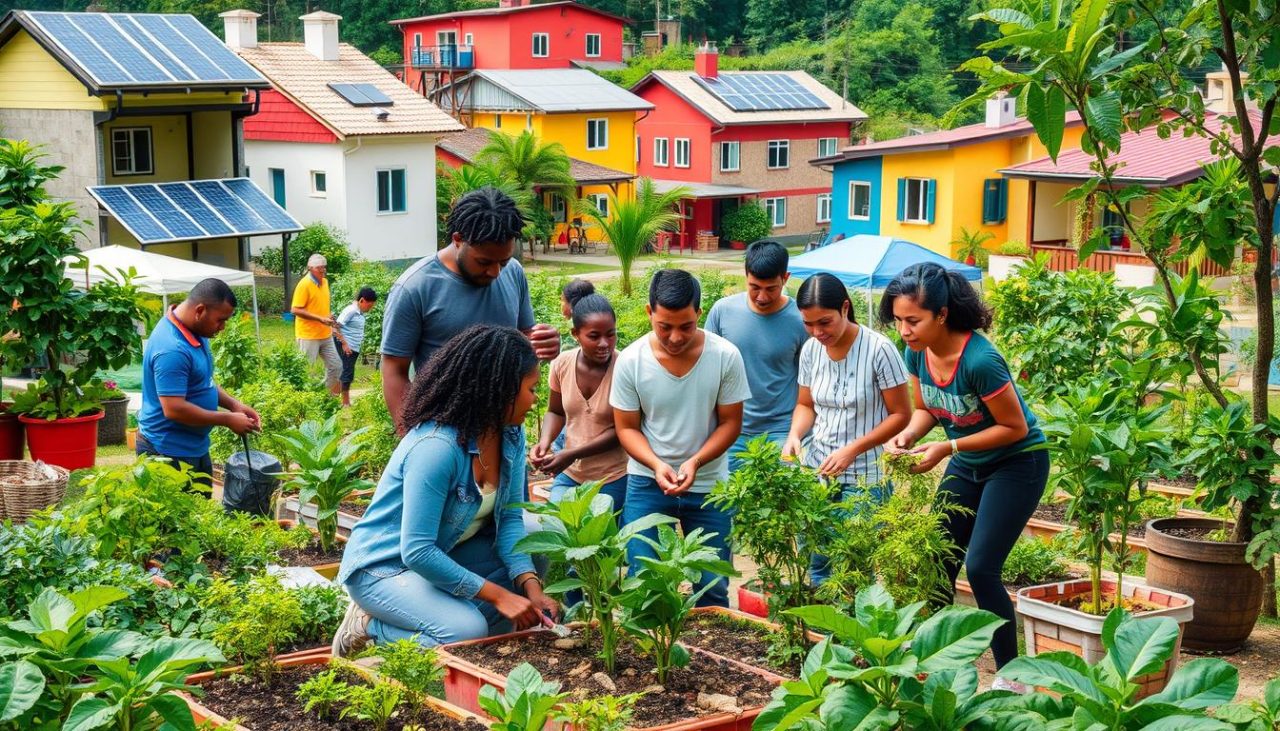
Rainwater harvesting systems are getting a green makeover. They now use materials that are good for the planet. Green roofing is a big part of this change. It collects rainwater and keeps buildings cool.

Construction is turning to recycled materials for rainwater systems. Think reclaimed wood, recycled plastic, and repurposed metal. These choices cut down on waste and help the environment.

Choosing the right materials is key. We look at how durable, safe, and green they are. This makes sure the water stays clean and safe to use.

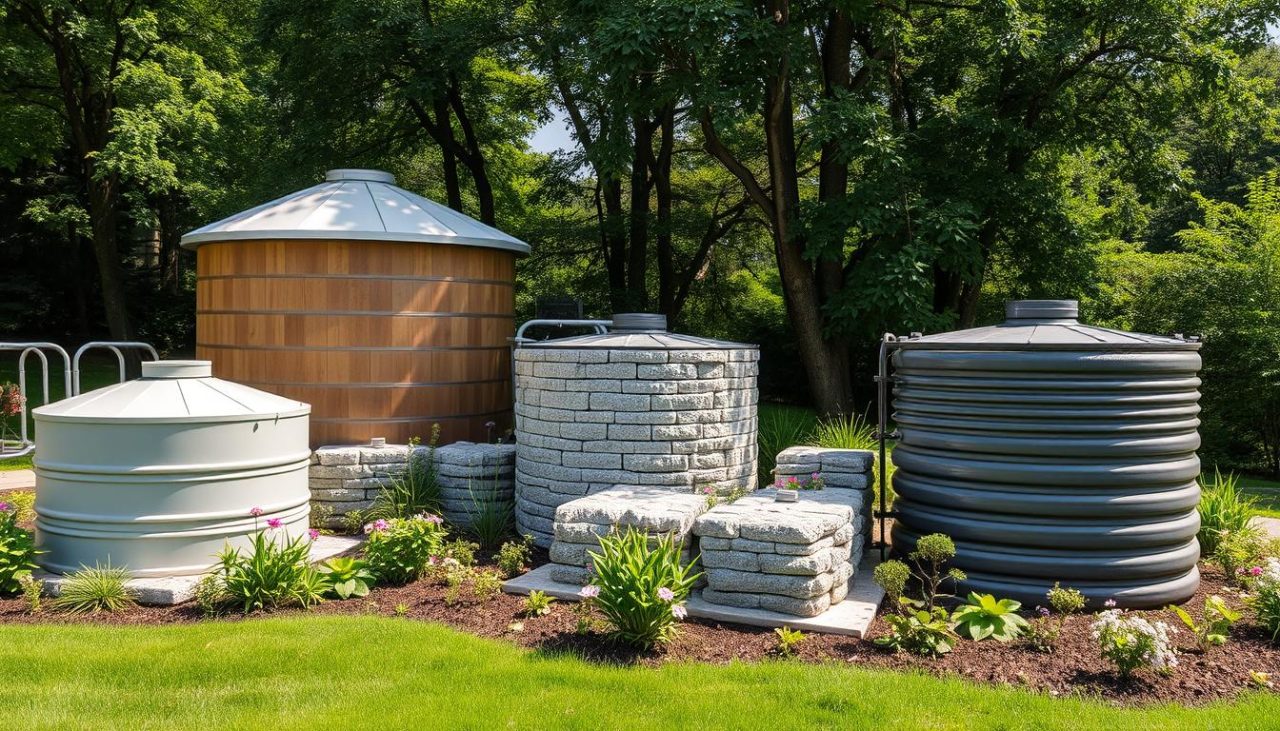
  • Recycled plastic for pipes and storage tanks
  • Reclaimed wood for support structures
  • Repurposed metal for gutters and downspouts

Green roofing uses plants like sedum and moss. These plants clean the rainwater and add beauty. They also help local wildlife.

“Eco-friendly materials in rainwater harvesting not only conserve water but also promote sustainable living practices.”

These materials make rainwater systems work better and greener. They help the environment and save water. As technology grows, we’ll see even more green solutions.

Green Roofing Solutions for Optimal Water Collection

Green roofs are a smart way to collect rainwater and make buildings look good. They work like nature, using plants to manage water. This helps meet UNSDG#14, which supports sustainable water use and protects marine life.

Living Roof Technologies and Materials

Living roofs have layers of plants and soil to soak up rain. This slows down water flow, cutting down on runoff and flood risks. They use waterproof membranes, drainage mats, and light soil to hold water.

Sustainable Drainage Layer Options

Drainage layers in green roofs are a vital component process for managing water. They can be made from recycled plastics or natural materials like gravel. These layers help water move away from roots, preventing waterlogging. Some designs even store water for dry times, keeping plants healthy all year.

Plant Selection for Green Roof Systems

Picking the right plants is essential for a green roof. Look for drought-resistant plants with shallow roots. Succulents like Sedum are popular for their toughness. Native plants are also good because they fit local climates. A mix of plants can create a diverse ecosystem, supporting local wildlife and biodiversity.

Plant TypeWater NeedsRoot DepthClimate Suitability
SedumLowShallowWide range
Native GrassesMediumMediumRegion-specific
WildflowersLow to MediumVariedRegion-specific

Permeable Pavement Technologies and Applications

Permeable pavement is a key part of modern stormwater management. It lets water through, cutting down on runoff and boosting groundwater. Let’s look at the types, how to install, and how to keep them up.

Types of Eco-Friendly Permeable Materials

There are many kinds of permeable pavement, each with its own benefits:

  • Porous asphalt
  • Pervious concrete
  • Interlocking pavers
  • Plastic grid systems

Installation Techniques for Maximum Efficiency

Getting permeable pavement right is key. The steps include:

  1. Site prep and grading
  2. Adding a base layer of crushed stone
  3. Putting in the chosen material
  4. Checking drainage connections

Material Mapping helps plan the layout for best water flow.

Maintenance Requirements and Longevity

To keep permeable pavement working well:

  • Regular sweeping to remove debris
  • Annual check-ups on drainage
  • Pressure washing every now and then
  • Fixing cracks or damage quickly

With the right care, permeable pavement can last 20-30 years. It’s a solid choice for managing stormwater.

Permeable MaterialLifespan (Years)Maintenance Frequency
Porous Asphalt15-20Annually
Pervious Concrete20-30Bi-annually
Interlocking Pavers25-35Quarterly
Plastic Grid Systems20-25Semi-annually

Recycled Materials in Modern Water Conservation

The push for sustainable construction has led to new uses of recycled materials in water conservation projects. These eco-friendly alternatives not only reduce waste but also make rainwater harvesting systems more efficient.

Recycled plastics, once headed for landfills, now help in rainwater collection systems. In a uniquely efficient fashion, they are converted into durable pipes, gutters, and tanks. This transformation massively reduces the carbon footprint of water conservation infrastructure.

Reclaimed wood is great for making rain barrels and decorative catchment systems. It naturally resists water damage, making it perfect for outdoor use. Builders often pick cedar or redwood for their durability and beauty.

Material assessment is key in choosing recycled components for water conservation projects. Engineers check the durability, chemical makeup, and potential for leaching contaminants before using recycled materials in designs.

  • Recycled rubber from tires forms permeable pavement
  • Crushed glass becomes a filtration medium
  • Repurposed metal forms sturdy support structures

By using these recycled materials, sustainable construction in water conservation saves natural resources. It also creates strong, affordable solutions for communities around the world.

Advanced Filtration Systems Using Natural Materials

Natural filtration systems are a new way to harvest rainwater. They are good for the environment and provide clean water for things like hydroponics and aquaponics.

Biological Filtration Methods

Biological filtration uses nature to clean water. It uses living things to break down bad stuff. This method works well in aquaponics, where fish waste helps plants grow.

Sustainable Filter Media Options

There are eco-friendly ways to filter water. Materials like sand, gravel, and activated carbon are great at removing bad stuff. They are perfect for keeping water clean for hydroponics.

Filter MediaEffectivenessLifespan
SandHigh2-3 years
Activated CarbonVery High6-12 months
GravelMedium3-5 years

Integration with Existing Systems

Adding natural filtration to your setup makes it better. For hydroponics fans, it means cleaner water and healthier plants. In aquaponics, it helps create a balanced home for fish and plants.

“Natural filtration systems are not just eco-friendly; they’re the future of sustainable water management.”

Storage Solutions: Sustainable Tank Materials

Choosing the right storage solution for rainwater harvesting is key. Sustainable tank materials help keep water quality high and systems working long-term. Think about the type of water you’re collecting, like greenwater or blackwater.

Greenwater, usually from rooftops, needs less treatment. It can be stored in many eco-friendly tanks. Some top picks include:

  • Recycled plastic tanks
  • Food-grade polyethylene containers
  • Concrete cisterns with non-toxic sealants
  • Fiberglass tanks with UV-resistant coatings

Blackwater, with higher contamination, needs stronger solutions. Stainless steel or treated concrete tanks are best for their strength and resistance to corrosion.

Doing a Material Assessment is vital when picking tank materials. This step looks at things like:

  • Chemical leaching potential
  • UV resistance
  • Structural integrity
  • Thermal properties
  • Environmental impact

With a detailed Material Assessment, you can pick a tank that meets your sustainability goals. The right tank material affects water storage and your system’s efficiency.

Low-Impact Development Strategies for Water Management

Low-impact development strategies are changing how we manage water in cities. They aim to copy nature’s water flow, reducing harm to the environment and encouraging water use that lasts.

Natural Water Flow Patterns

Knowing how water flows naturally is crucial for harvesting rainwater. Today, urban planners design systems that work with nature, not against it. This keeps water tables healthy and stops flooding.

Biomimicry in System Design

Biomimicry uses nature’s solutions for human problems. In water management, it leads to new, green, and efficient ideas. For instance, surfaces inspired by leaves can direct water better than old gutters.

Natural FeatureBiomimetic ApplicationBenefit
Tree rootsBranched drain pipesBetter water distribution
Lotus leafSelf-cleaning surfacesReduced maintenance
River meandersCurved water channelsSlowed water flow, less erosion

Integration with Local Ecosystems

Connecting rainwater harvesting with local ecosystems helps UNSDG#14, life below water. These systems cut down on runoff and pollution, protecting oceans. They also help local wildlife, making cities more diverse.

“Nature-based solutions are not just good for the environment; they’re smart economics. They save money, create jobs, and build resilience.”

Low-impact development strategies are a way to manage water sustainably. By learning from nature, we can build systems that help both people and the planet.

Implementation and Installation Guidelines

Planning and execution are key for green construction projects. This includes setting up eco-friendly rainwater harvesting systems. Here are the main steps for a successful installation.

Material Assessment Protocols

Start with a detailed material assessment in any green construction project. This step looks at the environmental impact, how long it lasts, and its cost. It helps find the best eco-friendly parts for your rainwater system.

System Integration Best Practices

Adding a rainwater system to buildings needs careful planning. Here are some tips:

  • Look at the site’s layout and how water flows
  • Make sure the system fits with the building’s design
  • Check if it works with the building’s plumbing and electricity
  • Add filters and purifiers for clean water

Maintenance Schedules

Keeping your rainwater system in good shape is crucial. Create a detailed maintenance plan. It should include:

  1. Check gutters and downspouts every month
  2. Clean filters and tanks every three months
  3. Check pumps and controls once a year
  4. Test water quality every six months

By following these steps, your rainwater system will work well. It will help manage water sustainably in your area.

Cost Analysis and Long-term Benefits

Investing in eco-friendly rainwater harvesting systems brings big long-term wins. They help meet UNSDG# 6 by ensuring clean water and sanitation. Plus, they save money over time.

The cost to start up these systems depends on size and complexity. Home systems cost between $5,000 and $15,000. Commercial setups can go up to $50,000 or more.

Benefits include lower water bills and less pressure on public water supplies. You might also save on energy with hydropower. Here’s a look at costs between old and new systems:

FactorTraditional SystemEco-Friendly System
Initial Cost$3,000 – $8,000$5,000 – $15,000
Annual Maintenance$200 – $500$100 – $300
Lifespan10-15 years20-30 years
Water Savings30-50%50-80%
Energy SavingsMinimalUp to 30% with hydropower

Eco-friendly systems cost more upfront but save more water and energy. Adding hydropower can cut costs even more. These systems are smart choices for the planet and your wallet.

Conclusion

Eco-friendly building materials are key to a sustainable future. They help save water and reduce construction’s environmental harm. Using green roofing, permeable pavements, and recycled materials makes water management systems efficient and natural.

Sustainable construction tackles water scarcity head-on. It includes living roofs and natural filtration systems. These methods benefit the environment and property owners over time. They also boost biodiversity and community health.

Water conservation will grow more critical in the future. Adopting eco-friendly materials and sustainable designs is essential. This approach makes rainwater harvesting systems effective and green. It saves water and supports a sustainable, resilient future.

Key Takeaways

  • Rainwater harvesting systems use eco-friendly materials for sustainability
  • Low-impact development integrates natural processes in water management
  • Sustainable construction practices are crucial for water conservation
  • Eco-friendly systems reduce dependence on municipal water supplies
  • Urban planning benefits from incorporating rainwater harvesting techniques

Indigenous societies self-determination: Ubuntu and Sankofa approaches for sustainability

Indigenous communities across Africa, the Americas, the Pacific Islands, and developing nations have unique approaches to self-determination and self-actualization. These groups often draw on traditional philosophies and inspired cultural practices to achieve sustainable outcomes. Many indigenous societies use Ubuntu and Sankofa-based principles to guide their development and preserve their cultural heritage.

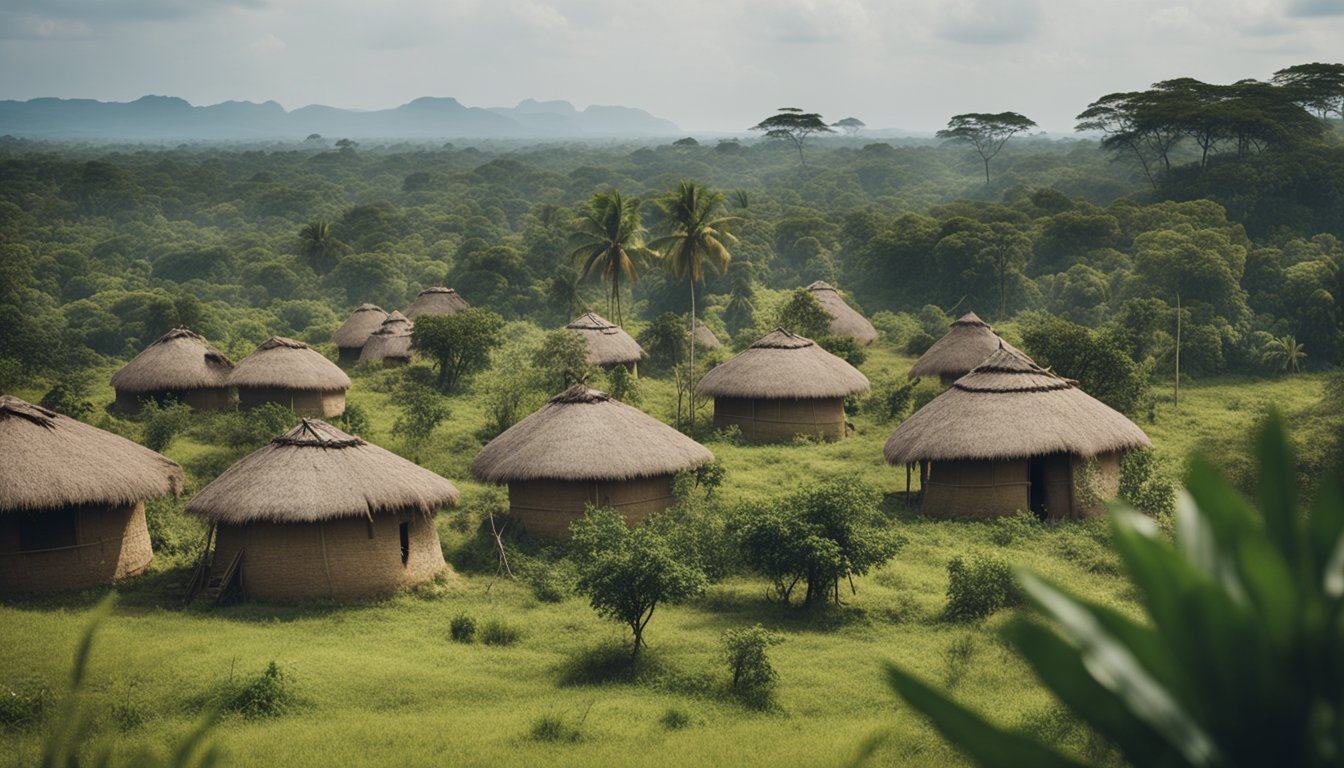
A gathering of traditional dwellings from various Indigenous communities in Africa, the Americas, developing 2nd world, and 3rd world, surrounded by lush vegetation and diverse wildlife

Ubuntu, a South African philosophy emphasizing collective humanity, shapes how some communities make decisions and allocate resources. Sankofa, a concept from Ghana, encourages people to learn from the past while moving forward. These ideas and concepts help indigenous groups steward their land and natural resources sustainably.

In post-colonial Africa, indigenous peoples are not necessarily the first inhabitants such as the aboriginals, but rather groups with distinct cultural practices. These communities face challenges from climate change, pollution, and modernization. Despite these obstacles, many African indigenous communities show resilience and adaptability in preserving their ways of life while engaging with the broader, changing world.

Indigenous Self-Determination in a Global Context

Indigenous peoples around the world seek self-determination to maintain self-actualization to control their own affairs and preserve their cultures. This right allows them to make decisions about their political status and economic development.

Many countries now recognize indigenous rights in their laws. But putting these rights into practice remains a challenge. Indigenous groups often face barriers when trying to exercise self-determination.

The United Nations Declaration on the Rights of Indigenous Peoples supports these goals. It affirms indigenous peoples’ right to self-determination within existing nations.

International human rights law can help promote indigenous rights. Some countries have incorporated these laws into their own legal systems. This gives indigenous groups more tools to assert their rights.

Indigenous women play an important role in self-determination efforts. They advocate for their communities while also addressing gender issues. Their involvement ensures a more complete approach to self-determination.

Self-determination takes different forms in various regions. What works for one group may not fit another. Indigenous peoples must shape their own paths forward based on their unique needs and traditions.

The Philosophy of Ubuntu: Collective Humanity

Ubuntu is a philosophy that emphasizes the interconnectedness of all people. It values community, compassion, and shared humanity over individualism.

Historical Roots and Development

The concept of Ubuntu has deep roots in African cultures. It comes from the Nguni Bantu term “ubuntu”, meaning “humanity”. The idea spread across many African societies over time.

Ubuntu is often explained by the phrase “I am because we are”. This captures its focus on collective identity. It sees a person’s humanity as tied to others.

The philosophy gained wider attention during South Africa’s anti-apartheid movement. Leaders like Desmond Tutu used Ubuntu principles to promote reconciliation.

Practical Applications in African Societies

Ubuntu shapes social norms and behaviors in many African communities. It encourages people to support each other and work for the common good.

In practice, Ubuntu can look like:

  • Sharing resources with neighbors in need
  • Making decisions as a group rather than individually
  • Welcoming strangers into the community

Some African businesses apply Ubuntu values. They may focus on collective success over competition. Ubuntu also influences conflict resolution. Communities may seek to restore harmony rather than punish wrongdoers.

Ubuntu-inspired programs address social issues. For example, some use its principles in AIDS education and support groups.

The Sankofa Concept: Learning from the Past

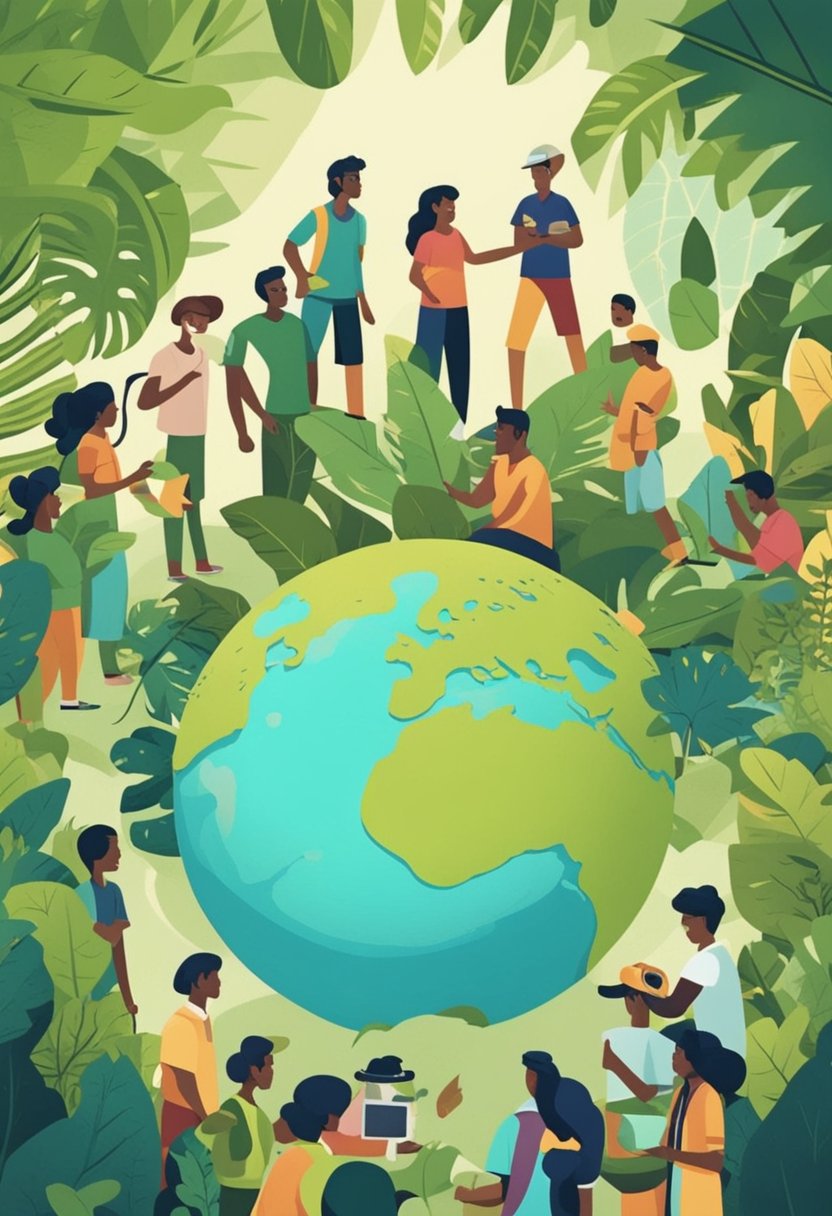
A diverse group of people from various indigenous communities gather around a central symbol, representing the Sankofa concept of learning from the past

The Sankofa concept teaches us to look back to move forward. It comes from West Africa and tells us to use past wisdom to build a better future.

Cultural Relevance and Modern Interpretation

Sankofa is an idea from the Akan people of West Africa. In their language, it means “it is not taboo to go back and fetch what you forgot.” This idea helps people connect with their roots.

Today, many use Sankofa to solve current problems. It pushes us to learn from history and not repeat mistakes. In schools, it means teaching kids about their culture. In politics, it guides leaders to use old wisdom for new laws.

Sankofa symbols often show up in art and fashion. A common one is a bird looking back, with an egg in its mouth. This shows the link between past and future.

Case Studies in Societal Revival

Ghana uses Sankofa to boost tourism. They invite people with African roots to visit and learn about their past. This helps the economy and builds global ties.

In the U.S., some Black communities use Sankofa to fight racism. They study past movements like civil rights to shape new strategies. This has led to better education programs and community support.

African countries often use Sankofa in development plans. They mix traditional farming with new tech. This respects old ways while moving forward. It helps create sustainable food systems that work for local needs.

Indigenous African Communities

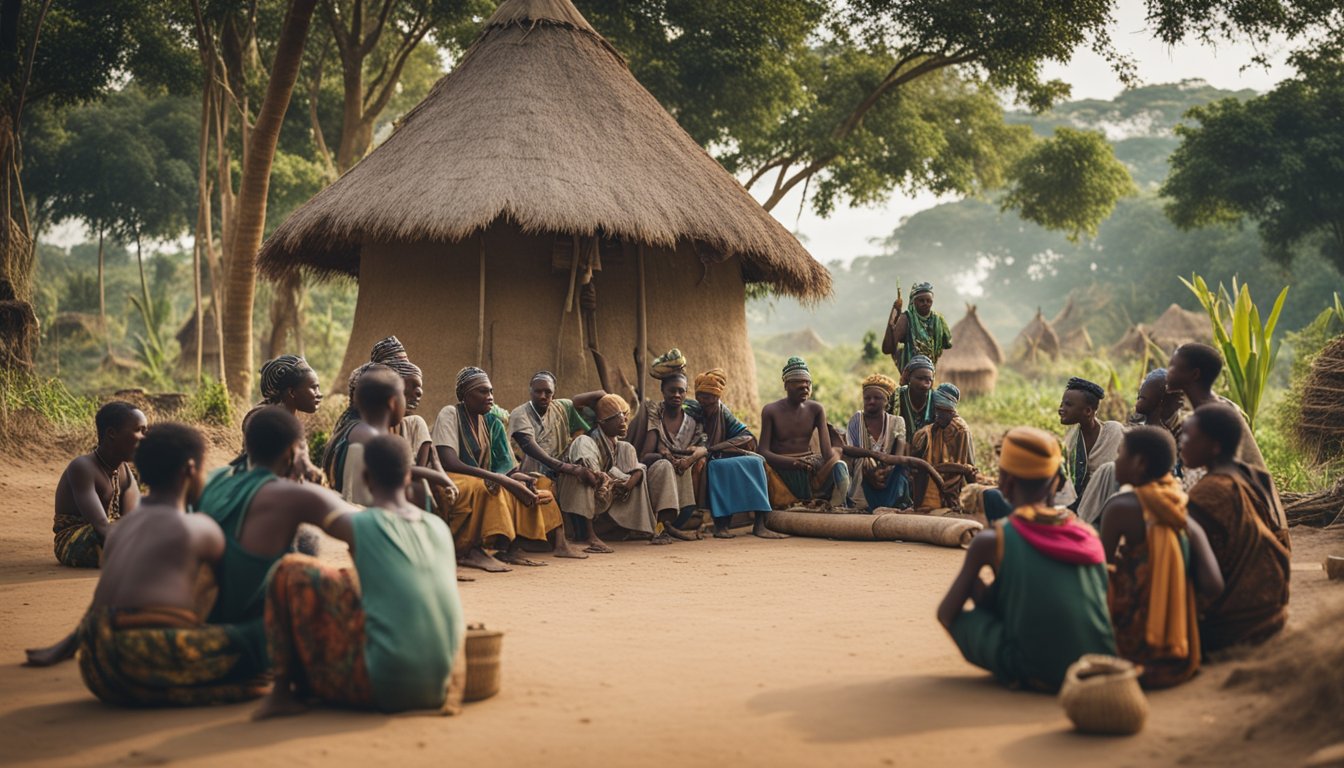
A group of indigenous African villagers gather around a central meeting area, surrounded by traditional huts and lush vegetation

Indigenous African communities face unique challenges in their quest for self-determination. They use traditional knowledge and cultural practices to achieve sustainable outcomes. These communities strive to maintain their identities while adapting to modern realities.

Strategies for Self-Actualization

Indigenous communities in Africa employ various strategies for self-actualization. They often rely on customary governance systems to make decisions and resolve conflicts. These systems are based on centuries-old traditions and community values.

Many groups use traditional ecological knowledge to manage natural resources sustainably. This includes rotational farming, water conservation techniques, and plant-based medicines.

Indigenous African communities also focus on preserving their languages and cultural practices. They establish community schools that teach both modern subjects and traditional knowledge. This helps maintain their unique identities while preparing youth for the future.

Some groups form cooperatives to market traditional crafts and agricultural products. This allows them to generate income while preserving cultural skills.

Challenges and Triumphs

Climate change poses a significant threat to many indigenous African communities. Changing weather patterns disrupt traditional farming and herding practices. This forces communities to adapt quickly or risk losing their livelihoods.

Land rights remain a major challenge. Many groups struggle to maintain control over their ancestral territories. They face pressure from governments, corporations, and other groups seeking to exploit natural resources.

Despite these challenges, indigenous African communities have achieved notable successes. Some have gained legal recognition of their land rights. Others have established protected areas to conserve biodiversity and cultural sites.

Many communities have successfully integrated modern technology with traditional practices. They use mobile phones and the internet to share knowledge and coordinate activities. This helps them address common challenges more effectively.

Indigenous Societies in the Americas

A vibrant marketplace in an Indigenous community in the Americas, with colorful textiles, handmade crafts, and bustling activity

Indigenous communities in the Americas focus on self-governance and preserving their cultural heritage. They also work towards economic independence and sustainable practices to ensure their long-term survival and prosperity.

Self-Governance and Cultural Preservation

Many Native American ethnogroups have their own governing bodies. These structures help maintain traditional leadership roles and decision-making processes. Tribal councils often work alongside federal and state governments to protect their rights and lands.

Cultural preservation is a key priority. Indigenous groups teach their languages to younger generations. They also practice traditional ceremonies and crafts. Museums and cultural centers play a vital role in safeguarding artifacts and sharing knowledge.

Some ethnogroups use modern technology to document oral histories. This helps keep their stories alive for future generations. Many communities also run educational programs to teach youth about their heritage and customs.

Economic Independence and Sustainability

Indigenous societies in the Americas pursue various economic strategies. Some ethnogroups operate casinos and resorts on their lands. These businesses create jobs and generate income for community programs.

Many groups focus on sustainable resource management. They use traditional knowledge to protect forests, rivers, and wildlife. Some communities run eco-tourism projects, sharing their culture while protecting the environment.

Agriculture remains important for many ethnogroups. They grow traditional crops and practice sustainable farming methods. Some groups sell native foods and crafts, creating niche markets for their products.

Renewable energy projects are gaining popularity. Solar and wind farms on tribal lands provide clean energy and economic opportunities. These initiatives help communities become more self-reliant and reduce their carbon footprint.

Developing Second World Indigenous Initiatives

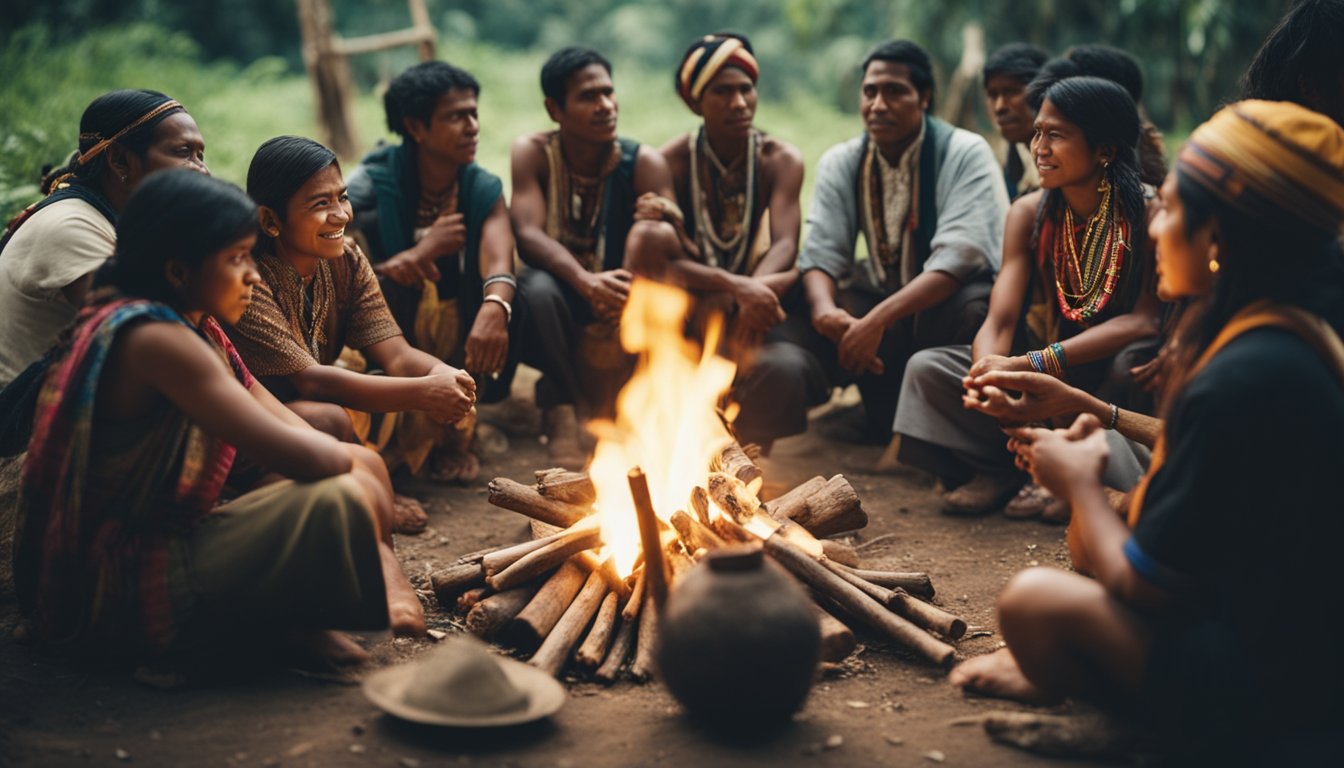
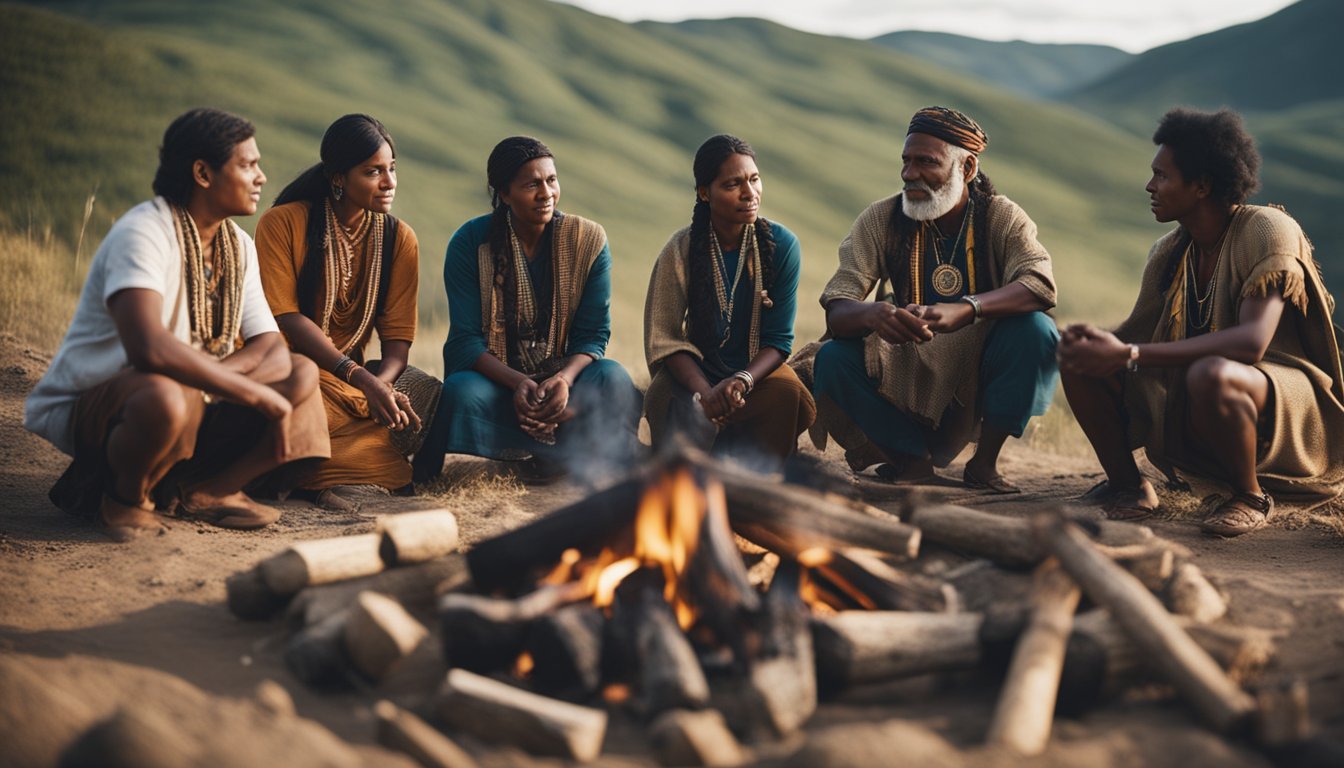
A group of Indigenous people from different continents gather around a symbolic fire, sharing traditional knowledge and exchanging ideas for sustainable development

Indigenous communities in developing second world nations face unique challenges. They are working to preserve traditions while adapting to modern realities. Many are finding success through regional teamwork and embracing new technologies.

Regional Cooperation for Community Empowerment

Indigenous groups across developing nations are joining forces. They share knowledge and resources to tackle common issues. In Latin America, the Indigenous Fund for Latin America and the Caribbean supports local projects. These focus on economic growth, cultural preservation, and environmental protection.

In Asia, networks of indigenous peoples collaborate on land rights. They push for legal recognition of ancestral territories. This teamwork amplifies their voices in national and global talks.

Regional groups also run training programs. These teach traditional crafts, sustainable farming, and eco-tourism skills. Such efforts create jobs and preserve cultural practices.

Education and Technology as Tools for Development

Education is key for indigenous progress in developing nations. Many communities are setting up schools that teach both modern subjects and traditional knowledge. In India, tribal schools use local languages alongside national ones. This helps students succeed while keeping their cultural identity.

Technology is opening new doors. Indigenous communities are using smartphones, computers, and the internet to market crafts globally. They also use apps to track forest health and protect their lands.

Online platforms help preserve and share indigenous languages. Young people learn to code and digital skills. This bridges the gap between tradition and the modern economy.

Global South Communities and Indigenous Resilience

A vibrant marketplace in a rural Indigenous community, with colorful textiles, handcrafted pottery, and fresh produce on display

Aboriginal peoples and Indigenous groups in the global south countries show great strength in the face of challenges. They create local solutions and work with outside groups to protect their rights and ways of life.

Grassroots Movements and Local Successes

Many indigenous communities lead grassroots efforts to defend their lands and cultures. In the Amazon, indigenous groups use mapping technology to track deforestation and protect their territories. They work together to resist illegal logging and mining.

In India, Adivasi communities set up seed banks to preserve native crop varieties. This helps them maintain food security and traditional farming practices.

Indigenous youth in Bolivia create radio programs in native languages. These shows keep their cultures alive and spread important information to remote areas.

International Aid and Its Impact

Outside aid can both help and harm indigenous resilience. Some groups offer useful support. The United Nations runs programs to protect indigenous land rights in Asia and Africa.

But aid can also create dependence. Many indigenous communities face poverty and lack basic services. Outside groups sometimes push solutions that don’t fit local needs.

The best aid works closely with indigenous leaders. It respects traditional knowledge and builds on local strengths. Some funders now focus on backing indigenous-led projects instead of outside experts.

Sustainable Outcomes from Indigenous Perspectives

A diverse group of Indigenous people from different continents gather around a communal fire, sharing traditional knowledge and sustainable practices

Aboriginal peoples and Indigenous communities view sustainability through a holistic lens that integrates environmental care with economic practices. Their approaches prioritize balance and reciprocity between humans and nature.

Environmental Stewardship

Aboriginal and indigenous peoples often act as guardians of biodiversity and natural resources. They use traditional ecological knowledge to manage forests, waterways, and wildlife sustainably.

Many aboriginal peoples and indigenous groups practice rotational agriculture and selective harvesting. These methods help preserve soil fertility and prevent overexploitation of plants and animals.

Aboriginal peoples and indigenous communities frequently engage in reforestation and habitat restoration projects. They plant native species and work to bring back endangered animals to their ancestral lands.

Marine life and water conservation is a key focus for many groups. They use ancient irrigation techniques and protect sacred water sources from pollution and overuse.

Economies in Harmony with Nature

Indigenous economic models often prioritize community well-being over individual profit, similar to the cooperative business model. They emphasize sharing and exchanging resources and maintaining long-term ecological balance.

Many groups practice subsistence economies based on hunting, gathering, and small-scale farming. These activities provide for basic needs without depleting natural resources.

Indigenous knowledge systems support sustainable industries like ecotourism, textiles, and artisanal crafts. These enterprises create income while preserving cultural traditions and ecosystems.

Fair trade partnerships help indigenous producers earn living wages for their goods. This approach supports economic stability without exploiting workers or the environment.

Some communities are developing renewable energy projects on their lands. Solar, wind, and small-scale hydropower initiatives provide clean electricity and local jobs.

Cultural Revitalization Through Arts and Traditions

A group of Indigenous people from different continents gather around a central fire, engaging in traditional arts and cultural practices

Indigenous communities use arts, craft, materials, and traditions to strengthen their cultural identity. These practices help preserve knowledge and foster a sense of belonging among community members.

Celebrating Heritage and Identity

Many Indigenous and aboriginal groups reclaim their cultural heritage through art. They create traditional crafts, music, and dance performances to express their unique identities.

Artists often blend ancient techniques with modern influences. This approach keeps traditions relevant for younger generations.

Community events showcase these artistic expressions. Festivals and exhibitions allow both insiders and outsiders to appreciate indigenous cultures.

Schools now include Indigenous art forms in their curricula more than ever. This helps children connect or reconnect with their heritage from an early age.

The Role of Elders and Oral Histories

Elders play a crucial part in cultural revitalization efforts. They pass down knowledge, stories, and customs to younger members of the community.

Oral histories preserve important information about a group’s past. These stories often contain practical wisdom and cultural values.

Many communities organize storytelling sessions. Here, elders share legends and historical accounts with attentive listeners.

Some clans and ethnogroups record these oral traditions. Audio and video archives ensure that future generations can always access this knowledge.

Language and culture preservation is often tied to oral histories. Elders help teach Aboriginal and Indigenous languages to youth, keeping these unique forms of communication alive.

Indigenous Youth: Next Generation Leadership

A group of Indigenous youth from diverse regions stand together, representing the next generation of leadership in their communities

Aboriginal and indigenous youth play a crucial role in preserving cultural traditions while driving positive change. They bring fresh perspectives and innovative approaches to addressing community and global challenges.

Educational Programs and Mentorship

Indigenous youth leadership programs are emerging globally to empower the next generation. These initiatives focus on cultural education, leadership skills, and community engagement.

The Indigenous Youth Leadership Coalition (IYLC) elevates the voices of the youth in global civic discussions. It connects youth from different regions to share experiences and ideas.

Mentorship is key in these programs. Elders and experienced leaders guide youth, passing down traditional knowledge and wisdom. This bridge between generations helps maintain cultural continuity.

Many programs incorporate both traditional teachings and modern skills. This approach prepares youth to navigate both their cultural world and the broader society.

Innovation and Modern Civic Engagement

Young Indigenous leaders are embracing technology and social media to amplify their voices. They use these tools to raise awareness about community issues and mobilize support.

Digital platforms enable Indigenous youth to connect across vast distances all over the world. This fosters a sense of global Indigenous community and shared experiences including knowledge.

Youth-led initiatives often focus on pressing issues like climate change, land rights, marine life, and language preservation. They bring fresh energy and ideas to these long-standing challenges.

Many junior leaders and youth organizers are creating innovative solutions that blend traditional knowledge with modern approaches and new technology. This includes leveraging data, sustainable development projects, and cultural revitalization efforts.

Participation in international forums is both ongoing and growing. The aboriginal and indigenous youth are increasingly representing their communities at UN events, regional and global conferences.

Global Solidarity and Indigenous Movements

Aboriginal people and indigenous communities worldwide have joined forces to amplify their voices and protect their rights. This unity has led to significant progress in self-determination efforts and sustainability-based development initiatives.

Networking and Alliances Across Borders

Indigenous groups have built strong networks that span continents. These alliances allow them to share and exchange knowledge, resources, and strategies. For example, the International Work Group for Indigenous Affairs promotes collaboration among indigenous peoples globally.

Social media and technology have made it easier for indigenous communities to connect. They use these tools to organize protests, raise awareness, and gain support for their causes.

Many indigenous organizations both precolonial and postcolonial now participate in international forums. This gives them a platform to address global issues that affect their communities.

The Influence of International Law and Policy

International laws and policy have played a crucial role in advancing indigenous rights. The United Nations Declaration on the Rights of Indigenous Peoples is a key document that many nations and ethnogroups globally have adopted.

Indigenous groups have used these laws to challenge unjust practices. They’ve won important legal battles over land and governing rights and resource management.

Global policies on climate change and biodiversity often include indigenous perspectives. This recognition has led to more sustainable approaches to environmental stewardship and habitat preservation.

Indigenous leaders now regularly attend international conferences. Their input shapes policies on issues like education, health, and economic development.

Key aspects of indigenous self-determination include:

  • Control over land, sea, and resources
  • Preservation of language and culture
  • Political and economic autonomy
  • Economic and cultural self-reliance
  • Advance intercultural commerce

Cooperatives: Building Sustainable Communities

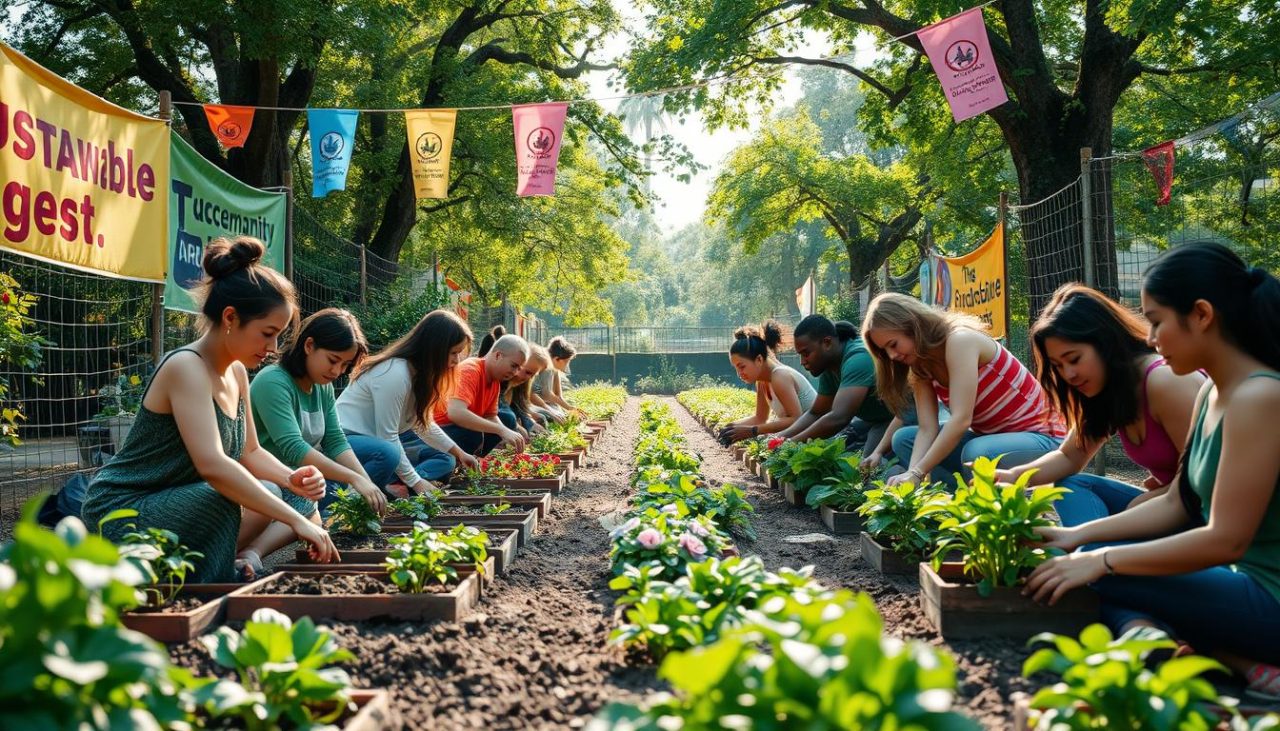
Cooperatives are key to empowering communities locally and internationally. They are businesses owned by their members, working for the good of all. Unlike traditional companies, co-ops put people first with purpose(including planet), not just profits.

Cooperatives tackle big issues like food systems, community necessities, and housing. They help communities grow stronger and more stable. This way, everyone has a say and a stake in any success and scale.

They also help local economies and care for the environment. Cooperative as a structure are intentional thus reflecting mindfulness of any local ecosystem its a part of. This makes co-ops a beacon of hope in tough times. They show us that together, we can make a big difference.

Understanding the Foundations of Cooperative Enterprises

Cooperative enterprises are key to sustainable community growth. They focus on democratic ownership, social governance, and collective action. This leads to fair sharing of resources and benefits.

Defining Cooperative Business Models

Cooperatives are owned by their members. They aim to help them as owner-members, not just make profits. This approach builds community and strengths supports long-term success.

Historical Evolution of Cooperatives

The cooperative movement started during the 1st Industrial Revolution. Workers came together for better lives and work. It has since spread across many fields, like farming, service industries, and housing.

Core Principles and Values

Cooperatives follow key principles. These ensure they focus on democratic ownership, efficient governance, justed labor practices, and fairness. The main principles are:

PrincipleDescription
Voluntary MembershipOpen to all without discrimination
Democratic ControlOne member, one vote
Economic ParticipationMembers contribute equitably to capital
AutonomyIndependent organizations controlled by members
EducationPromoting cooperative principles

These key principles help co-ops stay true to their mission and purpose. They serve owner-member needs and support sustainable community growth through fairness and collective action.

How Cooperatives Strengthen Communities and Promote Sustainability

Cooperatives are key in making communities stronger and more sustainable. They are owned by their members, who work together for common goals. This brings people together, encouraging collaboration, mobility, and support.

Many cooperatives focus on taking care of the environment. The use conservation and habitat preservation practice and, they also use eco-friendly practices and manage resources wisely. This helps reduce harm to the environment and keeps resources safe for the future.

Cooperatives also help keep wealth in the community through exercising sound economics. They create jobs, support local businesses, collaborate in crowd sourcing, and invest profits locally. This strengthens the local economy and makes it more resilient.

“Cooperatives are not just businesses; they’re community builders. They create a framework for people to come together, solve problems, and improve their lives collectively.”

The positive effects of cooperatives are seen in many areas:

Cooperative TypeCommunity Impact
Housing CooperativesAffordable housing, community-building
Agricultural CooperativesFood security, rural development
Credit UnionsFinancial inclusion, economic stability
Worker CooperativesFair wages, job security

Again, cooperatives put people first, leading to sustainable community growth. They give members substaintial leverage over their economic future. This fosters a sense of belonging and unified purpose.

Democratic Ownership: The Power of Collective Decision-Making

Cooperative are social enterprises that show the power of democratic ownership. They grant power to their members. This way, they empower communities and work together for shared agendas and such.

Member Participation and Voting Rights

In cooperatives, every member gets to be heard. Voting rights mean everyone has an equal voice in major decisions. This makes the community stronger and encourages those stakeholders to help shape the cooperative’s future.

Transparent Governance Structures

Cooperatives are open and clear. Their democratically structured governance is easy to see for all owner-members. They have regular meetings, share financial reports, and have both appointed and servant-based leaders who are easy to reach. This builds trust and makes each and everyone accountable.

Equitable Distribution of Power

Cooperatives don’t let power fall into one person’s hands. Instead, they share it equally among members even in multi-tier cooperatives. This fair way of sharing power brings in different skills and concepts no matter how small. It leads to new ideas and growth that’s lasts due to sustainability.
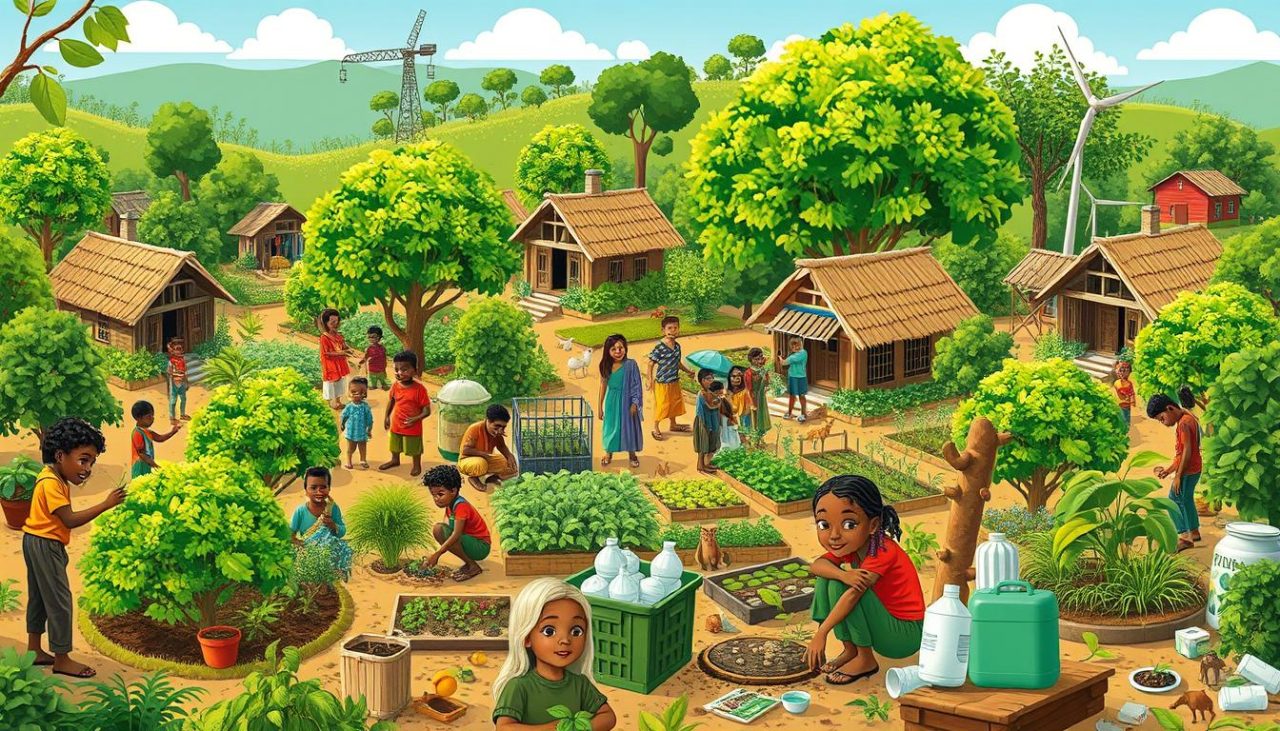
“Democratic ownership in cooperatives isn’t just about voting; it’s about building a shared vision for our community’s future.”

Cooperatives show how democratic ownership can change and advance communities. They empower people to work together. This makes strong, lasting businesses that help and benefits everyone.

Economic Benefits of Cooperative Models

Cooperative models bring big economic wins. They help communities grow strong and rely on themselves. Cooperatives are curated on the foundation of being self-sufficient as a group. These benefits help everyone in the greater local community in addition to the cooperative.

Cooperatives focus on keeping workers happy and safe, not just making the bottom-line through fast money. This makes jobs more secure and fulfilling. When the economy is down, co-ops keep jobs, helping to stabilize the market. This make cooperatives sustainable.

Cooperatives share profits fairly among members. This is different from regular businesses, where profits often go to just a few. Cooperatives make sure everyone gets a fair share of the wealth.

“Cooperatives are not just businesses; they’re engines of economic democracy.”

Cooperatives also help the local economy by investing money back into the community. This money helps other local micro, small, and medium businesses and projects. It keeps wealth in the local region, helping the economy grow in a healthy thus sustainable way.

Economic BenefitImpact on Community
Job StabilityReduced unemployment rates
Profit SharingIncreased household income
Local ReinvestmentImproved community infrastructure

Cooperatives make communities less dependent on outside money and external resources. This self-reliance helps communities face any economic challenges. It builds a firm and strong foundation for lasting success.

Environmental Stewardship Through Cooperative Action

Cooperatives are key in protecting our environment and promoting sustainable development as referenced earlier. They work together to use eco-friendly methods and push for green innovation in many areas within the various of industries and markets.

Sustainable Resource Management

Cooperatives are great at leveraging resources in a way that’s good for the planet. They use methods that save natural resources while still serving their owner-members. For example, farm cooperatives use crop rotation and preserve water to keep soil healthy and use less water.

Green Innovation Initiatives

Cooperatives are leaders and trend setters in green innovation. They spend on research to make products and processes better for the environment. Energy cooperatives, for example, focus on renewable and clean energy like solar and wind power.

Our cooperative’s commitment to green innovation has led to a 30% reduction in our carbon footprint over the past five years.

Reducing Environmental Impact

Cooperatives work hard to lessen their environmental footprint. They contribute to a more efficient logistical system due to being more local based. Cooperatives of various types, start waste reduction programs, use green packaging, and find better ways to transport goods to cut down on emissions. Some even aim to be carbon neutral and are working to be Net Zero and Net Positive.

Environmental InitiativeImpact
Sustainable farming practices50% reduction in pesticide use
Renewable energy adoption40% decrease in fossil fuel dependence
Waste reduction program75% increase in recycling rates

Cooperatives show that caring for the environment and doing well financially can go together. Their dedication to sustainability inspires businesses everywhere. They prove that working together can make a big difference in fighting climate change.

Building Social Capital and Community Resilience

Cooperatives are key in building strong communities. They help people trust and work together better. This creates a sense of unity and purpose among members.

At the core of cooperatives is working together. Members share their resources and skills to tackle challenges. This makes communities stronger and more able to handle problems.

Being part of a cooperative does more than just help the economy. It helps people grow as leaders and learn to make decisions together. This builds a more active and diverse community.

“Cooperatives are not just businesses; they are catalysts for social change and community development.”

Studies show that areas with cooperatives have more active citizens and trust. This leads to a better quality of life and helps communities face challenges together.

Cooperative ImpactCommunity Benefit
Shared ownershipIncreased stakeholder commitment
Democratic governanceEnhanced civic participation
Local focusStronger community ties
Collective problem-solvingImproved community resilience

Local Economic Development and Self-Reliance

Cooperatives are key in building strong local economies. They help communities by creating jobs, keeping money local, and supporting local businesses. This way, they help in sustainable development.

Job Creation and Stability

Cooperatives are great at creating jobs. They offer jobs that are more stable and less likely to be sent overseas. Worker-owned cooperatives focus on keeping jobs safe, not just making quick money.

Wealth Retention in Communities

Cooperatives keep money in local pockets. Instead of sending profits to distant owners, they share it with members or invest it back into the community. This helps make local economies stronger and more stable.

Supporting Local Supply Chains

Cooperatives like to buy and make things locally. This helps build strong local supply chains. It saves money on shipping, cuts down on pollution, and makes communities more self-sufficient.

“Cooperatives are key drivers of sustainable local economies. They create jobs, keep wealth in communities, and support local businesses. This approach builds economic resilience from the ground up.”

Cooperatives help make communities strong and self-reliant. They make local economies more diverse and less dependent on outside help. This way, communities can do well even when faced with tough economic times.

Cooperative Education and Skill Development

Cooperatives are key in empowering communities through education and skill development. They invest in their members’ growth, creating a culture of learning and improvement. This benefits both individuals and the community as a whole.

Cooperatives offer many educational programs for their members. These include workshops on sustainable development and courses on financial management. By teaching valuable skills, cooperatives help members contribute more to the organization and community.

“Education is not just about learning facts, but training the mind to think.”

Cooperative education has a big impact beyond just individual growth. It spreads knowledge and skills across the community. This shared learning leads to innovation and adaptability, key for sustainable development in our fast-changing world.

Skill AreaBenefits to MembersCommunity Impact
Financial LiteracyBetter personal finance managementIncreased economic stability
Sustainable PracticesEco-friendly lifestyle adoptionReduced environmental footprint
Leadership TrainingEnhanced decision-making abilitiesStronger community leadership

Cooperatives empower individuals and communities through education and skill development. Their investment in human capital leads to long-term growth and resilience. This shows the true spirit of collective action and sustainable development.

Types of Successful Community Cooperatives

Co-ops are diverse, each playing a key role in building strong local economies. They empower communities by promoting democratic ownership and shared goals.

Housing Cooperatives

Housing co-ops provide affordable homes. Members own and manage their buildings together. This approach ensures quality housing for many families.

Agricultural Cooperatives

Farmers work together in agricultural co-ops. They share resources and marketing efforts. This teamwork helps small farms compete, boosting local food systems.

Credit Unions

Credit unions are co-ops, which are owned by their members. They offer loans and savings accounts with better rates than banks. These institutions keep money in the community.

Worker Cooperatives

Worker co-ops are run by their employees. This structure ensures fair wages and job security. Businesses like Equal Exchange in Massachusetts thrive under this model.
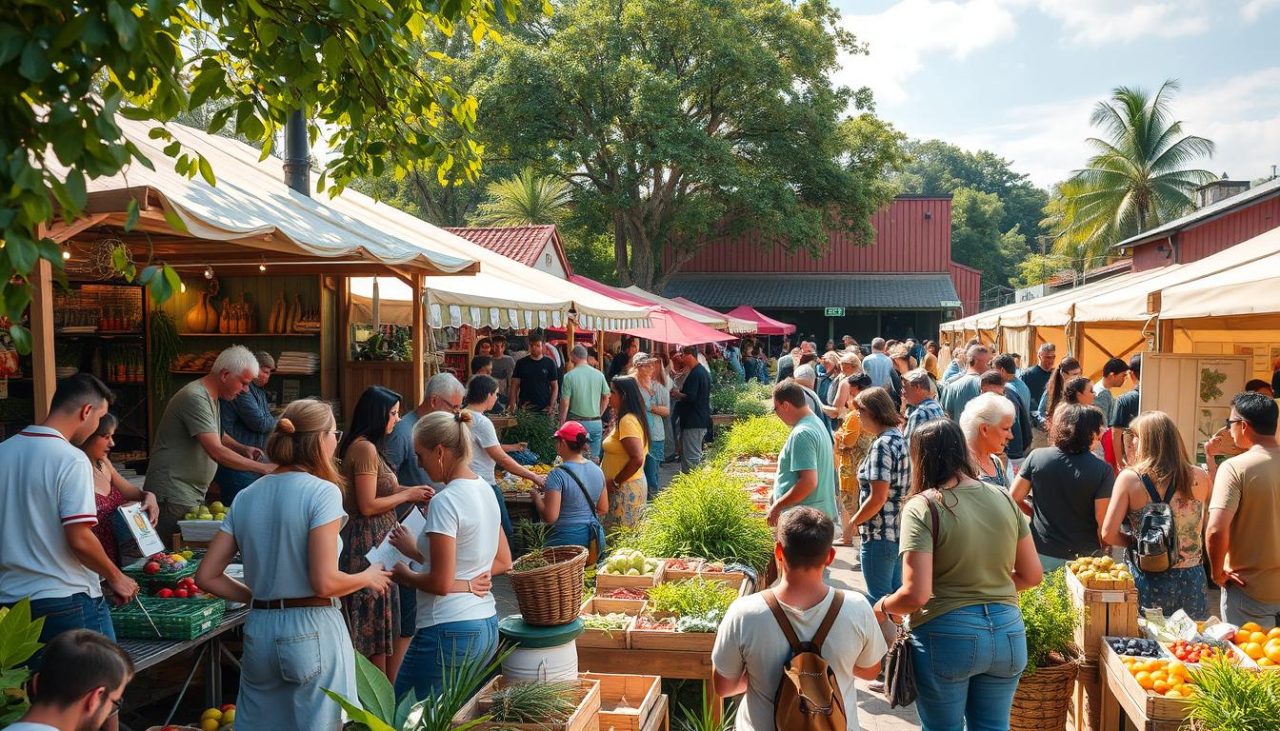
Key Takeaways

  • Cooperatives prioritize community and environmental needs over profit maximization
  • Member ownership leads to increased economic resilience
  • Democratic decision-making empowers community member-owners
  • Cooperatives support sustainable local economic growth
  • They foster social bonds and environmental responsibility
  • Sustainable Cooperative models address various community and ecological challenges effectively

A brief chronicle of the who, what, when, were, how, and why within the 4 Eons time periods of; geological earth history, sustainability, and natural climate change.
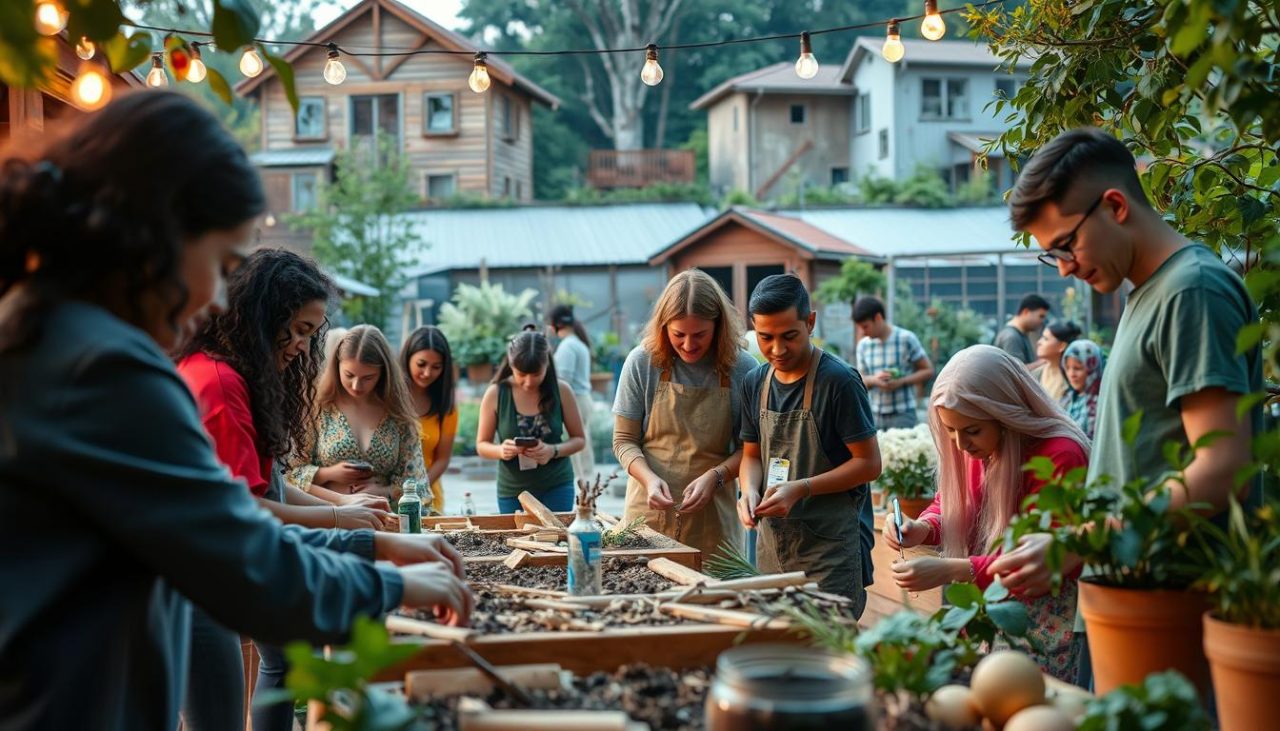
To continue with Sustainability history, we will began during its prehistory, From the beginning of life to pre-industrial age. We will uncover that sustainable concepts always exist in different words across other languages, biological self correction, and in the practices of pre-colonial, indigenous, and first world peoples.

The Eons periods throughout time that are classified are:

Hadean Eon

Archean Eon

Proterozoic Eon

Phanerozoic Eon

Hadean Eon

The history of the planet Earth can be argued to be congruent with the big bang, which is arguably preceded by existence itself. According to the proclaimed scientific theory of the earth existing for 4,500 million years, the age of the planet is divided into 4 eons with 10 eras that proceed at least 22 periods of time, with a few containing very relevant epochs. The smaller or shortest periods of age are reserved for modern human social and anthropological development. Furthermore, ages are more fluid and subjective in time measurement.

Within the earth’s existence thus far we achieved to reach the Cenozoic era, in Phanerozoic, the four eon of time. In which we are in the very extremely early stages of the Holocene epoch. The Cenozoic era of the later third of this Eon was achieved only 65 million year ago in which is where we remain in the now as, a multi-tier sentient and non sentient life forms.

The Phanerozoic Eon is not only the fourth Eon of existence or at least the big bang, It signified the ending of the supereon or Super Eon, Precambrian. This supereon is made up of the previous eons before the Phanerozoic; Hadean, Archean, and the Proterozoic eons. As time continues forward the Phanerozoic Eon may be promoted or scale to be called the second supereon or appointed a natural title many millions later. One can assume that a title for the new supereon is redundant or just unnecessary given that enough time has not passed on this planet.

Archean

This era, in contemporary terms, is divided into two periods: the Tertiary and the Quaternary Glaciation. The former was the first and lasted for approximately 62 to 66 million years. There were several epoch periods lasting 10 to 20 million years on average. Previously, right before the Cenozoic era’s Tertiary period, the Paleocene epoch, the last age of the dinosaurs was called the Mesozoic era. In its final 80 million years, the Cretaceous Glaciation, the ongoing breakup of the mega-continent Pangaea, continued. This period also occurs at the halfway point of the Phanerozoic Eon. Our current period of existence in the Cenozoic era is the second period mentioned previously. The Quaternary Glaciation of the last 1.8 million years and its aforementioned Holocene epoch, which is just beginning within the last 10,000 years.

The Holocene epoch is again the current half of the Quaternary Glaciation. This period is also the ending of the fifth and last crucial Glacial period. This period ranges from 115,000 B.C. to 11,700 B.C. This was during the Pleistocene epoch.

Archean continuing

The next extensive glacial period that preceded was the Karoo Glaciation, which occurred approximately 360–260 million years ago. It overlapped both the later Proterozoic Era at the beginning of the Vendian period. In which it was from 650 to 543 million years ago. Then the very late Paleozoic Era during the Permian period from 290 to 248 million years ago. As part of the Karoo Glaciation, the period from the middle to the end experienced the world’s largest mass extinction. This extinction was primarily marine life yet it was primer into the age

The third great glacial period was called the Andean or Andean-Saharan Glaciation between 460 to 430 million years ago. It was also called the Paleozoic Era that a 100 million years later becomes the Paleozoic/Karoo Glaciation. This glacial period During the overlapping time ranges of both the Silurian (443.4 to 419.2 million years ago) and Ordovician (485.4 to 443.3 million years ago) periods. These periods were in the early half of this era. Within the beginning of the Phanerozoic Eon after the Cambrian period, which is the first 53.4 million years of the Eon. This ice age happens during the middle third of its first quarter (Ordovician period) and the final third of the stated quarter (Silurian period).

The Cryogenian Glaciation

The preceding second critical glacial period, known as the Cryogenian Glaciation, occurred between 850 and 630 million years ago. This is during the majority and peak of the Neoproterozoic era between 1,000 and 538.8 million years ago of the greater Proterozoic eon of 2,500 to 543 million years ago. It overlapping the earlier portions of both the Vendian period from 650 to 543 million years ago. It also overlaps the most recently established by the IUGS (International Union of Geological Sciences), the Ediacaran period from 638 to 538.8 million years ago. This ice age is significant because it is similar to the Quaternary Glaciation in that it is the final glacial period in both the Proterozoic Eon and the Precambrian Supereon before transitioning to the current Phanerozoic Eon stage.

Phanerozoic Eon

The original extensive Huronian Glaciation period lasted 300 million years. At the start of the Precambrian supereon known as the Proterozoic. This lasted from 2,400 to 2,100 million years ago, and its first era. The first half of the Paleoproterozoic era, which included both the Siderian epoch from 2,500 to 2,300 million years ago. While the Rhyacian epoch from 2,300 to 2,050 million years ago.

Several mini-ice ages formed during this time period from the minerals rock, mudstone, sandstone, and clay. This period, as major as it was, was not a continuous glaciation. Between 2.8 and 2.1 billion years ago, the Huronian Glaciation. It was limited to what is now the Midwestern region of the North American continent. This was the section of both the Ur and Kenorland supercontinents. This glaciation also advanced in parallel with what is called the Great Oxygenation Event. That event happened during an increase in atmospheric oxygen and a decrease in atmospheric methane.

Phanerozoic Eon continuing

This led to the mass extinction of various anaerobic species due to the toxic oxygen, but it is not considered one of the great extinctions, which happened in the later eons from less than a billion to 500 million years ago.

During these specific points of time in pre-history, it is important to reflect on how sustainable the earth was in its early stages. As life came and went, land and sea formed through adaption of the totality of the geosphere and the development of its cosmic influence.

To sustain itself in a renewable continuum is a massive part of the planet’s narrative. Through the stages of humanity’s rapid advancement through, civilization presented challenges in agriculture, population growth, and demands in industrial commerce. There are, however, more intentional agendas in the age of enlightenment, colonial establishment, the three stages of the industrial revolution, post-WWII global economic development, and the cold war. We also will explore sustainable development that evolved initially through civil and political progress across civilizations, particularly in various stages of the pre-colonial periods.

How do we definite what does our planet’s eternal infancy mean for both environmentalism and conservation as well as preservation?

Why does the existence of life within the geosphere especially during the later stages of the different ice ages through out history?

What other factors can we learn from how sustainability advanced during both environmental, social, and market paradigm shifts throughout history?

Our impacts determines the outcomes of our existence on this planet if not entirely the Earth itself.

This website is saving the energy of your screen as it is not being used. It's part of a global effort to lower the planet's electrical consumption and CO2 emission level. Resume browsing
Click anywhere to resume browsing
Verified by MonsterInsights